A flower border is the backbone of a memorable garden, shaping how color, texture, and structure play out from spring through fall. Whether you favor a loose cottage look or something more formal, the right combination of plants and edging turns a simple strip of soil into a defining feature.
These 27 ideas cover a range of styles and practical approaches, from choosing perennials that return each year to working with natural stone or wood edging. Expect real-world looks that prioritize season-long interest and manageable upkeep, not just a single moment of bloom.
Charming Cottage Garden Border with Pink Roses and Purple Salvia
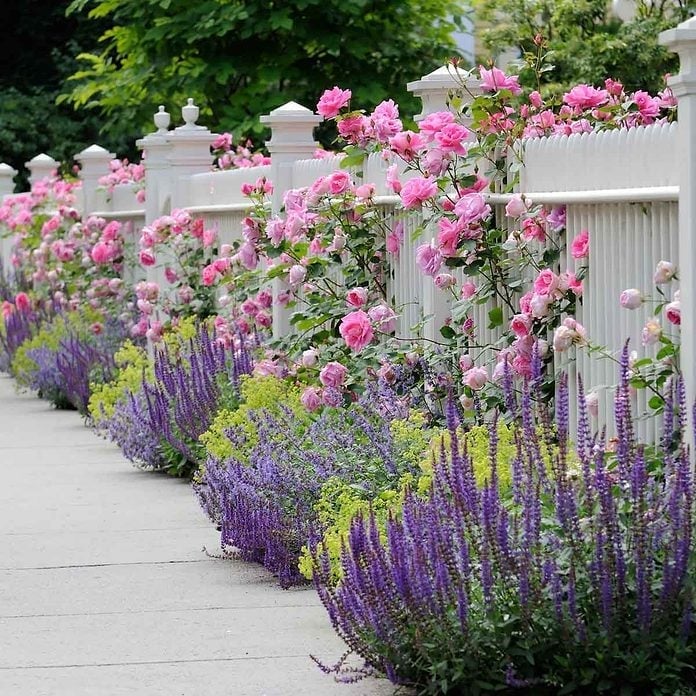
A picket fence sets the backdrop for a dense floral border where pink roses and purple salvia share the same sunny stretch. The palette stays in the pink-purple-white range with enough green to keep it from reading as busy. Lavender adds a softer purple note near the path edge, which gives the whole cottage garden flower border with pink roses and purple salvia a layered feel without needing a strict planting plan. What makes this approach work is how the colors repeat rather than compete. The eye follows the pink up the fence and the purple along the ground, and the white flowers scattered through act as a neutral bridge. It is a simple ratio of three main colors with one green backdrop.
Naturalistic Garden Bed with Dense Pink and White Flower Border
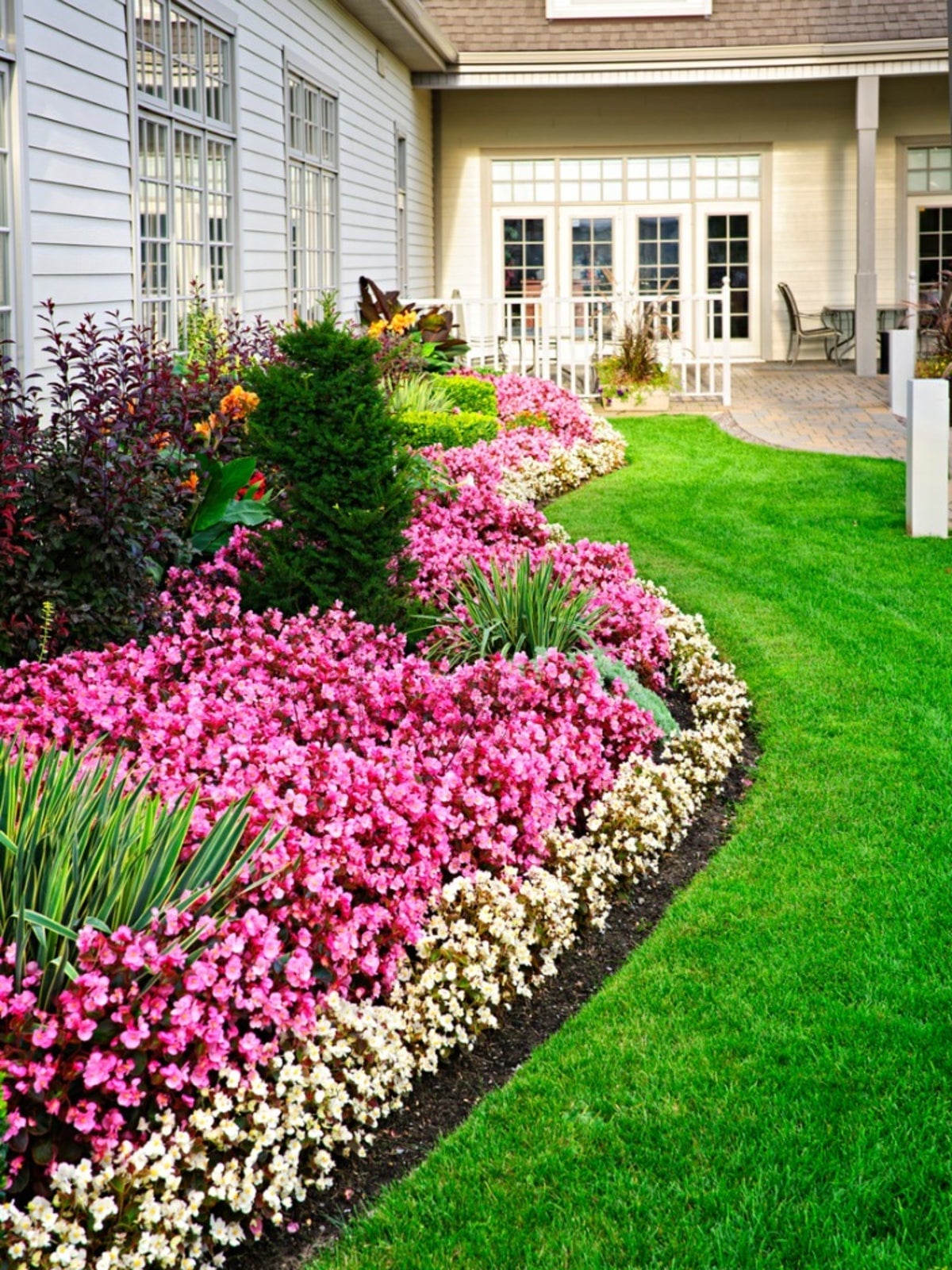
This garden bed proves that a naturalistic garden bed with dense flower border does not need a rigid plan to feel full. The pink and white blooms are packed tight, with red accents tucked in at irregular intervals. The curving border follows the lawn edge, which keeps the whole bed looking like it belongs there. The material story here is mostly about the plants themselves. No stone edging or hardscape frames the bed. The flowers spill onto the grass in places, and the soil is only visible in a few narrow gaps. That soft transition between border and lawn is what makes a naturalistic bed feel like a natural part of the landscape. The trick is density. When plants are close enough to touch each other, weeds have a harder time finding a spot.
Formal Garden with Symmetrical Lavender and Hydrangea Borders
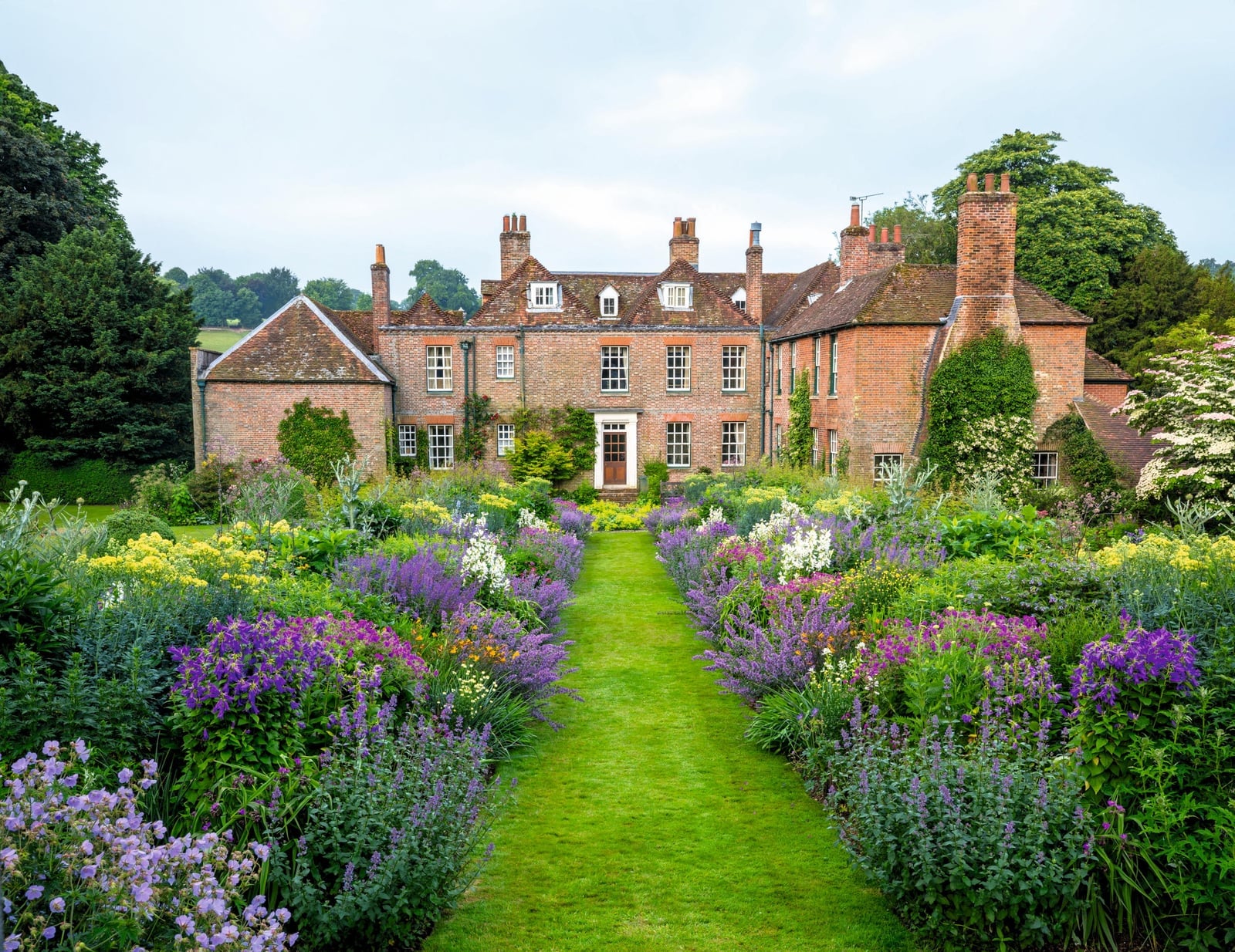
A large formal garden can feel balanced without repeating the same plant every two feet. The answer here is symmetry with variation. Lavender lines the front edge of both borders, while hydrangeas sit behind in repeating clusters. The palette stays cool with purple, pink, and white against green, and the overcast light softens the contrast so the borders read as one continuous mass of color. The scale is what stands out. Each border stretches along a wide path, and the height steps up from lavender to hydrangea to a few taller shrubs in the back. That layered height keeps the eye moving forward and does not stop at one plant. The manicured lawn between the borders reinforces the formality. A symmetrical layout like this needs that crisp green buffer to keep the flowers from merging into each other across the path. It is a formal garden flower border with lavender and hydrangeas that works because the plants are given room to show their shape.
Curved Petunia Border Against a Stacked Stone Retaining Wall
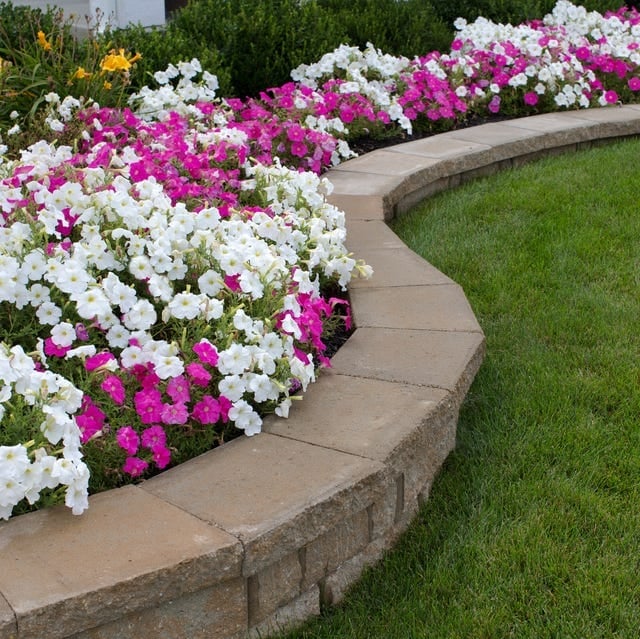
A stacked stone retaining wall provides the structure for a curved flower border with petunias and stone wall, where dense pink and white petunias soften the hard edge of the stone. The wall holds the soil at a higher level and creates a clear boundary between the garden bed and the lawn below. The petunias spill over the top edge just enough to hide the transition between soil and stone. That overlap makes the border feel planted rather than placed. The wall defines the shape, so the flowers only need to follow the curve. In a flat yard, a low stone curb or brick edge can create the same sense of enclosure without the height.
Formal Garden with Rose Arch and Central Fountain
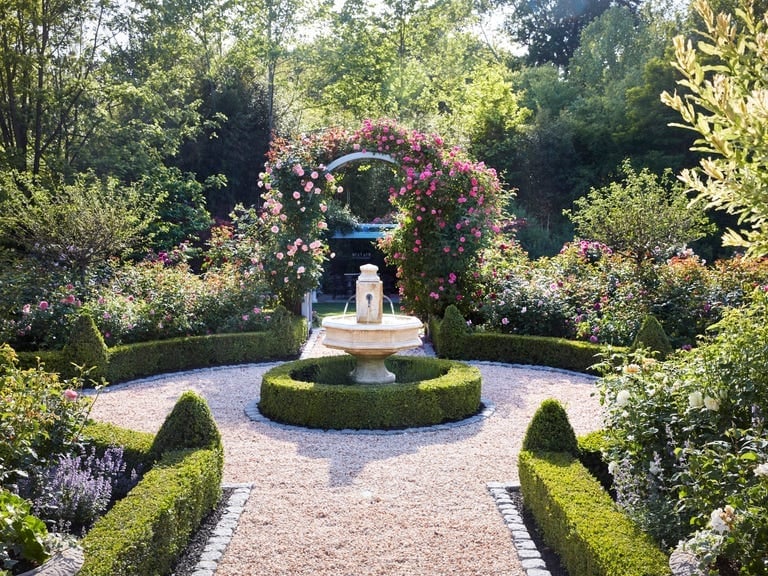
A formal garden with rose arch and fountain benefits from letting one element set the height and another set the flow. Here the rose-covered arch frames the view, while the central stone fountain anchors the circular gravel path. The pink roses climb high enough to create a doorway effect, and the boxwood hedges keep the lower level tidy. The gravel path circles the fountain and leads the eye around the space. That circular layout encourages a slower walk. The fountain adds sound and movement, which balances the stillness of the manicured hedges. The overall effect is a garden that feels both structured and generous. The abundance of pink roses against the beige stone and green boxwood keeps the formality from feeling stiff. It is a reminder that even a symmetrical layout benefits from a little softness at the edges.
Dark Gray Stone Border with Vibrant Annual Flower Display
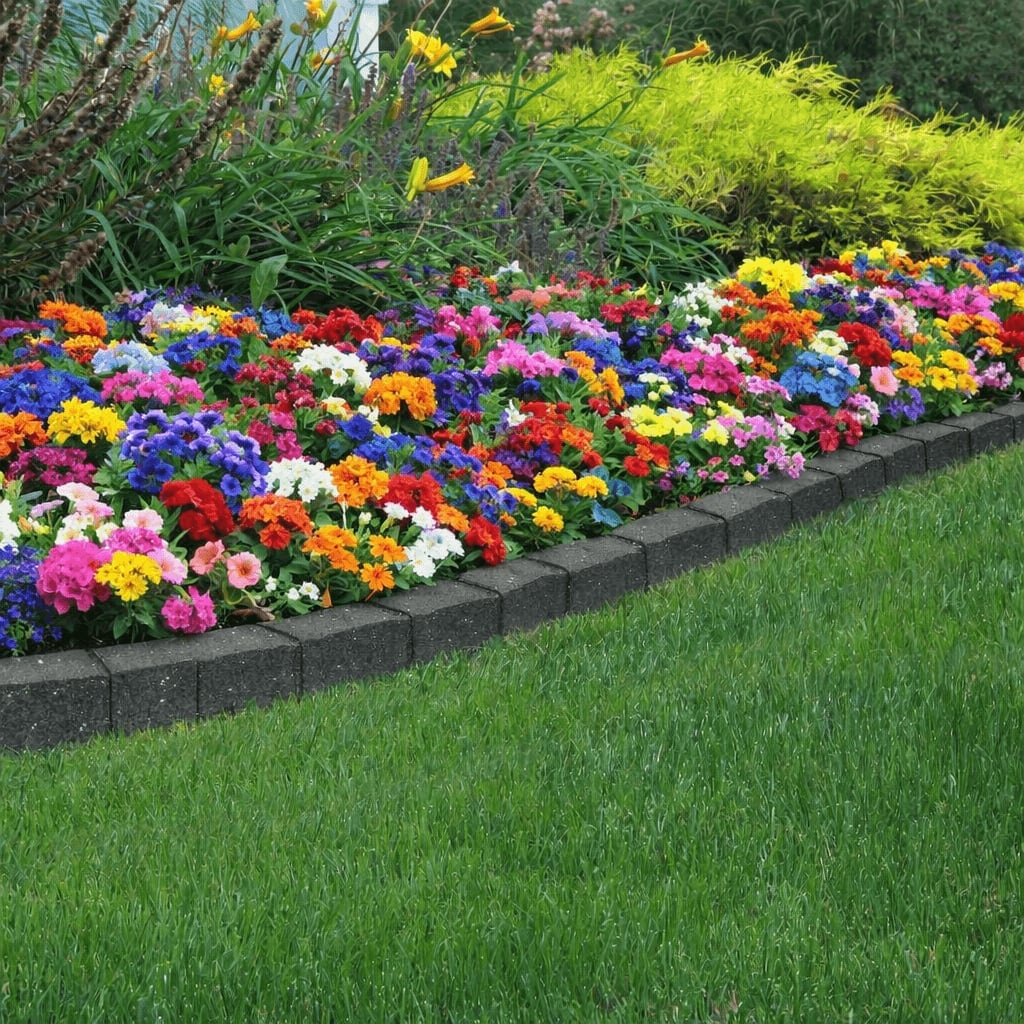
Where a formal parterre might lean on clipped boxwood, this border takes a bolder route with dark gray stone edging. The stones create a crisp, permanent line that holds back a dense row of colorful annuals. The palette relies on high saturation: hot pinks, oranges, and purples packed tightly together so no bare soil shows. That intensity is what defines the look, and the ratio leans heavily toward bright blooms rather than foliage. What breaks the formality is the casual spill of flowers over the edge, softening the geometry. For a renter or first-time gardener, stone edging is a solid swap for built-in beds. It defines the space without digging or permanent changes, and you can adjust the curve each season.
Natural Garden Border with Log Edging and Mixed Flowers
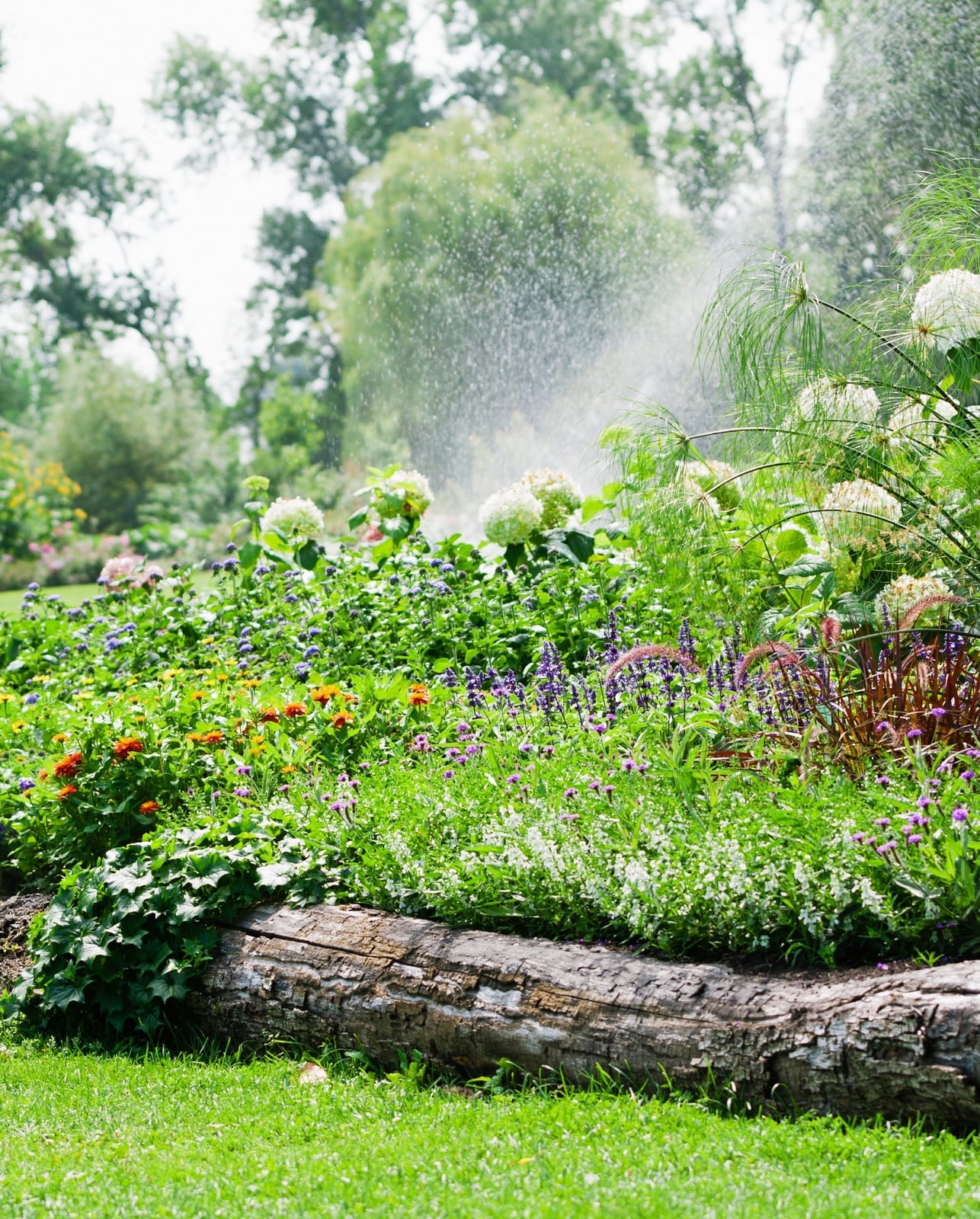
Log edging follows the natural curve of the bed for a softer line. The wood sections sit flush against the soil, creating a low barrier that separates the flower border from the lawn. Mixed flowers in white, orange, and purple rise above the logs in a loose, layered arrangement. For a renter, logs are one of the easiest edging materials to source and remove. They settle into the ground without concrete or nails, and you can pull them out when you move. The look is rustic but intentional, as long as the logs are uniform in size and set at the same height.
Cottage Garden Bed with Delphiniums, Roses, and Daisies
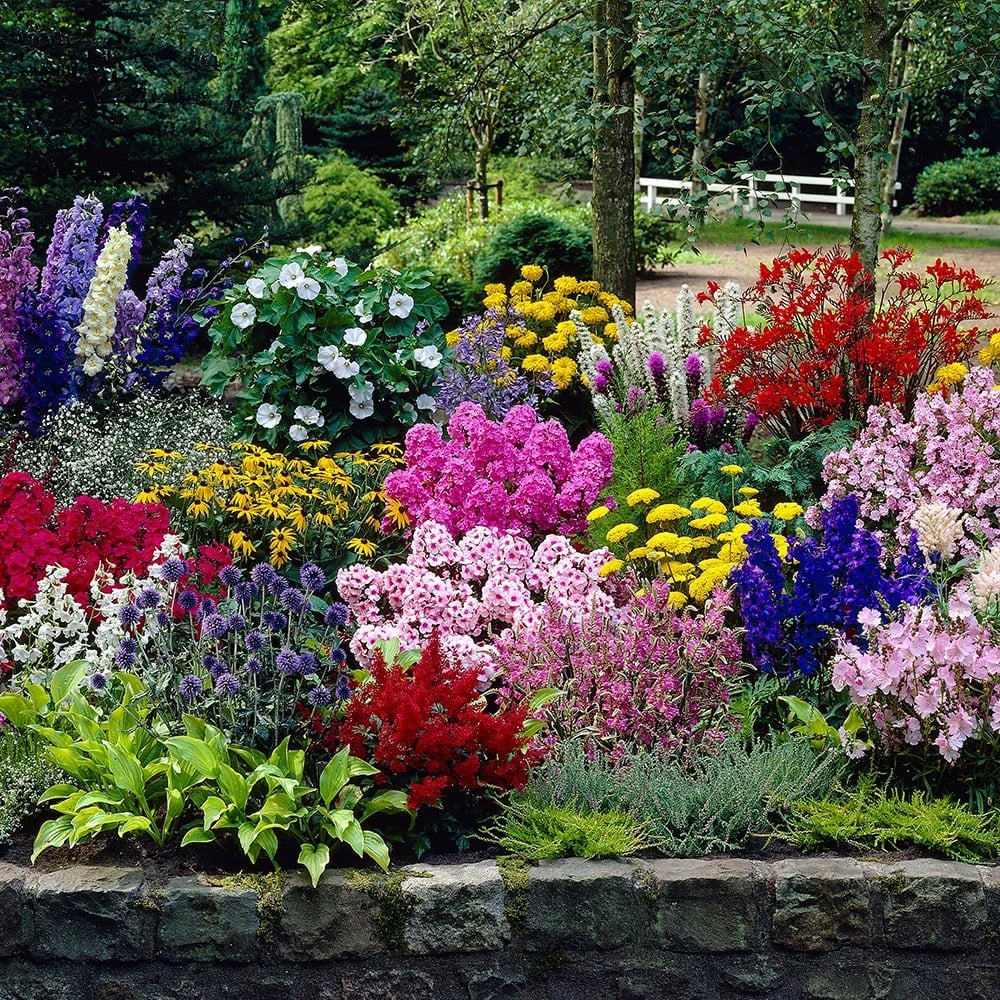
This raised bed packs a lot into a compact footprint. Delphiniums shoot up in blue spikes, while roses and daisies fill the middle layer, and hostas spread at the base to hide bare soil. The layout follows a simple rule: tallest plants go to the back or center, then step down in height toward the edge. That arrangement keeps every bloom visible. The stone border holds the soil in and adds a permanent frame to the seasonal chaos. If you have a small garden bed, this stacking approach gives you the same lush look as a larger border without needing extra square footage.
Colorful Pansies in a Wooden Crate on a Grassy Lawn
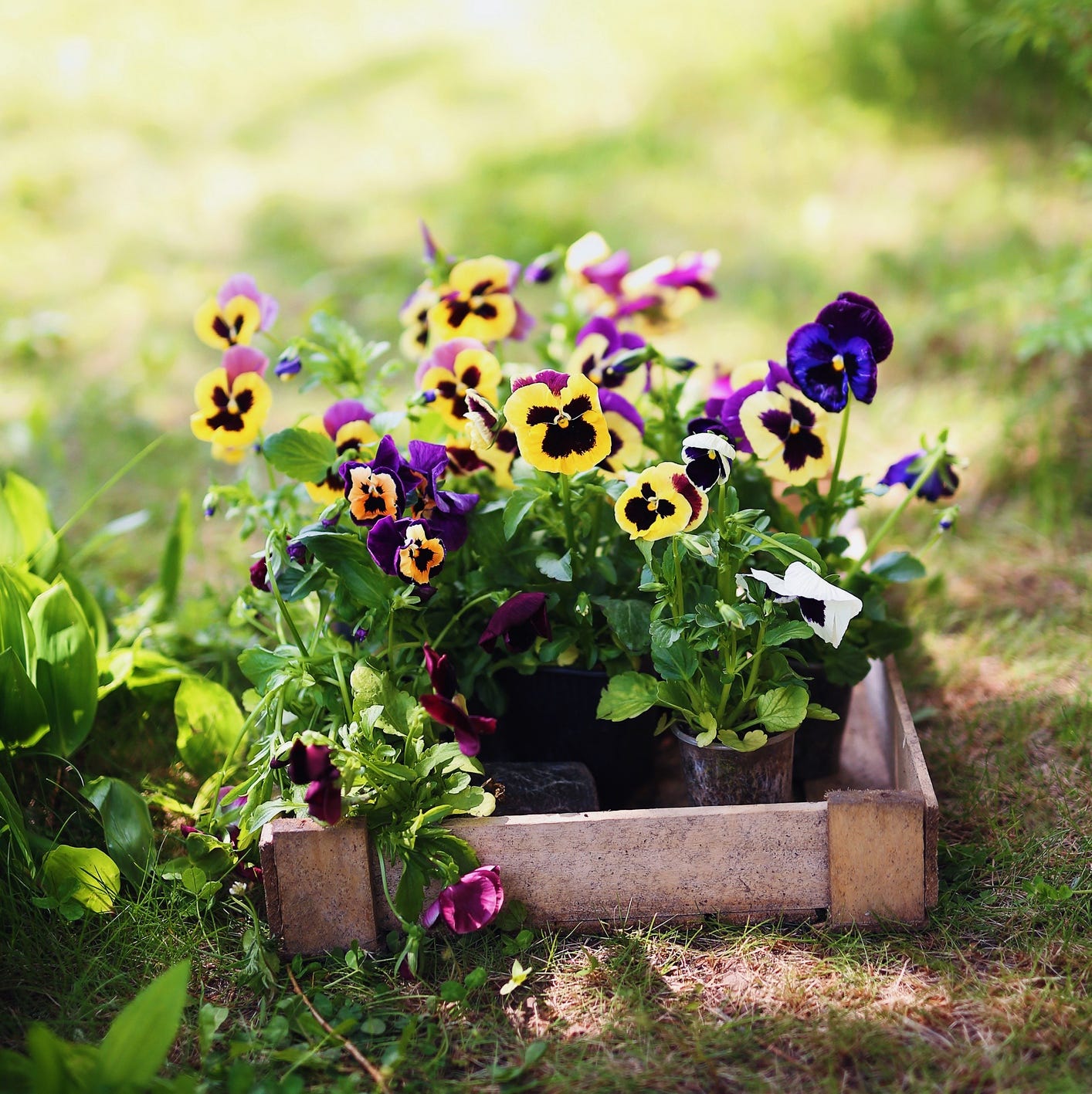
Can a single crate of pansies hold its own against a whole lawn? When the crate is weathered wood and the pansies are a mix of yellow, purple, and white, yes. The container sits directly on the grass, making it a portable flower bed that you can move to chase the sun or fill a bare patch. The dappled light suits pansies well, as they prefer cooler conditions and consistent moisture. For gardeners testing a new spot, a wooden crate is a low-commitment way to see how a location performs before planting in the ground. The crate also lifts the blooms off the soil, reducing slug and weed pressure.
Woven Wicker Border with Lavender and Mixed Flowers
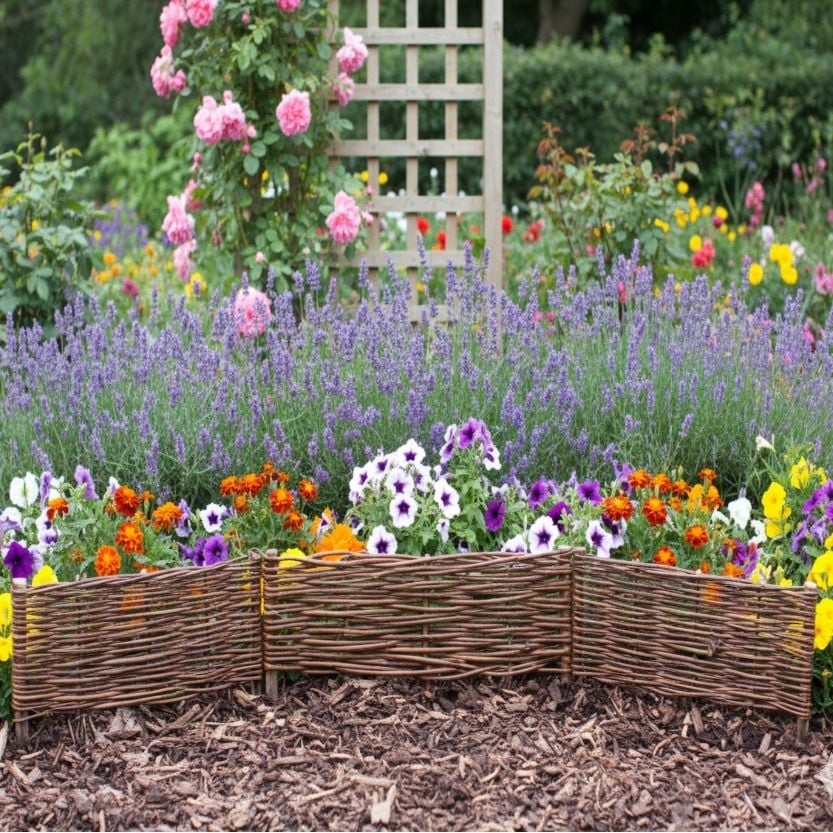
A woven wicker border stands about knee-high and runs along the edge of the flower bed, with lavender planted right up against it. The wicker adds texture and a warm brown tone that contrasts with the purple and pink blooms. Behind the lavender, taller flowers and a wooden trellis create a layered backdrop. The low wicker fence works as a physical and visual boundary without blocking the view. For a small garden, this kind of edging defines the border without taking up planting space. It also pairs naturally with cottage garden flowers, since the rustic weave echoes the informal growth habit of perennials.
Scalloped Stone Border with Pink, Purple, and Yellow Flowers
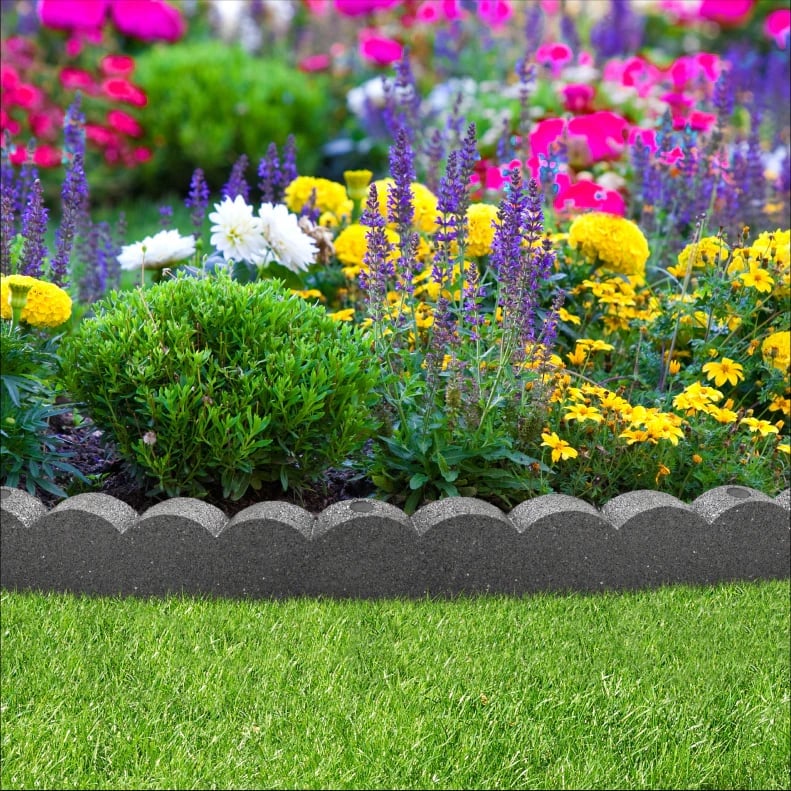
A scalloped stone edge turns a garden bed into a formal statement. The gray stone border curves in a repeating wave pattern, separating the mixed flowers from the manicured lawn without breaking the flow. The pink, purple, and yellow blooms sit behind the stone in a tidy linear arrangement, so the hardscape frames the flowers instead of blocking them. Bright daylight makes the gray stone look clean against the dark green grass, and the scallop shape softens what could have been a rigid line. This style choice works when the planting stays simple enough to let the border show off.
Formal Garden with Gravel Path and Abundant Flower Borders
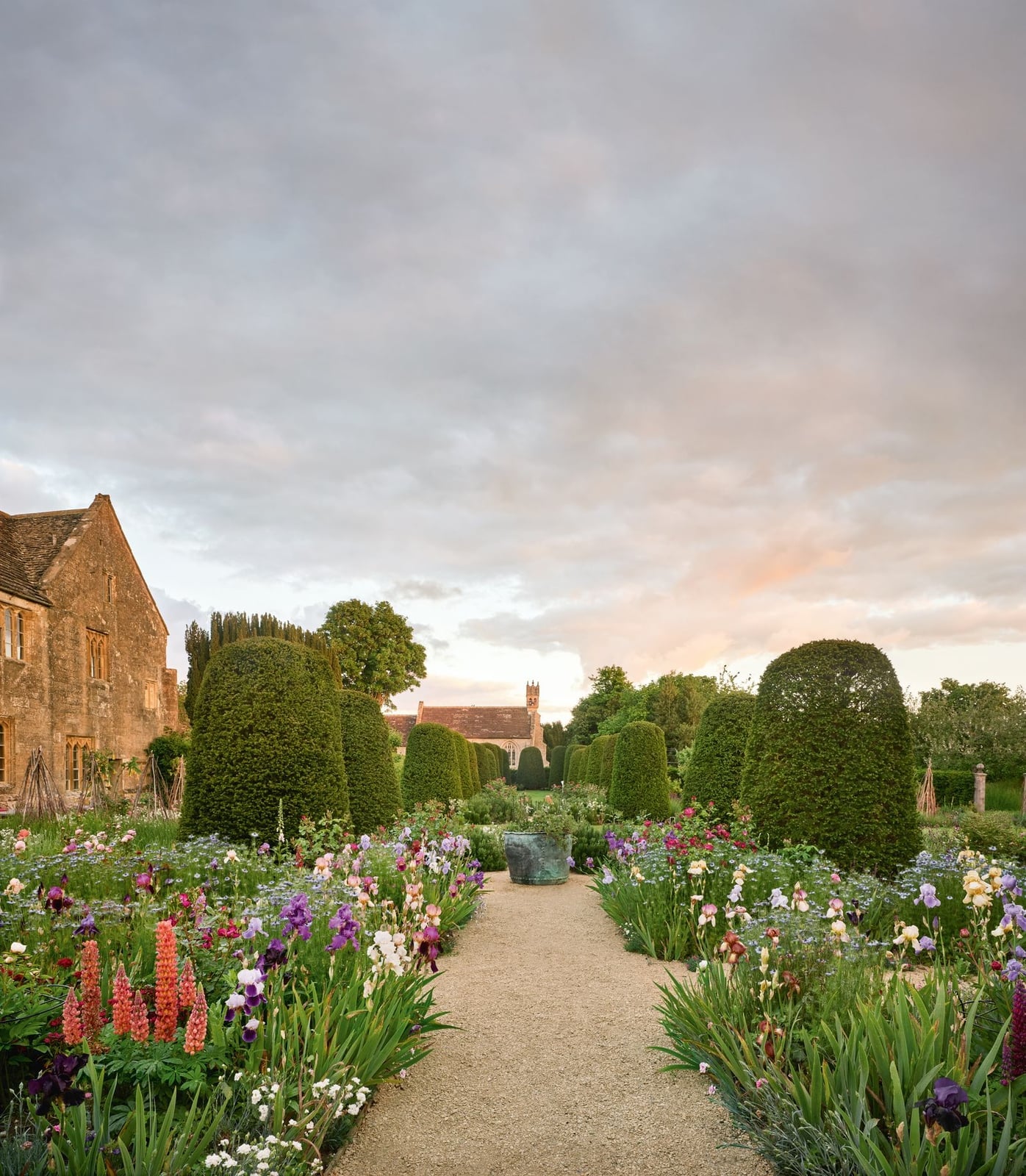
A gravel path through a formal garden can feel either like a gentle invitation or a firm instruction, and the difference is in the flowers. Here the borders are dense and multi-colored, softening the straight line of the path and making the route feel discovered rather than dictated. The stone building at the far end anchors the view, and the topiary bushes add structure to the sheer volume of blooms. Dusk light washes the whole scene in a soft glow, which takes the edge off the formality. The palette mixes every color in the warmer half of the wheel, so the gravel looks like neutral ground. The layout works because the path is narrow enough to keep the flowers close on both sides, creating a tunnel of color that still leads the eye forward.
Garden Border Featuring Tall Blue and Purple Delphiniums
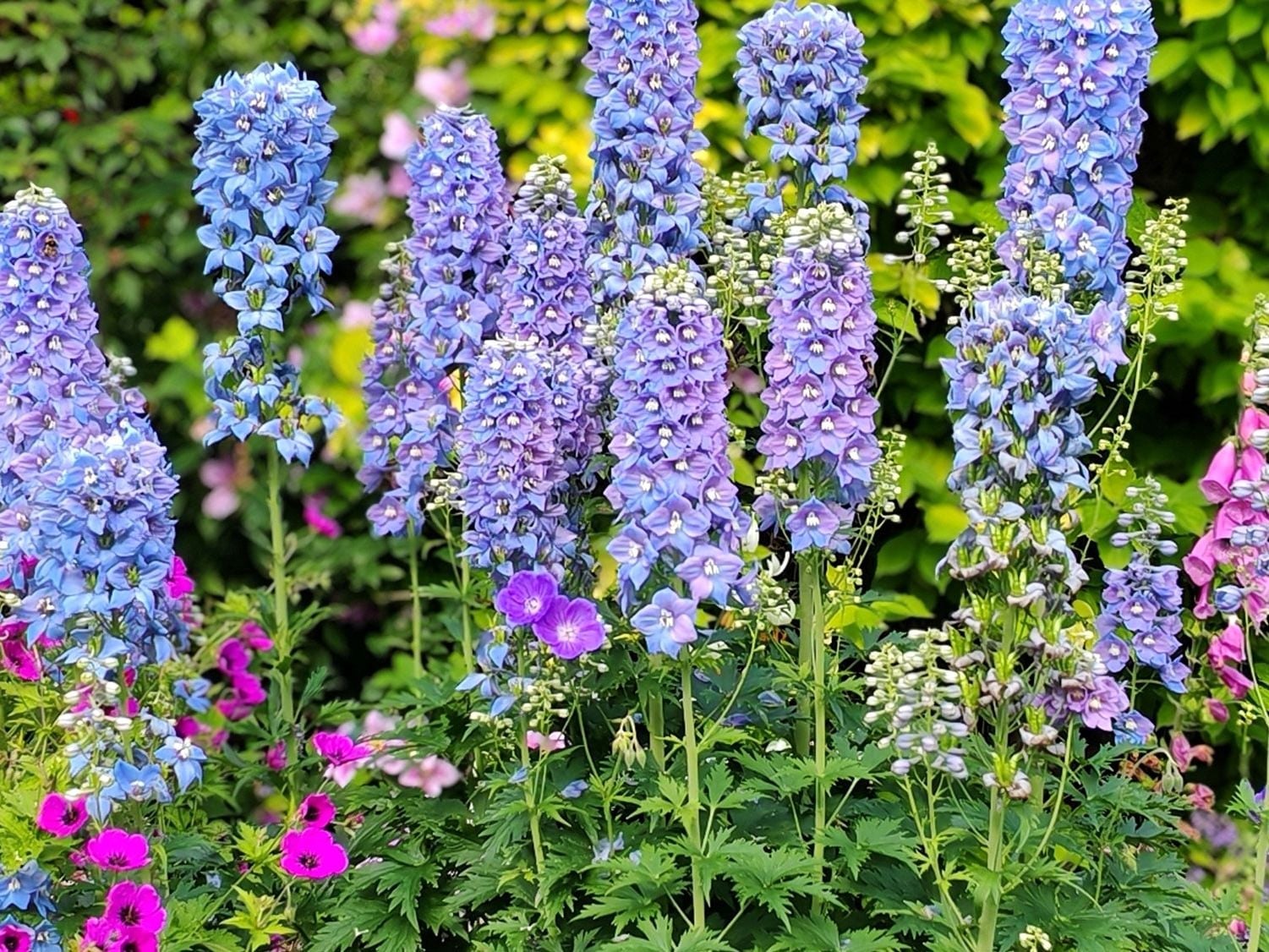
Delphiniums are the vertical exclamation points of a garden border, and here they rise well above the surrounding geraniums and foliage in a clear blue and purple palette. The taller spikes create a staggered silhouette that keeps the eye moving upward, while the lower plants fill the base without blocking the view. Daylight makes the blue tones read as cool and crisp against the green backdrop. The palette is narrow but not flat, with the purple adding warmth next to the delphinium blue. This works best when the plants below are kept low and simple, so the tall spikes stay the main event.
Cottage Garden with White Rose Arch and Stone Pathway
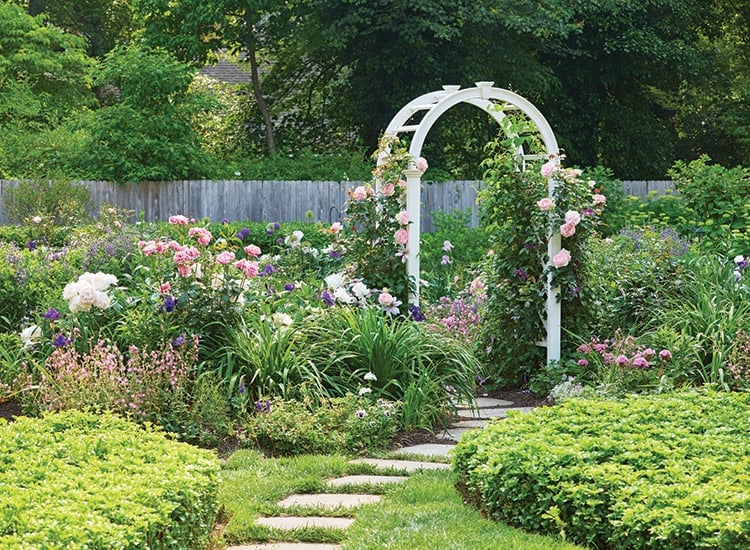
A white rose arch frames the path and draws the eye through the garden, while stepping stones lead the way under the blooms. Pink and purple flowers line the route on both sides, but the white arch stands apart because it rises above the palette. Daylight keeps the scene open and airy, which suits a cottage garden layout that depends on curves. The stone pathway keeps the ground from turning to mud, and the arch gives the whole planting a natural focal point. This setup works best when the arch is visible from the start, so the walk feels like it leads somewhere.
Cottage Garden Variety of Blooms with Stone and Wood Elements
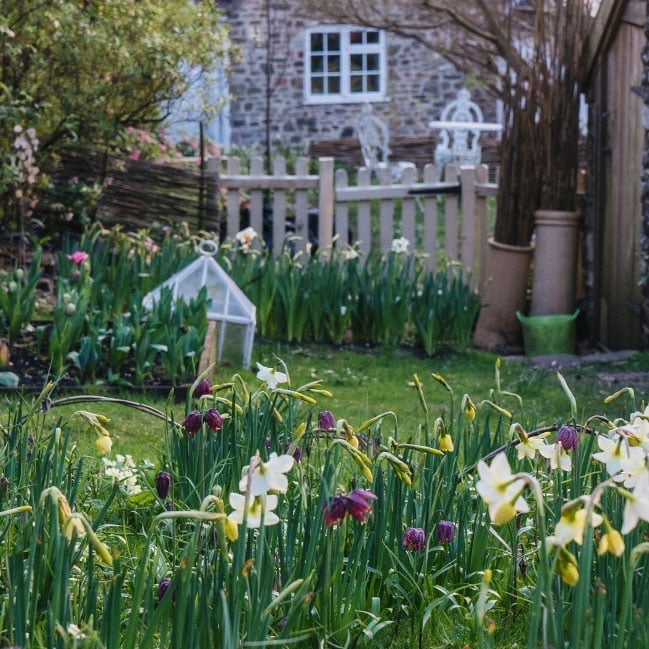
A cottage garden thrives on variety, and this one has it in spades with green, purple, white, and yellow blooms spreading across an informal layout. The stone wall and wooden fence provide the backbone, keeping the planting from looking chaotic. A greenhouse in the background adds a functional layer, hinting at propagation or winter storage without needing to say more. The soft daylight helps the colors blend rather than clash, which is the trick with a wide palette. The mix of hard materials keeps the eye grounded as it moves from flower to flower. The layout feels generous because the structures frame the space without crowding it, giving each plant room to show its own shape.
Informal Garden Border with Gladiolus, Lavender, and Marigolds
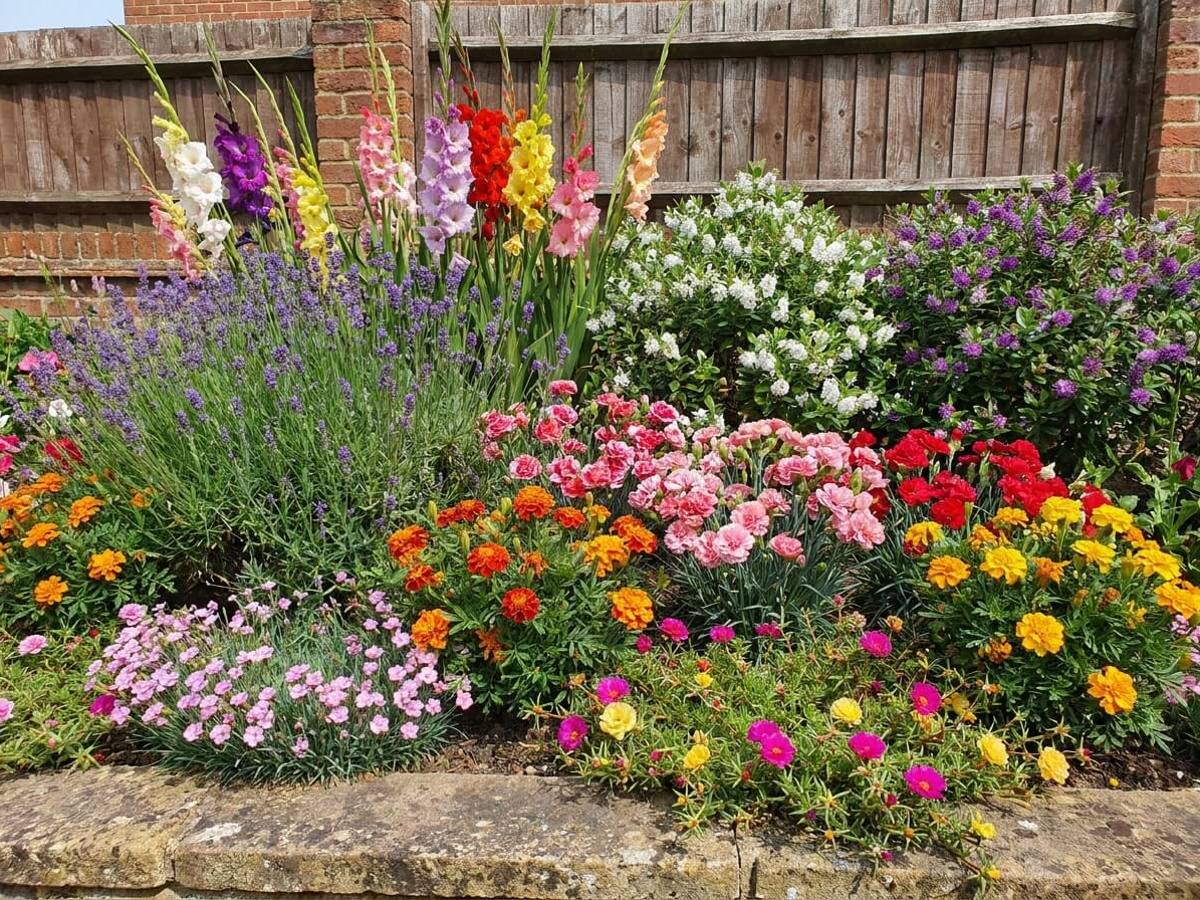
Tall gladiolus spikes give this informal garden border its vertical rhythm while lavender and marigolds fill the middle and lower layers against a wooden fence. The stone edging keeps the dense planting from spilling onto the path, a practical trick for any bed that leans toward the wild side. What defines the informal garden style is its refusal to follow straight lines. The mix of heights and colors creates a relaxed feel, and the wooden fence behind it acts as a neutral backdrop that keeps the scene from looking chaotic. The ratio here favors tall blooms over low ones, giving the eye a clear path upward.
Abundant Cottage Garden Flower Border with Perennials
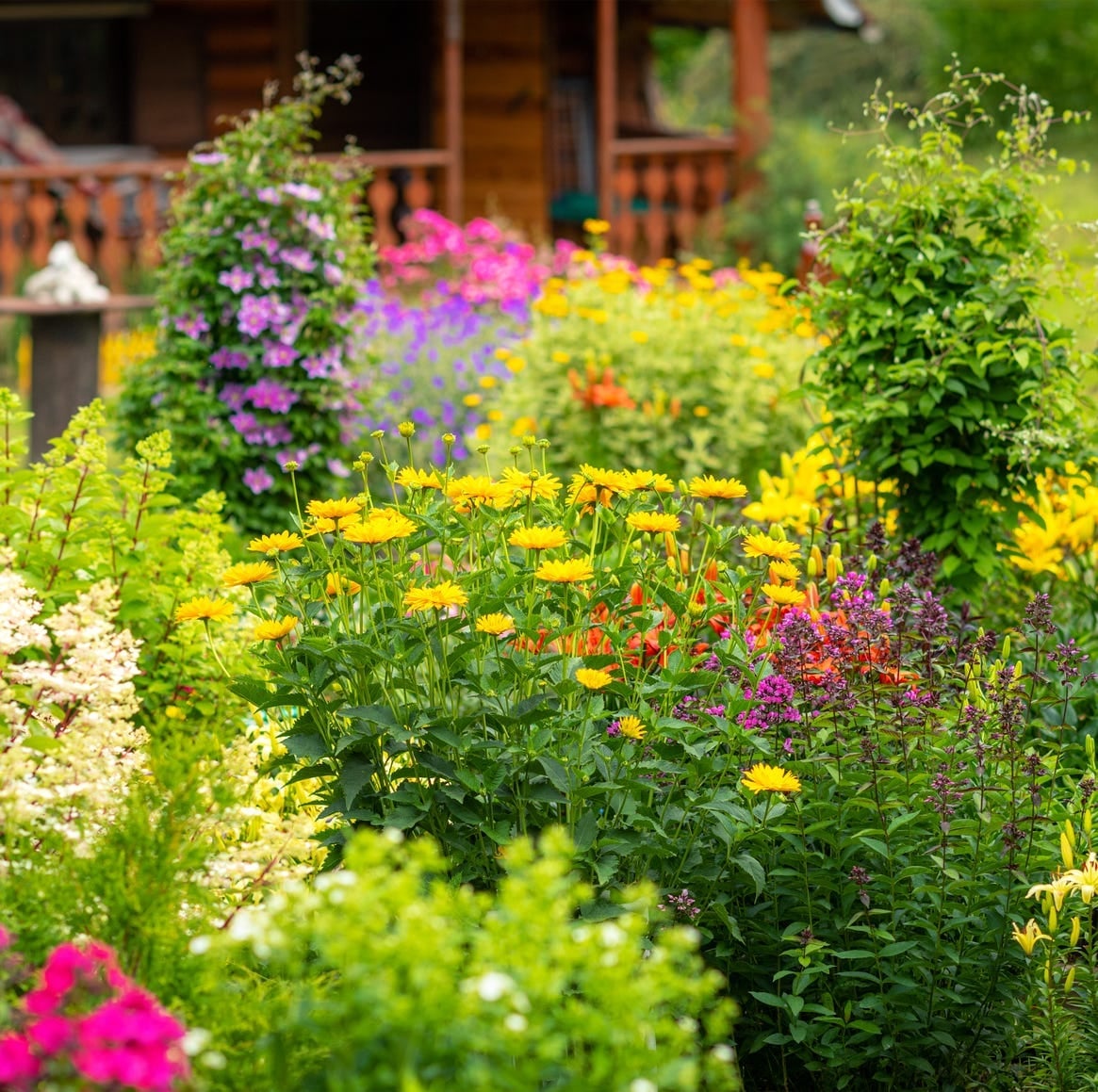
An abundant cottage garden flower border relies on layered planting, with the tallest plants at the back and the shortest at the front, creating depth without blocking sightlines. This bed uses a mix of yellow, pink, purple, and white perennials, with shrubs adding structure among the softer blooms. The dense planting is a hallmark of the cottage garden look. To keep the abundance from feeling cramped, leave a few inches of bare soil between clumps when you plant, so each perennial has room to expand in its second year. That spacing is the one thing that breaks the otherwise packed look.
Cottage Garden with Curving Beds of Colorful Blooms
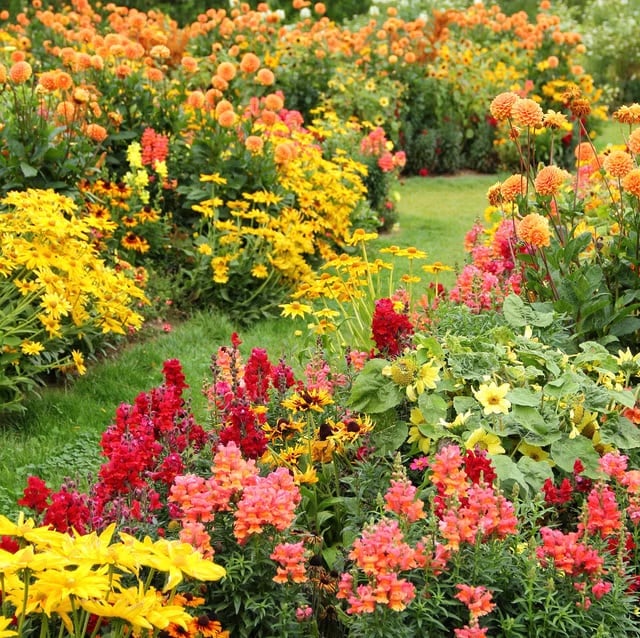
A straight border can feel rigid, but curving flower beds in a cottage garden soften the whole yard. Here the beds sweep in gentle arcs across a manicured lawn, with blooms in orange, yellow, red, and pink packed so tight that little soil shows through. The lawn becomes the quiet space between the color, giving the eye a place to rest.
The curve does more than look pretty. It makes the garden feel larger because the path between beds bends out of sight. A straight bed shows you the whole thing at once; a curved one teases what comes next. The ratio of flowers to grass leans heavily toward blooms, which is what you want if the goal is a lush, romantic feel. Mowing that lawn along the curves takes a steady hand, but the payoff is a garden that feels older and more settled than it is.
Naturalistic Garden Border with Coneflowers and Black-Eyed Susans
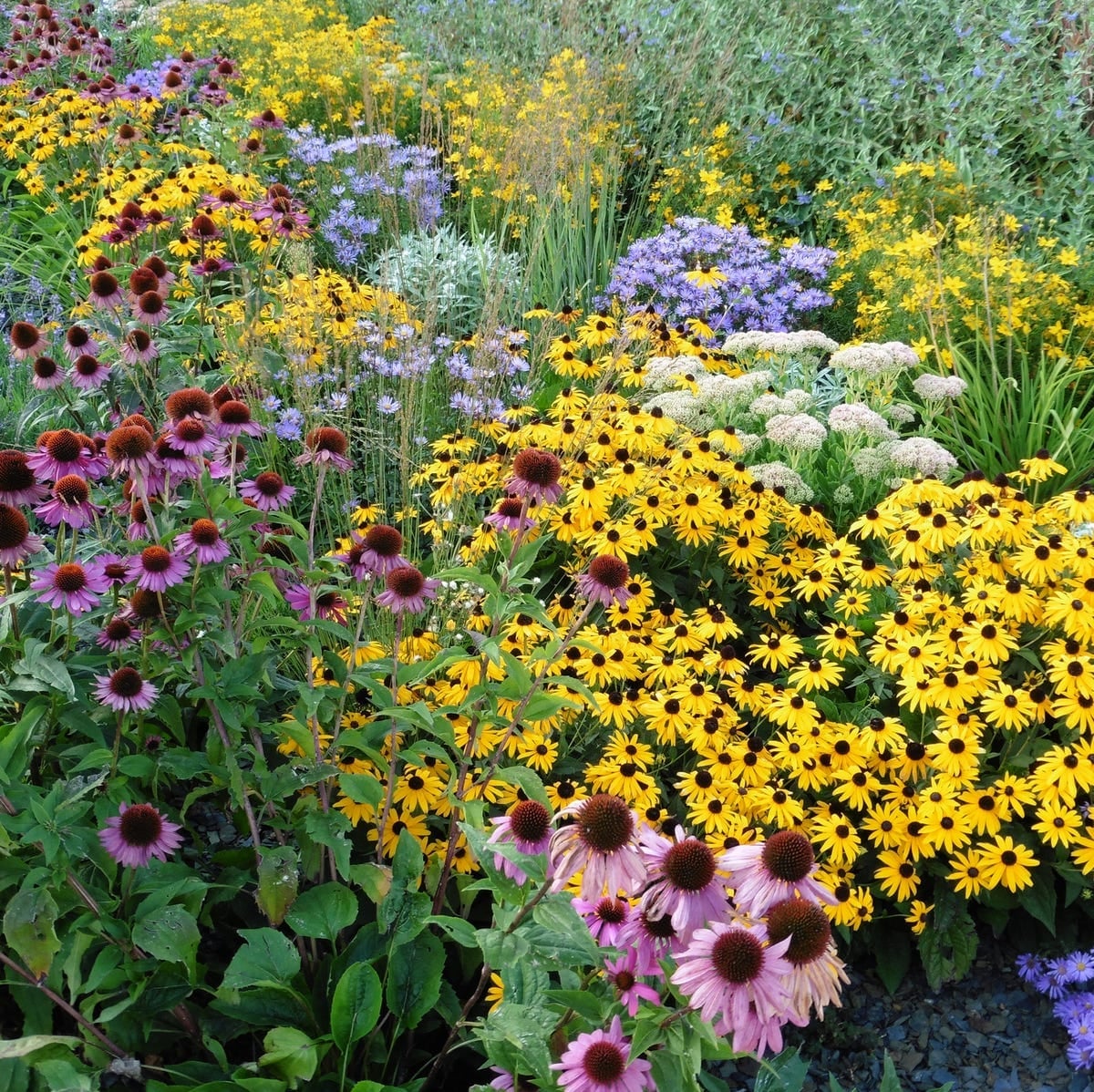
Purple coneflowers and yellow black-eyed susans create the classic prairie palette in this naturalistic garden border, with blue asters adding a cool note among the warm tones. The gravel path in front of the planting keeps the feet dry while the flowers spill over the edge. This palette works because the two main colors are complementary on the color wheel, so they energize each other without clashing. The white flowers scattered through the mix act as a neutral bridge, preventing the purple and yellow from feeling too aggressive. A gravel path is a renter-safe swap for permanent stone edging, as it can be removed or reshaped without changing the soil grade.
Traditional Garden Front Yard with Hydrangea Flower Border
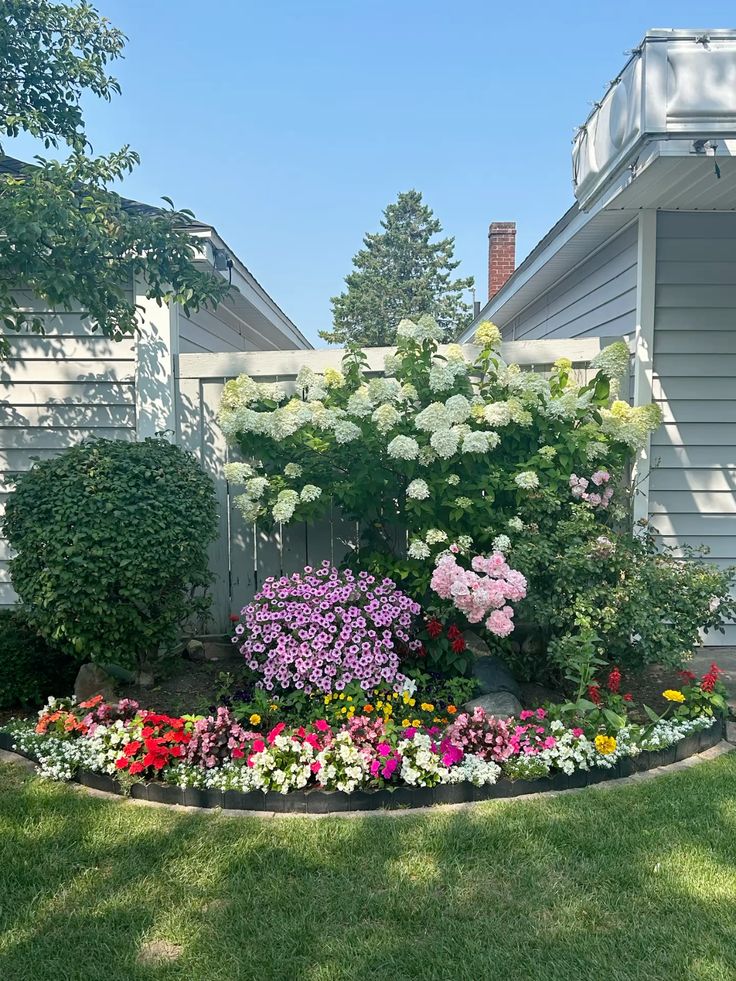
This front yard proves that one good hydrangea bush can anchor an entire flower border. The large pink bloom clusters sit at the center of the curved bed, with smaller red and yellow annuals spreading out from it and a low stone edge separating the flowers from the lawn. The hydrangea is the hero element here, and everything else in the border stays lower and softer so the eye lands on those domed blooms first. In a compact front yard, a single statement shrub like this creates the same impact as a dozen smaller plants but with less watering and weeding. The stone edging is a permanent install, but a trench with a wood or metal border can give a similar clean line without concrete work.
Naturalistic Garden Border with Mixed Perennials and Grasses
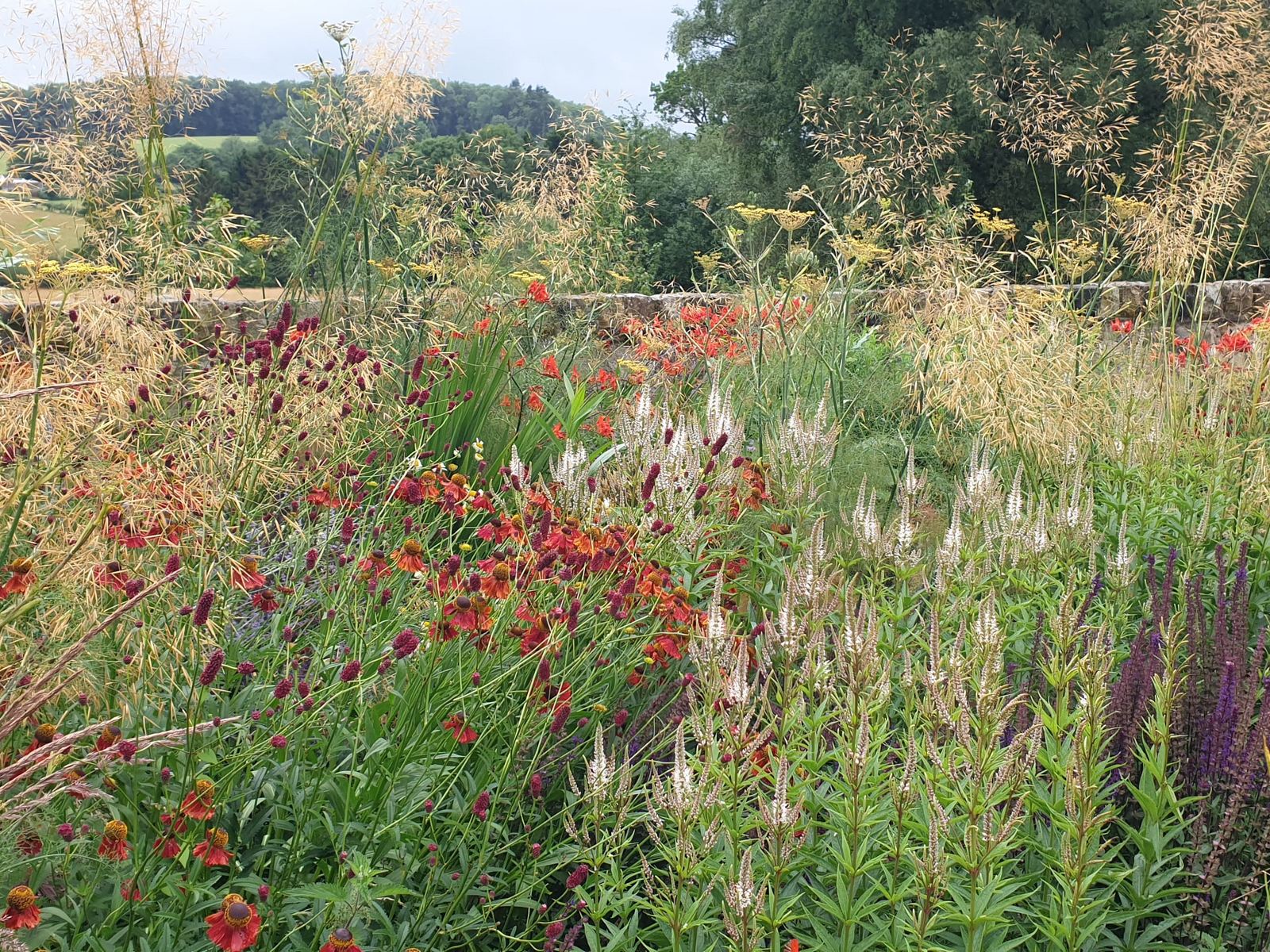
When you want a border that looks like it planted itself, the trick is to lean into contrast without forcing symmetry. This naturalistic garden bed proves it with a mix of perennials and ornamental grasses that vary in height, leaf shape, and bloom form. The palette includes red, white, yellow, and green. The stone edging grounds the whole thing so the plants feel deliberate. The real work is done by the grasses. Their vertical, airy texture breaks up the round flower heads and keeps the eye moving. Without them, the bed would appear flat. With them, it feels layered and alive. A border like this needs room to spread, so it suits a garden that can handle a bit of wildness at the edges. The overcast daylight softens the colors and makes the textures stand out even more.
Country Garden Path Lined with Vibrant Red Poppies
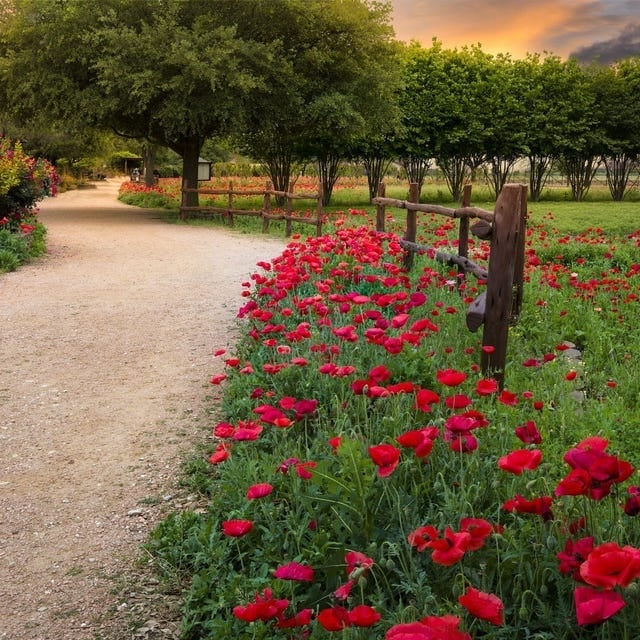
A gravel path flanked by a field of red poppies may sound like a postcard, but the real trick here is the contrast between the straight, bare path and the chaos of flowers beside it. The red blooms sit against green grass, brown wood fencing, and a blue sky at sunset. The palette is simple but intense because one color dominates. The path keeps the eye moving forward, while the poppies spill outward in a way that feels generous rather than planned. It is a style that works best when you let one element lead and everything else just follows.
Close-up of Vibrant Blue Agapanthus Flowers
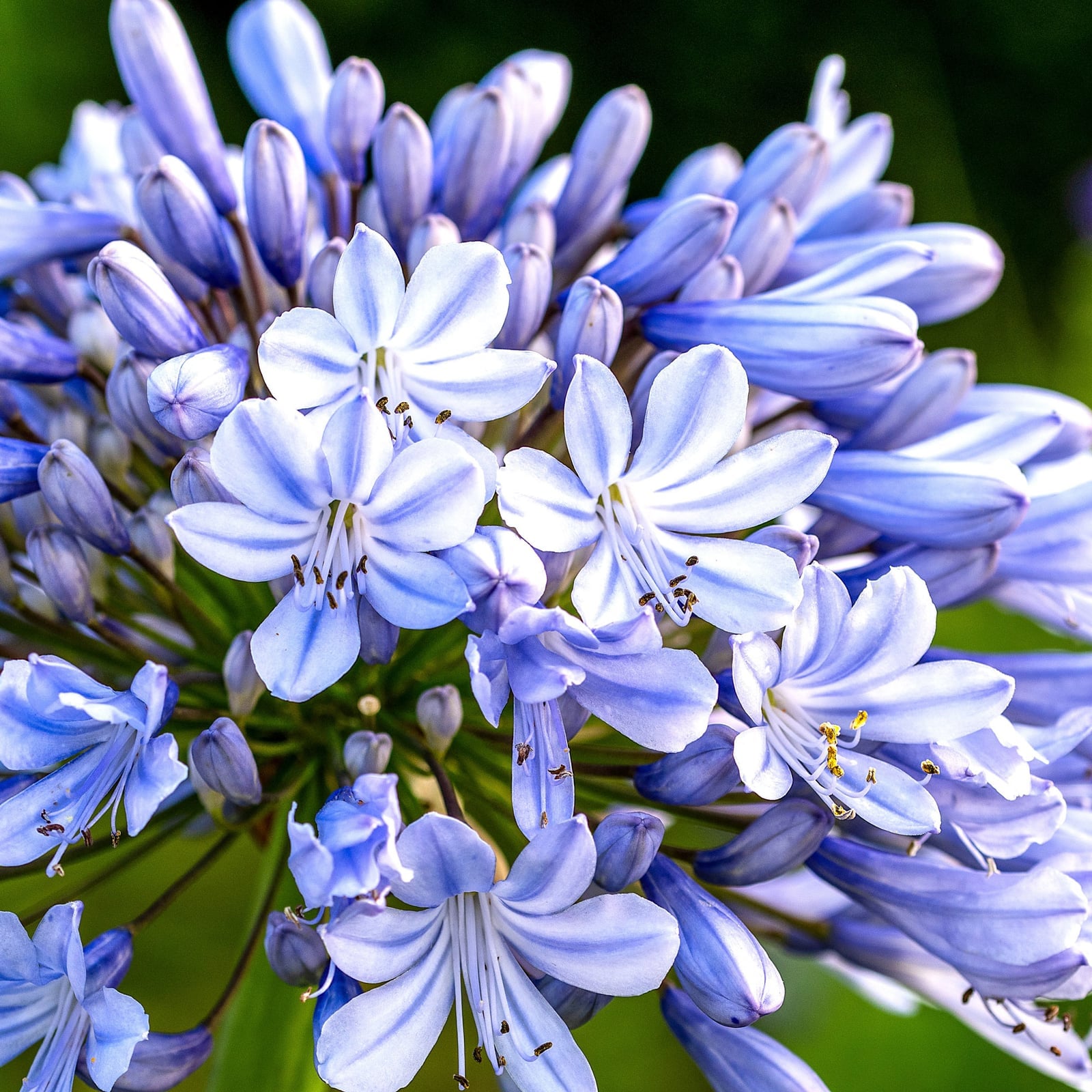
A close-up view of a single plant is a good reminder that a flower border does not need a crowd to make an impact. The blue agapanthus here is the hero element: clusters of trumpet-shaped blooms rising on tall stems above narrow green leaves. The natural daylight hits the petals evenly, making the blue look clean and saturated against the green background. In a garden, agapanthus works as a repeat or a solo accent. It holds its own shape without needing support from neighboring plants, which makes it a strong choice for a border that needs structure without a lot of filler.
Cottage Garden Border with Red Salvia and Pink Roses, Close-Up Take
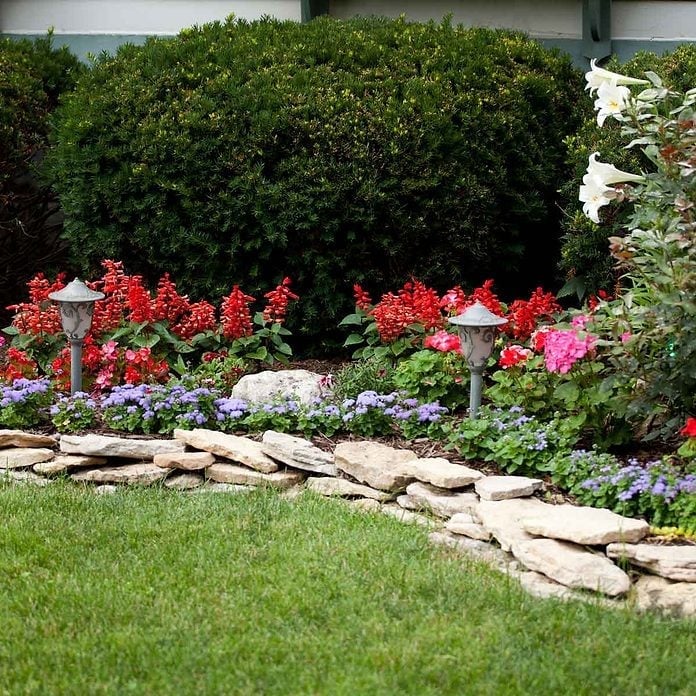
A cottage garden border can tip into chaos fast, but this one stays readable because the layout follows a clear logic. The red salvia and pink roses are planted along a low stone wall, with the taller blooms at the back and the shorter ones spilling forward. The palette is red, pink, purple, and green. The daylight and the garden lamps catch the red salvia first, which gives the border a focal point even from a distance. The roses add softness, while the salvia provides punch. The trick is to place the strongest color where you want the eye to land first. Everything else fills in around it. That layered approach keeps the bed full without feeling crowded.
Naturalistic Wildflower Border Along a Mown Lawn
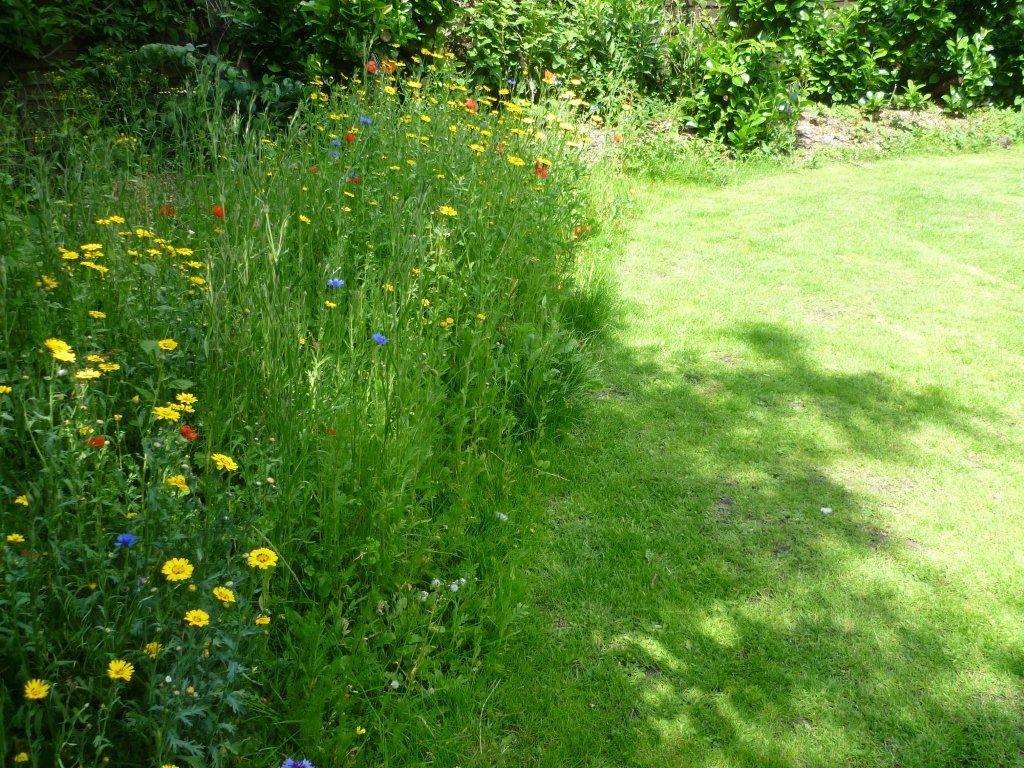
The best part of this wildflower border is the edge where the mown lawn meets the tall grass. That clean strip of short green creates a frame for the wild tangle of yellow, red, and blue blooms beyond it. The dappled daylight moves through the taller foliage, making the colors shift as you walk past. It is a style that relies on contrast between control and freedom. The lawn says someone lives here. The wildflowers say nature is welcome too. That balance makes the border feel curated without being stiff.
Stone Garden Path Flanked by Purple Coneflowers and Black-Eyed Susans
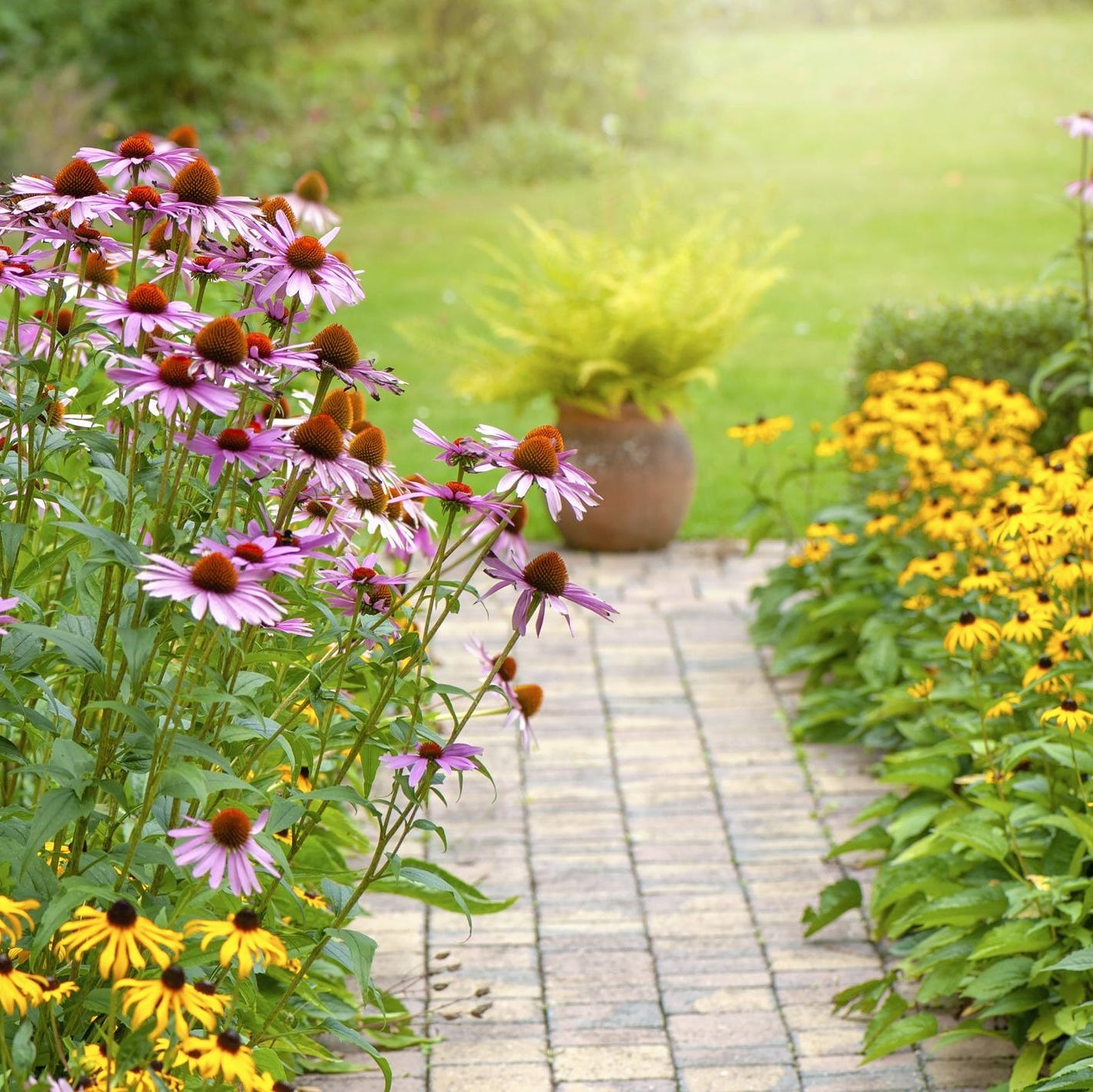
A stone path lined with purple coneflowers and black-eyed Susans gives a cottage garden its friendly, unstudied look. The purple, yellow, and green palette is cheerful without feeling busy. What defines this style is the loose, natural spacing, the flowers spill toward the stones instead of standing in rigid rows. The ratio of tall purple blooms to shorter yellow ones keeps the eye moving along the path instead of stopping at one spot. A gravel or stepping-stone path works the same way if you want the look without permanent edging. Check your USDA zone before planting coneflowers; they do well in most climates but need full sun to bloom this freely.
Modern Garden Bed with Sprinklers and Brick Path
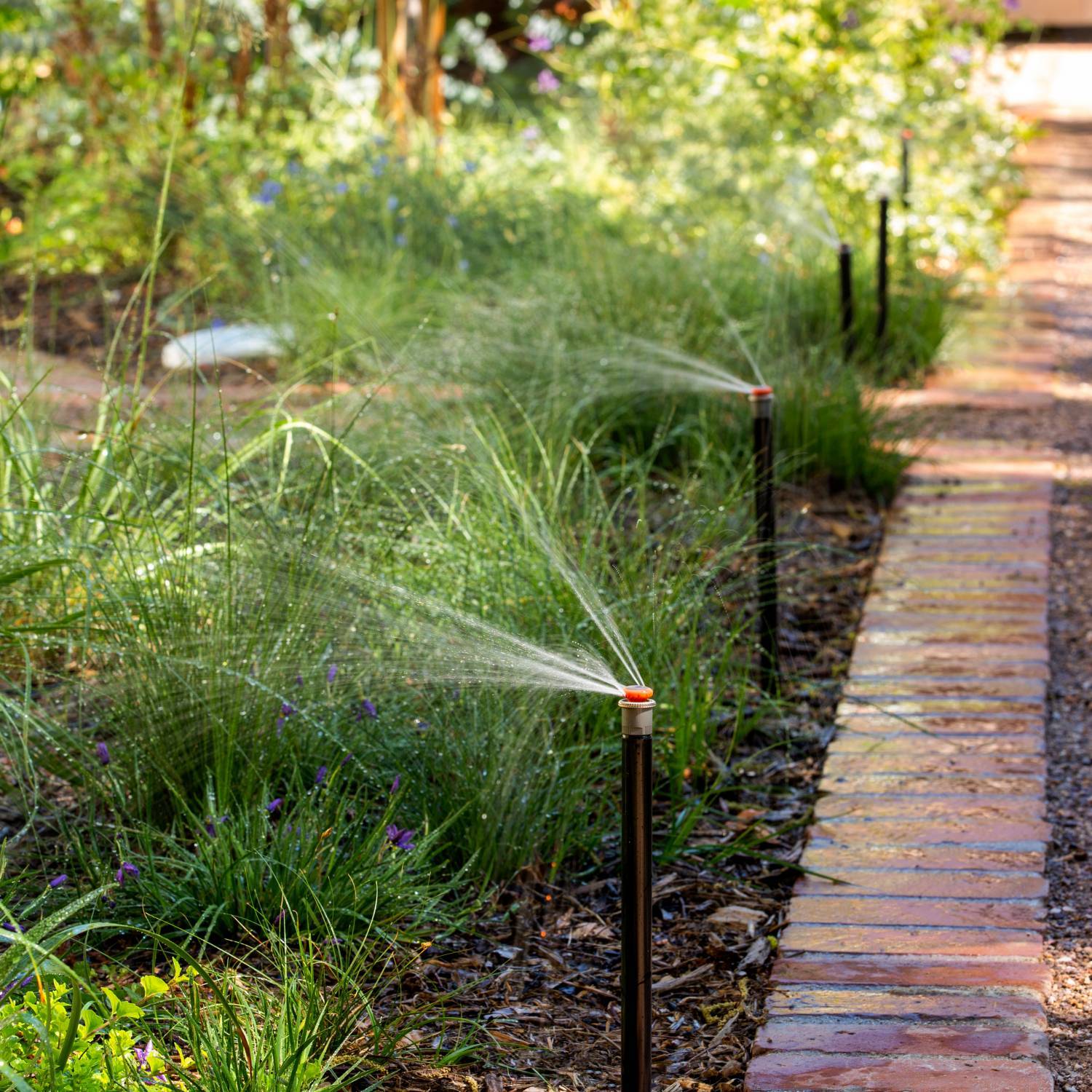
A modern garden bed with sprinklers might sound like the opposite of a relaxed cottage border, but the two share a practical foundation: both rely on a clear layout to keep the space from feeling scattered. Here, a row of sprinkler heads runs alongside a brick path, with the metal and plastic hardware visible rather than hidden. The palette is green and brown from the soil and grass, with orange accents from the brick. What defines the modern garden look is the honest use of materials, the sprinklers become part of the design instead of something to camouflage. For renters, a soaker hose laid along a brick or gravel path mimics this setup without permanent installation. You can adjust the hose length as your planting area changes, which matters if you are not ready to commit to underground lines.
Final Thoughts
A flower border doesn’t need a grand plan to feel intentional. What matters is how the plants relate to their setting: a stone edge, a gravel path, a curve in the lawn. Start with one strong color or a single repeat, then let the rest fill in. The best borders look like they grew there, not like they were plotted on graph paper. Keep deadheading, water at the roots, and give perennials room to spread. In a few seasons, that edge you sketched will be the view everyone stops to admire.