Garden design in 2027 is less about following a single rulebook and more about finding the version of outside that actually works for how you live. Maybe that means a paved patio with succulents that never ask for much, or a rooftop terrace where the fire pit becomes the evening anchor.
These 32 ideas cover the spectrum from formal hedges to rustic raised beds, each one focused on making the space feel settled rather than staged. Whether your garden is a postage-stamp courtyard or a sprawling lawn, there is a layout, a material, or a seating setup here that will click.
Modern Paved Patio with Succulent Garden
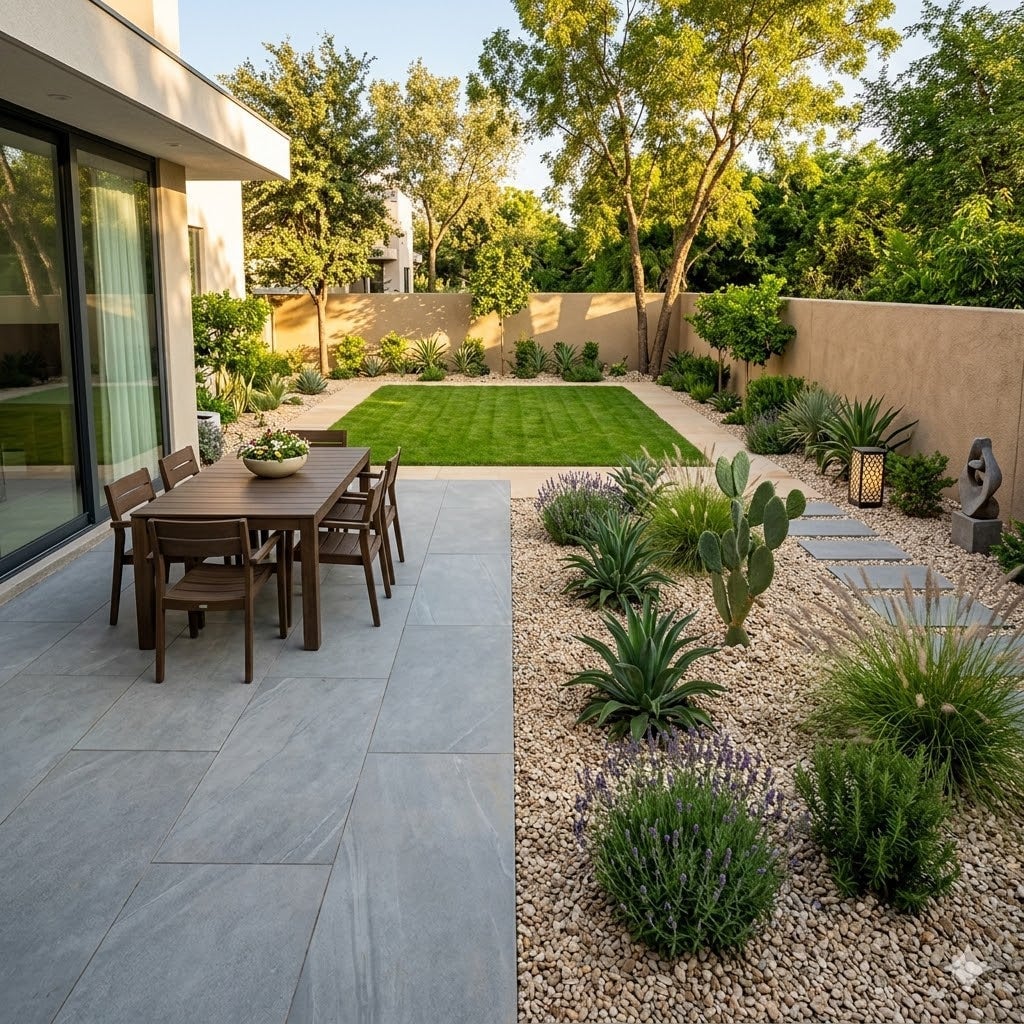
A patio that trades lawn for a gravel garden filled with succulents is a low-water choice that still feels lush. The stone path leads past a dining table set on concrete pavers, with the planting in shades of green and terracotta filling the space where grass would be. Gray stone and beige gravel keep the palette neutral so the sculptural shapes of the succulents stand out. This layout works for anyone who wants outdoor dining without weekly mowing.
Contemporary Rooftop Terrace with Fire Pit
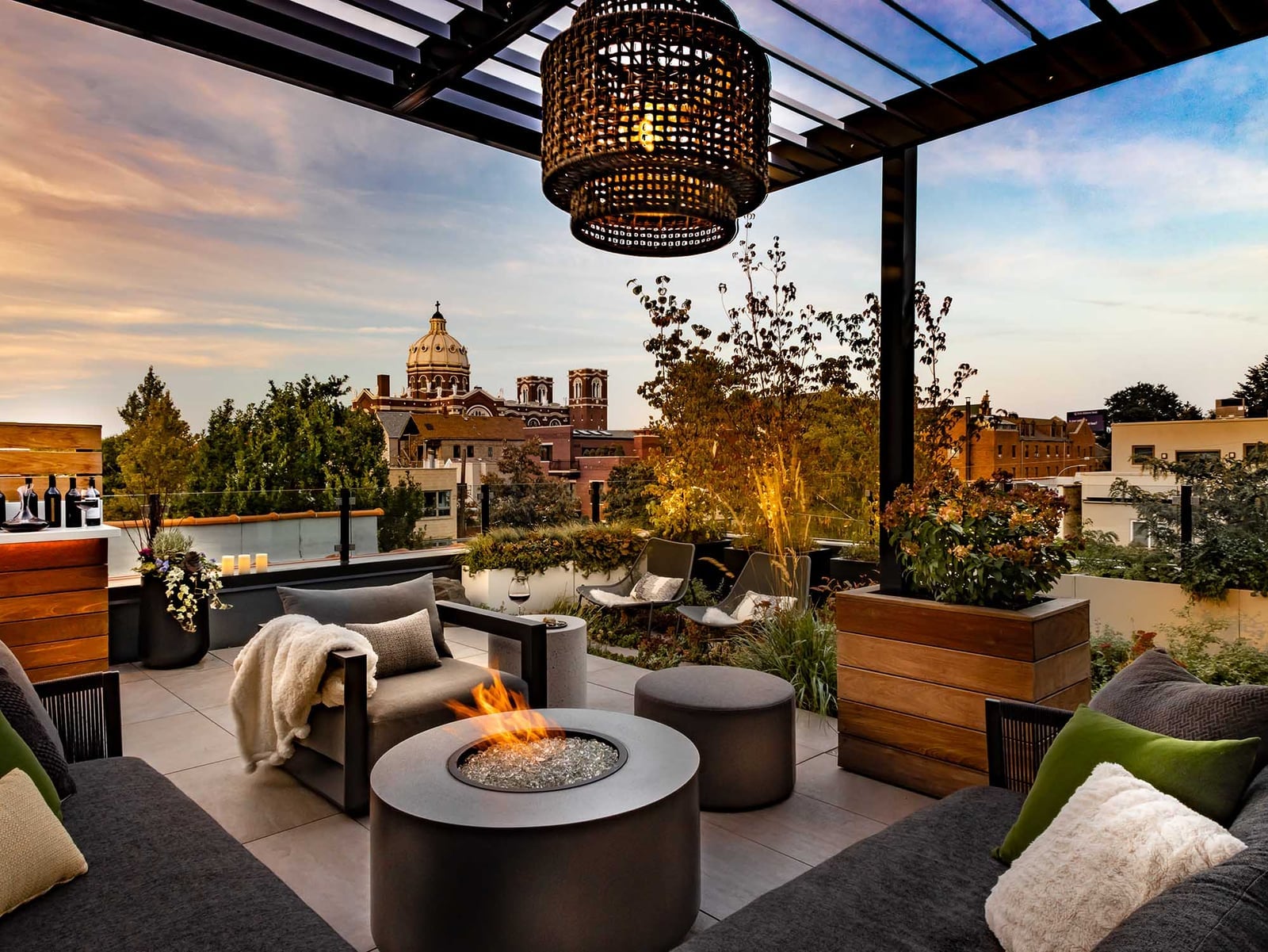
This rooftop terrace gets its evening appeal from three light sources working at different heights. The fire pit anchors the seating zone with a warm glow at ground level, while a pendant light hangs overhead and the city skyline provides a distant backdrop. Gray concrete and wood keep the palette calm, with the large planter adding green. The layout zones the terrace into a lounge area around the fire pit and an open walkway, making a narrow rooftop feel like two rooms.
Modern Deck with Black Garden Room and String Lights
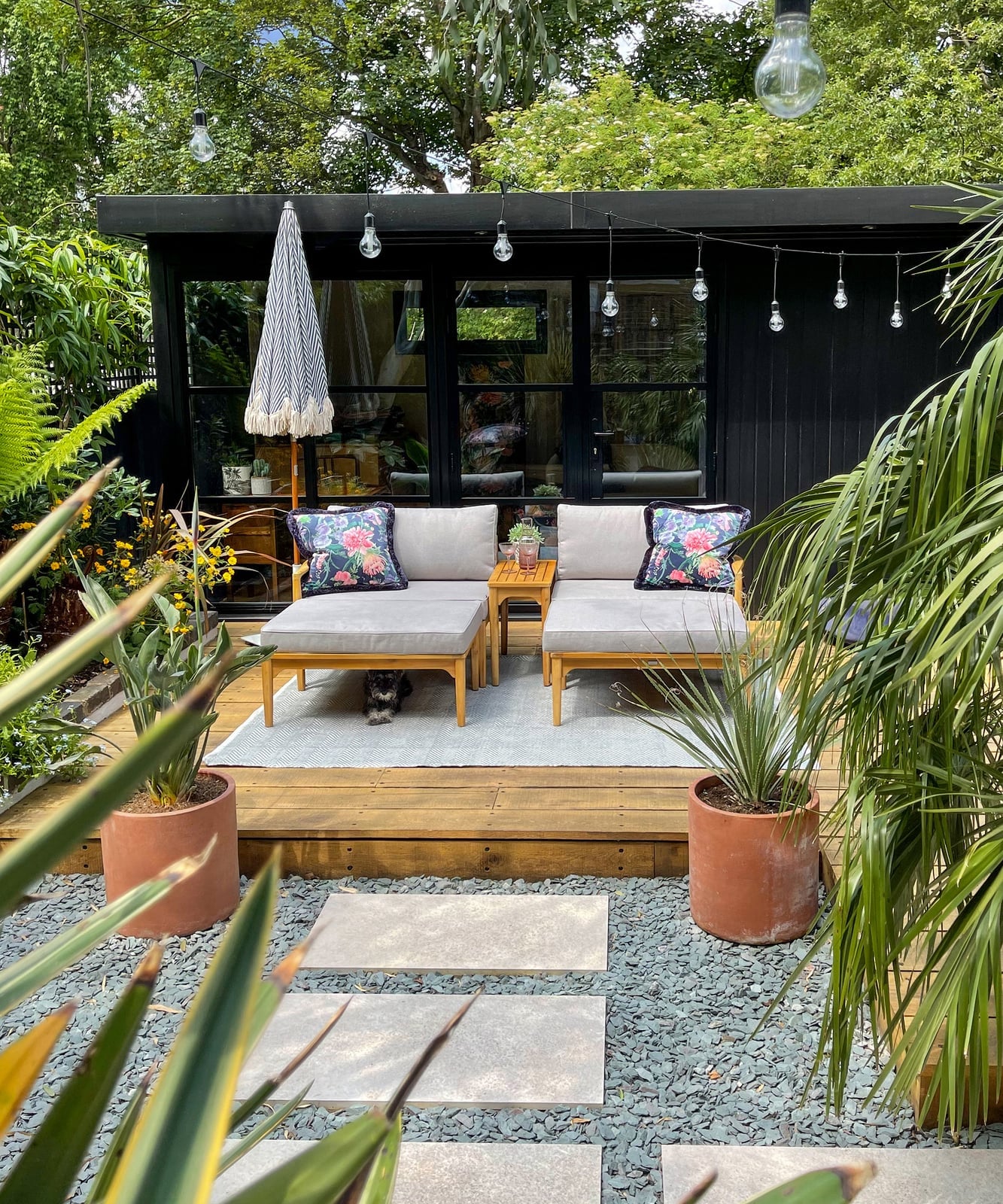
How do you make a deck feel like an extension of the house rather than an afterthought? A black garden room at the far end gives the eye a destination, and the string lights overhead pull the space together. Two lounge chairs with a side table sit on the wooden deck, while a gravel area beside them breaks up the surface. The palette stays beige, black and green, with floral accents from the potted plants. The black structure defines the style: it is the anchor that keeps the relaxed seating from feeling scattered.
Courtyard with Sunken Seating and Stone Pathway
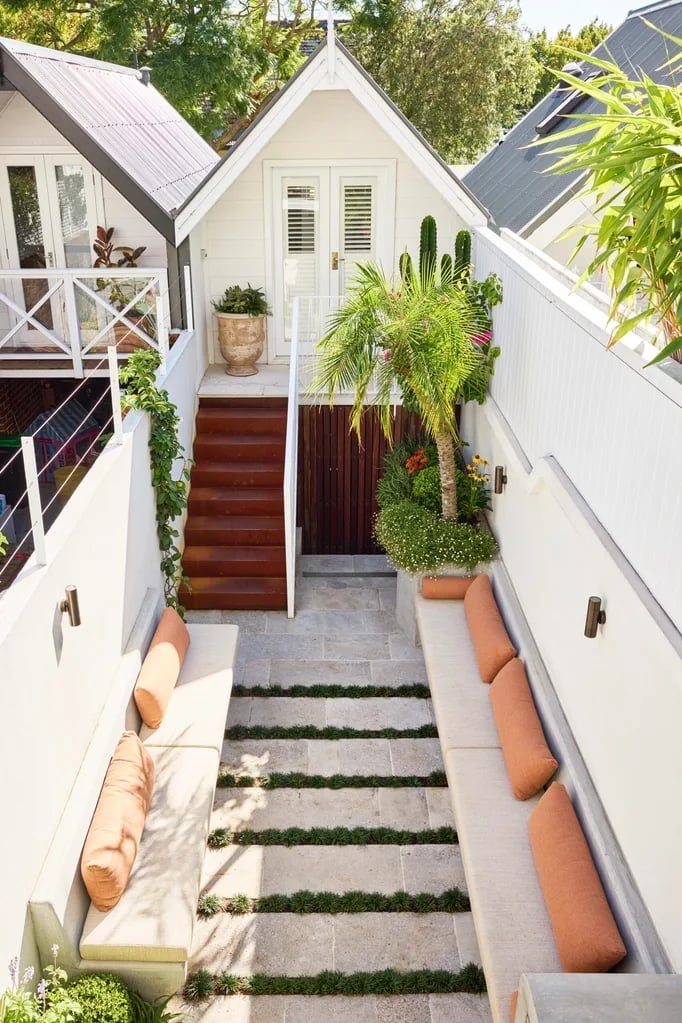
Built-in bench seating with cushions turns a compact courtyard into a room without walls. The stone pathway runs straight through the center, leading to the sunken seating area, with a potted palm adding height. Wall sconces provide light at eye level so the space works after dark. The neutral and terracotta palette keeps the courtyard calm. Dropping the seating below the pathway level defines the zone without building walls, a smart move for a small space.
Contemporary Front Yard with Abstract Sculpture
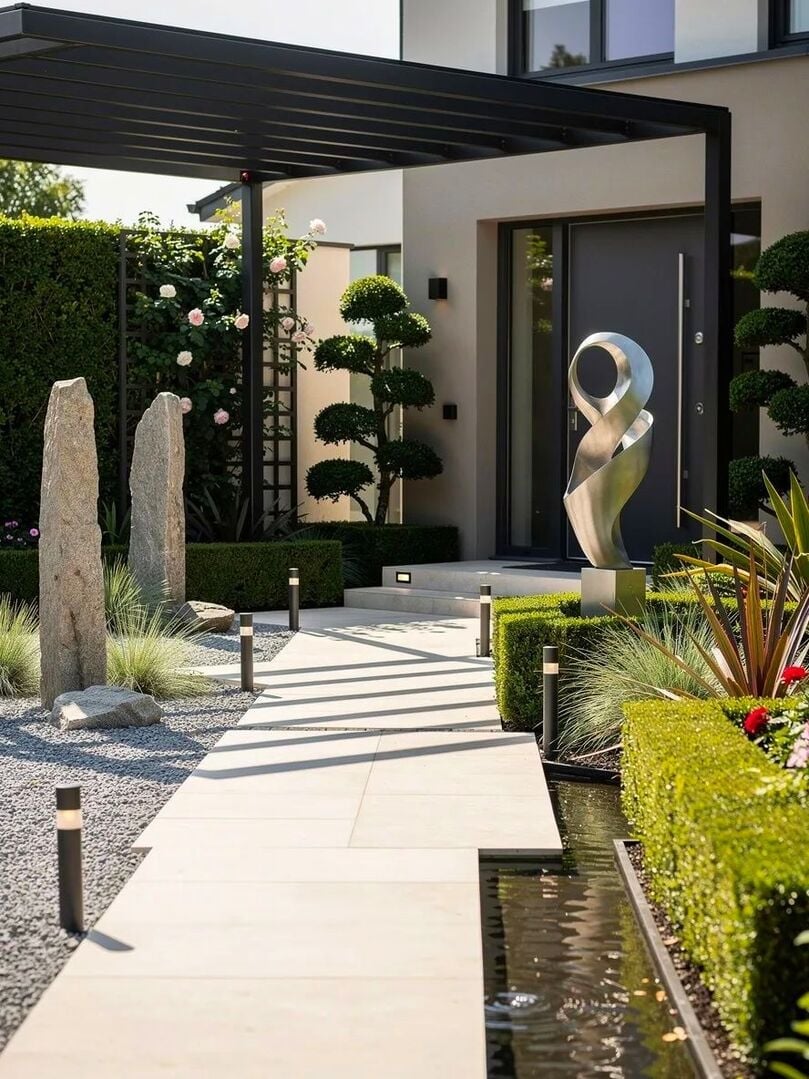
A front yard with a central pathway benefits from a focal point at the end, and an abstract metal sculpture does the job without blocking the view. The stone path is flanked by planting beds and low planters, with integrated pathway lights for visibility after dusk. A water feature adds sound. The palette of grays, greens and black keeps the yard looking intentional rather than busy. The sculpture breaks the symmetry just enough to make the approach interesting, which is the whole point of a front yard.
Modern Patio with Pergola and Outdoor Sofa
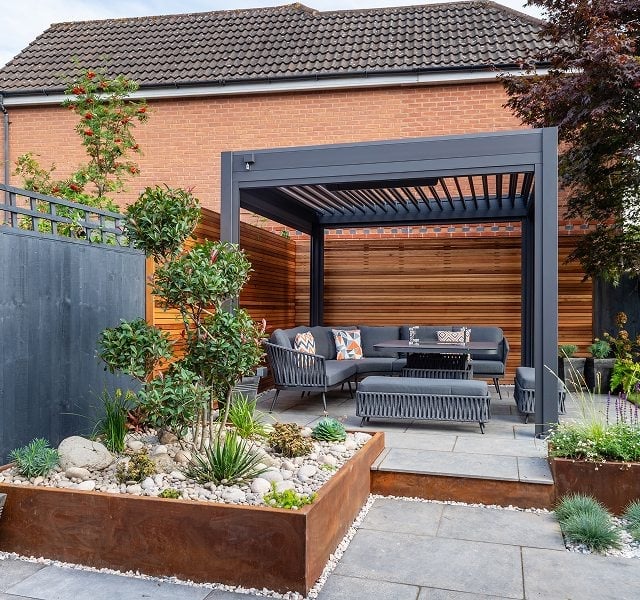
A modern patio gets its structure from a pergola, not from walls. Here a gray metal pergola defines a seating zone with an outdoor sofa and a dining table, while a planter box softens the edges. The palette stays neutral, gray, brown, green, so the eye moves easily from the concrete floor to the wood furniture. The principle at work is zoning: a single overhead element can separate sitting from planting without building anything permanent. That makes it a smart move for renters or anyone who wants a clear layout without pouring a foundation. The patio feels roomy because the pergola holds the visual center, leaving the perimeter open for movement or future changes.
Minimalist Front Yard with Circular Stone Pavers
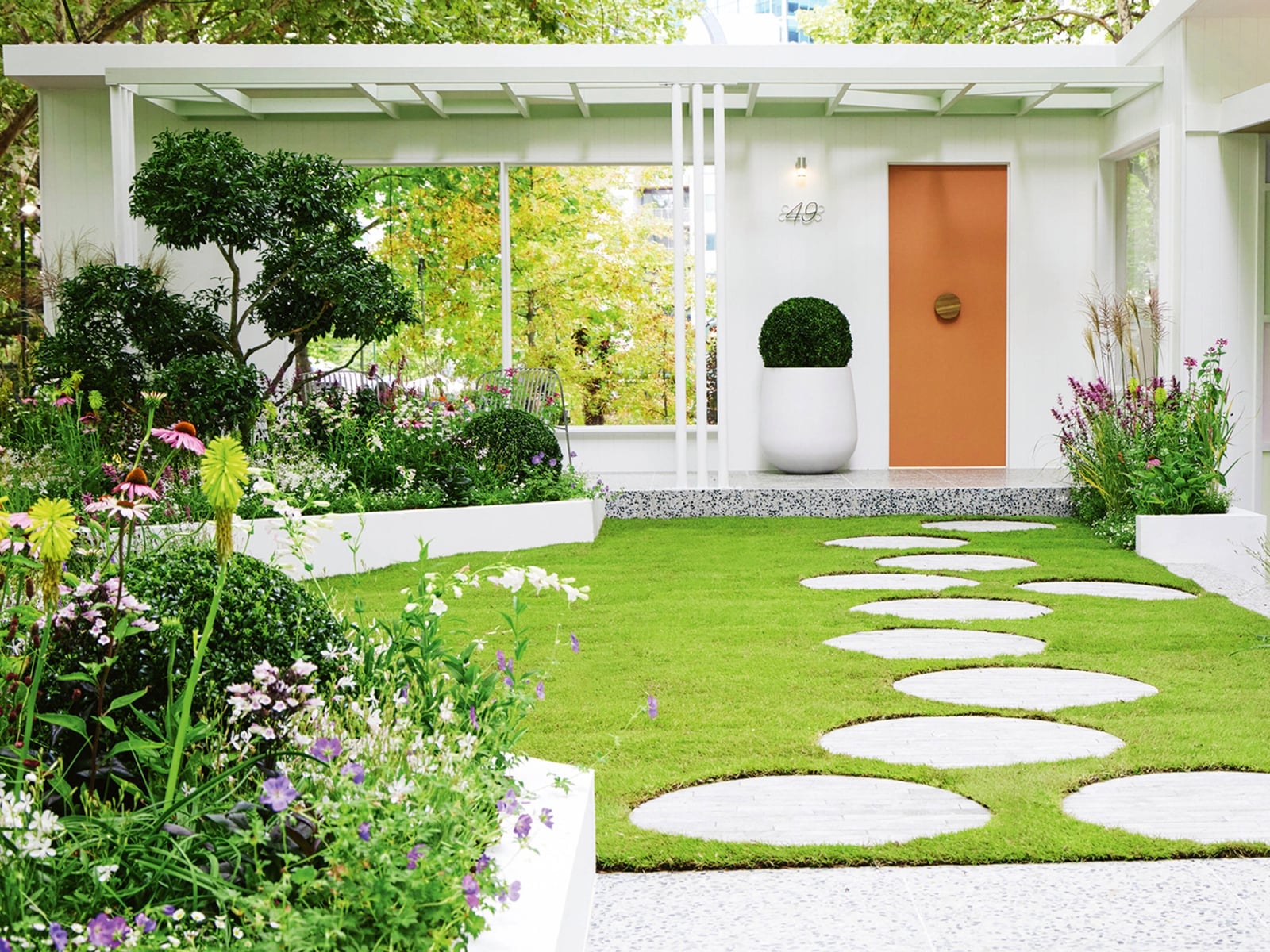
A minimalist front yard uses negative space as its main feature. Here a lawn is crossed by a path of circular stone pavers that lead to an orange door, with a single minimalist planter as the only other element. The palette is tight: green, white, orange, and the repetition of the round pavers keeps the eye moving. A limited palette makes a path feel intentional and cohesive. For a renter, this layout is straightforward: pavers sit on grass without excavation, and the planter can move with you. The orange door adds a punch of color without changing the overall restraint.
Contemporary Garden with Black Garden Room and Egg Chair
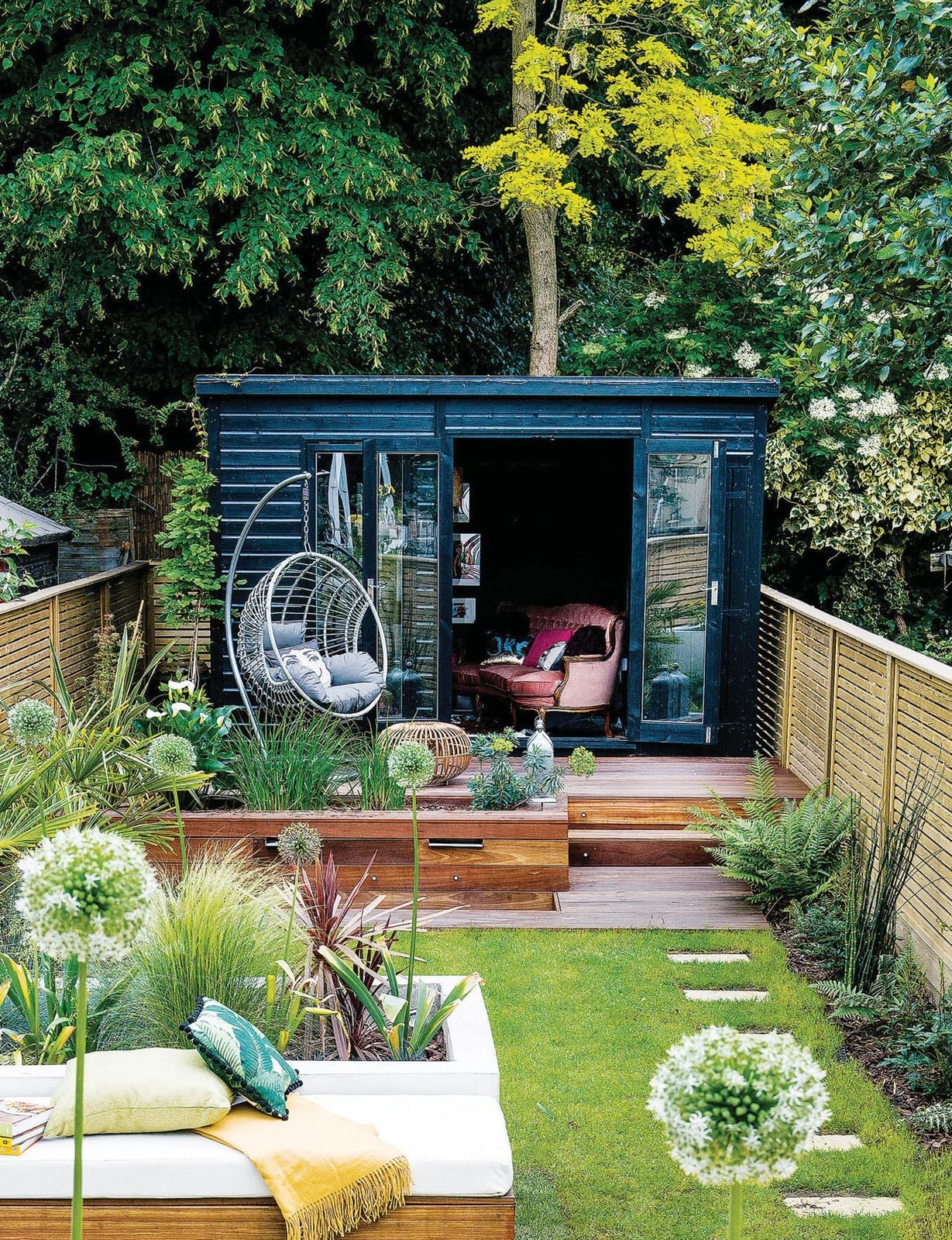
A contemporary garden balances a strong architectural piece with softer seating. Here a black garden room anchors the rear of the space, while a hanging egg chair and a pink armchair sit on a wooden deck in front. String lights cross the lawn, adding warmth. The palette mixes black and wood tones with pink and green. A single dark structure can ground the whole yard, letting the seating feel playful by contrast. For anyone wanting a garden room, this layout shows you can keep the garden light and open.
Geometric Garden with Raised Wooden Beds
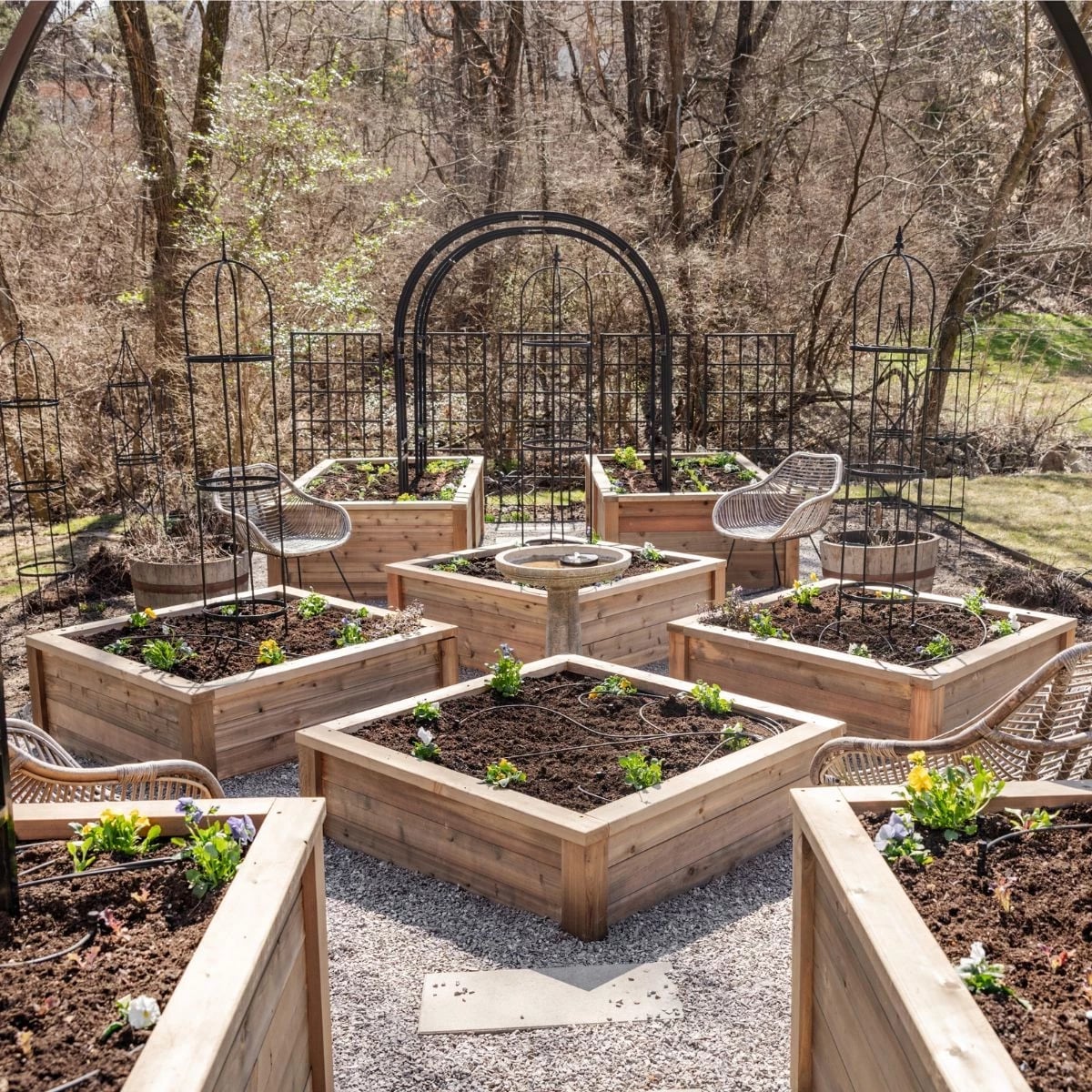
How do you make a vegetable garden look like part of the design? With geometry. Here square raised wooden beds are arranged in a repeating grid across a gravel base, with rattan chairs and a bird bath placed at the edges. The layout is the defining feature: the beds are spaced evenly, creating clear paths between them for walking and watering. The palette stays natural, wood, gray, green, so the structure, not the color, does the work. A grid layout simplifies maintenance because beds are equally accessible from all sides. For anyone starting a vegetable garden, this arrangement makes weeding and harvesting straightforward.
Modern Garden Deck with Gravel Area and Fire Pit
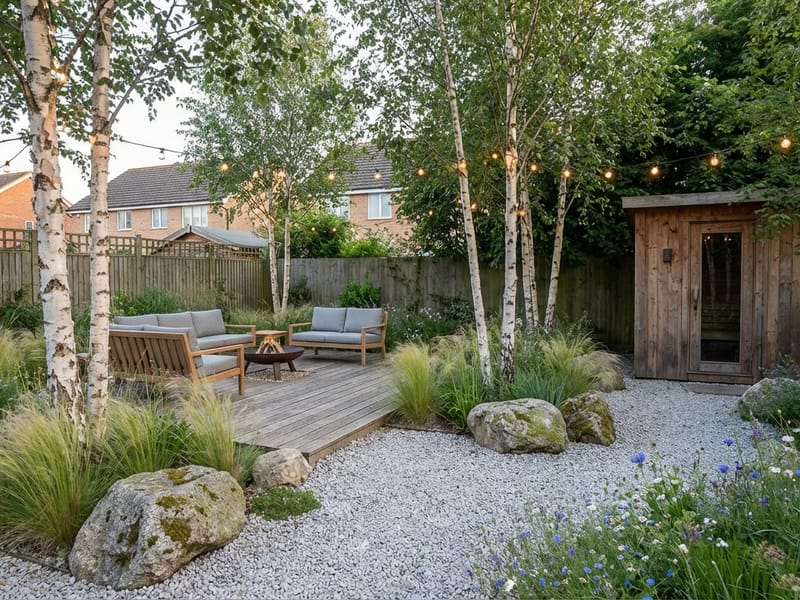
A modern garden deck uses two surface materials to create separate zones. Here a wooden deck holds sofas and a coffee table, while a gravel area nearby centers on a fire pit, with a wooden shed at the back. The string lights above tie the two zones together without merging them. The palette is natural wood, gray, green and white, which keeps the transition between deck and gravel smooth. Mixing materials lets you use fire features near a deck without worrying about heat damage to the wood. For anyone with a multi-use yard, this approach gives you a lounging zone and a gathering zone in one footprint.
Expansive Lawn with Sleek Pathways and Garden Room
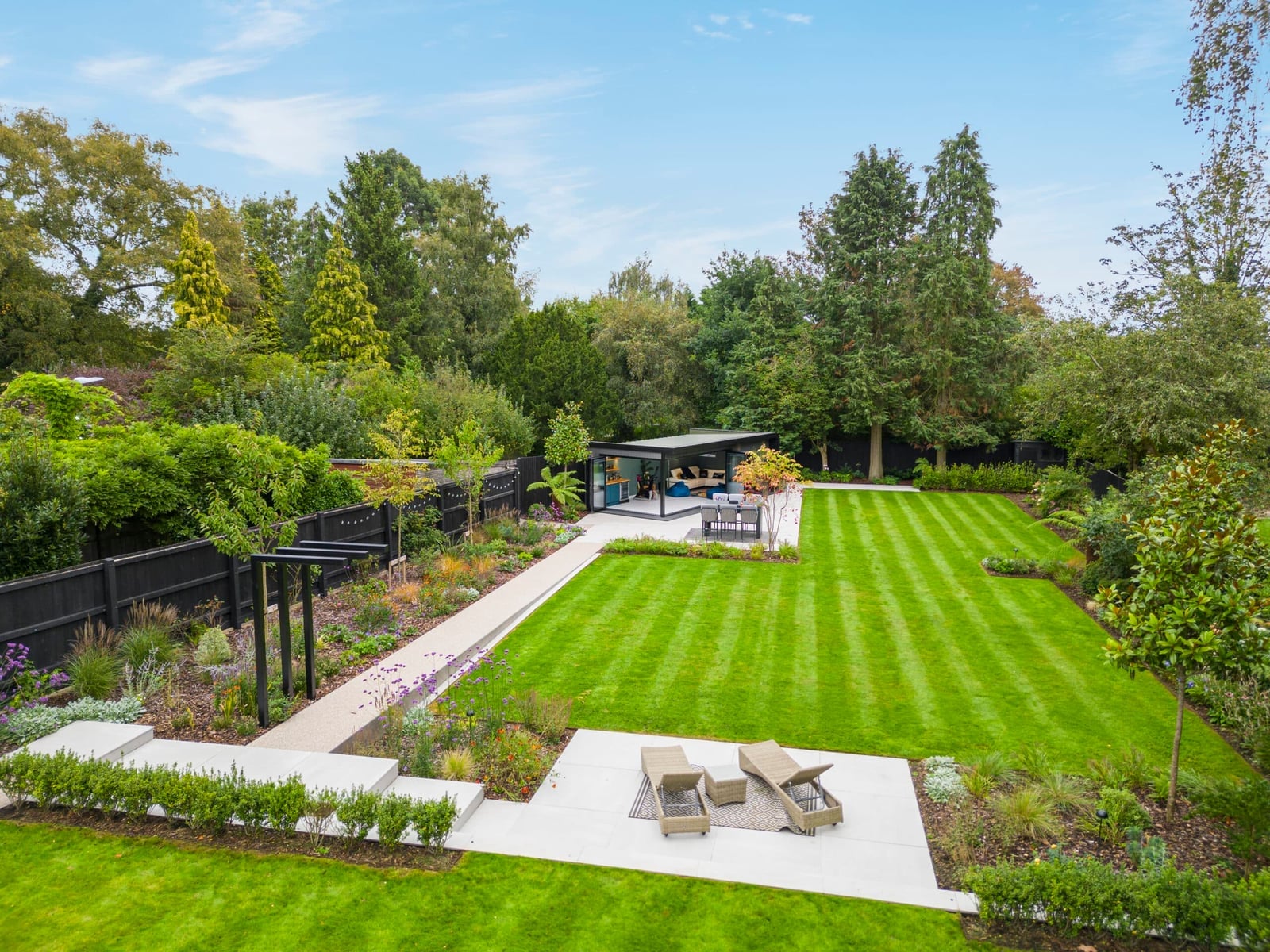
A big lawn benefits from clear boundaries. Here, a modern garden room anchors one end while concrete pathways slice the grass into distinct zones without breaking the open feel. Lounge chairs sit on a wood deck, creating a spot to pause between the green and the structure. The glass and wood garden room keeps sightlines long, so the yard still reads as one generous space rather than a collection of small areas. A layout like this works because the pathways lead the eye somewhere, not just across an empty stretch.
Multi-Level Backyard Patio with Outdoor Dining
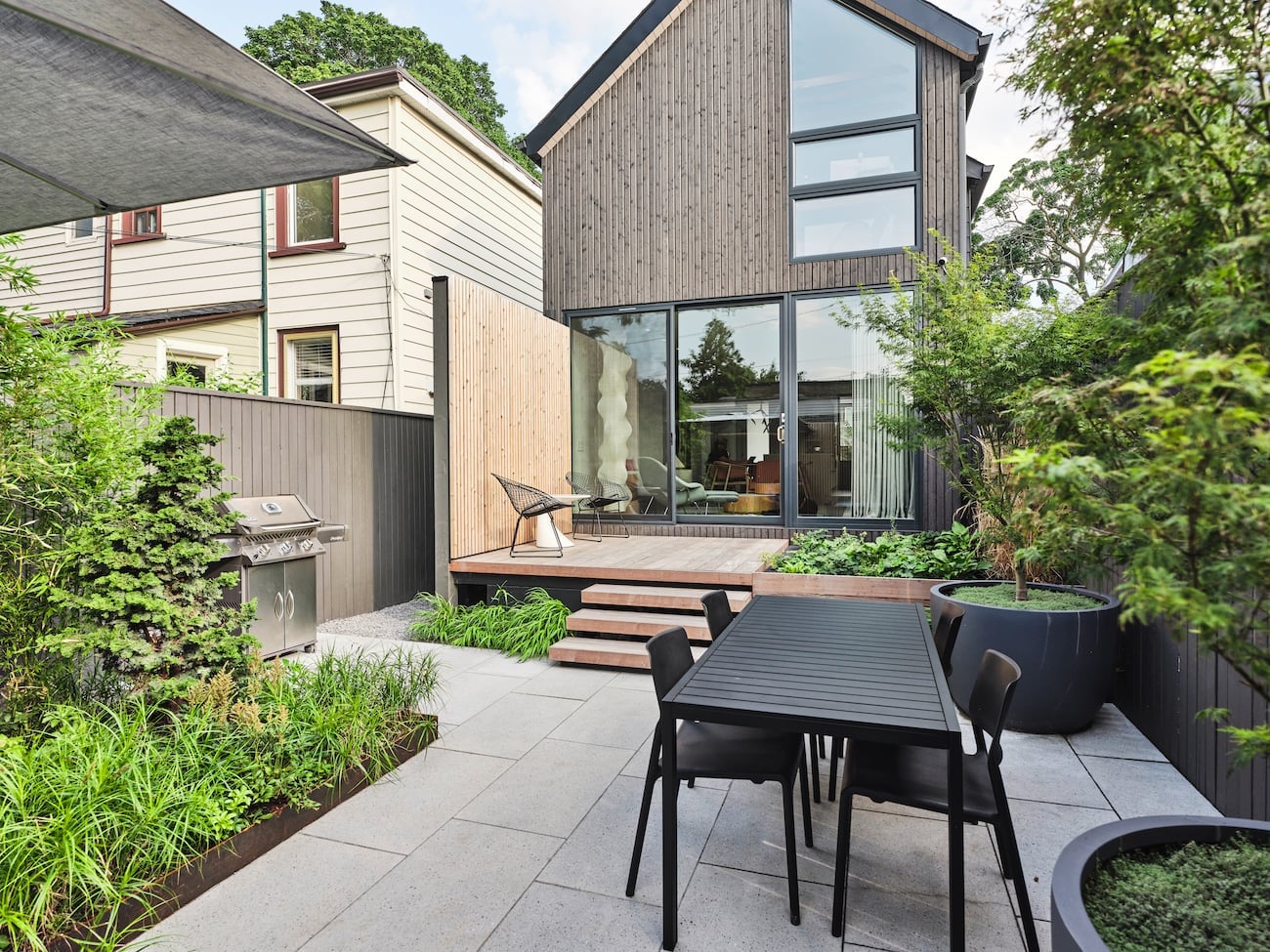
A single-level patio is straightforward, but a multi-level version adds a separate zone without a wall. Here, the dining set sits on an upper wood deck while a lower stone area holds the grill and a large planter. The shift in material and height tells you where to eat versus where to cook.
This palette leans on gray stone, warm wood tones, and green foliage, which keeps the two levels connected. The modern dining table and chairs in metal and glass stay light against the darker deck. The concrete wall behind ties everything together. If your yard slopes at all, a multi-level setup turns that grade into an asset rather than a problem.
English Cottage Garden Path with Rose Archway
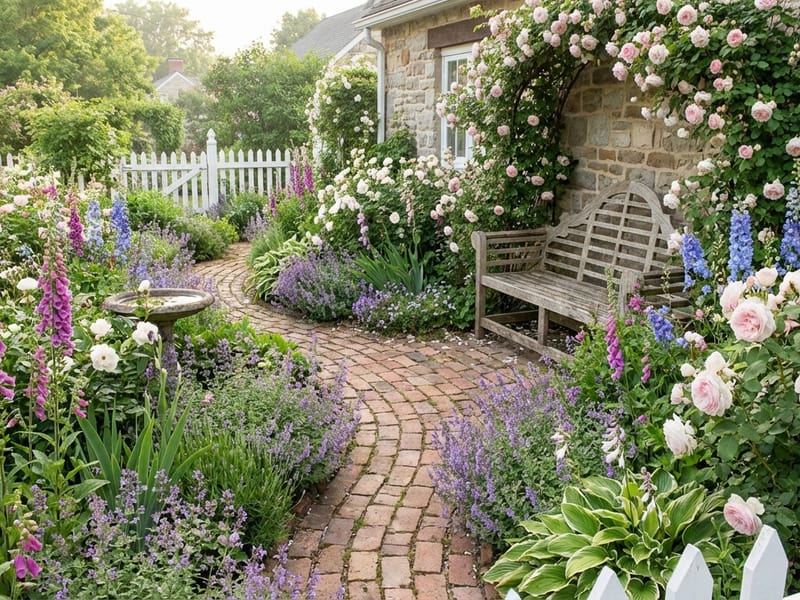
A winding brick path draws you through an English cottage garden, and the rose-covered archway marks the transition from one section to the next. Pink, white, and purple blooms climb the wood structure, while a wooden bench and bird bath sit off to the side behind a picket fence. The stone edging keeps the path from blending into the flower beds. What makes this style work is the abundance of roses, which softens the hard lines of the brick and wood. The path itself is narrow enough to feel intimate, not rushed.
Modern Asian Garden with Stone Fireplace
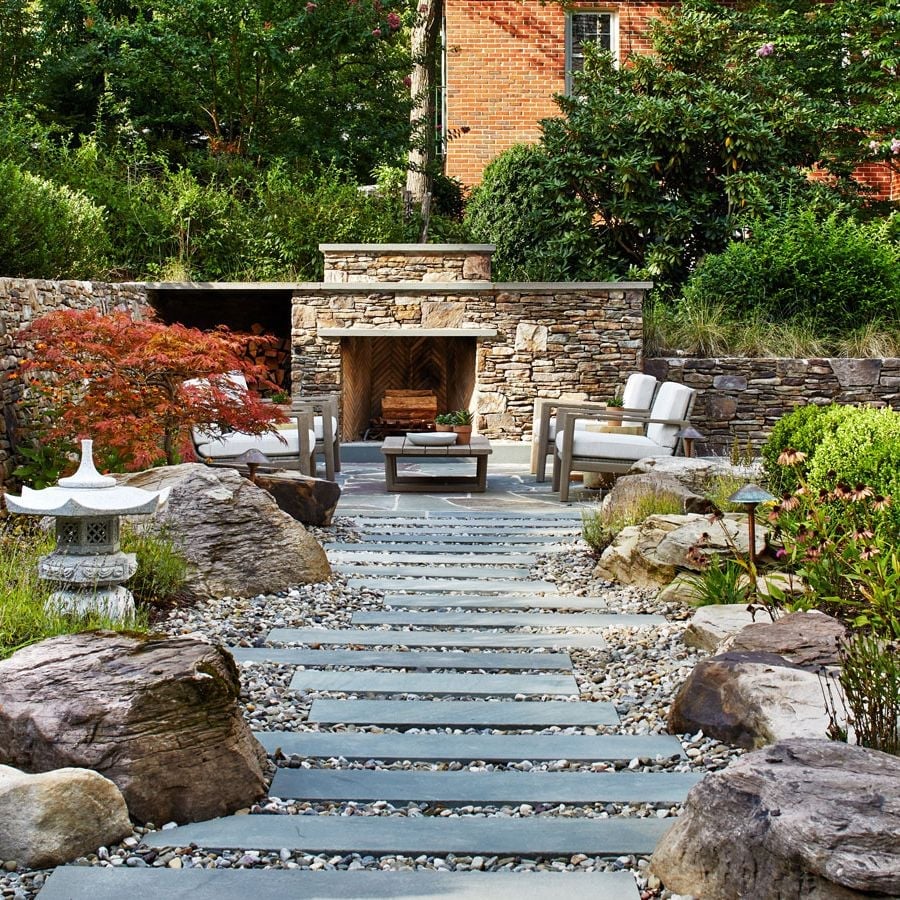
A modern stone fireplace turns a seating area into a year-round destination. In this garden, a gravel pathway leads past rocks and greenery to a cluster of chairs around the fireplace, with a stone lantern nearby. The palette sticks to gray, green, and brown, so nothing competes with the texture of the stone. The layout places the fireplace as the focal point, but the pathway gives you a reason to walk through the garden first. Natural daylight keeps the space feeling open, while the fireplace promises warmth when the sun drops. It is a garden that works in two shifts.
Naturalistic Garden with Driftwood and Grasses
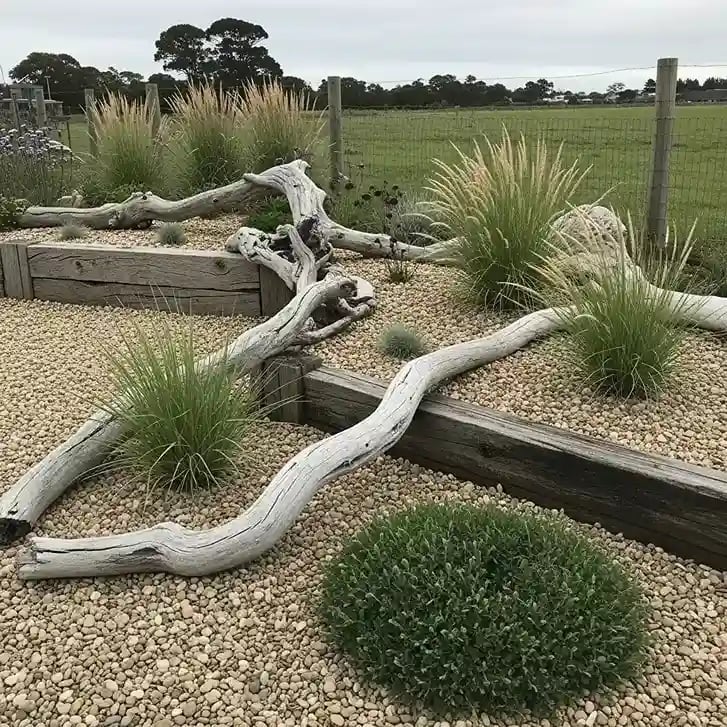
Large pieces of weathered driftwood act like sculptures in a naturalistic garden, no pedestal required. Here, reclaimed wood planters and ornamental grasses fill layered beds, with gravel paths winding between them. The earthy palette of green, gray, and brown keeps the focus on texture.
Choose materials that already look aged. Fresh lumber reads as unfinished, but driftwood and reclaimed planters feel settled from day one. The gravel paths drain well and define the beds without hard edges. Ornamental grasses add height and movement, swaying even in a light breeze. Check your USDA zone before picking grasses, since some are annuals in colder climates.
Naturalistic Garden Path with Curved Wooden Bench
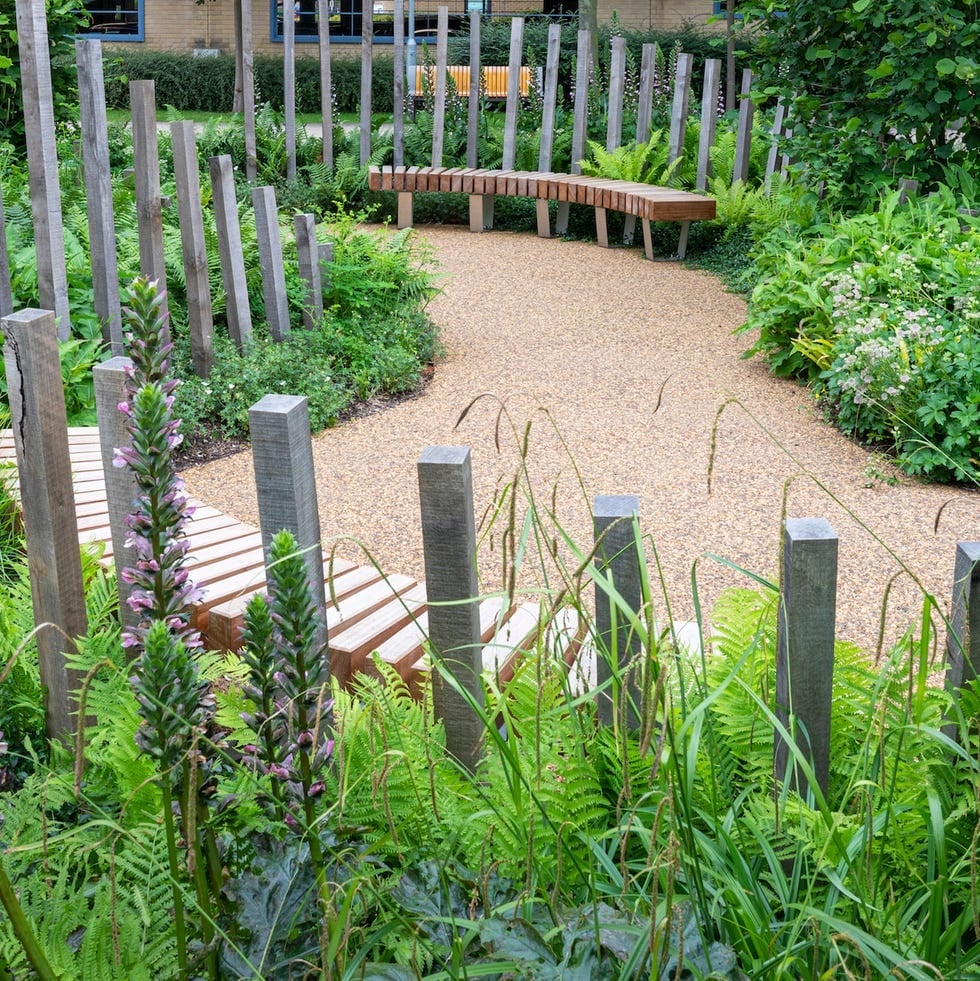
A winding gravel path curves through layered planting, with a curved wooden bench tucked into the greenery. The bench, flanked by simple wooden posts, offers a quiet spot to sit without blocking the path. Wood, gravel, and stone keep the materials grounded in the natural setting. The bench invites you to sit without disrupting the flow, which is the trick with any path-side seating: place it where it feels discovered, not placed.
Cottage Garden with Abundant Mixed Flowers
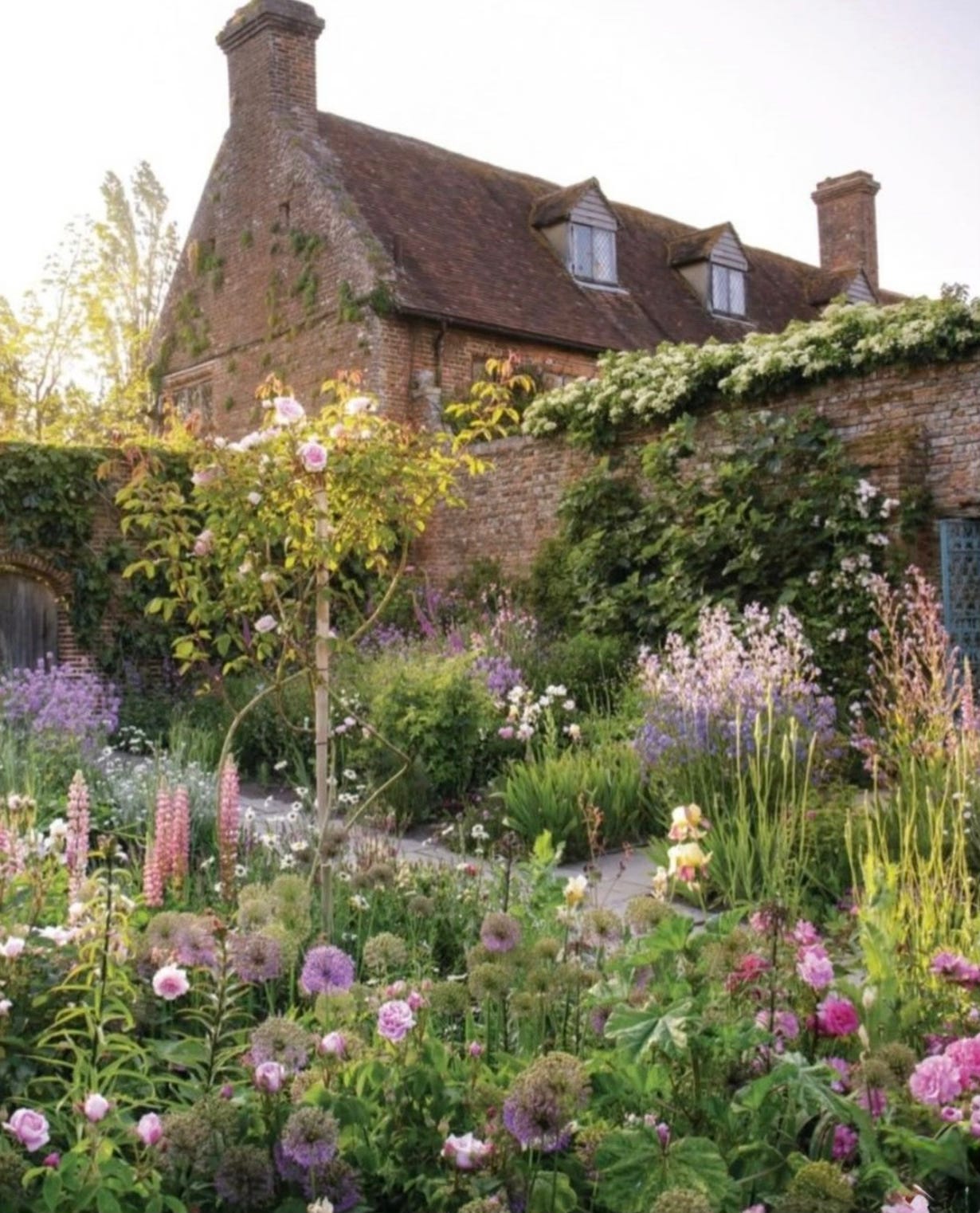
For cottage garden planting, let the flowers dictate the rhythm. Here, pink, purple, and white blooms fill layered beds against a brick wall, with a stone pathway threading through. The palette leans cool and romantic, with green as the anchor. Renters can mimic this abundance by focusing on containers in clusters. Group pots of varying heights along a wall or fence, and the same full, layered look appears without digging a single hole.
Naturalistic Garden Path with Purple Flowers
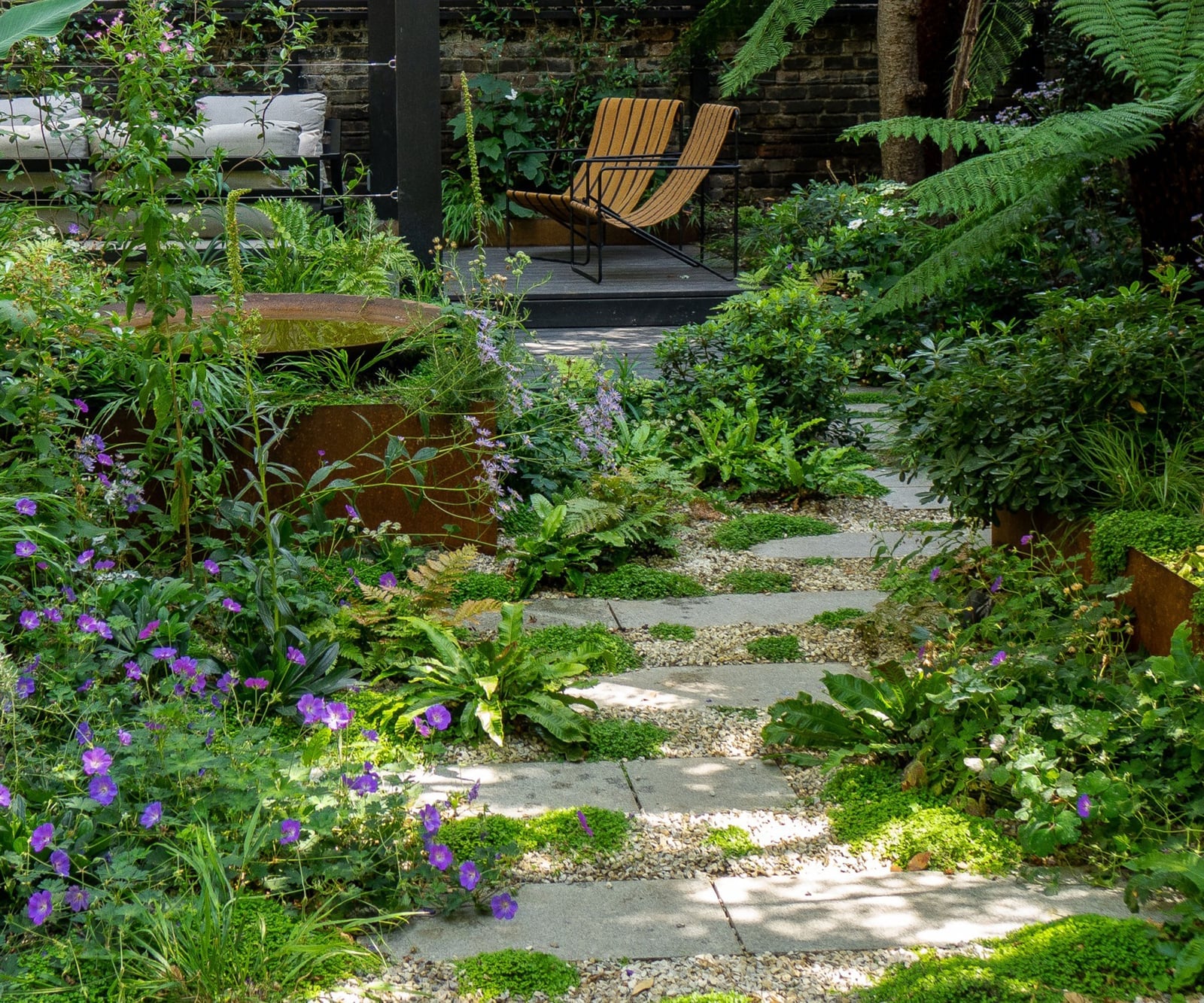
Where a formal garden might line a path with clipped hedges, this naturalistic version lets purple flowers spill over stepping stones in dappled shade. The palette of green, purple, gray, and brown feels calm and grounded. Rusted planters and simple wooden chairs add texture. The light here works hard: soft, filtered shade keeps the purple from looking too bold. If your path gets full sun, choose silver-leaved plants or pale lavender instead to keep the same soft contrast. The winding layout and dense planting create an intimate feel, as though the garden is revealing itself slowly.
Cottage Garden Path with Lavender and Stone Steps
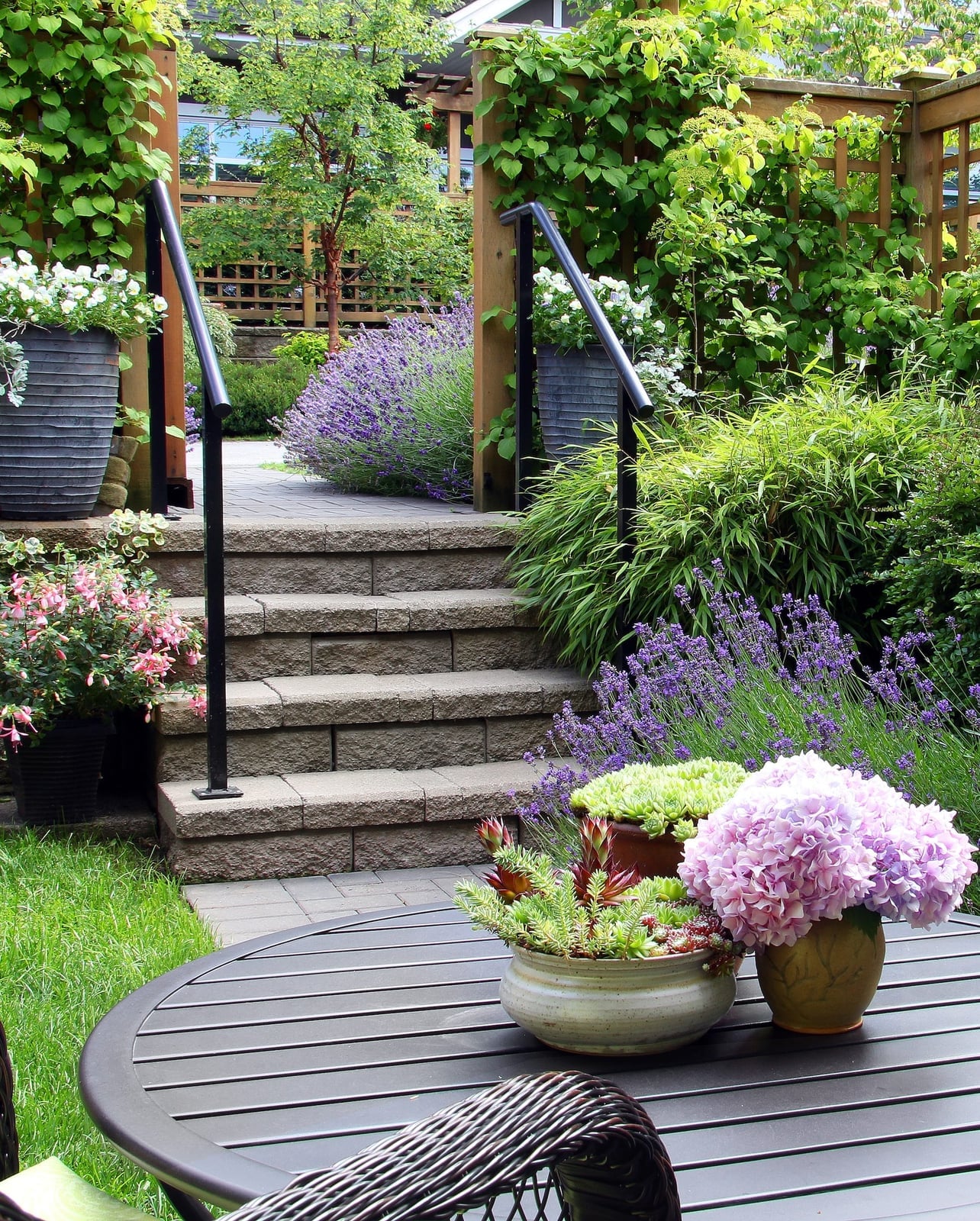
Stone steps rise gently through a path flanked by abundant lavender, with potted plants and a wooden trellis adding vertical interest. The lavender is the hero here: its purple and gray-green foliage softens the hard edges of the stone. Bright daylight keeps the colors crisp rather than muddy. For a path like this, the stone steps do the heavy lifting for durability, while the lavender offers seasonal color that returns each year. A wooden trellis at the top draws the eye upward and frames the end of the journey.
Formal Vegetable Garden with Geometric Beds
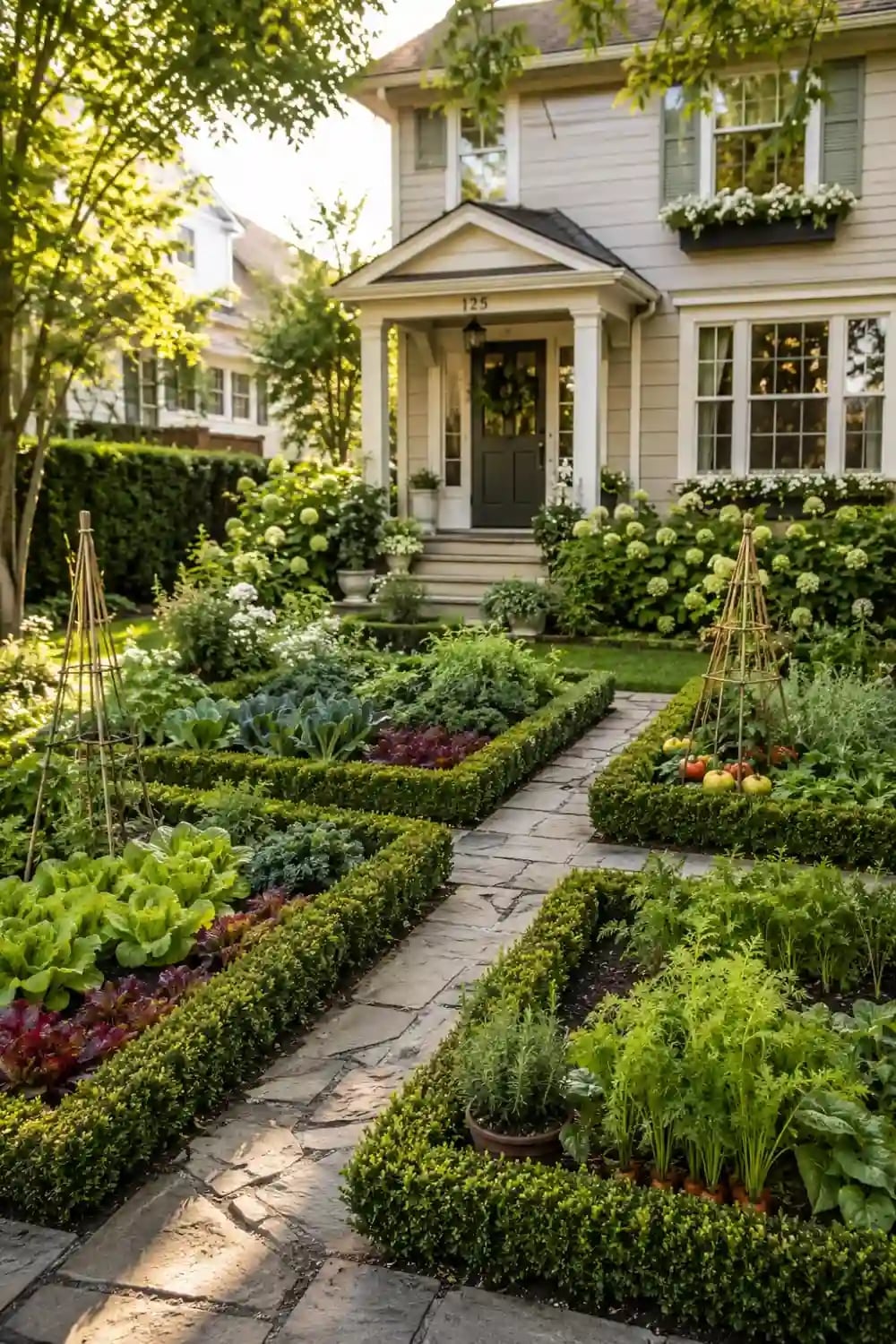
This layout proves that a vegetable garden can be both productive and precise. Raised beds form clean geometric shapes, separated by stone pathways that keep mud at bay. Boxwood edges frame each bed, and decorative obelisks add vertical structure for climbing plants. The palette comes from the vegetables themselves: greens, reds, and purple against the neutral stone. The geometry makes maintenance simpler, since each bed is reachable from the path without stepping on soil. It is a garden designed for work, but it looks good doing it.
Formal Garden with Symmetrical Layout and Statue
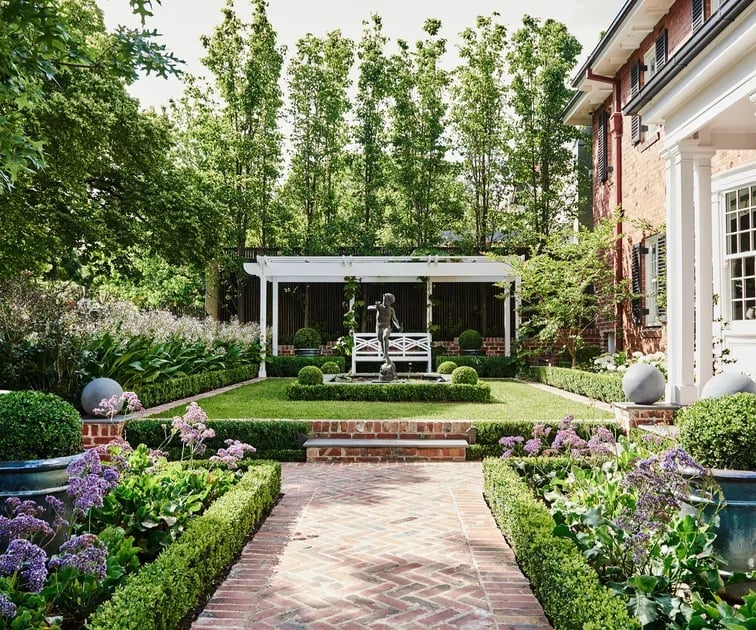
A formal garden thrives on symmetry, and the simplest version is a straight path that leads the eye to a single focal point. Here, a central statue anchors the view, with manicured hedges and potted plants repeating on each side. This layout does not need sprawling grounds; even a narrow yard can feel grand when the geometry is tight and the edges are crisp. A white bench tucked to one side adds a place to pause without breaking the balance. The palette stays restrained: green hedges, brick-red path, white accents, and a few purple blooms for contrast. The discipline of the hedges is key. If the greenery grows shaggy, the whole design looks neglected. Keep the lines clean, and the garden does the work.
Rustic Vegetable Garden at Sunset with Raised Beds
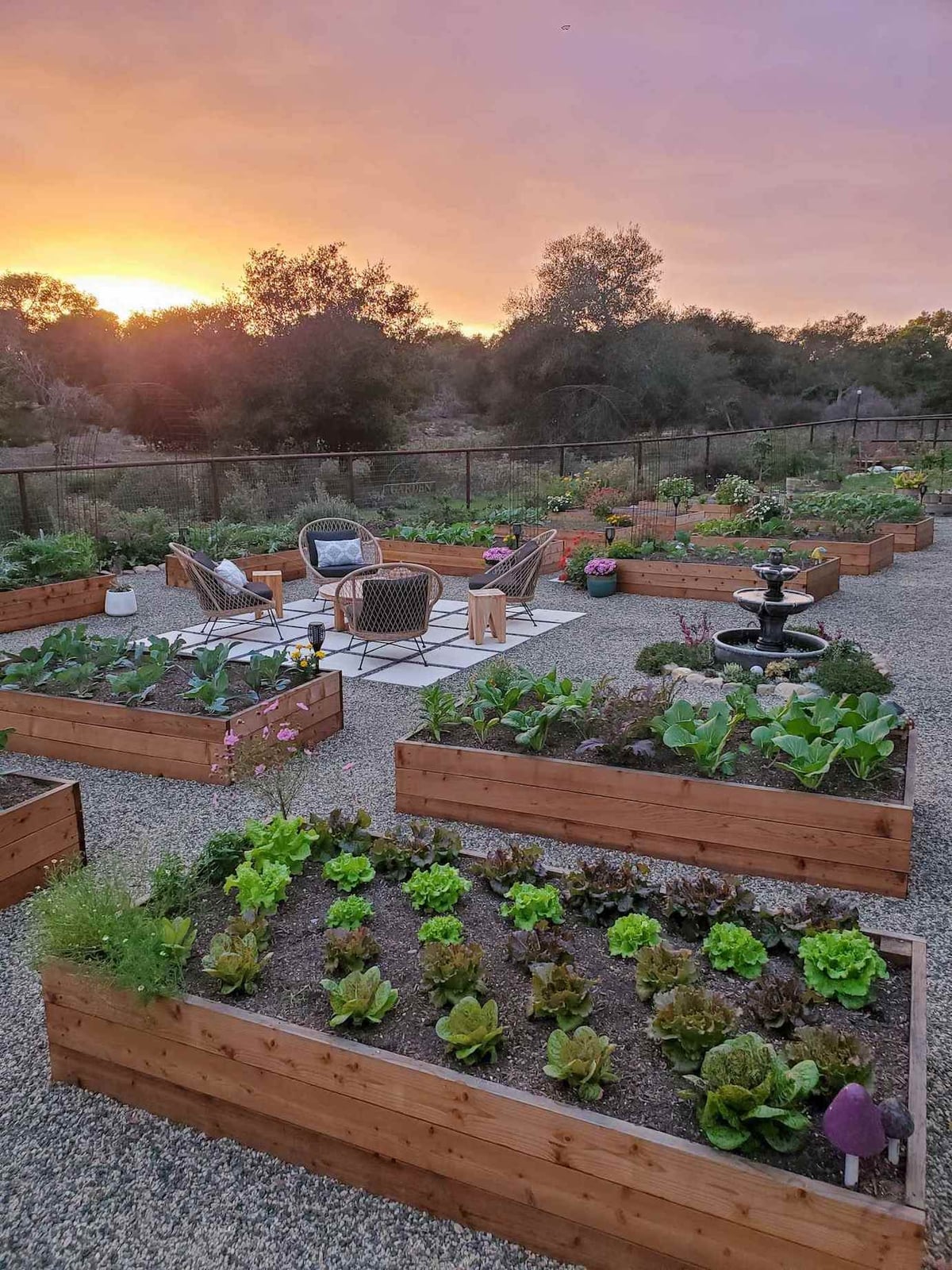
The warm orange sky turns a working vegetable garden into something almost theatrical. Raised wooden planters sit in a grid, their earthy greens and browns catching the last light. This is a garden that feeds you, but it also feeds the eye at the end of the day. The sunset glow softens the rough edges of gravel paths and stone borders, making the space feel less like a chore and more like a retreat. If you time your evening watering right, you get the show for free.
Farmhouse Vegetable Garden with Raised Beds
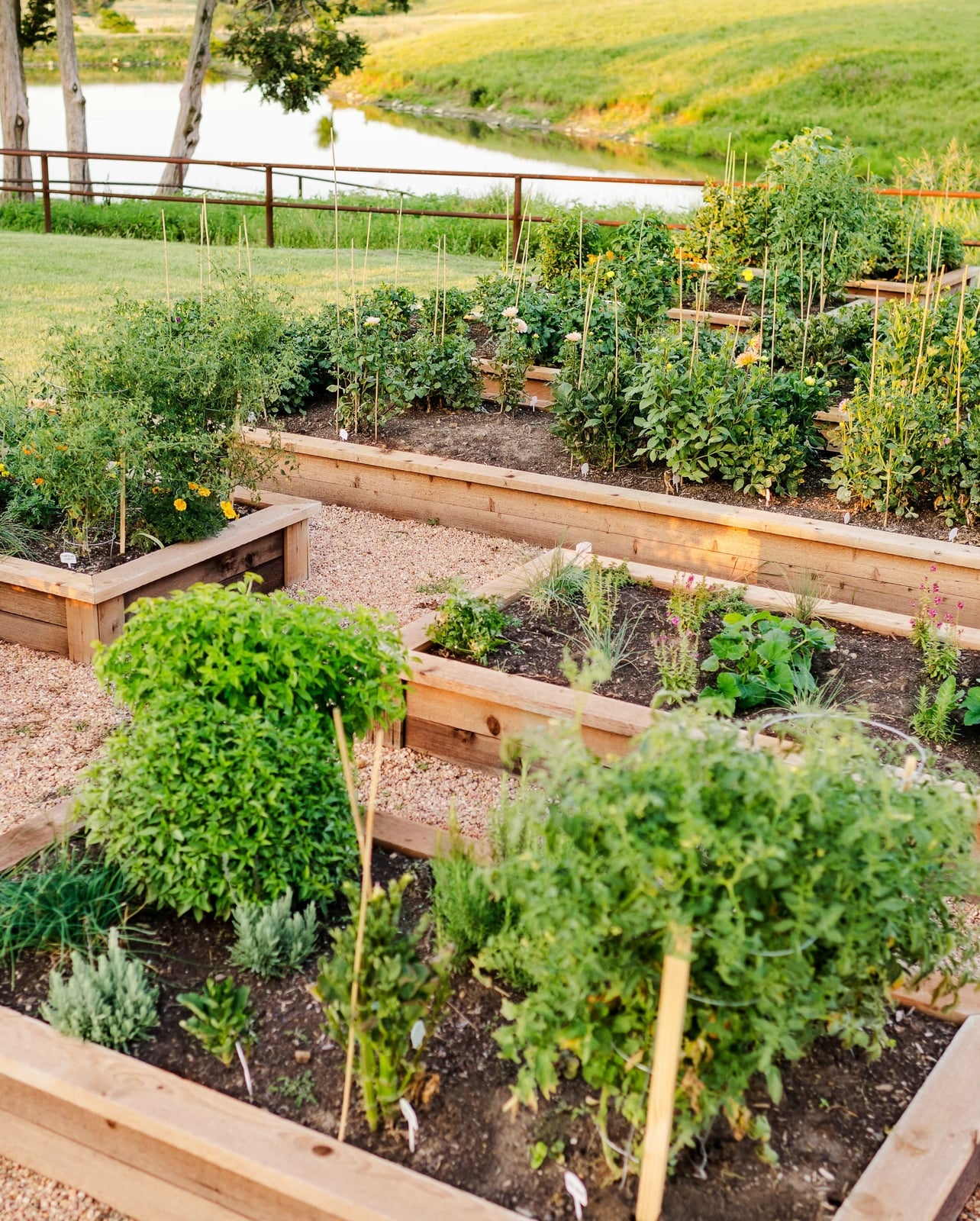
A practical rule for a vegetable garden is to keep the paths wide enough to kneel in without crushing the plants. Gravel aisles between rows of wooden raised beds do exactly that, letting you move through the space without compacting the soil. Bamboo stakes support tomatoes and beans without stealing the show. The layout is straightforward: long, parallel beds that make planting and harvesting predictable. The farmhouse feel comes from the materials: raw wood, loose gravel, and soil that looks dark and alive. No ornament, no fuss. Just a garden built to produce, with paths that stay dry underfoot even after a rain.
Modern Farmhouse Patio with Fire Pit
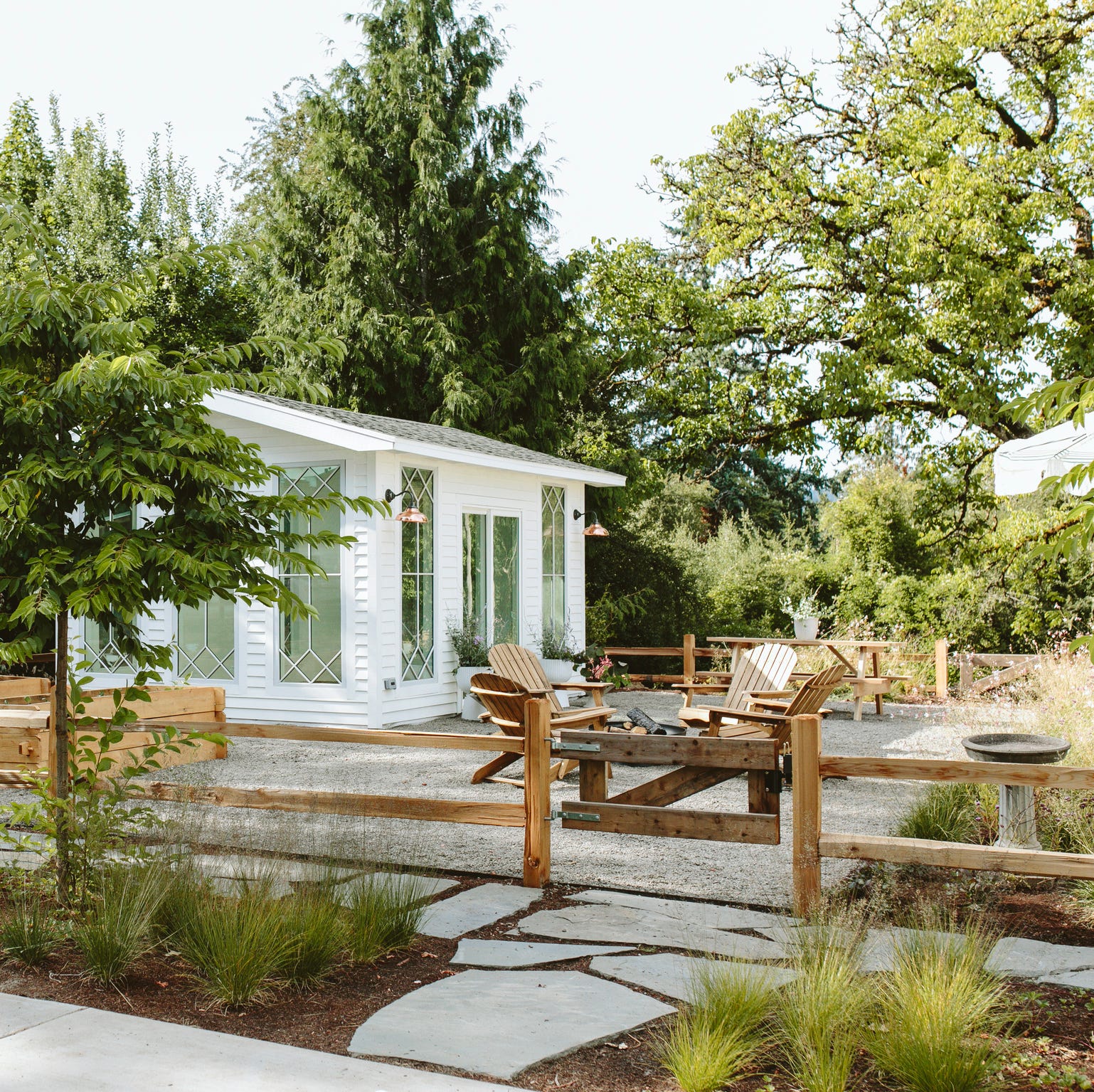
A modern farmhouse patio is not the same as a rustic one. The difference shows up in the details: wooden chairs with clean lines, a fire pit set on pale gravel, and a small white building with large windows that reads as a pool house or studio rather than a barn. The seating area is the hero here, arranged so the fire pit becomes the natural gathering point. The palette sticks to wood tones, white, gray, and green, with nothing that feels antique or distressed. The white building anchors the scene, its glass reflecting the yard. This is a space for conversation, not display. The fire pit does not need to roar; just a low flame and a few chairs pulled close are enough to make the patio work from dusk through the evening.
Cozy Garden Patio with Adirondack Chairs and Chiminea
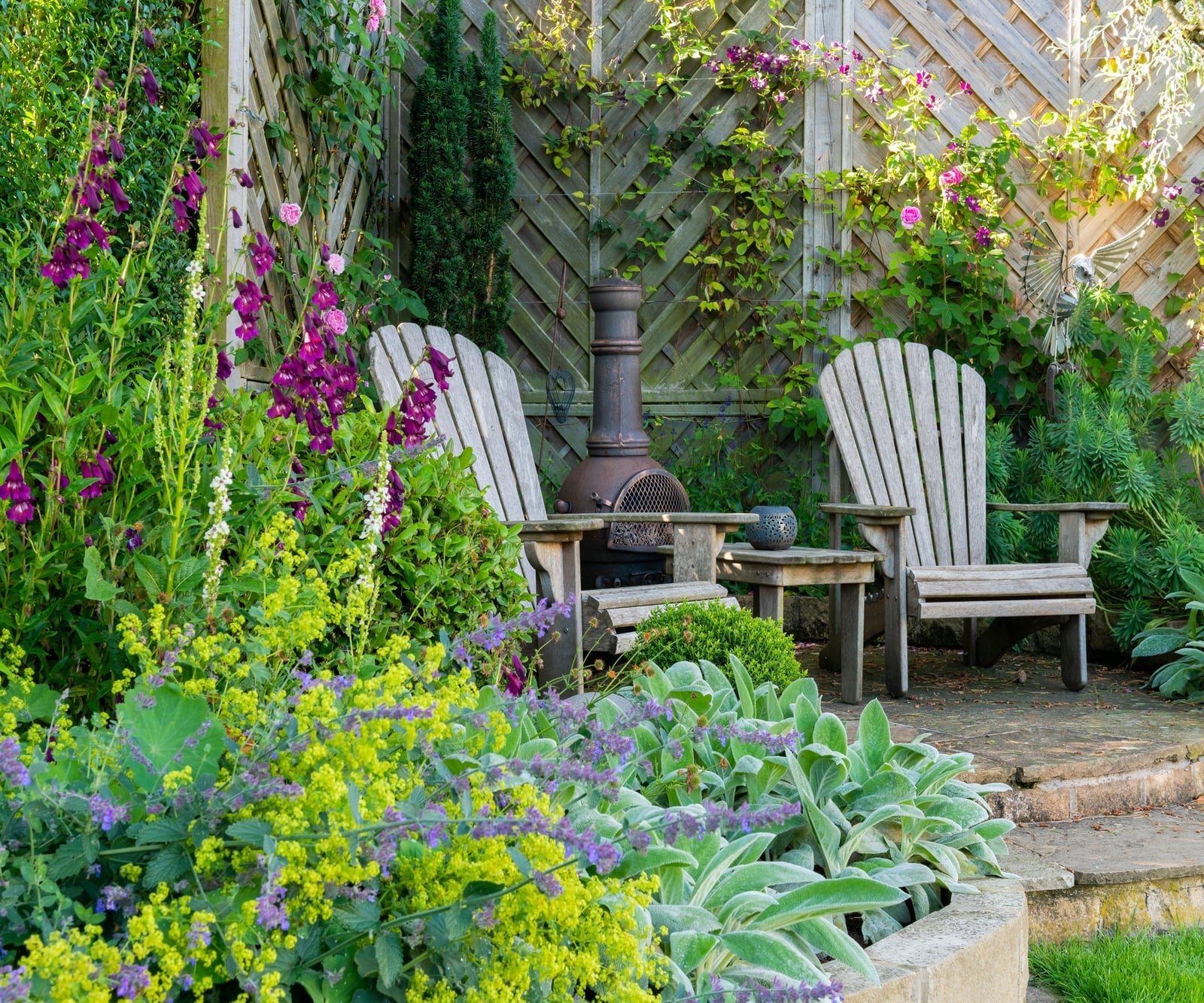
Two Adirondack chairs and a small table take up almost no room, but they turn a corner of the garden into a destination. The chiminea sits low, close enough to warm both seats without dominating the view. Purple flowers in the foreground soften the wood and metal, making the patio feel like it grew there rather than being placed. The scale is the trick: the chairs are generous, the table is just big enough for a drink, and the chiminea stays proportional to the pair. Nothing oversized, nothing cramped. Just a spot that fits two people and a small fire.
Naturalistic Garden with Tiered Planters and Water Feature
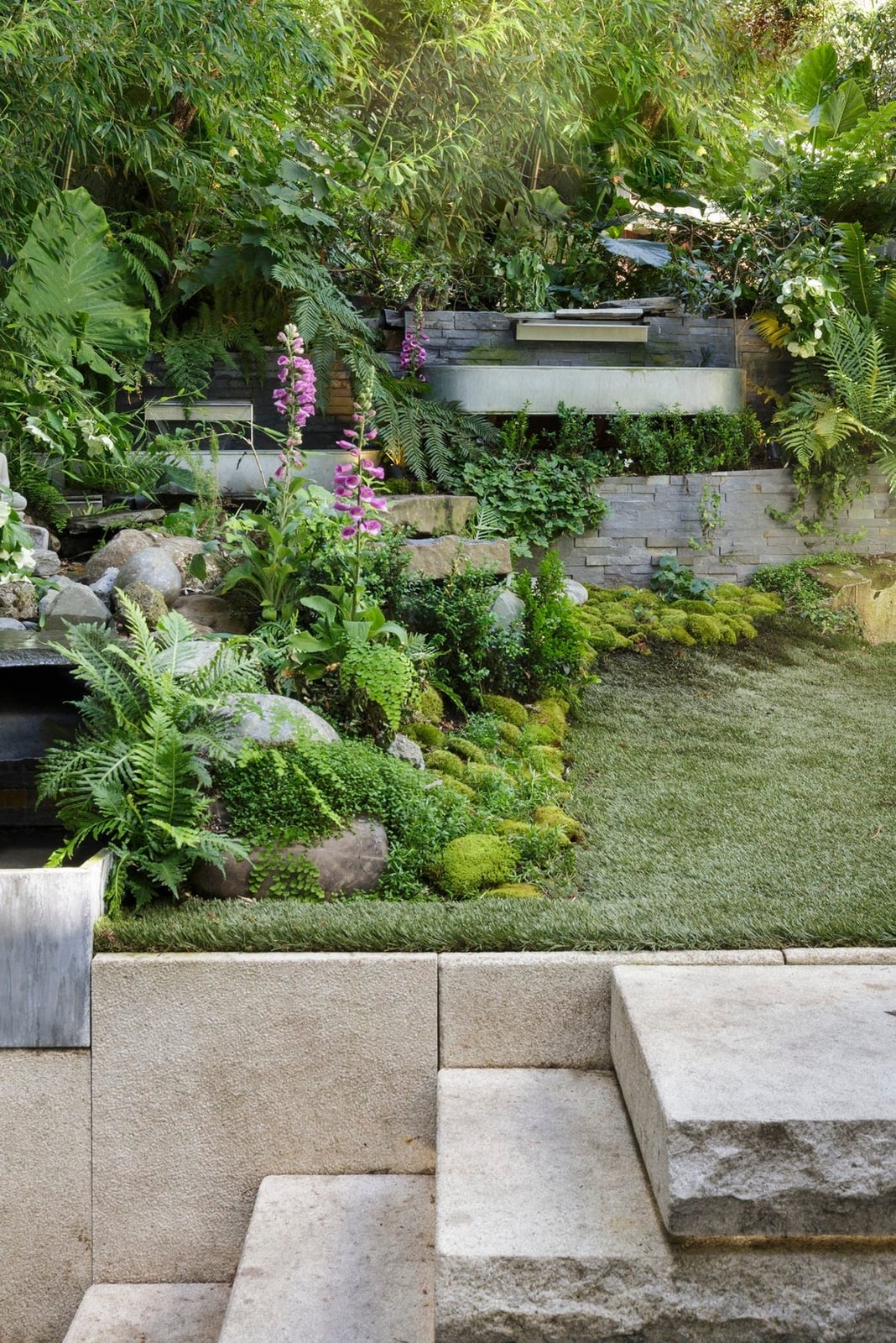
A garden that leans into naturalistic style does not need a big budget to feel established. The key move here is using tiered planters to create visual depth without requiring mature trees or expensive hardscaping. Cascading greenery softens the stacked stone and slate, while the water feature adds sound and movement. The palette stays restrained, greens, purple blooms, gray stone, so the planting has a cohesive look. For renters or those on a budget, a similar multi-level look comes from grouping identical pots on a low shelf or upturned wooden crates, then adding a small tabletop fountain between them. The layout treats the whole garden as one room, with the tiered planters as the anchor and everything else kept lower and simpler around them.
Cottage Garden Bench with Yellow Daffodils
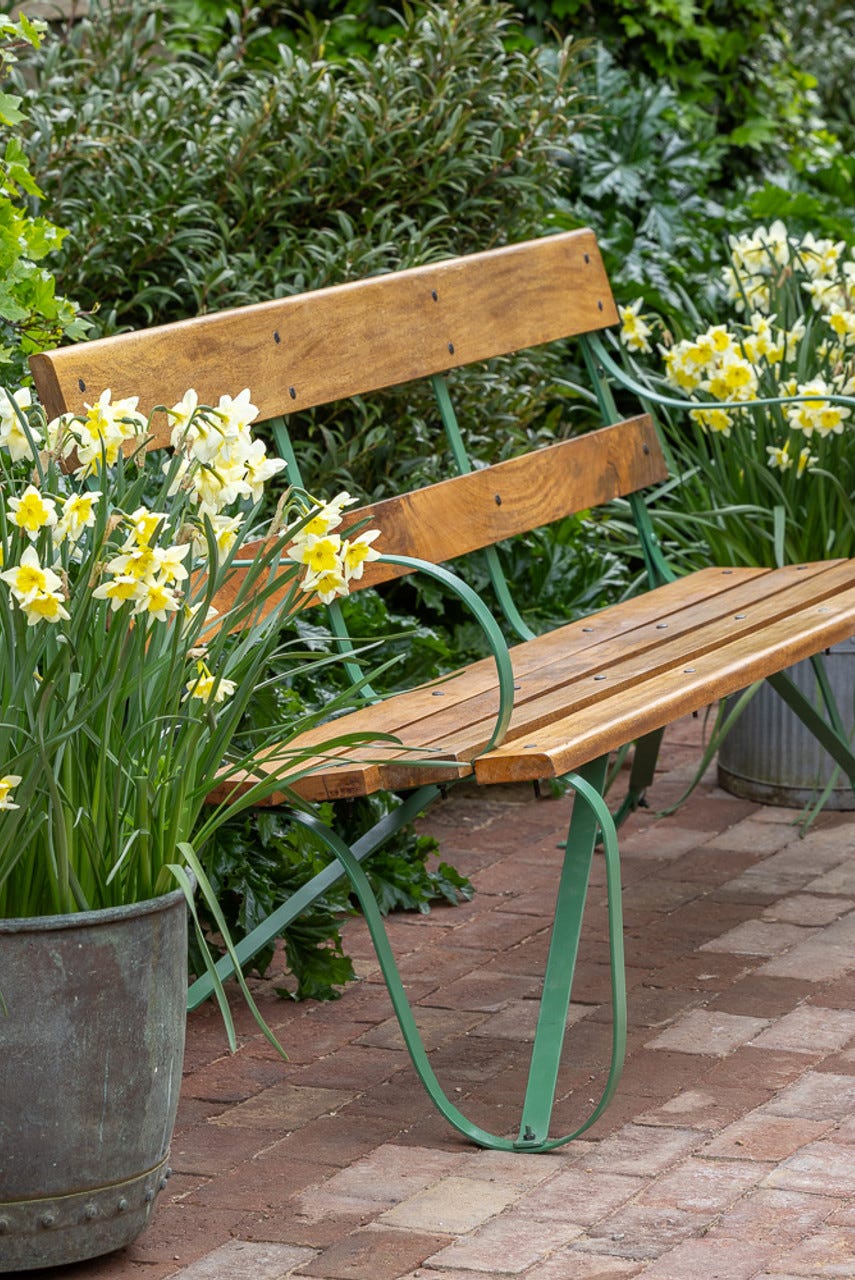
A practical rule for renting: choose garden pieces that can move with you. A wooden bench on a brick path works as a flexible anchor, especially when the planting around it changes by season. The bright yellow daffodils and the large planter bring color that feels permanent even when the stems are annuals.
The cottage garden look here relies on a mix of materials, wood, metal, brick, stone, rather than a matched set. The bench is the main seat, but the path and planters do the work of defining the space. That mix means no single piece feels too precious to leave behind if you move. The overcast daylight keeps the greens deep and the yellow sharp, which is a reminder that cottage style reads best in soft light. To keep the look flexible, choose a bench in a neutral wood tone and let the flowers provide the color punch each season.
Modern Garden Patio with Acapulco Chairs
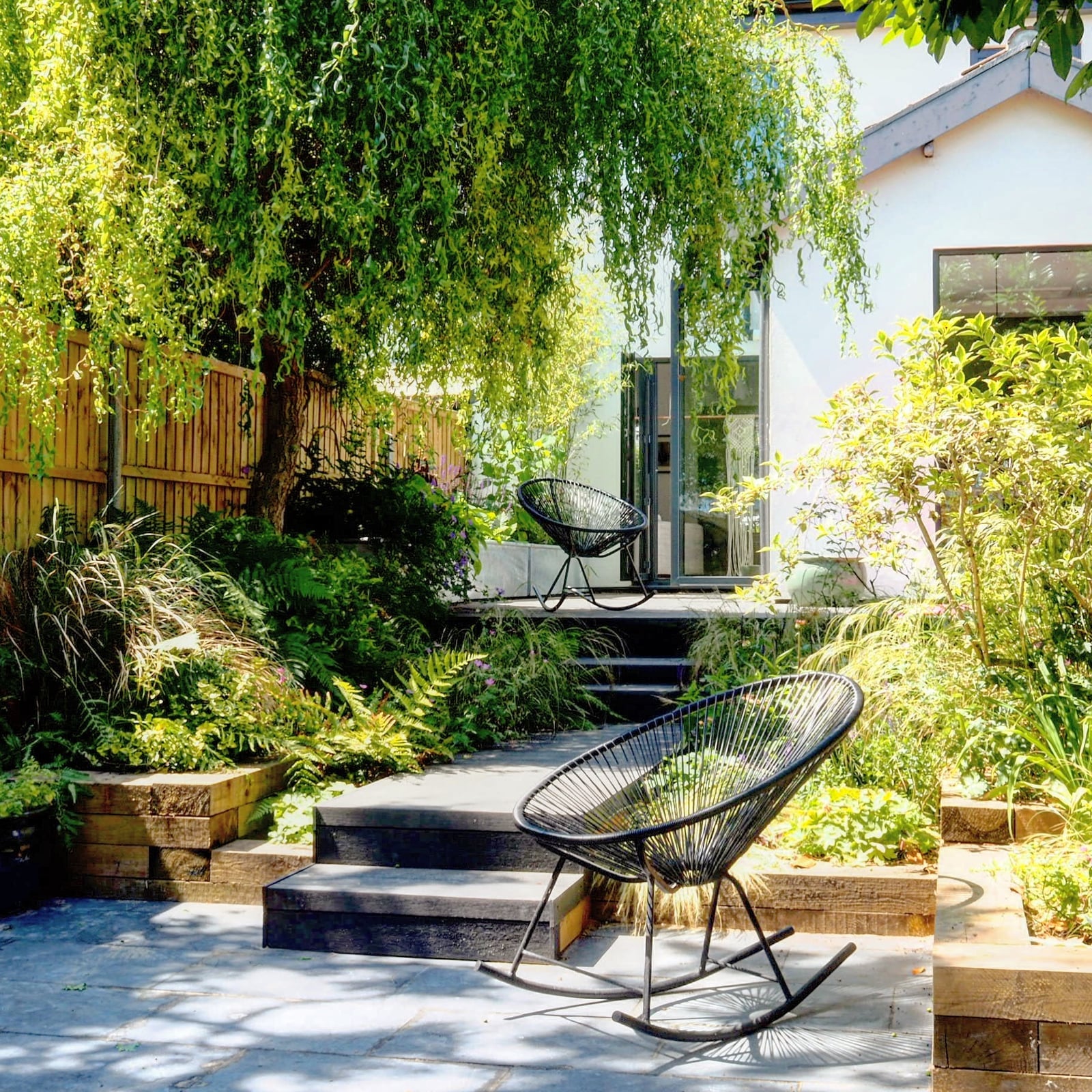
Two black Acapulco chairs turn a simple stone patio into a deliberate seating area without adding bulky furniture. Their open metal weave keeps the sightline clear through the lush planting, which is the whole point of a modern garden. The chairs should not compete with the greenery. Wooden planters and stone steps add warmth, while the bright daylight keeps the black crisp. The chairs are the hero element, and everything else, the patio, the planters, the surrounding foliage, stays simple to let that silhouette lead.
Traditional Garden Flower Bed with Mixed Blooms
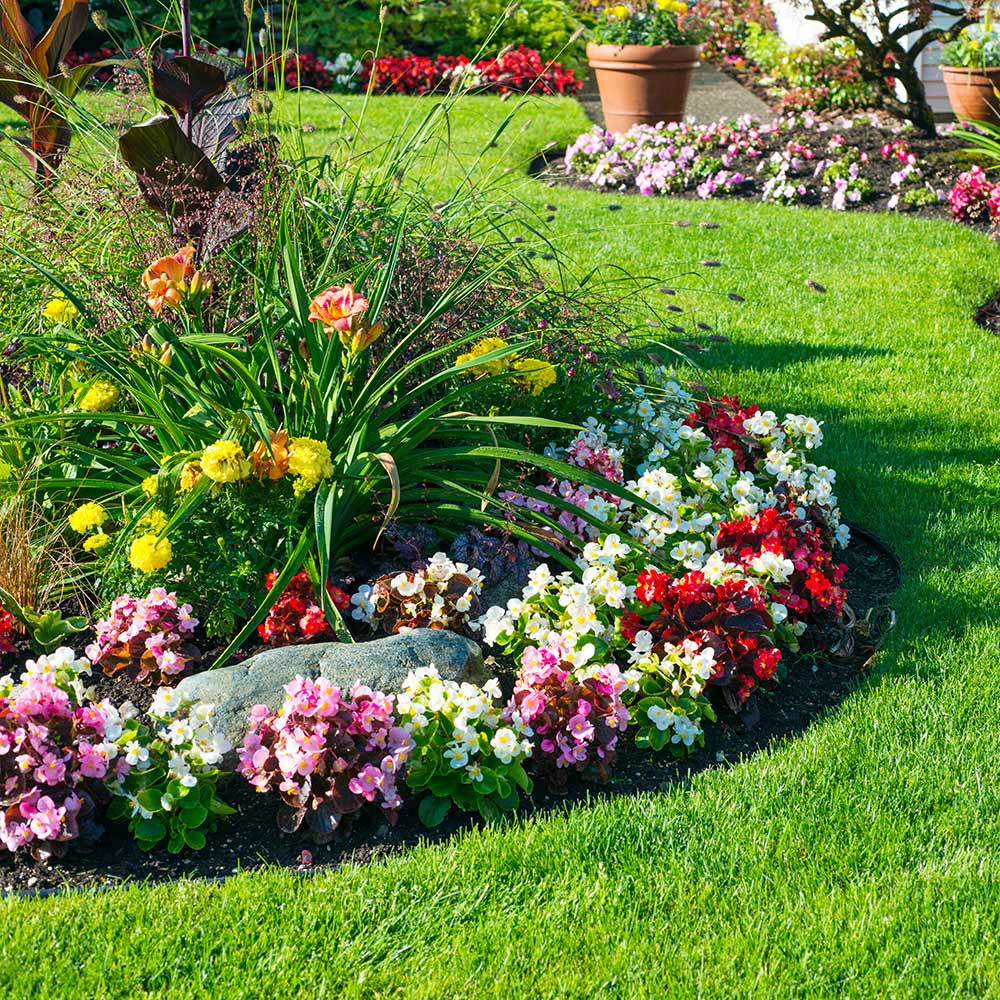
A curved flower bed packed with mixed blooms, red, pink, white, yellow, is the backbone of traditional garden style. The palette is intentionally varied, but what makes it work is the proportion: the flowers fill the bed edge to edge, with only a slim strip of grass and a single potted plant as punctuation. The bright sunlight reads the colors as saturated, which is the goal for a traditional bed. The curved shape softens the boundary between the garden and the lawn, making the whole space feel layered. To get this effect, plant in drifts of the same color rather than single stems, and let the bed curve gently rather than form a straight line.
Modern Garden with Corrugated Metal Raised Beds
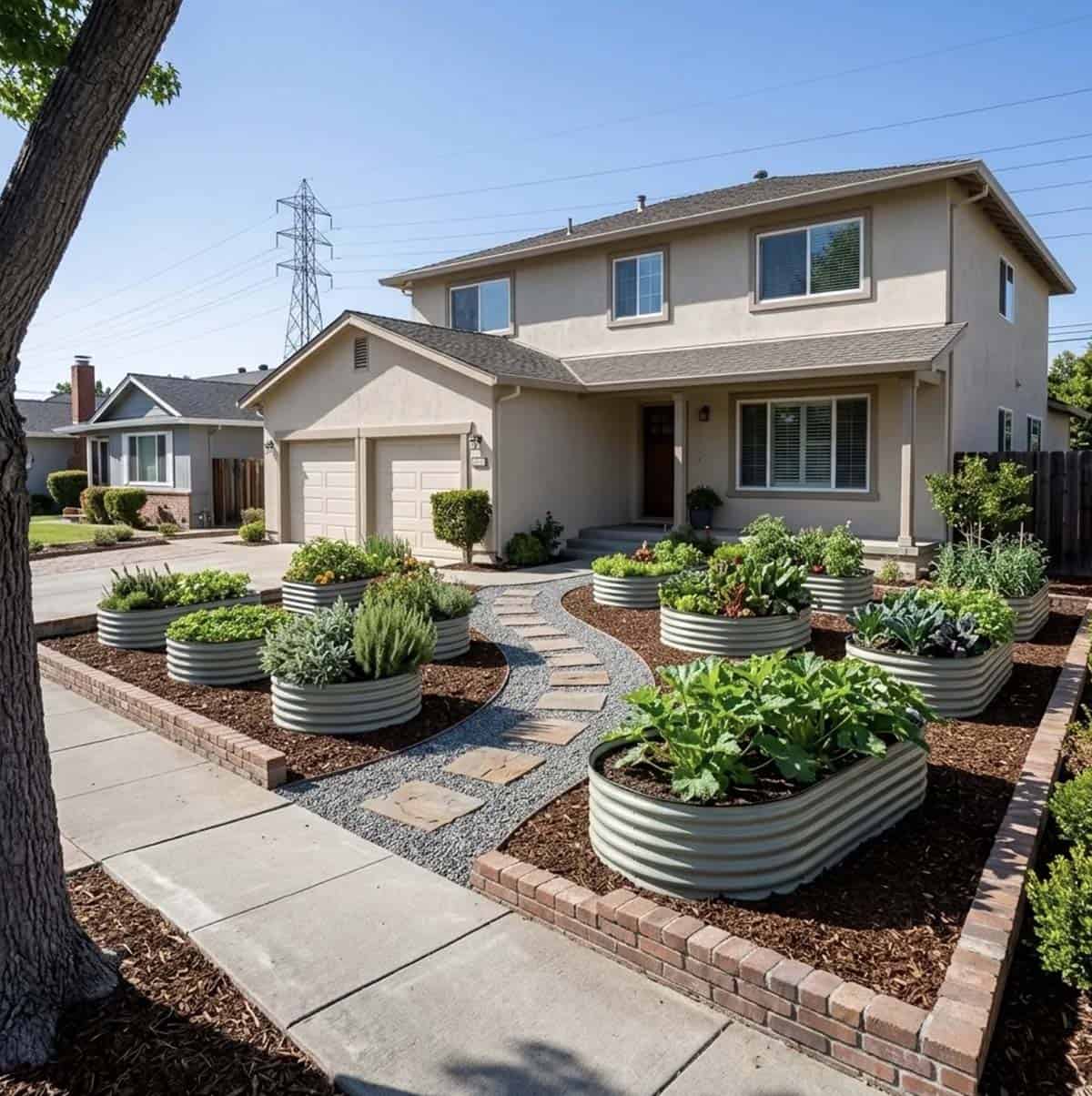
Corrugated metal raised beds can feel industrial, but here they read as clean and intentional because of the surrounding materials. The winding path of gravel and the brick edging soften the metal, while the rows of beds create a rhythm that is more agricultural than harsh. The palette, green, beige, brown, gray, keeps the garden calm, with the metal as the only reflective surface.
Compared to traditional wooden raised beds, corrugated metal has a longer lifespan and a narrower visual profile, which makes it a good fit for a modern garden where you want the plants to be the focus. The daytime clear sky casts even light across the rows, so the beds read as uniform without feeling sterile. For a similar look, use metal beds in a single finish and lay out the path in a soft curve to contrast the straight lines of the beds.
Eclectic Garden Seating with Purple Wicker Chairs
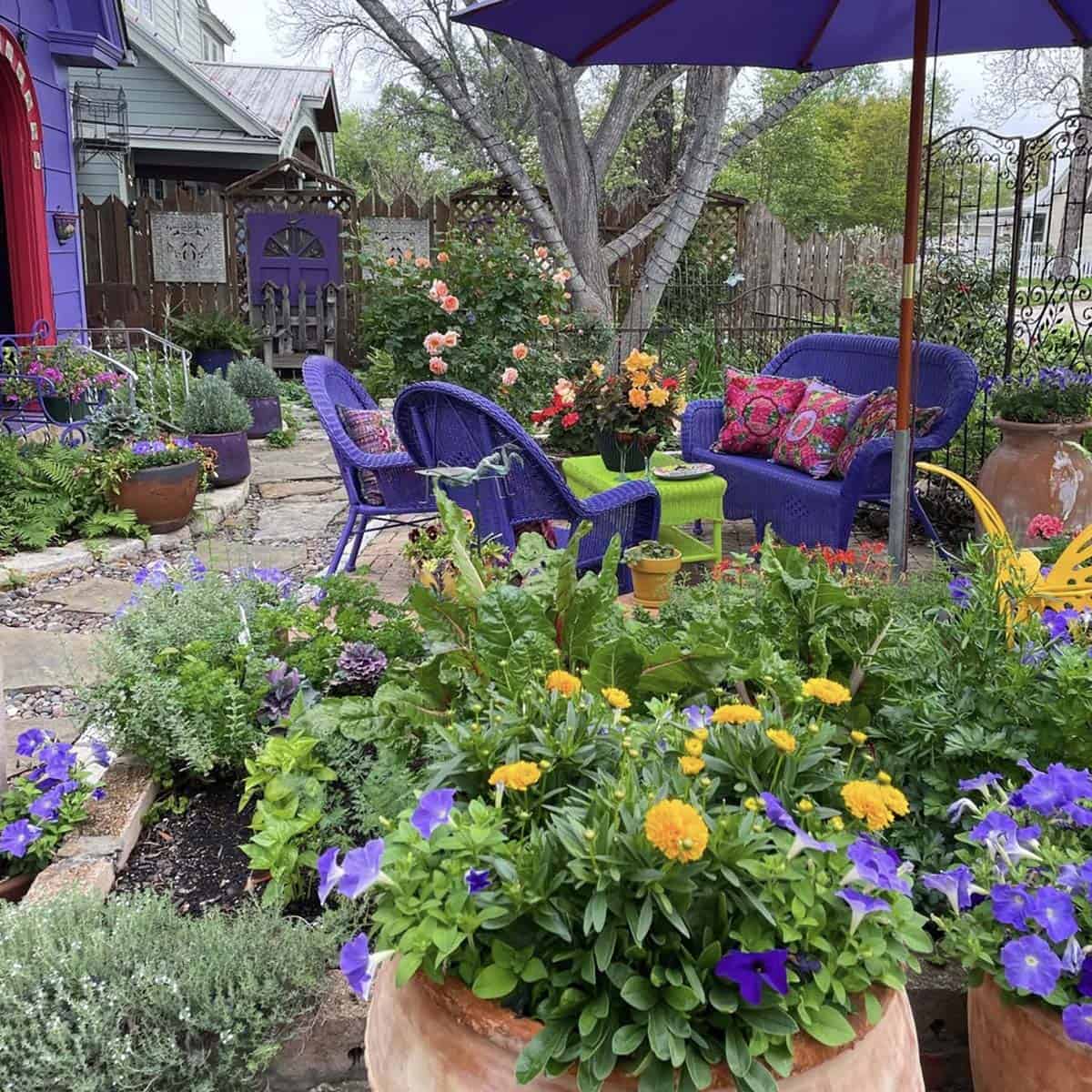
The saturated purple wicker chairs anchor a compact seating nook. A yellow table and patterned cushions in pink and orange break the purple, while the dense green planting keeps the palette from feeling flat. Arranging the chairs close together within the foliage makes the space feel tucked away, not crowded. For this approach, try grouping two or three colorful chairs around a small side table, then let the surrounding plants define the edges of the room.
Modern Garden Pathway with Rusted Metal Archways
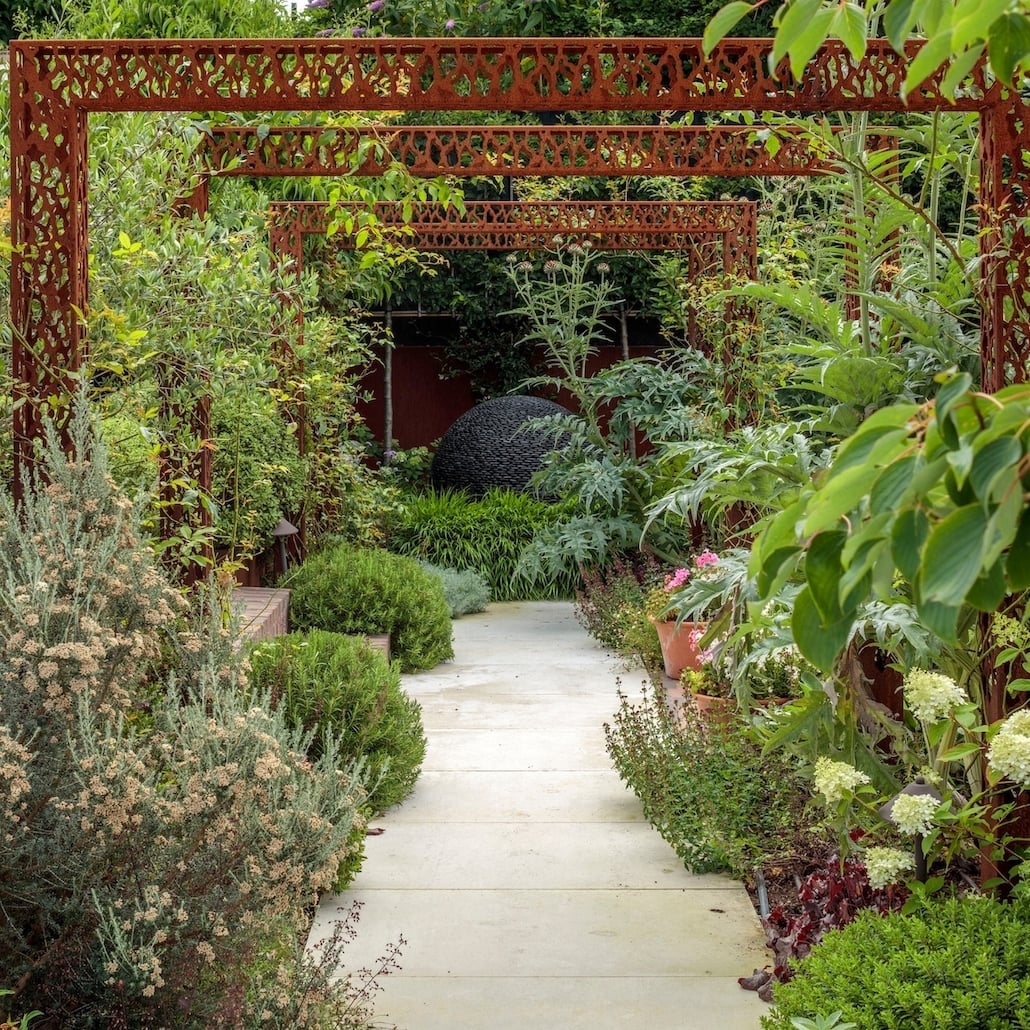
A concrete pathway that runs straight through an open garden sets a clean baseline, and the rusted metal archways layered over it add the tension. The warm rust and brown tones of the metal contrast with the gray concrete and the green foliage, giving the path a sense of age without looking neglected. Large plants and a sphere sculpture break the sightline, which keeps the eye moving. For a modern garden pathway, choose materials that contrast in finish: smooth concrete paired with textured, weathered metal. The archways frame the walkway without enclosing it, so the garden remains open and airy.
Final Thoughts
A good garden plan does not need a big budget or a professional crew. It needs a clear idea of how you want to use the space. The designs here share a few practical lessons. Define the edges with paths or beds. Add a focal point, whether a fire pit, a garden room, or a sculpture. Choose materials that suit your climate and your tolerance for maintenance. Gravel needs weeding, decking needs sealing, and stone pavers need leveling. Check your USDA zone before planting anything. The best gardens are the ones that get used, not just looked at. Start with one corner, one path, or one bed, and build from there.