A stair railing does more than keep you from taking a shortcut to the basement. In a modern home, it sets the tone for the whole interior, whether you want clean lines, a sculptural gesture, or something that just stays out of the way.
This roundup of 28 modern stair railing ideas covers glass, metal, wood, and mixed materials, along with lighting and layout tricks that make the railing feel like part of the architecture rather than an afterthought. You will find options for open treads, landings, and even outdoor steps.
Curved Staircase with Integrated LED Lighting and Glass Railing
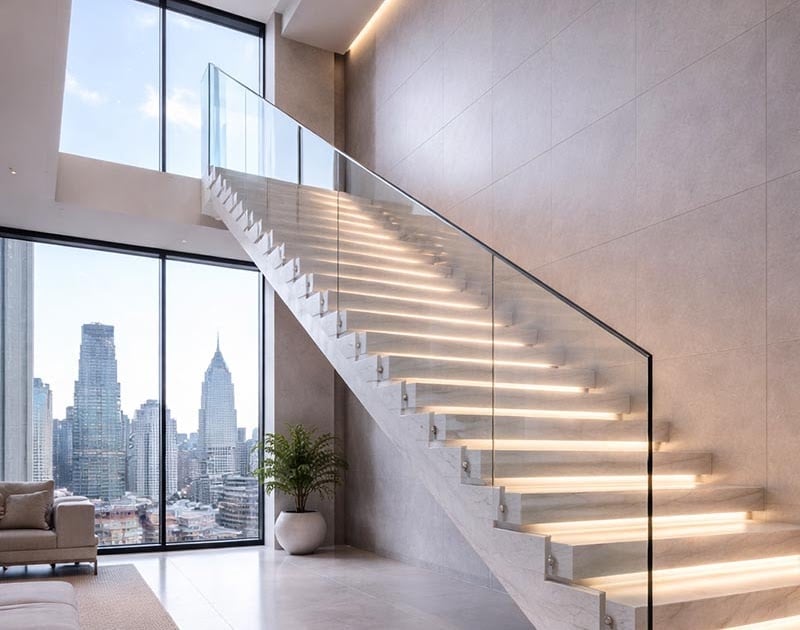
A curved staircase with a glass balustrade and integrated LED lighting uses the glow to define the line of travel rather than just illuminate it. The white marble treads and gray walls keep the palette restrained so the light reads as a design feature, not an afterthought. This is style mode: what defines the look is the ratio of hard surface to open air, with the glass railing keeping the curve visible from every angle. What breaks it would be adding a patterned runner or a second light source that competes with the integrated strip.
Staircase with Integrated White Shelving Unit as Railing
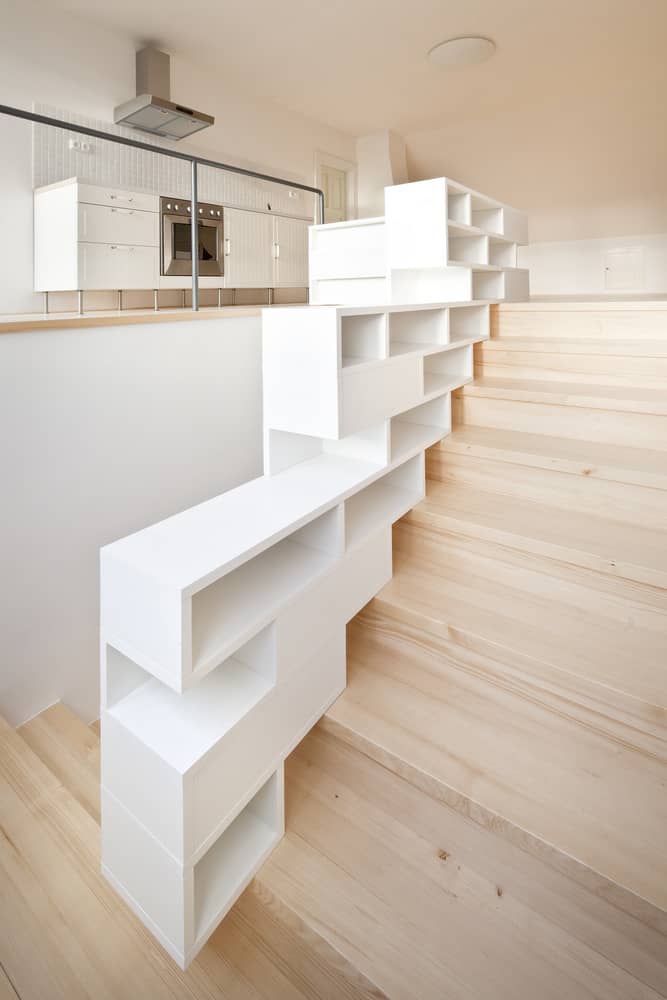
This is a smart use of a compact landing. The integrated white shelving unit replaces a traditional railing and turns a vertical gap into storage. The wood stairs and white laminate keep the palette clean, and the geometric shelves hold objects without cluttering the visual line of the staircase. The principle here is storage: when square footage is tight, look for vertical surfaces that can do double duty. A shelf that also serves as a guardrail saves floor space and keeps the landing from feeling like a dead zone.
Concrete Stairs with Wood Handrail and Metal Mesh Panels
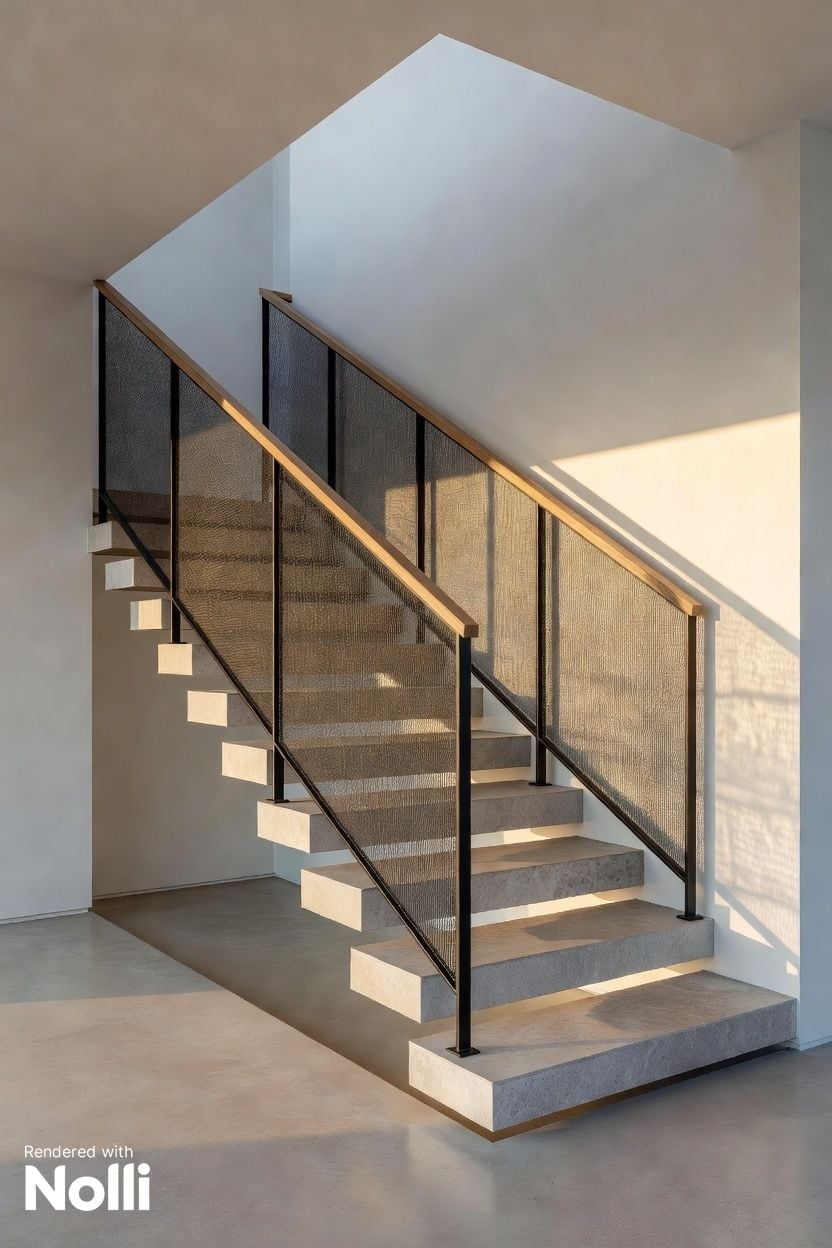
Can a railing be both solid and see-through? The metal mesh panels here answer yes. They provide the safety of a barrier without blocking the natural light that creates dramatic shadows across the concrete stairs. The wood handrail adds a warm tactile contrast to the gray concrete and black metal.
The material mix is the point. Concrete gives weight, mesh gives air, and wood gives a handhold that doesn’t feel cold. The palette stays within gray, black, and wood tones so the texture does the work. This is a look that reads as industrial but lives softer than solid metal or wood balusters would.
Open Plan Staircase with Black Metal Railing and Chandelier
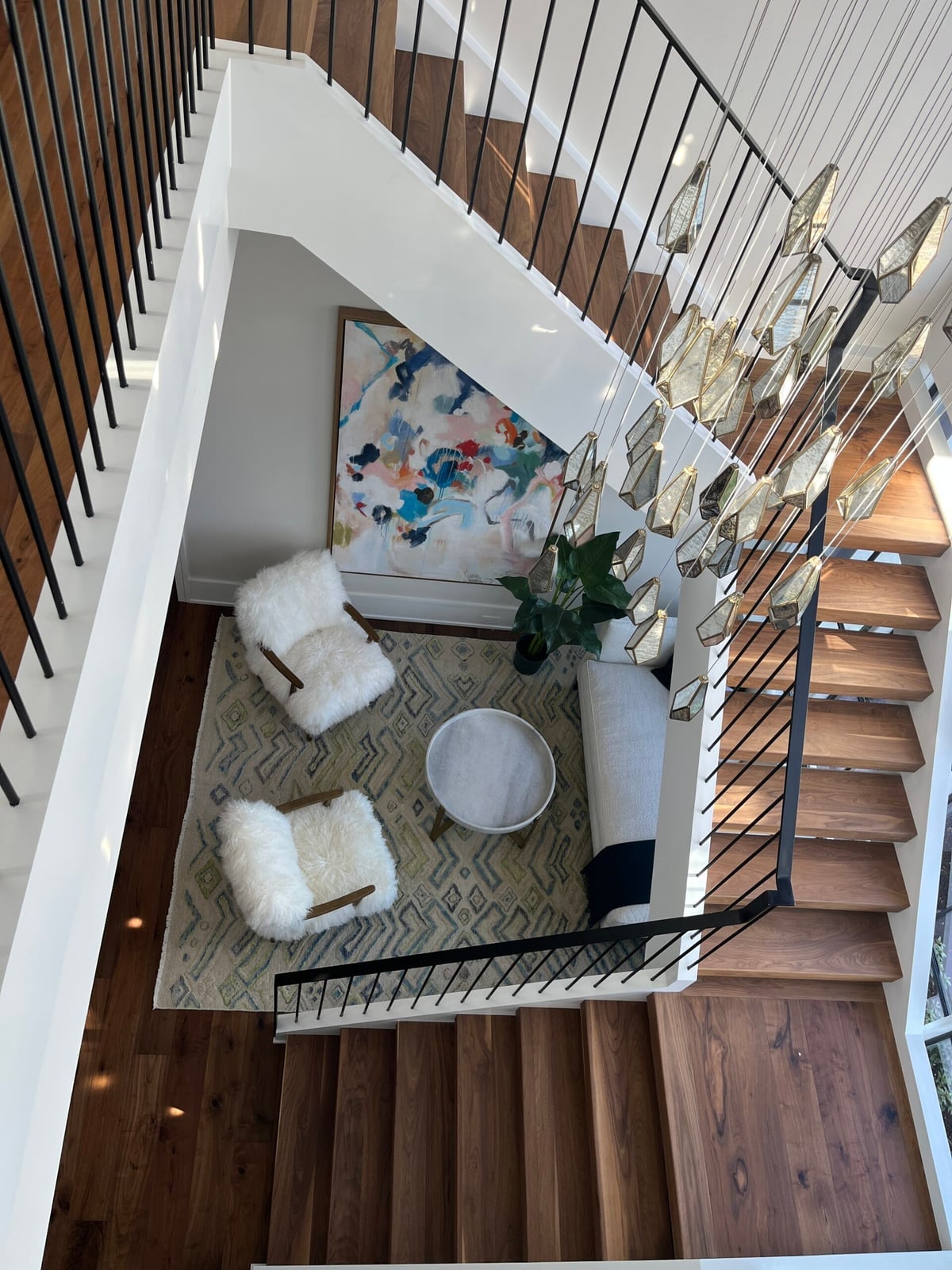
The black metal railing on these open riser stairs is simple enough to let the chandelier take center stage. The wood treads and marble details keep the palette warm, while the cream walls and sculptural chairs below anchor the seating area. This is a styling variation that proves a railing doesn’t have to shout to hold its own in an open plan. The trick is keeping the railing’s lines clean so the eye moves up to the light fixture without getting tangled in competing geometry.
Floating Wood Treads with Sleek Black Metal Railing
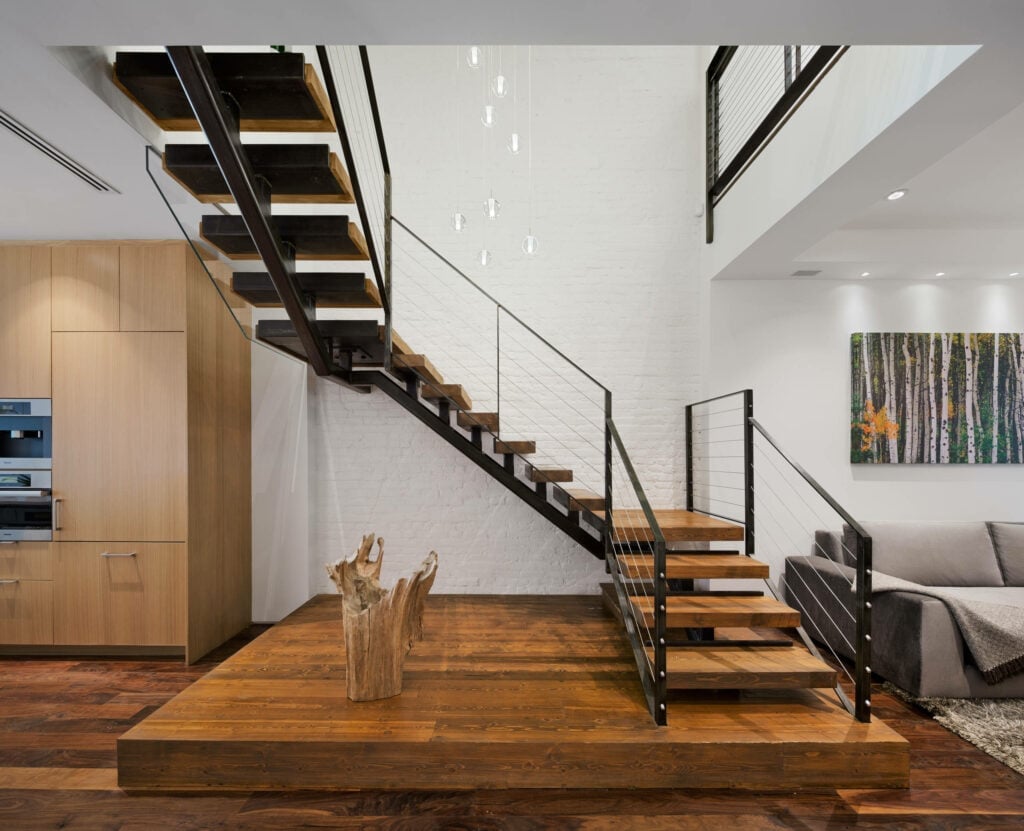
A practical rule for floating stairs: the railing should be as light as the treads look. The sleek black metal railing here does exactly that, running alongside the wood treads without adding visual bulk. The open plan layout lets natural light and pendant lights hit the brick and concrete walls, keeping the space from feeling tunnel-like. The material story is wood against metal against raw surfaces, and the ratio leans heavily on the hard finishes. What breaks it would be a heavy wooden handrail that competes with the floating effect.
Glass Railing with Black Metal Stringers and Geometric Door
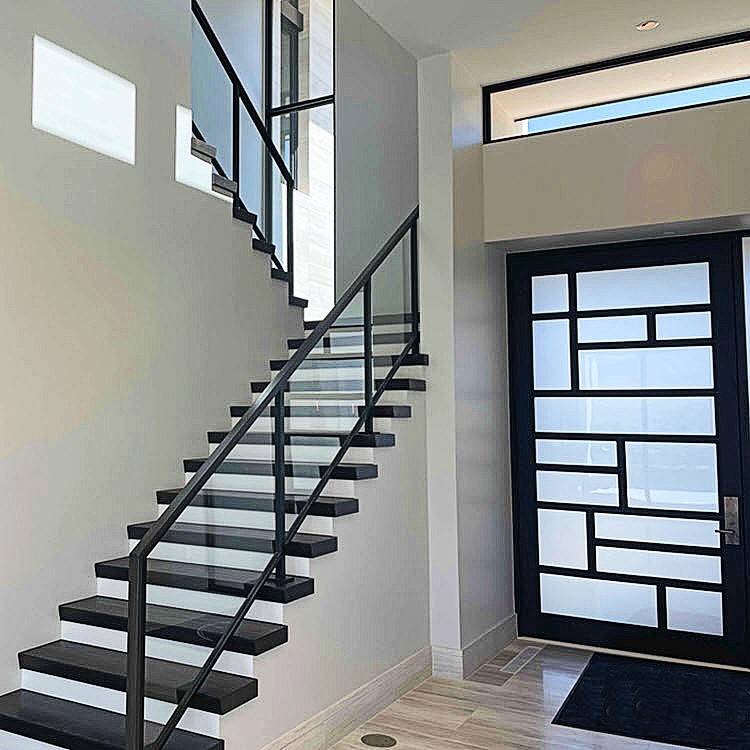
A glass railing paired with black metal stringers does not have to mean a completely transparent look. This entry staircase uses a geometric frosted glass door alongside clear glass panels, breaking up the open plan without blocking light. The black metal framework ties the two glass finishes together, so the door reads as part of the same design rather than an afterthought. The palette stays tight: black, white, and the wood tones from the treads. That restraint is what lets the frosted pattern stand out. If you want a similar mix of openness and privacy on a straight staircase, swapping one or two clear panels for a textured or frosted section is a practical way to add visual weight without changing the railing structure.
Sweeping Curved Staircase with Black Metal Railing
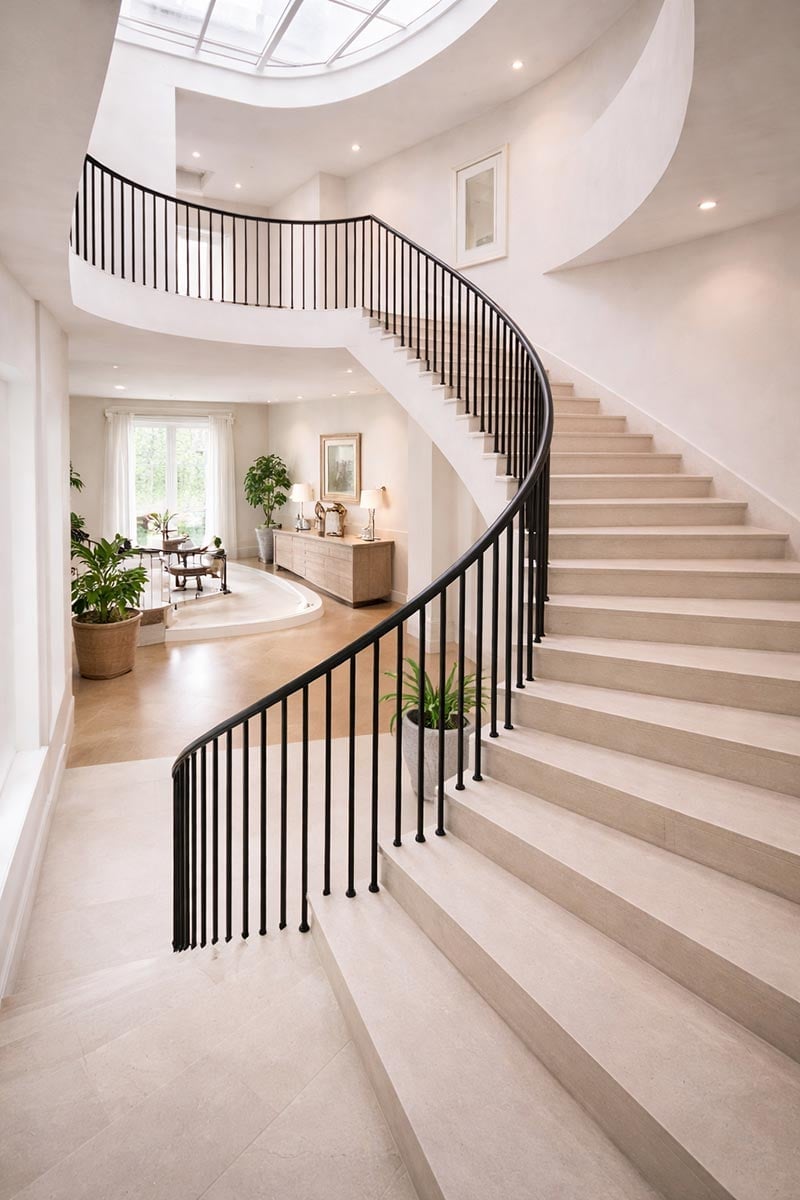
A curved black metal railing already draws the eye, so the rest of the foyer should stay out of its way. Wide stone stairs and recessed lighting keep the palette neutral: white, black, and the natural stone color. The layout lets the railing define the path without competing for attention. For renters, a curved staircase is a permanent feature, but you can echo the look by adding a slim black handrail to an existing straight staircase and painting the balusters a matching matte black.
Staircase with Slatted Wood Paneling as Railing
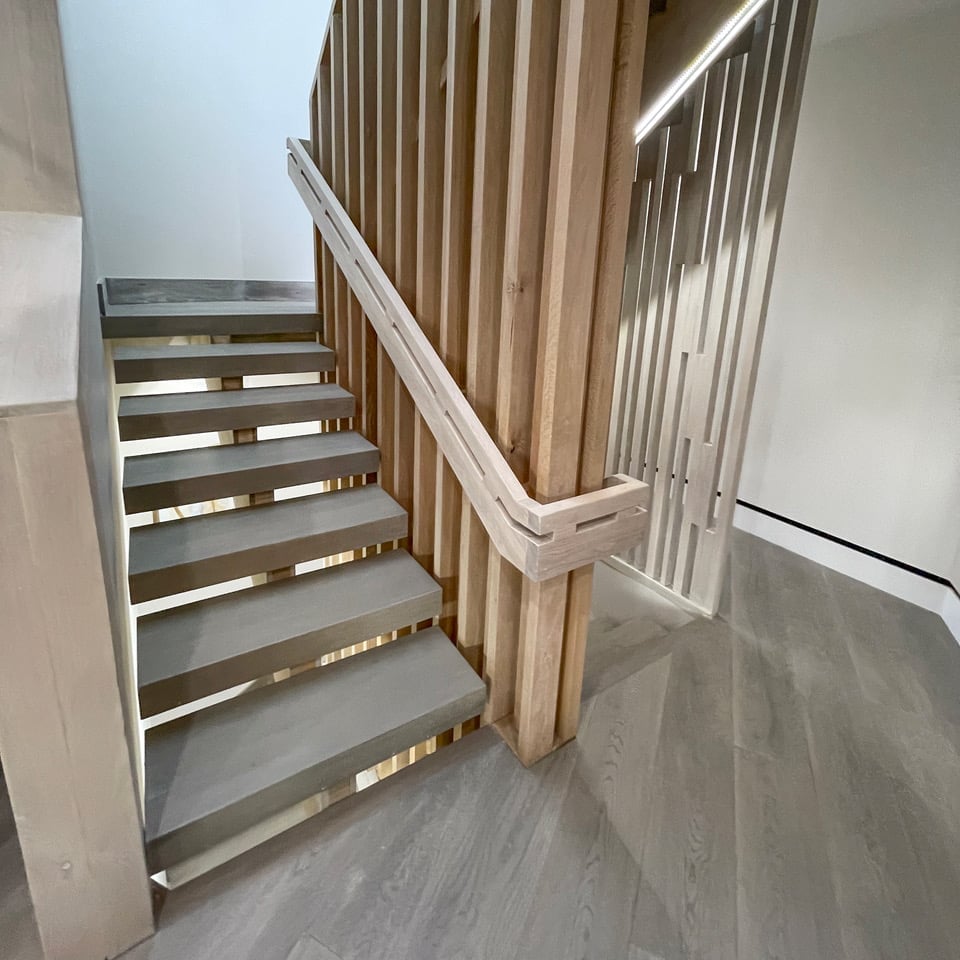
Slatted wood paneling acts as both a railing and a room divider, giving the staircase a solid boundary without closing it off. The light wood and gray palette keeps the open plan feeling airy, while the integrated LED lighting along the treads ensures the stairs are visible at night. The slats run vertically, drawing the eye upward and making the ceiling feel higher. This setup works best when the wood tone matches or complements the flooring. The main trade-off is that slatted panels collect dust between the gaps, so a vacuum with a brush attachment becomes a regular part of upkeep.
Modern Railing with Curved Black Metal Spindles and Wood Handrail
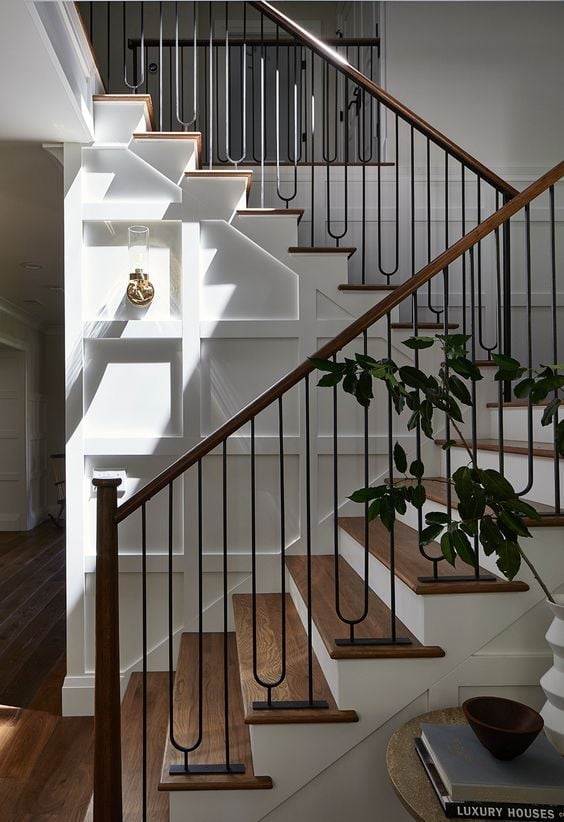
Can a railing feel sculptural without being fussy? Yes, when the curve in the spindles is the only decorative move. This staircase uses a wooden handrail and black metal spindles that bend outward slightly, set against white risers and white wall panels. Shadows cast across the spindles change the look throughout the day. The white risers keep the eye moving upward, so the curved spindles feel like a deliberate accent. To recreate it, look for a clean palette and let the spindle shape do the work.
Geometric Black Metal Railing on Staircase Landing
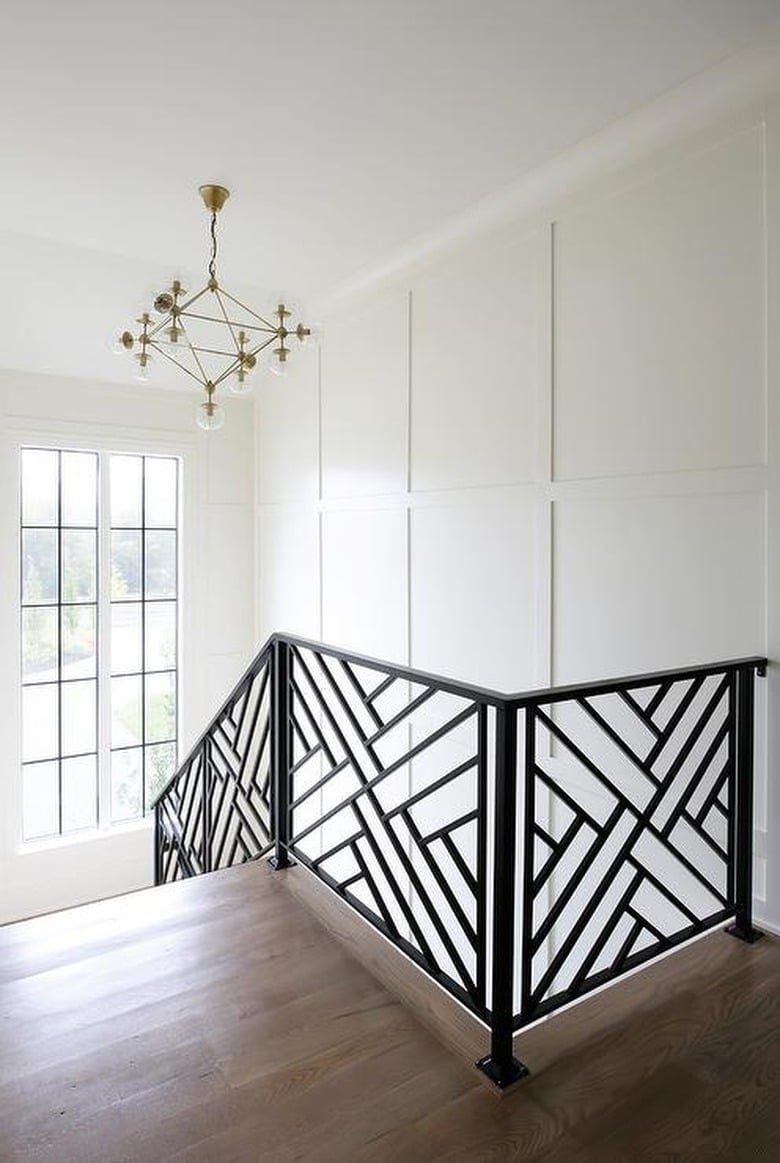
A geometric black metal railing on a staircase landing adds pattern without adding bulk. The repeat of angles and lines creates a visual rhythm that works against a plain wall and wood floor. A modern chandelier above the landing draws the eye to the center, while the railing frames the edge of the space. The black metal stands out against the white wall, so you get the graphic look without needing a full renovation. Just make sure the railing height meets local code, since the open pattern offers no solid barrier.
Floating Wooden Stairs with Glass Balustrade and Wood Handrails
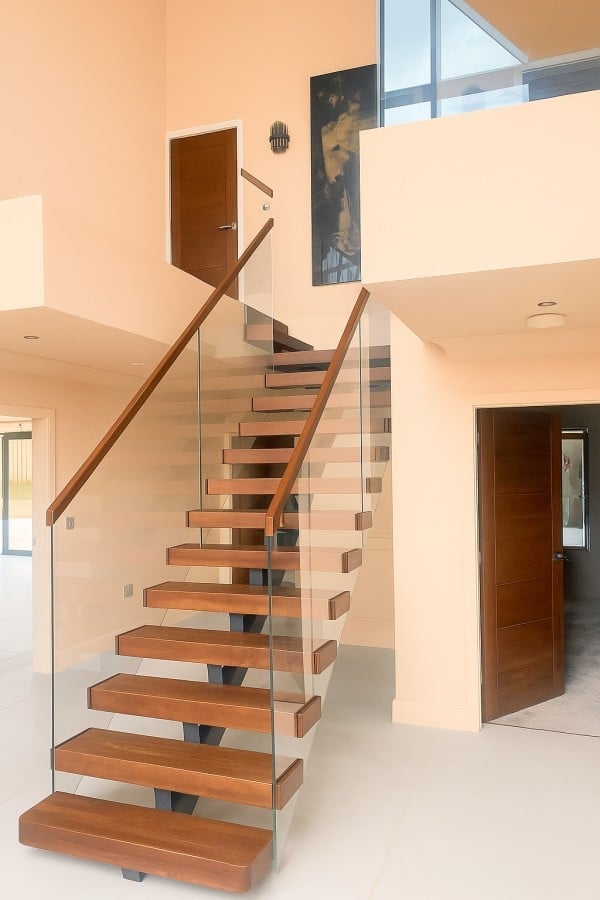
A glass balustrade does not have to erase warmth. This floating wooden staircase keeps the wood tones front and center, with cream walls and black metal accents anchoring the look. The glass panels read as transparent dividers, not barriers, letting natural light and the recessed ceiling lights travel through the landing. What makes this modern stair railing work is the ratio: wood steps and handrail carry the visual weight, while the glass and metal stay lean. The style is defined by that contrast – solid underfoot, open on the sides. Anything too bulky in the balustrade would break the balance, so think slim frames and clear panels if you want this feel.
Outdoor Floating Stairs with Sleek Glass Railing System
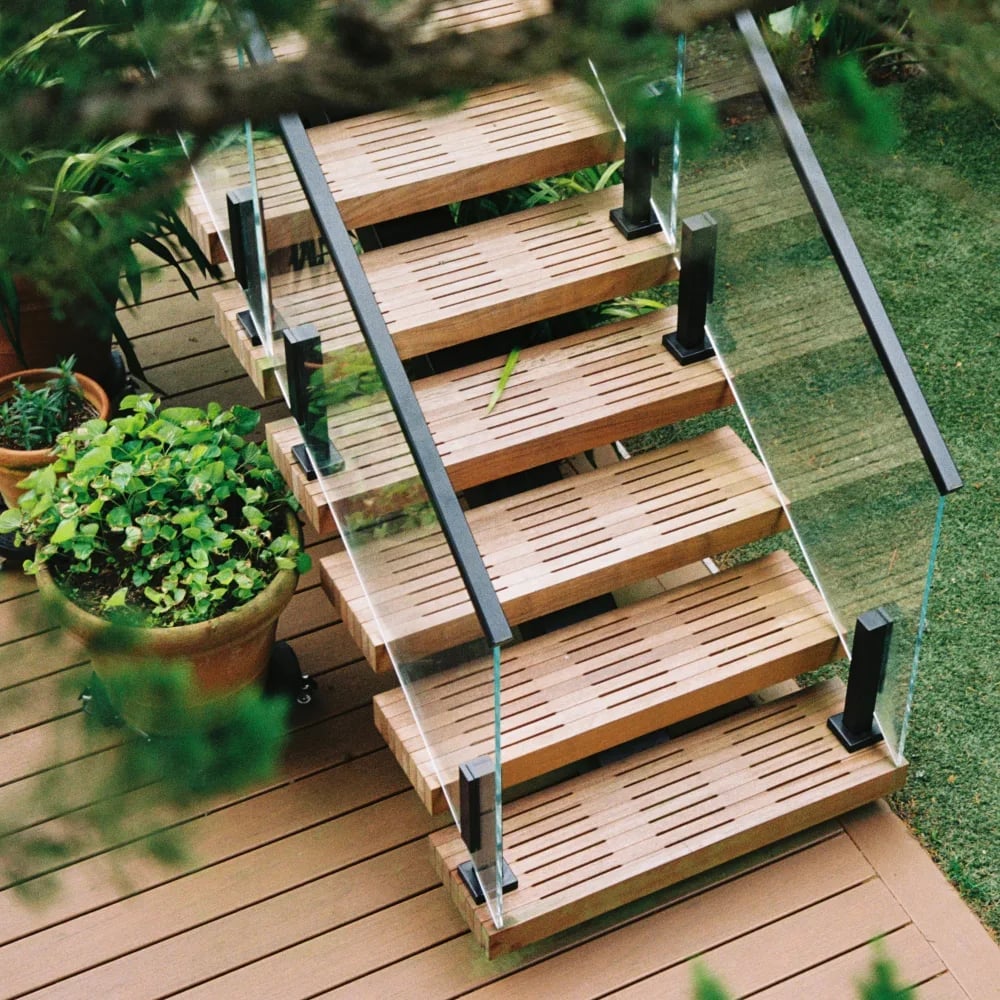
An outdoor staircase with glass railing could feel exposed or too delicate. This one does not. The wooden treads anchor the structure, and the black posts give the glass panels a clear boundary. Bright daylight makes the glass nearly disappear, so the view becomes the real feature. The palette here is almost elemental: natural wood, clear glass, black metal. No extra color competes with the steps or the landscape. Each material gets its own job. Wood for warmth, glass for openness, metal for structure. Clutter would undo the clean line this setup relies on. A busy railing pattern or a painted tread would break the visual flow.
Modern Staircase with Black Metal Railing and Wood Treads
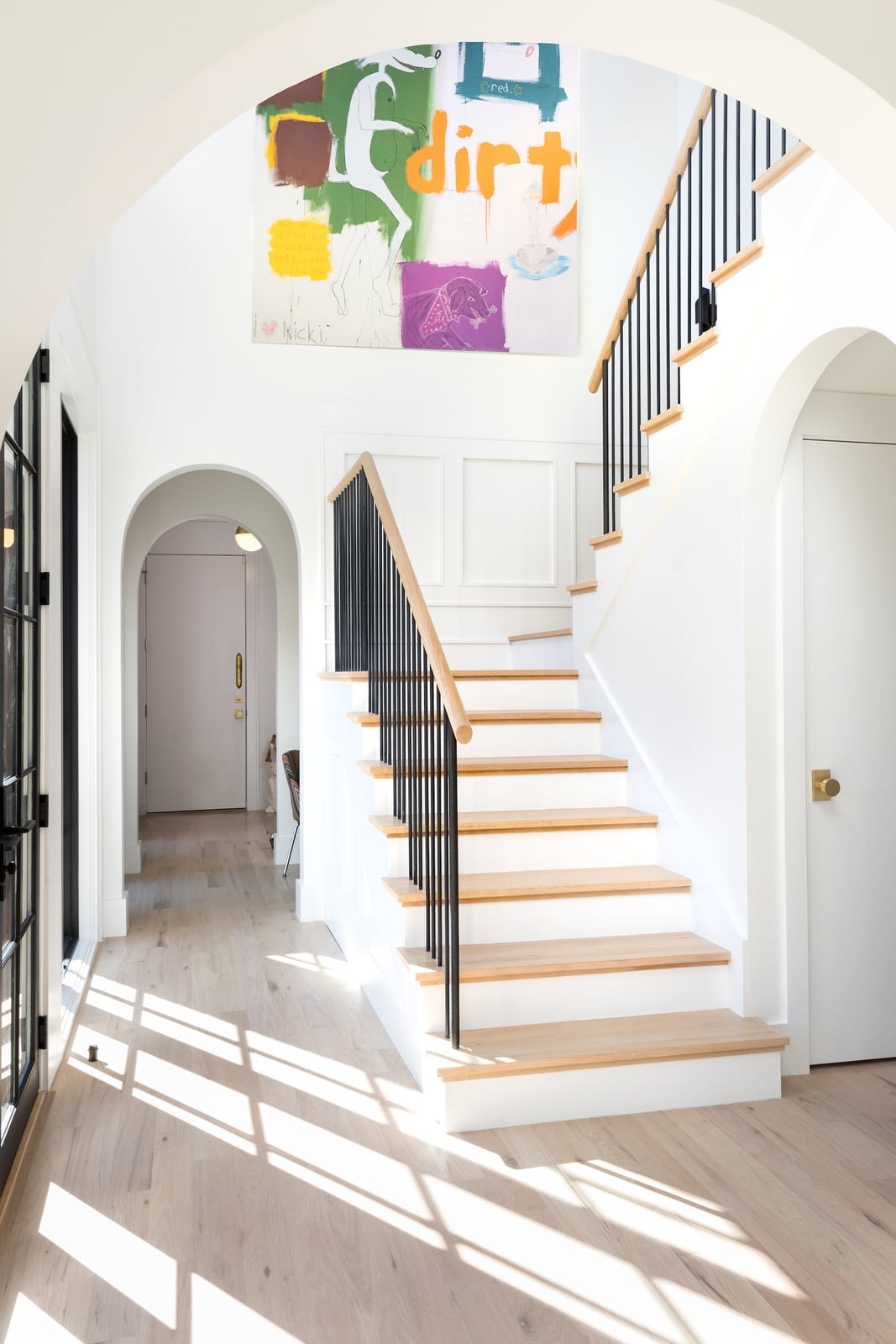
Sunlight patterns on the floor tell you the light is doing some of the work here. The black metal railing stays slim against the white walls, and the wood treads break up the contrast. This modern stair railing looks like a line drawing made solid: black lines for the railing, wood rectangles for the steps, white space for the walls. The sunlight moves through the space and adds depth, even when the palette is limited to three colors. No extra decor is needed when the light itself adds the texture.
Vertical White Railing with Dark Wood Handrail and Treads
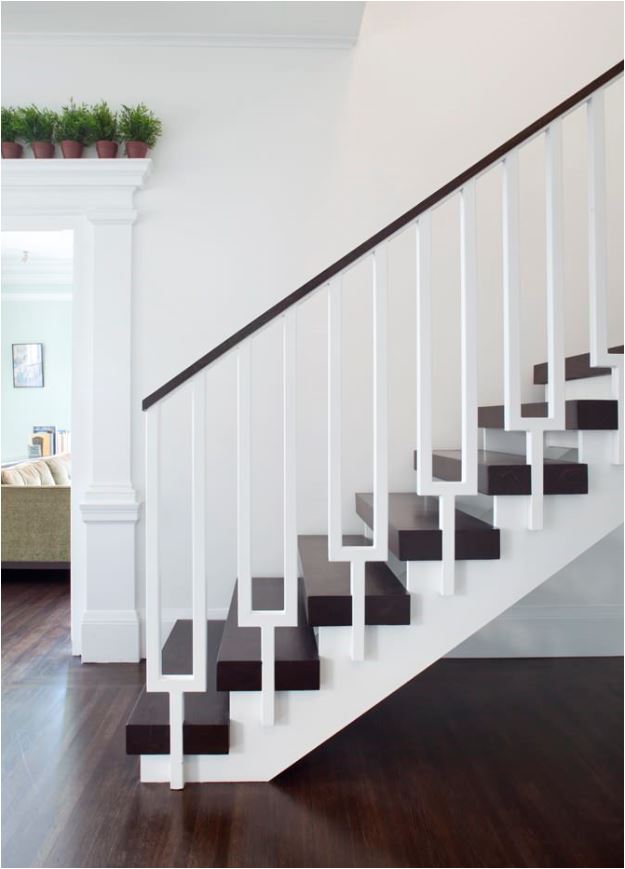
A vertical white railing is a safe choice until you pair it with dark wood. Then it becomes deliberate. The white balusters pick up the natural light and keep the staircase feeling open, while the dark handrail and treads ground the whole run. The palette creates enough contrast that the railing does not need ornamental details. Planters on the landing add green without crowding the line. The clean vertical rhythm is key to the look. Anything curved or ornate on the balusters would break the modern feel, so stick to straight lines if this look is the goal.
Multi-Level Staircase with Dark Wood Handrail and Glass Panels
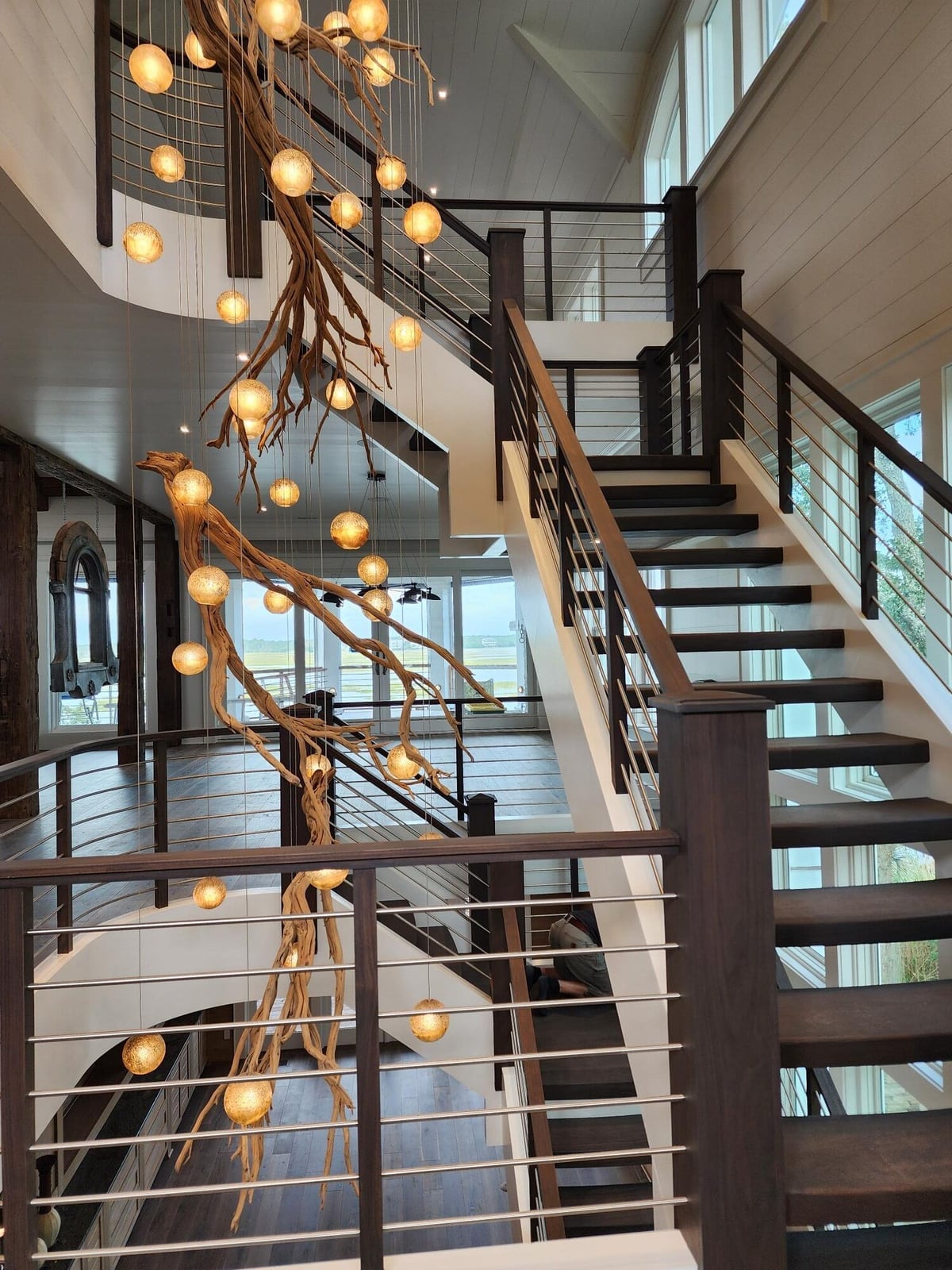
A multi-level staircase can create a void in the middle of an open plan. A dark wood handrail with glass panels solves that without closing off the space. The metal spindles are slim enough to read as vertical lines, and the glass panels let the eye travel across levels. The rule here is about proportion: the handrail needs enough visual weight to define the path, but the glass keeps the space open. The dark wood, white walls, and silver metal stay within a restrained palette that does not fight the architecture. The look breaks if the glass panels are too tinted or the spindles too thick. That would turn openness into barrier. For a multi-level setup, transparency is the feature.
Marble Treads with Glass Railing and Wood-Finished Handrail
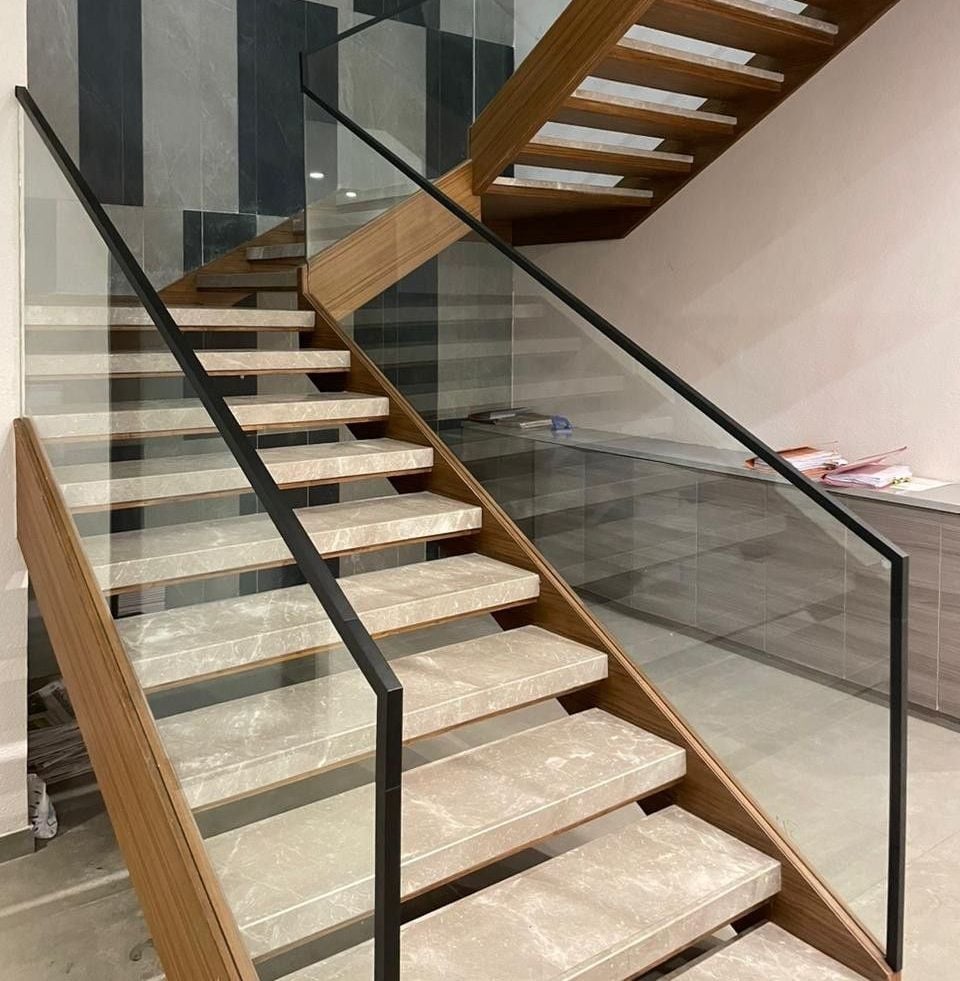
Marble treads look better against a simple glass railing than you might guess from the price tag alone. The glass showcases the stone’s veining without competing with a busy baluster pattern. A wood-finished handrail adds warmth to the cool gray and white palette, and the handrail is what your hand actually touches, so you can use a less expensive species for the treads and save the exotic wood for that top rail. The look is defined by the ratio of hard surface to open air: more glass means more light moves through the staircase. What breaks it is clutter on the treads, because marble and glass show every smudge and dropped sock.
Exterior Wood-Slatted Facade with Black Metal Railing
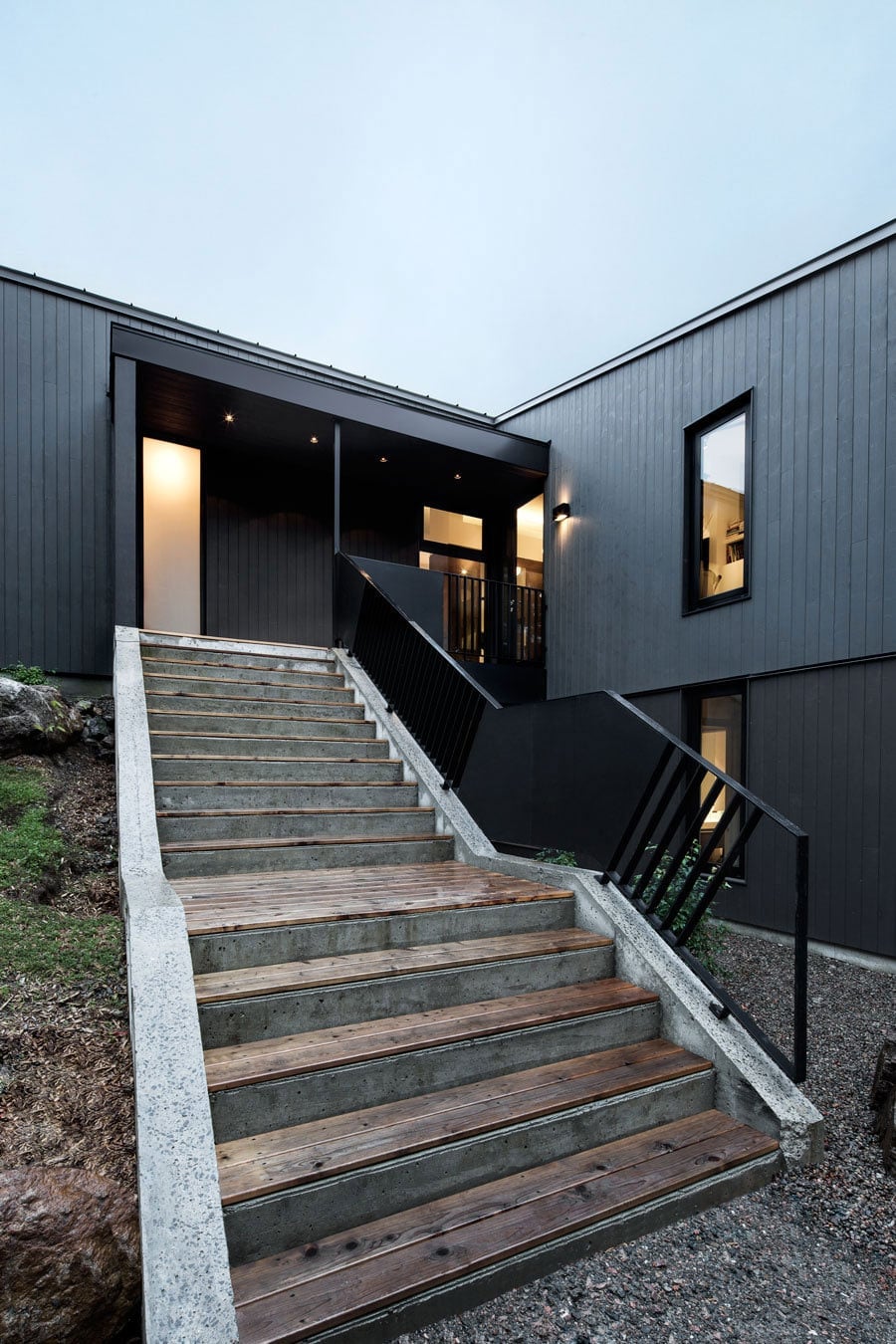
Outdoor stairs need materials that handle rain and sun without constant attention. This exterior staircase pairs a black metal railing with wood plank steps set against a dark slatted facade. The warm wood against the dark vertical lines of the facade keeps the entry from feeling like a tunnel. For renters, black metal railing is one of the easier finishes to match if you need to add a section later, and the wood steps can be a DIY sand and seal project over a weekend. The style works because the wood facade’s vertical rhythm echoes the railing’s posts, and the concrete base anchors the whole composition. Check your USDA zone before planting anything near the base, since the wood slats can trap moisture against greenery.
Vertical Square Black Metal Posts for Modern Railing
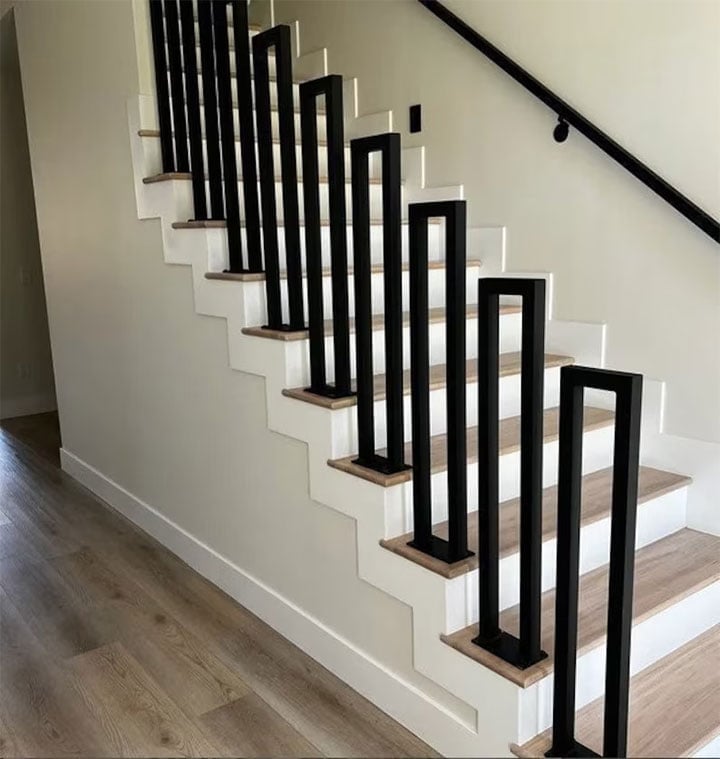
Round spindles read traditional; square posts read modern. That is the quickest swap you can make without changing the handrail or treads. Here, vertical square black metal posts run from tread to handrail with no ornament, just clean geometry against a white wall and wood treads. The spacing between posts matters more than the post thickness: closer spacing feels solid and protective, wider spacing feels open and airy. For a straight staircase, keep the gap under four inches for safety, especially if kids or pets use the stairs.
The palette stays simple: white wall, black metal, warm wood. The wood treads break the monochrome and keep the staircase from looking like an office stairwell. Light hits the metal posts and casts a grid of shadows across the wall, which adds a layer of pattern without adding a single object. If the room feels narrow, paint the wall behind the railing the same white as the trim to keep the line clean.
Horizontal Bar Stair Railing in Hallway Landing
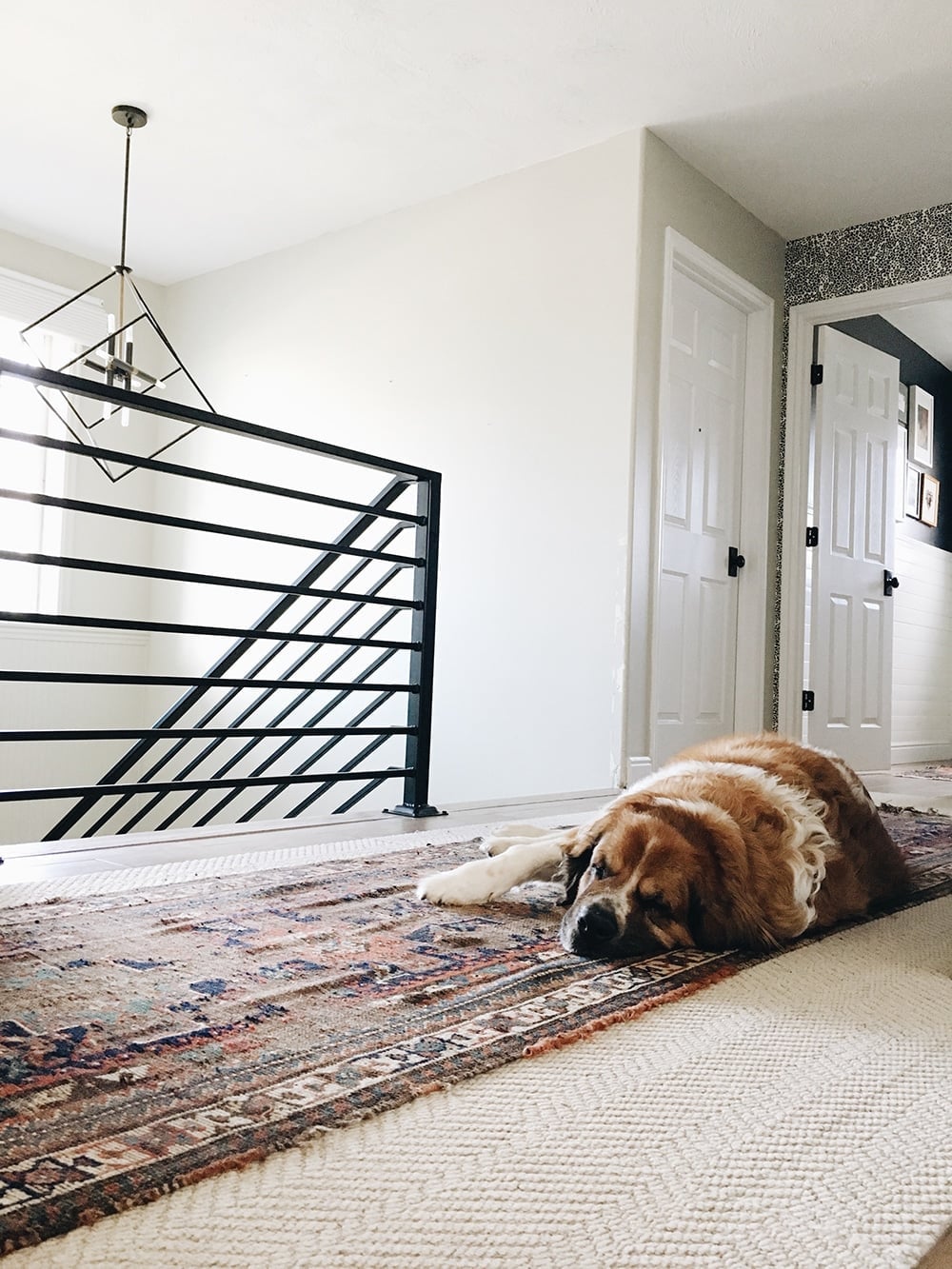
A horizontal bar railing functions as a deliberate design choice in a hallway landing. The black metal bars echo the horizontal plane of the landing and the chandelier above it. A large dog lying on a neutral rug anchors the scene and proves the railing works with family life. The carpet on the stairs keeps footfall quiet, while the rug on the landing defines a separate zone. The chandelier adds a softer note to the hard metal lines, and its warm light balances the black and white palette. A crowded landing with too many shoes or coats near the railing competes with the horizontal rhythm.
Open Tread Stairs with Glass Balustrade and Water Views
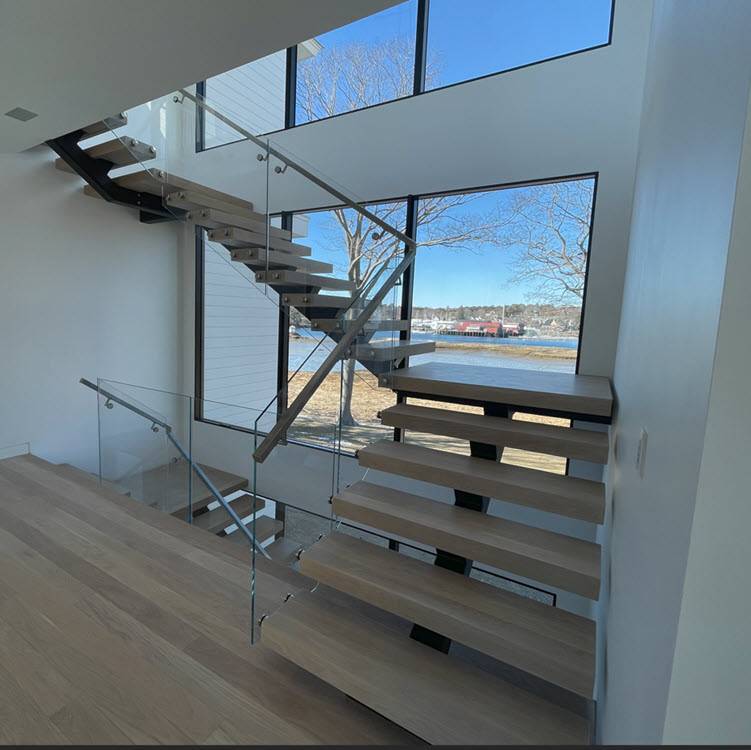
This staircase uses open treads that let light fall through from the windows behind, and the glass balustrade keeps the view of the water uninterrupted. The wood treads and white risers keep the palette neutral so the eye goes straight to the horizon. The scale works because the glass panels are tall enough to feel safe but low enough to not block the sightline when you are seated on the landing. In a room without a water view, aim the glass balustrade toward the best natural light source. The open treads mean you will see dust on the floor below, so a robot vacuum or a quick weekly sweep keeps the look clean. The metal handrail is the only solid barrier, and its slim profile creates a clean horizontal line.
Industrial Stair Railing with Brushed Metal Finish
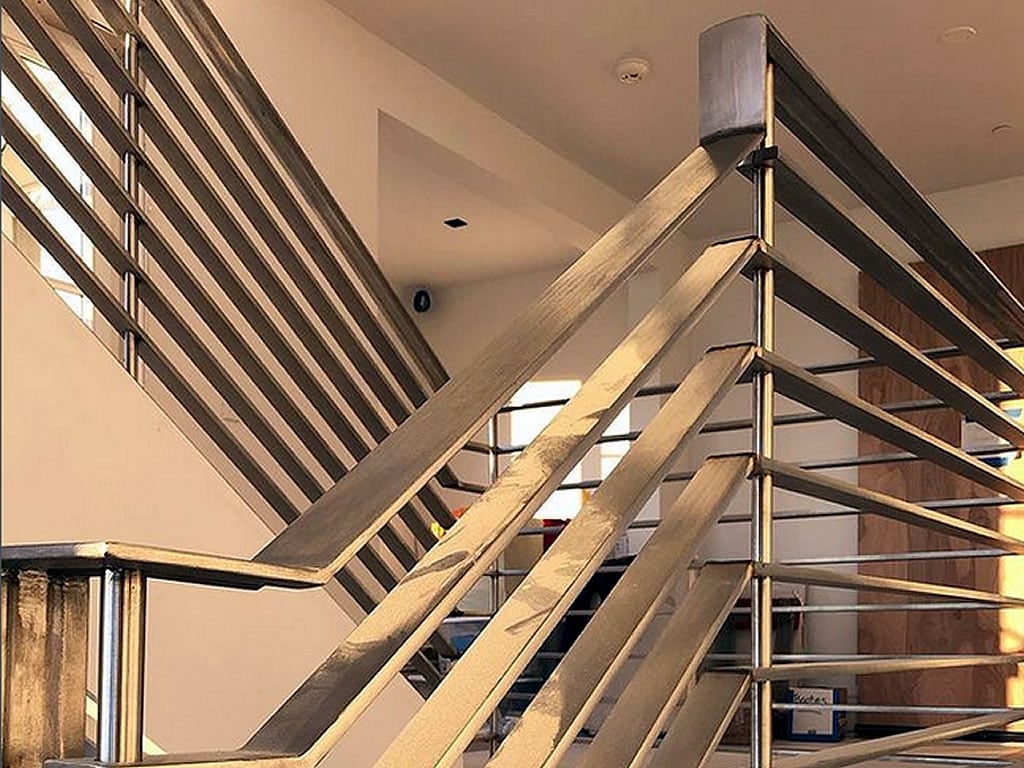
A brushed metal finish changes the feel of a modern stair railing without changing its shape. The matte surface catches light softly rather than bouncing it around the room, which keeps the look grounded. Paired with wood treads and concrete, the silver-gray tone bridges the warm and cold sides of the palette. A multi-level layout benefits from this treatment because the finish reads consistently from every angle. The metal does not compete with the wood; it just sits there, solid and quiet. For anyone wanting an industrial edge that does not overwhelm the rest of the house, this finish is the move. It works because the material does the talking, not the polish.
Open Tread Wood Stairs with Black Metal Railing and Green Views
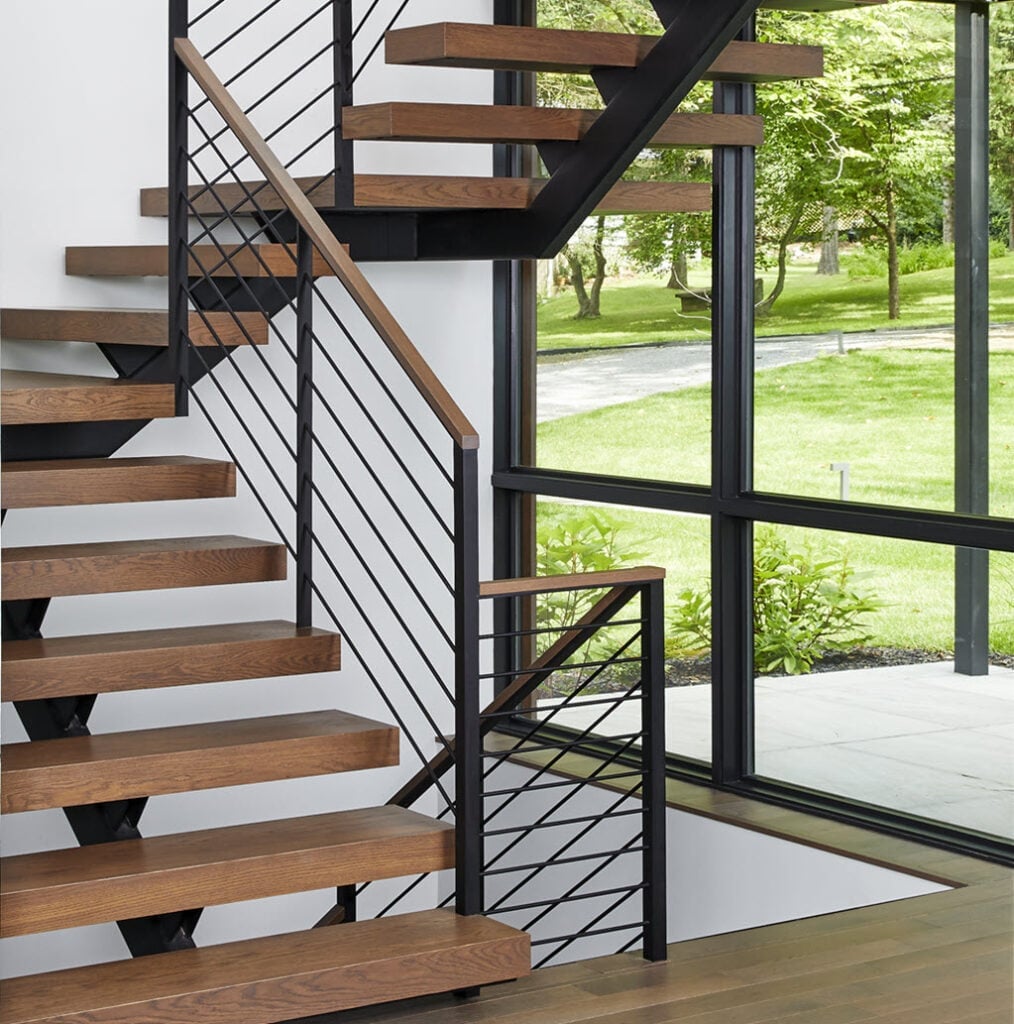
The open tread layout lets light pass through, and the black metal railing frames the view beyond the large window. Natural wood tones keep the stairs from feeling cold, while the white walls and concrete floor anchor the palette. The green outside becomes part of the room, so the railing acts as a subtle boundary rather than a barrier. A linear design like this one works because it does not interrupt the sightline. The palette stays simple: wood, black, white, and whatever the window shows.
Compact Landing with Black Horizontal Bar Railing
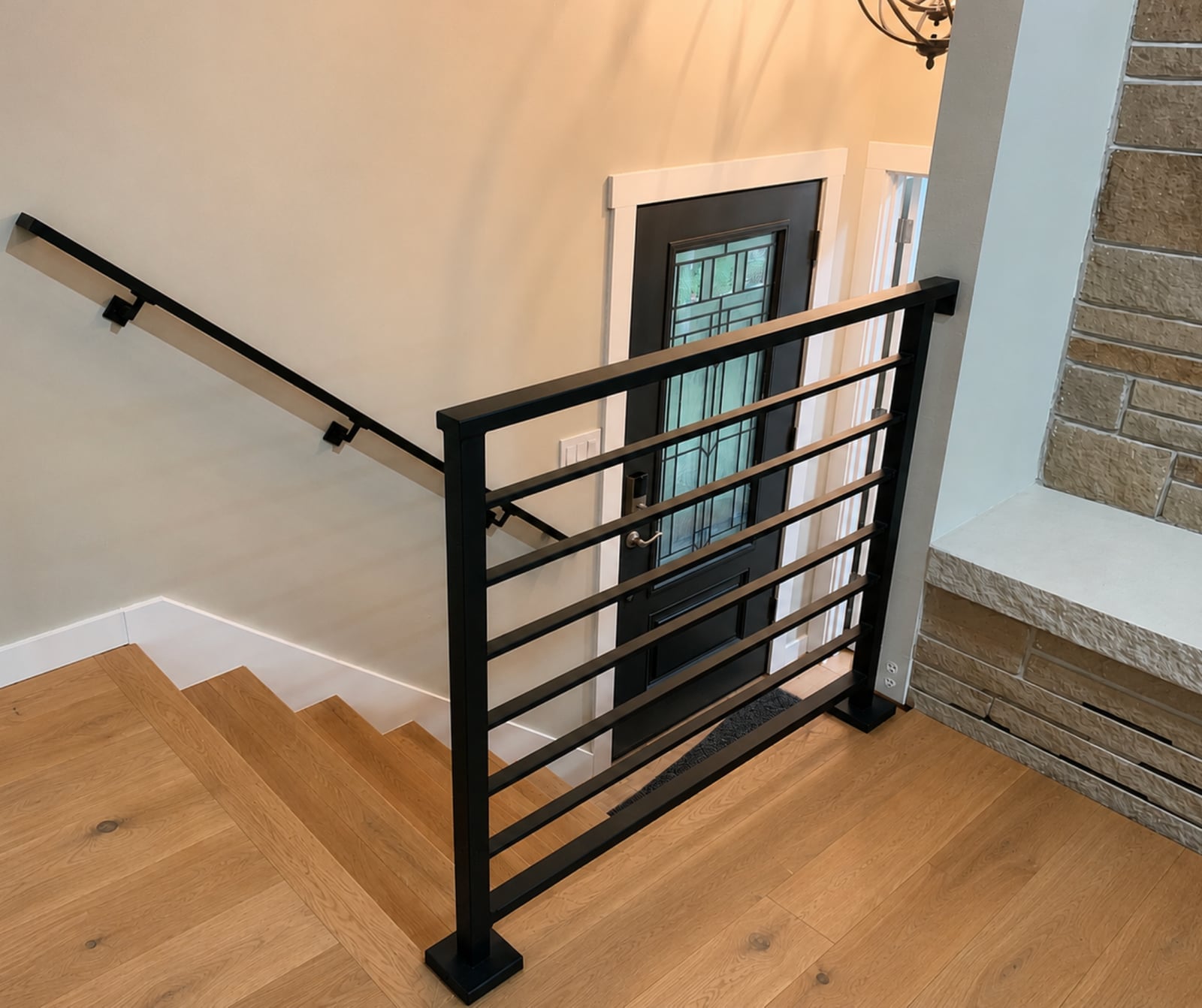
A compact landing calls for a railing that does not crowd the space. Horizontal black bars stretch the eye sideways, making the landing feel wider than it is. The wood floor adds warmth, and the cream wall keeps the contrast gentle. An overhead light fixture provides enough illumination without adding visual clutter. The proportion works because the bars are slim and spaced evenly, so the railing appears as a line instead of a wall. For tight areas, horizontal rails are a smart choice. They define the edge without stealing the room.
Floating Staircase with Glass Railing and Integrated Lighting
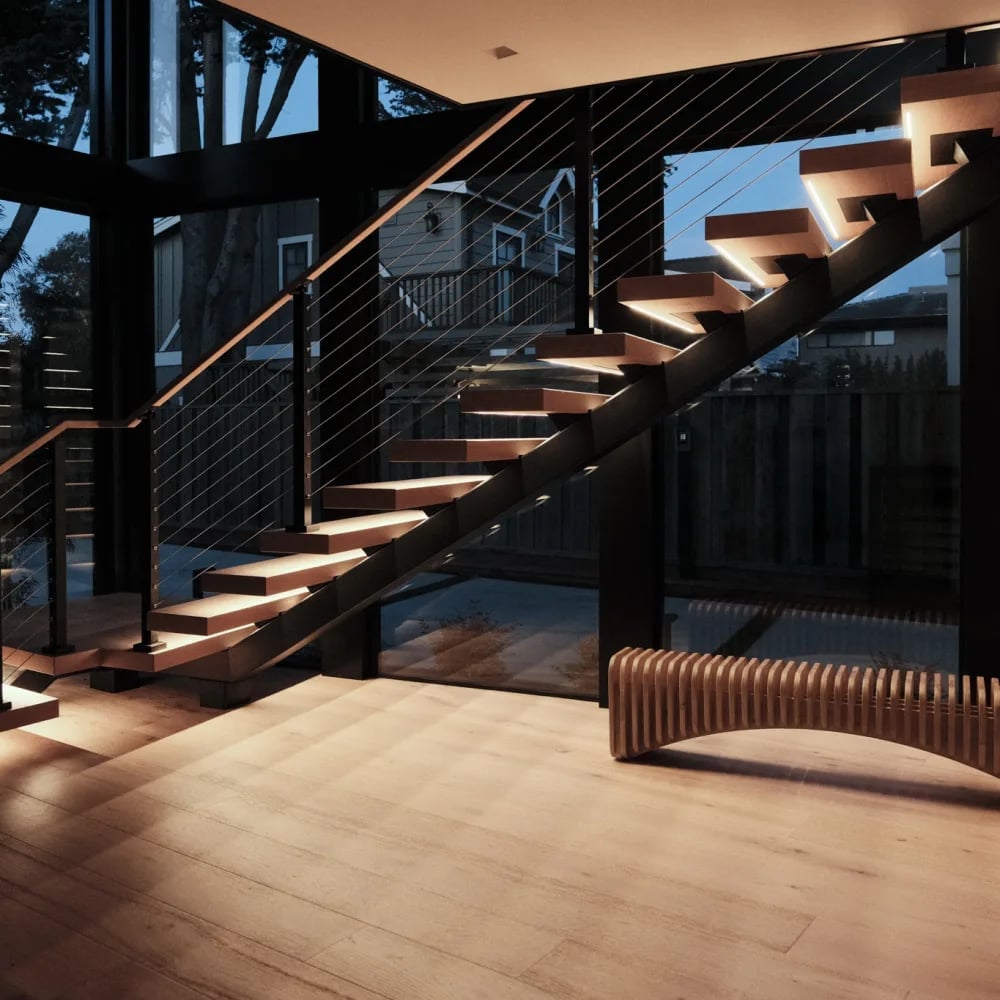
A floating staircase with glass railing can feel invisible until you add light. Integrated stair lights change that by defining each tread. The glow under the wood steps creates a rhythm that guides the eye upward, and the glass panels keep the view open. A wood bench nearby offers a place to sit without breaking the clean lines. The lighting does not compete with the railing; it works with it. Ambient light from the room fills in the rest, so the stairs never feel like a dark corner. For open plan homes, this setup keeps the staircase present but not pushy. The light makes the structure readable, and the glass makes sure nothing blocks the flow of the space.
Exterior Stone Stairs with Geometric Black Metal Railings
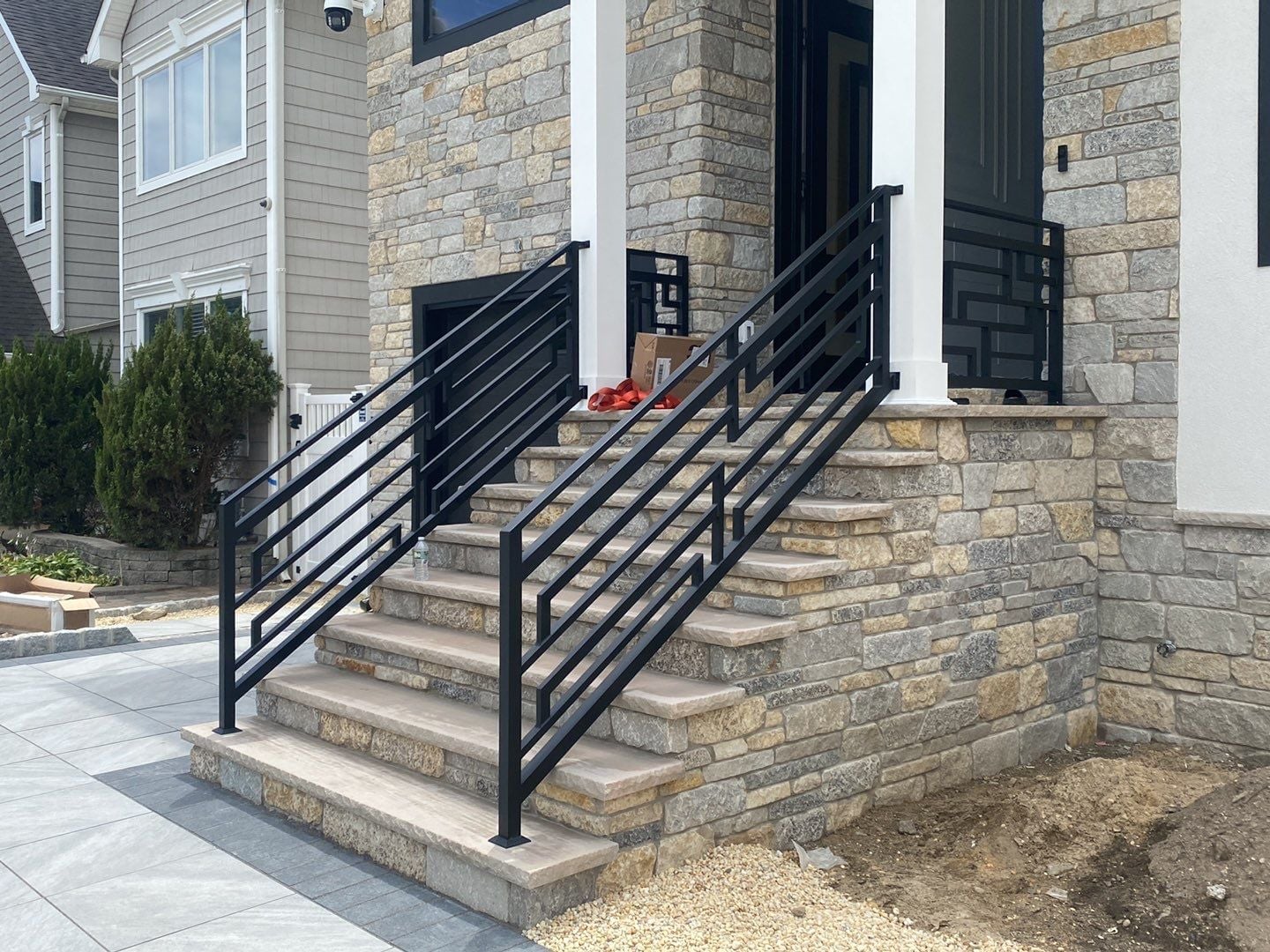
Stone stairs feel solid, and a geometric black metal railing adds a modern edge without fighting the material. The gray stone tones and black metal share a quiet palette that works outdoors. Daylight hits the metal lines and casts shifting shadows across the steps, which adds movement to an otherwise heavy structure. The railing leads the eye up toward the entrance, making the climb feel intentional. For an exterior, the combination stands up to weather while keeping the look sharp. The geometry does the work; the stone holds the ground.
Slatted Wood Railing on Open Staircase
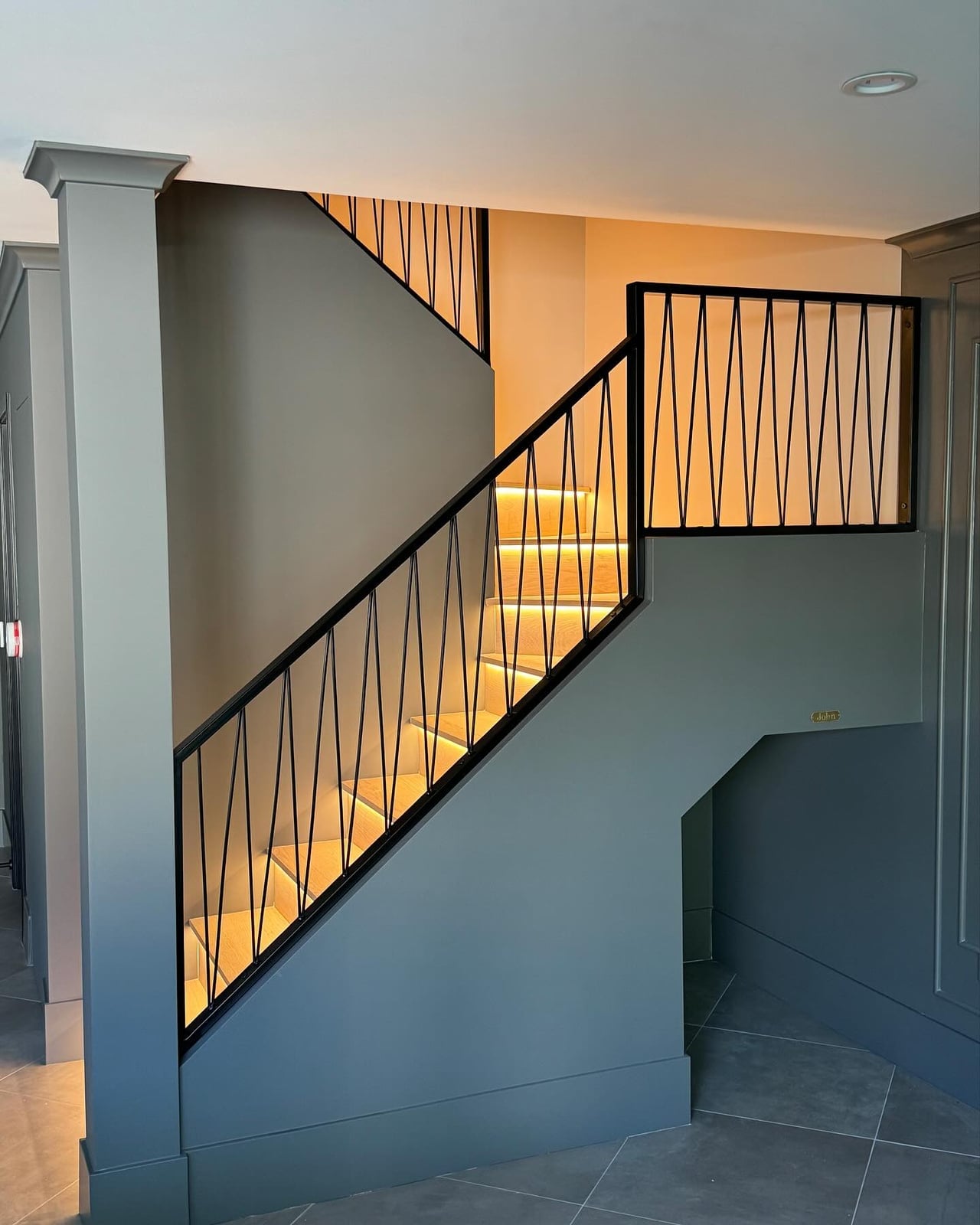
A slatted wood railing turns a functional safety feature into a visual anchor for the whole staircase. The light wood slats run vertically, creating a rhythm that draws the eye upward without blocking light from the recessed fixtures above. White walls and minimalist stair treads keep the palette quiet so the wood texture does the talking. The black metal handrail adds a crisp line that stops the look from feeling too soft. This approach works best when the slats are spaced close enough to feel solid but far enough apart to keep the open plan airy. The ratio of wood to air is what defines the style: too few slats and it reads as sparse, too many and it becomes a wall.
Modern Railing with Wood Handrail and Black Spindles
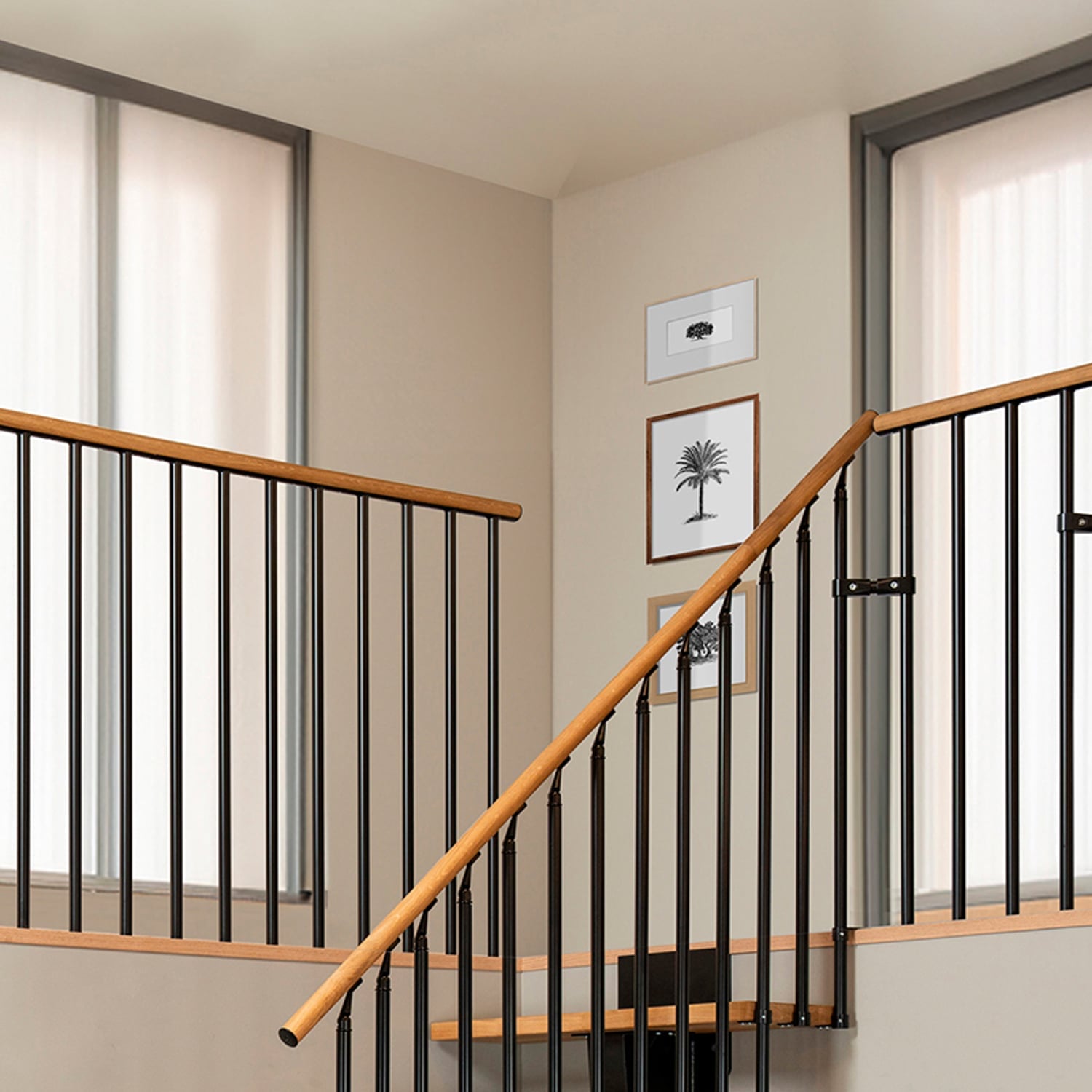
A modern railing with wood handrail and black spindles splits the difference between traditional warmth and industrial edge. The wood handrail sits on top of slender black spindles, and the beige wall behind keeps the contrast from feeling harsh. The landing feels grounded without being heavy. What breaks the look is mixing in a third railing material or a bright accent color on the spindles. Sticking to wood and black metal keeps the silhouette clean. If you are in a rental and cannot replace the railing, ask about painting existing spindles black and swapping the handrail for a stained wood one. The landlord might say no, but the request is reasonable because both changes are reversible and do not alter the structure.
Sleek Black Metal Railing with Wooden Treads and Panel Walls
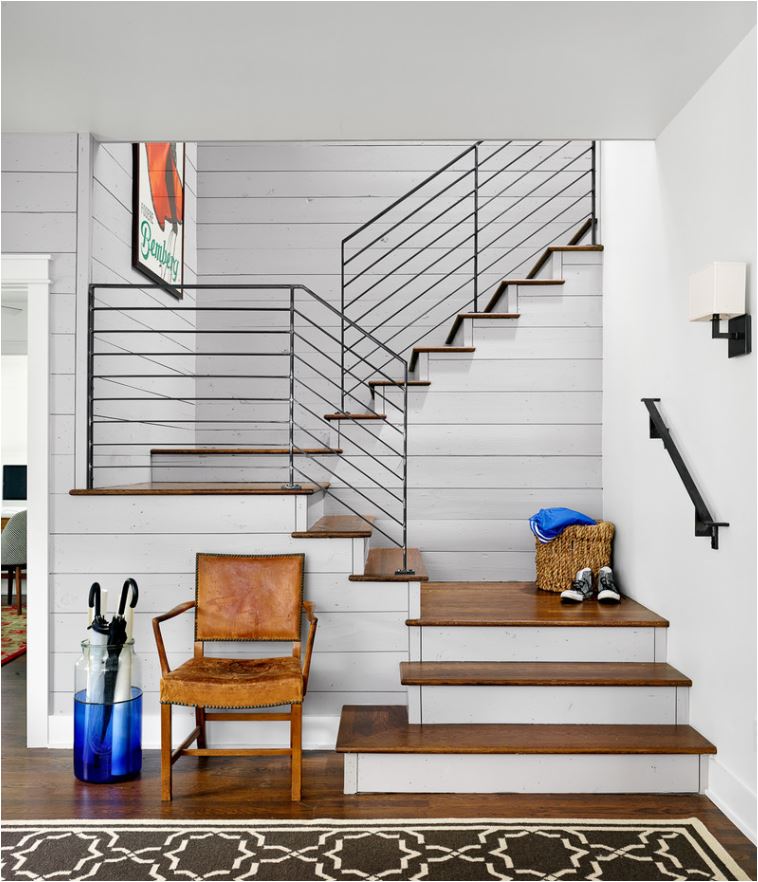
A sleek black metal railing with wooden treads and panel walls uses the railing as a graphic line through the landing. The black metal stands out against white walls and light wood stairs, while a leather armchair nearby adds a warm texture. Wall sconces cast soft light across the panel walls, and natural light balances the dark metal. The ratio of black to wood is about one to three, which keeps the railing prominent without overwhelming the room.
Final Thoughts
A modern stair railing does more than meet code. It anchors the vertical line of your home and sets the visual pace for every floor. Glass keeps sightlines open, while metal adds structure and wood brings warmth. The best choice depends on how you use the space. Open treads need a sturdy grip. Tight landings benefit from slim profiles. Outdoor stairs require materials that handle weather. Match the railing to your home’s rhythm, not a trend. A well-chosen railing makes the climb feel like part of the room.