Painted kitchen cabinets are a reliable way to change the feel of the room without a full renovation. Whether you want a bold focal point or a soft backdrop, the right color and finish can make the storage the star. This article covers 27 painted kitchen cabinet ideas, from deep blues and teals to soft greens and creamy neutrals.
Each look focuses on how the cabinetry anchors the space, with practical details on hardware, countertops, and layout that support the main element. Expect real-world examples that show how color and finish work in different kitchen styles, all without the fuss of a full gut job.
Farmhouse Kitchen Cabinets in Vibrant Blue
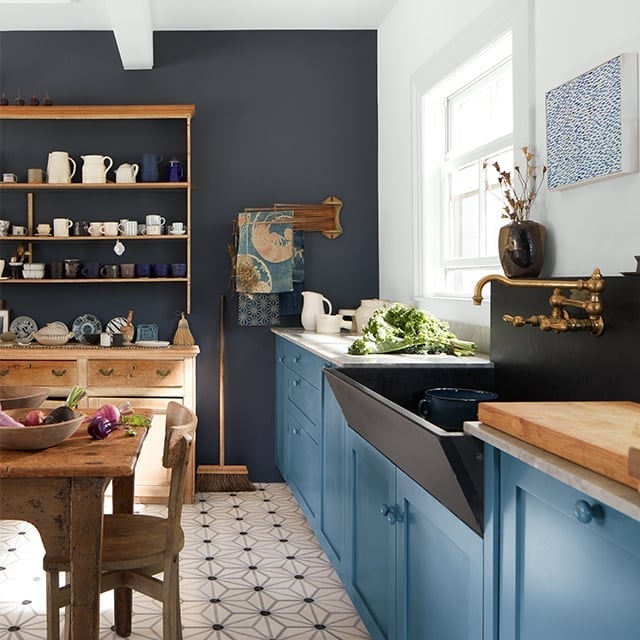
A compact galley kitchen with a dining area uses vibrant blue painted cabinets as the anchor, and the color defines the space without needing extra decoration. White open shelving, a farmhouse sink, and a wooden table keep the room grounded rather than busy. Simple ceiling lights and natural light let the blue read clearly, but a galley layout means every surface is within reach, so the palette becomes the main event.
Deep Blue Painted Cabinets in a Traditional Kitchen
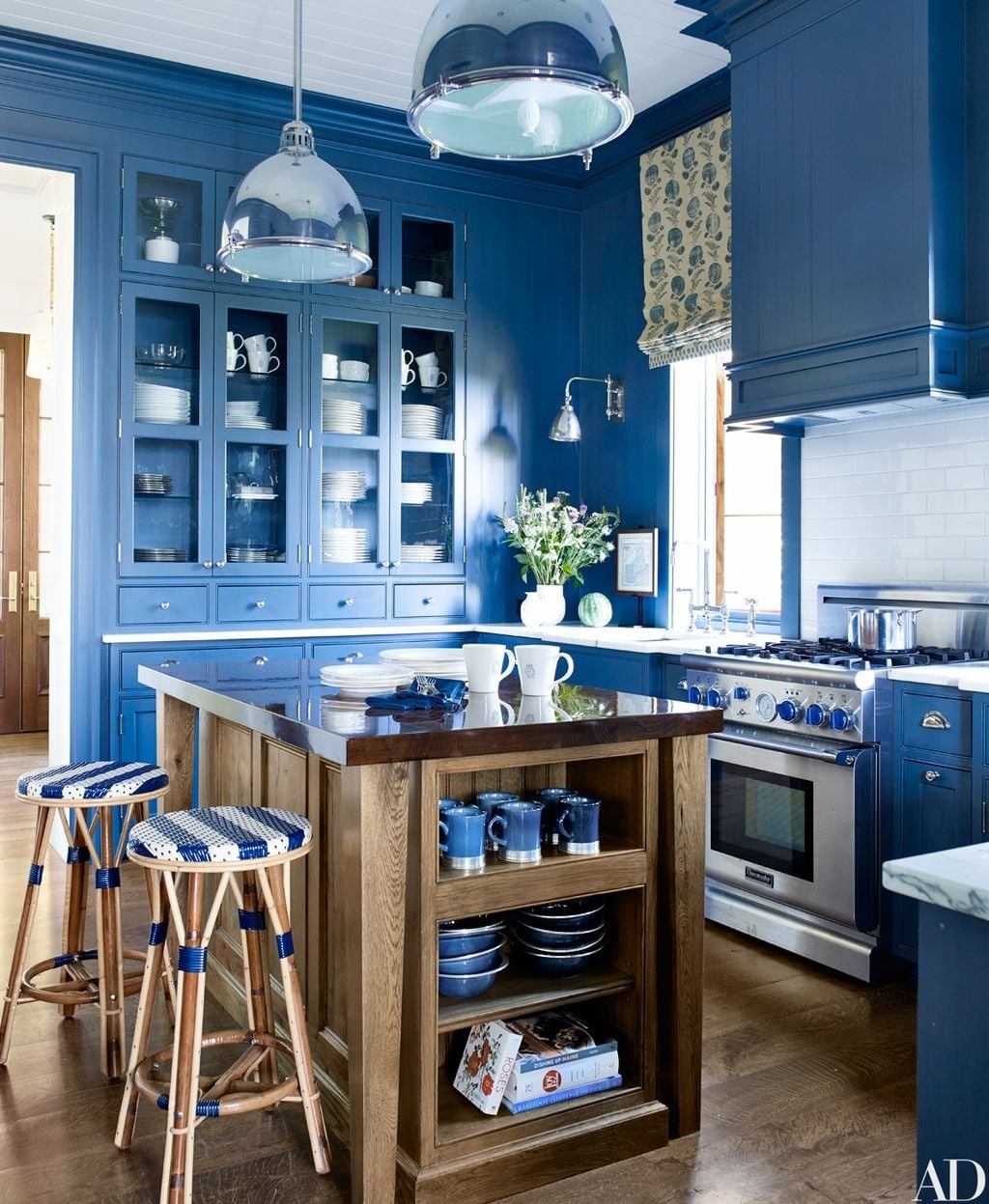
Deep blue painted cabinets paired with wood tones create a traditional kitchen that feels substantial without being heavy. The blue is the dominant color, and the wood island provides a natural counterpoint that keeps the palette from reading as flat. Glass front cabinets break up the solid color and add a lighter visual rhythm along the walls. Pendant lights over the island and natural light from windows ensure the blue stays rich without making the room feel dim. A roomy layout with the island at center lets the color spread without overwhelming the space.
Deep Teal Cabinets with Brass Hardware
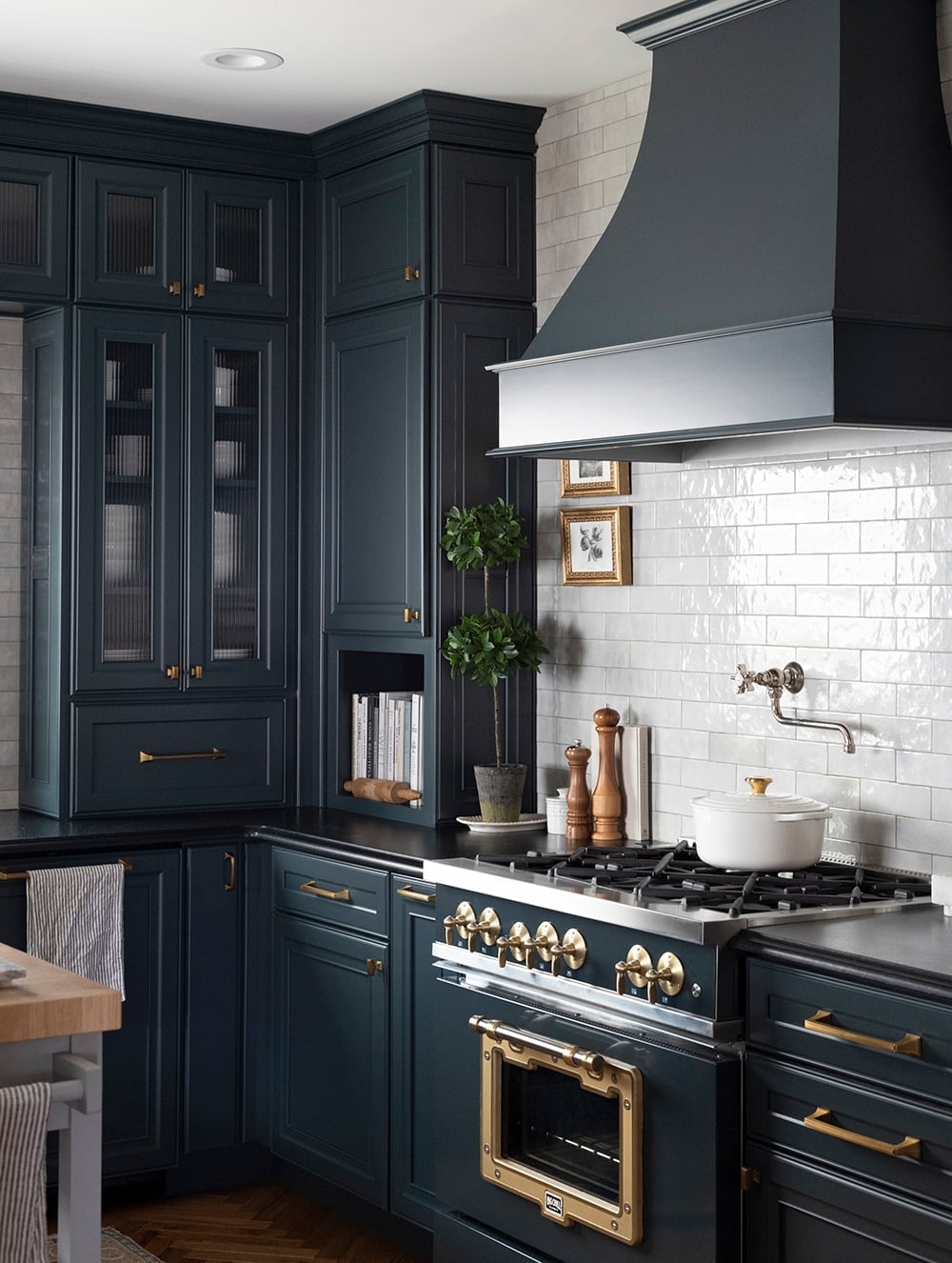
What makes brass hardware on deep teal cabinets feel cohesive? The materials around it. Subway tile backsplash and glass front cabinets keep the wall surfaces light, so the teal reads as a deliberate accent instead of a dark mass. The brass handles and knobs pick up warm notes from the wood floors and the range hood, creating a connected set of finishes.
A multi-level corner layout means the cabinets wrap around the room, and the brass hardware acts as a visual seam between the tall cabinets and the lighter countertops. Ambient and task lighting matter here because the teal can absorb light in a roomy space; placing lights under the upper cabinets or near the range keeps the color looking crisp.
Sage Green Cabinets in a Modern Farmhouse Kitchen
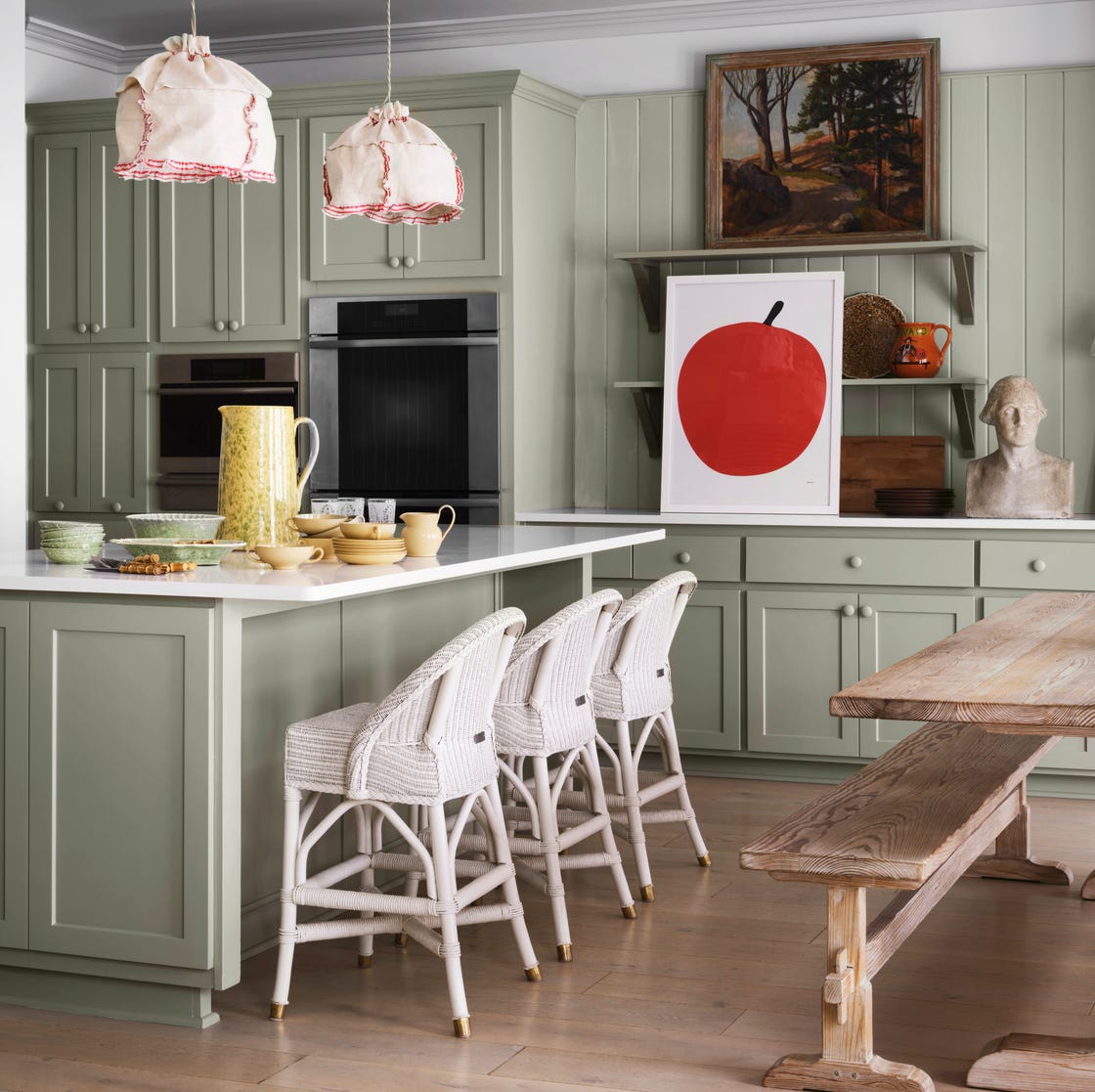
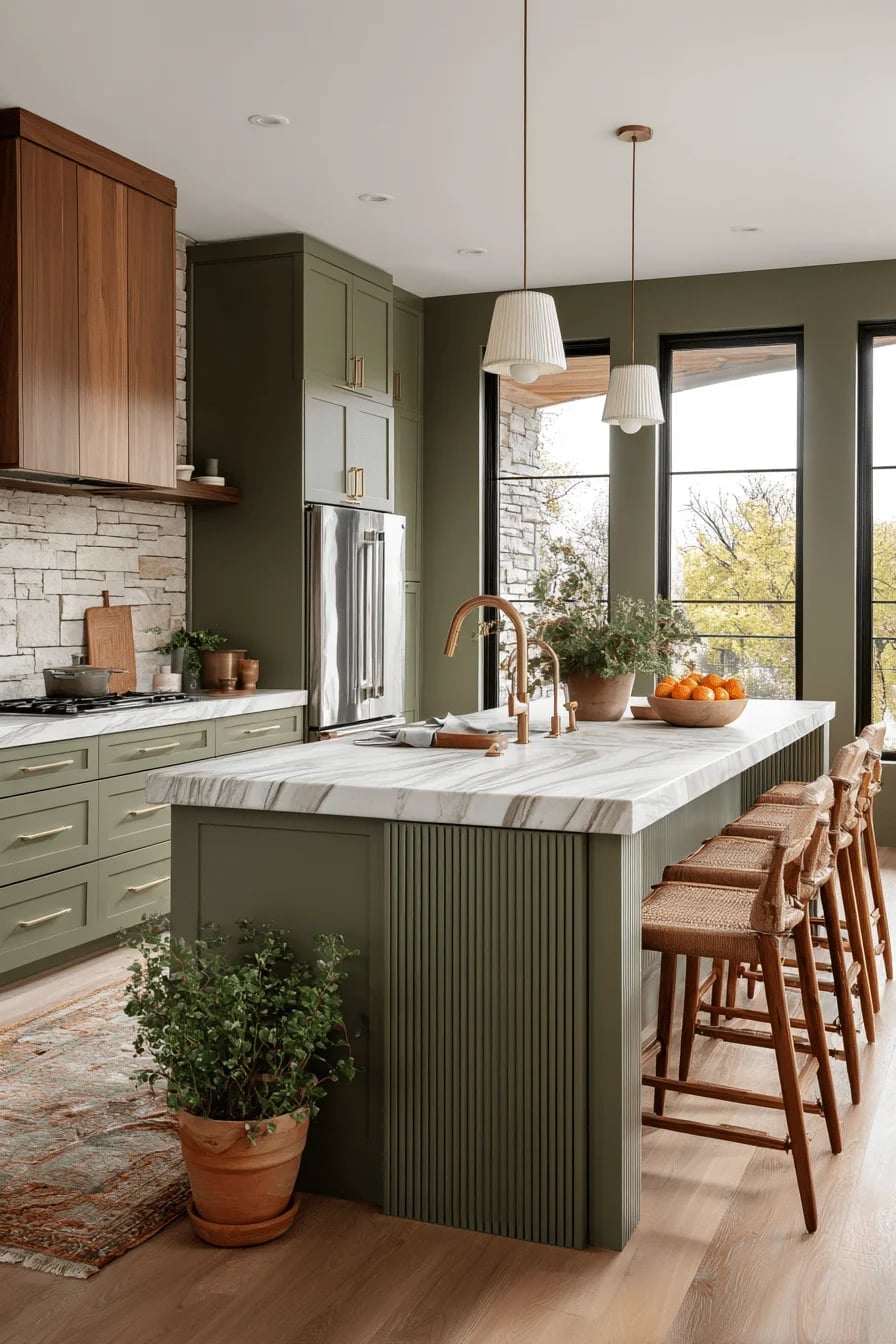
Sage green cabinets in a modern farmhouse kitchen work because the style is defined by the ratio of green to wood and white. The green covers the perimeter cabinets, while the island and dining set use natural wood, splitting the palette into two distinct zones. Pendants and natural light soften the green, keeping it from reading as too cool. What breaks the look is an equal amount of white and wood; the green stays dominant, and the wood accents remain secondary.
Pale Blue Painted Cabinets in a Modern Kitchen
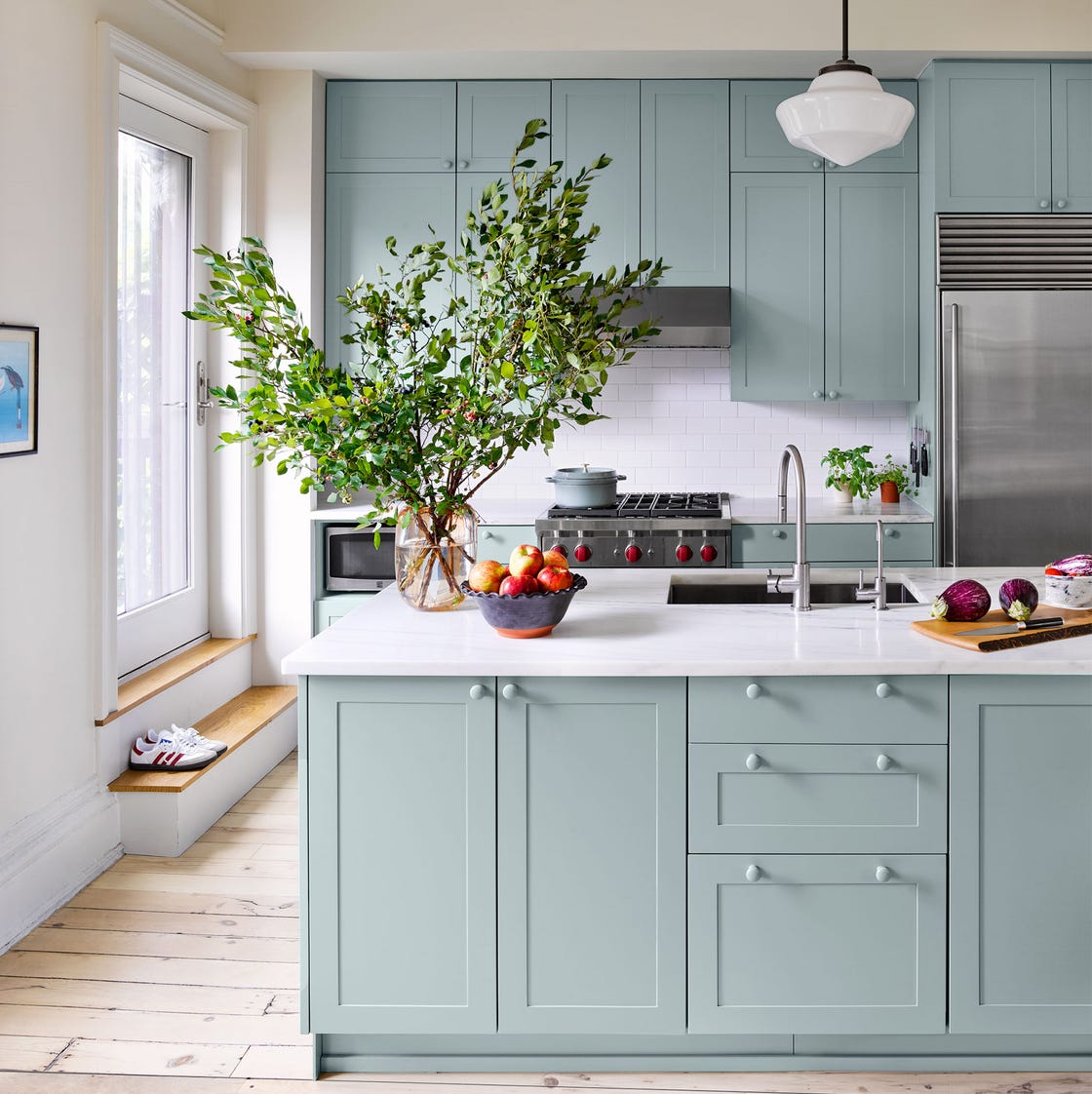
A practical rule for pale blue cabinets in a modern kitchen is to pair them with white countertops and backsplash to keep the color from looking washed out. Marble surfaces and stainless steel appliances add contrast without competing with the blue. An open plan layout with an island means the pale blue covers a large area, so the white and steel create visual breaks that define each zone. Natural light from windows and a single pendant maintain the lightness of the palette, making the room feel larger than its actual footprint.
Vibrant Purple Cabinets in an Eclectic Kitchen
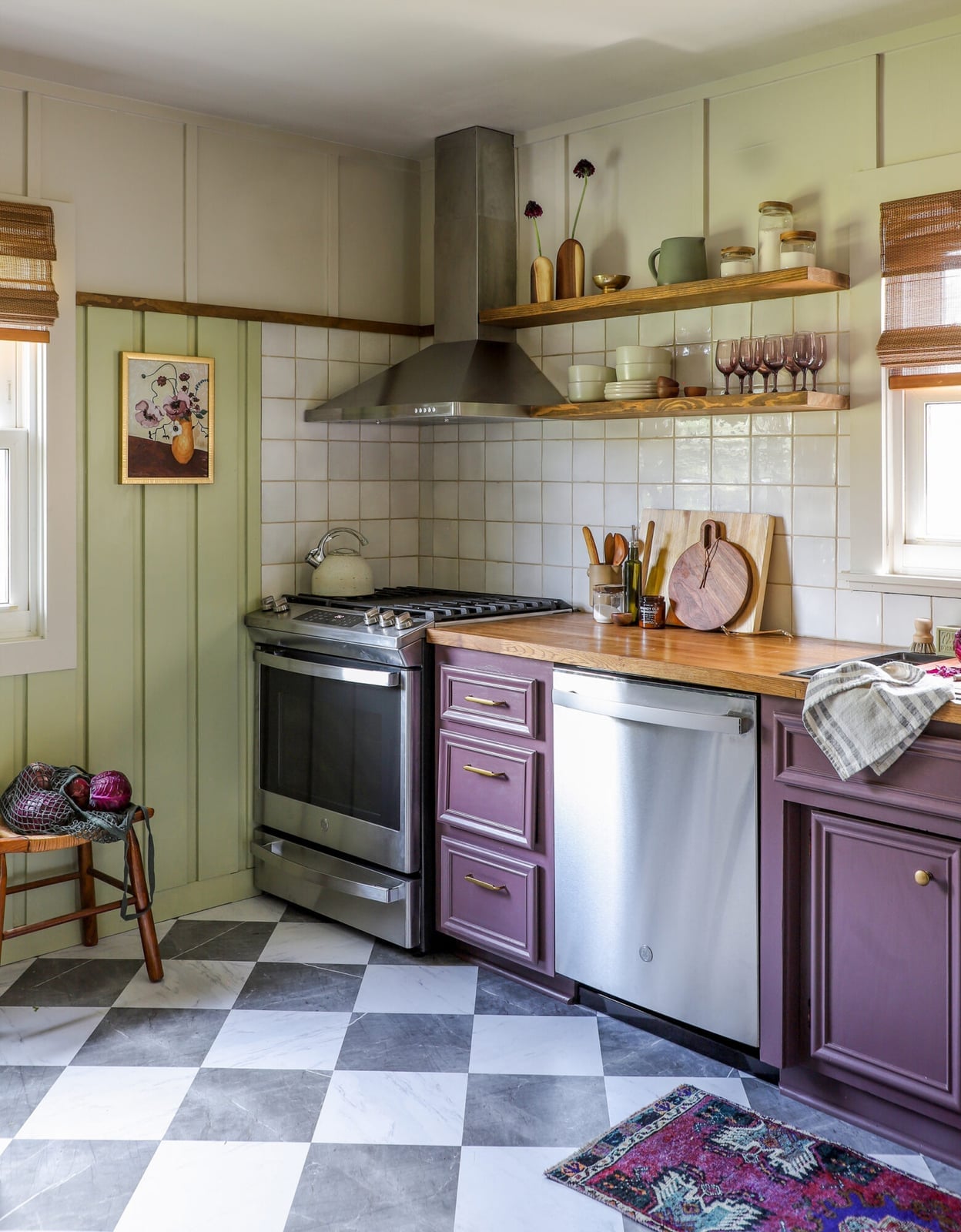
Purple cabinets might sound like a risk next to a more familiar sage or navy, but in a compact corner kitchen they create a focal point. The vibrant purple paint on the upper and lower cabinets pairs with stainless steel appliances and a checkered floor. A green accent and natural wood tones add warmth. The overhead fixture and natural light balance the saturation, so the color feels bold. This palette works because it sticks to one intense shade and lets neutral or muted tones surround it.
Black Painted Cabinets with Copper Hardware
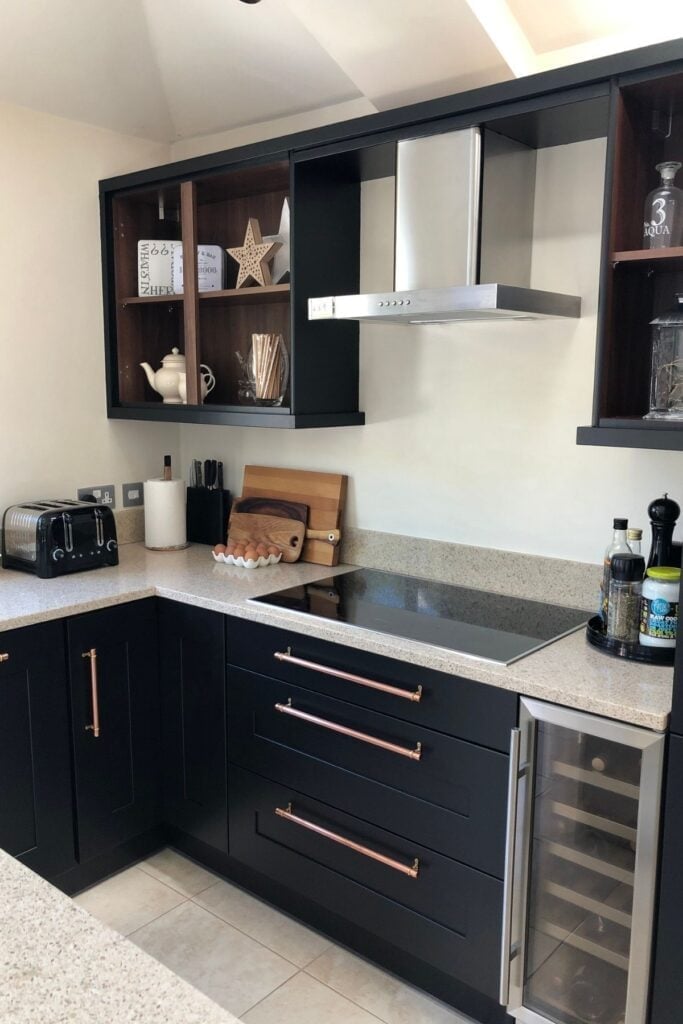
Black cabinets read as flat until you add a warm metal like copper. In this compact corner kitchen, the black painted cabinets and drawers sit against a gray granite countertop, and the copper hardware catches the ambient and task lighting. The wine fridge is integrated, so the dark finish doesn’t feel heavy. For renters, swapping standard knobs for copper ones is a change you can reverse in an afternoon. No rewiring or drilling into tile required, just a screwdriver and a few minutes.
Cream-Painted Built-In Cabinet Unit
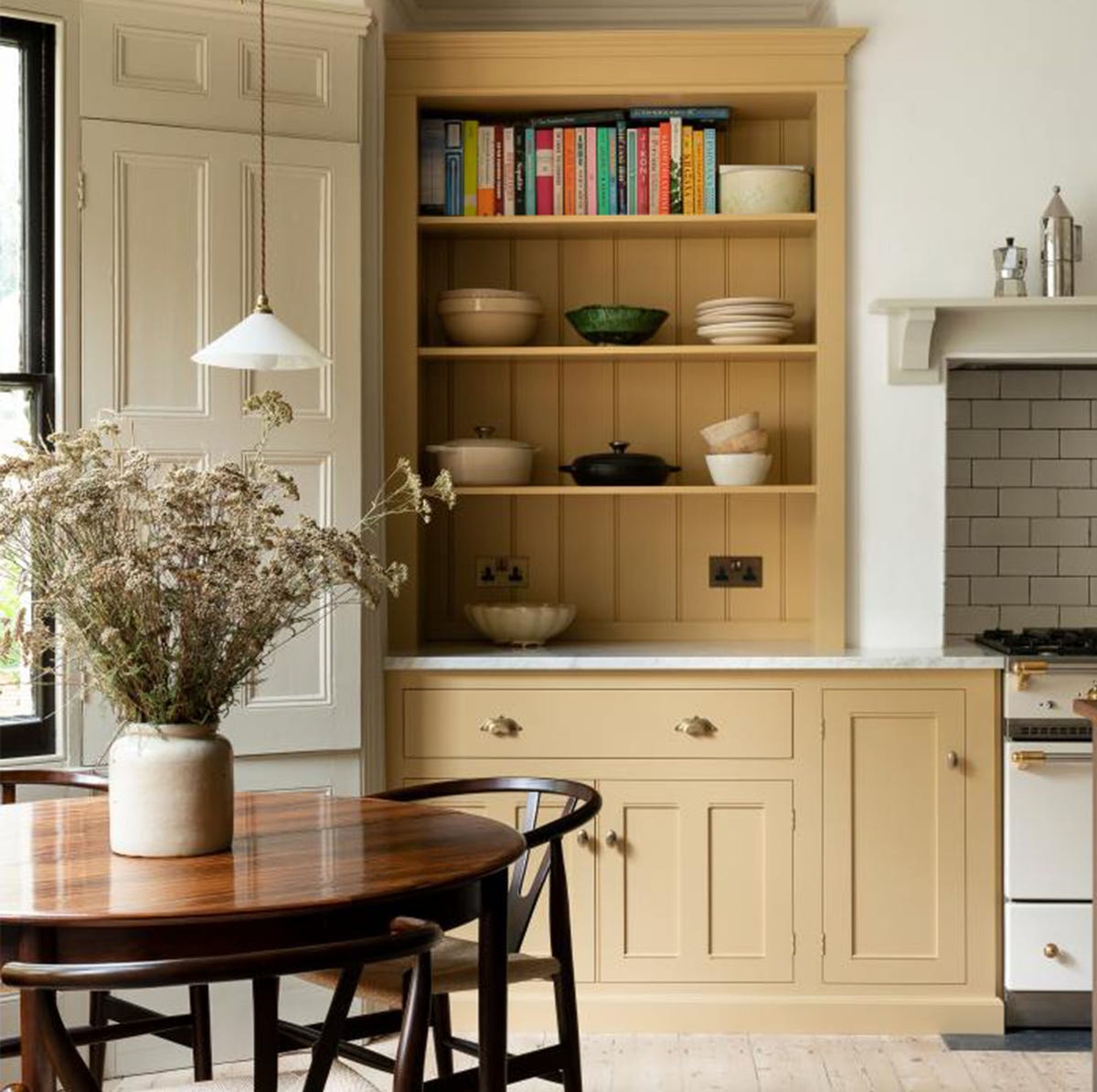
A large cream-painted built-in cabinet unit anchors this roomy kitchen and dining area. The traditional style uses painted wood with wood tones and a marble countertop, creating storage that blends with the table and chairs. A pendant light above the dining area provides balanced illumination. The built-in design maximizes storage without adding freestanding pieces, which helps the corner layout feel open. Keeping the trim and hardware simple lets the cream paint do the work.
Sage Green Cabinets in a Cozy Farmhouse Setting
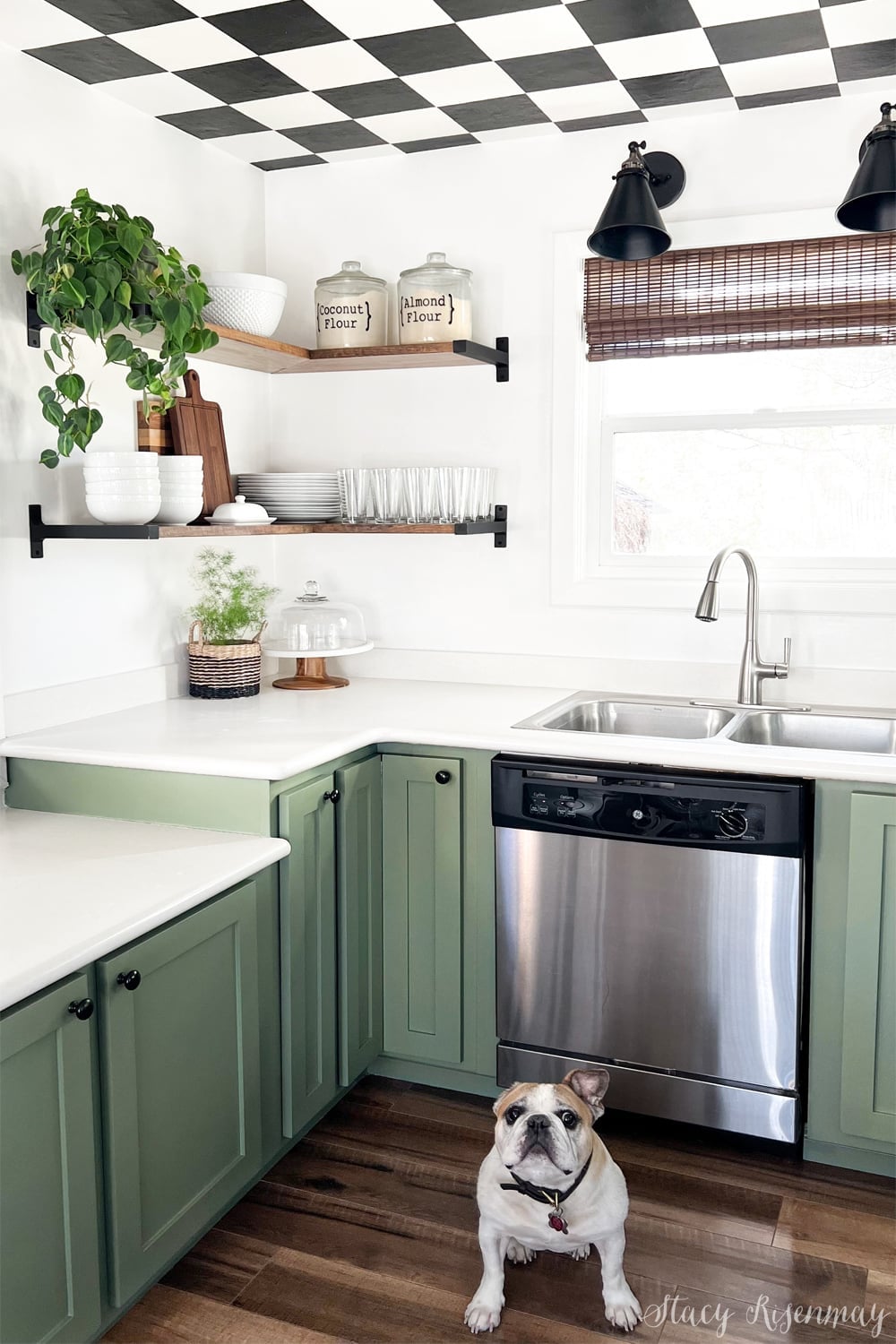
Can a dark cabinet color still feel warm and lived in? Sage green does, especially in a kitchen with white countertops and a wooden floor. The sage green paint on the cabinets picks up the overhead lights, so the room stays bright. The palette of sage and white keeps the corner kitchen from feeling closed in. A dog in the space reinforces the cozy, everyday feel. This shade works because it has enough gray to avoid reading as mint, so it pairs easily with stainless steel appliances and natural wood.
Soft Light Blue Cabinets with Rattan Accents
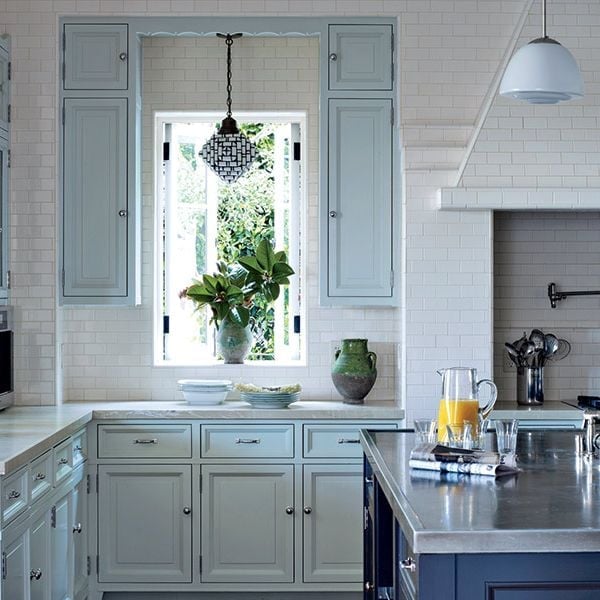
The large island in this transitional kitchen is painted a soft light blue, and the rattan stools at the counter add texture without adding weight. Marble countertops and brass details on the pendant lights and wall sconces warm up the cool blue. The palette stays airy. The rattan breaks up the painted wood and marble, so the kitchen feels layered. To recreate it, look for two rattan counter stools to introduce a natural material without a full renovation.
Off-White Cabinets with Brass Hardware
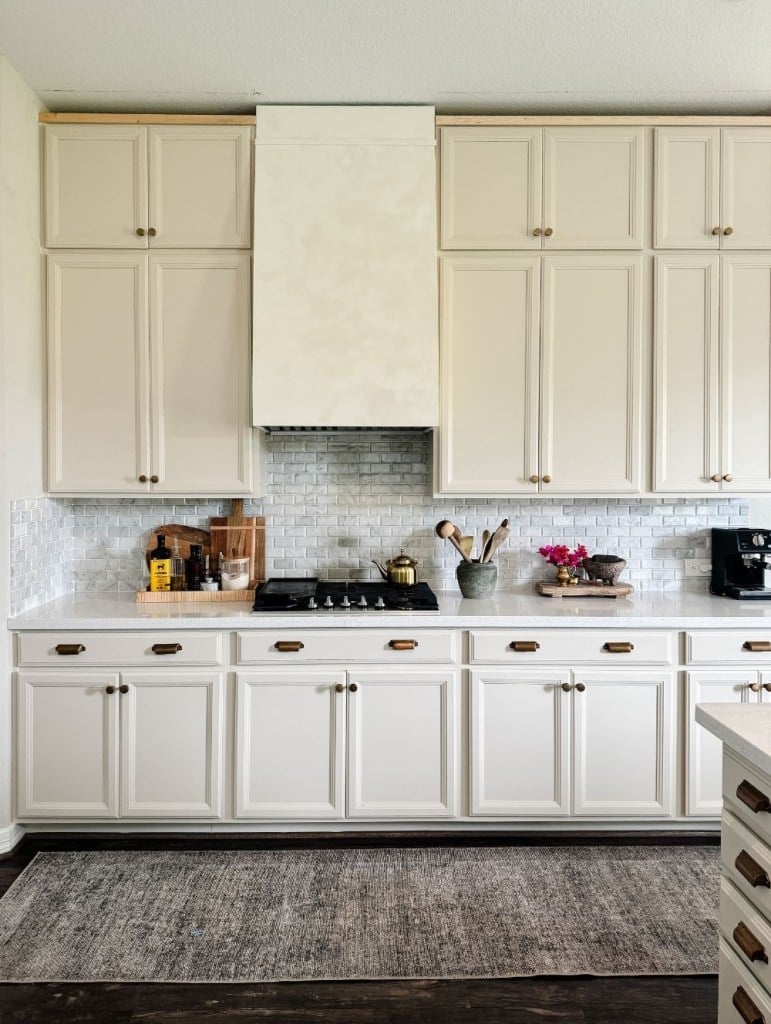
In a transitional kitchen, off-white painted cabinets with brass hardware set the tone for the whole room. The cabinets run along one wall, paired with a matching range hood and a tile backsplash. The off-white palette keeps the room feeling open, while the brass adds a warm contrast against the gray tones in the countertops and tile. Overhead and natural light both help the off-white finish look crisp, which matters when you are working with a neutral palette.
Blue Cabinets Paired with Oversized Rattan Pendants
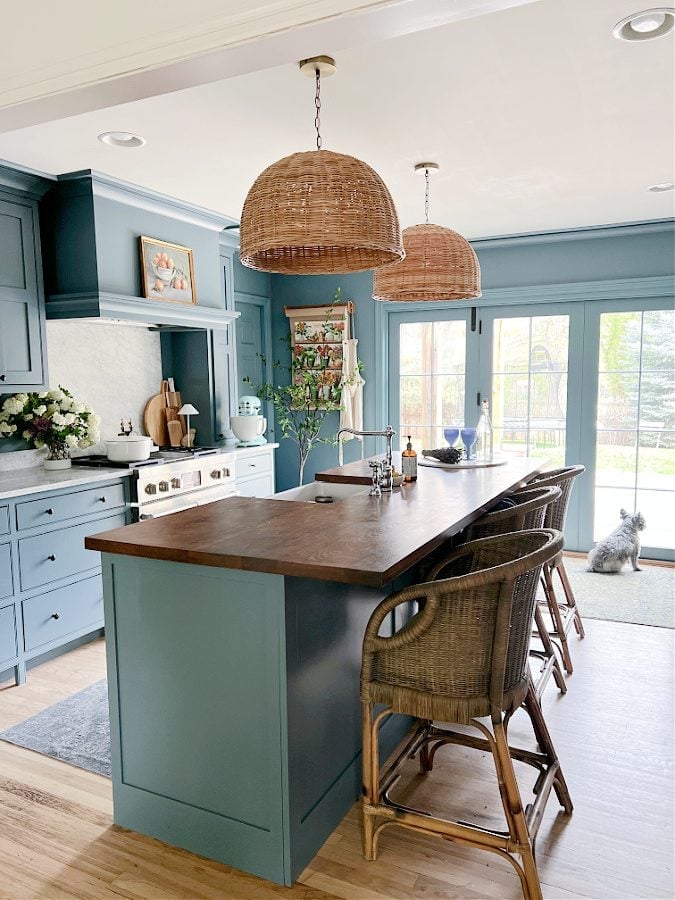
Where a coastal kitchen might lean on sandy neutrals, this one goes for blue painted cabinets that anchor the room instead. The blue cabinets line the perimeter and the island, with wooden stools tucked under the counter. Above, oversized rattan pendant lights hang low, bringing in texture and a warm glow that balances the cool cabinet color.
Natural light from the windows fills the open plan layout, and the rattan pendants add a second layer of light that softens the edges of the blue. The combination keeps the kitchen from feeling too nautical or too modern. It reads as a coastal look that is grounded in practical materials: painted wood, natural wood, and woven rattan.
Navy Blue Cabinets in a Modern Kitchen
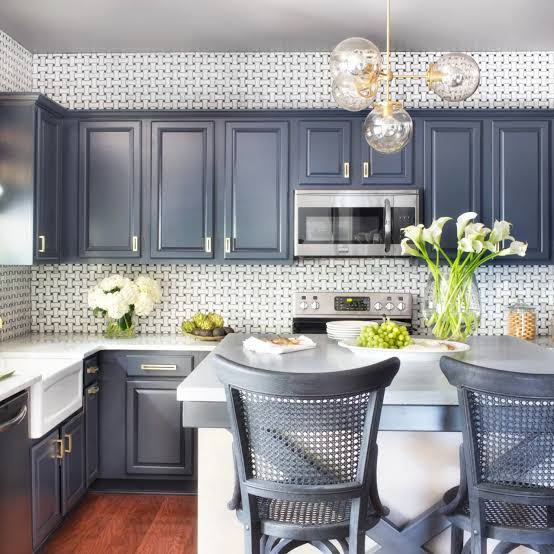
A precise observation about this kitchen is that the navy blue cabinets do not fight the white and gray palette. The room uses an L-shaped counter with an island, and the dark blue cabinets sit against a white backsplash and gray countertops. A single pendant light hangs above the island, providing focused task lighting. The glass elements in the space reflect some of that light, keeping the navy from reading as too heavy.
Sage Green Cabinets with Natural Wood Countertops
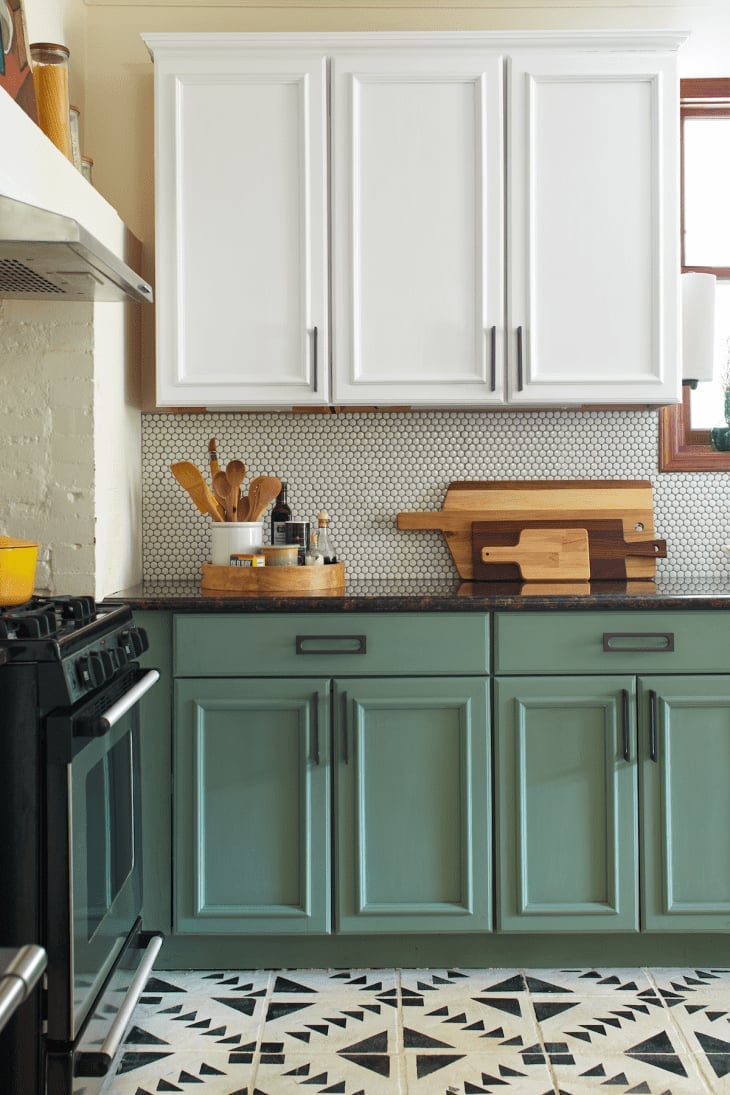
This kitchen works because the sage green cabinets and natural wood countertops share the same muted intensity. The cabinets line a single wall, with a range and tile backsplash filling the space between the upper and lower cabinets. Natural light from a nearby window lands on the painted finish, while overhead lighting fills in the rest. The wood countertops add warmth without competing with the sage green, which is a common risk when mixing green paint with wood tones.
Sage Green Cabinets with Butcher Block Island
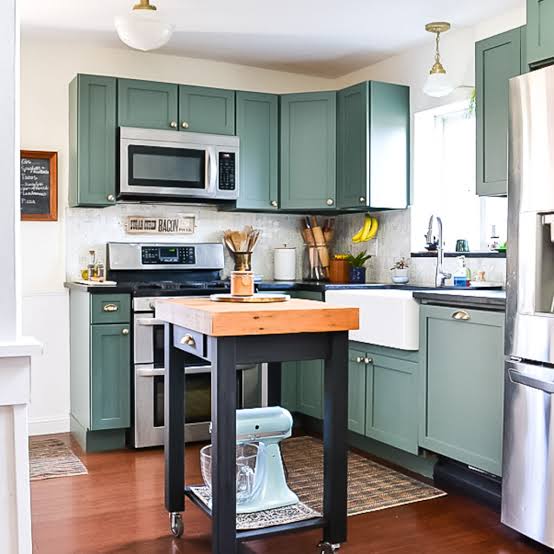
A practical rule for storage is to use every inch of an L-shaped kitchen layout. Here, sage green painted cabinets wrap around the perimeter, while the island features a butcher block top and a farmhouse sink. The upper cabinets run to the ceiling, offering storage for items you do not need daily, while the lower cabinets handle the pots and pans.
The island itself adds counter space and storage underneath, with the microwave tucked into the end. Natural light from the windows and ceiling lights keep the sage green from feeling dark. The wood tones on the island tie into the stainless steel and stone finishes, creating a modern farmhouse look that is more about function than fuss.
Vibrant Coral Cabinets in a Contemporary Kitchen
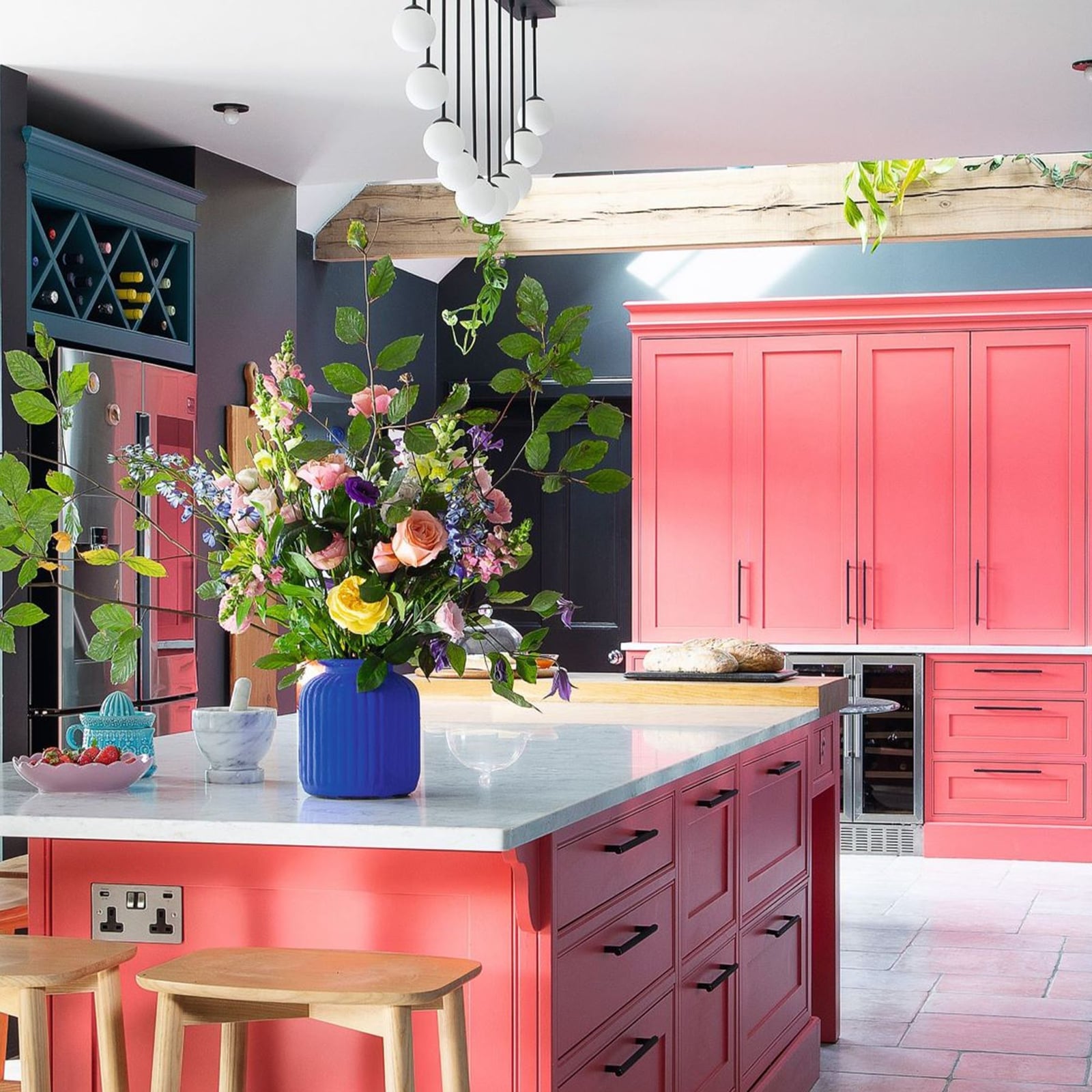
Coral painted cabinets make a kitchen feel like the center of the house without being subtle. The hue works because the room keeps things simple: dark gray counters and a tile backsplash ground the bright shade, while a skylight and modern pendant light keep the look balanced. The palette here follows a useful rule: one saturated color against neutral surfaces. That ratio lets the cabinets lead without the space feeling chaotic. If you want to try coral but worry about commitment, test it on an island first before painting every upper and lower cabinet.
Gray Cabinets with a Large Marble Island
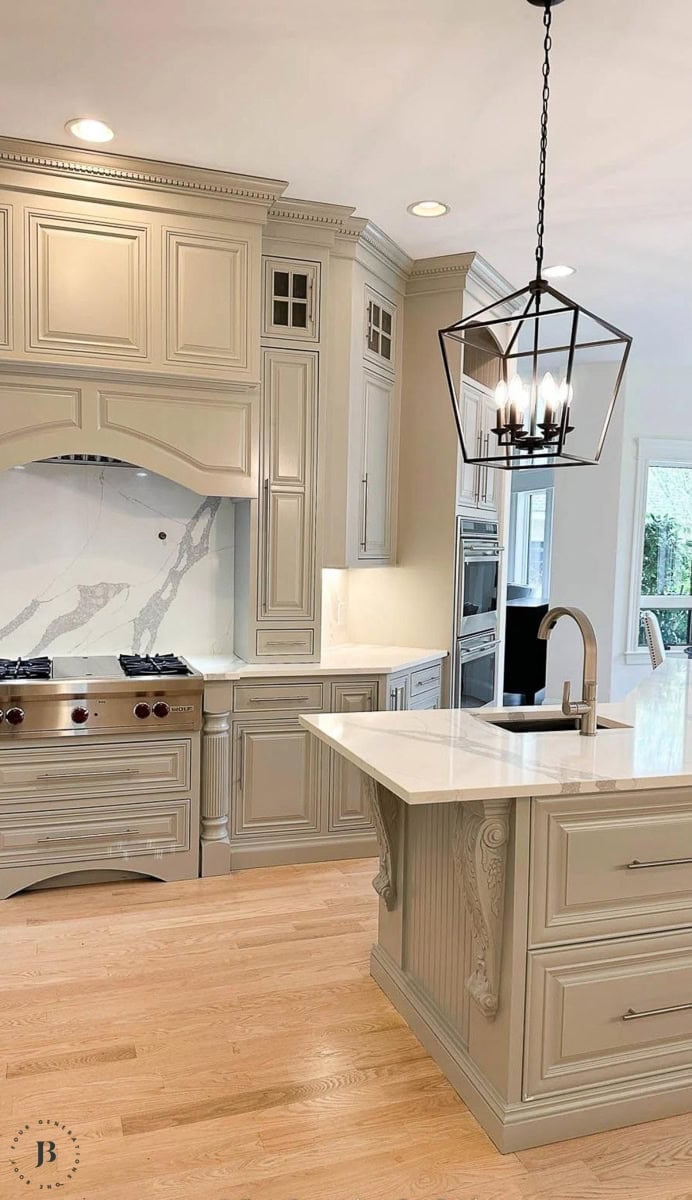
A practical rule for storage in a traditional kitchen: open shelving works best when it sits above a closed cabinet run. Here, gray perimeter cabinets handle the daily clutter while a large marble island with an ornate base adds counter space and visual weight. The marble island breaks up the gray and wood tones, and its carved base gives the room a more formal feel. For renters, swapping standard knobs for brushed brass or matte black pulls is a low-effort change that shifts the whole look. No painting needed, just a screwdriver and an afternoon.
Detail of Sage Green Farmhouse Cabinets, Indoor
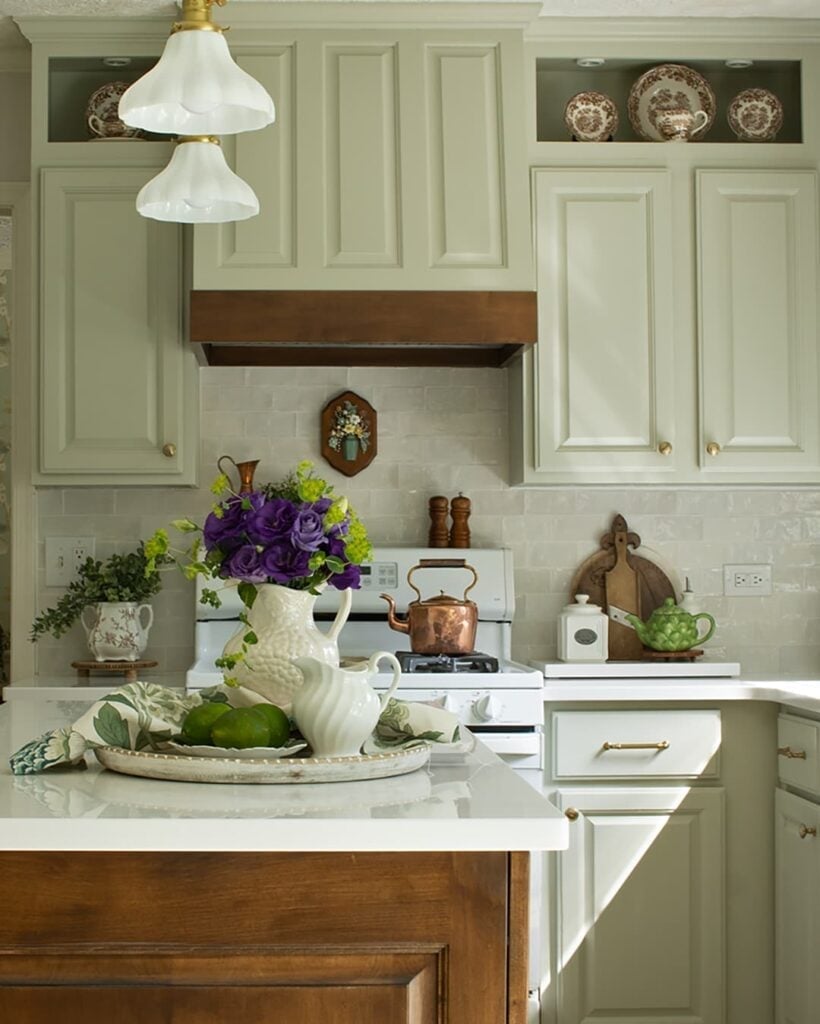
Sage green cabinets can lean either rustic or refined, depending on what you pair them with. A marble countertop and tile backsplash pull them toward the polished end of farmhouse, while wood accents keep the warmth. The pendant lights above the island echo the soft green tone without matching it exactly.
For a similar feel without a full cabinet swap, try painting just the island in sage and leaving perimeter cabinets in a warm white or cream. That two-tone approach gives you the color without committing the whole kitchen. If the room gets strong afternoon light, the sage will read more gray; in north-facing kitchens, it stays greener. Test a sample at different times of day before picking a final shade.
Muted Blue Island in a Farmhouse Kitchen
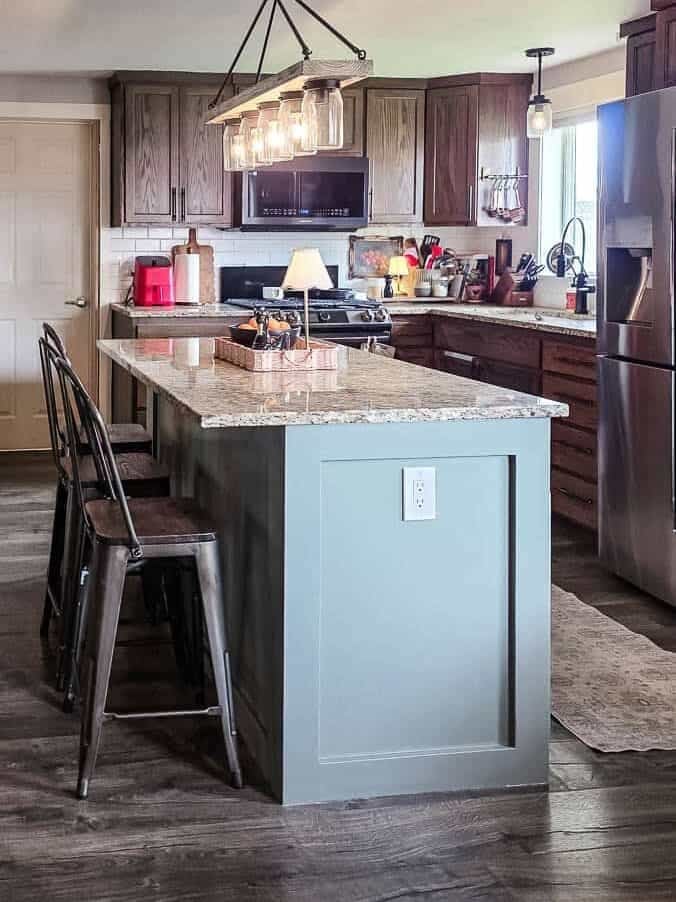
A muted blue island sits between wood perimeter cabinets, creating a two-tone look that gives the kitchen its focal point without painting everything. The island’s painted finish adds a soft color layer, while the granite top and metal bar stools keep things practical for daily use. The wood cabinets around it stay unpainted, which saves the work of stripping or repainting the whole room. If you want color but have wood cabinets that are still in good shape, painting just the island is a smart way to test the hue before deciding on a full kitchen makeover.
Contrasting Blue and Cream Painted Cabinets
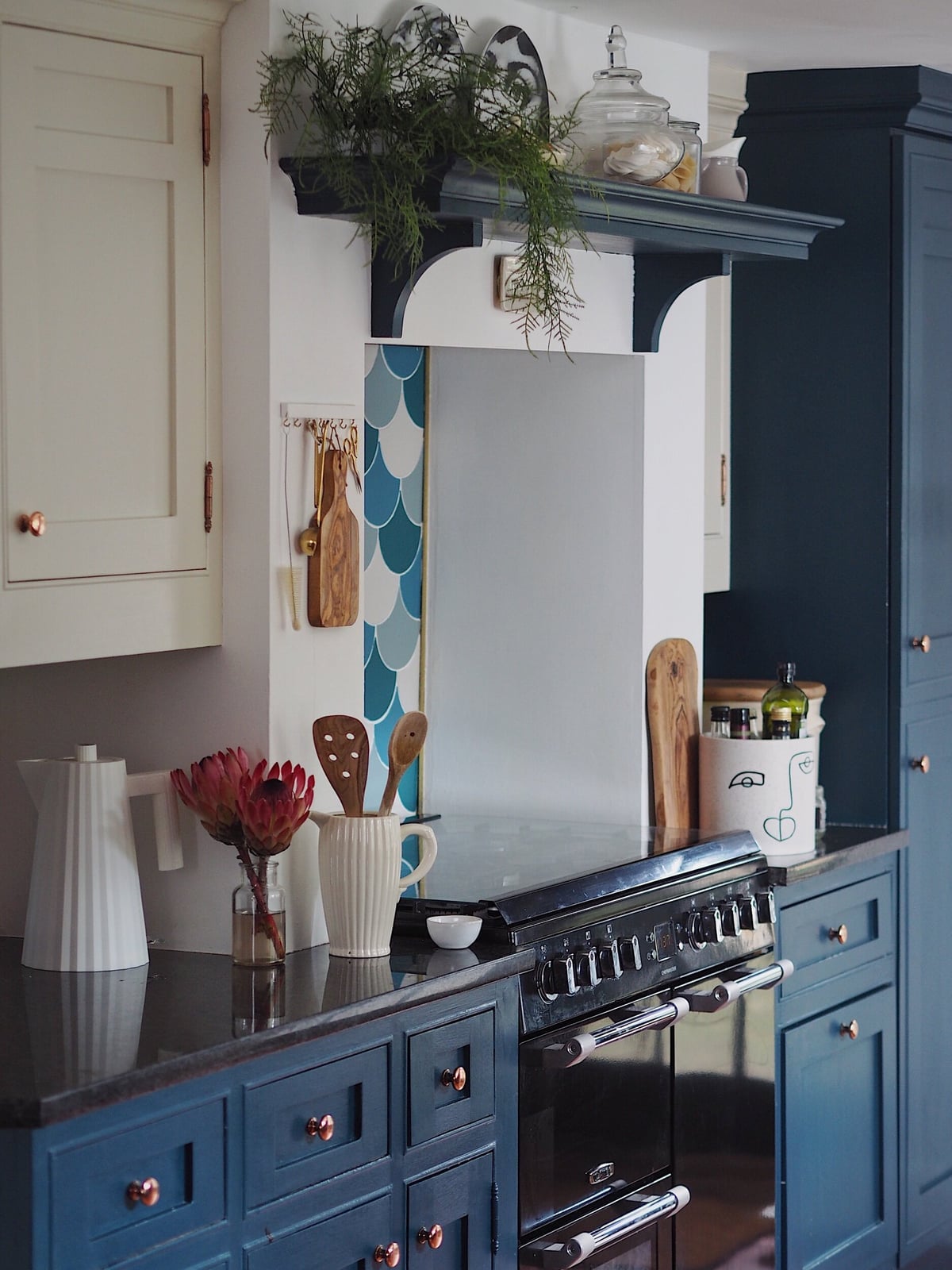
This kitchen works because the contrast is intentional but not complicated. Deep blue lower cabinets and a blue island sit below cream uppers, with wood tones and stone counters tying the two colors together. The range cooker in a neutral finish bridges the gap without competing. The palette follows a clear ratio: one dominant color on the lowers and island, a lighter second color above, and natural materials as the connector. That setup avoids the common mistake of using two strong colors in equal amounts, which can make a room feel split rather than cohesive.
Sleek Gray Cabinets with White Quartz Island
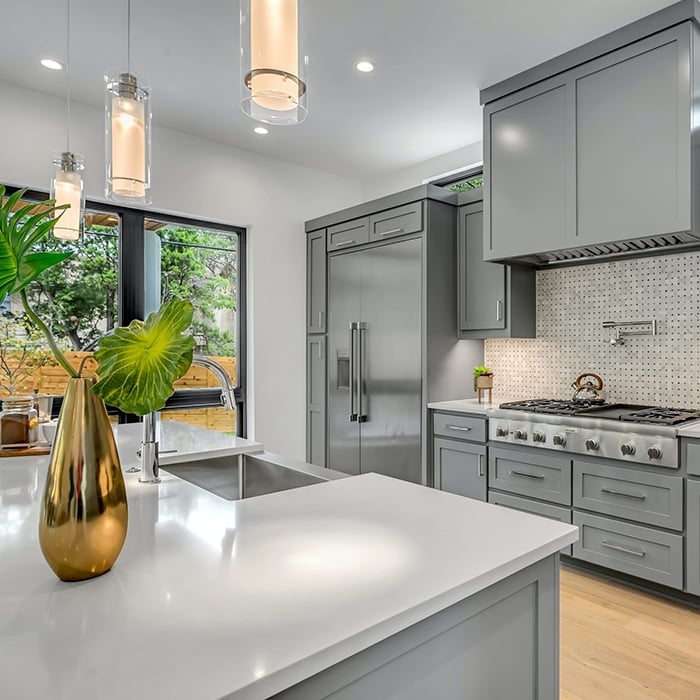
A simple palette rule for a busy kitchen is to limit the color range to two or three tones. Gray cabinets, a white island, and stainless steel appliances already set the tone. The gray acts as a neutral anchor, while the white quartz island and matching countertops keep the room feeling open. Recessed lighting and pendant lights over the island provide task light without adding visual clutter.
The galley layout with a central island works because the gray is quiet enough to let the stainless steel refrigerator and glass elements take focus. For renters, this palette is easy to replicate with removable contact paper on the island surface and peel-and-stick tile for the backsplash. The look stays cohesive without permanent changes to the cabinetry.
Light Beige Cabinets with Double Ovens
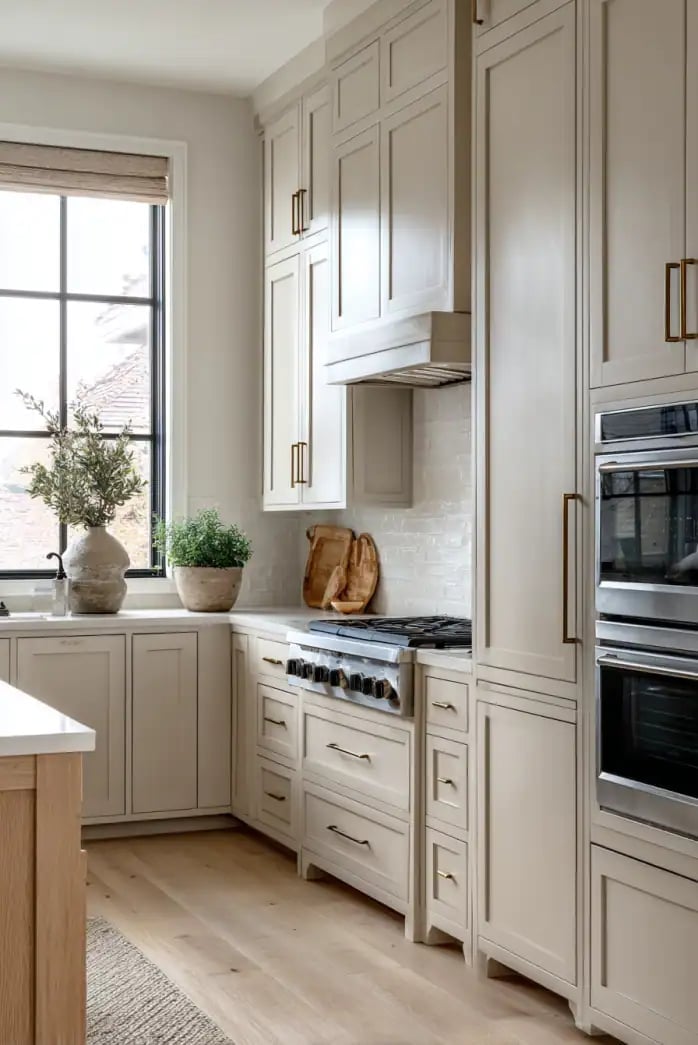
Light beige painted cabinets paired with double ovens offer a practical storage solution for a busy kitchen. The beige finish blends with the wood flooring and white tile backsplash, creating a unified backdrop. A large window floods the room with natural light, which keeps the light beige from feeling flat. The island provides additional counter space and storage, while the double ovens handle multiple dishes at once. This setup suits anyone who cooks for a crowd and wants a kitchen that feels spacious without being stark.
White Painted Cabinets in a Modern Farmhouse Kitchen
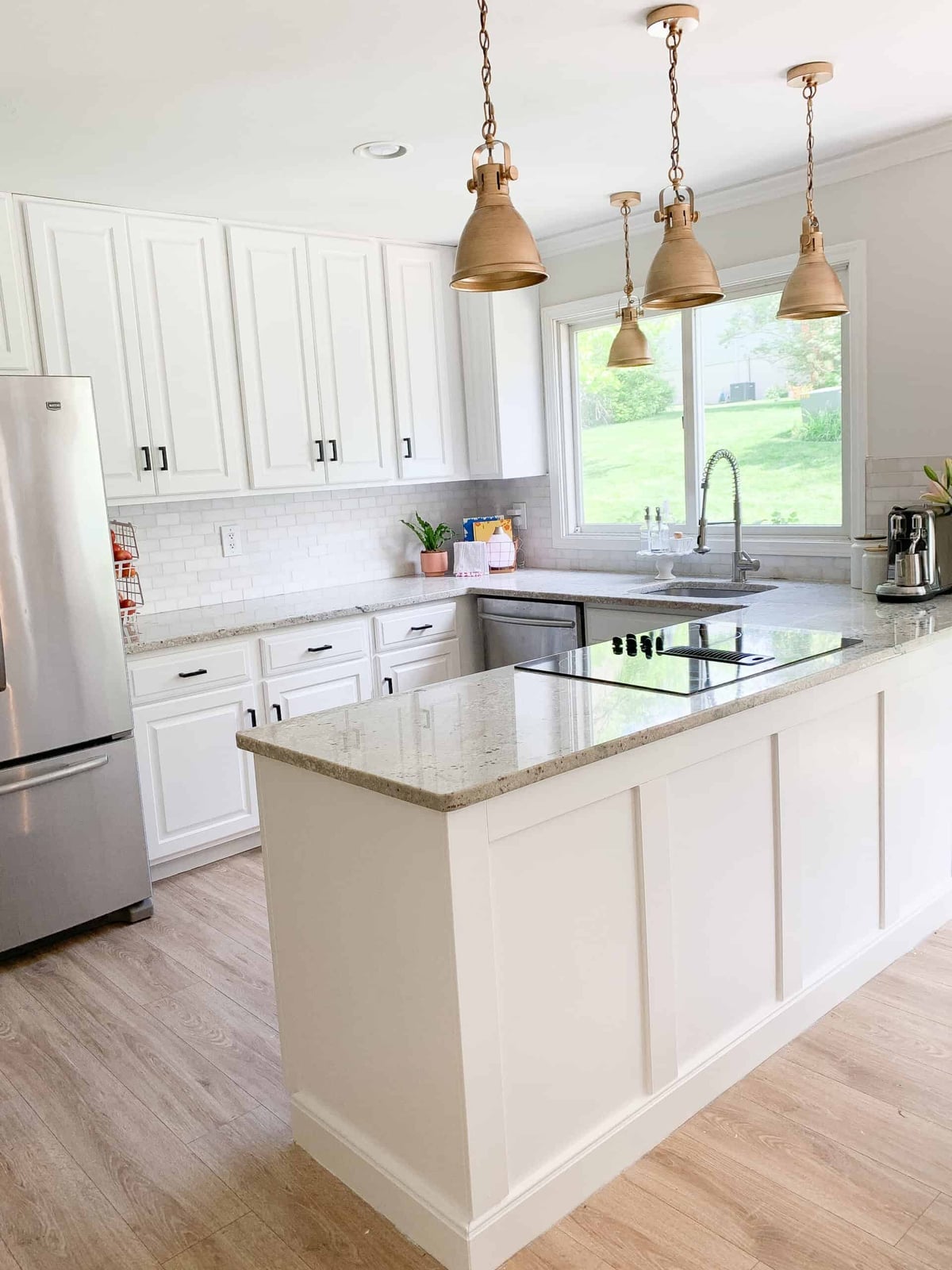
To add warmth to white painted cabinets, choose countertops and flooring with gray and brown undertones. White cabinets can feel sterile in an all cool palette. Here, a granite island surface and natural wood flooring bring in those grounding tones. Pendant lights above the island and natural light balance the brightness. The open plan layout with a large island makes the space feel generous, and the white cabinets remain the focal point against the wood and granite elements.
Charcoal Gray Cabinets with Red Brick Backsplash
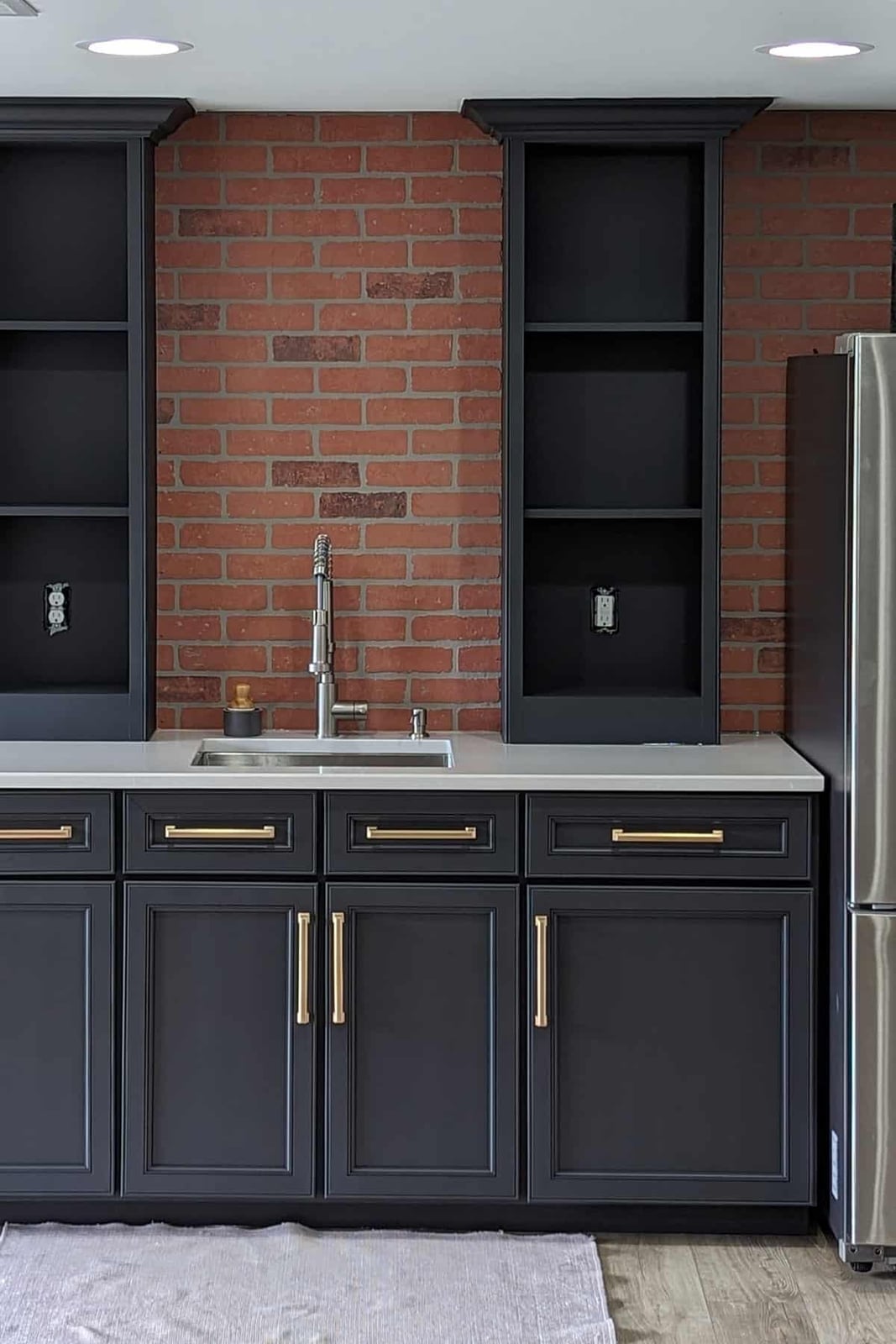
Charcoal gray cabinets can feel heavy in a compact kitchen, but pairing them with a red brick backsplash changes the equation. The brick adds warmth and texture that the dark cabinetry needs. Stainless steel appliances and black hardware keep the look industrial, not rustic. A nearby window provides natural light that helps the charcoal appear as a deliberate choice.
For renters who want this contrast, a brick-look peel-and-stick tile is a renter-safe swap that provides the same texture. The compact layout means every surface counts, so the backsplash does double duty as both a visual anchor and a heat-resistant surface behind the range. The charcoal cabinets stay the hero element, but the brick softens the overall look.
Distressed Cream Cabinets in a Rustic Kitchen
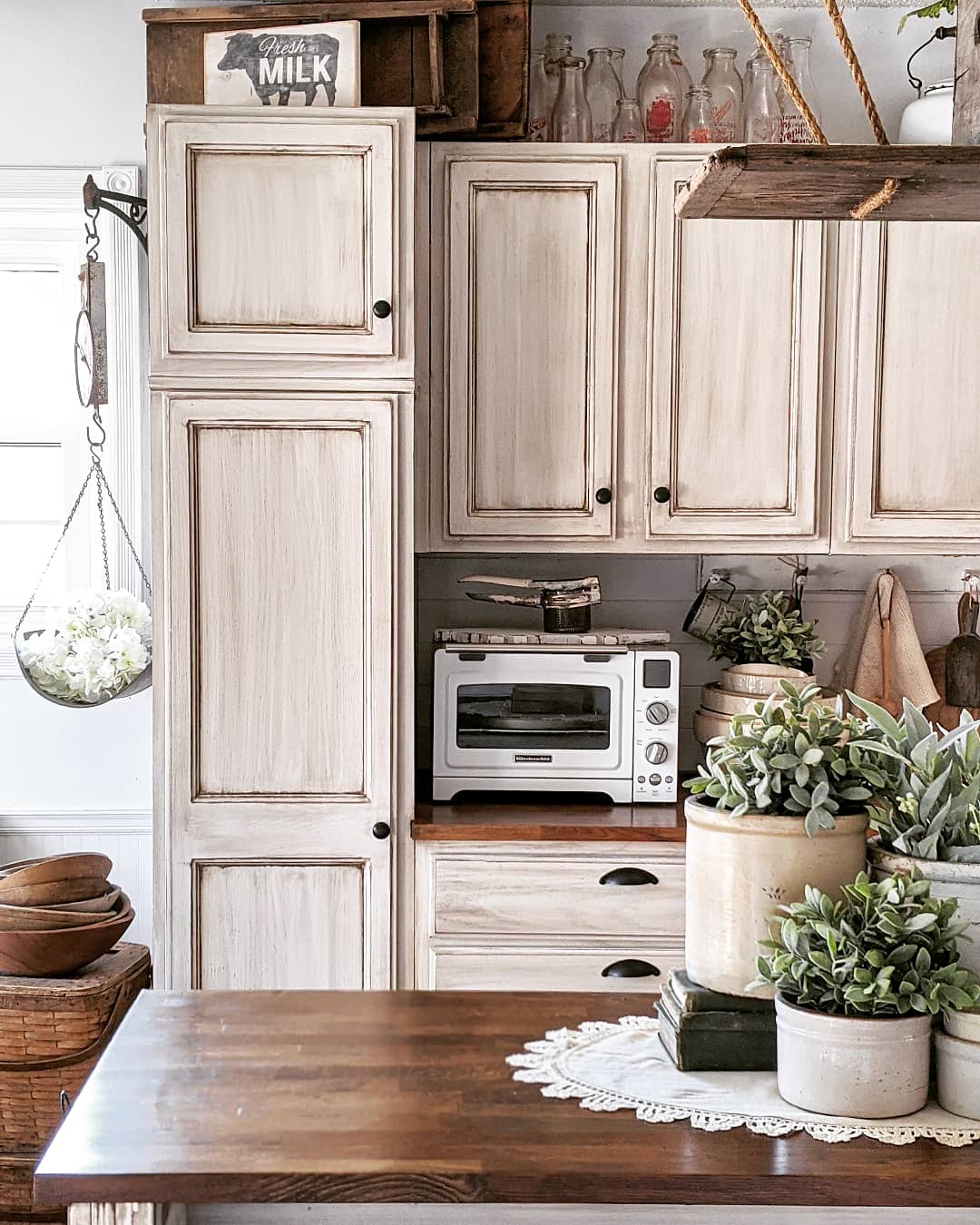
The distressed cream finish on these cabinets shows wear as a feature rather than a flaw. Scuffs and rubbed edges on the cream paint soften the look, making the tall cabinet and upper cabinets feel like found pieces. Wicker baskets on the counter and glass-front doors reinforce the rustic style without adding clutter. The corner layout keeps the kitchen compact, and the overhead ambient light highlights the texture of the distressed wood. This finish suits anyone who prefers a lived-in look over a crisp, uniform surface.
Dark Blue-Gray Cabinets in a Modern Farmhouse Galley
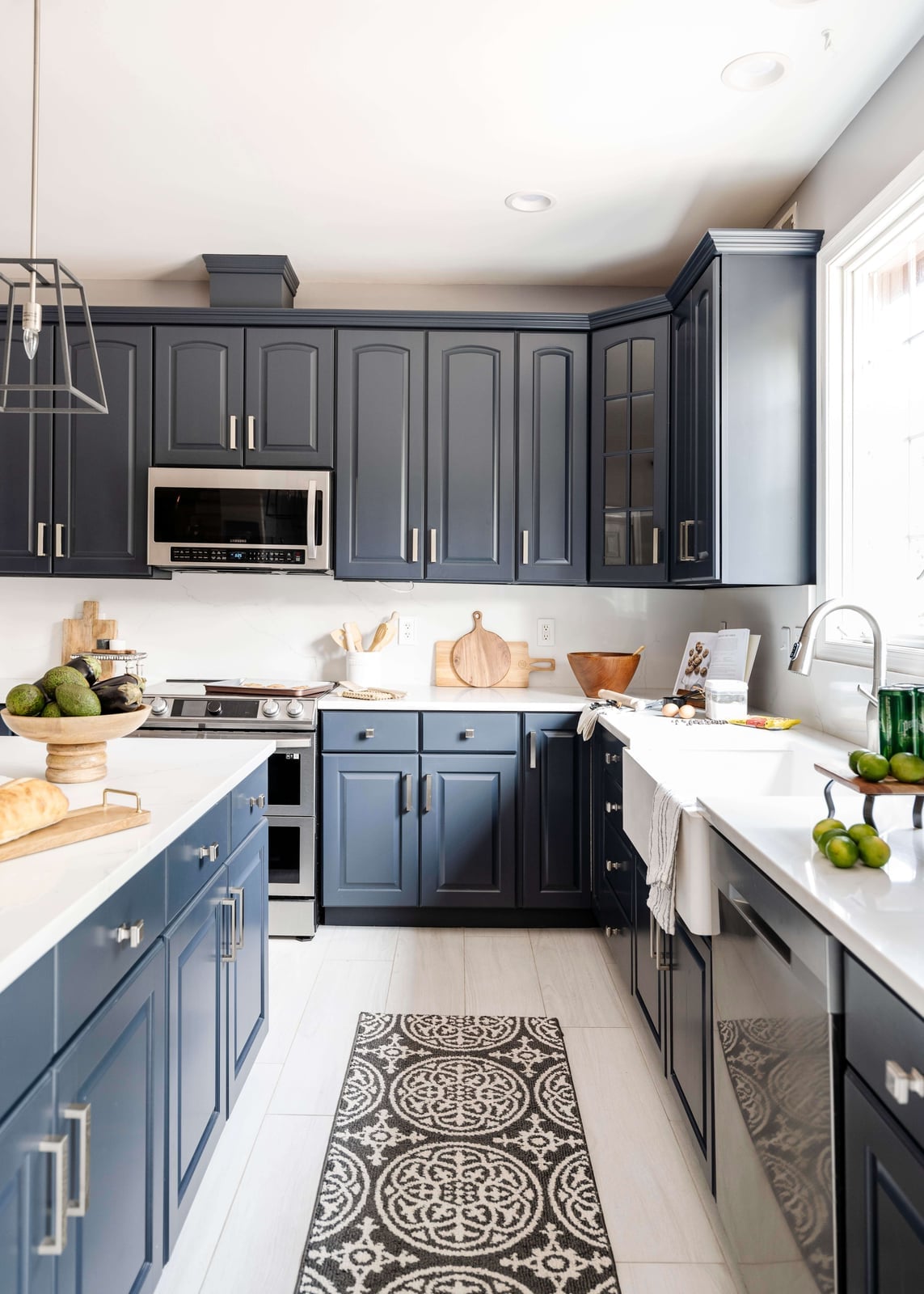
This galley kitchen proves that dark blue-gray cabinets can feel spacious, not cave-like, when you pair them with a white quartz countertop and a pale geometric rug. The painted wood fronts run floor to ceiling along both walls, so the dark color acts as a solid anchor. An overhead pendant and far end window keep the room bright, while the white countertop bounces light back into the room. The palette stays tight: dark blue-gray, white, and a few warm notes from the rug. That restraint makes the color feel deliberate, not accidental.
Light Gray Cabinets with Decorative Trim
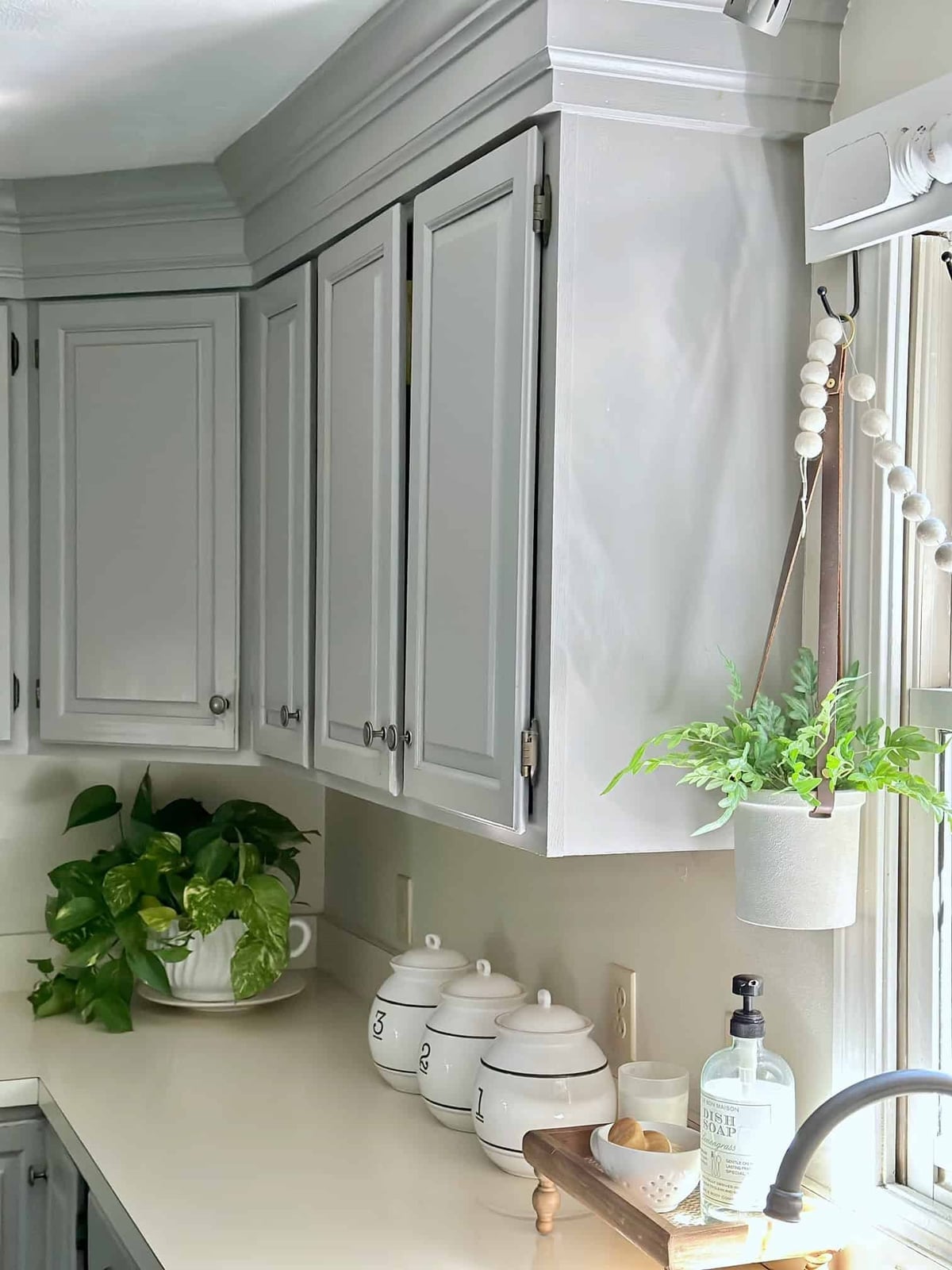
If you love the look of custom millwork but rent or work with a tight budget, light gray cabinets with applied trim offer a close alternative without the commitment of a full built-in. The trim here is a beaded garland detail, giving standard cabinet fronts a furniture-like feel. The light gray keeps things neutral enough to work with any countertop or backsplash you already have, and the white walls and window light keep the overall look airy.
To pull this off in a rental, look for peel-and-stick molding that can be removed later, or ask your landlord about adding simple wood trim before painting. Keep the trim color the same as the cabinet body so it blends into one piece. This approach adds depth without needing new cabinetry.
Final Thoughts
Painted cabinets offer a way to refresh a kitchen without starting from scratch. The 27 looks here show that color choice, hardware pairing, and countertop material each play a part in how the storage reads. A dark cabinet needs good lighting and a lighter counter to keep the room from feeling closed in. A pale cabinet can take a busy backsplash or warm wood accents without competing. The finish matters too: matte hides fingerprints better than high-gloss but shows dust sooner. Before you pick up a brush, test your color on a cabinet door and live with it for a few days. That small step saves repainting later. Keep the surrounding elements simple, and let the cabinets lead the room.