A stair runner does more than protect treads from wear. It anchors the vertical journey of your home, adding color, texture, and rhythm to what is often a forgotten space. Whether you lean toward bold patterns or quiet neutrals, the right runner changes how the staircase feels underfoot and in view.
This collection of 30 stair runner ideas shows how a single element can shift the personality of your stairs. From eclectic patchworks to minimalist herringbone, these looks prove that the runner is the hero of the staircase. Expect real-world examples that balance style with practical choices for fit and upkeep.
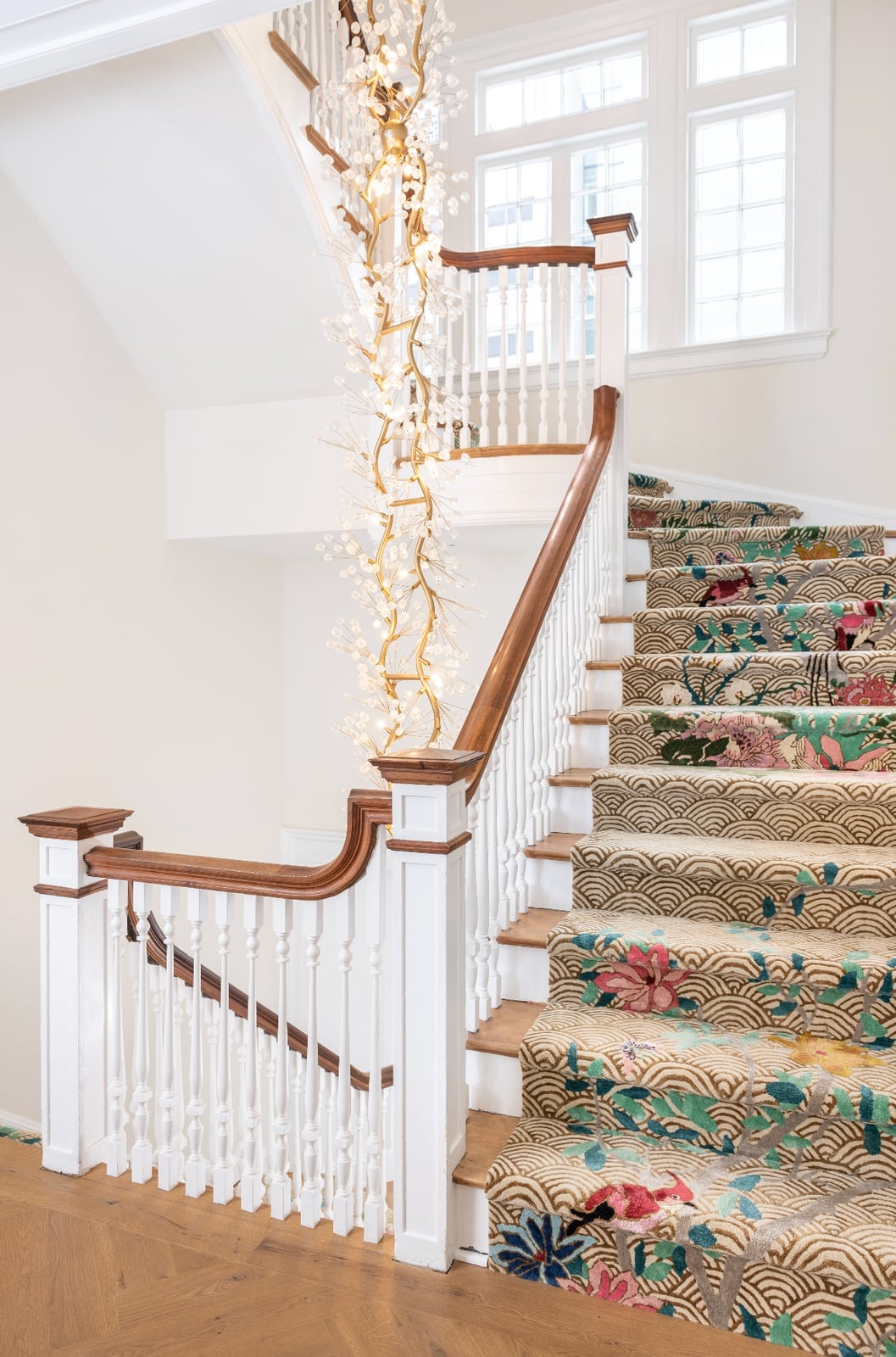
Eclectic Staircase with a Vibrant, Multi-Patterned Runner
This staircase leans into the unexpected with a runner that mixes multiple patterns and colors across each tread. The beige background keeps the gold, red, and blue motifs from feeling chaotic, while the ornate chandelier overhead adds a formal counterpoint. For an eclectic look, let the runner be the loudest element and keep the banister and walls simple. That way the pattern looks deliberate.
Modern Stair Runner with Concentric Stripes in Wood Tones
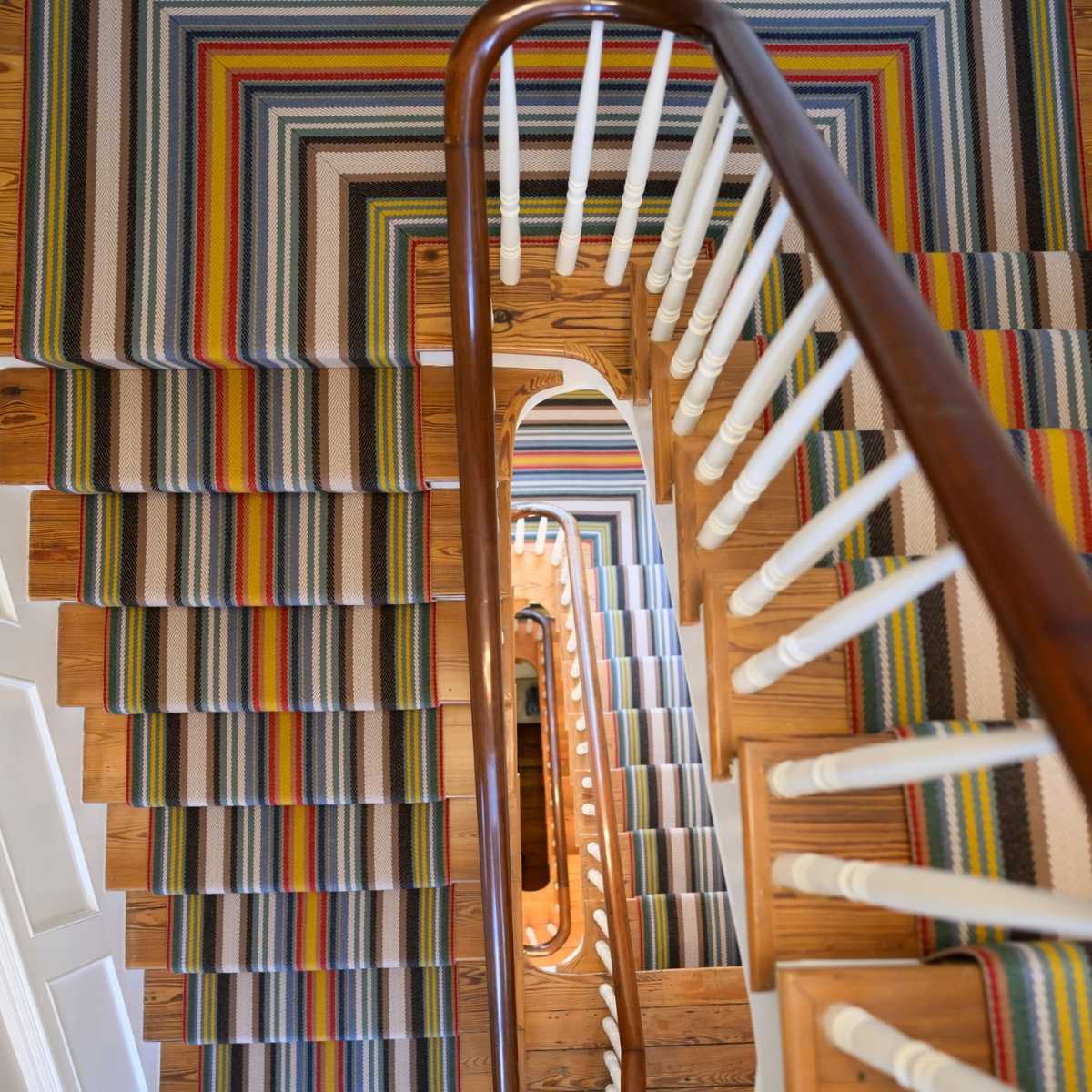
A runner with concentric stripes in warm wood tones is a smart choice for a modern staircase. The pattern echoes the natural grain of the wood treads visible on either side, creating a palette that feels cohesive without being matchy. The centered placement of the runner gives the staircase a clean, symmetrical look. If you want a similar effect, look for a runner that pulls in the same undertones as your flooring. The repetition of the stripe pattern also helps guide the eye up the stairs, making the space feel longer.
Bold Abstract Runner for a Modern Staircase
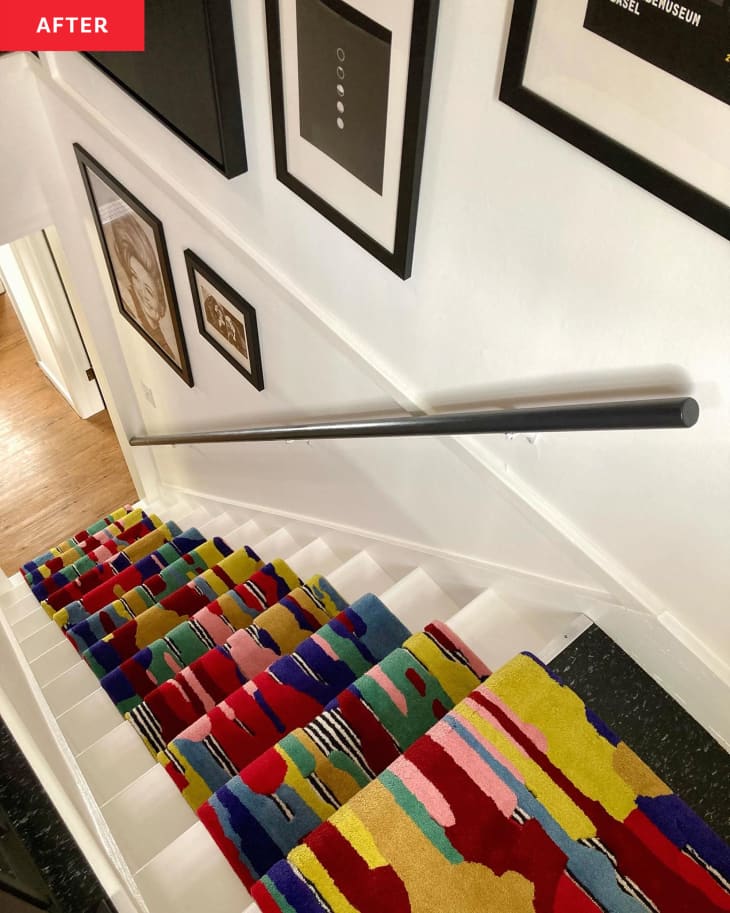
Can a runner be the main piece of art in a room? This staircase proves it can. The runner uses a vibrant abstract pattern in black, white, and multicolored shapes that draws the eye immediately. The white risers and black metal balusters keep the look clean, so the runner does not compete with the architecture.
The framed art on the wall picks up similar colors, tying the whole landing together. For a modern staircase, treat the runner like a canvas. Choose a design that has enough contrast to stand out against neutral walls and flooring. The abstract pattern also helps hide daily wear better than a solid color would.
Eclectic Hallway Featuring a Red and Cream Patterned Stair Runner
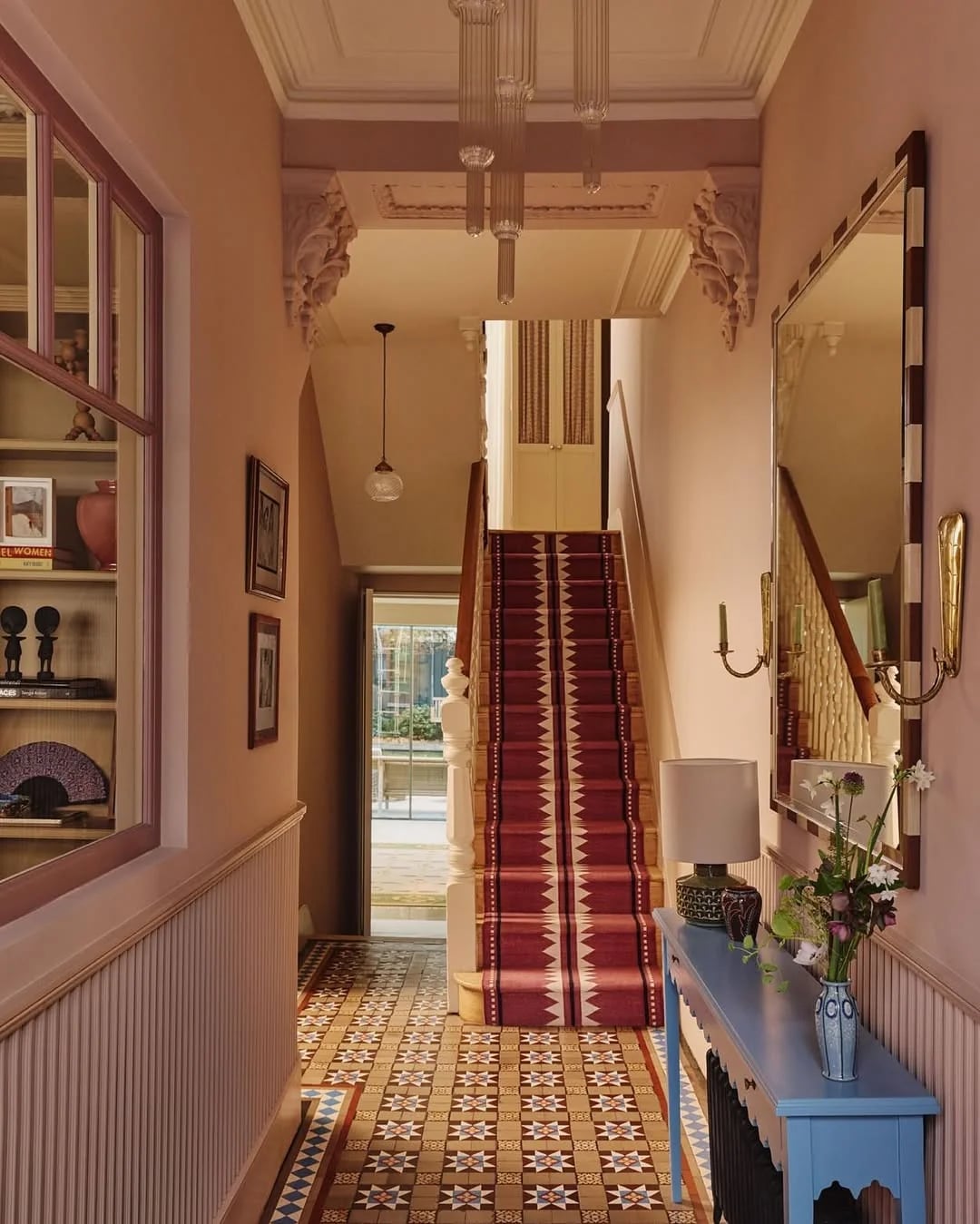
A red and cream patterned runner brings warmth to a hallway that might otherwise feel like a pass-through. The runner leads the eye from the entry past the console table and mirror and up the stairs, creating a natural flow. The overhead chandelier and wall sconce cast light that catches the cream tones in the runner, softening the strong red. For an eclectic entry, let the runner set the color story and pull in accent pieces that echo one of its hues.
Modern Traditional Staircase with Black and Gold Runner
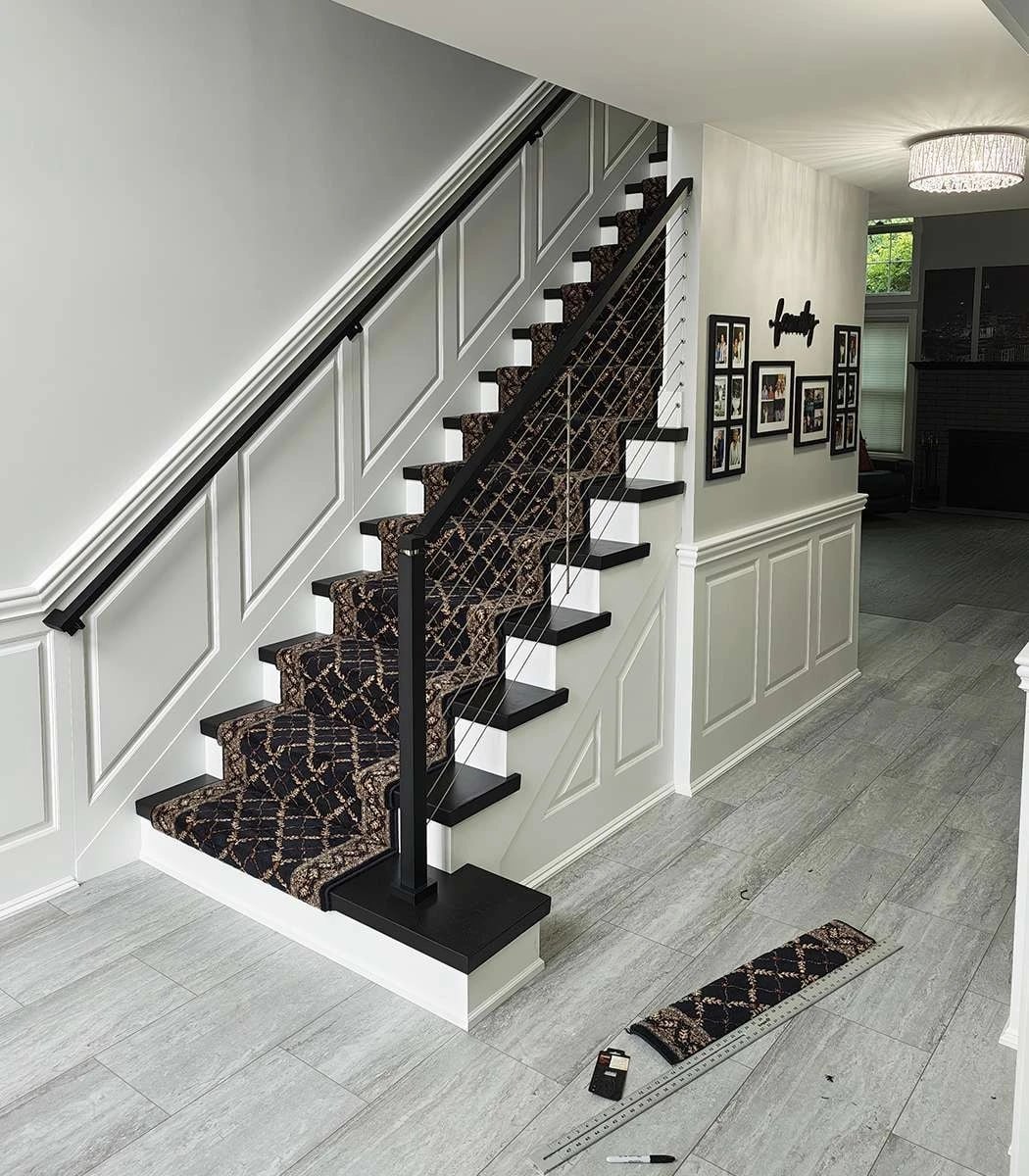
To mix modern and traditional styles, anchor the look with a strong palette. This staircase uses a black and gold runner with an ornate pattern against white painted risers and a black banister. Gold threads in the runner reflect light from the chandelier and hallway window, adding a subtle shimmer. White walls prevent the palette from feeling heavy. For a modern traditional look, limit the palette to two main colors plus a metallic accent. That ratio keeps the ornate pattern from overwhelming the clean lines.
Boho Staircase with a Neutral Geometric Runner
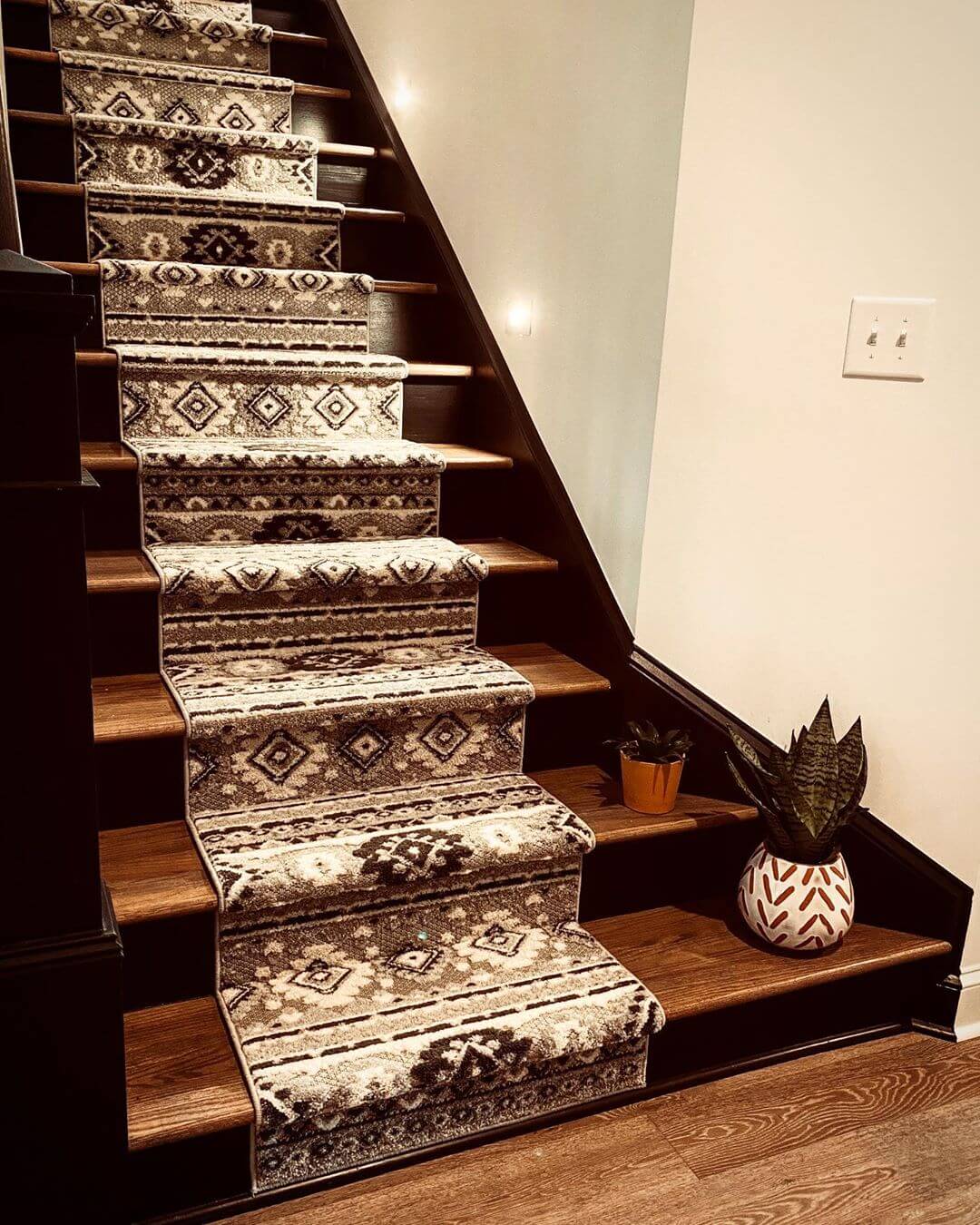
A jute runner feels natural but can shed and snag. A flatwoven wool version in a neutral geometric pattern keeps that organic look without the mess. The brown and cream palette works with almost any wood tone, and the central runner leaves the tread edges bare for a lighter feel. A potted plant at the base reinforces the boho layer without crowding the landing. The key is the runner’s pattern: repeating motifs that don’t need to match a specific wall color or trim, so you can swap art or paint without redoing the stairs.
Traditional Staircase with Crisp White and Navy Striped Runner
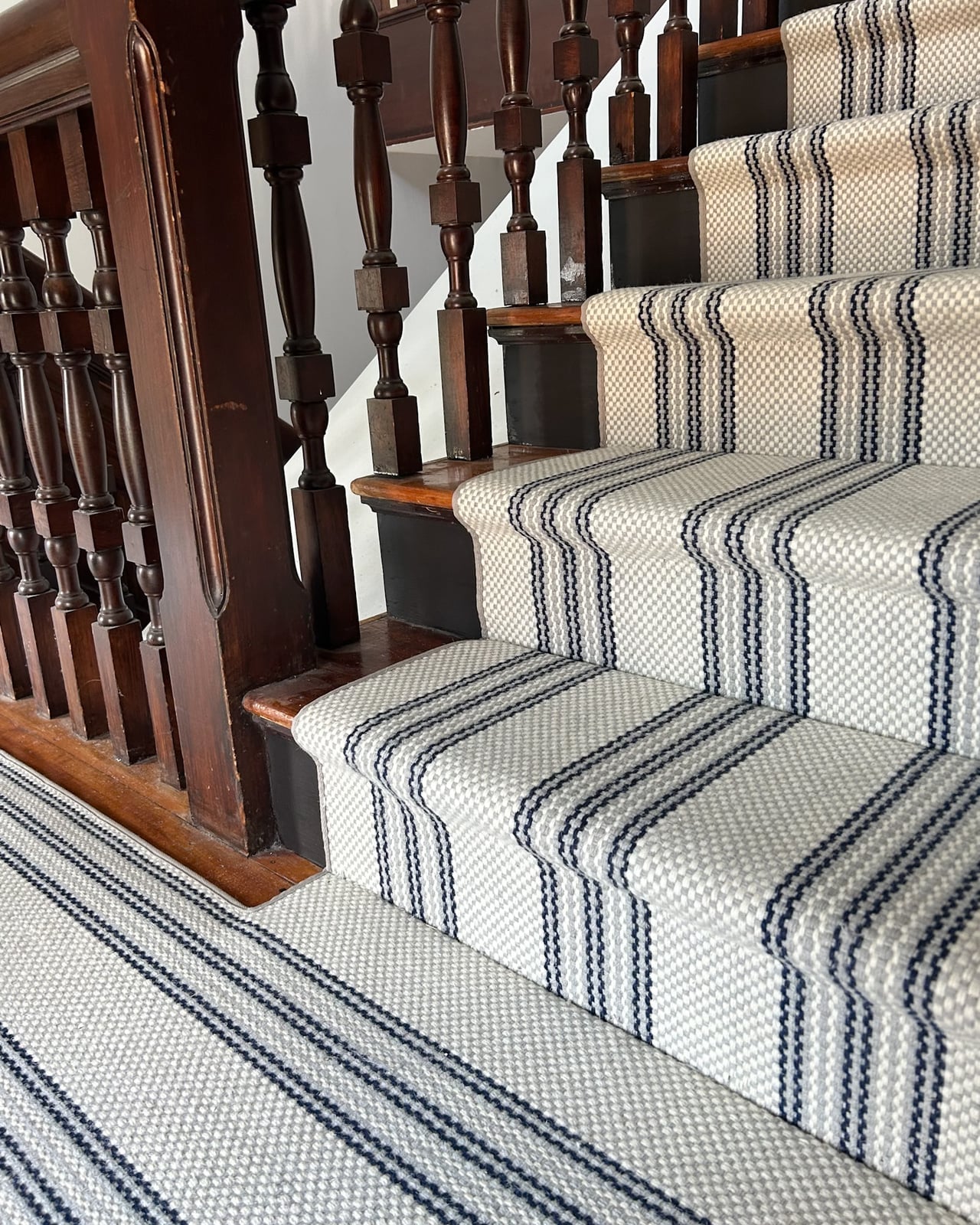
The crisp navy stripes sit on a white field, and the dark wood banister frames them without competing. That contrast reads as intentional because the stripe width is narrow enough to feel tailored. For renters, a stair runner with a strong linear pattern like this can be installed with a tension rod system at top and bottom, avoiding adhesive or tack strips on the treads.
Curved Staircase with Beige Herringbone Runner and Burgundy Trim
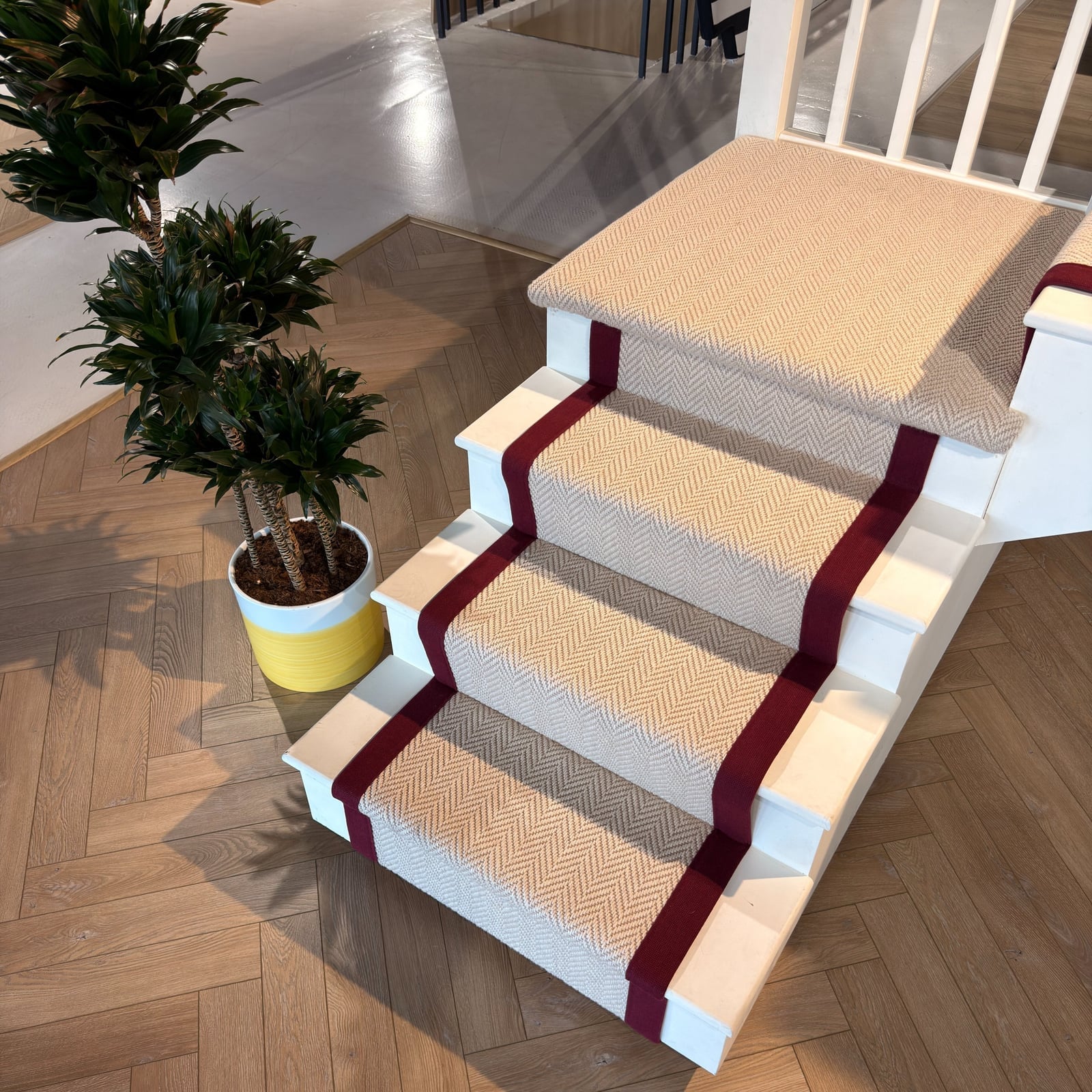
This runner proves that a neutral beige herringbone can feel deliberate when you add a burgundy trim. The burgundy edge creates a crisp boundary that keeps the eye moving up the curve without getting lost in the pattern. On a compact curved staircase, the trim also defines each tread visually, which helps with footing. The landing side and the floor lighting at the base prevent the dark trim from reading too heavy. To recreate it, look for a herringbone runner with a contrasting binding in a color pulled from another room, like a rug or an accent wall.
Modern Beige Woven Textile Runner for a Spacious Staircase
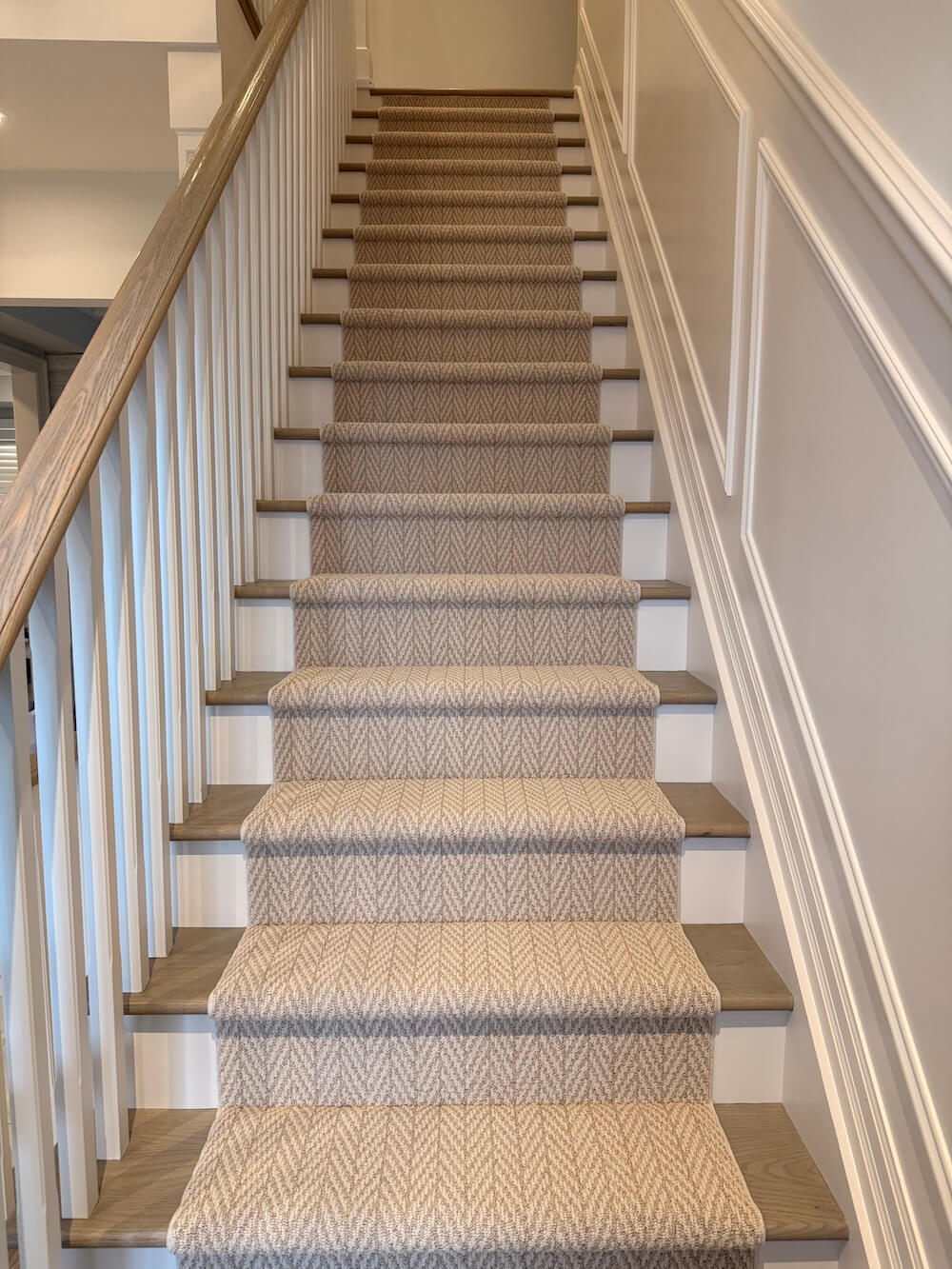
Can a pale beige runner survive a busy entry? It depends on the weave. A tight, flatwoven textile in a beige tone hides dust between cleanings better than a plush pile, and the texture adds grip underfoot. In this spacious modern staircase, the runner runs the full length of the treads, leaving the wood sides exposed for a clean line. The bright natural light keeps the beige from looking dingy, but the real trick is the runner’s slight pattern repeat, which camouflages daily traffic marks. For high-use stairs, a woven textile with a low profile also means less vacuum wear along the edges.
Traditional Staircase with Red and Cream Checkered Runner
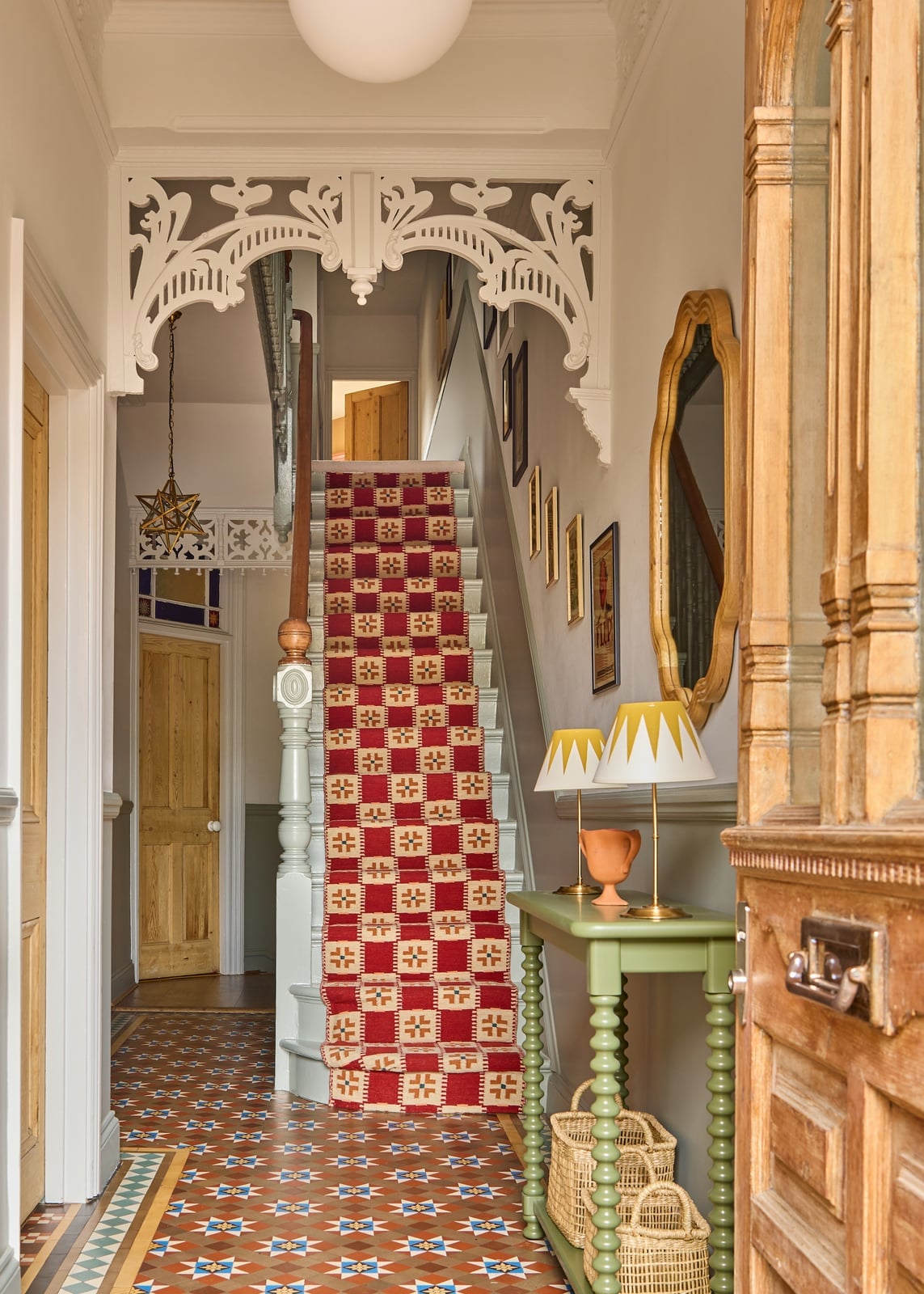
A red and cream checkered runner reads traditional, but the scale of the check matters. Large squares on a roomy staircase can feel bold, while smaller checks look tailored. Here the runner is centered on the treads, with the wood sides visible, and the console table and lamps at the landing anchor the composition. The overhead and lamp lighting keeps the red from overwhelming, especially if the wood trim is warm. Stick to a check size that matches the stair width, not the room size.
Close-Up of Gray and White Herringbone Runner Texture
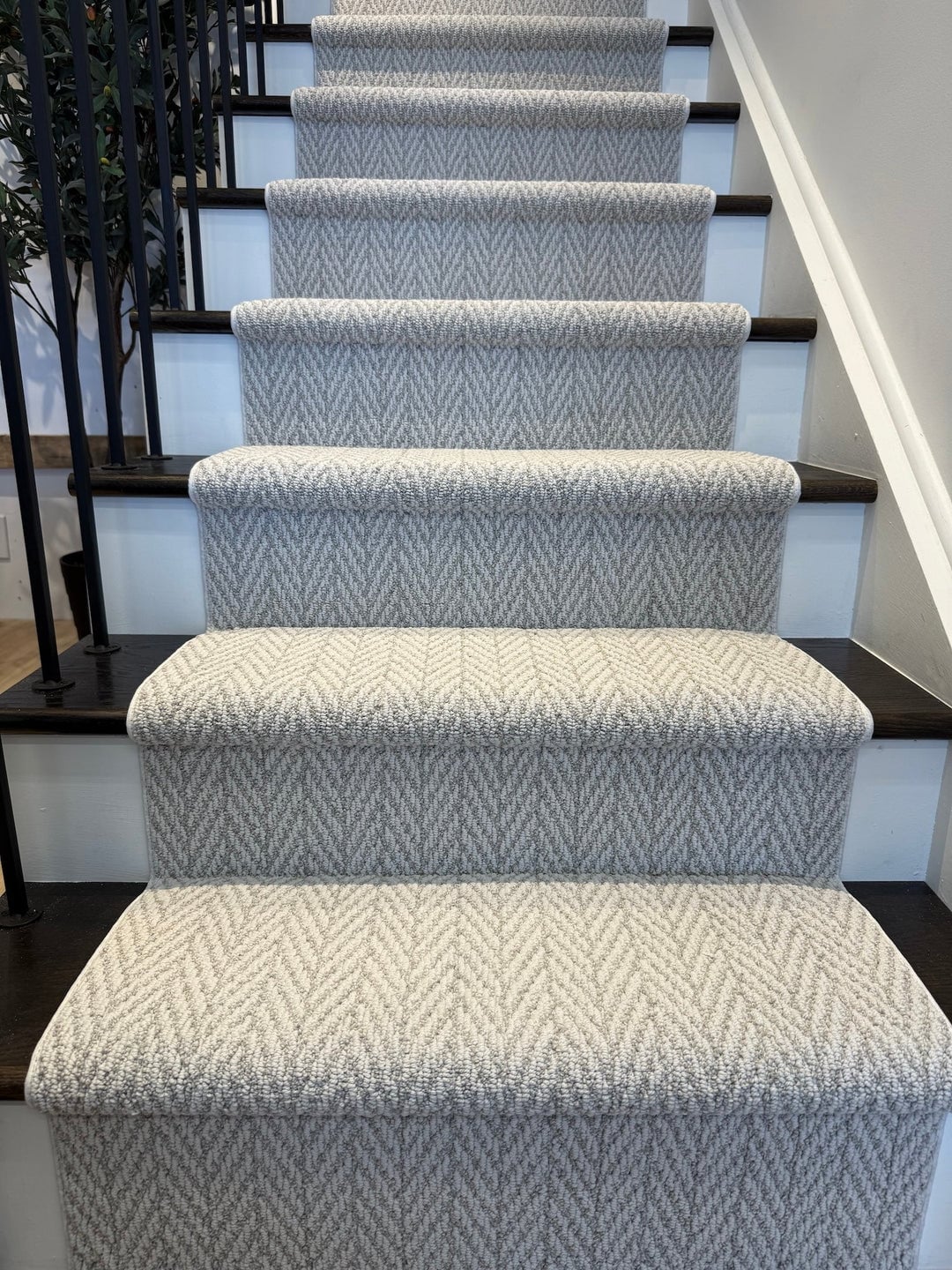
A close look at a herringbone runner reveals how the zigzag weave handles daily traffic without showing every footprint. The gray and white yarns create a flat, dense surface that resists the crush of heel marks better than a looped pile. Black flecks in the weave add visual depth without introducing a third color that could compete with the wood treads on either side. Soft overhead light bounces evenly off the compact fibers, so the pattern stays legible from the landing above. That tight construction also means the runner holds its shape against the stair nosing, with less curling at the edges over time.
Eclectic Winding Staircase with Patchwork Vintage Rug Runner
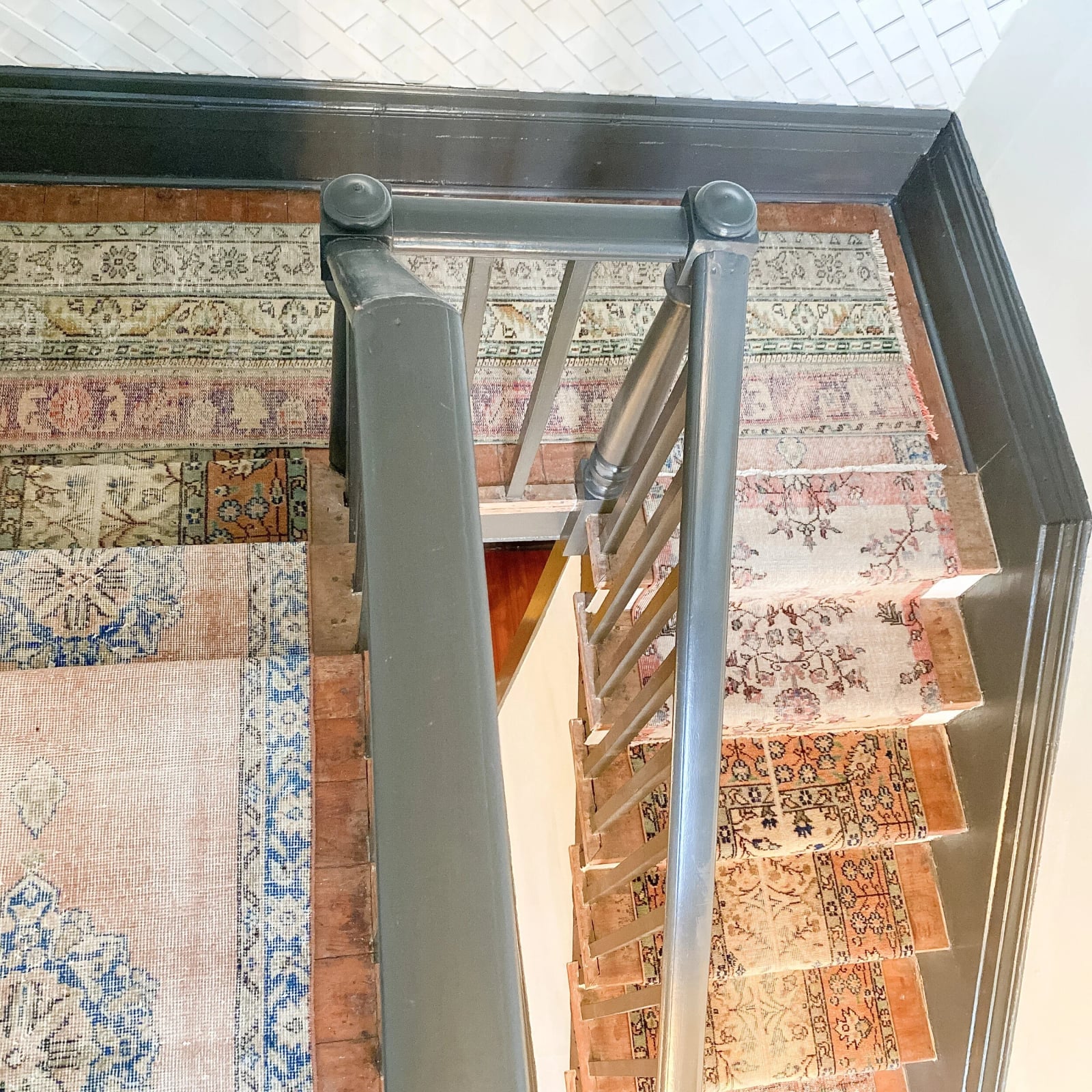
A single broadloom runner can feel too uniform for a winding staircase, but a patchwork of vintage rugs gives each step its own character while keeping the line continuous. This setup layers muted pastels, terracotta, and gray across the treads, with each fragment adding a different weave or faded dye lot. The gray banister and wood tones act as a neutral buffer, so the mix of patterns reads as collected rather than chaotic.
The overhead shot shows how the narrow width of each rug section follows the curve of the stairs without buckling. For renters, clamp-style rods at the top and bottom of each run hold the pieces in place without tack strips or glue. Just check the rod length against your tread depth before ordering, since winding stairs often vary by an inch or two per step.
Traditional Staircase Runner with Geometric Pattern and Ornate
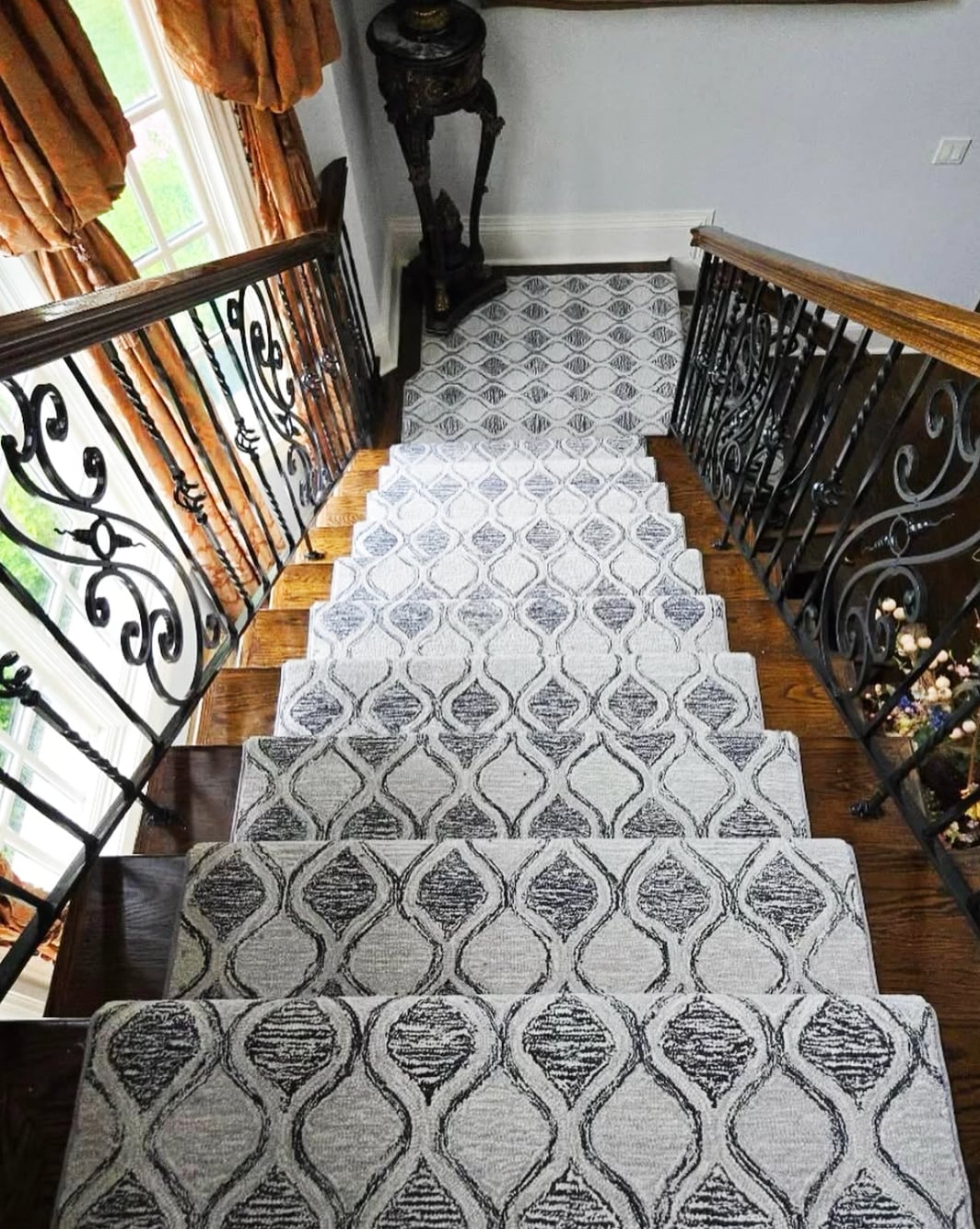
The diamond motif on this runner mirrors the scrollwork of the ornate metal balustrade, creating a conversation between the carpet and the railing that a solid color would miss. Gray and white geometry keeps the pattern from competing with the wood tones on the treads and risers. Daylight at the top landing hits the flat weave evenly, so the geometric lines stay crisp and do not wash out halfway down the flight.
Modern Farmhouse Staircase with Gray and White Runner
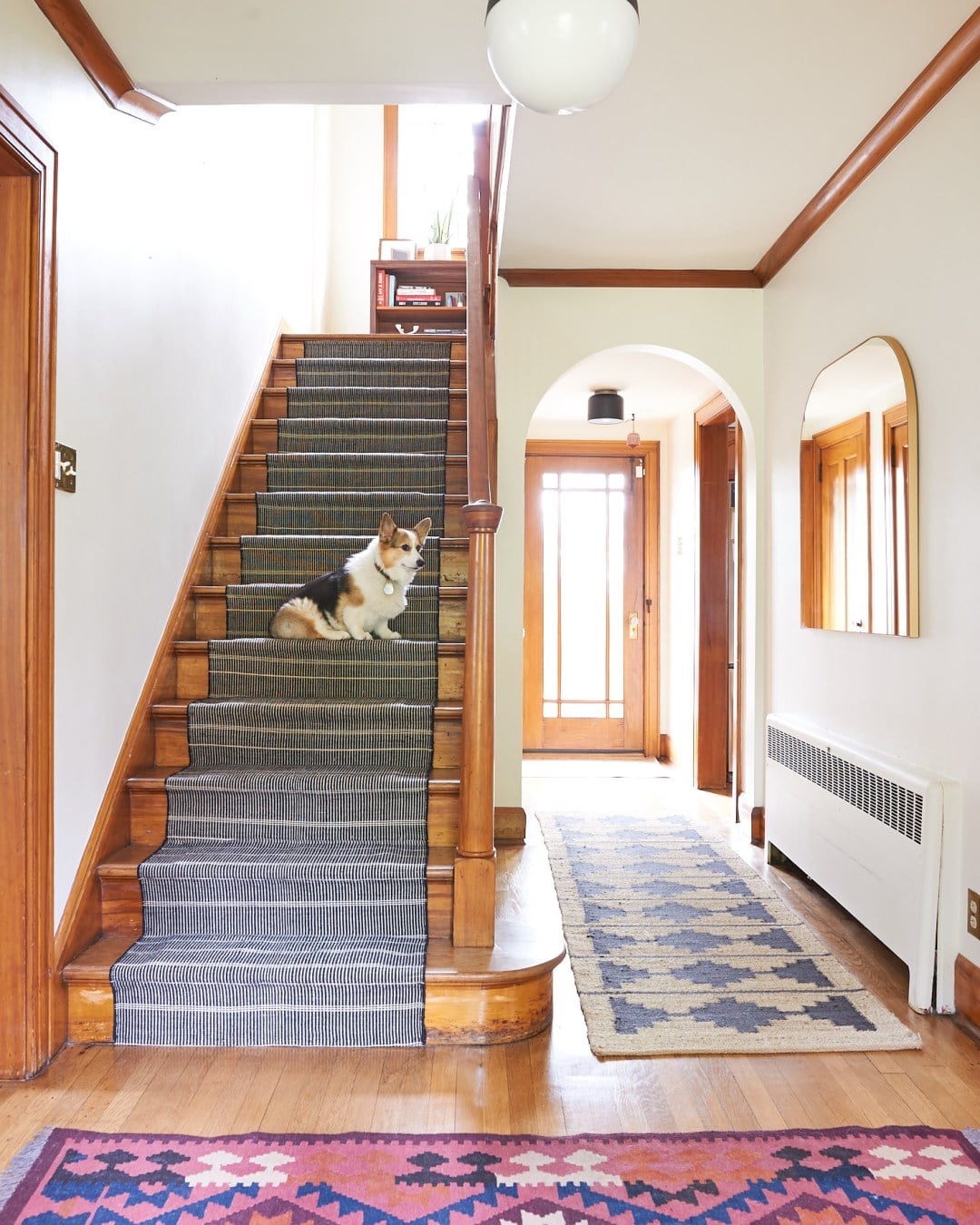
This runner does exactly what a modern farmhouse staircase needs: it adds softness underfoot without covering the wood treads that define the style. The gray and white palette ties the runner to the white risers and the warm wood banister, so the whole flight feels cohesive. The window at the landing keeps the runner from feeling heavy, and the hallway rug at the top extends the same neutral zone onto the second floor. A dog mid-stair is a good reminder that a low-pile runner handles muddy paws better than a shag.
Modern Beige Runner Secured with Brass Stair Rods
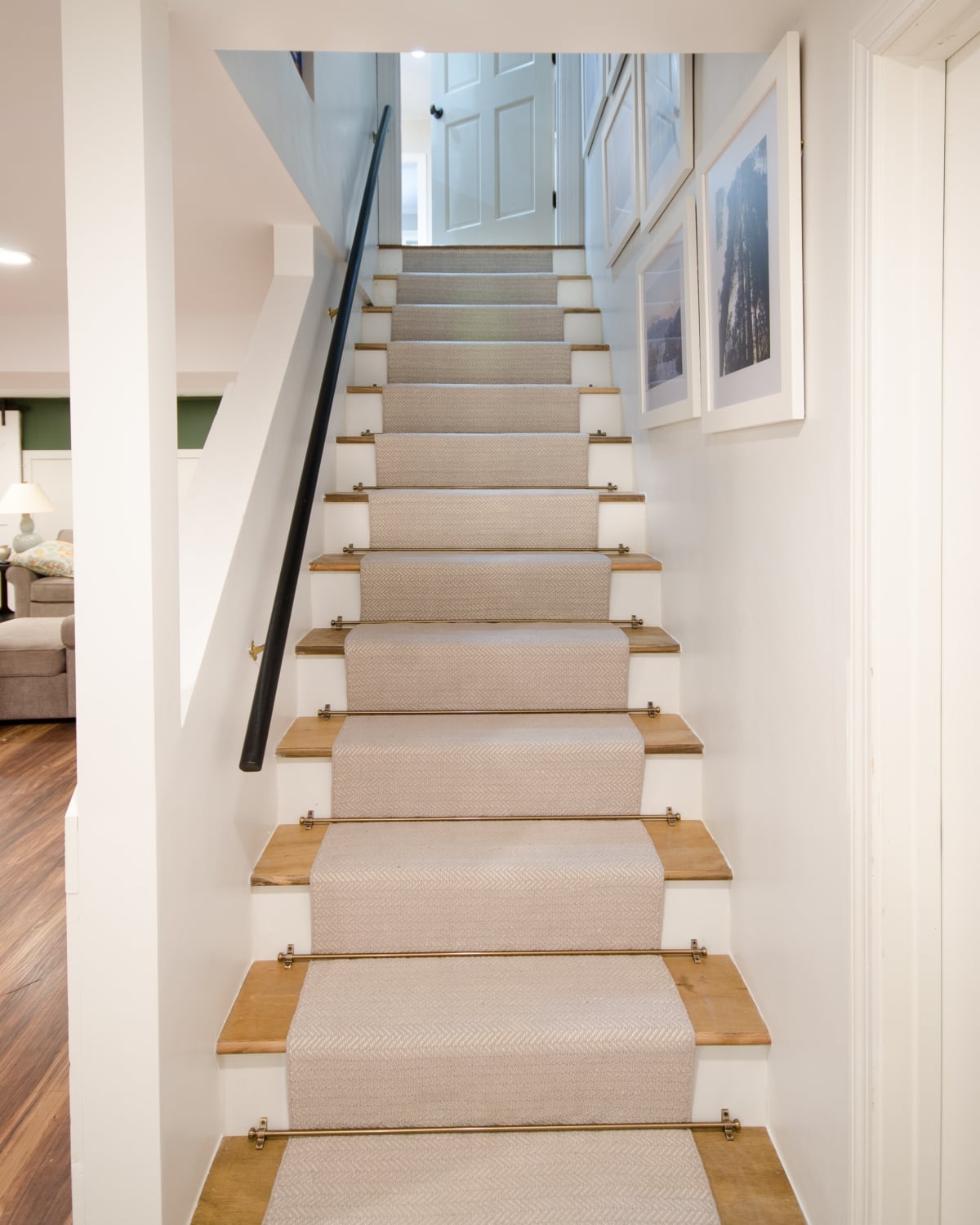
Brass stair rods do more than hold a runner in place; they signal that the carpet was planned, not patched. This beige runner sits centered on wide wood treads, with each rod snug against the riser to keep the material from shifting. The warm brass finish picks up the undertones in the wood, so the hardware looks like it belongs.
Measure the total run of your stairs, then divide by the number of rods you want to install. Most homes place a rod at the top and bottom of each step, but you can skip every other tread if the runner is dense enough to stay flat. The rods themselves are a renter-safe option since they clamp over the carpet without piercing the wood underneath. Just confirm your tread overhang is deep enough to grip the rod ends securely, especially on older staircases where the nosing may be rounded.
Gray Deer-Print Runner Against Vibrant Coral Walls
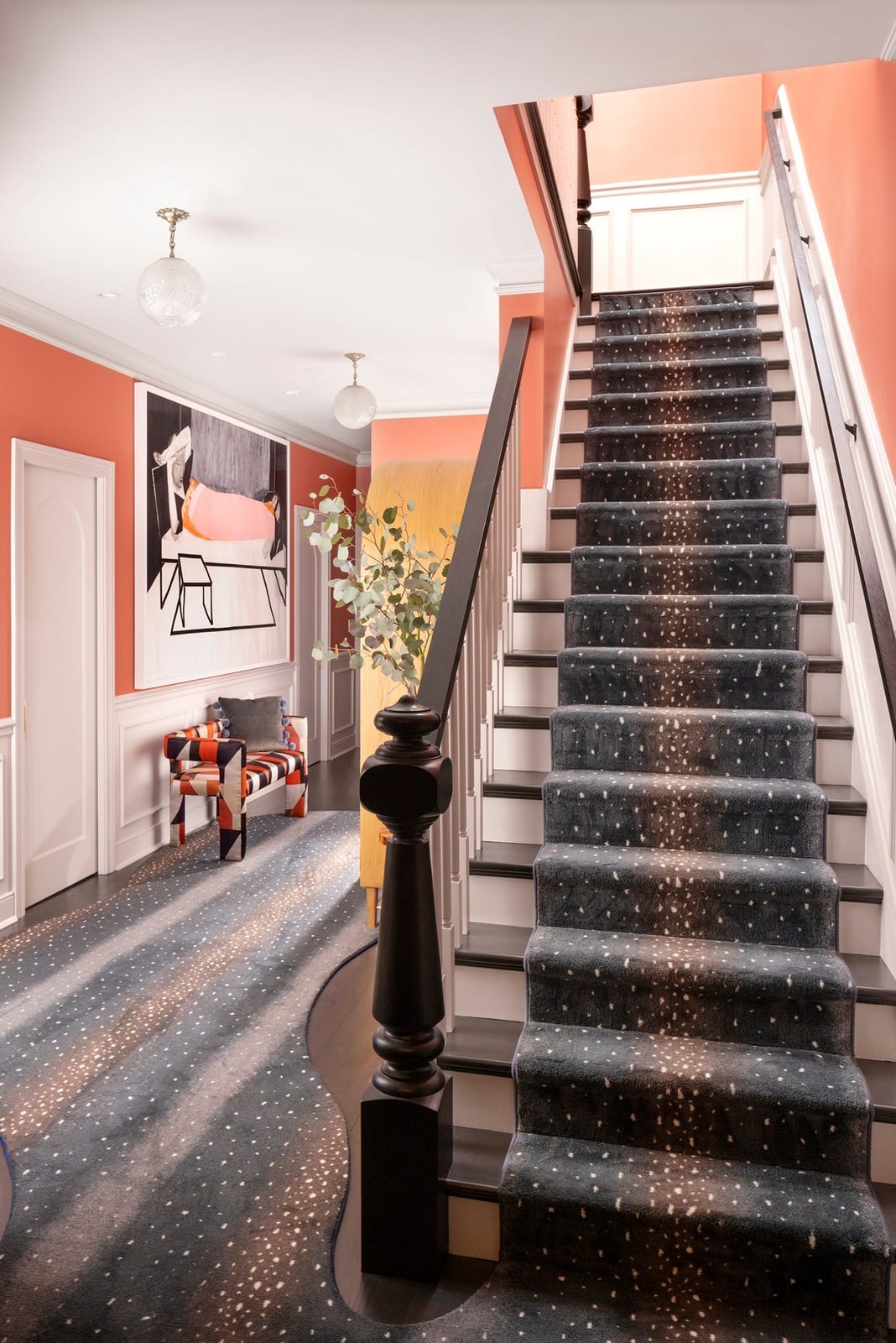
A deer-print stair runner swaps the usual floral or geometric for something with a little more personality. The gray and white pattern keeps the runner neutral enough to work with the vibrant coral walls, so the look stays playful without feeling chaotic. A bench at the landing and abstract art on the wall build on that collected, gallery-like feel. The palette trick here is that the coral wall is the loudest element, so every other piece needs to let it breathe. That runner holds its own without shouting.
Traditional Black Runner with Intricate Cream Pattern
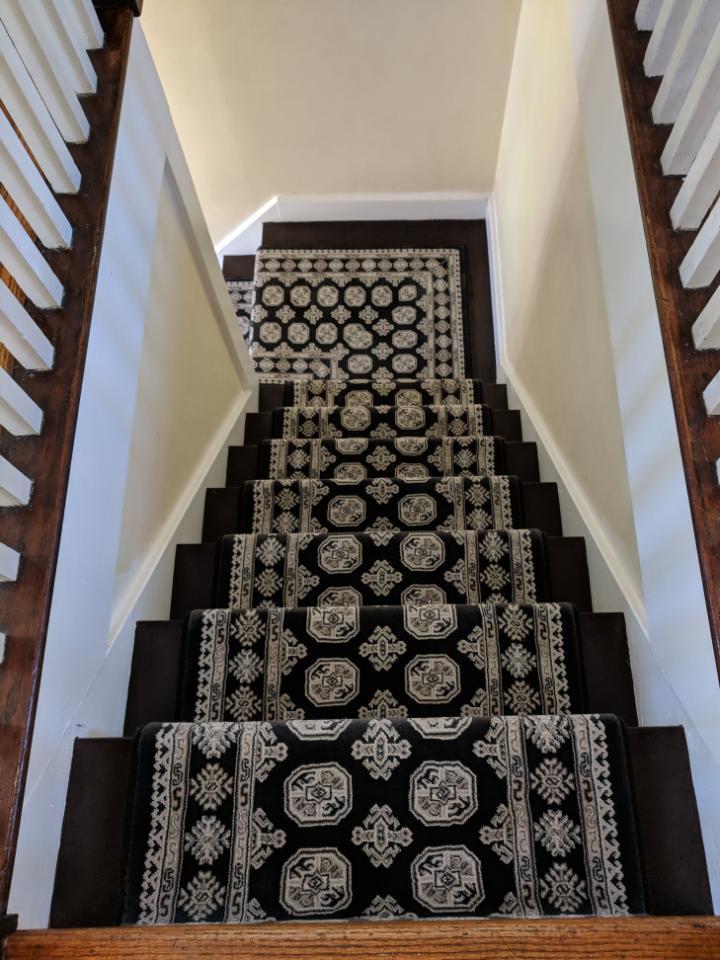
A traditional staircase runner pattern should look deliberate, not busy. This black runner with an intricate cream pattern achieves that. The high-contrast palette makes the stairs the focal point, but the detailed design keeps it from feeling flat. Overhead and natural light hit the runner differently throughout the day, which gives the pattern depth. For renters, a runner like this is a smart swap because it sits on top of the existing treads and comes with you when you move. No permanent changes needed.
Boho Staircase with Vibrant Geometric Runner, Indoor
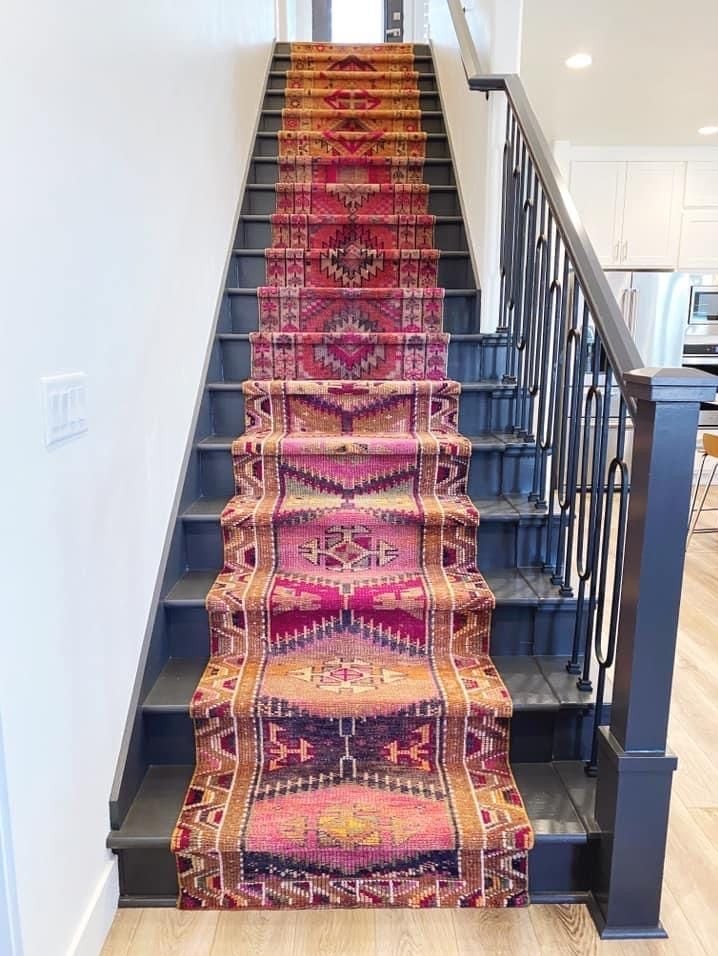
A boho staircase with a vibrant geometric runner in pink, orange, yellow, and purple feels worlds apart from a neutral jute runner or a subdued striped option. That mix of warm tones turns the stairs into the main event, so the rest of the space can stay simple. The wooden treads and a metal banister keep the look grounded because the runner is already doing the heavy lifting.
The palette here is the whole story. The ratio of pattern to solid space leans heavily on the runner, which works because the staircase is roomy enough to handle it. If you wanted to tone it down, you could pull one accent color from the runner and repeat it in a vase or a throw on the landing. That small link would make the whole setup feel more connected.
Modern Farmhouse Herringbone Runner with Dark Blue Edging
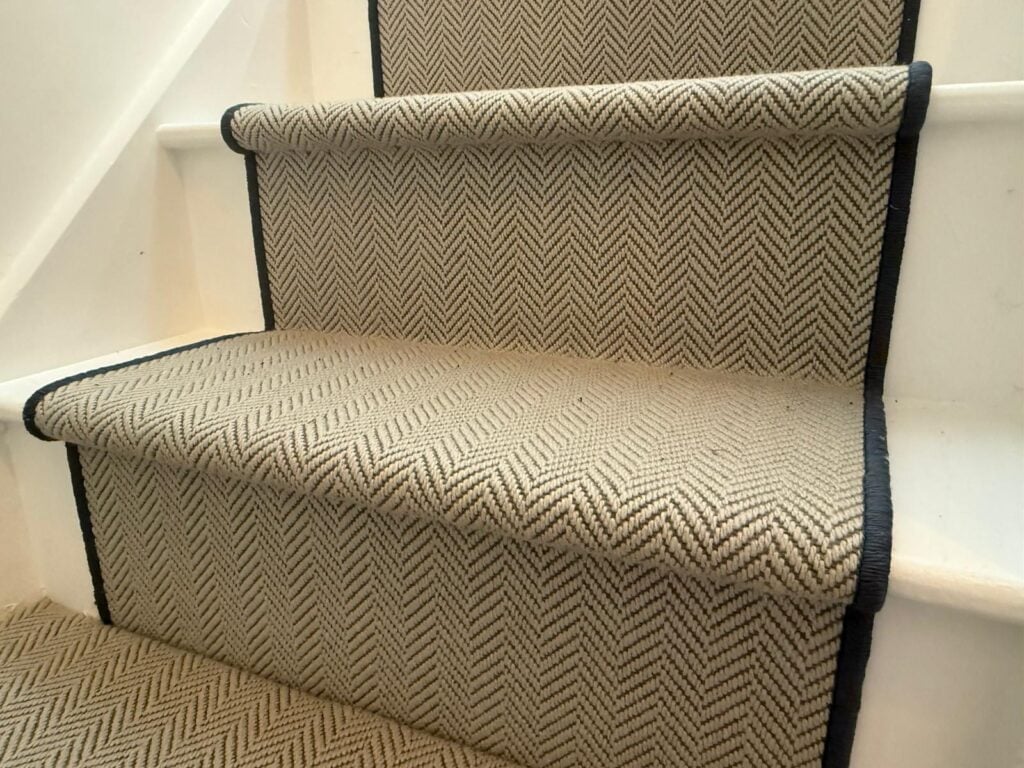
A beige herringbone runner with dark navy edging brings together two textures in one piece. The herringbone weave on the main field adds visual movement, while the solid navy border creates a clean edge that defines each step. The wool material handles foot traffic well, which matters for a staircase that sees daily use. The natural daylight hitting the runner shows off the weave pattern without washing out the navy trim. That contrast between the light field and the dark border is what gives the runner its structure.
Modern Stair Runner with Neon Pink and Orange Trim
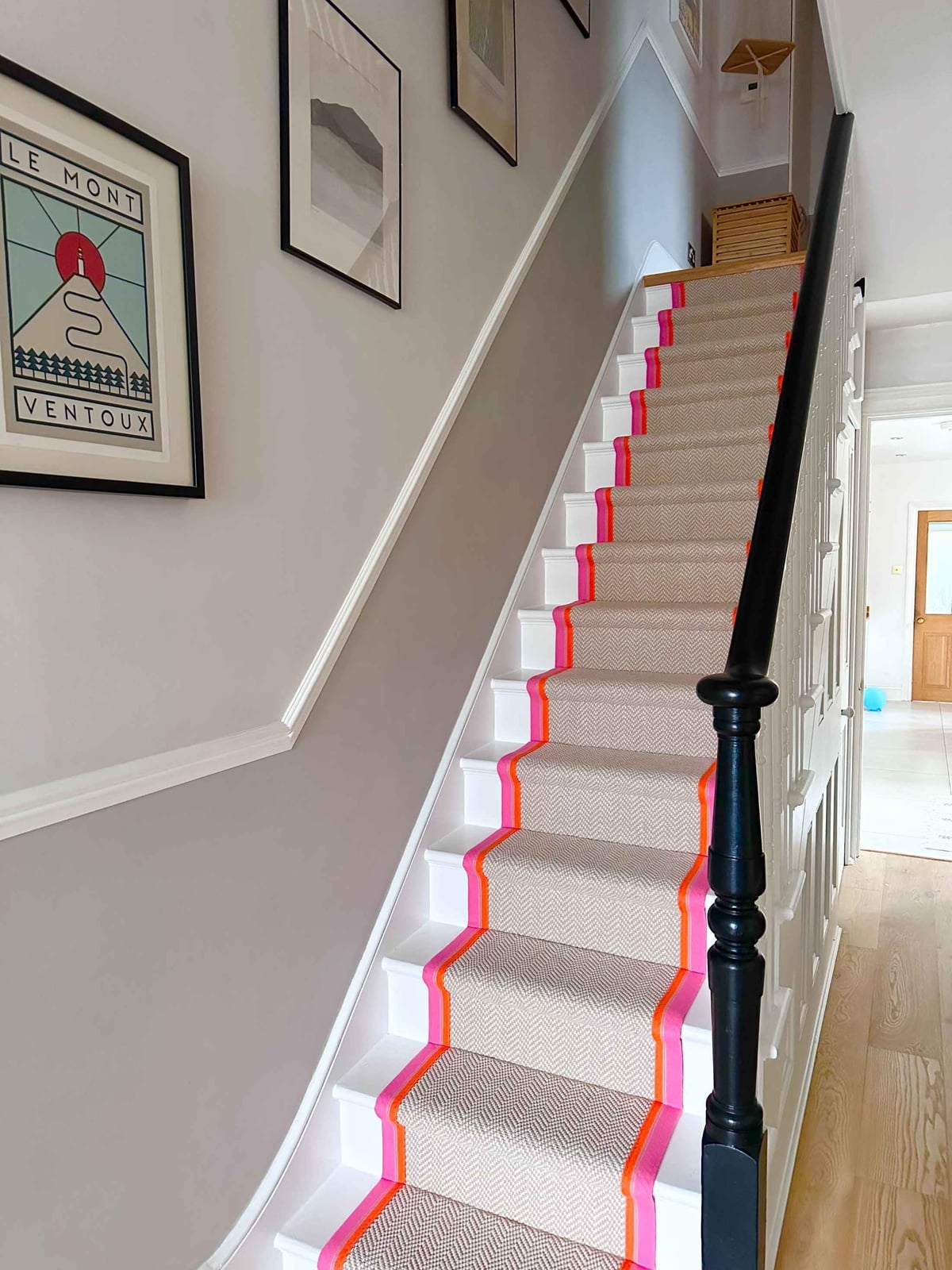
This runner is a herringbone pattern in beige with neon pink and orange trim, and it is a clear departure from the usual safe choices. The beige field keeps the runner grounded, while the neon edges add a shot of energy. That trim is narrow enough to work as an accent. The natural light in the space helps the neon colors pop without looking harsh. If you wanted to dial it back, you could swap the neon trim for a muted terracotta or a dusty rose. Same idea, lower volume.
Natural Jute Striped Runner on Wooden Stairs
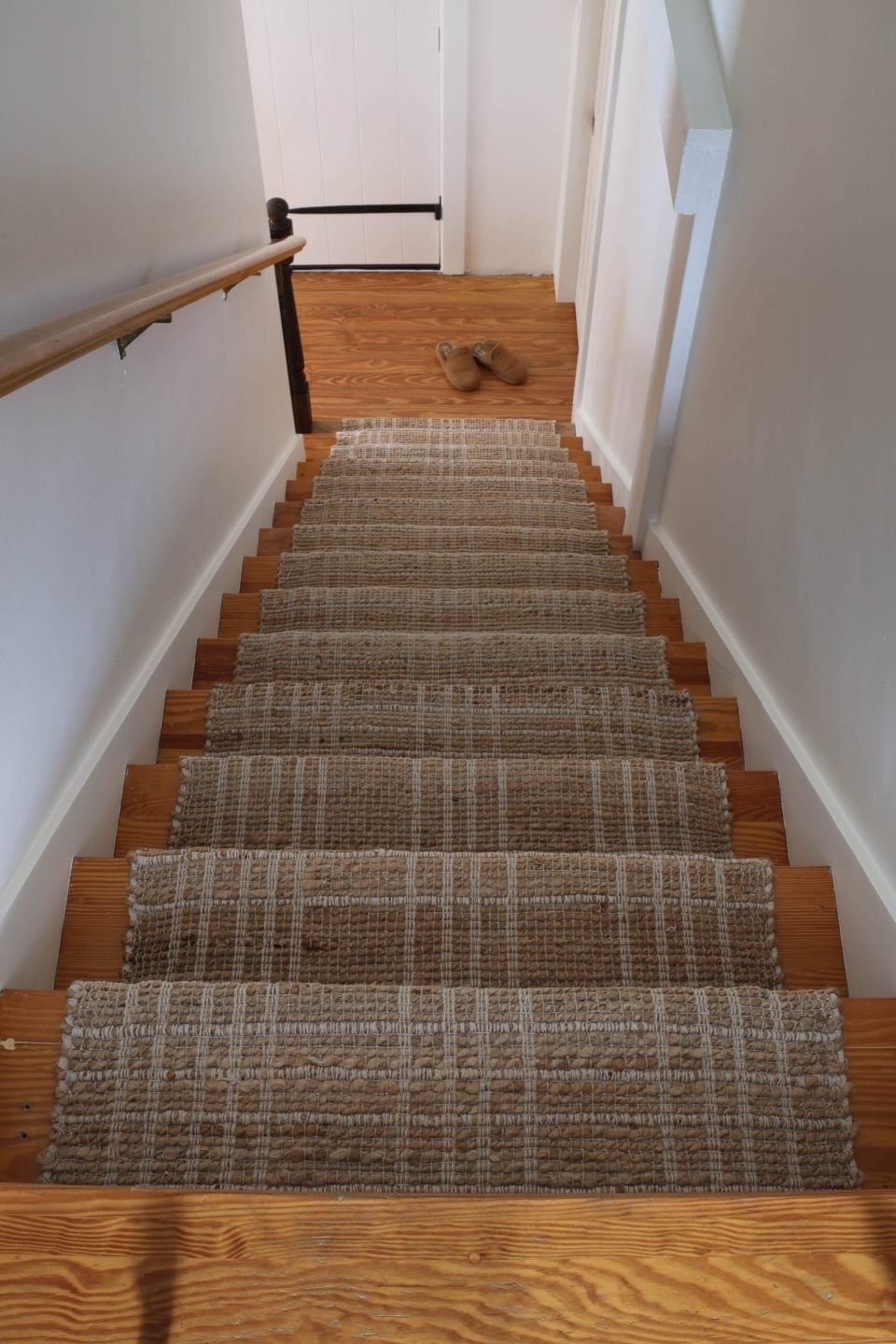
A natural material like jute can handle a staircase without overwhelming the wood underneath. This runner uses a simple stripe pattern in beige and white, so the texture provides the visual interest. The top down shot shows how the runner sits flush against each tread, leaving the wood sides visible. That contrast between soft fiber and hard wood gives the staircase a layered look without adding bulk. Match the runner’s stripe width to the tread depth so the pattern appears continuous at each step.
Traditional Staircase with Beige Runner and Geometric Tiled Floor
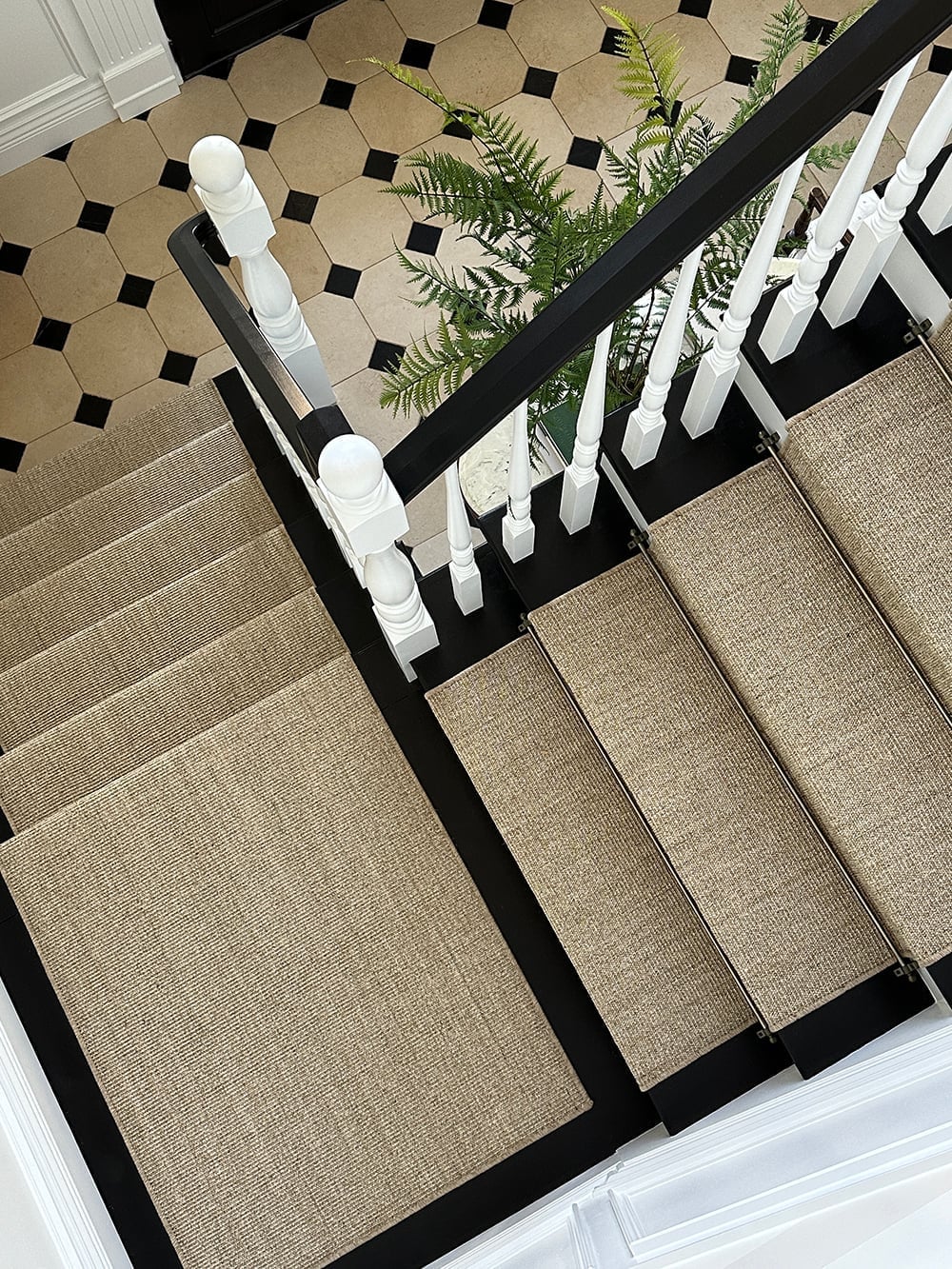
The beige runner runs straight down the center of a roomy staircase, and the real surprise is at the landing. A geometric tiled floor in black and white sits there, creating a clear transition point. The runner stays neutral so the tile pattern can stand out without clashing. That layout works because the runner and the tile share a similar scale of pattern, both repeating small motifs. If you have a landing that needs definition, let the runner lead the eye there and use the tile as a visual stop.
Traditional Gray Patterned Runner with Dark Wood Banister
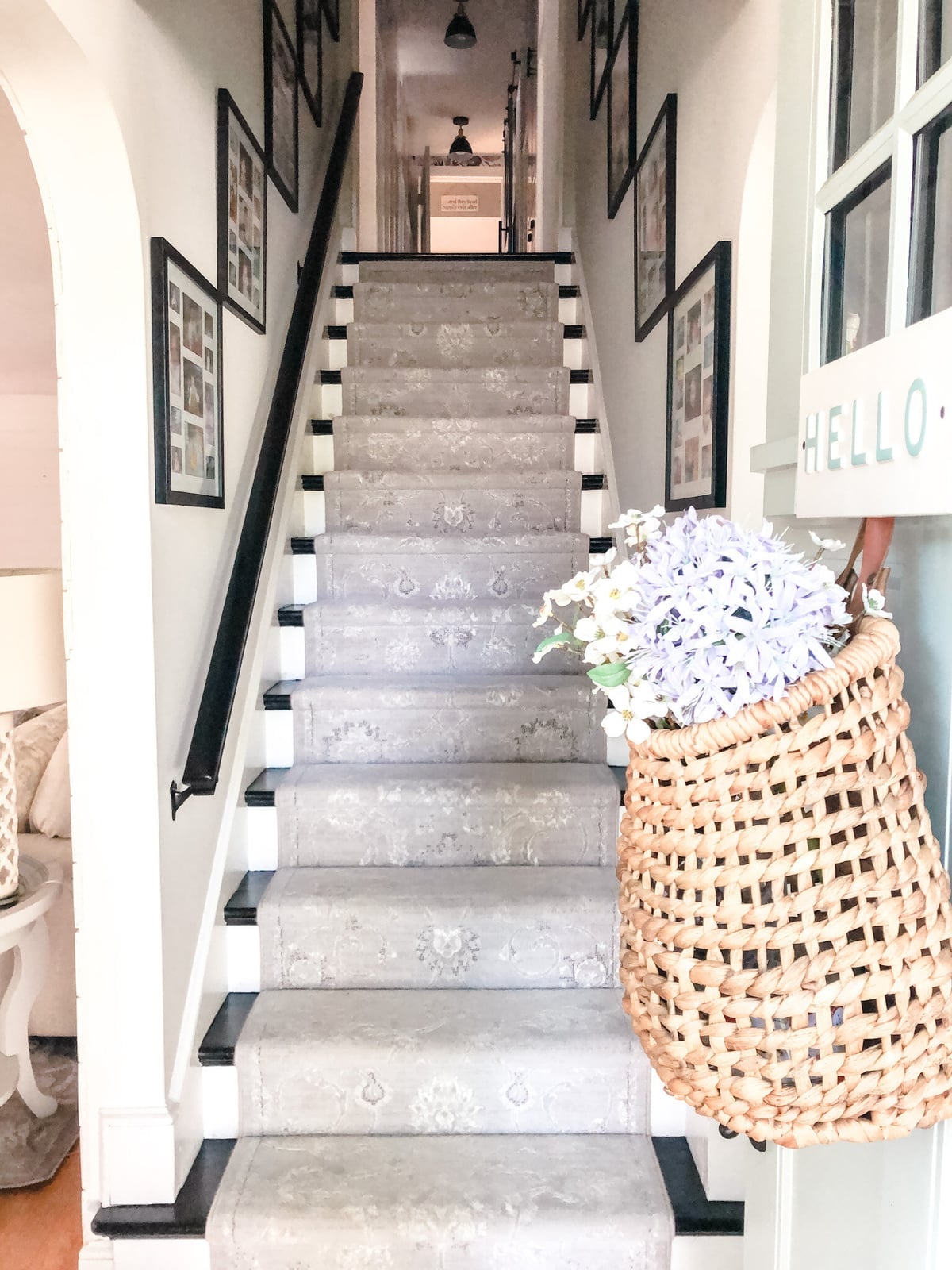
A gray patterned runner on a staircase with a dark wood banister gives you two distinct textures in one view. The runner is centered on the stairs, and the pattern repeats in a traditional way without feeling fussy. Framed photos on the wall add personal detail, but the runner stays the main event. The overhead light and natural light keep the gray from looking flat. When you pair a patterned runner with dark wood, choose a pattern with enough contrast that it stays visible from the bottom of the stairs.
Traditional Beige Diamond Pattern Runner with Black Metal Rods
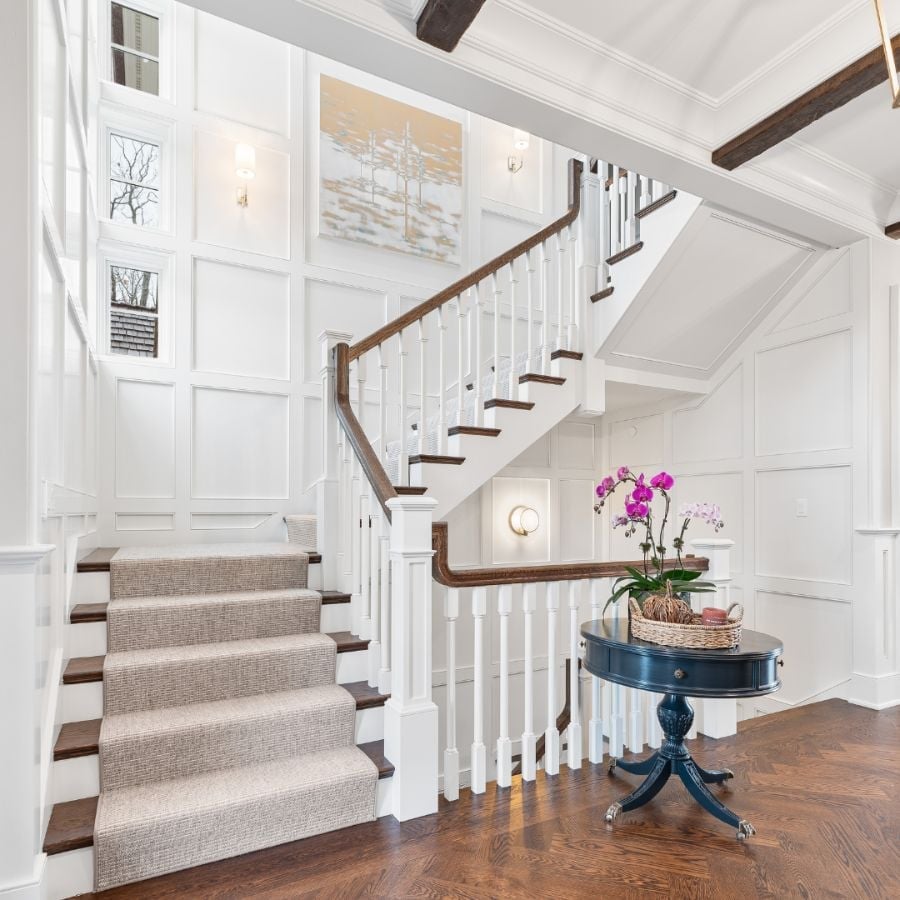
A beige diamond pattern runner on wooden stairs can feel expected until you add black metal rods to hold it in place. The rods break up the pattern at each tread, giving the eye a place to rest. The diamond motif in the runner is small enough that it looks like texture from a distance. Natural daylight hitting the stairs softens the beige wool and dark metal. If you like the look of a traditional runner but want it to feel more structured, use rods in a dark finish instead of brass or nickel.
Farmhouse Staircase with Dark Wood and Cream Carpet Runner
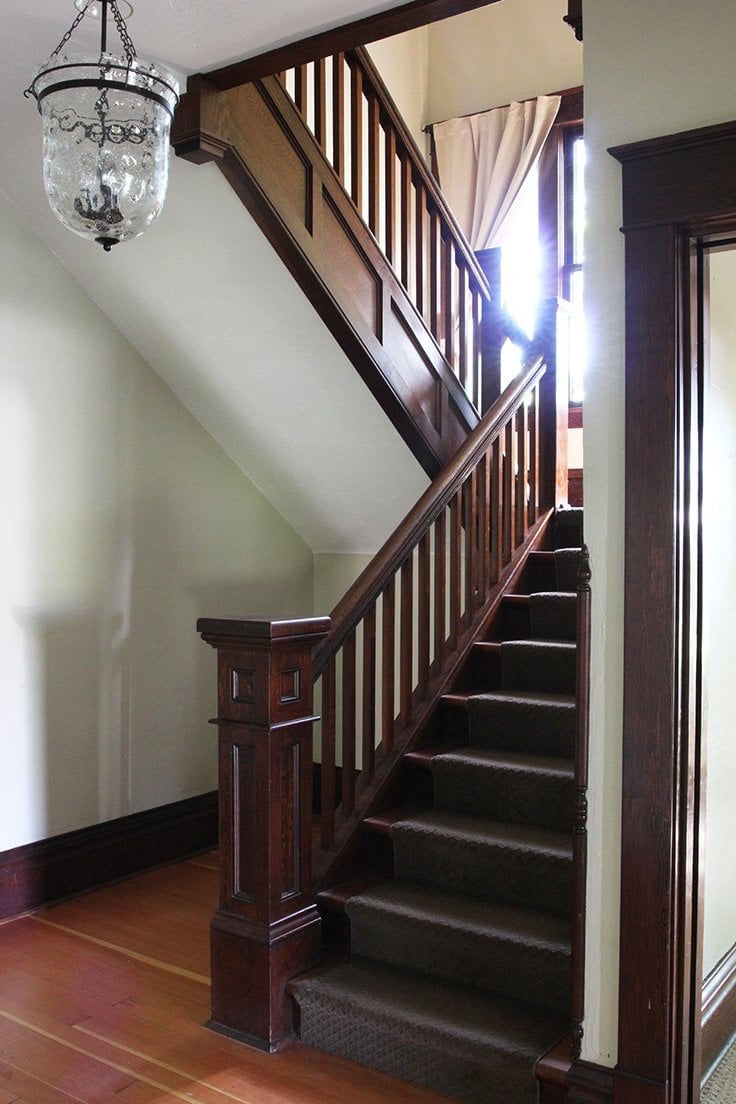
A dark wood staircase with a cream carpet runner is a classic farmhouse combination that relies on contrast for its effect. The cream runner sits centered, leaving the dark wood treads and risers visible on both sides. A chandelier overhead and natural light from a window keep the space bright enough that the cream does not look dingy. The runner is plain, no pattern, so the wood grain becomes the main decoration. This approach relies on wood with visible grain or a rich stain to carry the visual weight.
Traditional Red and Cream Geometric Runner on Wood Treads
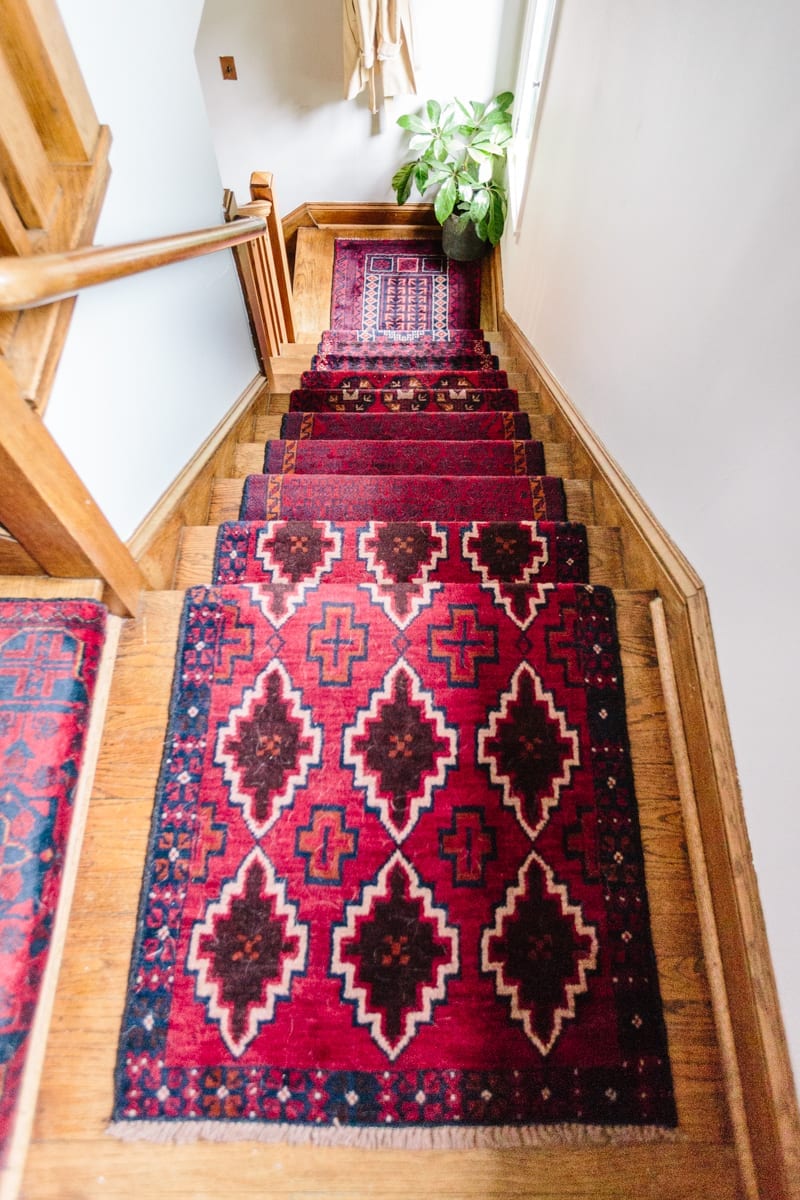
This staircase has a roomy feel thanks to the central runner leaving wood treads visible on each side. The intricate red and cream pattern draws attention upward along the stairs. A geometric design like this one works well in a traditional home because the repeating motif feels classic without being fussy. The contrast between the warm wood and the runner’s cream background keeps the palette grounded. For a practical layout tip, centering the runner on the treads creates a balanced look that guides the eye naturally from step to step.
Modern Gray and Beige Textured Runner on Wooden Stairs
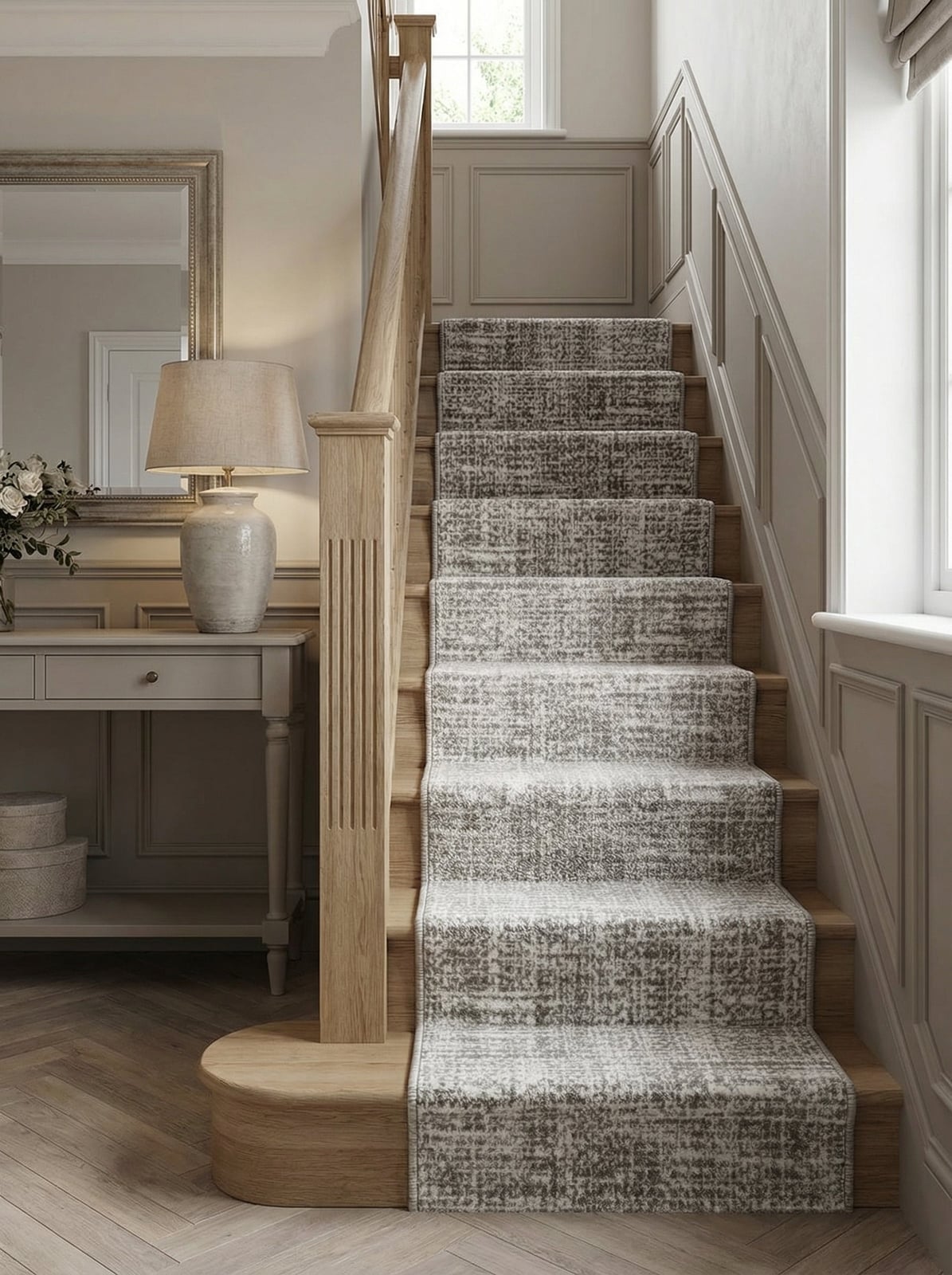
A solid-colored runner can feel safe, but this modern staircase shows how subtle texture adds interest without a bold pattern. The gray and beige runner has a woven surface that catches natural light differently depending on the time of day. A wooden newel post and a nearby lamp add warmth, while the painted wood elements keep the look current.
From a materials standpoint, a textured runner hides everyday dust and footprints better than a smooth carpet. That makes it a practical choice for a busy household. The neutral palette also means you can swap out wall art or a lamp without worrying about clashing with the stairs.
Transitional Beige Runner with Wood Accents and Playful Dog
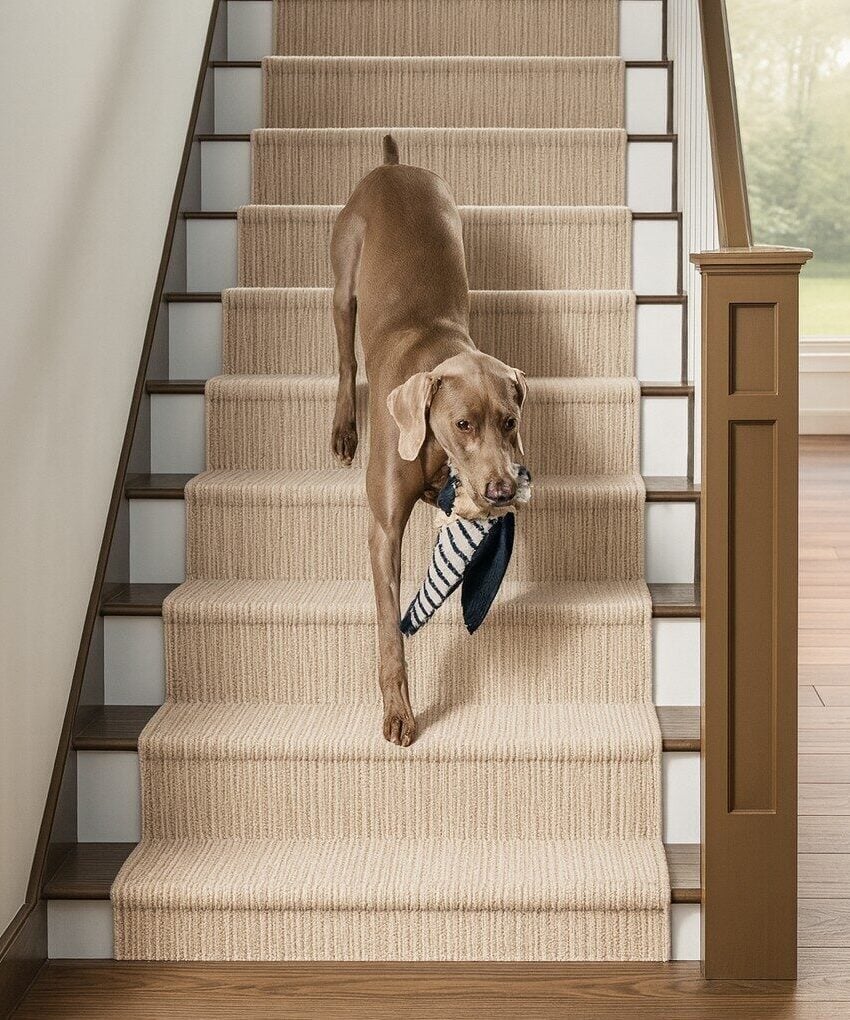
The beige runner is centered on the stairs, leaving wood accents visible on each side. A dog carrying a toy adds a lively touch to the scene. In a transitional setting, a neutral runner allows the wood tones to remain the star. The key is to pick a runner width that leaves enough bare tread to show off the wood grain. That balance between carpet and wood keeps the staircase feeling open rather than fully covered.
Traditional Beige Runner with Subtle Metallic Accents
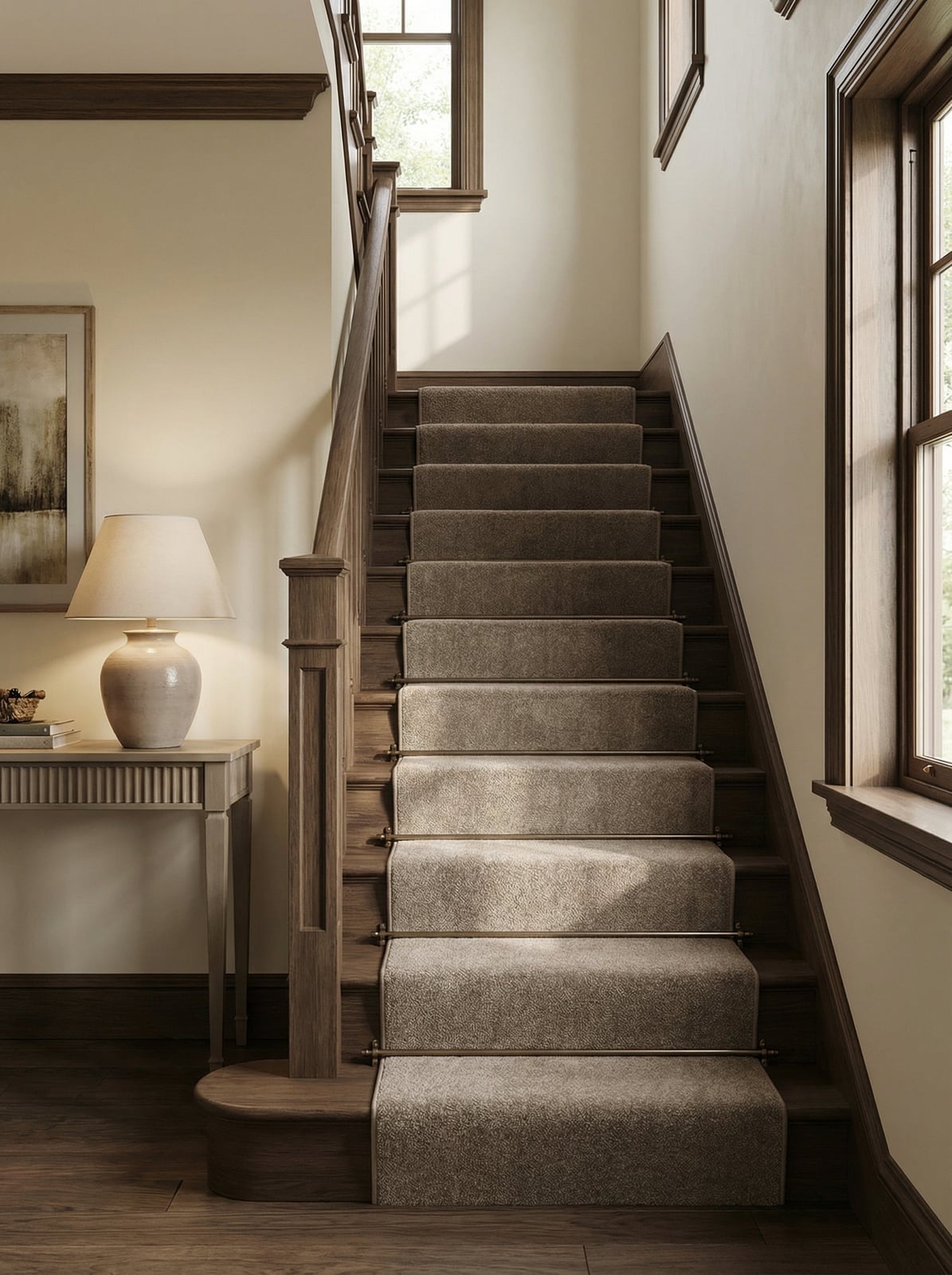
The beige runner here has a neatly installed look, with a cream undertone that softens the wood tones of the banister and treads. A lamp near the stairs adds a warm glow to the natural light coming in. The palette works because the beige and cream are close in value, creating a calm backdrop. For a traditional space, keeping the runner free of busy patterns lets the architectural details, like the wooden banister, stand out. The side view of the stairs shows how a simple runner can make the whole staircase feel cohesive.
Transitional Ivory and Tan Wool Runner
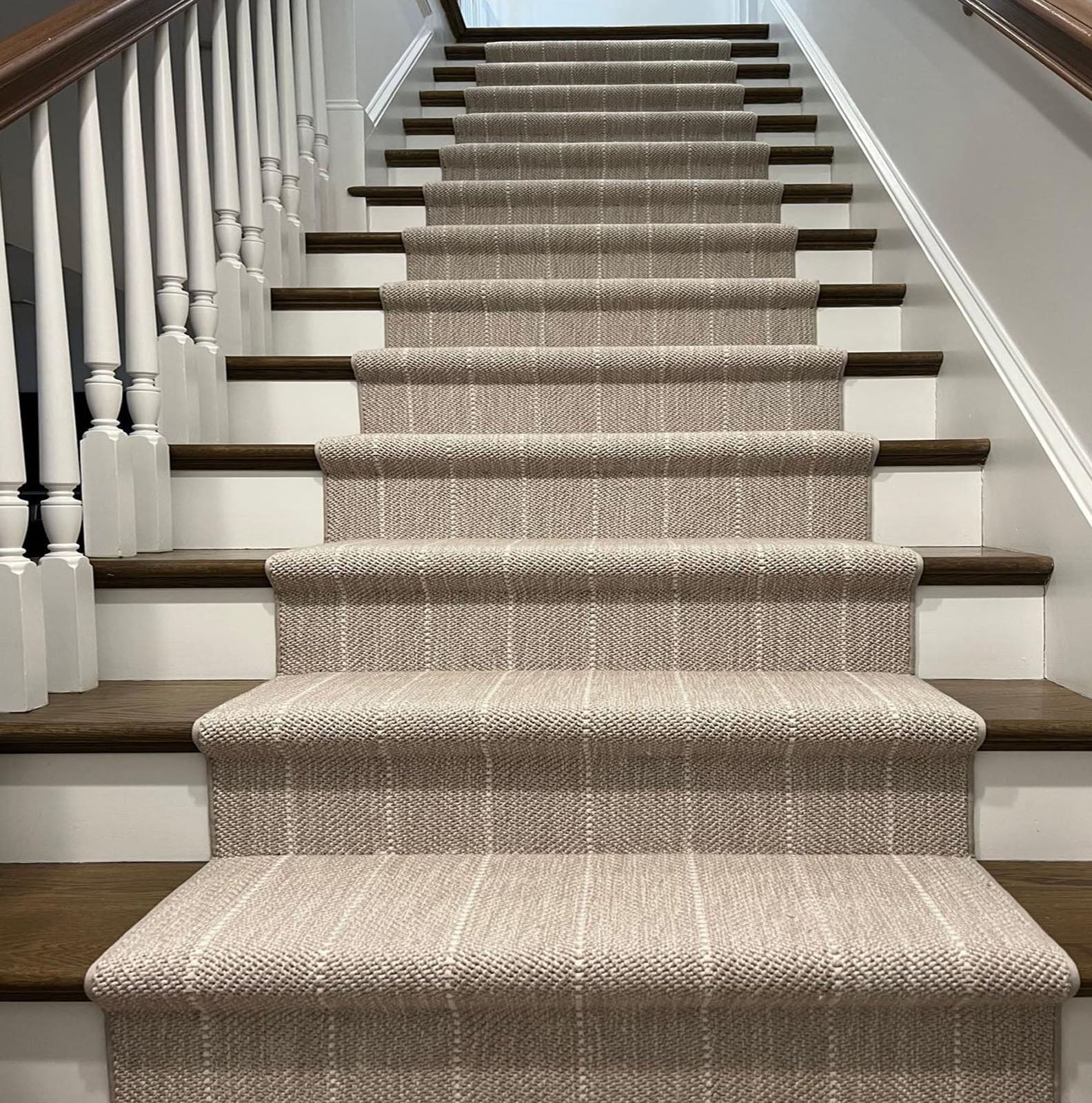
A wool runner can feel like a splurge compared to synthetic options, but this transitional staircase shows why the material matters. The ivory and tan tones blend with the wood stairs, creating a seamless look from the wide shot perspective. Wool has a natural softness underfoot that synthetic blends often lack, and it resists crushing in high-traffic areas.
The roomy staircase allows the runner to be centered with generous wood exposure on both sides. That proportion is worth noting: when the treads are wide, leaving several inches of bare wood on each side prevents the runner from overwhelming the staircase. The result is a balanced, inviting entry point to the upper floor.
Final Thoughts
Choosing a stair runner comes down to how you live. Pattern hides daily wear better than solid tones, and a darker base color keeps dirt from showing fast. Wool and wool-blend materials hold up well under foot traffic and clean easier than cotton or synthetic blends. If your stairs get heavy use, look for a low pile and a tight weave. Secure the runner with proper rods or tack strips so it stays flat at the edges. Check your local climate before picking natural fibers like jute, which can fade or mildew in humid zones. The best runner is the one that makes you look forward to going up and down.