A stepping stone walkway does more than get you from point A to point B. It sets the pace of your garden and draws the eye along a deliberate line. These 35 ideas show how stone can anchor a path without overwhelming the plants around it.
Whether you prefer clean modern lines or a more natural look, each option keeps the pathway itself as the main event. The surrounding landscape stays simple and supportive, letting the stones do the talking. Expect practical takeaways on spacing, materials, and how to match a path to your garden’s personality.
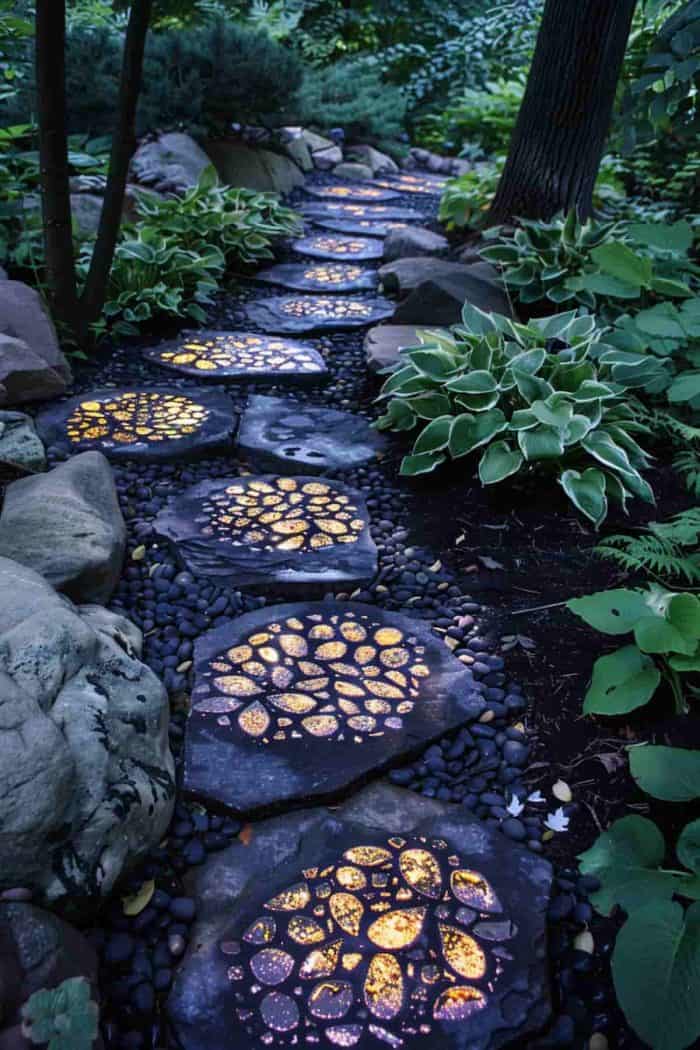
Enchanted Garden Pathway with Patterned Stone
Evening light catches the surface of these stepping stones, each one carved with a pattern that glows from within. Dark gravel spreads between the stones and hostas soften the edges of the path. The garden reads as a room with a floor of stone and a ceiling of sky, and the integrated lights keep the walkway visible without spilling into the planting beds. The palette uses dark gray, gold and green so the path leads the eye through the foliage.
Naturalistic Walkway with Integrated Low Lighting
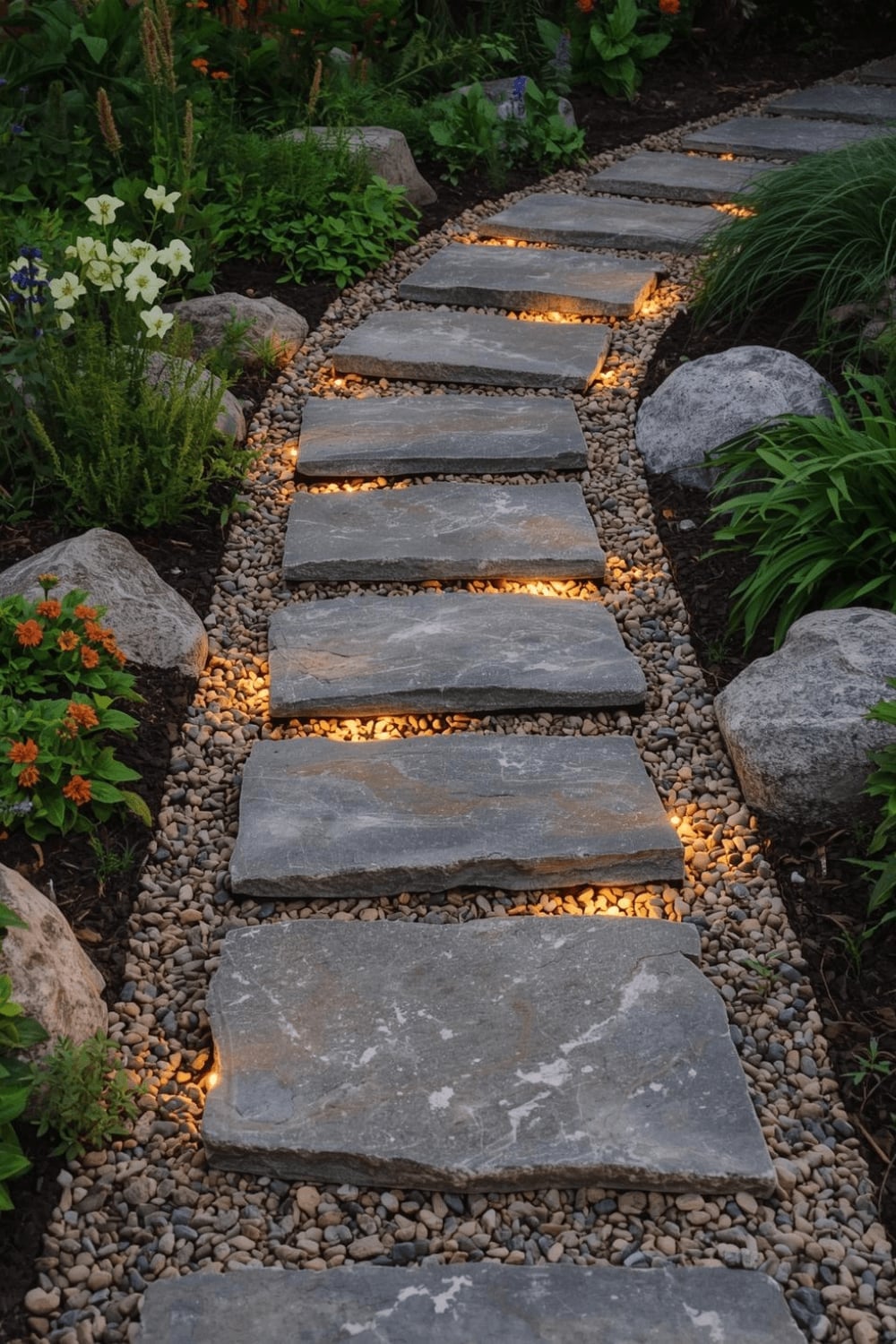
This path gets the lighting right. Low-level garden lights sit under the pavers rather than beside them, so the glow comes from the stones themselves. The gray and orange palette reads as natural rather than decorative, and the gravel infill lets water drain straight through. A curving layout with even spacing between the large flat stones makes the walkway feel like part of the garden floor rather than something laid on top of it. The integrated lights define the path at night without washing out the greenery.
Modern Side Yard Path with Dark Slate
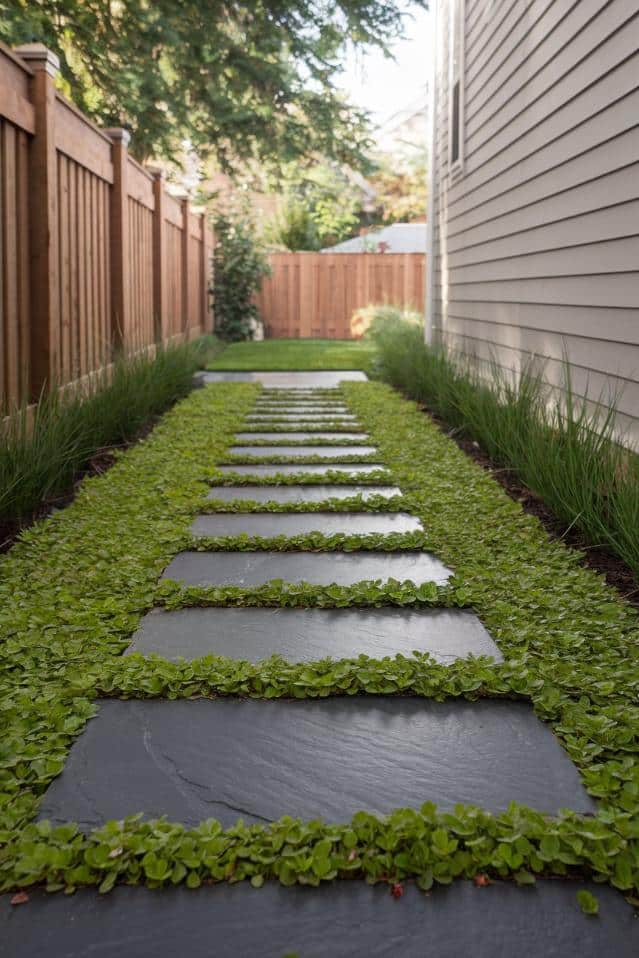
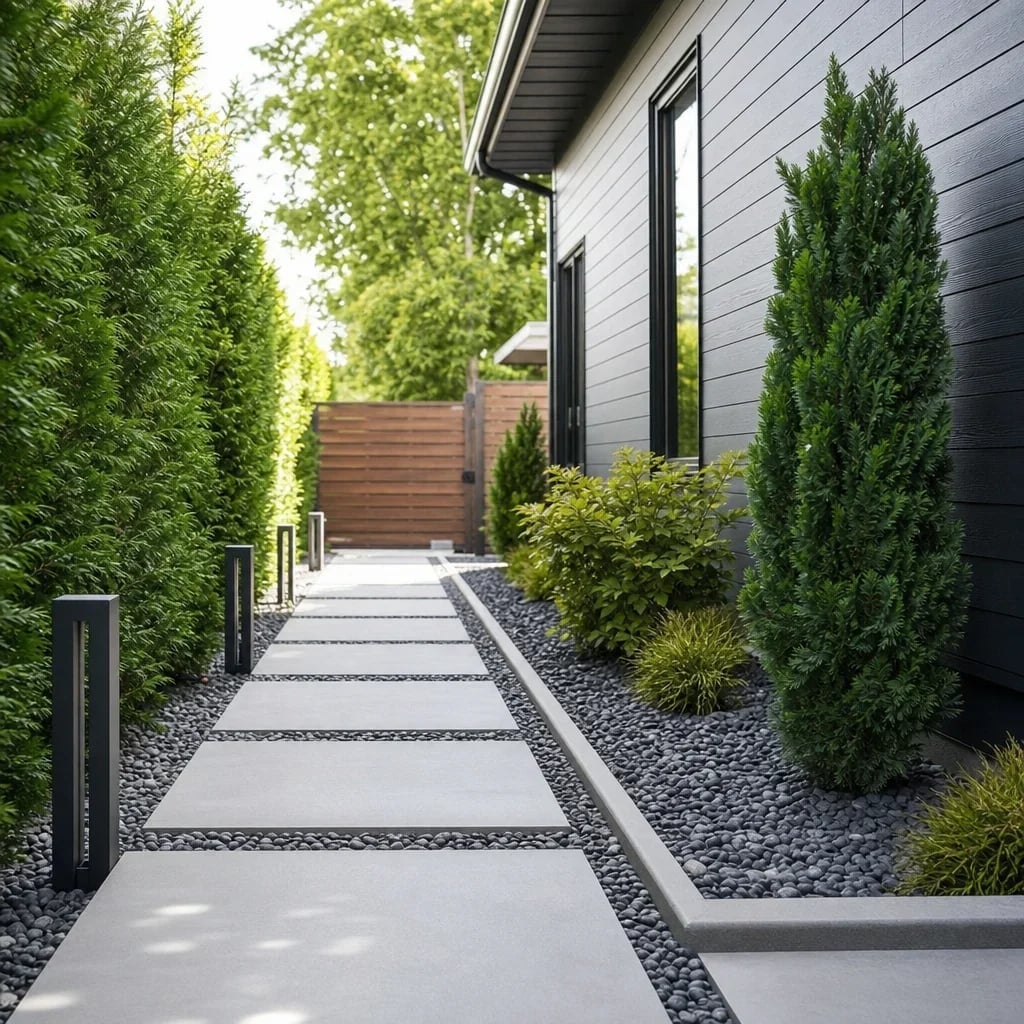
Can a narrow side yard feel deliberate rather than leftover? This one does. Large dark slate stepping stones run the length of the space with bright green ground cover growing between them. The wooden fence on one side and the greenery on the other turn the path into a corridor with two distinct walls.
The contrast between the dark slate and the light green ground cover keeps the eye moving forward. Gravel would work here too, but the ground cover softens the edges and stops the path from feeling like a service alley. The palette stays tight at gray, green and wood, so nothing fights for attention.
Curving Lawn Path in Golden Hour Light
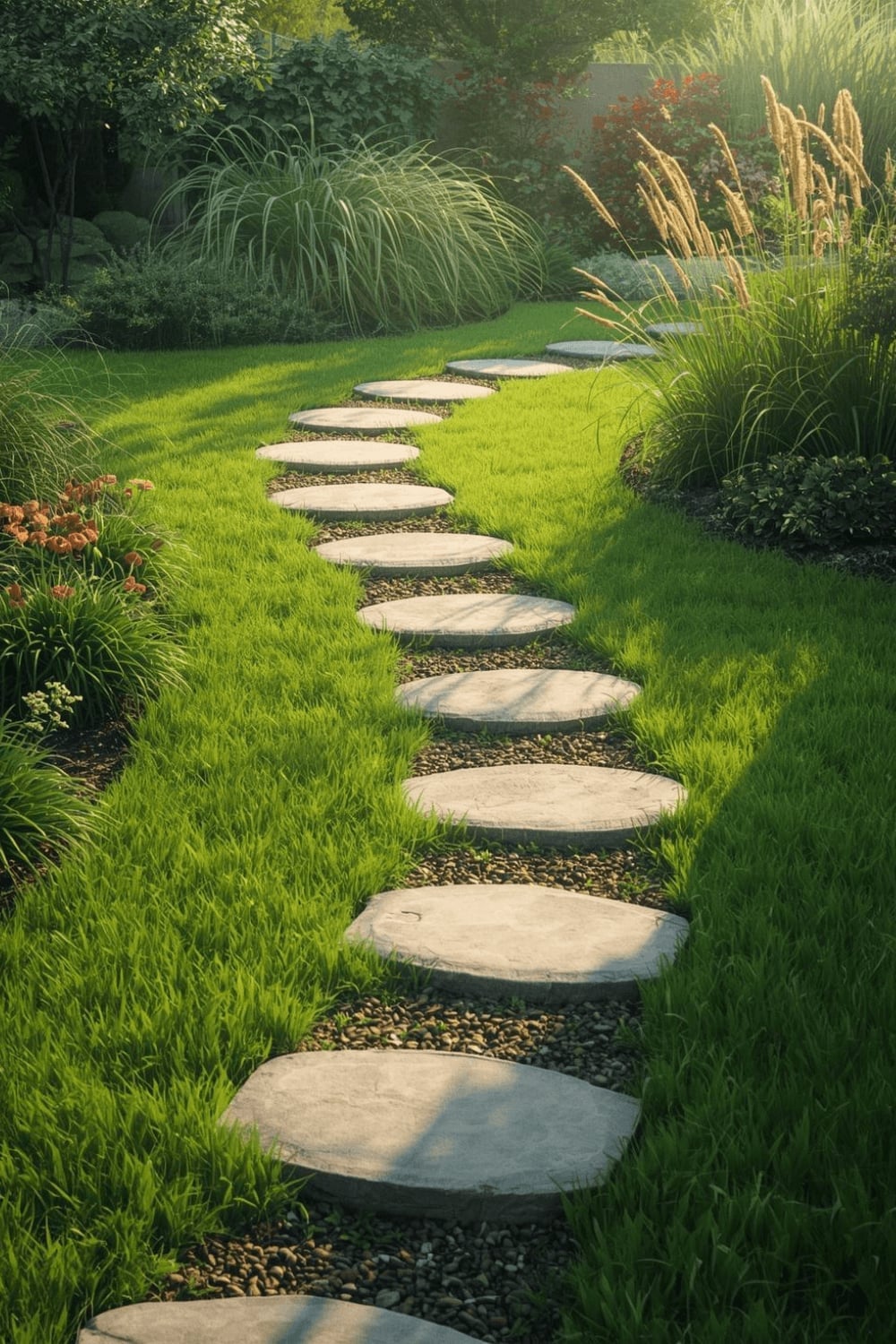
Golden hour sunlight turns this lawn path into a sequence of warm highlights across each round stone. The circular route on the grass keeps the path from cutting the yard in half. Beige stone against green lawn creates a subtle contrast, and the curve lets the path feel discovered without being announced.
Serene Japanese Garden with Flagstone Path
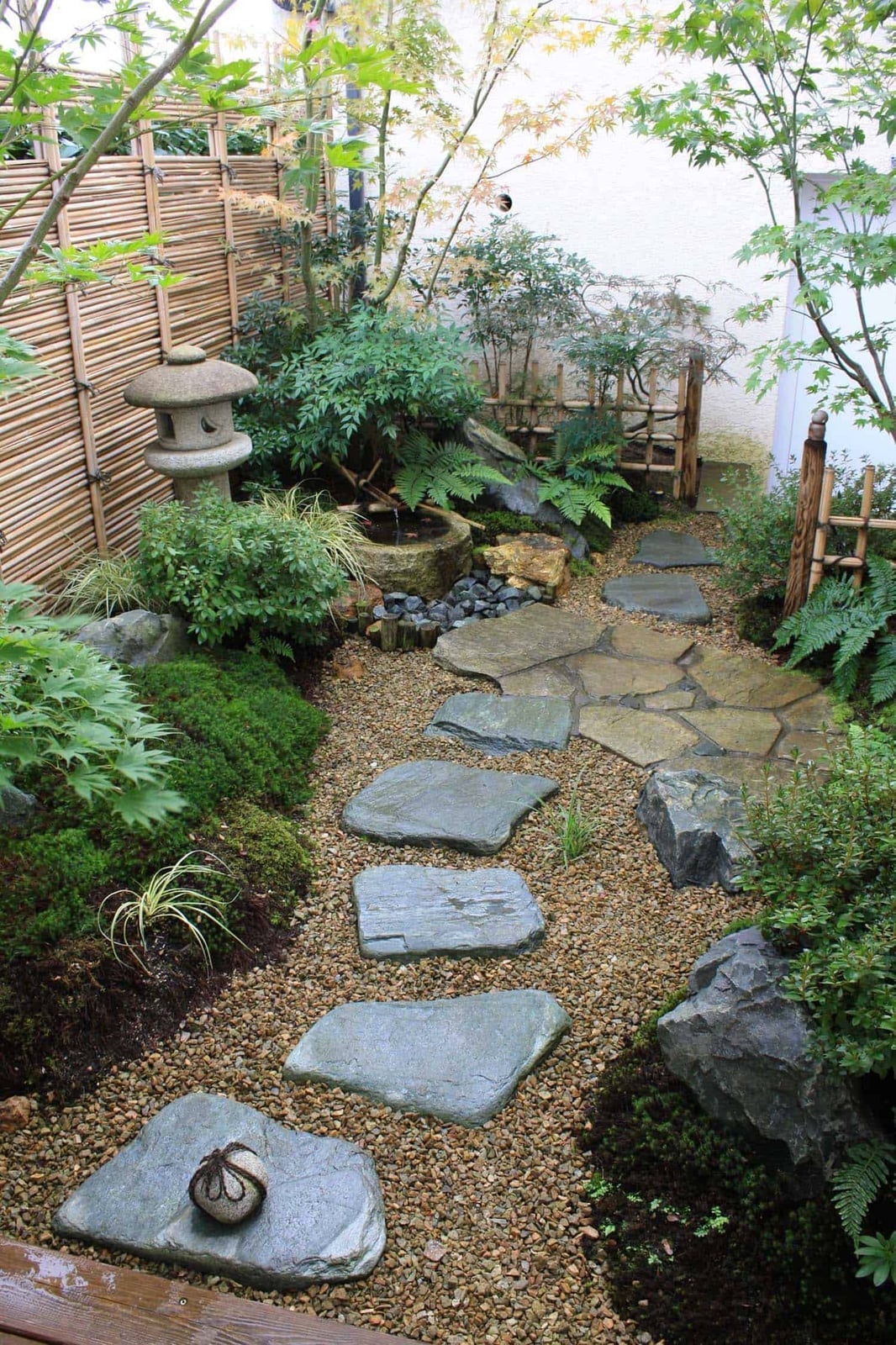
For a Japanese style path, let the stone sit on the ground. Here the flagstones rest on a bed of gravel with moss growing between the joints. The curving route passes a stone lantern and bamboo stands just off the path. The gray, green and brown palette stays quiet, and the soft shadows from natural daylight keep the scene from reading as staged. The path does not compete with the garden; it leads through it.
Naturalistic Walkway with Large Irregular Stones
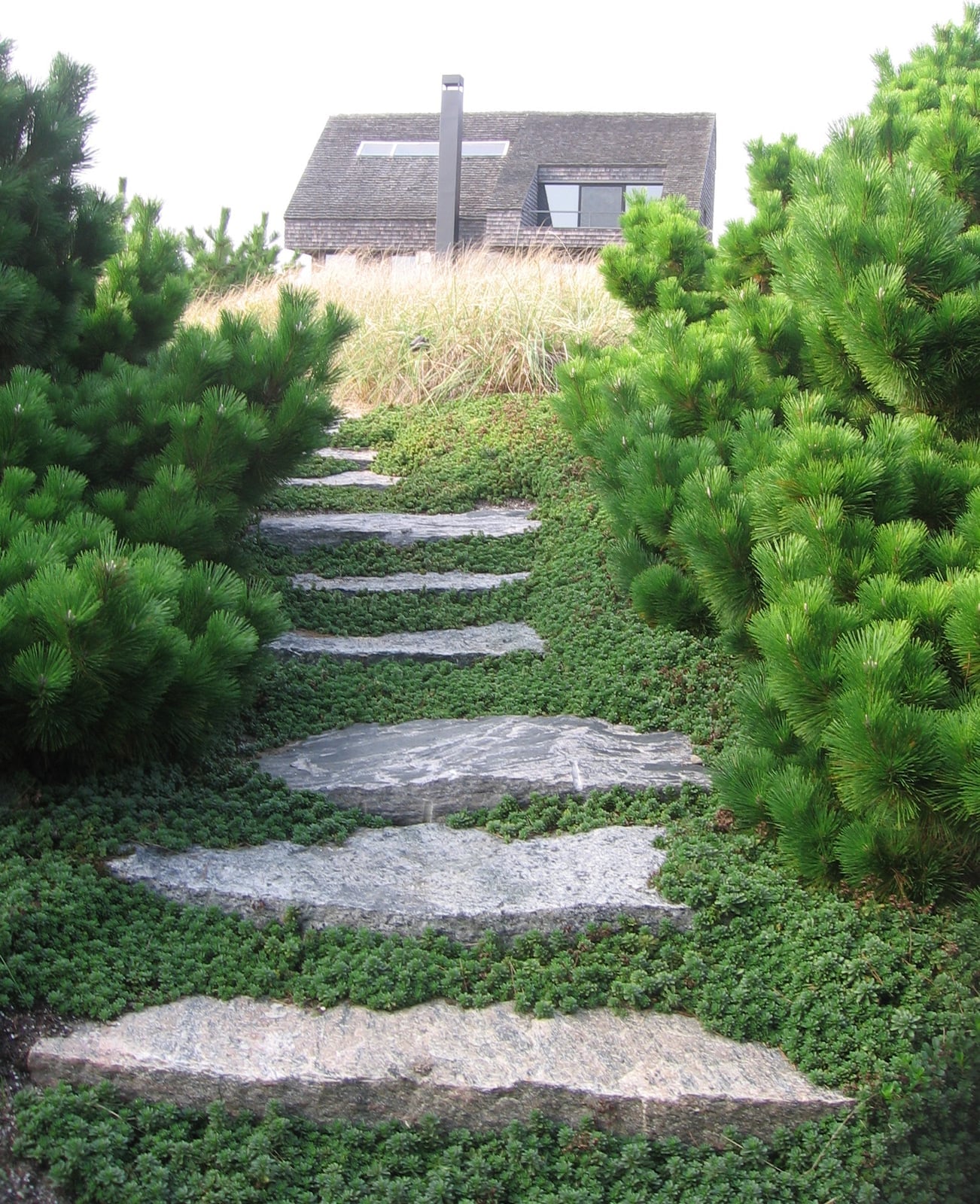
A formal path feels right for a front entry, but for a backyard garden a looser approach often works better. Large irregular stone slabs set into a bed of gravel and ground cover create a winding route that blends into the landscape. The gray, beige and green palette keeps the walkway quiet so the plants around it do the talking. When the path curves, a wider slab at the turn gives the eye a natural pause before the direction shifts. A layout like this needs the stones set at a comfortable stride apart, roughly one and a half to two feet from center to center, so the walk feels as natural as the materials look.
Cottage Garden Path with Mixed Paver Shapes
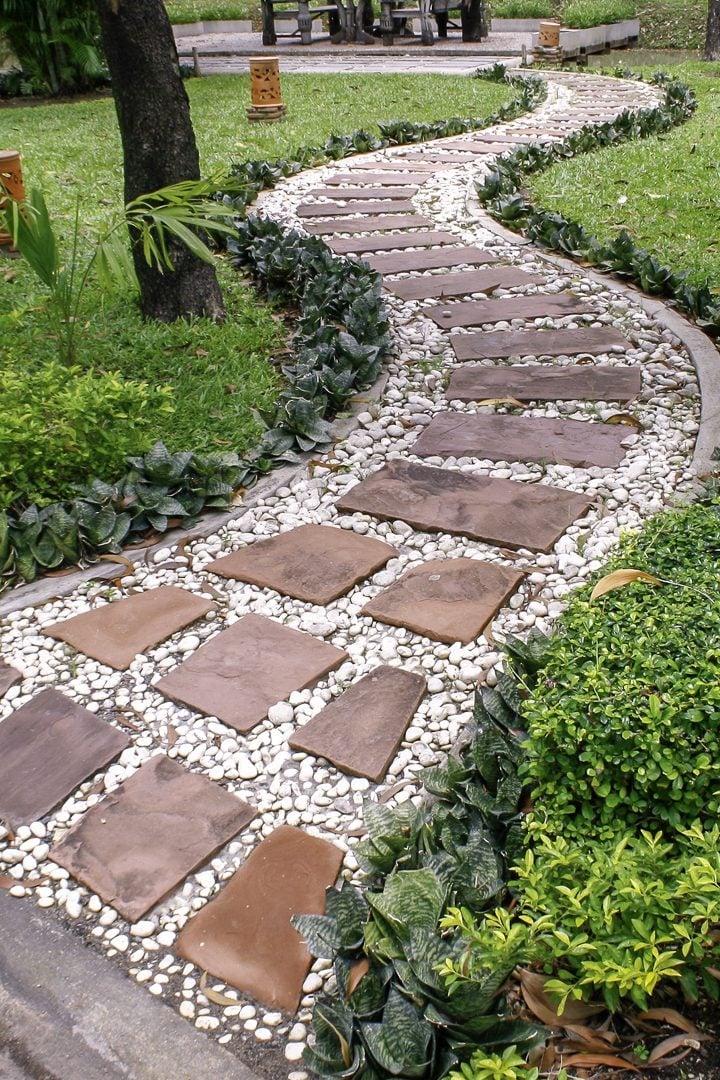
A cottage garden path does not ask every stone to match. Square and rectangular pavers alternate with gravel in this layout, and the concrete edging holds the whole thing in place without looking rigid. The mix of shapes keeps the eye moving, and the gravel between the stones drains well and muffles footsteps. For a renter, this is one of the easier paths to pull off: no mortar, no cutting, just a level bed and a few hours of placing stones where your foot naturally lands.
Natural Garden Path with Wood Slice Stepping Stones
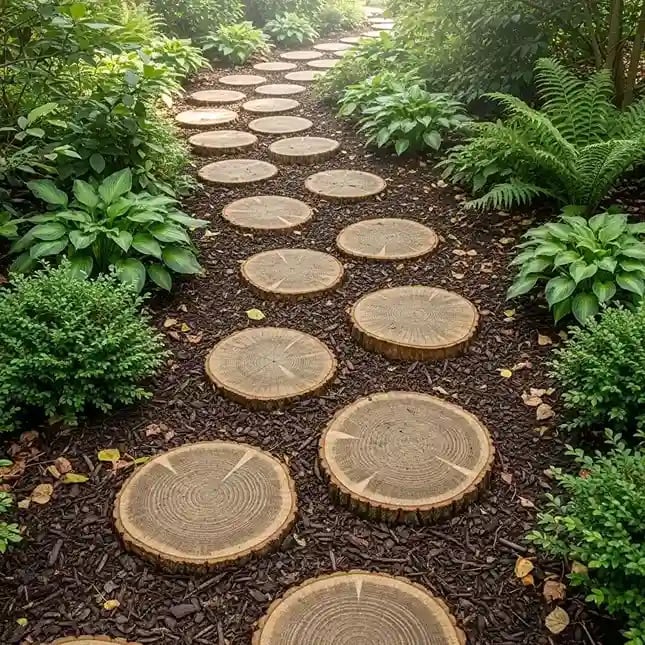
Wood slices make a path that feels genuinely embedded in the garden. These circular stepping stones sit in a bed of mulch, and the brown of the wood against the green of the surrounding plants gives the walkway a soft, grounded look. The slices vary in size, which helps the winding layout feel organic rather than planned. A path like this asks for a different kind of upkeep than stone: the wood will weather and darken over time, and slices in damp shade may need replacing sooner than those in sun.
Irregular Stone Pavers in Dappled Shade
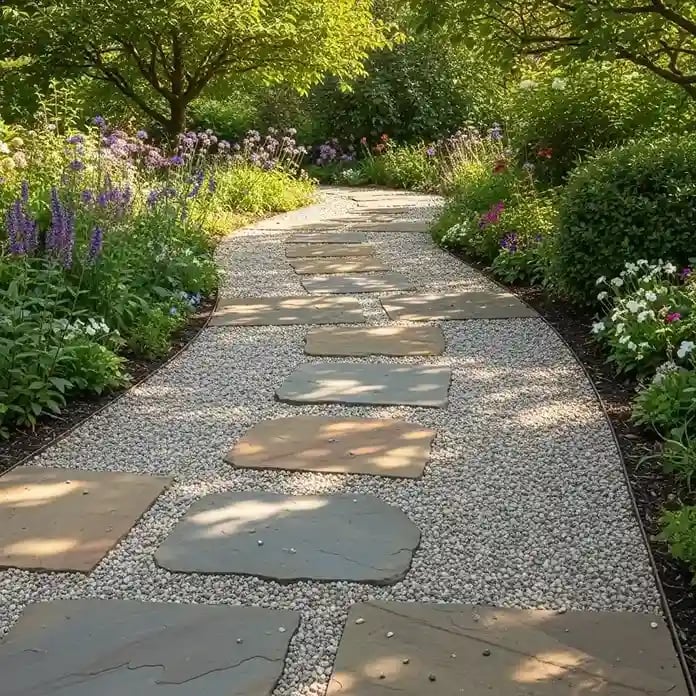
Can a stone path hold up under a tree canopy where the light shifts all day? It can, as long as the stone is chosen for how it handles moisture and shade. Irregular shaped pavers in tan and gray sit in a gravel bed here, and the dappled light from overhead trees plays across the stone without making the path feel damp or closed in. The irregular edges let each paver lock into the gravel, so the path stays stable even when tree roots push up nearby. In shade, a lighter stone like the tan here keeps the path visible, while a dark stone might disappear into the shadows.
Modern Garden Walkway Under a Grand Tree
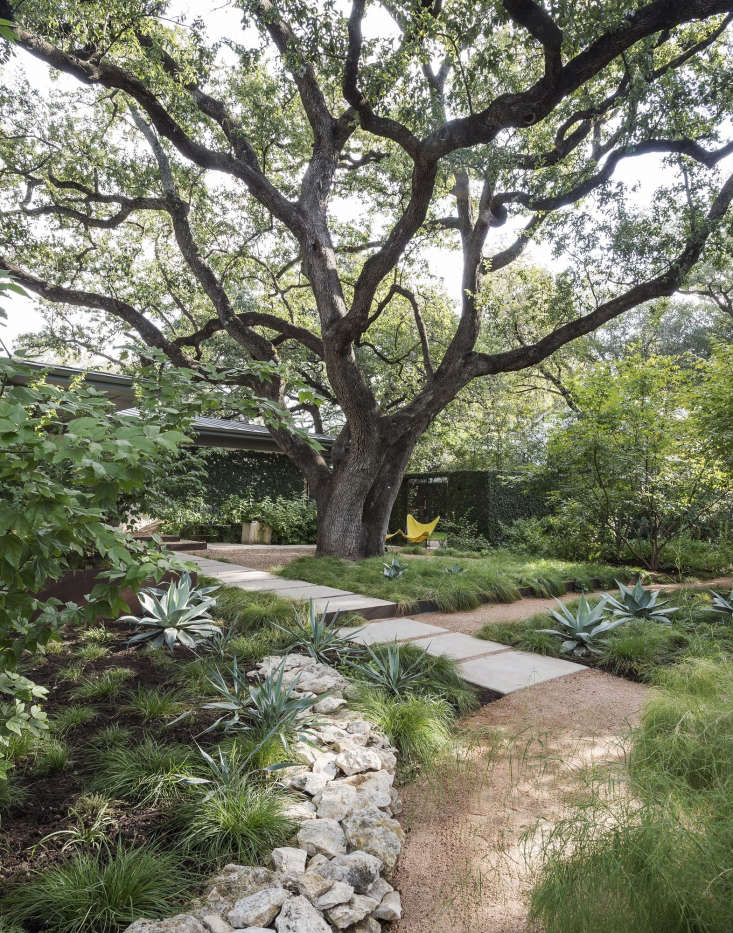
A large, gnarled tree anchors this garden, and the stepping stone walkway respects its scale by staying simple. Rectangular gray stone pavers set in gravel follow a winding line under the branches, and the path width leaves enough room for two people to walk side by side. When a tree is the main event, the path should not compete. The stones here are spaced wide enough to slow the pace, and the gravel border keeps the lawn from creeping onto the walkway. A modern garden walkway under a big tree works best when the path feels like it was always there, not added later.
Geometric Path with Integrated Moss Strips
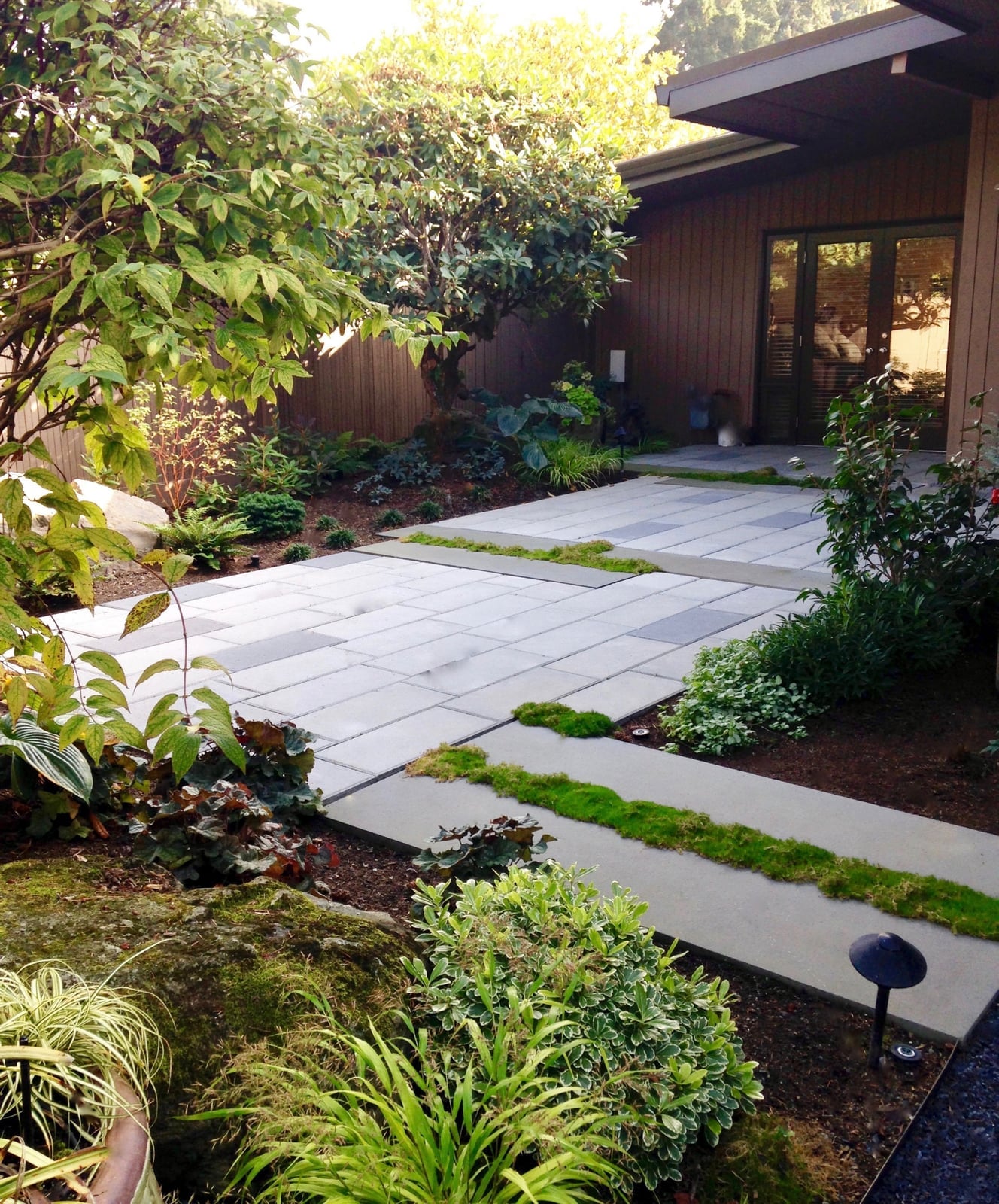
To create a walkway that feels deliberate, start with the layout. Large gray pavers sit in a clean geometric grid, with narrow strips of moss growing in the gaps between them. The straight lines give the path a modern, structured look, while the soft green moss keeps it from feeling too rigid. The planting beds on either side echo the same linear rhythm, so the whole garden works as one composition. This layout works because the path is the backbone of the space.
Modern Desert Walkway with Integrated Lighting

A desert path could lean into raw gravel and cacti, but this version leans into clean lines instead. Concrete pavers form a straight walkway to the front entrance, with low landscape lights tucked along the edge. The beige and gray palette matches the modern architecture, while desert plants add green texture without clutter. The lighting is the key move here: it turns the path into a guide after dark, casting a soft glow across the gravel without spilling into the sky. For a similar effect, choose fixtures that sit flush with the ground so the stones stay the main event. The layout stays simple, which lets the evening light do the work.
Cottage Garden Path with Lush Moss
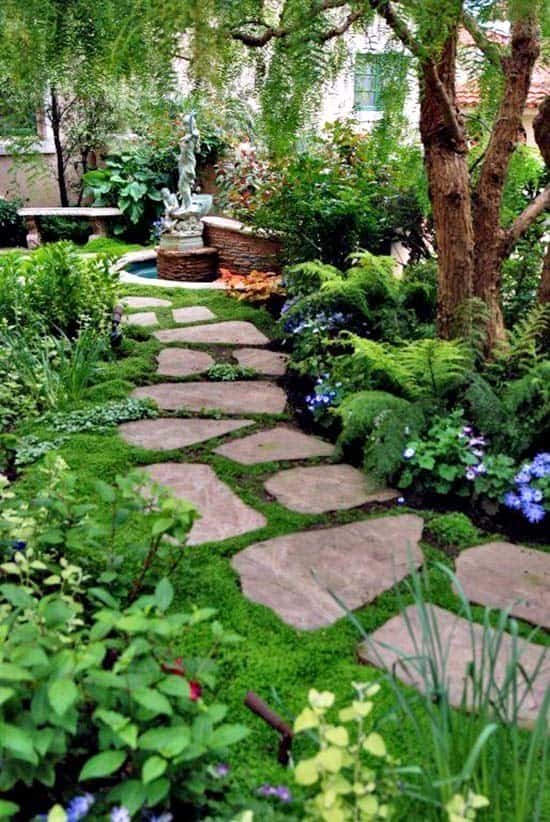
The moss here is the main material between the stones. Irregular stepping stones wind through a cottage garden, with thick moss filling every seam and creeping over the edges. The green-on-green palette makes the path feel settled, as if it has been there for years. A fountain in the background adds a vertical note, but the eye stays on the ground where the texture lives. This design suits anyone who wants a walkway that blends into the garden instead of cutting through it.
Cottage Garden Path with a Swing Seat
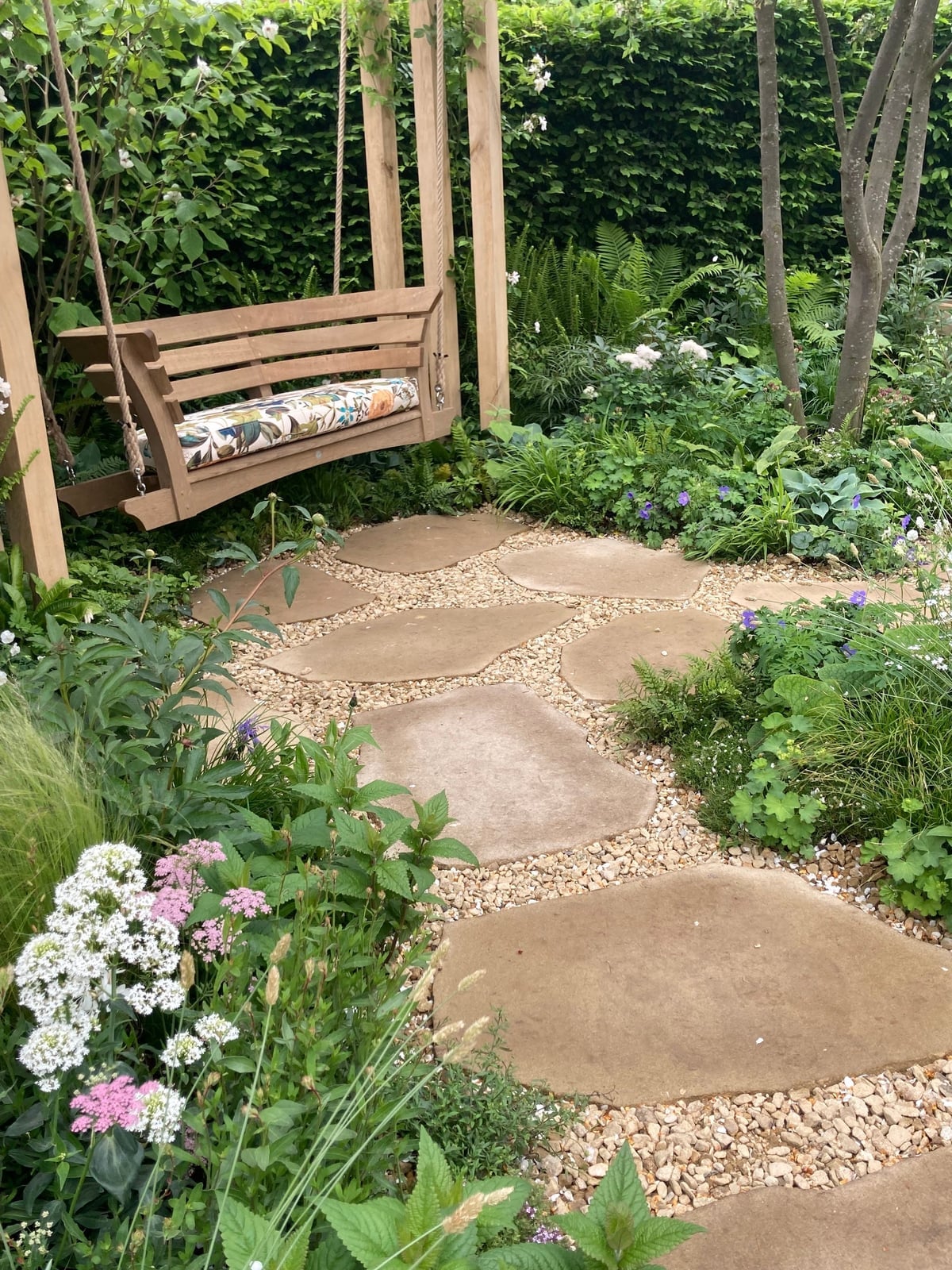
This garden path works because the swing seat gives it a reason to linger. A winding stone walkway moves through dense planting, leading to a wooden swing tucked into the greenery. The path itself is simple, just natural stone and gravel, but the destination makes it feel like a journey. The dappled light through the leaves softens the whole scene, and the wood tones of the seat warm up the greens and whites of the plants. If you have a corner of the yard that does not get much use, try adding a seat at the end of the path. It turns a walkway into a room.
English Garden Path with Soft Foliage and Roses
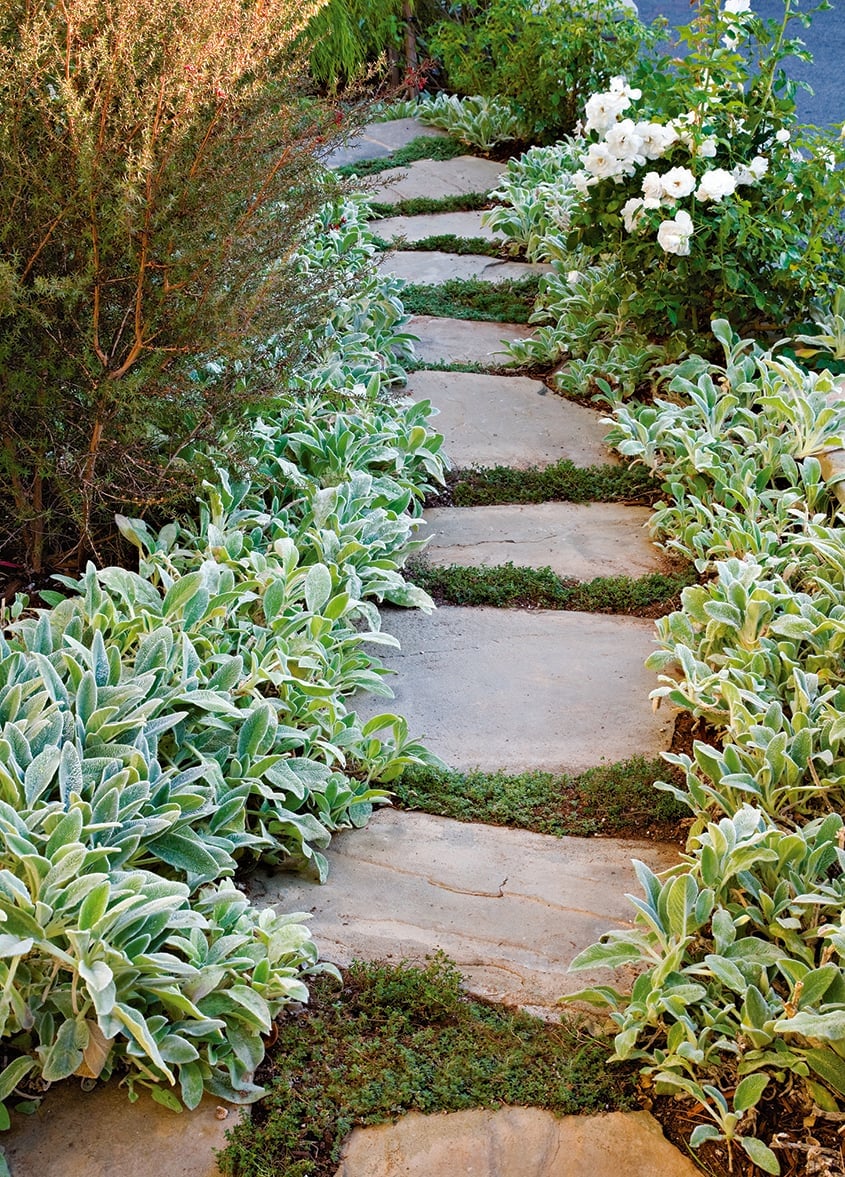
A practical rule for an English garden path is to let the plants soften the hard edges. Here, gray stone pavers follow a winding route through white roses and airy foliage that spills onto the walkway. The palette stays in the gray, green, and white family, which keeps the look cohesive even as the planting grows full. The soft daylight filtering through the leaves adds depth without harsh shadows. What defines this style is the ratio of stone to greenery: the path is narrow and the plants are generous. The white roses break the green monotony and draw the eye along the curve. For a similar feel, choose plants that bloom in a single color so the path stays the anchor.
Minimalist Front Walkway with Rectangular Pavers
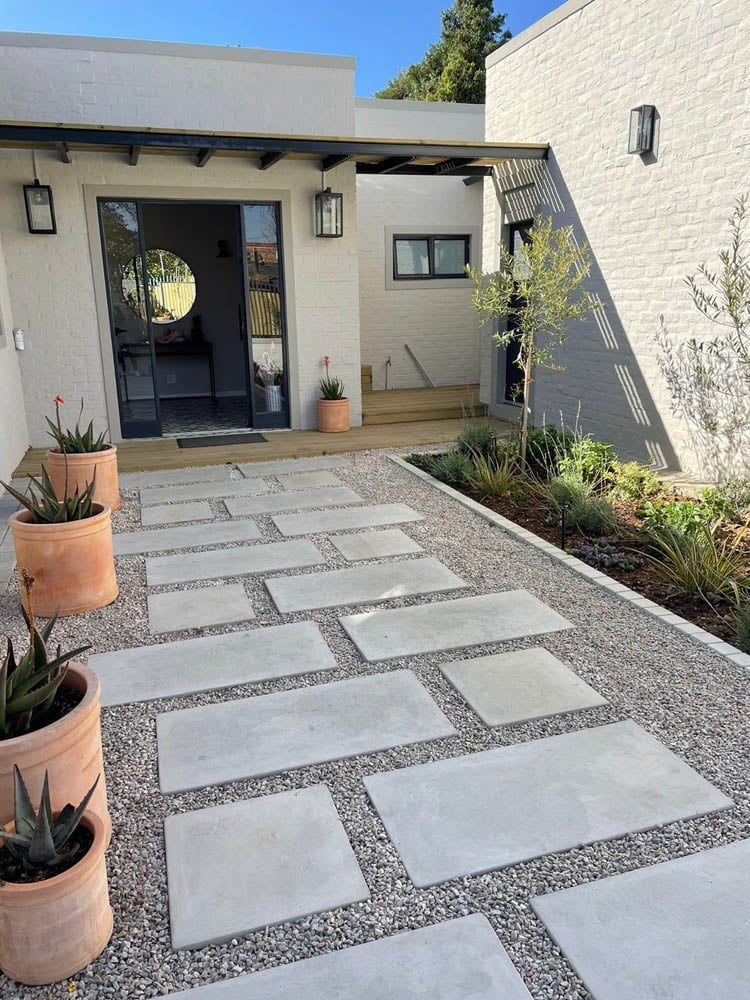
Rectangular concrete pavers laid in a straight line keep a front walkway looking clean and orderly. The light gray stone sits in a bed of beige gravel, with terracotta pots flanking the entrance for a warm contrast. This approach works for anyone who wants a clear, no-fuss path to the door.
Traditional Garden Steps with Grass Inlays
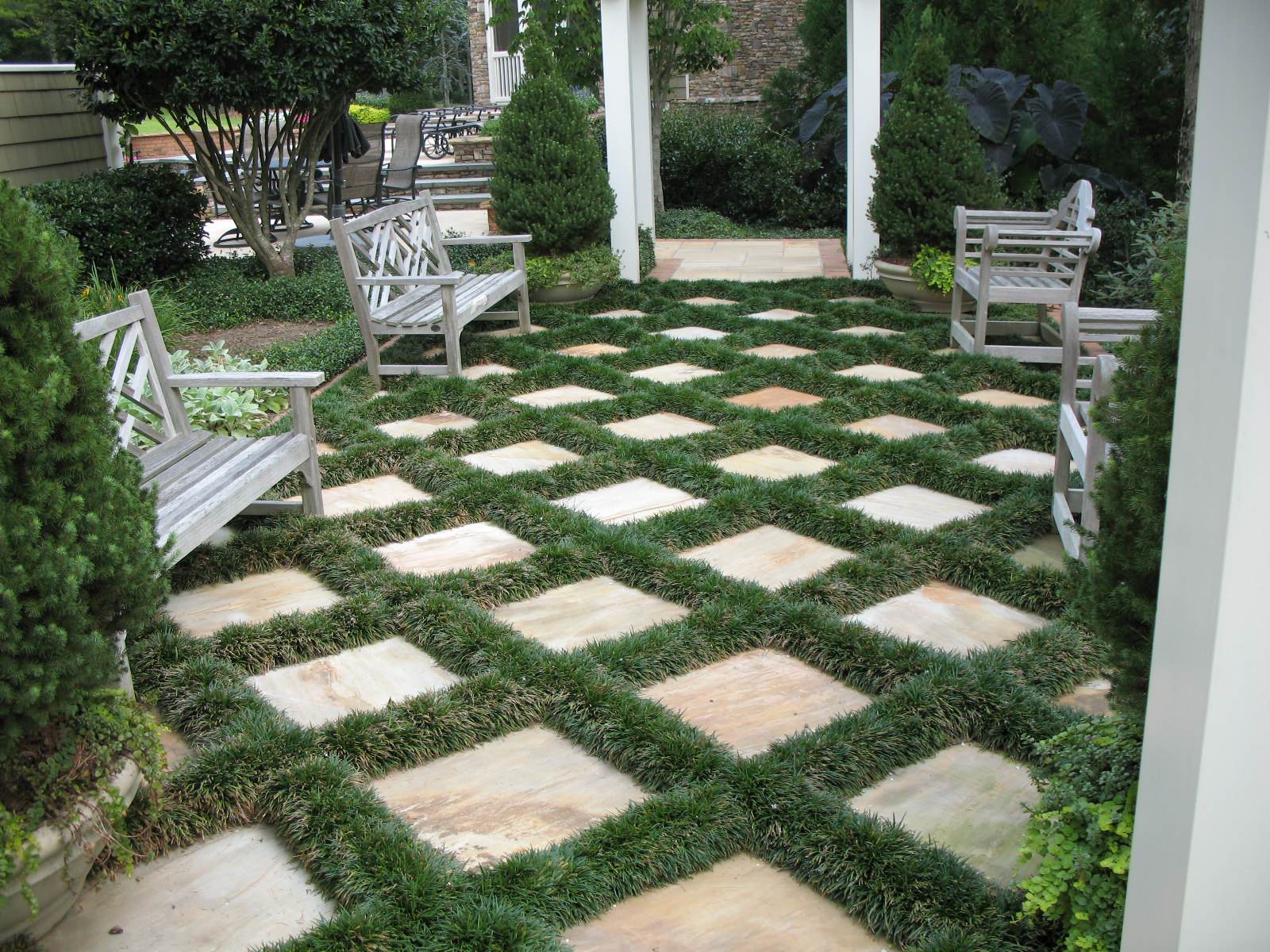
A practical rule for garden steps is to keep the visual weight balanced between hardscape and softscape. These stone-bordered steps have grass growing in the channels between each tread, softening the transition from one level to the next. The beige stone and green grass create a natural rhythm that feels settled and familiar. For renters, laying concrete step forms over existing soil and seeding the gaps is a reversible way to get the look without permanent excavation.
Vibrant Cottage Garden Path in Golden Hour
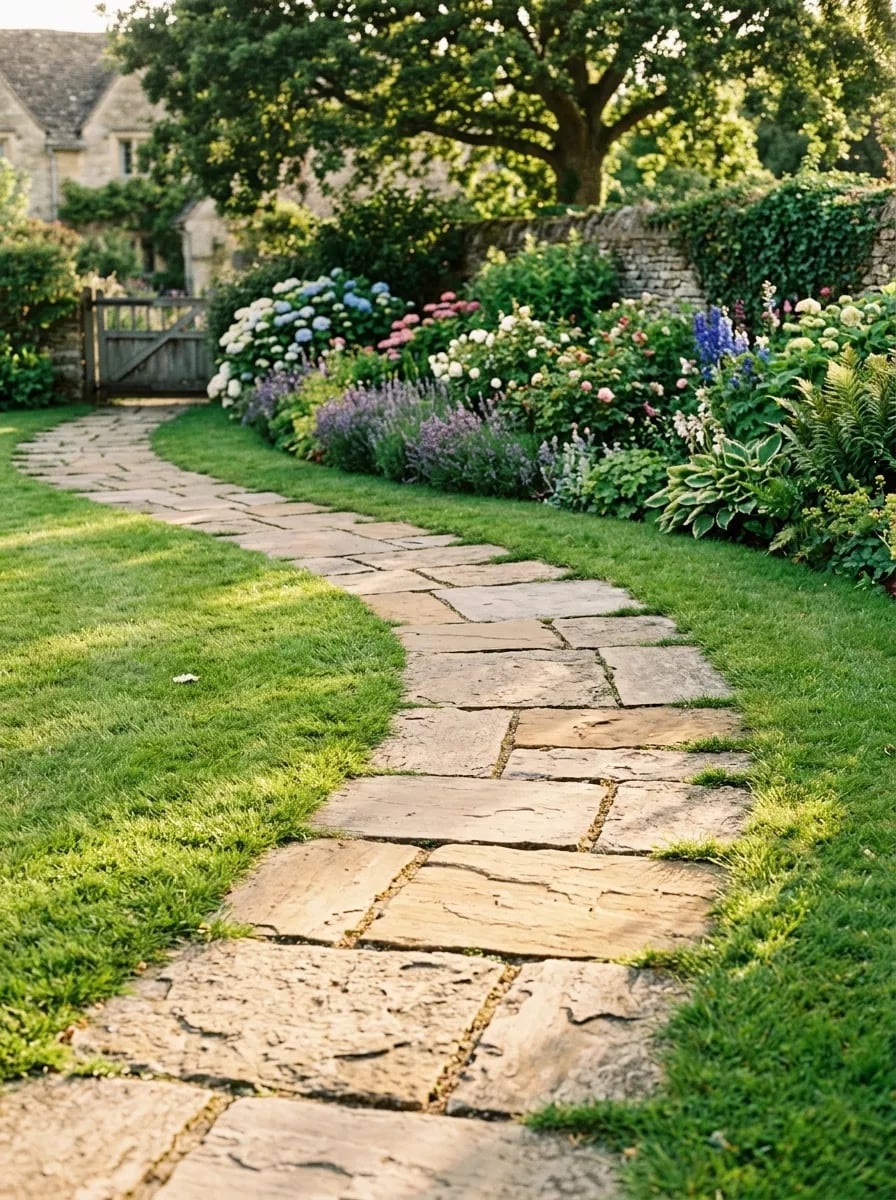
A straight gravel path might feel too rigid for a cottage garden, but a curving flagstone walkway lets the planting take center stage. Here the path winds through lush flower beds in pink and blue, with a wooden gate at the far end. The golden hour light washes everything in warm tones, making the stone and grass glow together.
The trick is to let the path follow the garden rather than forcing it into a straight line. The curve creates a sense of discovery as you walk, and the flowers spill over the edges to soften the hardscape. The result feels generous and lived-in.
Craftsman Garden Path with Mosaic Tiles
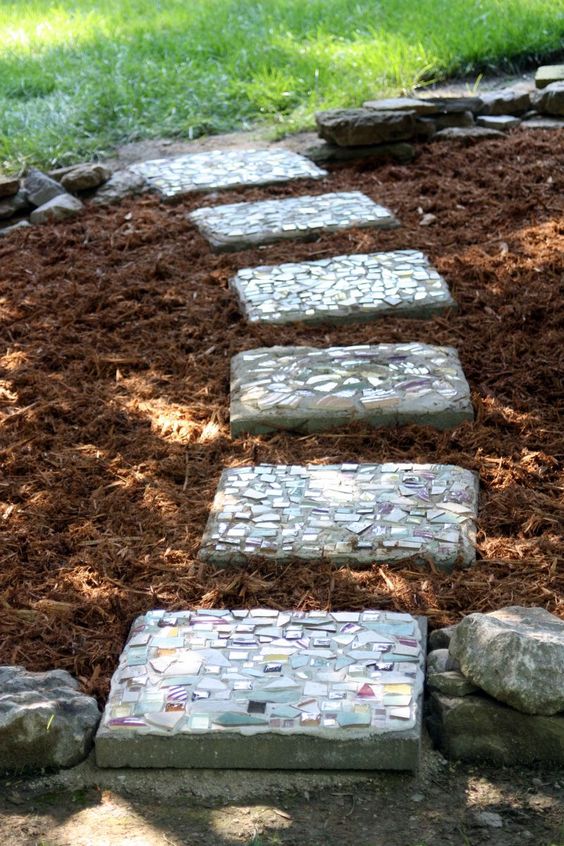
The concrete stepping stones here are set with mosaic tiles in a multi-color pattern, giving each step its own character. The tiles are durable enough for foot traffic and hold their color well in dappled light. Laid on a bed of brown mulch and surrounded by gray stone, the path has a deliberate, crafted look.
Naturalistic Path with Large Round Concrete Stones
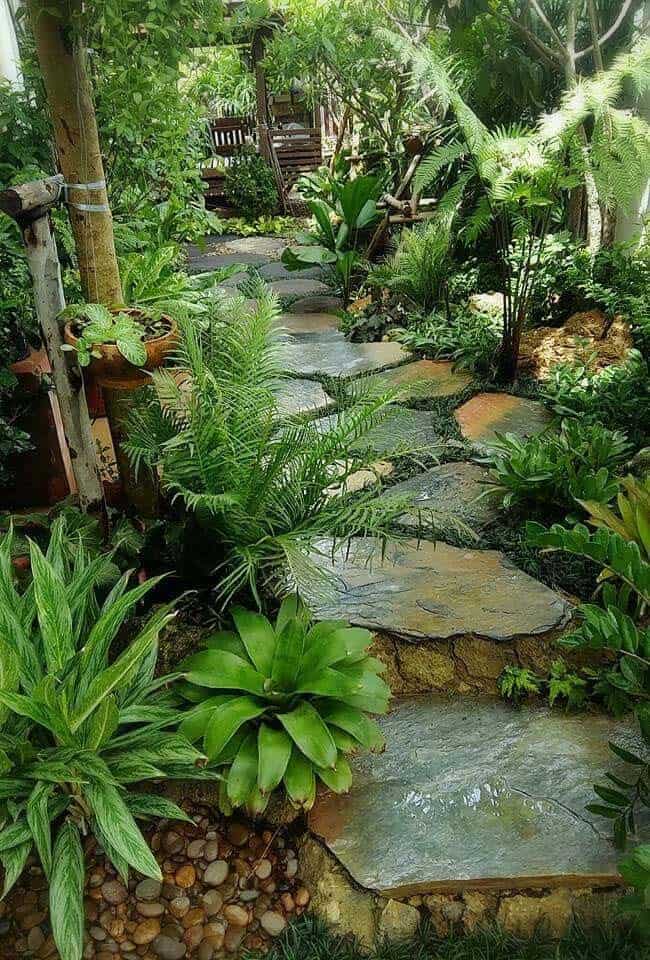
Large round concrete stepping stones work best when they are spaced far enough apart to let the surrounding plants and gravel breathe. Here the gray stones sit among yellow flowers and green foliage, creating a path that feels like a natural part of the garden. The generous size of each stone makes the walkway feel solid and grounded, while the irregular spacing keeps it from looking too formal.
Rustic Garden Slope with Rough-Cut Stone Steps
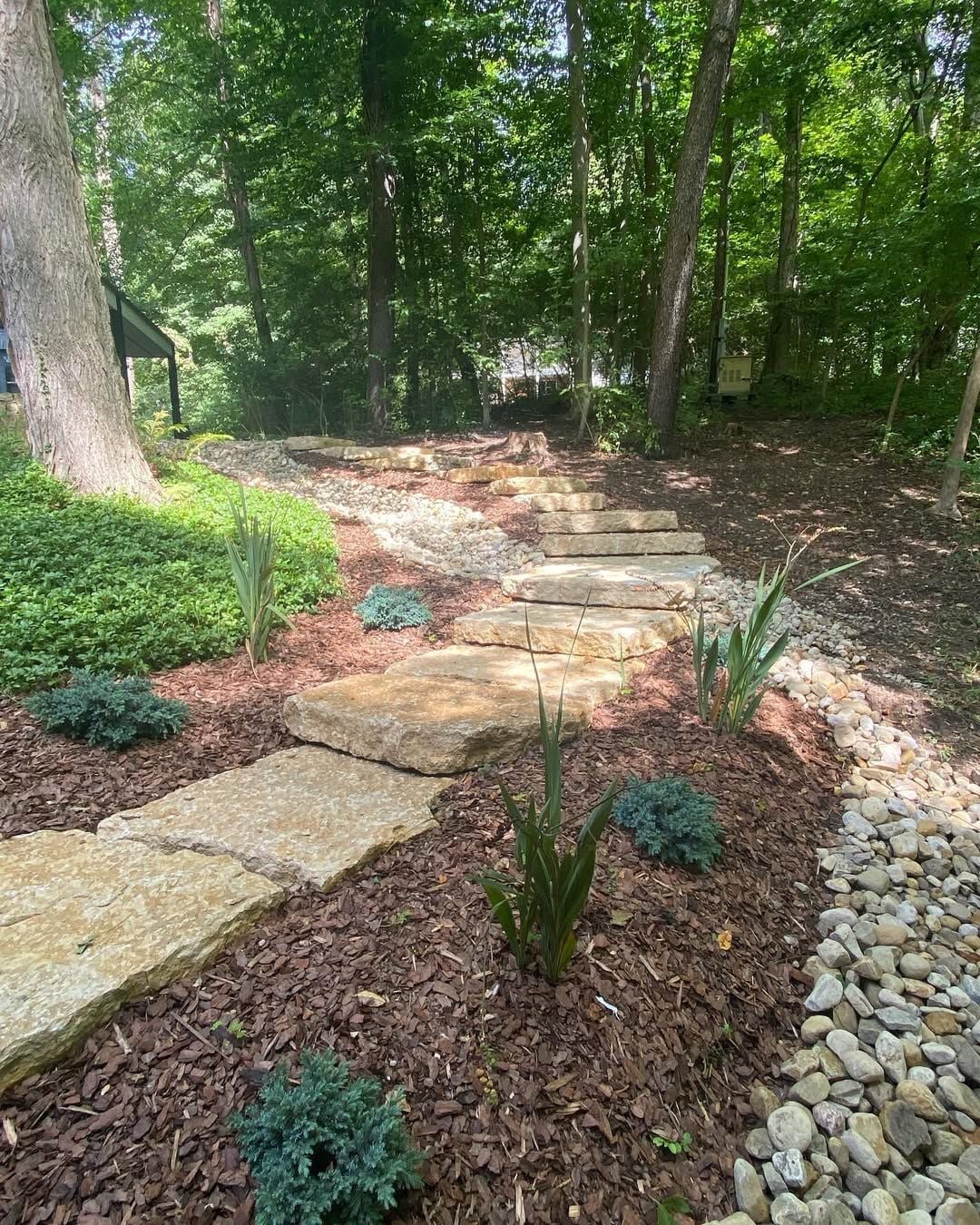
For a sloped garden, treat the path as a series of landings instead of a continuous ramp. Large, rough-cut stone blocks work well here because their uneven surfaces and substantial size feel stable underfoot. The steps ascend a gentle slope, flanked by mulch and low-growing plants in tan, brown, and green tones. This is an element mode design where the stone steps are the clear hero, and the garden around them stays simple.
The natural landscape style means the materials drive the look. The palette is restrained, with the stone’s tan and brown anchoring the scene. What defines this style is the ratio of hardscape to softscape: the stone blocks take up more visual weight than the plants. What breaks it would be adding a refined border or painted wood, which would clash with the raw, earthy feel of the rough-cut stone.
Compact Cottage Garden Path with Round Stones
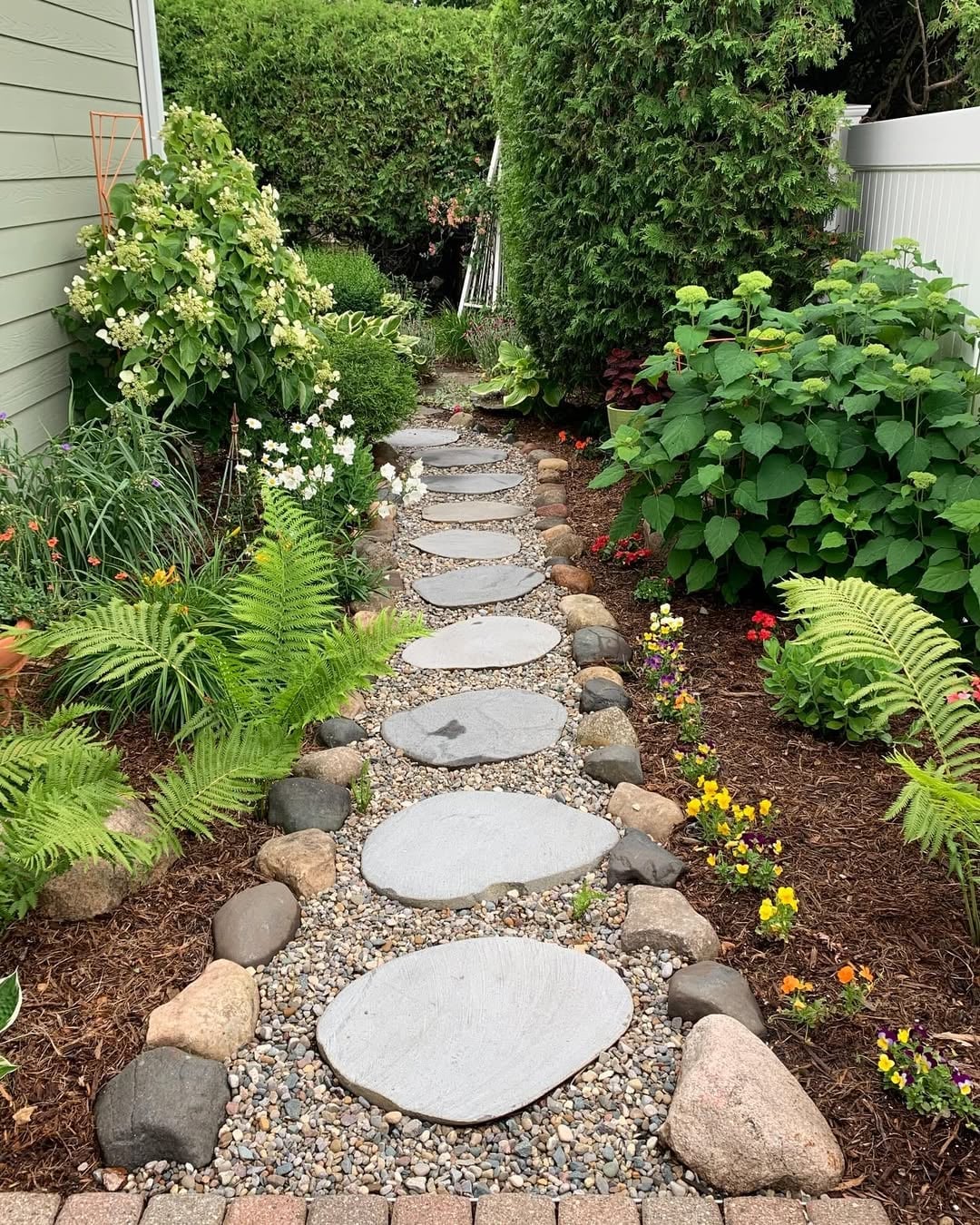
A compact garden path can feel larger by using round stones set in gravel. The round gray stepping stones create a straight path through the cottage garden, with the gravel filling the gaps in brown and green tones. The layout is key: the path’s straight line and the stones’ consistent circular shape make the space feel deliberate. The slightly overcast daylight keeps the palette soft, so the path guides gently through the planting.
Natural Path with Rectangular Slabs and Grass
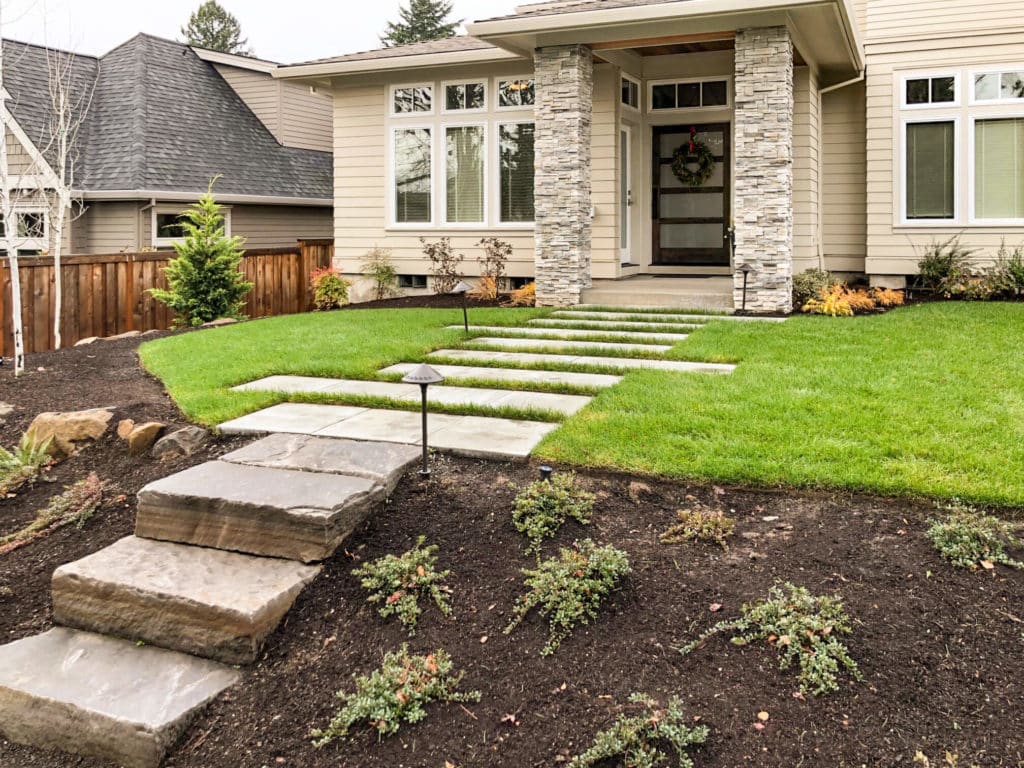
For a natural path, let the grass grow right up to the stone. Large rectangular stone slabs set into the ground create a straight path where the green grass fills the spaces between the gray stones. The grass softens the hard edges of the slabs, and the mulch along the sides keeps the path from looking like a construction project. This approach keeps the slabs as the focus, with the grass acting as a living grout that blends the path into the garden.
Woodland Garden Path with Hostas
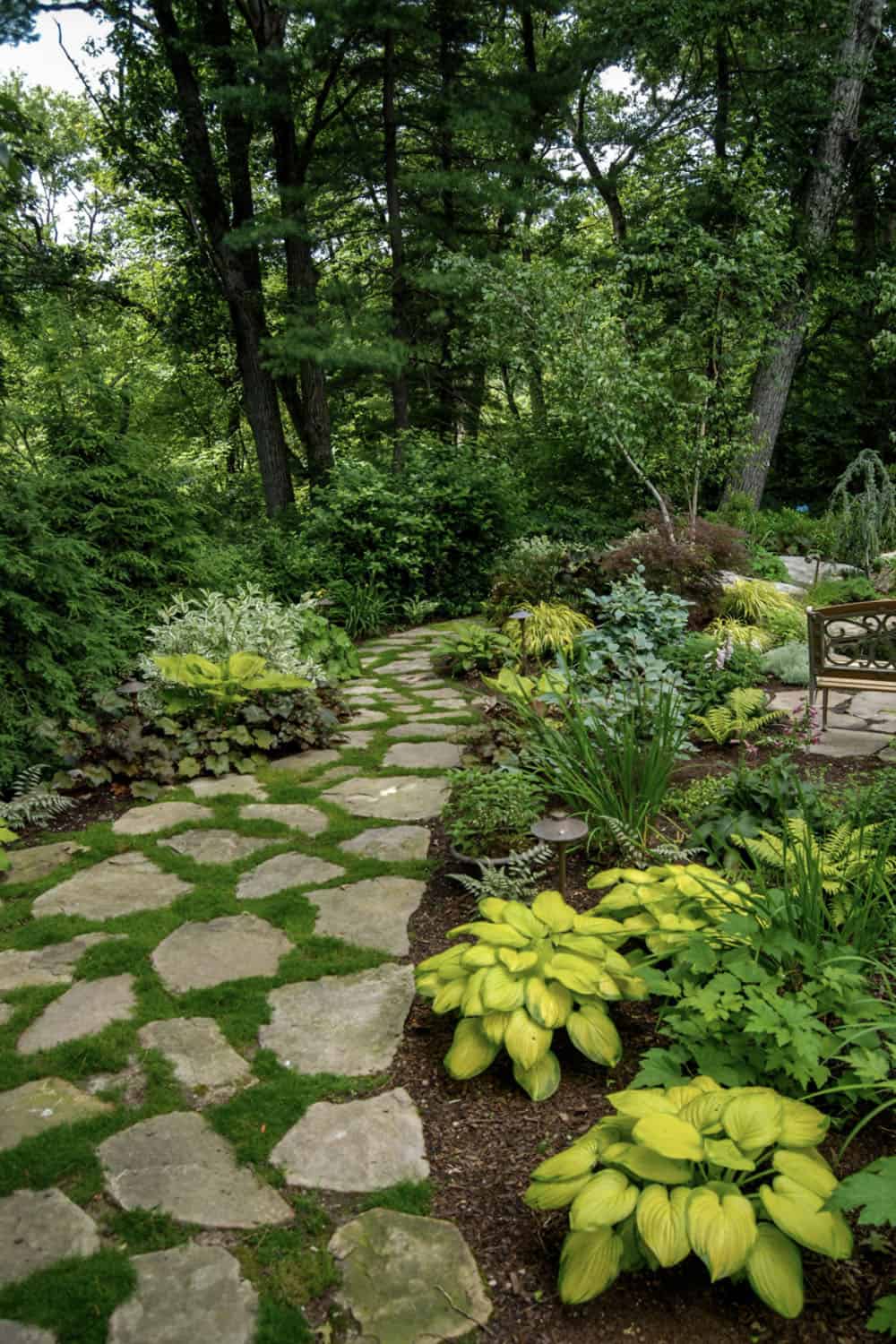
A woodland garden path is different from a sunny border path because it needs to work with shade, not fight it. Here, the irregular stone path curves through dense planting, with bright yellow hostas providing a pop of color against the greens and browns. The shaded daylight means the foliage reads as layered textures rather than harsh shadows.
The style is defined by the ratio of planting to pathway: the hostas and other greenery spill over the edges, making the stone feel like it’s floating through the garden. What breaks this look is a straight line or a uniform stone shape, because the whole point is the organic, meandering feel. The bright yellow hostas break the green palette just enough to keep the eye moving without stealing the show.
Modern Garden Path with Uniform Rectangular Pavers
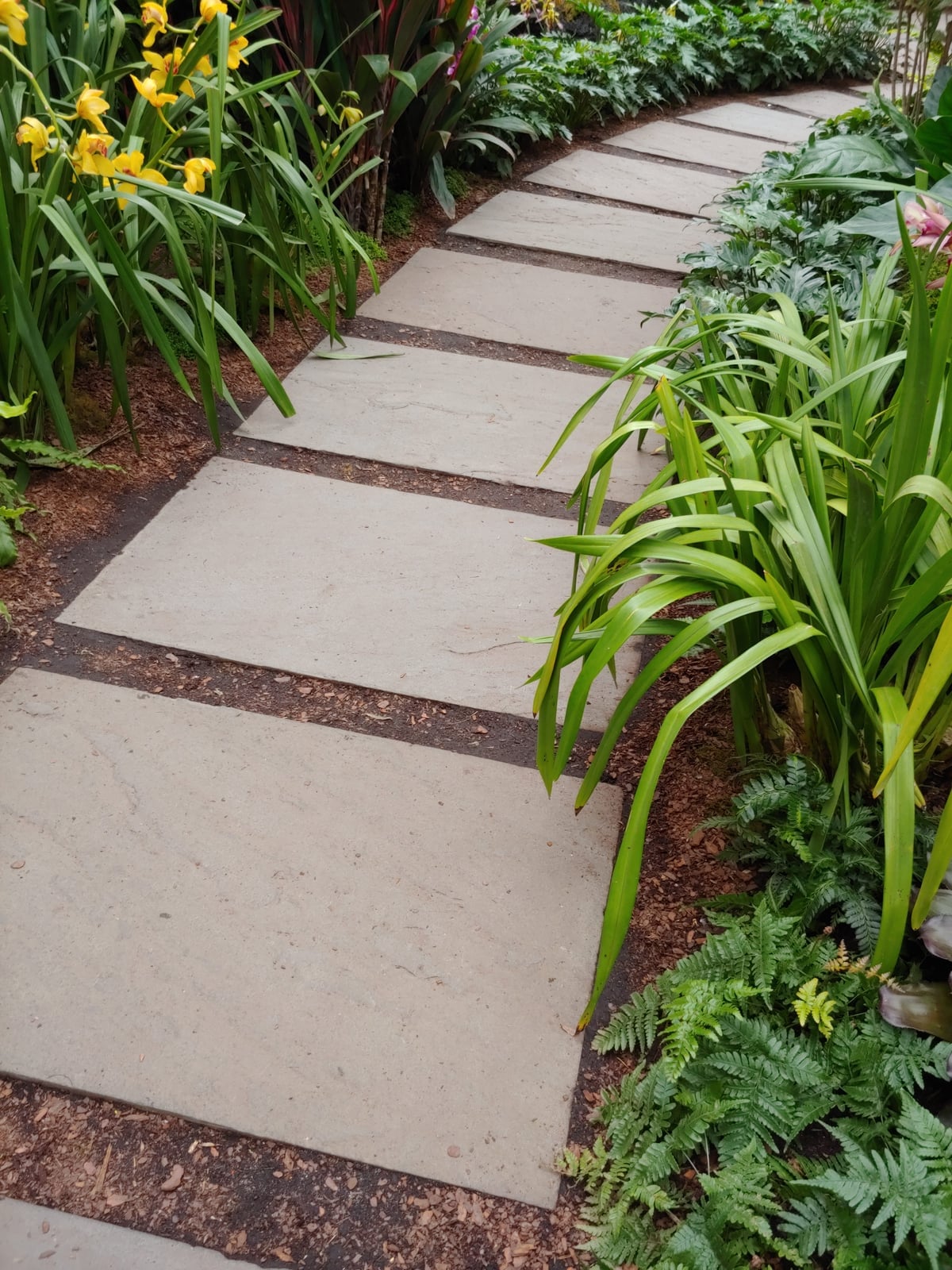
A modern garden path relies on precision, and uniform rectangular pavers deliver that instantly. The beige stone pavers create a straight path with defined edges, set in brown mulch and surrounded by green plants in bright daylight. The style is defined by the clean lines and the consistent spacing between each paver. What breaks it is any irregularity in shape or placement, so the repetition of the rectangle is what makes the design feel modern and deliberate.
Compact Corner with Artificial Grass Stepping Stones
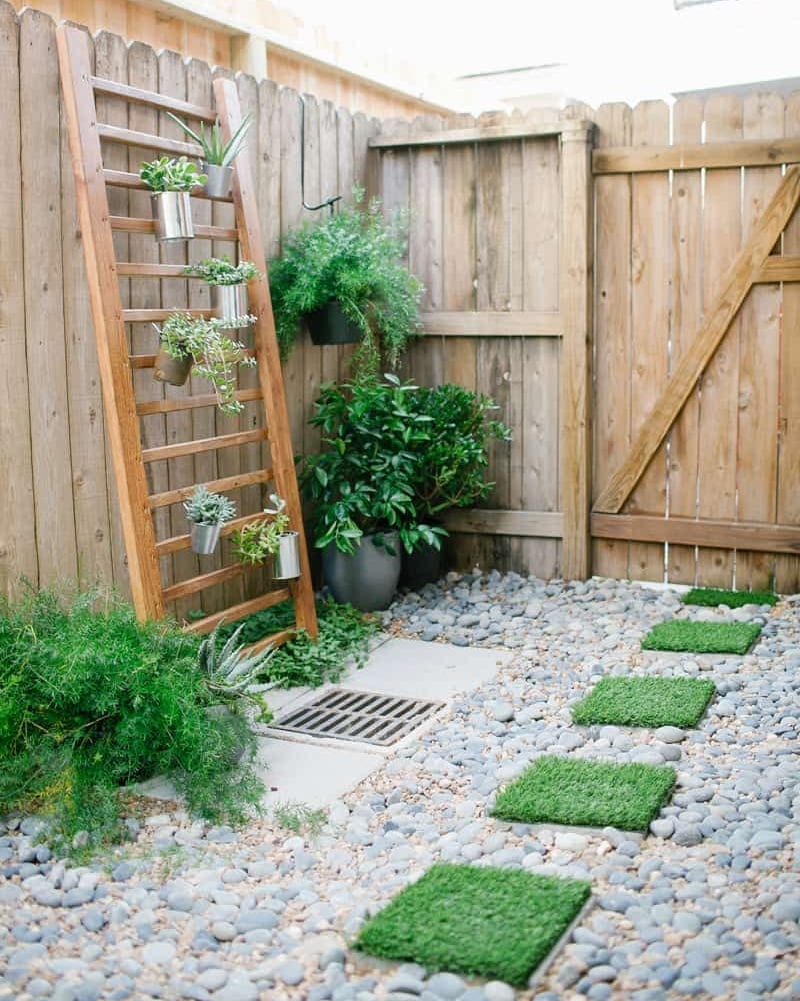
A backyard corner with limited space gets a practical update with square artificial grass stepping stones set into gravel. The synthetic turf pavers keep the green look without the upkeep of real grass in a tight spot. A wooden ladder planter adds vertical interest without taking up ground space. The palette stays with gray stone, green tones, and natural wood for a cottage garden feel that works in overcast light. This setup shows how a short path can define a corner vignette without needing a full walkway. Renter-friendly because the pavers sit on top of the gravel rather than being set into the ground.
Traditional Garden Path with Herringbone Brick
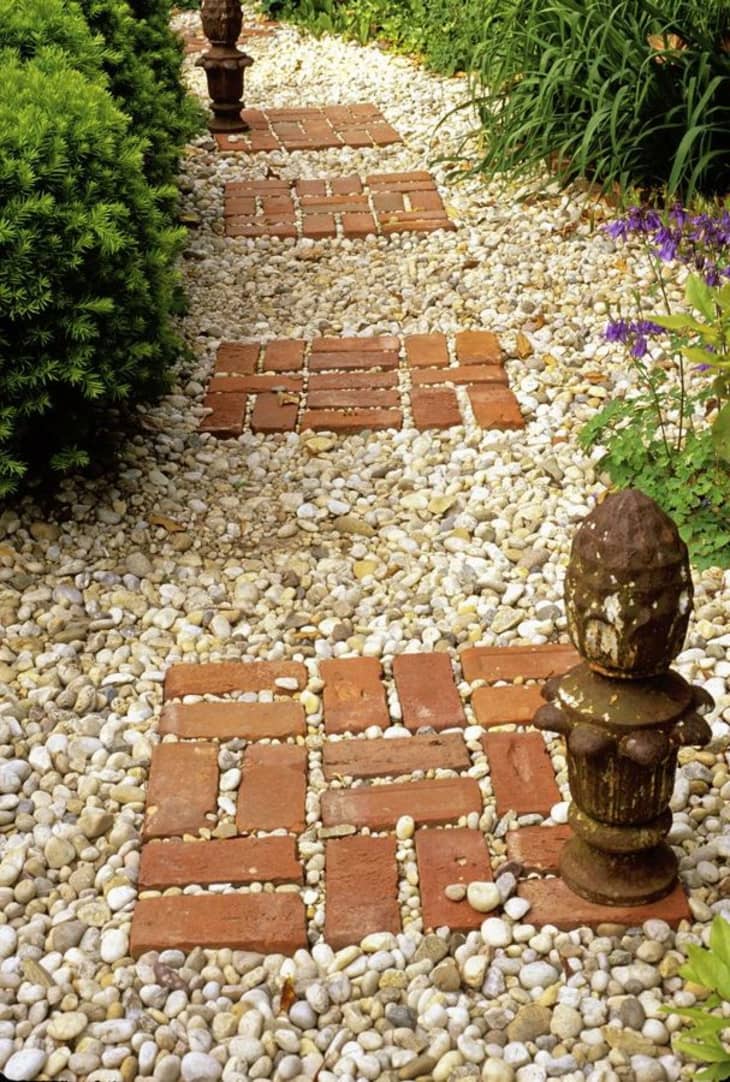
For a traditional garden path, let the pattern do the work. Here red brick pavers laid in a herringbone pattern create visual movement along a straight path bordered by gravel. The repeating zigzag draws the eye forward and gives a compact space a sense of length. Beige stone and green foliage balance the warm brick tones.
For renters, brick pavers work well because they can be laid directly on a gravel base without permanent adhesive or mortar. The pattern stays intact as long as the pavers fit snugly against each other. When it is time to move, the bricks lift out and the gravel can be raked flat again. The herringbone arrangement holds firm underfoot without requiring a poured surface.
Modern Garden Path with Square Stones and Gravel
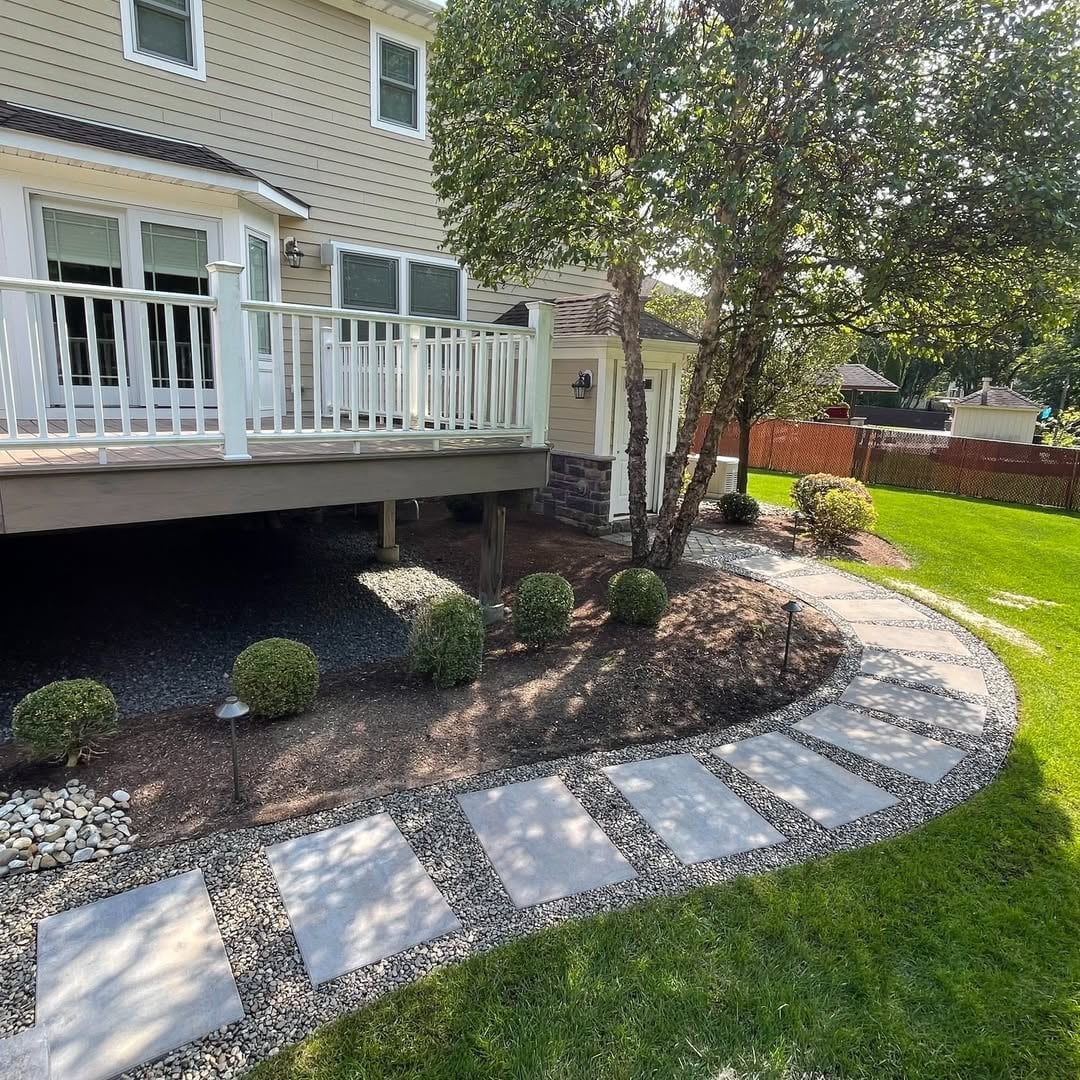
Square stepping stones set into gravel create a clean-lined path that curves through manicured bushes. The gray stone contrasts with the brown gravel and green lawn, giving the garden a structured but relaxed feel. The gap between each stone stays consistent, which makes the path easy to follow. A layout like this works for a roomy garden where the path needs to guide foot traffic without dominating the planting beds. The straight edges of the stones echo the clipped shapes of the shrubs nearby.
Modern Path with Geometric Patterned Pavers
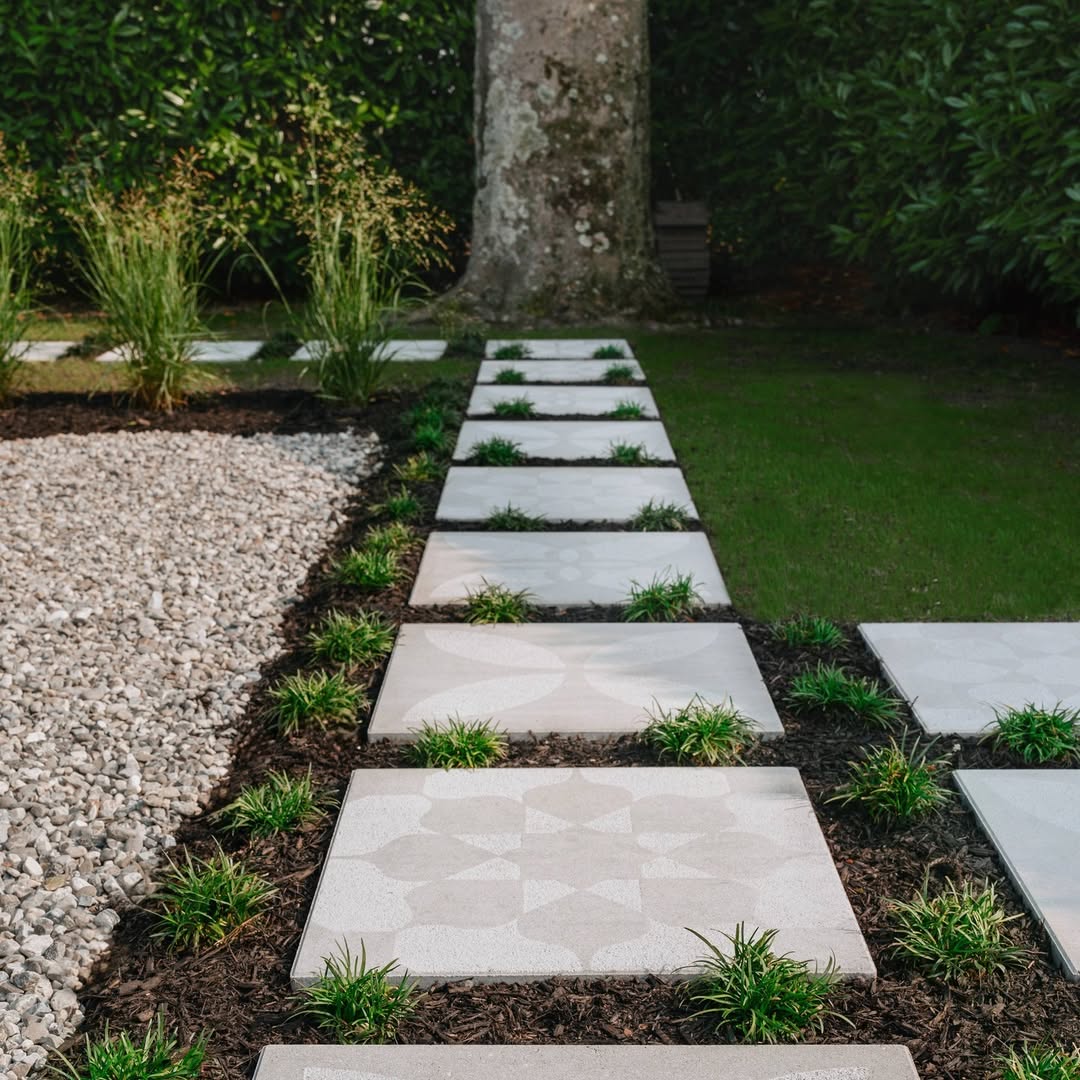
Geometric patterned pavers bring a decorative element to a straight garden path bordered by grass on one side and dark mulch on the other. The light gray stone surface has a repeating motif that adds texture without needing grout or intricate cutting. Bright sun highlights the raised pattern, making the path a deliberate design feature. The gravel between the pavers provides drainage and keeps the stones from shifting. For a modern garden, this approach gives the path a finished look while keeping the installation straightforward.
Lush Garden Path with Irregular Stones
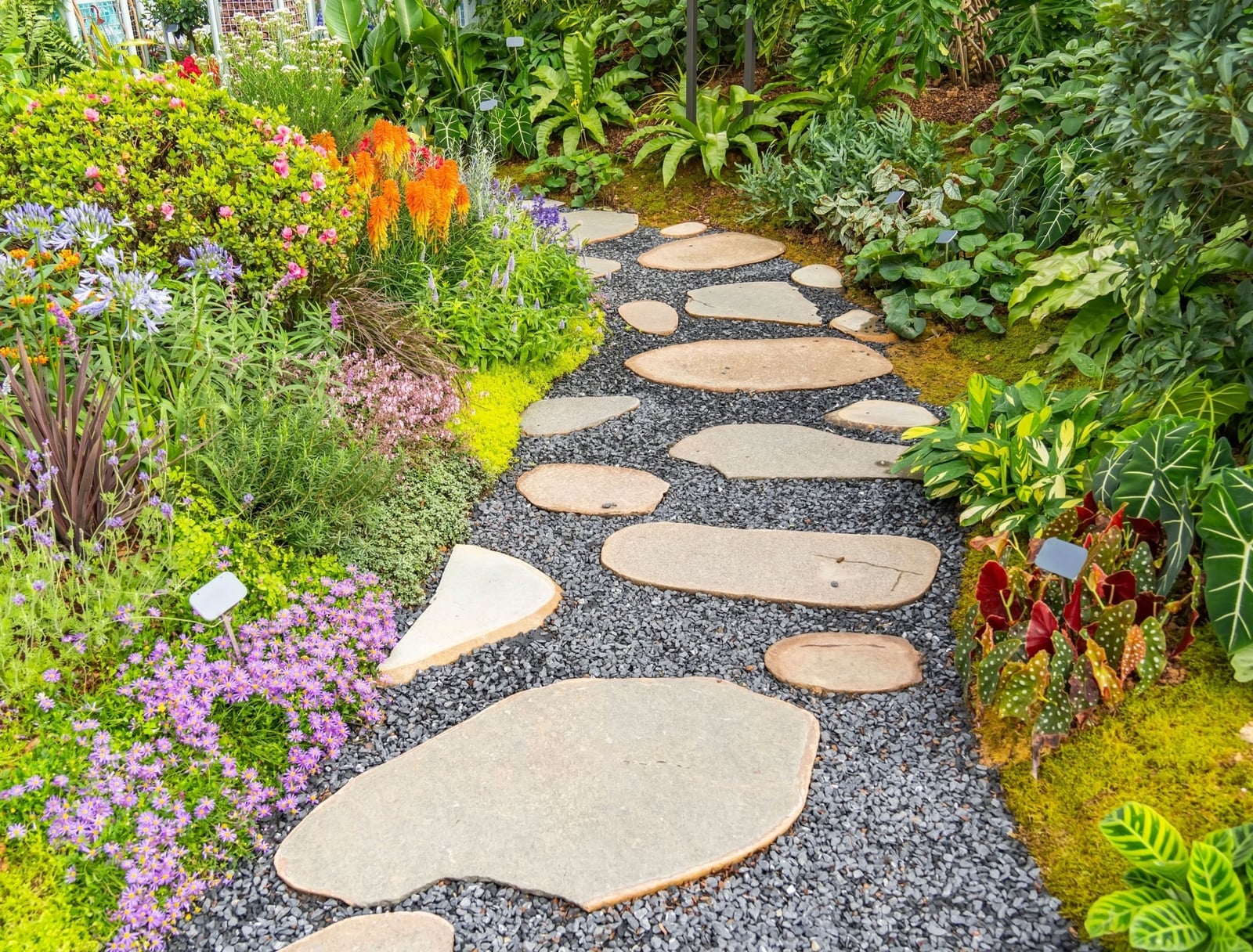
Where a straight paver path can feel too structured, irregular stones set into gravel create a winding route through dense plantings. The varied shapes and sizes of the stepping stones let the path adapt to the garden’s natural curves. A mix of flowering plants and foliage softens the edges, so the stones look like they belong rather than being placed.
When choosing irregular stones, aim for a consistent thickness so the walking surface stays level even if the shapes vary. The gaps between stones should be wide enough for gravel to fill in but narrow enough to keep the path stable. This setup suits a lush garden where the path needs to blend into the surrounding greenery rather than stand out from it. The scale of the stones should match the garden’s fullness.
Modern Landscape with Tiered Stone Steps
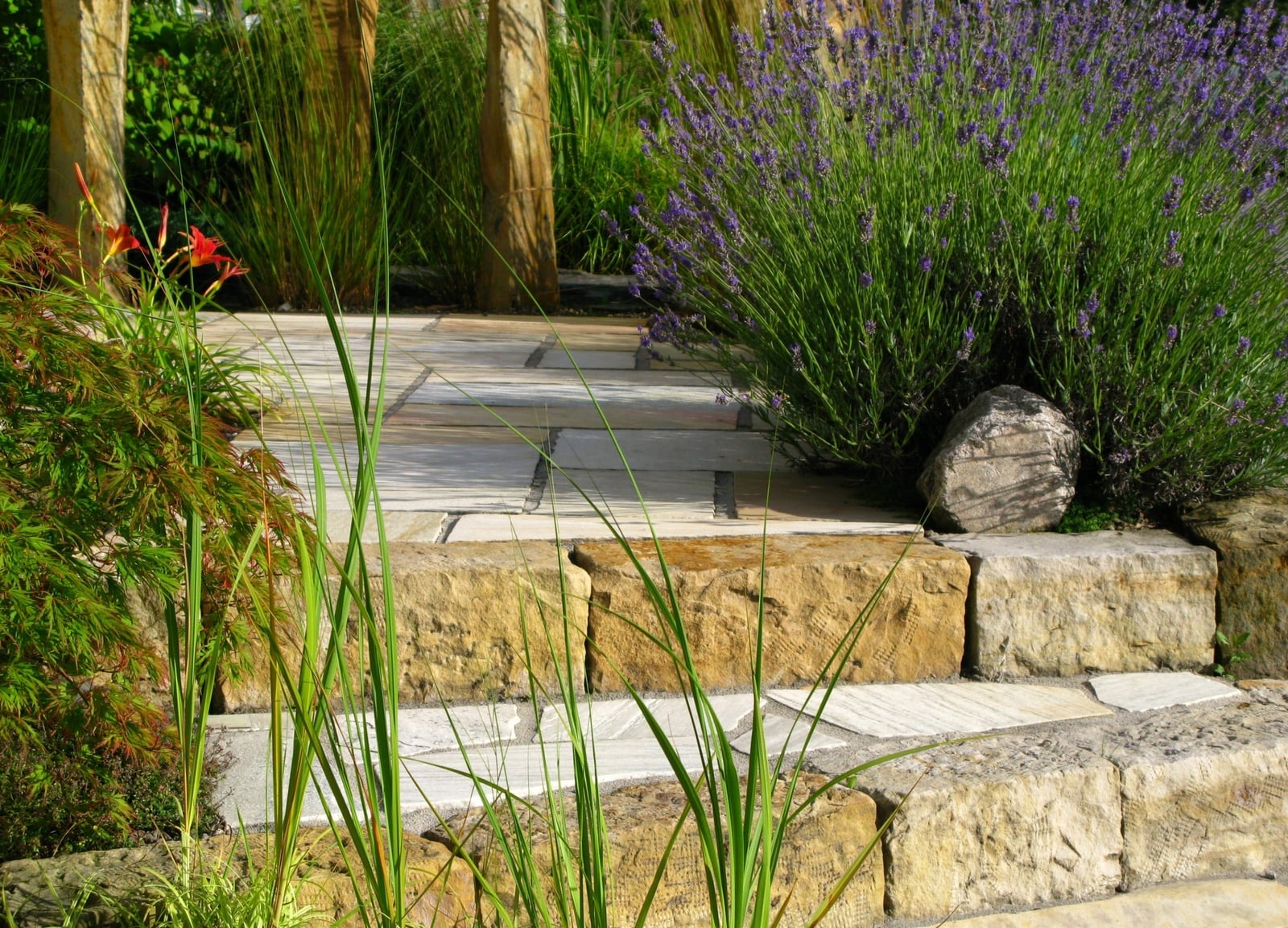
A tiered layout like this one uses large stone blocks to break a slope into level landings, each one a few feet higher than the last. The path continues at the top with matching pavers set into gravel, keeping the whole system grounded in tan and gray tones. Bright daylight hits the textured surfaces, making each step read clearly. For a similar effect, space the risers so each step feels natural underfoot, about the same rise as a standard stair tread, give or take an inch.
Naturalistic Walkway with Moss-Covered Slabs
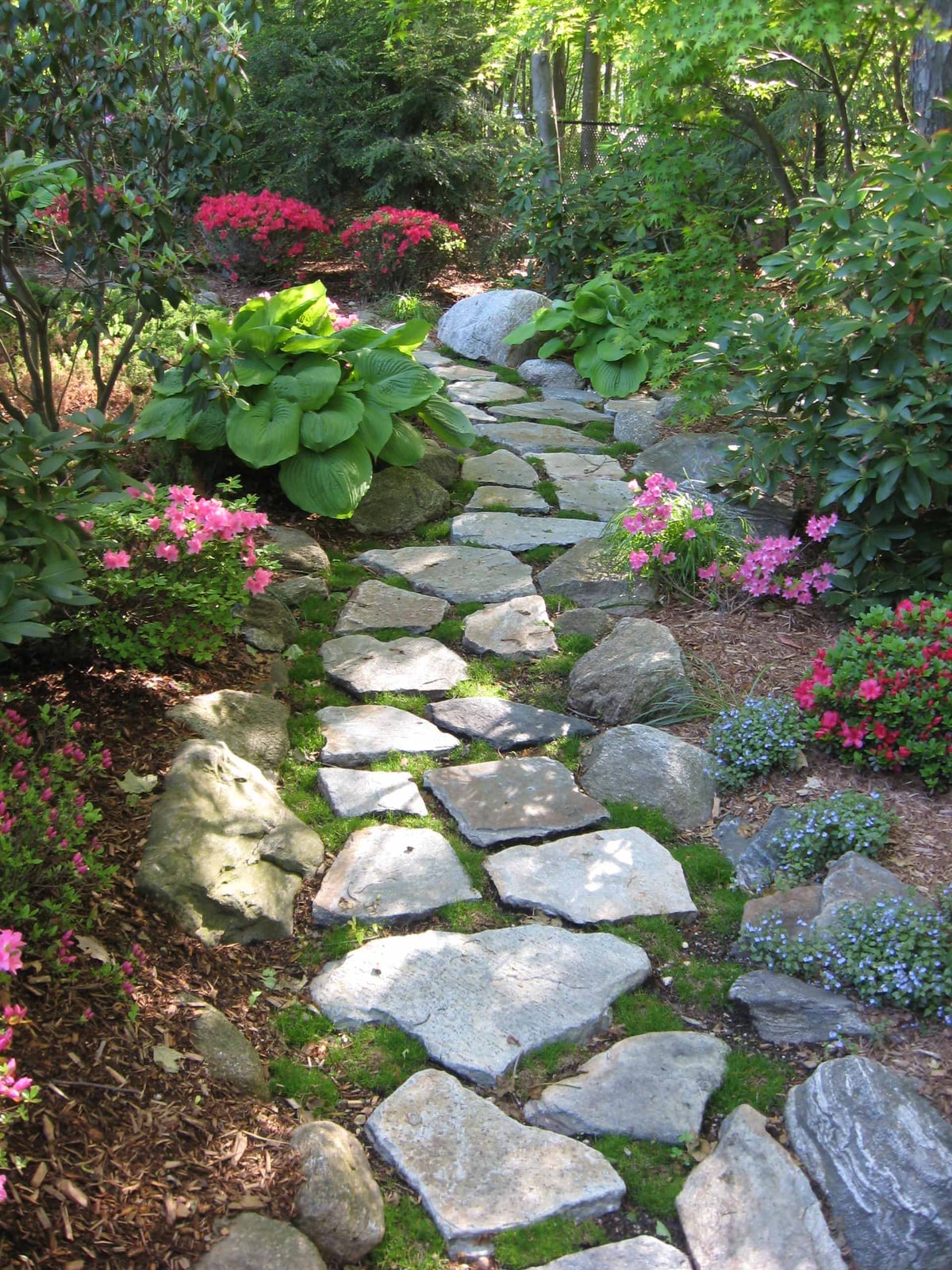
This path leans into what already grows there. Large, irregularly shaped stone slabs sit directly on the soil, and moss has spread between and over their edges, softening the hard lines. The palette stays within gray stone, green moss, and hints of pink and blue from nearby perennials. Dappled sunlight filters through overhead branches, keeping the moss damp enough to thrive. If you want a path that looks like it has been there for decades, choose rough-cut stone and let the moss do the aging for you.
Rustic Path with Flagstone and Brick Border
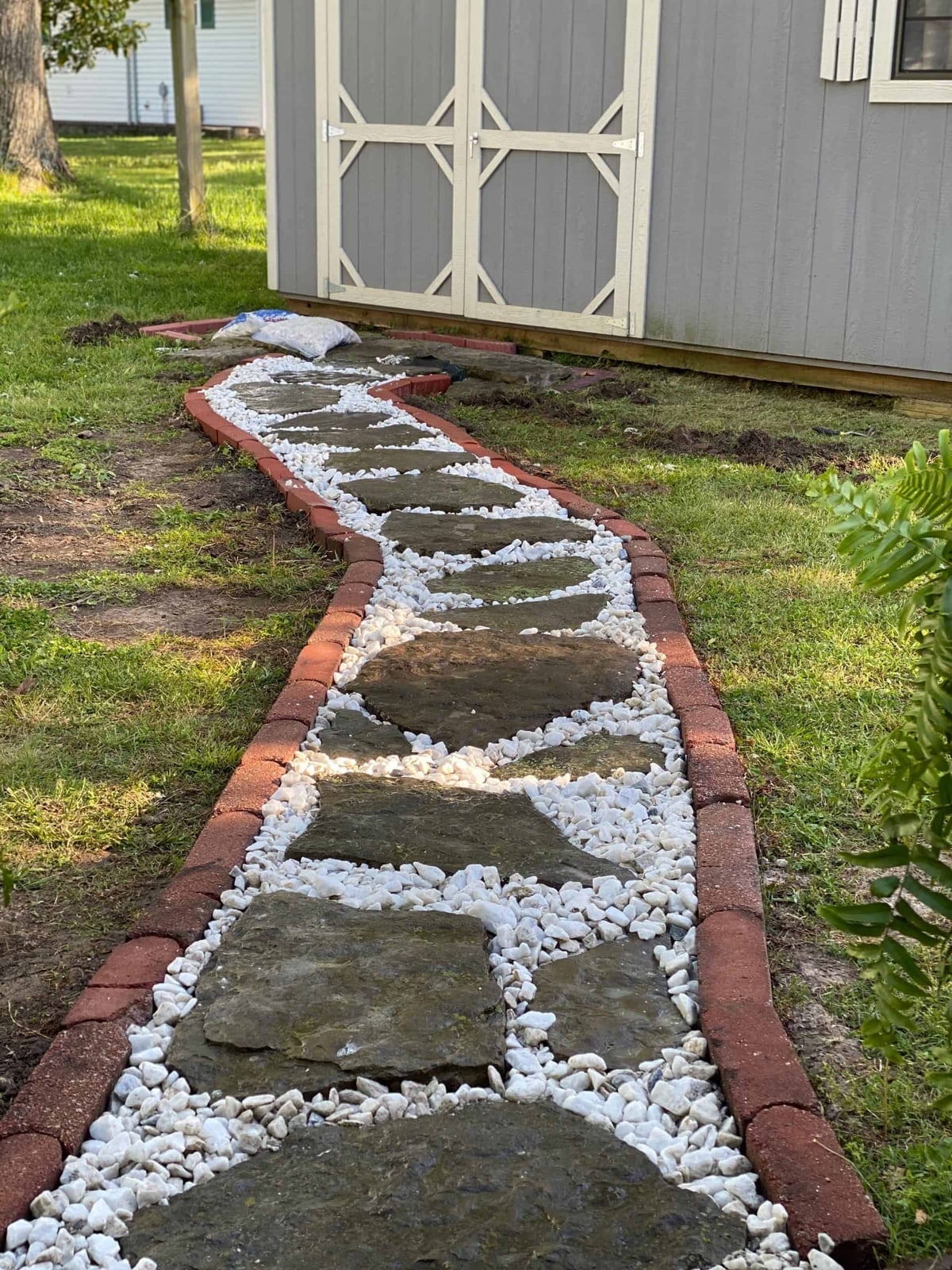
Flagstone paths often fade into the lawn, but a brick border changes that. Here, red brick edges a winding path of gray flagstones set in white gravel, creating a clean boundary between stone and grass. The brick also protects the gravel from washing into the beds during heavy rain.
A garden shed sits at the far end, framed by green foliage that softens the hardscape. The compact path width keeps the space from feeling like a runway. For a similar look, use standard clay bricks in a running bond pattern, no cutting needed, just a straight line along each side.
Rustic Garden Path with Large Flagstones and Moss
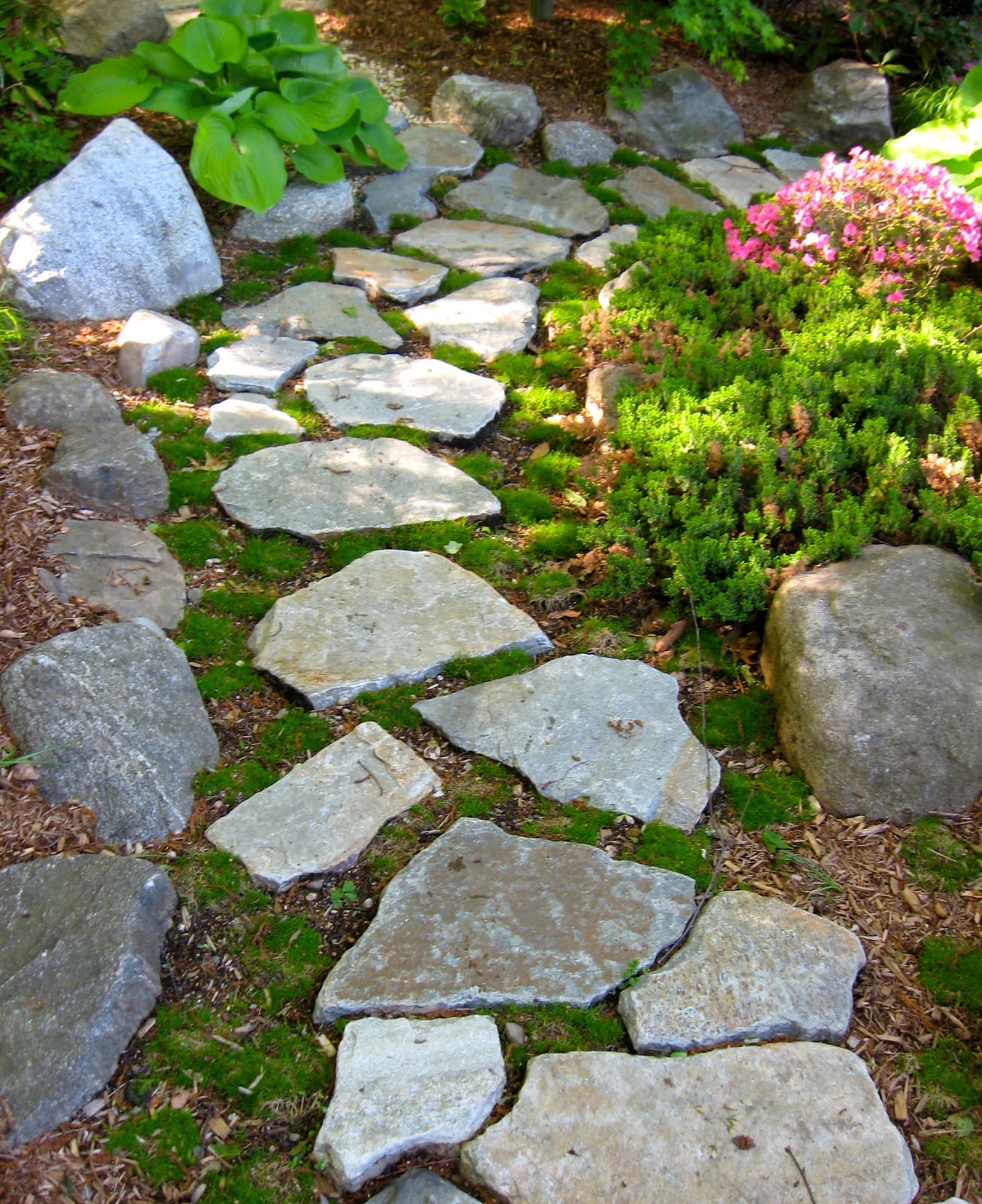
Large irregular flagstones sit in a winding path through a garden that feels tucked away. Moss fills the gaps between stones, and the path curls around big boulders and mulch beds planted with pink flowers. Daylight filters through overhead branches, casting dappled light across the gray and green tones. The stones are spaced close enough to step naturally from one to the next, which matters more here than a perfect layout, the path follows the land rather than forcing it straight.
Artistic Garden Path with Engraved Stone Pavers
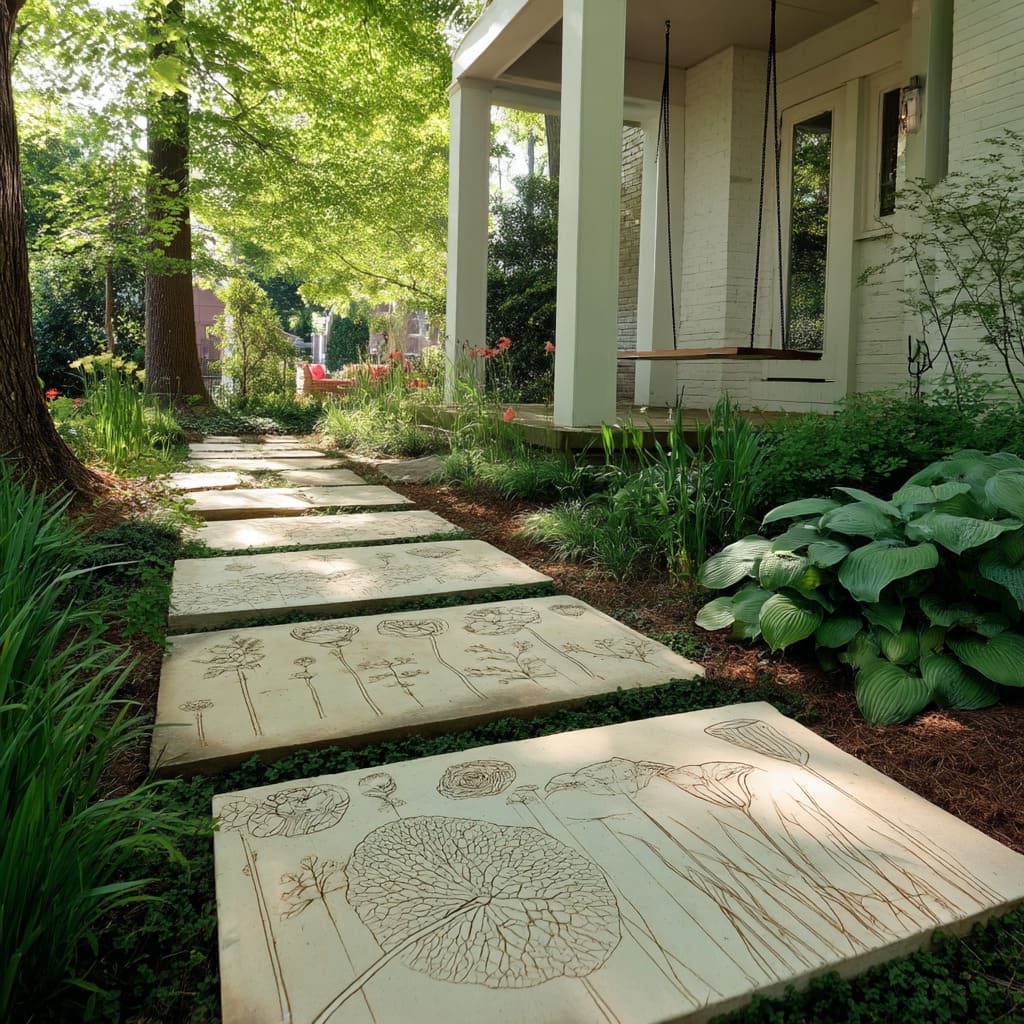
Engraved stone pavers turn a simple path into something worth looking down at. This walkway uses beige stone slabs with botanical engravings, leaves, stems, small flowers, carved into the surface. The path runs straight through a bed of mulch and grass, with soft daylight making the engraved details easy to read. If you want a path that adds pattern without extra materials, look for precast concrete pavers with stamped designs. They install like regular stone but give the path a custom feel that planting alone cannot match.
Final Thoughts
A well-placed stepping stone walkway changes how you move through your garden. The best paths feel inevitable, as if the stones have always been there. Keep spacing comfortable for a natural stride and choose materials that suit your climate. Check your USDA zone before planting around the edges. Moss and ground cover add softness but need the right light and moisture. Seal natural stone every few years to limit weathering. The path that feels right underfoot is the one you will use every day.