Two-tone kitchen cabinets are a smart way to break up a large space without a full renovation. By pairing a darker color on the lowers or island with lighter uppers, you get visual interest and a grounded feel. This article walks through 29 real kitchens that use this trick, from warm wood and white to deep green and blue.
Each idea shows how the storage itself becomes the focal point, while the rest of the room stays clean and supportive. Whether you are planning a full build or just refreshing cabinets, these looks give you practical starting points.
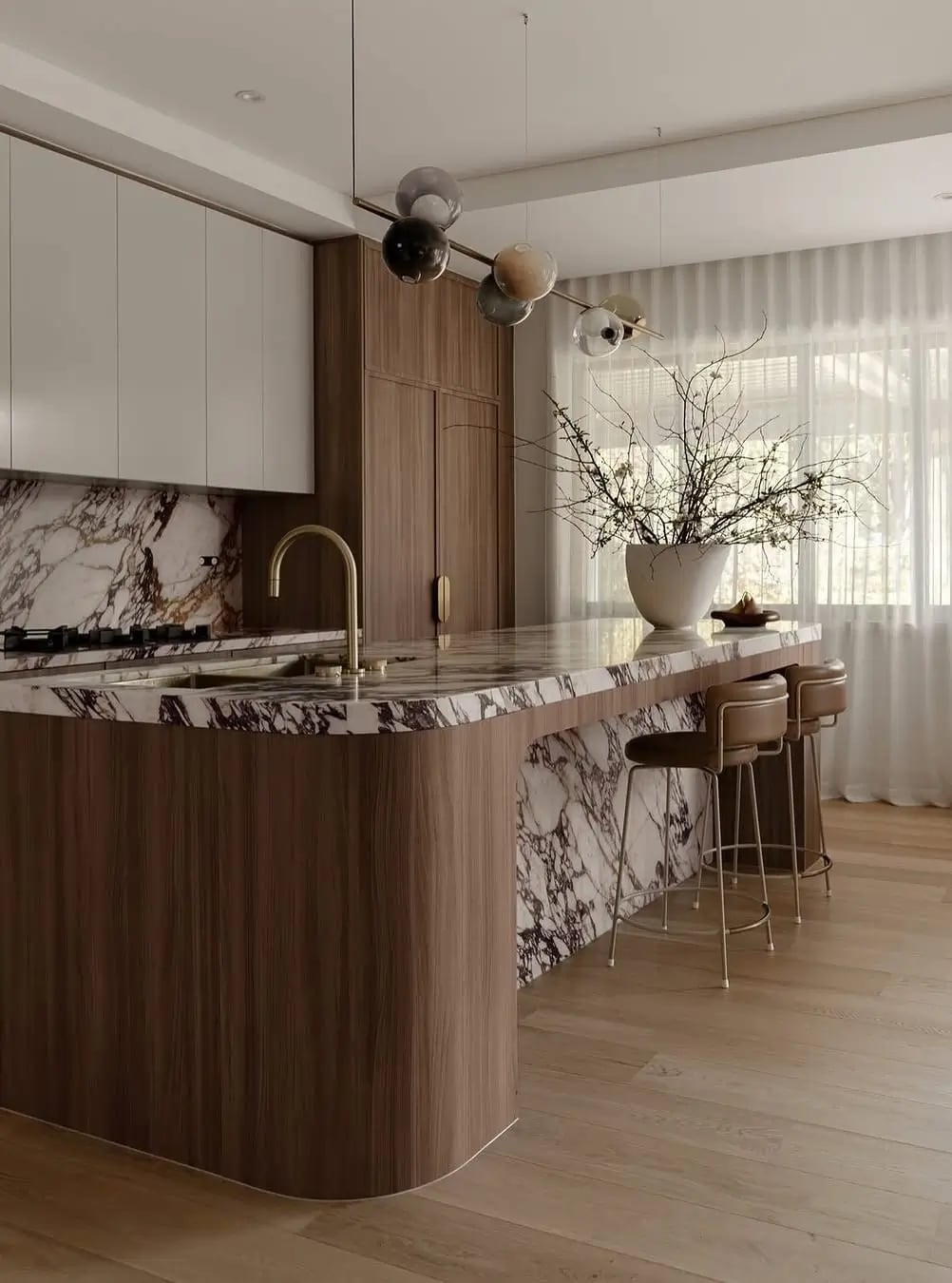
Warm Wood Lowers Meet Sleek White Uppers in a Contemporary Kitchen
A curved island with a marble edge sets the tone here, and the two-tone cabinets follow a smart palette rule: the darker, warmer material grounds the room while the lighter upper keeps it from feeling top-heavy. White uppers and wood lowers create a natural visual anchor, and the marble and brass accents stay neutral so the contrast does all the work. The layout centers the island as the main work zone, with cabinets running along the wall behind it.
Modern Kitchen with Dark Gray and Warm Wood Two-Tone Cabinetry
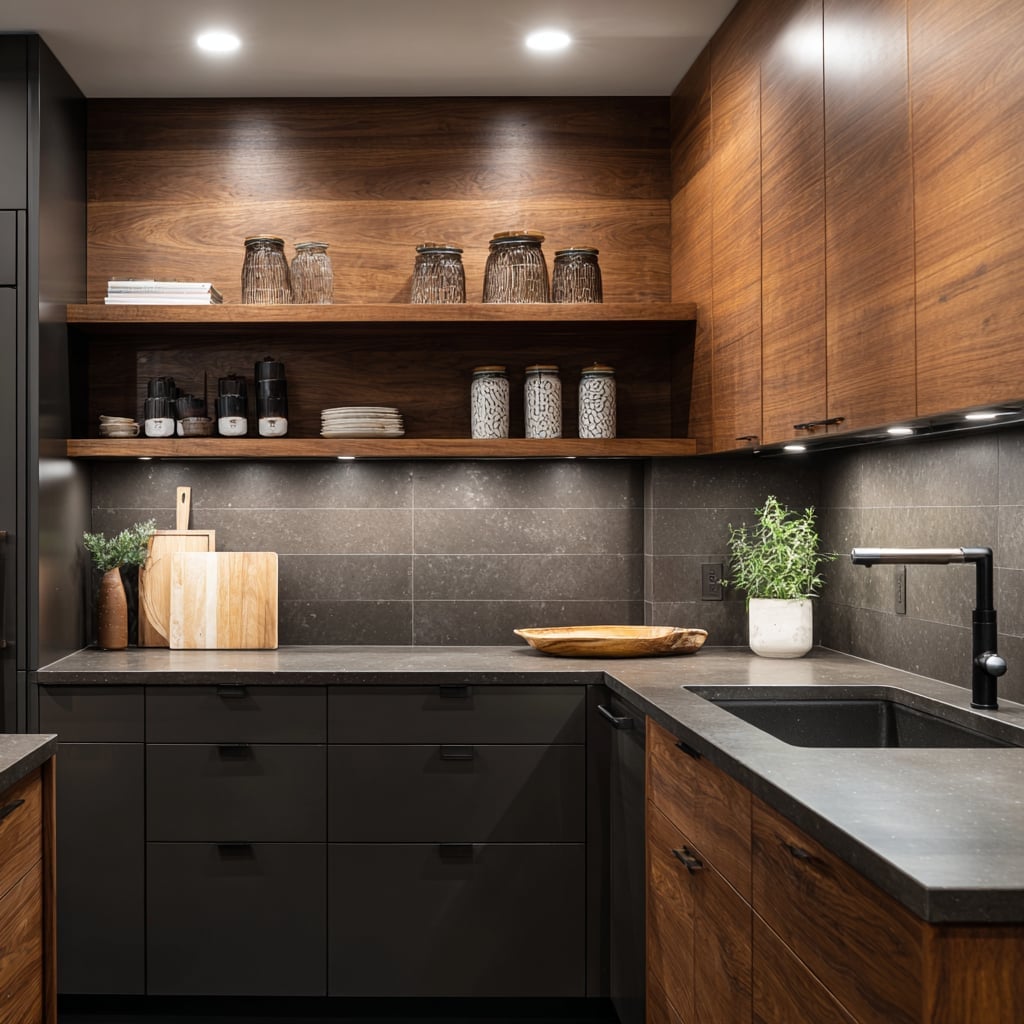
This kitchen nails the balance between bold and grounded. Dark gray lower cabinets and warm wood uppers create a palette that feels modern without turning cold, and the stone tile backsplash and stone countertop bridge the two tones without competing. Recessed ceiling lights and under cabinet lights keep the dark base from swallowing the room. The corner layout with an island makes the contrast the focal point rather than an afterthought.
Monochromatic Pale Yellow Cabinets in a Minimalist Kitchen
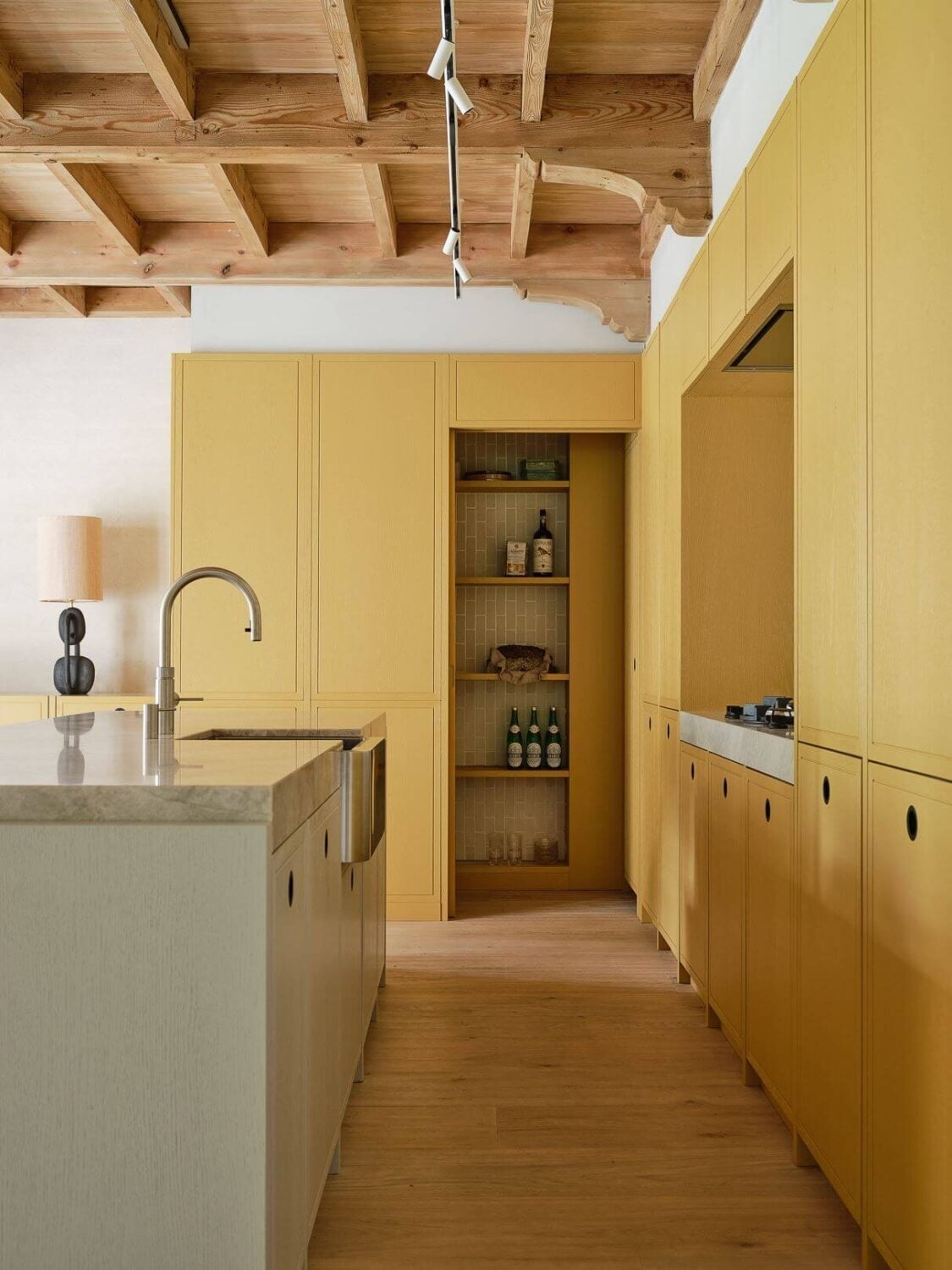
Can a two-tone kitchen work when both tones are nearly the same? Yes, if the second tone comes from material rather than color. Here, pale yellow cabinetry runs across both uppers and lowers, but a wood island and stone countertop break the monochrome. Track lighting and natural light keep the yellow from reading as heavy, and the metal hardware adds the only sharp line. The style relies on restraint: nothing competes, so the single cabinet color reads as intentional, not boring. It is a look that asks for clean lines and minimal clutter to hold its shape.
Deep Green and Natural Wood Two-Tone Cabinets in a Modern Organic
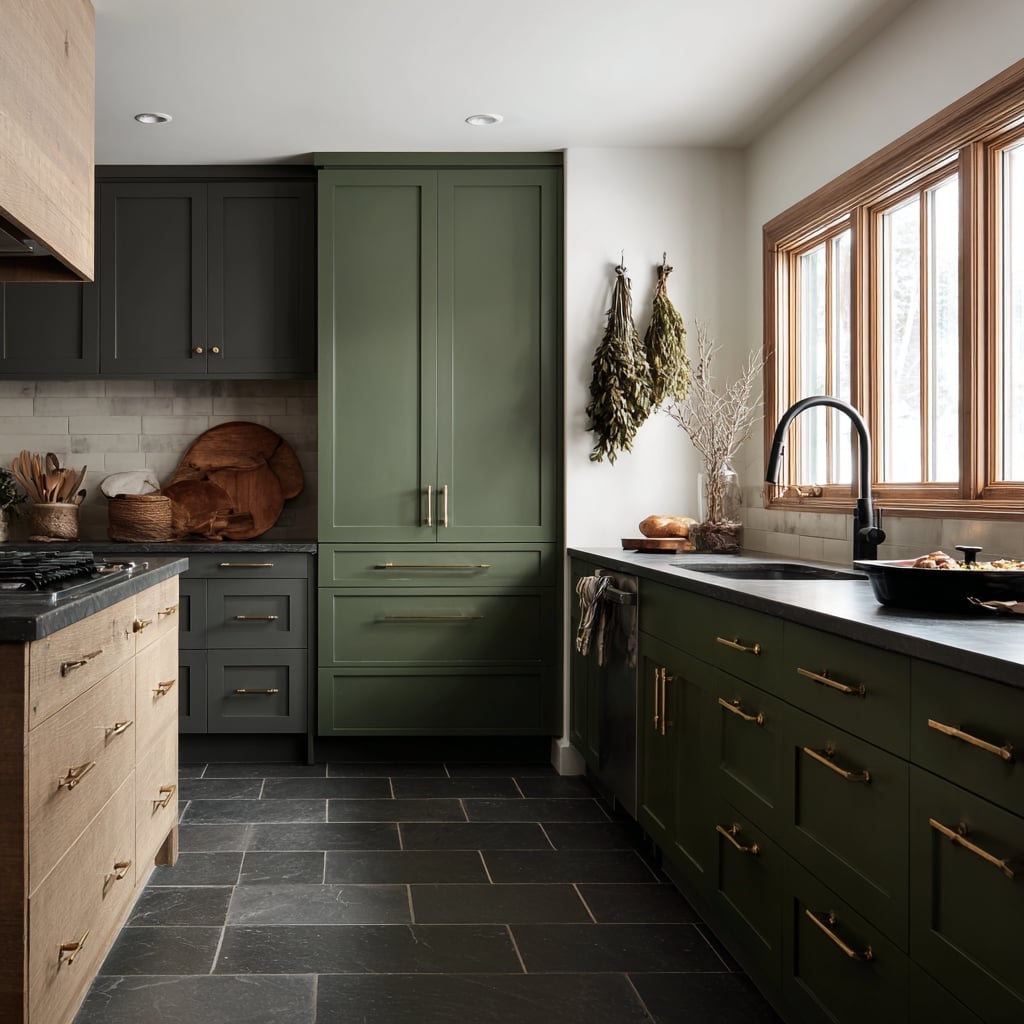
Deep green lower cabinets paired with natural wood uppers bring the outdoors in without leaning rustic. The palette rule here is contrast with connection: the green is saturated enough to stand alone, but the wood shares the same earthy undertone, so the two feel related. Gray stone tile and a stone countertop keep the look grounded, while recessed lights and under cabinet lights prevent the darker green from dimming the work surfaces. A galley layout makes the most of the compact footprint.
Light Wood and Light Gray Two-Tone Cabinets with a Large Island
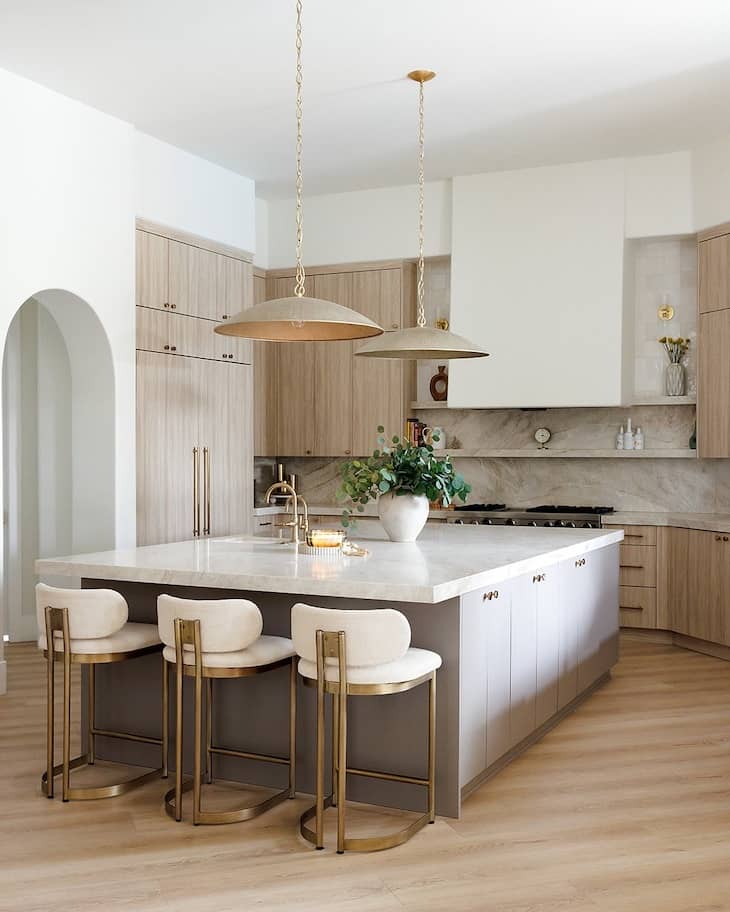
For a large island, use the darker tone on the perimeter and the lighter one on the island to keep the center from feeling too heavy. Here, light gray uppers and lowers frame the room, while a light wood veneer island anchors the space without dominating it. Pendant lights above the island and recessed lights in the ceiling layer the light where you need it most. The tile backsplash and stone countertop stay pale, letting the wood island stand out as the main event.
Dark Wood Lowers and White Uppers with Dramatic Marble Accents
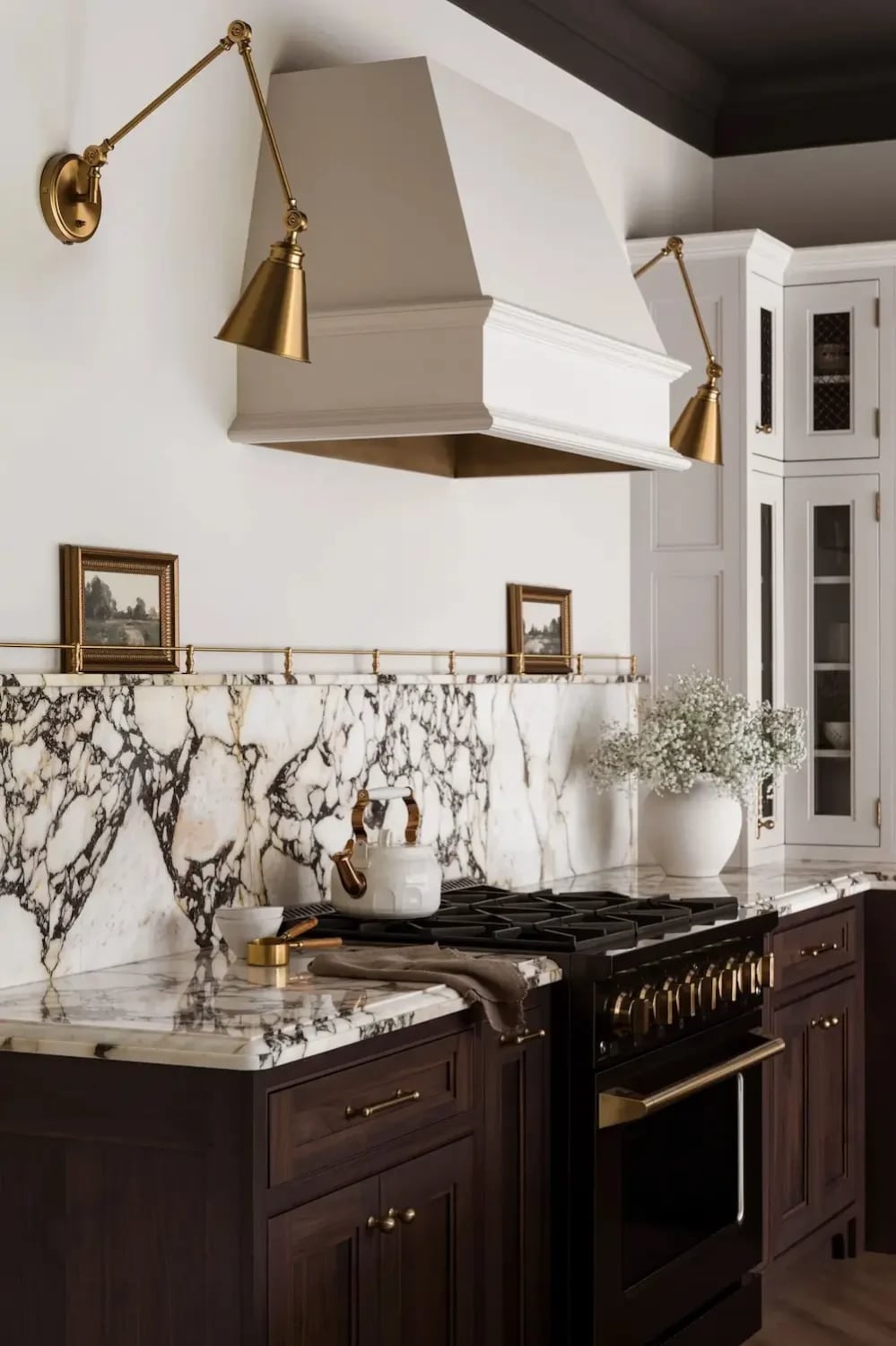
A dramatic marble backsplash changes the whole feel of a traditional kitchen. Paired with dark wood lower cabinets and white uppers, the stone turns into the main event. The dark brown base anchors the room, while the white upper cabinets balance the heaviness. Brass hardware adds a warm glint against the dark wood and white paint. Wall sconces mounted above the countertop cast light directly onto the marble, making the veining visible even on a cloudy day. The compact galley layout uses contrast to define each zone. Stone, wood, and metal work together here, and the marble sets the tone for the whole palette.
Transitional Kitchen with Gray Uppers and a Dark Island Base
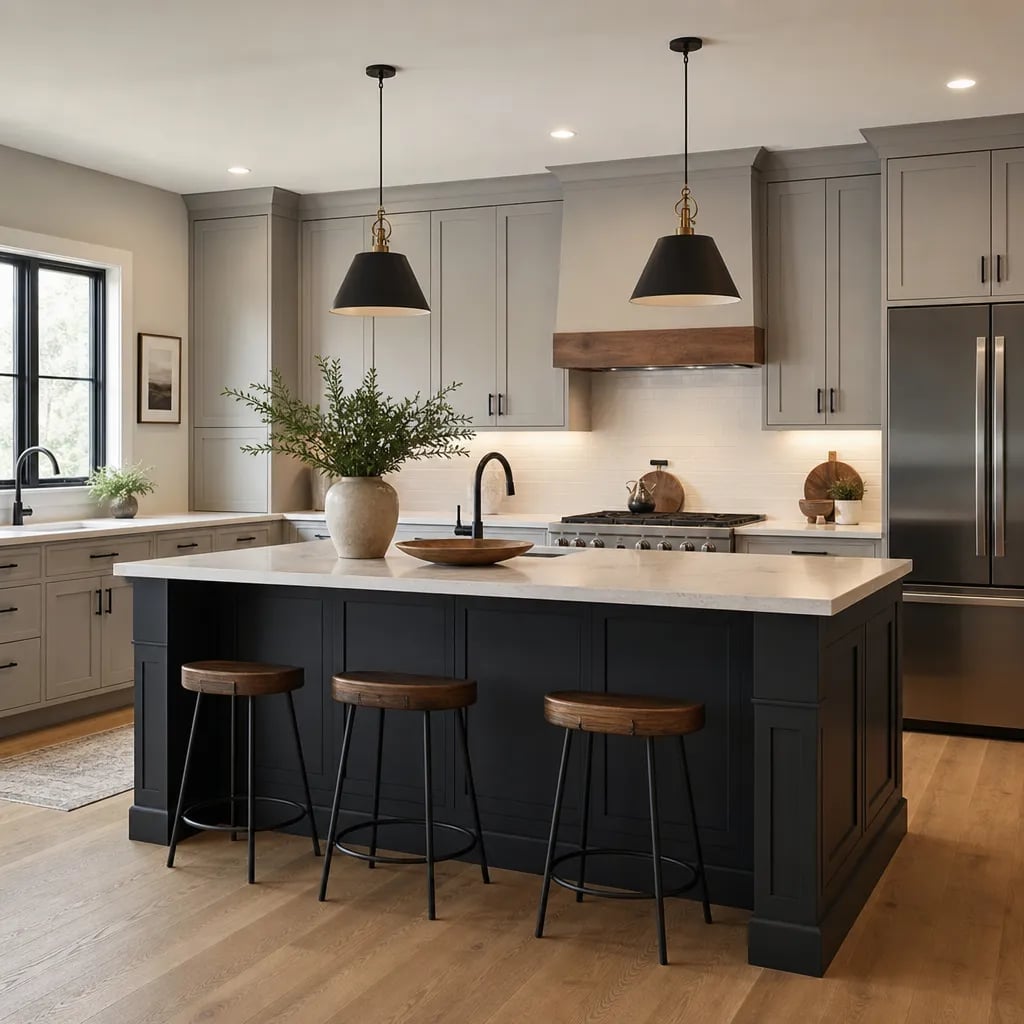
The dark island base stands out because the gray upper cabinets stay neutral. In this transitional kitchen, the two tones create a clear focal point without competing for attention. The stone countertop and tile backsplash keep the palette grounded in gray and white, so the black island feels intentional rather than abrupt. Pendant lights hang above the island, drawing the eye down to the darker base. For a renter, swapping cabinet hardware or adding a temporary island in a dark finish can mimic this look without a full renovation.
Dark Wood Veneer Base Cabinets with Clean White Uppers
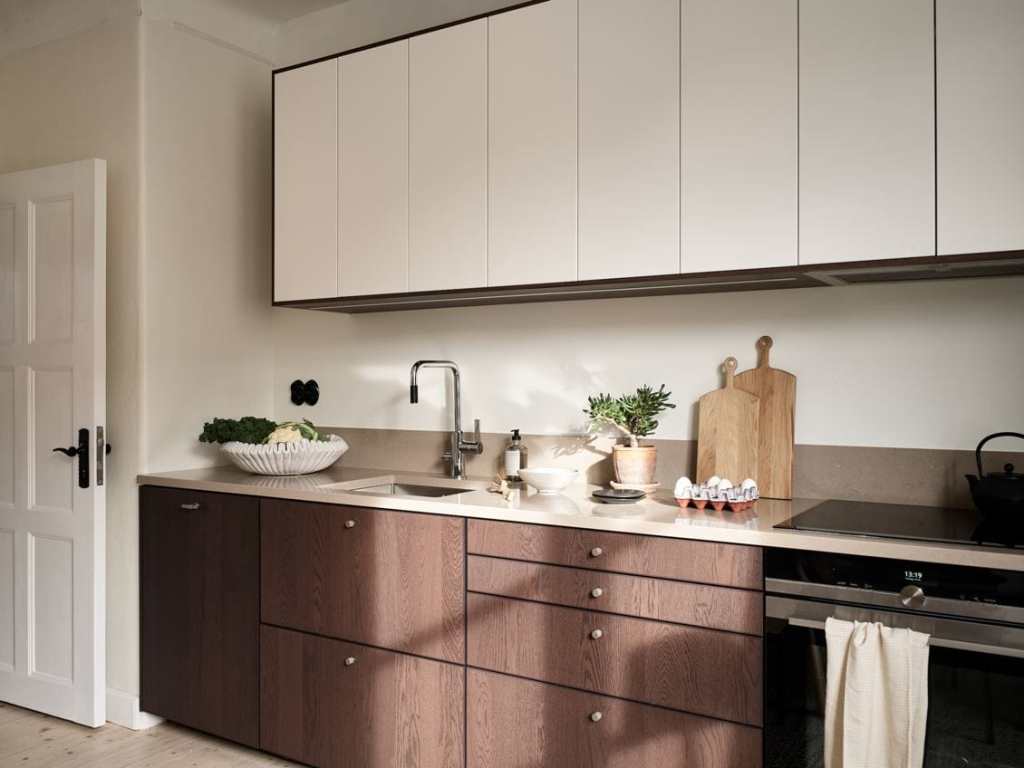
This modern kitchen proves that two-tone cabinets do not need a dramatic contrast to look deliberate. The dark wood veneer base cabinets bring warmth and texture, while the clean white upper cabinets keep the space open. A stone countertop bridges the two, creating a smooth visual flow. A nearby window hits the white uppers and softens the darker base below. Recessed lights add even illumination. The wood veneer has a subtle grain that keeps the dark base from looking flat. It is a restrained take on two-tone that works best in a linear layout where the eye moves from counter to cabinet without interruption.
Navy Blue Base Cabinets Paired with White Uppers in a Modern Kitchen
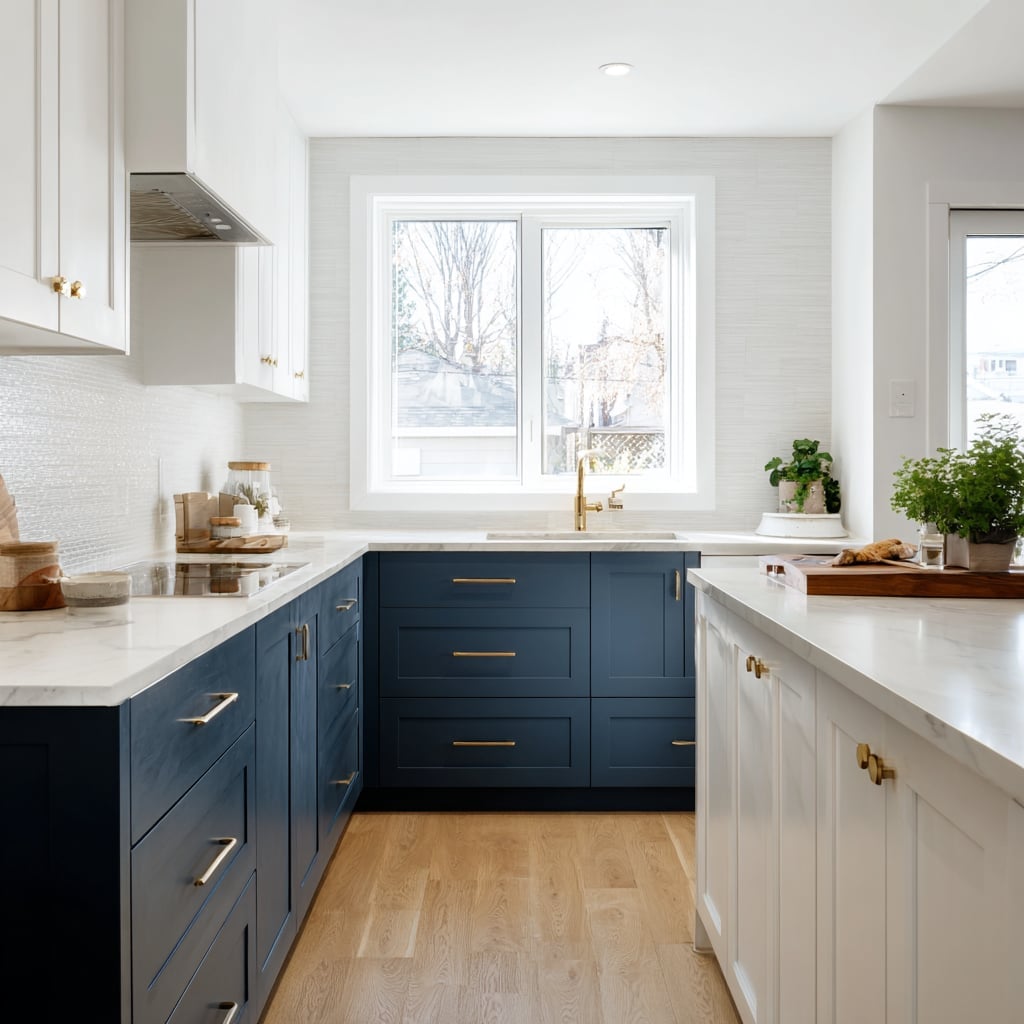
Can a dark base cabinet hold up in a busy kitchen without feeling too heavy? Navy blue answers that question with a solid yes. In this modern U-shaped kitchen, the navy base cabinets sit below crisp white uppers, creating a clear line of demarcation that defines the work zone. The white upper cabinets reflect natural light and keep the room feeling open, while the darker base hides the scuffs and crumbs that come with daily cooking. Brass hardware on the navy cabinets adds a warm accent without needing extra decor. A kitchen island in a matching navy finish extends the color block into the center of the room. The palette is simple: white, navy, and wood tones from the floor and countertops. It is a durable look that does not rely on busy patterns to hold your attention.
Deep Blue Lower Cabinets with a Natural Wood Island
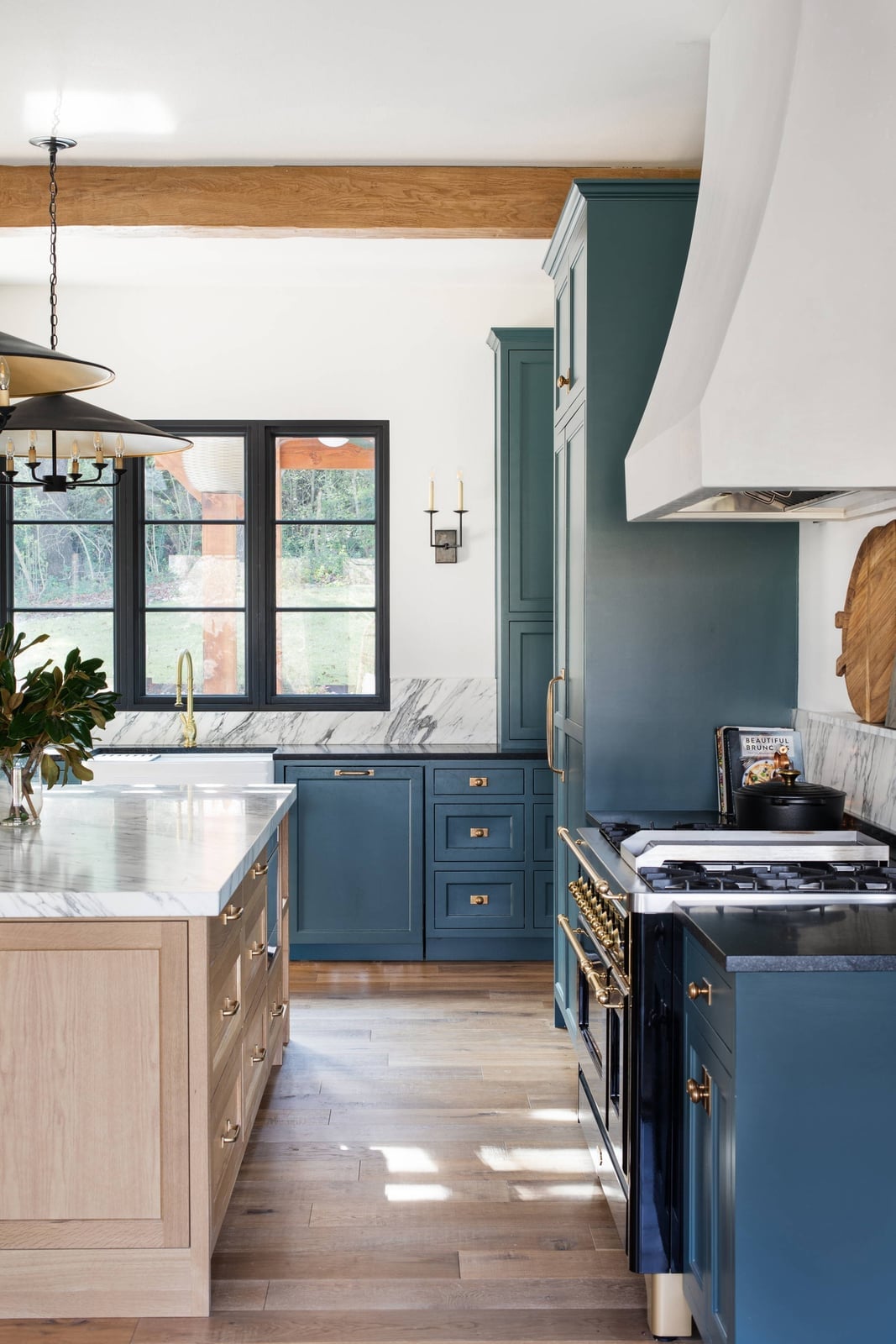
A natural wood island breaks up the deep blue lower cabinets and keeps the kitchen from feeling too saturated. In this open plan transitional kitchen, the blue base cabinets line the perimeter while the island in raw wood adds warmth and a different texture. White uppers keep the walls light, and the marble countertop on the island ties the two tones together. Pendant lights hang low over the wood island, emphasizing the change in material. The ratio here is key: one blue perimeter, one wood island, and white above. It keeps the palette balanced without needing a third accent color.
Crisp White Uppers and a Bold Navy Blue Island in a Modern Farmhouse
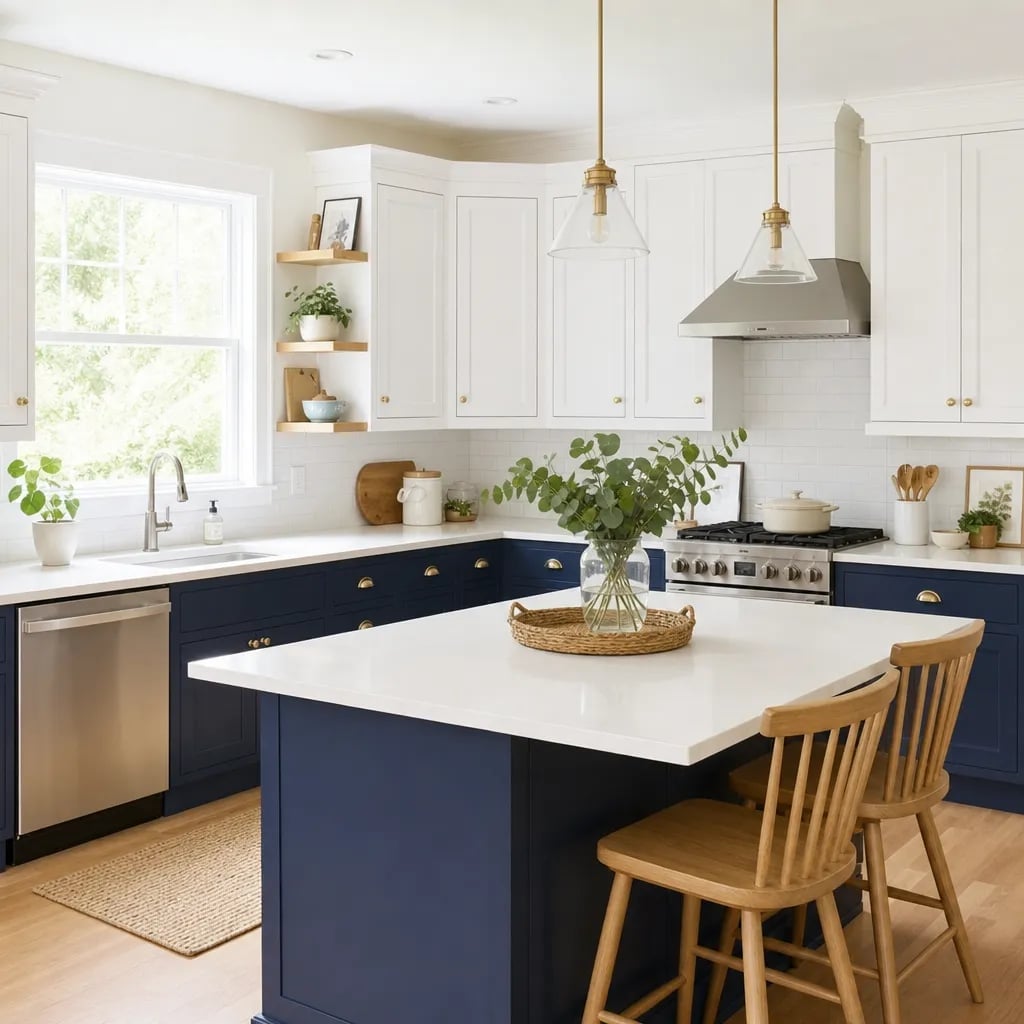
In this modern farmhouse kitchen, a bold navy blue island anchors the room without blocking the work triangle. It sits opposite the range with room to spare for seating. The white upper cabinets keep the perimeter light and open, while the island’s deep hue adds weight at the center. Wood accents and a tile backsplash break up the painted surfaces, so the two-tone scheme feels balanced. Natural light from nearby windows and pendant lights overhead make the navy a deliberate choice.
Dark Wood Lowers with Glass-Front Uppers and Marble Island
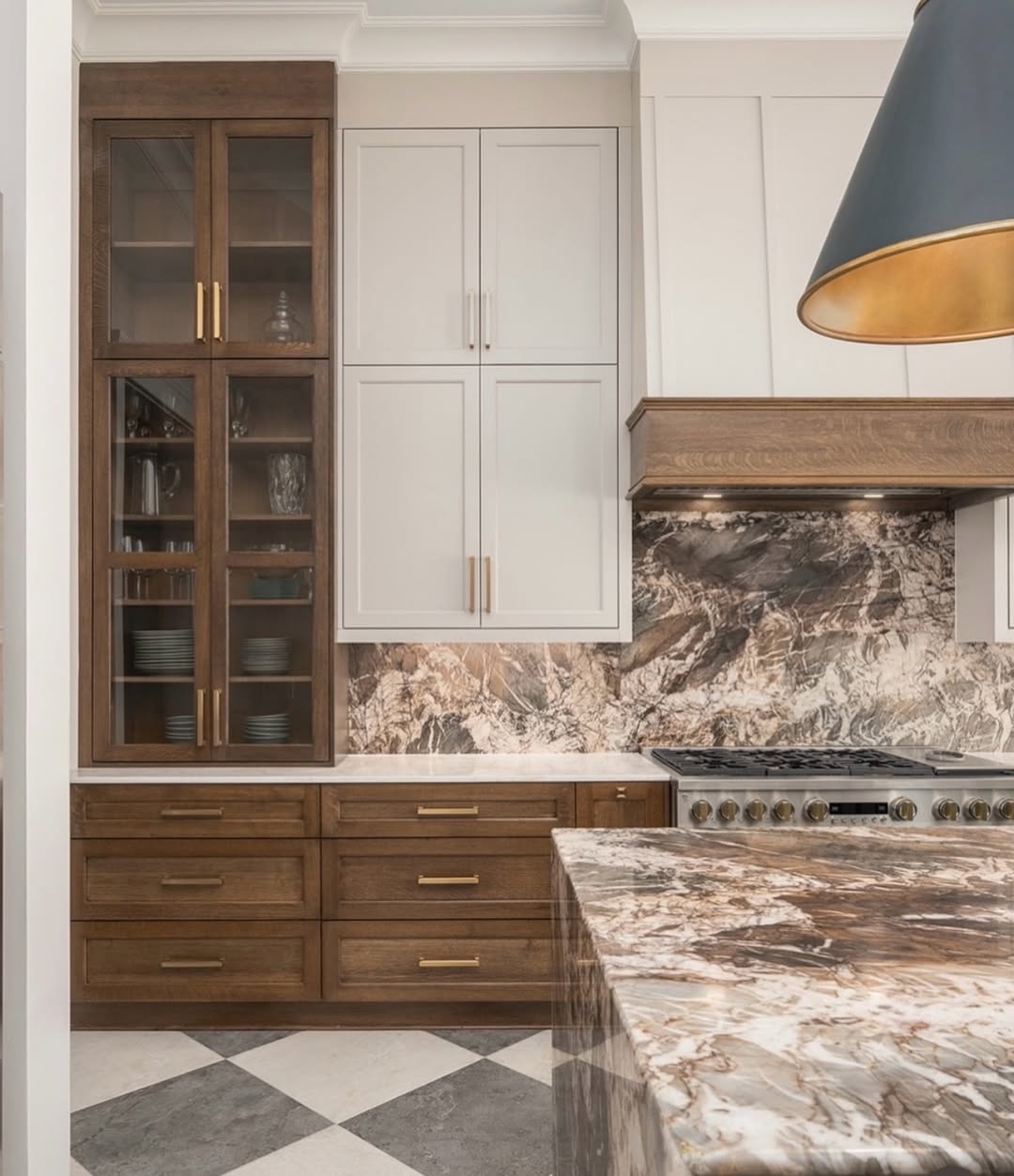
A close alternative to all-solid cabinets would be mixing glass-front uppers with dark wood lowers, but that swap changes the whole rhythm of the room. Here, the dark wood base cabinets ground the kitchen, while the glass-front uppers keep the upper half airy and let you display a few curated pieces. The marble island and matching backsplash tie the two zones together with a consistent cool tone, so the brown of the lowers doesn’t feel isolated.
The palette works because the gray-white marble mediates between the dark wood and the transparent glass. Overhead pendant lights and under-cabinet lighting ensure the glass shelves read clearly at night, not as dark holes. If you’re considering this combination, test your marble sample against the wood stain in both morning and evening light before committing.
Warm Wood Uppers Contrasted with a Bold Green Island
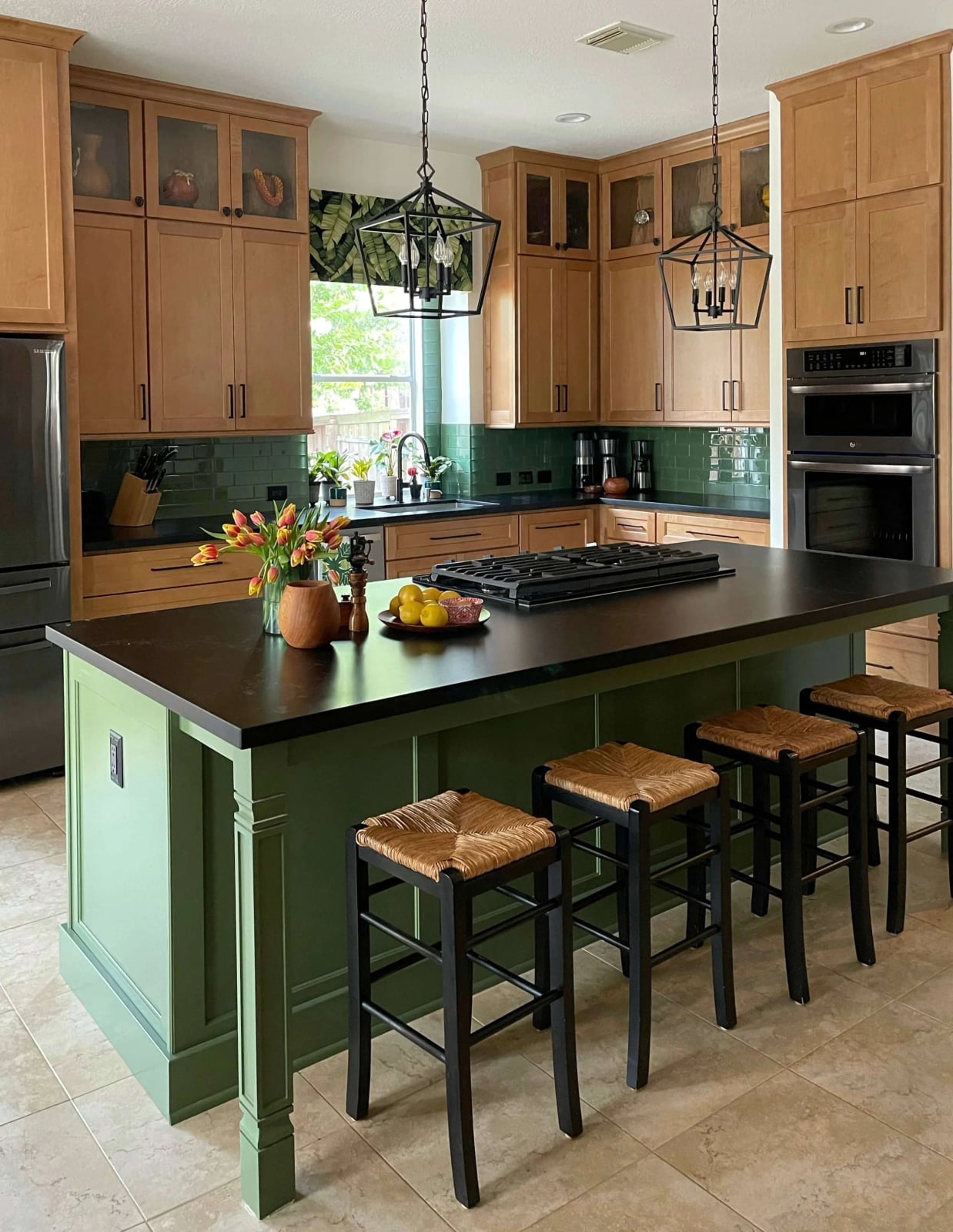
What keeps this kitchen from looking like two separate rooms is the way the wood uppers share the same warm tone as the island’s countertop. The bold green base of the island stands out, but it doesn’t fight the wood because the black pendant lights and metal accents create a neutral bridge between them. Open shelves or a tile backsplash in a similar green would pull the color up, but here the palette stays clean by keeping green only on the island. That restraint is what makes the contrast feel intentional.
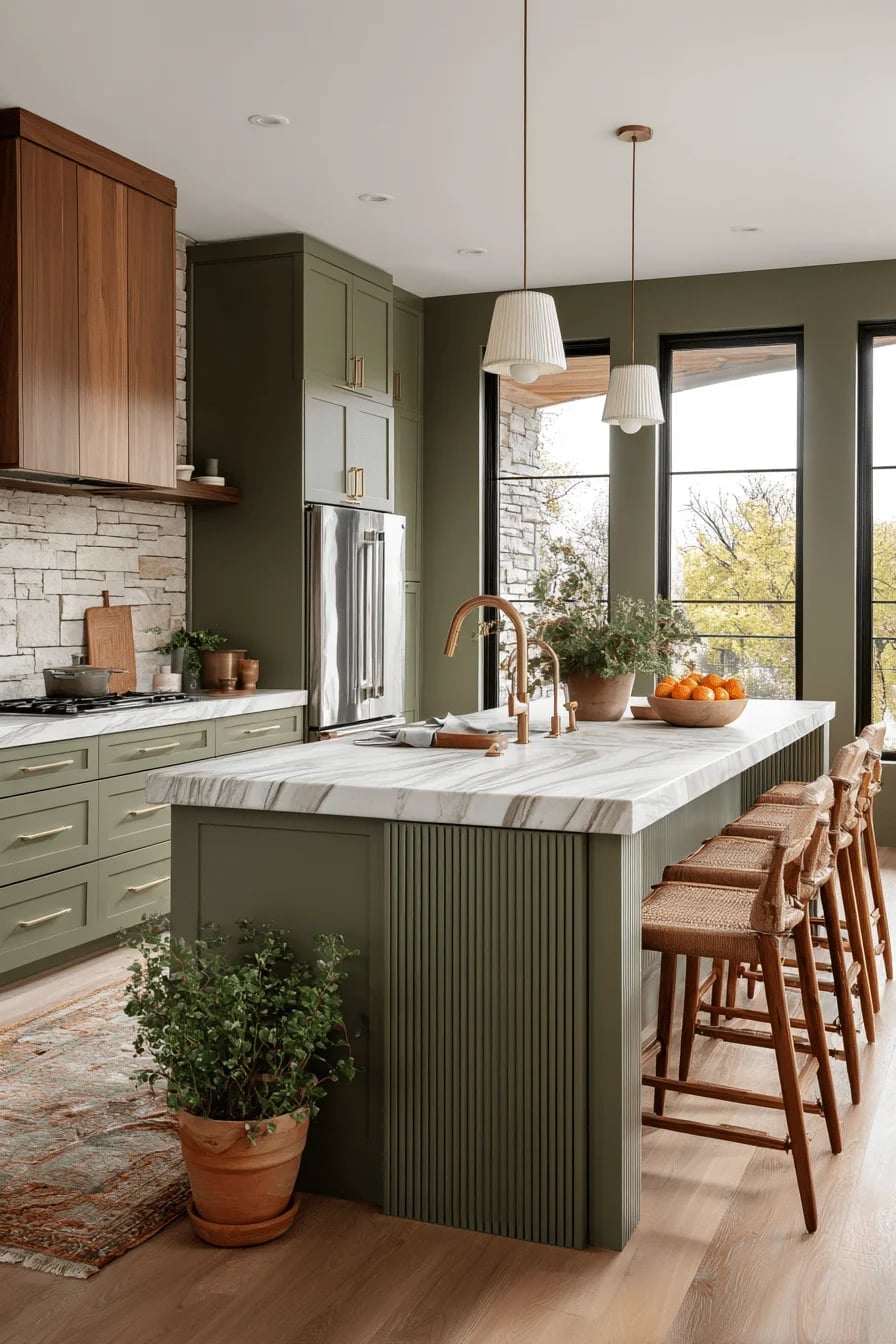
Olive Green Island Shaker Cabinets with White Perimeter Cabinets
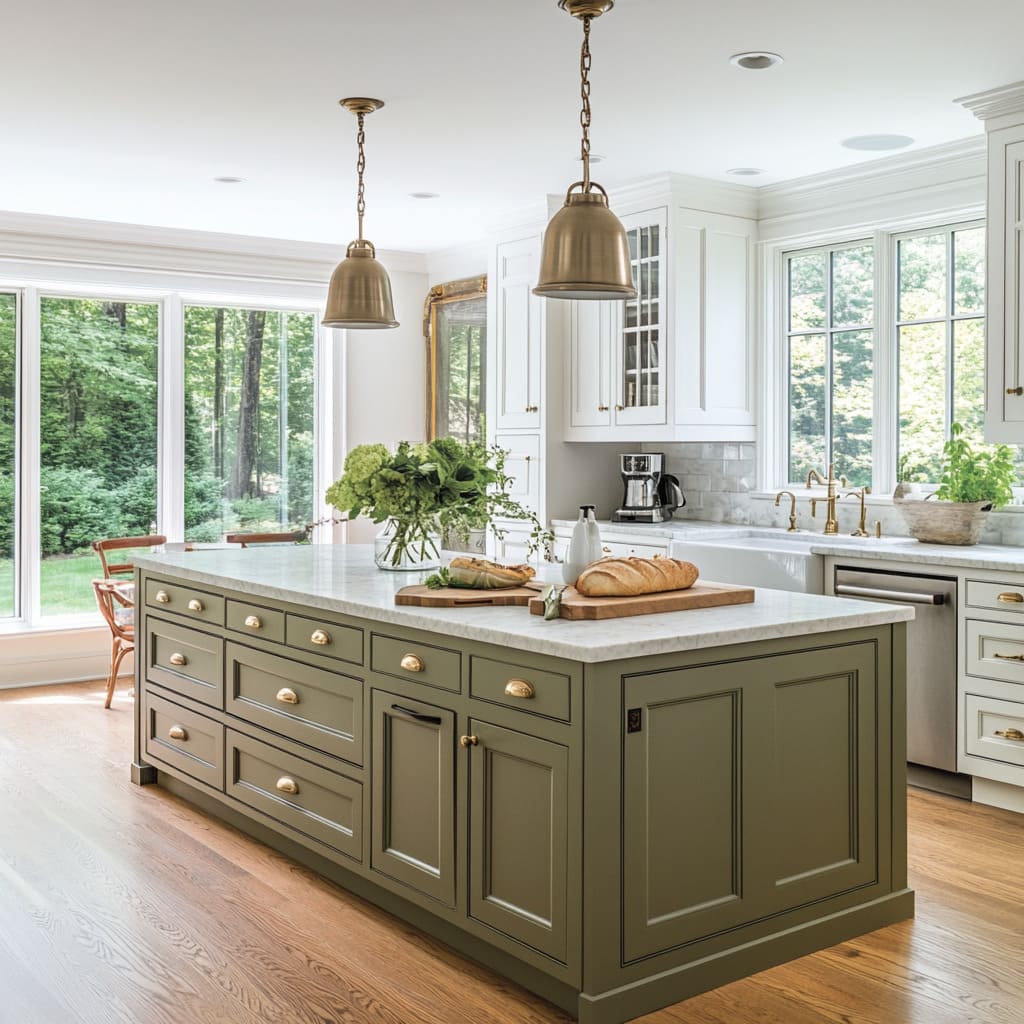
This kitchen works because the layout puts the olive green Shaker island front and center, while white perimeter cabinets recede into the background. The large island offers seating and prep space without crowding the range or sink, and the hardwood floors warm up the white walls and cabinetry. Natural light from nearby windows keeps the olive green from turning muddy, and pendant lights above the island add task lighting. The marble countertop ties the darker base to the lighter perimeter, making the two-tone scheme feel like one cohesive room.
White and Deep Blue Shaker Cabinets with a Wood-Topped Island
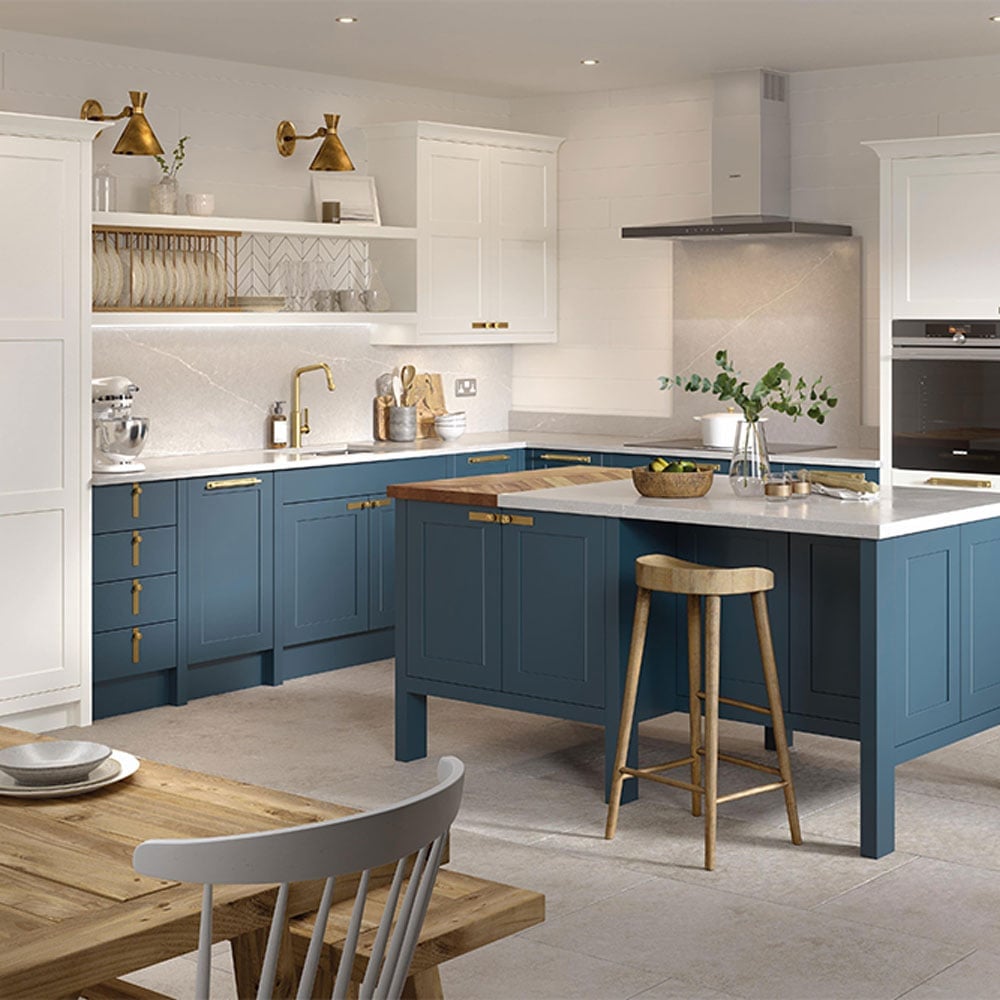
Mixing materials works best when one surface breaks the pattern, and here the wood topped island does exactly that. White Shaker uppers and deep blue lower cabinets form the main two tone scheme, but the island’s wood countertop introduces a third material that keeps the look from feeling too uniform. The marble perimeter counters and tile backsplash add texture without pulling attention from the island.
Natural light from windows and recessed lights keep the deep blue from darkening the room, while wall sconces add warmth at eye level. If you are planning a similar combo, match the wood of the island top to other natural elements in the room. Here it echoes the floors or furniture so the island feels like part of the original plan.
Warm Wood Uppers Paired with White Lower Cabinets
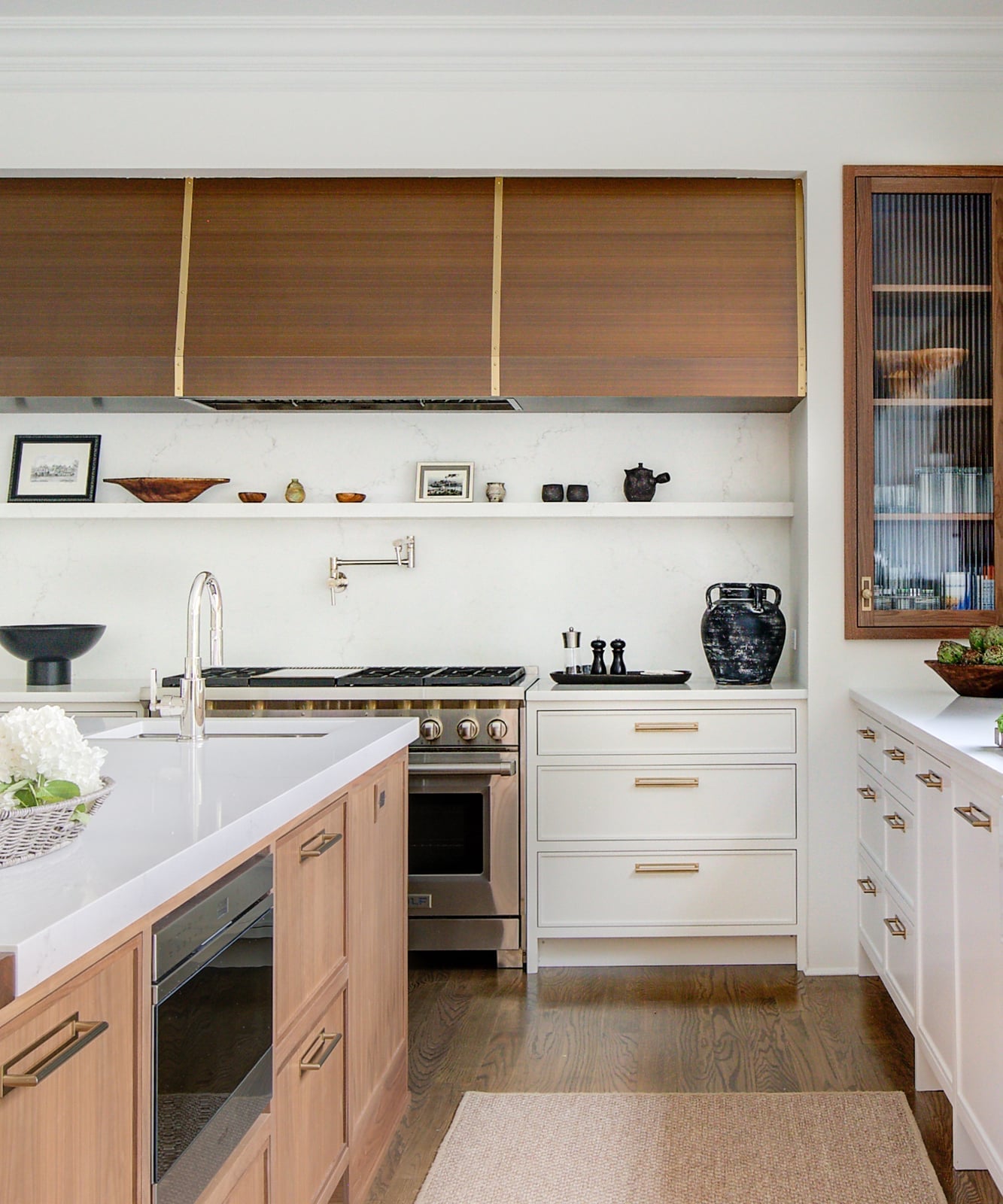
Switching the usual lower color to white and keeping warm wood above is a palette trick that opens up the footprint. The wood uppers here bring a natural grain to eye level, while the white base cabinets and matching island keep the floor plan from feeling top-heavy. Marble countertops and a glass-front range hood reinforce the clean, modern look. The principle behind the swap: darker tones above ground a kitchen visually, but lighter lowers reflect light from the floor up, making a roomy layout feel even more spacious.
Natural Wood Uppers with Green Lower Cabinets and Quartz Island
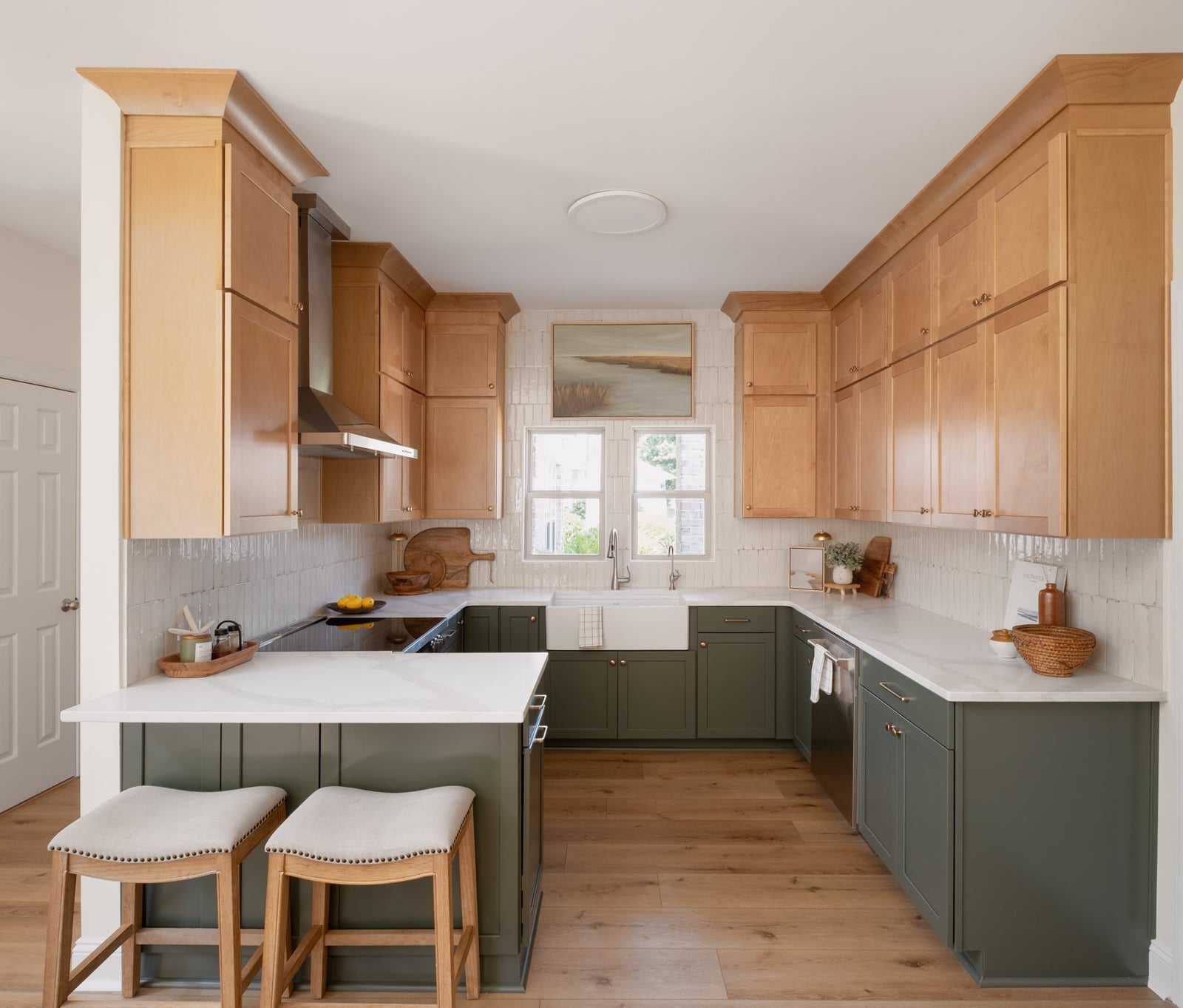
A practical rule for renters: two-tone cabinets can be achieved without replacing anything. In this transitional kitchen, the existing natural wood uppers stay, and the lower cabinets are painted a muted green. The island gets a quartz top and the same green base, tying the U-shape together. Recessed and under-cabinet lights keep the green from reading as dark in a roomy space. The palette works because the wood grain breaks up the solid color below, and the white walls and quartz keep the look balanced. For a rental, ask your landlord about painting lowers only or use removable vinyl wrap on the doors.
Forest Green Cabinets with Natural Wood Tones and Marble Island
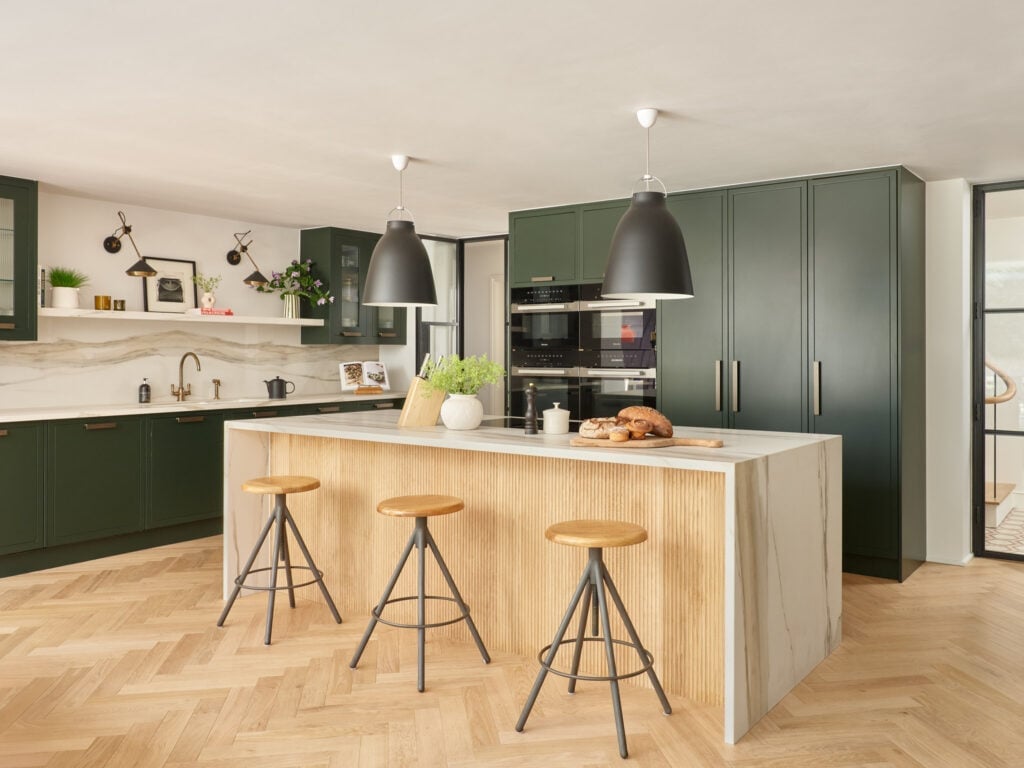
Forest green cabinets read as a statement, but here they are softened by warm wood tones and a marble island. The look is modern, not moody, because the green is confined to the perimeter cabinets while the island and open shelving stay in natural wood. Overhead pendant lights cast a warm glow across the marble, keeping the roomy kitchen from feeling too dark. What breaks the look is clutter: the deep green absorbs visual noise, so keeping countertops clear lets the wood and stone stand out. The marble island adds a lighter anchor in the center, balancing the darker perimeter. This palette works best in kitchens with good ambient light, since the green can read as flat without enough illumination.
Vibrant Green Island Contrasting with White Upper Cabinets
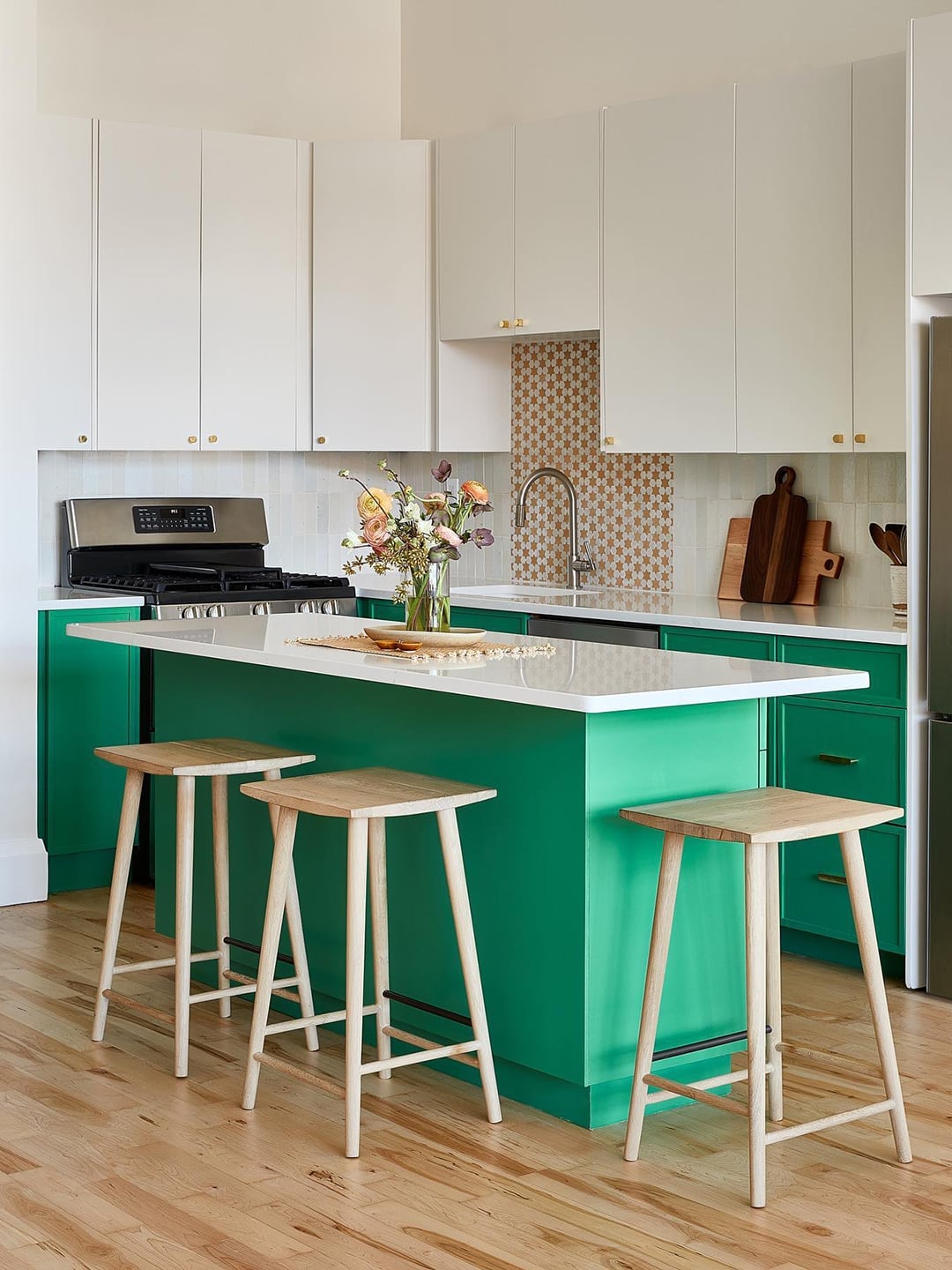
A vibrant green island stops the eye without overwhelming the room. The white upper cabinets and perimeter keep the kitchen light and open, while the island becomes the focal point. Wood stools add a natural contrast that ties the green back to the warm tones in the room. A bold color on an island works because it is a separate piece, not a wall of cabinetry. Windows and an overhead pendant keep the green bright. This approach gives a kitchen personality without committing to a full color overhaul.
Sage Green Cabinets with White Beadboard Walls and Wood Island
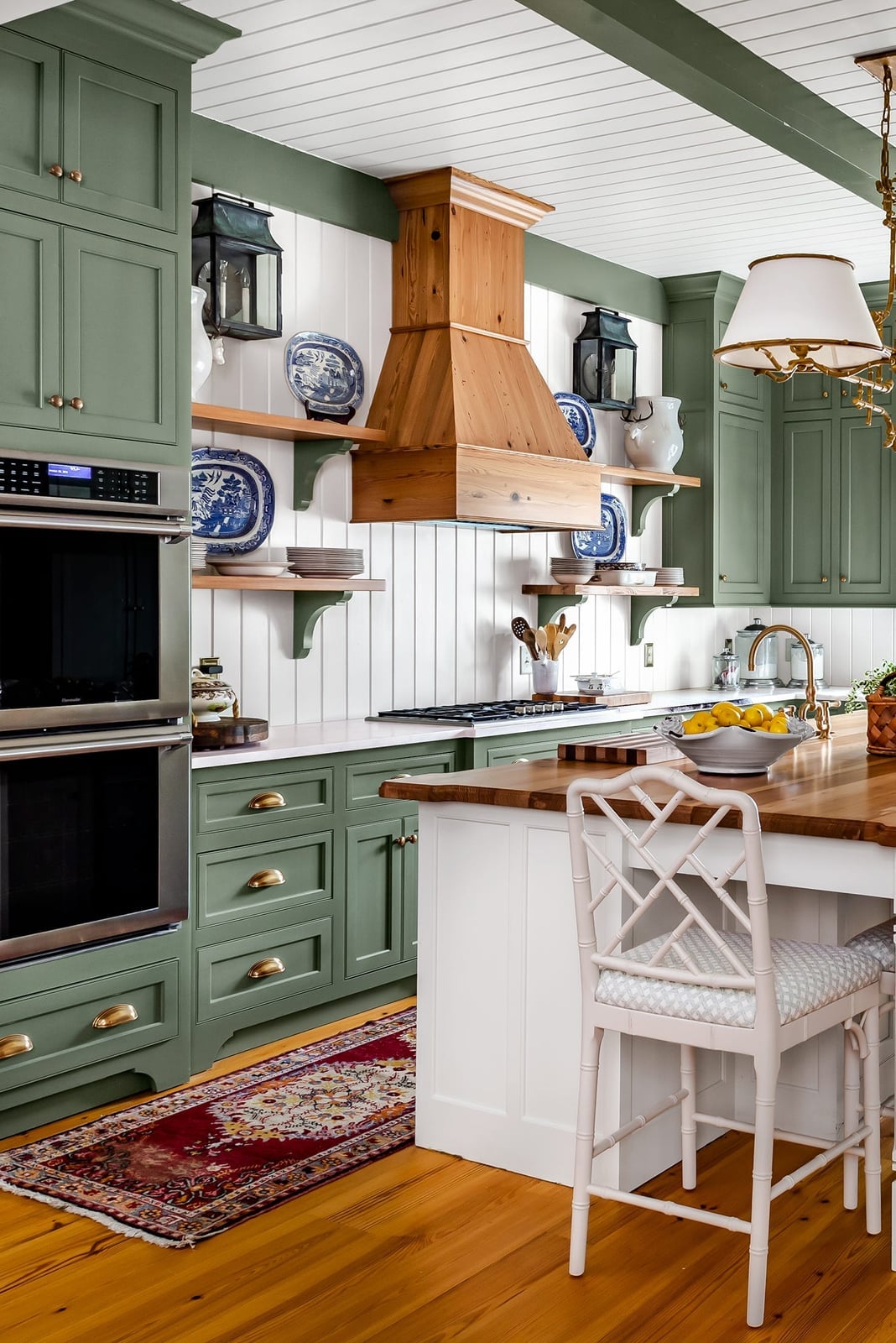
Sage green cabinets in a farmhouse kitchen need a light backdrop to keep them from reading as drab. White beadboard walls and a wood island with a butcher-block top provide that contrast. The scale works because the L-shape layout and roomy island give the sage enough surface area to register as a dominant color, not an accent. The wood island adds warmth, and the white walls keep the space airy. The style-defining ratio here is roughly two-thirds sage to one-third wood and white, which keeps the farmhouse look fresh. What breaks it: too much white trim or too many competing patterns on the tile backsplash.
White Upper Cabinets with Gray Island Cabinets and Marble Countertops
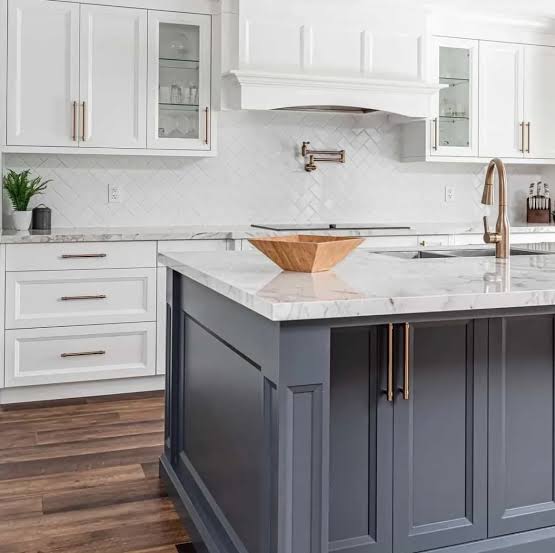
For a kitchen with a large island, use the island as the contrast point. The perimeter stays neutral with white upper cabinets, while the island gets a gray finish that anchors the room. The marble countertops tie both sides together, and brass hardware adds a warm touch. The layout works because the white uppers keep the space open, and the gray island provides a visual break without overwhelming the room.
Blush Pink and Cream Cabinets with Light Wood Accents
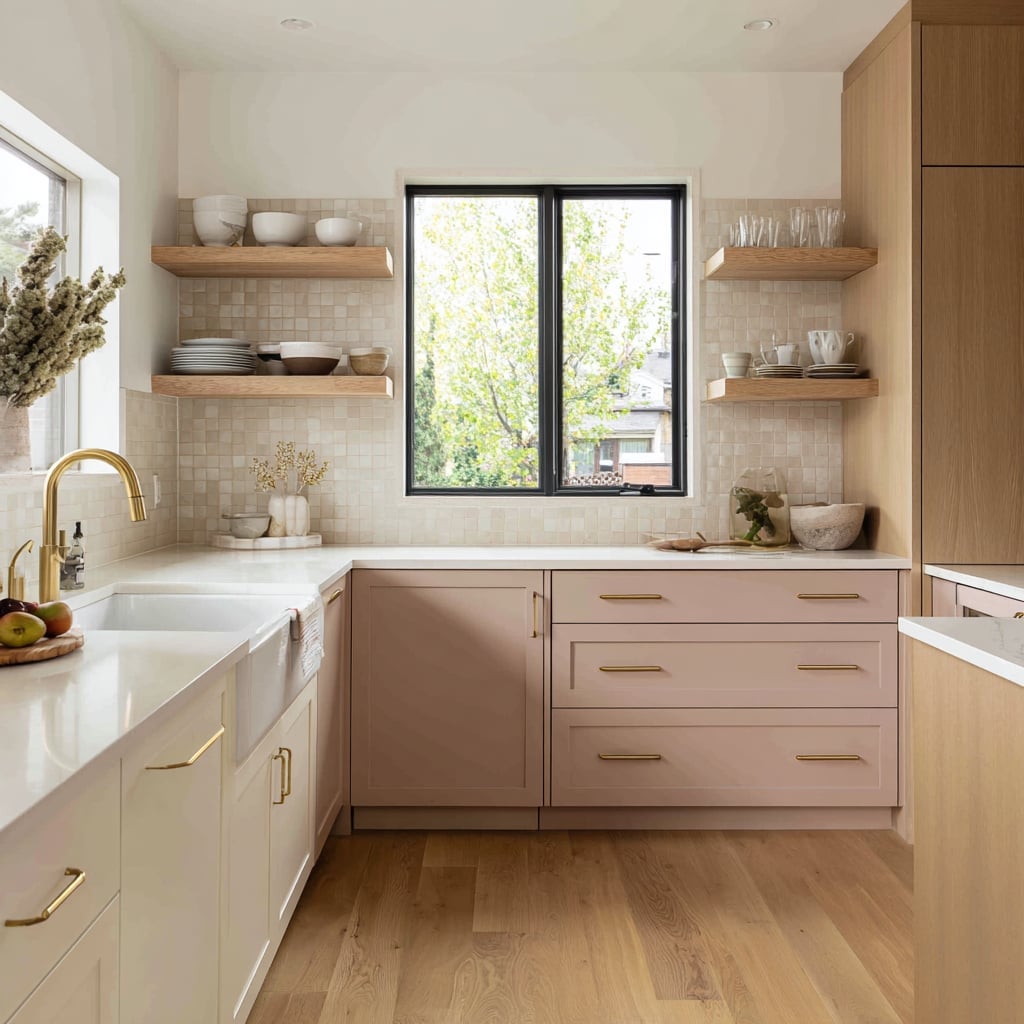
Blush pink lower cabinets sit beneath cream uppers in this compact kitchen, with light wood accents on the island and open shelving. The palette keeps the room soft because the cream and wood tones ground the pink. Recessed lights and natural window light prevent the blush from looking overly pastel.
White Uppers and Wood-Toned Lowers with Gray Marble Island
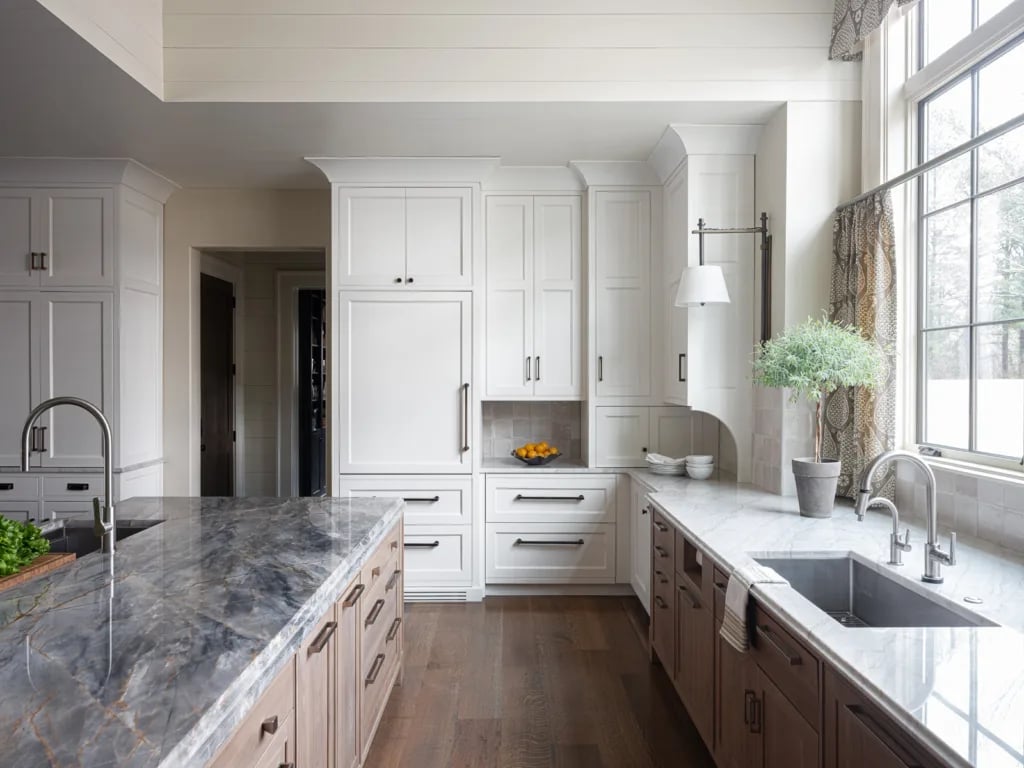
A practical rule for combining wood and marble is to let one material dominate and the other accent. Here, the wood-toned lowers and white uppers are the main act, while the gray marble island top adds a cool counterpoint. The farmhouse sink fits the style, and the linear cabinet layout keeps the room feeling orderly. The wood brings warmth, the marble brings polish, and neither fights for attention.
Light Wood and Off-White Two-Tone Cabinets with Stone Island
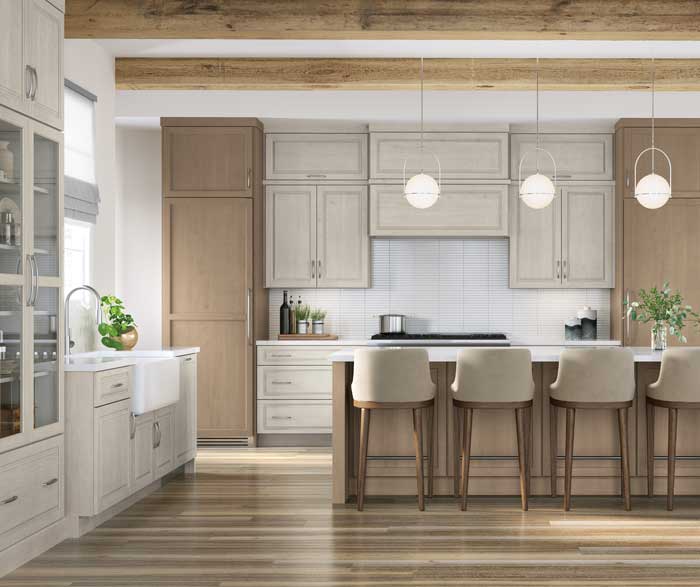
This kitchen sets light wood cabinets against off-white uppers, which is a close alternative to all-white cabinetry but with more warmth. The stone island adds weight, and pendant lights hang above it to define the work zone. The light wood looks modern because the finish is smooth and the lines are clean. The off-white prevents the room from feeling too dark, while the wood adds texture.
Gray Base Cabinets with Wooden Countertop and White Glass-Front Uppers
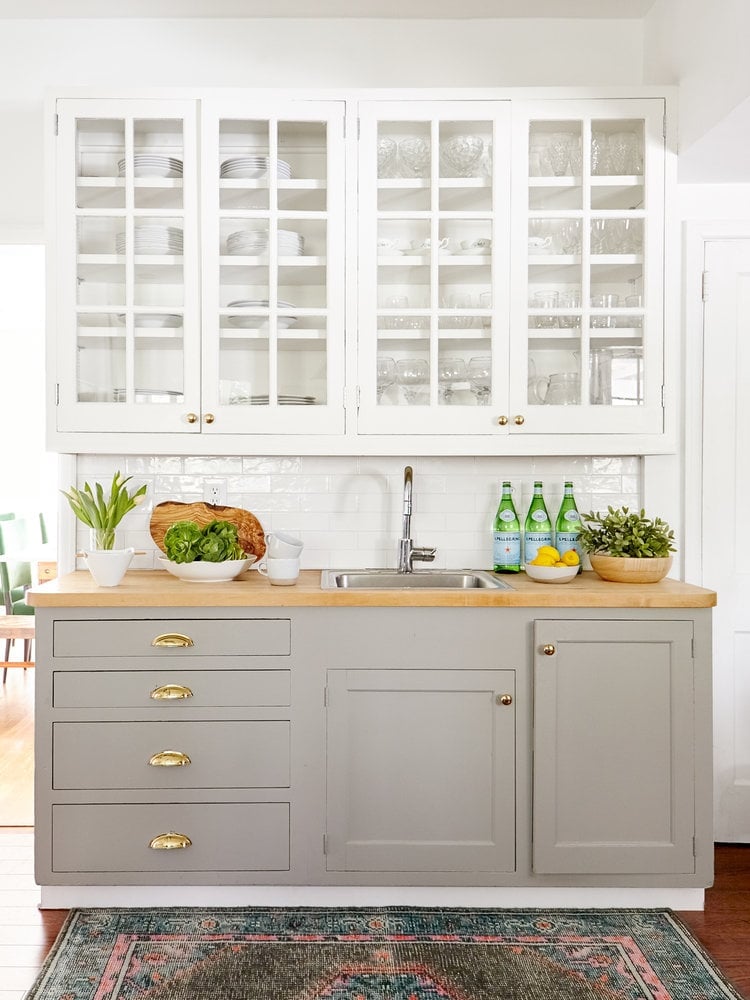
Gray base cabinets with a wooden countertop create a sturdy foundation, while white glass-front uppers keep the room open. The glass fronts mean you need to keep the contents tidy, but they also break up the solid wall of cabinets. The wooden countertop adds a warm, practical surface that contrasts with the gray below.
Farmhouse Island with Light Green Base and White Countertop
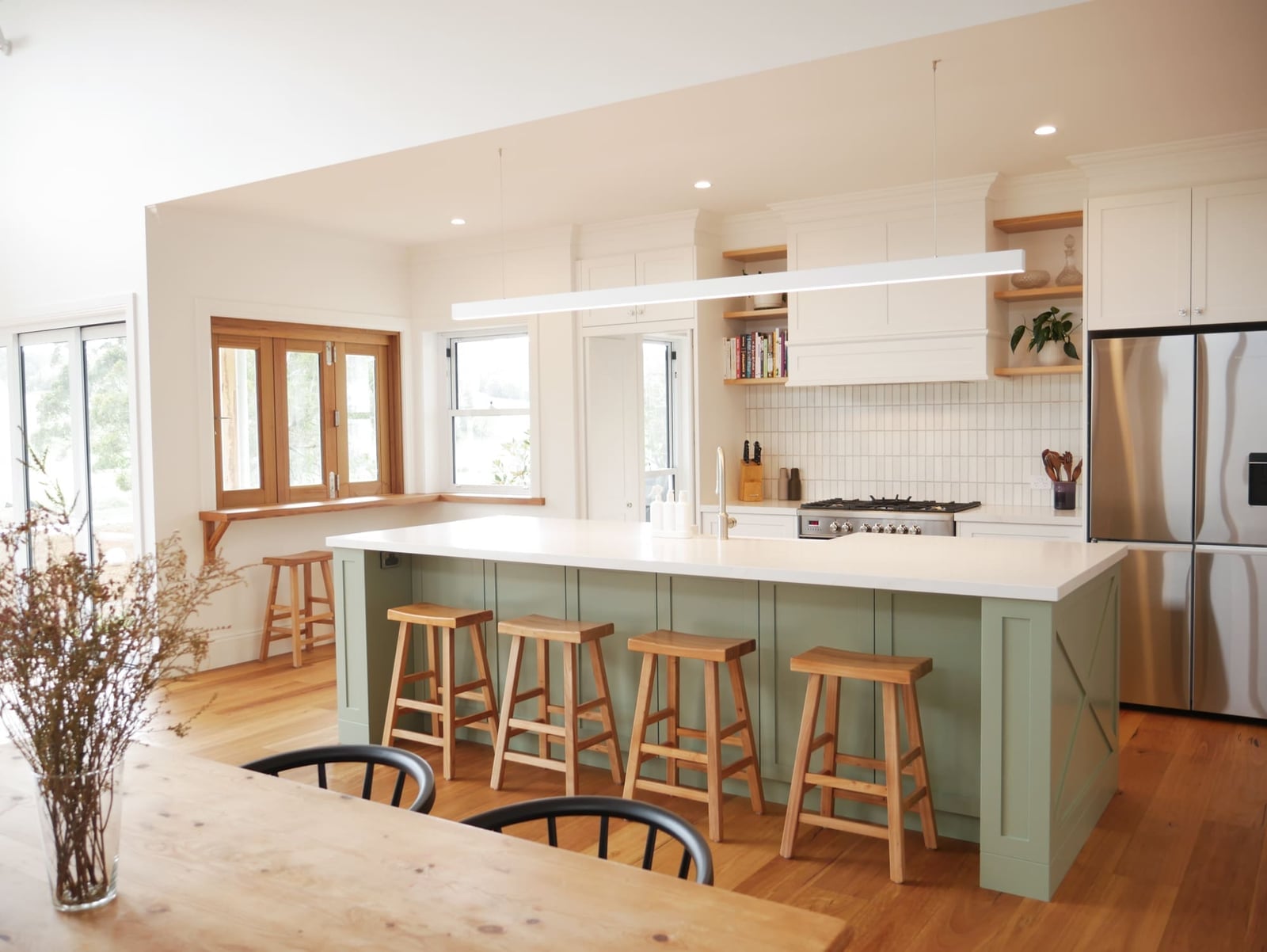
This light green island base is a budget-friendly swap that gives the farmhouse kitchen a fresh focal point without a full cabinet overhaul. The soft green reads as neutral against the white countertop and perimeter cabinets, while the wood stools and tile backsplash add warmth and texture. Painting just the island lets you test a color you love without committing to every cabinet in the room. If you rent, check with your landlord first or use a peel-and-stick contact paper in a matching shade for a similar effect that peels off later.
Dark Green Lowers and White Uppers with Open Shelving
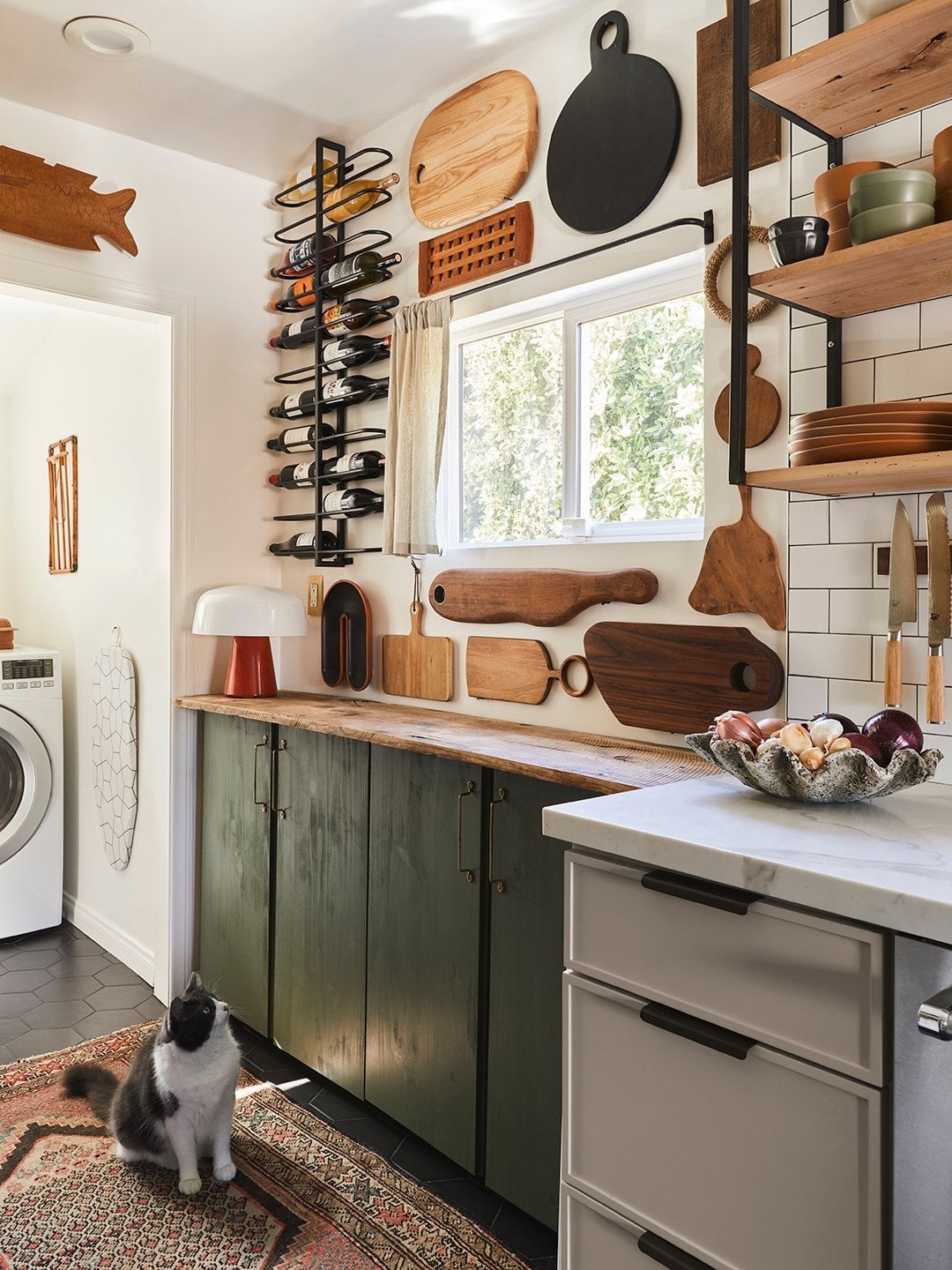
If you like the look of two-tone cabinets but cannot paint the lowers, open shelving offers a close alternative. The dark green base cabinets anchor the compact kitchen, while the white uppers keep the space from feeling closed in. Open shelves above the counter break up the wall and display a collection of cutting boards, adding function and personality. For renters, swapping out solid upper doors for open shelves is non-permanent if you store the original doors. Pair the green with warm wood tones in the cutting boards and natural light to keep the palette grounded and avoid a cold feel.
Blue-Gray Island Cabinets with White Perimeter Cabinets and Shiplap
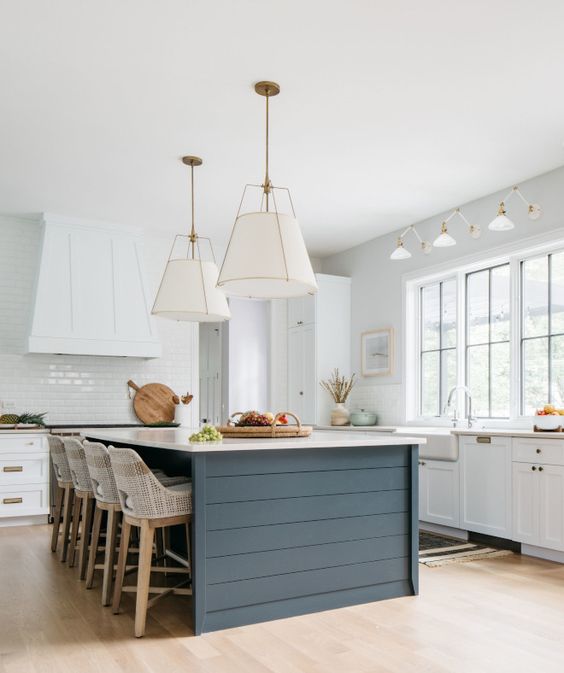
The blue-gray island cabinets pair with white perimeter cabinets and a shiplap detail to create a modern farmhouse look that feels coastal and grounded. Woven textures in the bar stools and marble on the island add contrast. Pendant lights above the island draw the eye to the blue-gray base, making it the natural gathering spot in the roomy open plan.
White Uppers and Dark Wood Lowers with Blue Herringbone Tile
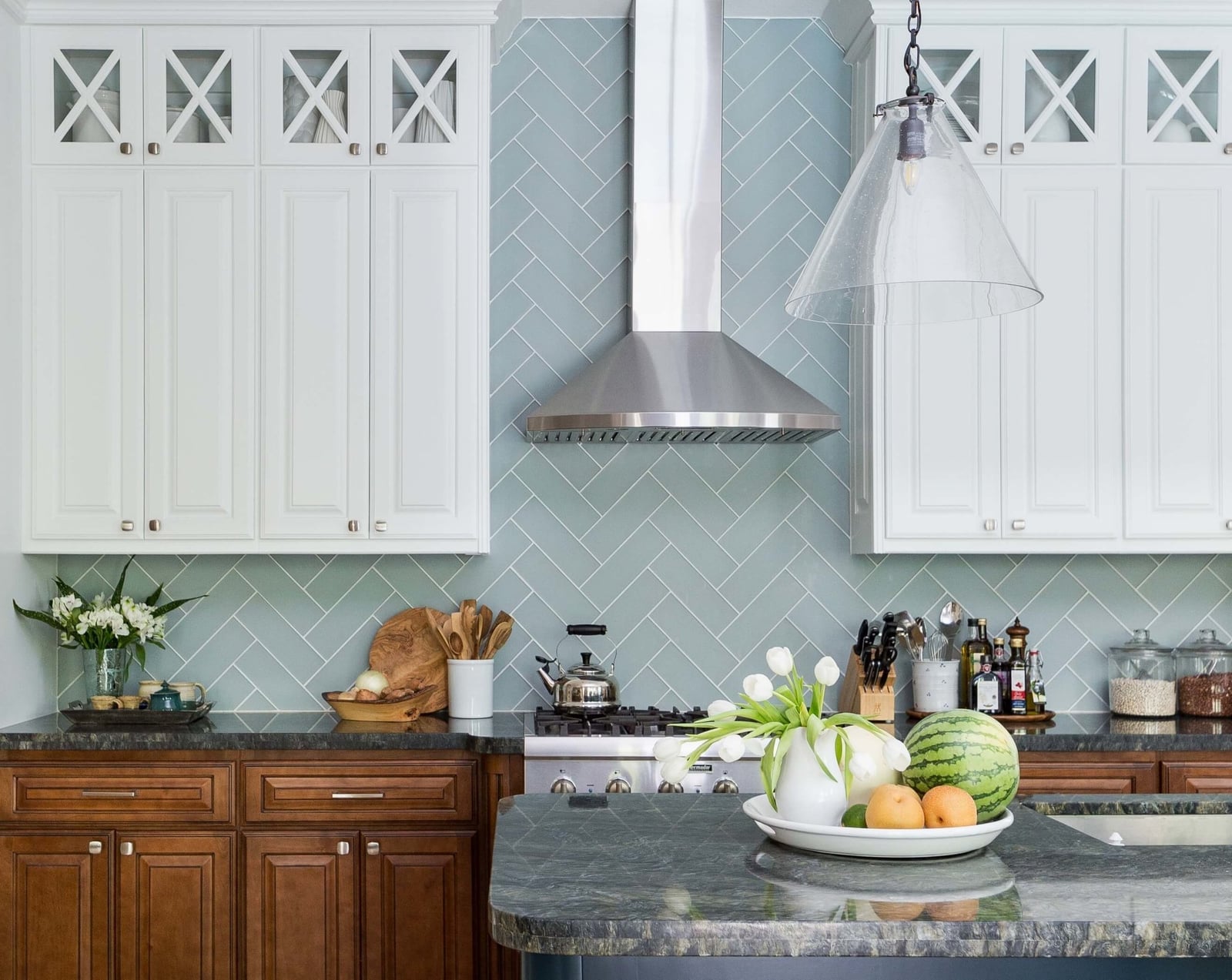
The blue herringbone tile backsplash is the standout detail in this compact kitchen, bridging the white uppers and dark wood lowers. The stone countertop on the lowers adds a durable surface that ties the wood and tile together. Pendant and recessed lights keep the space bright, which matters when the lowers are a dark wood that can feel heavy in a smaller layout. The tile pattern adds movement without needing a bold cabinet color, making this a smart pick for a coastal or transitional style.
Final Thoughts
Two-tone cabinets are less about trend and more about solving real problems: making a small kitchen feel airy, grounding a large one, or giving an island its own job. The most successful pairings keep one color as the anchor and the other as the accent, usually with a light upper to keep sightlines open. Maintenance is straightforward if you stick with satin or semi-gloss paint on lowers. They wipe clean easier. For wood, a periodic clean with a damp cloth and mild soap is enough. The real win is that you don’t need new countertops or backsplash to change the whole feel; a fresh two-tone scheme can do it alone.