A vegetable garden can be more than rows of dirt and stakes. With a little planning, it becomes a structured part of your yard that looks good even when nothing is ripe. These 26 vegetable garden design ideas focus on layout, materials, and how the space lives from spring through fall.
Whether you have a sprawling backyard or a narrow side yard, there is a setup here that keeps plants organized and within reach. No need for a greenhouse or a full-time gardener, just a willingness to think about paths, beds, and what grows where.
Organized Raised Beds with Modern Farmhouse Charm
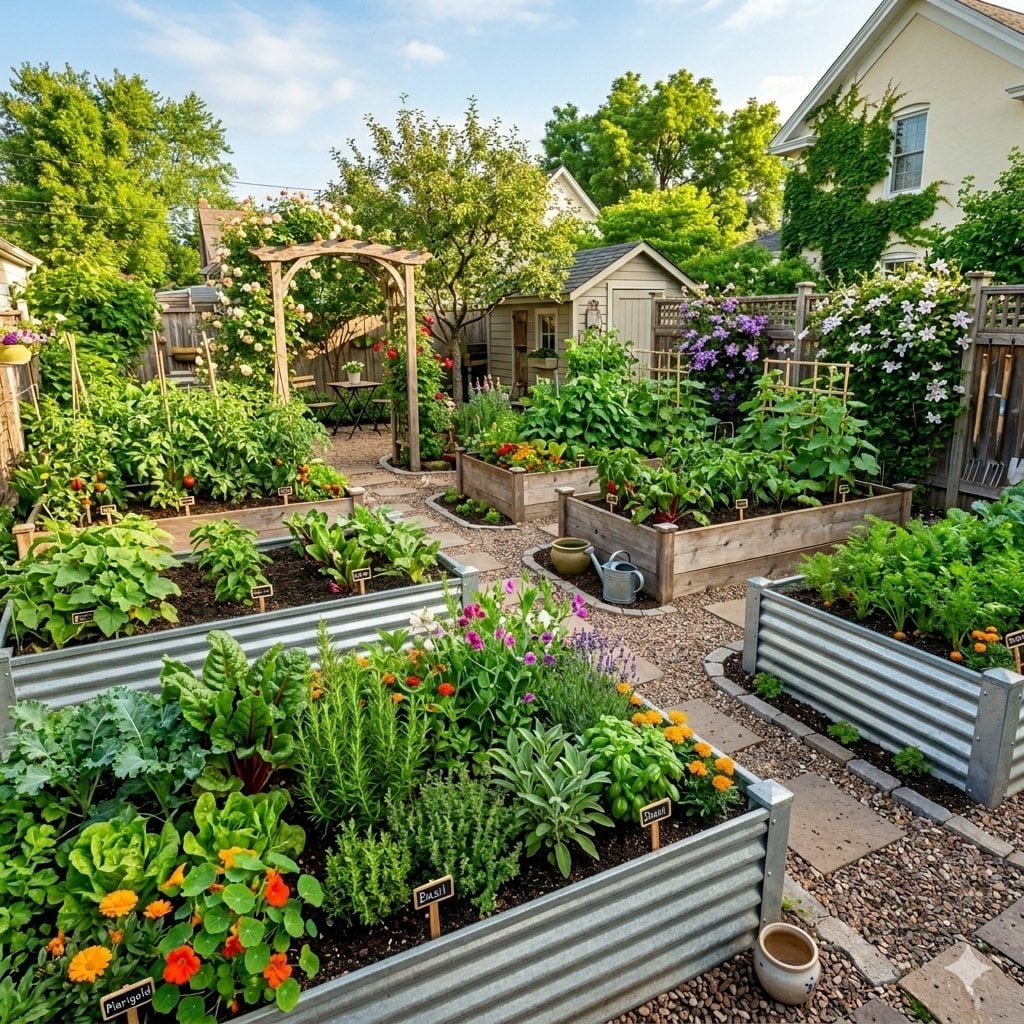
A grid of raised beds turns a backyard into something you can manage without guessing. The modern farmhouse raised garden bed layout keeps rows parallel and paths wide enough for a wheelbarrow, which matters more than the shed matching the fence. Wood and metal frames sit on gravel, so mud stays off your shoes and the beds drain well. An archway and a small bench add the farmhouse part without getting in the way of the vegetables. The whole space reads as intentional, but the real win is how easy it makes planting and weeding.
Formal Garden Elegance with a Central Greenhouse
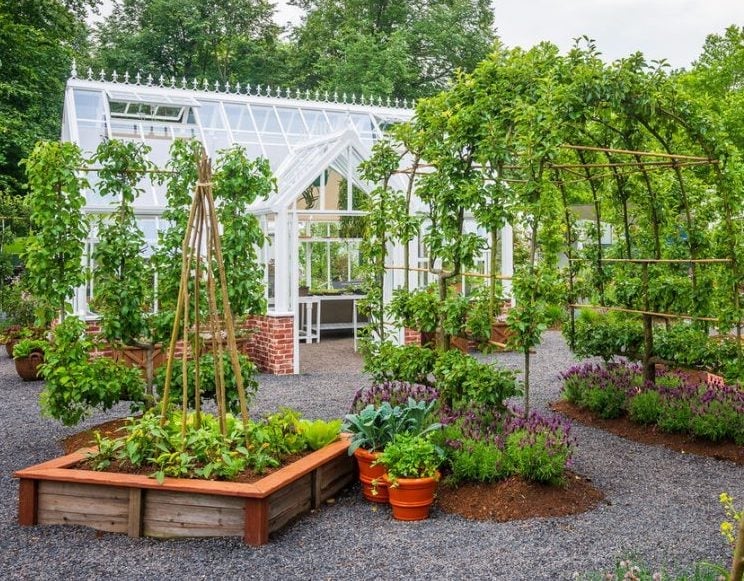
This garden uses a white greenhouse as the anchor, and everything else steps back in line. Glass and metal make the greenhouse feel lighter than its size suggests, while brick paths and gravel keep the ground neutral. Espaliered trees along the edges train fruit flat against the wall, which saves width and looks tidy. A bamboo trellis adds vertical structure for peas or beans without blocking the greenhouse view. The palette stays green and white with touches of gray and brown, so the eye moves straight to the greenhouse without distraction.
Traditional Geometric Raised Beds for Orderly Planting
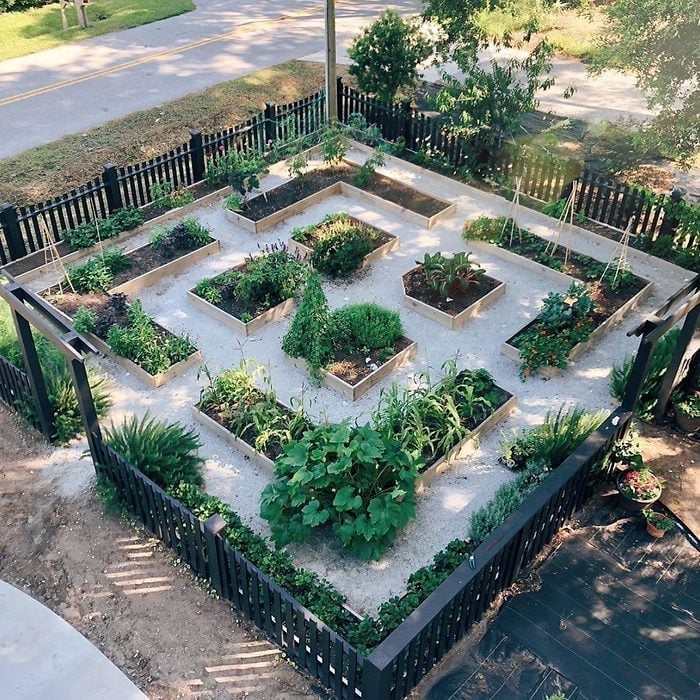
How do you lay out a garden so it looks good empty and better full? Square and rectangular beds in a repeating pattern are the answer. The geometric raised garden bed layout uses a mix of shapes that align with a black fence, creating a clean edge. Wood frames hold the soil, and gravel paths run between them so you never step on wet ground. Soft daylight keeps shadows short, which helps when you are mapping out where each crop goes. The layout works because the beds are spaced evenly, leaving room to kneel and reach the center from any side. It is a system that makes crop rotation simple and weeding less of a chore.
Informal Garden with Lush, Overflowing Vegetable Beds
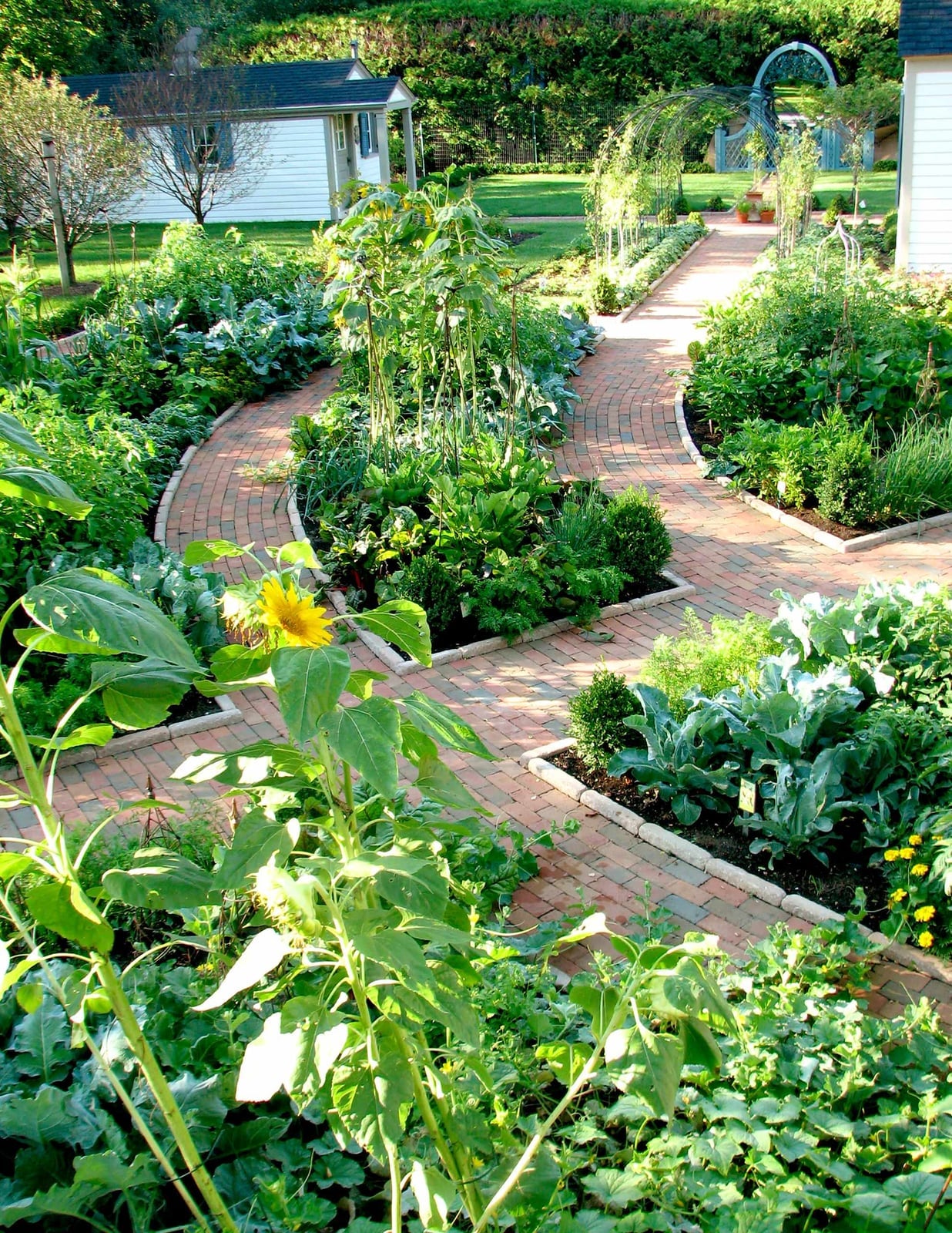
Curved brick pathways wind between raised beds that are packed so full the leaves spill over the edges. A sunflower rises above the rest, adding height and a flash of yellow against all that green. The informal garden design lets vegetables and flowers mingle, so you get pollination help and a softer look. Bright daylight makes the dense planting feel generous rather than messy. The brick paths stay dry and give the eye a clear route through the chaos.
Modern Garden with Horizontal Wood Paneling Feature
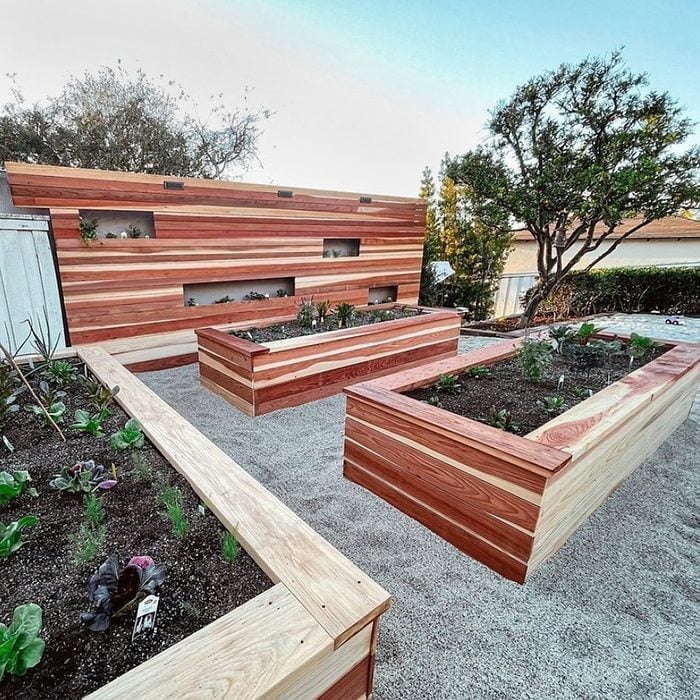
A practical rule for a modern garden is to let one material repeat so the eye knows where to land. Here, horizontal wood paneling covers a wall behind the beds, and the same wood shows up in the modular planters. Gravel spreads underfoot, which keeps the look clean and the weeds down. The planters are scattered rather than lined up, so the garden feels looser than a traditional grid. Bright daylight hits the paneling and makes the grain visible, which adds texture without extra color. The wood ties the whole garden together without needing a single coat of paint.
Space-Saving Vertical Planters on a Garden Wall
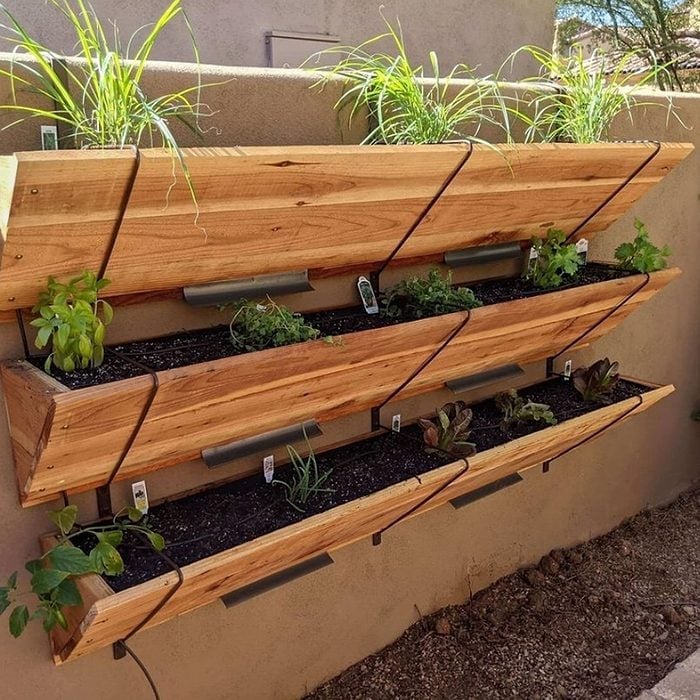
A stack of tiered wooden planters changes the game if you thought a garden wall was wasted space. Metal brackets hold each angled box, so water reaches every level without pooling at the base. The wood tones warm up the beige wall, while the green foliage softens the hard lines. This setup works for compact patios where floor space is precious. The layout keeps herbs and small greens within easy reach, and the wall mount means no bending or kneeling. A design principle worth borrowing: use vertical layers to turn a blank wall into productive garden real estate, not just decoration.
Naturalistic Garden with Dense, Lush Greenery
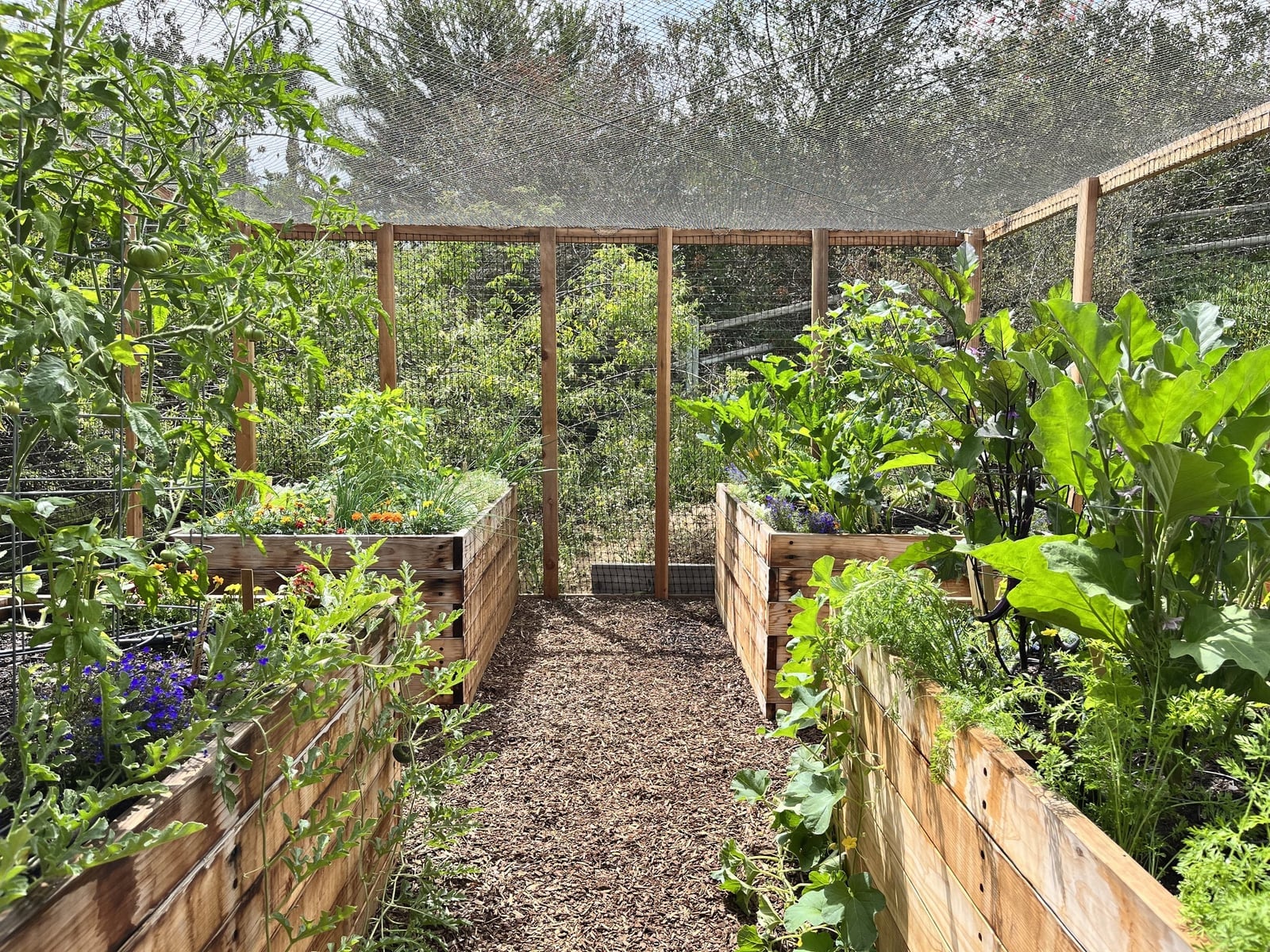
The pathway between raised beds is almost hidden by the sheer volume of leaves. Dense foliage spills over the wooden edges, and netting arches overhead to support climbing plants. The brown wood and green leaves blend into one abundant mass, making the garden feel larger than its actual footprint. For renters, the takeaway is that you can achieve this look with portable raised beds and a few trellises. No permanent changes needed, just good soil and a willingness to let plants take over.
Modern Herb Spiral for Compact Vertical Gardening
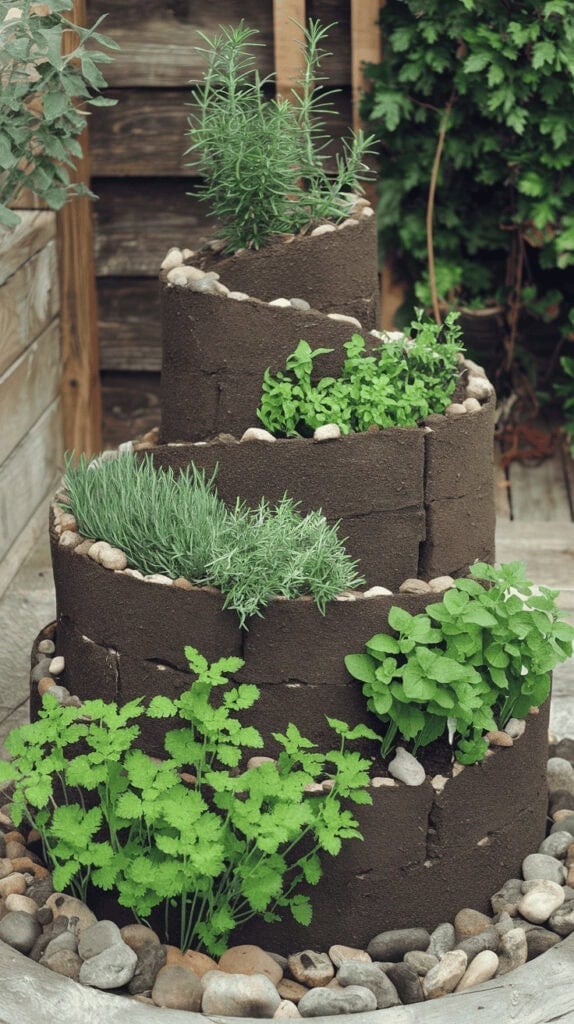
A concrete and stone spiral rising from the soil is both practical and sculptural. The compact footprint holds a variety of herbs, each planted at a different height to capture sun or shade as needed. The brown stone and green foliage keep the palette grounded and natural. This layout is a smart solution for small yards where every inch counts. The spiral shape creates microclimates within one planter, so you can grow rosemary at the top and mint near the base without conflict.
Neatly Divided Raised Bed for Precise Planting
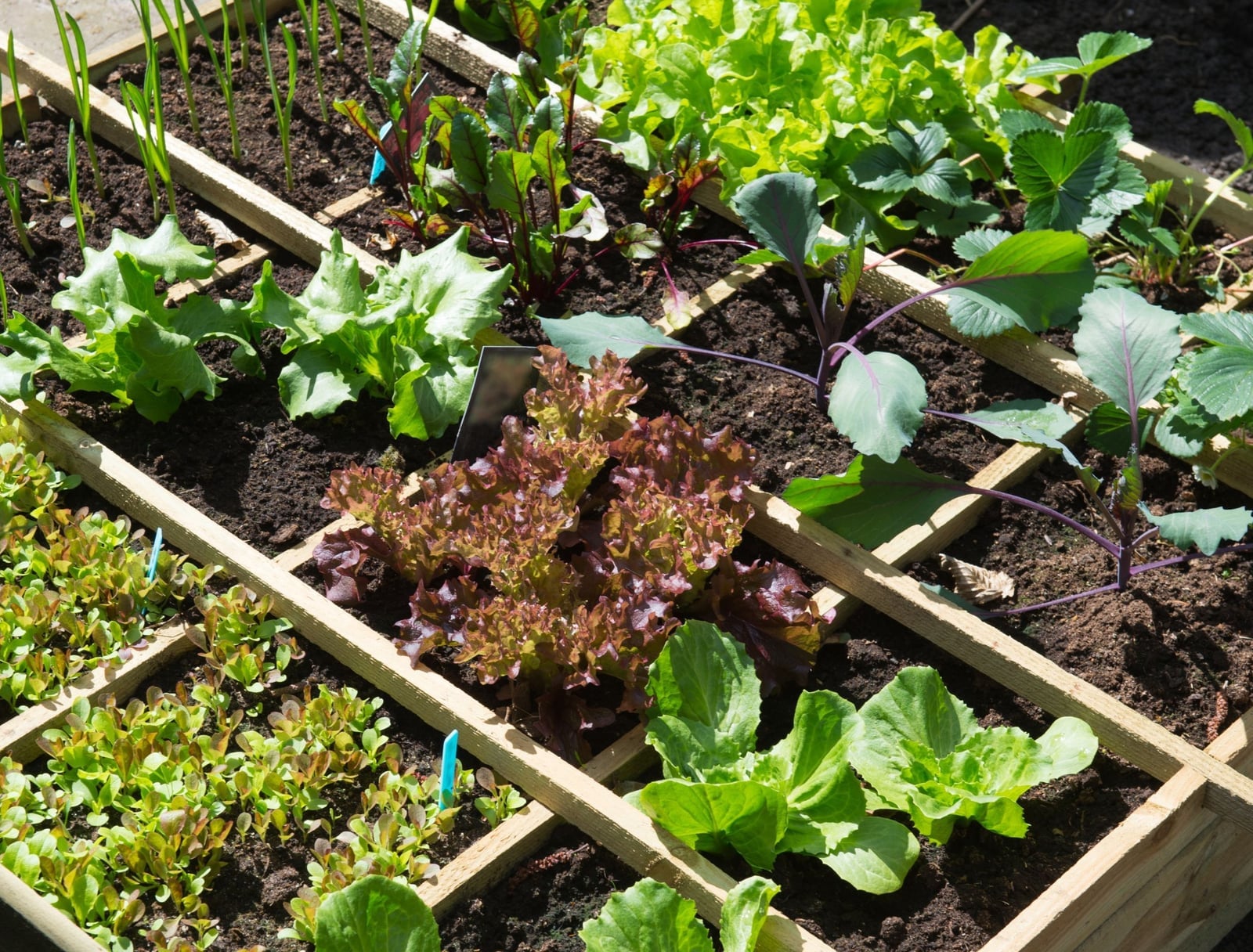
Can you keep different vegetables from tangling roots without separate pots? A raised bed with grid dividers answers that question. The wooden frame holds square sections, each filled with a single crop like lettuce or peppers. The red of ripe tomatoes contrasts with the green leaves and brown soil, making the bed look intentional and orderly. This layout is ideal for gardeners who want to rotate crops or control spacing. The dividers also make it easier to reach each section without stepping on the soil.
Farmhouse Garden with Vibrant Marigolds and Raised Beds
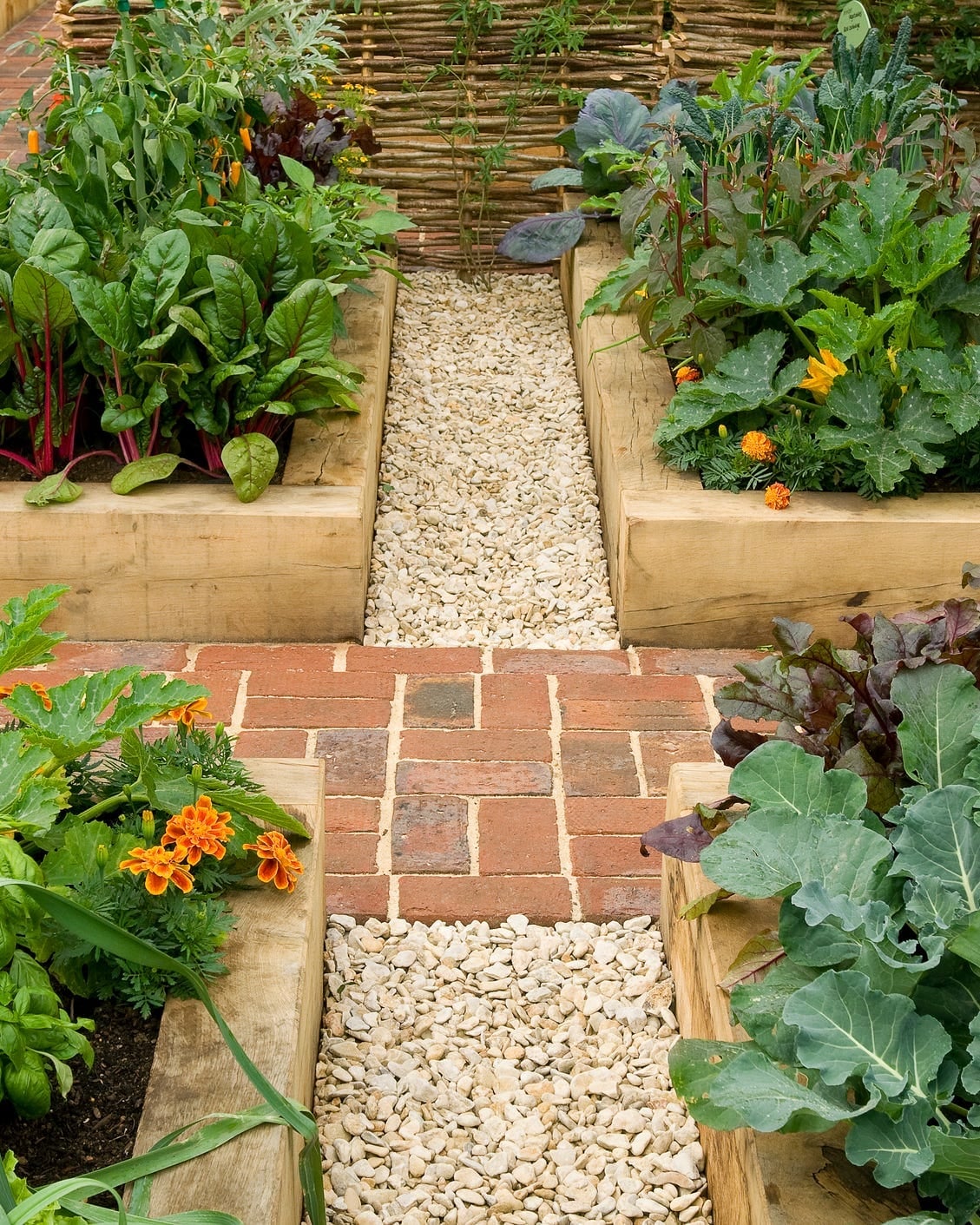
Bright orange marigolds stand out against the green kale and deep red beets in these wooden raised beds. A gravel path separates the beds, and brick edging keeps the gravel contained. The wood tones of the beds connect the whole garden to the farmhouse style. The marigolds do more than add color; they attract pollinators and can help deter pests from the vegetables. This palette is a classic choice for anyone who wants a productive garden that also looks cheerful from the kitchen window.
Geometric Hexagonal Raised Beds for a Modern Farmhouse Feel
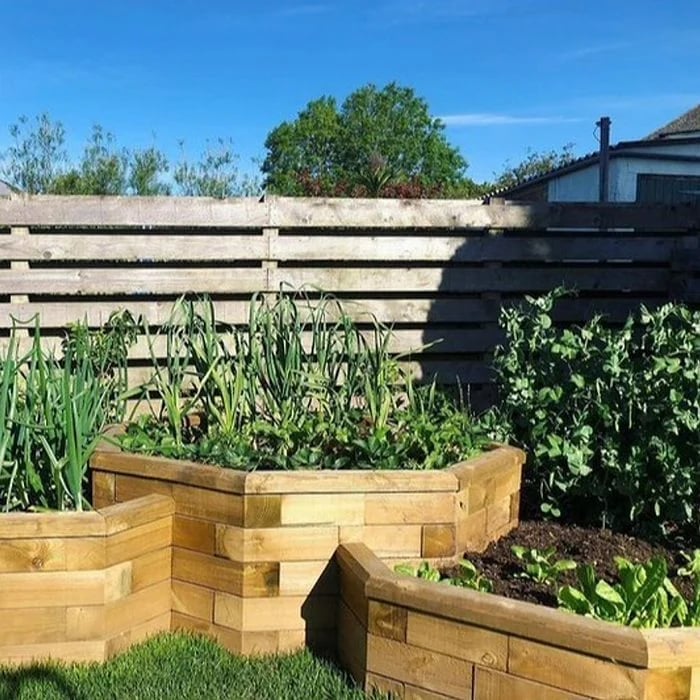
A practical rule for garden layout is that shape matters as much as size. Hexagonal raised beds break the usual rectangle habit by adding angles that catch the eye from every direction. The natural wood frames sit in a sunny lawn, each one holding a different crop so the green and brown mix with the soil. The geometry gives the garden a structured look without feeling rigid, and the gaps between the beds create natural paths for access. For a modern farmhouse feel, keep the beds in a repeating pattern and let the wood weather to a soft gray over time.
Modern Stackable Planters for Vertical Patio Gardening
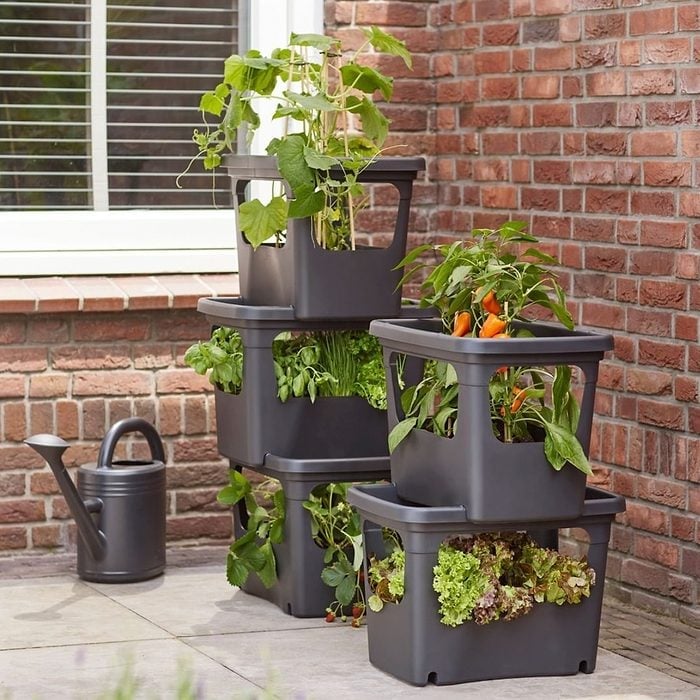
A standard row of pots on the ground takes up patio space fast. Stackable planters solve that by building upward, with each dark gray plastic tier sitting directly on the one below. A red watering can nearby hints at the routine, while the green plants and brick patio wall keep the scene grounded. The palette stays simple: dark gray for the planters, green for the leaves, red for the accent. Stick to one accent color, and the vertical stack looks planned rather than random.
Cottage Garden with Dense Vegetable Rows and Trellises
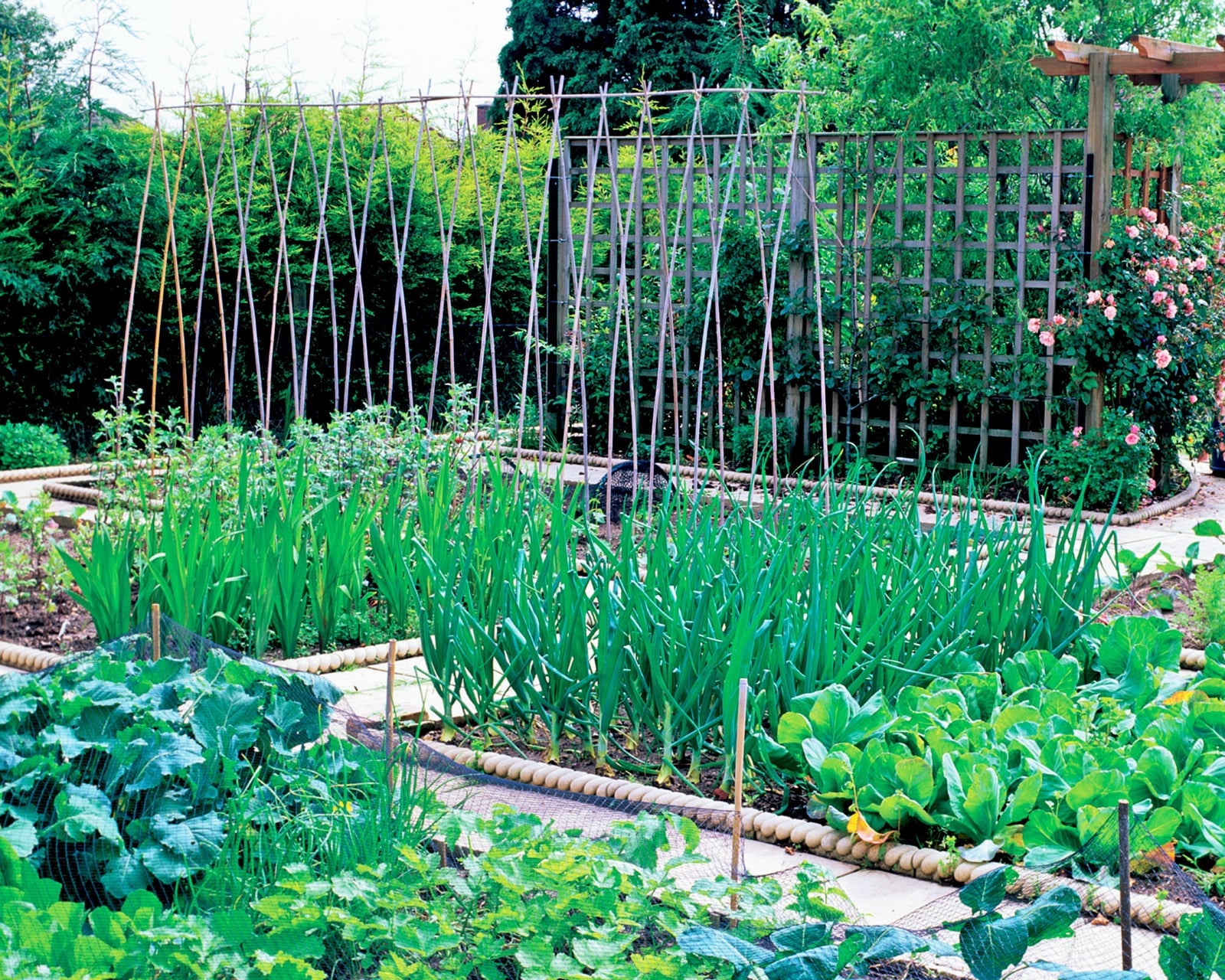
The rows are packed so tightly that the soil barely shows between the leaves. Wood trellises rise at intervals, supporting climbing vegetables and adding vertical structure to the green mass. Stone edging keeps the pathways defined, so you can walk through without stepping on the plants. The density makes the garden feel abundant and productive, which is the whole point of a cottage garden.
Modern Black Greenhouse as a Backyard Focal Point
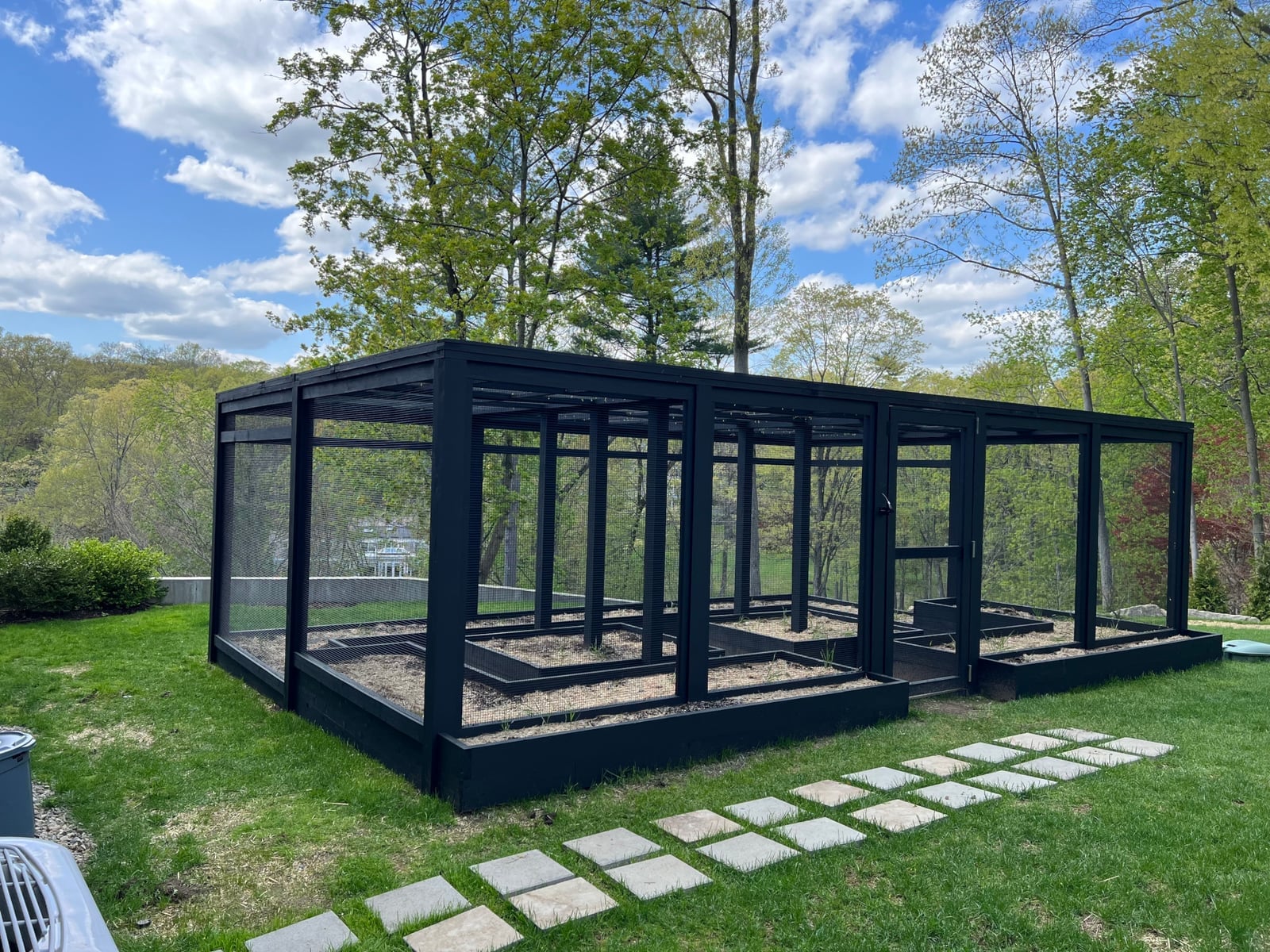
A black greenhouse anchors the garden without overwhelming the plants. The dark metal frame and panels stand against the green grass and raised beds, creating a visual stop that the eye returns to. The layout places the greenhouse at the back, with wood-framed raised beds in front and stone paths leading through the space. The structure is large enough to feel like a room, and the black color makes it recede just enough that the crops stay the main event. Daylight hits the glass and reflects back in gray tones, so the whole garden feels calm and purposeful. For lighting, the greenhouse captures morning sun on one side and afternoon light on the other, extending the growing day for whatever goes inside.
Farmhouse Vegetable Garden with Vibrant Marigolds
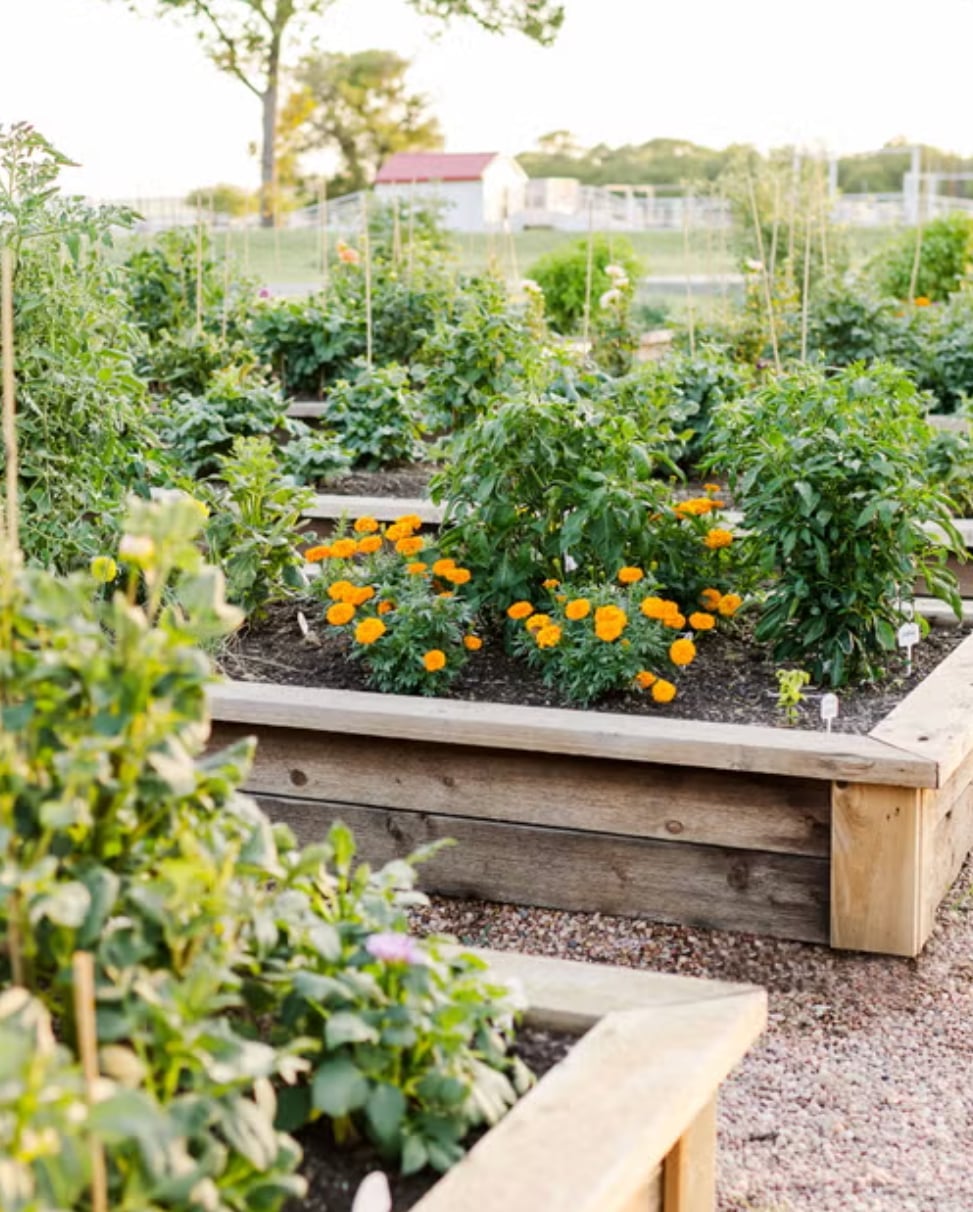
To unify a vegetable garden, let one color repeat through the planting so the beds feel cohesive. Here the orange marigolds do that job, appearing in clusters across multiple raised beds and tying the green and brown palette together. The wood of the beds keeps the farmhouse feel, while the gravel paths between them keep mud from spreading. The marigolds sit among tomatoes, peppers, and leafy greens, so the orange pops against the varied green of the foliage.
The palette breaks where the marigold orange meets the red of a ripe tomato or the deep purple of an eggplant. Those moments of contrast keep the garden from being a solid block of green. For storage, the gravel paths double as a staging area for pots, tools, and a garden cart, so you can set things down without stepping on soil. The raised beds hold the plants at a comfortable height, and the paths stay clean enough to move through after a rain.
Modern Garden with Stepping Stone Pathways
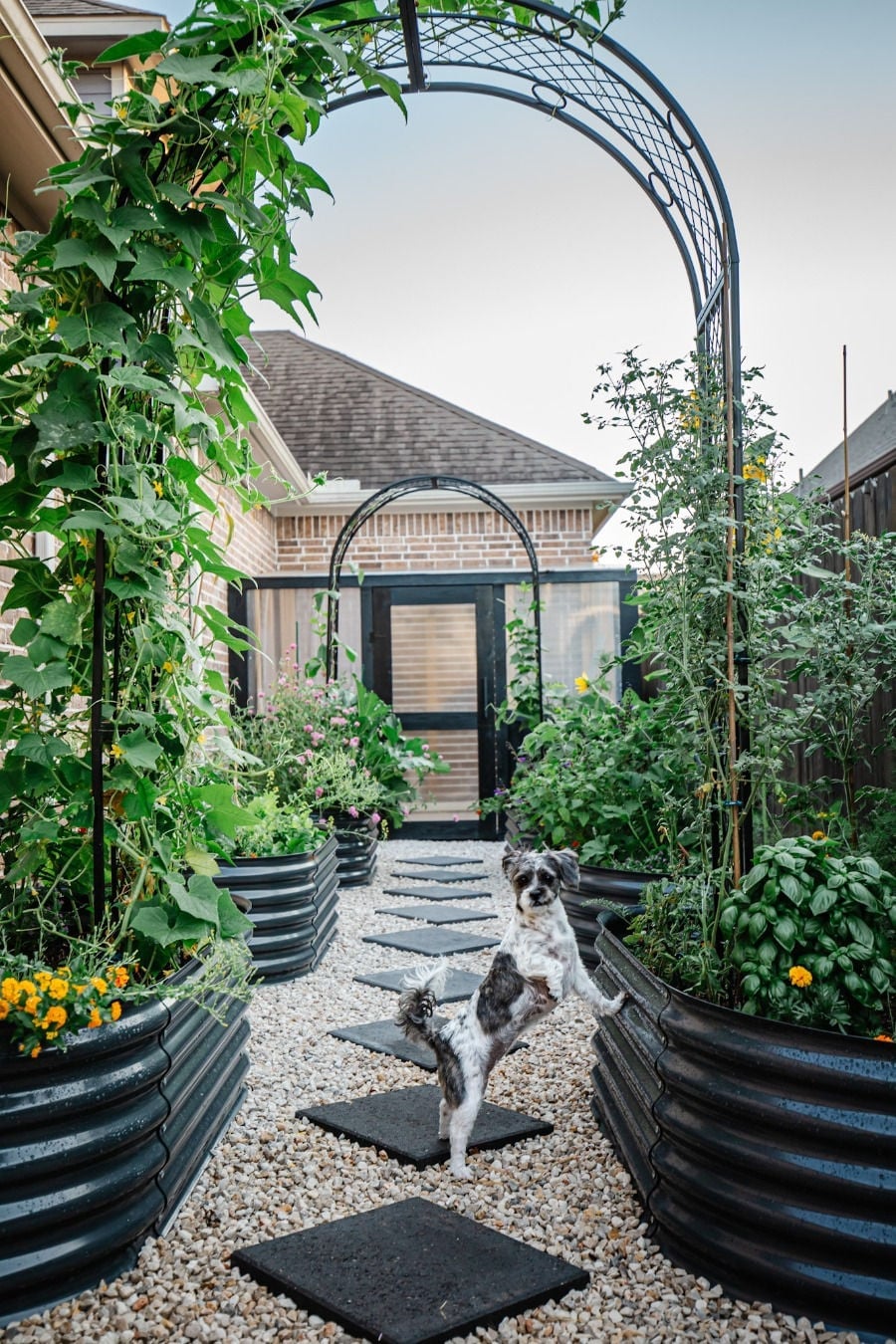
A garden path made of flat stone slabs cuts a clean line between metal raised beds, giving the layout a deliberate rhythm. Gravel fills the gaps around the stones, which keeps mud from splashing onto the pathway after a rain. The dark metal beds repeat the gray tone of the path, so the green foliage becomes the main color. A simple archway at the end frames the view and gives the eye somewhere to stop. This is a modern garden with metal raised beds that works because the hardscape ties the whole space together without competing with the plants.
Cottage Garden with Central Ornate Planter
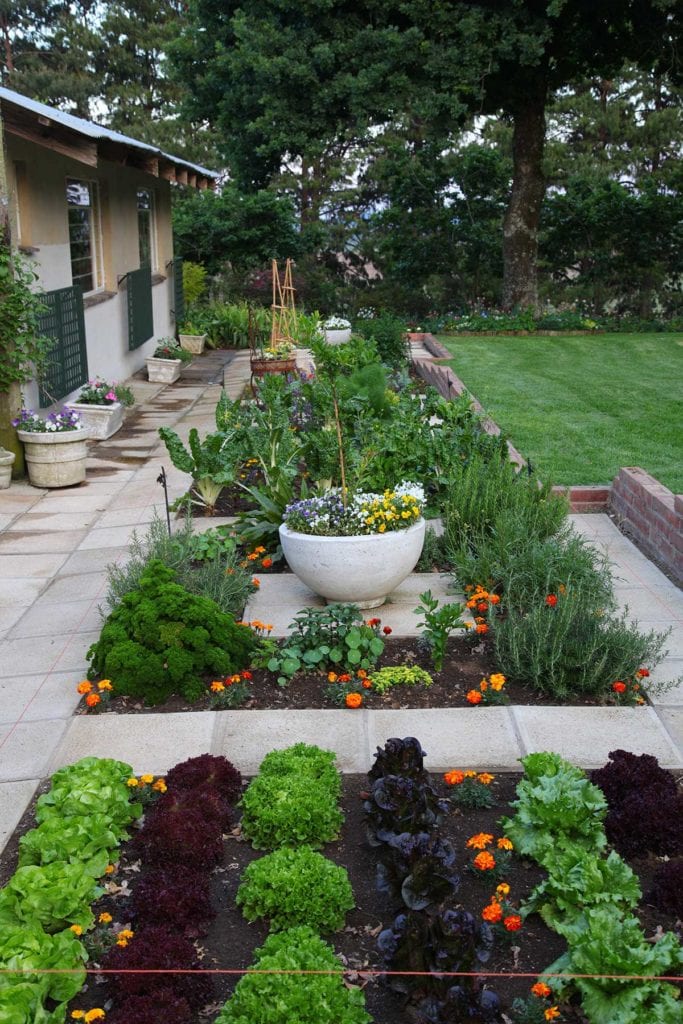
A practical rule for a cottage garden is to let one piece anchor the whole layout. Here a stone planter with carved detail and tile inlay sits at the center, surrounded by lower beds of lettuce, herbs, and marigolds. The planter adds height and a permanent sense of structure, while the surrounding vegetables keep the look useful. Brick pathways connect the beds, so you can reach every plant without stepping on soil. For a renter, a decorative container like this can sit on a patio or a porch and still define the garden area without digging or building permanent beds.
Farmhouse Garden with Metal Obelisk for Tomatoes
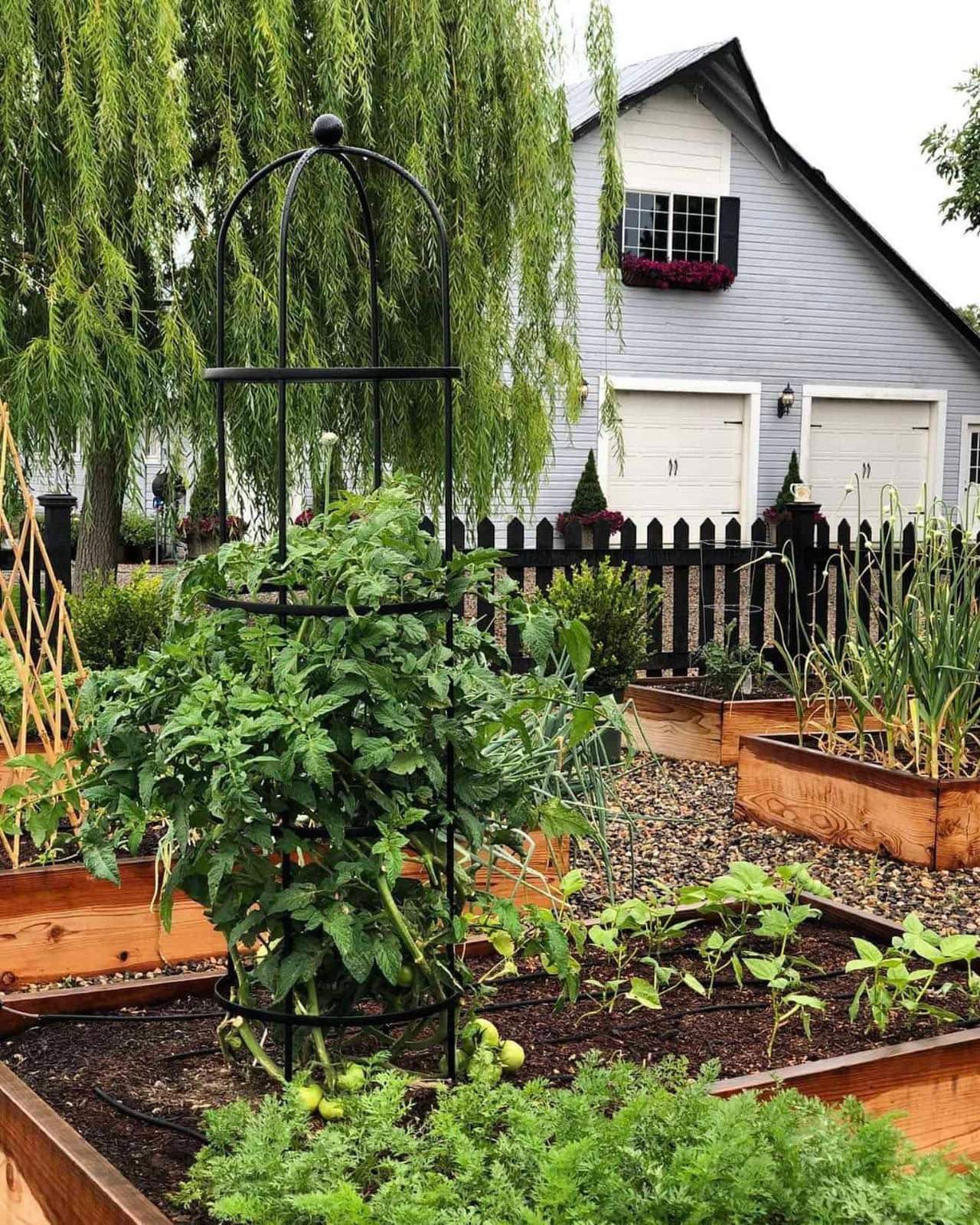
A tomato cage gets the job done, but a metal obelisk changes the whole silhouette of a vegetable bed. This farmhouse garden uses a tall black obelisk set into a raised wooden bed, with a single tomato plant climbing up the center. The structure draws the eye upward and breaks the horizontal line of the beds, which makes the garden feel fuller even when plants are young. Garlic grows at the base, filling the space below the tomato canopy.
Gravel paths run between the beds, so you can walk through without compacting the soil. The dark metal of the obelisk matches the black tone of the path stones, which keeps the palette restrained. A farmhouse garden tomato obelisk like this one also makes harvesting easier because the fruit hangs at eye level.
Farmhouse Garden with Multiple Distinct Raised Beds
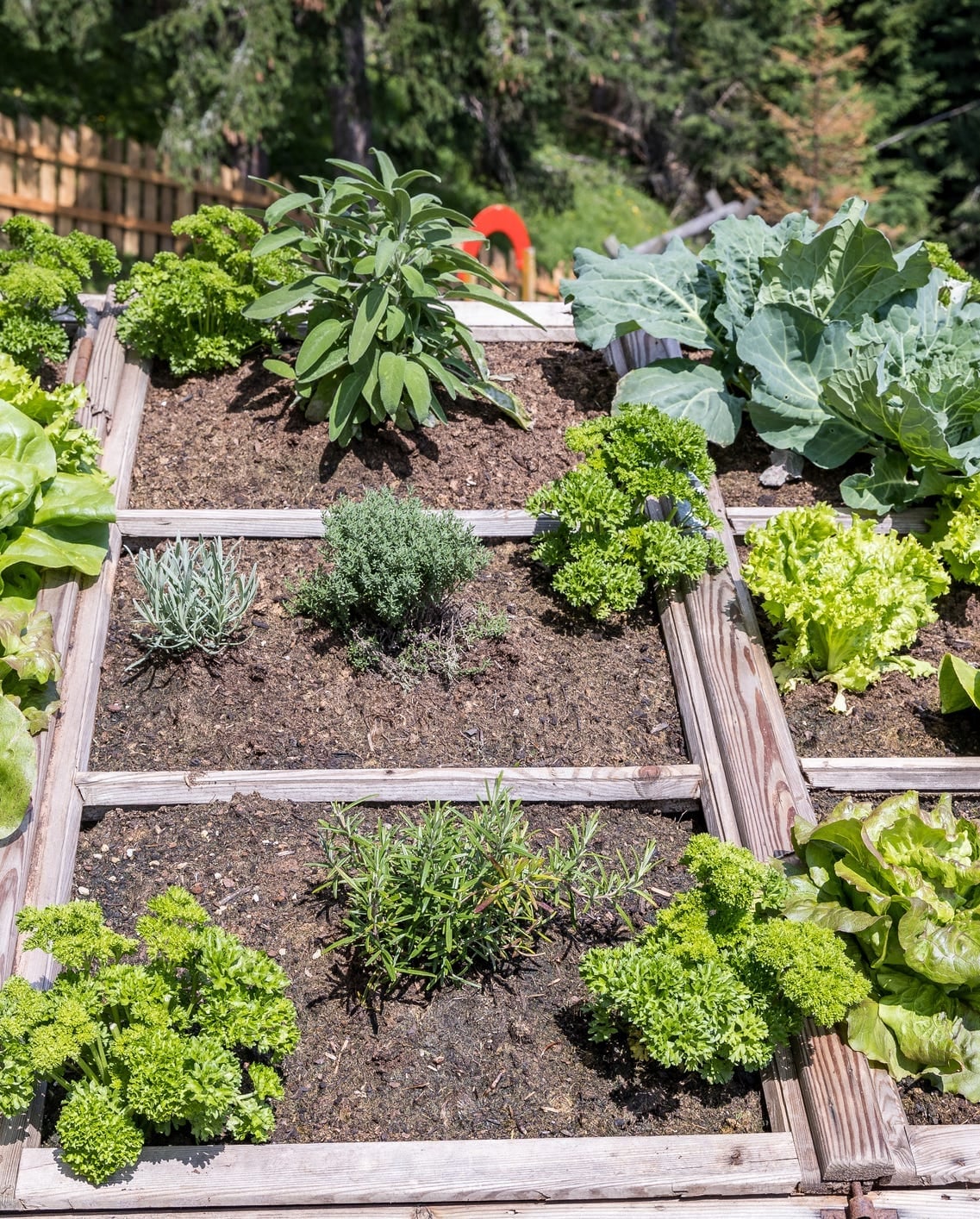
Each raised bed in this garden holds a different crop, and the separation makes the whole space easier to manage. The wood frames are uniform in size and finish, so the layout reads as a single system rather than a collection of random boxes. Wide gaps between the beds leave room for a wheelbarrow or a garden cart, which matters when you are moving soil or mulch. The farmhouse raised garden bed layout works here because the repetition of the beds creates order, while the variety of greens and vegetables keeps it from looking bare.
Abundant Raised Bed Overflowing with Vegetables and Flowers
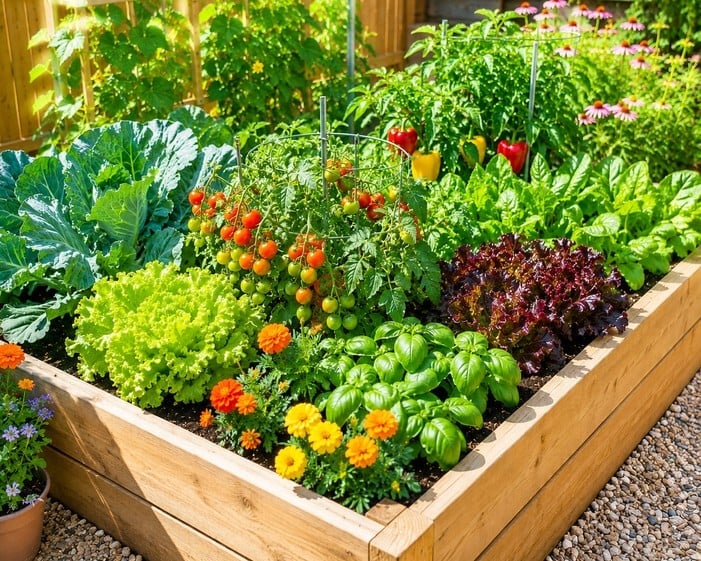
This is the kind of bed that looks like it has been growing for months, even if it was planted all at once. Cabbage, lettuce, tomatoes, basil, and marigolds are packed in together, with no bare soil showing. The flowers serve a purpose beyond color: marigolds attract pollinators and can help deter pests from the vegetables. The wood frame keeps the soil contained, but the plants spill over the edges, softening the line between bed and path. For a dense planting raised garden bed, the trick is to put taller plants like tomatoes in the back or center so they do not shade the lower crops.
Modern Garden with Corrugated Metal Raised Bed and Trellis
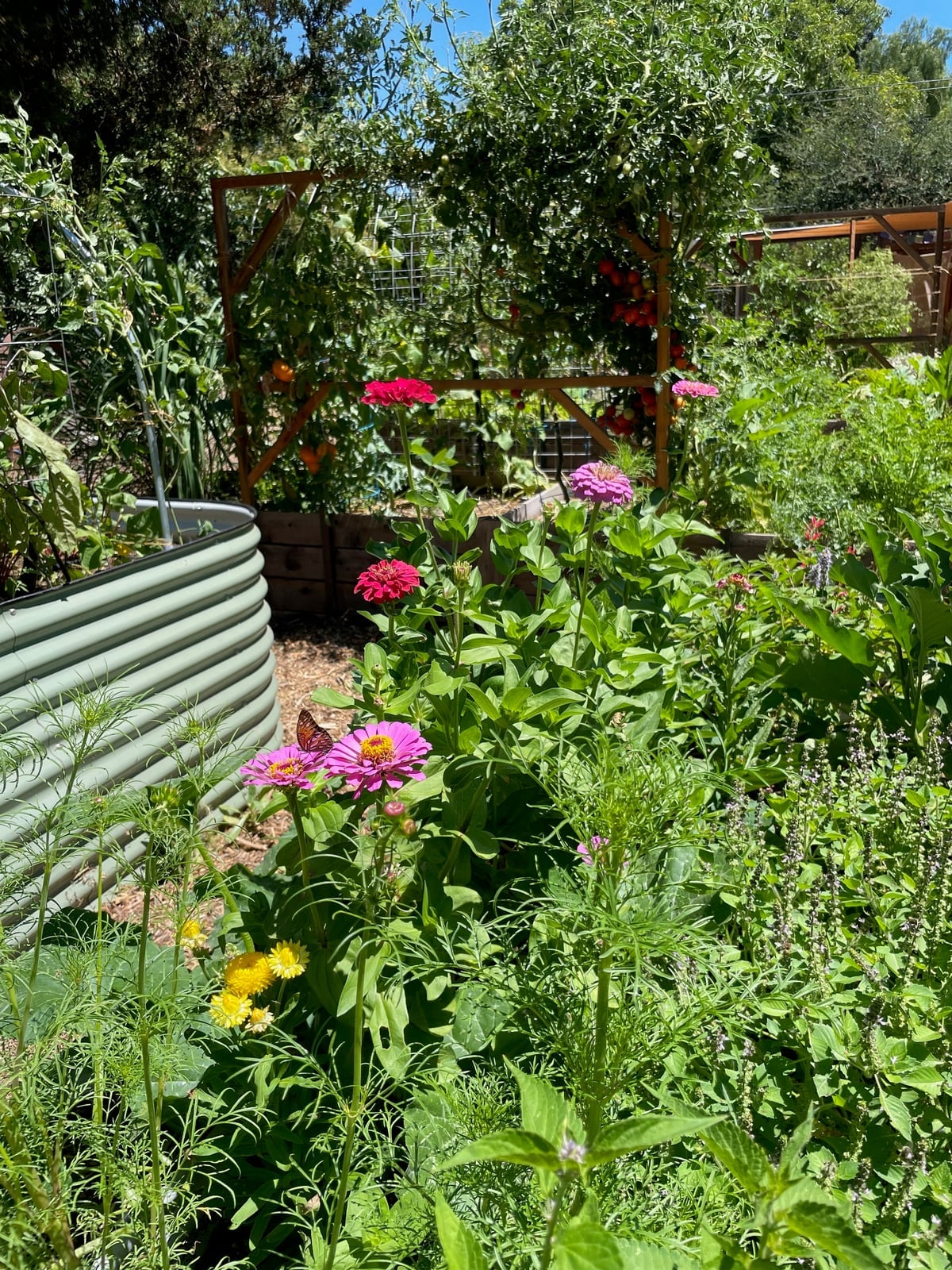
Pair a hard industrial surface with a softer natural one for material contrast. The corrugated metal raised bed has a cool, utilitarian look balanced by the warm wood trellis. The palette includes green, pink, yellow and red, with pink flowers standing out most against the metal. Bright daylight makes the metal surface look silvery. The layout places the raised bed as the anchor, with surrounding planting filling in around it. For a modern garden that still feels productive, this keeps the vegetable bed as the main event without letting the space feel cold.
Cottage Garden with Towering Bean Plants
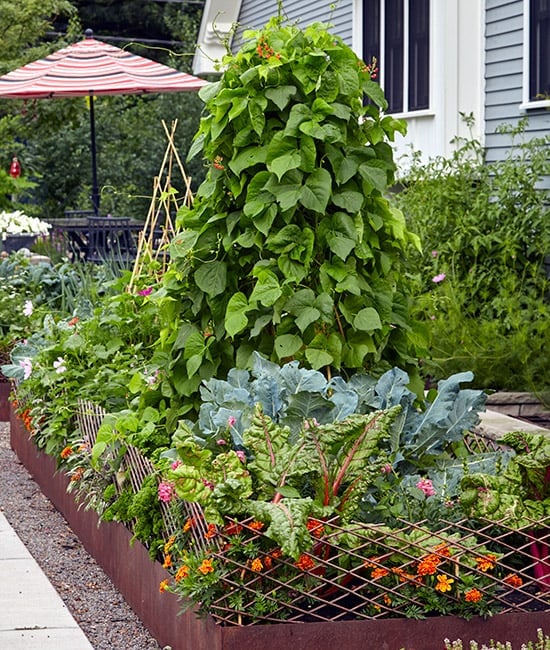
A bean tower turns a vegetable bed into a vertical statement. The raised bed holds chard, marigolds and a towering bean plant that reaches up on a metal and fabric support. The palette mixes green, pink, orange and red, with the bean leaves and chard providing the green backdrop and the marigolds adding warm pops. The tower breaks the horizontal line of the bed, drawing the eye upward and making the compact garden feel taller. This design suits a small cottage garden where every inch of ground counts, using the vertical space for a crop that would otherwise sprawl.
Rustic Vertical Pallet Planter on a Deck
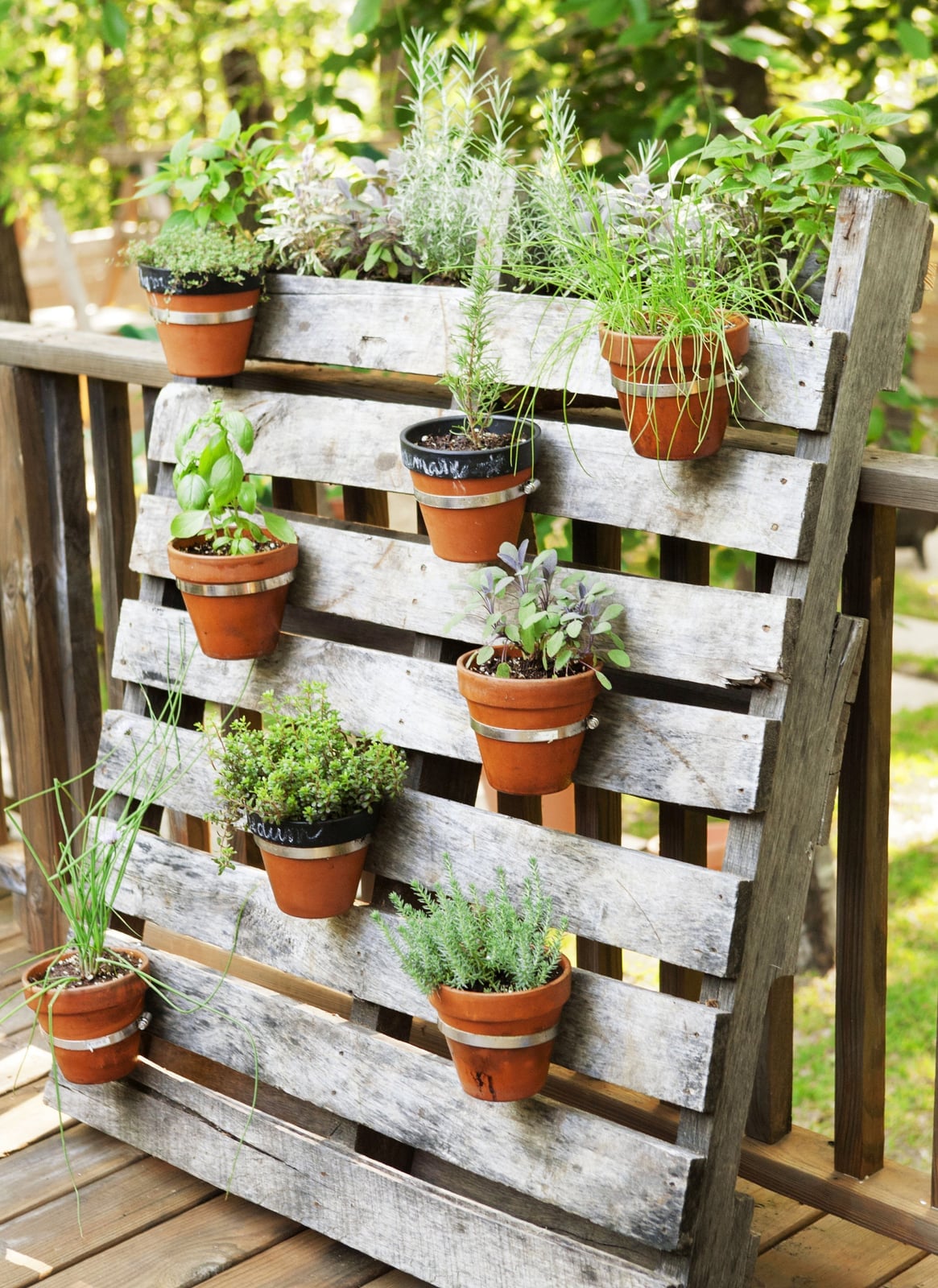
A practical rule for small decks is to build upward rather than outward. The wooden pallet planter here stacks terracotta pots in a tiered arrangement, holding a variety of herbs. The materials stay simple: weathered wood, warm terracotta and a hint of metal in the fasteners. The palette is green, brown and terracotta, with the terracotta pots providing the main color aside from the foliage. Soft daylight keeps the look casual. The scale works because the planter occupies a narrow footprint while giving each herb its own spot. For a renter, this setup can be assembled without permanent changes to the deck.
Cottage Garden with a White Greenhouse Centerpiece
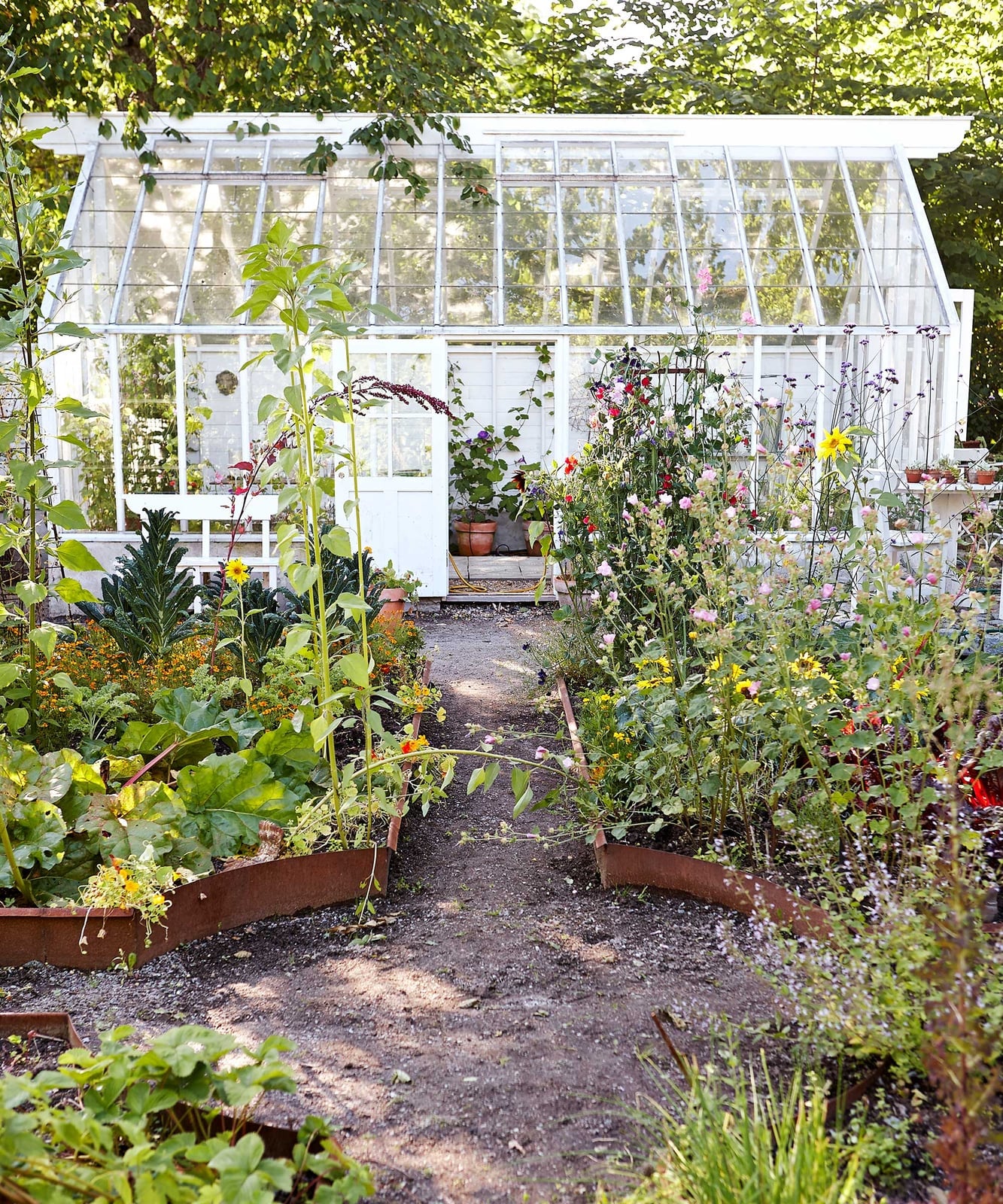
A white greenhouse reads differently than a dark one. Where a black or green greenhouse recedes into the foliage, this white structure becomes the garden’s focal point. The layout puts a pathway leading straight to the greenhouse, with raised beds on either side packed with plants. The palette stays green, white, pink and yellow, with the white frame catching the light. Natural daylight keeps the glass transparent so the plants inside are visible. For a cottage garden, the white greenhouse offers a clear destination at the end of the path, giving the space a sense of purpose. The wooden and metal details keep it from feeling too polished.
Functional Raised Bed with Metal Plant Cages
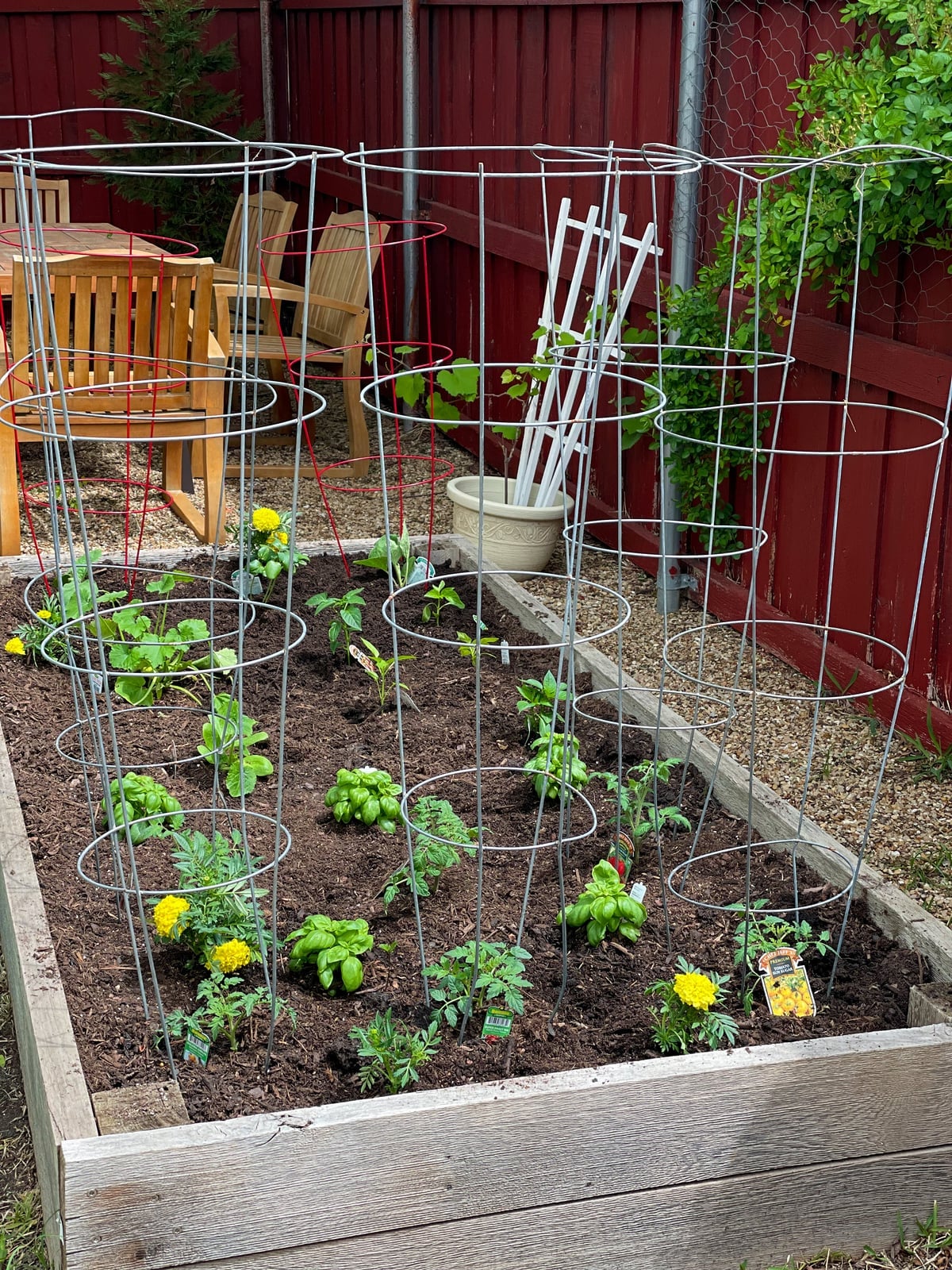
The tomato cages here are not an afterthought but a built-in part of the bed’s structure. The raised bed holds basil and marigolds alongside the tomatoes, with the metal cages providing support from the start. The palette is wood, green and yellow, with the yellow marigolds adding a bright note to the green foliage. Slightly overcast daylight softens the contrast between the wood and metal. For a functional garden, this setup means the support system is in place before the plants need it, so nothing gets tangled later. The compact bed keeps everything within reach for harvest.
Modern Stacked Wooden Planters for Vertical Gardens
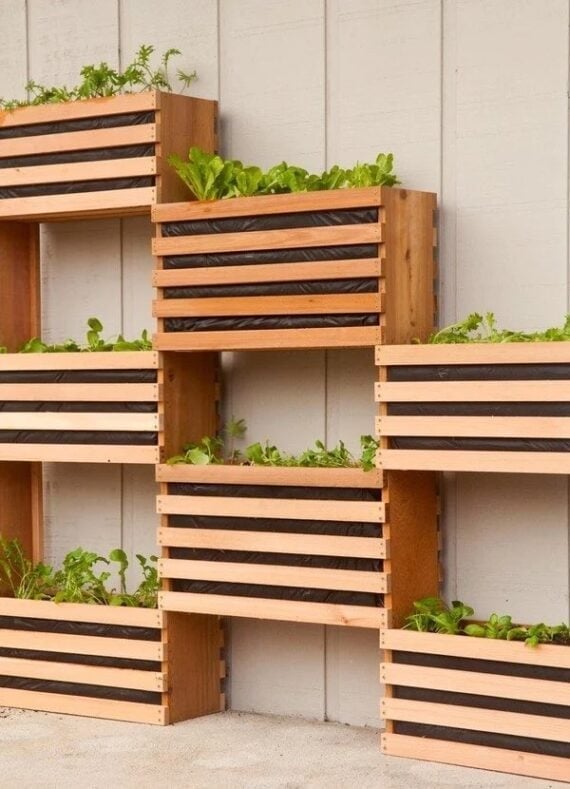
For tight patios or bare walls, stacked wooden planters give you vegetable garden design without spreading out. This setup uses three wood crates with plastic liners, mounted one above the other in a clean vertical line. The natural wood and black liner keep it modern, while the compact footprint means you can grow herbs, greens, or trailing flowers in just a few feet. The layout works because each planter sits directly under the next, so water drains from the top crate into the one below. That makes watering simpler and cuts down on mess. For renters, this is an easy swap: mount the planters on a wall or fence so you take nothing from the ground, and patch the holes when you leave.
Final Thoughts
A good vegetable garden balances yield with how it feels to be in it. Raised beds bring order, vertical planters save space, and a few flowers among the vegetables keep things from feeling too utilitarian. The best design is the one that gets you outside more often, whether that means four raised beds or a single herb spiral. Start with what fits your space and your habits, then adjust as you go. Your garden will tell you what it needs next.