Your yard is more than just a patch of grass. It is a room without a ceiling, and the best landscaping turns it into an extension of your home. Whether you want a quiet spot for coffee or a space that can handle a crowd, the right layout and materials make all the difference.
This article covers 34 yard landscaping ideas that focus on real-world spaces. You will find practical takes on patios, pathways, garden beds, and lighting. The goal is to help you see your own yard differently, not to sell you a specific look.
Modern Multi-Level Patio Layout
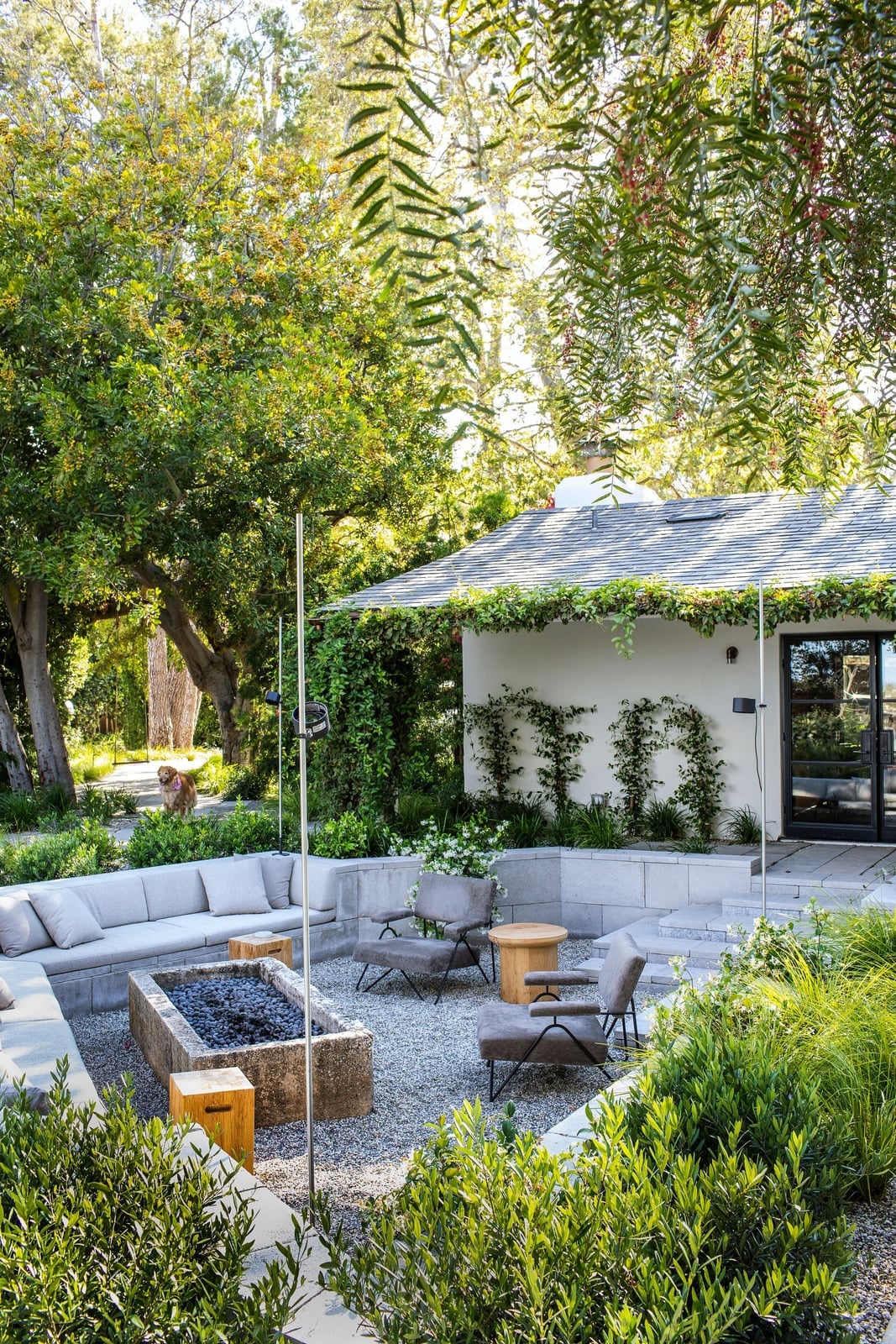
A multi-level patio solves the problem of a flat yard feeling like one big landing pad. Here the main seating area sits a step down from the space, with a stone fire pit anchoring the center and a sectional sofa and modern chairs arranged around it. The lower level is gravel, while the upper level uses concrete and greenery, creating a clean transition between zones. The result is a backyard that feels roomy without being empty, with each level having its own purpose.
Terraced Garden Bed Materials
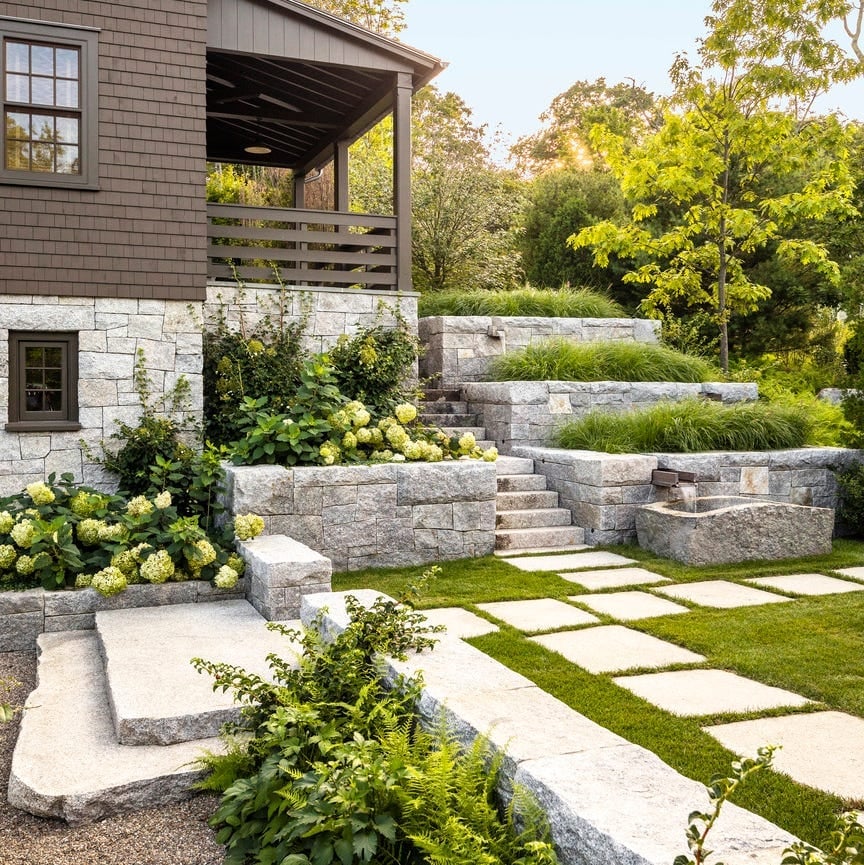
Stone retaining walls are the backbone of a terraced garden, and this one uses them to turn a slope into usable planting space. The walls are stacked in a warm gray tone that blends with the grass and ornamental grasses above. Wood trim on the beds adds a natural counterpoint to the stone. The palette stays tight: green, gray, and white, which keeps the eye moving up the slope without getting stuck on any one material. For a terraced garden, choose the same stone from bottom to top to create a unified line that looks planned rather than patched together.
Minimalist Fire Pit Lighting
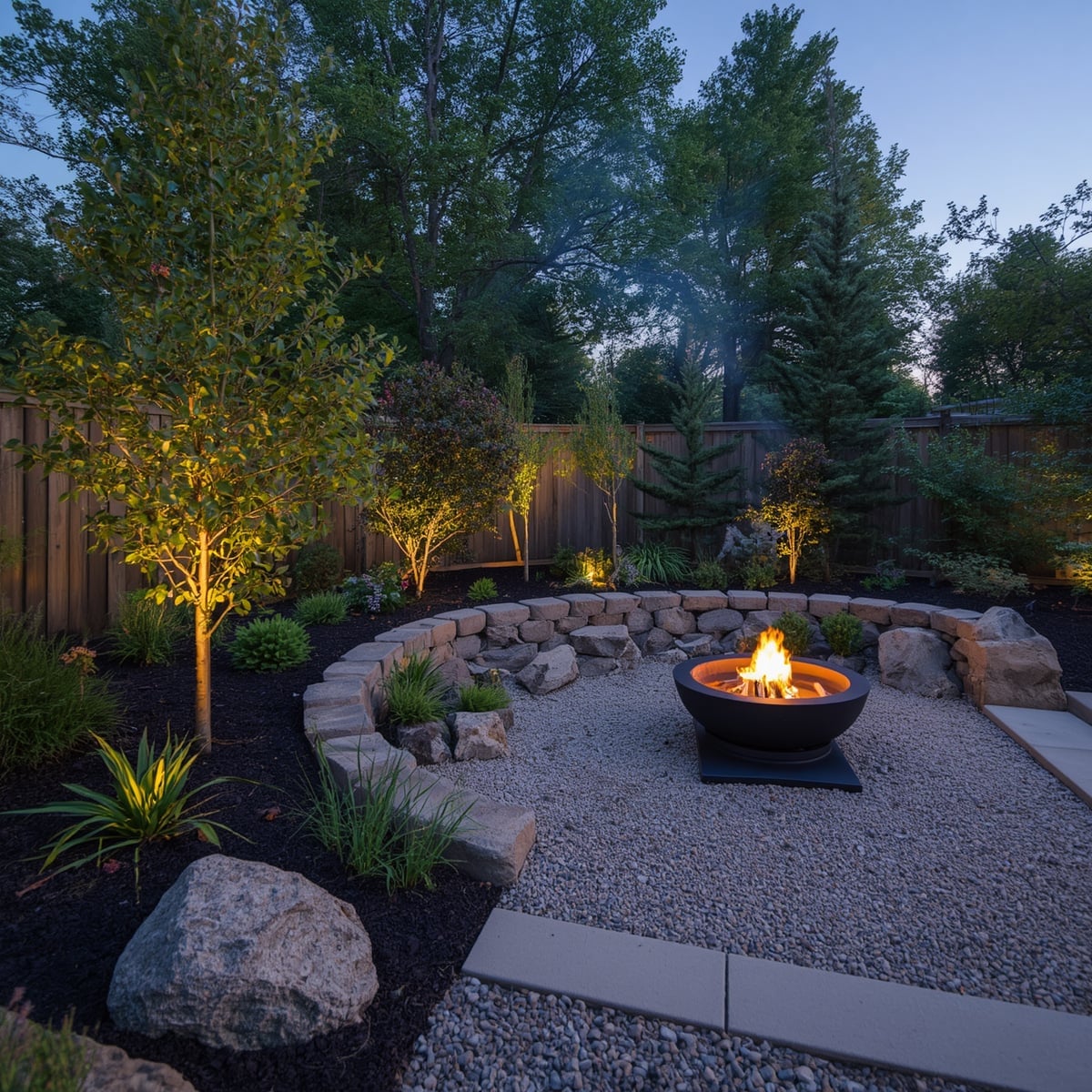
What makes a fire pit area feel like a destination after dark? The answer is layered lighting that starts before the fire is even lit. In this backyard, the fire pit bowl sits in a circular gravel seating area with a curved stone wall behind it. Uplighting aimed at the trees casts a soft glow on the leaves, while accent lights along the wall pick up the texture of the stone.
The fire itself adds the warm orange glow that pulls the whole scene together. The palette stays natural: stone, wood, and a bit of metal, with the green of the trees showing up only where the uplighting hits them. The key is that the lighting fills in the edges so the fire pit remains the clear center of the space, even as daylight fades.
Boho Patio Styling Variation
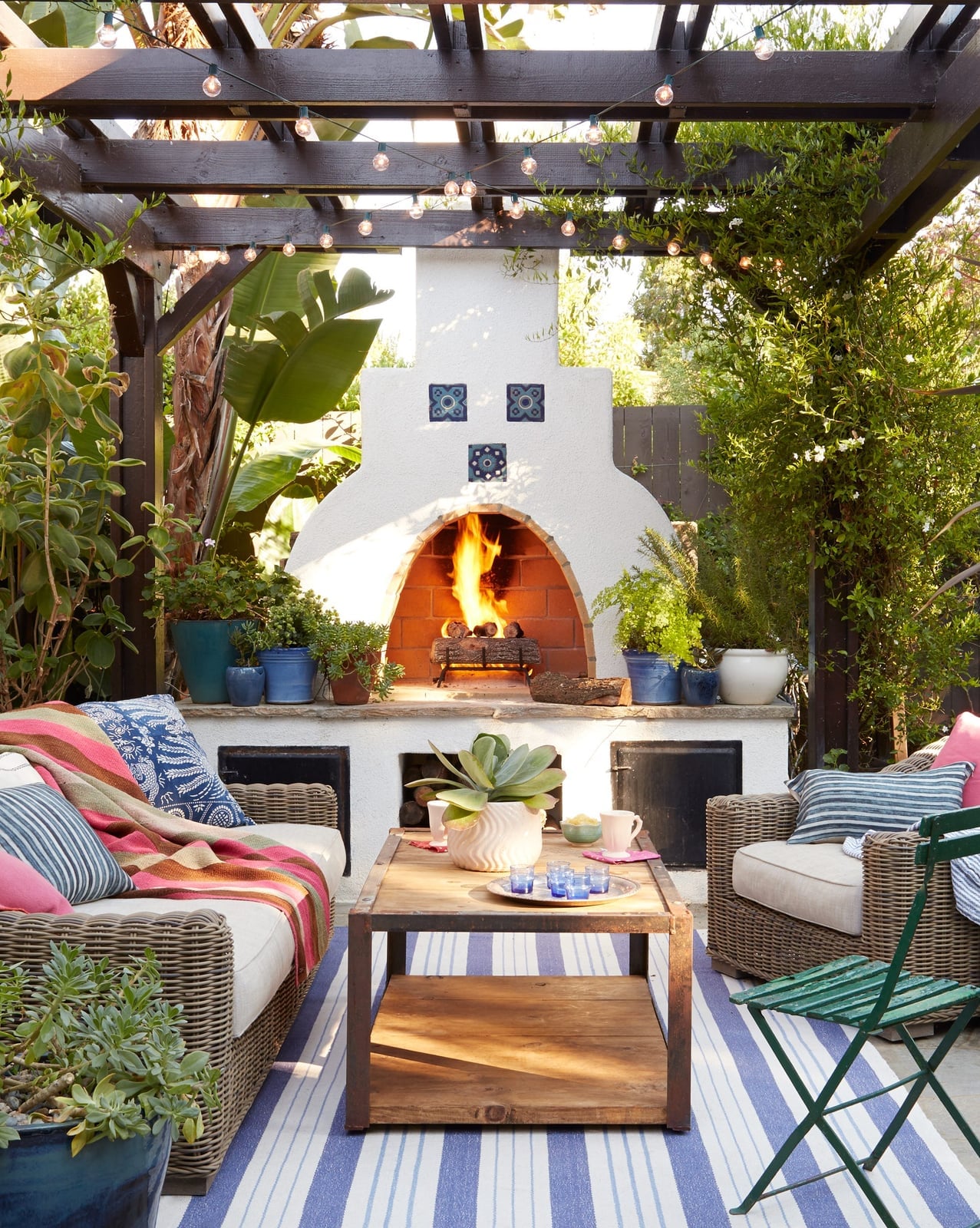
A large white outdoor fireplace is the anchor in this covered patio, and everything else works around it. Wicker sofas in a light brown sit opposite each other, with a coffee table between them. String lights cross the ceiling, and their warm glow mixes with the fireplace for a layered evening look. The palette breaks from neutral with blue and pink fabric accents that add color without overwhelming the white fireplace. The layout keeps the seating focused on the fire, which makes the patio feel like a room rather than a covered corner of the yard.
Formal Garden Scale and Proportion
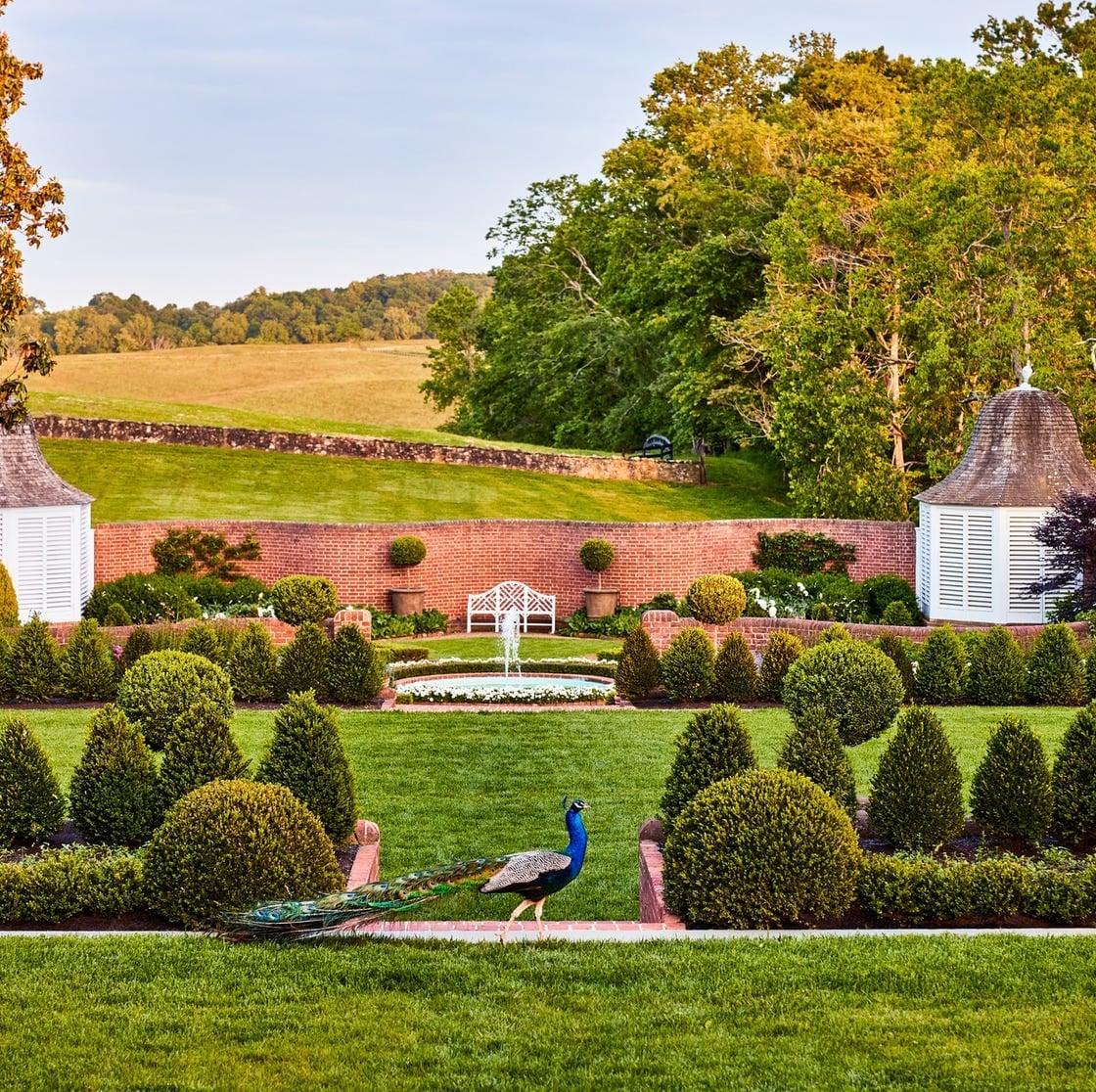
A formal garden relies on symmetry and clear sight lines, and this one has both in spades. A central fountain sits at the midpoint of the garden, with symmetrical beds on either side filled with topiary bushes and low greenery. Brick pathways run parallel to the beds, with a bench and gazebos placed at the edges for balance. The late afternoon sun casts long shadows that emphasize the straight lines. The scale works because the fountain is large enough to hold its own against the tall hedges and the pair of gazebos, so nothing feels undersized or crowded.
Naturalistic Pathway Durability
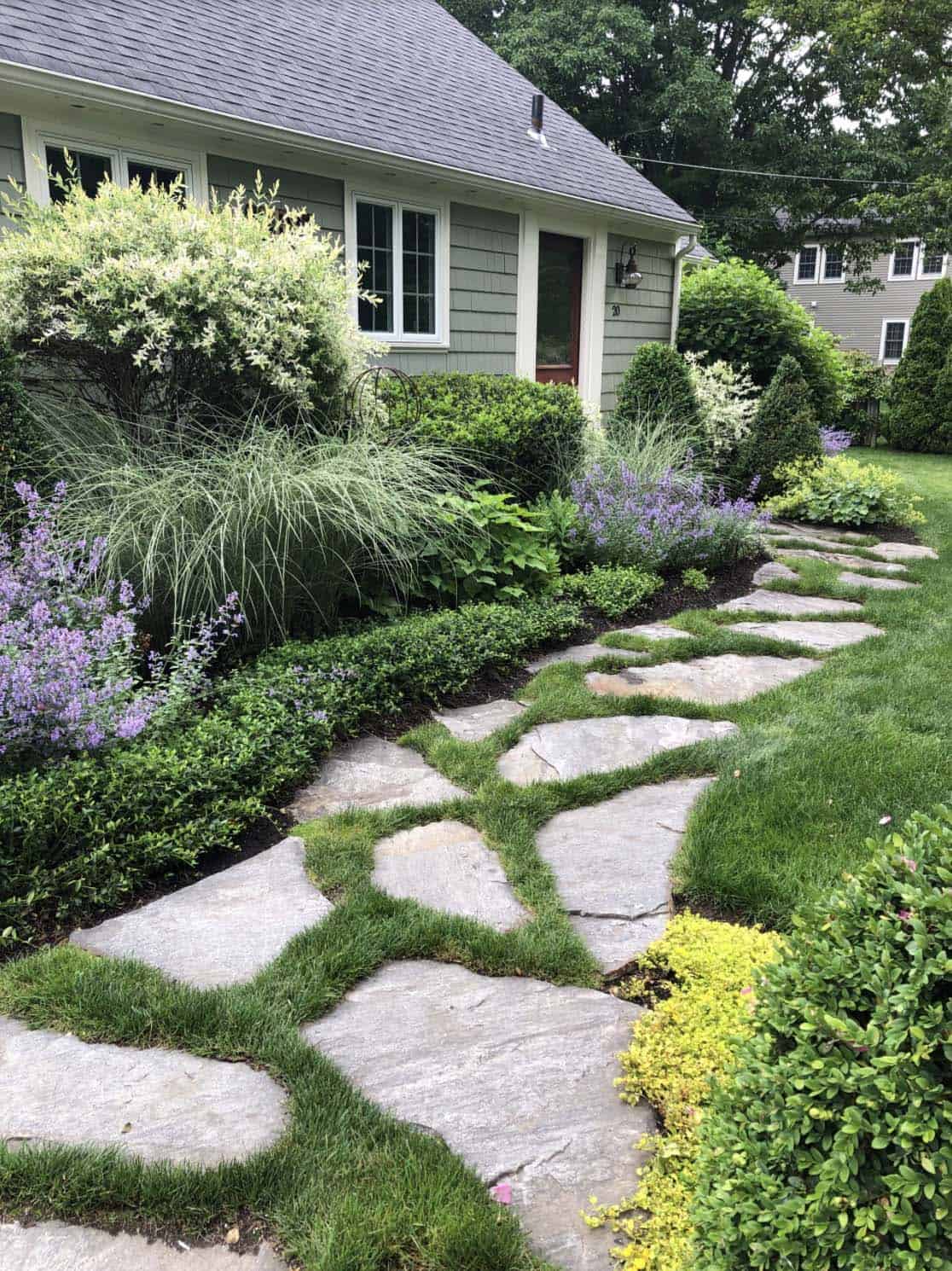
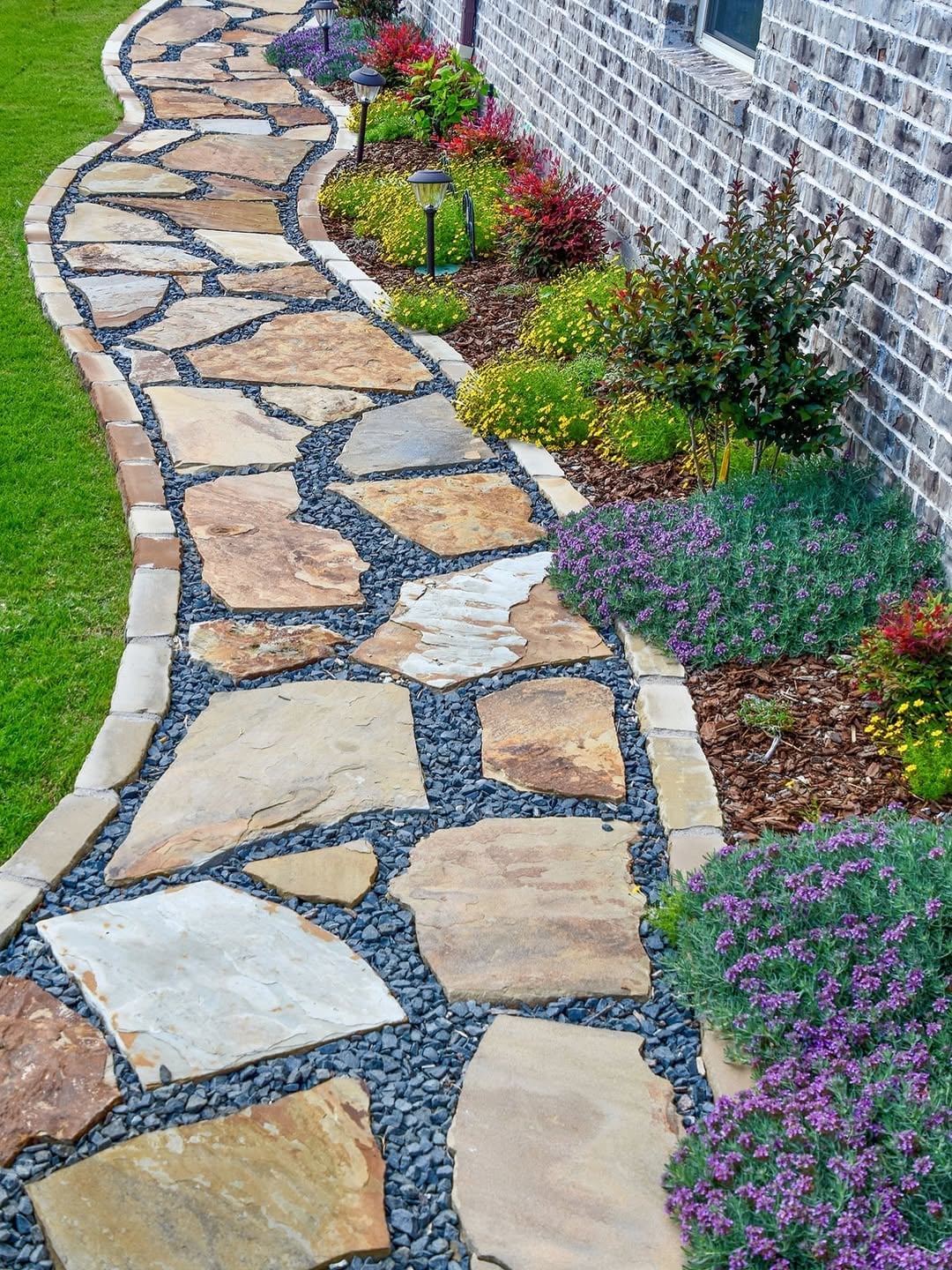
A poured concrete walkway is a permanent commitment you may not want to make. Flagstone offers a more forgiving alternative that still handles foot traffic and weather. The irregular stones in this front yard path sit flush with the grass, creating a stable surface without a solid pour. Softened by low shrubs and purple flowers, the gray stone blends into the garden. For a naturalistic path, the gap between stones matters. Keep it narrow enough that a heel does not catch but wide enough for moss or low ground cover to fill in. That detail keeps the path looking intentional through the seasons.
Modern Pathway Materials
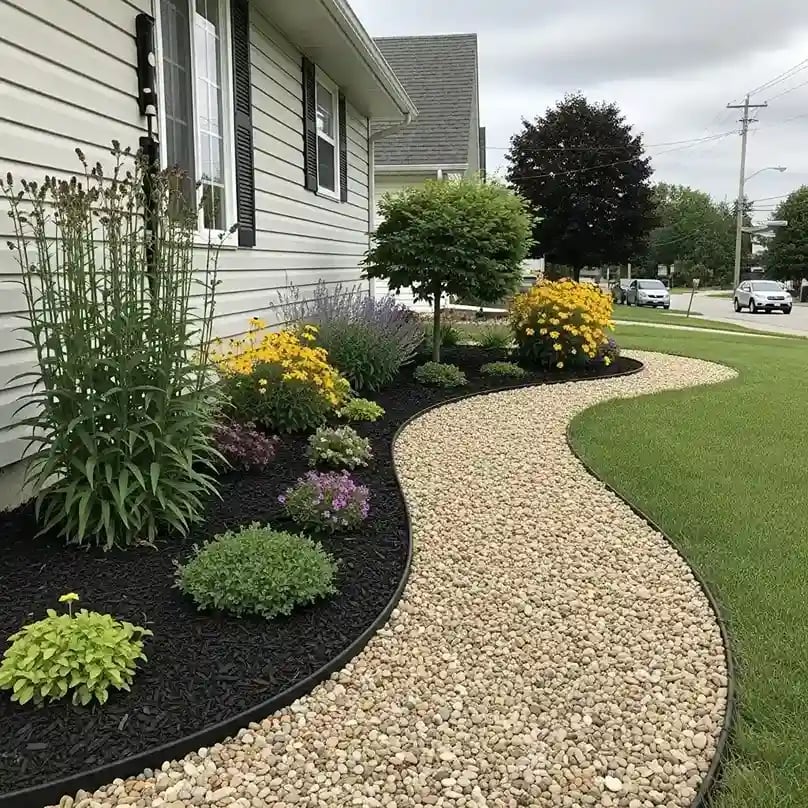
The curve of this front yard path cuts through beds of black mulch and gravel, with bursts of yellow and purple flowers breaking the dark ground. The palette is what makes it modern: a near-black base lets the greenery and blooms stand out without competing. Mulch and gravel are both renter-friendly materials. They sit on the surface, so you can pull them up and take them with you or let them settle back into the soil. The edging keeps the two textures from mixing, and that separation is what gives the path its clean, intentional line.
Traditional Entryway Scale
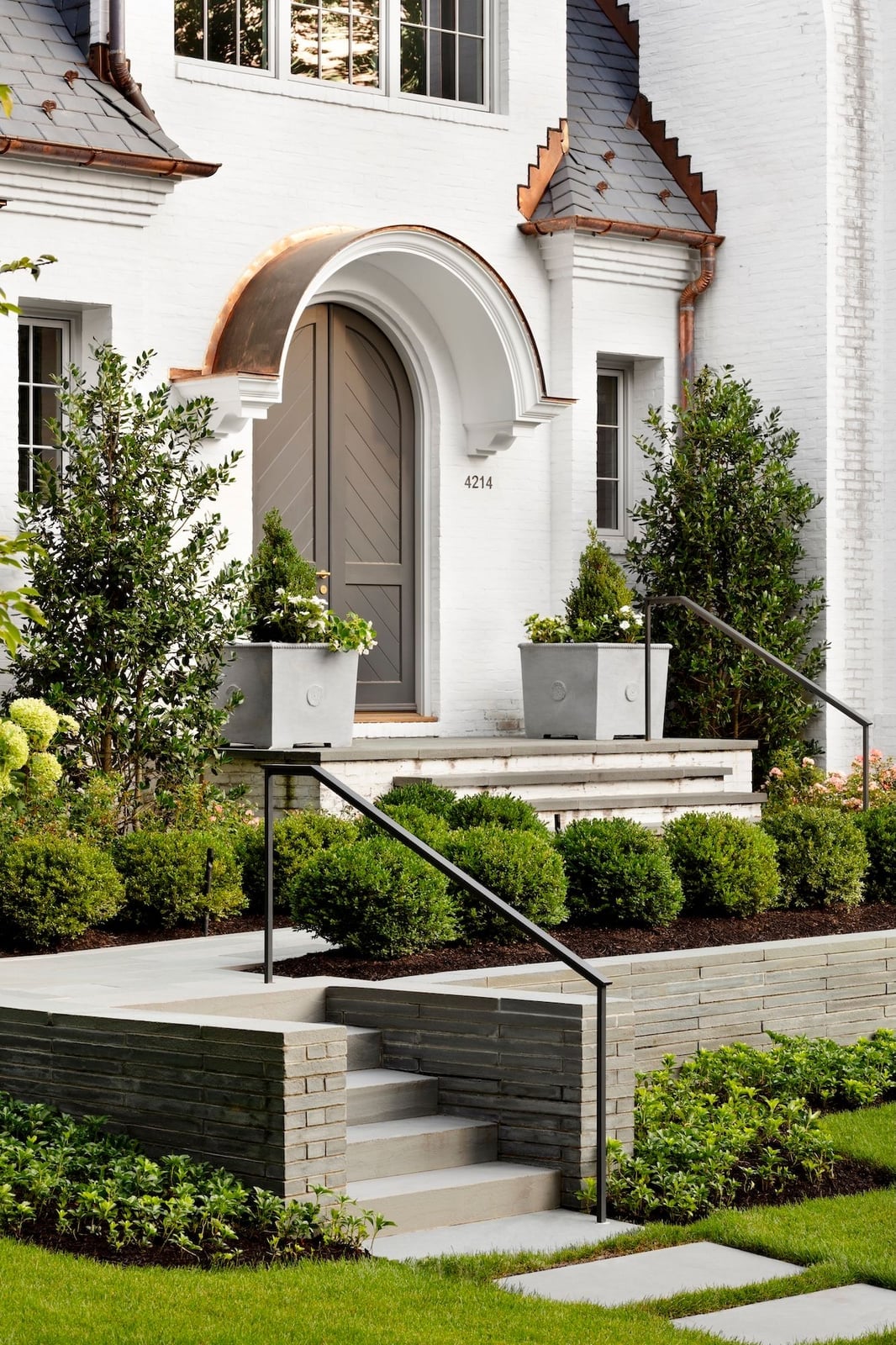
This front entry reads as solid without feeling heavy. The stacked stone wall anchors the base, while the arched doorway and copper accents lift the eye. The tiered steps step up in a rhythm that matches the width of the door, so the whole composition feels proportional. A traditional entryway depends on that ratio: the width of the path should match the door, and the height of the planters or railings should stay below the window line. Here, the greenery softens the stone without hiding it, and the copper details add a warm note against the gray. It is a look that works because nothing competes for attention.
Cottage Garden Layered Planting
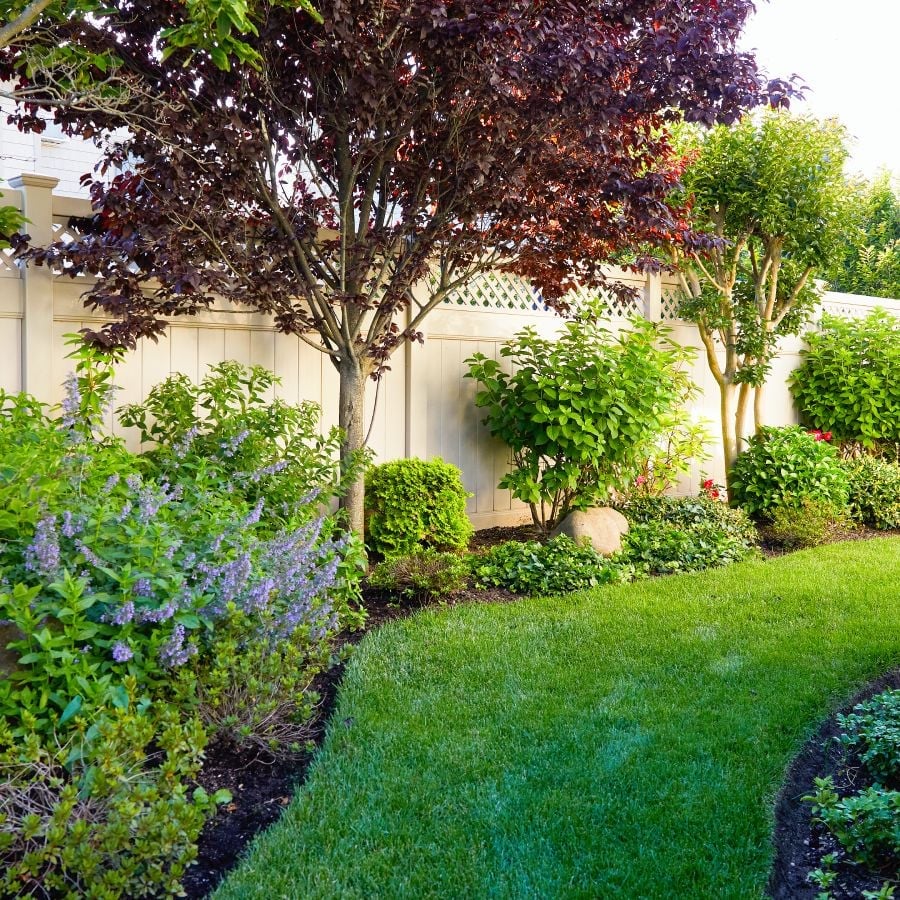
How do you get that full, overflowing cottage garden look without it turning into a tangled mess? The answer is layering by height. In this backyard, the tallest shrubs and small trees sit at the back, medium perennials like purple salvia and burgundy blooms fill the middle, and low ground cover spills onto the lawn. The curving path keeps the eye moving, so you never see all the layers at once. That partial view is what makes a cottage garden feel romantic rather than chaotic. The wood fence behind it all provides a neutral backdrop that keeps the dense planting from feeling crowded. Let the tallest plants hide the fence line, and let the shortest ones soften the edge of the path.
Coastal Garden Styling Variation
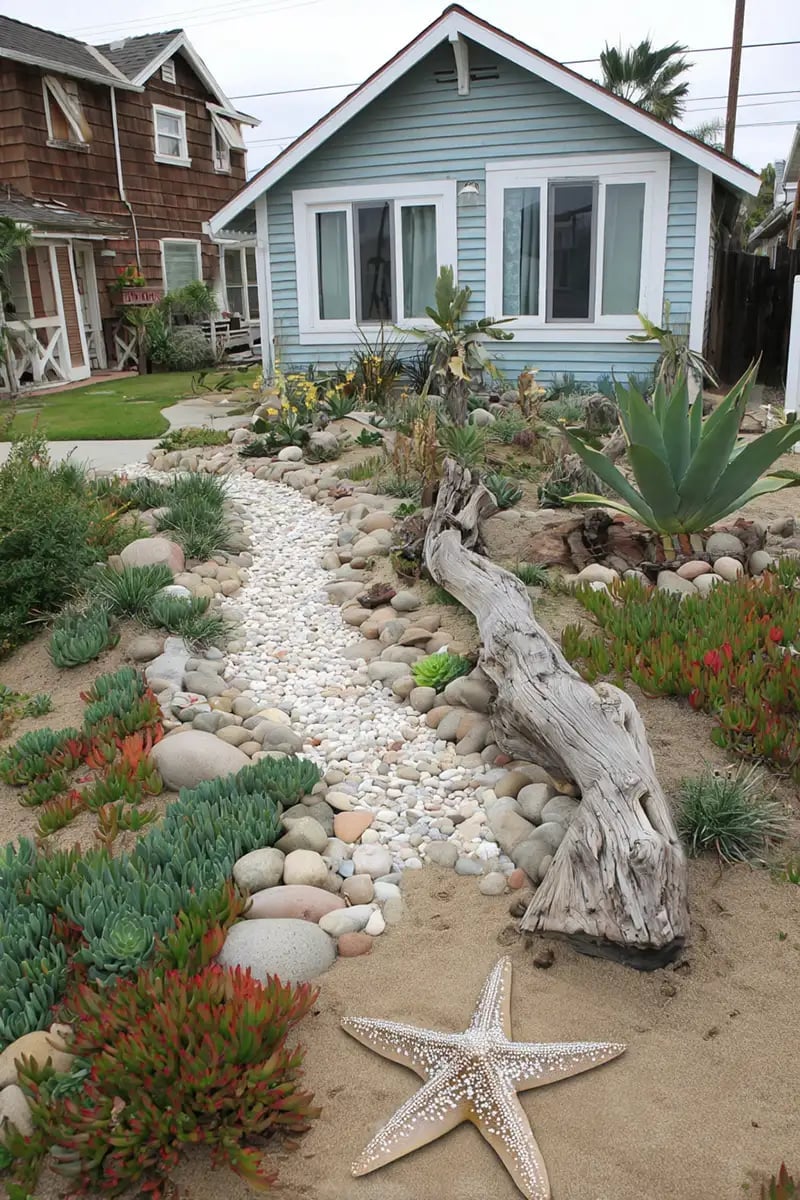
A driftwood log stretched across the gravel bed sets the tone for this front yard. The pale wood, the sandy beige stone, and the blue-green agave all point toward the coast without a drop of salt water in sight. A starfish decoration tucked near the base confirms the theme, but the planting does the real work. Succulents and low shrubs handle the dry, sandy conditions that a coastal garden demands. The style relies on texture over color: rough stone, smooth driftwood, spiky agave. One red flower provides the only bright note, and that restraint is what keeps the look from tipping into theme park territory.
Informal Garden Planting Palette
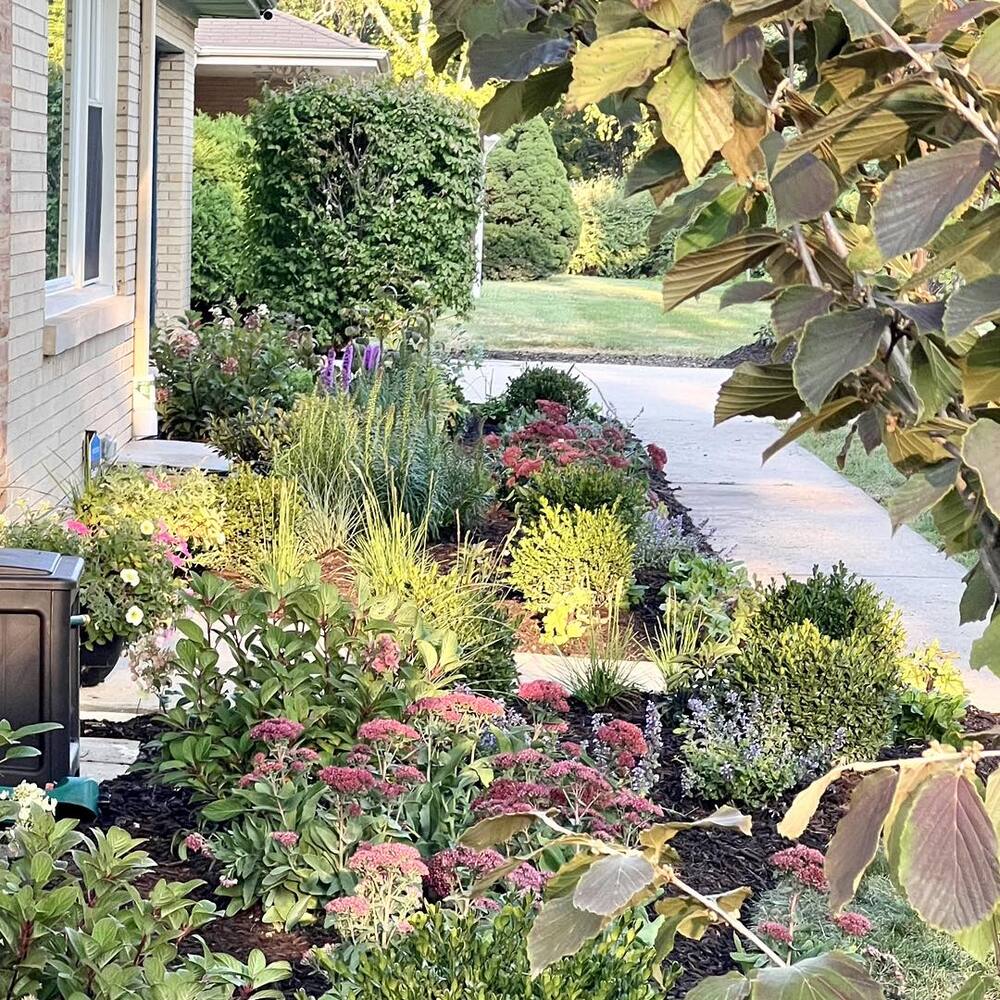
A dense planting along the path softens the transition from concrete to lawn. The mix of shrubs, flowers, and grasses in green, pink, red, and yellow creates a layered edge that feels full without requiring precise spacing. Mulch between the plants keeps the bed tidy and reduces weeding. For a front yard, this kind of dense planting along the path makes the entrance feel established rather than sparse.
Rustic Pathway Lighting
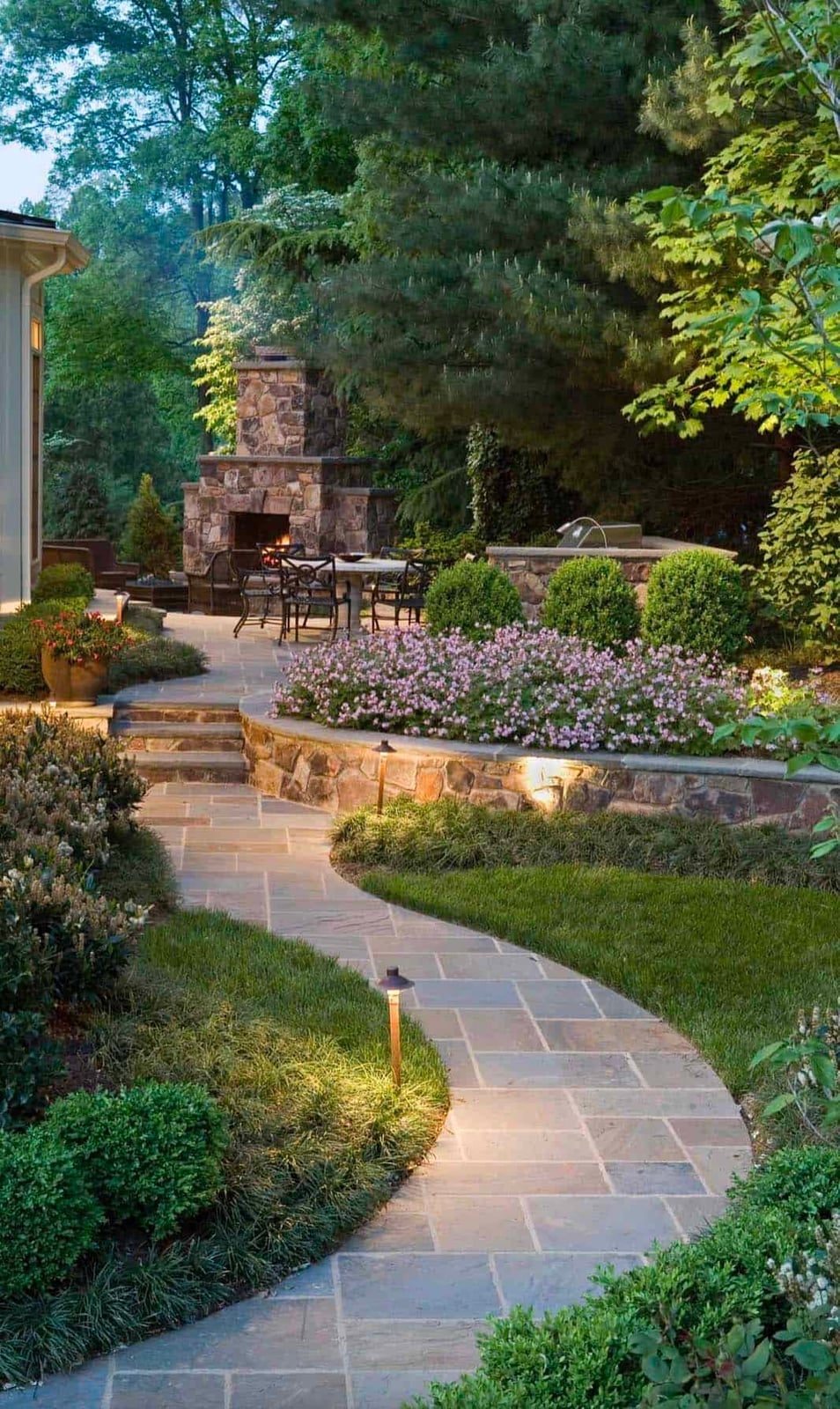
Evening lighting for a rustic stone pathway works best when it comes from low fixtures tucked among the plants. The glow from a nearby fireplace adds warmth to the gray stone and brown wood seating area, while landscape lights pick out the winding path through the garden. Pink flowers catch a bit of that light against the overall warm tone.
A palette of gray, green, pink, and brown keeps the evening scene cohesive. The fireplace glow breaks the cool stone and grass colors, creating a natural focal point near the seating. Low pathway lights guide the eye without washing out the garden beds.
Modern Shed Storage Solution
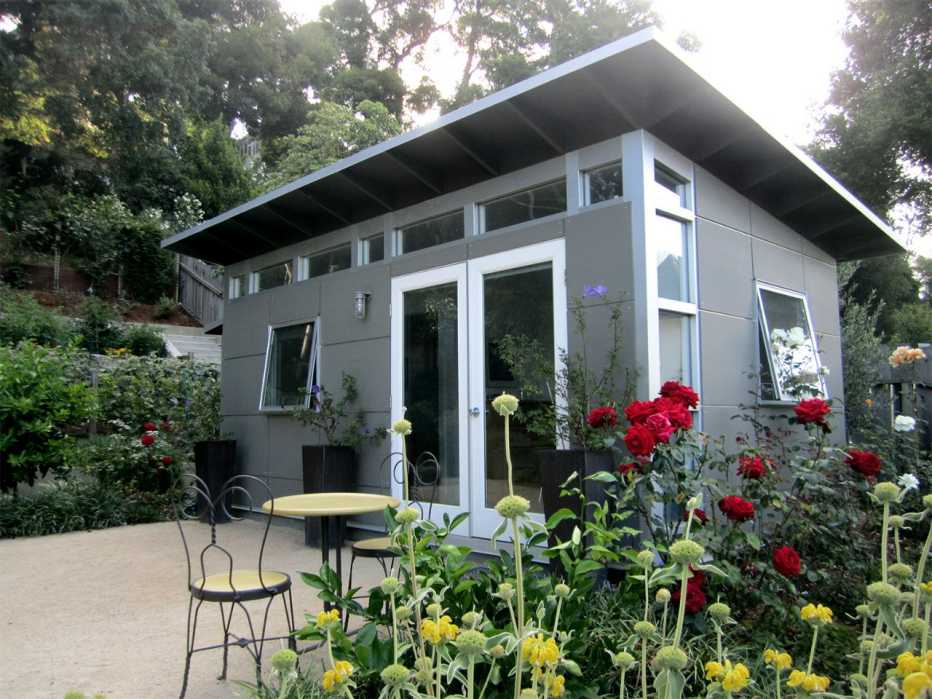
A sleek modern shed with metal, glass, and wood materials sits in the backyard as a functional structure that also anchors the garden layout. The glass panels let daylight in, making the interior visible from the seating area. Placing the shed near the garden edge keeps tools accessible without blocking the view of the lawn and plants.
Hillside Yard Layout
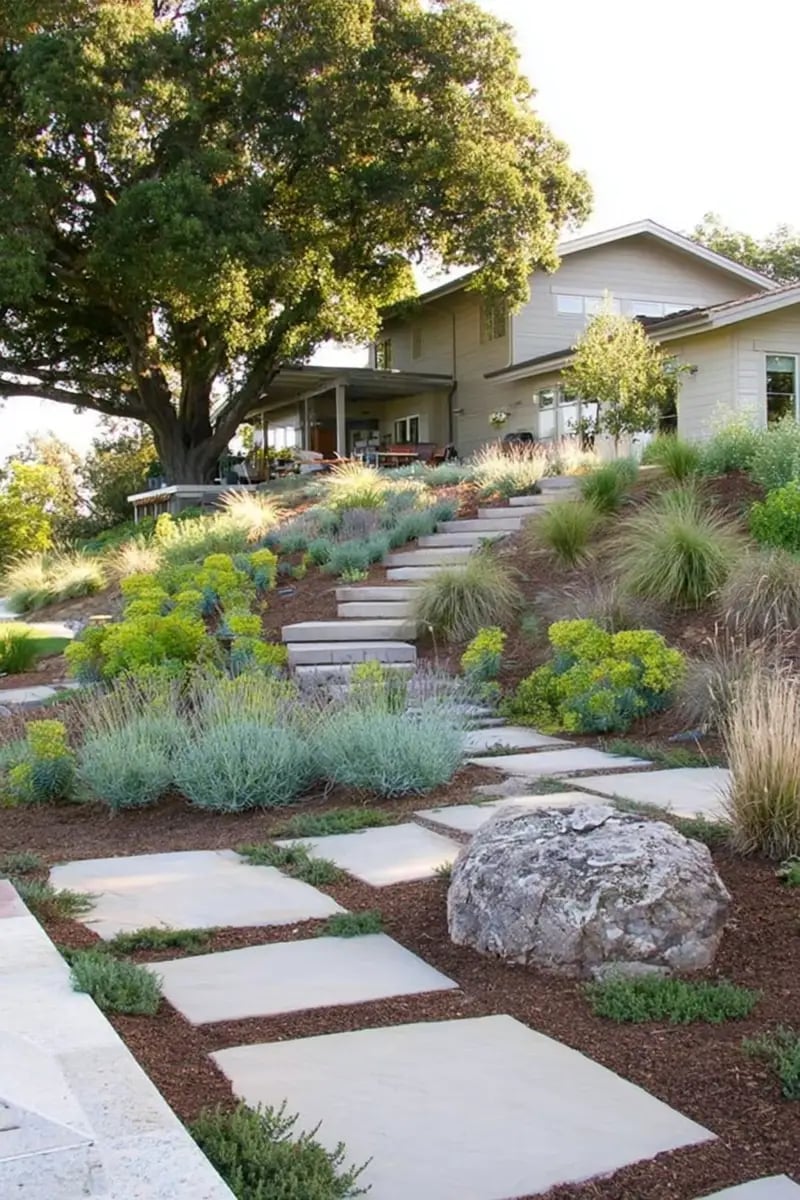
A hillside yard with concrete steps and large boulders creates a natural transition between levels. The terraced planting beds follow the slope, with gravel paths connecting each tier. Soft daylight filters through the varied plantings, making the gray stone and green foliage a cohesive landscape. The steps integrate into the slope without cutting across it, which keeps the layout feeling planned.
Cottage Garden Renter Friendly
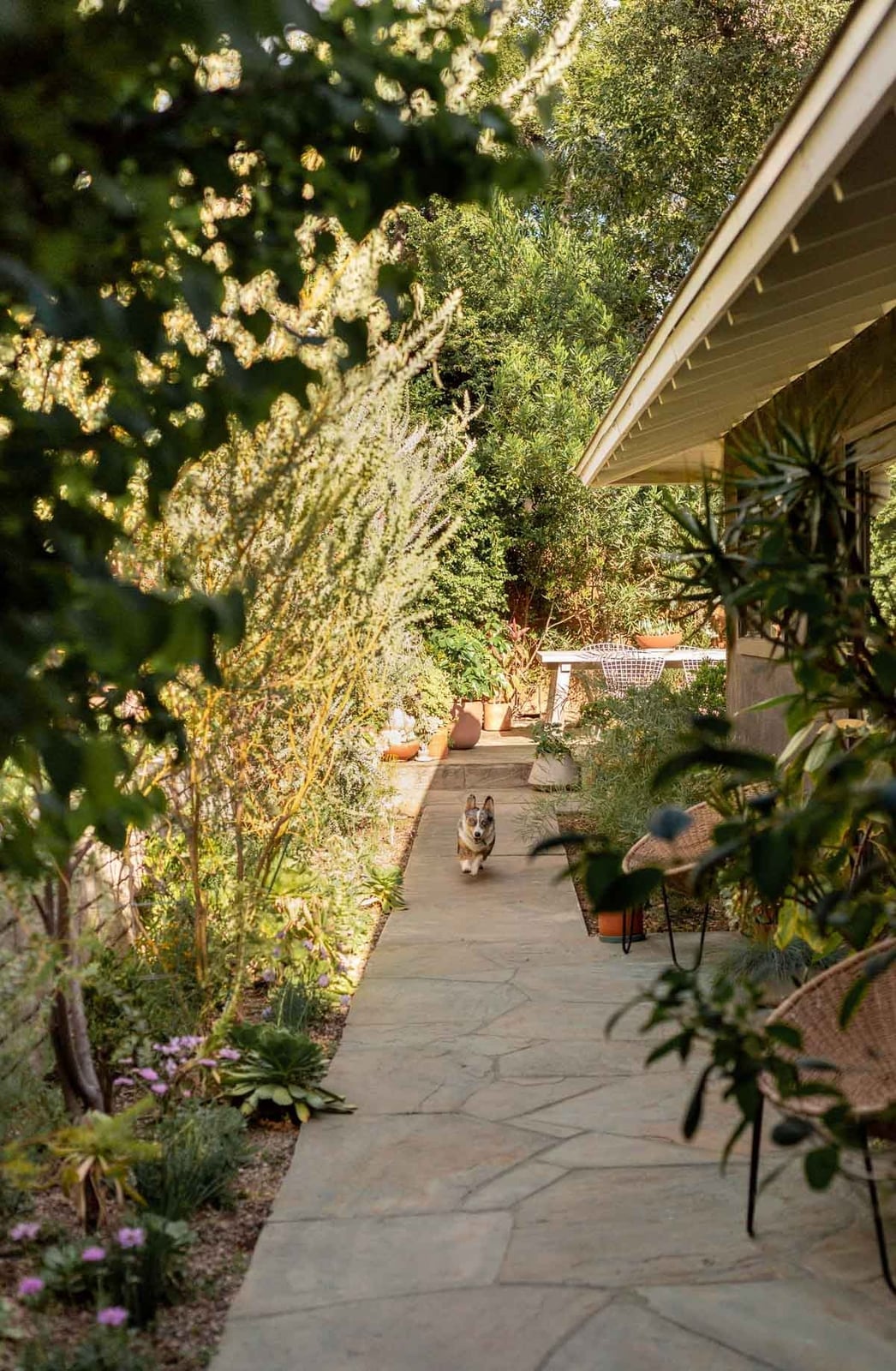
A flagstone path through a compact backyard makes the garden feel larger by creating a clear route to follow. Wicker chairs and potted plants add seating and greenery without permanent changes, which suits a rental situation. The muted green and brown palette keeps the space calm, while a dog walking on the path shows that the layout works for daily use.
Stone paths are a renter-safe swap for poured concrete because they sit on the ground without foundation work. Potted plants along the path let you change the layout each season. The dappled daylight through the trees softens the hard edges of the stone and wood furniture.
Hillside Garden Scale and Proportion, Outdoor
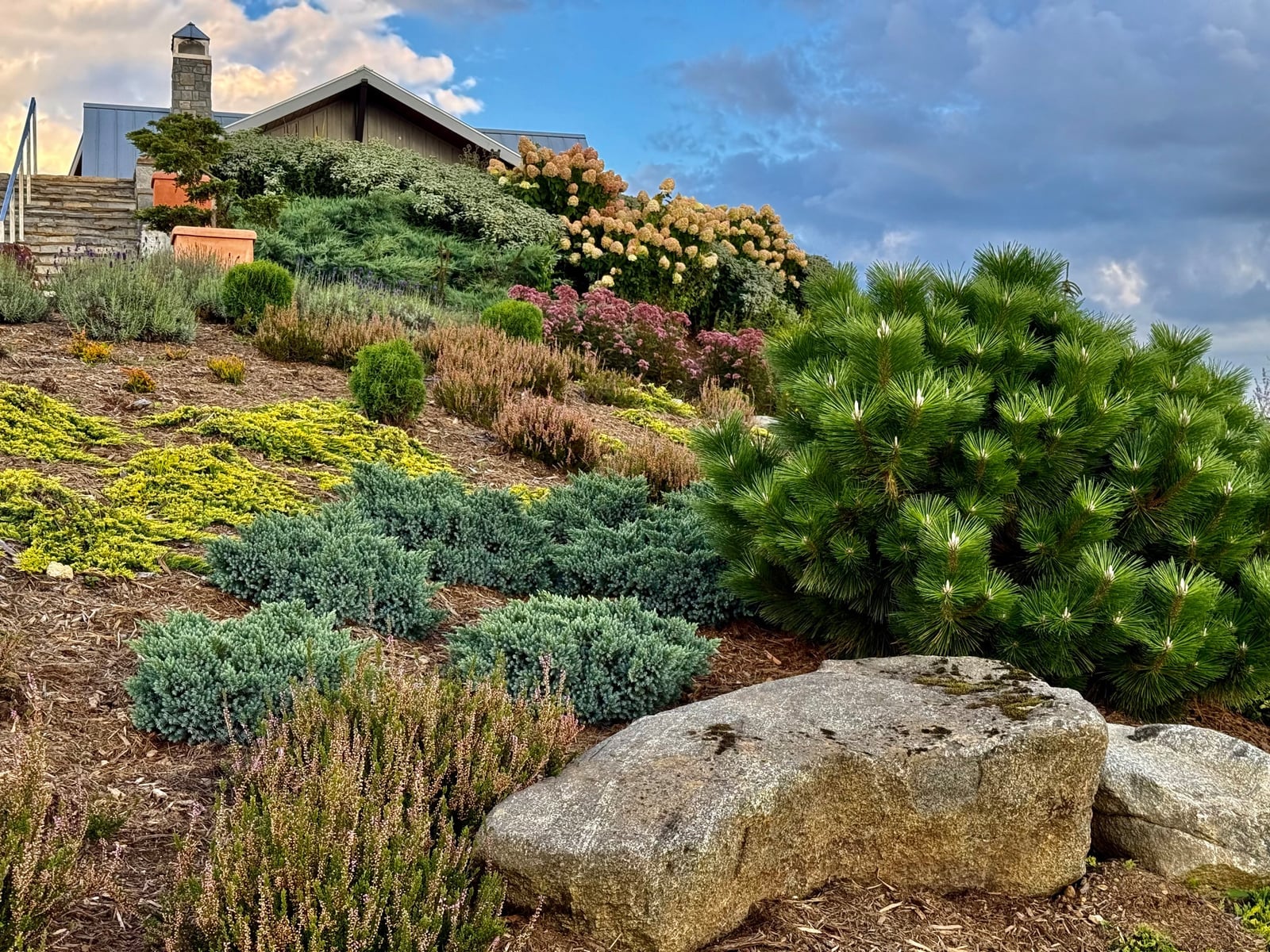
A hillside garden with tiered planting on a slope naturally breaks up the vertical space, making a roomy yard feel less imposing. The late afternoon sun highlights the green, pink, yellow, and brown palette, with a large rock and pine tree anchoring the mixed plantings. Dense, varied ground cover softens the transition between tiers, so the slope appears planned. Stone, gravel, and wood keep the naturalistic style grounded, while the wide framing shows how each tier supports the next without competing.
Cottage Garden Palette
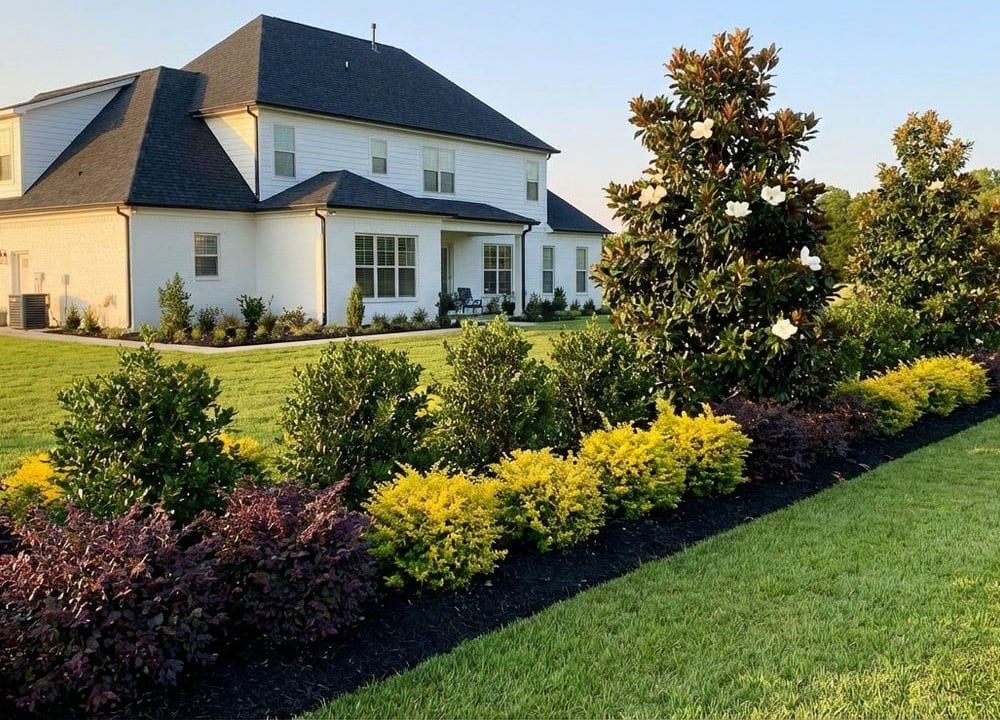
A cottage garden palette sticks to three to four colors repeated through the bed. Warm evening light on green, yellow, purple, and dark red foliage makes the magnolia tree and ornamental shrubs pop against the lawn. Curving beds that follow the edge of the yard soften the boundary between planted area and grass, making the whole space feel roomier. Layered foliage from ground cover to shrubs to tree keeps the eye moving upward. Renters can achieve this look with container groupings and a few upright shrubs placed to mimic the curve.
Naturalistic Tree Feature
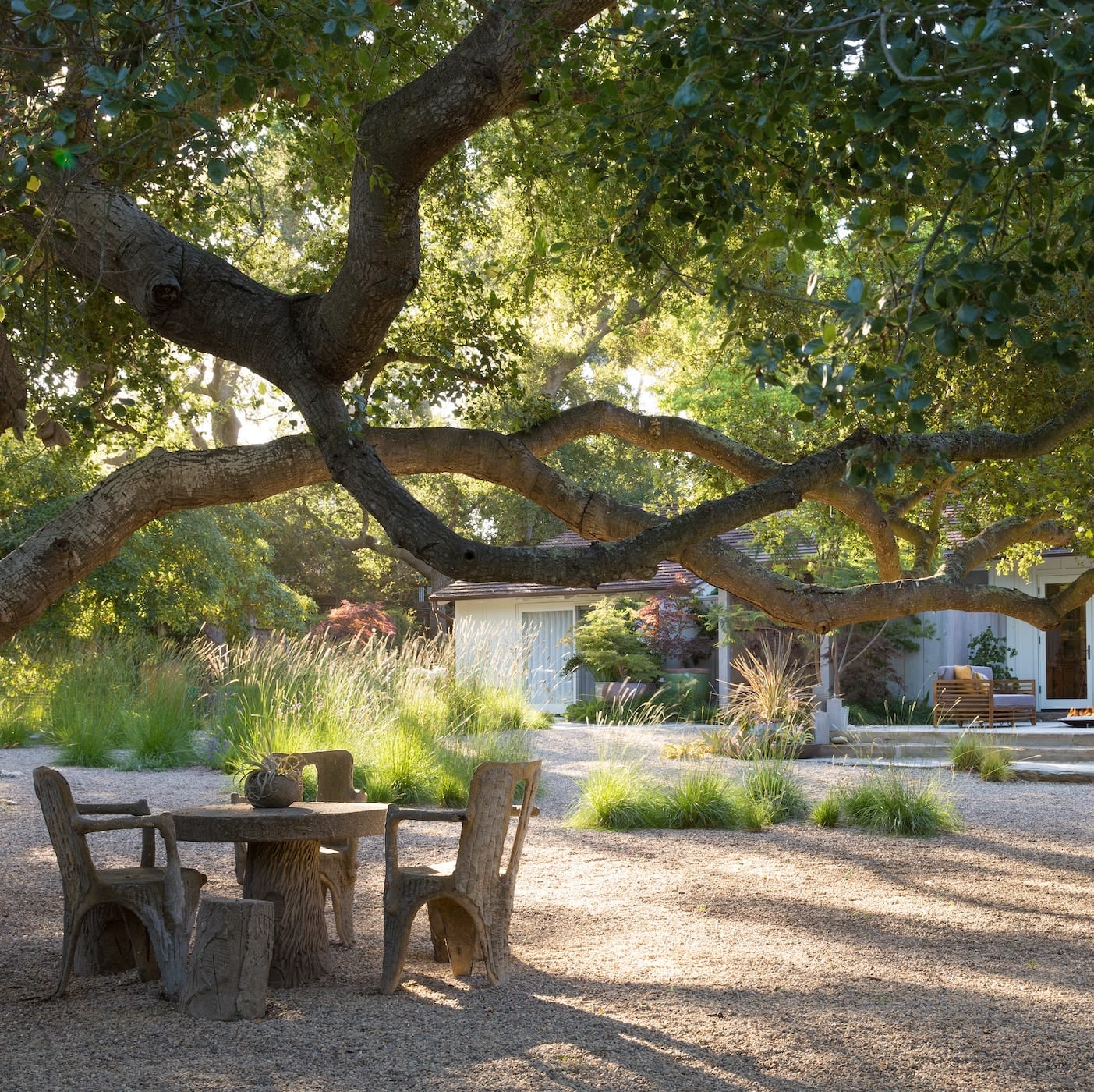
A formal garden often centers on a symmetrical pathway or clipped hedge. This naturalistic yard takes the opposite approach, letting a massive, gnarled tree anchor the whole space. The seating area tucked under the tree uses the golden hour sunlight as its main source, with gravel and grass as the floor. Stone and wood in the furniture keep the palette to green, brown, and beige, so nothing fights the tree’s scale.
The wide framing shows how the house sits quietly in the background. The tree does the work of defining the room. No border or raised bed is needed when the branches themselves create the ceiling. A low table and a couple of chairs are enough to make it feel lived in.
Spacious Patio Layout
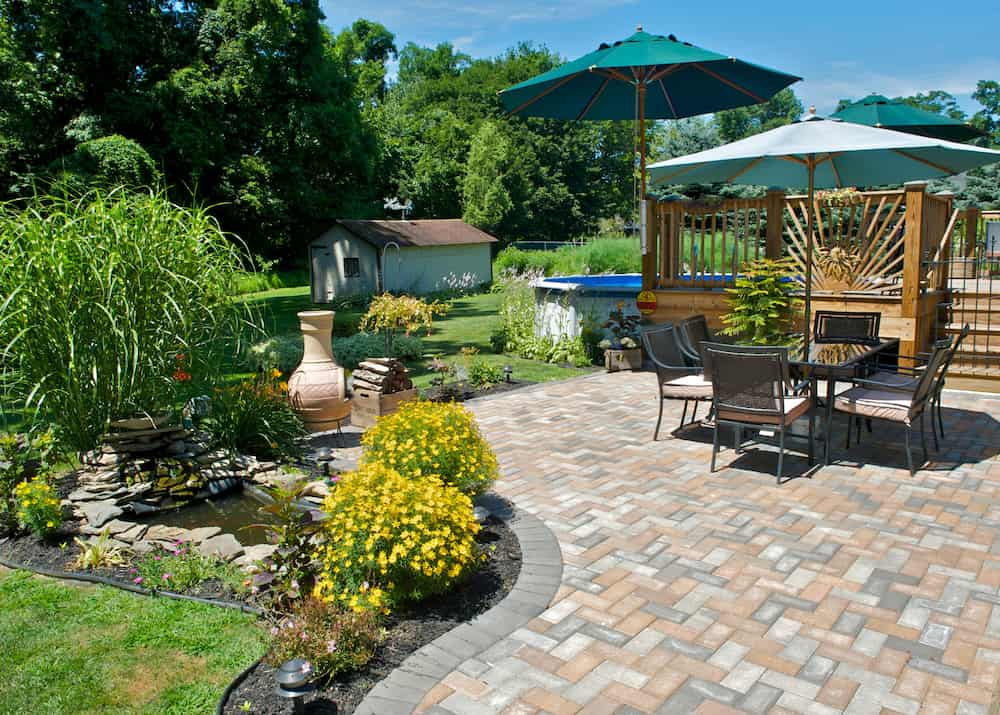
A multi-level patio with a pool uses the change in elevation to separate dining from lounging without walls. The multi-colored paver patio in tan, green, blue, and yellow ties the levels together, while the dining set, lounge chairs, and umbrellas each get their own zone. Daylight makes the pool the visual center, but the deck area feels equally planned. The layout works because the materials stay consistent across levels, so the eye reads one connected space.
Natural Rock Garden Materials
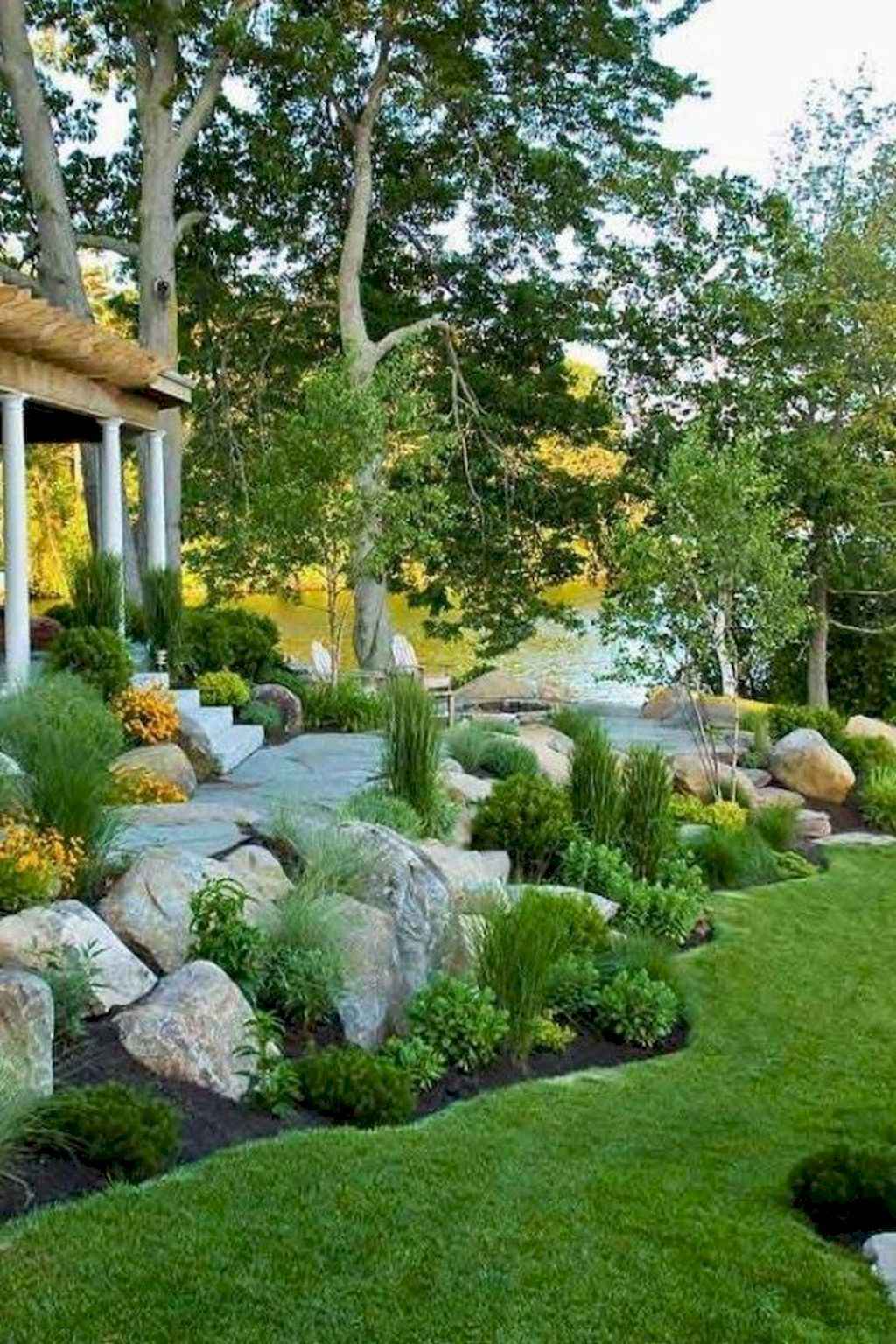
This backyard rock garden uses large boulders as the main structural element, and that choice sets the scale for everything else. The natural style relies on stone, grass, water, and wood, with the boulders placed to guide the eye down the landscaped slope toward the water. Bright daylight shows how the gray and brown rock contrasts with the green trees and blue water. The patio area sits at the top, letting the rock garden and water be the view. A single material choice, the boulders, does the job of defining the whole room.
Traditional Garden Bed Styling
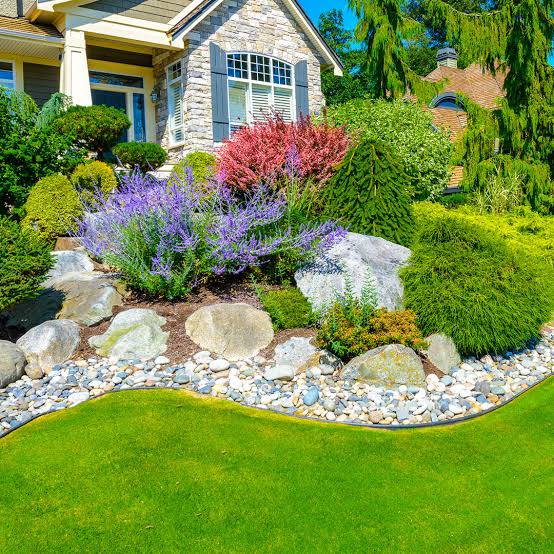
A front yard with layered garden beds works best when the tallest plants sit at the back and the lowest ones spill toward the lawn. Here the palette leans on purple flowers, with pink and red shrubs woven in, so the eye moves from the house edge to the grass without a hard stop. Large rocks anchor the corners and break up the green, giving the mulch beds a settled look that does not need constant editing.
Sloping beds like this one add depth to a roomy front yard. The lavender and colorful shrubs fill the space at different heights, which makes the whole garden feel fuller than a single row of plants would. Keep the lawn path clear and let the plants do the shaping.
Coastal Pavilion Durability
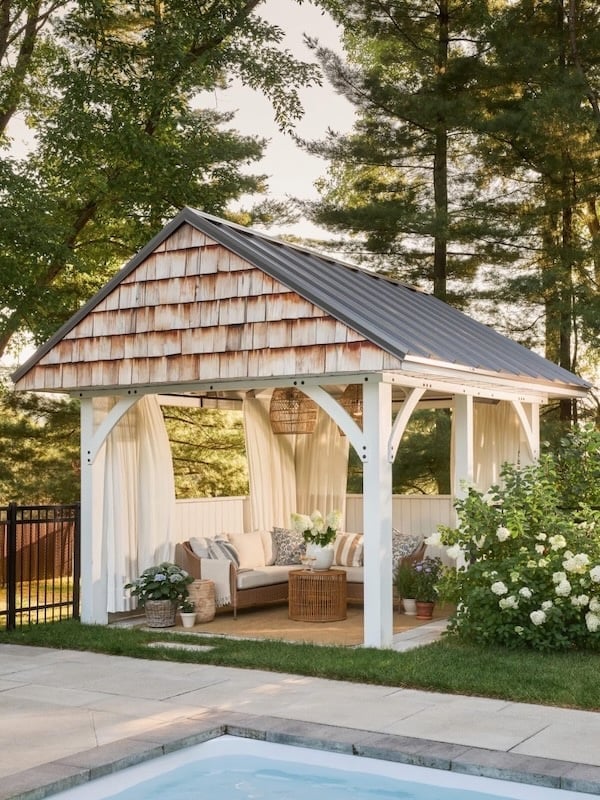
A covered pavilion with a shingled metal roof and open sides stands up to coastal weather while keeping the seating area usable in mist and sun. The white shiplap ceiling, wicker sofa and armchairs, and beige fabric curtains keep the palette light, so the structure does not compete with the pool edge and green lawn beyond. String lights add a soft glow for evenings, and the wood trim holds up better than painted alternatives in salt air.
Traditional Bird Bath Accent
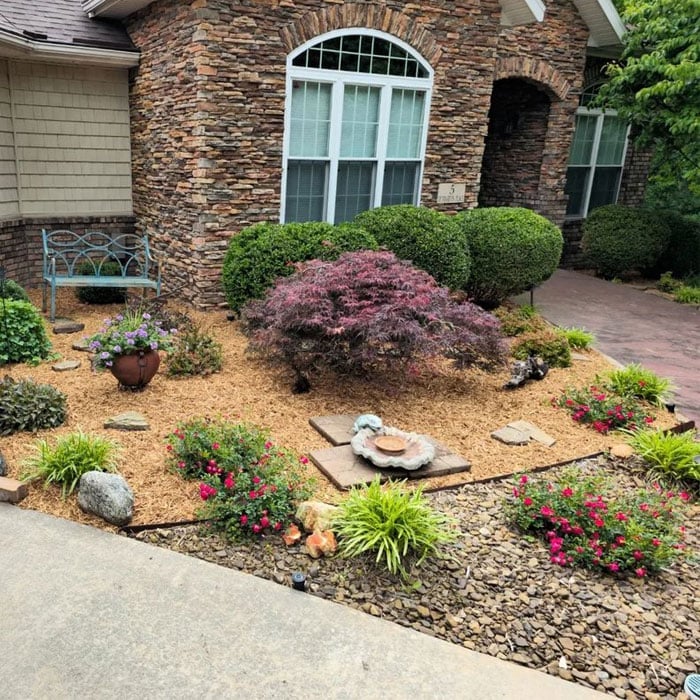
A small decorative bird bath works as a focal point in a compact front yard corner without overwhelming the space. Here a Japanese maple provides the height, while the mulch bed with scattered plants keeps the look loose and traditional. The concrete bench beside the bath offers a place to pause, and the stone bird bath ties the pink blooms and gray mulch together. Overcast light softens the whole scene, so no single piece fights for attention.
Tropical Pathway Lighting
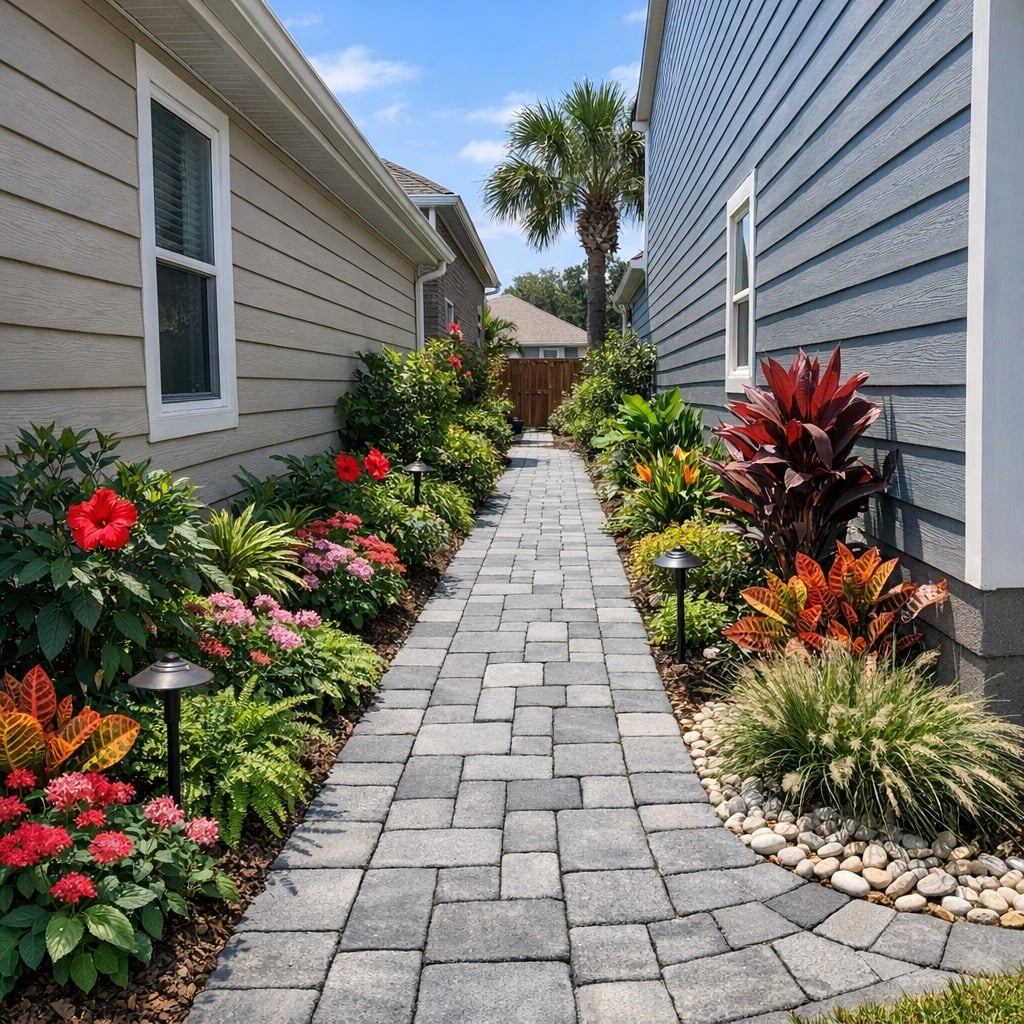
A narrow side yard can feel like a hallway between houses, but the right path lights and vibrant plants change that. Instead of a straight concrete run, this pathway uses warm stone pavers and low path lights that guide the eye without flooding the space. The red and orange foliage spills over the edges, softening the hard lines of the walkway.
The palette here is the trick. Red, orange, and green keep the narrow corridor from feeling dingy or forgotten. The path lights sit low to the ground, so they mark the route alongside the plants. For a side yard, that balance between light and foliage makes all the difference.
Classical Water Feature

A stone sculpture with a water spout creates a quiet anchor in a roomy garden. The classical figure sits above a water basin, with lily pads floating on the surface and green foliage framing the whole setup. Overcast light lets the gray stone and blue water read evenly, so the feature does not glare or wash out. It becomes the place the eye returns to, while the plants stay in their role as backdrop.
Modern Suburban Garden Bed Design
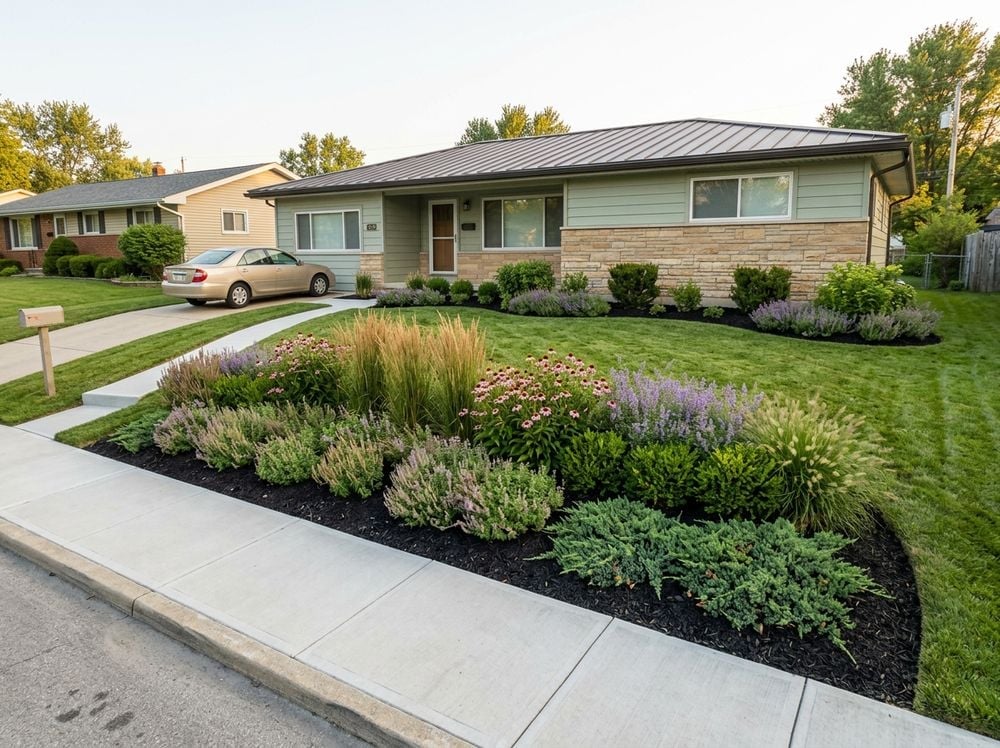
A curved garden bed running along the sidewalk softens the line between a manicured lawn and the street. The bed is filled with a mix of green foliage and purple and pink flowers, all held in place by a generous layer of mulch. The beige concrete of the walk keeps the palette grounded. This layout works because the curve breaks up the straight edge of the concrete, making the front yard feel wider and more welcoming. The key is keeping the mulch fresh and the lawn edges clean, so the garden bed looks planned and purposeful.
Vintage Garden Statue Detail
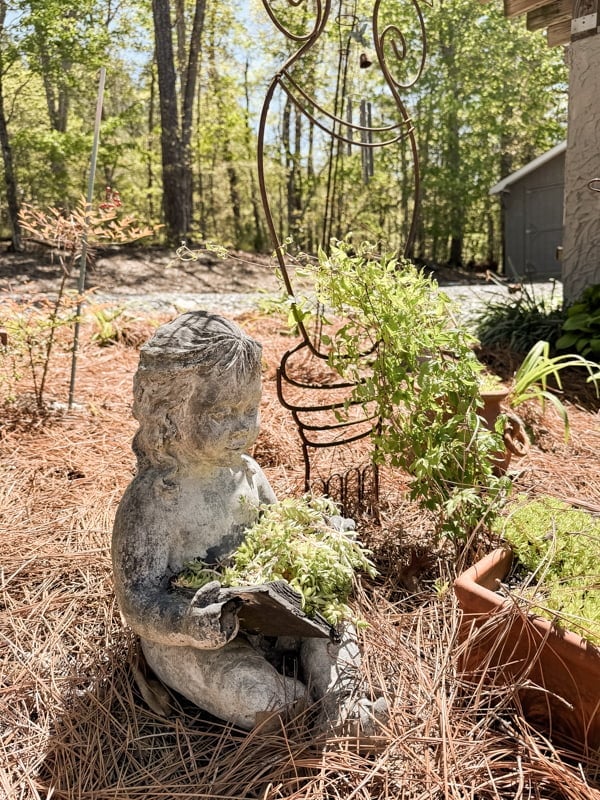
A weathered concrete cherub statue sits among terracotta pots and dense greenery, with dappled sun falling across the scene. The gray-green palette of the concrete and plants makes the statue feel like it has always been there. Pine needles scattered on the ground add to the settled, aged look.
The vintage style here comes from the mix of materials and the way nothing feels brand new. The cherub is the focal point, but the terracotta pots and varied foliage keep it from feeling lonely. What breaks the look is anything too glossy or plastic. Stick with natural stone, aged concrete, and matte finishes. This is a style that rewards patience, not a trip to the garden center.
Modern Narrow Backyard Layout
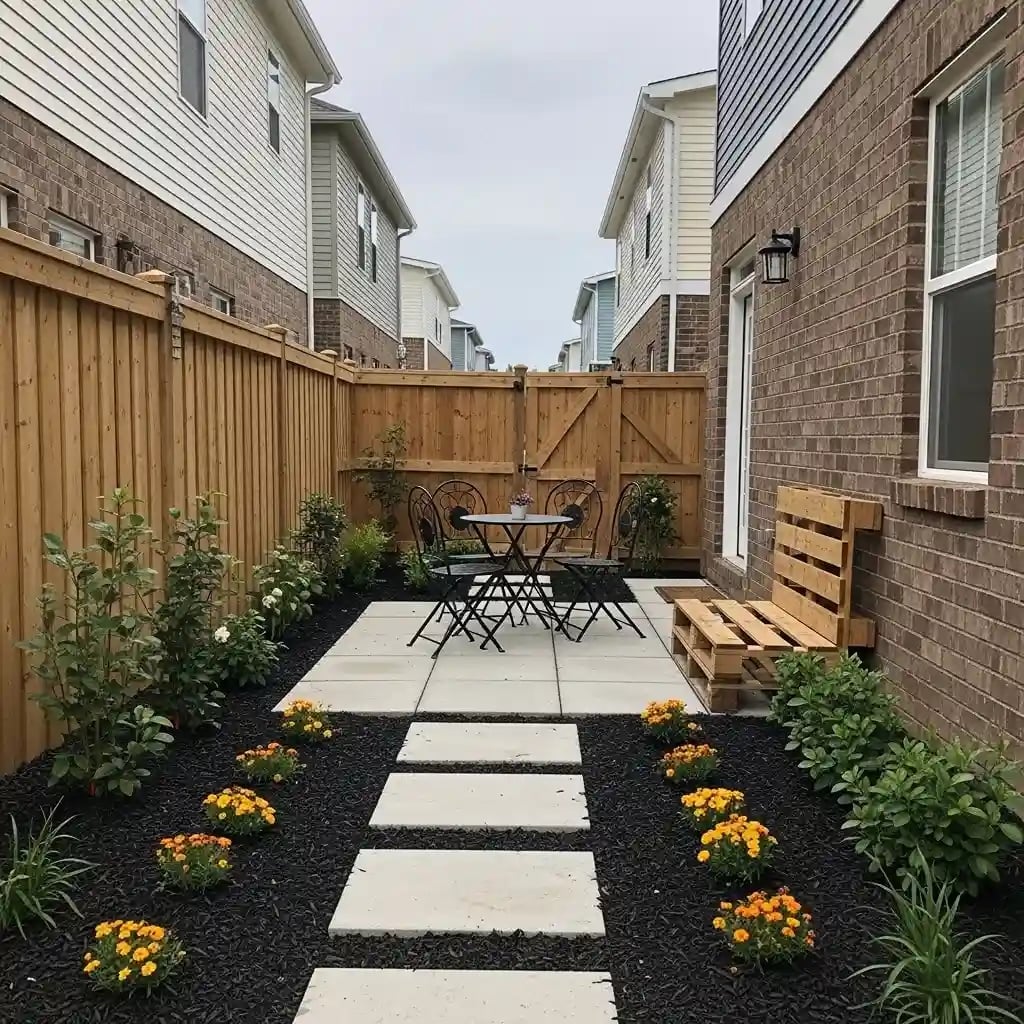
A concrete path runs straight through the center of a narrow backyard, with black mulch garden beds on either side filled with plants in green and yellow tones. A small table and chairs and a pallet bench provide seating without crowding the space. The path pulls the eye down the length of the yard, making it feel longer. The dark mulch contrasts with the light concrete and helps define the planting areas. This layout proves that a narrow yard does not need to feel cramped, as long as the path is clear and the furniture stays compact.
Garden Sculpture Placement
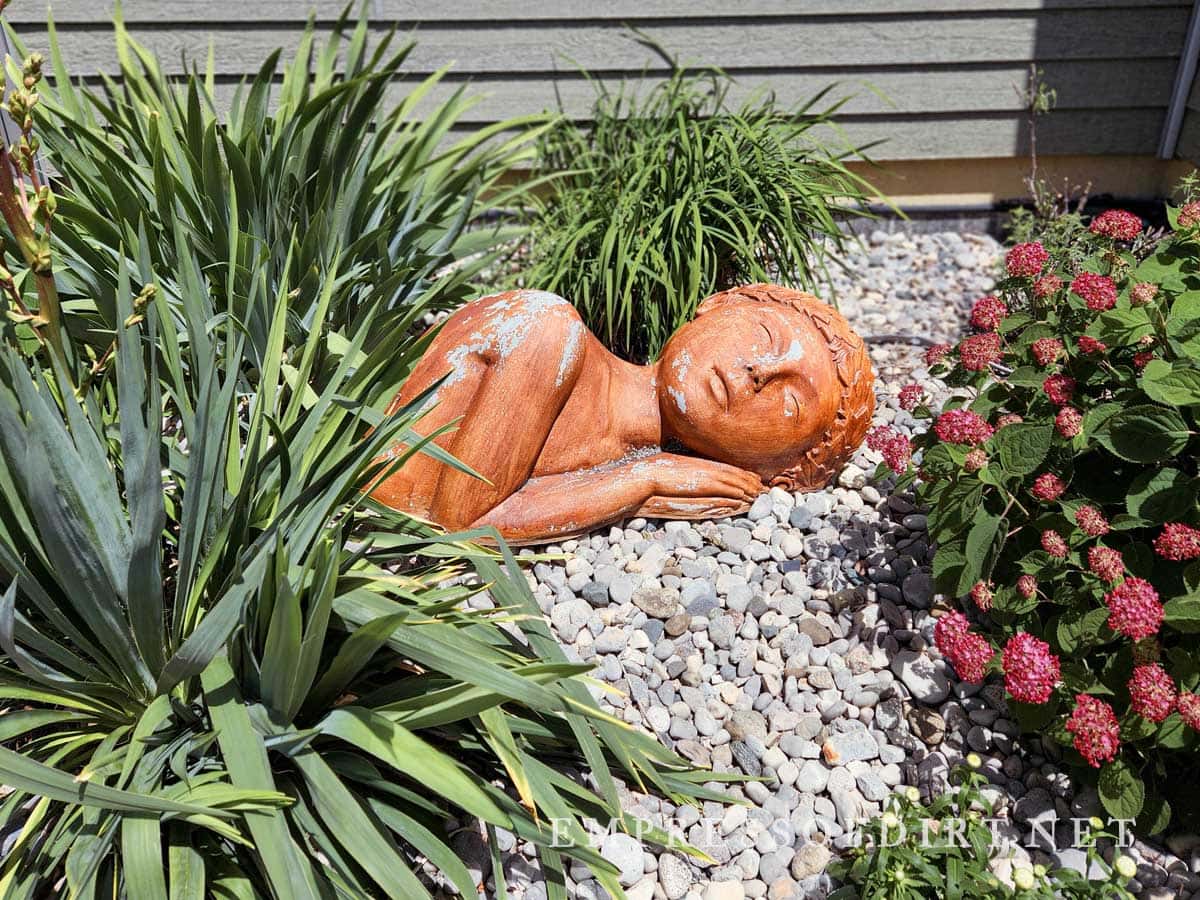
A terracotta sculpture of a reclining figure rests directly on gravel, surrounded by low plants in pink and green. The sculpture is the clear focal point, and the gravel acts as a neutral stage that lets the warm terracotta color stand out. Placing a sculpture at ground level, on a pedestal, makes it feel more integrated into the garden. The surrounding plants should stay low and not compete for attention. This kind of placement requires clean gravel and a sculpture with a simple, solid form that reads well from a distance.
Modern Raised Bed Design
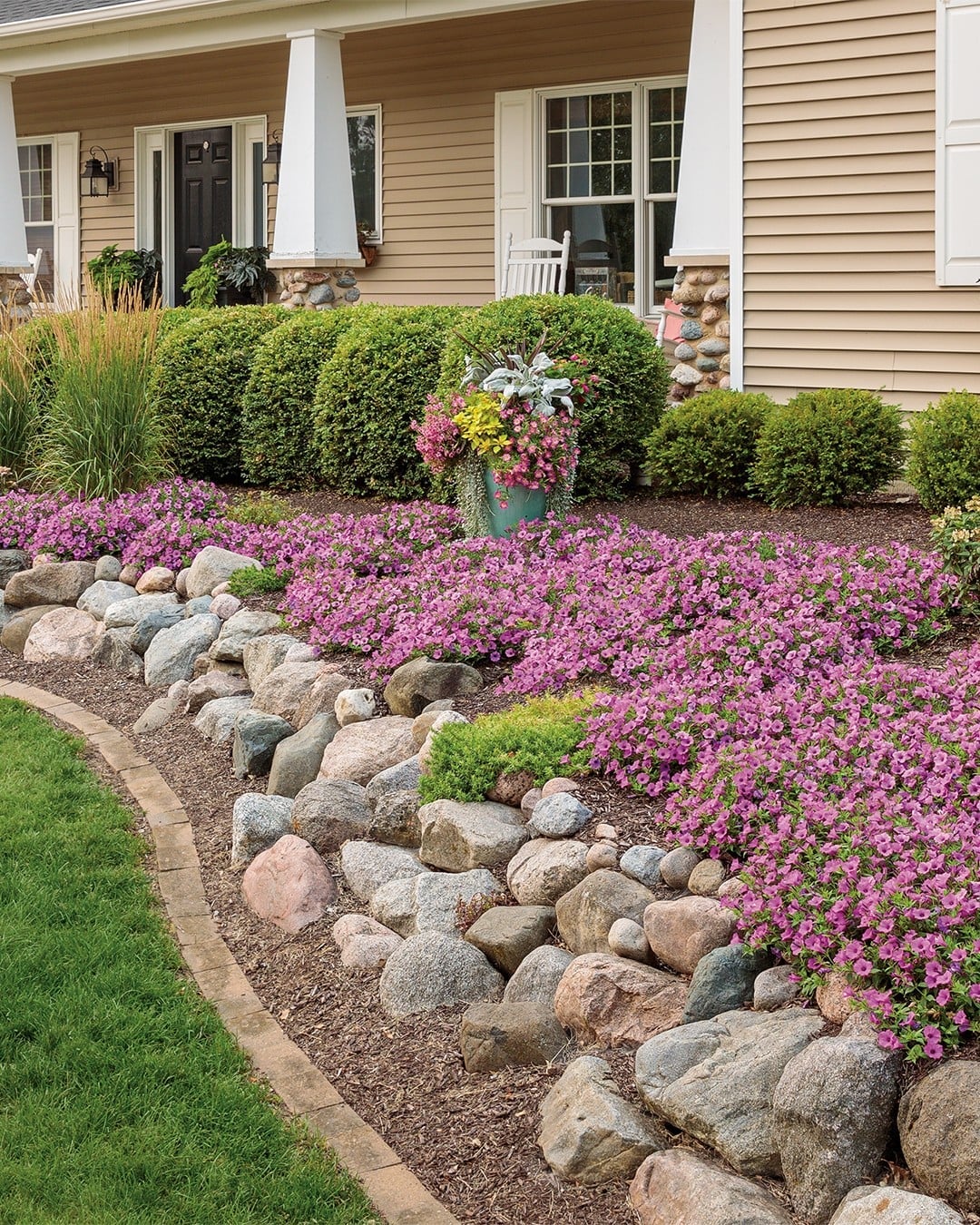
A gravel patio is the foundation for a geometric arrangement of raised garden beds in a soft beige tone, with metal edging keeping everything crisp. The beds are planted with a mix of green, purple, and white foliage, creating a calm, controlled palette. A pair of outdoor chairs sits to one side, turning the space into both a garden and a sitting area.
Compared to traditional in-ground beds, these raised versions offer a cleaner, more architectural look. The gravel patio reduces mud and makes the space usable right after rain. The geometry of the beds echoes the straight lines of the house, tying the garden to the home. Keep the planting dense to fill the beds quickly, and choose plants that stay within the color scheme to preserve the modern feel.
Modern Landscaping Materials
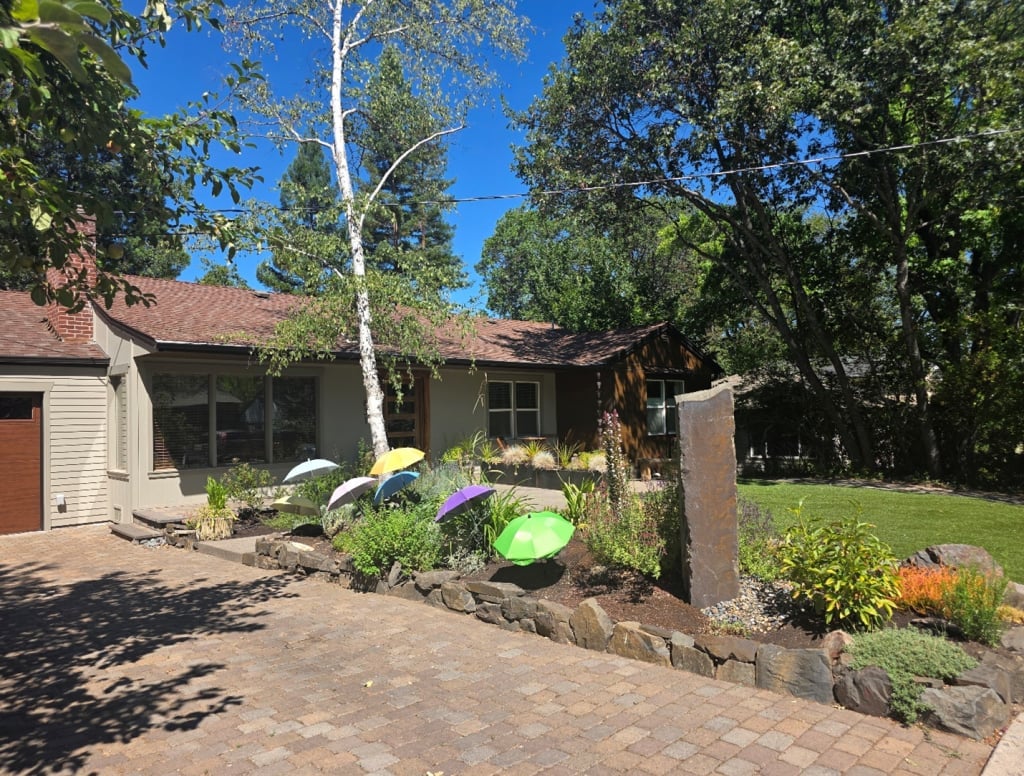
A front yard that pairs a stone sculpture with brick and concrete garden beds reads as a single composition, not a collection of separate features. The house exterior and driveway frame the scene, while green, brown, gray and blue plantings soften the hard edges. A colorful umbrella art piece adds an unexpected note that keeps the roomy layout from feeling too serious. The trick is to repeat the same stone finish in the sculpture and the beds, so the eye moves easily from one zone to the next.
Contemporary Xeriscape Palette
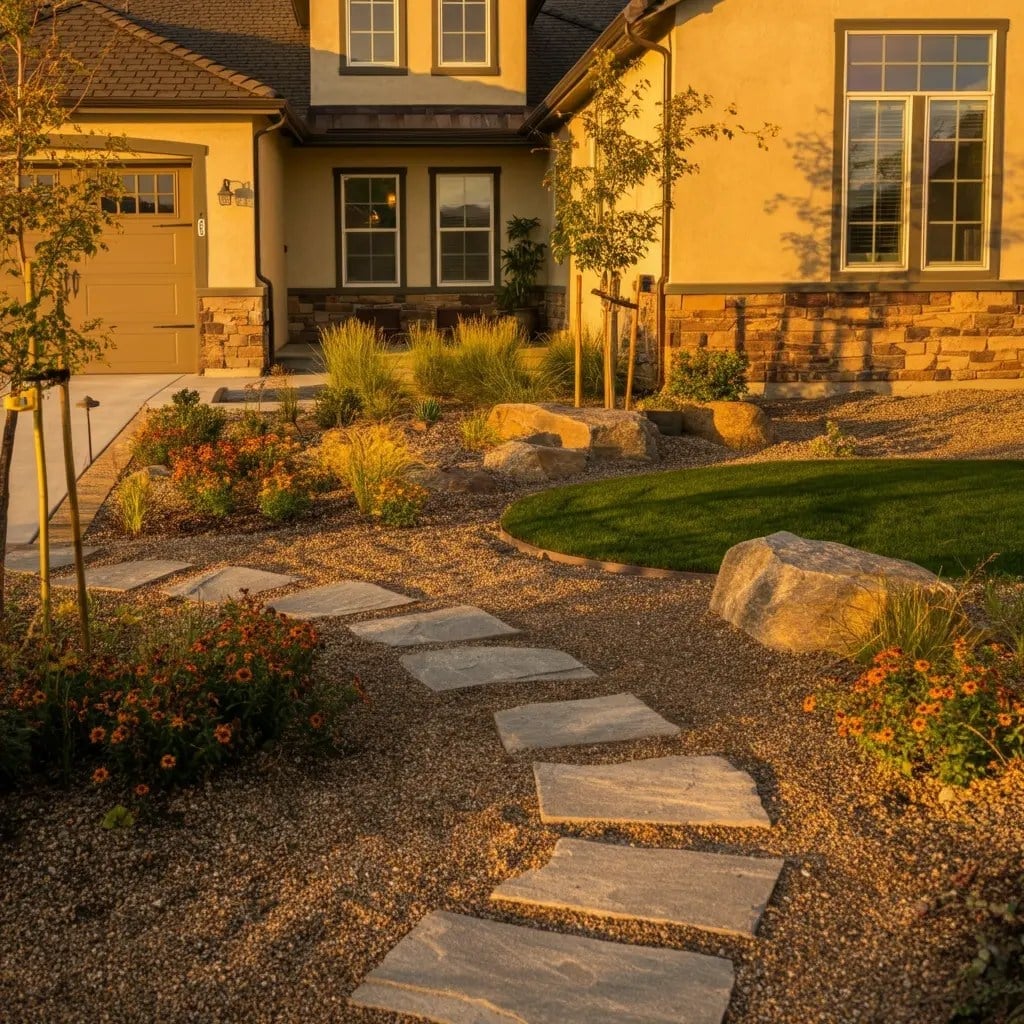
Warm golden hour light changes everything in a xeriscape yard. When low-angle sunlight hits the warm neutrals of stucco and gravel, the orange and green ornamental grasses glow rather than fade. A winding path of stepping stones through rock garden beds feels natural and spacious. The palette works because the warm tones are the majority, with green as an accent. A few large rocks break up the repetition, keeping the eye moving without adding clutter.
Modern Xeriscape Pathway Materials With Front Yard
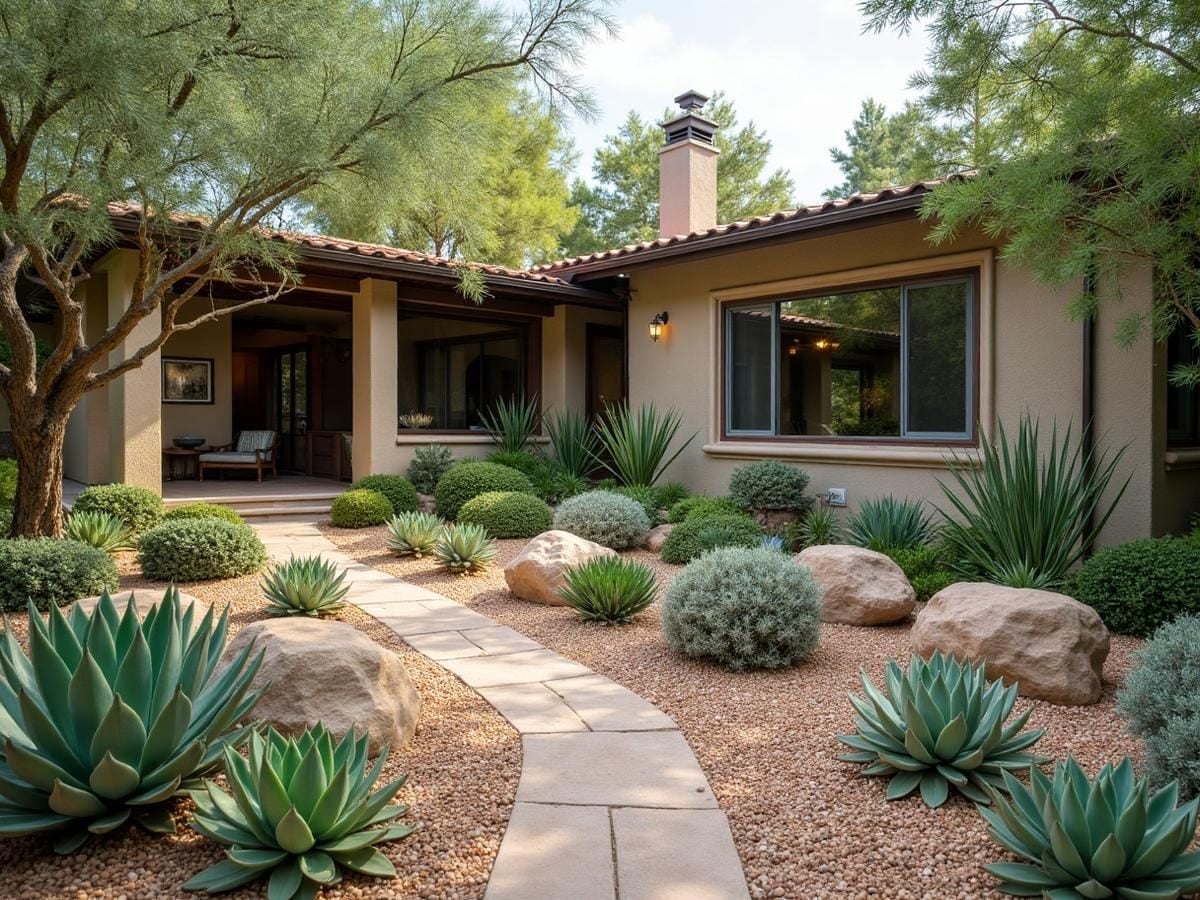
A gravel path can feel loose underfoot, but this front yard solves that by pairing it with wide stone slabs for the main walking line. The agave plants and boulders are the real anchors, and the gravel acts as a ground cover that ties them together. Stucco on the house and tile accents on the path edges give the design a finished look that plain gravel alone would lack. The tan, brown and gray palette keeps everything calm, while the green agave adds structure without needing water every week.
Modern Minimalist Pathway Layout
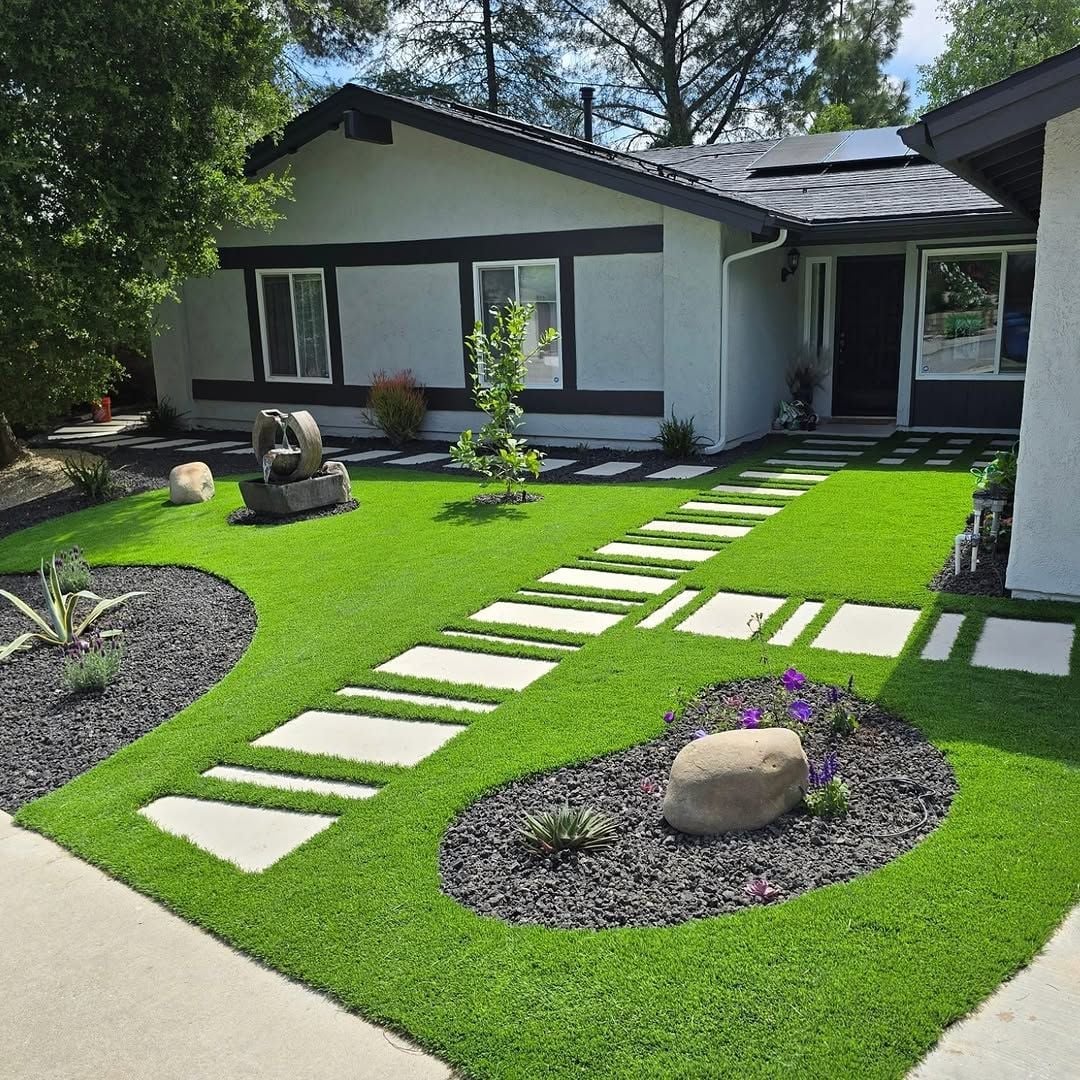
Geometric stepping stones set into a bed of gravel create a path that is both clear and open. The circular beds and water feature break up the straight lines, so the layout does not feel like a grid. Black and white stone accents add contrast against the green artificial turf and gray concrete. The open plan means the path leads the eye straight to the entry, but the circular shapes keep it from feeling too direct.
Final Thoughts
Landscaping your yard is a gradual process, not a single weekend project. Start with one area that needs the most attention, whether that is a pathway, a patio, or a garden bed. The best outcomes come from matching materials and plants to your climate and how you actually use the space. Check your USDA zone before buying plants, and think about sun exposure and drainage patterns. Over time, even small changes like adding a fire pit, rearranging seating, or swapping out a few perennials can shift the whole feel of your yard. Let the layout guide your choices, not the other way around.