Yellow might be the cheeriest color for a kitchen, but it’s also one of the most versatile. From soft buttercream to zesty lemon, it can make a space feel larger, warmer, or more energetic depending on the shade and how you use it.
This roundup of 33 kitchens shows how different approaches to yellow can transform the heart of your home, whether you’re considering a full cabinet overhaul or just a few sunny accents. Each look offers a practical take on making the color work for your daily cooking and gathering.
A Spacious Kitchen Anchored by a Mustard Yellow Island
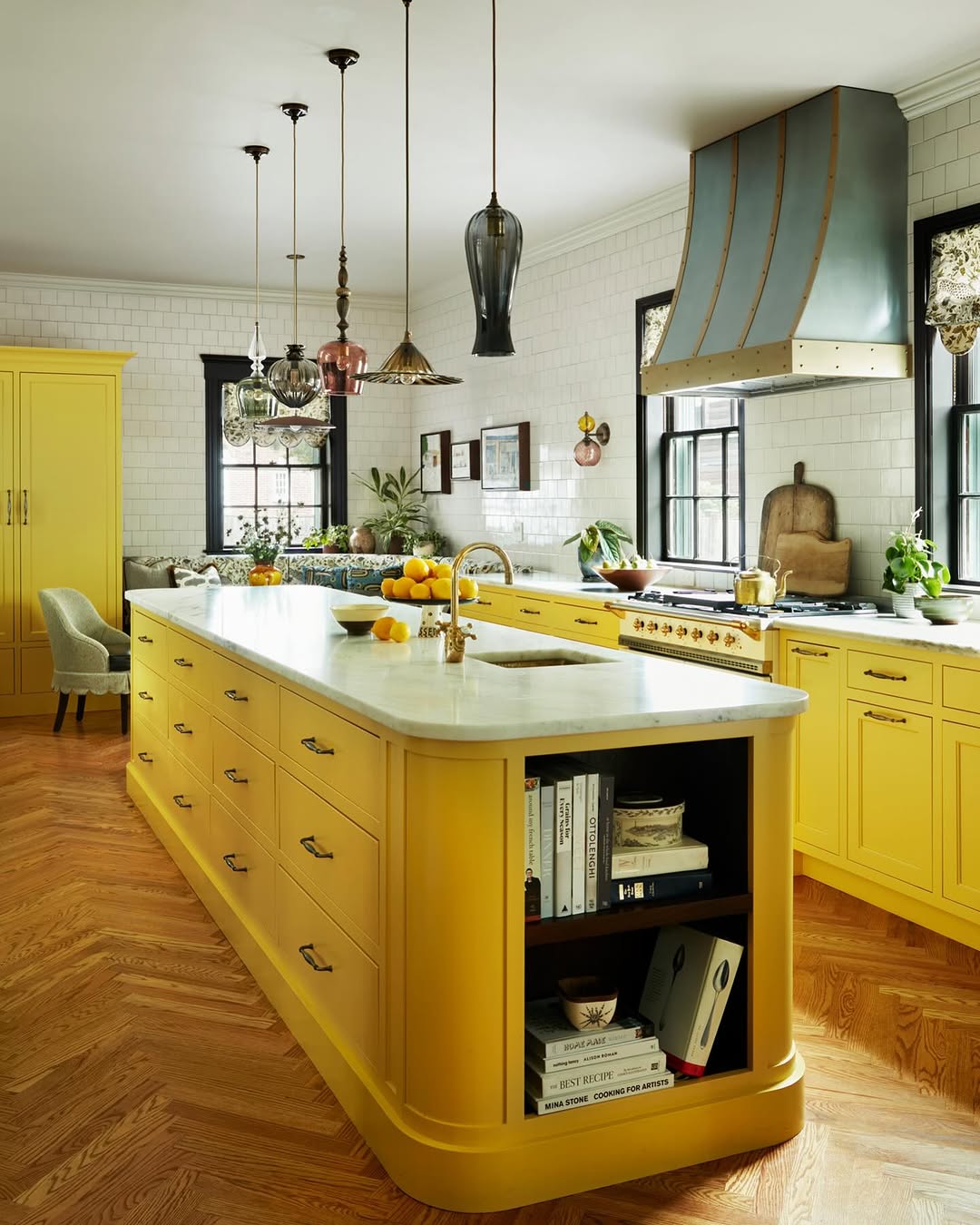
This open plan kitchen uses a single oversized element to define the whole layout. A massive mustard yellow island sits at the center, drawing the eye immediately and breaking up the white and black cabinetry around it. The range cooker and pendant lights above reinforce the island as the room’s focal point, while natural light keeps the palette from feeling heavy. When a room is this open, a large island in a saturated color gives the space structure without needing extra walls or partitions.
Rustic Charm with Extensive Buttery Yellow Tilework
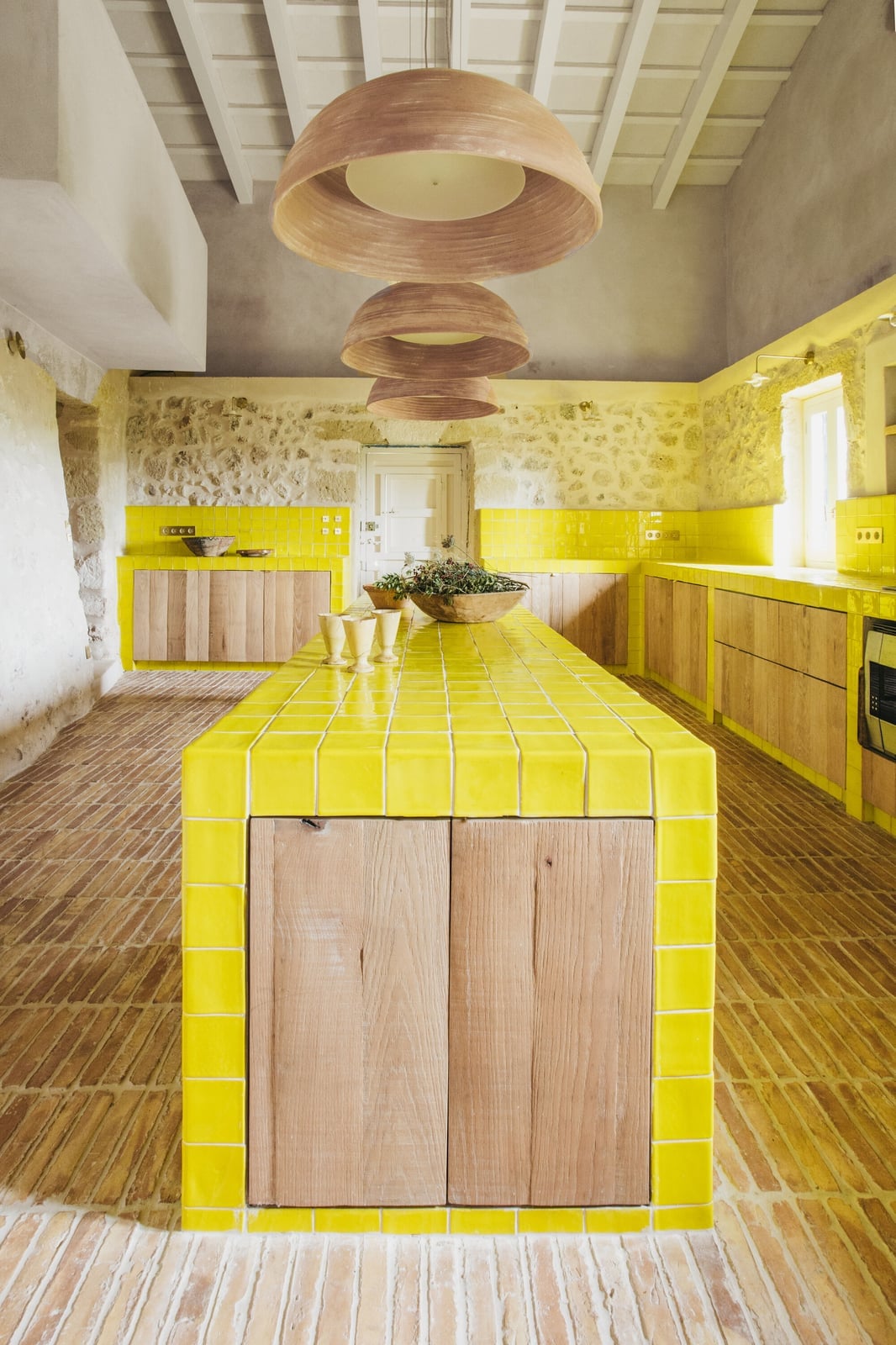
This roomy kitchen goes all in on yellow tile, covering the backsplash and the island in a warm buttery shade. The tile wraps around the cooking zone and extends to the island face, creating a continuous surface that ties the rustic wood cabinets and stone countertops together. Natural light from the windows keeps the yellow from looking too heavy, and the wood tones add enough contrast to keep the space grounded. When tile covers this much surface area, it becomes the main palette decision, so everything else should sit back and let the yellow carry the room.
Modern Kitchen Featuring Vibrant Yellow Cabinets and Terrazzo
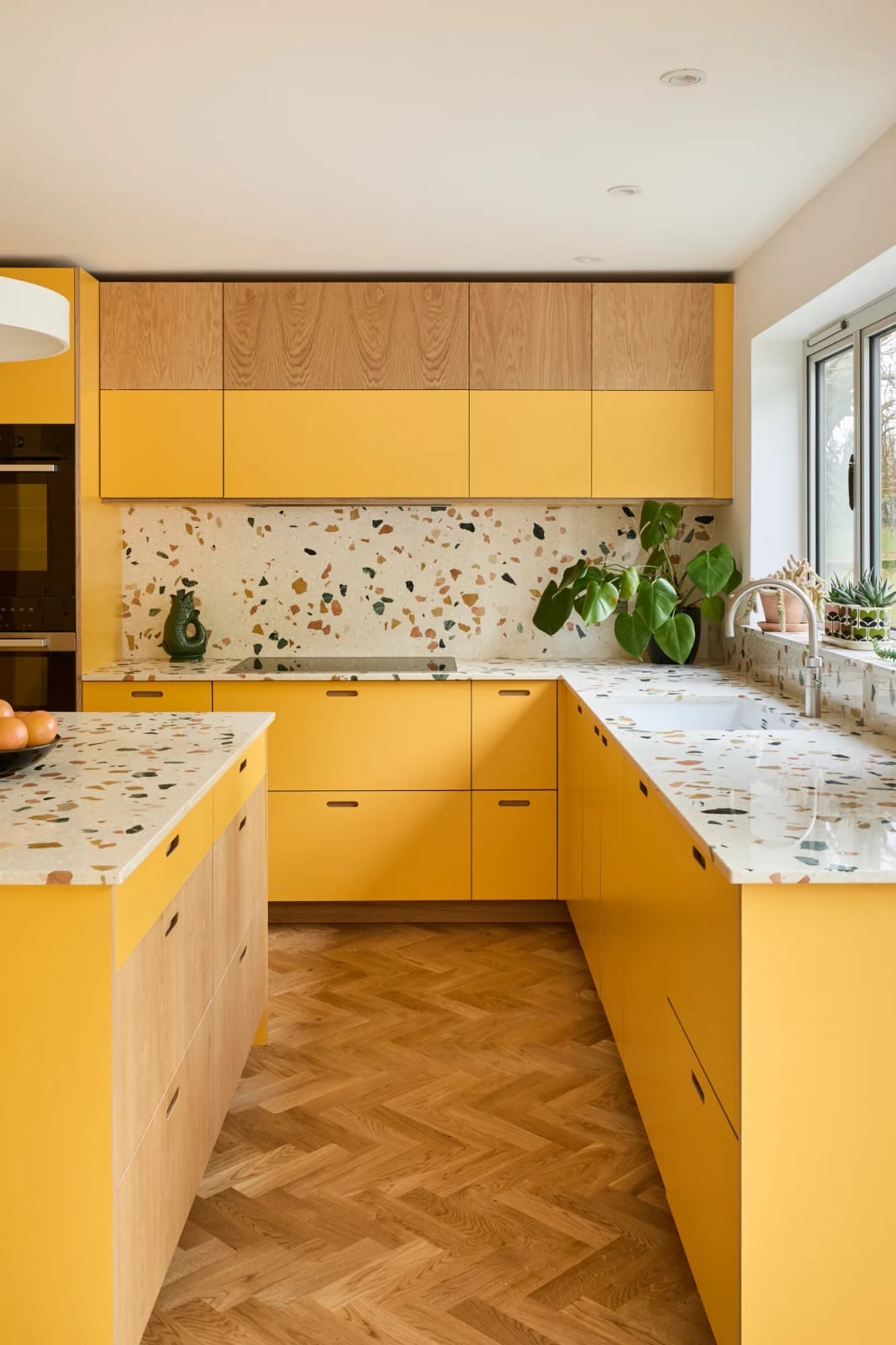
What happens when you pair a high-impact color with a material that already has a lot going on? This roomy u-shaped kitchen answers that question. The upper and lower cabinets are a vibrant yellow, while the island countertop is terrazzo with flecks of multi-color. The wood flooring adds warmth, and the white walls and ceiling give the eye a place to rest. The yellow is bold, but the terrazzo keeps it from being too one-note.
The trick is letting the terrazzo do the pattern work. The yellow cabinets stay solid and flat, so the two finishes don’t compete. Natural light from the window helps both materials read clearly. If you want a lively kitchen without matching patterns, pair a single saturated cabinet color with a speckled stone or composite countertop.
Bold Yellow Cabinets in a Contemporary Corner Kitchen
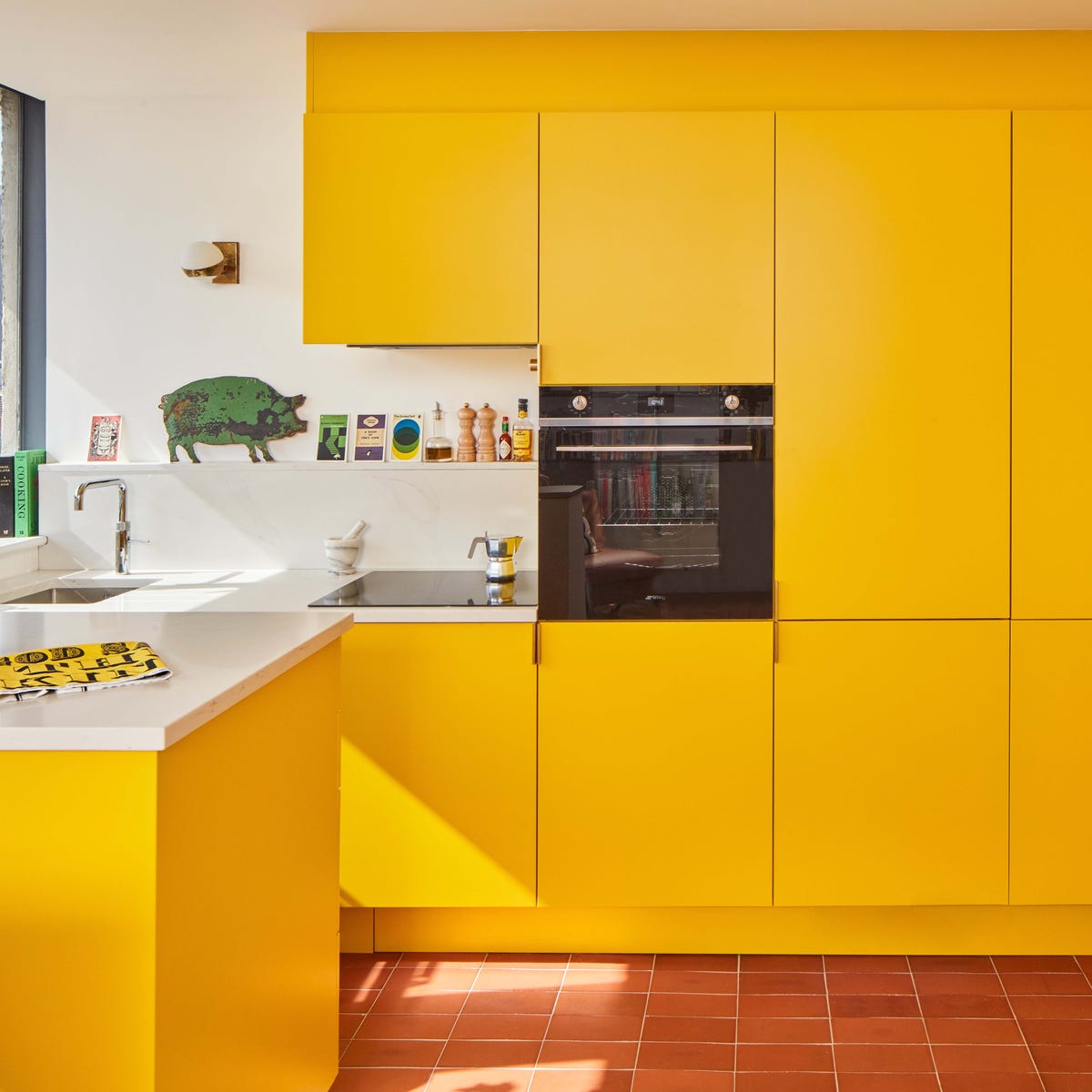
A corner kitchen can feel tucked away, but this one makes sure you notice it. The bright yellow cabinets wrap around the corner, creating a continuous band of color that stands out against the white countertops and backsplash. Natural window light hits the painted wood, and a wall sconce adds a warm glow for evening use. The terracotta accents in the room tie back to the warmth of the yellow without repeating it exactly. When cabinets are this intense, keeping the countertops and walls neutral lets the color be the main event.
Eclectic Kitchen with a Striking Yellow Tiled Island and Backsplash
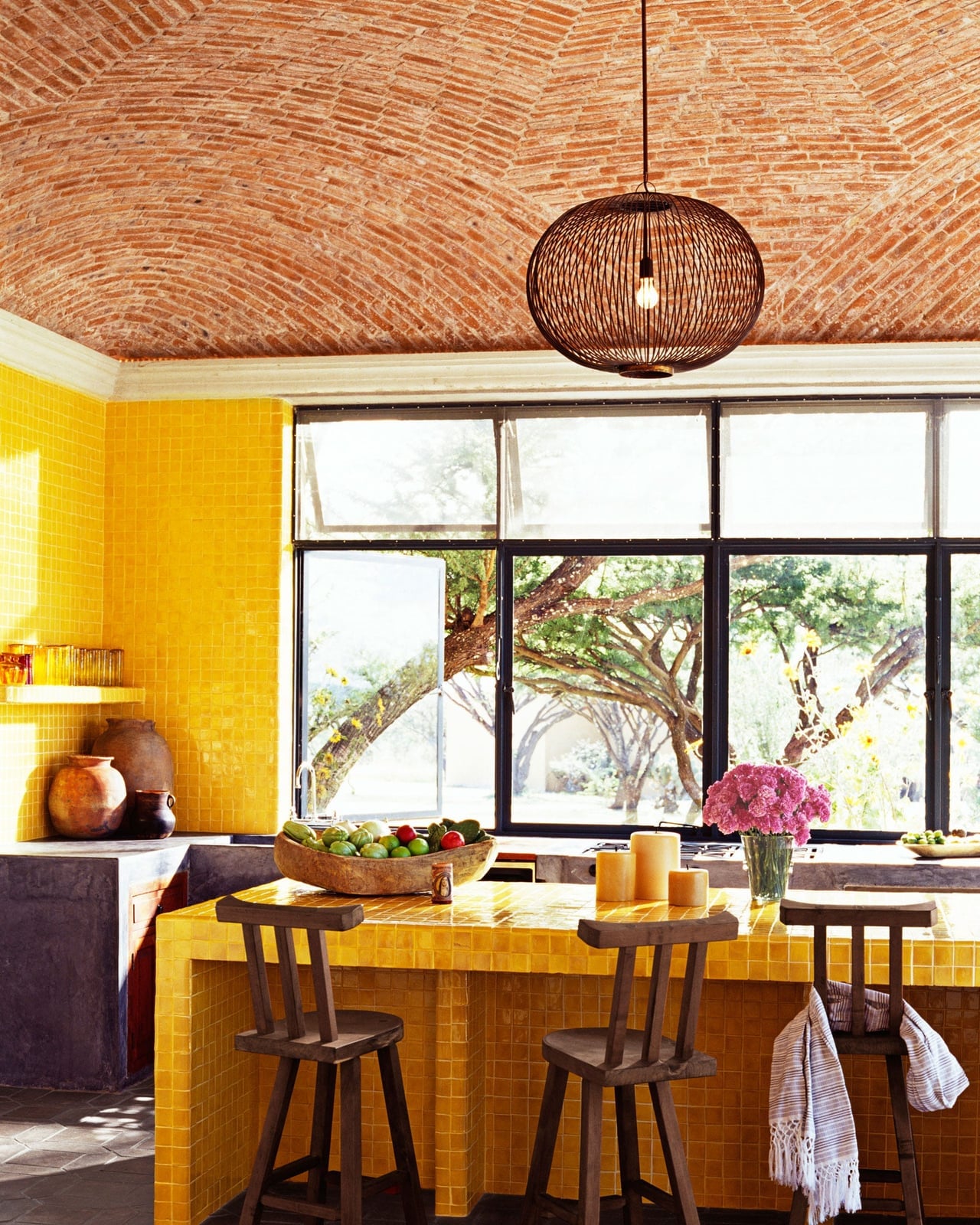
A good rule for tile in an open plan is to use it in more than one place so it reads as intentional. This kitchen takes that idea and runs with it. The yellow tile covers both the island and the backsplash, creating a unified block of color that anchors the cooking zone. The island has wooden stools, and the brick ceiling adds texture overhead. Large windows bring in natural light, and the terracotta and dark wood accents keep the yellow from floating. When tile covers both the island and the wall, it makes the kitchen feel custom without needing a full cabinet replacement.
Luxurious Modern Kitchen with High-Gloss Mustard Yellow Cabinetry
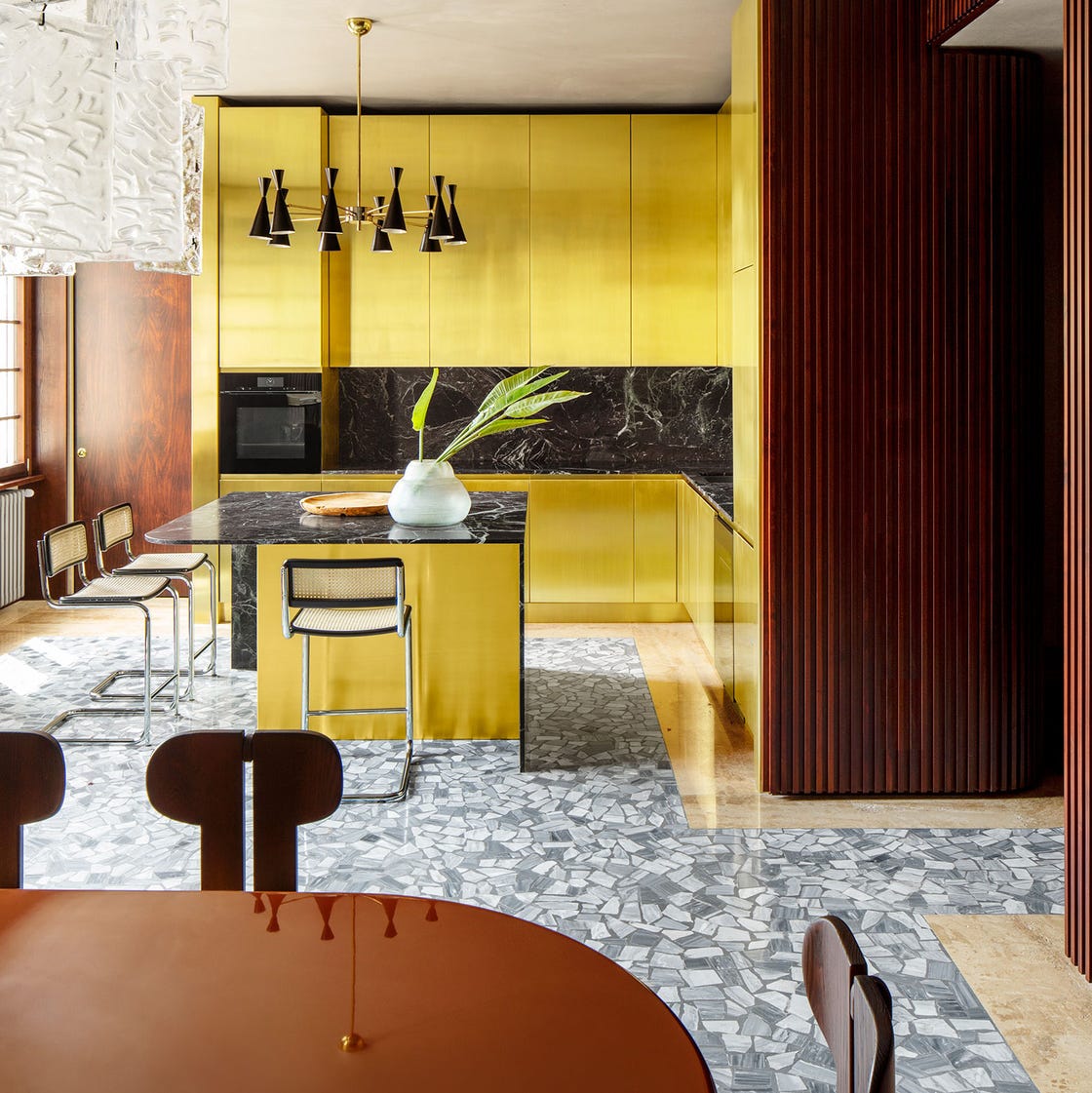
High-gloss mustard yellow cabinetry in a modern luxury kitchen is a commitment to shine. It is a look best suited to open-plan spaces where the cabinets can act as the primary color anchor, surrounded by black, wood, and marble. The glossy finish reflects ambient overhead and natural light, keeping the room from feeling heavy. Brass hardware and bar stools add warmth, while terrazzo on the island or floor introduces subtle pattern. This kind of finish demands clean hands and regular wiping to keep its reflective quality. If high-gloss feels like too much maintenance, a satin-lacquer cabinet in the same mustard tone delivers a similar impact with less glare.
Modern Kitchen with Sunny Ochre Yellow Walls
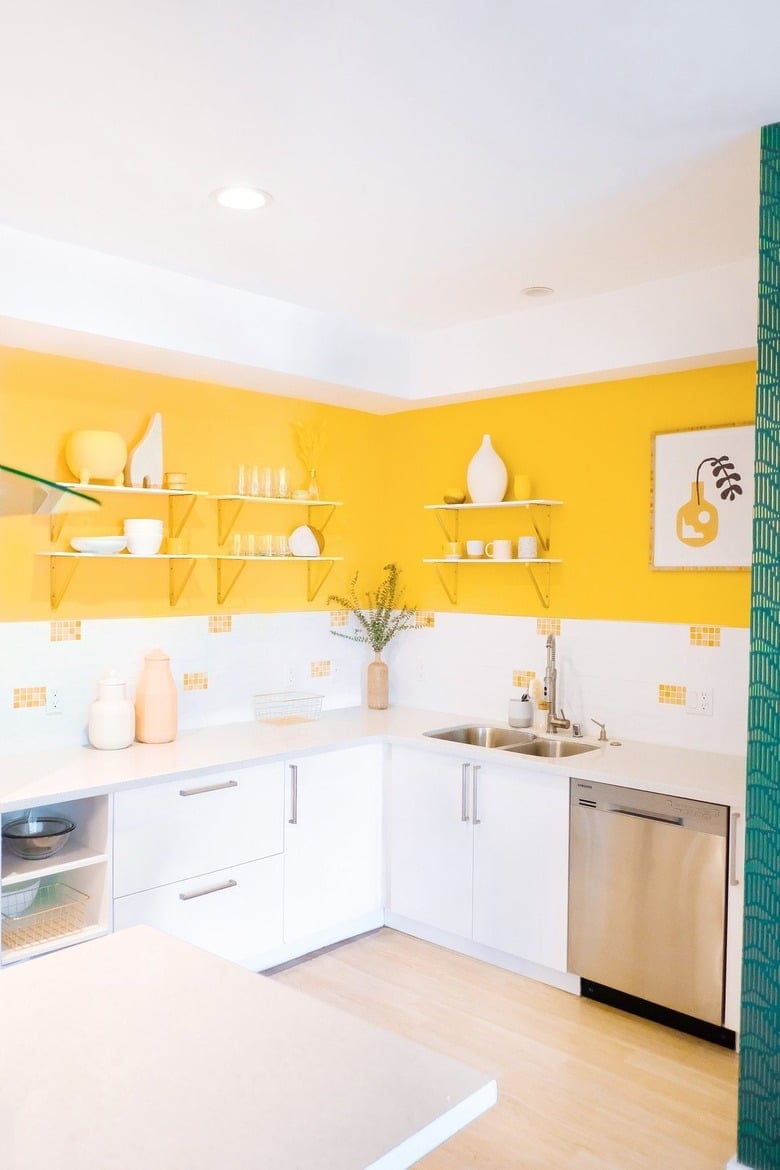
Ochre yellow walls in a modern kitchen create a backdrop that does the work for you. Paired with white cabinets and stainless steel appliances, the color feels planned. Recessed lighting and natural light keep the ochre from turning muddy. This palette is a solid choice for a renter who cannot paint cabinets but can negotiate a wall color. It shifts the focus from the footprint to the room’s warmth.
Vibrant Galley Kitchen with Lemon Yellow Cabinets and Geometric Tiles
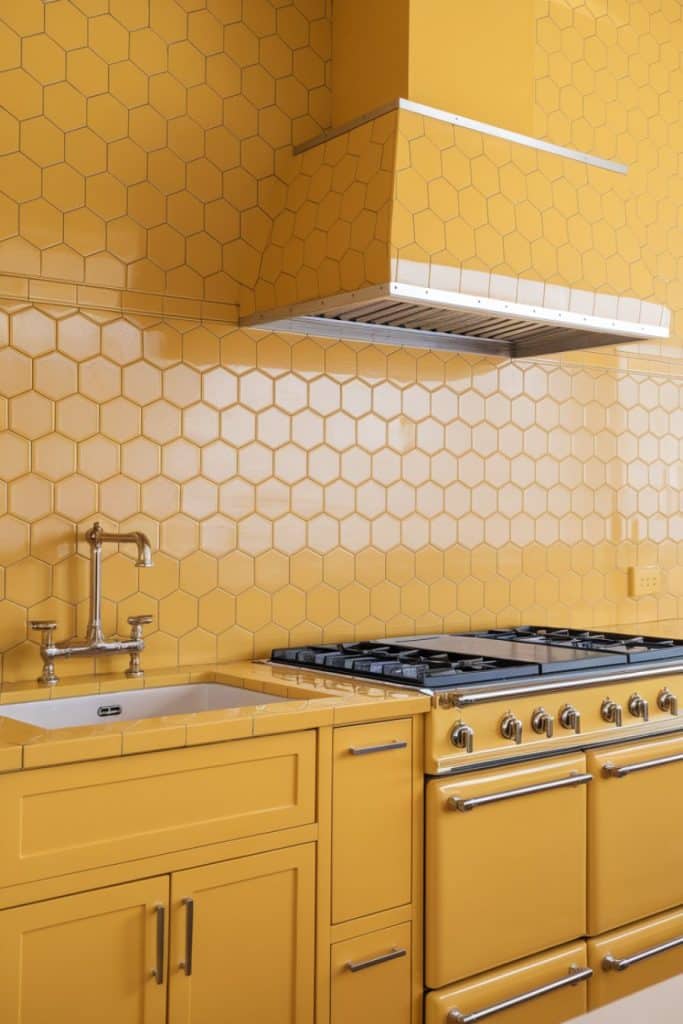
Lemon yellow cabinets in a compact galley kitchen demand attention, and the geometric tile backsplash handles the conversation. The navy blue and white in the tile ground the yellow, while a purple door adds an unexpected accent that works because it is isolated. Natural light from a window prevents the small space from feeling closed in. This palette is for someone who wants a kitchen that feels like a destination, not just a pass-through. The ratio is roughly sixty percent yellow, thirty percent white and navy, and ten percent purple for the door.
Traditional Galley Kitchen with Pale Yellow Cabinetry
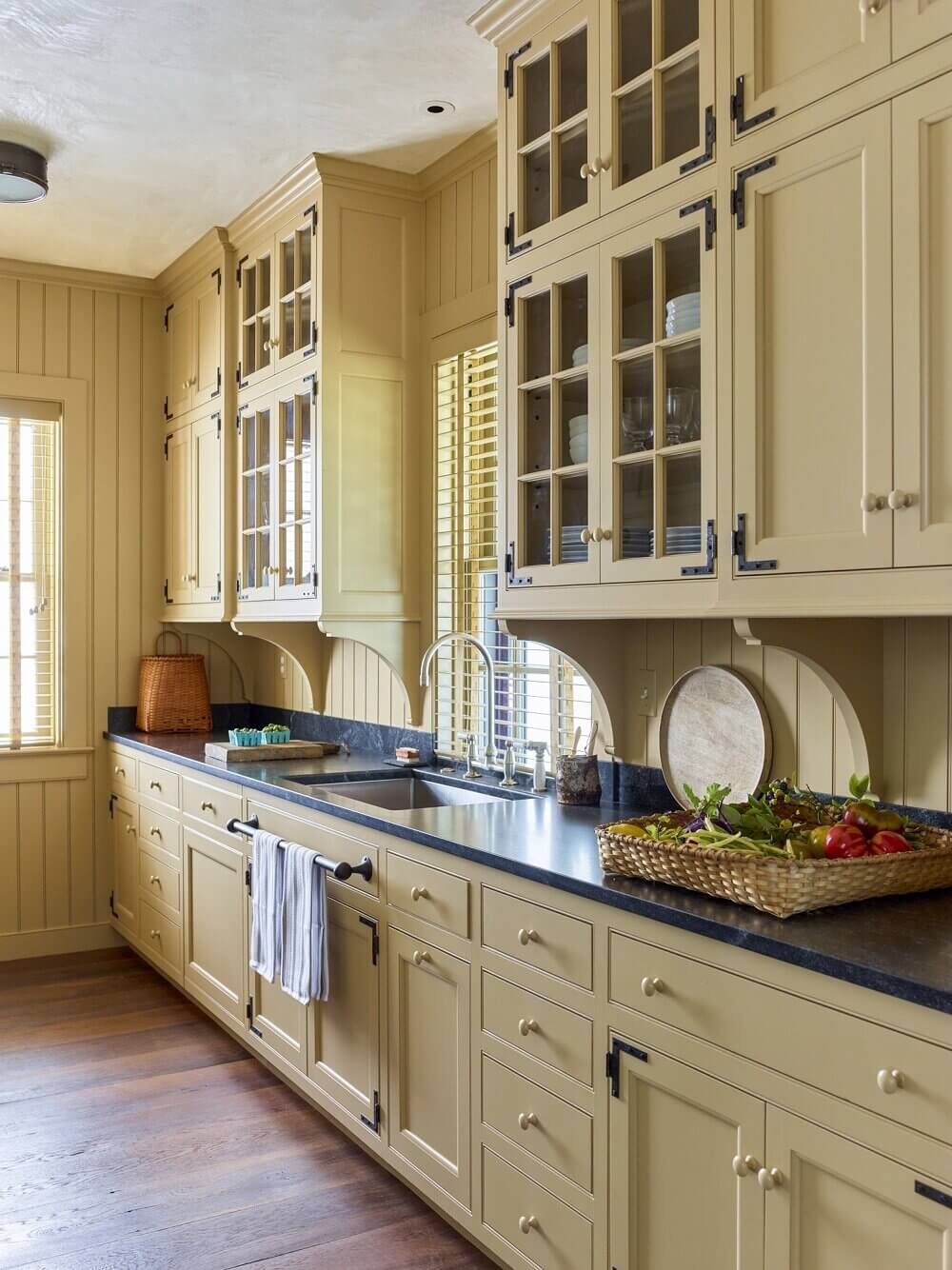
Can pale yellow cabinets in a traditional galley kitchen read as fresh rather than dated? Yes, when the rest of the finish choices lean dark and substantial. The uniform pale yellow cabinetry here runs the length of a roomy galley, with glass-front uppers breaking up the mass. Dark gray countertops and a farmhouse sink provide contrast, while natural light from windows and an overhead fixture keep the space bright. Glass-front cabinets require that contents stay tidy, since they are always on display. For a lower-maintenance version, swap the glass for solid doors in the same pale yellow and add open shelving on one wall.
Modern L-Shaped Kitchen with Vibrant Lemon Yellow Cabinets
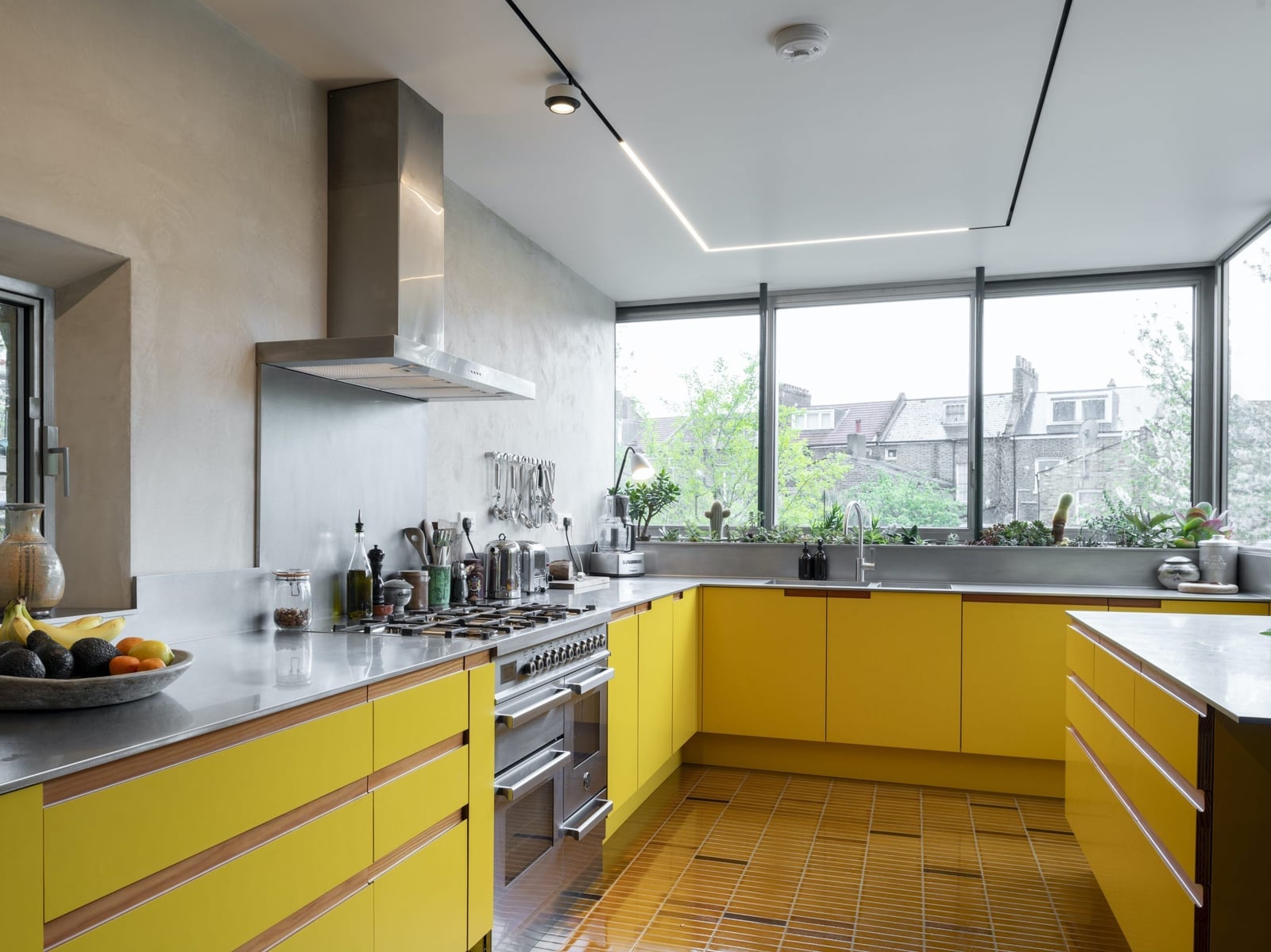
Vibrant lemon yellow cabinets in an L-shaped kitchen pair with concrete counters and stainless steel appliances for a crisp, industrial edge. The gray concrete softens the brightness of the yellow, while track lighting and natural light balance the hard surfaces. This material combination works best in a roomy layout where the L-shape allows for distinct prep and cooking zones. Concrete counters require sealing to resist stains, but the payoff is a surface that patinas with use.
Shabby Chic Kitchen Featuring Pale Yellow Shaker Cabinets
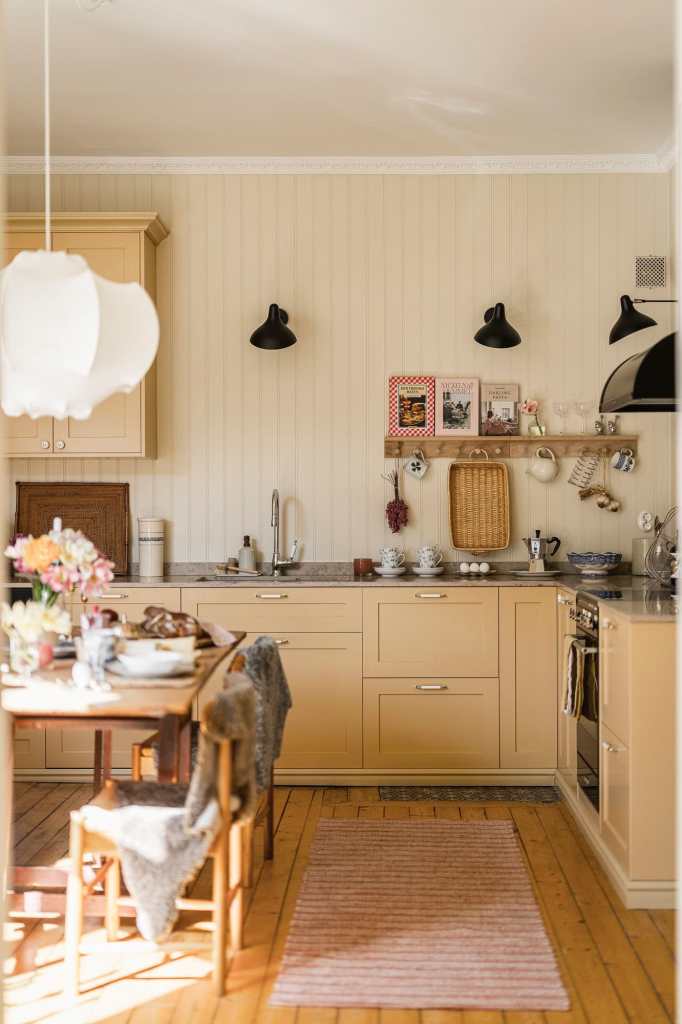
In a shabby chic kitchen, pale yellow shaker cabinets set a gentle tone without demanding attention. The soft gray wood floor and marble countertops keep the look grounded, while a simple pendant light adds warmth without competing. A small dining table nearby makes the galley layout feel more lived-in and less like a corridor. The style works because the yellow stays muted, letting the natural light do the work. If you want this look, stick to a single pastel shade across the cabinets and let the wood and stone provide contrast. The room reads as cohesive and calm, not overdone.
Eclectic Kitchen with Mustard Yellow Cabinets and Bold Wallpaper
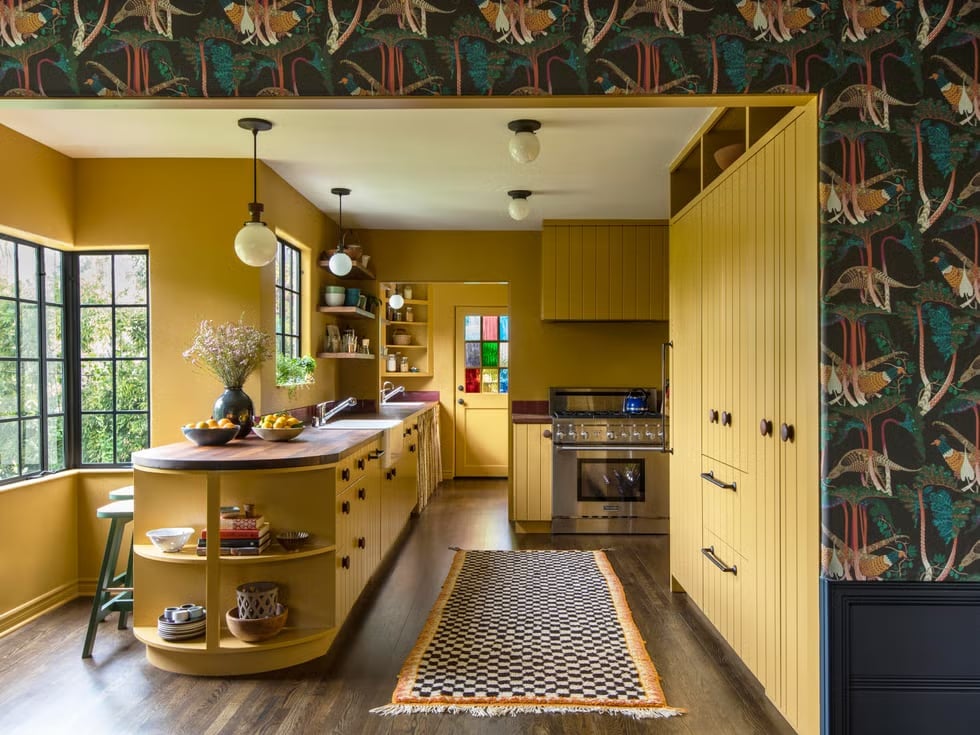
At first glance, patterned wallpaper and mustard yellow cabinets might sound like two strong personalities in one room. But in this eclectic kitchen, they balance each other. The wallpaper uses dark green and teal tones that echo the depth of the mustard, so the yellow looks deliberate. The island breaks up the galley layout and provides a visual pause between the bold surfaces. Pendant lights add a soft glow without washing out either the wallpaper or the cabinetry. This palette works when you let one element lead and the others follow. The wallpaper carries the pattern; the cabinets carry the color. That ratio prevents a chaotic feel and makes the yellow feel grounded.
Modern Farmhouse Kitchen with Abundant Yellow Cabinetry
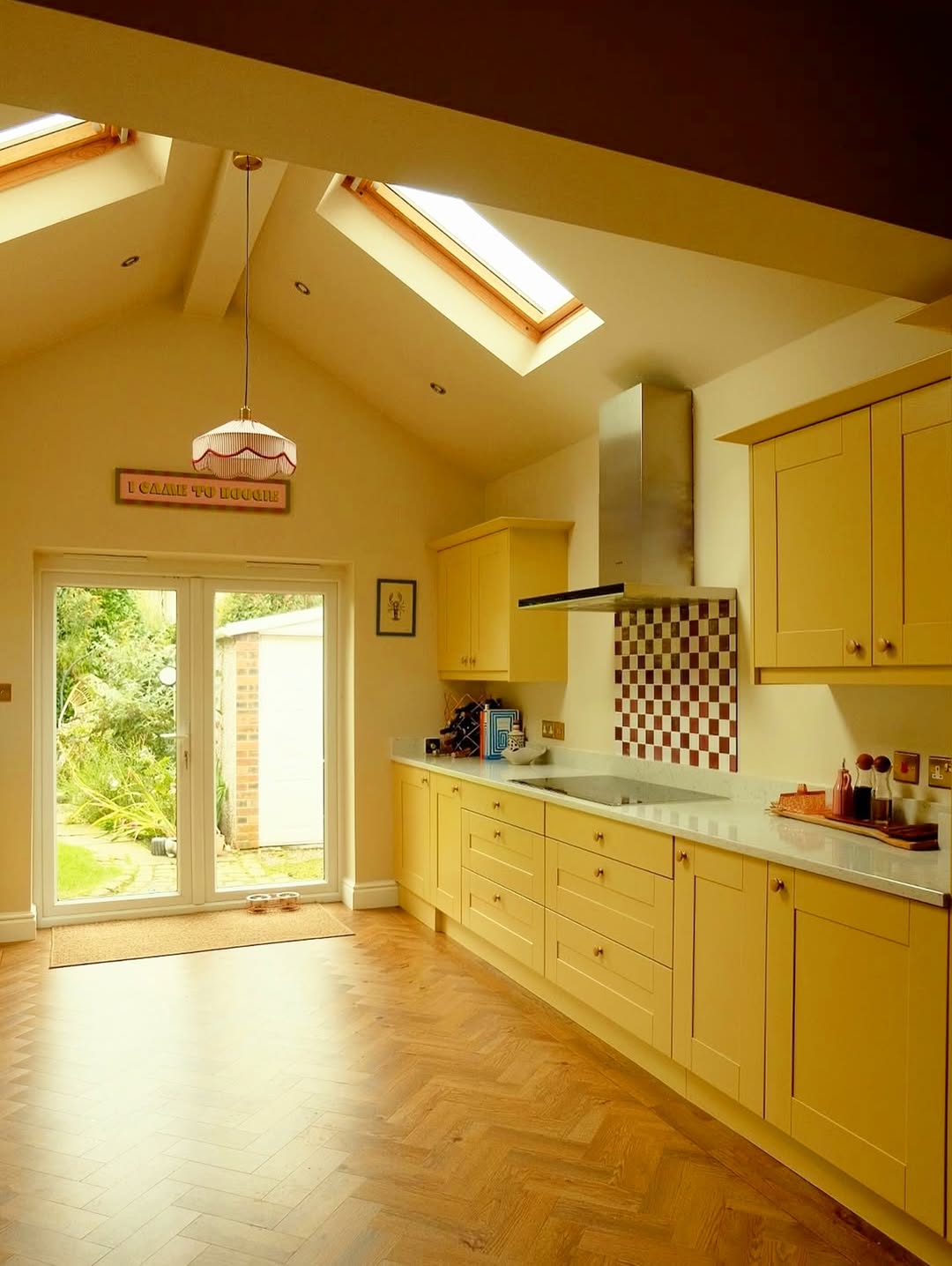
The yellow cabinetry here is not a small accent. It wraps around the entire galley kitchen, covering both upper and lower cabinets as well as the countertops. The modern farmhouse style stays intact because the wood floor and stainless steel appliances keep the look grounded. Natural light from the skylights and glass door prevents all that yellow from becoming overwhelming. It is a bold use of one color, and it works because the materials around it stay neutral and the scale is large enough to feel deliberate.
Modern Kitchen with Soft Pastel Yellow Cabinets and Wooden Island
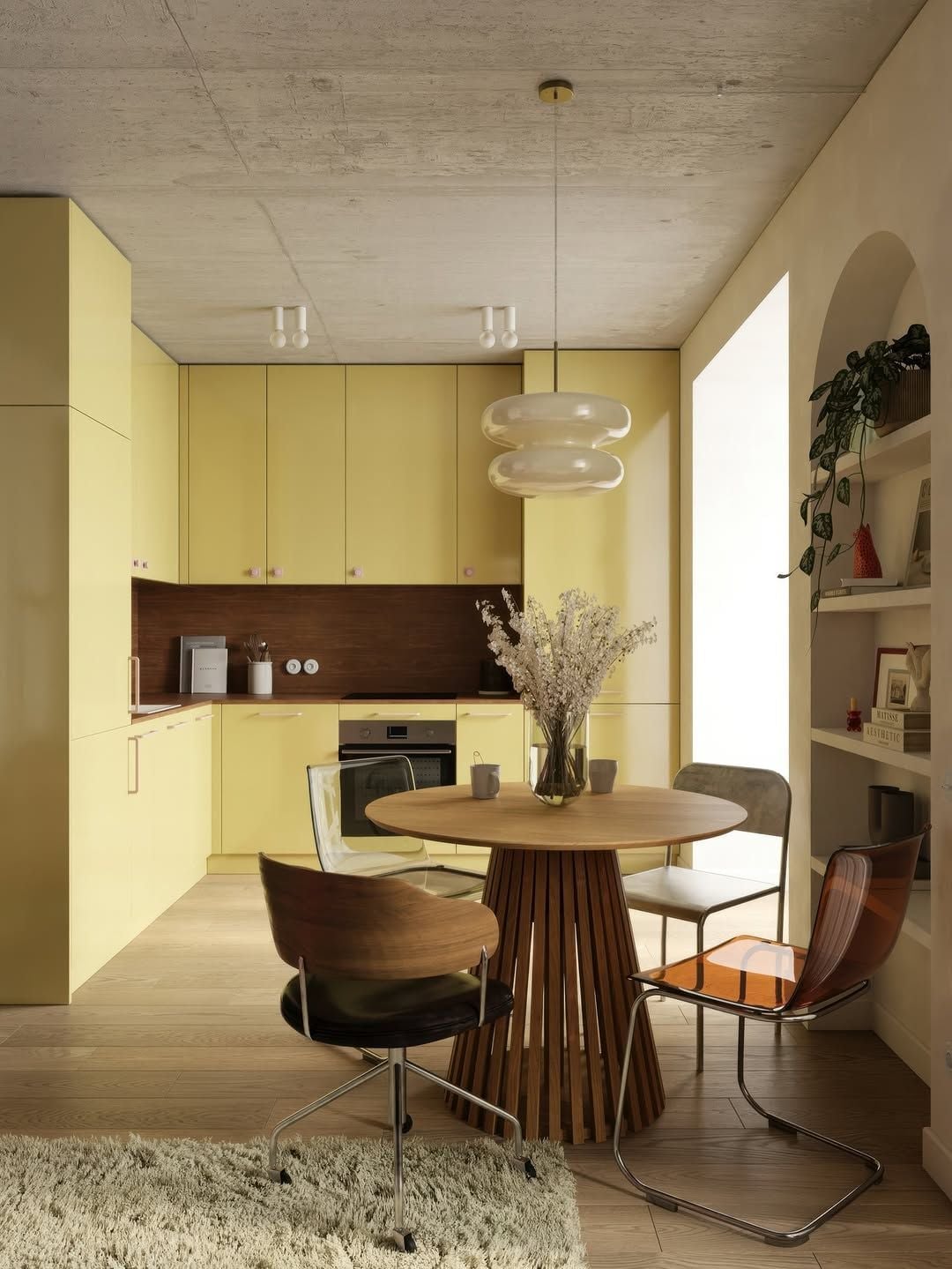
This kitchen proves that pastel yellow does not have to feel childish. The soft yellow cabinets sit in an open plan room with a wooden island and concrete elements, which gives the space a modern, grounded feel. The natural light from nearby windows keeps the yellow from looking flat, while the pendant light adds a warm glow in the evening. The wooden island provides a natural contrast that prevents the pastel from feeling too sugary. For a soft yellow kitchen that feels adult and put together, pair it with wood tones and keep the palette simple.
Eclectic Kitchen with Mustard Yellow Lower Cabinets
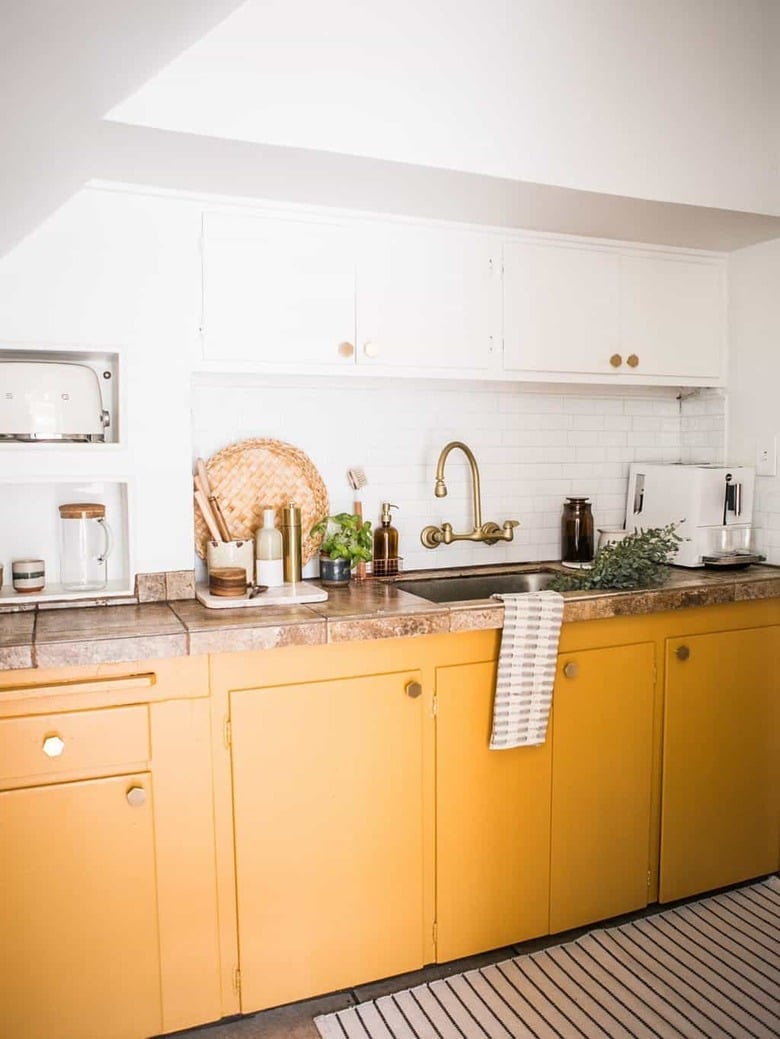
In a compact kitchen, the visual weight stays low. In this eclectic kitchen, the mustard yellow lower cabinets anchor the room while the white upper cabinets and subway tile backsplash keep it light. The brass faucet adds a warm metallic note that ties the yellow to the brass hardware. The natural light from the window behind the sink makes the mustard feel rich. By keeping the yellow below the counter, the room stays open and airy while still getting a strong dose of color. This is a smart approach for smaller spaces where full-height yellow might feel too heavy. The bright white tile and the deeper yellow create a clear visual hierarchy that makes the kitchen feel organized.
Modern Kitchen with a Bright Yellow Island and Black Cabinetry
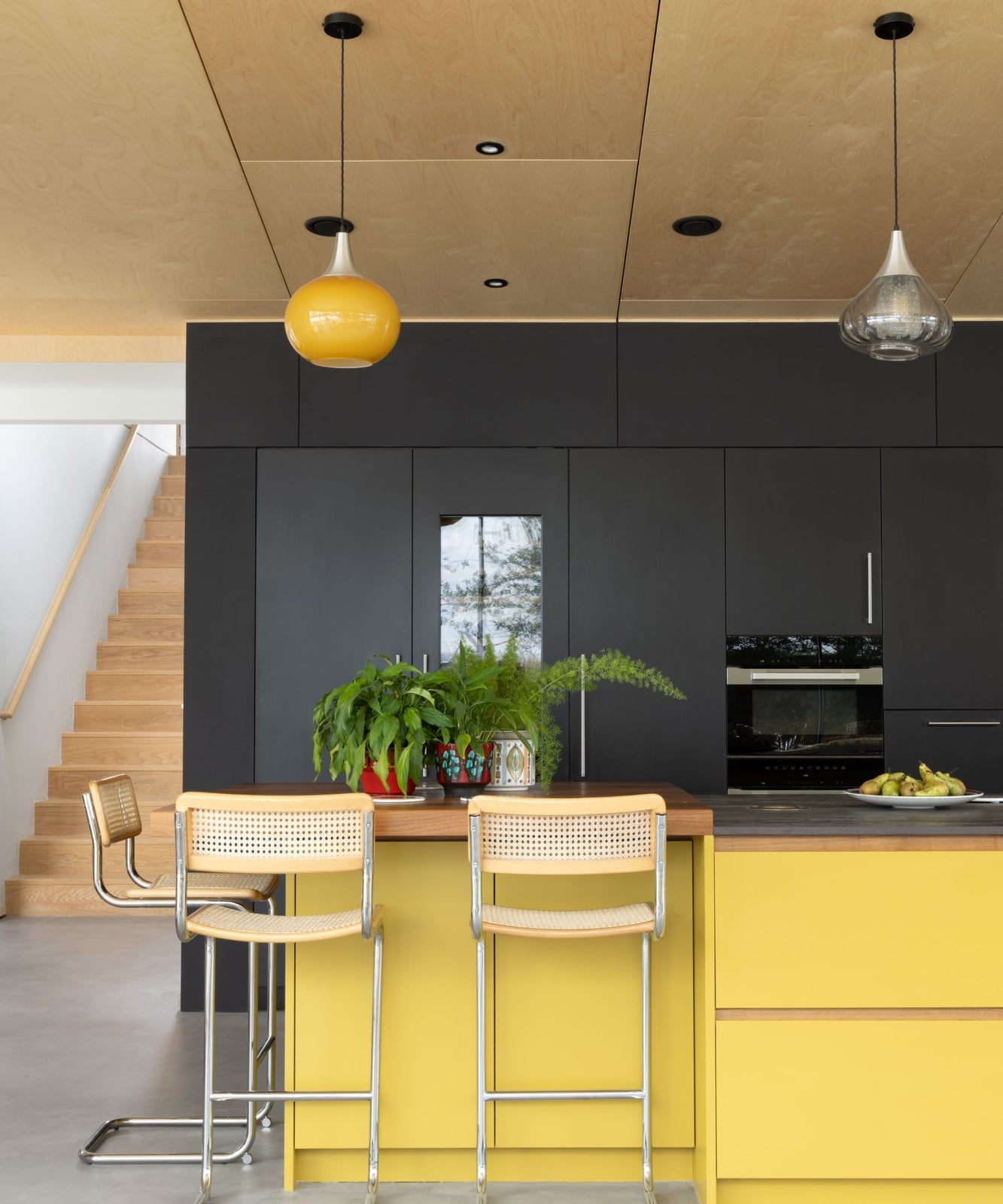
A bright yellow island anchors this kitchen, surrounded by black cabinetry and natural wood. The room feels grounded because the bold color sits on a central piece instead of on walls or perimeter cabinets. That setup keeps the layout balanced: the eye goes to the island, and the black and wood tones around it do not compete. Pendant lights sit above the island, and natural light from a window prevents the space from feeling too dark. To recreate it, look for a sunny yellow paint for an existing island or a freestanding cart. Keep the surrounding cabinetry and decor neutral to maintain the contrast.
Eclectic Kitchen with Vibrant Ochre Yellow Walls and Plate Collection
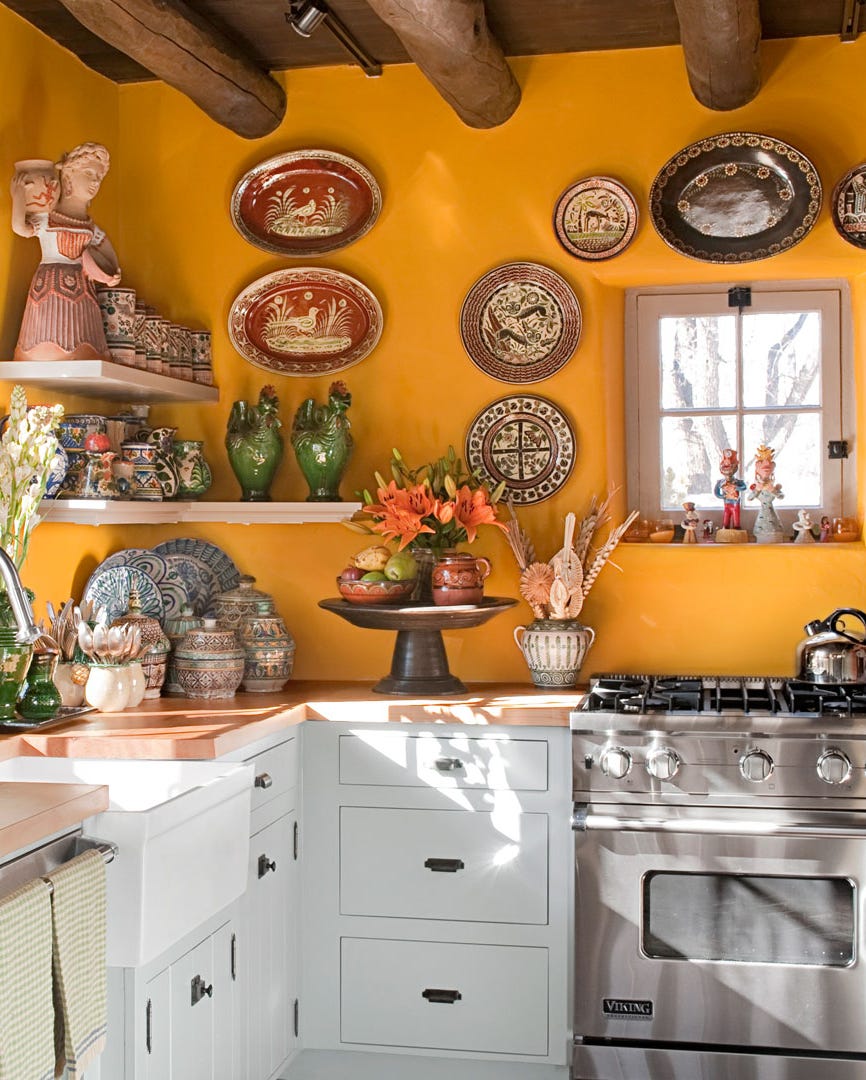
Let one warm tone lead in an eclectic palette, then repeat its undertones in smaller accents. Here, ochre yellow walls define the room, and the reds, greens, and whites in the plate collection and pottery echo that earthy warmth. The decorative plates and shelves with ceramics keep the yellow from feeling flat because they add pattern and texture. Natural light from the window helps the ochre appear rich. Renters can achieve this look with peel-and-stick wallpaper or a washable paint on one wall, then hang their own collection of plates or art. The key is to pull colors from the wall into the objects around it.
Modern Kitchen with Buttery Yellow Cabinets and Dining Nook
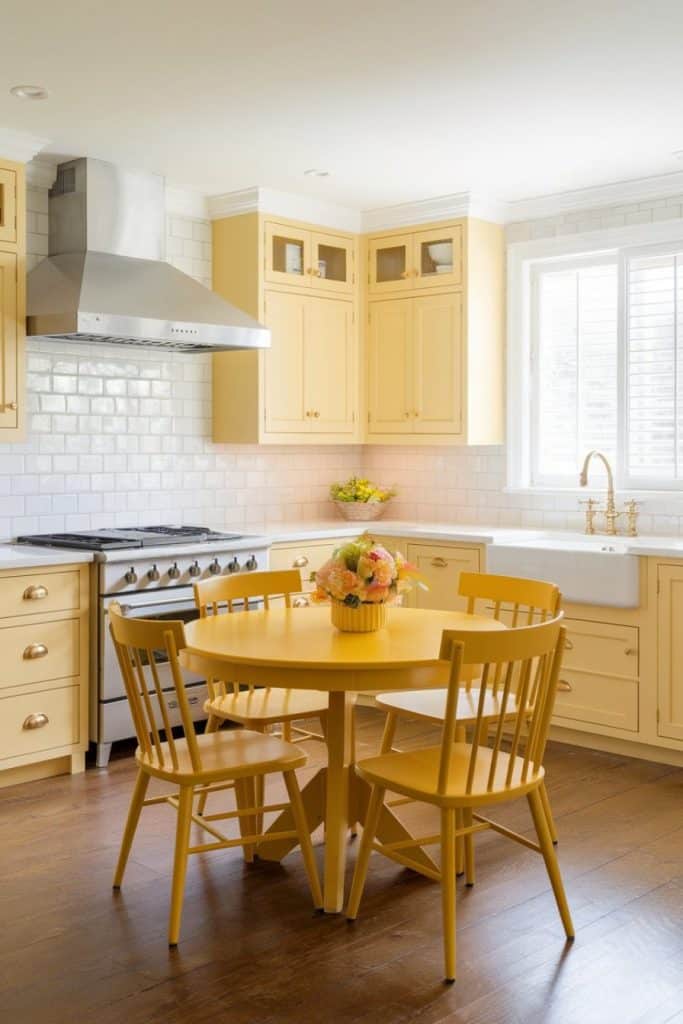
A compact kitchen with a dining nook can feel crowded if the layout does not give each zone its own focus. This one avoids that by using the same buttery yellow on the cabinets and the round dining table, tying the two areas together visually. The white subway tile backsplash and white walls keep the room bright and open, so the yellow reads as a deliberate accent rather than an overwhelming wash. Overhead lighting and natural light support both the cooking and dining sides of the space.
For a similar layout in a smaller home, match the cabinet color to a small dining table or even a set of chairs. The repetition creates a visual line from the kitchen into the nook without needing extra square footage. A neutral floor and countertop keep the eye moving through the room.
Farmhouse Kitchen with Pale Yellow Cabinets and Beadboard Paneling
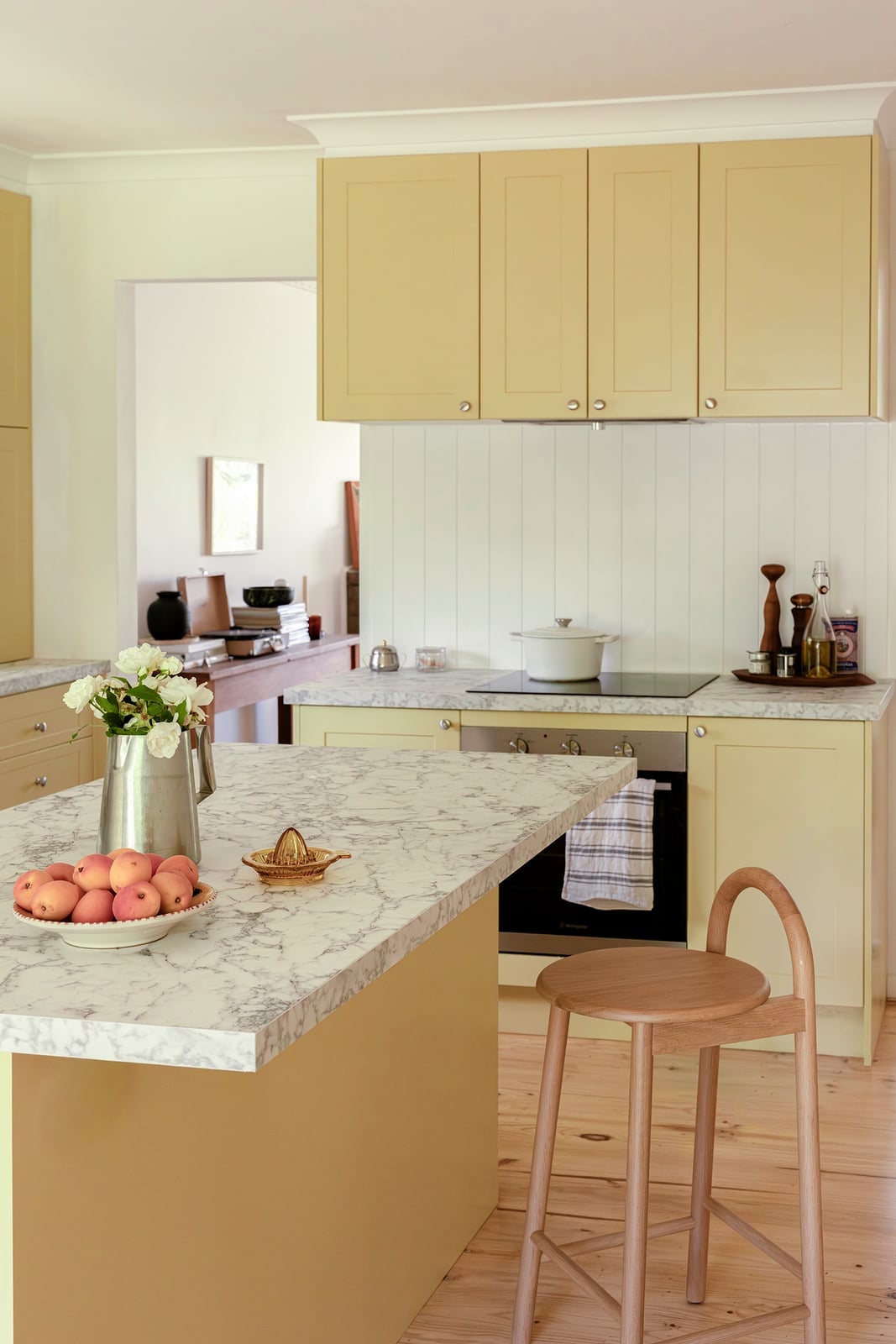
Pale yellow cabinets in a farmhouse kitchen rely on the materials around them to feel grounded. The beadboard paneling on the island and walls adds texture, and the marble countertop brings a smooth, cool surface that balances the warmth of the wood. A single wooden stool at the island introduces an organic element without clutter. The pale yellow reads as soft and inviting because white and wood tones dominate the rest of the room. Ceiling lights and natural light prevent the pale shade from washing out. The beadboard is a durable surface that hides dings well, making it a practical choice for a roomy family kitchen.
Classic Kitchen with Buttery Yellow Cabinets and Marble Accents
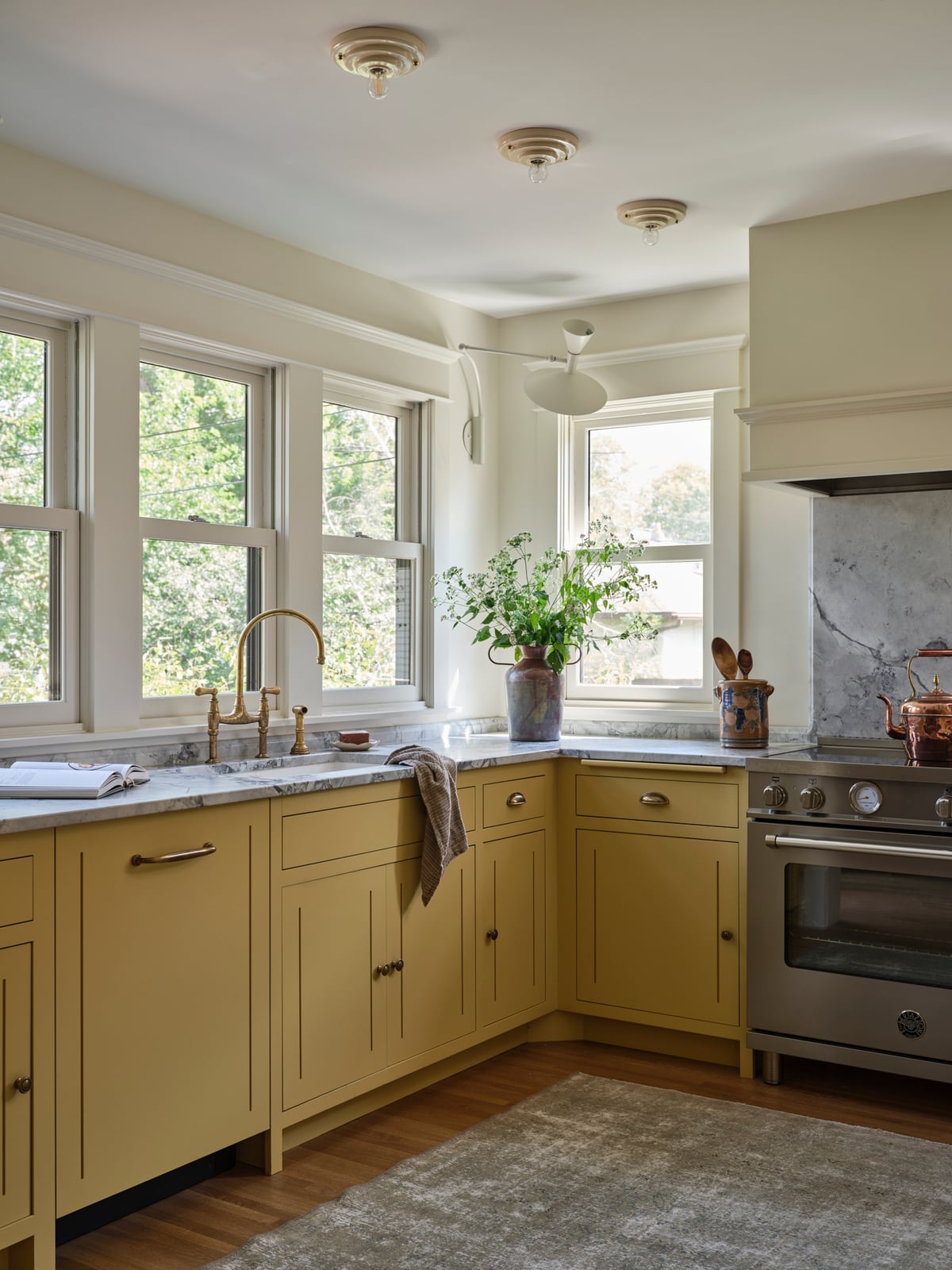
This kitchen gets its classic feel from the ratio of yellow to white and marble. The buttery yellow cabinets cover most of the perimeter, but the marble backsplash and countertops break up the color with light veining and a cool tone. Brass hardware on the cabinets adds a warm metallic detail that repeats the yellow undertone without adding more paint. The result is a room that feels polished but not precious. Natural light from windows and ceiling lights keep the marble bright. The style works because the yellow is the main event, and the marble and brass are supporting players that keep it from reading as too sweet or dated.
Country Kitchen with Soft Butter Yellow Cabinets and Pantry Unit
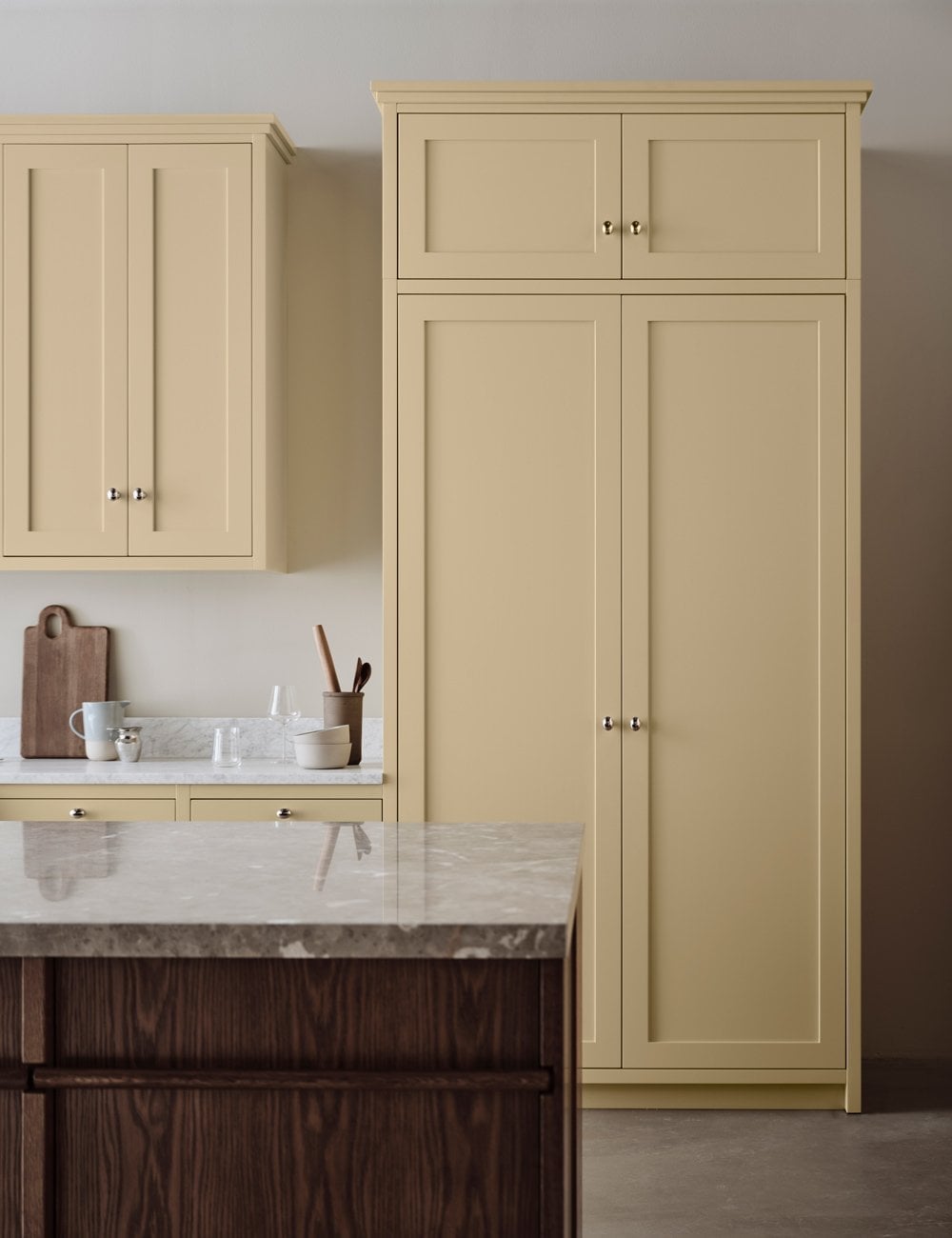
A roomy kitchen benefits from a clear storage hierarchy, and a dedicated pantry unit is one of the most effective ways to keep counters clear. In this country-style space, the soft butter yellow cabinets wrap the perimeter while a large pantry unit anchors one wall, offering concealed storage for dry goods, small appliances, or everyday dishes. The marble island adds a polished work surface that contrasts with the painted wood cabinetry. The gray undertones in the room keep the yellow from reading as too sweet, while the warm wood floors add texture. The layout works because the pantry does not compete with the island for traffic flow. For a similar approach, assign one full wall to tall storage and let the rest of the cabinetry stay at counter height.
This setup suits households that cook often and need a place for bulk items without cluttering the main prep zone. The pantry unit also provides a visual anchor, breaking up a long run of lower cabinets. The butter yellow shade keeps the storage feel light rather than heavy, which matters in a kitchen with soft ambient light.
Farmhouse Kitchen with Custom Yellow Range Hood
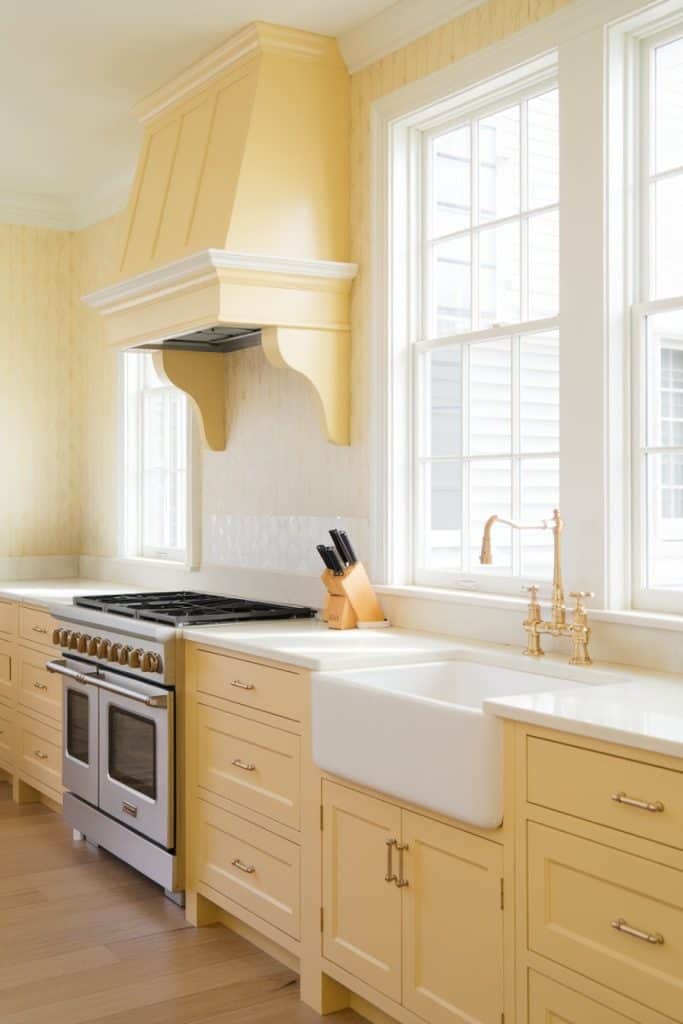
In this farmhouse kitchen, the custom yellow range hood becomes the natural focal point, drawing the eye upward above the counter area. The yellow cabinets extend the color across the room, while the white farmhouse sink and abundant natural light keep the palette airy. Gold accents on the hood and hardware add a subtle metallic note that prevents the yellow from feeling flat. The roomy layout supports the hood as a planned design element. Match the hood finish to the cabinet color for a cohesive look, and let the surrounding materials, like tile or wood, stay neutral.
Country Style Kitchen Detail: Pale Yellow Cabinets and Marble
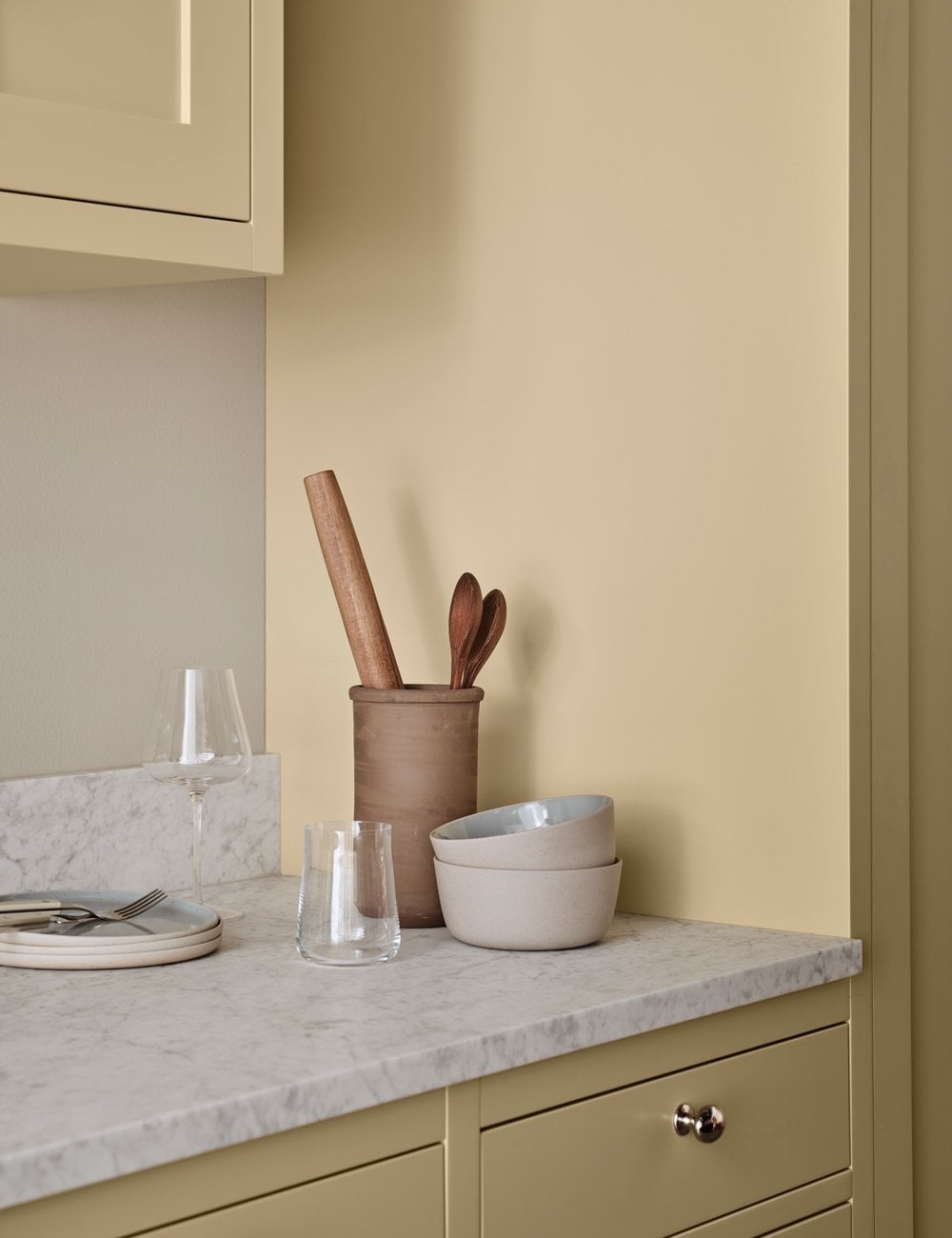
When working with pale yellow cabinets in a compact kitchen, the material pairing matters more than the color itself. This country-style detail pairs the painted wood cabinetry with a marble countertop, and the combination works because the cool white veining in the stone offsets the warmth of the yellow. The beige and marble palette keeps the look from reading as too pastel, while the metal hardware adds a crisp edge. A practical rule is to choose a countertop with visible variation, not a solid slab, so the stone feels connected to the cabinet color rather than separate from it. The marble also reflects soft ambient light, which helps the pale yellow read as brighter without needing additional fixtures.
Modern Kitchen with Vibrant Yellow Cabinets and Wooden Countertops
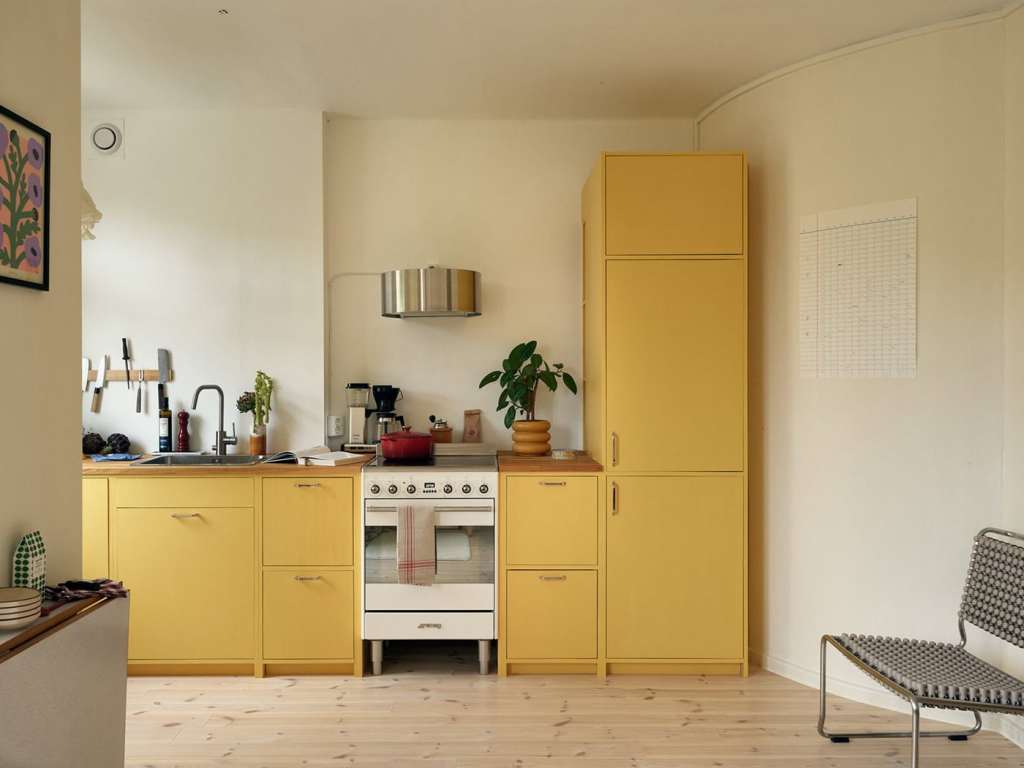
A modern kitchen with vibrant yellow cabinets could lean either playful or overwhelming, but the wooden countertops here keep the look grounded. The natural daylight helps the yellow feel saturated without glare, while the white oven and linear cabinet layout prevent the color from dominating the room. The island extends the workspace without competing with the main counter run. The wood countertops add warmth that a metal or stone surface would not provide, and they soften the contrast between the bright yellow and the white walls.
For a similar balance, match the countertop material to the floor or another natural element in the room. The wooden surface also defines the prep zone visually, making the layout easier to read. The roomy feel comes from keeping the upper cabinets in a lighter tone or leaving some wall space open. This approach works best in a kitchen that gets good daylight, since the yellow needs natural light to stay true to its hue.
Farmhouse Kitchen with Ochre Yellow Cabinets and Green Island
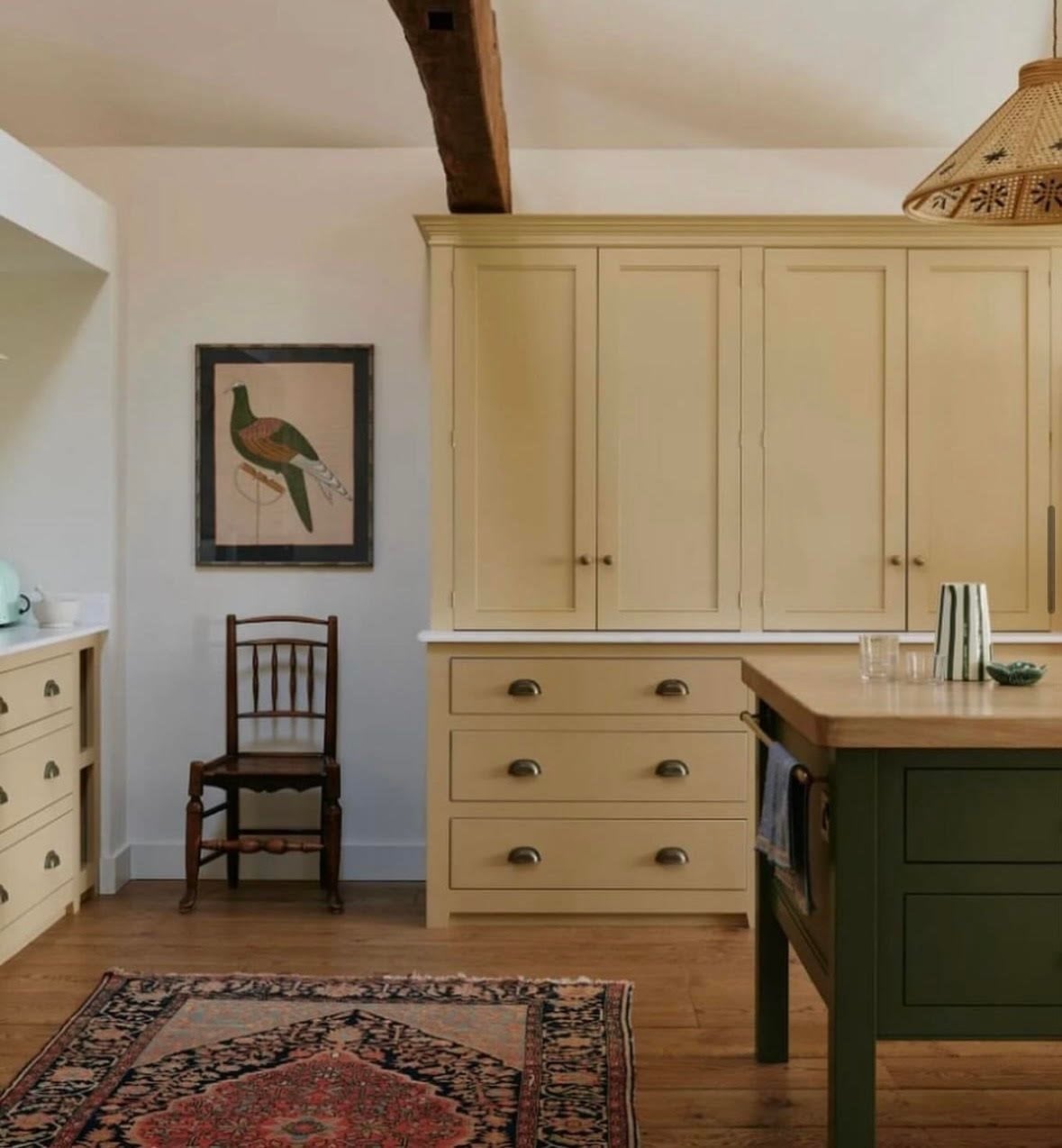
The ochre yellow cabinets in this farmhouse kitchen are complemented by a green island, a pairing that relies on the wood beams and patterned rug to tie the two colors together. The natural light from the window and the pendant light over the island balance the warm ochre with the cooler green. The wood beams add a structural element that repeats the brown undertones in both the cabinet and island colors. For a similar palette, keep the island a shade darker than the cabinets to create depth without contrast. The rug anchors the seating area and softens the transition from the painted cabinetry to the floor.
Minimalist Kitchen with Seamless Pale Yellow Cabinets
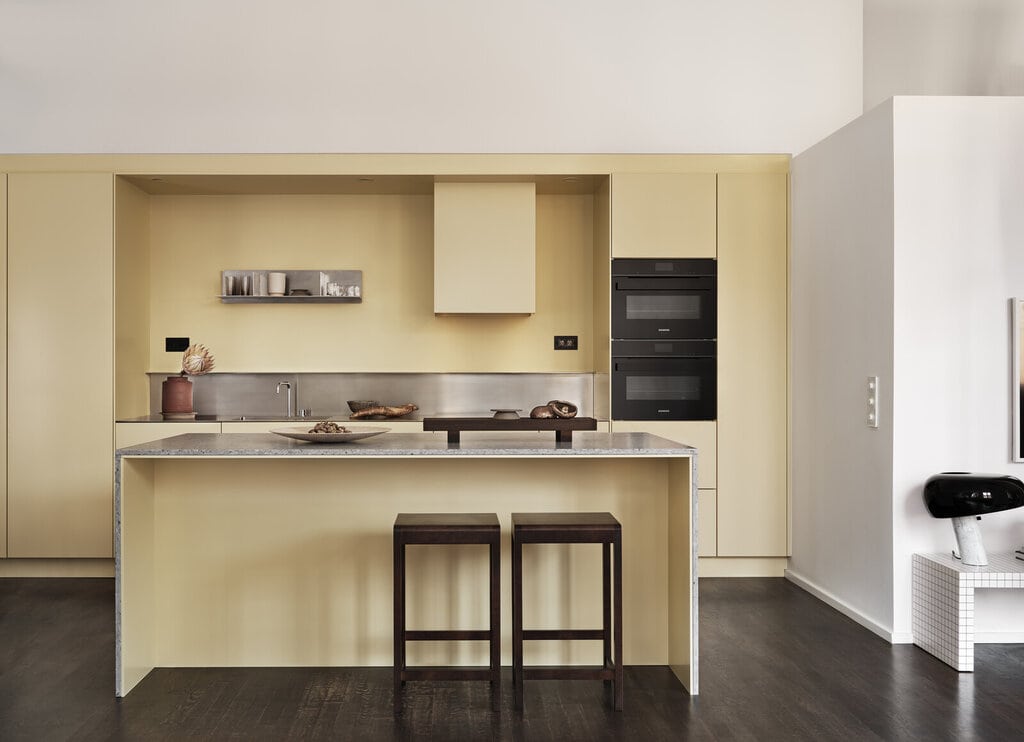
This minimalist kitchen uses pale yellow cabinetry as a single, calm surface across the room. The roomy island kitchen pairs those seamless cabinets with gray and black accents to keep the palette tight. Natural daylight and ambient light keep the yellow soft. The practical takeaway for this space is palette ratio: let the hero color cover most of the vertical surface, then limit the other two colors to countertops and hardware. This keeps the yellow as the main event without competing with pattern or texture.
Modern Galley Kitchen with Bright Yellow Cabinets and Brick Wall
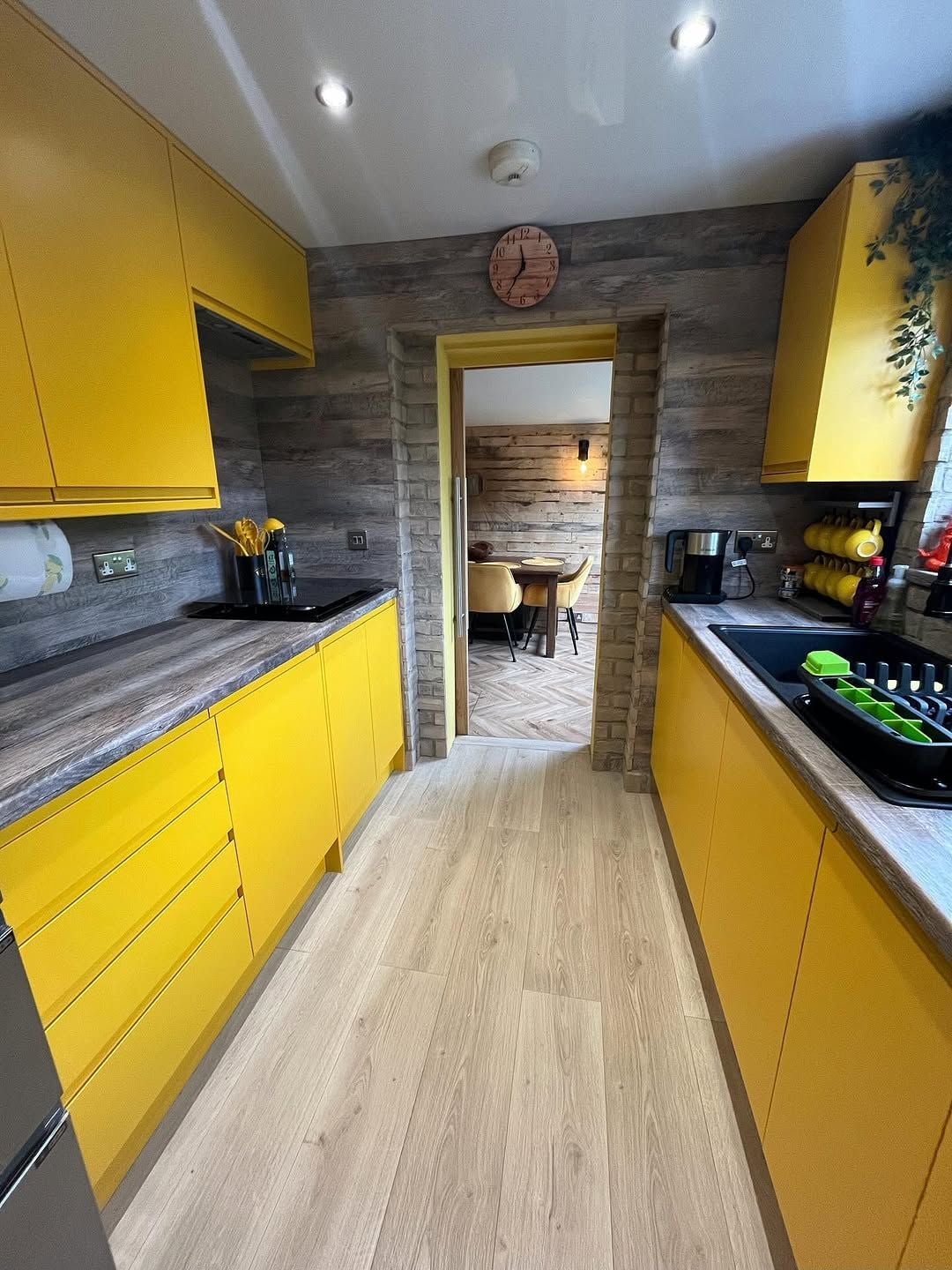
For a narrow galley kitchen, use a light or bright color on the cabinets to prevent a cramped feel. Bright yellow cabinets run the length of one side, while a brick veneer wall adds texture on the other. The wood-look countertops warm up the yellow, and natural light from the doorway helps the whole room feel open despite the narrow footprint.
Durability matters in a galley because this is a high-traffic corridor. Laminate cabinet doors hold up well to daily use, and the brick veneer is a renter-friendly swap if you use a peel-and-stick version. The key is to keep the layout as simple as possible: one clear path, open shelving only if you have the space, and overhead lighting that does not cast shadows into the work zone.
Modern Compact Kitchen with Lime Yellow and Gray Cabinets
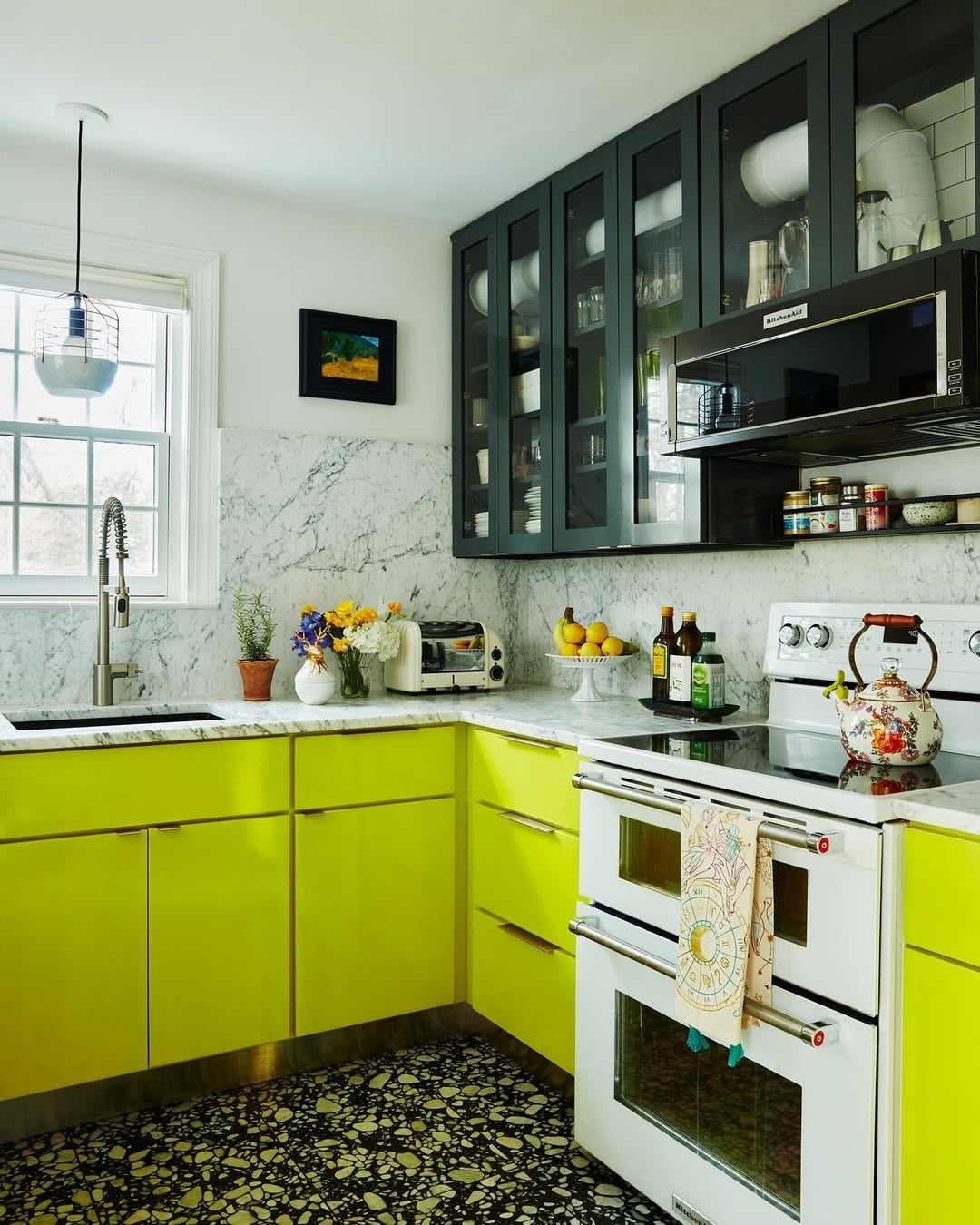
This compact corner kitchen uses lime yellow cabinets on one side and glass-fronted gray cabinets on the other, with a terrazzo countertop tying the two together. The scale works because the lime yellow is vivid but confined to a small area, while the gray cabinets and white walls keep the rest of the room neutral. The double oven is a smart fit for a small kitchen: it adds function without taking up extra floor space. The takeaway is that a bold color can feel right at home in a compact layout if you balance it with a calm partner and let natural light do the heavy lifting.
Traditional U-Shaped Kitchen with Vibrant Ochre Yellow Walls
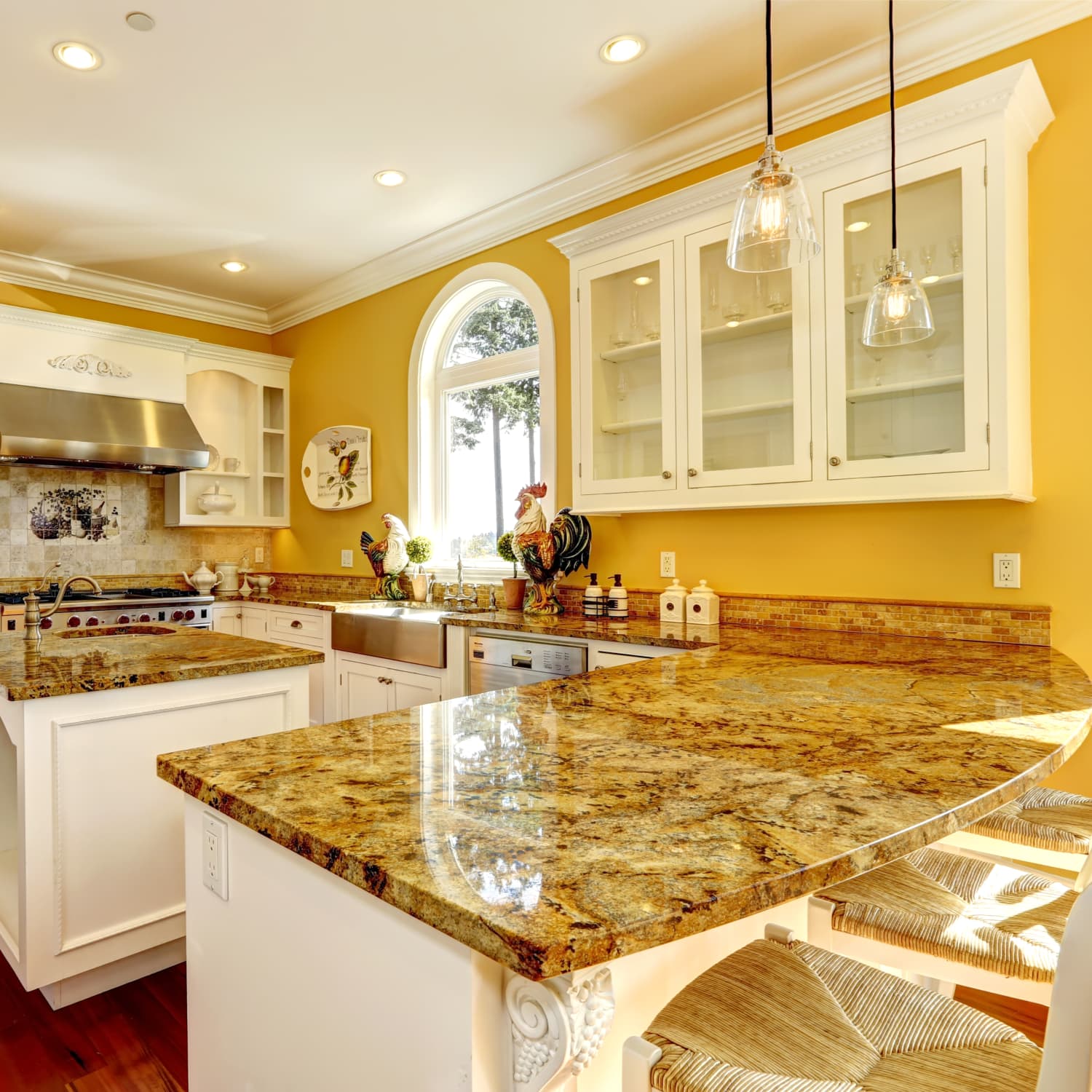
The ochre yellow walls in this traditional U-shaped kitchen are the first thing you notice, and they set a warm, grounded tone for the whole room. White cabinets and granite countertops keep the palette clean, and the island with seating adds a casual spot for meals. The natural window light hits the ochre walls directly, which means the color shifts slightly throughout the day. A warm wall color works when the cabinetry and counters stay neutral. That way the walls feel like a backdrop, not a competing layer, and the room feels cohesive.
Roomy Traditional Kitchen with Pale Yellow Cabinets and Marble
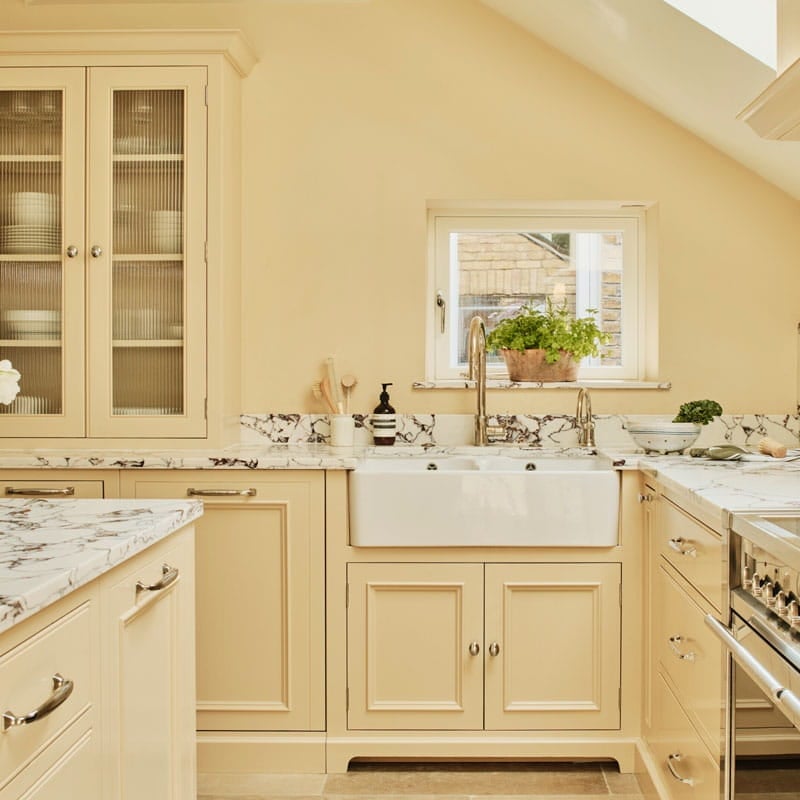
Where a pale yellow kitchen can sometimes feel too sweet, this roomy traditional kitchen keeps it grounded with marble countertops and a white farmhouse sink. The pale yellow cabinets are the main event, but the marble adds a cool, quiet counterpoint that stops the space from reading as overly delicate. The L-shaped counter and island layout gives plenty of work surface, and the recessed lighting keeps the room bright without washing out the cabinet color.
The styling tip here is to pair a soft yellow with a material that has visible veining or movement, like marble. That contrast keeps the eye moving and adds depth to what could otherwise be a flat, one-note palette. It also makes the yellow feel intentional rather than a default builder choice.
Traditional Kitchen with Pale Yellow Glass-Front Cabinets
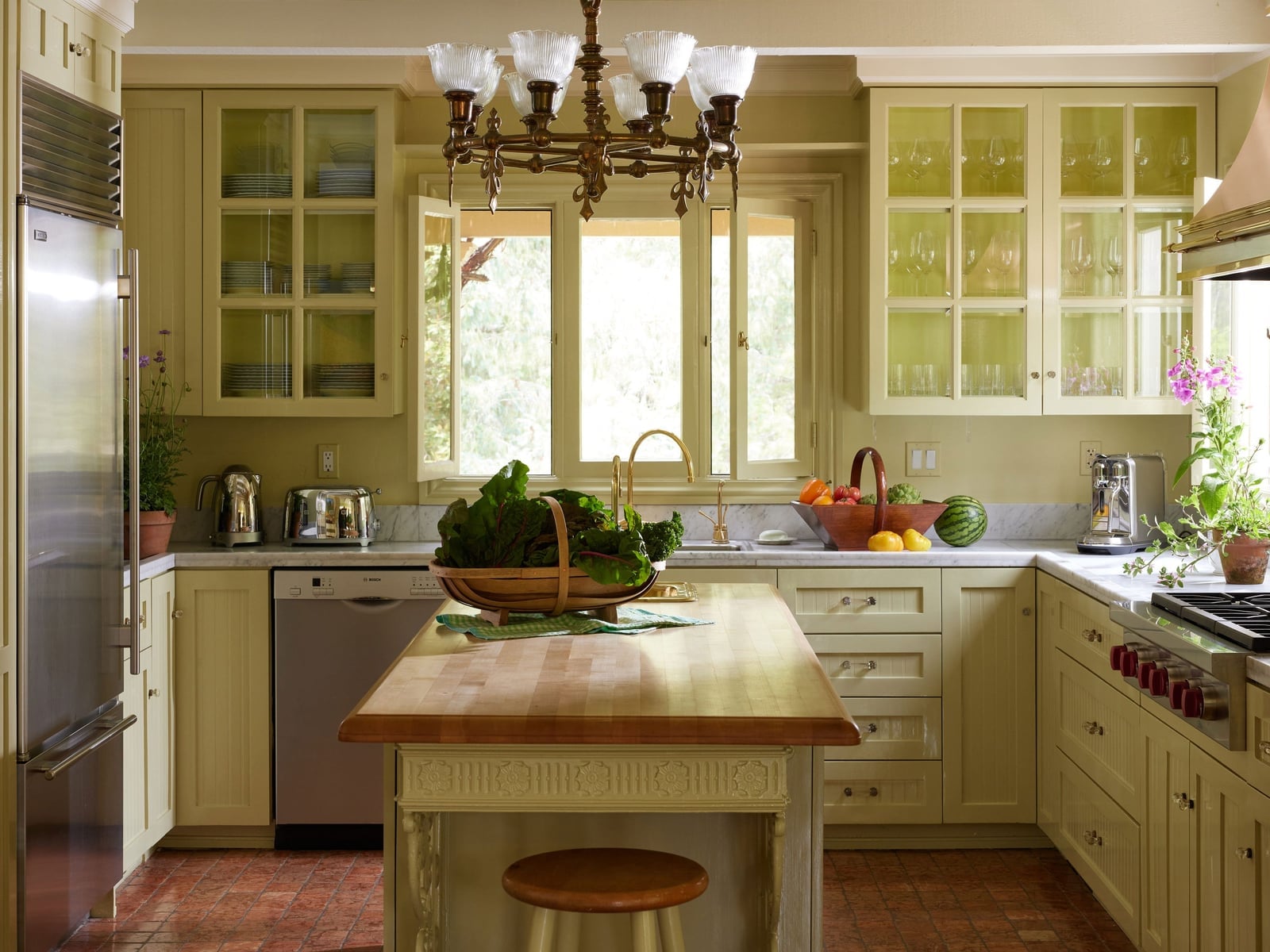
A roomy traditional kitchen with pale yellow glass-front cabinets has a lot going for it before you even open a door. The glass fronts turn the cabinets into display space, so what you store inside matters as much as the cabinetry itself. A row of matching dishes or glassware reads as intentional, while a jumble reads as clutter. The pale yellow reads as soft against the green and wood tones in the room, and the marble countertops keep the look from tipping into too sweet. A chandelier adds traditional polish without fighting the cabinets for attention.
Eclectic Kitchen with Vibrant Yellow Cabinets and Green Tile
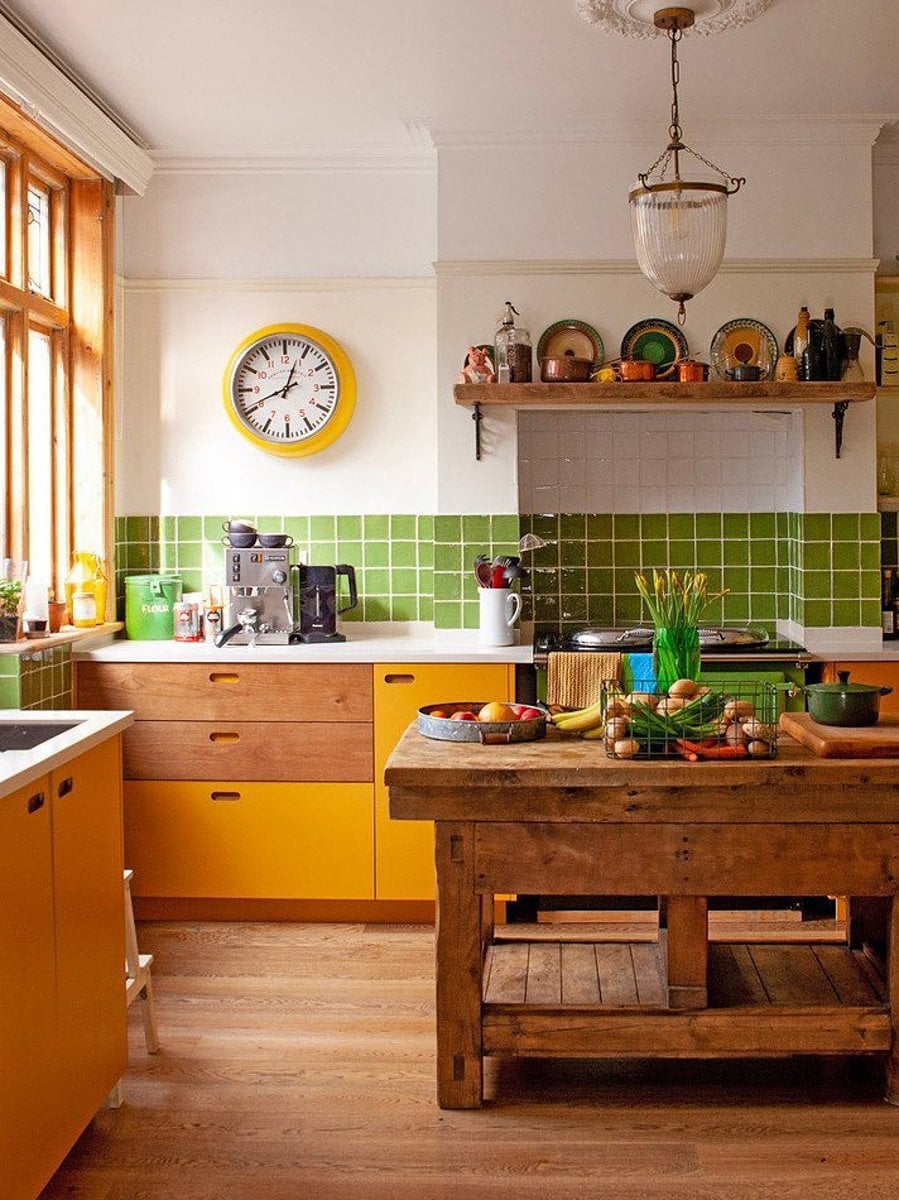
Yellow and green is a bold pair, and this eclectic kitchen makes it work by committing fully to both. The vibrant yellow cabinets on one side and the vibrant green tile backsplash on the other create a strong color story. The white countertops and natural light give the eye a place to rest between the two saturated hues. A wooden island adds warmth and breaks up what could otherwise feel like a flat color block. The pendant lights above the island follow the same practical line, providing task lighting without competing with the palette. For anyone who loves color but worries about commitment, this kitchen proves that two strong shades can coexist when each gets its own territory.
Farmhouse Kitchen with Bright Yellow Beadboard Cabinets and Island
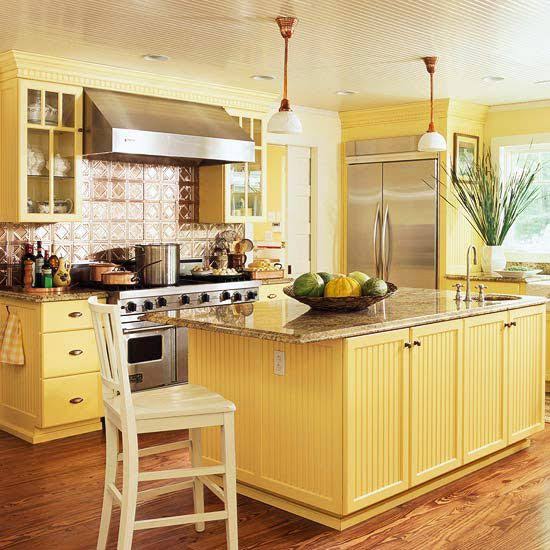
Most farmhouse kitchens lean on white or cream cabinetry, but this one swaps those neutrals for bright yellow beadboard cabinets and a matching island. The beadboard texture adds the farmhouse character, while the yellow delivers the unexpected punch. The finish is uniform across both the perimeter cabinets and the large island, which makes the color a deliberate choice.
Stainless steel appliances and a granite countertop ground the bright yellow. The L-shaped counter layout with the island creates a practical workflow, and the pendant lights above the island echo the farmhouse feel without introducing another color that would compete. For renters or homeowners looking to test yellow, beadboard cabinet fronts offer more visual interest than flat panels and can be painted back to a neutral if the yellow wears out its welcome.
Final Thoughts
Adding yellow to a kitchen changes the feel without a full gut renovation. You can paint existing cabinets, tile a backsplash, or commit to a single piece like a range hood or island. The shade matters: pale buttery yellows feel airy and traditional, while mustard and ochre bring warmth to open layouts. Bright lemon and lime tones work best with neutral counters and floors to keep the look balanced. Think about natural light in your space before picking a shade, as northern exposures can mute warmer yellows. A yellow kitchen can be a long-term choice when you pair it with materials you already love.