You know that feeling when you finally find the pet bedroom idea that looks exactly right for your space, only to realize you have no idea how to make it happen? We’ve all been there, endlessly scrolling Pinterest. After filtering through hundreds of options across IKEA, Target, and West Elm, we narrowed it down to 28 ideas that actually deliver. This guide is packed with curated concepts, from clever integrated built-ins to cozy, modern minimalist corners. Pet-centric design is a huge part of home wellness in 2026, as we continue to treat our furry family members like, well, family. And stay until the end — we break down the most common mistakes that can ruin these looks.
📌 Save this to Pinterest for later — you’ll want to revisit these ideas.
1. Cozy Arched Dog Nook with Built-In Feeding Station
This design is a masterclass in using leftover space. The genius here is twofold. First, the soft arch creates a psychological sense of a den—a safe, enclosed space that dogs instinctively crave. It visually separates the nook from the rest of the home without needing a door. Second, the integration of the feeding station and pegboard storage is incredibly efficient. By building these elements in, the design eliminates the clutter of scattered bowls and baskets, turning a potential mess into a streamlined feature. The use of warm, natural wood throughout ties it all together, making it feel intentional and high-end.
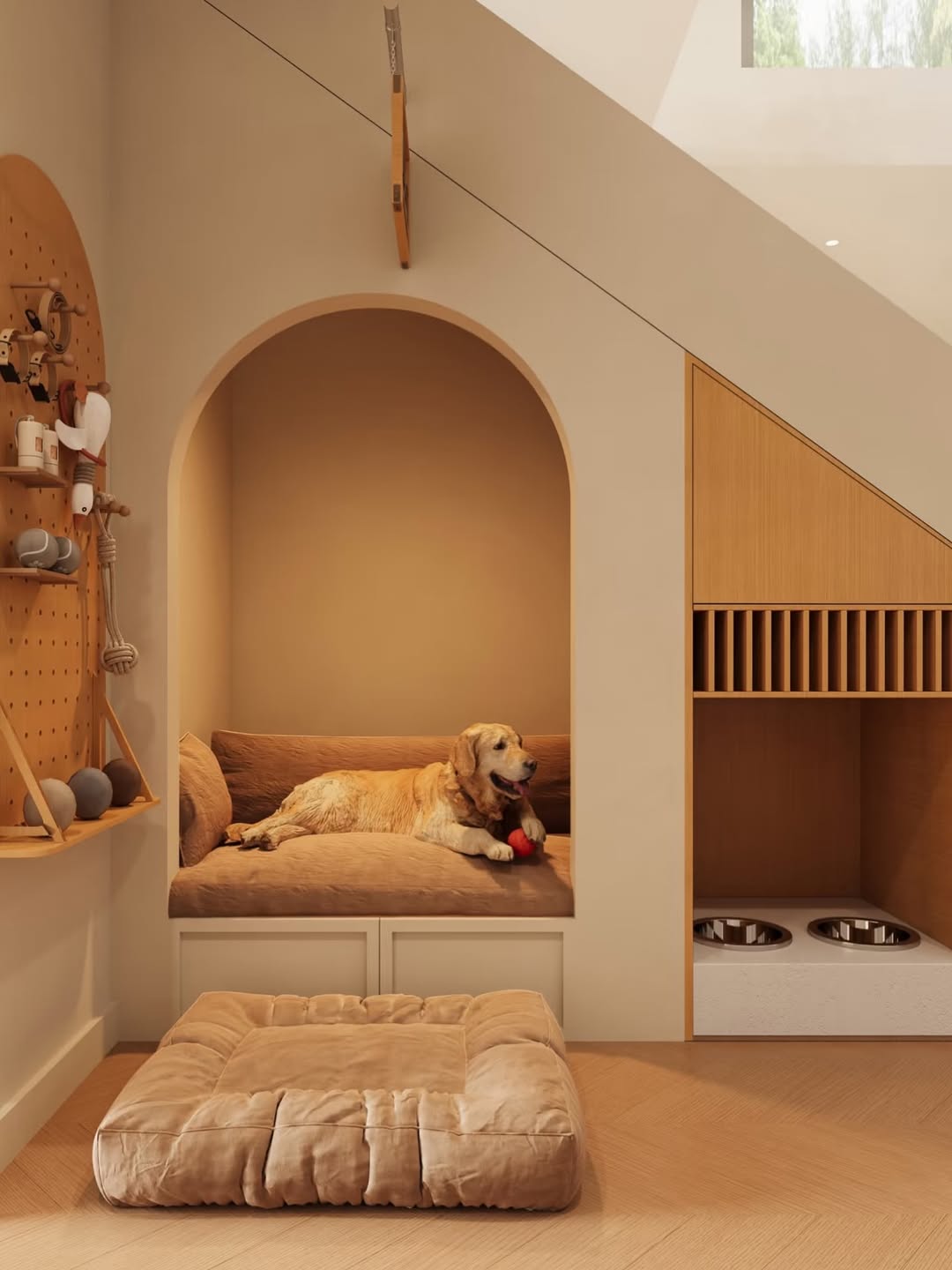
“Recreating this custom look requires some investment, but it pays off in functionality and style.”
The custom millwork is the biggest expense.
Custom Cabinetry & Arch: $2,500 – $5,000
Upholstered Bed Cushion: $200 – $450
Feeding Station Bowls & Install: $150 – $300
Wooden Pegboard & Accessories: $100 – $250
Large Floor Cushion: $80 – $200
TOTAL: $3,030 – $6,200
Budget alternative: Use a pre-made arched bookcase and a separate raised feeder from Target or HomeGoods for about 50% less.
2. Under-Stairs Kennel with Pull-Out Food Drawer
When installing a gate for an under-stairs nook, opt for a surface-mount hinge system instead of an interior-mounted one. This allows the gate to swing fully open and lay flat against the wall, preventing it from becoming a tripping hazard in your hallway. For a 30-inch opening, a gate with a double-hinge mechanism is ideal. Also, ensure the latch is a one-handed operation—you’ll appreciate it when you’re carrying a laundry basket or have your hands full. The white metal finish here is a smart choice as it blends seamlessly with the wall color, reducing visual clutter.
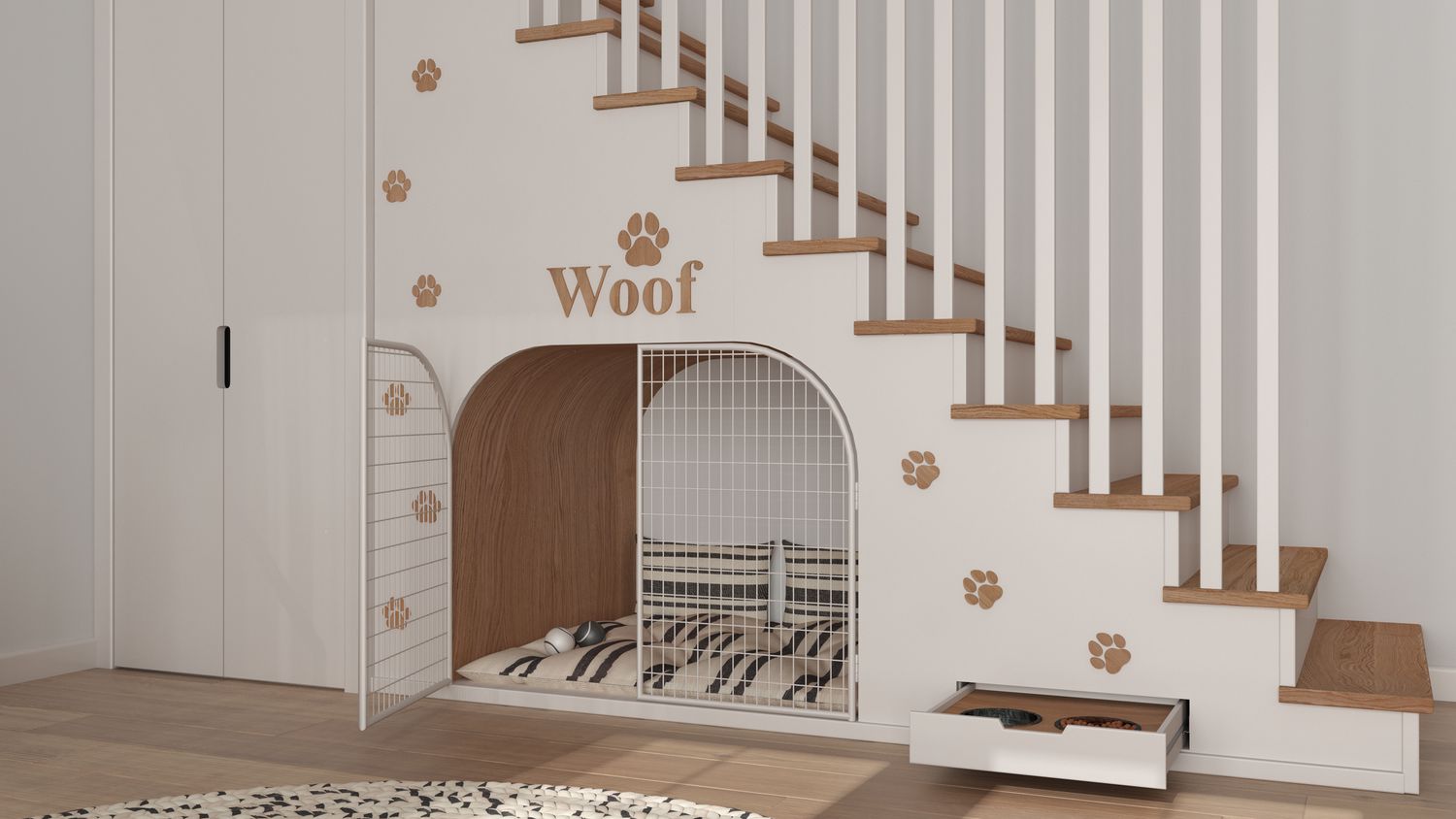
“This is a fantastic use of space, but it’s not for every dog.”
Before you start cutting into your drywall, assess your pet’s personality. Anxious chewers or dogs with separation anxiety might try to gnaw their way through the wooden arch or drywall interior, leading to costly repairs. This setup is best for crate-trained, calm dogs who view their kennel as a safe space, not a punishment. Also, be mindful of foot traffic on the stairs above; the noise can be stressful for some sensitive pups.
3. Pet Crate Disguised in a Decorative Console Table
This look follows a simple but effective design formula: 50% functional furniture + 30% decorative styling + 20% soft textiles. The console table and crate provide the functional backbone. The styling—potted topiaries, ornate mirror, and framed art—adds personality and draws the eye upward, away from the crate. Finally, the striped fabric curtain and cozy bedding soften the hard lines of the wire and wood. You can swap the decor to fit any style; for a more modern look, try a geometric mirror and a single snake plant.
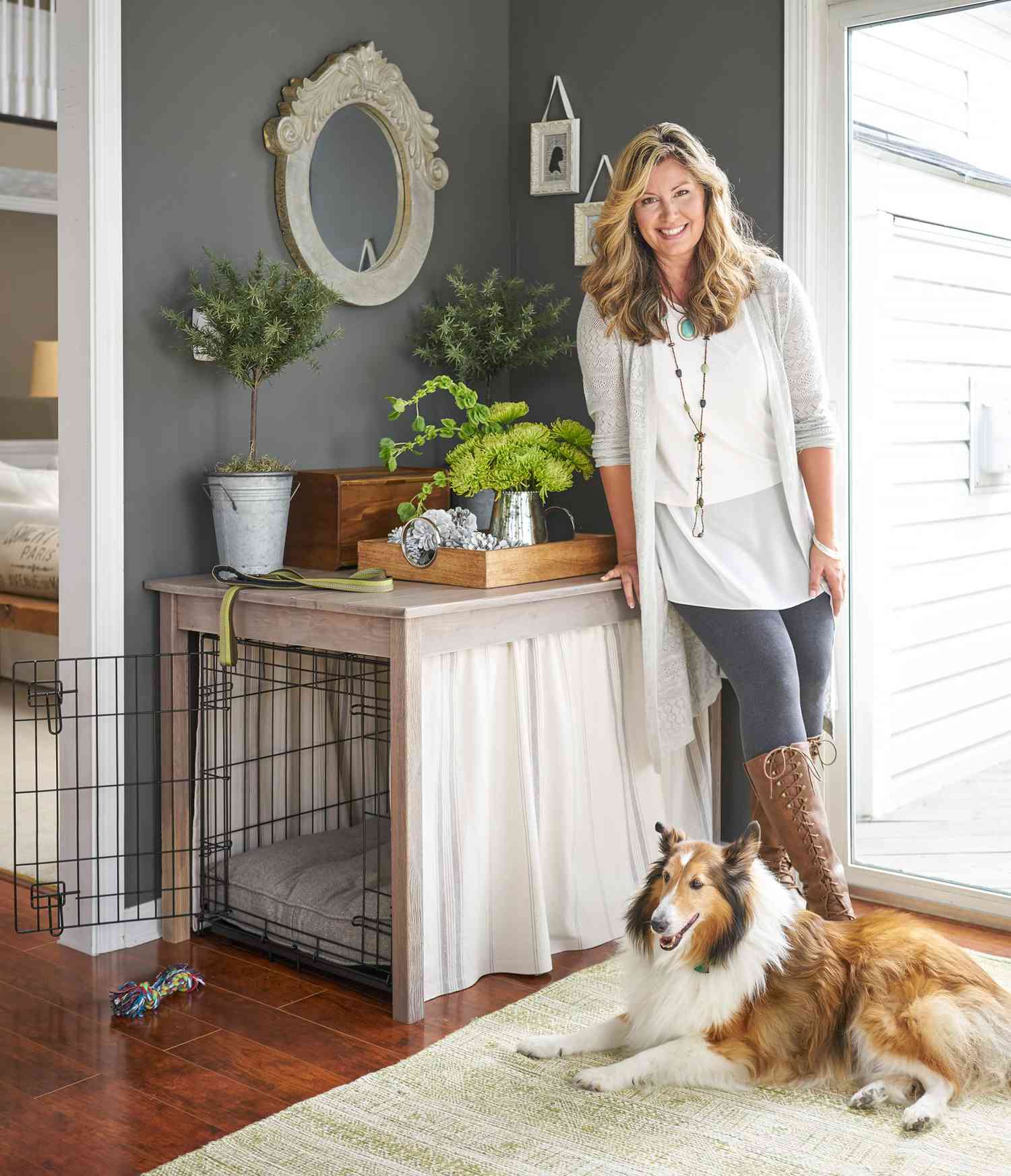
“You don’t need a custom furniture piece to achieve this integrated look.”
You can find stylish console tables that are open underneath at stores like Facebook Marketplace or IKEA for under $100.
Find a console table with at least 24 inches of clearance from the floor to the bottom of the tabletop.
Slide a standard black wire crate (around $40-$60 at Target or Walmart) underneath.
Add a simple tension rod and a fabric curtain ($20) to soften the look.
This approach gives you the same stylish, disguised-crate vibe for a fraction of the cost of custom furniture.
4. Built-in Light Blue Dog Crate with Gold Bar Accents
The single element that makes this design so successful is the use of high-end materials and hardware. The gold metal bars and brass cabinet pulls instantly signal ‘custom furniture’ rather than ‘dog crate.’ By treating the crate with the same design respect as the surrounding cabinetry—using elegant materials and a sophisticated color—the entire unit feels like a luxury feature rather than a purely functional item. If you took away the gold accents and used standard wire, it would lose all of its bespoke charm.
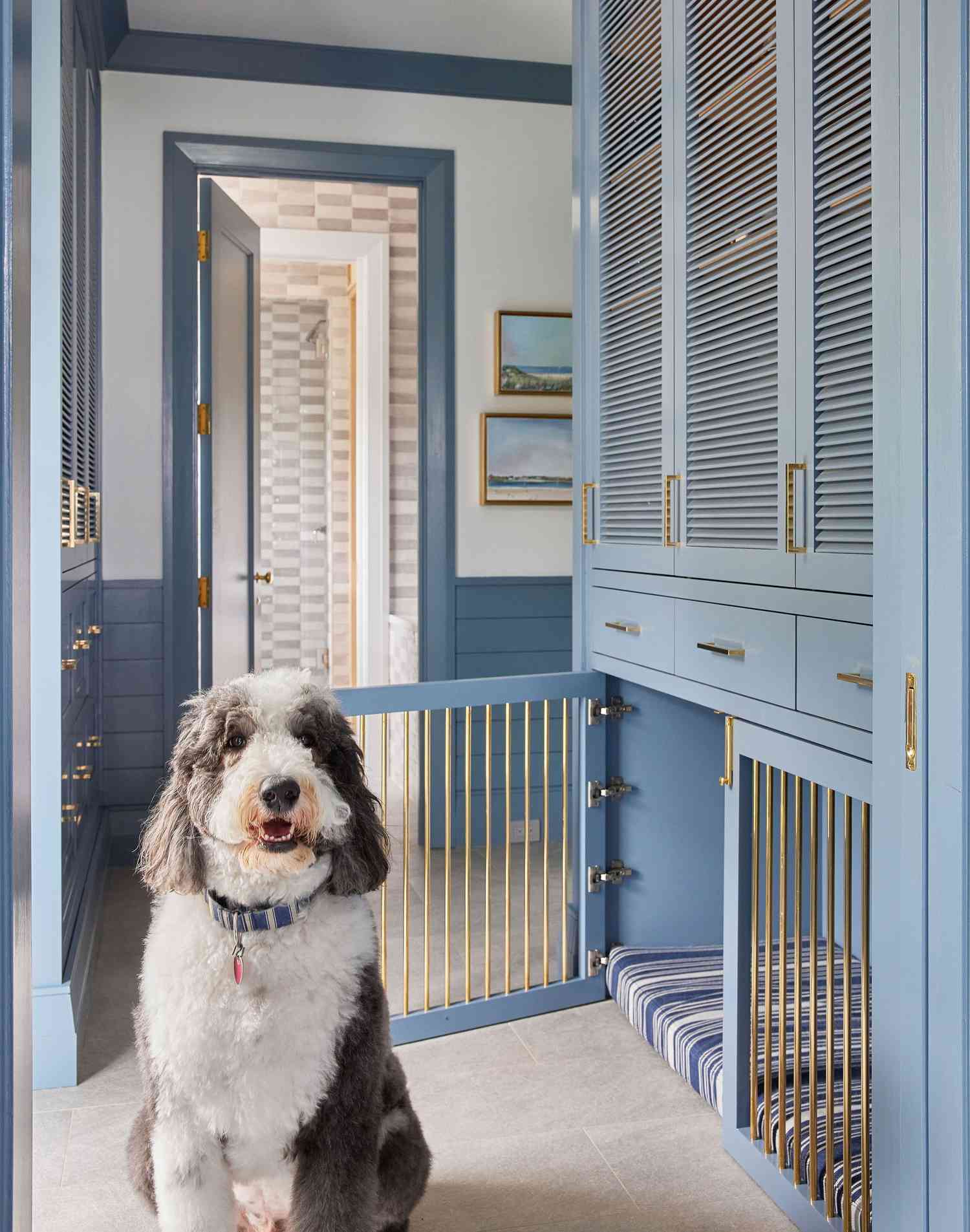
“A built-in solution like this works best in a mudroom, laundry room, or a wide hallway with at least 10-12 feet of available wall length.”
The unit itself will likely need about 6-8 feet of that to accommodate a crate of this size plus flanking storage. For the crate to be comfortable, you need a minimum depth of 30-36 inches, so this won’t work in a narrow corridor. The ceiling height isn’t a major constraint, but it looks most balanced with standard 8-foot or 9-foot ceilings. Compare this grand scale with the more compact solution in Idea #3.
5. Modern Minimalist Cat Haven with a Wooden Climbing Tree
This room feels incredibly serene because of the strict adherence to a limited, nature-inspired palette. The light wood of the cat tree, platform bed, and floor creates a cohesive and calming foundation. The design relies on variety in form, not color. The circular platforms of the tree, the undulating cutouts of the bed, and the linear pattern of the window blinds all add interest without introducing visual noise. It’s a perfect example of how minimalism can be playful and engaging for pets without sacrificing style. For more vertical fun, see Idea #27.
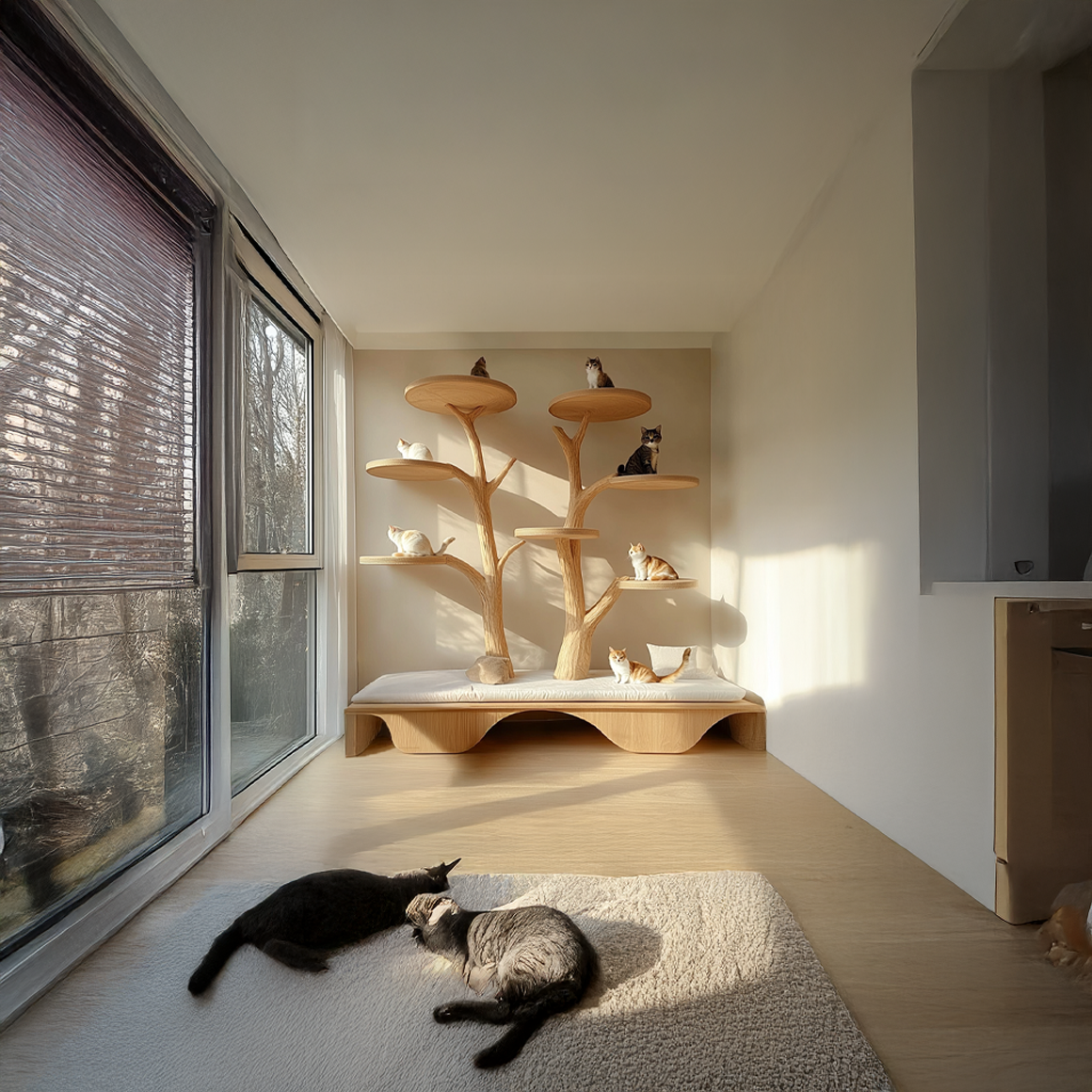
“Light wood and white cushions are beautiful, but they are unforgiving.”
The white cushion on the platform bed will show every speck of dirt and shed fur, requiring weekly washing to look fresh. The light wood flooring, while stylish, will make dark hairballs or accidents instantly visible. You’ll need to be diligent about daily sweeping or vacuuming. That said, the smooth surfaces are a breeze to wipe down, which is a major plus. The biggest commitment is the white rug; a washable option is non-negotiable here.
6. Stimulating Cat Room with Wall-Mounted Shelves and Posts
Want to create a simple cat climbing wall? Here’s a quick guide to mounting a basic shelf and scratching post combo. (Time: 1 hour, Cost: $75-$150).
- Choose your spot: Find a wall with at least two studs for secure mounting. Use a stud finder.
- Select your gear: Buy a few floating wall shelves (like the IKEA LACK) and a vertical, wall-mountable scratching post.
- Plan the path: Arrange the shelves on the floor to create a path your cat can easily navigate. Aim for 8-12 inches of vertical and horizontal space between each element.
- Mount securely: Use the hardware included, ensuring you drill into the studs. Level each shelf before tightening the screws.
- Test for stability: Firmly press on each shelf and post to ensure it can handle a jumping cat before you let them explore.
Safety first!
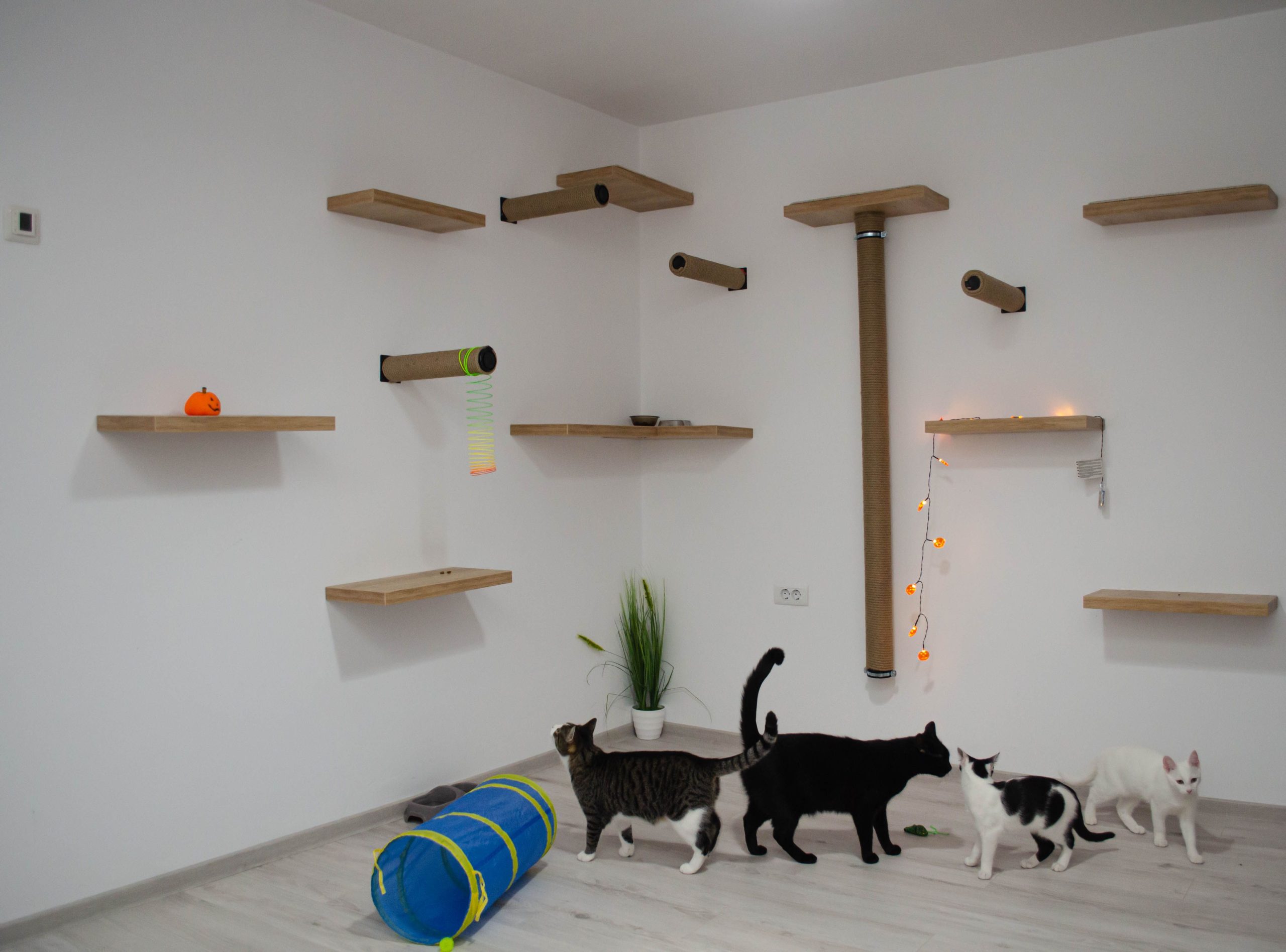
“While a wall-mounted cat playground is a fantastic way to enrich your pet’s environment, be prepared for the ‘cat highway’ effect.”
Your cats will use these shelves to access high places you might not want them to be, like the top of door frames or curtain rods. Before you install, think through the entire vertical space. Are there fragile items on a high bookshelf they could now reach? Can they use the shelves to get behind the TV? Plan the layout to avoid creating pathways to trouble.
7. Multi-Level Carpeted Cat Tree with Cozy Sleeping Nooks
When choosing a large cat tree, pay attention to the base. For a structure of this height and complexity, the base should be at least 24×24 inches and have significant weight. A flimsy base is the number one reason cat trees wobble and tip. A wider base provides the stability needed for multiple cats jumping and playing at once. Also, look for scratching posts that are at least 30 inches tall; this allows the average cat to get a full, satisfying vertical stretch, which they need for spinal health.
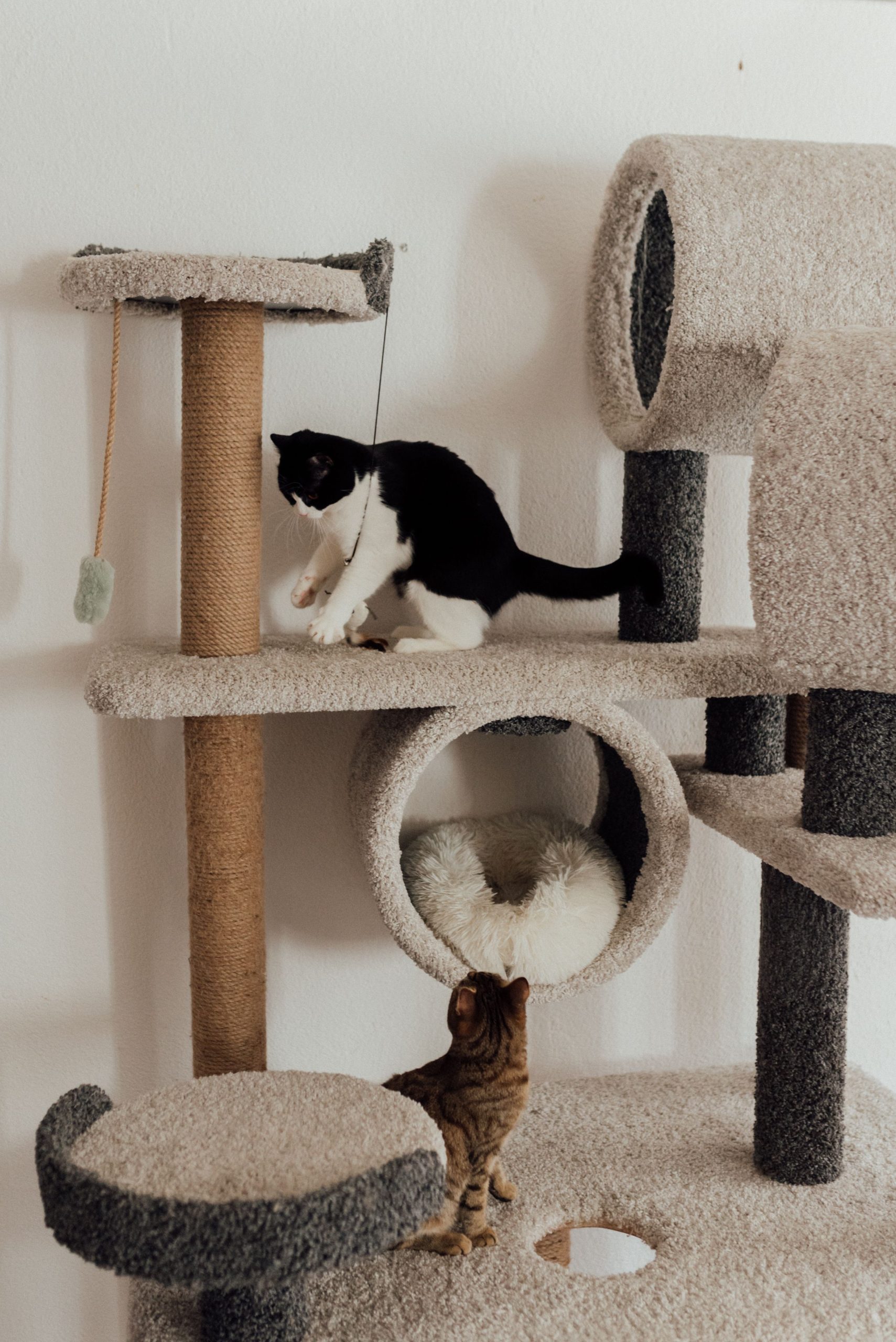
“A giant, multi-level cat tree can be pricey, often running $150-$300.”
You can create a similar multi-level experience for much less. Head to a thrift store or use Facebook Marketplace to find a sturdy old wooden step-ladder for $10-$20. Wrap the steps and legs tightly with sisal rope ($15 from a hardware store) to create scratching surfaces. Then, use zip ties or screws to affix a few small, shallow wicker baskets ($5 each at a craft store) to the steps to act as cozy beds. You get the same verticality and mix of textures for under $50.
8. Natural Wood Cat Tree with Plush Grey Perches
The visual appeal of this setup comes down to a clean, modern formula: 60% natural textures + 30% minimalist neutrals + 10% sculptural form. The natural wood branches of the cat tree and the dried pampas grass make up the textural base. The light grey of the plush perches and nearby sofa, plus the white walls, provide a calm, neutral backdrop. Finally, the tree itself acts as a sculptural element, its organic shape contrasting beautifully with the simple lines of the metal stand and vase. The black cat and dark base provide just the right amount of grounding contrast.
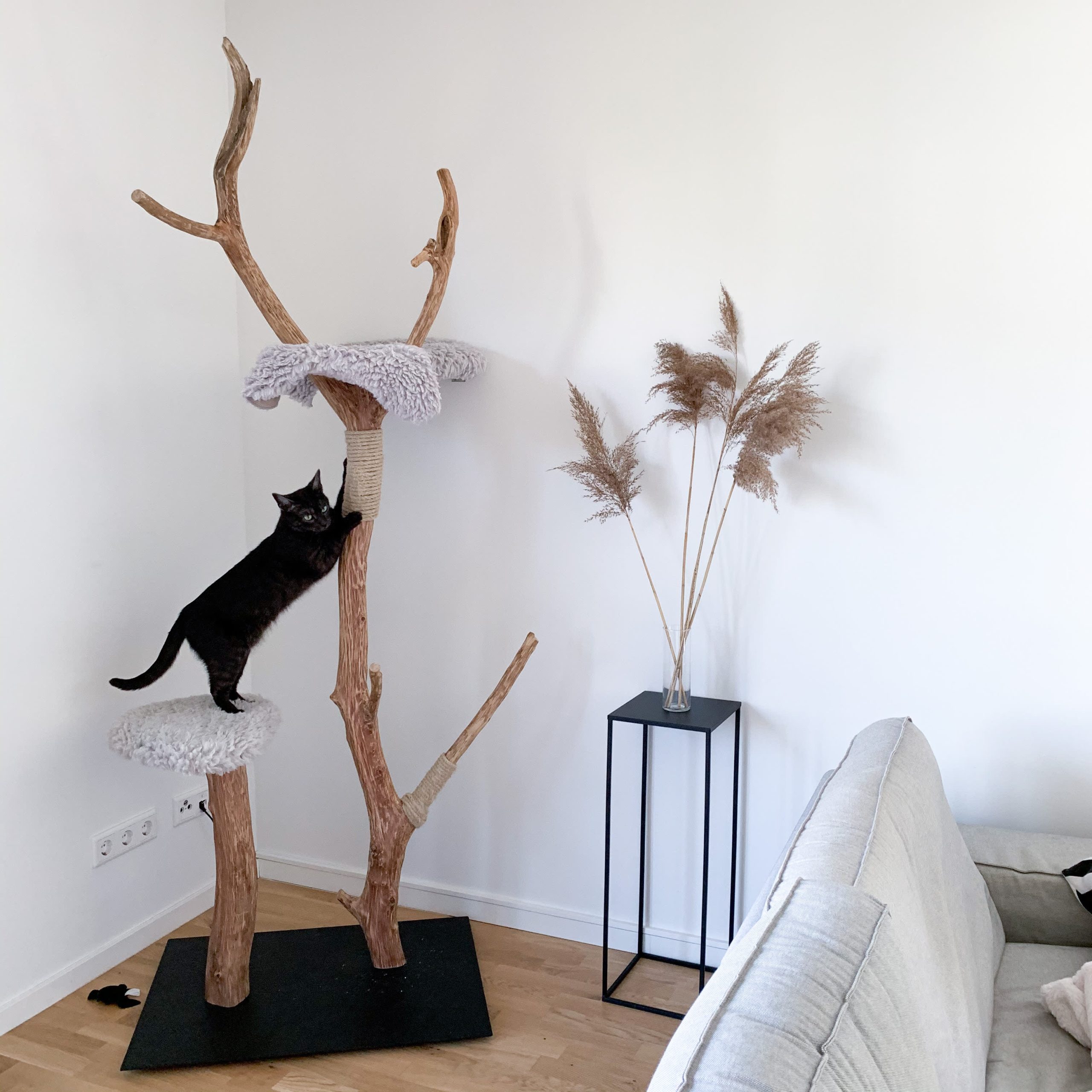
“It’s the natural wood.”
Standard cat trees are often clunky towers of beige carpet that scream ‘pet furniture.’ This piece, made from a real tree branch, feels like a deliberate piece of decor that happens to be cat-friendly. It brings an element of the outdoors inside and integrates seamlessly with a modern, nature-inspired aesthetic. By choosing a material that is beautiful in its own right, the cat tree elevates the entire room instead of just taking up space.
9. Smartly Integrated Dog Bed Furniture
The trend of integrating pet furniture directly into our own is peaking in 2026, and for good reason. It’s part of a larger movement called ‘pet humanization,’ where we design our homes to accommodate our pets as true family members, not just animals. This isn’t about hiding the fact that you have a dog; it’s about thoughtfully creating a space for them that is as stylish and considered as the space you create for yourself. It says, ‘My pet belongs here,’ and it does so with style and intention, eliminating the visual clutter of standalone pet gear.
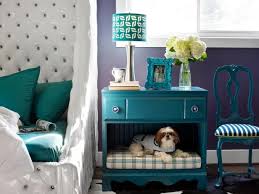
“Before you commit to a piece of integrated pet furniture, make sure you’ve covered the basics.”
A beautiful piece is useless if your pet won’t use it.
Measure Your Pet: Is the opening and interior large enough for your dog to turn around and stretch out comfortably?
Consider Placement: Will the furniture be in a quiet, low-traffic area where your dog feels safe, or in a social spot if they have FOMO?
Check the Materials: Can the cushion cover be easily removed and washed? Is the surface of the furniture durable and scratch-resistant?
10. Living Room TV Console with Four Integrated Pet Crates
This is a large-scale solution for a multi-pet household. To pull this off, you need a substantial, uninterrupted wall in your main living area, ideally at least 12-14 feet long. The console itself will likely measure 8-10 feet to comfortably house four separate crates. This is not an idea for a small apartment or a living room with lots of windows and doors breaking up the wall space. It’s best suited for open-plan living areas or great rooms where a large piece of furniture can anchor the space without feeling overwhelming.
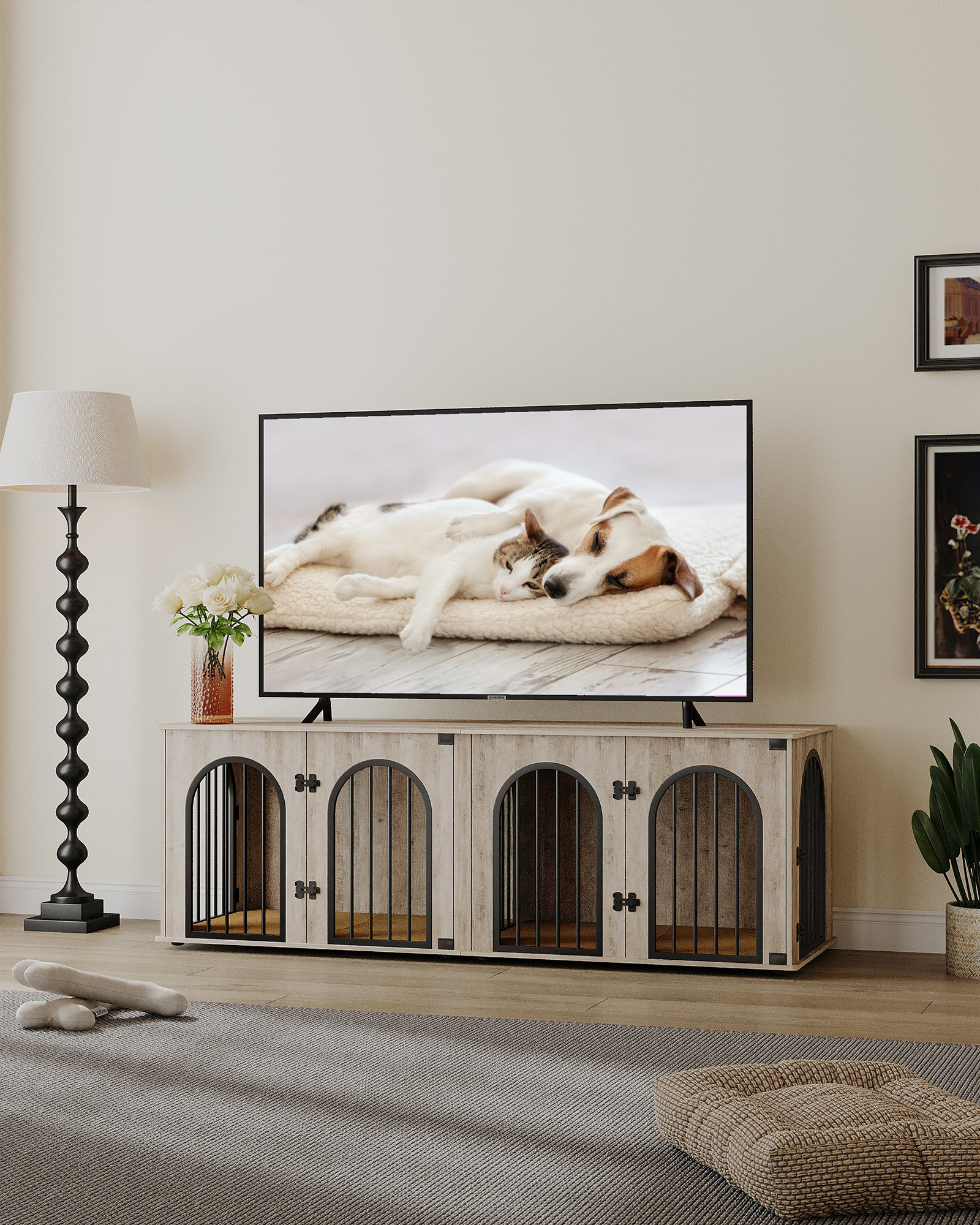
“Let’s be honest: this setup is a commitment.”
While it looks fantastic when clean, you’re essentially putting four dog crates in the center of your living room. You’ll need to be hyper-vigilant about cleaning the bedding and wiping down the bars to avoid pet odors. Also, consider the noise. Four dogs shifting, rustling, or whining in crates right under the TV could be distracting. This works best for well-trained, quiet dogs and owners who are diligent about their cleaning routine.
11. Cozy Dog Bed Tucked Under a White Home Office Desk
This simple solution works beautifully because it leverages a dog’s natural ‘denning’ instinct. The space under the desk, enclosed on three sides, provides a sense of security and protection. For a dog, it feels like a cozy, safe cave. Aesthetically, it succeeds by maintaining a cohesive color story. The white and gray plaid of the bed perfectly complements the white desk, light gray chair, and dark wood floors, making the bed feel like a planned part of the office decor rather than an afterthought. It’s simple, smart, and completely unobtrusive.
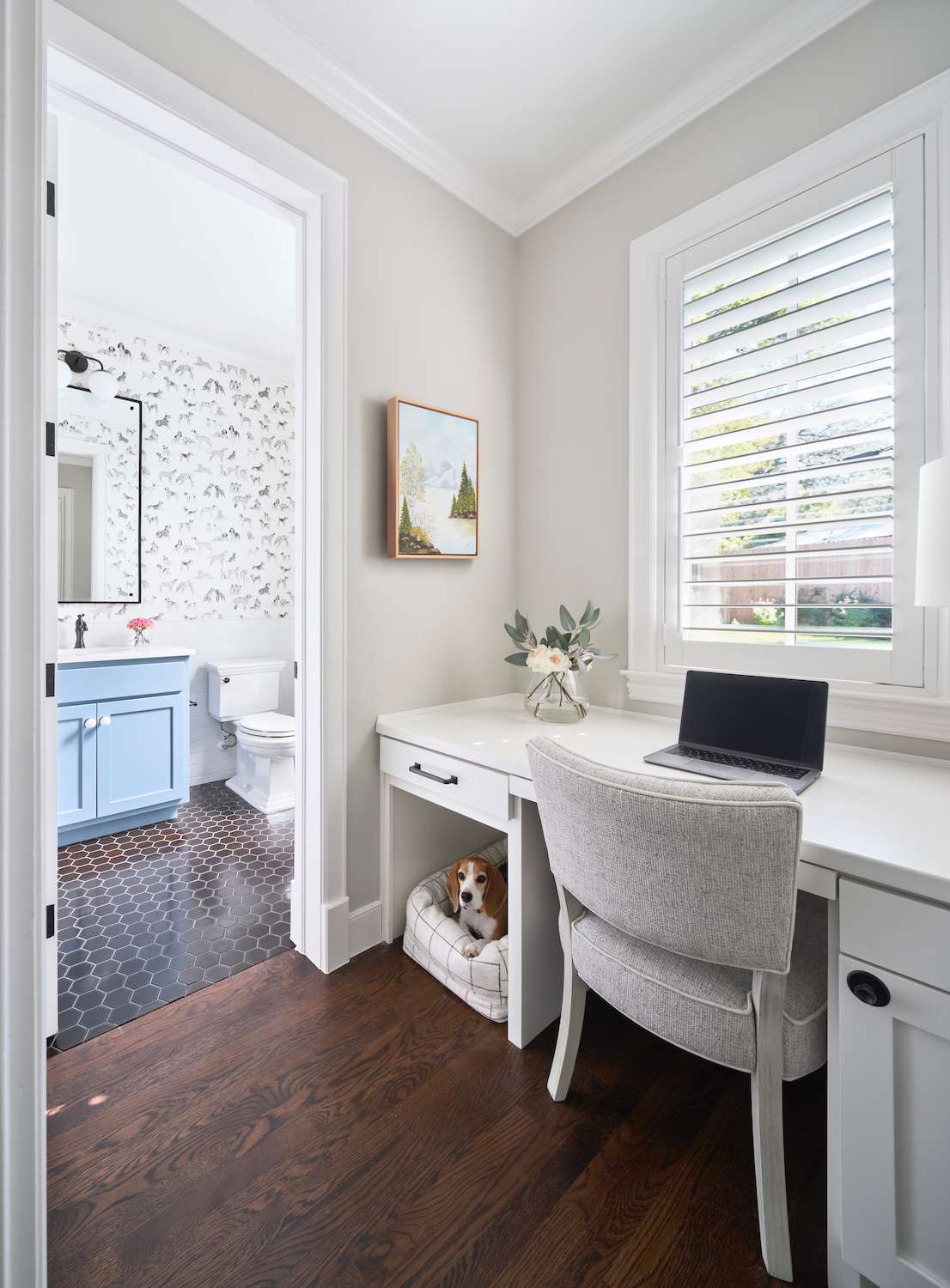
“If you work from home, placing your dog’s bed under your desk is a game-changer for needy pups.”
But to make it work, you need to manage your cables. A dog who likes to chew or nest can easily get tangled in loose power strips and cords, creating a serious hazard. Before you place the bed, invest in a cable management box or use adhesive clips to run all your wires up and away, completely out of your dog’s reach. Your pet stays close and safe, and you don’t have to worry about a disconnected Wi-Fi router.
12. Built-In Bed Frame with Integrated Twin Pet Crates
The absolute defining feature here is the multi-functionality. In a compact space like an RV, a tiny home, or a small guest room, every square inch has to work hard. This design brilliantly combines three functions into one footprint: a human bed, two secure pet crates, and even some overhead storage. It’s the ultimate space-saving solution. By building vertically and utilizing the often-wasted space under a bed, the design frees up valuable floor space that would otherwise be consumed by bulky dog crates.
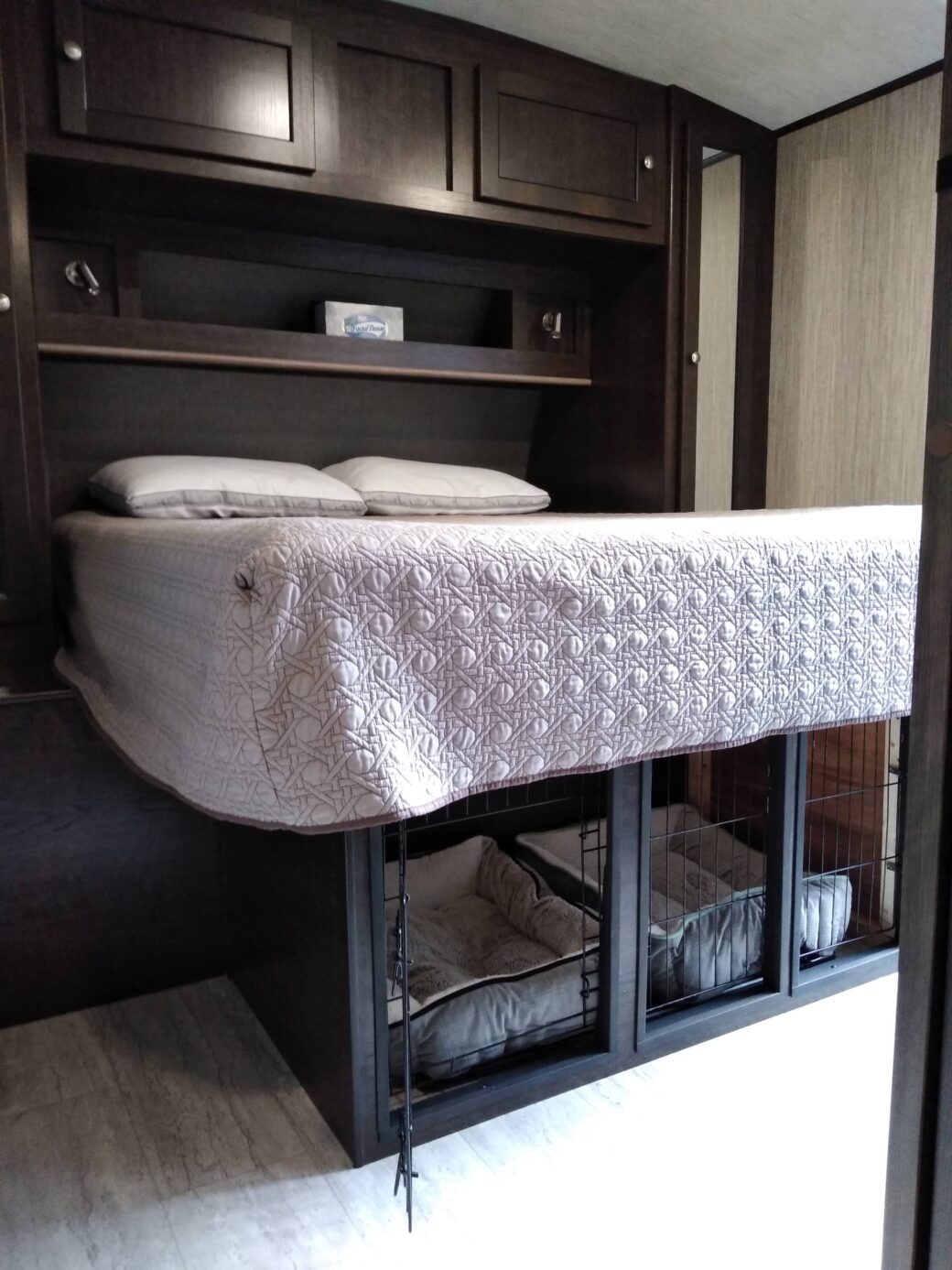
“This idea is specifically tailored for tight quarters.”
It’s a perfect fit for spaces under 150 square feet, like a studio apartment, a small bedroom (think 8’x10′), or a camper van conversion. The key is that the room’s primary function is sleeping. This wouldn’t make sense in a larger room with plenty of floor space, but in a compact environment where you have to choose between a walkway and a dog crate, this solves the problem. Check out the grander, more spread-out version in Idea #10 for contrast.
13. Cherry Wood Nightstand Modified into a Pet Bed
Don’t want to buy a new piece of furniture? You can easily upcycle an old nightstand or end table with this DIY project. Scour thrift stores or your own attic for a small wooden cabinet-style table, which you can usually find for $20-$40. Most of these pieces have a door you can simply remove. A quick sanding and a fresh coat of paint or stain to match your bedroom decor, and you’re almost there. Just pop a comfy cushion or a folded towel inside, and you’ve created a charming pet bed with a story for a fraction of the cost of a new one.
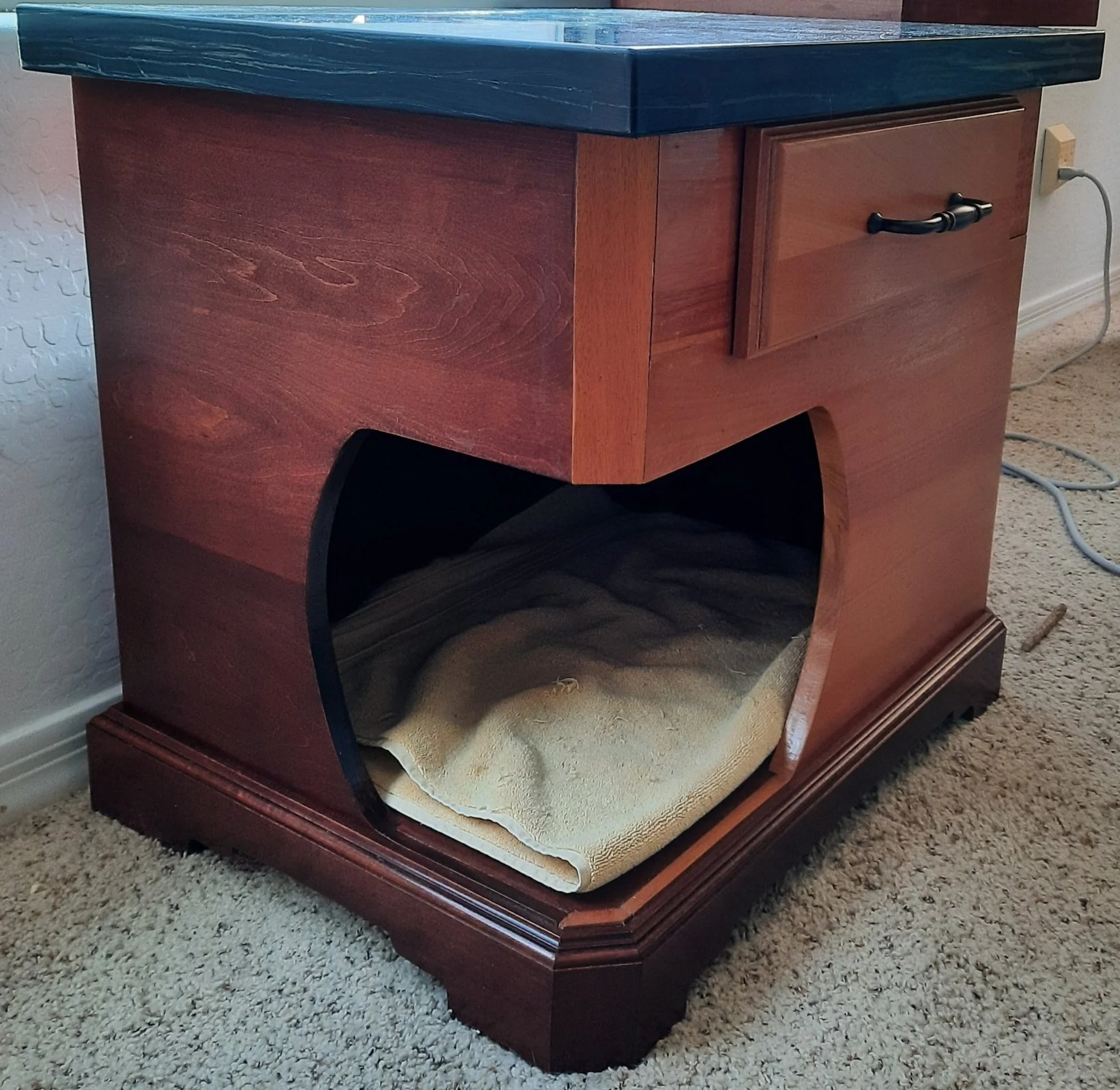
“Transform a secondhand nightstand into a pet haven in an afternoon.”
(Time: 3 hours + drying time, Cost: $30-$60)
Find your piece: Source a small wooden nightstand with a cabinet door.
Remove hardware: Take off the door, hinges, and any interior shelves. Keep the drawer.
Prep the surface: Clean the entire piece thoroughly. Lightly sand all surfaces to help the new paint adhere.
Paint or stain: Apply 1-2 coats of a pet-safe, low-VOC paint or stain in your desired color. Let it dry completely.
Add bedding: Place a small, washable pet bed or folded blanket inside the opening.
Place and admire: Position it by your bed for a cozy, integrated pet nook.
14. Bedroom Cat Nook with Plant-Filled Shelves and Striped Bedding
This is a beautiful, plant-filled vibe, but if you have a cat, you must be extremely careful. Many common houseplants, including many types of lilies, philodendrons, and snake plants, are toxic to cats if ingested. Before you turn your cat’s favorite corner into a mini jungle, research every single plant to ensure it’s pet-safe. Spider plants, Boston ferns, and calatheas are generally safe options. Keep any potentially toxic plants on very high shelves or in a separate room your cat can’t access. The aesthetic is not worth a trip to the emergency vet.
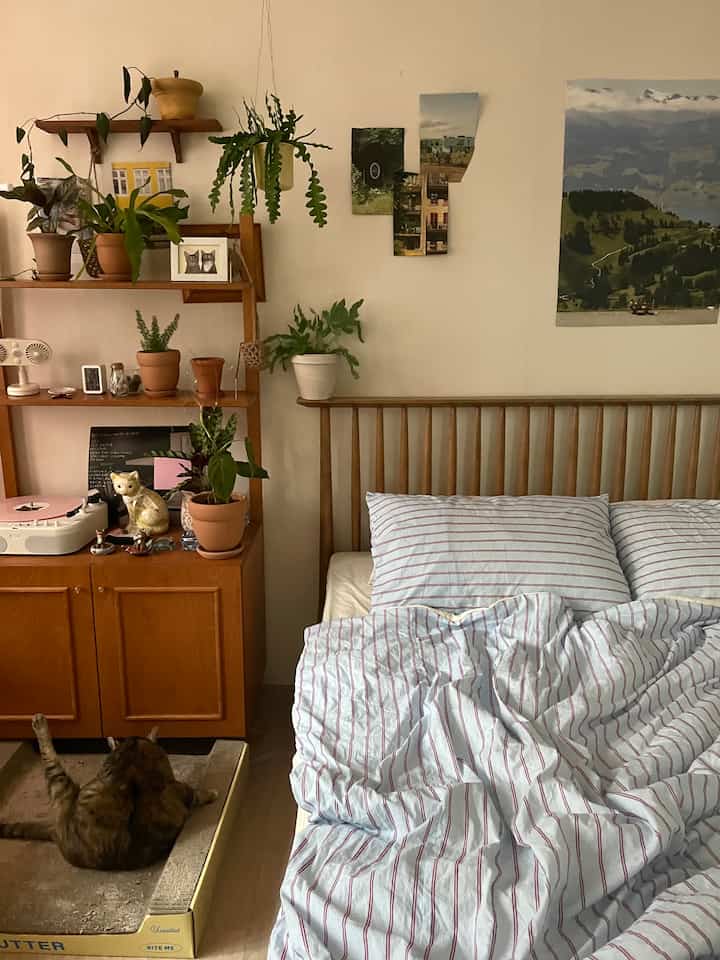
“This cozy corner achieves its relaxed, bohemian feel through a balanced mix: 40% natural elements + 40% soft textiles + 20% personal objects.”
The light wood of the headboard and shelving, along with the terracotta pots and abundant greenery, provide the earthy, natural base. The striped bedding and the cat’s cardboard scratcher bring in pattern and texture. Finally, the turntable and other decorative items on the shelves inject a dose of personality, making the space feel lived-in and authentic, not staged.
15. Playful Pet Sofa with Green Gingham and Striped Patterns
This setup is so charming because it commits fully to a coordinated, whimsical theme. The designer didn’t just throw a dog bed on the floor; they created a complete ‘room’ in miniature. The success lies in the repetition of the green and white color scheme across multiple patterns—stripes, gingham, and checkerboard. This creates a cohesive look that feels intentional and playful. The varied patterns work together because they share the exact same color palette, preventing them from clashing and instead creating a rich, layered look.
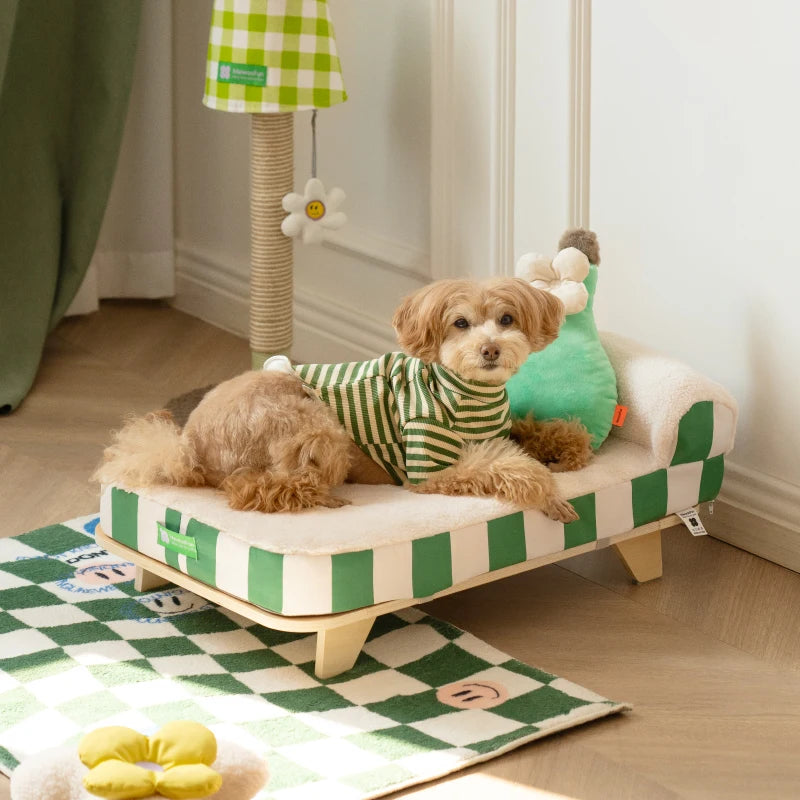
“It’s all about the lampshade on the scratching post.”
This single, unexpected detail is what elevates the entire vignette from ‘cute’ to ‘clever design.’ It’s a whimsical, slightly absurd touch that shows a true commitment to the miniature room concept. It mimics human furniture in a playful way and provides the vertical element that balances the low-profile sofa and rug. Without that tiny gingham lampshade, the whole scene would be significantly less memorable and fun.
16. Quilted Green Corduroy Sofa Topper for Pets
If you’re buying a sofa topper or pet mat, look for one with a non-slip backing. Many stylish options look great, but they’ll slide off a leather or tightly woven fabric sofa as soon as your pet jumps up, which defeats the purpose. A rubberized grip or a dotted silicone pattern on the underside will keep the cover securely in place. Also, measure your sofa’s seating area before you buy. You want the cover to extend over the front edge by at least 6-8 inches to protect it from paws and claws as your dog jumps on and off.
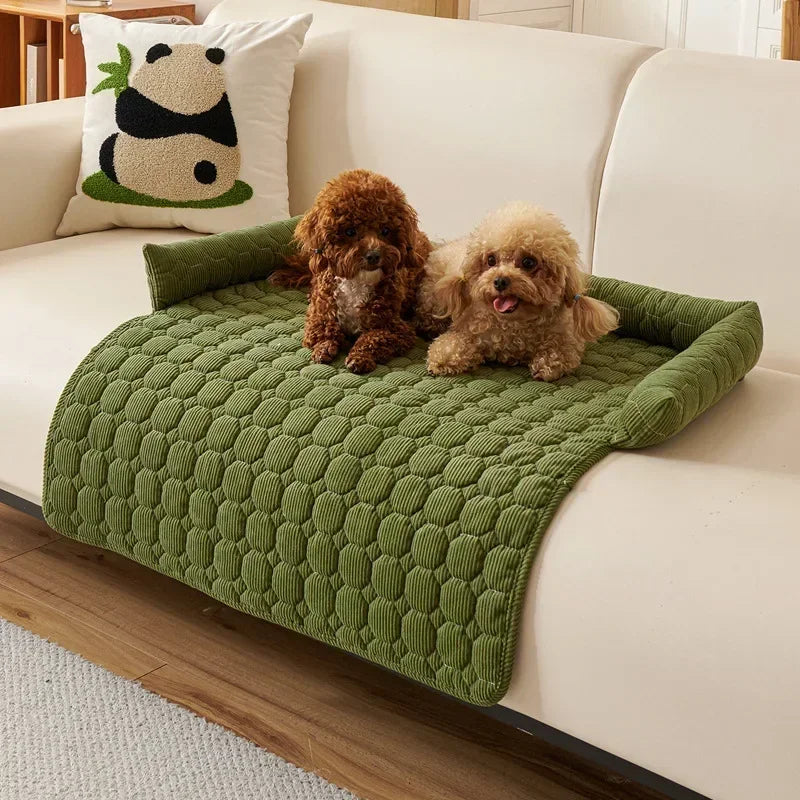
“A corduroy cover like this is fantastic for hiding pet hair, thanks to its texture and color.”
However, those same ‘wales’ or ribs in the fabric are masters at trapping dirt, crumbs, and dander. You can’t just wipe it clean; it will need to be vacuumed regularly with an upholstery attachment to stay fresh. The good news is that most of these covers are machine washable, but be prepared to wash it at least every 1-2 weeks to prevent lingering pet odors from embedding in the fabric.
17. Cozy Ribbed Pet Bed in a Neutral, Textured Living Area
This serene corner is all about layering textures within a monochrome palette. The formula is simple: 70% Cream & Beige Tones + 30% Varied Textures. The ribbed pet bed, the plush sofa, the nubby white throw blanket, and the carpet all share the same family of neutral colors. The visual interest comes from the contrast between these textures: the fine ribs of the bed, the deep pile of the blanket, the smooth surface of the shelves. This creates a rich, inviting look that feels cozy and sophisticated without needing a single pop of color.
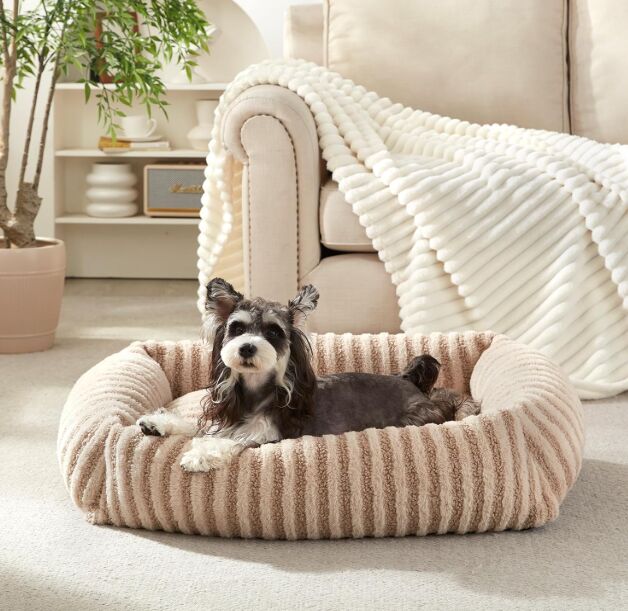
“A plush, aesthetically pleasing pet bed from a boutique brand can cost upwards of $150.”
You can get this same cozy, neutral look for much less. Stores like HomeGoods and TJ Maxx are treasure troves for high-quality, off-brand pet beds for $30-$50. Look in their bedding section, too—sometimes a large, textured floor pillow meant for humans can make an even more luxurious and affordable pet bed. The key is to stick to that cream and beige palette to replicate this specific, calming vibe.
18. Furry Brown and Beige Two-Toned Cat Condo
The key to this little condo’s appeal is its simplicity. In a world of gigantic, complex cat trees that can overwhelm a room, this small, self-contained unit offers a dedicated cozy space without dominating the floor plan. It provides the essential elements a cat craves—an enclosed ‘cave’ for security, a scratching surface, and a fun toy—all in a compact footprint. It’s the perfect solution for a smaller apartment or for a cat who is easily intimidated by larger structures. Its success lies in doing one thing well: being a perfect little hideout.
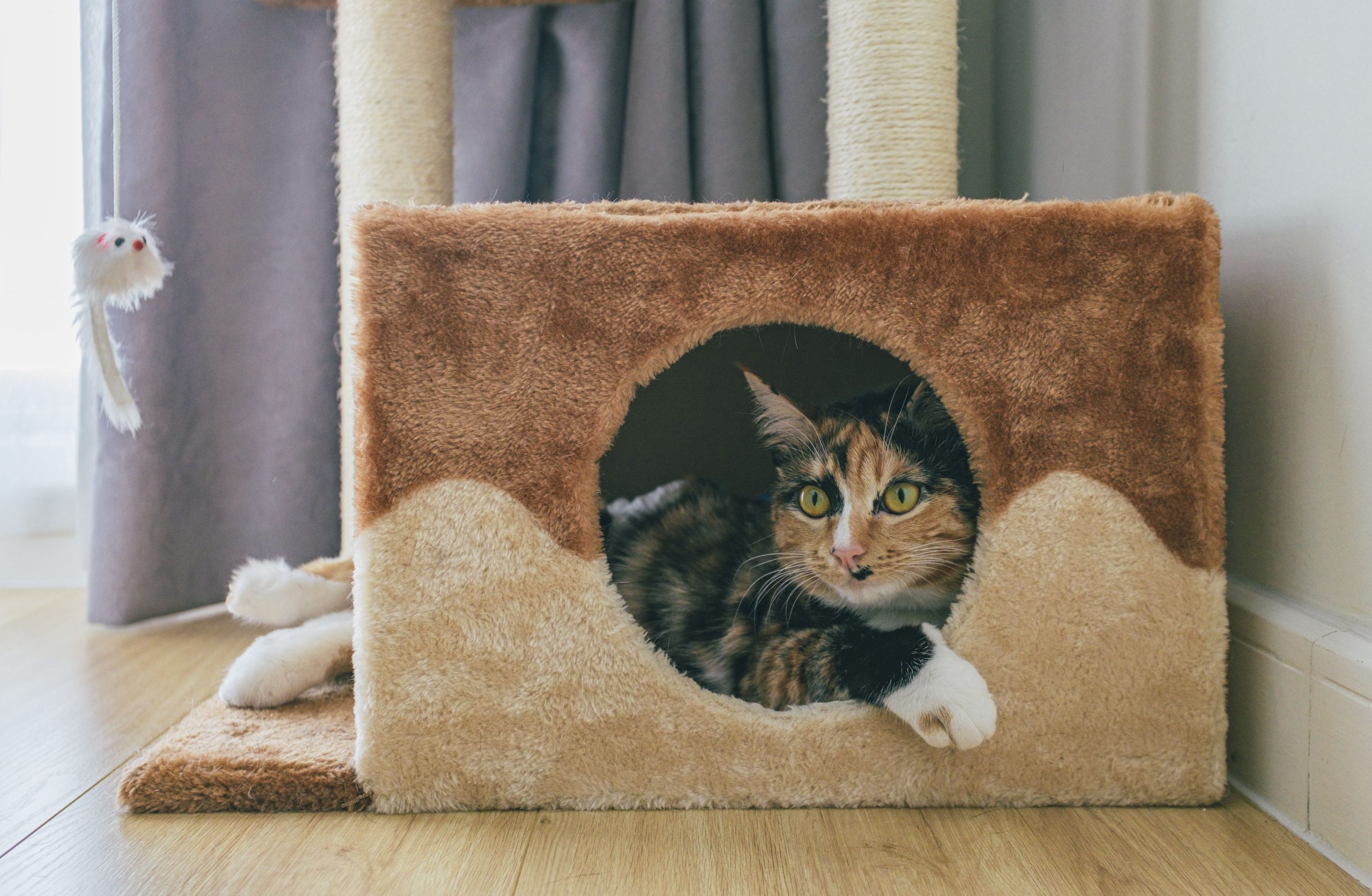
“A simple, functional piece like this offers a ton of value without a hefty price tag.”
It’s an accessible entry point into dedicated cat furniture.
Cat Condo Structure: $40 – $75
Integrated Scratching Post: Included
Hanging Toy: Included
TOTAL: $40 – $75
Budget alternative: You can create a similar vibe for almost free. Take a sturdy cardboard box, cut a circular hole in it, and place a folded fleece blanket inside. It provides the same sense of enclosure that cats love.
19. Luxe Pet Nook with a Blue Velvet Bed and Gold Bowl
This combination works because of the classic design principle of textural and material contrast. The pet bed’s deep blue velvet is plush, soft, and matte, absorbing light and creating a sense of cozy depth. Right next to it, the gold bowl is smooth, hard, and reflective, bouncing light around the space. This pairing of opposites—soft vs. hard, matte vs. shiny—creates a point of visual tension that is incredibly appealing. It makes the small corner feel curated and luxurious, proving that high-design principles can apply even to a pet’s corner.
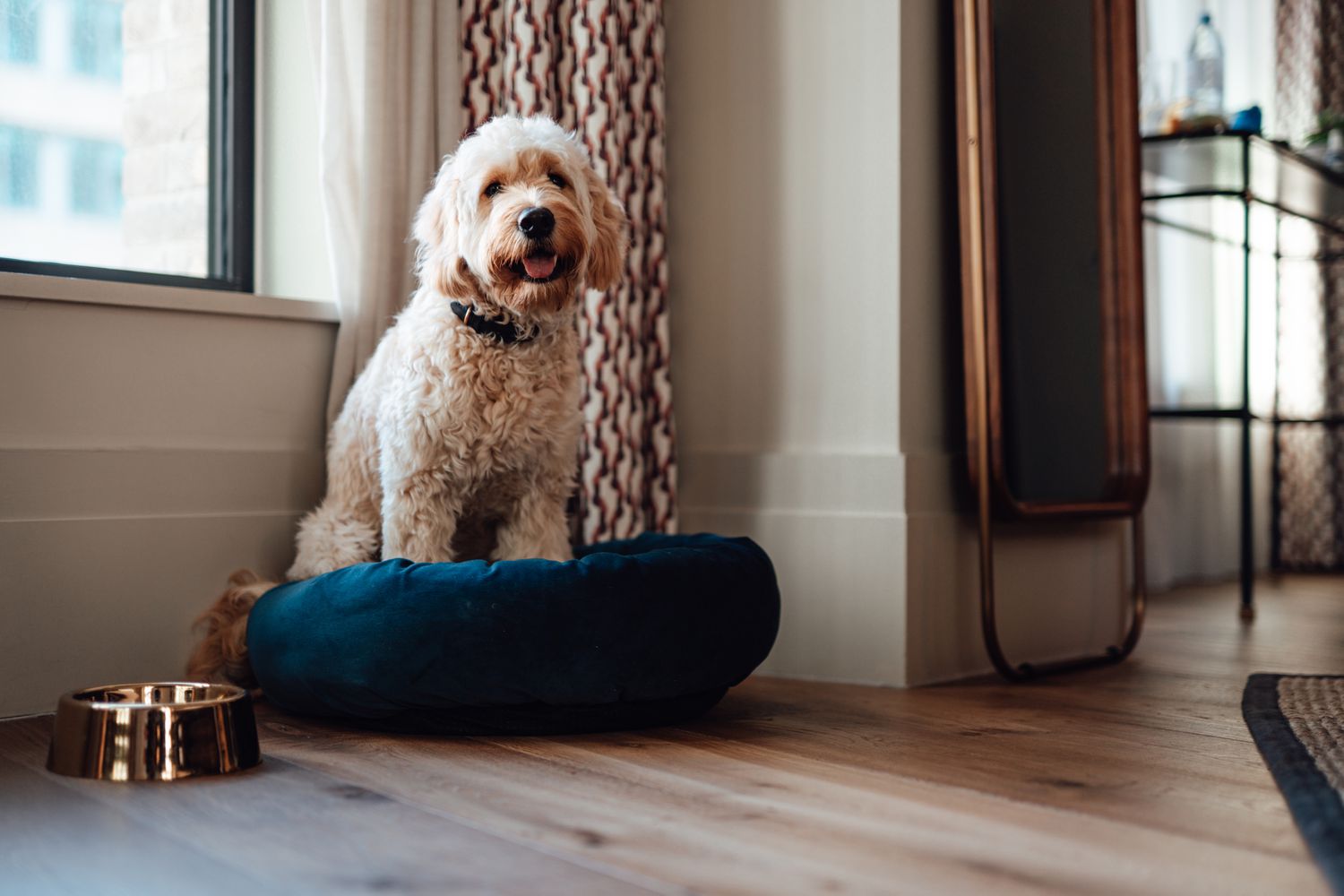
“We’re seeing a huge trend toward ‘gem tone’ velvets and brass accents in mainstream interior design, and this look perfectly translates it for our pets.”
It’s part of the move away from disposable, purely functional pet products and toward items that are as stylish as our own furniture. People are no longer willing to have their decor aesthetic ruined by a plastic bowl or a boring beige bed. This combination signals that the pet’s space is a design opportunity, not an afterthought. It has staying power because it’s tied to a classic, elegant material combination.
20. Ornate Black Metal Pet Bed with Purple Polka Dot Bedding
When using bold bedding on a detailed bed frame, the key is to balance pattern and solids. Here, the designer wisely paired a fluffy, patterned blanket with a simple, solid purple cushion. If both pieces were heavily patterned, the look would be chaotic and fight with the ornate scrollwork of the metal frame. By using a solid color as the base, the fun polka dot blanket becomes a charming accent rather than an overwhelming element. Always follow the one-pattern rule for small-scale applications like pet beds.

“This sweet and cozy look is a play on contrasting styles: 50% traditional form + 50% playful color and pattern.”
The pet bed frame itself is very traditional, with its ornate, wrought-iron-style scrollwork. However, the choice of deep purple and a whimsical polka dot fleece blanket injects a heavy dose of modern fun. This juxtaposition is what keeps it from feeling stuffy or dated. The brown floral wallpaper in the background further grounds it in a traditional context, making the purple bedding pop even more.
21. Modern Grey and Beige Cat Tower By a Window
A tall cat tower like this is an excellent choice for apartments or homes with limited floor space but available vertical space. This model, likely around 5 feet tall, requires a footprint of only about 24×20 inches. The ideal placement is directly in front of a secure window, as shown. This gives your cat a stimulating view—what cat behaviorists call ‘cat TV’—and a warm spot to sunbathe. Avoid placing it in the middle of a room where it can be easily knocked over or in a high-traffic hallway where it will become an obstacle.
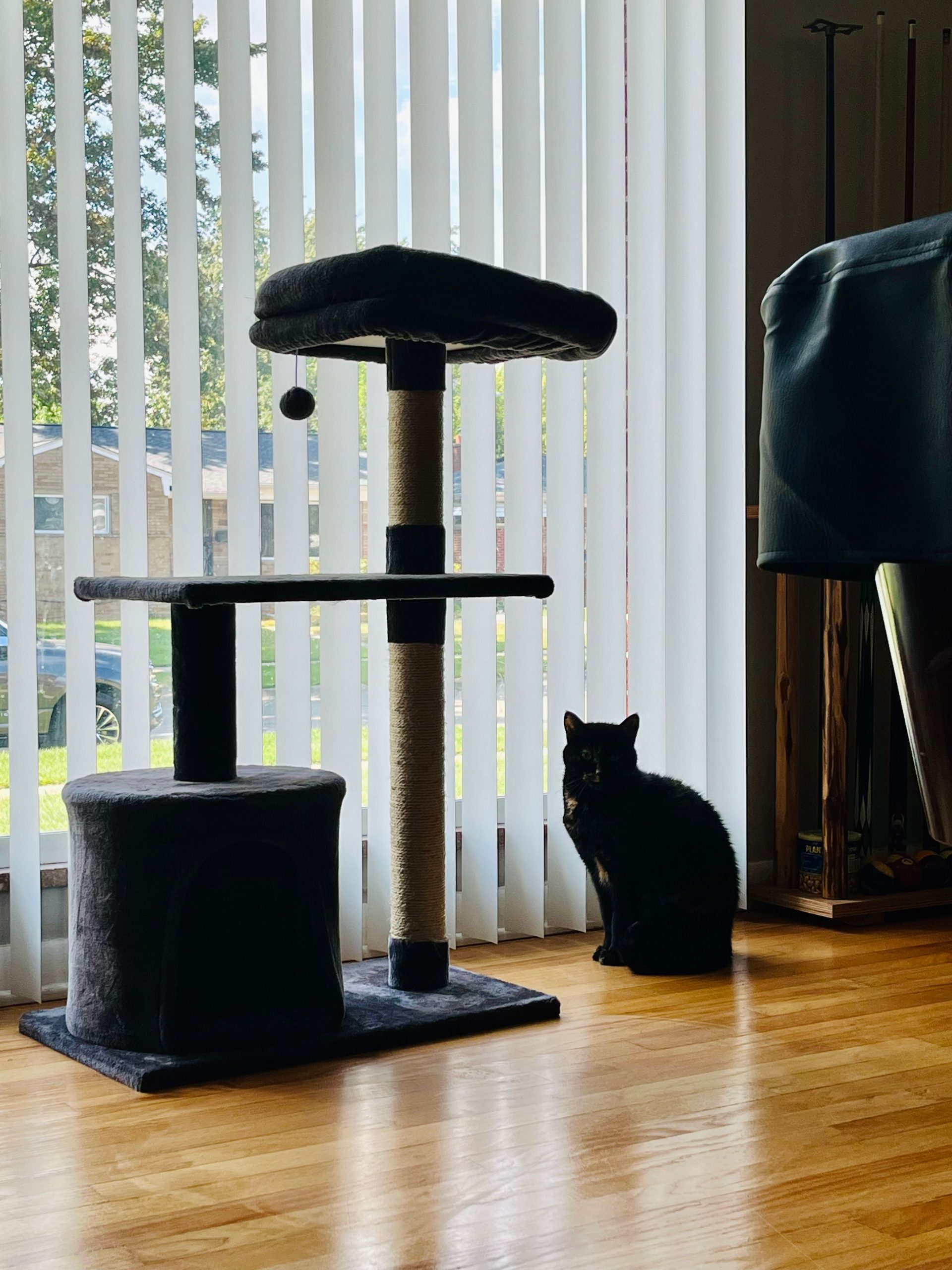
“Let’s be real about cat towers: they are fur magnets.”
The grey plush fabric on this one will attract and trap cat hair like nothing else. To keep it looking clean and not smelling like, well, a cat tower, you’ll need to commit to a weekly vacuuming routine with a good upholstery brush attachment. For deep cleans, a rubber glove wiped over the surface does an amazing job of pulling up embedded fur. Also, the sisal scratching posts will eventually shred. Think of them as a replaceable component you’ll need to re-wrap or replace every year or two.
22. Cozy Cat Corner with an Orange Sofa and Multi-Level Perch
This scene feels so inviting because it offers cats choices, which is key to a happy multi-cat household. There isn’t just one designated ‘pet spot.’ One cat can claim the high ground on the fluffy bed of the multi-level tree, satisfying their instinct to survey their territory from a safe vantage point. The other can snuggle into the plush pillows on the sofa, staying closer to the social hub of the room. Providing multiple, equally appealing options for rest and play diffuses competition and allows each cat to choose what suits their mood.
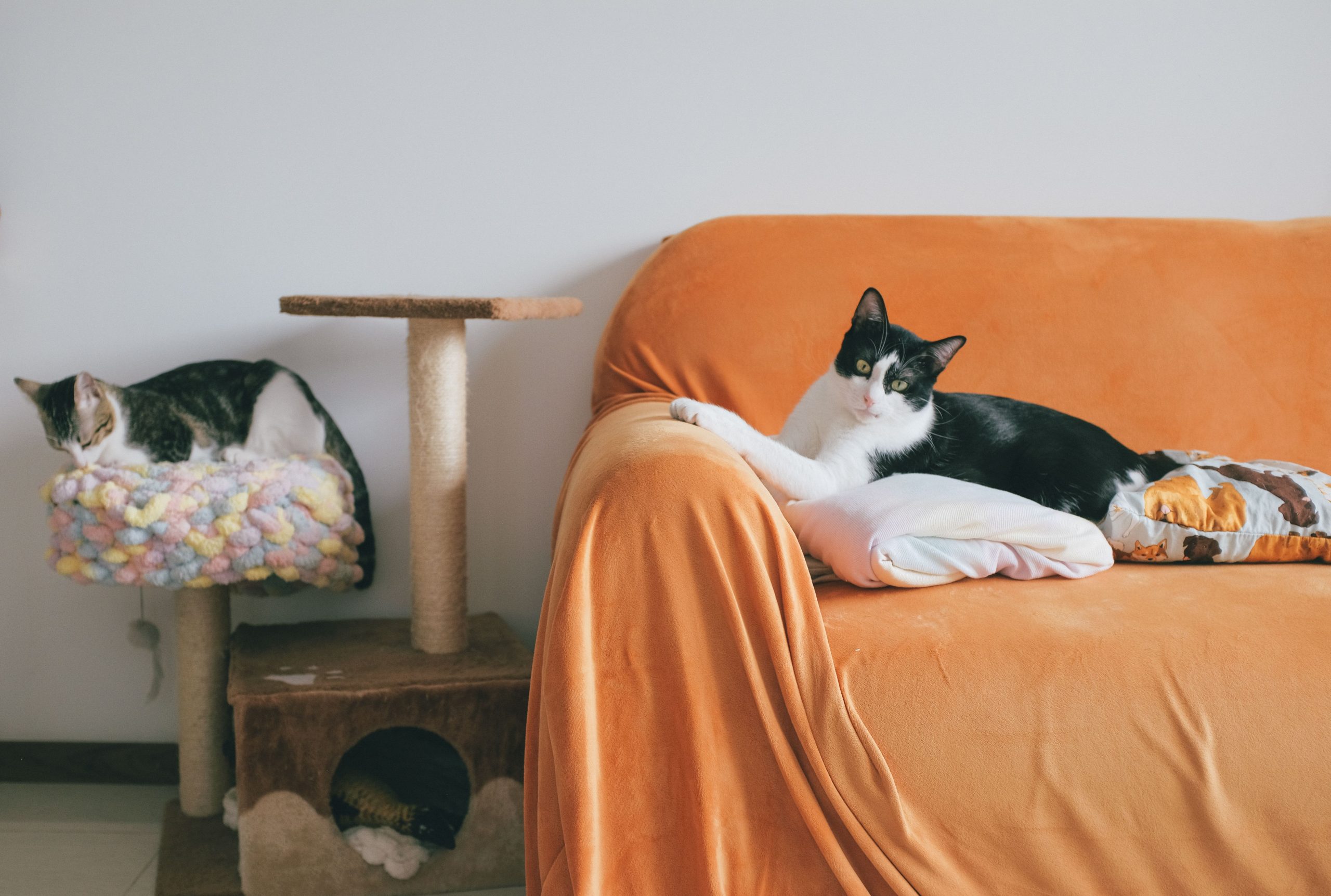
“The standout element here is the vibrant orange sofa.”
In a world of grey and beige, this bold color choice injects so much warmth and personality into the room. It acts as a cheerful, energetic anchor for the entire space. The pets clearly love it, but it’s a piece that the humans can enjoy just as much. It proves that you don’t have to sacrifice your personal style or color preferences to create a pet-friendly home. The orange velvet-like fabric is also surprisingly practical, as the texture can be quite durable and easy to spot-clean.
23. Laundry Room with Mountain Mural and Integrated Pet Wash
A dedicated pet washing station can be a DIY project if you have some plumbing know-how. (Time: 2-3 days, Cost: $800-$2000).
- Frame the base: Build a sturdy, moisture-resistant frame for the wash basin, typically 2-3 feet off the ground to save your back.
- Run plumbing: Tap into the laundry room’s existing hot and cold water lines and run them to the station. You’ll also need to install a drain and connect it to a main drain line.
- Install the basin: Place a small utility sink or a specialized grooming tub into your frame.
- Tile for protection: Install a waterproof membrane and then tile the basin and surrounding walls with something durable like the cobalt subway tile shown.
- Install fixtures: Add a handheld sprayer, which is essential for rinsing off muddy paws.
- Seal everything: Grout and seal all tile and plumbing connections to ensure it’s completely waterproof.
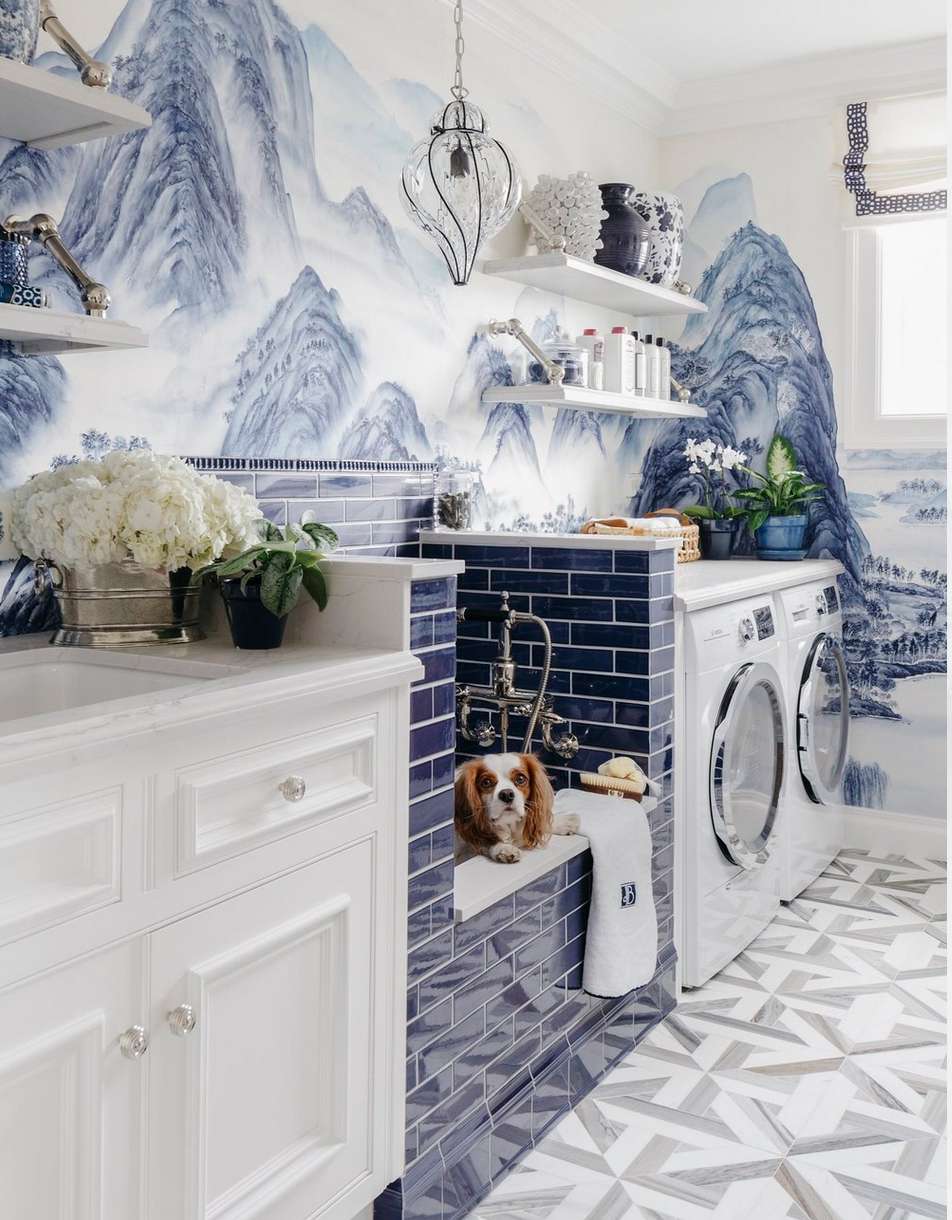
“This is a high-impact, custom look.”
The mural and tile are the stars, and the costs reflect that. This is definitely a luxury upgrade.
Custom Mural Wallpaper: $500 – $1,500 depending on size and source
Pet Wash Station (Plumbing, Tiling, Fixtures): $1,500 – $3,500
Geometric Floor Tile: $8 – $20 per sq. ft. ($800 – $2,000 for a 100 sq. ft. room)
White Floating Shelves: $100 – $300
Washing Machines: $1,500 – $3,000+
TOTAL (for the pet features & finishes): $2,900 – $7,300+
Budget alternative: A deep utility sink ($200) with a sprayer attachment ($50) can serve the same function without the custom tile work.
24. Plush, Paw-Shaped Pet Bed in a Neutral Living Room
The novelty shape is everything here. No one can walk into this room and not smile at the giant, fluffy paw print on the floor. It’s pure, unapologetic whimsy. In a tastefully decorated, neutral room, this single playful element adds a huge dose of personality and charm without disrupting the calm aesthetic. It loudly and proudly proclaims that this is the home of a cherished pet. If this were just a standard round grey bed, it would be comfortable, yes, but it would completely lose the fun, memorable quality that makes it special.
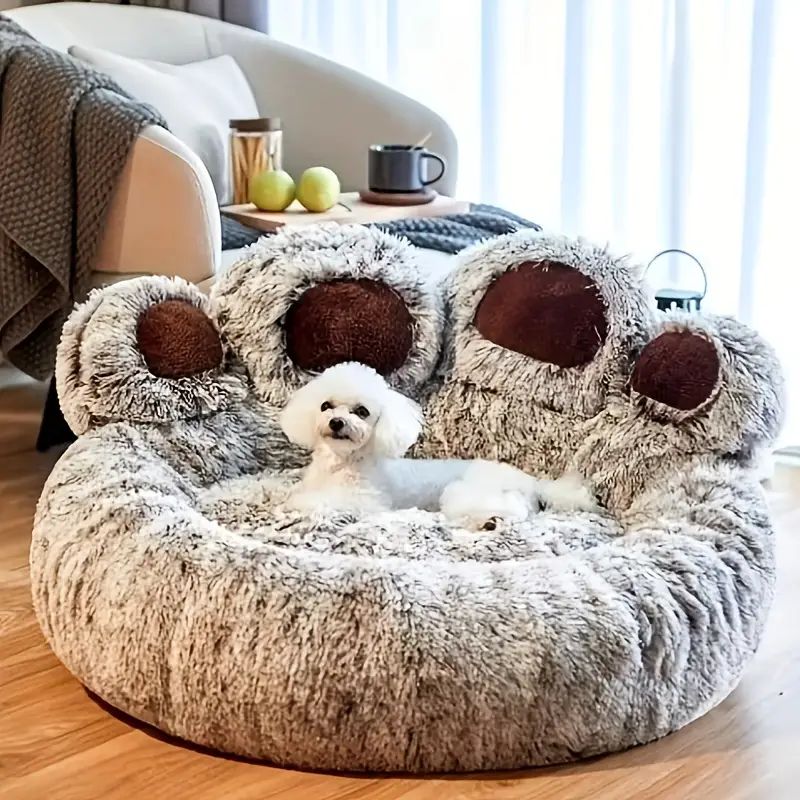
“When incorporating a novelty item like this paw-shaped bed, the trick to keeping it chic is to ground it with sophisticated surroundings.”
The neutral color palette is key. By choosing a bed in a subtle light grey and brown, it coordinates with the refined look of the light armchair, wooden floor, and knitted throw. If this bed were, say, neon pink, it would risk looking childish. But in these muted tones, it reads as a playful accent within a grown-up space. Let the shape be the star, but keep the color palette serious.
25. Cozy Rustic Bedroom with Modern Gold Lamp and Sleeping Cat
This bedroom feels both rustic and modern because it masterfully mixes design eras. The rustic wood panel headboard provides a warm, organic, and slightly rugged texture that feels timeless. In contrast, the gold-toned floor lamp is minimal and sleek, with its clean lines and exposed Edison bulb screaming modern industrial. The light blue patterned duvet acts as a bridge between the two, its soft color and simple pattern feeling both classic and current. This blend of old and new creates a layered, dynamic space that feels curated over time.
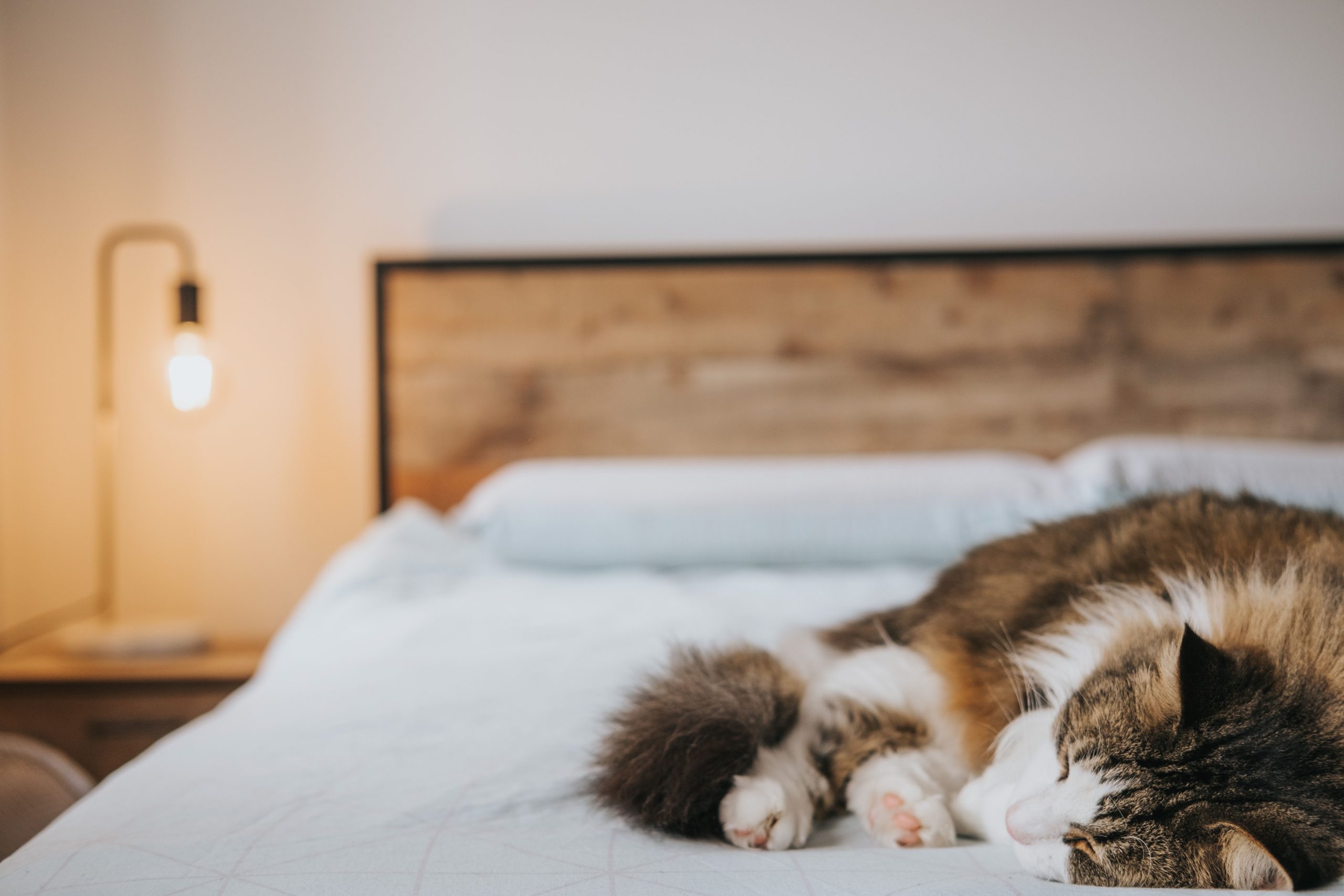
“The design recipe for this calm corner is a study in balance: 50% rustic warmth + 30% modern simplicity + 20% soft color/pattern.”
The wood headboard is the dominant rustic feature. The simple gold lamp provides the clean, modern lines. The light blue patterned duvet and white pillow introduce the softness that makes the space feel like a bedroom and not a showroom. You could swap the lamp for a black version for a more industrial feel, or change the duvet to a simple white waffle knit for a more minimalist take on the same formula.
26. Pet Teepee with Dreamcatcher and Plush Teal Bed
A stylish pet teepee from a pet boutique can easily cost $80-$120. You can get the same look for about $30 with a bit of creativity. Many big box stores like Target and Walmart sell simple, unadorned children’s play teepees for around $25. Grab one of those, and then pop a plush, affordable pet bed inside (you can find one at HomeGoods for $15-$20). To get the decorative feel, you can either buy a small dreamcatcher from a craft store for $5 or even make your own. The shiba inu will never know the difference.
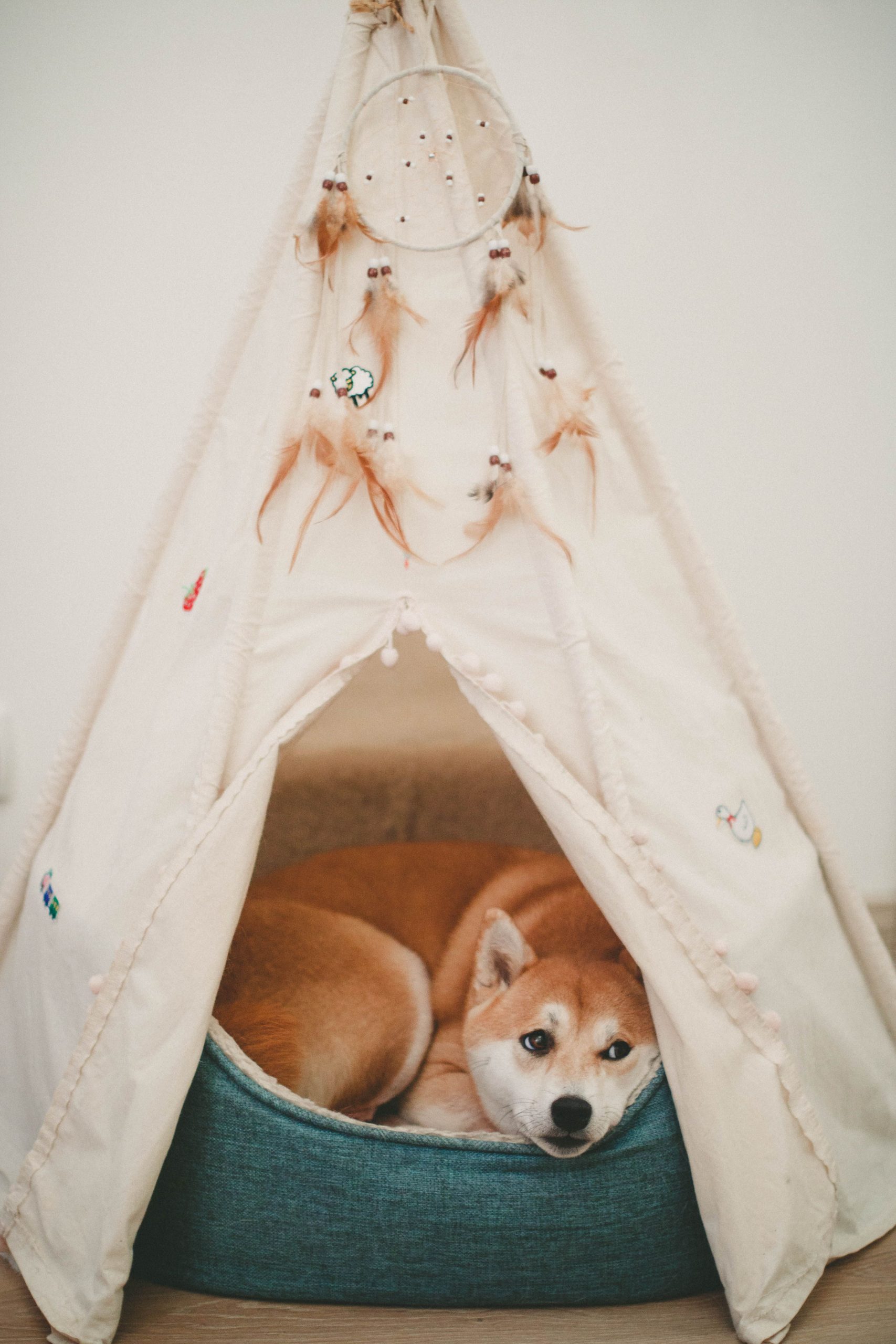
“Teepees are adorable, but they are not the most stable structures.”
A rowdy dog playing or even just an enthusiastic tail wag can sometimes knock over the poles, especially on a slippery wood floor. If you have a very active or large dog, you might find yourself constantly re-adjusting it. This setup is best for small, calm dogs like the one pictured. Also, the fabric is a magnet for fur, so be sure to choose one where the cover can be easily removed and thrown in the wash. Consider placing a small, non-slip rug underneath to help keep the poles in place.
27. Wall-Mounted Cat Shelves with Hammock Beds and a Rope Bridge
This kind of vertical playground is perfect for smaller living rooms or bedrooms where floor space is at a premium. All you need is a single, clear wall, ideally about 6-10 feet wide. The height is the key: this setup takes advantage of the unused vertical space in a room, drawing the eye upward and making the room feel larger. It’s a far better use of space than a bulky cat tree, which can eat up a valuable 4-6 square feet of floor. Compare this airy feel to the floor-based jungle gym in Idea #6.
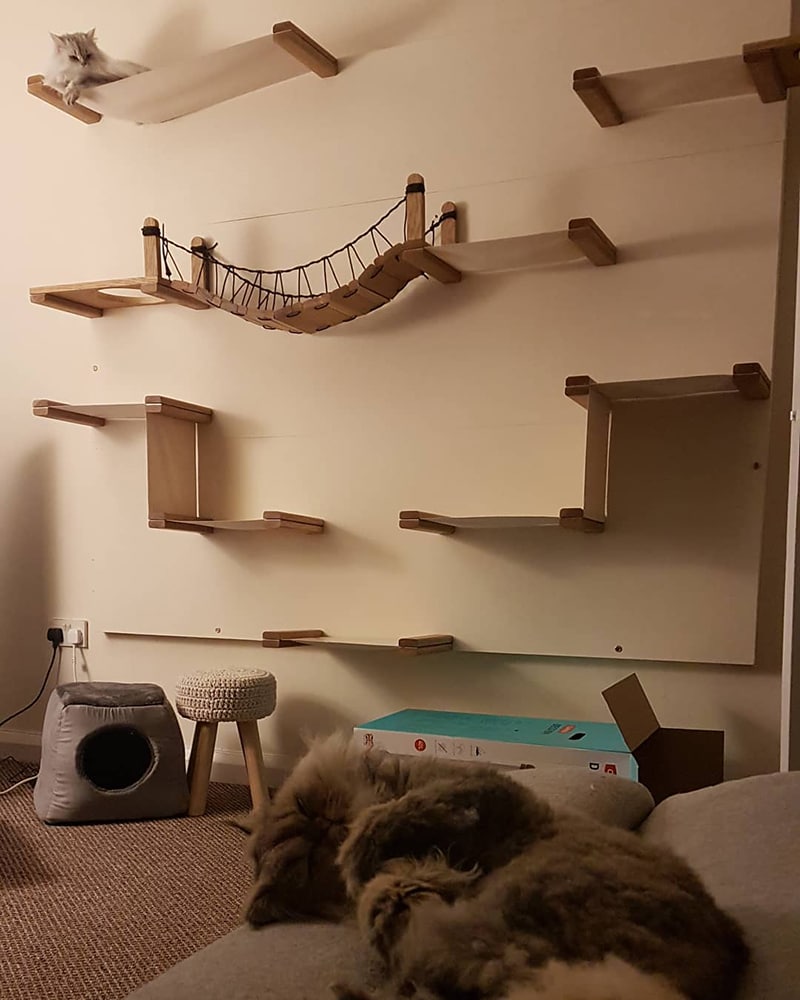
“Assembling a rope bridge is the most challenging part of a cat wall.”
Here’s a simplified approach. (Time: 1.5 hours, Cost: $50-$90)
Anchor your platforms: First, securely mount the two shelves that will serve as the start and end points of your bridge. Make sure they are level and drilled into studs.
Measure and cut your rope: You’ll need two equal lengths of thick, sturdy rope. Add about 18-24 inches to the distance between your platforms to allow for a gentle sag.
Attach ropes to platforms: Securely attach the ropes to each platform using heavy-duty eye hooks or by drilling through the platforms and knotting the rope underneath.
Cut and place the slats: Cut small wooden slats (1×2 pine works well) to your desired width. Place them across the two ropes.
Secure the slats: Use a staple gun with long staples or small screws to attach each slat to the two ropes, ensuring they are evenly spaced.
28. Navy Utility Cabinet with Enclosed Dog Bed Compartments
The standout feature here is the sheer elegance of the integration. This isn’t just a cabinet with holes cut in it; it’s a piece of custom furniture where the pet beds are a foundational part of the design. The grid-patterned doors, gold hardware, and rich navy color are all choices you’d see in a high-end kitchen or mudroom. By applying this level of design detail to the pet beds, the unit feels incredibly sophisticated and cohesive. It treats the dogs’ sleeping quarters with the same importance as the family’s storage. It’s a far cry from a simple crate, as seen in Idea #3.
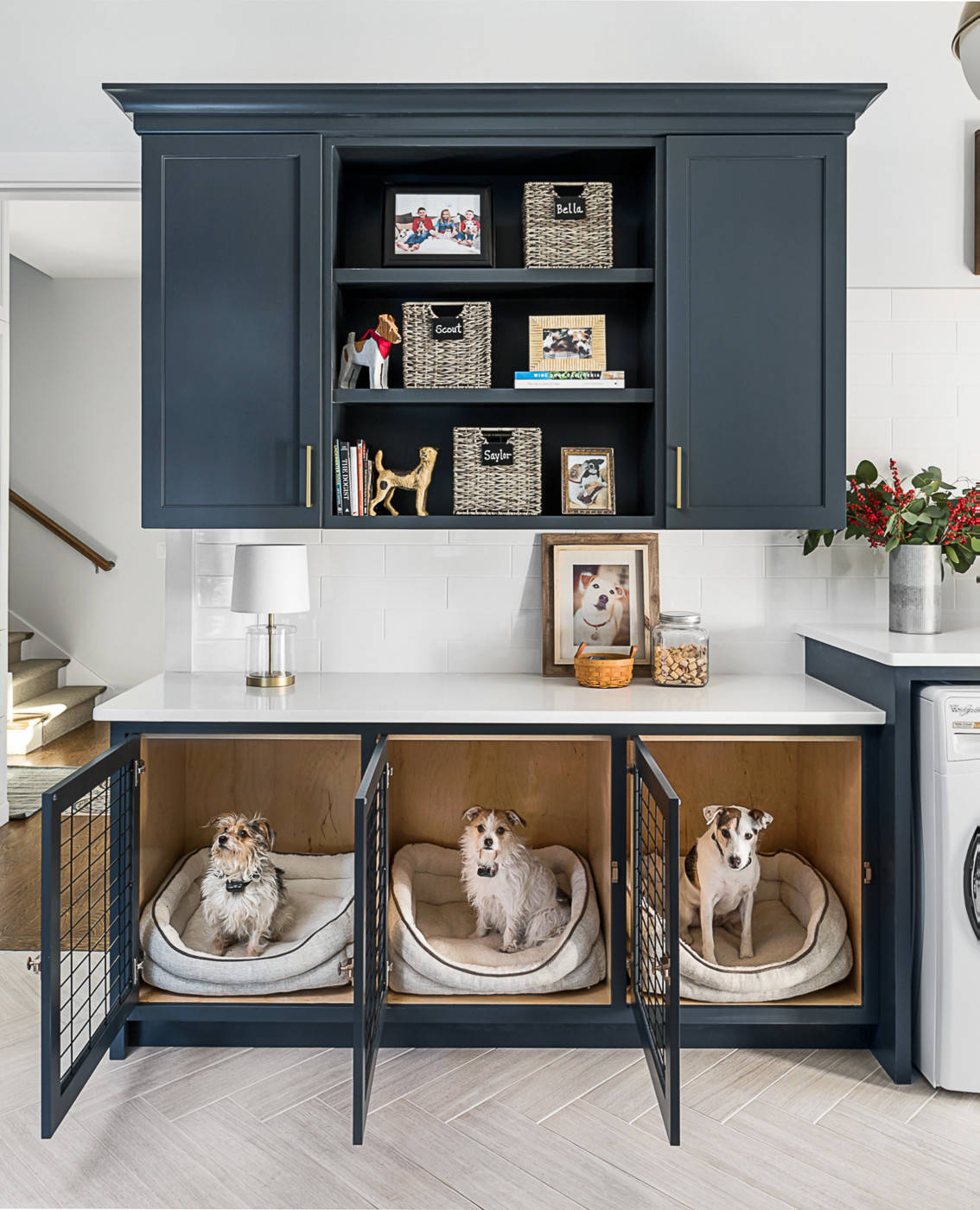
“If you’re designing a custom built-in for your pets, think about ventilation.”
Enclosed spaces can get stuffy and trap heat and odors. The grid-patterned doors here are a brilliant solution because they provide excellent airflow while still looking chic and keeping the cozy ‘den’ feel. If you prefer a solid door, make sure to incorporate discreet ventilation holes or cutouts on the sides or back of the cabinet to ensure your pet stays comfortable and the space stays fresh.
Your Pet’s Perfect Corner Awaits
Creating a dedicated space for your pet is more than just a trend; it’s about making your home comfortable and beautiful for every member of your family. Whether you’re ready for a full-scale build-out or a simple weekend DIY, the perfect spot for your furry friend is within reach. Now, which one are you adding to your Pinterest board?