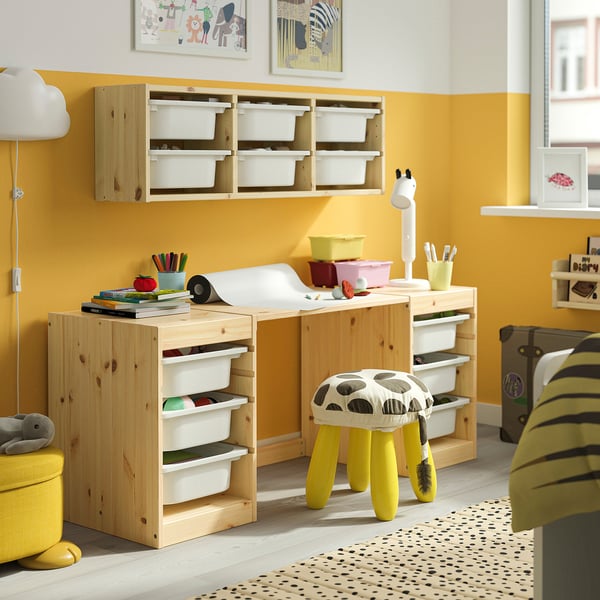
That endless scroll through Pinterest for the perfect kids’ desk idea? We know it well. You save a dozen photos, but when it comes to figuring out what *actually* works for your child’s room, it’s easy to feel stuck. That’s why we did the heavy lifting. After filtering through hundreds of options from affordable IKEA finds to high-end custom built-ins, we’ve narrowed it down to the very best.
Inside, you’ll find 29 distinct, real-home desk setups that cover every style—from playful and colorful nooks to sleek, modern workstations perfect for older kids. In 2026, the focus is on creating intentional “zones” that are functional for homework but also spark creativity. And stay until the end — we break down the most common mistakes that can ruin these looks.
📌 Save this to Pinterest for later — you’ll want to revisit these ideas.
1. A Soft & Serene Study Spot with a Canopy Bed
This space feels so cohesive because it commits to a warm, low-contrast palette. The light cream walls, natural wood tones, and terracotta-brown accents all share the same warm undertone, creating a calming, unified look. Nothing is jarring. The design also cleverly mixes pattern and solid, with the playful car decals and scalloped border providing visual interest that’s gentle, not overwhelming. This balance is key to a room that feels both kid-friendly and design-forward.
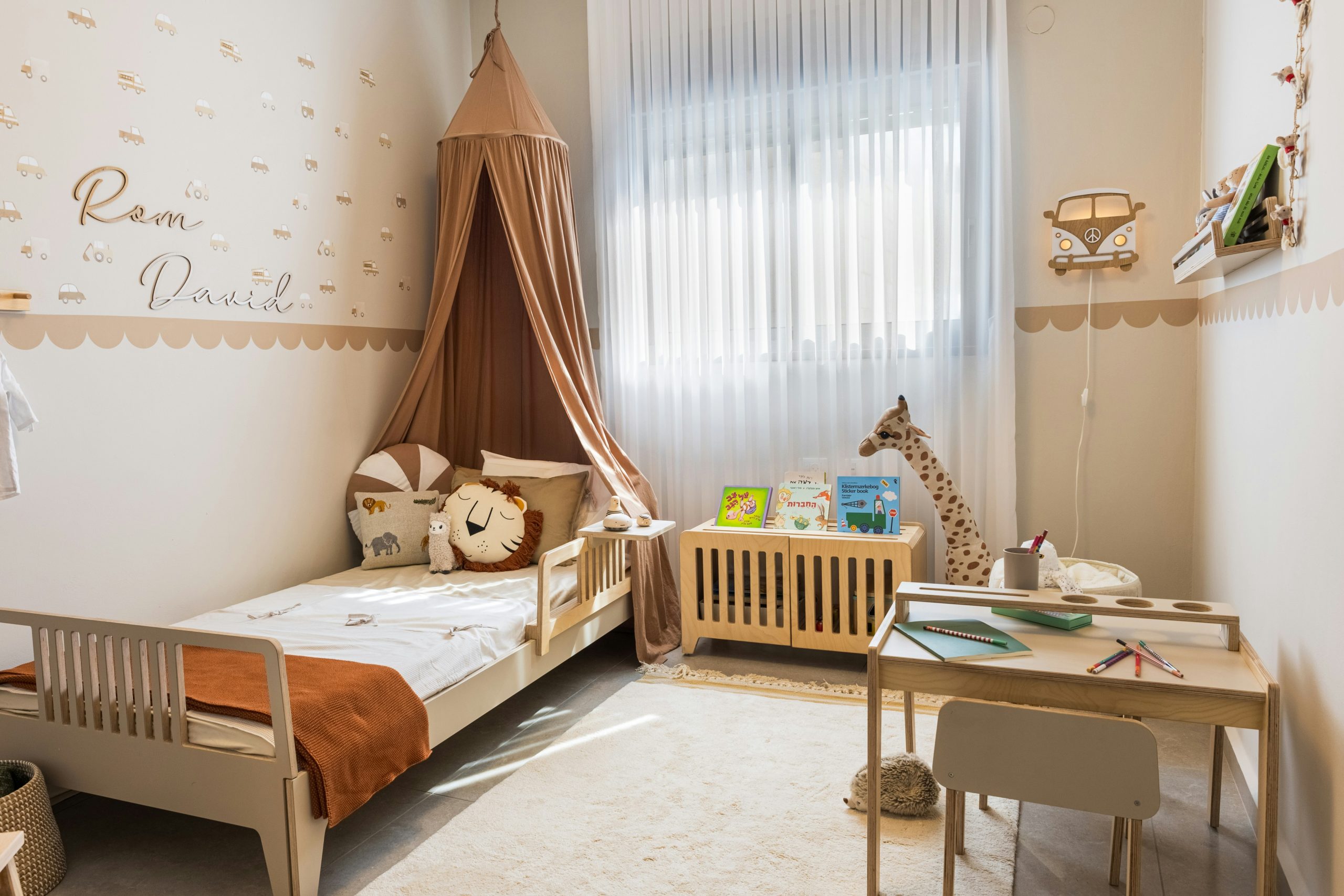
“This setup is ideal for bedrooms that are at least 10×12 feet, especially if including a canopied bed which requires vertical space to feel airy, not cramped.”
A minimum ceiling height of 8 feet is needed, but 9 feet is better to prevent the canopy from dominating the room. The desk itself is small-scale, suitable for toddlers and young children, making it a perfect fit for a smaller corner of a larger room without demanding a huge footprint. For a tighter space, consider a floating desk instead of a freestanding one.
2. A Whimsical Workspace with House-Shaped Shelving
When using integrated LED strip lighting in shelving like this, always opt for a diffuser channel. A bare LED strip creates harsh, dotted light that causes glare on desk surfaces and looks cheap. A frosted or milky acrylic diffuser cover will soften the light into a continuous, even glow. For task lighting, a color temperature of 3000K to 4000K is ideal—it’s bright enough for homework without feeling cold or clinical. Position the strip along the front interior edge of the shelf for the best illumination.
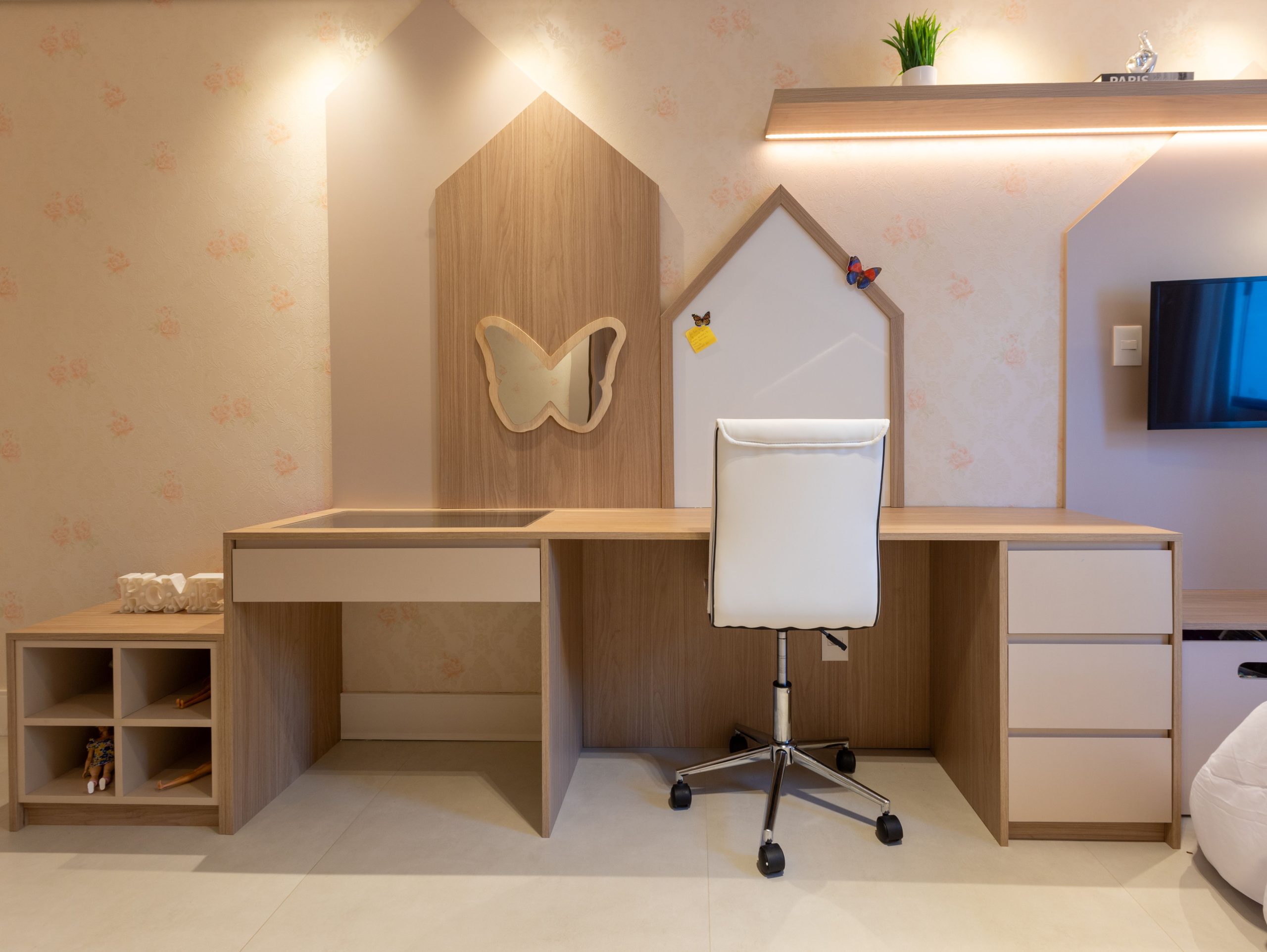
“The single element that truly defines this desk area is the house-shaped back paneling.”
Without it, this would just be a nice, simple wood and white desk unit. But the playful, architectural silhouette transforms it from mere furniture into a miniature world. It provides a sense of place and enclosure, making homework feel a little more like creative play. It’s a brilliant way to add personality and a touch of whimsy that’s integrated directly into the furniture’s design.
3. Playful Pine Desk with a Pop of Bright Yellow
Achieving this bright, modular look doesn’t require custom cabinetry. Start with a basic, unfinished pine desk from a store like IKEA—their IVAR or TROFAST systems are great starting points. The key is the two-tone wall. A gallon of vibrant yellow paint (like Behr’s ‘Lemon Burst’) will cost around $40. For seating, find a simple wooden stool from a thrift store or Facebook Marketplace for under $20 and paint the legs to match. The total cost to get this vibe can easily stay under $250, especially if you get creative with DIY storage.
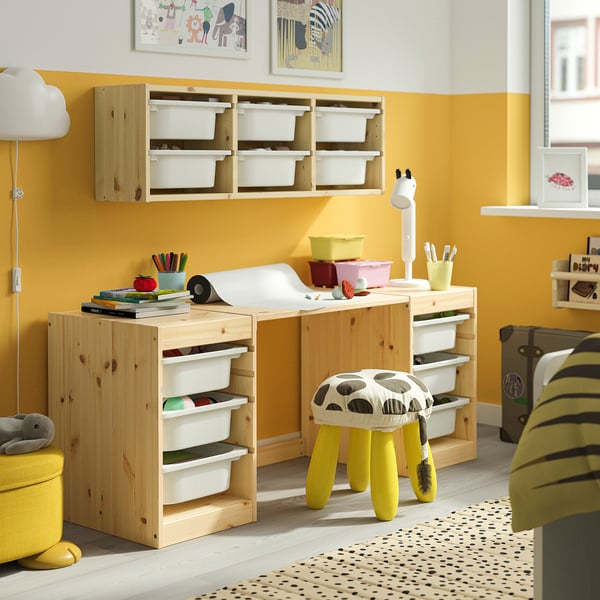
“This look follows a simple formula: 60% neutral base + 30% bold color + 10% pattern.”
The base is the pine wood and white storage, creating a calm foundation. The bright yellow wall is the confident splash of personality. Finally, the cheetah-print rug and spotted stool cushion introduce just enough pattern to keep the eye engaged. You could easily swap the yellow for a cobalt blue or even a hot pink, and as long as you keep the ratios the same, the energetic, balanced feel will remain.
4. Modern White Desk Framed by a Moss Green Arch
Arches and curved forms are having a major moment, and this desk area shows why. This trend, a backlash against the hard, straight lines that dominated design for years, is all about softness and architectural interest. Painting an arch on a wall is a low-cost, high-impact way to participate in this trend. It frames the desk area, turning it into a deliberate focal point. This isn’t just a desk against a wall; it’s a defined ‘zone’ for work and creativity, which feels very current. Compare this application with the arched shelving in Idea #24.
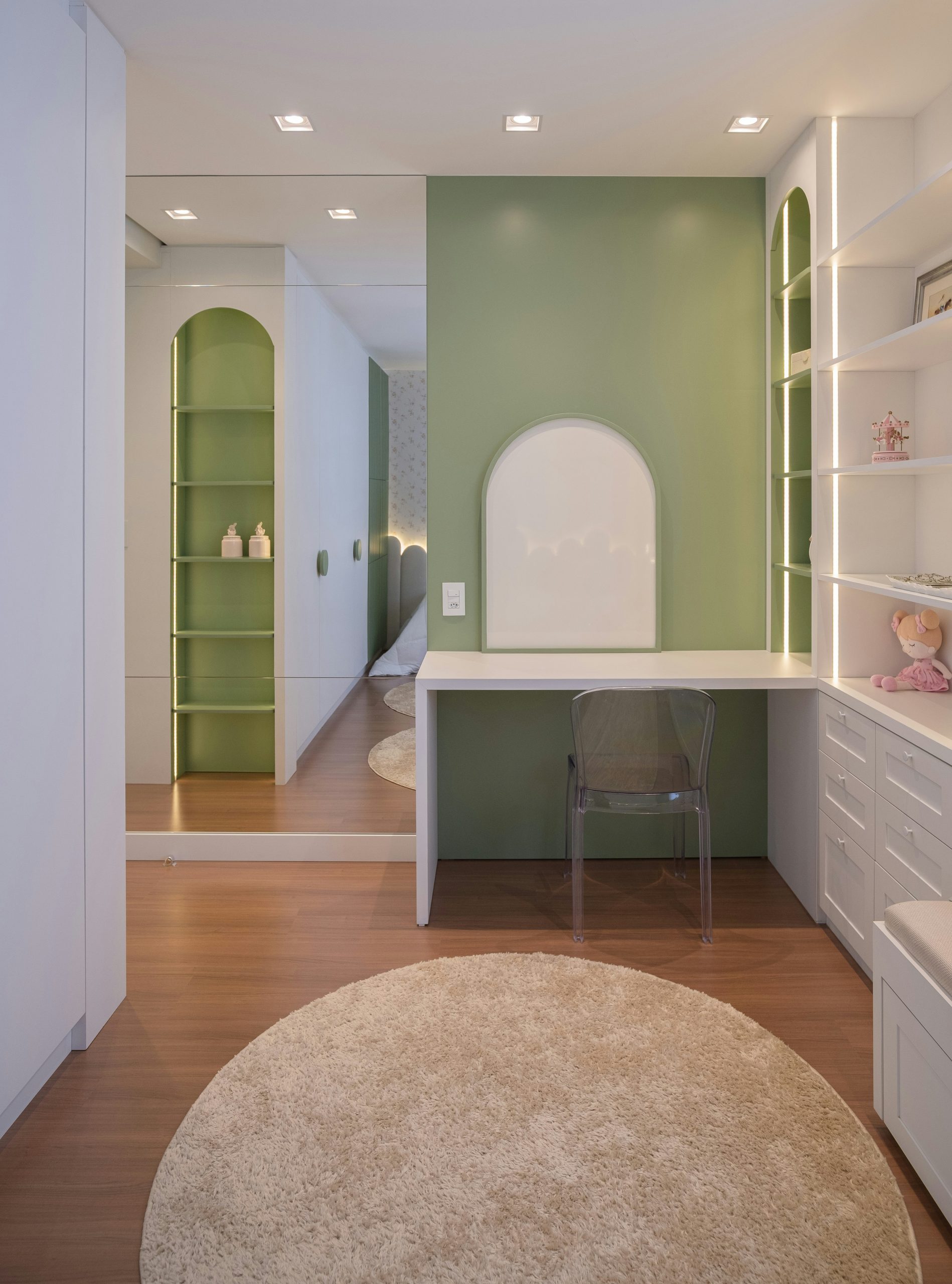
“While the clear acrylic chair is a chic and modern choice that keeps the space feeling open, let’s be honest about its practicality for a kid’s room.”
These chairs show every single fingerprint, smudge, and speck of dust. If you have a child who’s prone to messy art projects or sticky hands, you’ll be wiping it down constantly. Furthermore, they can be less comfortable for long homework sessions compared to an upholstered or ergonomic option. It’s a high-style, high-maintenance choice.
5. A Sweet & Simple Desk with a Mauve Accent Wall
The gallery wall of three simple, framed prints is what elevates this from just a desk to a personalized corner. The combination—a graphic giraffe, a beloved character (Totoro), and a soft polar bear—tells a story about the child who uses this space. It’s curated and personal. Removing the art would leave a nice but slightly generic setup. The art is what injects a dose of personality, making the space feel truly their own and inspiring creativity beyond just homework.
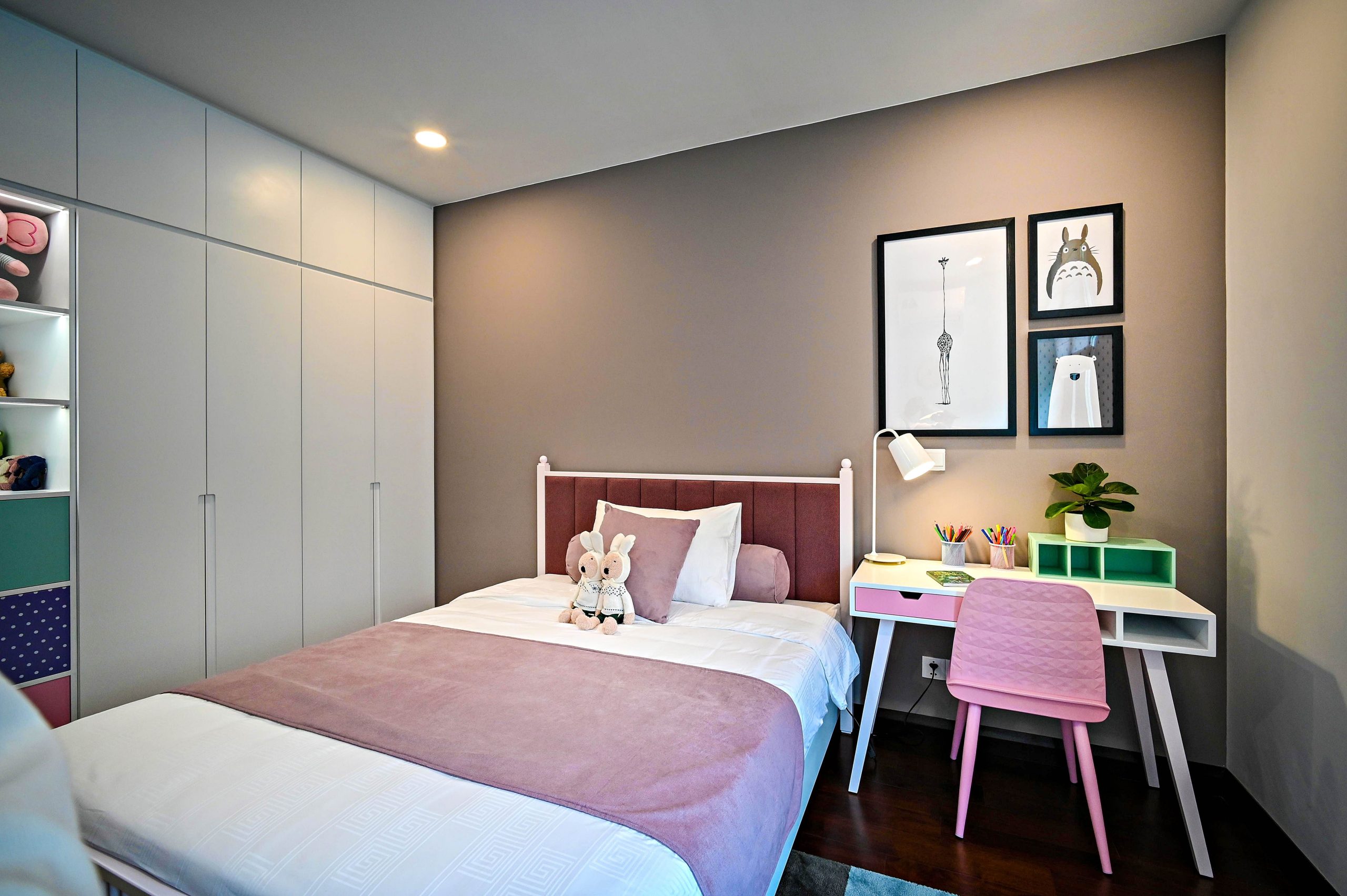
“Recreating a simple, curated gallery wall like this is easier than it looks.”
Time: 1 hour. Cost: $40-$100.
First, choose three prints that share a similar color story or theme. Etsy is a fantastic source for affordable digital downloads.
Purchase simple, matching frames. Black or white frames from Target or Michaels work perfectly.
Cut a piece of paper to the size of each frame and tape them to the wall, adjusting their position until you’re happy with the spacing (aim for 2-3 inches between each frame).
Place a nail at the top center of each piece of paper.
Remove the paper and hang your frames.
6. A Modern Bedroom with a Two-Tone Sage Green Wall
The two-tone wall is the hero here, working on multiple levels. It adds significant visual interest without the commitment of wallpaper. Painting the lower portion a color (here, a calming sage green) grounds the space and makes the ceiling feel higher. The crisp line also acts as a natural guide for positioning furniture, like the top of the dresser. This technique provides a custom, thoughtfully designed feel that’s achievable with just a roll of painter’s tape and a can of paint.
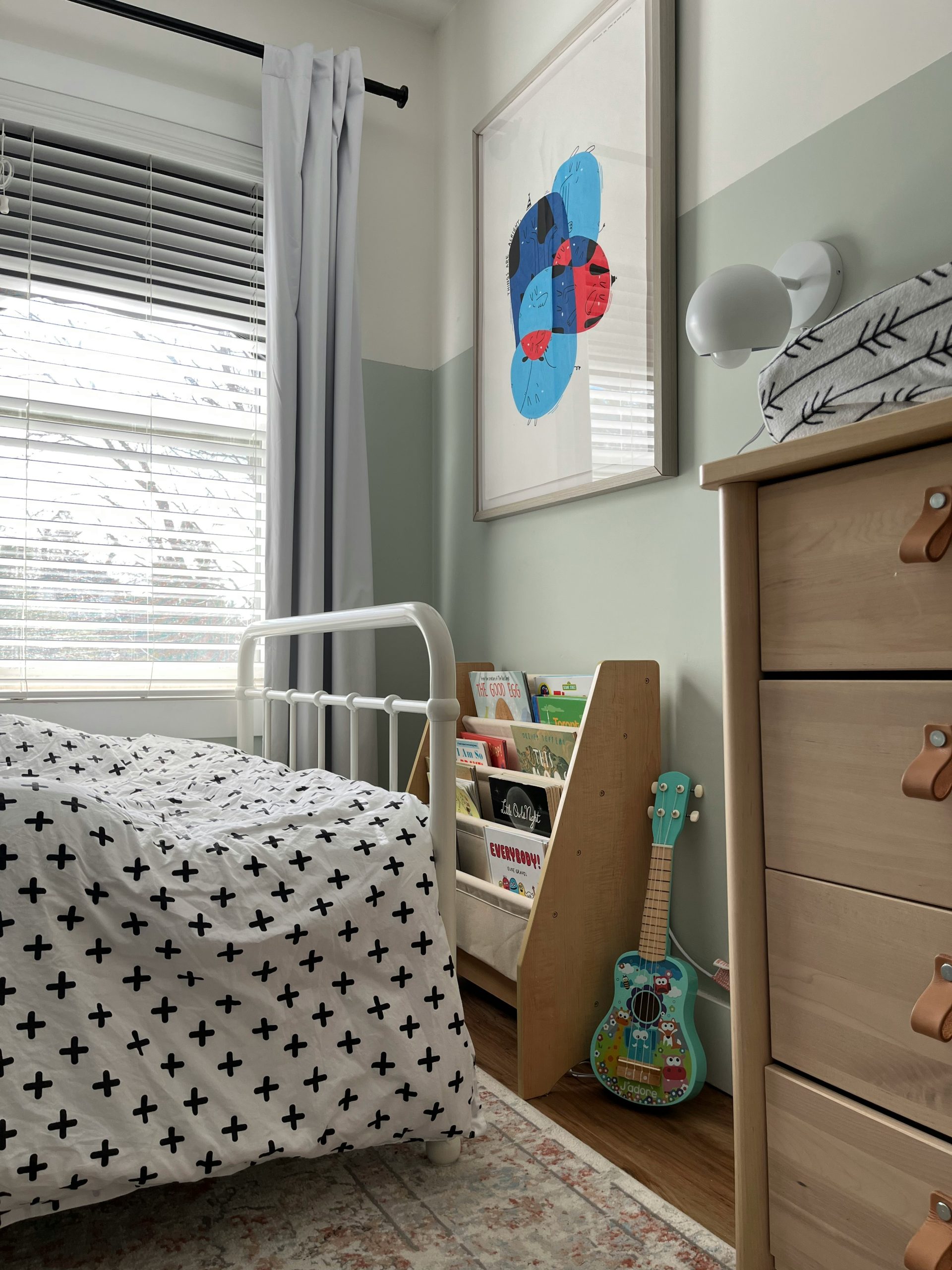
“To get a perfectly crisp line on a two-tone wall, the secret is to score the tape before you remove it.”
After your second coat of the colored paint is dry to the touch (but not fully cured, wait about an hour), run a utility knife or a blade very lightly along the edge of the painter’s tape. This cuts the paint film. Then, pull the tape off at a 45-degree angle. This prevents the fresh paint from peeling off with the tape, ensuring a flawless, professional-looking edge every time.
7. A Sun-Drenched Creative Corner with a World Map
A desk placed directly in front of a window like this is fantastic for natural light and preventing eye strain. However, be mindful of the sun’s path throughout the day. Direct, intense sunlight can cause significant glare on a computer or tablet screen, making it unusable for hours at a time. It can also cause artwork and supplies to fade over time. Investing in a good set of sheer or adjustable blinds is non-negotiable for a setup like this to be truly functional all day long.
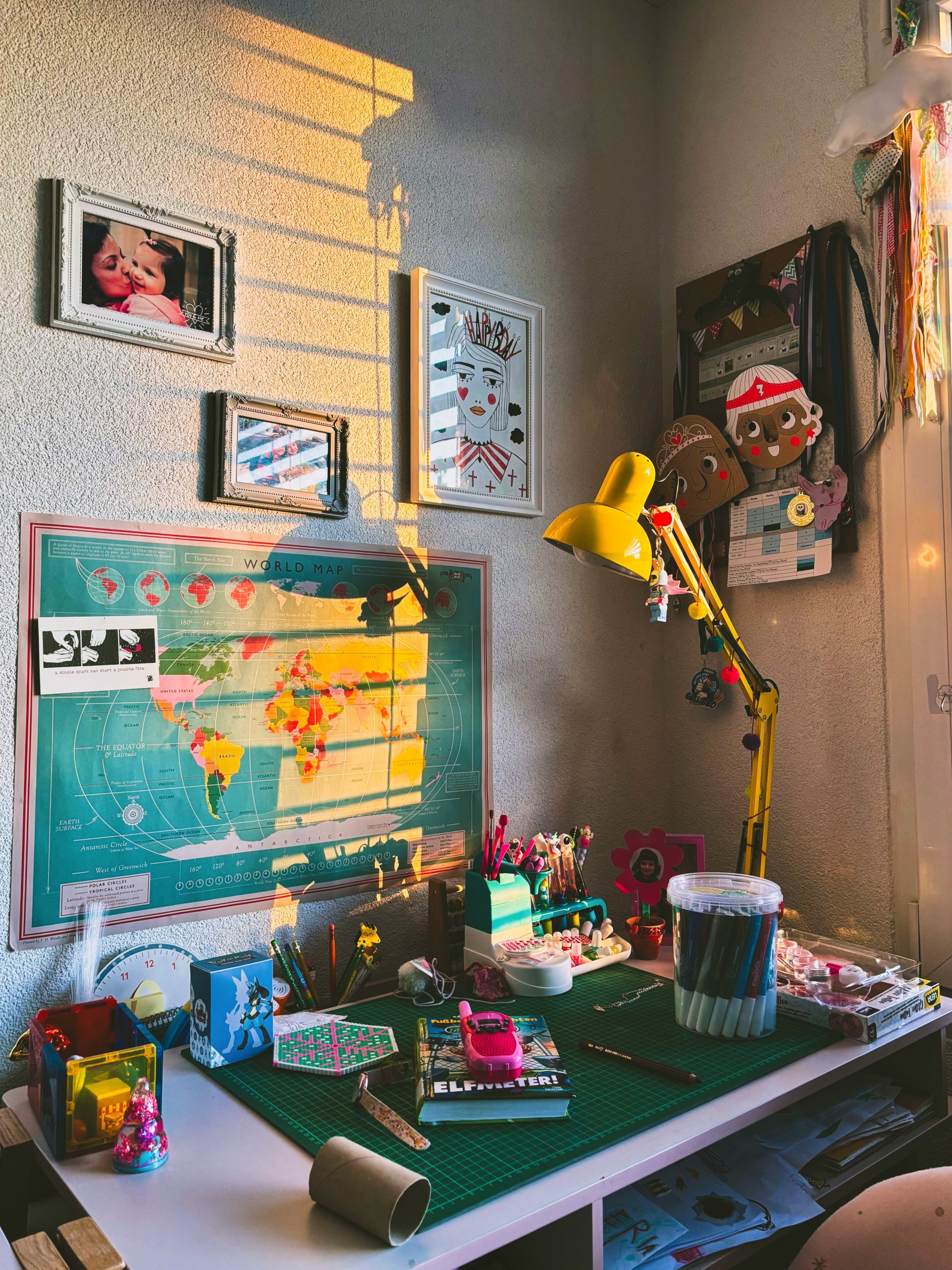
“This look is all about celebrating creativity, and you can do that on a tiny budget.”
A large world map poster can be found online for $15-$25. Raid a thrift store for mismatched frames and paint them all a single color (like white or black) for a cohesive gallery wall effect. Use wall-mounted spice racks from IKEA (the BEKVÄM is about $5) as ledges for displaying small crafts and supplies. The desk itself can be a simple laminate top from a hardware store on a set of basic legs.
8. A Vintage-Style School Desk by a Bright Window
This room’s moody-yet-cozy atmosphere is a careful balancing act. The formula is approximately 50% moody color + 30% natural warmth + 20% bright white. The dark gray walls provide the moody, enveloping base. The warm wood flooring brings in essential natural texture and prevents the gray from feeling cold. Finally, the large window with its white blinds acts as a huge source of light, both literally and visually, cutting through the darkness and providing a crisp, clean contrast. Without the large white element, the room could feel oppressive.
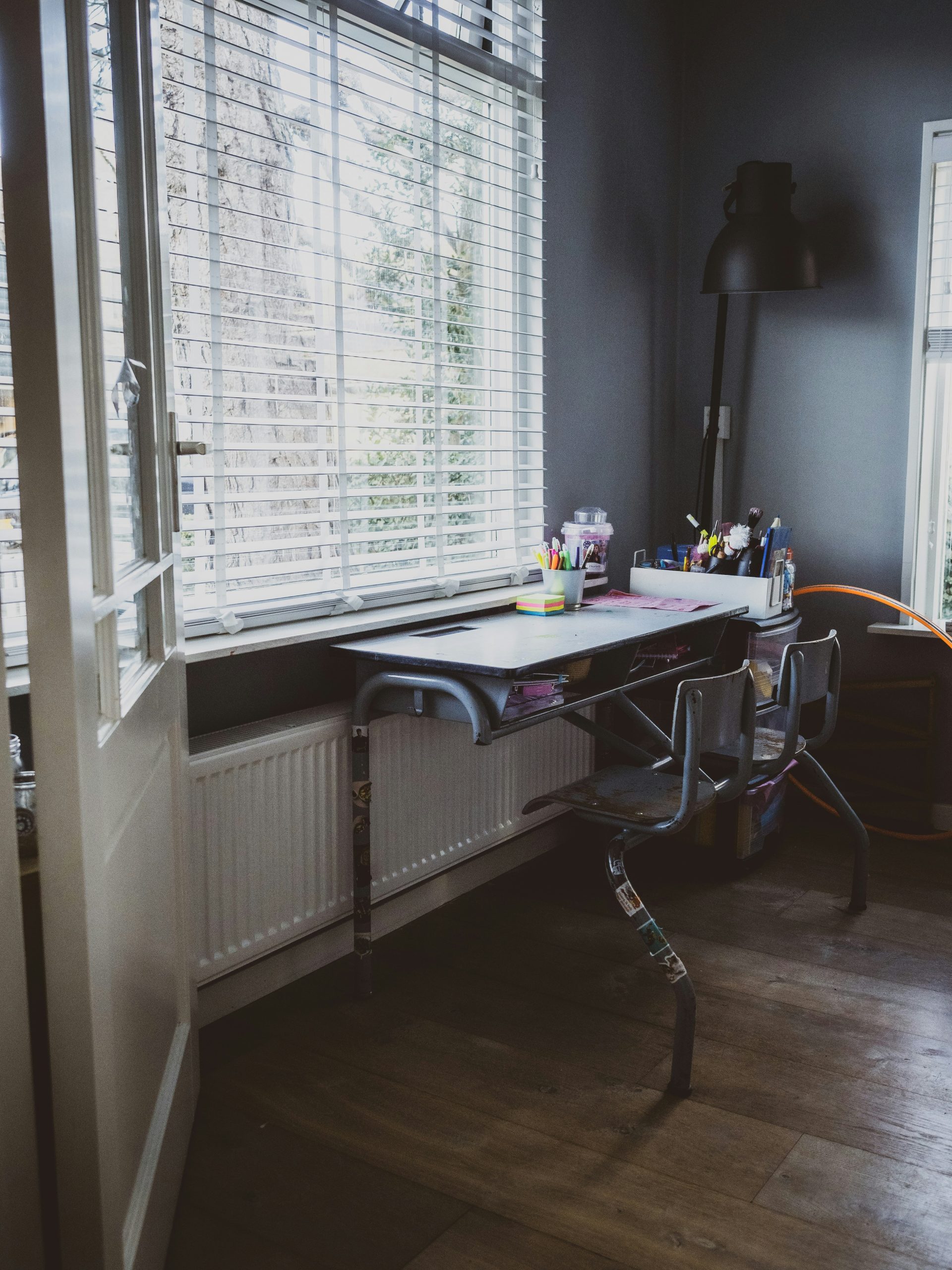
“Dark matte walls, while incredibly sophisticated, are notoriously difficult to maintain in a high-traffic area like a kid’s room.”
They show scuffs, fingerprints, and smudges much more than lighter, eggshell finishes. Any attempt to spot-clean a matte wall often results in ‘burnishing,’ where the cleaned area looks shinier than the rest. To keep it looking fresh, you’ll need to be prepared to repaint touch-ups far more frequently. For a more durable option, consider a satin finish in the same dark color.
9. A Cozy Corner Desk with a Pegboard Organizer
The diagonal striped accent wall is the element that makes this corner special. The desk and pegboard are functional and common, but the custom wall treatment turns this small nook from an afterthought into a deliberate, designed moment. The soft, muted color palette keeps the pattern from being overwhelming, adding a sense of gentle energy and fun. It proves that you don’t need to paint a whole room to make a big impact; a thoughtfully designed accent can define a space.
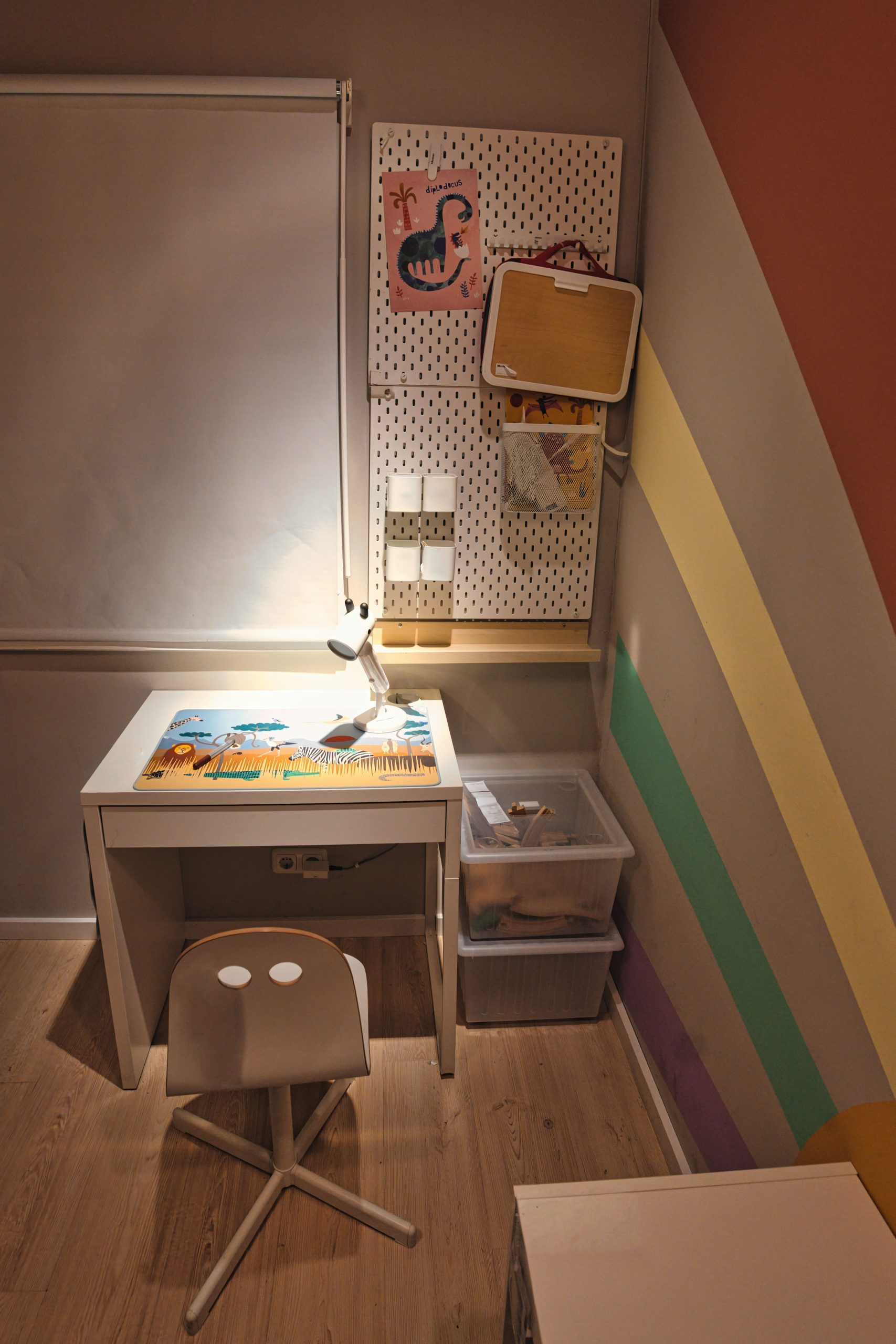
“When painting geometric patterns with multiple colors like this, use the ‘caulk trick’ for perfectly clean lines.”
After laying down your painter’s tape, run a very thin bead of clear, paintable caulk along the edge of the tape where you’ll be painting. Smooth it with your finger, wiping away any excess. Let it dry completely, then paint. When you peel the tape away, the caulk will have sealed the edge, preventing any paint from bleeding underneath. It’s an extra step that guarantees professional results.
10. A Cheerful Study Nook with Playful Monster Art
This desk area feels balanced and complete because of its thoughtful vertical composition. The visual weight is distributed perfectly. The white desk and chair ground the bottom. The wooden book ledge creates a strong horizontal line in the middle, and the framed monster art is placed at the ideal viewing height, acting as the focal point. This creates a pleasing visual hierarchy that draws the eye upward and makes the space feel organized and intentional, not just like furniture pushed against a wall. The repetition of white and wood ties it all together.
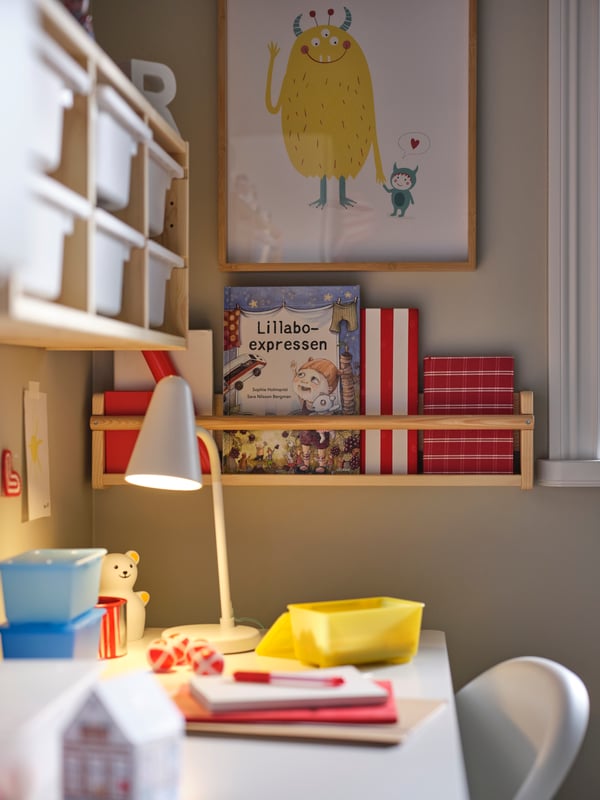
“You can recreate this friendly, organized vibe for less.”
A simple white laminate desk from Walmart or Target can be had for under $75. The ‘monster’ art is the key personality piece; find a fun, graphic print on Etsy for $10-20 and frame it yourself. For the book ledge, a simple painted pine board and some L-brackets from a hardware store will do the trick for under $25. Look for patterned storage boxes at craft stores like Michaels to complete the look.
11. A Simple Wood Study Table Ready for Homework
A simple, sturdy table like this is a versatile choice that can work in a wide range of room sizes. Because it has an open design with no bulky drawers, it feels visually light. For a single child, a desk width of 36-42 inches is sufficient. This setup, with two chairs, suggests a shared workspace, which would require a table at least 50-60 inches wide to be comfortable. This idea works best in a room with at least 100 square feet to allow for adequate chair push-back space without hitting a bed or wall.
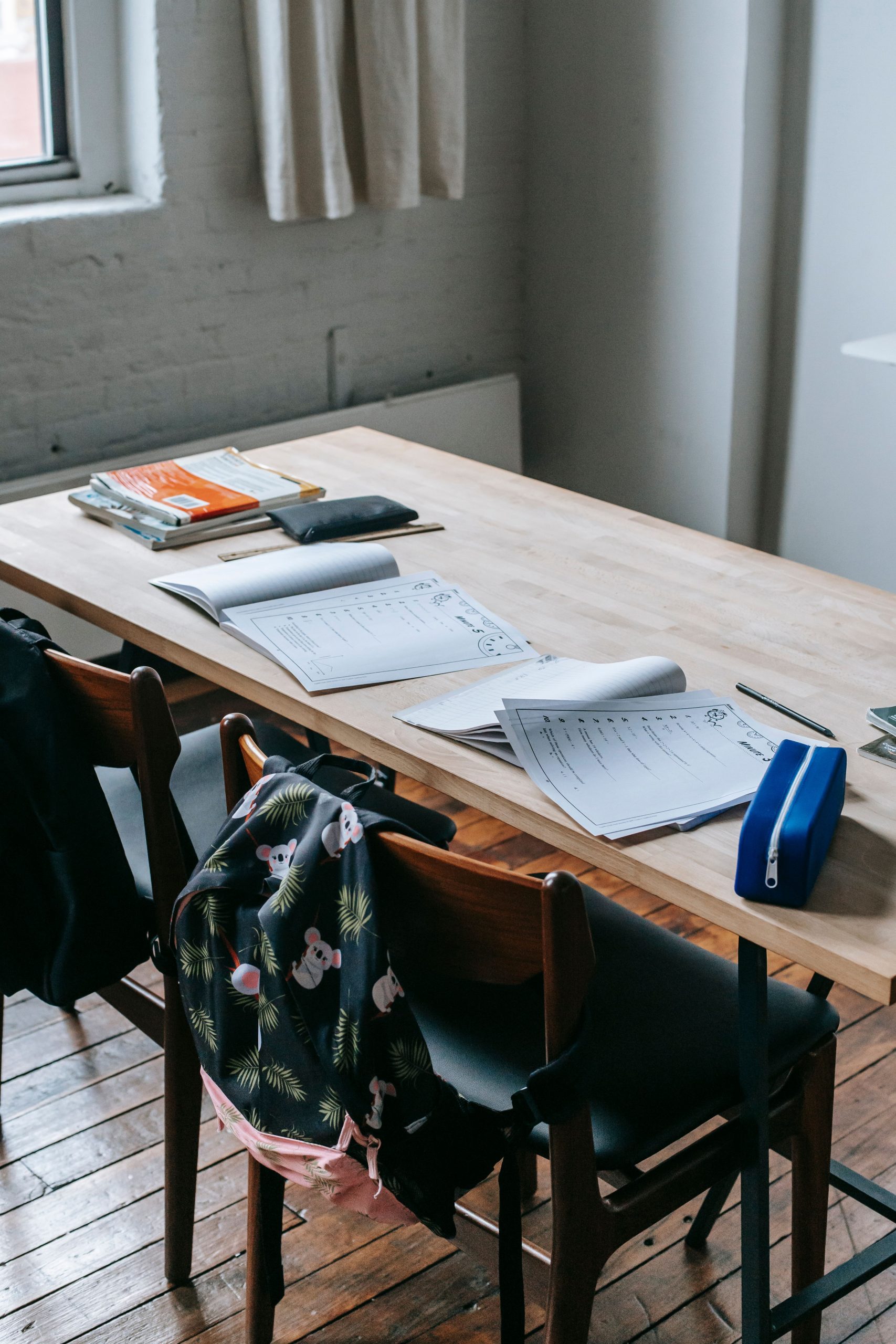
“Let’s be real: this desk has zero built-in storage.”
While that contributes to its clean, minimalist look, it’s not practical for most kids. Without drawers, shelves, or nearby cabinets, all those books, papers, and supplies will inevitably end up piled on top, creating constant clutter. To make this work long-term, you absolutely must pair it with a separate storage solution, like a rolling cart that can be tucked underneath or a nearby bookcase with bins.
12. An Organized Classroom Space with Red and Orange Accents
This space feels dynamic and engaging due to the smart use of a primary color accent. The pops of bright red on the desk trim and chair immediately draw the eye and inject a dose of energy into the otherwise neutral wood-and-white environment. This selective use of a bold color is more effective than splashing color everywhere. It guides the eye and highlights the functional zones—the desk and chair—making them feel important and inviting. The orange mural complements the red without competing.

“We’re seeing a move towards creating ‘micro-learning’ environments at home, and this classroom-inspired look taps right into that.”
After years of flexible, learn-from-anywhere setups, parents are craving structure. The individual desks, locker-style cubbies, and a clear ‘work zone’ provide a sense of order and routine that helps kids focus. It’s less about recreating school at home and more about borrowing the best organizational principles to create a dedicated, distraction-free space for learning.
13. A Creative Nook with a Chevron Accent Wall
The chevron accent wall is undeniably the star of this show. It does so much work in this small space. The pattern itself adds a huge amount of energy and movement, making the wall a dynamic backdrop. The color palette—mixing neutral grays with a bold terracotta—is sophisticated and warm. It elevates the simple wooden desk and transforms the entire corner into a high-impact design feature. Without the bold wall, this would be a much more forgettable setup.
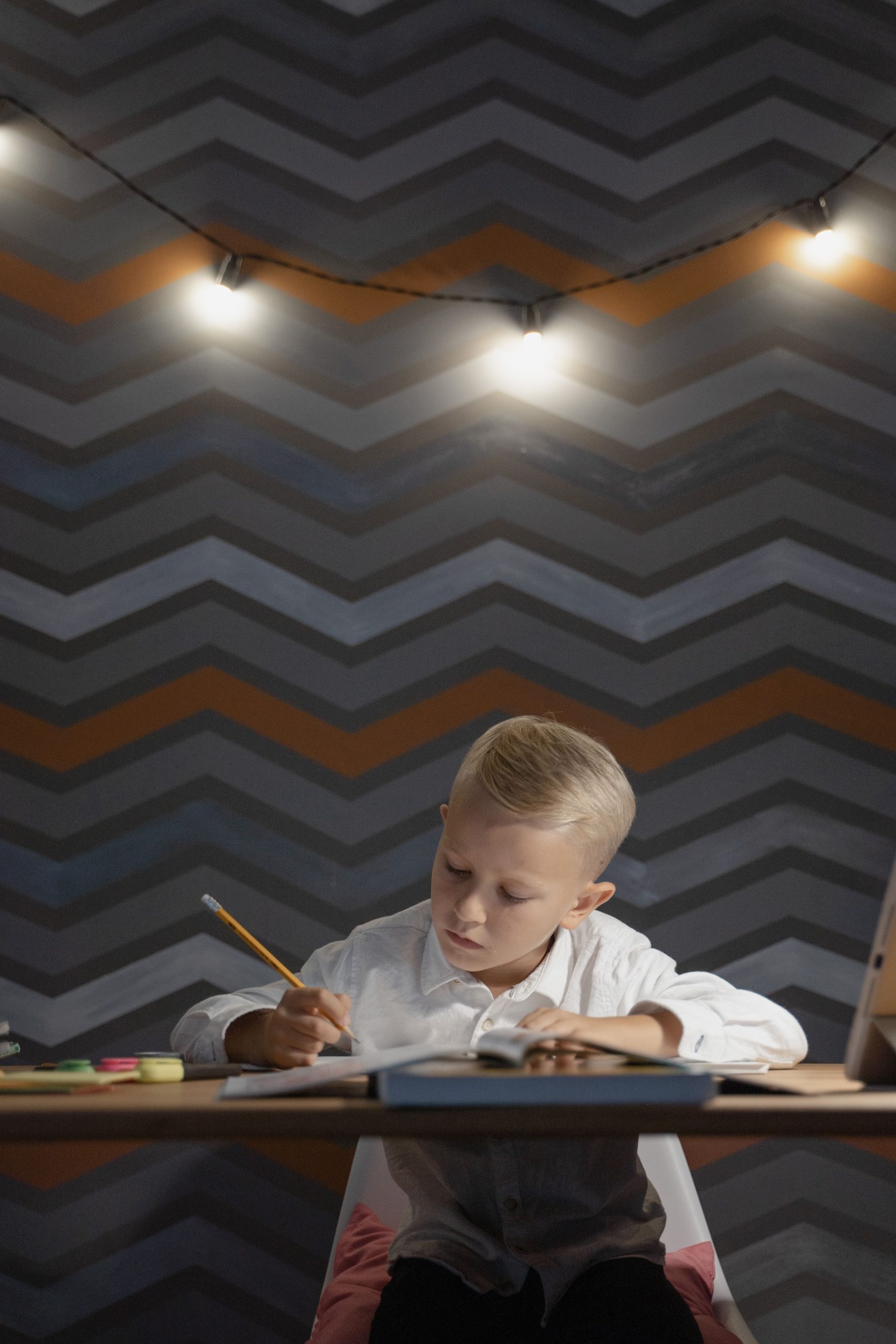
“Hanging string lights over a desk is a quick way to add warmth and a magical touch.”
Time: 20 minutes. Cost: $20-$50.
Choose a set of plug-in or battery-operated string lights with decorative bulbs (globe bulbs are a great choice).
Start at the point closest to your outlet or where you want to hide the battery pack.
Use small, clear Command hooks or tiny nails to secure the string to the wall.
Drape the lights in a gentle, swooping pattern rather than pulling them taut. A relaxed, scalloped look feels more casual and artful.
Allow the string to hang about 18-24 inches above the desk surface to provide ambient light without being in the way.
14. A Moody Study Corner with a Zigzag Wall Pattern
This corner’s success lies in a formula of texture and contrast: 50% dark, moody backdrop + 30% warm natural wood + 20% crisp white and color. The dark gray wall with its tone-on-tone zigzag pattern creates a sophisticated, den-like feel. The wooden desk provides essential organic warmth, preventing the gray and white from feeling too sterile. Finally, the bright white of the chair, brick, and art matting, plus that pop of red on the cushion, adds the necessary contrast and energy to make the space feel alive.

“A black task lamp is a classic choice, but placement is everything.”
In this photo, the lamp is positioned behind the child’s dominant hand (assuming they are right-handed), which is excellent. If the lamp were on the right side, their own hand would cast a shadow over their work as they write, leading to eye strain and frustration. Always consider whether your child is right- or left-handed and place the primary task light on the opposite side of their workspace.
15. A Minimalist Desk with a Wall-Mounted Shelf
Here’s an estimated cost to recreate this clean and simple look.
- Main Furniture: A white desk with a glass top and a simple office chair can range from $200-$500.
- Lighting: A minimalist silver desk lamp typically costs $30-$75.
- Storage & Organization: A modern wall shelf and desk accessories will run about $50-$120.
- Decor: Accessories are minimal, maybe $20-$40.
- TOTAL: $300 – $735
- Budget alternative: Use an IKEA LINNMON/ADILS table ($40), a basic task chair from Walmart ($50), and a LACK wall shelf ($20). Total cost could be under $150.
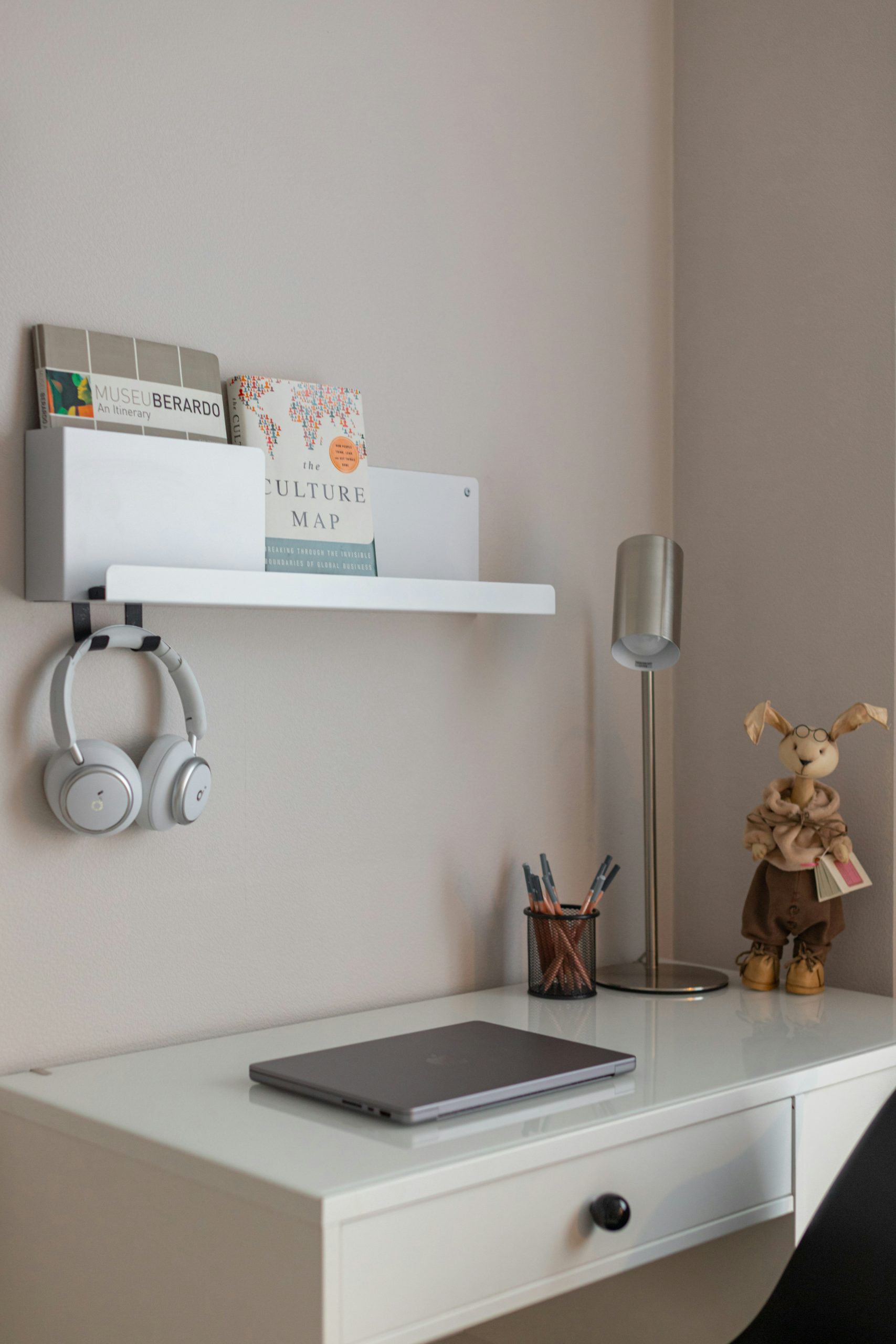
“Before committing to a minimalist setup like this, run through a quick check to make sure it’s right for your child.”
Does my child *actually* thrive in a minimalist environment, or do they prefer to have all their supplies visible and within reach?
Is there other storage in the room (a closet system, a large dresser) that can handle the overflow of books, projects, and supplies?
Have I measured the wall to ensure the shelf can be mounted securely into studs for safety?
Is the light beige wall color going to feel calming, or will my child find it boring?
16. A Clean White Desk with a Pop of Green
The single element that makes this desk setup memorable is the vibrant green cord on the task lamp. In a space that is almost entirely monochrome—white desk, white wall, silver computer—that one unexpected jolt of color is everything. It’s a small detail, but it injects a huge amount of personality and playful energy. It says that while this space is clean and functional, it doesn’t take itself too seriously. It’s a brilliant, low-commitment way to add a custom-feeling touch.
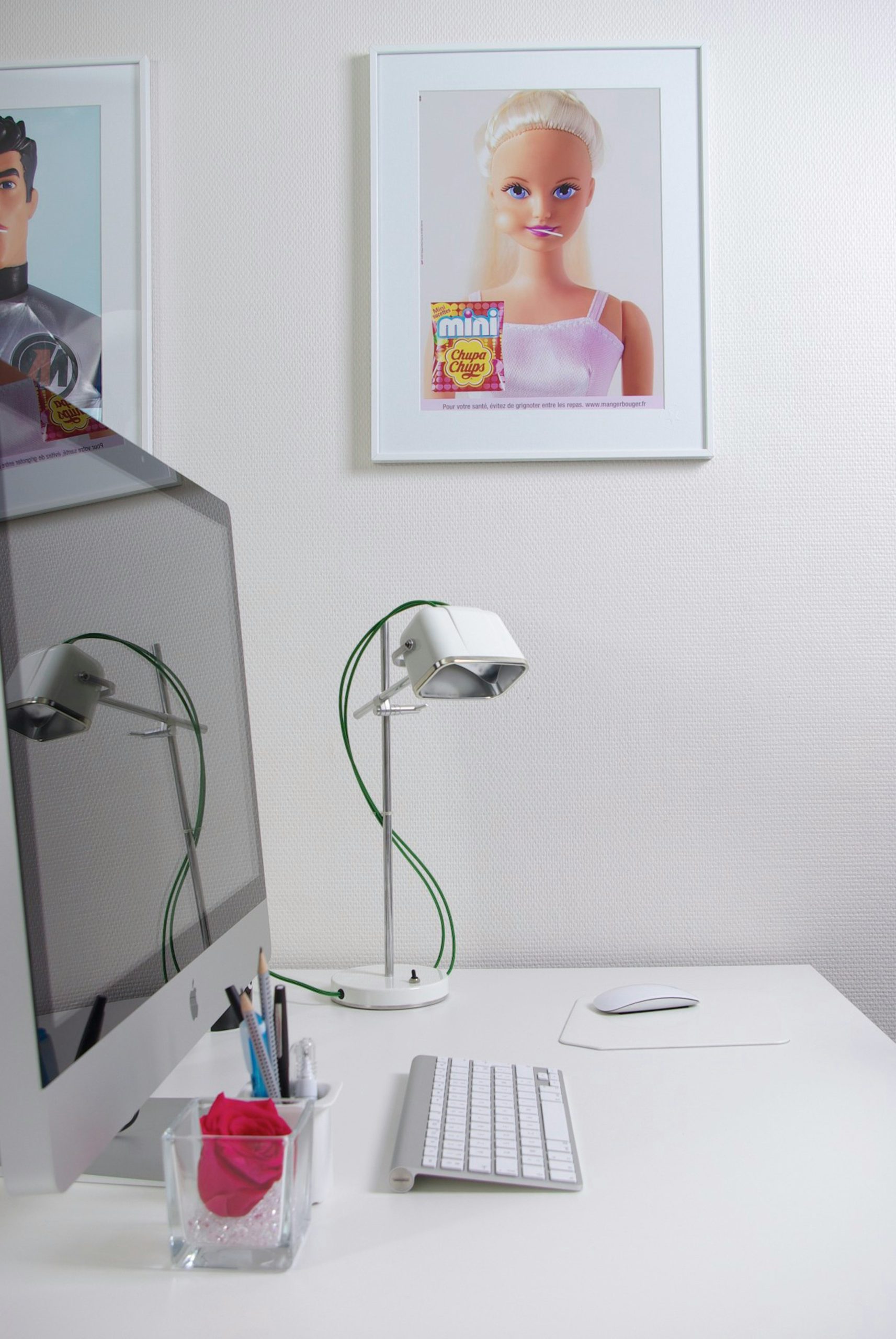
“A crisp, all-white desk looks incredible…”
when it’s clean. But in a kid’s or teen’s room, it’s a magnet for stains. Ink from pens, graphite from pencils, residue from clay, and smudges from snacks can quickly turn a pristine white surface into a mess. To keep it looking good, you’ll need to be diligent about cleaning. Consider adding a clear desk mat or having magic erasers on hand at all times. For art projects, a protective cover is a must to prevent permanent marks.
17. A Modern Built-in Desk with Sage Green Shelving
When designing built-in shelving, varying the shelf backing is a powerful way to add depth and a custom look without much extra cost. Here, the combination of white and sage green back panels creates visual rhythm. For a pro touch, make the back panels removable. Paint thin MDF or even heavy-duty foam core cut to size. This allows you to change the accent color in a few years as your child’s tastes evolve, without having to repaint the entire unit. It’s a simple trick that adds major longevity to the design.
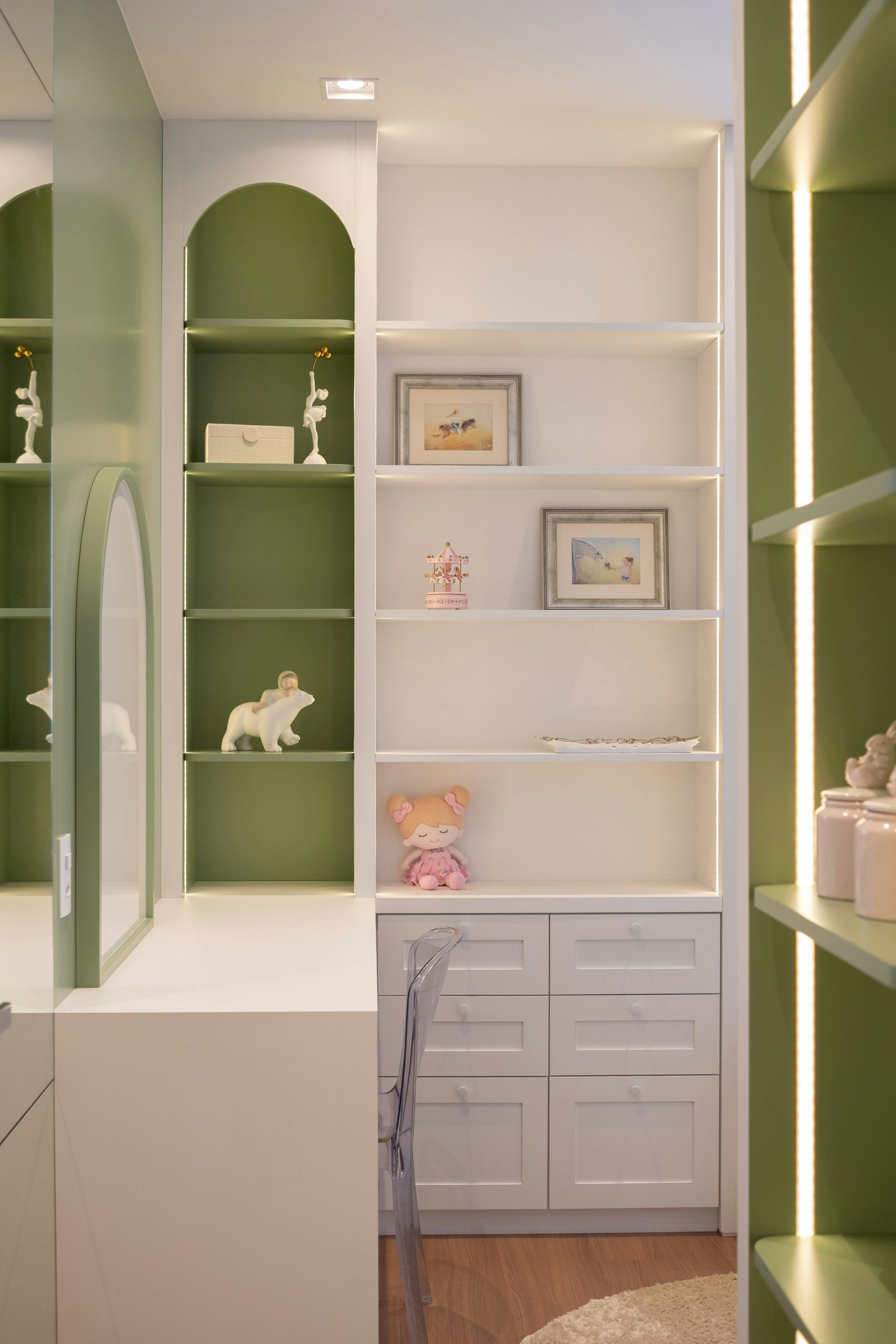
“This built-in works because it masters the art of ‘negative space.’ The open shelving isn’t crammed full of items.”
Instead, there’s plenty of empty space, allowing each displayed object to breathe and feel important. The integrated strip lighting enhances this effect, highlighting the curated collections and making the shelves glow. The use of a transparent chair is another key decision, as it prevents the desk area from feeling visually cluttered and allows the beautiful built-ins to remain the undisputed star.
18. A Moody Workspace with a Wood Desk and Pegboard
The success of this moody-yet-warm workspace comes down to a clear formula: 60% dark, dramatic wall color + 30% natural wood tones + 10% crisp white accents. The dark gray walls create a cozy, focused environment. The expansive wood desk surface provides crucial organic warmth and texture. Finally, the white pegboard, chair, and accessories offer sharp contrast, keeping the space from feeling too heavy and providing functional brightness. Swap the dark gray for a deep navy or forest green to achieve a similar vibe.
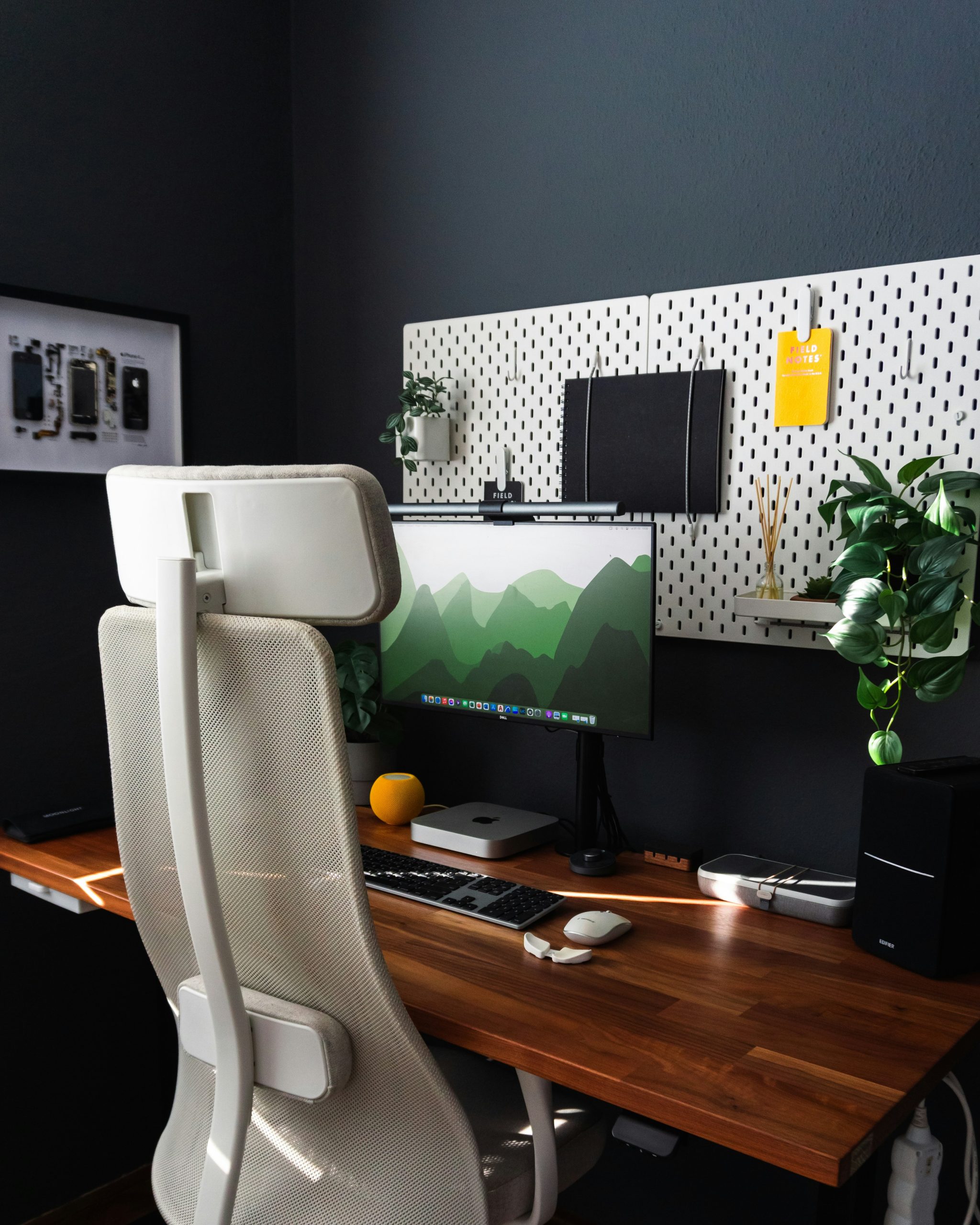
“You can get this sophisticated look without a custom desk.”
Start by painting a feature wall in a dark, moody color like Behr’s ‘Cracked Pepper’ ($45). For the desk, a butcher block countertop from a hardware store like Home Depot (around $150-$250) placed on top of two simple metal legs or small filing cabinets creates a durable and warm surface. Add the IKEA SKÅDIS pegboard ($25) for that essential pop of white and functional organization. This brings a high-end look into a more attainable price range.
19. A Modern Desk with Bauhaus-Inspired Art
This desk area feels grown-up and stylish because of the confident mix of materials and shapes. The dark wood desk provides a warm, organic base. The gray wall is a neutral, sophisticated backdrop. The white ergonomic chair introduces curves and a modern sensibility. And the art brings in sharp, geometric forms and a bold splash of color. It’s the interplay between these different elements—warm wood, cool gray, soft curves, and hard geometrics—that creates a dynamic and visually interesting composition that feels curated and personal.
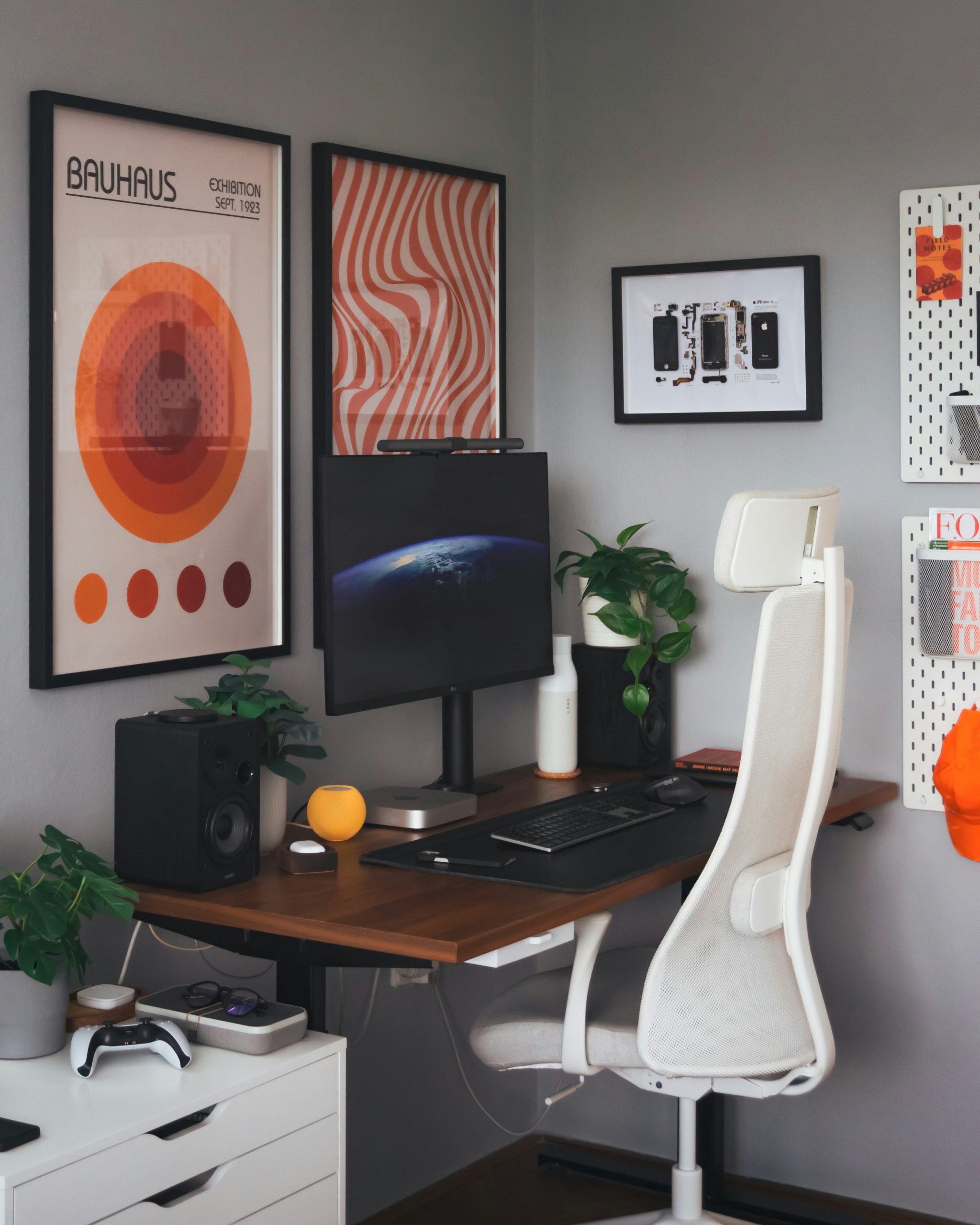
“The art is the one thing that gives this space its unique personality.”
While the desk, chair, and pegboard are all excellent functional items, they are relatively common. The specific choice of a Bauhaus-style print and an abstract orange piece makes a statement. It reflects a specific taste and interest in art and design, elevating the workspace from a generic setup to a corner that tells a story about the person who uses it. It’s a perfect example of how art can define a room’s character.
20. A Minimalist White Desk Flanked by Sheer Curtains
A minimalist desk setup like this is perfect for smaller rooms or for older kids who primarily work on a laptop. The glossy white surface and lack of bulky drawers make it feel light and airy. An ideal width for this type of desk is between 40 and 48 inches—enough space for a laptop and a notebook without encouraging clutter. This setup works particularly well when placed in front of a window, as the sheer curtains diffuse natural light, reducing glare and creating a pleasant work environment.

“Let’s be honest about glossy white surfaces: they look stunning but are the definition of high-maintenance.”
Every fingerprint, speck of dust, and tiny scratch will be visible. For a child who does a lot of writing, the reflection and glare from an overhead light or window can also cause eye fatigue. A matte white or light wood finish will offer a similar bright and clean aesthetic but will be far more forgiving when it comes to daily use and abuse. Compare this with the matte finish in Idea #10.
21. A Traditional Room with Patterned Wallpaper and Green Rug
This room is a wonderful example of the ‘Grandmillennial’ trend adapted for a kid’s space. It’s all about embracing traditional elements like wainscoting, detailed molding, and patterned wallpaper, but making them feel fresh and unstuffy. The mix of classic architecture with playful colors (like the light green rug and red blanket) and slightly more modern furniture shapes avoids the stuffiness of a purely traditional room. It’s cozy, layered, and feels collected over time, not bought from a single catalog.
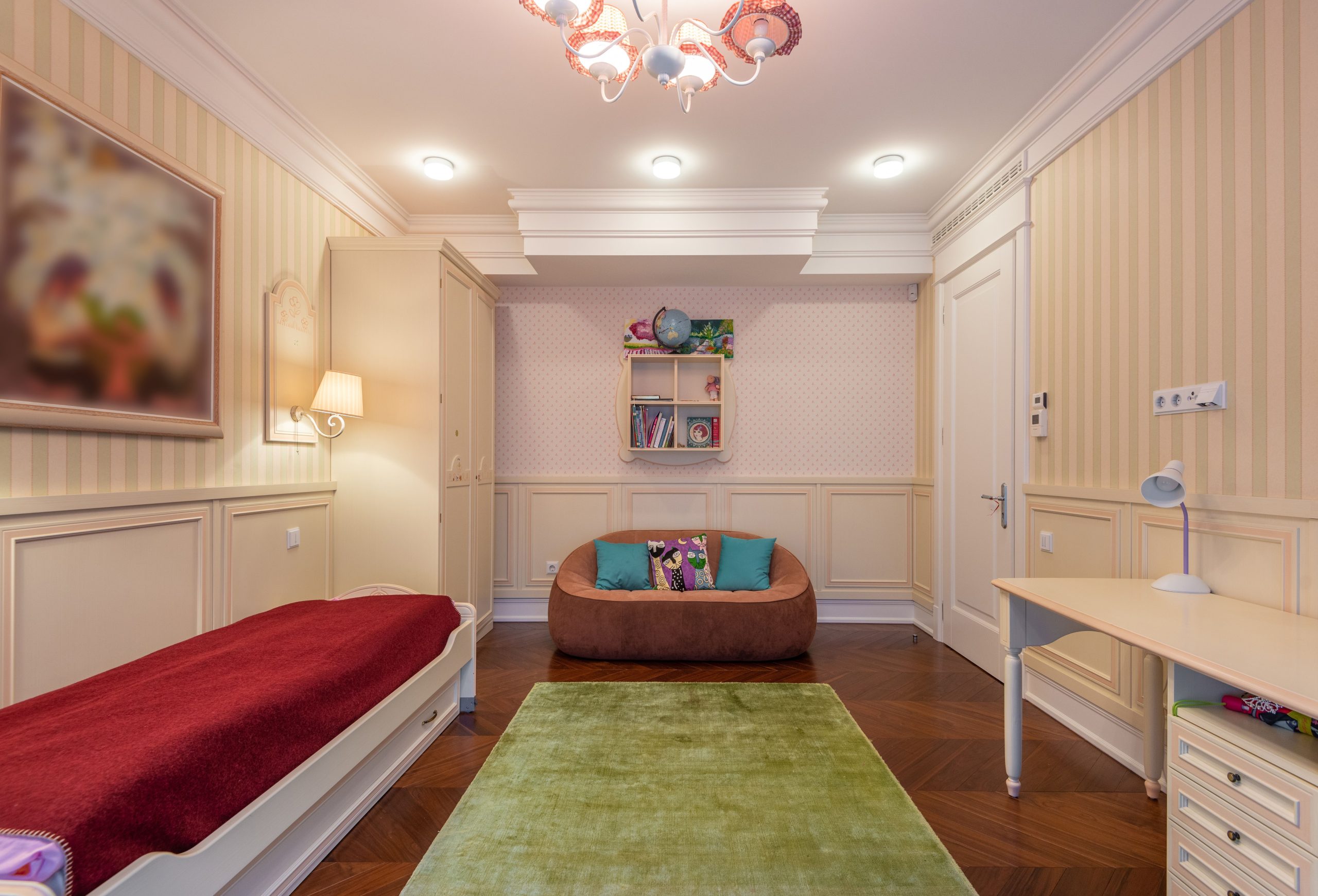
“Installing decorative wainscoting or picture frame molding is a weekend project that adds major architectural character.”
Time: 4-6 hours. Cost: $100-$300.
First, plan your design. Use painter’s tape to map out the boxes on your wall to get the proportions right.
Measure and cut your molding pieces—a miter saw is best for clean 45-degree corner cuts.
Attach the molding to the wall using a combination of construction adhesive and a nail gun for a secure fit.
Caulk all the seams and nail holes for a seamless, professional look.
Finally, prime and paint the molding and the wall below it in the same color and finish.
22. A Shared Pink Workspace with Illuminated Arched Shelves
For a long, shared desk like this, providing separate zones is crucial for harmony. The two distinct chairs create clear personal space. But you can take it a step further with lighting. Instead of one long overhead light, install two separate, dimmable light sources—one for each ‘station.’ This allows one child to have bright task lighting for homework while the other has softer ambient light for reading, giving each user control over their own environment and reducing potential arguments.
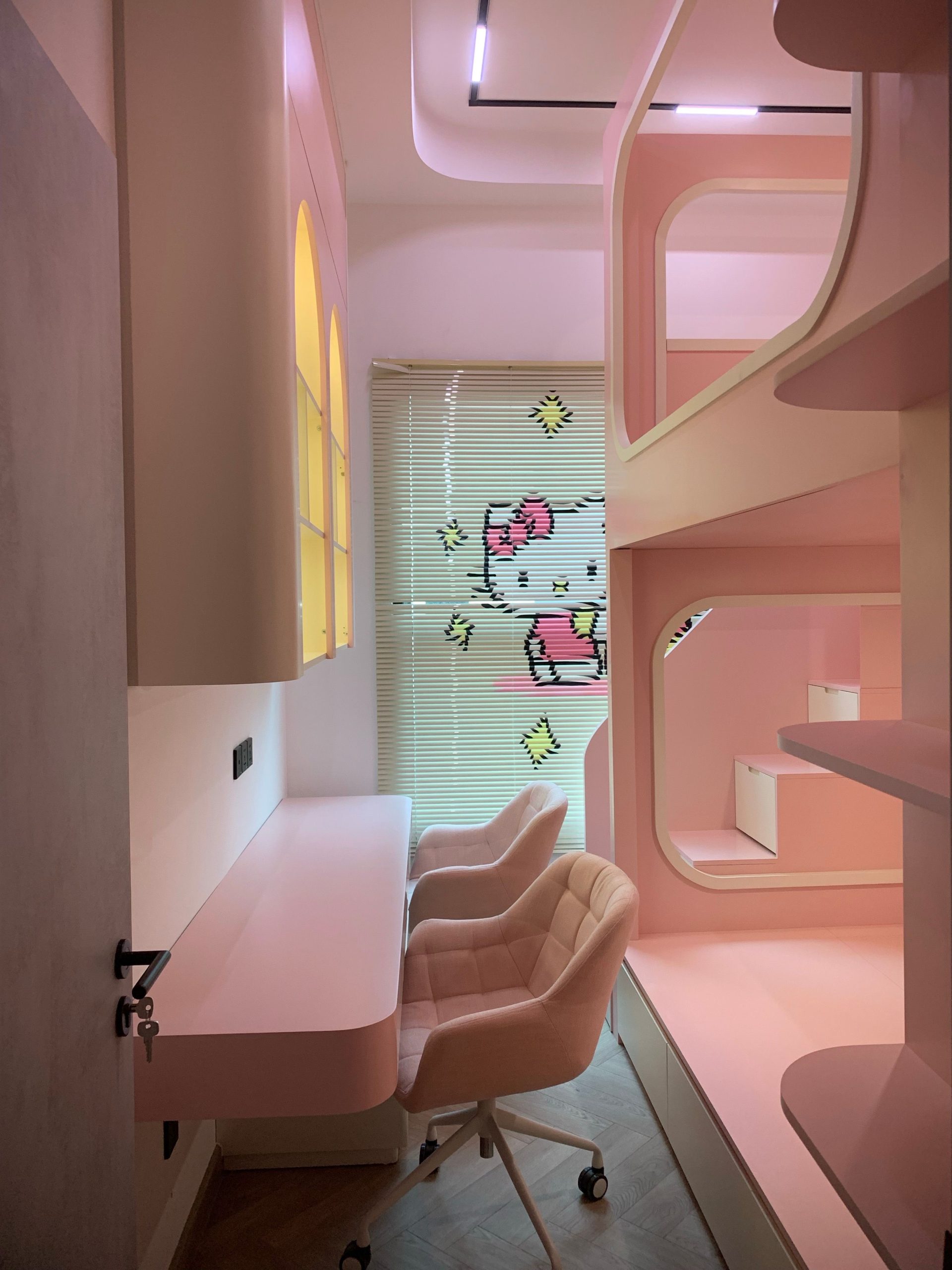
“A double-desk setup like this demands significant square footage.”
The desk itself is likely 8-10 feet long. To comfortably fit two chairs with room for them to pull out and for someone to walk behind, you need at a minimum 4-5 feet of depth from the wall. This makes the idea suitable for larger bedrooms (14×14 feet or more) or a dedicated playroom/homework zone. In a smaller room, this would feel incredibly cramped and dominate the entire space, leaving little room for play.
23. A Bright White Desk with a Photo Grid Display
This space feels incredibly personal and charming because it perfectly balances clean, modern furniture with handmade, personal touches. The desk and chair are simple, with gentle curves and a neutral palette of white, gray, and wood. This provides a calm, uncluttered foundation. It’s the photo grid, with its casually clipped photos and mementos, that brings the personality. This high/low mix of ‘designed’ and ‘collected’ is what makes a space feel authentic and lived-in, not like a showroom. The soft pastel books add one more layer of gentle color.
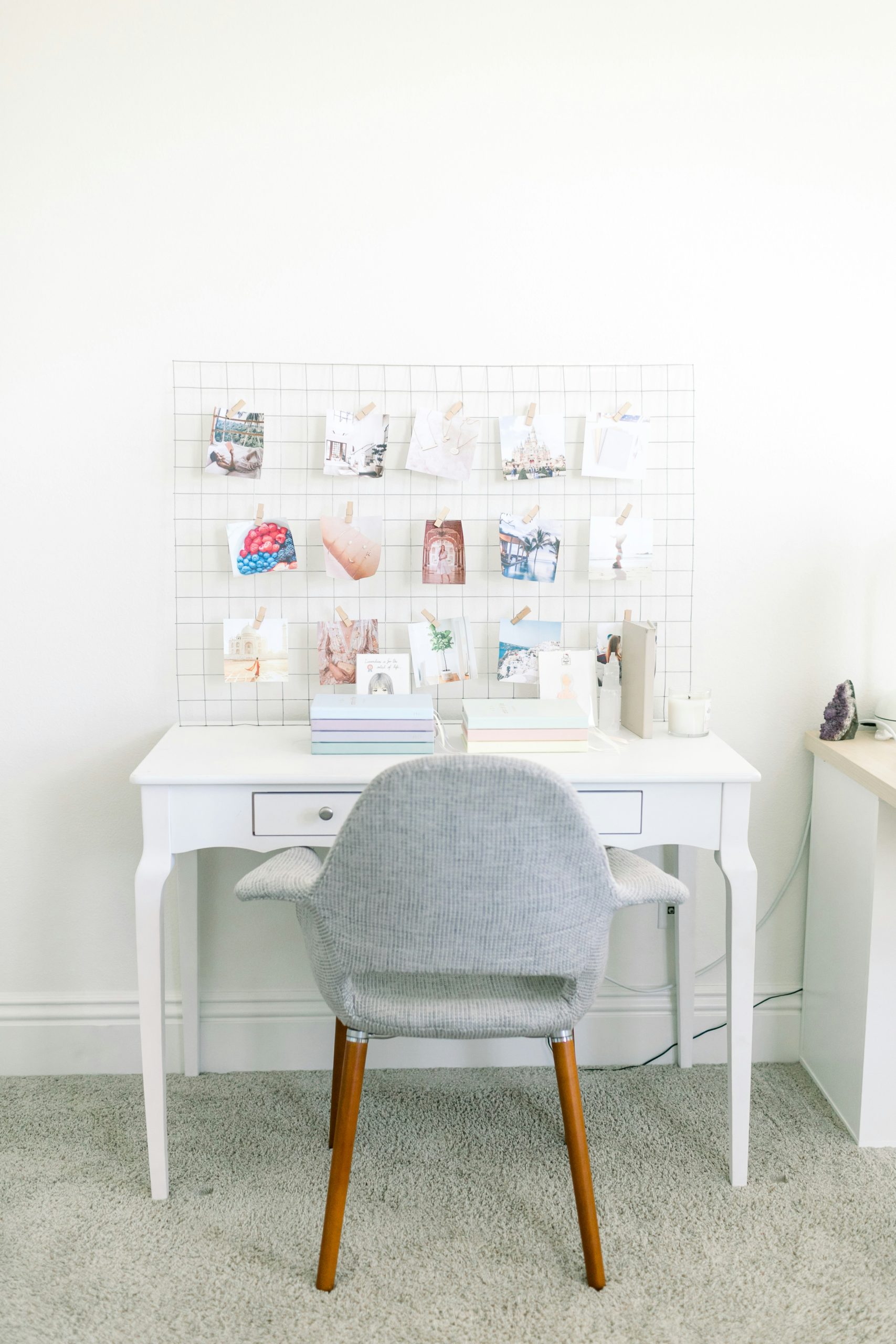
“This entire look is incredibly achievable on a budget, and it’s a fantastic alternative to the more complex built-in of Idea #17.”
The star is the wire photo grid, which you can find on Amazon or at stores like Urban Outfitters for $15-$25. The desk itself is a simple single-drawer model, easily found at Target or on Wayfair for around $100-$150. The mid-century style chair is a popular design that has many affordable replicas available online for under $80. It’s a high-impact look for a low investment.
24. An Integrated Desk with a Light Green Arched Nook
A custom built-in is a major commitment. Before you call a carpenter, here is your checklist:
- Have you measured the space precisely, accounting for window placement, outlets, and light switches?
- Is the chosen accent color (like this light green) something your child loves now, and will they likely still love it in 3-5 years? Consider using paint for the accent so it’s easier to change later.
- Have you considered your storage needs? List out everything that needs to be stored—books, binders, art supplies, tech—to ensure the drawers and shelves are designed for your specific needs.
- Is this your ‘forever home’? A permanent built-in adds value but can’t be taken with you if you move.
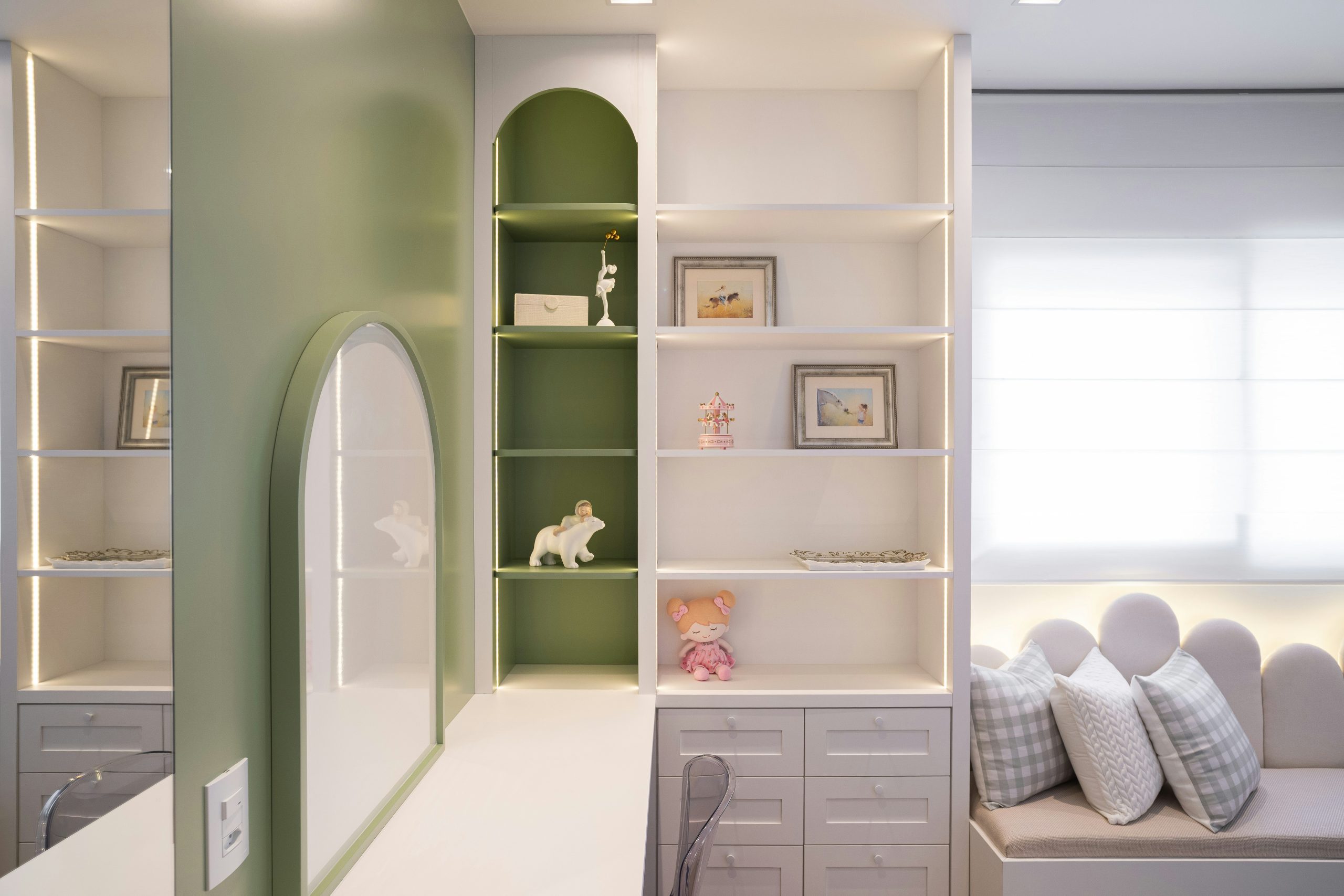
“A custom built-in unit like this involves significant cost.”
Let’s break it down.
Design & Labor: A good carpenter or cabinet maker might charge $2,000 – $5,000+ for design, construction, and installation, depending on your location.
Materials: MDF, plywood, paint, and hardware could run from $800 – $2,000.
Lighting: Integrated LED strip lighting and electrical work might add another $300 – $600.
TOTAL: $3,100 – $7,600+
Budget alternative: Mimic the look by painting an arch on the wall behind a freestanding desk and adding floating shelves. This gives a similar vibe for under $300.
25. A Cheerful Room with Bright Green Furniture
The bold, consistent use of bright green is the single defining feature of this room. The designer didn’t just paint a wall; they committed fully by choosing multiple furniture pieces in the same vibrant hue. This confident color choice is what gives the room its energetic, joyful, and cohesive personality. It turns standard furniture items—a desk, a wardrobe, a shelf—into a unified, graphic statement. It’s a lesson in the power of committing to a strong color concept.
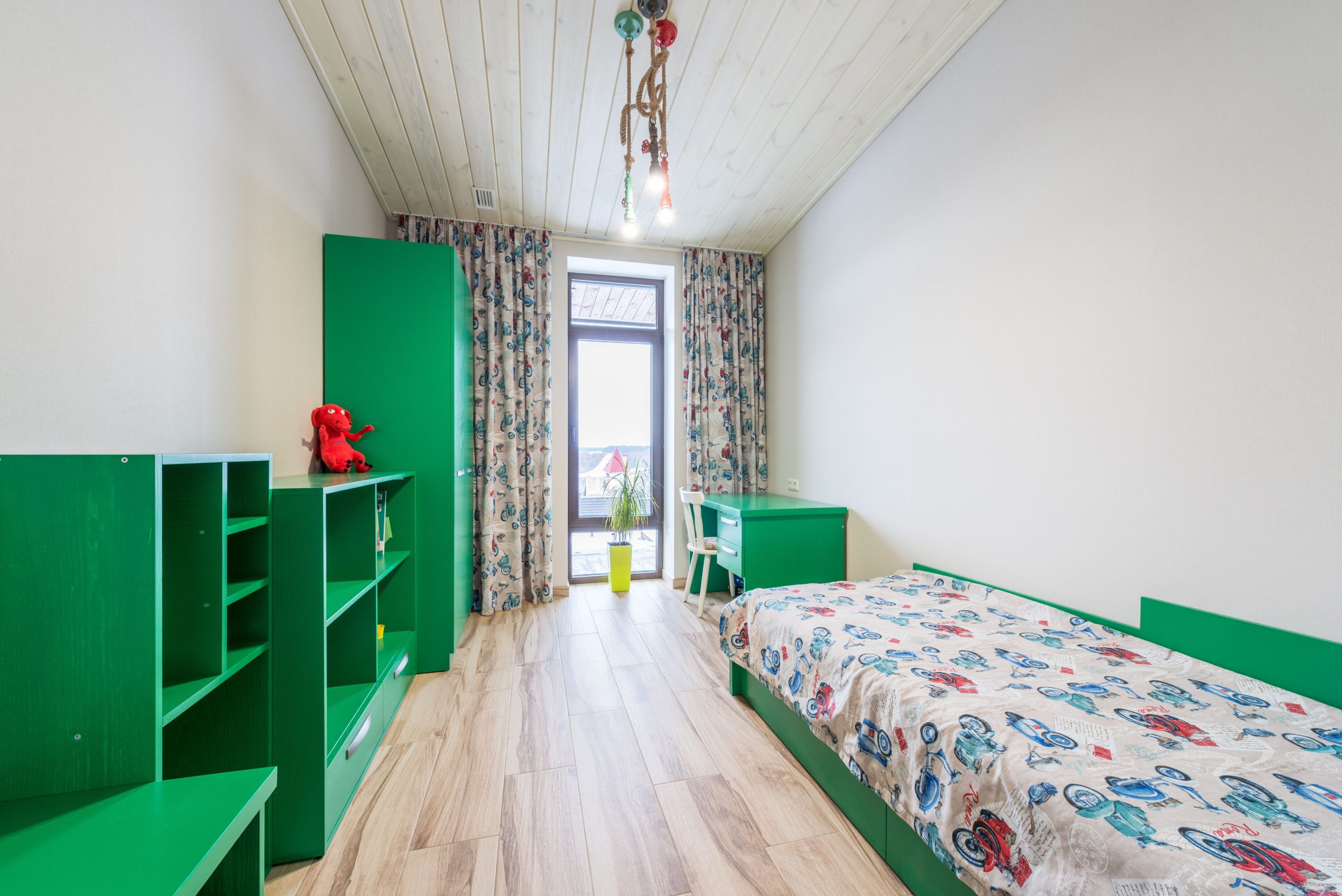
“A full set of matching, brightly colored furniture can be a fantastic look, but be warned: kids’ tastes change, and they change *fast*.”
The lime green that your seven-year-old adores might be their worst enemy by the time they’re a pre-teen. This is a significant investment for a look that has a potentially short lifespan. A more flexible approach is to use a bold color on the walls and keep the main furniture pieces neutral (white, wood), which is much easier and cheaper to update later.
26. An Integrated Light-Wood Desk with Curved Edges
This design is a masterclass in using curves to create a soft, flowing, and functional space. The desk surface doesn’t just end; it curves elegantly into the adjoining shelf unit. The closet doors feature rounded, arched panels. Even the desk chair is plush and rounded. This repetition of curved forms is what makes the space feel so gentle, cohesive, and custom-designed. In a compact room, soft edges are also safer and can make the space feel larger and less boxy. Compare this to the sharper lines in Idea #19.
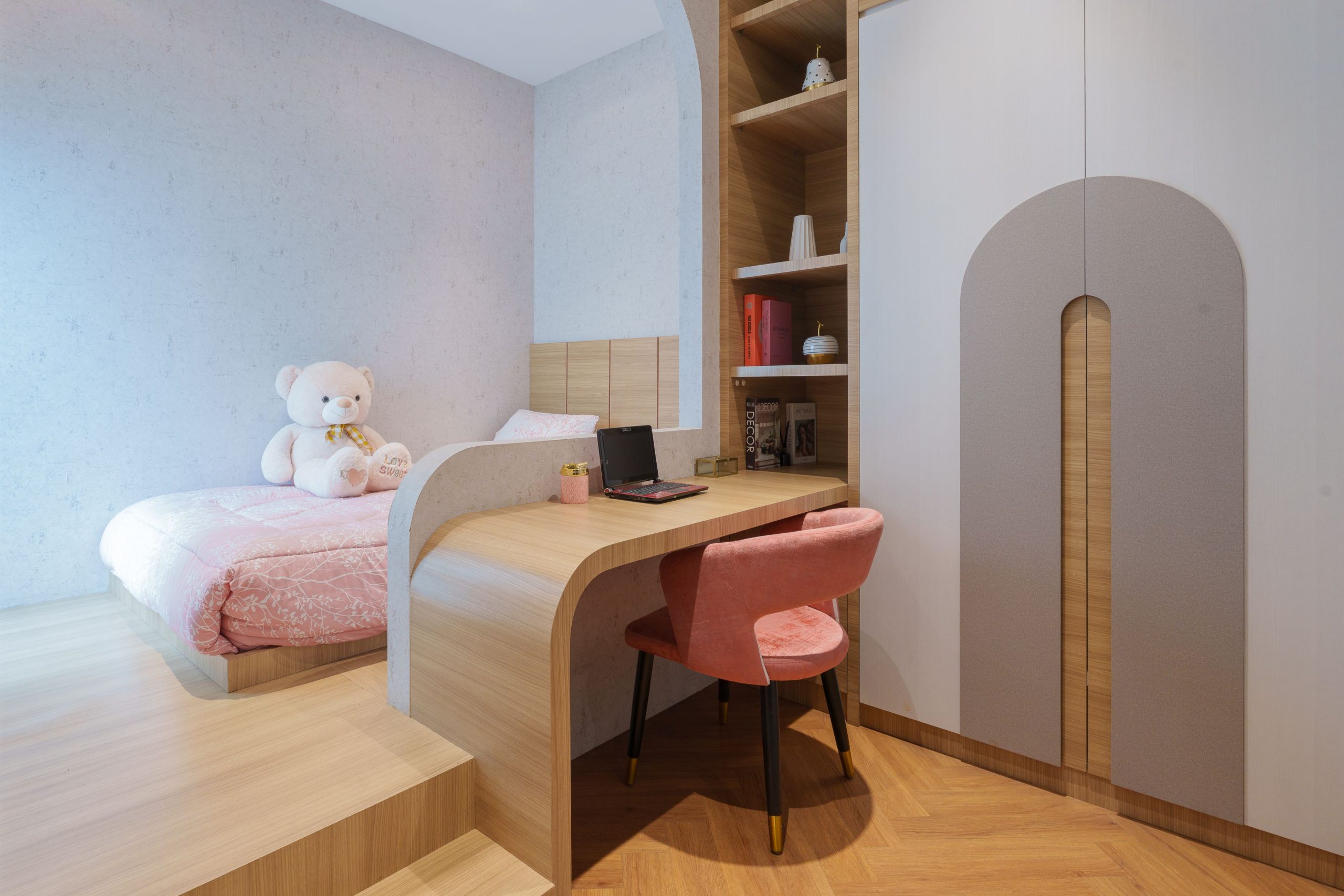
“When designing a compact, multi-functional space like this, maintaining a consistent visual ‘floor’ is key.”
Notice how the desk, the bed platform, and the shelving all sit at slightly different levels, yet they are all made from the same light wood material. This shared materiality connects the different zones (sleep, study, storage) and makes them read as a single, intentional piece of architecture rather than a jumble of separate furniture items. This creates a serene, uncluttered feel despite the density.
27. A Cozy Modern Desk Nook in Warm Orange and Red
This room’s intense warmth is achieved with a bold formula: 70% warm, saturated color + 20% light natural wood + 10% pattern and texture. The deep orange on the walls and ceiling creates an incredibly cozy, enveloping feel. The light wood of the built-in desk and window seat acts as a necessary point of relief, preventing the orange from becoming overwhelming. Finally, the touches of pattern in the rug and texture in the wall panels add the final layer of interest. It’s a confident, color-drenched approach.
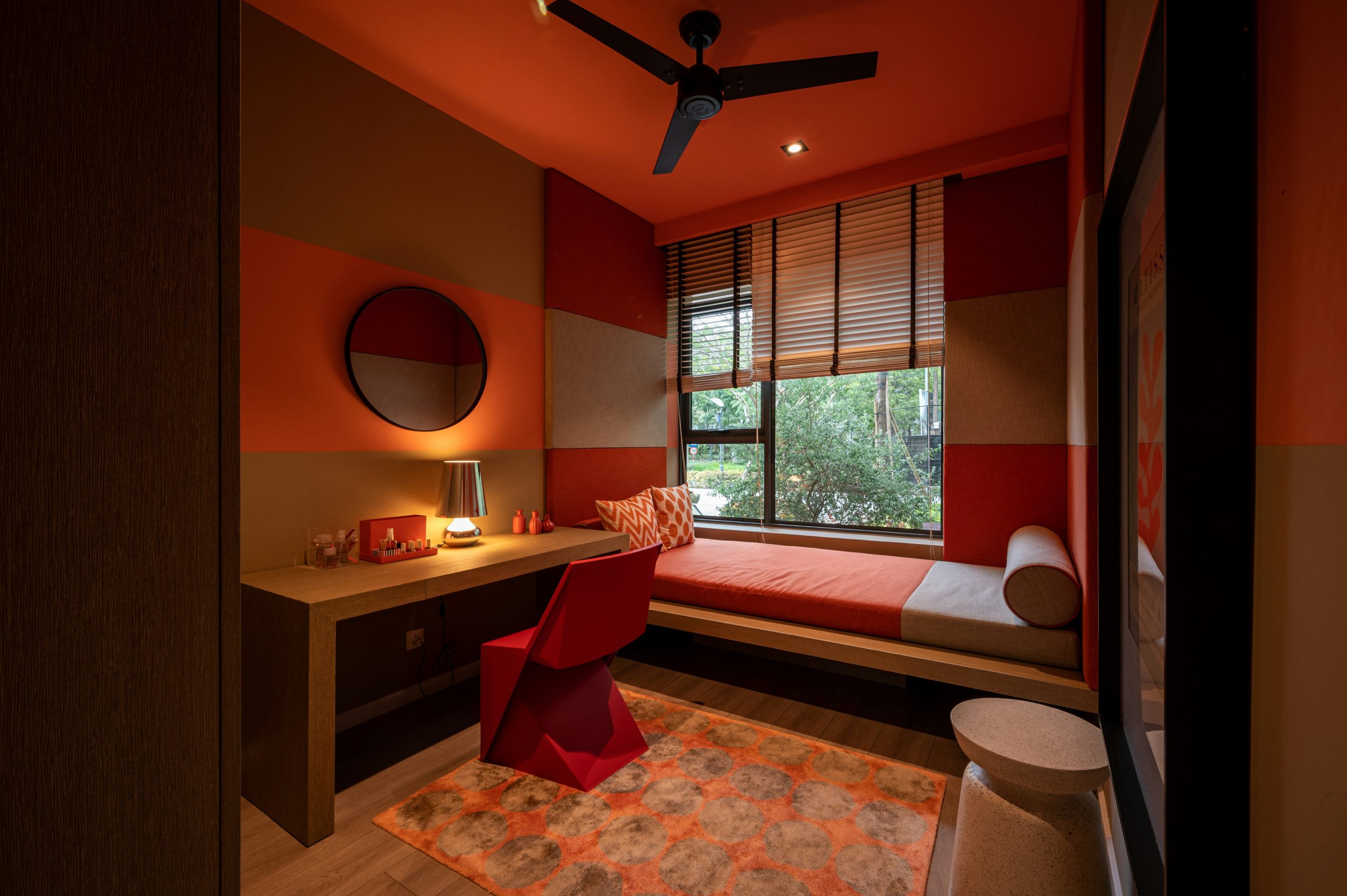
“The choice to paint the ceiling the same warm orange as the walls is the single most impactful decision in this room.”
Most people default to a white ceiling, which would have broken the cozy spell. By wrapping the entire nook in one continuous color, the designer has created a true ‘cocoon’ effect. It lowers the perceived ceiling height and enhances the feeling of intimacy and warmth, making it the perfect den-like space for focused work or curling up with a book.
28. A Sleek Black Desk with a Hidden Pop-Up Monitor
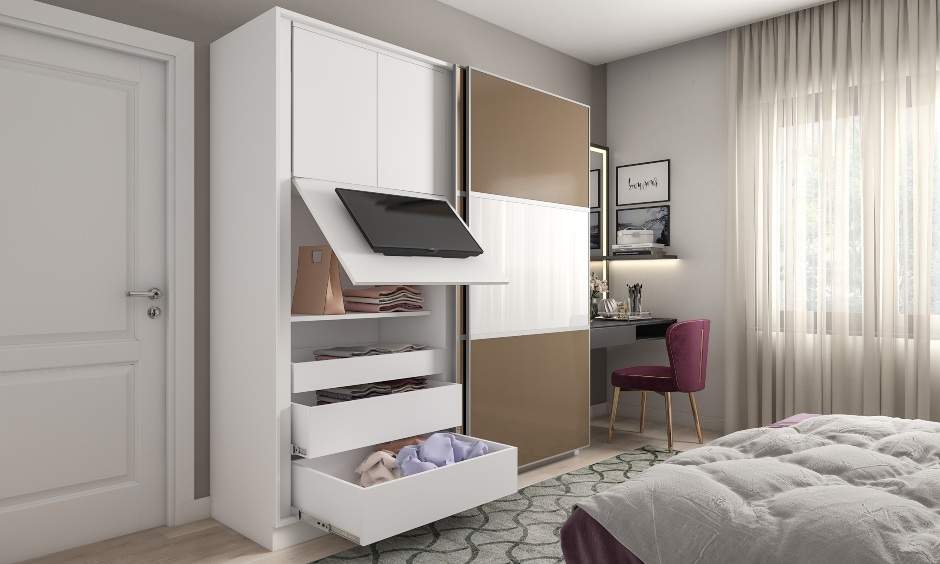
This desk speaks to a growing desire for ‘stealth tech.’ As our homes become our offices, there’s a pushback against letting screens and devices dominate our personal space. A pop-up monitor lift is the ultimate solution. It allows for a fully ergonomic, large-screen setup when you need it, but disappears completely when you don’t, leaving a clean, uncluttered surface for other tasks or just visual peace. This is the future of the multi-functional home workspace, where tech is integrated but not invasive.
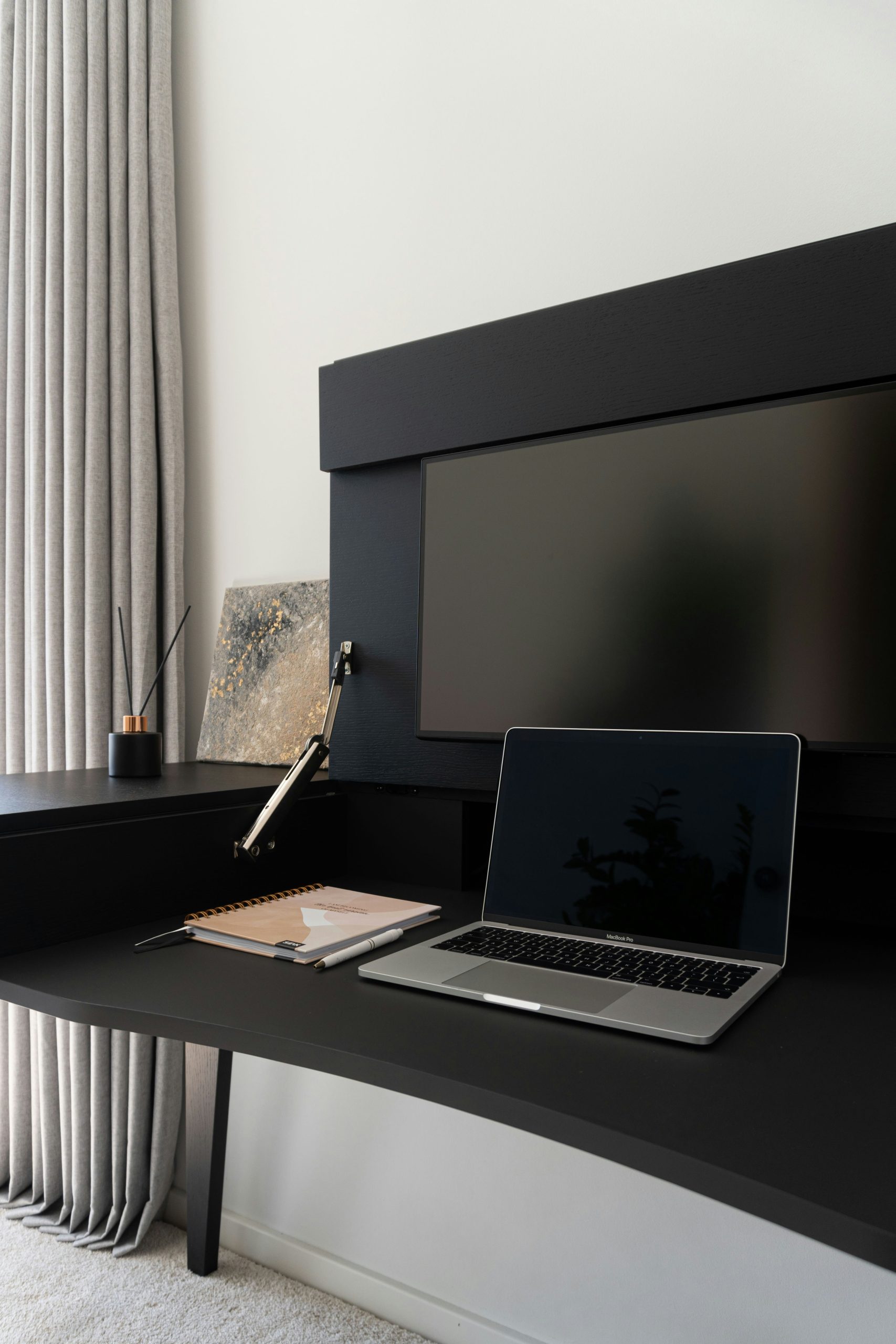
“A matte black desk surface is the height of minimalist chic, but it requires a careful owner.”
While it doesn’t show fingerprints as much as glossy black, it is notoriously prone to showing dust and, more importantly, can be susceptible to fine scratches and scuffs that are difficult to buff out. Oils from your hands can also leave subtle marks over time. Using a desk mat in the primary work area is a good way to protect the surface while maintaining the sleek aesthetic.
29. A Well-Organized Desk with a White Pegboard
Setting up a pegboard is the easiest weekend win for desk organization. Time: 30 minutes. Cost: $40-$80.
- Purchase a pegboard kit (like the IKEA SKÅDIS) which includes the board and mounting hardware.
- Decide on the height. A good rule of thumb is to mount the bottom of the pegboard 8-12 inches above the desk surface.
- If you can’t hit studs, use robust drywall anchors to ensure the board is secure.
- Attach the mounting hardware to the wall, then hang the board.
- Now the fun part: arrange your hooks, shelves, and containers. Put frequently used items within easy reach.
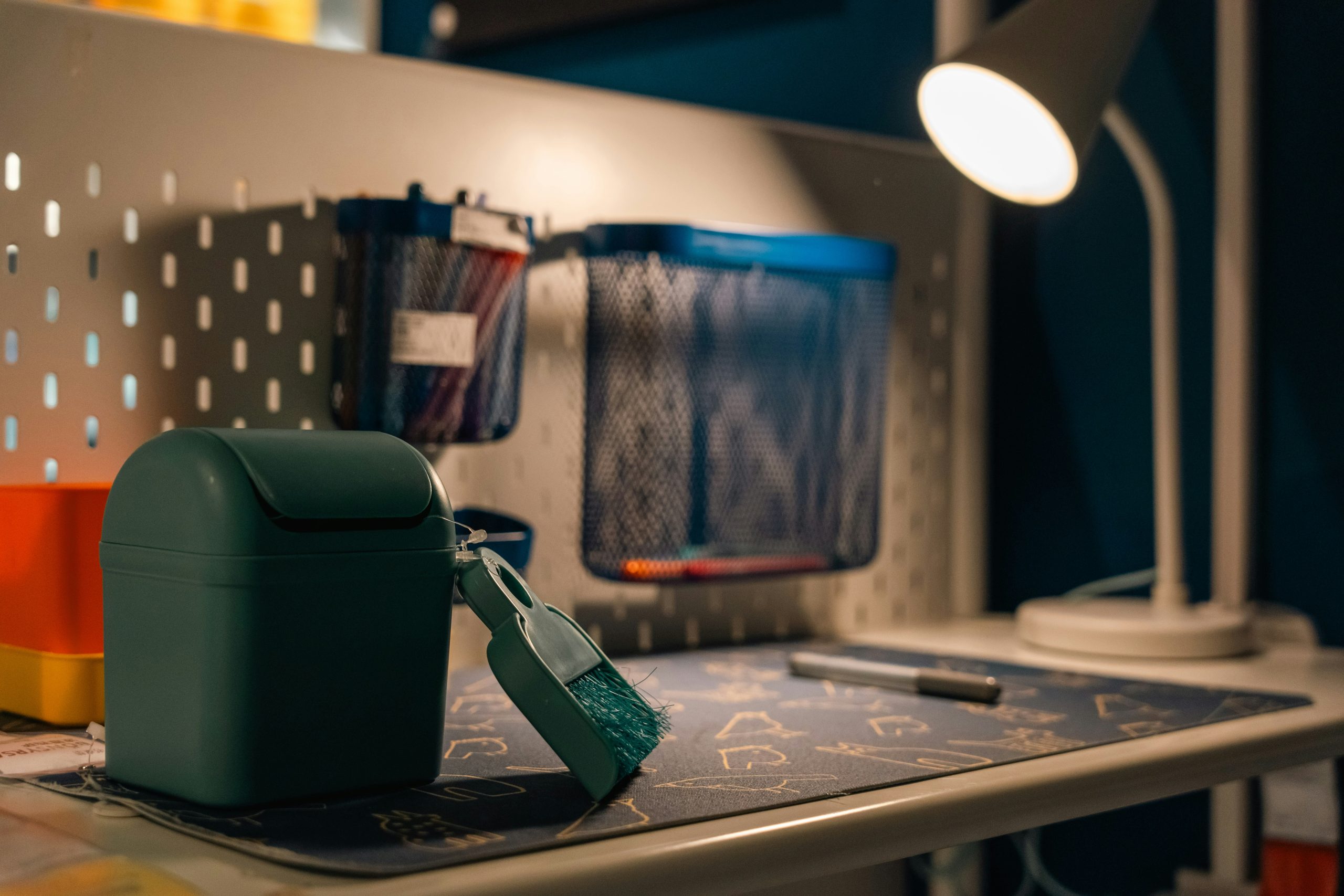
“This little corner is a perfect example of the ‘a place for everything’ principle.”
The pegboard provides vertical storage for tools and supplies, keeping the desktop clear. The small green dustbin is not just cute; it’s a functional piece that encourages immediate cleanup of eraser shavings or pencil sharpener messes. The patterned mat defines the primary workspace. Every item has a purpose and a home, which is the fundamental secret to a truly organized and usable desk.
Ready, Set, Study (in Style)
Carving out a dedicated space for your child to create, think, and learn is one of the most rewarding projects you can tackle. We hope these 29 real-world examples have sparked your imagination and given you the confidence to create a desk area that your kid will absolutely love.
Feeling inspired? Head over to Pinterest to start your own board and save your favorite ideas from this article. Happy decorating!