You know that feeling when you finally find the apartment decorating ideas for men that look exactly right for your space? That perfect mix of comfortable, stylish, and personal that feels like an actual home. We spent serious time browsing West Elm, Crate & Barrel, and IKEA to bring you only what’s worth your attention this year. After filtering through hundreds of options, we narrowed it down to 30 ideas that actually deliver. We’re talking modern, rustic, minimal and industrial looks for every room and budget. As we head into 2026, the biggest trend is creating a space that’s not just masculine, but multi-functional and full of personality—something Pinterest boards are full of right now. And stay until the end — we break down the most common mistakes that can ruin these looks. 📌 Save this to Pinterest for later — you’ll want to revisit these ideas.
1. Modern Minimalism with Statement Art and Leather
What makes this room feel so put-together is the smart use of contrast and balance. The sharp, clean lines of the black leather chairs and concrete coffee table provide a strong counterpoint to the soft, neutral texture of the white sofa and rug. This isn’t just a random collection of furniture; it’s a conversation between hard and soft materials. The large, vibrant abstract art acts as the focal point, pulling all the disparate elements together with a jolt of color and energy that keeps the minimalist space from feeling sterile.
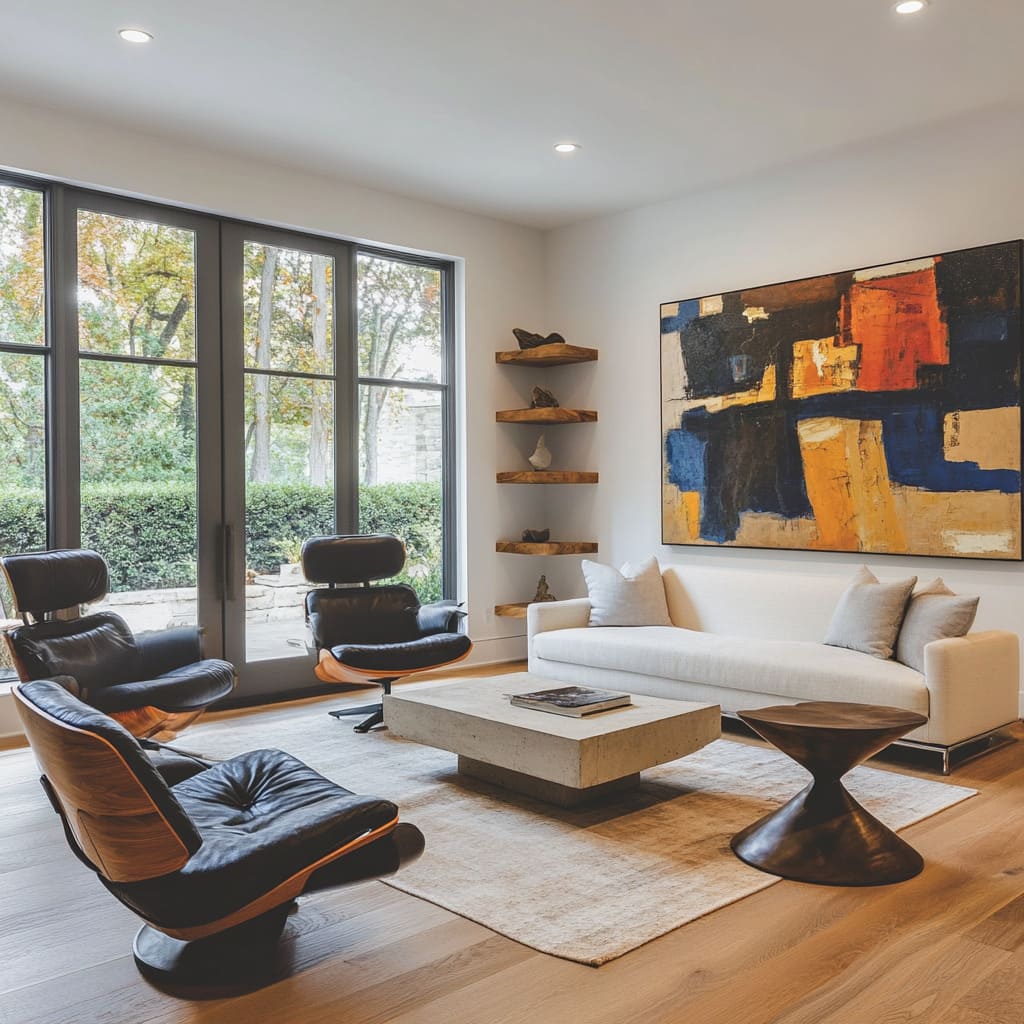
“To get scale right with a large piece of art, follow the 2/3 rule.”
The artwork should be approximately two-thirds the width of the furniture it’s hanging over. In this case, the painting correctly spans most of the sofa’s length. For height, the center of the artwork should be positioned at average eye level, which is about 57-60 inches from the floor. This ensures the art feels connected to the furniture grouping below it, not like it’s floating away on the wall. Resist the urge to hang it too high!
2. Embrace Raw, Rustic Bedroom Textures
A successful rustic look is all about layering textures. Think of it as a formula: 50% natural wood (flooring, furniture, or a reclaimed wood accent wall), 30% soft but sturdy textiles (like a wool blanket, canvas pillows, or a leather headboard), and 20% industrial metal accents (think iron light fixtures or steel bed frames). The key is balancing the raw, unfinished quality of some materials with the comfort of others. You can swap elements—like trading a wood wall for a brick one—but keep the ratio of hard to soft for a balanced room.
“Here’s the honest truth about rustic design: it can get dusty.”
Reclaimed wood, with its natural grooves and imperfections, is a magnet for dust and cobwebs. Likewise, heavy, textured fabrics require more frequent vacuuming or cleaning than their smoother counterparts. If you have allergies or just hate cleaning, you might want to incorporate rustic elements in smaller, more manageable doses—like a single piece of live-edge furniture rather than an entire wall of barnwood. It gives you the vibe without the full-time maintenance commitment.
3. High-Contrast Loft Living with a Slanted Ceiling
The single element holding this entire design together is the dramatic, dark gray slanted ceiling. Without it, the room would just be a nice, simple space with white walls and modern furniture. The angled, dark paint job adds architectural interest where there was none, creating a sense of intimacy and drama. It draws the eye upward and makes the large windows feel even more expansive by contrast. It’s a bold choice that defines the room’s entire character and proves that your “fifth wall” is a design opportunity.
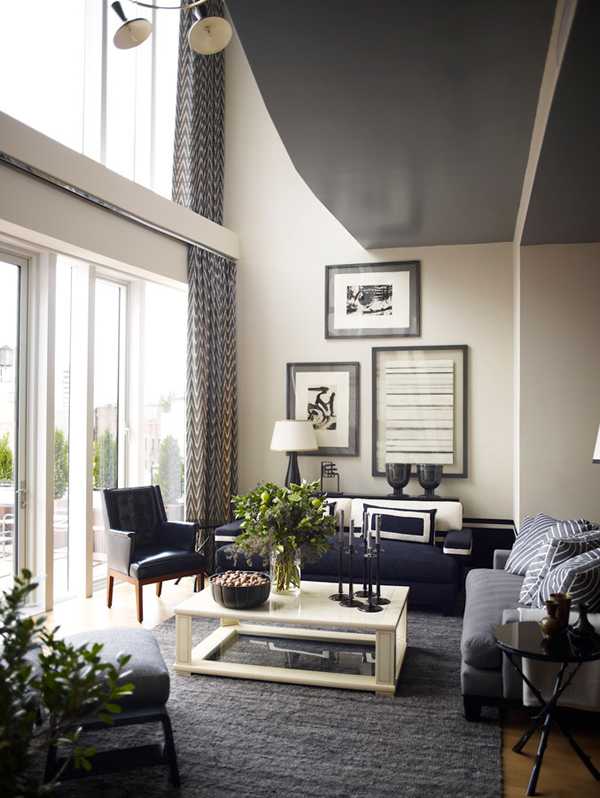
“This look is made for rooms with interesting architectural bones, but it can be adapted.”
It works best in a space that’s at least 200 square feet with ceilings that are 9 feet or higher at their peak; the dark color on a low ceiling would feel oppressive. If you don’t have a slanted ceiling, you can create a similar high-contrast effect by painting the ceiling a deep charcoal or navy in a standard room, especially one with generous natural light. Compare this with the bright, airy feel of Idea #20 which uses a different approach for a large space.
4. Modern & Earthy with a Grey Brick Fireplace
- Main Furniture (Sofa & Armchair): $2,500 – $5,000
- Fireplace/Shelving Built-ins: $3,000 – $7,000
- Textiles (rug): $400 – $1,200
- Decor/Accessories (art, side table): $500 – $1,500
- TOTAL: $6,400 – $14,700
- Budget alternative: Get a similar look for around $3,500 by using faux brick panels, finding a sofa and chair on Facebook Marketplace, and opting for more affordable floating shelves instead of custom built-ins.
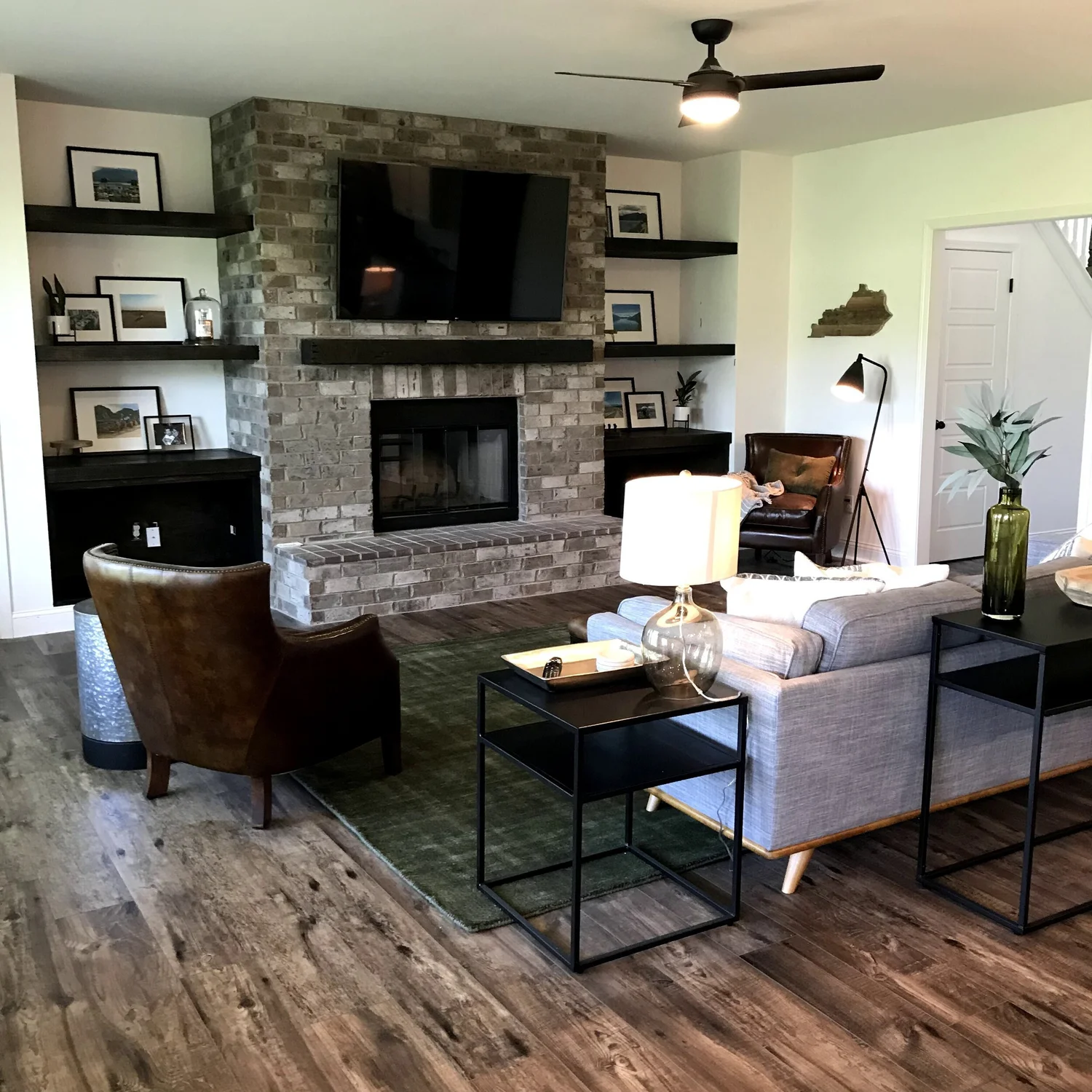
“That beautiful light grey brick requires some specific care.”
Because it’s a lighter color, soot and dust will show up more easily than on traditional red brick. Plan to gently vacuum the brick with a brush attachment every month or two. For any stubborn stains, use a mild detergent mixed with warm water and a soft-bristle brush. Avoid harsh, acid-based cleaners, which can damage the mortar. The dark wood mantel and shelves are more forgiving but will need regular dusting to look their best.
5. A Wood Slat Wall with a Serious Sound System
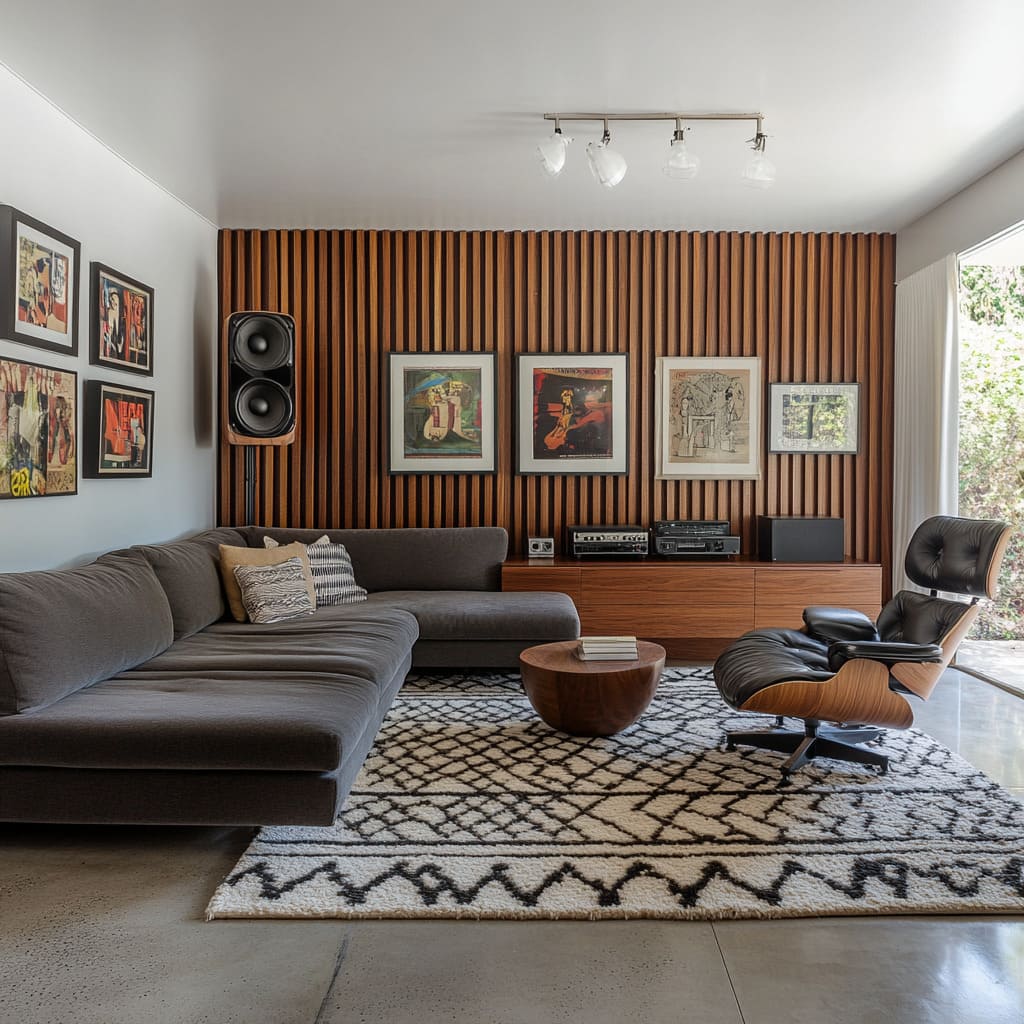
This room nails a sophisticated vibe by balancing a major focal point—the wood slat wall—with C-suite-worthy furniture. The vertical lines of the wood paneling draw the eye and add incredible warmth and texture, preventing the gray sectional and concrete floor from feeling too cold. The choice of a black leather lounge chair instead of a fabric one introduces a different texture and a classic masculine element. The graphic rug acts as the connective tissue, tying the wood, leather, and fabric together. The same wood slat concept is used differently in Idea #11 for a bedroom.
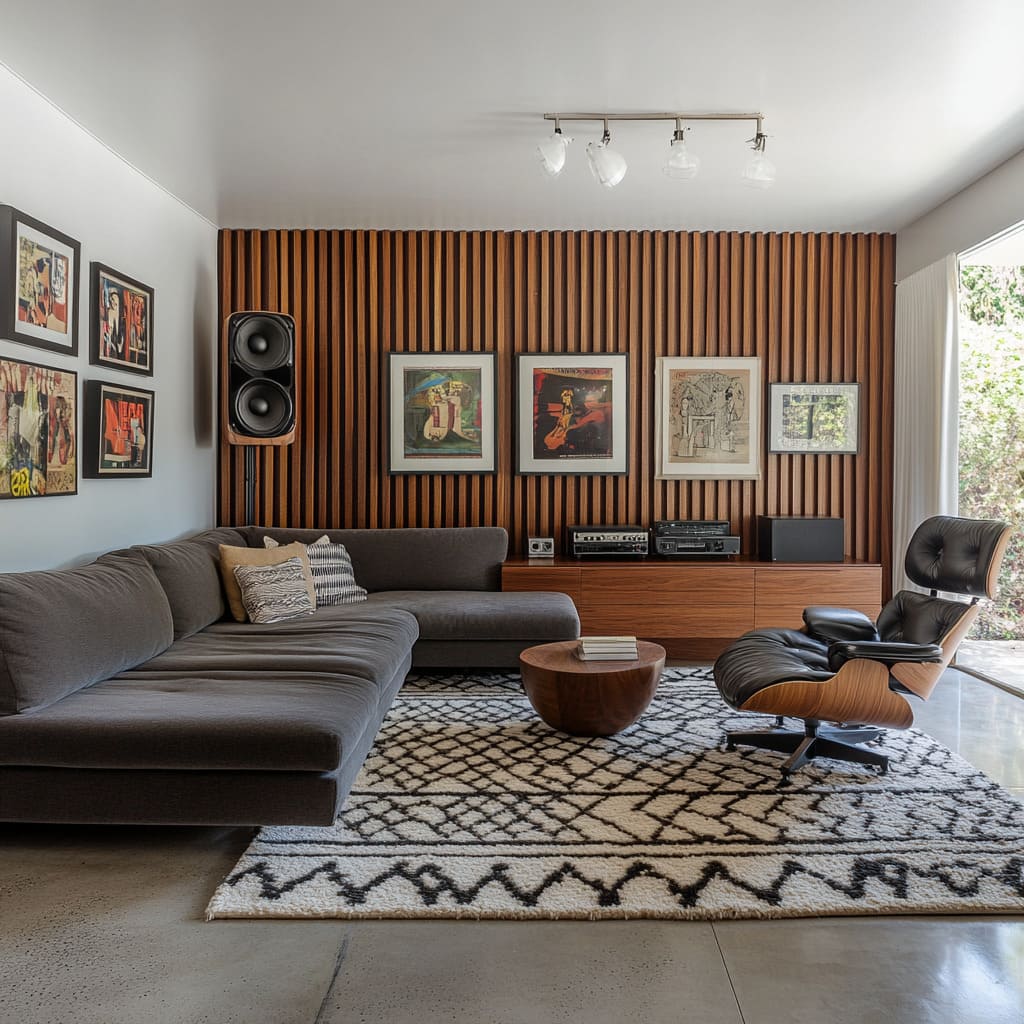
“Want to create that wood slat accent wall?”
Here’s a simplified plan. Time: 6-8 hours. Cost: $300-$800.
- Measure your wall and determine the total width you want to cover.
- Purchase pre-made acoustic wood slat panels, which come with the slats already mounted on a felt backing. This is much easier than installing individual slats.
- Cut the panels to your desired height using a fine-toothed saw.
- Mark a level line on your wall where the top of the first panel will go.
- Apply a construction adhesive to the back of the panel, and press it firmly against the wall.
- Secure the panel further by driving black screws through the felt backing into the wall studs. Continue with the next panels, ensuring they are snug against each other.
6. Sleek High-Rise Living with a View
This look is a direct reflection of the post-pandemic return to city life, but with a twist. It’s less about stark, cold urbanism and more about creating a rich, comfortable home base in the sky. The dark wood paneling and leather are classic “power” materials, but they’re paired with large windows and open sightlines that keep the space from feeling like a dated, heavy boardroom. It says “I appreciate the finer things,” not “I’m an 80s movie villain.” This style is popular because it feels both aspirational and deeply personal.
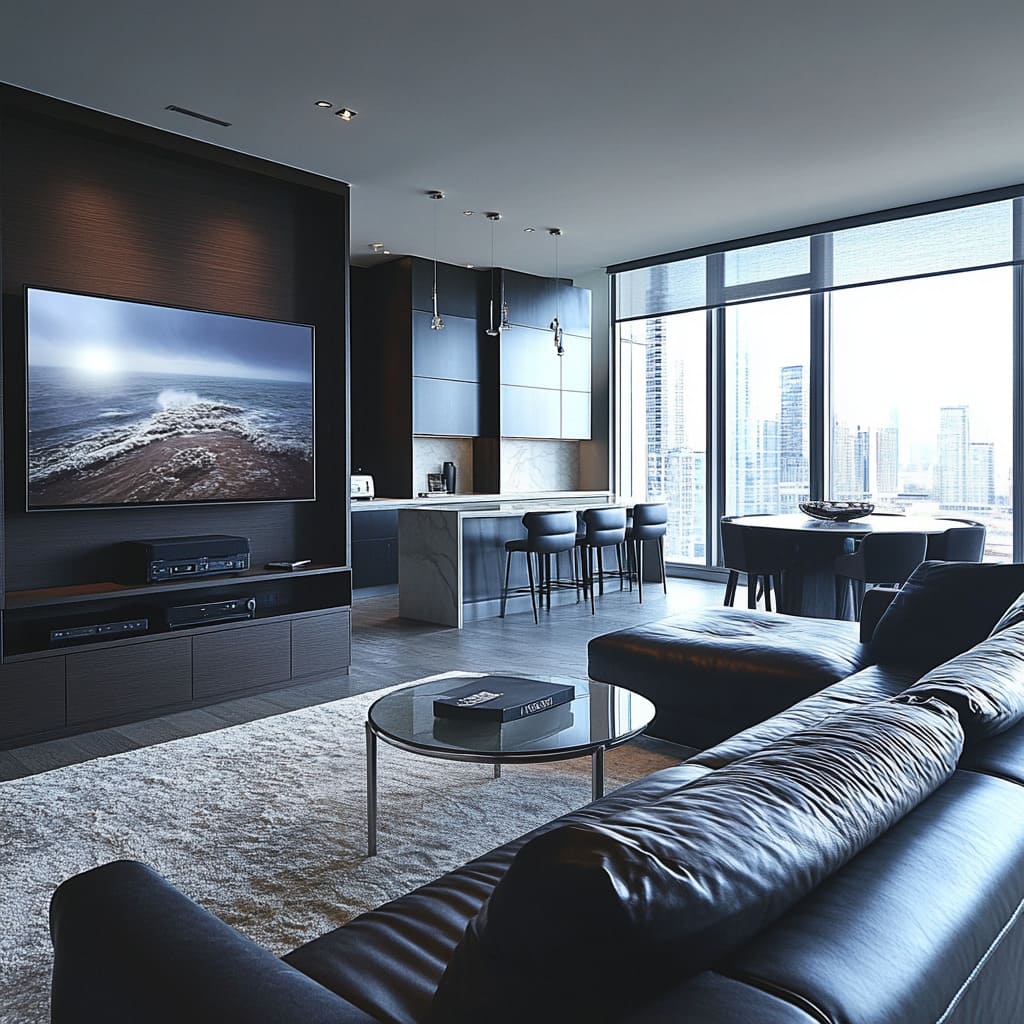
“A room with this much dark wood and leather needs a ton of natural light to work.”
Those floor-to-ceiling windows are not just a nice-to-have; they are essential. In a room with smaller windows or less direct sunlight, this much dark surface area would feel heavy and claustrophobic. Before you commit to a dark wood media wall, take note of how much light your room gets throughout the day. If it’s not consistently bright, consider a lighter wood tone or a painted accent wall instead.
7. Modern Industrial with Concrete and Wood
The exposed concrete ceiling and walls are the undisputed star of this show. They immediately establish a raw, industrial foundation that gives every other element in the room its context. The sleek kitchen cabinets, the minimalist sofa, and the warm wood floors all look more intentional and stylish precisely because they are contrasted against a material that is typically hidden. It’s the architectural equivalent of wearing a tailored suit with a pair of perfectly worn-in boots. It tells a story of imperfection embraced.
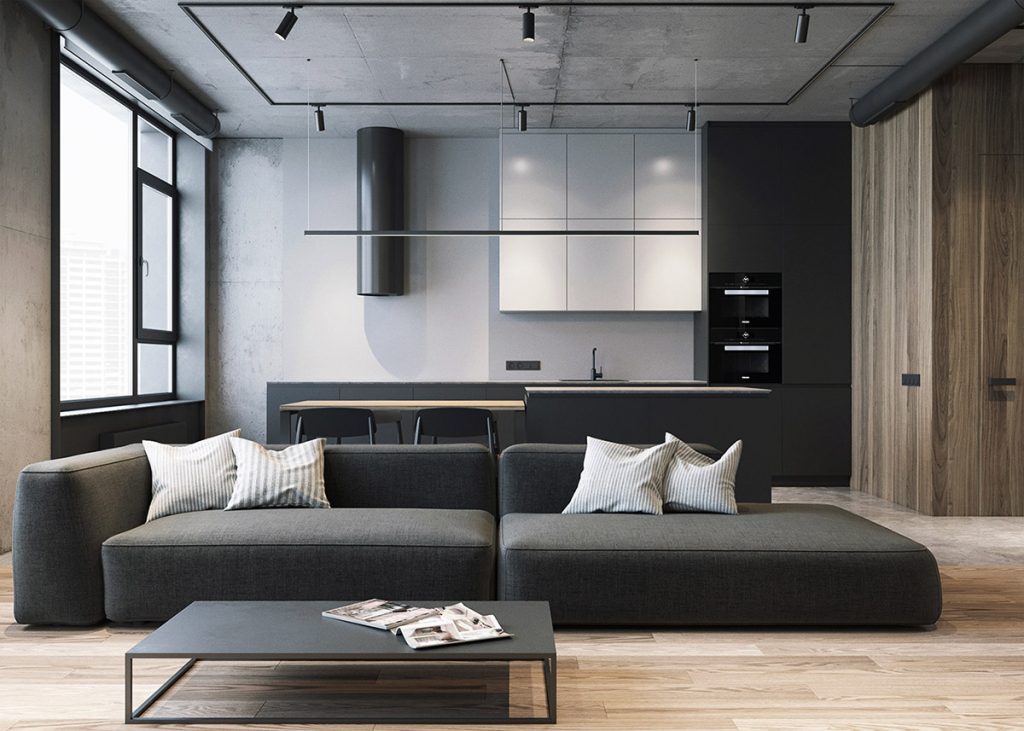
“When you have a dominant, cold material like concrete, you have to intentionally warm it up.”
The rule of thumb is to introduce at least two different wood tones. Notice the light wood floors and the slightly darker wood paneling on the wall. This layering of natural tones provides visual warmth and stops the space from feeling like a parking garage. Adding a soft textile, like the large grey sectional, is the final and most crucial step to ensure the room feels livable and comfortable, not just cool.
8. Media Room with Integrated Orange Backlighting
This design works because it commits 100% to a moody, ambient atmosphere. The key is the monochromatic use of dark gray on the walls, the media unit, and the massive sectional sofa. This creates a seamless, immersive environment perfect for a media room. The masterstroke is the pop of orange LED backlighting. It’s a single, high-impact accent color that provides visual excitement and dimension without cluttering the space with objects. It’s a brilliant use of light as decoration.
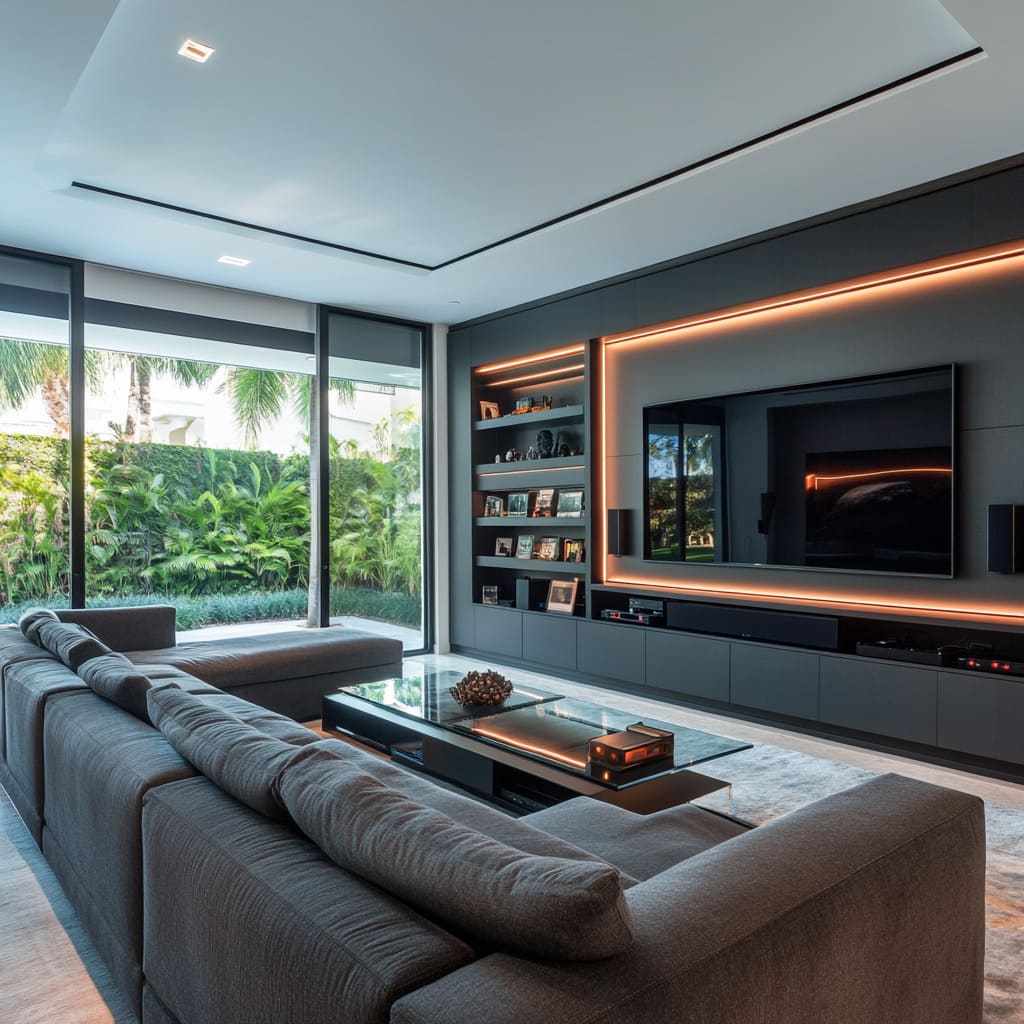
“You don’t need a custom built-in to get this effect.”
You can recreate this look for around $300. Start with a simple, dark gray media console from a store like IKEA or Wayfair (e.g., the BESTÅ system). Paint the wall behind it the same dark gray color (like Benjamin Moore’s “Iron Mountain”). Then, buy a reel of smart LED strip lights online. These are inexpensive, easy to install with self-adhesive backing, and you can change the color to orange (or any other color) with a remote or an app.
9. Sophisticated Grey Lounge with Geometric Touches
The formula here is a study in quiet confidence: 70% soft neutrals, 20% sharp geometrics, and 10% organic warmth. The large grey sectional and curtains provide a calm, monochromatic base (the 70%). The bold, black-and-white patterned rug and the clean lines of the nesting tables introduce crisp, geometric energy (the 20%). Finally, the warm wood of the coffee tables and the rich brown of the leather armchair add that essential 10% of organic texture and warmth, keeping the grey and black palette from feeling one-note. Compare this to its more budget-friendly cousin in Idea #22.
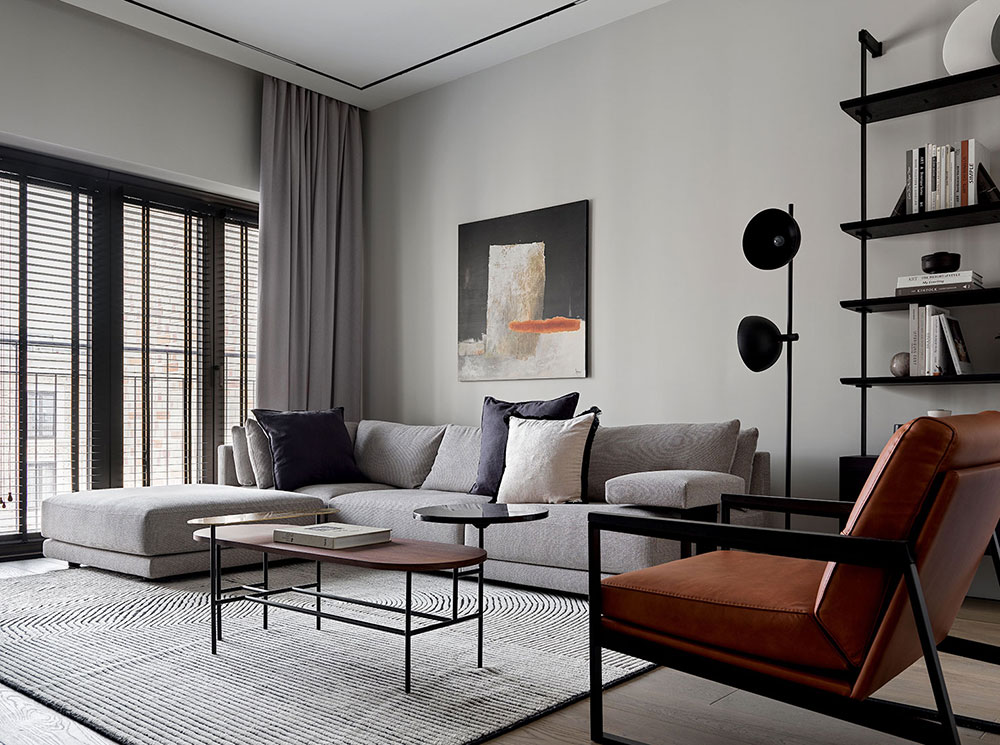
“A large, light-grey sectional is a fantastic and versatile centerpiece, but it’s not the most forgiving choice if you have pets or kids, or if you’re a frequent snacker.”
Lighter fabrics show dirt and stains more readily than their darker counterparts. If you love the look but worry about upkeep, look for sofas upholstered in a performance fabric, which has built-in stain resistance. Alternatively, consider a slightly darker shade of grey or invest in a really good upholstery cleaner. A cozy throw blanket draped over the main seating area can also be a stylish and practical safeguard.
10. Modern Grey Bedroom with a Built-In Desk
- Function First: Before building or buying an integrated unit, map out your needs. How large does your desk surface need to be? Do you need storage for books, files, or just your laptop? Plan the function before you commit to the form.
- Measure Everything: For a built-in look, precision is key. Measure the wall length, ceiling height, and the dimensions of your mattress. Ensure there’s enough clearance for your chair and for comfortably getting in and out of bed.
- Check Your Outlets: An integrated desk needs power. Make sure you have enough outlets for your computer, lamp, and chargers, or plan to have an electrician add them before installation.
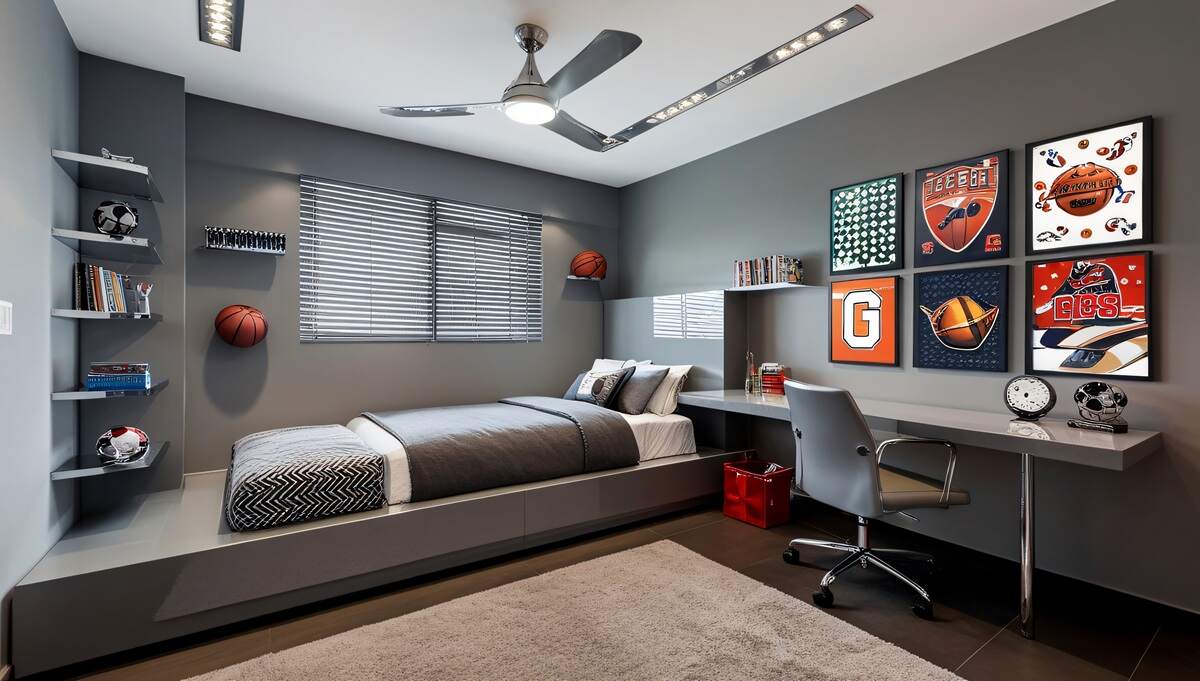
“This room is a masterclass in functional design.”
The integrated bed and desk unit isn’t just a piece of furniture; it’s an architectural element that defines the entire space. By using a slightly lighter shade of gray for the unit than the dark gray walls, the design creates visual depth and delineates the “work” and “rest” zones without a physical barrier. The strategic use of sports memorabilia as decor adds personality and a pop of color, making the space feel both hyper-organized and uniquely personal.
11. Floating Bed with a Wood Plank Accent Wall
The wood plank accent wall is what elevates this bedroom from simple to special. It introduces a powerful dose of warmth, texture, and architectural detail that the painted walls alone could never achieve. It serves as a visual anchor for the entire room and acts as an extended headboard, making the floating bed feel grounded and intentional. The horizontal lines of the planks also create an illusion of width, making the room feel more spacious. Without this wall, the room would lose its central design feature.
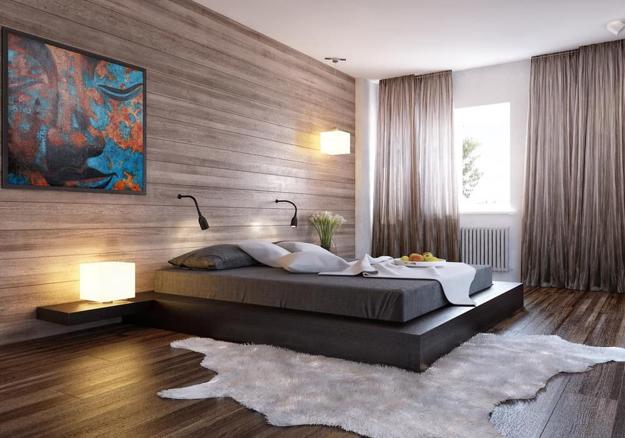
“When you have a strong accent wall and a dark floor, keep the other elements simple to avoid visual chaos.”
Notice how the bedding is a solid, deep charcoal and the other primary wall is plain white. The colorful Buddha artwork is the single, deliberate exception. If you have a statement wall, let it be the star. Adding a busy, patterned rug or loud bedding would create a visual competition where nobody wins. One hero piece per room is a good rule to live by.
12. Minimalist Bedroom with Navy and Wood Tones
This look is perfect for smaller bedrooms, roughly in the 120-180 square foot range. The key is using a limited color palette and visually lightweight furniture. The light blue walls create a serene, open feeling, while the deep navy bedding grounds the space without overwhelming it. The furniture—like the oval side table with thin metal legs—has a small footprint and allows you to see the floor underneath, which enhances the sense of space. The absence of a bulky, solid headboard also contributes to the airy, uncluttered feel.
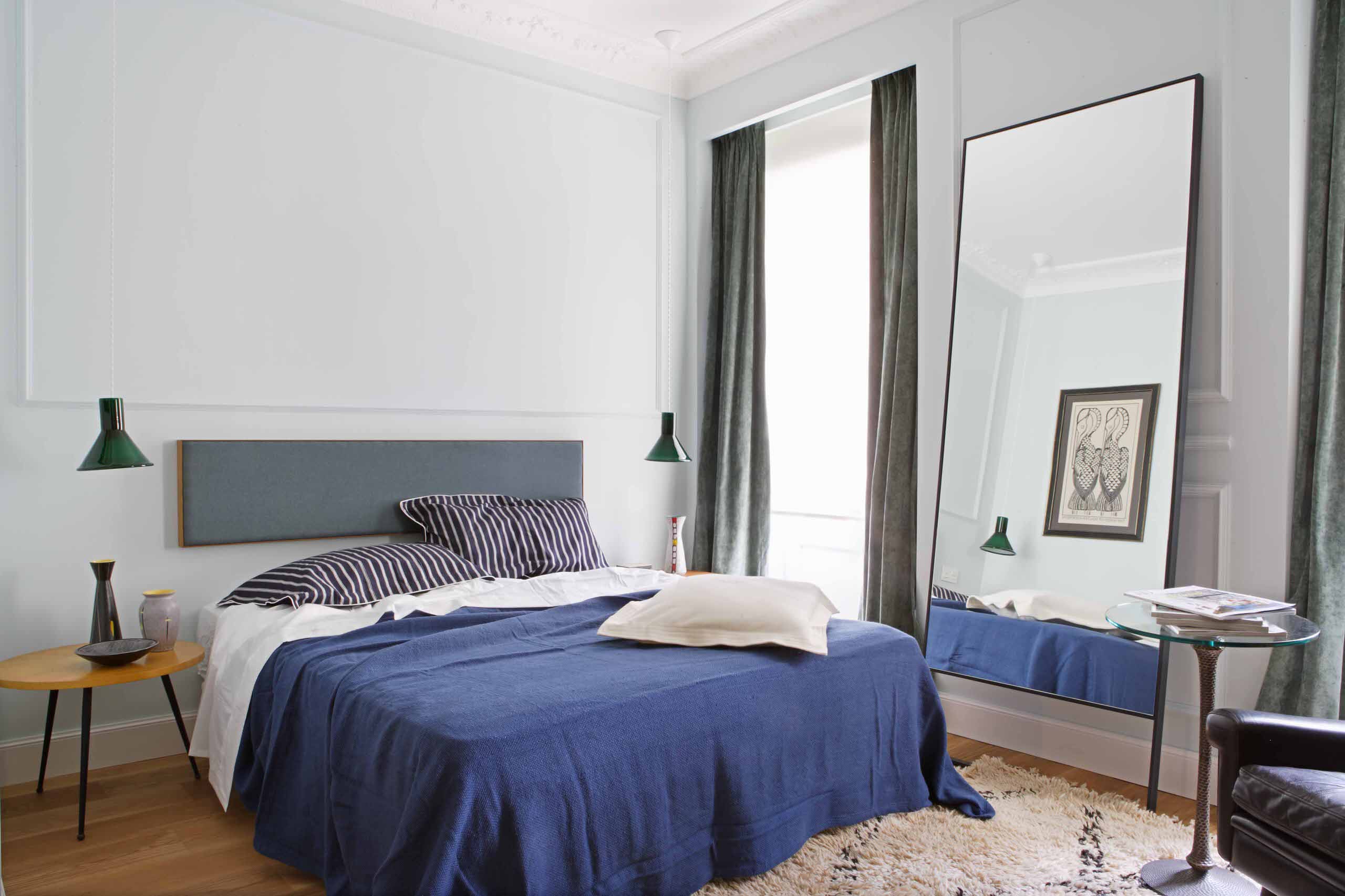
“You can achieve this calm and collected vibe on a serious budget.”
A can of light blue paint is inexpensive. Find a simple navy blue duvet cover set from a store like Target or Amazon for under $75. Instead of pendant lights (which may require an electrician), find a pair of plug-in wall sconces. For the side tables, scour Facebook Marketplace or thrift stores for mid-century modern pieces, which often feature the same warm wood tones and slender legs for a fraction of the price of new furniture.
13. A Moody Blue Room for Work and Workouts
Painting a multi-functional room a single, dark color is a bold but brilliant move. The deep blue on the walls unifies the distinct “office” and “gym” zones, creating a cohesive and immersive environment rather than a cluttered space with two competing purposes. It minimizes visual distractions, which can enhance focus whether you’re on a video call or a workout. The light-colored rug and white desk top provide just enough contrast to keep the room from feeling like a cave, grounding the space while maintaining the moody atmosphere. The same use of bold color is seen in Idea #14.
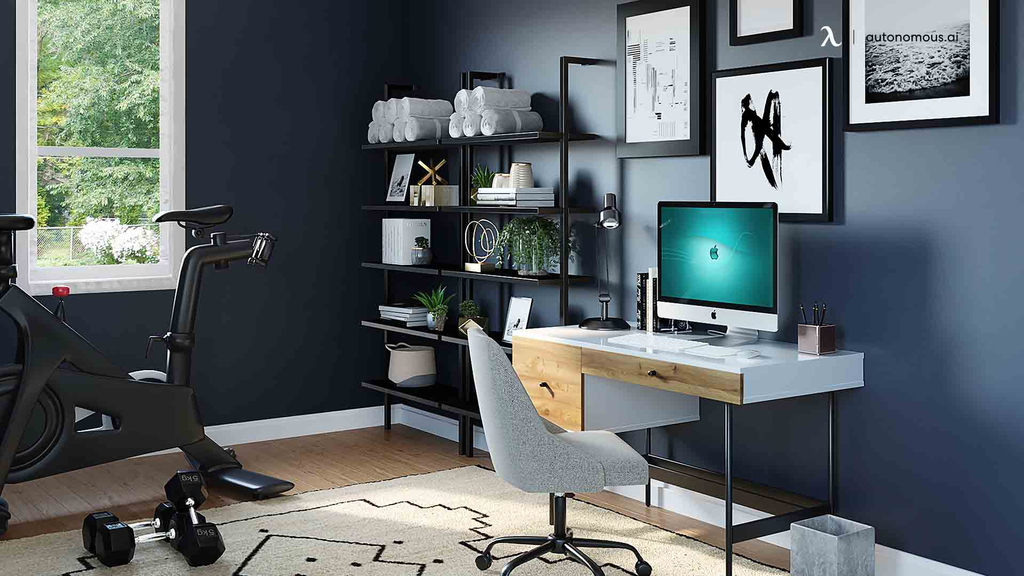
“This room speaks to the 2026 reality of the home office.”
It’s no longer just a temporary setup; it’s a permanent, integrated part of life. This design acknowledges that the WFH space often has to share real estate with other activities, like fitness. Instead of hiding it, the design embraces it, creating a sophisticated “wellness wing” of the apartment. It shows a shift from purely functional home offices to spaces that support a holistic lifestyle, a trend that has serious staying power.
14. Teal Accent Wall with Woven, Natural Textures
The collection of woven plates and baskets on the teal wall is the single element that gives this room its unique personality. The brown leather chairs and dark sofa are classic, handsome choices, but they could exist in any living room. The curated display of natural, textural art is what tells a story. It suggests travel, craftsmanship, and a break from mass-produced decor. It turns a simple accent wall into a personal gallery wall and provides the central theme—a blend of modern color and earthy texture—for the entire space.
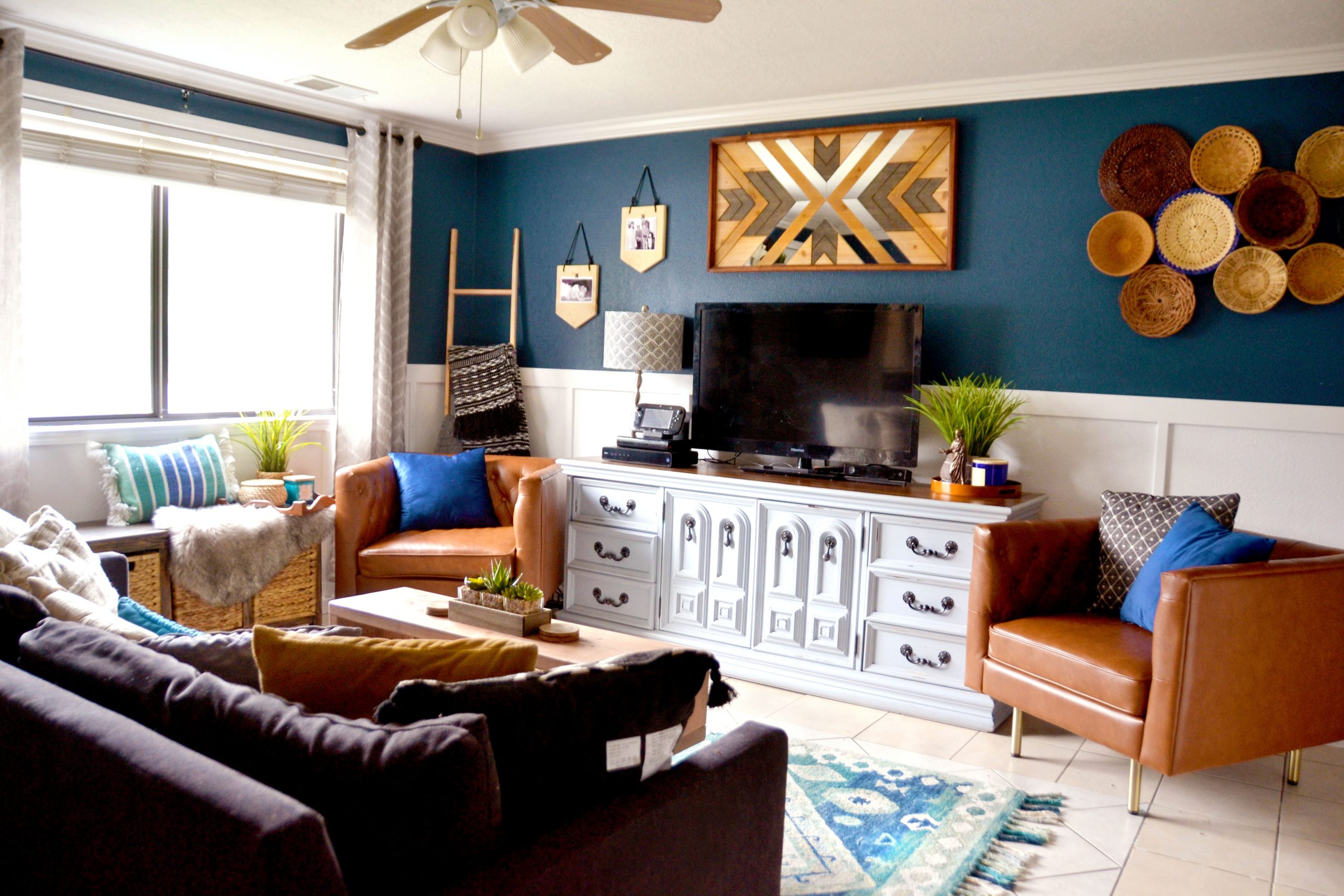
“A collection of woven items like this looks fantastic but can be a bit of a dust trap.”
To keep them looking fresh, you’ll want to go over them with the soft brush attachment of your vacuum cleaner once a month. For a deeper clean, take them down and gently wipe them with a slightly damp microfiber cloth. Be careful not to use too much water, as it can cause natural fibers to warp or mildew. Avoid placing them in direct, harsh sunlight, which can make the fibers brittle and cause their colors to fade over time.
15. Go Bold with a Sophisticated, Colorful Palette
A colorful yet masculine space follows a simple formula: 60% sophisticated neutrals + 30% bold color + 10% grounding element. The neutrals (like grey walls, a beige sofa, or wood floors) provide a calm, mature base. Then, you layer in a single, strong color (like cobalt blue, emerald green, or a deep orange) through large elements like an armchair, a rug, or a piece of art. The final 10% comes from a dark, grounding color like black or charcoal, used in small doses in things like picture frames, lamp bases, or table legs to add a touch of sharpness and definition.
“Committing to a bold color can be intimidating, and it can affect the resale value or rental appeal of your apartment if you go too permanent (like painting every wall).”
If you’re feeling hesitant, start with textiles. A colorful rug, throw pillows, or a piece of art are much easier and cheaper to swap out than repainting a room or buying a new sofa. Live with the color for a few months. If you still love it, you can then commit to a more permanent feature like an accent wall or a piece of furniture.
16. Modern Farmhouse with Shiplap and Dark Accents
This space successfully blends “modern” and “farmhouse” by pairing clean lines with rustic textures. The white shiplap walls and vaulted ceiling are hallmarks of the farmhouse style, creating a bright, airy backdrop. But the furniture choices are decidedly modern and clean-lined. The dark, simple sectional sofa and the minimalist bar stools prevent the look from becoming too quaint or country. The reclaimed wood coffee table acts as the perfect bridge between the two styles, combining a rustic material with a simple, modern shape.
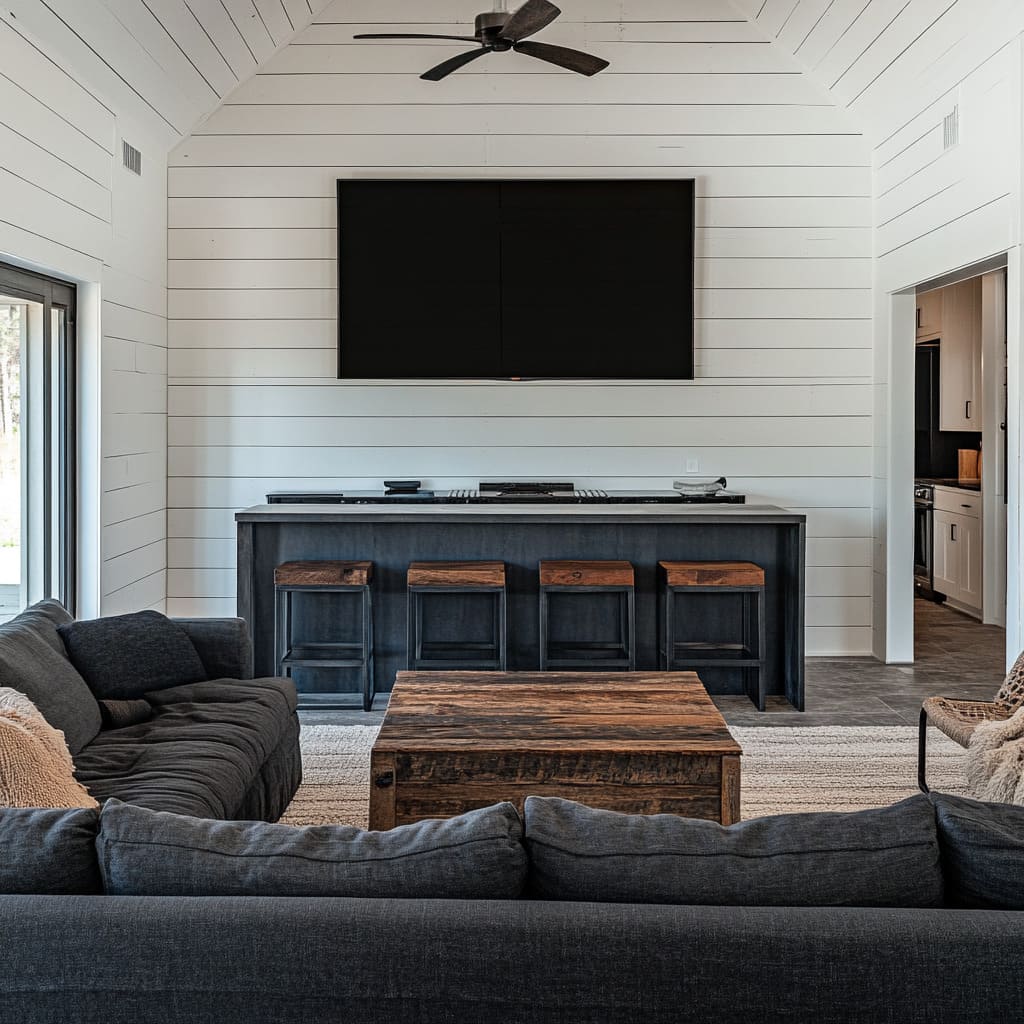
“When you have white walls and a lot of natural light, you need to add dark elements to ground the space and prevent it from feeling washed out.”
A dark sectional sofa, a dark ceiling fan, and the dark bar counter all serve as visual anchors in this room. Aim to have at least three significant points of dark color distributed around the room to create a sense of balance and depth. This creates a pleasing visual triangle that guides the eye through the space.
17. Warm Minimalism with Stone and Wood Wall Panels
The genius of this room lies in the wall treatment behind the bed. It’s not just one accent material, but a sophisticated layering of three: a brown upholstered headboard, a light wood panel, and large, grey stone-look tiles on top. This textural trio is the undeniable focal point and what gives the room its unique, high-end character. It creates architectural depth and a tactile richness that simple paint could never achieve. It perfectly balances warmth (wood), softness (fabric), and a cool, grounding element (stone).
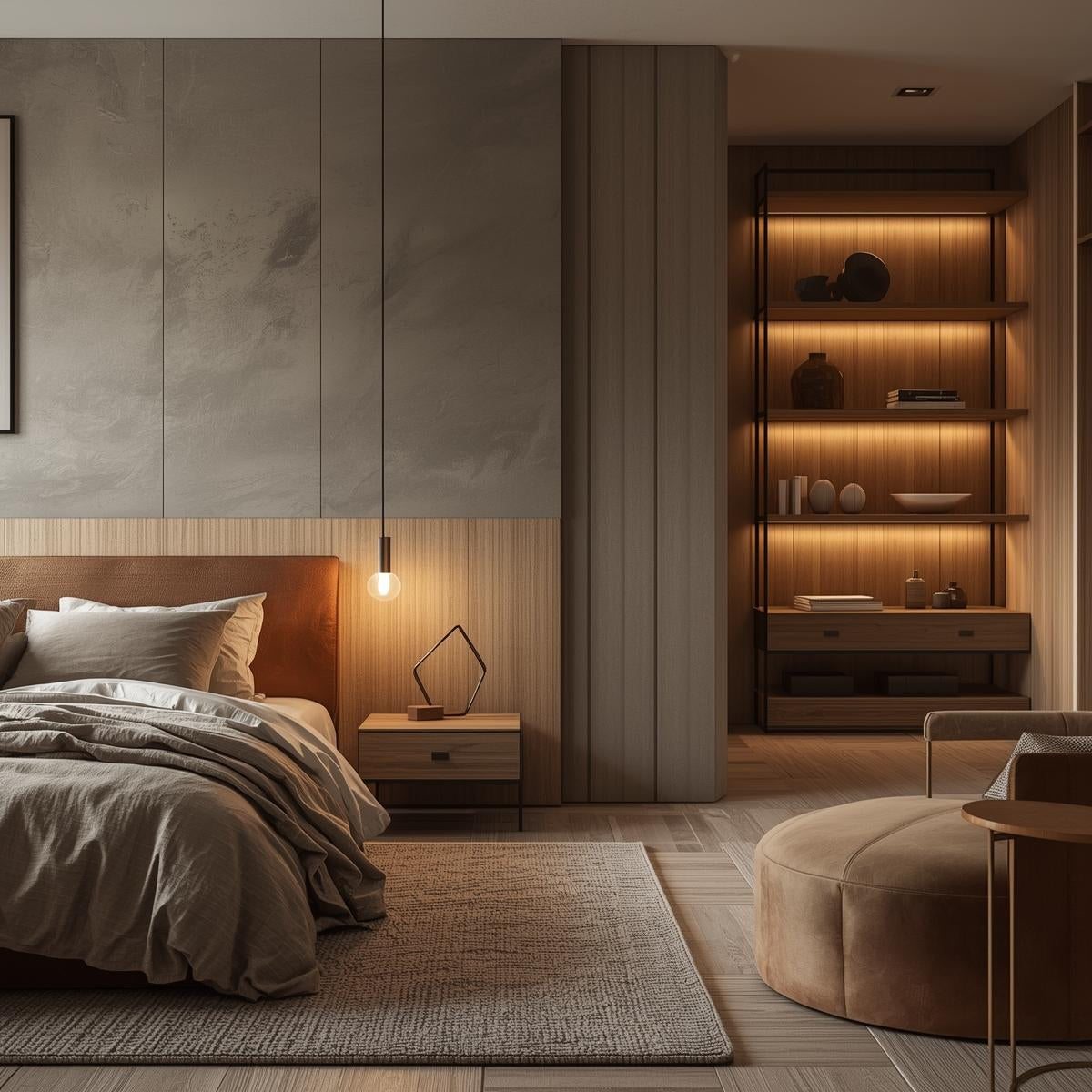
“A multi-layered wall treatment like this works best on an unobstructed wall in a medium to large bedroom (at least 150 square feet).”
You need enough space for the wall to be a feature without overwhelming the room. It’s also best suited for ceilings of at least 8 feet, as the horizontal lines can make a very low ceiling feel even lower. The key is that the bed should be the only piece of furniture against this wall to let the design breathe and maintain its impact.
18. Industrial Bedroom with a Distressed Concrete Wall
This bedroom nails the industrial-cozy paradox. It works because it fearlessly pairs raw, edgy materials with classic comforts. The distressed concrete-and-brick wall and exposed track lighting scream “industrial loft.” But right next to it, the olive green wall, plush plaid bedspread, and rich leather headboard provide a soft, warm counterpoint. It’s this tension—the contrast between hard and soft, cold and warm, rough and smooth—that makes the space so compelling and livable. It feels curated, not accidental.
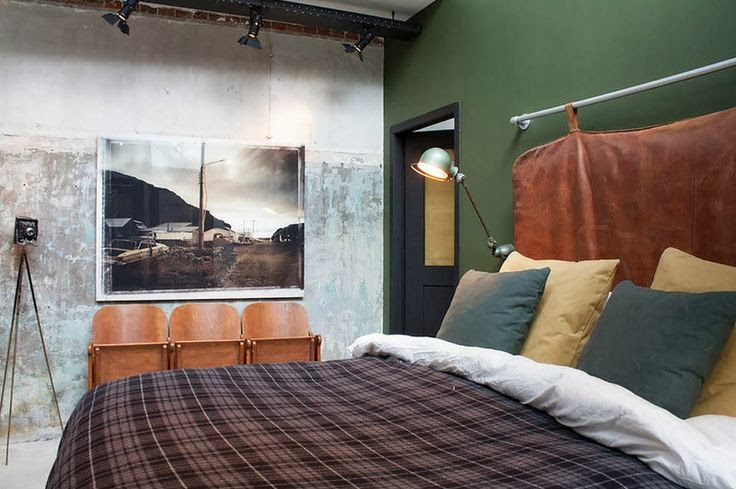
“You can create a faux distressed concrete wall yourself.”
Time: 1 weekend. Cost: $100-$150.
- Start with a clean, primed wall.
- Apply a base coat of a medium-grey satin or eggshell paint. Let it dry completely.
- Use a putty knife or trowel to apply thin, random patches of drywall joint compound to the wall. Don’t aim for full coverage; you want variation.
- While the compound is still wet, use the flat edge of your trowel to lightly skim over the surface, smoothing some areas and leaving texture in others.
- Once dry, lightly sand any very rough spots.
- Mix a darker grey paint with water to create a “wash.” Apply it sparingly with a rag or sponge, wiping most of it off to create depth and an aged look.
19. A Cozy, Warm-Lit Reading Nook with Open Shelving
The single most important element here is the lighting. It’s not about the chair or the shelves—it’s about the warm, layered glow. Notice there is no harsh overhead light. Instead, multiple sources of ambient light (likely table lamps just out of frame) combine to create a pool of soft, inviting illumination. This warm-toned light (around 2700K on the temperature scale) is what transforms a simple corner into a cozy, relaxing sanctuary. It’s a perfect demonstration of how lighting single-handedly dictates the mood of a space.

“To create an effective reading nook, you need at least two types of light.”
First, you need ambient light to provide a general soft glow, like the warm lamps here. Second, you must have a dedicated task light—a floor lamp or a wall-mounted sconce—that directs focused, brighter light directly onto your book pages. Placing the task light to the side and slightly behind your shoulder will illuminate the page without causing glare or casting shadows. A layered lighting scheme is always the most functional and comfortable.
20. Spacious Industrial Loft with Exposed Timber Beams
Those stunning exposed timber beams are a dream, but they do require a specific cleaning routine. Because of their height and rough texture, they are magnets for dust and cobwebs that you can’t easily reach. Once or twice a year, you’ll need a tall ladder and a vacuum with a long extension wand and brush attachment to thoroughly clean them. For any sticky spots or grime, use a cloth lightly dampened with a wood-safe cleaner. It’s a bit of a project, but essential to keep the space feeling clean and not “rustic-in-a-bad-way.”
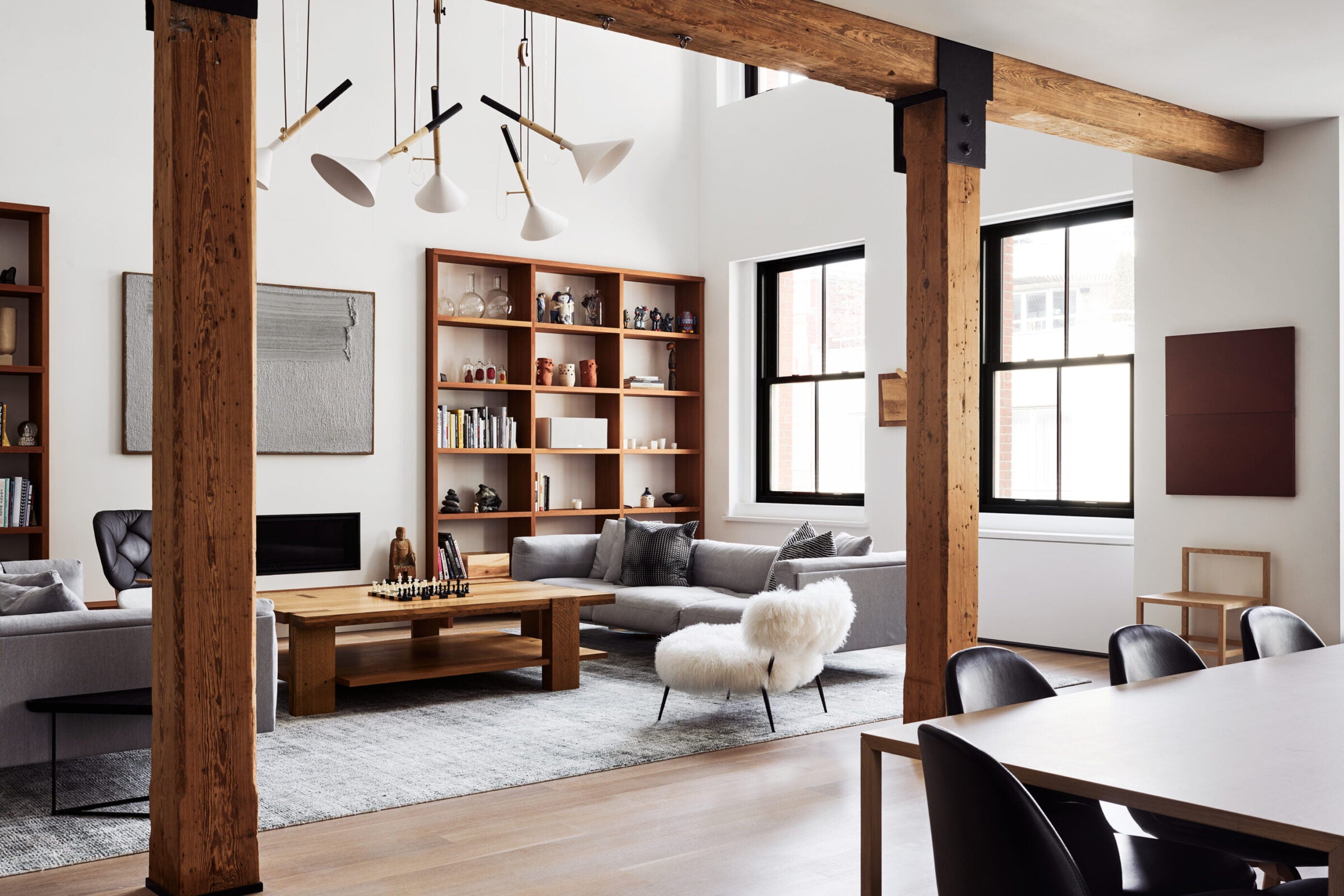
“This room feels so balanced because it respects the scale of the architecture.”
In a vast, open loft with high ceilings and massive wooden beams, using small, delicate furniture would look comical. The choice of a large, substantial sectional sofa and a full-height bookcase feels appropriate and proportional to the space. The design succeeds by matching the scale of the furnishings to the grand scale of the room itself, creating a cohesive and commanding presence. The neutral color palette allows the incredible architecture to remain the star.
21. Industrial Bedroom with a Bold Street Art Mural
Want to hang pendant lights like this? It’s all about staggering them. Time: 2-3 hours. Cost: $150-$400 (plus electrician).
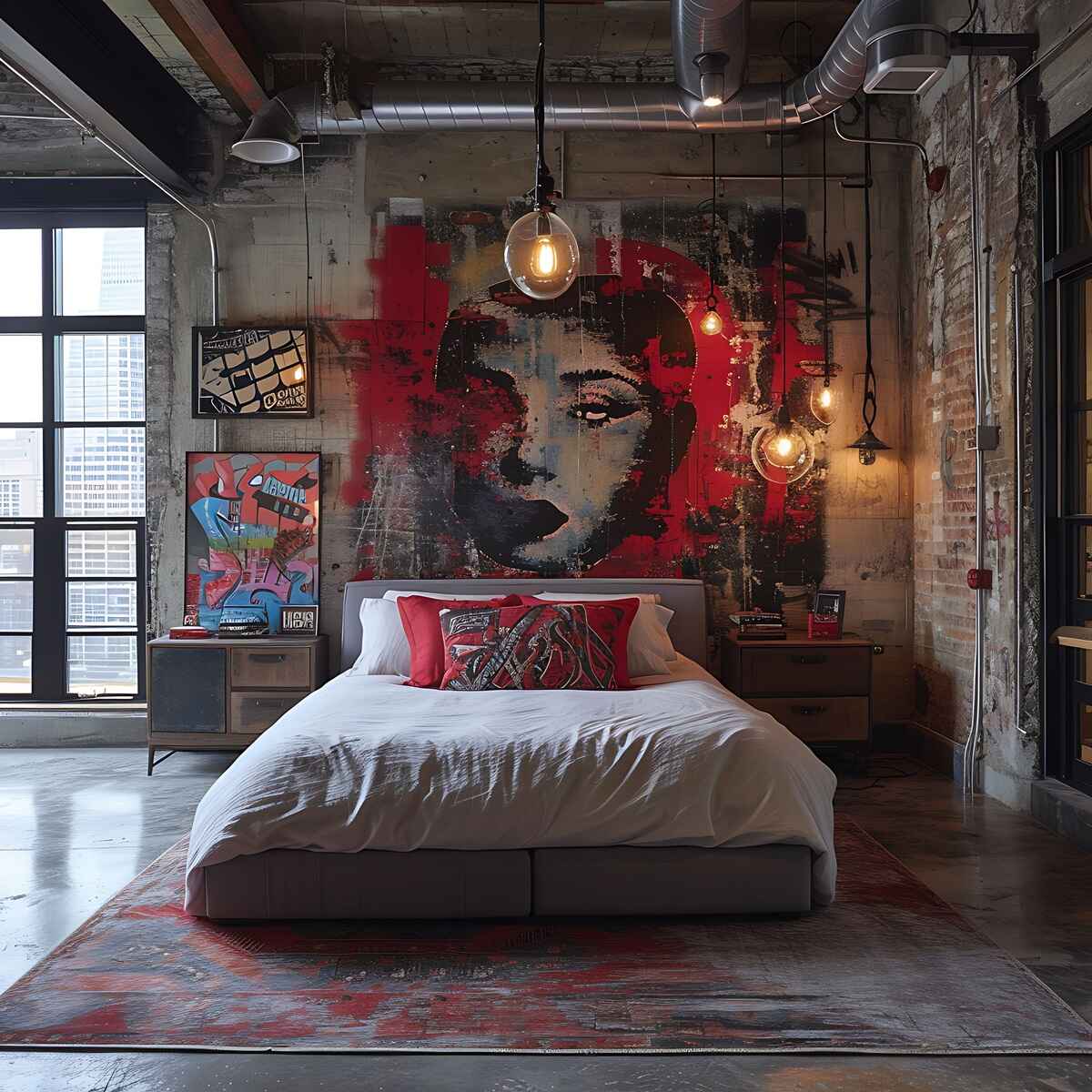
“Choose an odd number of pendants for the most dynamic look, like three or five.”
Plan your heights before calling the electrician. The lowest bulb should hang at least 12-18 inches above your nightstand so it’s usable but not in the way.
Stagger the remaining pendants upwards from there, with at least 6-8 inches of vertical distance between each one.
Arrange them in a loose cluster or a gentle line over the side of the bed, not in a rigid, perfect pattern. The goal is “artfully random.”
Use low-wattage Edison bulbs to get that warm glow without blinding yourself when you’re in bed.
A huge, graphic mural is an incredible statement-maker, but it can be a double-edged sword. It completely dictates the room’s decor—you have to decorate *around* the mural, not just with it. Your color palette is essentially chosen for you (in this case, red, black, and grey). It also makes it much harder to change the room’s vibe in the future without painting over it. Before you commit, be absolutely sure you love the artwork and are prepared to live with its dominant personality for a long time.
22. Start Simple with a Versatile Grey Foundation
This is the quintessential “bachelor pad on a budget” starter pack, and it’s brilliant because it’s so versatile. You can get this entire look for under $1,500. Start with a simple, affordable grey sofa from a place like Wayfair or Bob’s Discount Furniture ($500-$800). Find a black metal-framed coffee table and floor lamp on Amazon ($100-$200). The key is the rug: a good-quality, graphic black and white rug from IKEA or Rugs USA ($200-$300) will tie everything together and make it look intentional. Add some personality with throw pillows and a framed poster.
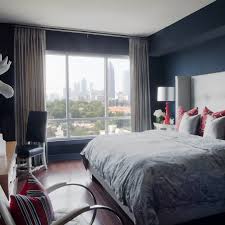
“The formula for a foolproof starter living room is simple: 80% neutral basics + 20% personal touches.”
The 80% consists of your big-ticket items in a timeless neutral color, like a grey sofa and a black coffee table. These are your investment pieces that can adapt as your style evolves. The other 20% is where you can have fun and be trendy without breaking the bank. Think throw pillows, artwork, plants, and decor objects. You can swap these out easily and cheaply whenever you want a change, while your solid, neutral foundation remains. For an upgraded version of this look, see Idea #9.
23. Modern Cabin Vibe with a Floor-to-Ceiling Stone Fireplace
The floor-to-ceiling stone fireplace is, without question, the heart and soul of this room. It’s a powerful, textural feature that immediately evokes the feeling of a modern mountain lodge. The natural wood mantel adds a rustic touch, but the clean lines of the surrounding furniture—the grey sofa, the leather sling chairs—keep the overall aesthetic firmly in the 21st century. Everything else in the room is arranged to honor and face this central element. Removing it would completely erase the room’s cozy, cabin-inspired identity.
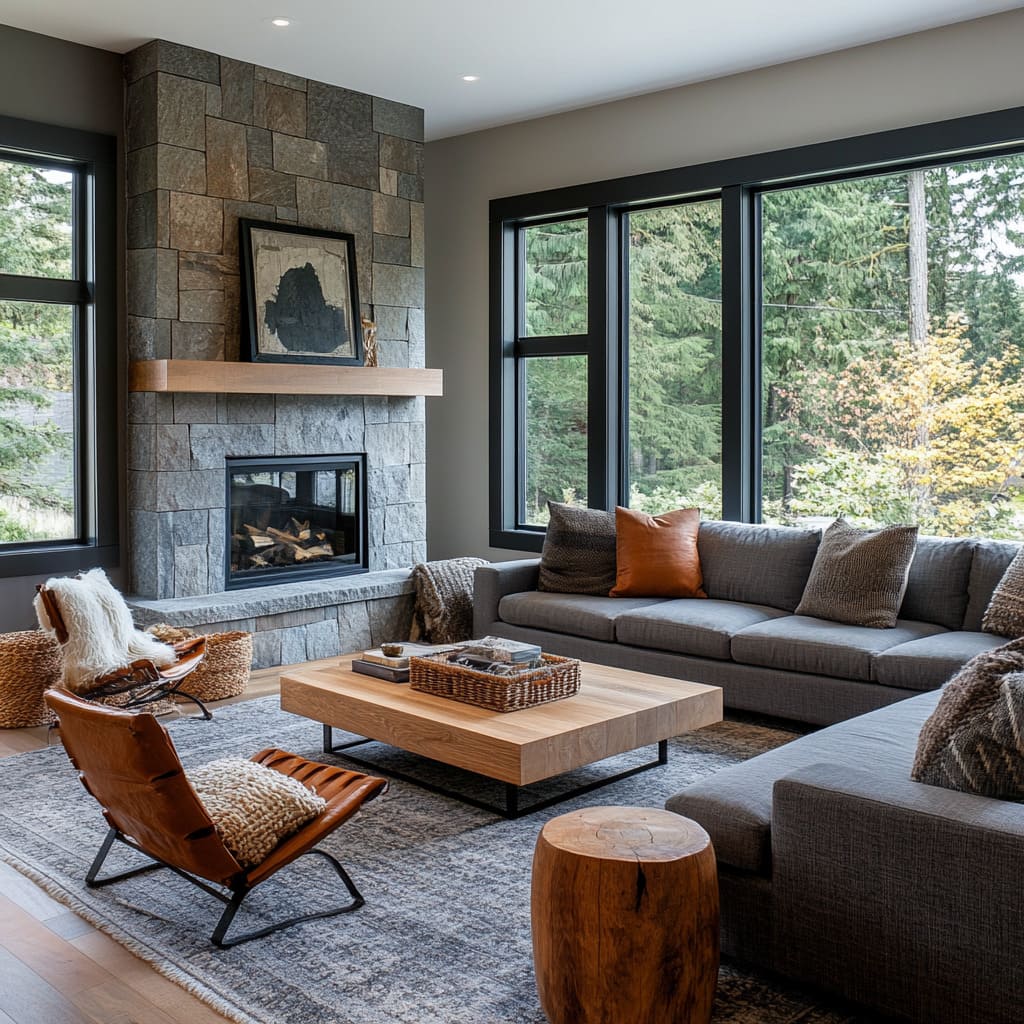
“When you have a fireplace as a focal point, don’t place your sofa directly against the opposite wall.”
Pull the entire seating arrangement—sofa, chairs, coffee table, and rug—towards the center of the room. This creates a dedicated, intimate conversation zone around the fire. It also allows for a walkway behind the sofa, which makes the room feel larger and improves flow. As a rule of thumb, try to have at least 3 feet of clearance for major walkways.
24. Urban Industrial Bedroom with Dark Walls and Wood Shelving
This room masters the art of creating a cozy cave. The dark grey textured walls and ceiling wrap the space in a dark, cocoon-like shell, which is perfect for promoting rest. The key to its success is the large window and the built-in light wood shelving that frames it. This expansive area of warmth and lightness acts as a crucial counter-balance to the dark walls, preventing the room from feeling claustrophobic. The track lighting provides flexible, focused light that highlights the wooden elements and adds to the industrial, urban feel.
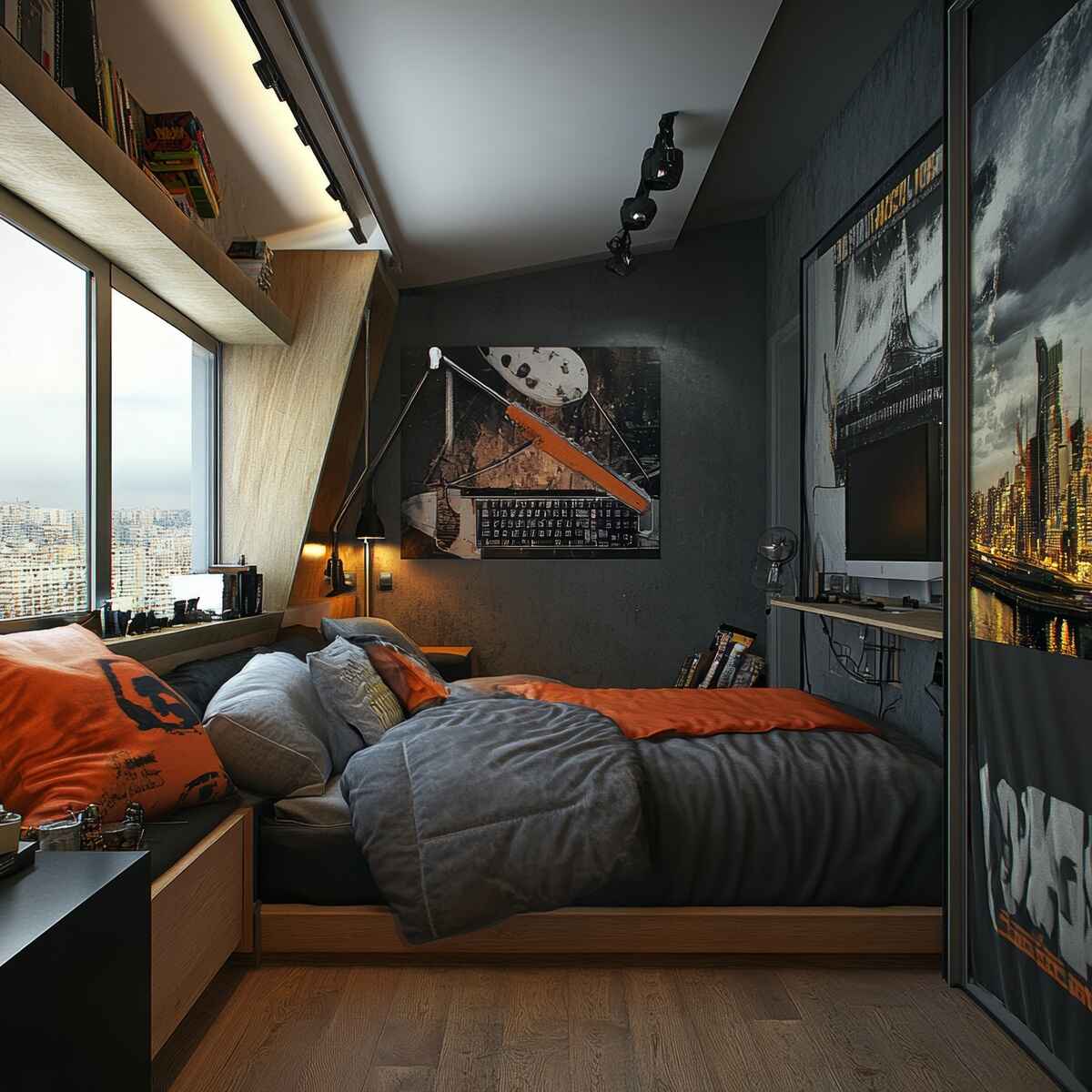
“A room this dark is not for everyone.”
If you suffer from seasonal affective disorder (SAD) or generally need bright spaces to feel energized, this moody aesthetic could be challenging to live in, especially during long winters. It also requires a more robust and layered lighting plan than a light-colored room. You’ll need good ambient, task, and accent lighting to make it functional at all hours. Before you paint everything a dark color, be honest with yourself about your sensitivity to light and your willingness to invest in a good lighting scheme.
25. Channeling a São Paulo-Inspired Rustic Vibe
This look captures a global design trend that’s moving away from purely American or Scandinavian rustic styles. Drawing inspiration from places like São Paulo, it blends the warmth of natural wood and leather with a bit more of an eclectic, slightly bohemian sensibility. It’s less about plaid and antlers and more about rich textures, handcrafted objects, and a sophisticated earthiness. This style has longevity because it’s rooted in authentic materials and personal expression rather than a specific, fleeting trend.
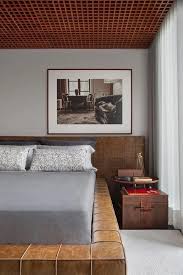
“To get that well-traveled, rustic look, focus on mixing wood finishes.”
Don’t buy a matching bedroom set! Instead, pair a dark walnut bed frame with a lighter teak nightstand, or a mango wood dresser with an acacia wood bench. As long as the undertones are either all warm (most woods) or all cool (like grey-washed wood), the different finishes will complement each other and create a richer, more curated look. Aim for two to three different wood tones in a single room for the perfect balance.
26. Space-Saving Studio with a Concealed Bed
This studio apartment layout is incredibly effective because it creates clear visual zones without using physical walls. The bed, tucked away in a dedicated nook with sliding doors, can be completely hidden, instantly transforming the space from a bedroom into a proper living room. The consistent color palette of light grey, black, and white across both the “living” and “sleeping” areas makes the whole apartment feel like one cohesive, intentionally designed space. The use of a built-in desk under the window further maximizes every square inch.
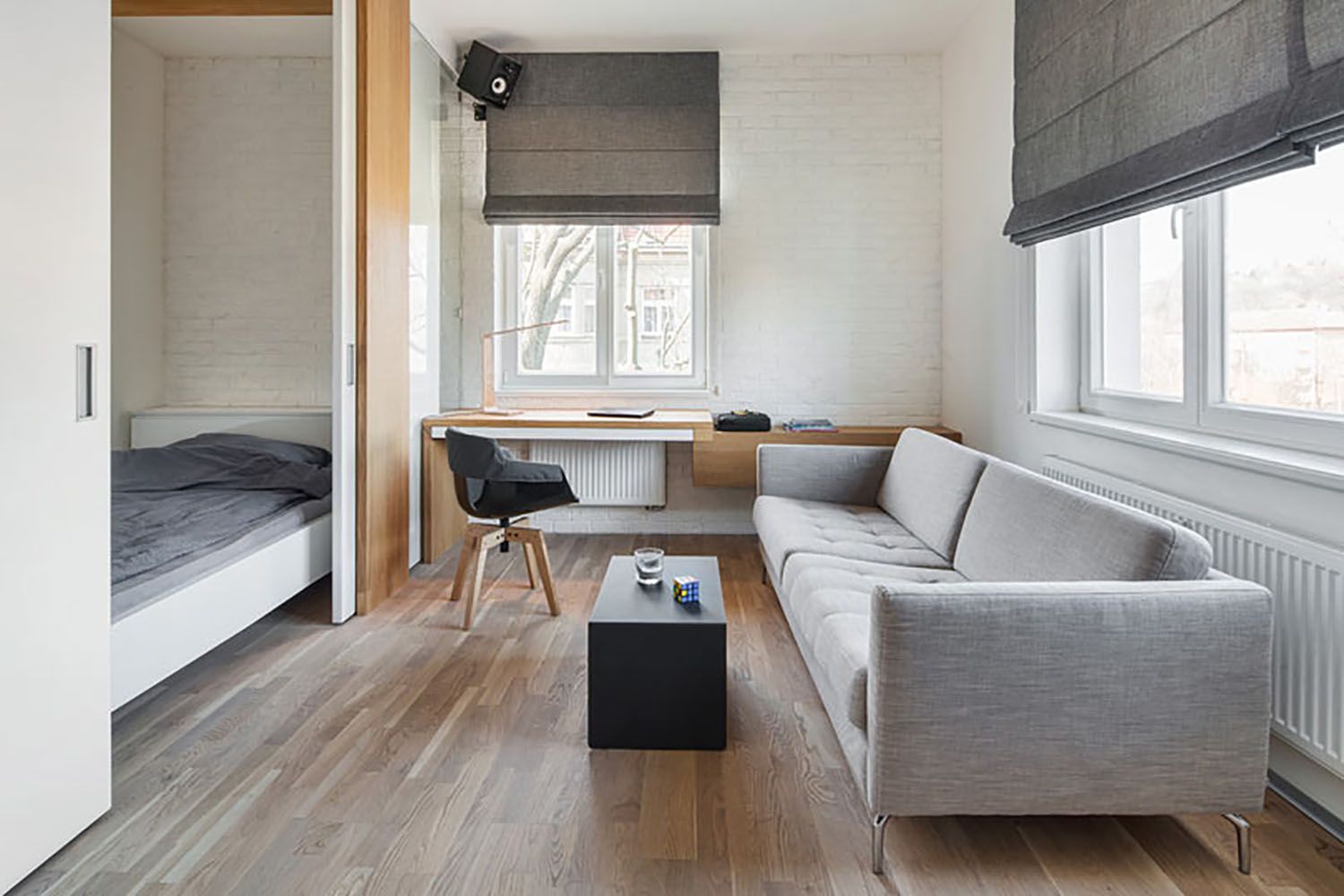
“This idea is tailor-made for small studio apartments, typically under 500 square feet.”
The genius of the concealed bed is that it allows a single room to function like two. If you have a larger open-concept space, like in Idea #7, you might use a large rug or a sofa to delineate zones. But in a truly compact studio, having a physical barrier—even a sliding one—to hide the bed is the most effective way to keep the space from feeling like you just live in your bedroom.
27. Open-Plan Living with Layered Lighting an a City View
In an open-plan space, lighting is your best friend for creating zones. Notice how this area uses three distinct types of lighting to define function. The track lighting provides flexible, overall ambient light. The cluster of pendants hangs low over the dining table, creating an intimate “room within a room” for meals. A separate, unseen light source likely illuminates the living area. By using different fixtures at different heights, you can designate the purpose of each part of the room, even without walls or dividers.
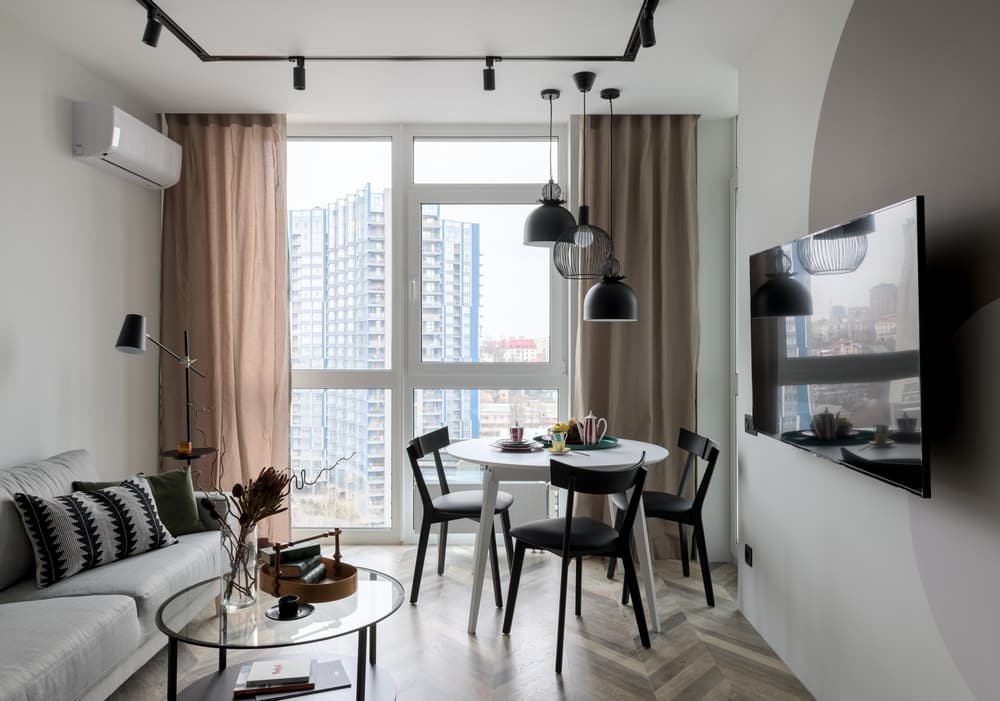
“You can get this high-end, multi-zone look without a complex electrical plan.”
Use a stylish floor lamp to define the living area. Choose an arc lamp that can extend over your sofa to provide light without needing a ceiling fixture. For the dining area, if you can’t install a pendant light, use a dramatic, oversized table lamp on a sideboard or a slim floor lamp tucked into the corner next to the table. This still provides that crucial layer of focused light that makes the dining space feel special and separate.
28. Mastering the Details of Rustic Bedroom Design
The secret to a rustic bedroom that feels modern, not dated, is in the material balance. Follow this recipe: 40% warm, rough textures (like reclaimed wood or brick), 40% clean, crisp neutrals (like simple white bedding or a plain grey wall), and 20% dark, grounding accents (like a black metal bed frame, dark leather, or charcoal-colored pillows). This formula ensures that the rustic elements are balanced by modern simplicity, keeping the look fresh, clean, and intentional rather than cluttered and kitschy.
“While rustic decor is often associated with being rugged and durable, certain elements can be quite delicate.”
A raw, live-edge wood headboard can be prone to splitting if the air in your apartment is too dry, especially in winter. It may need occasional treatment with a specific wood oil or conditioner to stay healthy. Similarly, materials like unsealed brick can be dusty and may benefit from being sealed to prevent crumbling and make cleaning easier. It’s a low-maintenance look overall, but not zero-maintenance.
29. A Grounded, Rustic Dining Space with Leather Chairs
- Dining Table: $1,200 – $3,500
- Dining Chairs (set of 6): $1,500 – $4,000
- Area Rug: $500 – $1,500
- Pendant Light: $200 – $600
- Decor (Mirror, plants): $300 – $800
- TOTAL: $3,700 – $10,400
- Budget alternative: Find a used solid wood table on Facebook Marketplace and sand it down for around $400. Look for faux leather chairs and an industrial pendant from online retailers like Wayfair or Overstock.
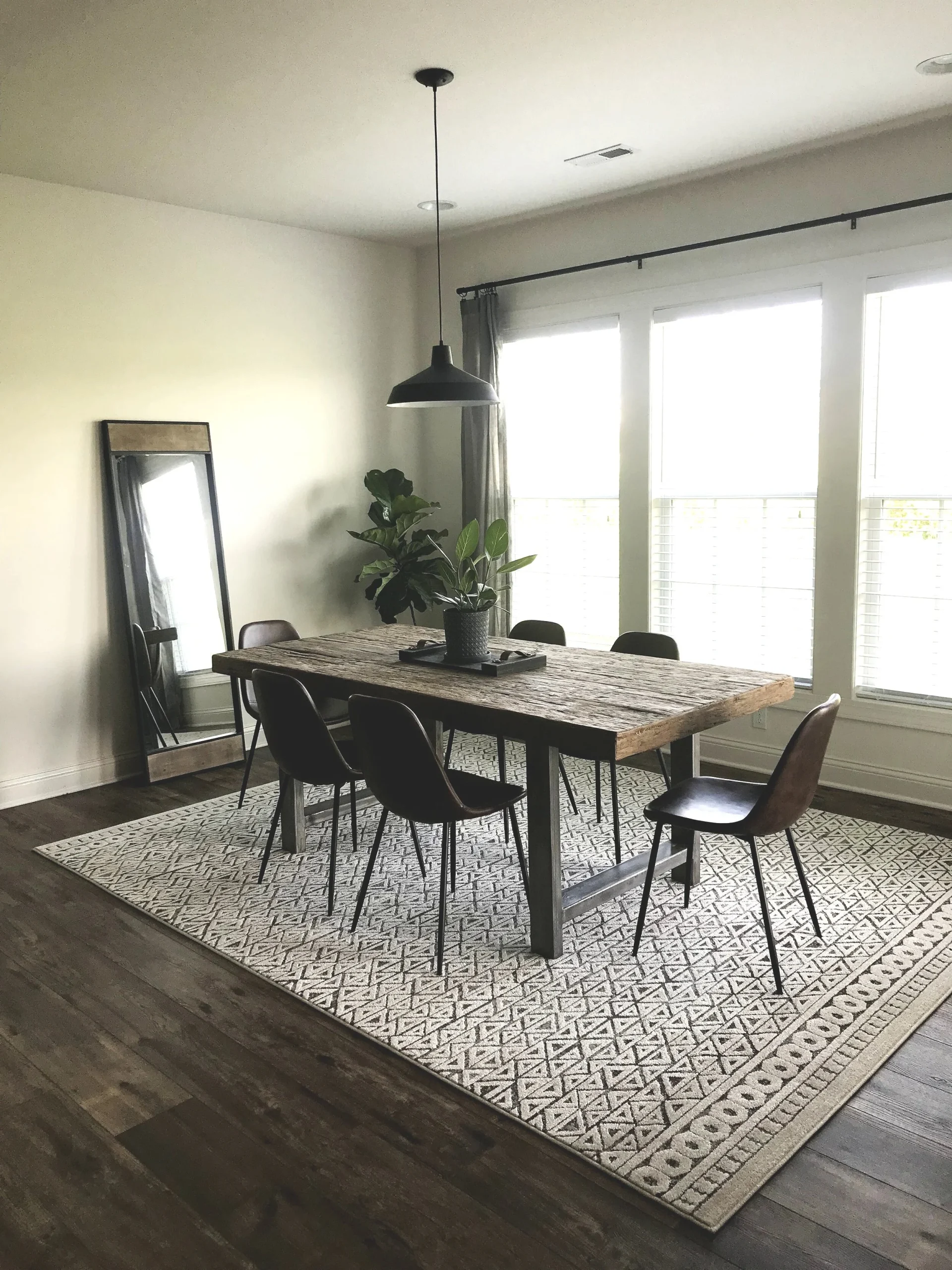
“This dining area feels so established and solid due to the repetition of materials and colors.”
The dark brown of the leather chairs is echoed in the dark wood of the floor and the frame of the large mirror. The black of the industrial pendant light is repeated in the metal legs of the chairs and the darker lines of the geometric rug. This intentional repetition creates a cohesive palette that makes the space feel harmonious and thoughtfully designed. The green plants are the perfect organic touch to break up the rich, dark tones.
30. Balancing Neutrals with Mustard and Clay Accents
The masterstroke in this bedroom is the choice of accent colors. Mustard yellow and clay orange are not typical choices, but their earthy, warm undertones make them incredibly sophisticated and pair beautifully with the warm grey walls. This specific color combination is what makes the room feel unique, modern, and inviting. If you swapped them for a more standard primary color like blue or red, the room would lose its distinctive, designer-curated personality. It’s a lesson in the power of a slightly unexpected palette.
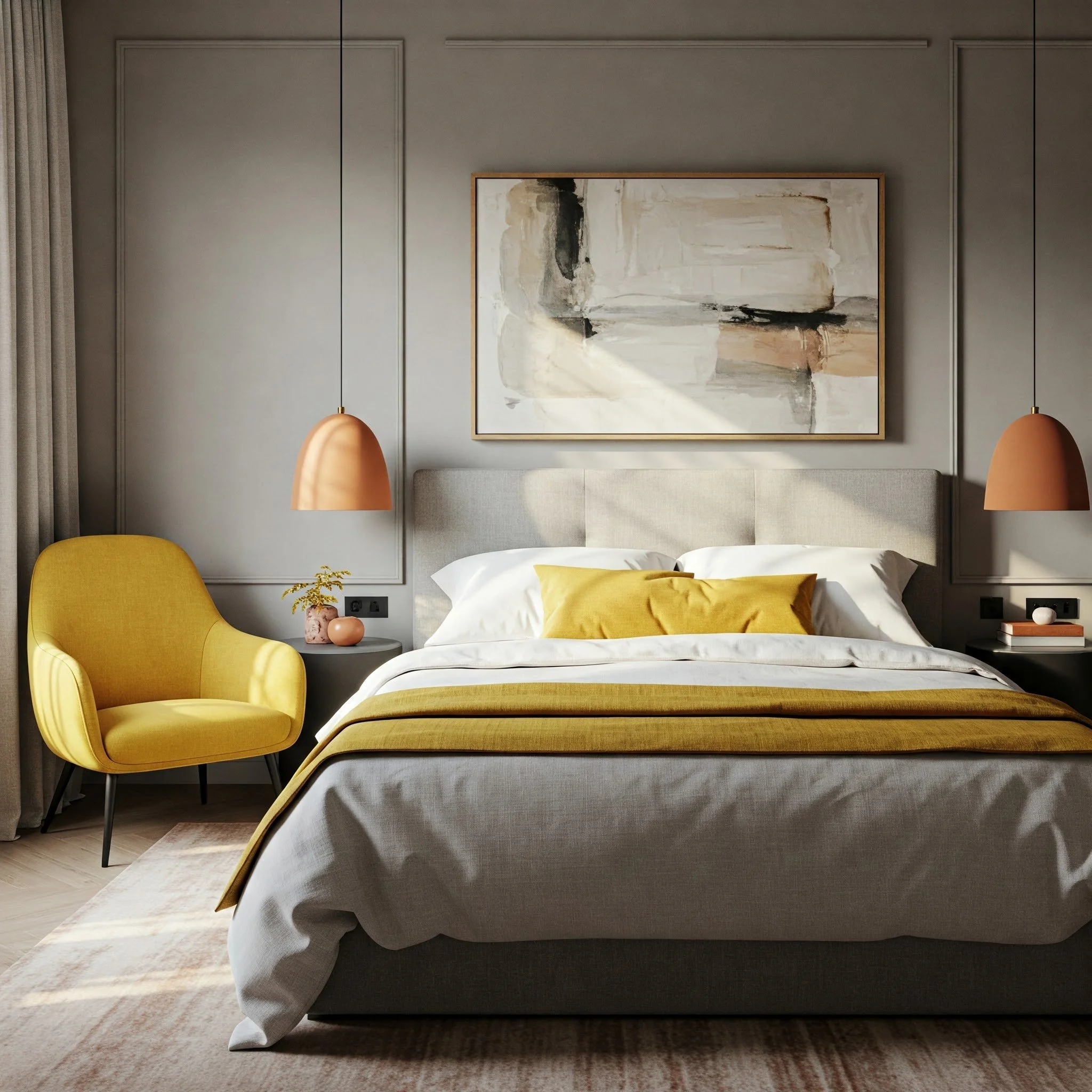
“When using bold accent colors, the rule of three is your best friend.”
Notice how the mustard yellow appears in three places: the armchair, the bedding, and the abstract artwork. The clay orange also appears in a pair as pendants, which acts as one “moment”. This repetition makes the color choice feel intentional and integrated, not random. If you were to just have one yellow pillow, it would look like an afterthought. Distributing an accent color across three or more points in the room creates balance and rhythm.
Your Apartment’s Next Chapter Starts Here
Think of your apartment as a reflection of who you are and where you’re going. These ideas are a starting point, not a rigid set of rules. Pick what resonates, mix and match, and don’t be afraid to try something new. The best spaces evolve over time.
Ready to start planning? Head over to Pinterest and create a new board for your favorite looks from this article. You’ll be glad you did.