You know that feeling when you finally find the DIY fence idea that looks exactly right for your yard? That “aha!” moment is what this guide is all about. After filtering through hundreds of options, we narrowed it down to 31 ideas that actually deliver on style and function. We’re covering everything from sleek modern horizontal slats to timeless picket fences and serene natural bamboo designs. In 2026, it’s all about creating private, personalized outdoor havens, and the right fence is the foundation. It’s not just a boundary; it’s a statement. 📌 Pin this guide for later — your future self will thank you when it’s time to actually do this.
1. Frame Your Lawn with a Stained Wood Fence and Gravel Border
The combination of the dark-stained wood and the light-colored gravel creates a crisp, intentional border that makes the green of the lawn appear even more vibrant. This visual separation, a classic landscape design trick, adds a layer of polish and definition. The tall, solid nature of the fence provides a strong sense of enclosure and privacy, turning the yard into a secluded retreat. It feels like a true outdoor room, not just a patch of grass.
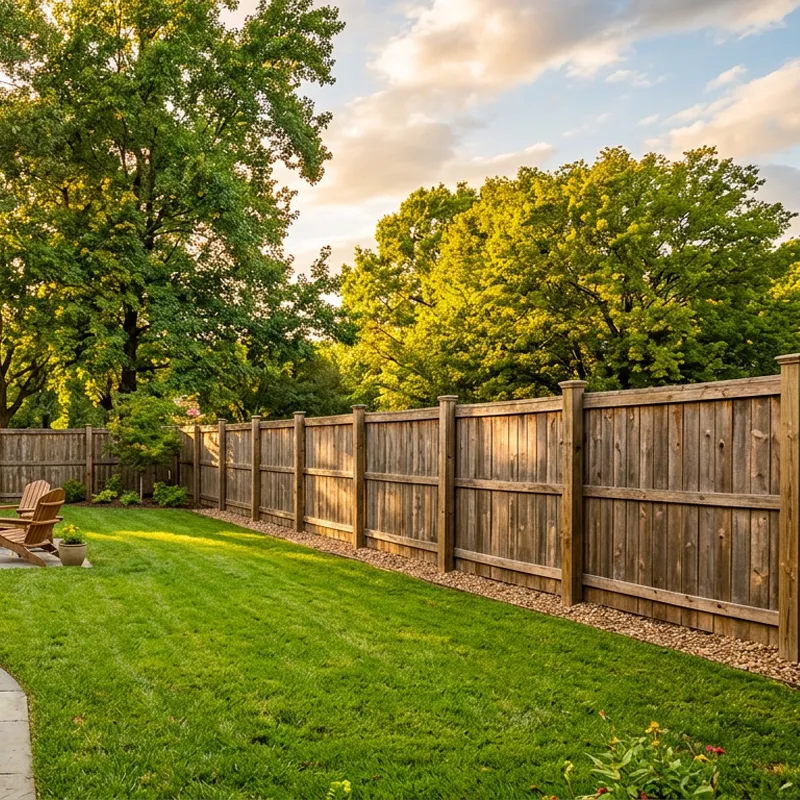
“A stained wood fence requires upkeep to maintain its rich color.”
Plan to clean and re-stain it every 2-3 years, especially in climates with harsh sun or heavy rain, to prevent fading and protect the wood from moisture. The gravel base is low-maintenance, but you’ll want to rake it smooth periodically and pull any stray weeds that pop through. A layer of landscape fabric underneath the gravel is crucial for long-term weed prevention.
2. Modern Horizontal Slats with Contrasting Black Metal Posts
When installing a horizontal fence, the spacing between slats is everything. For a modern, private look, aim for a gap of no more than 1/2 to 3/4 inch. This maintains a sense of solidity from a distance but allows light and air to filter through, preventing the fence from feeling like a monolithic wall. For the black metal posts, choose a powder-coated finish. It’s far more durable than spray paint and will resist chipping and fading for years, keeping that crisp contrast sharp.
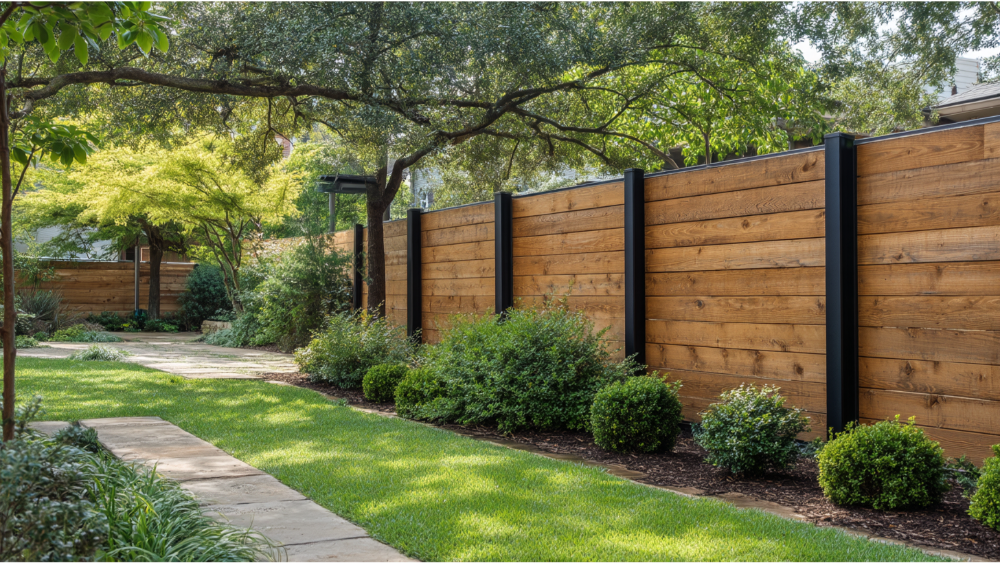
“Think of this look as a simple equation: 60% warm, natural wood + 30% stark black accents + 10% structured green foliage.”
The beauty of this formula is its adaptability. You could swap the light wood for a darker Ipe or even a composite material. The black posts could be a deep charcoal grey. As long as you maintain that ratio of natural texture, bold structure, and soft landscaping, you’ll achieve the same sophisticated, modern aesthetic.
3. A Classic Backyard with a Stained Wood Picket Fence
A traditional picket fence is one of the most budget-friendly DIY options. You can often find pre-assembled panels at big-box stores for $40-$70 per 8-foot section. For an even cheaper route, buy individual pickets and rails from a lumber yard and assemble it yourself—this gives you total control over spacing. A simple pine or cedar fence, finished with a warm-toned exterior stain, captures this exact friendly, all-American vibe without the custom-built price tag. Landscaping with hardy, low-cost shrubs completes the picture.
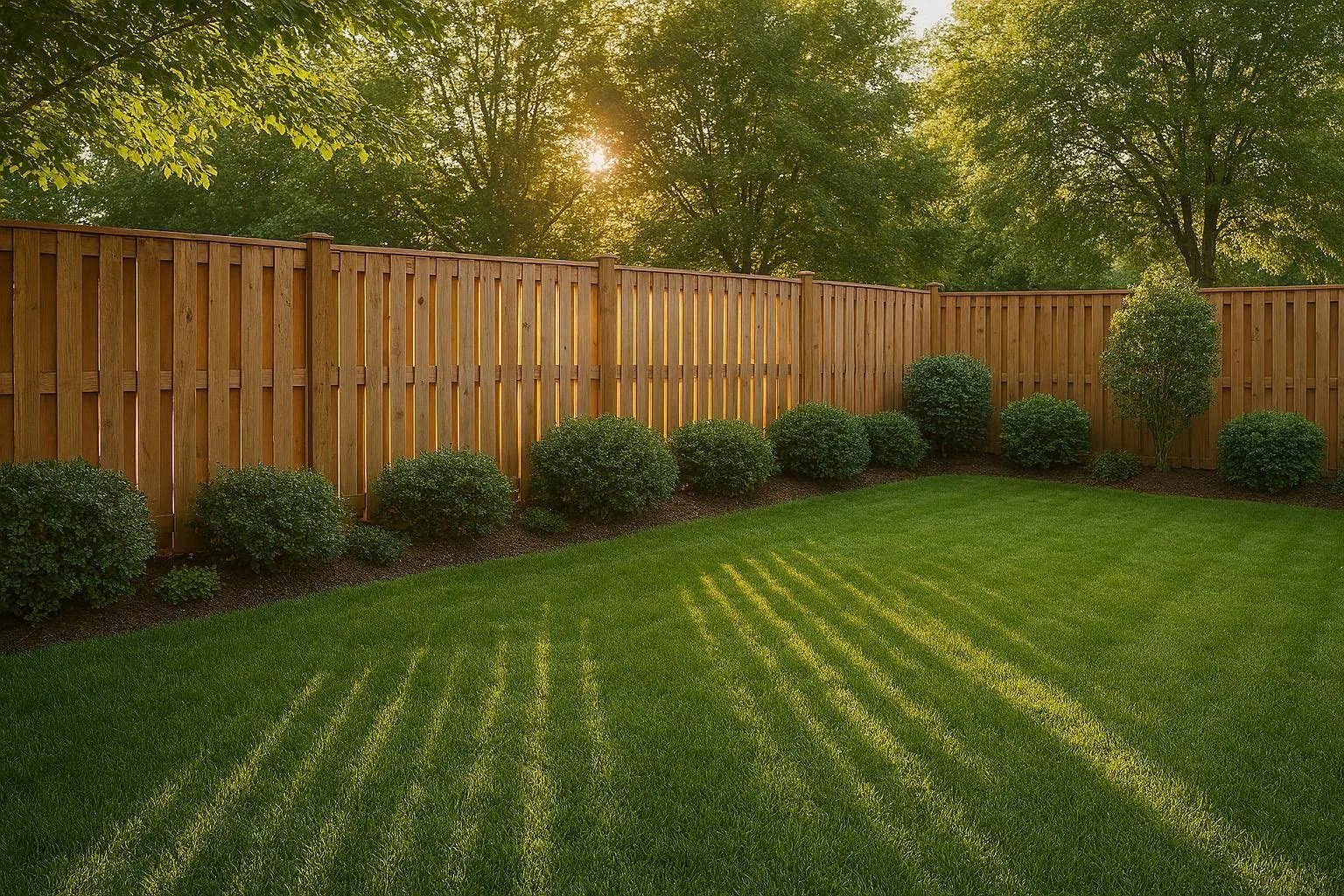
“While charming, a picket fence is not a privacy fence.”
The gaps between slats mean your neighbors will have a clear view into your yard, and you into theirs. This style is more about demarcation than seclusion. It’s perfect for front yards or for containing pets and children in a friendly, neighborly way. If you crave true privacy, you might find this style a bit too revealing. Also, sunlight striping across the lawn can be beautiful, but it can also create uneven grass growth in less sunny spots.
4. Add Charm with a Slatted Fence and Integrated Flower Boxes
The integrated planter boxes are what truly make this fence special. Without them, it’s a perfectly nice, standard wooden fence. With them, it becomes a living, breathing part of the garden. They break up the long vertical lines, add a vibrant splash of color at eye level, and make the entire structure feel intentional and custom. It’s a design element that says “a gardener lives here” and turns a simple boundary into a beautiful feature. It’s an easy addition that has a massive impact.
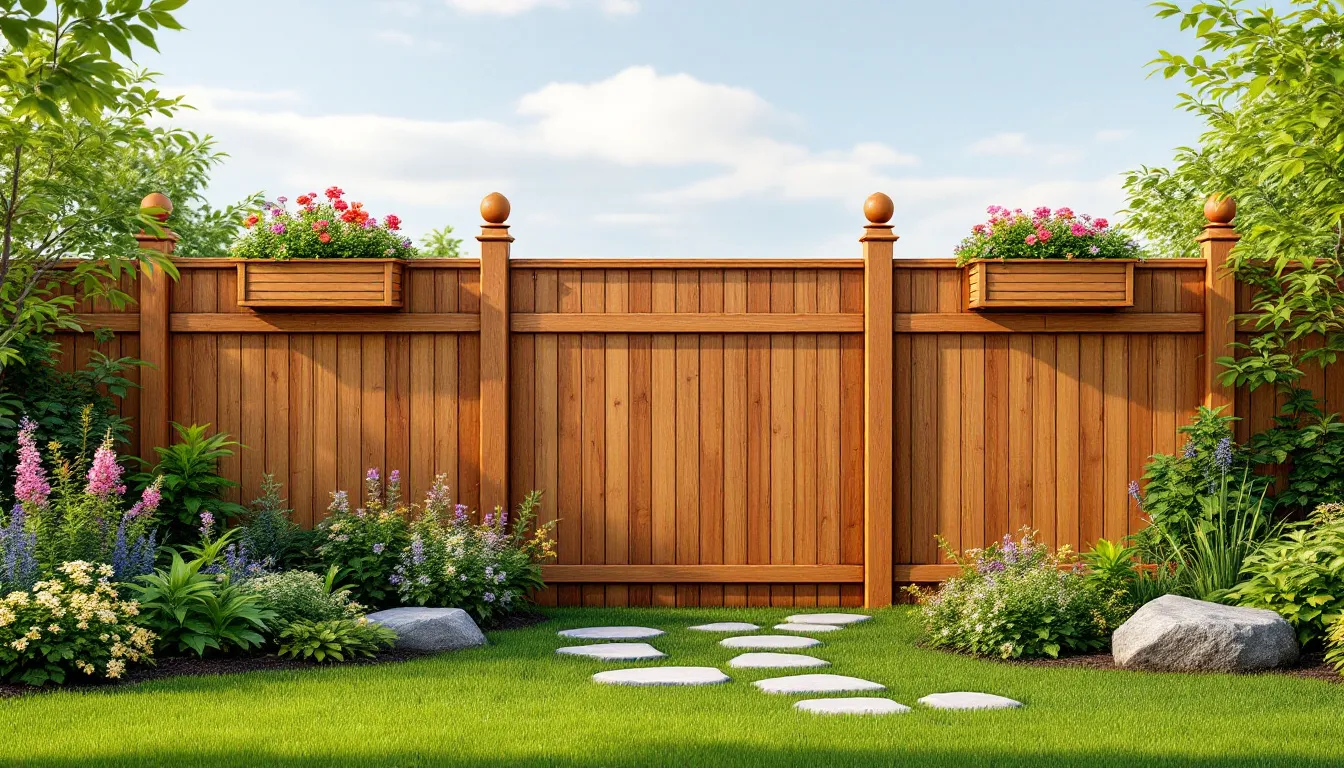
“How-To: Build an Attached Planter BoxMeasure and Cut: Decide on the dimensions for your box.”
Using 1×6 cedar or pressure-treated boards, cut your front, back, side, and bottom pieces. A good starter size is 24″ long, 8″ deep, and 8″ high. (Est. time: 30 mins)Assemble the Box: Using exterior-grade screws, attach the front, back, and side pieces to form a rectangle. Then, fit and screw the bottom panel in place. (Est. time: 20 mins)Drill for Drainage: Drill 5-6 half-inch holes in the bottom panel to ensure proper water drainage. This is a crucial step to prevent root rot. (Est. time: 5 mins)Attach to Fence: Position the box against the fence. Screw through the back panel of the box directly into the fence’s horizontal rails for the strongest hold. Use at least 4 screws for a 24″ box. (Est. time: 10 mins)Total Time: Approx. 1 hour 5 mins. Material Cost: $25-$40.
5. A Polished Look with a Capped Wood Privacy Fence
This style of fence works beautifully in standard suburban backyards, from small lots of around 1/8 acre up to a half-acre. The key is the height, typically 6 feet. This is tall enough to provide substantial privacy from neighbors without feeling like a fortress. The decorative cap is essential for making it feel finished, especially in smaller spaces where the fence is a dominant visual element. For very large properties, you might consider the more open feel of the slatted fence over a stone wall.
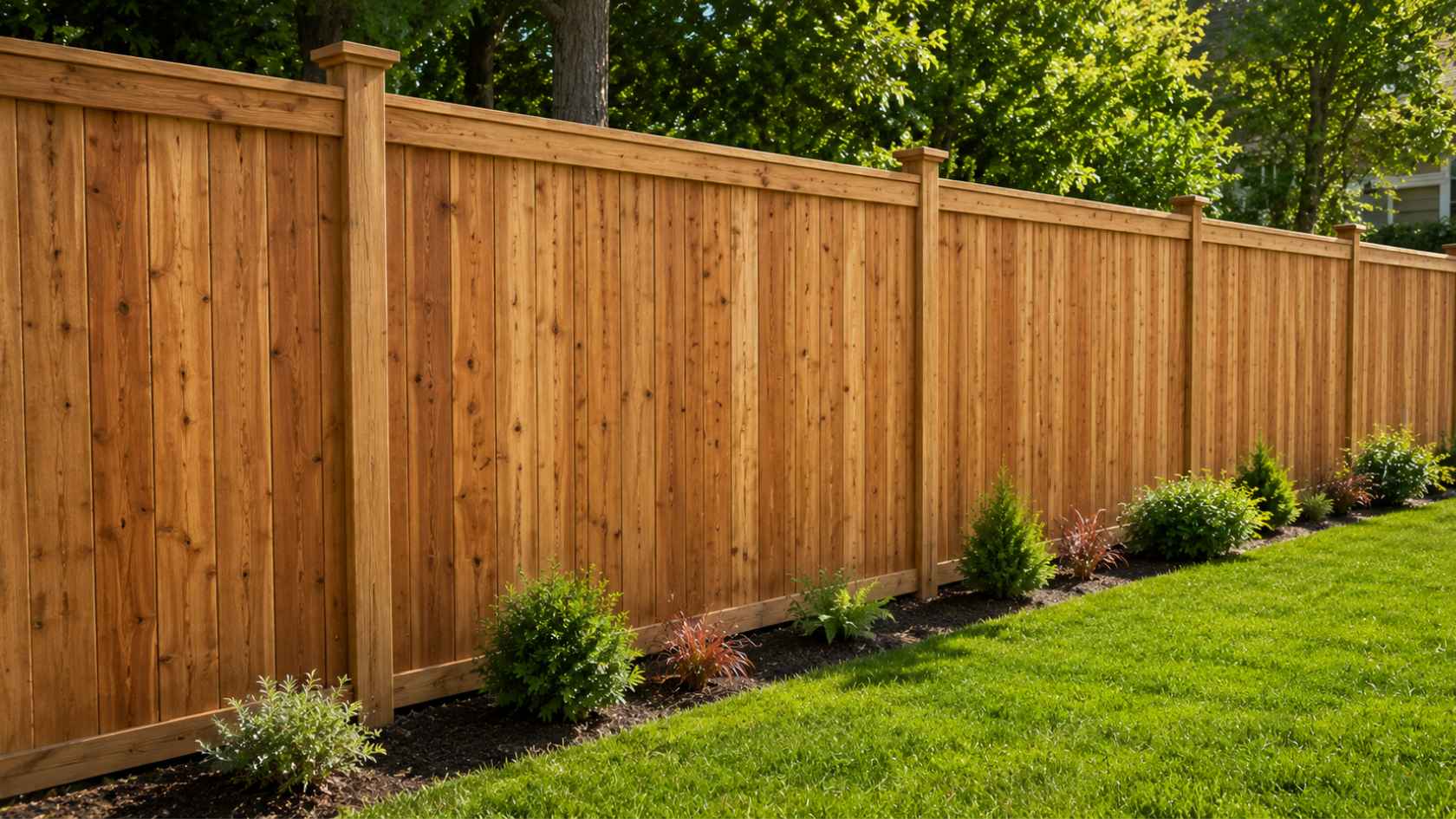
“The horizontal top cap is the design hero here.”
It does two things masterfully: First, it gives the fence a clean, finished line against the sky, which makes the entire installation look more expensive and custom. Second, it visually ties together the vertical planks and posts into a single, cohesive unit. Without that simple board on top, the fence would look more utilitarian and unfinished. The square post caps echo this geometry and add another layer of quiet refinement.
6. Integrate a Wood Fence with a Concrete Retaining Wall
Dealing with a sloped yard is a real headache for fencing. If you try to run a standard fence down a hill, you’ll either have a stepped top line that looks jagged or a huge, awkward gap at the bottom on the downhill side. Building a retaining wall like this one is the professional solution, but it is not a beginner DIY project. It involves excavation, proper drainage, and understanding soil pressure. For a project this significant, seriously consider hiring a landscaper or contractor who specializes in hardscaping.
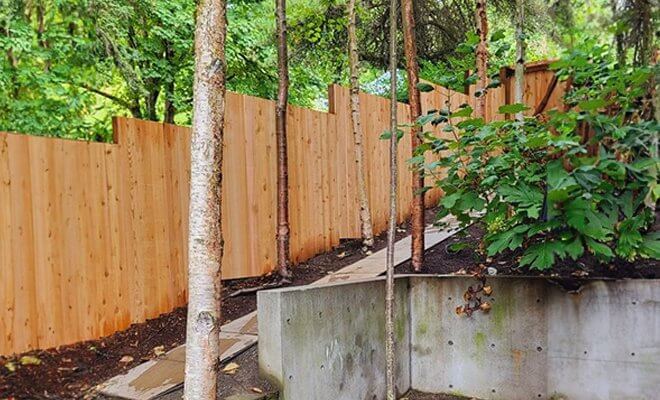
“When you have two powerful textures like wood and concrete, the key is to let one be the star.”
Here, the wood fence is simple and uniform, allowing the texture and form of the concrete wall to take center stage. Don’t try to use a highly decorative fence style *and* a textured wall—it will look too busy. Notice how the light brown of the wood is a warm, natural counterpoint to the cool, industrial gray of the concrete. This temperature contrast is what makes the pairing feel balanced and interesting.
7. Combine a Wood Fence with a Classic Brick Herringbone Patio
This look is a charming equation of texture and color: 50% rustic wood fence + 40% classic red brick + 10% lush green accents. The warmth of the light brown wood planks is a perfect partner for the earthy red of the brick. The green from the potted plants and shrubbery acts as a necessary cool tone that keeps the scene from feeling overwhelmingly warm. You could swap the red brick for a bluestone patio, but you’d need to add more warm-toned decor to keep the balance and prevent the space from feeling cold.
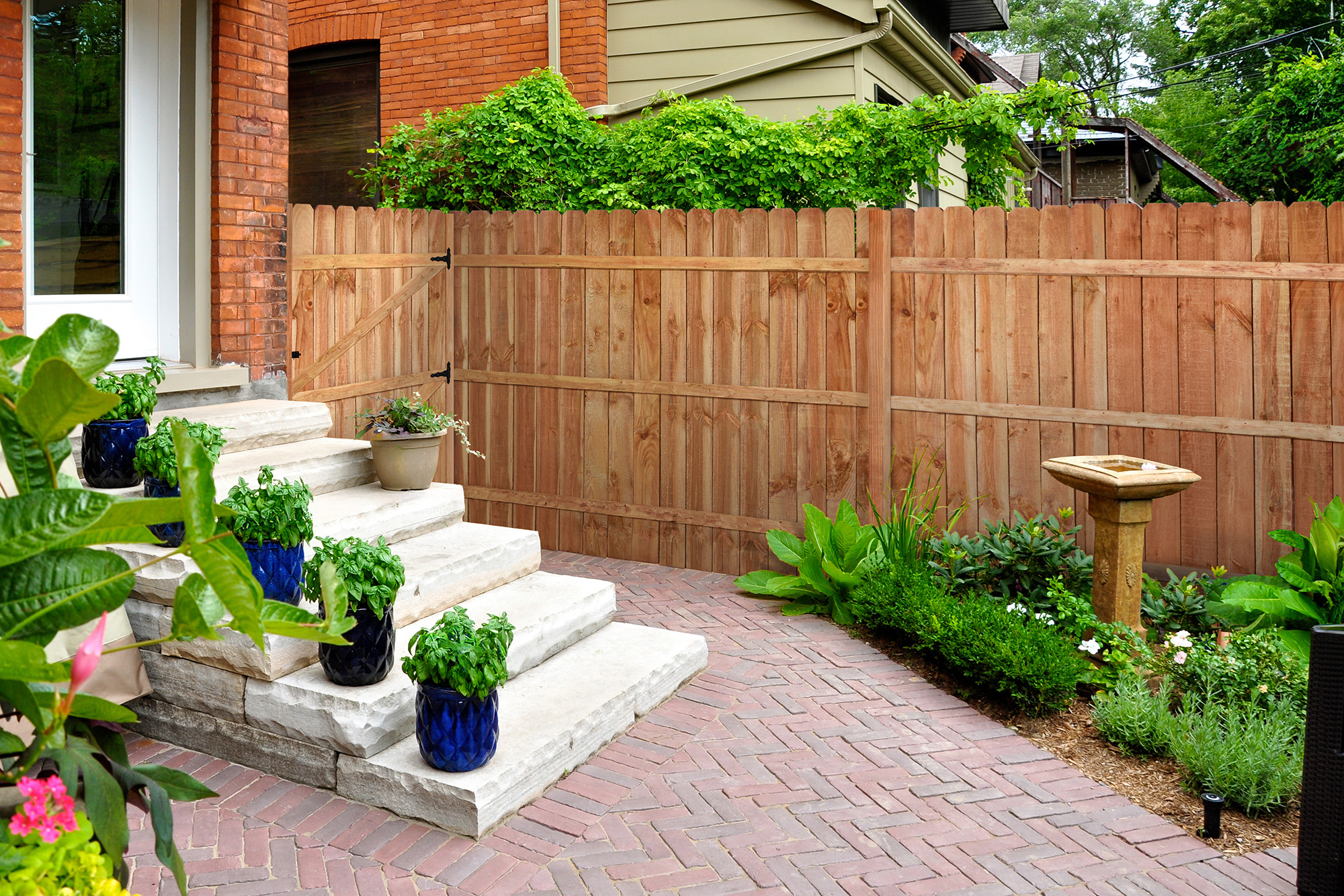
“It’s the red brick herringbone patio.”
This single element provides all the character and charm. A simple concrete slab in its place would make the yard feel utilitarian and generic. The herringbone pattern adds a sense of movement and craftsmanship, while the aged red brick brings a timeless, historic quality. It elevates the simple wood fence and turns the entire backyard into an inviting, established-feeling garden room. The stone steps are a lovely touch, but the brick is the heart of the design.
8. Create a Lush Border with Strategic Fence Landscaping
digging, take stock of your yard’s conditions. A beautifully landscaped fence line depends on putting the right plants in the right place. Here’s a quick checklist:
- Sunlight Mapping: How many hours of direct sun does the fence line get? Is it full sun (6+ hours), part shade (3-6 hours), or full shade? This will be the single biggest factor in your plant selection.
- Soil Check: Is your soil sandy, clay, or loamy? Dig a small hole and see. This affects drainage and which plants will thrive.
- Water Access: Is there a hose spigot nearby? How will you water the new plants, especially during their first year as they get established?
- Measure the Space: How deep and long is the planting bed? Make sure to choose plants that won’t outgrow the space in a few years.
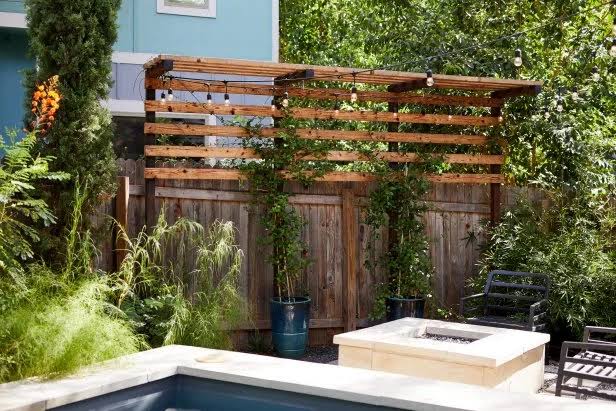
“The trend of ‘garden layering’ is driving this look.”
Homeowners are moving past the simple lawn-meets-fence boundary and thinking more like garden designers. The idea is to create depth and interest by layering plants of different heights, textures, and colors in front of the fence. This approach, popular on Pinterest and in design magazines, softens the hard line of the fence and makes the entire yard feel more immersive and natural. It’s a shift from a fence being a barrier to being a beautiful backdrop.
9. Build a Modern Fence with Built-In Benches and Planters
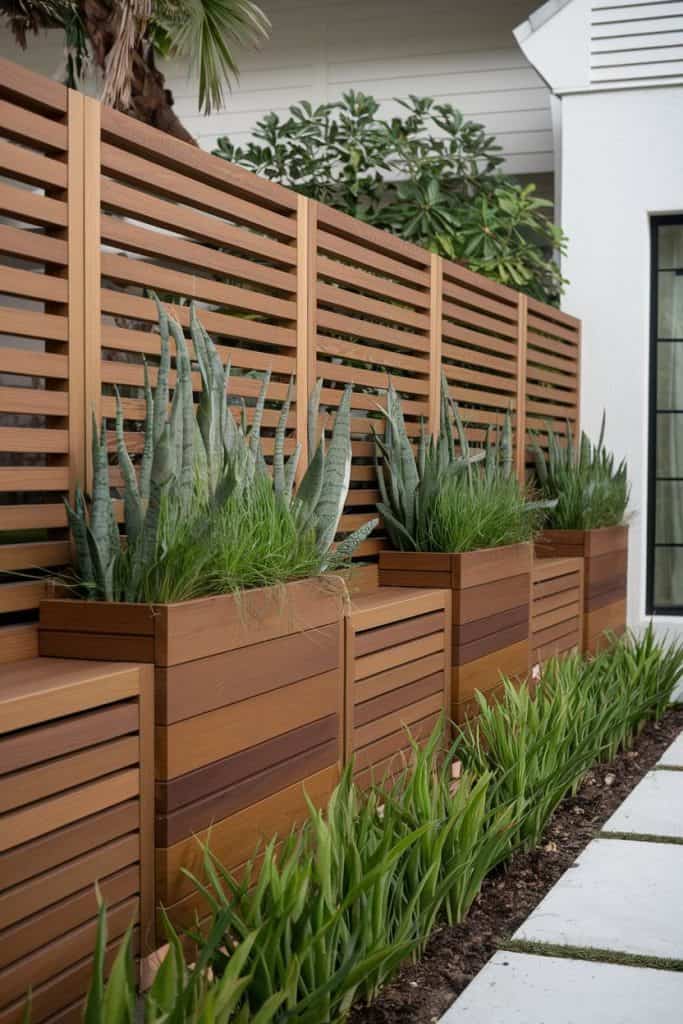
The seamless integration of the benches and planters is the genius of this design. It’s not just a fence; it’s a piece of functional outdoor furniture. This multi-purpose approach is what makes it feel so custom and clever. By building the seating *into* the boundary, you save precious patio space while creating a cozy, defined conversation nook. It transforms a simple divider into an architectural feature that serves a real purpose. Compared to the add-on boxes in Idea #4, this design is fully integrated.
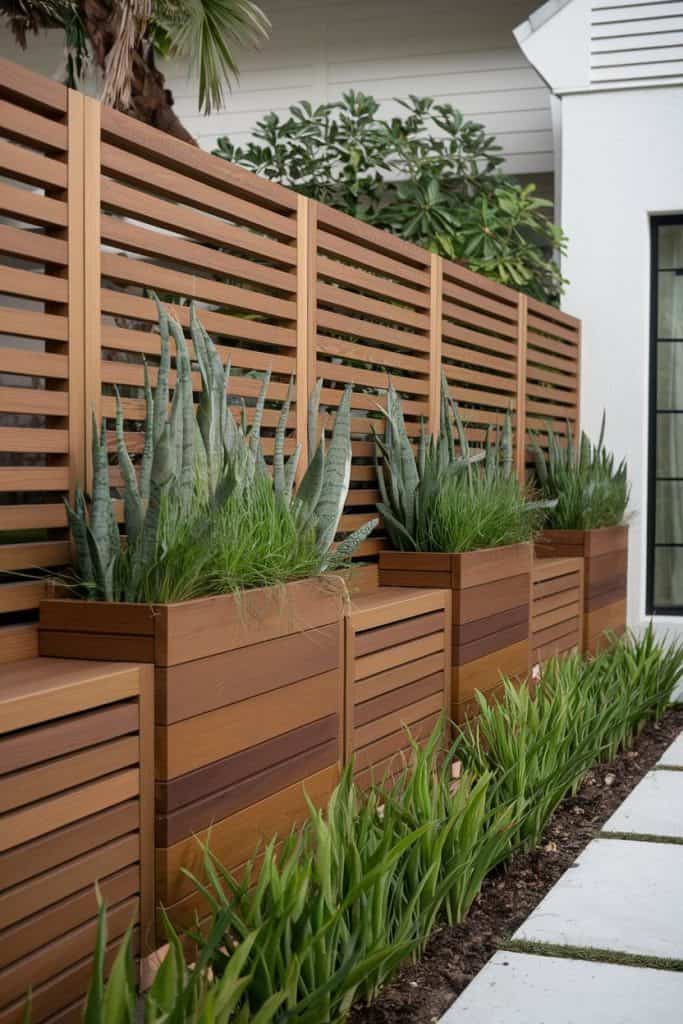
“This idea is brilliant for narrow side yards or smaller urban backyards where space is at a premium.”
A standard fence with a separate set of chairs and planters would eat up several feet of valuable floor space. By combining these functions, you only need about 18-24 inches of depth for the entire structure. This leaves maximum room for the paver path and open space. The minimum length for this to feel intentional is about 12-16 feet, enough to create a functional seating area for 2-3 people.
10. Elevate Your Yard with Layered Fence Landscaping
A common mistake is planting a single, monotonous row of the same shrub along a fence. To get a professional, layered look, follow the
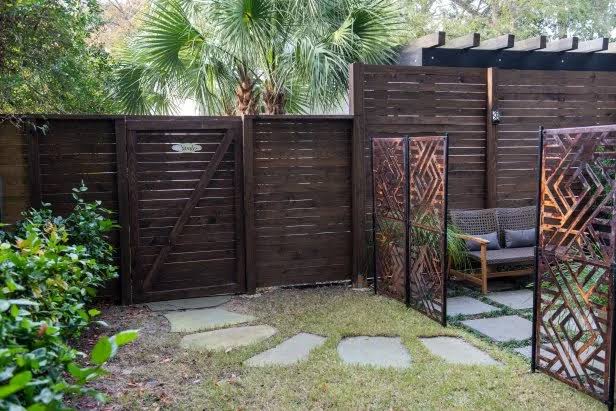
11. A Contemporary Patio with a Natural Bamboo Slat Fence
Here’s a rough estimate for recreating this modern patio nook. The real cost variable is the patio itself; we’ll assume a small 10×10 foot concrete paver space.
- Fence: Bamboo panels and steel posts – $700 – $1,500
- Patio: Concrete pavers & base material – $500 – $1,200
- Fire Pit: Black metal fire bowl – $150 – $400
- Seating: Log stools (DIY or purchased) – $100 – $300
- Decor: River stones/pebbles – $50 – $150
- TOTAL: $1,500 – $3,550
Budget alternative: Use rolled bamboo fencing ($200), a portable fire pit ($80), and thrifted outdoor chairs to get a similar vibe for around $600.
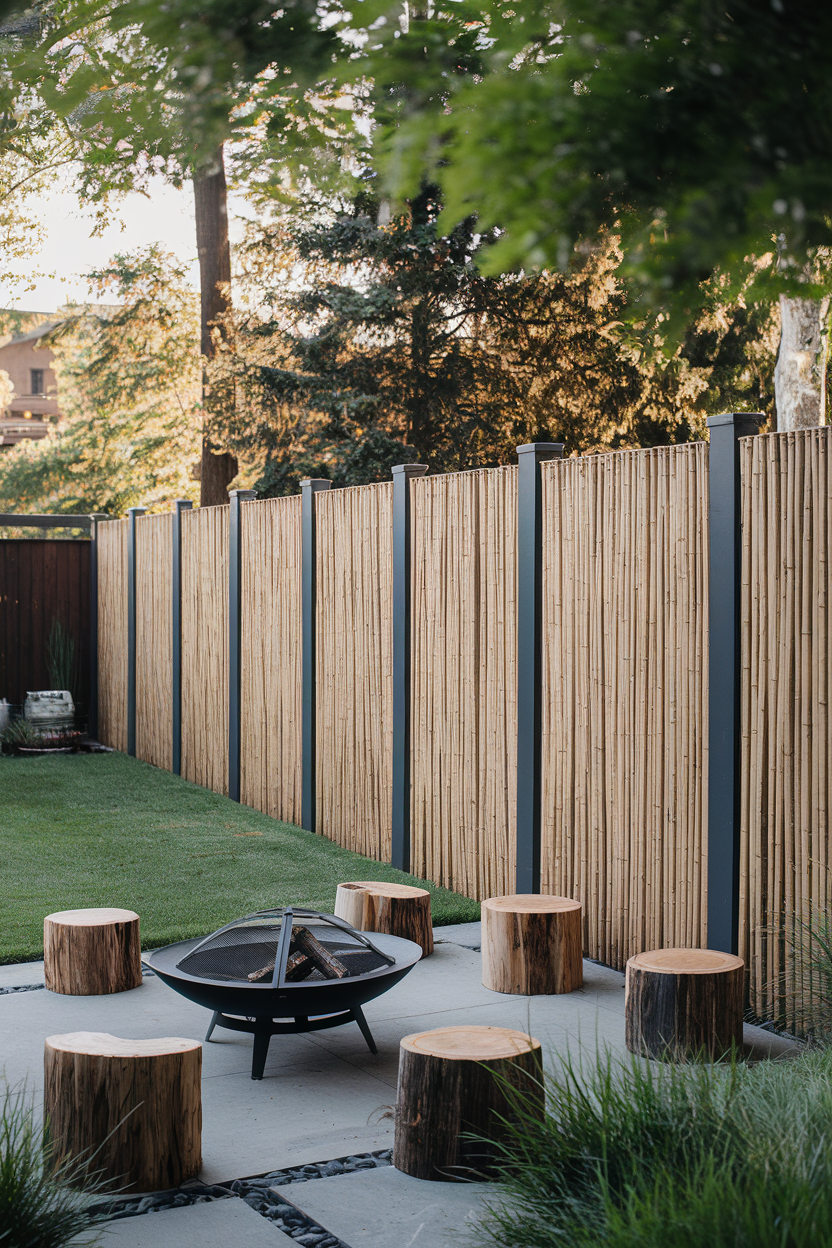
“This look is gaining traction because it perfectly blends two major trends: the desire for natural, sustainable materials (bamboo) and the clean lines of modern industrial design (steel posts, concrete).”
People are craving outdoor spaces that feel both organic and sophisticated. The addition of the fire pit and log stools taps into the cultural movement towards creating cozy, communal “hygge” moments at home. It’s an escape that feels both stylish and deeply connected to nature.
12. A Charming Cottage Look with a Weathered Picket Fence and Roses
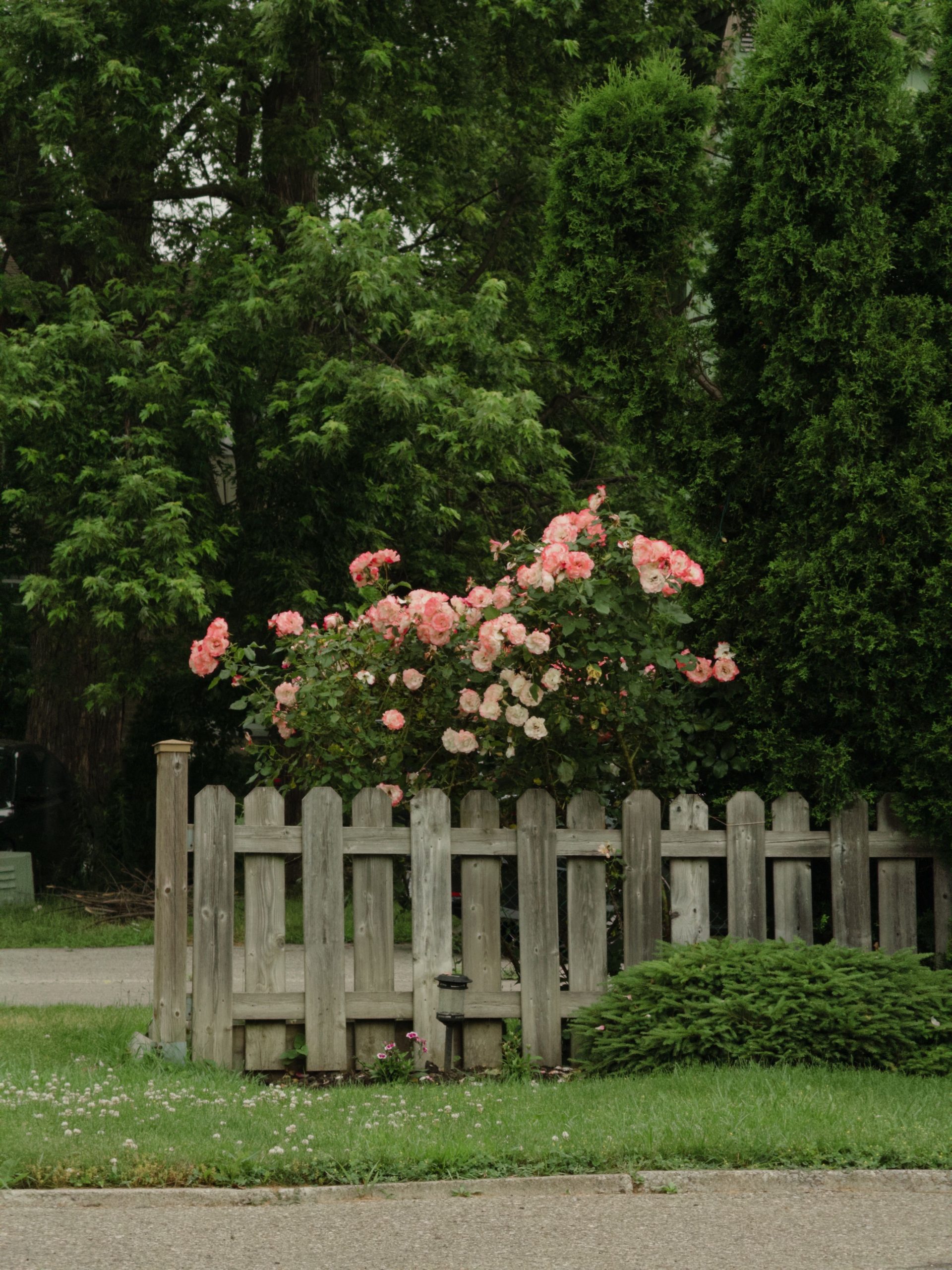
The magic here is in the contrast between the structured fence and the wild, organic growth of the rose bush. The straight, geometric lines of the pickets provide a frame that makes the unrestrained, romantic form of the roses even more beautiful. The weathered gray of the wood is a perfect neutral backdrop that allows the vibrant pink of the flowers and the many shades of green to be the stars of the show. It feels effortless and natural, not rigidly controlled. Compare this to the more formal feel of the stained picket fence in Idea #3.
13. Create Seclusion with a Dark Brown Louvered Fence
Louvered fences offer the best of both worlds: privacy and airflow. To maximize this, install the louvers angled downwards, away from your property. This directs the line of sight of anyone outside towards the ground, granting you near-total visual privacy. At the same time, the gaps still allow for excellent air circulation, which is great for preventing mildew growth and for keeping your yard comfortable on a breezy day. It’s a smarter alternative to a solid wall of wood.
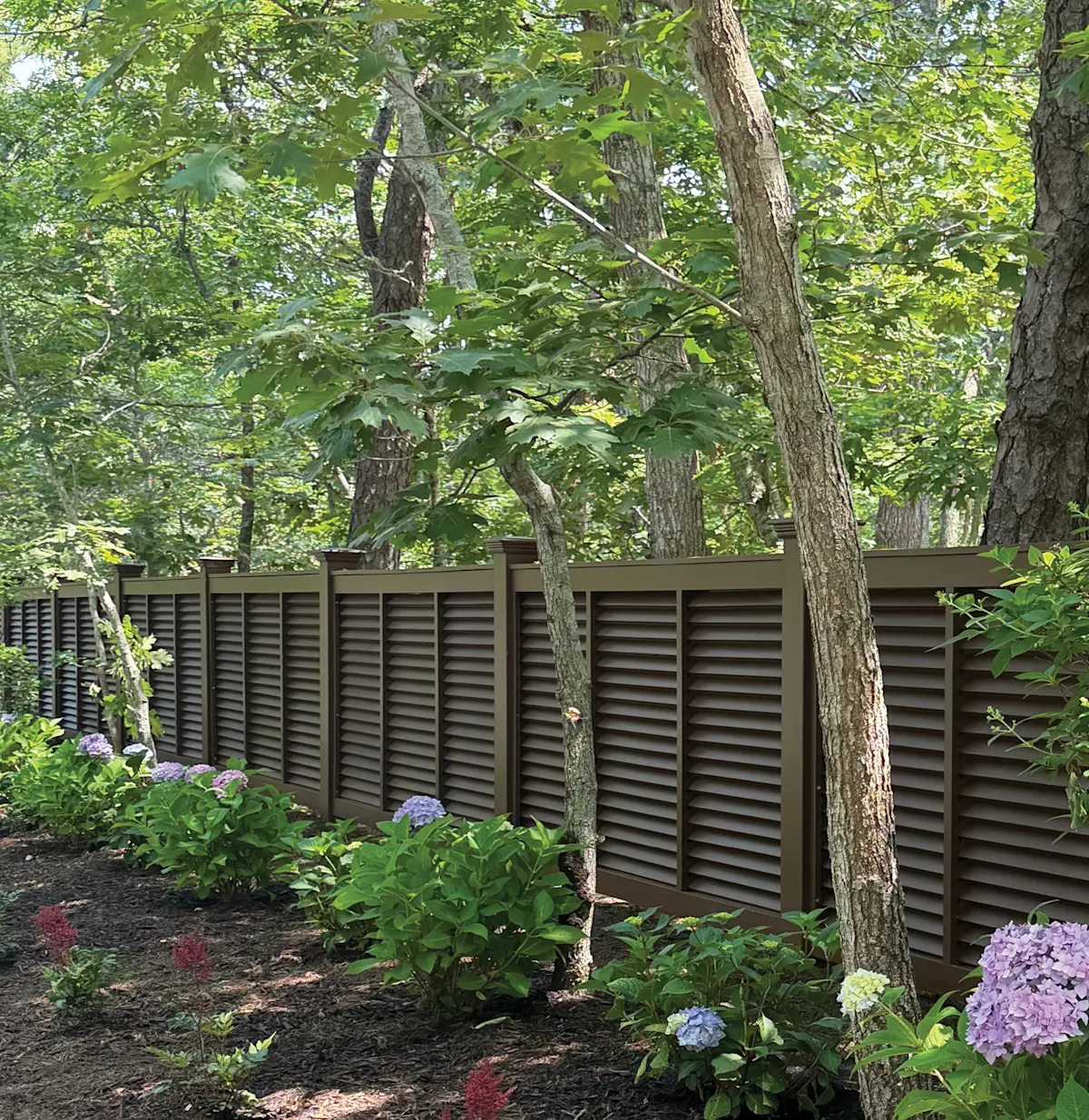
“A dark-colored fence like this can be incredibly chic, but it comes with a downside: heat absorption.”
In a yard that gets full, direct sun all day, a dark brown or black fence can get surprisingly hot to the touch and radiate heat into the surrounding area, making your patio less comfortable. It can also cause the wood to expand and contract more, potentially leading to faster wear. This style is best suited for yards with partial shade or for climates that aren’t relentlessly sunny and hot.
14. Modern Privacy: A Vertical Wood Slat Fence with an Integrated Gate
The formula for this clean, modern look is about balance: 70% warm natural texture (the wood fence) + 20% cool, solid color (the dark grey siding and planter) + 10% vibrant, soft accent (the pink flowers). The wood prevents the grey from feeling too cold or industrial, while the grey gives the wood a contemporary edge. The pop of pink is crucial; it adds life and breaks up the dominance of the neutral tones, proving that modern design doesn’t have to be sterile.
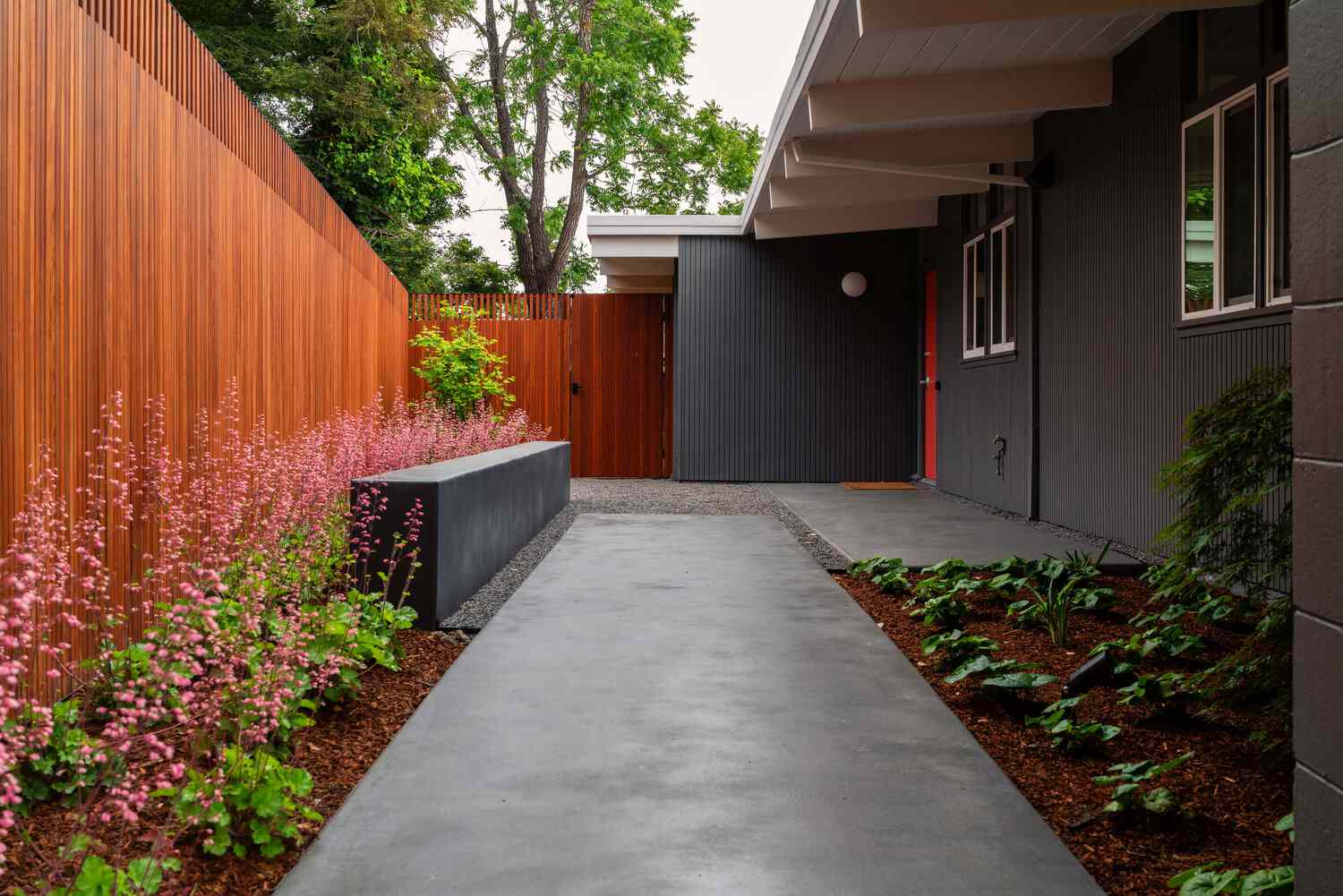
“The single most important element here is the integrated gate.”
By using the exact same vertical slat pattern and material, the gate seamlessly disappears into the fence line. This creates a long, unbroken visual plane that is incredibly calming and sophisticated. A gate in a different style or with visible, contrasting hardware would completely disrupt this flow and make the entire design feel less intentional and high-end. It’s a detail that speaks volumes about craftsmanship and thoughtful design.
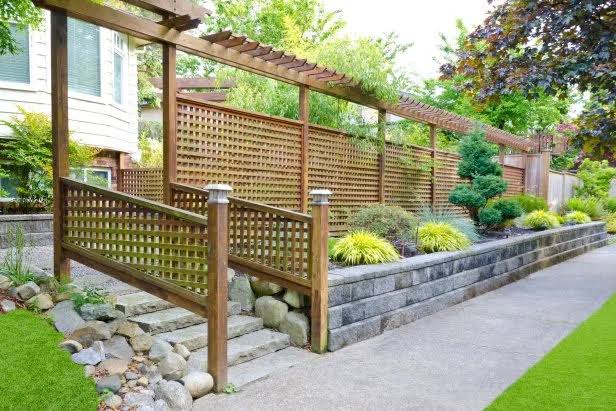
15. A Garden Fence with a Gray Base and a Natural Wood Lattice Top
How-To: Add a Lattice Topper to an Existing Fence
- Measure and Purchase: Measure the length of your fence sections between the posts. Purchase pre-made lattice panels and 1×2 lumber for framing. (Est. time: 20 mins)
- Build the Frame: Cut the 1×2 lumber to create a frame around the lattice panel. Attach the frame to the lattice using galvanized screws or a pneumatic stapler. This gives the lattice a finished look and adds rigidity. (Est. time: 1 hour)
- Attach U-Brackets: Screw small metal U-brackets to the inside face of your fence posts, positioned where you want the bottom of your lattice frame to sit. (Est. time: 15 mins)
- Install the Panel: Rest the framed lattice panel into the U-brackets. Then, screw directly through the side of the lattice frame into the fence posts to secure it at the top and sides. (Est. time: 20 mins)
Total Time: Approx. 2 hours per section. Material Cost: $30-$60 per 8-foot panel.
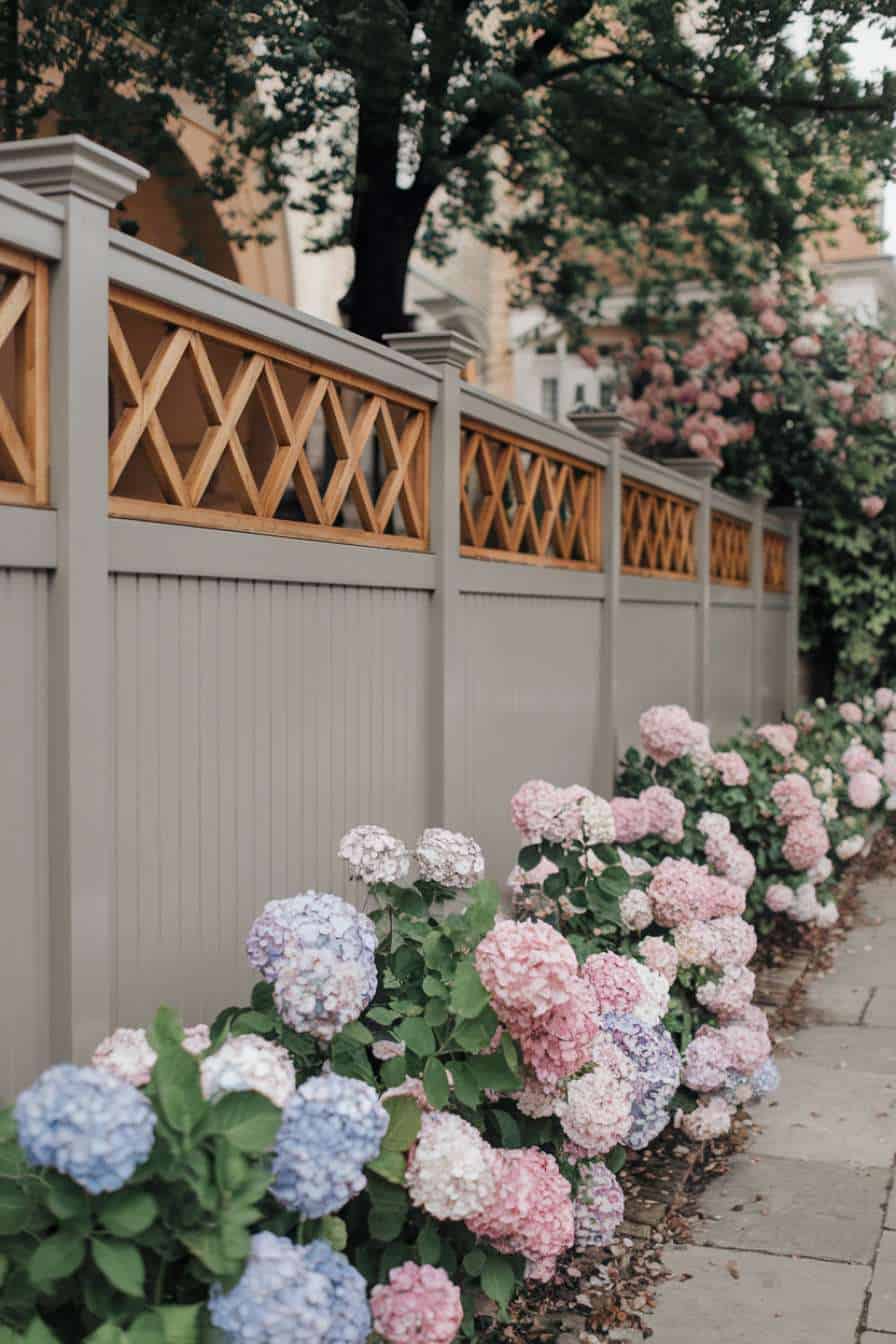
“You can get this charming, two-tone look for much less.”
Instead of a full fence replacement, start with a basic, affordable pressure-treated wood fence from a big-box store. Paint the bottom solid portion with a quality exterior gray paint (around $40/gallon). Then, buy inexpensive pre-made wooden lattice panels ($20-$30 each) and attach them to the top. Leave the lattice in its natural wood color to create that custom contrast. It gives you the same elegant, multi-material effect for a fraction of the cost of a custom build.
16. A Rustic Garden Boundary with a Simple Wooden Gate
This design’s charm comes from its unpretentious simplicity. The use of basic, readily available lumber and straightforward construction techniques makes it feel authentic and approachable. It isn’t trying to be a sleek modern masterpiece; it’s an honest, functional garden fence. The visual texture of the rough-sawn wood and the simple
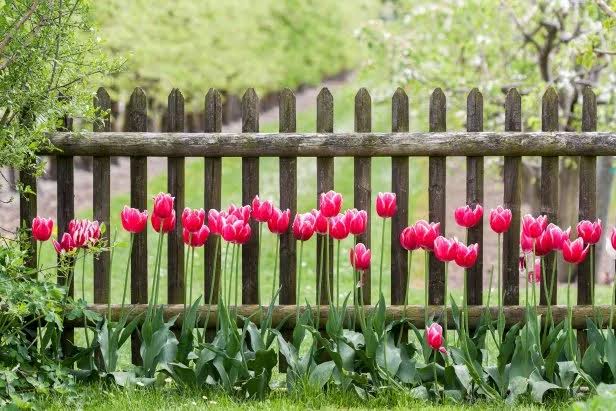
17. Embrace Imperfection with a Weathered, Overgrown Picket Fence
This works because it leans into the beauty of natural aging, a concept known as wabi-sabi. Instead of fighting against time with stains and sealers, this fence celebrates the silvery-gray patina, the raised grain of the wood, and even the small plants taking root in its crevices. The lush green foliage cascading over the top softens the hard lines and integrates the man-made structure into the natural environment. It feels authentic and alive, not manufactured and sterile.
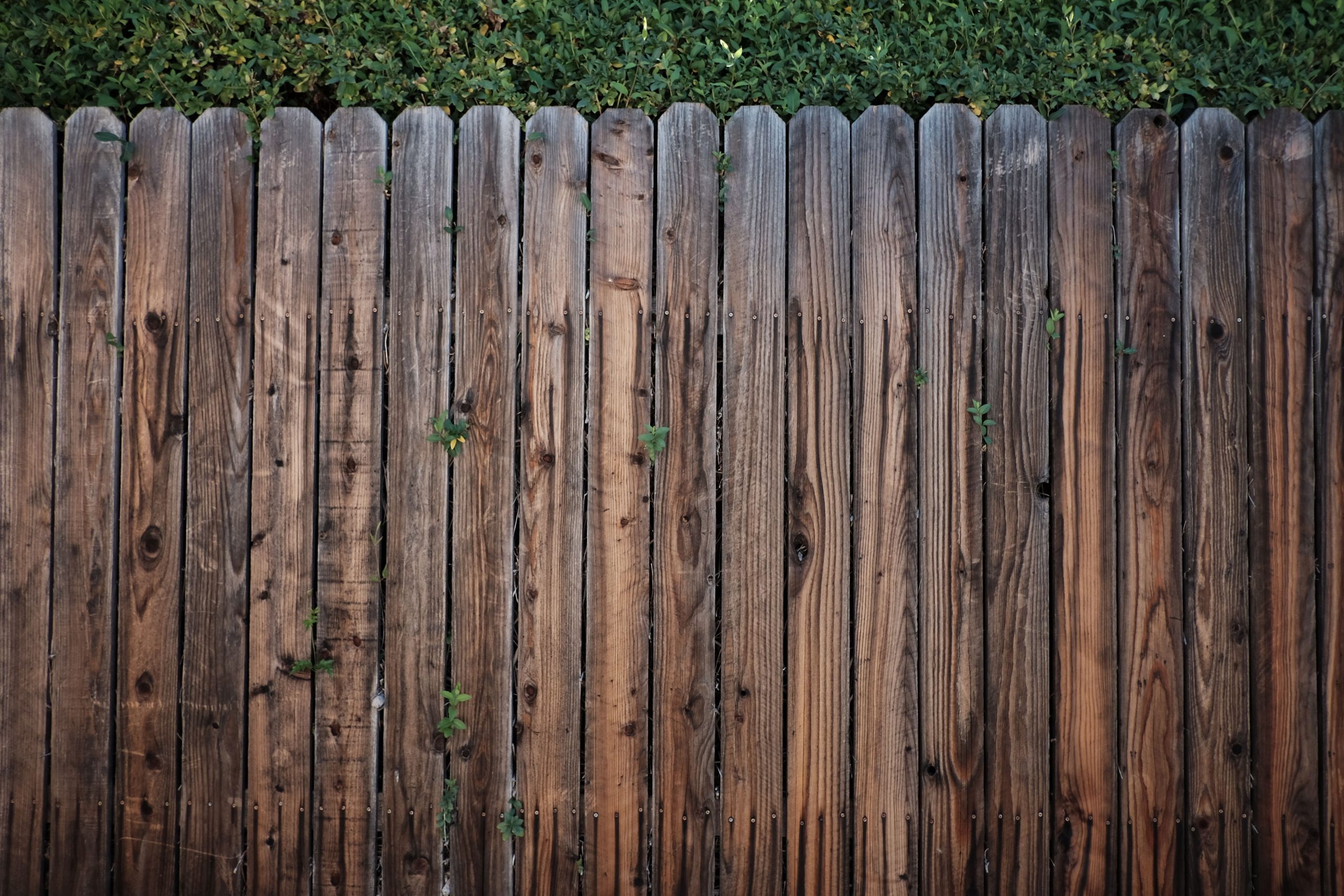
“This look is beautiful, but it’s not for everyone.”
The “living fence” aesthetic means you have to be comfortable with a less-controlled look. The cascading plants can harbor insects, and the plants growing through the wood can hasten its decay over the very long term. If you are a tidy gardener who likes clean lines and perfect edges, this style might drive you crazy. It requires a mindset that embraces a little bit of wildness and the beauty of imperfection.
18. Add a Pop of Color with a Bamboo Fence and a Bold Red Frame
The vibrant red frame is, without a doubt, the element that makes this fence unforgettable. Bamboo fencing on its own is beautiful but can sometimes feel a bit neutral or spa-like. Painting the wooden posts and rails a bold, unexpected color completely transforms its personality. It becomes playful, energetic, and artistic. Replacing the red with a standard wood stain would make the fence disappear into the background; the red makes it a deliberate, joyful centerpiece. It’s a masterclass in using color with confidence.
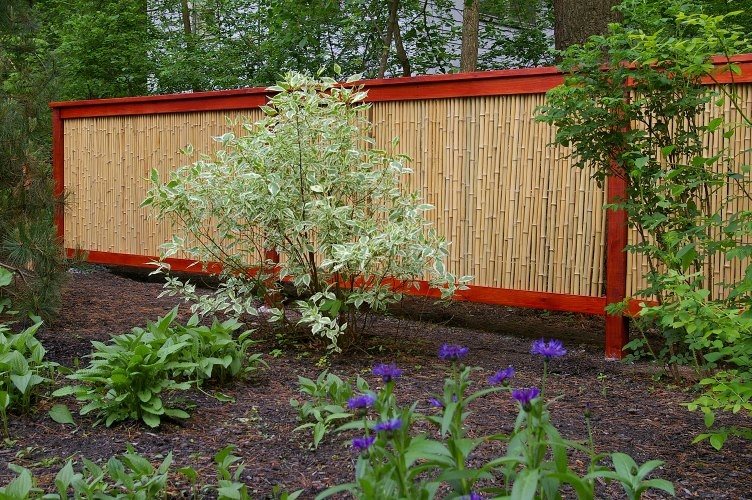
“The formula here is about a daring accent: 60% natural texture (bamboo and foliage) + 30% rich, dark groundcover (the mulch) + 10% high-impact color (the red frame).”
The natural elements provide a calm base, while the dark mulch adds depth and contrast, making the greens look greener and the bamboo look brighter. The final 10% of fiery red is the secret ingredient. It’s a small part of the overall picture, but it has an outsized effect on the mood, infusing the whole scene with energy.
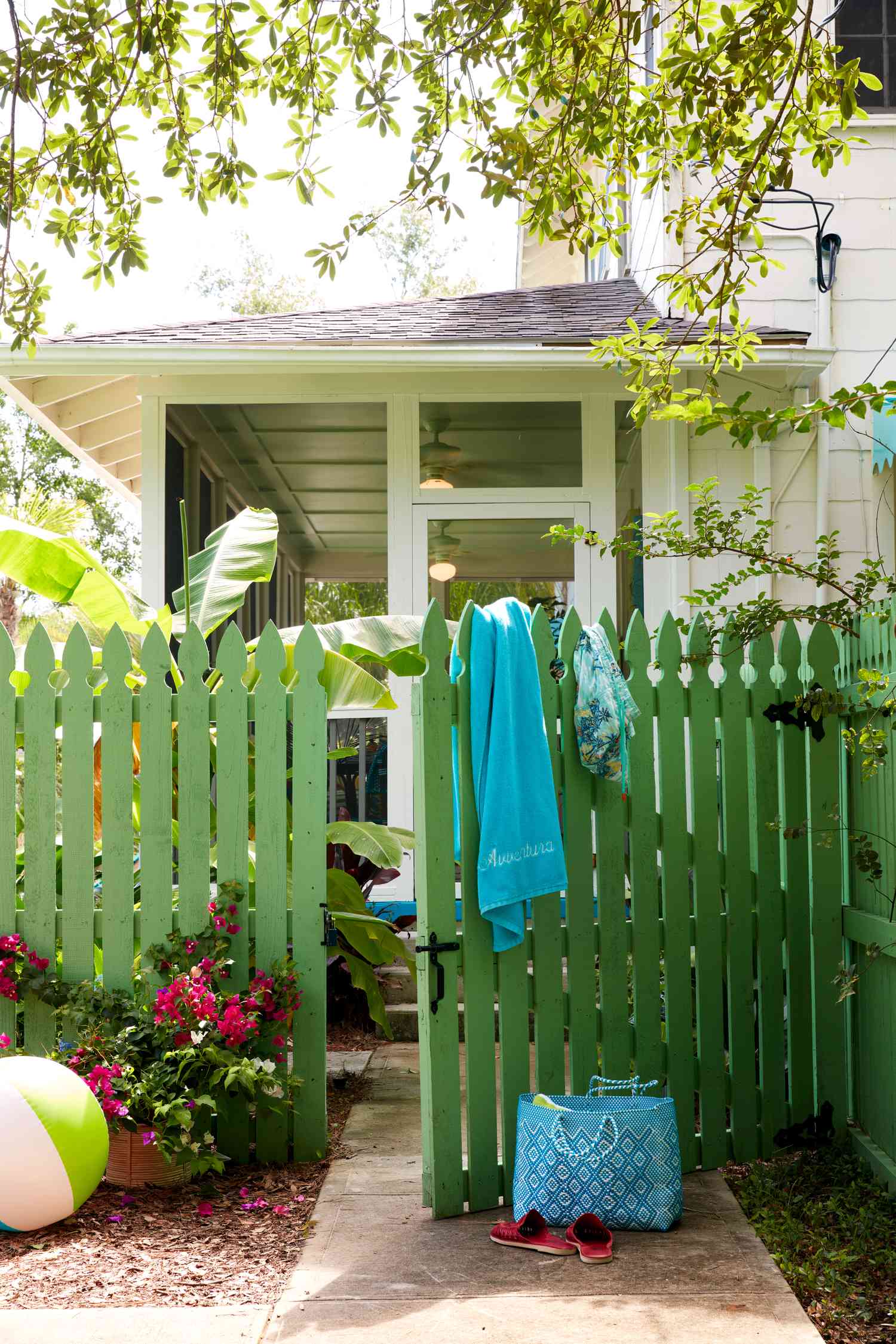
19. A Playful Yard with a Bright Green Picket Fence
After years of neutral-dominated design (think gray everything), we’re seeing a huge resurgence of joyful, unapologetic color in home and garden design. This bright green fence is a perfect example of the
20. Create a Cozy Patio with a Staggered Picket Fence
The staggered height of the pickets is a subtle but effective design choice. To create this look yourself, use pickets of two or three different standard lengths (e.g., 4-foot, 5-foot, and 6-foot). Create a repeating pattern—like short-medium-tall-medium-short—along each fence panel. This avoids the rigid, uniform top line of a standard fence and creates a softer, more dynamic silhouette against the sky. It’s a simple way to add a custom touch to a basic fence design without a lot of extra cost or effort.
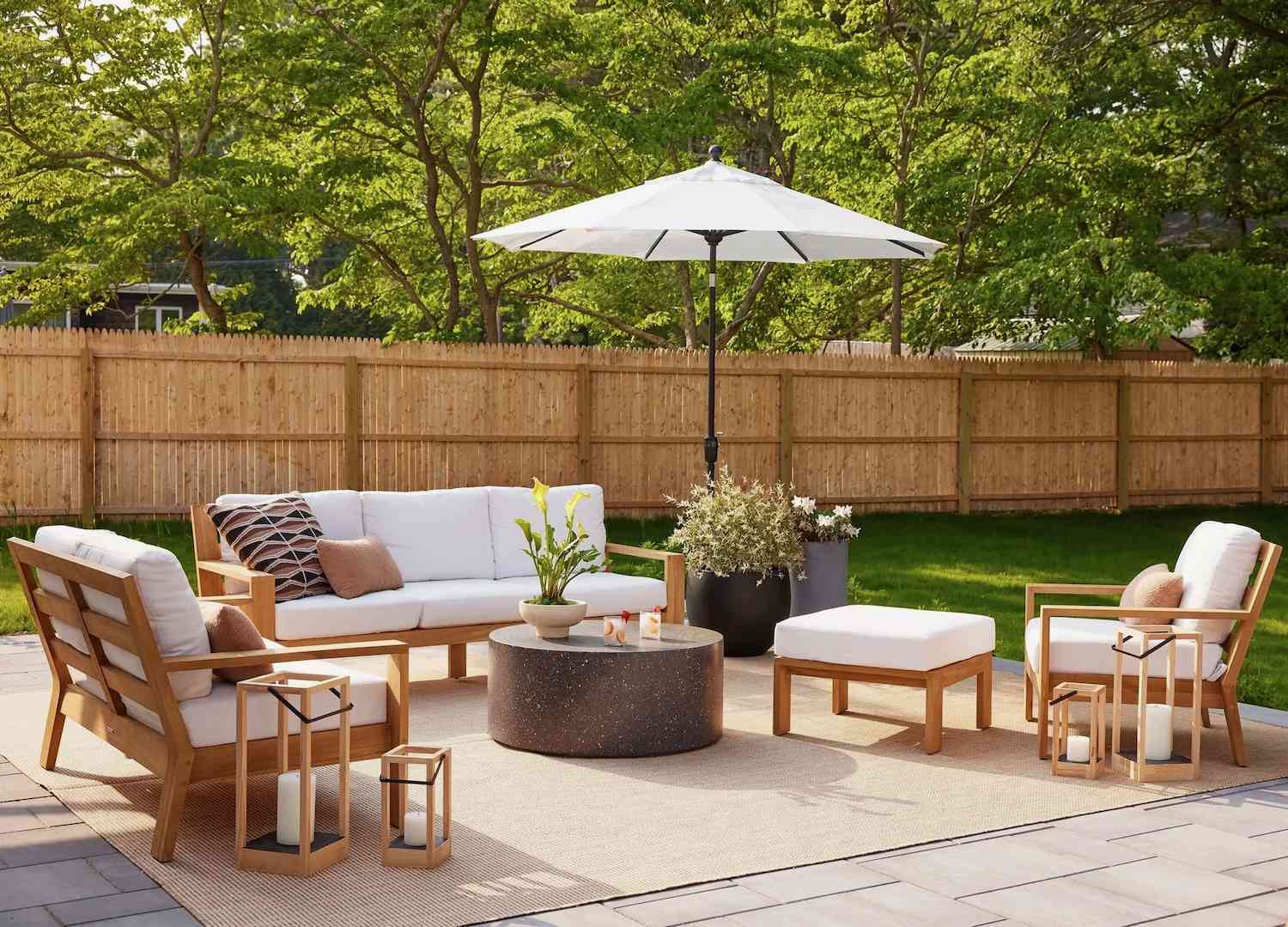
“This fence design works because it provides a sense of enclosure without feeling confining.”
The varied heights create a visual rhythm that is interesting to the eye, while the gaps between the pickets allow light and air to pass through. This ‘semi-private’ nature defines the patio area as a distinct ‘room’ and screens it slightly from the lawn beyond, but doesn’t block it off completely. It perfectly complements the open, airy feeling of the patio umbrella and light-colored furniture.
21. A Functional Corner with a Simple Wood Privacy Fence
A simple, no-frills wood privacy fence like this is the workhorse of the fencing world. It’s best suited for defining property lines and creating genuine privacy in small to medium-sized backyards, typically from 1/10 to 1/2 acre. Its 6-foot height is standard for most suburban regulations and is effective at blocking views and muffling some neighborhood noise. Because it’s so visually simple, it works best on lots where the focus is on the lawn or garden, not the fence itself. For a more decorative boundary, consider the gray fence with lattice.
“This is one of the most cost-effective privacy fences you can build.”
To get this look for less, use pressure-treated pine instead of more expensive cedar. The appearance will be similar, especially after it weathers for a year. Buy the materials—posts, rails, and pickets—from a local lumber yard instead of a big-box store, as their prices are often lower for bulk quantities. Opting for a simple dog-ear picket style is also cheaper than decorative-top pickets. With a little sweat equity, this is a very achievable project on a tight budget.
22. Achieve a Simple, Natural Look with a Standard Privacy Fence
The effectiveness of this fence lies in its simplicity. It doesn’t try to be a showy feature; its job is to create a clean, private backdrop for the yard. The uniform vertical lines and natural wood color provide a sense of calm and order. The tall, unbroken panels effectively block out the visual clutter of the world beyond, allowing the green lawn and the texture of the treeline to be the main focus. It’s a design that understands the power of a quiet, supporting role.
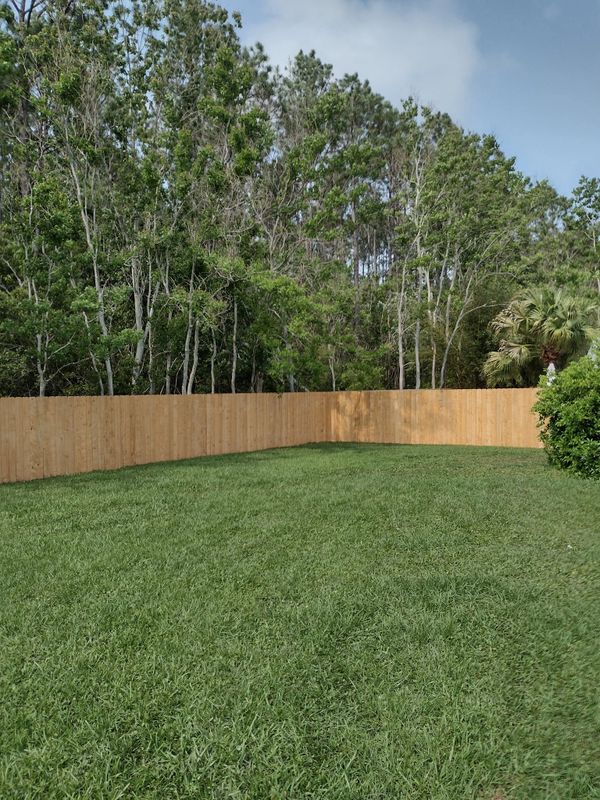
“An untreated wood fence will naturally weather to a soft, silvery gray over about a year.”
To maintain the original warm, light brown color shown here, you’ll need to apply a clear, UV-blocking sealant every 1-2 years. If you don’t, the wood is more susceptible to moisture, which can lead to warping or mildew. While the weathered look can be beautiful (see Idea #12), you have to make a choice: embrace the graying process, or commit to a regular maintenance schedule to preserve the ‘new wood’ color.
23. A Cozy Evening Retreat with a Horizontal Fence and String Lights
The string lights are what transform this from a simple backyard fence into a magical evening destination. During the day, it’s a handsome, modern fence. But as dusk falls, the warm glow of the Edison bulbs turns the space into an intimate, inviting grotto. The light reflects off the wood, enhancing its warmth and texture. It’s an inexpensive addition that completely changes the atmosphere of the space, making you want to spend time out there long after the sun has set.
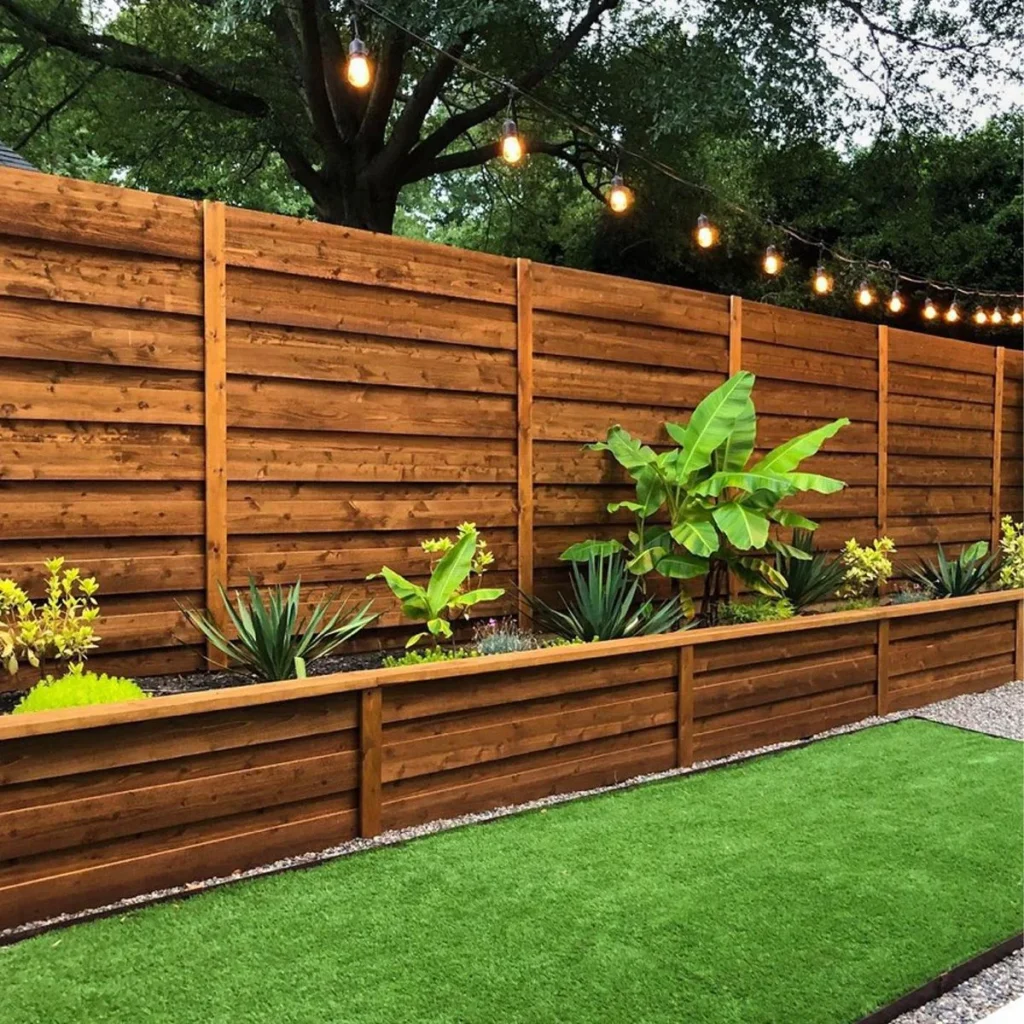
“Having a lush, beautiful planter box at the base of your fence is wonderful, but it requires a commitment to watering.”
The overhang from the fence itself can create a ‘rain shadow,’ meaning less natural rainwater reaches the soil in the planter. Furthermore, the contained soil in a planter box dries out much faster than ground soil. You’ll need to plan on watering these plants regularly, likely every other day in hot, sunny weather, to keep them from looking stressed and wilted.
24. A Coastal View with a Slatted Wood and Stone Wall Fence
This design is a masterclass in material harmony. The rough, varied texture of the stacked stone wall provides a sturdy, earth-bound anchor for the entire structure. On top, the clean, evenly spaced lines of the natural wood slat fence feel light and airy. This contrast—heavy vs. light, rough vs. smooth—is what makes it so visually compelling. The wood topper allows you to see through to the ocean view, maintaining an open feeling while still providing a secure boundary. The stone base grounds it firmly in the coastal landscape.
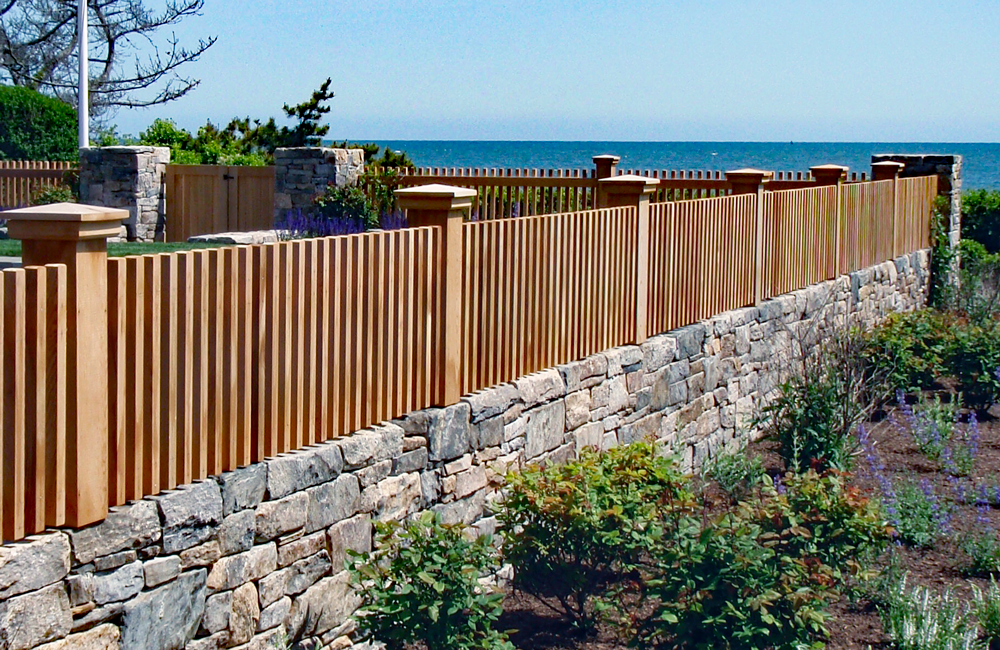
“This style is ideal for properties with a view you want to preserve, whether it’s an ocean, a lake, or a valley.”
The height is key. The stone wall should be just high enough to feel substantial (2-3 feet), and the slatted fence on top should bring the total height to about 4-5 feet. This is tall enough to define the space and provide a safety barrier, but low enough that it doesn’t obstruct the sightline when you’re sitting or standing. It creates a ‘frame’ for the view rather than a wall against it.
25. A Tidy Border with a Beige Vinyl Fence and Tiered Landscaping
Vinyl fencing is the undisputed champion of low maintenance. Unlike wood, it doesn’t need to be stained, sealed, or painted—ever. It won’t rot, warp, or succumb to insect damage. The main upkeep is an occasional cleaning with a hose and perhaps a soft-bristled brush with some mild, soapy water to remove any dirt or mildew that might accumulate. A pressure washer on a low setting can also be used, but be careful not to use too much pressure, which could damage the surface. For busy homeowners, this is a huge selling point.
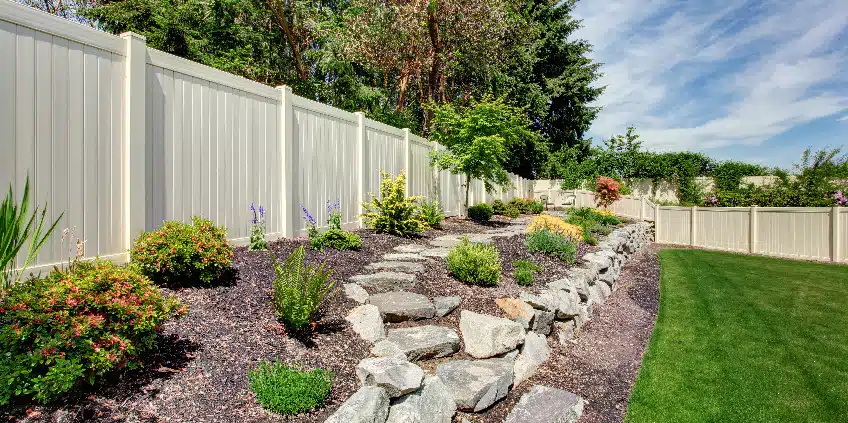
“The design works by creating clean, orderly lines that guide the eye.”
The solid, uniform line of the beige vinyl fence provides a neat, neutral backdrop. In front of it, the curved line of the stone retaining wall adds a soft, organic shape. Finally, the staggered path of the stepping stones creates a gentle rhythm that leads you through the garden. This layering of different lines—straight, curved, and staggered—makes the design feel structured and intentional, yet still natural and inviting.
26. A Cheerful Planter Box with a White Picket Fence Backsplash
How-To: Build a Picket Planter Box
- Build the Box: Construct a simple rectangular box from 1×8 pine or cedar boards to your desired length. No top is needed. (Est. Time: 30 mins)
- Cut and Attach Slats: Cut 1×3 boards to your desired ‘picket’ height. 12-18 inches is a good height for a planter this size. Space them a half-inch apart along the back of the planter box and attach with exterior screws. (Est. Time: 45 mins)
- Add Trim: Attach a horizontal 1×2 trim piece across the top of the pickets for a finished look. (Est. Time: 10 mins)
- Paint and Plant: Paint the entire assembly with two coats of quality exterior white paint. Once dry, fill with potting soil and your favorite flowers like these vibrant tulips. (Est. Time: 1.5 hours, including drying time)
Total Time: Approx. 3 hours. Material Cost: $40-$60.
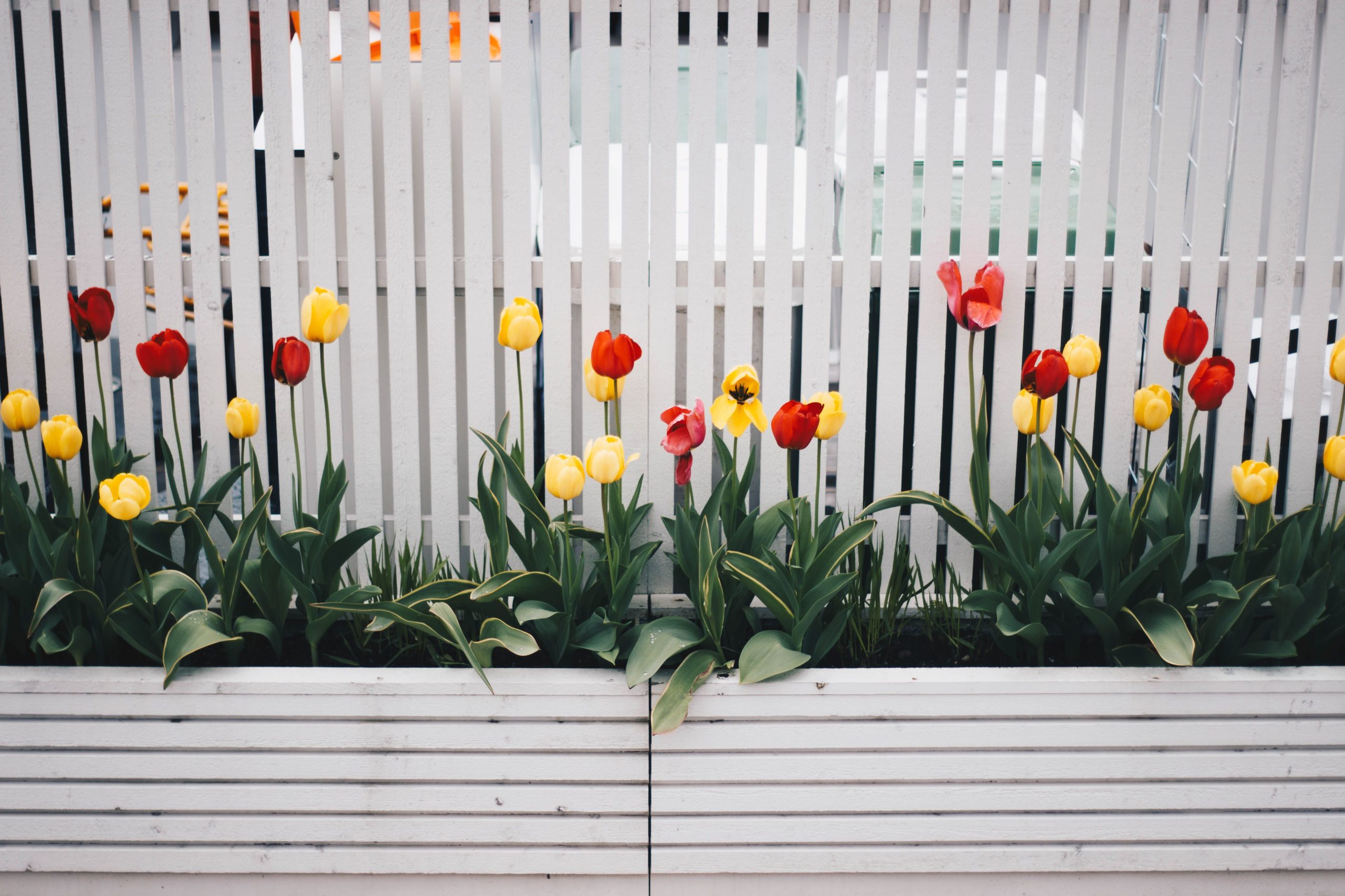
“It’s the brilliant combination of a planter and a fence in miniature.”
This clever design understands that even a window box can have architectural charm. The tiny white picket ‘fence’ behind the tulips acts as a perfect backdrop, making the red and yellow blooms pop. It evokes the feeling of a cottage garden in a compact, cheerful package. Without the fence element, it would just be a box of flowers. With it, it’s a complete, charming little scene that tells a story.
27. A Contemporary Boundary with Mixed Stone and Wood Slats
When mixing materials like stone and wood, proportion is crucial. Don’t make them 50/50. A good rule of thumb is to follow a 2:1 ratio. Here, the design uses roughly two parts wood slats for every one part stone, which keeps the fence from feeling too heavy or fortress-like. The stone acts as a strong, grounding accent, while the wood provides warmth and texture. Also, notice the light-colored capstone—it provides a crisp visual break between the materials and the sky, which is a key finishing detail.
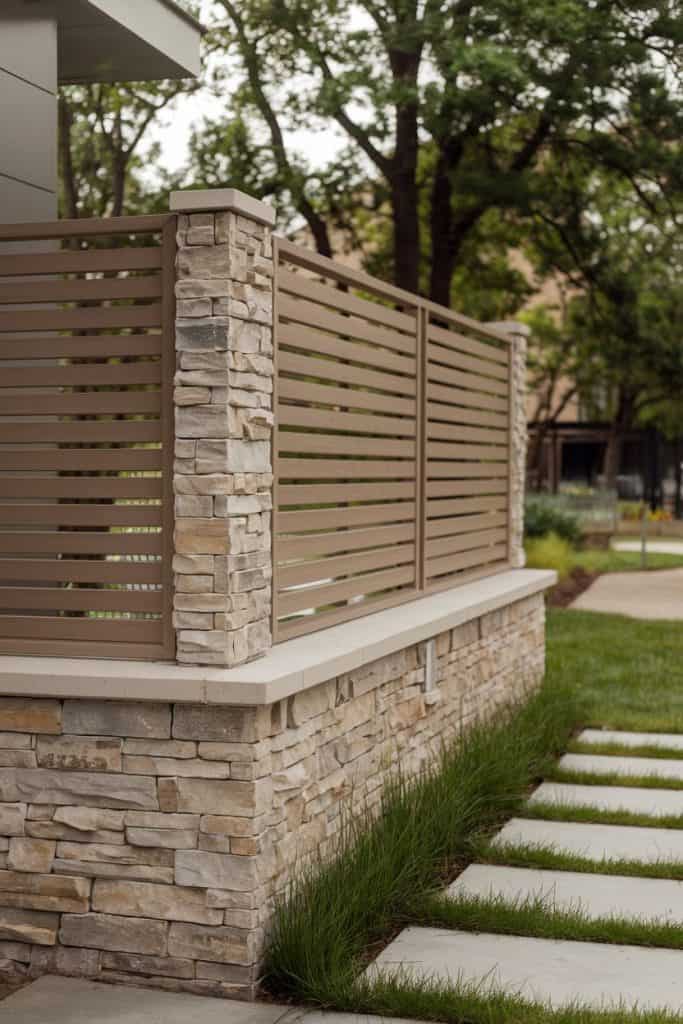
“This modern look follows a sophisticated formula: 50% horizontal wood slats + 25% stacked stone texture + 25% clean geometry.”
The light brown wood slats provide warmth and a strong linear pattern. The stacked stone columns and base add organic texture and a sense of permanence. The final quarter of the design is about the clean lines—the concrete pavers, the crisp capstones, and the uniform green of the grass. This balance between natural textures and sharp geometry is the essence of contemporary landscape design. A similar idea is seen in the coastal fence, but with a more rustic stone choice.
28. A Sturdy Stockade Fence with Thick Wooden Posts
This fence design conveys a feeling of strength and durability through its use of substantial materials. The thick, chunky posts act as powerful visual anchors, making the entire structure feel solid and immovable. The closely-set vertical planks create an unbroken wall of wood, emphasizing its function as a privacy barrier. This isn’t a delicate, decorative fence; it’s a robust, straightforward enclosure that communicates security and permanence. It’s a classic for a reason.
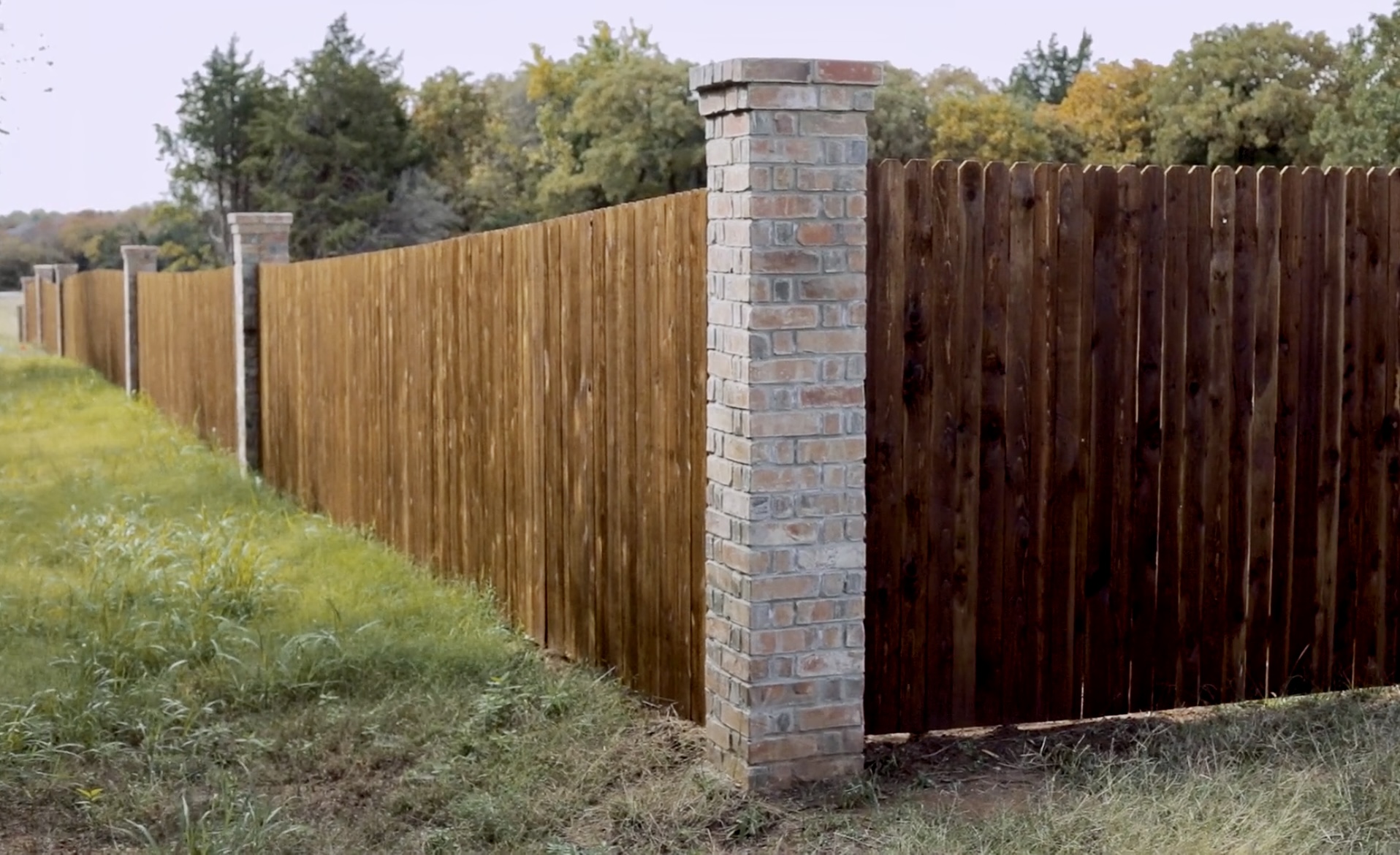
“A solid wood stockade fence is heavy.”
The most critical part of its maintenance and longevity happens during installation: setting the posts correctly. Posts must be set in concrete and extend below the frost line for your climate (typically 2-3 feet deep). If not, they will heave and shift during freeze-thaw cycles, causing the entire fence to lean and sag within a few years. Do not skimp on this step. The long-term stability of your entire fence depends entirely on how well those posts are anchored in the ground.
29. Combine a Vertical Picket Fence with a Rugged Stone Pillar
The success of this design lies in its powerful contrast of textures and forms. The wooden fence is made of clean, vertical lines of finished lumber—it’s orderly and man-made. The stone pillar, by contrast, is composed of irregular, rustic shapes with visible mortar—it feels ancient and organic. Placing these two elements side-by-side creates a dynamic visual tension that is far more interesting than a fence made of just one material. The pillar acts as a full stop, a dramatic anchor to the run of the fence.
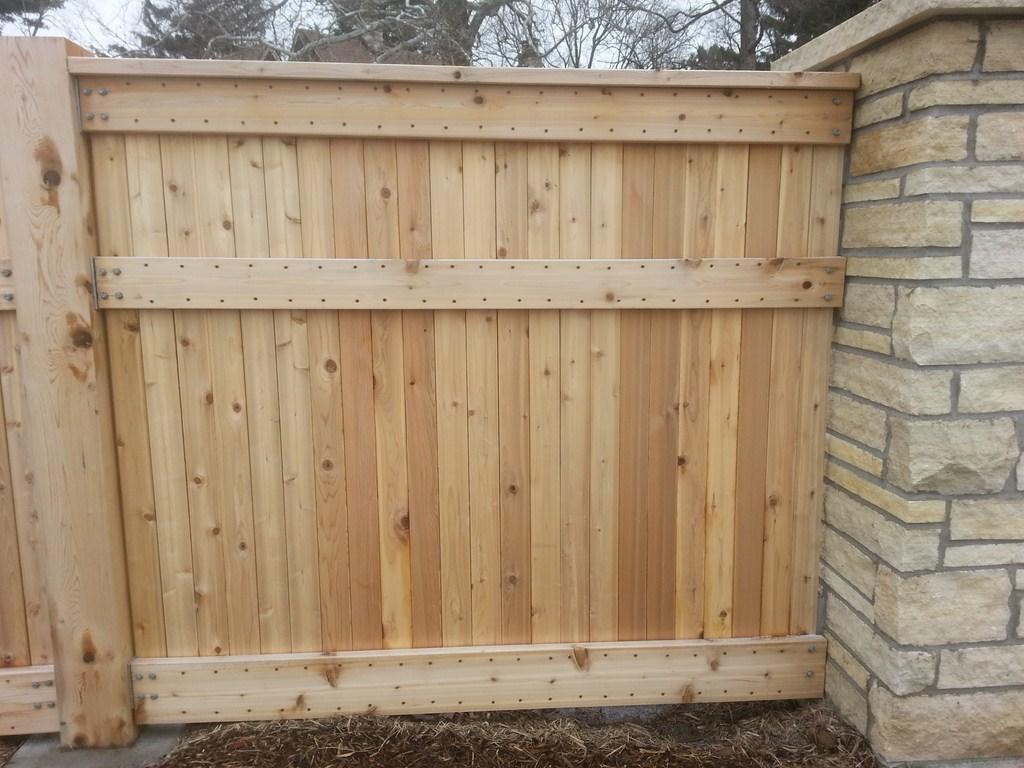
“When building a mixed-material fence like this, always build your stone or masonry element first.”
The pillar is the fixed, immovable object. Once it is fully built and the mortar is cured, you can then build the wooden fence section to fit perfectly between the pillar and the next post. Trying to build a pillar to fit a pre-existing fence is much more difficult and can easily result in awkward gaps or a skewed appearance. Let the most permanent element dictate the placement of the rest.
30. A Gardener’s Delight with a Slatted Fence and Raised Beds
You can create this lush garden look on a smaller budget. Use standard pressure-treated pine for both the fence and the raised beds—it’s the most affordable lumber option. Leave the wood unfinished to weather naturally to a silvery-gray, which saves you the cost and labor of staining. For the walkway, use affordable pea gravel or mulch instead of pavers. Focus your budget on good quality soil for the beds and starter plants. The result will be a garden that feels just as vibrant and organized, but for significantly less initial investment.
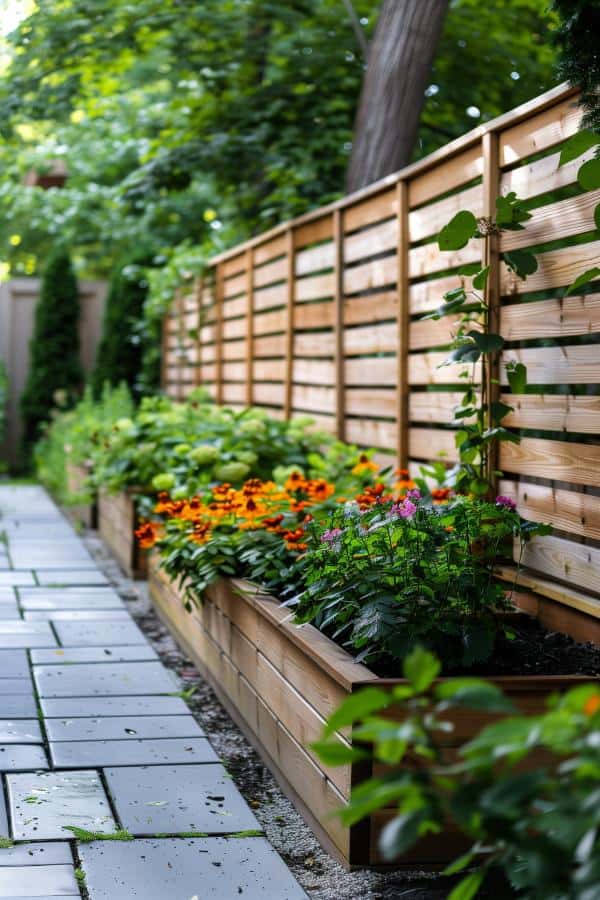
“Be aware that placing raised garden beds directly against a wooden fence can shorten the fence’s lifespan.”
The constant moisture from the soil in the beds can promote rot and mildew on the fence planks. To mitigate this, you can staple a heavy-duty waterproof membrane or plastic sheeting to the inside of the fence, where it touches the garden bed soil. This creates a barrier that protects the wood. Also, ensure the beds have excellent drainage away from the fence line.
31. A Clean, Modern Entrance with a Wood Slat and White Gate Fence
This crisp look is a three-part formula: 50% warm, light wood + 40% bright, clean white + 10% vibrant green. The wood slats provide natural texture and a welcoming tone. The white posts and gate create a sharp, modern contrast that feels fresh and structured. The green from the lawn and low plants is the essential living element that softens the clean geometry and keeps the design from feeling stark. Swapping the white for black would create a more dramatic, industrial look, while this feels more breezy and coastal.
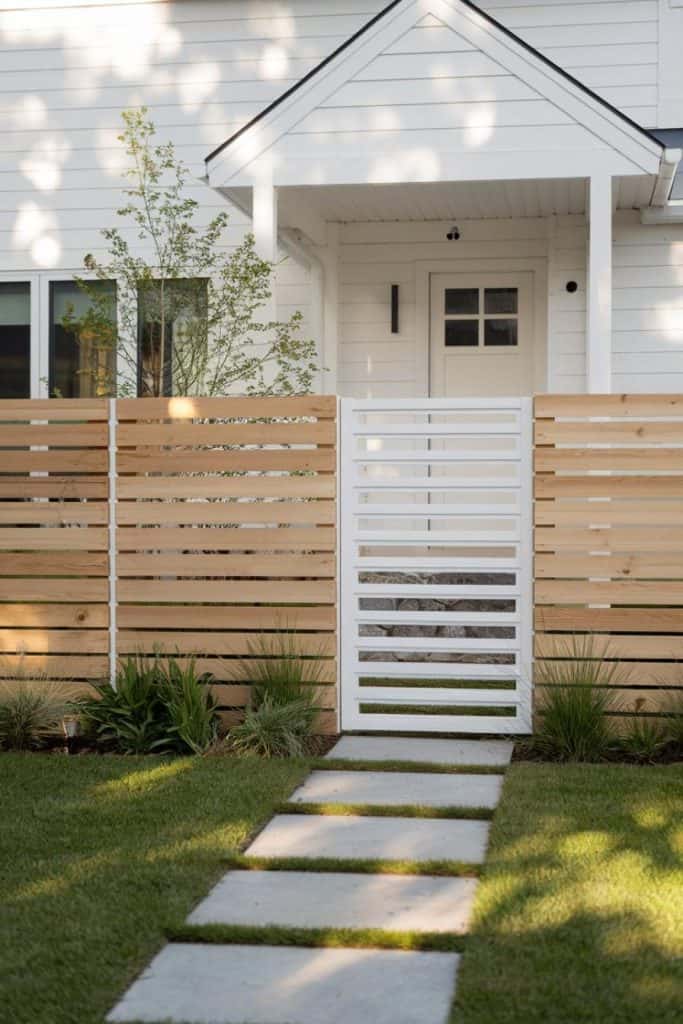
“This design works because of its smart use of repetition and contrast.”
The horizontal lines of the wood slats are repeated in the gate, creating a pleasing sense of rhythm and continuity. However, the gate’s color is contrasted, making it a clear and welcoming focal point. Your eye is drawn to the gate because it’s different, which is exactly what you want for an entrance. This simple play of repeating a shape but changing its color is a classic design principle that provides both harmony and emphasis.
Time to Define Your Domain
That perfect fence is more than just a project; it’s the finishing touch that frames your outdoor life, providing privacy, beauty, and a sense of place. Don’t let the options overwhelm you. Pick one or two favorites from this list, start a new Pinterest board, and begin planning how you’ll transform your yard’s boundary from a simple line into a statement.