You know that feeling when you finally find the DIY farmhouse table idea that looks *exactly* right for your space? That’s the feeling we’re chasing today. After filtering through hundreds of options across Pottery Barn, Home Depot, and even Facebook Marketplace, we narrowed it down to 32 ideas that actually deliver on that rustic, handcrafted promise. Inside, you’ll find everything from classic two-tone designs and distressed finishes to stunning live-edge tables and sturdy pedestal bases. In 2026, the move is away from cookie-cutter furniture and towards deeply personal, handcrafted pieces. That’s why DIY farmhouse tables are dominating Pinterest—they’re a way to create a heirloom piece without the heirloom price tag. And stay until the end — we break down the most common mistakes that can ruin these looks. 📌 Save this to Pinterest for later — you’ll want to revisit these ideas.
Just a heads up: This post may contain affiliate links, which means we may earn a small commission if you make a purchase. It’s one way we keep the lights on and the design inspiration flowing!
1. Creamy Yellow Turned-Leg Table with a Contrasting Dark Top
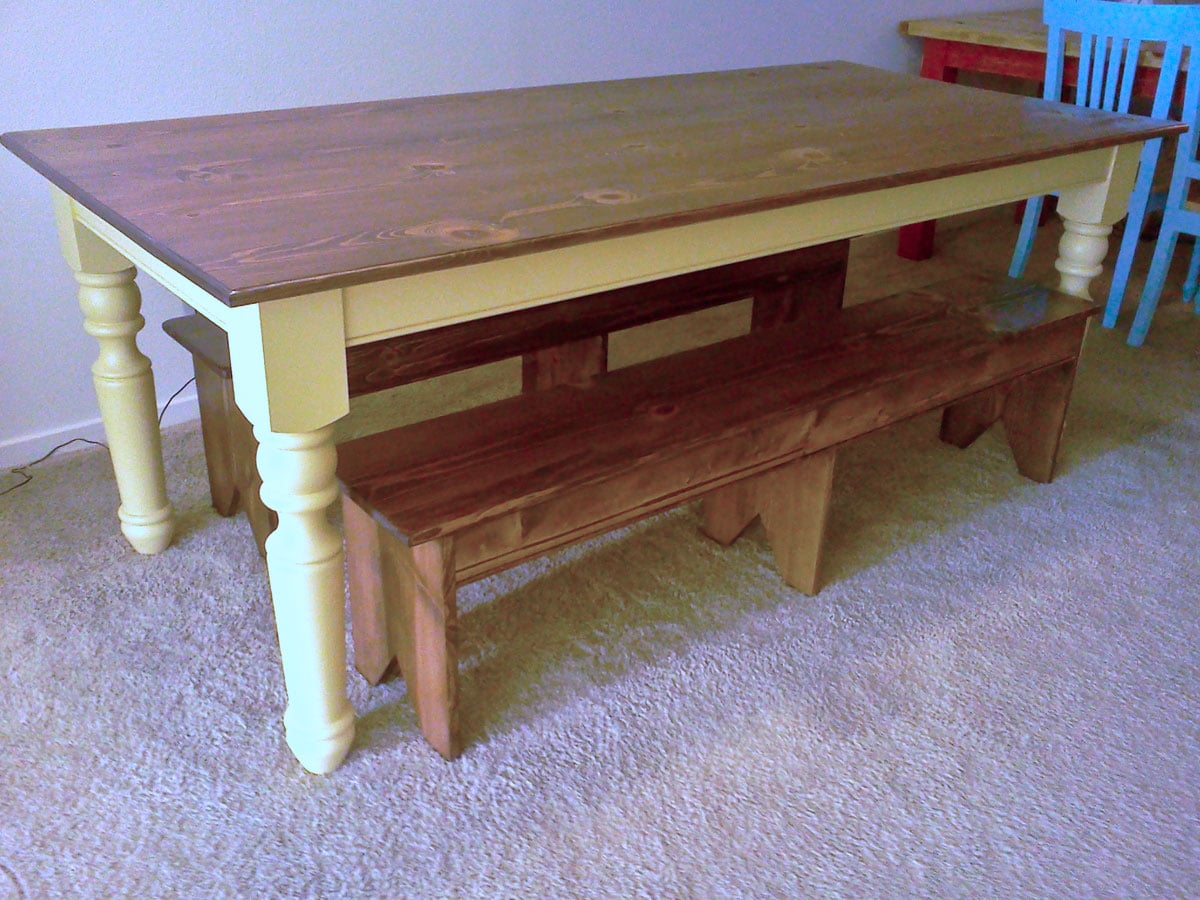
The magic here is in the high-contrast pairing. The deep, rich stain on the tabletop provides a sense of weight and history, feeling solid and dependable. But instead of matching heavy legs that might make the piece feel bulky, the choice of slender, ornately turned legs painted a creamy yellow does two things: it adds a classic, almost delicate farmhouse charm, and it visually lightens the entire table. The simple, dark-stained bench mirrors the tabletop, tying the whole look together without being too matchy-matchy.
“Getting this two-tone finish is a weekend project that completely changes the character of a table.”
Here’s a quick guide to nailing it:Prep is everything (4 hours): Thoroughly sand the entire table and bench. Start with a medium grit (120) and finish with a fine grit (220) for a super smooth surface. Wipe away all dust with a tack cloth.Prime the Base (2 hours + drying): Apply one to two coats of a good quality wood primer to the table legs, apron, and the bench legs. This prevents the old wood color from bleeding through the paint.Paint the Base (2 hours + drying): Apply two thin coats of your creamy yellow paint. A satin or eggshell finish in an enamel paint works best for durability.Stain the Top (3 hours + drying): Apply a dark gel stain to the tabletop and bench seat. Gel stains are thicker and less messy, giving you more control. Apply with a cloth, let it sit for a few minutes, then wipe off the excess.Seal it all (1 hour + cure time): Once everything is fully dry (wait at least 24 hours), apply 2-3 coats of a clear polyurethane to all surfaces for protection. Let it cure for several days before heavy use.Total Time: 2-3 days | Material Cost: $80-$120
2. Distressed White Baluster Table with Matching Bench and Cross-Back Chairs
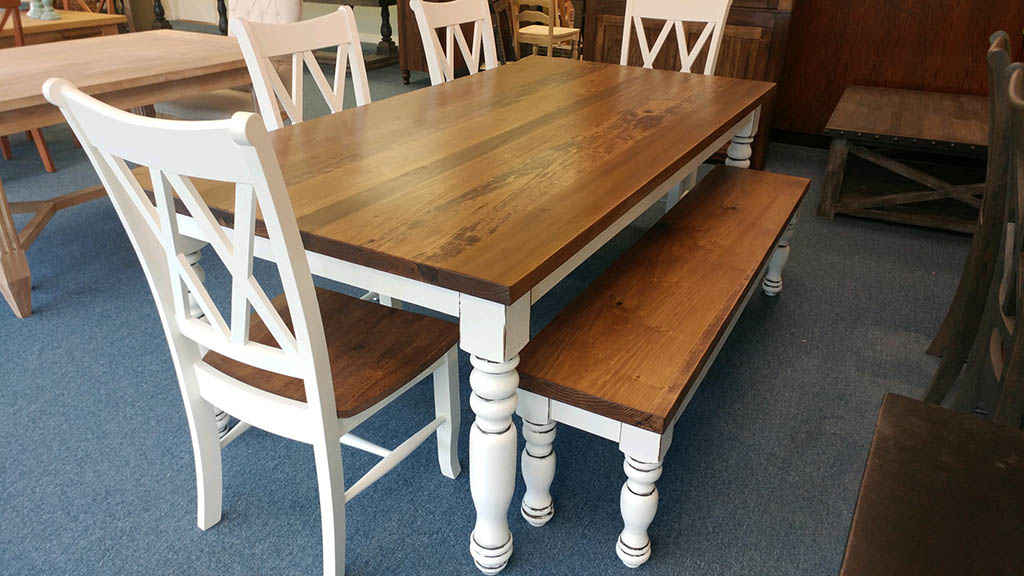
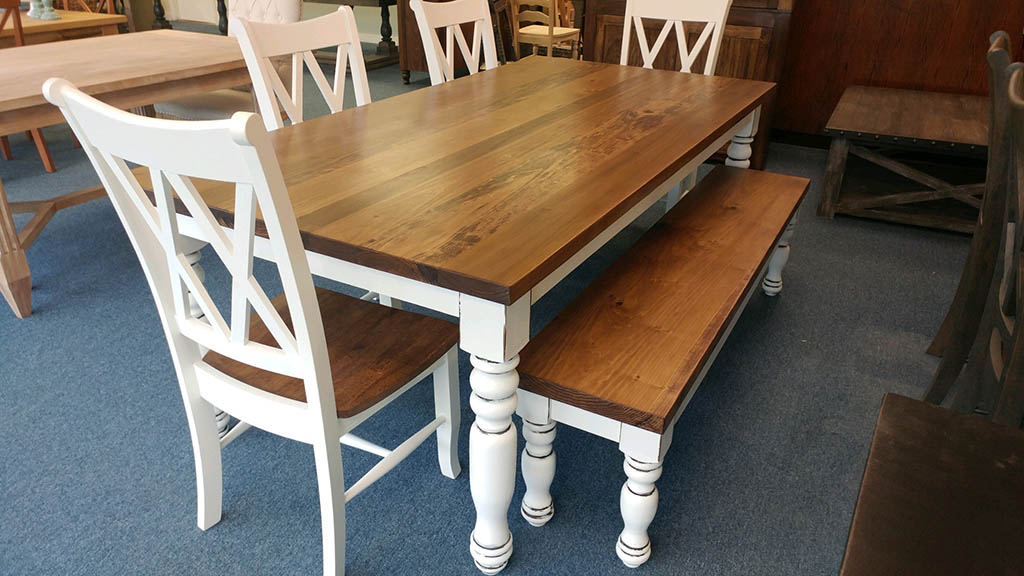
This look is a perfect equation for a bright and casual farmhouse dining space. Let’s break it down: 50% Rustic Wood + 40% Distressed White + 10% Classic Chair Form. The warm, natural tones of the plank top and chair seats provide essential warmth and texture, keeping the room from feeling cold. The distressed white paint on the chunky baluster legs and chair frames adds that quintessential, light-and-airy farmhouse vibe. Finally, the timeless X-back chair design is the 10% that grounds the look in tradition, ensuring it feels established and not just trendy.
“When distressing painted furniture, the goal is to mimic natural wear and tear.”
Use a medium-grit sanding block (around 120-grit) and focus your efforts *only* on the areas that would get bumped, rubbed, or handled over decades of use. This means concentrating on the sharp edges of the tabletop, the high points of the baluster leg carvings, and the corners of the chair frames. Vary your pressure and avoid creating perfectly symmetrical scuffs. The most common mistake is being too uniform; true distressing is beautifully imperfect.
3. Distressed Cream Table with Numbered Teal Chairs
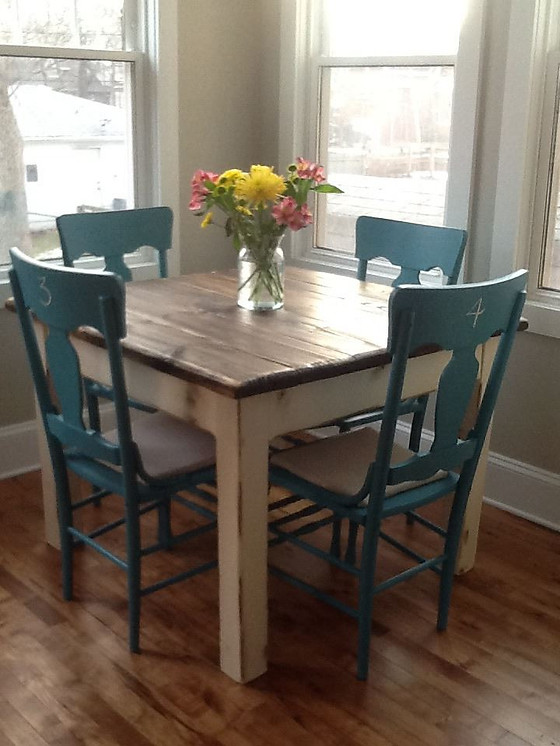
It’s the numbered teal chairs. Hands down. The table itself is a lovely, classic farmhouse piece with its dark top and distressed cream base. It’s the solid foundation. But the chairs are what give this dining set its personality and spark. The pop of saturated teal is unexpected and joyful, cutting through the rustic neutrals. Adding the stenciled numbers is a whimsical touch that leans into a vintage, almost schoolhouse aesthetic. Without those chairs, this is a nice, safe dining room. With them, it’s a space that tells a story and isn’t afraid to have a little fun.
“A look this charming comes with a small reality check: maintenance.”
Painted chairs, especially in a vibrant color like teal, will show nicks and scratches more readily than stained wood. If you have young kids who are prone to bumping chairs into the table, expect to do some touch-ups every year or so. Also, light-colored seat cushions like these are magnets for spills. Consider treating them with a fabric protector like Scotchgard, or opt for cushion covers that are easily removable and machine-washable. This isn’t a deal-breaker, just something to be aware of before you commit.
4. Long Rectangular Natural Wood Table with Turned Legs
A substantial table like this demands a generous amount of space to truly shine. For a long, rectangular table of this style (likely 8-10 feet), you need a room that is at least 14 feet wide and 18 feet long. This ensures you have the non-negotiable 36 inches of clearance on all sides for people to comfortably walk around the table and for chairs to be pulled out without hitting a wall. A ceiling height of at least 9 feet also helps to balance the visual weight of the piece. If your space is smaller, consider a round version like Idea #5 to maximize seating without overwhelming the room.
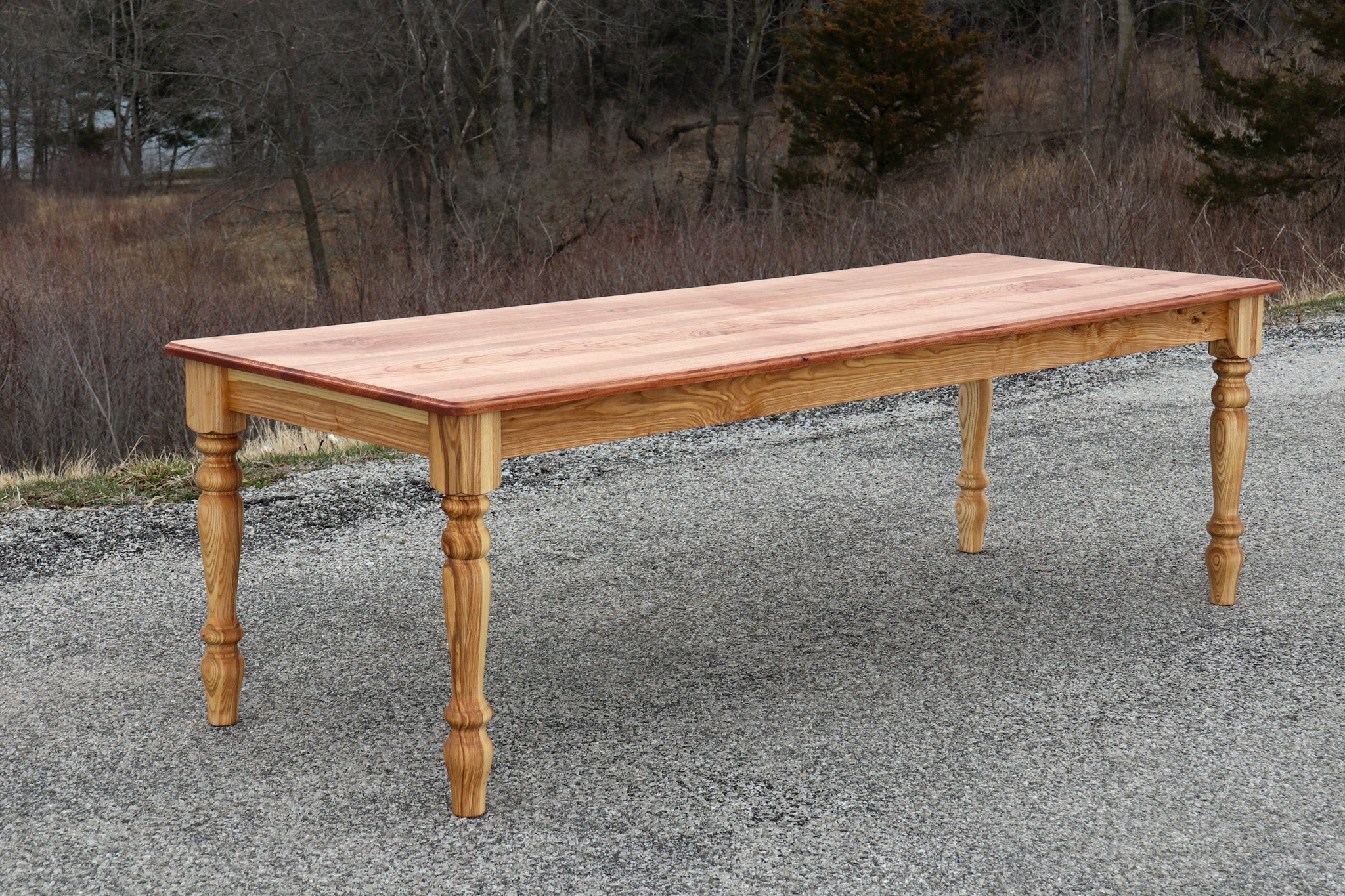
“This design works because it’s a masterclass in simplicity and proportion.”
There are no wild colors or mixed materials here; it’s all about the inherent beauty of the wood. The design creates visual interest through subtle contrast: the light, smooth planks of the tabletop are juxtaposed with the darker, more ornate and sculptural form of the turned legs. The visible wood grain running in different directions on the top versus the legs adds another layer of quiet complexity. It’s a testament to the idea that when the form is this classic, you don’t need to shout to make a statement.
5. Round Pedestal Table with Industrial Metal Banding
The single element that elevates this table from handsome to unforgettable is the dark metal banding with rivets. Without it, you’d have a perfectly nice rustic pedestal table. With it, the piece gains an entirely new layer of character—a hint of industrial grit and history. It evokes the staves of an old wine barrel or a piece of vintage cooperage. This single detail provides a textural and color contrast against the distressed wood, adding a rugged, masculine edge that keeps the round shape from feeling too soft or traditional.
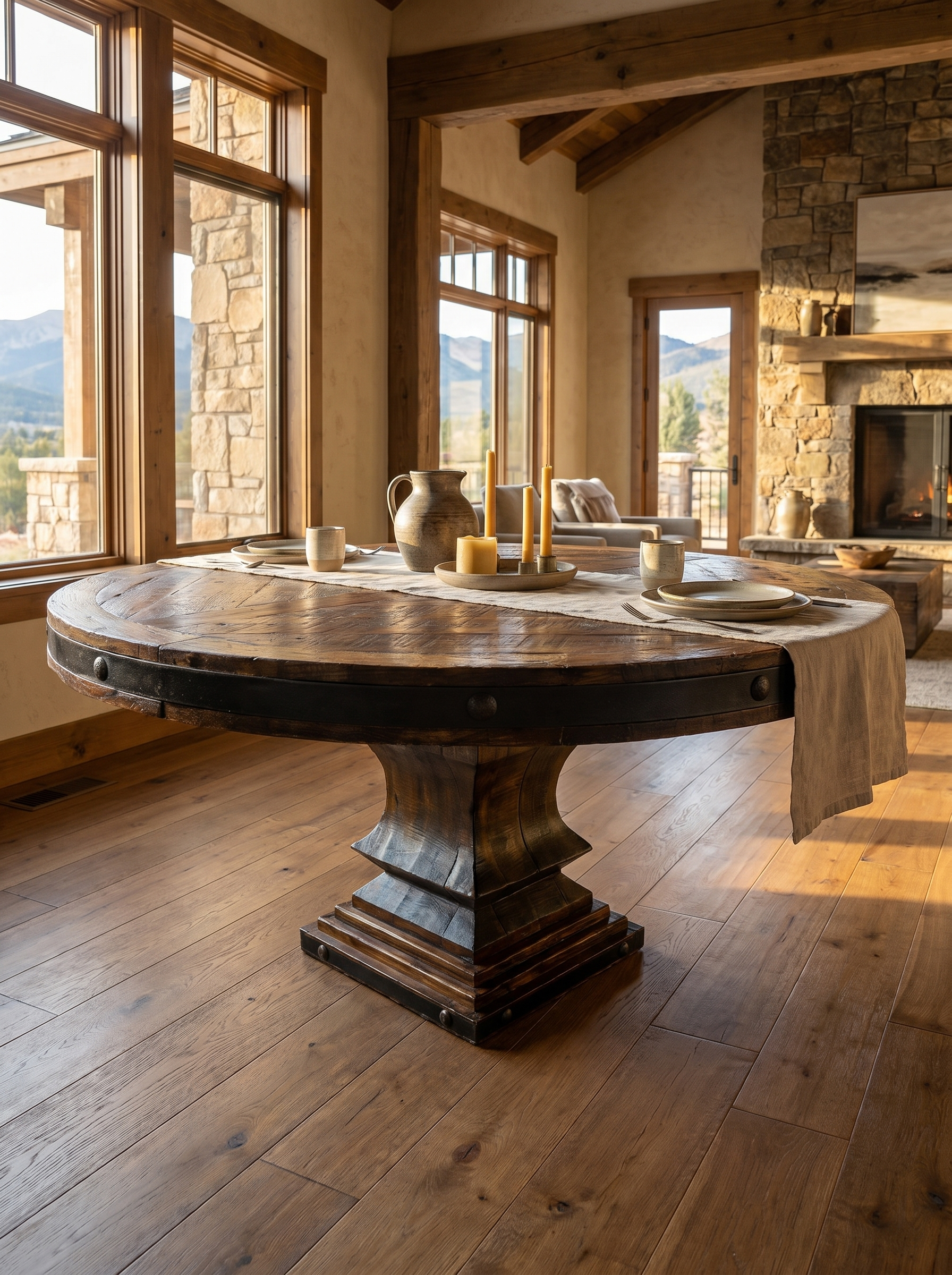
“A heavily distressed wood top is fantastic for hiding minor dings and scratches from daily life, but that rugged look requires a specific cleaning routine.”
The textured grooves and intentional imperfections are prime real estate for crumbs and dust. A simple wipe-down won’t be enough; you’ll need a vacuum with a brush attachment or a stiff-bristled brush to regularly clear out the crevices. Be vigilant with spills, as liquids can pool in the distressed areas and absorb into the wood. To maintain its luster, plan to re-apply a furniture wax or conditioning oil every 6-12 months.
6. Carved-Edge Round Table with a Distressed Plank Top
This table succeeds by layering different types of texture and detail. First, you have the broad texture of the distressed wood planks on the top, with their visible grain and knots, which gives it a rustic, time-worn feel. Then, your eye is drawn to a more refined, detailed texture: the intricately carved rope-like pattern around the edge. This juxtaposition of ruggedness (the top) and craftsmanship (the edge) is what makes the piece so compelling. It’s rustic, yes, but it’s also elevated and intentional. It feels like a piece that was both used and cherished. Compare this with the industrial edge on Idea #4 for a different take.
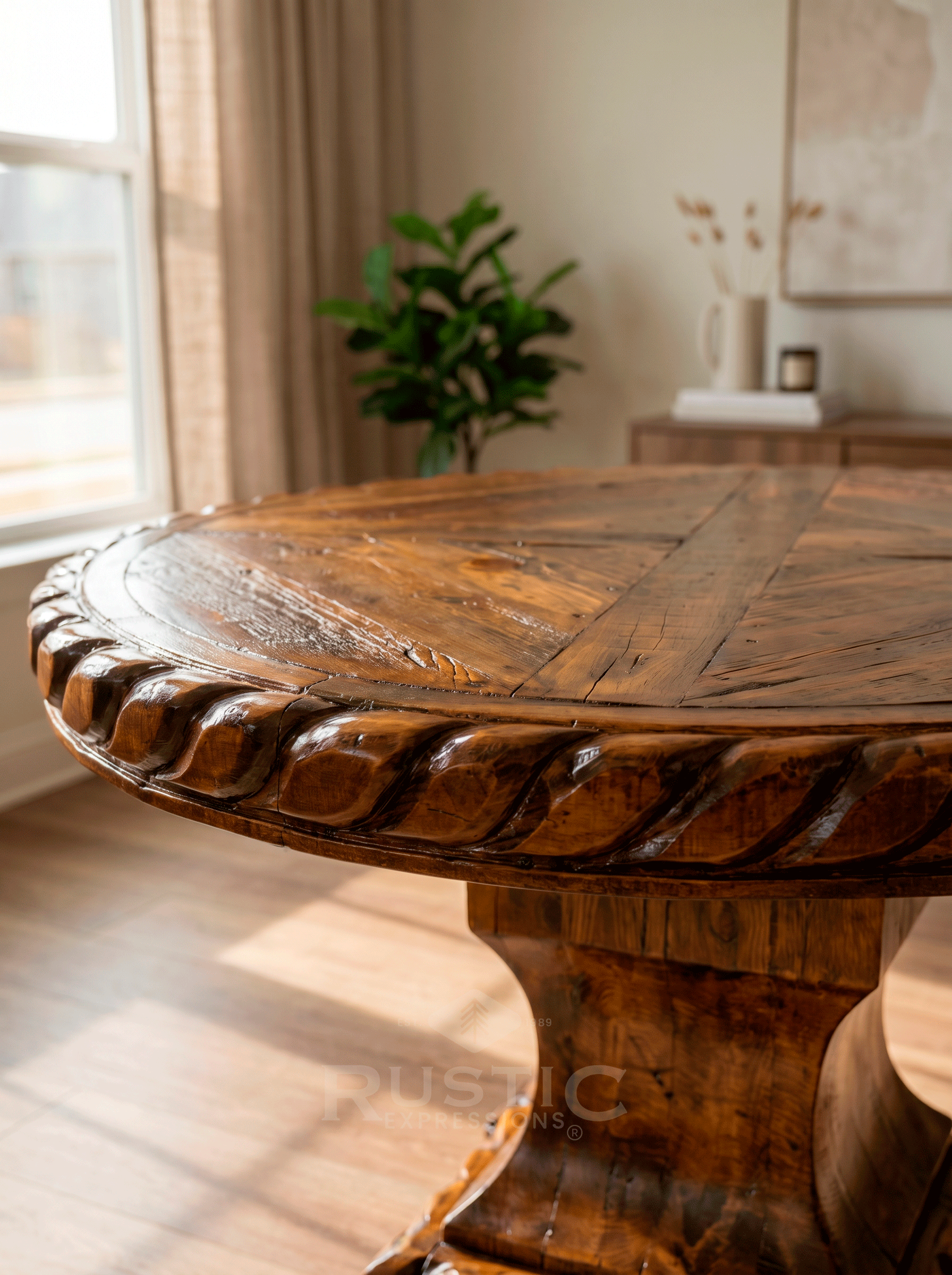
“If you’re DIY-ing a top with a glossy finish like this one, the secret to avoiding that plastic-y, unnatural look is to build up the polyurethane in thin layers.”
Do not glob it on. Use a high-quality natural bristle brush and apply a very thin coat. Let it dry completely, then lightly sand the entire surface with ultra-fine sandpaper (400-grit or higher). Wipe away all the dust, and apply the next thin coat. Repeat this process for at least 3-4 coats. This builds a deep, durable finish that looks like it’s *in* the wood, not just sitting on top of it.
7. Two-Tone Pedestal Table with Black Spindle Chairs and Shiplap
This bright and airy room is a classic modern farmhouse formula: 50% Crisp White + 30% Warm Neutrals + 20% Black Accents. The white shiplap walls, pedestal table base, and chandelier create a clean, expansive backdrop. The warm neutrals come from the light beige rug and wood tones in the art, preventing the space from feeling stark. The crucial 20% comes from the black spindle-back chairs, which act as punctuation marks. They ground the space, add a touch of graphic contrast, and tie into the dark gray tabletop, creating a cohesive and balanced composition.
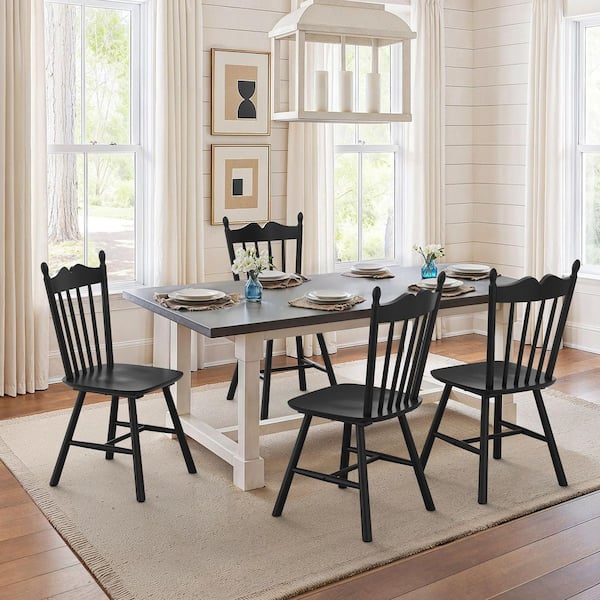
“This look is the poster child for the ‘Modern Farmhouse’ style that has dominated Pinterest for the last several years, and it shows no signs of slowing down.”
Why? It perfectly blends the rustic, cozy comfort of traditional farmhouse style with the clean lines and bright, uncluttered feel of modern design. The shiplap walls nod to barn structures, the spindle chairs are a historical form, but the high-contrast black and white palette and lack of fussy decor make it feel fresh, current, and incredibly photogenic for the Instagram and Pinterest era.
8. Dark, Sturdy Farmhouse Table with Thick Block Legs
The defining feature here is a sense of unshakeable sturdiness. And that comes directly from the thick, blocky legs. In a world of delicate, turned, or tapered legs, these substantial posts ground the entire dining set. They communicate durability, longevity, and a no-nonsense approach to design. By painting them a deep, dark brown—almost black—they gain even more visual weight, creating a powerful anchor for the lighter distressed wood top. Removing these legs in favor of something more slender would fundamentally change the feel from a robust, workhorse table to something far more decorative.
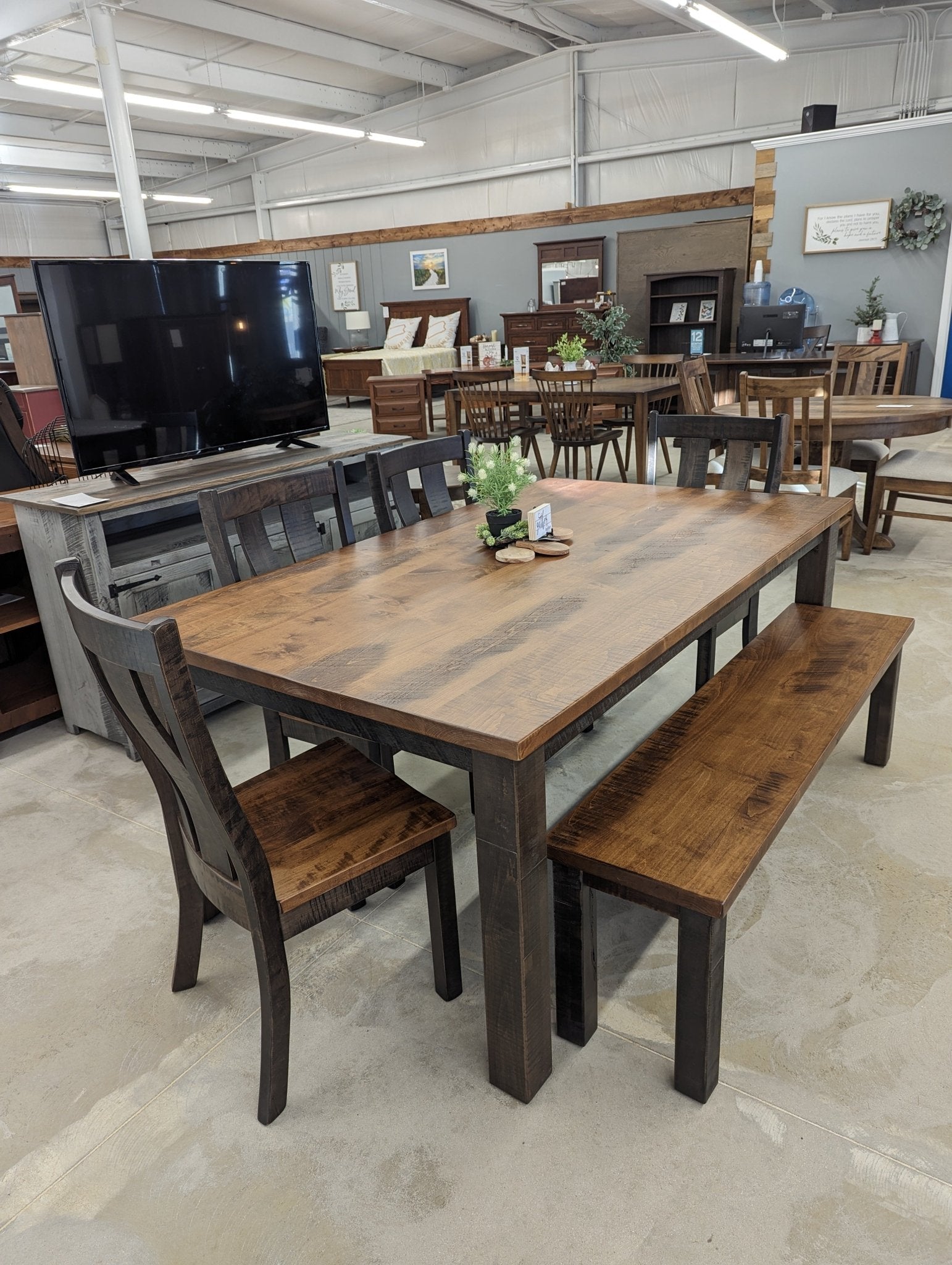
“This table’s power is in its visual weight, which means it needs the right environment.”
This design works best in a medium to large dining space, at least 12 by 15 feet, with 8-foot or higher ceilings. In a small room, the dark color and thick legs could feel oppressive and make the space seem cramped. You must be able to maintain at least 3 feet of clear walking space around the entire table. If your room is on the smaller side but you love this sturdy look, consider a version with a lighter wood finish or painting the base a lighter color to reduce its visual footprint.
9. Live-Edge Wood Dining Table with an X-Trestle Base
The success of this dining setup hinges on the principle of repetition with variation. The strong ‘X’ shape is the star motif. We see it first and most prominently in the table’s trestle base, which provides a modern, graphic foundation. The theme is then repeated in a more delicate form on the backs of the dining chairs. This repetition creates a powerful sense of cohesion and intentionality. The variation in scale—a massive ‘X’ for the table, smaller ‘X’s for the chairs—keeps it from feeling monotonous. It’s a smart way to tie a dining set together. Compare the base here to the sleeker metal legs in Idea #17.
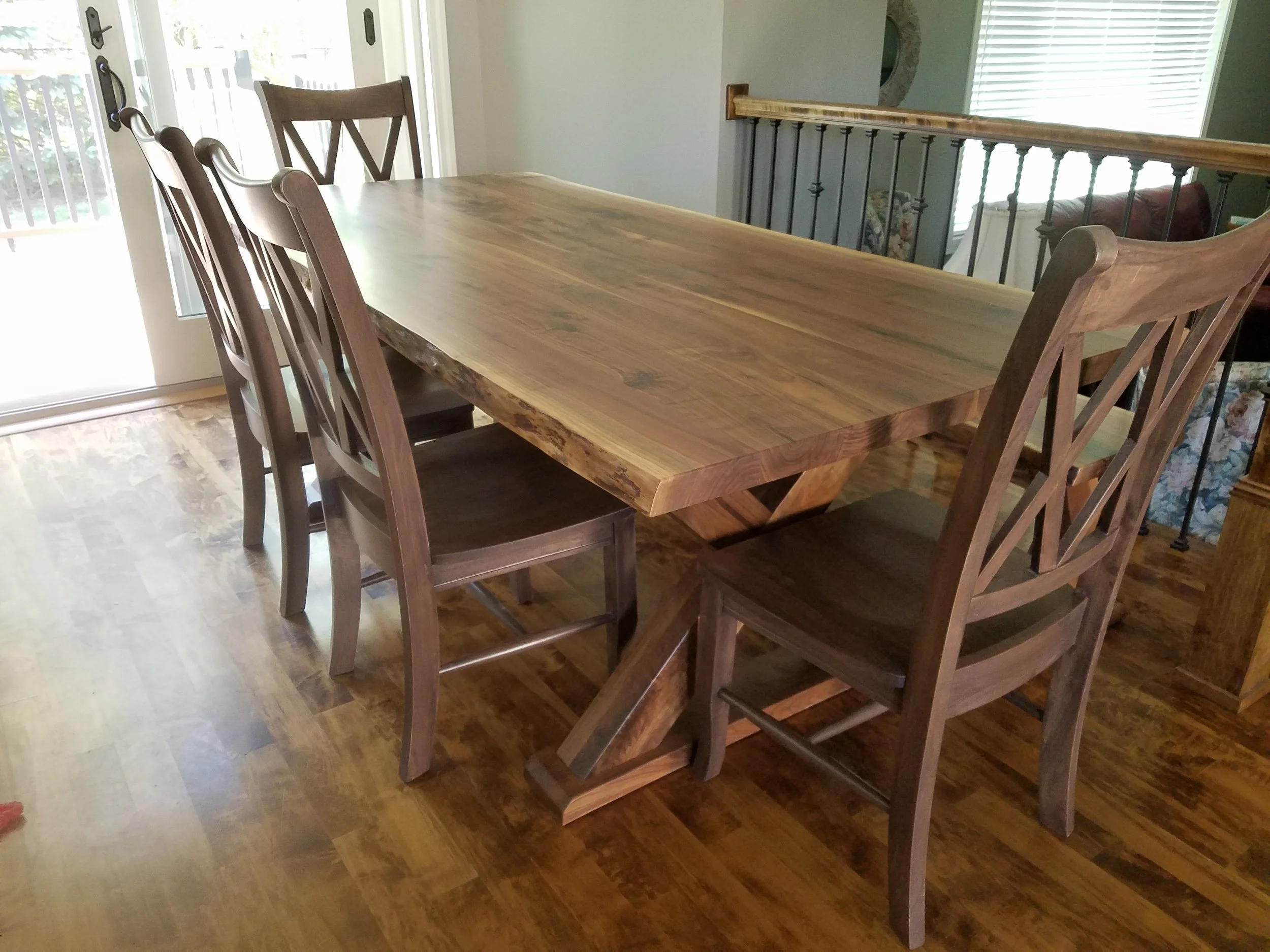
“Live-edge tables are stunning, but let’s be honest about the seating situation.”
The natural, irregular edge means that the usable surface area can be inconsistent. The person sitting at a narrow point of the table will have less space than someone at a wider point. Furthermore, that beautiful, raw edge can be a bit treacherous for clothing—it’s surprisingly easy to snag a sweater on a rough patch. Finally, the X-trestle base looks amazing but can sometimes interfere with legroom for those sitting at the ends of the table. It’s a trade-off for style, but one to be aware of.
10. Reclaimed Wood Dining Set with a Braided Jute Rug
You don’t need a custom-built set to achieve this warm, rustic vibe. Start by hunting for a solid wood dining table on Facebook Marketplace or at a thrift store—look for good bones, not a perfect finish ($100-$300). You can strip and re-stain it to get that rich, reclaimed look. Find a simple wooden bench ($50-$100) and mismatched slat-back chairs ($15-$25 each) and paint them all a unifying color if needed. The key element that pulls it all together is a large, affordable braided jute rug from a store like Target, IKEA, or Walmart ($150-$250). Total cost for a similar look: $400-$700.
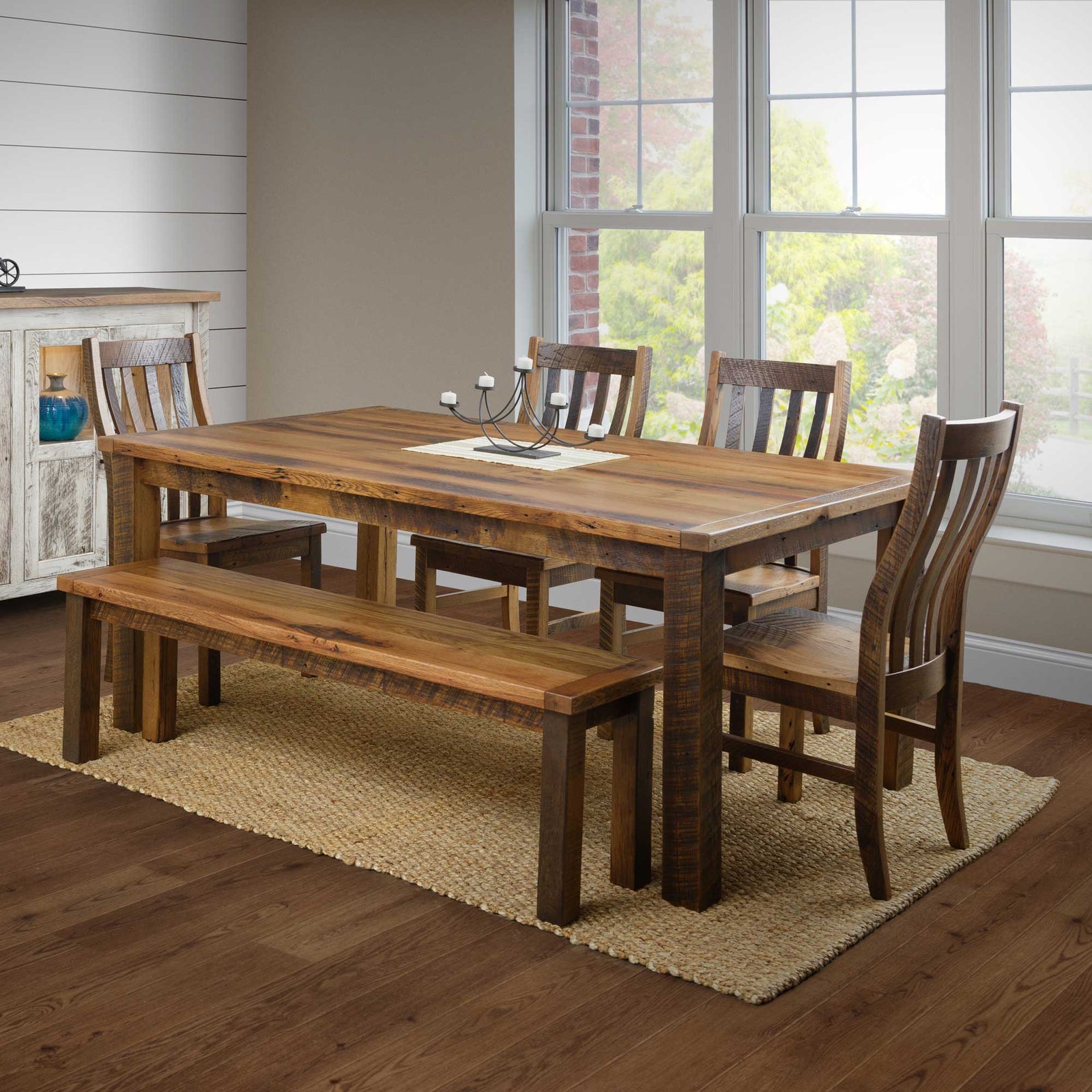
“That beautiful, chunky braided rug is the secret to the room’s cozy texture, but it’s not the most practical choice for a high-traffic dining area.”
Natural fibers like jute and sisal are highly absorbent and notoriously difficult to clean. A spilled glass of red wine would be a catastrophic event. The coarse texture is also a trap for crumbs and dust, requiring frequent and powerful vacuuming. If you have kids or are a messy eater, consider a lookalike rug made from polypropylene or other synthetic fibers, which will give you a similar textured look with far easier cleanup.
11. Distressed Wood Table in a Light Green Dining Room
This room feels so serene because of its masterful use of a cohesive, nature-inspired palette. The pale green on the walls creates a soft, calming backdrop that evokes foliage and spring. This is picked up by the botanical print on the area rug, which also introduces subtle blues. The distressed wood of the table and the natural-toned Roman shades provide the earthy, grounding element. Finally, the upholstered slipcovered chairs in a creamy beige offer a soft, textural contrast. Nothing is jarring; every element speaks the same peaceful, organic language.
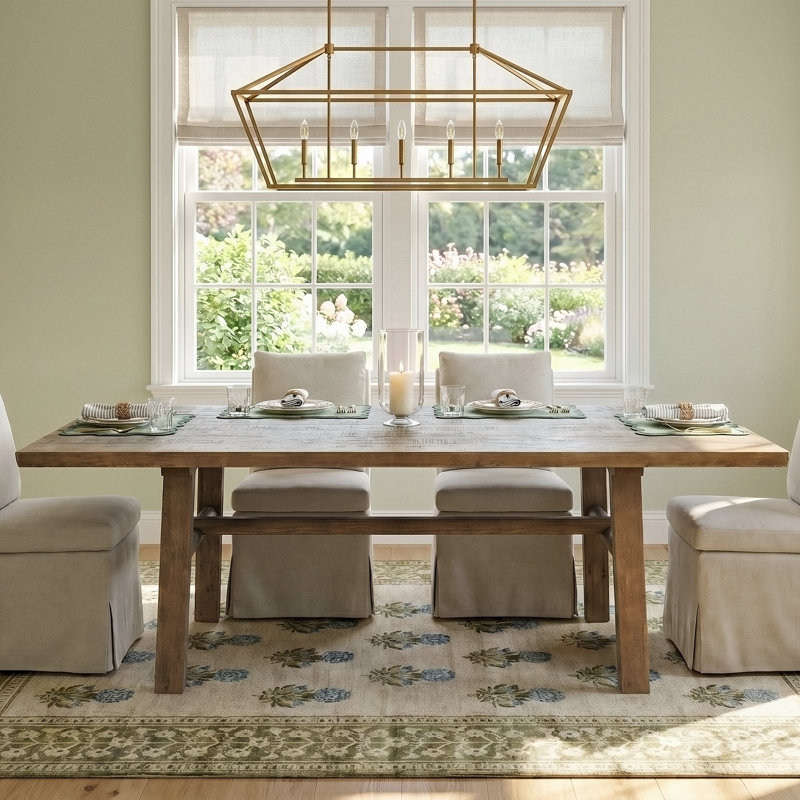
“When choosing a paint color to go with natural or distressed wood, don’t just look at the color chip in the store.”
Get a sample pot and paint a large poster board. For 24 hours, move that board around the room and place it next to your wood furniture. Notice how the color shifts in the morning light versus the evening. A pale green like this can look crisp and minty in bright daylight but might turn muddy or drab in a room that doesn’t get much natural light. Always test your colors in the actual space and with the actual lighting you will have.
12. Live-Edge Wood Table in a Lush, Plant-Filled Room
that makes this room truly special is the sheer abundance of greenery. The live-edge table is a beautiful anchor, but it’s the living, breathing plants that transform the space from a dining room into a sanctuary. You have large potted trees, trailing plants on shelves, and smaller specimens as decor. This commitment to biophilia—the integration of nature into design—creates a symbiotic relationship with the wooden table. The table is a piece of nature, and it’s surrounded by living nature, making the entire room feel organic, serene, and deeply calming.
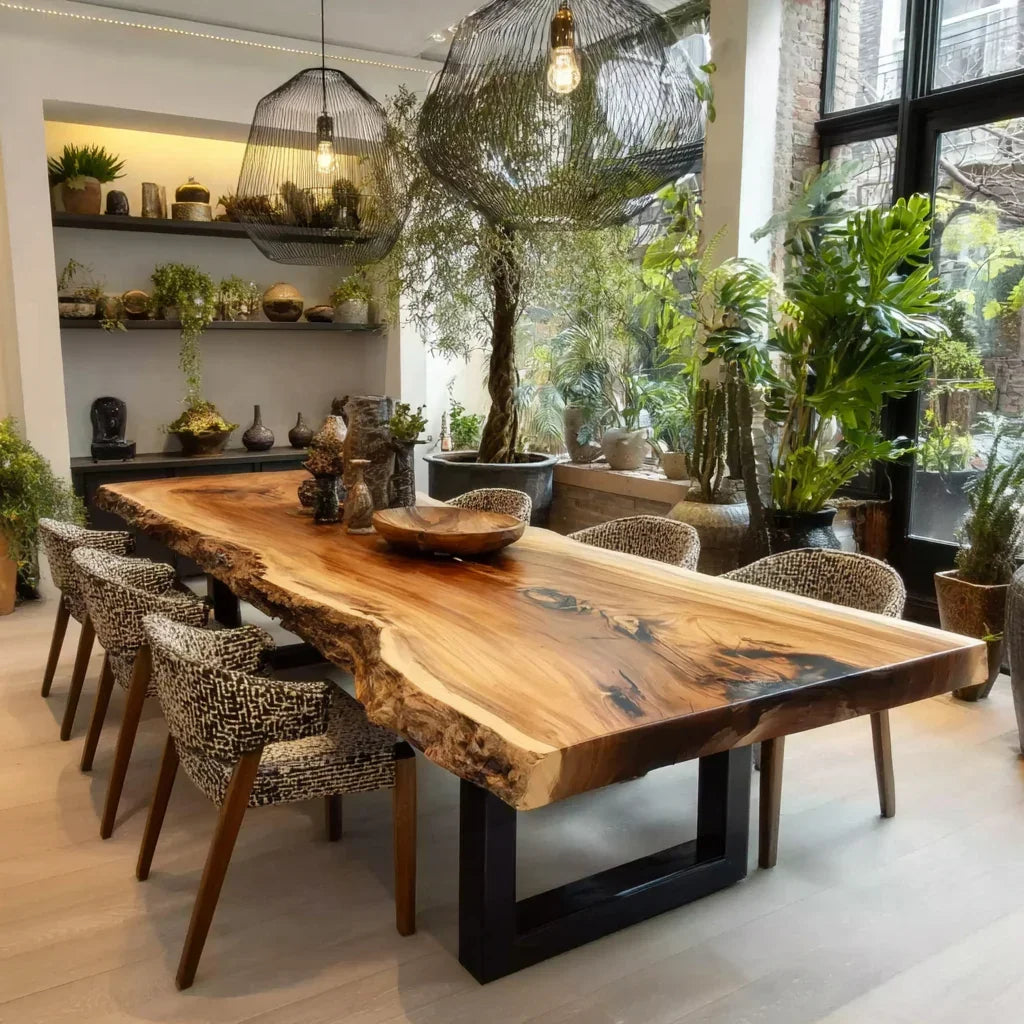
“A long, dramatic table like this requires a room with significant length.”
For a table that seats 8-10 people (likely 9-11 feet long), your room should be at least 17 feet long to allow for comfortable seating and passthrough space at both ends. The width should be at least 11 feet to accommodate the chairs and a 3-foot walkway on one side. This look also benefits from high ceilings (9+ feet) to balance the visual weight of the table and allow for large pendant lights like the wire-mesh ones shown, which need vertical space to make an impact. This isn’t a setup for a small, square dining nook.
13. Light Wood Plank Table with a Dark Metal Trestle Base
This look achieves its modern-industrial feel with a simple but effective formula: 70% Natural Material + 30% Industrial Edge. The vast majority of the visual real estate is the light wood plank top, which feels warm, natural, and approachable. The visible fasteners add a hint of craftsmanship. The remaining 30% is the dark, angular metal trestle base. This single element injects the clean lines, stark color contrast, and functional aesthetic of industrial design. It’s a balanced mix that feels contemporary, clean, and not overly committed to one single style.
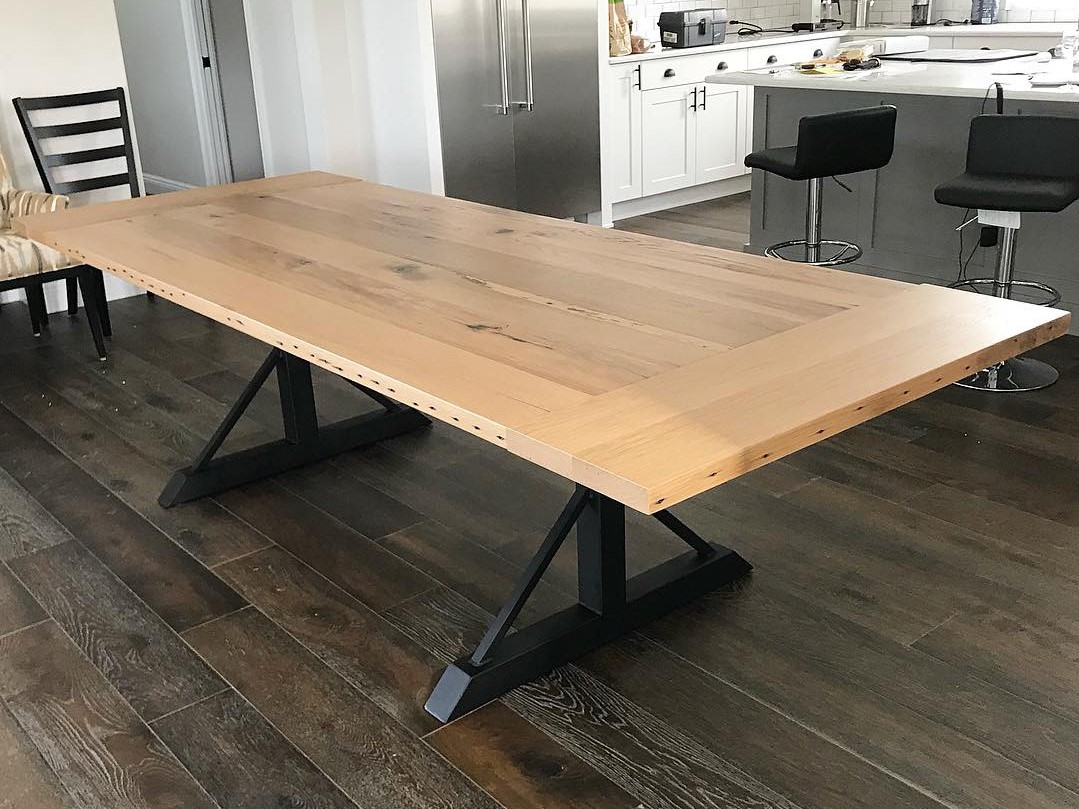
“Before you commit to a trestle-style table, there are a few practical things to check.”
This isn’t just about style; it’s about daily function.Knee Clearance: Sit at a similar table in a showroom if you can. Is there enough space for your knees, or do you feel cramped by the angled base, especially if you’re tall?Chair Placement: Can you push the chairs all the way in when not in use? Some trestle designs prevent chairs from tucking neatly underneath, which can eat up valuable floor space.End-of-Table Seating: Can someone comfortably sit at the head of the table, or does the base get in the way of their legs and feet? This is a major consideration if you plan on squeezing in extra guests.
14. Festive Dining Table with Green Garland and Red Accents
The genius of this tablescape is its ‘perfectly imperfect’ eclectic charm. It resists a rigid, formal setting. You have a mix of chair styles—some natural wood, some painted white—which immediately signals a relaxed, welcoming atmosphere. The centerpiece isn’t a stiff floral arrangement but a lush, sprawling garland that feels organic and a little wild. The combination of different candle types (red pillars, white tapers) adds another layer of informal variety. This mix-and-match approach is what makes the setting feel personal, lived-in, and genuinely festive, rather than staged.
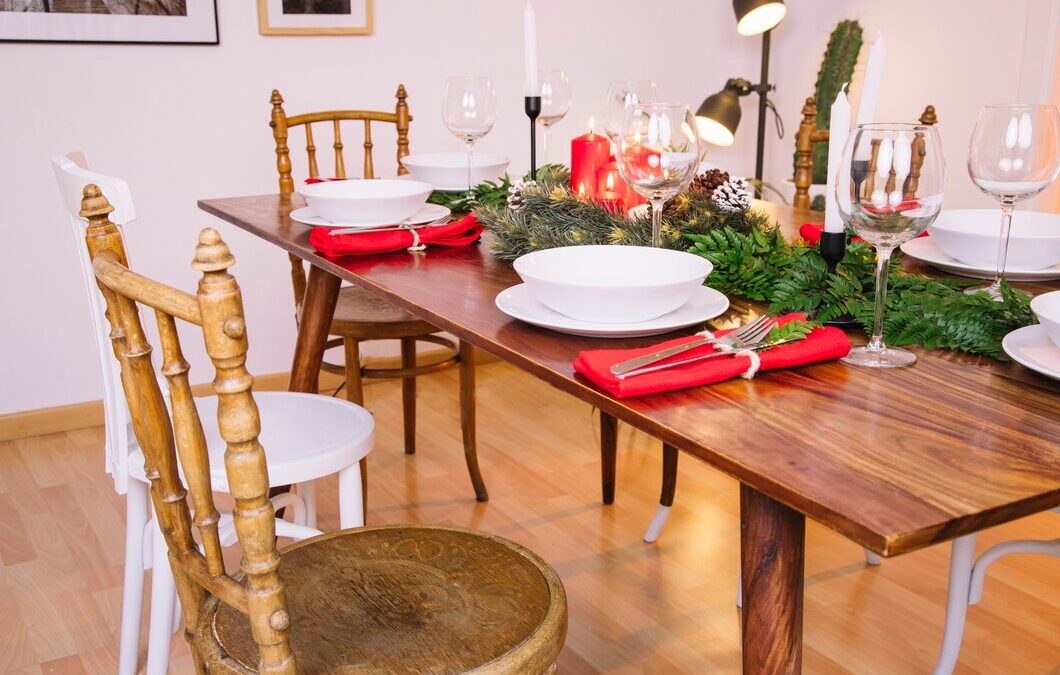
“You can create a stunning garland centerpiece like this in under an hour for very little money.”
Here’s how:Start with a Base (20 mins): Buy a simple, inexpensive faux pine garland. Lay it down the center of your table. Don’t worry if it looks sparse. Use small pieces of floral wire to fluff and shape it.Add Real Greenery (15 mins): Go to your yard (or a park) and snip branches of pine, eucalyptus, magnolia leaves, or whatever you can find. Tuck these real branches into the faux garland. This adds authentic texture, scent, and volume.Incorporate Candles (10 mins): Place several pillar candles of varying heights directly within the garland. Then, add a few taper candles in simple holders, weaving them in between the greenery. Ensure no foliage is close enough to a flame to be a fire hazard.Final Touches (5 mins): Sprinkle in natural elements like pinecones, small ornaments, or citrus fruits to fill any gaps and add more interest.Total Time: 50 minutes | Material Cost: $30-$50
15. Long Reclaimed Wood Table with Textured Planks
The undeniable soul of this table is the texture of the reclaimed wood itself. It’s not just a ‘wood top’; it’s a landscape of history. You can see the saw marks, the nail holes, the knots, and the dramatic variations in color and grain from plank to plank. These aren’t imperfections to be sanded away; they are the entire point. This rich, tactile surface tells a story of a past life, bringing a level of authenticity and warmth to the room that a perfectly smooth, factory-finished table could never achieve. It feels honest, sturdy, and deeply rooted.
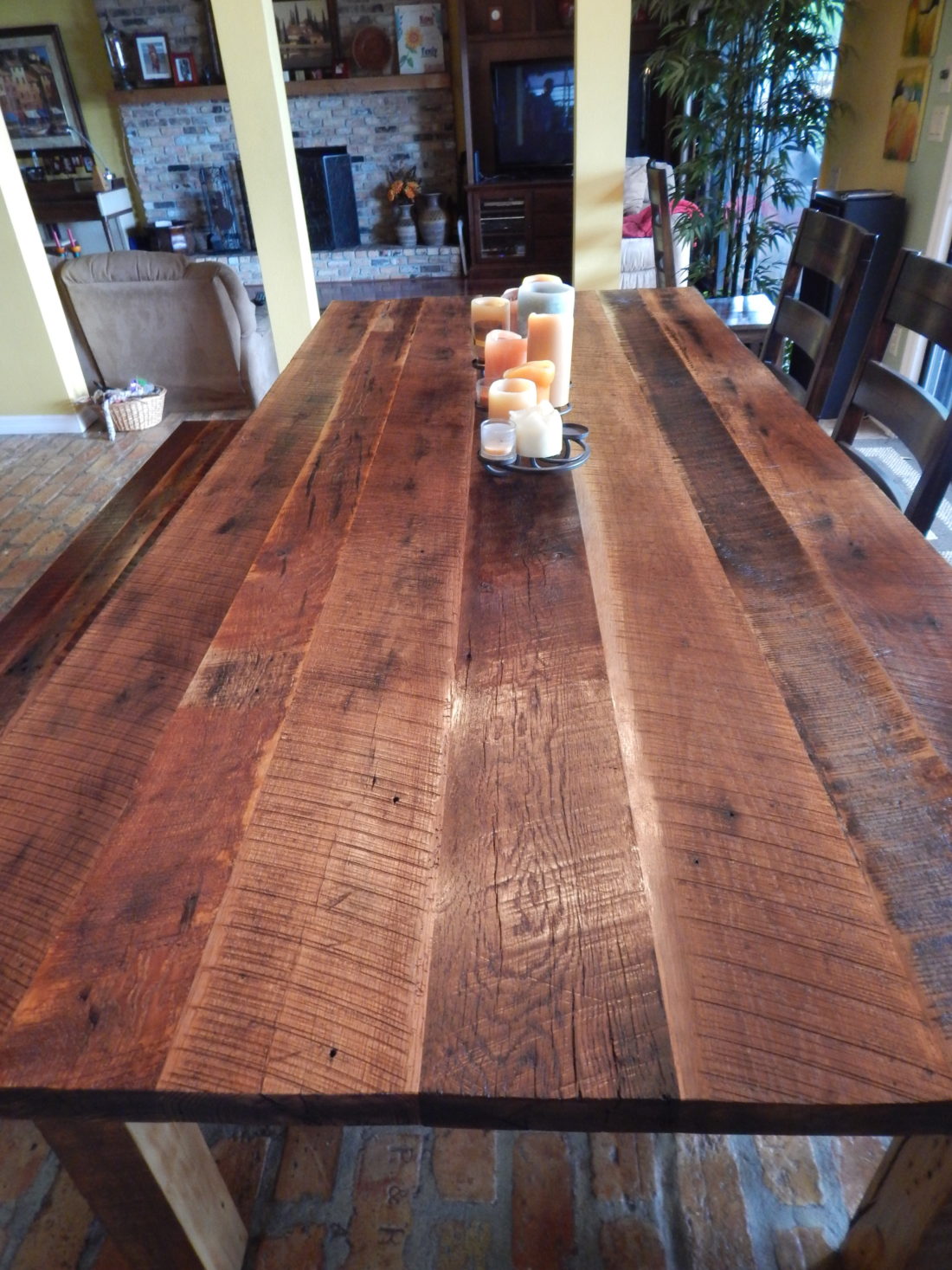
“Recreating this authentic reclaimed wood table is a serious DIY project, but the cost is primarily in labor and finding the right materials.”
Here’s a possible breakdown:Reclaimed Wood Planks (from salvage yard): $300 – $800Lumber for base/legs: $100 – $200Hardware (screws, bolts): $30 – $50Finishing Supplies (sandpaper, stain, sealant): $75 – $125TOTAL: $505 – $1,175Budget alternative: Use new, inexpensive pine boards from a hardware store. Artificially distress them with chains, hammers, and screws. Use a mix of different stain colors to create color variation. This can achieve a similar vibe for around $250-$400 total.
16. Wood Plank Table with Industrial Metal-Bracket Legs
This design’s success lies in its unapologetic celebration of construction. It doesn’t try to hide how it’s put together; it makes the hardware the star. The oversized black metal brackets and cross-bracing aren’t just functional; they’re the primary design element. This creates a powerful contrast with the organic, natural wood planks. It’s a fusion of the industrial and the rustic—the sleek, strong, man-made metal holding together the warm, imperfect, natural wood. This tension between materials is what gives the piece its dynamic and modern edge.
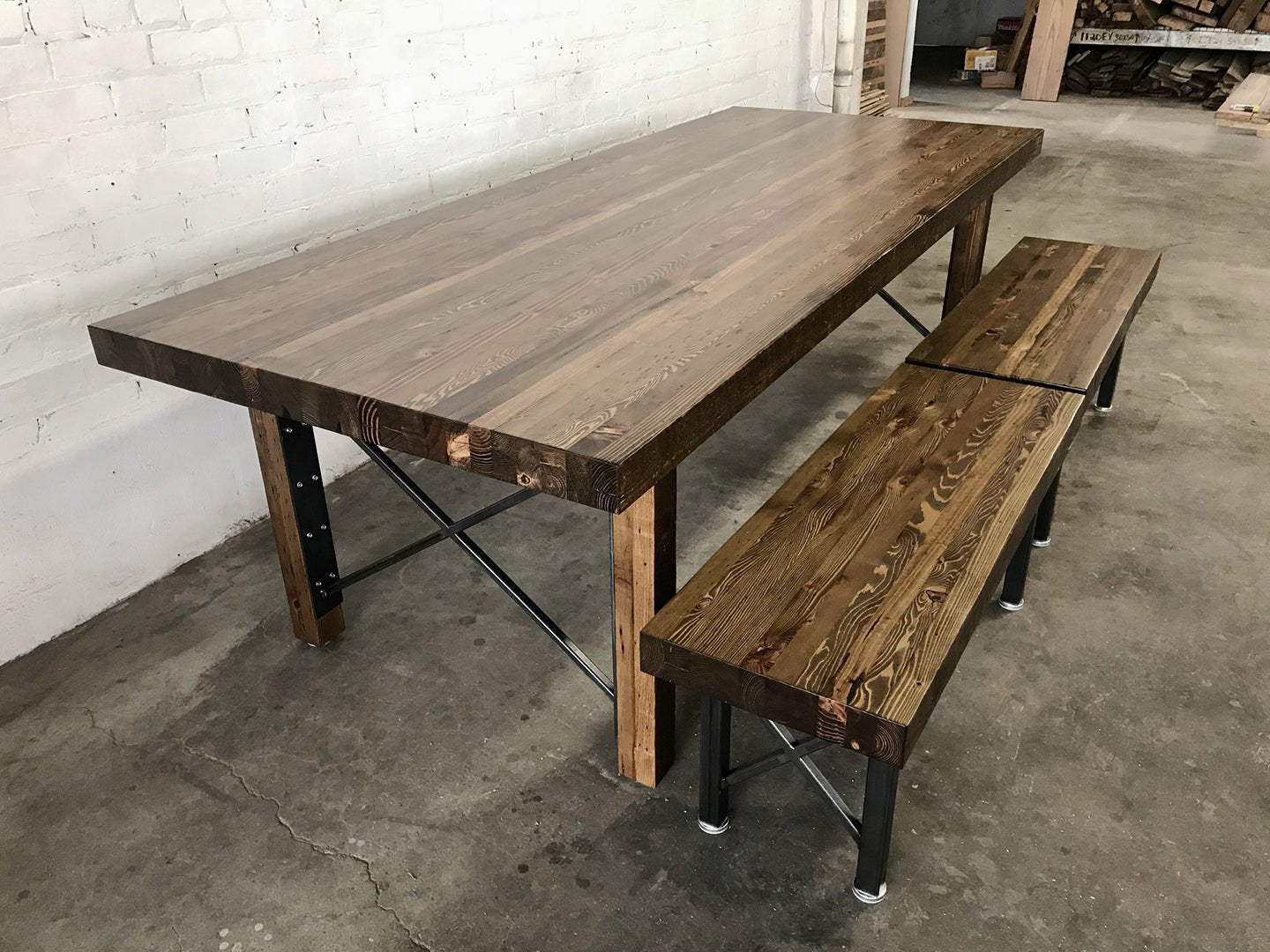
“This table is a head-turner, but it’s not the most kid-friendly design.”
Those large, sharp-cornered metal brackets, while looking very cool, are positioned at the perfect height to be a head-bumping hazard for a running toddler. The cross-bracing on the floor could also be a tripping hazard in a busy household. Furthermore, the bench with its sleek metal legs lacks a backrest, which can be uncomfortable for long dinners and less safe for younger children. It’s a fantastic look for an adult-only household or a less-used dining space.
17. Live-Edge Table with Woven Chairs and a Jute Rug
This bright, coastal-inspired room is a study in textural layering. The formula: 40% Smooth Wood + 30% Woven Fibers + 20% Soft Textiles + 10% Sleek Metal. The live-edge table provides the main ‘smooth’ element. The woven fibers are the star players, appearing in the jute rug, the rattan chairs, and the tray centerpiece, creating a cohesive, natural vibe. Softness is added with the cream cushions and the floral arrangement. Finally, the dark X-shaped metal base provides a slim, graphic counterpoint to all the natural texture, keeping the look modern and grounded.
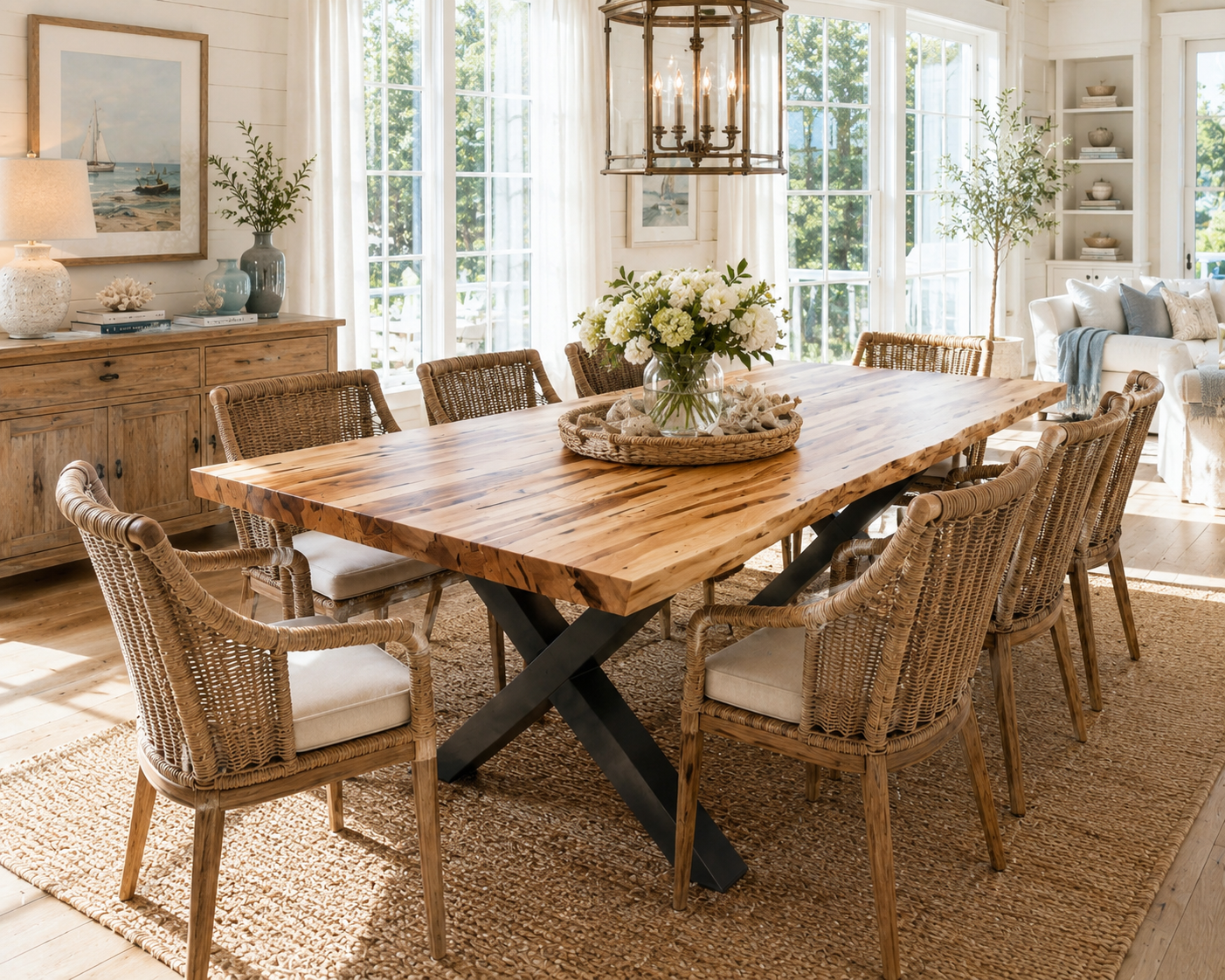
“When you have a ‘hero’ piece of furniture like this stunning live-edge table, the key is to let it be the star.”
Notice how every other major element in the room is a neutral, natural texture. The jute rug, woven chairs, and cream cushions are all chosen to complement the table, not compete with it. If the chairs were a bright color or the rug had a bold geometric pattern, your eye wouldn’t know where to look. When you invest in one standout piece, support it with beautiful, but quiet, supporting actors.
18. Light-Wash Wood Dining Set with X-Back Chairs
This space feels so fresh and cohesive because every wooden element shares the exact same light-washed finish. The tabletop, table legs, chair frames, and even the ‘Farmer’s Market’ sign frame all speak the same language. This disciplined approach creates a calm, unified backdrop. The contrast then comes from just a few deliberate sources: the graphic black of the chandelier and the vibrant, multi-colored flowers in the crock. This allows those contrasting elements to have a much bigger impact than if the room were filled with competing wood tones.
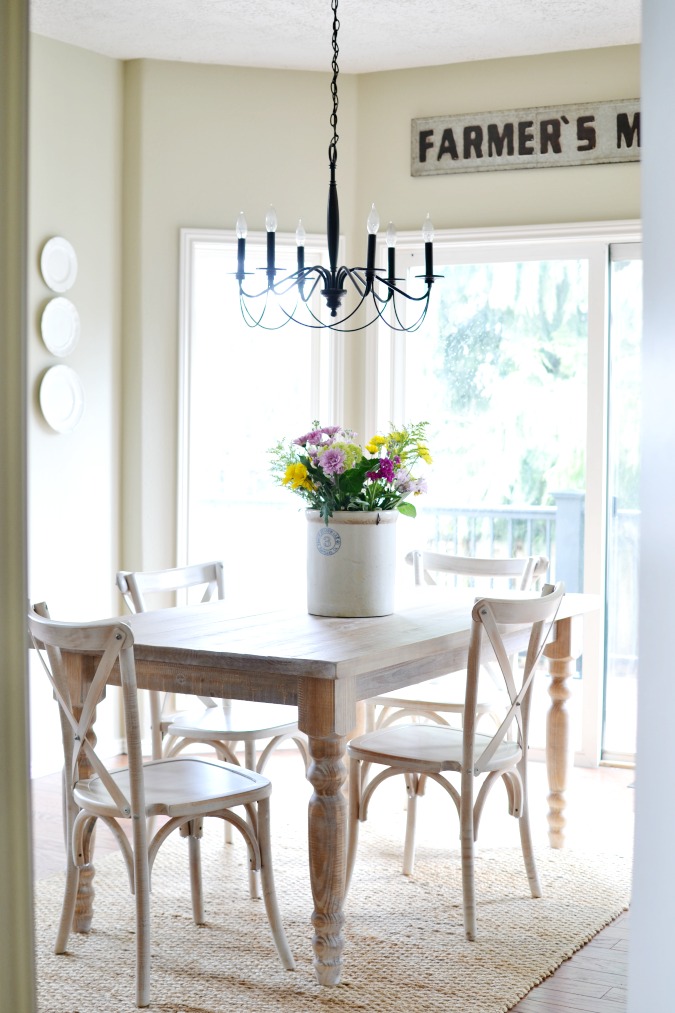
“The single element holding this entire ‘modern farmhouse’ look together is the black metal chandelier.”
It’s the crucial piece of contrast that keeps the room from becoming a sea of pale wood and cream. It provides a much-needed focal point, drawing the eye up and adding a touch of industrial edge. Its dark, graphic silhouette pops against the light walls and furniture, grounding the space and giving it a contemporary feel. Replace it with a wood or white chandelier, and the room would instantly feel less dynamic and more one-note.
19. Modern Two-Tone Farmhouse Table with White Shaker Kitchen
This kitchen dining area nails the open-concept formula: 60% Crisp White + 30% Dark Wood + 10% Black & Brass Accents. The white shaker cabinets, table legs, and chair frames create a bright, seamless foundation that expands the sense of space. The dark wood on the tabletop, bench, and chair seats provides warmth and a rustic anchor, preventing the white from feeling sterile. The 10% accents are critical: the black dome pendants and the brass interiors add a touch of modern sophistication and tie all the elements together. It’s a clean, high-contrast look that just works.
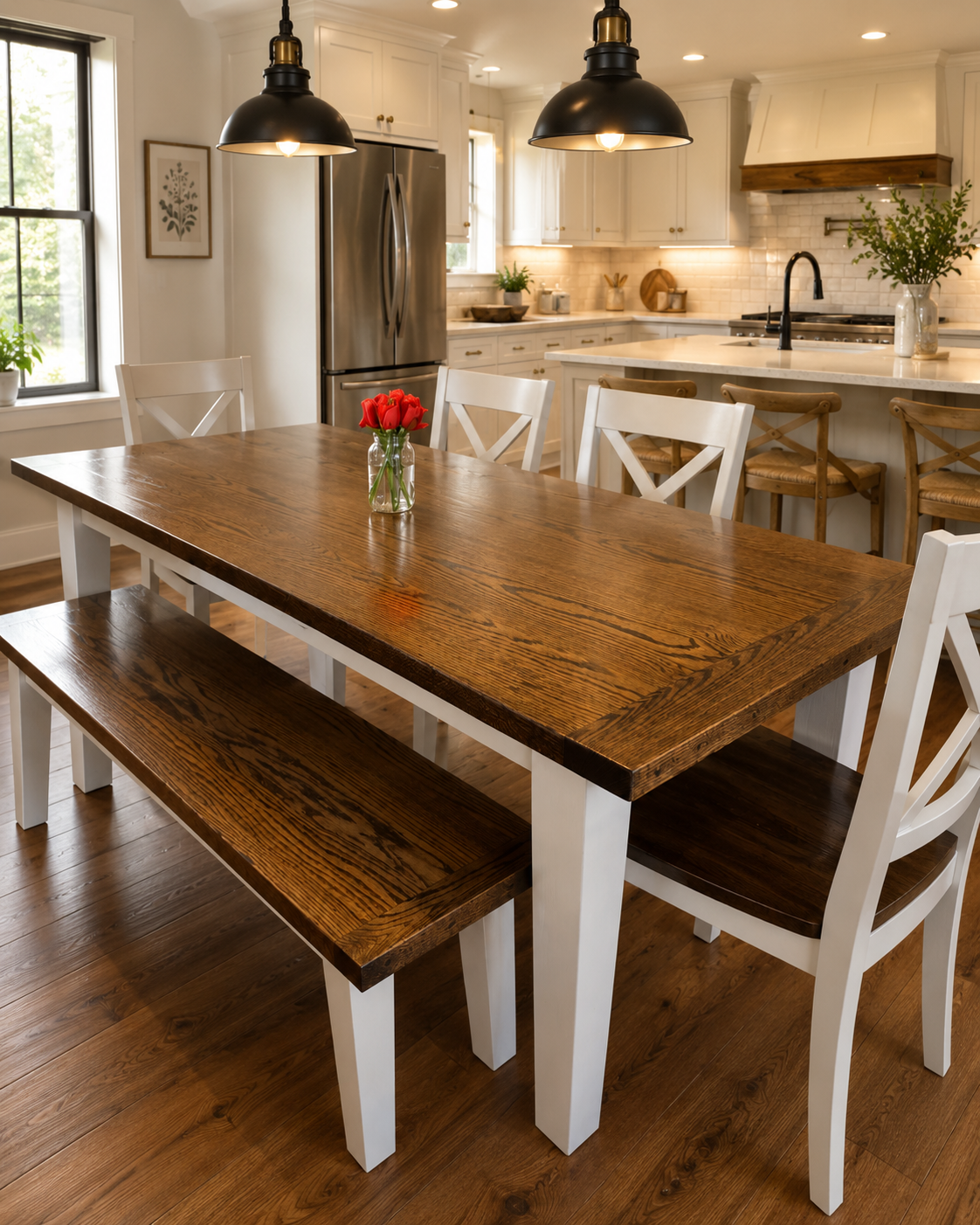
“Let’s have an honest conversation about a two-tone table with a white base in a high-traffic kitchen.”
It looks fantastic, but those white legs and chair frames are magnets for scuffs, shoe marks, and dirt from the kitchen floor. If you have kids, pets, or just a busy household, you’ll be wiping down those legs far more often than you think. Using a high-quality, scrubbable semi-gloss or satin paint is non-negotiable. This isn’t to say don’t do it, but go in with your eyes (and your cleaning supplies) wide open. This look is more high-maintenance than the distressed finish in Idea #2.
20. Light Wood Oval Dining Table with Slatted Cylinder Bases
This table is a perfect example of the ‘Japandi’ design trend, a hybrid of Japanese minimalism and Scandinavian function. You can see the Scandinavian influence in the light wood tone, clean lines, and overall bright, airy feel. The Japanese side comes through in the use of natural materials, the celebration of craftsmanship in the slatted bases, and the focus on organic forms (the oval top, the curved chair backs). It’s a move away from the more rustic, chunky farmhouse look towards something more refined, serene, and minimalist, which is a major direction for interior design in the mid-2020s.
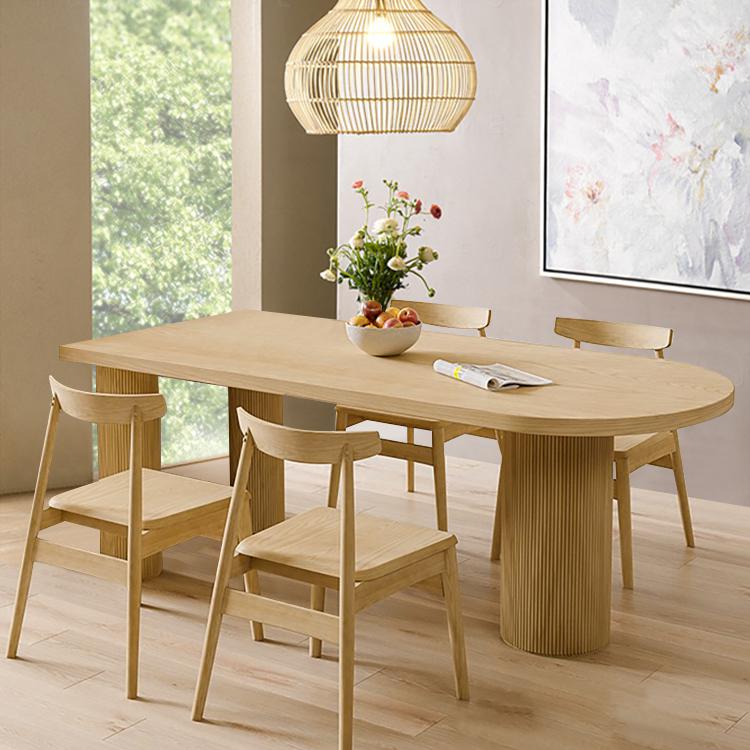
“An oval table is a brilliant solution for many dining spaces.”
It provides the soft, sociable feel of a round table (no one is stuck at a sharp corner) but has a larger surface area that can fit more people, similar to a rectangle. The curved ends also make navigating around the table in a tighter space much easier, as you’re not constantly bumping into a sharp corner. If your dining area is long and narrow, an oval table is often a far more functional and elegant choice than a rectangular one.
21. Minimalist Light Wood Table with Flat Panel Legs
The beauty of this table is its radical simplicity. The design pares a dining table down to its essential components: a top and supports. There are no carvings, no decorative flourishes, no mixed materials. The focus is entirely on the form and the natural beauty of the light wood grain. The flat panel legs create a clean, architectural silhouette that feels both modern and incredibly sturdy. It’s a confident design that doesn’t need to shout for attention. Its quiet strength comes from its perfect proportions and honest construction, making it a more minimalist take than the ornate table in Idea #4.
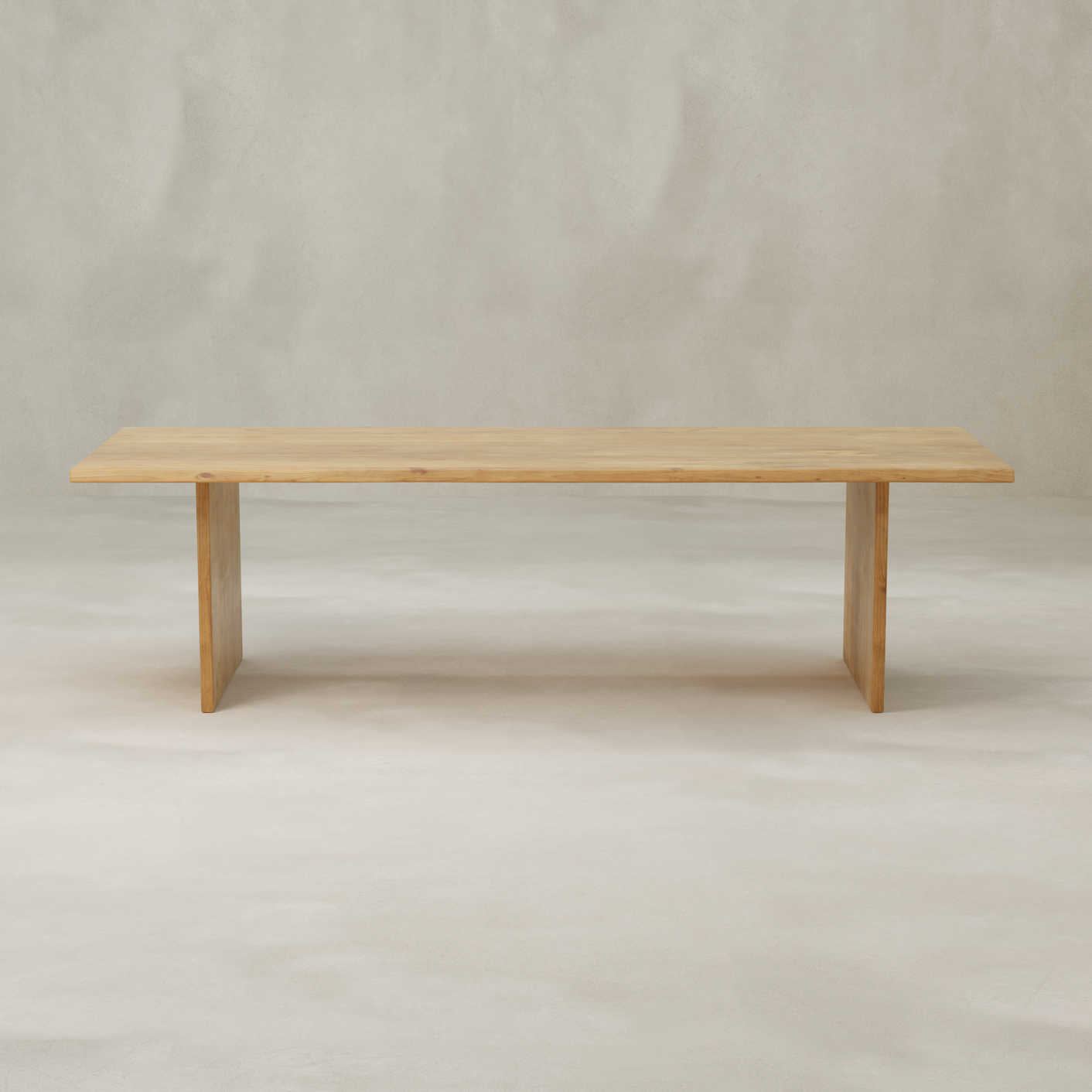
“You can DIY a version of this high-end minimalist table for a surprisingly low cost.”
The secret is using high-quality plywood. Purchase one full sheet of 3/4-inch birch or oak plywood (around $70-$90). Use a circular saw with a guide to cut the tabletop to size and the two panel legs. Then, use iron-on edge banding ($15) that matches your plywood to cover the exposed ply edges, giving the illusion of a solid wood slab. Assemble with wood glue and pocket hole screws from underneath, sand everything smooth, and finish with a clear matte polyurethane. For under $150, you can get a table that looks like it costs thousands.
22. Distressed White Cottage Table with Woven Rush Chairs
The element that truly defines this cozy corner is the texture of the woven rush seats on the chairs. The table and chair frames provide the classic cottage structure with their distressed white paint and turned legs. But it’s the warm, golden-brown hue and natural, tactile weave of the seats that bring in an essential layer of organic warmth. This single detail prevents the set from feeling too ‘painted’ or one-dimensional. It connects the white furniture to the dark wood top, bridging the gap with natural texture and making the entire vignette feel more authentic and inviting.
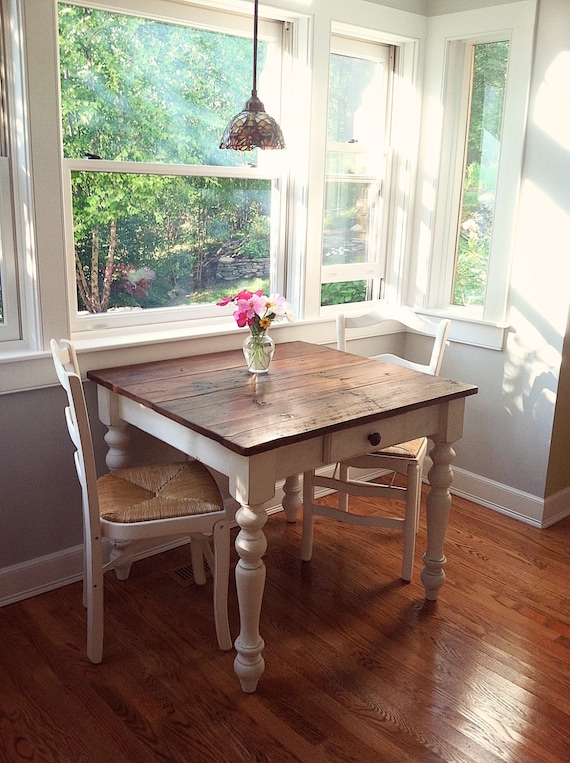
“This charming setup is specifically designed for a small, intimate space.”
This is not your main family dining table. It’s perfect for a breakfast nook, a sunlit corner of a kitchen, or a small apartment dining area. The table itself is likely no more than 36-42 inches square or round. The ideal space for this would be a corner that is at least 6 by 6 feet. This allows enough room to pull the chairs out comfortably without them feeling cramped against the walls. It’s a solution for creating a dedicated dining moment in a home without a formal dining room.
23. Rustic Dark Wood Table with Turned Legs in a Grand Space
This room feels cohesive because it masterfully balances rustic textures with grand, traditional architecture. The dark wood of the table, with its substantial turned legs, speaks a language of rustic strength. This is echoed in the woven fiber rug and the large ceramic pot. However, these rustic elements are placed within a very formal, elegant shell: the light stone floors, the grand stone staircase, the plaster walls, and the arched gold mirror. It’s this tension between the formal ‘house’ and the informal ‘farmhouse’ elements that creates such a rich, layered, and sophisticated look. It feels like a centuries-old European country estate.
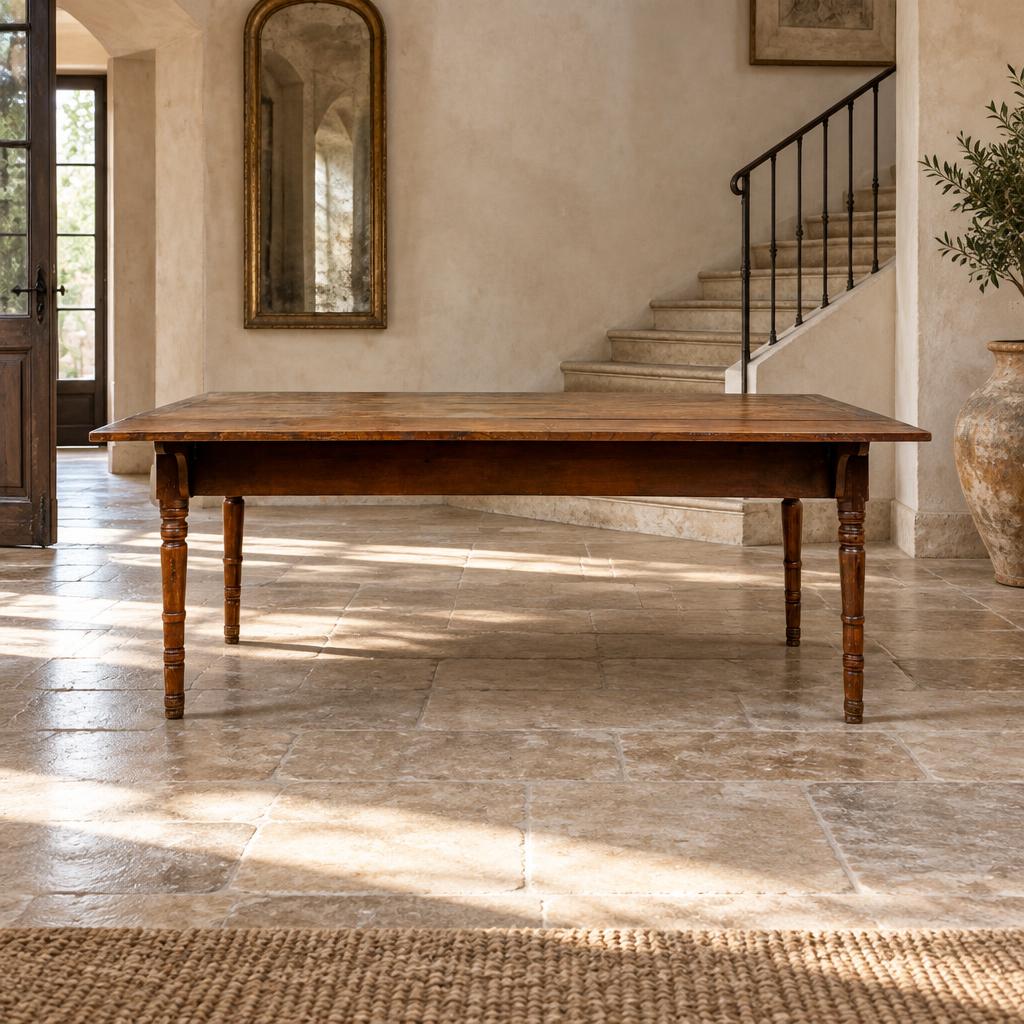
“A very dark, heavy wood table like this can be a magnificent anchor for a room, but it also acts like a visual black hole, soaking up light.”
This look is only successful because the room itself is flooded with light. The walls are light plaster, the floors are light beige stone, and there are likely large, unseen windows. Placed in a room with dark floors, wood paneling, or limited natural light, this same table would feel gloomy and oppressive. Before committing to a very dark table, be brutally honest about how much light your dining space gets throughout the day.
24. Live-Edge Wood Table with a White Resin River Inlay
‘River tables’ have been a major trend in high-end woodworking and on platforms like Etsy for a few years, and this is a more subtle, contemporary evolution of that idea. Instead of the typical bright blue epoxy, the use of a matte white or light gray resin feels more sophisticated and minimalist. It highlights the natural, organic shape of the live-edge wood without screaming for attention. This shift towards more muted, opaque resins aligns with the broader interior design trend of seeking organic textures and forms but in a calmer, more serene palette.
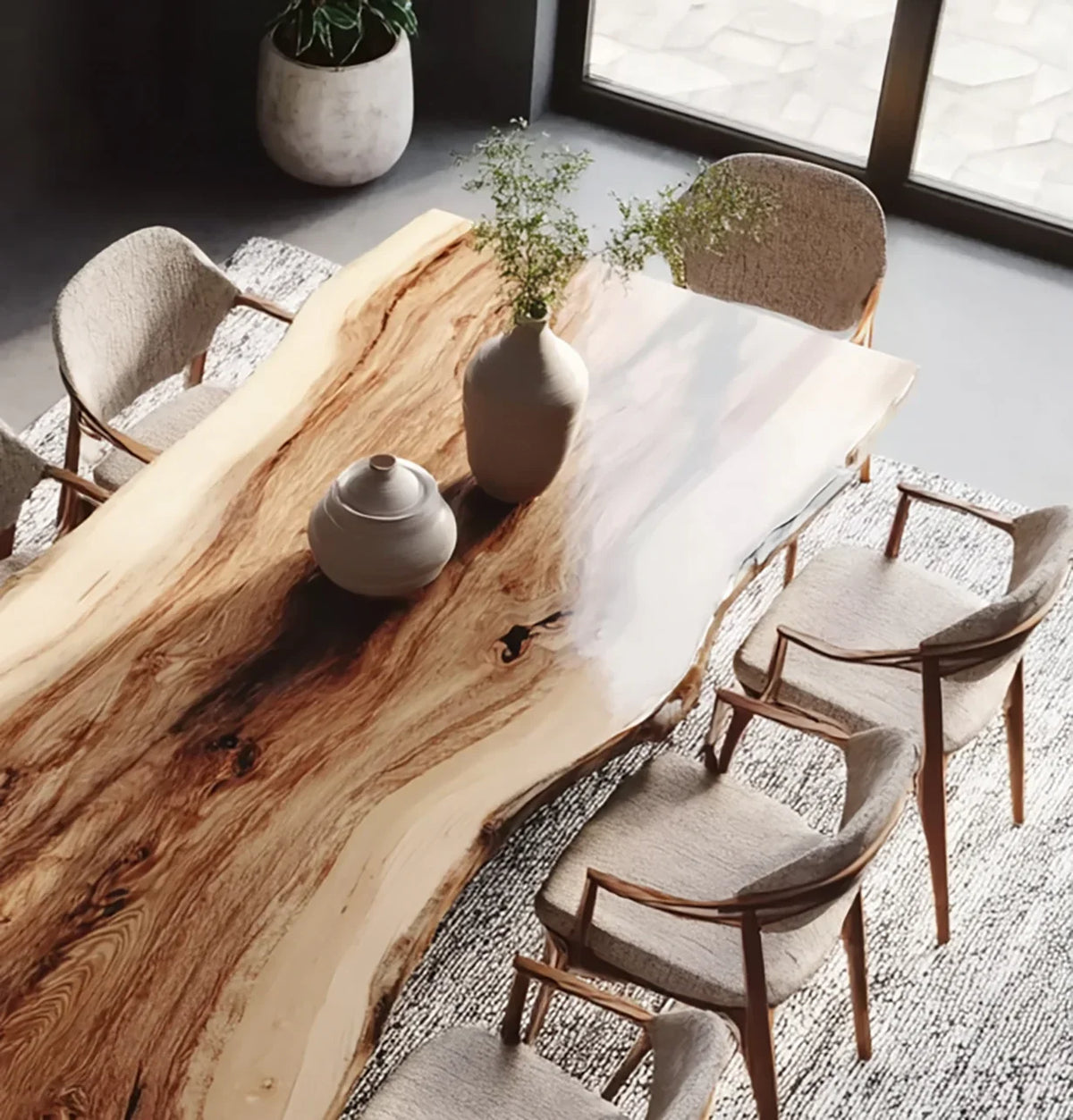
“While stunning, the junction between the natural wood and the resin inlay is a potential maintenance headache.”
Wood and resin expand and contract at different rates with changes in temperature and humidity. Over time, this can lead to a tiny gap forming between the two materials—a perfect trap for crumbs and grime. Additionally, while the resin itself is non-porous, the wood is not. A spill that sits on the seam could stain the wood portion. Cleaning requires care, ensuring you don’t use anything too abrasive that could scratch the resin finish, which often shows scratches more than the wood grain.
25. Dark Farmhouse Table with Benches and Tufted End Chairs
This popular dining room setup is a well-balanced equation: 50% Rustic Casual + 50% Formal Comfort. The dark wood farmhouse table and matching benches bring the rustic, informal, and family-friendly vibe. They’re practical and evoke a sense of communal dining. The other half of the equation comes from the two large, tufted upholstered end chairs. Their light beige fabric, soft form, and nailhead trim introduce a dose of formality, elegance, and comfort. This mix is the key: it creates a room that feels special enough for dinner parties but is relaxed enough for Tuesday night homework.
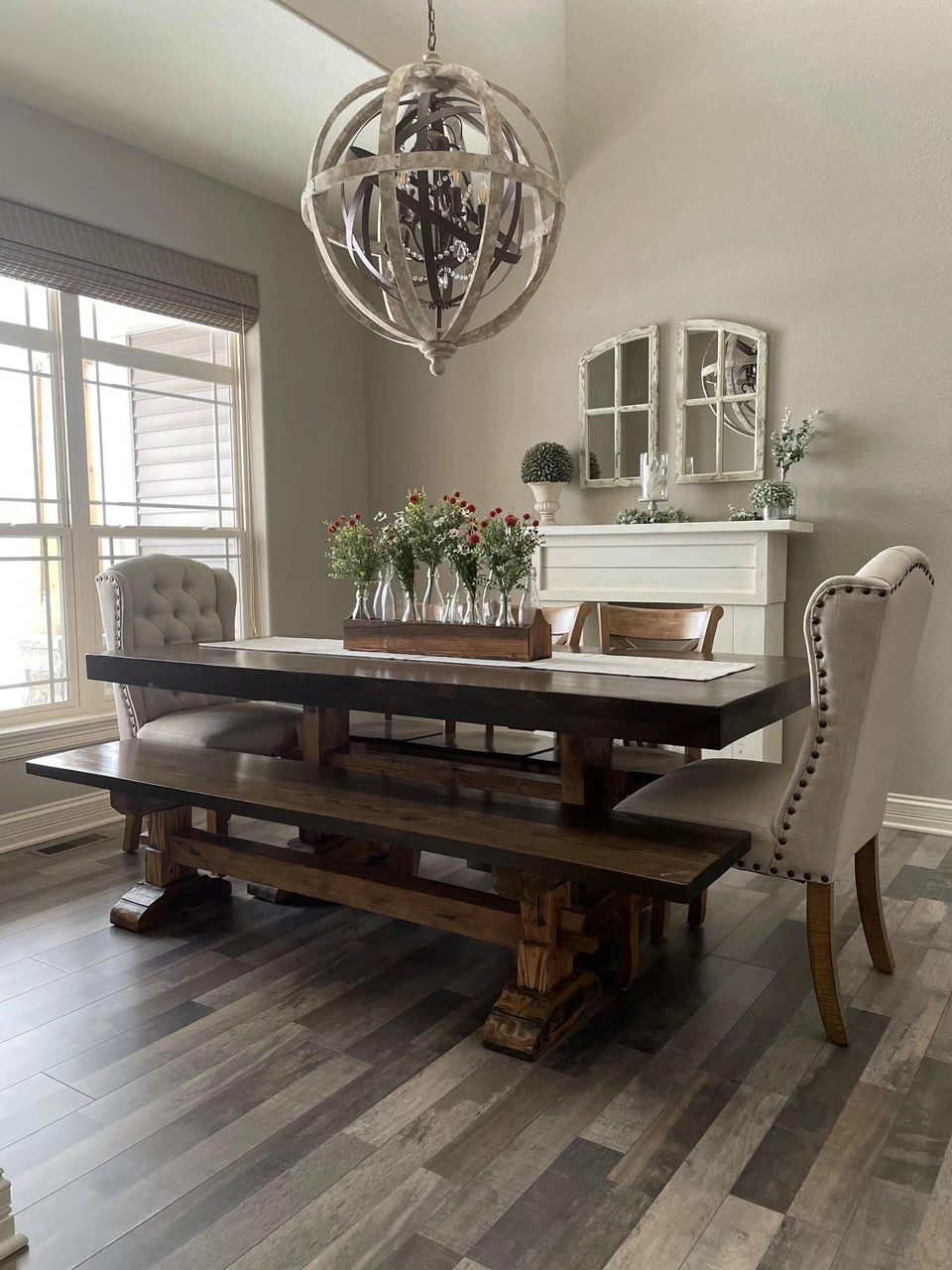
“A dining setup this grand requires some careful planning.”
Before you fall in love with the look, grab a tape measure and confirm these key details:Clearance Check: You need a minimum of 36 inches of clearance behind the tufted end chairs for them to be pulled out fully and for someone to walk behind them. For large chairs like this, 42 inches is even better.Table Length vs. Bench Length: Ensure the benches are short enough to slide completely under the table between the legs. Measure the distance *between* the table legs, not the full length of the tabletop.Chandelier Height: The bottom of that large orb chandelier should hang 30-36 inches above the tabletop. Any higher and it feels disconnected; any lower and it will block sightlines.
26. Ornate Carved Dark Wood Dining Set with Neutral Upholstery
This room achieves its formal, elegant feel through a disciplined use of color and a focus on form. The color palette is incredibly simple: dark grey-brown wood, light beige walls and upholstery, and white trim. That’s it. This restraint allows the ornate shapes and carvings of the furniture to be the star. Your eye isn’t distracted by competing colors, so you can fully appreciate the sculptural quality of the table legs, the intricate carvings on the chair backs, and the curves of the buffet. It’s a lesson in how a quiet palette can amplify sophisticated details.
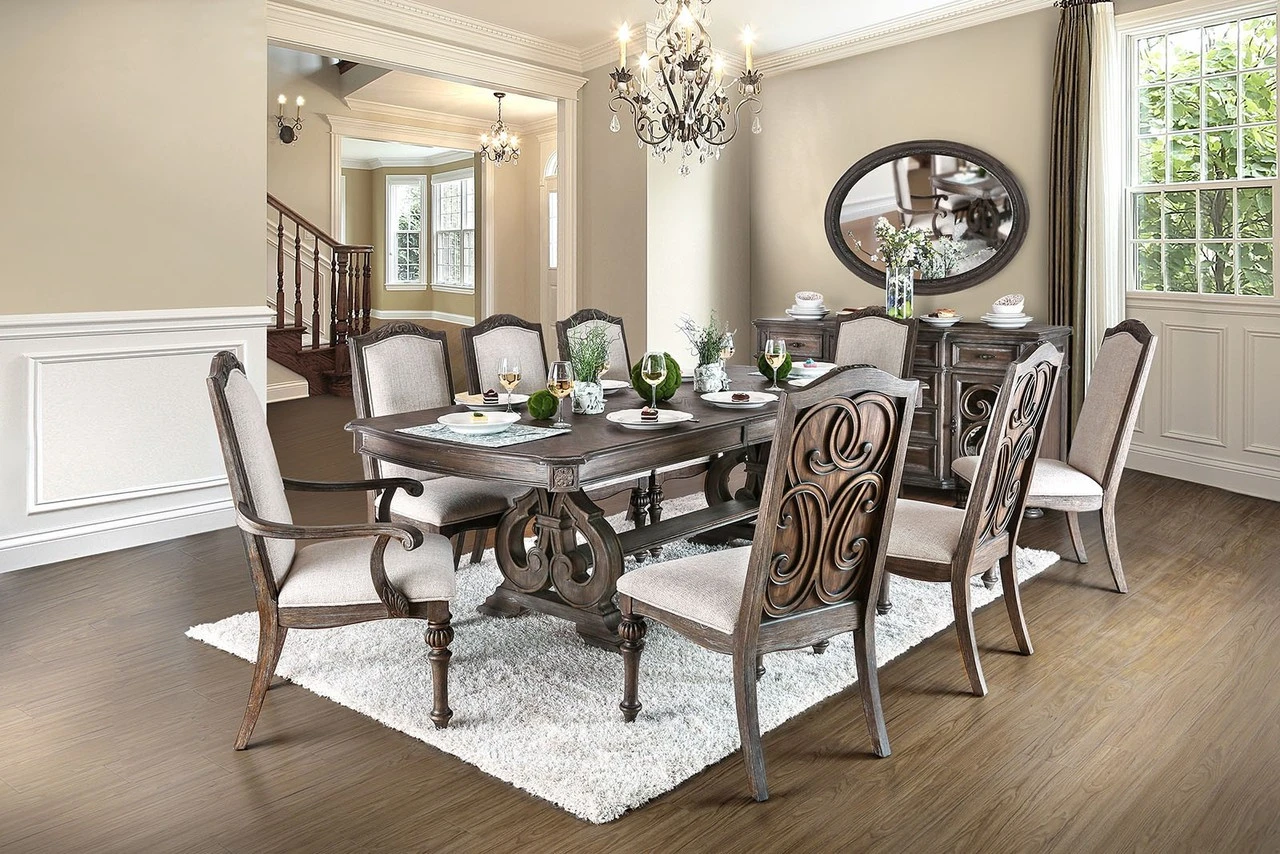
“When you have a formal dining set with intricate carvings like this, dusting becomes a real chore.”
The secret weapon of professional cleaners is a simple, clean, 1-inch paintbrush with soft bristles. It’s the perfect tool for getting dust out of all the tiny crevices and carved details where a cloth or duster can’t reach. Simply ‘paint’ the dust out of the grooves, using a vacuum with a brush attachment nearby to catch the dislodged particles. It’s a small trick that makes maintaining ornate furniture so much easier.
27. Two-Tone Farmhouse Table with Mixed Yellow and Black Chairs
The single element that injects life and personality into this entire room is the pair of bright yellow spindle-back chairs. The table is a farmhouse classic, the black chairs are a stylish staple, and the blue-gray walls are serene. But the yellow chairs are a bolt of pure energy. They’re an unexpected, confident choice that shows the homeowner isn’t afraid of color. They break up the otherwise traditional palette, add a playful, modern twist, and create an instant focal point that makes you smile. It’s a much more daring use of color than the more uniform teal chairs in Idea #3.
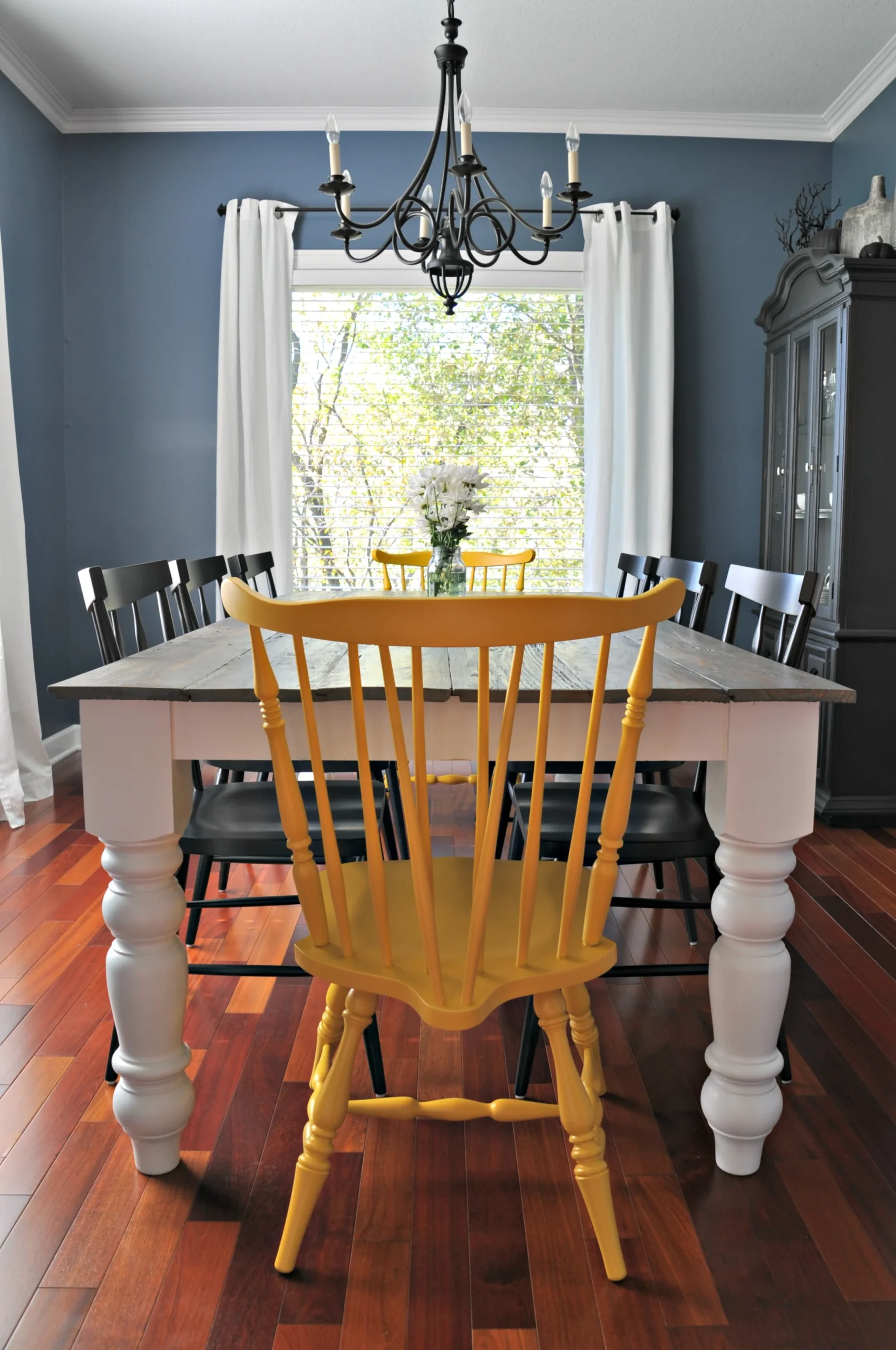
“A word of caution about using a single, bold accent color like this bright yellow: it has a shelf life.”
While it looks fantastic now, you might find yourself tired of such a specific, high-energy color in a few years. The great thing about this design is that the commitment is small. It’s not a yellow sofa or yellow kitchen cabinets. It’s just two chairs. If you grow tired of the yellow, you can easily repaint them black, white, or another color for a weekend project, completely changing the room’s vibe without having to replace the expensive table.
28. Rustic Pine Farmhouse Table with Turned Legs and Spindle Chairs
This look feels so authentically rustic and inviting because it relies on a trio of classic, time-tested elements. First, the farmhouse table itself, with its warm pine plank top and chunky turned legs, is the epitome of country style. Second, the Windsor-style spindle-back chairs are a design that has been popular for centuries for a reason—they are light, strong, and comfortable. Third, the dark gray stone tile floor provides a durable, practical, and texturally contrasting foundation. There are no fleeting trends here, just a combination of materials and forms that have proven to work together for generations.
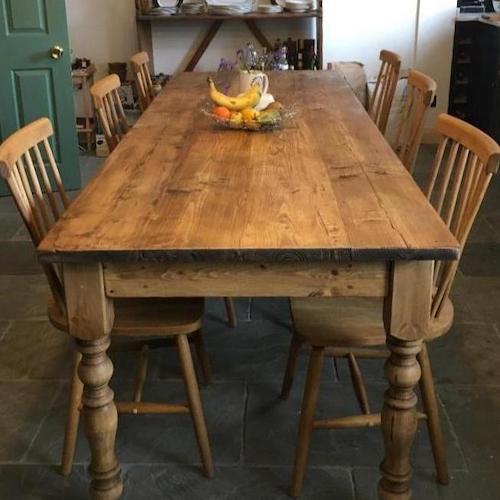
“This is one of the most achievable farmhouse looks on a budget.”
The key is to hunt for pieces individually. You can often find a solid pine table with good bones for under $200 on Facebook Marketplace or at a consignment shop—don’t worry about scratches, just sand and refinish the top. Spindle-back chairs are a thrift store staple; you can find them for $20-$40 each. Don’t worry if they don’t match perfectly. A coat of paint can unify them, or the mismatched look can add to the charm. This entire setup could be assembled for under $500 with some patience and DIY spirit.
29. Reclaimed Wood Table with Mitered Frame and Block Legs
Creating a mitered frame for a planked tabletop is an advanced DIY skill, but it’s what separates a good table from a great one. It gives the table a clean, finished look and helps keep the central planks from warping.
- Cut Your Planks: Cut the central, interior planks to their final length.
- Cut Frame Pieces: Cut the four frame pieces from wider boards. The two side pieces should be the same length as your interior planks. The two end pieces should be the width of the table PLUS the width of the two side frame pieces.
- Miter the Ends: Using a miter saw set to 45 degrees, cut the corners of all four frame pieces. This is the crucial step; accuracy is paramount.
- Assemble the Frame: Use wood glue and pocket hole screws to join the mitered corners, creating the rectangular frame.
- Attach to Planks: Attach the completed frame to the assembled central planks from underneath using tabletop fasteners that allow for wood movement.
Total Time: 4-6 hours (plus assembly) | Material Cost: Adds ~$50-$100 for extra wood.
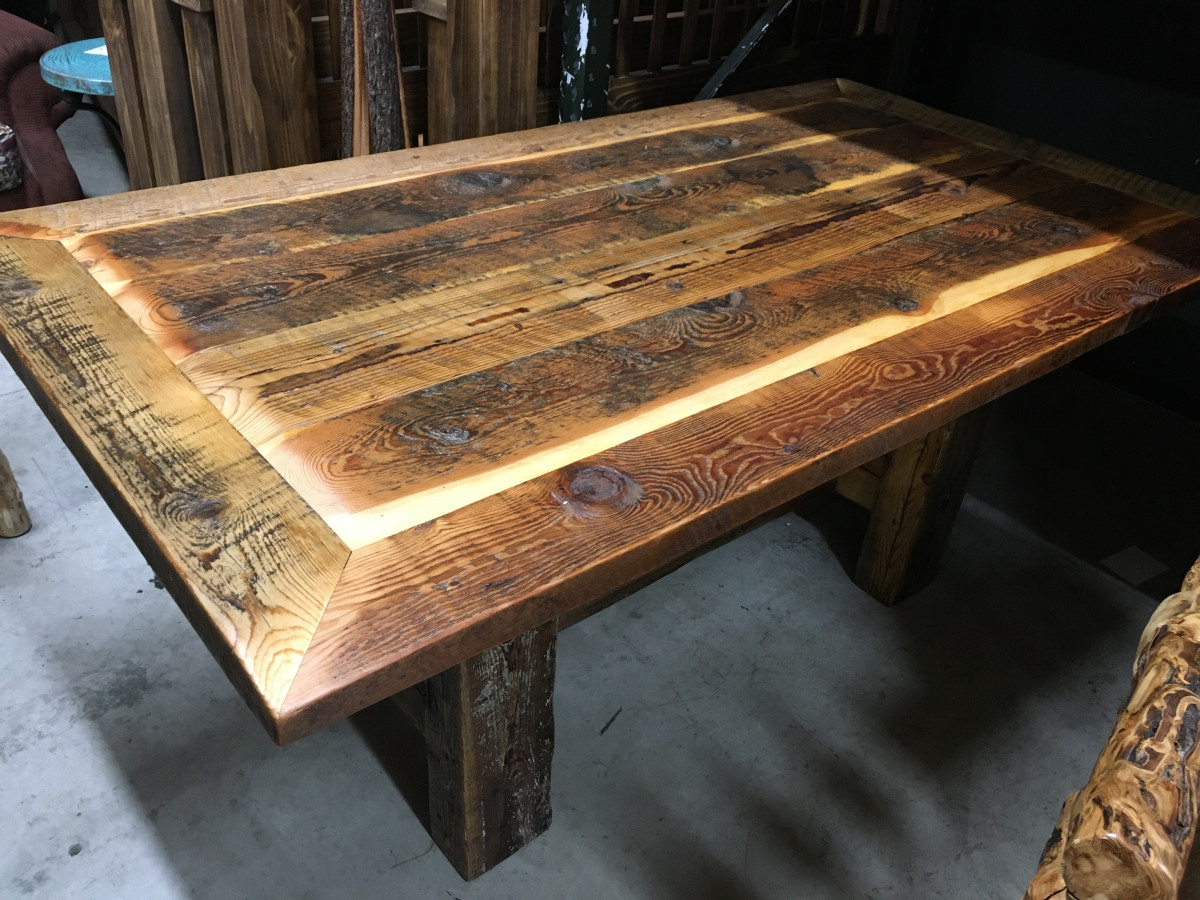
“If you’re building a table from reclaimed wood, the most important step happens before you make a single cut: let the wood acclimate.”
Reclaimed wood has often been stored in a barn, warehouse, or outdoors, and its moisture content will be very different from the inside of your heated and cooled home. Bring the wood inside and let it sit for at least two to three weeks. Stack the boards with small spacers between them to allow air to circulate on all sides. This allows the wood to adjust to your home’s humidity, preventing it from warping, cracking, or splitting after you’ve spent hours building it into a beautiful table.
30. Light Natural Wood Table with Black Wishbone Chairs
This dining room is a masterclass in the ‘Warm Minimalism’ trend that is gaining huge traction as an antidote to the cold, stark minimalism of the past. The core principle is to have fewer things, but to make sure those things are full of texture, warmth, and natural materials. The simple, clean lines of the light wood table and console are minimalist, but the visible wood grain provides warmth. The black wishbone chairs are sculptural and simple, but the woven seats add essential texture. The palette is restrained, but the dried botanicals and patterned rug add layers of organic interest. It’s clean and uncluttered, but also deeply cozy and inviting.
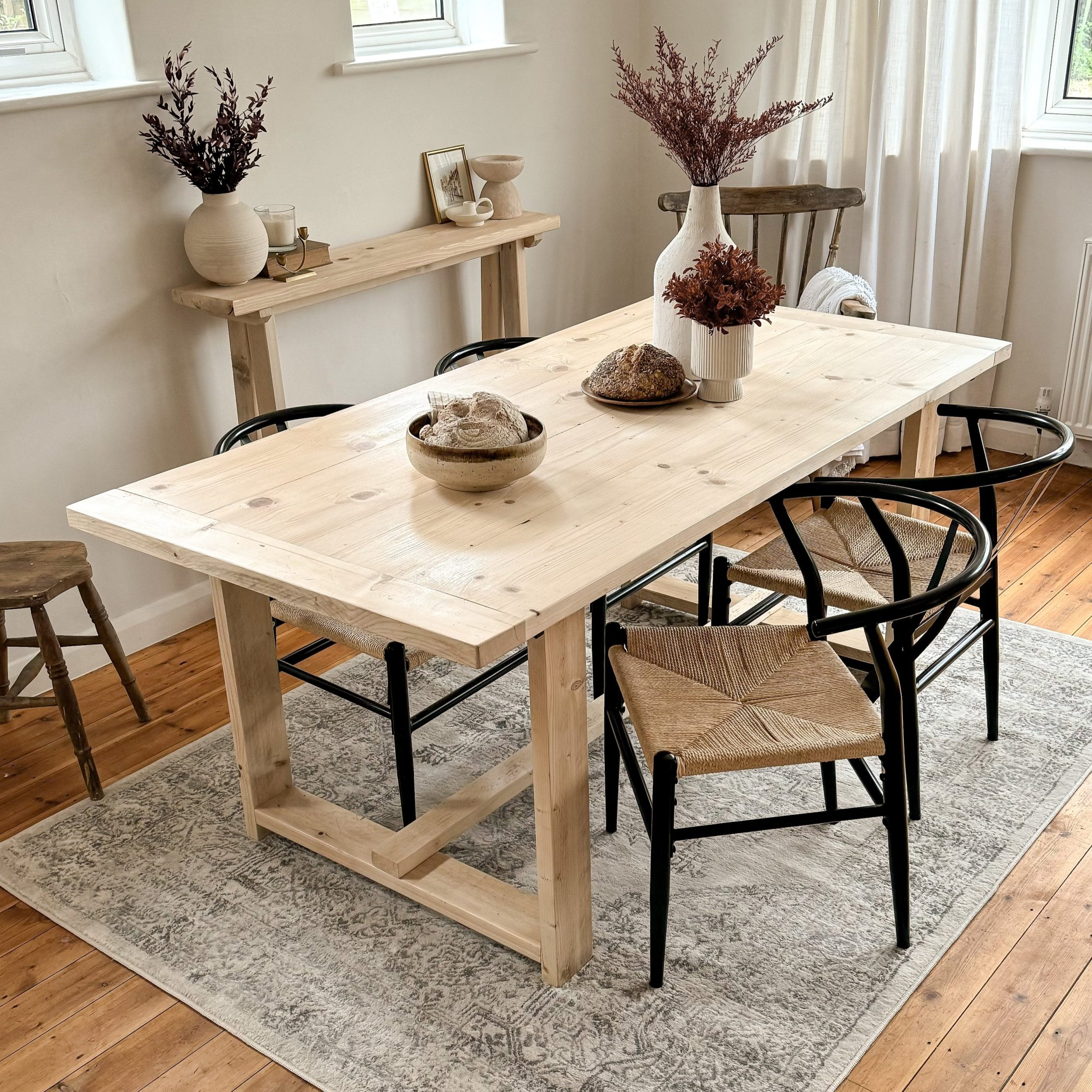
“The contrast between the two main elements here is what creates such a sophisticated look.”
You have the table, which is very solid, rectilinear, and grounded with its thick, sturdy legs. Then you have the chairs, which are the complete opposite: they are light, sculptural, and full of curves and air. The dark color of the chairs makes their elegant, graphic shape pop against the light wood of the table and the beige walls. This play between solid and airy, light and dark, straight and curved is what makes the space feel so balanced and visually interesting.
31. Distressed White and Dark Wood Dining Set with Shiplap Wall
This cozy dining nook is a classic farmhouse recipe with a twist: 40% Distressed White, 30% Dark Wood, 20% Natural Texture, 10% Light Gray. The two-tone furniture provides the foundational contrast. The white shiplap wall amplifies the brightness and adds linear texture. The crucial 20% comes from the round woven wall hangings, which break up all the straight lines of the shiplap and chair slats with their soft, organic forms. The light gray wall provides a calm, neutral backdrop that allows the white and woven elements to pop. This is a more texturally rich look than just a plain painted wall.
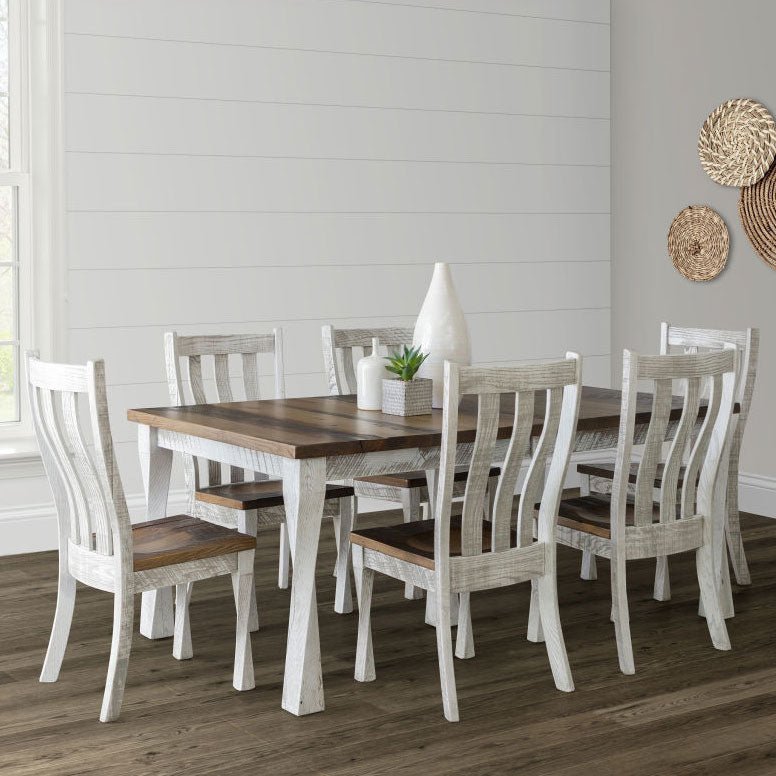
“Let’s talk about shiplap.”
It’s been a farmhouse staple for years, but it’s not without its challenges. The small gap between the boards (the ‘nickel gap’) is a perfect trap for dust, kitchen grease, and cobwebs, making it significantly harder to clean than a flat wall. If you’re thinking of installing it in or near a kitchen, be prepared for regular, detailed cleaning with a vacuum brush or microfiber cloth. Make sure it is installed correctly to avoid the issues we outline in our mistakes section. Also, a whole room of shiplap can feel a bit dated; using it on a single accent wall, as shown here, is a more modern and timeless approach.
32. Natural Wood Trestle Table with Matching Bench and Mixed Seating
The single choice that makes this dining setup feel so curated and personal is the mix of seating. A matching table and bench can feel a little too uniform, a little too ‘bought as a set.’ But by adding two different styles of chairs—the white upholstered side chairs and the rich, dark brown leather armchair at the head—the space is instantly elevated. It tells a story of collecting pieces over time. The mix of materials (wood, upholstery, leather) adds a rich textural depth that you just can’t get with a matching set. It feels less like a showroom and more like a real, stylish home.
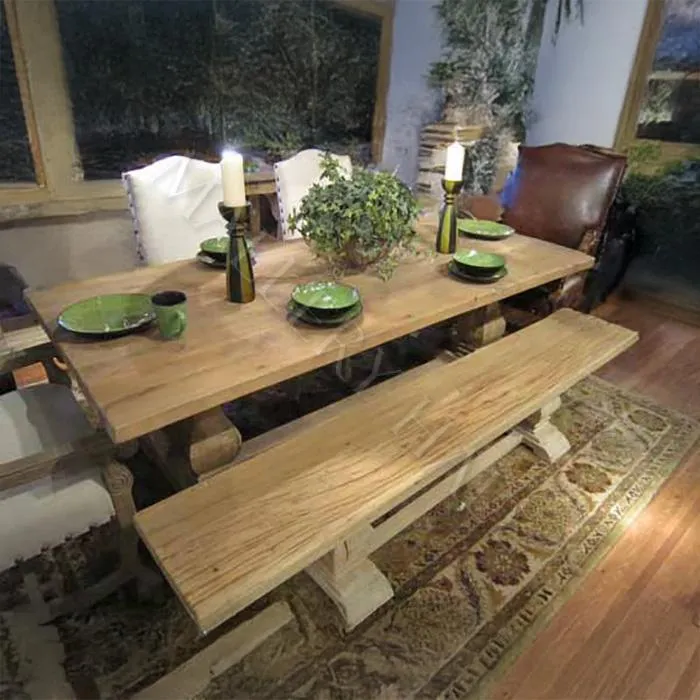
“You can get this eclectic, high-end look without the high-end price tag by being a savvy shopper.The Table & Bench: Look for unfinished pine trestle table sets at budget-friendly furniture stores or online.”
You can finish it yourself with a light, natural-looking stain for a fraction of the cost. Check IKEA’s inventory for simple wood tables and benches.The Upholstered Chairs: Target and Walmart’s online stores often have surprisingly stylish upholstered dining chairs sold in pairs for around $150-$250. Look for simple, classic shapes.The Leather Armchair: This is your splurge, but you can find great deals. Hunt for a vintage or used leather chair on Facebook Marketplace. The worn-in look will only add to the charm.
Your Farmhouse Table Story Starts Here
That perfect farmhouse table—the one that will host family dinners, late-night talks, and kids’ art projects—is more than just a piece of furniture. It’s the heart of the home. Hopefully, these ideas have sparked some inspiration for you to build, finish, or style the table that tells your story. Now go create something beautiful! Don’t forget to save your favorite ideas to your Pinterest board to come back to when you’re ready to start.