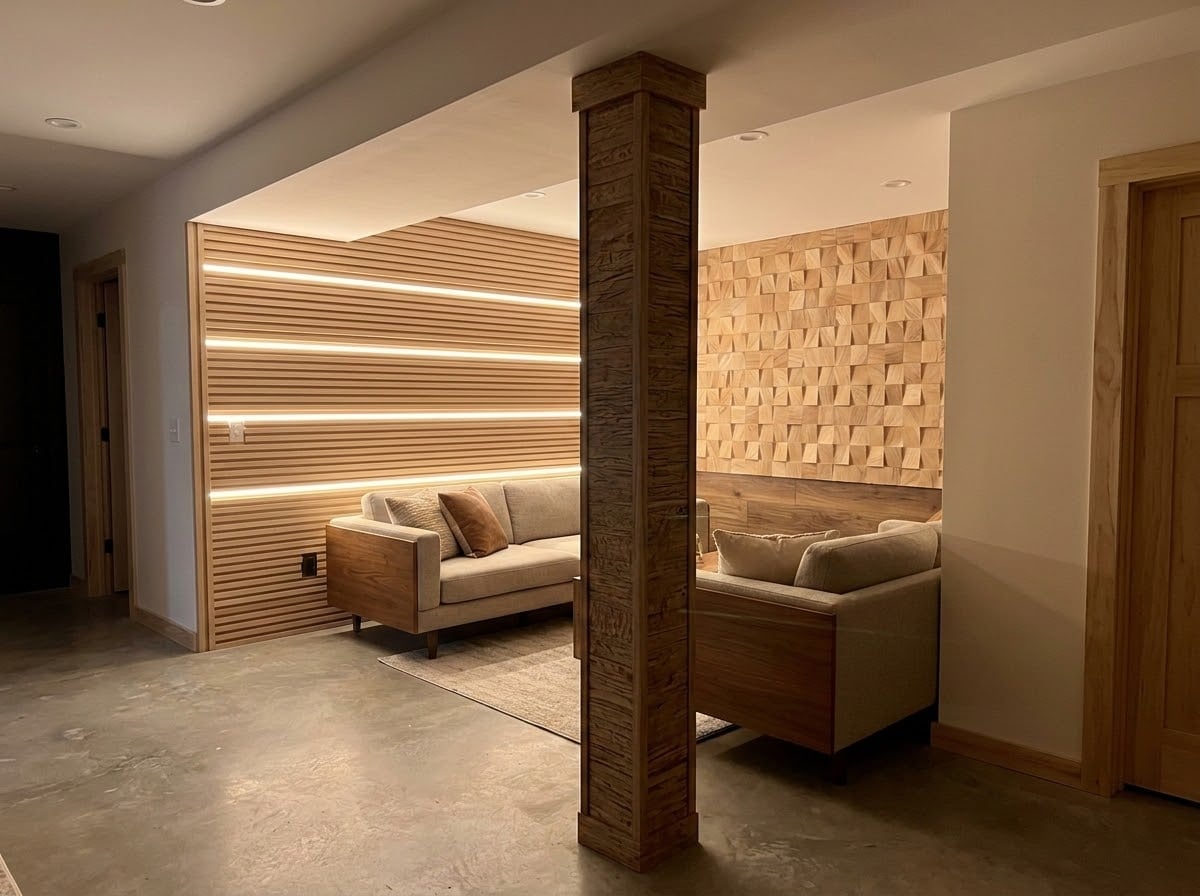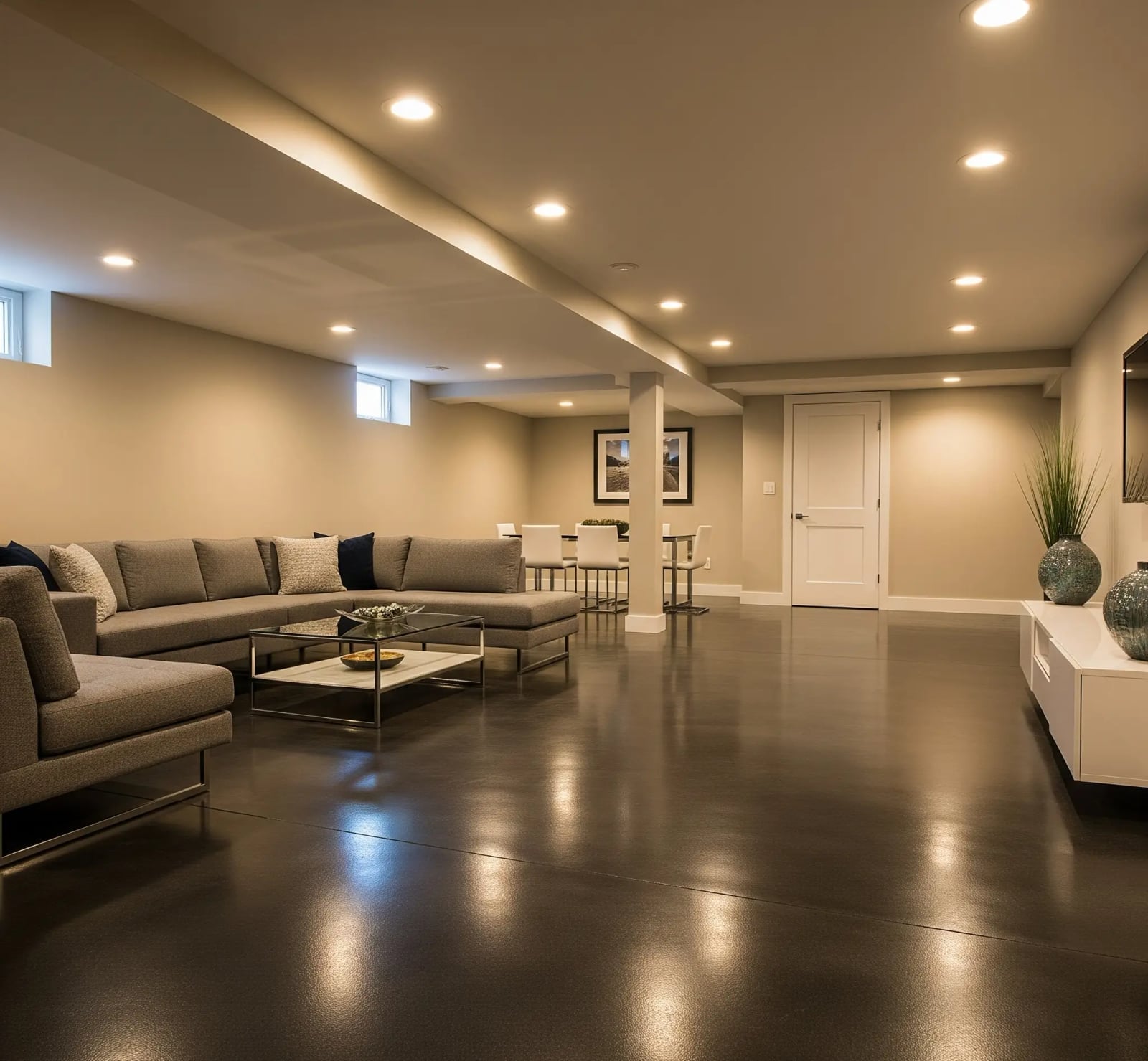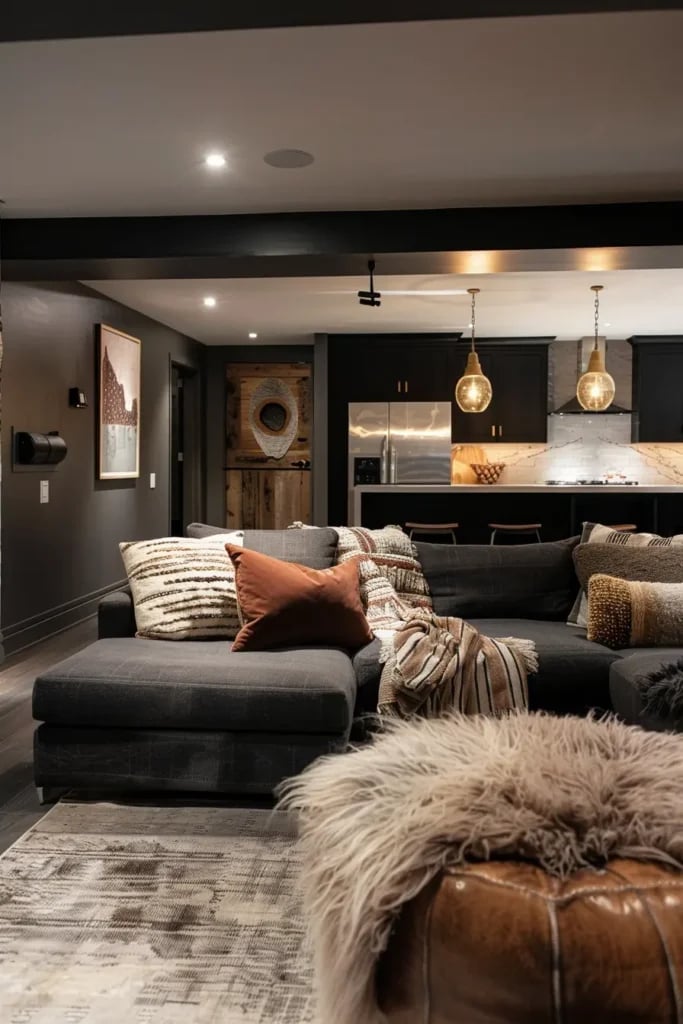
Hosting friends or just stealing a quiet moment of your own, a basement bar turns leftover square footage into a real destination. This roundup of 31 basement bar ideas covers the full range of what works down there, from industrial brick and moody speakeasy lighting to clever under-stair wine storage and live-edge countertops.
Some lean modern, others traditional or rustic, but they all treat the garage-turned-bar like a proper room with a purpose. You will walk away with specific layout tricks, material options, and storage solutions that fit an indoor space with low ceilings and no windows.
Industrial Basement Bar Layout
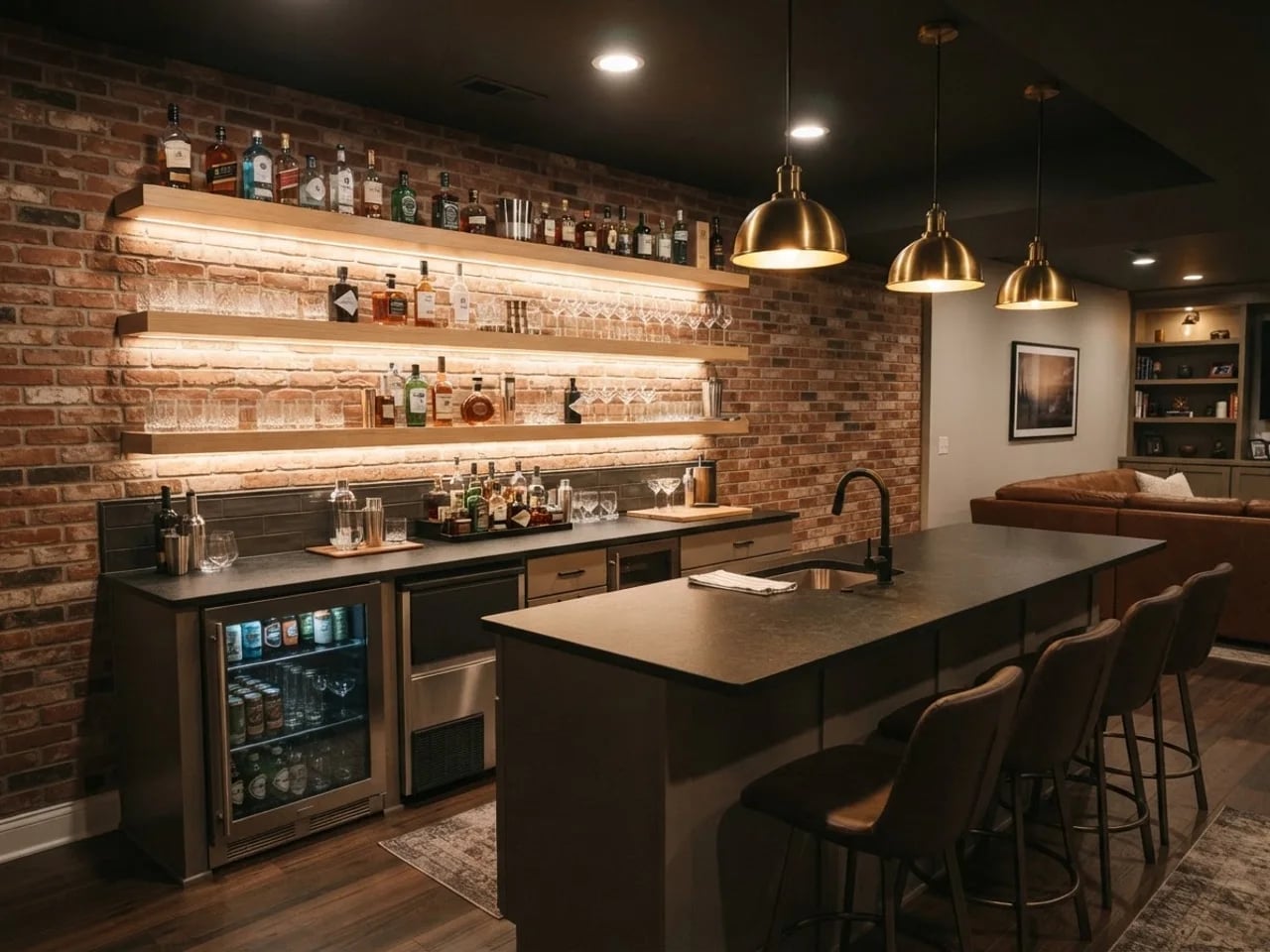
A long bar counter stretches along a red exposed brick wall, grounding the room with a straightforward industrial layout. Dark gray finishes and gold accents on the metal stools and pendant lights keep the palette from reading as cold. An under-shelf beverage fridge slots neatly into the bar, so the counter stays clear for serving. Open shelving above holds glassware within reach, making the setup practical for entertaining without crowding the room.
Modern Basement Bar Palette
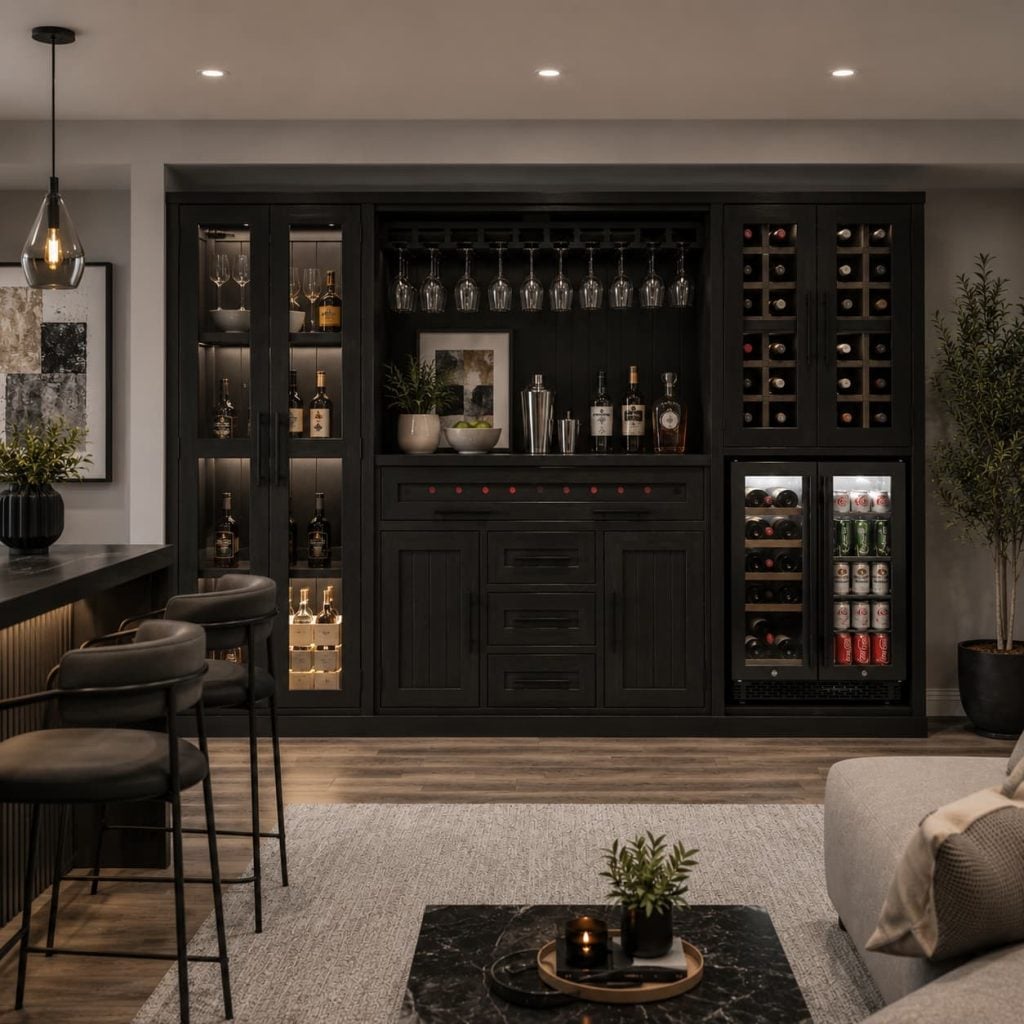
This basement bar sticks to a restrained palette of black, gray, and natural wood tones, anchored by a large black built-in bar cabinet. The cabinet spans the wall, housing the wine fridge and glassware behind a mix of solid doors and open shelving. Bar stools in a matching dark finish face the counter, while a sofa nearby turns the space into a lounge area. Cabinet lighting under the shelves softens the dark wood, so the room feels open despite the deep colors. A stone countertop on the bar adds a subtle texture break against the smooth cabinet fronts.
Speakeasy-Style Basement Bar Materials
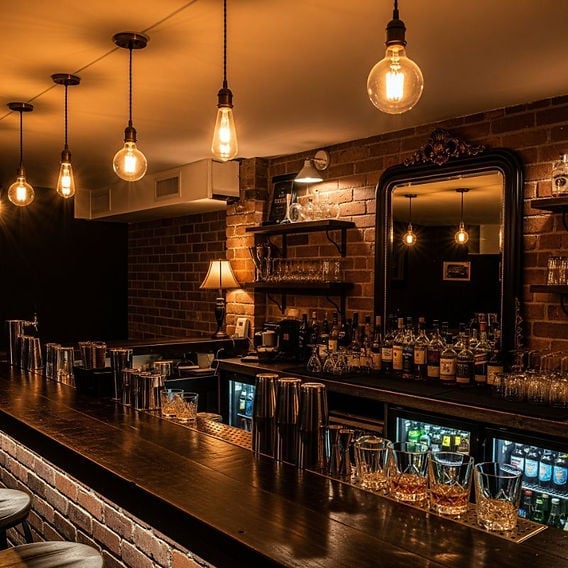
Warm wood and exposed brick set the tone for a speakeasy-style bar, but what really sells the mood is the lighting. Exposed Edison bulb pendants hang above the long wooden counter, casting a low, amber glow that softens the dark brick walls. A lamp on the back bar shelving adds another layer of light, so the room never goes flat.
The materials back up that mood. The wood bar top has a worn-in look, while the brick keeps the space from feeling too polished. A vintage mirror behind the bar reflects the pendant lights, making the room feel wider than it is. The key is to keep the light sources warm and spaced apart, so the room reads as intimate rather than dim.
Modern Basement Bar Lighting
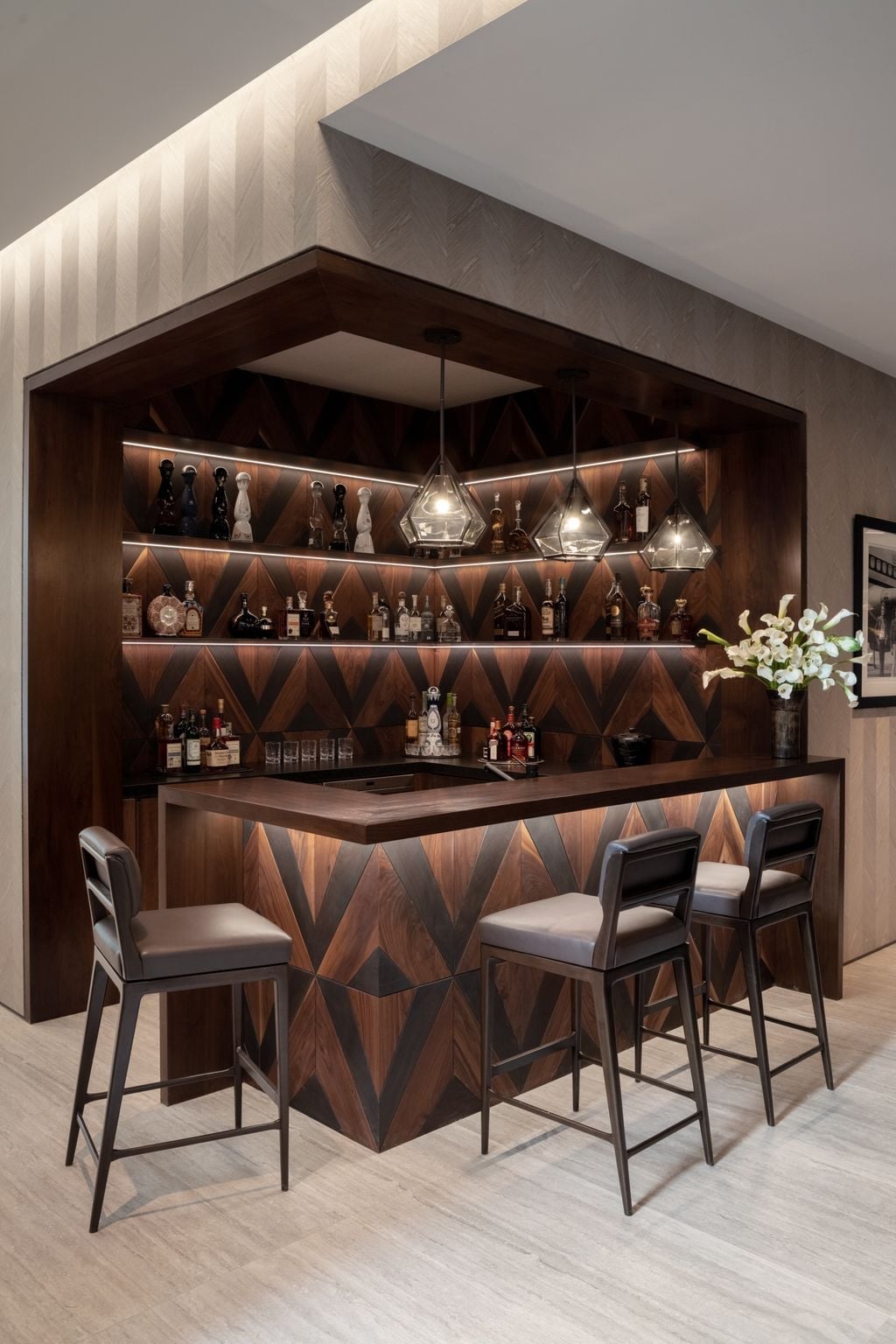
Integrated LED strips run along the underside of the bar counter and behind the built-in shelving, eliminating dark corners in this corner bar layout. The bar front uses geometric wood paneling, which catches the light from the pendants above and breaks up the dark wood mass. Pendant lights with a warm tone hang above the counter, keeping the drinking surface well-lit without glare. The layered setup means you can dim the pendants and rely on the integrated lights for a lower, more private feel.
Luxury Basement Bar Storage
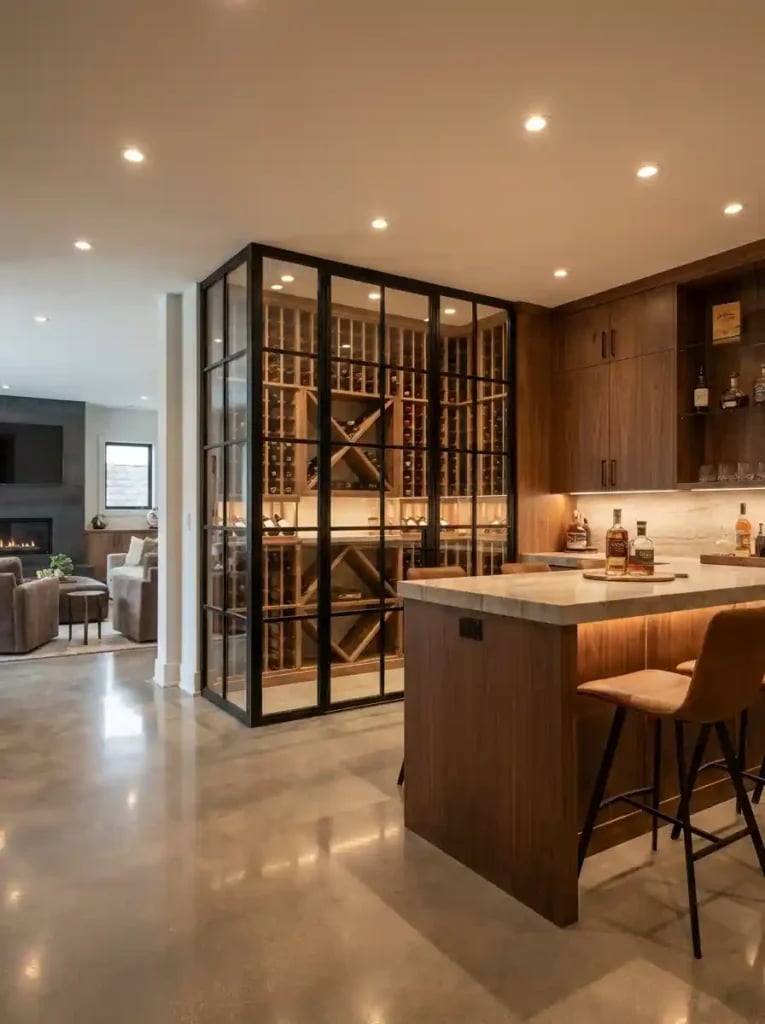
A large glass-enclosed wine display acts as the storage anchor in this open-plan basement bar, turning bottle storage into a visual feature. The glass case sits between the bar counter and a lounge area, so it serves both zones without blocking sightlines. Recessed ceiling lights and under-counter lighting keep the wine visible without adding heat. The wood bar and neutral seating around it keep the display central. For a luxury feel, storage should be part of the layout rather than an add-on, so the room reads as designed around what you keep.
Industrial Basement Bar with Entertainment
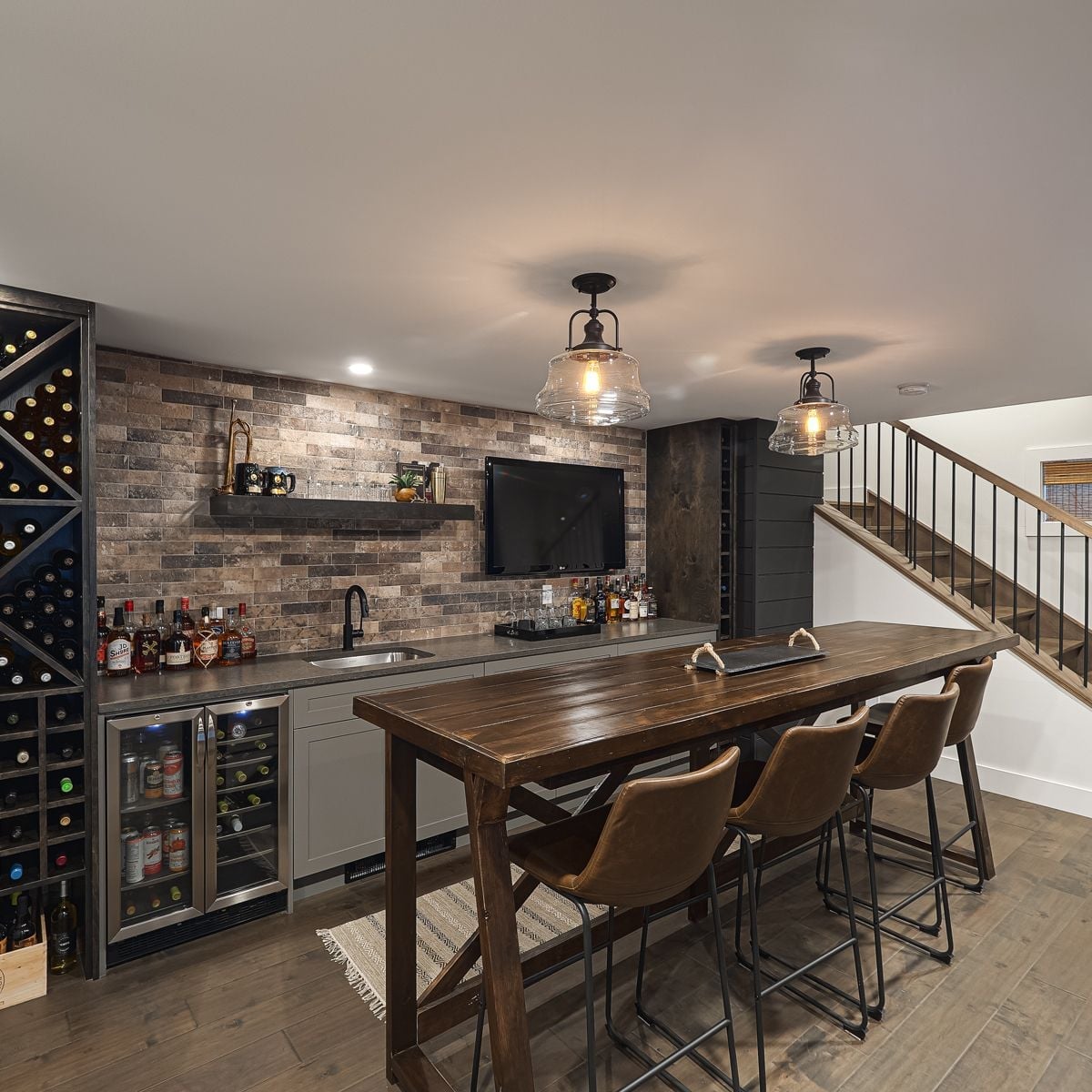
Skip the separate media room and let the bar do double duty. A long bar with stools faces a wall-mounted TV, so the room works for game nights or casual drinks without forcing a choice between the two. The exposed brick behind the bar anchors the industrial look, while the concrete floor and metal pendants keep it from reading as too polished. A wine rack built into the bar frame keeps bottles within reach of the stools, so the bartender does not have to step away. The layout uses the bar as the spine of the room, with the TV and seating arranged around it. That makes the bar the natural gathering point, not a piece of furniture pushed against a wall.
Industrial Basement Bar Countertop Material
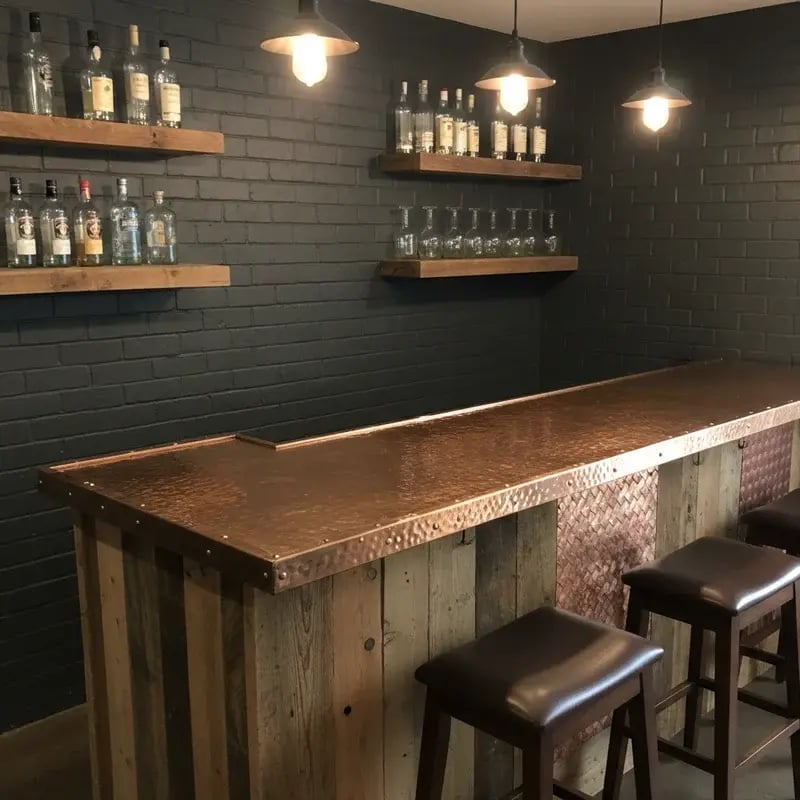
A hammered copper bar top brings warmth to an otherwise cool industrial palette of dark gray brick and wood. The copper develops a patina over time, which suits the raw, unfinished feel of the style. For renters or anyone who wants the look without a permanent install, a copper sheet laid over an existing counter mimics the effect. Pair it with industrial pendant lights and bar stools in a matching metal finish, and the bar becomes a single deliberate piece.
Industrial Basement Bar Architectural Feature
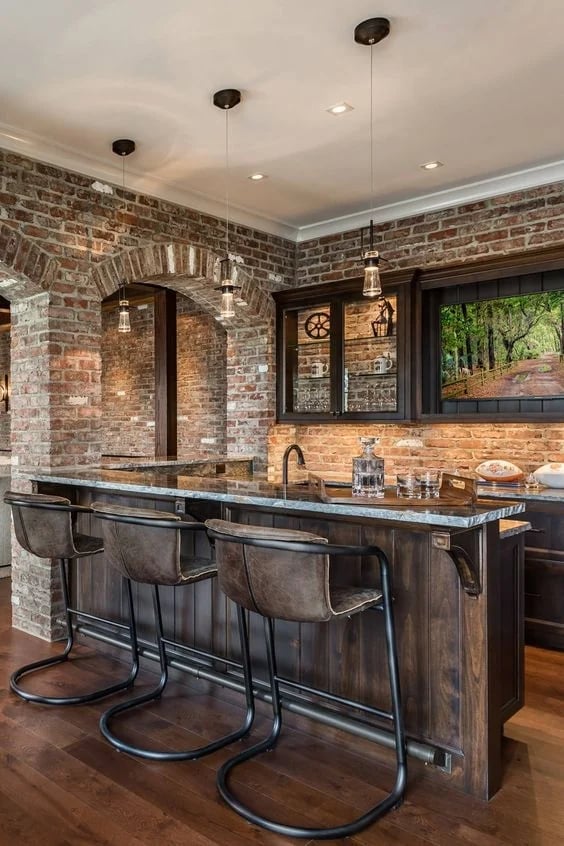
An exposed brick archway separates the bar area from the basement without closing it off. The arch frames the bar counter and stools, creating a defined zone that still feels open. The red brick and dark wood bar top set the industrial tone, while leather bar stools add a softer texture. The arch looks like it was always there, but a brick-veneer arch kit or a painted faux finish can create a similar effect in a basement that lacks original masonry. This adds a sense of history without demanding a full renovation.
Modern Transitional Bar Cabinetry
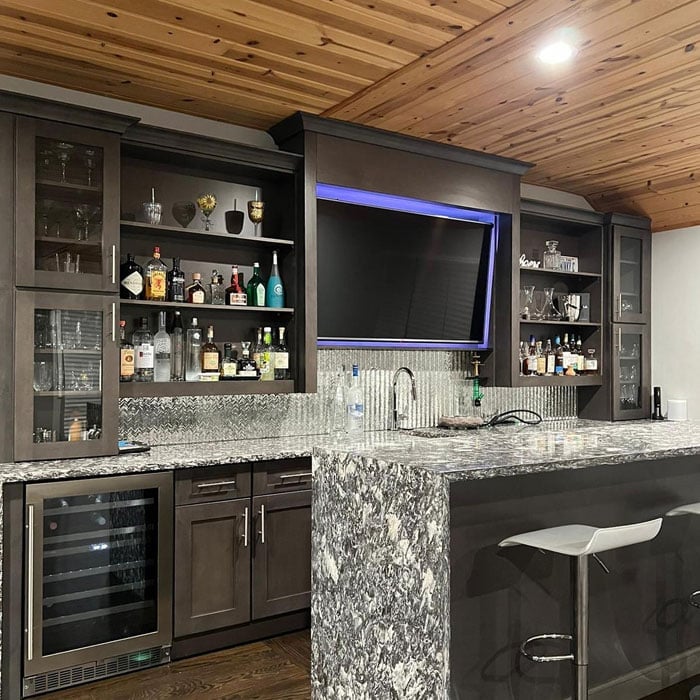
How do you fit a full bar, a wine fridge, and a TV into one basement without it looking like a showroom? Custom dark gray cabinetry wraps the space, with glass display cabinets above the counter and a granite bar top that doubles as a serving surface. The cabinetry extends to a column clad in the same granite, which hides the transition between the bar and the seating area. Under-cabinet lighting keeps the counter visible for mixing drinks, while recessed lights and accent lighting on the TV balance the room’s brightness. The granite top and column are the durable surfaces that handle spills and heavy use, while the cabinetry provides closed storage for glassware and bottles. The result is a bar that looks built-in from the start, not added on later.
Traditional Basement Bar Built-in Storage
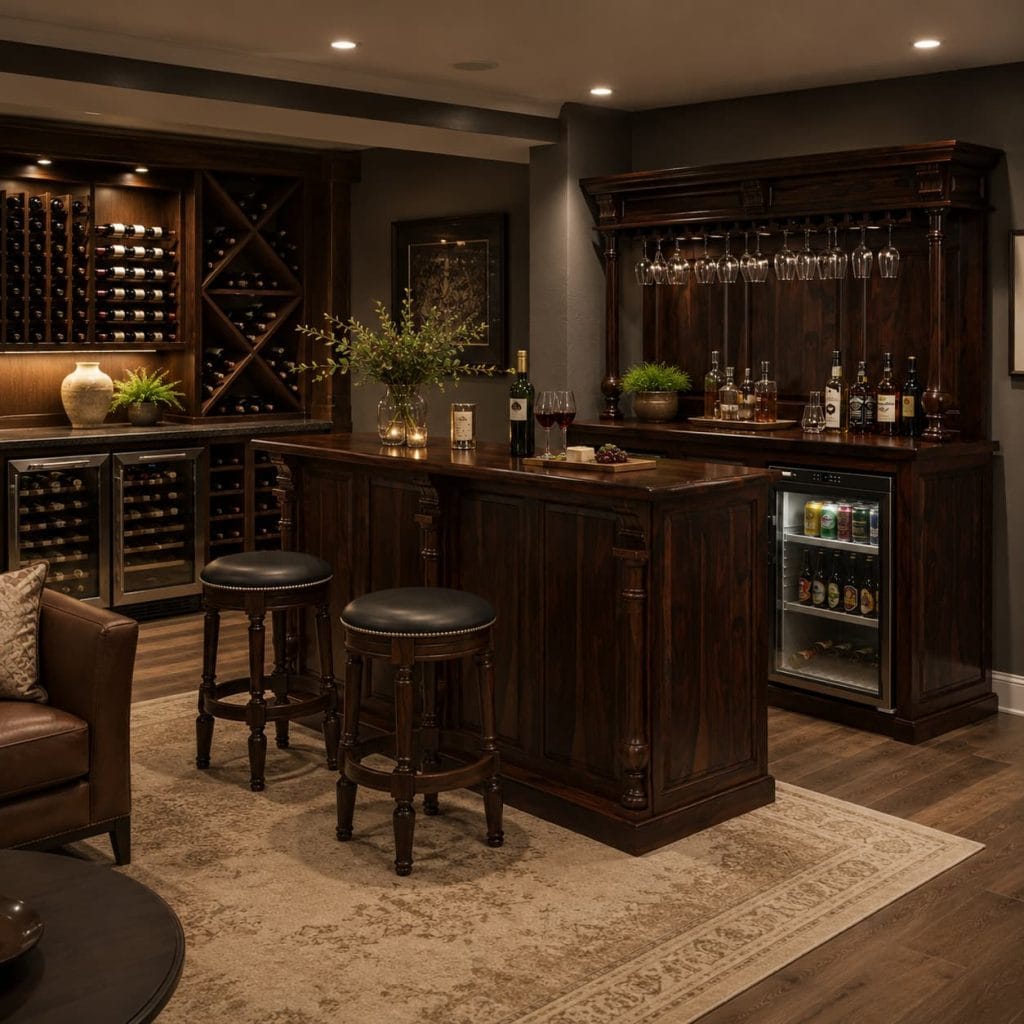
Ornate dark wood cabinetry wraps the bar from counter to ceiling, with built-in shelving for bottles and glassware and a wine fridge tucked below. The dark wood and cream stone countertop create a traditional look that feels substantial without being heavy. The bar stools in leather add a comfortable place to sit, while the ambient and accent lighting highlight the wood grain and the bottles on display. The scale of the cabinetry matches the roomy basement, so the bar does not get lost. For a traditional bar, the materials do the work: dark wood reads as classic, stone adds durability, and built-in shelving keeps everything organized without extra furniture.
Modern Eclectic Bar Styling Variation
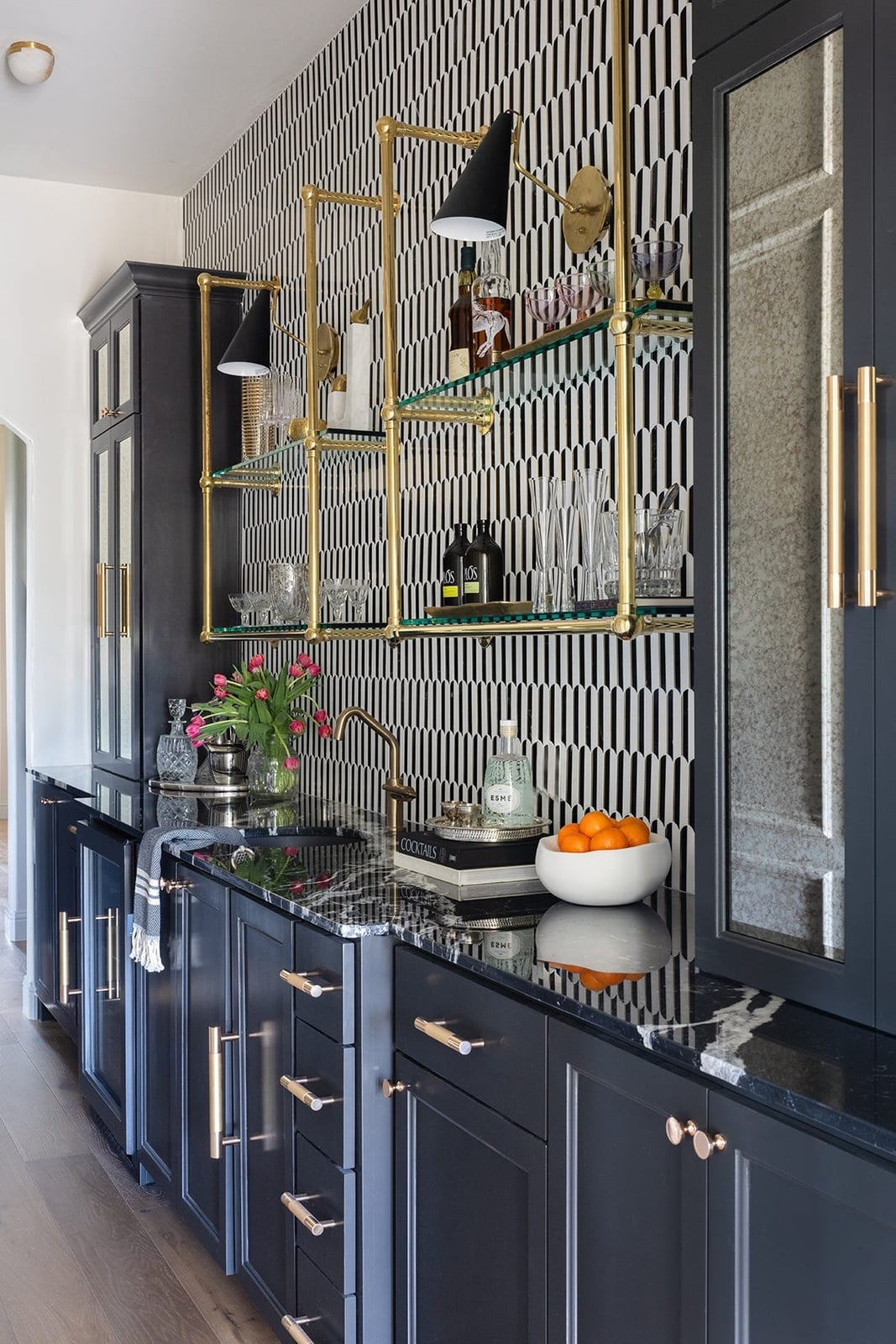
A roomy palette works best when you let one bold surface set the pace. Here, black and white geometric wallpaper wraps the open plan, making the bar counter feel grounded rather than floating. The marble countertop and dark wood cabinetry keep the look serious, while glass shelves and brass details add a lighter touch. Wall sconces and shelf lighting prevent the darker finishes from reading as too heavy. The takeaway for a modern eclectic bar with marble wallpaper is to balance pattern with solid blocks of color so the wallpaper gets to lead without competing.
Modern Basement Bar Under-Stair Storage
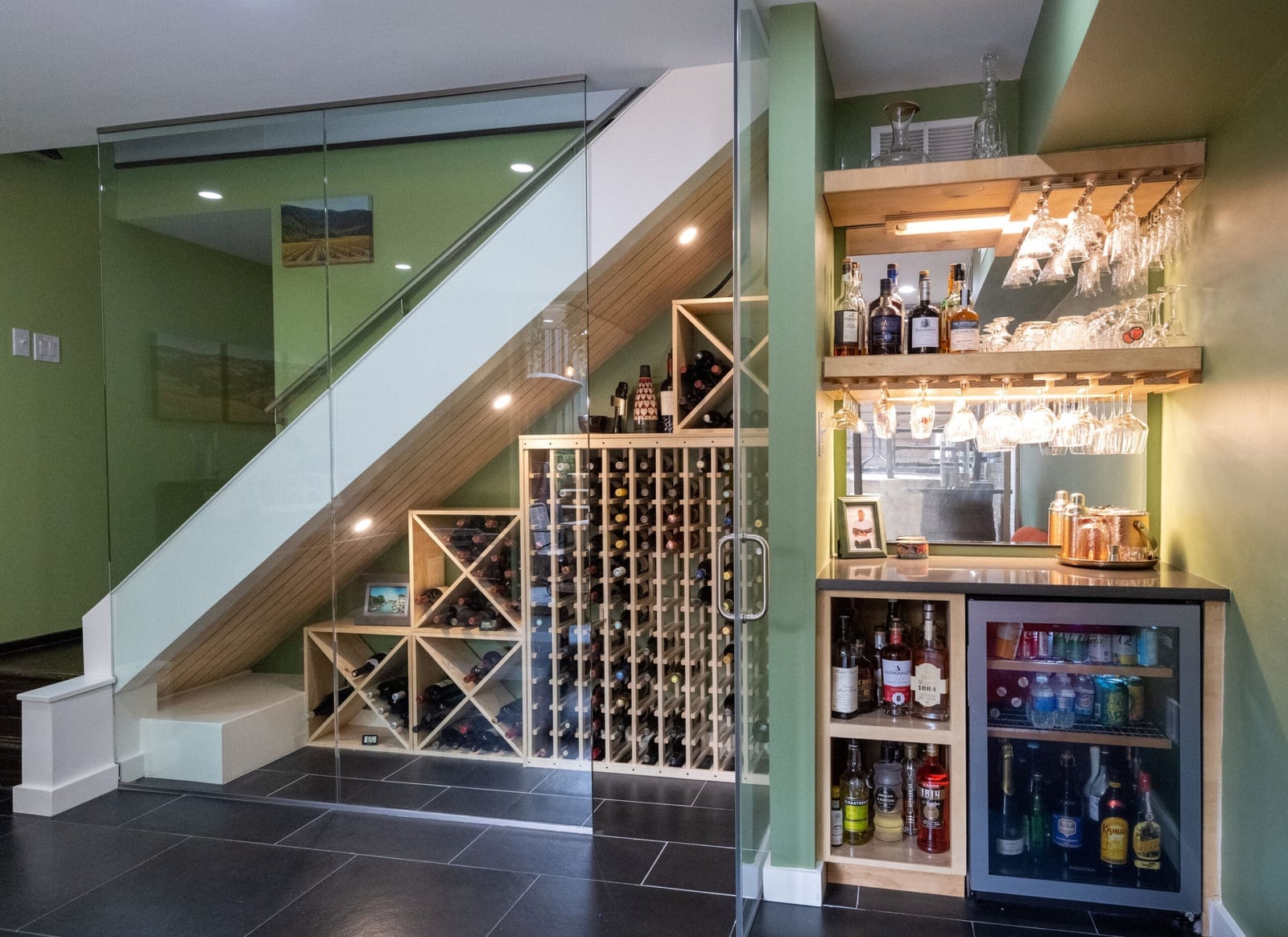
If you think under-stair space is only for stashing boxes, think again. A compact modern bar proves that the same wedge-shaped area can hold a beverage fridge, geometric wine racks, and a slim counter without feeling cramped. The palette stays light with wood tones, green accents, and white surfaces so the nook feels like a planned feature. Ambient light keeps the space open, while under-cabinet fixtures make the bottles easy to grab. The key with an under-stair wine rack setup is to treat the angle as an advantage for fitting rows of bottles that a straight wall would leave awkward gaps around.
Eclectic Bar Shelving Material
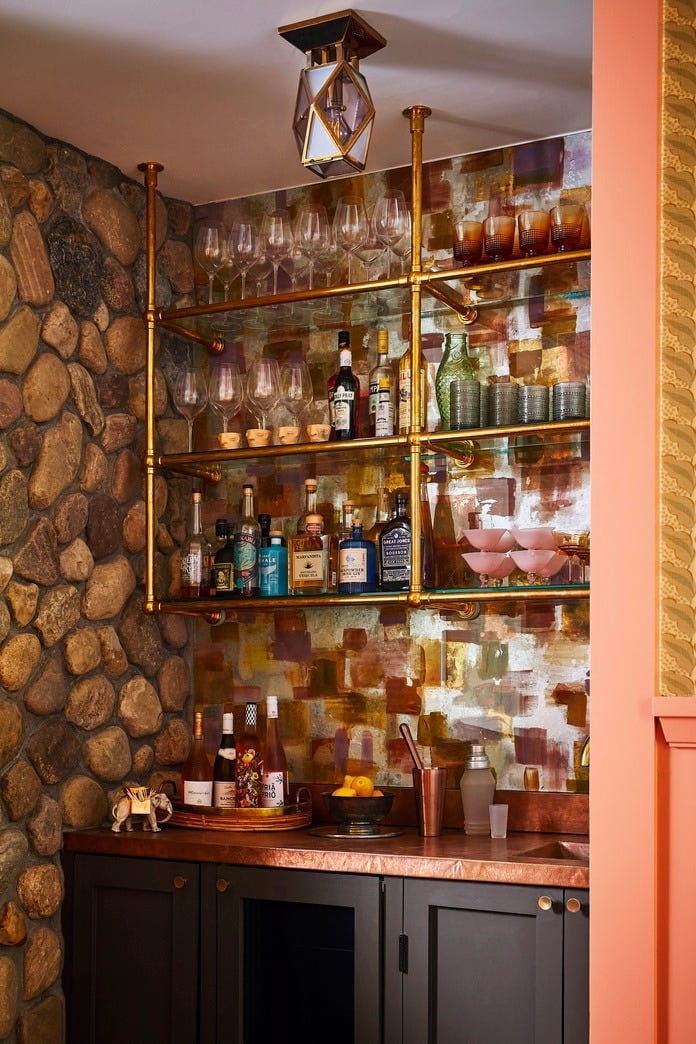
Copper pipe shelving draws the eye immediately because it breaks the expected line of wood or glass. In this compact corner, the warm metal sits above a copper countertop and dark cabinets, tying the stone wall to the room. A faceted ceiling light adds a geometric echo that keeps the metal from feeling too raw. The mix of textures makes an eclectic bar with copper shelving and a stone wall feel collected, as long as the finishes share a similar warmth.
Modern Rustic Bar Countertop Material
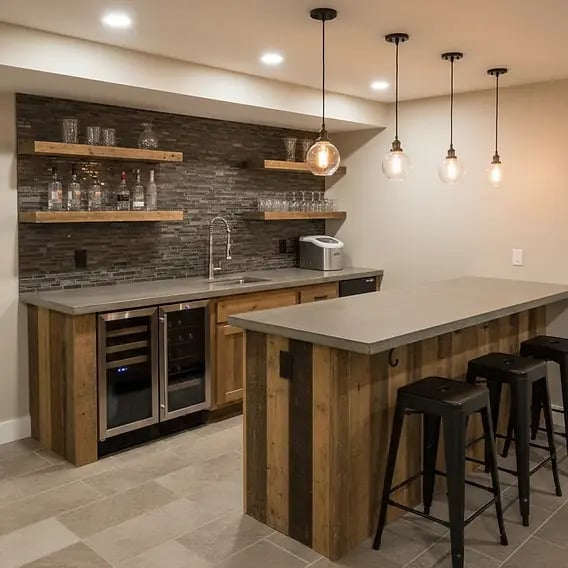
Textured stone tile backsplash is a durable surface that still feels warm. The L-shaped bar uses a gray stone tile behind the counter, paired with wood tones and concrete accents to land the modern rustic style without going too rugged. Pendant lights hang over the counter seating, while recessed ceiling lights keep the roomy layout evenly lit. For a modern rustic bar with a concrete stone backsplash, the balance comes from letting the rough stone sit next to smooth wood and metal so the contrast feels deliberate.
Rustic Industrial Bar Wall Treatment
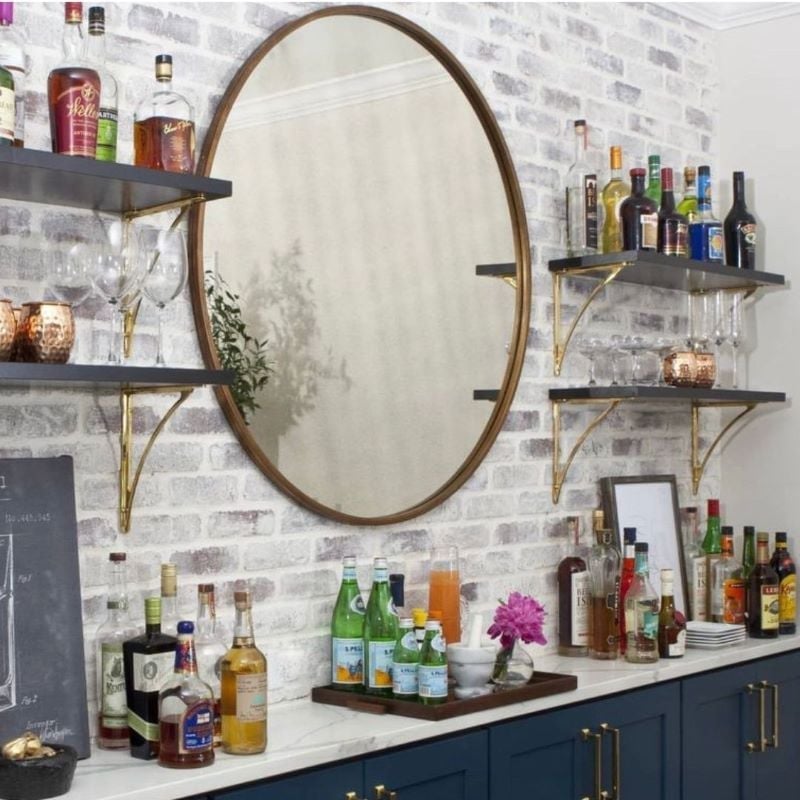
A white washed brick wall keeps the rustic industrial look from feeling too dark. The bar features navy blue cabinetry that anchors the long layout, while a marble countertop and floating shelves add lighter notes above. A large mirror helps the roomy space feel even larger by bouncing ambient light around. The overhead shelf lighting makes the bottles and glassware easy to spot without adding glare. The practical rule for a rustic industrial bar with navy brick is to limit the dark cabinetry to one zone and let the brick act as the neutral backdrop that ties the wood and metal together.
Transitional Bar and Wine Cellar Integration
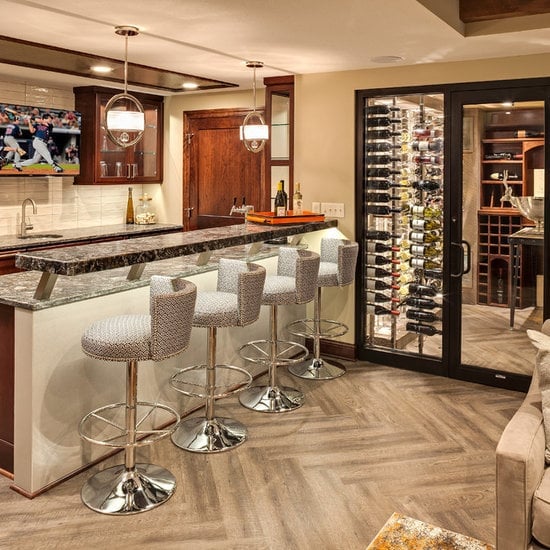
A bar that doubles as a wine room makes the most of a roomy basement footprint. This setup pairs a granite-topped serving counter with a full glass-enclosed wine cellar, so bottles stay at the right humidity without cluttering the counter. Cream cabinetry and wood tones keep the look warm, while metal bar stools add a crisp edge. The TV mounted nearby turns the cellar into a backdrop for game nights. For a similar effect in a smaller space, a single glass-front wine fridge can anchor the bar area without the full build-out.
Modern Rustic Bar Material Contrast, Indoor
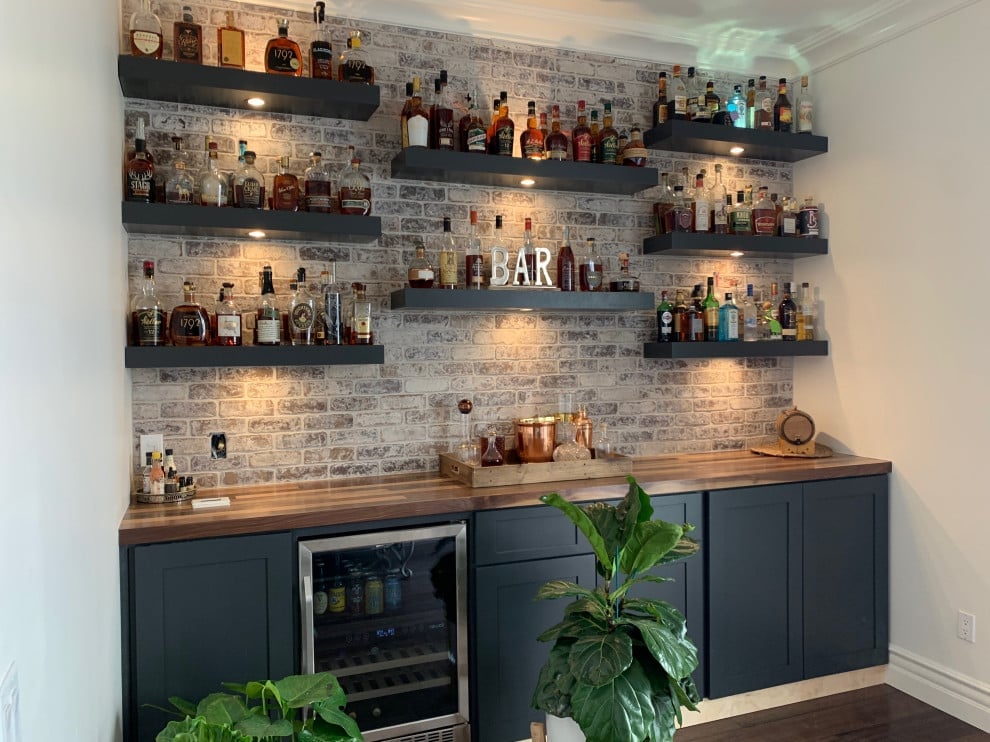
When mixing materials in a basement bar, let one texture dominate and the others accent. Here, a live-edge wood bar top spans a long stretch of dark cabinetry, with floating shelves mounted on a white washed brick wall. The contrast creates depth: the rough brick and smooth stone balance the warm wood and black metal. Under-shelf lighting makes the surfaces readable without harsh overhead glare. For a renter friendly version, a peel and stick brick panel on one wall and a freestanding butcher block counter can deliver the same mix of rustic and modern without permanent changes.
Modern Basement Bar Wall Color
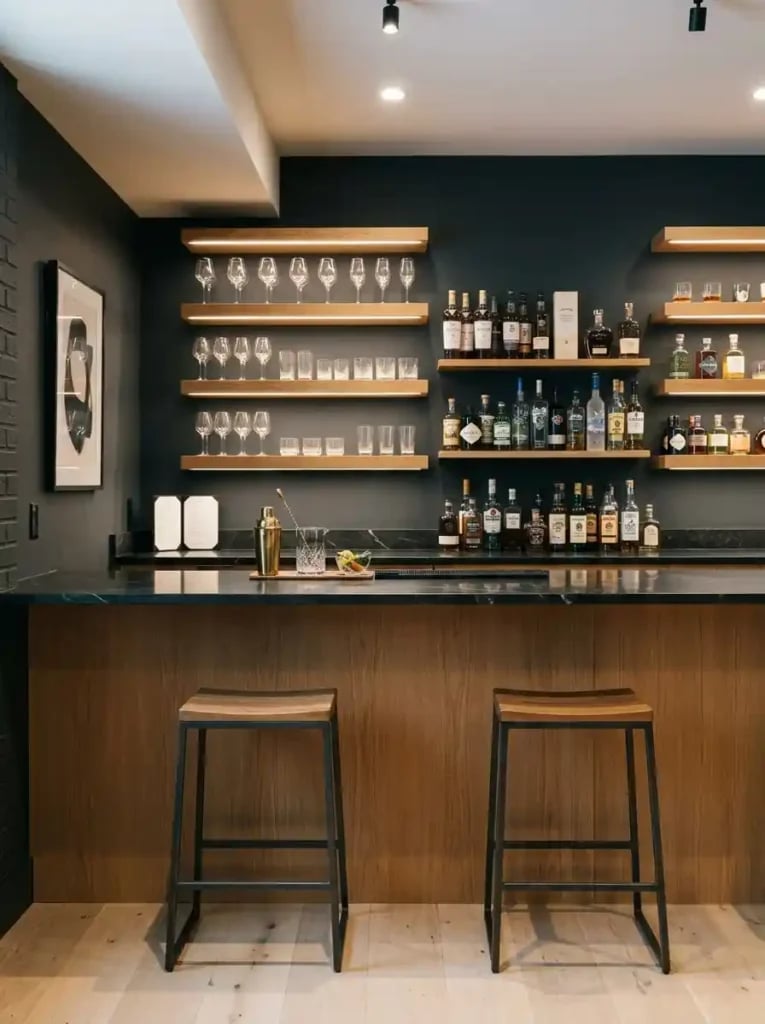
Dark, moody walls can make a basement bar feel like a private lounge, but the trick is to balance them with lighter surfaces so the room does not shrink. This space uses deep gray walls behind the bar counter, then offsets them with wood-toned shelves and a stone countertop that reflects the overhead spotlights. The bar stools stay neutral, letting the wall color carry the drama.
A lighter palette would bounce more light around the room, which works better in a basement with low ceilings or limited windows. Here, the dark walls work because the ceiling is high and the shelf lighting adds warm highlights. The result is a modern bar that feels enclosed without closing in.
Rustic Industrial Bar Front Material
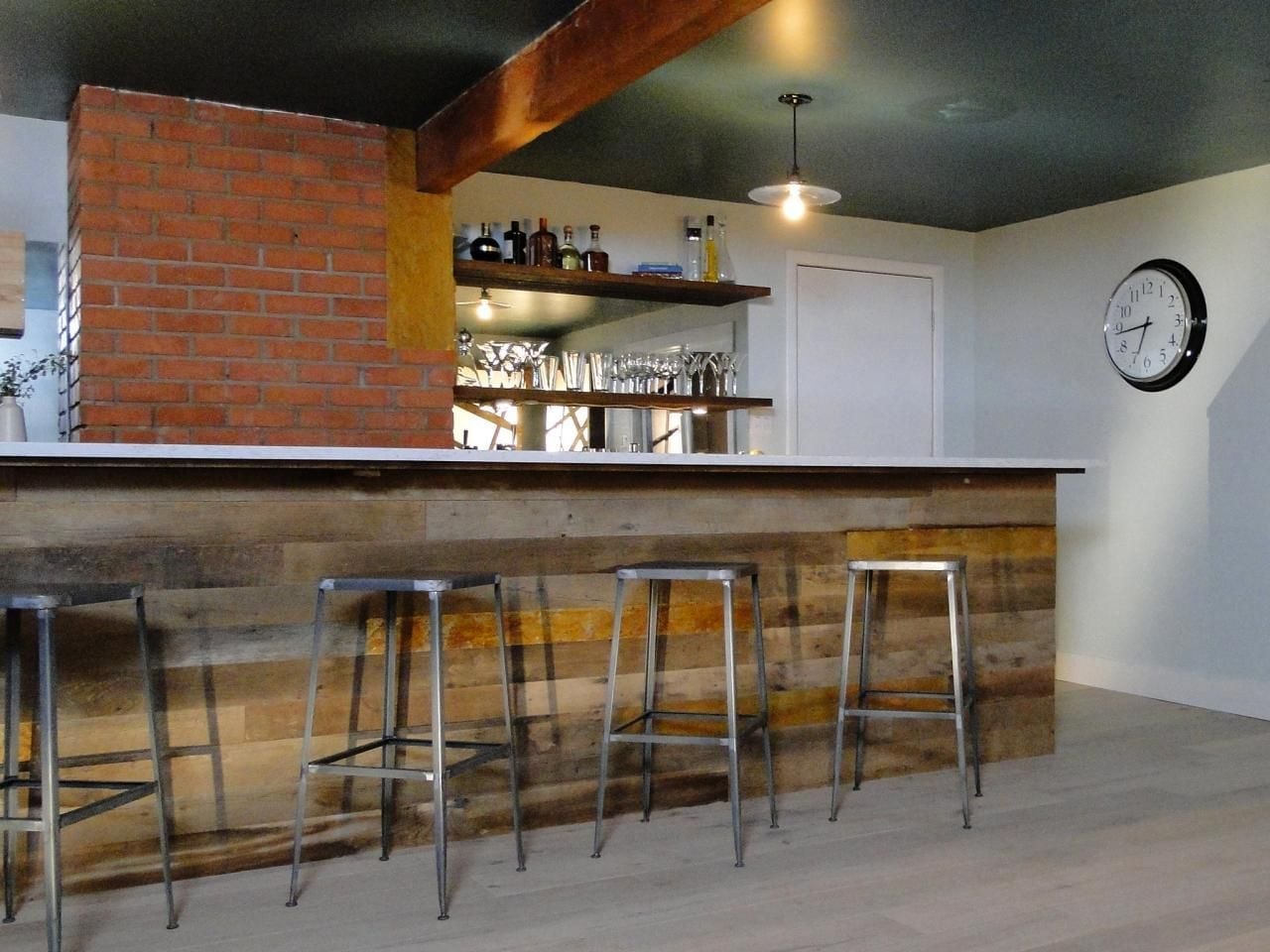
A reclaimed wood bar front brings immediate texture and warmth to a rustic industrial basement bar. The wood planks run the full length of the counter, with visible grain and natural color variation that a painted finish cannot match. A brick accent wall behind the bar adds a second layer of texture, while the concrete floor keeps the look grounded. Overhead track lighting highlights the wood’s character without washing out the room. The combination works because each material reads as honest and worn, not staged.
Traditional Basement Bar Structure Detail
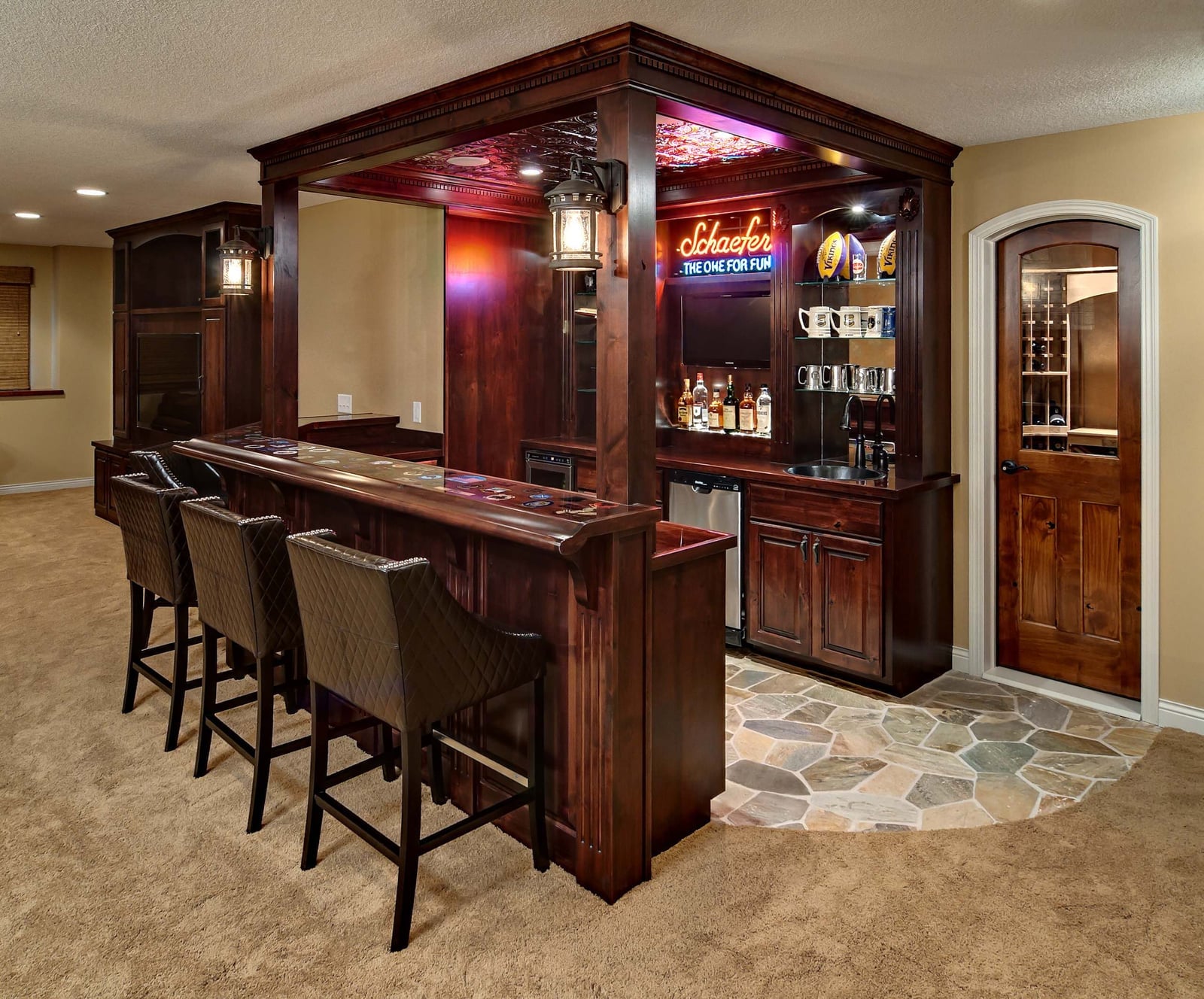
This traditional basement bar leans into ornate woodwork as the main event. The bar front features carved panels and dark, stained wood that anchor the room, while a neon sign above the cabinetry adds an unexpected pop of light. Beige stone countertops and warm overhead lamps keep the space from reading as heavy. The layout includes full cabinetry and bar stools, so the room functions as both a serving station and a hangout. For a similar feel in a rental, a dark wood cabinet as a bar cart and a plug-in neon sign can echo the structure without the built-in commitment.
Modern Bar Area Wine Rack Design
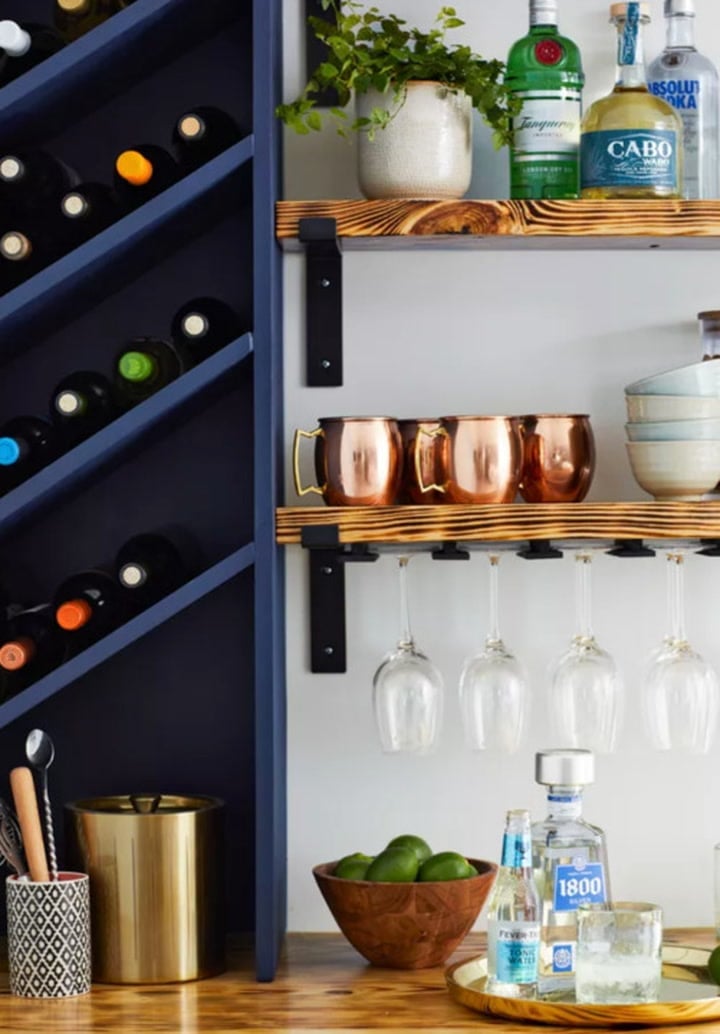
A wine rack does its job best when it stores bottles within reach and doubles as a visual anchor. In this compact bar area, a navy blue geometric wine rack holds bottles vertically while wooden shelves above keep glassware and copper mugs organized. The mix of navy, wood, and copper creates a modern palette that feels intentional without demanding extra square footage. For a rental, a freestanding wine rack in a bold color can define the bar zone without permanent changes to the wall.
Modern Basement Bar Shape Variation
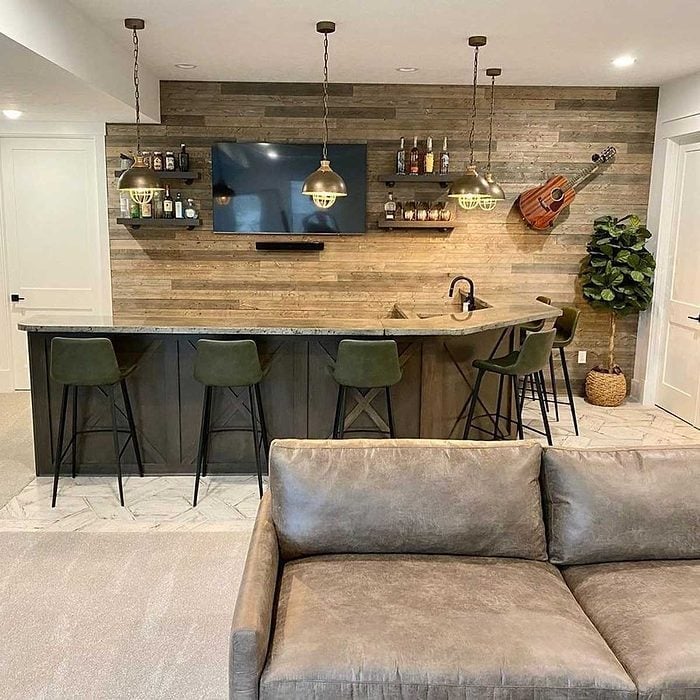
A curved bar changes how people move through a basement. This open-plan layout uses a rounded bar with seating that wraps around, making conversation easier than a straight counter. Wood tones and gray stone balance the green accents, with pendant lights and recessed lighting keeping the space bright. The curve softens the room’s edges and creates a natural flow between the bar and the seating area.
Spacious Basement Bar Stone Cladding
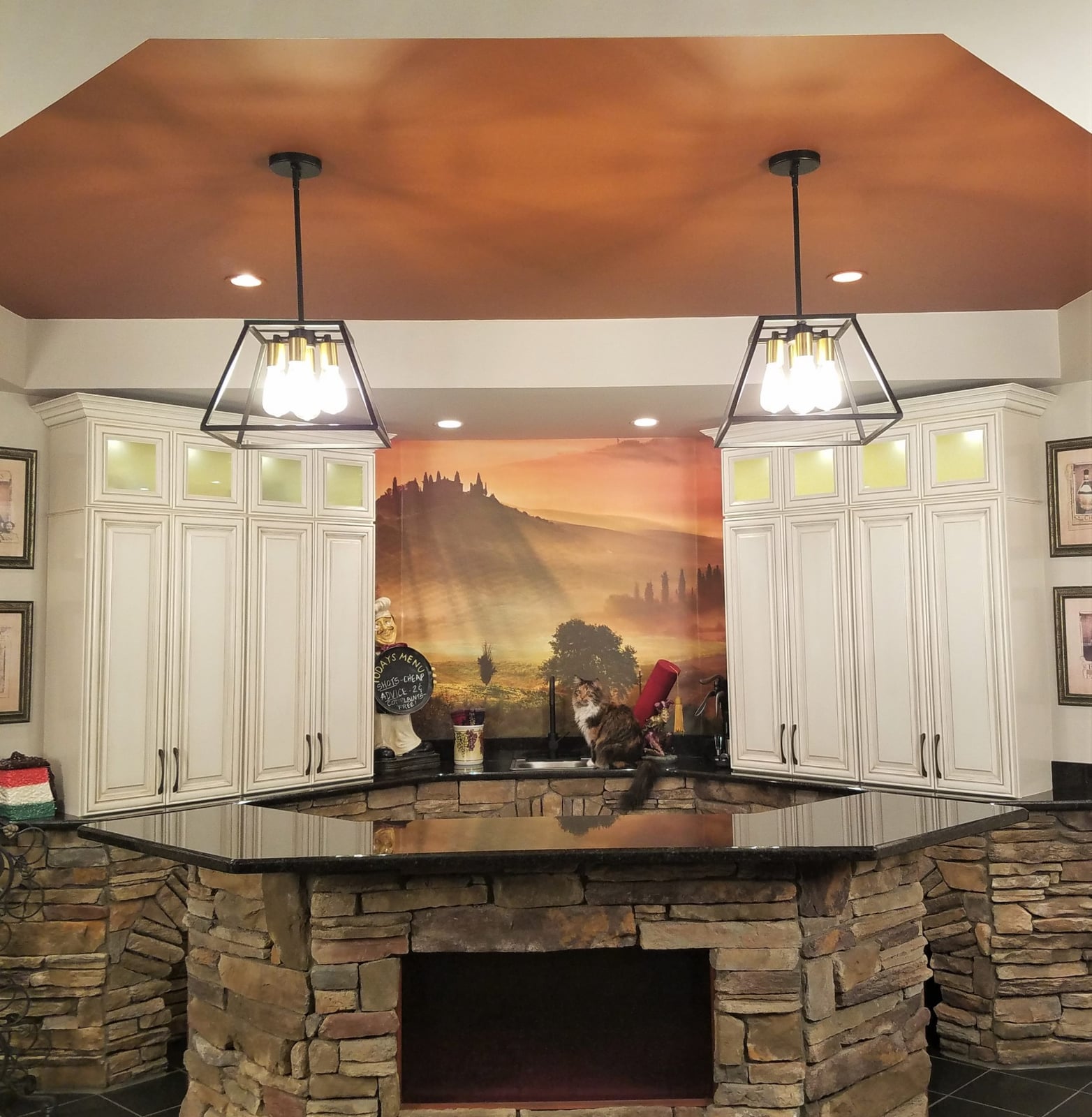
Stone cladding on a bar base adds weight and texture to a roomy basement. Here, a large island bar is wrapped in cream stone, with matching cream cabinets surrounding it and pendant lights overhead. The traditional look feels grounded, and the stone surface stands up to daily use. For a similar effect, consider stone veneer panels rather than full stone, which are lighter to install and still give the same visual heft.
Modern Basement Bar Curved Facade
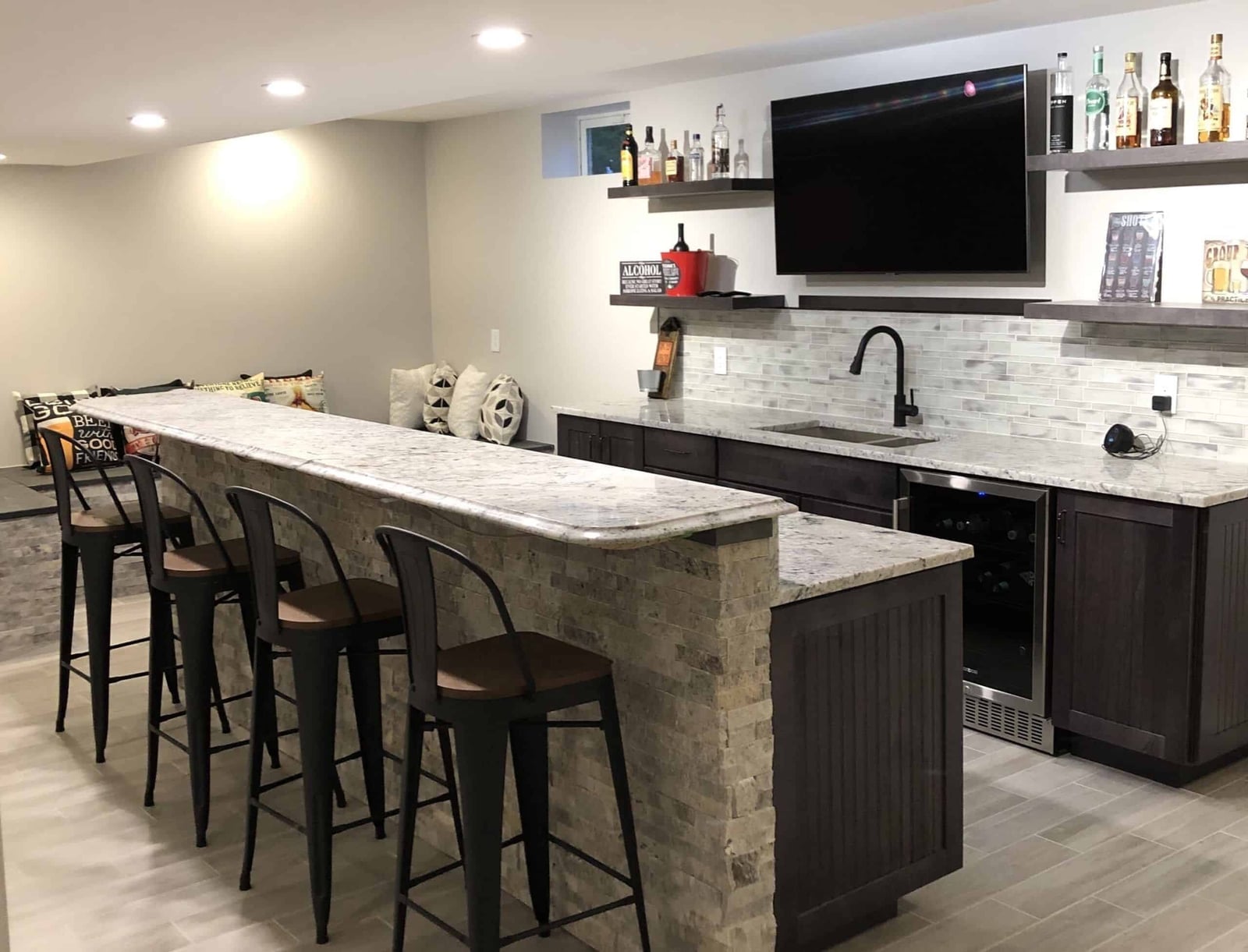
A straight bar front is the default choice, but a curved facade changes the entire feel of a room. This modern basement bar uses a curved stone-clad front that softens the lines and draws the eye along its shape. Recessed ceiling lights and under-counter lighting highlight the stone texture and keep the bar functional. The curve also lets more people sit comfortably, since no one is stuck at a corner.
Modern Eclectic Bar Stool Color
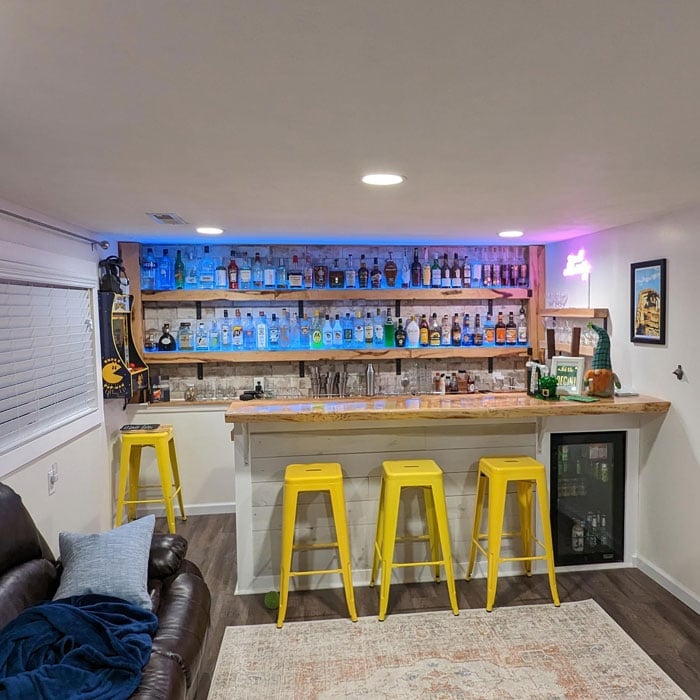
Bright yellow bar stools against a live-edge wood top and white paneling create a modern eclectic look. The yellow stands out against the blue LED backlighting and neon sign, adding energy without clashing. A single bold color in the seating keeps the rest of the bar simple and lets the wood grain and brick wall do the talking.
Glamorous Home Bar Front Detail
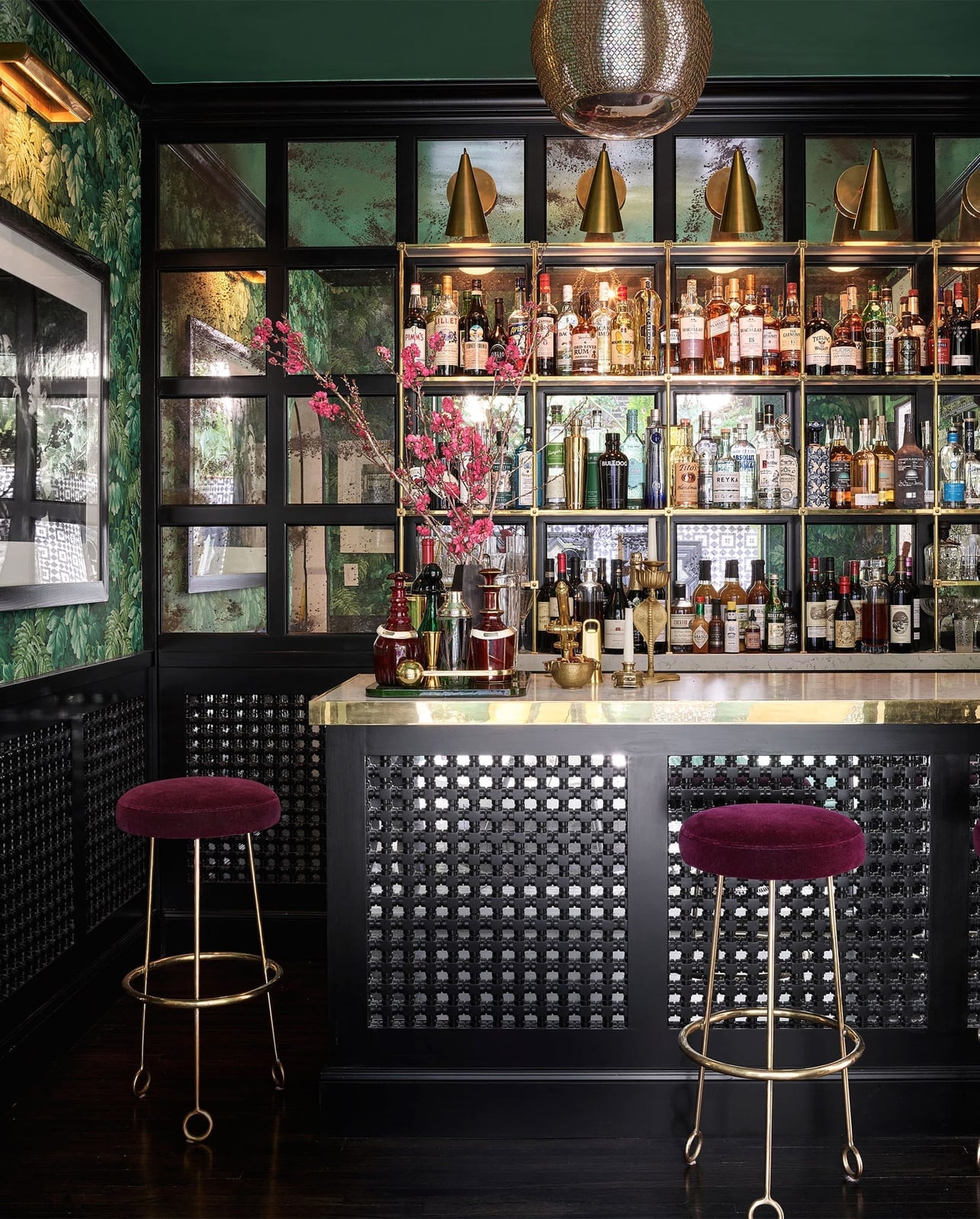
A glam bar lives or dies by its front. Here, an ornate black lattice wraps the bar front, turning a long counter into a focal point without adding clutter. The lattice acts as jewelry for the room. Gold bar stools with green velvet seats pick up the metallic tones from the mirrored shelving behind, while burgundy glassware adds a warm accent. The lattice breaks the solid mass of the bar, letting the eye travel through the pattern instead of stopping at a flat panel. Spotlights hit the glass and metal surfaces, making the whole setup look polished without feeling stiff.
Transitional Basement Bar Facade Material
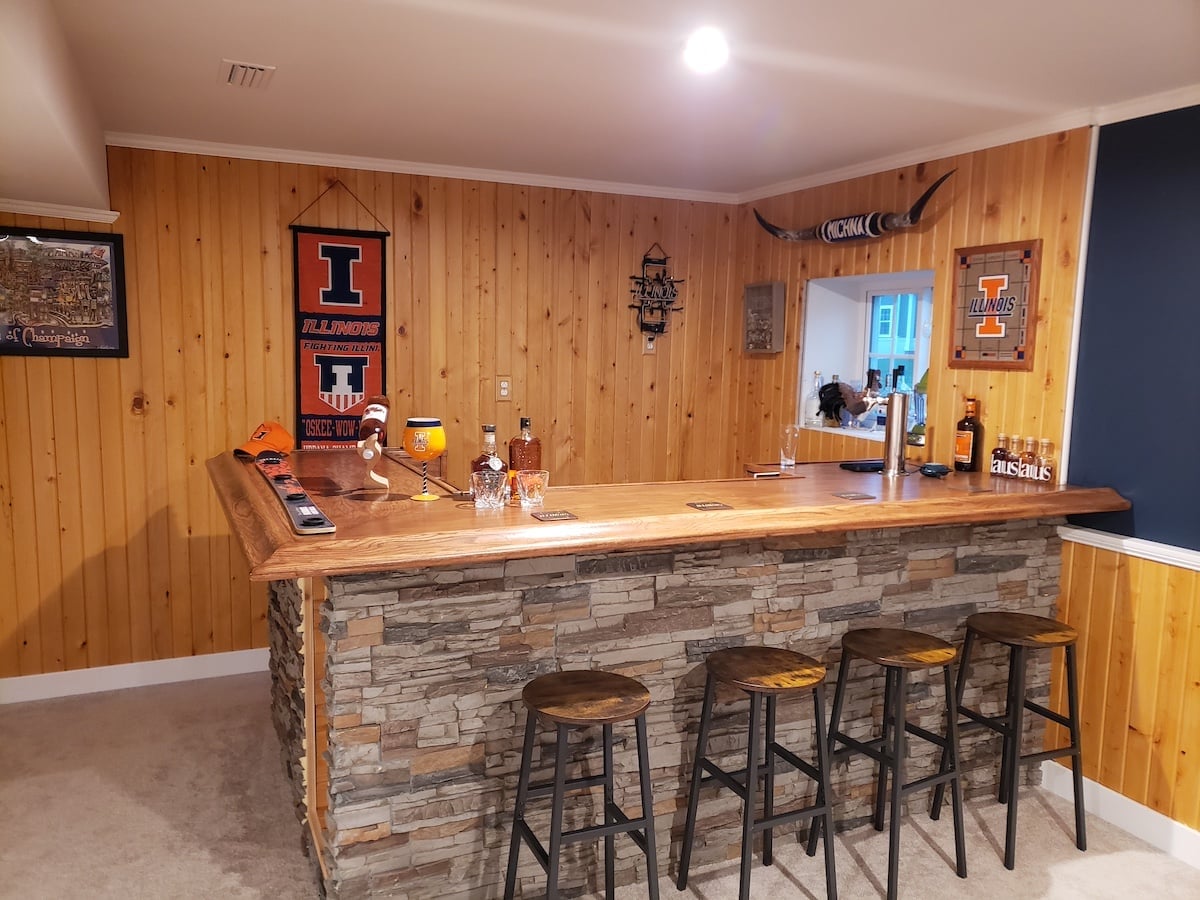
For a transitional bar, let one material anchor the look and another soften it. Here, a stone facade wraps the bar front, giving the room a grounded, substantial feel. The stone appears permanent, but the warm wood countertop and beige walls keep the space from tipping into cold or formal. A window on the back wall brings in natural light that balances the heavy stone texture.
Traditional Basement Bar Drawer Storage
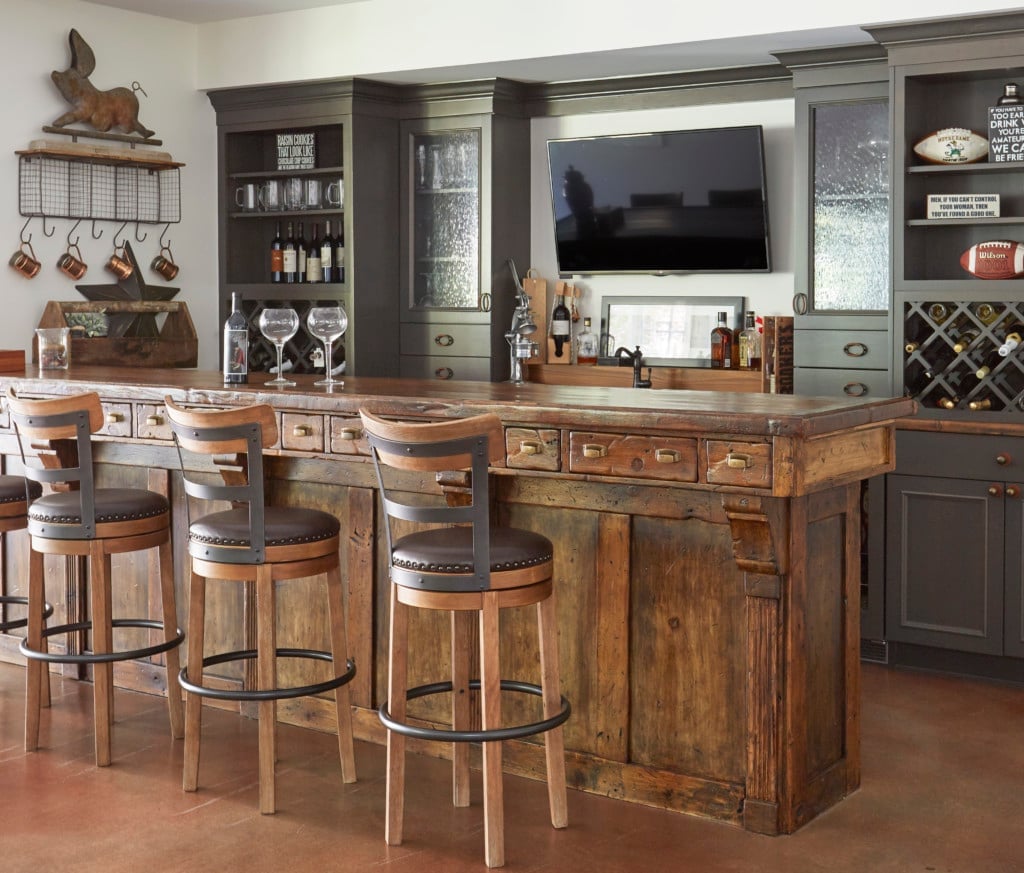
An ornate wooden bar front with multiple drawers offers a spot for everything from bottle openers to napkins without cluttering the counter. The dark wood looks formal, but the drawers keep daily tools hidden, so the bar stays clean for guests. Cabinet lighting inside the upper shelves makes glassware easy to find without fumbling in the dark. A TV mounted above the bar adds a second function, but the storage keeps the space focused on the bar.
Art Deco Basement Bar Shape and Material
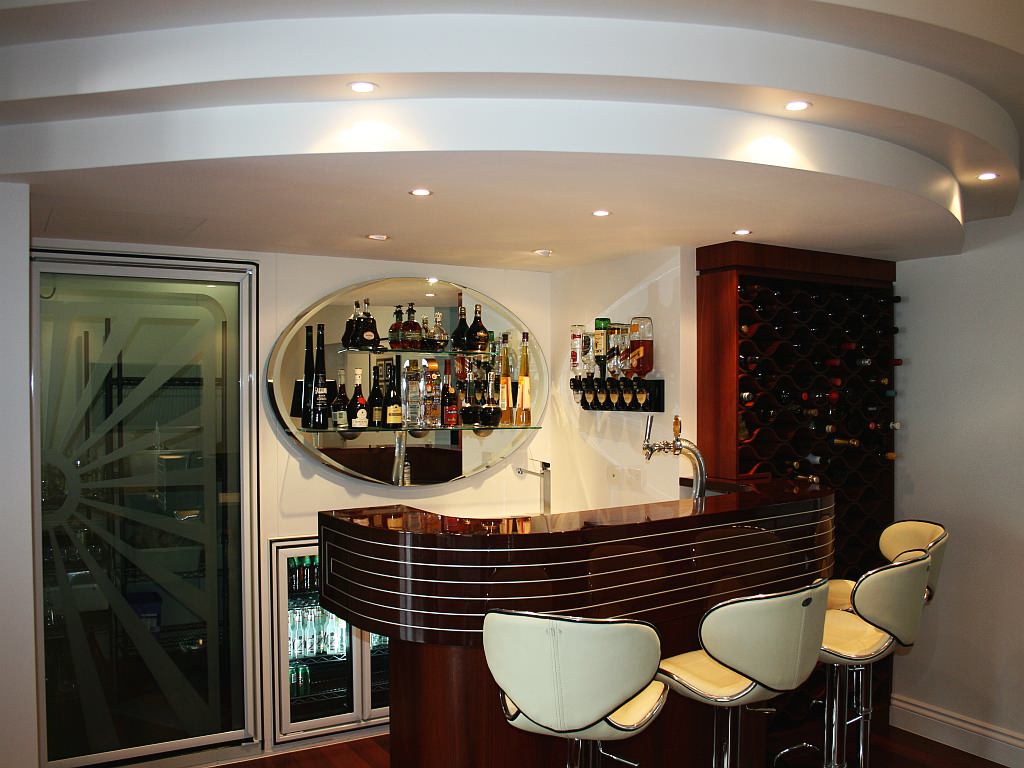
A curved bar breaks the straight-line habit of most basement layouts and makes the room feel wider. Here, the bar sweeps in a smooth arc, with dark wood panels on the front and a cream countertop. Mirrored shelving behind reflects the curve, doubling the sense of space without adding square footage. Chrome bar stools and silver accents keep the dark wood from reading as heavy, while under-cabinet lighting highlights the grain and the mirror edges. The curve also means the bartender can face more than one guest at a time, which changes how the room functions socially.
Traditional Basement Bar Stone Pillar Accent
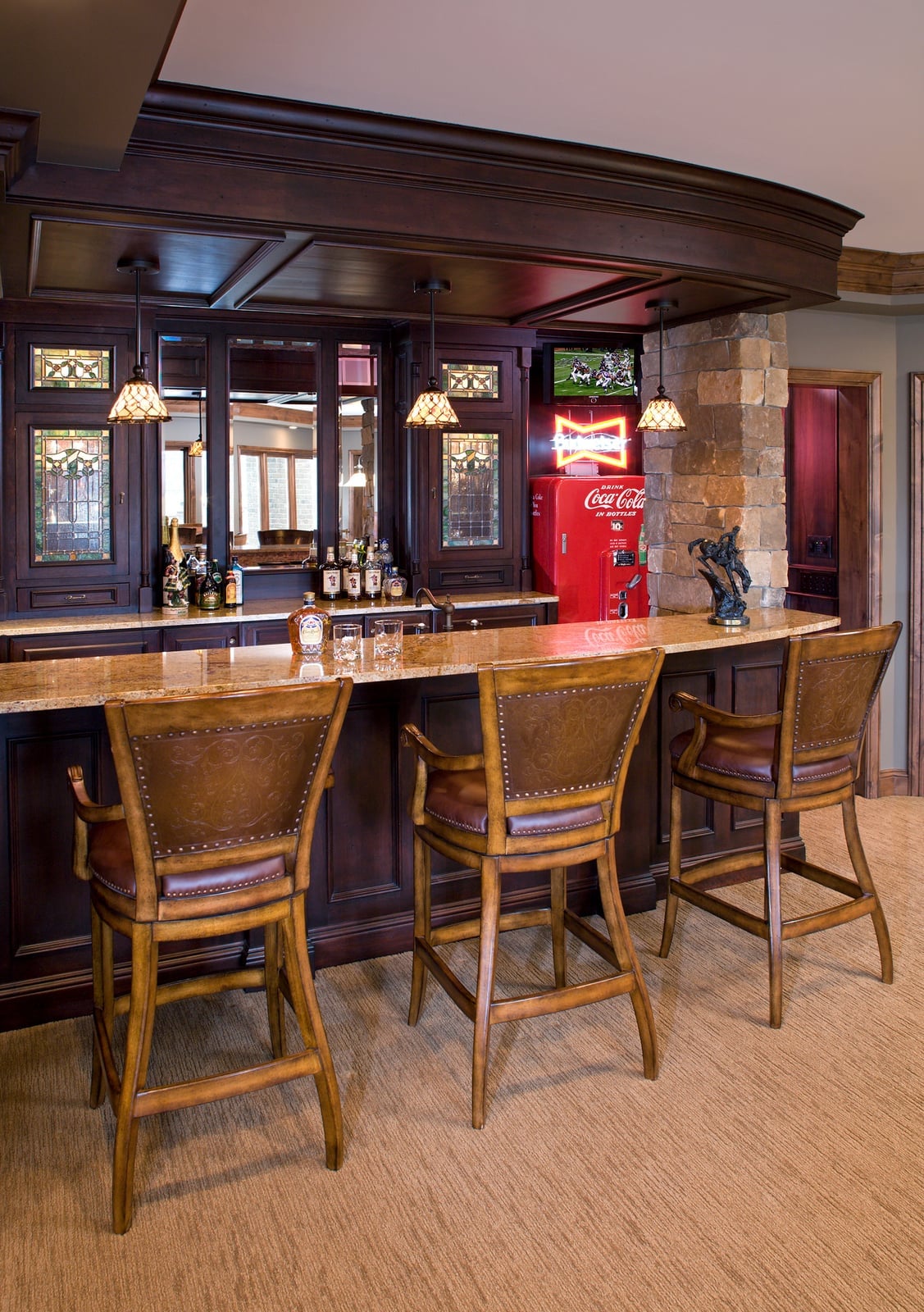
A stone pillar might feel like an odd choice next to a vintage Coca-Cola fridge, but here it works because both items share a solid, grounded quality. The pillar breaks the long line of the bar counter and adds a vertical element that the pendant lights echo. The stone looks old-world next to the dark wood bar, while the fridge brings a pop of red that prevents the room from feeling too heavy. Beige carpet underfoot softens the hard surfaces and helps the room work for both casual watching and entertaining.
Traditional Man Cave Bar Stool Style
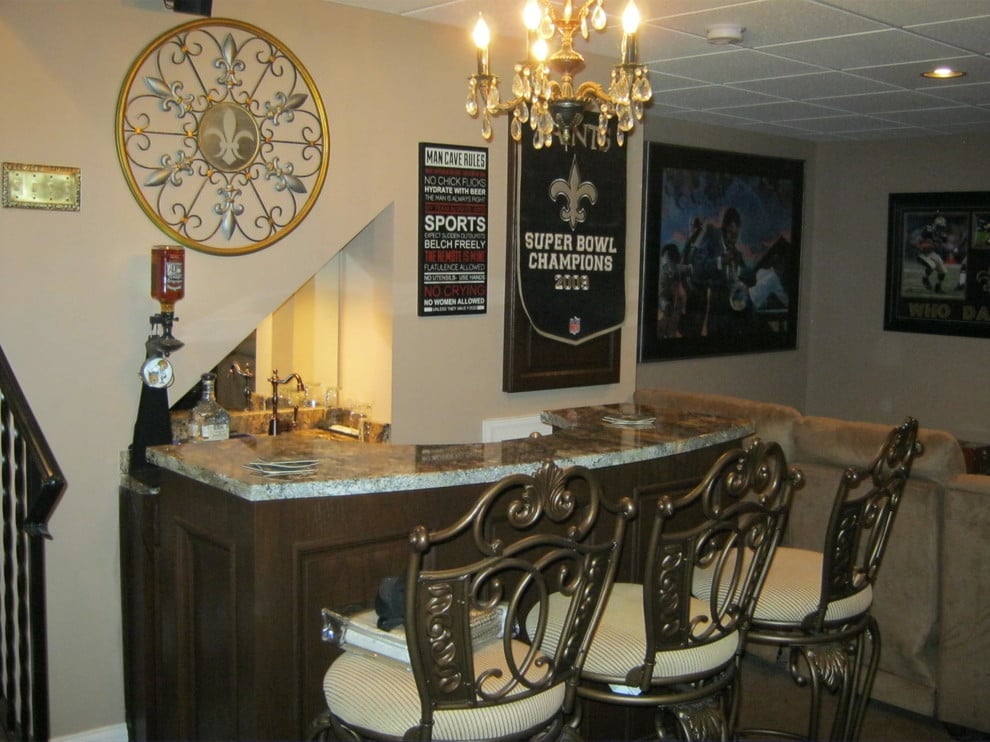
A roomy basement bar with a curved granite counter and an adjacent lounge area uses ornate gold bar stools to bridge the drinking side and the seating zone. The warm beige and brown palette from the wood and stone is picked up by the fabric on the stools, while the metallic finish on the frames echoes the chandelier overhead. That single detail keeps the layout from feeling like two separate rooms and makes the whole space feel like a single hangout. The New Orleans Saints memorabilia on the wall adds a personal note to the bar’s traditional lines.
Final Thoughts
A basement bar works best when it fits how you actually use the room. The ideas here show that material contrast, thoughtful lighting, and smart storage do more than any single feature. Start with what you already have: the floor plan, the ceiling height, and the amount of natural light. Then choose one element, like the bar front or the countertop, and build from there. The goal is a space that feels intentional, not a collection of ideas.