Blue is a natural fit for a bathroom. It brings the calm of water and sky into a room that’s all about washing away the day.
This roundup shows 27 ways to use blue, from bold tile walls to painted vanities and statement tubs. Every look here is built around the same idea: blue works as the main color without feeling cold.
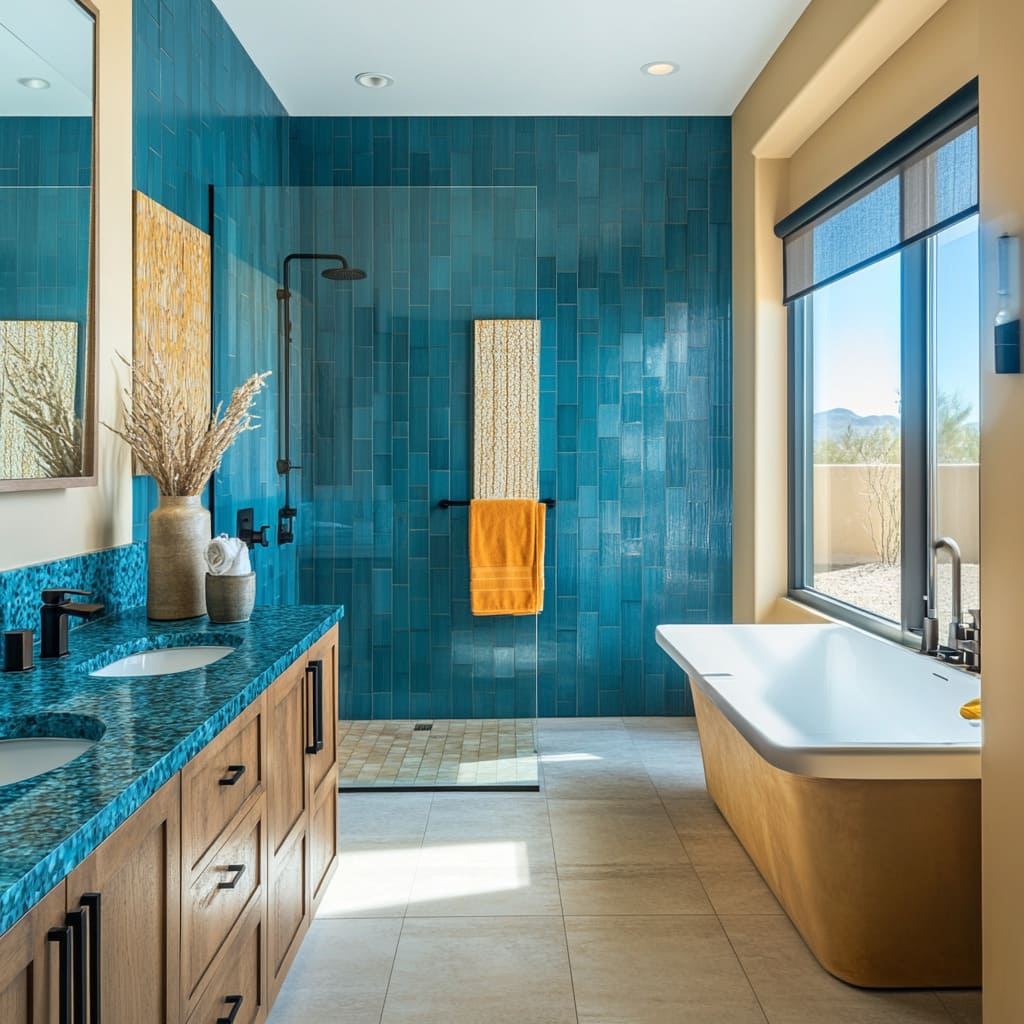
Vibrant Teal Tile Wall
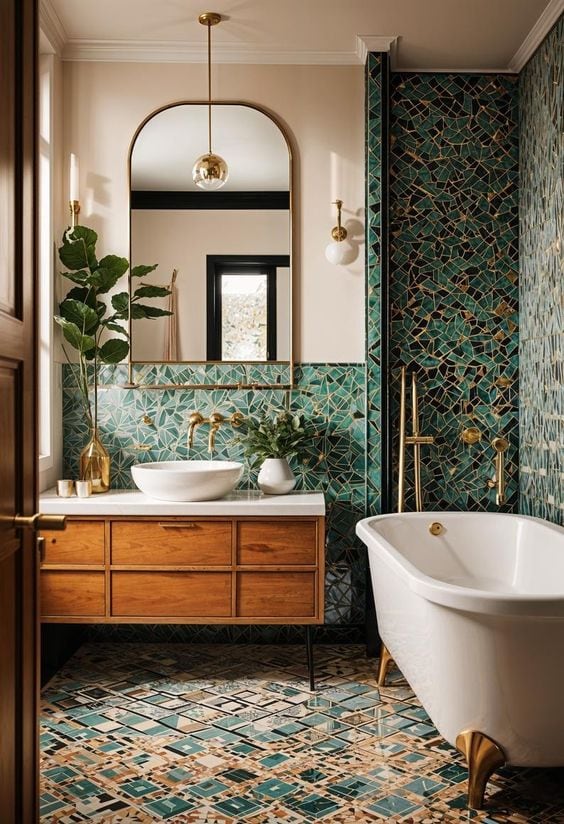
A full wall of vibrant teal tile turns the bathroom into a destination. The glossy finish catches and bounces natural light around the room, while recessed lighting keeps the space usable after dark. A wood vanity in a warm tone and a cream freestanding tub keep the palette grounded. The palette works because the cool teal takes up one wall and the warm wood and cream fill the rest, roughly a one-to-three ratio. That balance keeps the tile from reading as cold and the room from feeling flat.
Striking Blue Scalloped Tile Accent Wall
The blue scalloped tile wall acts as the focal point. Its curved edges add texture and a sense of motion that flat tile cannot match. A floating wood vanity keeps the floor visible, which helps the room feel open. The gray stone floor and countertop provide a neutral base that lets the blue stand out. The scalloped shape should be the only pattern in the room. A busy floor or a patterned mirror would fight the tile. Keep other surfaces clean and the wall becomes the focal point.
Fluted Blue Vanity and Mosaic Tile Shower
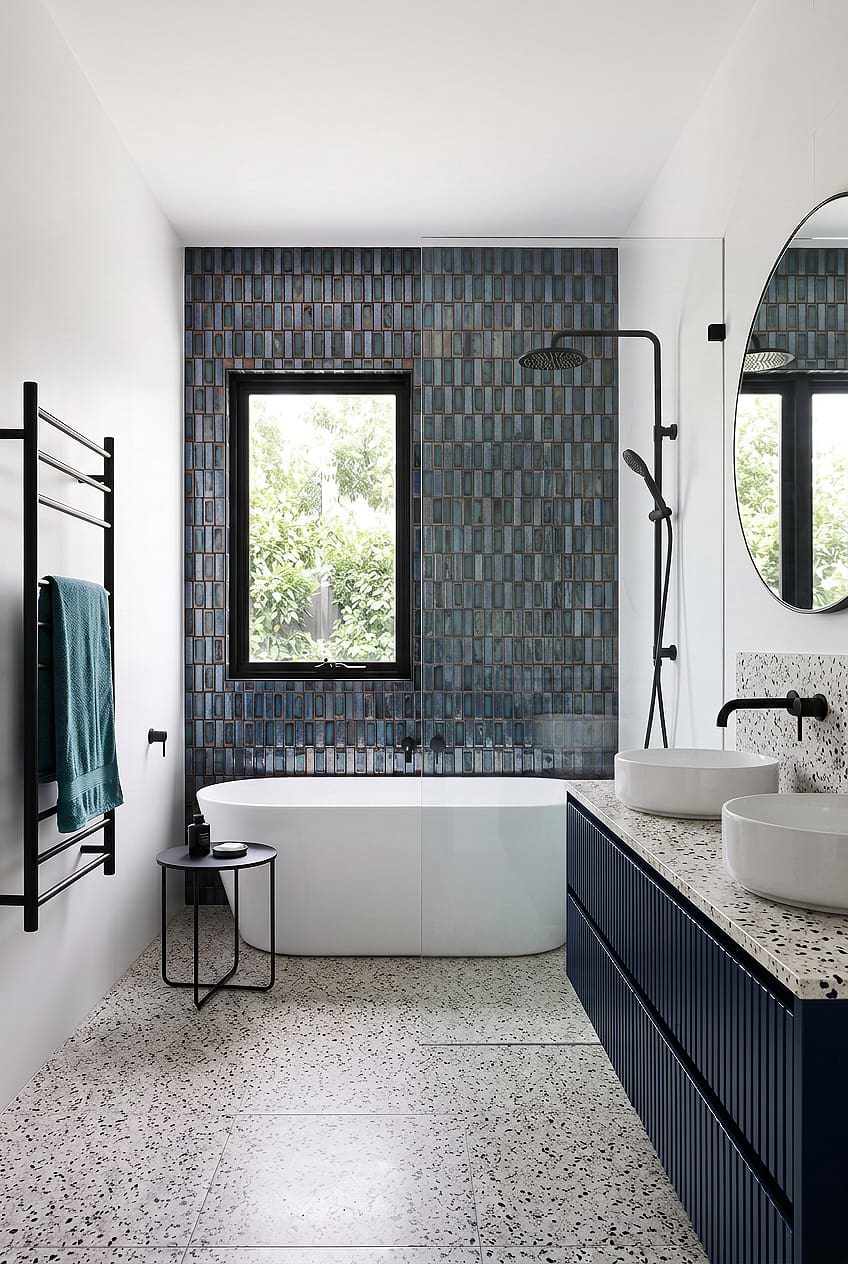
Can a single vanity carry both a strong color and a textured finish without overwhelming a roomy bathroom? The fluted blue vanity proves it can, especially when the rest of the palette stays restrained. The shower wall uses vertical blue and gray mosaic tile that draws the eye upward, which makes the ceiling feel higher. A freestanding tub sits between the vanity and the shower, breaking the space into three distinct zones. The black fixtures on the vanity and in the shower tie the zones together. The material takeaway is that the fluted surface on the vanity adds depth without needing a second color. The mosaic tile does the same in the shower. Together they create a cohesive look that reads as intentional.
Dark Blue Vanity and Botanical Wallpaper
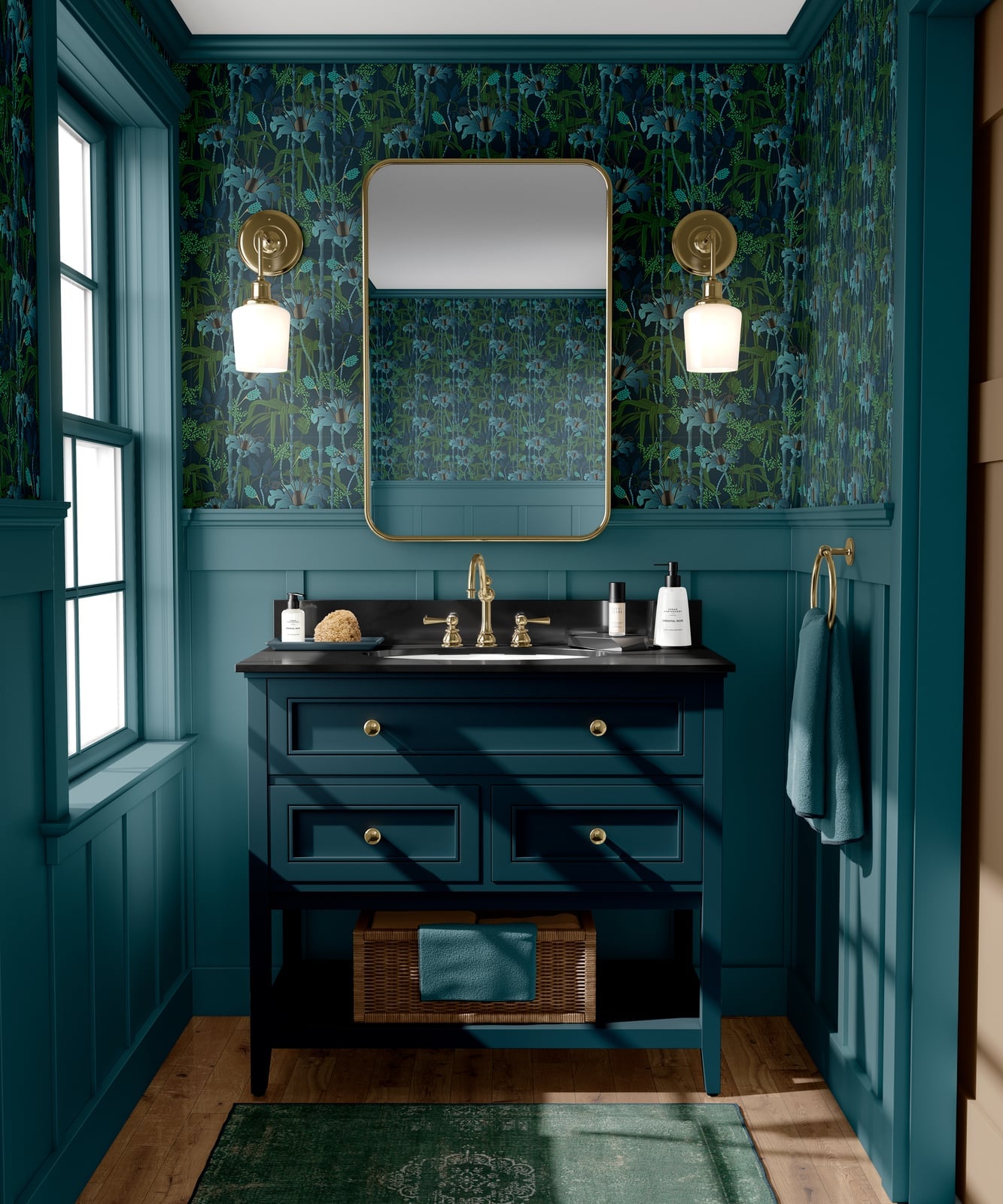
A dark blue vanity anchors a compact bathroom that uses botanical wallpaper for personality. The wallpaper introduces green leaves on a light ground, which softens the heavy cabinet color. Brass sconces on either side of the mirror provide warm task light and pick up the gold tones in the wallpaper. The style here is eclectic because it mixes a traditional dark wood cabinet with a lively nature print. What breaks the expected formula is the wallpaper. A solid wall would make the room feel sober, but the leaves add energy and keep the space from reading as too formal for a daily bathroom.
Light Blue Wood Paneling and Clawfoot Tub
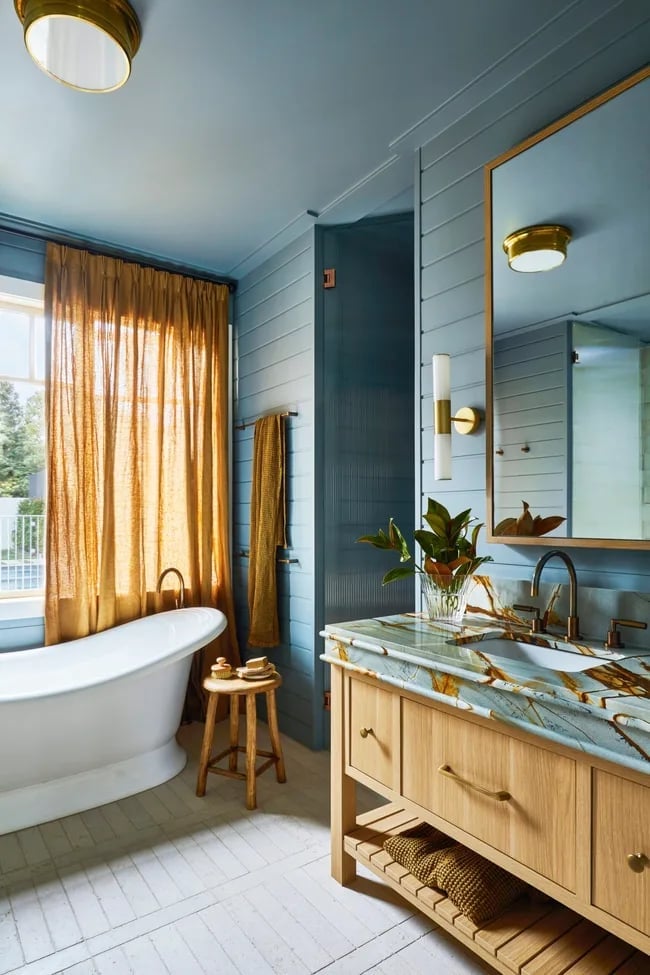
In a roomy bathroom with a clawfoot tub, wall paneling defines the space without closing it in. Light blue wood paneling runs from floor to mid-wall, with white paint above, which keeps the room airy. A wood vanity with a marble-like countertop and brass fixtures continues the coastal modern feel. Natural light from a window hits the paneling and makes the blue look softer than paint alone would. The palette breaks the expected blue-and-white scheme with warm wood tones and gold hardware. That small shift avoids a beach house cliche. The paneling also hides wall imperfections better than paint.
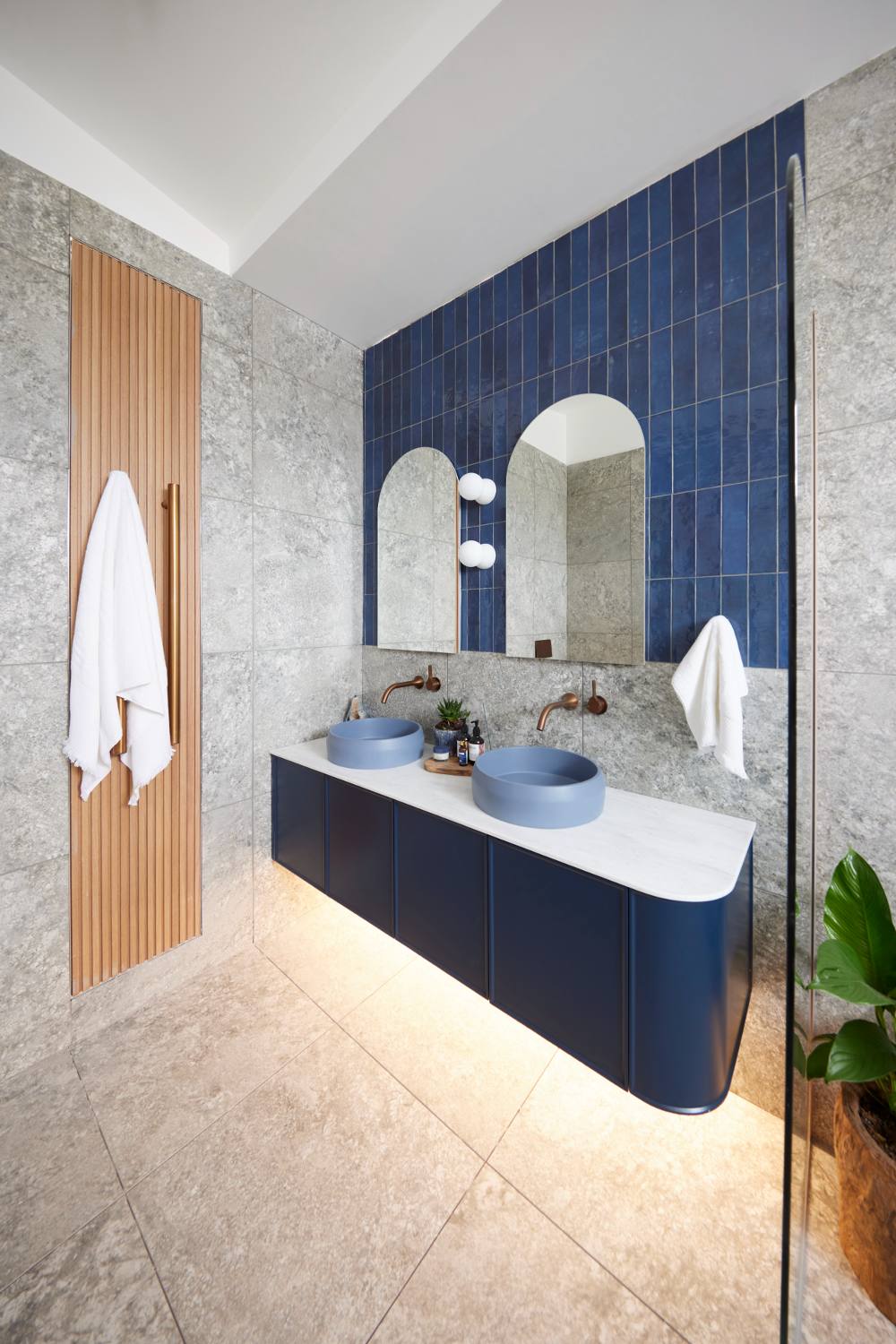
Blue Vessel Sinks and Curved Navy Cabinetry
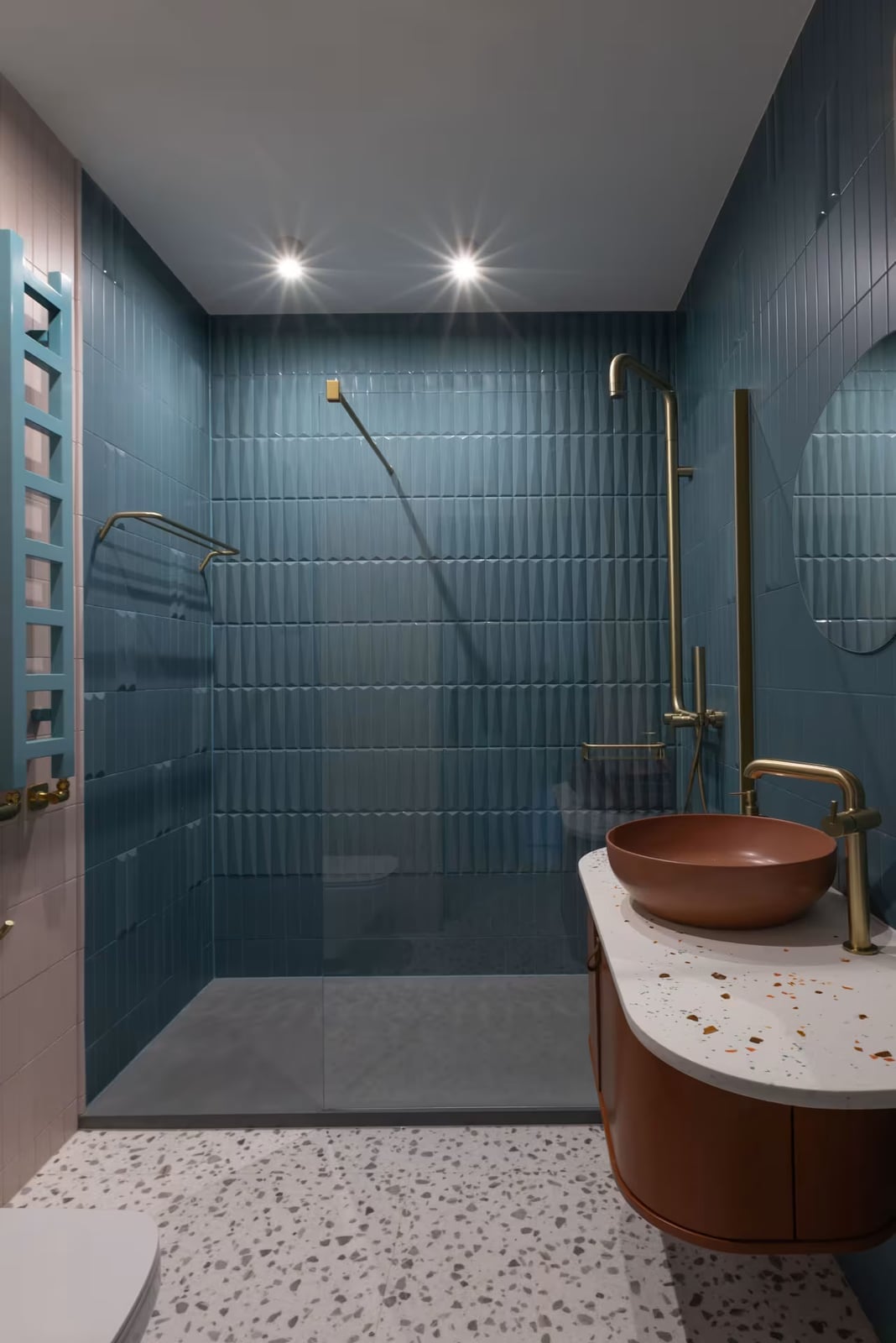
If a straight run of cabinetry feels too rigid, a curved navy double vanity softens the whole room. The surface is stone or marble, and the vessel sinks sit on top rather than dropping in, which gives the counter a cleaner look. A pair of arched mirrors above repeats the curve, and pendant lights add task lighting without cluttering the counter. The layout centers the vanity, leaving the rest of the room simple. That single curved shape does the work of making the space feel generous without needing extra furniture.
Blue Subway Tile Accent Walls and Wood Vanity
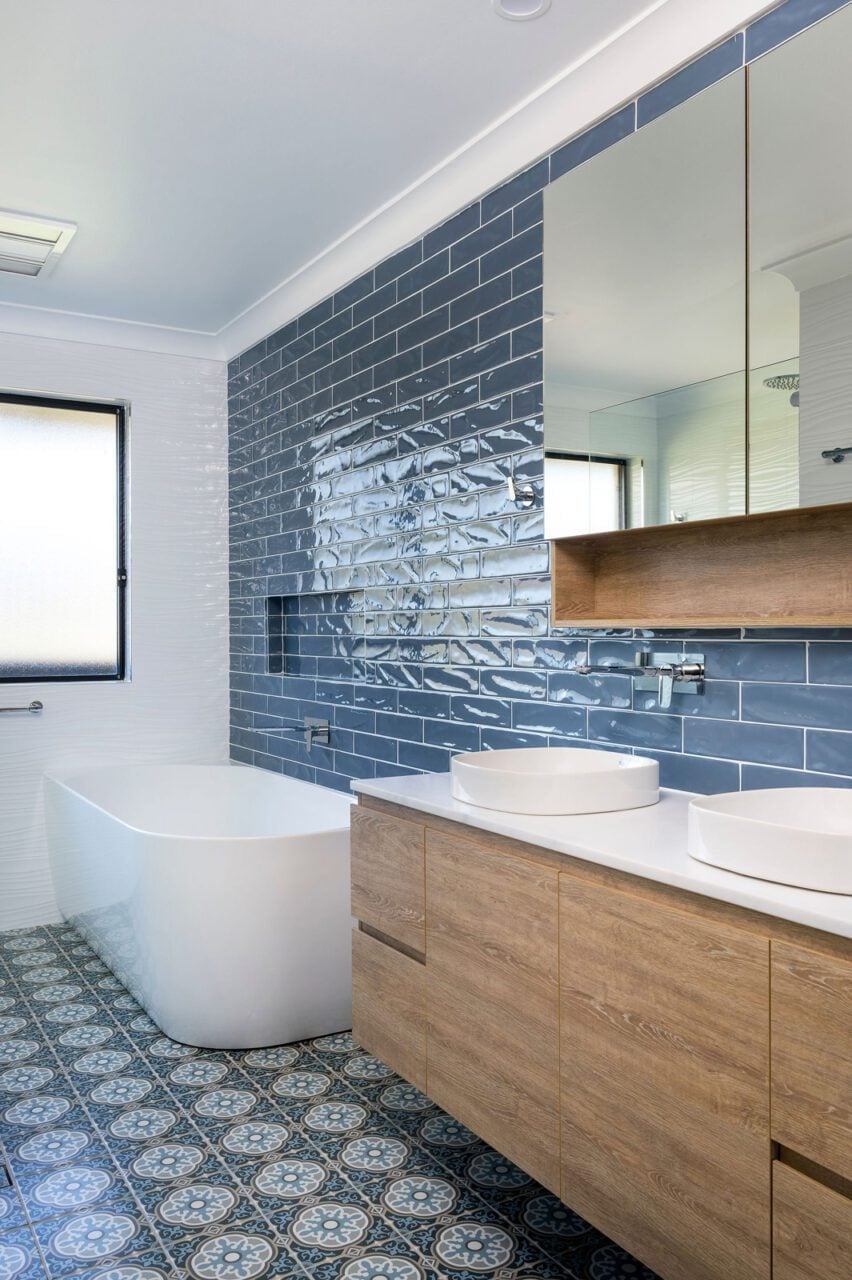
Blue subway tile runs floor to ceiling on one wall, which draws the eye across the room and makes the space feel wider. A wood double vanity with vessel sinks sits opposite a freestanding tub, and natural light from a window hits the tile directly. For a renter-friendly version, use peel-and-stick subway tile on the wall behind the vanity. It comes off cleanly, and the wood vanity and white walls keep the room neutral underneath.
Contrasting Light Blue and Pink Tiles
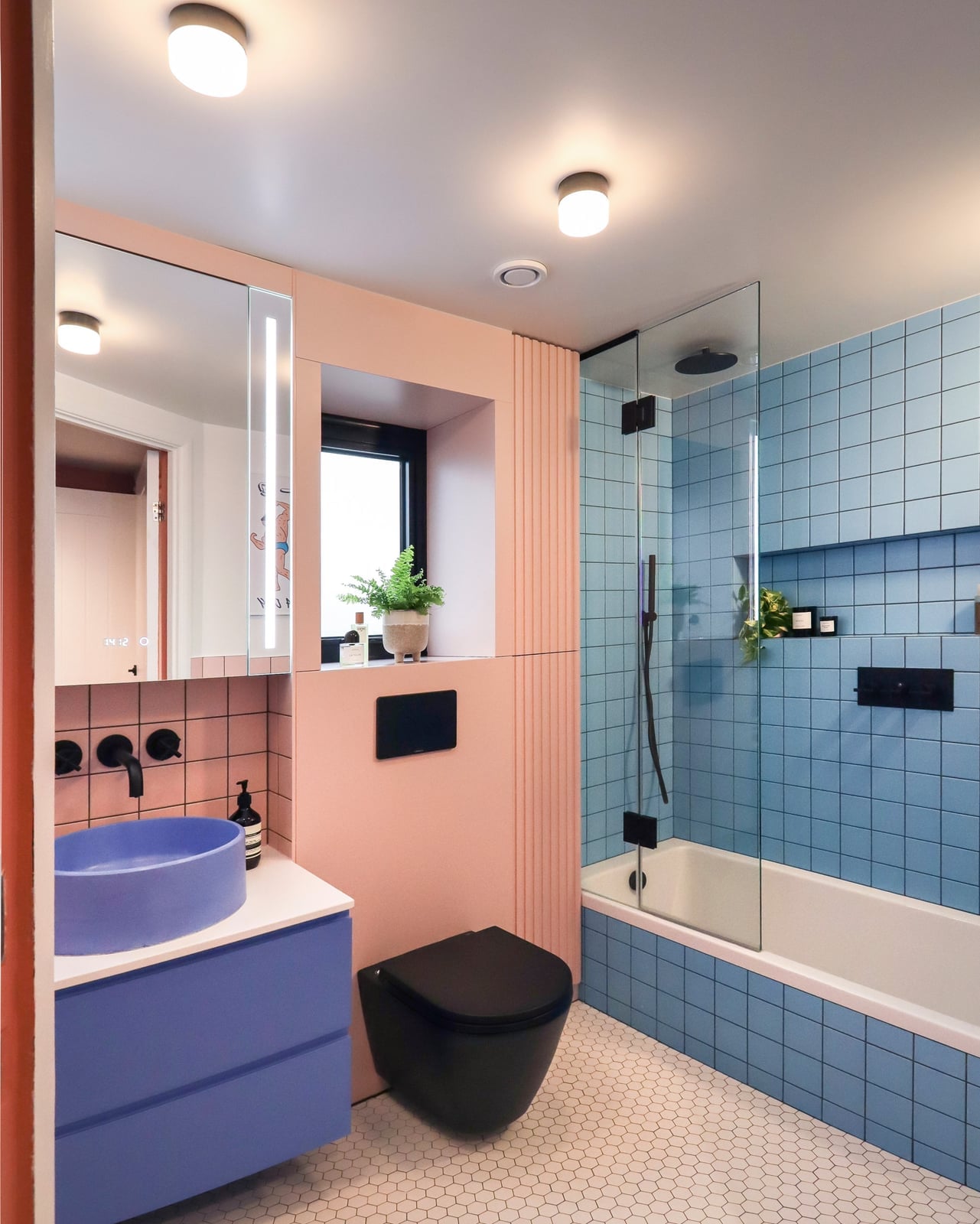
Light blue and pink tiles side by side is a gamble that pays off when the room stays simple. The blue vanity and black toilet anchor the palette, and the shower in the corner uses the same light blue tile so the color reads intentional. The ratio matters here: pink on the lower wall, blue above, with a black trim line between them. That break stops the two colors from bleeding into each other and gives the eye a place to rest.
Teal Subway Tile and Dark Clawfoot Tub
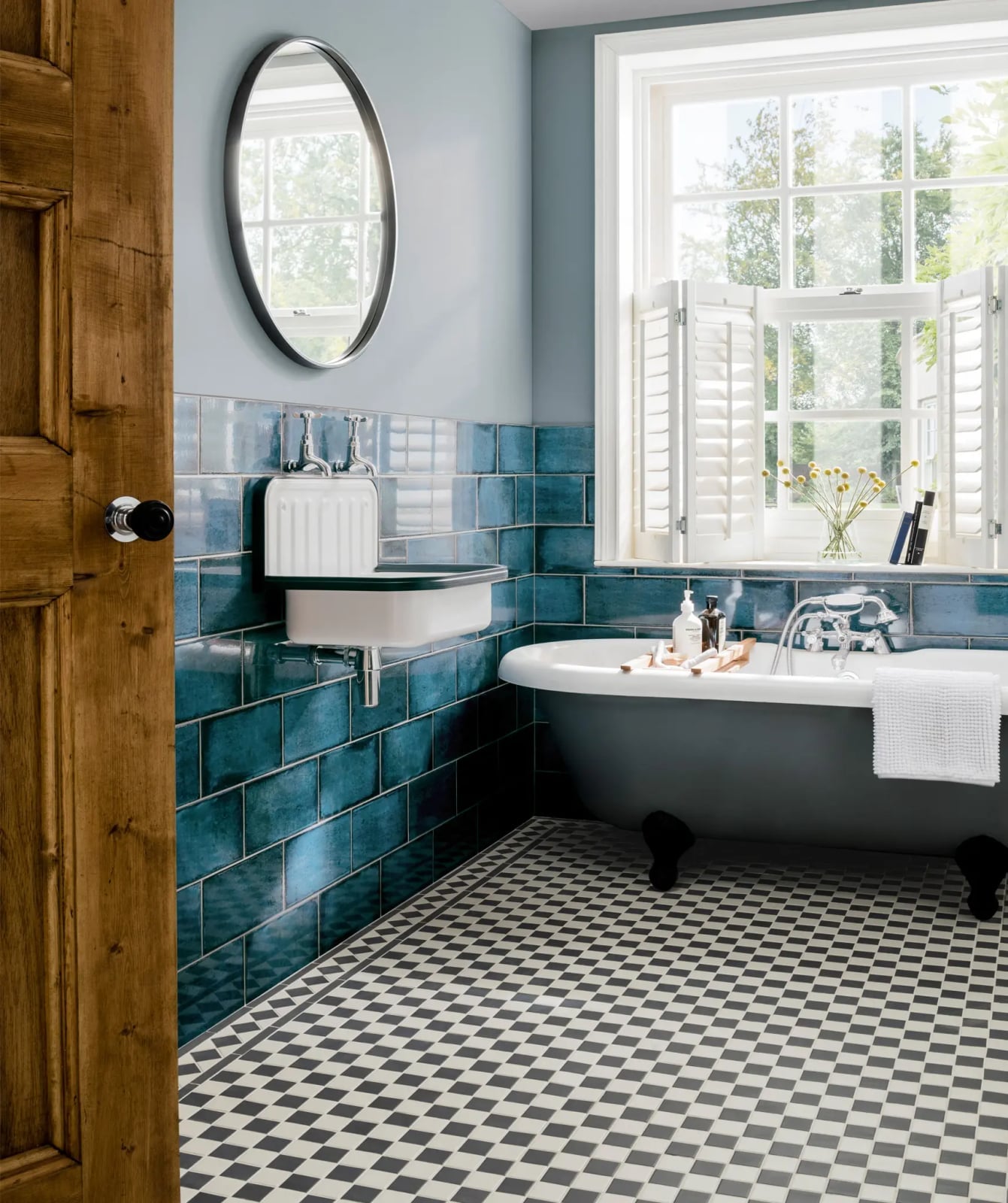
Can a dark tub work in a light room? Yes, when the wall tile sets the tone. Teal subway tile wraps the lower half of the walls, and a black clawfoot tub sits opposite a pedestal sink. Light from a window keeps the teal from reading as dark, and the black tub anchors the space. The tile is glazed ceramic, which handles moisture well and wipes clean with a sponge. A wooden door adds warmth alongside the tile.
Deep Blue Glossy Tile Wall and Freestanding Tub
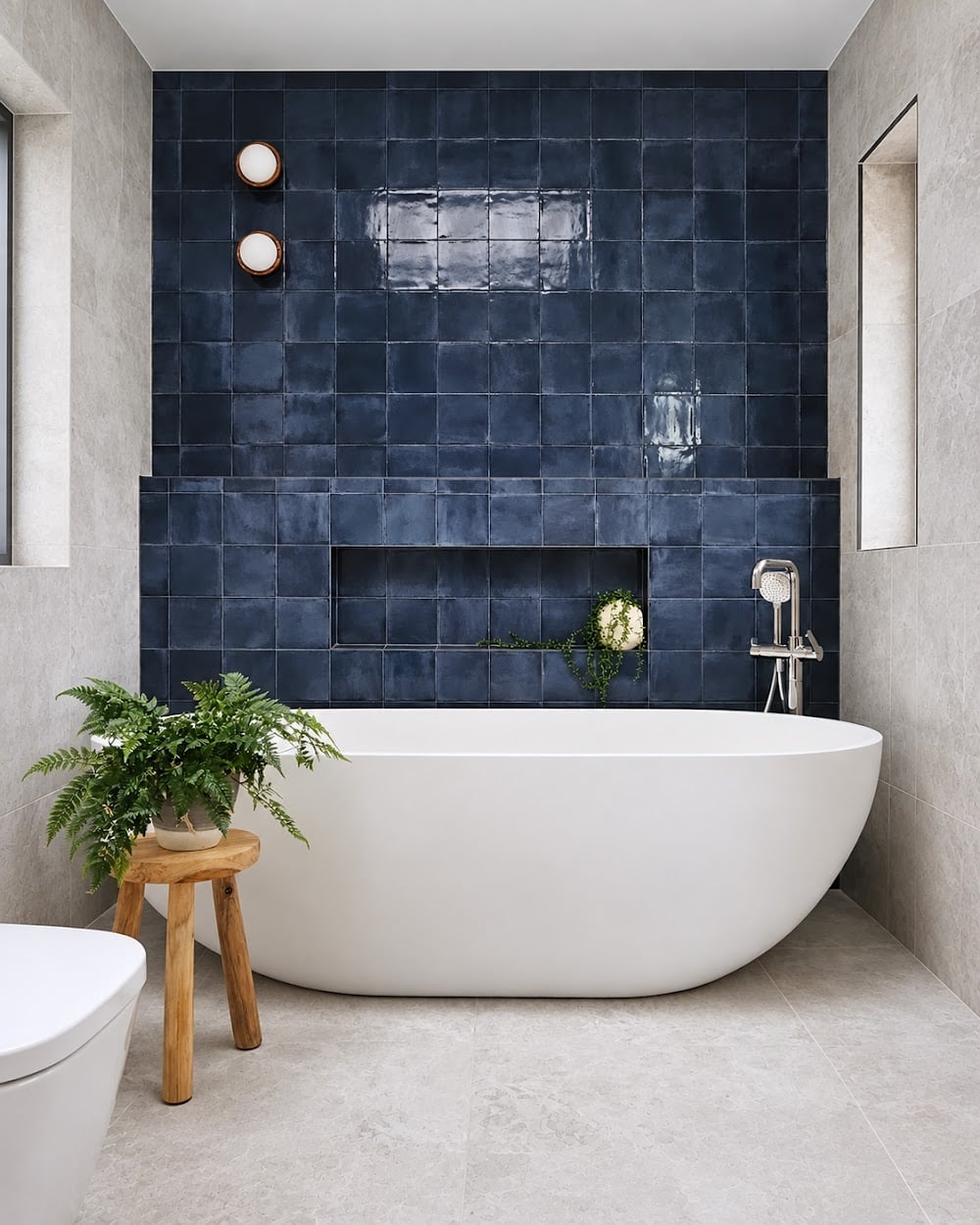
Large format glossy deep blue tiles cover one wall from floor to ceiling, and the gloss finish reflects light from the window and recessed fixtures. A white freestanding tub sits centered on that wall, and a floating vanity keeps the floor clear. The glossy surface makes the blue feel deeper rather than darker, and the white tub holds its own against the color. For a room with limited natural light, the gloss helps bounce what you have around the space.
Textured Blue Vertical Tiles and Brass Shower
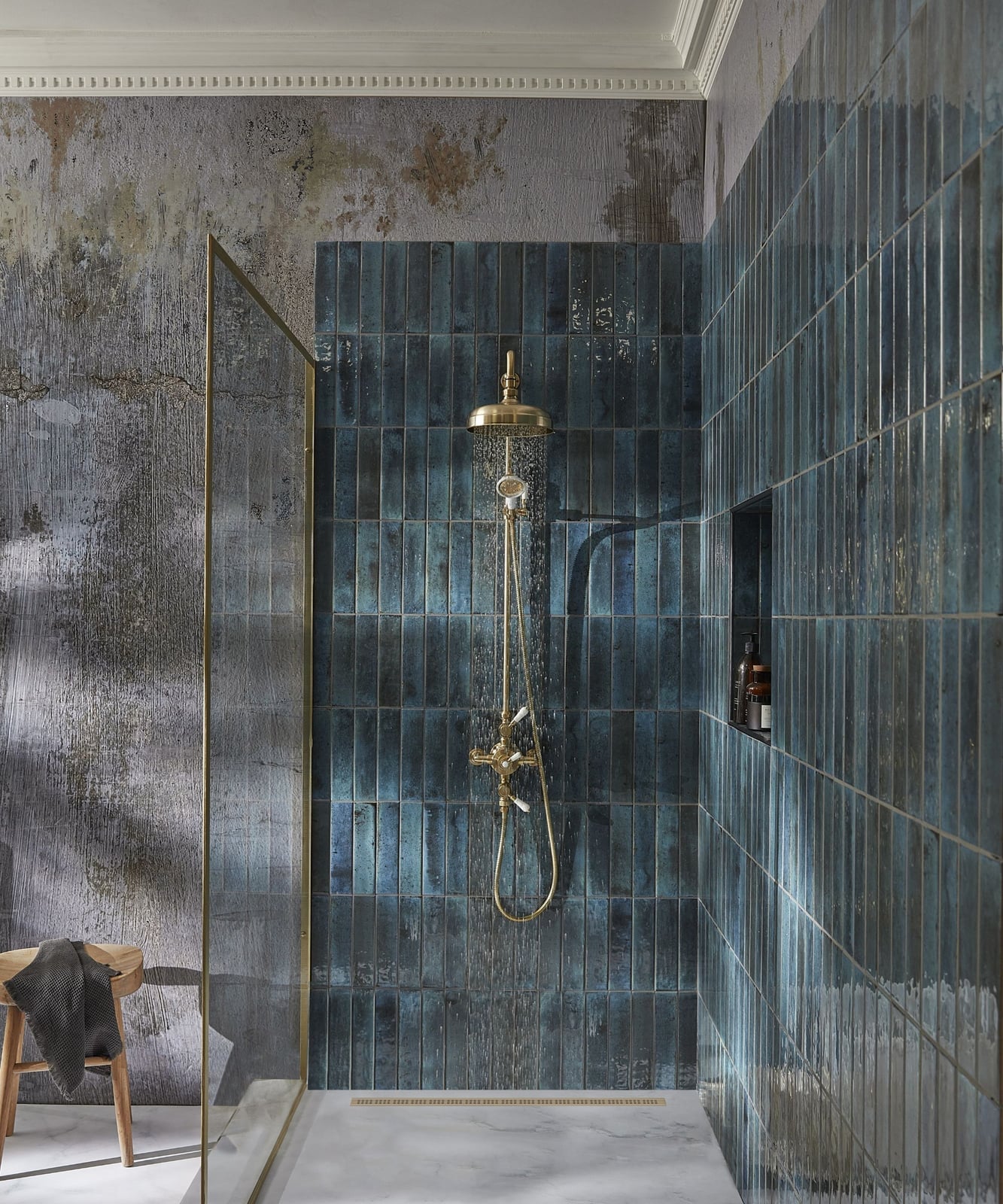
A corner shower with textured blue vertical tiles pairs well with a simple room. The tiles already supply pattern and depth, so the brass shower head and a recessed shelf in the same finish are enough company. Gray stone on the floor and clear glass keep the eye on that blue wall. Soft natural light helps the texture read without glare. For a roomy bathroom, this setup proves that one strong material choice can carry the whole layout.
Deep Blue Vertical Tiles and Brass Fixtures
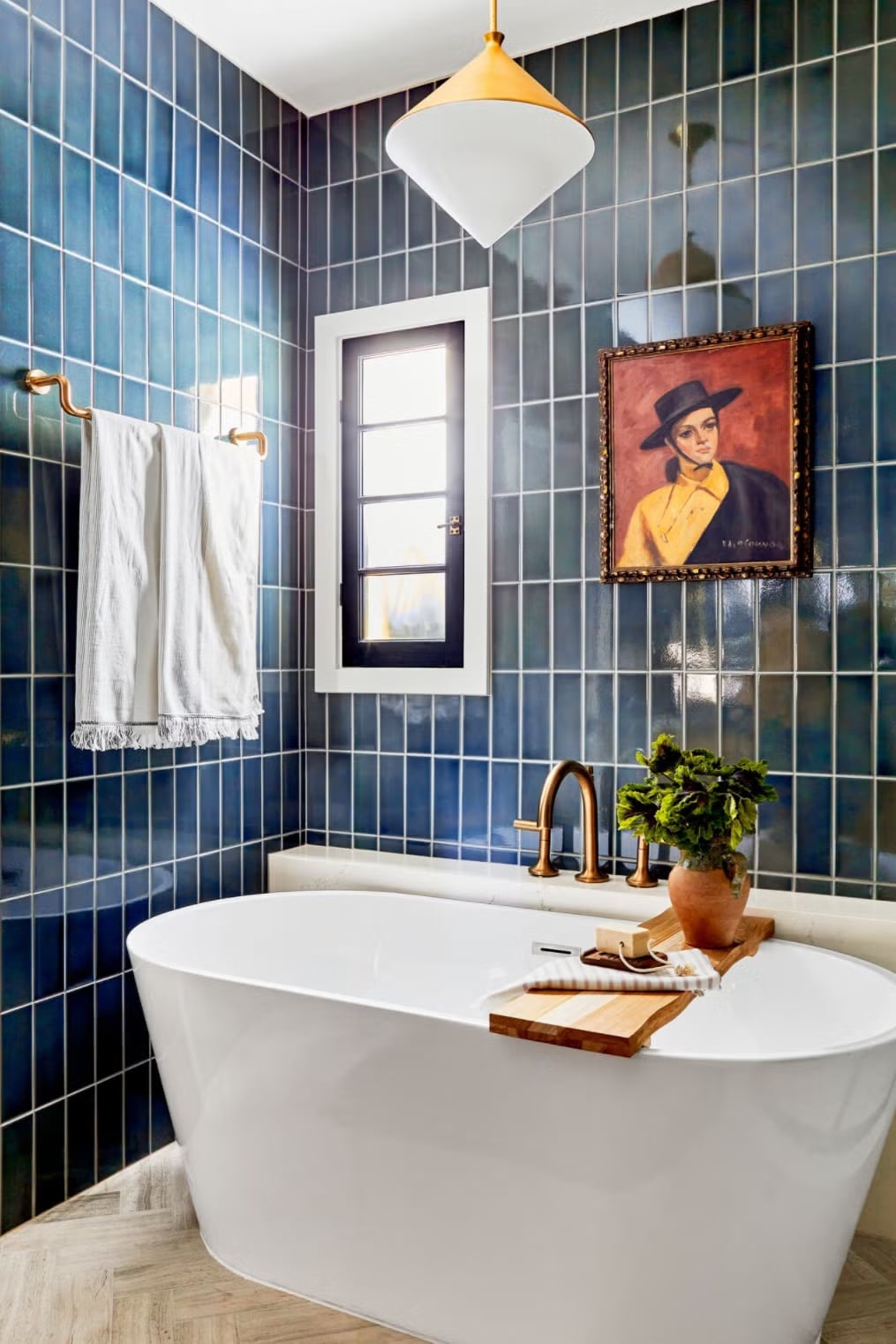
A close alternative to plain navy paint is deep blue vertical tiles with visible texture. Here the tiles run floor to ceiling behind a freestanding tub, so the material does the work that a wall color usually does. The brass faucet and a wooden tray add warmth without dulling the blue. A small painting on the wall keeps the feel personal rather than like a hotel spa.
The palette stays tight: deep blue, white, brass, and wood. That ratio means the blue dominates but never feels cold. Overhead light and light from the window both hit the tile surface differently, which is why vertical tiles work here. They catch the light in narrow strips rather than one flat plane, so the wall changes through the day.
Geometric Deep Blue Tile and Gray Vanity
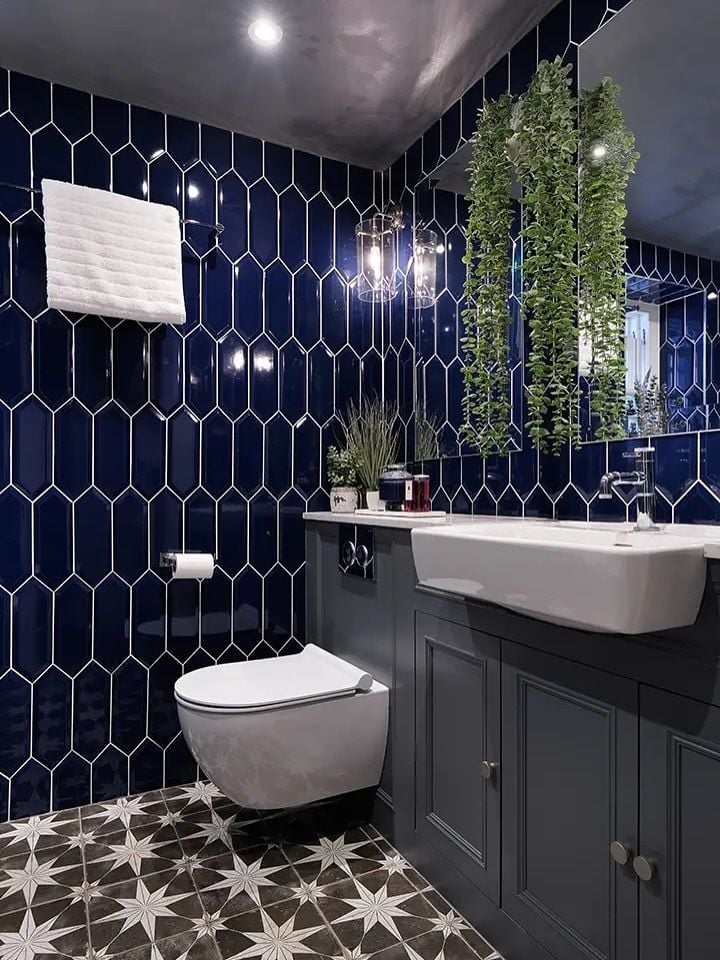
The geometric deep blue tile creates a strong pattern in this modern bathroom. A gray vanity and white sink let the tile stay central, and chrome fixtures keep the look clean. Pendant lights above the vanity add a soft glow that balances the cool blue. For a roomy bathroom, this is a straightforward way to use pattern without overwhelming the space.
Vertical Blue Tile and Wood Vanity
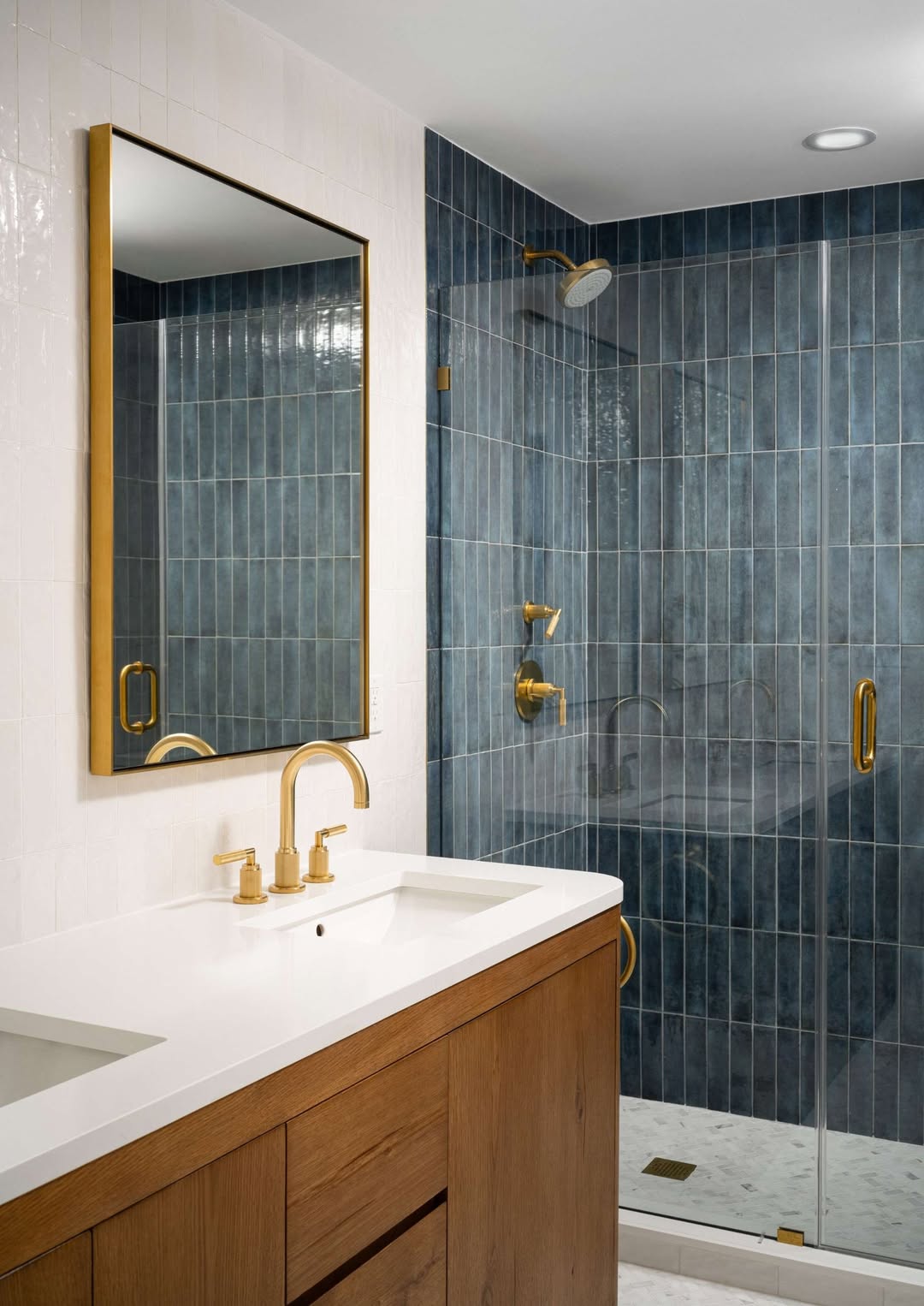
A wood vanity with a stone countertop and vertical blue tile behind it is a solid combination. The tile runs from counter to ceiling, which draws the eye up and makes the ceiling feel higher. Wall sconces cast even light on the face, and nearby natural light helps the blue read true. The glass shower enclosure keeps the room open. This layout prioritizes function first and lets the materials do the decorating.
Navy Blue Clawfoot Bathtub
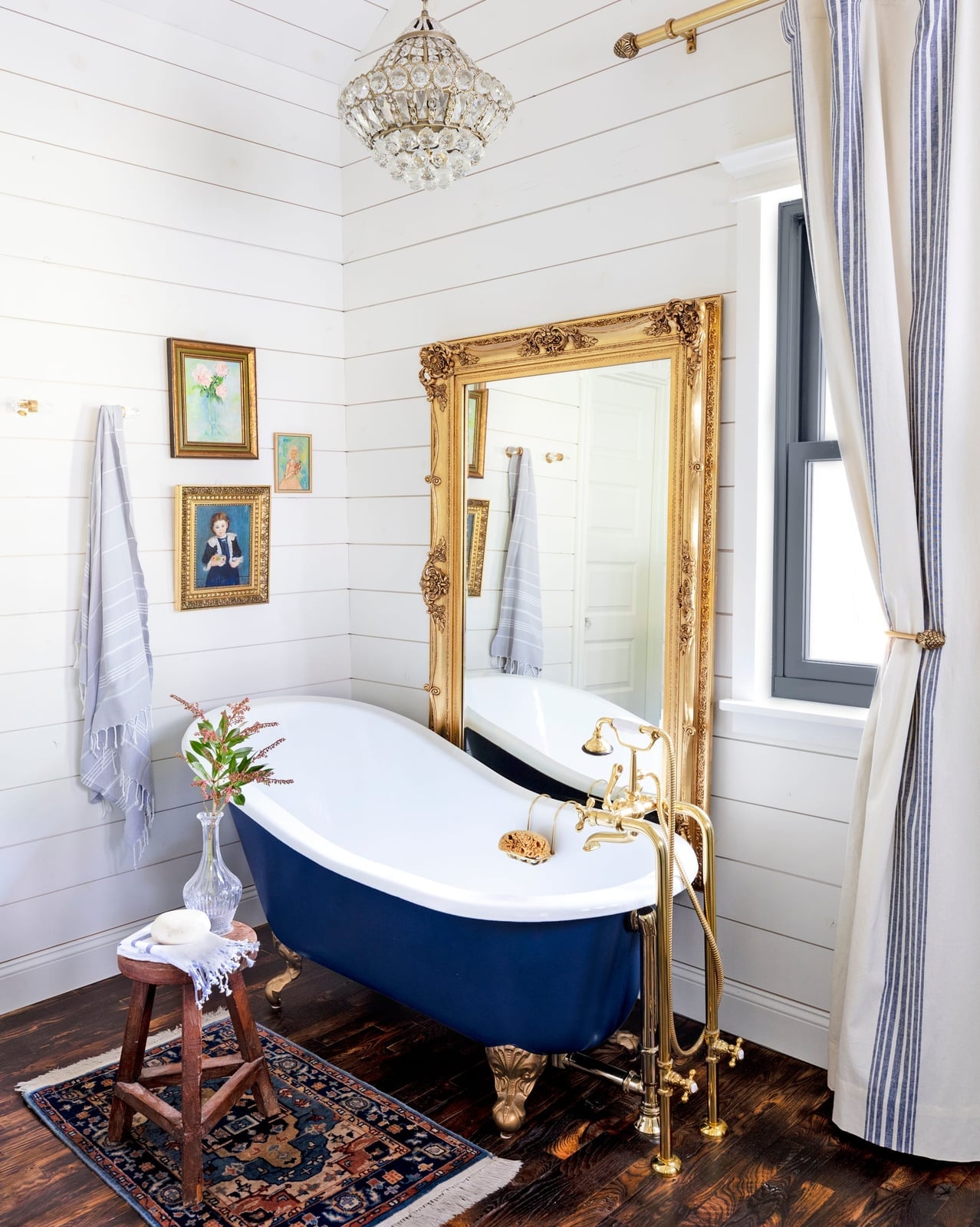
A navy blue clawfoot tub works best when it has room to breathe. Placing it in the center of the space with a gallery wall behind it and a chandelier overhead gives the tub its own zone. The dark color anchors the room, so the floor and wall finishes around it should stay light. A painted wood floor and a large ornate mirror keep the farmhouse feel from going heavy.
Storage in a room like this is mostly about what you do with the walls. A small shelf or two near the tub can hold bath supplies, and a basket on the floor handles towels. The key is to avoid crowding the tub. Let it be the one thing you see first.
Blue Geometric Tile and Floating Shelf
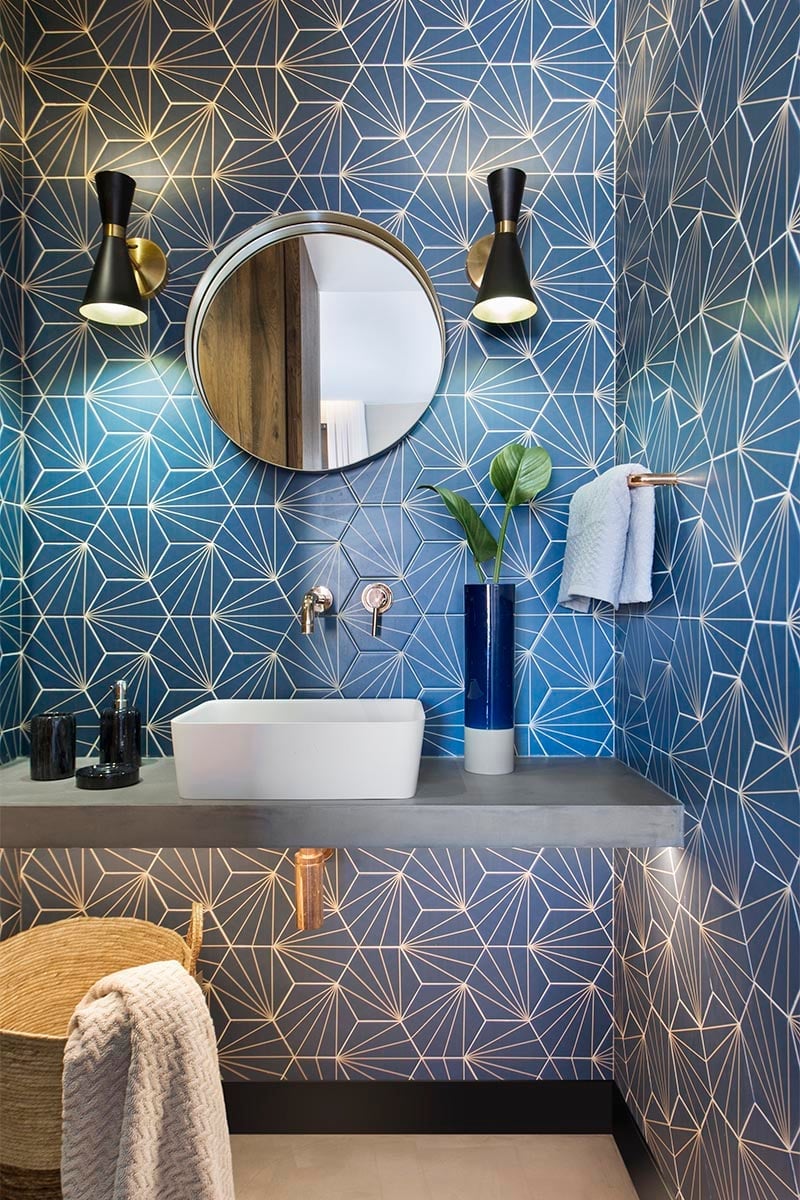
A compact bathroom with a blue geometric tile wall can lean into a glam look without needing much floor space. The tile pattern becomes the focal point, so a floating shelf keeps the area underneath clear and the layout uncluttered. Gold-finished wall sconces and a gray stone countertop add contrast to the blue and bring in a layered lighting setup. For a similar effect, keep the vanity palette simple and let the geometry and metallic accents define the room.
Dark Blue Subway Tile and Marble Vanity
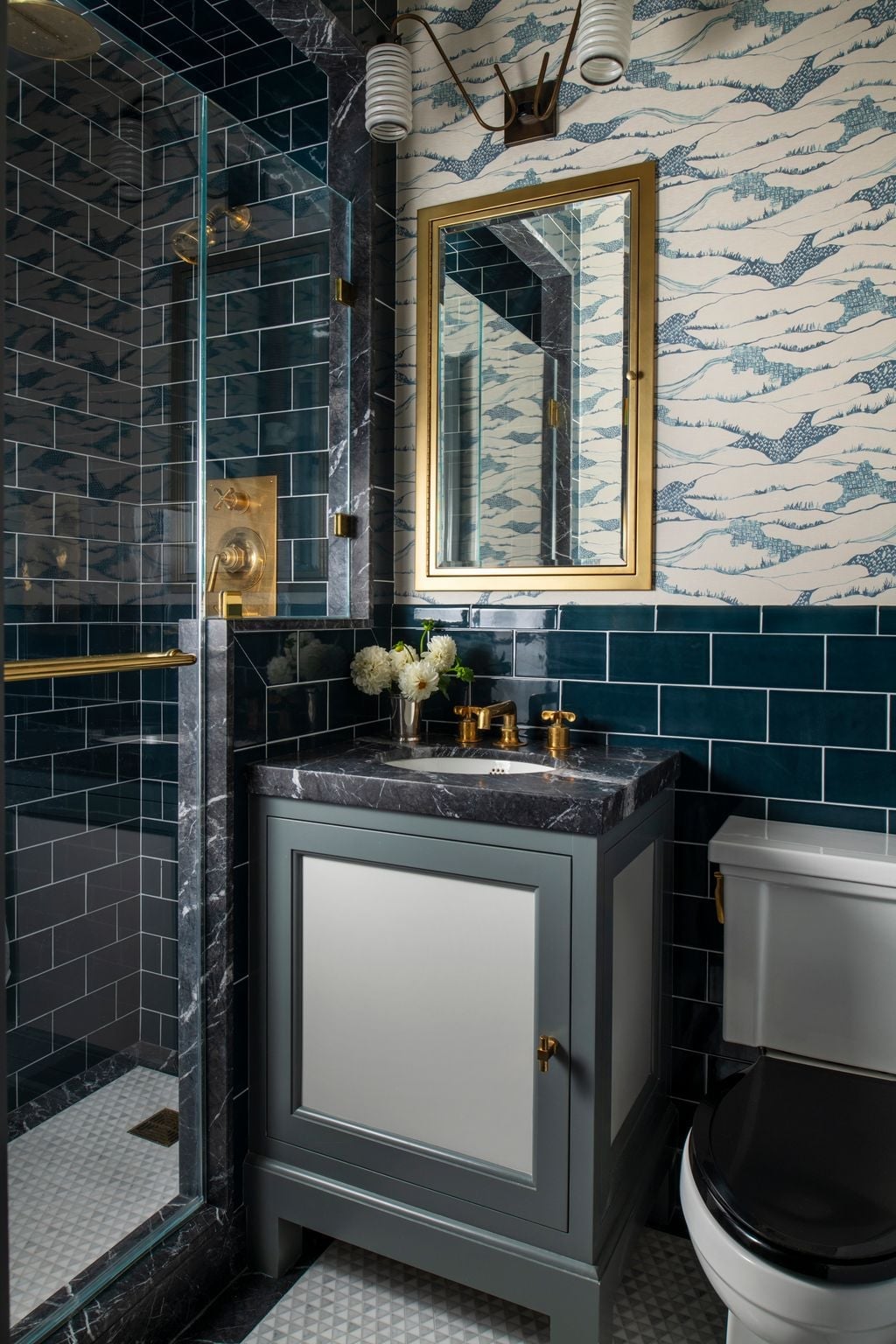
A practical rule for a compact bathroom is that scale works both ways: dark blue subway tile on the wall and a dark vanity can make the room feel smaller, but they also add depth and focus. Here, a marble countertop and a glass shower enclosure break up the darker tones and let overhead and ambient light bounce around. The brass hardware adds a warm accent without taking up visual space. For a renter, a peel-and-stick subway tile in a similar shade can give the same look without a permanent change to the wall.
Blue and White Checkerboard Tile
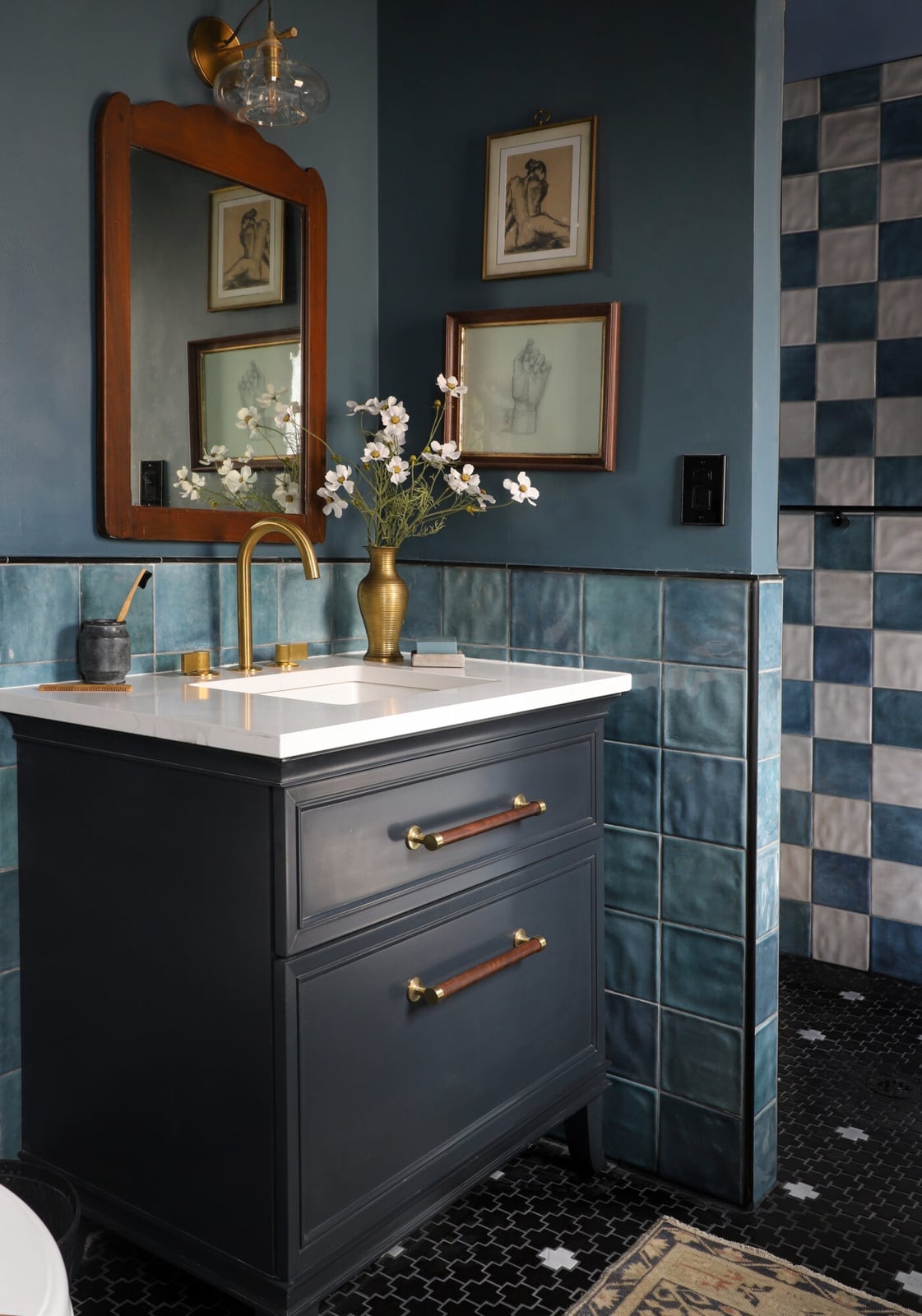
Checkerboard tile often reads as classic or retro, but in blue and white it shifts toward a transitional look that works with both modern and traditional fixtures. The blue squares keep the pattern from feeling too stark, while the white balances the visual weight. A dark vanity and a wood-framed mirror add warmth and keep the tile from dominating the room.
The material mix matters here: glazed tile on the floor stands up to moisture, and a wood mirror frame introduces an organic texture. For a similar feel, pair a blue and white checkerboard floor with a vanity in a darker tone rather than matching the blue. The contrast gives the pattern room to breathe.
Navy Blue Double Vanity and Arched Mirror
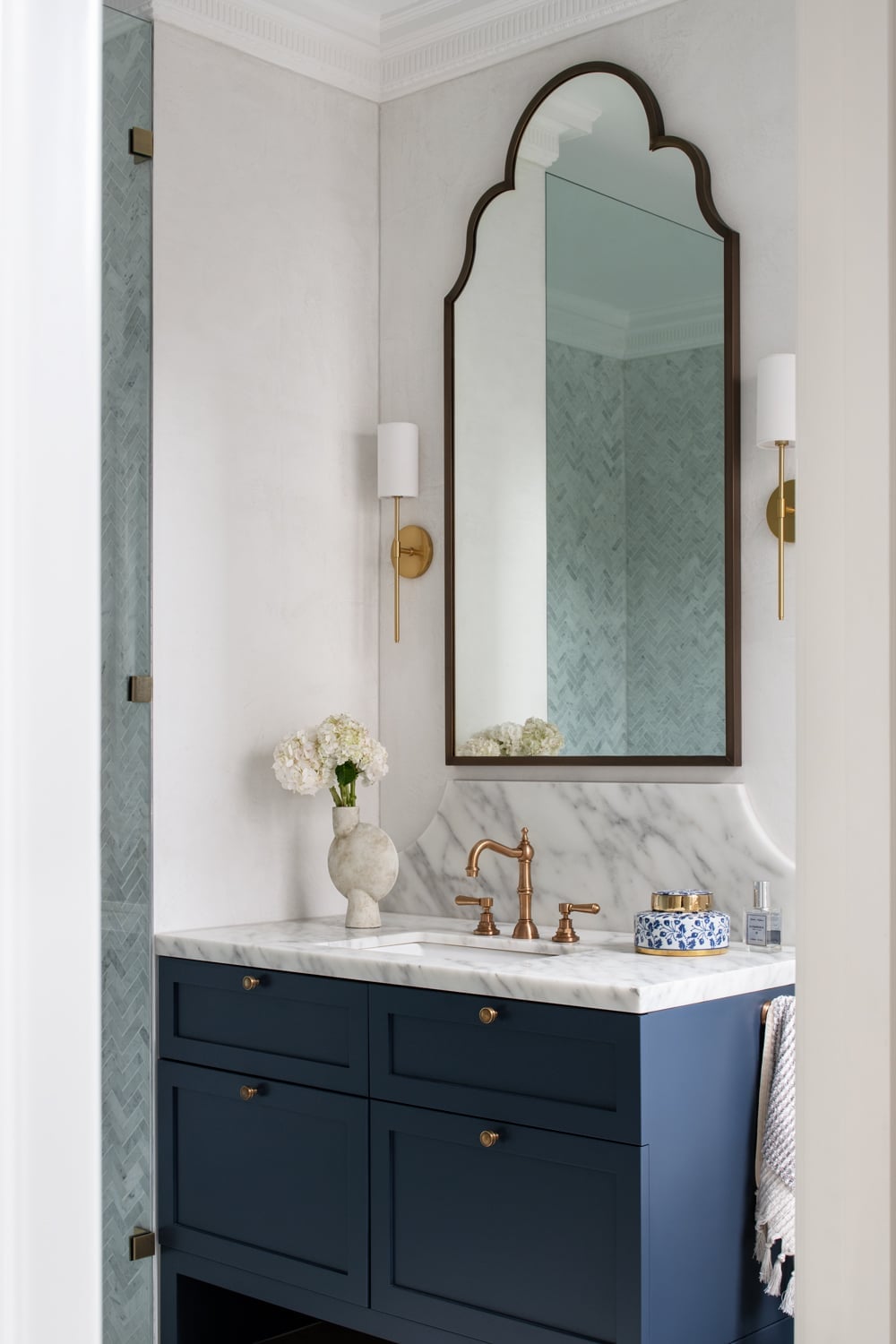
A navy blue double vanity cabinet with a marble countertop anchors a roomy bathroom with a clear sense of weight and presence. The arched mirror above softens the straight lines of the cabinetry and repeats the curve found in some of the tile details. Wall sconces provide task lighting that focuses on the vanity surface without casting shadows. A tiled shower enclosure in a lighter tone stops the navy from feeling too heavy.
Blue Fish Scale Tile and Freestanding Tub
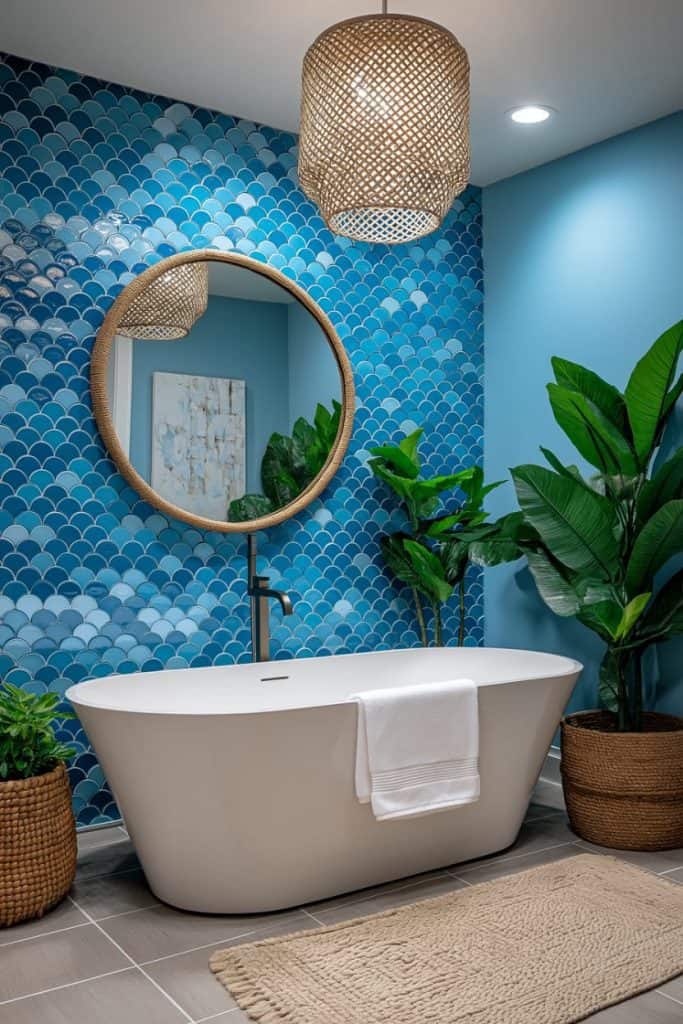
This bathroom uses blue fish scale tile as a full wall treatment behind a freestanding tub, and the result reads as boho with a grounded, natural palette. The scalloped shape of the tile adds texture without relying on pattern, and the green from large potted plants and the warm tone of rattan accessories keep the blue from feeling cool. A pendant light centered over the tub provides ambient illumination and reinforces the room’s layout. For a similar look, check your climate zone before choosing live plants that need humidity.
Vertical Deep Blue Glossy Tiles and White Shelving
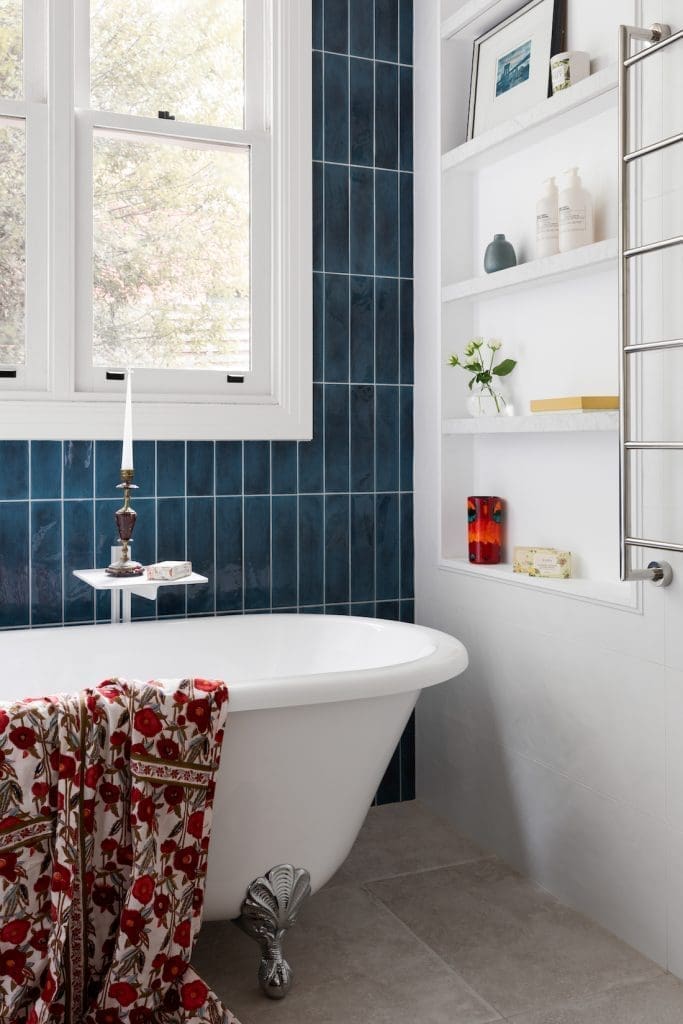
When a room has good natural light, deep glossy tile can feel dramatic instead of dark. Here the vertical deep blue glossy tiles run floor to ceiling behind the tub, catching light from the window and reading almost like a liquid surface. A white shelving unit nearby keeps towels and necessities within reach without competing with that saturated wall. The trick is to let the tile be the event and keep everything else quiet in white and gray.
For a similar move in your own bathroom, try glossy tile on one wall only. It gives you the high-shine finish and the depth of color without overwhelming the room. Matte paint or stone elsewhere keeps the balance. The vertical layout also helps a standard ceiling feel taller, which is useful in a space that is generous but not enormous.
Deep Blue Walls and Abstract Artwork
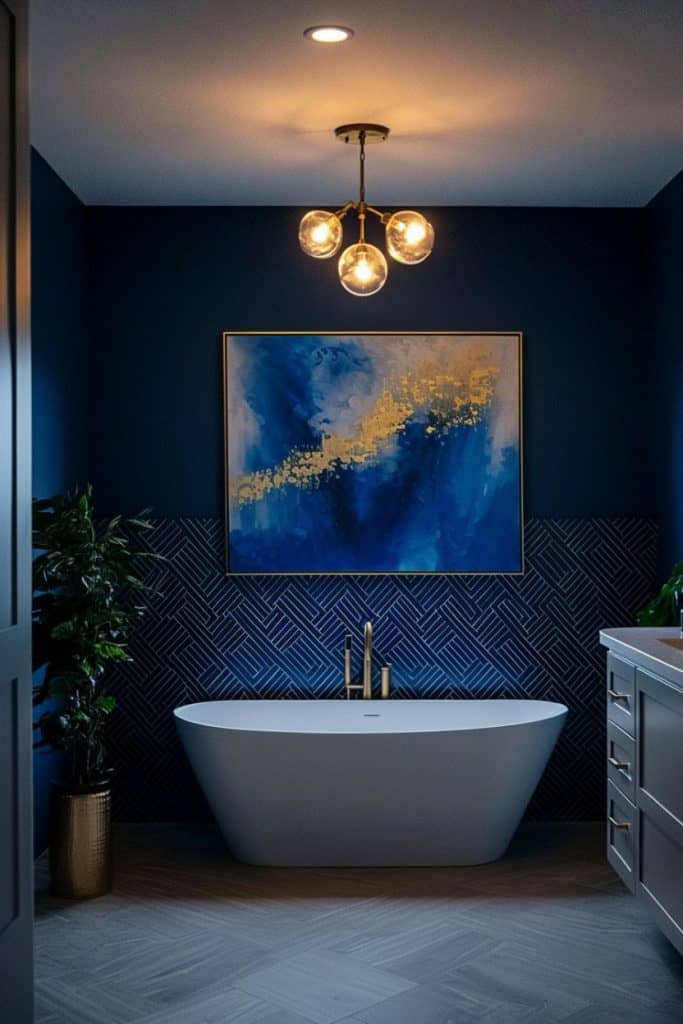
Deep blue painted walls make a bathroom feel like a contained jewel box, and here the color is anchored by a freestanding tub and a large abstract blue and gold artwork. The gold in the painting echoes the chandelier and accent lighting, so the room reads as layered rather than flat. A wood floor and textured tile add warmth, proving that a dark wall color does not have to feel cold. The key is giving the eye somewhere to rest, and that artwork does the job.
Dramatic Blue Walls and Marble Vanity
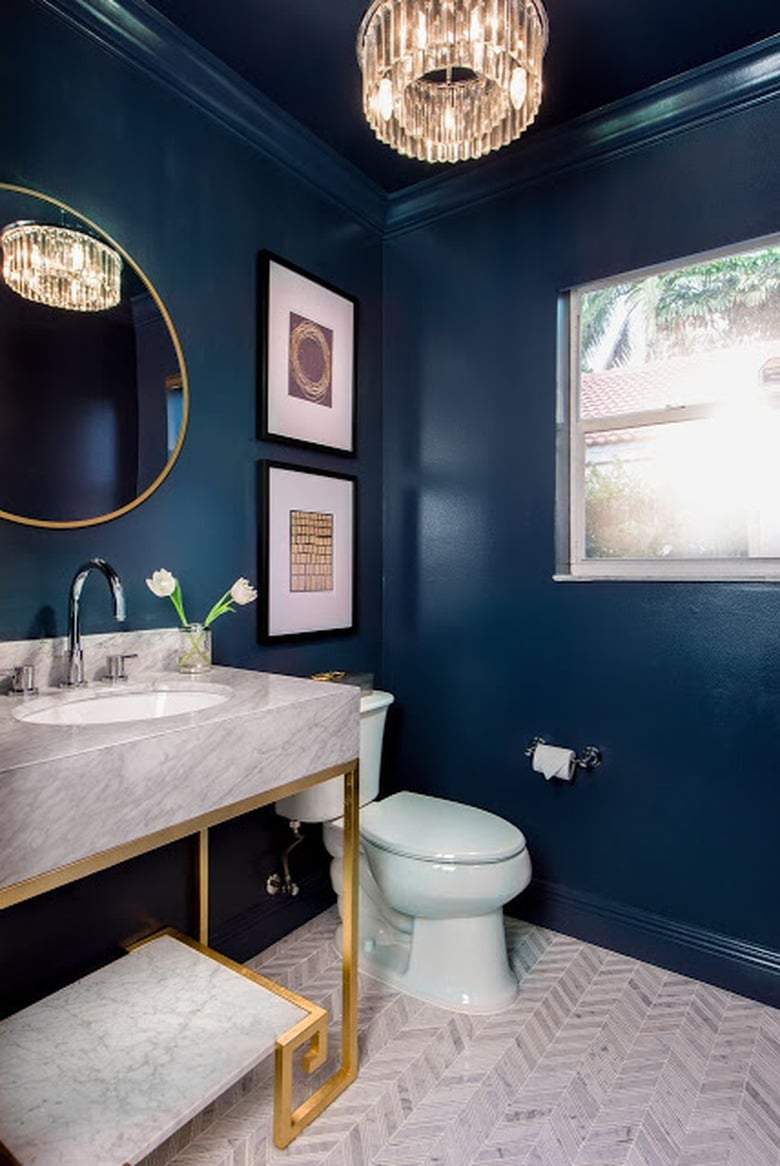
In a compact bathroom, painting every wall a deep blue can feel risky, but pairing it with a marble vanity top and brass fixtures keeps the look polished. The marble provides a light, reflective surface that breaks up the color, and the brass adds a warm note. An overhead chandelier and natural light keep the space from feeling too closed in. When you go bold on the walls, let the vanity and hardware do the lifting in lighter, brighter materials.
Teal and White Checkerboard Shower Tile
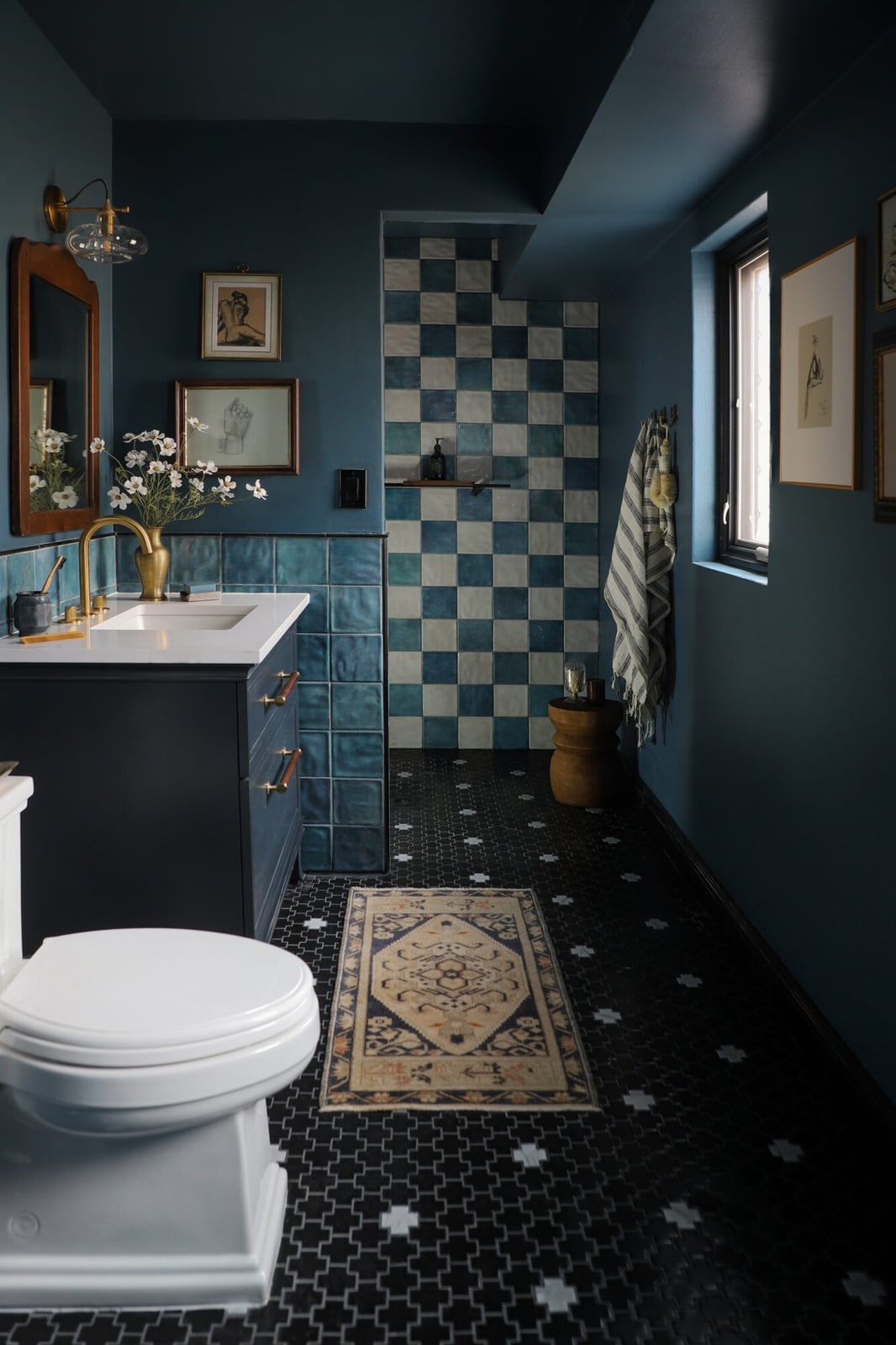
Checkerboard tile can read retro or playful, but using teal and white instead of black and white gives it a fresher, more modern feel. In this compact bathroom, the checkerboard pattern covers the shower wall while a wood vanity and dark floor tile keep the rest of the space calm. Overhead light and natural light keep the pattern from overwhelming the space.
What makes this work is the balance between the busy shower wall and the solid dark floor. If the floor had been white or light, the room might feel scattered. Instead, the dark floor grounds the look, and the teal tile picks up the deep blue tones from the vanity. A bold pattern needs a quiet partner to feel deliberate.
Navy Blue Vanity and Patterned Floor Tile
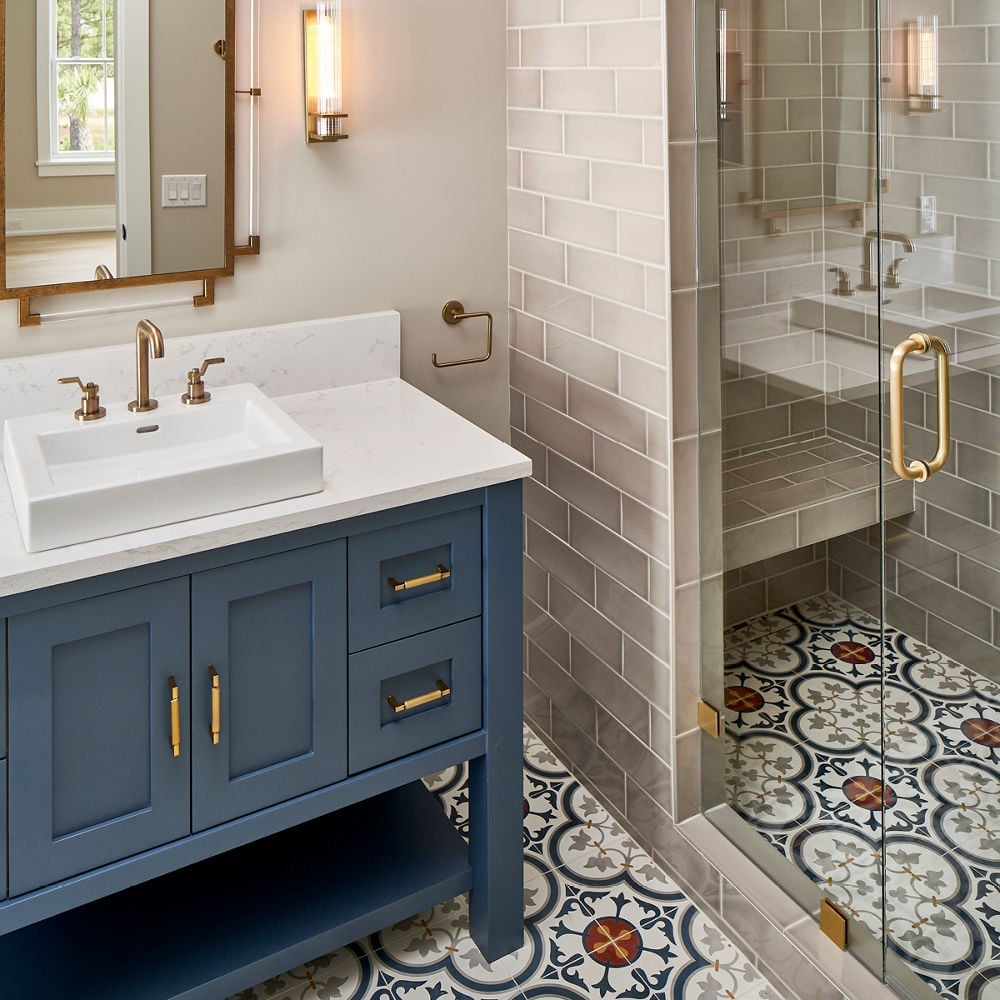
A navy blue vanity with a white sink and brass faucet sits against a calm gray wall, but the real move here is the patterned floor tile. It adds visual texture without competing with the vanity, and the brass hardware ties the two together. The glass shower keeps the room open, and the sconces provide task lighting at the mirror. The effect is transitional: classic enough to last, modern enough to feel current.
Navy Blue Curved Vanity and Gold Accents
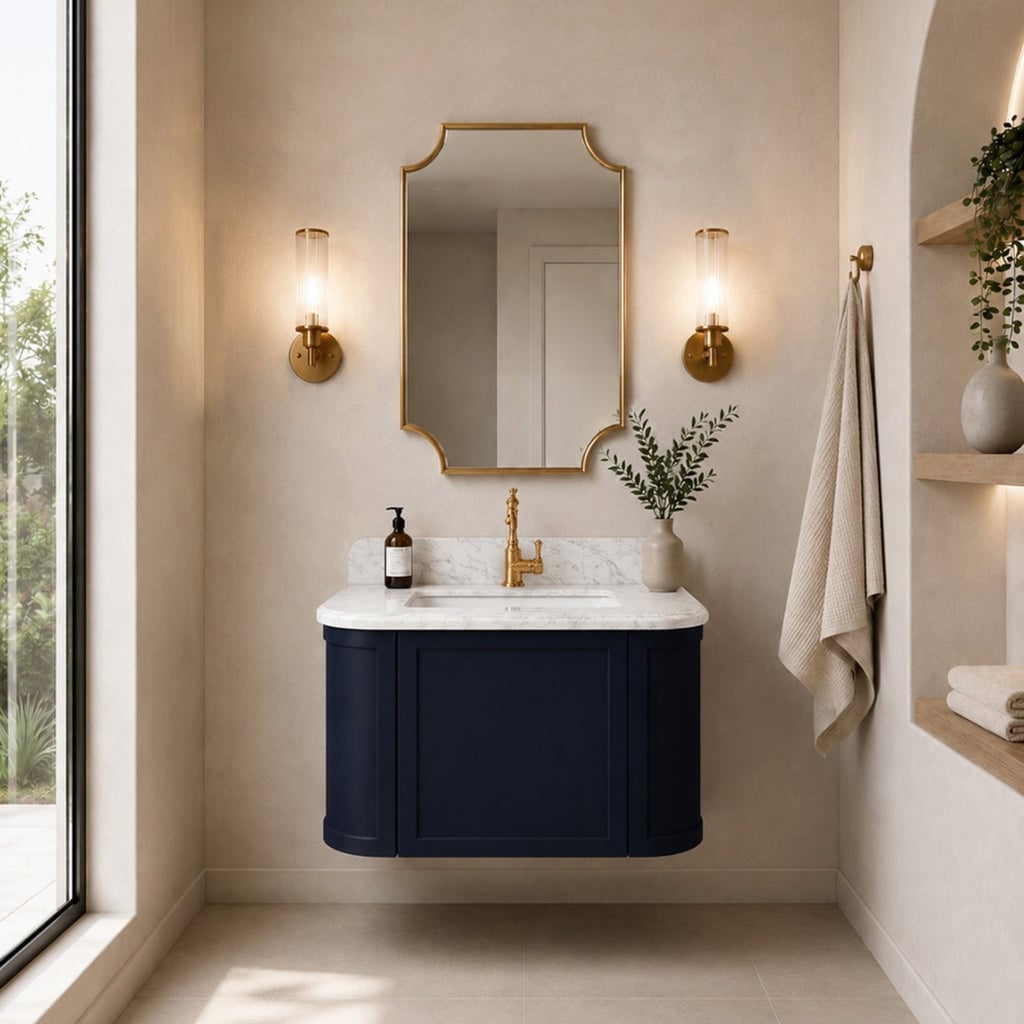
A navy blue curved vanity with a marble top anchors the room. The curved front softens the silhouette, which is useful in a bathroom where corners tend to feel boxy. A gold faucet picks up the warm notes in the beige wall color and the sconce lights, tying the palette together. The floating mount keeps the visual weight off the floor, so even a roomy bathroom feels airier. For a renter safe swap, look for a standalone curved cabinet or a freestanding dresser with a marble top that can sit against the wall without plumbing changes. Pair it with an arched mirror to echo the curve and keep surfaces simple.
Midnight Blue Vanity and Marble Countertop
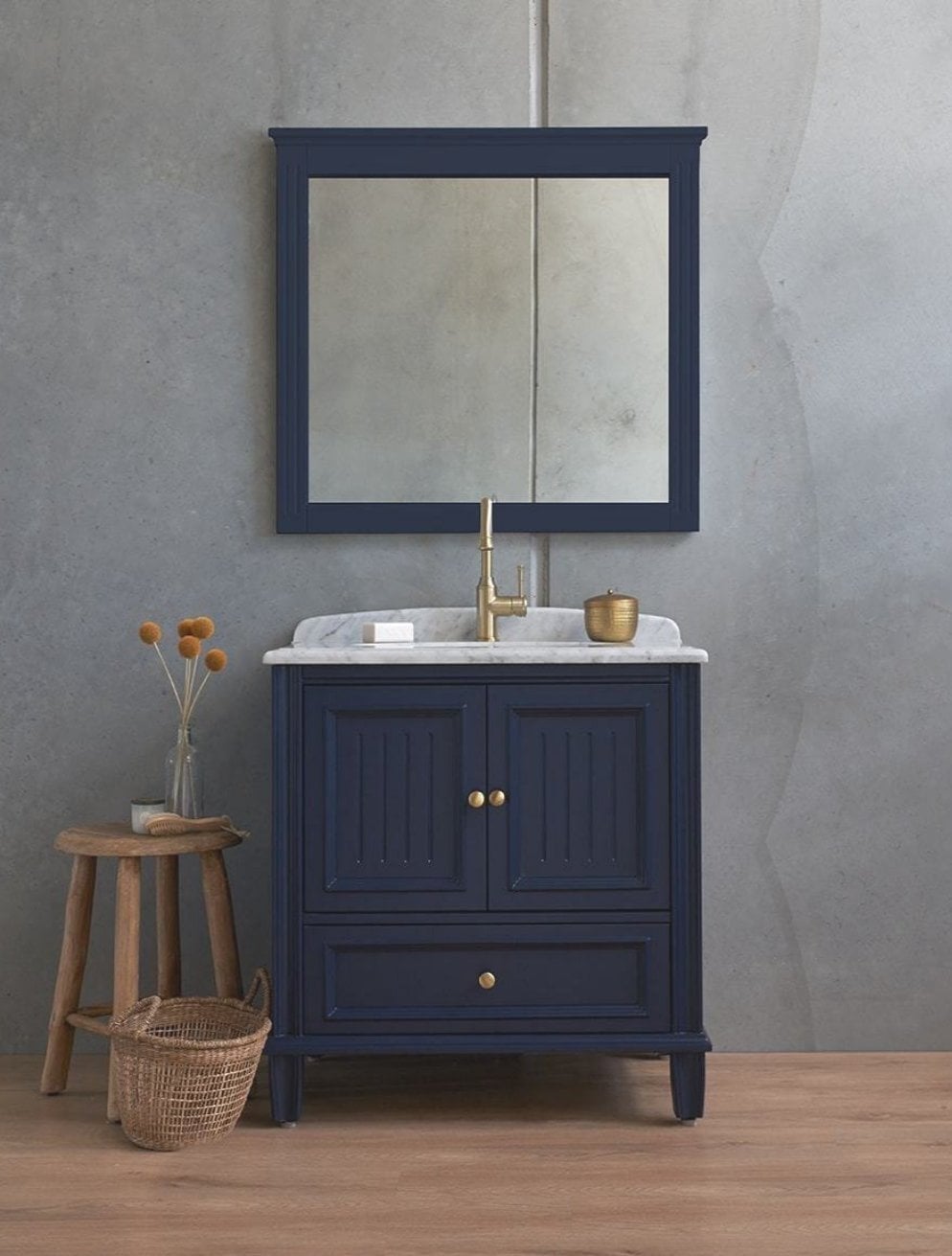
A midnight blue vanity with a marble countertop reads more formal than a gray or white alternative, without crossing into stuffy. The deep blue acts as a neutral in this compact bathroom, holding its own against the brass stool and the soft ambient light. The gray walls and white marble keep the contrast clean rather than heavy.
A traditional layout like this one works because the palette does the work. Two or three tones is enough. The marble breaks the blue enough that the room does not need a third accent color. If you want a similar effect in a rental, a peel-and-stick marble-look countertop over the existing surface and a coat of cabinet paint in midnight blue can shift the whole feel without removing what is already there. Just check your lease on paint rules first.
Final Thoughts
Adding blue to a bathroom is a straightforward way to introduce color that feels timeless. The ideas here show that blue works as a major element like tile or cabinetry, or as a supporting accent. The key is to balance the shade with the room’s light and your other finishes. White, wood, brass, and marble all pair naturally with blue. A blue bathroom does not need to be complicated to have impact. Pay attention to the undertone of the blue you choose and how it reads in natural and artificial light. The result is a bathroom that feels curated and calm, not loud. Pick one idea and start there, whether it is a painted vanity or a tile accent wall. The rest of the room will follow.