A Cape Cod house exterior is about balance: clean lines, practical proportions, and a look that ages well without trying too hard. Whether you lean toward classic white clapboard or prefer weathered shingles, the style holds up because it stays simple at its core.
This article walks through 32 takes on the Cape Cod exterior, from traditional dark blue with a brick chimney to coastal gray with blue shutters, each one showing how small shifts in color and material change the whole feel. You will see how siding, roof, shutters, and porch details work together to keep that familiar shape looking fresh.
Classic Dark Blue Cape Cod Exterior
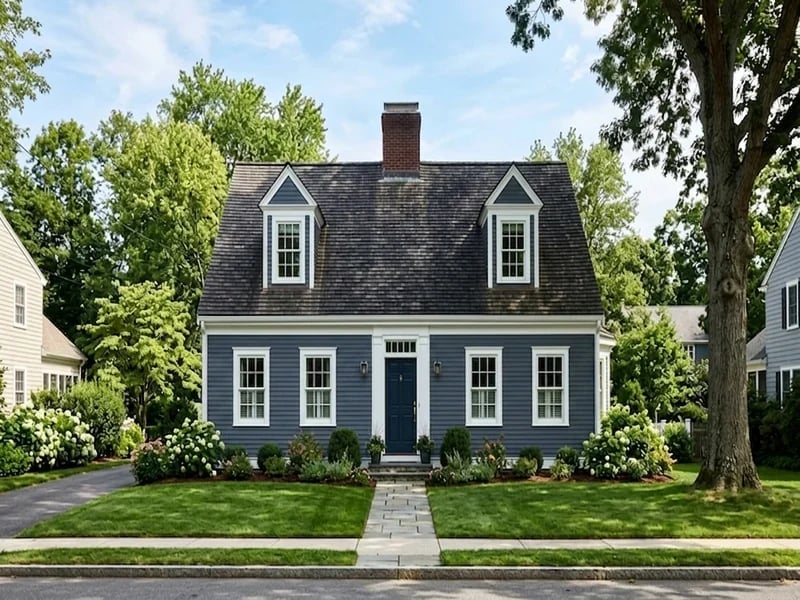
A dark blue clapboard house with a red brick chimney reads as a Cape Cod classic because the palette does the work. The deep navy body is balanced by white trim around the dormer windows and a soft green lawn that keeps the front facade from feeling heavy. The centered layout with a paved walkway draws the eye straight to the front door, and the brick chimney adds a warm, grounded note to an otherwise cool exterior. Style mode here is about letting one bold color define the house, with white as the break that keeps it crisp rather than somber.
Pristine White Cape Cod with Symmetrical Black Shutters
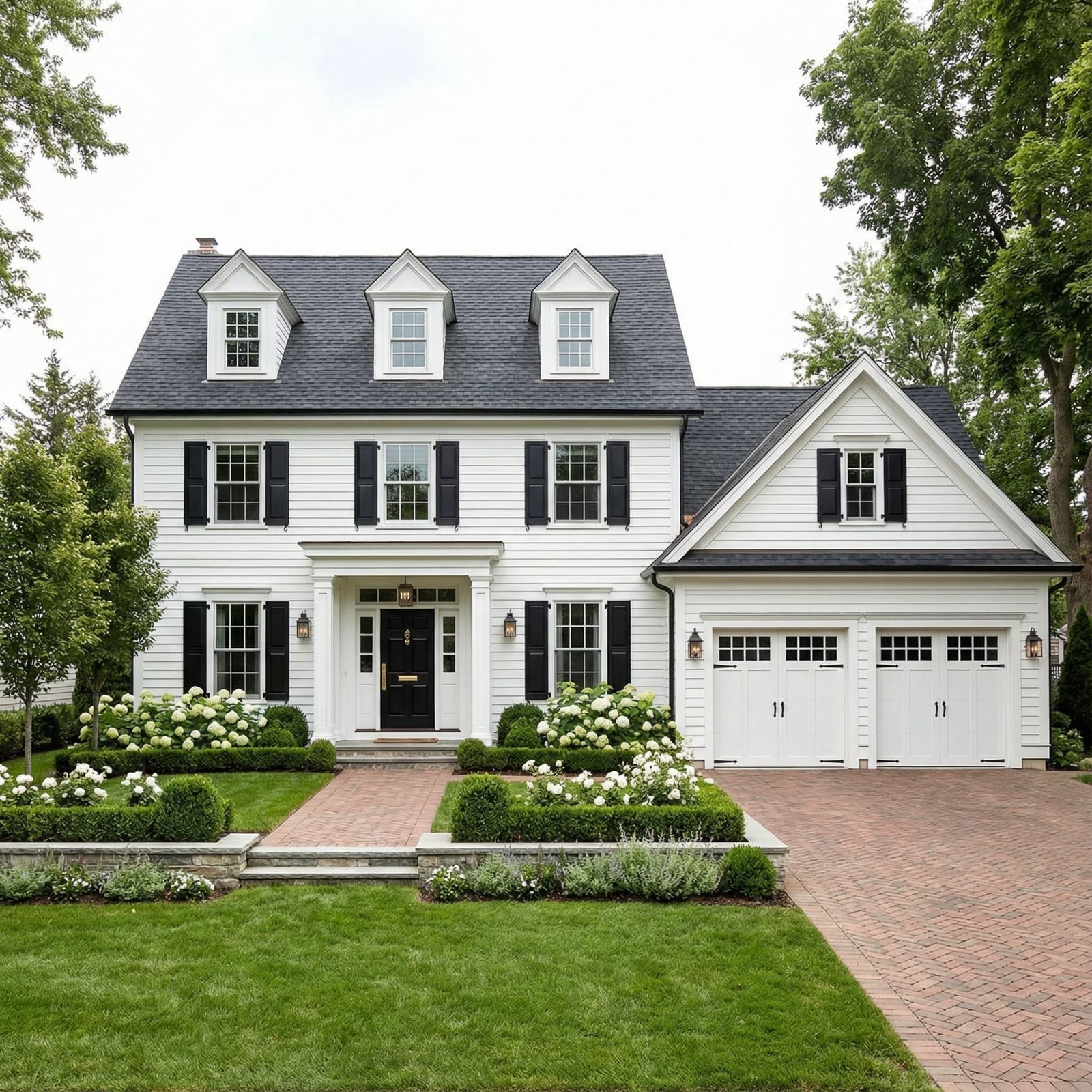
A white Cape Cod with black shutters is the exterior equivalent of a tailored shirt: it works because the contrast is clean and the proportions are even. The bright wood siding reads as crisp against the dark roof and black shutters, and the symmetrical front facade with a centered garage keeps the whole composition orderly. A brick driveway adds a warm texture that stops the palette from feeling too clinical. Style mode here depends on the ratio of white to black roughly three parts light to one part dark, with the black shutters acting as the defining accent that breaks up the white expanse without overwhelming it.
Charming Cape Cod with White Picket Fence
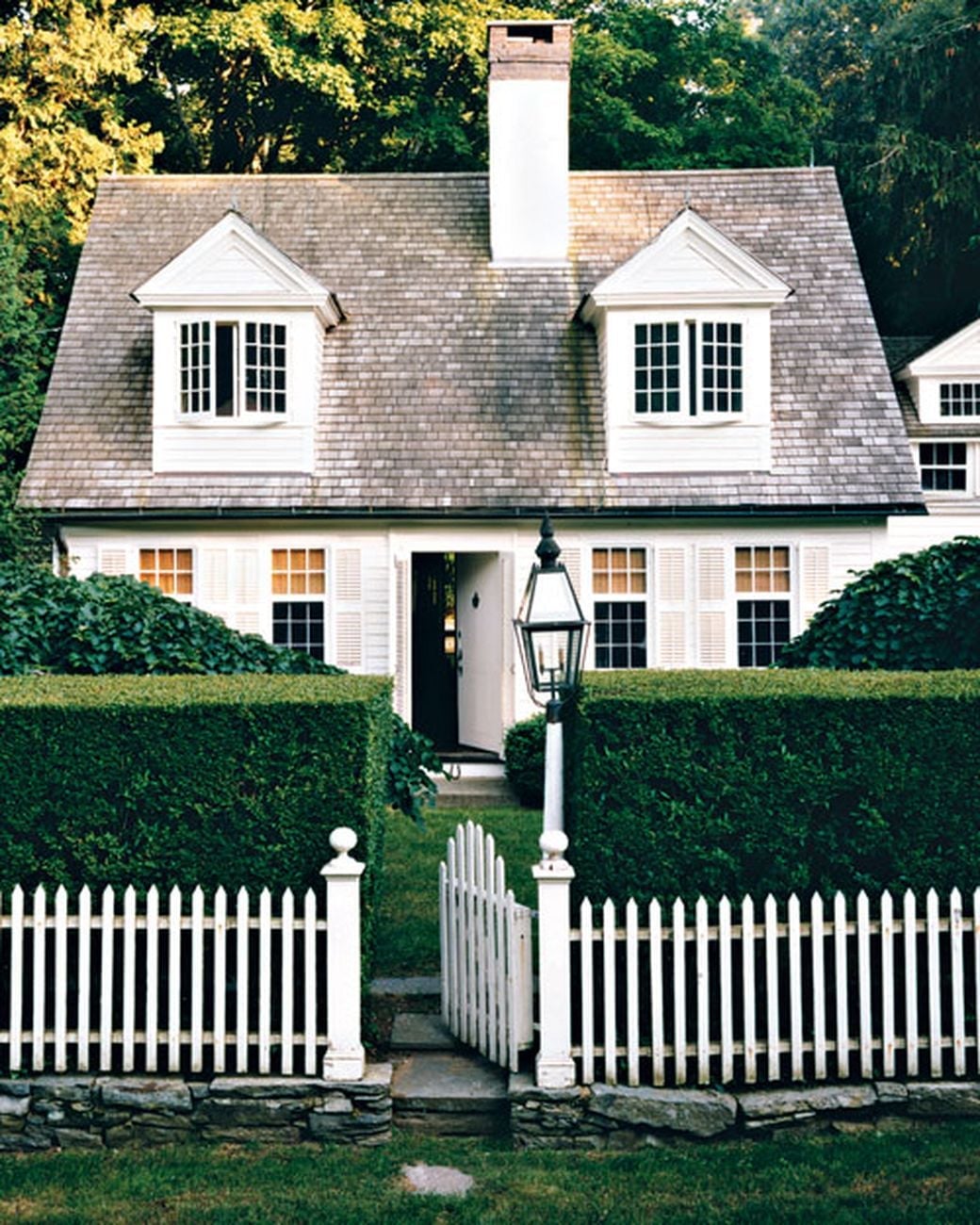
What makes a white picket fence feel right on a Cape Cod, rather than just decorative? It comes down to the materials working together rather than competing. The wood shingles on this house have a natural gray tone, which is softer than a painted finish, so the white fence reads as a clear boundary rather than a stark line. The stone elements around the foundation and the hedge planting add enough organic texture that the fence becomes part of the landscape, not a separate object.
The lamp post by the entrance is a small detail that solves a real problem: it lights the walkway without needing a hardwired fixture on the house itself. For renters, a solar post light on a stake can give the same effect without any wiring. The symmetrical facade with dormer windows keeps the look grounded, and the picket fence reinforces the traditional style without making the house feel like a replica.
Timeless White Cape Cod with Cedar Shake Roof
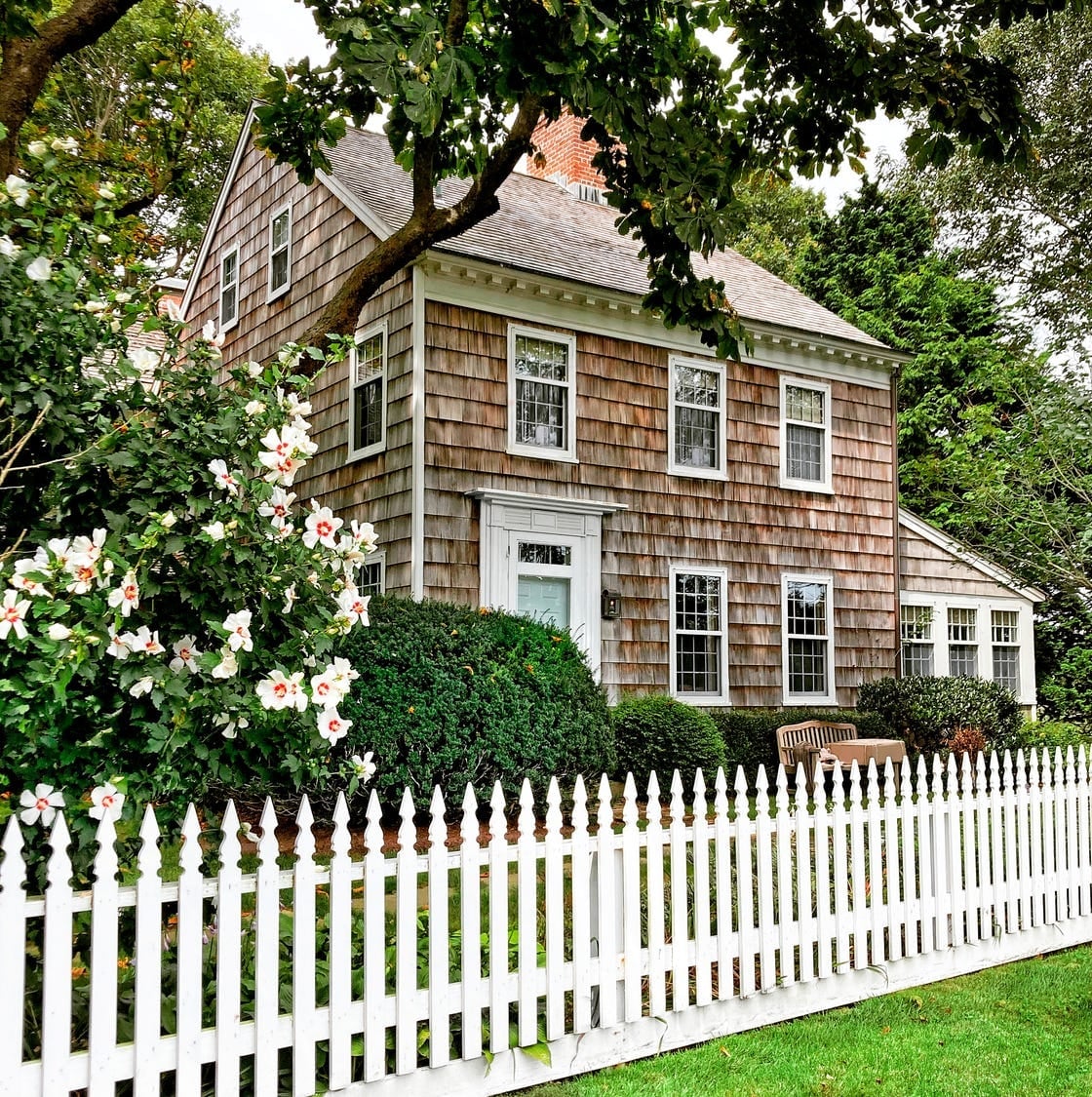
A cedar shake roof on a white Cape Cod adds a layer of texture that painted wood siding alone cannot match. The natural wood tone of the shakes warms up the white body, and the picket fence in front echoes the same material story without matching exactly. The wide front facade and roomy feel come from keeping the landscaping low and the sightlines open. The style uses wood in two different applications siding and roof to create depth without adding color. The white paint is the break that keeps the cedar from turning the house into a cabin, letting the shakes work as a deliberate accent.
Light Green Cape Cod with Prominent Red Brick Chimney
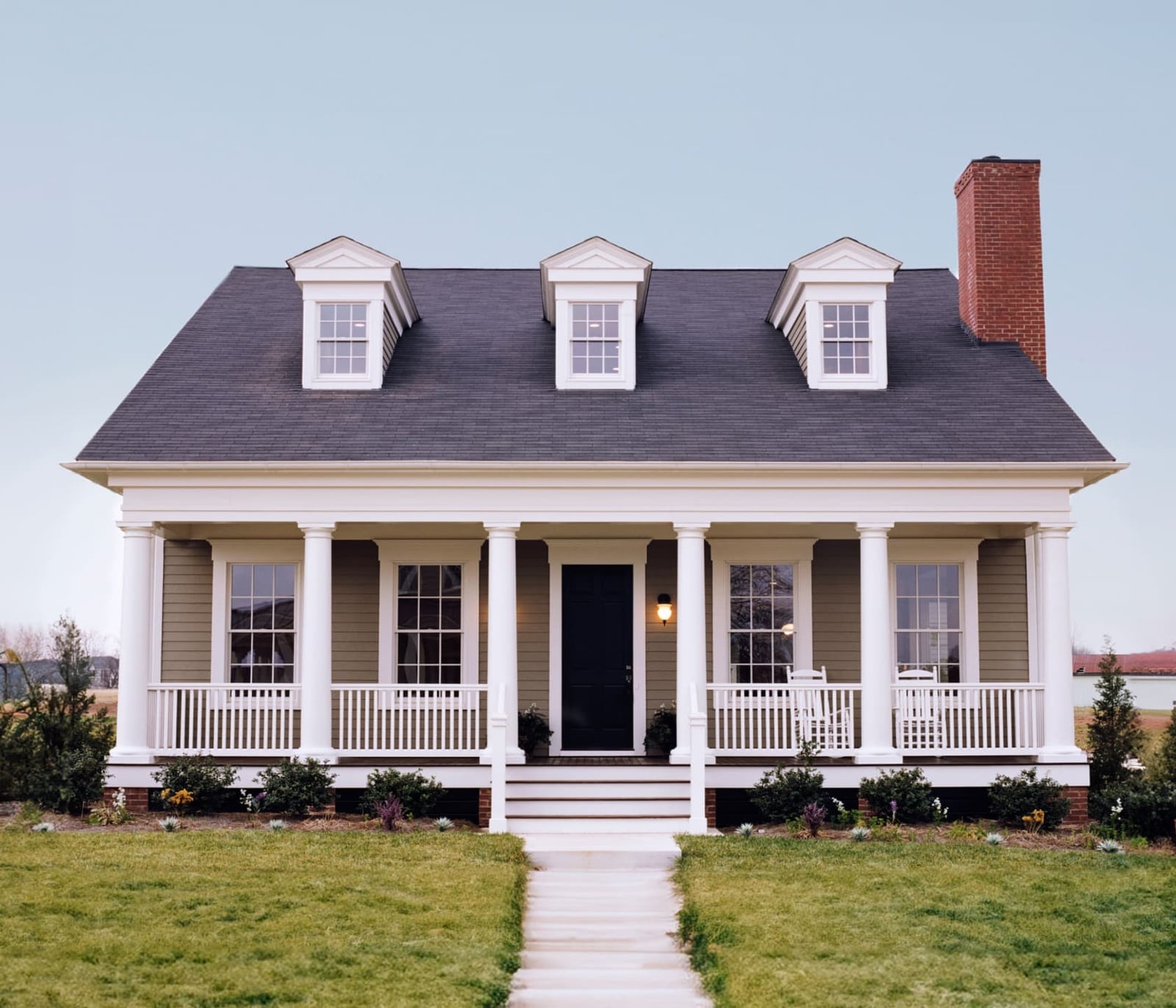
An exterior palette works best when the chimney color relates to the house rather than sitting on top of it. Here, the light green clapboard siding and white trim form a soft coastal combination, and the red brick chimney provides the one warm, dense note that keeps the whole facade from washing out under overcast light. The dormer windows and symmetrical layout give the house formal bones, but the chimney is what gives it weight. The palette is three parts: light green as the body, white as the trim, and red brick as the defining accent that breaks the softness. Without that chimney, the house would look pretty but slight.
Gray Shingle Cape Cod with Covered Porch
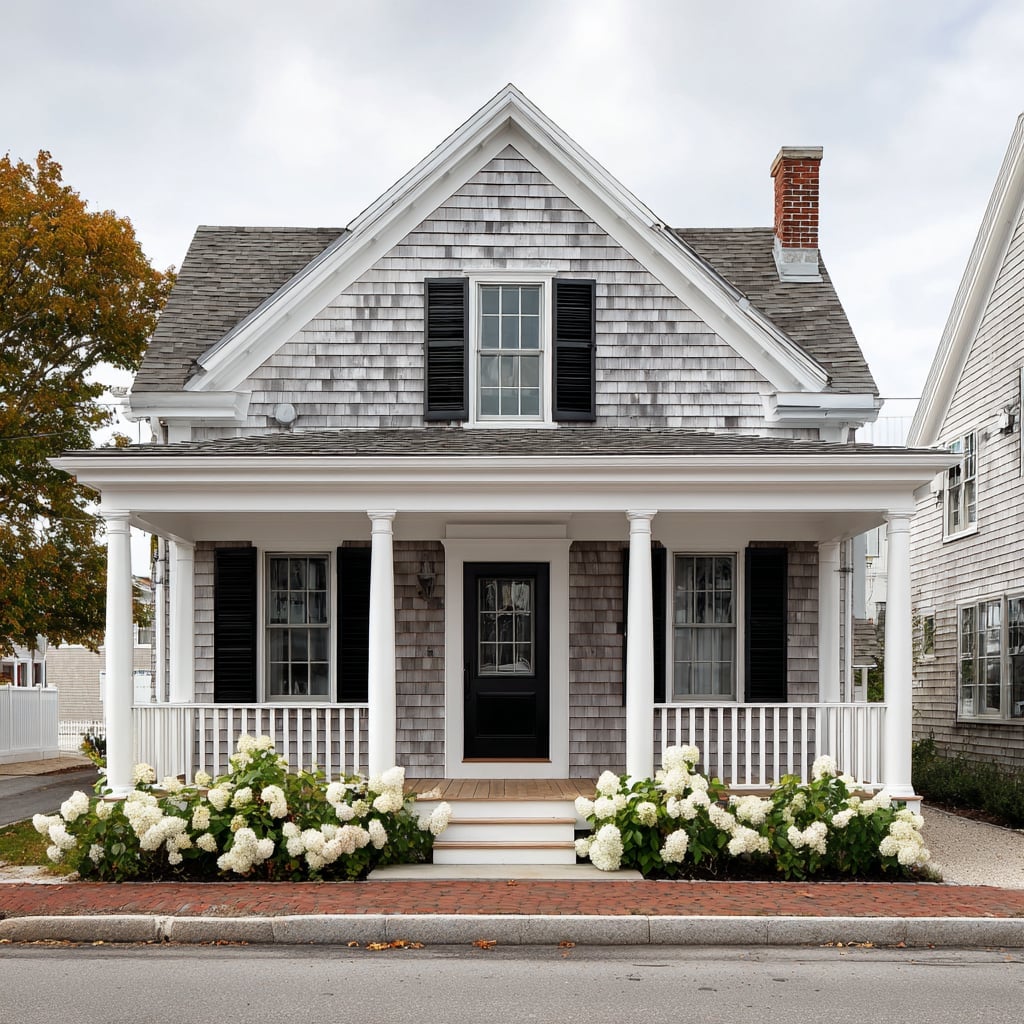
A covered porch changes the rhythm of a Cape Cod exterior, and this one makes its case with a roomy facade of gray wood shingles, white trim, and black shutters. The red brick chimney adds a warm counterpoint that keeps the palette from turning flat. Symmetrical windows and centered columns give the porch a formal anchor, but the real trick is how the overhang creates a dry zone for a pair of chairs or a potted evergreen. To recreate it, look for: a wide front step and a slim awning that matches your trim color. This approach does not require a contractor.
Coastal Gray Shingle Cape Cod with Blue Shutters
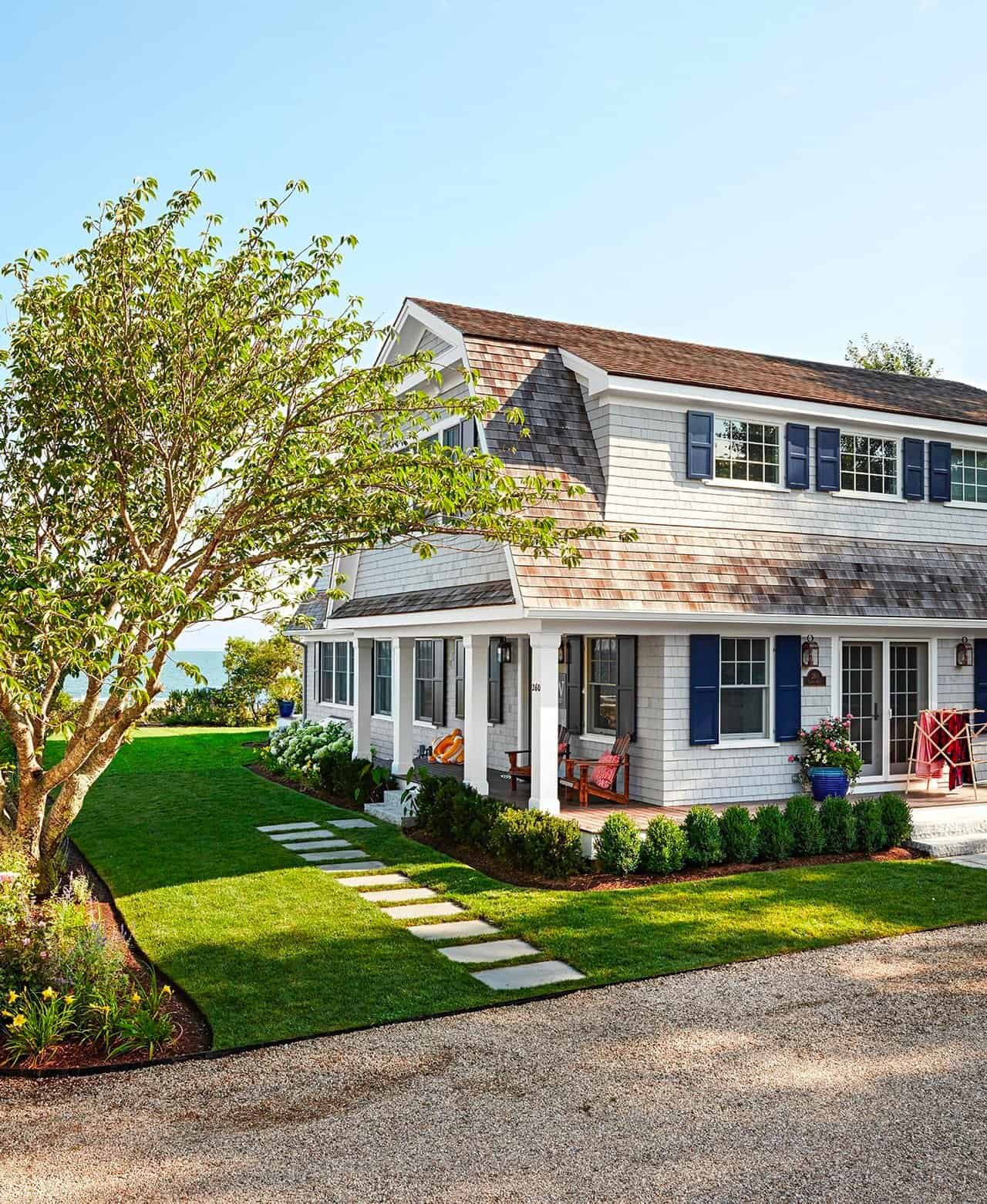
The blue shutters here are the quiet pivot that turns gray shingles into a coastal statement. Against the soft gray siding and white trim, a true navy or slate-blue shutter reads as crisp rather than cutesy. The surrounding lawn and stone path keep the look grounded, so the house never floats. If you are renting, swap permanent shutters for hinged vinyl ones that mount onto existing trim with brackets. They lift off in a weekend and leave no holes larger than a screw.
Gray Shingle Cape Cod with White Picket Fence
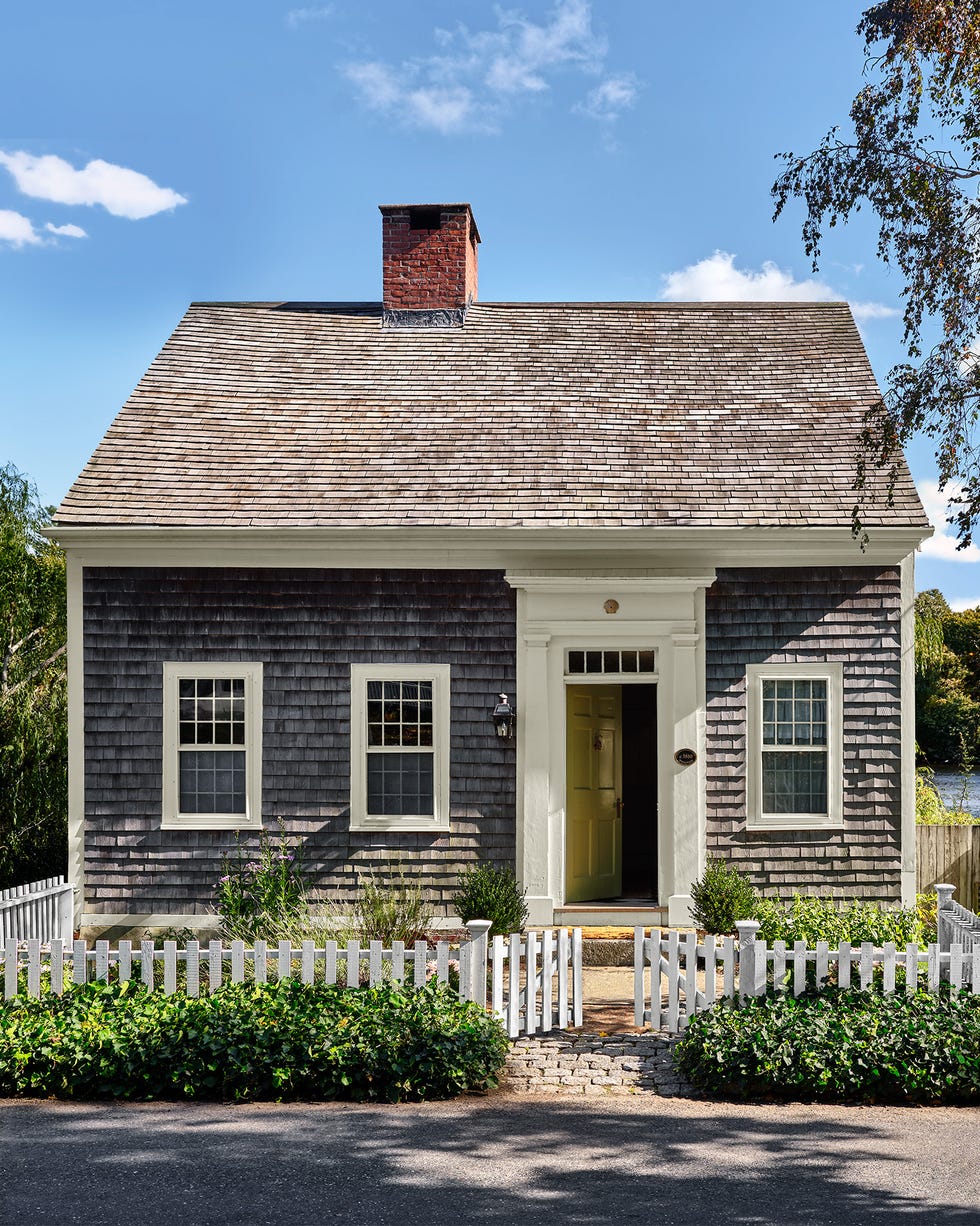
This compact facade earns its charm from the white picket fence, which frames the gray shingles and red brick chimney without competing with them. The fence repeats the white trim line of the windows and door, creating a continuous border that makes the house look wider than it is. Bright daylight sharpens the contrast, so the gray stays soft and the fence reads as clean. If your lot is narrow, a short fence that stops at the front door line keeps the yard open while still defining the property.
Symmetrical Gray Cape Cod with Dormer Windows
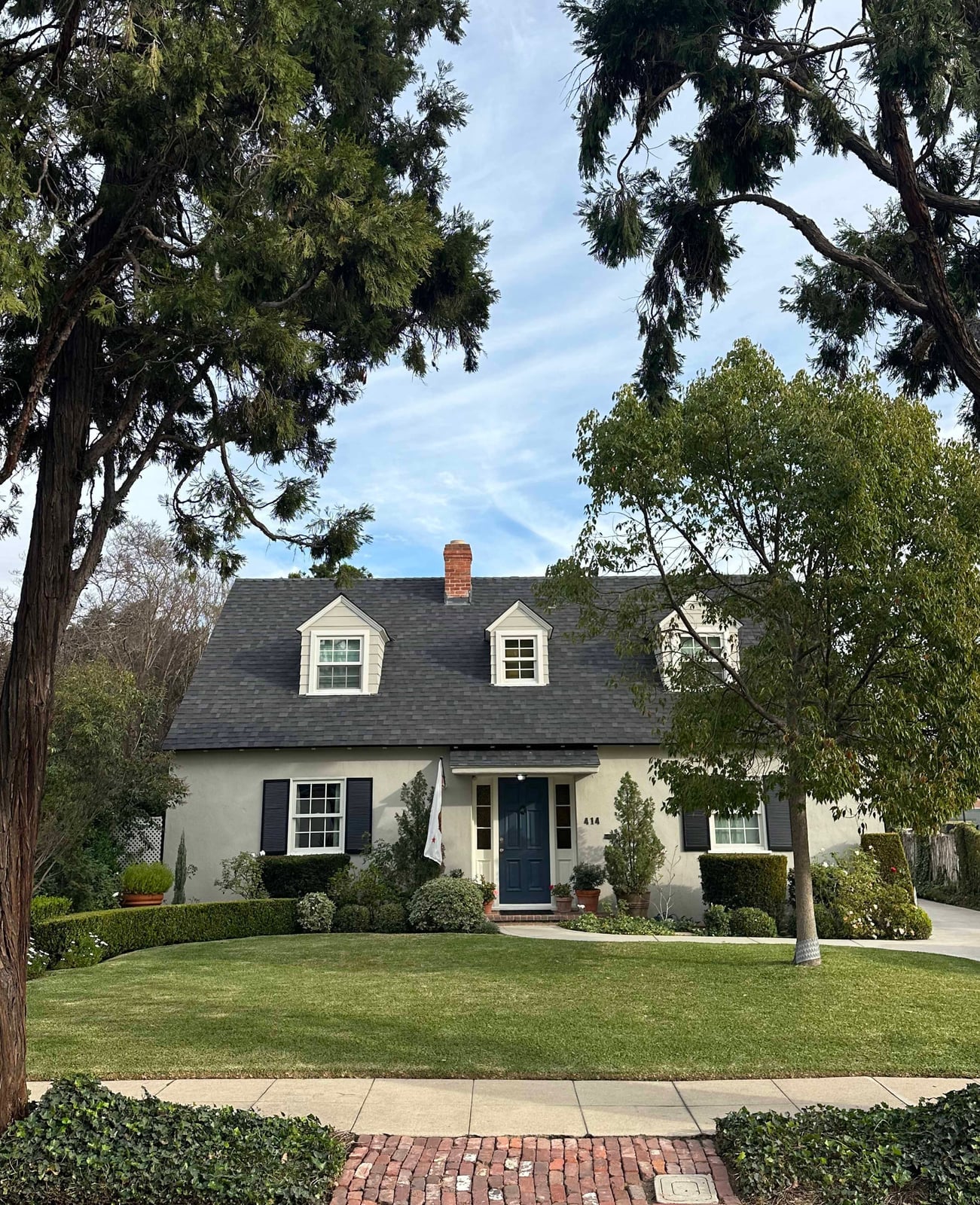
Can a row of dormer windows make a house feel larger without adding square footage? This gray clapboard facade answers yes. The two dormers sit evenly above the main floor, giving the roof a reason to exist beyond shedding rain. Dark blue shutters tie the upper windows to the front door below, while the chimney breaks the symmetry just enough to keep it from feeling stiff. Soft daylight helps the shingle texture look layered. For a house without dormers, painting the upper half of the facade a lighter shade than the lower half mimics the same vertical lift.
Light Blue Cape Cod with Vibrant Red Front Door
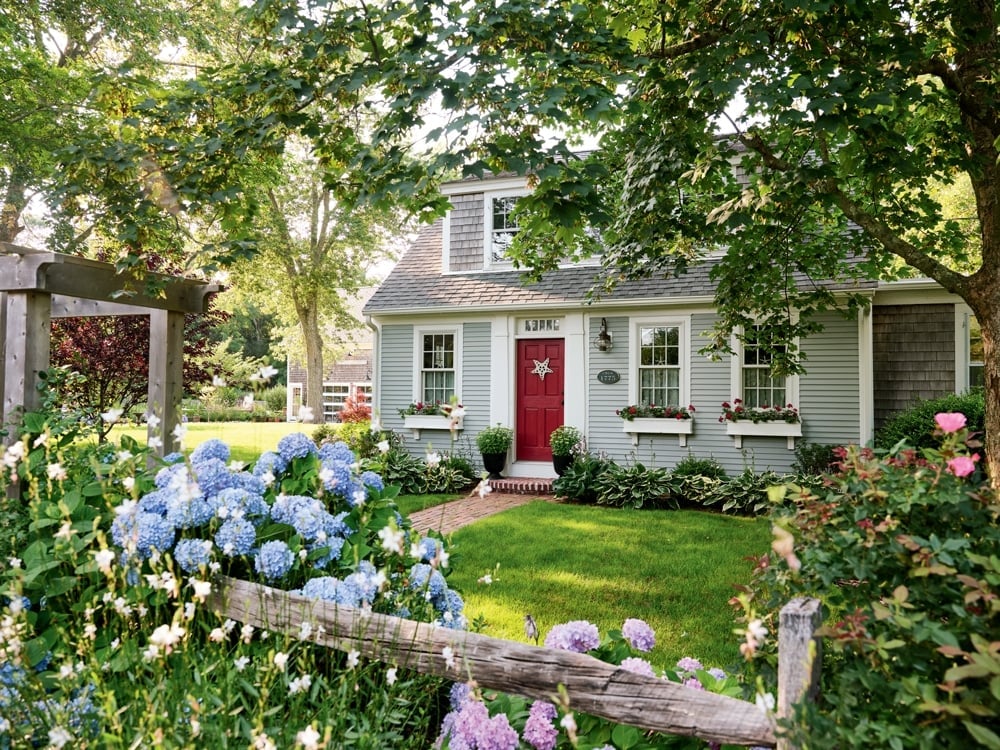
A light blue Cape Cod with a red front door works because the two colors sit opposite each other on the color wheel, so the door pops without clashing. The white trim acts as a buffer, and the pink and blue flowers in the window boxes and along the stone path echo the siding and door in a softer way. The picket fence and arbor keep the garden from sprawling, directing the eye straight to the entrance. If you want a similar jolt without repainting the whole house, swap your door for a pre-hung red version that fits your existing frame.
Spacious Cape Cod with Wrap-Around Porch
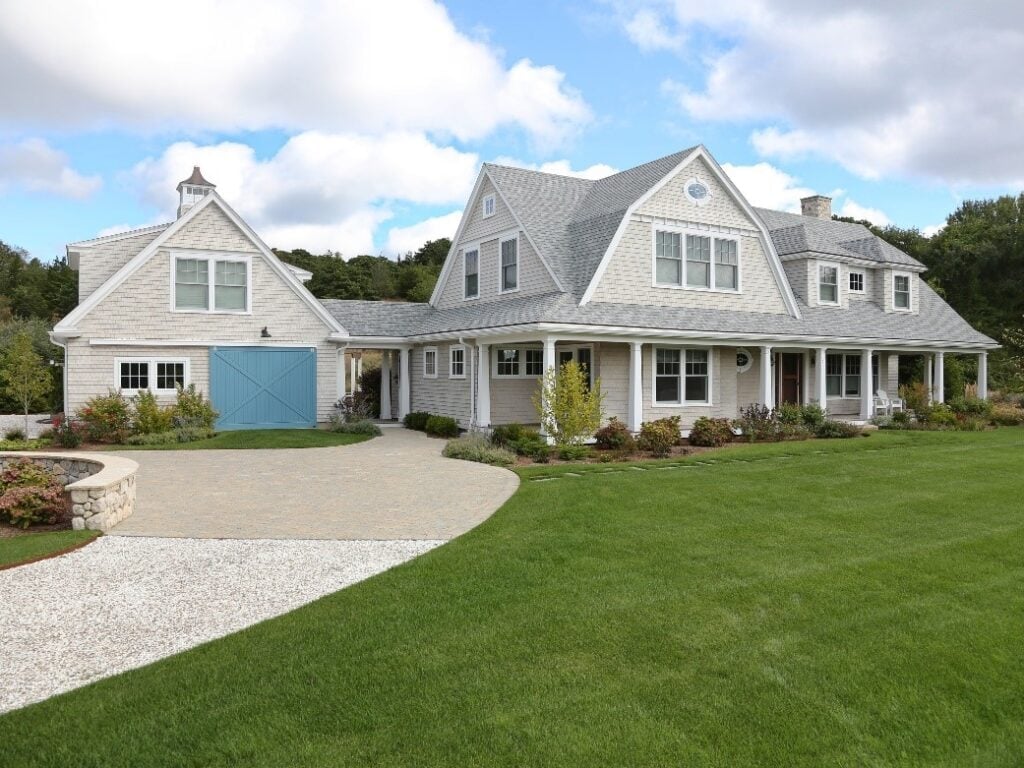
A wide driveway and manicured lawn set the stage for a house that feels as roomy as it looks. The wrap-around porch connects the front and side, giving the facade a grounded, open layout that invites you to walk the full perimeter. A blue barn door breaks the light neutral clapboard, adding a functional focal point that reads as part of the floor plan, not an afterthought. The porch depth is generous enough for seating without crowding the entry, so the house keeps its balanced proportions even at this scale.
Gray Shingled Cape Cod with Prominent Red Brick Chimney
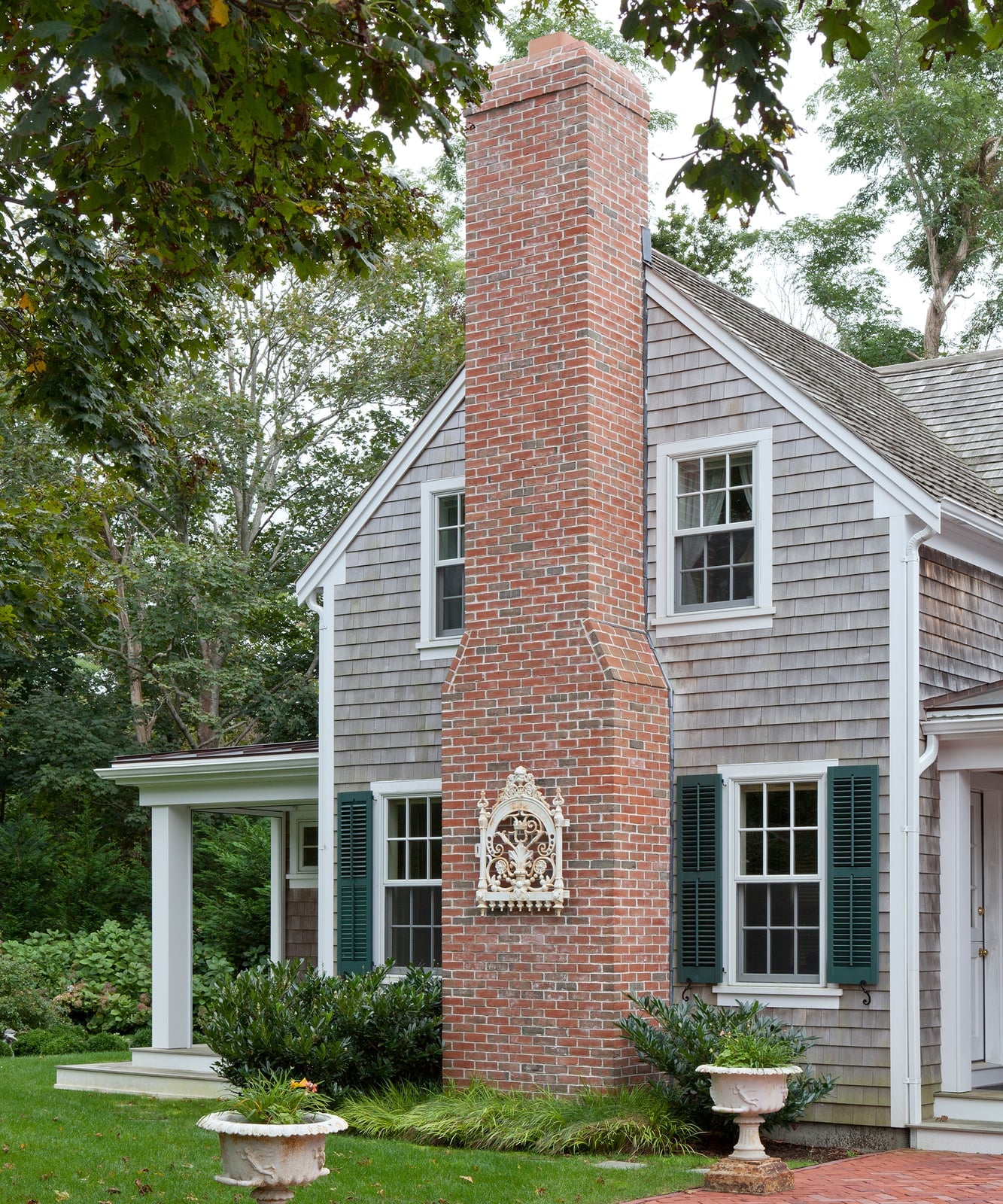
Most Cape Cod exteriors tuck the chimney behind the ridge, but this one puts the red brick chimney forward, anchoring the side view like a vertical landmark. The gray wood shingles and green shutters stay quiet, letting the brick hold the palette. Under overcast daylight, the red reads warmer and the gray cooler, which keeps the contrast from feeling flat.
The chimney rises past the roofline, so it balances the width of the shingled facade. A metal cap and stone base add texture without competing. Choose a chimney material that contrasts with your siding, and let the chimney sit where it will be visible from the approach, not hidden around the back.
Halloween-Decorated Cape Cod Porch
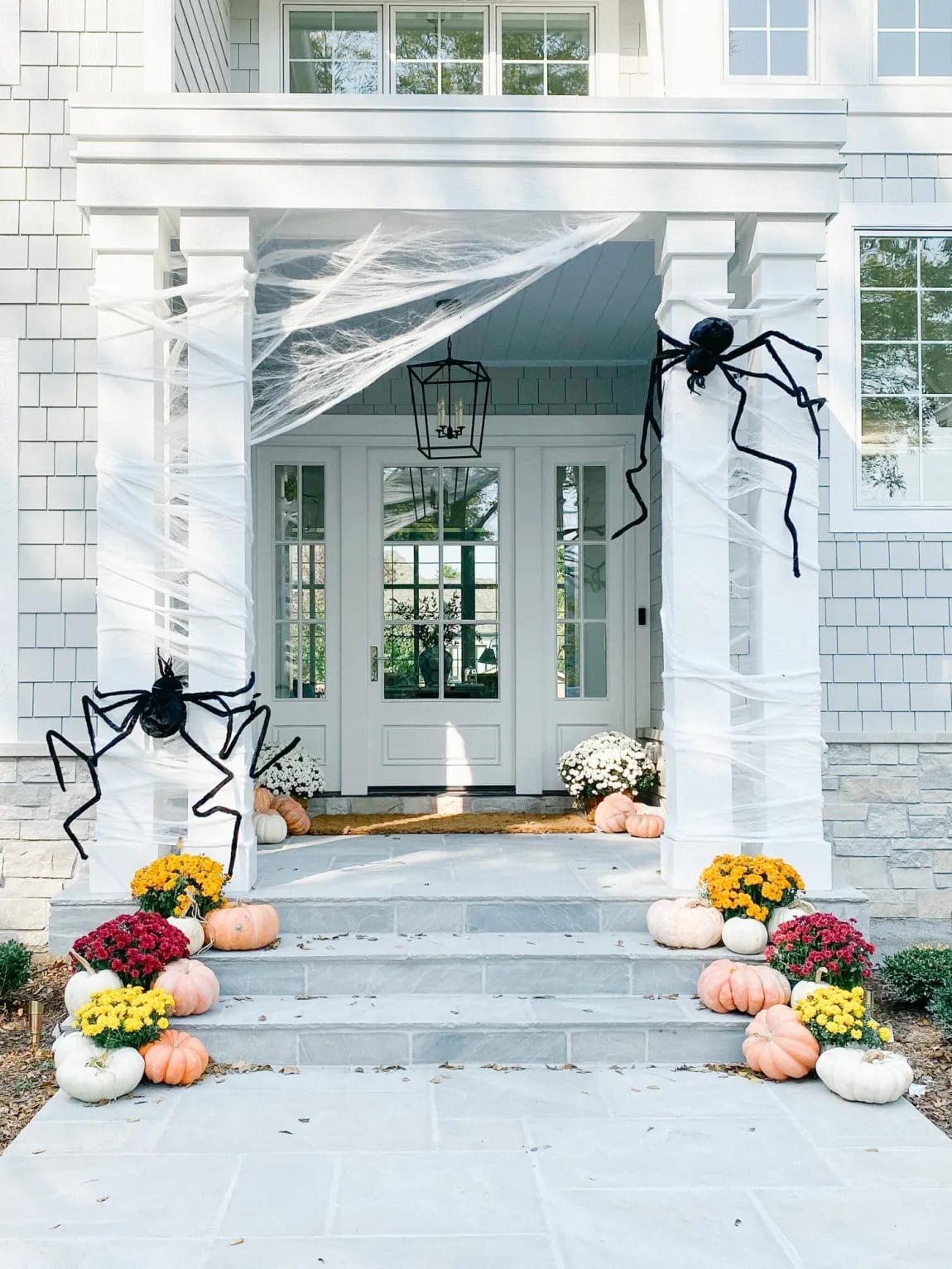
Pumpkins in orange and white, yellow mums, and spider webs turn a standard front porch into a seasonal setpiece without changing the house itself. The white siding and stone steps provide a neutral backdrop, so the warm orange and green stand out naturally. Keeping decorations to the porch floor and steps respects the architecture, while the vertical spider webs frame the door without blocking it.
White Brick Cape Cod with Black Accents
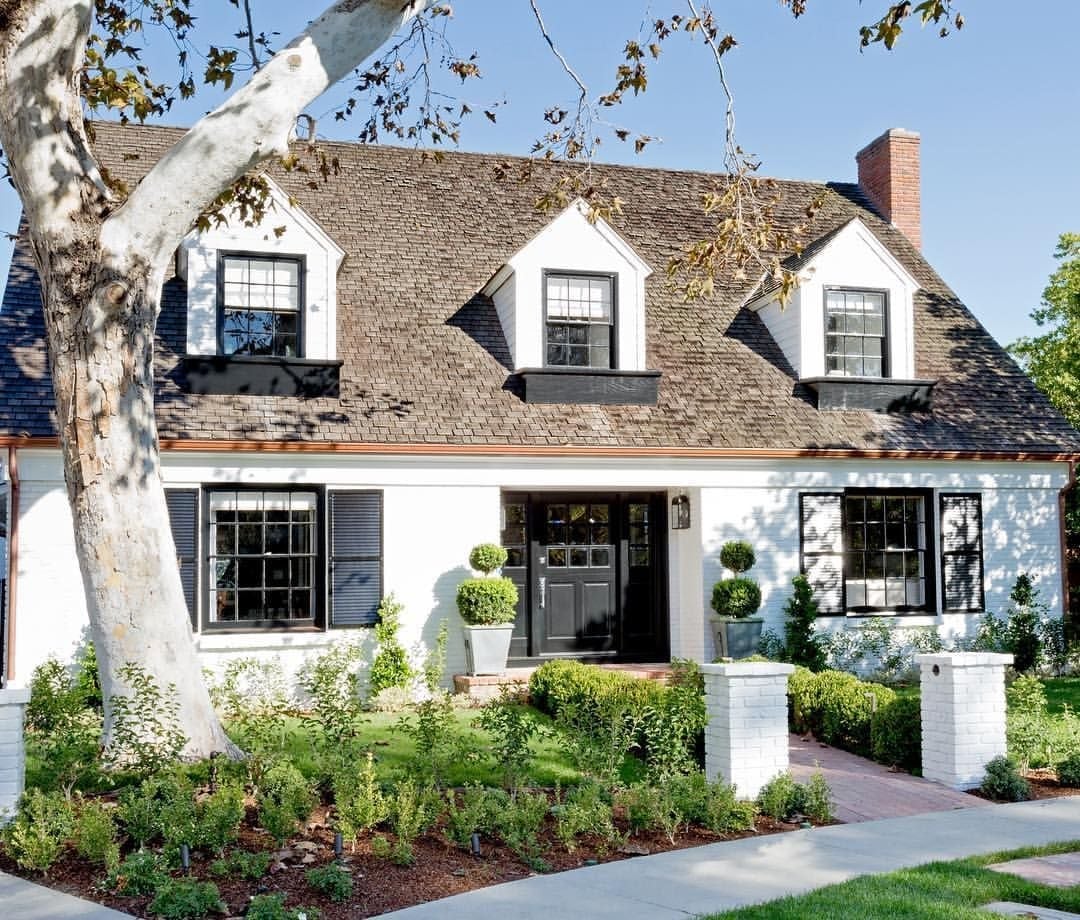
This is a clean, deliberate take on the Cape Cod palette. White brick and wood siding form the base, while a black front door and black shutters provide the contrast. The symmetrical facade with centered entrance and dormer windows relies on that high-contrast trim to define the shapes. Brick pillars add weight at the corners, and the topiary keeps the green from feeling sparse. The black accents work here because they are concentrated on the openings, not scattered across the whole facade.
Grand Cape Cod Estate with Stone Chimney
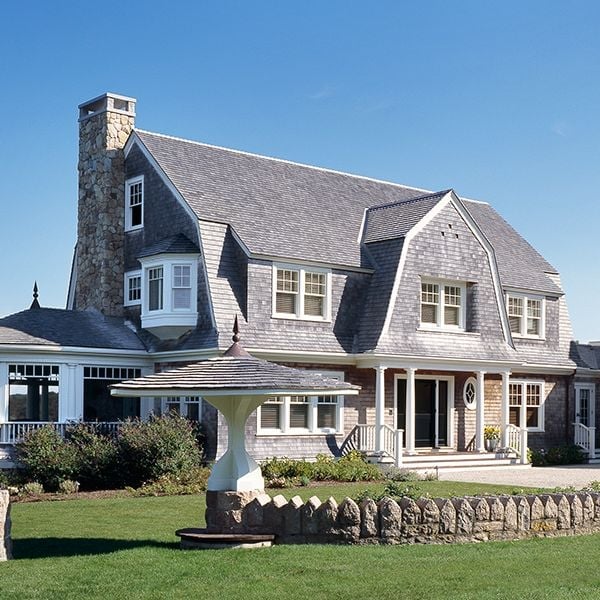
Scale works best when the biggest element has the most visual weight. Here, a massive stone chimney anchors the grand entrance, while gray shingles, white trim, and a copper roof detail stay subordinate. The arched entryway breaks up the width, so the facade does not feel like one long wall.
The sweeping lawn and stone wall extend the property line outward, making the house feel settled into its site. For a house this size, keeping the palette limited to shingles, stone, and white trim prevents the exterior from looking busy. The copper roof detail will patina over time, adding a subtle color shift that ties back to the stone.
White Clapboard Cape Cod with Steeply Pitched Roof
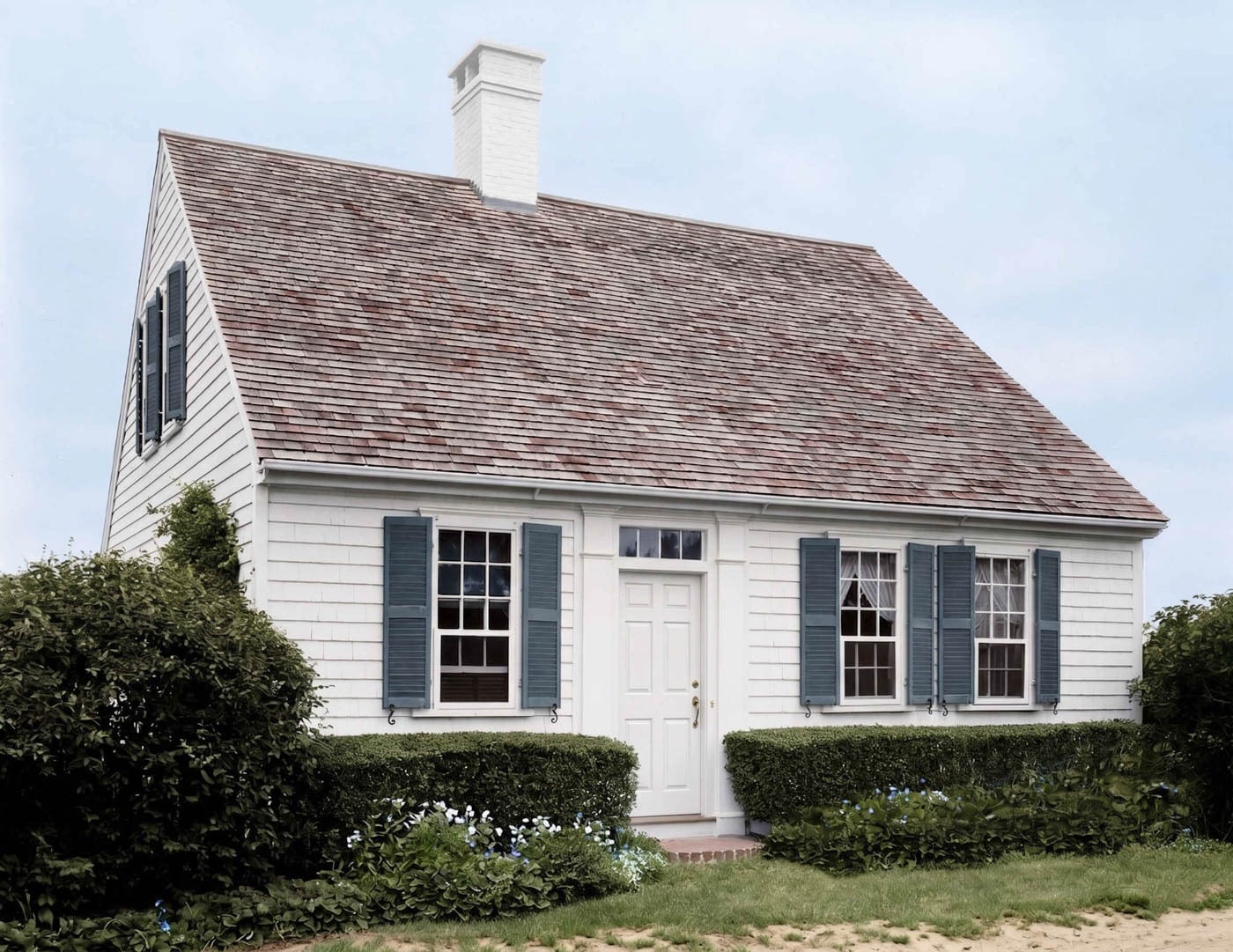
A steeply pitched roof defines the silhouette of this compact white clapboard Cape Cod, drawing the eye upward and giving the facade a strong vertical line. The palette stays restrained with white siding, gray shutters and dark green hedge, so the roof shape does the talking. The look reads as traditional because nothing fights the proportions: centered door, multi-pane windows and a chimney keep the symmetrical layout clean. What breaks the classic formula is the material mix, wood clapboard on the body and cedar shingles above, a shift that adds texture without clutter.
Historic Cape Cod Front Porch with Ornate Wreath
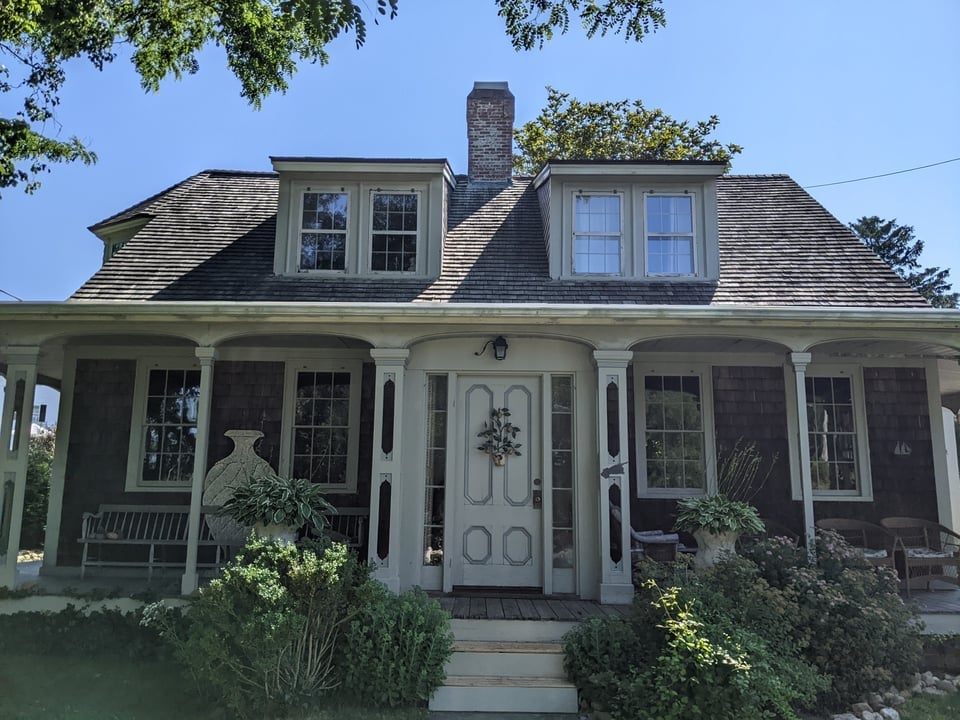
An ornate wreath on the front door anchors a historic porch. The dark brown door sits against white painted wood and wood shingles, with porch columns framing the composition and a simple bench adding seating. The palette stays deep and light at the same time, dark brown, white, green, which keeps the porch from feeling heavy. For a renter-safe swap, hang a wreath or wall hook on the door without drilling into siding or columns. It shifts the focus without a permanent change, and the porch still looks historic because the original materials stay untouched.
Two Cape Cod Houses with Coral Front Doors
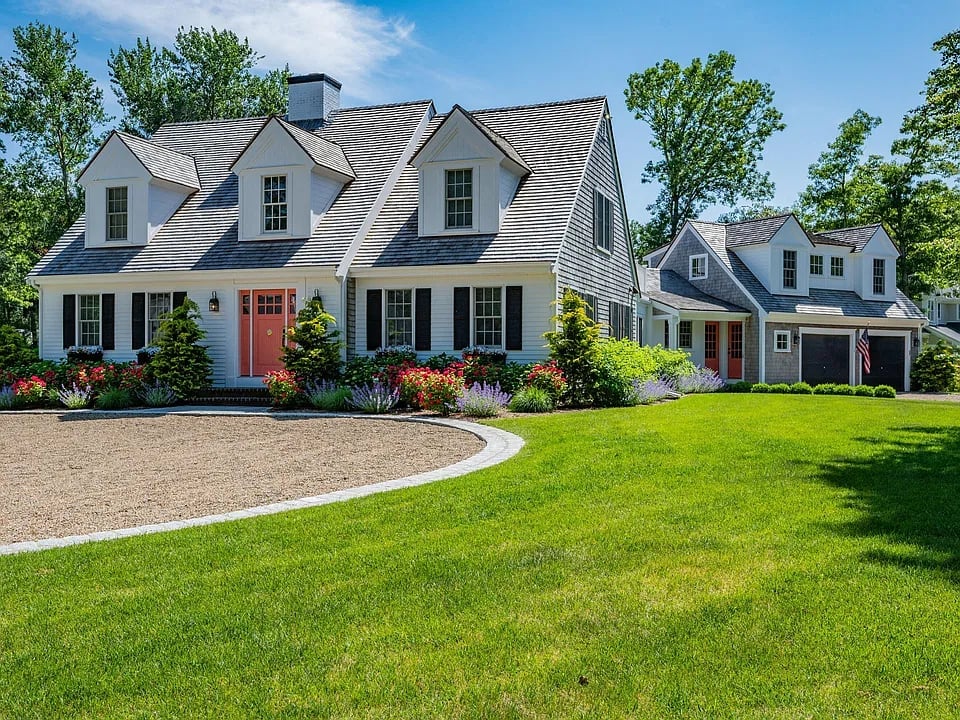
Against the typical white or gray Cape Cod, a coral front door makes a deliberate departure from the norm. Here two houses sit side by side on a manicured lawn, one with white siding and the other with gray shingles, and both use coral doors as the common thread. The sunny daylight and colorful flowers make the warm orange-pink pop against the neutral bodies, while the gravel driveway and dormer windows keep the setting firmly classic.
What makes this palette work is the ratio: the coral covers only the door, so it stays an accent instead of taking over the whole facade. The two houses prove the point differently. White siding lets the door glow, gray shingles give it more contrast, but both show that a single warm tone can break a neutral exterior without overwhelming the landscaping or the roof.
Gray Cedar Shingle Cape Cod with Red Shutters
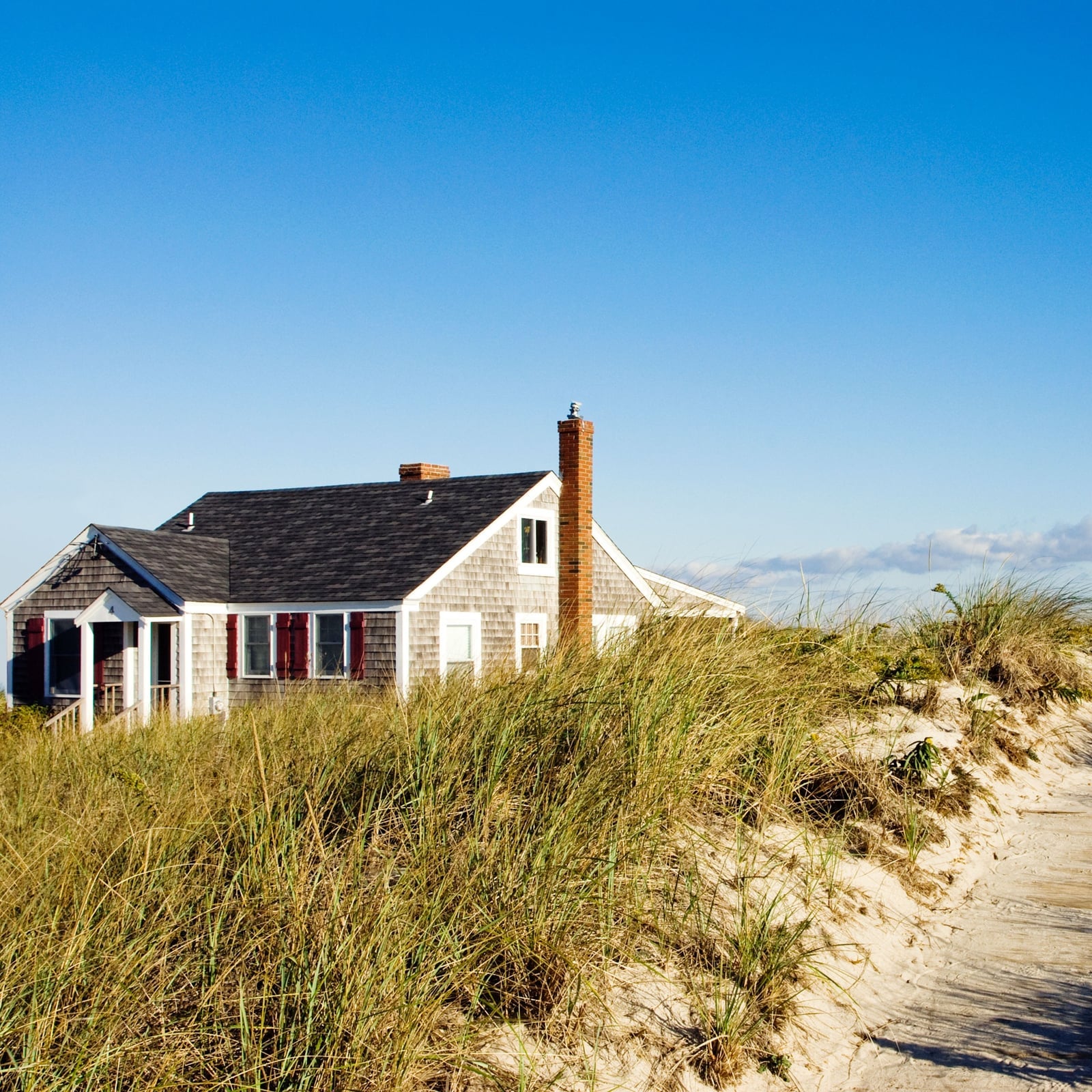
Gray cedar shingles cover the facade of this roomy Cape Cod, and the red shutters are placed to land exactly where the eye expects them, at every window. The red is a pure, clear tone against the weathered gray, with white window frames and porch columns keeping the transition crisp. A brick chimney adds a third warm material, so the palette has a natural logic: gray, red, brick, white. The shingles themselves are the standout, bringing a horizontal texture that painted siding cannot match, and the bright daylight makes the grain visible without calling attention to it.
Classic Cape Cod with Cedar Shingles and Picket Fence
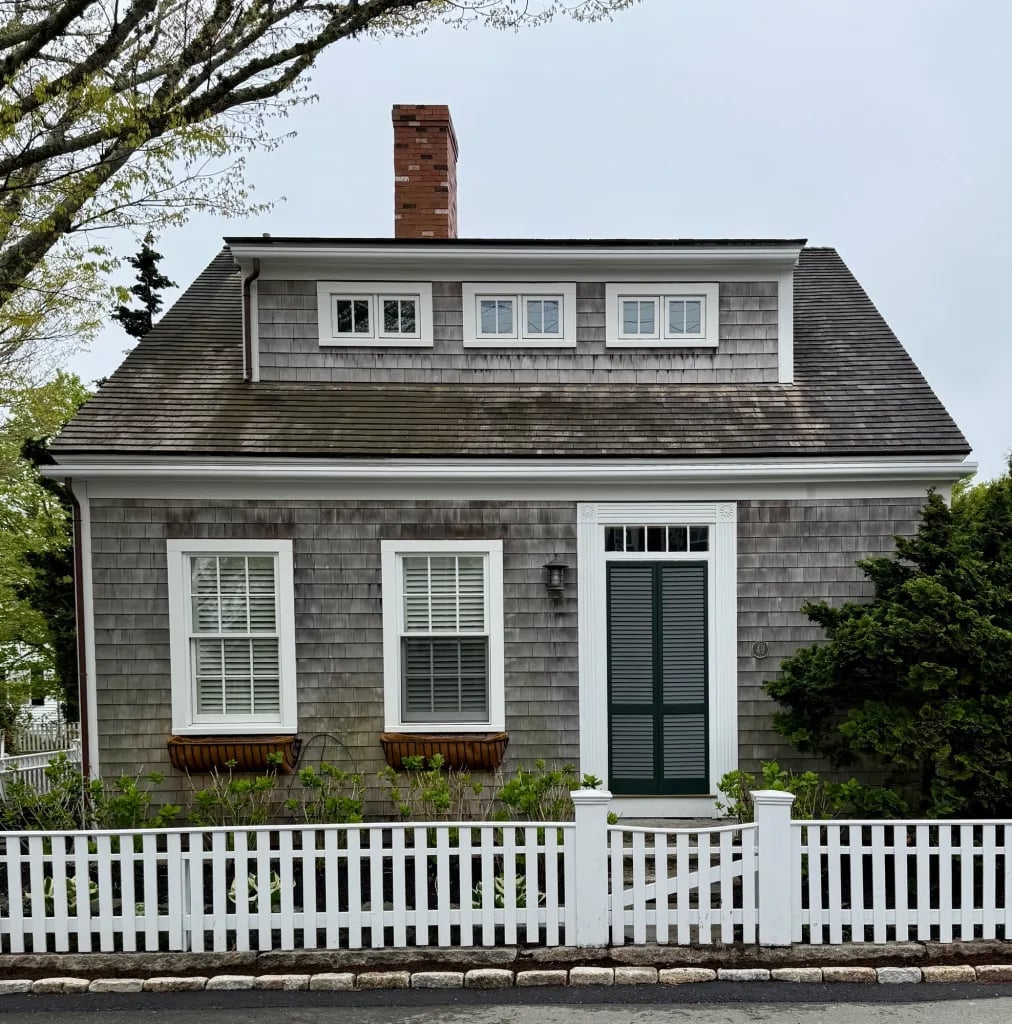
This is a textbook Cape Cod exterior: cedar shingles in gray, white wood trim, a brick chimney, dormer windows and a picket fence running across the front. The overcast daylight flattens the contrast so the shingle texture and the fence line stand out more than any single color. What gives the facade its proportion is the fence height. It stops below the windows, so the house keeps its full visual weight and the fence reads as a boundary rather than a wall. The dark green shutters tie the gray shingles to the landscaping, and the chimney anchors the roof without competing with the dormers. The formula holds because nothing is oversized: the fence, the windows, the chimney all fit the same scale.
Contemporary Estate with Shingle Siding
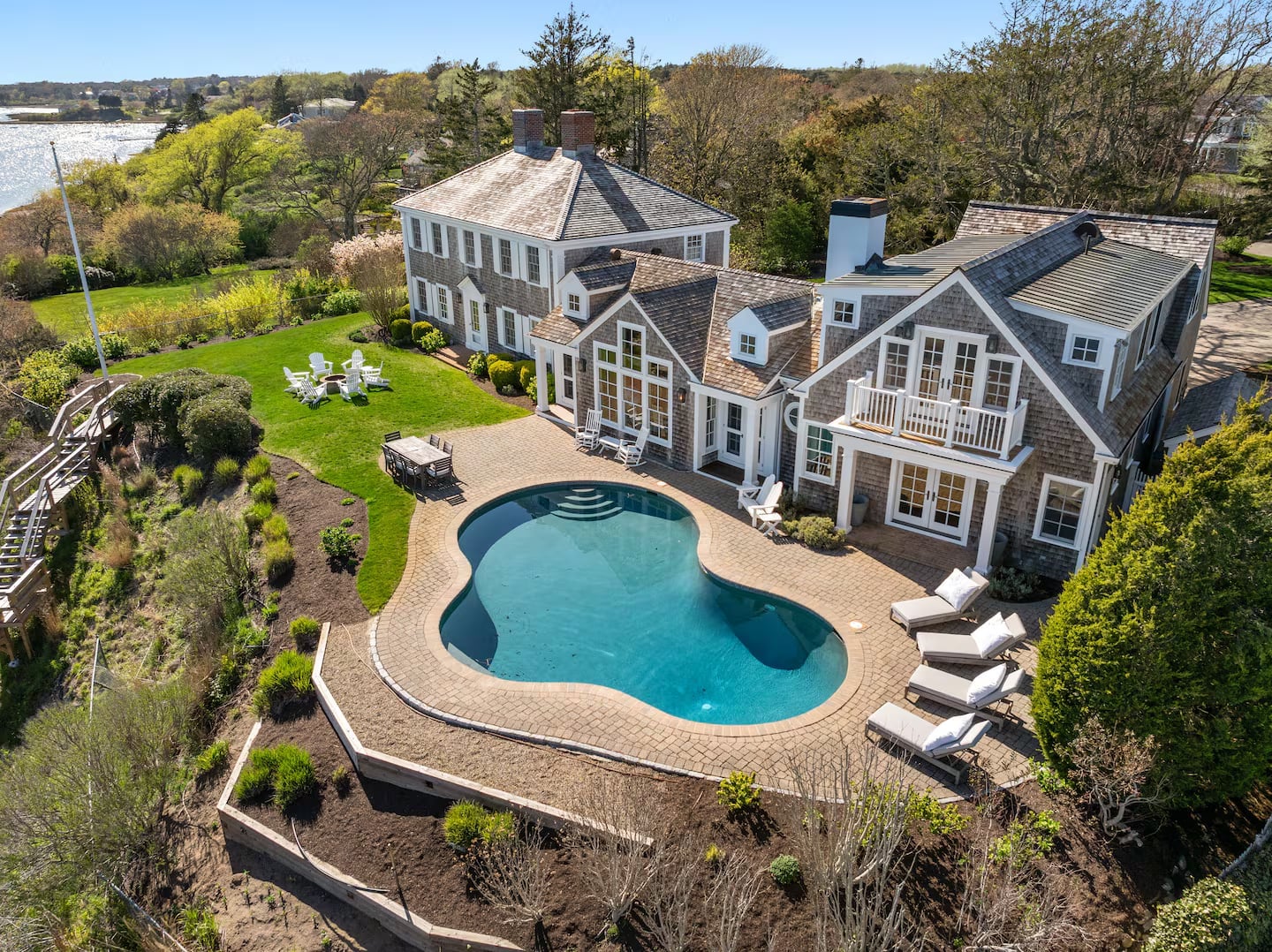
A large home on a generous lot asks for a layout that works from every angle, even from above. The aerial view of this contemporary estate shows how the house sits in relation to the curved swimming pool, patio, and lounge chairs. The shingle siding and stone accents keep the exterior grounded. The pool and patio extend the living space outward, making the whole property feel like one cohesive room. For a layout this open, keep the hardscape connected to the house through matching materials. Here the stone on the facade carries into the patio, so the eye moves easily from the house to the pool area.
Light Gray Cape Cod with Picket Fence and Porch Columns
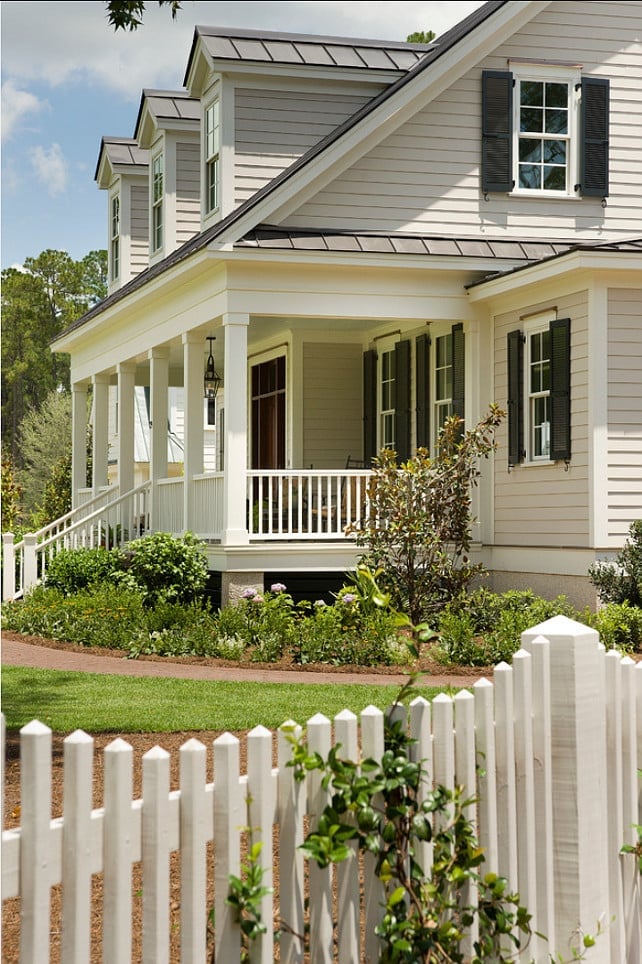
A light gray clapboard exterior paired with a white picket fence and white porch columns creates a palette that feels crisp without being stark. Dark green shutters on the dormer windows add just enough contrast to define the windows without stealing the show. The covered porch with its white railing softens the transition from the house to the front yard, and the dark green landscaping ties the whole look together. For a palette like this, the ratio is roughly two parts light gray to one part white, with the dark green used sparingly as an accent.
Gray Clapboard Cape Cod with Adirondack Chairs
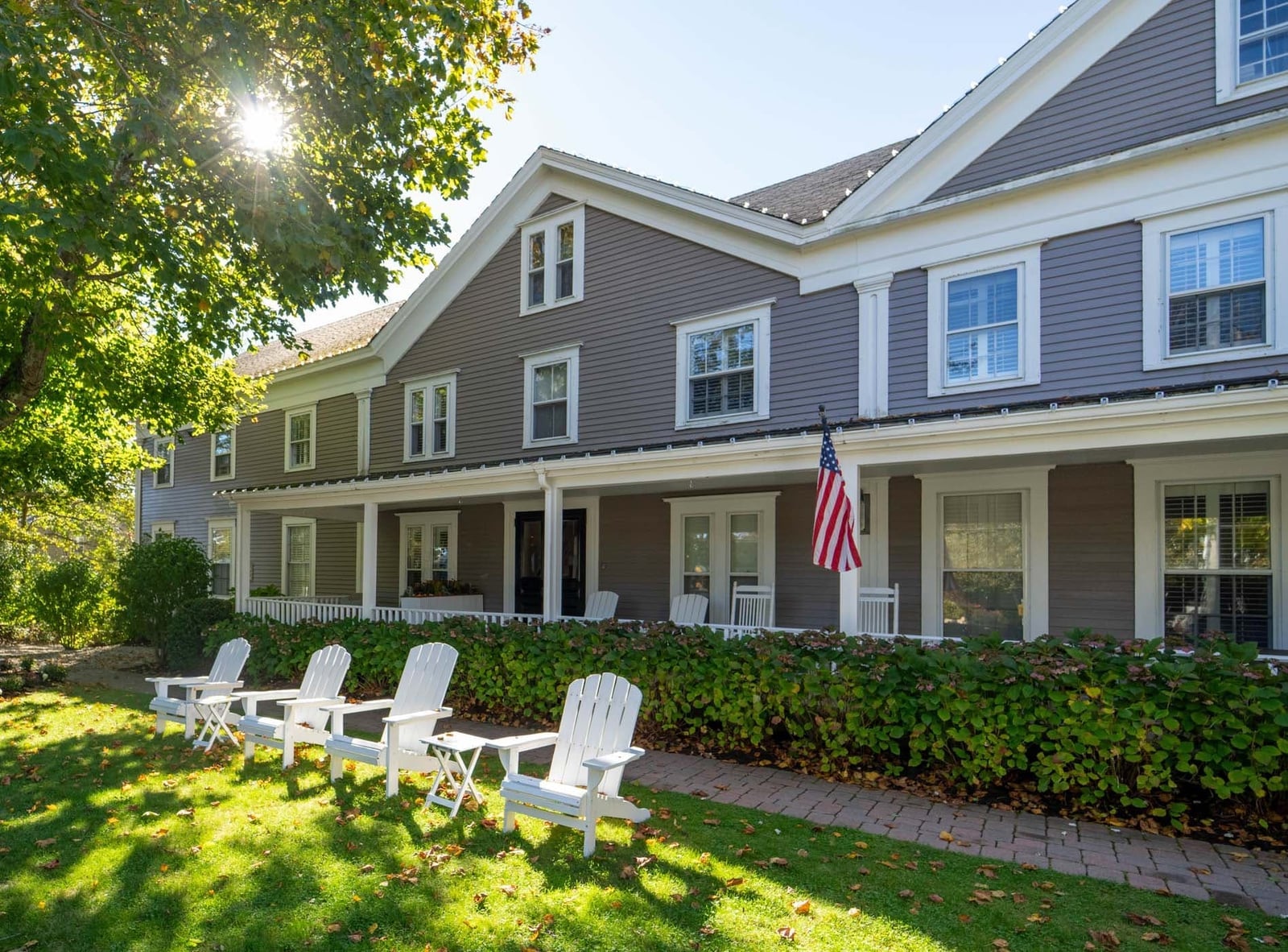
A practical rule for choosing outdoor furniture is to match the formality of the house. The gray clapboard facade on this traditional Cape Cod feels relaxed, and the pair of Adirondack chairs on the porch follows that lead. The white trim and white porch railing keep the look clean, while the green hedge and brick walkway add natural texture. A sun flare through the tree throws a bit of warmth across the gray siding, which is a reminder that even a neutral palette can shift with the light.
Natural Wood Shingle Cape Cod with Coastal View
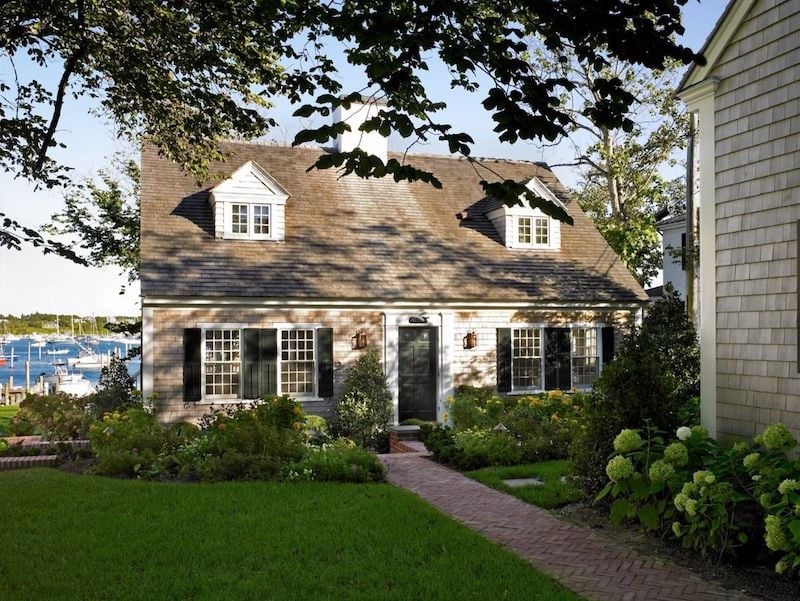
Most Cape Cod exteriors go with painted clapboard, but the natural wood shingle version takes a different path. The wood shingles here are left to weather naturally, which gives the house a softer, more organic look against the coastal backdrop. Black shutters frame the windows without competing with the siding, and the winding brick path leads the eye through the garden beds toward the water view. The slightly overcast light keeps the wood tones from washing out, so the house feels grounded in its landscape. For a compact house like this, letting the siding stay natural avoids adding another color to a small palette.
Craftsman Style Cottage with Green Siding
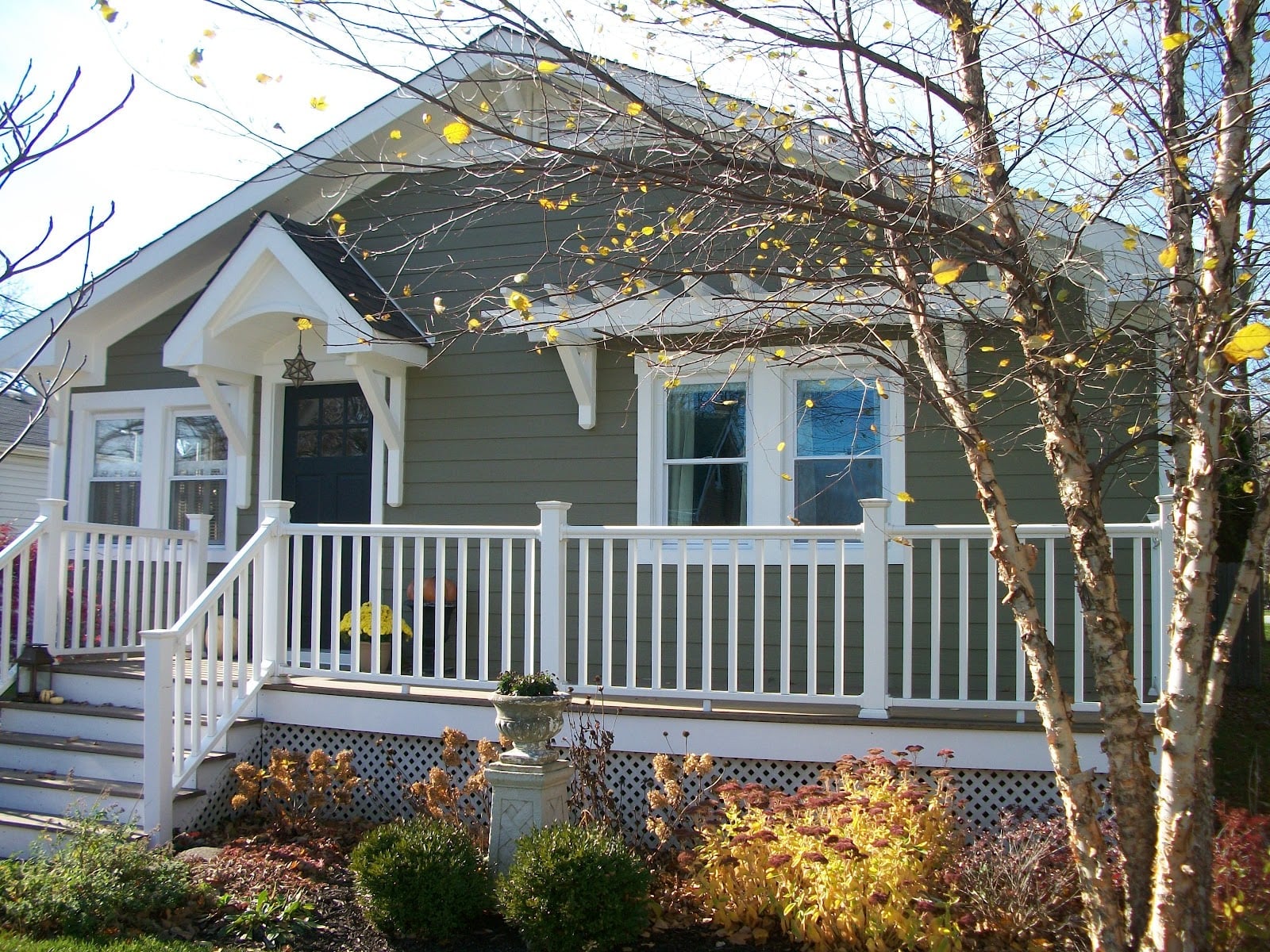
The green siding on this craftsman cottage picks up the color of the bushes and flowers in the front landscaping, so the house feels like it belongs in the yard. White trim and a white railing on the covered porch keep the green from feeling heavy. The porch itself offers covered storage for outdoor gear, which is a smart swap for a house without a garage. A renter-safe way to get this look is to paint the front door a deep green and add white trim to the porch railing.
Elegant Shingle Style House with Columned Porch at Dusk
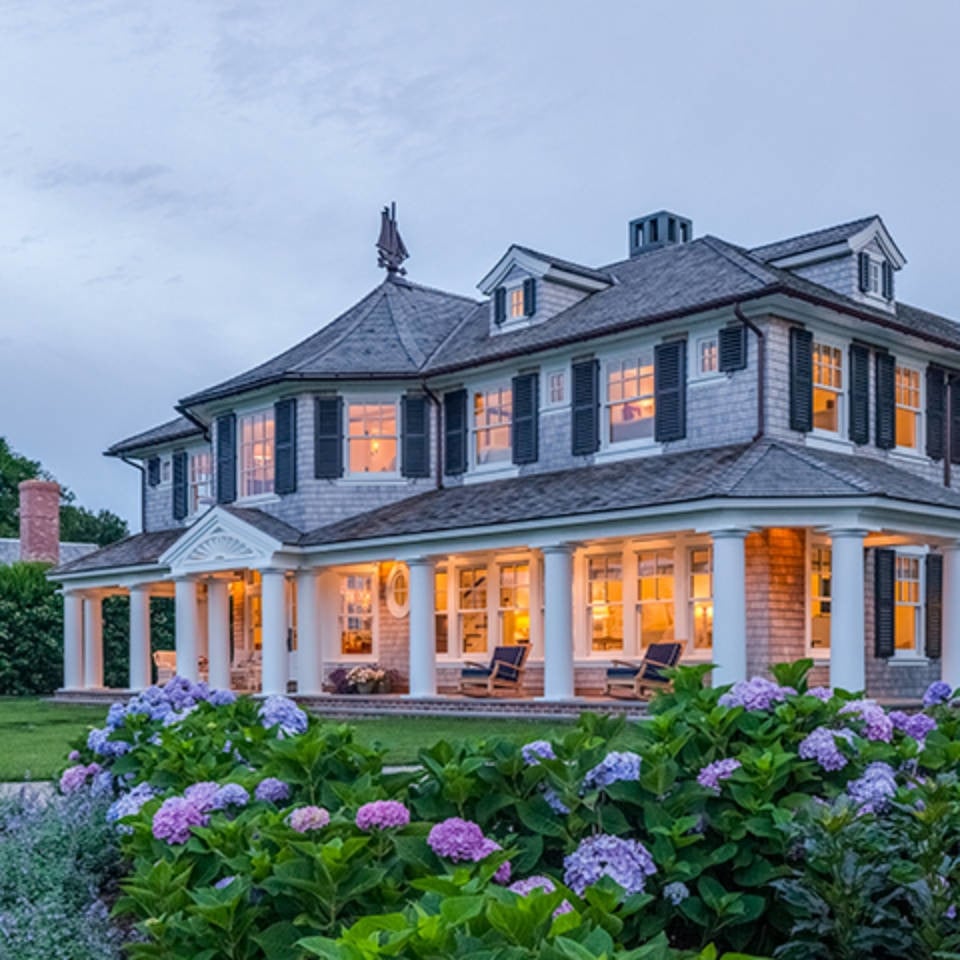
This shingle style house with a columned porch at dusk feels both grand and settled. The gray shingles and white trim keep the facade calm, while the stone porch columns and foundation add weight. Blue and purple hydrangeas in the garden beds soften the hard lines, and the warm interior light behind the windows makes the whole house feel lived in, not just staged. The style is defined by that balance: the sturdy columns and shingles give it structure, and the planting beds and soft dusk light keep it from feeling too formal. What breaks the look is any clutter on the porch or too-bright landscape lighting. The palette stays within three quiet tones, and the porch columns anchor the front elevation without overwhelming the lawn.
Pale Yellow Cape Cod with Red Door and Steps
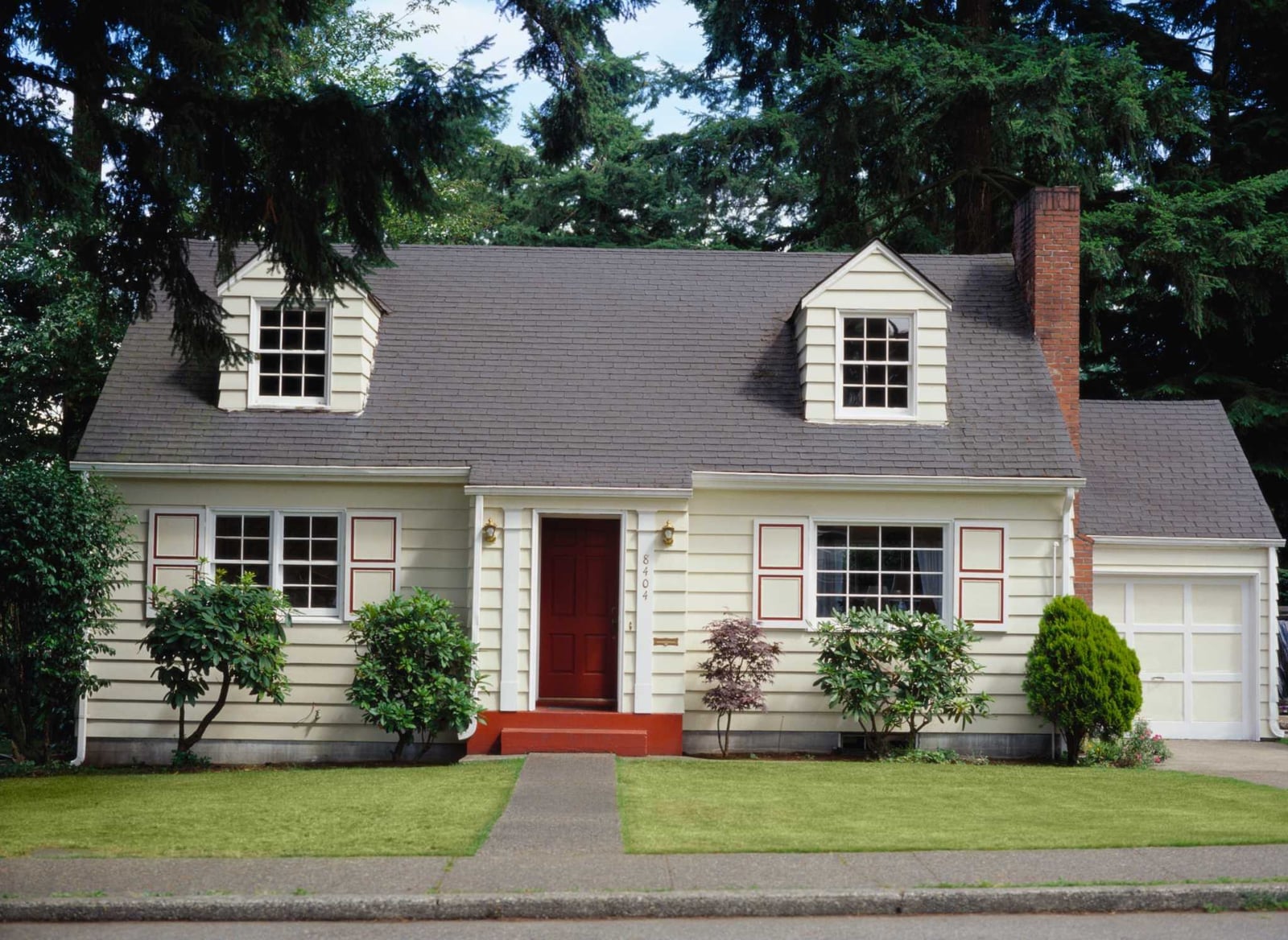
Pick one accent color that pulls the eye to the entrance, and this pale yellow Cape Cod does exactly that. The wood clapboard siding is a soft yellow, the asphalt roof is dark, and the brick chimney adds a warm neutral. Against that quiet backdrop, the red front door and matching red steps become the focal point. The dark green shutters on the dormer windows echo the surrounding landscape and keep the yellow from feeling too sweet. The palette breaks down to about seventy percent pale yellow, twenty percent dark green and brick, and ten percent red. That small ratio of red is enough to make the entrance stand out. For a renter, painting the front door is reversible, and adding red steps with exterior paint or a runner is a weekend project that changes the whole approach.
Cape Cod House with Gambrel Roof and Evening Lighting
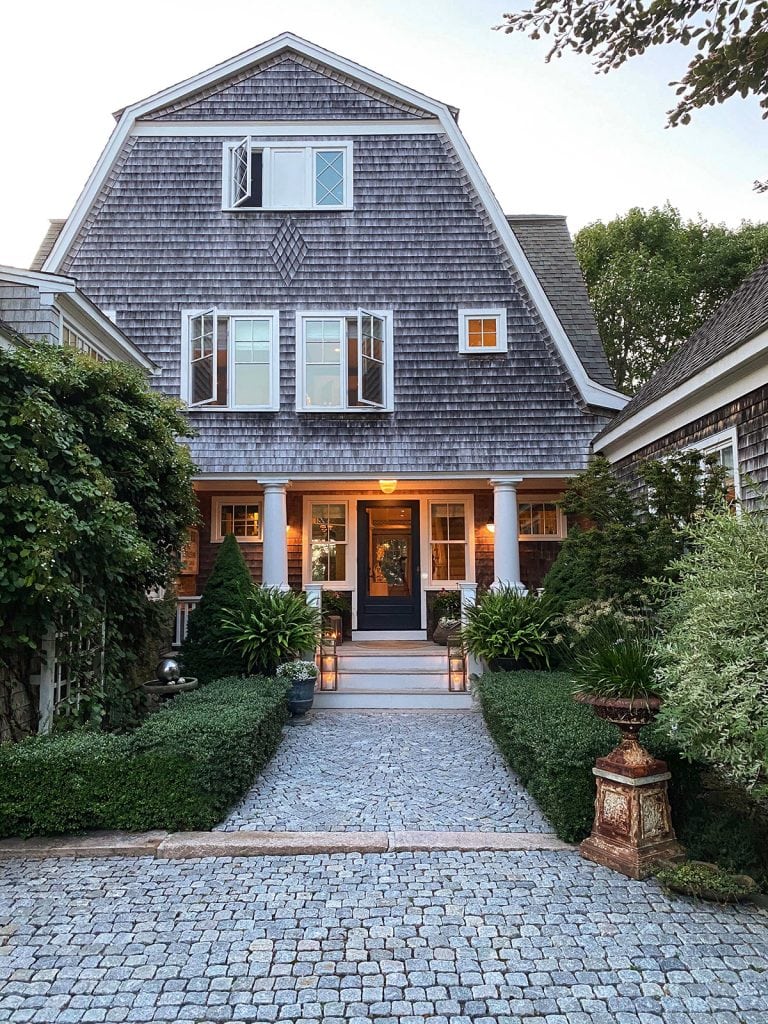
The gambrel roof on this Cape Cod house creates more usable space on the second floor and gives the front elevation a taller, more traditional silhouette. The gray wood shingles and white trim keep the exterior understated, while the dormer windows break up the roofline and add rhythm. A stone pathway leads through the manicured garden to the covered entrance, and the warm interior lights behind the windows make the house glow against the evening sky. The layout works because the gambrel roof draws the eye up, and the dark front door anchors the center. The pathway and garden beds guide visitors naturally to the entrance without needing a formal walk.
White Brick Cape Cod with Red Door and Black Railings
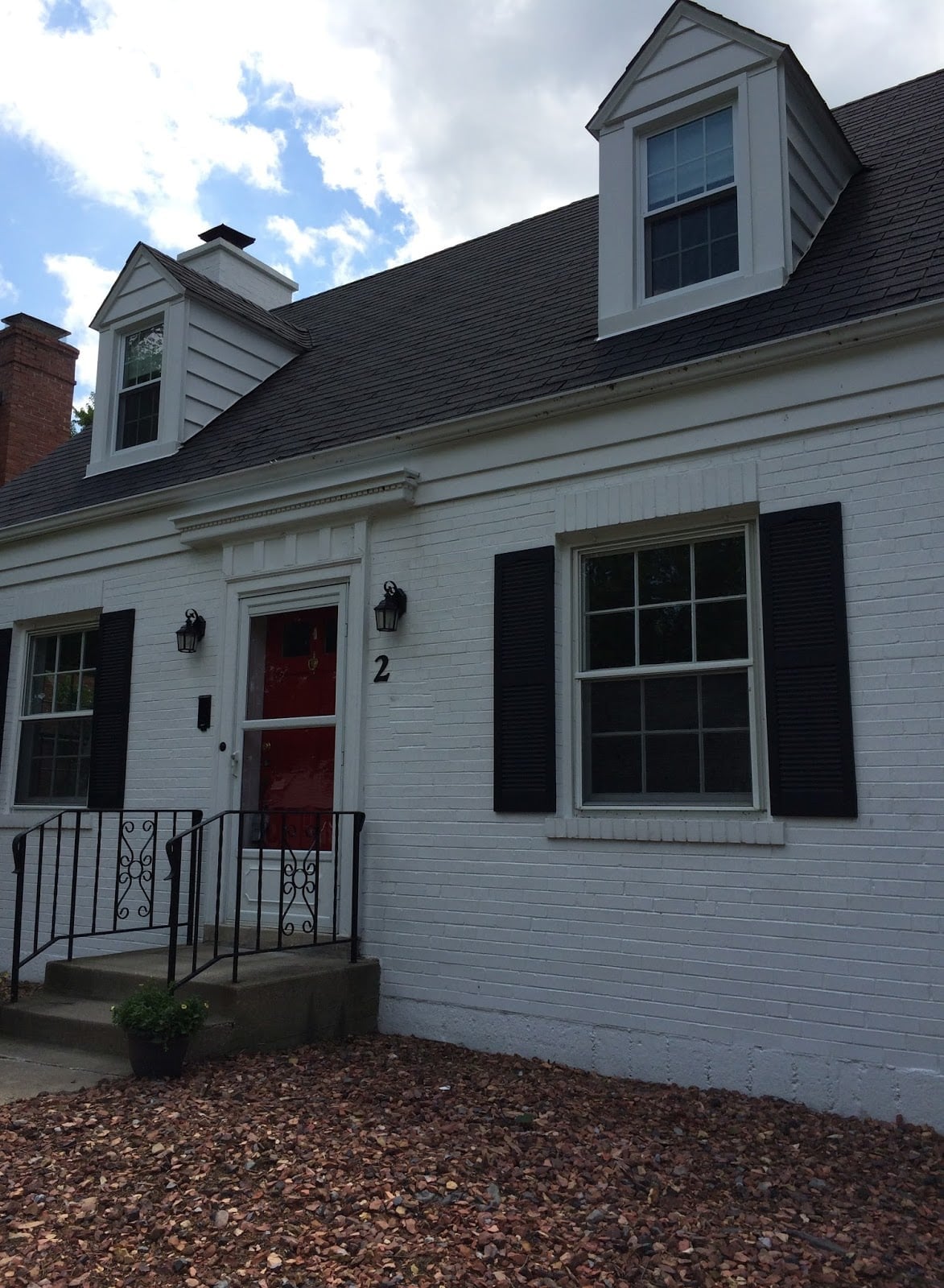
The white brick on this Cape Cod house gives the facade a clean, solid surface that needs less upkeep than painted wood clapboard. Against that white, the black shutters and black metal railings create sharp contrast, and the red front door becomes the single warm note. The dormer windows above the main floor keep the scale compact and balanced. The palette is a three-color system: white for the body, black for the trim and railings, and red for the door. That ratio keeps the house looking crisp without relying on a lot of variation. The angled view shows how the brick holds up in overcast daylight. The red door works because nothing else in the palette competes with it.
Gray Shingle Cape Cod with Blue Door at Dusk
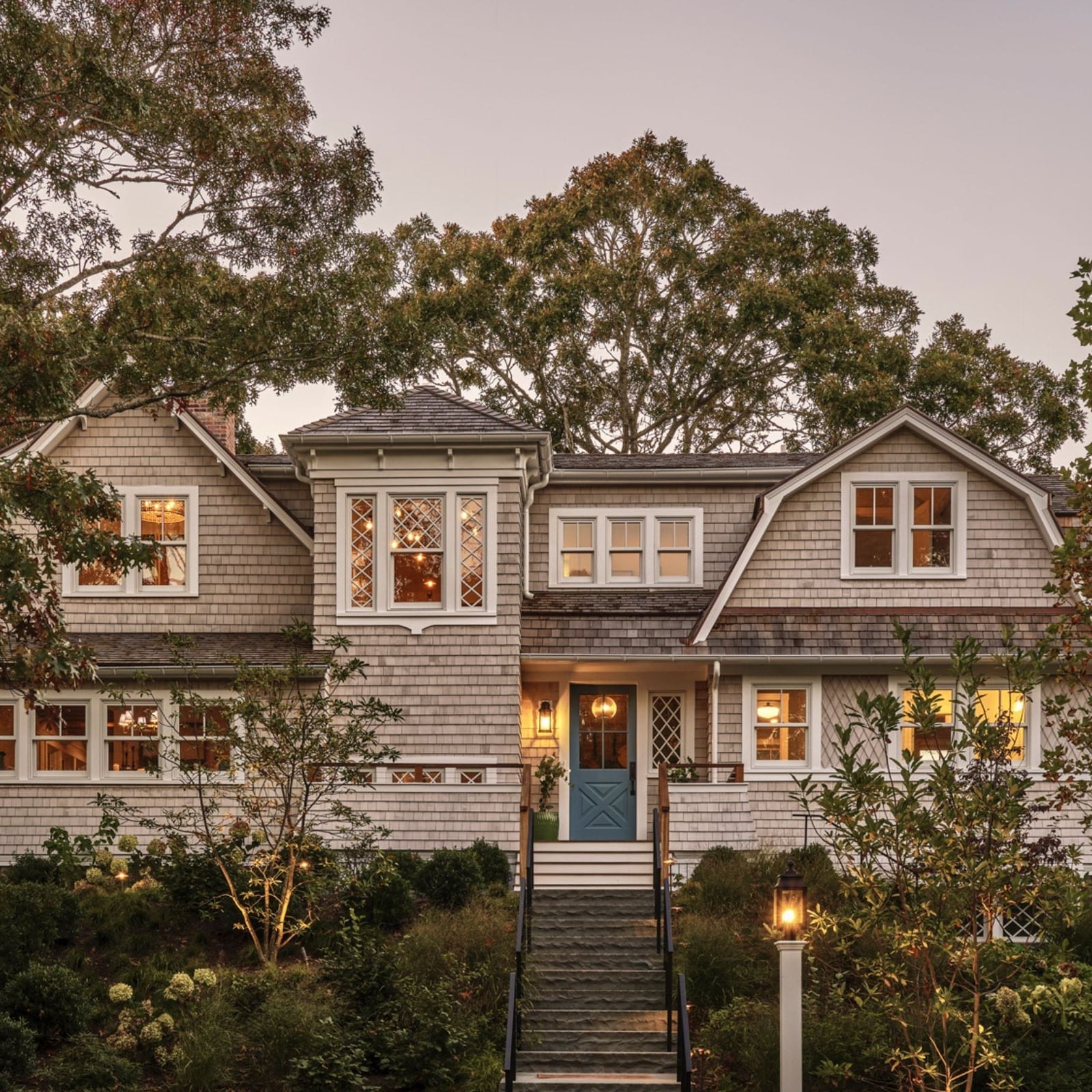
A gray shingle Cape Cod with a blue door reads more coastal than one with a red or black door, and that shift in palette changes the whole feel. The gray wood shingles and white trim keep the house neutral, so the blue door becomes the only saturated color. The diamond pattern windows on the front facade add a detail that breaks up the shingles without needing extra trim or shutters. At dusk, the interior lights and exterior lamps warm the gray, and the blue door reads as a deeper navy rather than a bright accent. The layout works because the elevated entrance and centered door make the house feel grounded even with the roomy front facade. The landscaping softens the transition from lawn to shingles. The style is defined by that quiet contrast: gray and white with one blue point. What breaks it is adding a second accent color, like a red mailbox or yellow planters, because the whole palette depends on that single note.
Cape Cod Rear Exterior with Multi-Level Deck
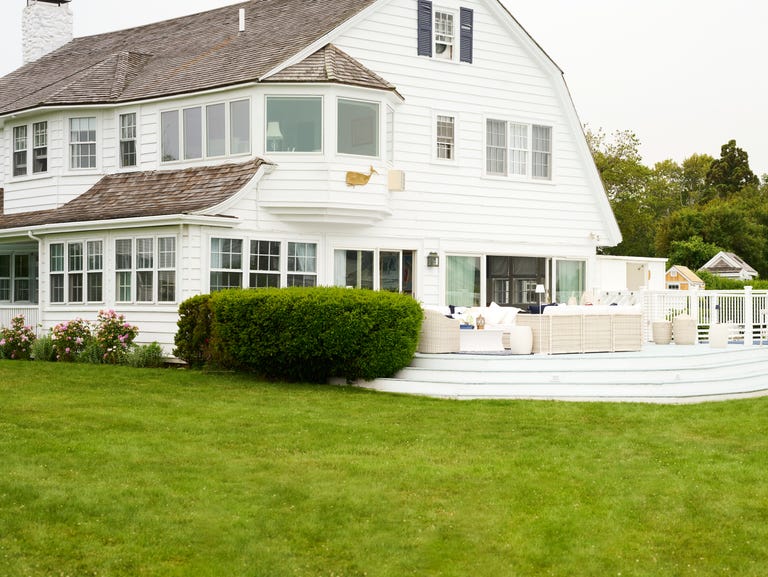
The rear exterior shows how a multi-level deck can turn a sloped yard into usable outdoor space. White siding and a bay window keep the Cape Cod character intact, while the composite decking offers a low-maintenance surface. Blue cushions on wicker furniture add a coastal cue. Dormer windows above echo the classic roofline. The layout anchors the house to the ground instead of letting the grade feel disconnected. A single material for the deck avoids a patchwork look across levels.
Coastal Craftsman Porch with Stone Columns
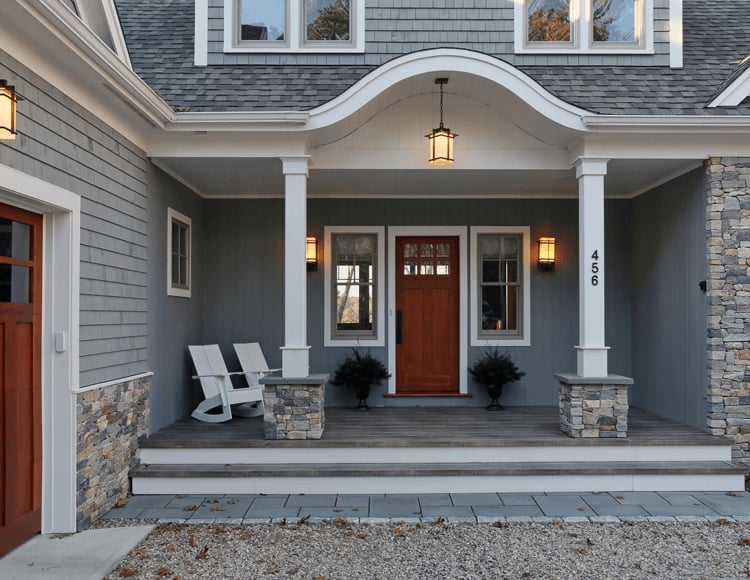
Stone-clad porch columns set this front entry apart from standard painted wood. The gray shingle siding and natural stone share a muted coastal palette that lets the wood front door stand out. Rocking chairs on the porch keep the feel relaxed and informal. Pendant lights hung from the ceiling add evening glow without cluttering the columns. The stone weight balances the shingle texture. A covered porch like this extends the living space into the yard without losing the house’s craftsman roots.
Final Thoughts
A Cape Cod exterior is about proportion and material honesty, not fussy ornament. Across these 32 looks, the strongest curb appeal comes from a clear color story and a few intentional details: a painted door, proper shutters, a simple porch column. Keep landscaping simple and let the architecture lead. A fresh coat of paint on trim and shutters every few years does more for the facade than any trend. The style works best when it looks settled, not staged.