A garden gate does more than mark a boundary. It sets the tone for everything beyond it, whether that’s a vegetable patch, a flower border, or a seating area.
If you are looking to add character and function without hiring a pro, these 33 DIY garden gate ideas offer plenty of inspiration. From rustic driftwood to repurposed bicycle frames, each option brings its own personality to an outdoor space.
Rustic Driftwood Gate Against a Stone Wall
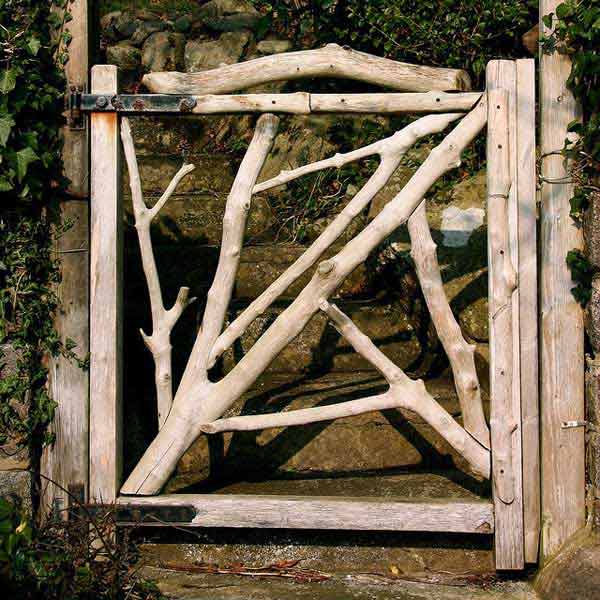
A gate built from driftwood reads as part of the landscape. The pieces are stacked horizontally between the stone wall and a wooden post, their irregular shapes and weathered gray-brown tones blending with the ivy that climbs the stone. Dappled daylight moves across the surface, softening the rough wood and the mossy wall. The gate is compact, so the wall remains the dominant structure and the gate is a natural seam.
Organic Wood Plank Gate for a Natural Garden Path
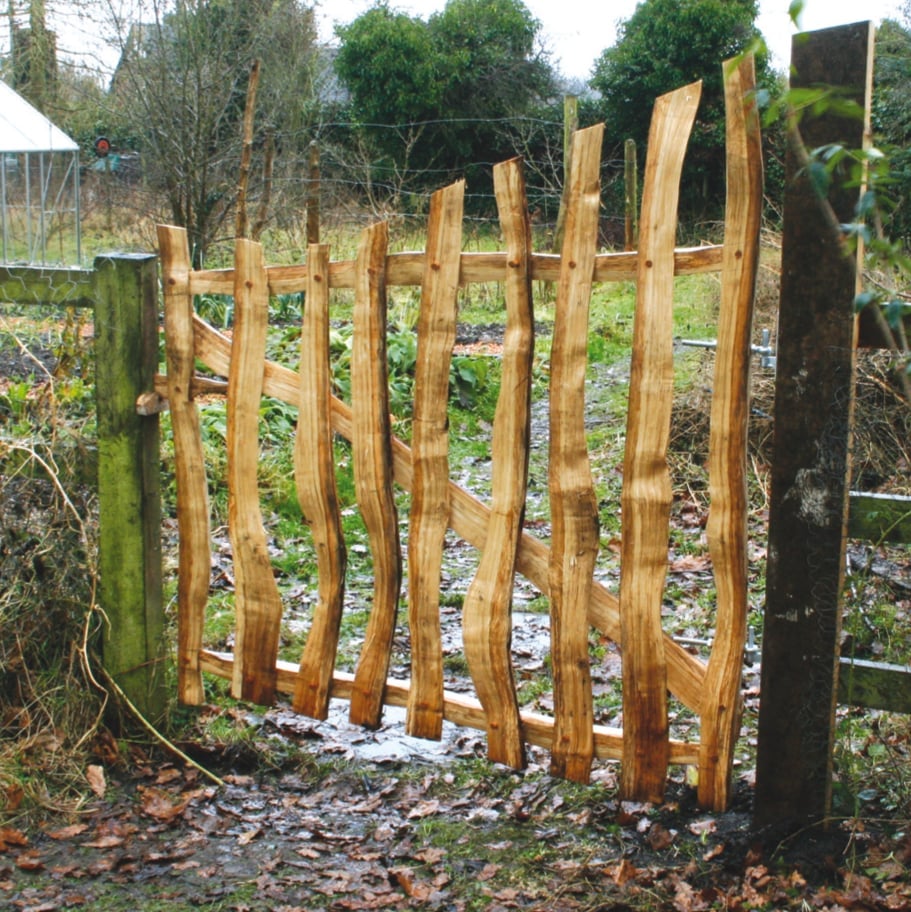
This gate is unapologetically raw. The planks vary in width and edge, some with bark still visible, and the gaps between them let the path beyond peek through. The natural wood palette, with its gray-brown tones and green moss creeping up the posts, keeps the gate from competing with the foliage. Overcast daylight flattens the shadows, which works in its favor: the gate stays quiet and the eye moves past it to the winding path. The metal latch is the only refined note, a small contrast that keeps the gate from reading as unfinished.
Eclectic Garden Gate from Repurposed Items
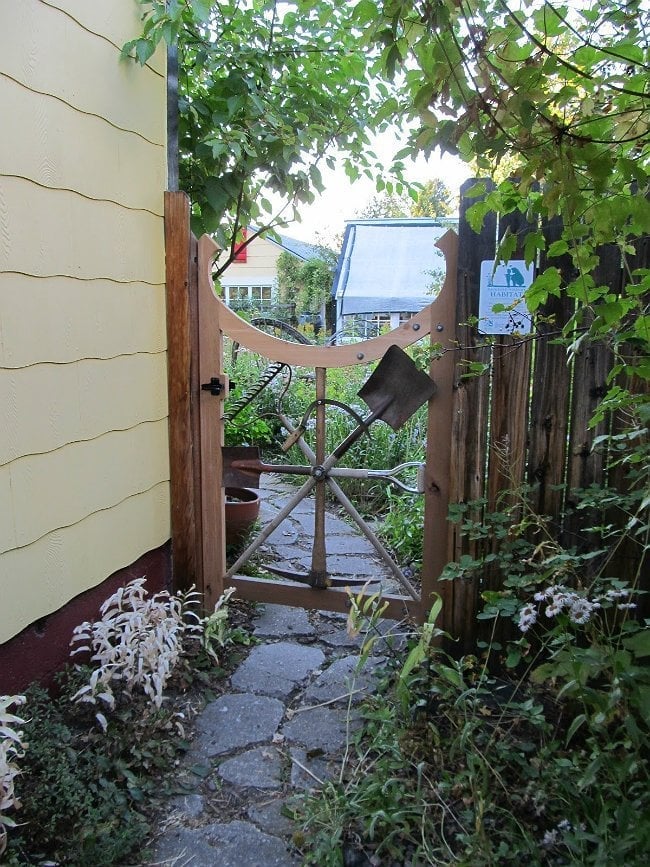
What do you do with a salvaged metal wheel and an old shovel? Build a gate. The frame is rough wood, but the real character comes from the wheel mounted at center and the shovel blade fixed near the top, their rusty red-brown finish echoed by the yellow paint on the wood. A stone path leads up to the gate, and dappled daylight filters through the trees, hitting the metal and softening the mix of textures. The trick is balance: one sculptural item per section. Too many salvaged pieces and the gate becomes a pile; one or two and it reads as a deliberate composition.
Creative Bicycle-Inspired Metal Garden Gate
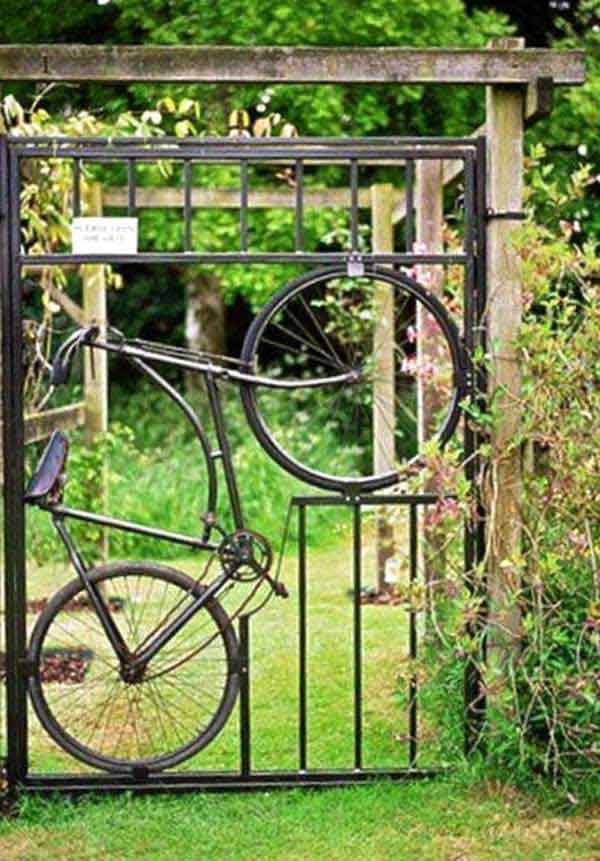
An old bicycle frame becomes the gate itself, its black metal tubes and wheels mounted between two wooden posts. The wheels turn freely, so the gate still swings open, and the handlebars serve as the latch point. Daylight passes through the open frame, keeping the garden visible beyond. The dark metal contrasts with the green foliage on either side, and the wooden posts ground the design in a natural setting. It is a functional piece that also marks the entrance with a clear, personal gesture.
DIY Pallet Wood Gate with Hanging Lanterns
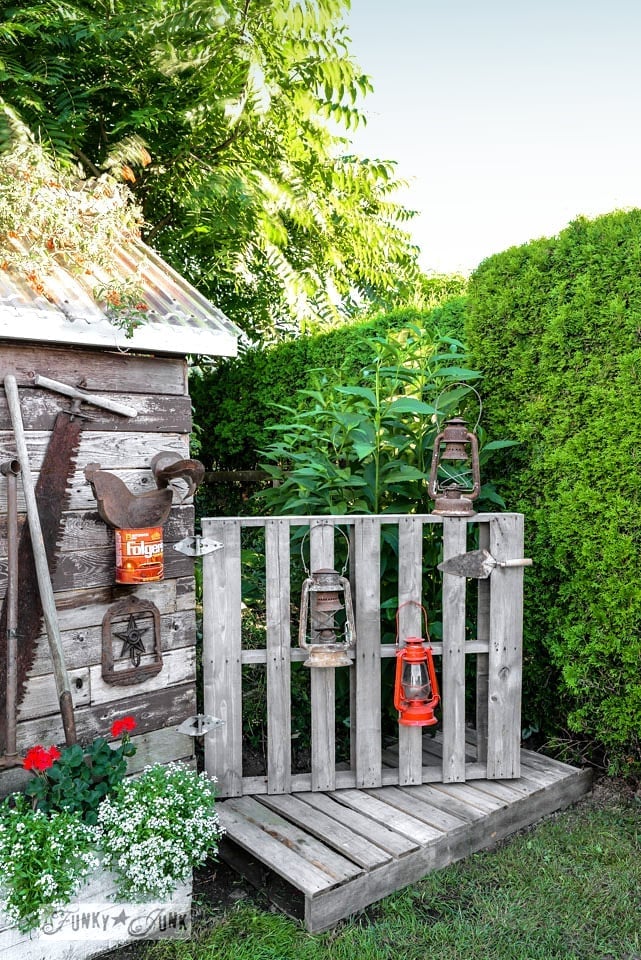
Use the gate to store what you need nearby. This pallet wood gate has a metal planter hooked over the top and a pair of glass lanterns hanging from hooks, both within arm’s reach of the walkway. The wood is untreated, left to weather to a soft gray, and the red of the shed behind it adds warmth without overwhelming the natural palette. Daylight filters through the lantern glass, but the real gain is reach: garden tools lean against the shed wall beside the gate, keeping everything visible and accessible.
Traditional Wrought Iron Gate with Scrollwork
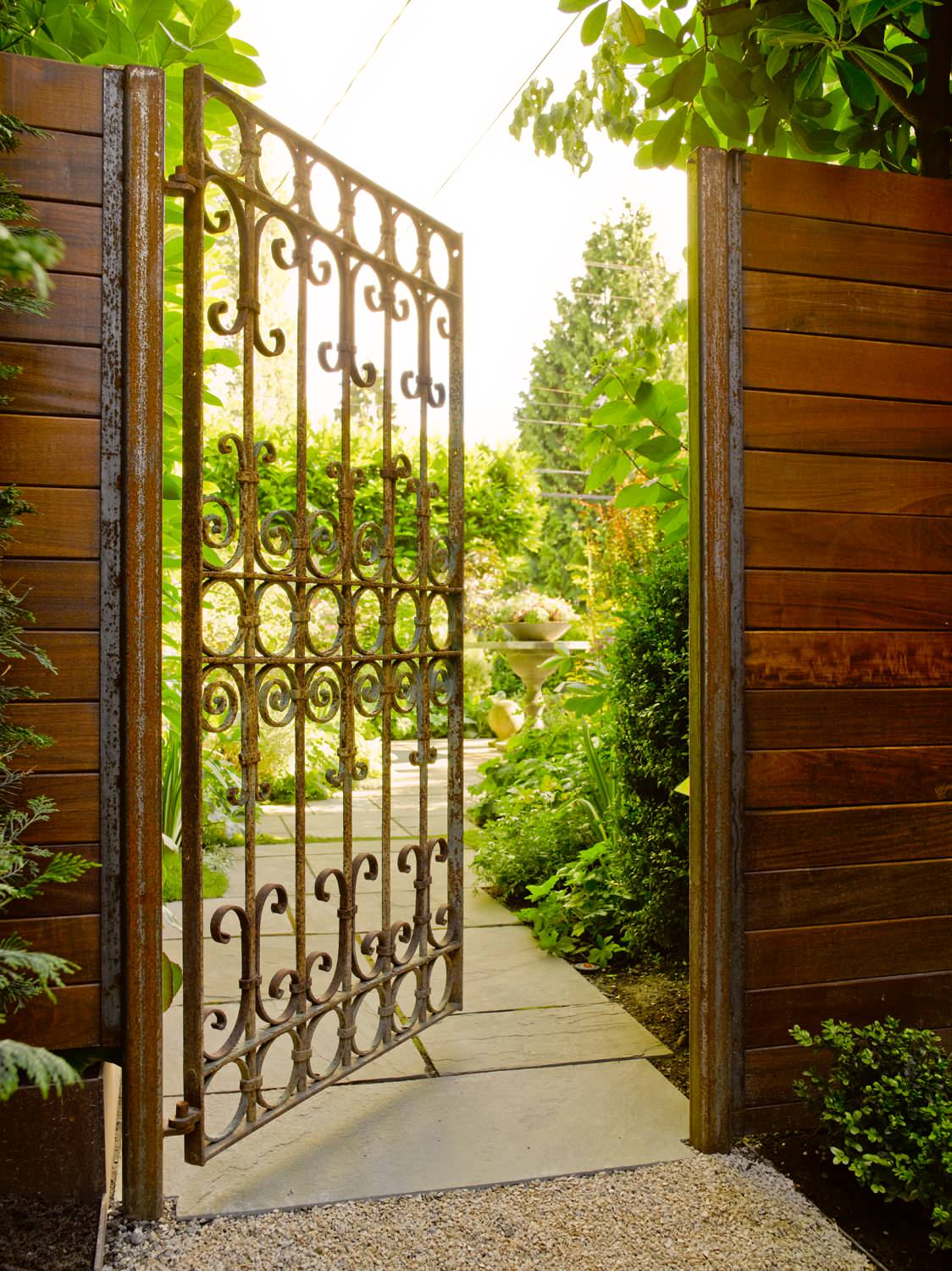
A solid wooden fence often feels like the obvious choice for privacy, but an ornate wrought iron gate changes the conversation entirely. Here the gate acts as the focal point, its intricate scrollwork catching the sun flare against a backdrop of brown wood and stone. The garden path beyond becomes an invitation, not a barrier. The palette of brown, green, and gold keeps things grounded. The practical takeaway is about materials: wrought iron lets light through while still defining a boundary, making even a narrow path feel open instead of closed in.
Cream-Painted Arched Garden Gate with Trellis
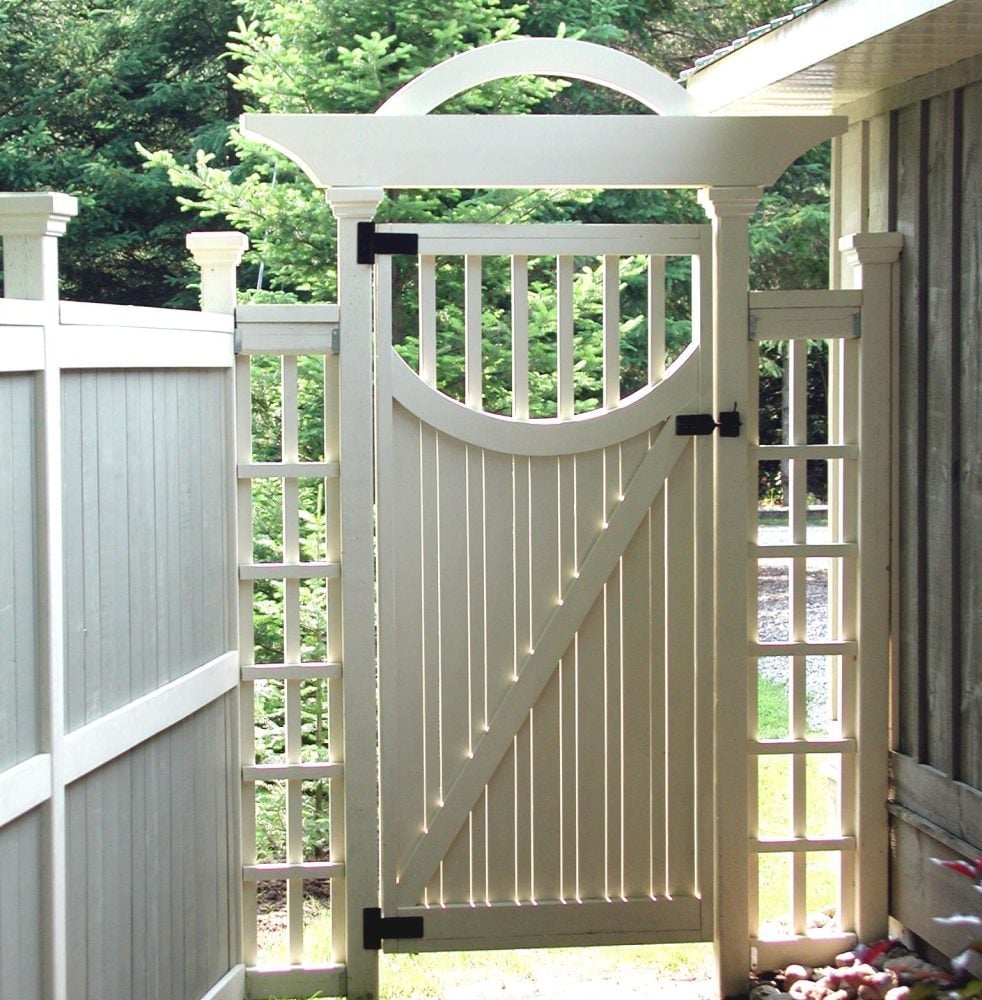
The arched top of this gate softens the transition from yard to garden, and the cream paint keeps it from competing with the greenery around it. The trellis panels on either side echo the arch, creating a balanced layout that feels intentional. For renters, a gate like this is a smart swap because it attaches to existing posts or a simple frame without altering the fence line. The light color also reflects daylight, so the entry point reads as larger than it is.
Weathered Arched Gate with Metal Scroll Insert
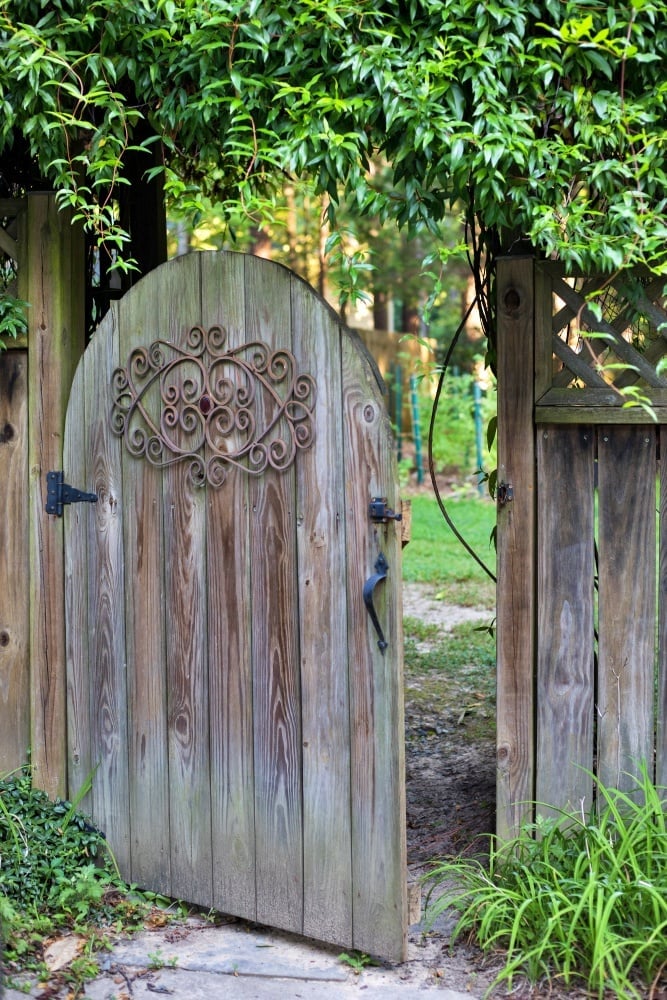
This gate makes a strong case for mixing old and new materials. The weathered wood frame keeps things rustic, while the metal scroll insert adds a decorative layer that breaks up the solid mass. It is a practical choice for a garden path because the scrollwork lets air and light pass through, which helps plants along the fence line stay healthy. The stone path and soft daylight complete the scene without competing with the gate itself.
Light Green Cottage Garden Gate Under Floral Arch
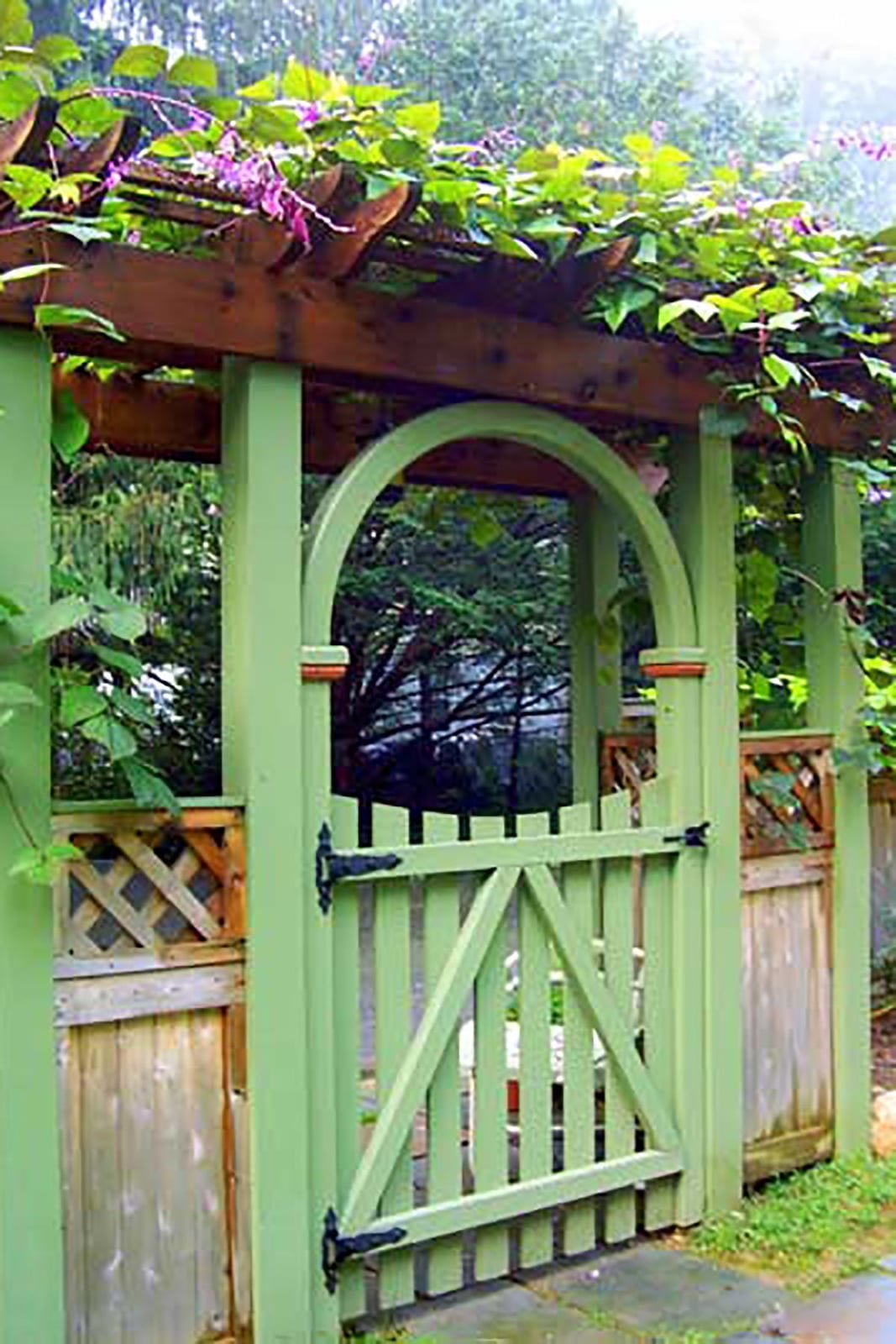
Can a painted gate hold up to weather and climbing plants? A light green finish like this one works because it is sealed properly and sits under a white archway that supports the floral growth above. The gate stays visible even as the arch fills in, and the wood tones keep it from looking too precious. The cottage style relies on that balance: the gate is charming but not fragile, and the arch gives it a frame that will only improve as the plants mature. Check your USDA zone before choosing climbing varieties.
Whimsical Reclaimed Wood Gate with Sculptural Details
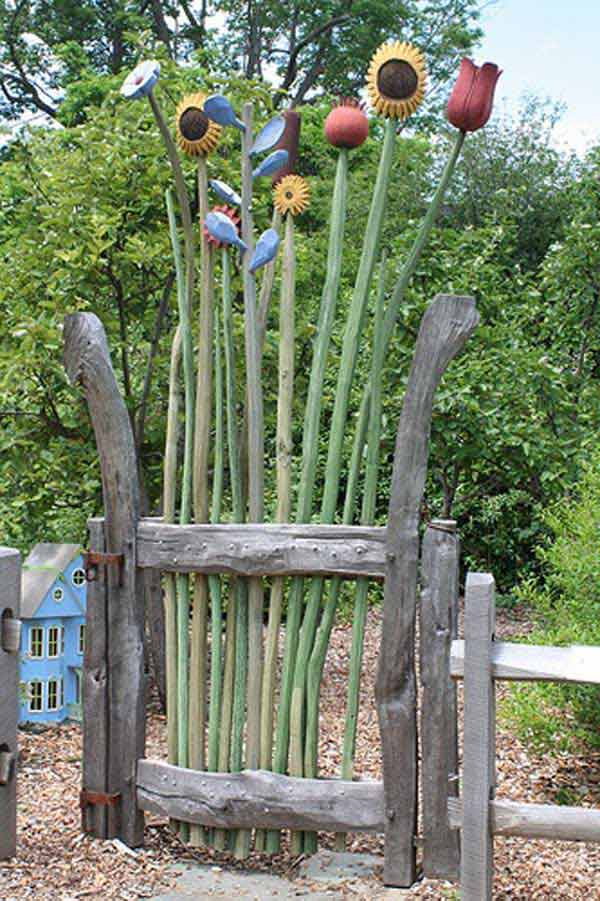
Reclaimed wood already has character, but this gate uses painted accents to push toward whimsical rather than just rustic. A painted bird and flower detail on the vertical slats gives it a sculptural quality without adding weight. The palette of natural wood, green, and blue keeps the gate from feeling like a craft project. The practical lesson is about proportion: the details are concentrated at eye level, so they read clearly without overwhelming the gate’s structure.
Modern Rustic Stained Wood Gate with Diagonal Brace
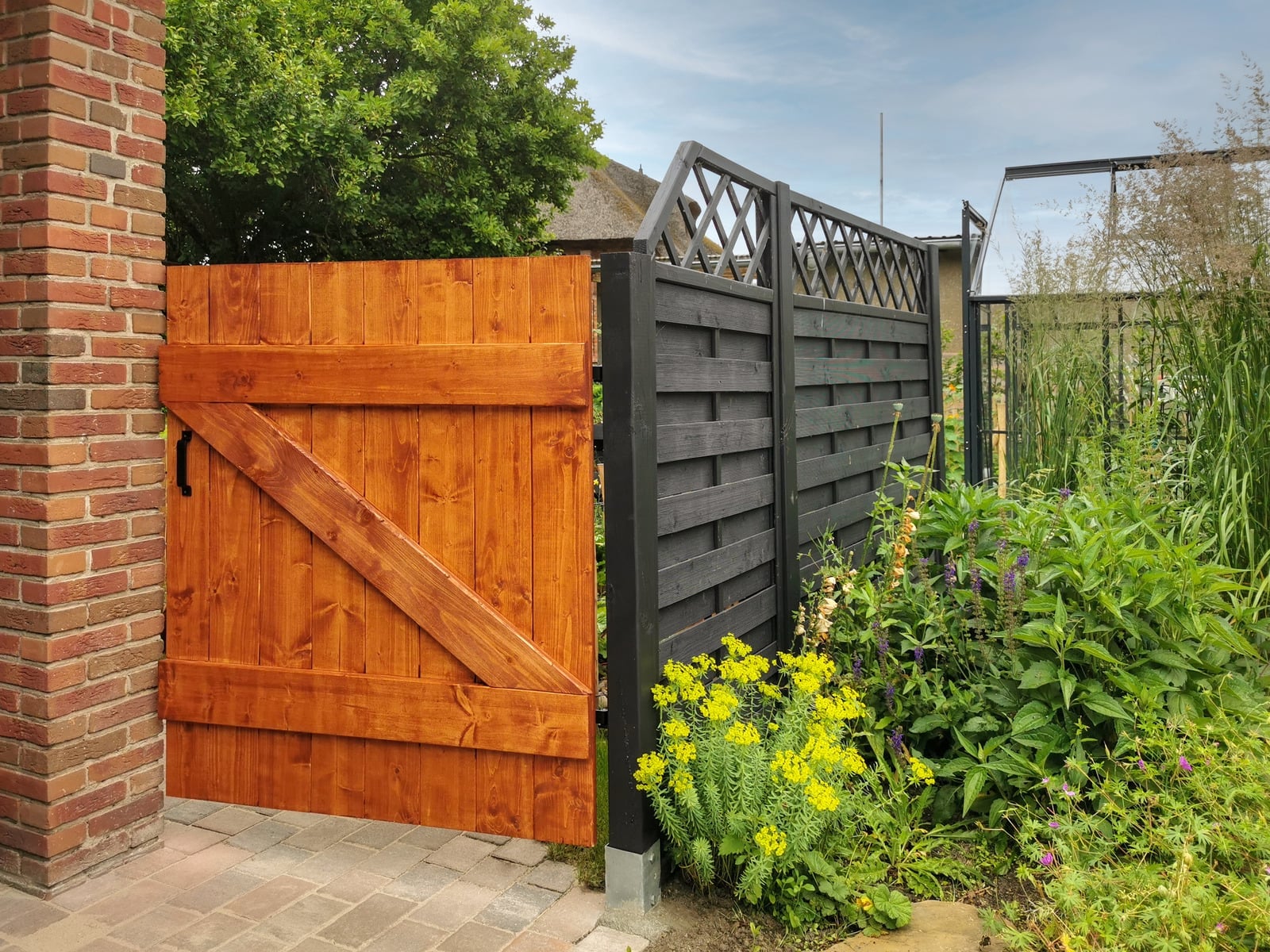
A gate that reads as modern rustic relies on a restrained palette and clean lines. Here, a richly stained wooden gate with a diagonal brace sits against a black metal fence and a brick pillar, the dark tones anchoring the warm wood. The overcast daylight softens the contrast, letting the grain and stain color take center stage. Keeping the surrounding hardscape simple, black metal, plain brick, lets the gate be the focal point without competing finishes.
Weathered Reclaimed Wood Gate with Simple Latch
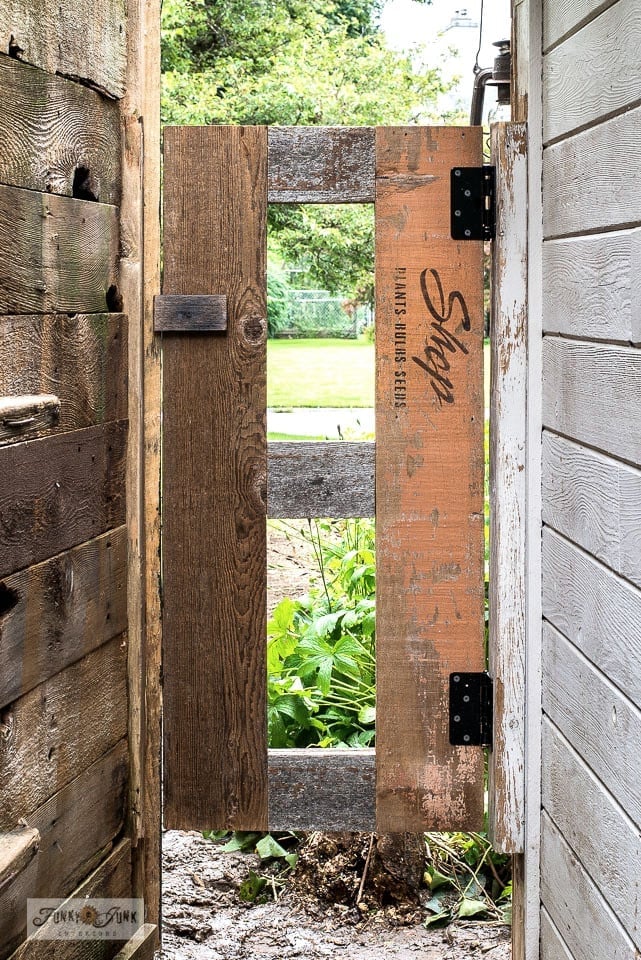
Where a new picket gate feels too tidy, a weathered reclaimed wood gate offers instant character. The close-up view of this gate shows wood that has grayed and textured naturally, with a simple metal latch that does not distract from the surface. The green foliage around the gate entrance softens the rustic feel, making it less barn and more cottage.
Reclaimed wood varies in thickness and may need a sturdy frame to prevent sagging over time. Pair it with plain black hinges and a basic latch so the wood itself remains the focal point. The dappled daylight across the weathered surface is the finish you are after, not a stain you can buy.
Farmhouse Beige Gate with Black Hardware on Brick
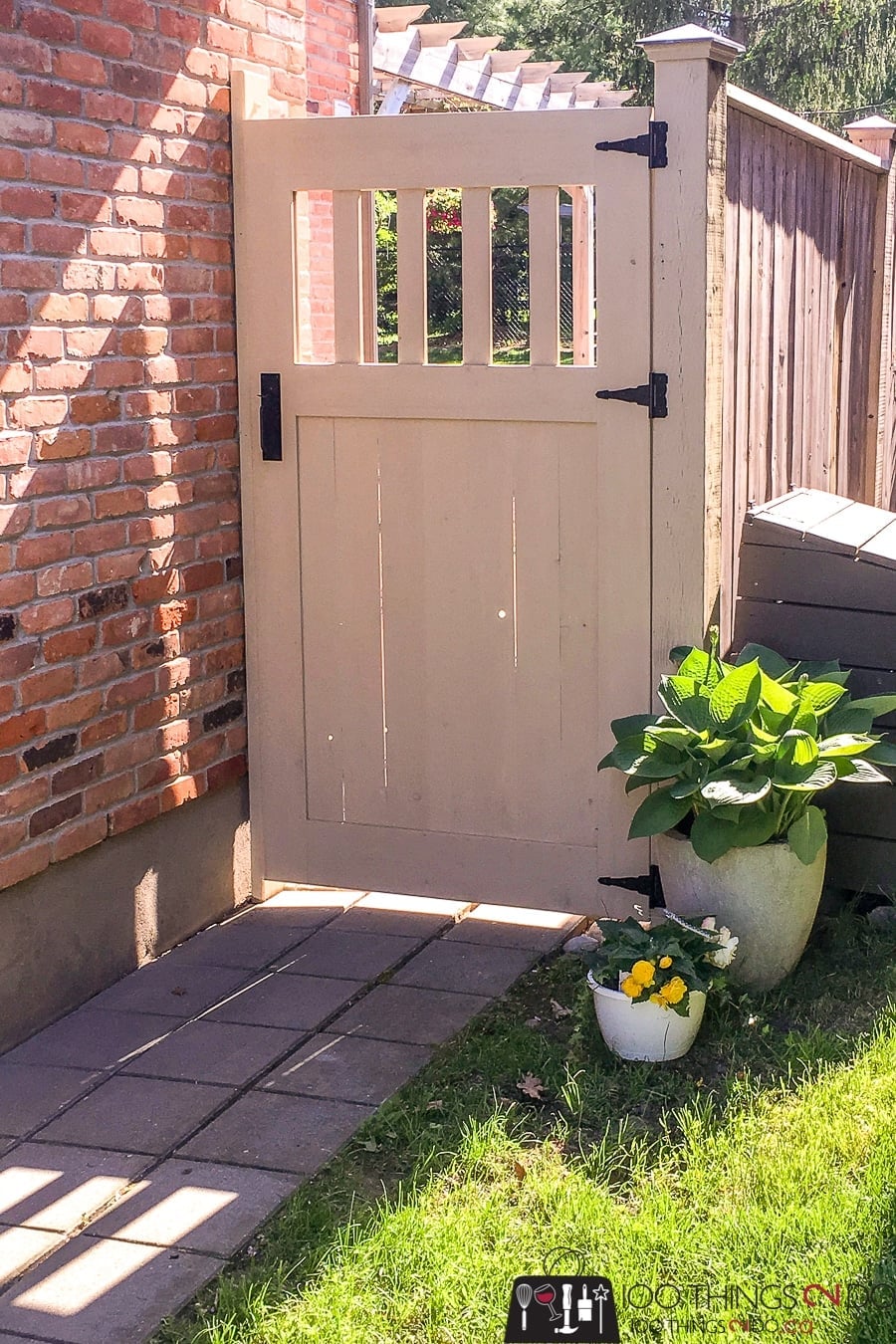
A beige painted gate against red brick is a quiet farmhouse move that does not rely on white. The black hardware, hinges and a handle, breaks up the warm tones without adding a third color. Bright daylight and dappled shade across the brick wall give the scene texture without clutter, and the compact gate suits a side passage or a tucked garden corner.
Ornate Dark Wood Double Gate with Lion Heads
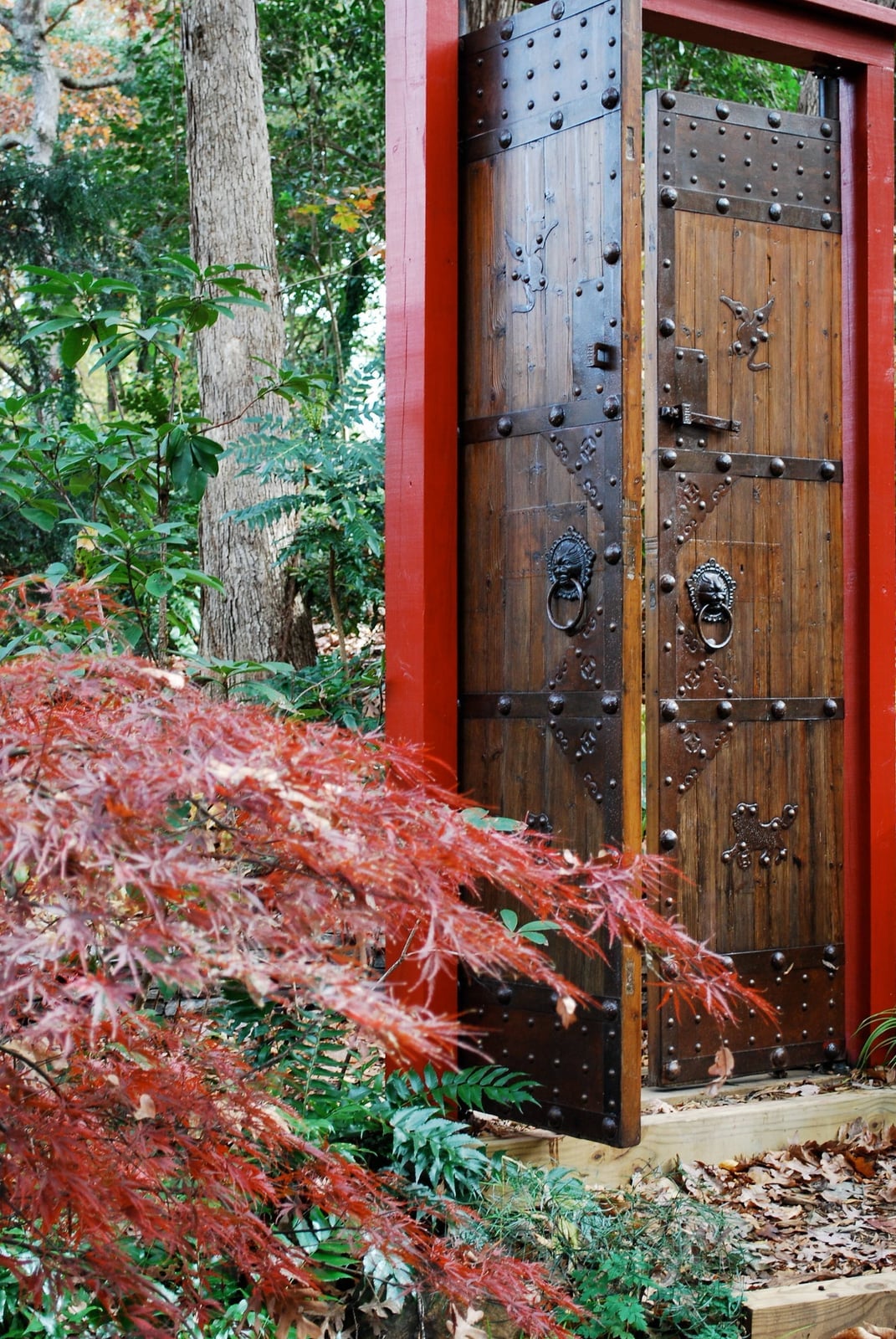
This ornate double gate features dark carved wood panels topped with a red frame. Lion head handles in metal add a sculptural detail. Set within a garden with stone elements and greenery, the gate has an Asian-inspired style. Dappled daylight hitting the carved surfaces gives the dark wood depth, making it appear rich.
Freestanding Slatted Wooden Gate with Wire Mesh
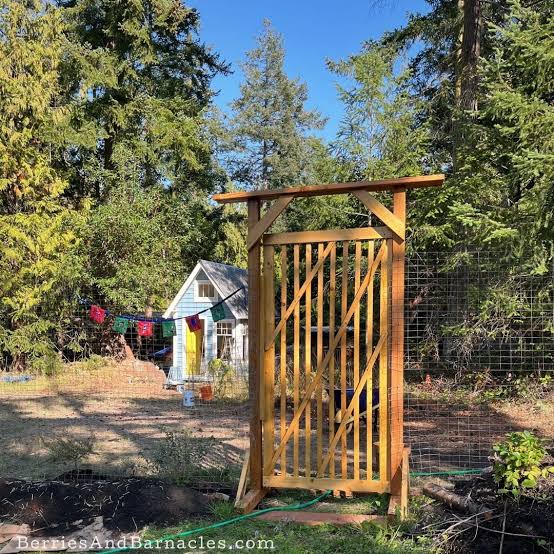
A gate that stands on its own needs a clear purpose. Here, a slatted wooden gate with wire mesh sits as a freestanding element in the garden, framing the path to a small shed beyond. The wire mesh infill keeps the gate visually light while still defining the boundary, and the slats echo the vertical lines of the fence on either side.
For a freestanding gate, the posts must be set deep enough to handle wind and daily use without shifting. The open slats and mesh let air and light pass through, which also means less wind resistance than a solid panel gate. Keep the planting around the base low so the gate remains the functional center of the layout.
Lavender Painted Doors as a Shabby Chic Garden Gate
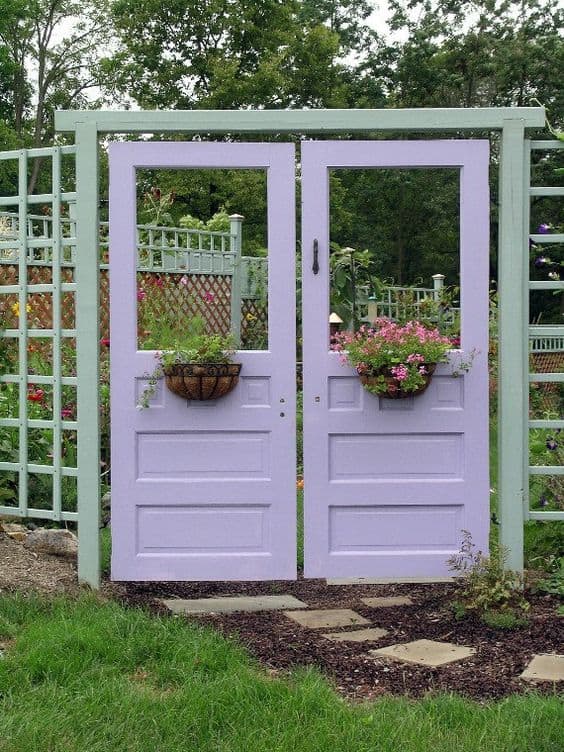
A pair of old doors in lavender paint can work as a garden gate with immediate charm. The soft purple stands out against the green of hanging baskets and surrounding plants, giving the entrance a lived-in, shabby chic garden feel. This approach leans on what you already have, turning a salvaged find into a functional gate without custom carpentry. The weathered paint and simple hardware keep the look casual, while the doors themselves create a wide, welcoming opening. It is a clever way to add color and history to a garden path, using materials that cost nothing but time to source.
Robust Rustic Timber Gate with Wire Mesh Infill
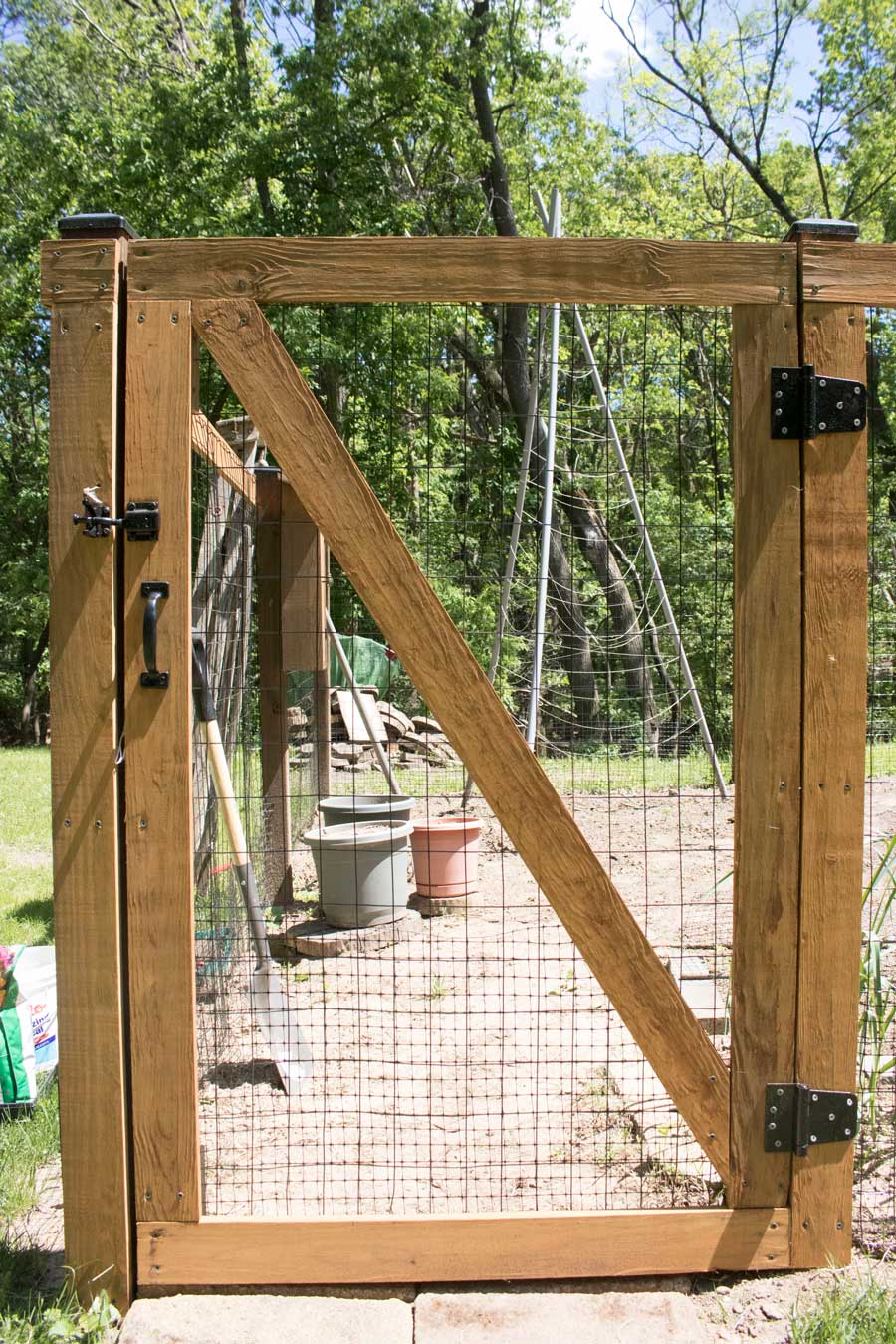
A practical rule for a garden gate is to match the material to the job it needs to do. This rustic timber gate uses a diagonal wooden brace for structural support, with a wire mesh panel filling the frame. The natural wood and gray-green palette lets it blend into the garden, while the mesh keeps the view open and the space feeling airy. The bright daylight highlights the grain of the wood and the functional metal hardware. For a durable, DIY rustic timber garden gate, the diagonal brace prevents sagging over time, and the wire infill reduces wind load. This design balances sturdiness with a light, open look.
Double Wooden Gates Between Weathered Brick Pillars
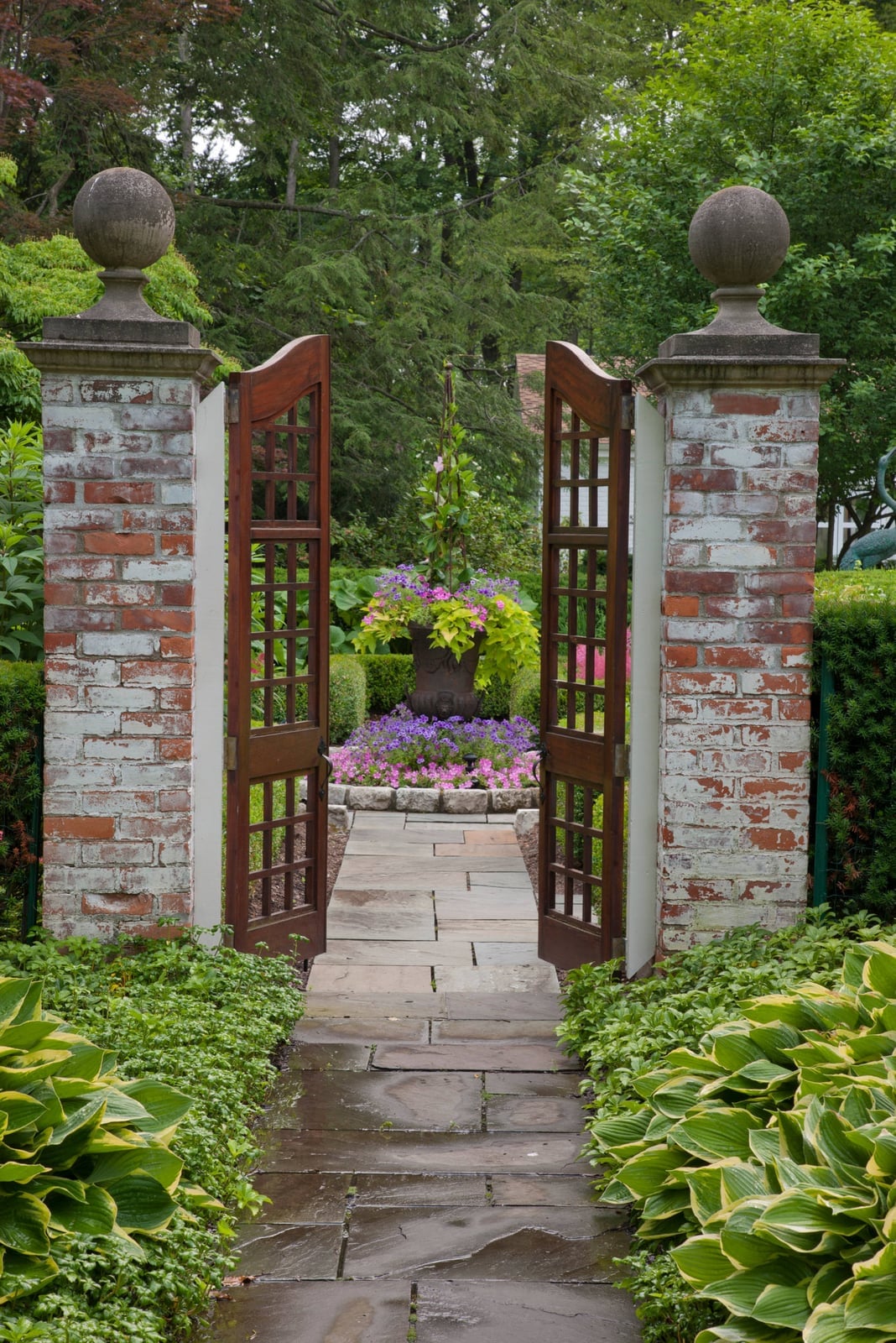
Where a single gate feels too narrow, double wooden gates offer a more balanced entry. Here, weathered brick pillars frame the opening, with the warm brown of the wood and the red of the brick sitting naturally together under overcast light. The double gates swing inward, creating a generous passage for garden equipment or guests. The aged brick adds texture and a sense of permanence that new materials often lack.
For a traditional layout, the width of the opening should feel proportional to the height of the pillars. The brick pillars anchor the double wooden garden gates brick pillars, making the entrance feel solid without being heavy. This design works well for wider driveways or main garden paths, where the eye needs a clear frame to define the transition between spaces.
Traditional Wooden Gate with Diagonal Brace on Brick
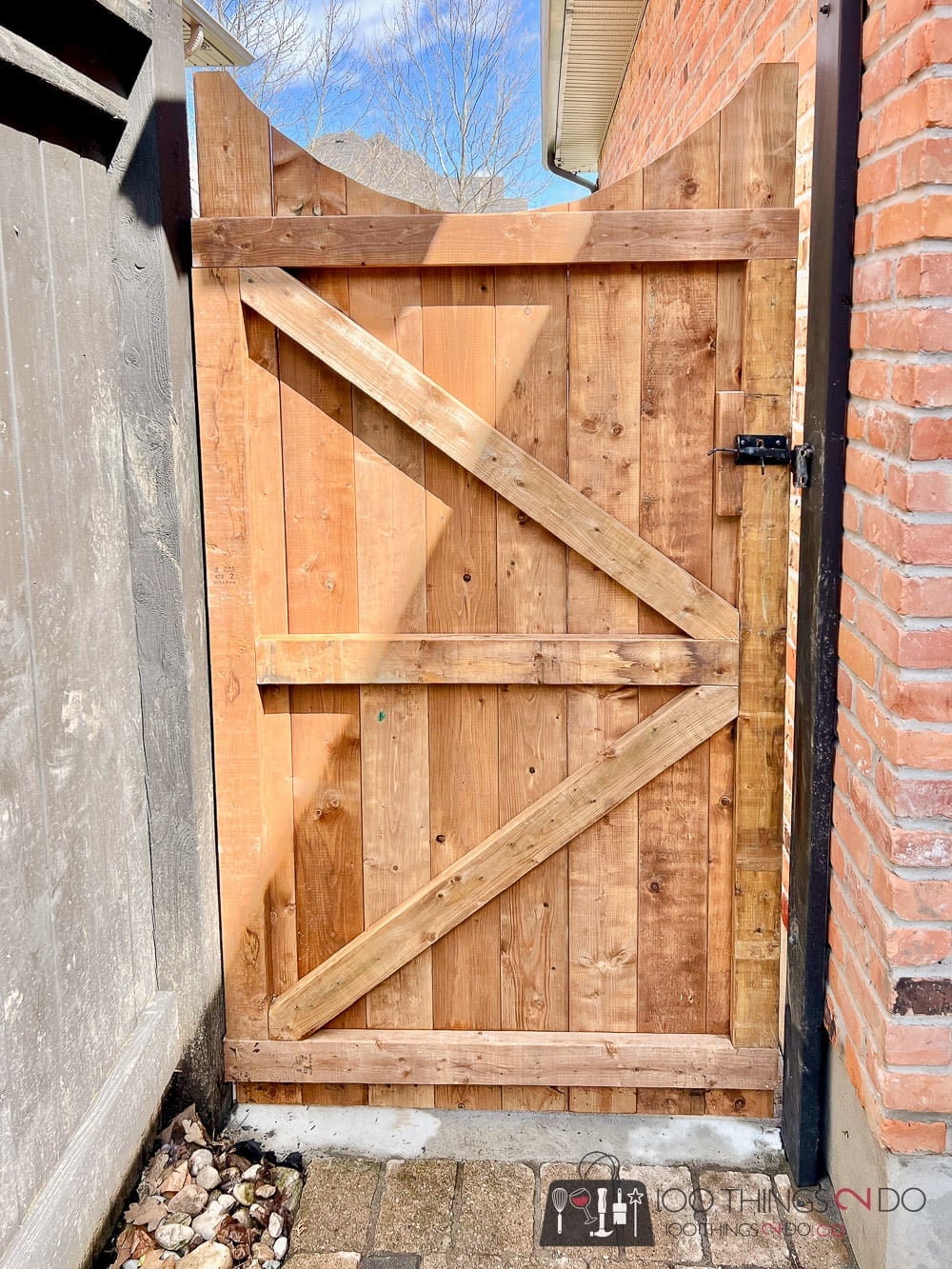
A diagonal brace on a wooden gate is not just decorative, it stops the gate from drooping over time. This traditional wood gate diagonal brace brick setup places the gate between a fence and a brick wall, making the most of a compact yard. The natural wood and gray tones keep the look understated, while the metal hardware adds a functional detail. The brace runs from the lower hinge side to the upper latch side, transferring the weight of the gate evenly. For a small space, this layout keeps the entrance tidy and the structure sound, without adding visual clutter.
White Picket Gate Under a Rose-Covered Arch
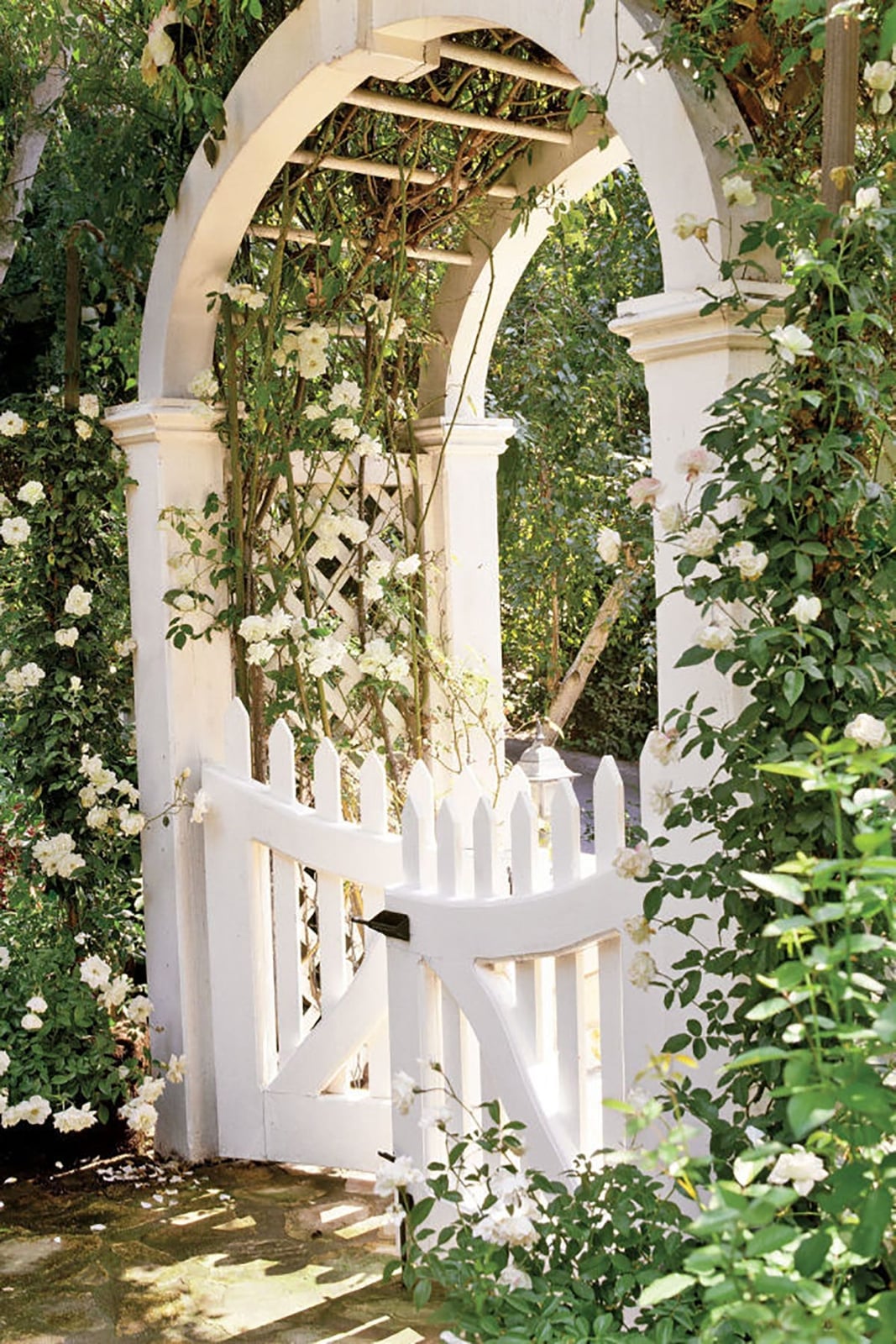
A white picket gate under a white archway covered in abundant pink roses is a cottage garden classic. The bright daylight makes the white wood and soft pink petals pop against the green foliage, creating a romantic entry. The white picket garden gate rose arch works because the arch repeats the gate’s color, tying the two elements together visually. The roses add height and fragrance, softening the hard lines of the wood. For this scale and proportion, the arch should be wide enough to clear the gate when it swings, and the roses need a sturdy support. It is a straightforward way to make a simple gate feel like a garden destination.
Modern Rustic Cedar Gate with Cross Brace
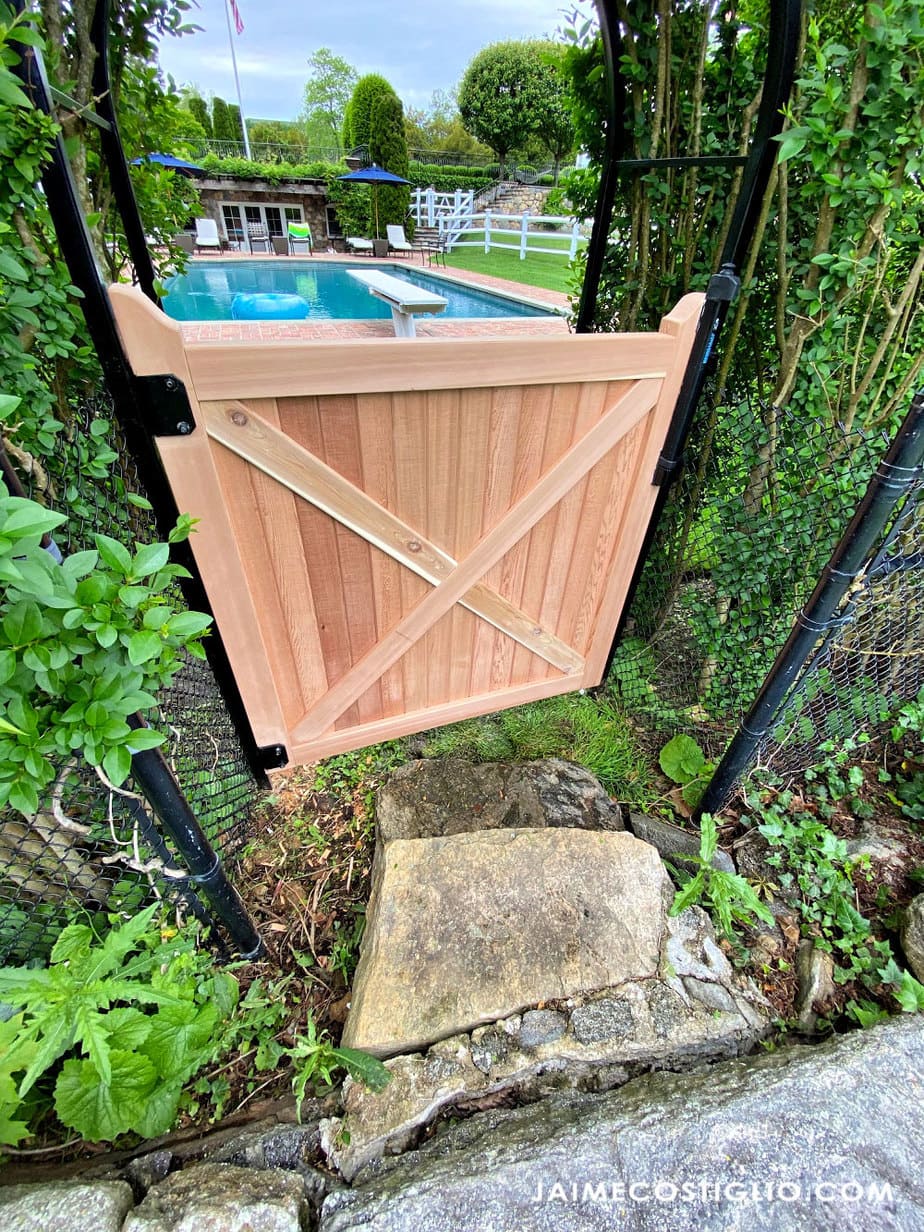
A garden gate works best when its material matches the path it opens onto. A natural cedar gate with a cross brace leads to stone steps, and the wood stands out against the black fence. The palette stays quiet: natural wood, green from the plants, and a hint of blue from the sky. Overcast daylight softens the grain, so the gate does not compete with the stone underfoot. The gate is the focal point, with the garden path as a simple backdrop.
For a similar approach, choose a cedar gate with a visible cross brace. Cedar resists rot naturally, and the brace adds structure without extra hardware. The black fence frames the wood tones, and the stone steps anchor the whole scene. The gate looks built for the garden, not dropped into it.
Arched Wrought Iron Gate with Floral Motifs
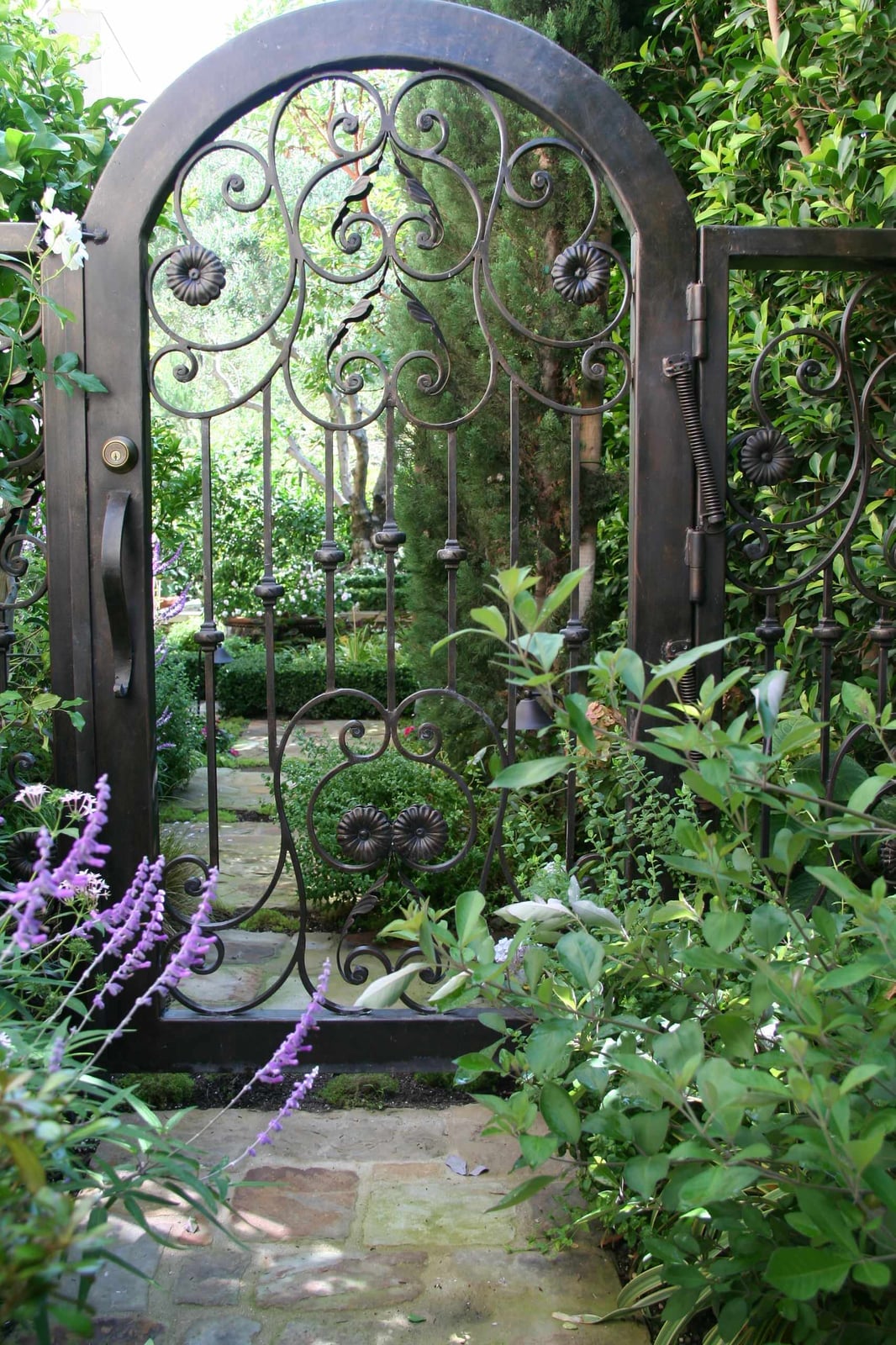
An arched wrought iron gate with delicate floral motifs opens onto a stone path. The dark metal holds its own against the green and purple of the garden, and the soft daylight catches the scrollwork without glare. The gate anchors the composition, and the stone path leads the eye straight through. The palette stays tight: dark metal, green leaves, purple blooms. The floral motifs break the strict geometry of the arch, making the gate feel like part of the garden.
Simple Brown Picket Gate with Pointed Tops
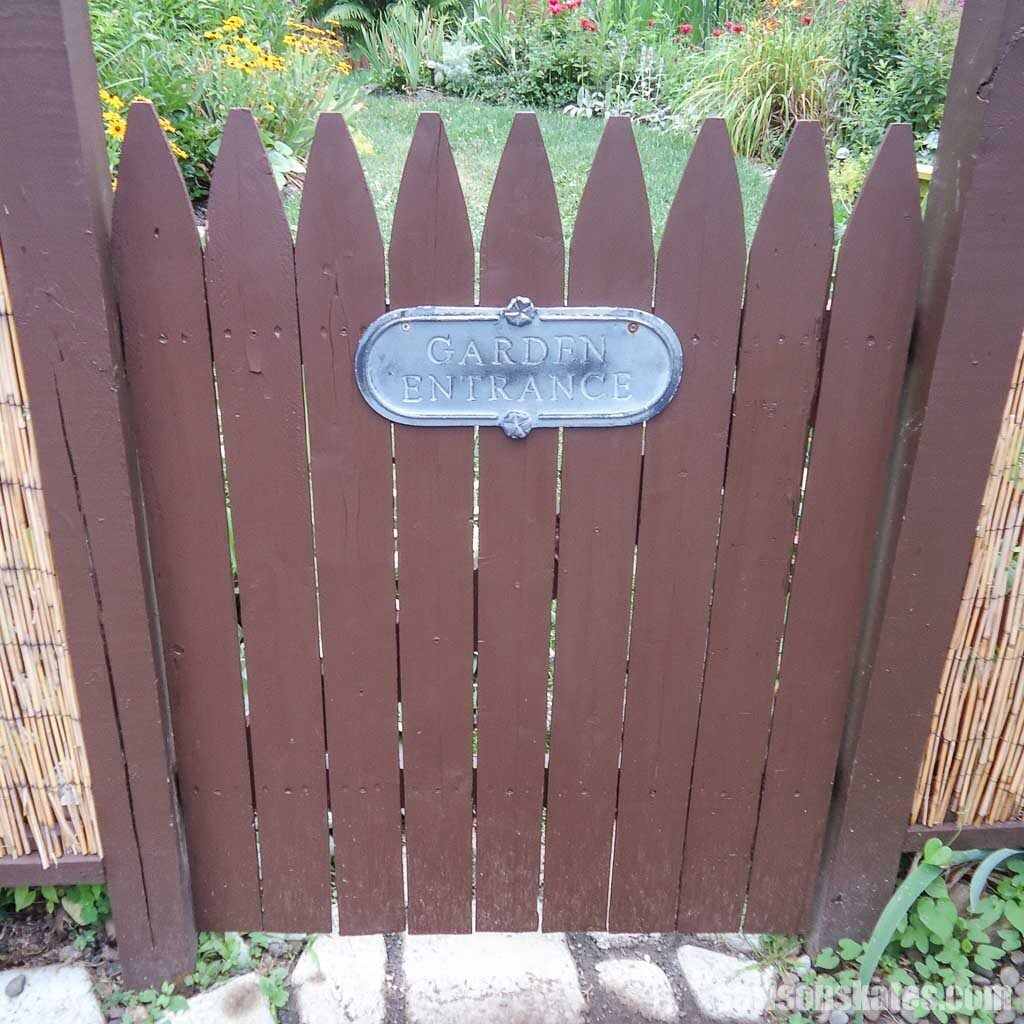
For a compact garden, a simple gate works best. A brown wooden picket gate with pointed tops sits against a bamboo screen, and the narrow pickets look clean and not busy. The wood tone blends with the bamboo, so the gate does not fight the fence behind it. The pointed tops add a touch of detail without extra ornament. The palette stays natural: brown wood, bamboo, green leaves. The style is defined by that simplicity, and the pointed tops break the straight line just enough to keep it from being flat.
Pointed Top Wooden Gate with Decorative Finials
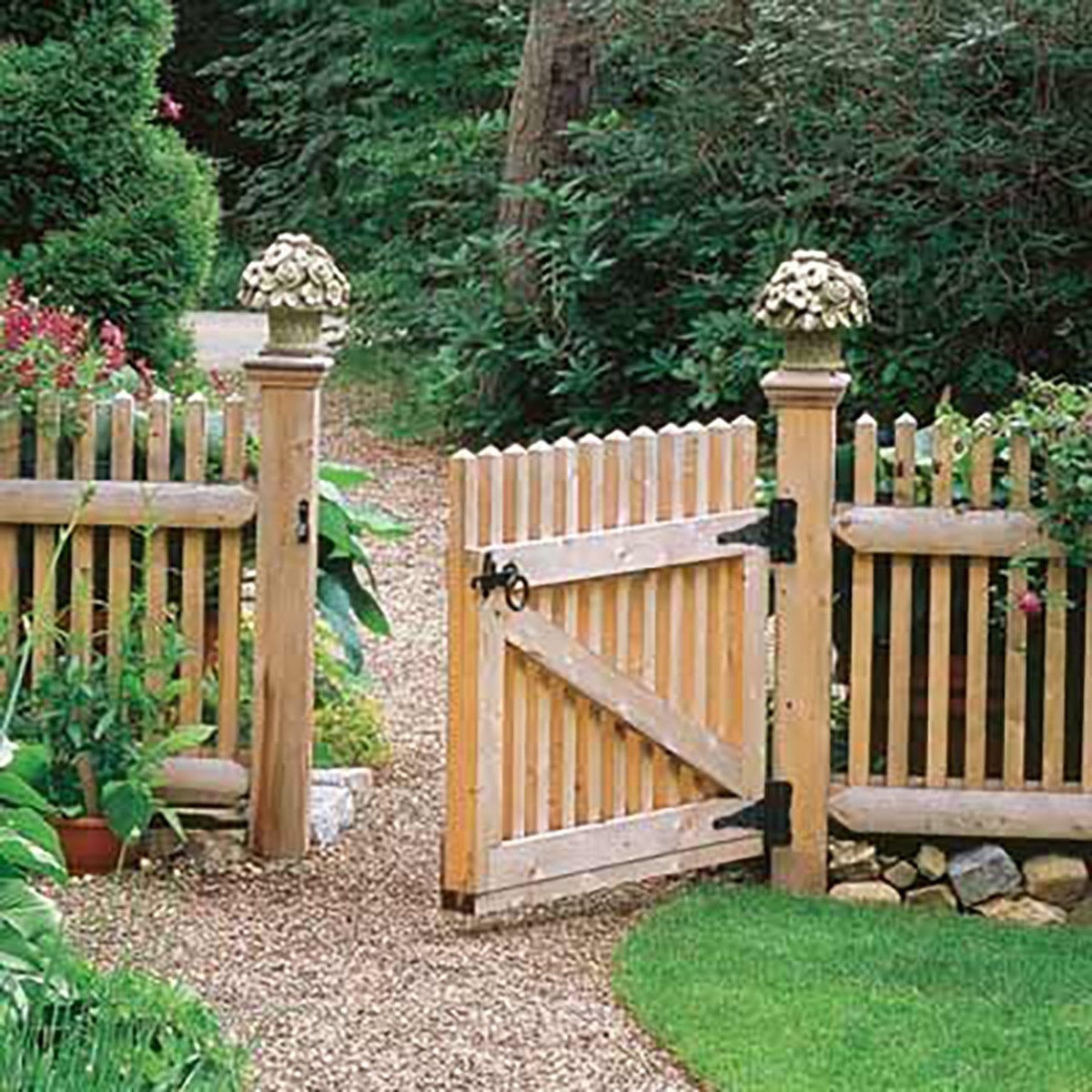
Where a flat-topped gate can feel abrupt, a pointed top with decorative finials softens the transition. A wooden gate with a picket fence leads down a gravel path, and the decorative posts on either side echo the finials on the gate itself. Bright daylight hits the wood grain and the green and pink of the garden, so the gate reads as inviting rather than imposing. The layout places the gate central, and the gravel path pulls the eye forward. The style is cottage garden: natural wood, a picket fence, and those ornate post tops. The finials break the straight lines of the pickets, and the gravel path breaks the formality of the gate.
Modern Black Slatted Gate Between White Walls
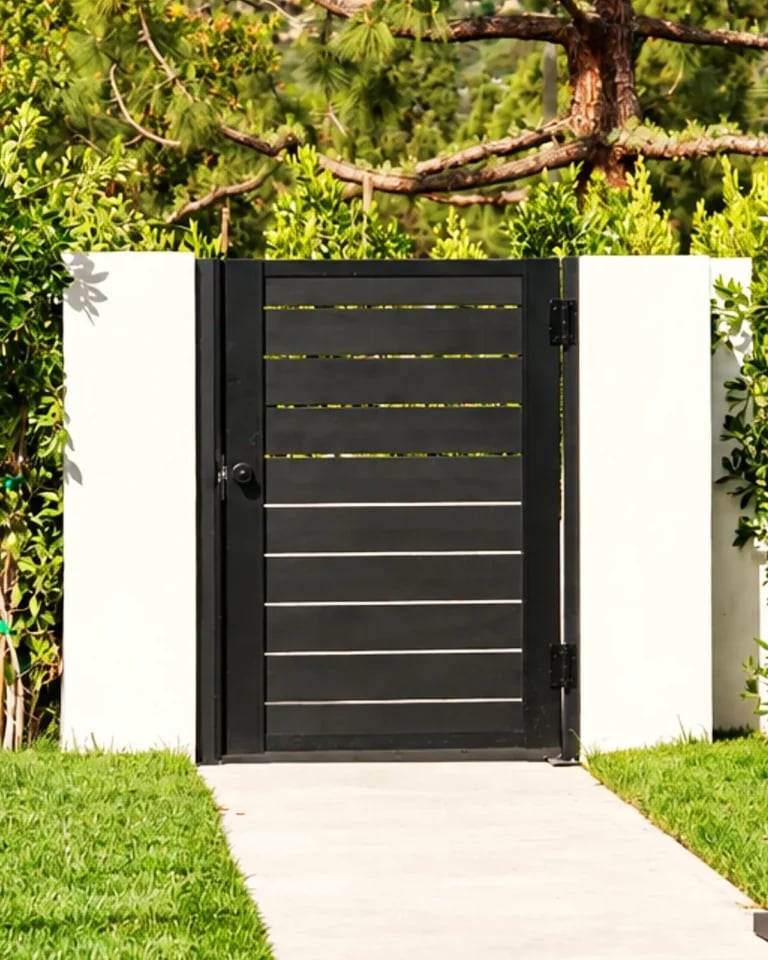
A sleek black slatted gate sits between two white walls, and the contrast is immediate. The slats let light filter through, and the concrete path continues the clean line from gate to yard. The palette is black, white, and green from the grass. The layout is open plan: the gate frames the yard without closing it off. The style is modern, defined by the black slats against the white walls. The slats break the solid surface, and the concrete path breaks the grass, keeping the whole scene crisp.
Rustic Arched Wooden Gate with Lanterns
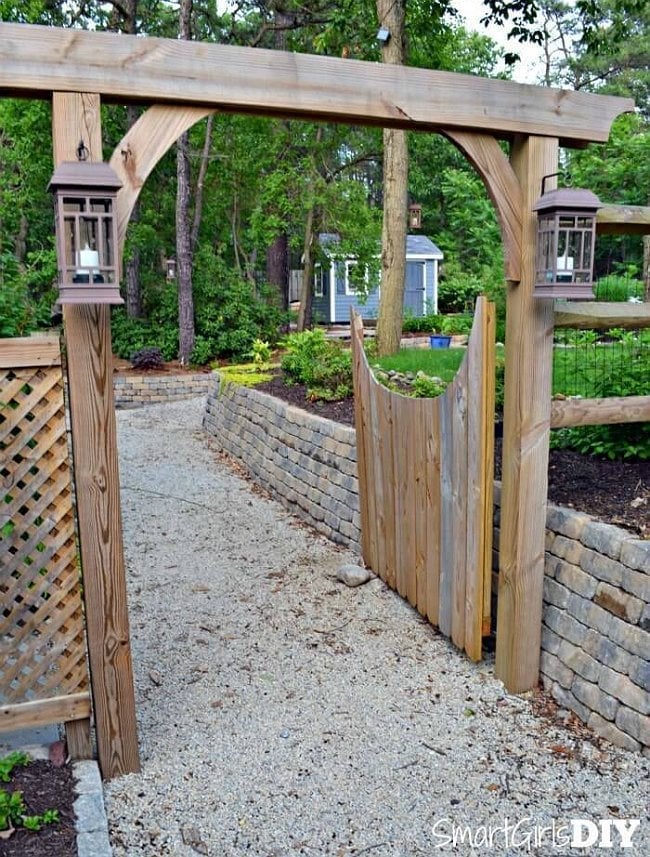
An arched wooden gate with lanterns on either side sets the tone before you even step through. The natural wood tones and green palette blend with the gray stone wall, while the lanterns add a warm glow that extends the entry’s use into the evening. The gravel path leads the eye straight to the gate, making the garden entrance feel purposeful. For a garden path, a simple layout like this one keeps the arched gate central and the surrounding planting uncluttered. Daylight does the work here, but a pair of lanterns means the gate is visible even at dusk.
Farmhouse Green Metal Gate with Red Latch
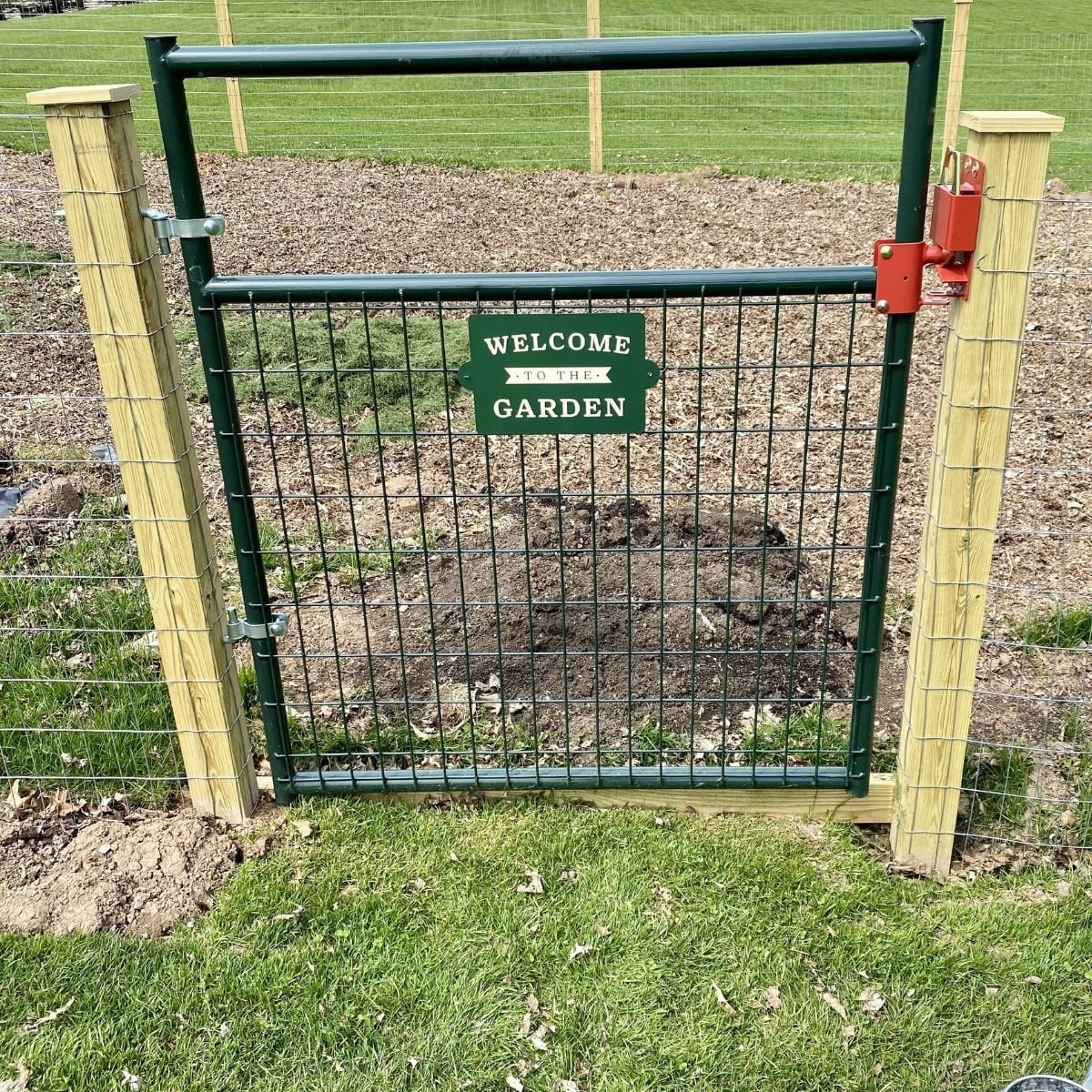
A garden gate can use hardware to draw the eye to the entry without needing extra ornament. This farmhouse green metal gate uses a red latch to focus attention on the entry. The green palette extends the garden look, while the wooden posts and wire mesh infill keep the design grounded. For renters, a metal gate offers a durable option that can be swapped out when you move, since the frame attaches to posts instead of permanent masonry. The red latch is a small detail that breaks up the green and makes the gate feel finished. The palette works because the green is muted enough to recede into the landscape, so the gate never competes with the plants around it.
Traditional Wrought Iron Gate with Stone Pillars
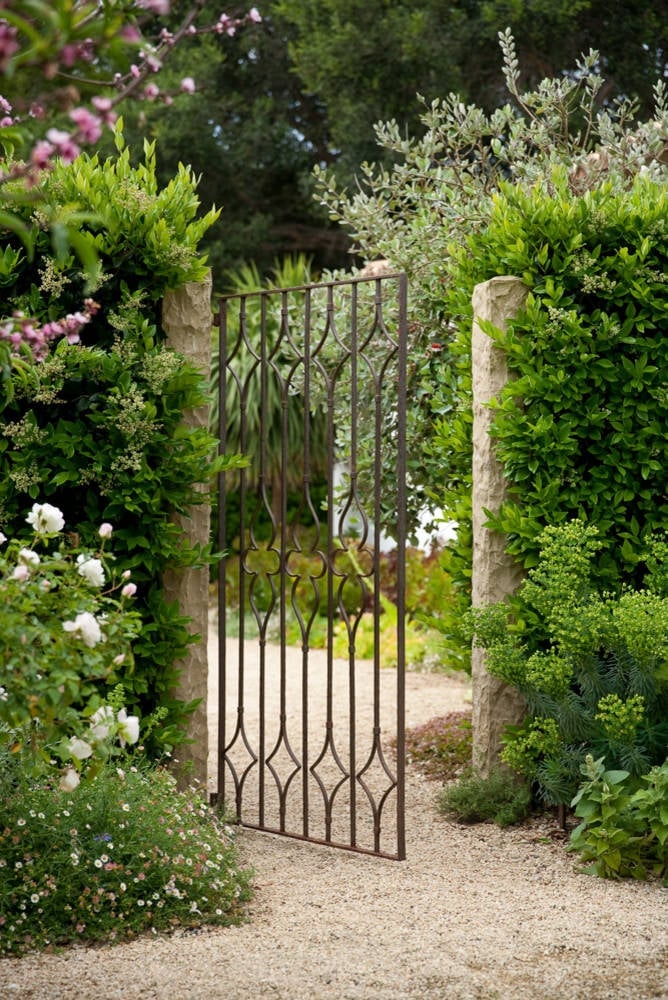
An ornate wrought iron gate set between stone pillars creates a formal entry that frames the garden beyond. The dark metal reads as a crisp line against the beige stone and green planting, while the gravel path continues the traditional feel. For a garden that opens onto a wider lawn, this material combo gives the entrance weight without blocking the view. The stone pillars anchor the gate so it stands up to weather and use, and the ironwork lets light and air pass through. It is a look that relies on the contrast between the heavy stone and the delicate metal scrollwork.
Cream-Painted Farmhouse Gate on Red Brick Wall
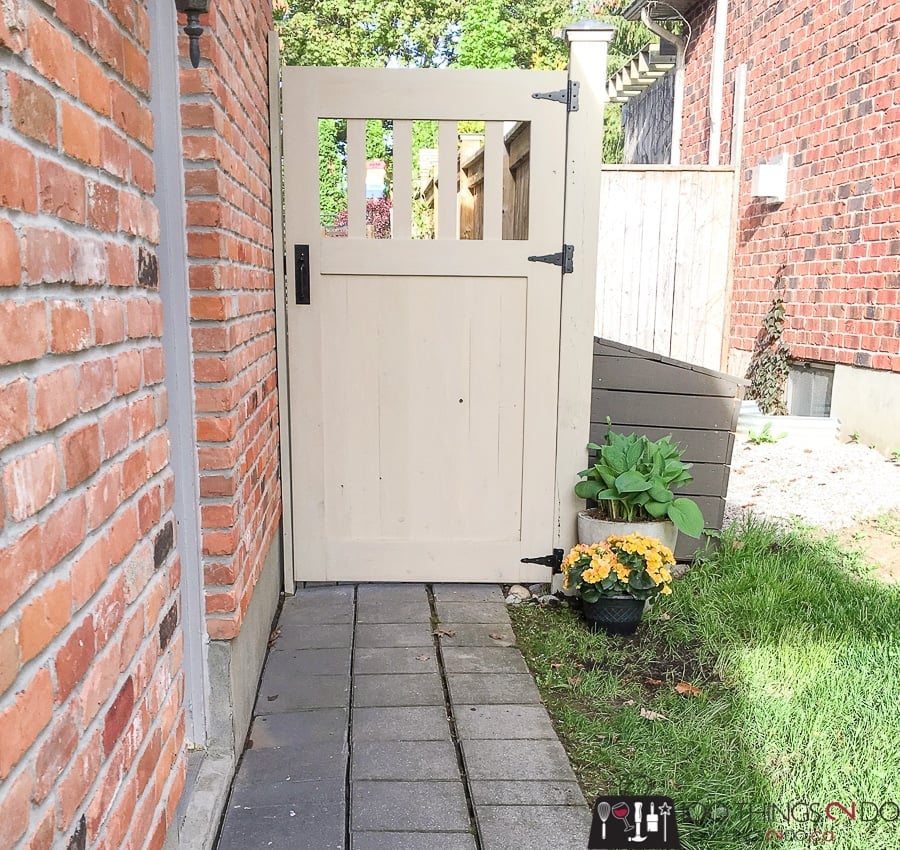
A cream-painted wooden gate set into a red brick wall uses the contrast to define the entry without extra trim. The brick wall provides a warm, textured backdrop that makes the cream gate stand out, while the stone path and potted plants soften the hard edges. For a garden where the wall is the main boundary, the layout works because the gate is centered and the path leads straight to it. The cream paint reflects daylight, so the gate reads as bright even on overcast days. This setup keeps the gate as the hero element, with the brick wall acting as a neutral frame. The palette is simple: cream, brick red, and green from the plants, which is enough to make the entry feel complete.
Rustic Wooden Gate with Arched Arbor and Vines
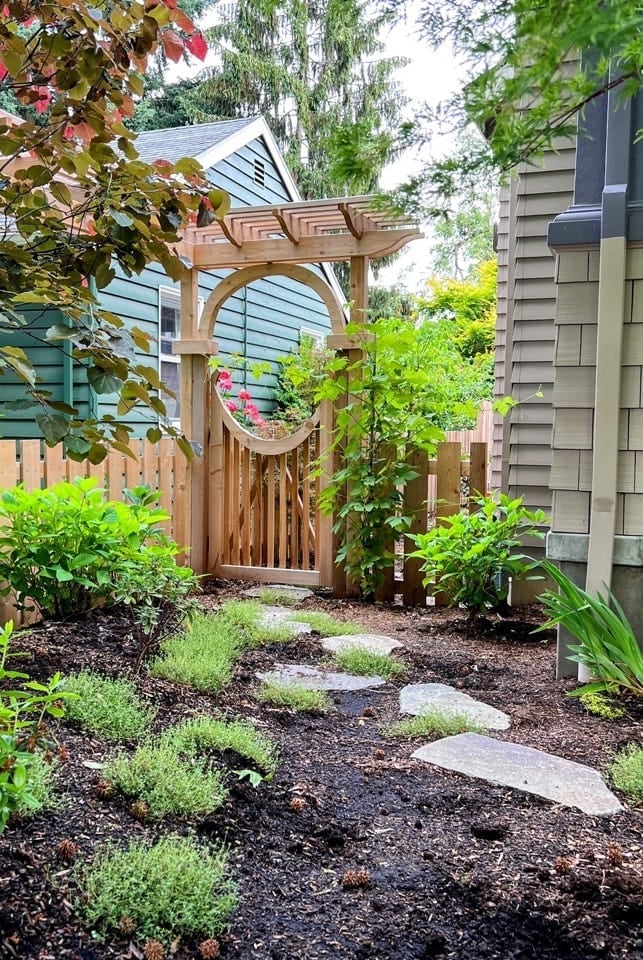
A plain plank gate can block a view, but this rustic wooden gate with an arched arbor and climbing vines invites you in. The arbor adds height and frames the gate, while the vines soften the wood and introduce pink blooms that shift with the season. The stepping stones lead along the path, creating a clear route that makes the garden feel larger. For a narrow garden path, an arched arbor makes the space feel roomier than a flat-topped gate would. The natural wood palette keeps the gate from competing with the vines, so the plants become the main event. In summer, the arbor provides partial shade, and in winter the bare wood structure remains a strong visual anchor. This layout works because the arbor and gate are one unit, so the entry feels cohesive and unified.
Modern Green Metal Gate with Wire Mesh
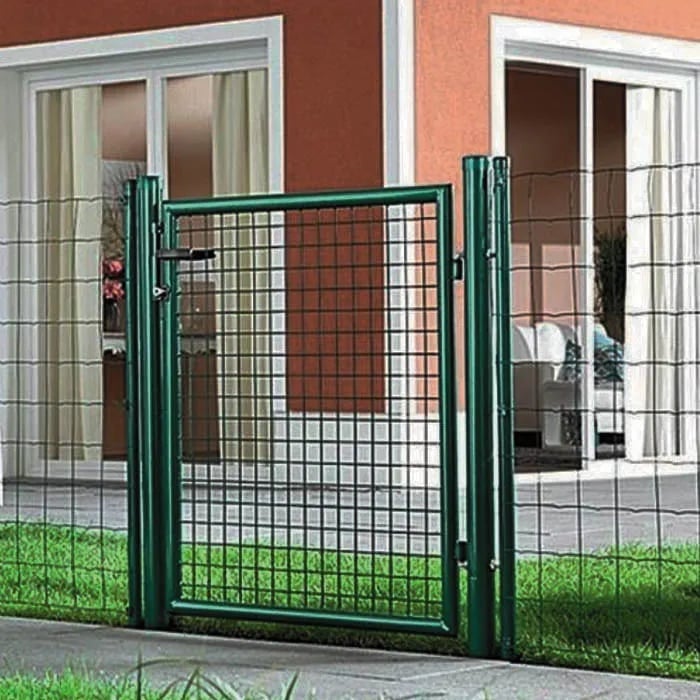
A bright green metal gate makes a statement against a neutral garden backdrop. The modern design uses a simple rectangular frame with wire mesh infill, letting you see through to the path and grass beyond. Paired with a matching wire fence and white sliding doors in the distance, the gate becomes a crisp focal point without blocking the view. The bold color works because the palette stays quiet browns, whites, and natural green. If you want a gate that defines the garden’s entry without closing it off, this is one of the 33 DIY garden gate ideas that proves metal and mesh can feel fresh and modern.
Pale Blue Cottage Gate with Rustic Fence
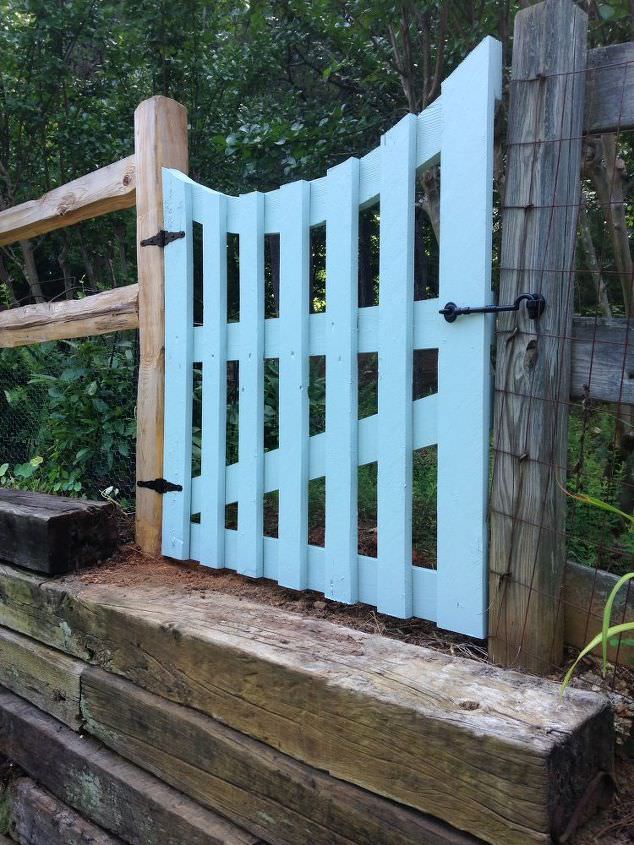
This pale blue wooden gate brings a soft, cottage feel to a simple fence line. The slatted design and metal latch keep it functional, but the color does the work. Pale blue reads as airy and relaxed, especially against the natural wood tones of the rustic fence posts and the green of surrounding plants. The palette works because the gate is the only painted element everything else stays raw or neutral. If you are working with a compact boundary, a single painted gate can shift the whole mood of the entry. Among the 33 DIY garden gate ideas, this one shows how a restrained palette can make a small detail feel intentional and complete.
Ornate Black Metal Gate with Climbing Vines
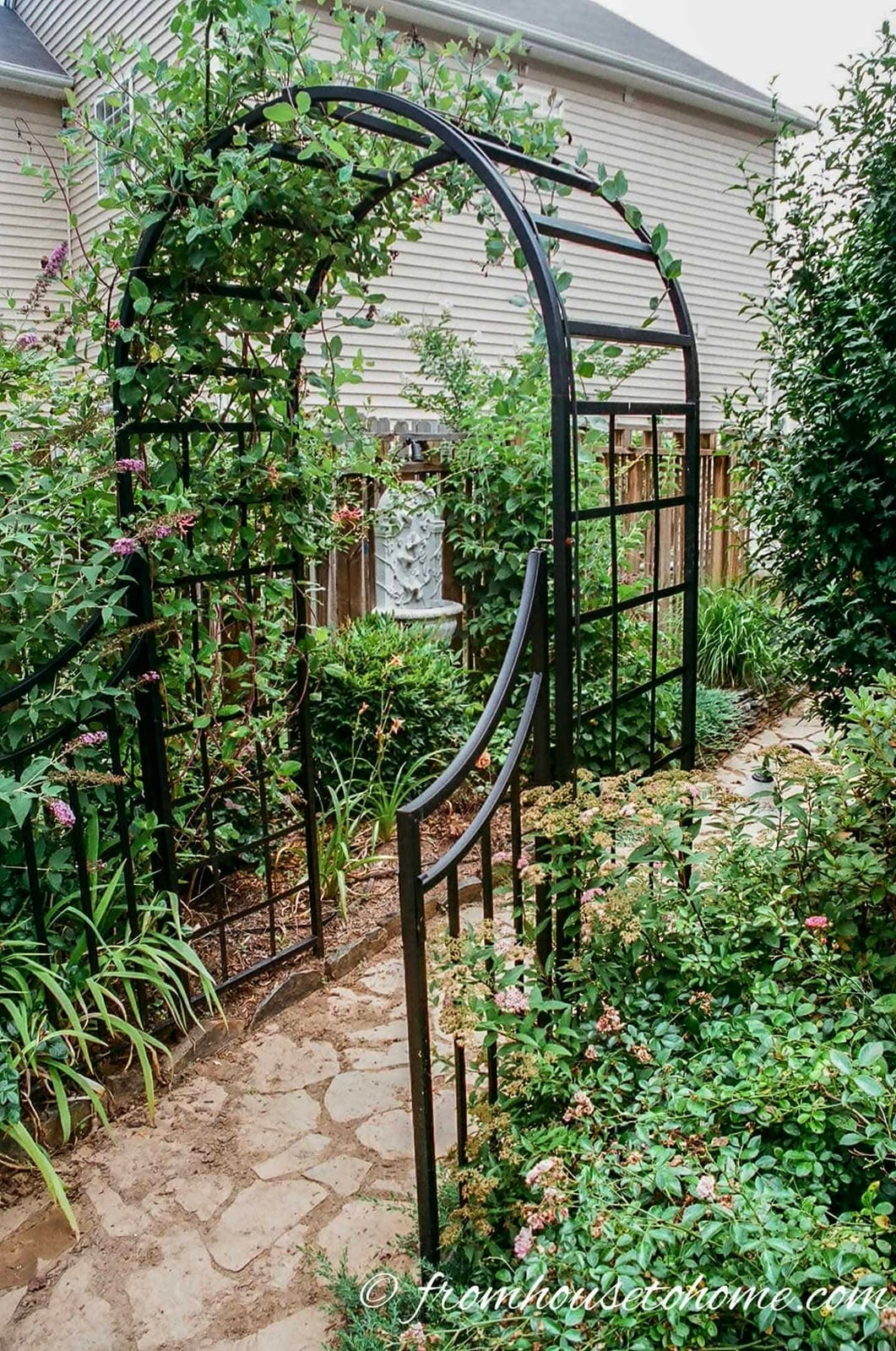
An ornate black metal gate can feel formal, but here it softens into something inviting. The scrollwork and pointed finials are traditional, yet the climbing vines creeping over the black frame add a looser, organic layer. Pink flowers and green leaves break the symmetry without losing the gate’s structure. The stone path leading through the gate pulls the eye forward, making the entrance feel like a destination rather than a barrier.
The key is the contrast between rigid metal and living plants. The gate provides the bones, and the vines fill in the gaps over time. If you want a traditional gate that does not feel stiff, let plants do the softening. It is one of the 33 DIY garden gate ideas that proves materials can work together instead of competing.
Final Thoughts
Building your own gate takes time with tools and wood, but the result is a piece that frames your garden exactly how you want. The best designs balance the gate’s weight with the opening size, use hardware that matches the style, and let the surroundings dictate the finish. A well-hung gate with a solid latch and proper clearance will last through seasons of use. Pick the idea that fits your garden’s character, gather the materials, and enjoy the process of making an entrance that is yours alone.