Half wall paneling is one of those design moves that does a lot without taking over a room. It adds texture, defines a space, and protects walls from scuffs, all while keeping the upper half open and airy. Whether you’re drawn to traditional beadboard, modern slats, or painted moldings, these 26 ideas show how paneling the lower half can shift the feel of a hallway, bathroom, or living area.
I’ve gathered real-room examples that focus on the paneling itself, so you can see how each style works in context. From soft pinks to dark navies, the options are broader than you might expect.
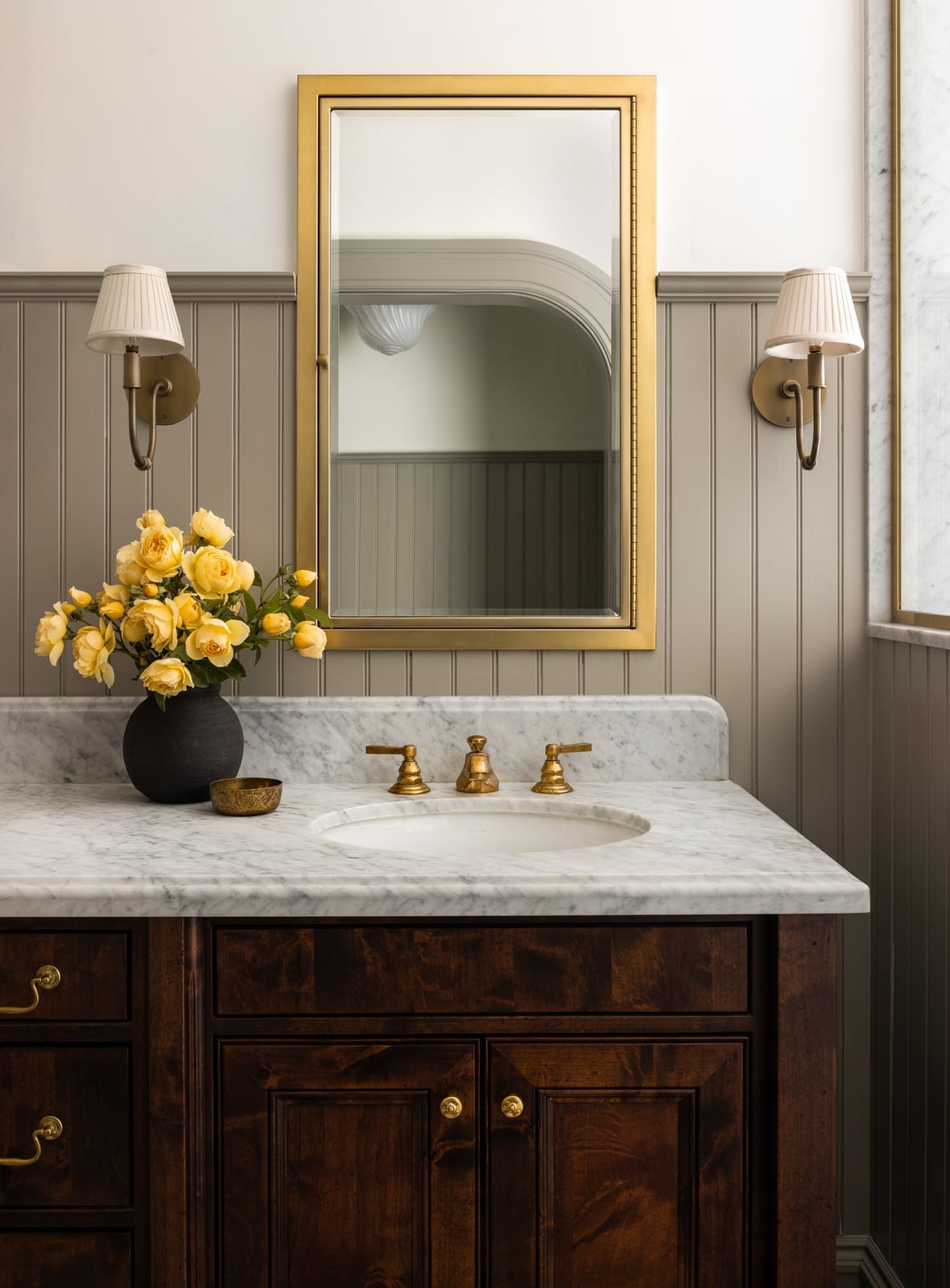
Traditional Taupe Beadboard in a Compact Bathroom
A taupe beadboard half wall sets a quiet traditional tone in a compact bathroom, with warm wood, white marble, and brass sconces keeping the palette grounded. The paneling stops at chair-rail height, which lets the soft taupe read as a deliberate accent rather than a dark cave. Yellow roses on the vanity add a temporary pop of color that breaks the neutrality without committing to a permanent change, a useful trick for renters or anyone who likes to swap out decor seasonally. The centered layout keeps the room feeling orderly even in a small footprint.
Modern Farmhouse White Board and Batten Living Room
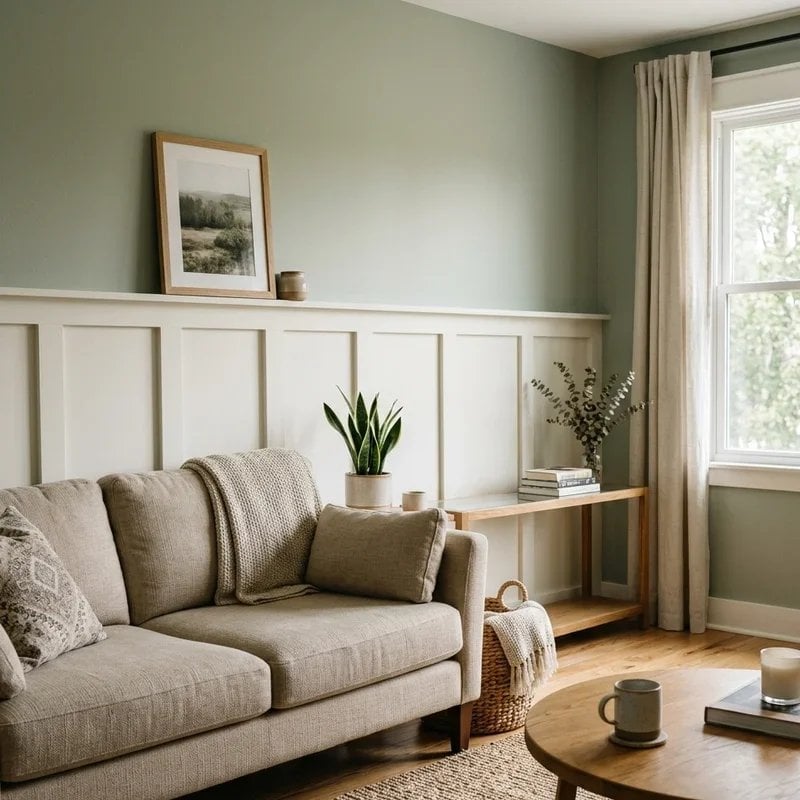
A white board and batten half wall delivers the modern farmhouse look without the need for a full renovation. The crisp white paneling sits below a soft beige wall, with a green linen sofa and a knit throw adding warmth without competing for attention. The palette leans on neutrals with a single green accent from a potted plant, keeping the room airy and grounded at the same time. A floating wood shelf above the paneling provides a simple landing for small decor, which is a practical way to add character without cluttering the wall itself.
Japandi Style Oak and Black Slatted Wall Paneling
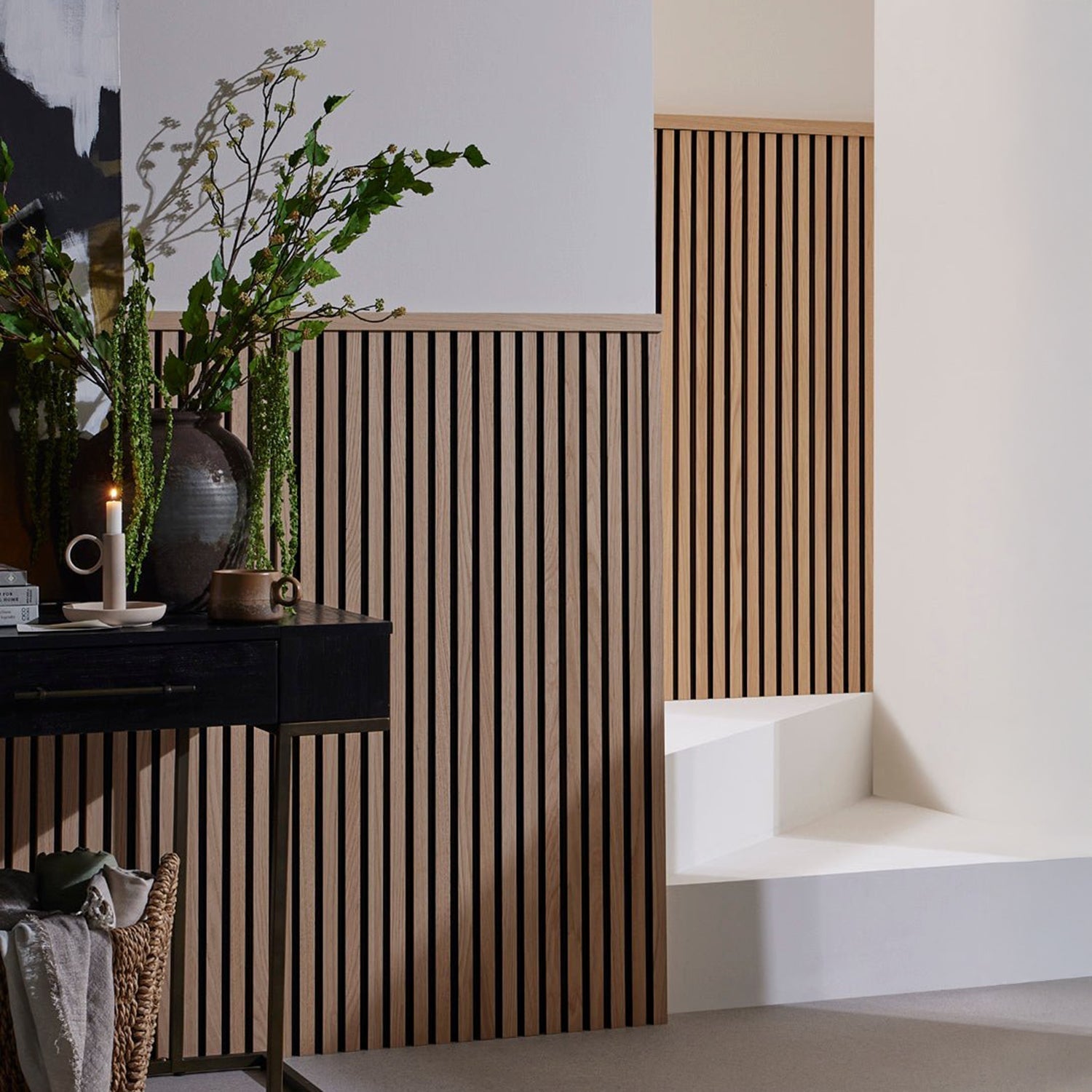
Can slatted wood paneling work in a narrow hallway without making it feel smaller? Yes, when the slats run vertically in natural oak with black painted MDF spacers, the wall gains texture that draws the eye upward. The warm oak tones balance the black elements, while a low console table and a woven basket keep the entryway functional without crowding the space. A single candle on the table adds soft ambient light, which is a low-cost way to make a hallway feel intentional rather than just transitional.
The key to Japandi slatted paneling is the ratio of wood to void space. Too much black between the slats reads as heavy, too little and the texture disappears. The natural oak finish also means you can skip paint entirely, which saves time and makes future updates simpler if your taste shifts.
Elegant Cream Raised Panel Molding in a Living Room Corner
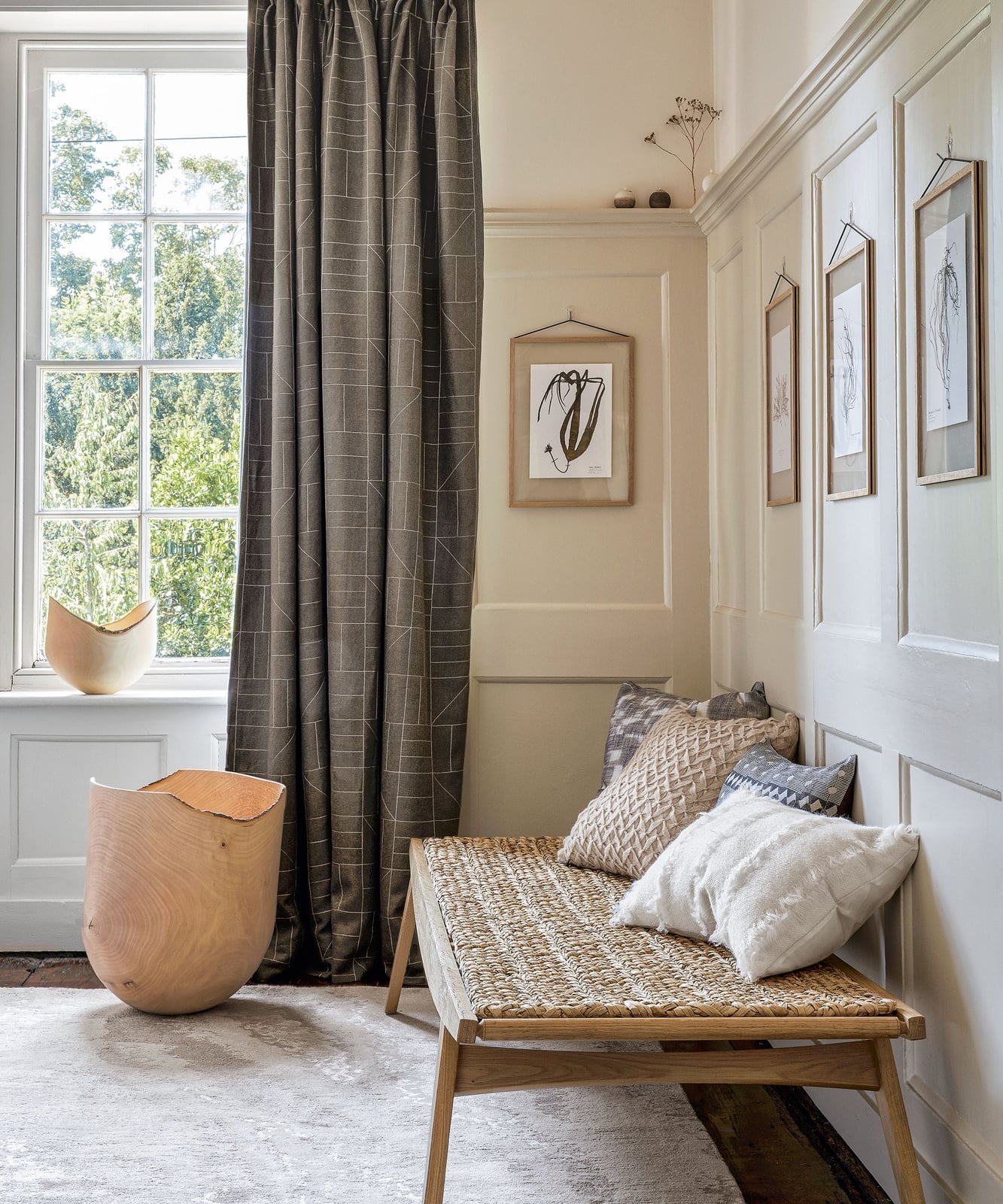
Cream raised panel molding turns an unused corner into a deliberate feature, with the warm white panels catching natural daylight from a nearby window. The traditional molding profile adds depth that flat paint alone cannot achieve, and the soft cream pairs well with natural wood and gray linen accents. A sculptural vase on a small daybed provides a focal point that echoes the paneling’s vertical lines without repeating them exactly. This approach works best when you treat the corner as a vignette rather than a full wall treatment, which prevents an overdone look.
Dark Navy Beadboard Paneling in a Farmhouse Kitchen
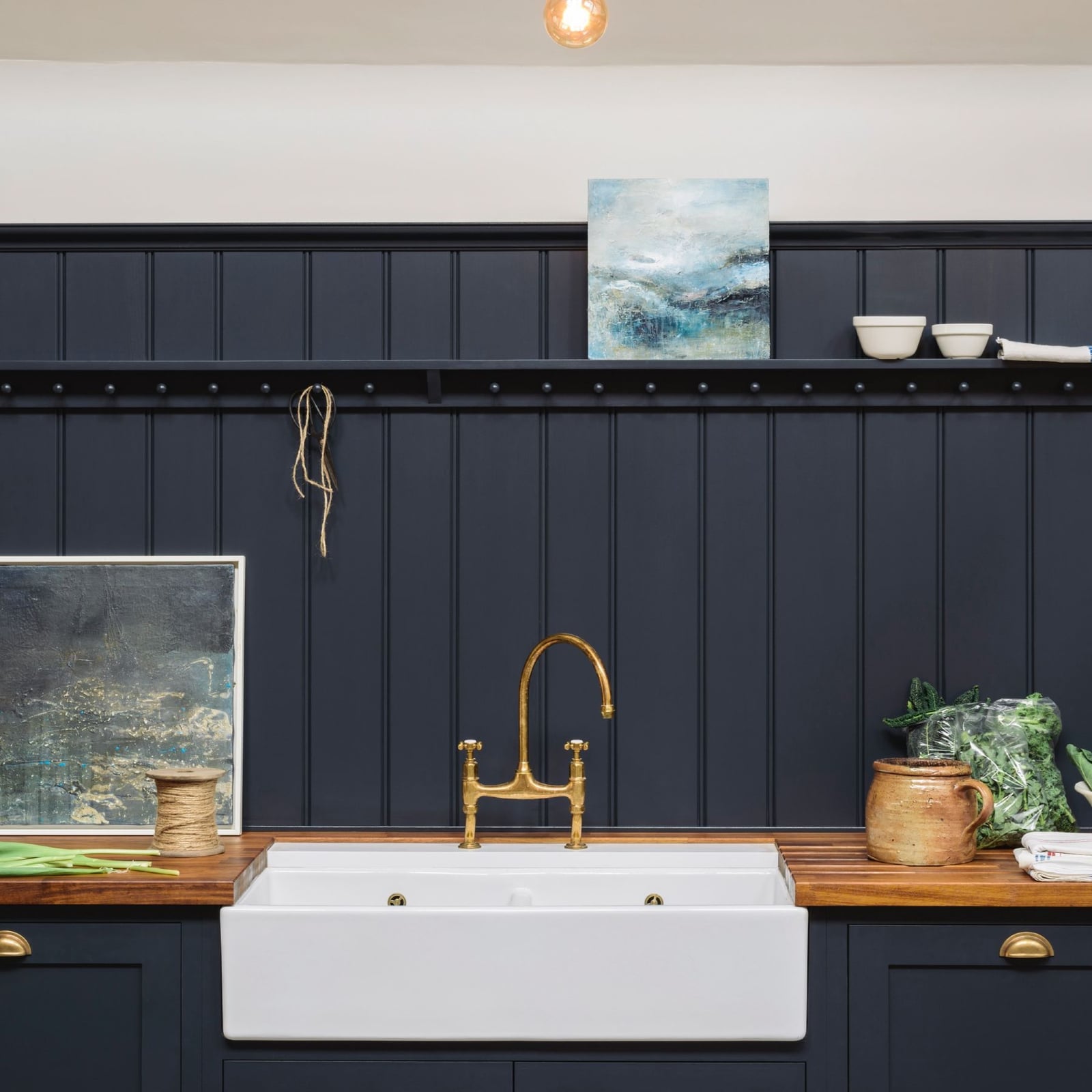
Dark navy beadboard paneling is a smart choice for a kitchen wall behind a sink, as it hides everyday splashes. The beadboard runs behind a farmhouse sink, with a brass faucet and a wooden countertop adding warmth against the deep blue. The vertical lines of the beadboard keep the wall from feeling too heavy. Overhead spotlight and natural light balance the dark tone, so the kitchen stays bright even with a moody wall color. The brass and wood details break up the navy, preventing the paneling from dominating the room.
Boho Living Room with Dark Green Half Wall Paneling
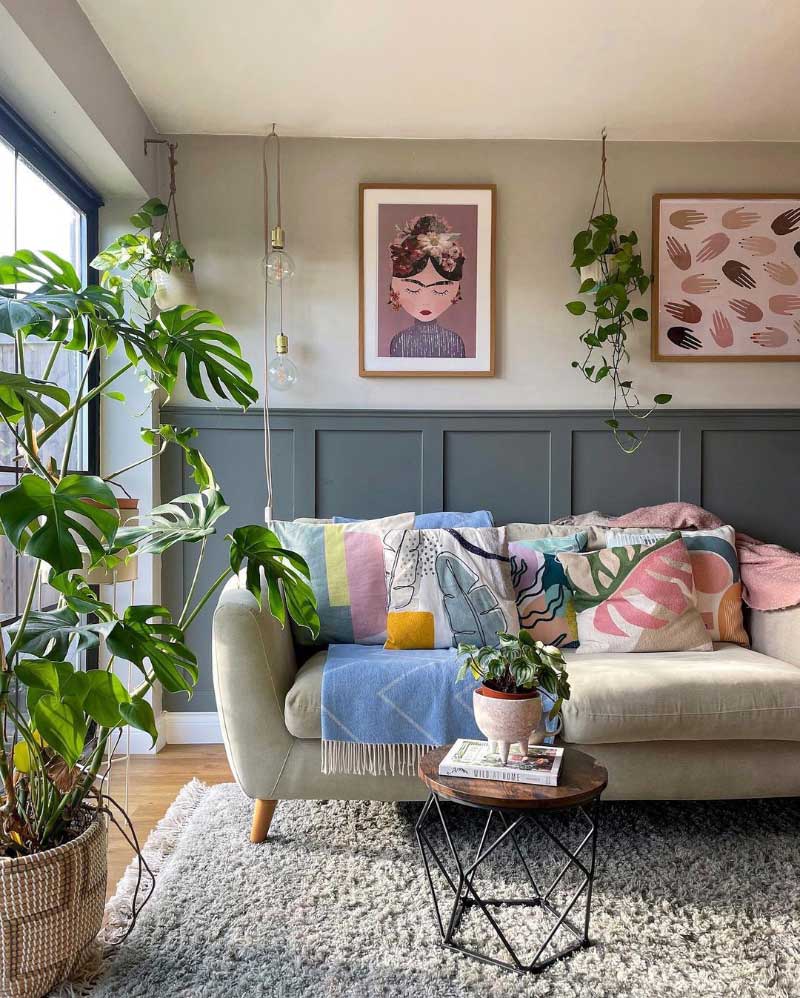
Dark green half wall paneling could feel heavy in a boho room, but here it grounds the space without overpowering it. The deep green sets off the multi-colored patterned pillows and the large monstera plant, while hanging plants and natural light keep the room airy. A sofa placed against the paneled wall anchors the layout, and the wood furniture ties the dark green to the warmer palette. The key is keeping the upper wall light and the decor layered but not crowded, so the paneling serves as a backdrop.
Scandi Bedroom with Light Green Vertical Slat Paneling
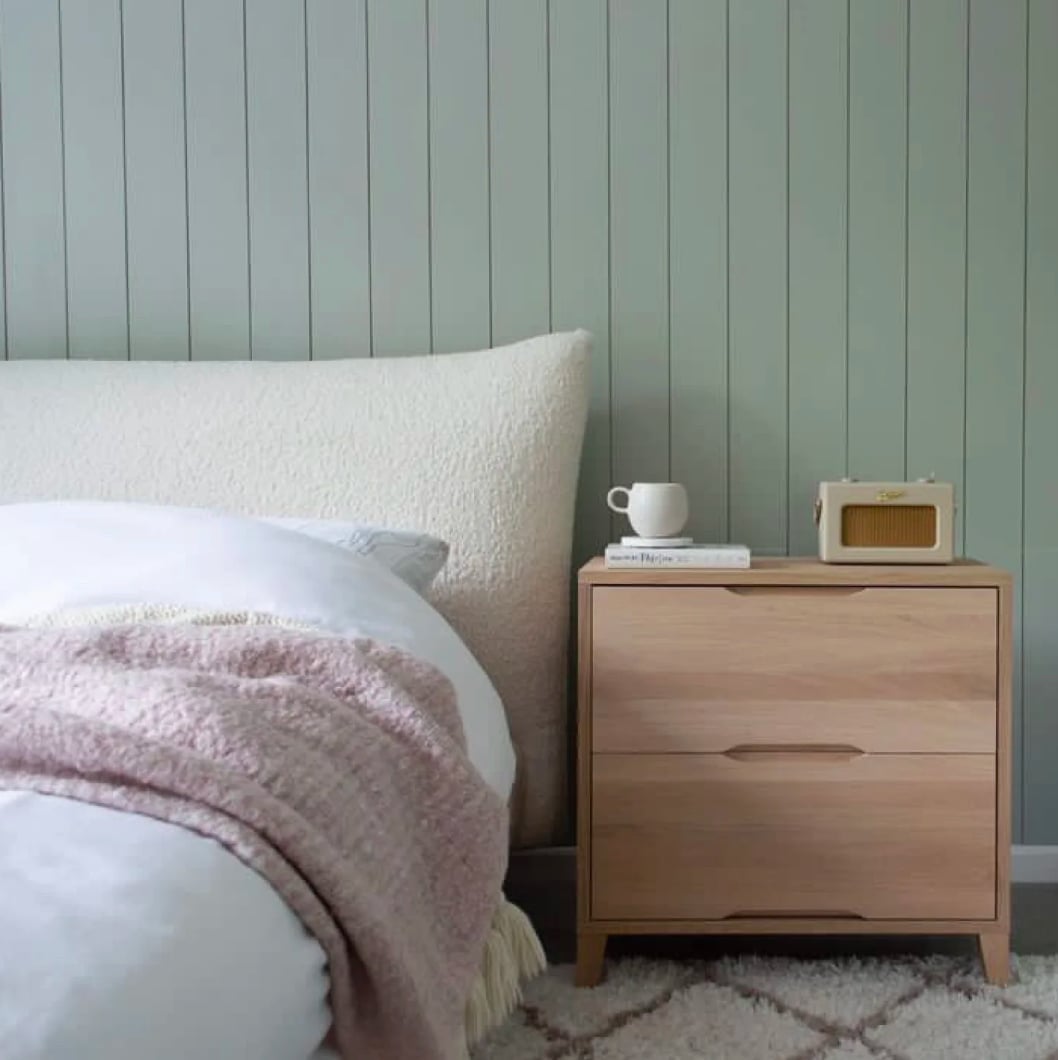
The vertical slat paneling in this compact bedroom draws the eye upward, making the ceiling feel higher than it is. Painted a soft green, it adds color without the weight of a darker shade, and the white and beige bedding keeps the Scandi feel intact. The wood slats bring in texture where a solid wall would fall flat, so the room feels deliberate and not sparse.
Japandi Interior Corner with Arched Gray Paneling
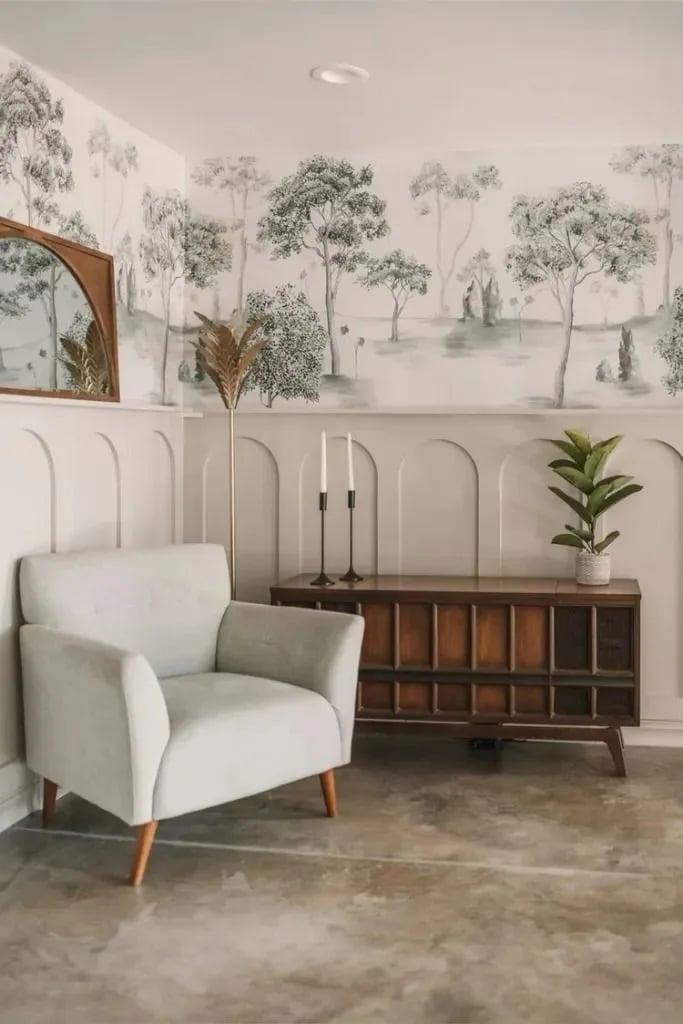
Arched half wall paneling in a soft gray turns a plain corner into a composed vignette. The curve softens the transition between the paneling and the wall above, a natural fit for Japandi restraint. An armchair faces a wooden cabinet, with a floor lamp and ceramic vase completing the scene. The gray adds definition, so the corner feels like a purposeful pause.
Eclectic Bedroom with White Beadboard and Dark Walls
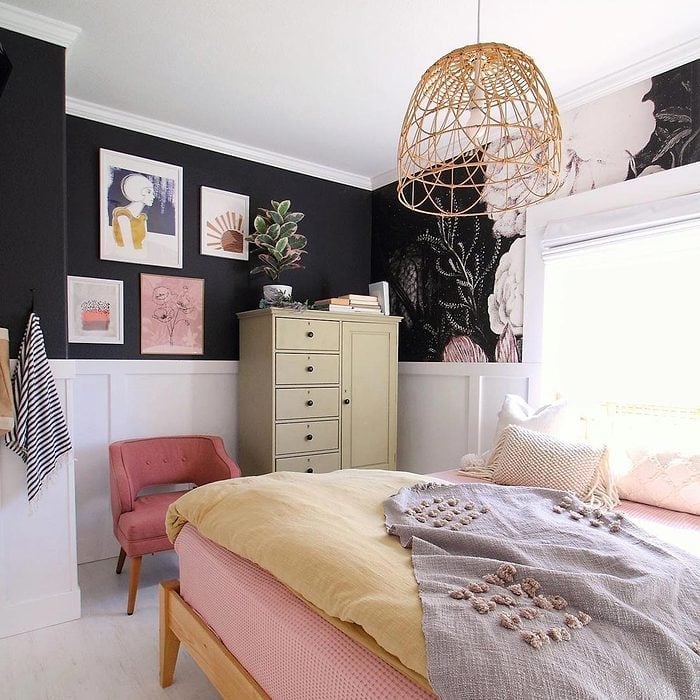
Can white beadboard work against dark walls without looking stark? Yes, when the beadboard is kept crisp and the upper wall goes deep. In this roomy bedroom, the white paneling contrasts with a dark wall above, while pink and yellow accents in the bedding and artwork soften the transition. The beadboard adds a classic texture that keeps the eclectic mix from reading as chaotic. A pendant light and natural light balance the dark tones, so the room feels grounded rather than cave-like.
Modern Farmhouse Entryway with Dark Gray Paneling
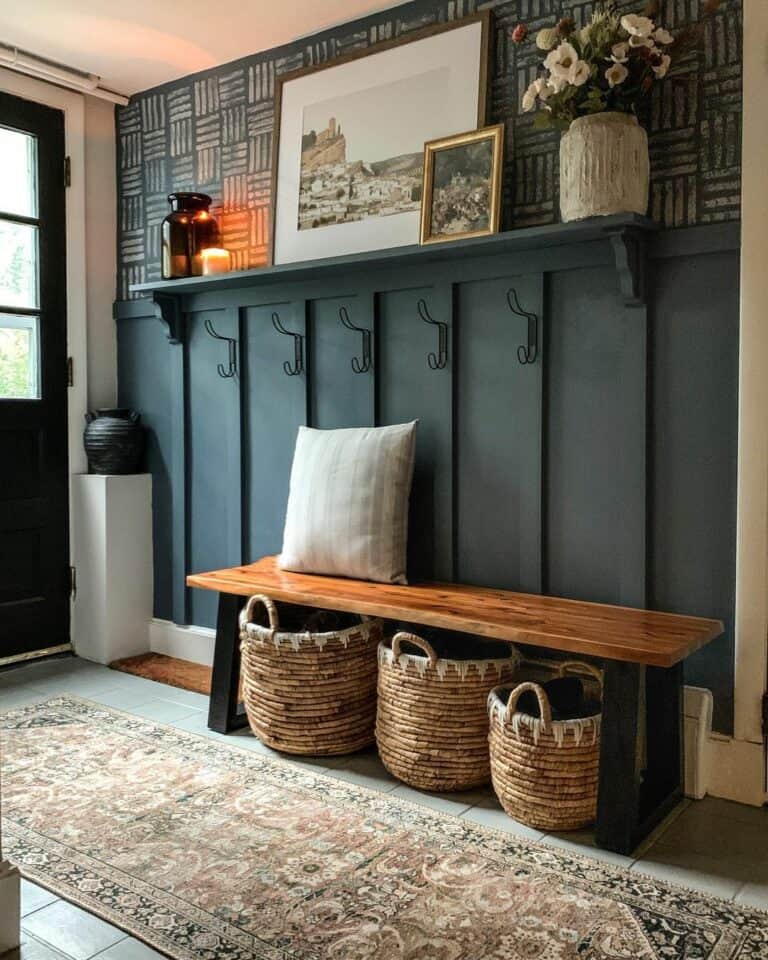
Dark gray paneling wraps the lower half of this compact entryway, topped with a shelf that holds framed art and small decor. Below, a bench sits between woven baskets for shoe or bag storage, keeping the floor clear. The hooks on the paneling provide drop zones for coats and bags without needing a separate rack. The dark gray hides scuffs better than white, which matters in a high-traffic spot like an entryway.
Soft Pink Half Wall Paneling in a Modern Hallway
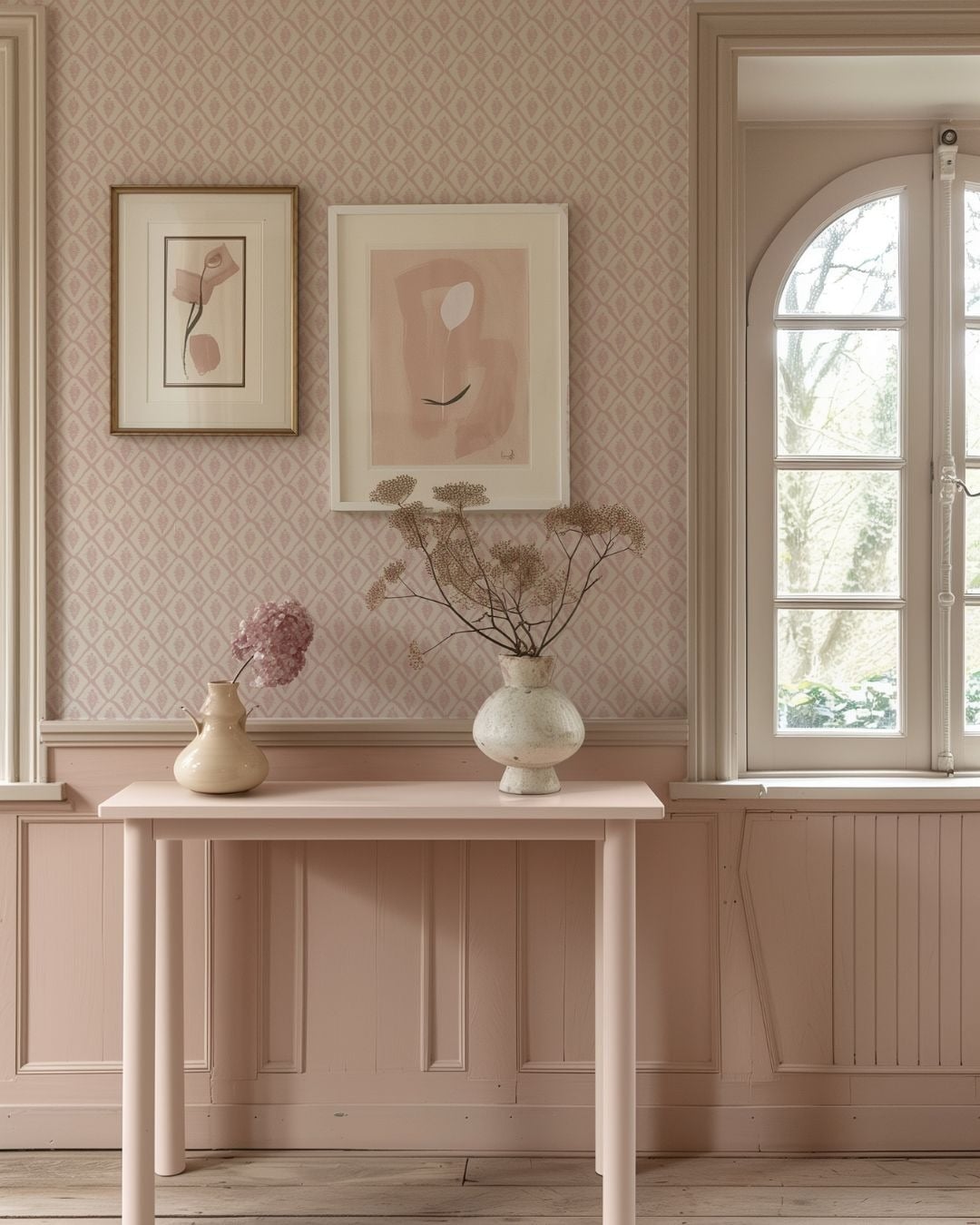
A soft pink half wall paneling sits below a cream wallpaper with a subtle pattern. A small console table with a glass lamp and artwork keeps the entryway from feeling too sweet. The pink acts as a soft neutral because the wall color above it is warm cream, not white. That palette shift makes the hallway feel more modern. To test pink paneling, hold a swatch against your wall color. If the wall above is stark white, the pink can look louder. If the wall above is cream or beige, the pink settles into the background.
Sage Green Farmhouse Paneling in a Compact Bathroom
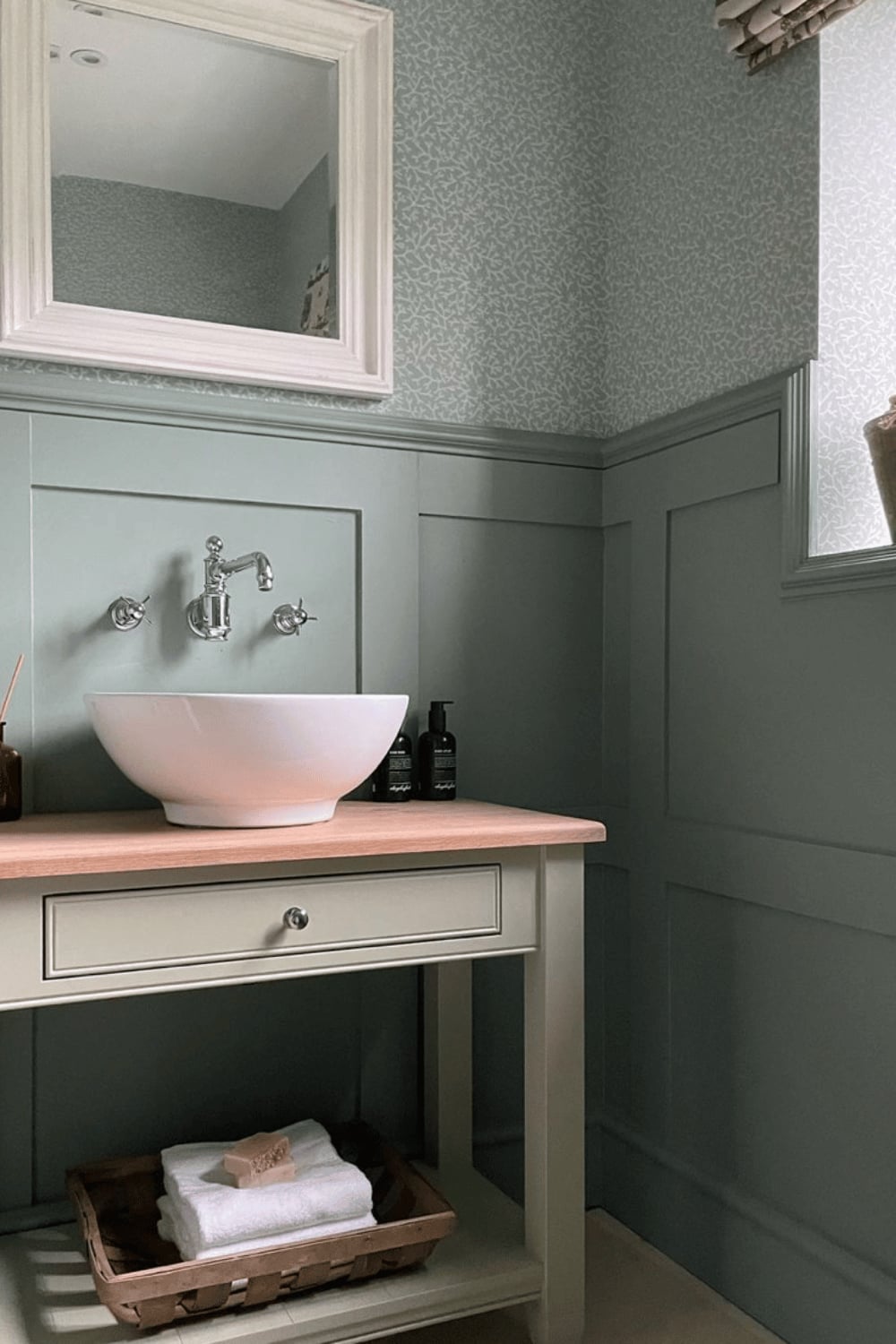
Before you commit to white beadboard in a small bathroom, consider sage green instead. This compact bathroom uses sage green half wall paneling along the walls, paired with natural wood tones from the vanity and a vessel sink. The green paneling adds color without shrinking the space because it covers only the lower half of the wall, leaving the upper wall in a lighter shade. The wood vanity and faucet keep the look grounded in farmhouse style. For a compact bathroom, choose matte paneling. Glossy green can feel slippery in a small room, while matte sage appears soft and grounded. The wood elements prevent the green from feeling too cool.
Traditional Blue Bathroom with White Beadboard
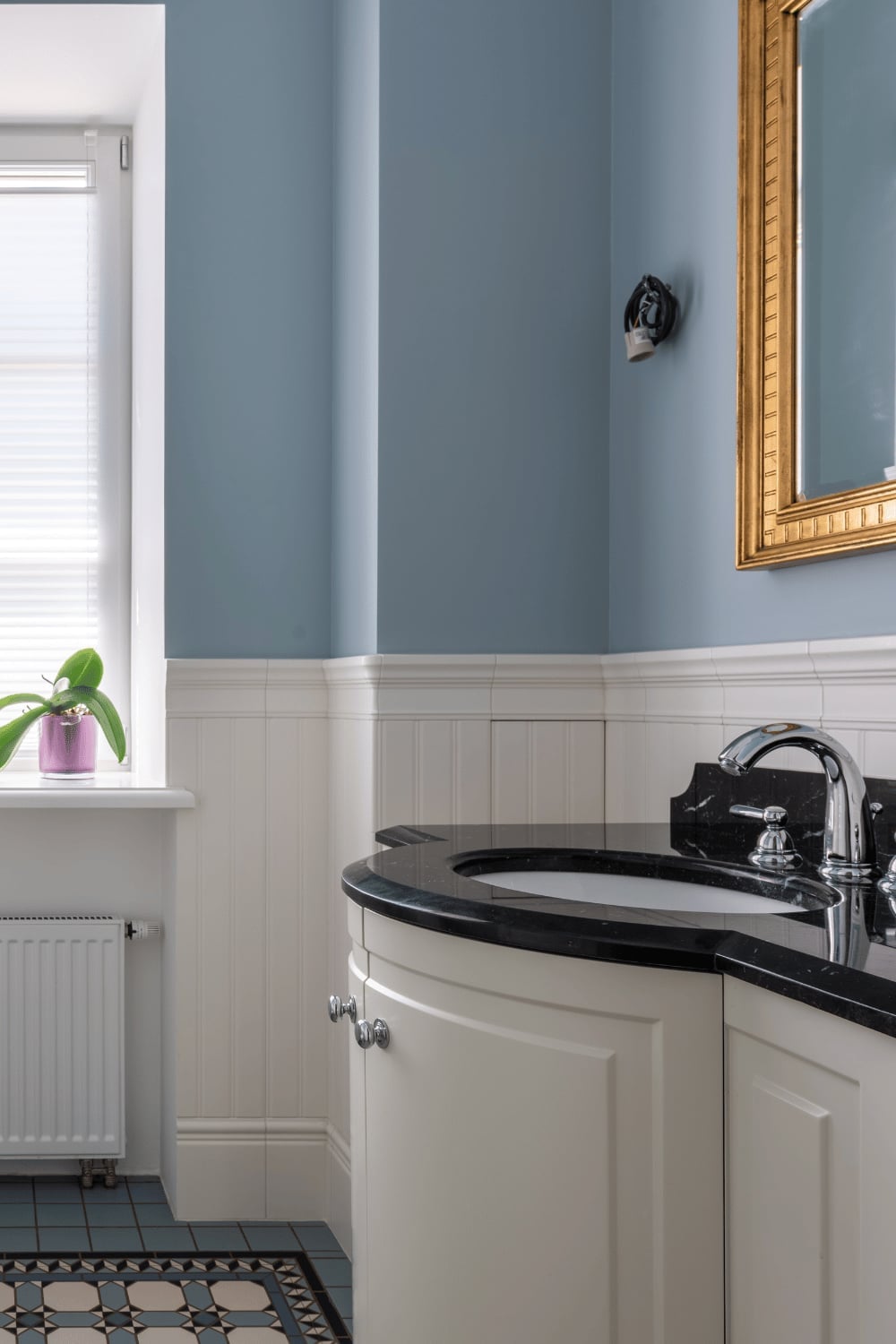
White beadboard in a traditional bathroom is a classic choice, but the marble countertop is what gives this version its polish. The beadboard runs below a blue wall, with a white marble vanity top and a chrome faucet that reflect light from the window. A wall sconce above the mirror adds warm task lighting. The white beadboard and blue wall create a clean division. A good guideline for choosing materials in a traditional bathroom is to pair painted wood with real stone or metal. The white beadboard is the backdrop, but the marble and chrome give the room its finished look.
Modern Scandi Hallway with Light Wood Paneling
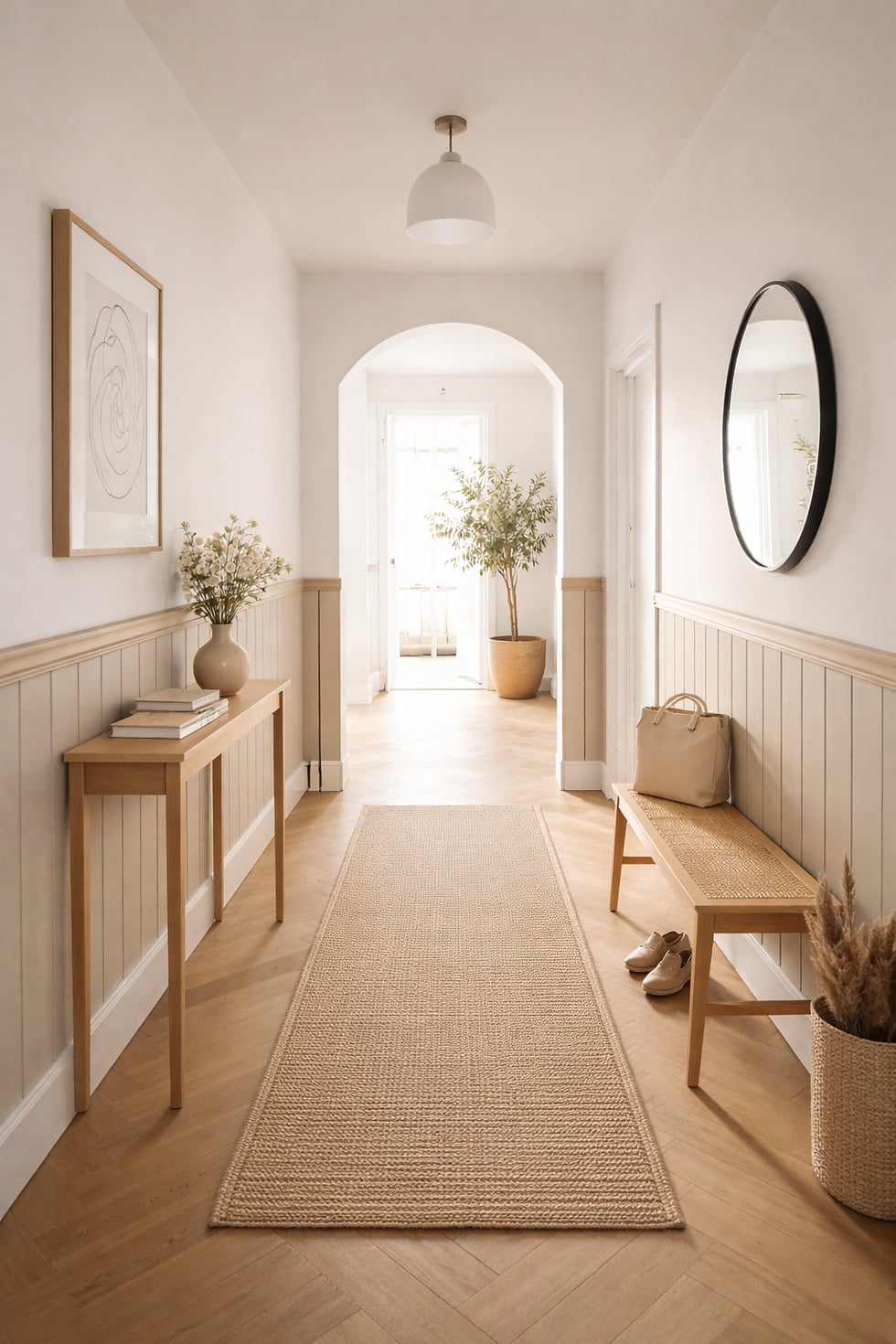
Light wood paneling in a long hallway creates rhythm without clutter. This Scandi hallway uses vertical slats in a pale wood tone on the lower half of the wall, with a neutral beige wall above and a woven runner rug running the length of the hall. A console table and a bench sit against the paneling, and natural light from the end of the hall keeps the space feeling open. A roomy hallway benefits from consistent paneling height. Here the paneling stops at a standard chair rail height, which makes the hallway feel balanced. The runner rug adds texture next to the wood.
Traditional Gray Paneling on a Staircase Landing
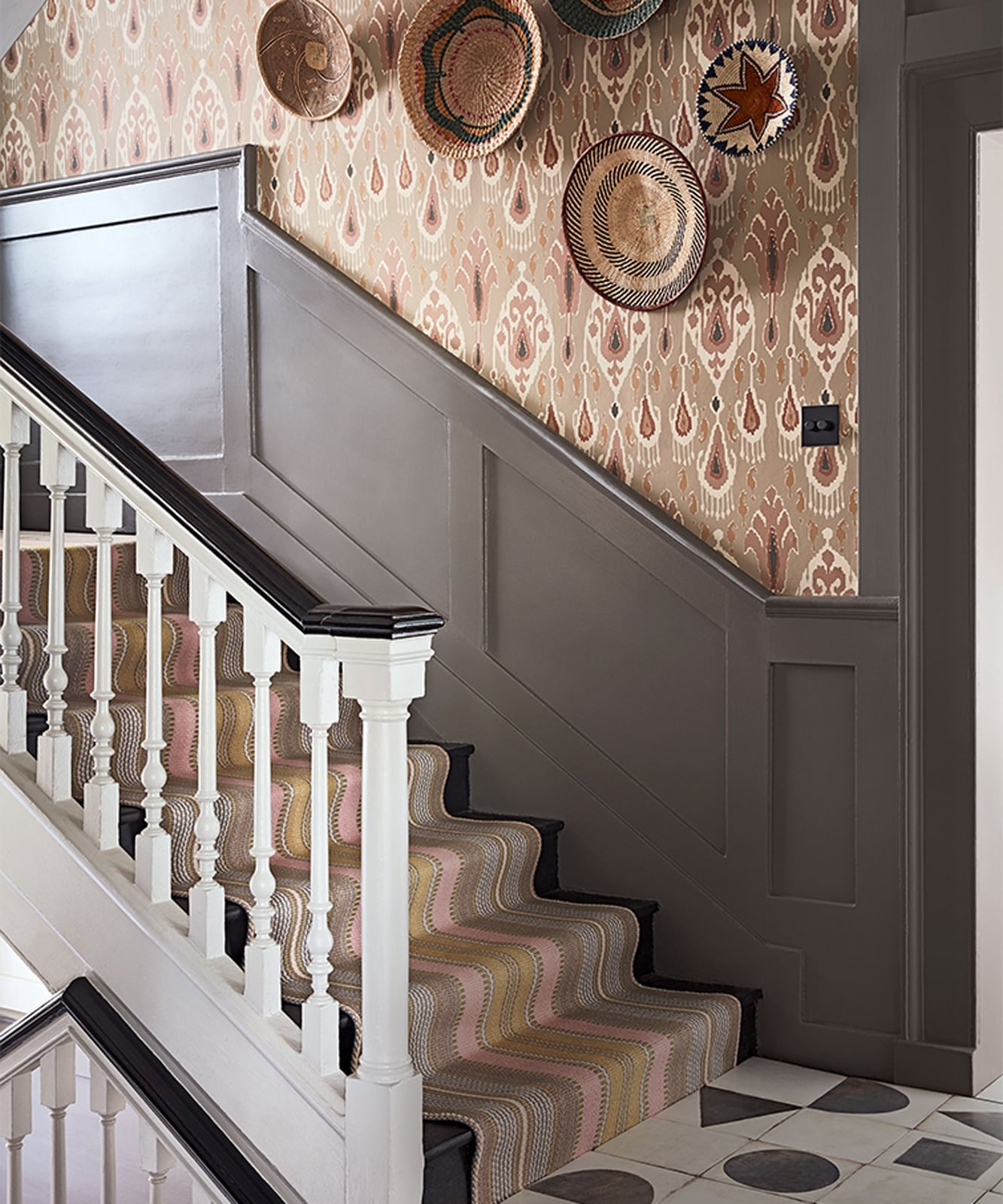
Gray paneling on a staircase landing is a practical way to protect the wall from scuffs. The paneling is painted a warm gray and runs along the staircase wall below a beige upper wall. What makes this landing feel eclectic is the patterned carpet on the stairs, with pink and yellow accents, and a collection of woven baskets on the wall. The gray paneling anchors the busy carpet without competing. A practical rule for a staircase landing is to use paneling as a buffer zone. The lower wall takes the wear from shoes and bags, while the upper wall can hold art or baskets. The woven baskets add storage without adding visual weight.
Modern Neutral Hallway with Vertical Slat Paneling
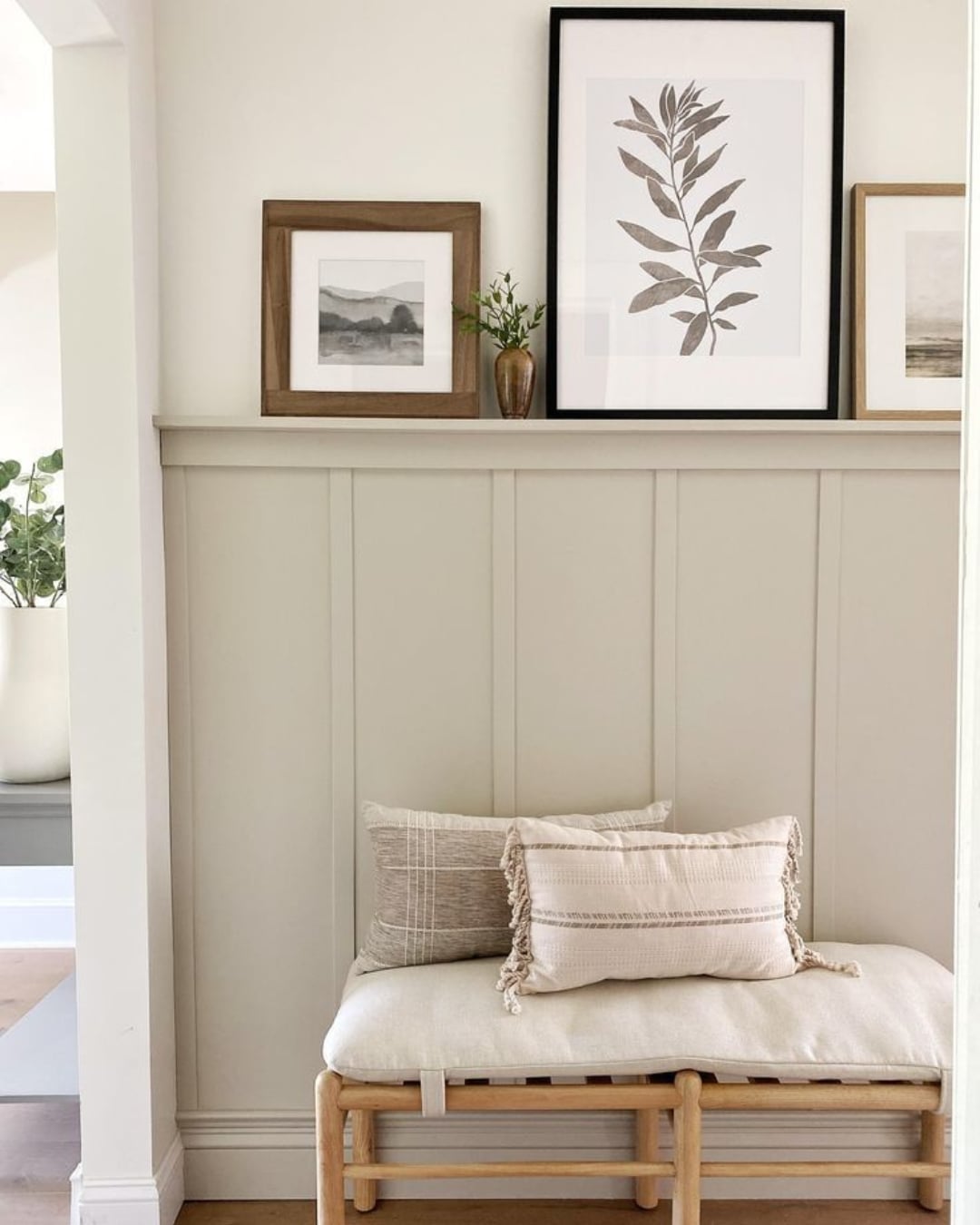
Vertical slat paneling draws the eye upward, making a compact hallway feel taller without adding square footage. The slats are painted off-white, with the upper wall in a soft beige that keeps the space warm while the wood bench and natural fabric pillows add texture. A small framed artwork on the wall above the bench gives the vignette a finished look. This is a straightforward project using MDF strips and paint, and the vertical lines do the work of adding architectural interest without requiring any structural changes.
Traditional White Beadboard Divider for Kitchen and Living Area
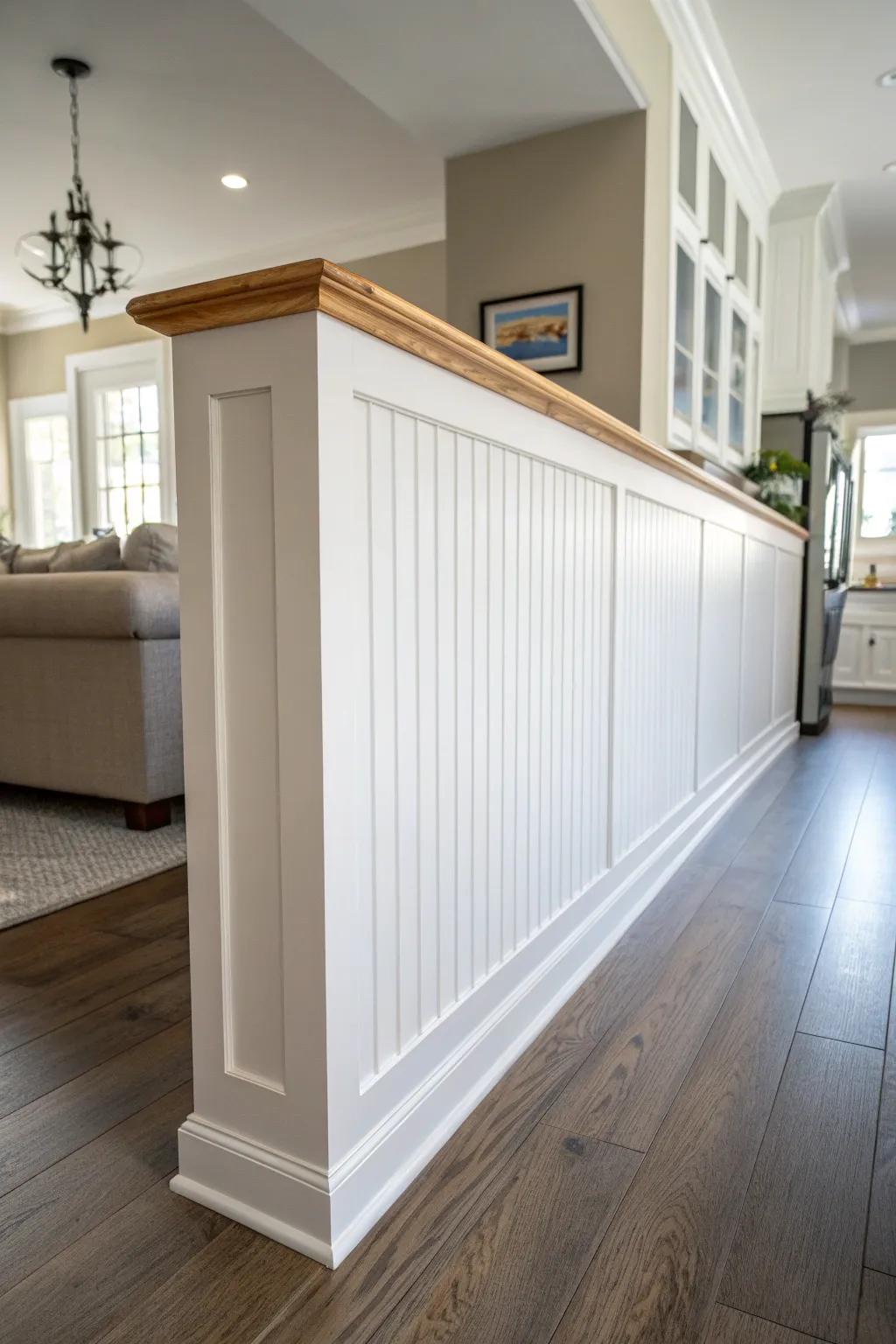
A half wall with beadboard paneling can define separate zones in an open layout while keeping sight lines open. This divider uses white beadboard on both sides, with a wood cap that matches the kitchen cabinetry and living room trim. The chandelier above anchors the dining area, and natural light from nearby windows keeps the white paneling from feeling stark. For renters, a freestanding room divider with beadboard panels can achieve a similar effect without permanent construction, and the light color helps it blend with existing wall finishes.
Farmhouse Sage Green Beadboard in a Bedroom
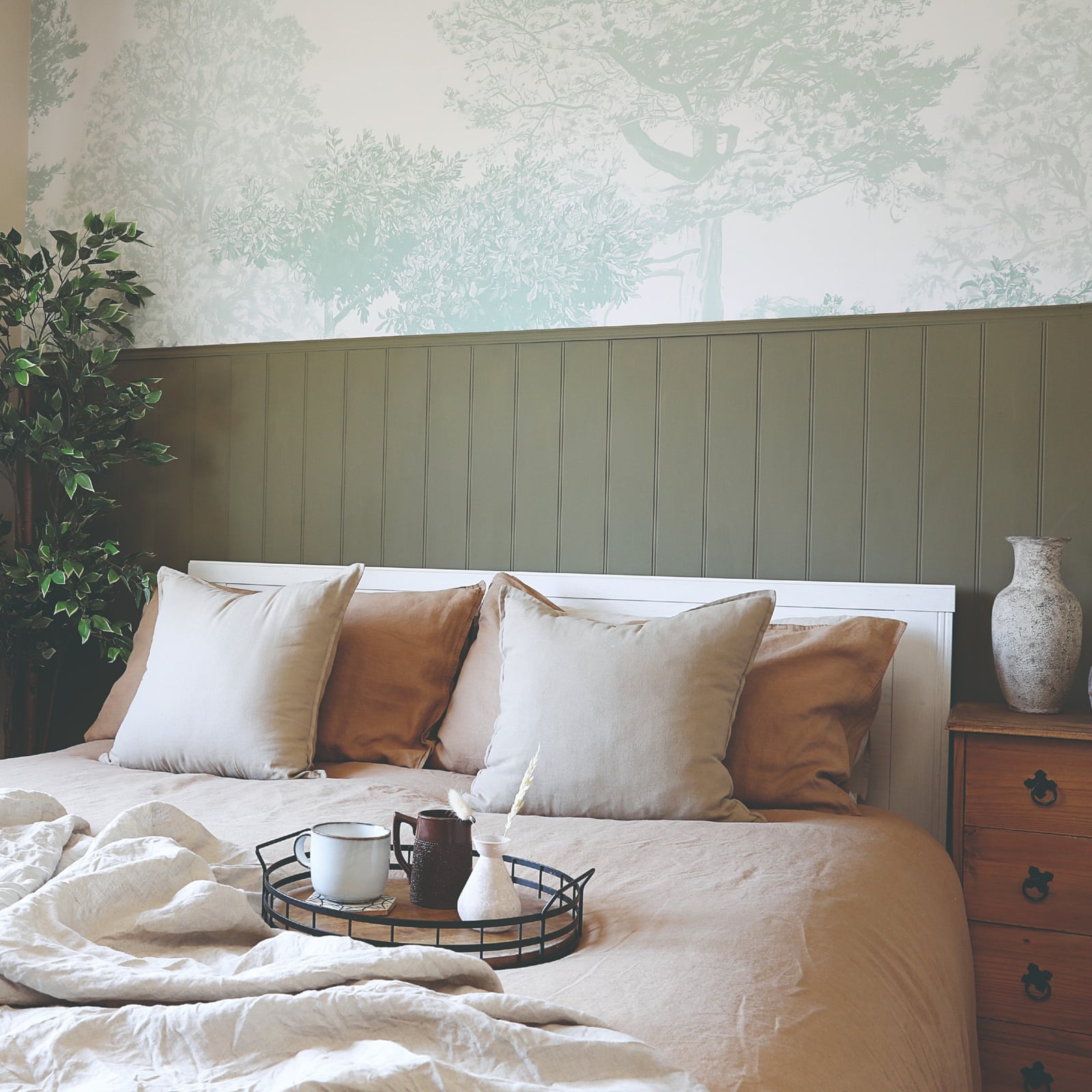
Sage green beadboard feels more grounded than a stark white version, which can seem too clinical for a bedroom. Here the beadboard runs behind the headboard, with the upper wall left in a soft beige that prevents the space from feeling closed in. The linen bedding and natural wood nightstand echo the earthy palette, while a potted plant adds a fresh accent.
Because the beadboard is painted rather than stained, it is easy to update if the color starts to feel dated. A matte finish on the paint helps it look soft and textural, not glossy, which suits the farmhouse feel. The sage tone pairs well with warm wood floors and cream linens, making it a flexible choice for a bedroom that needs a calm backdrop.
Transitional Living Room with Cream Half Wall Paneling
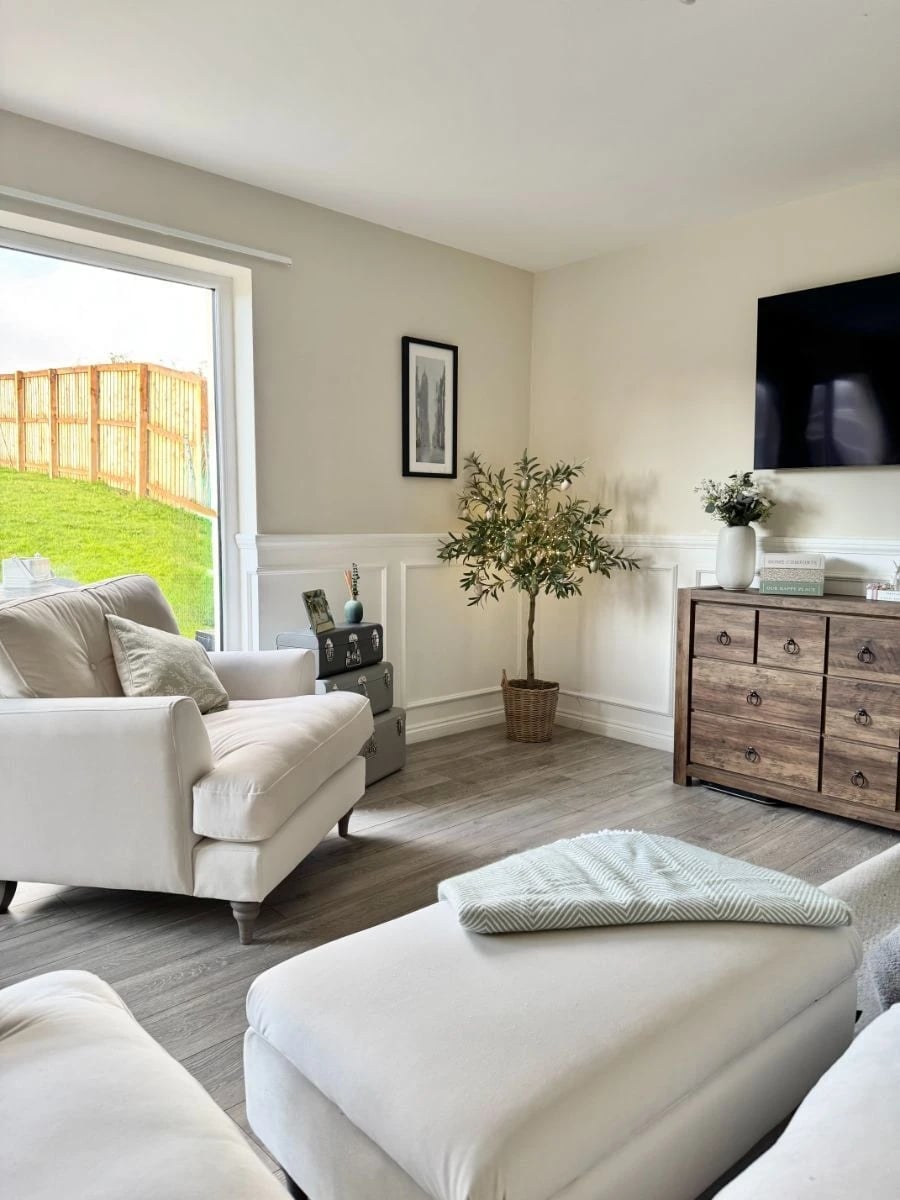
Cream half wall paneling brings a soft warmth that white paneling sometimes lacks, especially in a room with gray upholstery and a wooden dresser. The paneling runs along the lower third of the wall, with the cream tone picking up the warm undertones in the wood floor and the potted tree adding a natural break. An armchair and ottoman sit in the corner, creating a reading nook without fighting the paneling for attention. The cream color also hides scuffs better than pure white, which is useful in a living room that sees daily use.
Modern Farmhouse Bathroom with Gray Beadboard
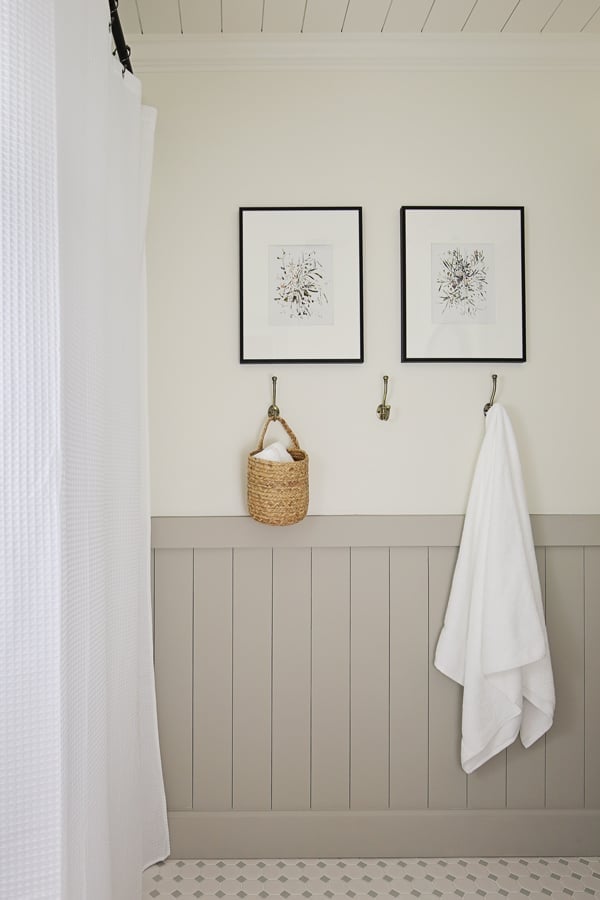
Gray beadboard paneling reads as more current than traditional white, especially in a compact bathroom with a modern farmhouse feel. The vertical beadboard runs about halfway up the wall, with the upper section painted white to keep the room feeling open. A framed botanical print and a woven basket add texture without crowding the small space. The gray tone pairs well with white wainscoting and natural light, and it does not show water spots as easily as a darker shade. This is a good choice for a bathroom that needs character without relying on tile or wallpaper.
Modern Bedroom with Geometric Green Wall Paneling
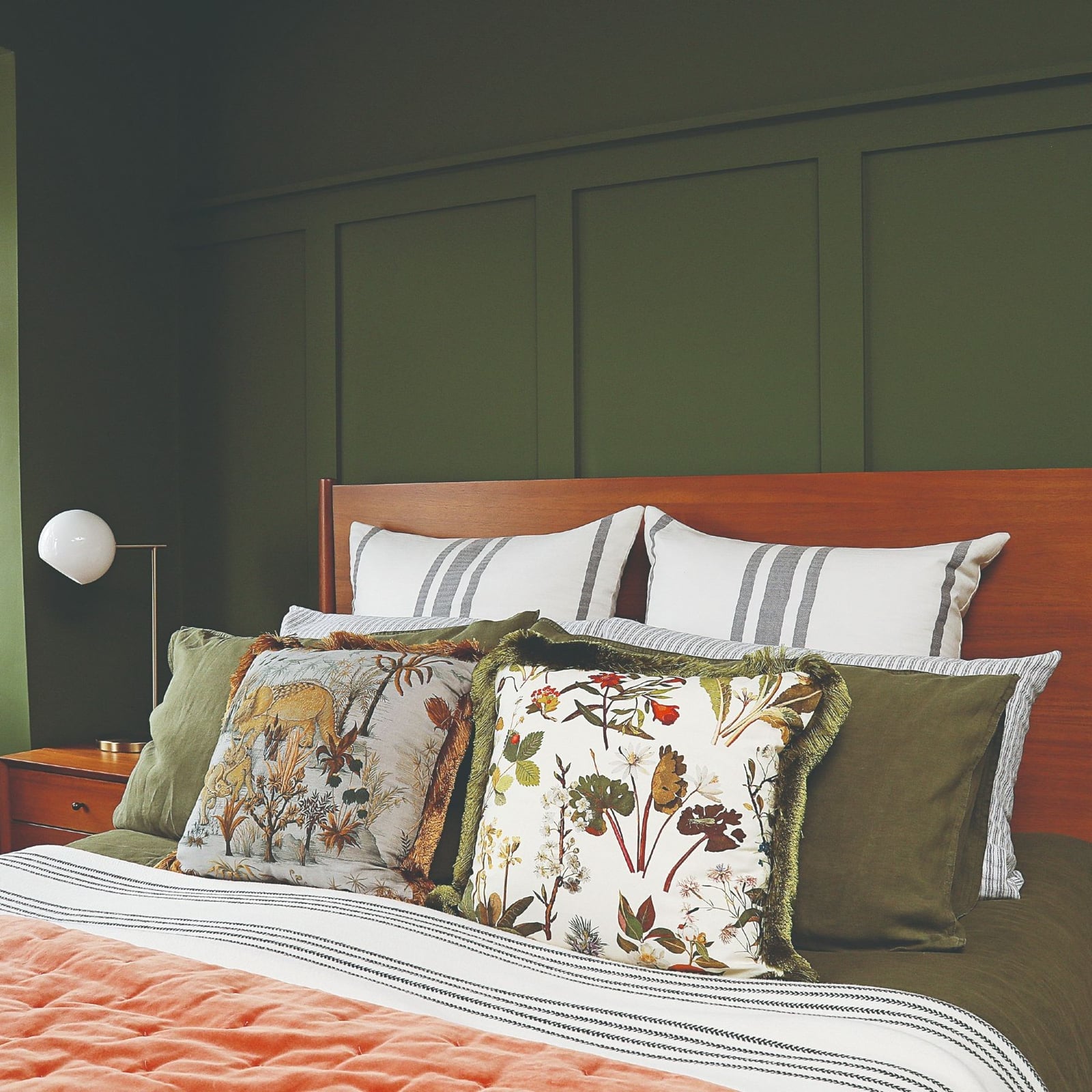
Geometric paneling adds visual structure without taking up floor space. In this bedroom, the wall behind the bed is covered in painted wood panels arranged in a geometric pattern in green and wood tones. The bed sits centered against it, with a nightstand and task lamp on each side. The geometric layout draws the eye upward, making the room feel taller. The green color anchors the bed area, while the natural wood tones of the paneling and the bed frame keep the look grounded. Ambient light from the room and the task lamps soften the edges of the pattern. This approach works well for a room that needs a focal point without adding furniture.
Modern Farmhouse Hallway with Terracotta Beadboard
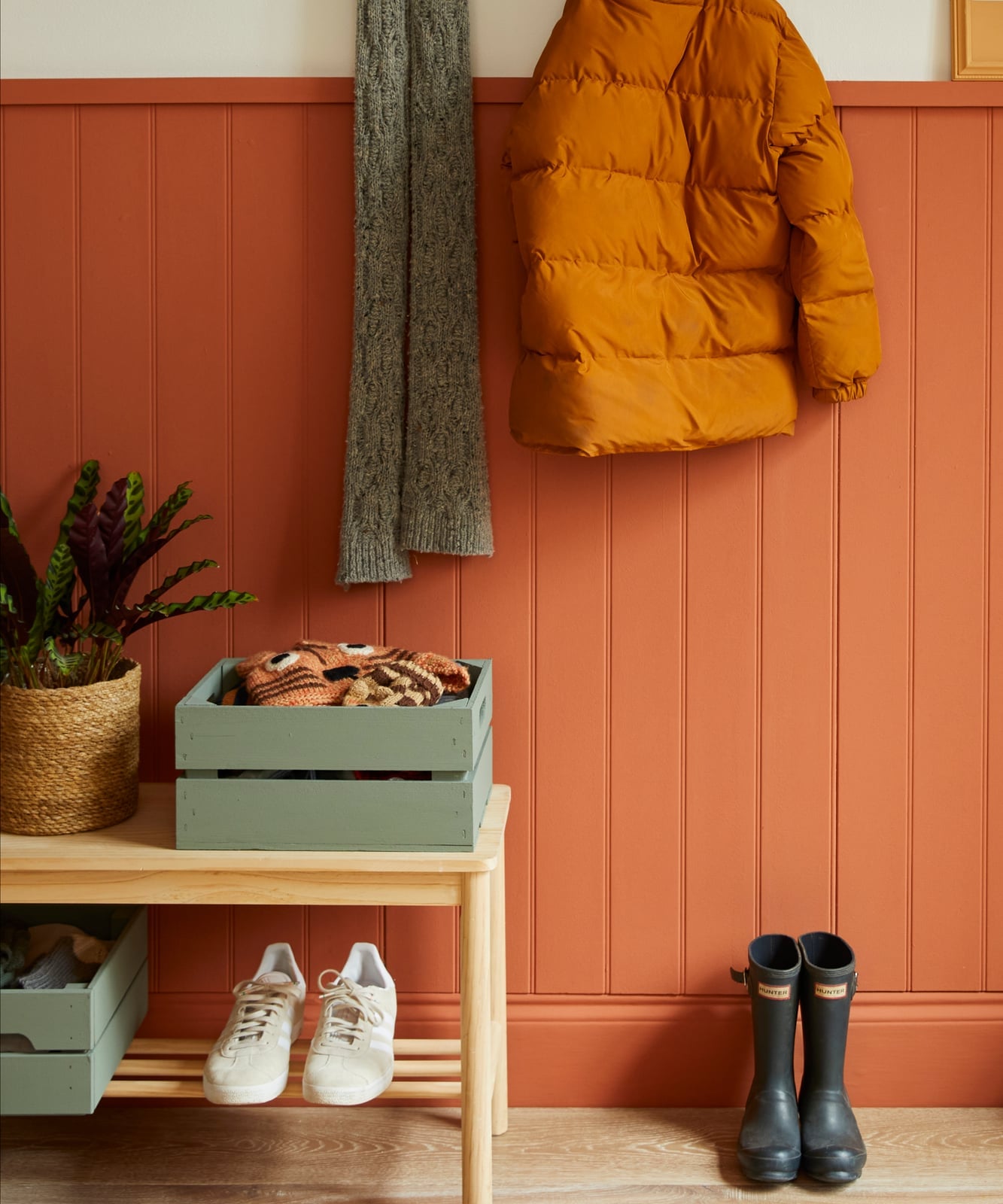
Terracotta beadboard paneling brings warmth to a modern farmhouse hallway. The half wall paneling is painted in a terracotta shade, paired with a wooden bench, a green crate, and a pair of boots on the floor. The orange and gray tones in the palette are balanced by natural light. The wood of the bench and the metal of the crate keep the vignette from feeling too rustic. A green plant or two would complement the terracotta, but the existing mix of materials already creates a grounded entryway look.
Transitional Bedroom with Neutral Half Wall Paneling
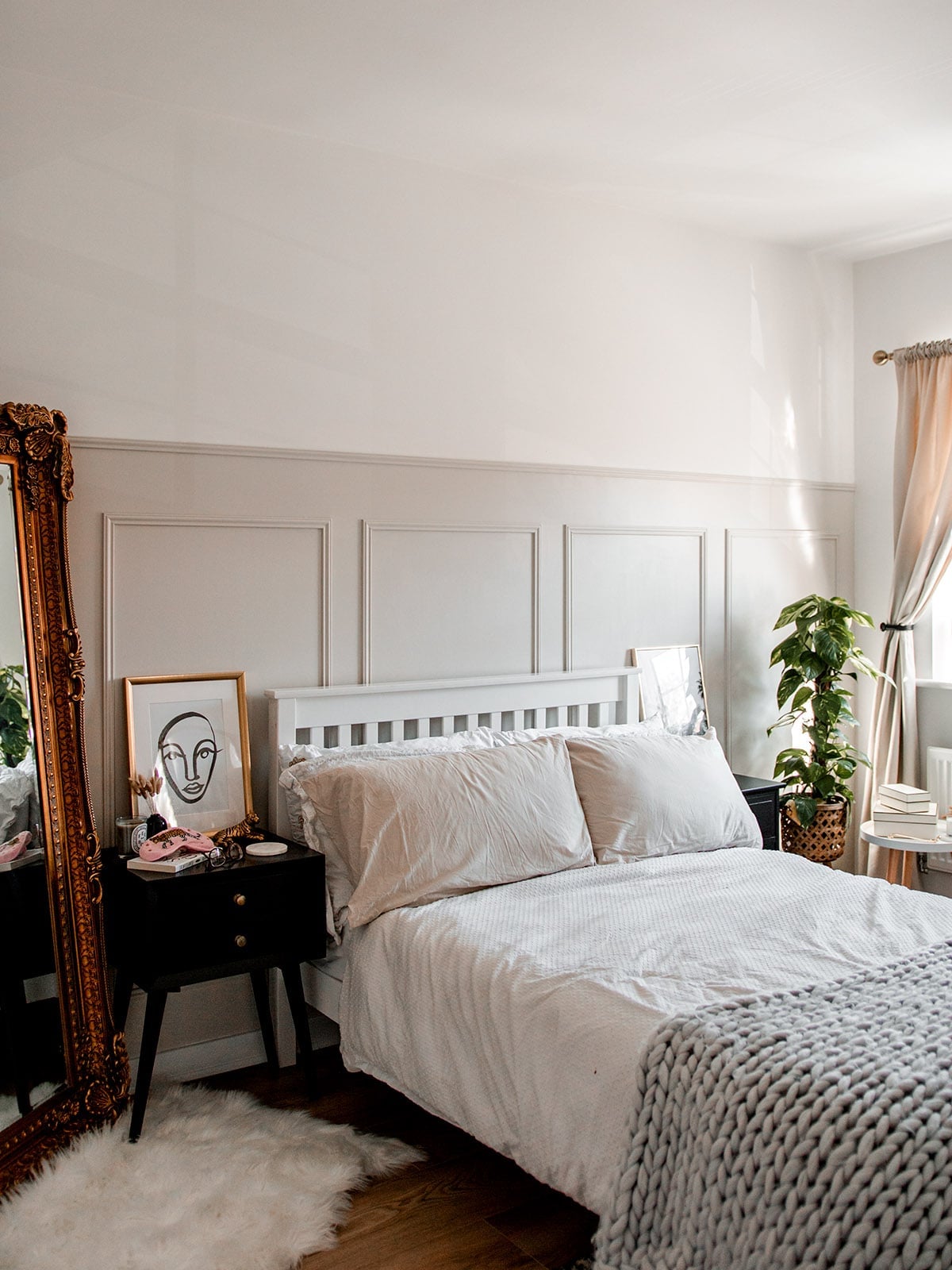
Neutral paneling can define a bedroom without adding color. This transitional bedroom uses half wall paneling in a soft gray-white tone behind a centered bed. The paneling is painted wood with simple lines, and the room includes a nightstand, a large ornate mirror, and a plant. Soft ambient light from a window and a lamp keeps the space calm. The linen bedding and chunky knit throw add texture without competing with the paneling. The mirror reflects light, making the room feel larger. A neutral palette like this works for any bedroom where you want the focus on texture and light rather than on a bold accent wall.
Traditional Hallway with Ornate White Half Wall Paneling
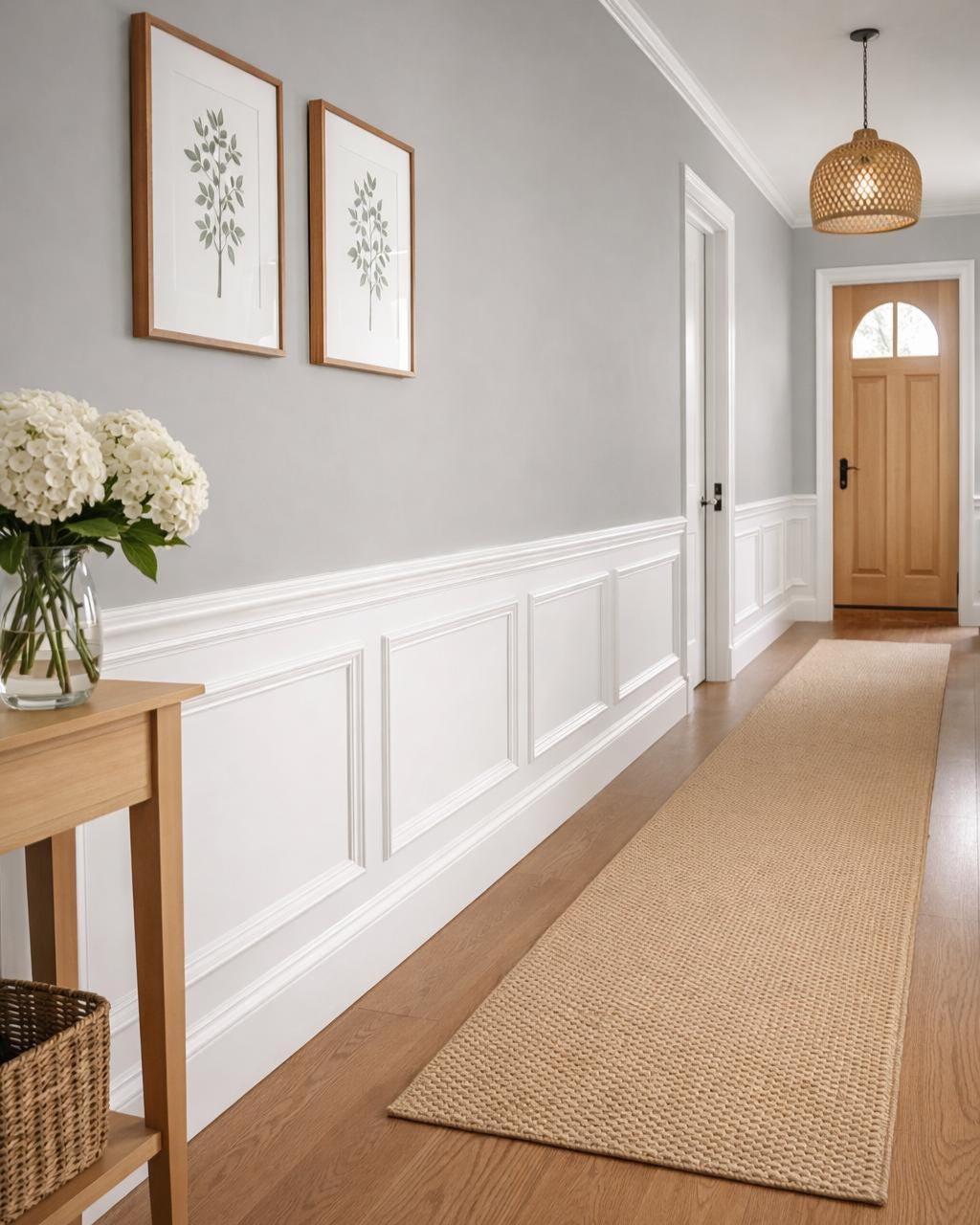
Ornate paneling can feel busy in a small space, but in a roomy hallway it adds elegance. This traditional hallway uses white half wall paneling with decorative molding details, paired with a console table, a runner rug, and a pendant light. The window at the end of the hall softens the white, while the pendant light adds warmth at night. The wood of the console and the woven texture of the runner balance the formal paneling. The white color keeps the hallway from feeling dark, even with the wood tones in the runner and furniture. This paneling style works well in a hallway that needs a classic, grounded look.
Modern Hallway with Dark Gray Board and Batten Paneling
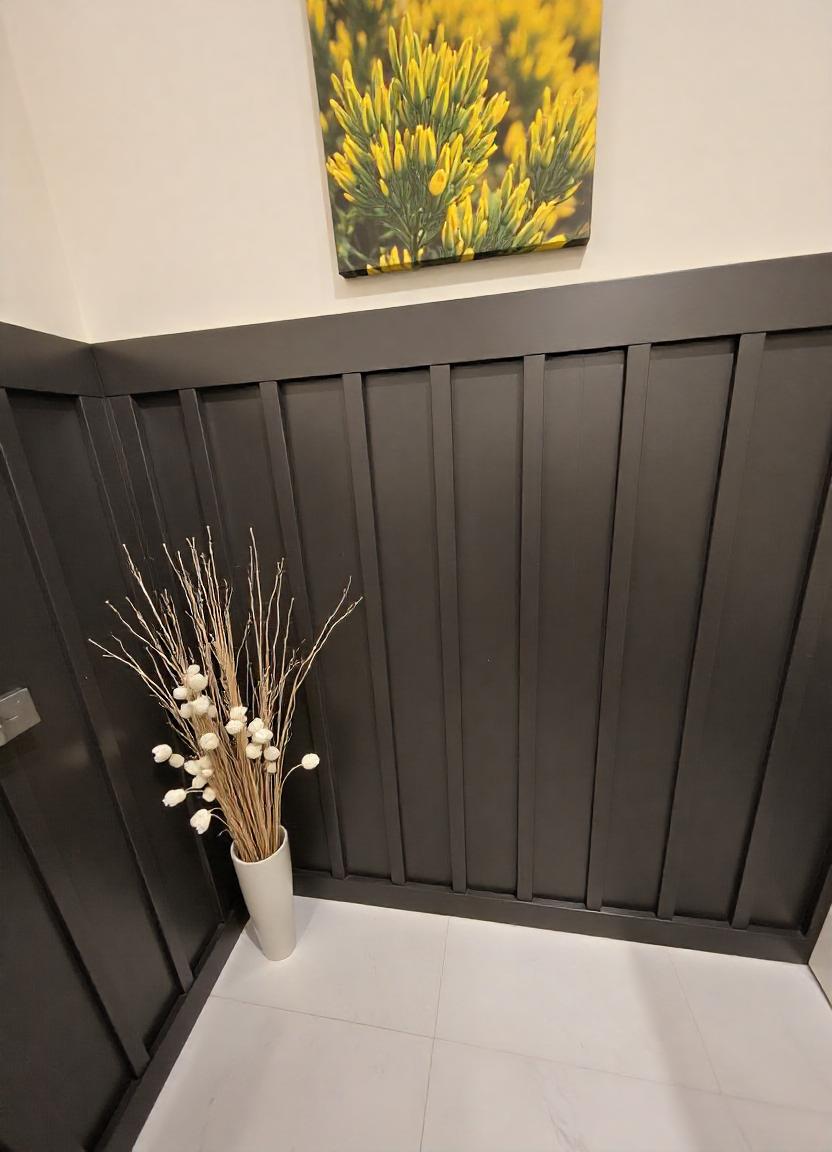
Dark gray board and batten paneling makes a compact hallway feel more defined. The paneling runs along the walls in a corner view, with a piece of artwork and dried flowers in a vase above the paneling. The dark gray contrasts with the white of the wall above and the yellow tones in the artwork. Ambient ceiling light keeps the space from feeling too dim. The vertical lines of the board and batten pattern draw the eye upward, making the hallway appear taller. This layout works well for a narrow or compact hallway where you want to add architectural interest without taking up any floor space.
Traditional Living Room with Charcoal Gray Recessed Paneling
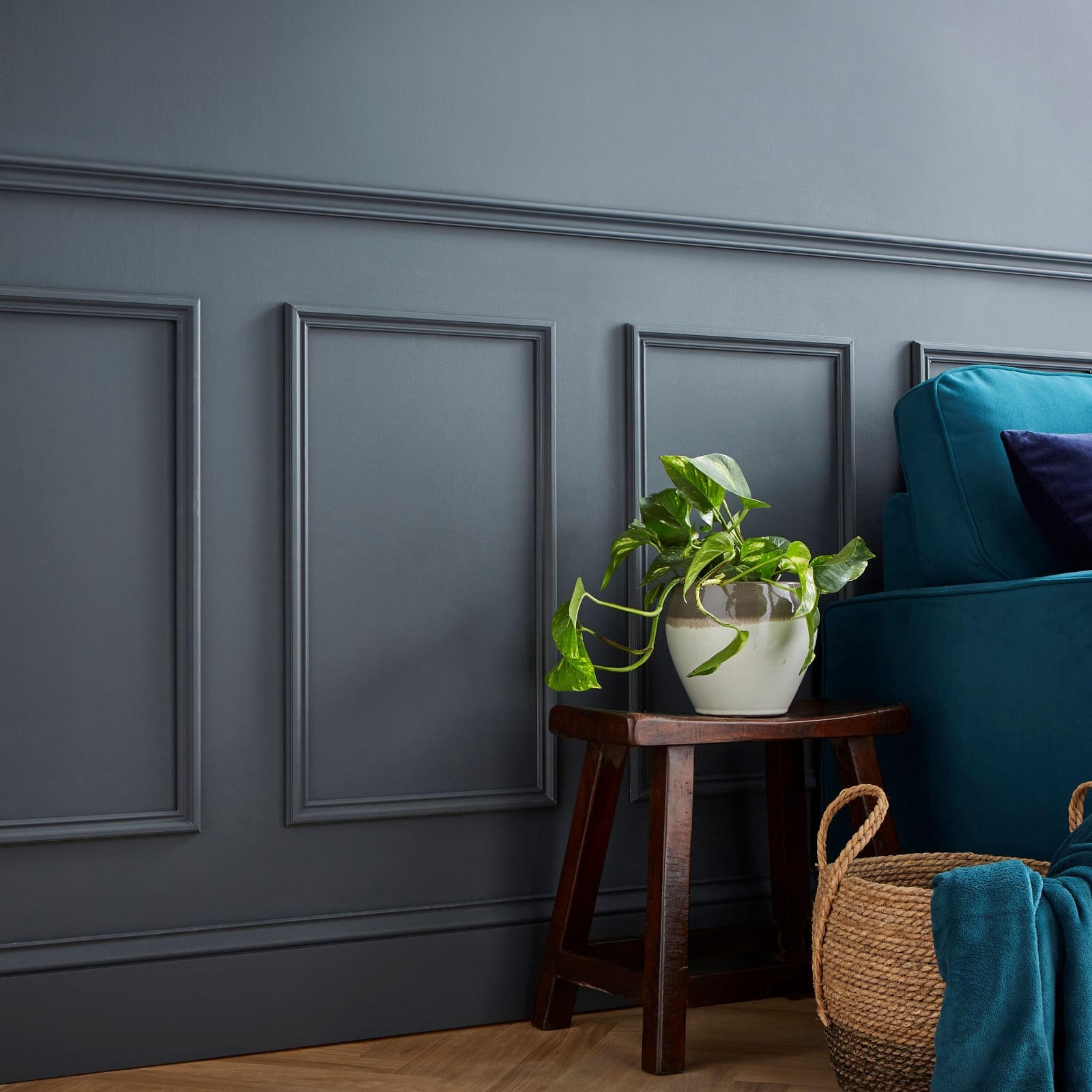
A deep charcoal gray paneled wall gives a traditional living room a grounded, library-like feel without darkening the whole space. The recessed panels keep the surface quiet and architectural, while a teal sofa and a woven basket add warmth and texture against the painted wood. Because the paneling stops short of the ceiling, the room still breathes. The lighter wall above reflects ambient light and keeps the palette from feeling heavy. This approach works especially well in a roomy space where the charcoal acts as an anchor, not a box.
Final Thoughts
Half wall paneling offers a practical way to introduce character and durability to any room. The 26 looks here prove that material and color choices define the effect, from classic white beadboard to dark slatted wood. Keep maintenance simple: dust slats, wipe painted surfaces, and check for moisture in bathrooms. The final takeaway? Let the paneling lead, and the room will follow.