Starting a kitchen garden can feel like a lot of work, but these herb garden ideas prove it doesn’t have to be. From a single pot on a deck rail to a full row of raised beds, each photo shows a real outdoor space where herbs do the decorating.
You will see 34 ways to fit fresh flavors into your yard or balcony, no matter the size or style, with practical tips for layout and care.
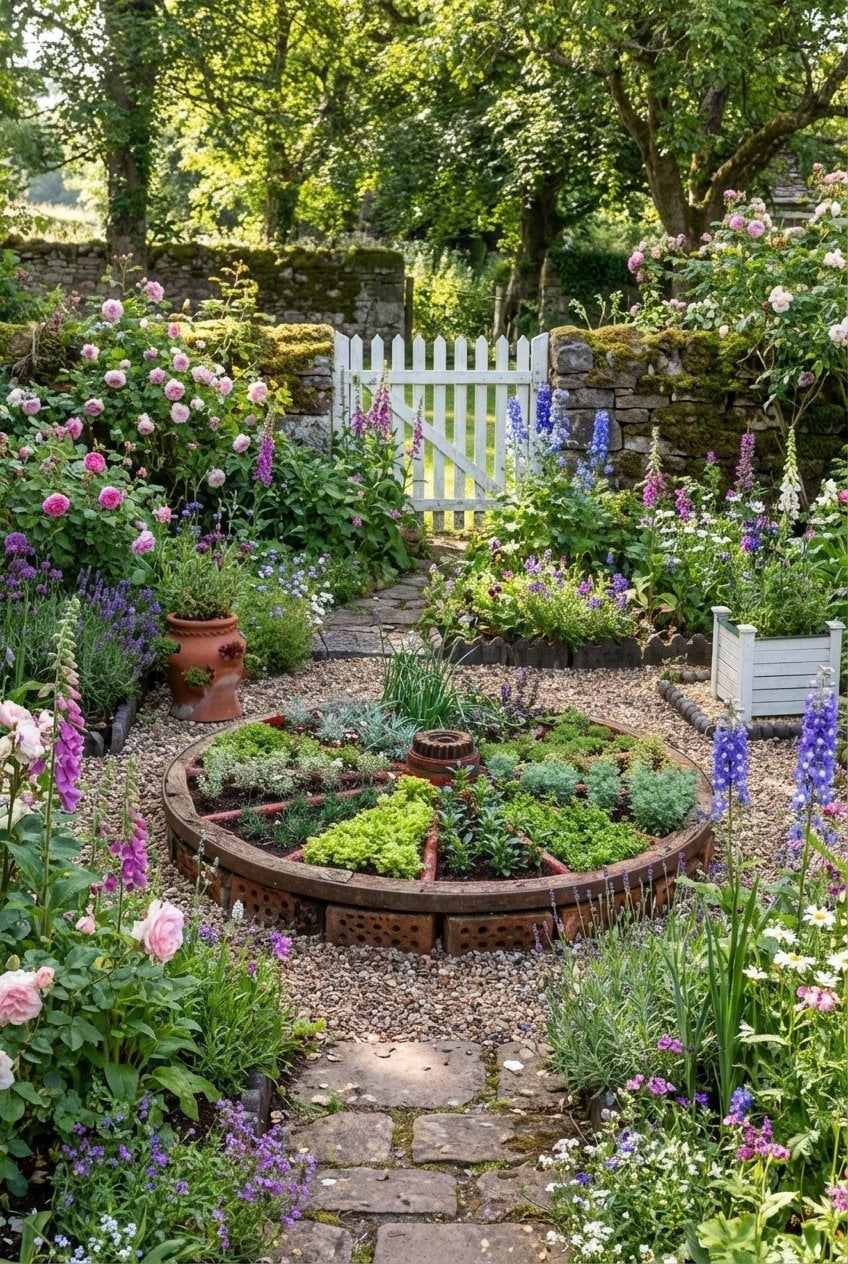
Charming Circular Brick and Wood Herb Planter
A circular herb planter anchors the garden, its shape softening the straight lines of stone pathways and a white picket gate. The design draws the eye to the center, where herbs spill over the brick and wood edges in a mix of green, pink, and purple. Terracotta pots tucked into the bed add warmth. When you place a bed in the round, the path naturally curves around it, making the whole layout feel more like a destination than a chore.
Abundant Raised Wooden Beds for Country Garden Herbs
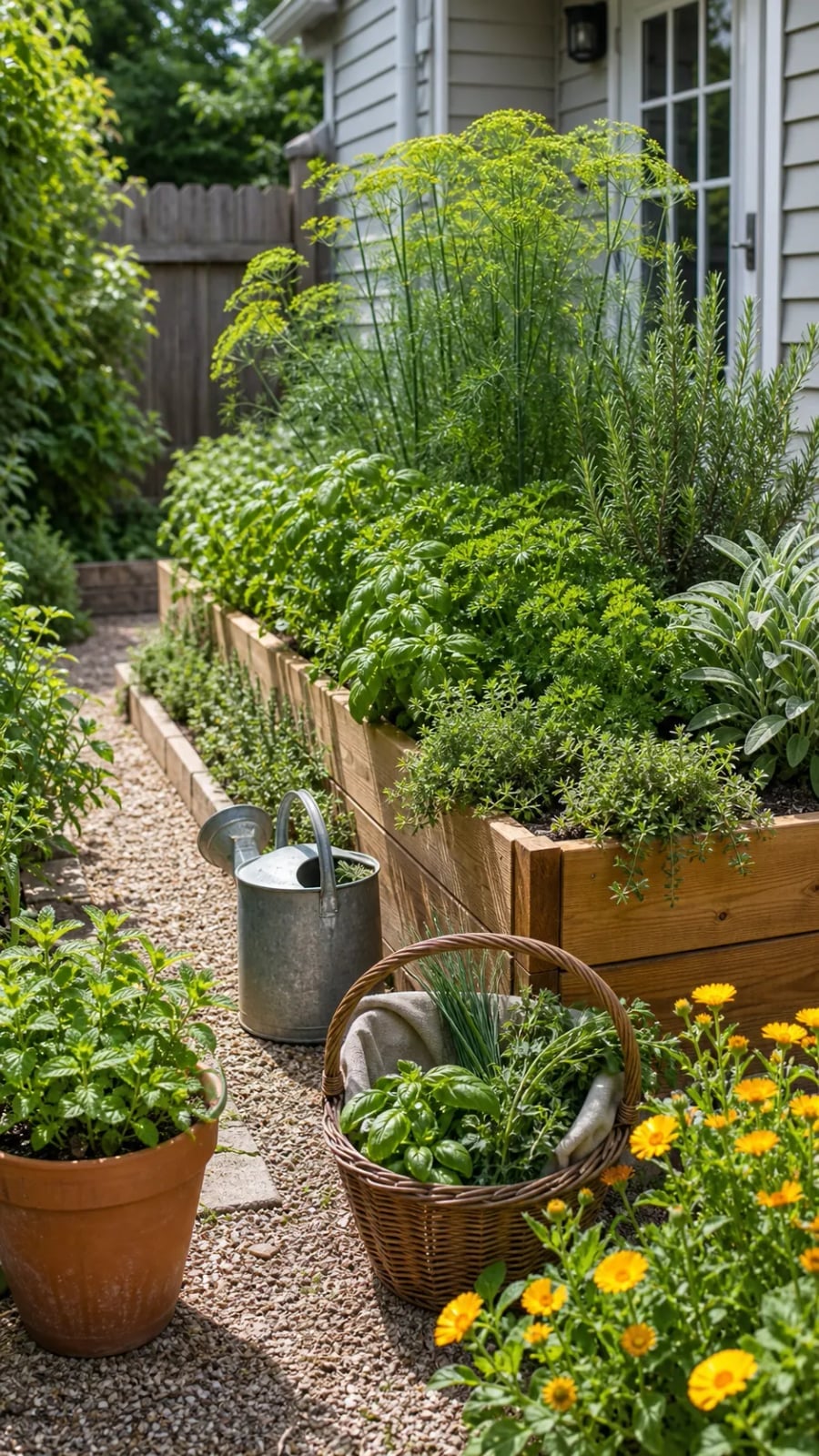
The palette here is earthy: the brown of the wood beds, the green of the herbs, and the warm yellow of the sunshine hitting the gravel path. A woven basket and a metal watering can sit nearby, ready for harvest time. The raised beds keep the herbs at hand level and the gravel path between them keeps mud off your shoes. For a country garden, matching the wood tones to the fence or shed ties the whole space together.
Modern Garden with Arched Trellises and Evening Lights
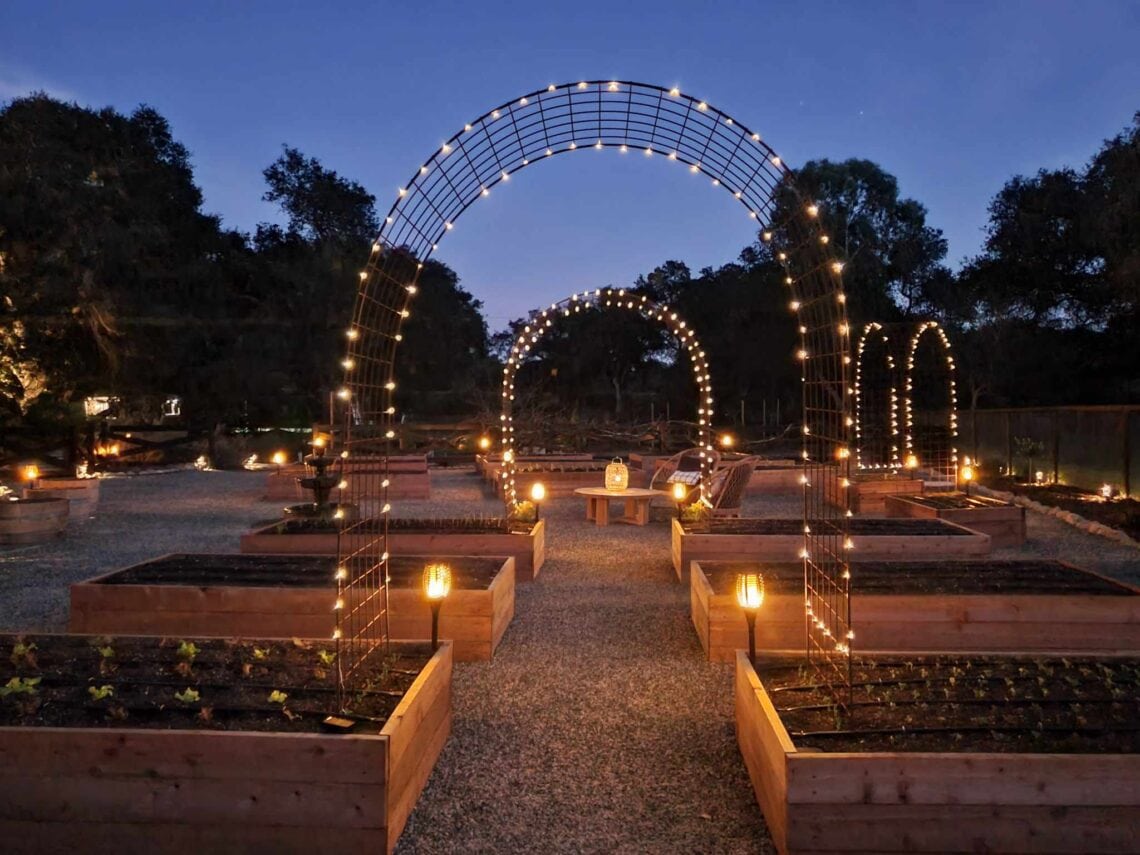
Arched trellises frame the raised beds, and string lights draped between them cast a warm glow. Solar lights along the gravel path mark the way. The mix of wood, metal, and warm white bulbs turns a functional garden into an evening retreat. The arches also give climbing herbs like beans or nasturtiums a place to grow, adding height to the layout.
Space-Saving Vertical Herb Garden on a Brick Wall
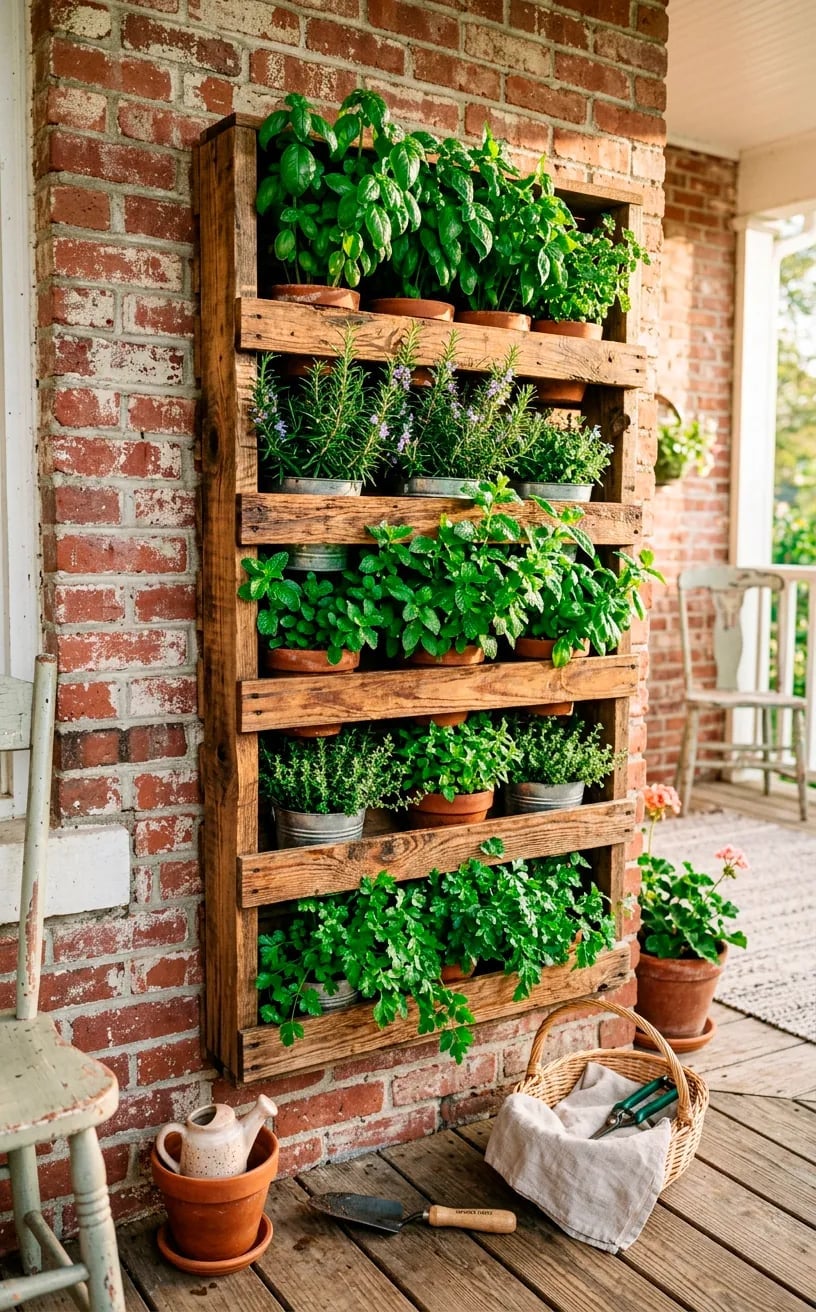
A multi-tiered wooden planter mounted on a brick wall holds terracotta pots of herbs, each shelf catching soft daylight. The vertical design takes up no floor space, making it ideal for a porch or small patio. The brick wall behind it adds texture. When you stack herbs this way, keep the thirstiest ones on the lower shelves where water reaches them first, and let the sun lovers sit higher up.
Formal Garden Layout with Symmetrical Pathways
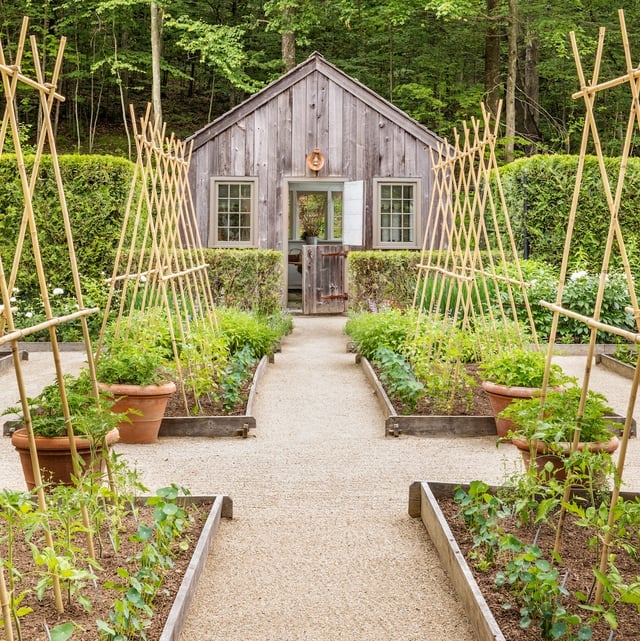
In a formal garden, mirror the beds on each side of the path. Symmetrical gravel walkways flank raised wooden beds, with large terracotta pots and trellises repeating on both sides. The beige gravel keeps the eye moving forward, while the green herbs and terracotta provide contrast. A layout like this makes harvesting straightforward, because every bed is within a step or two of the path.
Romantic Cottage Garden with Greenhouse Ambiance
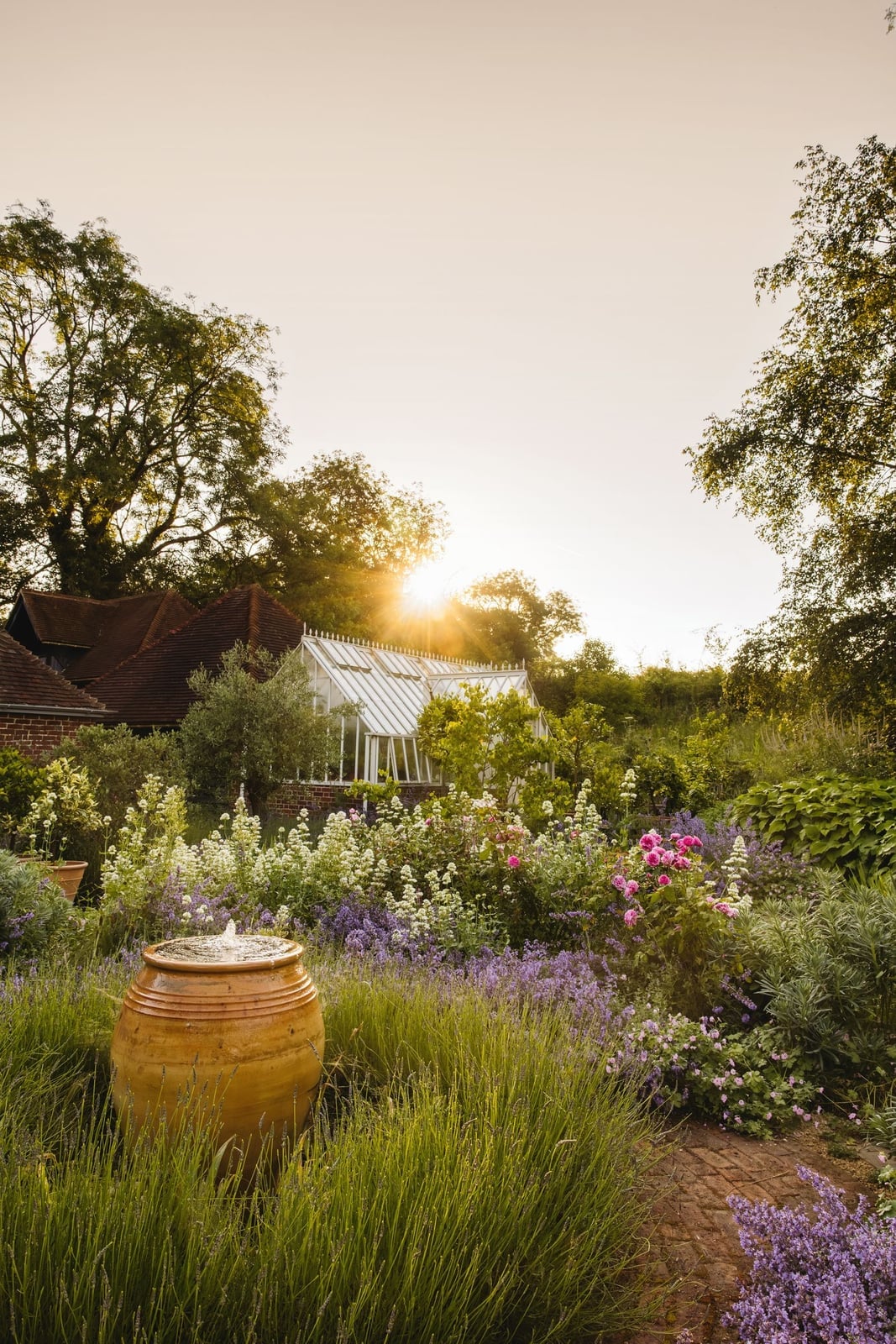
If a full greenhouse feels like a reach, a romantic cottage garden borrows the same dreamy light without the structure. The wide view takes in lush flower beds in greens, purples, pinks, and yellow, with a terracotta pot and a fountain tucked among the planting. A winding path leads the eye, and the warm sunset light streams through a glass greenhouse in the background, softening the whole scene. The layout here is roomy and generous, with brick and stone edges keeping the abundance from feeling wild. The palette works because the cool purples and pinks balance the warm terracotta and yellow, creating contrast without competition. For the same effect, group flowering herbs like lavender and borage near a seating area, and let a single glass structure, even a small cold frame, catch the evening light. That one piece anchors the romance without taking over the garden.
Rustic Vertical Herb Ladder Planter
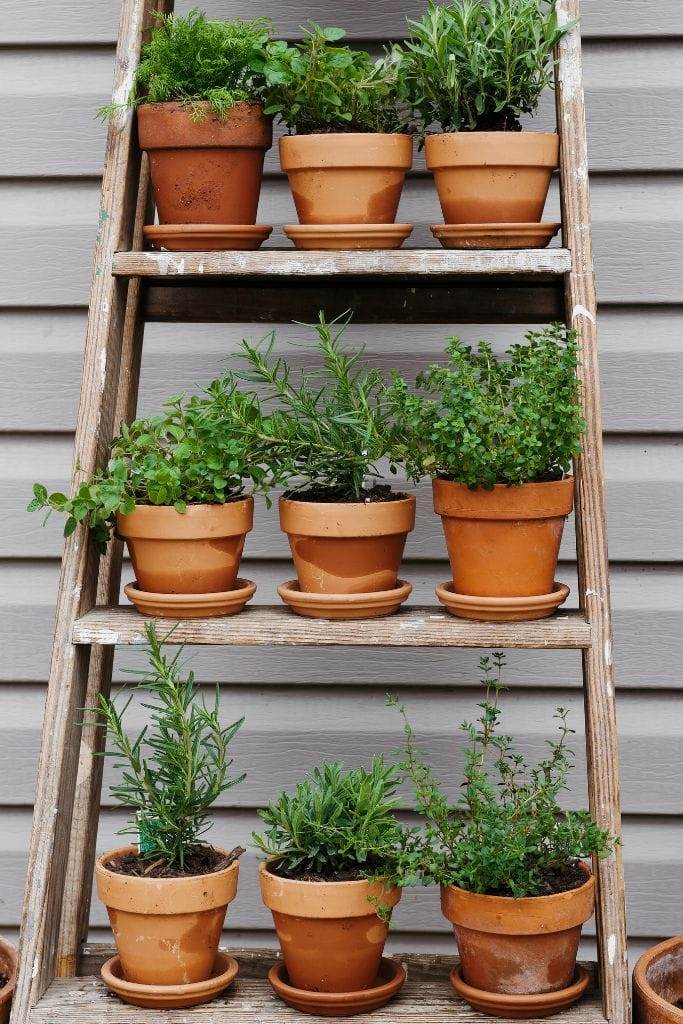
A wooden ladder leaned against a wall holds terracotta pots of herbs in a simple tiered arrangement, each plant visible and easy to reach. The rustic design turns a narrow garden spot into usable growing space without digging or permanent changes. The gray wood and warm terracotta keep the palette neutral, letting the green herbs stand out. For a renter, this is a smart choice: the ladder leans, it does not attach, and it moves with you. Just make sure the pots have drainage and the ladder sits on level ground.
Modern Garden with Long Raised Beds and Trellises
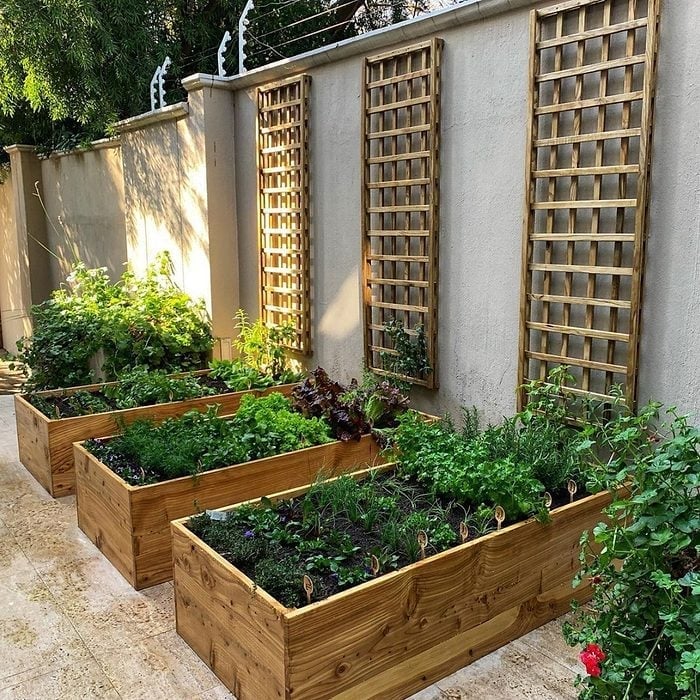
This modern garden keeps the layout clean and productive. Long wooden raised beds run along a wall, with vertical wooden trellises rising behind them, all set against a concrete surface in natural daylight. The palette stays restrained: wood tones, green foliage, and warm beige from the wall and ground. The key advantage here is the trellis placement. By positioning the vertical supports behind the beds, the design lets climbing herbs like rosemary or thyme grow upward without shading the plants in front. The straight lines of the beds echo the trellis structure, making the whole arrangement feel intentional rather than crowded. For a similar setup, keep the beds narrow enough to reach the center from either side, and match the trellis height to the wall behind it for a unified look.
Tiered Shelf for Displaying Labeled Herb Pots
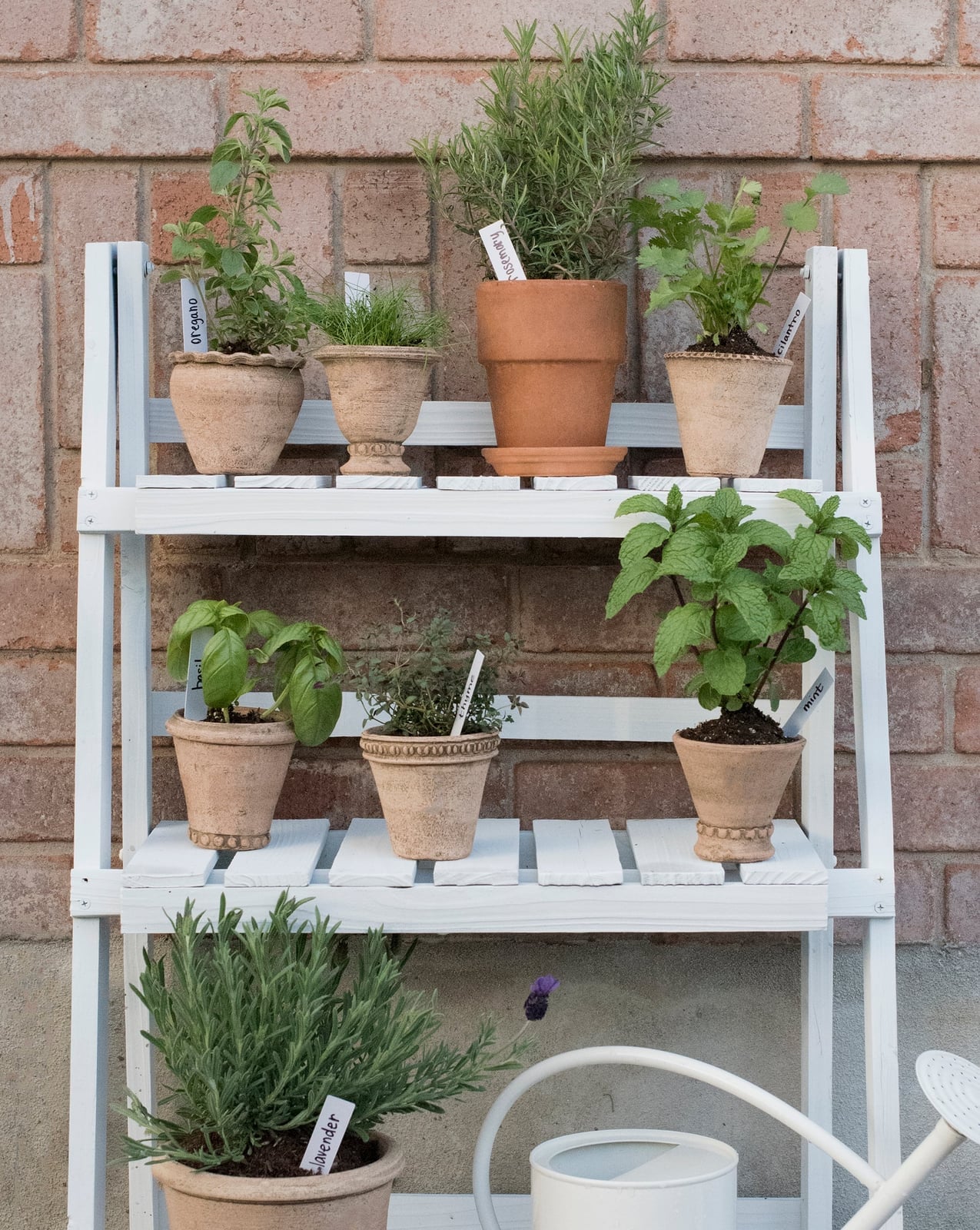
What if your herb collection outgrows the windowsill but the garden feels too far? A tiered shelf unit solves the storage problem by stacking pots vertically in a compact footprint. Here, a white wooden shelf holds terracotta pots and ceramic containers, each herb plant neatly labeled in soft daylight. The modern rustic style mixes clean white wood with warm terracotta and green leaves, creating a display that looks intentional and organized. The tiered layout gives every plant its own level, so low-growing herbs do not get shaded by taller ones. For durability, choose a shelf made from pressure-treated wood or weather-resistant metal if it lives outdoors. Labels on the pots make it easy to identify each herb at a glance, which helps when you are harvesting for dinner or watering selectively.
Traditional Garden with Ornate Urn Planters
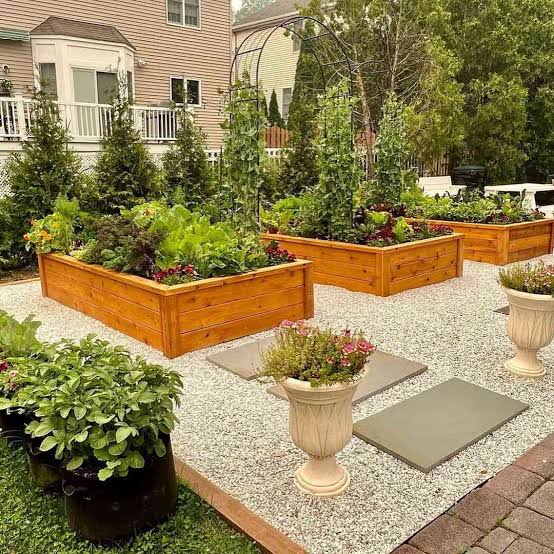
Ornate urn planters bring a formal touch to a traditional garden layout. Here, raised wooden beds and ceramic urns sit on gravel, with trellises adding vertical interest in natural daylight. The palette of wood tones, green, pink, and cream keeps the garden feeling refined without being stiff. The urn planters act as focal points, their sculptural shapes contrasting with the straight lines of the raised beds. For proportion, place urns at the ends of a bed or flanking a path, so they anchor the layout rather than crowd it. The gravel surface provides good drainage and a clean base that lets the planters stand out.
Naturalistic Planting with Vibrant Flowering Herbs, Close-Up Take
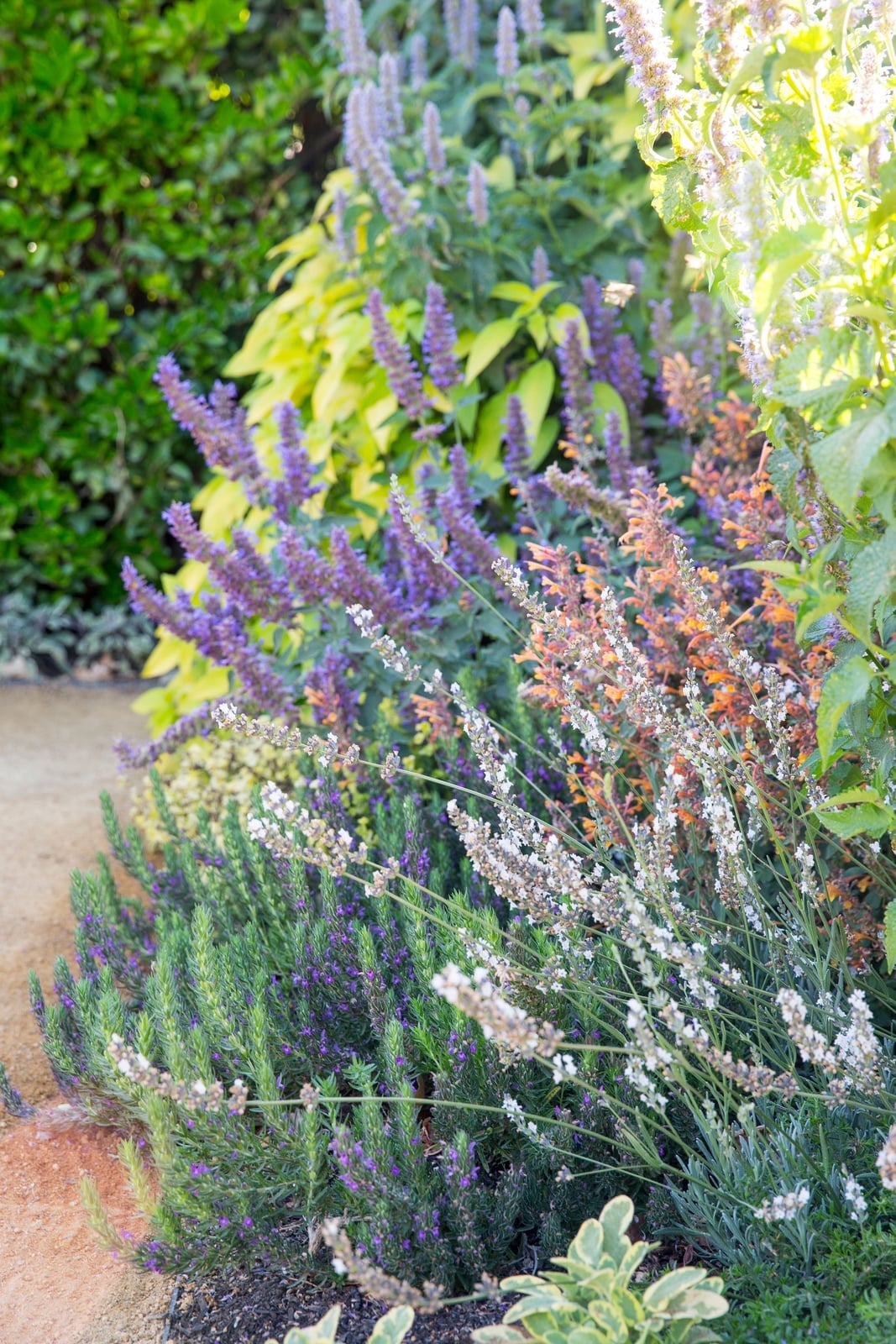
In a naturalistic garden, the planting looks layered, not arranged. Here, purple salvia and lavender rise above lower green foliage, with orange and yellow blooms scattered through the middle. The mix of heights and colors keeps the eye moving without a single plant claiming too much attention. Bright daylight hits the gravel and soil, warming the whole palette. The garden reads as abundant but not crowded because the gravel paths give each clump of herbs room to spread. What breaks the uniformity is the vibrant purple salvia, which pulls the color story together without needing a strict color scheme.
Circular Stone Raised Garden Bed Design With Illuminated By Daylight
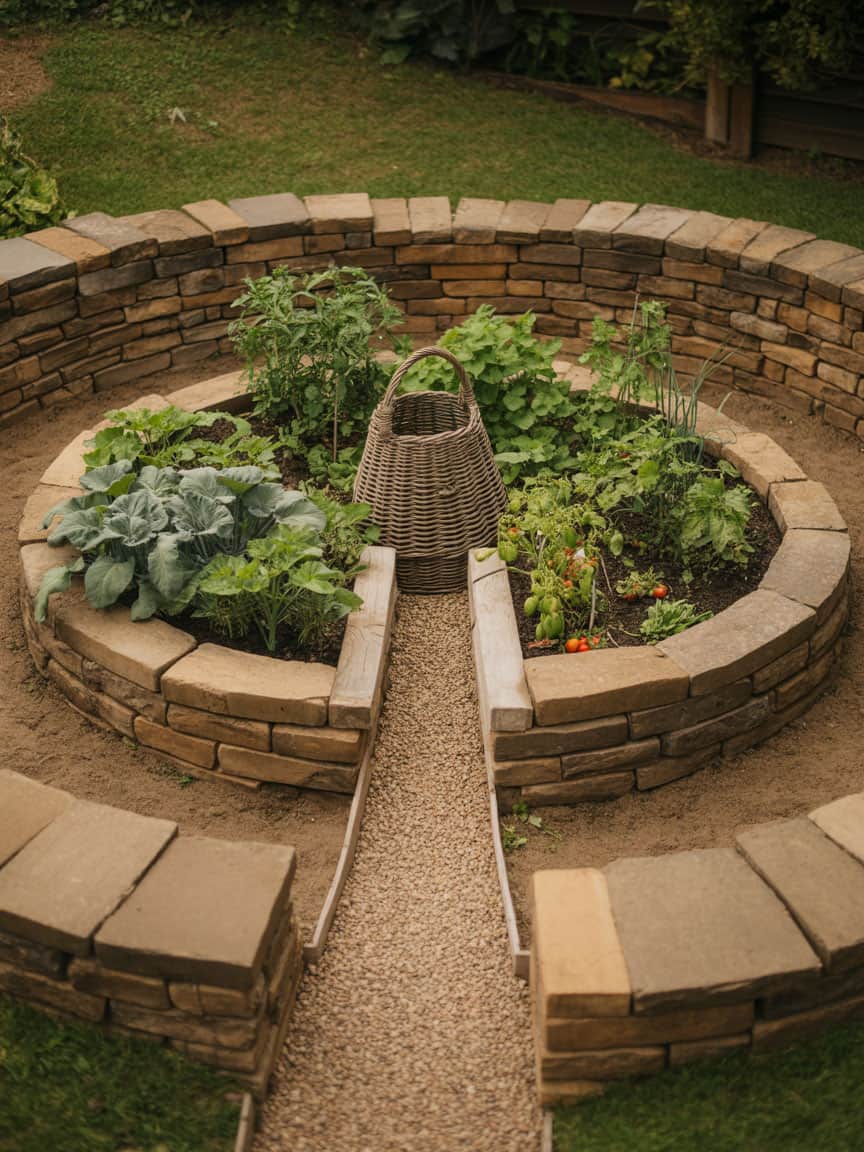
A circular raised stone bed changes the flow of a garden compared to the usual straight-edged rectangle. The curve of the stone wall softens the transition between planted herbs and the gravel path around it, making the whole space feel less rigid. A wicker basket sits on the stone edge, ready for harvesting, which turns the bed into a working part of the garden and not just a decorative circle.
The path that surrounds the bed is the key design element. The gravel ring lets you walk around the entire circle without stepping on soil, so every herb is reachable from any side. The palette stays earthy: green foliage, brown wood accents, beige gravel, and gray stone. The circular shape means no corner goes unused, and the center stays accessible from all angles.
Creative Vertical Garden with Stacked Wooden Crates, Close-Up Take
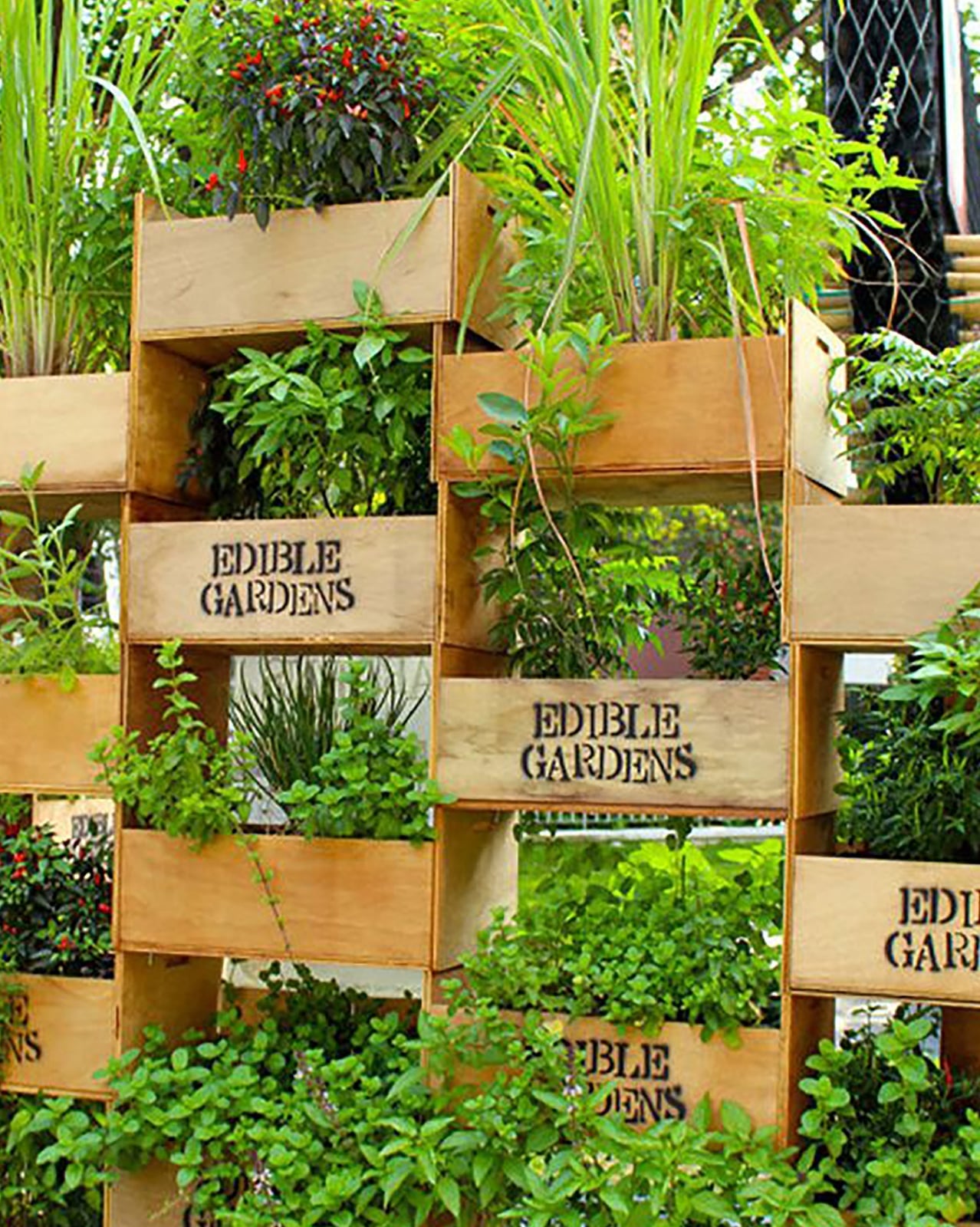
The design here stacks wooden crates in a staggered pattern, which gives each plant its own shelf without blocking the light to the one below. The open slats of the crates let air move through the soil, a detail that matters more for herbs than for decorative plants. The wood tones and green foliage keep the palette neutral, so the garden works against any wall color or fence.
Modern Farmhouse Vertical Herb Planters on a Deck With Such As Mint
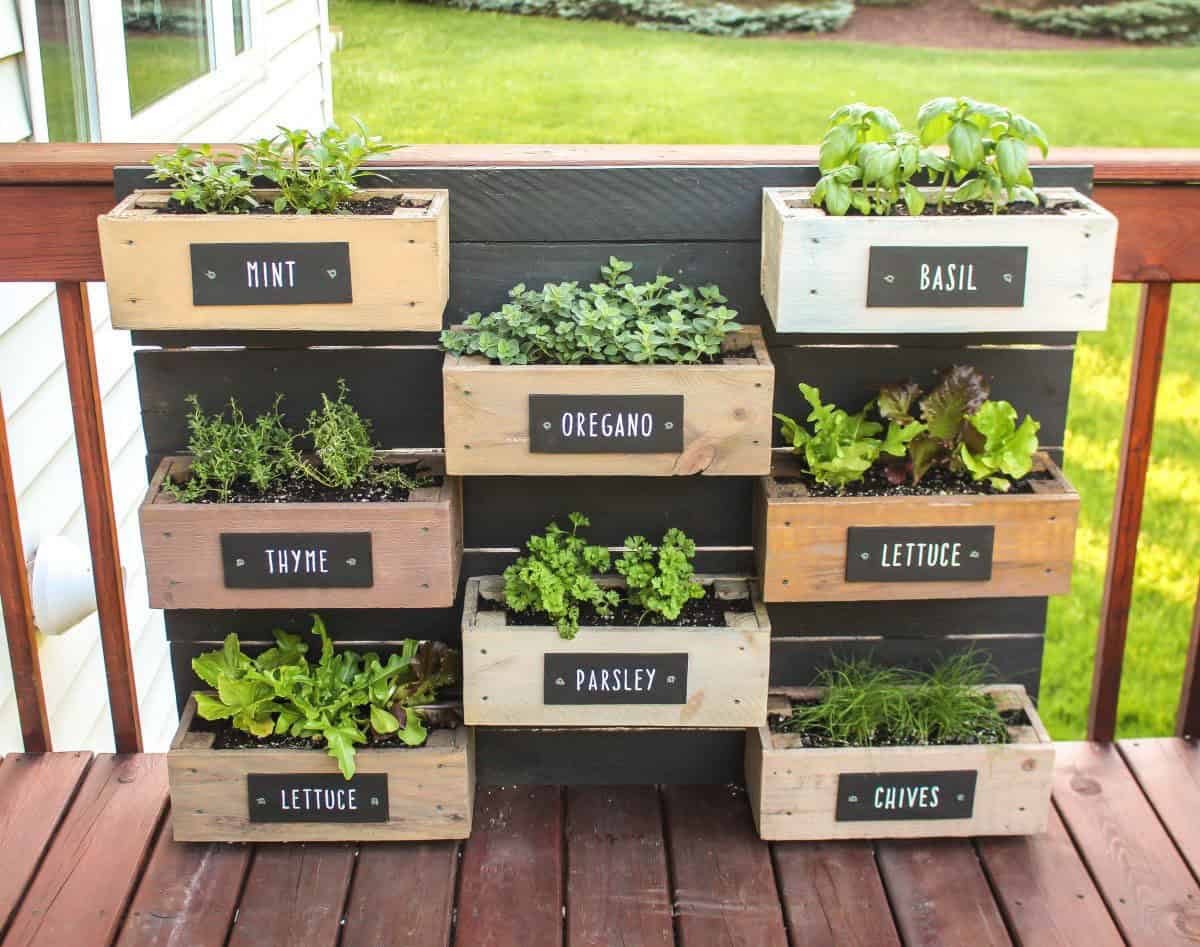
A set of labeled wooden herb boxes mounted on a deck wall turns a blank vertical surface into a compact garden. The planters stack in a staggered arrangement, which keeps each herb in reach and lets daylight hit every box evenly. The palette stays within the modern farmhouse range: black wood tones, green foliage, and the natural gray of the deck boards. Layout is the deciding factor here. By placing the boxes in a vertical line instead of spreading them across the deck floor, you keep the seating area open and the herbs close to the kitchen door. The labels on each box remove the guesswork when you grab a handful for dinner. It is a solution that suits a deck of any size.
Mediterranean Herb Garden with Stone Border and Bright Daylight
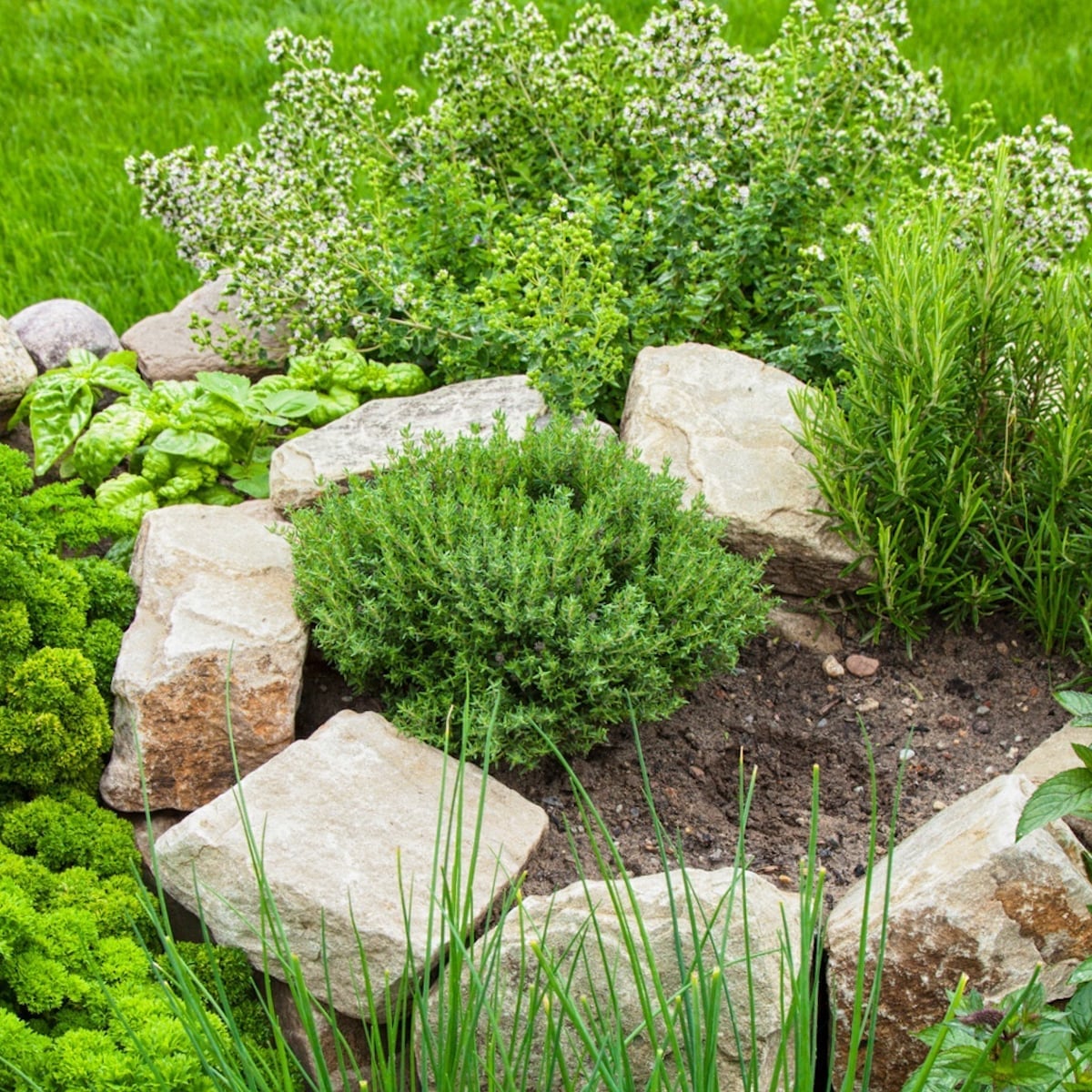
Define a mediterranean herb garden with a stone border, which keeps the soil in place and the layout readable even when the plants grow thick. The circular stone edge marks a clear boundary between the planted herbs and the surrounding path, making the garden feel deliberately structured.
The greens of the thyme, rosemary, basil, and parsley stand out against the beige stone and the white gravel or soil, creating a color ratio that feels sun-washed without being muted. The thyme mound in particular reads as lush because it fills the space between the stones, softening the hard edge. The combination of a stone border and a restrained palette keeps a compact bed from looking crowded.
Modern Garden with Geometric Wooden Raised Beds
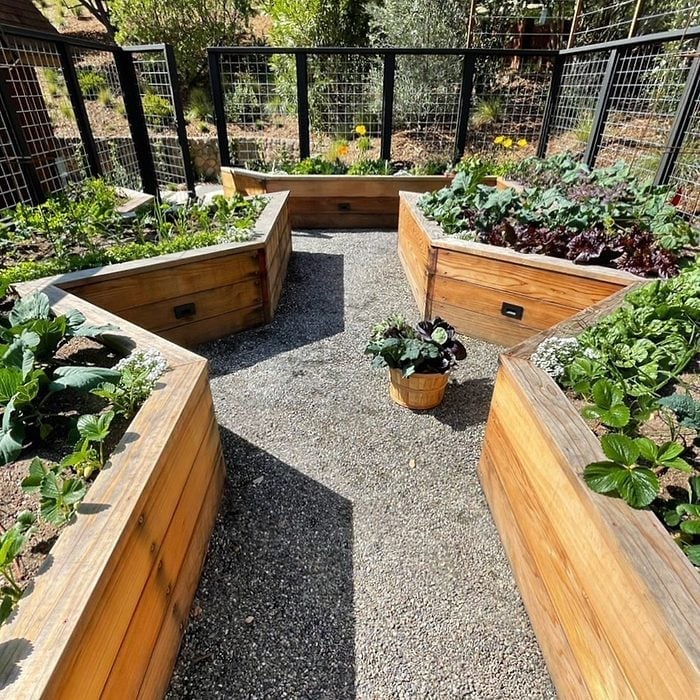
A garden with a central gravel pathway between geometric wooden raised beds creates a clean layout that feels larger than its actual size. The dark gray metal fencing and wood tones keep the palette neutral, letting the green herbs stand out. The basket planter adds a softer shape against the angular beds. For a roomy garden, keeping the pathway clear and the beds in a repeating geometric pattern helps define the space without clutter.
Cottage Garden Corner with Hanging Basket
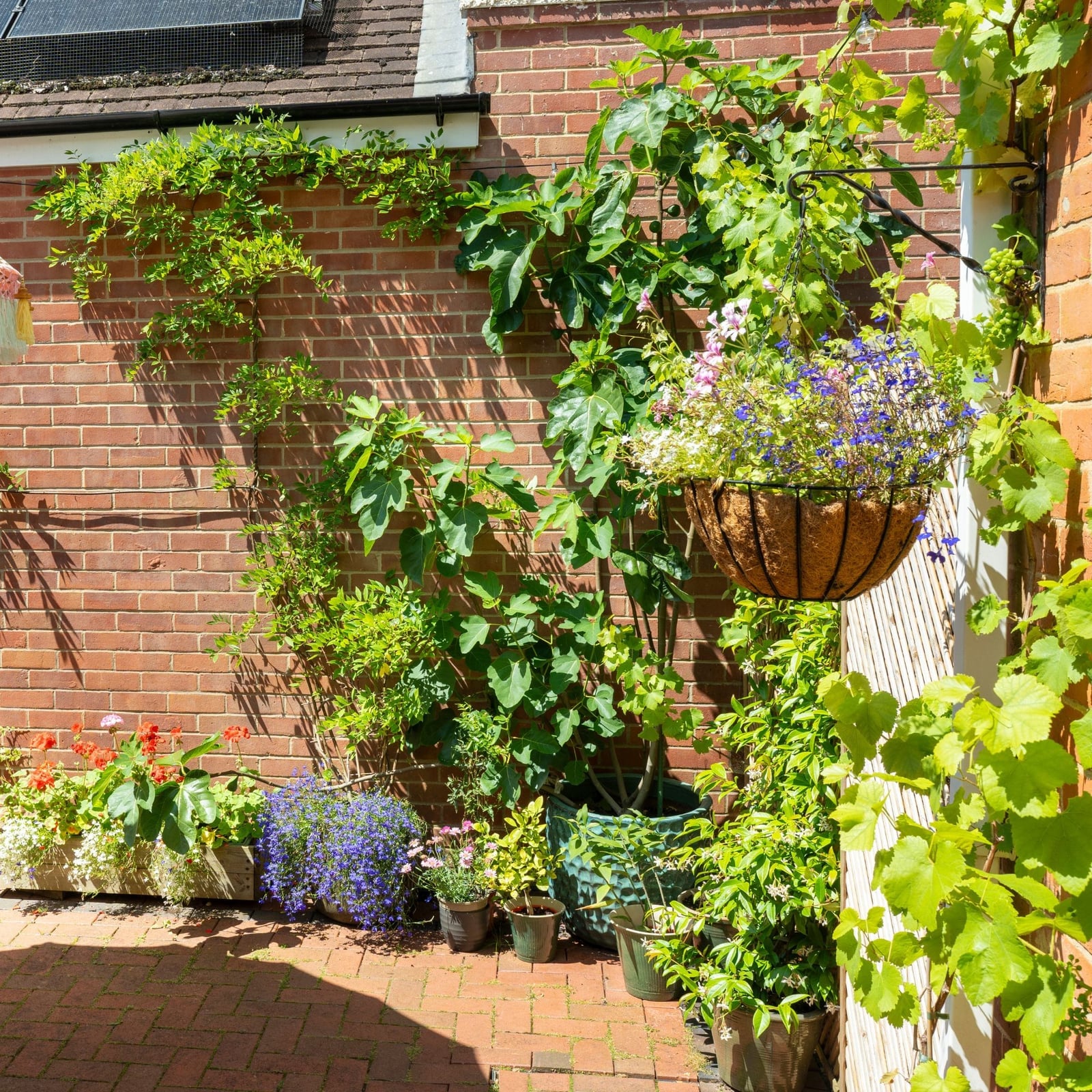
To layer plants at different heights, place a hanging basket above potted herbs on the ground. The brick wall provides a warm backdrop for the green, blue, pink, and terracotta tones. A hanging basket of flowers draws the eye upward, making the compact space feel fuller. This setup works for renters because nothing is attached to the wall permanently; the basket hangs from a hook, and the pots sit on the ground or a simple stand. The mix of textures from terracotta and metal keeps the corner looking curated.
Rustic Garden Vignette with Metal Planters
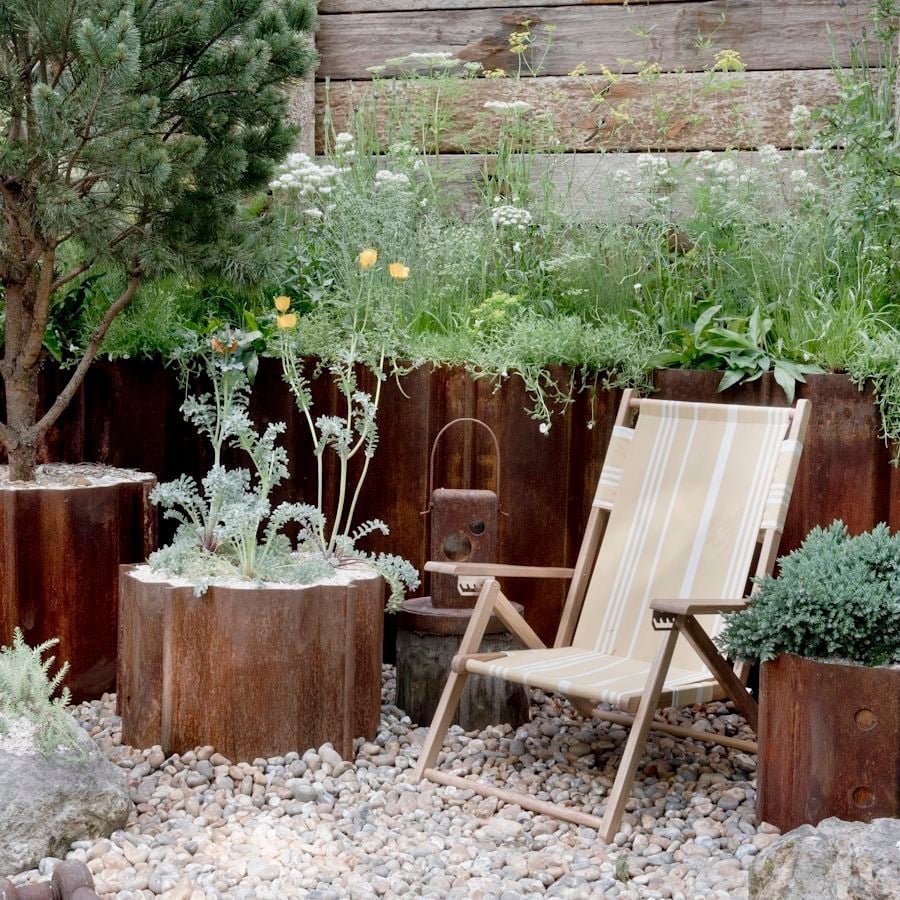
Instead of a matching set of planters, a rustic garden corner uses contrasting materials like rusted metal, wood, and stone. The folding chair and lantern add a lived-in feel. The rusted metal planters have a patina that blends with the green and beige palette, while the wood and stone ground the vignette. The key is to keep the layout compact: a chair, a planter, and a lantern make a balanced corner without overcrowding. The rusted finish on the metal planters holds up well outdoors, developing character over time. A stone path or gravel base underneath helps define the seating area and keeps the plants from sitting in mud.
Rustic Herb Garden in Galvanized Metal Tub
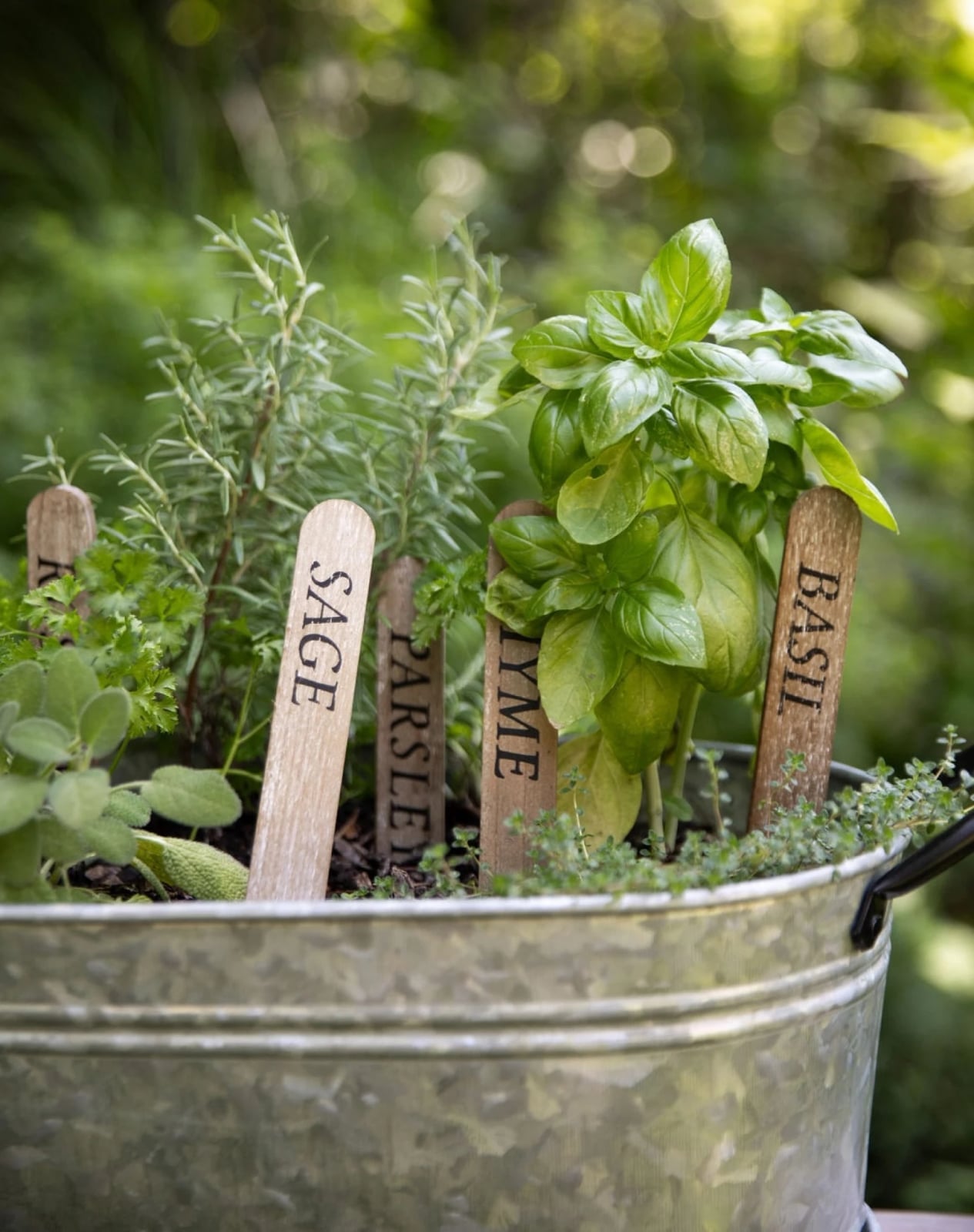
A galvanized metal tub planter holds basil and rosemary with wooden herb markers that keep each plant identifiable. The silver metal reflects light, which contrasts with the deep green leaves. The compact container makes it easy to move the herbs to sunnier spots or shelter from rain. The wooden markers add a rustic touch and are simple to replace if they weather. The tub itself is sturdy for outdoor use and resists rust better than plain steel.
Modern Balcony Herb Garden on a Wooden Ladder Shelf
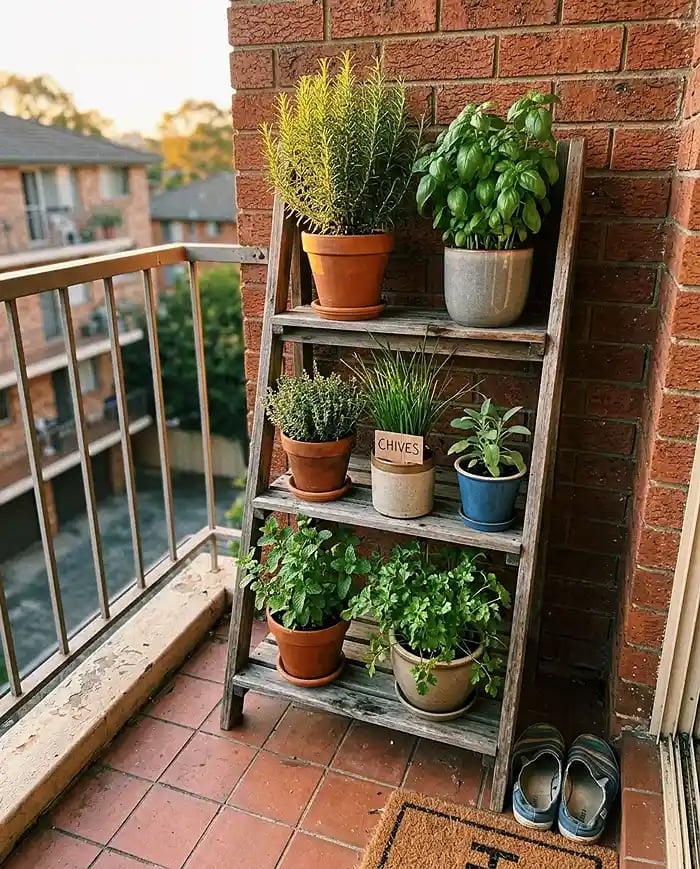
A wooden ladder shelf on a balcony holds a tiered herb garden with terracotta and ceramic pots. The evening light catches the greens and blue tones. The tiered shelf uses vertical space, so a small balcony can hold several herbs without taking up floor area. The mix of pot shapes and colors adds visual interest while keeping the layout organized. Placing the shelf against a wall leaves room for other balcony essentials, like a chair or a small table. The ladder shelf is lightweight and can be moved indoors during colder months.
Rustic Wicker Basket of Freshly Harvested Herbs
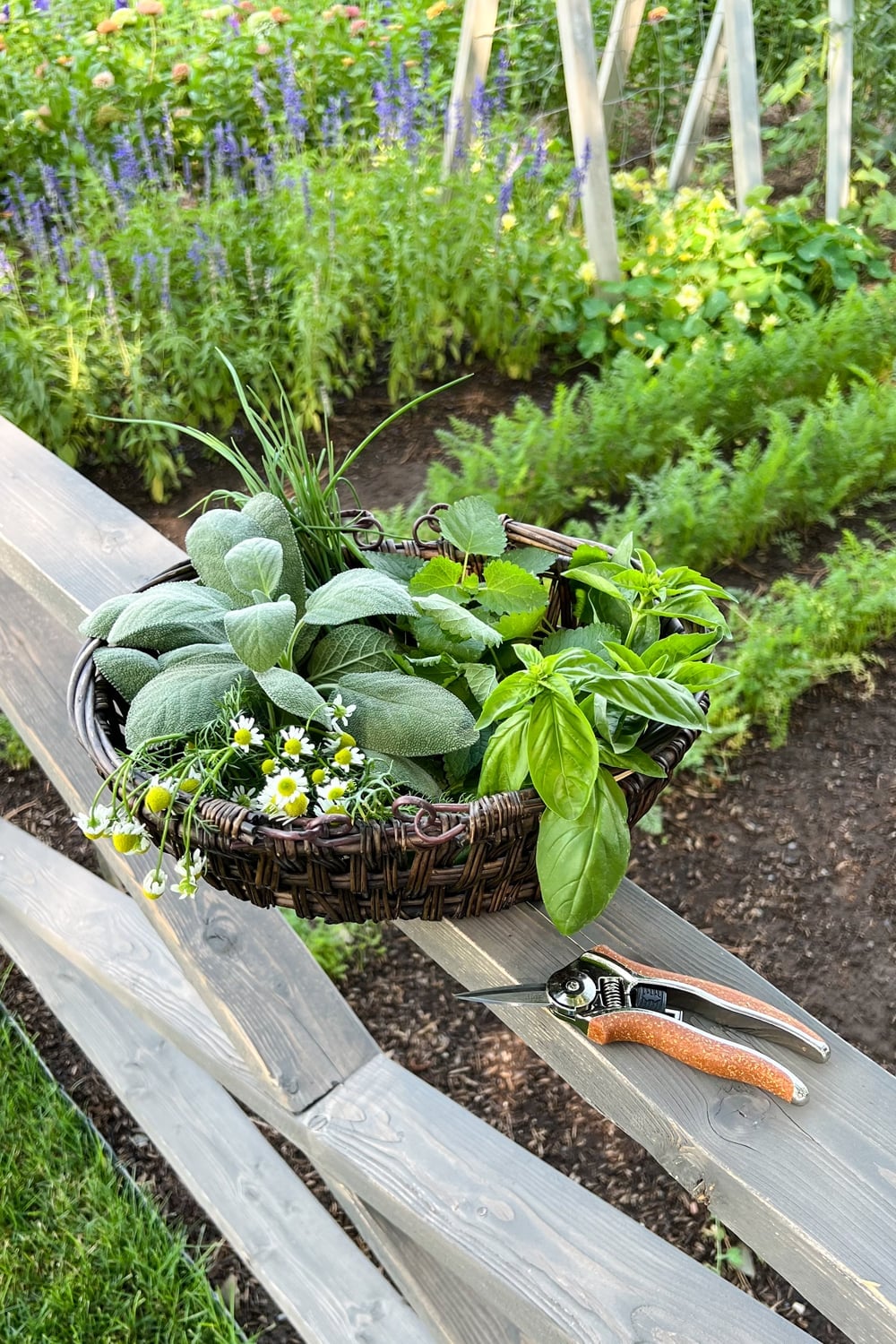
A freshly harvested herb basket belongs near the kitchen door, not tucked away in a shed. This rustic still life rests on a gray wood fence, with a wicker basket full of green herbs and garden shears beside it. The layout keeps the basket central and the fence simple, so the herbs read as the point. A practical rule: place your harvest basket where you pass it daily, and you will actually use what you grow.
Modern Farmhouse Garden with Organized Raised Beds
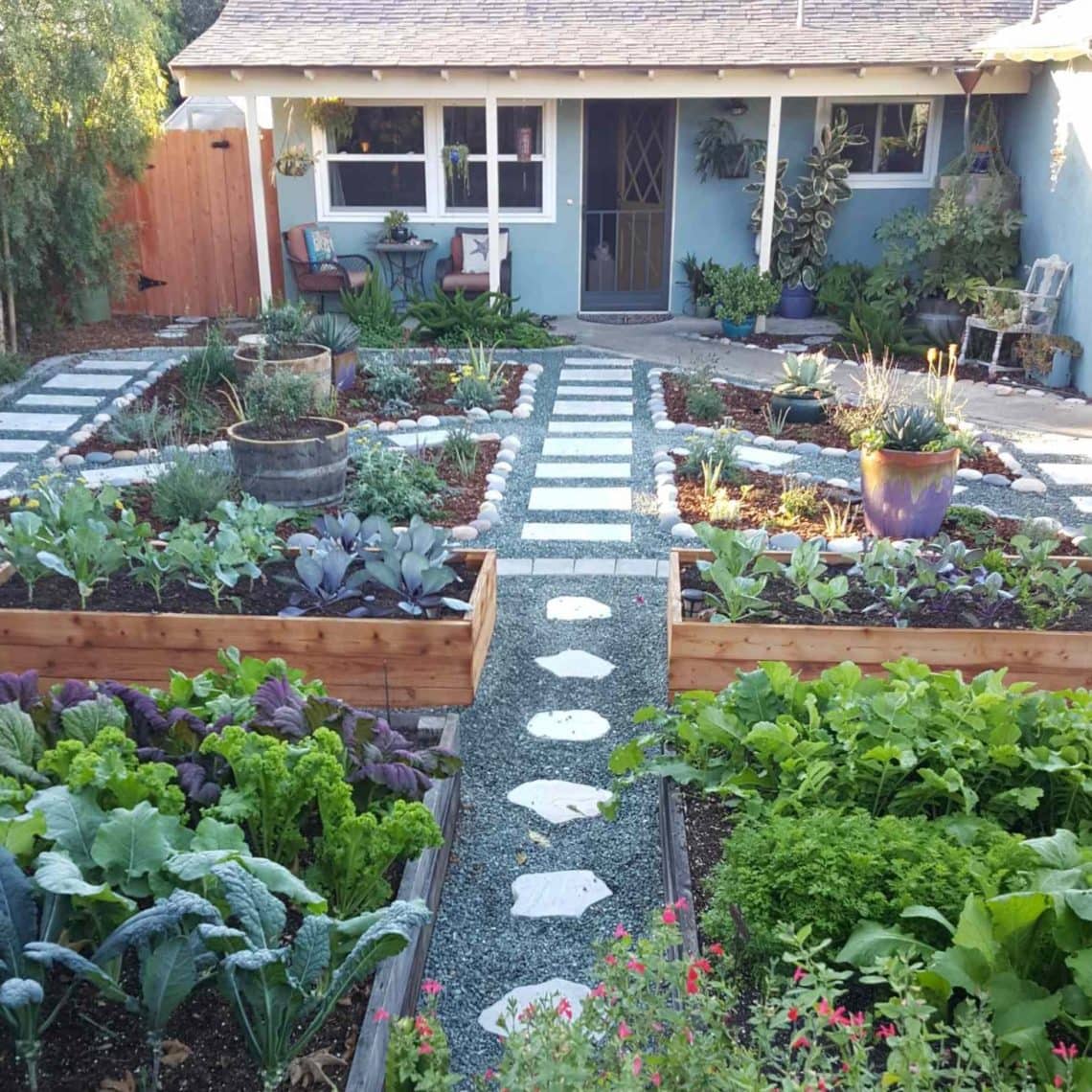
A roomy garden with organized raised beds uses a palette of green, brown, blue, and purple. The wood beds and gravel pathways sit beside concrete planters and stone stepping stones, all in natural daylight. A modern farmhouse garden like this keeps the palette within earthy neutrals and one cool accent, here the blue and purple blooms. The ratio is roughly three parts green and brown to one part blue and purple, which keeps the garden calm without feeling flat.
Traditional Front Garden with Stone Retaining Wall
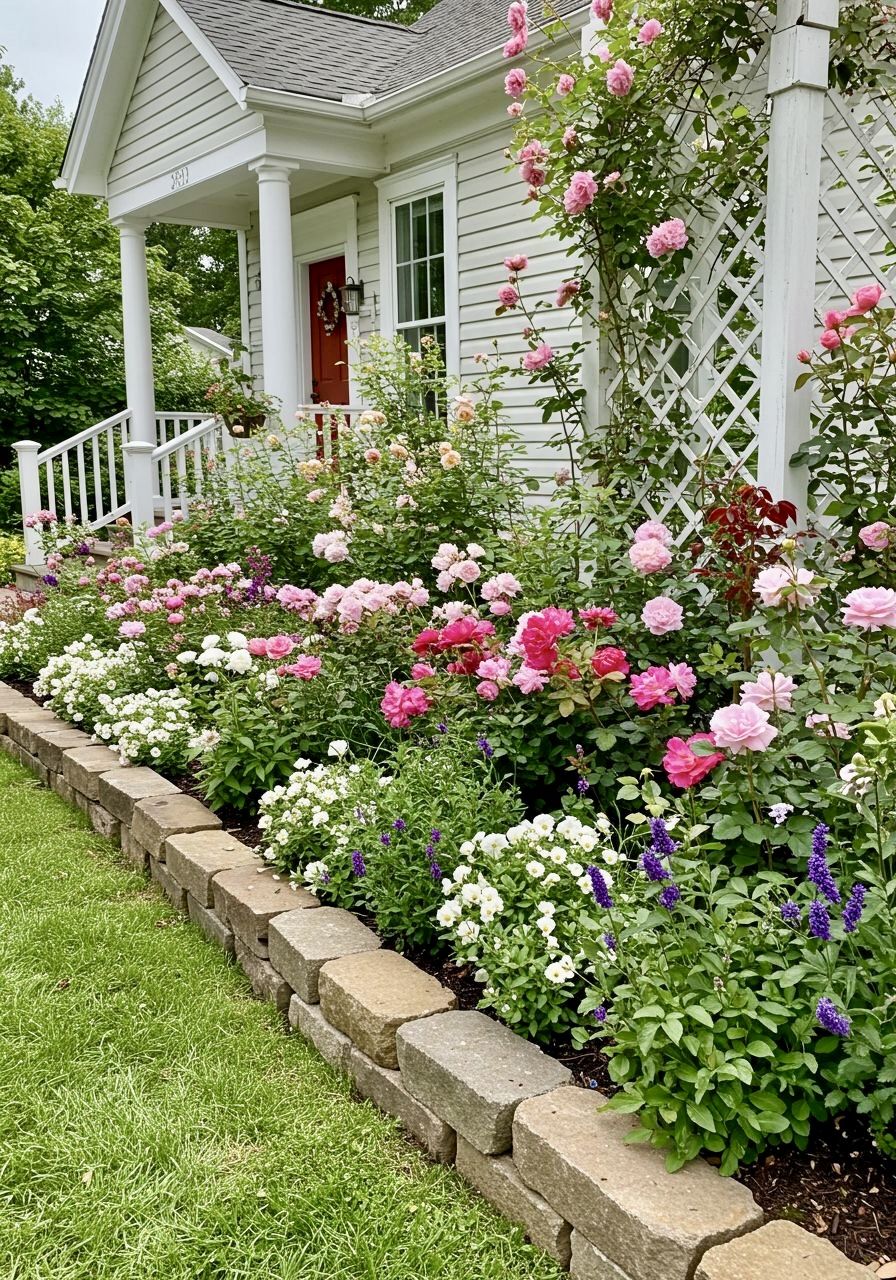
A stone retaining wall anchors the front garden and creates a natural boundary for layered planting. In this traditional garden, pink and white roses bloom above green foliage, all set against the gray stone wall and wood siding of the house. The overcast daylight softens the contrast between the bright flowers and the stone. A practical rule: use a stone wall to separate planting zones without blocking light, since stone holds heat and can extend the growing season for nearby herbs.
Cottage Garden Raised Herb Bed with Terracotta Pots
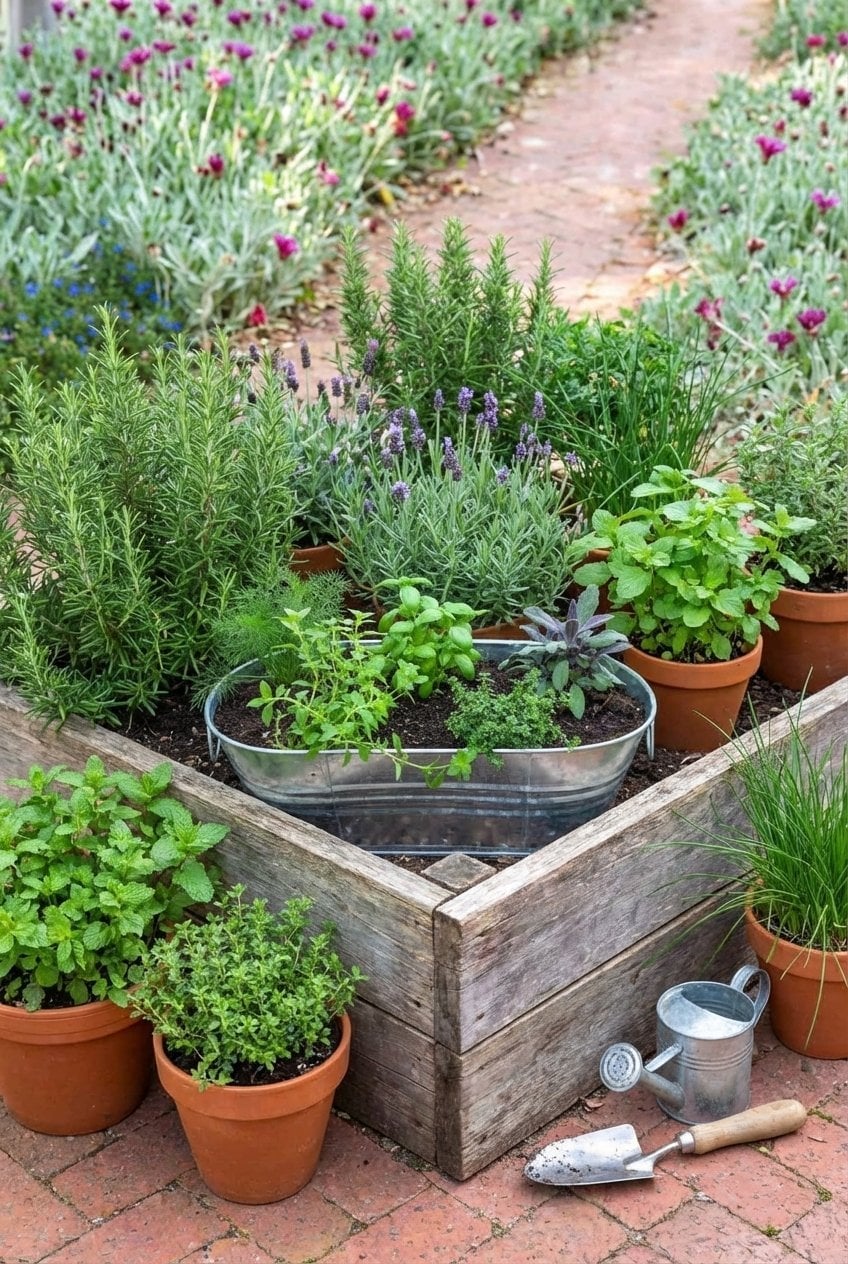
A raised wooden herb bed filled with a variety of herbs sits in natural daylight, with terracotta pots tucked among the plants. The palette is green, terracotta, and gray, with the warm clay pots breaking up the green foliage. The compact bed uses a mix of wood, terracotta, and a metal label or tool. A practical rule: terracotta pots warm the soil faster than plastic, so they suit early-season herbs like parsley and chives. Set them among the bed plants for a layered look that feels like a cottage garden instead of a collection of pots.
DIY Pallet Herb Garden with Labeled Planter Boxes
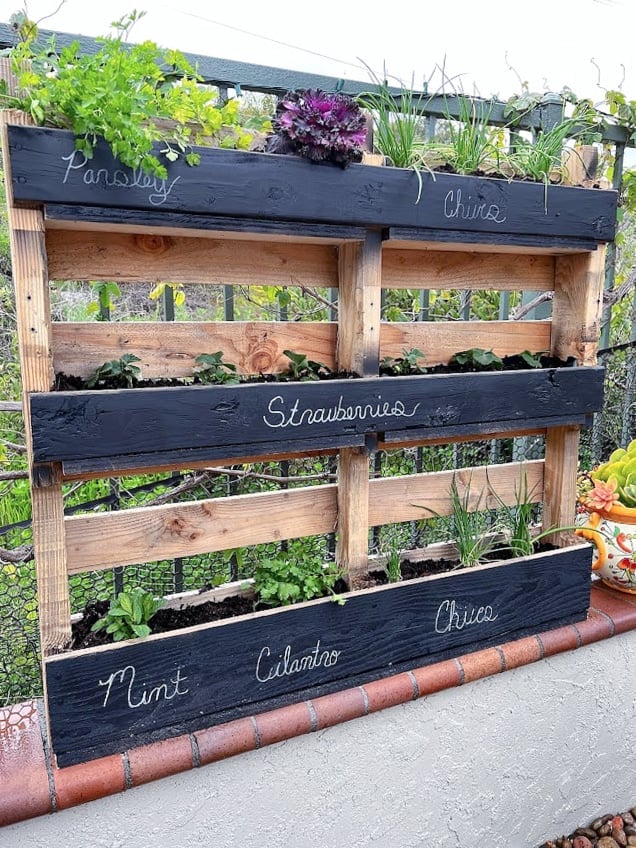
A black painted pallet with labeled planter boxes leans against a brick wall in bright daylight. The compact vertical garden uses a wood pallet and brick backdrop, with green herbs growing from each box. The labels make it easy to find the right herb without guessing. A renter-safe swap: lean a pallet against a wall instead of mounting it, so you can move the whole garden when you leave. No drilling into brick needed, and the pallet stays stable on its own.
Eclectic Potted Herb Garden on Tiered Metal Stands
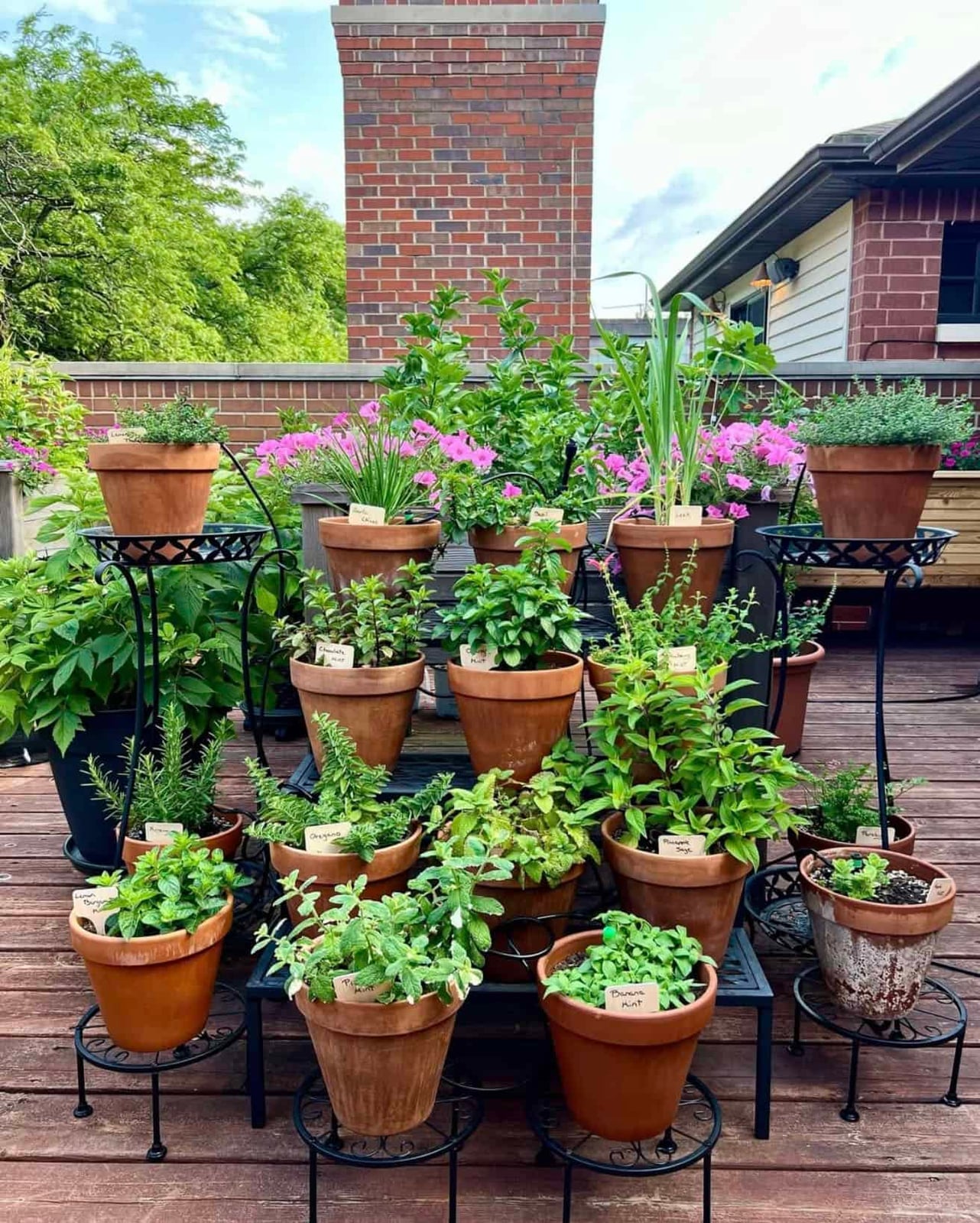
This potted herb garden on tiered metal stands makes the most of a deck by turning a collection of mismatched pots into a cohesive display. The stands lift terracotta, metal, and wooden containers to different heights, so each herb gets its own spotlight without the whole arrangement feeling crowded. The mix of greens against the warm tones of the pots and the wood deck keeps the look natural. A practical rule for this kind of setup: group plants with similar water needs on the same tier to make your watering rounds faster.
Cottage Garden Stacked Herb Pots with Chalk Labels
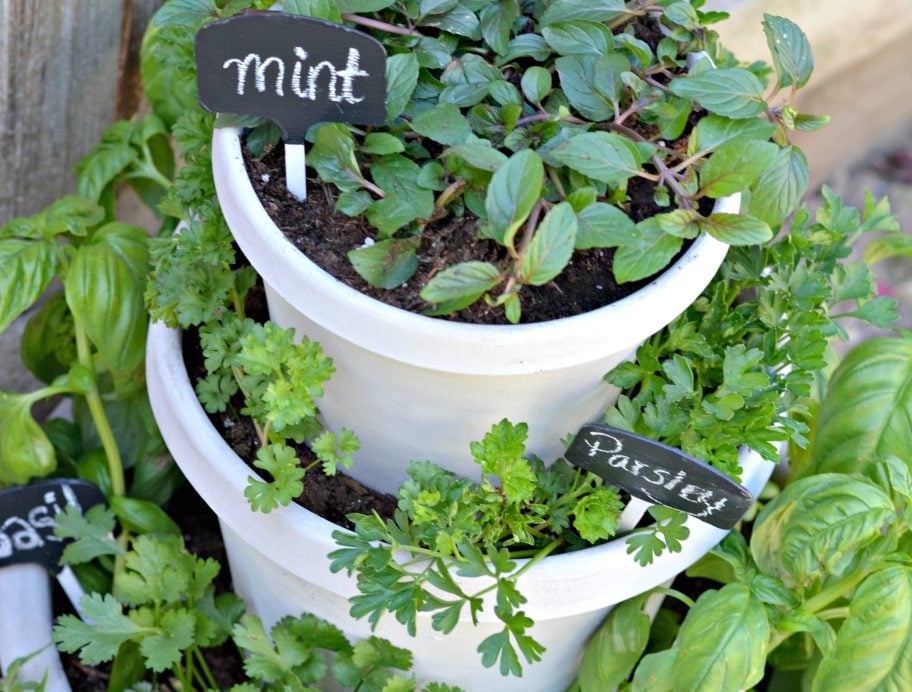
Use stacked terracotta pots with chalk labels for a herb garden you can rearrange or take with you. The vertical stacking holds mint, parsley, and basil in a small footprint, while the chalk labels keep everything easy to identify.
The white of the chalk against the green leaves and black labels looks tidy, not fussy. This approach works well for a sunny garden corner or patio. You can swap out pots by season or move the whole setup to a new spot without breaking anything. The labels also make it easy to track what you planted, which helps when you are learning which herbs thrive in your space.
Modern Balcony Vertical Pallet Herb Garden
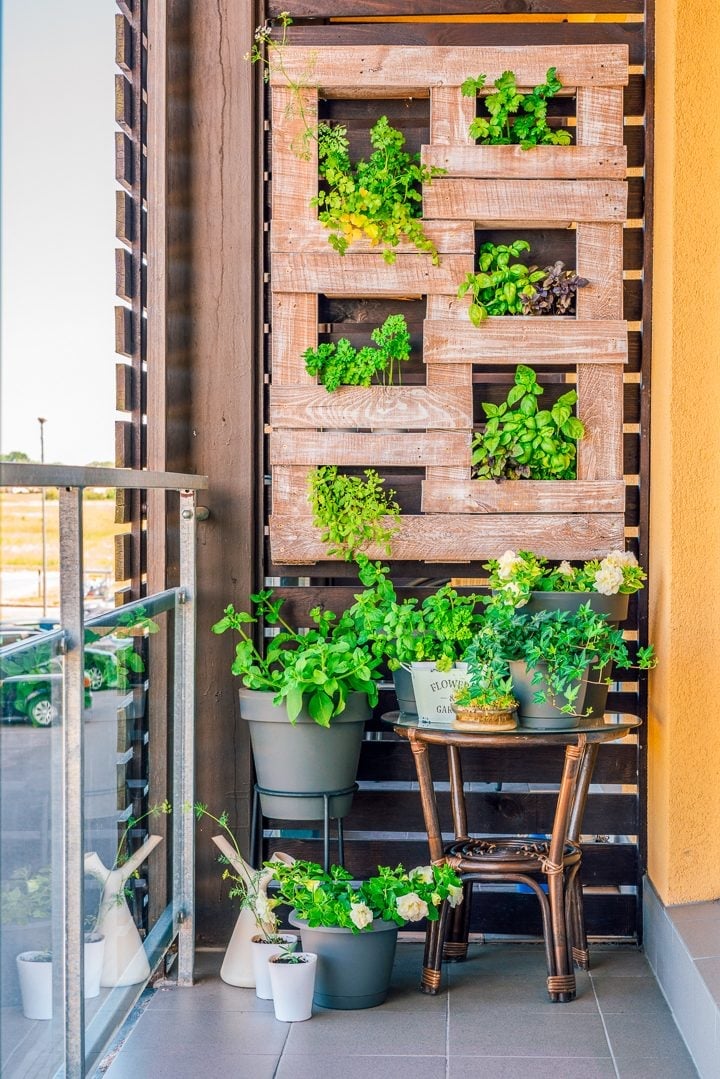
A vertical pallet herb garden leans against the balcony railing, with potted herbs tucked into the slats and a small table and chair nearby. The layout keeps the plants out of the way while leaving room for sitting. The wood tones of the pallet and the green of the herbs soften the gray of the balcony, making the space feel more like a garden than a storage area.
Rustic Wire Basket Herb Planter on a Deck
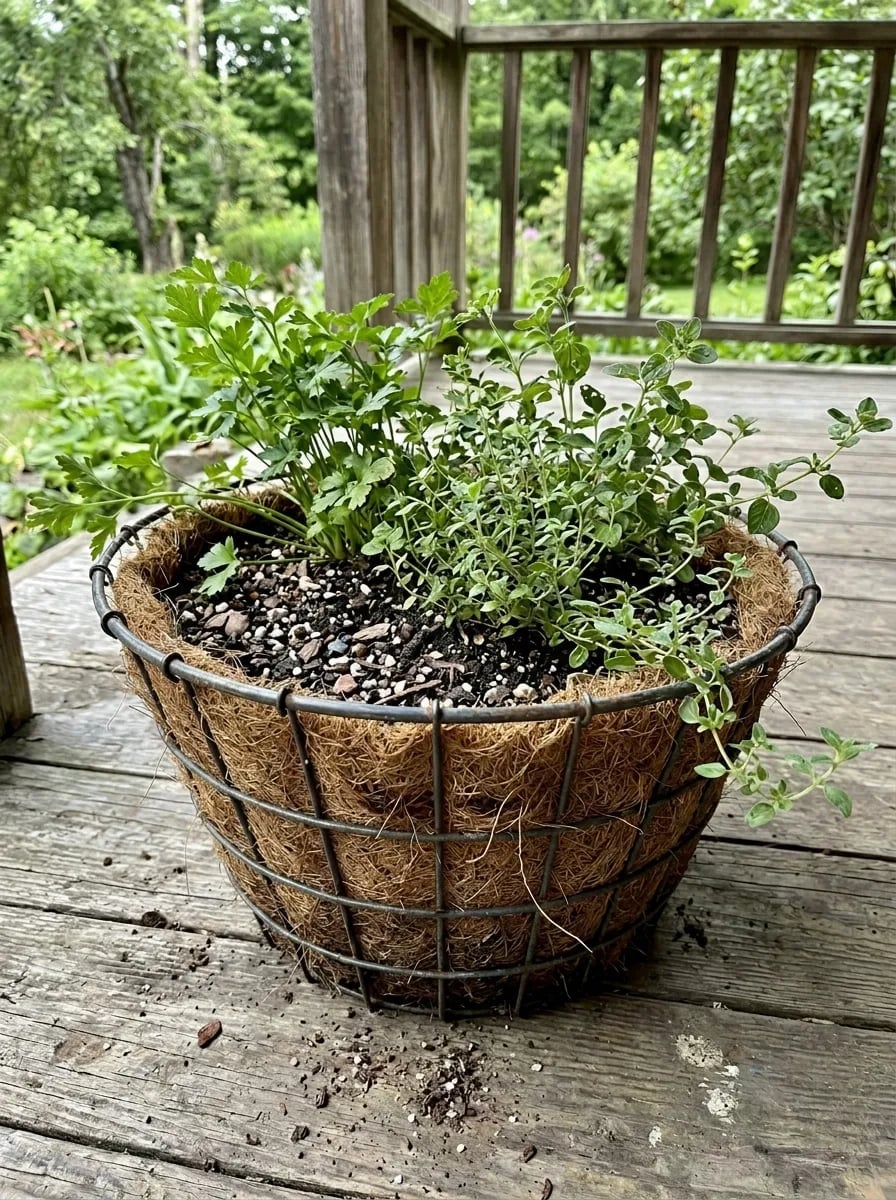
A wire basket planter with a coir liner sits on a wooden deck, holding parsley and thyme in a compact shape. The wire lets the liner breathe, which helps prevent overwatering, a common issue with solid containers. The soft daylight hitting the basket and the gray-brown tones of the deck keeps the scene relaxed. For durability, choose a basket with a thick gauge wire so the shape holds up through a few seasons of rain and sun.
Rustic DIY Herb Garden in Mason Jars
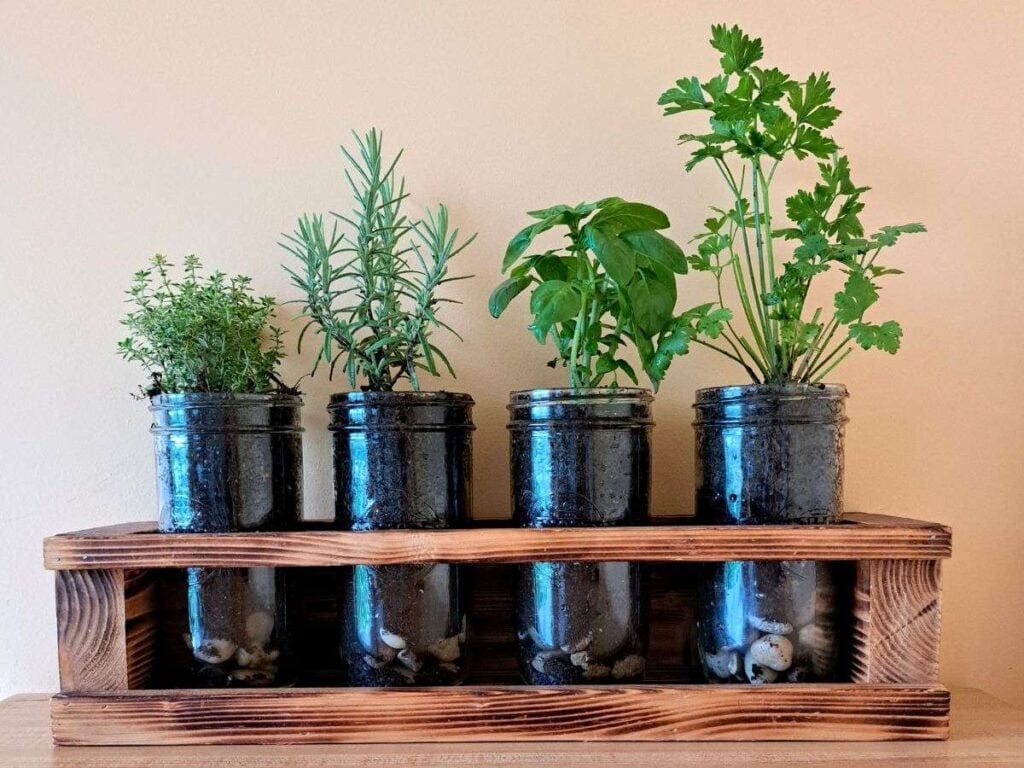
Compared to a traditional planter, this DIY herb garden in mason jars feels lighter and more casual. The glass jars let you see the soil level, which makes it easier to know when to water. Thyme, rosemary, basil, and parsley sit in a wooden stand on a garden table, with the natural daylight showing off the green leaves against the beige wood and brown soil.
A budget swap for this setup: use jars you already have instead of buying new ones. Just add a layer of small pebbles at the bottom for drainage. The glass does break more easily than terracotta, so tuck the stand in a spot where it will not get knocked over by wind or feet.
Rustic Herb Container with Orange Gardening Gloves
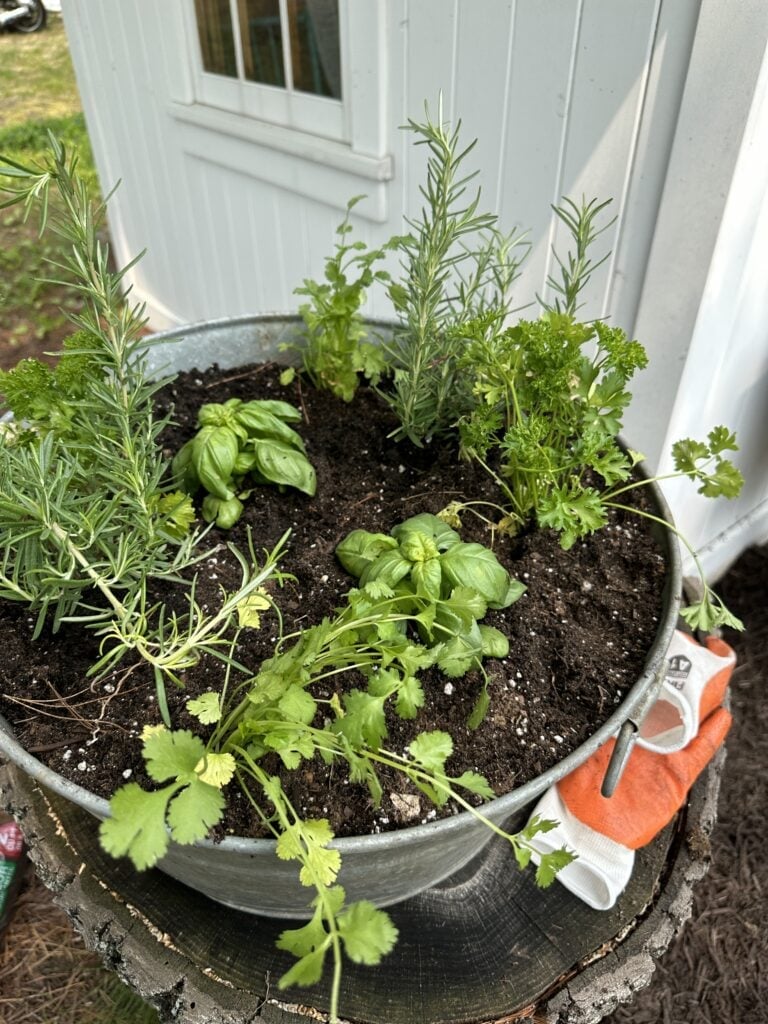
A galvanized metal tub planted with herbs on a wooden surface reads as practical and unfussy, but the orange gardening gloves draped on the edge are what give this vignette its personality. The pop of bright orange against the gray metal and green leaves draws the eye right to the tools you reach for most. In a container planting like this, the layout follows the container’s shape and the plants themselves do the work. A single unexpected color on a familiar object keeps a simple setup from looking bare.
Farmhouse Garden Scene with Chicken Coop and Bistro Set
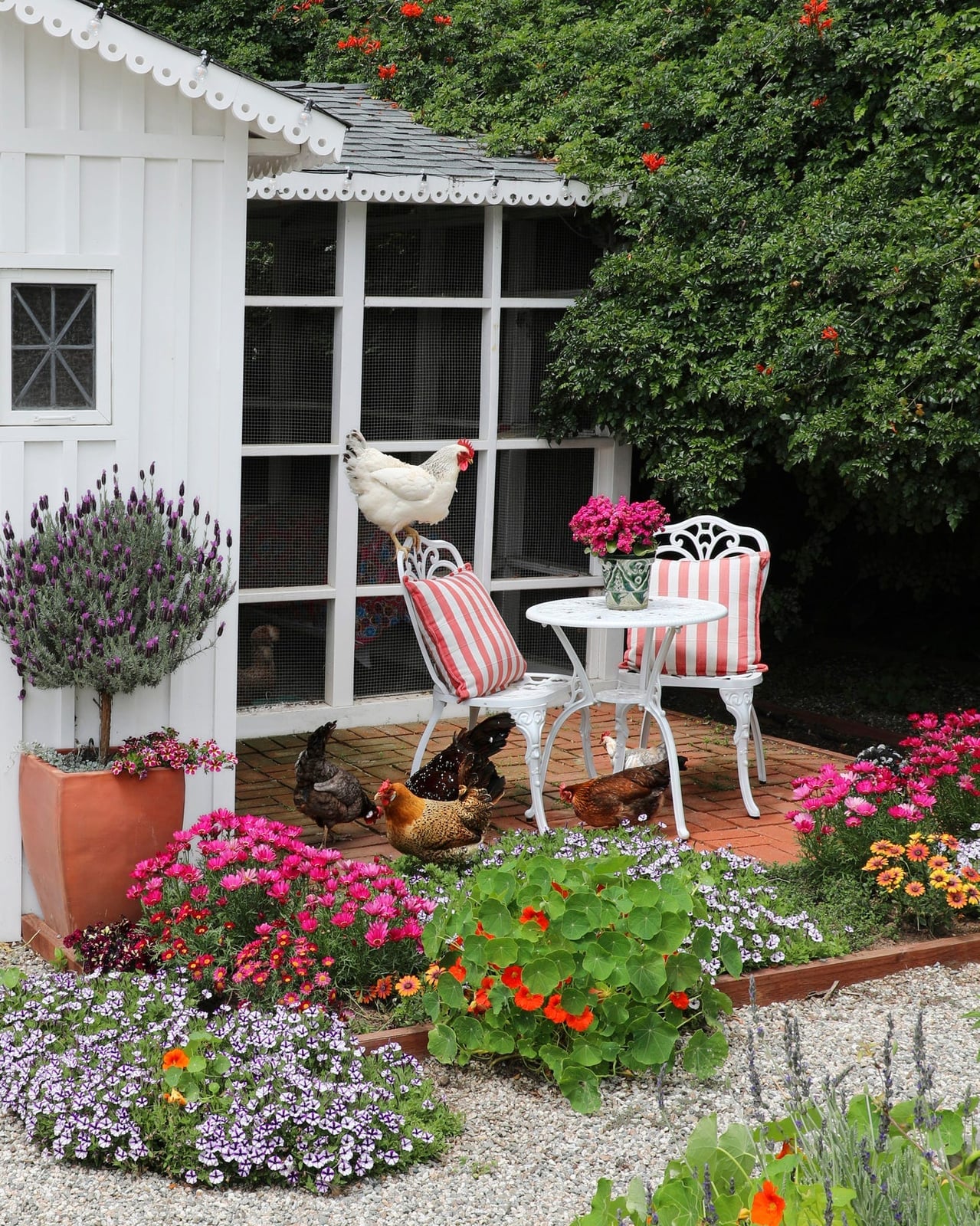
This garden scene leans into a palette that feels straight from a pastoral painting: white chicken coop, pink blossoms, green foliage and red striped cushions on a bistro set. The soft daylight ties the colors together without washing them out. What makes it work is the ratio of white to the bolder red and pink, with green as the neutral buffer. Chickens on the chairs add movement, but the palette remains the anchor. Keep the dominant color light, then layer in one or two stronger shades so the garden stays cheerful without feeling busy.
Casual Container Herb Garden in a Large Gray Tub
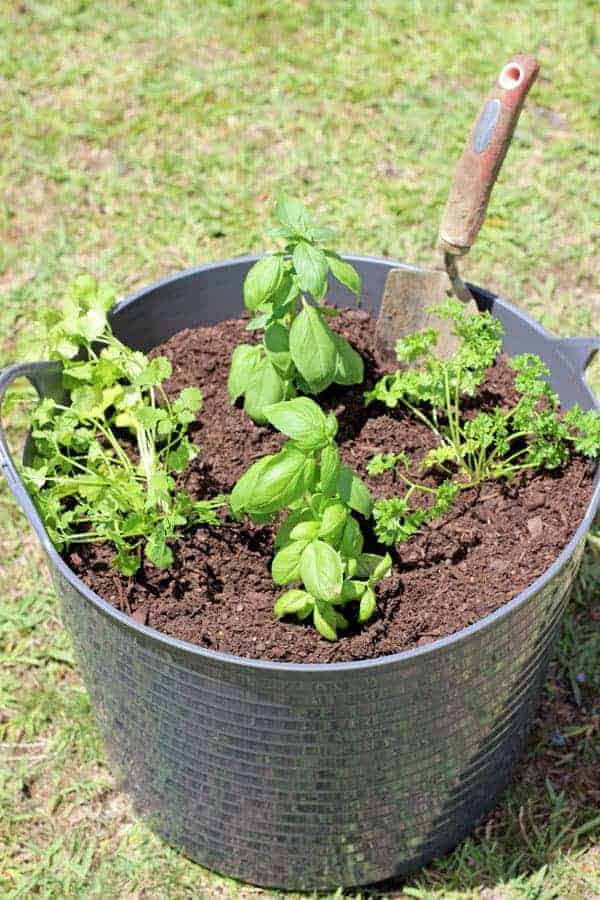
A plastic tub gets less attention than terracotta or wood, but a large gray container filled with basil, parsley and cilantro proves that material choice is about function first. The plastic holds moisture longer in warm weather, which matters when you group several herbs together in one planter. The metal trowel tucked into the soil signals this is a working garden, not a display piece.
The tub sits on the ground, the herbs are packed in, and the daylight hits them evenly. There are no tiers or trellises, just a single container doing the job. For a casual setup, material matters less than drainage and sun exposure. A gray tub blends into the garden and does not compete with the plants.
Spacious Farmhouse Garden with Rows of Raised Beds
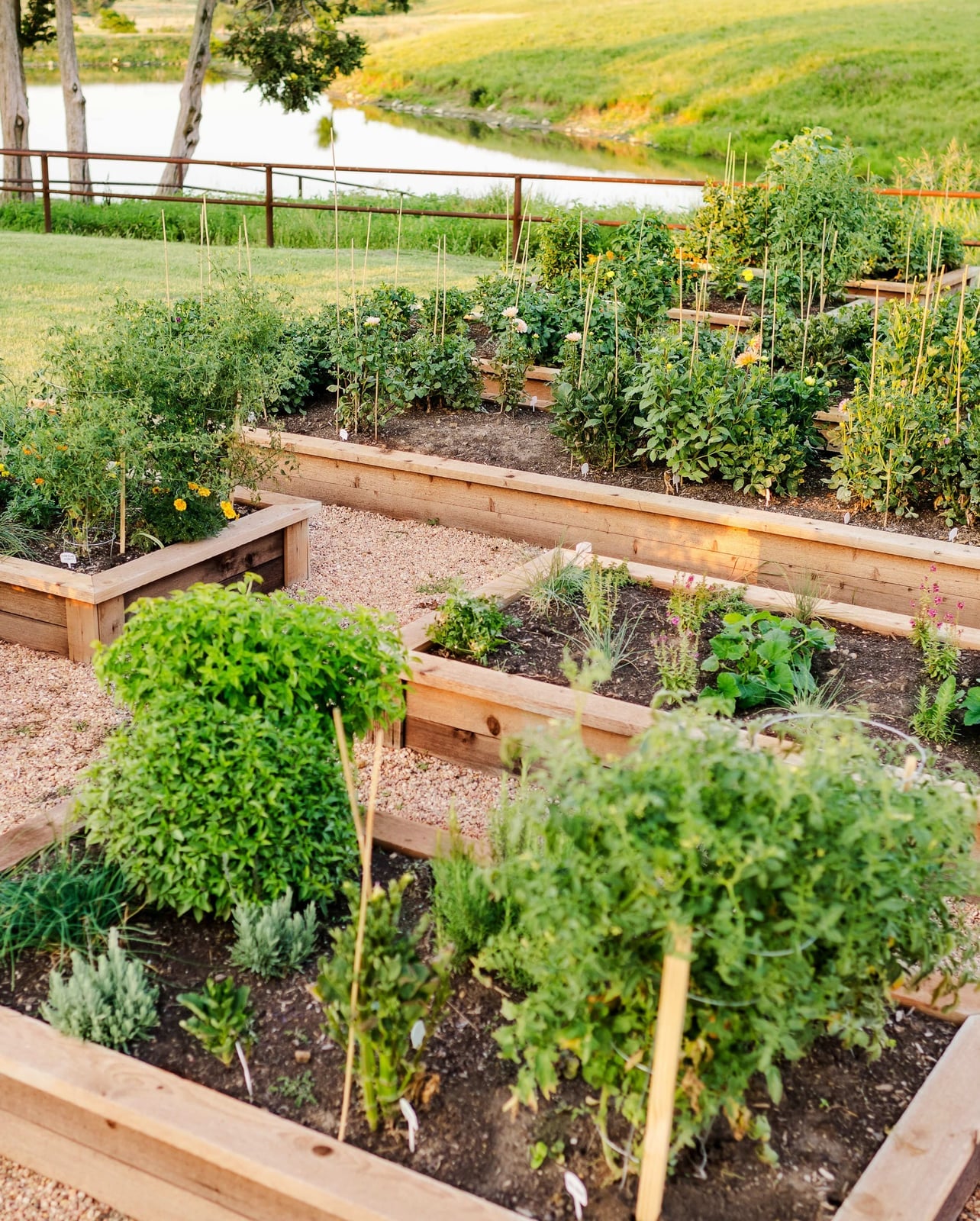
Rows of wooden raised beds set on gravel create a garden that is built for volume, not just decoration. The natural daylight falling across the beds means no plant is shaded by another, a simple layout advantage that saves you from rotating pots later. The wood tones and gravel keep the palette neutral, letting the green foliage stand out. When you have the room, spacing beds in parallel rows with gravel paths makes maintenance straightforward. There is no need to reach across wet soil or dodge ornamental borders.
Final Thoughts
The best herb garden is the one you actually use. A well-placed bed near the kitchen door makes it easy to snip a handful for dinner. A tiered stand on a sunny balcony does the same for renters. Keep soil consistently moist but not soggy, and trim regularly to encourage bushy growth. Check your USDA zone before planting perennials like lavender or sage. A little daily attention keeps the harvest coming all season.