You know that feeling when you finally find the Repurposed Garden Container Idea that looks exactly right for your garden? The one you’ve been saving on Pinterest for months but weren’t sure how to pull off? We get it. We’ve gathered 28 of the most creative and genuinely doable ideas from real gardens to get you inspired. From quirky vintage finds to sleek, modern DIYs, there’s something here for every backyard aesthetic. And stay until the end — we break down the most common mistakes that can ruin these looks. 📌 Save this to Pinterest for later — you’ll want to revisit these ideas.
1. A Simple Start: Distressed Metal Bucket with a Single Green Plant
This look is all about the beauty of restraint. The magic here is in the texture play between the cool, weathered galvanized metal and the warm, smooth wooden handle. It’s a classic rustic pairing that feels both hardworking and humble. By placing a simple, small green plant inside, the focus remains on the character of the container itself. The plain, light-colored background prevents any visual clutter, allowing the simple forms and natural materials to feel calm and intentional.
“A designer trick to make a simple container pop is to pay attention to its placement.”
Don’t just set it on the ground. Elevate it on a surface—like this light wooden bench—so it’s closer to eye level. A good rule of thumb is to place smaller planters at a height between 24 and 36 inches. This makes the object feel more like a curated piece of decor rather than just another pot, drawing the eye and highlighting its unique details.
2. Rustic Charm: Weathered Aluminum Teapot Filled with Succulents
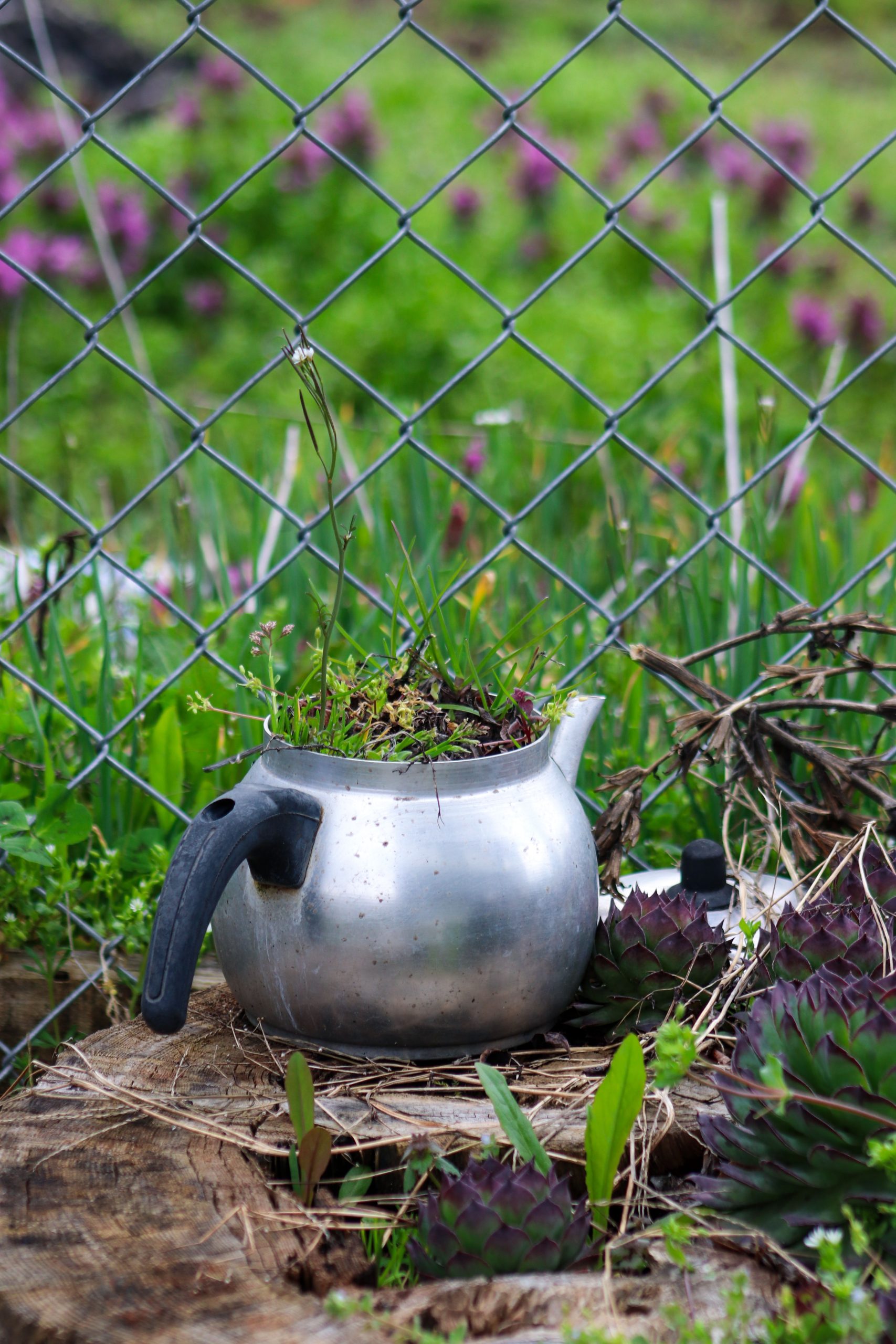
that makes this arrangement sing is the teapot itself. It’s not just a container; it’s a story. The dents and weathered finish suggest a past life, transforming a mundane object into a piece of garden art. Without the teapot’s distinct shape and history, this would just be a few succulents on a stump. The black handle provides a sharp graphic contrast, while its familiar form adds a touch of cozy, domestic whimsy to the wildness of the garden.
“While succulents are famously low-maintenance, planting them in a metal teapot requires a bit of care.”
Aluminum can get very hot in direct sun, potentially cooking the roots of your plants. It’s best to place this in a spot with bright, indirect light or morning sun only. Also, since a teapot doesn’t have drainage holes, you’ll need to drill some yourself or add a thick layer of gravel at the bottom and water very sparingly to prevent root rot. Check for standing water weekly.
3. Go Big: An Old Bathtub Repurposed as a Lush Flowerbed
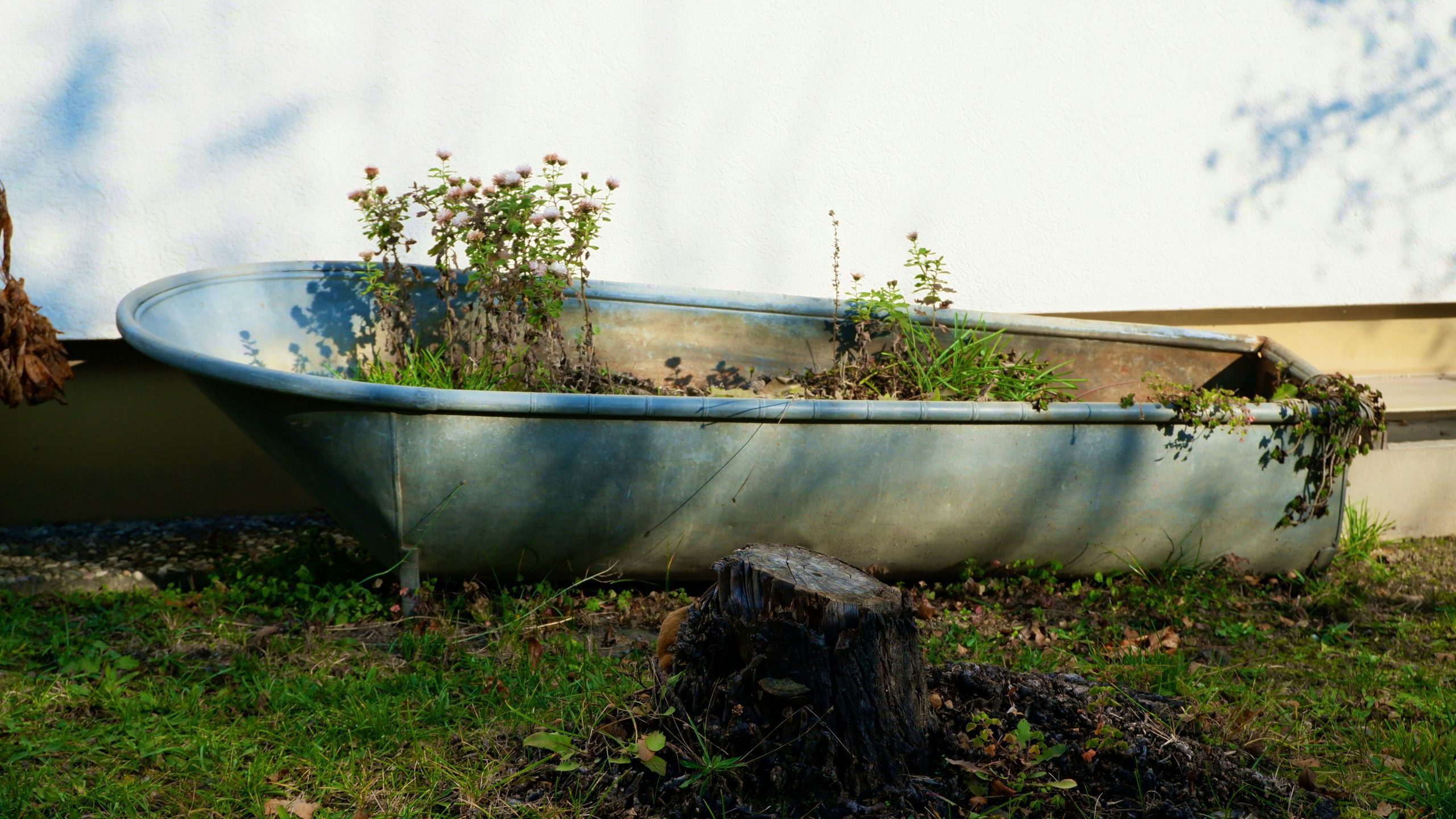
Let’s be honest: while a bathtub planter is a fantastic statement piece, it’s a major commitment. These things are incredibly heavy, even before you fill them with soil and plants. Once it’s in place, you are not moving it without a team of helpers. You also need to consider drainage. You absolutely must ensure the drain hole is clear and potentially drill several more holes in the base to prevent the tub from turning into a swamp after a heavy rain.
“A bathtub planter is a large-scale feature that demands space.”
This idea works best in yards of at least 500 square feet, where it won’t overwhelm the landscape. It needs a minimum of a 6-foot by 4-foot footprint to allow for easy access around it for planting and weeding. It’s a perfect anchor for a sprawling cottage garden or a rustic backyard, but would likely look out of place on a small, modern patio. For a similar but more contained feel, see the graffiti tub in Idea #7.
4. Retro Tech Garden: Planting in a Vintage CRT Television
Why is repurposing old tech so popular right now? It’s a reaction against our hyper-digital, disposable culture. Taking a piece of obsolete technology like this CRT television—something that was once the focal point of a living room—and giving it a new, green life feels both ironic and deeply satisfying. It taps into our nostalgia for the pre-internet era while making a powerful statement about consumption and decay. It’s a conversation starter that’s part sculpture, part garden.
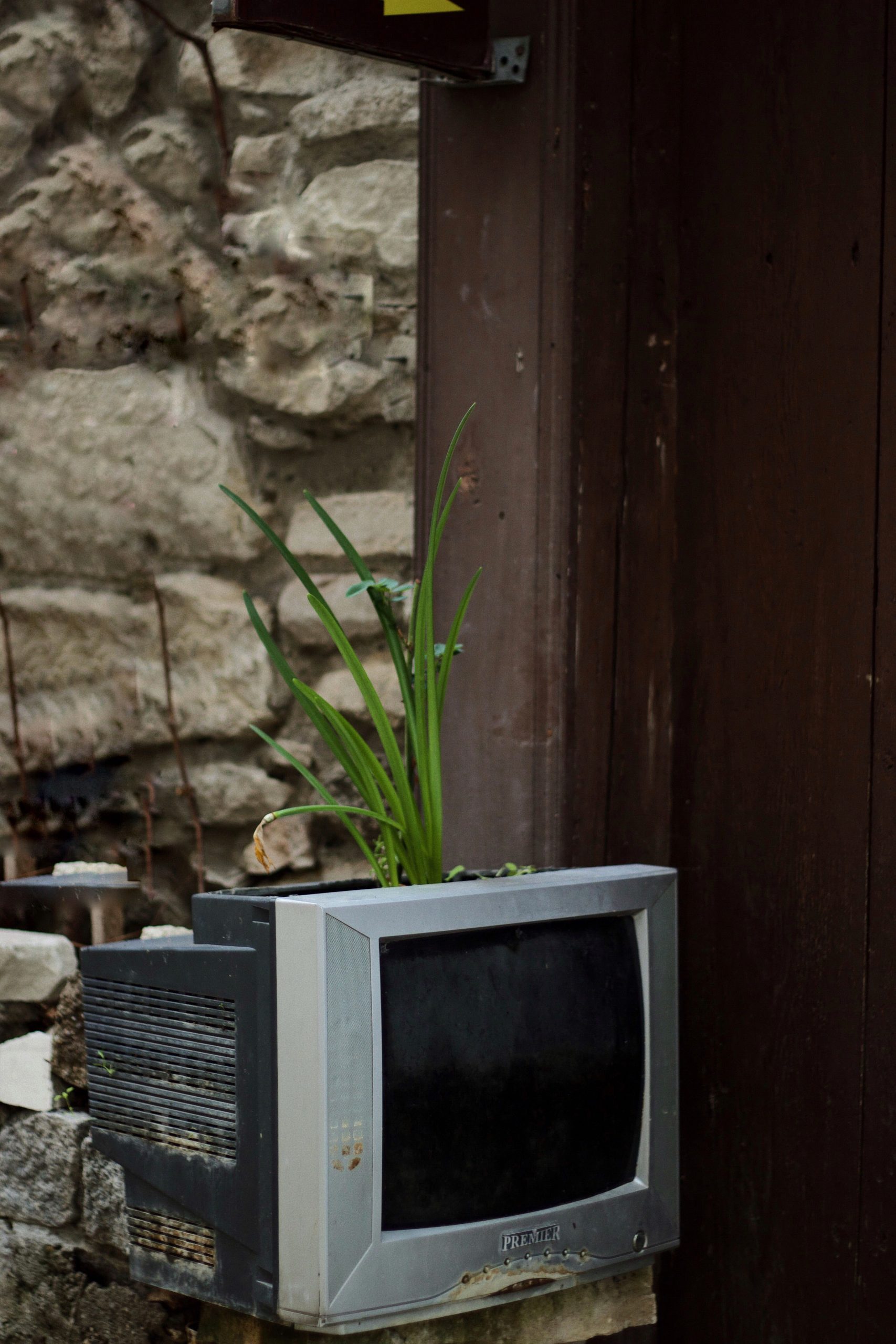
“You don’t need to find a vintage television to get this look.”
The core idea is about repurposing a hard-shelled, unexpected object. Hunt for old computer towers, stereo speakers, or even plastic children’s toys at thrift stores or on Facebook Marketplace for $5-$20. The key is to gut the electronics, ensure there’s room for soil, and add drainage holes. The more unconventional the original object, the more striking the result will be.
5. Curating a Collection of Vintage Tin and Metal Planters
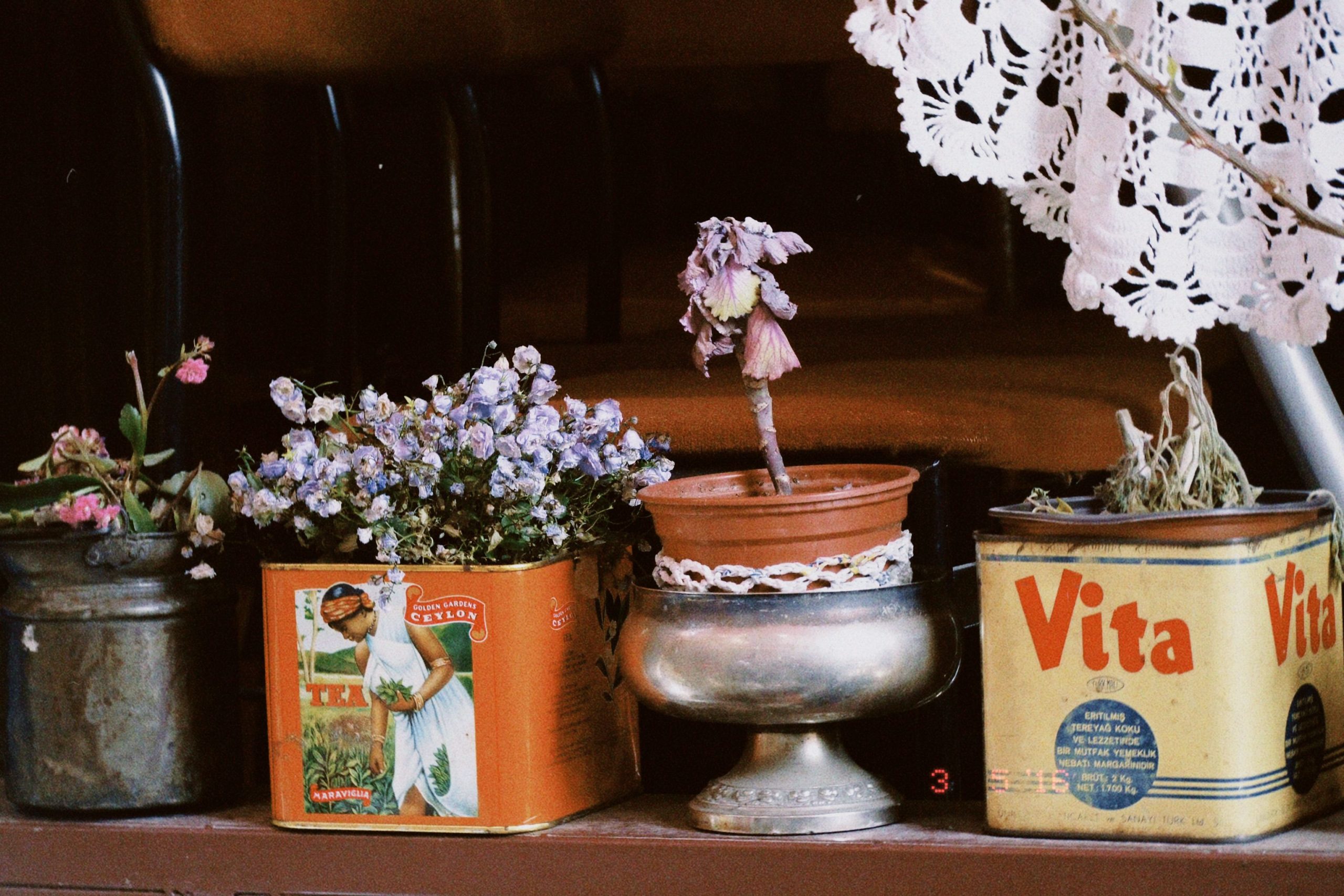
The formula for this eclectic look is all about controlled chaos. Think of it as 50% weathered, neutral materials (like the galvanized bucket and silver chalice) + 30% pops of bright, graphic color (the orange and yellow tins) + 20% soft, organic texture (the flowers and crocheted lace). This balance ensures the collection feels curated, not cluttered. You can swap the elements—try colorful ceramic mugs instead of tins, or a wooden box instead of a bucket—as long as you keep the ratios similar.
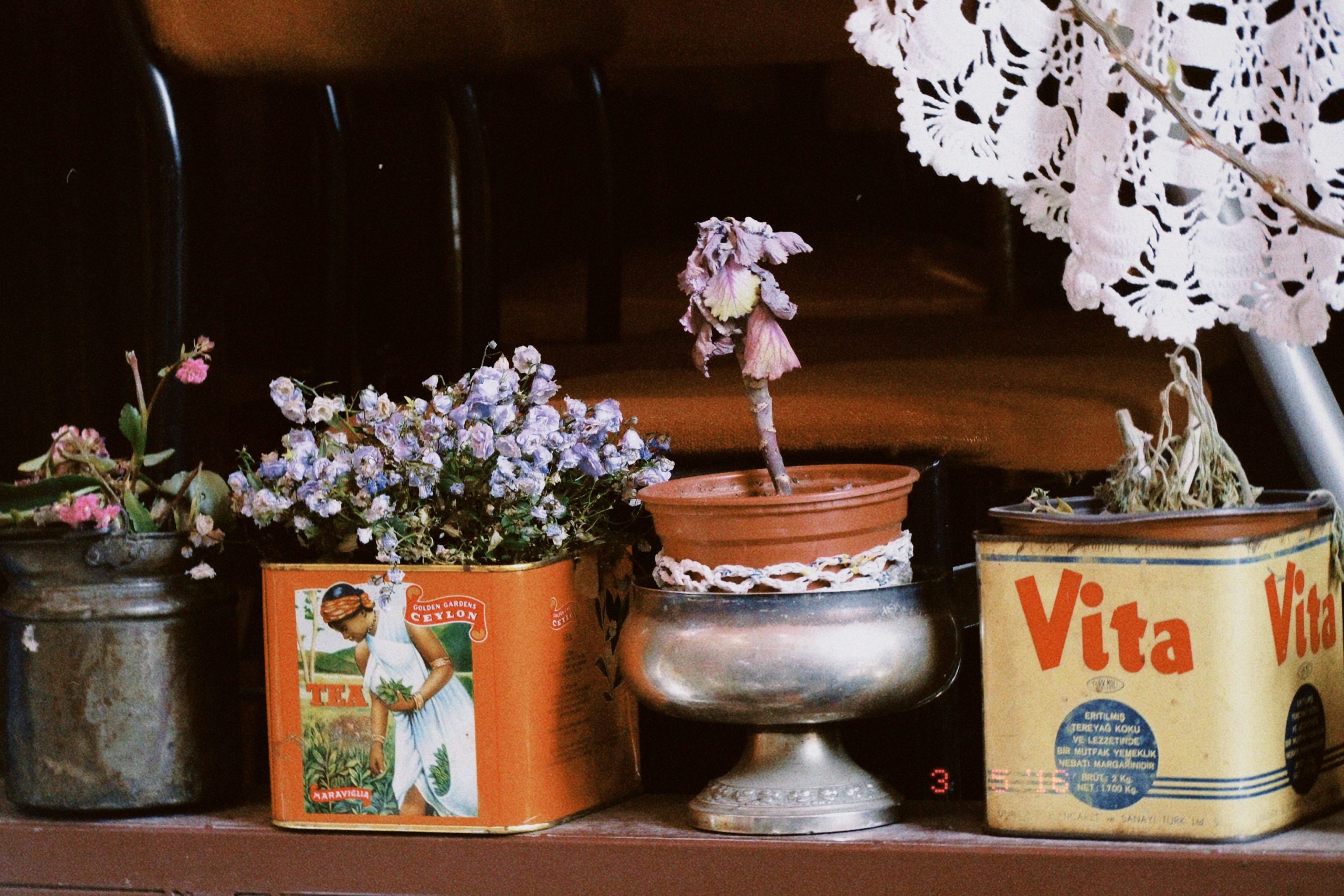
“Want to create your own vintage container collection?”
It’s easier than you think. Here’s a quick guide:Gather Your Vessels: Spend an afternoon at a flea market or thrift store. Look for containers with interesting shapes, typography, or colors. Aim for a variety of heights and materials. (Time: 2-3 hours, Cost: $15-$50)Prepare for Planting: Clean each container thoroughly. Using a drill with a metal bit, carefully add 3-5 drainage holes to the bottom of each tin or bucket.Add a Drainage Layer: Place a 1-inch layer of small gravel or broken terracotta at the bottom of each container to prevent waterlogging.Pot Your Plants: Fill with potting mix and add your plants. For small containers like these, choose delicate flowers or small succulents that won’t overwhelm them.
6. A Charming Succulent Garden in a Floral Ceramic Serving Dish
This tiny garden is so delightful because of the juxtaposition of formal and natural elements. The fluted ceramic dish with its delicate floral pattern feels like something you’d find on a fancy dinner table. Filling it with rugged, architectural succulents creates a wonderful surprise. The use of white gravel as a top dressing is also key; it cleans up the look, hides the soil, and makes the colors of the plants and the dish’s pattern stand out more vividly against the rustic brick backdrop.
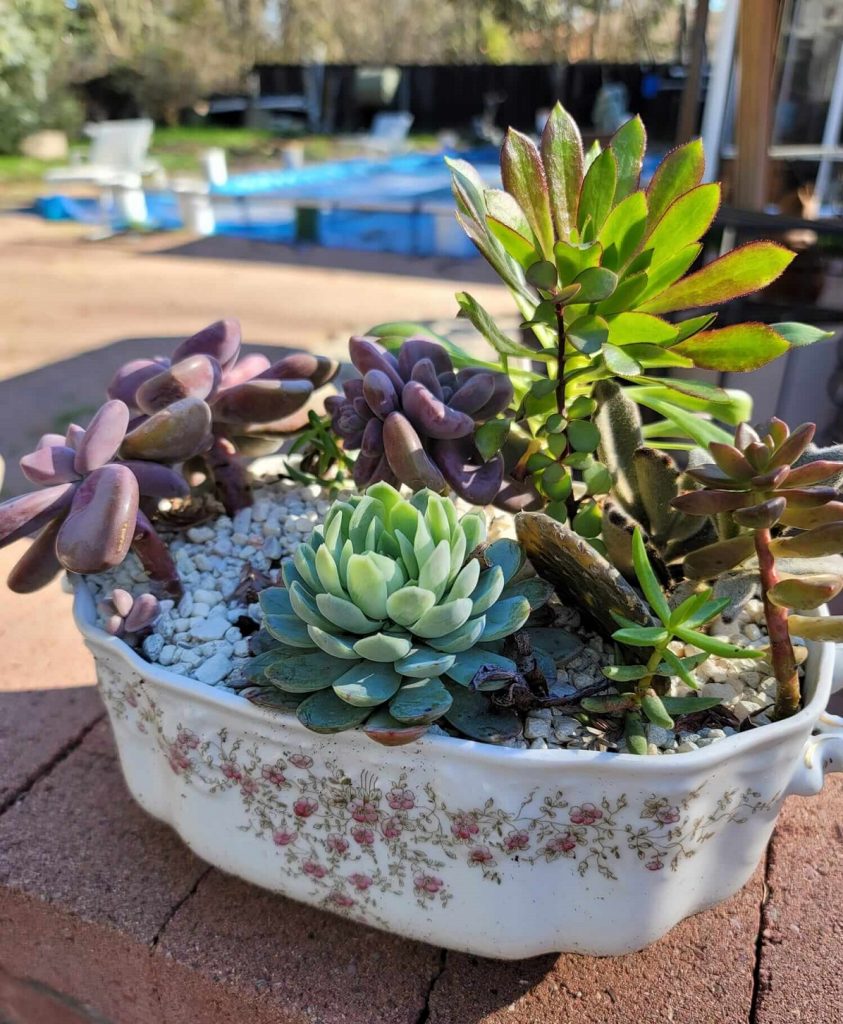
“When planting succulents in a shallow dish like this, create a small mound of soil in the center that’s about 1-2 inches higher than the edges.”
Arrange your tallest succulent at the peak of the mound and cascade smaller ones down the sides. This creates a sense of depth and dimension, preventing the arrangement from looking flat and one-note. It’s a simple trick that makes your planter look professionally styled.
7. Urban Upcycle: Bathtub Planter with Graffiti Art
What sets this bathtub planter apart from its more rustic cousins like Idea #3 is the graffiti. The intentional layer of black and yellow spray paint completely changes the tub’s personality, transforming it from a piece of forgotten farm junk into a deliberate, edgy piece of urban art. It’s a bold move that says this isn’t just a repurposed object; it’s a canvas. The contrast between the rough, painted exterior and the lush, living plants inside is what gives it its dynamic energy.
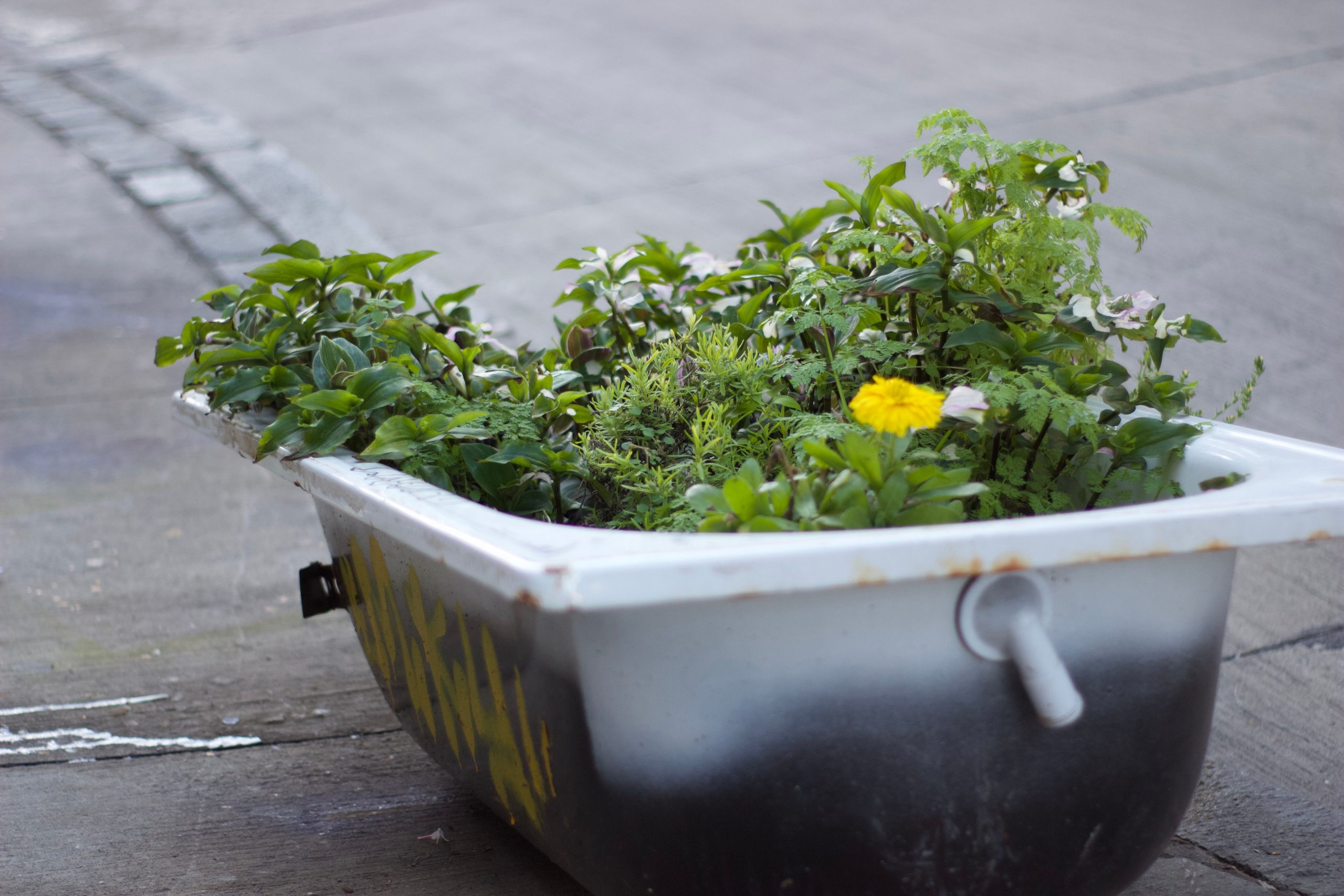
“Getting this edgy, large-scale look is surprisingly affordable if you can source the main component cleverly.”
The cost is all about the tub and the soil.Clawfoot Tub: $50 – $250 (Facebook Marketplace or salvage yard)Spray Paint: $15 – $30 (2-3 cans of quality outdoor paint)Potting Soil & Compost: $60 – $100 (You’ll need a lot!)Plants & Flowers: $40 – $120 (Mix of perennials and annuals)TOTAL: $165 – $500Budget alternative: Use a smaller galvanized steel wash basin. You get a similar industrial vibe for about 70% less cost and effort.
8. Garden Sculpture: A Giant Ant Made from River Stones and Rebar
This piece works because it masterfully blends industrial and natural materials to create something totally unexpected. The smooth, organic shapes of the river stones are a perfect contrast to the hard, linear forms of the rebar legs and antennae. This contrast is what gives the sculpture its visual interest. Furthermore, the scale is just right—large enough to be a noticeable feature on the lawn, but not so big that it dominates the beautiful garden bed behind it. It adds a layer of playful personality to the landscape.
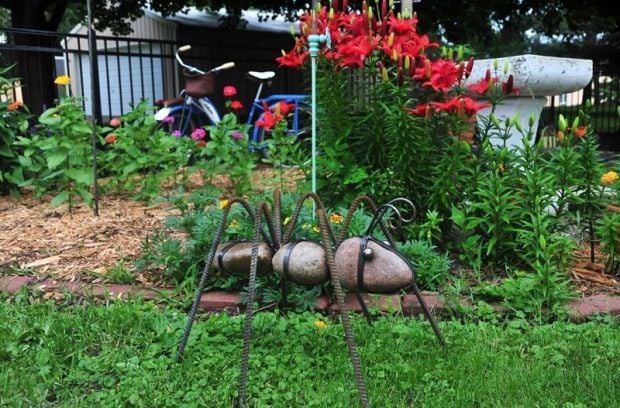
“While this isn’t a container, it’s a fantastic repurposing project.”
To make a simpler version, find three stones of graduating size. The key is attaching the rebar legs securely. You’ll need a heavy-duty drill with a masonry bit to create holes in the underside of the ‘body’ stones. Use a strong, waterproof construction adhesive to glue the bent rebar legs into the holes. This is a weekend project that adds a huge dose of custom character to your yard.
9. Simple and Sturdy: An Aluminum Kettle Planter on a Wood Stool
This is the perfect example of how you can create a high-style rustic moment for next to nothing. An old kettle from a thrift store might cost you $5, and a beat-up wooden stool from a garage sale could be another $10. A small plant from the hardware store is another $5. For $20, you have a complete, styled vignette that looks like it was pulled from a design magazine. It’s all about seeing the potential in everyday, worn-out items. Compare this with other metalware ideas like the teapots in Idea #28.
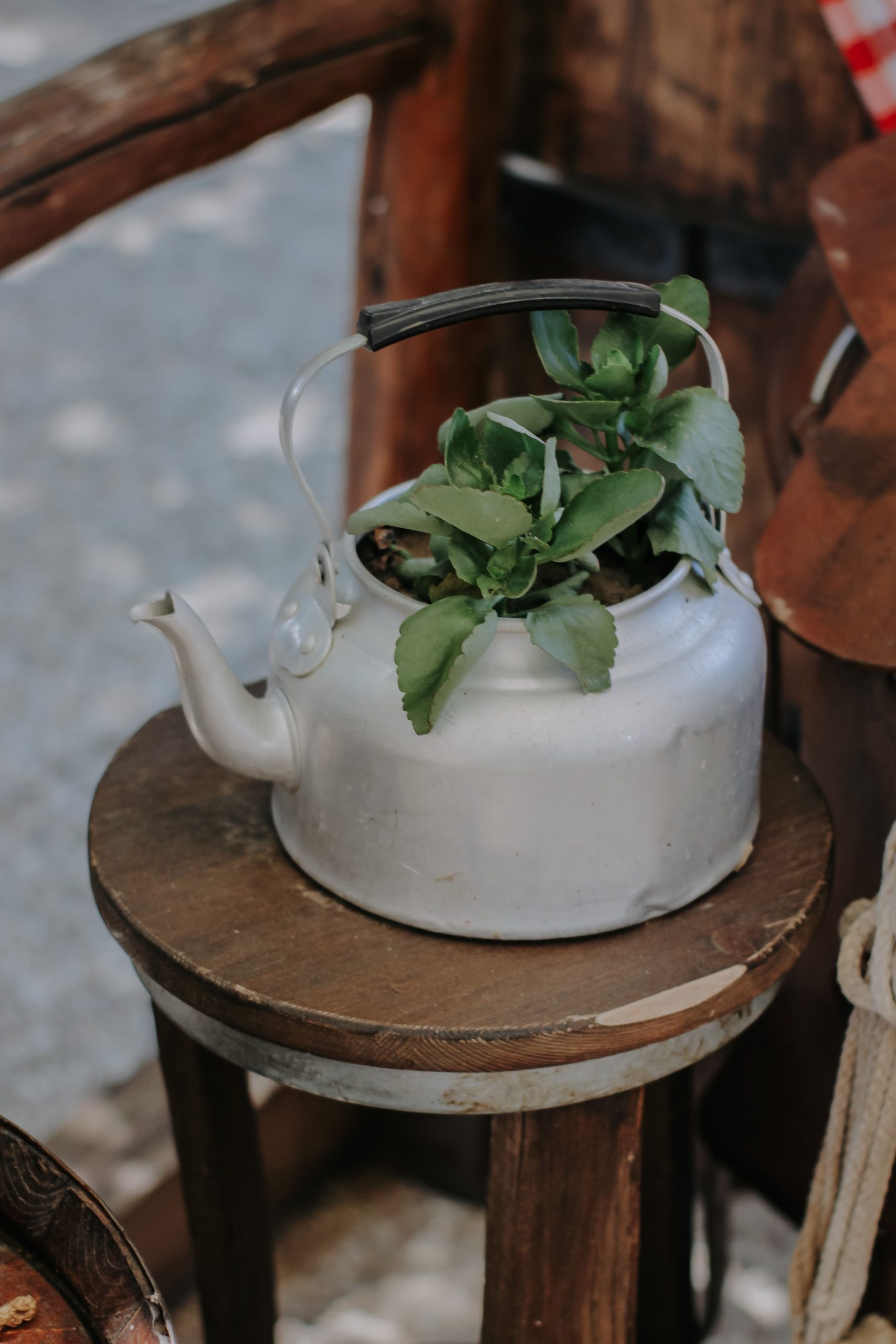
“When combining two rustic items, like this kettle and stool, make sure they have different finish textures.”
Here, the smooth, slightly dented metal of the kettle contrasts beautifully with the rough, visible grain of the dark wood stool. If both items were dark and rough, or both were shiny and metallic, they would blend together. Contrast in texture is just as important as contrast in color for creating visual interest, especially in a simple composition.
10. Whimsical Color Pop: Wrought Iron Bicycle Planter
The formula for this cheerful scene is simple: 70% neutral backdrop + 30% vibrant, clashing color. The dark brown wrought iron of the bicycle and the textured white stucco wall provide a quiet, rustic stage. This allows the neon yellow and bright purple pots to take center stage without overwhelming the eye. The green and reddish plants act as a bridge, tying the man-made colors back to a natural palette. It’s a lesson in using a neutral foundation to go wild with accent colors.
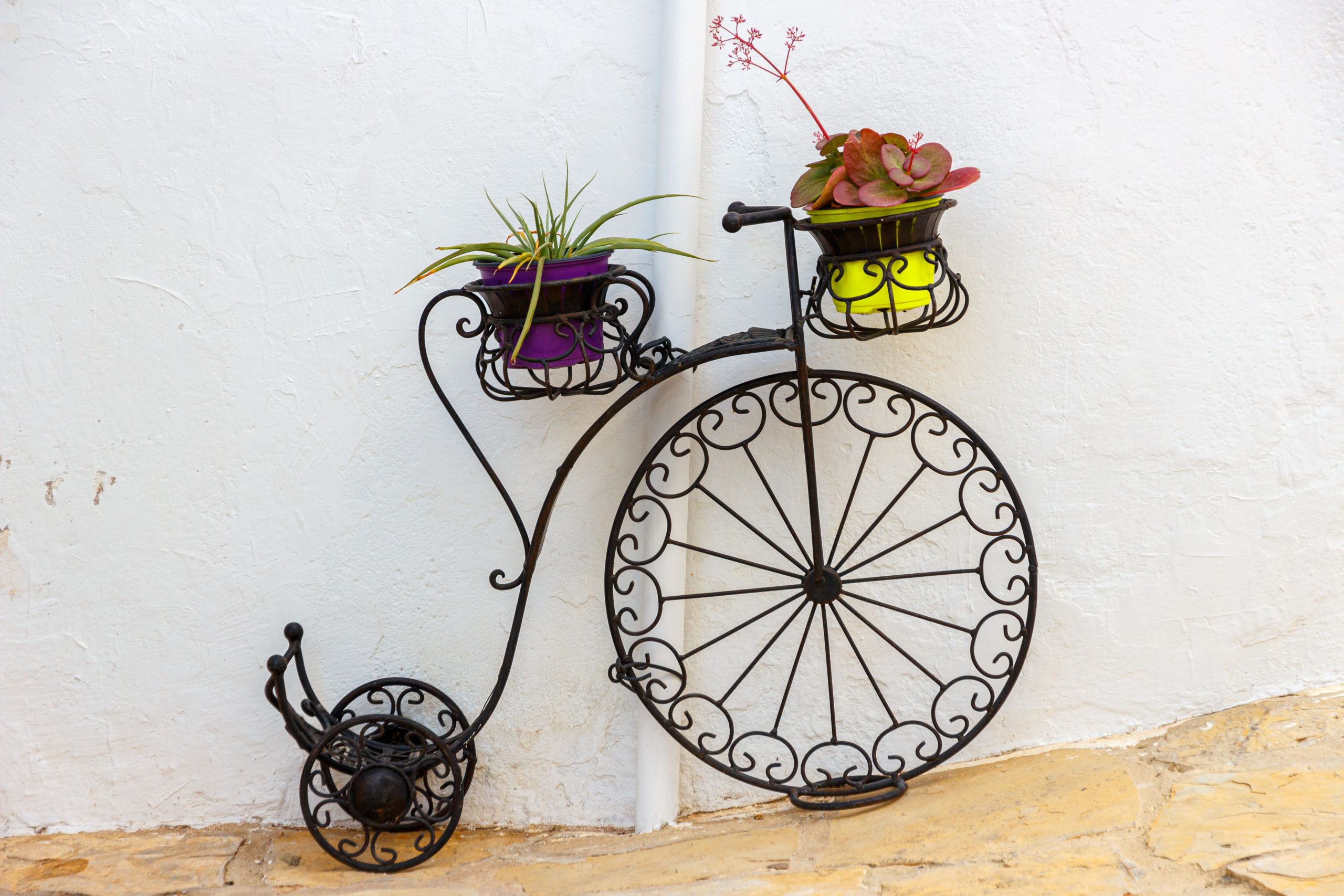
“A word of caution about these decorative bicycle planters: they can be tippy, especially on uneven ground like the flagstone shown here.”
If you have kids or pets running around, or live in a windy area, you might want to secure it. Consider using a small metal stake, driven into the ground behind one of the wheels, and attaching it to the frame with a zip tie or wire. It’s a small, invisible step that can prevent a colorful mess of spilled soil and broken plants.
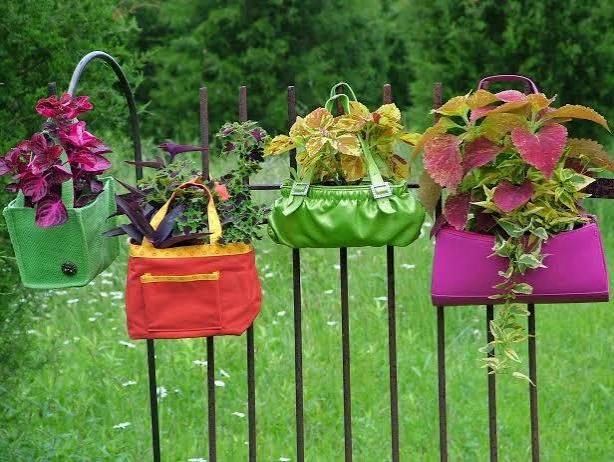
11. Vertical Garden on a Fence with Colorful Hanging Pots
A hanging vertical garden is a brilliant space-saver, but don’t just start drilling. You need to do a quick check first to make sure your project is successful. Here’s a simple checklist:
- Fence Stability: Is your fence strong enough to support the weight of multiple pots filled with damp soil? Gently push on it. If it wobbles significantly, you may need to reinforce the posts first.
- Sunlight Exposure: Track the sun for a day. Does this spot get blistering afternoon sun or gentle morning light? Choose your plants accordingly. Most annuals need at least 6 hours of direct sun.
- Watering Access: How will you water the pots, especially the ones at the top? Make sure you can easily reach them with a hose or watering can.
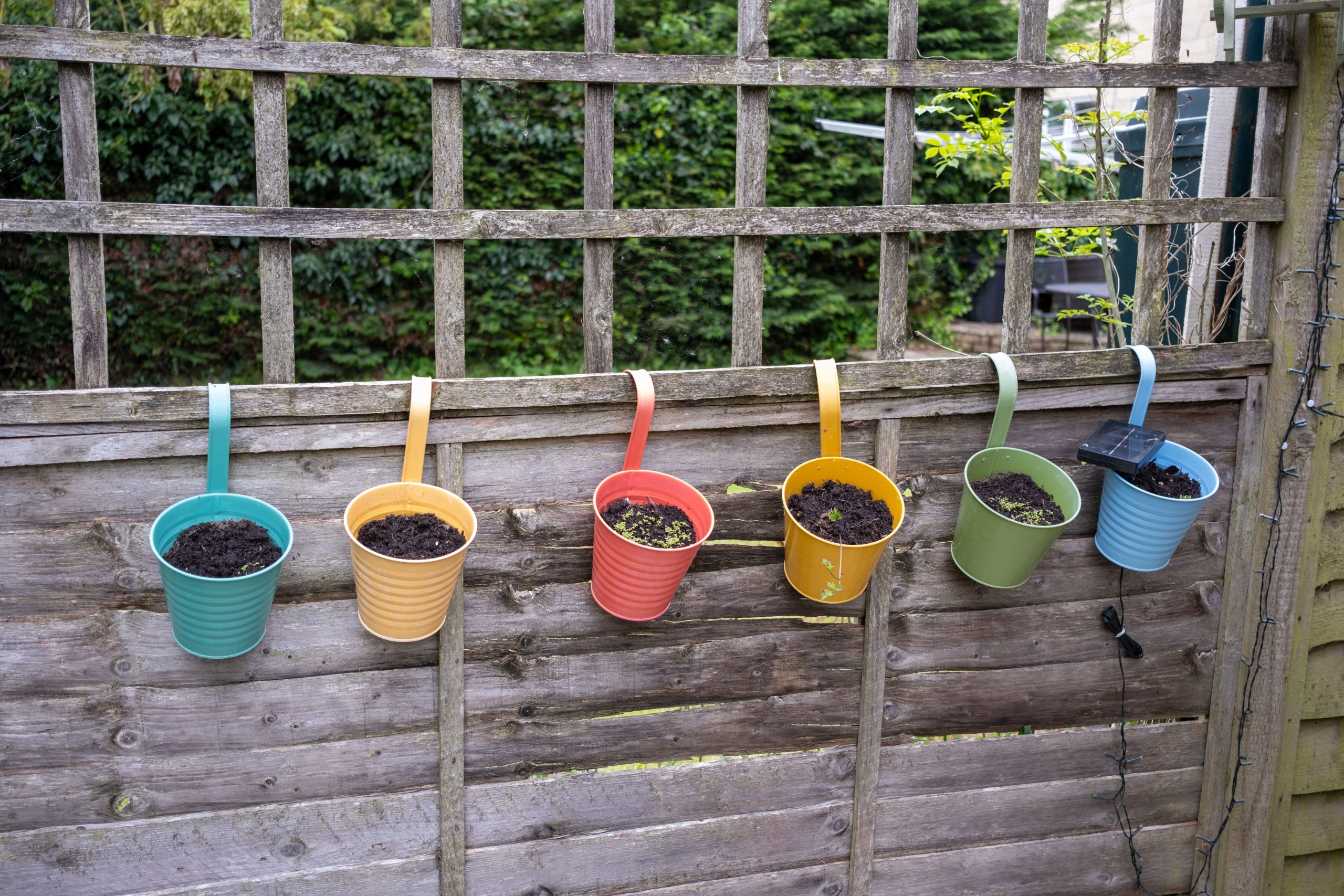
“This idea is perfect for small spaces.”
It works wonders on a patio, balcony, or in a narrow side yard where you don’t have space for traditional garden beds. You only need a sturdy vertical surface—a fence, a garage wall, or even the side of a shed. The key is to think in terms of volume. To make a visual impact, you’ll want to cover an area that is at least 4 feet wide and 3 feet tall. Anything smaller might look a bit sparse and unintentional.
12. Modern Color Block: A Bright Orange Corrugated Metal Bed
When using a color this bold and saturated, the surrounding materials are critical. Notice how the bright orange is paired with highly textured, neutral elements: the light-colored gravel and the rough, natural stone wall. These earthy materials ground the industrial orange, preventing it from looking garish. If this bed were placed in the middle of a perfect green lawn, the effect would be much more jarring. Always pair a single, bold statement color with lots of natural texture.
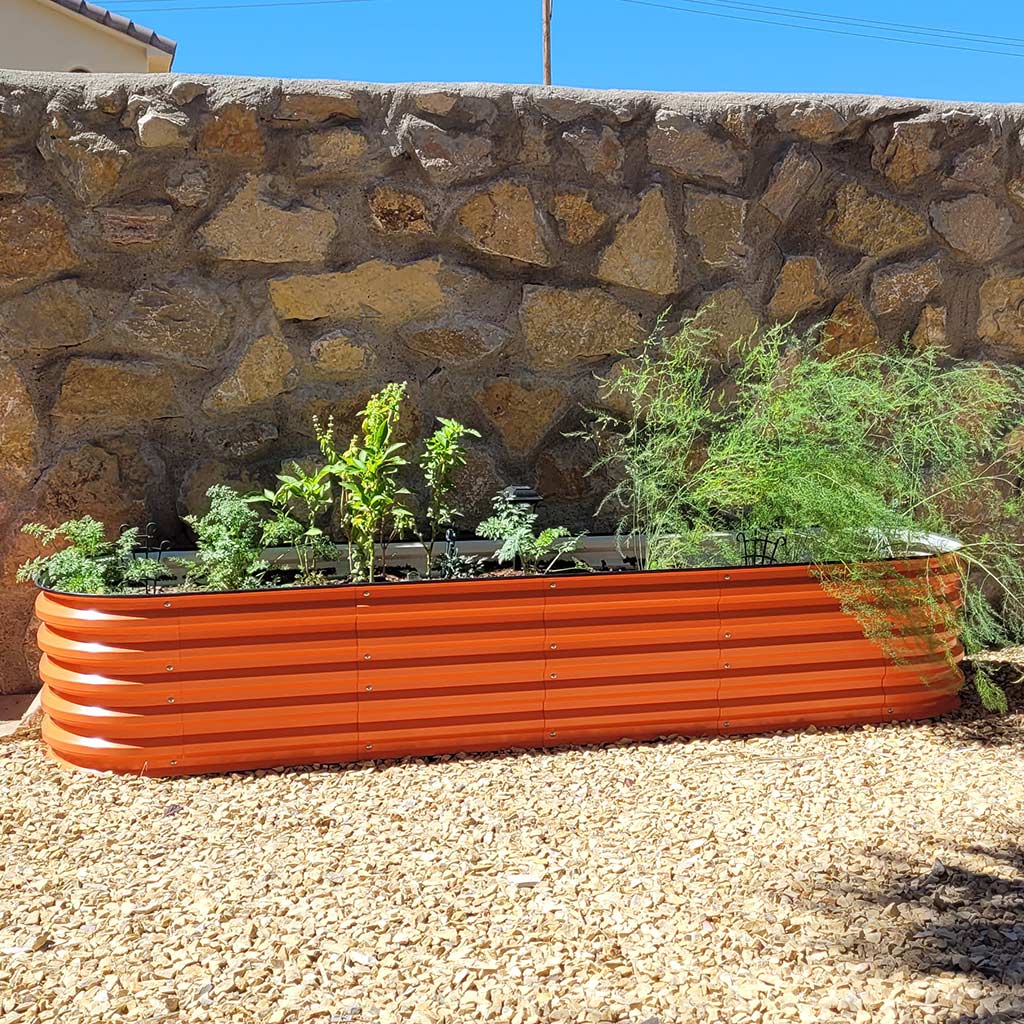
“Corrugated metal raised beds are fantastic, but the metal does heat up and cool down much faster than the surrounding ground.”
In hot climates, this means the soil near the edges can dry out very quickly, stressing your plants. Consider placing heat-sensitive plants towards the center of the bed and more drought-tolerant ones like herbs or succulents around the perimeter. You will also likely need to water the edges more frequently than the middle, especially on hot, sunny afternoons.
13. Rustic Simplicity: A Leafy Tree in a Galvanized Metal Bucket
The single element that elevates this from a simple potted tree to a stylish feature is the scale of the bucket. It’s oversized. A smaller, more appropriately sized container would look predictable and boring. By choosing a large, industrial-feeling bucket, the composition gains a sculptural quality. The wide-mouthed container balances the height of the tree, creating a stable, pleasing silhouette. It’s a reminder that when it comes to containers, sometimes bigger really is better.
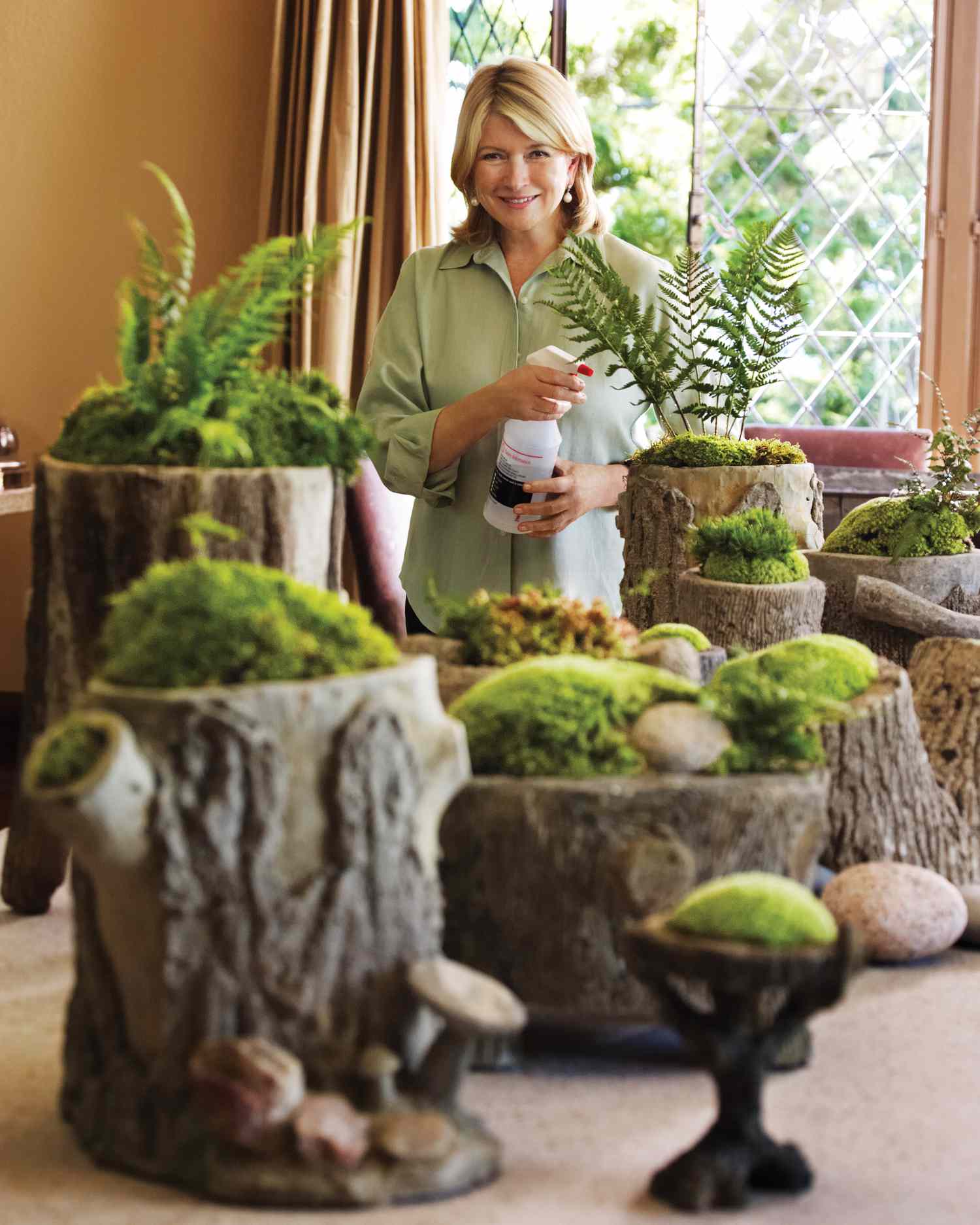
“This look is all about matching the container to the maturity of the plant.”
A large bucket like this is ideal for a semi-mature tree or a large shrub that you want to feature on a patio or deck. This works best in spaces with at least 8-foot ceilings (if on a covered patio) and a ground-level footprint of about 4×4 feet to feel balanced. For a young sapling, a bucket this large would look comical. Conversely, a tiny pot for a large tree looks stressed and unstable.
14. Playful Planting: Repurposing Colorful Boots as Planters
This is a project that you can do for almost free. Everyone has a pair of old rain boots or worn-out shoes that are destined for the trash. Instead of throwing them away, give them a second life in the garden! Check your own closet first, then ask friends with kids if they have any outgrown boots. A quick trip to a thrift store will almost certainly yield a few colorful options for under $10. It’s the ultimate budget-friendly way to add a splash of color and personality. Check out Idea #17 and Idea #18 for more boot-iful inspiration!
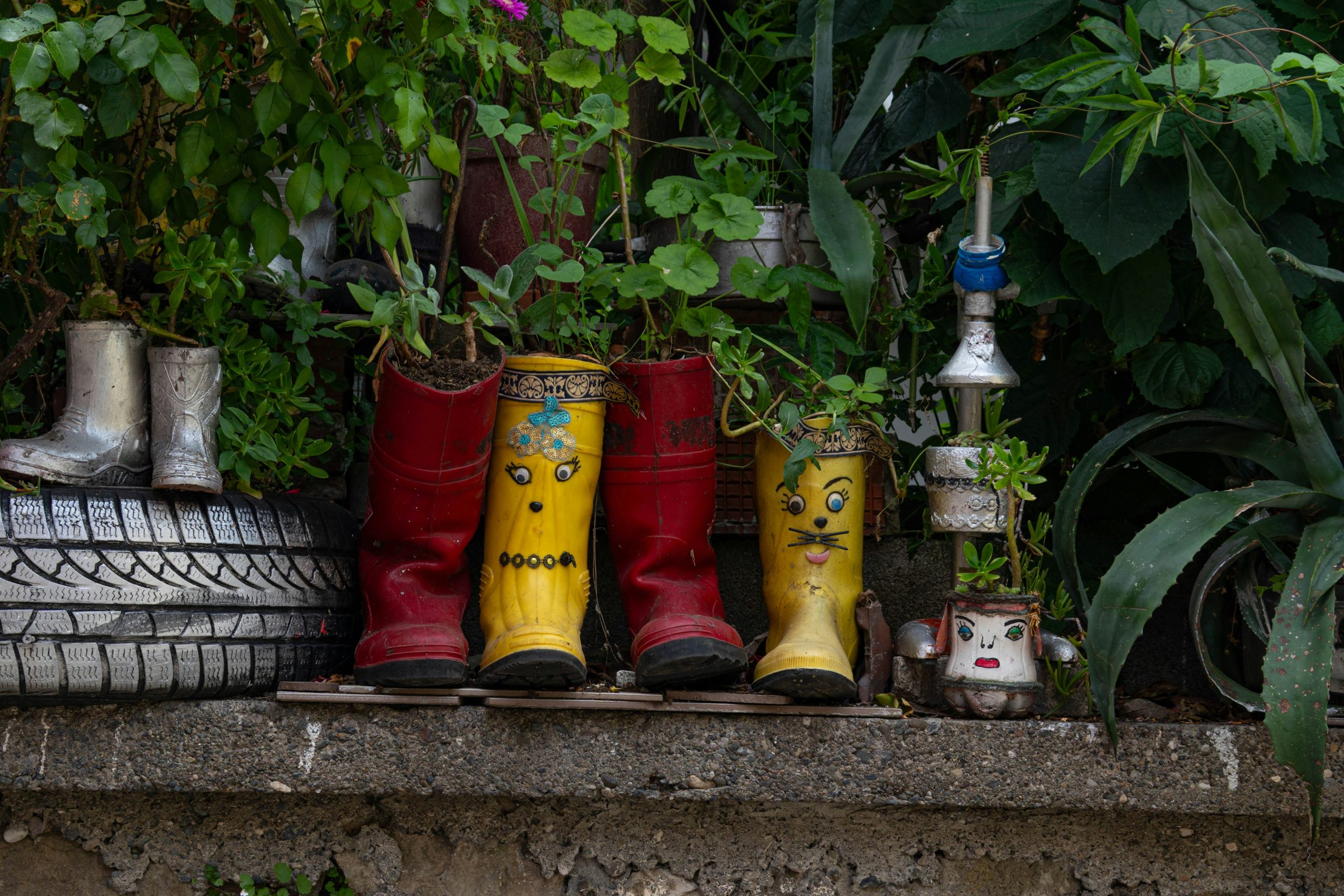
“Why does putting a plant in a boot make us smile?”
It’s the power of the unexpected. Boots are meant for feet, for walking, for keeping us dry. By filling them with soil and flowers, we’re subverting their intended purpose in a playful way. This creates a moment of surprise and whimsy in the garden. The bright, unnatural colors of the boots also contrast sharply with the organic greens and browns of the garden, making them stand out as intentional, decorative objects.
15. A Tiny Garden: A Single Succulent in a Repurposed Tin Can
Creating a tiny tin can planter is a perfect 30-minute project. First, thoroughly wash an empty food can and remove the label. If the rim is sharp, carefully use pliers to bend it inward or file it down. Next, using a hammer and a large nail, punch 3-4 holes in the bottom for drainage. You can leave the metal plain, or spray paint it for a pop of color. Once dry, add a small layer of gravel, fill with cactus/succulent soil, and gently plant your succulent. It’s a quick, satisfying upcycle.
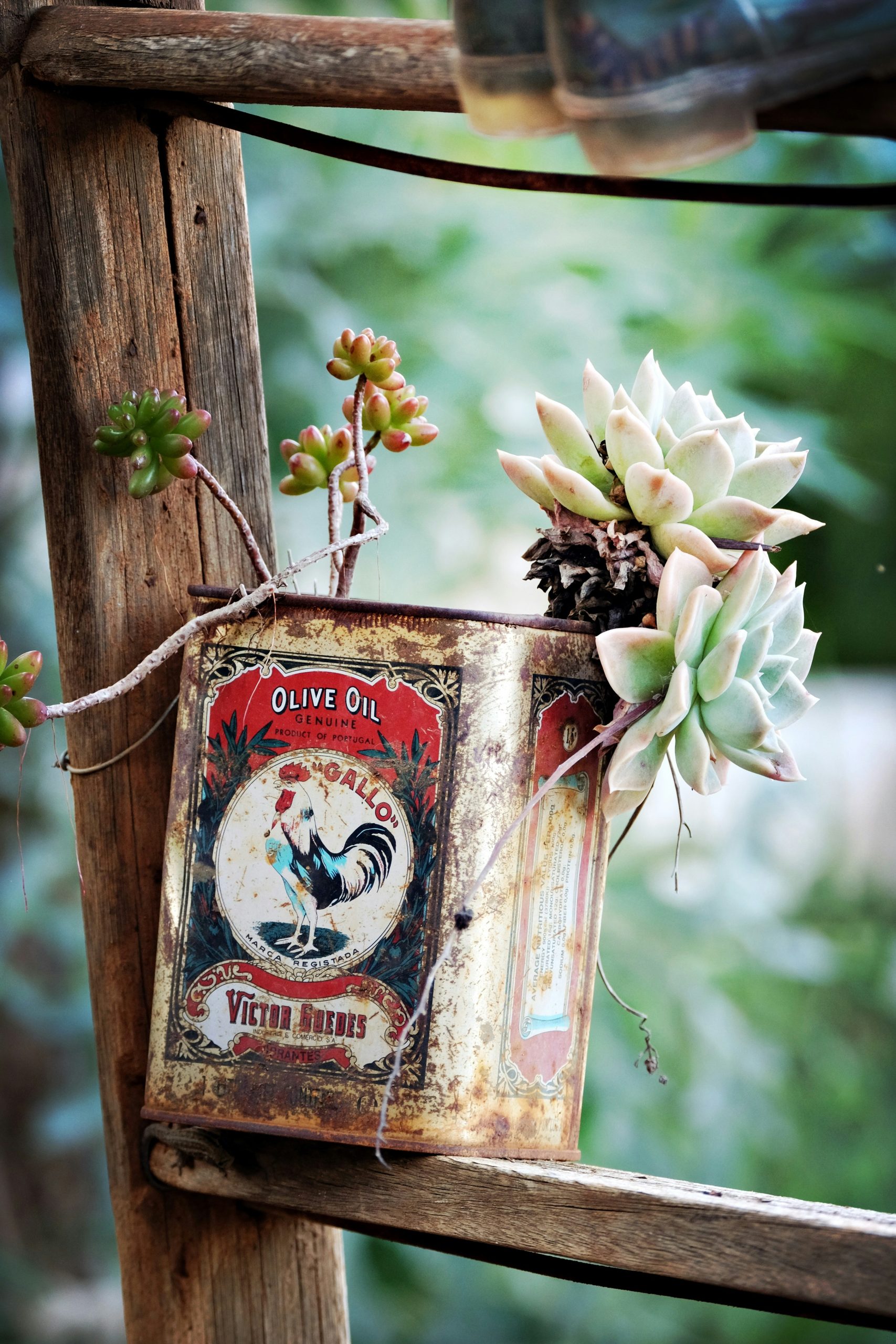
“Small-space gardening and the houseplant boom have made these tiny, individual planters incredibly popular.”
Not everyone has a yard for a giant bathtub planter. This tin can idea speaks to the apartment dweller, the balcony gardener, the person who wants to bring a little bit of green to their desk or windowsill. It’s part of a larger trend towards micro-gardening and finding beauty in small, everyday moments. It proves that you don’t need a lot of space or money to make a green statement.
16. Functional Form: An Integrated Wooden Planter Bench
This design is so successful because it perfectly merges form and function. It’s not just a bench next to some planters; it’s one cohesive unit. The continuous wooden slats create a strong visual line that ties the three elements together, making the whole structure feel intentional and solid. The repetition of the square shape in the planters adds a sense of rhythm and order. The compact, neatly trimmed green bushes also mirror the clean, geometric lines of the structure, creating a very tidy and modern look.
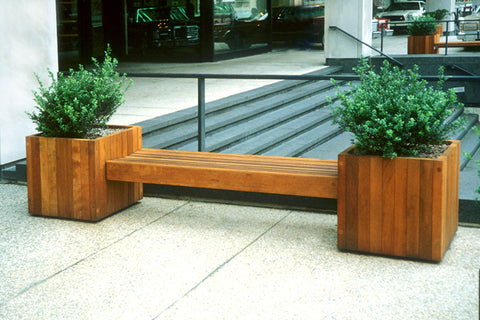
“When building or buying a planter bench, the height of the planter box is key for plant health and aesthetics.”
The planter walls should be at least 15-18 inches tall. This provides enough soil depth for the roots of most shrubs and perennials to establish themselves properly. A shallower box will limit your planting options and can lead to the soil drying out too quickly. This height also ensures the foliage starts just above the bench seat, creating a lush backdrop without poking you in the back.
17. Quirky Repurposing: A Vintage Ski Boot Plant Holder
The single thing that makes this idea so arresting is the sheer absurdity of it. A ski boot is a highly specific, technical piece of equipment designed for snow and speed. Placing a delicate, living green plant inside it is a wonderful contradiction. It’s the clash of contexts—the mountain slope versus the garden patio—that creates the humour and charm. The shiny silver buckles and retro red-and-white color scheme add to the nostalgic, found-object vibe. It’s a more specific take on the boot planter idea seen in Idea #14.
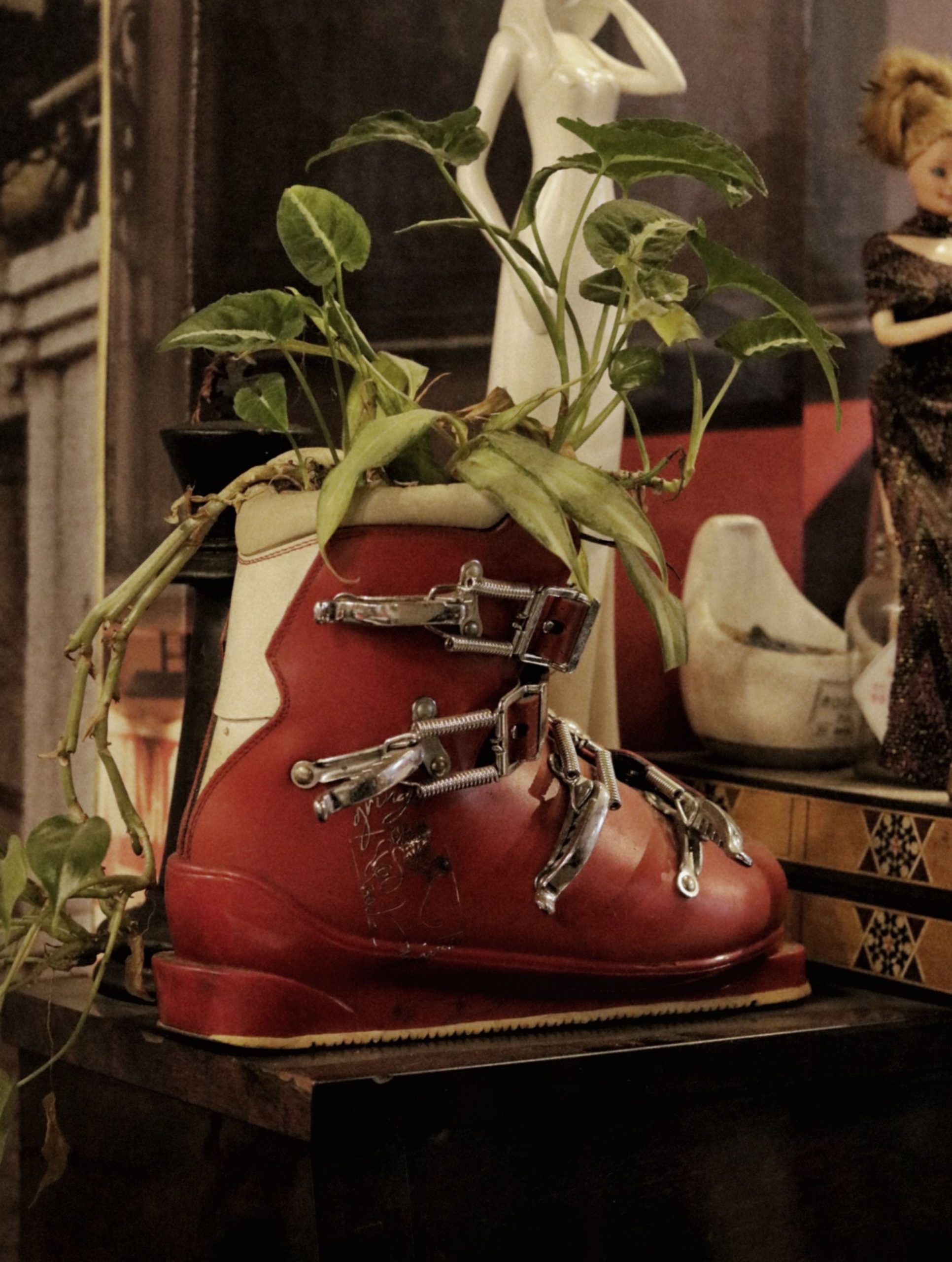
“Okay, real talk: this is more of a decorative holder than a long-term planter.”
A plastic ski boot offers zero breathability and is a nightmare to create drainage in. You’re better off keeping your plant in its small plastic nursery pot and just dropping it inside the boot. This allows you to easily remove it for watering (and let it drain completely before putting it back), and you can swap out the plant whenever you want. This preserves the boot and keeps your plant healthy.
18. Whimsical Welcome: Worn Rubber Boots on a Metal Fence
This playful display is a perfect equation for charm: 40% kid-like whimsy (the cartoon-face boot) + 40% rustic texture (the worn rubber, the metal grid, the brick background) + 20% vibrant life (the bright flowers). It’s the combination of the playful object with the slightly gritty, weathered setting that keeps it from feeling too saccharine. It feels authentic and joyful. If everything were brand new and shiny, it would lose its soulful appeal. Like the other boot ideas in Idea #14 and Idea #17, it’s about personality.
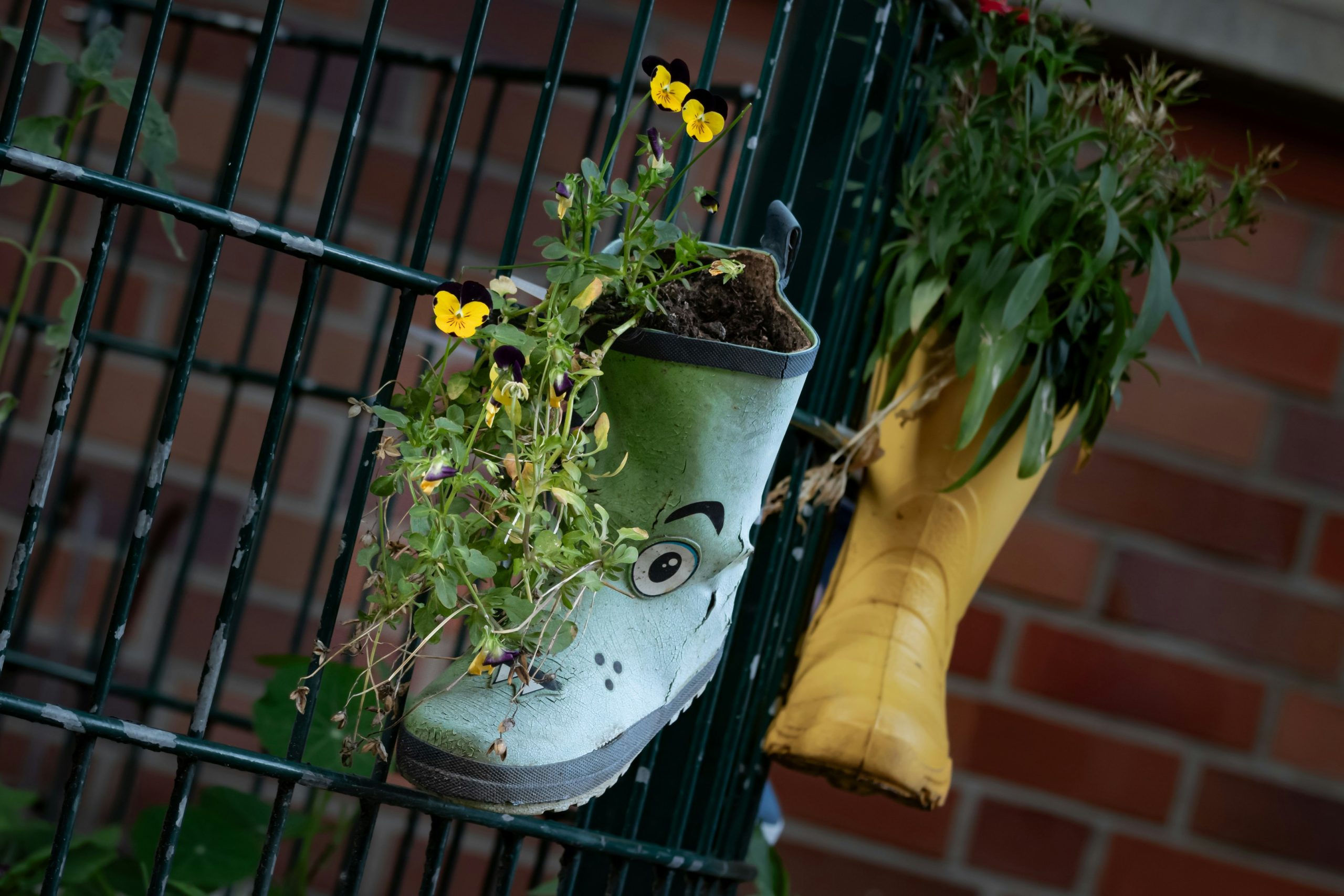
“You can find fun, character-themed kids’ rain boots at any big box store like Target or Walmart, but the best place to find them for cheap is at a thrift store or a kids’ consignment sale.”
Outgrown boots are often in great condition and can be had for just a few dollars. Don’t worry about finding a matching pair! The mismatched look, like the light green and plain yellow boots here, adds to the eclectic, found-object charm of the project.
19. A Weathered Metal Chair Overflowing with Petunias
This vignette works so beautifully because of its masterful use of color and form. The chair’s muted, sage-green finish provides a soft, neutral base that allows the vibrant purple petunias to be the star of the show. The trailing silver-leaf plant is a brilliant addition; its form echoes the cascading shape of the petunias, while its silvery-green color ties back to the chair’s weathered patina. It’s a three-part harmony of color and shape that feels effortlessly romantic.
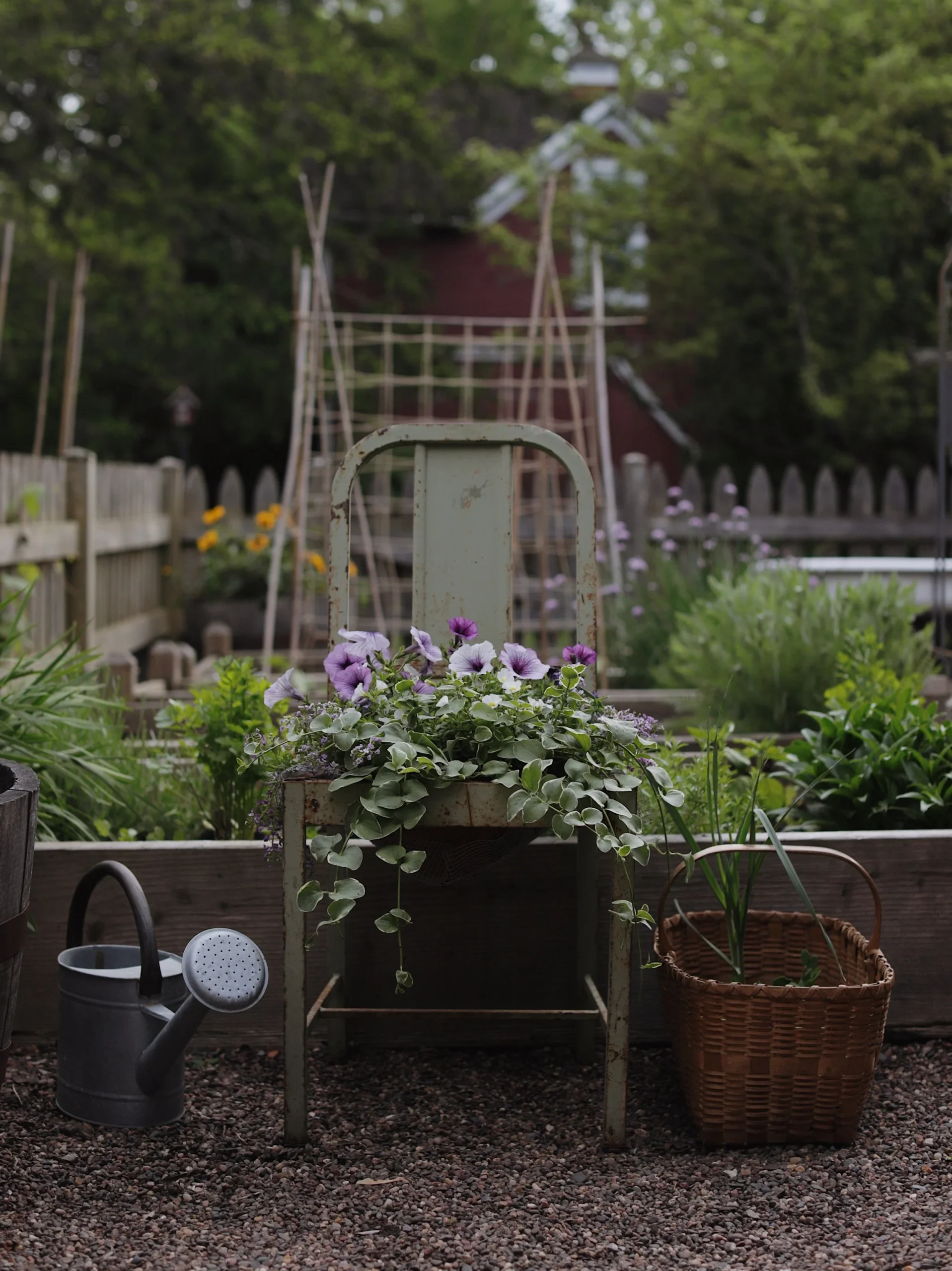
“Recreating this cottage-garden look is a classic weekend project with a big visual payoff.”
The costs are manageable and focus on the plant life. Vintage Metal Chair: $20 – $75 (flea market or salvage)Coco Liner or Pot to Fit Seat: $10 – $20Potting Soil: $10 – $15Petunias & Trailing Plants: $25 – $50TOTAL: $65 – $160Budget alternative: Look for a simple wooden kitchen chair on the curb. A coat of outdoor spray paint and it’s ready to go for a fraction of the cost. This is one of the most important things to remember: you can achieve a high-end look without a high-end budget.
20. Layered Textures: Galvanized Barrel with Hanging Mini Pots
To get this layered look, use simple S-hooks from the hardware store. Buy them in a finish that matches your main barrel (in this case, galvanized steel) so they disappear visually. Hook one end over the rim of the large barrel and the other through the hole in the rim of the smaller pots. Vary the types of plants in the hanging pots to create more interest—try a mix of trailing plants, upright succulents like the bunny ear cactus here, and leafy herbs.
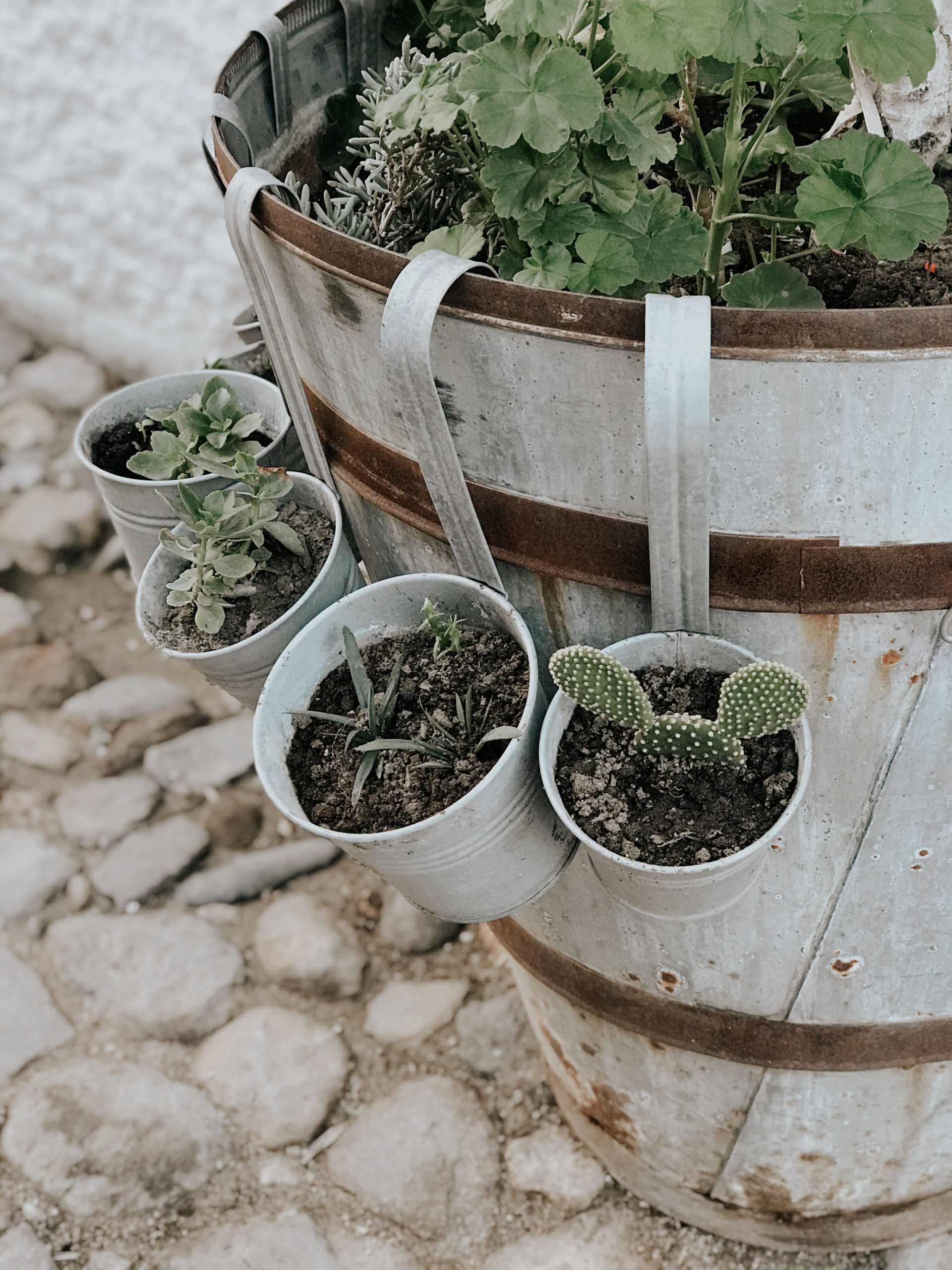
“This idea is perfect for adding a lot of planting variety to a small footprint.”
A large barrel planter like this, typically 24-30 inches in diameter, is a great choice for a corner of a deck, patio, or balcony. It provides a significant vertical element without taking up much floor space. It’s substantial enough to anchor a seating area but compact enough not to overwhelm a space under 150 square feet. It’s a great way to get the feel of a multi-level garden bed in a contained, movable unit.
21. DIY Succulent Chandelier from a Repurposed Bicycle Wheel
Creating this succulent wheel is a fun DIY that makes a huge impact. Here’s how:
- Source and Prep Your Wheel: Find an old bicycle wheel at a garage sale or bike shop ($5-$15). Clean it well and give it a coat of spray paint (white looks fresh, but any color works). Let it dry completely.
- Gather Your Pots: Collect small, lightweight pots. Plastic nursery pots are ideal. A repurposed tin can, like the blue one here, adds a nice touch.
- Attach Hangers: Use sturdy metal wire or small S-hooks to create hangers for each pot. Wrap the wire securely around the pot’s rim and then hook it over the wheel’s spokes and rim.
- Arrange and Plant: Pot your succulents and arrange them on the wheel, balancing them for visual weight. Hang in a spot with bright, indirect light.
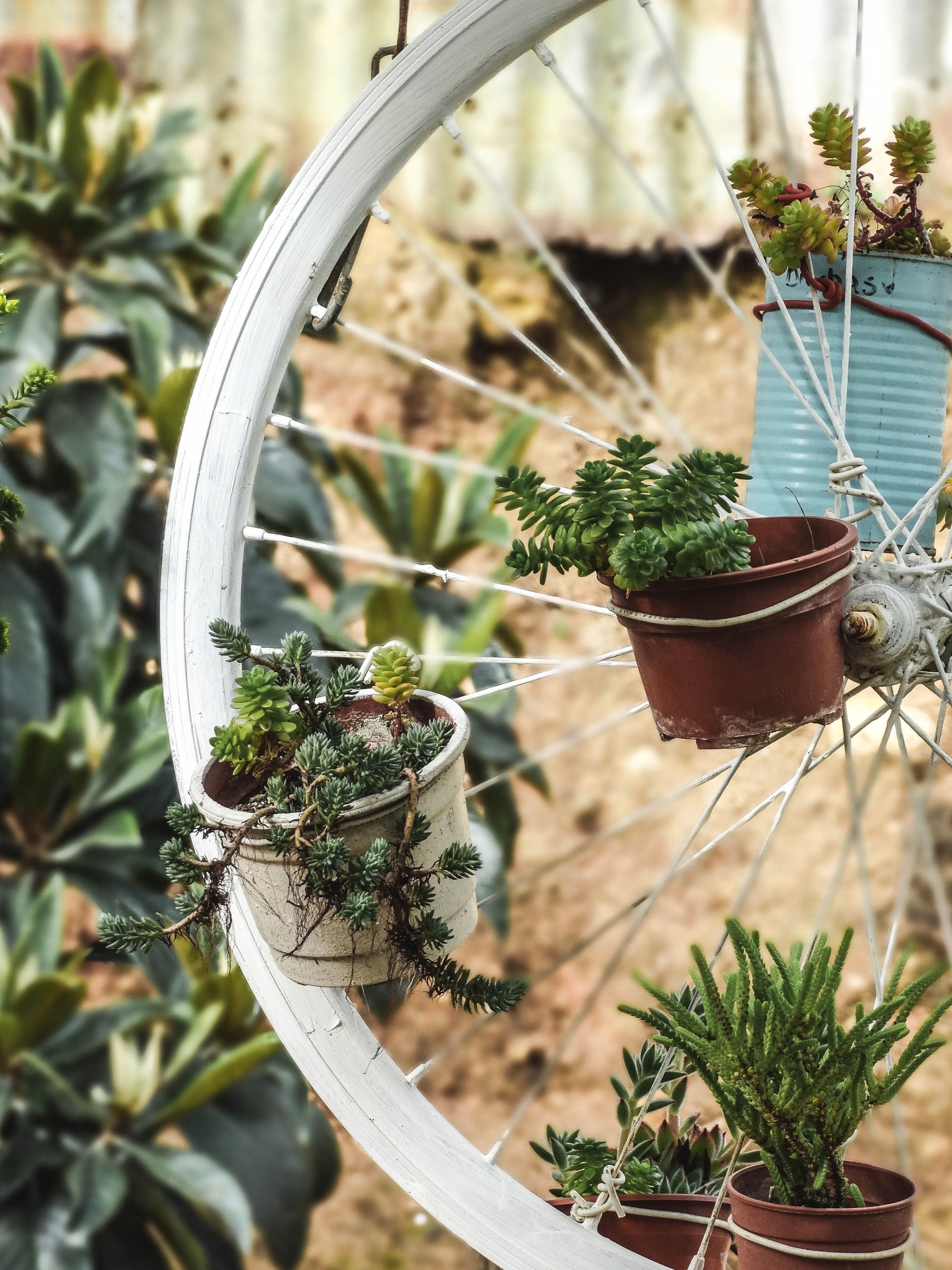
“This project hits on two major trends: the obsession with succulents and the rise of creative vertical gardening.”
As more people live in smaller spaces, finding ways to garden upwards is key. This bicycle wheel idea is a more sculptural, artistic take on the typical wall planter. It’s a Pinterest-perfect project that combines DIY creativity with the enduring popularity of low-maintenance, architectural plants, making it a favorite for crafty gardeners.
22. From Hearth to Garden: A Cast Iron Stove Becomes a Planter
The magic of this piece comes from its sheer unexpectedness and visual weight. A cast iron stove is a heavy, permanent, indoor object associated with heat and winter. Repurposing it as an outdoor planter filled with delicate succulents flips that expectation entirely. Its ornate, old-world details and dark, weathered finish provide a dramatic, almost gothic backdrop for the bright greens and reds of the plants. It’s a true statement piece, far more impactful than a simple pot. It shares a spirit with the repurposed TV in Idea #4.
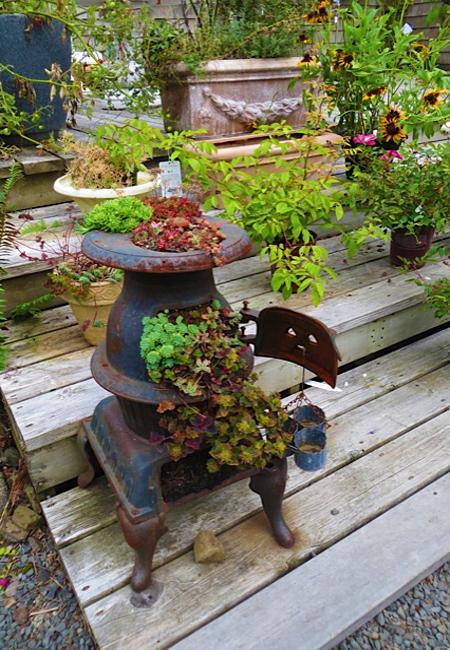
“Cast iron is durable, but it’s not invincible.”
To keep a piece like this from deteriorating, you’ll need to perform some annual maintenance. At the end of each growing season, it’s a good idea to empty it out and check for rust. Use a wire brush to scrub away any loose rust spots, then wipe it down and apply a coat of rust-inhibiting paint or a clear sealant to protect the metal through the winter. This will prevent it from rusting through and ensure it lasts for decades.
23. A Vibrant Wooden Barrel Overflowing with Mixed Flowers
This stunning display follows a classic garden design formula known as “Thriller, Filler, Spiller.” The math is roughly 10% Thriller (a tall, upright plant for height, not clearly visible here but implied), 40% Filler (mounded plants like the pink and red flowers that fill the bulk of the space), and 50% Spiller (trailing plants like the purple flowers that cascade over the edge). This creates a lush, multi-layered arrangement that feels balanced and professionally designed. The warm wood barrel is the perfect neutral vessel for this explosion of color.
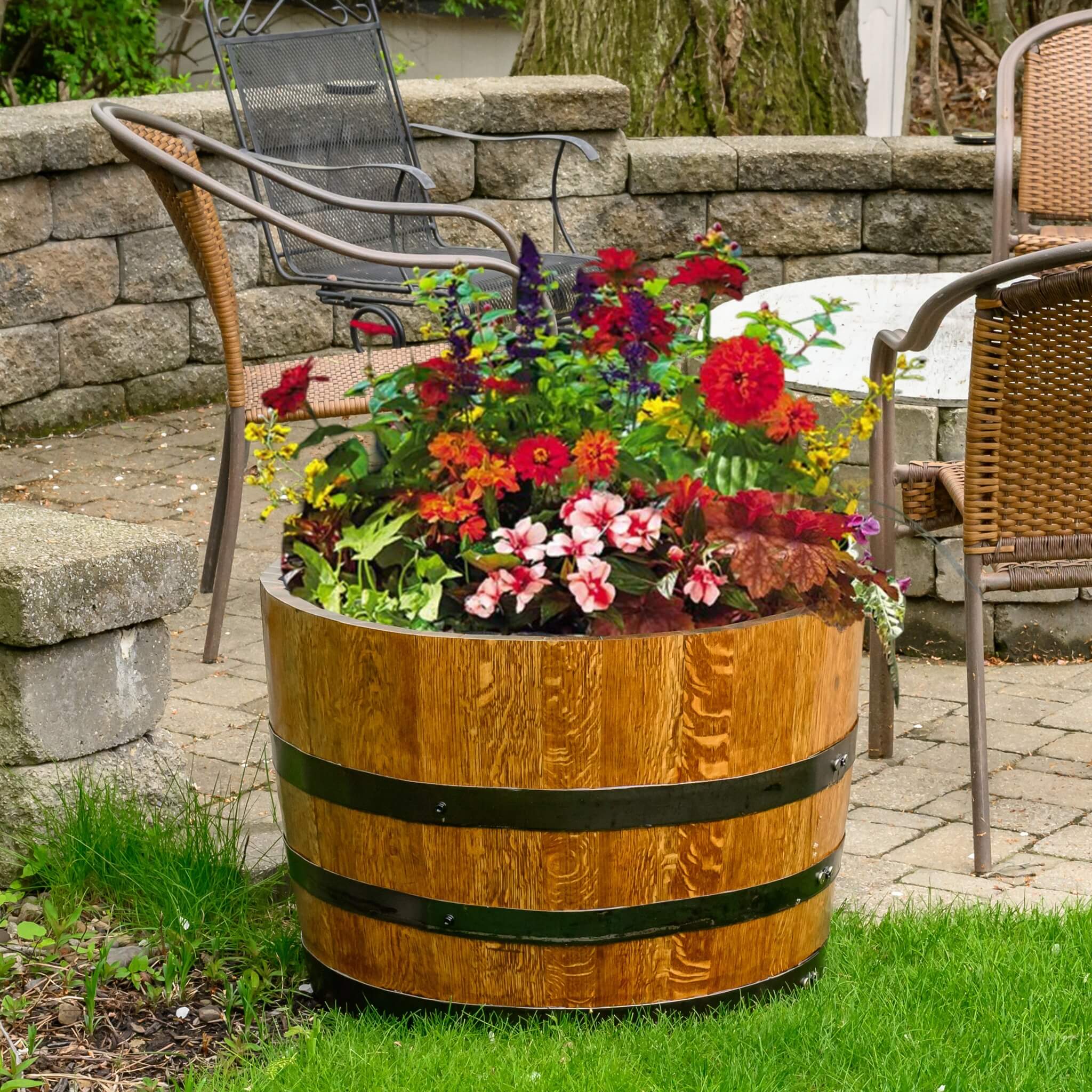
“A barrel this packed with flowers is gorgeous, but it’s a thirsty beast.”
With so many plants competing for water in a contained space, the soil will dry out very quickly, especially on hot, sunny days. You will likely need to water this arrangement deeply every single day during the summer. It’s also a heavy feeder. To keep the blooms looking this vibrant all season, you’ll need to fertilize with a water-soluble bloom-booster every 7-10 days. It’s a high-maintenance look, but the payoff is huge.
24. A Serene Garden Moment with a Sculpted Female Head Planter
This planter creates such a tranquil mood because it taps into classical art and mythology. The sculpted female head evokes images of ancient Greek and Roman garden statues, lending an air of timelessness and serenity to the space. The choice of a spiky, architectural succulent as the ‘hair’ is a clever, modern twist that adds a touch of personality. By surrounding it with soft, delicate foliage and purple flowers, the composition balances the hard concrete with softness, creating a peaceful, contemplative focal point.
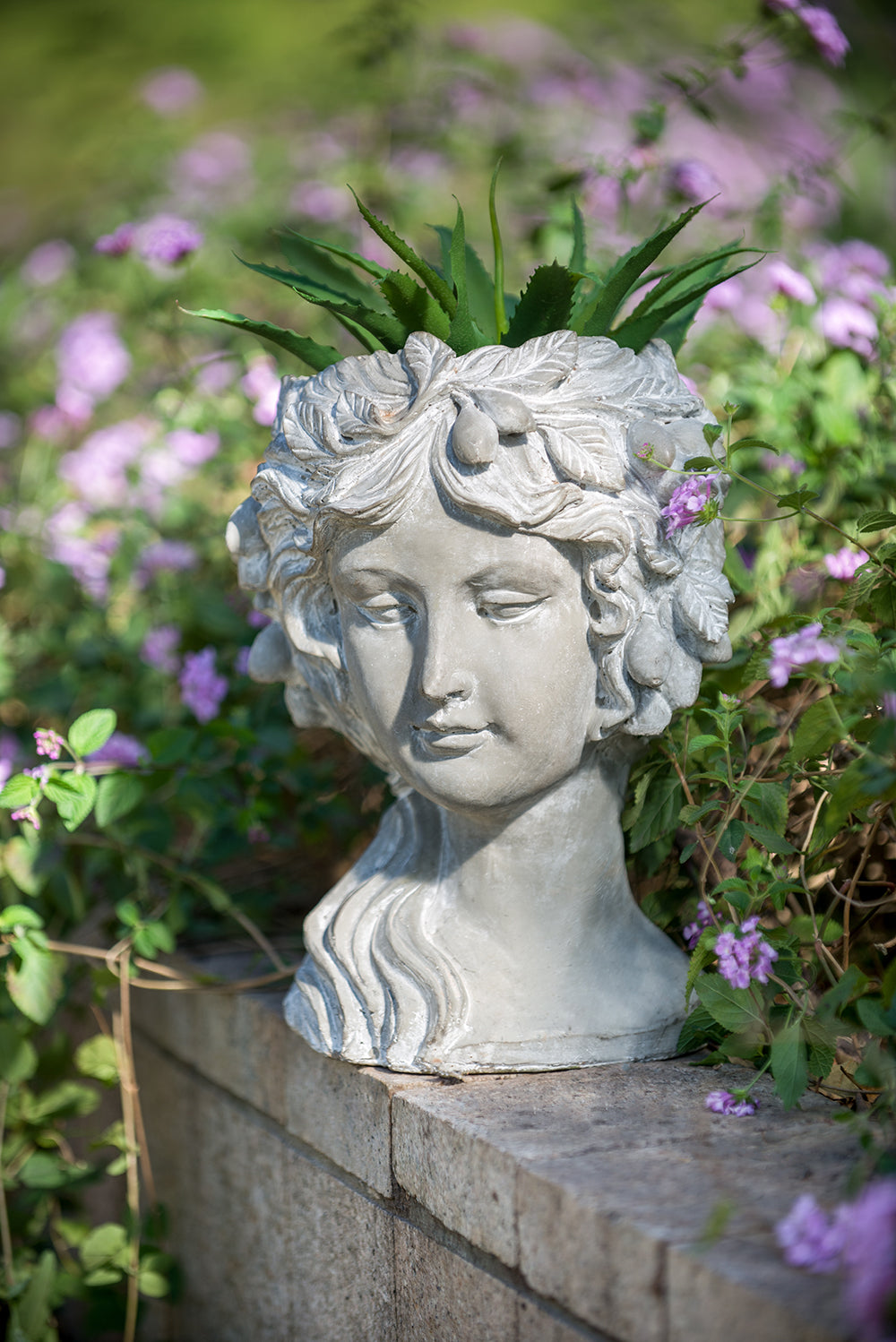
“A head planter is a strong statement, so it’s important to get the placement right.”
Before you buy one, take a photo of the spot you have in mind. Will it be nestled among other plants, as seen here, or will it stand alone on a patio table? A classical-style head works best when it feels like a discovery within a lush garden. A more modern, minimalist head might look better as a standalone piece. Consider the surrounding ‘scenery’ before you commit.
25. A Raised Planter Box with a Built-in Gardening Shelf
The key to making a functional piece like this feel integrated into the garden is color. Notice how the planter box is painted a dark grey-black. This dark, neutral color helps it recede visually, allowing the bright colors of the flowers and the green watering can to pop. If the box were a natural wood or a bright color, it would compete for attention. Painting functional items a dark, recessive color is a pro trick for making them look sophisticated and intentional.
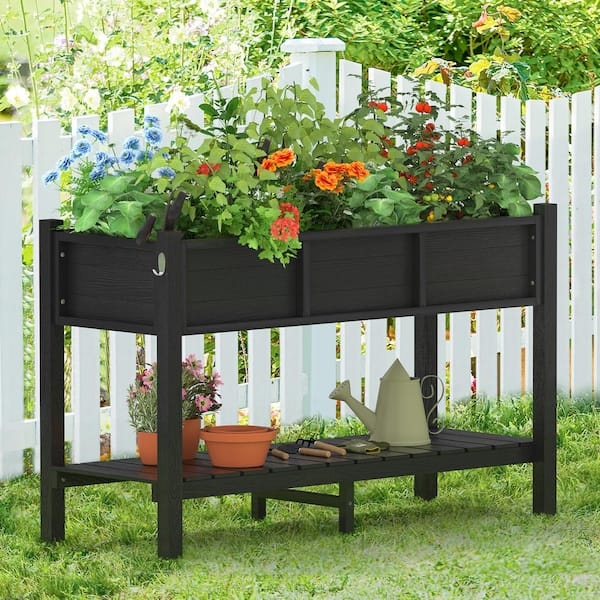
“A raised planter like this is a fantastic investment for any gardener, especially those with back pain.”
You can build one from scratch or buy a kit. Here’s a typical cost breakdown for a DIY version:Lumber (cedar or pressure-treated): $80 – $150Screws & Hardware: $15 – $25Exterior Paint or Stain: $20 – $40Potting Soil & Compost: $50 – $80Plants & Seeds: $30 – $60TOTAL: $195 – $355Budget alternative: Find used wooden pallets (often free) to construct a more rustic version for under $100.
26. A Cheerful Blue Tank Planter with Hand-Painted Poppies
You can achieve this cheerful, hand-painted look without being an artist. Find a suitable container—an old metal bucket, a plastic barrel, or even a large terracotta pot. Paint the whole thing a solid base color with outdoor paint. Then, find a simple stencil of a flower, like a poppy or a daisy, online or at a craft store. Use the stencil and a contrasting color to add the design. It gives you that custom, artistic feel without the need for freehand painting skills. The whole project can be done for under $30.
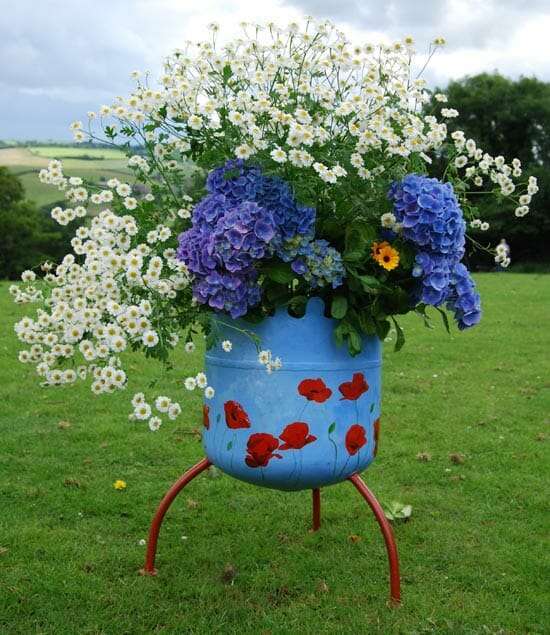
“This piece is so charming because of its bold, primary color palette and folksy style.”
The combination of sky blue, bright red, and clean white feels playful and optimistic. The hand-painted nature of the poppies adds a layer of personal touch that you can’t get from a store-bought planter. Furthermore, the choice of overflowing white and deep blue flowers complements the container’s colors perfectly, creating a cohesive and incredibly vibrant display that just radiates joy.
27. The Lone Boot: A Single Flower in a Repurposed Boot Planter
The power of this idea lies in its absolute simplicity. It’s not a collection of boots, it’s not overflowing with a dozen different plants—it’s just one boot, one flower. This singular focus creates a tiny, poignant story. It encourages the viewer to slow down and appreciate the small, unexpected moment of beauty. By stripping away everything else, the quirky charm of the repurposed object and the simple beauty of the single bloom are amplified. It’s a lesson in the power of less is more.
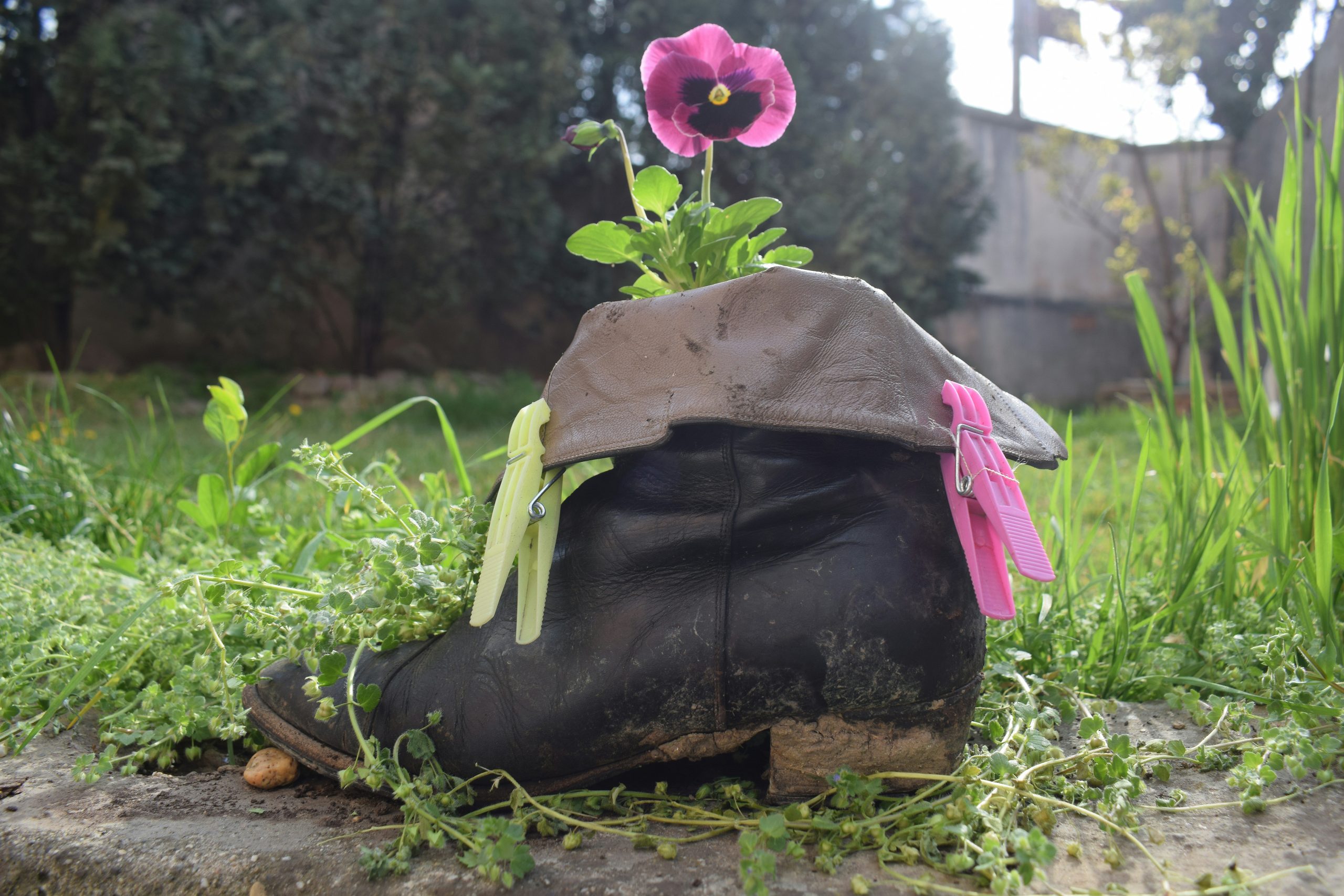
“When you’re creating a minimalist planter like this with just a single bloom, choose your flower carefully.”
You want something with a strong, graphic shape that can stand on its own. A single zinnia, a large-headed marigold, a gerbera daisy, or a striking pansy would work well. Avoid wispy, multi-headed flowers like baby’s breath or alyssum, which need to be planted in masses to make an impact. The goal is one strong silhouette against the quirky shape of the boot.
28. A Pair of Weathered Metal Teapots on a Wooden Beam
This rustic vignette is a beautiful exercise in repetition and variation. The formula is: 2 similar metal objects + 1 rustic base + a variety of soft foliage. The two teapots provide a pleasing rhythm, but because they are filled with different flowers (one with orange and pink, the other with green foliage), the look avoids being static or boring. The weathered wood beam acts as a stage, unifying the two objects into a single, cohesive scene. A similar idea using a single teapot is shown in Idea #2.
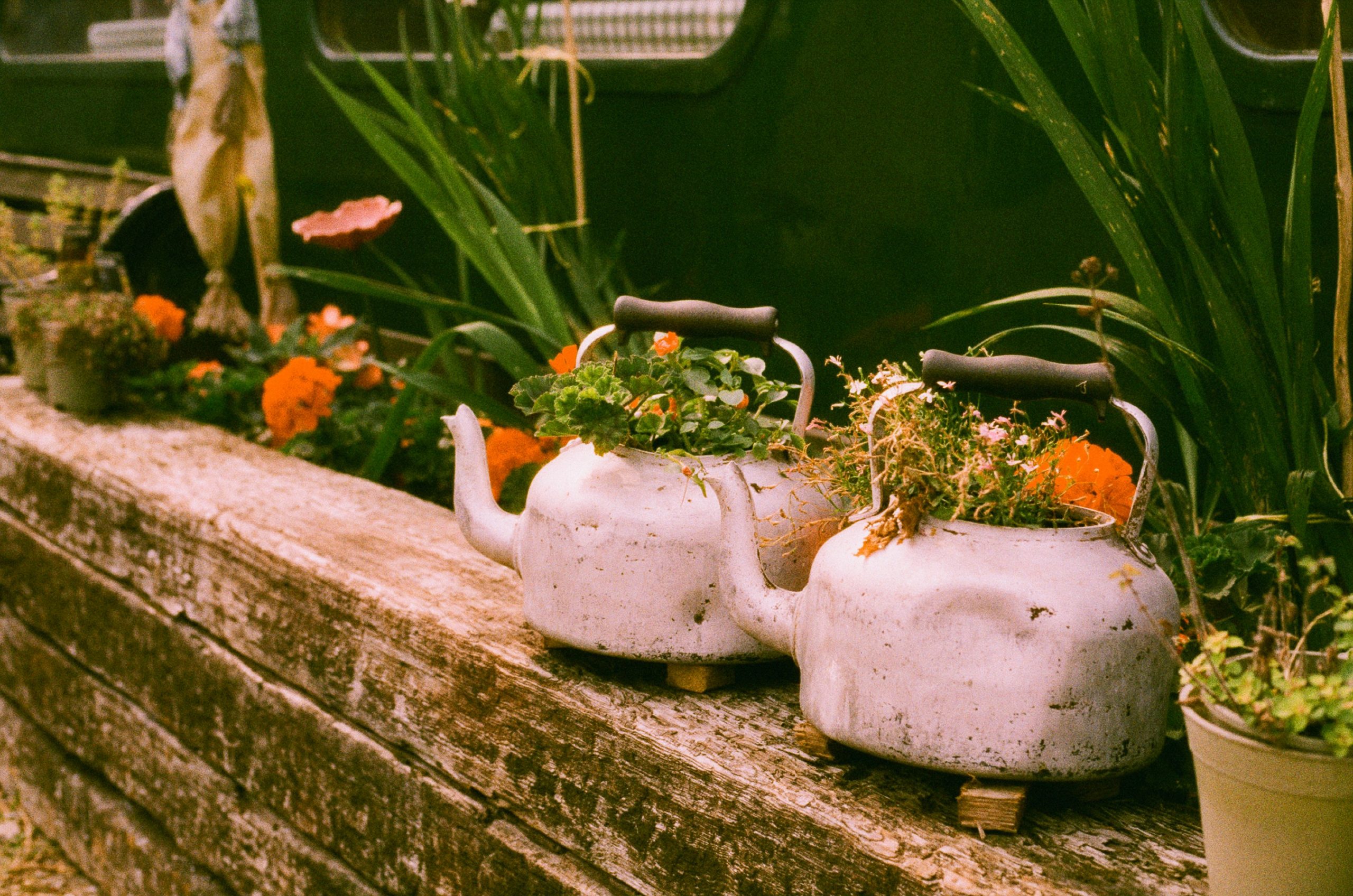
“This composition feels so balanced and natural because it uses the design principle of repetition.”
By pairing two similar teapots, the designer creates an intentional grouping that feels more substantial than a single object. The slight elevation on the wooden blocks and the placement on the rustic beam transform them from simple planters into a curated collection. It tells a story and creates a focal point, drawing the eye in a way one teapot alone might not.
Your Garden’s Next Story Starts Here
Finding a new purpose for an old object is more than just a gardening trick—it’s about embedding your personality and creativity right into the soil. We hope these 28 ideas have sparked your imagination for what’s possible in your own backyard. Now go on, that old kettle or forgotten boot is waiting for its second act!