29 Stunning Insulated Cat House Diy Ideas for 2026 That Will Keep Your Outdoor Feline Cozy and Safe Throughout the Entire Winter Season

You know that feeling when you finally find the DIY insulated cat house that looks exactly right for your yard? It’s not just a box; it’s a project that shows how much you care. But turning that Pinterest-perfect image into a safe, warm reality can feel daunting. We spent serious time digging through project plans from home improvement blogs, master woodworkers, and clever DIYers to bring you only what’s worth your attention this year. We’re covering projects across every skill level and budget. Inside, you’ll find 29 curated ideas, from rustic cedar cabins and simple A-frames to multi-level modern structures with all the amenities. For 2026, it’s all about creating secure, beautiful outdoor spaces for our pets that blend seamlessly with our home’s own style, moving far beyond just a functional box. Pin this guide for later — your future self will thank you when it’s time to actually build.
1. Build a Metal-Frame Catio with a Tree Trunk Perch
This design succeeds by merging industrial strength with natural elements. The dark metal mesh frame offers total security and visibility, which is a primary concern for any outdoor cat space. But instead of feeling like a cage, it’s softened by the inclusion of a real tree trunk perch and warm wooden shelving. This contrast is key: the rigid, man-made structure is balanced by the organic, imperfect shapes of the wood. The translucent roof is another smart choice, allowing natural light to pour in without exposing the space to rain, making it a true all-weather retreat.
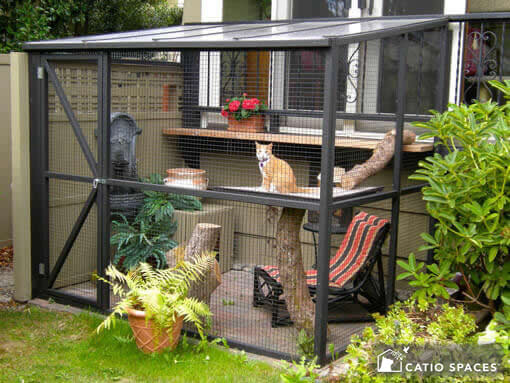
“When building any outdoor enclosure with vertical posts, like this catio, sink the posts at least 18-24 inches deep.”
For extra stability, especially in areas with frost heave, set the base of each post in concrete. A simple trick is to use a post-hole digger to create a clean, deep hole, add 3-4 inches of gravel for drainage, place your post, and then fill the hole with quick-setting concrete. This ensures your structure won’t shift or lean over time, no matter what the weather throws at it. A solid foundation is everything.
2. A Two-Tier Cat Shelter with a Custom Kitten Mural
This shelter’s charm comes from a simple but effective formula: 60% functional structure + 30% personalized art + 10% thoughtful details. The main body is a practical, two-level wooden house. The real personality comes from the large illustrated panel, which transforms the piece from a generic box into a unique statement. The final 10% is in details like the plastic-flapped doorway for weather protection. You could swap the cat mural for a geometric pattern, a solid accent color, or even a chalkboard panel for a different vibe while keeping the core balance intact.
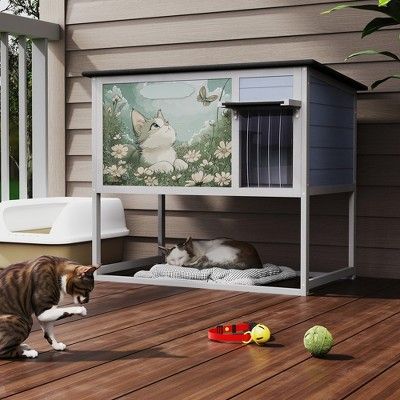
“A painted mural is a beautiful touch, but it’s also the first thing to show wear and tear outdoors.”
Be honest with yourself about maintenance. To keep this looking fresh, you’ll need to use high-quality exterior paint and seal it with multiple coats of a UV-resistant, pet-safe clear coat. Expect to touch it up or completely re-seal it every 2-3 years, depending on your climate. If you’re not up for that, consider a design that relies on stained wood or composite materials for its charm instead.
3. Craft a Miniature Log Cabin Pet Shelter
that makes this entire concept work is the commitment to the log cabin aesthetic. It’s not just a wooden box; it’s a miniature, rustic dwelling. If you were to remove the rounded, light pine log construction and replace it with simple planks, you’d lose all the charm. The gabled roof and placement on a flagstone patio reinforce this theme. It feels like a little wilderness outpost. This specific material choice is everything—it transports the idea from a simple pet shelter to a piece of garden architecture that tells a story.
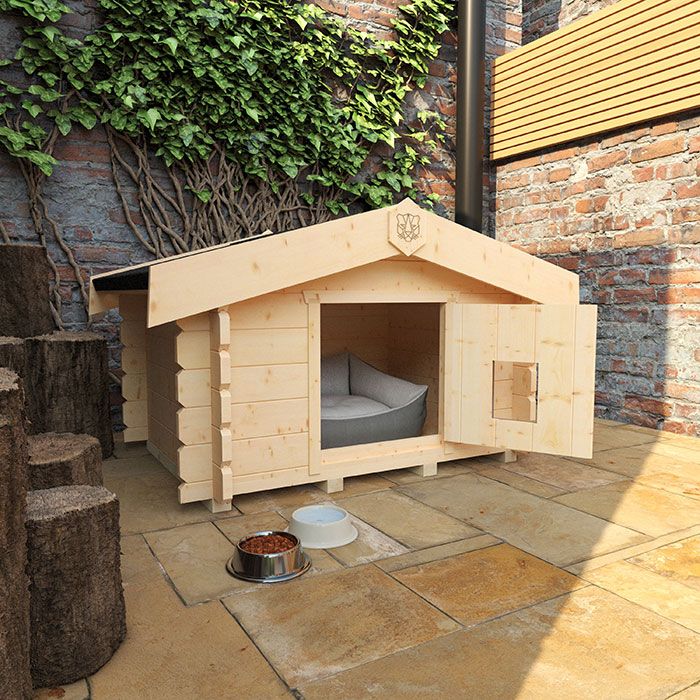
“Lumber (pine logs/rounds): $100 – $180Roofing material (small shingles or wood):”
- Lumber (pine logs/rounds): $100 – $180
- Roofing material (small shingles or wood): $30 – $50
- Cushion & Bowls: $25 – $40
- Fasteners & Sealant: $20 – $30
- TOTAL: $175 – $300
- Budget alternative: Use standard 2x4s for the frame and cover with half-round log siding to get a similar look for about 40% less.
4. An Elevated Cat Cabin with a Slatted Roof Deck
The slatted roof on this structure isn’t just for looks; it provides a breezy, sunny perch. Here’s how to build a similar sturdy platform. Time: 2 hours. Cost: $40-$60.
- Cut four 4×4 posts to your desired height (e.g., 36 inches).
- Build two rectangular frames from 2x4s that will connect the posts—one for the top, one for the bottom.
- Attach the posts to the inside corners of the frames using heavy-duty lag screws.
- Cut 1×3 or 1×4 cedar or pine slats to span the top frame.
- Space the slats about 1/2 inch apart and fasten them with exterior-grade screws.
- Sand all edges to prevent splinters.
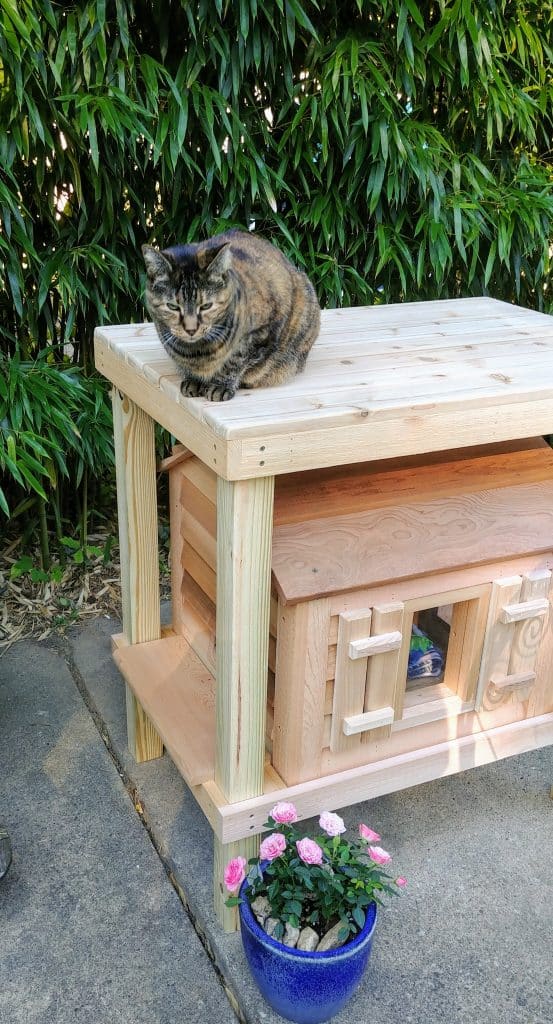
“This design’s verticality makes it perfect for smaller spaces.”
It requires a footprint of only about 3 ft x 3 ft, making it suitable for a small patio, balcony, or a tight corner of a garden. The ideal ceiling height (if on a covered patio) would be at least 7 feet to allow the cat to feel comfortably elevated. For it to not feel cramped, ensure you have at least 2 feet of clear space around the structure for access. This is a great solution for spaces where a wider, sprawling catio like Idea #0 wouldn’t fit.
5. Build a Two-Story Cat House with a Balcony and Ladder
This design works because it caters directly to a cat’s natural instincts. The ground-level enclosure provides a secure, den-like space for hiding and sleeping. The upper balcony satisfies their desire for a high vantage point to survey their territory. The ladder isn’t just a cute accessory; it’s an interactive element that provides enrichment. The combination of enclosed safety and open-air supervision in one compact unit is a perfect balance. The warm, honey-toned wood and green shingled roof help it blend into a garden setting beautifully.
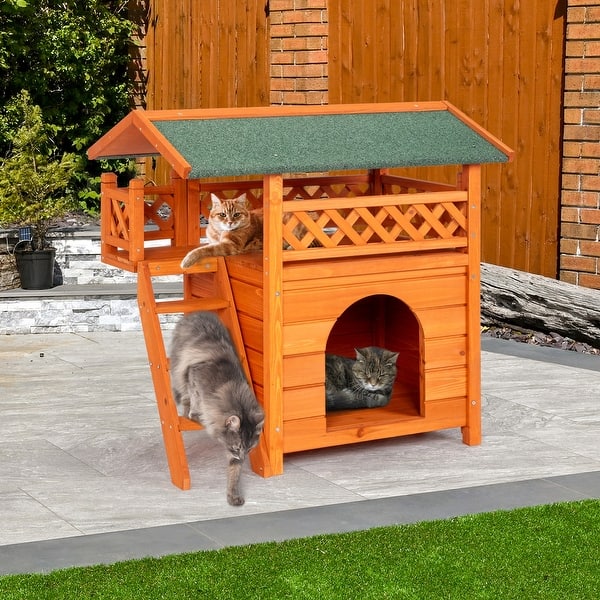
“A wooden structure like this requires annual maintenance to survive the outdoors.”
At the start of each spring, you’ll need to inspect for any splintering, rot, or loose joints, especially on the ladder and balcony railings. Give the entire structure a light cleaning with a mild soap and water solution. Most importantly, plan to re-apply a coat of pet-safe wood sealant or stain every 2-3 years to protect it from moisture and UV damage. The green asphalt shingles are very low-maintenance, but check for any cracked or missing ones after major storms.
6. A Two-Tier Cat Shelter with a Pitched Roof and White Trim
The crisp white trim on this design is what gives it that polished, finished look. To get your paint lines that sharp, don’t rely on free-handing it. Use a high-quality painter’s tape (like FrogTape) and press the edges down firmly with a putty knife or credit card to create a tight seal. Apply two thin coats of exterior-grade white paint rather than one thick coat. Here’s the pro tip: remove the tape while the second coat of paint is still slightly wet, pulling it away from the painted edge at a 45-degree angle for the cleanest line possible.
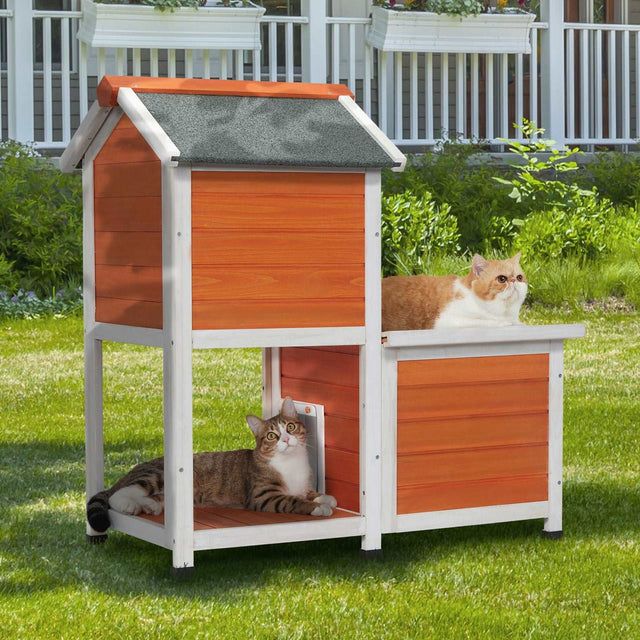
“You can get this charming two-level look for much less.”
Instead of building from scratch, find two old wooden crates or nightstands on Facebook Marketplace for $20-$40. Stack them and secure them together. Use leftover exterior house paint for the white trim and orange panels. For the roof, you don’t need real shingles; you can create the look by cutting pieces of a cheap vinyl floor mat or roofing felt ($15 at a hardware store) and layering them. This approach brings the total cost down to under $75 while keeping the same fun, multi-level design.
7. A Multi-Level Cat Tower with a Curved Ramp
The single element that makes this design so engaging is the curved wooden ramp. Without it, you’d have a static, tiered structure. The ramp adds a sense of flow and dynamic movement, encouraging play and exploration. It transforms the house from a series of boxes into a miniature adventure course. A cat’s journey from the ground-level enclosure with its fun circular entrance, up the ramp to the lookout platform, becomes an activity. It’s this focus on interactive pathways that sets the design apart and makes it more than just a shelter.
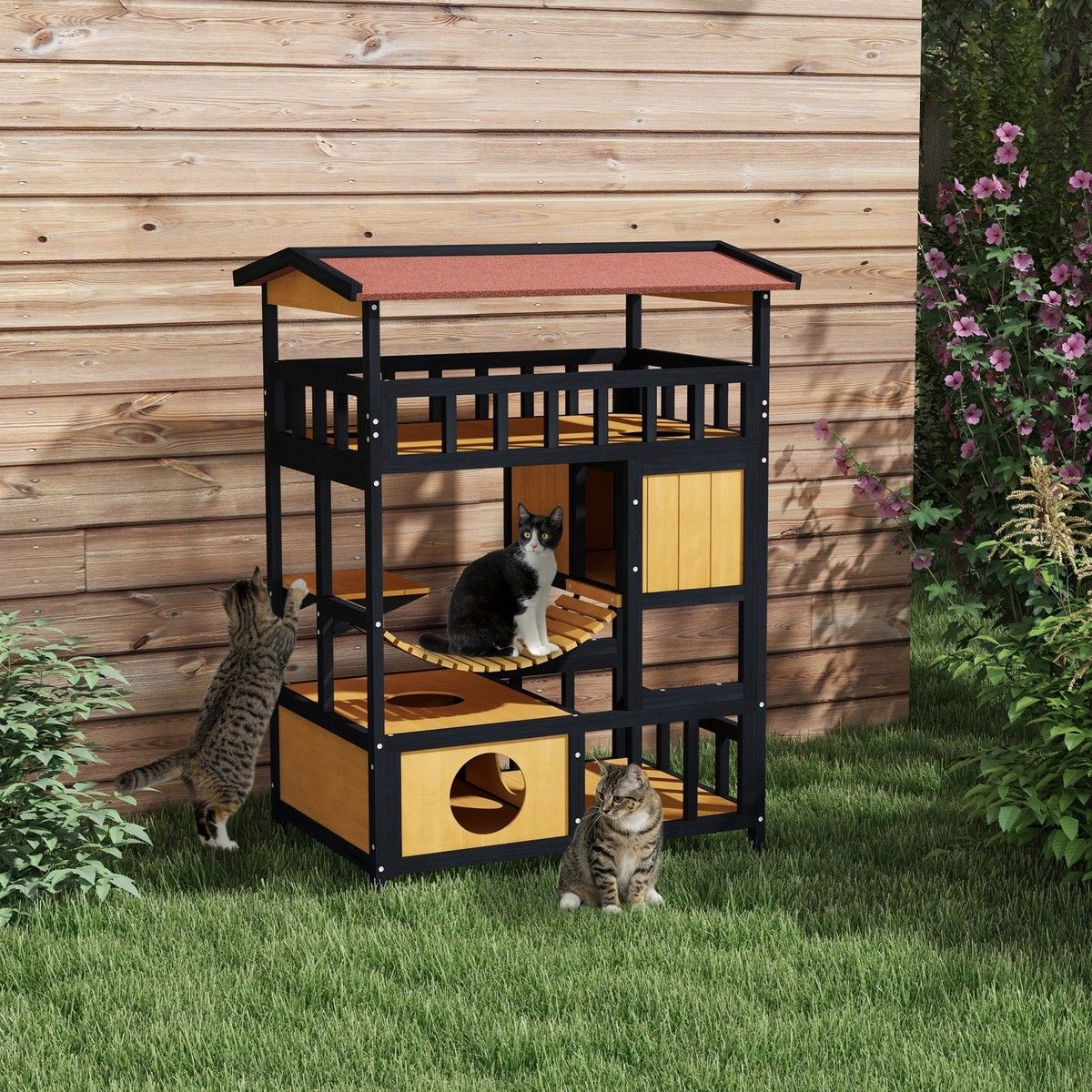
“An open-frame structure like this is fantastic for play, but it offers very little protection from the elements.”
This is not an insulated winter shelter. It’s a fair-weather activity center. The red shingled roof only covers a small portion of the upper deck, and the lower box is the only spot that offers real refuge from rain or wind. Be realistic about its purpose: it’s a playground, not a four-season home. If you live in a climate with cold winters or lots of rain, this should be a secondary structure, not the primary outdoor shelter. Compare this to the fully insulated design in Idea #11.
8. DIY a Raised Cedar Shelter with an Integrated Side Deck
The beauty of this design lies in its pure, functional simplicity. By elevating the main enclosure, it keeps the sleeping area off the damp, cold ground—a crucial feature for an outdoor pet house. The attached side platform is a stroke of genius; it extends the usable space without increasing the overall footprint dramatically, providing a perfect spot for sunbathing or lounging. The use of unfinished cedar is both aesthetic and practical, as cedar is naturally resistant to rot and insects. The clean lines and horizontal plank siding give it a modern-rustic feel that is honest and unpretentious.
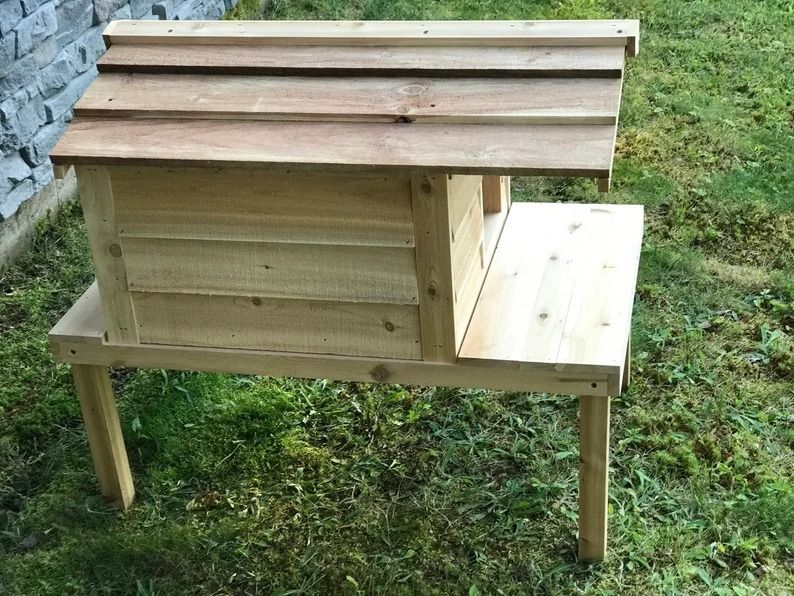
“Confirm you have a level spot in your yard.”
An uneven base will stress the leg joints over time. Measure the ground with a level before you start building.Choose your wood wisely. Cedar is great for weather resistance, but pine is cheaper. Decide if you’re willing to do the extra sealing and maintenance that pine requires.Do you need insulation? This open design is for temperate climates. If your winters are harsh, you’ll need to modify the plan to include insulated walls.Check the dimensions. Ensure the interior is large enough for your cat to stand up and turn around comfortably.
9. A Cozy Two-Story Cedar Cat House with Lantern Lighting
This shelter’s inviting atmosphere is a masterclass in texture and light. The formula is approximately 70% rustic material + 20% warm lighting + 10% dark contrast. The bulk of the visual appeal comes from the natural Eastern White Cedar. The magic, however, is in the integrated internal lighting, which casts a warm, amber glow, turning the house into a beacon of coziness. The dark stained deck and metal lanterns provide just enough dark contrast to make the warm cedar and light pop, especially at dusk. The mood is created not just by the structure, but by how it’s lit.
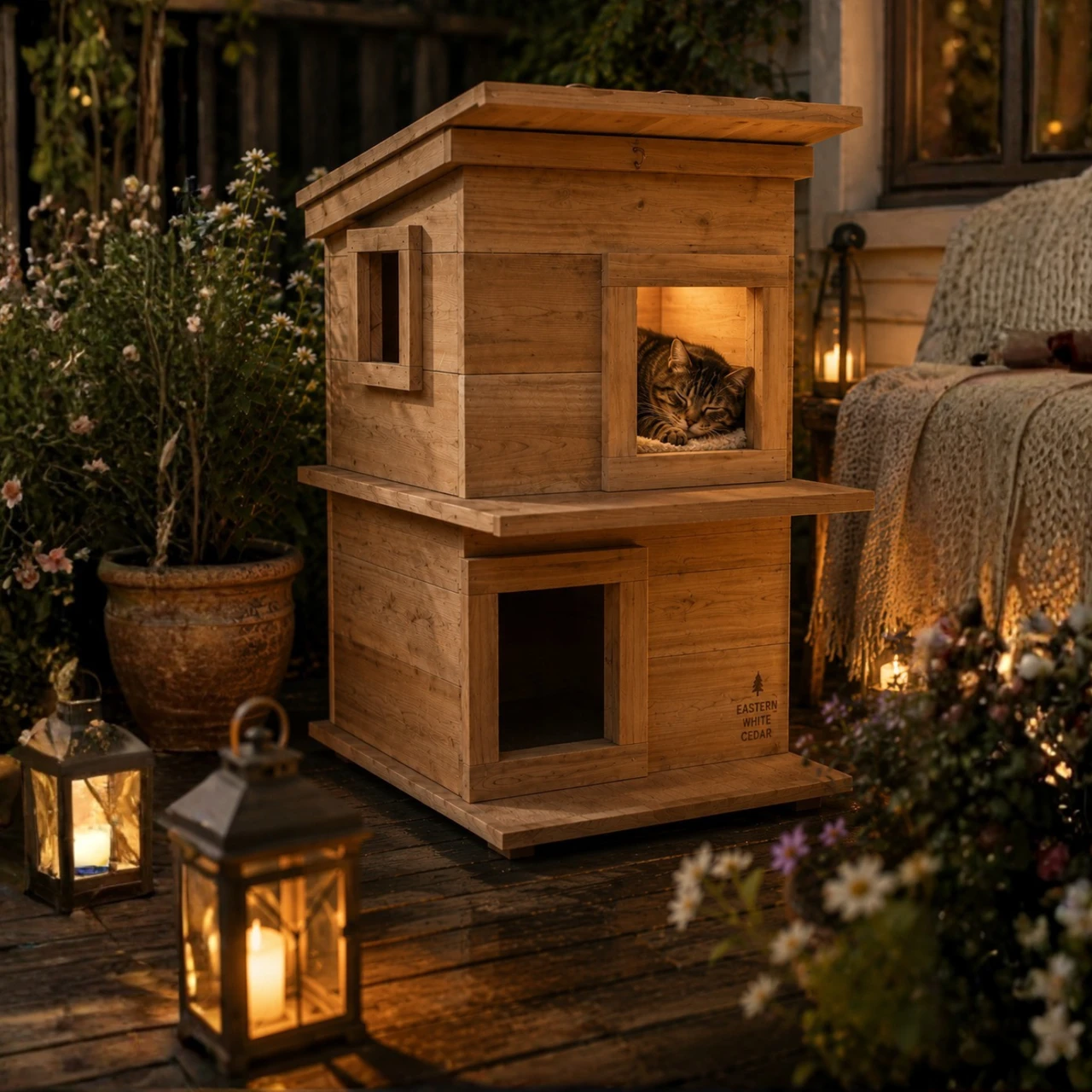
“If you’re adding internal lighting to a pet house, safety is non-negotiable.”
Use only low-voltage (12V) LED strip lighting, which stays cool to the touch and minimizes fire risk. Ensure the power adapter is plugged into a GFCI outlet rated for outdoor use. Run the wiring through a waterproof conduit and drill a small, sealed hole to get it inside. Never use standard indoor lamps or incandescent bulbs, as they can get hot enough to be a hazard to both the structure and your pet.
10. Build a Custom Tiered Outdoor Cat Climbing Structure
The angled climbing ramp is a key feature for cat satisfaction. Here’s a quick guide to building one. Time: 1 hour. Cost: $25-$40.
- Measure the distance between the two platforms you want to connect.
- Cut a 1×8 or 1×10 piece of untreated pine or cedar to that length.
- Cut several 1×2 strips to the width of your main board (e.g., 7.25 inches for a 1×8). These will be the ‘rungs’.
- Space the rungs 3-4 inches apart along the length of the ramp board.
- Secure each rung with exterior wood glue and two weather-resistant screws.
- Attach the finished ramp to the platforms using angled metal brackets for a secure connection.
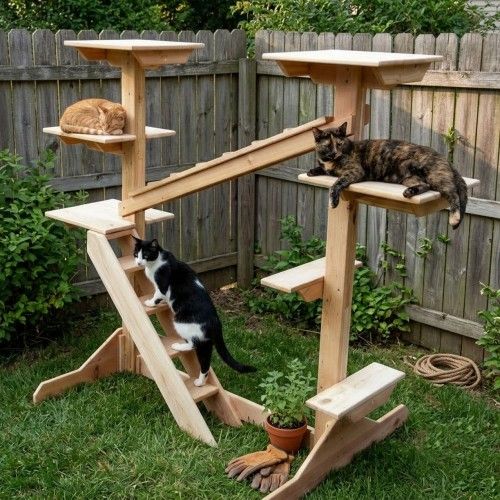
“Let’s be honest: this is a cat jungle gym, not a house.”
It provides zero protection from wind, rain, or cold. While it’s a fantastic source of enrichment and exercise, it cannot be a cat’s only outdoor shelter in most climates. Think of it as playground equipment. It’s perfect for a sunny afternoon but useless in a storm. Also, an open structure like this, built from untreated lumber, will have a shorter lifespan than a sealed, enclosed house. Expect to replace boards or re-secure joints every few years, especially if it’s exposed to harsh weather.
11. A Grey Two-Story Farmhouse-Style Cat House
The single element that elevates this from a simple pet shelter to a piece of decor is the styling. The farmhouse signage (‘HOME’ and ‘Welcome’) and the black-and-white buffalo check mat are everything. Without them, it’s a nice, functional grey box. With them, it’s a charming, personalized miniature home that reflects a popular interior design trend. It shows that the pet’s space is considered an integral part of the home’s overall aesthetic, not just an afterthought. This is a lesson in how small, inexpensive accessories can completely define a project’s character.
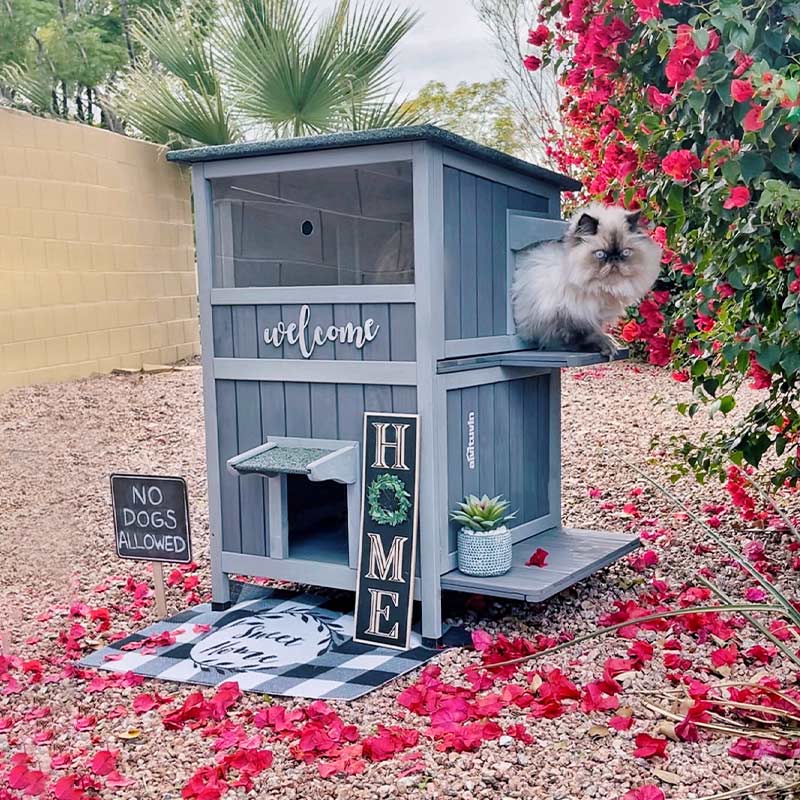
“This design taps directly into the ‘Pet-as-Family’ and ‘Modern Farmhouse’ trends that have dominated Pinterest and Instagram for the last few years.”
People are no longer content with a purely utilitarian cat box in the yard. They want their pet’s accessories to match their own home decor. This creates a cohesive look that extends from the living room to the patio. While the farmhouse trend may evolve, the core idea of creating stylish, human-grade spaces for pets has serious staying power and is a major shift in the pet product market.
12. An Elevated Cedar Pet House with Foil Insulation
This project is a perfect marriage of rustic aesthetics and practical engineering. The exterior’s exposed cedar planks give it a natural, handmade charm that fits well in a garden setting. But the real star is the interior. The reflective silver foil insulation is what makes this a true all-season shelter. It works by reflecting the cat’s own body heat back at them in the winter, and reflecting the sun’s radiant heat away in the summer. Elevating the structure on legs is the final touch, preventing heat loss to the cold ground. It’s a design that looks simple but has thoughtful thermal dynamics at its core.
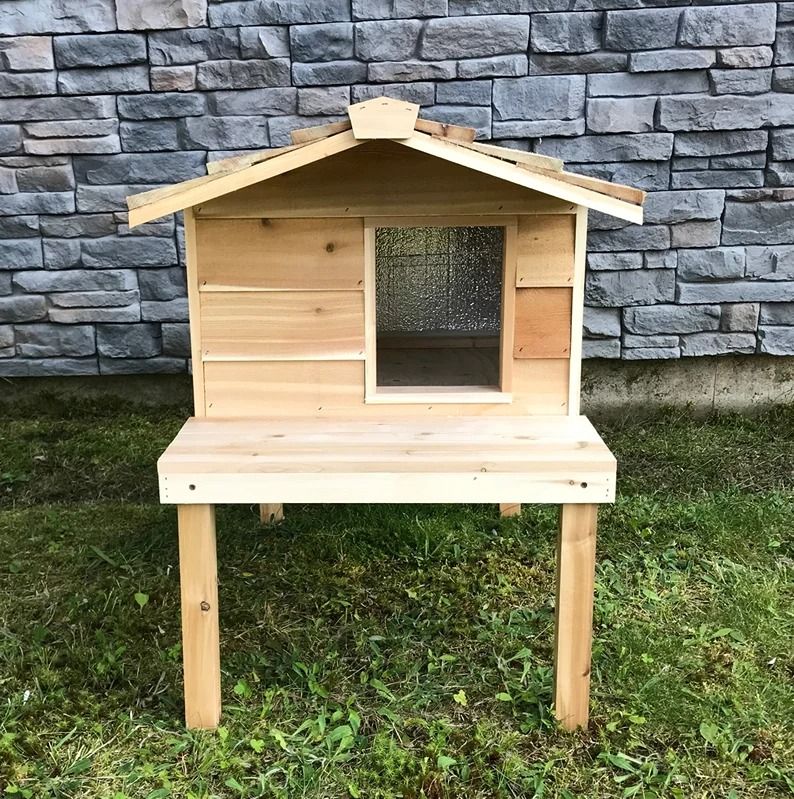
“When using reflective foil insulation, leave a small air gap (about 3/4 inch) between the insulation and the interior wall panel.”
This air gap is critical for the radiant barrier to work effectively. You can create this gap easily by adding thin wooden strips (furring strips) to the interior frame before you attach the final inner wall lining (like a thin sheet of plywood). Without the air gap, the foil will transfer heat through conduction, dramatically reducing its insulating effectiveness. It’s a small step that makes a huge difference.
13. A Raised Cedar Pet House with a Single Window
A simple, compact design like this is ideal for providing shelter for one or two cats in a yard with limited space. The footprint is roughly 2.5 ft x 2 ft, and with the elevation, it stands about 3 feet tall. It’s perfect for tucking alongside a house, on a deck, or under a large tree. The key is that it’s substantial enough to be a safe space but not so large that it dominates a smaller garden. This design would be overwhelmed in a very large, open yard, where a more substantial structure like the multi-level tower in Idea #6 would feel more appropriately scaled.
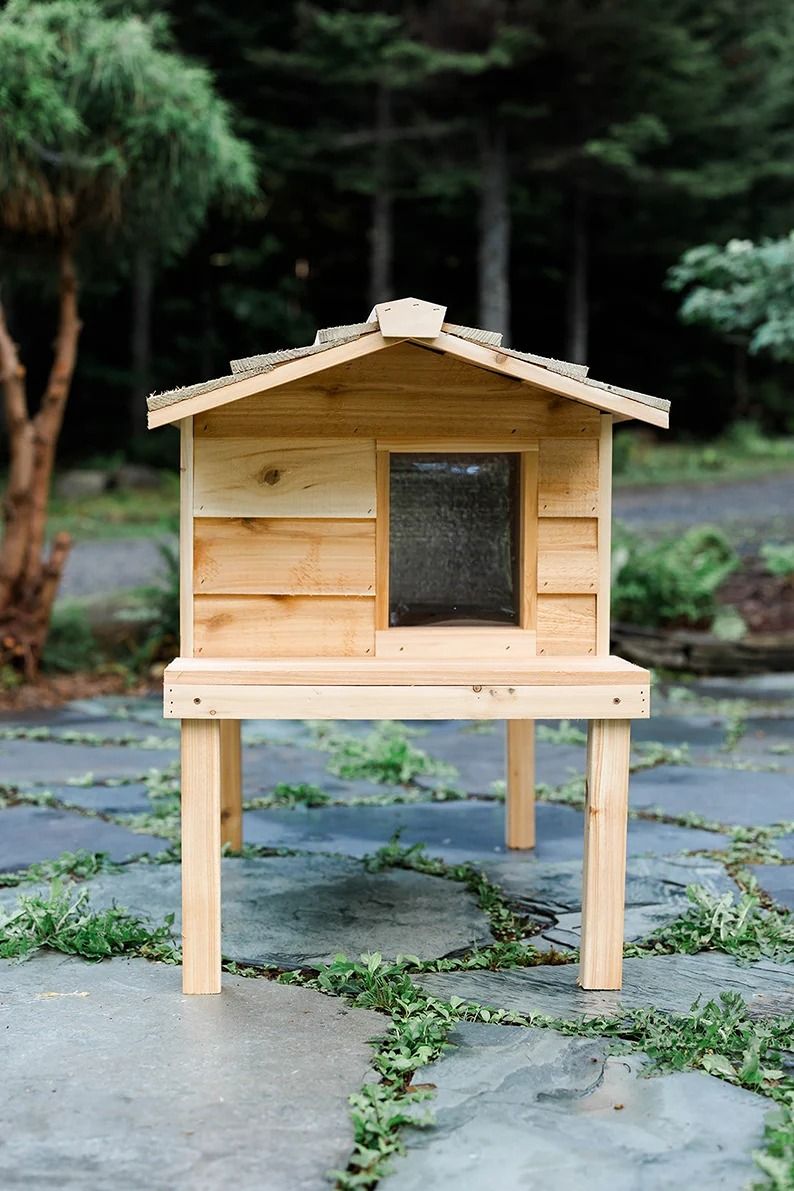
“That single window adds a nice homey touch and lets in light, but it’s also a point of heat loss.”
A single pane of glass or acrylic has very poor insulating properties. In a cold winter, this window will be a major cold spot inside the shelter. If you live in a climate with harsh winters, consider either forgoing the window in favor of a solid, insulated wall or investing in a small, double-pane window insert. For a DIY build, you can create your own double-pane effect by using two sheets of acrylic with an air gap in between. For a more rustic, but insulated approach, check out Idea #11.
14. A Portable A-Frame Shelter in Camouflage Fabric
The defining feature here is portability. Unlike the heavy wooden structures in this list, this A-frame shelter is all about being lightweight and easy to move. The weather-resistant camouflage fabric and simple, structured seams mean it can be folded down and stored when not in use, or easily moved to different spots in the yard—a sunny spot in the winter, a shady one in the summer. This flexibility is its greatest strength. It’s not meant to be a permanent piece of architecture; it’s a convenient, on-demand refuge that adapts to changing needs and seasons.
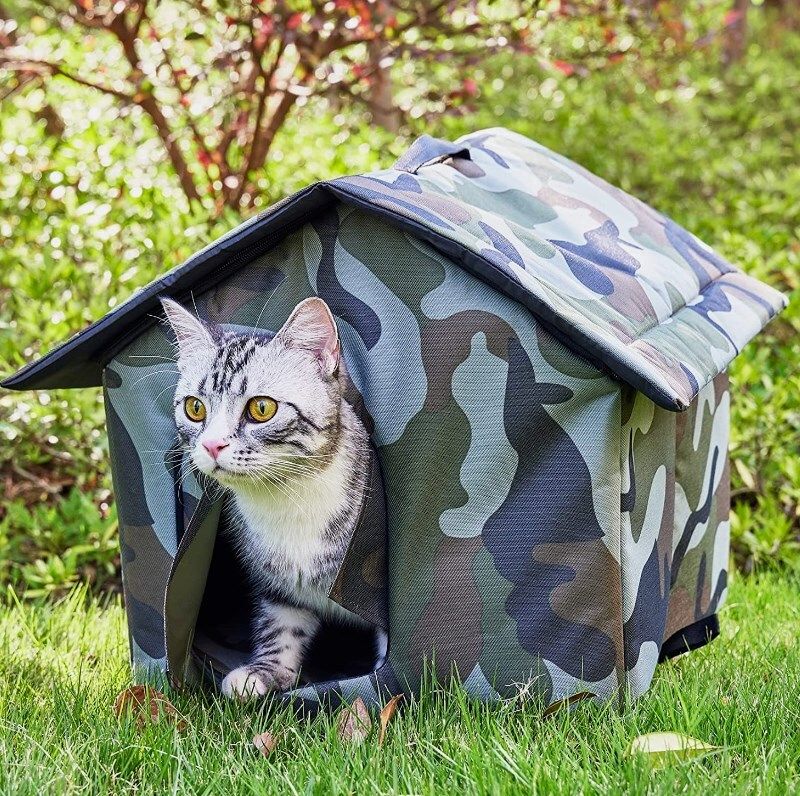
“Want an even cheaper portable shelter?”
Get a small, two-person pop-up tent from Walmart or a thrift store for $15-$25. They are waterproof, incredibly lightweight, and set up in seconds. While they might not be as durable as a dedicated pet shelter, they provide excellent temporary protection from rain and sun. Just be sure to weigh it down with a heavy blanket or a few bricks inside so it doesn’t blow away. It’s a perfect solution for camping trips, picnics, or just a day in the backyard.
15. A Vertical Two-Story Pet House with a Gabled Roof
This design’s success comes from its smart use of vertical space and classic architectural cues. The charcoal grey vertical planks create a sense of height and modernity, while the contrasting white trim and gabled, shingled roof add a touch of traditional charm. It feels less like a cat box and more like a miniature barn or cottage. The small elevated entry platform is a thoughtful detail, giving a cat a place to pause before entering. The hinged side door is a practical win, making cleaning the interior a breeze—a feature many DIY plans overlook.
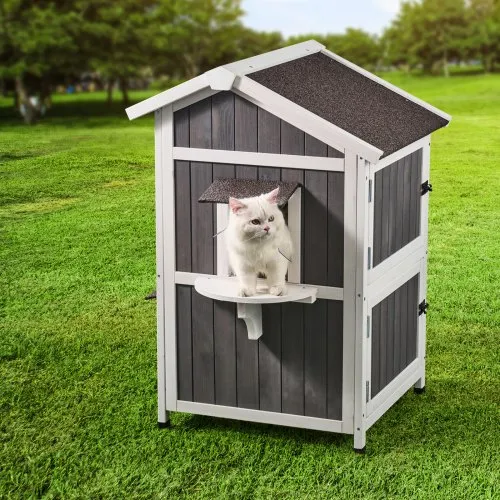
“Painted Wood Siding: Requires the most upkeep.”
Expect to touch up chips and re-paint every 3-4 years to prevent peeling and protect the wood. Use high-quality exterior paint.Shingled Roof: Very durable. Should last 10+ years. Inspect annually for cracked or missing shingles, especially after high winds or heavy snow.Hinges and Latches: Metal hardware can rust. Apply a spray lubricant like WD-40 once a year to keep hinges moving smoothly and prevent rust.Seams and Joints: Check all seams where wood meets wood annually. Re-caulk with a weatherproof, paintable caulk as needed to keep moisture out.
16. A Minimalist Black Fabric A-Frame Pet Shelter
The power of this design is its extreme minimalism. The formula is simple: 90% simple geometric form + 10% high-contrast color. The entire structure is reduced to a single A-frame silhouette with a clean, arched opening. There’s no trim, no texture, no extra details. The choice of matte black fabric makes it a bold, graphic statement against the green lawn, turning the shelter into a piece of abstract sculpture. The ginger cat inside becomes the focal point, its warm color popping against the stark black. It’s proof that you don’t need complexity to make a strong design statement.
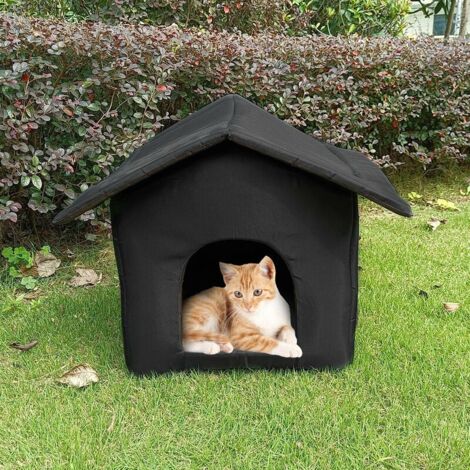
“A black fabric shelter will get extremely hot in direct sunlight.”
While it might be cozy on a cool, overcast day, it can quickly become an oven on a sunny summer afternoon. This design is best suited for a fully shaded location, under a dense tree, on a covered porch, or for use only in cooler seasons. If your yard is mostly sun, a light-colored fabric shelter (like the grey one in Idea #23) would be a much safer and more comfortable choice for your pet during warmer months.
17. A Two-Story Wooden Cat Condo with a White-Railed Balcony
This design is a hit because it’s a miniature version of a human house, which we find endlessly charming. The board-and-batten style siding, the overhanging gable roof, and especially the white-railed upper balcony all borrow from classic residential architecture. It feels like a little house, not just an animal shelter. For a cat, it offers the perfect combination of a secure lower den (with a weather-proof flap door) and an upper ‘vista point’ for supervision. This is the same successful formula as Idea #4, but with a more traditional, ‘cottage’ execution.
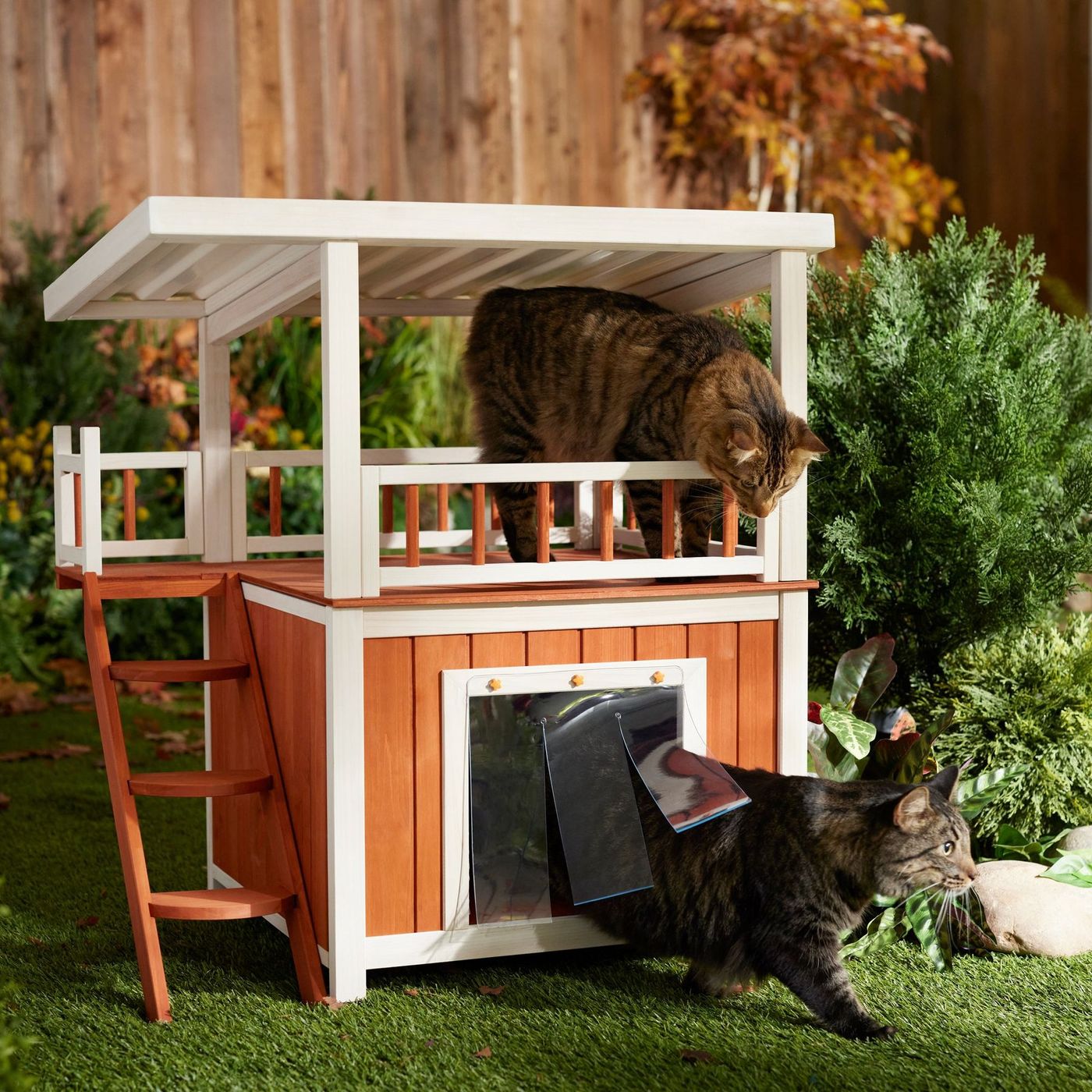
“You can create a similar multi-level experience on a shoestring budget.”
Find a sturdy, unwanted side table or a large wooden crate for free on the side of the road or for under $20 on Facebook Marketplace. This is your base level. For the upper level, use a simple wooden shelf or a smaller crate. Build a simple ramp or ladder from scrap wood. A can of ‘oops’ paint from the hardware store ($5-$10) can provide the color. The key is to find existing structures you can stack and modify, rather than buying all new lumber.
18. An A-Frame Shelter with Cat-Shaped Entry Portals
The detail that defines this entire piece is, without a doubt, the cat-head-shaped openings. A simple A-frame with round or square holes would be purely functional, even forgettable. The custom-cut silhouette openings add a layer of whimsy and clear purpose. It’s a playful nod that instantly communicates who the structure is for. This single, clever design choice transforms a utilitarian object into something with personality and charm. It’s a fantastic example of how the shape of a simple cutout can change the entire mood of a project.
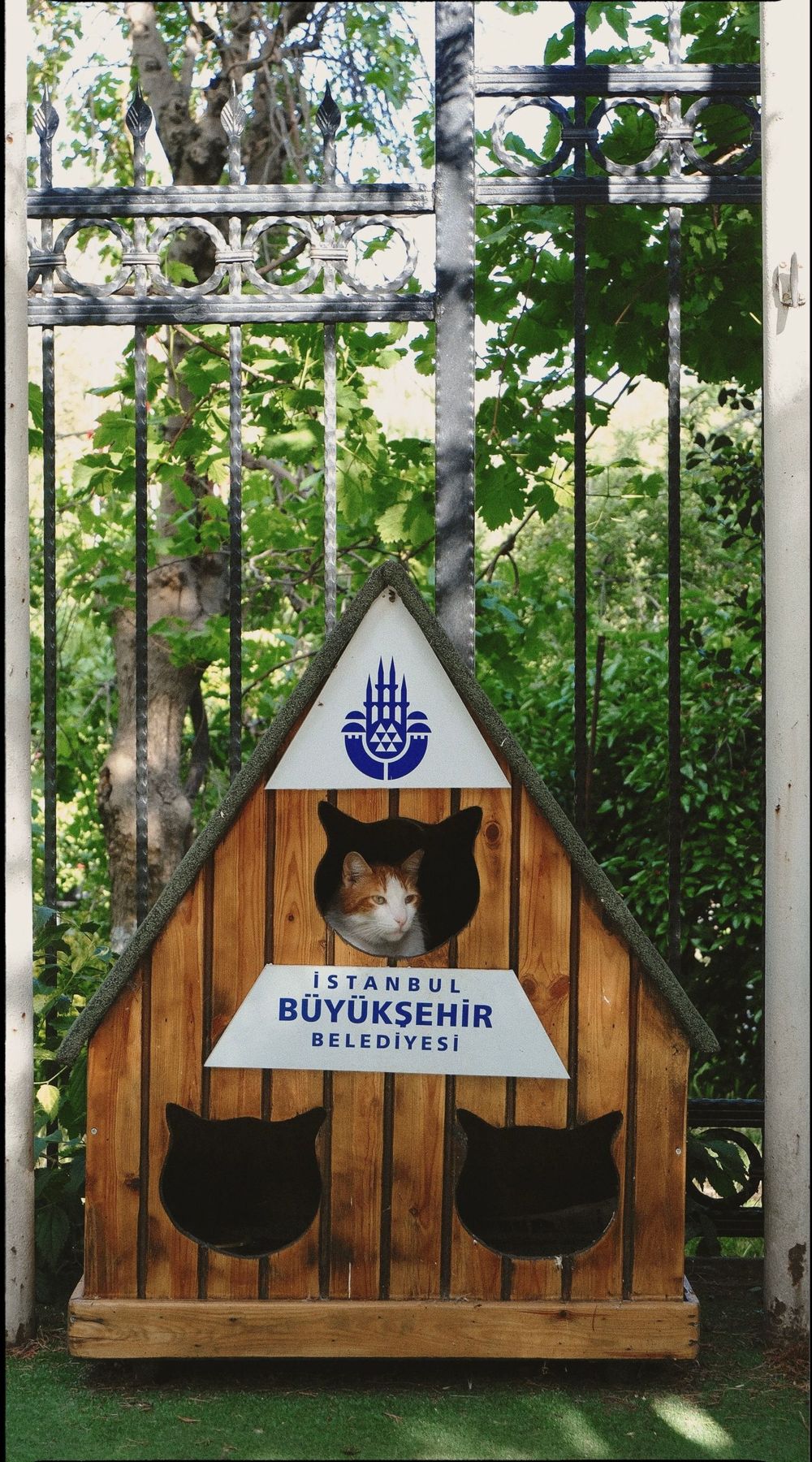
“This design, with its official-looking municipal branding, points to a growing trend in urban and community design: integrating animal welfare into public spaces.”
We’re seeing more cities and neighborhood groups install feeding stations and shelters for community cats. This isn’t just a backyard DIY project; it’s a model for community-supported animal care. It reflects a cultural shift toward recognizing and providing for the needs of feral and stray animals in a way that is organized, humane, and aesthetically considered.
19. A Portable, Elevated Pet House in Grey Padded Fabric
For fabric shelters like this, the insulation’s effectiveness is directly tied to its loft, or thickness. Over time, the padded filling can compress, reducing its ability to trap air and insulate. To revive it, simply toss the fabric cover (if removable) into a dryer on a low or no-heat setting with a few tennis balls. The tumbling action will fluff up the fibers and restore the loft. If the cover isn’t removable, you can achieve a similar effect by briskly patting and shaking the entire unit. Do this at the beginning of each cold season.
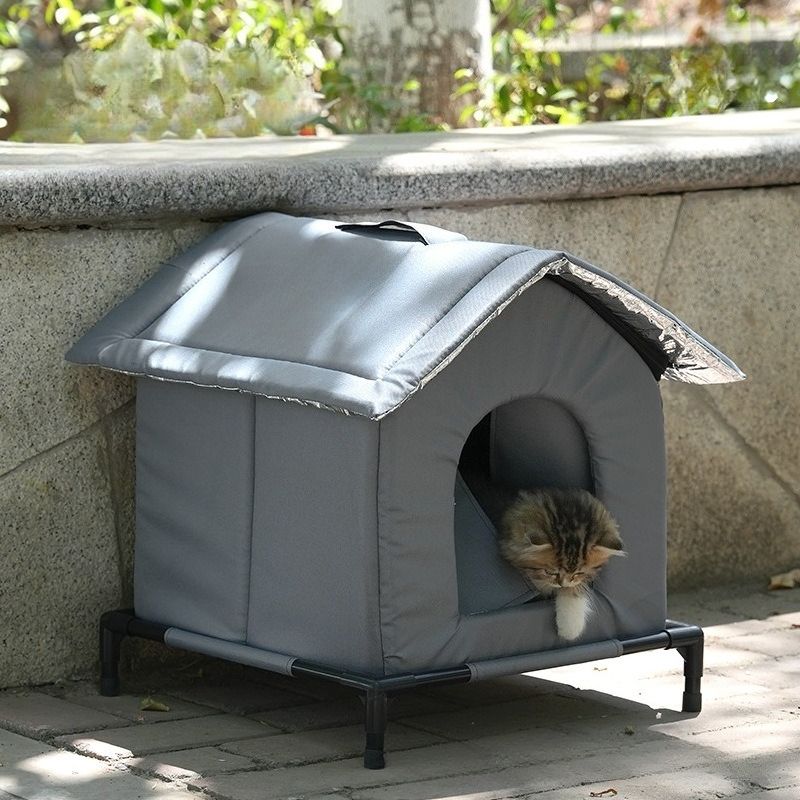
“This is a compact, single-cat solution.”
With a footprint of about 22 x 18 inches and a height of around 20 inches, it’s designed for small spaces and easy portability. It’s perfect for a small apartment balcony, a corner of a deck, or for taking on the road. This will not comfortably house more than one average-sized cat. If you have multiple cats or a very large cat, you’d need to size up to a more substantial wooden structure, like the two-story house in Idea #10.
20. A Rustic A-Frame Cat House from Natural Wood Planks
The serene, organic feel of this cat house comes from its simple form and natural materials. The A-frame is a timeless, sturdy shape, and constructing it from horizontal cedar planks gives it a rustic, cabin-like texture. By leaving the wood unfinished, the design allows the material’s natural beauty—its grain, color, and texture—to be the star. Placed in a garden on a dark stone patio, it doesn’t fight with its surroundings; it becomes part of the landscape. The singular, unadorned square entrance reinforces the minimalist, back-to-basics aesthetic. It is peaceful and unassuming.
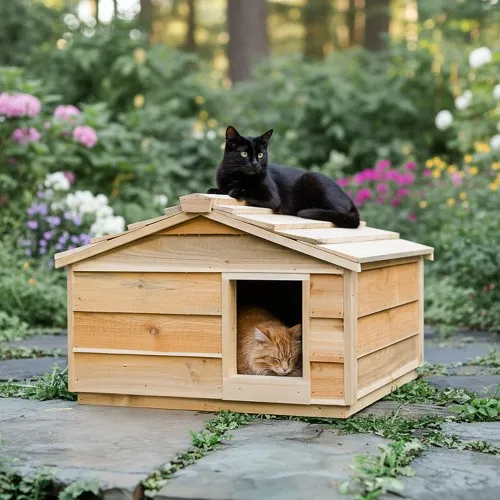
“Unfinished wood looks beautiful and rustic, but it’s not a ‘set it and forget it’ option.”
Cedar has natural weather resistance, but it will still turn a silvery-grey over time and can be prone to mildew or staining in damp, shady areas. To maintain that fresh, warm wood tone, you would need to apply a clear, pet-safe sealant annually. Also, unfinished wood can be more prone to splintering at the edges, especially around the entrance. A quick sanding once a year is a good idea to keep it safe and smooth for your cat.
21. A Camo-Patterned Cat Shelter with Sage Green Trim
This shelter’s rugged look is a calculated mix: 50% utilitarian pattern + 40% solid color frame + 10% functional hardware. The forest camouflage print immediately sets a rugged, outdoor tone. This is grounded and defined by the solid, sage green composite frame, which keeps the camo from feeling overwhelming. The clear plastic swing door is a purely functional element that adds a touch of ‘official equipment’ feel. You could easily swap the camo for a different pattern (like plaid or stripes) or a textured material to change the personality while keeping the sage green frame as the constant.
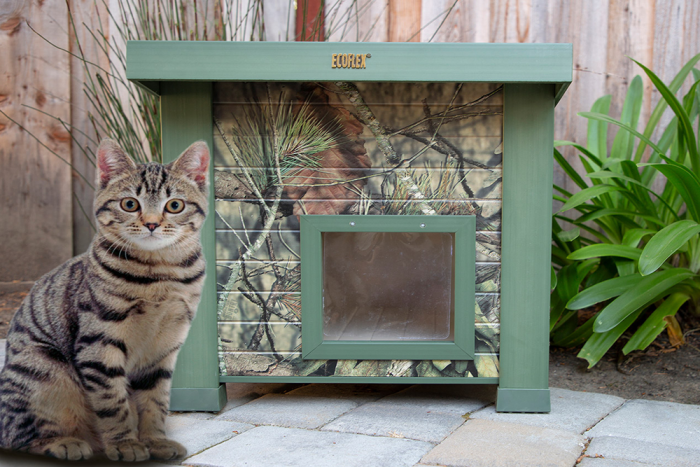
“Is your cat a door user?”
Some cats hate flap doors and will refuse to use the house. Try taping a piece of clear plastic over a cardboard box to see how they react before you build.Where will it be placed? The camouflage and green color scheme is designed to blend into a garden or wooded area. It might look out of place on a clean, modern patio.Check the material. The visual notes mention a composite frame. Ensure any plastic or composite material you use is durable and won’t become brittle and crack in the sun or cold.
22. A Compact Orange and White Outdoor Cat Shelter
The key to this design’s cheerful personality is the color combination. The burnt orange siding paired with the crisp white trim is a classic, high-contrast duo that feels both modern and friendly. If the house were all orange or all white, it would be far less interesting. The white trim acts like a picture frame, defining the shape and making the orange pop. It’s a simple paint choice that does all the heavy lifting, turning a basic wooden box into a bright, welcoming spot on the lawn. This is very similar to the color scheme in Idea #5, but on a much smaller, simpler scale.
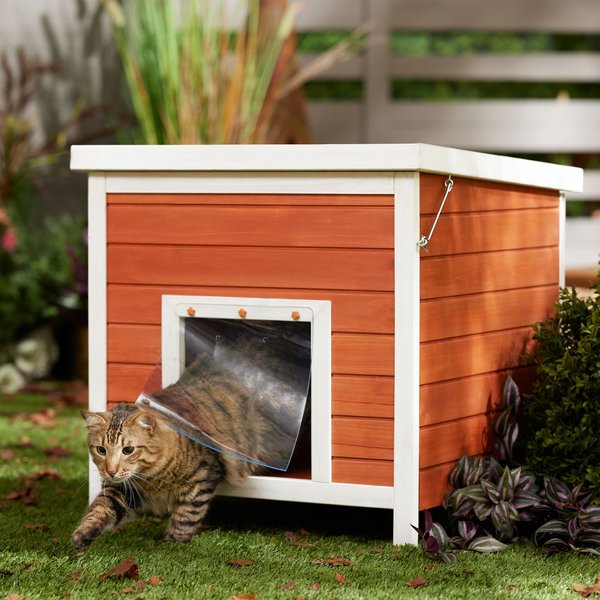
“Lumber (pine boards or plywood): $40 – $70Paint (sample pots of exterior orange and white): $15 – $25Clear Plastic Flap & Hardware: $10 – $20Sealant/Caulk: $10 – $15TOTAL: $75 – $130Budget alternative: Find a used plastic storage tote (like a Rubbermaid) for $10-$15.”
Cut a hole in the side, sand the edges, and spray paint it with your desired colors using paint rated for plastic. It won’t be as insulated, but it’s a super cheap, weatherproof option.
23. A Simple, Unfinished Pine Cat House with a Hinged Roof
This design’s appeal is in its absolute honesty. It’s an unfinished box made of light pine planks, and it doesn’t pretend to be anything else. The slanted, hinged roof is a brilliantly practical feature. The slant ensures rain runs off, and the hinges make cleaning the inside incredibly easy—a major pain point with many fixed-roof designs. This focus on utility over ornamentation results in a clean, minimalist look. It’s a blank slate, perfect for a DIYer who wants a solid foundation they can either use as-is or customize later with paint or insulation. This is the budget-friendly starting point for a more elaborate project like Idea #2.
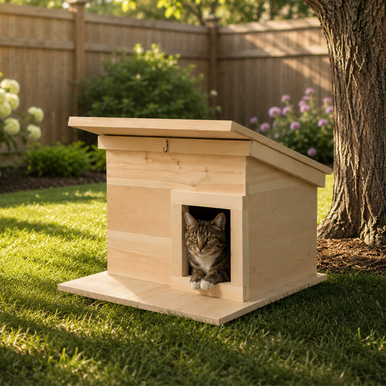
“Creating a simple, effective hinged roof is easier than it looks.”
Time: 30 minutes. Cost: $15. Cut a piece of plywood to be slightly larger than the top of your house, creating a 1-inch overhang on all sides.For waterproofing, cover the plywood with a piece of roofing felt or a scrap of vinyl flooring, stapling it securely on the underside.Place the finished lid on the house.Attach two or three sturdy exterior-grade hinges (like gate hinges) along one of the back edges, connecting the lid to the main house frame.On the front side, install a simple hook-and-eye latch to keep the roof from blowing open in the wind.
24. An Elevated A-Frame Shelter in Light Gray Fabric
The single most important feature of this design is its elevation. By lifting the fabric shelter off the ground, the black support frame accomplishes two crucial things. First, it prevents moisture from the damp grass from wicking up into the fabric and interior, keeping the cat dry. Second, it creates an air gap underneath, which helps insulate against the cold ground, making the shelter significantly warmer. A fabric house placed directly on the lawn, like in Idea #15, is fine for a sunny day, but this elevated version is a much more practical all-weather solution.
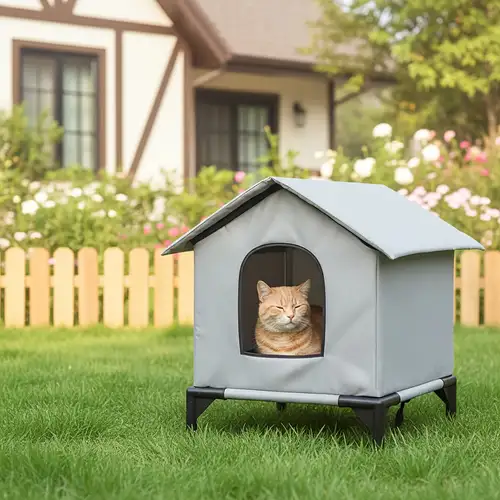
“You can DIY a similar elevated base for any fabric pet house you already own.”
All you need is PVC pipe and fittings, which are very cheap at any hardware store. For about $20, you can buy 1-inch PVC pipe and four 3-way corner fittings. Cut the pipe to the dimensions of your pet house to create a rectangular base with four short legs. PVC is lightweight, waterproof, and won’t rot. You don’t even need to glue the pieces together for a small structure like this; a friction fit is often enough.
25. A Padded Black Fabric Shelter on an Elevated Frame
This design is pure function, and that’s why it works. The black, water-resistant fabric and padded walls provide a basic level of insulation and protection. The classic gabled roof shape helps shed rain and snow effectively. Elevating it on a simple metal frame is the smartest move, keeping the cat off the cold, wet deck and improving warmth. The hint of reflective thermal lining at the roof’s edge signals that this isn’t just a fabric tent; it’s an insulated space. It’s an unpretentious, practical solution for providing a warm, dry spot in an exposed outdoor area. It is very similar in concept to Idea #18, but with a focus on insulation.
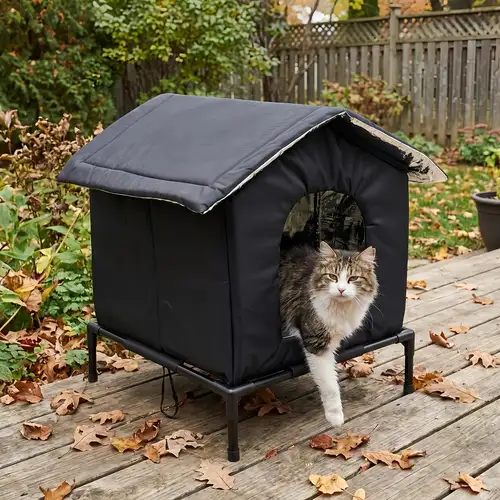
“Fabric Fading: The matte black fabric, while stylish, is prone to fading in direct sunlight.”
Over 1-2 seasons, it will likely turn a charcoal grey. There isn’t much to do about this besides placing it in a shaded spot.Cleaning: Fabric shelters can get muddy. Most can be spot-cleaned with soap and water. For a deep clean, you’ll need to use a hose and let it air dry completely to prevent mildew. Check the tag to see if the cover is machine washable.Frame Rust: The simple black metal frame might be painted, but scratches can expose the metal underneath to rust. At the end of each season, inspect for scratches and touch them up with a bit of black rust-proof spray paint.
26. An Unfinished Plywood Gable Roof Pet House Frame
This image captures the most important part of any DIY project: the ‘good bones’ stage. The one thing that matters here is the strong, well-proportioned frame. The stained square support posts, the properly angled gable roof rafters, and the squarely cut plywood walls show a solid foundation. This is the project before any finishing touches. Its beauty is in its potential. This raw structure is a blank canvas, ready for insulation, siding, paint, and roofing. Without a sturdy and square frame like this, any cosmetic finish you apply later will be a waste of time and money.
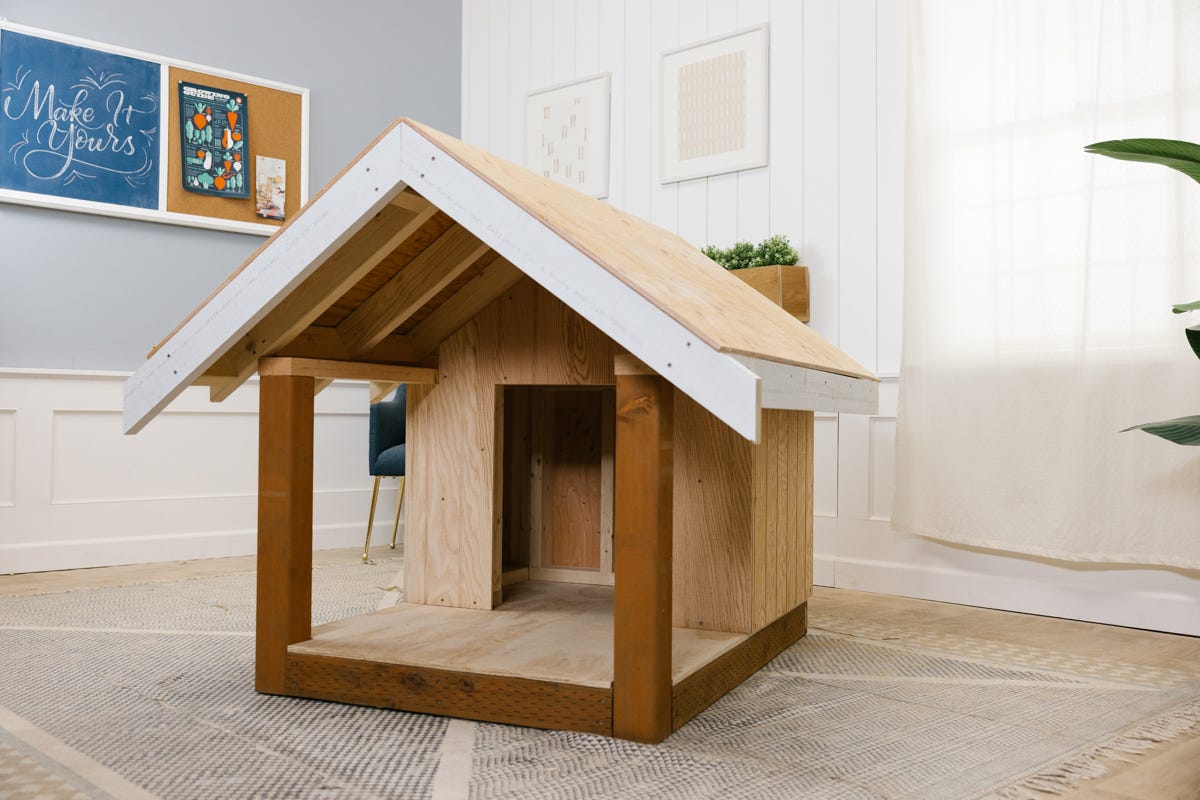
“You’re looking at the starting point, not the finish line.”
This raw plywood and exposed frame will not survive a single season outdoors. Plywood will delaminate, and the untreated pine rafters will warp and rot when exposed to rain and sun. This structure is either intended for indoor use or is in the middle of the building process. To make it outdoor-ready, you would need to, at a minimum, apply several coats of exterior primer and paint, caulk all the seams, and add a proper roofing material like asphalt shingles or corrugated plastic.
27. Install a Wooden Cat Ladder System on Exterior Siding
When mounting anything to exterior vinyl siding, never screw directly into the siding itself. The vinyl needs to be able to expand and contract with temperature changes. Instead, use a power drill to find the studs behind the siding (usually 16 inches on center). Use siding mounting blocks or drill a slightly oversized hole through the vinyl, then drive a long exterior screw through the vinyl (without it being tight against it) and securely into the stud and sheathing behind it. This ensures your cat ladder is anchored to the house’s structure, not just the flimsy siding.
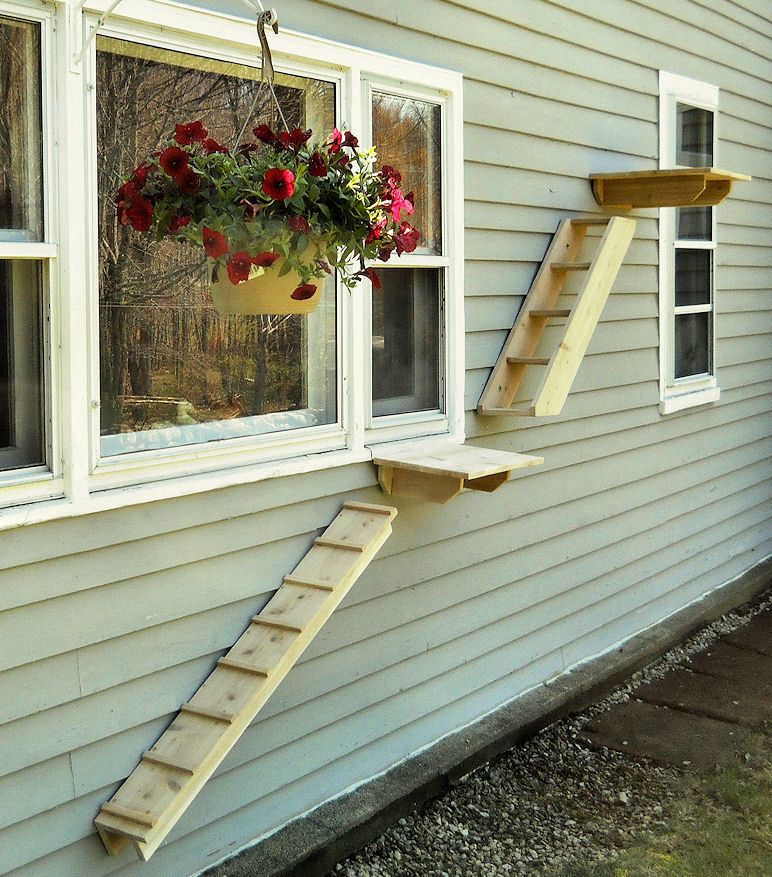
“Want to build one of those simple wall-mounted platforms?”
It’s a 30-minute project. Cost: $10 per platform. Cut a piece of 1×6 or 1×8 untreated cedar or pine to your desired length (e.g., 12 inches).Sand all surfaces and edges until smooth to prevent splinters.Purchase two sturdy, exterior-rated metal L-brackets. The length of the bracket arms should be about 2/3 the depth of your shelf.Attach the brackets to the underside of your wooden platform using 1-inch wood screws.Position the platform on the wall, use a level, and mark your drill holes.Secure the platform to the wall using long exterior screws driven into studs, as described in the designer tip.
28. A Plush Pink and White Gabled Cat House
This adorable shelter is all about tactile comfort and playful form. Its design math is simple: 60% soft texture + 30% charming color + 10% thoughtful detail. The main event is the plush, soft material covering the entire house, from the pink textured roof to the white body. The bubblegum pink and off-white color scheme is sweet and playful. The final 10% comes from details like the cute circular ventilation holes and the elevation on a light wood pedestal, which gives it a sense of importance. It’s a design that appeals as much to the owner’s sense of cute as it does to the cat’s desire for a soft bed.
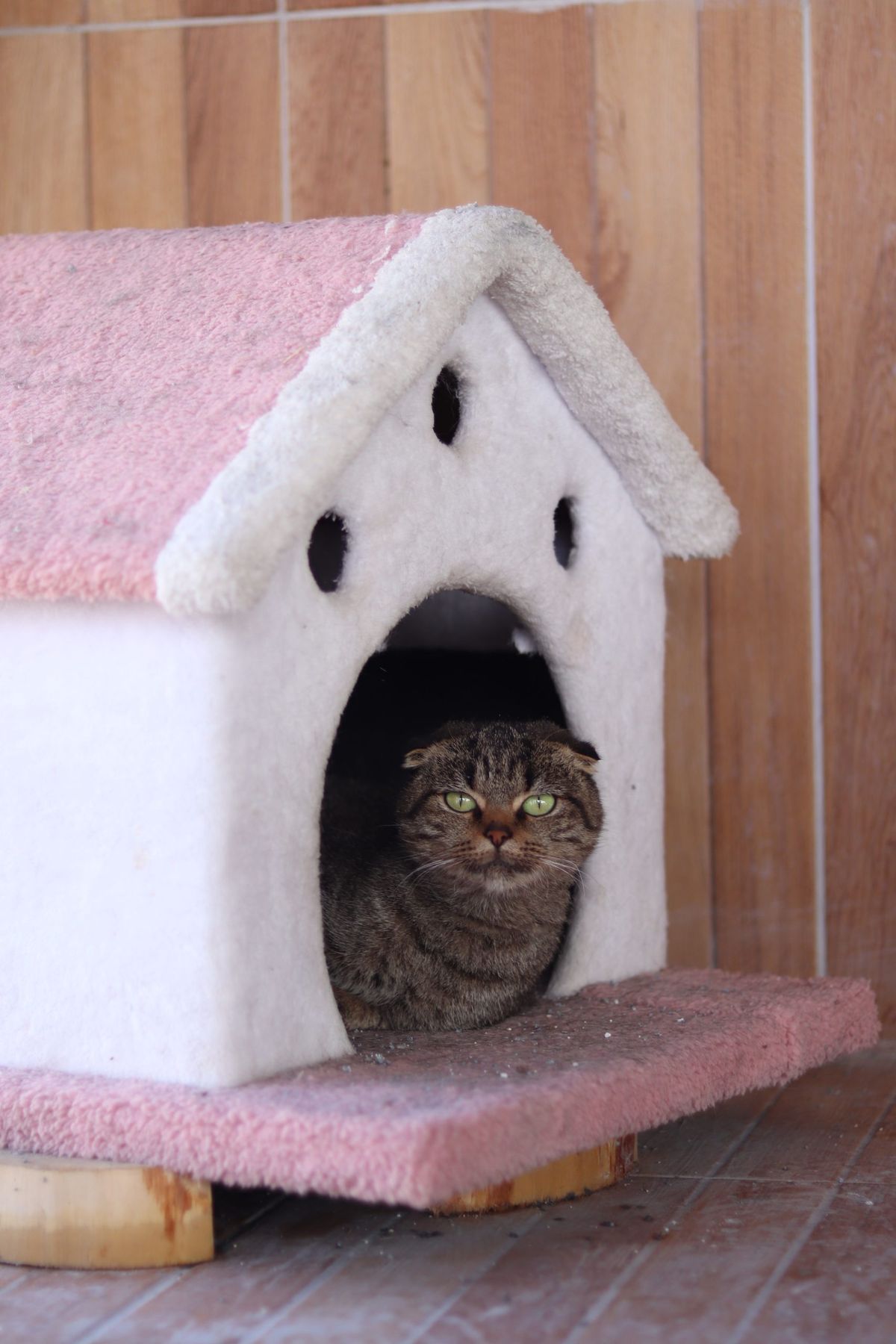
“This is strictly an indoor or covered-patio design.”
With a plush fabric exterior, it has zero resistance to rain or moisture and would be ruined if left in an exposed yard. It’s quite small, designed for a single cat, with a footprint of about 18 x 18 inches. This is perfect for a bedroom corner, a home office, or a sunroom. It’s a piece of pet furniture, not outdoor equipment. The pedestal base also means it requires a flat, stable surface. Don’t even think about putting this one on the lawn.
29. A Modern Solar-Powered Shelter with Reclaimed Wood
This design is a stunning example of eco-tech meeting rustic materials. The mono-pitch roof isn’t just a style choice; it’s angled perfectly to maximize the exposure of the large solar panel, making the structure self-sufficient. This clean, modern technology is brilliantly contrasted with the warm, varied tones of the reclaimed wood plank walls. The pop of bright teal on the frame injects energy and personality, keeping the design from feeling too earthy. The integrated water trough, likely powered by the solar panel, completes the package, making it a fully functional, off-grid support station.
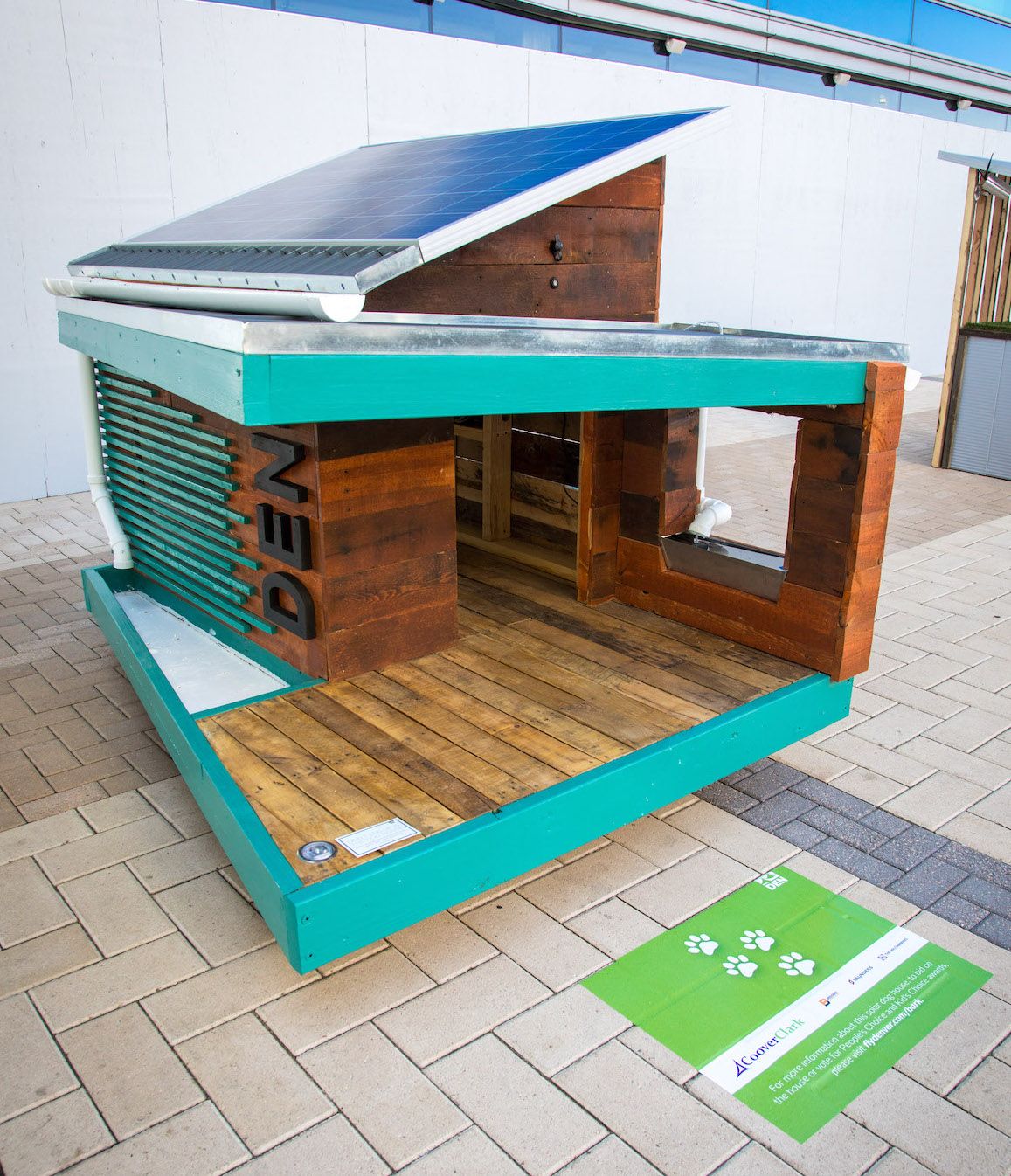
“As sustainability becomes less of a niche interest and more of a mainstream value, we’re seeing it reflected in all areas of design, including for our pets.”
This project is at the forefront of that trend. It’s not just a shelter; it’s a statement about renewable energy and upcycling (with the reclaimed wood). Features like solar panels to power warming pads or water pumps are becoming more accessible and are likely to be a major feature in high-end pet products and DIY plans in the coming years. This is what the future of pet care looks like.
Your Cat’s Favorite New Spot Awaits
Now that you’re armed with a ton of inspiration, the next step is picking the project that feels right for your skill level, your budget, and your furry friend. Remember, the best cat house isn’t always the most complicated; it’s the one that’s built with care and provides a safe, comfortable space. Don’t forget to save your favorite ideas to Pinterest so you can find them again when it’s time to head to the hardware store and start building.