You know that feeling? You’ve been scrolling through what feels like thousands of bedroom photos, and you finally see the one that just clicks. Suddenly, you can picture your own sanctuary. The problem is turning that inspiration into reality. We spent serious time filtering through hundreds of options from popular spots like IKEA, West Elm, and Article to bring you only what’s worth your attention this year. This isn’t another generic gallery; it’s a curated guide to 30 distinct bedroom furniture ideas that work for real homes and real budgets.
In this guide, we’re exploring the biggest trends of 2026, from moody, dark academia aesthetics to serene, minimalist setups. For many of these looks, we’ll show you how to get the vibe at different price points, proving you don’t need a celebrity budget. And stay until the end — we break down the most common mistakes that can ruin these looks. 📌 Save this to Pinterest for later — you’ll want to revisit these ideas.
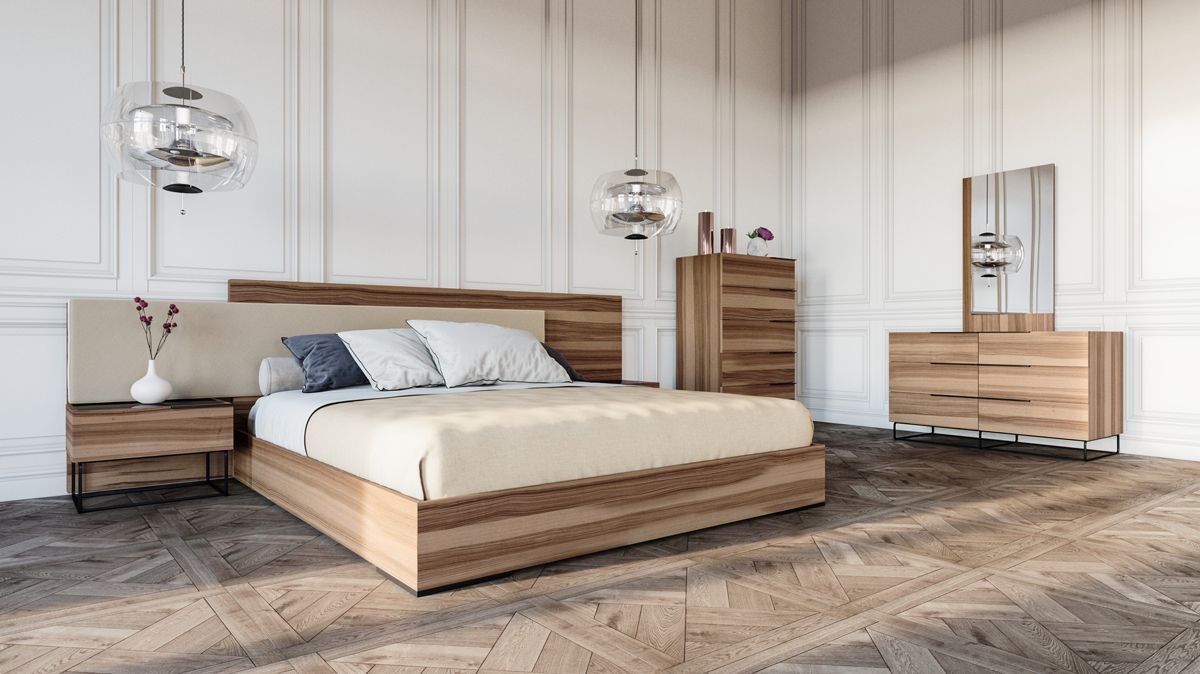
1. Embrace Cohesion with Horizontal Grain Wood Furniture
There’s a reason this room feels so instantly calming and put-together. The consistent use of light-toned wood with a strong horizontal grain creates a powerful sense of unity. It draws your eye across the room, making it feel wider. This is masterfully balanced by the vertical lines in the wall paneling, creating a subtle grid that is deeply satisfying to the eye. The soft, upholstered headboard prevents the wood from feeling too hard or clinical, adding a necessary touch of comfort.
“When selecting a full furniture set, the scale of the grain is as important as the wood color.”
For a modern, clean look like this, seek out a fine, consistent horizontal grain. If you want a more rustic or traditional feel, a wood with more knots, wider planks, and variable grain patterns would be the way to go. Always get a sample of the wood finish to see it in your room’s natural light before committing to the entire set.
2. Layer Up with Plush Creams and Cozy Whites
This look is a masterclass in monochrome texture. Think of it as: 50% soft upholstery (like the channel-tufted headboard), 30% plush textiles (that irresistible cream throw), and 20% crisp white basics (the bedding and nightstands). The formula works because it avoids flatness. By layering different materials in the same color family, you create depth and warmth. You could easily swap the cream for a soft gray or blush pink and achieve the same cozy, sophisticated effect.
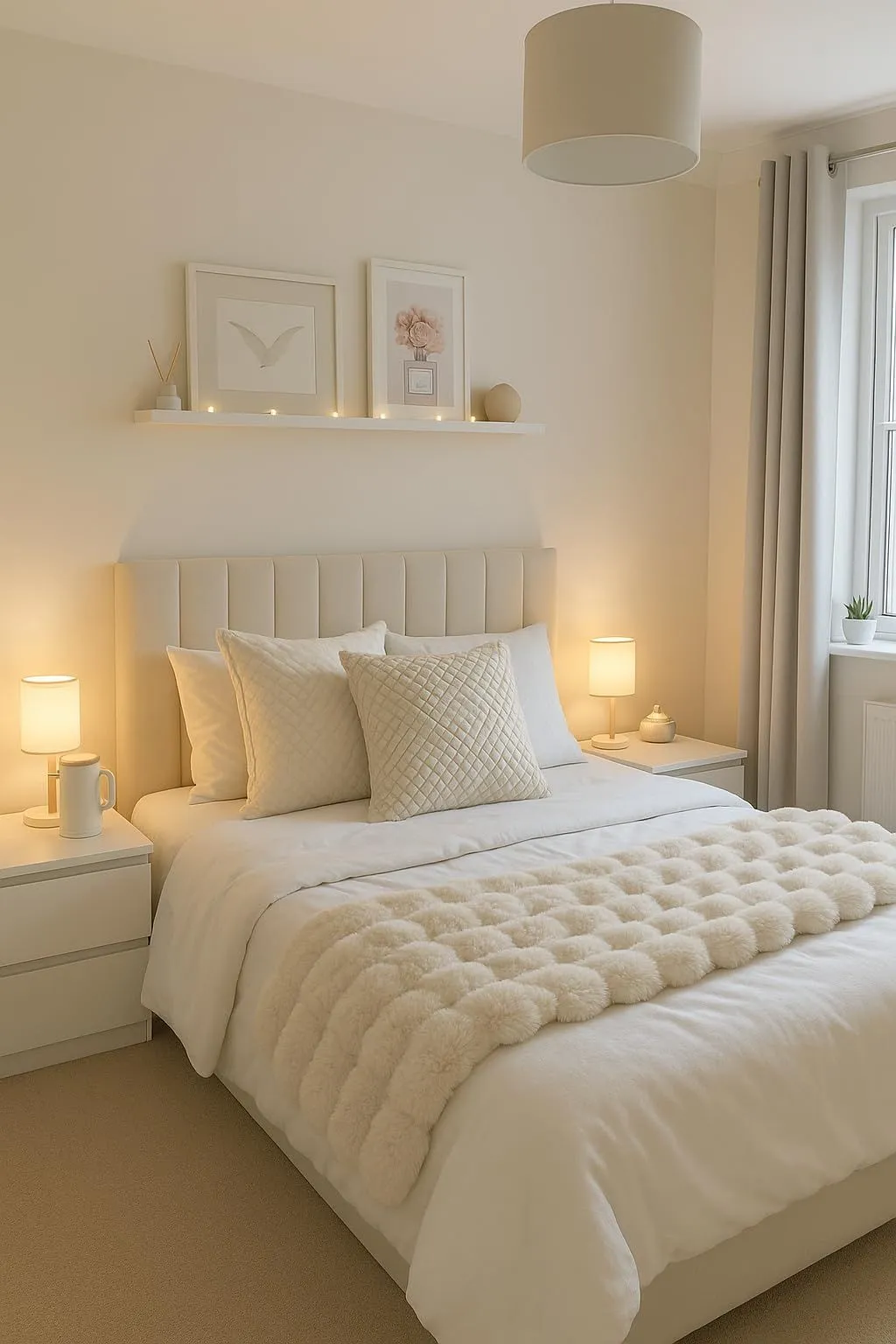
“Let’s be honest: a bedroom this white and cream is gorgeous, but it’s not for the faint of heart (or for those with pets who love muddy paws).”
Lighter colors are unforgiving with spills and dirt. If you love this aesthetic, invest in performance fabrics for the headboard and keep a good upholstery cleaner on hand. For bedding, having a backup duvet cover is a lifesaver. It’s a high-maintenance relationship, but for some, the serene payoff is worth it.
3. Install a Backlit Light Wood Slat Accent Wall
The single element that elevates this bedroom from nice to show-stopping is the light wood slatted accent wall. It’s not just a wall; it’s a feature that adds architectural interest, texture, and warmth all at once. The recessed lighting behind it creates a soft, ambient glow that turns the wall into a piece of art. Without it, the room would be a pleasant but fairly standard neutral space. With it, the room has a five-star hotel vibe that feels custom and luxurious.
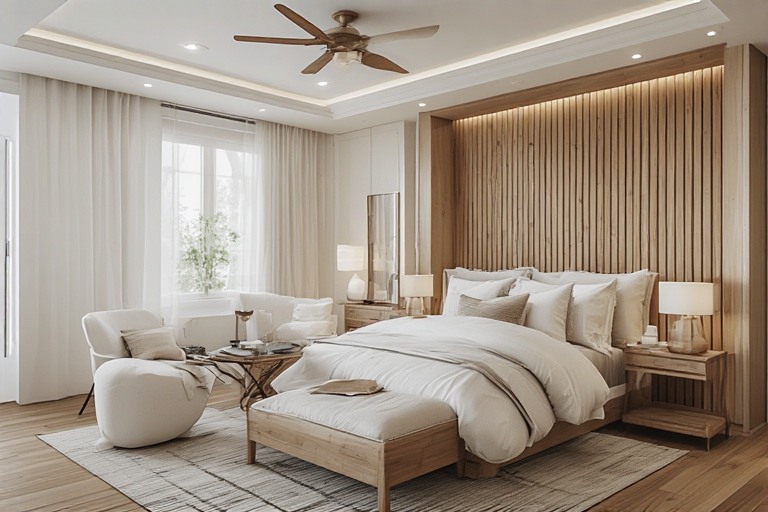
“You can replicate this high-end feature wall yourself.”
Here’s a simplified plan: Time: 6-8 hours. Cost: $300-$700.
Measure your wall and purchase pre-made wood slat panels. These are much easier than installing individual slats.
Frame out the wall with 1×2 pine boards to create a cavity for your LED strip lighting.
Install the LED strip lights around the inner perimeter of the frame. Have an electrician wire it to a switch for a professional finish.
Cut the wood slat panels to size using a circular saw.
Nail or screw the panels directly onto your framing.
Sit back and admire your handiwork.
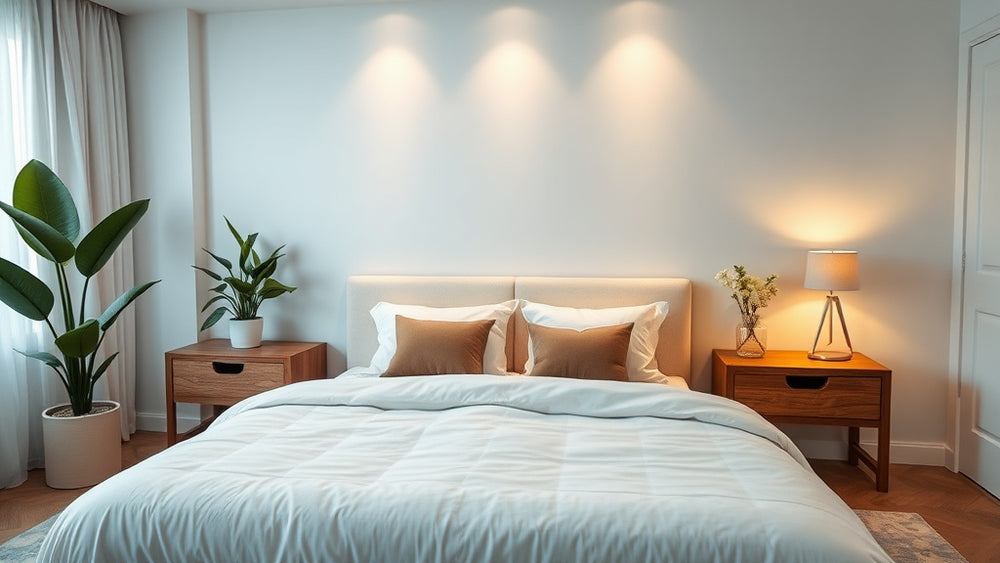
4. Warm Minimalism with Wooden Nightstands and Soft Lighting
This design succeeds by perfectly balancing warmth and minimalism. The clean lines of the furniture and the simple white bedding say ‘minimalist,’ but the warm tones of the wooden nightstands and the soft glow from the recessed spotlights inject a crucial dose of ‘cozy.’ The asymmetry of the decor—a lamp and vase on one side, plants on the other—keeps it from feeling sterile or overly staged. It feels personal and livable, not like a catalog photo.
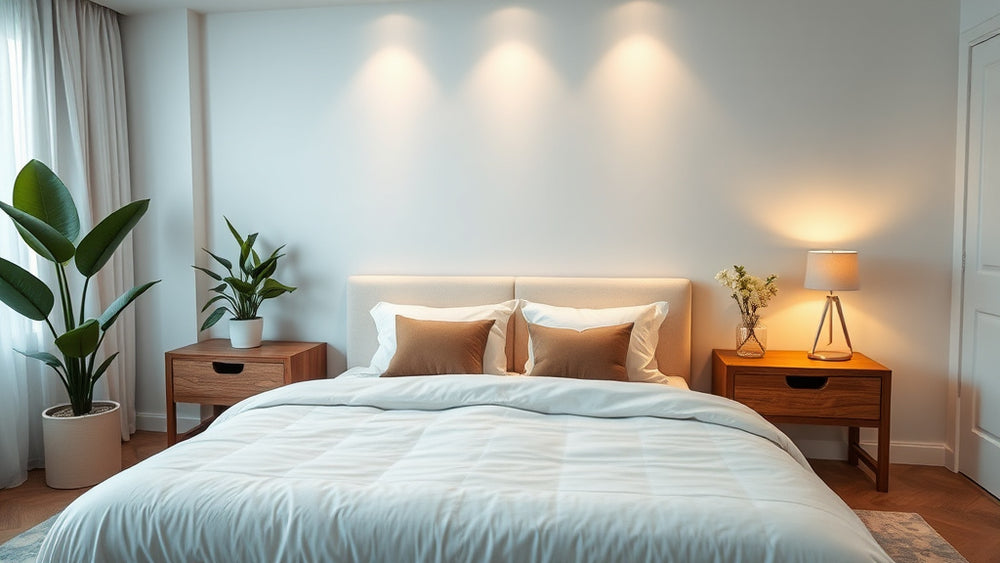
“You don’t need to spend a fortune to get this serene and inviting look.”
Swap designer nightstands for simple pine or acacia wood options from IKEA or Target for around $70-$120 each. For bedding, a crisp white set from Walmart or Amazon Basics will do the trick perfectly. The key is in the styling: find a few faux plants from a craft store and a single, sculptural vase from Facebook Marketplace. You can achieve this entire vibe for under $400.
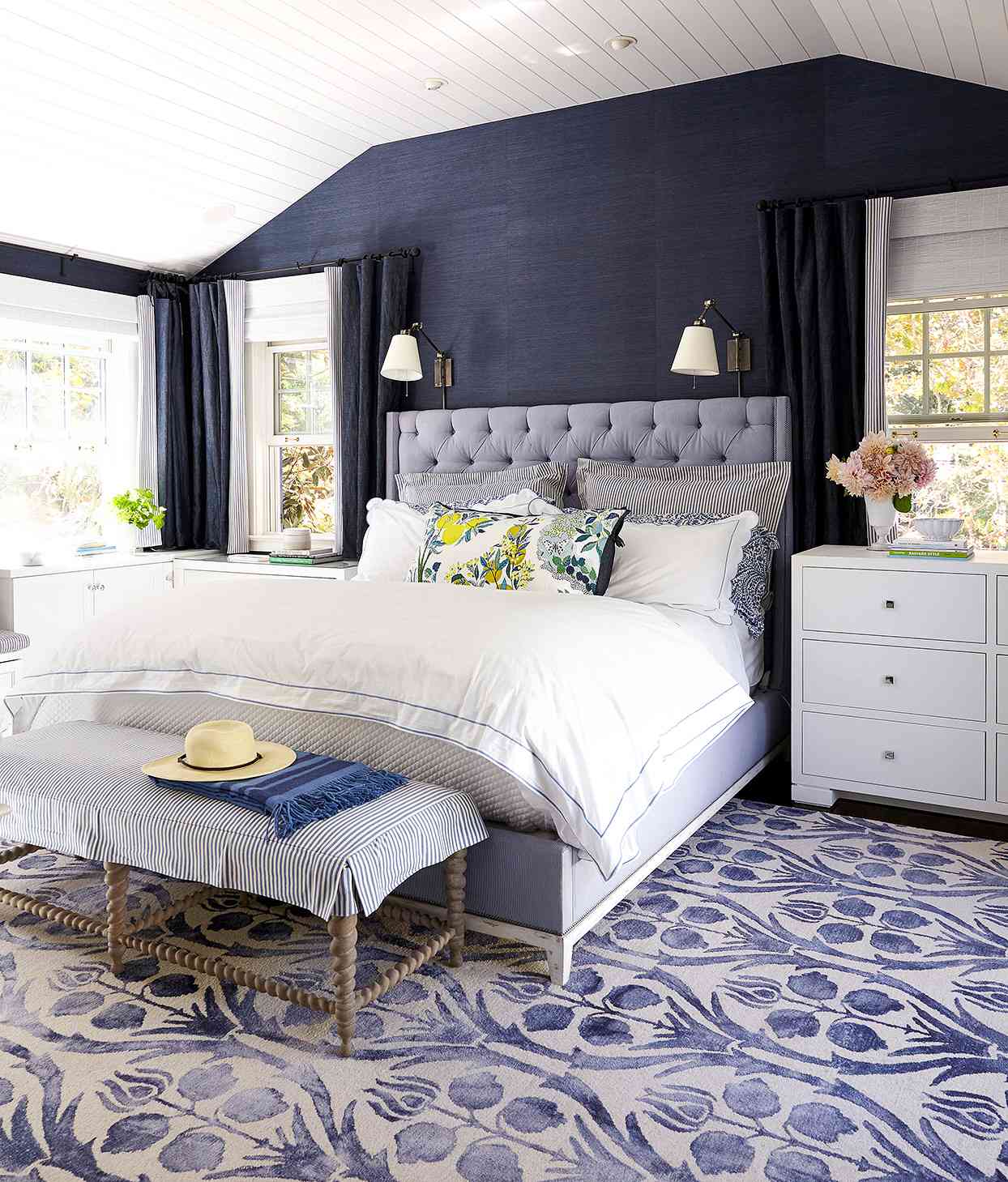
5. Create Drama with a Navy Geometric Accent Wall
A bold, geometric accent wall like this works best in a room that is at least 12×12 feet with standard 8-foot (or higher) ceilings. In a smaller space, the dark color and busy pattern can feel overwhelming and make the room seem cramped. The key is to have enough surrounding ‘visual whitespace’—lighter walls, floors, and bedding—to balance the intensity of the navy wall. Notice how the light wood-look floors and white bedding prevent the navy from dominating the room entirely. For a softer take on an accent wall, check out Idea #2‘s textural approach.
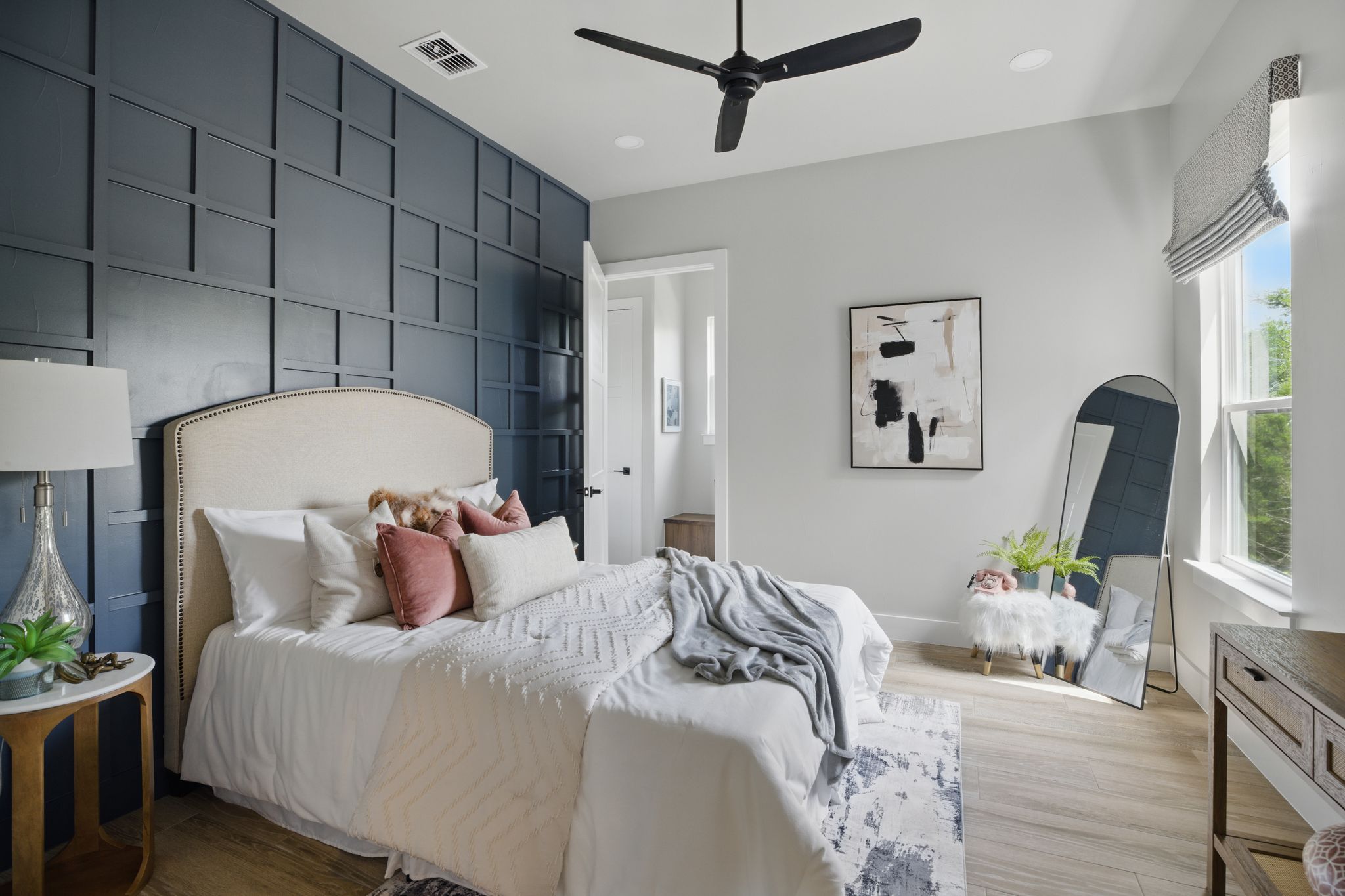
“When creating a paneled accent wall, the math is your best friend.”
Don’t just start nailing up boards. Measure your wall’s height and width, and then use painter’s tape to mock up your design directly on the wall. This lets you play with the scale and spacing of your geometric shapes until you find the perfect balance. A good rule of thumb is to keep the primary shapes between 24-36 inches wide to avoid a pattern that looks too busy.
6. Go Classic with a Black Dark Wood Bedroom Set
A matching dark wood bedroom set is a classic for a reason—it creates an instant sense of cohesion and formality. But before you commit to a full five-piece set, run through this quick checklist:
- Measure Everything Twice: Ensure the bed, dressers, and nightstands will fit comfortably, leaving at least 30 inches for major walkways.
- Check Your Light: Does your room get enough natural light to support such dark, heavy furniture without feeling like a cave?
- Consider Your Style Longevity: Are you confident you’ll love this specific traditional style in five years? A full set is a significant investment and harder to update than individual pieces.
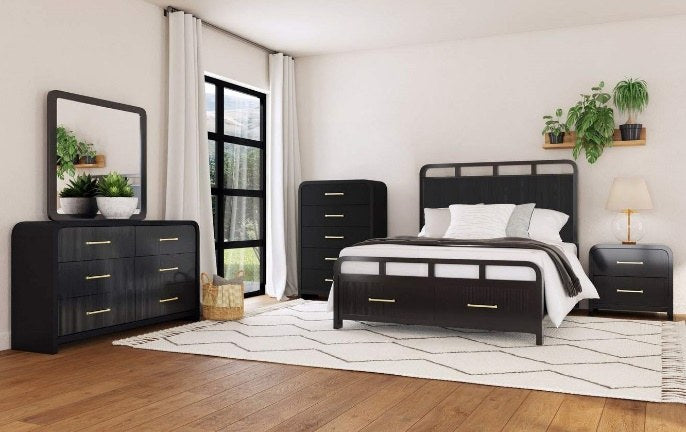
“The beautiful, deep finish of black or espresso wood furniture has one major enemy: dust.”
Dark, glossy surfaces highlight every single speck of dust, fingerprint, and bit of pet hair. If you opt for this look, be prepared to dust with a microfiber cloth at least twice a week to keep it looking sharp. Using a furniture polish can help reduce static and repel dust slightly, but there’s no escaping the regular maintenance required to keep it looking its best.
7. Layer Earthy Greens, Warm Woods, and Blended Neutrals
Achieving this cozy, natural look is all about the right recipe. Think of it as 60% neutral base (the white duvet and cream pillows), 30% natural texture (the warm wooden bed frame and rustic bench), and 10% earthy color (the dark green and blush waffle knit blankets). This formula ensures the room feels grounded and calm, with just enough color to keep it interesting. You could swap the green for a terracotta or deep blue and still maintain the same balanced, inviting feel.
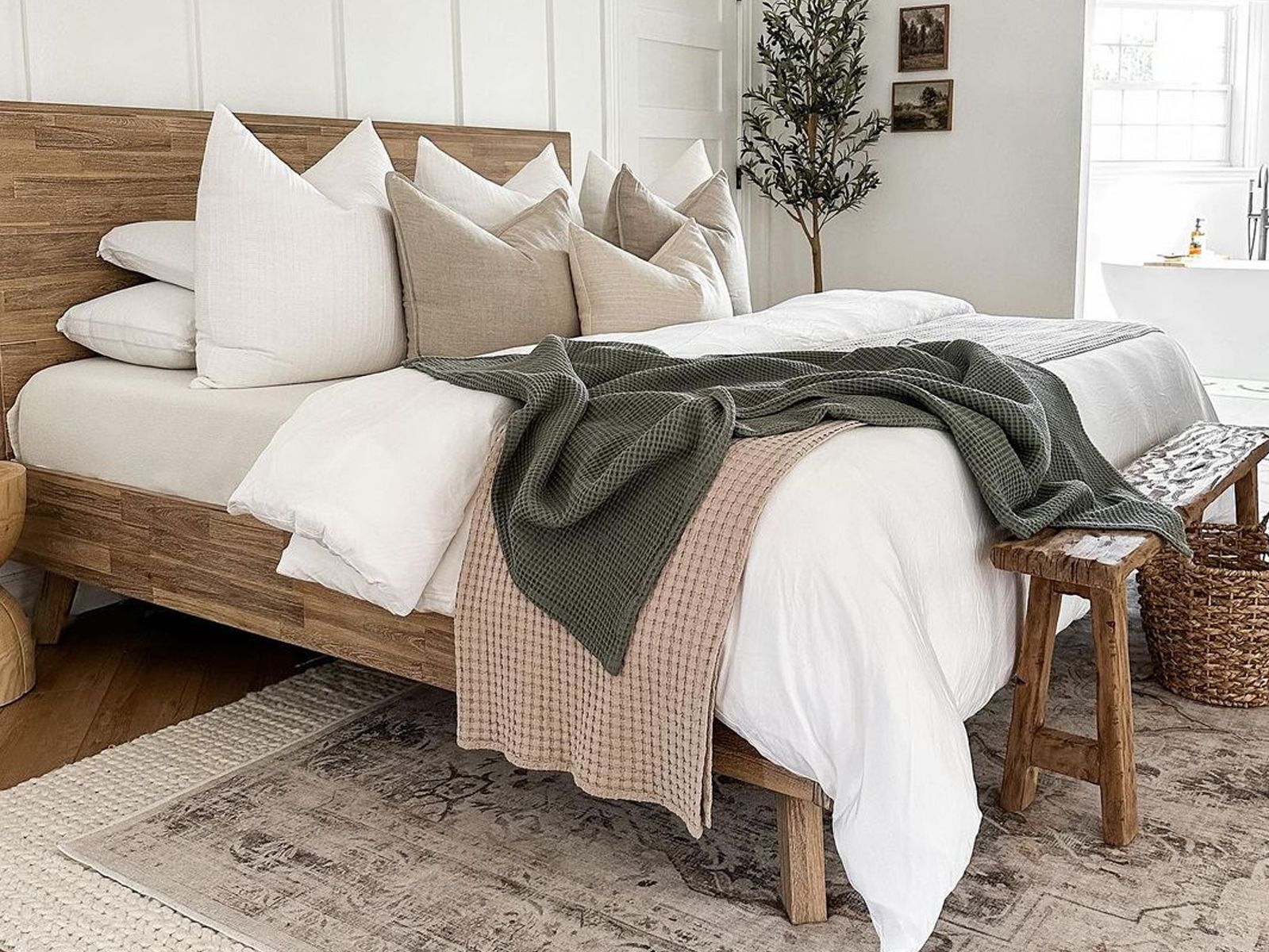
“that makes this entire room work is the layering of textiles.”
Take away the waffle knit throws and half the pillows, and you’re left with a pretty basic bed in a neutral room. It’s the combination of different textures—the smooth cotton sheets, the plush pillows, the nubby waffle knit—that creates a bed you desperately want to crawl into. It’s a visual promise of comfort and relaxation, and it’s what gives the room its soulful, lived-in character.
8. Anchor Your Room with a Teal Velvet Bed
Jewel-toned beds, especially in lush fabrics like velvet, are having a major moment. Why? After years of all-white-everything minimalism, people are craving personality and a touch of opulence. A bed like this is an entire color palette and mood in a single piece of furniture. It feels luxurious yet approachable. This trend has staying power because it’s rooted in classic design—think Art Deco and Hollywood Regency—but the clean lines of modern headboards make it feel fresh for 2026.
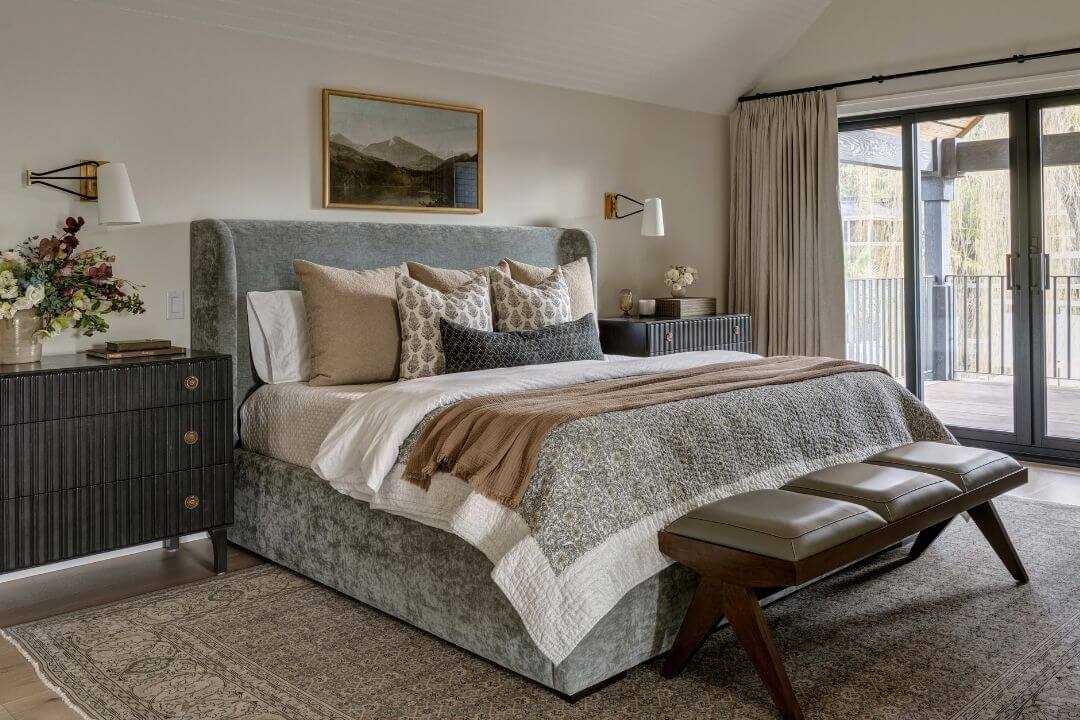
“This room design is a lesson in beautiful contrast.”
The success here comes from pairing the cool, plush texture of the teal velvet bed with the warm, hard surface of the dark, fluted wood nightstands. The eye loves this differentiation. Furthermore, the muted, earthy tones of the rug and artwork provide a neutral backdrop that allows the teal bed to be the undisputed star of the show without overwhelming the serene atmosphere.
9. Revisit Tradition with a Dark Wood Sleigh Bed
To recreate this cozy and traditional look, here’s a potential cost breakdown. Keep in mind that woodworking quality and brand names can swing these prices significantly.
- Sleigh Bed Frame: $1,200 – $3,000
- Matching Nightstands (x2): $600 – $1,500
- Matching Bookcase/Dresser: $800 – $2,000
- Bedding (Comforter & Pillows): $200 – $500
- Ceiling Fan with Light: $150 – $400
- TOTAL: $2,950 – $7,400
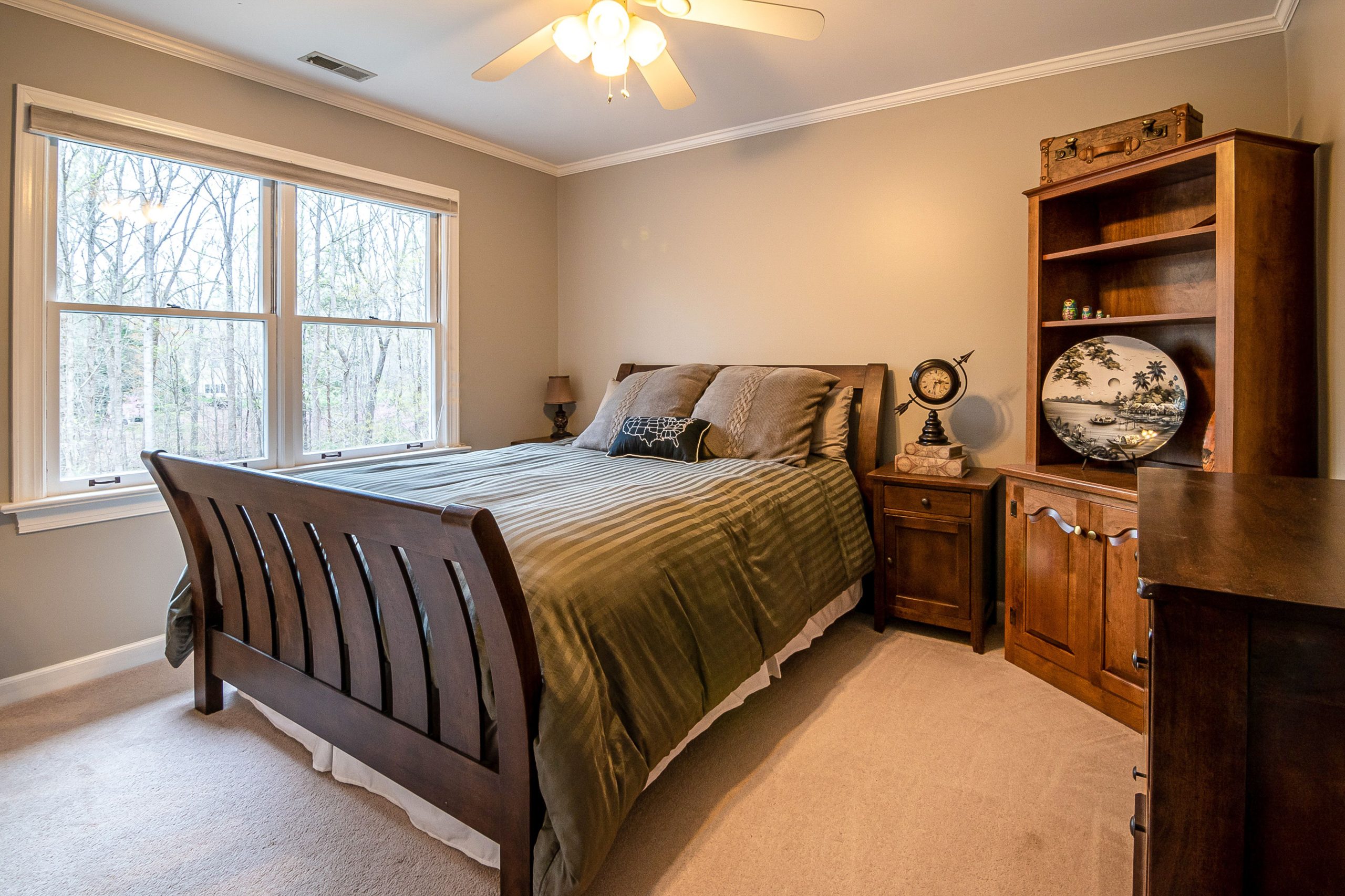
“Sleigh beds are undeniably grand and elegant, but you need to be realistic about the space they command.”
The curved headboard and footboard add significant length and visual weight to the bed’s footprint. In a room smaller than 13×13 feet, a queen or king sleigh bed can feel overwhelming, making it difficult to navigate around. Before falling in love with this style, measure your room and tape out the bed’s full dimensions on the floor to ensure you have adequate walking space.
10. Embrace the Moody Vibe with Black Walls and Brass Lighting
A dark and moody bedroom like this is stunning, but it’s not for every space. This look thrives in rooms with ample natural light, just as you see here with the large windows. Without enough light, black walls can make a room feel claustrophobic. A minimum room size of 12×12 feet is advisable, and high ceilings are a major plus as they prevent the dark ceiling from feeling like it’s closing in on you. For a lighter approach to a dark wall, see how a single accent wall in navy changes the room in Idea #5.
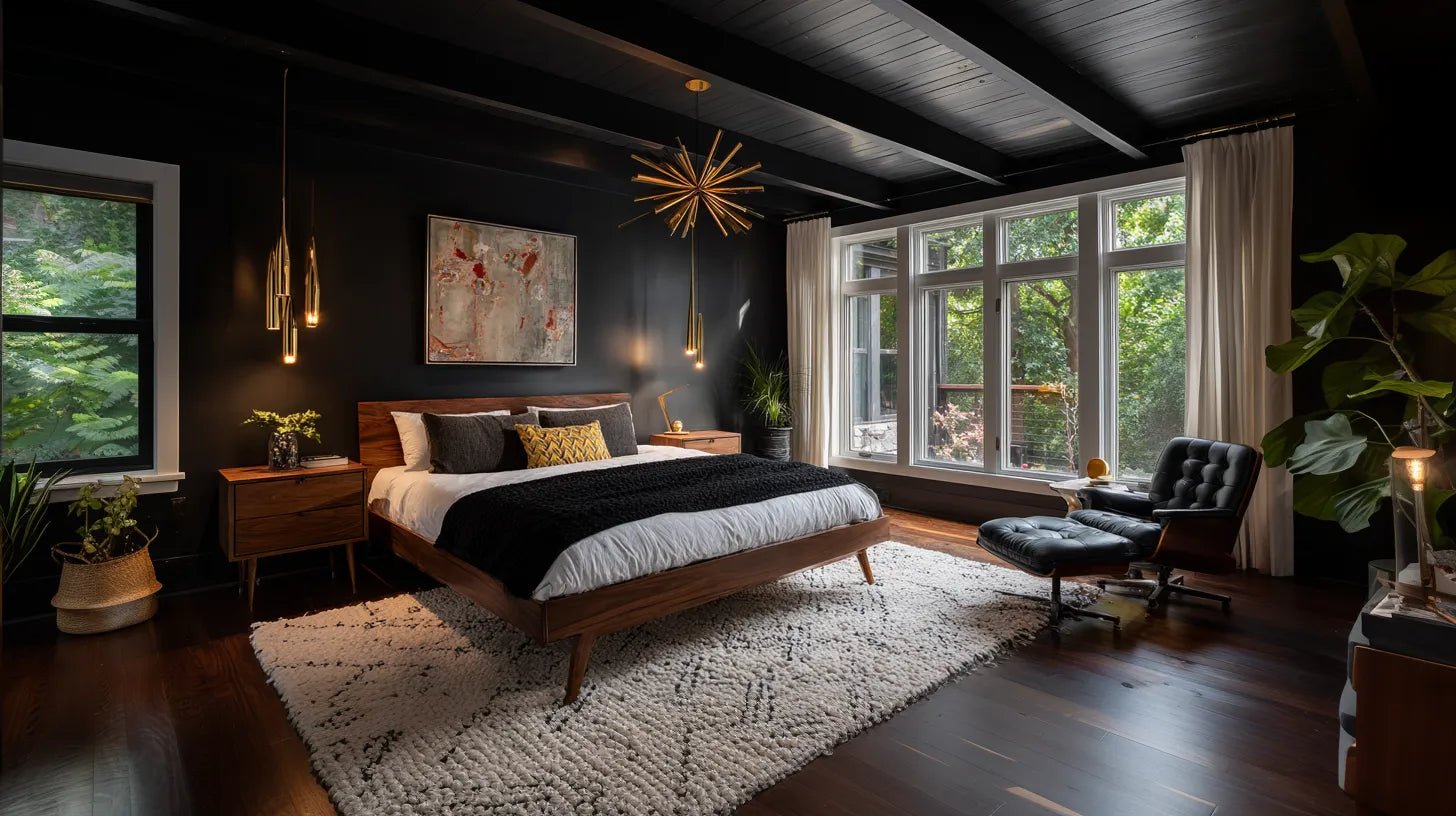
“When painting a room black or a very dark color, your lighting strategy is everything.”
You need to layer your lighting. This room does it perfectly: a statement chandelier for overall ambient light, pendant lights for targeted task lighting by the bed, and large windows for natural light. Use bulbs with a warm temperature (2700K-3000K) to keep the space from feeling cold. Dimmers on all fixtures are non-negotiable—they allow you to dial in the perfect moody ambiance.
11. Modern Minimalist Black and White Bedroom
This black and white scheme works because it’s all about graphic contrast and clean lines. The solid black accent wall creates a dramatic focal point, making the patterned bedding pop. The use of ‘floating’ furniture—the wall-mounted TV and shelf, the nightstands on thin legs—creates a sense of spaciousness and makes the floor easier to clean. The single plush armchair and the touch of greenery add just enough softness and life to keep the room from feeling sterile.
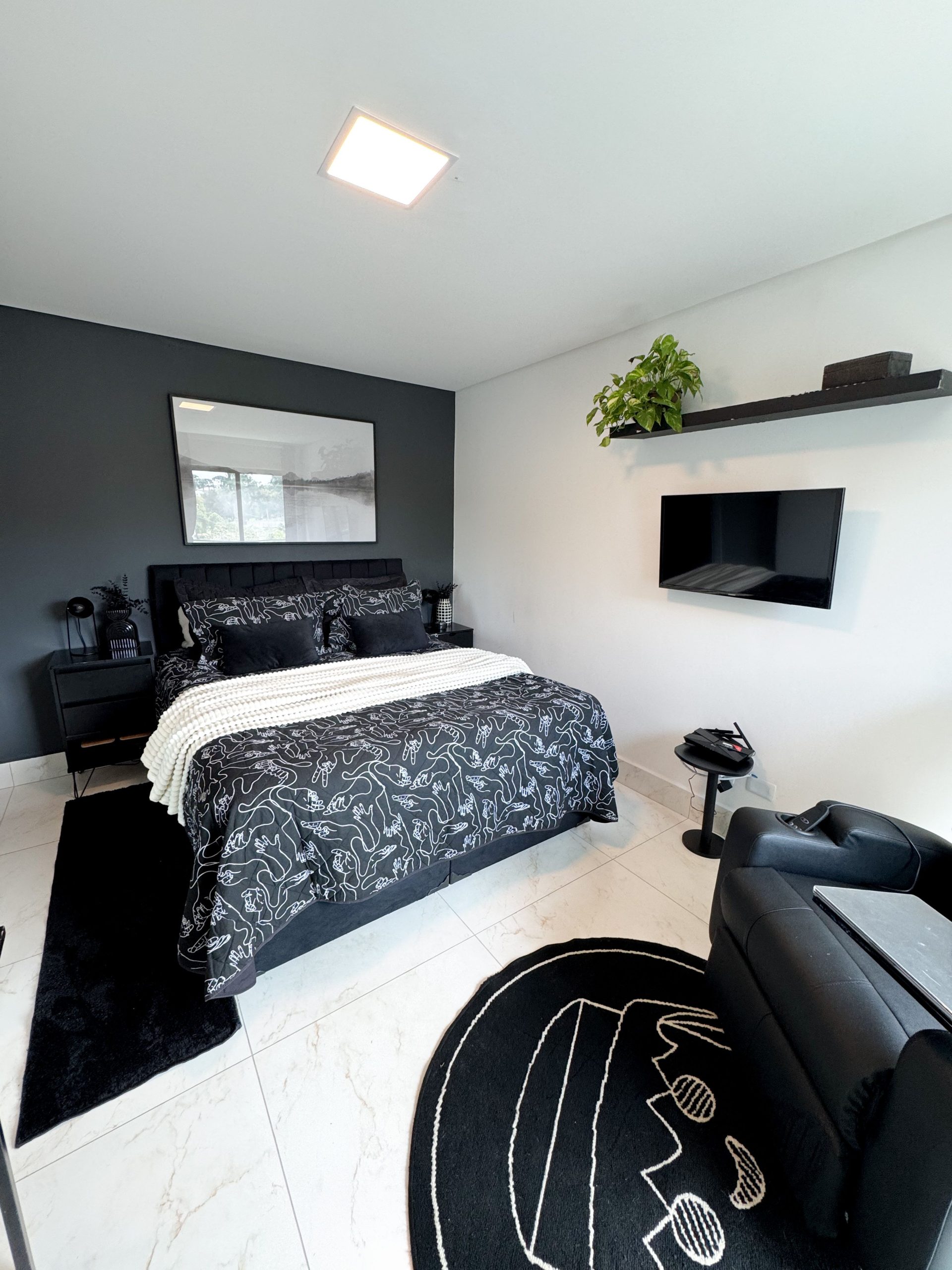
“You can get this sharp, modern look on a surprisingly small budget.”
The key is a can of black paint for the accent wall (about $40). Find simple, black-metal-leg nightstands on Amazon for under $100 for a pair. A black and white patterned duvet cover can be found at IKEA or Target for around $50. The floating shelves are a classic, inexpensive storage solution from any big-box store. The most expensive piece might be the armchair, but a lucky find on Facebook Marketplace could keep the entire room budget under $600.
12. Go Dark and Dramatic with Textured Walls
The single element that defines this luxurious space is the commitment to texture. It’s not just dark; it’s a symphony of different surfaces. You have the soft, channel-tufted velvet of the headboard, the hard vertical lines of the fluted wall panels, the diffused glow of the frosted glass, and the intricate metallics of the chandelier. If you removed this variety and just had plain, dark gray walls, the room would lose all of its drama and sophisticated depth. Texture is what makes this moodiness feel intentional and expensive.
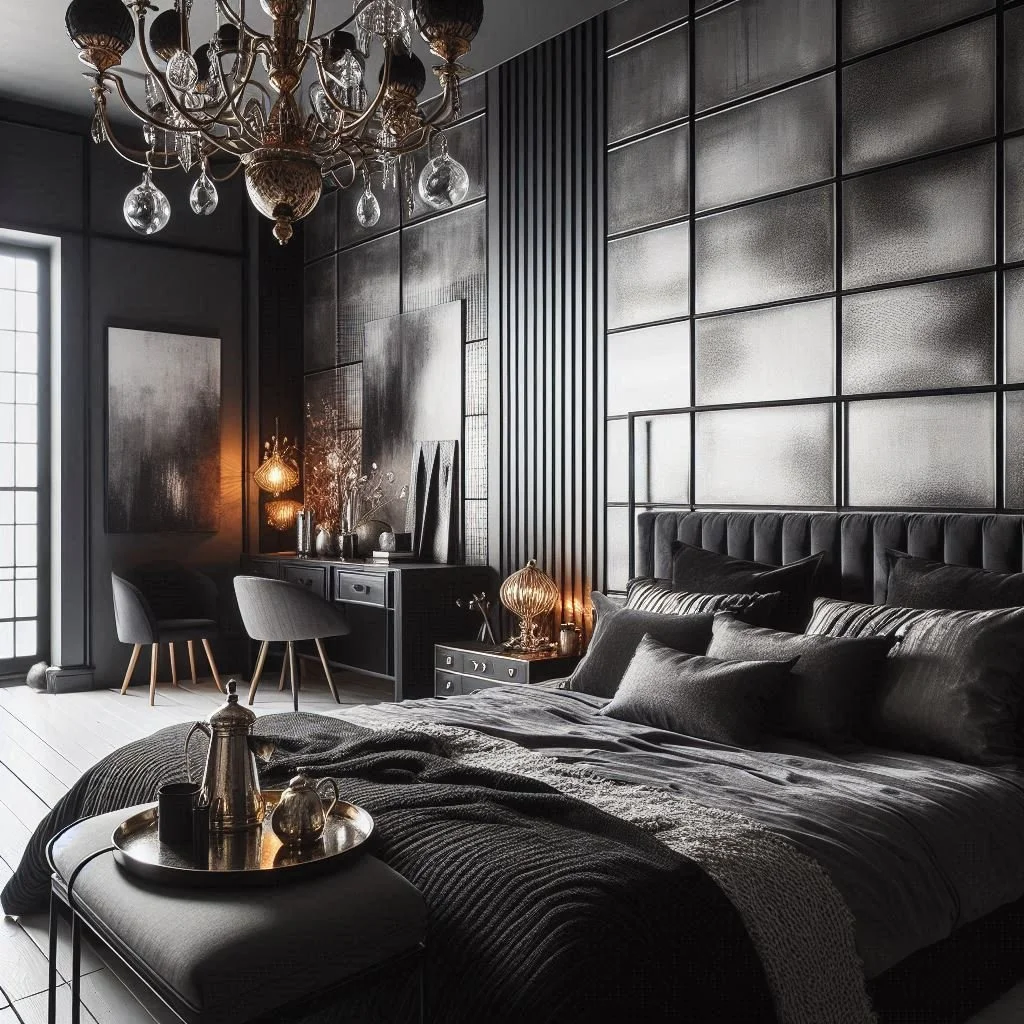
“A room this dark and full of varied materials requires a specific cleaning routine.”
The fluted wall panels and intricate chandelier are serious dust magnets. Plan on a weekly dusting with a soft brush attachment on your vacuum. Polished metal accents will show fingerprints and need regular wiping with a microfiber cloth. The layered dark bedding will also show lint and pet hair more than lighter colors, so a lint roller or rubber squeegee will become your best friend.
13. Command the Room with an Ornate Green and Black Bed
This look is a decadent equation: 40% ornate, black-painted furniture + 30% dark wall paneling + 20% plush textiles (that green velvet and brown bedding) + 10% crystal sparkle. The formula is about unapologetic maximalism. It balances the hard, carved lines of the furniture with the softness of the fabrics and the reflective quality of the crystal. By committing fully to each element, the design avoids feeling cluttered and instead reads as intentionally opulent and curated.
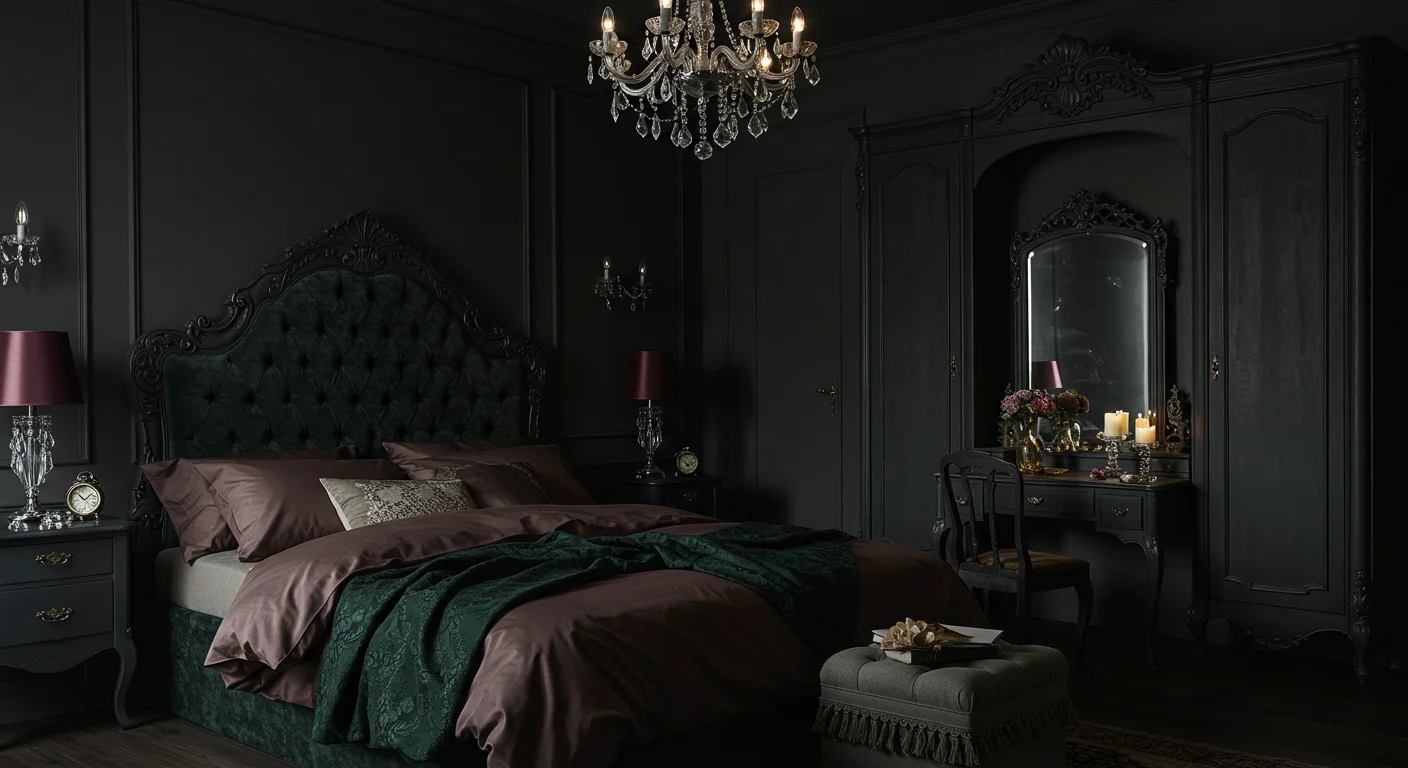
“A dark, opulent style like this is a bold statement, and it’s not for everyone.”
This aesthetic can be polarizing for potential home buyers if you plan to sell in the next few years. It also requires a certain level of commitment to the ‘dark academia’ or ‘gothic romance’ vibe. Waking up in a room this dramatic is a very different experience from a bright, airy space. Be sure you love the moody, insular feeling before you invest in black paneling and crystal chandeliers.
14. Find Elegance in a Dark Wood Bed and Muted Gray Walls
The success of this room lies in its sophisticated subtlety. The dark wood furniture provides a strong, traditional anchor, but the choice of a muted dark gray for the walls is what makes it feel modern and serene rather than dated. The gentle arch of the headboard is echoed in the shape of the lamp shades, a small detail that creates a pleasing sense of repetition. Finally, the light-colored bedding and curtains provide a necessary contrast that keeps the room from feeling too heavy or somber.
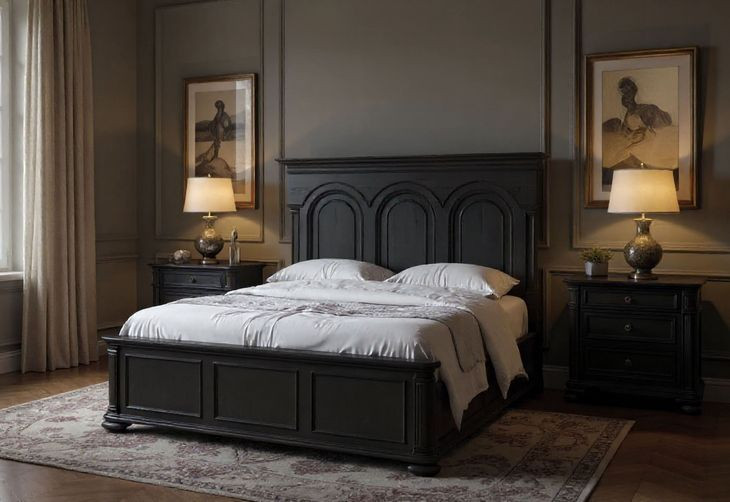
“When pairing dark furniture with dark walls, the trim color is critical.”
Notice how the crisp, white baseboards and crown molding act like a picture frame, creating a clean separation between the floor, walls, and ceiling. This simple band of white prevents the dark tones from bleeding into one another and making the room feel like a formless void. For an 8-foot ceiling, a 5.25-inch baseboard is a great scale. For taller ceilings, you can go even wider.
15. Create a Hotel Vibe with a Brown Paneled Headboard Wall
What gives this room its immediate sense of five-star luxury? It’s the full-width, plush-paneled headboard wall. This single feature anchors the entire room, making the bed feel incredibly grand and intentional. It combines the function of a headboard with the impact of an accent wall. The texture adds softness and acoustic comfort, while the sheer scale of it makes the whole space feel custom-designed and incredibly cozy. The pops of forest green and crisp white bedding stand out beautifully against the rich brown backdrop.
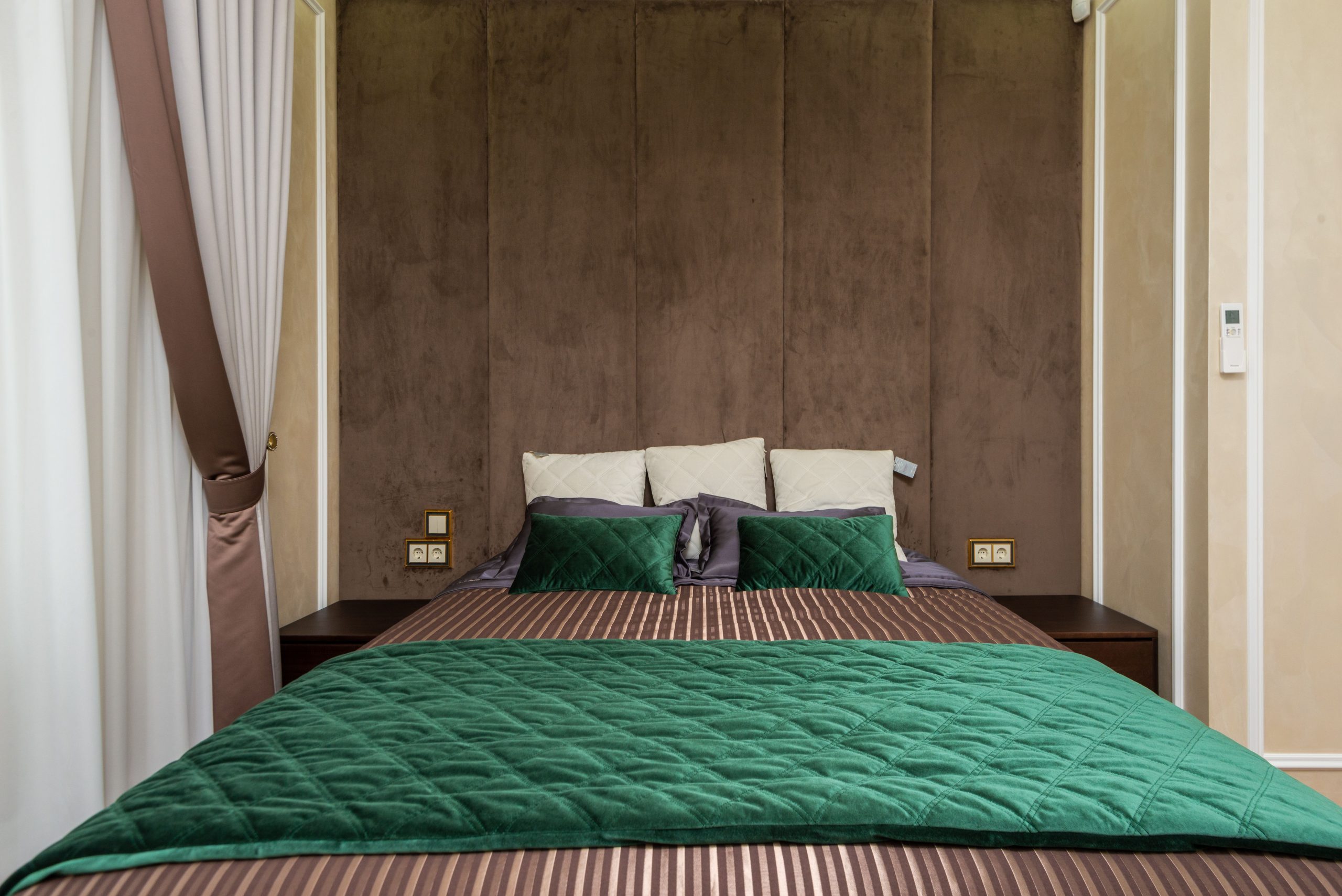
“A full-wall headboard treatment is a power move that works best in rooms with at least 9-foot ceilings and a width of at least 12 feet.”
In a smaller room or one with low ceilings, it can feel disproportionate and actually make the space seem smaller. The key is that you need enough visual ‘breathing room’ on the other three walls to balance out such a strong feature. Compare this to the more delicate slat wall in Idea #3, which can work in smaller spaces.
16. Mix Dark Gray Furniture with Playful Wallpaper
This room proves that dark furniture doesn’t have to be serious or traditional. The design works by creating a delightful tension between the simple, modern lines of the dark gray furniture and the playful, almost whimsical energy of the patterned wallpaper. The light wood floors and light-colored wallpaper keep the room feeling bright and airy, allowing the dark gray pieces to ground the space without weighing it down. The pops of magenta and pink in the bedding tie it all together with a sense of fun.
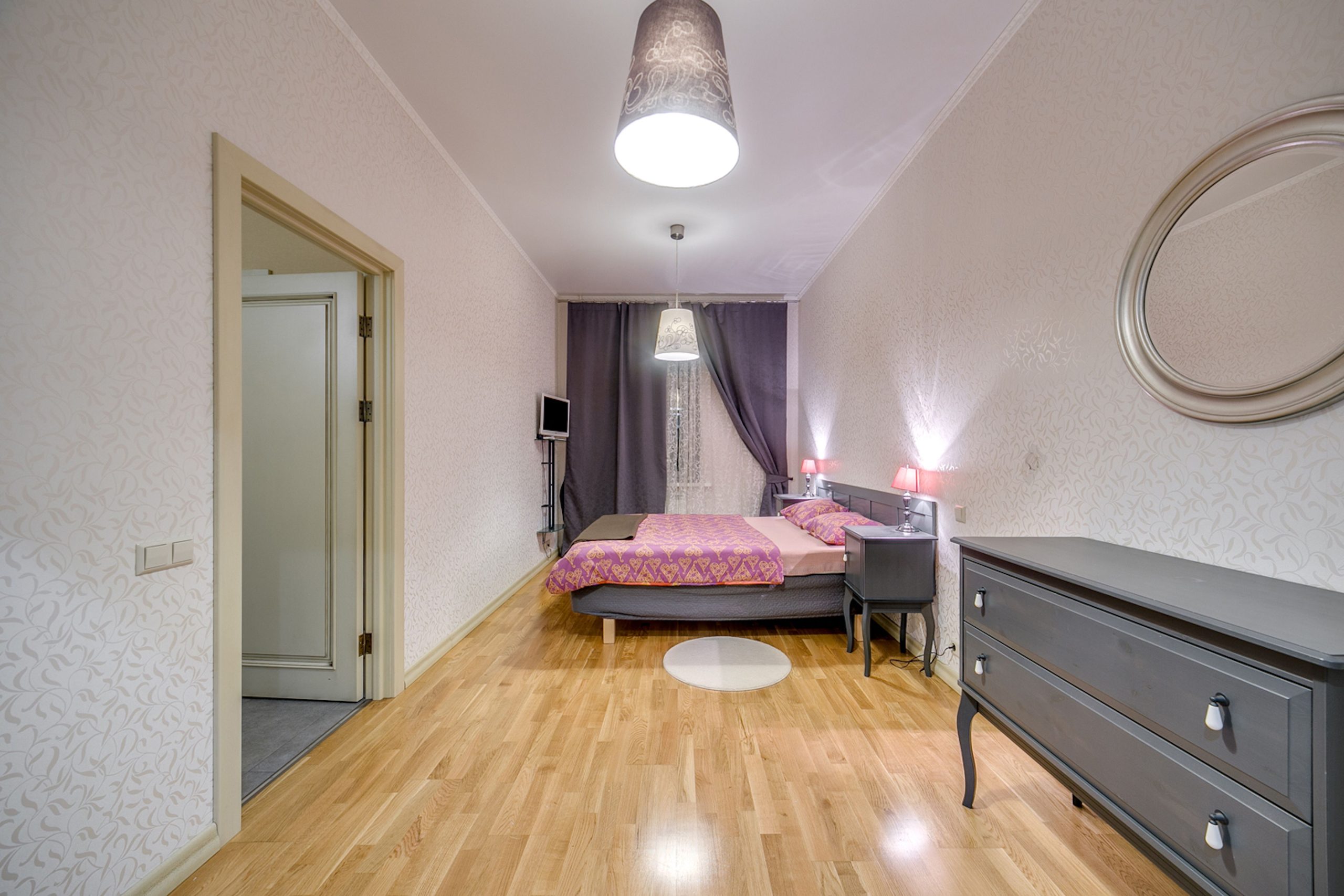
“You can definitely achieve this look for less.”
The simple, clean-lined dark gray furniture is a style readily available at places like IKEA (check the MALM series) or Walmart. A full 3-piece set could be had for $400-$600. The real money-saver is peel-and-stick wallpaper. It’s a fraction of the cost of traditional wallpaper and is DIY-friendly. Look for a light-colored, small-scale pattern on Amazon or Wayfair to get the same effect without the commitment or cost of professional installation.
17. Achieve Serenity with White, Blue, and Bohemian Textures
This room’s calm, coastal-boho vibe comes from a clear formula: 50% crisp white (walls, duvet, shade), 30% shades of blue and gray (pillows, headboard), and 20% natural texture (the woven bench, beaded chandelier, and wood-framed bench). The white creates a bright, airy base, while the blues add a serene, watery element. It’s the natural textures, though, that keep it from feeling too cold or preppy, injecting a dose of relaxed, bohemian soul.
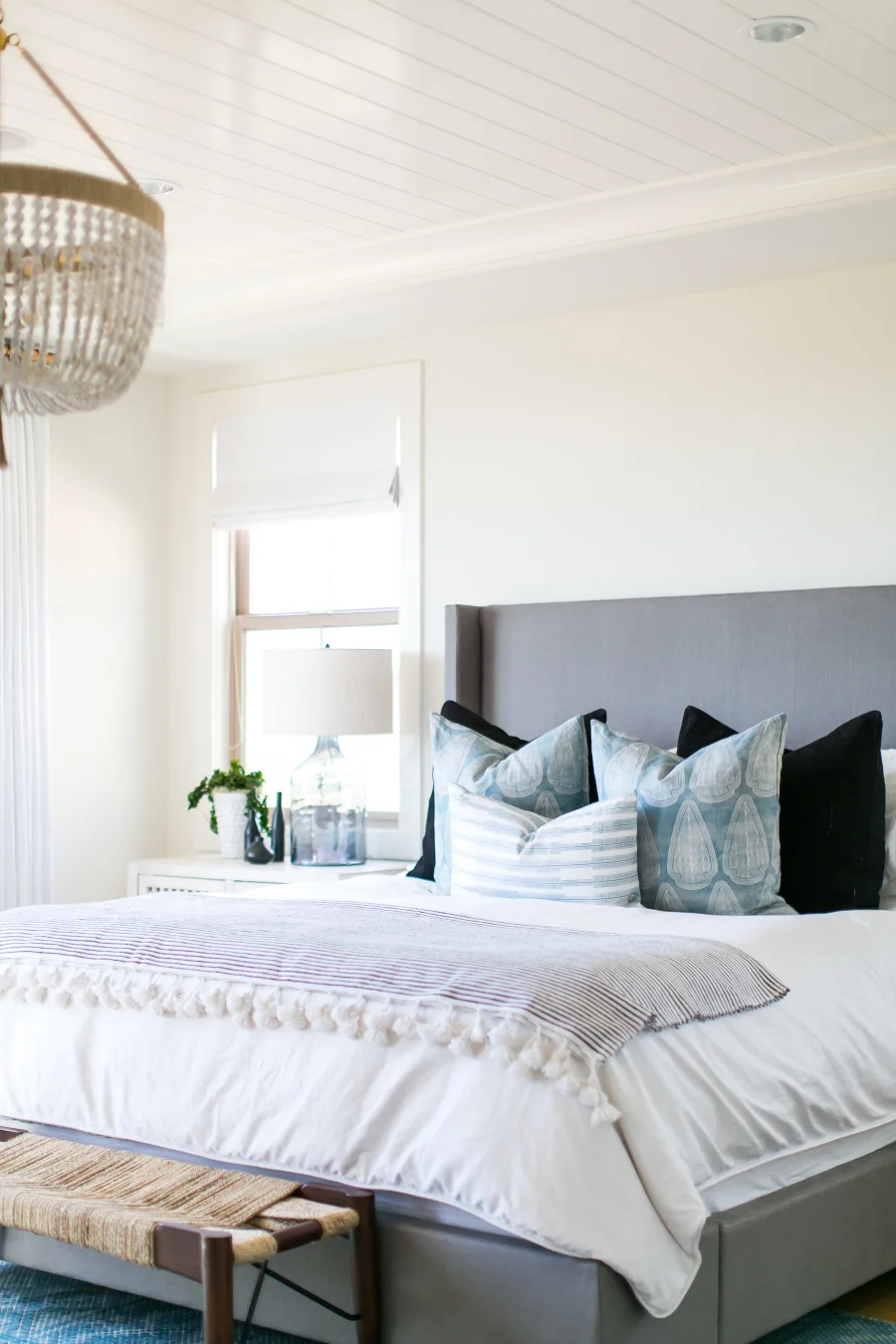
“A common pitfall with a ‘serene’ color palette is that it can accidentally become boring.”
The key to avoiding this is texture, texture, texture. Notice the variety here: the upholstered headboard, the different weaves of the pillows, the stripes on the throw, the woven seat of the bench, and the clear beads of the chandelier. If everything were the same flat cotton texture, the room would fall flat. Don’t be afraid to mix and match materials—it’s what gives a neutral room its personality.
18. Warm a Small Space with a Textured Wood Headboard
In this simple and cozy room, the textured wooden headboard is everything. It’s the single piece that provides all the character. The repeating square pattern creates shadow and depth, turning a simple slab of wood into a piece of art. Against the cool, light blue wall, the warmth of the wood tone provides a perfect and comforting contrast. Paired with the classic brass sconce, it creates a timeless look that feels much more expensive and considered than a standard bed frame.
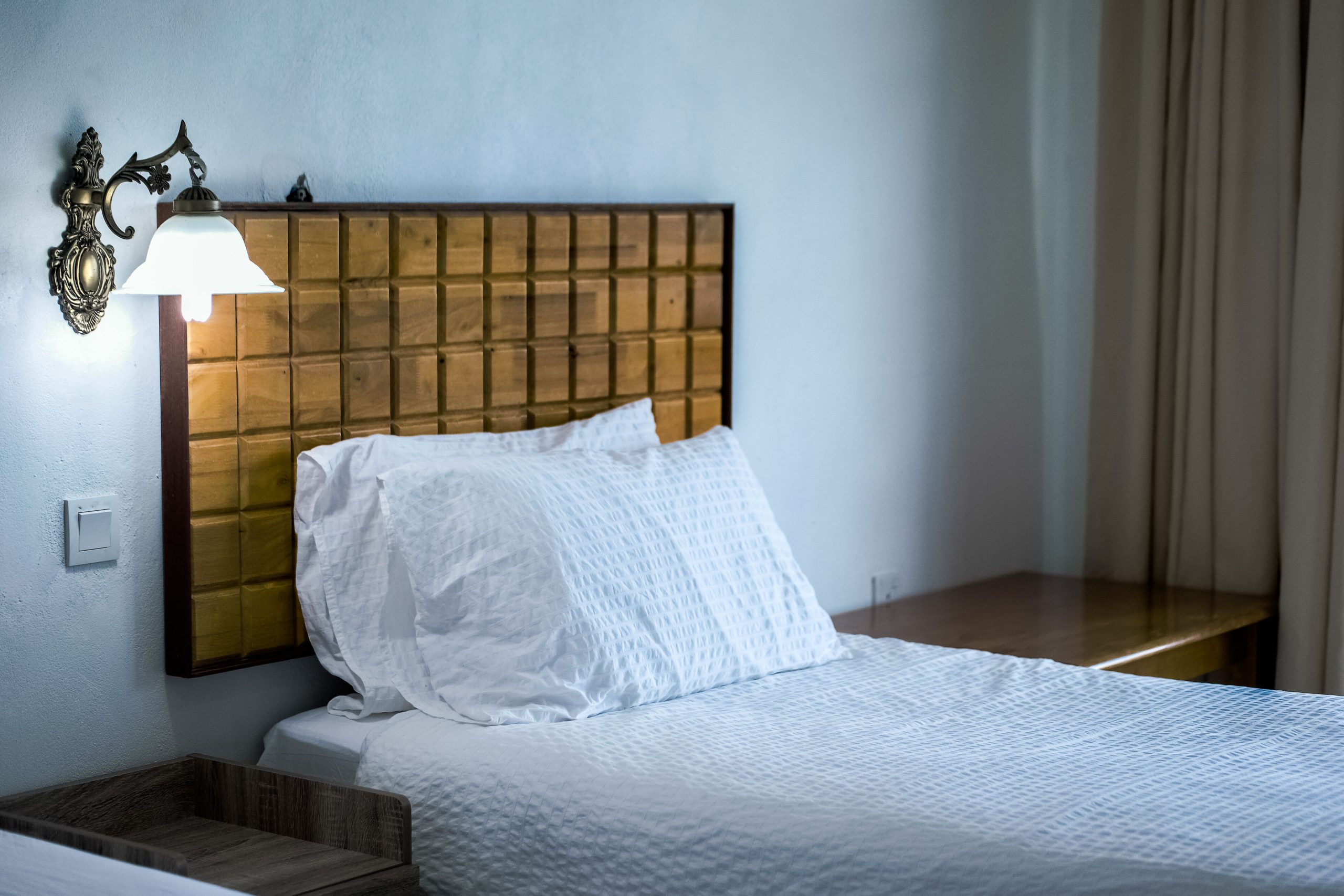
“For a small bedroom or a single bed, wall-mounted lighting is a game-changer.”
By using a wall sconce instead of a table lamp, you free up the entire surface of your nightstand for books, a glass of water, or your phone. It’s a classic hotel design trick that makes a small space feel more organized and less cluttered. For maximum flexibility, choose a swing-arm sconce that allows you to direct the light exactly where you need it for reading.
19. Combine Rich Wood, Cool Marble, and Warm Copper
The magic of this look is in the sophisticated mix of materials. You have the organic warmth of the rich brown wood headboard, the cool, veined elegance of the white marble nightstand top, and the warm, rosy glow of the copper lamp. It’s a trifecta of textures and temperatures that feels balanced and luxurious. The clean lines and minimalist shapes of each piece ensure that the combination of materials feels curated and modern, not chaotic.
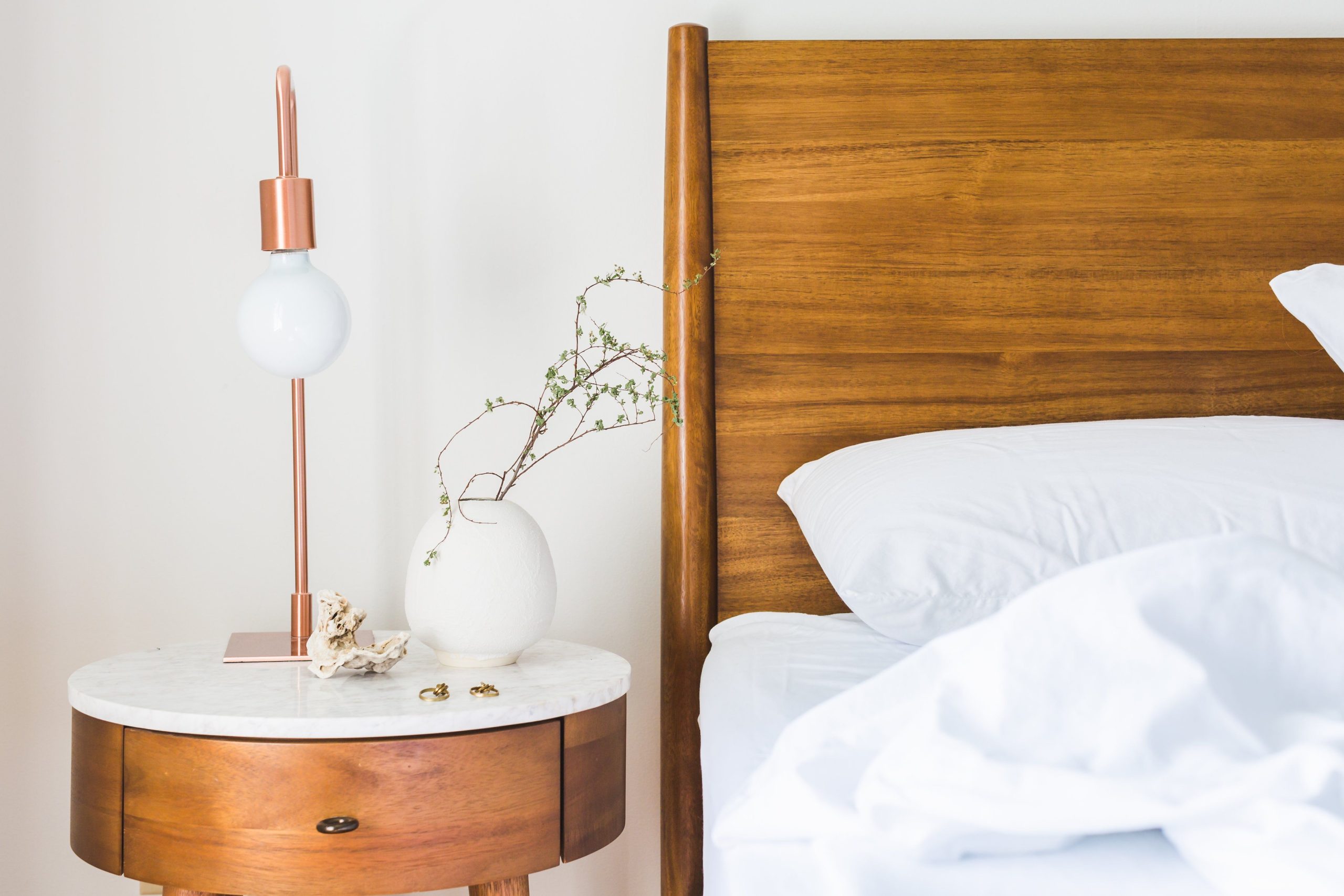
“Marble-topped nightstands are beautiful, but they require care.”
Marble is a porous stone, meaning it can stain easily. Always use a coaster for drinks, and be mindful of oils from lotions or diffusers. Clean up any spills immediately with a soft cloth and a gentle, pH-neutral cleaner. To keep it looking its best, you should seal the marble every 6-12 months, which is a simple wipe-on, wipe-off process that helps repel stains.
20. Create a Rustic Focal Point with a Wood Plank Wall
A rustic wood wall is a fantastic DIY project that adds immense character. You can use reclaimed pallet wood or purchase new planks and distress them yourself. Here’s the quick version:
Time: One weekend. Cost: $200-$600.
- Gather your wood. If using new wood, beat it up with chains, hammers, and screws, then apply a mix of stains to create variation.
- Find and mark the studs on your wall.
- Start at the bottom, ensuring your first row is perfectly level.
- Apply construction adhesive to the back of each plank and nail it into the studs.
- Stagger the seams between rows for a natural look.
- Cut the last planks in each row to fit.
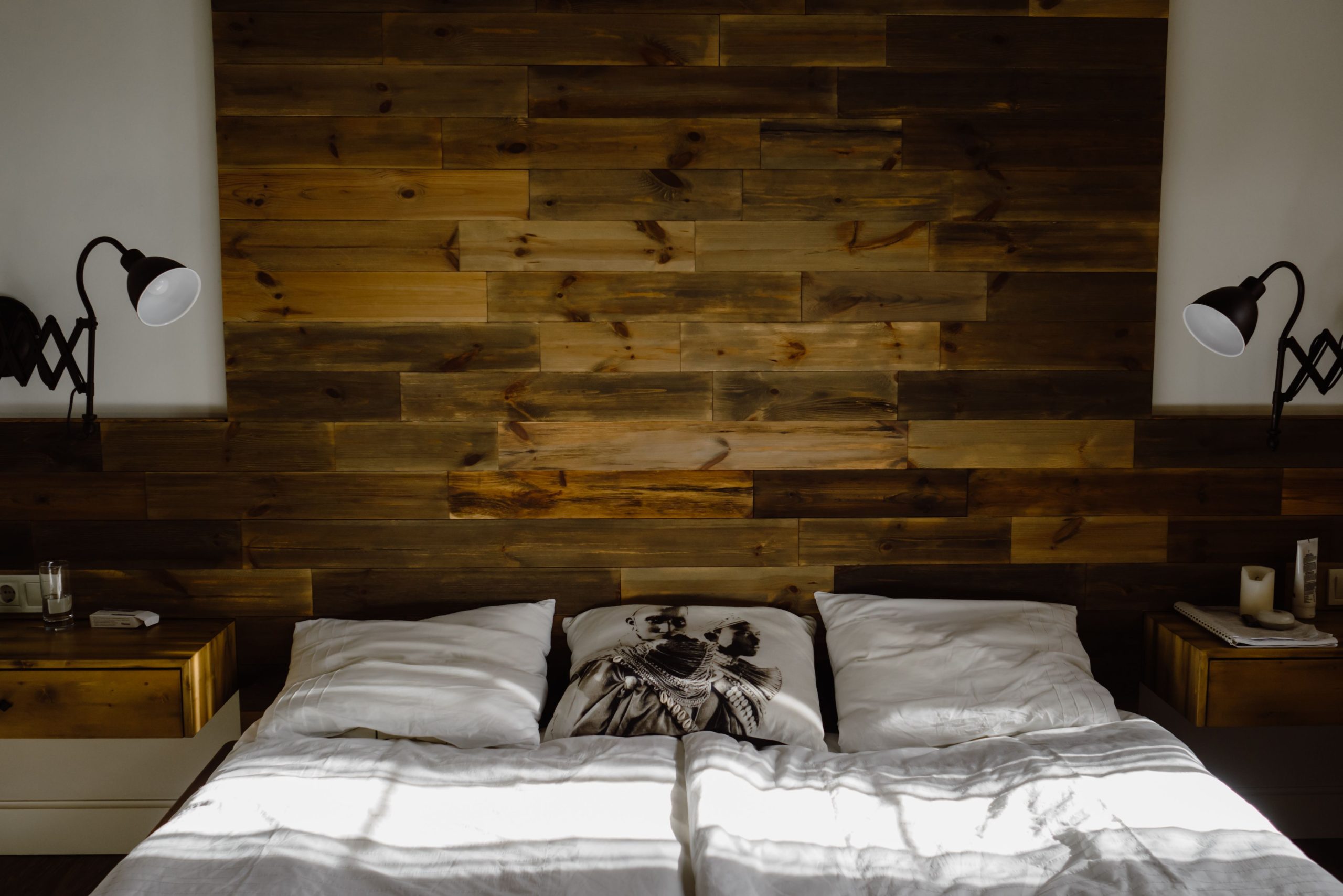
“A full wood-paneled wall is a significant design statement.”
While it adds incredible rustic charm, it is also a very specific taste. If you plan on selling your home in the near future, be aware that a feature wall this dominant might not appeal to all buyers, and it’s not as easy to change as a coat of paint. Also, the gaps and rough texture can be a haven for dust and cobwebs, so it will require more than a simple wipe-down to clean.
21. Soften a Modern Room with a Rounded Upholstered Bed
The hero of this serene, modern bedroom is the rounded, upholstered bed frame. In a room dominated by straight lines—the coffered ceiling, the rectangular nightstands, the linear artwork—the soft curves of the bed provide a crucial visual break. It’s an invitation to comfort, disrupting the rigidity of the modern architecture. Without this softness, the room could risk feeling a bit too stark or clinical. The bed’s shape makes the entire space feel more welcoming and gentle.
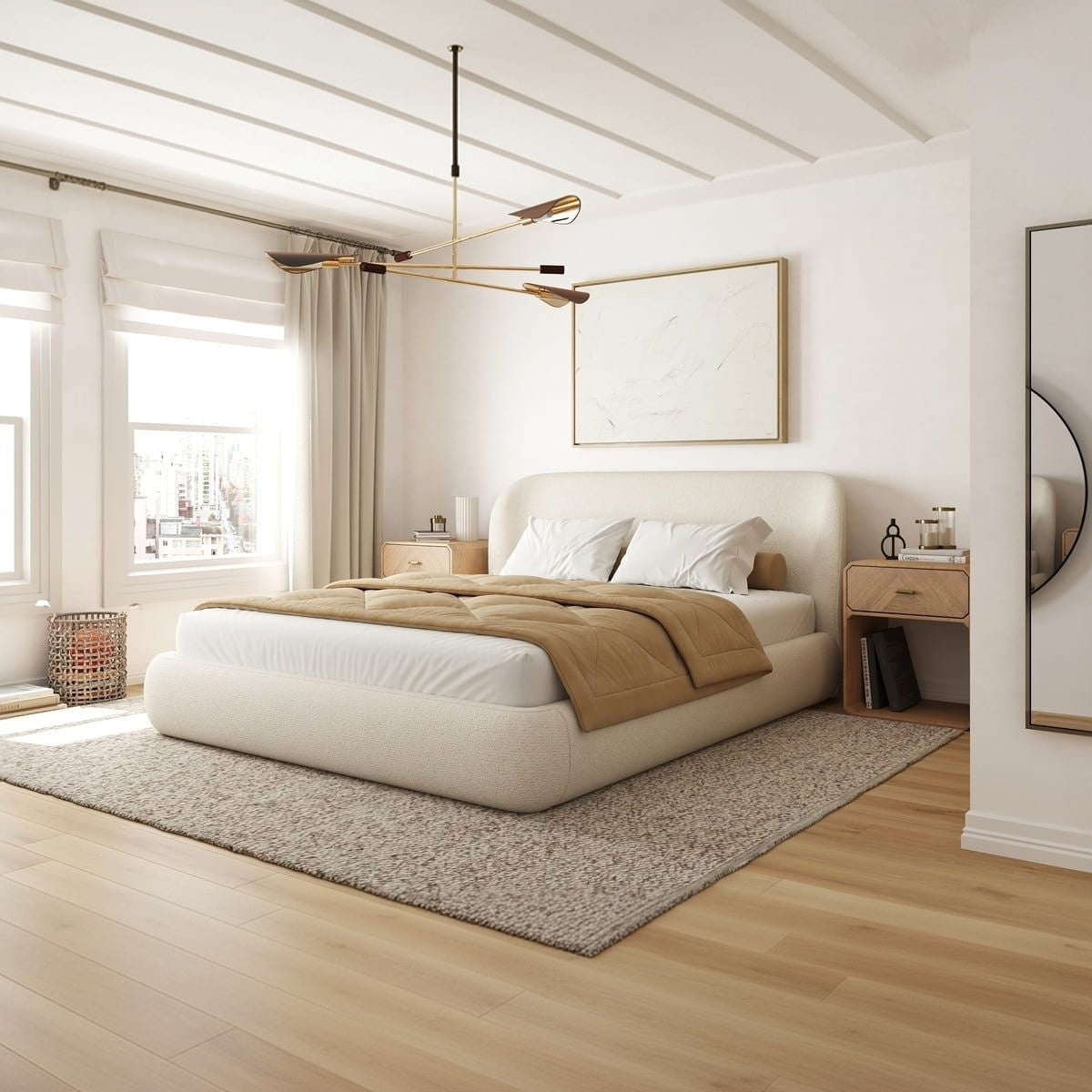
“This room is a study in quiet, tonal balance.”
The color palette is incredibly tight, sticking to creamy whites, light woods, and soft greys. This allows the different forms and textures to take center stage. The contrast isn’t in color, but in shape (the round bed vs. the square ceiling) and material (the soft rug vs. the hard wood floor). The dramatic, multi-armed chandelier adds a touch of sculptural artistry without breaking the calm color scheme. This is a much softer version of the minimalist look seen in Idea #11.
22. Pair Deep Teal Paneling with Plaid and Wood Accents
Breaking down this cozy, moody look reveals a simple but effective recipe: 50% deep teal (the paneled wall), 20% rustic wood (the nightstand and frame), 15% classic pattern (the plaid bedding), 15% warm accents (the brass sconce and rust blanket). The deep teal provides a sophisticated, enveloping base, while the wood and plaid add a touch of rustic, cabin-like comfort. The small, strategic pops of brass and rust are just enough to add warmth and prevent the teal and gray from feeling too cool.
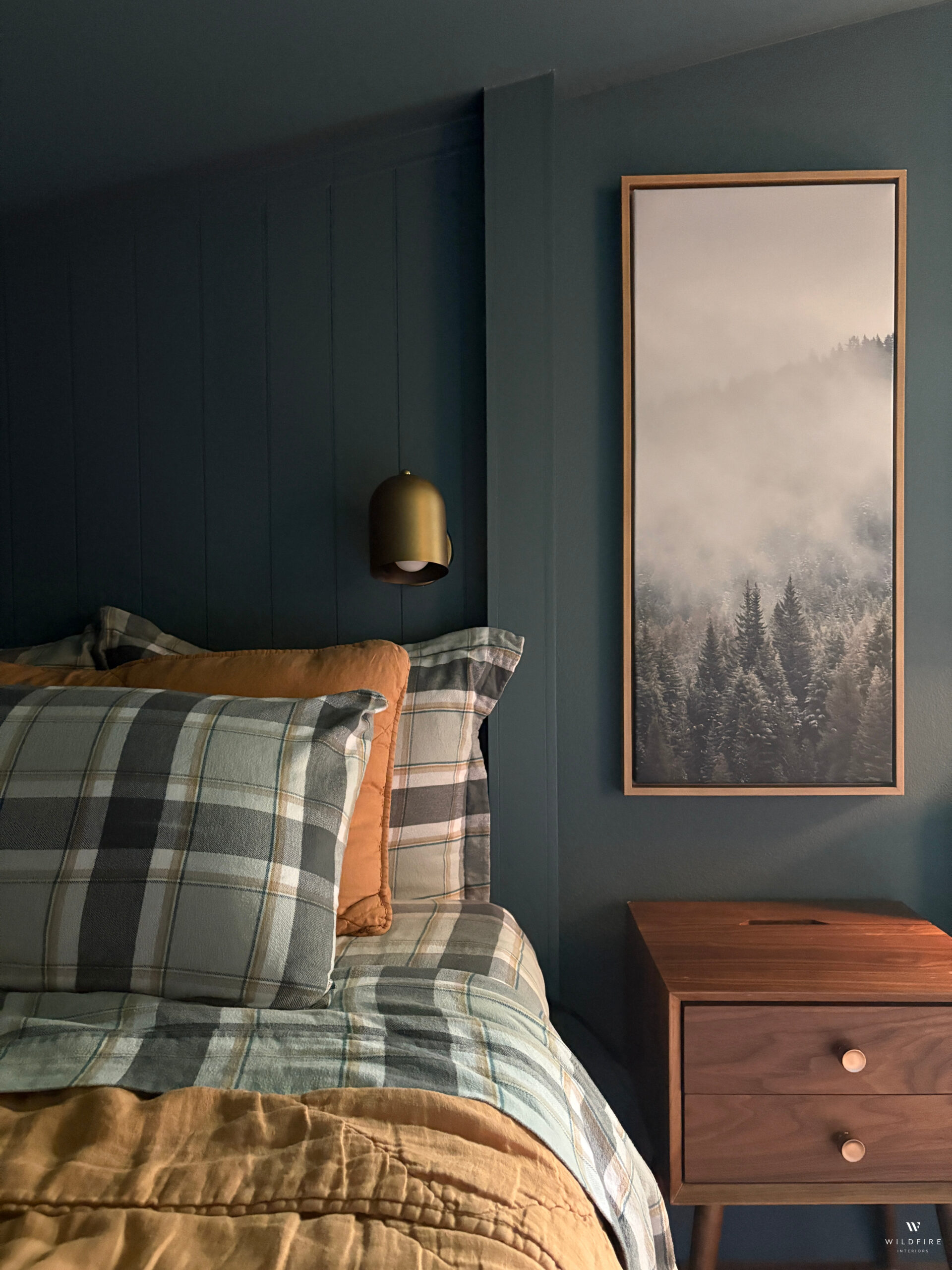
“When decorating with a dark wall color, you don’t have to use light-colored art.”
Notice how the art print here—a misty, atmospheric forest scene—is also quite dark. It works because it has a light-colored mat and a warm wooden frame, which creates enough separation from the teal wall. This allows the art to feel like part of the moody aesthetic, rather than a harsh point of contrast. Don’t be afraid to hang dark art on dark walls for a rich, layered effect.
23. Embrace the Dark with a Skylit, Earth-Toned Bedroom
In this bedroom, the skylights are the game-changer. They make the whole concept of a dark, enveloping room possible without it feeling like a gloomy cavern. The shafts of natural light pouring in from above highlight the plush textures of the bedding and prevent the dark brown walls from feeling oppressive. They provide a dynamic element, with the quality of light changing throughout the day, adding life to what might otherwise be a very static, moody space.
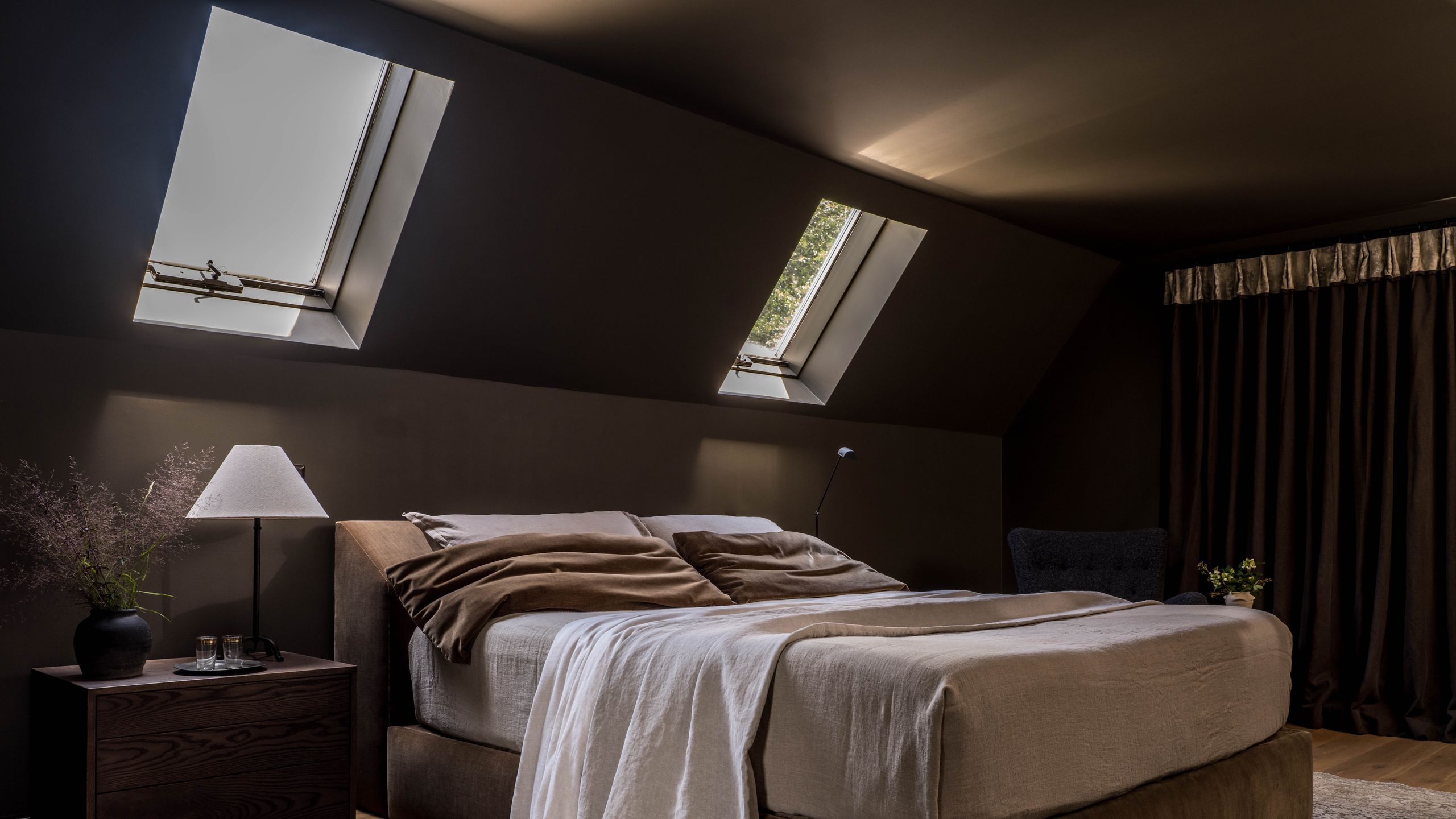
“This room design works through a masterful commitment to a limited, earthy palette.”
By using various shades and tints of brown—from the dark chocolate walls to the lighter beige and tan bedding—the room feels incredibly cohesive and intentional. The contrast comes not from color, but from texture: the plush upholstered bed, the smooth linen, the fuzzy velvet, and the hard wooden nightstand. This textural variety is what gives the monochromatic scheme its depth and sophistication.
24. Layer Charcoals and Blacks for a Sophisticated Moody Look
Creating this kind of layered, luxurious dark bedroom involves investing in texture and art. Here are some estimated costs:
- Textured Wall Paneling: $500 – $1,500 (DIY vs. Pro)
- Leather Headboard: $400 – $1,200
- Dark Wood Nightstand: $250 – $700
- Large Framed Artwork: $300 – $800
- High-End Bedding & Linens: $300 – $600
- Wall Sconce: $100 – $350
- TOTAL: $1,850 – $5,150
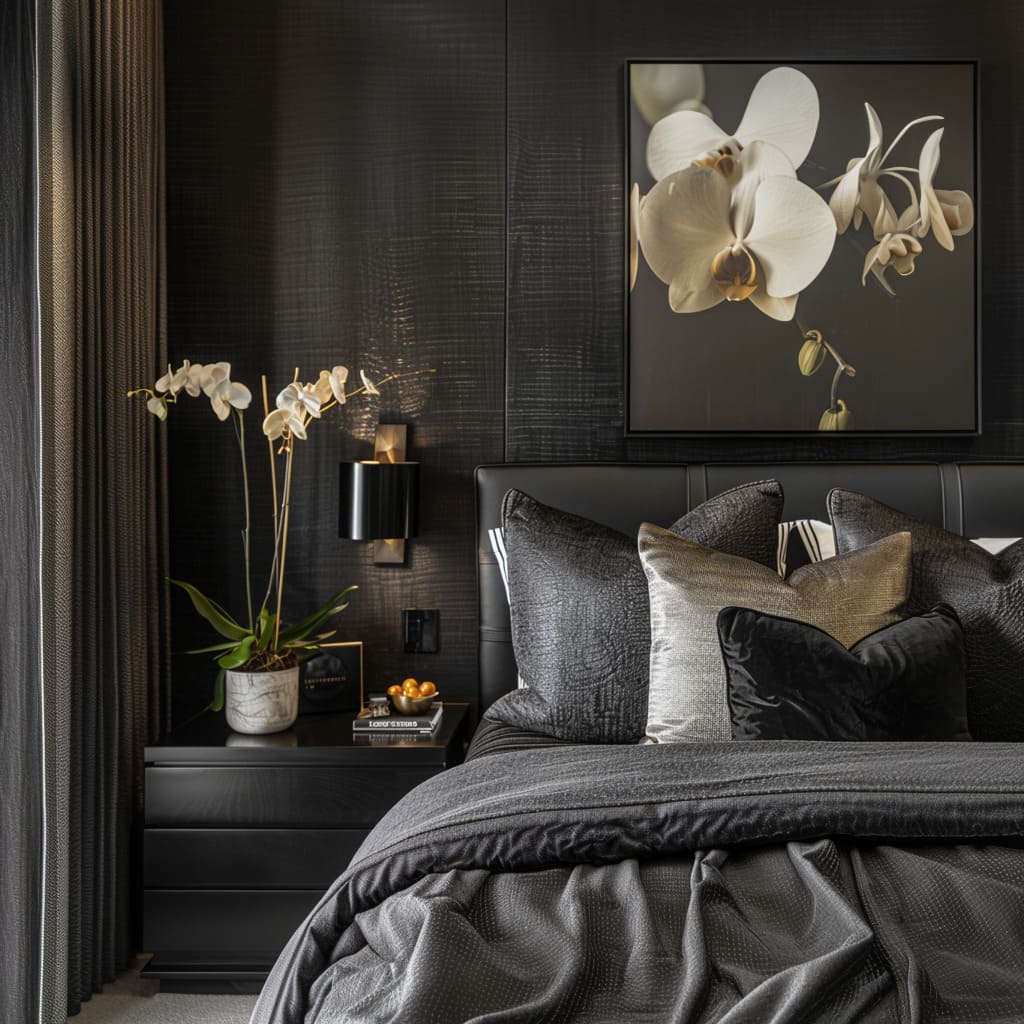
“The key to a successful dark-on-dark bedroom is a single, strong point of high contrast.”
In this room, it’s the large-scale artwork of the white orchids. The bright white within the print immediately draws the eye and acts as a visual anchor. It breaks up the expanse of charcoal and black, providing a necessary focal point. Without it, the room would feel much less dynamic. When your palette is this tight, you need one hero piece to give the eye a place to land.
25. Mix Artistic Accent Walls with Concrete and Bronze
The daring combination of materials is what makes this room so compelling. The design confidently pairs a soft, watercolor-effect accent wall with a hard, industrial concrete wall. This high-stakes contrast is mediated by the consistent use of a charcoal and bronze color story. The bronze trim on the bed, the bronze pendant lights, and the warm tones in the artwork all work to tie the disparate textures together into a cohesive, artistic vision. It’s a bold look that feels more like a modern art gallery than a simple bedroom. Similar bold choices are seen in Idea #13, but with a more traditional spin.
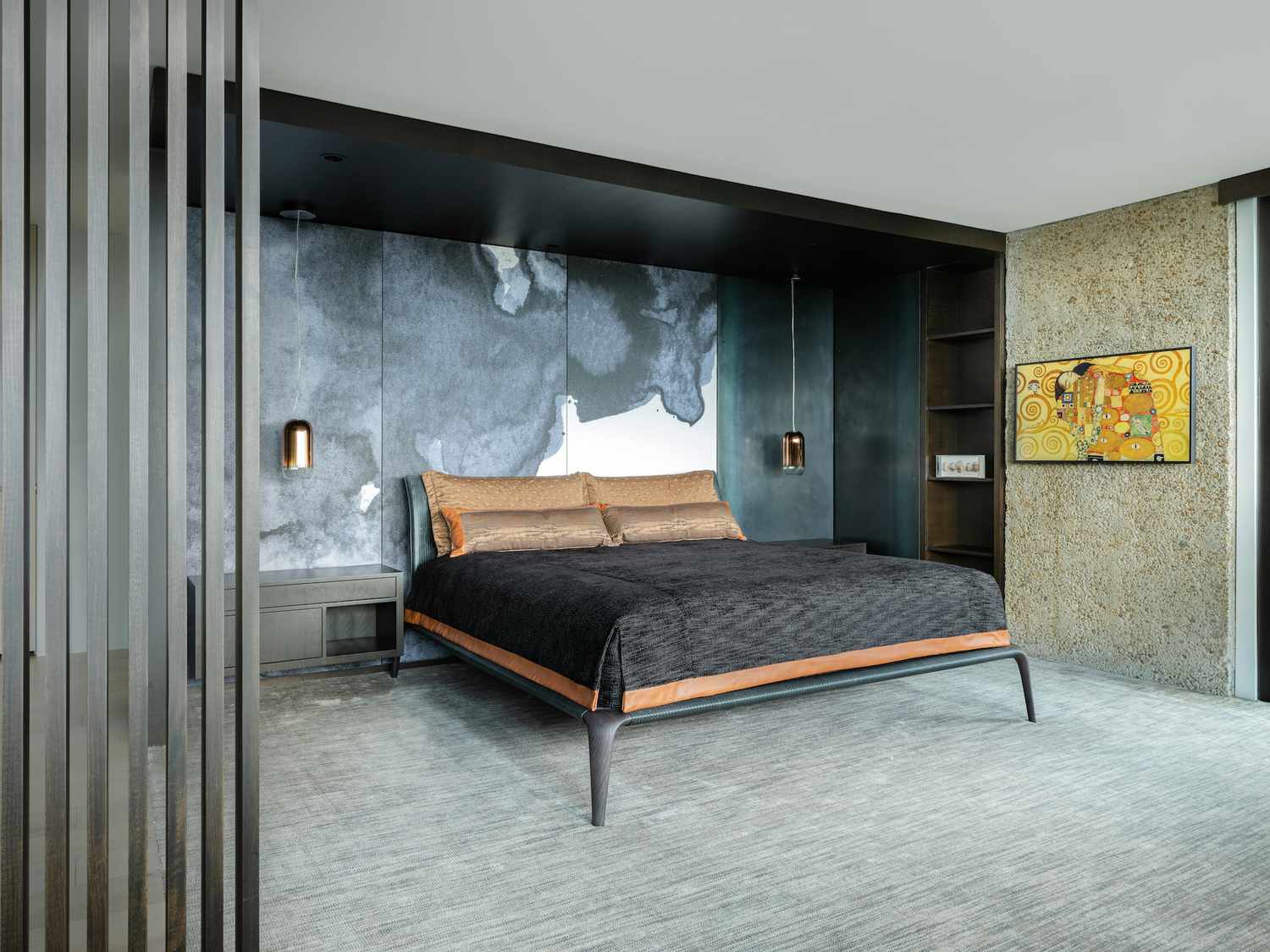
“We’re seeing a major trend towards treating walls as individual canvases rather than a uniform backdrop.”
This concept, often called ‘mixed media walls,’ is a rejection of the single, simple accent wall. It’s popular because it allows for a much higher degree of personalization and artistic expression. Homeowners, inspired by boutique hotels and restaurants, are feeling more confident about mixing wall coverings, paint effects, and raw materials like concrete to create a space that feels truly unique and custom-built.
26. Go Cozy-Rustic with Dark Walls and a Wrought Iron Bed
This room’s inviting, rustic charm can be broken down into a simple formula: 40% dark gray walls + 30% natural fiber textures (the large braided rug) + 20% metal and wood (the iron bed and wooden chest) + 10% warm color accents (the rust orange throw). The dark walls create a cozy, den-like feeling, which is then amplified by the soft, nubby textures of the rug and bedding. The rust throw is the perfect finishing touch, adding a pop of warmth that feels like a crackling fire.
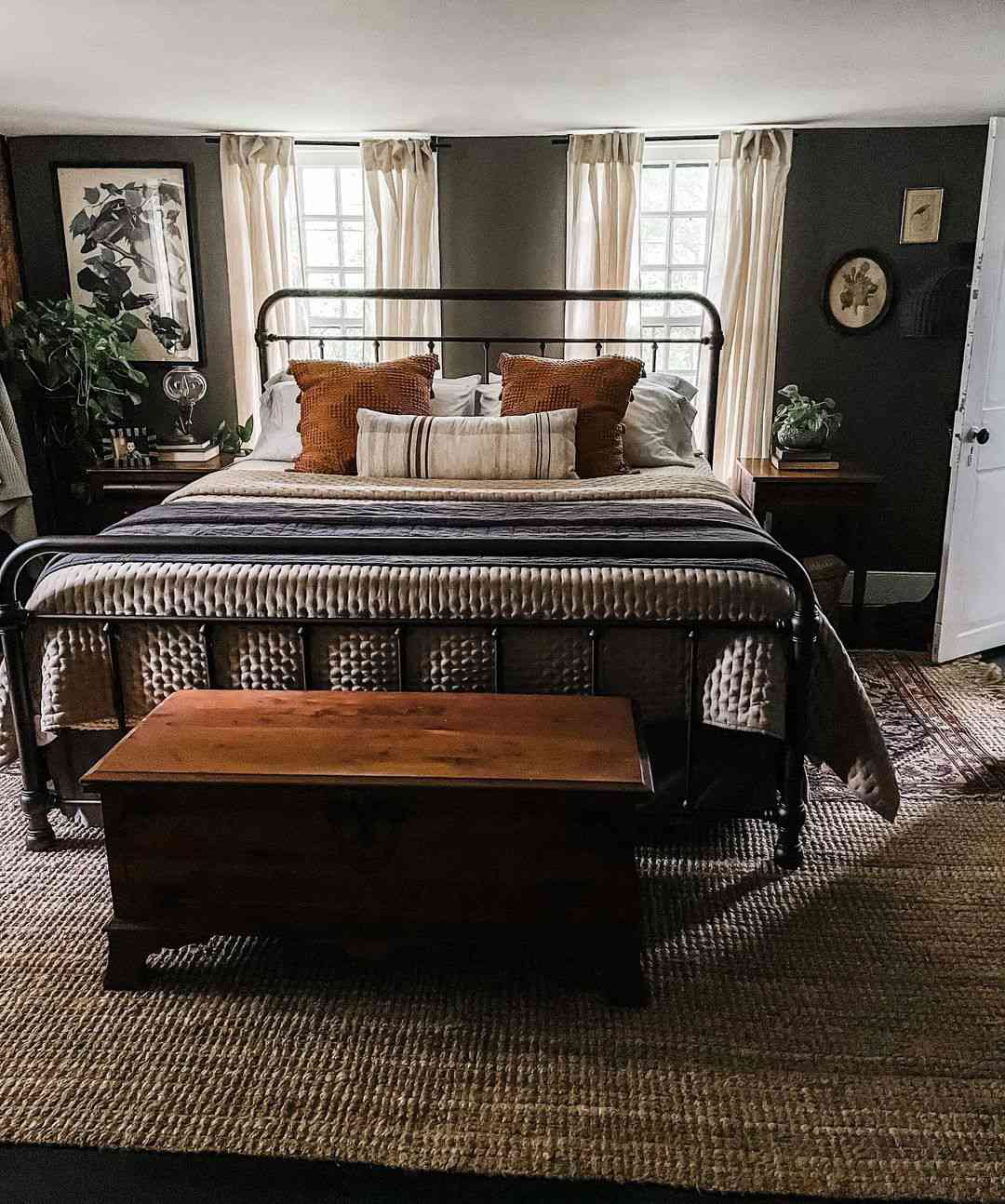
“The single element holding this entire look together is the large, braided natural fiber rug.”
It’s the bridge between the dark, dramatic walls and the rustic furniture. It adds a massive dose of texture and warmth underfoot, preventing the dark walls and black iron bed from feeling too cold or stark. If you replaced it with a dark oriental rug or even just the bare floor, the room would lose its cozy, approachable feel instantly. Never underestimate the power of a great area rug to define a space.
27. Marry a Navy Paneled Wall with Cream and Gold
This is a classic color combination that always works, and for good reason. The deep, cool navy of the paneled wall provides a rich, stately backdrop that makes the warm cream of the headboard and nightstand pop. The small, strategic touches of gold in the drawer pulls and the subtle sheen of the bedding add a layer of warmth and luxury. It’s a study in classic pairings: cool navy with warm cream, and stately paneling with soft upholstery. This is a more traditional take on the navy accent wall shown in Idea #5.
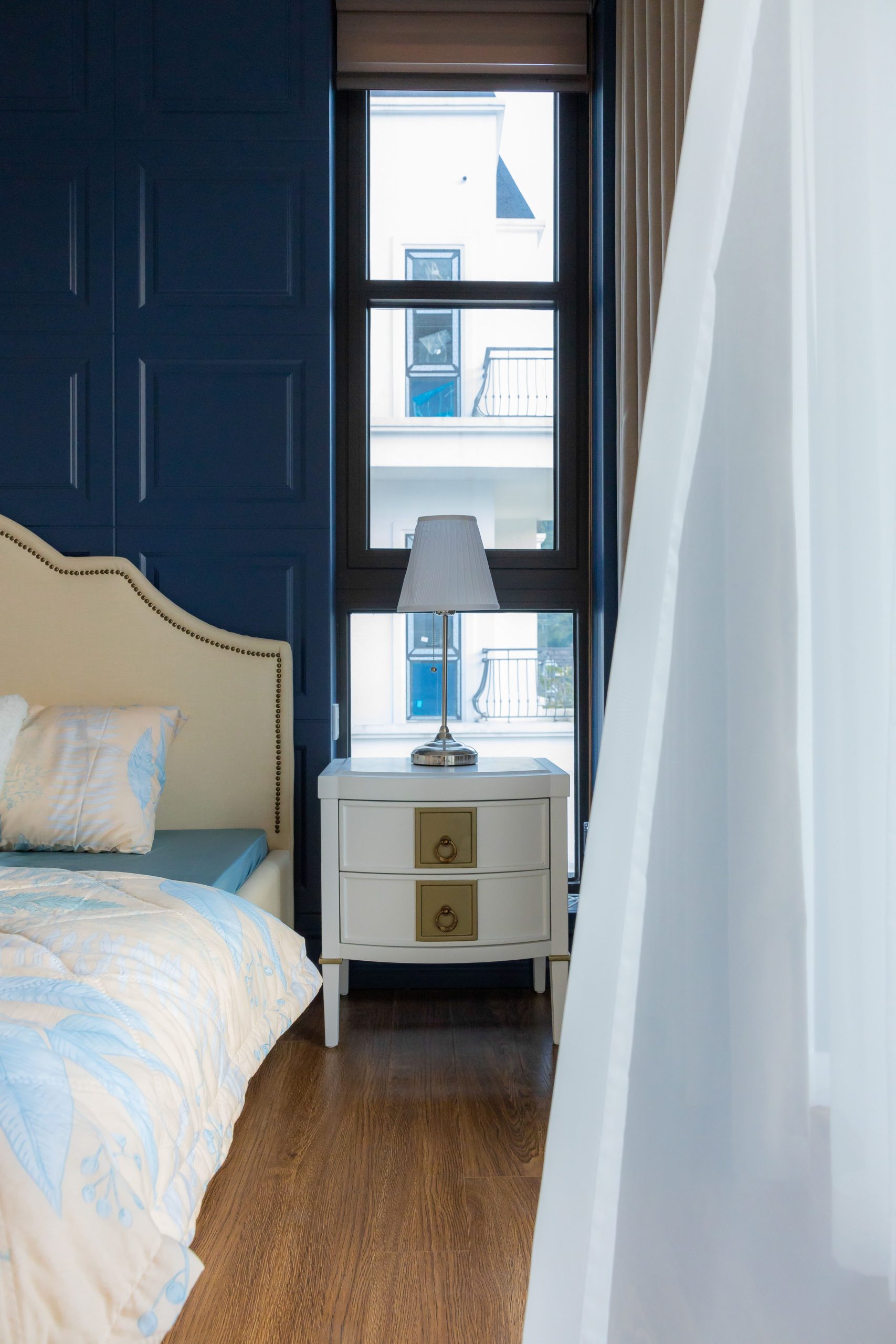
“When using nailhead trim on an upholstered headboard, the size and spacing of the nailheads are key.”
For a classic, elegant look as seen here, opt for individual nailheads spaced about half an inch apart. Avoid the pre-fabricated nailhead strips on a roll; they often look cheap and the spacing is too perfect. The slight irregularity of hand-applied nailheads adds a touch of bespoke character. As for finish, a soft brushed brass or antiqued bronze complements a navy and cream palette beautifully.
28. Achieve Modern Luxury with a Padded Wall and Chrome
The undeniable showstopper in this room is the full-height padded wall punctuated by chrome strips. It acts as an integrated, architectural headboard that screams ‘custom luxury.’ This feature completely transforms the room, taking it from a simple bedroom to something that feels like the presidential suite in a modern hotel. The texture adds softness and improves room acoustics, while the reflective chrome strips provide a touch of sleek, glamorous shine. Compare its effect to the wooden slat wall in Idea #3.
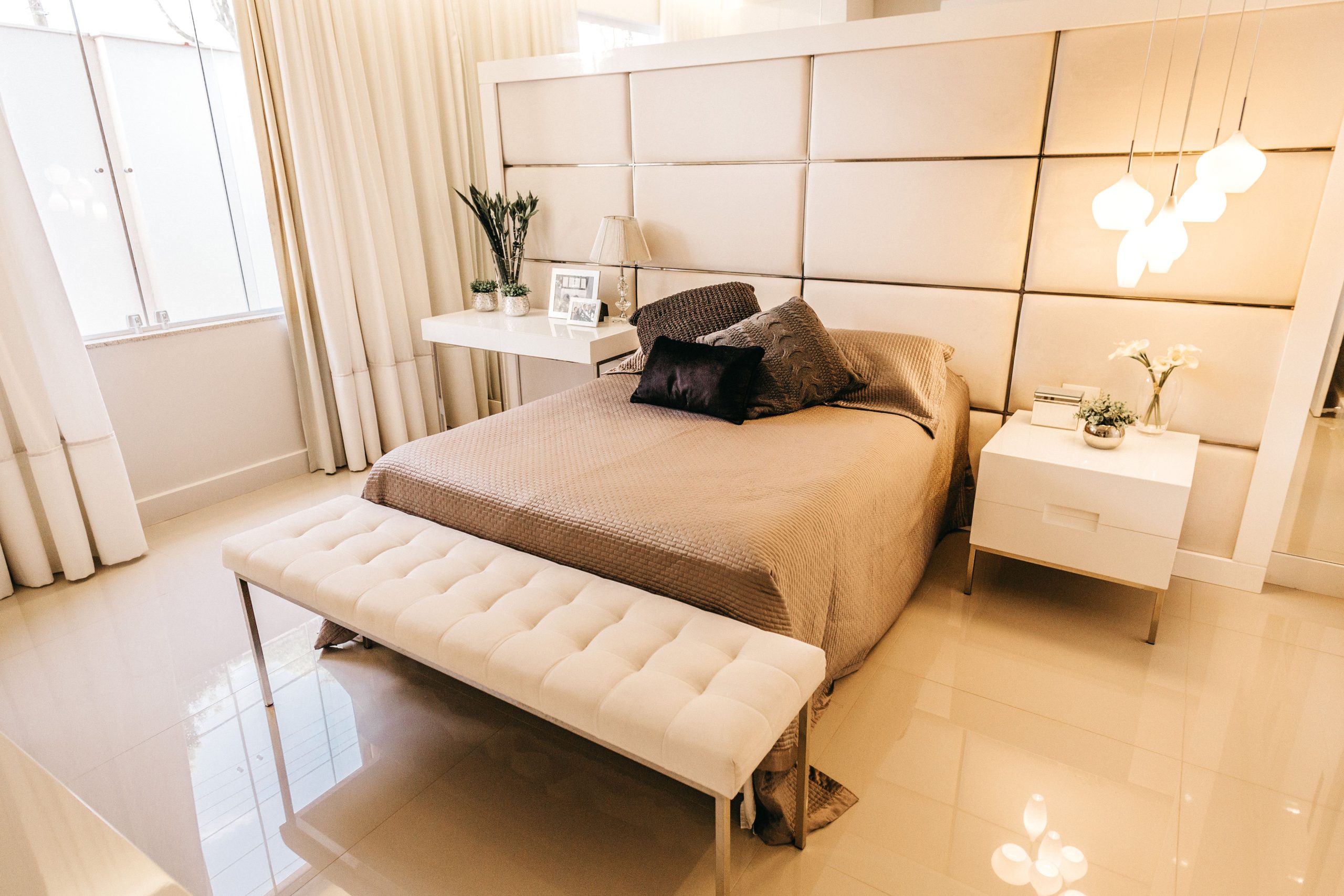
“A padded wall is the epitome of luxury, but it can be a challenge to maintain.”
The fabric can collect dust, and unlike a simple painted wall, you can’t just wipe it down. Regular vacuuming with an upholstery attachment is a must. It’s also susceptible to stains, and cleaning can be tricky depending on the fabric. Furthermore, those beautiful chrome strips are fingerprint magnets and will require frequent polishing to maintain their mirror-like shine. It’s a high-fashion look with a matching high-maintenance personality.
29. Embrace Grand Tradition with Ornate Carved Wood Furniture
This is a look that demands space. Ornate, heavily carved furniture has immense visual weight. To pull off a full set like this—bed, wardrobe, dresser—you need a very large primary bedroom, ideally 15×15 feet or larger, with high ceilings (9 feet minimum). In a standard-sized room, these pieces will feel cramped and overwhelming, like a giant in a dollhouse. The goal is for the furniture to look grand, not just big, and that requires ample square footage to allow each piece to breathe.
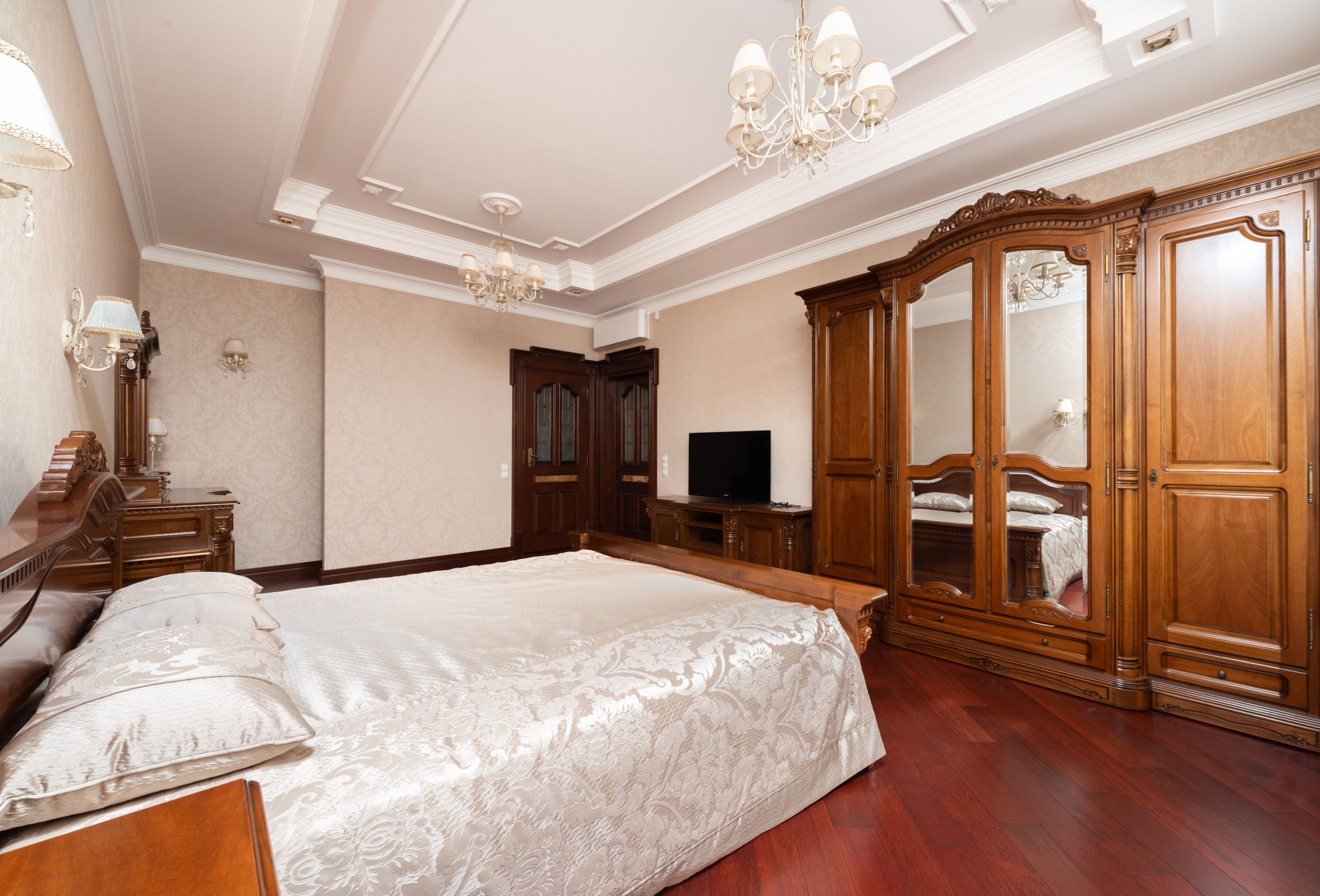
“All those beautiful, intricate carvings are a dust-lover’s paradise.”
Maintaining the beauty of ornate wooden furniture requires a dedicated cleaning routine. You’ll need more than a simple cloth; a soft-bristled brush (like a clean makeup brush) is essential for getting dust out of all the nooks and crannies. Plan on this detailed dusting at least every other week. You’ll also want to polish the wood with a quality furniture cream 2-3 times a year to keep it from drying out and to maintain its rich luster.
30. Balance a Wood Slat Wall with a Green and Beige Palette
This room strikes a perfect balance between modern architecture and soft, natural elements. The light wood slat wall provides clean, contemporary lines, but the choice of a soft beige for the upholstered bed frame and a deep, earthy green for the nightstands keeps the space from feeling cold. The circular pendant lights and the arched mirror cleverly introduce curves to soften the straight lines of the slats and bed. It’s a sophisticated mix of hard and soft, straight and curved.
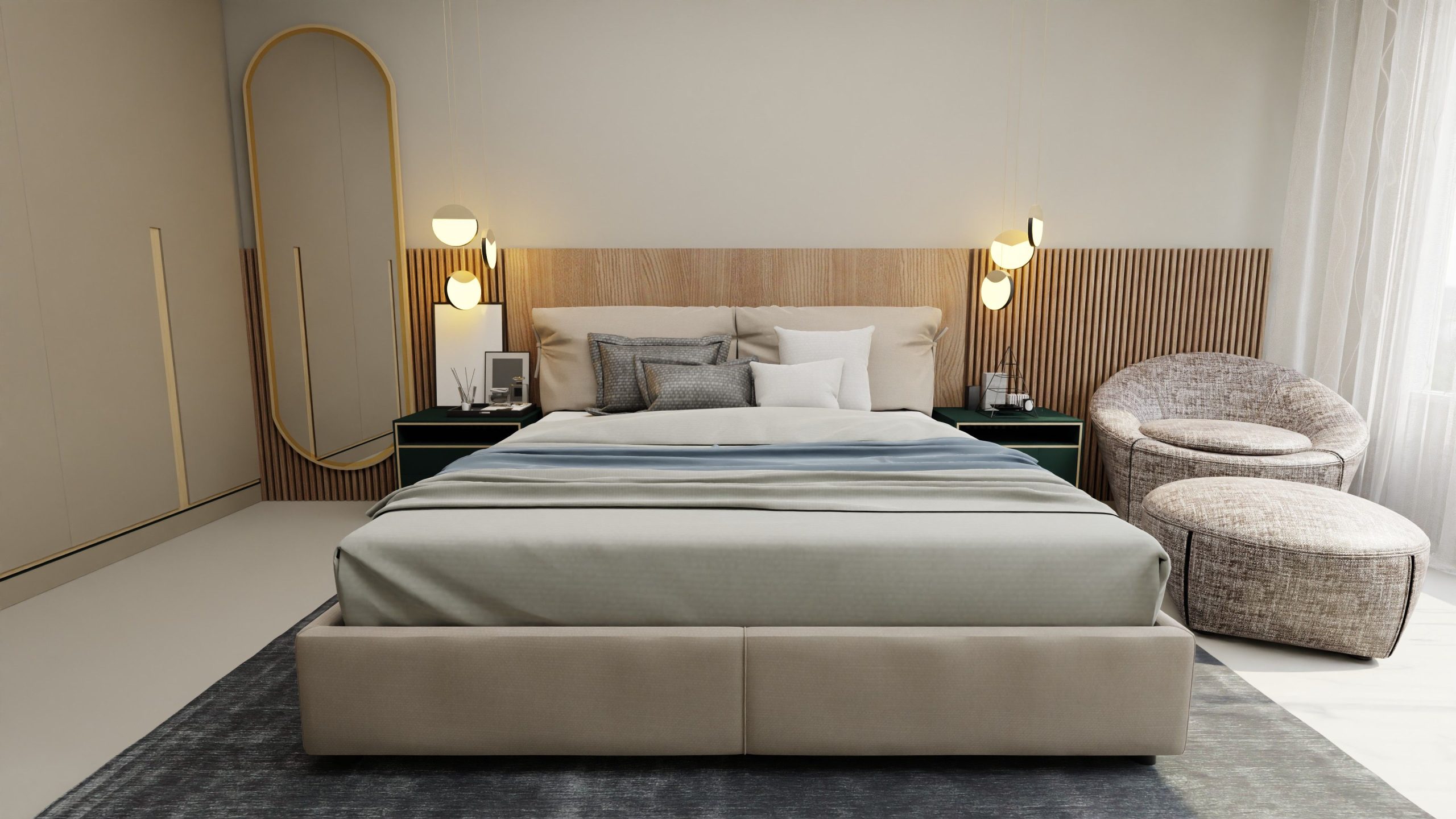
“You can get this high-end look with some smart shopping.”
The wood slat wall can be a DIY project using peel-and-stick panels for a fraction of the cost of custom carpentry. Look for simple, beige upholstered bed frames from direct-to-consumer brands like Zinus or Article. The real place to save is on the dark green nightstands. Find a pair of simple wooden nightstands at a thrift store or on Facebook Marketplace and give them a new life with a coat of high-quality dark green paint and new hardware.
Your Personal Sanctuary Starts Here
We hope these 30 distinct ideas have sparked your imagination and given you the confidence to create a bedroom that’s truly you. Remember, the best design is one that feels like home, whether it’s a dark and moody retreat or a bright and airy haven. The most important step is the first one, so pick an idea you love and start planning.
Now, head over to Pinterest and start creating a board for your perfect bedroom escape!