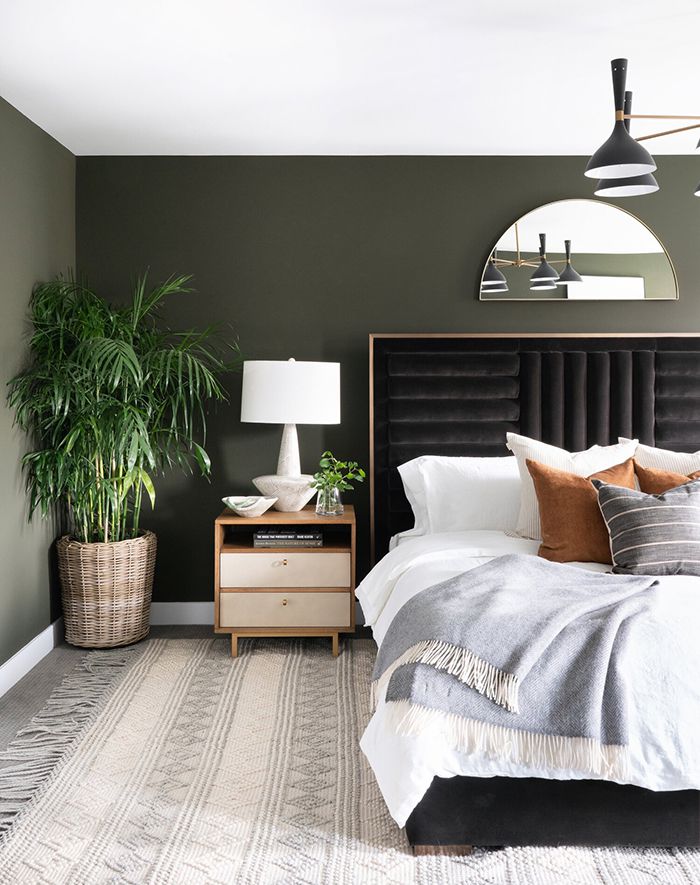
You know that feeling when you finally find the Dark Nature Aesthetic Bedroom Ideas 2026 that looks exactly right for your space? It feels like unlocking a new level of cozy. This aesthetic is more than just painting a wall black; it’s about creating a personal sanctuary that feels both deeply comforting and connected to the wildness of nature.
After filtering through hundreds of options across West Elm, IKEA, and Facebook Marketplace, we narrowed it down to 30 ideas that actually deliver. We’ve made sure to cover a range of styles – from minimalist and modern to rustic and academia-inspired rooms – with price points from $500 to over $15,000.
2026 is the year we fully reject boring beige boxes. This trend is a direct response to our craving for spaces that feel personal, layered, and a little bit magical. It’s about using deep, moody colors not to make a room smaller, but to make it feel infinite. And stay until the end — we break down the most common mistakes that can ruin these looks.
📌 Save this to Pinterest for later — you’ll want to revisit these ideas.
1. Modern Grey Bedroom with a Lunar Glow and Balcony View
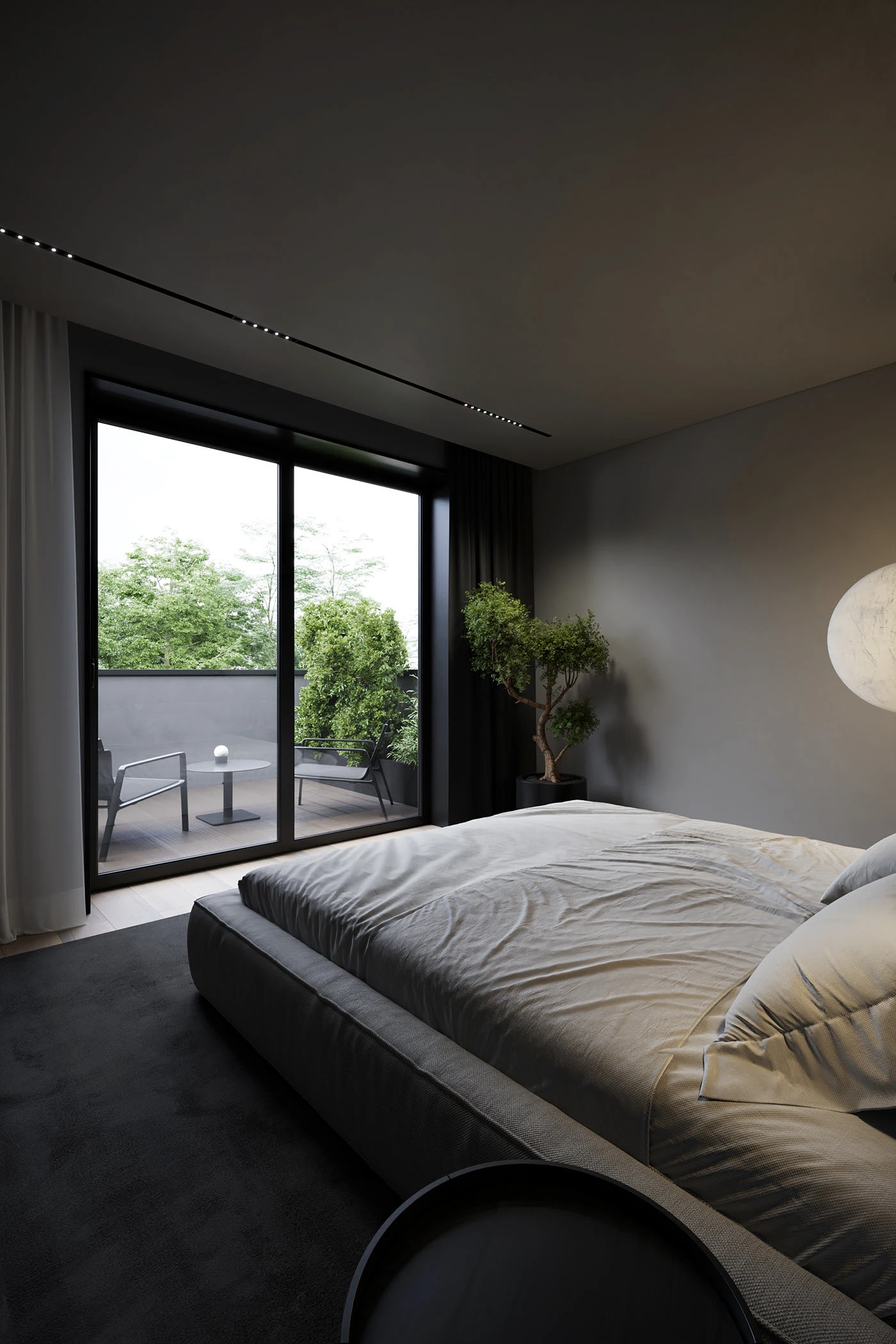
The success of this room lies in its masterful balance of dark and light. The deep grey on the walls and ceiling creates an immersive, calming base, but it doesn’t feel oppressive thanks to two key elements: the massive sliding glass door that floods the space with natural light and the oversized, moon-like wall light. This contrast prevents the darkness from feeling flat, adding dimension and a focal point. The minimal furnishings, like the simple fabric bed and bonsai tree, keep the focus on the architectural elements and the view.
“When working with a monochromatic dark palette, texture is your best friend.”
But the most important element is lighting temperature. For a room like this, mix cool and warm light sources. Use a cool-toned LED strip (around 4000K) integrated into the ceiling for clean, ambient light. Then, introduce a warm-toned feature light, like this moon lamp (around 2700K), to create a cozy, inviting glow. This layering of light temperatures adds depth and prevents the grey from feeling sterile.
2. Deep Green Paneled Walls with Warm Wooden Furniture
The single element that makes this room sing is the traditional wall paneling, painted in a deep, saturated forest green. Without it, the room would just be a nice green bedroom. With it, the space gains architectural depth, character, and a sense of history. The clean lines of the molding create subtle shadows that change throughout the day, adding a dynamic quality to the walls. It elevates the entire design from simply decorated to thoughtfully constructed.
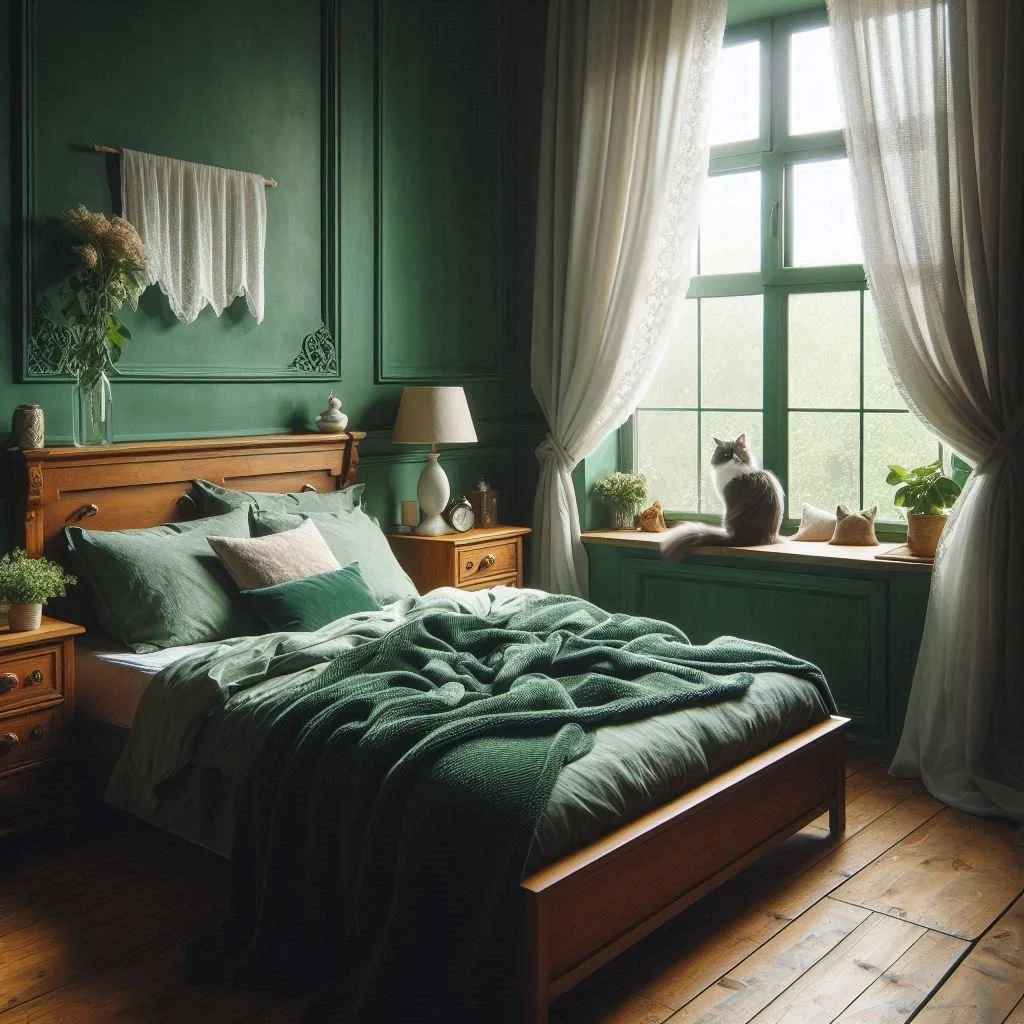
“The formula here is simple but effective: 60% deep, moody color (the green walls), 30% natural materials (the warm wood furniture and plants), and 10% soft, creamy neutrals (the sheer curtains and bedding).”
You could swap the green for a deep navy or charcoal, and the warm wood for a darker walnut, and the room would still have the same balanced, calming effect. The key is maintaining that ratio of dominant color, natural texture, and soft relief.
3. Sophisticated Grey and Black with Abstract Art
You don’t need a massive budget to achieve this calm, sophisticated vibe. A similar look can be pulled together for under $800. Find a simple grey upholstered bed frame from IKEA or Wayfair ($300-$400). Hunt for a pair of minimalist black nightstands on Facebook Marketplace ($100 for a pair). The key is the art; instead of a gallery piece, create your own large-scale abstract canvas using black and white paint, or find affordable digital prints on Etsy and have them framed locally. This is the budget-friendly cousin of the more luxurious look in Idea #5.
“A room with this much grey and black needs a plan for lighting, or it can quickly feel like a dungeon.”
The two bedside lamps are essential, but they might not be enough. If you don’t have overhead lighting, consider a sleek floor lamp in a corner. Also, note the texture on the throw blanket—in a minimalist, neutral space, varied textures (knits, wovens, velvets) are what create visual interest and keep the room from feeling flat and boring.
4. Olive Green Walls with a Black Channel-Tufted Headboard
A plush velvet headboard is the height of luxury, but it requires some care. Velvet is a dust magnet, so plan to vacuum it with an upholstery attachment at least once a month. For spills, act fast! Blot immediately with a dry cloth; don’t rub. For stubborn spots, a mixture of gentle soap and water can work, but always test it on an inconspicuous area first. The olive green walls are more forgiving; a quality matte or eggshell paint finish can be gently wiped down as needed, but be mindful that darker colors can show scuffs more easily.
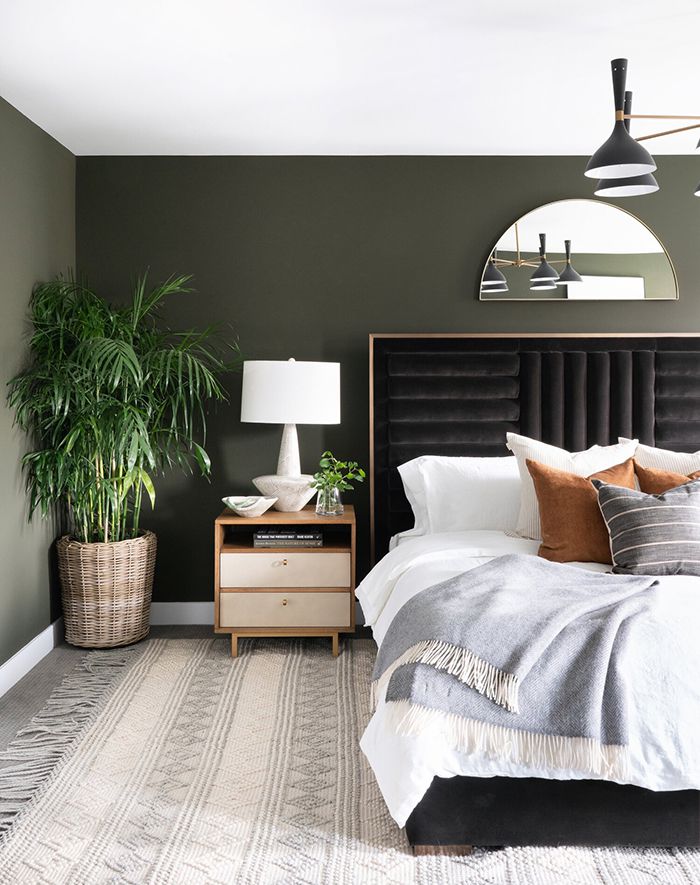
“Want to create that arched mirror effect?”
It’s easier than it looks. Time: 1 hour. Cost: $80-$150.
Purchase a simple, frameless arched mirror online or from a home goods store.
Measure and find the center point above your nightstand where you want the mirror to hang.
Use a pencil to lightly trace the arch on the wall.
Apply thin, gold-colored trim or even metallic gold tape just outside your pencil line to create the ‘frame’ directly on the wall.
Hang the frameless mirror within your newly created border. This technique gives you a high-end, custom look without the heavy lifting.
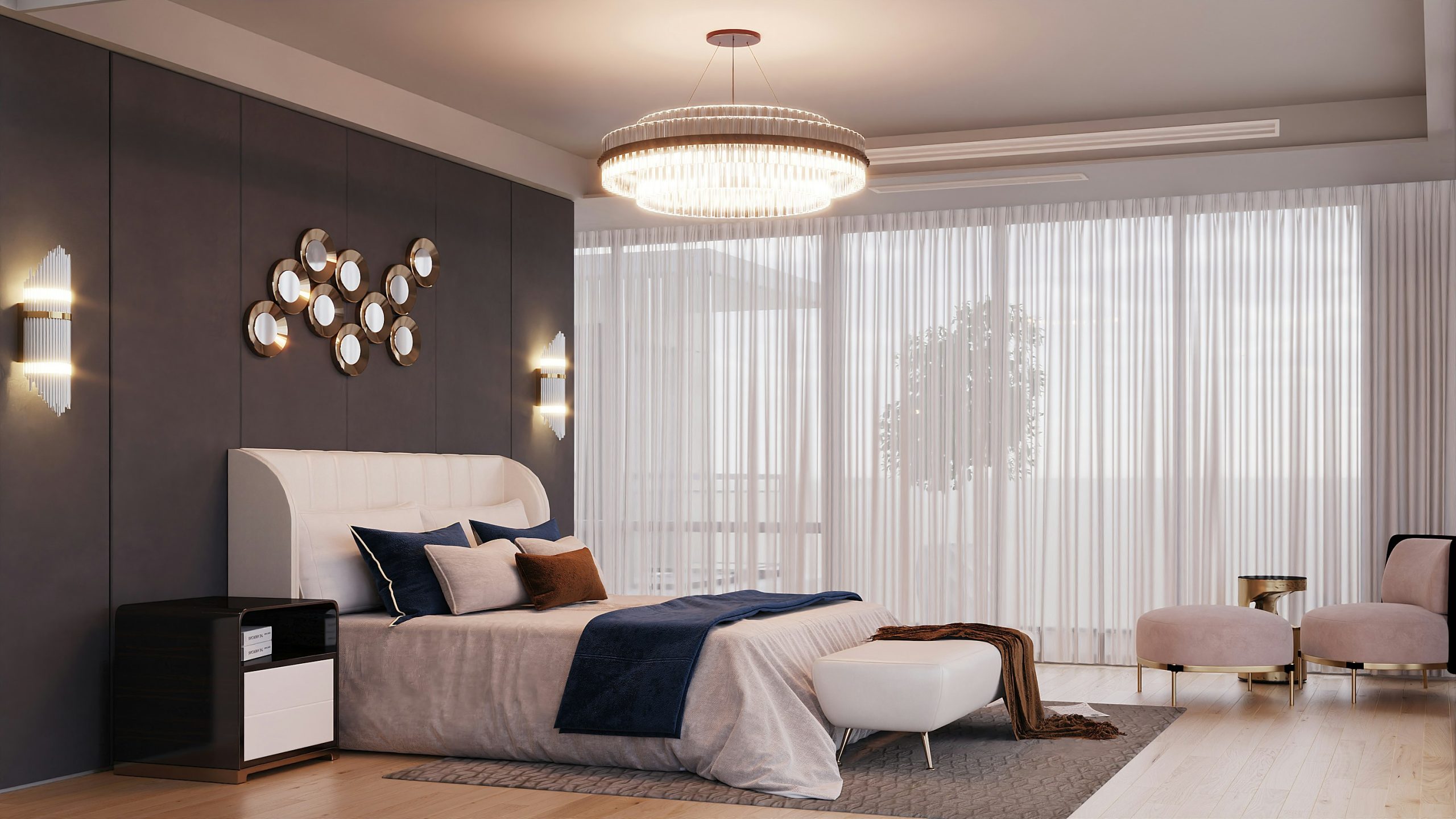
5. Moody Grey Accent Wall with Crystal and Gold Accents
This look feels expensive because it is, but it’s achievable. Here’s a realistic breakdown for a similar high-end feel.
- Paneled Accent Wall (DIY): $300 – $700
- Crystal Chandelier: $800 – $2,500
- Upholstered Bed: $1,200 – $3,000
- Pair of Pink Velvet Chairs: $700 – $1,800
- Textiles (rug, curtains, throw): $500 – $1,500
- TOTAL: $3,500 – $9,500
“This design succeeds by mixing hard and soft, masculine and feminine.”
The dark gray paneled wall provides a strong, almost commanding architectural element. This ‘hard’ feature is then deliberately softened by everything else: the plush white headboard, the sheer floor-to-ceiling curtains, and the soft curves of the pink velvet chairs. The gold and crystal elements act as jewelry, adding a layer of sparkle and luxury that bridges the two. It’s a masterclass in balance. Compare this with the more budget-friendly approach in Idea #3.
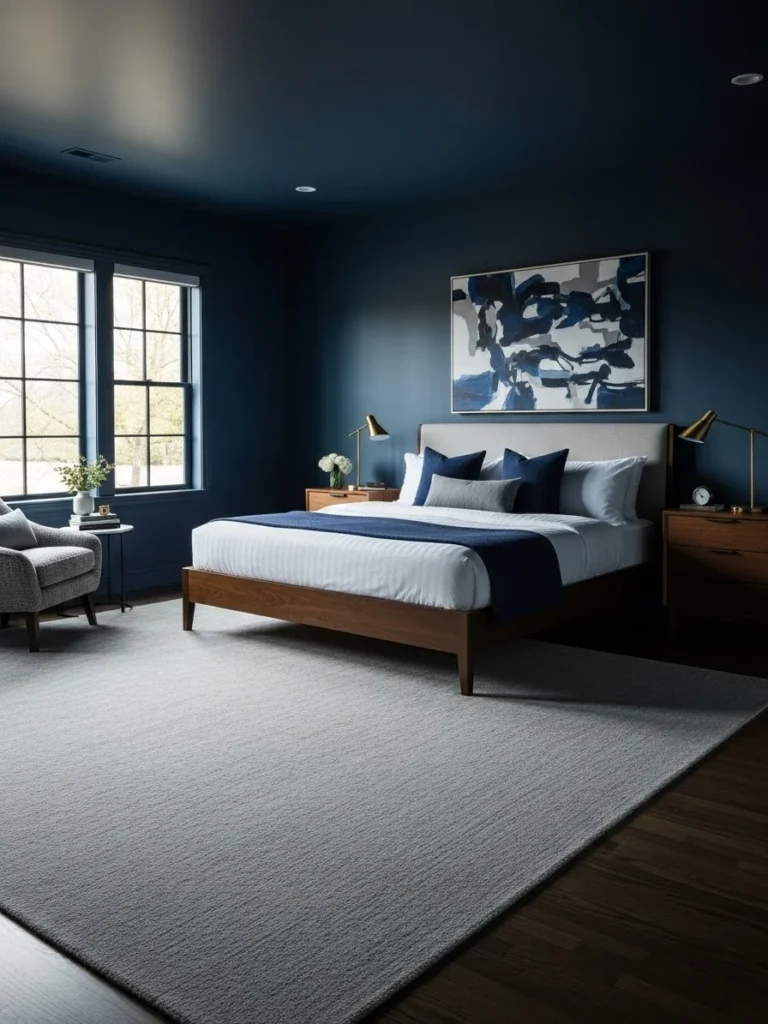
6. Enveloping Navy Blue with a Light Wood Platform Bed
The decision to paint the ceiling the same deep navy blue as the walls is the single most impactful choice in this room. This technique, known as ‘color drenching,’ blurs the lines where the walls end and the ceiling begins, creating an incredibly cozy, enveloping sensation. Instead of making the room feel smaller, it makes it feel infinite, like a calm night sky. It’s a bold move that pays off in emotional impact, turning the bedroom into a true retreat.
“This ‘color drenching’ technique works best in rooms with well-defined architectural boundaries and good natural light.”
A minimum ceiling height of 8 feet is recommended, but it can work with lower ceilings if the room is at least 120 sq ft. The key is to have large windows, like the ones shown, to prevent the deep color from feeling claustrophobic. For a different take on a dark, moody room, compare this modern navy look with the rustic aesthetic in Idea #12.
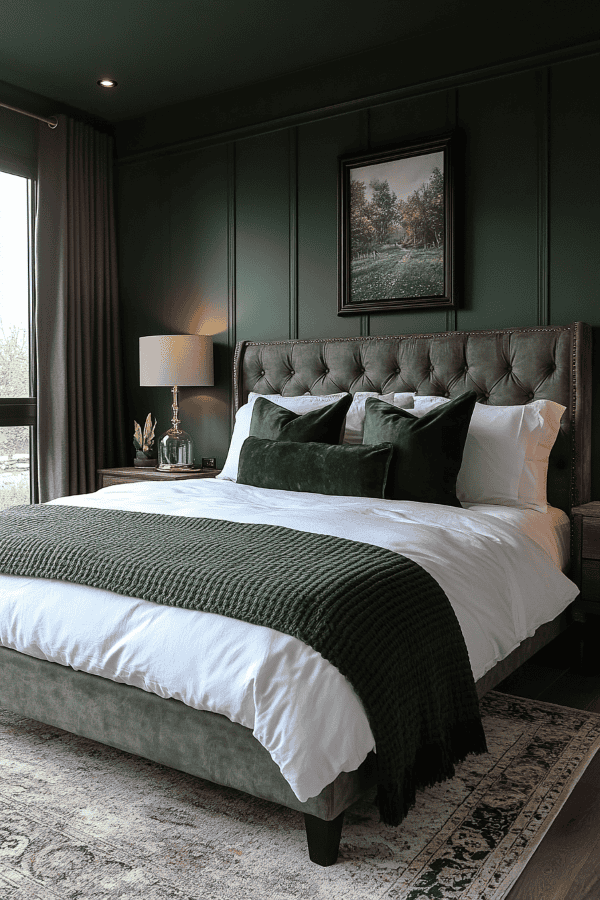
7. Dark Green Paneling with a Classic Tufted Bed
To recreate this elegant, layered look, pay close attention to the scale of your paneling. For a traditional feel, the vertical stiles (the upright pieces) should be between 3.5 and 5.5 inches wide, and the horizontal rails should be slightly wider. Place the main horizontal rail one-third of the way down from the ceiling, not halfway. This classic proportion feels more intentional and grand. Using the same paint color in the same finish (eggshell or satin) for both the paneling and the drywall in between is crucial for this seamless, sophisticated effect.
“This look is a direct nod to the ‘Modern Traditional’ or ‘New Classic’ trend that’s dominating Pinterest.”
We’re moving away from the stark minimalism of the 2010s and craving spaces with history and soul. Traditional wall paneling, a tufted headboard, and vintage-style art all speak to this desire for timeless design. However, the monochromatic green color scheme and clean lines keep it from feeling stuffy or dated. It’s the perfect blend of past and present.
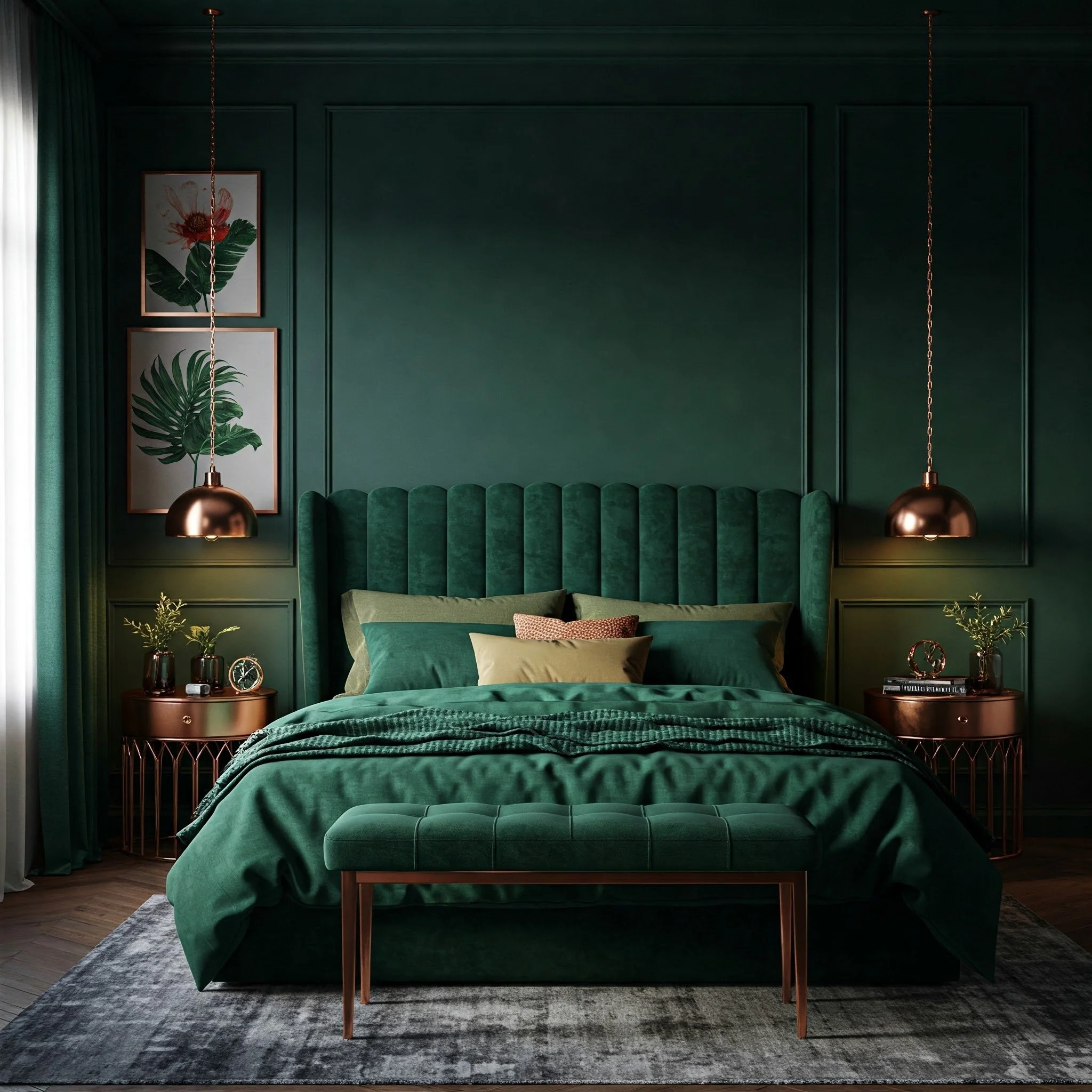
8. Emerald and Copper with a Velvet Headboard
This room is a beautiful example of using analogous colors (colors next to each other on the color wheel) to create a rich, harmonious look. The walls, bedding, and bench are all varying shades of green, from deep emerald to muted olive. This creates a cohesive, layered effect that feels lush and immersive. The masterstroke is the introduction of copper as a complementary accent. The warm, reddish tones of the copper pop against the cool green, adding a touch of glamour and warmth without being jarring.
“A room this committed to a single color family can be tricky.”
Be sure to incorporate a variety of textures to add depth. Here, you see a velvet headboard, knit throws, and smooth cotton sheets—all in green, but all feeling different. Also, a word on copper: real copper fixtures will develop a patina over time, which can be beautiful, but if you prefer the polished look, you’ll need to clean them regularly with a special copper cleaner. Plated options will be lower maintenance.
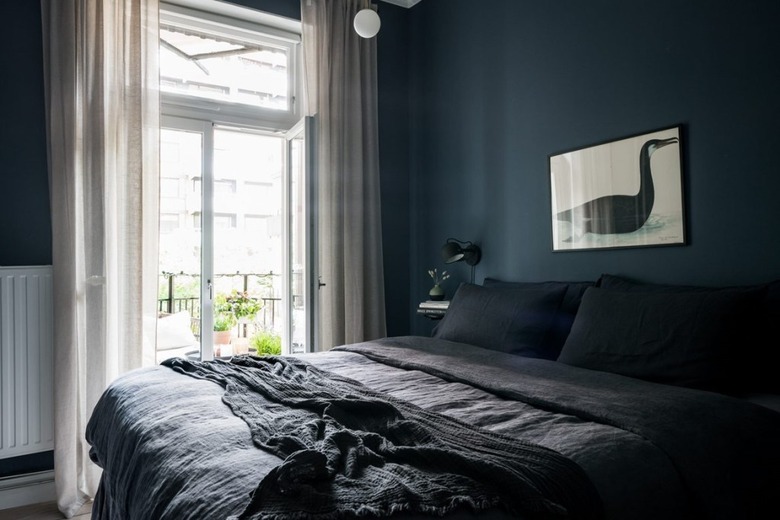
9. Deep Teal Bedroom with Balcony Access and Bird Artwork
The formula for this serene space is: 50% deep, moody wall color (the teal), 30% light and airy neutrals (the sheer curtains and white trim), and 20% layered textiles in adjacent colors (the indigo bedding and dark grey throw). The key to this recipe is the high contrast between the dark walls and the light curtains, which draws the eye towards the view and makes the room feel larger. The framed art serves as a tiny, high-contrast focal point, breaking up the large expanse of wall.
“The sheer curtains are the unsung hero of this design.”
Without them, the dark walls and dark bedding could feel heavy and overwhelming. The curtains act as a visual ‘breather,’ softening the edges of the room and diffusing the natural light from the balcony doors into a gentle glow. They add a layer of softness and movement, preventing the moody color scheme from feeling static or overly serious. It’s a simple addition that completely changes the room’s emotional temperature.
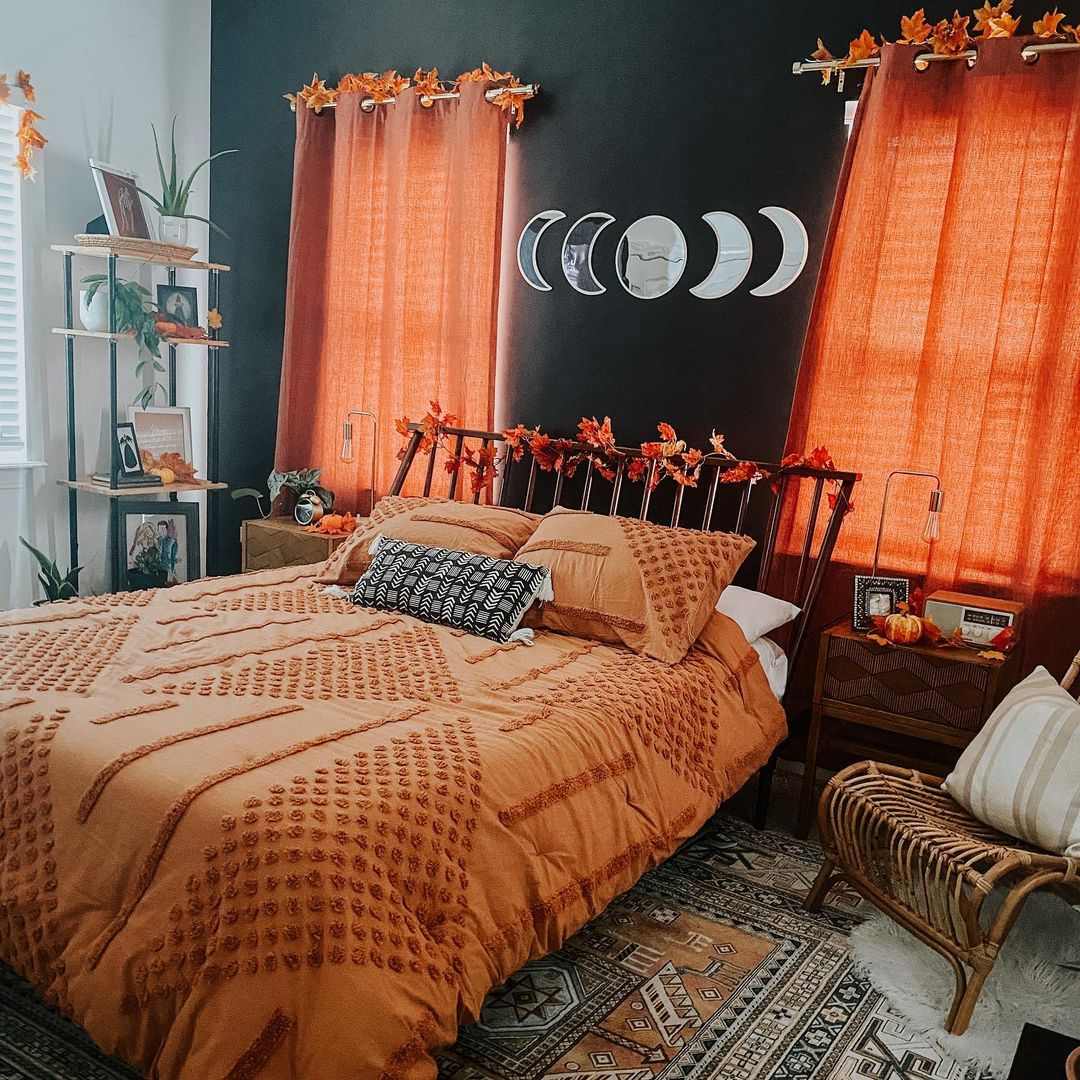
10. Autumnal Bedroom with Burnt Orange and Moon Decor
This room works because it commits wholeheartedly to its theme without feeling kitschy. The key is the sophisticated color palette. The deep black wall acts as a dramatic, neutral backdrop, allowing the rich burnt orange to become the star. The pairing is inherently autumnal and warm. The metallic moon phase mirrors and woven textures add layers of personality and magic. It’s a reminder that a ‘theme’ doesn’t have to be childish; it can be incredibly chic when executed with a focused color story and varied materials.
“You can create this mystical, cozy vibe for less.”
The wall color is just a can of black paint ($50). Find burnt orange duvet covers at Target or on Amazon ($60-$100). The moon phase mirrors are widely available on Etsy for under $40. For the garlands, you can use real preserved autumn leaves or find inexpensive faux versions at a craft store like Michael’s. This entire look is highly achievable on a budget because it relies more on color and curated decor than on expensive furniture pieces.
11. Modern Bedroom with Matte Black Wardrobes and Rattan
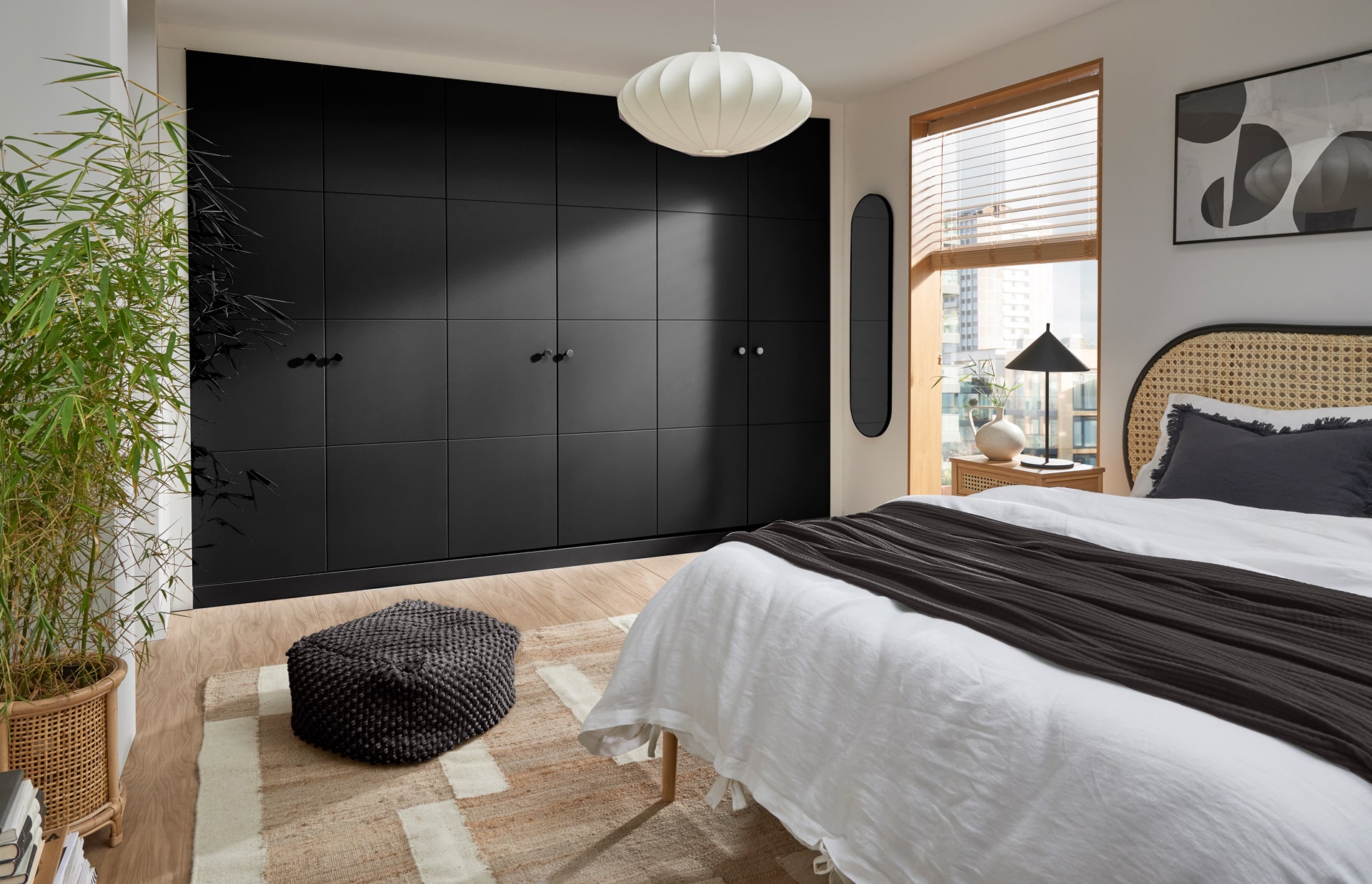
The wall of matte black paneled wardrobes is the undeniable core of this room’s design. It’s a bold and brilliant move that serves multiple functions. First, it provides a massive amount of seamless, hidden storage. Second, it acts as a dramatic, full-room accent wall. Using handleless or minimal knob doors makes it feel like architectural paneling rather than just a row of closets. This element sets a sophisticated, modern tone and provides the perfect dark backdrop for the natural rattan and wood textures to pop.
“Matte black surfaces are stunning, but they are notorious for showing fingerprints, dust, and smudges.”
Be prepared to wipe them down regularly with a soft, damp microfiber cloth. Avoid harsh chemical cleaners, which can damage the finish. The trade-off for this sleek, non-reflective look is higher maintenance. If that sounds like too much work, consider a very dark grey or a satin finish, which will be slightly more forgiving. The rattan headboard will also need occasional dusting with a soft brush to keep it looking fresh. Compare the use of rattan here with the woven textures in Idea #17.
12. Rustic Bedroom with a Dark Wood Plank Accent Wall
This room’s magic comes from a rustic formula: 50% dominant texture (the dark wood wall), 30% soft and cool color (the blue-gray bedding), and 20% warm, earthy accents (the rust pillows and wicker shades). The key is the temperature contrast. The cool-toned bedding prevents the dark wood and warm accents from feeling too heavy or cabin-like, while the rust and wicker add the necessary warmth and coziness. It feels balanced because it doesn’t lean too heavily in one direction.
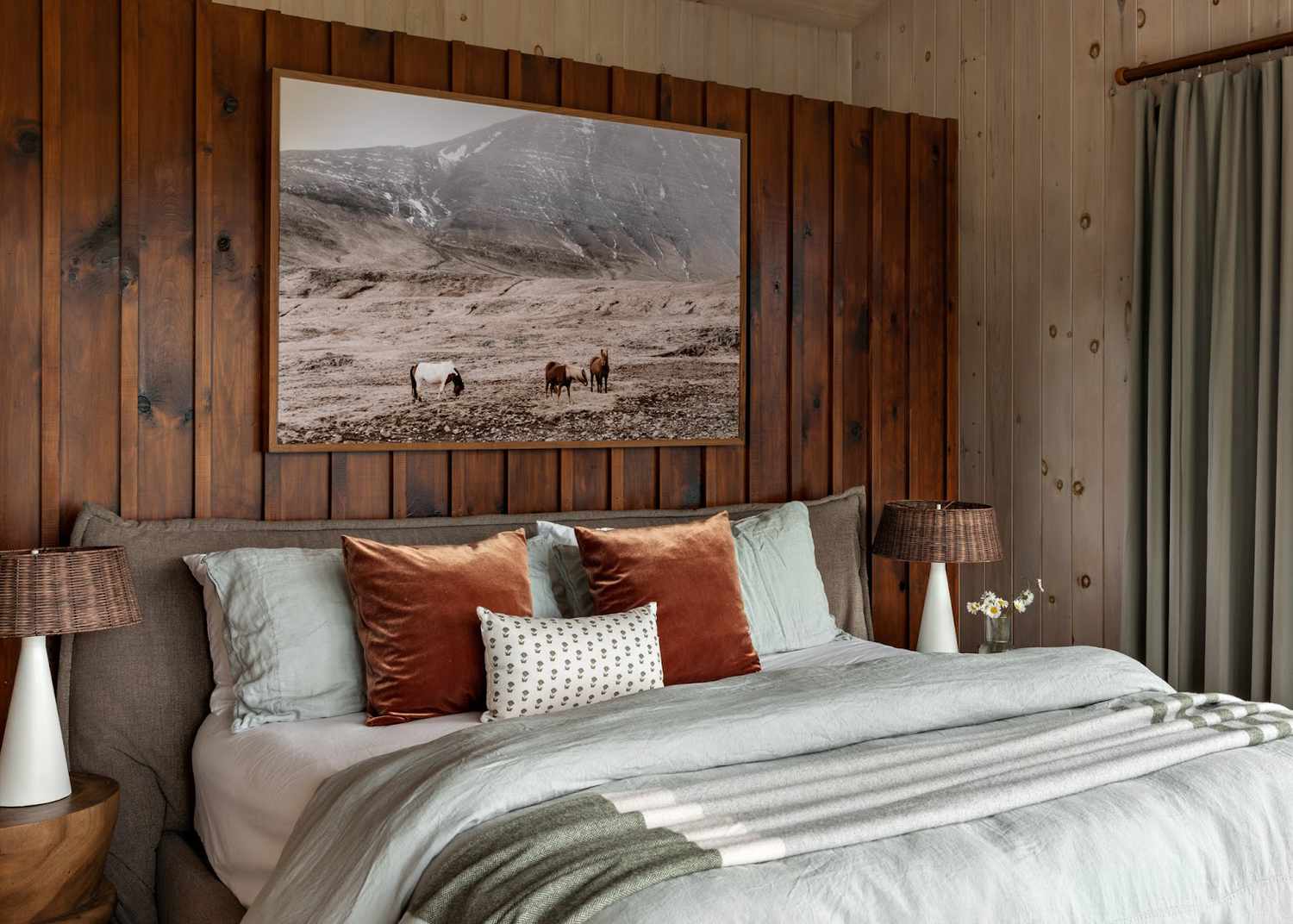
“When creating a wood accent wall, the finish is everything.”
For this rustic-yet-refined look, avoid high-gloss polyurethane. Instead, opt for a matte or satin stain to bring out the wood’s natural grain without adding excessive shine. To get the variation in color seen here, use two or three slightly different shades of the same stain color, applying them randomly to different planks before installation. This creates a more authentic, reclaimed look than using a single uniform color. For a different dark room vibe, see the modern navy approach in Idea #6.
13. Cozy Dark Wood Bedroom with Layered Textures
Let’s talk about styling those bedside books. It’s an art! Time: 10 minutes. Cost: $0 (using books you own).
- Gather a selection of 5-7 hardcover books of varying thicknesses.
- Remove any glossy paper dust jackets to reveal the simple, textured covers beneath.
- Create two stacks. Make one stack taller than the other for visual interest.
- Place the largest books at the bottom of each stack for a stable base.
- Arrange them so the spines are visible but not perfectly aligned. A little imperfection feels more natural.
- Top the shorter stack with a candle or a small decorative object.
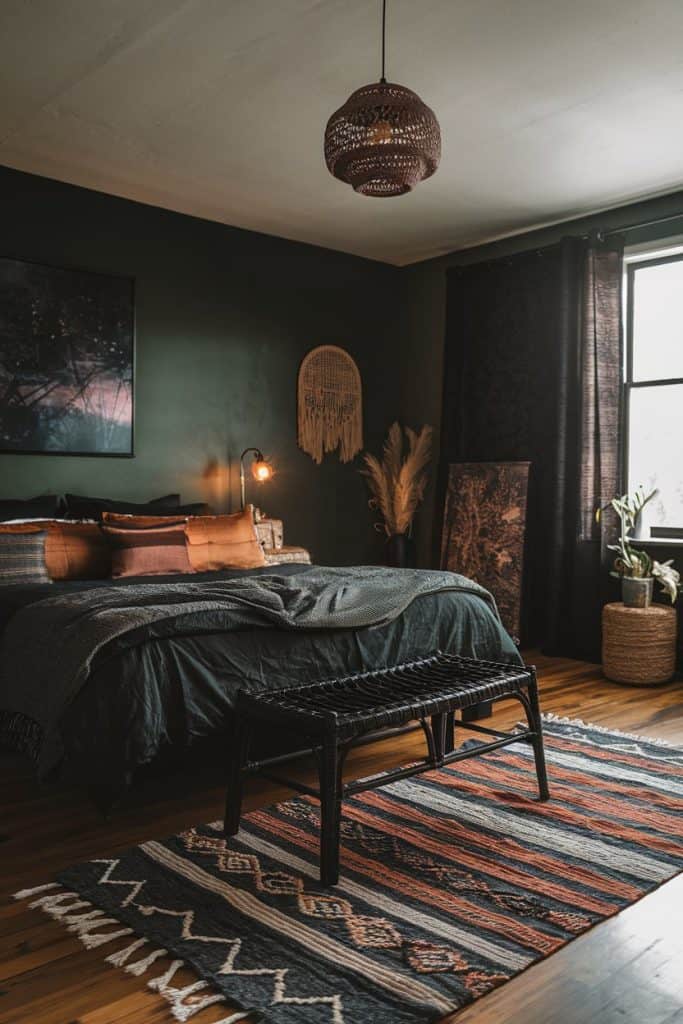
“A room this cozy and layered can easily tip into ‘cluttered’ territory.”
The key to keeping it stylish is editing. Notice that while the bedding is heavily textured and layered, the rest of the decor is relatively simple. The bedside table holds only books and a candle; the floor is mostly clear. If you’re going to have a lot going on with your textiles, you must practice restraint elsewhere. Otherwise, the ‘cozy’ feeling quickly becomes ‘chaotic’.
14. Modern Bedding with a Dark Wall and Leather-Strap Headboard
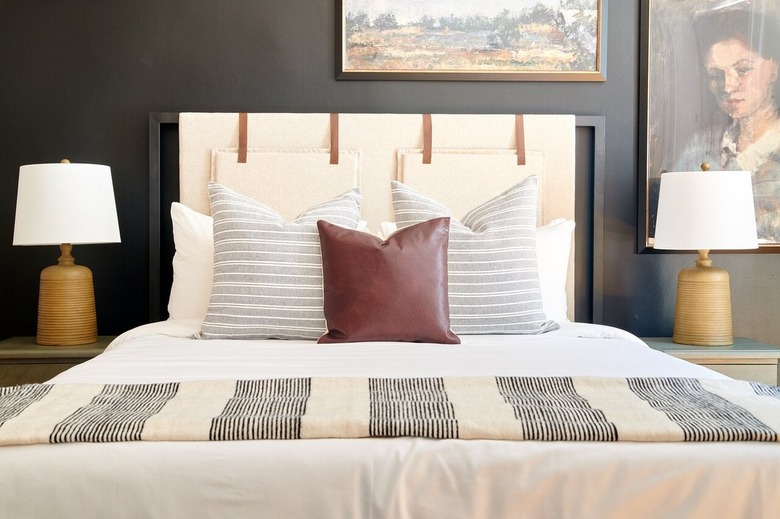
The cream upholstered headboard with leather straps is the standout piece in this room. It perfectly encapsulates the ‘modern earthy’ aesthetic. The combination of soft cream fabric, warm wood, and tough leather is unexpected and incredibly chic. It bridges the gap between the dark, moody wall and the lighter, cozier bedding. If you replaced it with a simple wooden or upholstered headboard, the room would lose its most unique and defining feature. It’s a perfect example of how one special piece can elevate an entire space.
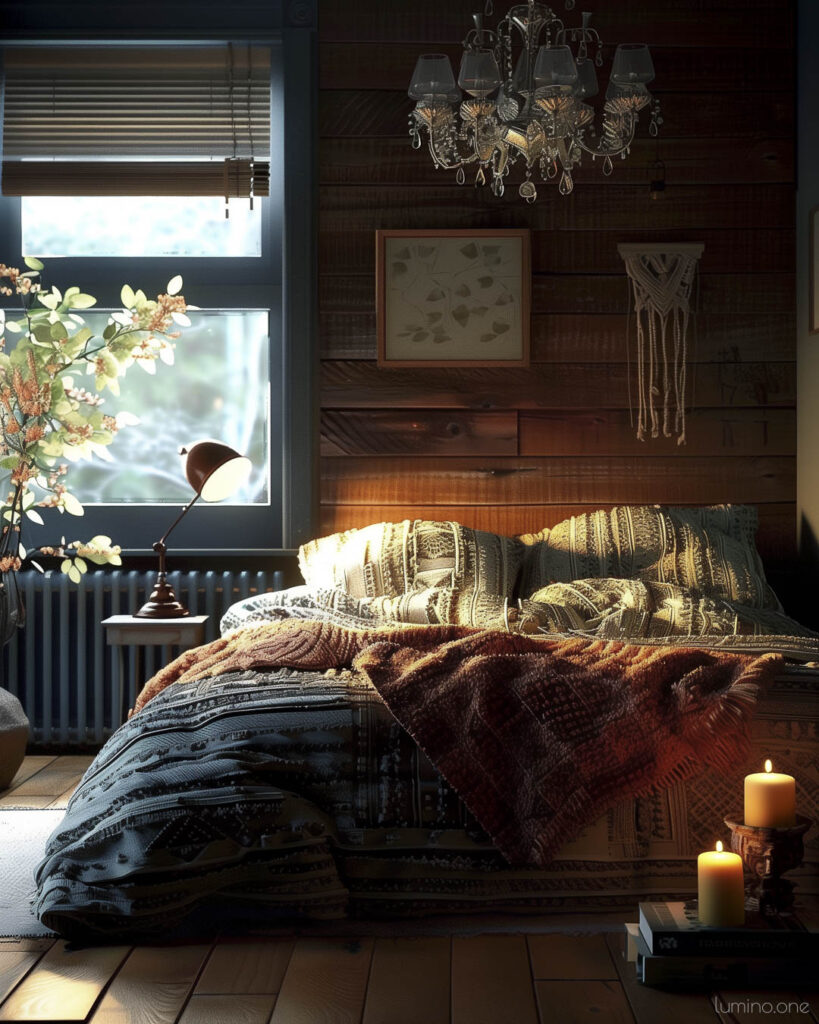
“Before you commit to a dark grey wall, make sure you’ve checked these boxes:
”
Before you commit to a dark grey wall, make sure you’ve checked these boxes:
- Test the Paint: Paint a large swatch (at least 3’x3′) on the wall and observe it at different times of day. Dark greys can have sneaky undertones (blue, green, purple) that only appear in certain light.
- Assess Your Light: Does your room get warm morning light or cool afternoon light? This will dramatically affect how the grey reads. A north-facing room might make a cool grey feel icy and uninviting.
- Plan Your Accents: A dark grey wall needs warmth. Do you have warm wood tones, leather, or warm-colored textiles (like the burgundy pillow here) to balance the coolness of the grey?
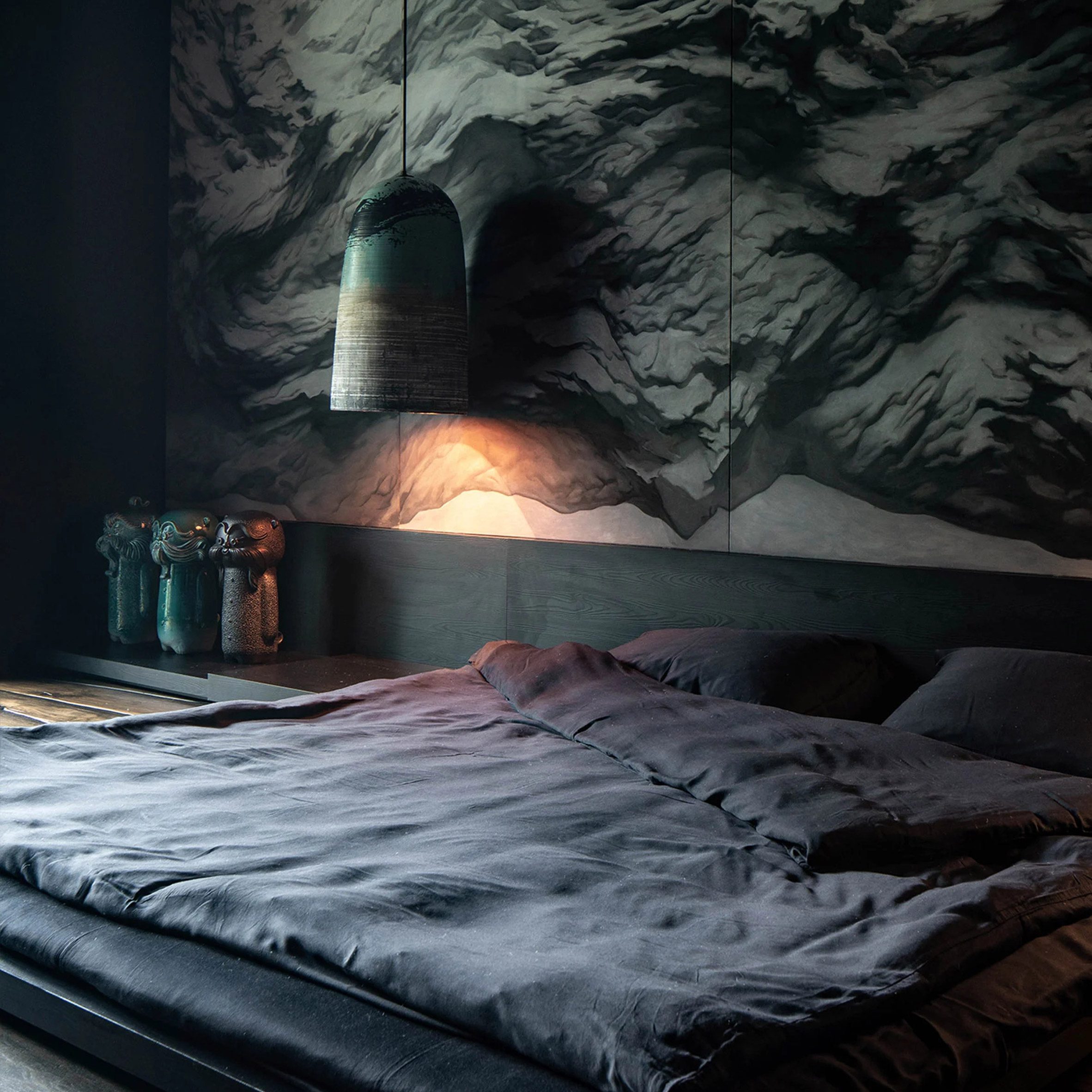
15. Dramatic Bedroom with a Mountain Mural and Hidden Lighting
The hidden backlighting behind the headboard is a high-impact feature that’s surprisingly easy to replicate. Use an LED strip light kit (available online for $20-$50). For this effect, choose a ‘warm white’ version (2700K-3000K). The key is mounting the strip on the back of your headboard, facing up, about 2-3 inches from the top edge. This ensures the light washes up the wall softly without revealing the light source itself. It adds a warm, professional-looking glow that makes the mural feel even more dramatic. For a different large-scale art idea, see the embroidery in Idea #29.
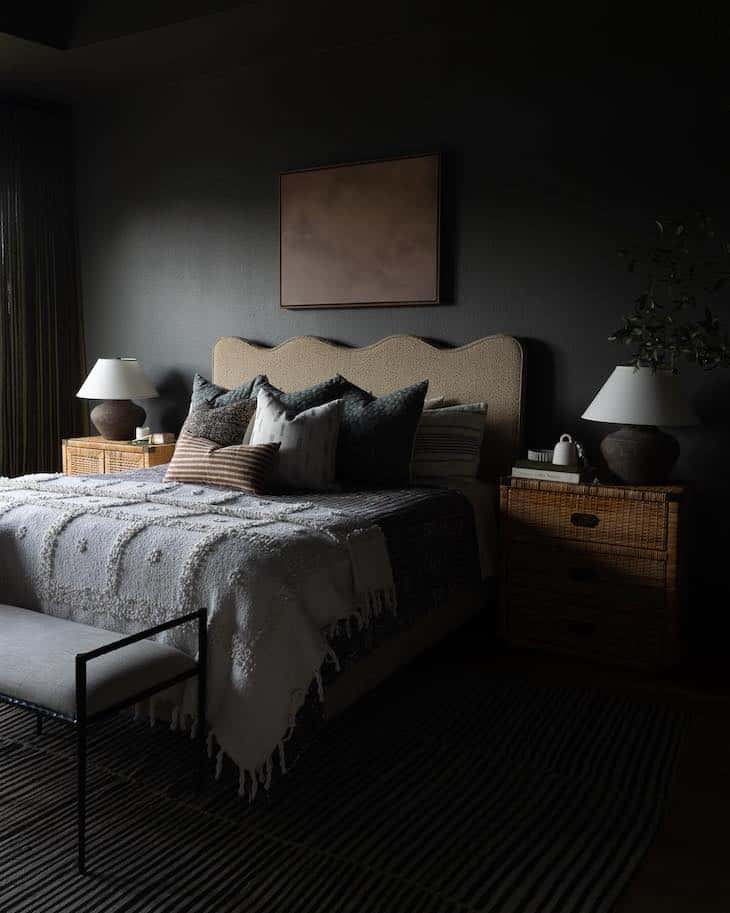
“This room feels so immersive because of its brilliant use of scale and depth.”
The mountain mural isn’t just a picture; it’s a large-scale piece of art that creates the illusion of a vast landscape extending beyond the bed. The hidden lighting enhances this by creating a soft horizon line, adding to the illusion of depth. The dark bedding and low-profile bed prevent any visual obstruction, allowing you to feel fully enveloped by the dramatic, serene scenery of the mural.
16. Textured Bedroom with a Wavy Camel Headboard
That wavy, camel-toned headboard is everything. In a room dominated by straight lines and a dark, moody palette, its playful, organic shape provides an immediate focal point and a dose of personality. The warm camel color is the perfect antidote to the cool dark gray walls, injecting warmth and softness right where you want it most—around your head. It’s a statement piece that says the room doesn’t take itself too seriously, while still feeling incredibly chic and sophisticated.
“While rattan and woven furniture add amazing natural texture, they can be fragile.”
Those rattan nightstands look fantastic, but they might not be the best choice if you have curious pets who like to scratch or children who might be rough with drawers. The woven cane panels can be punctured or broken. Be honest with yourself about your lifestyle. If you need something more durable, look for solid wood nightstands and bring in the rattan texture with less-used items like a decorative basket or a lampshade.
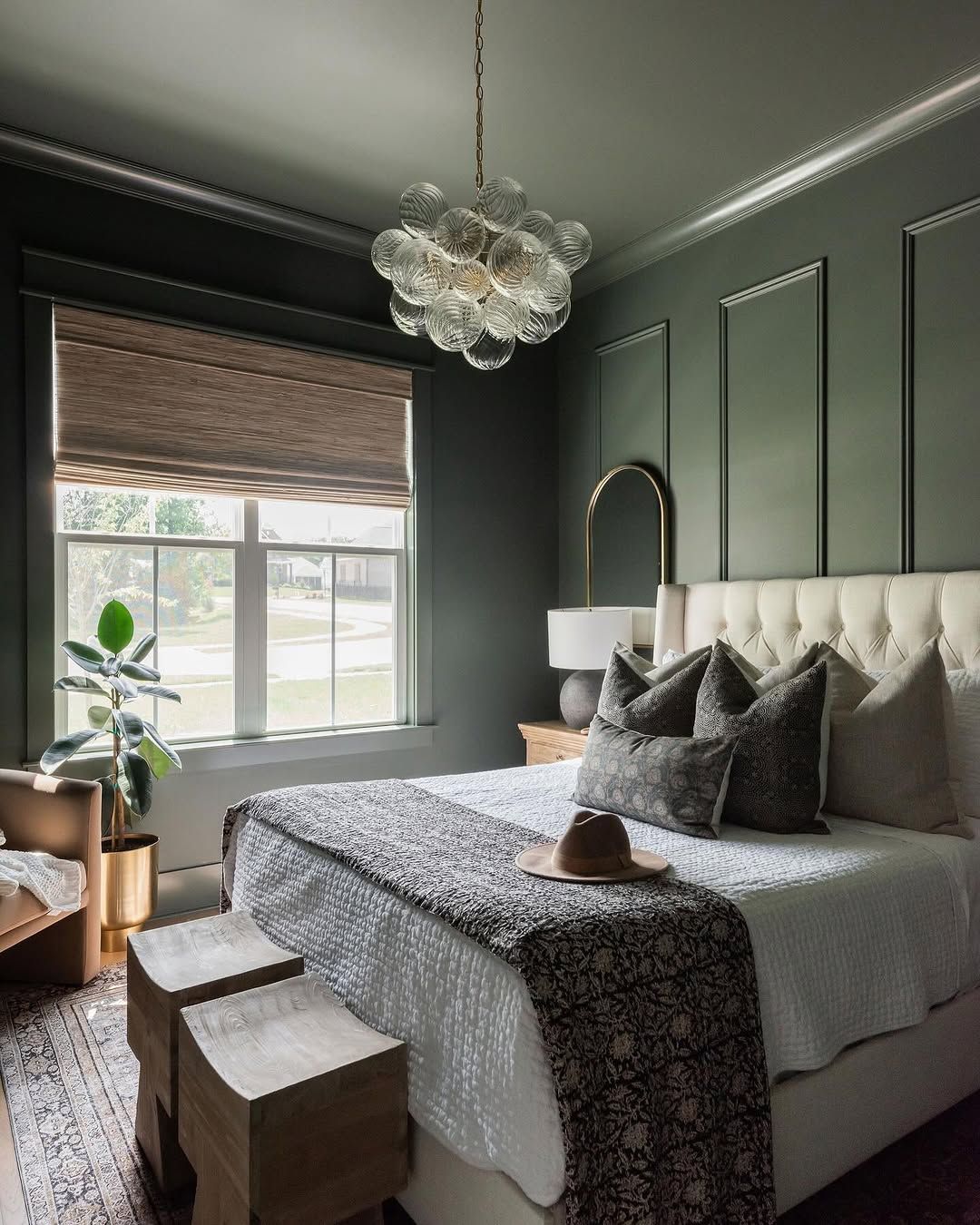
17. Dark Green Bedroom with Terracotta and Woven Textures
This room is a masterclass in using complementary colors. The dark green walls and the terracotta/rust pillows are opposites on the color wheel, which is why they create such a vibrant, energetic pop. This high-contrast pairing is grounded by the surrounding neutral textures—the woven pendant, the rattan bench, and the kilim-style rug. These natural elements mediate the intense color relationship, making the space feel earthy and balanced rather than overwhelming. It’s a bold combo that works because it’s softened by texture.
“Love this look but not the price tag?”
Paint is your best friend here—a can of deep green paint is an affordable start. For textiles, head to Target’s Opalhouse or Jungalow lines for pillows and throws with this exact vibe. A similar kilim-style rug can be found on Wayfair or Rugs USA for under $200. The real money-saver is the pendant light. Look for woven or rattan lampshades at IKEA or even thrift stores; you can easily pair them with a simple pendant light kit for a fraction of the cost of a designer fixture. The woven bench can often be found on Facebook Marketplace. See a similar use of woven textures in Idea #11.
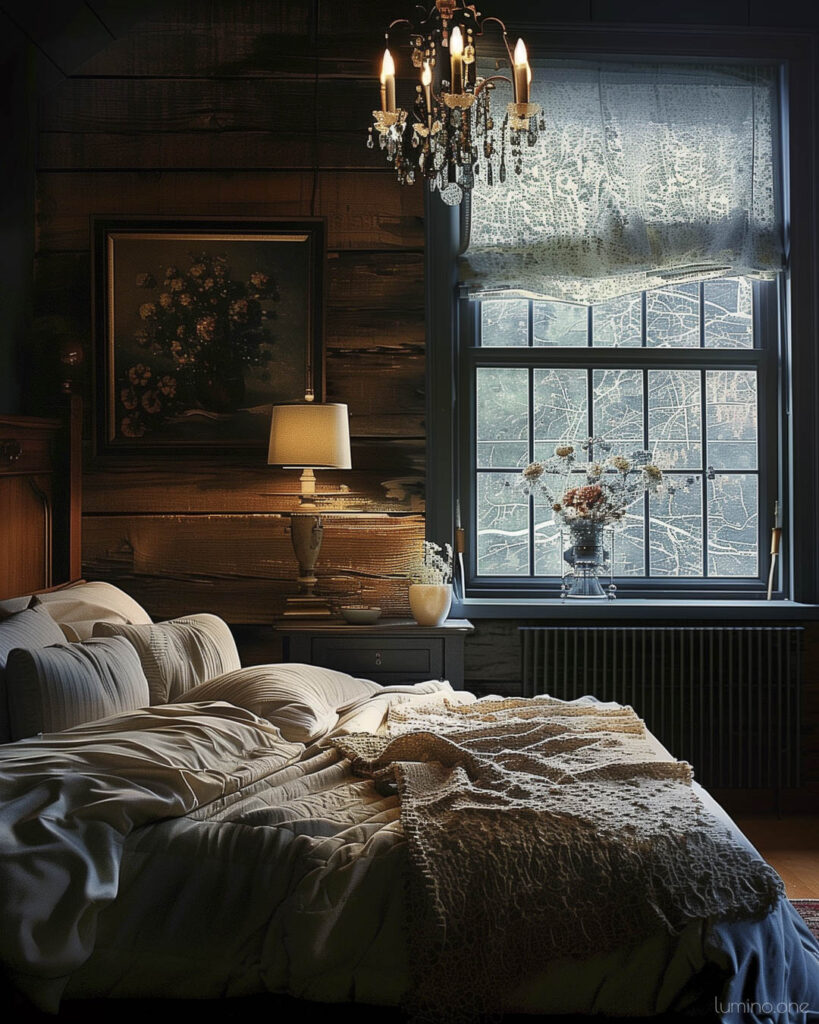
18. Dark Rustic Bedroom with a Snowy Window View
The single element that defines this room is the contrast between the interior and the exterior. The inside is a dark, warm, cozy cocoon, created by the rough-hewn wooden walls and layered textiles. The outside, visible through the large window, is a cold, bright, snowy landscape. This juxtaposition is what creates the powerful feeling of shelter and intimacy. The room becomes a snug haven from the elements, a feeling amplified by the glimpse of the frosty world outside. The crystal chandelier adds an unexpected touch of glamour to the rustic setting.
“This look, with its heavy, dark wood paneling, requires a specific kind of space to not feel overwhelming.”
It’s ideal for a room with high or vaulted ceilings, which can handle the visual weight of the dark wood. A minimum ceiling height of 9 feet is best. It also relies heavily on having a large window or light source to provide contrast and prevent the room from feeling like a dark box. This idea is perfect for a primary bedroom in a cabin, a mountain home, or any space of at least 150 sq ft with a great view.
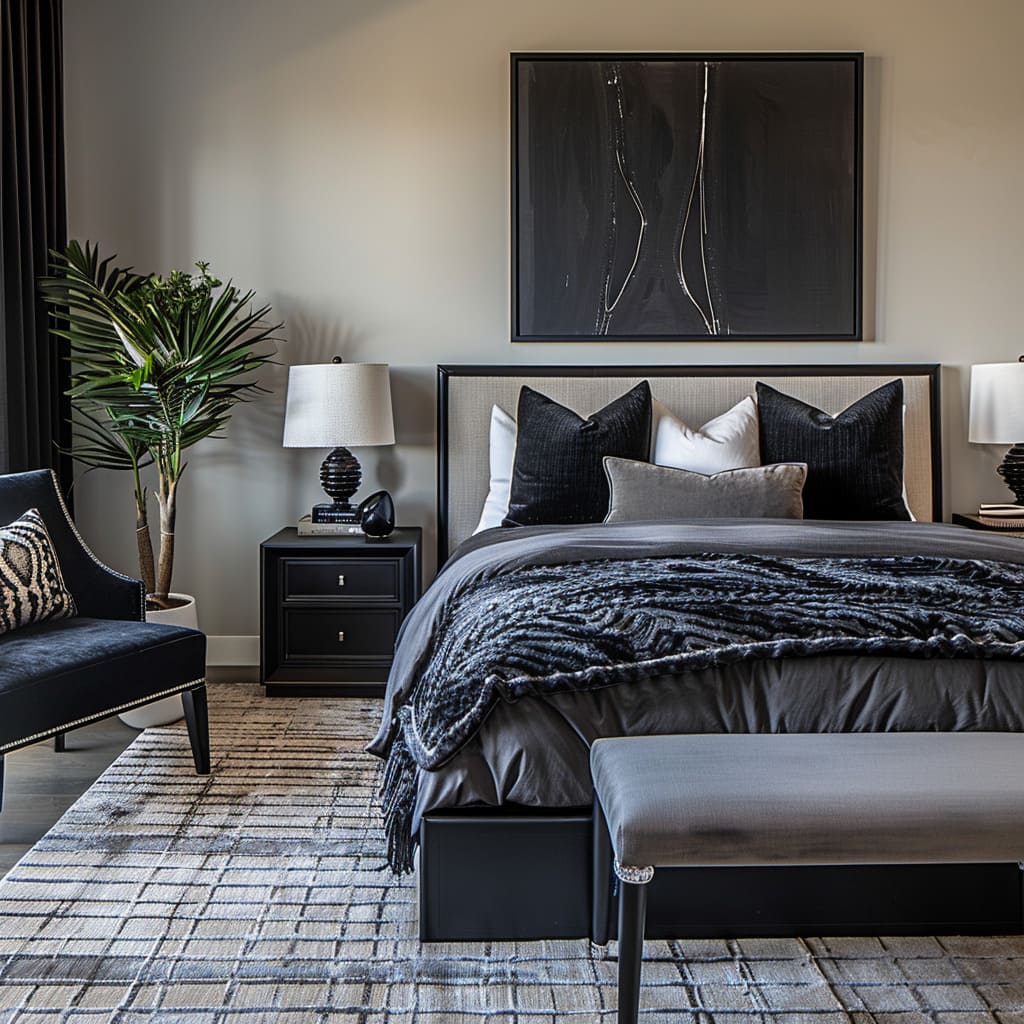
19. Mastering Texture in a Minimalist Dark Bedroom
When your color palette is this restrained, texture must do the talking. The key is to layer at least three different textures. Think a smooth, high-thread-count cotton sheet, a chunky, loose-knit wool throw, and a low-pile velvet pillow. Even if they are all shades of grey or black, the way they absorb and reflect light differently will create visual depth. Run your hand over every textile you consider; if it doesn’t feel interesting, it won’t look interesting in a minimalist space.
“The formula for a successful dark, minimalist room is a study in subtlety.”
Think: 70% dark, cohesive color (on walls, floors, and major furniture), 20% varied texture (in bedding, rugs, and curtains within the same color family), and 10% ‘life’ (a single green plant, a piece of worn wood, or a single piece of meaningful art). The strict color palette provides the calm, while the small percentage of texture and life prevents it from feeling sterile or boring.
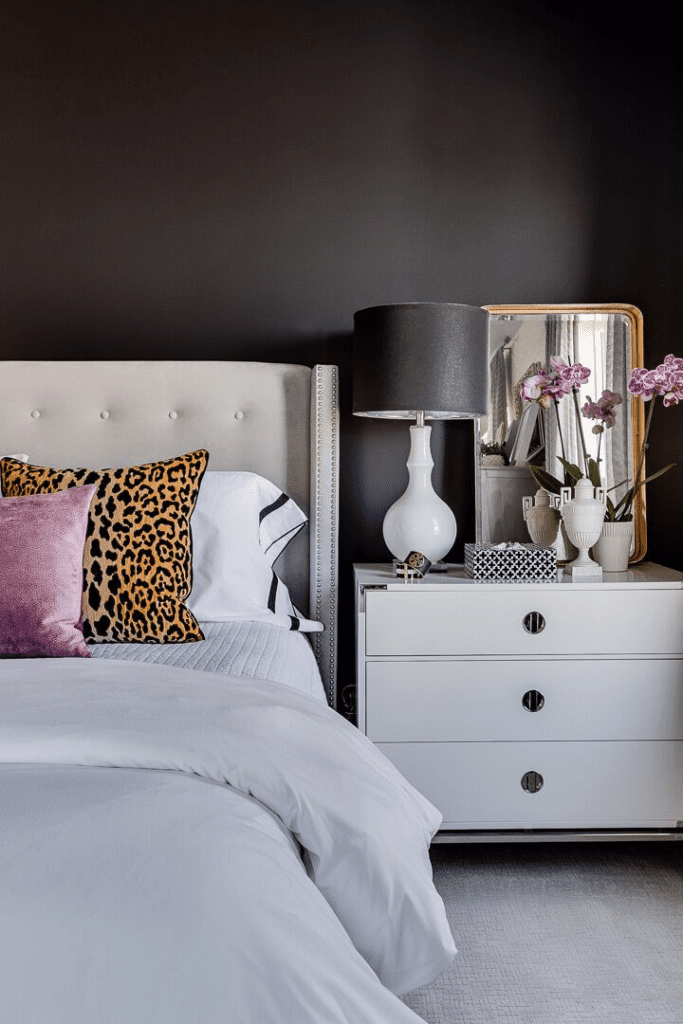
20. High-Contrast Glamour with a Charcoal Wall and Animal Print
This room’s power comes from its unapologetic use of high contrast. The crisp white bedding and nightstand practically jump off the deep charcoal wall. This isn’t a soft, blended look; it’s a confident, graphic statement. The leopard print pillow and dusty rose accent are crucial—they bridge the gap between the black and white, adding a necessary layer of color and pattern. The nailhead trim on the headboard and gold mirror add a final touch of metallic glamour, making the whole space feel polished and intentional.
“A tufted headboard with nailhead trim looks incredibly luxe, and you can DIY it.”
Time: 3-4 hours. Cost: $100-$150.
Start with a piece of plywood cut to your desired headboard shape.
Layer 2-inch thick upholstery foam on top, securing it with spray adhesive.
Add a layer of batting, pulling it taut and stapling it to the back of the plywood.
Drape your chosen fabric over the front, pull it tightly, and staple it to the back, creating neat corners.
For the tufting, drill holes through the back, thread a long needle with upholstery thread, and pull it tight on the front with a fabric-covered button. Secure it on the back with a knot and staple.
Finally, add the nailhead trim along the edges using a rubber mallet for a professional finish.
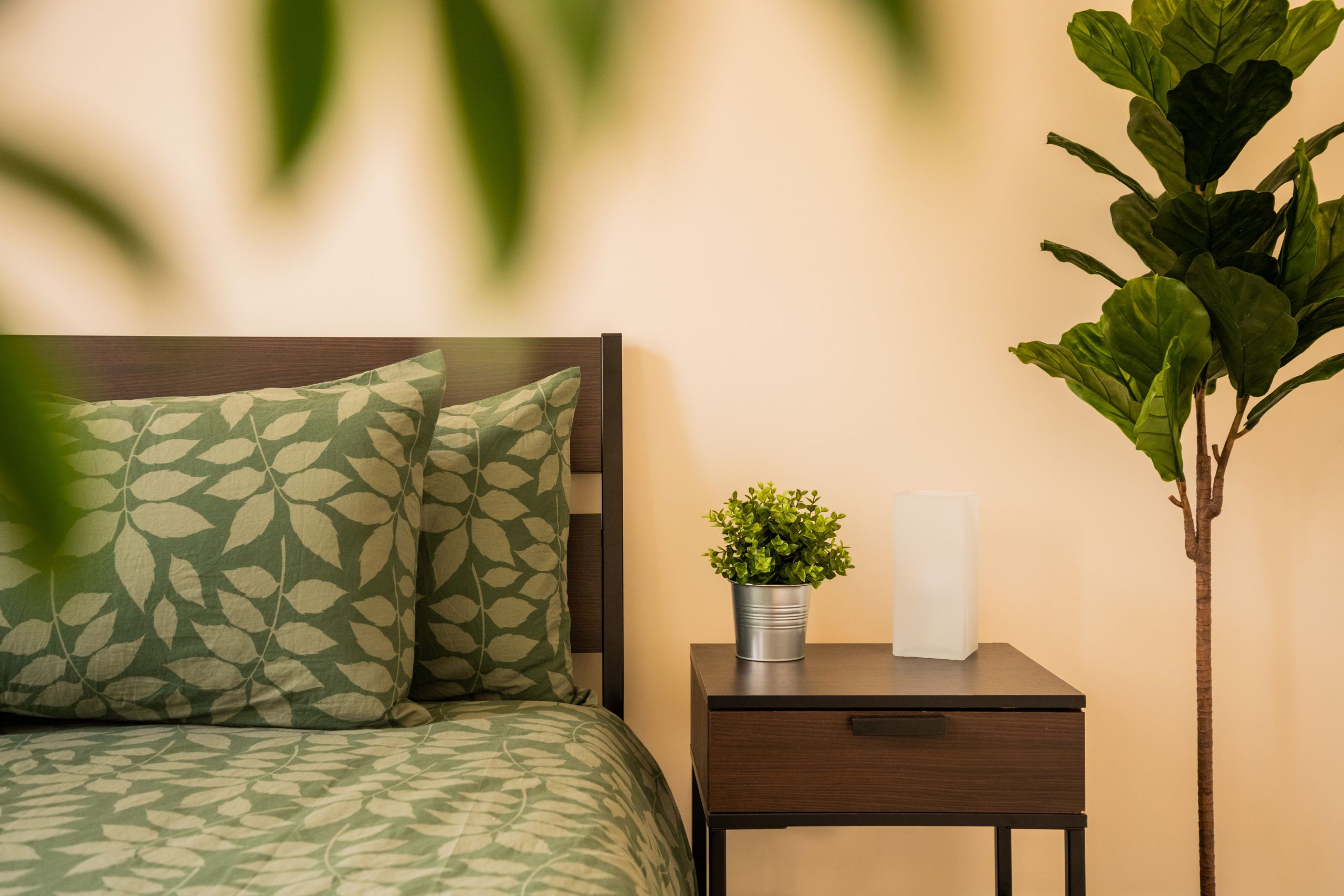
21. Fresh and Natural with Dark Wood and Leafy Green Bedding
The botanical-print bedding is the heart of this design. It’s the element that explicitly connects the ‘dark’ and ‘nature’ themes. The deep green leaf pattern against the light background provides a burst of freshness and life that prevents the dark wood furniture from feeling too heavy or traditional. It sets a clear, nature-inspired mood for the room in a way that solid-colored bedding couldn’t. Paired with the live plants, it makes the space feel vibrant and breathing.
“A light peach wall color is a beautiful, warm choice, but it can be tricky.”
In a north-facing room with cool, blueish light, a soft peach can sometimes look dull or even slightly grey. In a south-facing room with bright, warm light, it will glow. Always, always test your paint color on the actual wall. And remember that the color of your lightbulbs (warm white vs. cool white) will have a huge impact on how the peach tone renders in the evening.
22. The Art of Color Drenching with Deep Forest Green
Color drenching is one of the biggest trends of the mid-2020s, and for good reason. After years of white and grey rooms, we’re craving immersive, emotional spaces. Wrapping a room—walls, trim, and sometimes even the ceiling—in a single, deep color like this forest green creates a sense of calm and sophistication. It blurs the room’s edges, making it feel both cozy and expansive. It’s a move for the confident home decorator, signaling a shift away from ‘safe’ choices towards more personal and impactful design.
“When you’re color drenching, the paint finish is critical.”
Don’t use different finishes for the walls and trim (e.g., eggshell on walls and semi-gloss on trim). The beauty of the look is its seamless, continuous nature. Using the same finish—an elegant matte or a soft eggshell/satin—across all surfaces is the professional’s secret. This minimizes reflection, enhances the richness of the color, and creates that uniform, velvety look you’re after.
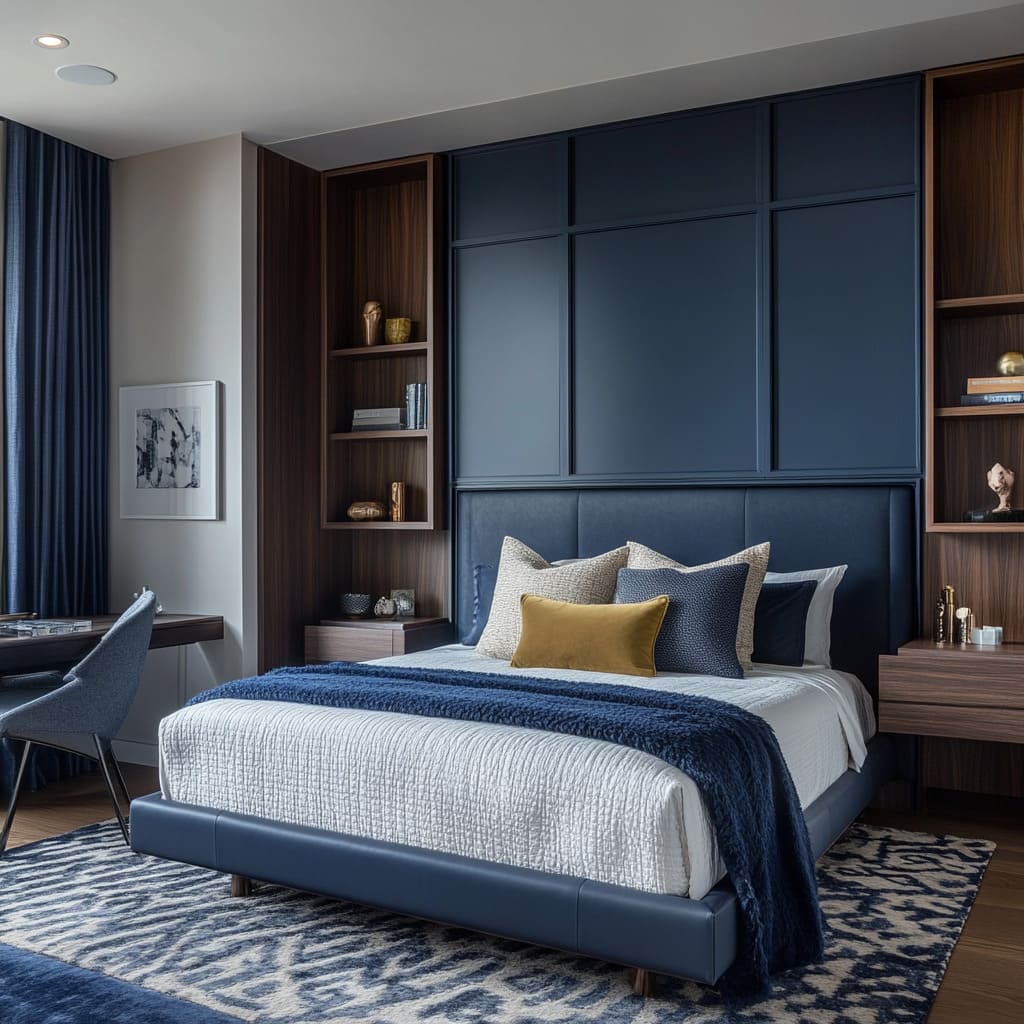
23. Navy Blue Accent Wall with Integrated Wood Shelving
A custom built-in like this looks like a million bucks, but a skilled DIYer can achieve a similar effect for a surprisingly reasonable cost. Let’s break it down.
- Wall Paneling (MDF boards): $200 – $400
- Dark Wood for Shelves (e.g., Walnut veneer plywood): $300 – $600
- Navy Blue Paint (high quality): $150 – $250
- Upholstered Headboard (custom or modified): $300 – $700
- TOTAL (DIY): $950 – $1,950
“This design feels so cohesive because it fully integrates function and form.”
The accent wall isn’t just a color; it’s an architectural feature that includes the headboard and the storage. The dark wood of the shelves provides a warm, organic contrast to the deep, cool navy, and this same wood tone is repeated in the room’s other furniture. The mustard yellow accent pillow is a classic, complementary choice that adds a necessary spark of energy. It all works together as a single, unified concept.
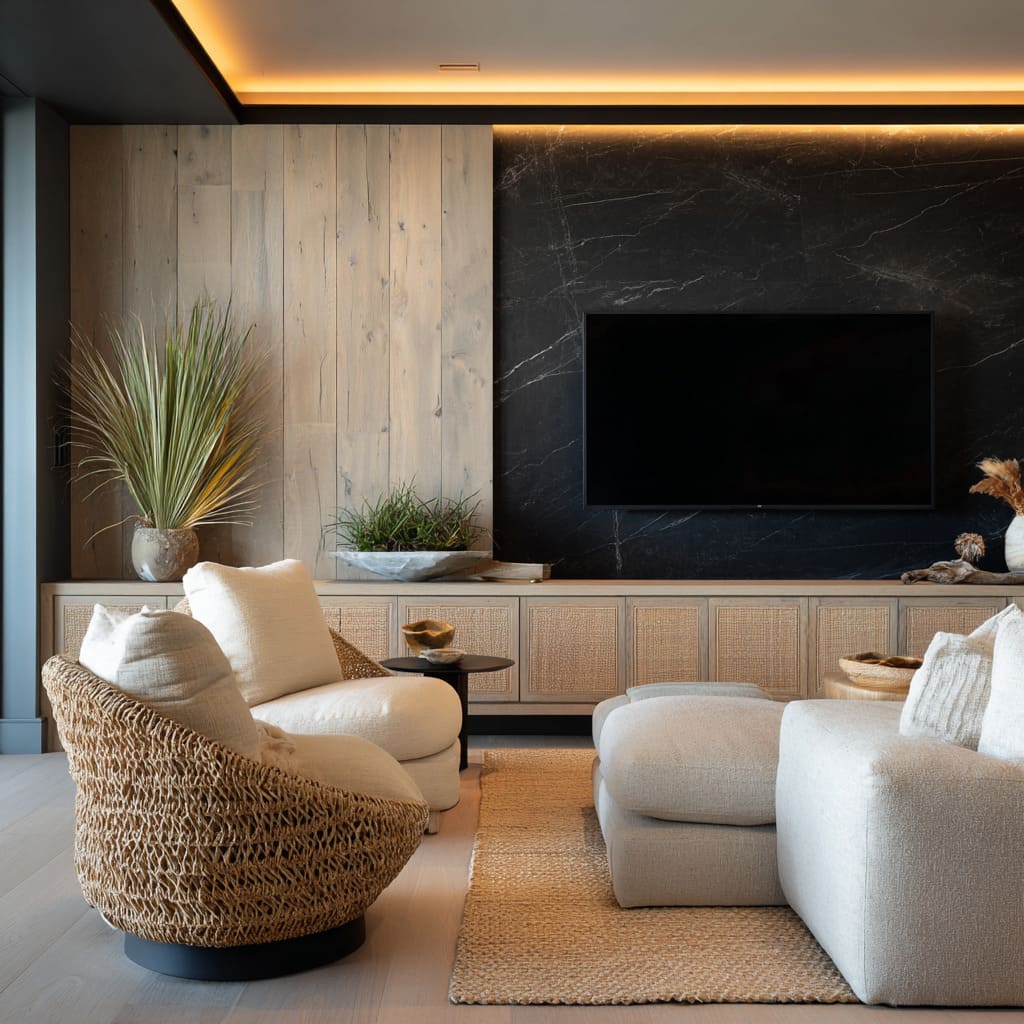
24. Modern Media Wall with Black Marble and Light Wood
A black marble feature wall is the epitome of modern luxury, but it’s not for the faint of heart. Real marble is porous and can be stained or etched by acidic substances. It also requires sealing every 6-12 months to protect it. For a living space, this might be overkill. A more practical—and affordable—alternative is porcelain tile or slab that looks like marble. Porcelain is non-porous, durable, and requires zero sealing. You get 95% of the look with 10% of the worry. The rattan on the cabinet doors will also need gentle dusting to prevent buildup in the weave.
“The visual recipe for this high-contrast, natural-modern look is: 40% dramatic stone (the black marble), 40% warm natural wood (the vertical paneling and cabinet), and 20% soft, light neutrals (the upholstery and rug).”
The key is the equal balance between the dark, dramatic element and the warm, light one. This stops the black marble from overpowering the room and keeps the overall feeling warm and inviting, despite the modern, clean lines.
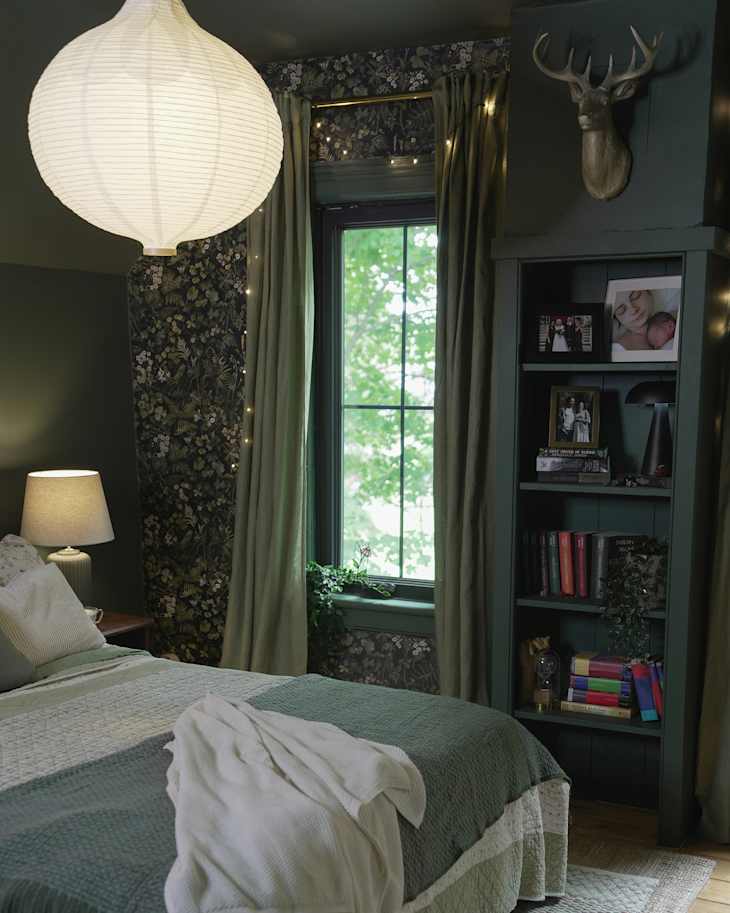
25. Deep Green Room with Botanical Wallpaper and Cozy Lighting
The combination of the painted walls and the botanical wallpaper—in nearly the same shade of green—is the most clever detail in this room. It’s a sophisticated way to add pattern and depth without introducing a new color. The wallpaper acts as a feature wall but in a subtle, tone-on-tone way. It gives the area behind the bed a special, embellished quality, distinguishing it from the rest of the cozy, color-drenched space. It shows a thoughtful, layered approach to design. Contrast this with the freestanding bookcase in Idea #23.
“A room this dark and green needs a smart lighting strategy.”
The single paper lantern is beautiful and provides a soft, diffuse glow, but it won’t be enough to adequately light the whole room. The string lights add ambiance but not functional light. To make this room practical, you’d need to supplement with a floor lamp for reading or a few well-placed spotlights to highlight the bookcase or art. Don’t fall so in love with the ‘mood’ that you forget you need to be able to find your socks in the morning.
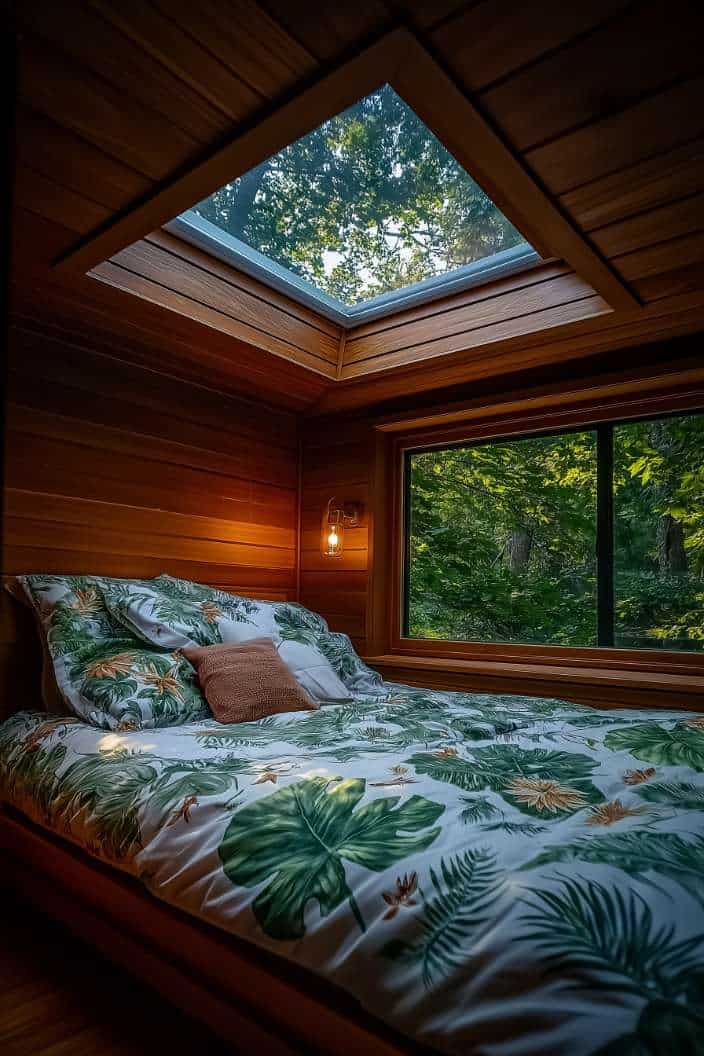
26. Cozy Wood Cabin Bedroom with a Skylight View
This room is the quintessential ’embrace.’ The wood paneling on the walls and ceiling wraps the space in a continuous blanket of warm, natural texture, creating an immediate sense of shelter and coziness. The magic, however, comes from the windows. The skylight and the large rectangular window break open the wooden ‘box,’ connecting you directly with the sky and trees outside. This prevents the wood from feeling claustrophobic and turns the room into a viewing platform for nature—the ultimate dark nature aesthetic.
“When you have a dominant material like this wood paneling, your bedding choice is crucial.”
The tropical floral and leaf print duvet is a brilliant choice because it directly references the nature outside but in a more stylized, colorful way. If the bedding were plain white or beige, the room would still be nice, but it wouldn’t have this joyful, vibrant personality. Don’t be afraid to use a bold pattern in a rustic space; it can be the perfect modern counterpoint.
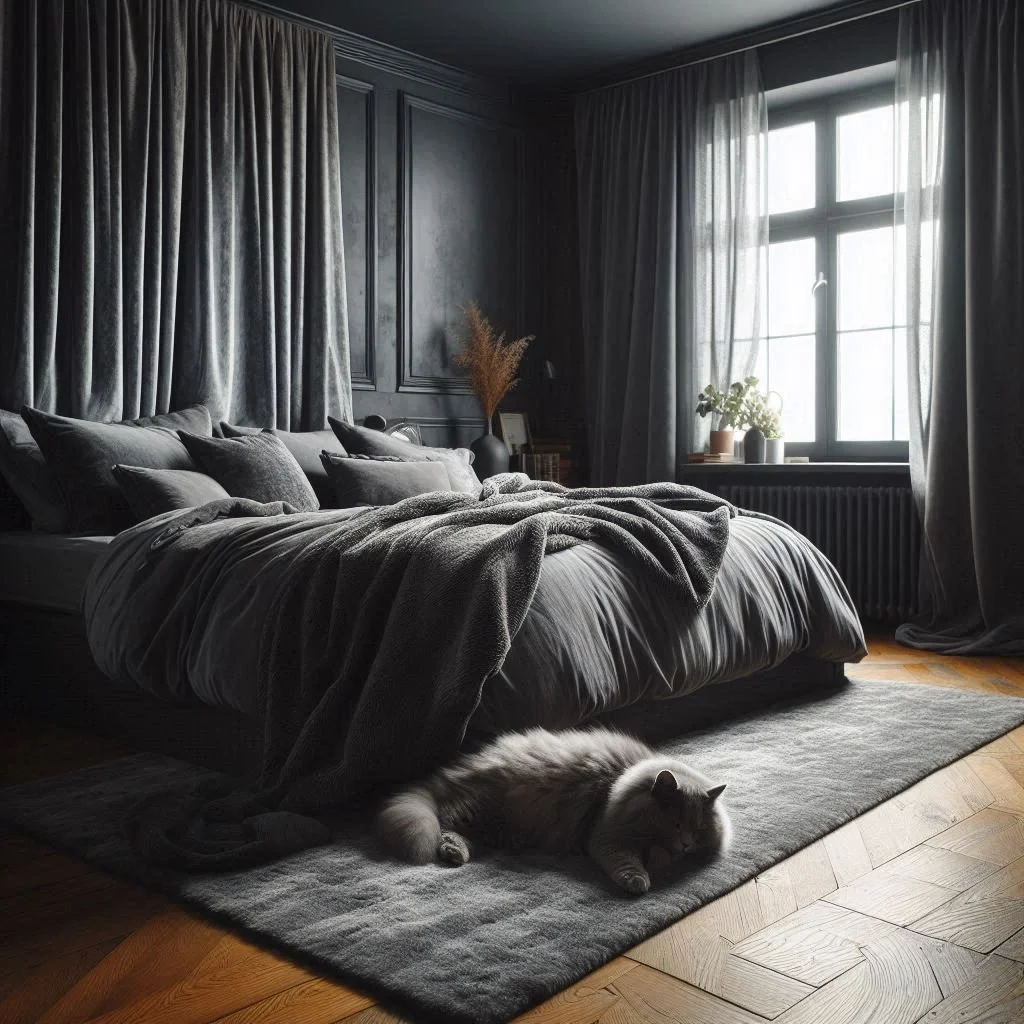
27. Monochromatic Dark Grey Bedroom with Parquet Flooring
The saving grace of this intensely monochromatic room is the warm-toned parquet wood floor. It’s the single element that provides a crucial dose of organic warmth and natural color. Imagine this room with a grey carpet—it would be a flat, lifeless space. The wood floor, with its rich color and classic pattern, offers a necessary contrast to the sea of grey, grounding the design and keeping it from feeling too cold or one-dimensional. It’s a reminder that even in a dark, moody room, a touch of warmth is essential.
“This room uses a simple but powerful formula: 80% moody monochromatic color (all the shades of grey on walls, curtains, and bedding) + 20% classic architectural warmth (the parquet wood floor).”
The overwhelming commitment to grey is what gives the room its serene, enveloping feel, but the 20% of contrasting warmth is what makes it livable and sophisticated. You could apply this same 80/20 formula with navy blue and a warm-toned rug, or olive green and a terra-cotta tile floor.
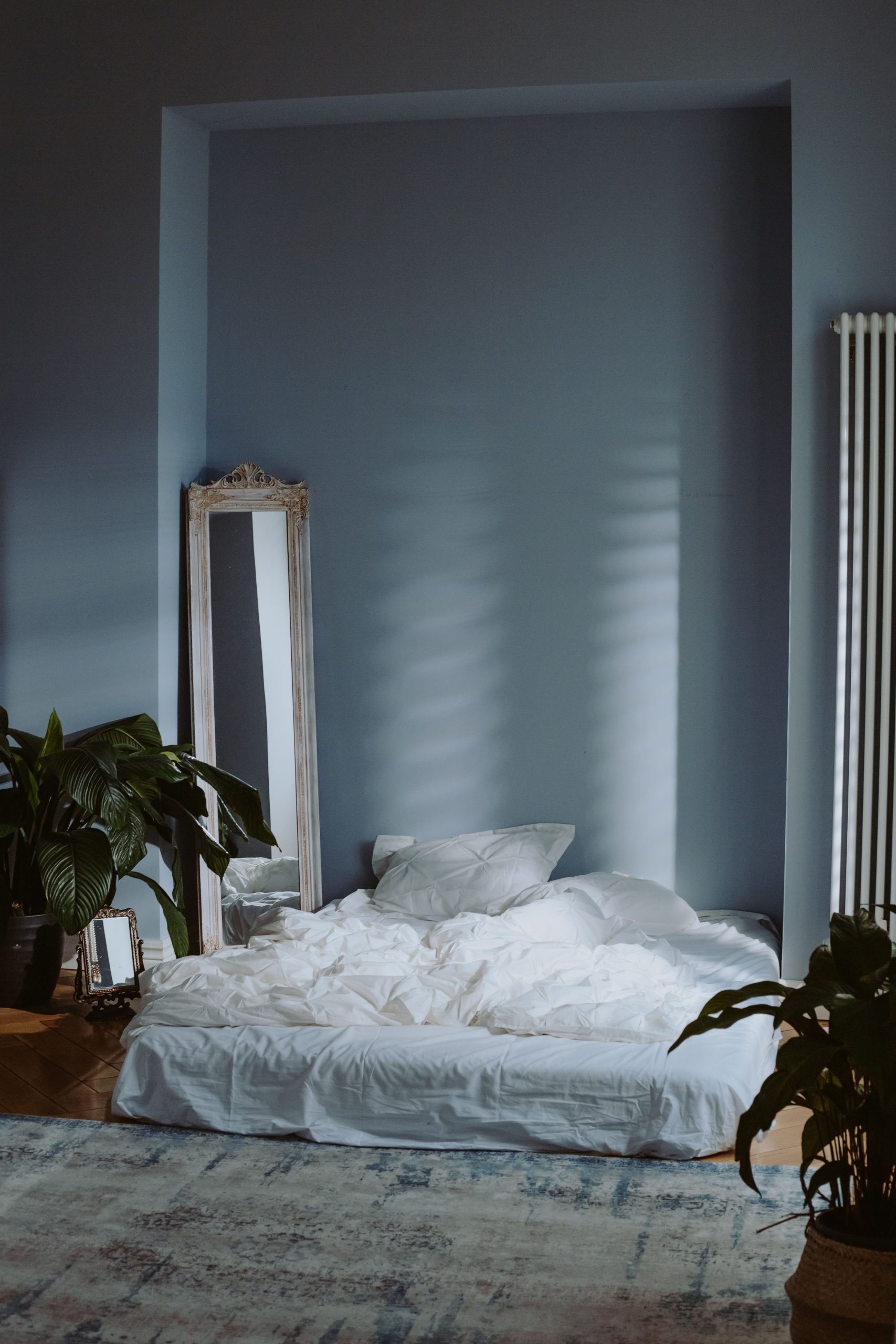
28. Minimalist Dark Teal Bedroom with a Floor Mattress
The floor mattress look, inspired by Japanese sleeping arrangements and popularized by minimalist and ‘soft boi’ aesthetics on TikTok and Pinterest, is about creating a relaxed, informal, and grounded space. In 2026, this trend is less about student-living vibes and more about intentional simplicity. Paired with a rich, sophisticated wall color like this dark teal and high-quality items like the large ornate mirror, the floor bed feels like a conscious choice for a serene, uncluttered life, rather than a lack of a bed frame. Contrast this with the traditional bed in Idea #7.
“A floor bed can be incredibly chic, but there are practical considerations:
A”
A floor bed can be incredibly chic, but there are practical considerations:
- Airflow is Crucial: You cannot place a mattress directly on the floor. It needs to breathe to prevent mildew and mold growth. Use a low-profile slatted base, like IKEA’s LURÖY, to allow for proper air circulation underneath.
- Check for Drafts: Lie down at floor level to check for drafts from windows, doors, or vents. What you don’t notice when standing can be a chilly nuisance when you’re sleeping low to the ground.
- Durability of Rug: Your bed will be in direct contact with your area rug. Choose a rug that is durable, comfortable, and easy to clean.
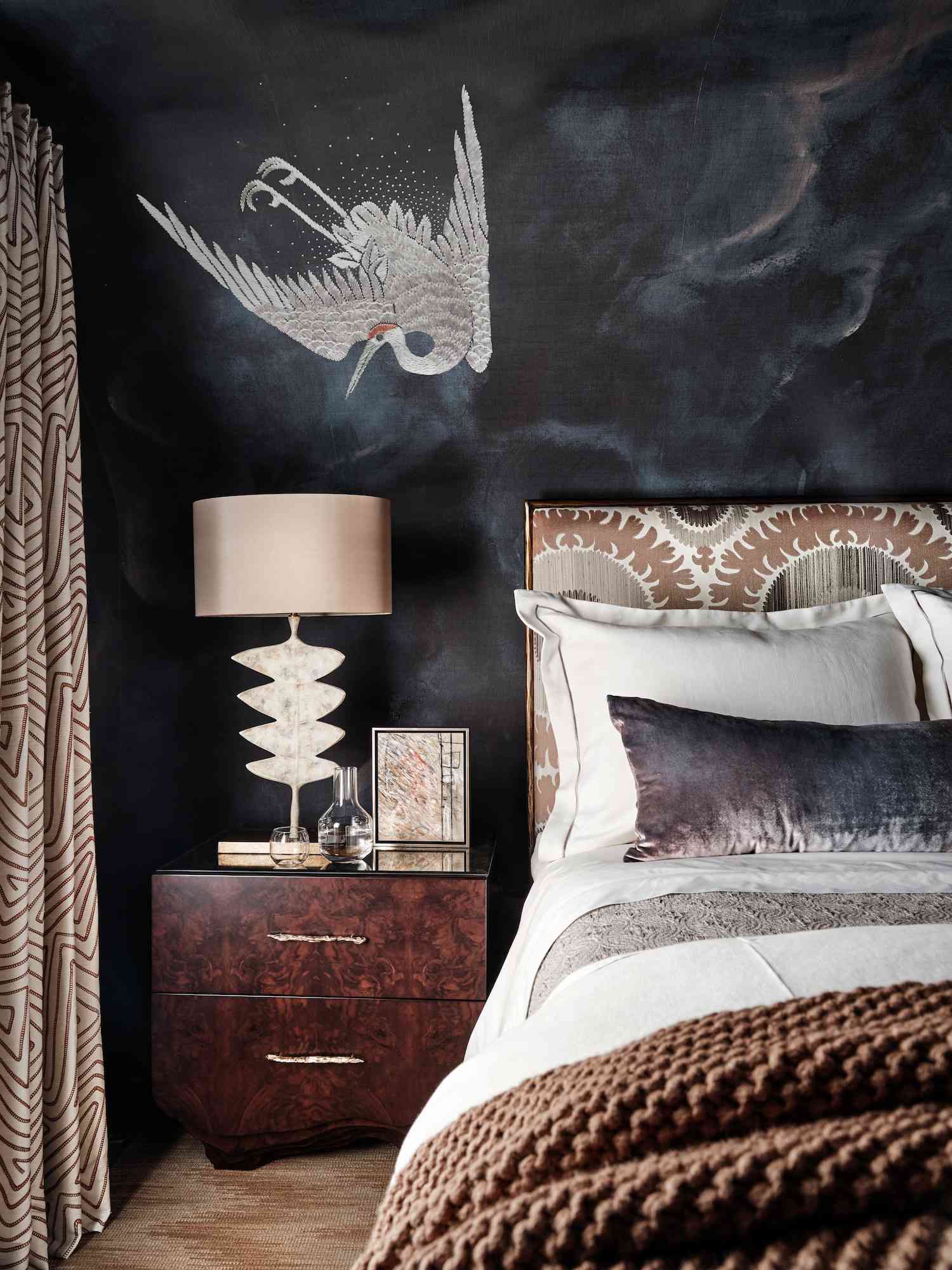
29. Dramatic Wall with Embroidered Crane and Burl Wood
The large-scale embroidered crane is the soul of this room. It’s not just wallpaper or a mural; it’s a piece of textile art that brings unparalleled texture, craftsmanship, and storytelling to the space. The crane, a symbol of longevity and good fortune in many cultures, adds a layer of meaning and elegance. Its bright white form provides a stunning, graphic contrast against the dark, textured wall, creating a focal point that is both dramatic and serene. This is the kind of special feature that makes a room truly unforgettable. For a different take on a wall mural, see Idea #15.
“This room feels luxurious because it masterfully mixes materials that are all considered ‘precious.’ You have the rich texture of the embroidered art, the deep, swirling grain of the burl wood nightstand, the gleam of gold hardware, and the chunky knit of the wool blanket.”
Each element feels special and high-end on its own. Together, they create a layered and sophisticated narrative. The relatively simple color palette—charcoal, cream, brown—allows these beautiful materials to take center stage without competing with each other.
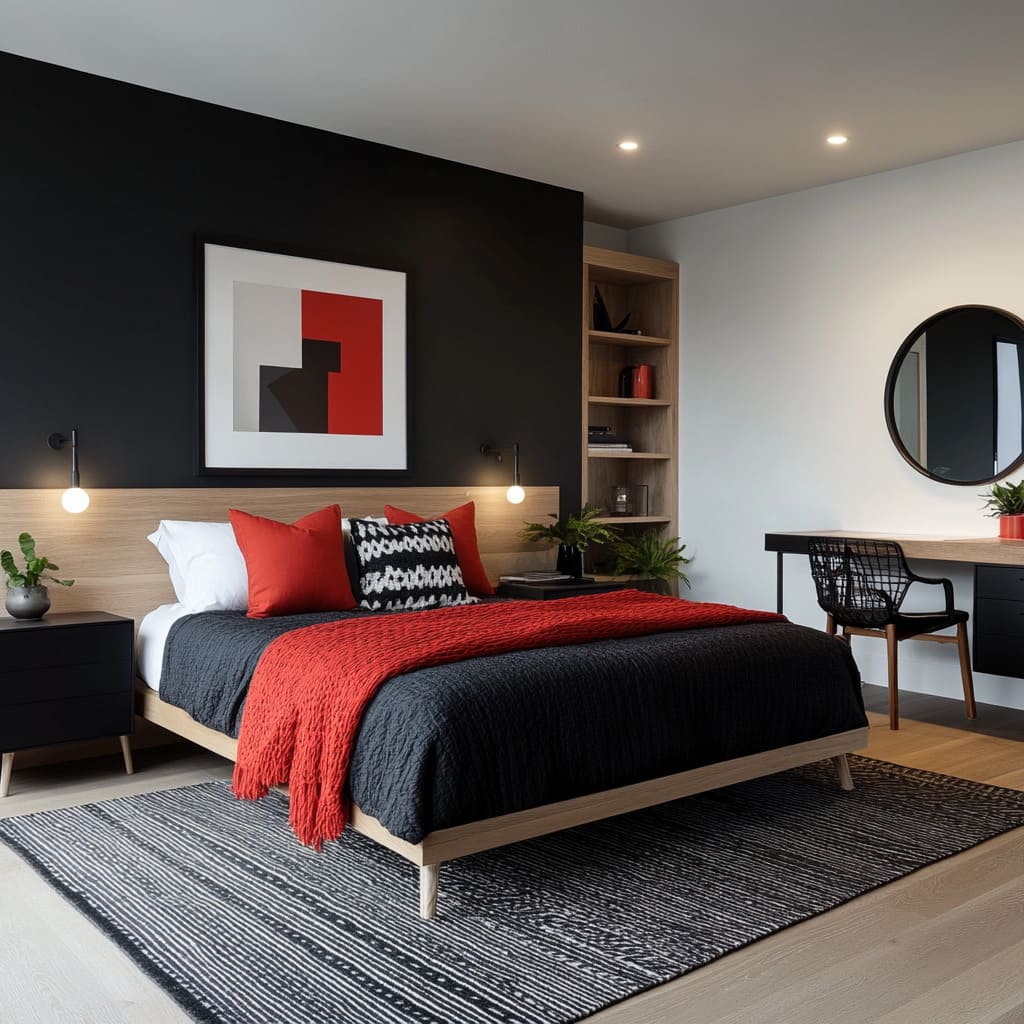
30. Deep Green Room with Black Furniture and Botanical Art
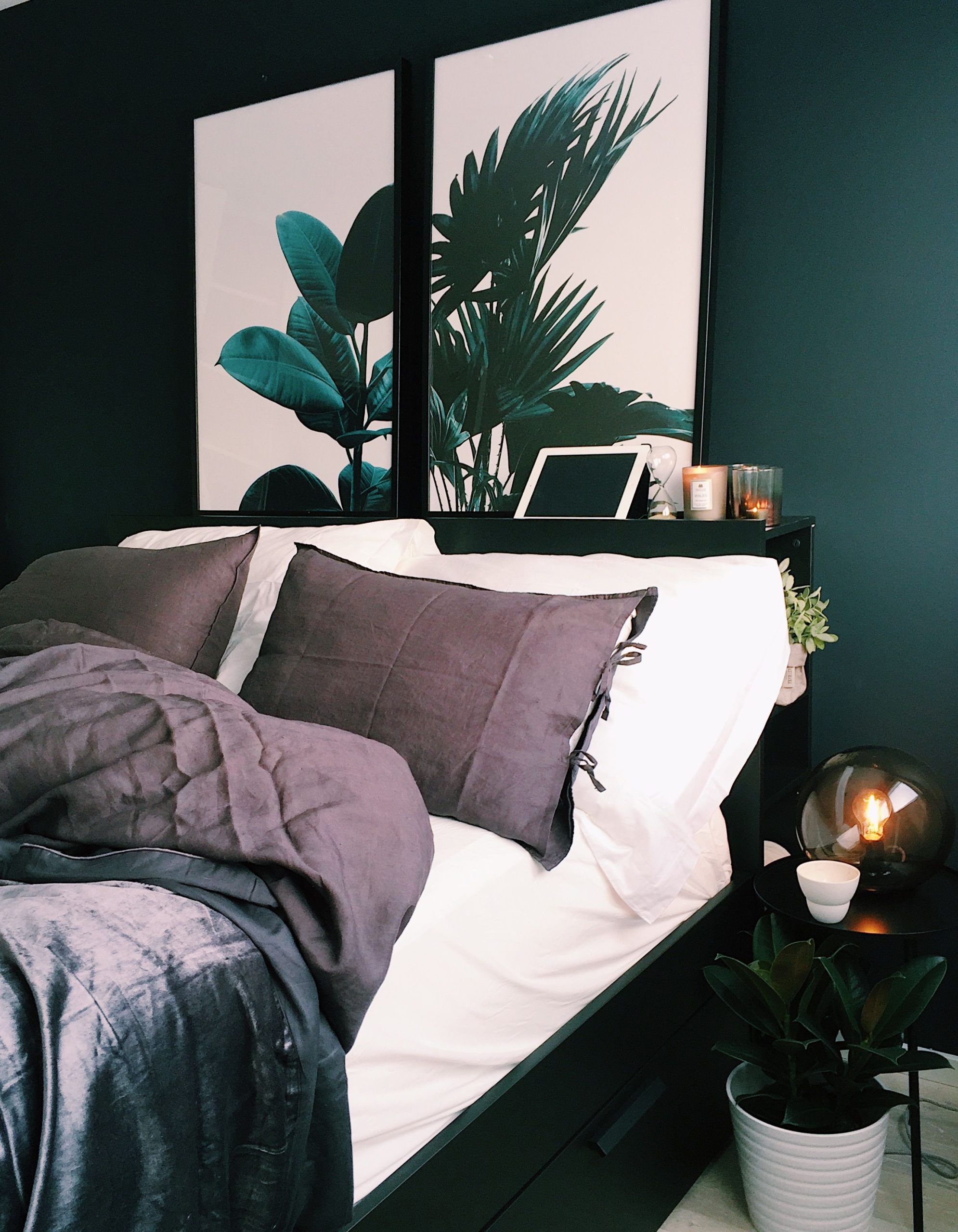
When hanging two large pieces of art above a bed, the spacing is key. Don’t hang them too far apart. A gap of 2 to 4 inches between the frames is ideal. This makes them read as a single, cohesive unit—a diptych—rather than two separate pictures. The bottom of the frames should be about 6 to 9 inches above the top of the headboard. Any higher and they will feel disconnected from the bed; any lower and the composition will feel cramped. This precise placement is what gives the arrangement its professional, balanced look.
“A deep, saturated wall color like this forest green is gorgeous, but it will show every single scuff, ding, and nail hole.”
Touch-ups can also be tricky, as the new paint might not blend perfectly with the old. This is not a great choice for a high-traffic area or a home with young kids and pets. If you love the color but need more durability, consider using a ‘scuff-resistant’ paint formula, which many brands now offer. It costs a bit more per gallon, but it will save you a lot of headaches in the long run.
Your Sanctuary Awaits
Creating a dark nature-inspired bedroom is about crafting a feeling—a sense of peace, enclosure, and connection to the natural world. Whether you go for a dramatic mountain mural or a simple pot of green on your nightstand, the goal is to design a space that feels like a personal retreat. Now you have the inspiration to get started.
Ready to start dreaming? Head over to Pinterest and create a new board for your perfect moody bedroom. You’ve got this!