
You know that feeling when you finally find the hutch makeover that looks exactly right for your space, but the photo has no details? That search ends now. That old hutch you inherited or thrifted has so much potential, and we’re here to help you unlock it. Forget generic advice; these are real ideas from real homes.
We’ve filtered through hundreds of options to bring you these 30 distinct hutch makeovers that genuinely work. You’ll find everything from sleek modern updates and cozy farmhouse coffee bars to timeless traditional displays. These aren’t just pretty pictures; they are roadmaps. We break down what makes each one work, how to get the look, and what to watch out for.
And stay until the end — we break down the most common mistakes that can ruin these looks. 📌 Save this to Pinterest for later — you’ll want to revisit these ideas.
1. Traditional Wood Hutch with Blue and White Dinnerware Display
What makes this classic look feel so effortlessly correct? It’s the masterful use of color harmony and repetition. The deep blues in the dinnerware create a strong visual rhythm as your eye moves across the shelves. This repetition provides a sense of order and intention. Furthermore, the warmth of the medium brown wood is perfectly balanced by the cool tones of the blue, white, and light gray wall paint, creating a palette that is both inviting and crisp. The artwork below introduces a modern touch, preventing the setup from feeling stuffy.

“To perfectly recreate a display like this, think like a curator.”
Don’t just place items randomly. Group your dinnerware by pattern and size, creating deliberate clusters. For a classic look, aim for symmetry on the upper shelves. Place the largest platters in the center back of each shelf as an anchor, then build outward with smaller plates and bowls. Leave about 2-3 inches of space between stacks to prevent a cluttered look and let each pattern breathe. This isn’t just storage; it’s a composition.
2. Dark Hutch and Light Walls in an Eclectic Dining Room
This room nails the transitional formula, blending classic and modern for a look that feels collected over time. Think of it as 60% traditional structure + 30% modern contrast + 10% rustic texture. The traditional elements are the hutch’s silhouette and the pedestal dining table. The modern contrast comes from the bold, black finish on the hutch and chairs against the light beige walls. The final 10% of magic is the rustic texture from the woven cane seats and the patterned area rug, which adds warmth and personality.

“A black hutch is a commitment.”
In a room with poor natural light, a piece this large and dark can quickly feel like a black hole, absorbing all the light and making the space feel smaller. Before painting, make sure the room receives ample daylight or that you have a solid layered lighting plan, including a powerful chandelier and perhaps accent lamps. Also, a black finish is notorious for showing dust and fingerprints, so be prepared for more frequent dusting than you would with a wood or lighter painted finish.
3. Weathered Blue Hutch with a Natural Wood Dining Table
The single element that defines this entire space is the distressed light blue finish on the hutch. Take that away, and you have a nice, but standard, dining room. The weathered texture and soft color infuse the room with a sense of history and calm. It acts as the emotional anchor, giving the classic dining set a more approachable, cottage-like feel. It proves you don’t need a complete overhaul to change the mood of a room; one perfectly executed statement piece can do all the work.

“This look taps directly into the ‘Coastal Farmhouse’ trend that continues to dominate Pinterest boards.”
It’s a softer, more romantic take on the classic farmhouse style, swapping out stark blacks and whites for weathered pastels and natural textures. The emphasis on distressed finishes and natural light speaks to our collective desire for homes that feel lived-in, comfortable, and connected to the outdoors. This style has staying power because it’s rooted in classic forms but feels fresh and personal.
4. Black Farmhouse Hutch with White Porcelain Decor
You can achieve this clean, high-contrast farmhouse aesthetic for a fraction of the cost of a new piece. Start by sourcing a simple, outdated wooden hutch from Facebook Marketplace or a thrift store—you can often find them for under $150. A can of matte black chalk paint ($25) and some new, simple hardware ($30) will handle the transformation. For the decor, scour Target’s Bullseye’s Playground and HomeGoods for affordable white ceramics and pitchers ($50-$75 total). The key is the styling, not the price tag of the individual items.
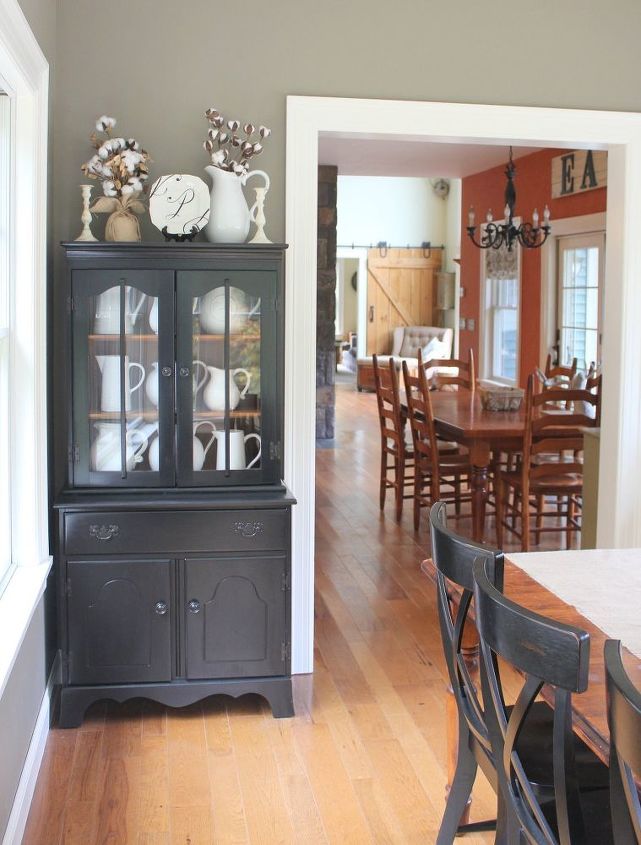
“The success of this vignette lies in its stark simplicity and disciplined color palette.”
The matte black finish of the hutch creates a bold, graphic silhouette against the neutral gray wall. This makes the white porcelain—carefully selected for its clean lines and uniform color—pop. The arrangement is intentionally minimalist; instead of filling every shelf, the decor is given space to breathe, turning simple objects into sculptural elements. The cotton stems add just the right touch of organic texture to soften the look.
5. Formal Dining Room with a Carved Dark Wood Hutch
A matching, ornate set like this demands space. This idea is best suited for a dedicated formal dining room of at least 140 square feet (e.g., 10′ x 14′) with standard 8- or 9-foot ceilings. The substantial visual weight of the carved dark wood requires enough surrounding negative space to avoid overwhelming the room. In a smaller space, this set would feel cramped and imposing. For a more compact room, consider a lighter wood finish or a less ornate style, like the hutch in Idea #29.

“Dark, glossy wood finishes are beautiful but require consistent care to look their best.”
Dust will be very visible, so plan on a weekly wipe-down with a soft, dry microfiber cloth. To maintain the luster, polish the wood every 2-4 months with a quality furniture polish, making sure to apply it evenly and buff away any excess. Be mindful of sunlight, as direct UV exposure can cause the rich, dark finish to fade unevenly over time. Use sheer curtains or window film to protect your investment.
6. Dark Blue Hutch with Arched Glass Doors and Floral Wallpaper
When pairing a statement furniture piece with patterned wallpaper, the key is scale. The pattern on the wallpaper here is relatively small and monochromatic, which allows it to act as a rich texture rather than a competing focal point. If your wallpaper has a large, bold, multi-colored pattern, opt for a hutch in a solid, neutral color. Conversely, a bold hutch like this dark blue one shines against a more subtle wallpaper. The goal is a duet, not a duel. As a rule, the more complex the hutch, the simpler the wallpaper should be.

“It’s the wallpaper.”
Without the light grey and white floral background, the stately dark blue hutch could feel a bit serious or heavy. The wallpaper completely changes the mood, adding a layer of softness, tradition, and light. It creates a story, suggesting a room that is elegant but also comfortable and lived-in. The interplay between the strong, solid hutch and the delicate, repeating pattern behind it is a masterclass in creating visual depth and personality. It’s what elevates the scene from just furniture to true design.
7. Modern Farmhouse Black Hutch with White and Copper Decor
Recreating this curated, high-end farmhouse look involves investing in a few key areas. The large hutch is the main expense, followed by quality decorative pieces that sell the aesthetic.

“Main Furniture (Large Hutch): $1,200 – $2,500
Lighting (if adding sconces/pi”
- Main Furniture (Large Hutch): $1,200 – $2,500
- Lighting (if adding sconces/picture light): $150 – $400
- Textiles (Area Rug): $300 – $800
- Decor & Accessories (Ceramics, Copper items): $250 – $600
- TOTAL: $1,900 – $4,300
- Budget alternative: Find a used hutch ($200) and paint it matte black. Source copper decor from thrift stores ($50) and ceramics from IKEA/Target ($100). Total cost: ~$350.
This look is a perfect example of the 80/20 rule in modern farmhouse design. About 80% of the visual space is composed of a simple, clean palette: the matte black of the hutch and the off-white of the ceramics and walls. This creates a strong, neutral foundation. The remaining 20% is where the personality comes in: the warm, gleaming copper accents and the subtle texture of the rug. This formula is easy to adapt. You could swap the copper for brass for a more glam look, or for wood tones for a more rustic feel, all while maintaining the same balanced effect.
8. French Provincial Light Wood Hutch (Before Makeover)
This hutch is a perfect candidate for a makeover, but let’s be honest about the work involved. Those curves, scalloped edges, and detailed carvings are beautiful, but they make for a tedious painting project. Prepping this piece for paint will be 80% of the job. You’ll need to meticulously clean and sand every groove and contour. Don’t even think about skipping the primer, especially if you’re going from dark to light. Rushing the prep on a piece like this will lead to a chipped, unprofessional finish in no time.

“Before you commit to transforming a piece like this, run through this quick chec”
Before you commit to transforming a piece like this, run through this quick checklist to make sure you’re ready.
- Check for Damage: Inspect all the curved wood and cabriole legs for splits, cracks, or veneer peeling. Repairing these ornate shapes is much harder than fixing a straight edge.
- Test the Hardware: Do all the original brass pulls and hinges function? Finding replacements for this specific ornate style can be difficult and expensive. Decide if you’re keeping or replacing them beforehand.
- Measure Your Sanding Patience: Honestly assess if you have the patience to hand-sand all those detailed areas. A power sander won’t work here.
9. Sage Green Hutch with Chinoiserie Decor and Floral Wallpaper
This vignette works so well because of its sophisticated layering of patterns and its cohesive, analogous color scheme. The primary colors are shades of green (sage hutch, light green wallpaper), with accents of blue and white from the Chinoiserie. This limited palette prevents the multiple patterns—from the wallpaper to the dishes—from becoming chaotic. The bamboo-style detailing on the hutch adds another layer of texture that beautifully complements the Chinoiserie theme, creating a look that feels curated and intentional.

“When styling glass-front cabinets, depth is your secret weapon.”
Notice how not everything is pushed to the back. Some plates are leaning, some are stacked, and the ginger jars are of varying heights and placed at different depths on the shelf. To get this look, place larger, flatter items like platters at the very back. Then, place taller objects like vases or jars in front of them, slightly off-center. Finally, add smaller items like stacked bowls or a small, leaning plate in the foreground to create a rich, three-dimensional scene.
10. Modern Light Wood Hutch with Integrated Lighting
The integrated lighting is, without a doubt, the element that makes this piece feel modern and luxurious. Without it, this would be a perfectly nice, functional hutch. With it, the hutch becomes a feature, a gallery for the items within. The warm light reflecting off the mirrored backsplash and through the glass shelves creates ambiance and draws the eye, transforming simple glassware into a sparkling display. It highlights the purpose of the hutch not just as storage, but as a deliberate and beautiful part of the room’s design.

“A mirrored backsplash behind your display shelves looks stunning, but it doubles your cleaning work.”
Not only will you see dust on the shelves, but you’ll see its reflection too. Any smudges or fingerprints on the glass doors or shelves will be amplified by the mirror. Plan to wipe down the glass and mirrored surfaces weekly with a good glass cleaner and a microfiber cloth. Also, be mindful that integrated LED lighting systems, while long-lasting, can fail. Ensure the system you choose has an accessible transformer and wiring in case a repair is needed down the line.
11. Distressed White Hutch with Bird and Branch Wallpaper Backing
Applying wallpaper to the back of a hutch is a fantastic way to add custom charm. Here’s a quick guide to get it right. (Time: 2 hours, Cost: $40-$80)

“Remove & Prep: Take off the shelves and remove the back panel of the hutch if possible.”
If not, you’ll work inside the hutch. Clean the surface thoroughly.
Measure & Cut: Carefully measure the interior back sections. Transfer these measurements to your wallpaper, adding an inch of excess on all sides. Use a sharp craft knife and a straight edge for clean cuts.
Apply (Peel-and-Stick Recommended): For beginners, peel-and-stick wallpaper is a forgiving choice. Peel back a few inches of the backing and align the top edge. Slowly smooth it downwards with a plastic smoother, pushing out air bubbles as you go.
Trim Excess: Once applied, use a fresh, sharp blade to trim the excess wallpaper along the edges for a perfect fit.
Reassemble: Pop the back panel and shelves back in, and you’re done!
This charming, rustic look is incredibly budget-friendly. Find an old, unloved hutch at a yard sale for $50-$100. A quart of white chalk paint and some finishing wax will run you about $40. The secret star is the wallpaper—you only need one roll, and you can find beautiful peel-and-stick options on Etsy or Amazon for under $50. The white ceramics can be collected over time from thrift stores like Goodwill for just a few dollars each. The entire project can easily come in under $200 for a truly custom piece.
12. Warm Wood Hutch with Curated Lighting and Glassware Display
When using puck lights in a hutch, placement and color temperature are everything. Install them at the front of each cabinet, angled slightly back towards the display. This prevents harsh glare on the glass doors and creates a ‘wall wash’ effect on your items. Crucially, choose the right color temperature. For a warm wood piece like this, use ‘Warm White’ bulbs (2700K-3000K). A ‘Cool White’ or ‘Daylight’ bulb (4000K+) would clash with the wood tone and make the entire display feel sterile and uninviting.

“The success of this display comes from thoughtful curation and a mix of materials.”
The owner didn’t just fill the shelves; they created visual stories. Notice the balance between transparent glassware, which keeps the look light, and opaque ceramic dishware in muted tones, which adds weight and contrast. The variation in height—tall bottles, short stacks of plates, and stemmed glasses—keeps the eye moving. The warm glow from the puck lights ties everything together, turning a simple storage piece into a captivating feature.
13. Black Hutch with Crane Patterned Wallpaper Backing
The crane-patterned backing is the undeniable showstopper here. It transforms the hutch from a simple, elegant piece of black furniture into a work of art. It’s a surprise-and-delight element that adds a layer of bespoke detail and personality. Without it, the hutch would be handsome but could be found in any furniture store. With the wallpaper, it becomes a unique, custom piece that tells a story and serves as a powerful focal point. This is a perfect example of how a small, inexpensive detail can have the biggest impact.

“A bold pattern inside a hutch is a fantastic idea, but be aware that it can visually ‘clutter’ the space if you aren’t careful with your display items.”
To avoid this, you must be disciplined with what you place on the shelves. Stick to a very limited color palette for your dishes and glassware (here, simple white and clear glass would be best) to let the pattern shine. Over-styling with multi-colored or intricately shaped items will create visual chaos and detract from the special backing you worked so hard to install.
14. Modern Black Hutch with Minimalist Display and Mirrored Back
This serene and sophisticated look follows a clear formula: 70% minimalist structure + 20% reflective surfaces + 10% curated decor. The hutch itself, with its clean lines and monolithic black color, provides the strong minimalist base. The mirrored back and glass doors contribute the 20%, bouncing light around and adding depth without adding clutter. The final 10% is the highly-edited display of just a few white and metallic objects, which stand out like gallery pieces. Keeping the decor sparse is essential to this equation.

“This design leans into the ‘Quiet Luxury’ trend that’s influencing both fashion and interiors.”
It’s about investing in well-made, timeless pieces and focusing on material and form rather than overt decoration. The minimalist styling, the restrained color palette, and the focus on the interplay of light and reflection all speak to a desire for calm, uncluttered, and sophisticated living spaces. This isn’t a flashy look, but its confidence and serenity give it lasting appeal. Compare this to the more rustic farmhouse approach in Idea #7.
15. Antique Secretary Desk with Layered Florals
This cozy, layered look is a masterclass in pattern mixing. The key to its success is using patterns of different scales. The wallpaper features a small, delicate floral repeat. The curtains have a medium-scale floral pattern, and the chair cushions use a larger, bolder floral design. This variation in scale allows the patterns to coexist harmoniously rather than compete. The consistent color palette—rooted in creams, dark reds, and greens—ties all the different elements together into a cohesive, vintage tapestry.

“What a wonderful, collected vibe!”
You can absolutely recreate this feeling on a dime. Look for a small secretary desk at a local thrift store or on Facebook Marketplace—people are often getting rid of these for under $100. Don’t worry about a perfect finish; a few scratches add to the charm. Find affordable floral peel-and-stick wallpaper online. The real treasures are the textiles: rummage through fabric stores for floral remnants to make your own curtains and chair covers, or even use vintage floral sheets for a super-budget-friendly hack.
16. Oak Hutch Converted into a Farmhouse Coffee Station
Converting the middle shelf of a hutch into a functional coffee bar is a brilliant use of space. Here’s a quick plan for this specific feature: (Time: 3-4 hours, Cost: $75-$150)

“Remove Center Shelf: First, carefully remove the horizontal shelf in the open middle section of your hutch to create enough vertical space for your coffee maker.”
Add Beadboard Backing: Measure the back panel. Cut a piece of white beadboard paneling (available at home improvement stores) to size and attach it with construction adhesive and a few small nails for a classic farmhouse look.
Install Mug Rack: Source a simple brass or black metal rail with hooks. Center it and screw it securely into the underside of the upper hutch cabinet. Make sure the screws are short enough not to poke through.
Drill a Cord Hole: Drill a 1.5-inch hole in the back or bottom of the counter section to discreetly run the power cords for your appliances.
The single element that makes this makeover so successful is its functionality. It’s not just a pretty piece of furniture; it’s a hard-working station that solves a real-life need. By centralizing all the coffee-making essentials—the machine, the mugs, the supplies—it streamlines the morning routine and frees up valuable kitchen counter space. This focus on practical, everyday use is what gives the piece its purpose and charm. It’s a great example of how a makeover can improve not just your home’s look, but also its daily flow.
17. Airy White Hutch with Decorative Floral Knobs
When painting a hutch white, the sheen you choose is critical. For a calm, rustic look like this, avoid high-gloss paint at all costs. A gloss finish can look cheap and show every imperfection. Instead, opt for a matte or eggshell finish. Matte will give you a soft, chalky appearance that hides flaws well, while an eggshell or satin finish will offer slightly more durability and washability without being overly shiny. The subtle sheen of satin is often the perfect compromise for furniture that gets regular use.

“This hutch feels so light and calm due to its monochromatic palette and thoughtful styling.”
Painting the entire piece, inside and out, a soft white creates a seamless, uninterrupted canvas. This allows the items inside—mostly clear glass with a few blue and white accents—to feel curated rather than cluttered. The decorative floral knobs and dried terracotta-toned florals on top are the only real pops of color, and their subtlety keeps the overall feeling serene and airy. It’s a lesson in the power of restraint.
18. Modern White Shaker Kitchen with Ornate Chrome Chandelier
While this is a beautiful and very popular kitchen style, be prepared for a cleaning routine. An all-white kitchen, especially with Shaker-style cabinets that have recessed panels, is a magnet for dust, grease, and splatters. Those little ledges on the cabinet doors will require regular wiping. Similarly, a big, ornate chrome chandelier and a stainless steel range hood look fantastic when they’re sparkling clean, but they will show every single fingerprint and water spot. This is a high-maintenance look that requires consistent upkeep to stay pristine.

“This kitchen’s design DNA is about 80% clean, modern lines and 20% glamorous, traditional detail.”
The Shaker cabinets, integrated appliances, and simple chrome handles form the strong, contemporary foundation. The ornate, almost baroque, chrome chandelier is the 20% that injects personality and surprise. It’s an unexpected touch that prevents the all-white space from feeling clinical. You could get a similar effect by swapping the chandelier for an equally ornate vintage mirror or a dramatically patterned tile backsplash.
19. Traditional Dining Room with Dark Trim and a Wood Hutch
The dark trim around the windows and ceiling is the sophisticated detail that makes this room stand out. It frames the views and architectural elements, adding definition and a touch of drama to what could otherwise be a very standard traditional room. This technique, known as ‘color blocking’ in architecture, creates a confident, custom look. It also beautifully ties together the other dark elements in the room, like the hutch and the chandelier, creating a cohesive and polished design.

“Mixing wood tones is an art, and this room provides a great lesson.”
The key is to stick to similar undertones. Here, the dining table, chairs, and hutch all share a warm, slightly reddish-brown undertone, even if their exact finish or age is different. This ensures they harmonize rather than clash. To confidently mix wood tones in your own home, identify the dominant undertone (warm, cool, or neutral) of your largest wood piece or flooring, and then select other wood items that share that same temperature.
20. Ornately Carved Wooden Hutch in a Classic Dining Room
An intricately carved piece like this is a work of art, but it’s also a dust magnet. Those beautiful details and crevices require more than a quick swipe. To properly maintain it, you’ll need a soft-bristle brush (a clean, dry paintbrush works great) to gently dislodge dust from the carvings at least monthly. For a deeper clean, use a wood-safe cleaner and a soft cloth, followed by a Polish-soaked cotton swab to get into the tightest spots. It’s a labor of love, but necessary to keep the details looking sharp.

“A hutch with this much visual weight and ornate detail needs a room with high ceilings.”
This piece would thrive in a space with a ceiling height of 10 feet or more. The verticality of the room would balance the hutch’s heavy, elaborate presence. In a room with standard 8-foot ceilings, the carved top could feel uncomfortably close to the ceiling, making the entire space feel shorter and more crowded. If your ceilings are low, consider a hutch with a simpler, flat-top design, similar to Idea #23.
21. Distressed Teal Hutch with Beadboard Back and Wood Countertop
The standout feature here is undoubtedly the distressed teal paint finish. It’s what gives this hutch its personality and rustic charm. The color choice is bold but muted, preventing it from being overpowering. The distressing technique, which allows hints of a lighter color or wood to peek through, adds a sense of age and history, as if it’s been a beloved piece for generations. This single choice elevates the hutch from a standard cabinet to a true statement piece that anchors the room’s cozy, repurposed aesthetic.

“Achieving a convincing distressed paint finish is all about layering.”
Here’s a quick method: (Time: 4-6 hours, Cost: $50)
- Base Coat (Optional): For a two-tone distressed look, paint a base coat in a contrasting color (like cream or dark brown) and let it dry completely.
- Wax On: Rub a wax candle or apply furniture wax to the edges, corners, and any areas where natural wear would occur.
- Top Coat: Paint your main color (like this teal) over the entire piece, including the waxed areas. Let it dry.
- Reveal: Using a fine-grit sanding block or steel wool, gently rub the waxed areas. The paint will easily come away, revealing the base color or wood underneath.
- Seal: Wipe away the dust and apply a clear matte finishing wax or polycrylic to protect the finish.
22. Custom Built-In Desk with White Shaker Cabinets and Sage Green Walls
A built-in project like this is a major upgrade, but planning is everything. Before you hire a carpenter or start buying materials, be sure to:

“Map Your Electrical: Where do you need outlets for your computer, lamp, and chargers?”
Plan this with an electrician first. Adding them after the fact is messy and expensive.
Confirm Window Operation: Ensure the height of your desk and any items on it won’t interfere with opening and closing the window or operating the shutters.
Choose Your Countertop Early: The thickness and overhang of your chosen countertop (marble, quartz, wood) will affect the final dimensions of the base cabinets. Make this decision early in the process.
Measure Your Chair: Make sure the height of the desk opening provides ample legroom and allows your chosen desk chair to slide underneath comfortably.
The serene and organized feeling of this space comes from its seamless integration and calming color palette. The white of the shaker cabinets is a perfect match for the plantation shutters, creating a unified architectural block. The light sage green on the walls provides a soft, organic contrast that is easy on the eyes and promotes a sense of calm and focus. The brushed nickel hardware and grey cushion are cool-toned accents that complete the fresh, clean aesthetic without adding any visual noise. It’s a beautiful study in low-contrast harmony.
23. Traditional Wooden Hutch Display on a White Shiplap Wall
This inviting, modern-traditional mix is a study in texture. The formula is approximately 50% warm rustic wood + 40% clean lines + 10% curated softness. The hutch itself provides the warm, traditional wood element. The crisp, white horizontal shiplap wall brings in the clean, almost modern lines. The final 10% comes from the soft textures of the jute rug, the eucalyptus leaves, and the subtle sheen of the metallic mirror and white plates. This balance of rustic, modern, and soft is what makes the scene feel current yet timeless.

“A white shiplap wall is a cornerstone of modern farmhouse and rustic design, but be aware of the upkeep.”
The horizontal gaps are notorious for collecting dust and cobwebs, requiring regular vacuuming with a brush attachment or careful dusting. Also, if you live in a climate with high humidity, ensure the wood is properly sealed on all sides before installation to prevent warping over time. While it provides amazing texture, it’s not as simple to wipe down as a standard painted wall. Compare its effect here to the floral wallpaper in Idea #6.
24. Dark Wood Classic Hutch Against a Floral Wallpapered Wall
This room feels so established and formal due to the powerful combination of dark wood and a classic floral wallpaper. The dark, reddish-brown wood of the hutch conveys a sense of history and permanence. The wallpaper, with its traditional floral motif on a cream background, complements this feeling perfectly. The key is that the background of the wallpaper is light, which prevents the dark hutch from feeling too heavy and keeps the room from becoming gloomy. The displayed blue and white dishes provide a crisp point of contrast.

“When placing a dark piece of furniture against a patterned wallpaper, lighting is paramount.”
As shown here, position the hutch where it can be grazed by natural light from a window if possible. If natural light isn’t available, install a picture light directly above the hutch or place a substantial lamp on a nearby table. This deliberate lighting prevents the hutch from receding into a dark silhouette and instead highlights its shape and the beautiful pattern of the wallpaper behind it.
25. Elegant Wood Hutch with Ornate Gold Glass Door and Greenery
The single detail that elevates this entire piece from handsome to breathtaking is the ornate gold scrolling on the glass door. It’s an exquisite, jewelry-like touch that adds a layer of artistry and opulence. This detail suggests a level of craftsmanship and history that a plain glass door simply could not. It frames the contents of the hutch, making even simple glassware feel more precious. It’s a reminder that sometimes, the smallest, most intricate detail can have the most significant impact on the character of a piece.

“While that lush green plant trailing from the top of the hutch is stunning, it’s a high-stakes design choice.”
You absolutely must place a waterproof tray or liner underneath the pot, completely hidden from view. Even one instance of overwatering could lead to a water stain or veneer damage on the top of your beautiful wooden hutch, a repair for which is often difficult and expensive. For a worry-free alternative, opt for a high-quality faux plant; modern versions are incredibly realistic.
26. Built-In Powder Blue Hutch with Leaded Glass and Chinoiserie Wallpaper
This room is a masterwork of monochromatic design. By using various tones of powder blue across different surfaces—the painted built-in hutch, the Chinoiserie wallpaper—it creates a deeply cohesive and immersive experience. The design avoids being flat by introducing a wealth of texture: the geometric lines of the leaded glass, the organic branches of the wallpaper, and the warm grain of the dark wood furniture. This textural variety within a single color family is what makes the space feel so sophisticated and serene.

“A full wall, built-in hutch like this is a grand statement best suited for a formal dining room with generous proportions.”
To avoid feeling cramped, the room should be at least 12 feet wide to accommodate the depth of the built-in (typically 18-24 inches) plus a dining table and chairs with enough space to comfortably walk around. For ceiling height, 9 feet or more is ideal to balance the hutch’s vertical presence. In smaller rooms, a standalone hutch like the one in Idea #9 provides a similar feel without the architectural commitment.
27. Grand Dark Cherry Hutch with Carved Arch Top
A hutch of this size and formal style can be difficult to part with, but it can stylistically lock you into a very specific, traditional aesthetic. Before you buy a new dining set to match a piece like this, honestly ask yourself if this formal, ornate style is what you want for the long term. These massive, dark wood pieces can feel heavy and dated in more modern or transitional homes. Sometimes, the bravest makeover decision is to sell the large, inherited piece and choose something that better reflects your current style.

“If you love the grandeur but not the price tag (or the commitment) of a massive cherry hutch, you can get the vibe for less.”
Patiently scour Facebook Marketplace and estate sales for ’90s and early 2000s dining sets. People are practically giving these away. Look for a solid wood piece with a nice arched shape, even if the finish is dated. A good cleaning and a coat of dark gel stain can work wonders to unify and enrich the wood tone for under $50. Then, display simple, all-white dinnerware from Target or IKEA to give it a crisp, updated feel.
28. Rustic Eclectic Kitchen with Wood Hutch and Dark Blue Cabinets
The secret to successfully mixing metals and wood tones in a kitchen like this is choosing a dominant finish. Here, the warm tones are the star. The rustic wood hutch, the distressed countertop, and especially the large copper shell art create a warm, earthy foundation. The brass pulls on the blue cabinets harmonize with this warmth. The stainless steel range hood acts as a neutral, functional element rather than a competing finish. By committing to warmth as the primary story, the mix feels intentional and cohesive, not chaotic.
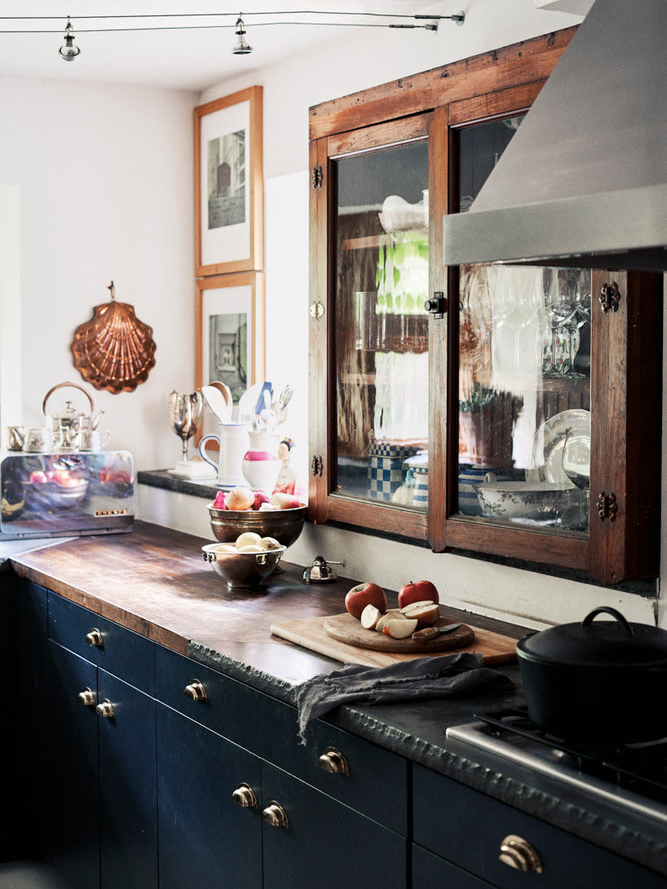
“It’s the distressed dark wood countertop that truly makes this kitchen unique.”
In a world of ubiquitous white quartz and granite, this choice is bold and full of character. It perfectly bridges the rustic feel of the upper hutch with the more refined, painted lower cabinets. The texture and imperfections of the wood add a layer of history and warmth that a polished stone never could. It is the heart of the kitchen’s eclectic, vintage charm and the element that ties all the other disparate materials together.
29. Traditional Dining Room with a Light Wood Hutch and Blue Rug
This room feels balanced and inviting because of the smart interplay between warm and cool tones. The light natural wood of the hutch and dining set provides a warm, honey-toned base. This is beautifully contrasted by the cool blue of the area rug. The olive-tan walls act as a perfect neutral bridge between the two, having just enough warmth to relate to the wood and enough earthy green to complement the blue. This thoughtful color balancing act is what creates such a harmonious and comfortable atmosphere.

“A note of caution on the wall color.”
The deep olive-tan is beautiful and creates a cozy, enveloping feel, but a color this saturated can be tricky. It requires a room with abundant natural light, like the one shown with the large window. In a darker room, this color could quickly become muddy and oppressive. Before committing to a color this bold, paint a large swatch on the wall and observe it at all times of day—morning, noon, and night—to ensure you love how it behaves in your specific lighting conditions.
30. Dark Red-Brown Wood Hutch with Ornate Gold Hardware
That beautiful, ornate golden hardware needs special attention during cleaning. Avoid using harsh chemical cleaners or all-purpose sprays, as they can strip the finish or cause discoloration over time. Instead, dust the hardware regularly with a soft cloth. For a deeper clean, use a slightly damp cloth with a drop of mild dish soap, then immediately wipe it dry with a clean cloth to prevent water spots. If the hardware is solid brass and unlacquered, you can use a dedicated brass polish to restore its shine, but test it on a hidden area first.

“When styling a hutch with such a strong presence, the key is to let the hutch itself be the star.”
The items inside should act as a supporting cast. Notice how the display uses repetition to its advantage: stacks of similar plates, groupings of clear glassware, and pops of green that echo each other. Sticking to a limited color palette for the decor—here, primarily white, clear, and green—prevents visual clutter and allows the rich wood and ornate hardware of the cabinet to remain the focal point. This is a much better approach than filling it with dozens of different, competing items.
Your Hutch’s Next Chapter Starts Here
That hutch sitting in the corner isn’t just a piece of furniture; it’s a canvas waiting for your story. Whether you opt for a bold paint color, a charming wallpaper backing, or a simple, curated display, the perfect makeover is the one that reflects you. Don’t be afraid to experiment and make it your own.
Feeling inspired? Pick your favorite look, save it to your home decor board on Pinterest, and start planning your project. Your dream hutch is closer than you think.