You know that feeling when you finally find the Potting Bench Idea that looks exactly right for your patch of garden? That little thrill when a picture on Pinterest suddenly makes your own backyard’s potential click into place. After filtering through hundreds of options across Wayfair, Aosom, and Home Depot, we narrowed it down to 30 ideas that actually deliver. We found incredible designs covering every price point, from simple DIY projects around $150 to elaborate setups cresting $1200. Inside, you’ll find 30 curated ideas covering Rustic, Functional, and Modern Farmhouse styles that you can genuinely create at home. A big reason potting benches are a focus in 2026 is the huge “garden-to-table” movement taking over our social feeds; having an organized, beautiful space to support that hobby is no longer a luxury, it’s a necessity. And stay until the end — we break down the most common mistakes that can ruin these looks. 📌 Save this to Pinterest for later — you’ll want to revisit these ideas.
1. Use a Galvanized Steel Utility Cart as an Outdoor Bar
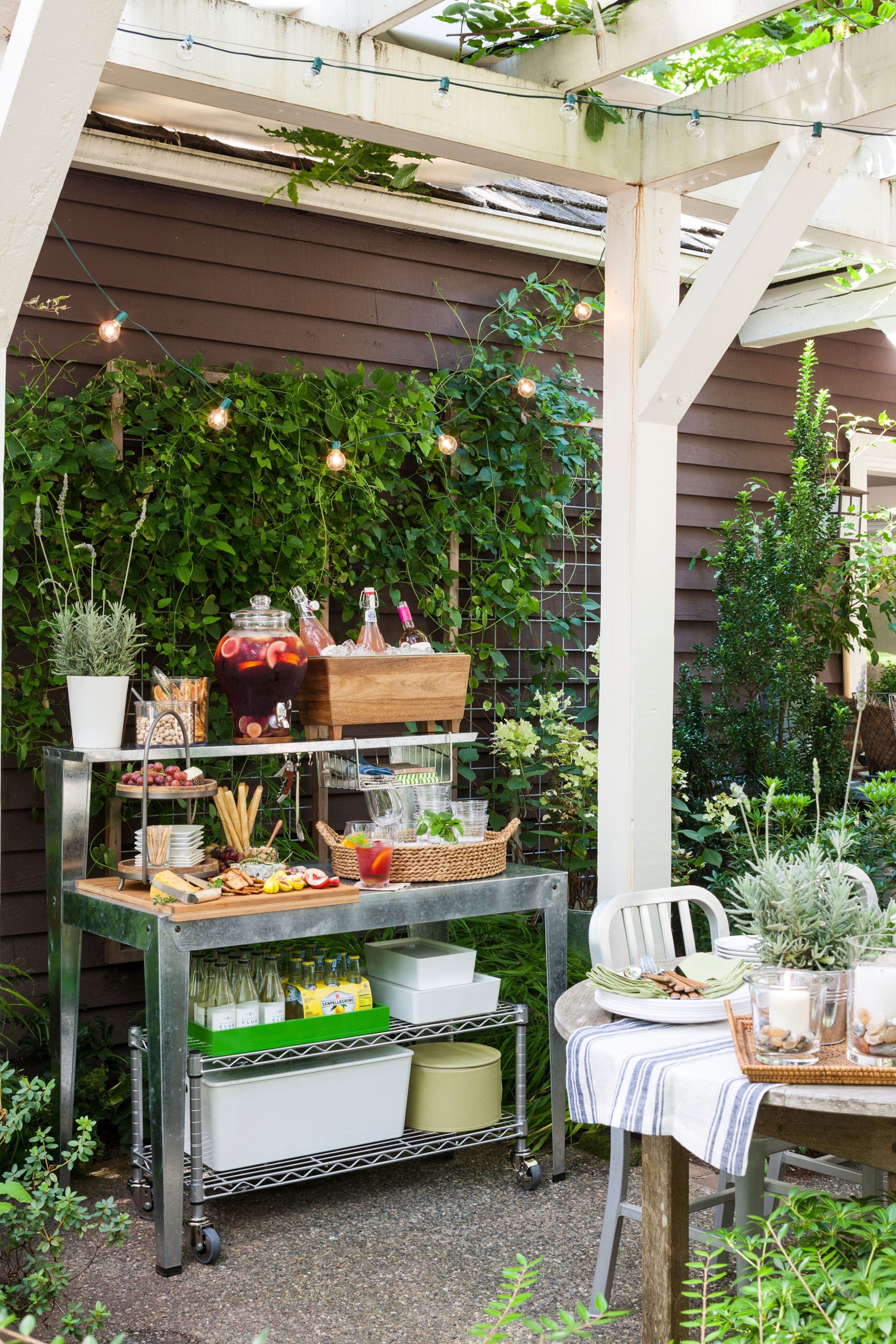
What makes this work so well is the genius blend of industrial function and natural softness. The galvanized steel cart brings a utilitarian, almost kitchen-like efficiency to the outdoor space, which contrasts beautifully with the wild, climbing greenery on the wall. The clean lines of the white pergola provide structure, while the string lights add a layer of warmth and festivity. It’s a perfect example of high-low design: the practical, hard-working cart is elevated by the romantic, slightly overgrown garden setting, making the whole setup feel both effortless and intentional.
“You don’t need a high-end bar cart to get this vibe.”
A similar galvanized steel utility cart can be found at restaurant supply stores or even secondhand for under $100. Check Facebook Marketplace or local auctions. For the pergola and greenery, a simple DIY arch trellis from a big-box hardware store and some fast-climbing vines like jasmine or clematis can create that lush backdrop for a fraction of the cost of a full custom build. The key is the mix of metal and plant life, not the price tag of the individual components.
2. Frame a Patio with a White Gable Trellis
The visual success of this serene corner comes down to a simple formula: 60% structural white + 30% natural textures + 10% soft color. The white gable trellis and clapboard wall create a bright, architectural canvas. The natural element comes from the raw log coffee table, wicker chairs, and abundant green ferns. Finally, the small pops of light blue and yellow in the decor provide just enough color to add personality without overwhelming the calm atmosphere. You could easily swap the wicker for teak or the ferns for flowering plants, as long as you maintain that core 60/30/10 ratio.
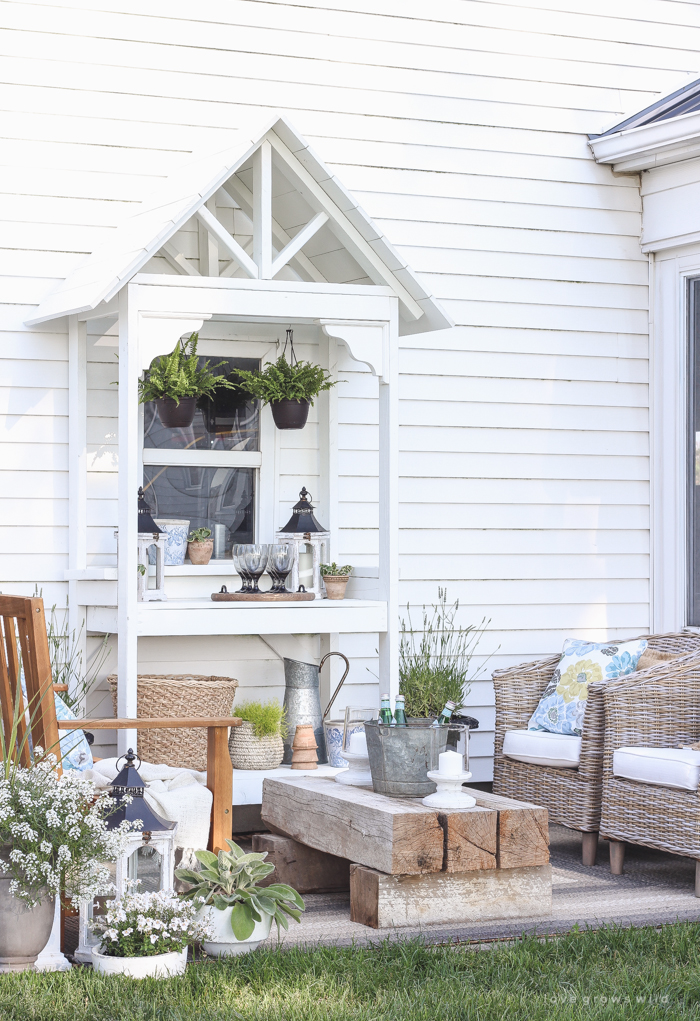
“When using a trellis as a focal point, don’t place it flush against the wall.”
Pull it forward at least 4-6 inches. This does two crucial things: it allows air to circulate behind the structure, which is healthier for both the wall and any climbing plants, and it creates a subtle shadow line that gives the trellis more dimension and visual weight. It’s a small detail that makes the entire setup look more professional and thought-out, turning a flat accessory into a truly architectural feature. This also gives you space to tuck away irrigation lines neatly.
3. A Natural Wood Potting Bench with Sliding Barn Doors
Building those clever sliding doors is easier than it looks and solves the problem of hinged doors swinging into your walkway. Here’s a quick guide:
- Time: 2-3 hours. Cost: $40-$80.
- Measure the opening for your cabinets precisely. Cut two doors from 3/4″ plywood, leaving a 1/8″ gap on all sides.
- Purchase a mini barn door hardware kit online—they come with the track, rollers, and hangers.
- Install the track just above the cabinet opening, ensuring it is perfectly level.
- Attach the roller hardware to the top of your two doors.
- Carefully hang the doors on the track and install the floor guides included in the kit to prevent them from swinging.
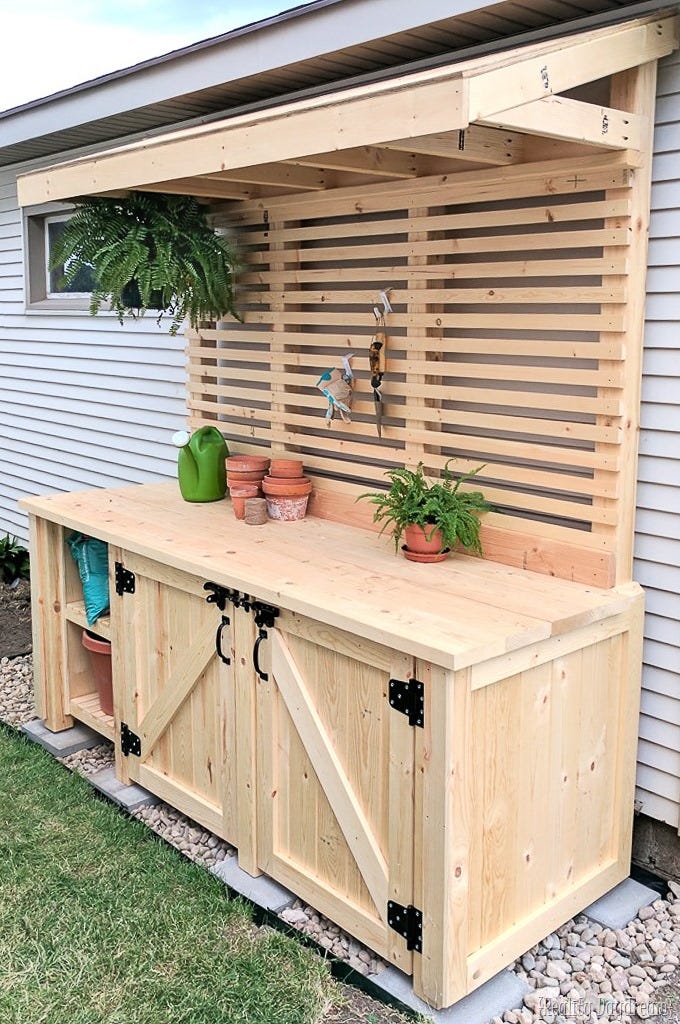
“A natural wood bench is stunning, but it’s not a ‘set it and forget it’ piece of outdoor furniture.”
To keep this light-toned wood from turning a sad, splintery gray, you need to seal it annually. Use a quality outdoor UV-protectant sealer with a water-repellent finish. Before you re-apply each spring, give the entire bench a light sanding to remove any mildew or rough spots. Pay special attention to the countertop surface where water and soil will sit. An alternative with a similar look but less work is to use a wood-look composite material, which will hold its color for years with just a simple soap-and-water cleaning.
4. Pair a Dark Blue Bench with Terracotta and White Accents
This color combination is a classic for a reason. The deep, moody blue of the potting bench acts as a perfect foil for the earthy warmth of traditional terracotta pots. It makes the orange tones pop. The addition of crisp white planters and a white watering can then adds a third layer of contrast, lending a clean, graphic quality that keeps the whole look feeling fresh and modern, not just rustic. It’s a triad of color—cool, warm, and neutral—that provides depth and visual interest from every angle. It feels both timeless and completely current.
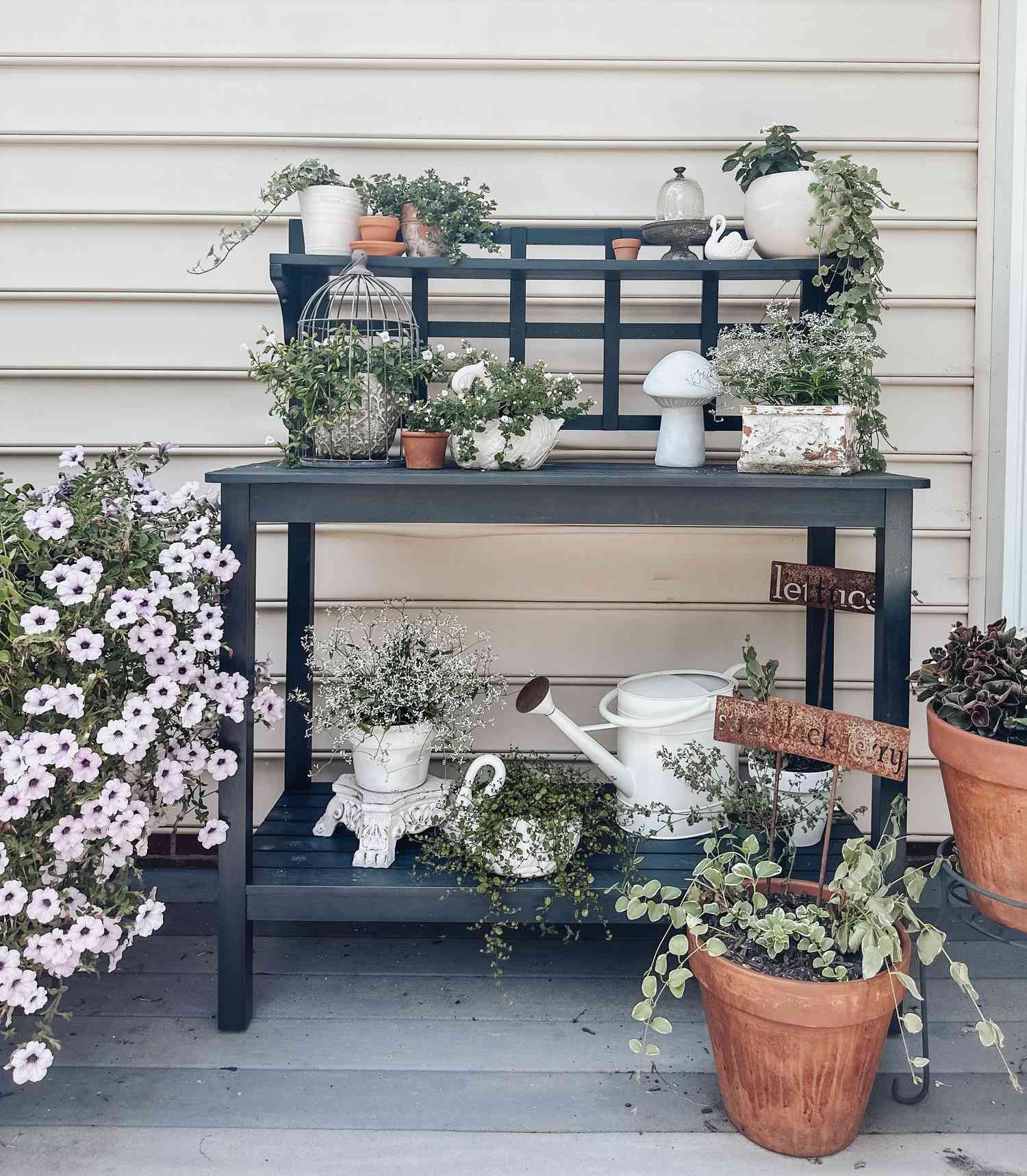
“A dark-painted piece of furniture looks absolutely incredible in photos and on a cloudy day, but be warned: if this bench sits in direct, harsh sunlight, that beautiful dark blue will absorb a ton of heat.”
The surface can become hot enough to scorch tender seedlings or even damage the leaves of plants resting on it. It may also cause the paint to fade, bubble, or peel much faster than a lighter color would. If your spot gets relentless afternoon sun, consider a lighter shade or ensure the bench is placed under an overhang or shady tree.
5. Elevate Your Garden with an Aesthetic Potting Table
The single most important element here is the commitment to aesthetics over pure utility. While a potting bench is a workspace, this approach treats it like a piece of outdoor decor, a focal point meant to be looked at and admired. It’s not about hiding dirt; it’s about creating a beautiful garden vignette. Removing this intentional styling—the curated pots, the thoughtful arrangement—would leave you with just a functional table. The ‘aesthetic’ is what transforms it from a tool into a feature, making your garden feel like a true extension of your home’s interior design.
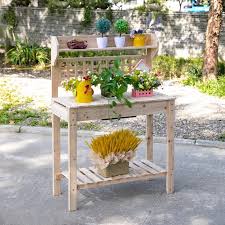
“We’re seeing a huge shift away from purely functional, often unattractive, garden gear.”
With outdoor living spaces becoming more important, people want every corner of their yard to feel intentional and stylish. This trend is fueled by platforms like Pinterest and Instagram, where a well-styled ‘she-shed’ or potting corner can be just as popular as a living room. It reflects a desire to romanticize daily chores and find beauty in practical tasks. An aesthetic potting bench isn’t just for potting plants; it’s for crafting a lifestyle.
6. A Rustic Workspace with Open-Slat Shelving
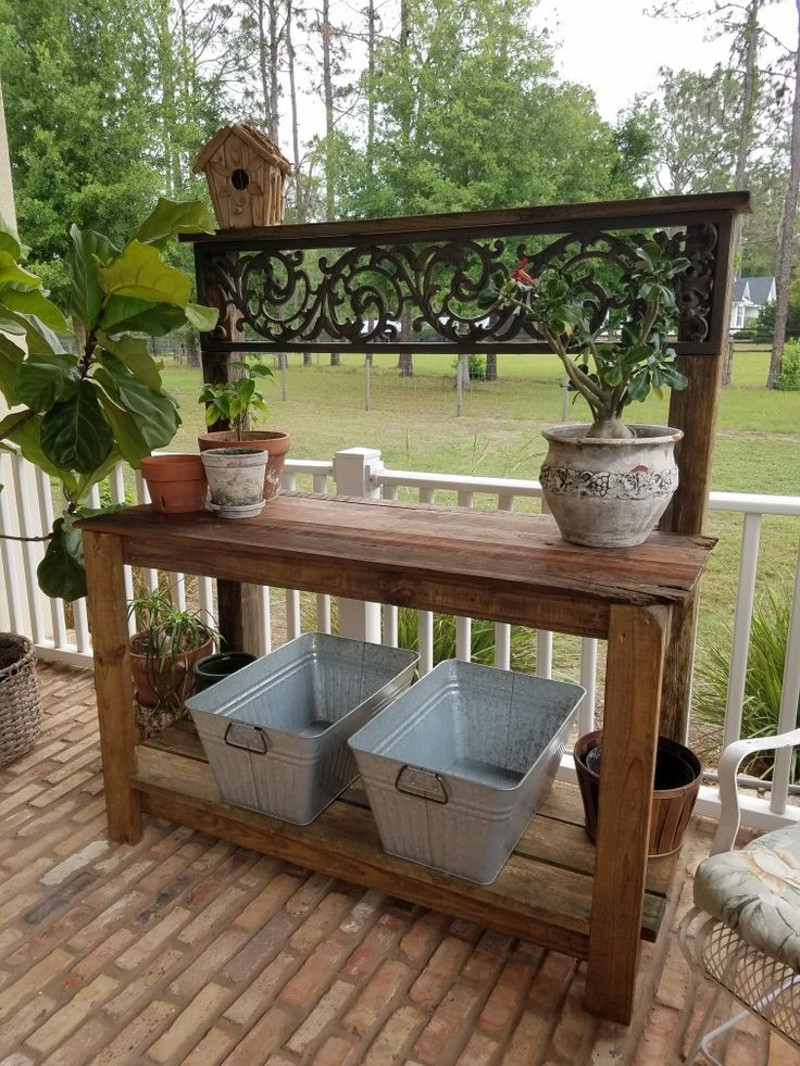
This style of bench works best in a space where it can be a focal point, not crammed into a tight corner. You’ll want a wall space of at least 5-6 feet wide to give it breathing room. The herringbone brick patio here adds a lot of texture, so the bench needs space to stand out. Ideal ceiling height isn’t a concern for this outdoor setup, but ensure the depth of your patio or deck is at least 8 feet. This allows you to stand and work comfortably without feeling like you’re falling off the edge. This design wouldn’t work as well on a very narrow balcony, but the simpler build of Idea #15 might be a better fit.
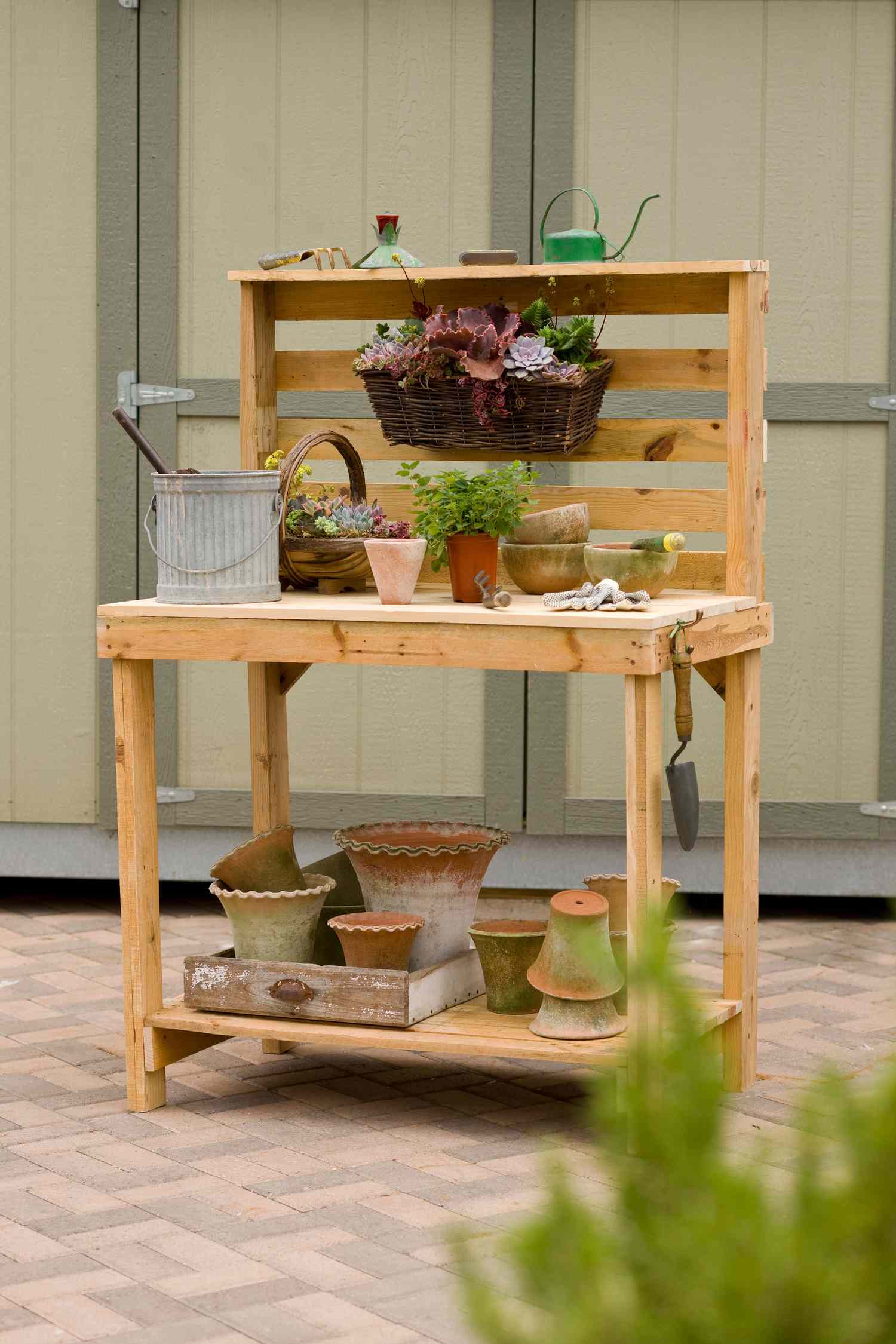
“The open-slatted back is the key to this bench’s charm and utility.”
Don’t just lean it against the wall. Use S-hooks to hang tools, baskets, and small planters directly from the slats. This keeps your work surface clear and turns everyday garden items into a rustic display. For a more secure hold, use zip ties or garden wire to affix your most-used tools. The mix of hanging elements with potted plants on the surfaces below creates layers of texture and color, making the bench feel both organized and abundant.
7. Integrate a Removable Tray into Your Wooden Bench
The integrated yellow tray is the game-changer here. Without it, this is a handsome, but standard, wooden potting bench. With it, the bench gains a massive boost in functionality and a pop of modern color. It contains the mess of soil and water, making cleanup a breeze. You can lift it out, dump the contents into your compost, and rinse it clean. This single feature elevates the design from a simple table to a dedicated, thoughtful workstation, showing that practicality can also be a strong design statement. The contrast with the natural wood makes it a focal point. For a more subdued version, see the covered sink in Idea #26.
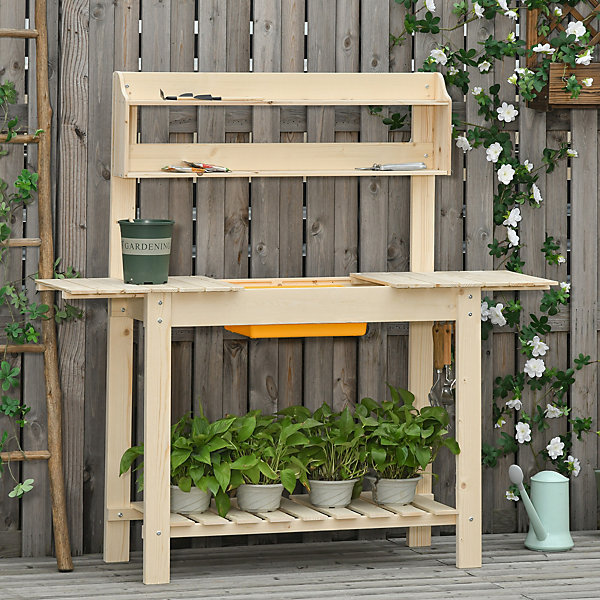
“This design succeeds by balancing natural materials with a touch of the unexpected.”
The all-wood construction—bench, fence, surrounding trees—creates a cohesive, organic base. This sea of green and brown could feel monotonous, but the bright splash of yellow from the integrated tray injects energy and a modern sensibility. It’s a classic design principle: create a harmonious, neutral background, and then introduce one single, bold element to act as a focal point. It draws the eye and gives the entire composition a memorable personality.
8. Sage Green Bench with a Cubby Hutch and Industrial Light
This charming look is a study in rustic modern styling. Let’s break down the ratio: 50% vintage farmhouse + 30% industrial hardware + 20% soft color. The farmhouse vibe comes from the shiplap walls, wooden barn door, and the cubby hutch design. The industrial edge is introduced through the black cage pendant light and other metal accents. Finally, the soft sage green paint provides a gentle, contemporary color that ties everything together and prevents the look from feeling like a historical reenactment. It feels collected and curated, not themed.
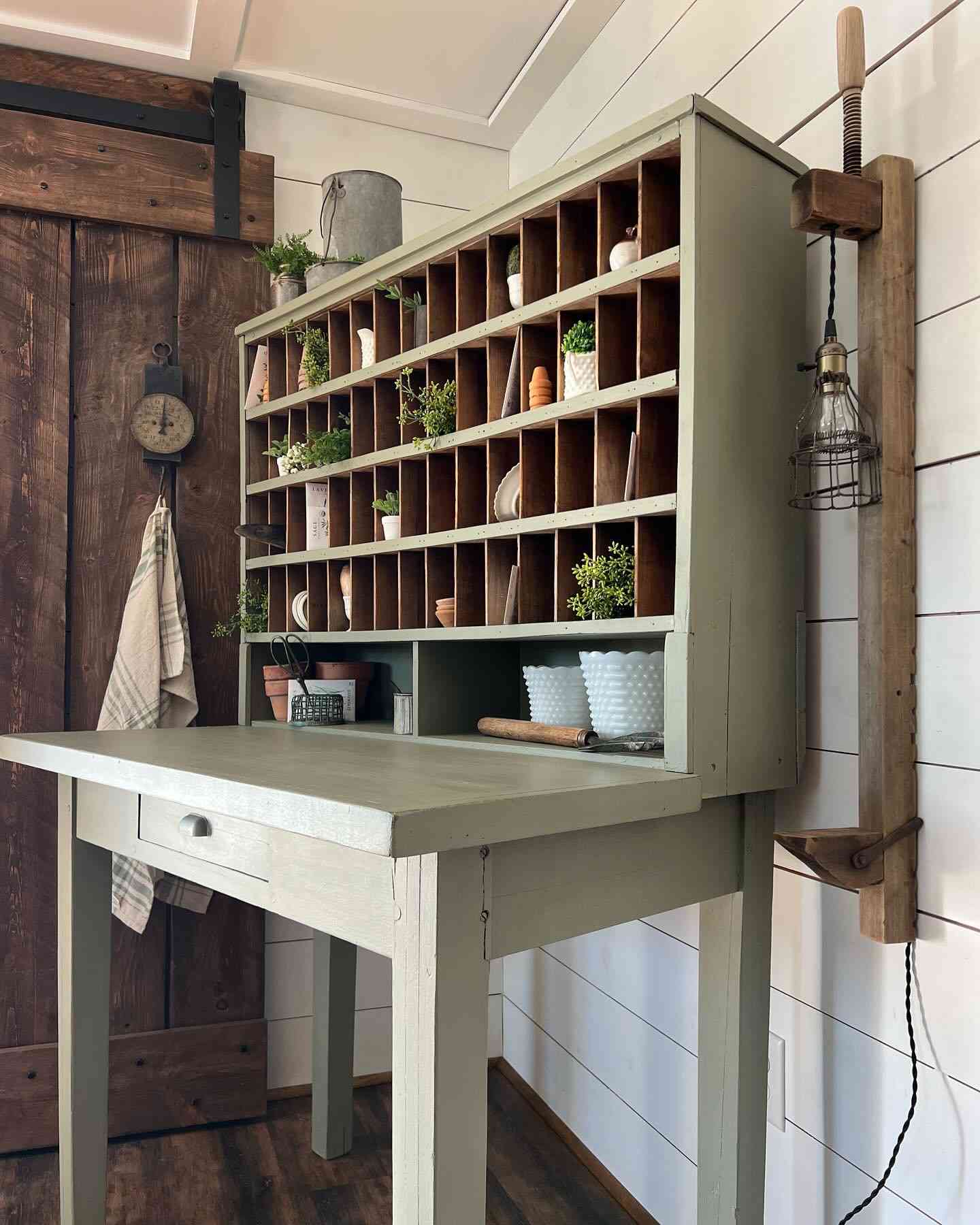
“That adorable industrial pendant light is a fantastic touch, but if this is a true outdoor or damp-location setup (like a porch or uninsulated shed), you absolutely cannot use a standard indoor light fixture.”
Moisture can get into the wiring and create a serious safety hazard. You must use a fixture that is UL-rated for damp or wet locations. These are designed with gaskets and sealed wiring to withstand humidity and condensation. They cost a bit more, but it’s a non-negotiable for safety. Always check the rating before you fall in love with a fixture.
9. A Rustic Bench Featuring a Decorative Metal Back Panel
The decorative metal panel behind the bench isn’t just for looks; it’s a brilliant way to add height and create a backdrop without building a full wall. To get this look, source a decorative metal or laser-cut screen (often marketed as privacy screens). Mount it to the back of the bench using sturdy L-brackets. For added stability, especially in windy areas, use a third bracket to anchor the top center of the panel directly to the wall behind it. This creates a solid, integrated structure that feels custom-made and provides an ideal surface for climbing vines to grip.
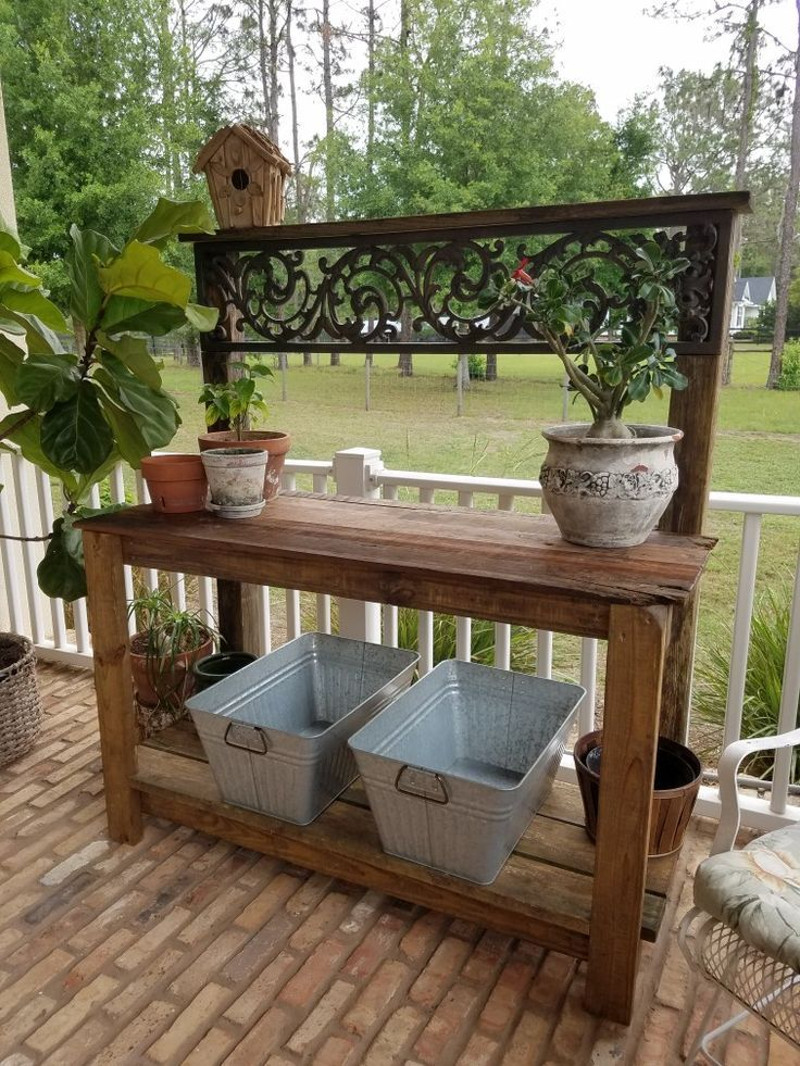
“A large, ornate metal panel can be pricey.”
For a fraction of the cost, you can get a similar effect using a section of standard wooden lattice, painted black or dark bronze. A 4×8 foot sheet of lattice costs around $30-$40 at a hardware store. Cut it to the desired size and frame it with simple 1×2 lumber for a finished look. It will provide the same sense of height, create a similar dark backdrop for your plants, and offer a perfect grid for hanging tools or training climbing plants. The galvanized bins underneath can also be swapped for inexpensive plastic tubs.
10. Style a Two-Tiered Dark Wood Bench for Fresh Herbs
The genius of this setup is its vertical organization. By using two tiers, the design doubles the functional surface area without increasing its footprint. The top shelf is prudently used for smaller, decorative items like the framed sign and delicate herbs, keeping them at eye level. The lower shelf is reserved for bulkier items like the watering can and a large fern. The space in between, with its hooks for tools, becomes a third zone of utility. This clear hierarchy—delicate up high, heavy down low, tools in the middle—is what makes it look so effortlessly organized and not at all cluttered.
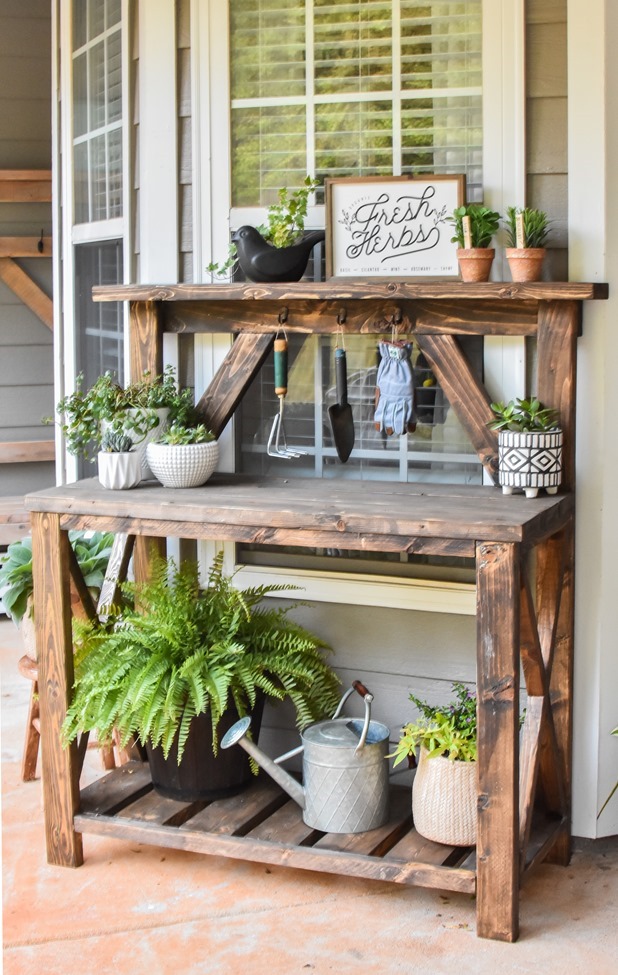
“Before you commit to creating your own herb station, check these boxes:
Sunligh”
Before you commit to creating your own herb station, check these boxes:
- Sunlight: Does this spot get at least 6 hours of direct sunlight? Most herbs, like rosemary, basil, and thyme, need full sun to thrive.
- Convenience: Is it close to your kitchen? You’re much more likely to use fresh herbs if they are just a few steps away from your back door.
- Water Source: How far will you have to drag a hose or carry that watering can? Easy access to water is key for keeping potted plants alive.
- Measurements: Confirm the bench dimensions will fit your space without blocking a pathway or looking too cramped.
11. Opt for a Premium 4ft Metal Potting Bench
The defining feature of this type of bench is its material: all metal. Unlike wood, which can rot, warp, or require seasonal sealing, a powder-coated or galvanized metal bench is built for brute-force longevity. It’s a buy-it-once, use-it-for-decades piece of equipment. This commitment to durability and low maintenance is its core appeal. It’s less about rustic charm and more about professional-grade performance. If you are a serious gardener who is tired of replacing weathered wooden benches, the move to metal is the single upgrade that matters most.
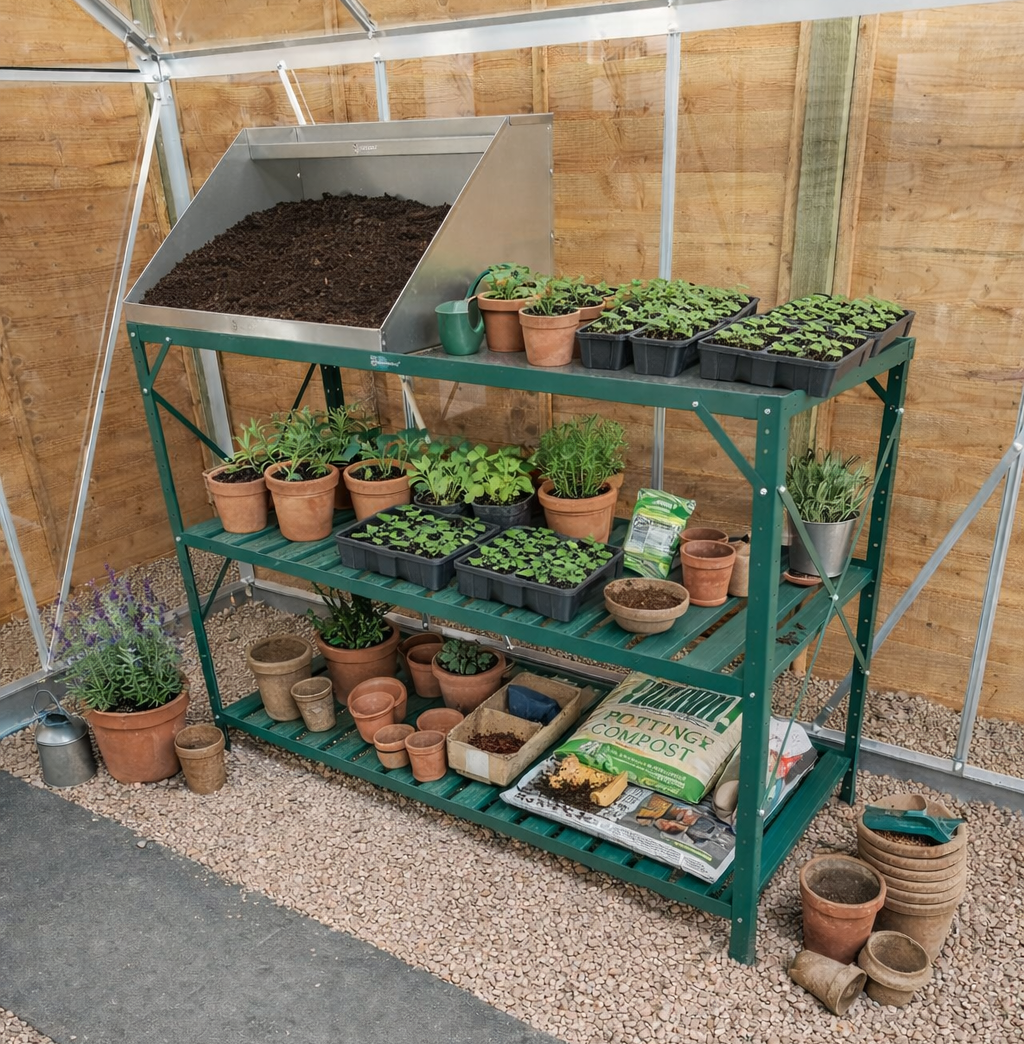
“Even premium metal isn’t entirely invincible.”
If you opt for a painted or powder-coated finish, scratches in the coating can expose the underlying steel to moisture, leading to rust spots. Touch up any deep scratches with a matching outdoor-grade metal paint. For galvanized steel, the zinc coating is very rust-resistant, but it can react to certain fertilizers and acidic soils over time, leading to discoloration. The easiest way to maintain the surface is to use a removable rubber mat or plastic tray on the work surface, which protects the finish and makes cleanup even easier.
12. A Wooden Bench with a Galvanized Metal Top and Colorful Pots
This design’s success comes from the smart use of contrast in both material and color. The warm, natural wood frame provides a rustic base, while the cool, smooth galvanized metal top introduces an industrial, practical element. This material mix alone is compelling, but the masterstroke is the addition of the bright pink and purple pots. This pop of vibrant, almost neon, color against the neutral wood and gray metal creates a focal point that is joyful and energetic. It proves that a functional workspace doesn’t have to be visually boring.
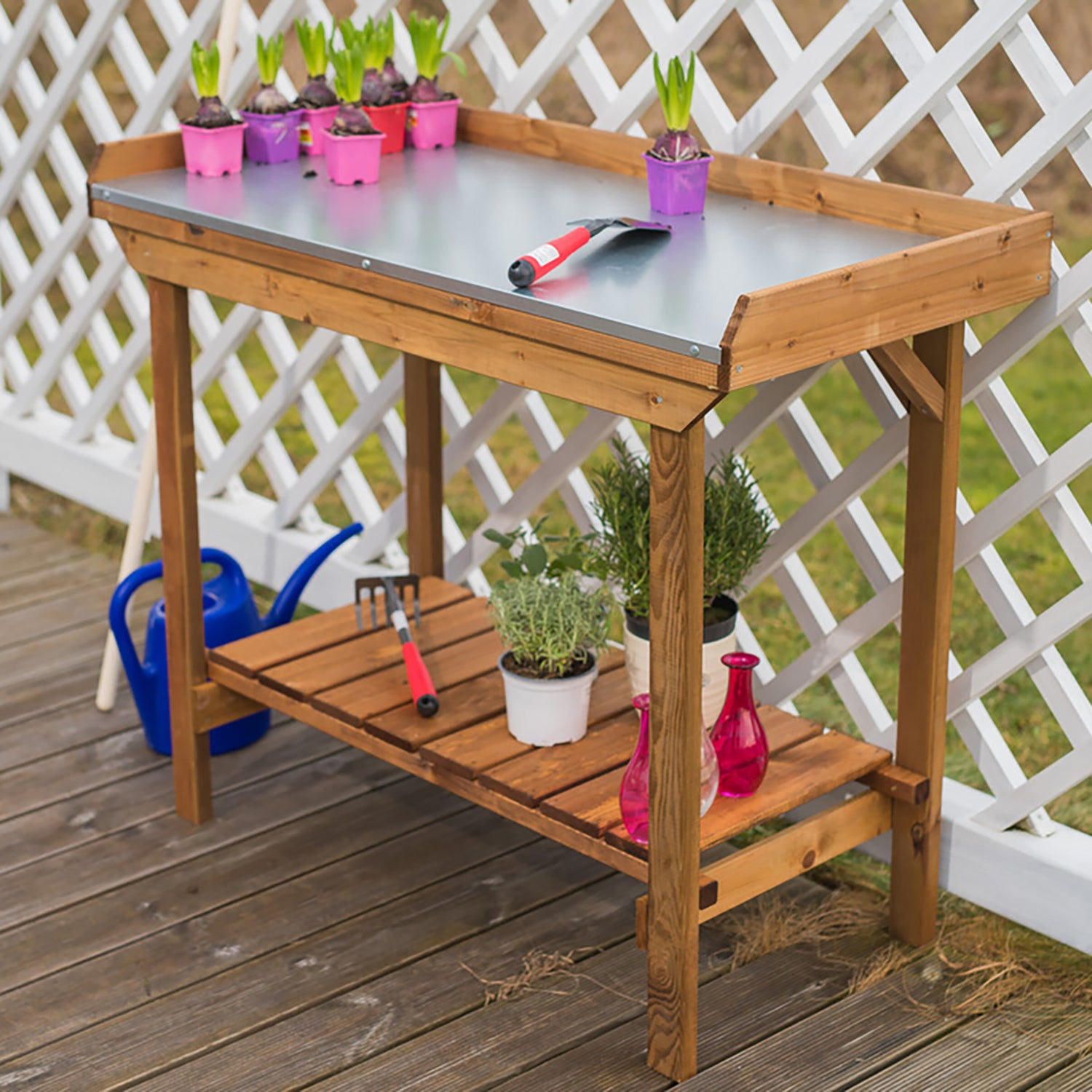
“A bench of this size—likely around 4 feet long and 2 feet deep—is incredibly versatile.”
It’s substantial enough to be a real workspace but compact enough to fit on a small deck, a narrow patio, or even a generous balcony. For this idea to work, you need a footprint of about 4-5 feet in width and at least 4 feet in depth to allow for standing room. The white lattice fence in the background is key; it defines the space. If you don’t have a wall or fence, place it near a house wall to prevent it from looking lost in an open yard.
13. A Three-Tier Wooden Bench with a Metal Work Surface
That hook rack on the side is a small but mighty addition. When planning your potting bench, always think about the surfaces you aren’t using. The sides are prime real estate. Adding a simple rack or even just a few sturdy, well-placed hooks gives you a dedicated spot for hand tools, gloves, or a roll of twine. This keeps them off your main work surface but still within easy reach. It’s an organizational trick that professional kitchen designers use, and it works just as well in the garden. For a few dollars, it dramatically improves the bench’s workflow.
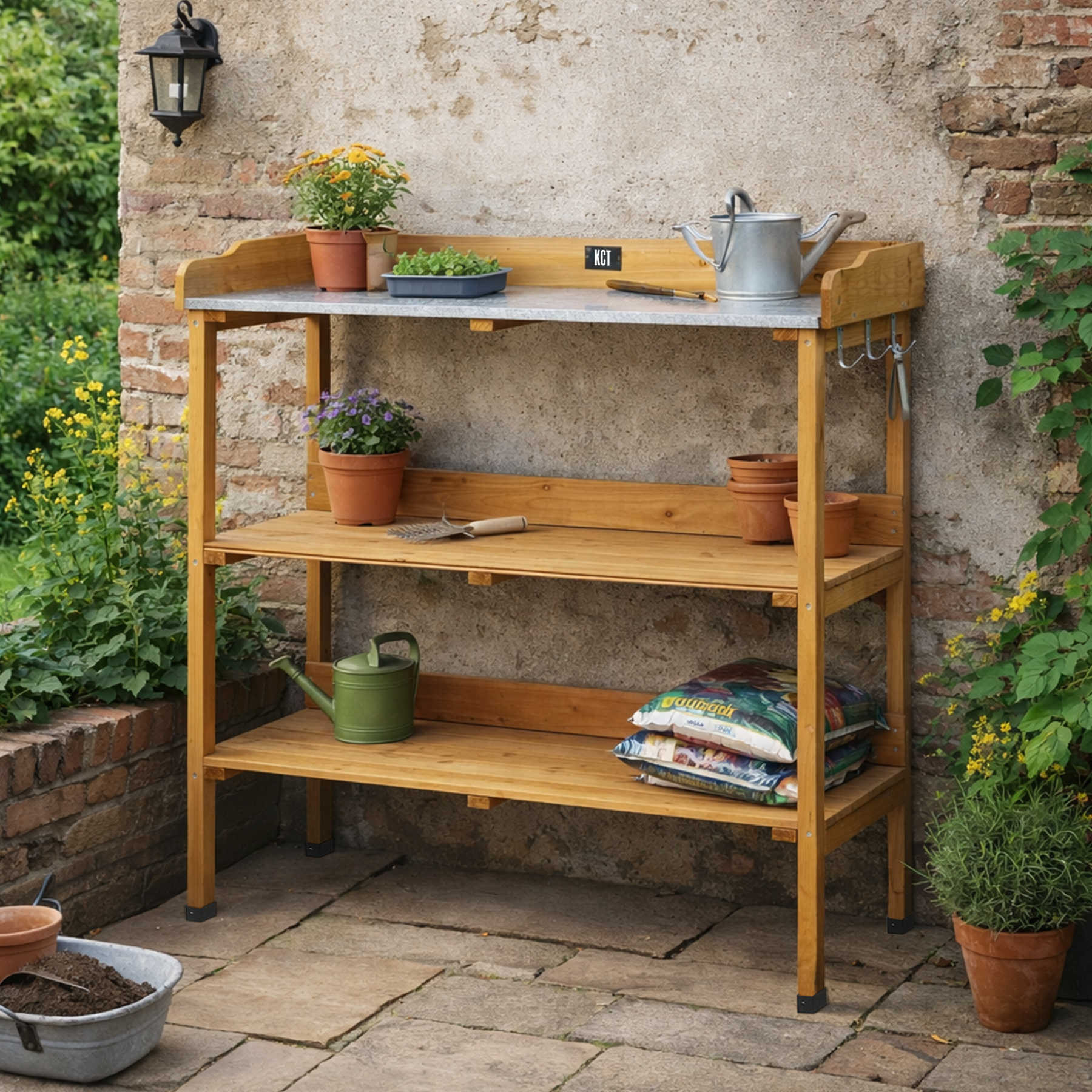
“Recreating this organized and rustic look can be done on a reasonable budget.”
Here’s a potential cost breakdown:
Three-Tier Bench Kit: Look for pre-fab kits online or at garden centers. ($150 – $300)
Galvanized Metal Top: A custom-cut piece of sheet metal from a local fabricator or a pre-made metal panel. ($50 – $120)
Pots & Plants: A mix of terracotta pots and starter plants. ($40 – $100)
Tools & Accessories: Hand trowel, fork, watering can, side hooks. ($30 – $60)
TOTAL: $270 – $580
Budget alternative: Build the bench yourself from reclaimed pallet wood and use a remnant piece of stainless steel countertop from a reuse center to cut costs by 50-60%.
14. A Whimsical Potting Bench with an Integrated Picket Fence Back
The single element that gives this bench its undeniable charm is the integrated picket fence back with the two birdhouse structures. Without them, it would be a simple, painted table. With them, it becomes a whimsical piece of garden art that tells a story. This feature transforms the bench from a mere utility item into a destination, a miniature garden cottage in its own right. It’s pure personality, proving that a potting bench can be a place for playfulness and imagination, not just potting soil.
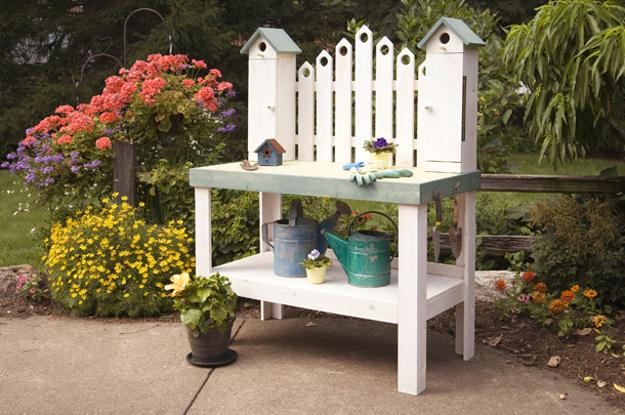
“This is an incredibly charming and unique design, but it’s important to be realistic about its construction.”
This is not a standard, off-the-shelf item. It’s either a clever DIY project or a custom piece. The birdhouses, while adorable, will absolutely attract real birds, which means bird droppings on your workspace. If you plan to use this for frequent potting, you might find the cleanup frustrating. Think of this less as a heavy-duty workstation and more as a decorative garden feature that can be used for light tasks.
15. A Simple DIY Potting Bench from Unfinished Wood
This is one of the most straightforward DIY furniture projects you can tackle. The slat top is key, as it allows dirt and water to fall through.
- Time: 3-4 hours. Cost: $60-$120.
- Cut four 2x4s to your desired height for the legs (e.g., 36 inches).
- Build two rectangular frames from 2x4s for the top and bottom shelf supports.
- Attach the legs to the inside corners of the frames using exterior-grade screws.
- Cut 1×4 or 1×6 boards to create the slats for the top surface and bottom shelf.
- Space the slats about 1/2 inch apart and screw them into the frames.
- Add the diagonal cross-bracing on the sides for stability—don’t skip this step!
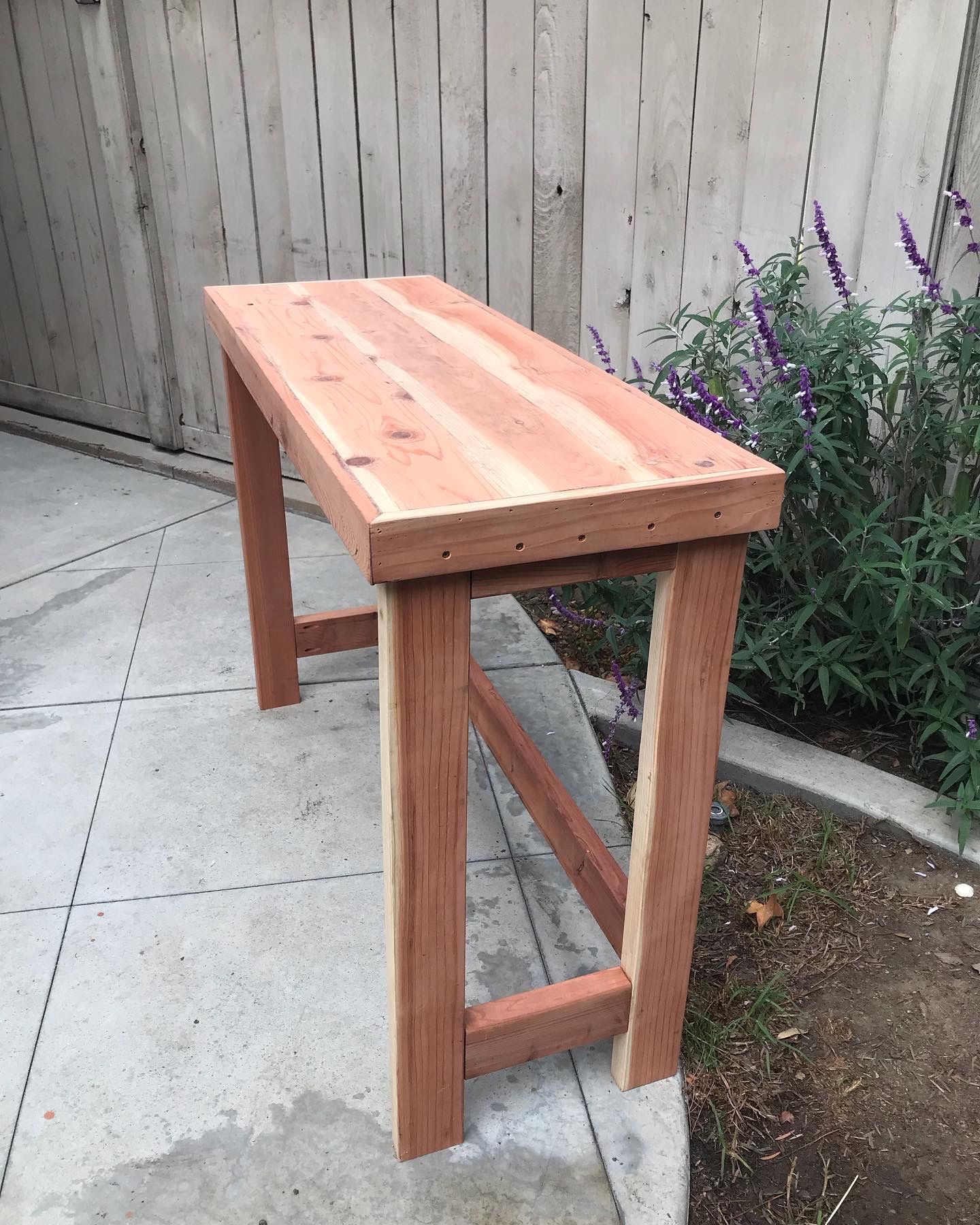
“This bench is the definition of budget-friendly outdoor furniture.”
You can build it for around $70 using new lumber from a hardware store. But to get the look for even less, look for free materials. Check Craigslist or Facebook Marketplace for leftover lumber from a deck project. The ultimate budget source is pallet wood. You can often get pallets for free from local businesses. Disassembling them takes effort, but the weathered wood is perfect for a rustic project like this. With some sanding and exterior screws, you could build this bench for under $20. It’s a great example of how a simple design can be incredibly accessible.
16. Install a Rustic Outdoor Sink with a Brick-and-Wood Base
When installing an outdoor sink, drainage is just as important as the water supply. Don’t just run the drainpipe out onto the ground, which can create a muddy, eroded mess. The best professional solution is to connect it to your home’s existing drain-waste-vent system, though this can be complex. A more practical DIY option is to create a French drain. Dig a hole about 2x2x2 feet, run the drainpipe into it, and fill the hole with coarse gravel. This allows the water to percolate slowly into the ground without causing erosion or attracting pests.
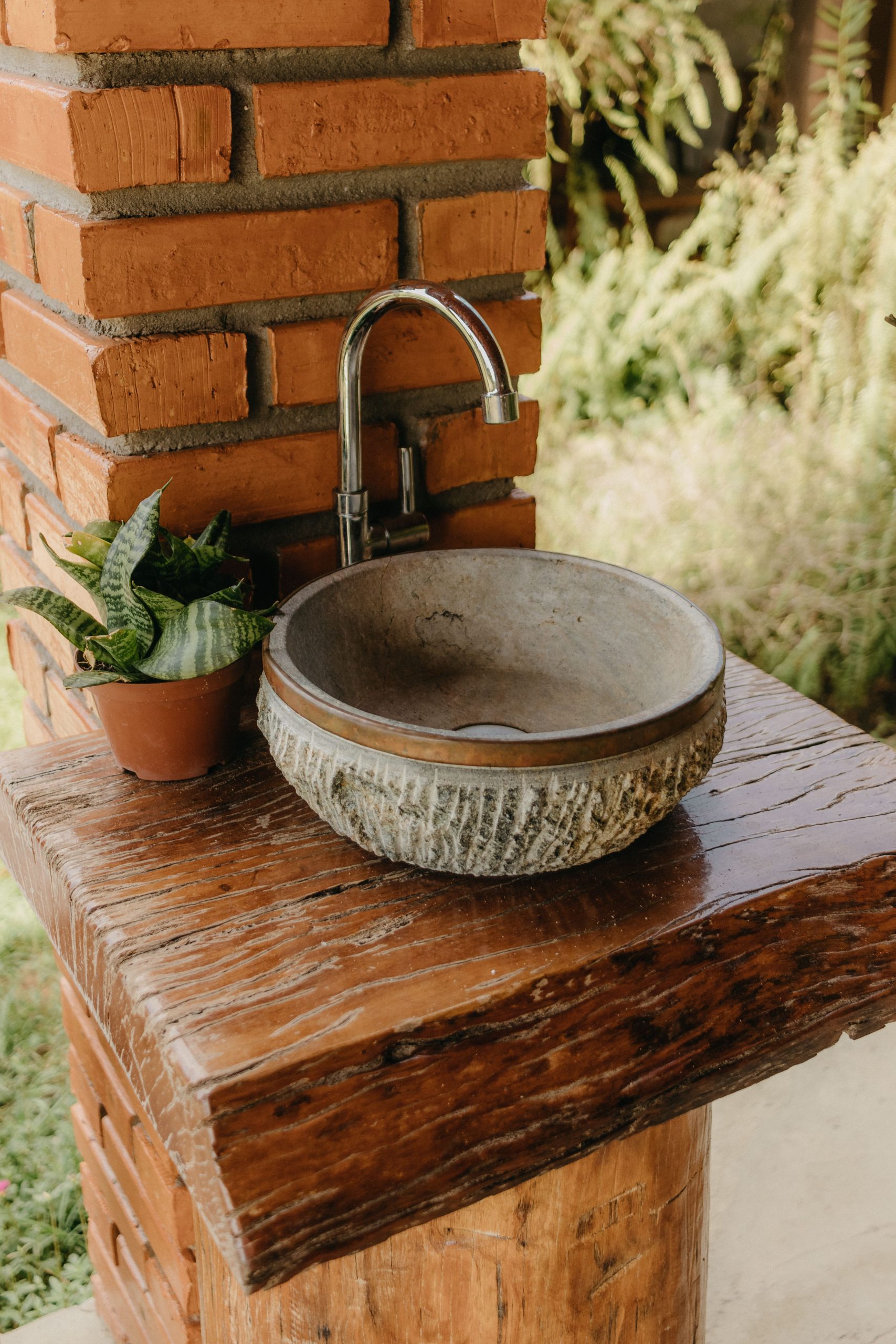
“Creating this durable, high-end rustic sink station involves a mix of materials and labor.”
Here is an estimated breakdown for a professional installation:
Masonry: Building the brick support structure. ($400 – $900)
Countertop: A thick, rough-hewn wood slab, sealed for outdoor use. ($300 – $700)
Plumbing: Running hot/cold lines and drainage; faucet and sink basin. ($800 – $2000+)
Decor: High-quality stone basin, faucet, plants. ($200 – $500)
TOTAL: $1,700 – $4,100+
Budget alternative: Use cinder blocks for the base, a pre-fab laminate countertop, and a simple utility sink with a cold-water-only hookup to a garden hose to get a functional version for under $500.
17. Style a Small, Weathered Bench with a Succulent Pot
that makes this little scene work is its simplicity. It’s not trying to be a full-service potting station or a grand garden feature. It is simply a moment of beauty. The focus is entirely on the texture and color of the weathered wood and the simple, sculptural form of the succulent in its terracotta pot. By keeping the composition minimal—just the bench, the pot, the light, and the grass—the eye is drawn to the quiet beauty of these few elements. It’s a powerful reminder that you don’t need a lot to create a meaningful garden focal point.
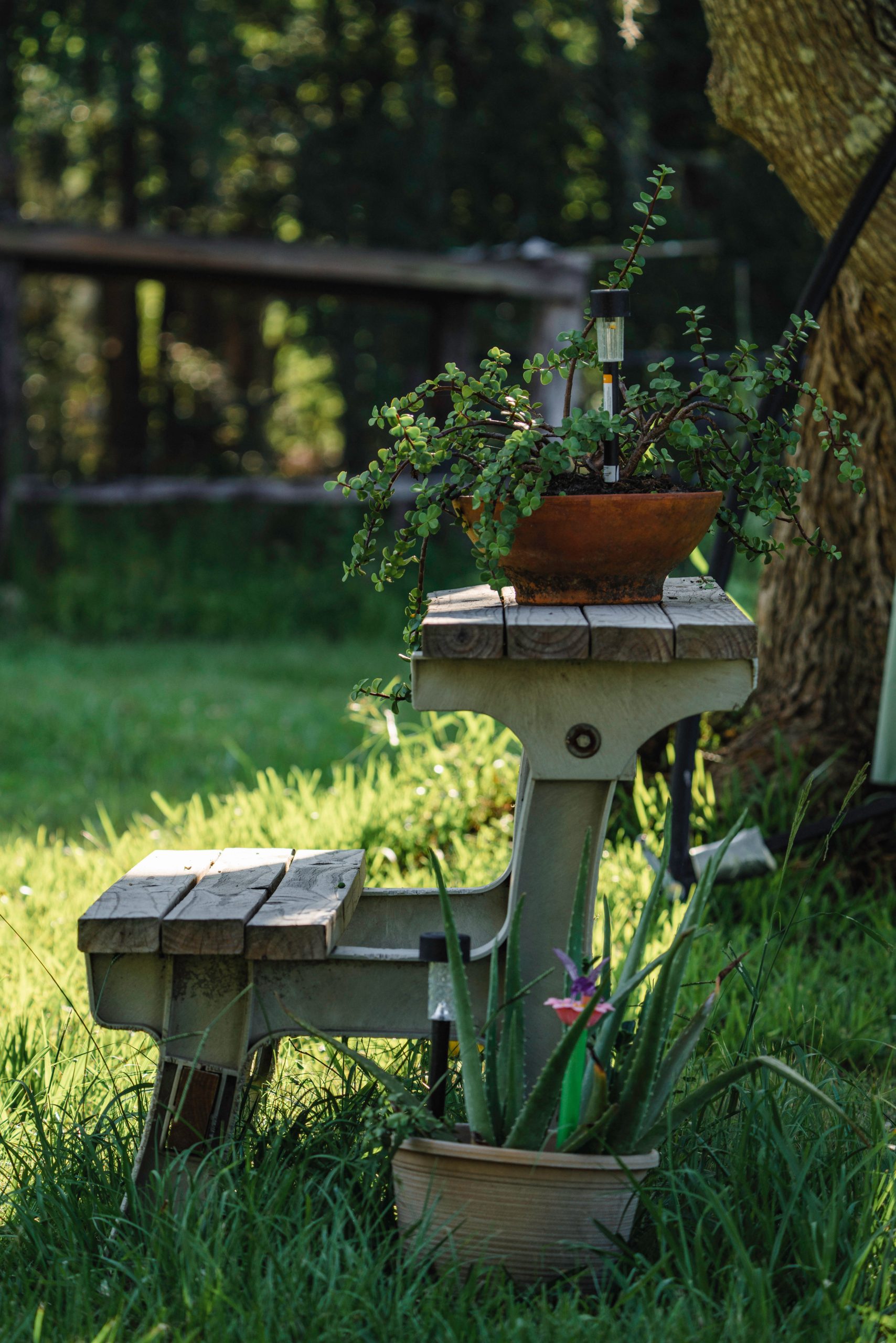
“This idea is all about small-space impact.”
A little bench like this, probably no more than 24-30 inches wide, is perfect for a tiny garden patch, a small balcony, or an awkward corner next to a pathway that nothing else will fit in. It doesn’t require a large lawn or expansive patio. Its purpose is to draw the eye and create a point of interest in an overlooked spot. Contrast this with the larger, more functional benches like Idea #6, which require a much larger footprint to be practical.
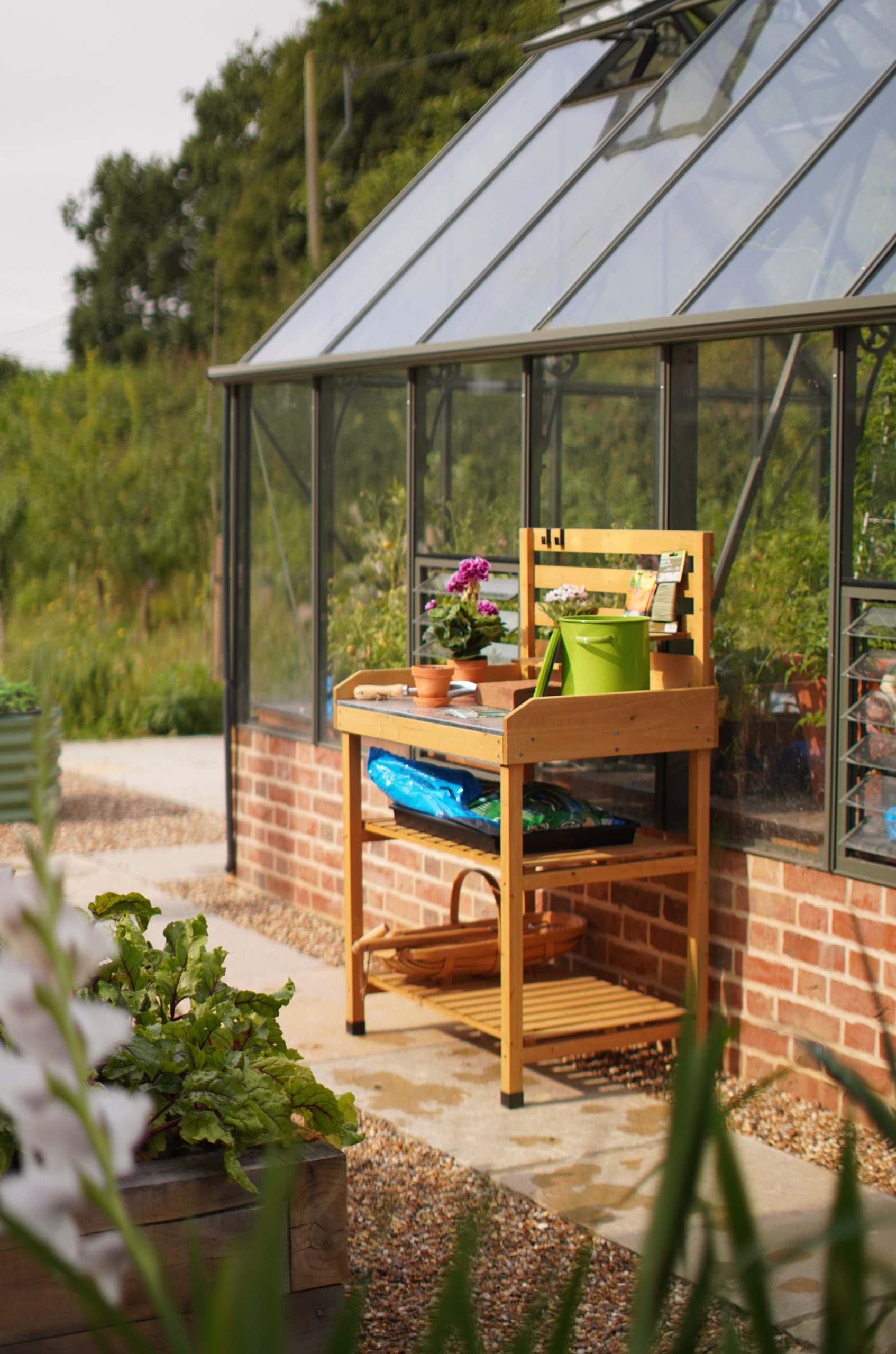
18. Position a Wooden Potting Bench Beside a Brick Greenhouse
The visual harmony here stems from the seamless connection between the two structures. The potting bench isn’t just near the greenhouse; it feels like a functional extension of it. The light wood of the bench complements the warm tones of the brick base, while the green plants on the bench echo the lush life inside the glass walls. This creates a cohesive
19. Display Potted Plants on a Weathered Mint Green Bench
This look is all about texture and repetition, following a simple visual recipe: 70% weathered texture + 20% varied greenery + 10% curated containers. The long, slatted bench with its peeling mint-green paint provides the dominant textural story. Then, a wide variety of plants—succulents, leafy greens, etc.—adds layers of organic shapes. Finally, the assortment of terracotta, ceramic, and wooden pots adds a final layer of curated detail. The magic is in the mix; using all one type of pot or plant would make it feel much less dynamic and personal.
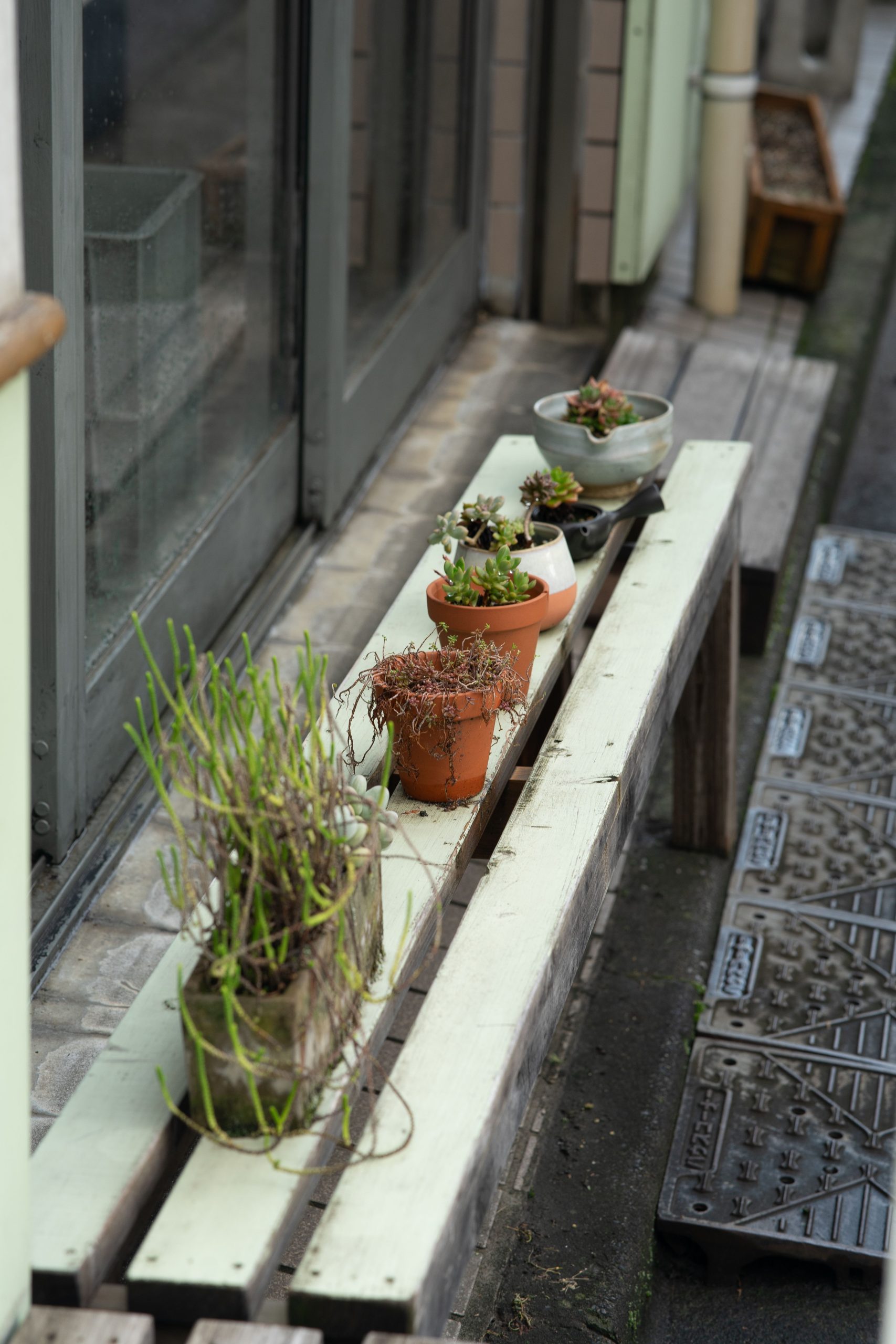
“A low slatted bench like this is fantastic for displaying plants, but it’s not a comfortable or ergonomic height for actual potting work.”
Bending over this low for an extended period is a recipe for back pain. If you love the look but need a functional workspace, consider a two-part solution: use this low bench for display, and place a taller, more practical potting table elsewhere. Or, embrace its function as a display stand and do your messy potting work on a simple tarp on the ground. Know what a piece is truly for before you commit.
20. A Built-In Window Bench for Books and Garden Views
The defining feature here is its dual-purpose design. It’s not just a bench, and it’s not just a bookshelf; it’s a perfectly integrated unit that serves both functions without compromise. The way the bench surface extends to become a shelf for books is a brilliant use of space. This thoughtful integration is what makes it feel custom and high-end. It recognizes that a moment of rest often involves a good book, and it puts them in the same place as the cozy seat and the beautiful view. It’s a small, genius detail that elevates the entire concept.
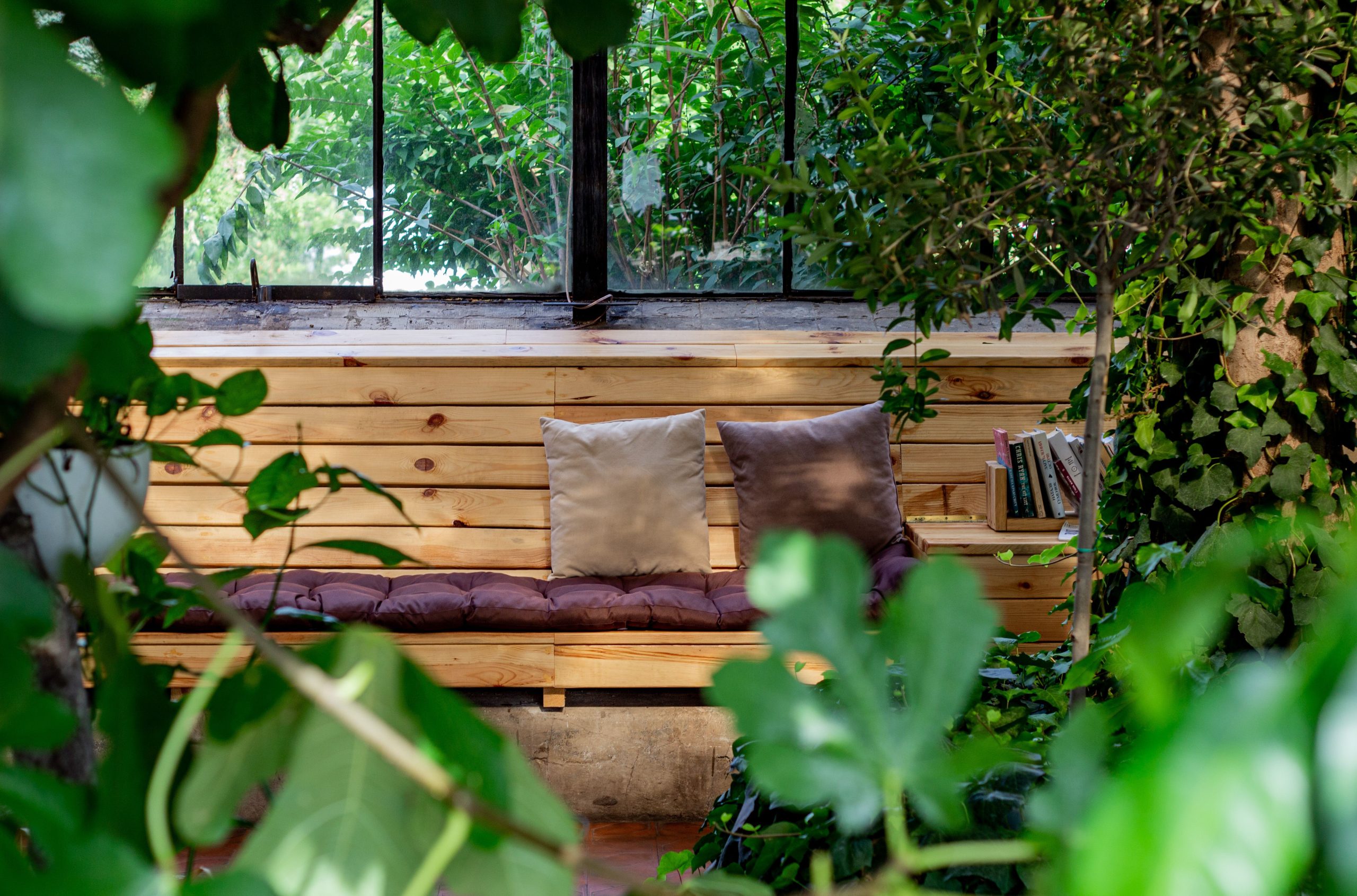
“When designing a cushioned bench like this, especially one exposed to a lot of light from a window, fabric choice is critical.”
Use a high-performance indoor/outdoor fabric, even if the bench is fully indoors. These fabrics are specifically treated to be UV-resistant, which will prevent the dark brown cushion from fading to a dull purple-gray in a year. They are also typically moisture and stain-resistant, which is a bonus for a spot right next to plants and windows. Brands like Sunbrella or Perennials offer thousands of stylish options that will look new for years.
21. A Weathered Wood Bench with a Metal Mesh Drawer
This design’s appeal lies in its sophisticated blend of rustic and industrial textures. The light, weathered wood has a soft, almost beachy feel, while the dark diamond-patterned metal mesh on the drawer provides a sharp, graphic, and industrial counterpoint. The X-bracing on the sides reinforces this slightly more modern, structural feel. This push-and-pull between the soft, natural wood and the hard, geometric metal is what makes the piece visually interesting. It feels both handmade and engineered at the same time, giving it a unique personality.
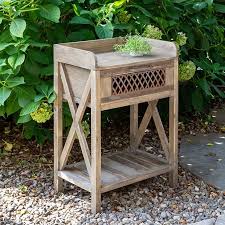
“A brand new bench with these details can be surprisingly expensive.”
To get this look for less, find a basic, inexpensive wooden potting bench or even a simple console table from a thrift store or on sale. The key is the mesh drawer front. You can buy sheets of decorative metal mesh from a hardware store or online for around $30-$50. Remove the existing drawer front (or the whole drawer), and replace it with a simple wooden frame holding the mesh. A little bit of DIY transforms a generic piece into something with custom, high-end character. Compare this to the simpler DIY build in Idea #15.
22. A Rustic Potting Bench with Cheerful Garden Accents
The cheerful energy of this space comes from a well-balanced visual equation: 60% rustic texture + 30% functional metal + 10% bright color. The weathered wood of the bench itself provides the foundational rustic element. The galvanized silver of the watering can and the dark metal of the scissors add a layer of cool, practical shine. Finally, the small but powerful pops of color from the flowering plants and the crisp white pots provide that 10% of cheerful accent that brings the whole vignette to life. Take away the flowers, and it’s just a workspace; with them, it’s a joy.
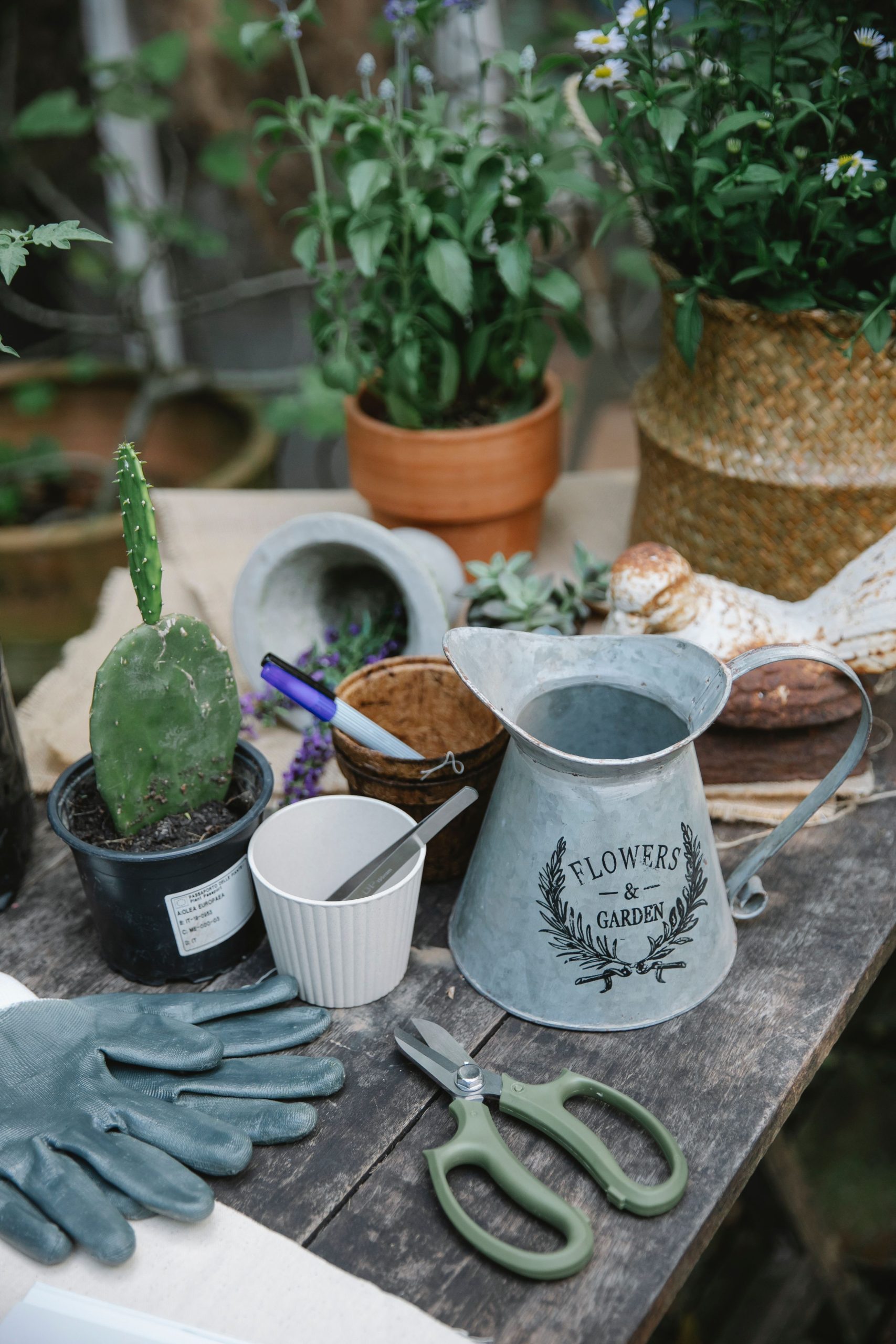
“Before setting up your perfect potting station, do a quick check to make sure it will be a place you love to work.”
Assess the Mess: Are you okay with soil and water spilling onto the surface and floor below? This is a workspace, and it will get dirty.
Check for Level Ground: Is the spot you’ve chosen relatively flat? A wobbly bench is frustrating and unsafe, especially when working with tools.
Consider the View: Will you be looking at a beautiful part of your garden or a boring wall? You’ll spend more time here if it’s a pleasant place to be.
Proximity to Compost: How far will you have to carry clippings and old soil? The closer your compost bin or pile, the better.
23. Build a Potting Station with a Corrugated Metal Roof
The single most defining element of this structure is the corrugated metal roof. It does more than just provide shelter; it sets the entire rustic, slightly industrial tone. The combination of the warm, stained wood and the cool, utilitarian metal is a classic farmhouse and ranch aesthetic. Remove the roof, and you have simple shelving. With the roof, you have a destination—a potting shed, a workstation, a true structure. It gives the bench presence and a sense of permanence in the garden, making it feel much more substantial than a simple table.
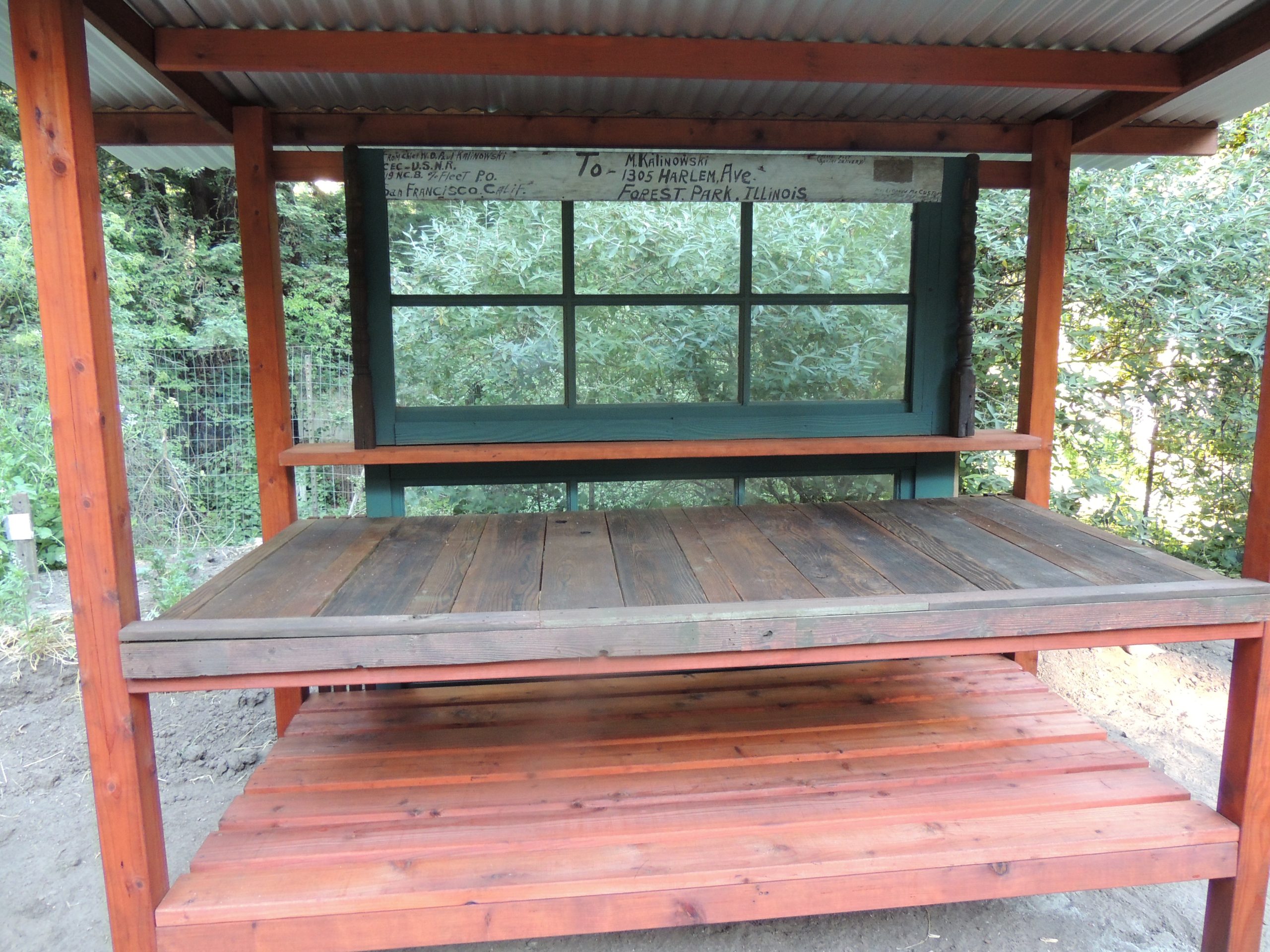
“While the metal roof is great for providing shade and protection from rain, it can also create a few maintenance challenges.”
In the fall, leaves and debris will collect on top, potentially trapping moisture and accelerating rust if the metal’s coating is compromised. You’ll need to clear it off a few times a year. Also, cobwebs and insects love to build nests in the nooks and crannies underneath a corrugated roof. A quick sweep with a long-handled broom every month or so will keep it from looking like a haunted house. The stained wood will also need periodic re-sealing every 2-3 years to protect it from sun and water damage.
24. A Mobile Potting Bench with a Stainless Steel Top
This bench is the perfect marriage of rustic charm and professional-grade function. The weathered wood frame and wheels give it a relaxed, farmhouse feel that fits beautifully into a garden setting. However, the stainless steel top elevates it into a serious workspace. This is the same material used in commercial kitchens for its durability and ease of cleaning. The integrated trough or sink adds another layer of practicality. This combination works because it doesn’t force you to choose between aesthetics and utility; it delivers both in one thoughtful package.
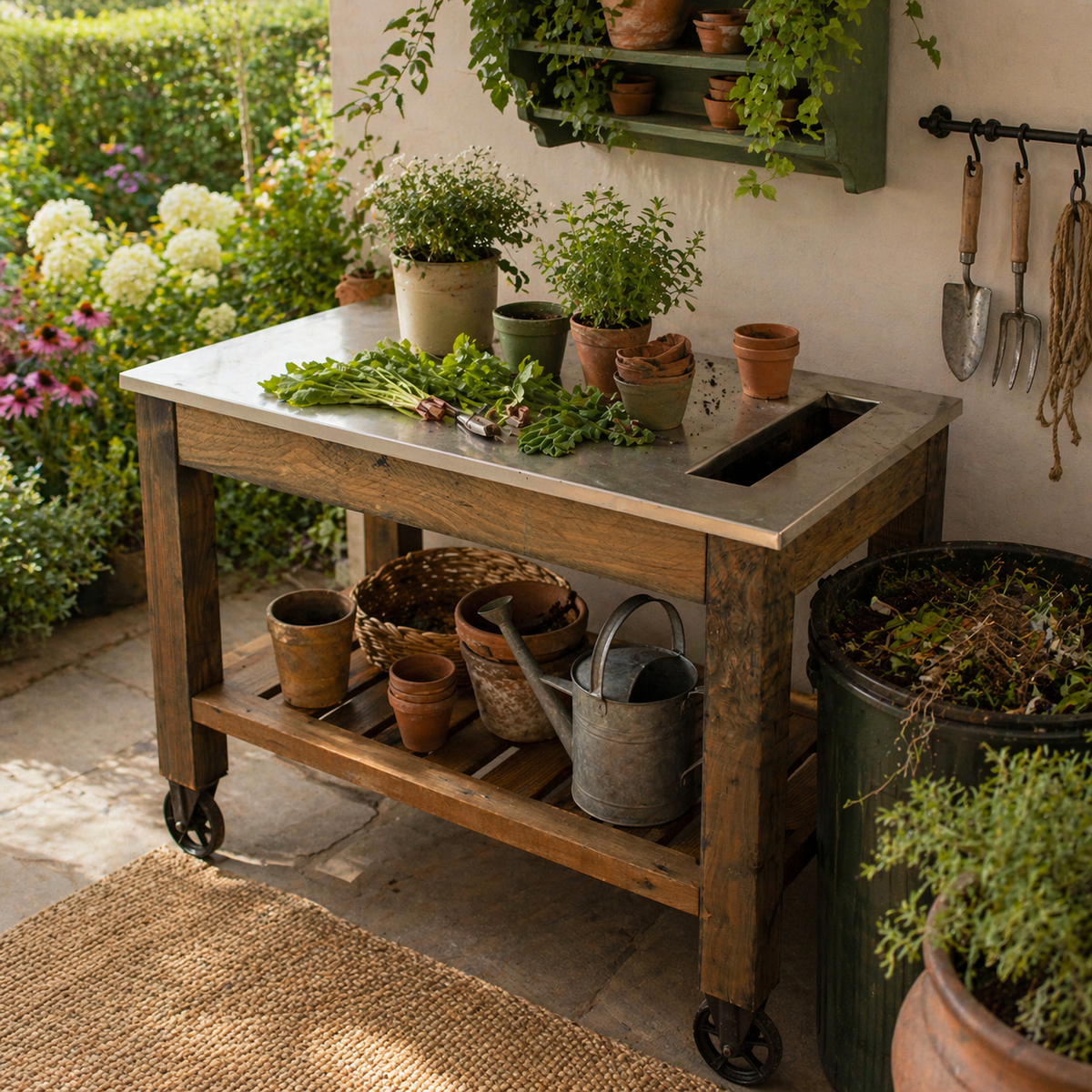
“If you’re investing in a bench with a stainless steel top, lean into its best feature: hygiene.”
Unlike wood, which can harbor bacteria, steel can be completely sanitized. After you’re done with your soil and fertilizers, give it a quick wipe-down with a simple vinegar and water solution or a food-safe cleaner. This is especially important if you plan to use the bench for harvesting herbs or vegetables from your garden. It ensures there’s no cross-contamination from potting soils or other garden chemicals. Treat it like a kitchen counter, and it will be an even more valuable tool.
25. Repurpose a Weathered Blue Buffet for Outdoor Drinks
You don’t need to buy a special piece of ‘outdoor bar’ furniture for this look. The best and most affordable way to achieve this is by hunting for an old wooden buffet, sideboard, or console table at a thrift store or on Facebook Marketplace for $50-$100. Look for something with good bones, even if the finish is awful. A good cleaning, a light sanding, and a couple of coats of durable outdoor-grade paint in a fun color like this weathered blue are all it takes. The result is a piece with far more character and storage than a typical, and more expensive, flimsy bar cart. For another take on an outdoor serving station, check out the galvanized bar cart.
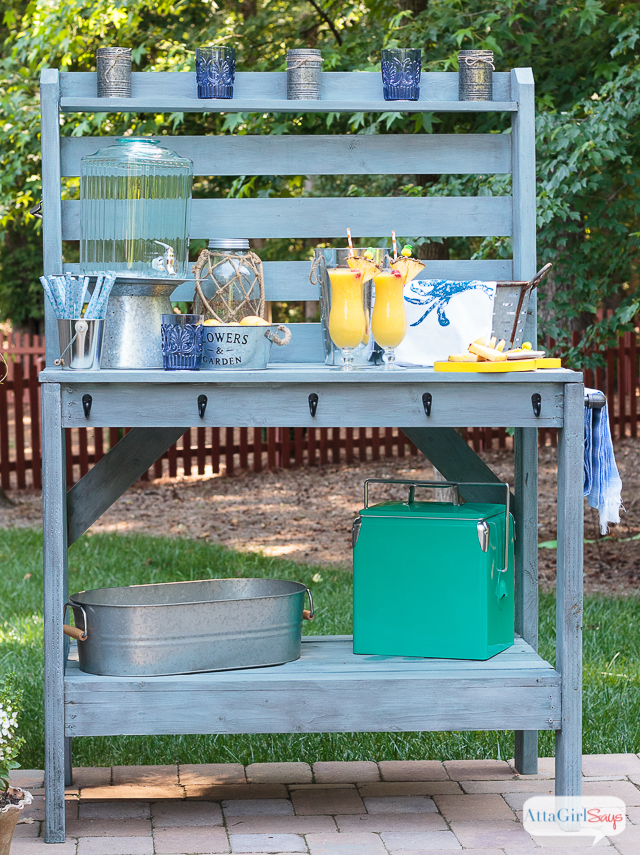
“A painted wooden piece of furniture, even one coated in exterior paint, will not last forever when exposed to the elements.”
Rain will get into the joints, the paint will eventually start to peel, and the wood can warp. To significantly extend its life, you need to either place it in a covered area like a porch or covered patio, or invest in a waterproof furniture cover and be diligent about using it. If left completely exposed to sun and rain year-round, a piece like this might only look good for two or three seasons before it starts to seriously degrade.
26. A Light Wood Potting Bench with an Integrated Sink Cover
The integrated sink with its removable wooden lid is the star of this show. It’s a brilliant piece of design that offers maximum flexibility. When you need to wash pots or rinse vegetables, you have a sink. When you don’t, you can put the lid on and have a completely flush, uninterrupted work surface. This single feature transforms the bench from a static table into a dynamic, multi-function workstation. It provides the utility of a sink without sacrificing valuable counter space, which is the ultimate luxury in any workspace, indoors or out.
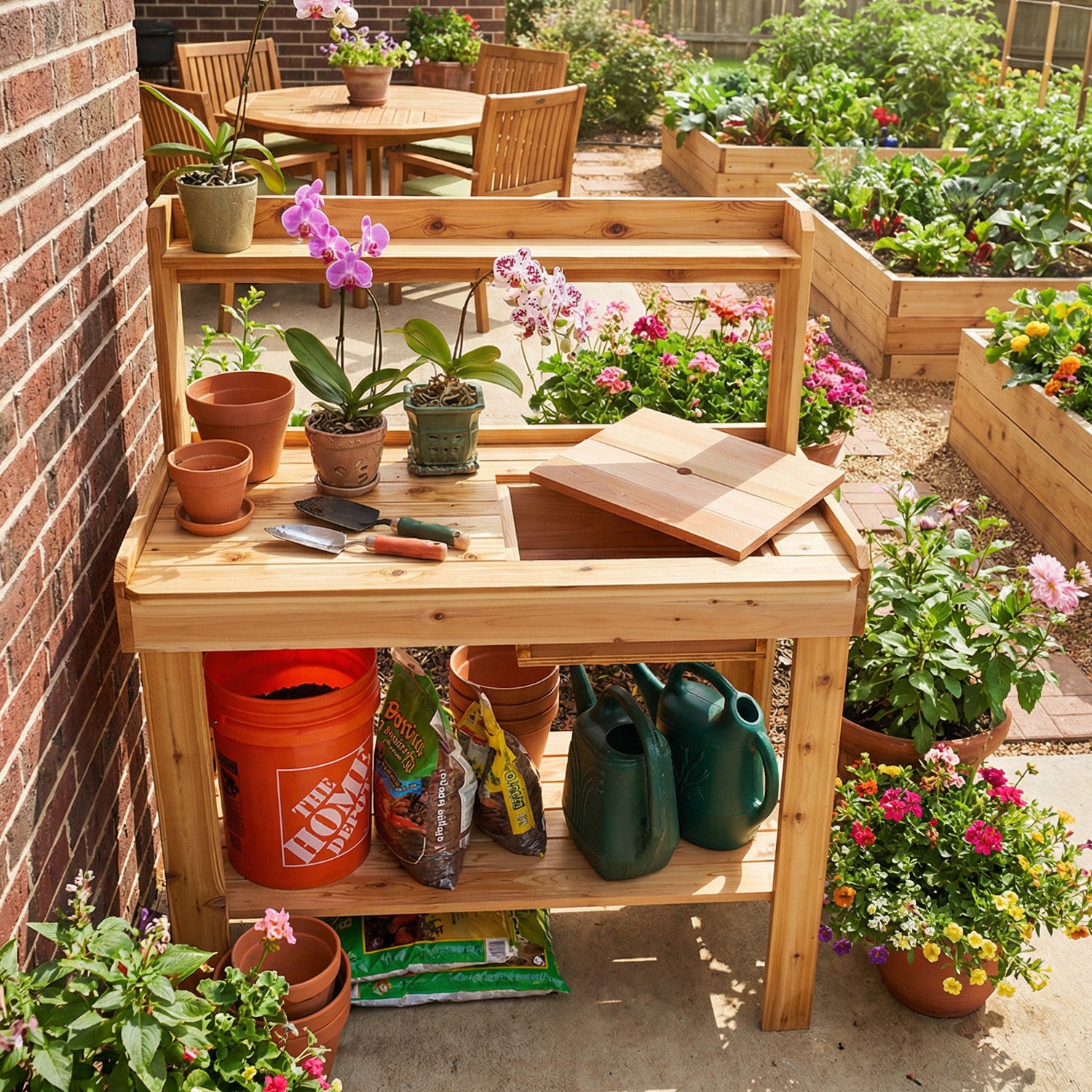
“This design works because it maintains a clean, cohesive aesthetic while packing in function.”
The wooden lid for the sink is made from the exact same material as the rest of the bench, so when it’s closed, the sink completely disappears. This commitment to a single material and color (the light-toned wood) creates a calm, uncluttered look. The function is hidden in plain sight. This allows the beautiful shapes of the terracotta pots and the green plants to be the main visual story, rather than the plumbing and hardware of the sink itself.
27. Create a High-Contrast Potting Nook Against a Black Shed
The striking look of this nook comes from a bold, simple formula: 50% dramatic black + 40% rustic textures + 10% crisp white. The black-painted shed siding provides a dark, moody canvas that makes everything in front of it pop. The rustic element comes from the weathered wooden shelves, the terracotta pots, and the gravel floor. Finally, the white-painted bench acts as a bright focal point, preventing the scene from feeling too dark and drawing the eye. This high-contrast palette feels modern, graphic, and incredibly chic.
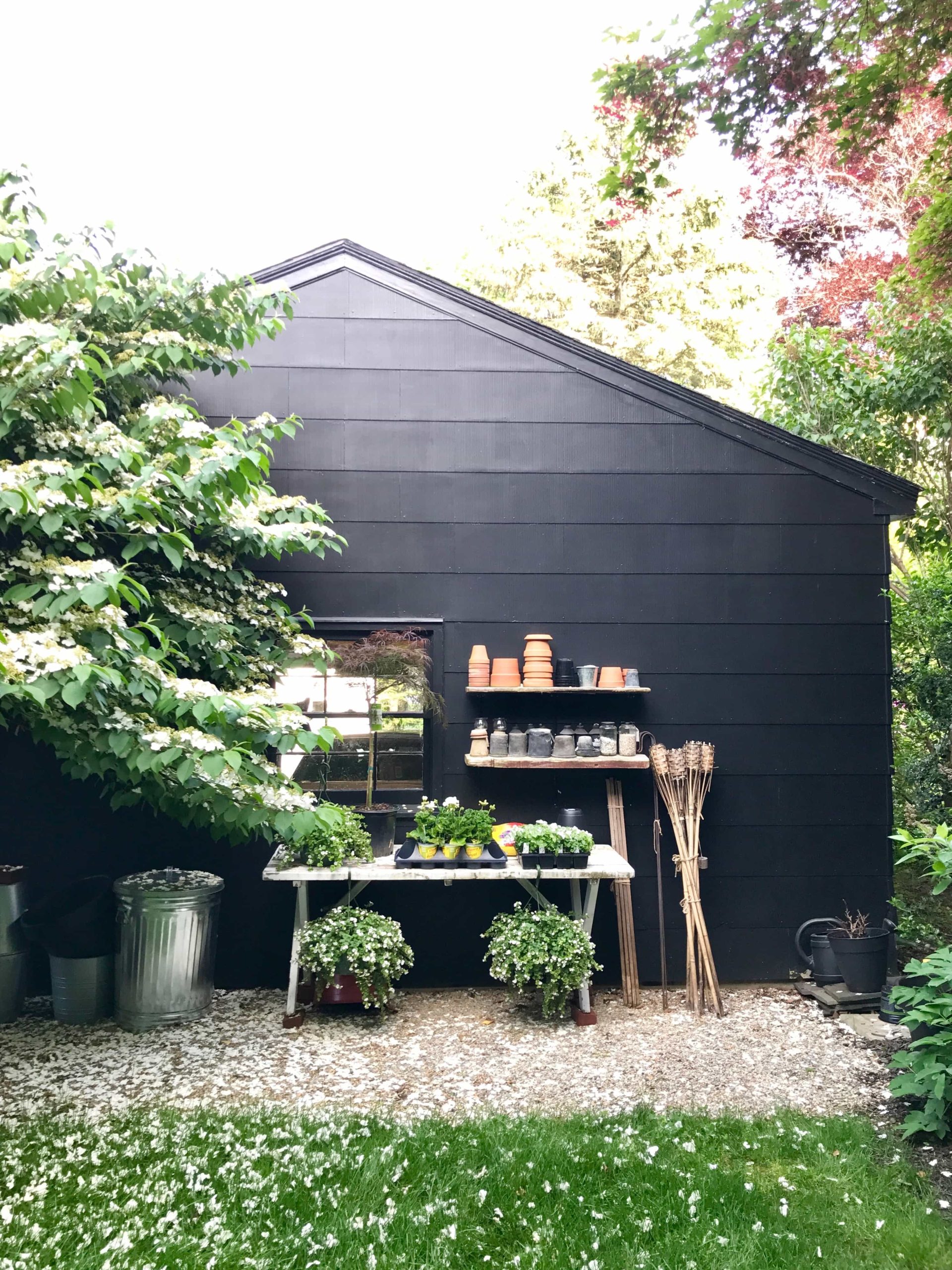
“This idea is perfect for a smaller, dedicated garden zone.”
You don’t need a huge area; a wall space of about 6-8 feet wide is ideal. The key is having enough vertical space to accommodate the two shelves above the bench. You’ll want about 18-24 inches of clearance between the bench surface and the first shelf, and another 12-15 inches between the two shelves. This allows for plenty of room to work on the bench and display a variety of pot sizes on the shelves without it feeling cramped. This concept is all about maximizing a compact vertical space.
28. Soften a Patio with a Rustic Bench and Dense Foliage
This space feels so serene and natural because the hardscape is almost completely obscured by plant life. The wooden bench, the concrete patio, and the low stone wall provide structure, but they are playing a supporting role. The real star is the sheer abundance of greenery. Layers of potted plants are placed in front of the bench and along the wall, blurring the lines between the man-made elements and the garden itself. This technique, called ‘softening the edges,’ is what makes the bench feel like it’s settled into the garden, rather than just sitting on top of it.
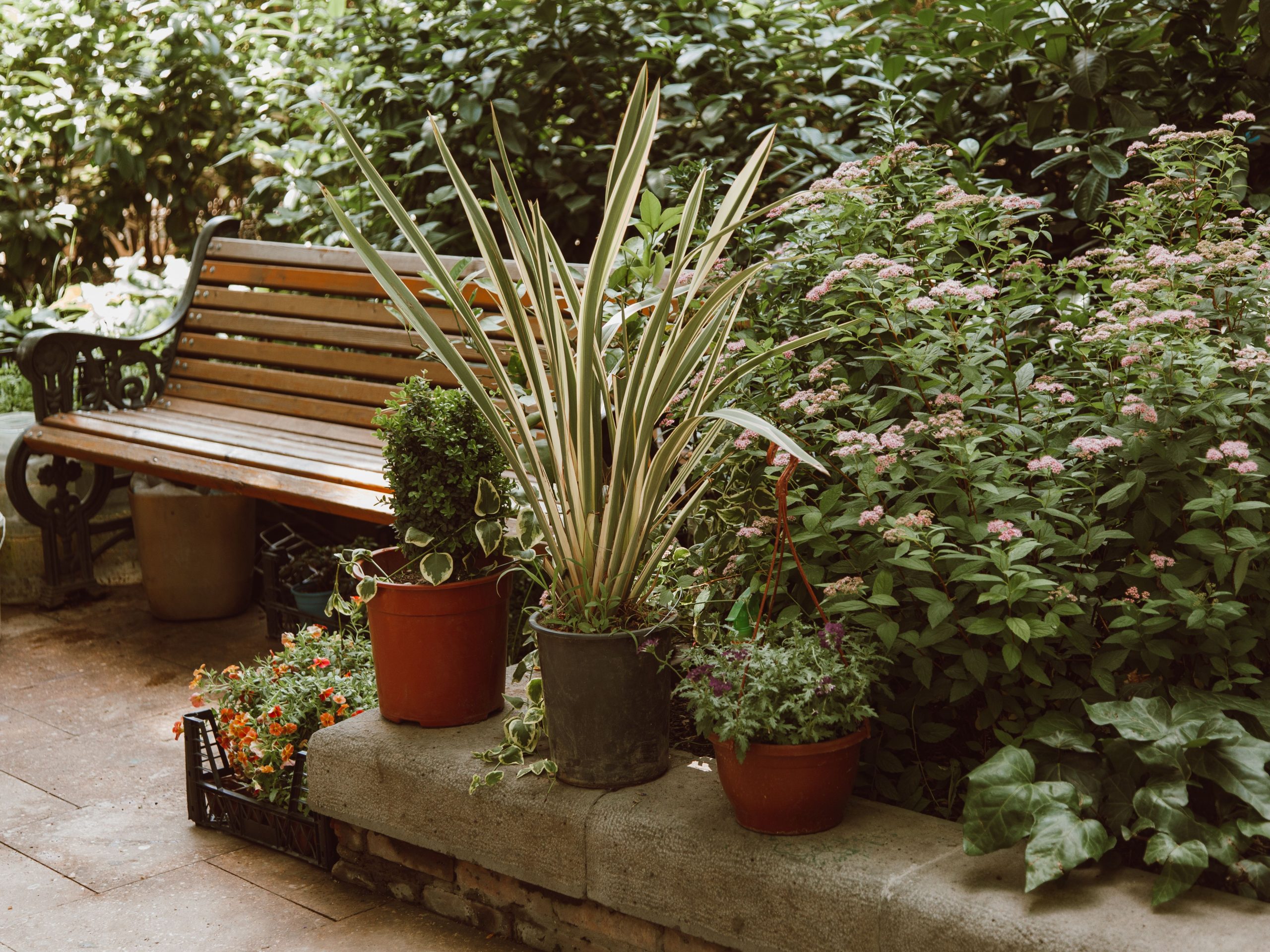
“Achieving this lush, ‘overgrown’ look requires a significant commitment to watering, especially with so many plants in containers.”
Pots, especially smaller ceramic and terracotta ones, dry out much faster than garden beds. In the heat of summer, you may need to water this entire collection every single day. If you’re a forgetful waterer or travel frequently, this might not be the right style for you unless you install a drip irrigation system with a timer. That beautiful, abundant look is the direct result of consistent care.
29. A Forest Green Potting Bench with Whimsical Details
The key to making a collection of quirky items look curated, not chaotic, is to embrace a strong color story and a sense of humor. The forest green of the bench and the brown of the fence create a simple, natural backdrop. This allows the eclectic items—the blue and white birdhouse, the old work boot, the red watering can—to shine. Don’t be afraid to incorporate personal, unexpected objects. The boot adds a touch of storytelling and history that a new pot never could. Leaning into personality is what gives a space its soul.
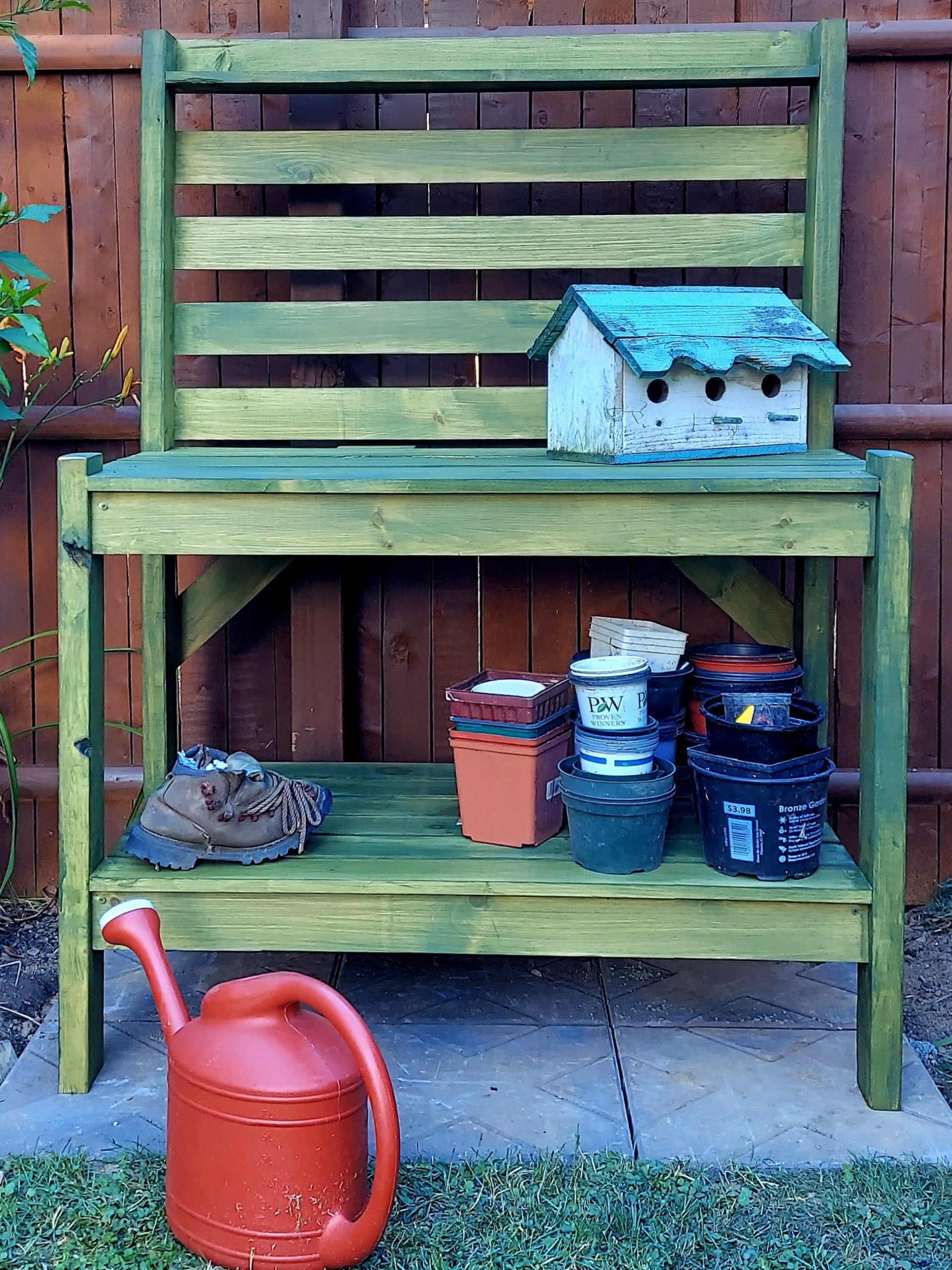
“A new wooden potting bench can cost anywhere from $150 to $400.”
To get this look for under $50, scour yard sales or your own garage for an old, forgotten piece of furniture. A small bookcase, a changing table, or a simple utility shelf can all be transformed with a coat of paint. In this case, a can of deep green outdoor paint gives it a new life. The decor is all about found objects: an old boot, a cheap plastic watering can, and plastic pots. It’s a testament to the fact that great garden style is about creativity, not cash.
30. A Functional Potting Table with a Stainless Steel Tray
This design is a masterclass in practical minimalism. It works because it focuses on a single, highly functional feature: the stainless steel potting tray. This tray, often removable, serves as the dedicated ‘mess zone.’ It contains soil, catches water, and is incredibly easy to clean. By concentrating the function in this one area, the rest of the bench can remain clean and organized. It’s a smart separation of tasks—dirty work in the tray, clean storage on the shelves—that makes the entire bench more efficient and pleasant to use.
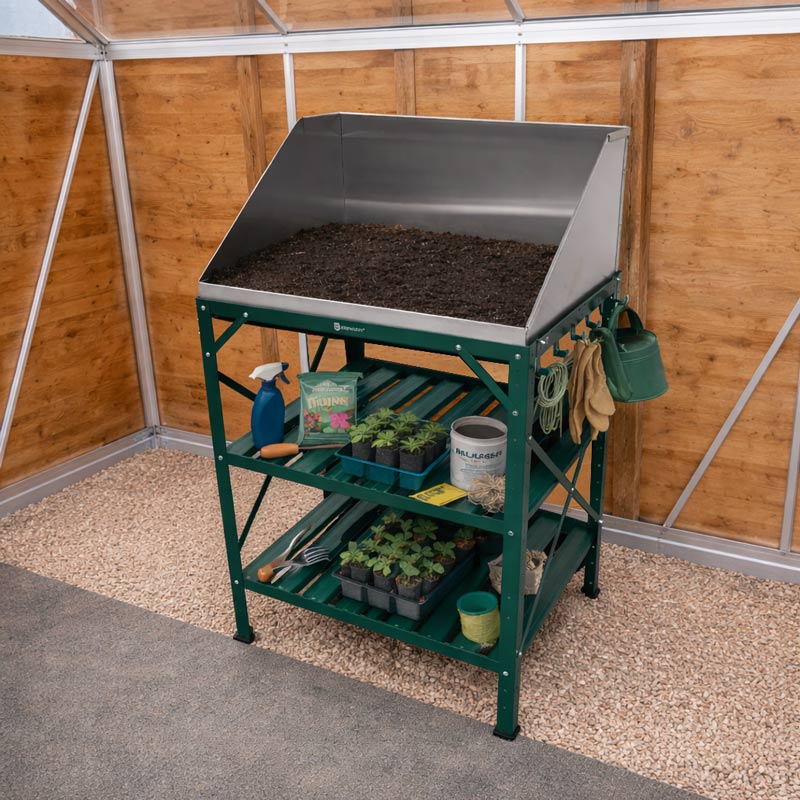
“Stainless steel is fantastic for its durability and hygiene, but it’s not immune to everything.”
It shows water spots and fingerprints easily, though that’s less of a concern in a garden setting. The main thing to watch for is scratching. Dragging rough terracotta pots or sharp metal tools across the surface will create small scratches over time. This develops a patina that many people like, but if you prefer a pristine finish, consider placing a thin rubber mat inside the tray during heavy use. Also, avoid using steel wool for cleaning, as it can leave behind particles that rust.
Your Garden’s Next Chapter Begins Here
Armed with all this inspiration, your perfect potting bench is no longer just a distant dream pinned to a board. It’s time to measure that space, pick a style that speaks to you, and start creating a corner of your garden that is both beautiful and productive. Your future gardening self will thank you for it.
Don’t forget to save your favorite ideas to your own Pinterest boards to keep the inspiration flowing!