Let’s be honest, you’ve probably pinned a dozen cinder block benches to your “Dream Patio” board on Pinterest and then… done nothing. It’s the ultimate cool, low-budget DIY that feels so achievable, yet so easy to put off. That’s about to change. The appeal of cinder block projects is skyrocketing in 2026, driven by a collective craving for authentic, functional, and sustainable design. People are tired of flimsy, expensive patio sets and are turning to this humble building material for its brutalist charm and surprising versatility.
We did the deep dive for you, filtering through hundreds of blogs and social media posts to find 30 genuinely inspiring cinder block bench ideas that work for real homes. This isn’t just a gallery of pretty pictures; we’re breaking down what makes each design work, from simple backyard seating to surprisingly chic indoor plant displays. And stay until the end — we break down the most common mistakes that can ruin these looks.
📌 Save this to Pinterest for later — you’ll want to revisit these ideas.
1. Cozy Cinder Block Seating by a Roaring Fire Pit
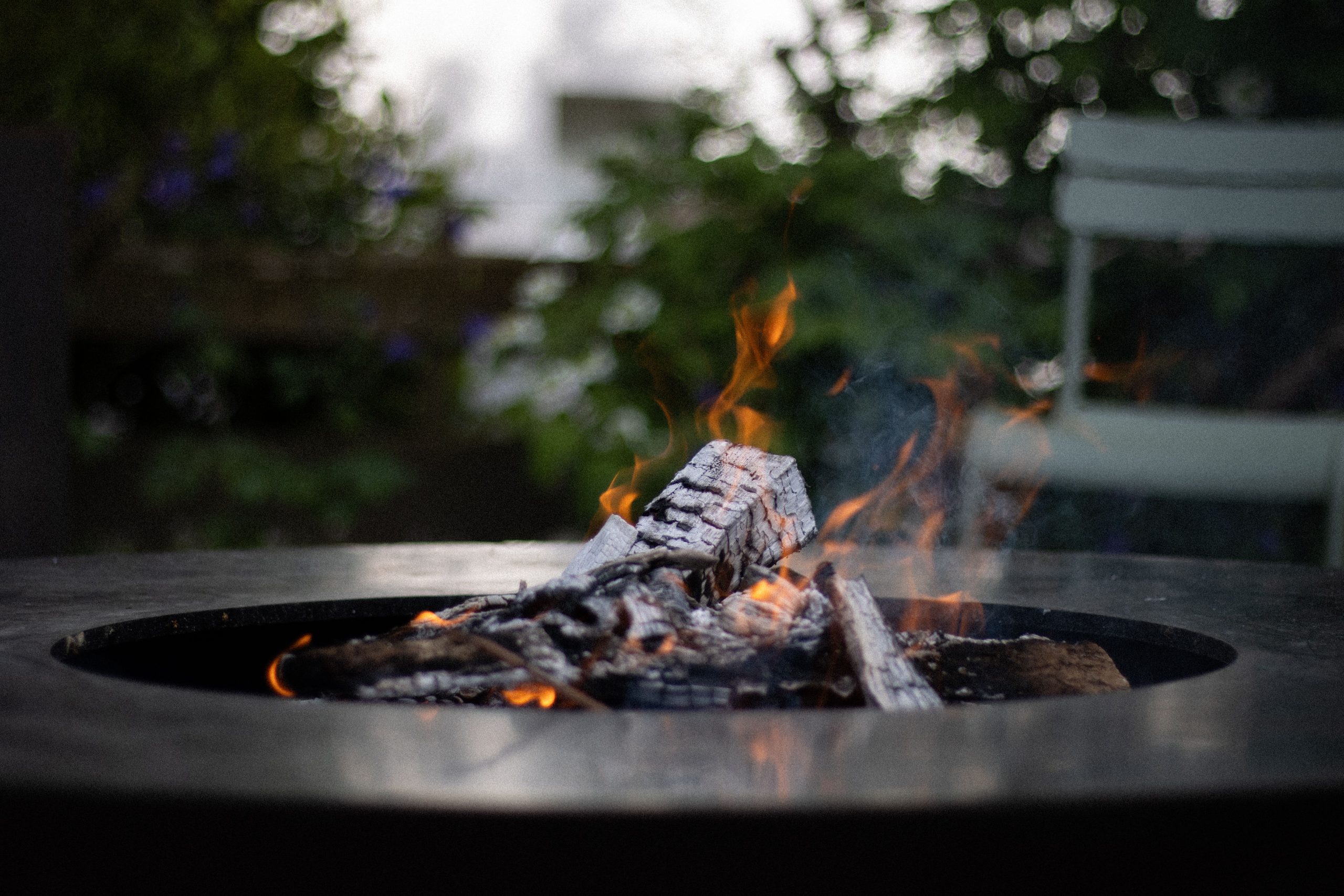
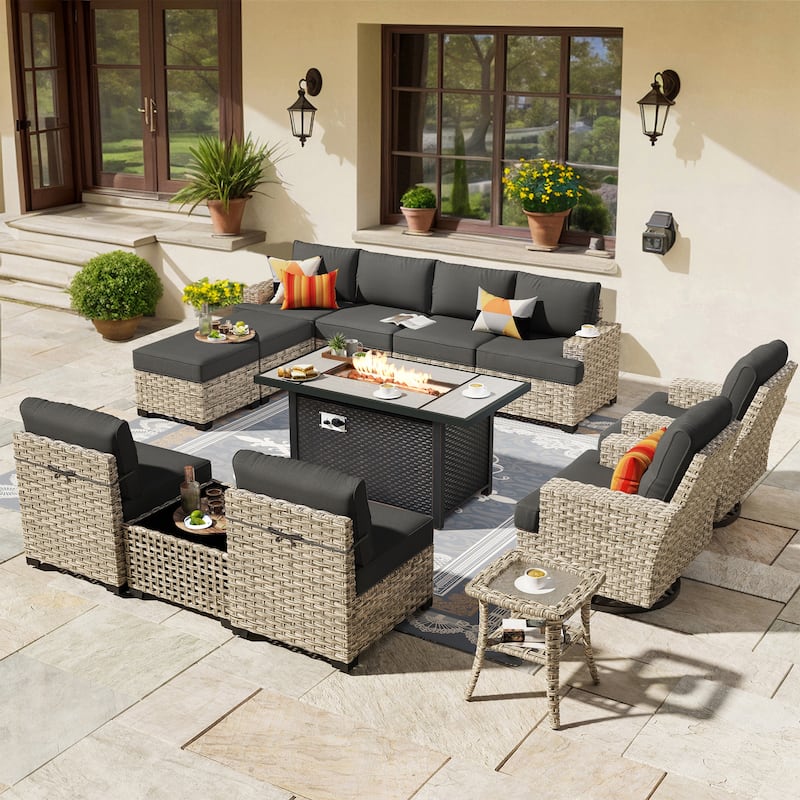
A classic for a reason. This setup is all about creating a gathering spot. The combination of industrial cinder blocks and the raw element of fire makes for an inviting, rustic focal point on a patio or in a backyard. It feels permanent and intentional, turning a simple patch of grass into a destination. The key is arranging the benches to encourage conversation while maintaining a safe and comfortable distance from the fire itself. It’s the perfect project for a fall weekend.
“Measure Your Zone: First, determine the final location for your fire pit.”
Place a marker (a bucket, a chair) where it will sit.
Mark Safe Distance: Using a tape measure, mark a circle at least 5-7 feet out from the edge of your fire pit marker. Your bench should not sit inside this line.
Plan for Traffic: Ensure there are clear, wide pathways (at least 36 inches) for people to walk around the bench and fire pit area without getting too close to the flames.
Consider Wind Direction: If your yard has a prevailing wind, try to position the seating upwind to avoid having smoke blow constantly into your guests’ faces.
2. A Simple 4×4 and Cinder Block Bench Design
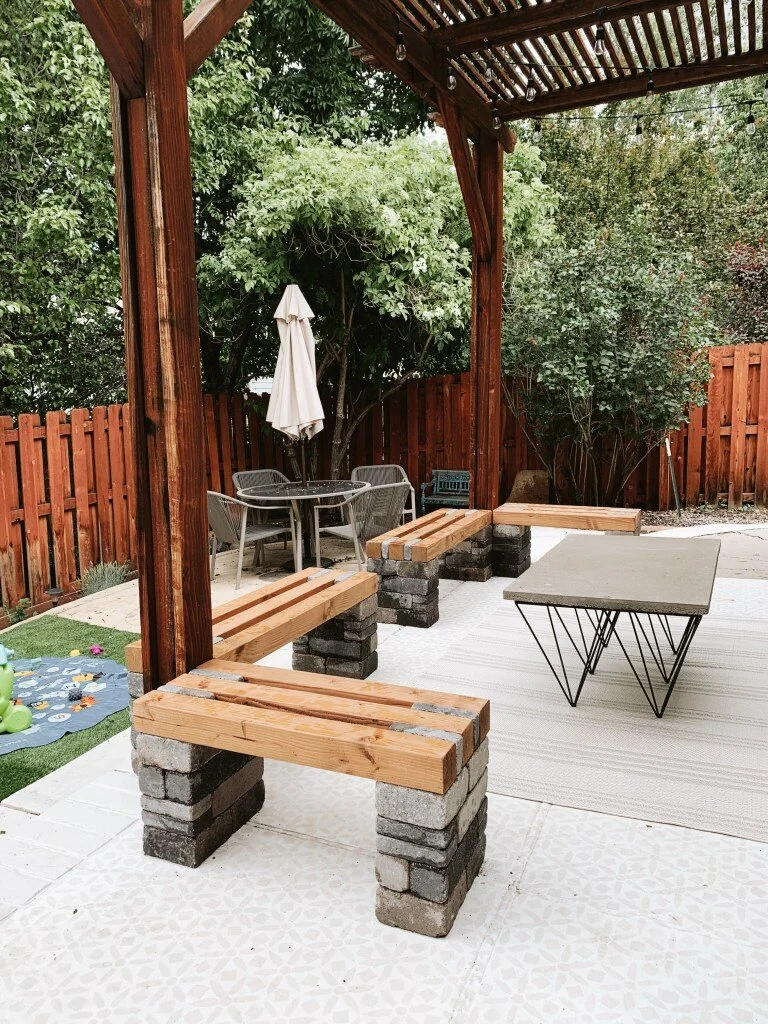
This is the quintessential starter project for anyone dipping their toes into DIY furniture. The beauty is in its simplicity and strength. Using hefty 4×4 wood beams instead of thinner planks gives the bench a substantial, durable feel that contrasts nicely with the hollow forms of the cinder blocks. There’s an honest, what-you-see-is-what-you-get quality to it. This design is less about intricate details and more about solid, functional seating that can be put together in under an hour.
“You can achieve this look for an almost laughably low price.”
A trip to a big-box hardware store is all you need. Eight standard cinder blocks will run you about $16-$20 total. Two 8-foot 4×4 pressure-treated lumber posts will cost around $20-$30. That puts your total investment under $50 for a sturdy, full-sized outdoor bench. For an even cheaper route, check Facebook Marketplace or Craigslist for leftover construction materials; people often give away unused blocks for free.
3. Rustic Wood Slat Bench by a Segmented Stone Fire Pit
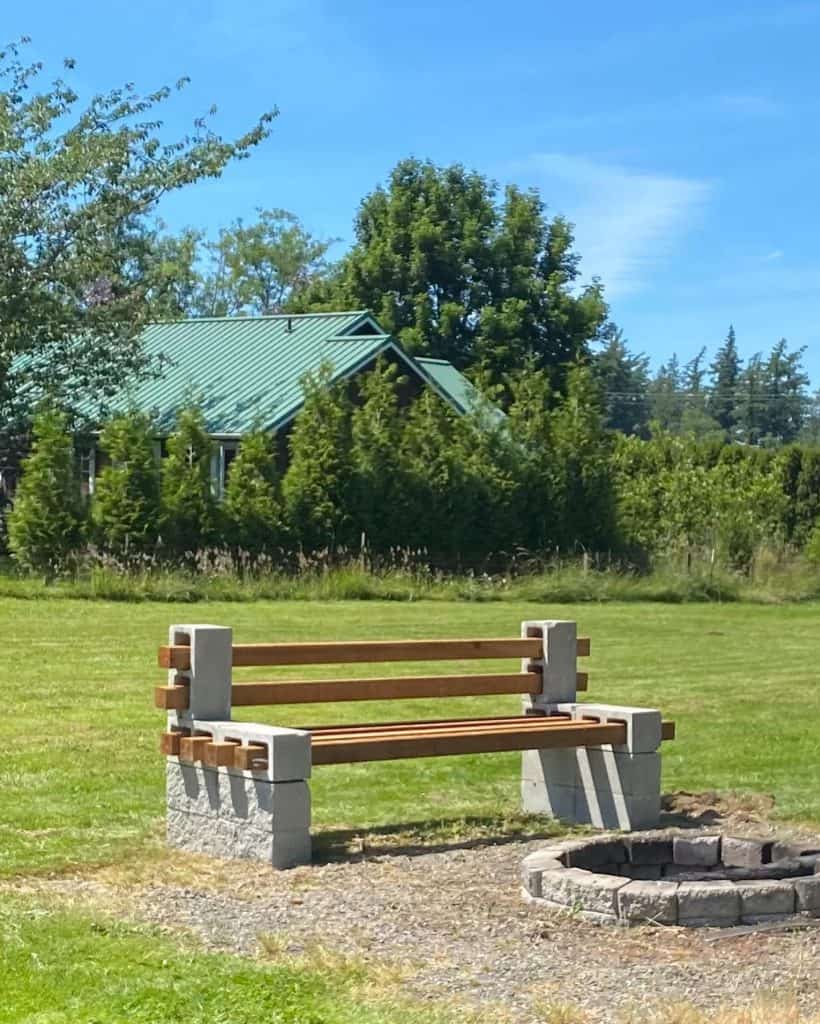
Now this is how you make thoughtful material choices. The bench itself uses simple, affordable materials—cinder blocks and wood slats—but placing it next to that beautiful, segmented stone fire pit elevates the entire scene. The round shape of the pit softens the hard, rectangular lines of the bench. The mix of textures, from the smooth wood seat to the rough-hewn blocks and the varied surfaces of the fire pit stones, creates a rich, layered look that feels professionally designed, even though it’s rooted in DIY.
“Main Furniture (Blocks & Wood): $70 – $120
Fire Pit (Kit or Materials): $250 -”
- Main Furniture (Blocks & Wood): $70 – $120
- Fire Pit (Kit or Materials): $250 – $450
- Textiles (Cushions, if added): $80 – $150
- Labor (if you hire help): $100 – $200
- TOTAL: $500 – $920
- Budget alternative: Swap the stone fire pit for a simple metal fire bowl ($60) and use reclaimed pallet wood for the slats to bring the total cost under $150.
4. Playful Bench with Two-Tone Blue Blocks and Orange Slats
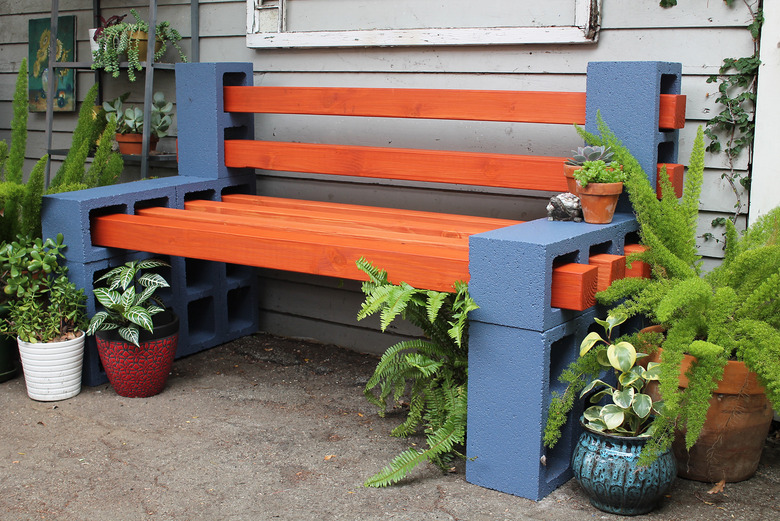
Proof that cinder block furniture doesn’t have to be gray and boring! The bold color choice here is everything. Painting the blocks a deep, saturated blue and staining the wood a vibrant orange creates a dynamic, high-contrast look that feels youthful and energetic. The choice to use two slightly different shades of blue on the blocks adds a subtle layer of dimension that keeps the piece from feeling flat. It’s a fantastic way to inject some personality into a plain patio space.
“The secret to a professional-looking paint job on cinder blocks is all in the prep.”
First, clean the blocks thoroughly with a stiff brush and water to remove any dust or debris. Once completely dry, apply one even coat of a concrete-specific primer, like a latex bonding primer. This is non-negotiable—it seals the porous surface and prevents the paint from bubbling or peeling. For your color, use two coats of a high-quality acrylic latex exterior or masonry paint for maximum durability against the elements.
5. A Festive Cinder Block Bar with Integrated Planters
What a brilliant use of the block’s natural voids! This design transforms a simple bar or serving station into a living piece of furniture. The integrated planters are, without a doubt, the star of the show. If you take them away, you just have a stack of concrete. But with them, you get pops of color and life that soften the industrial material and tie the whole setup into the surrounding garden. It feels less like a piece of furniture and more like part of the landscape.
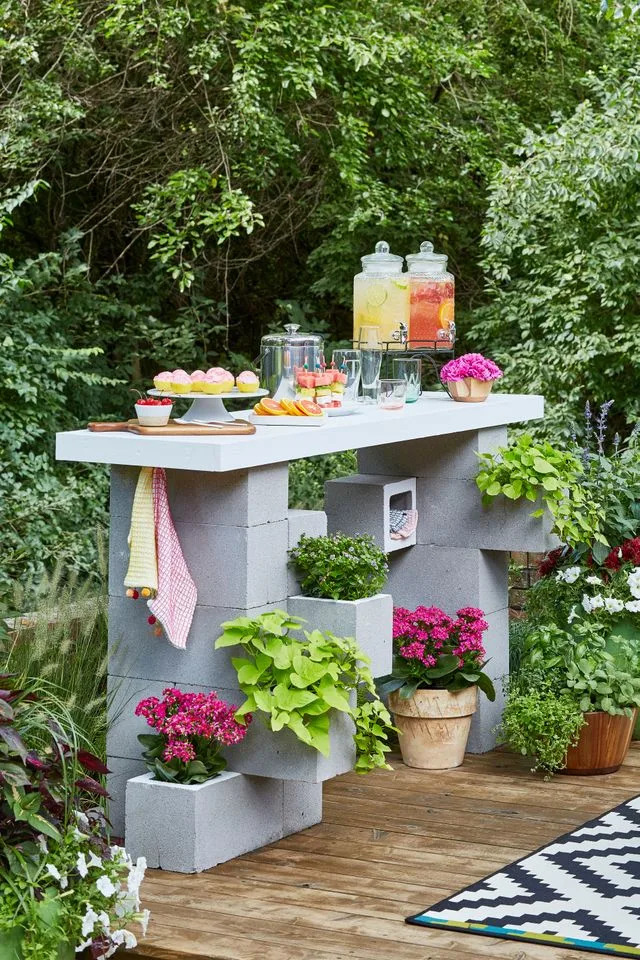
“This idea is perfect for a medium to large patio or deck, ideally with at least 10×10 feet of open space to work with.”
The bar itself will likely be about 6 feet long and 2-3 feet deep. You need enough room for guests to stand around it comfortably without feeling cramped. If your space is smaller, you can create a mini version, about 3-4 feet long, to use as a drink stand. Compare this generous scale to the much more compact design in Idea #12, which works in tighter spots.
6. Smart Cinder Block Bench with a Built-in Planter Endcap
This design is so clever because it combines seating and gardening into one seamless unit. By turning the blocks at one end, a planter is naturally formed, serving as both a functional armrest and a beautiful green accent. This integration of plant life is what makes the bench feel so special and organic. It breaks up the long, horizontal line of the seat and adds a vertical element that draws the eye. It’s a perfect example of form following function, where the material’s shape directly inspires a creative and practical use.
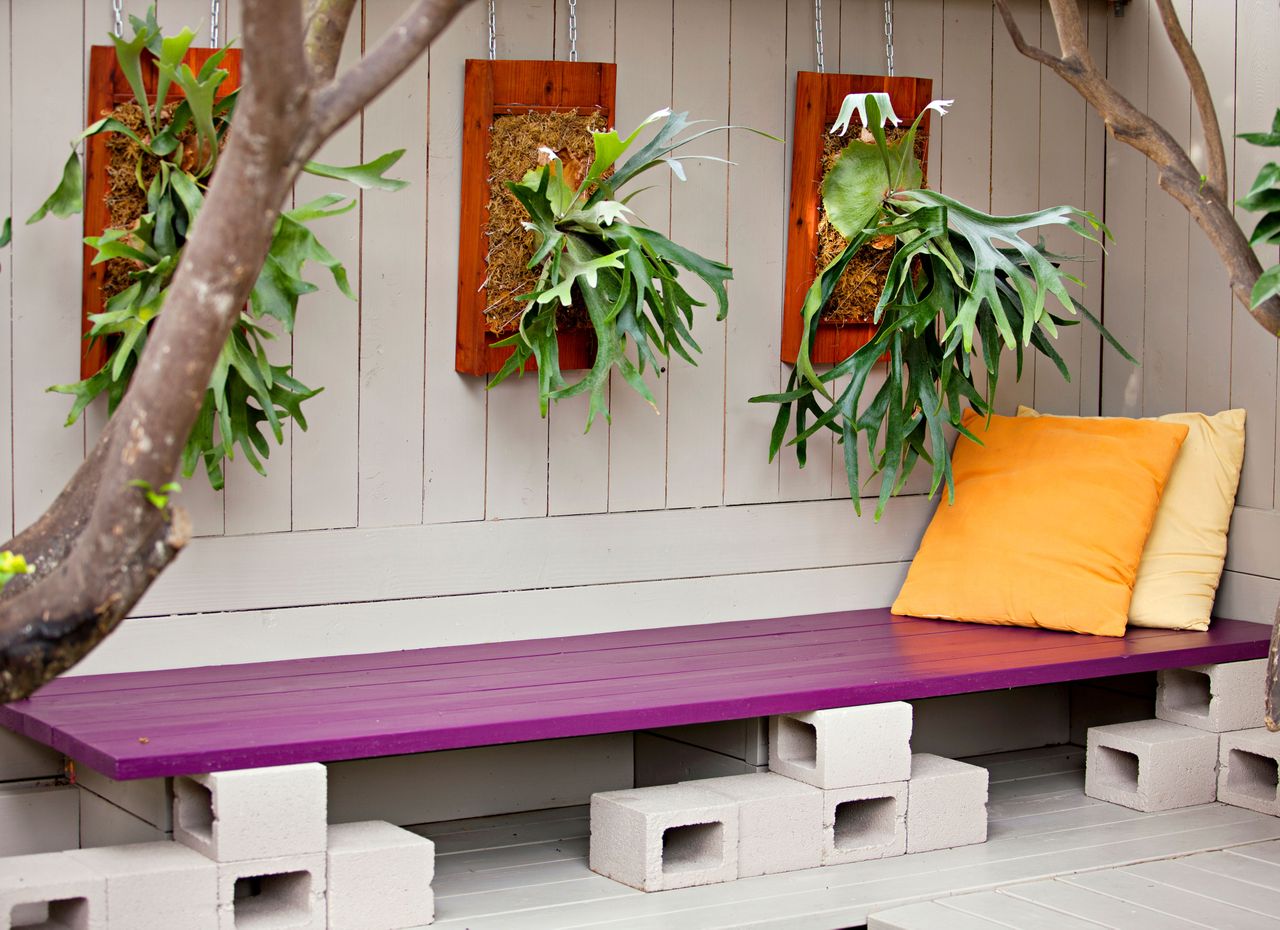
“While gloriously low-maintenance overall, the planter section requires a bit of attention.”
Because cinder block cavities are relatively small, the soil will dry out faster than in a large pot, especially on hot, sunny days. You’ll likely need to water the plants every 1-2 days in the summer. Also, be aware that concrete is porous and can leach lime, raising the soil’s pH over time. It’s a good idea to either line the block’s interior with plastic (with drainage holes!) or choose plants that tolerate alkaline soil, like succulents or lavender.
7. Rustic Bench Using Paver Bricks as a Seat
Using paver bricks instead of wood for the seat gives this bench a heavy, permanent, and almost monolithic feel. It looks incredibly sturdy, like it’s been part of the landscape for years. The reddish-brown tones of the bricks provide a warm contrast to the cool gray of the cinder blocks, creating a pleasing palette that connects with the surrounding forest floor. This is a great choice for a more rustic, woodland setting where a polished wooden bench might look out of place.
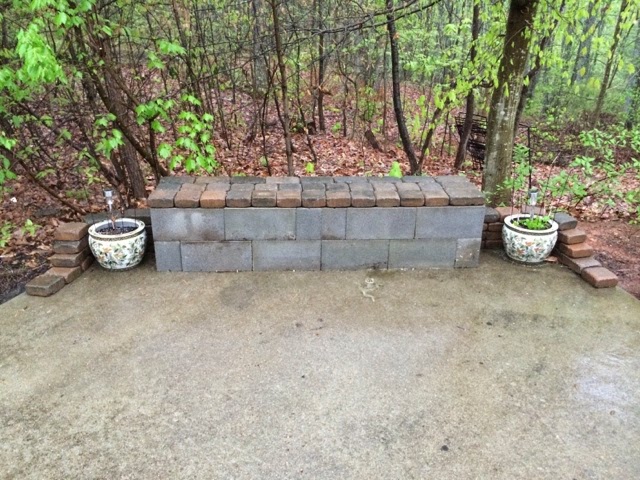
“Let’s be real: this is not the most comfortable bench in the world for long-term sitting.”
The paver surface is hard, uneven, and can get quite hot in direct sun or cold in the shade. It’s more of a functional, short-term perch or a decorative feature in a garden. If you plan to use it for actual entertaining, you absolutely must invest in thick, durable outdoor cushions. Without them, it’s more of a beautiful garden sculpture than a practical seating area.
8. Lush and Organic Bench with Cascading Ivy
This is how you soften the hard edges of concrete. The single most important element here is the overflowing greenery, especially the ivy that’s been encouraged to trail over and around the cinder blocks. It transforms the bench from a simple DIY project into a romantic, garden-esque feature that feels fully integrated with nature. The plants aren’t just an accessory; they are a core part of the design, blurring the lines between the man-made structure and the living landscape around it.
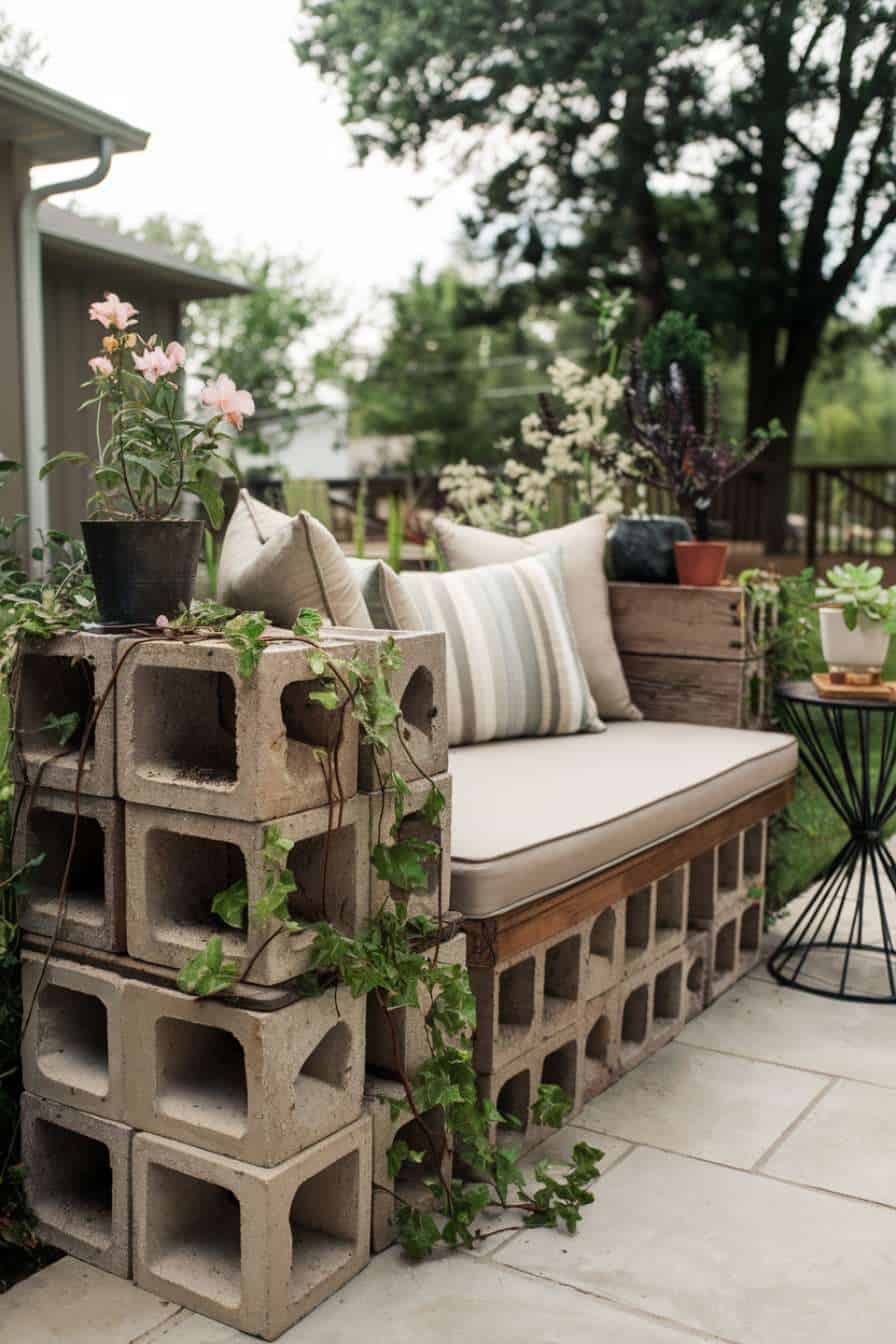
“To get this lush, trailing look, don’t just rely on the plants in the built-in planter.”
Place a few extra potted plants, like pathos or trailing ivy, on the ground *behind* the bench. As they grow, gently guide their vines to weave through the cinder block openings and over the wooden frame. This creates a much fuller, more established look than a single planter can achieve on its own. Using plants both within and around the structure is the key.
9. Modern and Sleek Outdoor Cinder Block Seating
For a clean, contemporary take, the formula is all about restraint and strong lines. This look succeeds by keeping the material palette incredibly simple and focusing on form. The crisp, geometric shapes of the cinder blocks are the main event, complemented by the clean lines of the wooden slats. The addition of neutral, well-fitted cushions adds comfort without distracting from the architectural quality of the bench. It’s a minimalist approach that feels very intentional and high-end.
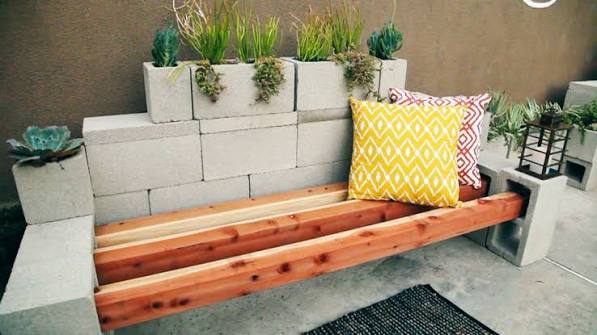
“This minimalist style works best in a space that isn’t too cluttered.”
A minimum area of 8×10 feet on a patio or deck would be ideal to let the bench’s strong lines breathe. It’s particularly effective against a simple backdrop, like a clean stucco wall or a modern fence. Ceiling height isn’t a concern for this outdoor piece, but you want to ensure the bench length is proportional to the space—a good rule of thumb is for the bench to occupy no more than two-thirds of the wall it’s placed against.
10. A Painted Cinder Block Bench with an Integrated Side Planter
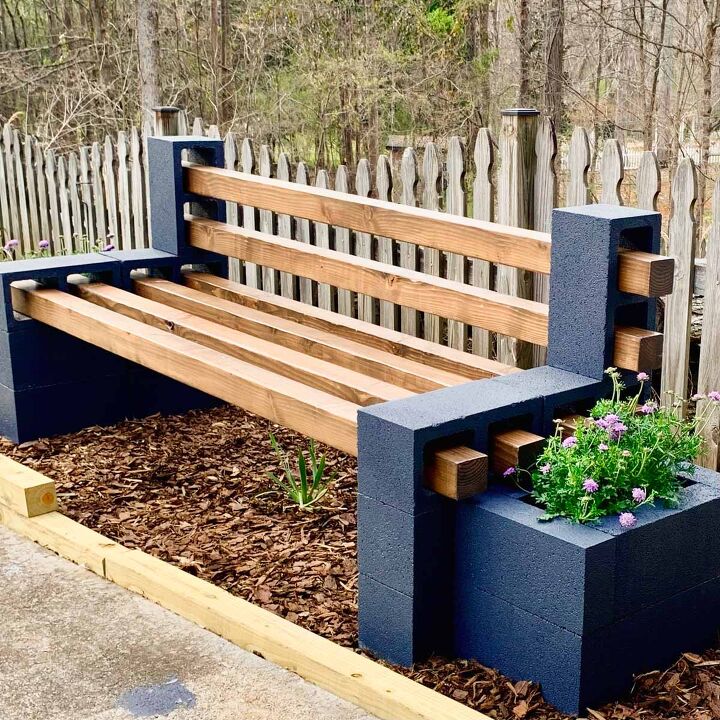
This design demonstrates a fantastic use of color and form. By painting the cinder blocks a sophisticated dark blue-gray, the bench immediately feels more like a deliberate piece of furniture than a pile of raw materials. The contrast between the dark, solid base and the light, natural wood planks of the seat is visually striking. The integrated planter isn’t just an afterthought; it’s a seamless part of the structure that makes the whole piece feel clever and complete. This is a slight variation on the planter in Idea #5, showing how it can be an end-cap instead of a central feature.
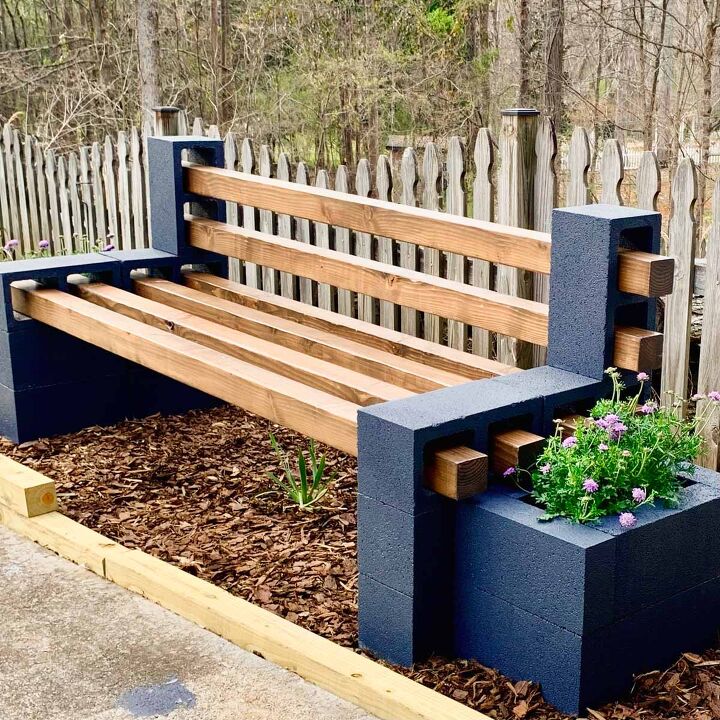
“Want to build this exact planter arm?”
It’s easier than it looks.
Stack the Base: Start by stacking two cinder blocks flat on the ground for your base.
Create the Void: Place a third block on top, but turn it 90 degrees so the openings face up. This creates the pocket for your planter.
Cap It Off: Top the stack with a fourth block laid flat, matching the base. This creates the armrest surface and locks the planter block in place.
Slide in the Seat: Your horizontal wood slats for the bench seat will slide neatly through the openings in the top layer of blocks.
11. Vibrant and Playful Bench with Lime Green Wood
This bench is pure, unapologetic fun. The decision to paint the wooden seat and backrest a shocking lime green, paired with a rainbow of colorful cushions, turns a simple cinder block structure into a joyful statement piece. It’s a declaration that outdoor furniture doesn’t have to be beige or brown. The dark gray of the blocks acts as a perfect neutral anchor, keeping the bright colors from feeling overwhelming. This is for someone who wants their backyard to feel like a party.
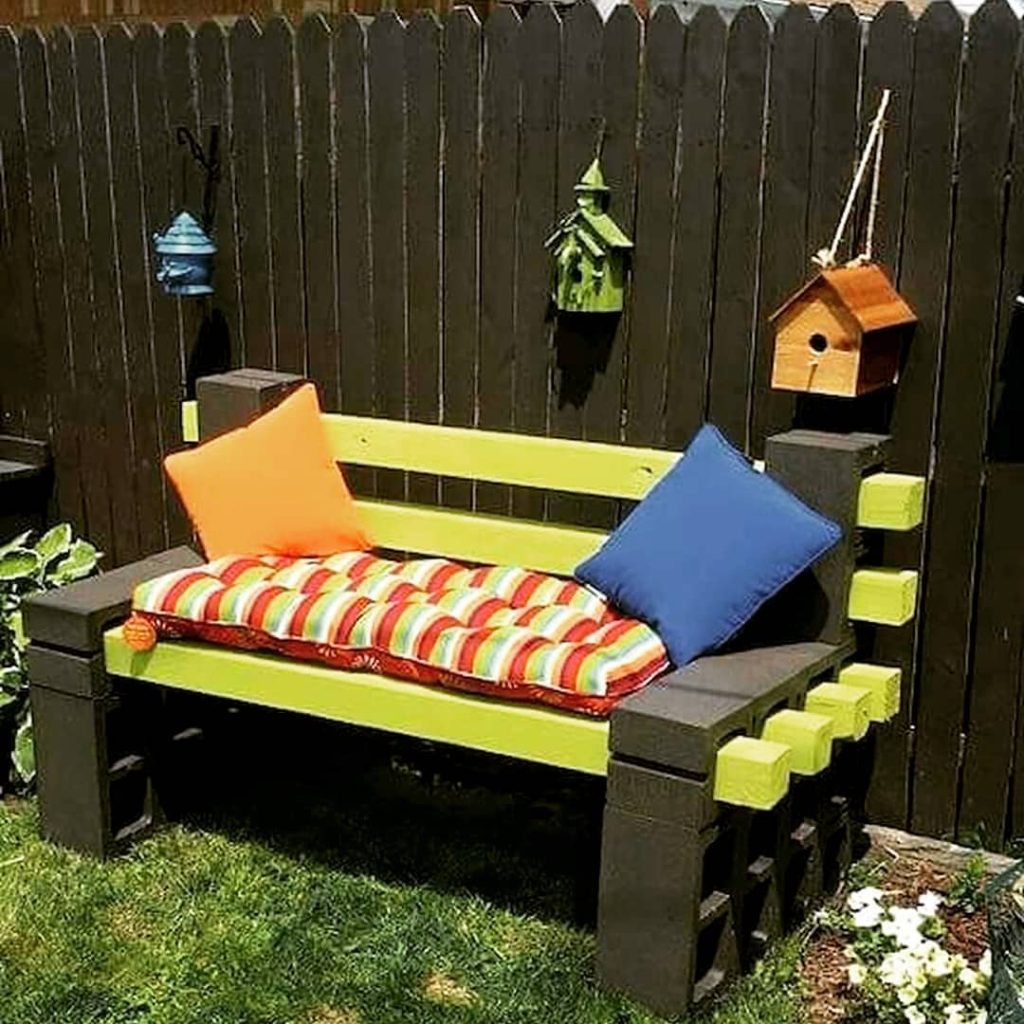
“While this look is incredibly charming, be prepared for some upkeep.”
Bright, saturated paint colors, especially on wood, are more susceptible to fading from UV exposure. To keep that lime green looking fresh, you’ll likely need to apply a new topcoat every 2-3 years, depending on how much direct sun it gets. Also, fabric cushions this colorful will show dirt and pollen more easily, so look for covers that are removable and machine-washable. Storing the cushions indoors when not in use will dramatically extend their vibrant lifespan.
12. The Quintessential No-Fuss Cinder Block and Plank Bench
It doesn’t get more straightforward than this. This is the cinder block bench in its purest form, and its beauty lies in that simplicity. It’s honest, functional, and can be assembled in minutes. By using just six blocks and five planks, it creates a surprisingly sturdy and comfortable seat. This is the perfect solution for adding extra seating for a party, creating a plant stand, or just filling a lonely spot in the yard without committing to a major project or expense. A true minimalist classic.
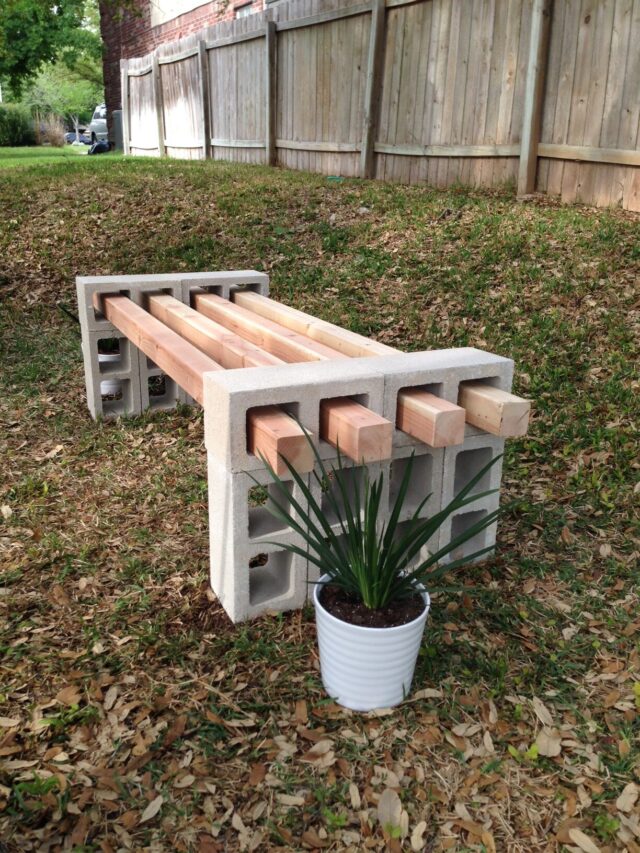
“Thinking of building this one?”
Here’s your quick pre-flight checklist:
Level Ground: Make sure the spot you’ve chosen is flat and level. The bench will wobble and be unstable on uneven ground.
Wood Dimensions: Measure the openings of your cinder blocks! Not all are standard. Ensure your wood planks (typically 2x4s or 2x6s) will slide through easily but snugly.
Surface Prep: Raw wood can give splinters. Give your planks a quick sanding on all sides before you assemble the bench. It takes 10 minutes and your guests will thank you.
13. Cheery DIY Bench with Bright Green Cushions
This setup works so well because of the smart use of color and accessories. The bench itself is the standard, simple construction of gray blocks and light wood. But the addition of those vibrant green cushions immediately gives it a custom, styled look. The single floral pillow adds a touch of pattern and breaks up the solid green, while the solar-powered lanterns introduce a different material (glass) and hint at cozy evenings. It shows that you don’t need a complicated build to create a charming, inviting spot.
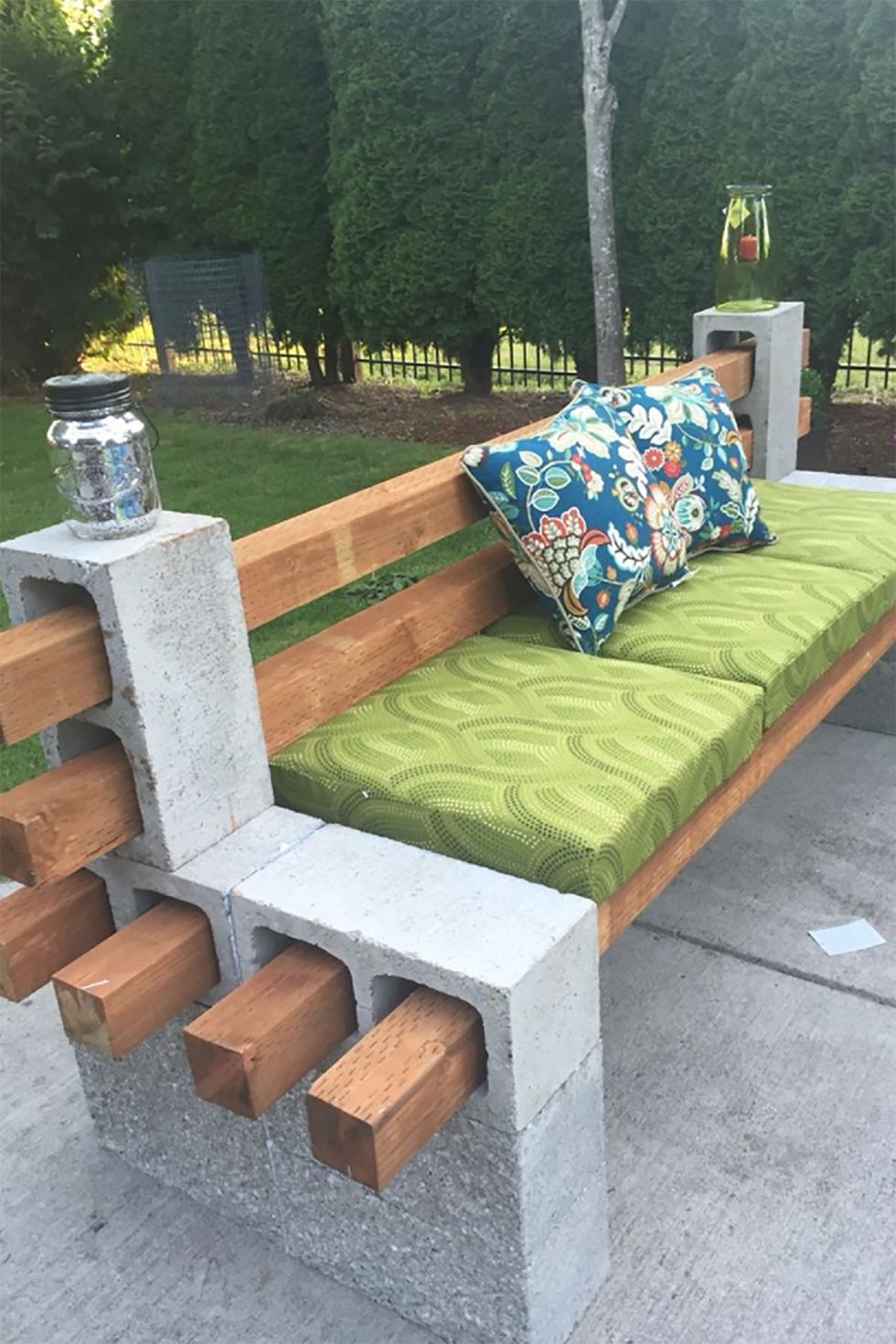
“When selecting cushions for a DIY bench, don’t just guess the size.”
Measure the depth of your seating planks and the length of the seating area precisely. For a bench like this, made with 4x4s or 2x6s, the depth will be around 15-16 inches. Look for outdoor cushions specifically designed for benches or deep-seat chairs that match this depth. Cushions that are too shallow look cheap and are uncomfortable, while cushions that are too deep will hang over the edge and wear out quickly.
14. A Simple Seating Idea for a Garden Nook
This type of bench is a perfect fit for smaller, transitional spaces in a garden. Think about that under-utilized spot at the end of a pathway, against a hedge, or in a quiet corner. Its simple, linear form won’t overwhelm a small nook. A bench around 4-5 feet long is ideal for these spaces, providing enough seating for two without dominating the landscape. Because of its low profile, it works well in front of garden beds or hedges without blocking views or sunlight to the plants behind it.
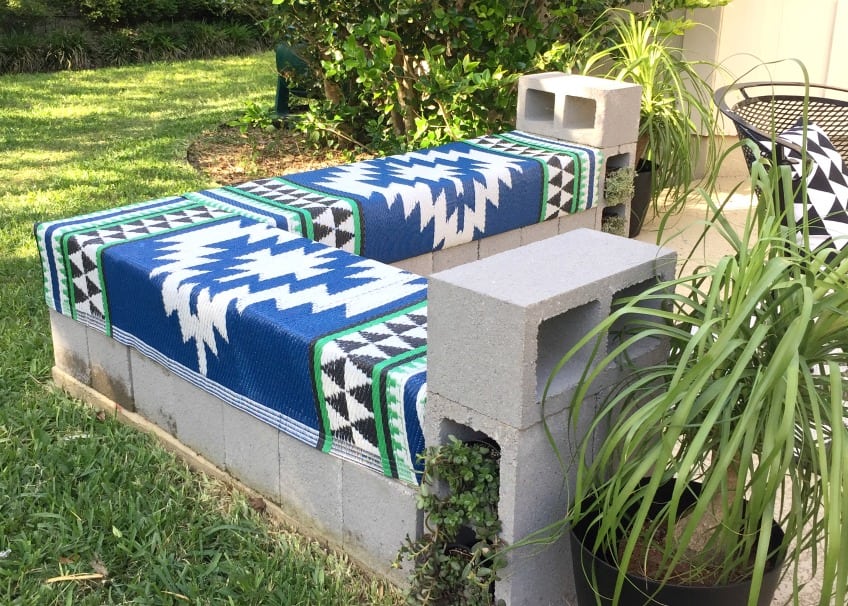
“Creating this garden seating is one of the most affordable backyard projects you can tackle.”
You’ll need about 10-12 standard cinder blocks ($20-$25) and three 8-foot pressure-treated 2x4s ($20-$25). For a pop of color, a can of exterior spray paint is about $8. You can easily complete the entire project for under $60. To save even more, look for leftover blocks at construction sites (ask first!) or use reclaimed wood from an old deck or fence for the seating slats. This approach is much more wallet-friendly than the built-in stone bench seen in Idea #22.
15. Using Cinder Blocks for an Indoor Plant Shelf
Bringing cinder blocks indoors is a bold, industrial-chic move that works beautifully for creating a plant display. The rough, utilitarian texture of the blocks creates a fantastic contrast with the delicate, organic forms of houseplants. This isn’t trying to be a fine piece of furniture; it’s a functional, stylish, and incredibly affordable way to create a multi-level home for your green friends. It’s a look that feels at home in loft apartments, sunrooms, or any space with a minimalist or eclectic vibe.
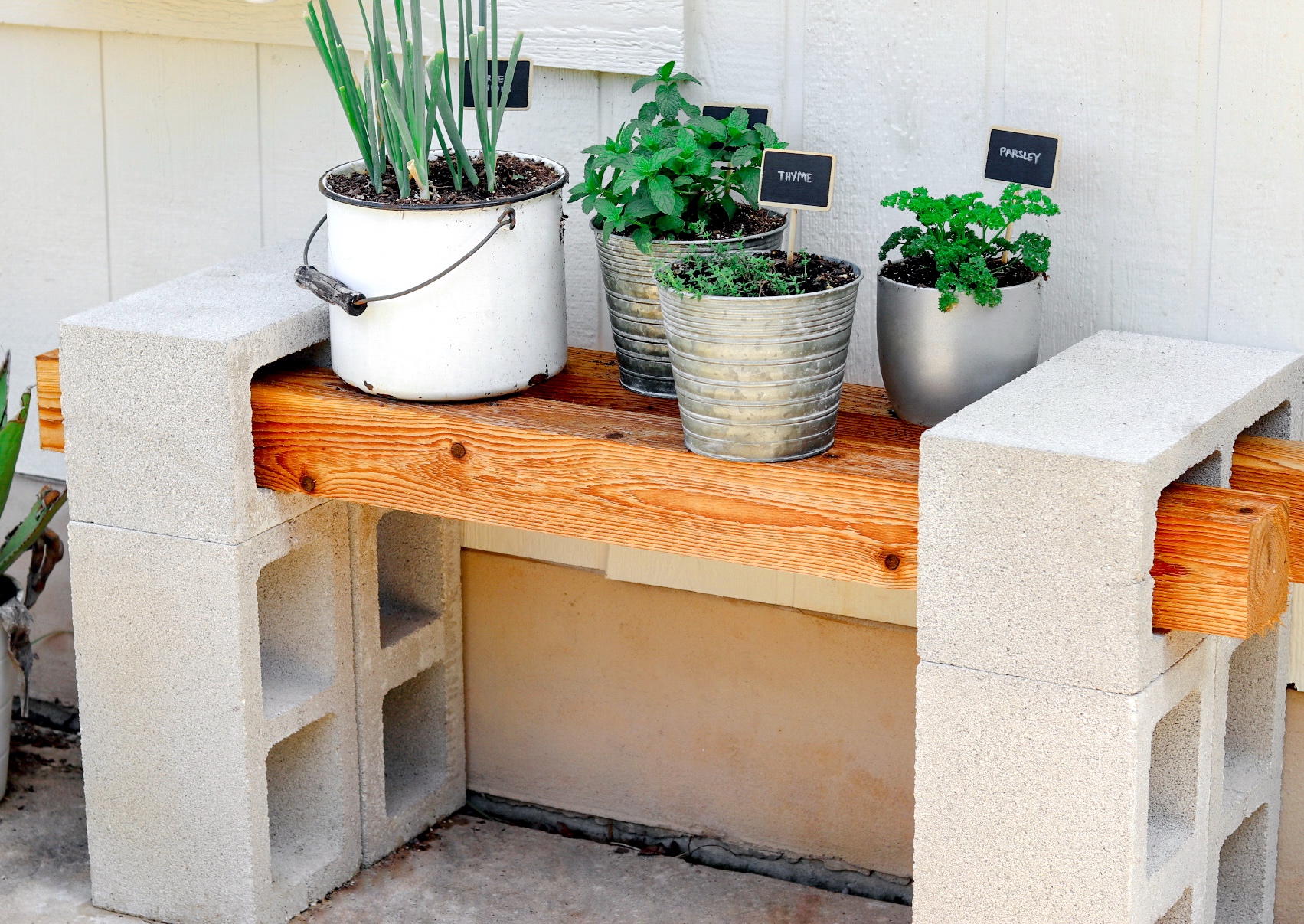
“Before you drag concrete blocks inside, you MUST prep them.”
Raw cinder blocks shed a surprising amount of gritty dust that will absolutely ruin your floors. First, scrub them outdoors with a wire brush to remove all loose particles. Then, you have two options: either apply several coats of a clear matte sealant to all surfaces, or glue thick felt pads to the bottom. I recommend doing both. This will protect your floors from scratches and prevent that fine, gray dust from constantly accumulating underneath.
16. A Functional Outdoor Grill Station with Block Supports
This project’s success hinges on one thing: utility. It’s not just a bench, it’s a workstation. The multi-level design, with a countertop surface and lower shelving, turns a simple pile of blocks and planks into a hyper-functional outdoor prep area. The open shelving provides easy access to grilling tools, bins, and paper towels, making the entire process of cooking outdoors more organized and enjoyable. This is a design born from a real need, and that practicality is what makes it so smart and appealing.
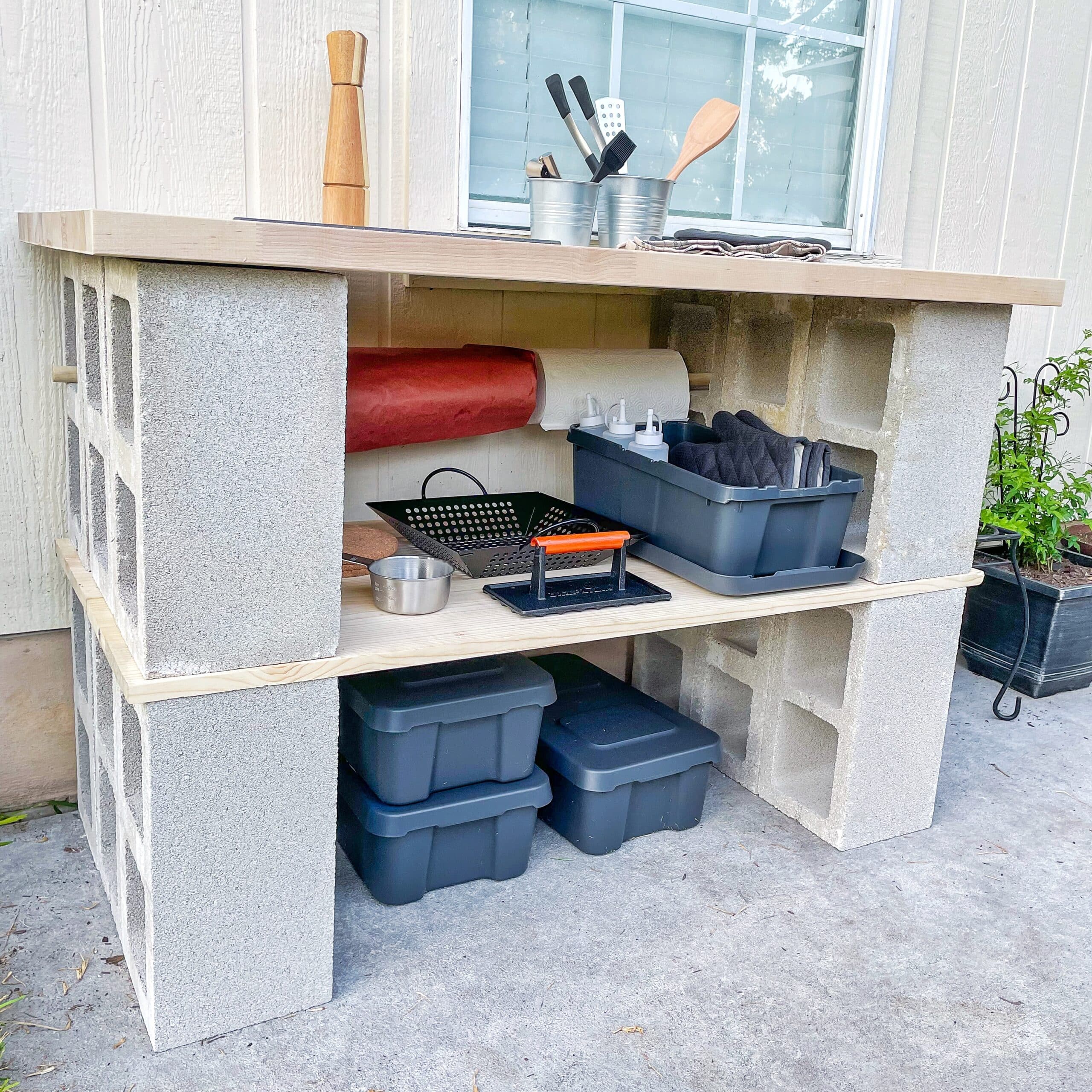
“Ready to build a simple version of this grill-side helper?”
Plan Your Height: A comfortable countertop height is typically 36 inches. Plan your cinder block stacks to reach this height (usually 4-5 blocks high).
Create Two Towers: Build two separate towers of cinder blocks, spaced about 4-5 feet apart. Ensure they are on level ground.
Add the Lower Shelf: Slide your first set of wooden planks through the openings in the second or third course of blocks to create the bottom shelf.
Place the Countertop: Lay your main countertop planks across the very top of the two block towers. Ensure they are stable and don’t rock.
Secure (Optional): For extra stability, you can apply a bead of construction adhesive on top of the blocks before laying down your wood planks.
17. A Two-Tiered Potting Bench for a Plant Lover’s Collection
This potting bench is a perfect example of vertical space utilization. The two-tiered design immediately doubles the display area for plants without taking up any extra ground footprint. This creates a lush, layered look, allowing smaller succulents and cacti to sit on the top shelf while larger pots are grounded on the bottom. The backdrop of the weathered wooden fence adds a rustic texture that makes the whole scene feel like a well-loved corner of a gardener’s paradise. The repetition of terracotta pots provides a unifying color story.
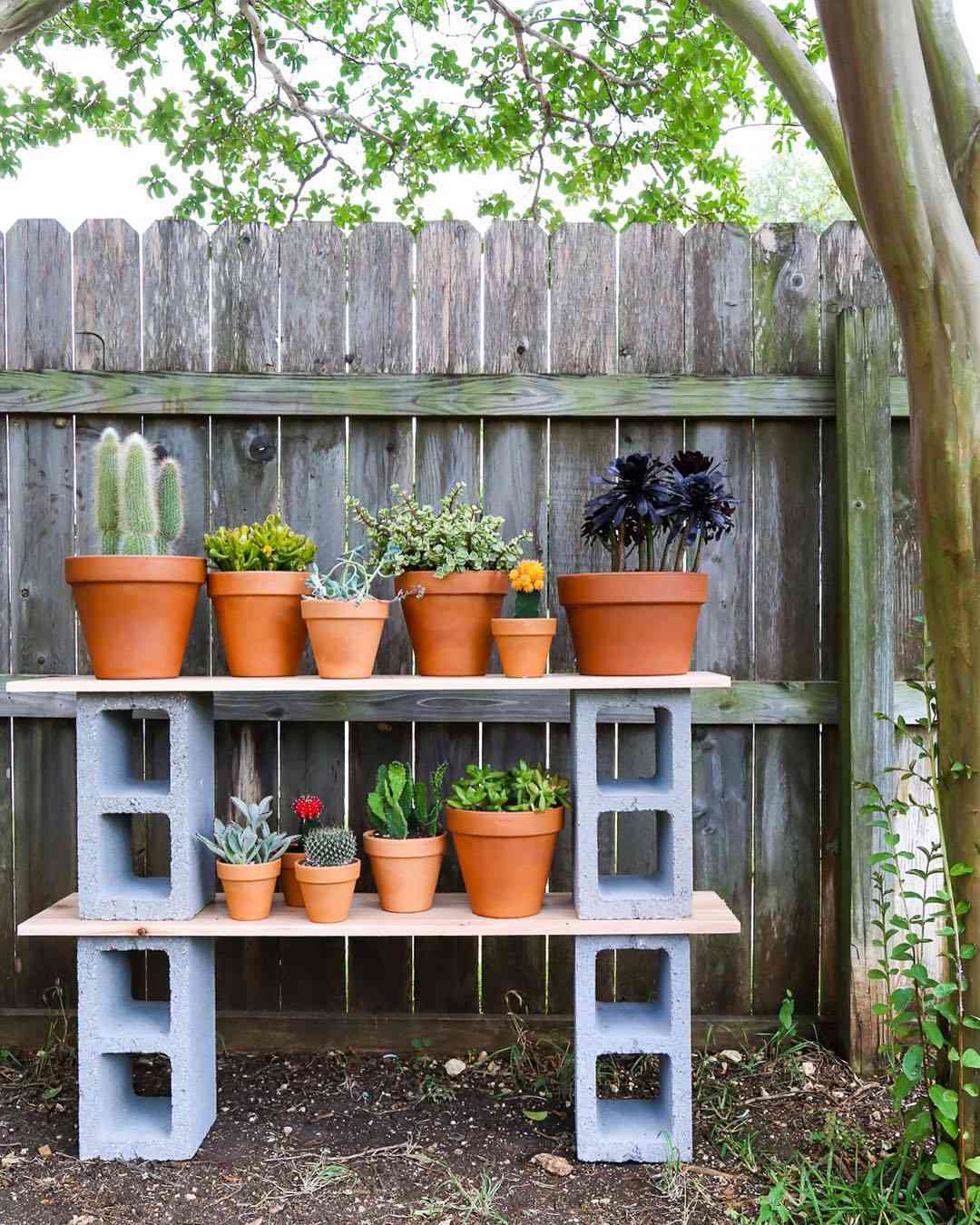
“The visual harmony here can be broken down into a simple formula: 50% raw materials + 30% organic elements + 20% unifying color.”
The raw materials are the light gray concrete blocks and unfinished wood planks—the neutral foundation. The organic elements are the variety of green succulents and cacti, providing texture and life. The unifying color is the warm terracotta of the pots, which is repeated throughout the display, tying everything together into a cohesive and earthy palette.
18. Clever Corner Bench for Wrapping a Patio or Deck
An L-shaped or corner bench is one of the most efficient ways to maximize seating in an outdoor space. Instead of two separate benches, a corner design connects them, which visually defines the area and encourages conversation. It frames a corner of a deck or patio, creating a natural focal point for a coffee table or fire pit. This layout is incredibly space-savvy, providing more seating capacity in a smaller footprint than arranging multiple individual chairs or couches would. It’s a go-to layout for professional landscape designers.
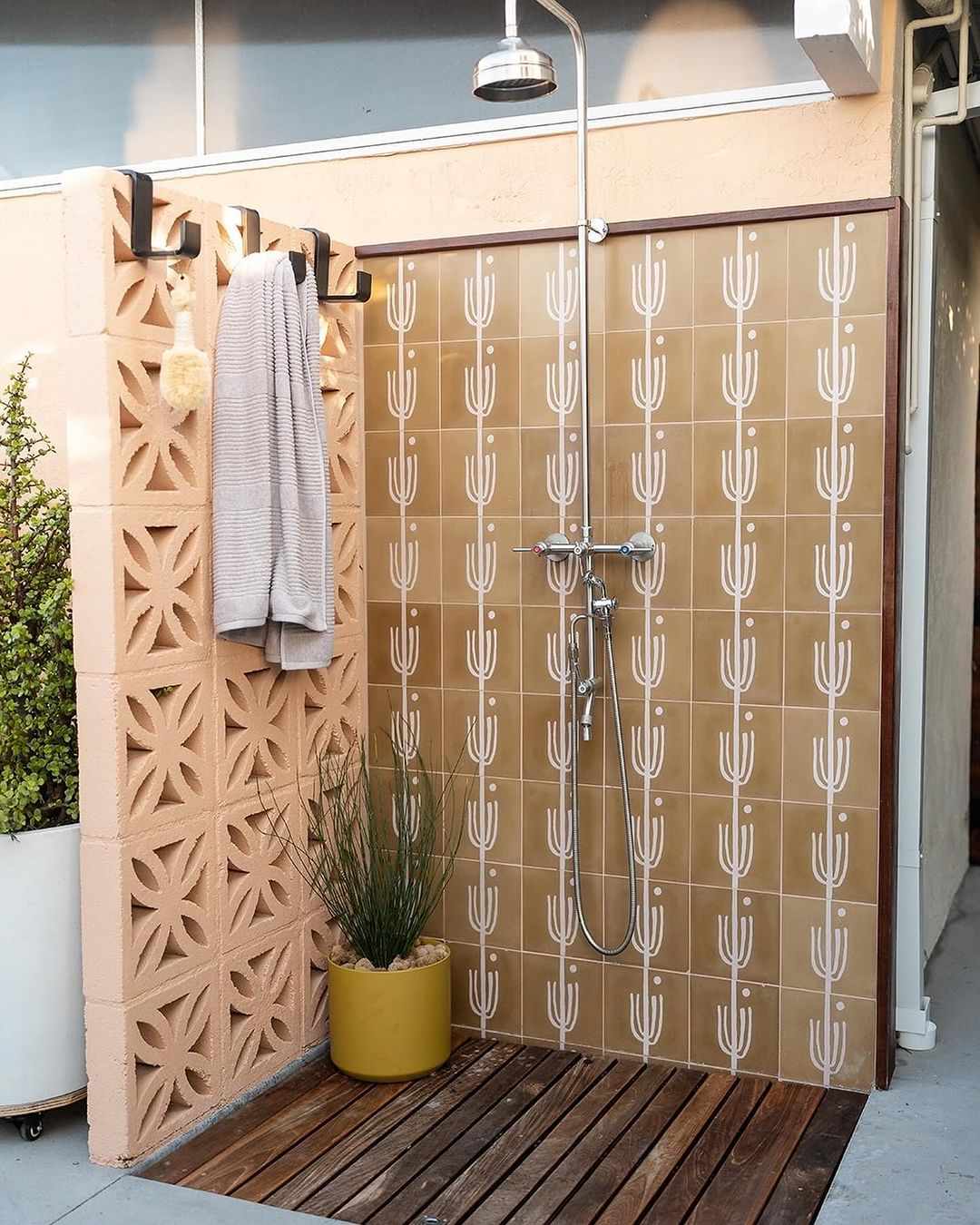
“A corner bench works beautifully on square or rectangular patios, from a small 10×10 foot space to a large 20×20 foot area.”
The key is proportion. For smaller patios, keep the bench arms shorter, perhaps 4-5 feet on each side. For larger spaces, you can extend the arms to 8-10 feet each. When building the corner, have the wood planks from one side overlap the planks from the other side for a clean, integrated look, rather than trying to miter them at a 45-degree angle.
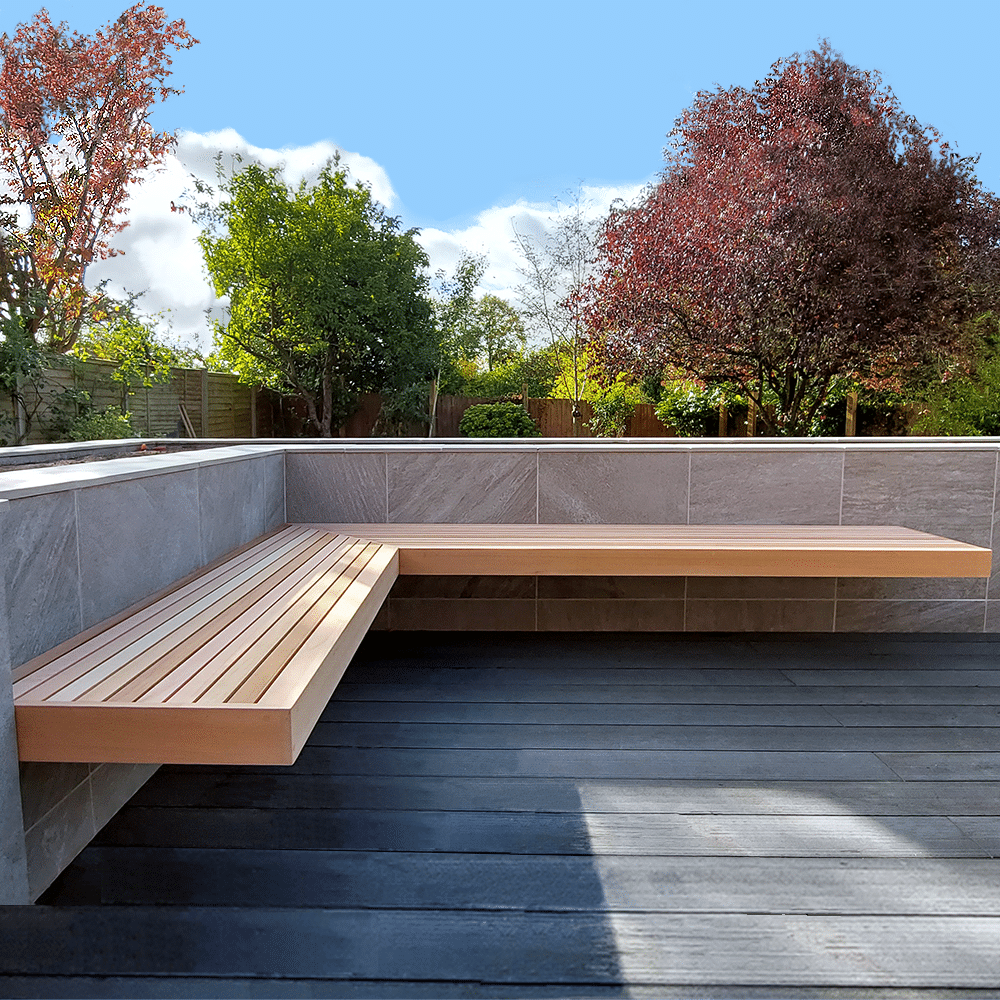
19. Modern Floating Wood-Slat Bench on a Tiled Wall
This design feels incredibly high-end and taps into the current trend of
20. Cozy Porch Bench with Dark Wood and White Frame
This is a classic porch look that feels both timeless and welcoming. It’s a departure from the raw cinder block aesthetic, but it shares the same spirit of simple, sturdy construction. It feels like the kind of bench you’d find at a beloved family lake house. The addition of patterned pillows, a bottle of wine, and a glass instantly tells a story of relaxation and unwinding. It’s not just furniture; it’s an invitation to sit down and stay a while.
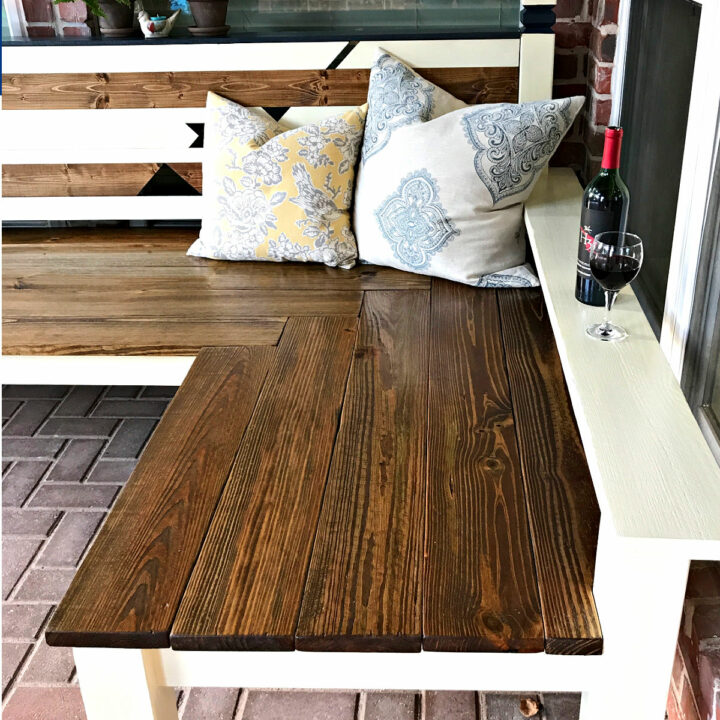
“What truly makes this bench work is the powerful contrast between the dark-stained wood seat and the clean, white-painted frame.”
This sharp juxtaposition highlights the bench’s structure and gives it a crisp, graphic quality. The dark seat grounds the piece, while the white frame keeps it from feeling too heavy or rustic, especially against the rich texture of the red brick wall. This simple two-tone approach is a classic design trick that always delivers a polished look.
21. Minimalist Twin Benches on a Gravel Patio
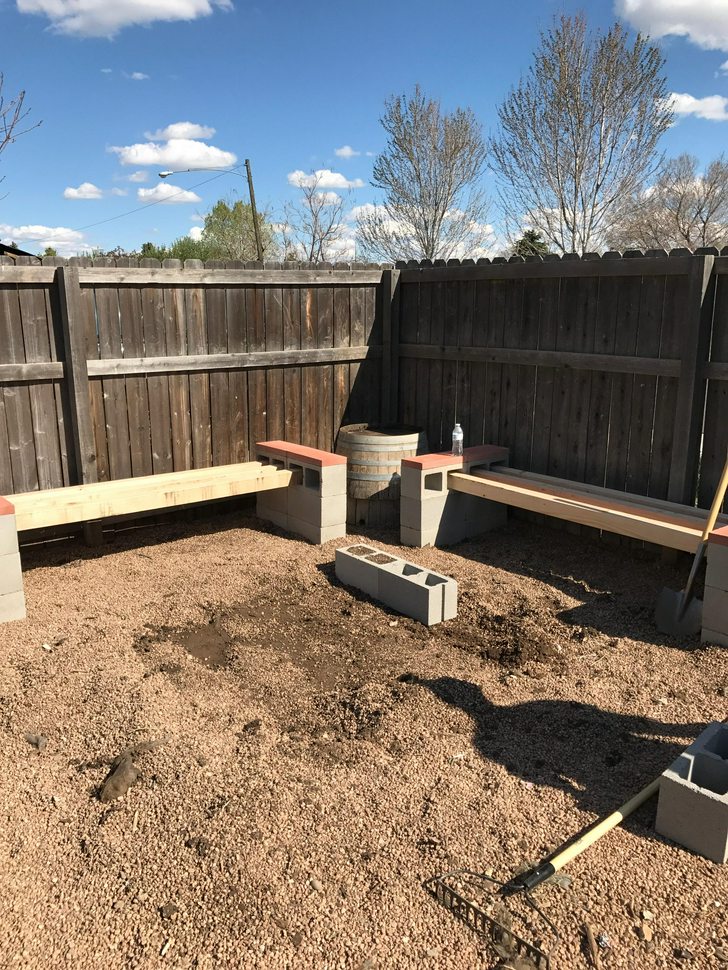
There’s a raw, almost sculptural quality to this arrangement. By creating two separate, parallel benches, the design defines a clear pathway and social zone. It’s a very intentional use of space. The unfinished wood planks and raw cinder blocks, set against the uniform texture of the reddish-brown gravel, create a minimalist, functional aesthetic. This setup is perfect for a beer garden vibe in a backyard, or for defining a seating area in a large, open space. The wooden barrel adds a perfect rustic touch.
22. Inviting Stone Block Bench with a Bowl Fire Pit
This is the sophisticated, grown-up cousin of the simple cinder block bench. Using stacked, irregular stone blocks gives the bench a much more organic, integrated-into-the-landscape feel. The warm brown cushions and array of light-colored pillows soften the stone and make it look incredibly comfortable and inviting. The sleek, modern form of the bowl-shaped fire pit provides a perfect contrast to the rustic texture of the bench, creating a balanced and professionally styled outdoor room.
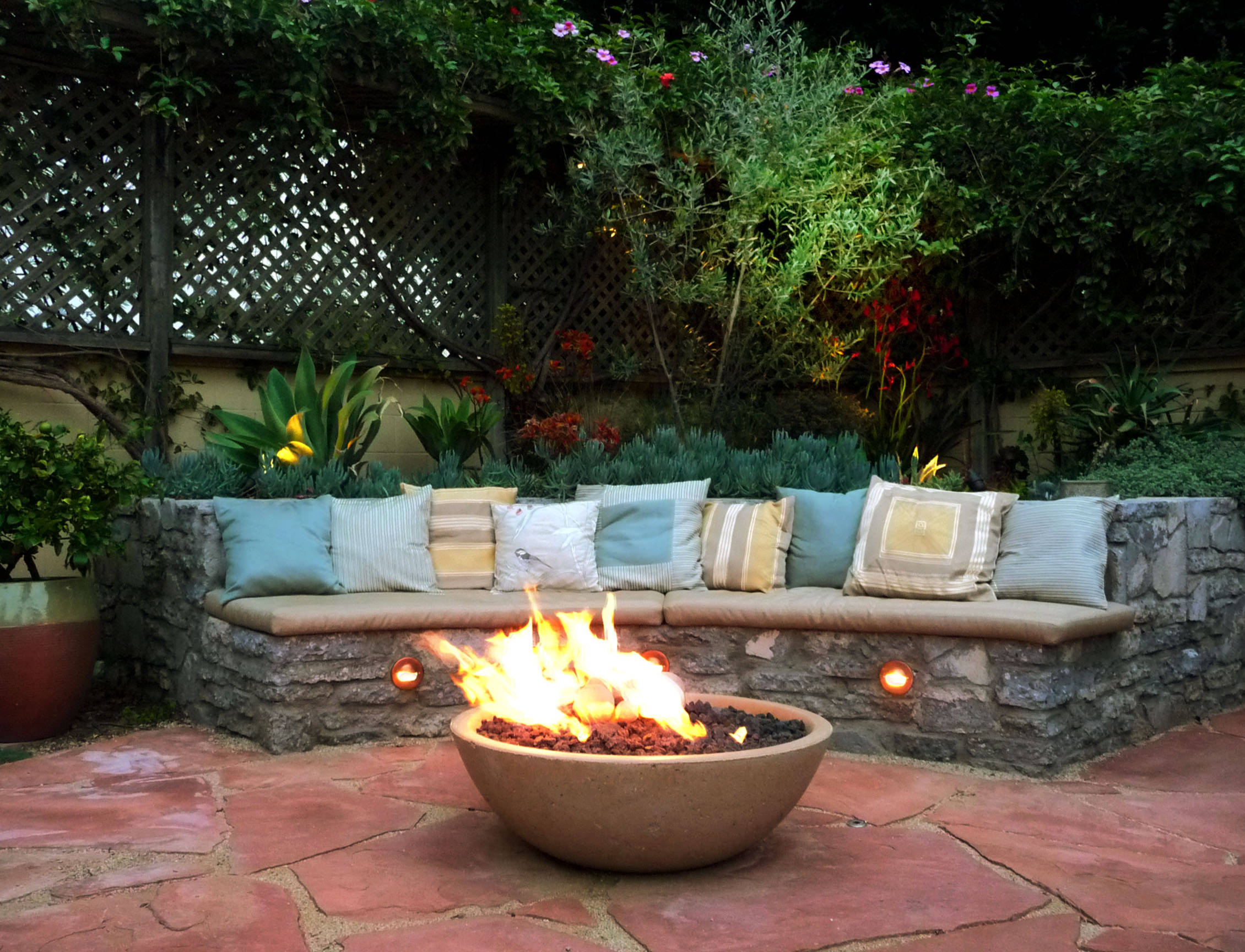
“While this stone bench is undeniably beautiful, it requires more care than a simple cinder block version.”
The irregular gaps between the stones can become homes for insects, spiders, and wind-blown debris, requiring occasional cleaning with a pressure washer or hose. The cushions are essential for comfort, but they are also the highest maintenance element. To keep them from developing mildew and fading, you must choose fabrics rated for outdoor use and, ideally, store them in a deck box or indoors when not in use.
23. Modernist Dream: Built-In Benches and Cor-Ten Steel Planters
This is where landscape architecture meets furniture design. The seamless integration of the wooden benches into the slatted fences creates a clean, unified, and incredibly chic look. This design is a major player in the 2026 trend of ‘landscaped living rooms,’ where outdoor spaces are designed with the same level of detail and material cohesion as interiors. The use of Cor-ten steel for the planters, with its beautiful rusted patina, adds a warm, industrial element that is massively popular right now.
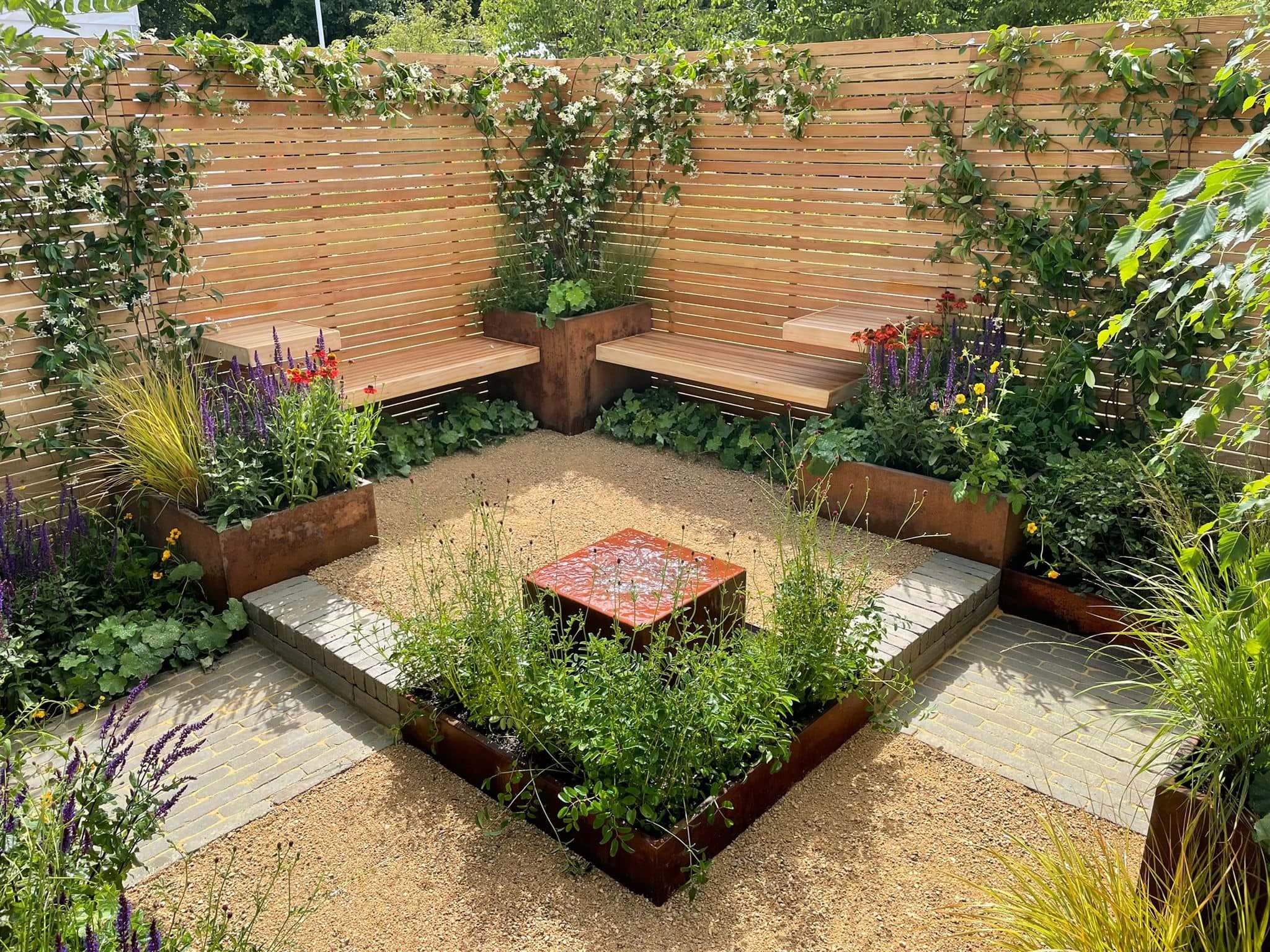
“The single element that defines this entire space is the Cor-ten steel.”
While the wood benches are beautiful, it’s the rich, rust-colored steel that provides the primary color, texture, and structure to the design. It’s used for the planters, the water feature edge, and likely other elements you can’t see. This repetition of a single, powerful material is what makes the space feel so cohesive, modern, and high-end. It’s a bold choice that pays off handsomely.
24. U-Shaped Cinder Block Seating Around a Fire Pit
This U-shaped configuration is the ultimate setup for creating a communal, conversational outdoor living room. It clearly defines the seating area as a destination and focuses all attention toward the central fire pit. The backrests add a significant level of comfort, encouraging guests to lean back and relax. This large-scale project turns a simple gravel patch into an impressive entertainment zone, capable of seating a large group of people comfortably. Compare this to the simple line of Idea #21 to see the difference in social dynamics.
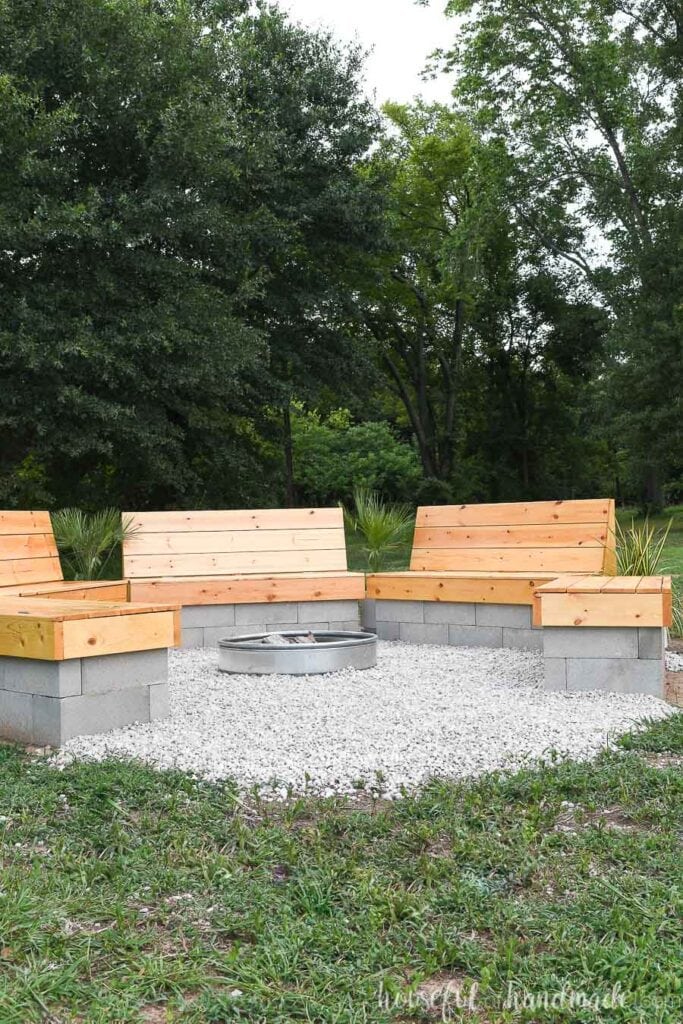
“Cinder Blocks (approx.”
60-80 blocks): $120 – $160Wood Slats (pressure-treated): $200 – $350Gravel (for a 12×12 area): $150 – $300Metal Fire Pit insert: $50 – $100TOTAL: $520 – $910Budget alternative: Build just one long bench instead of the full ‘U’, and use salvaged wood. This can bring your cost down to the $150-$250 range for a still-sizable seating area.
25. Boho-Styled Bench with Cream Cushions and Lanterns
This look is all about the styling. The bench itself is the most basic construction, but the accessories give it a relaxed, bohemian personality. The cream cushions, striped pillow, woven rug, and green lanterns all work together to create a soft, inviting, and curated vignette. The Buddha statue adds a touch of zen. This proves that even the simplest DIY base can be transformed with the right decor, a much more affordable approach than buying an expensive, pre-styled outdoor sofa.
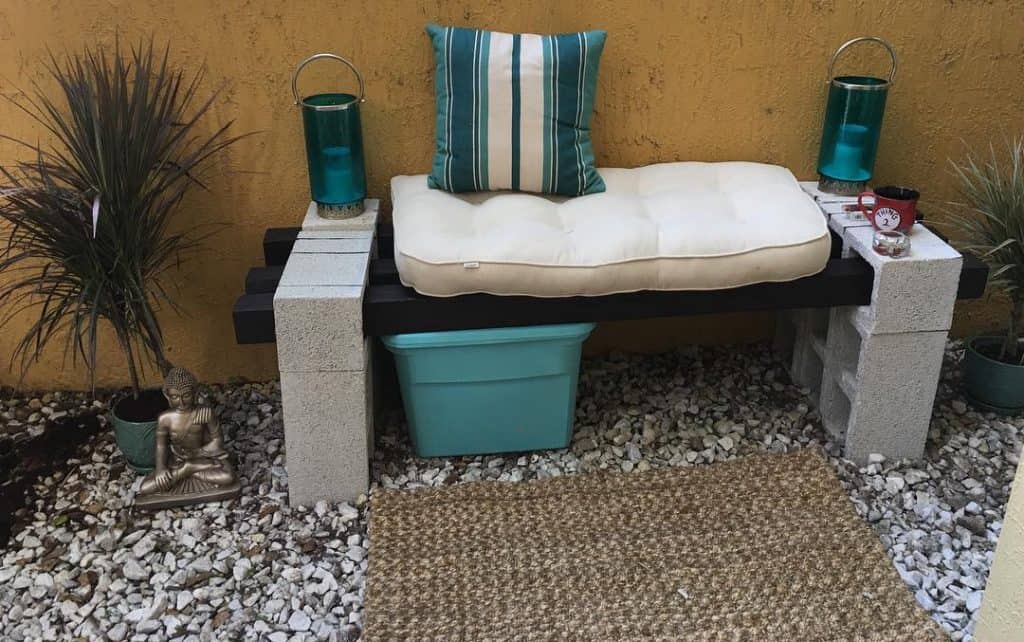
“Here’s the honest truth about creating this kind of styled look outdoors: it’s not a ‘set it and forget it’ situation.”
Woven rugs, non-outdoor pillows, and decorative objects will not withstand the elements for long. This is a perfect setup for a covered porch or patio. If your bench is in a fully exposed area, you either need to commit to bringing all the accessories inside every night or accept that they will fade, get dirty, and need to be replaced frequently. It’s a trade-off between style and practicality.
26. A Sculptural Curved Concrete Garden Bench
This bench is a beautiful piece of minimalist sculpture. The gentle curve of the seat is an unexpected and graceful touch that completely elevates it from a mere slab of concrete. It invites you to sit, and it also directs your gaze towards the garden. The flared bases provide a sturdy, architectural anchor. This piece works because it doesn’t try to hide what it is; instead, it celebrates the simple beauty and form of poured concrete. Positioned against the deep greens and reds of the foliage, it’s a stunning focal point.
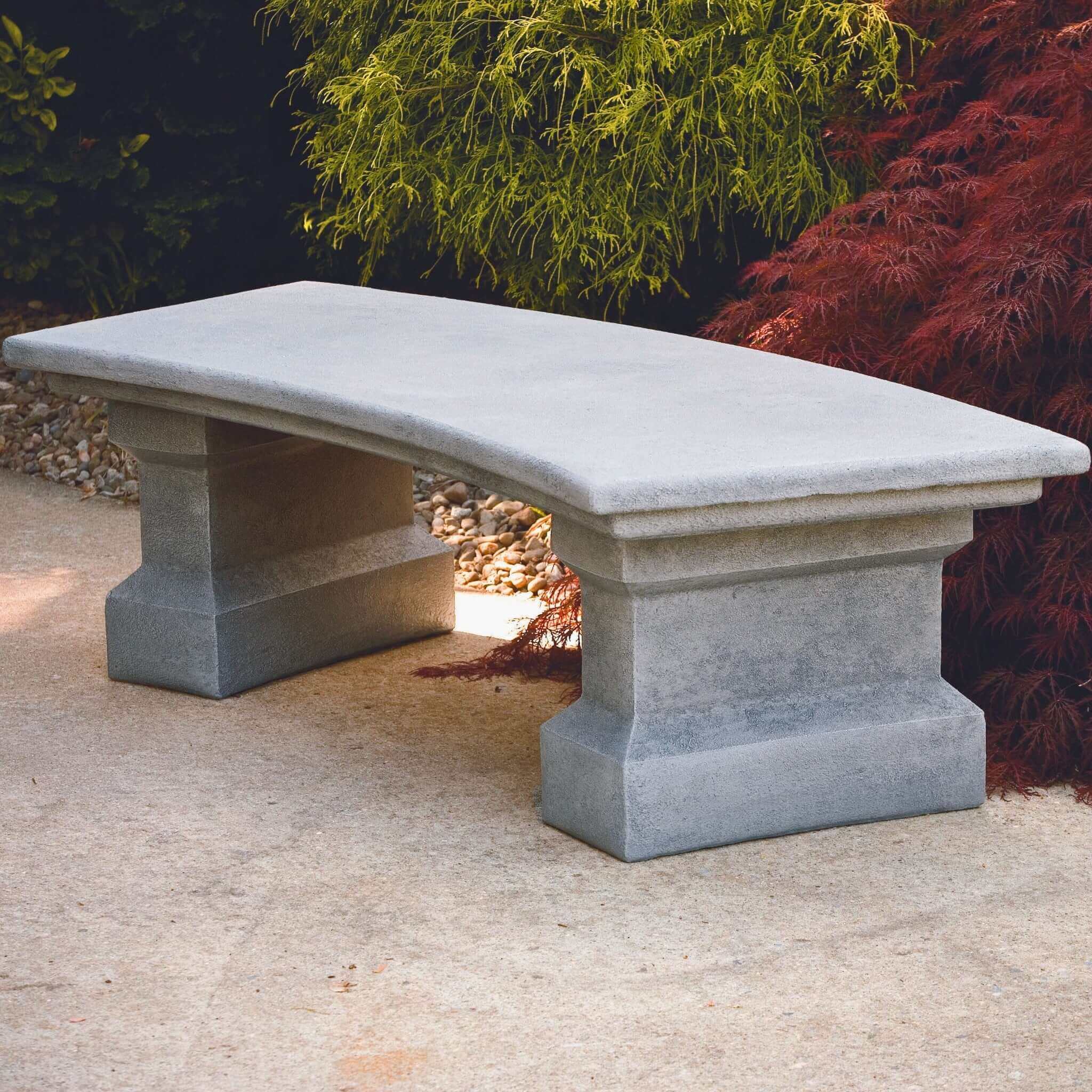
“A sealed, smooth concrete bench like this is about as low-maintenance as outdoor furniture gets.”
It won’t rot, rust, or get carried away by the wind. A simple hosing down a few times a year is all you need to keep it clean. The main thing to watch for is staining from wet leaves or bird droppings. If you get a stain, a paste of baking soda and water, or a specialized concrete cleaner, will usually lift it right out. In winter, you could cover it to prevent freeze-thaw cycles from causing tiny surface cracks over many years, but it’s generally not necessary.
27. Modern Bench with Wavy Wood Slats and Concrete Base
This is art as much as it is furniture. The wavy, sculptural wooden seat is the undeniable showstopper here. It’s a playful and sophisticated twist on the standard flat-plank bench. The organic, flowing lines of the wood provide a stunning contrast to the solid, geometric forms of the concrete block supports. It’s a masterful mix of materials and shapes that feels custom-made and incredibly high-end. The addition of the small wooden peg hooks is a tiny, brilliant detail that adds an extra touch of thoughtful function.
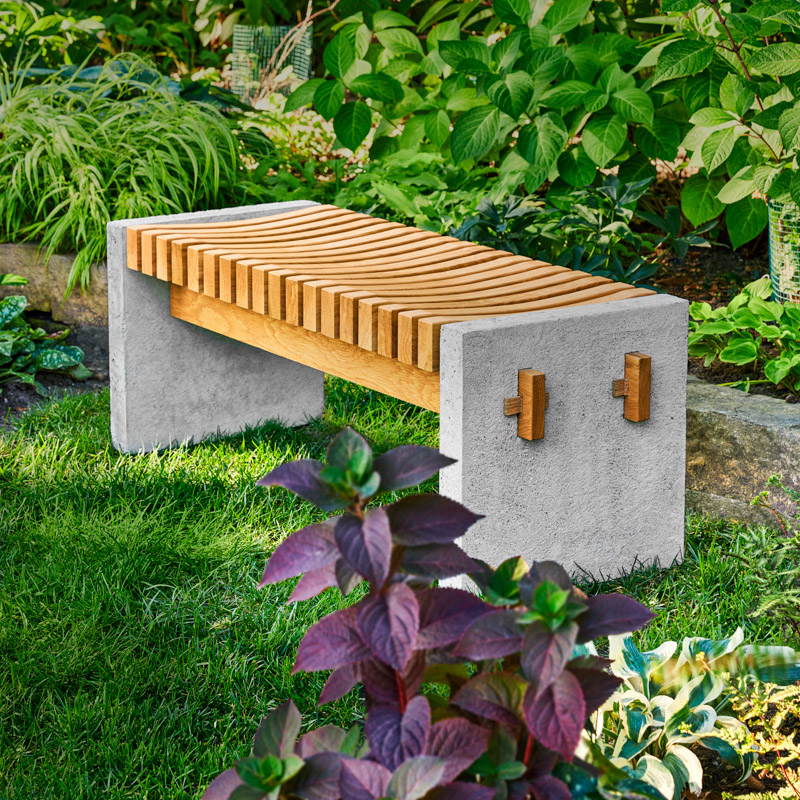
“To create a custom curved top like this, you can’t use standard dimensional lumber.”
This is achieved through a process called kerf bending, where you cut a series of deep, closely spaced slits into the underside of a wooden plank, allowing it to bend. Alternatively, you can laminate several very thin strips of wood together over a curved form. Both are advanced woodworking techniques. For a simpler but still-effective approach, you can create a gentle curve by slightly staggering the placement of straight planks on the supports.
28. Sleek Modular Block Bench for Urban Spaces
This design reflects a major trend in urban and commercial landscape design: modularity. These aren’t just cinder blocks; they are part of a larger system of concrete forms that can be combined in various ways to create seating, planters, and retaining walls. The integration of finished wood seats and backrests makes the concrete feel approachable and comfortable. This is a sophisticated, durable solution often seen in parks, storefronts, and modern apartment complexes, and it’s starting to inspire residential designs too.
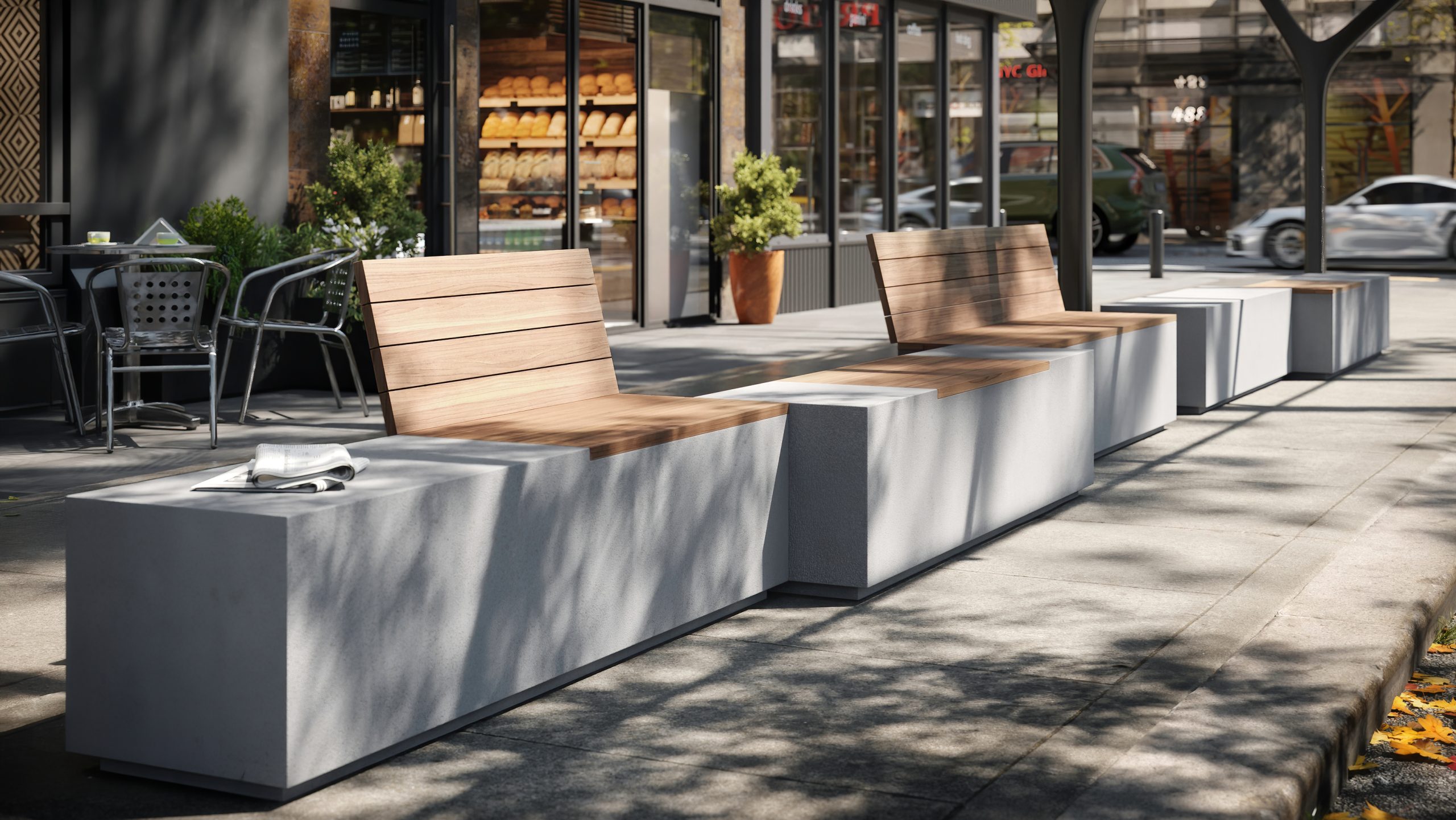
“Thinking of a modular look?”
Here’s what to check first.
Supplier Sourcing: These are not your standard hardware store cinder blocks. You’ll need to source them from a commercial landscape supplier or a specialty concrete products company. Do your research to find a local or regional supplier first.
Weight and Delivery: These blocks are extremely heavy. You will not be able to transport them in a car. Ensure your supplier can deliver them to your desired location, and have a plan (and some help!) for moving them into their final position.
Foundation: For a permanent installation like this, you must have a perfectly level and stable foundation, like a concrete slab or a compacted gravel base.
29. Simple DIY Bench in a Garden Bed
There’s a rustic charm to this bench’s placement directly within a mulched garden bed. It feels less like a piece of patio furniture and more like a secret resting spot discovered along a garden path. Painting the blocks a dark gray helps them recede visually, allowing the light-colored wood and the surrounding plants to be the main focus. The backrest is a simple but crucial addition, making it a place to linger rather than just a quick perch. A similar design, Idea #10, shows how this same concept can be adapted with a built-in planter.
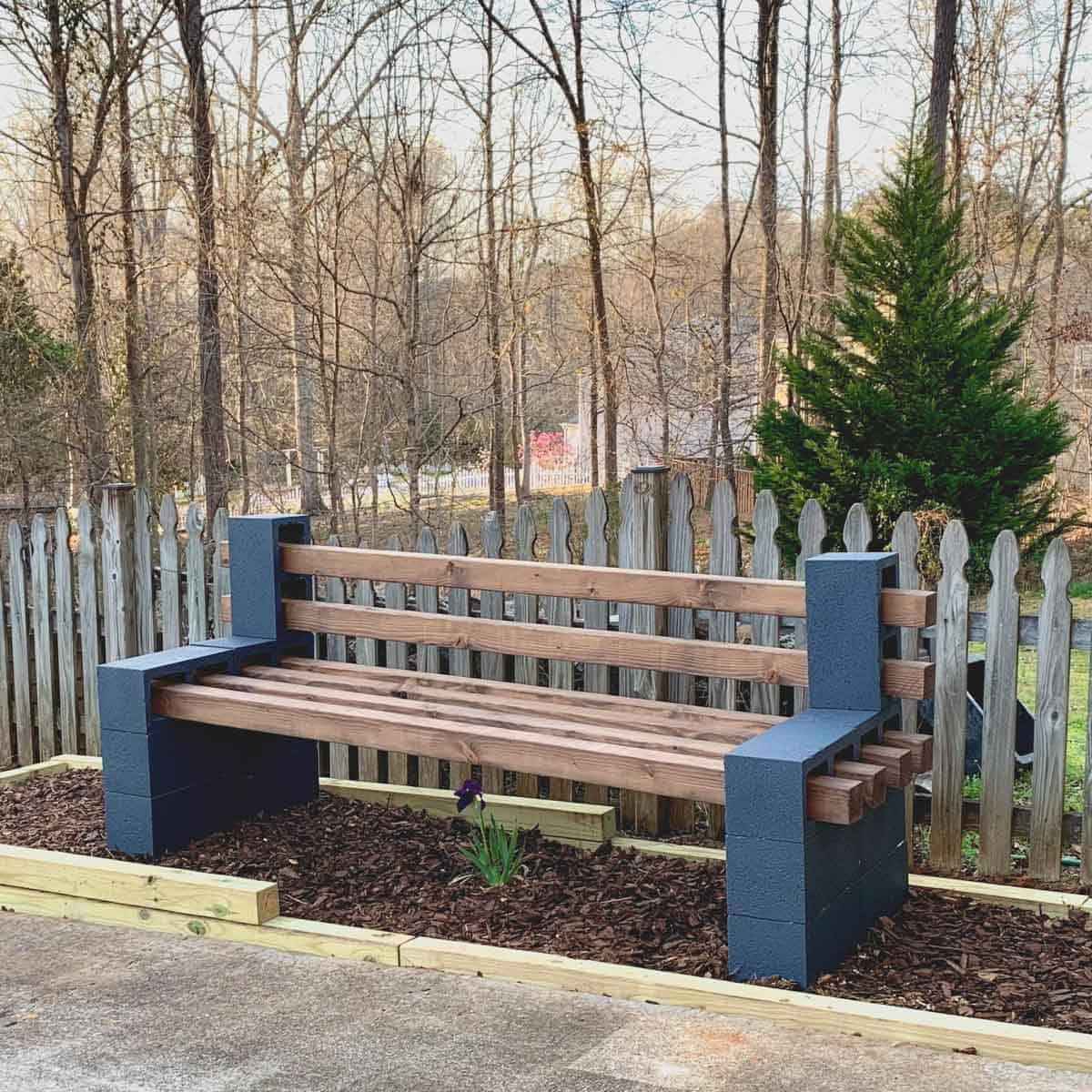
“This is another wonderfully inexpensive project.”
Eight cinder blocks ($16), a can of dark gray spray paint ($8), and three 8-foot lengths of 2×4 lumber ($25) are all you need for the basic structure. That’s a sub-$50 bench. To make it even more affordable, skip the paint and embrace the raw gray of the blocks. You can also look for off-cuts of lumber at a construction site or use wood from discarded pallets (just be sure they are stamped ‘HT’ for heat-treated, not ‘MB’ for chemically treated).
30. Twin Benches and Fire Pit with Red Brick Accents
This project demonstrates how adding just one more material can elevate a simple design. The red brick accents on the cinder block towers break up the monotony of the gray concrete and add a pop of warm color. This small detail ties in with traditional brick homes or patios and gives the DIY project a more considered, almost custom-built appearance. The two benches facing each other around a fire pit create a perfect conversational nook, and the string lights overhead complete the cozy, inviting atmosphere.
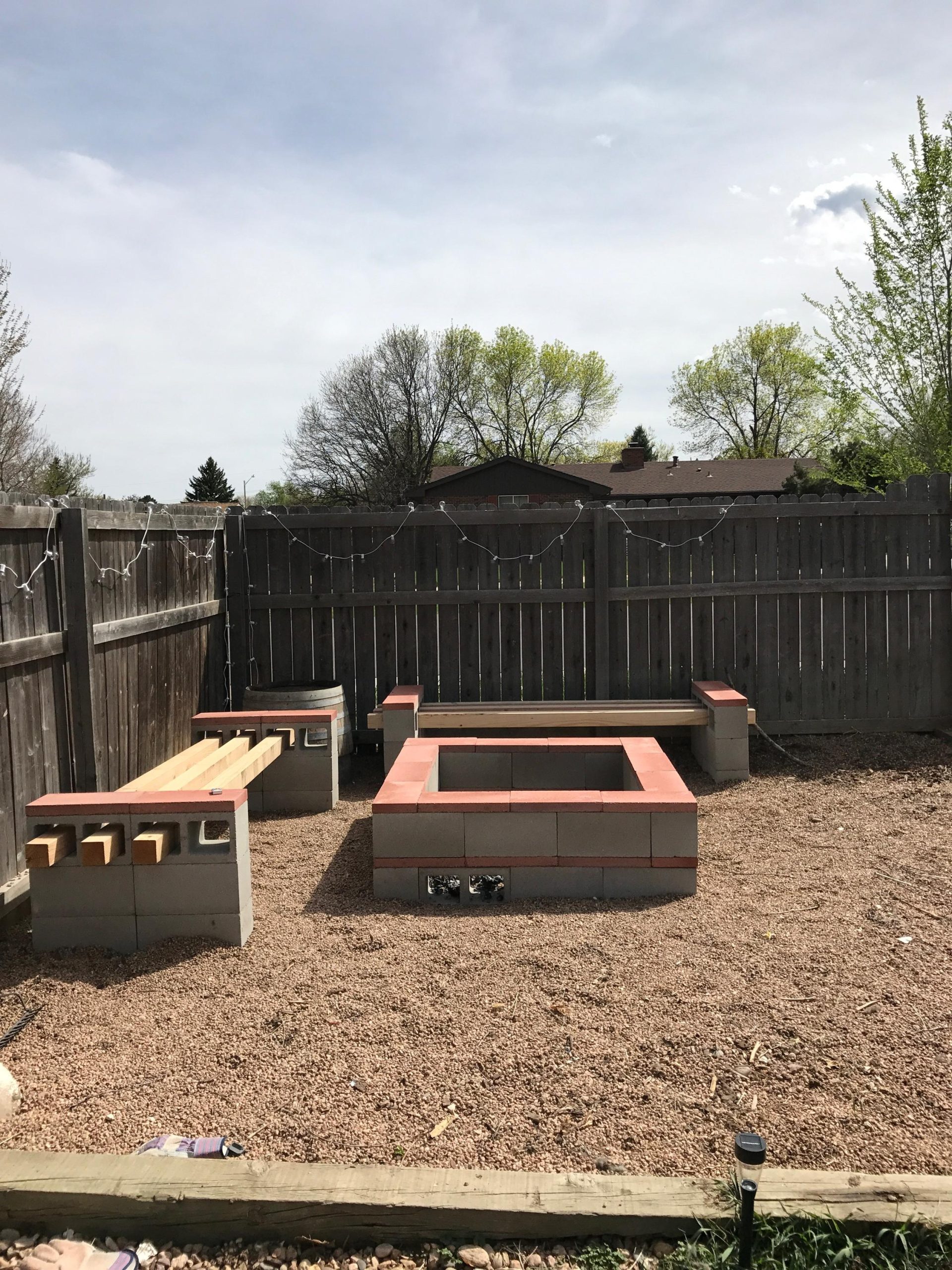
“Want to add those brick accents?”
It’s easy. Here’s a 3-step guide:
Gather Materials: You’ll need your cinder blocks, your chosen bricks, and a tube of heavy-duty landscape block adhesive.
Apply Adhesive: When stacking your cinder block towers, simply apply a generous bead of the adhesive to the top of the block where you want to add the brick layer.
Set the Bricks: Firmly press the bricks onto the adhesive in your desired pattern. Then apply another layer of adhesive on top of the bricks before adding the next cinder block. Let it cure for 24 hours before adding the wooden planks.
Your Weekend Project Is Waiting
See? Cinder blocks are so much more than just a drab building material. With a little creativity, they can be the foundation for a stylish, durable, and incredibly affordable piece of furniture for your home or garden. Hopefully, these 30 ideas have sparked some inspiration for your own project.
Now, go back to that Pinterest board, pick your favorite idea, and make a plan to actually build it. You’ll be surprised at how quickly it comes together. Happy building!