If that one empty corner has been bothering you for longer than you’d like to admit, you’ve landed in the right place. We know the feeling of endlessly scrolling, saving pins, and still feeling stuck. After filtering through hundreds of options from high-end designers to budget-friendly finds on Facebook Marketplace, we’ve narrowed it down to 30 incredible ideas that actually work in real homes. Inside, you’ll find looks for every style—from cozy reading nooks to clever built-in storage and plant-filled sanctuaries.
In 2026, it’s all about making every square foot count, turning those forgotten zones into functional, beautiful moments. And stay until the end — we break down the most common mistakes that can ruin these looks. 📌 Save this to Pinterest for later — you’ll want to revisit these ideas.
1. Build a Cozy Corner Window Bench with a City View
This idea succeeds by transforming unused square footage into a destination. It doesn’t just fill a space; it gives it a purpose. By building the seating directly into the corner, it maximizes the floor plan and takes full advantage of the large windows. The view becomes the artwork, and the bench becomes the best seat in the house. Layering pillows and a faux fur throw adds softness and texture, contrasting beautifully with the hard lines of the window frames and wood, making it feel intentionally cozy and not just like a storage box with a cushion on it.
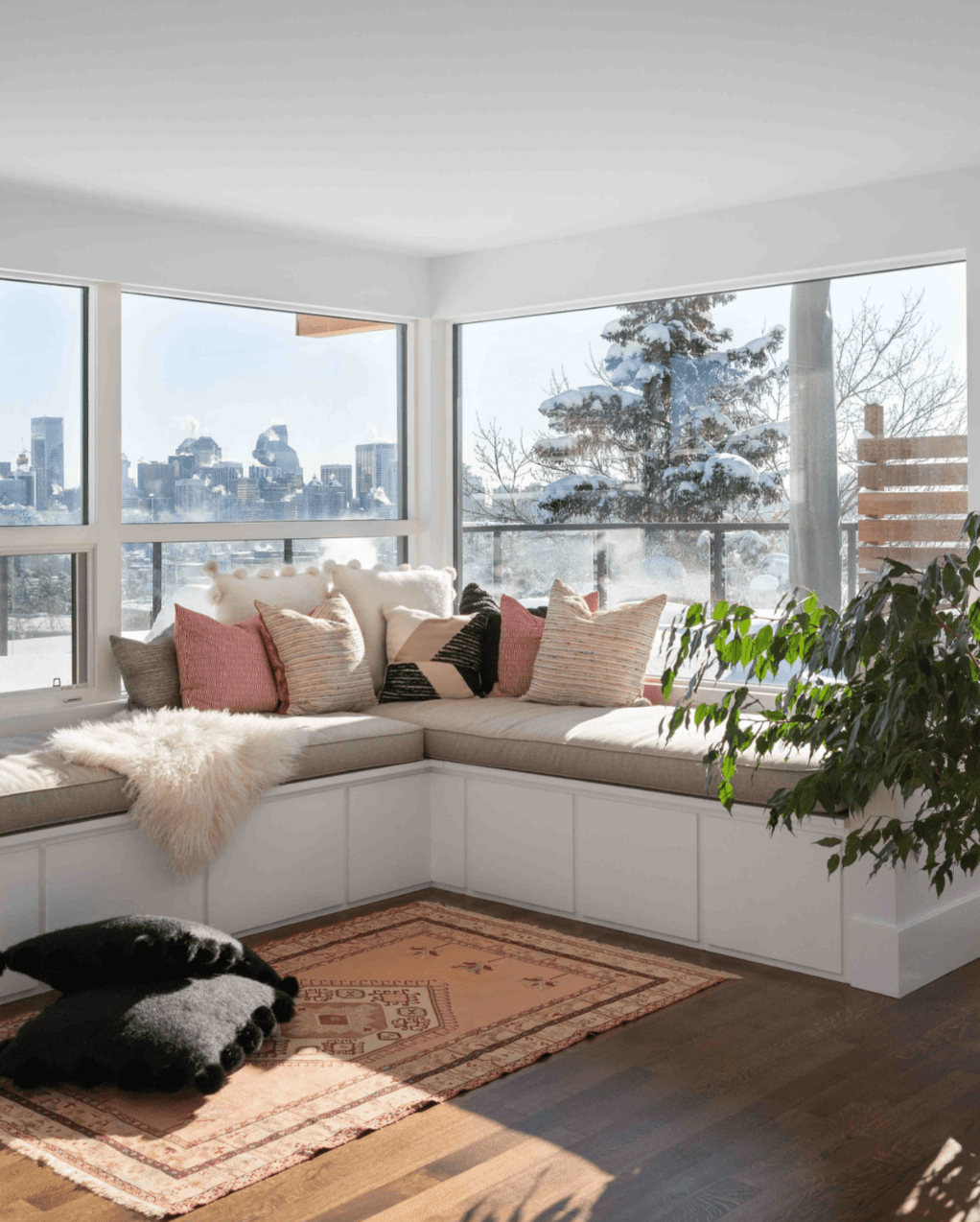
“Creating this look involves some custom work, but is surprisingly achievable.”
A carpenter-built bench is the biggest investment, but it adds serious value.
- Custom Bench & Storage: $1,500 – $4,000
- Custom Cushion Upholstery: $500 – $1,200
- Decorative Pillows & Throw: $200 – $500
- Large Potted Plant: $100 – $300
- TOTAL: $2,300 – $6,000
- Budget alternative: Use two pre-made storage benches from IKEA or Target, push them together in the corner, and add a custom-cut foam cushion on top. Total cost: around $800.
2. Create an Inviting Banquette with Arched Windows
When creating a dining banquette, the measurements are everything. For optimal comfort that keeps people lingering after a meal, aim for a seat depth of 18-20 inches. The backrest should have a slight recline, about 5-10 degrees, rather than being perfectly vertical. Most importantly, the seat height—including the compressed cushion—should be approximately 12 inches below the surface of the dining table to allow for comfortable legroom. These small ergonomic details make the difference between a pretty corner and a truly functional dining spot.
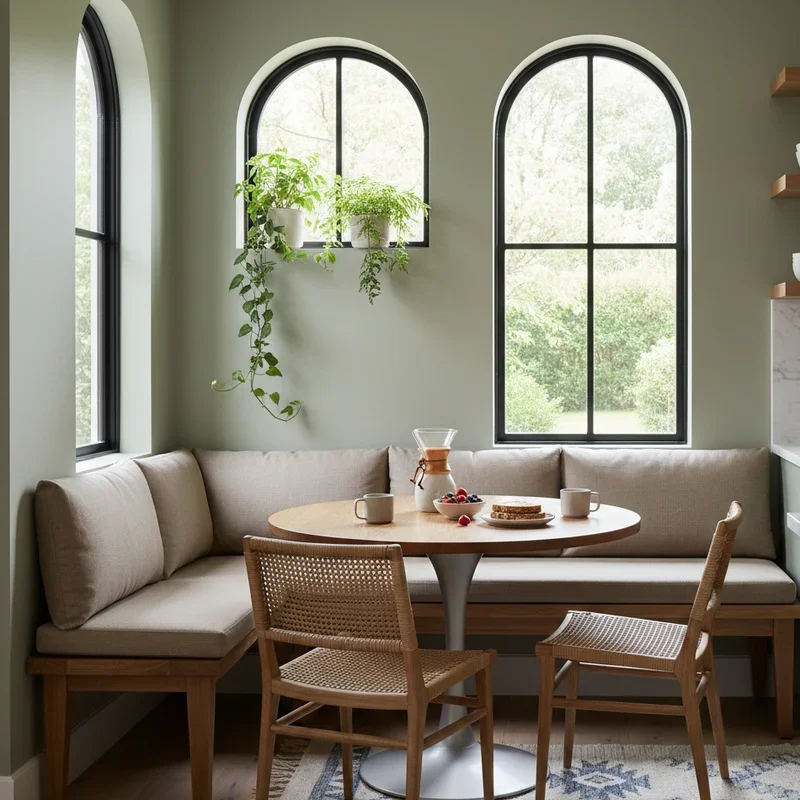
“The visual harmony here comes from a simple, repeatable formula.”
It’s about 60% calming, earthy tones (the sage green walls), 30% natural materials (the light wood banquette, cane chairs, and plant life), and just 10% sharp, graphic contrast (the black window frames). You could easily swap the sage green for a terracotta or a muted navy, and as long as you keep that 60/30/10 ratio of color, texture, and accent, you’ll achieve the same balanced, inviting feel.
3. Utilize a Bay Window with a Built-in Storage Seat
The single most important element in this design is the custom-built window seat. Without it, the bay window is just an architectural feature—a little awkward and hard to furnish around. The built-in bench transforms it from empty space into a functional, charming moment. It anchors the corner, provides hidden storage, and creates a designated zone for reading or enjoying the view. The pillows and textiles add comfort, but the bench itself is the true hero that gives this corner its purpose and polish.
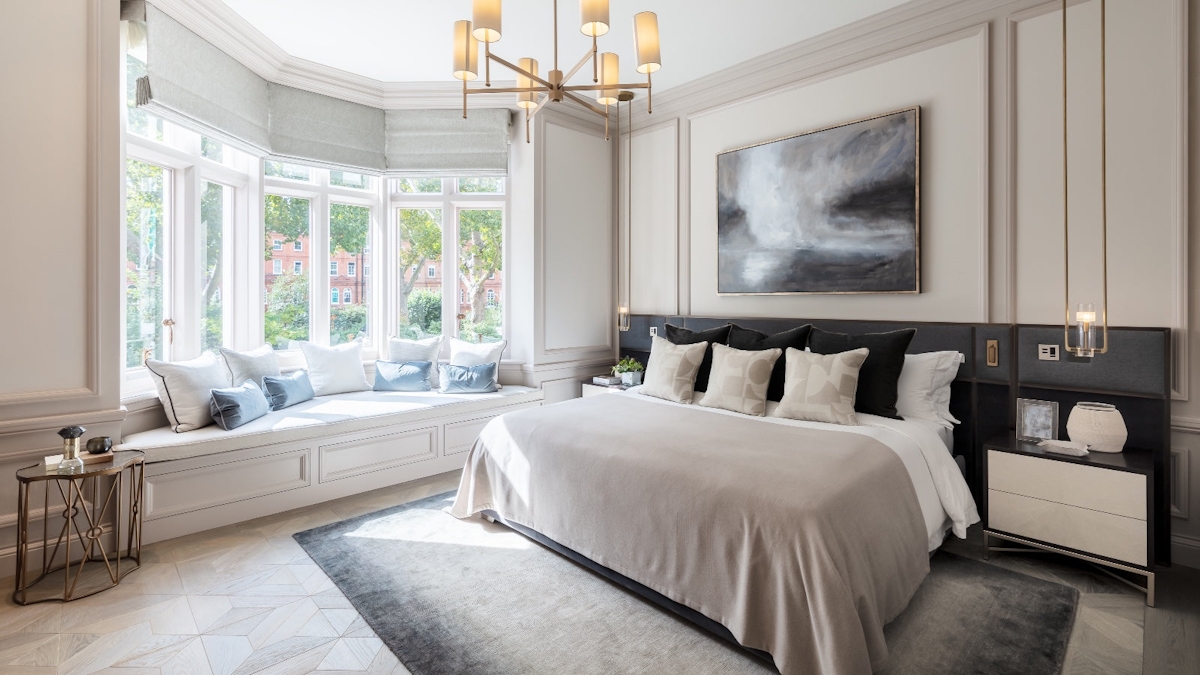
“A built-in window seat is a fantastic feature, but let’s be honest about the cost and commitment.”
This isn’t a weekend DIY for most people. Custom carpentry requires a professional to get the fit and finish just right, and that can cost thousands. Before you fall in love, get a few quotes. Also, consider the light. A bay window gets intense sun, so choose a high-performance, fade-resistant fabric for your cushion, or you’ll be reupholstering it in a couple of years. This is a brilliant, but permanent, decision.
4. Anchor a Corner with Large Abstract Art and Patterned Chairs
We’re seeing a huge shift away from minimalist, empty corners towards what designers are calling ‘Artful Maximalism.’ This look is a perfect example. It’s not about clutter, but about curating a corner that tells a story about your personality. The rise of accessible original art and high-quality prints means you no longer need gallery connections to make a bold statement. People are using corners like this to showcase their favorite finds, creating a personal, sophisticated lounge spot that feels collected over time, not decorated in a weekend.
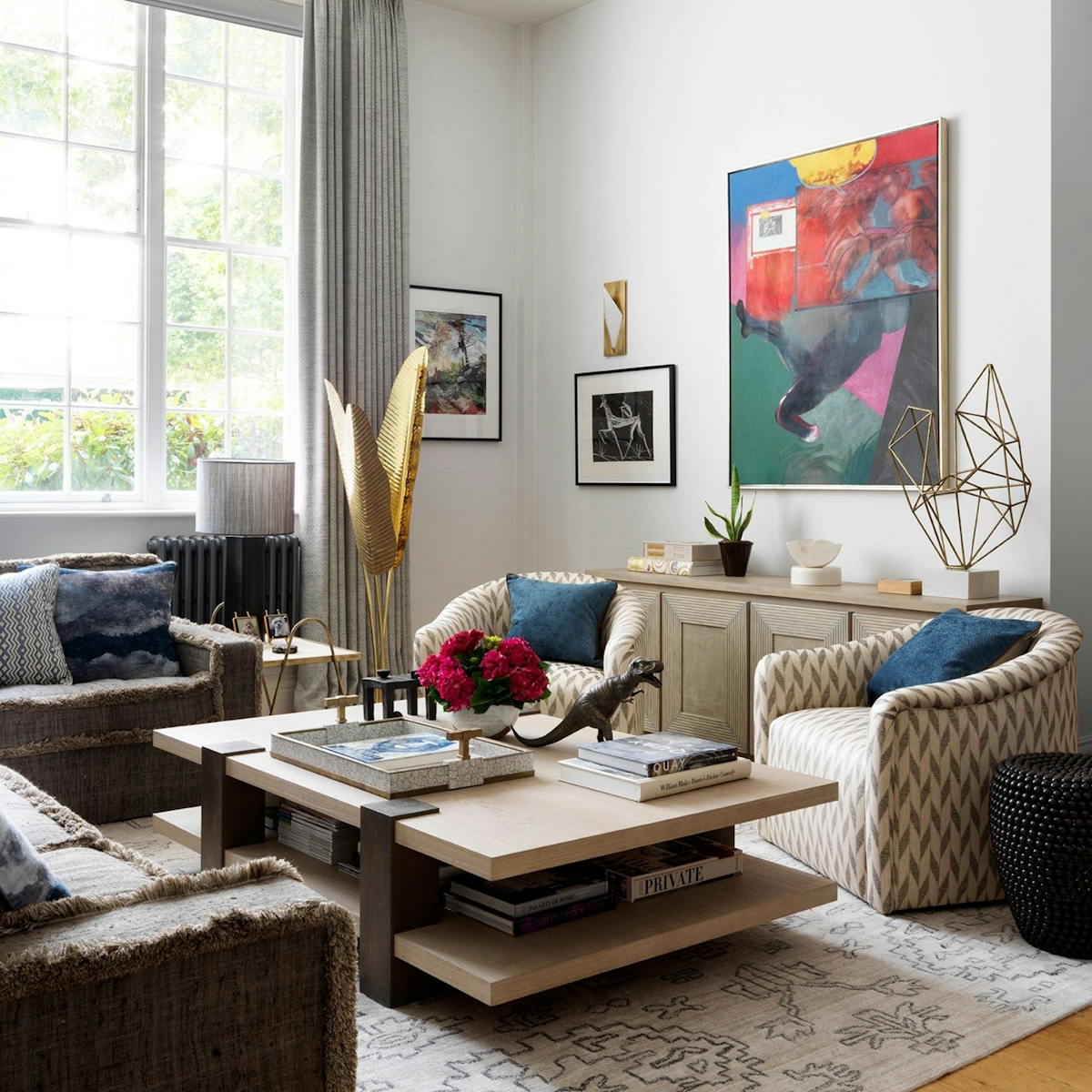
“This corner proves that you don’t need wild architecture to make a big impact.”
What makes it work is the masterful use of scale and color. The abstract painting is intentionally oversized for the console it hangs above, turning that entire wall into a focal point. The colors in the painting (teal, blue, gold) are then echoed in the patterned armchairs and decor, but in smaller doses. This repetition of color creates a cohesive look that feels intentional and pulls the whole eclectic arrangement together, making it feel vibrant instead of chaotic.
5. Design a Bright Dining Nook with a Woven Pendant
While a custom built-in like this is lovely, you can get 90% of this vibe for a fraction of the cost. Start with an IKEA KALLAX shelf unit laid on its side for a sturdy bench with built-in cubbies (around $50). Top it with a custom-cut foam cushion from an online fabric store for about $150. Scour Facebook Marketplace for an oval wood table—they come up all the time for under $100. Add a simple rattan pendant from Target or World Market ($70-$120), and you’ve recreated this bright, airy dining corner for under $400. It’s about capturing the feeling, not the exact price tag. For a similar look on a budget, you can draw from the principles used in Idea #2 as well.
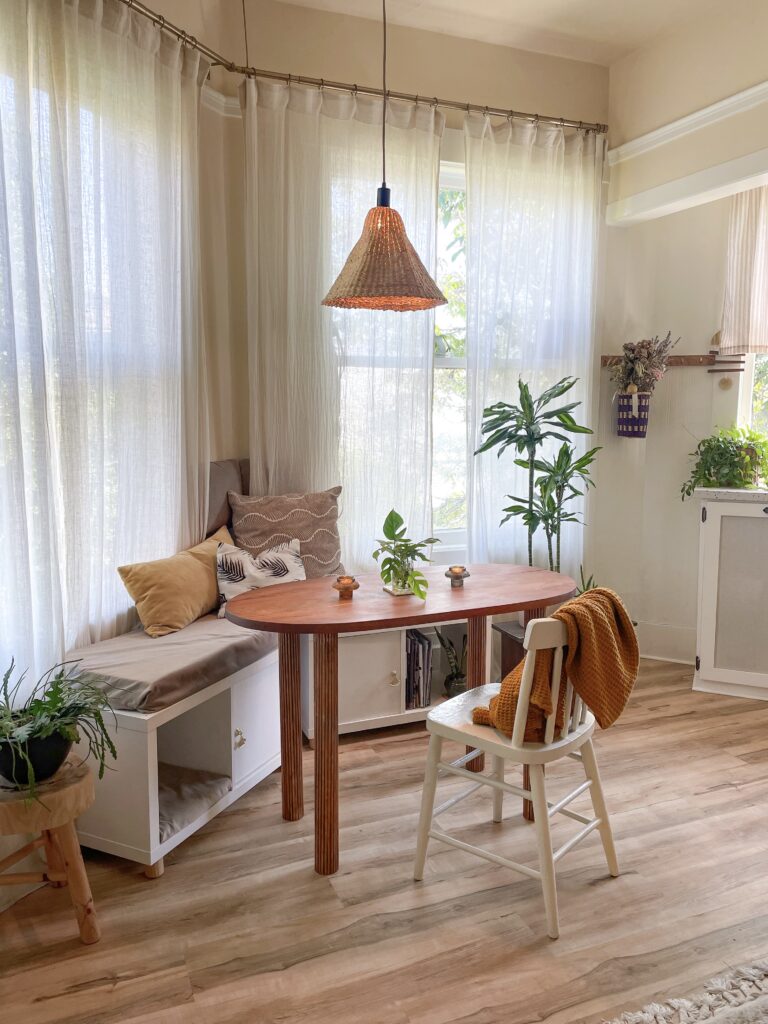
“This setup is ideal for a corner in a room that’s at least 10×12 feet.”
You need enough clearance around the table for comfortable entry and exit from the banquette, which is about 24-30 inches. The key is the window placement. For this light and airy feel to work, you need a corner with windows on at least one, preferably two, walls. Without the natural light, the white banquette and sheer curtains could feel flat rather than luminous. The ceiling should be at least 8 feet high to accommodate a pendant light without it feeling too low.
6. Combine Terracotta Walls and a Light Blue Banquette
To avoid a dining nook feeling cramped, lighting is your secret weapon. Instead of trying to center a pendant over a corner table (which can be an electrical nightmare), use an arched floor lamp. A large arc lamp can reach over the table from a base plugged into a nearby outlet, providing direct light without any rewiring. Look for one with a base that can slide under the edge of the banquette seating to save precious floor space. This gives you that ‘designed’ look and perfectly centered light with plug-and-play ease.
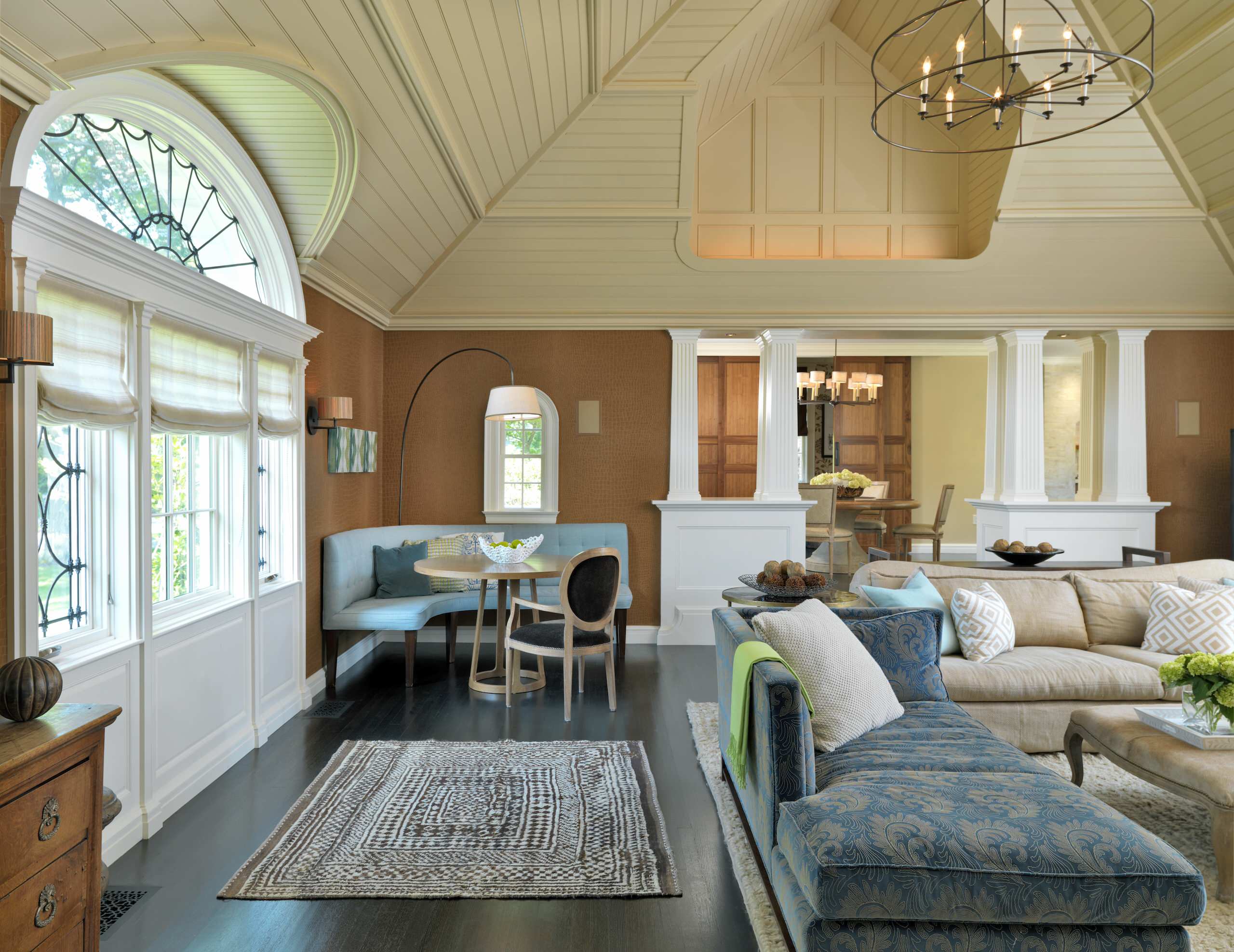
“The magic here is the textured terracotta wall.”
It’s absolutely The One Thing making this corner special. You could have the same banquette, table, and chair against a plain painted wall, and it would be pleasant but forgettable. The texture adds depth, warmth, and a handcrafted, plaster-like feel that elevates the entire space. It gives the light something interesting to play on and makes the smooth upholstery of the light blue banquette pop in contrast. It’s a bold choice that pays off in spades.
7. Style a Tiled Fireplace Hearth with Coastal Art
This design works because of its brilliant use of repetition and a tight color palette. The grid pattern of the white tile is the dominant motif, creating a clean, architectural backdrop. The large, serene ocean artwork leans casually, breaking up the formal grid lines while reinforcing the color story of white and blue. By placing the vase with simple green leaves next to it, a single organic element is introduced, preventing the look from feeling too sterile. The low tiled bench extends the line of the hearth, making the corner feel larger and more integrated.
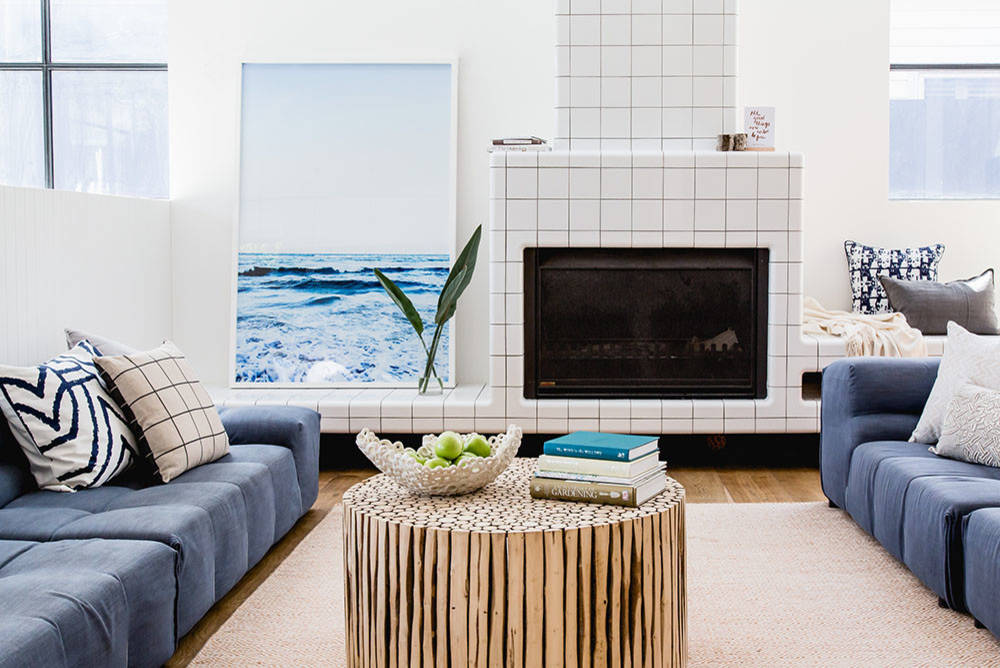
“A white tiled fireplace is stunning, but keeping it pristine requires some dedicated effort.”
The white grout lines are especially vulnerable to dust, soot, and discoloration. Plan on a deep clean of the grout at least twice a year with a specialized cleaner and a small brush. For the tile surfaces, regular dusting is key. If you use the fireplace, be aware that smoke can leave a film over time, so wiping down the front after the heating season is a good habit. While beautiful, this is not a set-it-and-forget-it feature.
8. Curate an Eclectic Corner with a Ladder Shelf and Brick Wall
The formula for this perfectly imperfect corner is all about textural balance. It’s approximately 50% rustic texture (the whitewashed brick and glossy wood floor), 30% clean modern lines (the ladder shelf and art frame), and 20% soft or natural elements (the leather on the chair and the embroidered hoop art). This mix is what creates the ‘collected’ vibe. You can swap the elements easily: replace the brick with a plaster wall, or the ladder shelf with a vintage cabinet, as long as you maintain that ratio of rustic to modern to soft.
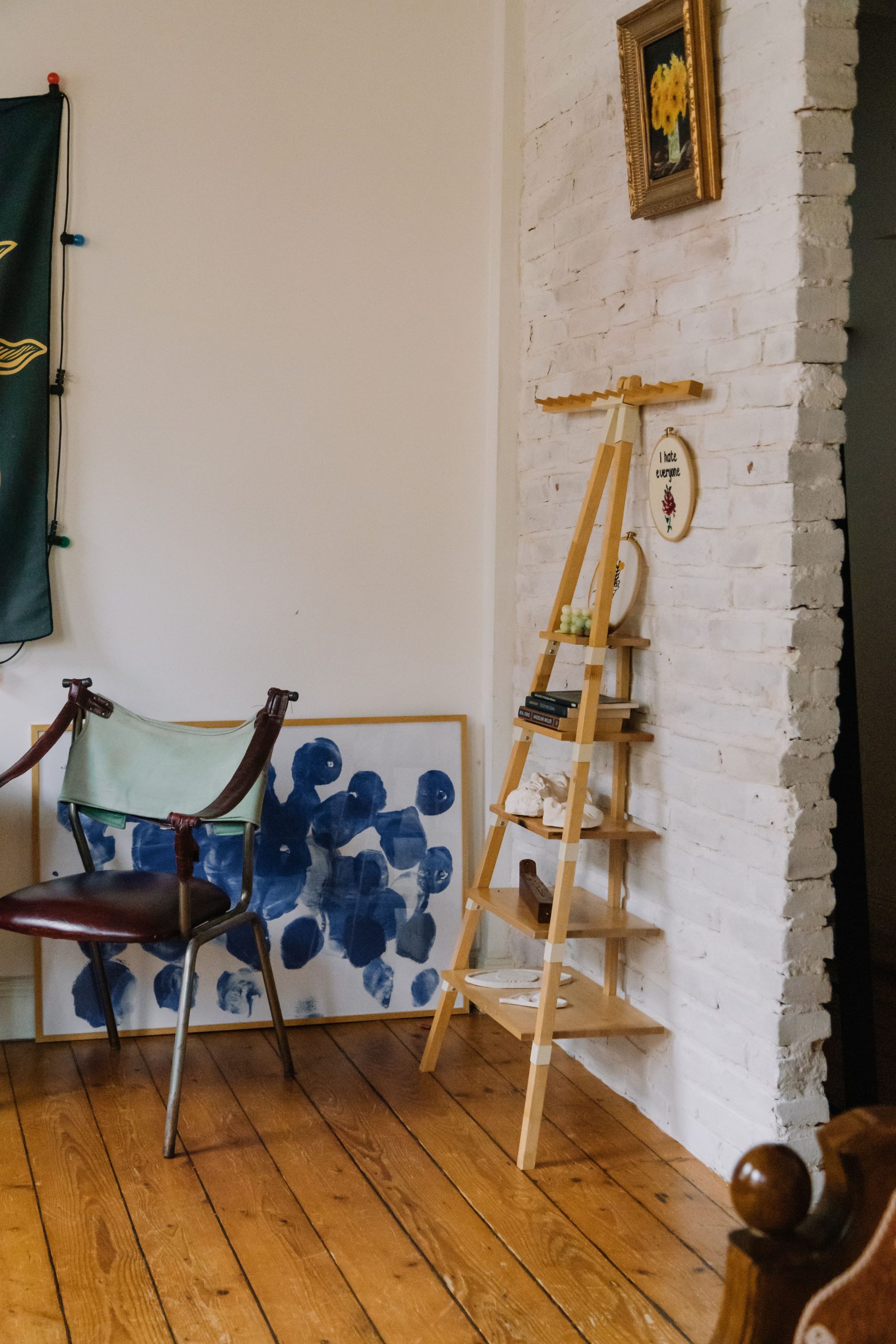
“You can achieve this curated, personal look on a very small budget.”
Start by hunting for a wooden ladder shelf on Facebook Marketplace or at a thrift store; they are plentiful and often go for less than $40. For the art, frame a beautiful textile, a page from a coffee table book, or your own abstract painting. The chair can be any simple side chair you find and love. For the brick wall? Faux brick paneling or even modern peel-and-stick wallpaper can give you that texture for under $100 and a weekend of work.
9. Design a Sunlit Bay Window Nook with Flanking Bookshelves
Creating custom-fit flanking bookshelves transforms a simple window seat into a true library nook. Here’s a simplified guide to planning it.
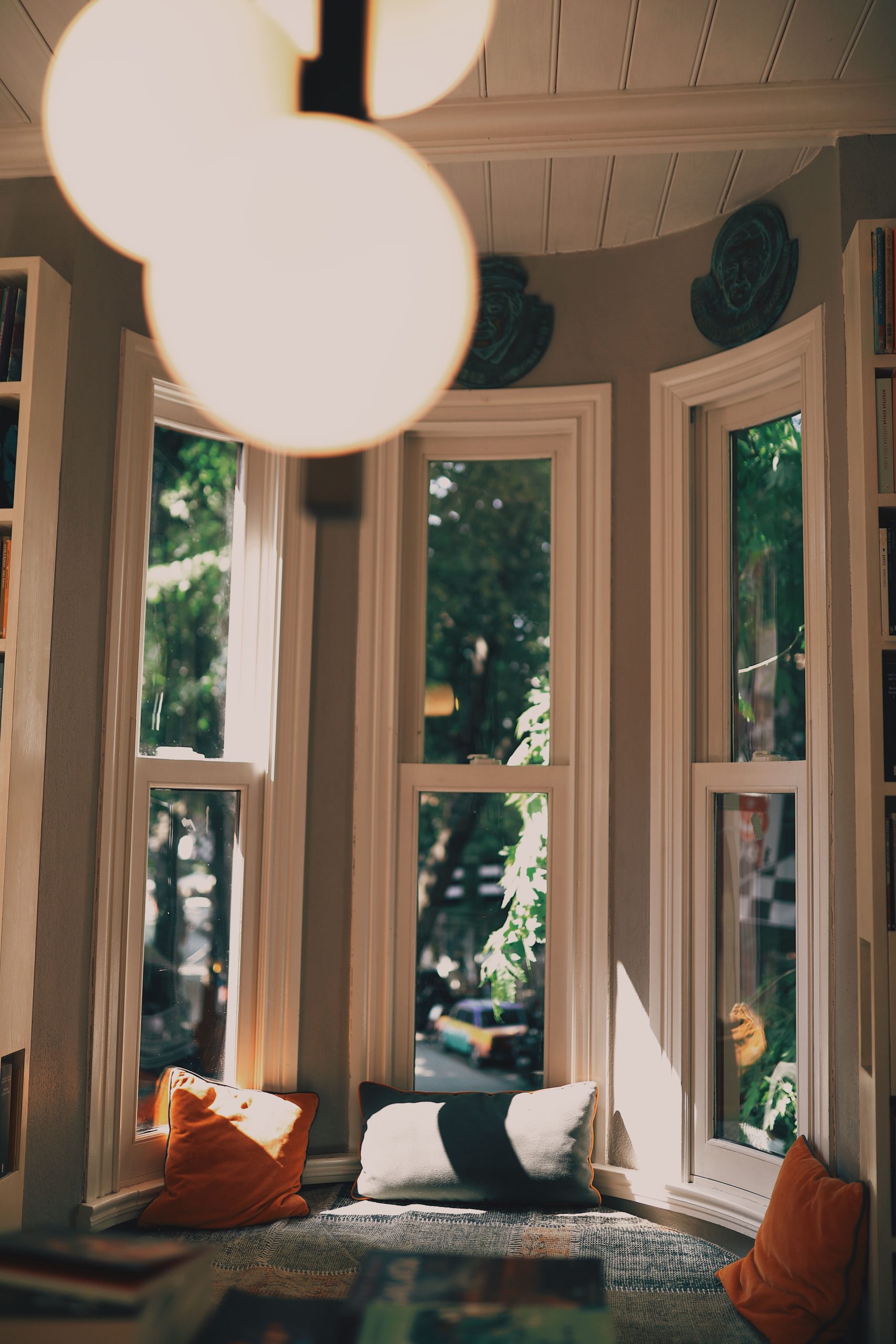
“Measure Precisely: Measure the width of the two walls flanking your bay window.”
Also, record the ceiling height. This determines the maximum size of your bookcases.
Choose Your Base: The easiest way to get a ‘built-in’ look is to use pre-made bookcases (like IKEA’s BILLY) that fit your space. You’ll trim them out to look custom.
Build a Base Platform: To elevate the bookcases and allow them to clear any floor molding, build a simple 2×4 rectangular frame for each bookcase to sit on.
Secure and Trim: Place the bookcases on their platforms, secure them to the wall studs, and then use pre-primed MDF trim to cover the seams where the bookcases meet the wall, ceiling, and floor. Caulk and paint everything the same color as the wall for a seamless finish.
The reality of a reading nook directly in a bay window is sun damage. No fabric is completely immune to fading over time with that much direct sun exposure. Even high-performance outdoor fabrics will eventually lose some vibrancy. Those gorgeous throw pillows in shades of orange and teal? Consider them sacrificial. You’ll either need to replace them every few years, or learn to love a more sun-bleached, lived-in look. The same goes for the spines of your books on those beautiful shelves—the sun will take its toll.
10. Carve Out a Reading Nook with Arched Built-in Shelves
The archway is, without a doubt, the single element that makes this corner magical. You could have a chair and some floating shelves, and it would be a nice corner. But by creating a distinct, arched entryway into the shelving area, the designer has created an experience. It feels like you are stepping into a special, hidden part of the home—a little secret library. The arch adds architectural character and a sense of intention that simple shelves against a flat wall could never achieve. It carves out a destination from a forgotten corner.
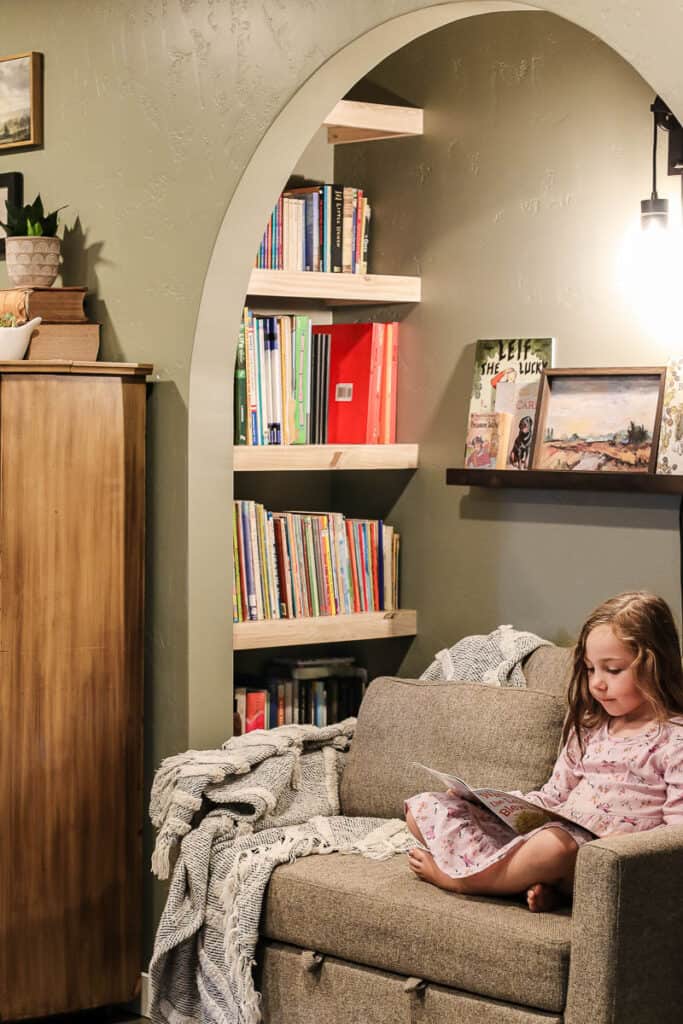
“This is a high-impact project, but it requires careful planning before you start.”
Make sure you tick these boxes first:
- Check for Obstructions: Is the corner free of plumbing, major electrical conduits, or HVAC ducts? Use a stud finder and, if in doubt, consult a professional to ensure the wall cavity is clear for recessing shelves.
- Confirm Wall Type: Is the wall load-bearing? Building an arch like this is best done on a non-load-bearing wall. An engineer or contractor can verify this for you.
- Plan Your Lighting: How will you light the shelves and the reading chair? Note that a wall-mounted sconce, as seen here, will require an electrician to run wiring before you close up the walls.
11. Style a Cheerful Reading Corner with Green and Blue Accents
This corner is a masterclass in using color and shape to create energy. The success lies in the contrast. The bright, almost lime green of the tiered side table is an unexpected jolt against the calmer cream and blue tones of the armchair and throw. The curved, organic shape of the shelving unit softens the corner’s sharp angle, while the roundness of the chair echoes that softness. It’s a composition of opposites: sharp color vs. soft color, straight lines vs. curves. This dynamic tension is what makes it visually interesting and feel so personal and alive.
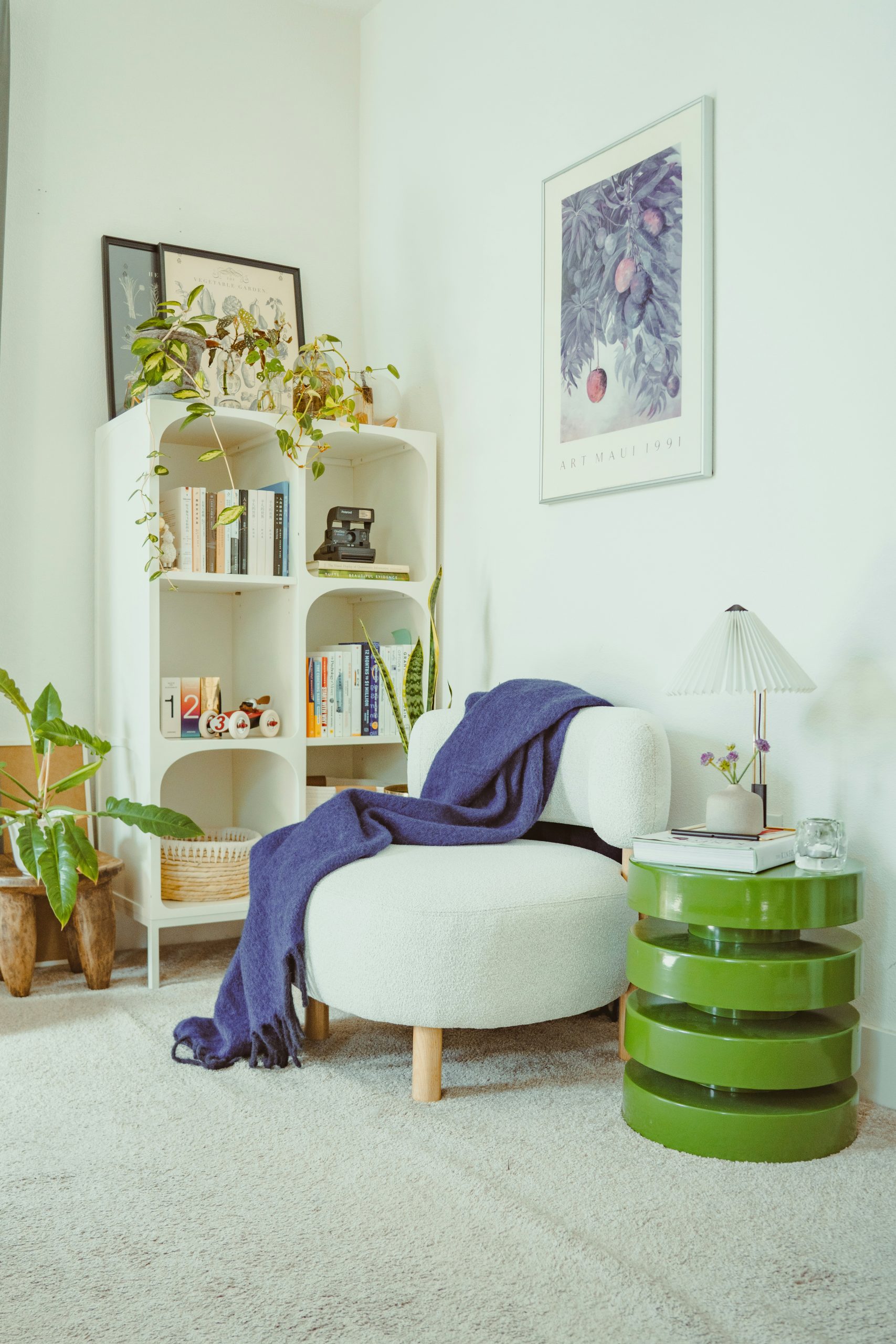
“Love this look?”
You can assemble a similar vibe with some savvy shopping. Find a simple cream armchair from a store like Target or Wayfair (around $300). The star is the green side table; look for a vintage plant stand on Facebook Marketplace and give it a coat of high-gloss spray paint in a daring color for about $20. The curved shelf might be a splurge, but you could get a similar effect with a standard white bookcase and focus on accessorizing it with plants and books you already own. Compare with the layered shelving in Idea #16 for a different structural approach.
12. Go Bold with a Patterned Wingback and Gallery Wall
The key to a successful gallery wall in a corner is to wrap it around the corner. Don’t just hang all the art on one wall, leaving the other bare. Treat the two walls as a single canvas. Start by hanging your largest or favorite piece near the corner, but not perfectly centered in it. Then, build outwards from there onto both walls. This technique makes the corner feel more expansive and envelops the seating area, creating a much more immersive and cohesive look than a flat, one-wall arrangement.
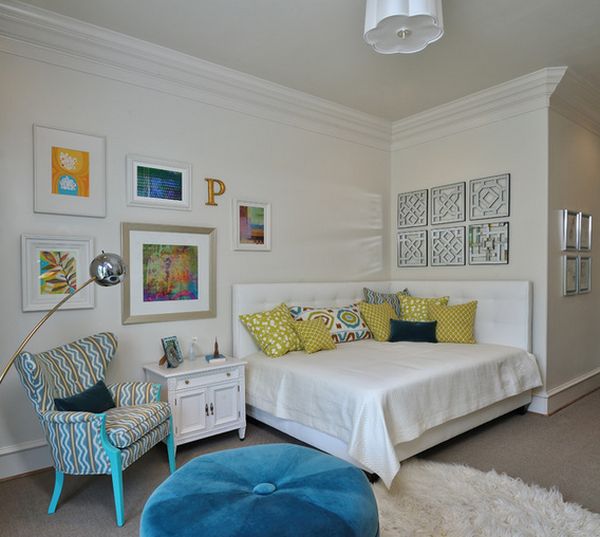
“This look taps right into the ‘Dopamine Decor’ trend that is all over Pinterest.”
It’s about filling your home with colors, patterns, and objects that bring you genuine joy. The playful mix of the patterned wingback, the vibrant teal and lime green accents, and the personal collection of art is a direct rebellion against years of beige-and-gray minimalism. It’s permission to have fun, be a little loud, and create a corner that’s unapologetically you. This isn’t about resale value; it’s about personal happiness.
13. Create a Cultural Accent with Sculptures and Warm Lighting
The success of this corner lies in its sophisticated layering of light. There are three distinct light sources working together: the soft, ambient light filtering through the sheer curtains; the focused, dramatic light from the brass wall sconce highlighting the Krishna sculpture; and the overall warm, atmospheric glow in the room. This multi-layered approach creates depth and intimacy. The recessed niche adds another layer of architectural interest, turning a simple display into a sacred altar-like feature. The mix of traditional art and modern lighting feels curated and timeless.
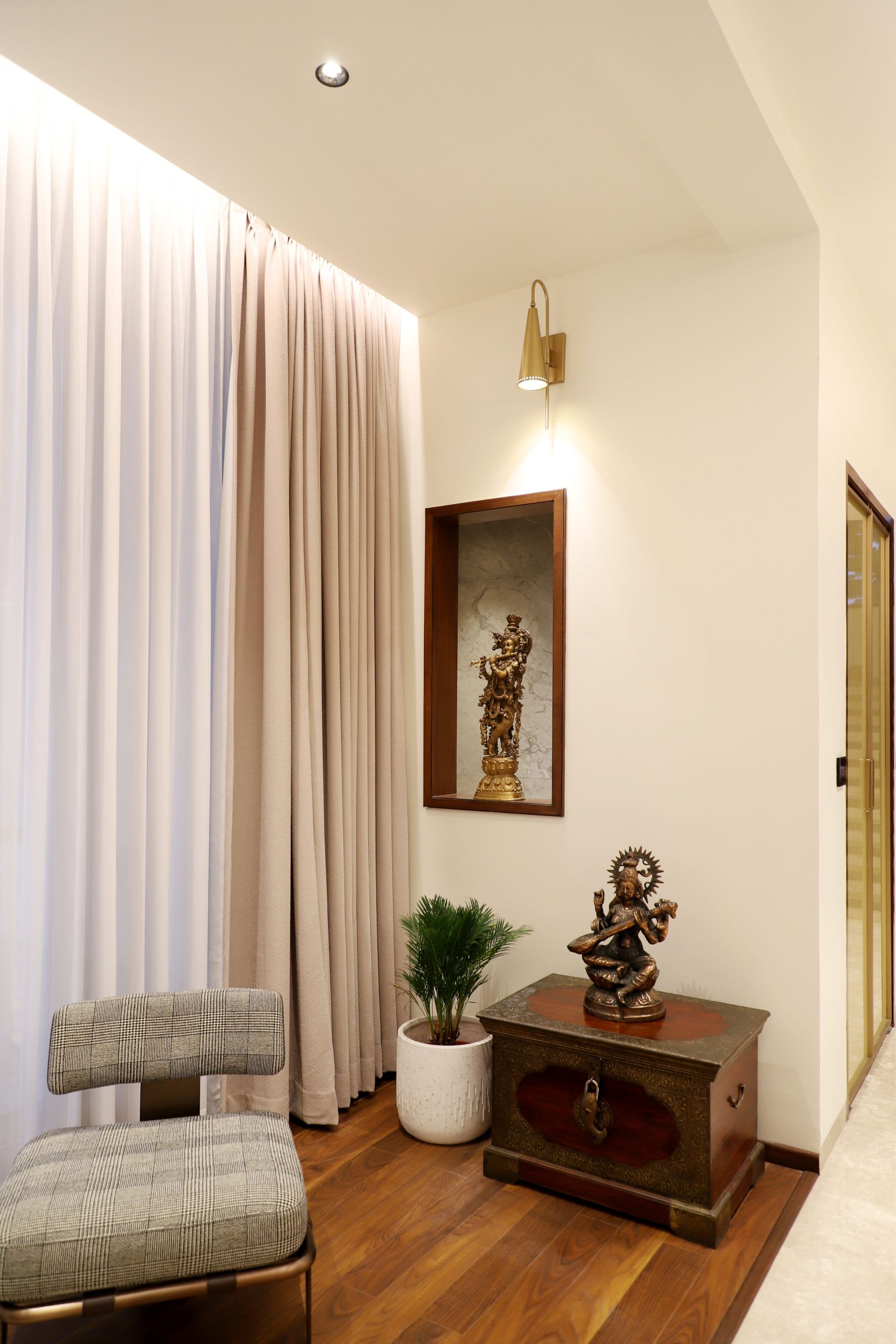
“Displaying meaningful cultural or religious art requires thoughtfulness.”
Placing a divine sculpture, like the Saraswati or Krishna shown here, on a low chest or directly on the floor might be considered disrespectful in some traditions. The recessed wall niche is a fantastic solution, as it elevates the piece, giving it a place of honor. Before creating a corner like this with your own treasured items, take a moment to research their traditional placement and context. It ensures your decor is not only beautiful but also culturally respectful.
14. Embrace Serenity with Organic Shapes and Woven Textures
that truly defines this space is the commitment to organic shapes. Everything, from the gentle curve of the armchair and ottoman to the roundness of the woven mat and the natural, untamed form of the large plant, avoids hard lines and sharp angles. This intentional choice of soft, flowing forms is what creates the overwhelming sense of calm and serenity. Even the light fixture’s woven shade contributes to this soft, diffused aesthetic. Remove these curves, and the entire feeling of the corner would change.
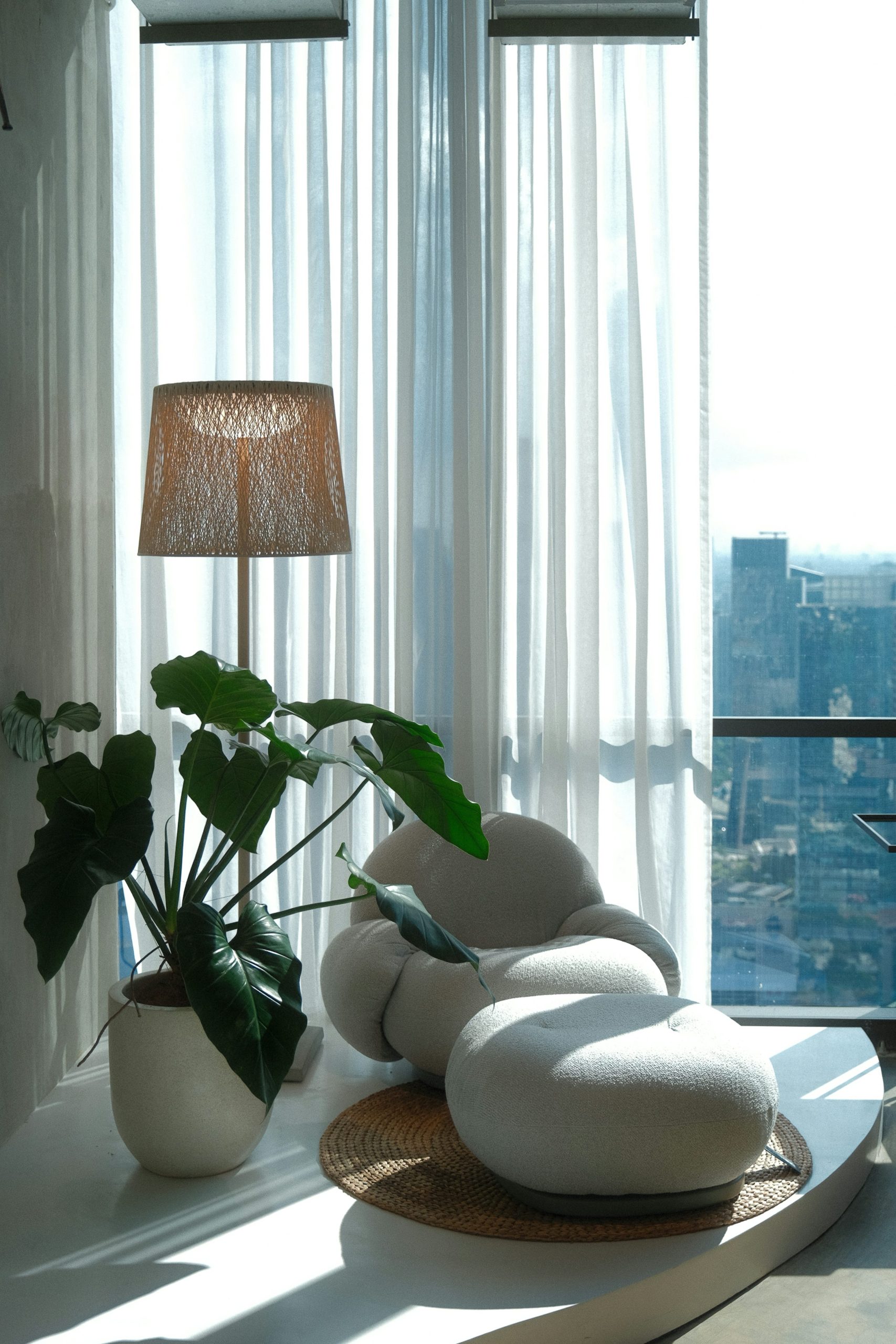
“While that gorgeous potted plant with its big, waxy leaves is a showstopper, it also comes with responsibilities.”
A plant of this size requires consistent watering (but not overwatering), regular dusting of its leaves to keep them healthy and photosynthesizing, and occasional rotation so it grows evenly toward the light. You’ll also need to consider pot drainage and have a saucer to protect your floor. If you travel often or are a forgetful plant parent, a high-quality faux version might give you a similar look with zero maintenance.
15. Install a Tall Corner Bookshelf for a Studious Look
A tall corner unit like this is a brilliant solution, but it requires the right scale to work. This idea is best for rooms with standard to high ceilings (8 feet or more). In a room with low ceilings, a tall, dark piece of furniture can feel looming and oppressive, making the ceiling feel even lower. The corner also needs to be substantial enough to not feel completely swallowed by the unit. It’s ideal for a living room or home office corner that feels empty and needs a strong vertical element to draw the eye upward and provide significant storage.
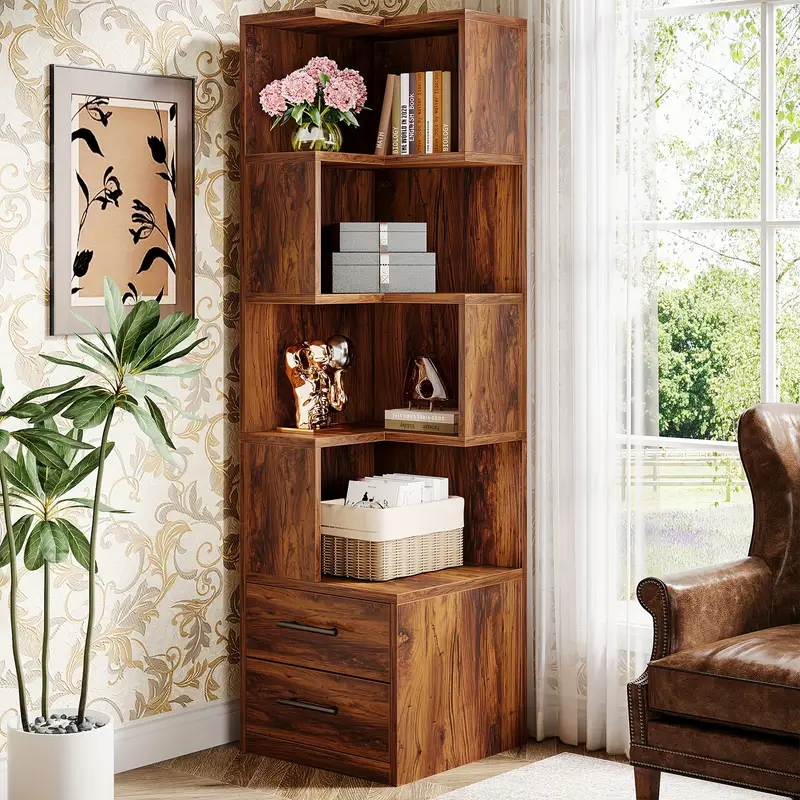
“A full-size corner shelving unit can be a big investment, but you can get this ‘library’ feel for less.”
Look for two identical, narrow bookcases from IKEA or a thrift store. Place one on each wall of the corner, leaving a small gap between them. Then, bridge the gap by installing a few corner floating shelves in a matching finish. This creates the illusion of a single, custom unit. Accessorize with books, decorative boxes, and a vase of flowers just like in the photo to complete the cozy, studious atmosphere without the custom price tag. Compare with the built-in reading nook in Idea #9.
16. Layer a Console with Triple Floating Shelves
When styling layered shelves, the secret is to create visual triangles. Look at the arrangement: a tall plant on the left, a stack of books bottom right, a decorative object top center. These points create diagonal lines that keep your eye moving. Don’t just line things up. Vary the height, texture, and shape of your objects on each shelf. Place a short, wide bowl next to a tall, skinny vase. Lean a piece of art against the back. This dynamic composition is what gives shelves a professionally styled look, rather than just looking like storage.
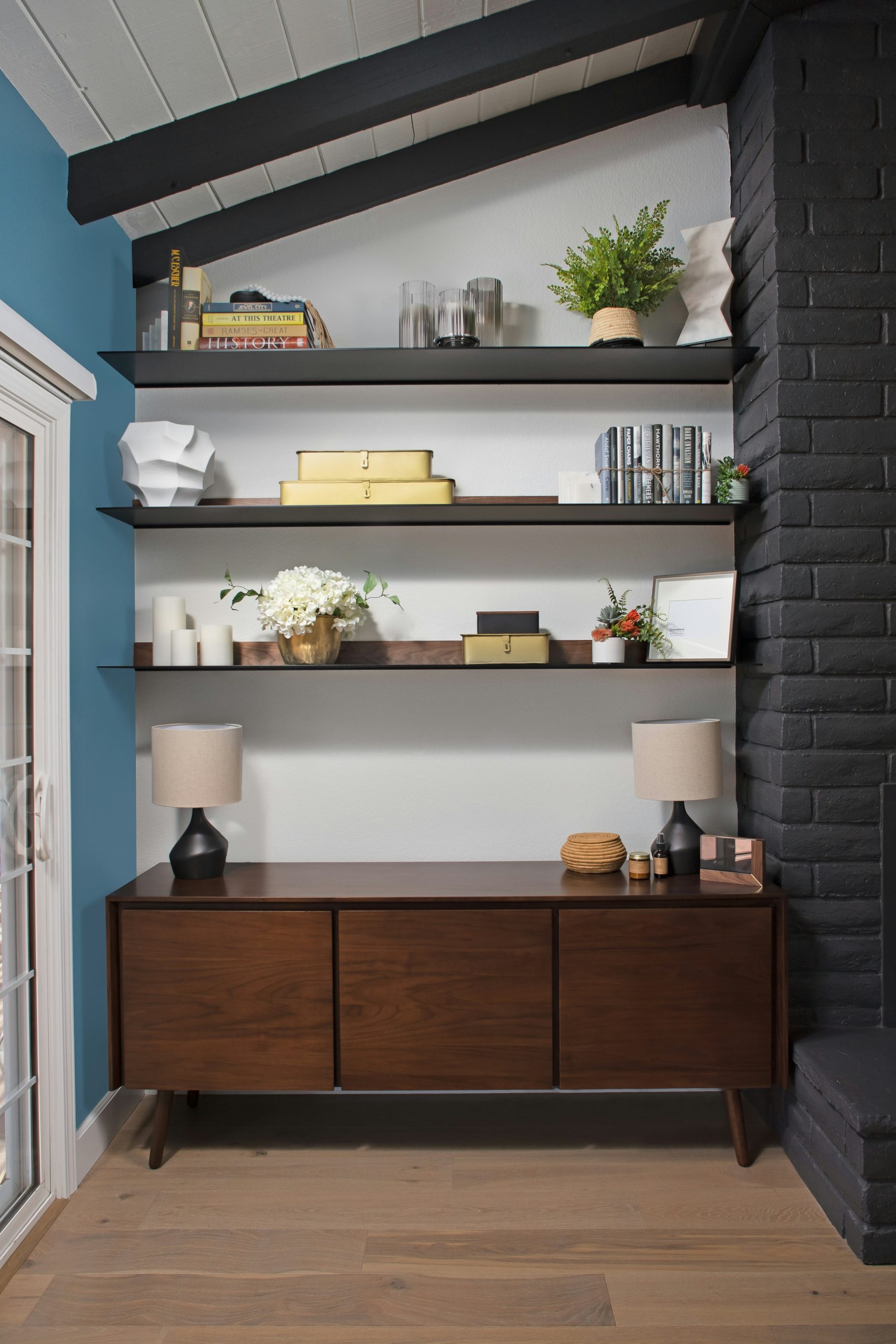
“Want to hang those long shelves perfectly?”
Here’s the pro method for a trio:
- Determine Bottom Shelf Height: Decide the height of your lowest shelf (typically 12-18 inches above the console). Mark a level line on the wall.
- Install the First Shelf: Use a stud finder to locate studs and install your first floating shelf bracket along the line. Secure the shelf.
- Use a Spacer: Decide on the vertical distance between shelves (10-14 inches is standard). Use a level or a piece of wood cut to this exact length as a spacer to mark the position for the next bracket.
- Repeat and Check: Use your spacer to mark the position for the top shelf. Before drilling the final holes, use a long level across all three bracket locations to ensure they are perfectly plumb.
17. Soften a Corner with a Large Plant and a Curved Mirror
The irregularly shaped mirror is the critical element making this corner feel special and modern. A standard round or rectangular mirror would have been predictable. This organic, almost pond-like shape feels unexpected and artful. It breaks up the straight lines of the walls and sofa, and its large scale allows it to bounce a significant amount of light around the room. It functions as both a reflective surface and a sculptural object, elevating the entire vignette from simply ‘decorated’ to ‘designed’.
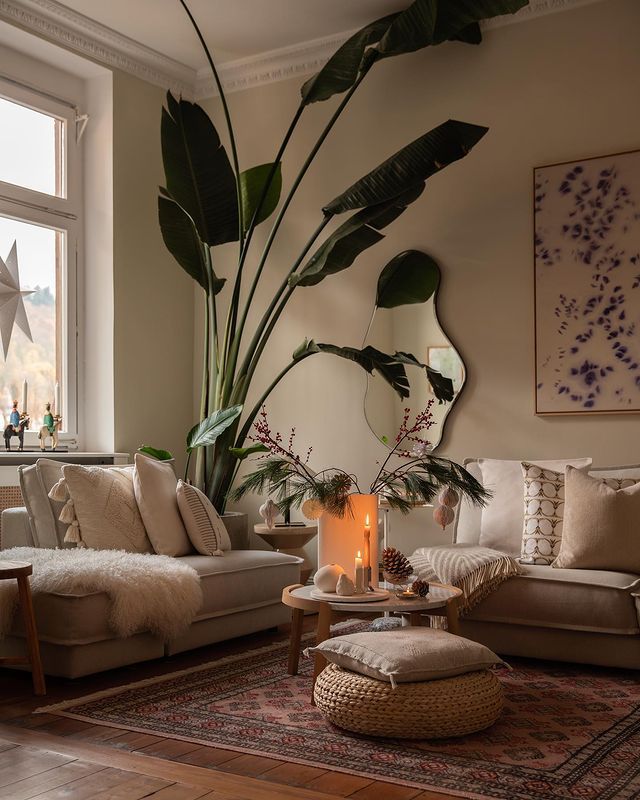
“This vignette is a lesson in layering textures for ultimate coziness.”
You have the smooth, waxy leaves of the plant, the soft knit of the throws, the plushness of the pillows, the raw grain of the wooden coffee table, and the cool smoothness of the mirror. It’s this rich combination of different tactile surfaces within a tight, neutral color palette that makes the space feel so inviting and warm. The eye registers the variety and reads it as comfortable and visually interesting, even in the absence of bright color.
18. Assemble a Rattan Reading Nook with a Brass Floor Lamp
The charming formula here is a study in warm contrasts: 40% natural textures (the rattan chair, woven elements), 30% soft textiles (the sheepskin, knit blanket, pillows), 20% warm metallics (the brass lamp), and 10% rustic charm (the distressed side table). The balance between the relaxed, bohemian rattan and the more glamorous, ornate brass lamp is what makes this corner feel unique and collected. You could swap the orange for a deep green or navy and still get the same cozy and eclectic effect by keeping the core material ratios the same.
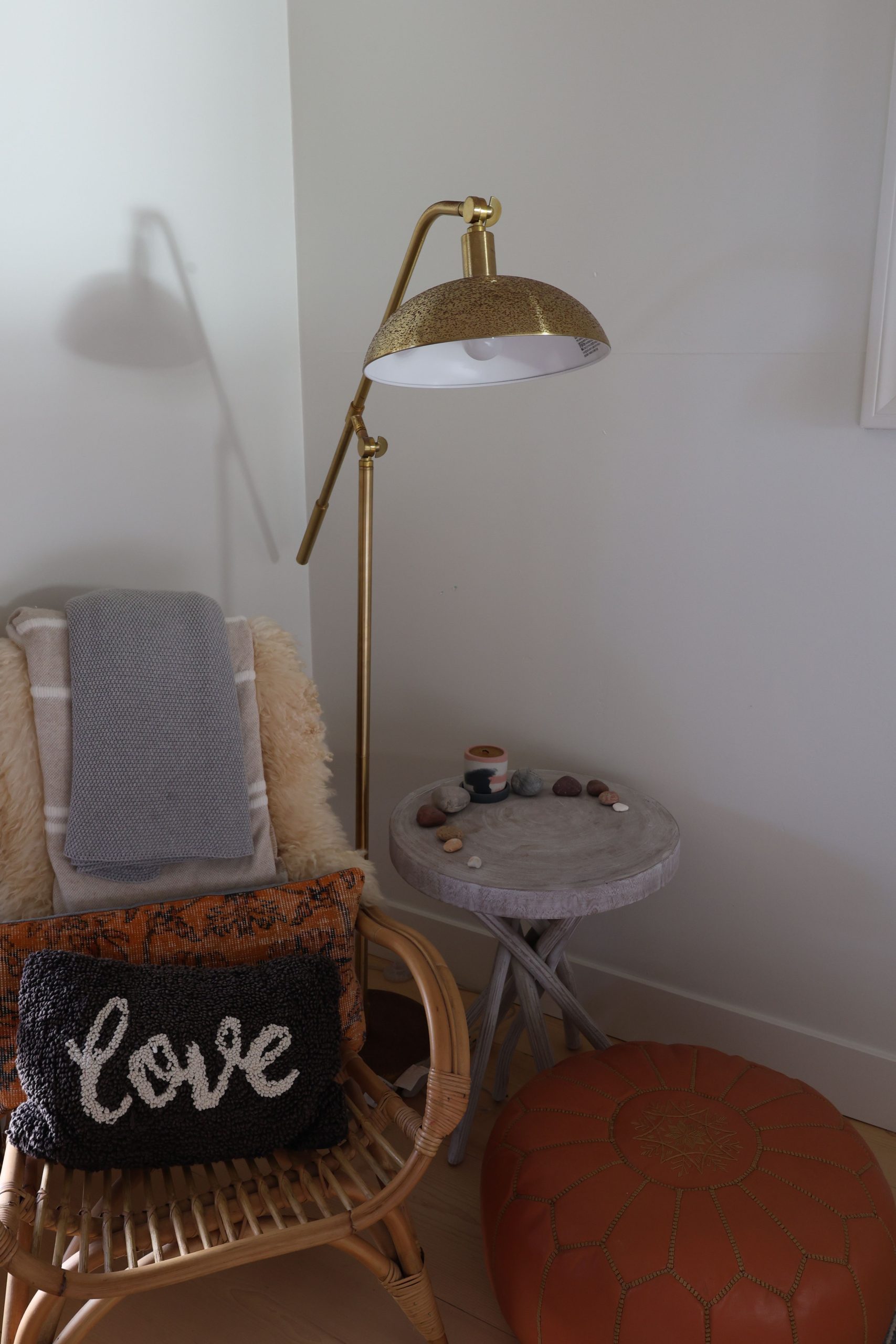
“An open-weave rattan chair is beautiful and airy, but it’s not the most comfortable piece of furniture on its own.”
Be honest with yourself: for this to be a true reading ‘nook,’ it needs help. The sheepskin throw and multiple pillows shown aren’t just decorative; they’re essential for making the chair comfortable for more than five minutes. If you plan to spend real time here, you must accessorize for comfort. Without the soft layers, this stunning corner is more for looks than for lounging.
19. Arrange a Reading Corner with Floral Art and a Plaid Throw
This look is a beautiful example of the ‘Grandmillennial’ style that’s been gaining so much traction. It’s a reaction against stark minimalism, embracing traditional design elements like skirted furniture, plaid, and classic floral prints, but with a fresh, modern sensibility. It’s not your grandmother’s stuffy living room; it’s a curated mix that feels nostalgic, comfortable, and deeply personal. It celebrates pattern, color, and pieces that have a sense of history (even if they’re brand new), which is why it feels so enduring and cozy.
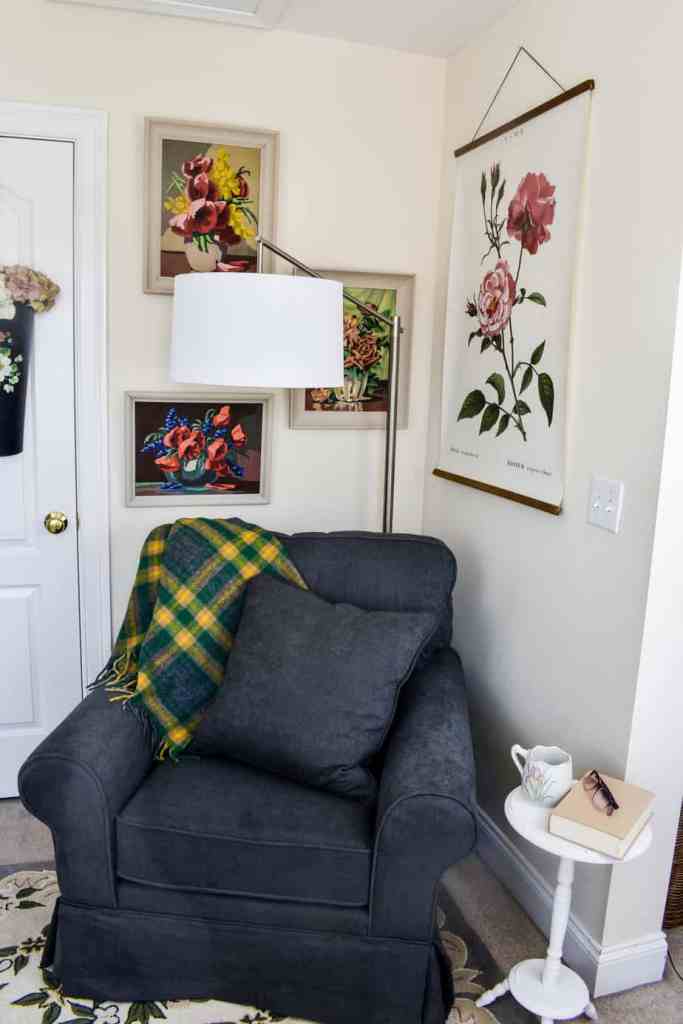
“Before you commit to creating this traditional nook, do a quick check of your ex”
Before you commit to creating this traditional nook, do a quick check of your existing elements:
- Assess Your Lighting: Is there an outlet nearby for a floor lamp? A reading nook without dedicated, task-level lighting is just a chair in a corner. Ensure you can plug in a lamp without a messy, visible extension cord.
- Measure for the Chair: A skirted armchair like this has a larger visual footprint. Measure your corner to ensure the chair won’t overwhelm the space or block a walkway. Allow at least 2 feet of clearance for traffic.
- Check Your Wall Space: A gallery wall needs room to breathe. Make sure you have enough blank wall space to create a pleasing arrangement without it feeling cramped up against a window or door frame.
20. Set Up a Tranquil Reading Spot with a Garden View
This corner is effective because it perfectly balances indoor comfort with the beauty of the outdoors. The color palette is key: the calming gray of the wall, armchair, and lampshade creates a muted, serene interior that doesn’t compete with the view. Instead, it acts as a quiet frame for the vibrant greens of the garden visible through the large window. The gallery wall adds personality, but the frames are mostly simple black and white, keeping the focus on the art and the view beyond. The entire setup is an invitation to sit and enjoy the scenery. Compare the gallery wall here with the one in Idea #12 to see a more vibrant take.
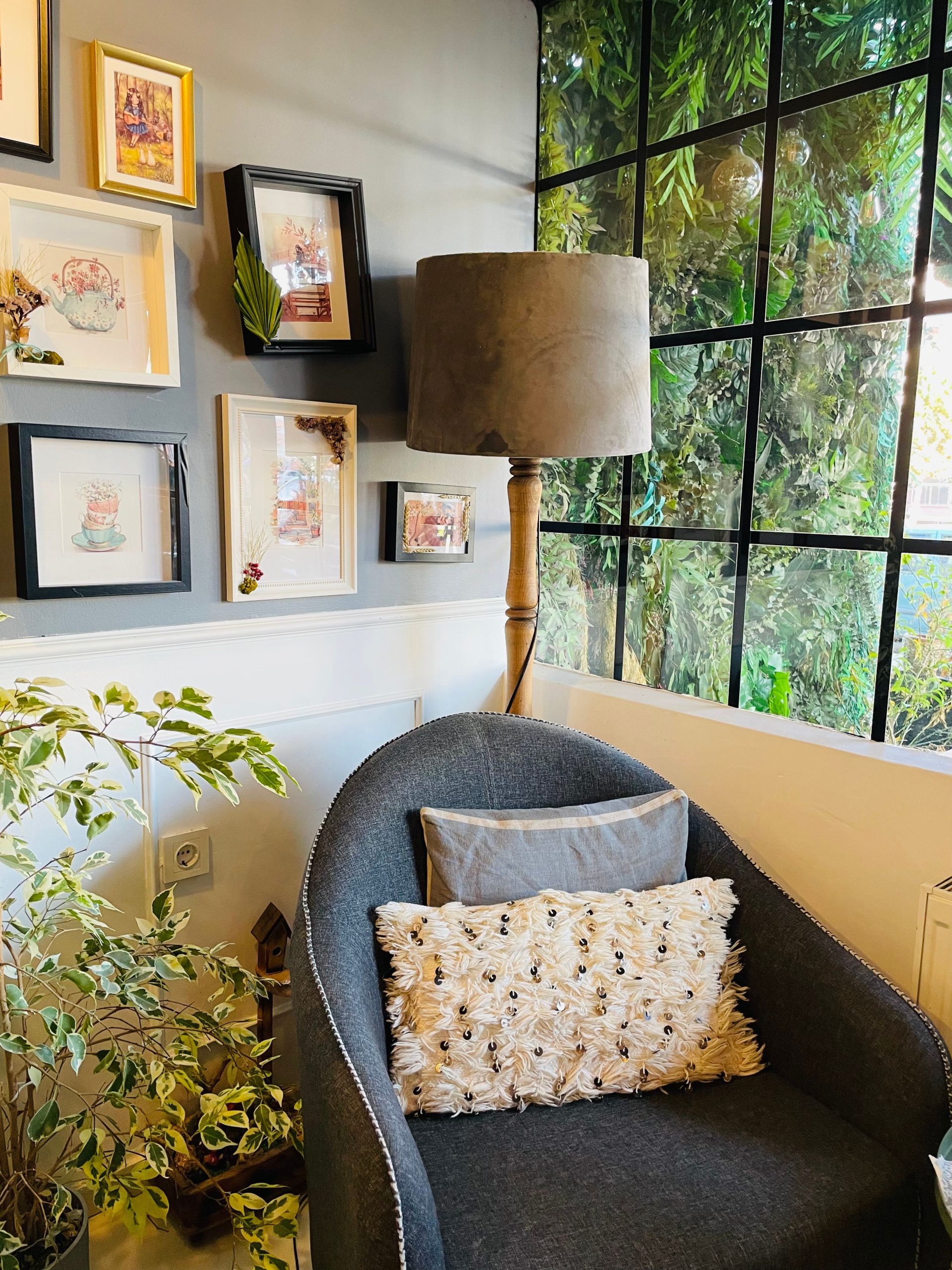
“The absolute hero of this space is the large grid window itself.”
Without it, this would be a perfectly nice, but standard, reading corner. The window transforms it completely. It provides abundant natural light, a dynamic piece of ‘art’ that changes with the seasons, and a powerful connection to nature. The chair and lamp are positioned to facilitate the enjoyment of this feature. Everything else in the corner—the chair, the art, the lamp—is secondary to and in service of that stunning view.
21. Add a Modern Bay Window Bench with a Media Center
This integrated bench-and-media-unit idea is perfect for a living room corner in a modern home, especially one with an open floor plan. It works best in a space where the corner is a natural focal point, but not the *only* one. You need a bay window that is at least 6-8 feet wide to accommodate a comfortable bench and a reasonably sized TV without feeling cramped. A key consideration is the viewing angle—this is not for a primary home theater setup, but rather for casual viewing in a multi-purpose living area.
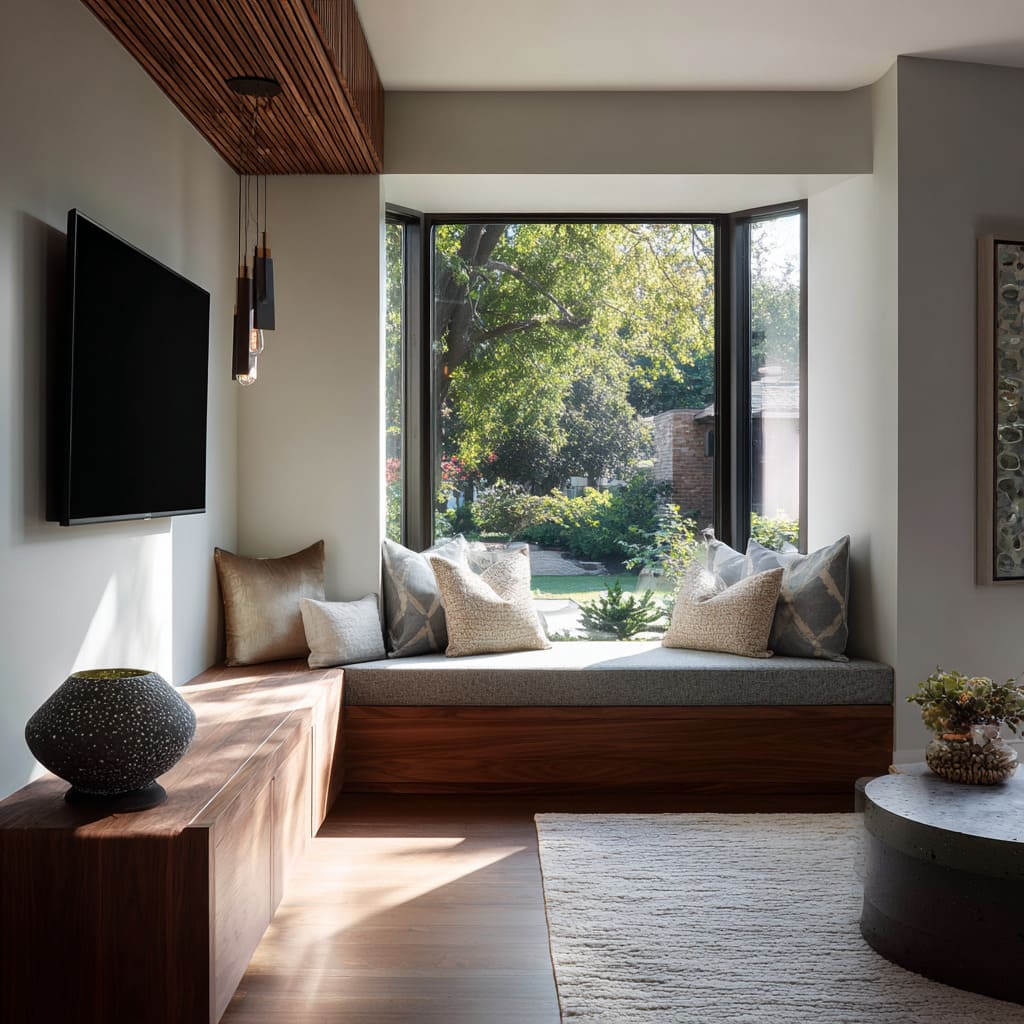
“Let’s have some real talk about mounting a TV in a corner like this.”
While it’s a clever use of space, it can create some ergonomic challenges. The screen is off-center from the main seating area, meaning someone will always be watching from an angle. This can lead to neck strain and color distortion on some screens over long periods. This setup is great for secondary or casual viewing, but if this is your main TV-watching spot, you might find the permanent off-center placement frustrating. Form is important, but function for a media area is critical.
22. Capture Warmth with a Plant Corner and Sunlight Reflection
that makes this image so captivating is the rectangle of golden sunlight on the wall. It’s a fleeting, ephemeral element that costs nothing and yet adds everything. Without it, this is a simple photo of two nice plants on a shelf. With it, the scene is transformed into a moment of pure warmth, serenity, and beauty. It highlights the texture of the wall, makes the green of the leaves glow, and casts soft, beautiful shadows. It’s a powerful reminder that sometimes the best decor element is simply the light itself.
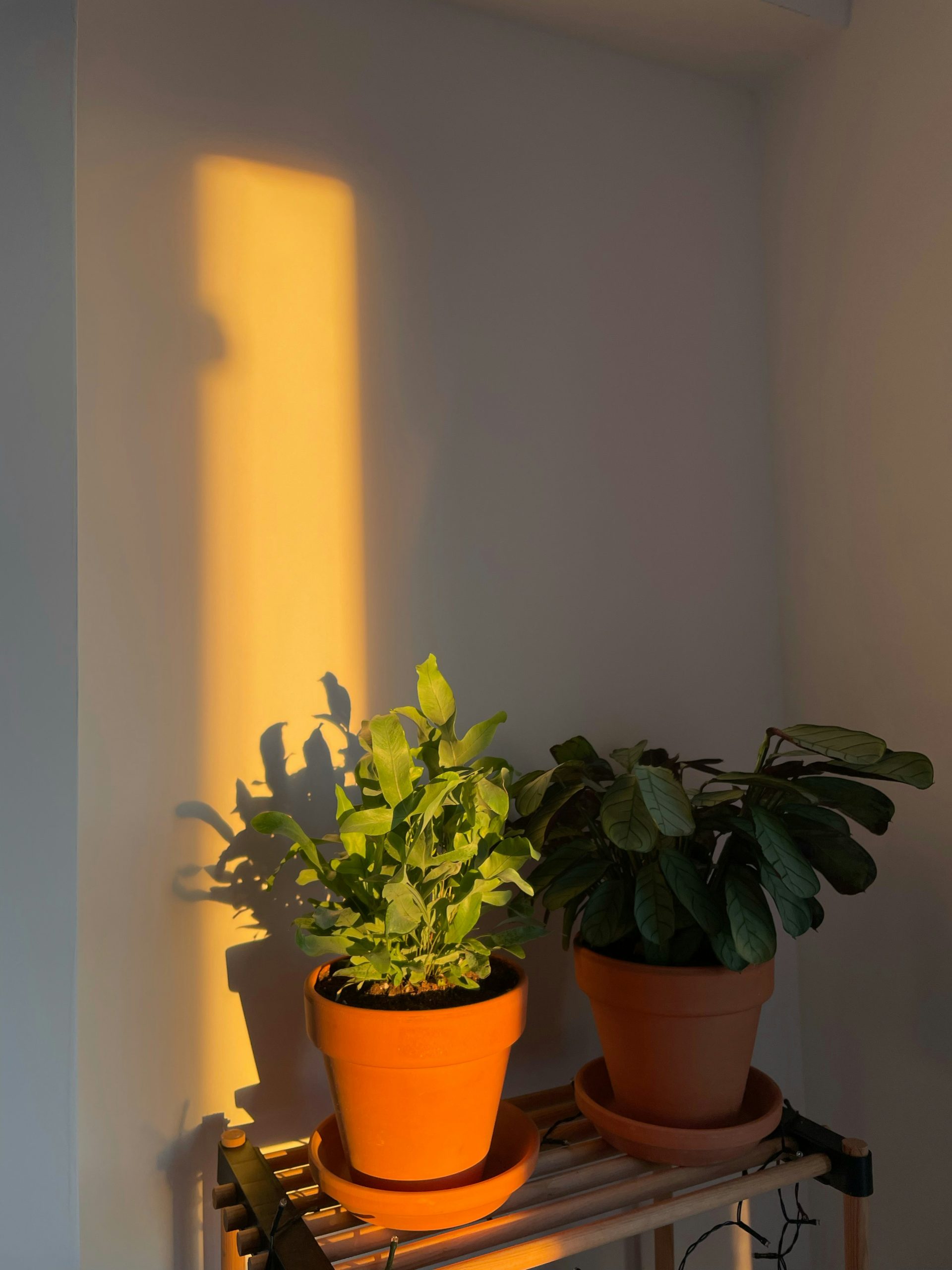
“Want to recreate this magical light effect?”
It’s all about placement. You need an unobstructed window that gets direct sunlight at a certain time of day. Place a mirror—even a small, simple one—on the opposite wall from the window. As the sun moves, the mirror will catch the light and cast a bright, focused shape onto an adjacent wall, just like the one in the photo. Experiment with the angle and position of the mirror to ‘aim’ the light exactly where you want it to create your own daily light show.
23. Integrate a Backlit Bar Nook beside a Marble Fireplace
This design is successful because it masters the art of zoning in an open-concept space. The corner bar doesn’t compete with the fireplace; it complements it. The use of distinct, luxurious materials—black marble for the fireplace, glowy glass tile for the bar—gives each area its own identity while maintaining a cohesive, high-end feel. The backlighting in the bar nook is a genius move, drawing the eye in and making the corner a destination in its own right. It feels like a corner of a chic hotel lobby, right in your living room.
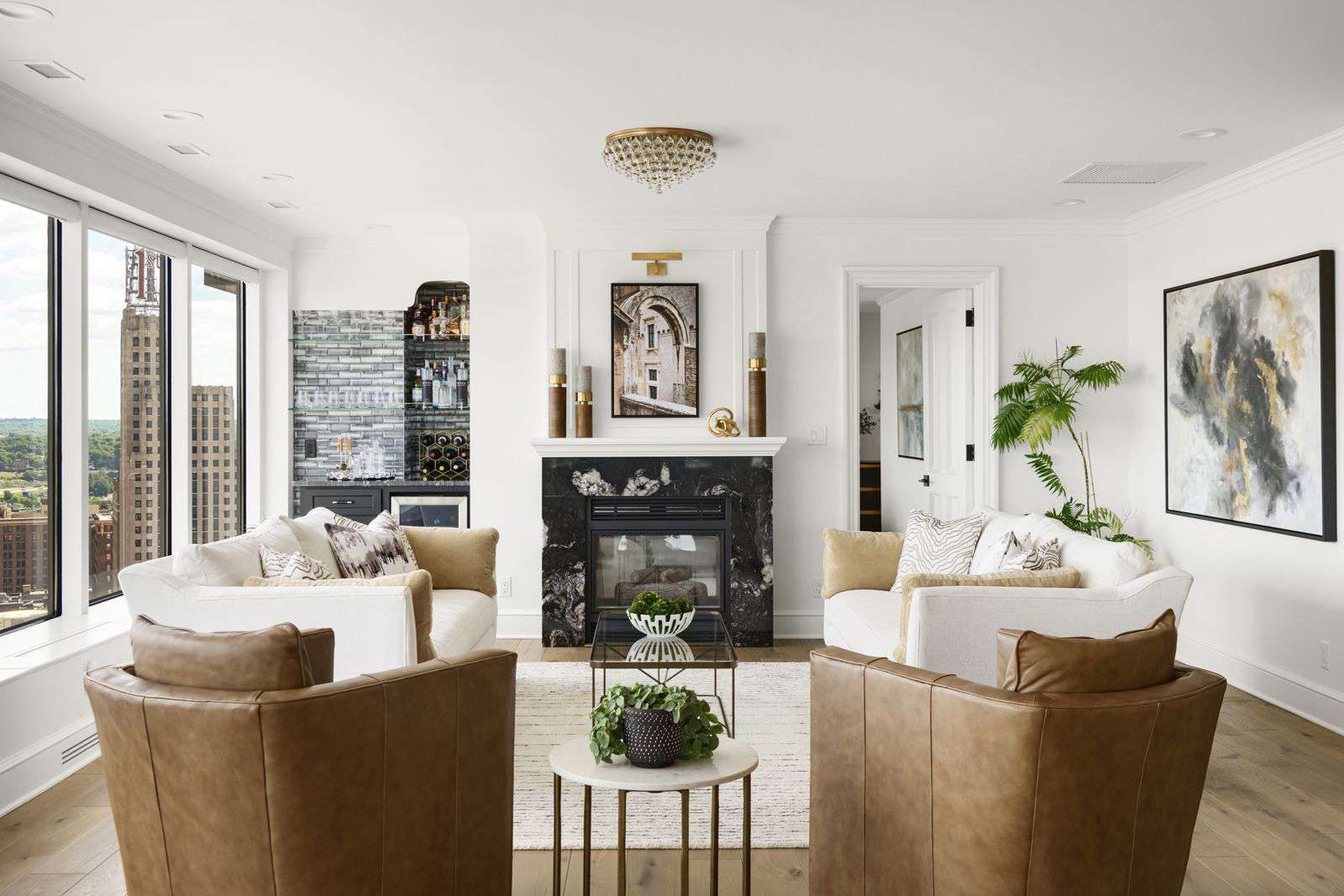
“This sophisticated look comes with a price tag to match, driven by high-end mate”
This sophisticated look comes with a price tag to match, driven by high-end materials and custom cabinetry.
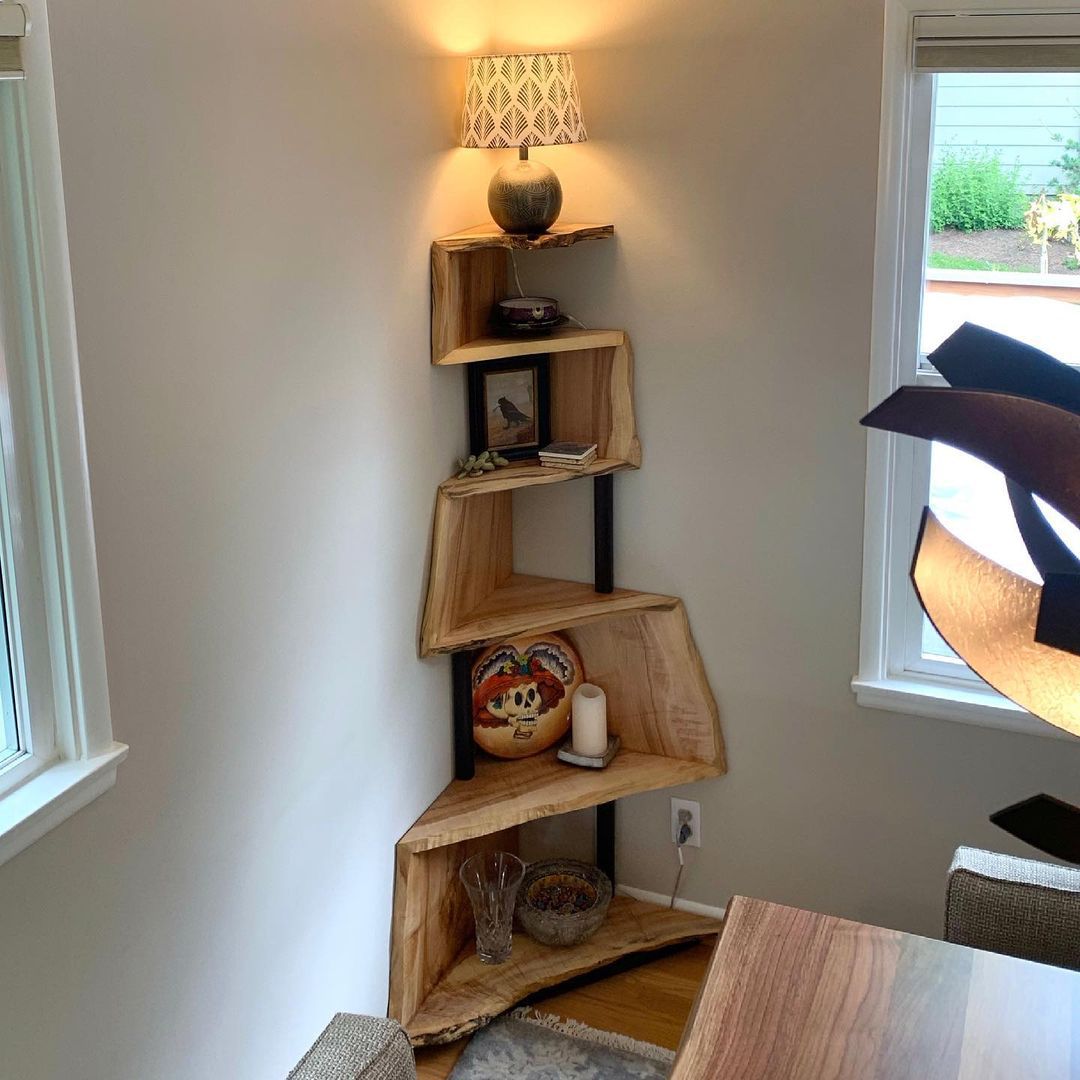
24. Install Unique Live-Edge Zigzag Corner Shelving
Installing custom shelving like this is a project for a confident DIYer. Here’s the basic process:
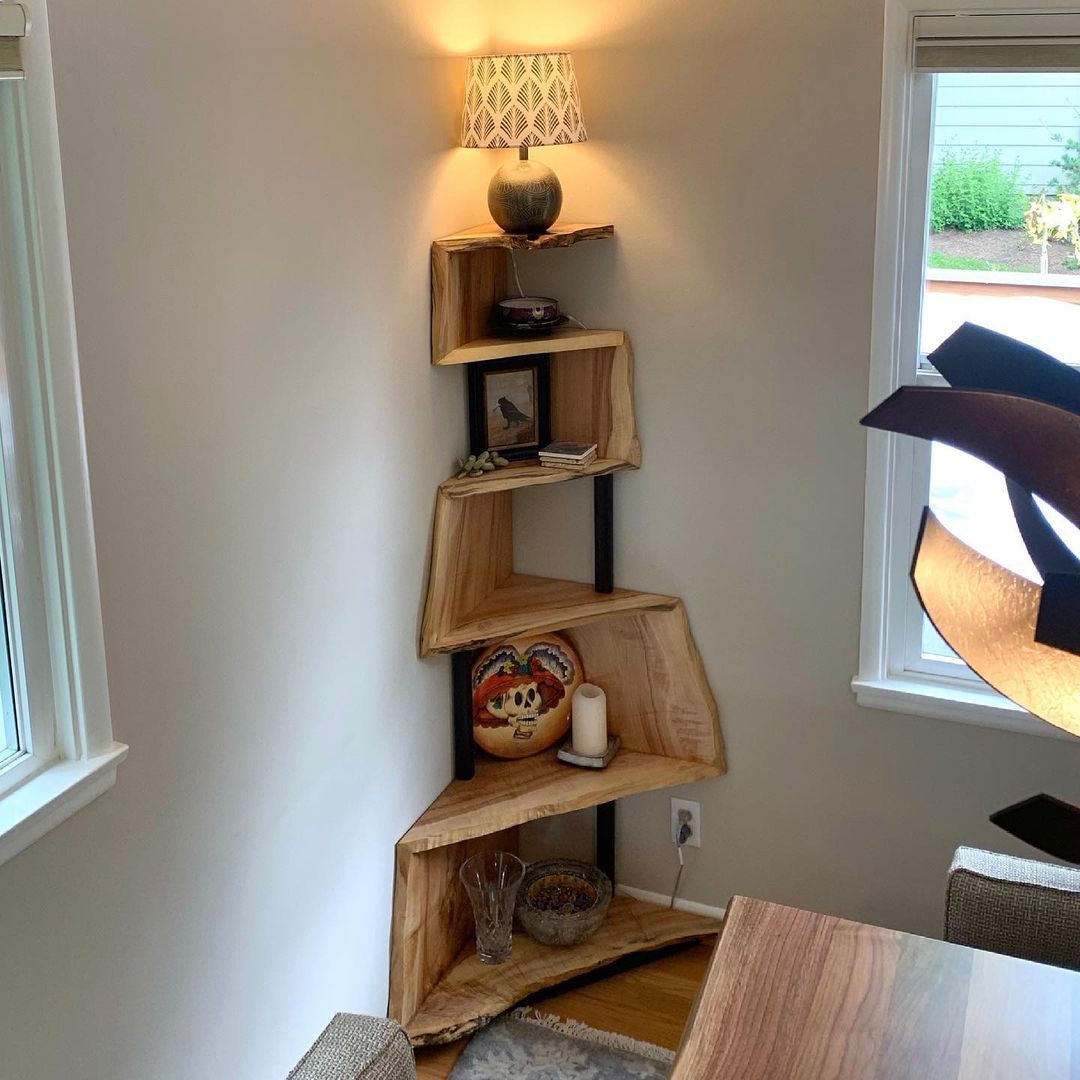
“Cut the Planks: Using a miter saw, cut your live-edge wood planks to the desired lengths for the zigzag pattern.”
You’ll need to cut the ends that meet in the corner at a 45-degree angle to create a seamless join.
Sand and Finish: Sand all surfaces of the wood, being careful to preserve the natural live edge. Apply your desired finish (like a clear polyurethane or oil) and let it cure.
Install Support Poles: Securely mount the vertical support poles to the wall studs. This is critical for stability.
Attach Shelves: Starting from the bottom, attach your wood planks to the support poles using appropriate brackets or by drilling through the poles into the shelves, ensuring each one is level.
The single element that makes this design stand out is the zigzag pattern. Simple stacked corner shelves are common and can look bulky. By staggering the shelves and using minimalist support poles, the unit feels light, dynamic, and sculptural. It’s more than just storage; it’s a piece of wall art. This unconventional arrangement draws the eye and turns a boring corner into a conversation piece. The live-edge wood is beautiful, but the zigzag layout is the true design genius here.
25. Create a Lush Plant-Filled Reading Nook by the Window
This corner radiates life and comfort because it fully commits to the ‘jungalow’ aesthetic. It’s not just one or two plants; it’s an entire collection. The plants are placed at different heights—on the floor, on shelves, creating a layered, immersive canopy of green. The warm wood tones of the chair and shelves, combined with the sunny yellow and orange throw, prevent the look from feeling like a sterile greenhouse. The cool blue wall lamp provides a perfect complementary color pop. It feels like a personal oasis. For another take on a plant corner, look at the simplicity of Idea #22.
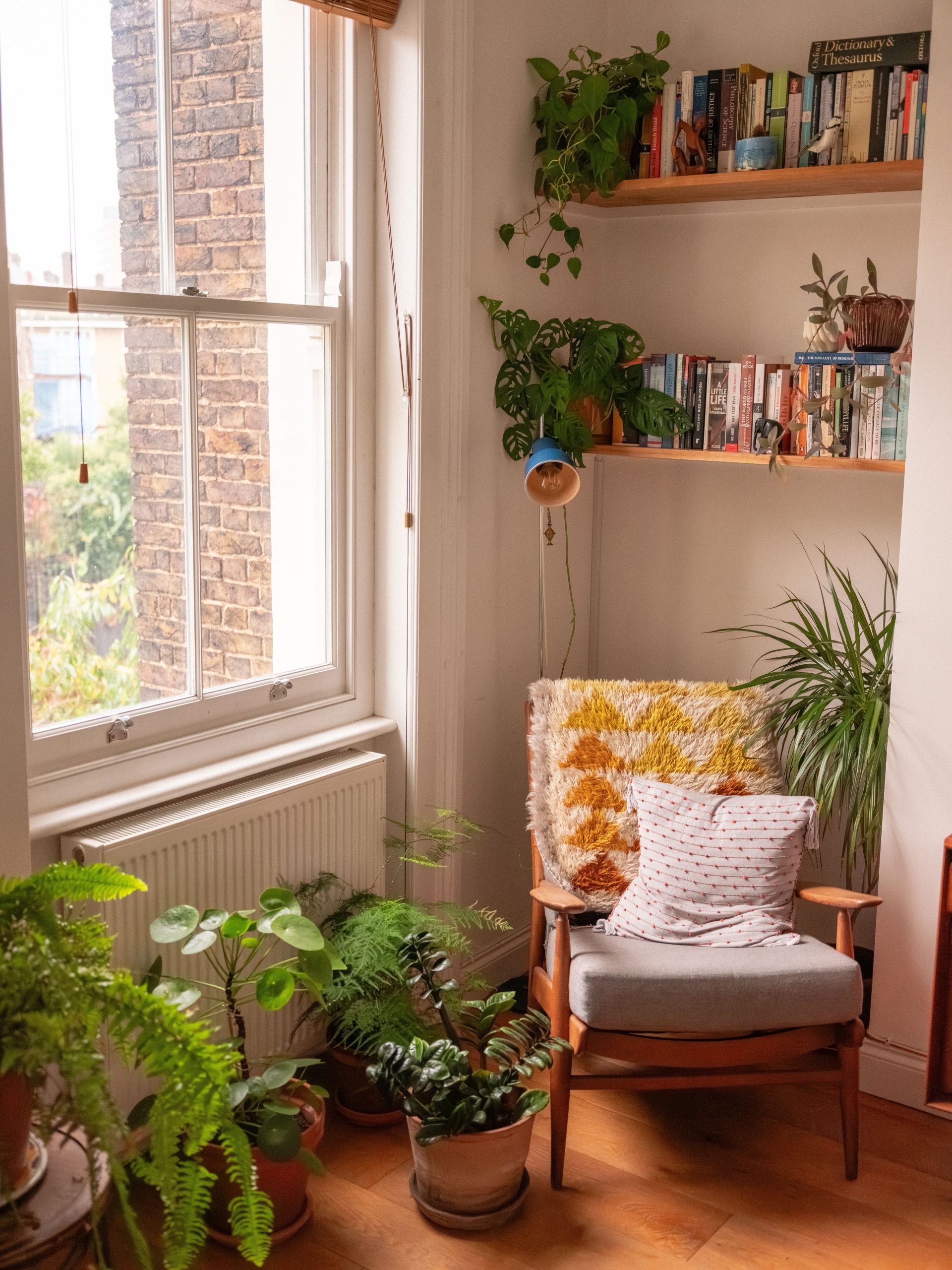
“This many plants in one spot looks incredible, but it’s a part-time job.”
You’ll need to create a watering schedule, as each plant has different needs. The spot’s success hinges on that large window providing ample light. Without enough sun, your plants will become weak and leggy. Be prepared for regular pruning, dusting of leaves, and monitoring for pests, which can spread quickly in a dense arrangement. Also, consider waterproof trays or mats to protect your floors and furniture from inevitable watering spills.
26. Define a Space with a Curved Sofa and Quilted Bar Cabinet
Curves are having a huge moment in interior design, and this corner is a perfect example of why. After years of boxy, mid-century-inspired furniture, designers and homeowners are craving softness and flow. A curved sofa, or ‘conversation sofa,’ instantly makes a room feel more welcoming, organic, and sophisticated. It’s a gentle rebellion against hard lines and sharp corners, promoting a more relaxed and fluid living space. This trend is about creating rooms that feel as good as they look, and curves are key to that feeling.
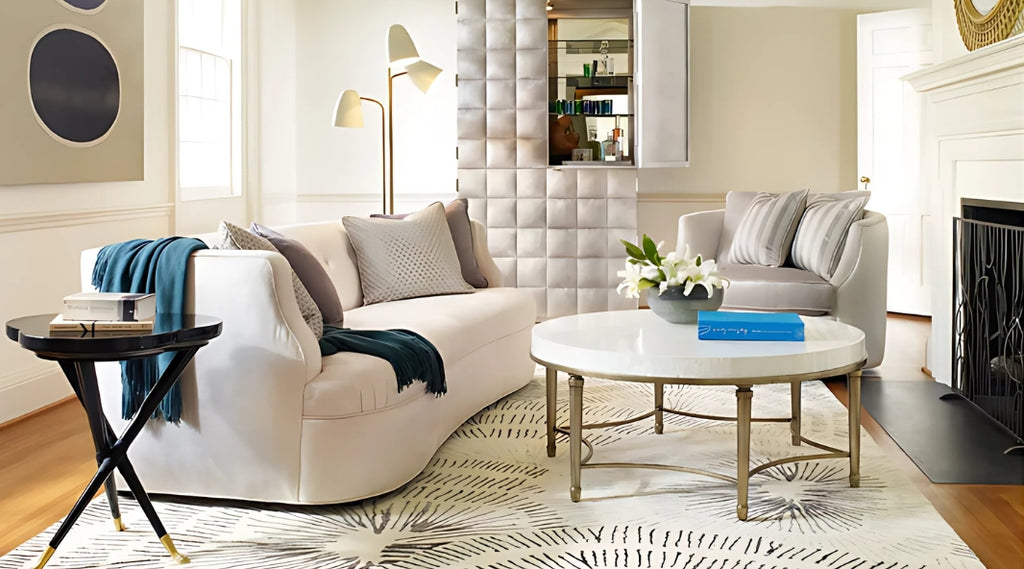
“When using a curved sofa in a corner, don’t shove it directly into the apex.”
Pull it forward, away from the walls, by at least 12-18 inches. This creates a graceful breathing room and a space behind the sofa where you can place a tall plant or a floor lamp, as seen here. This negative space actually makes the corner feel larger and more intentional. A sofa crammed tightly into a corner looks awkward and unplanned; pulling it out creates a deliberate, elegant design moment.
27. Craft a Moody Reading Nook with Abstract Art
This corner’s moody, atmospheric vibe comes from a confident design equation: 60% warm neutrals (the off-white textured wall and warm wooden floor), 30% deep, dark accents (the dark grey lower wall and lamp), and a 10% jolt of a single, saturated color (the burnt orange armchair). This formula creates a space that feels both intimate and bold. You could swap the burnt orange for a deep emerald green or a rich navy blue, and as long as you keep it as that singular, powerful 10% accent, you’ll maintain the same sophisticated, cozy feel.
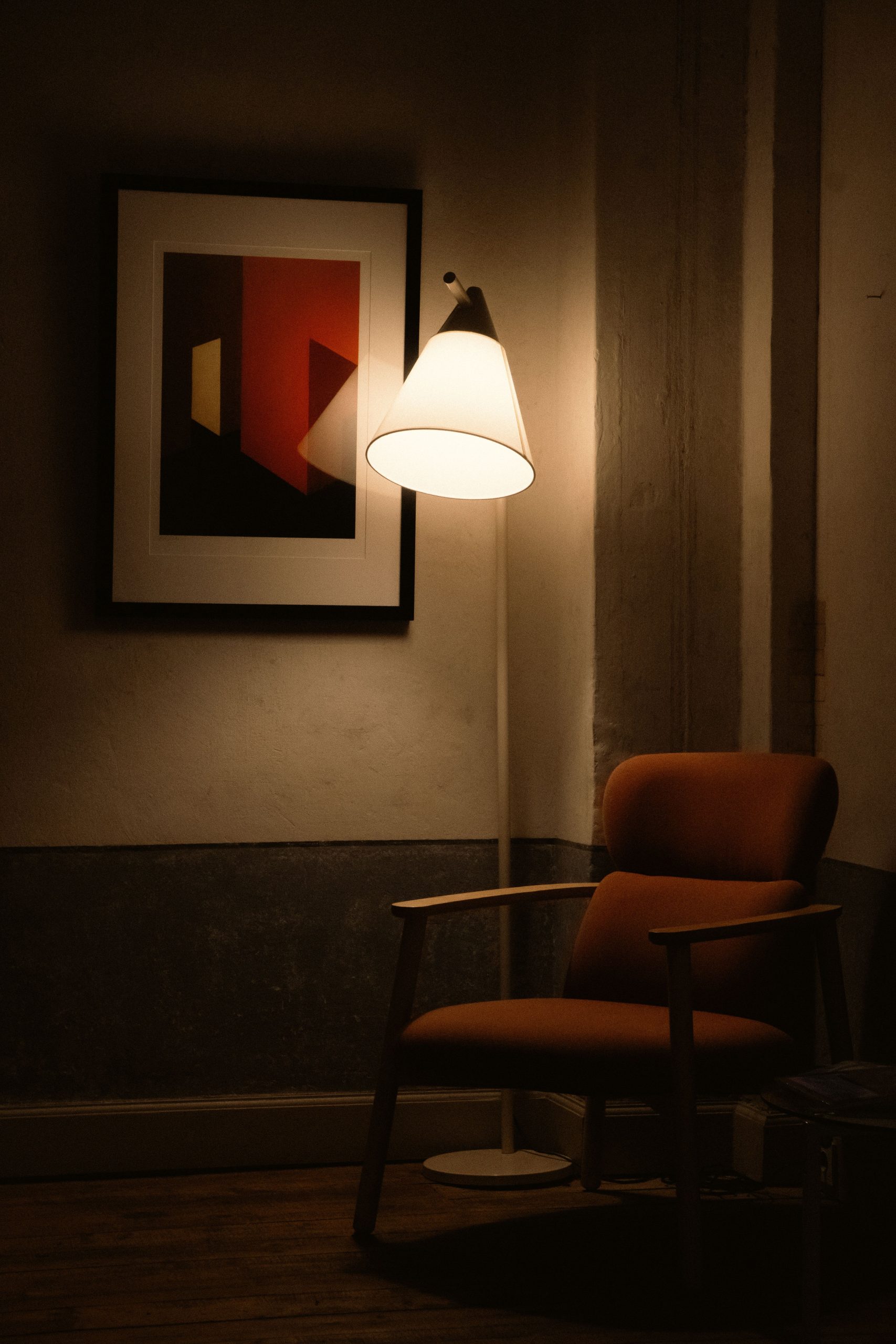
“This minimalist setup is perfect for small or awkward corners where larger furniture would fail.”
It requires a space no more than 4×4 feet. The key is the verticality. Because the armchair has a relatively small footprint and the floor lamp is tall and slender, the composition draws the eye upward. The artwork is hung at a comfortable eye-level when seated, creating an intimate zone. This idea would be lost in a large, cavernous corner; its power comes from its compact, well-edited scale.
28. Design a Bookish Corner with a Wooden Slat Chair
The success of this corner lies in its masterful blend of textures and its connection to the outdoors. The dark, solid wood of the bookcase provides a sense of history and stability, its contents adding color and personality. In contrast, the slatted wood and metal chair is light and airy, its open design preventing the corner from feeling too heavy. The large windows then act as a third wall, bringing the greenery and natural textures from outside into the composition. It feels both studious and serene, a perfect marriage of indoor intellect and outdoor calm. For a different take on a book-filled corner, see the grander scale of Idea #15.
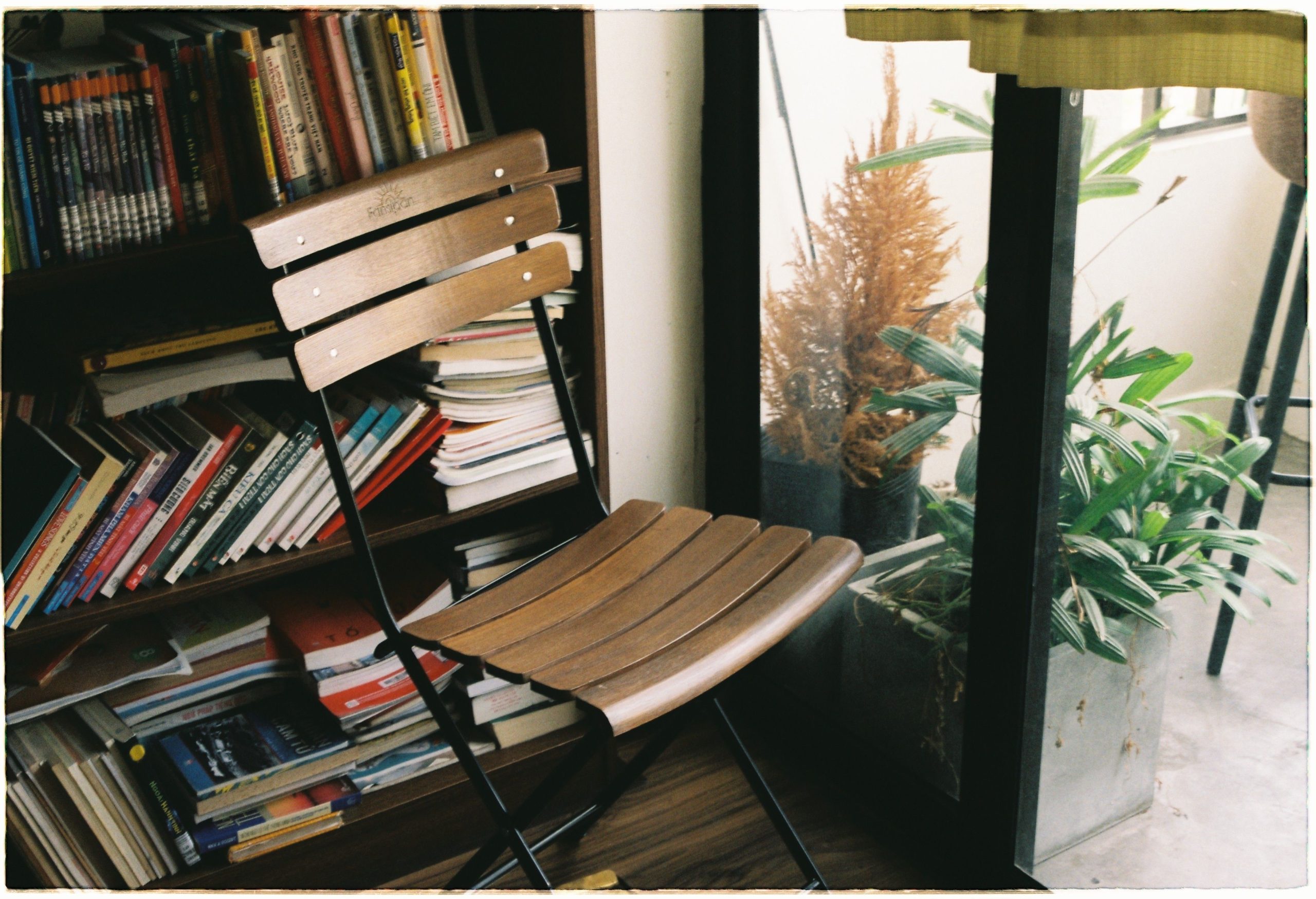
“A wooden slatted chair is a beautiful, sculptural object, but let’s be frank: it is not built for long reading sessions.”
This is an ‘accent chair’ in the truest sense of the word. It’s perfect for perching on for a few minutes to flip through a magazine or for adding a touch of architectural interest to a room. If you are looking to create a corner where you can curl up and get lost in a novel for hours, you will need to opt for an upholstered piece with more substantial cushioning.
29. Soften a Corner with a Gray Armchair and Gold Accents
The secret to making plants look ‘designer’ in a corner like this is to vary the planter height and style. Notice how one plant is in a taller, footed planter, while the other is in a lower, simpler pot. This creates different levels of greenery, making the arrangement more dynamic and natural. Bunching two or three plants together in varied, interesting planters will always look more intentional and lush than placing a single, lonely plant in a corner. Don’t be afraid to mix materials like ceramic, metal, and woven baskets.
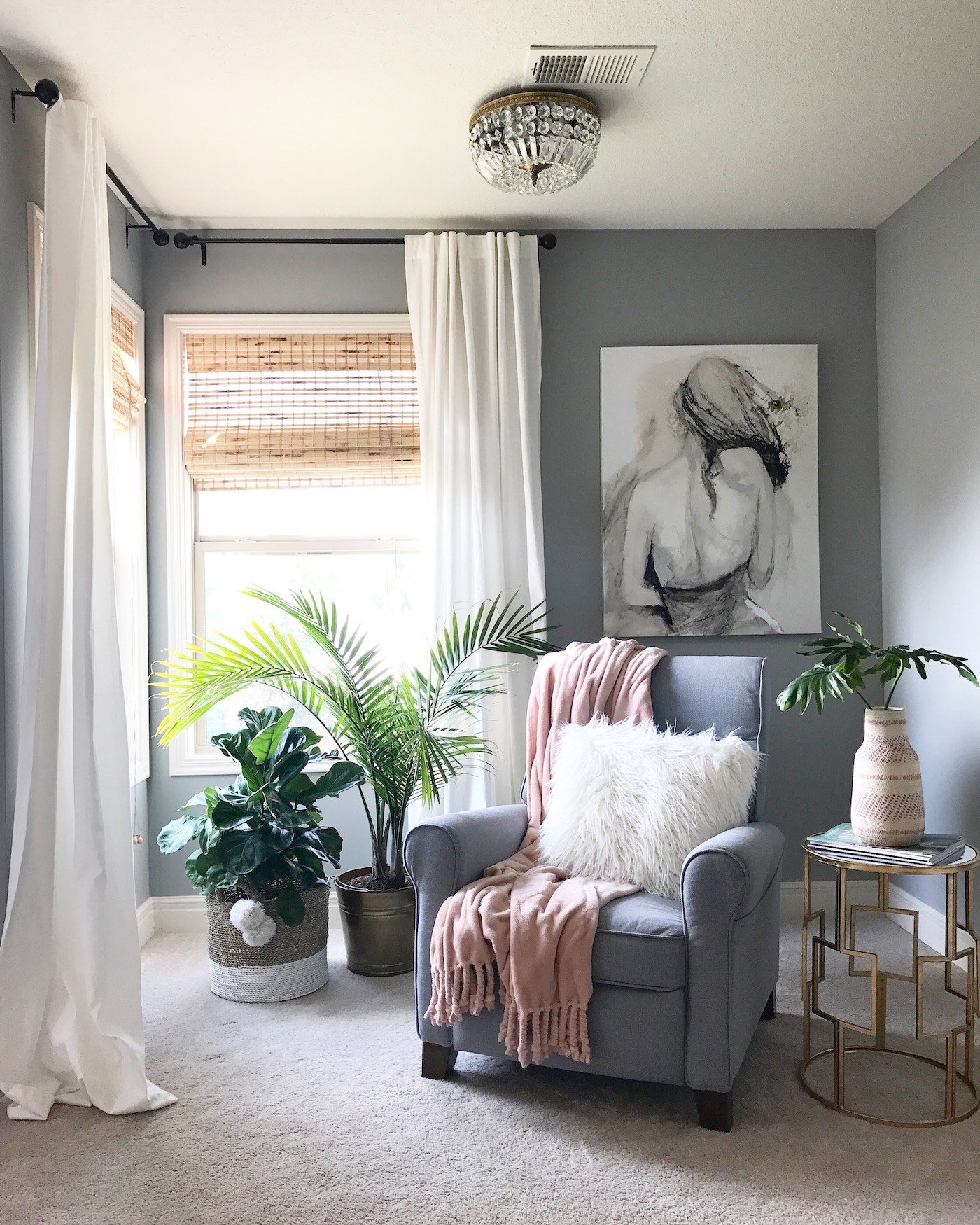
“You don’t need a high-end budget to achieve this soft, glamorous corner.”
Find a simple gray armchair from Wayfair or IKEA (like the popular EKERÖ). The key is the styling. A geometric gold side table can be found at stores like HomeGoods or Target for under $60. Hunt for large faux plants at craft stores like Michael’s during a sale—they give you the lush look without the maintenance. The abstract art can be a DIY project with a canvas and some sample paint pots. It’s all about combining affordable pieces with a clear color story (gray, pink, gold) to create a luxe-for-less vibe.
30. Arrange a Window Seat with Patterned Pillows and Muted Drapes
This corner feels so relaxing and put-together because it follows a simple design rule: a neutral foundation with patterned accents. The walls, flooring, curtains, and bench cushions are all in quiet, neutral shades of cream, beige, and light wood. This creates a calm, cohesive backdrop. The energy and personality then come from the pillows. By keeping the big-ticket items neutral, you can easily (and affordably) change the whole vibe of the corner just by swapping out the pillows and throw blanket for different colors and patterns as seasons or your tastes change.
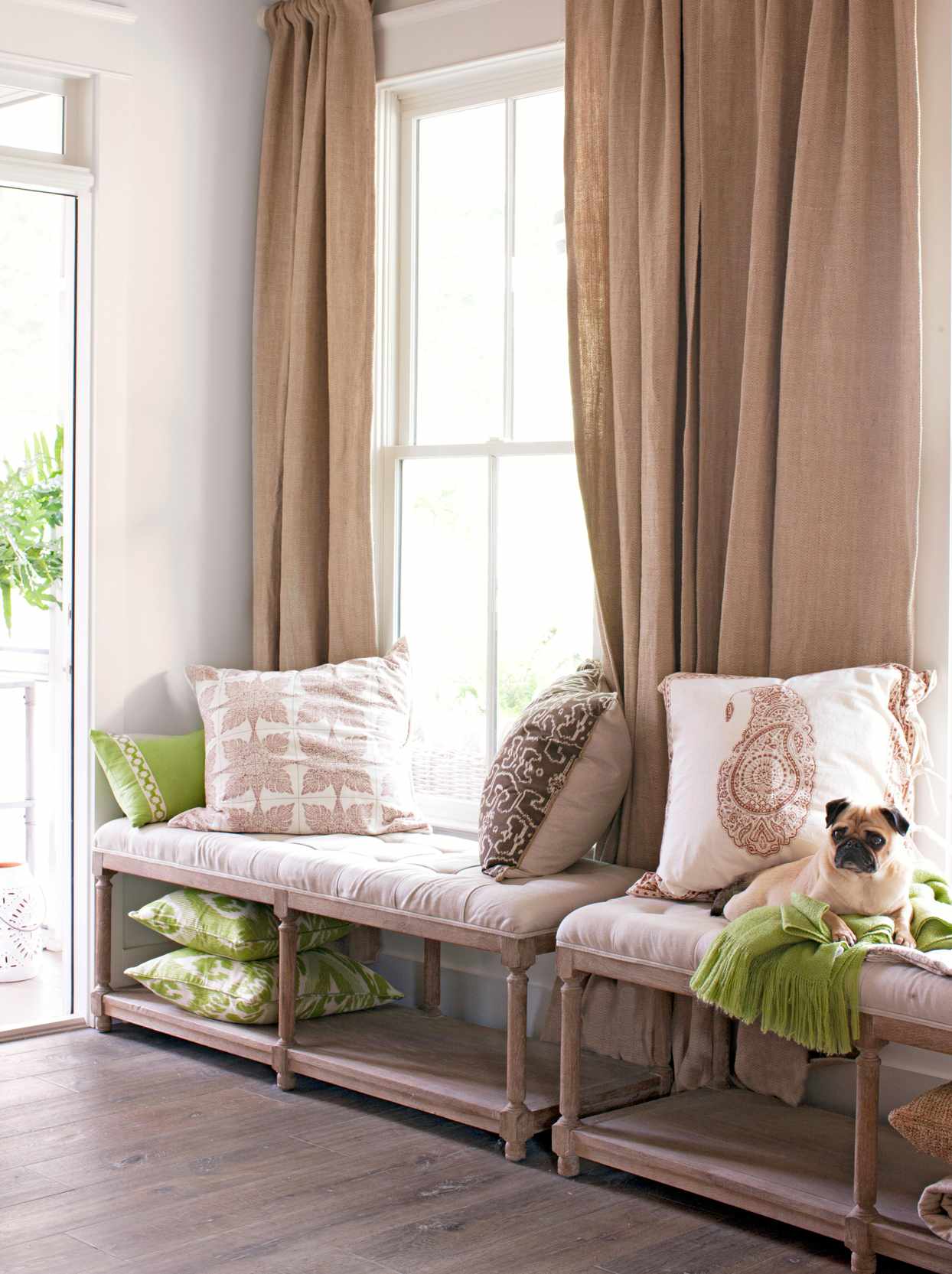
“that makes this corner truly inviting is the generous collection of pillows.”
Two benches and a cushion would be functional, but spartan. It’s the sheer number and mix of pillows that signals comfort and relaxation. The assortment of patterns, sizes, and the pop of the green throw blanket tell you this is a place to lean back, lounge, and get comfortable. Without the pillows, it’s just a bench; with them, it’s a nook. This is a corner designed for actual living, not just for looks.
Your Corner’s Next Chapter Starts Now
That awkward, empty corner doesn’t have to be a source of frustration. As you’ve seen, it can be a cozy reading nook, a tiny dining spot, a personal art gallery, or a lush green oasis. The key is to give it a purpose and a personality.
Feeling inspired? Pick your favorite idea, start scheming, and get ready to transform that space. Don’t forget to save your favorite ideas to your Pinterest board to come back to when you’re ready to start!