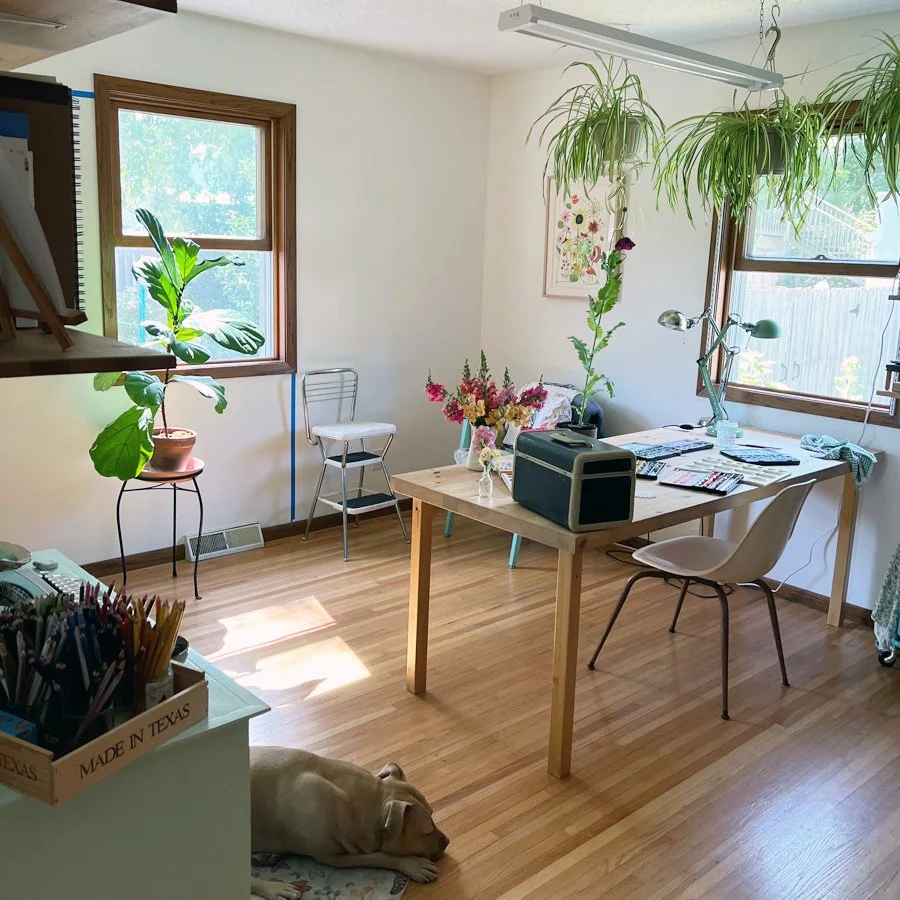
You know that feeling when you finally find the artistic home studio that looks exactly right for your space? That spark of “Yes, that’s it!” is what this guide is all about. After filtering through hundreds of options from high-end designers to budget-finds on Facebook Marketplace, we narrowed it down to 31 distinct ideas that actually deliver. Inside, you’ll find inspiration for every medium, from minimalist digital art setups to vibrant, eclectic painting nooks and serene pottery workshops. These aren’t just pretty pictures; they are functional, stylish spaces that are defining the look of creative work in 2026. And stay until the end — we break down the most common mistakes that can ruin these looks. 📌 Save this to Pinterest for later — you’ll want to revisit these ideas.
1. Industrial Art Studio with a Lush Gallery Wall
What makes this space feel so alive is the brilliant contrast between hard and soft elements. The exposed concrete floor, black industrial window frames, and metallic pendant lights provide a strong, functional skeleton. But the room is completely softened and brought to life by the sheer volume of plants and the personal touch of the gallery wall. The warm wood of the chairs also helps bridge the gap. It’s a masterclass in balance—neither the industrial nor the natural elements overpower each other; they make each other better.
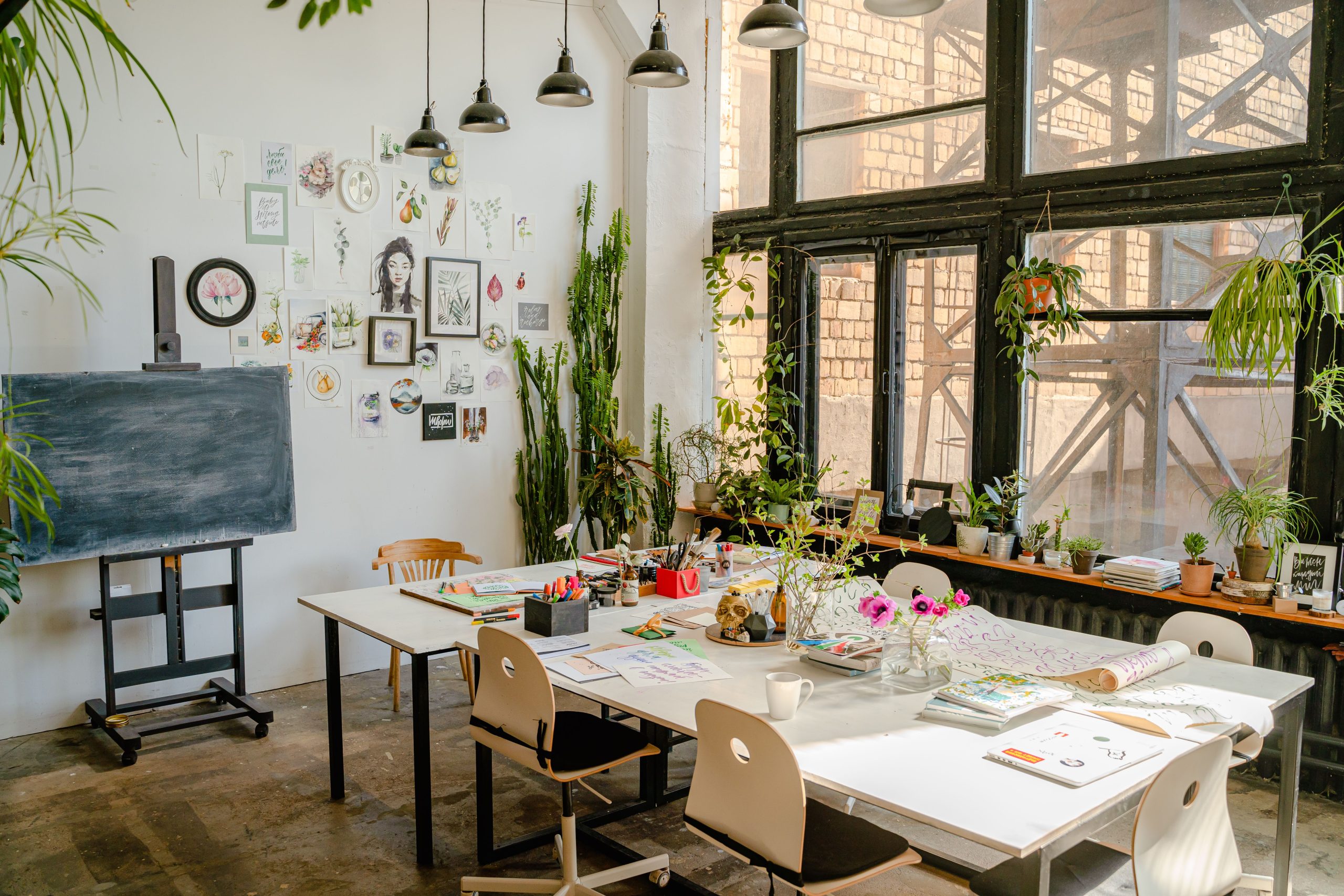
“When creating a gallery wall, the secret to a high-end look is a unified color story.”
Notice how most of the frames here are black, white, or a natural light wood. This cohesion allows you to mix different sizes and styles of art without the wall feeling chaotic. Start by laying out your arrangement on the floor. Measure the entire grouping, find its center, and use that center point to position the whole collection on the wall. This ensures it looks intentional, not random.
2. Bright Studio with Light Wood Planked Ceilings
It’s all about the ceiling. Removing the standard drywall and exposing the beams and planking is the single design choice that defines this entire studio. It draws the eye upward, making the space feel larger and more open than it already is. The light wood tone adds warmth and a natural, organic texture that you just can’t get from a flat white ceiling. It connects the indoor space to the greenery seen through the large glass doors, creating one cohesive, nature-inspired environment.
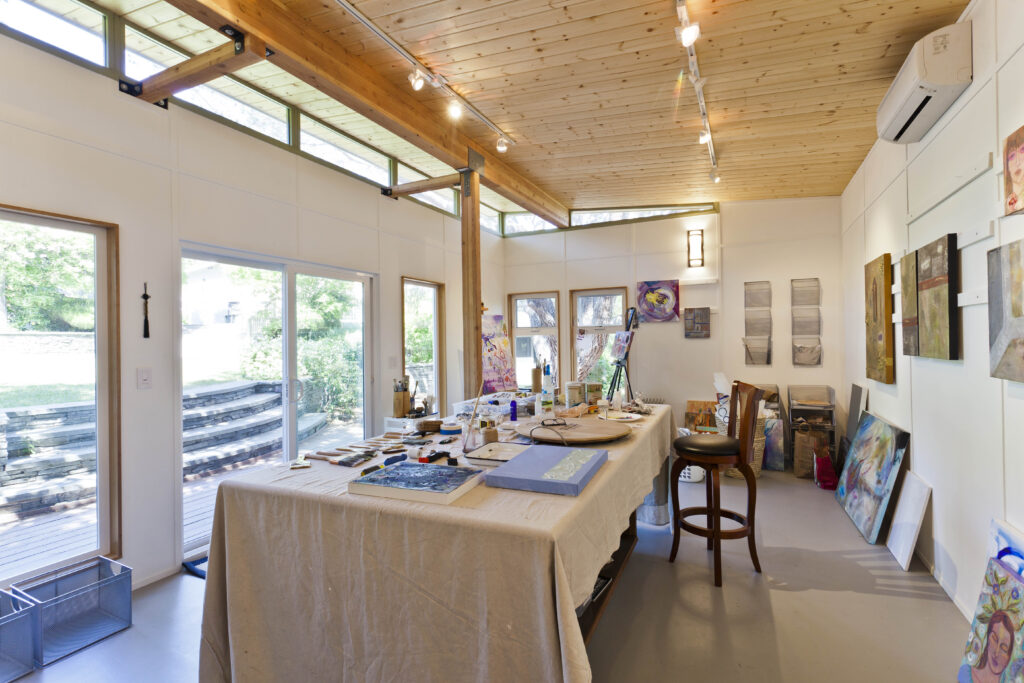
“A wood-planked ceiling is a beautiful, high-impact feature, but it comes with considerations.”
Installation can be complex and costly, especially if you’re retrofitting it into an existing room. You’ll also need to think about insulation and lighting. Notice the track lighting here; it’s a practical choice, as wiring individual fixtures into a planked ceiling can be tricky. Also, be mindful of the wood tone—a light wood keeps the space feeling bright and airy, while a darker wood would create a much cozier, cabin-like mood.
3. Multi-Level Studio with a Statement White Staircase
An open, multi-level concept like this works best in a space with high ceilings—at least 12-15 feet to accommodate the staircase and maintain an airy feel on both levels. The total footprint should ideally be over 500 square feet to prevent the staircase from overwhelming the room. The key is that the staircase acts as a functional divider, not just a connector. It separates a more active work zone from a potential storage or display area without needing walls, keeping the sightlines open. Compare this to the single-level openness of Idea #1.
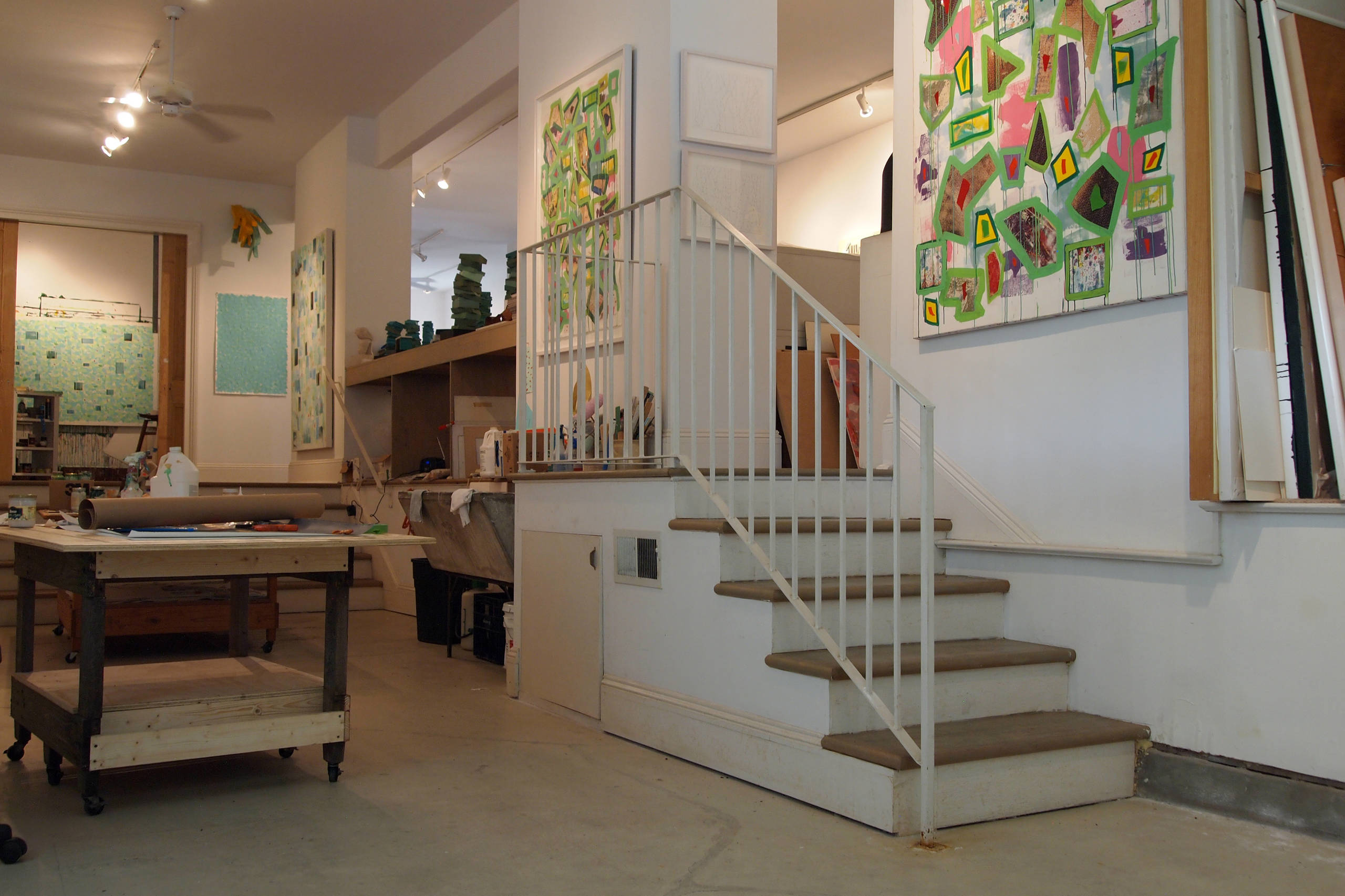
“Think of this studio’s design as a simple formula: 70% neutral canvas + 20% structural elements + 10% color pops.”
The white walls and light gray concrete floor are the neutral base, creating a gallery-like feel. The white staircase and wall shelves act as structural geometry. Then, the vibrant green and yellow abstract artworks provide the energetic 10%. You could easily swap the accent colors to deep blue and red for a primary-color vibe or stick to black and white art for a purely monochromatic look, and the underlying formula would still work perfectly.
4. Minimalist Studio Featuring a Textured Gray Accent Wall
This room is a study in successful minimalism because it doesn’t feel sterile. The key is the introduction of texture and a very controlled color palette. The stark white walls and black industrial track lighting create a high-contrast graphic quality. However, the textured, dark gray accent wall adds depth and a tactile character that paint alone couldn’t achieve. The warm wood of the window frames also provides a necessary touch of organic warmth, preventing the space from feeling too cold or clinical. It proves that minimalism is about thoughtful editing, not just removing things.
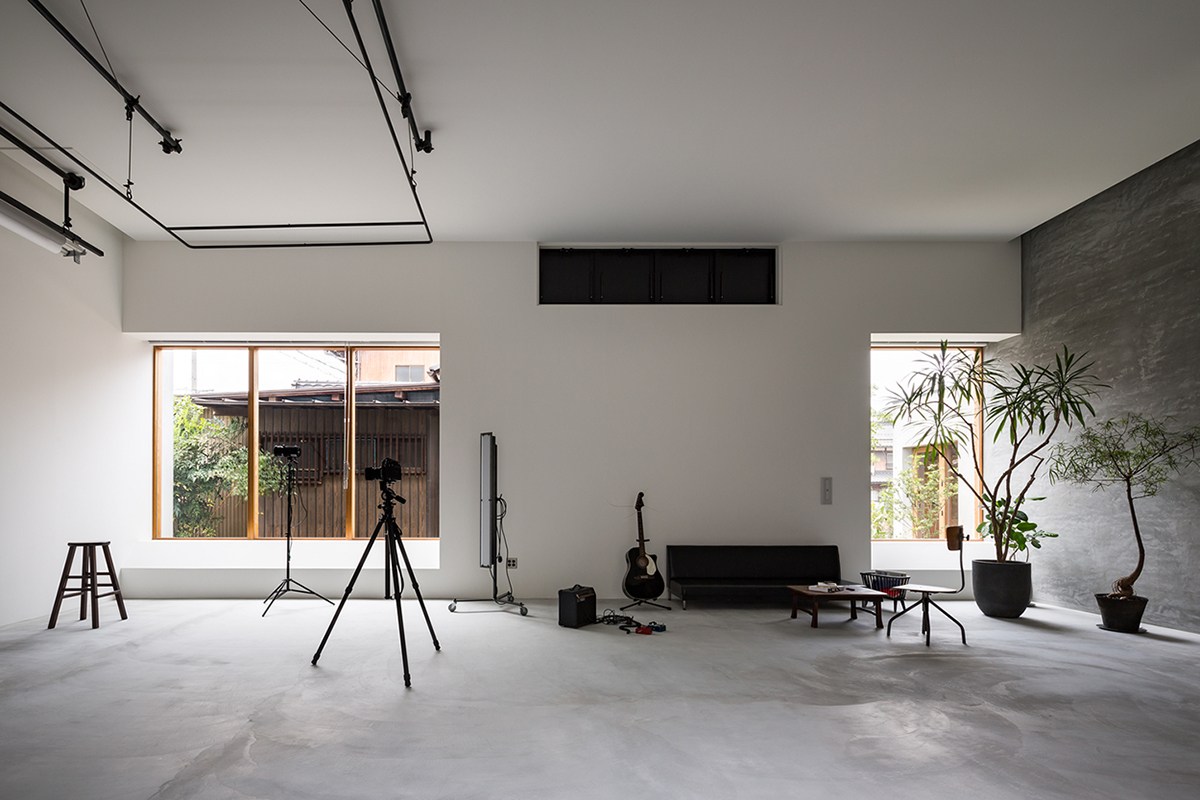
“A light gray concrete floor looks incredibly chic and is a fantastic, durable surface for a studio.”
However, it’s not as forgiving as you might think. Light-colored concrete can show dust, scuffs, and especially liquid splatters (oil paints, inks) quite easily. To keep it looking its best, it needs to be properly sealed upon installation and will benefit from a resealing every 2-3 years, depending on foot traffic and use. Regular sweeping and mopping with a pH-neutral cleaner are essential. For a similar aesthetic with less worry, consider large-format light gray porcelain tiles.
5. Artist’s Desk Overlooking a Lush Forest View
that makes this studio unforgettable is the view. The desk, the chair, the art supplies—they are all secondary to the wall of glass that opens directly into the forest. This isn’t just a window; it’s a living, breathing mural that changes with the light and seasons. By placing the desk directly in front of it, the homeowner has made nature the primary source of inspiration. Removing the large glass doors would turn this into just another room with a desk; with them, it’s a creative sanctuary.
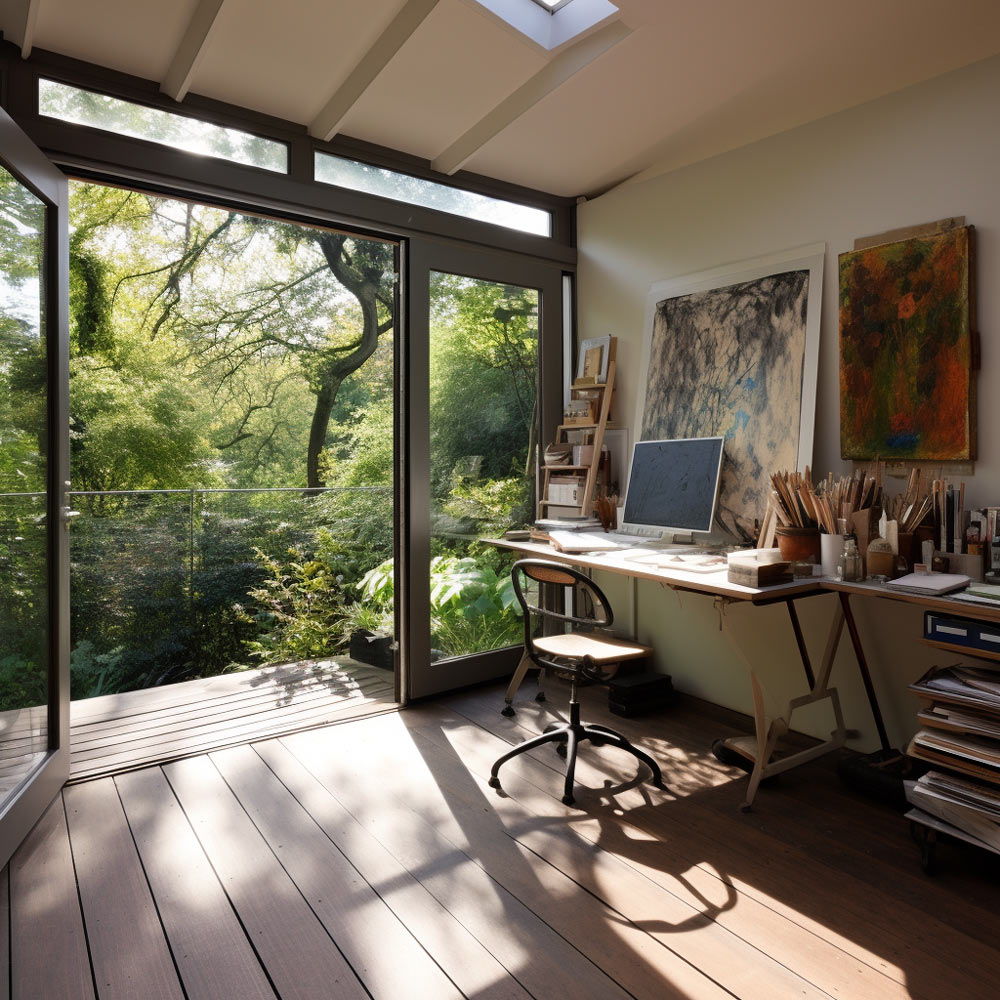
“Before you commit to placing your primary workspace in front of a large window, ”
Before you commit to placing your primary workspace in front of a large window, run through this checklist to make sure it’s the right move for you and your work:
- Screen Glare: Will direct sunlight at any point in the day create unbearable glare on your computer monitor or digital tablet? Consider which direction the window faces. North-facing light is often the most consistent and gentle.
- UV Damage: Will your art supplies, finished pieces, or desk materials be exposed to harsh, direct sunlight that could cause fading or damage over time? You may need UV-blocking film.
- Distraction Factor: Are you the kind of person who will be inspired by the view, or endlessly distracted by the squirrel running up the tree? Be honest about your work style.
- Temperature Control: Large windows can be a source of heat gain in the summer and heat loss in the winter. Does your room’s HVAC system have the capacity to keep the area comfortable year-round?
6. An Airy, Lived-in Studio Filled with Plants and Natural Light
You don’t need a massive budget to create this bright, organic vibe. This look is more about curation than cost. Scour Facebook Marketplace and local thrift stores for a solid wood work table—scratches and dings only add to the character. The key is to keep the walls light (white or a very pale green) to maximize the natural light. Collect interesting pots from flea markets and fill them with easy-care plants like snake plants and pothos. The whole feel is less ‘designed’ and more ‘collected over time,’ which is something money can’t buy.
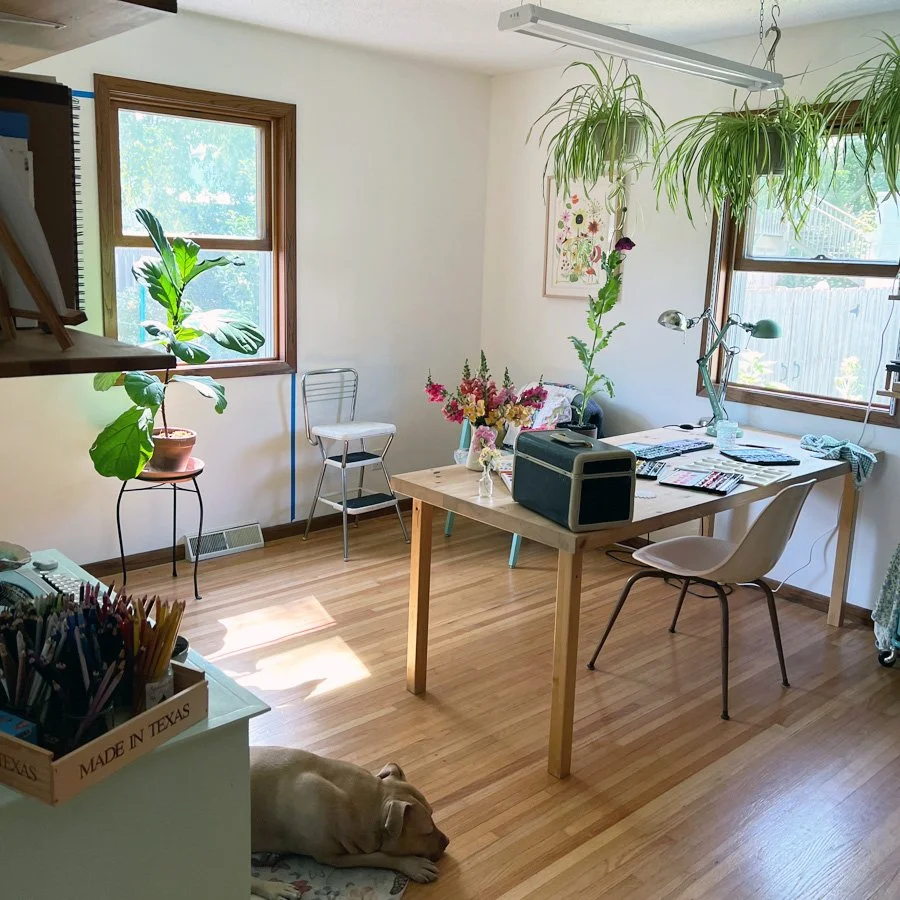
“When incorporating plants into a workspace, think beyond just plopping them in a corner.”
Create varying levels of green. Notice the combination here: a tall plant on the floor, medium-sized pots on the window sill, and a vase of fresh-cut flowers on the table. This layering technique makes the plant life feel integrated and lush, not like an afterthought. For a studio, choose plants that are tolerant of a little neglect. ZZ plants, snake plants, and pothos are all famously resilient and thrive in a variety of lighting conditions.
7. Pottery Studio with an Evening Window View
There’s a reason pottery and ceramics have exploded in popularity. In a world that’s increasingly digital, there’s a collective craving for tactile, hands-on activities. Getting your hands dirty with clay is a grounding, almost meditative experience. This image captures that sense of potential perfectly—the clean wheels, the waiting tools, the quiet evening view. It represents the widespread desire to create something tangible and unique, a direct response to our screen-saturated lives. This isn’t just a hobby; it’s a form of wellness.
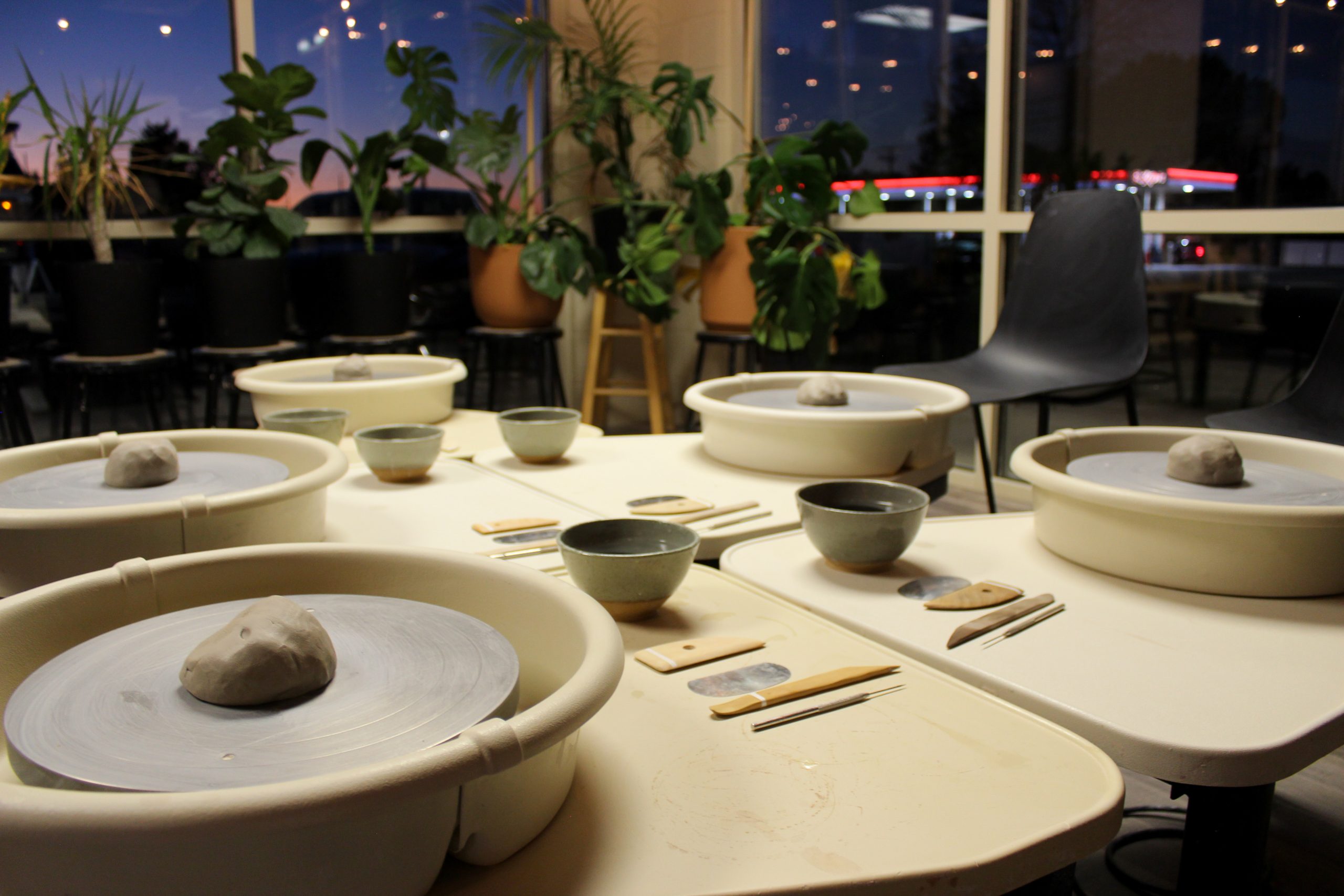
“Let’s be honest: pottery is messy.”
Gloriously, wonderfully messy. If you’re considering a home pottery studio, you need to plan for clay dust and water splashes. A dedicated space with a floor that’s easy to mop is non-negotiable (concrete, vinyl, or tile is ideal). You’ll also need access to plumbing for cleanup, and a proper system for trapping clay so it doesn’t clog your pipes is a must. While this image looks serene and clean, remember this is the ‘before.’ The ‘after’ involves a lot of satisfying cleanup!
8. Boho Studio Corner with Woven Wall Art and a Moon Painting
That stunning woven wall hanging sets the entire boho, artistic tone. You can create a simplified version yourself in an afternoon. Time: 2-3 hours. Cost: $30-$50.
- Gather Materials: You’ll need a wooden dowel (about 24 inches), several skeins of thick yarn in neutral colors (cream, beige), and one or two accent colors (like the blue and black here).
- Create the Base: Cut long lengths of your primary cream yarn (about 6-8 feet long). Fold each piece in half and loop it over the dowel using a Lark’s Head knot until the dowel is mostly covered.
- Add Texture & Color: Braid, knot, or weave sections of the hanging yarn. Introduce your accent colors by tying in new strands.
- Create the Fringe: For the fringed bottom, don’t worry about perfect evenness. An asymmetrical, V-shaped cut often looks more natural and handcrafted.
- Trim and Hang: Trim any stray pieces and attach a simple string to the dowel for hanging.
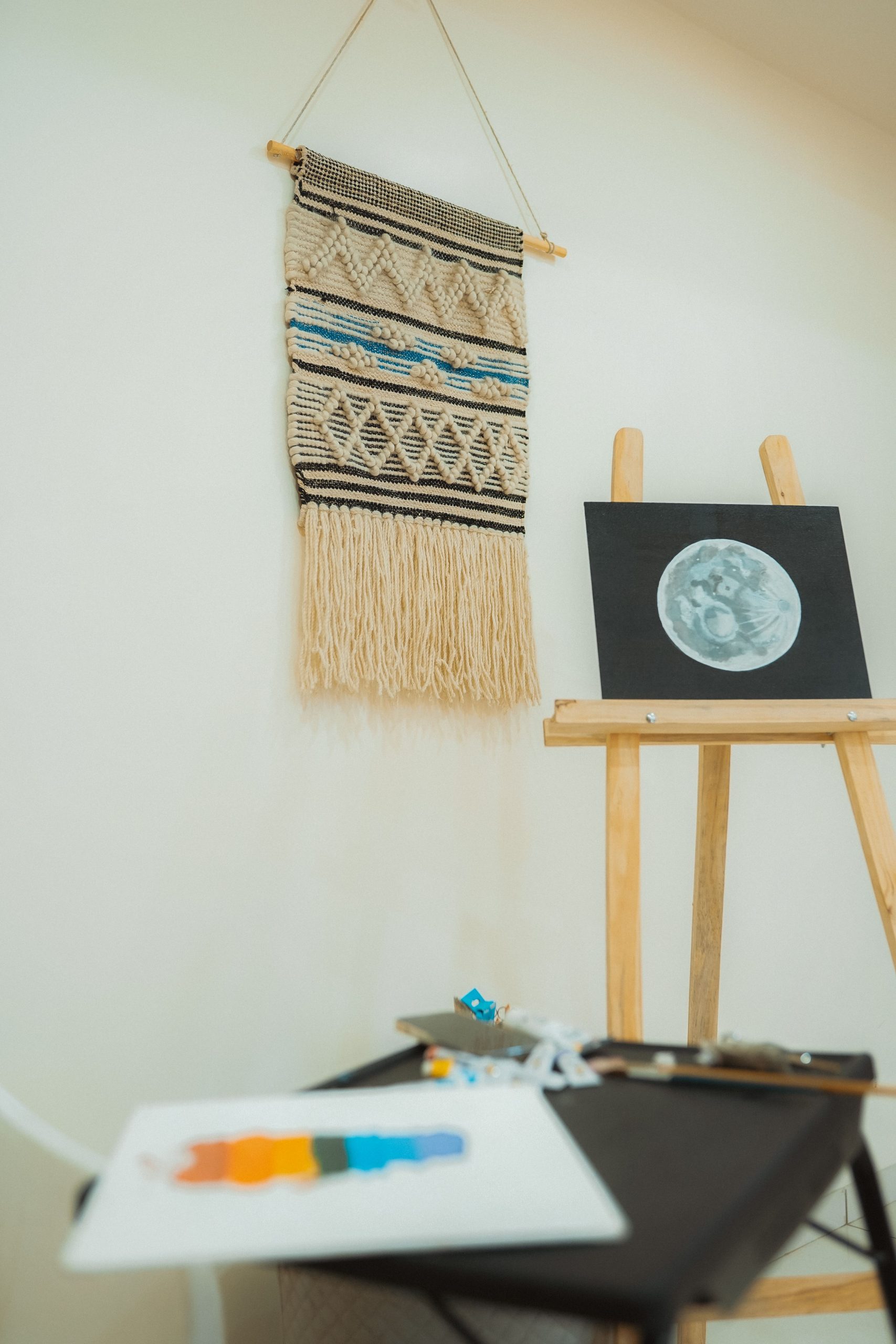
“This little corner demonstrates a perfect textural formula: 50% flat matte + 30% soft texture + 20% smooth gloss.”
The white wall is your matte, neutral background. The woven hanging provides the soft, chunky texture that invites touch. The black table surface, the paint on the canvas, and perhaps the frame (if it were varnished) provide the smooth, slightly glossy finish. This mix of sheens and surfaces is what gives a simple vignette depth and makes it interesting to look at, even with a limited color palette.
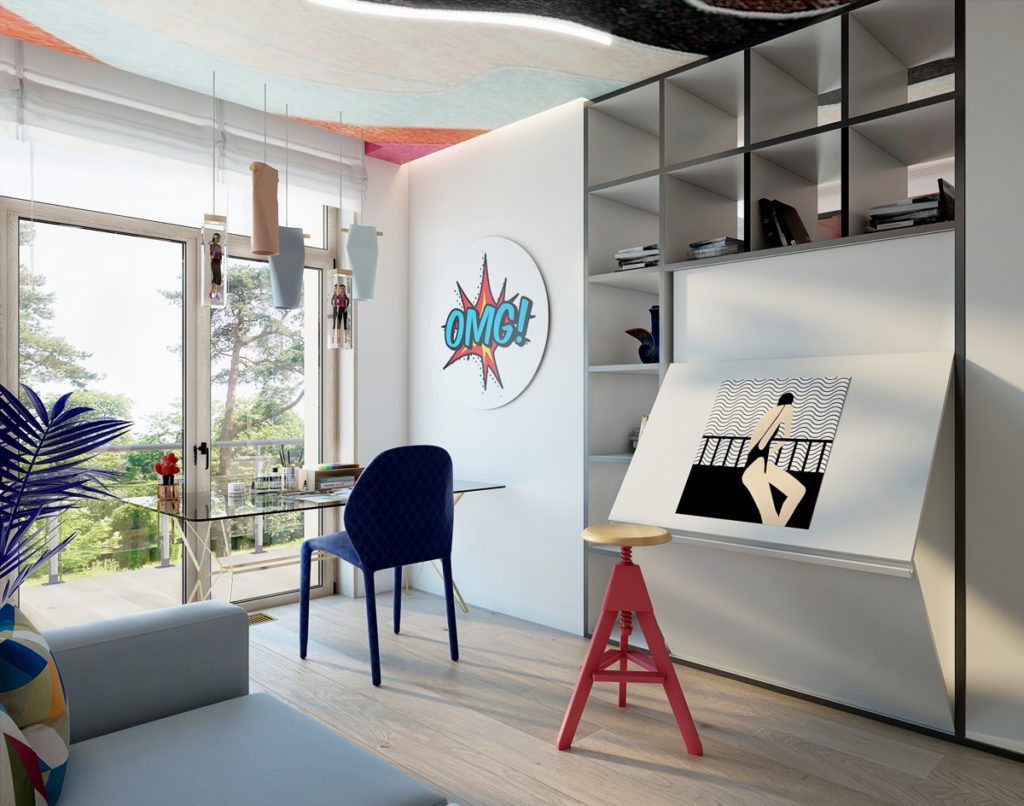
9. Vibrant and Modern Studio with a Glass Desk
To recreate this playful-yet-professional studio look, here’s a potential cost breakdown:
- Main Furniture (Glass desk, shelving unit): $800 – $2,500
- Seating (Velvet chair, drafting stool): $500 – $1,200
- Lighting (Pendant lights): $300 – $700
- Decor & Accessories (Wall art, plants): $200 – $600
- TOTAL: $1,800 – $5,000
Budget alternative: Source a similar glass desk from IKEA or Wayfair, find a blue velvet chair on Target, and look for pop art prints on Etsy for a total look under $900.
10. Deep Green Walls and Wooden Horse Art Studio
When using a dark, saturated wall color like this deep olive green, lighting is everything. Instead of relying on a single overhead light, this setup uses multiple light sources—a strategy called ‘light layering.’ There are two articulated task lamps focused directly on the work surface for bright, functional light. The room also likely has an ambient overhead source. This prevents the dark walls from feeling gloomy and instead makes the space feel cozy and enveloping. Always plan for at least two, preferably three, layers of light in a dark-colored room.
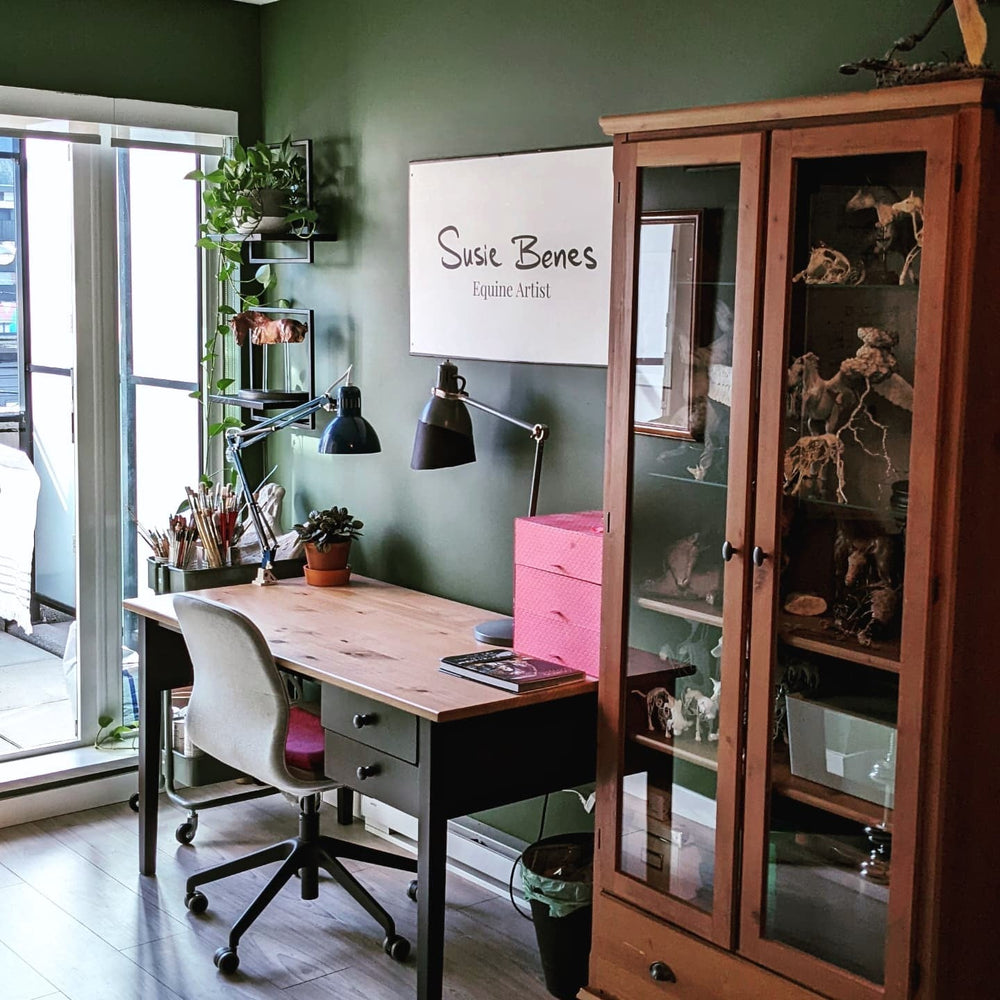
“The single element that makes this room feel so personal and sophisticated is the collection of horse sculptures in the display cabinet.”
Without it, you have a handsome but generic office. With it, you have a story. It tells you something about the person who works here—their passions, their history, their aesthetic. It elevates the room from a workspace to a personal sanctuary. This is a powerful reminder that the most important element in a studio is often the one that reflects the artist themselves.
11. Music Studio with a Geometric Rug and Acoustic Panels
Acoustic treatment is a rabbit hole of physics and options, and it’s easy to get it wrong. While the geometric panels here add a nice design touch, their placement and quantity are crucial for actual sound control. Simply sticking a few panels on the wall might not do much to tame rogue bass frequencies or flutter echo. Proper acoustic treatment often requires measuring the room’s specific sonic issues and strategically placing a combination of absorption and diffusion panels. It can be a significant investment, so if you’re serious about recording, it’s worth consulting with an acoustics expert.
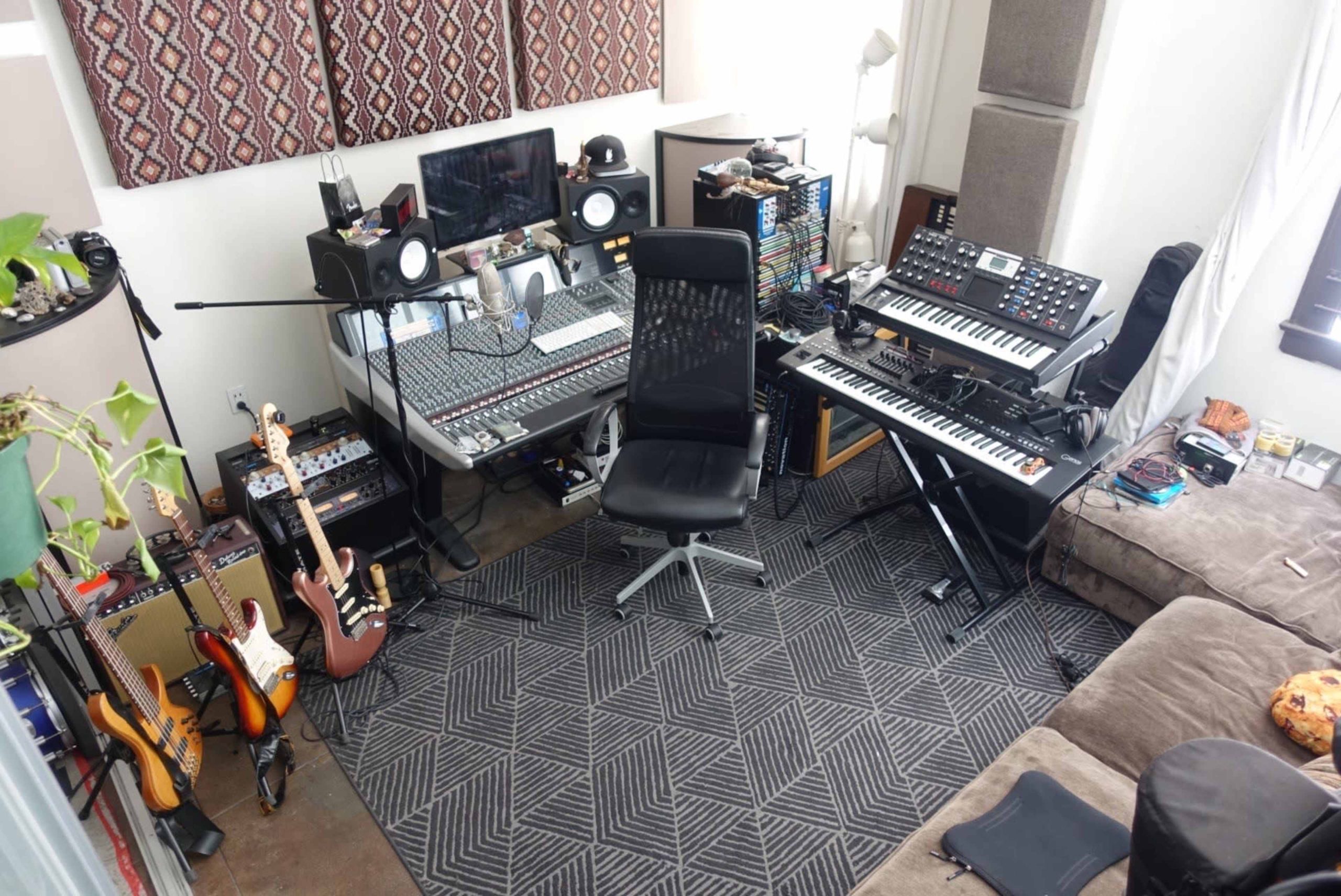
“To accommodate this much gear—a large console, multiple keyboards, guitars, and a sofa for clients or collaborators—you’ll need a fairly substantial room.”
A minimum of 150-200 square feet is recommended to avoid feeling cramped and to allow for proper speaker placement (speakers need space from walls to perform well). For a smaller bedroom studio (around 100-120 sq ft), consider a more streamlined setup like the one in Idea #12, focusing on a digital setup with fewer large instruments.
12. Hybrid Studio with Dual Screens for Digital and Traditional Art
This studio successfully serves two different creative modes by establishing clear, dedicated zones. The left side of the room is the ‘digital zone,’ with the monitors and computer equipment clustered together. The right side is the ‘analog zone,’ anchored by the traditional wooden easel. The furniture choices reinforce this separation—a simple, functional desk for the digital work and a classic easel for painting. This mental and physical separation allows the artist to fully immerse in one medium at a time without the tools of the other getting in the way.
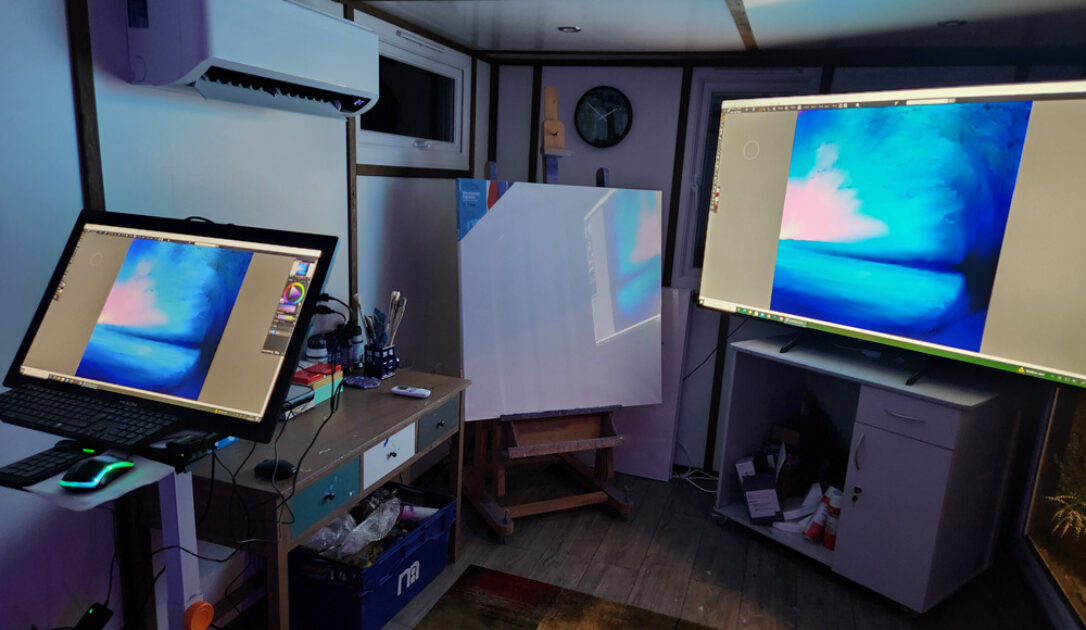
“A dual-screen, tiltable digital art setup can get pricey.”
To get this functionality for less, start with one good-quality monitor (AOC or ViewSonic are great budget-friendly brands). For your second screen, use a standard drawing tablet from a brand like Huion or XP-Pen connected to your computer, which is much more affordable than a second full-display tablet. For the desk, an IKEA kitchen countertop on a pair of simple trestle legs gives you a huge, sturdy surface for a fraction of the cost of a specialized ‘artist desk’.
13. Warm Wood Desk Positioned by Bright Windows
The magic of this workspace comes from the quality of the light. It’s not just that the windows are large; it’s the warm, diffused glow they create. The white blinds are key—they allow for precise control, softening direct sun into a gentle, productivity-boosting ambiance. This light makes the warm wood of the desk glow and brings the little green succulents to life. It’s a perfect example of how manipulating natural light is one of the most powerful and free design tools you have.

“A solid wood desk is a beautiful, lifelong piece of furniture, but it requires a bit of care to stay that way, especially when placed in direct light.”
To prevent water rings from cups, always use coasters. For a work surface, consider a desk blotter or mat to protect the wood from pen indentations and scratches. To maintain its luster, periodically wipe it down with a soft cloth and a wood-friendly cleaner. About once a year, polishing it with a quality wood oil or wax will nourish the timber and help protect it from drying or fading due to sunlight.
14. Digital Art Studio with a Tablet and Large Monitor
For digital artists, ergonomics are professional-grade tools. Notice the tablet is propped up on an angled stand—this is crucial for preventing neck and shoulder pain. Your drawing screen should be at an angle that keeps your wrist straight and your neck in a neutral position. Your main monitor should be positioned so that the top of the screen is at or slightly below eye level. Don’t be afraid to use books or a monitor stand to get the height just right. Investing in an adjustable chair is the final piece of the ergonomic puzzle.
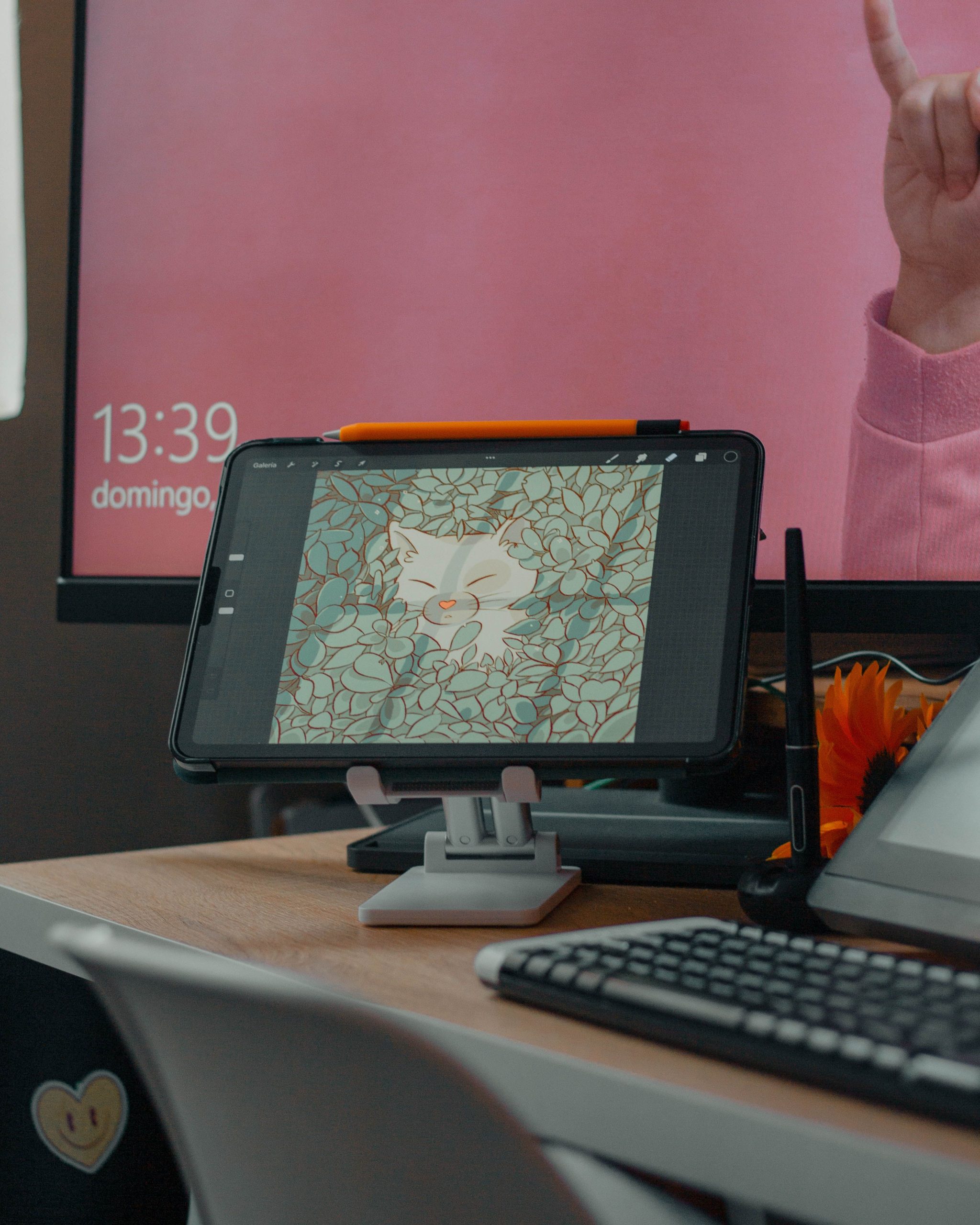
“This setup is the new standard for a reason.”
As illustration, graphic design, and animation have become increasingly popular career paths and side hustles, the tools have become more accessible and streamlined. The tablet-plus-monitor combination is the powerhouse of modern creative work. It allows for a seamless workflow: drawing on the tablet while keeping reference images, social media, or client feedback open on the larger screen. This reflects a larger cultural shift where creative pursuits are becoming viable, full-time professions that demand efficient, professional-grade home setups.
15. Modern Lounge with a Curved Sofa and Blue Accent Wall
This is a sophisticated, high-end look that gets its drama from a few key pieces. Here’s a realistic budget to achieve this specific aesthetic:
- Main Furniture (Curved Sofa): $3,000 – $8,000
- Accent Furniture (Distressed Console): $1,500 – $4,000
- Lighting (Designer fixtures): $800 – $2,500
- Wall Treatment & Art (Paint, large framed print): $500 – $2,000
- Textiles (Rug, custom curtains): $1,000 – $3,000
- TOTAL: $6,800 – $19,500
This look is a great example of an ‘investment piece’ space; consider a more budget-friendly version like the one in Idea #27.
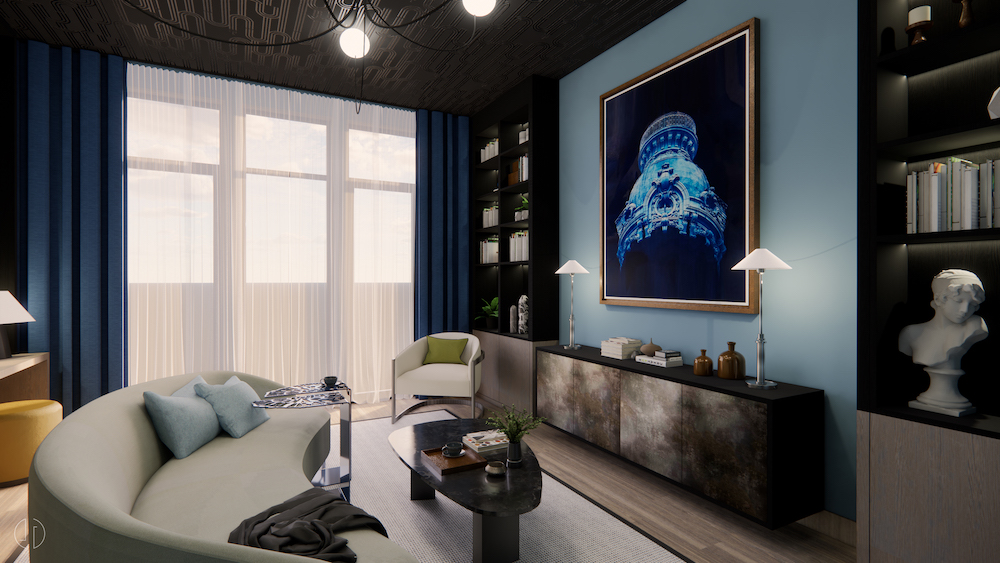
“What makes this room feel so calming and cohesive, despite the bold blue wall, is the masterful use of curves and color repetition.”
The gentle arc of the sofa is a soft, inviting shape that contrasts beautifully with the sharp, rectangular lines of the window and console. The color palette is strictly edited: the deep blue of the accent wall and curtain is echoed in the framed artwork, creating a deliberate visual path for the eye. The light green of the sofa adds a touch of organic color without competing.
16. Modern Loft with Pop Art and a Spiral Staircase
This loft’s eclectic energy comes from a bold formula: 50% Industrial Base + 30% Modern Comfort + 20% Playful Pop. The industrial portion is the concrete floor, black spiral staircase, and open layout. The modern comfort comes from the large, neutral sectional sofa and sleek marble dining table. The final, crucial 20% is the playful element: the iconic Warhol art, the light blue pillar, and the colorful woven chairs. This formula allows you to mix high-impact art with functional comfort without the space feeling chaotic.
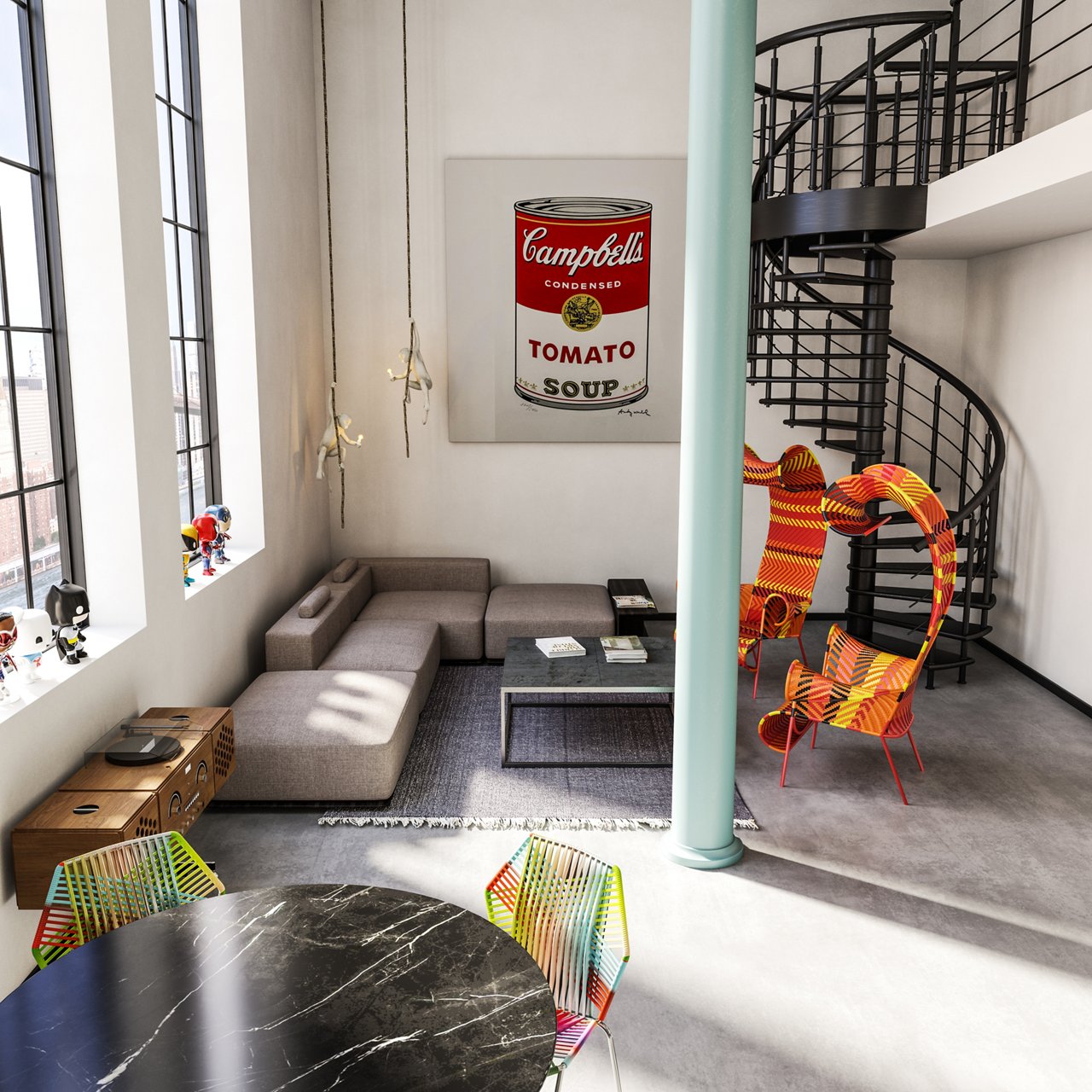
“This look requires scale.”
A prominent spiral staircase and a large piece of pop art need high ceilings and a generous footprint to breathe. This design is best suited for a true loft or an open-plan space of at least 700 square feet with ceilings that are 10 feet or higher. In a smaller room, the staircase would feel cramped and the large artwork would overwhelm the wall. The key is having enough negative space around these major elements for them to read as sculptural and intentional.
17. Eclectic Fireplace Nook with a Mustard Velvet Armchair
Take away the mustard yellow armchair, and what do you have? A perfectly nice, traditional fireplace nook. But with the chair, the space is transformed. It’s a jolt of contemporary energy and color that wakes up the entire room. The chair’s round, modern shape provides a delicious contrast to the straight, formal lines of the fireplace mantel and built-in shelving. It’s the single piece that signals this isn’t a stuffy, traditional room; it’s a space with personality and confidence.
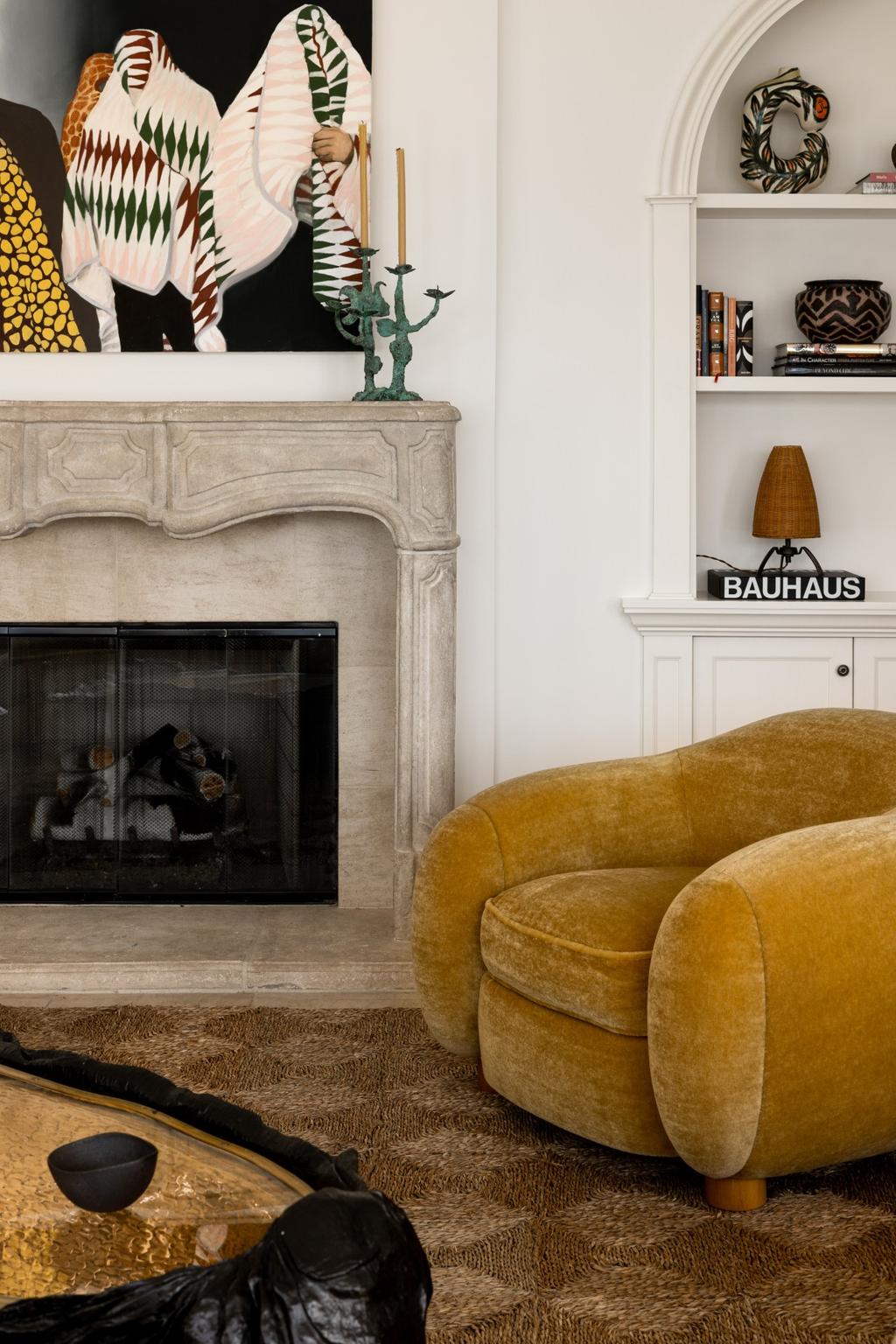
“Styling a mantelpiece is an art, and this one is a great example of ‘asymmetrical balance.’ Here’s a quick guide to getting the look: Time: 30 minutes.”
Cost: $0 (using what you have).
Anchor with Art: Start with your largest piece, a big painting or mirror, either centered or slightly off-center like this one.
Add Height: On one side, place a tall item. Here, it’s the bronze candelabra. A tall vase with branches would also work.
Create a Low Grouping: On the other side, create a cluster of smaller, lower objects of varying shapes. Notice the mix of books, a small sculptural object, and a framed photo.
Bridge the Middle: Place a few very small items near the center to connect the two sides.
18. Skylit Living Room with a Shimmering Teal Fireplace
This room feels so dynamic and alive because it masterfully mixes materials and sheens. The star is the fireplace with its shimmering, reflective teal tiles that bounce light around the room. This glossy element is balanced by the matte, organic textures of the wooden floorboards and the large fiddle-leaf fig tree. Then, you have the soft, plush velvet of the dark sofa contrasted with the smoother leather of the brown seating. This constant interplay of shiny, matte, soft, and hard textures keeps the eye moving and makes the room feel rich and layered.
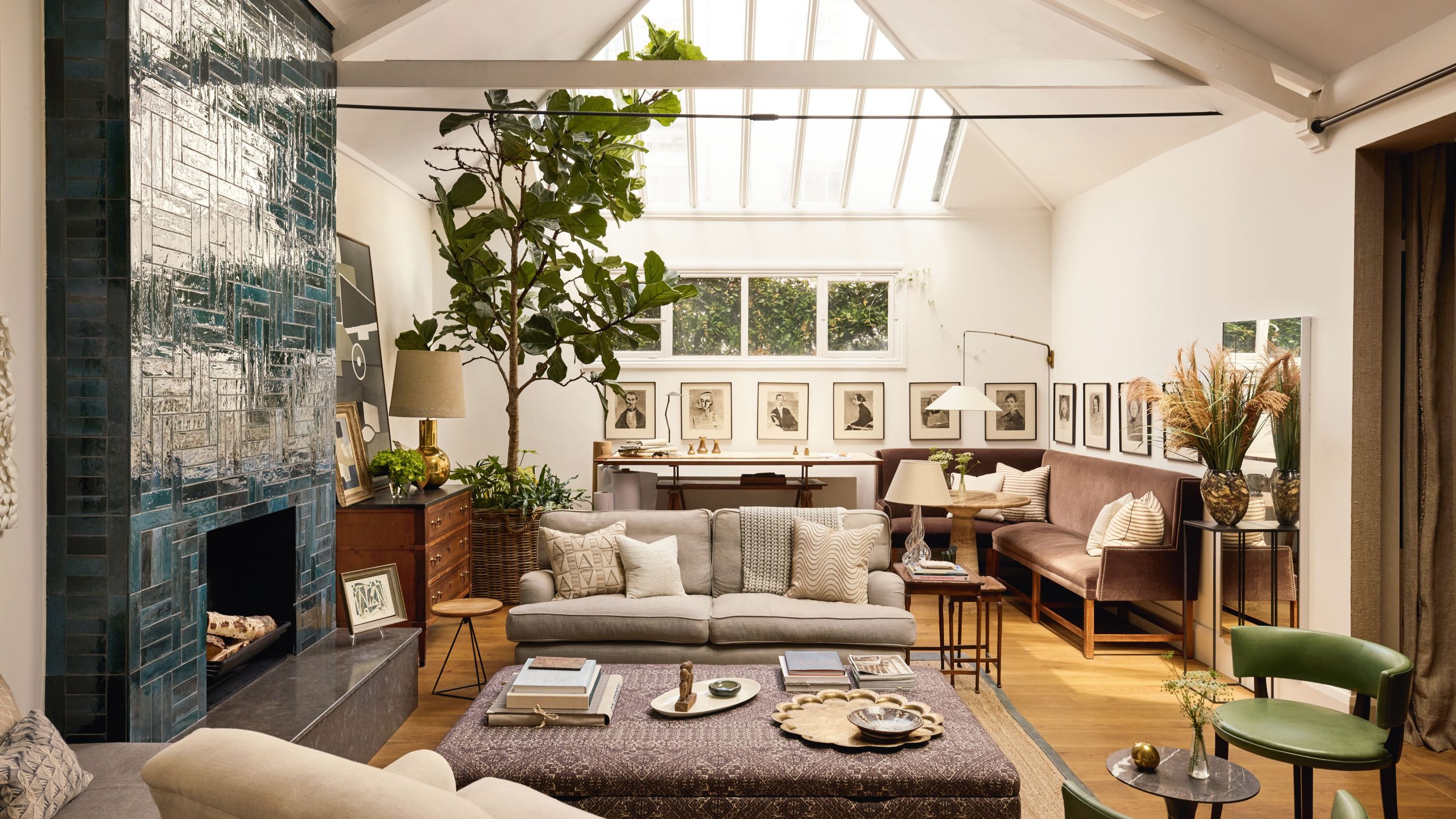
“Skylights are incredible for flooding a room with natural light, but they do have a practical downside.”
They can be a source of significant heat gain in the summer, turning your room into a greenhouse if you live in a warm climate. Conversely, they can be a point of heat loss in the winter. Investing in high-quality, double-paned skylights with a UV-blocking glaze and considering retractable shades is essential for managing temperature and energy bills. Also, be aware that they are notorious for developing leaks as a home settles over time, so regular inspection is key.
19. Modern Home Exterior with Black Siding and Cream Walls
This style of exterior represents the rise of the ‘ADU’ (Accessory Dwelling Unit) or the purpose-built backyard studio. As more people work from home, there’s a growing trend to create dedicated, separate structures for creative work. This provides both the physical and mental separation needed for focus. The minimalist, high-contrast aesthetic seen here—often using materials like black metal, concrete, and stucco—signals that this is a modern, functional space, distinct from the main house’s architecture. It’s a workspace designed from the outside in.
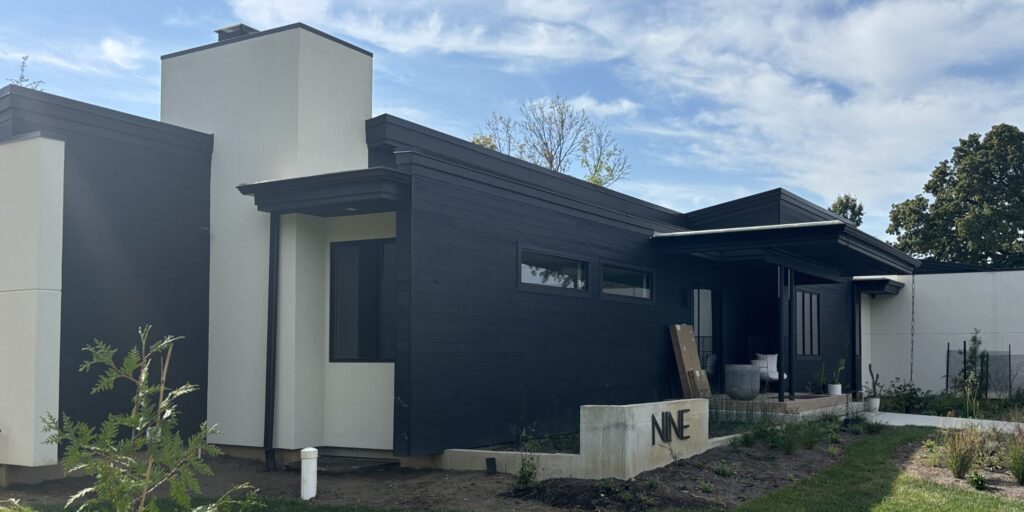
“The power of this design lies in its stark, graphic simplicity.”
By limiting the material palette to just three core elements—black siding, cream stucco, and gray concrete—the focus shifts entirely to form and line. The black siding reads as a single, bold horizontal block, while the cream wall acts as a clean, bright counterpoint. The clean lines of the flat roof and the minimalist window frames reinforce this geometric purity. There’s no fussy trim or ornamentation to distract the eye, resulting in a look that feels confident and unapologetically modern.
20. Functional Art Studio with Wooden Trestle Desks
The trestle desk is a design-world favorite for a reason: it’s stylish, affordable, and incredibly practical. You can create this exact L-shaped setup on a serious budget. Purchase four wooden trestle legs from IKEA (the ‘FINNVARD’ has a great look and is height-adjustable). Then, get two of their plain laminate or wood-veneer tabletops (like ‘LAGKAPTEN’) and simply rest them on top. You get a massive, sturdy, and configurable workspace for under $300. The Eames-style chair is a classic you can find replicas of at places like Target or Wayfair for around $100.
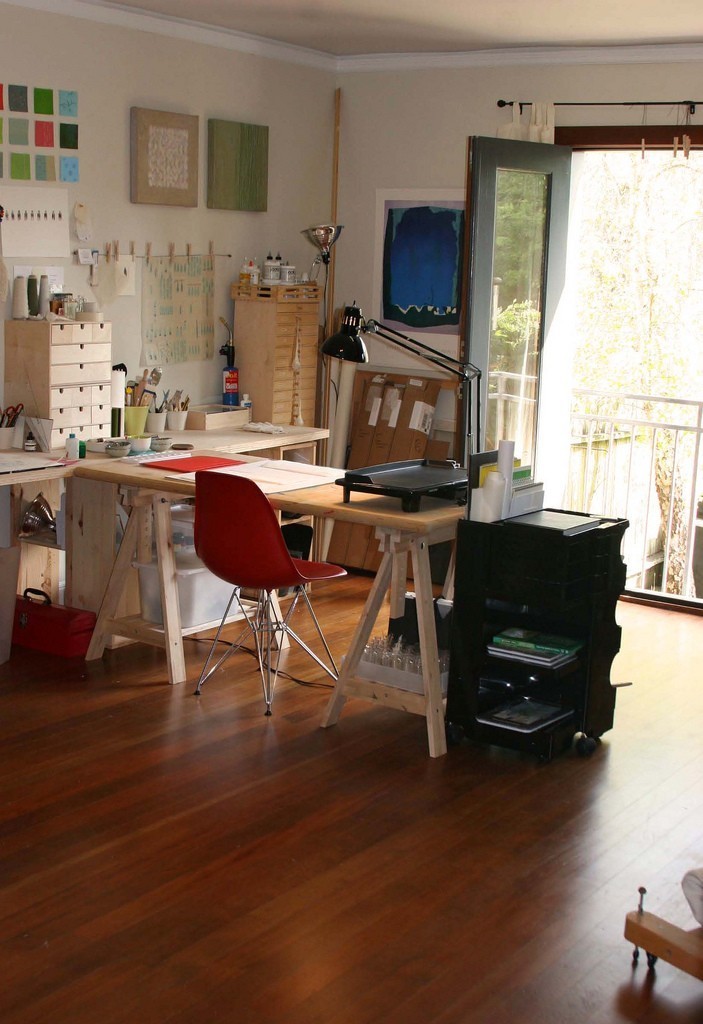
“The L-shaped desk configuration is a workflow game-changer.”
Position your primary task—for instance, your computer or main drawing area—on one leg of the ‘L’. Use the other leg as your secondary surface for layout, supplies, or packing. The key is to place the setup near a source of natural light, as seen here with the glass-paned door. This ensures your main workspace is beautifully lit. The red chair is a clever touch; in a largely neutral space, a single, bold colorful chair adds a focal point of energy.
21. Eclectic Art Studio with Colorful Painted Murals
A simple painted mural can completely transform a room, and you don’t need to be a great artist to do it. Let’s focus on the pink/purple section with red circles. Time: 4 hours. Cost: $60 (for paint samples).
- Choose Your Palette: Pick 3-4 colors. Get sample pots of latex wall paint.
- Paint the Base Shape: Paint a large, organic ‘blob’ shape on the wall in your main color (the pink/purple).
- Create the Stencils: Use painter’s tape to create large ‘X’ or plus-sign shapes within your painted blob.
- Add the Second Color: Paint over the taped-off shapes with your second color. Let it dry, then carefully peel off the tape to reveal the pattern.
- Add Accent Dots: Use a round sponge brush or the bottom of a paper cup dipped in your accent color (red) to stamp on the polka dots. Embrace imperfection!
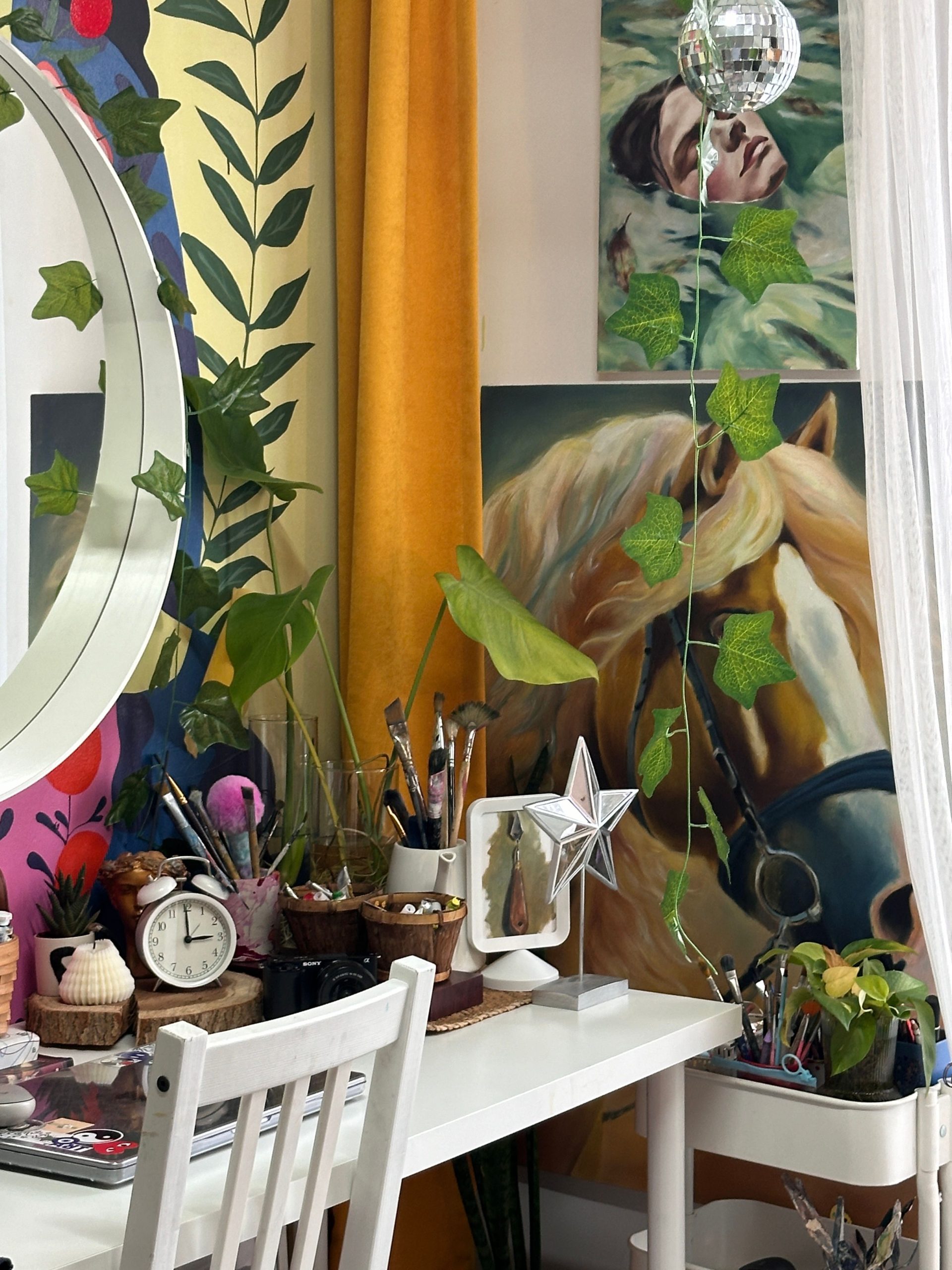
“This vibrant space is a lesson in ‘More is More.’ The style math here is about joyful maximalism: 40% competing patterns + 40% bold color fields + 20% neutral foundation.”
The patterns are the murals themselves (leaves vs. circles). The bold color fields are the mustard curtain and the large blocks of color in the paintings. The ‘neutral’ foundation is the white desk, chair, and floor, which gives the eye a place to rest and prevents the vibrant chaos from becoming overwhelming. It’s a delicate balance, but the white furniture is what makes it work.
22. Cozy Painting Corner with an Easel and Palette
The single most important element in this image is the paint palette itself. It’s what tells the story of active creation. The canvas on the easel is beautiful, but the palette is where the work happens. The casual smear of the brush, the messy mixing of colors—it’s a snapshot of the artistic process, mid-thought. It’s a reminder that a studio’s beauty often lies not in its tidiness, but in the evidence of the work being done. It feels authentic and immediate, making you want to pick up a brush yourself.
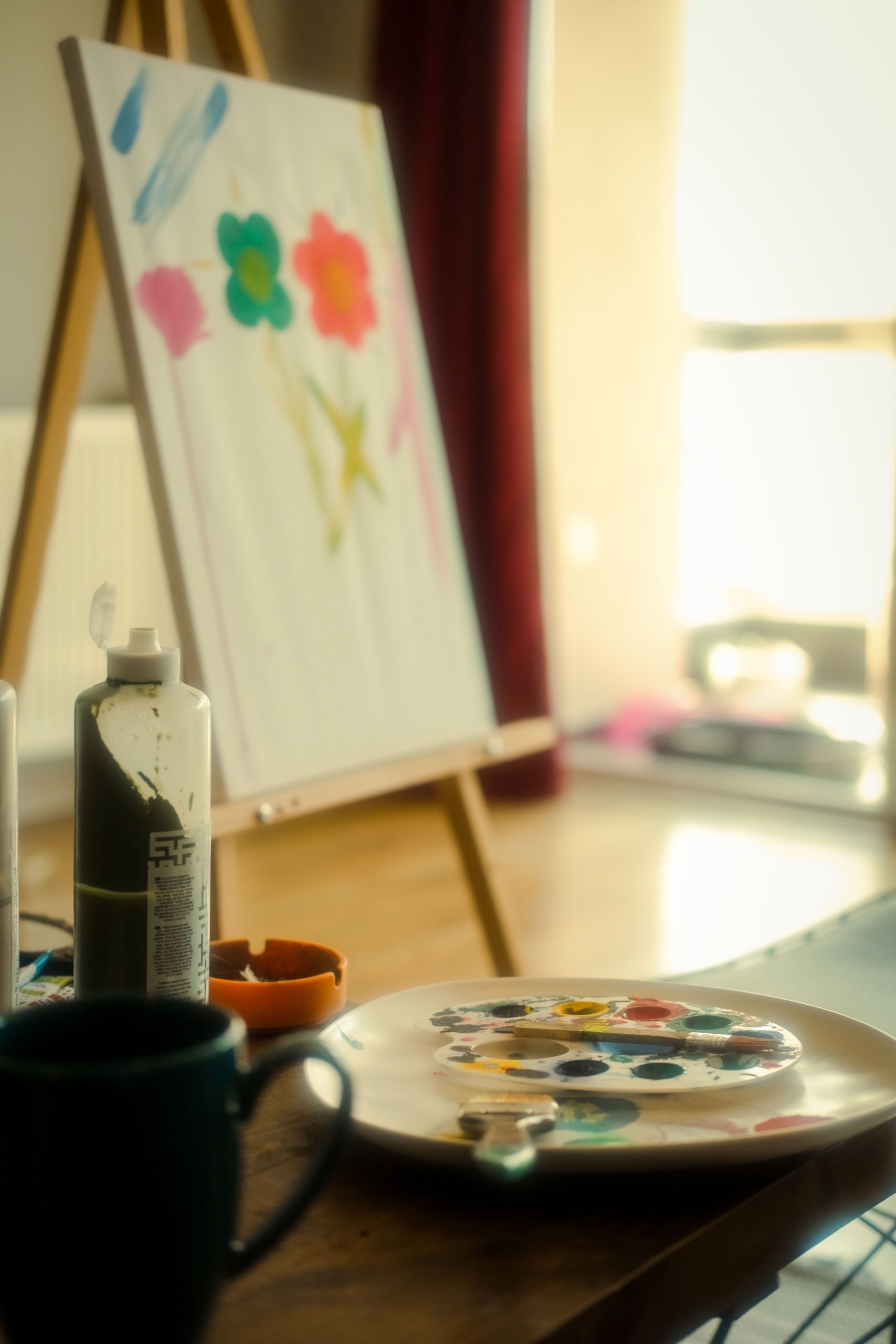
“You can assemble a fantastic beginner’s oil or acrylic painting kit for under $50, which will get you everything you need to create a cozy corner like this.”
Start with a basic tabletop easel from a craft store like Michaels or Hobby Lobby ($15-$20). Buy a student-grade set of acrylic or oil paints, which usually includes a dozen core colors for about $20. Add a pack of assorted brushes ($10) and a disposable paper palette pad ($5) for easy cleanup. The only thing left is a canvas, and you’re ready to start painting.
23. Airy Studio with Industrial Windows and Sculptural Ceramics
This room’s serene, artistic atmosphere is born from the fusion of rustic and industrial styles. The black, grid-like window frames are a classic industrial feature, providing strong geometric lines. The floor, with its distressed light blue tiles, adds a touch of aged, almost coastal character. But the real masterstroke is the rough-hewn wooden table. It’s a profoundly rustic, organic element that acts as a bridge between the hard industrial window and the soft, handmade quality of the white ceramic sculptures. The combination feels curated and soulful.
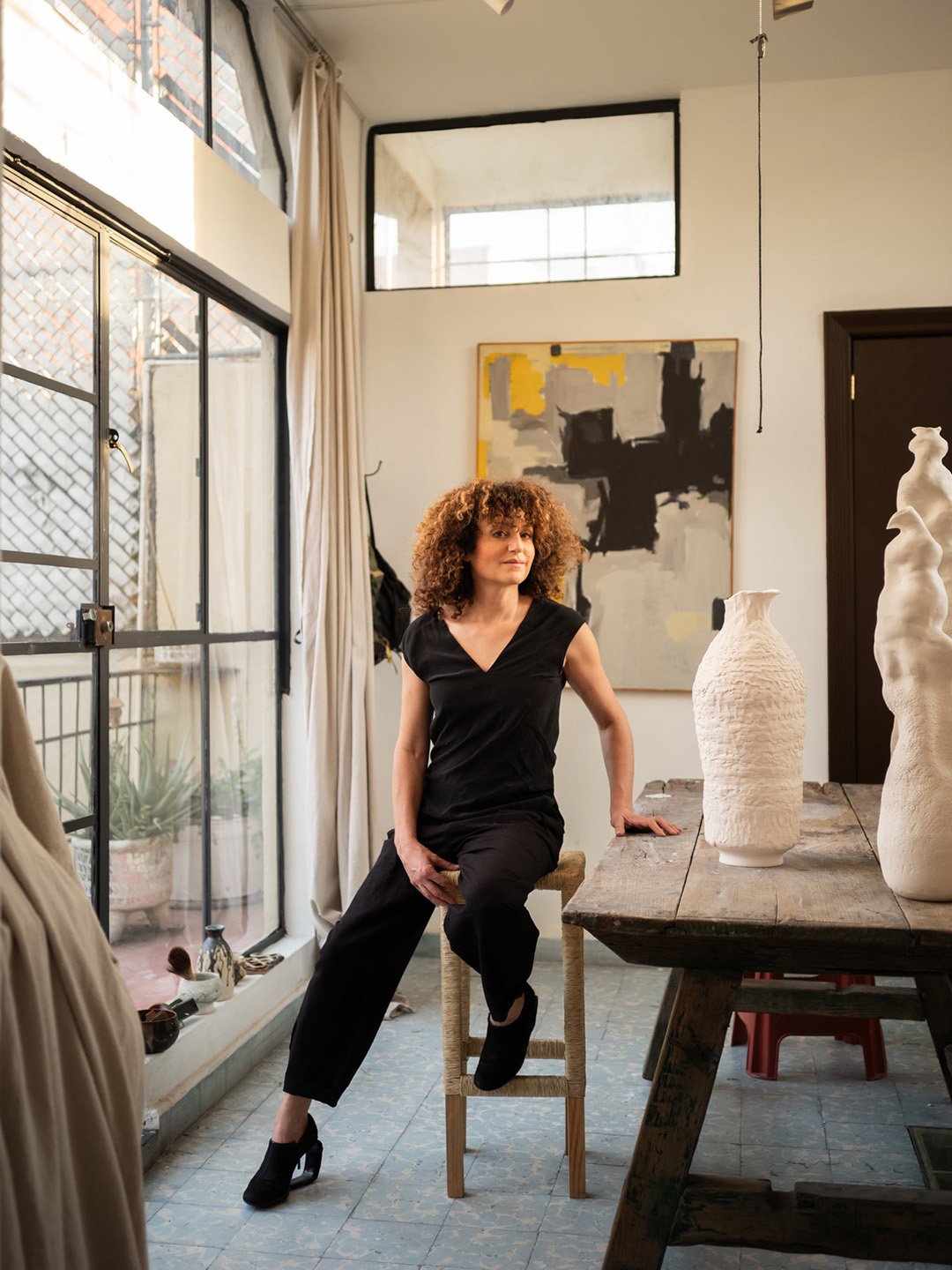
“Large, multi-pane industrial-style windows are stunning, but they can be a chore to keep clean.”
All those individual panes and metal frames are magnets for dust and fingerprints. To tackle the job efficiently, don’t use paper towels, which leave lint. A good quality squeegee and a microfiber cloth are your best friends. For the frames, a soft brush (like a paintbrush) is excellent for getting dust out of the corners before you wipe them down. It’s a task you’ll likely need to do once a month to keep them looking pristine.
24. Modern Studio with a Large Planted Aquarium
An aquarium, especially a large, planted ‘aquascape’ like this one, is not a piece of decor—it’s a living ecosystem that requires a significant, ongoing commitment. You’re signing up to be a part-time marine biologist. Weekly water changes, filter maintenance, nutrient dosing for the plants, and monitoring water parameters are all part of the deal. While the result is a stunning, dynamic focal point, be honest with yourself about whether you have the time and dedication for the upkeep before you invest. It’s a pet, not just a pretty object.
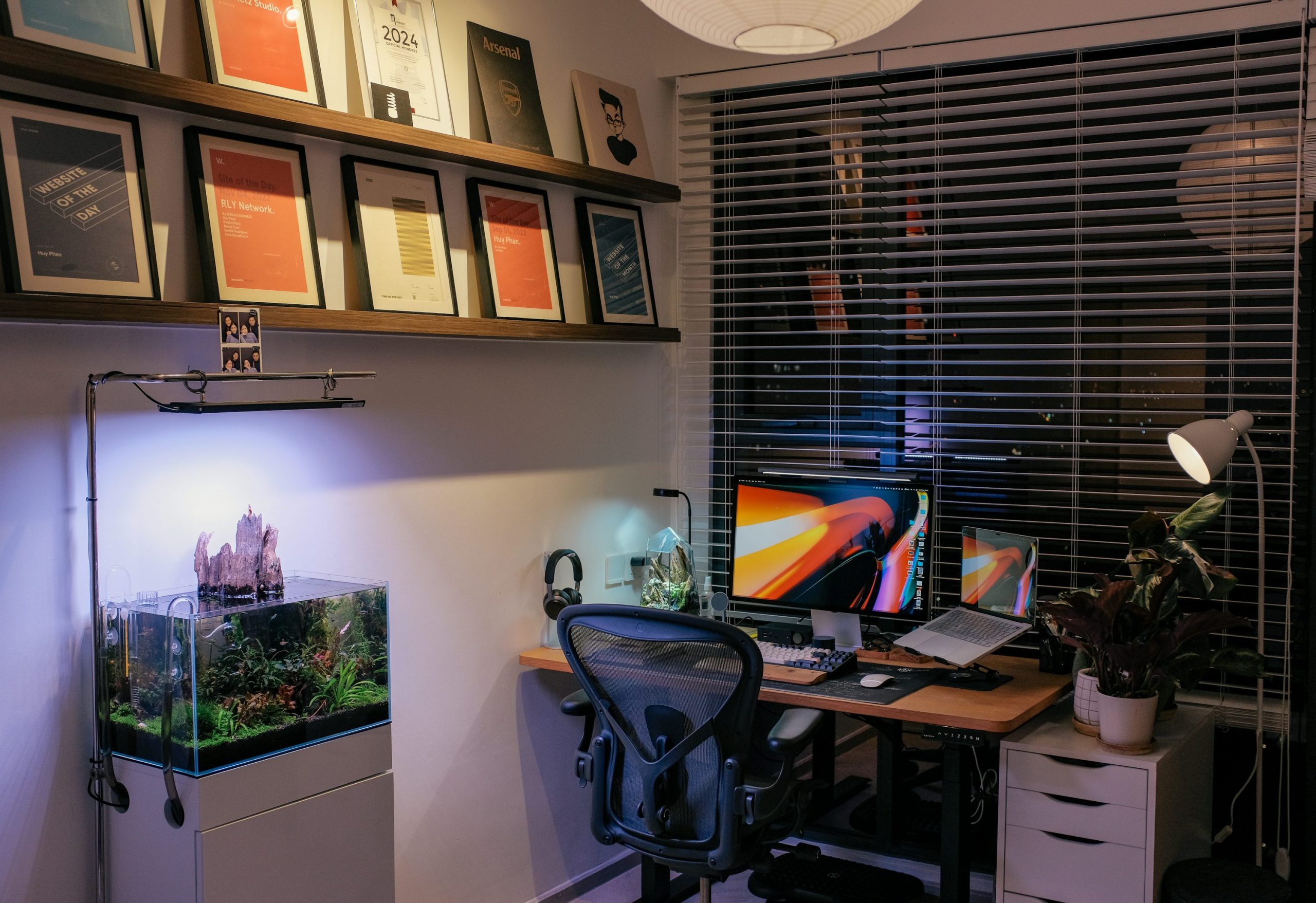
“Look at how the aquarium’s light is being used as a major source of ambient lighting for the entire room.”
In the evening, the dedicated aquarium light (especially one with blue or purple tones) can cast a beautiful, serene glow that creates a relaxing atmosphere. When planning your studio lighting, think of a feature like this as one of your ‘layers.’ You have the task lighting on the desk, the main overhead room light, and then this beautiful, colorful ambient light from the tank. It adds depth and mood to the space.
25. Minimalist Studio Apartment with Wood-Paneled Walls
Zoning is the key to making a studio apartment feel like a functional home. This design works best in a rectangular space between 400 and 600 square feet. The wood paneling is a clever visual trick; it creates a distinct ‘zone’ for the kitchen and dining area without building walls. This technique, called ‘material zoning,’ makes the space feel organized and intentionally designed. The furniture placement then reinforces these zones: the sofa carves out the living area, and the small table defines the dining nook. Compare with the divider used in Idea #30.
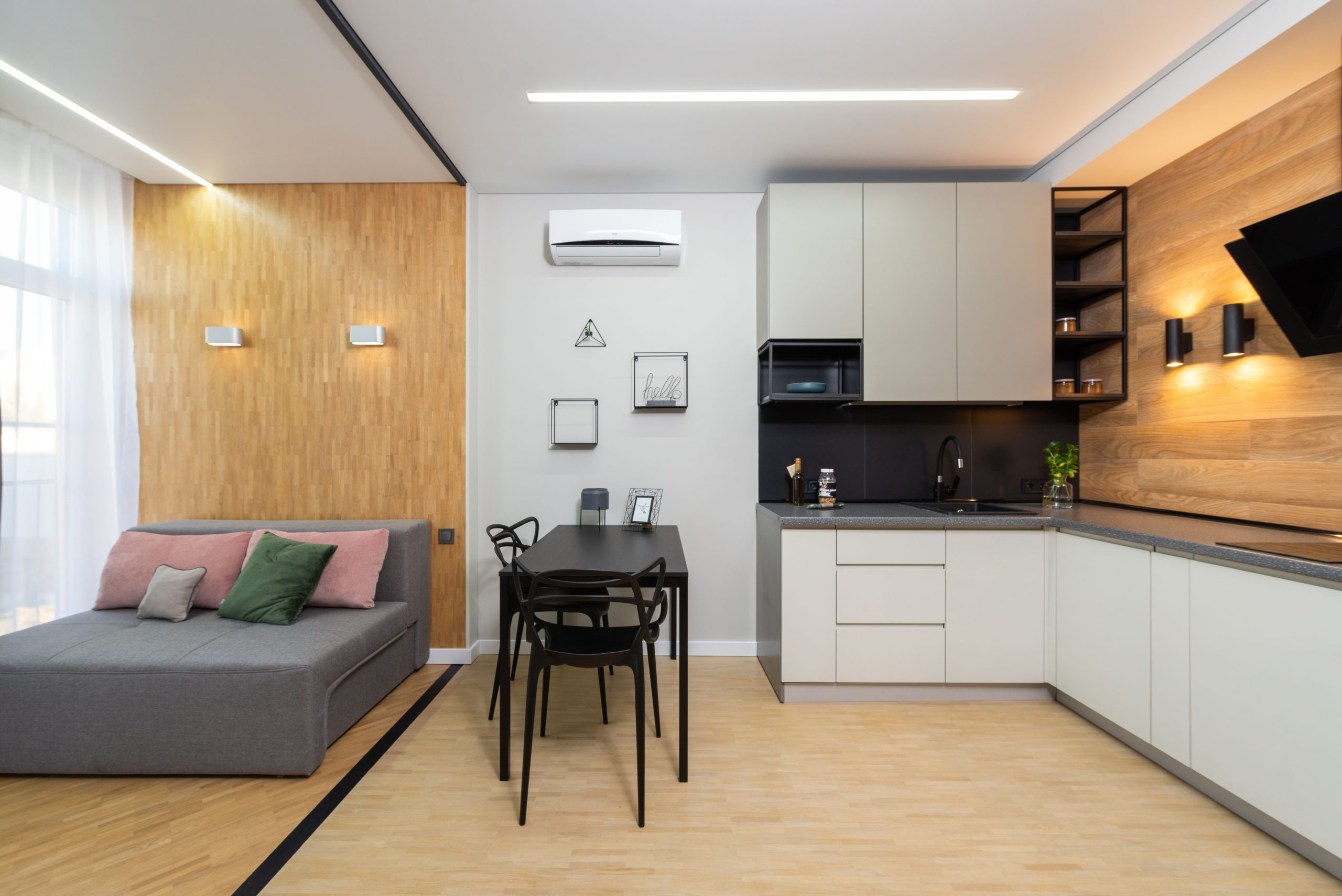
“Before committing to a design with integrated wall and ceiling lighting, it’s crucial to map out your electrical plan.”
This isn’t something you can easily change later.
Lighting Placement: Where do you need task lighting (over the kitchen counter, over a desk) versus ambient lighting (general illumination)? Mark these spots on a floor plan.
Switch Locations: Where will the switches for these lights be located? Think about natural pathways. You’ll want a switch for the main lights right by the entrance, for example.
Future Needs: Try to anticipate future furniture layouts. Will that linear light still make sense if you move your dining table in two years?
Consult an Electrician: Integrated lighting, especially linear ceiling lights, requires professional installation. Get a quote early in your planning process.
26. Open-Concept Living with Metallic and Light Wood Accents
This serene space follows a sophisticated design equation: 60% neutral base + 20% natural texture + 10% soft color + 10% metallic shine. The beige-grey cabinets, white walls, and marble backsplash form the neutral, calming base. The herringbone wood floors and walnut island provide the essential natural texture and warmth. The light blue sofa is the single, soft color injection. Finally, the brass pendant lights and metal partition add the crucial 10% of metallic glamour. It’s a balanced formula that feels luxurious but understated.
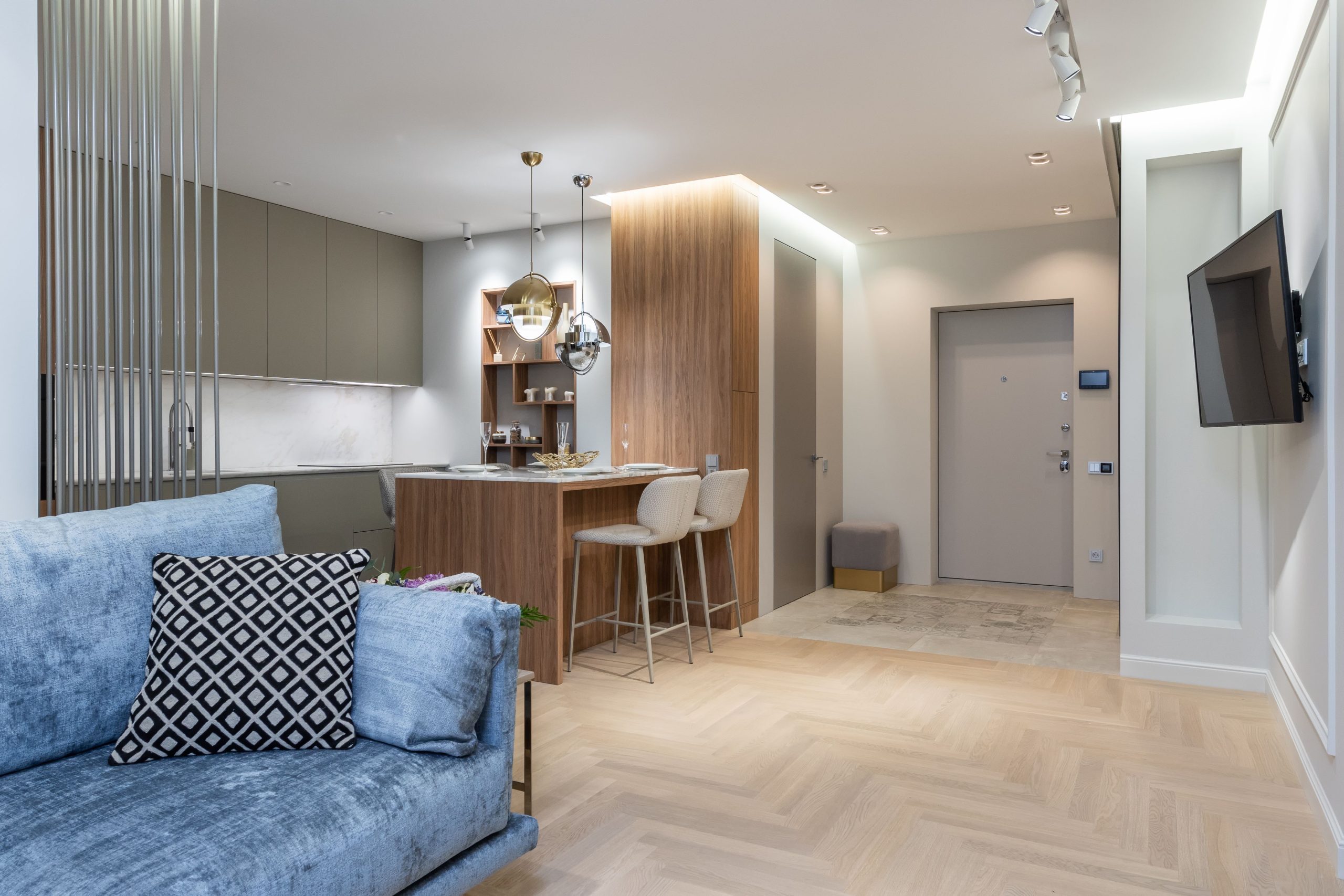
“A vertical metal rod partition, like the one seen here, is a brilliant solution for defining a space without sacrificing light or openness.”
It creates a psychological boundary between, for example, an entryway and a living room, suggesting separation. Unlike a bookshelf or a solid wall, it allows light to pass through and maintains long sight-lines, which is key to making an open-concept plan feel spacious. These can often be custom-made by a local metal fabricator for a surprisingly reasonable price compared to other types of construction.
27. Minimal Home Office with a Two-Tone Green Wall
The feature that elevates this simple office from nice to ‘designer’ is the two-tone wall. It’s a high-impact, low-cost graphic element that adds instant architectural interest. By painting only the bottom portion of the wall in the muted green, it grounds the space and provides a deliberate backdrop for the desk. It also makes the room feel taller, as the eye is drawn to the crisp line where the two colors meet. This is a far more sophisticated choice than a simple, solid-colored accent wall.

“This calm, organic look is incredibly achievable on a budget.”
The two-tone wall effect only requires a roll of painter’s tape and two quarts of paint. The desk could be a simple, affordable piece from Target or IKEA, or even a DIY project using a painted kitchen countertop. The black-framed abstract prints are the kind of decor you can easily find on Etsy or Society6—often you can buy digital downloads for a few dollars and print and frame them yourself to save even more. Add a few low-cost plants, and you’ve captured the essence of this room for under $200.
28. Basement Home Studio with Exposed Ductwork
Instead of spending a fortune on drywall to hide the ‘bones’ of a basement, this studio embraces them. Painting the concrete block walls white and leaving the ductwork and joists exposed creates a cool, industrial-loft vibe for the cost of a few gallons of paint. This ‘unfinished’ approach saves thousands on construction and puts the focus on the furniture and creative work. Leaning into the industrial character of a basement is a smart, budget-savvy design move. The money you save on finishing can be invested in great storage and a comfortable chair. For a brighter alternative, see the natural light in Idea #6.
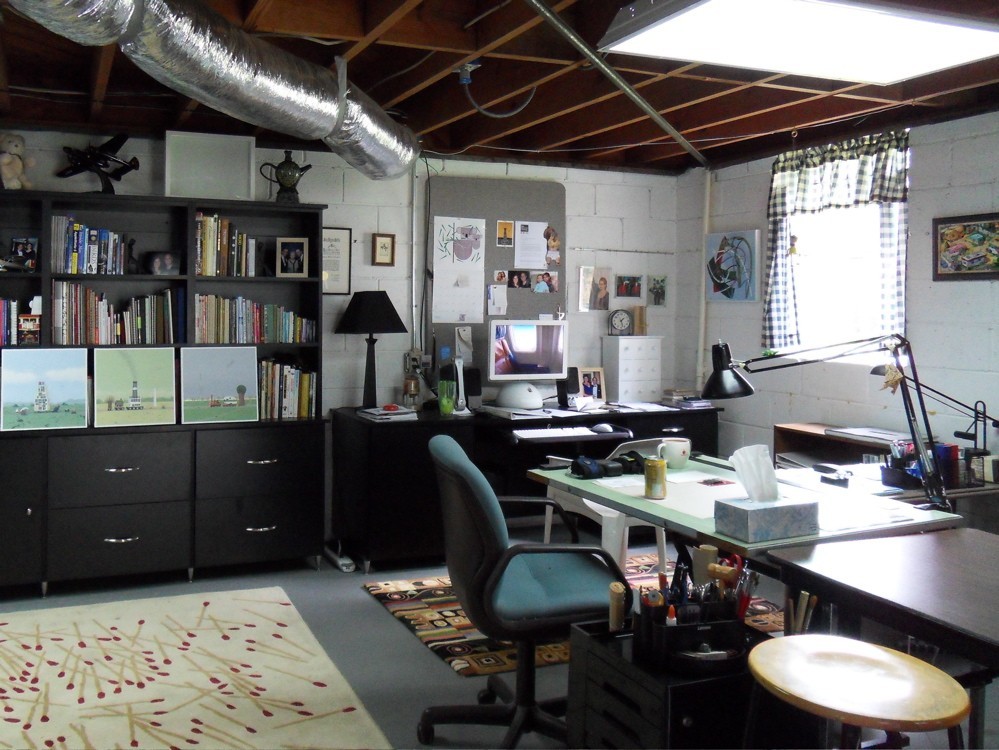
“Basements come with a unique set of challenges.”
Before setting up your creative sanctuary, you need to address the practicalities. First, check for dampness. A dehumidifier is often a non-negotiable piece of equipment to protect your supplies, electronics, and finished work from moisture and mildew. Second, lighting can be tough. The lack of natural light means you’ll need to invest heavily in good artificial lighting—a mix of bright overhead fixtures and targeted task lamps. Finally, test for radon, an invisible gas that can be present in basements and is a health hazard.
29. A Busy, Light-Filled Studio Overflowing with Creativity
Some might see mess, but a designer sees ‘creative chaos.’ This space works because it feels authentic and lived-in. The sheer abundance of supplies, works-in-progress, and personal items tells the story of an active, fertile creative mind. The key is that the mess is contained within a bright, well-lit space with a simple, neutral backdrop (light gray walls, simple wood furniture). This prevents the ‘chaos’ from feeling dirty or stressful. It’s a testament to the idea that a studio should be a functional workspace first, not a pristine showroom.
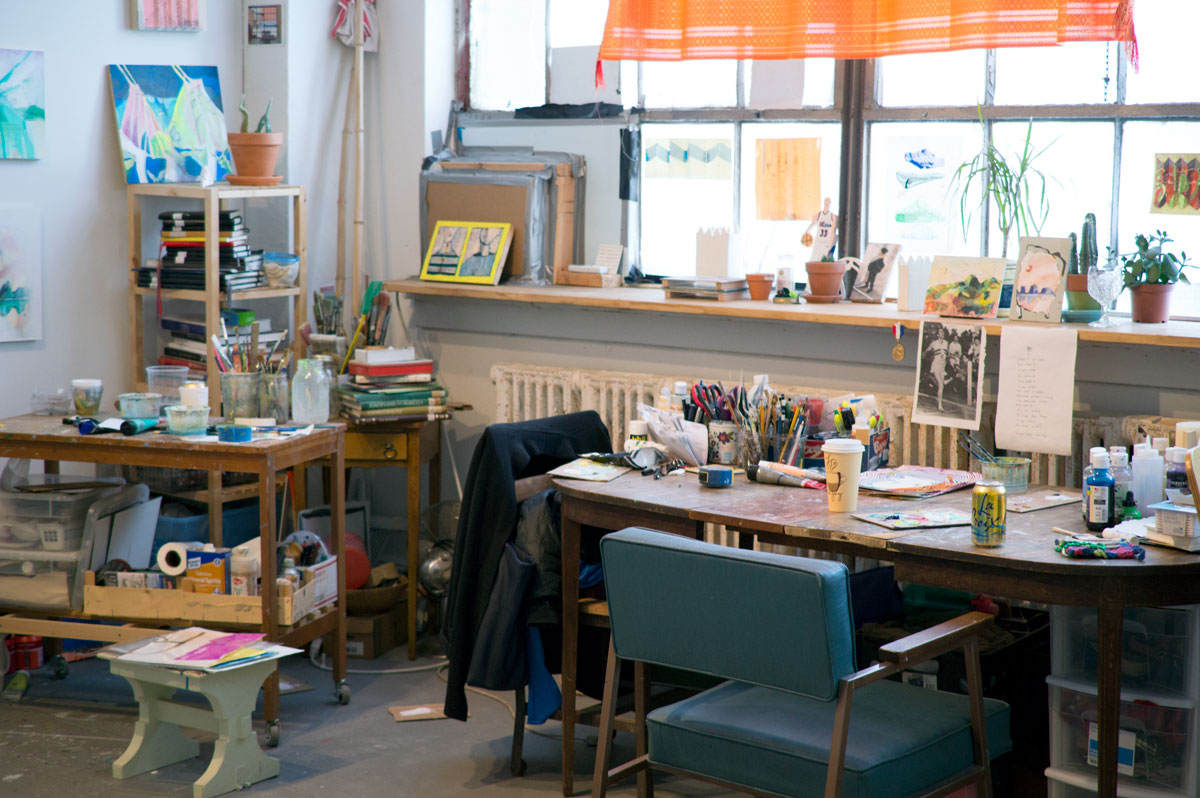
“When you have a studio this busy, smart storage is what separates functional clutter from pure chaos.”
The key is ‘a home for everything’. Invest in a mix of open and closed storage. The open wooden bookshelf here is great for things you want to see and access easily. But you also need closed storage—cabinets, drawers, or bins—to hide away the less sightly items like rags, bulk supplies, or unfinished projects that you don’t want staring at you. The goal is to be able to ‘reset’ the space to a baseline level of tidy when you need a clear head.
30. Modern Studio with an Angled Wooden Room Divider
This angled wooden divider is a brilliant way to add architectural interest and create separation in a studio apartment. You can build a similar, simplified version yourself. Time: 1 weekend. Cost: $150-$300.
- Build the Frame: Construct a simple rectangular frame from 2x4s that fits snugly between your floor and ceiling.
- Secure the Frame: Anchor the frame to the floor, ceiling, and any adjacent walls for stability.
- Source the Planks: Purchase 1×6 inch pine or cedar boards. Cut them to size, varying the angle of the cuts on the ends for a more dynamic look.
- Attach the Planks: Nail or screw the planks to the frame, leaving small, even gaps between them. You can use a coin or a small piece of wood as a spacer.
- Finish: Lightly sand the planks and finish with a clear matte or satin varnish to bring out the natural wood grain.
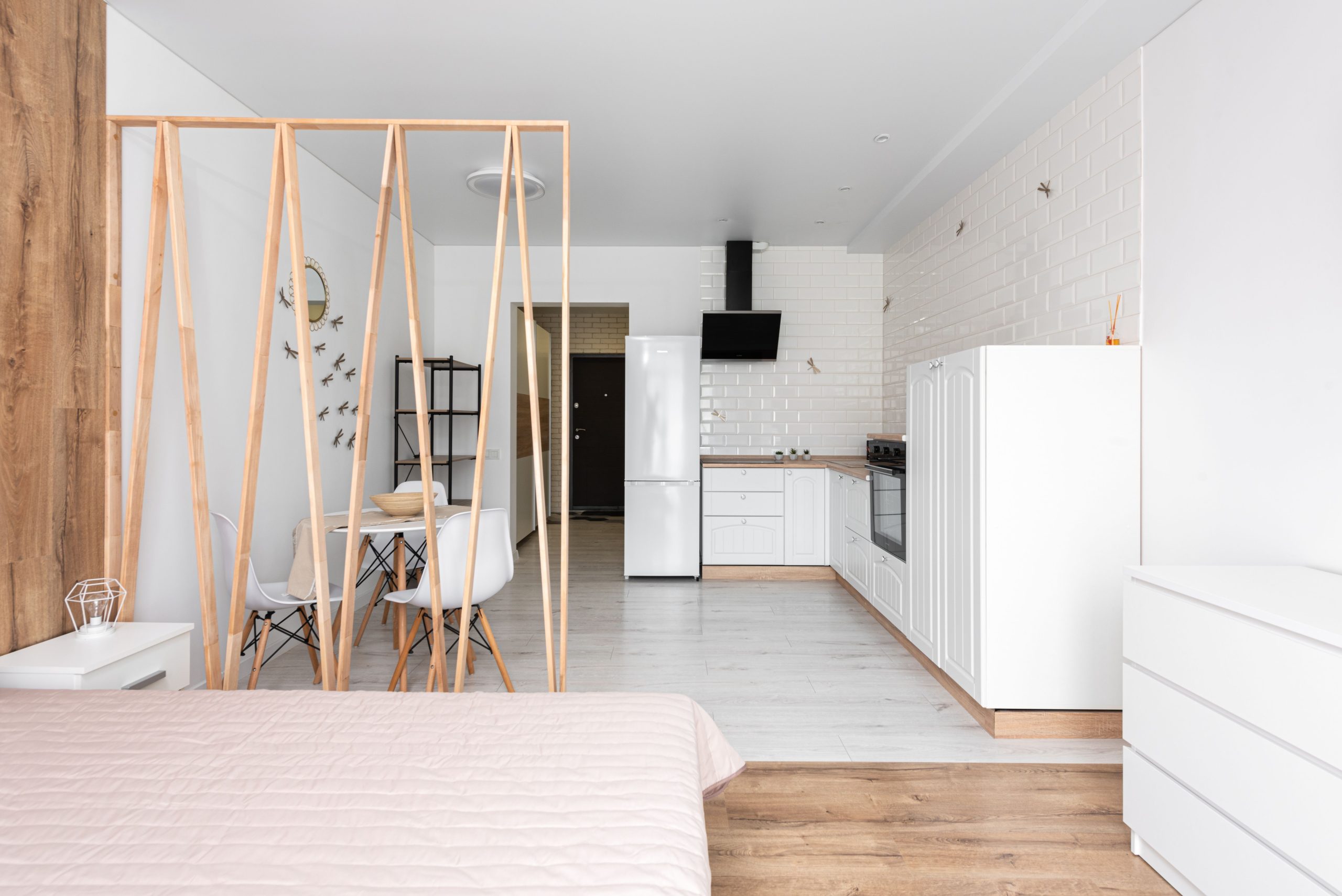
“A room divider like this is an ideal solution for smaller studio apartments, especially those under 500 square feet.”
Unlike a solid wall, it separates the sleeping area from the living area without completely blocking light or sightlines, which helps the space feel larger. The angled planks provide a sense of privacy for the bed while still allowing glimpses through, maintaining a sense of connection throughout the apartment. This is a much more sophisticated and permanent-feeling solution than a folding screen or a curtain.
31. Cozy Industrial Studio with Exposed Brick and Wood
Achieving this warm, industrial-meets-cozy aesthetic is all about balancing key textures and lighting. Here’s an estimated budget for the core elements:
- Desk (Large wooden top with metal legs): $400 – $1,200
- Shelving (Industrial metal bookshelf): $200 – $800
- Lighting (Tiered desk lamp, under-desk LED strip): $150 – $400
- Ergonomics (Monitor, tablet, chair not pictured): $500 – $2,000+
- Wall Treatment (Exposed brick or brick veneer paneling): $500 – $1,500
- TOTAL: $1,750 – $5,900
Budget alternative: Use brick-patterned peel-and-stick wallpaper for the wall effect, and build a desk from a butcher block countertop and pipe fittings for a similar vibe under $800.
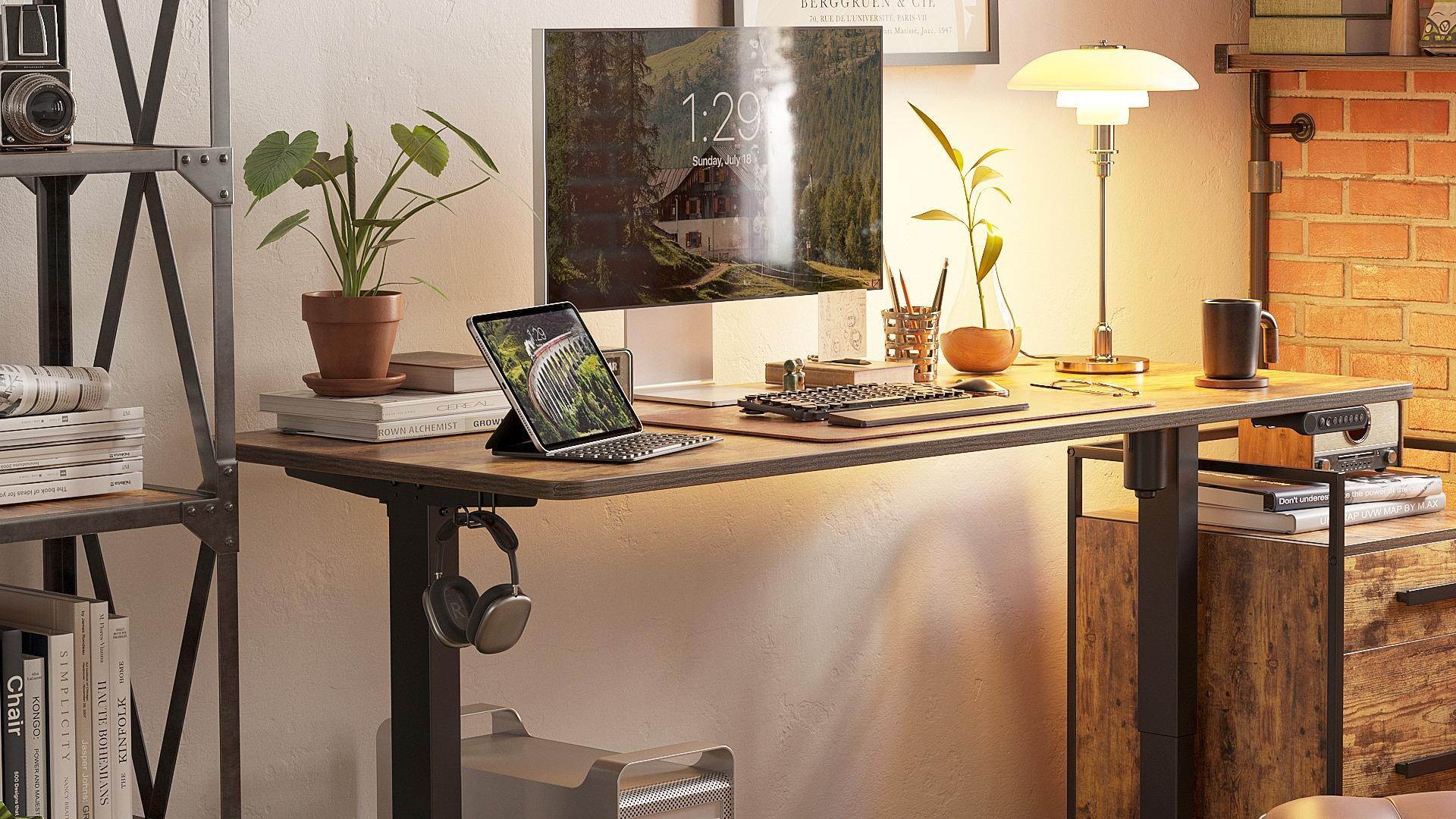
“This room’s success comes from its expert blending of ‘cool’ and ‘warm’ elements.”
The exposed brick and dark metal shelving unit provide the ‘cool’ industrial edge—they are hard, raw, and full of texture. This could easily feel cold, but it’s balanced by an abundance of ‘warm’ elements. The large wooden desktop, the soft, ambient glow from the tiered lamp, and the wash of light under the desk all contribute a sense of warmth and coziness. This balance is what makes the space feel both productive and inviting. This is the perfect illustration of why mixing materials is so important.
Your Creative Sanctuary Awaits
Whether you have a spare corner or a whole room to dedicate to your craft, the right design can transform it into a space that doesn’t just hold your tools, but actively inspires you. The key is to blend functionality with your own personal story. Ready to start creating? Pin your favorite ideas from this list to your board and begin mapping out the studio you deserve.