Most Wind Chime Ideas guides get it wrong — they’re either too generic or focus on looks that just don’t last. Here’s what actually works in 2026. After filtering through hundreds of options across Etsy, World Market, and Amazon, we narrowed it down to 31 ideas that actually deliver. Inside, you’ll find 31 curated wind chime ideas covering Japanese-inspired glass, rustic terracotta, and coastal seashell styles. In 2026, it’s all about creating sensory-rich spaces that engage more than just our eyes, and the gentle sound of a well-chosen chime is the perfect starting point. And stay until the end — we break down the most common mistakes that can ruin these looks. 📌 Save this to Pinterest for later — you’ll want to revisit these ideas.
1. Vibrant Translucent Spherical Chimes Under a Bamboo Canopy
What makes this work is the power of repetition and variation. The grid of bamboo creates a strong, organized structure, but the chimes themselves are a riot of joyful color—red, teal, yellow, and pink. This contrast between the orderly canopy and the playful chaos of the spherical bells is visually magnetic. The use of translucent material catches the light beautifully, making the whole installation feel alive and dynamic, rather than just a static object.

“When creating a dense display like this, the key is varying the hanging height.”
Don’t suspend all the chimes at the exact same level. Stagger them by 2-4 inches to create visual depth and prevent them from clanging into each other constantly, which can create a cacophony instead of a pleasant sound. This small adjustment allows each chime to move freely and contributes to a more complex, layered look that feels intentionally curated rather than just crowded.
2. Colorful Glass Orbs with Inscribed Wooden Tags
The formula here is about balancing delicacy with earthiness. It’s roughly 50% delicate glass + 30% natural wood + 20% organic texture. The airy, colorful glass spheres provide the main visual pop, while the small, rectangular wood tags act as a visual anchor, grounding the ethereal glass with something solid and warm. The natural cord and simple beads are the connective tissue that makes the pairing feel intentional. You could swap the glass colors for a monochromatic scheme and it would still work, as long as you keep that wood element for contrast.
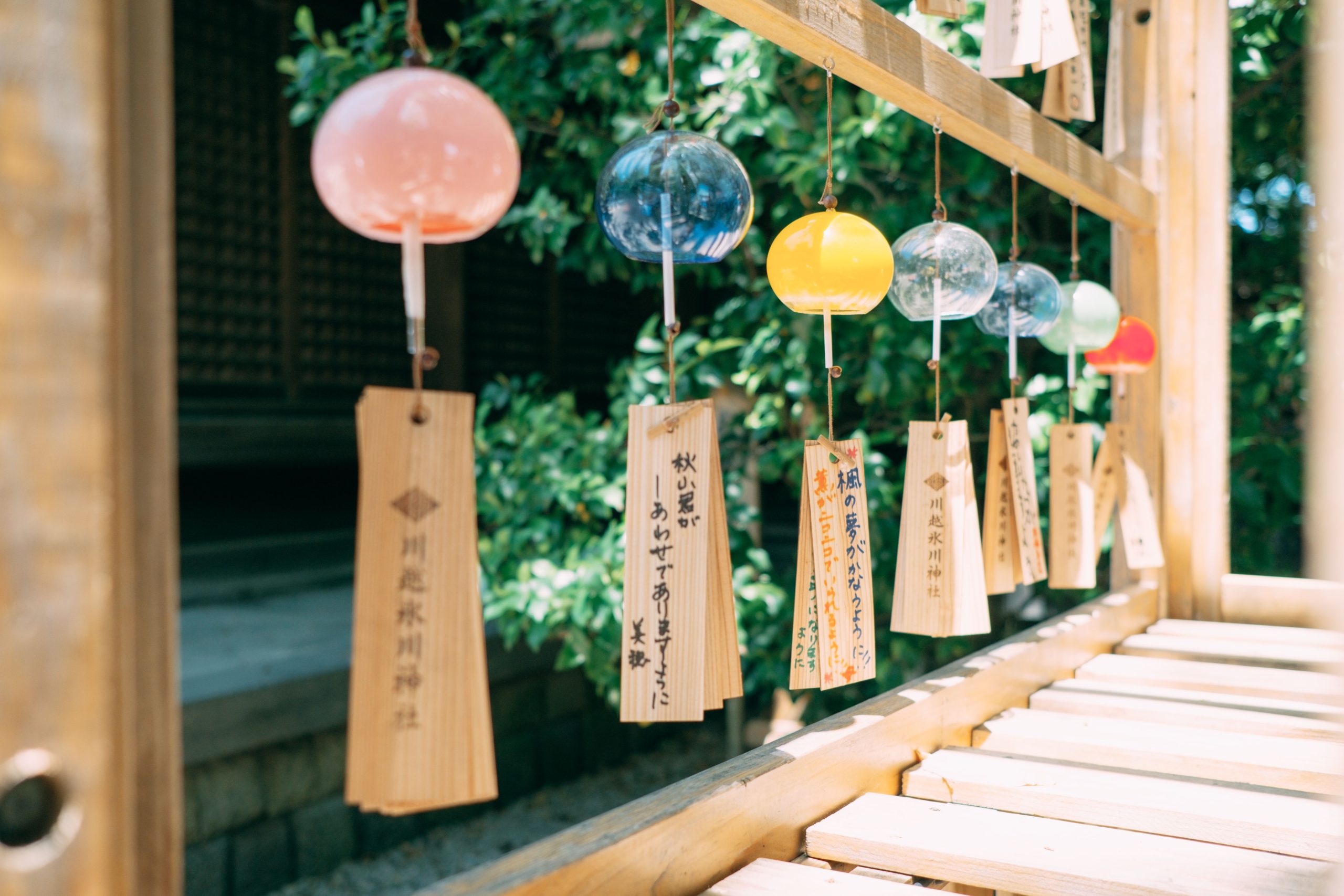
“Let’s be honest: delicate glass chimes in an area with high winds or active kids and pets can be a recipe for heartbreak.”
These are best suited for a sheltered porch, a sunroom, or even indoors near a window where they can catch a gentle breeze. If your heart is set on this look for a more exposed area, consider hanging it high enough to be out of the immediate path of traffic and away from overhanging branches that could knock against it during a storm.
3. Translucent Teal and White Capiz Shell Disc Chime
that makes this design so captivating is the capiz shell material itself. If you were to replace these translucent discs with opaque plastic or metal, the entire effect would be lost. Capiz shells have a unique, pearlescent quality that filters and diffuses light in a way other materials can’t. It’s this ethereal glow, combined with the gentle, clinking sound, that gives the chime its serene, coastal vibe. The specific color pairing of teal and milky white against the weathered wood is perfect, but the magic truly lies in the material.
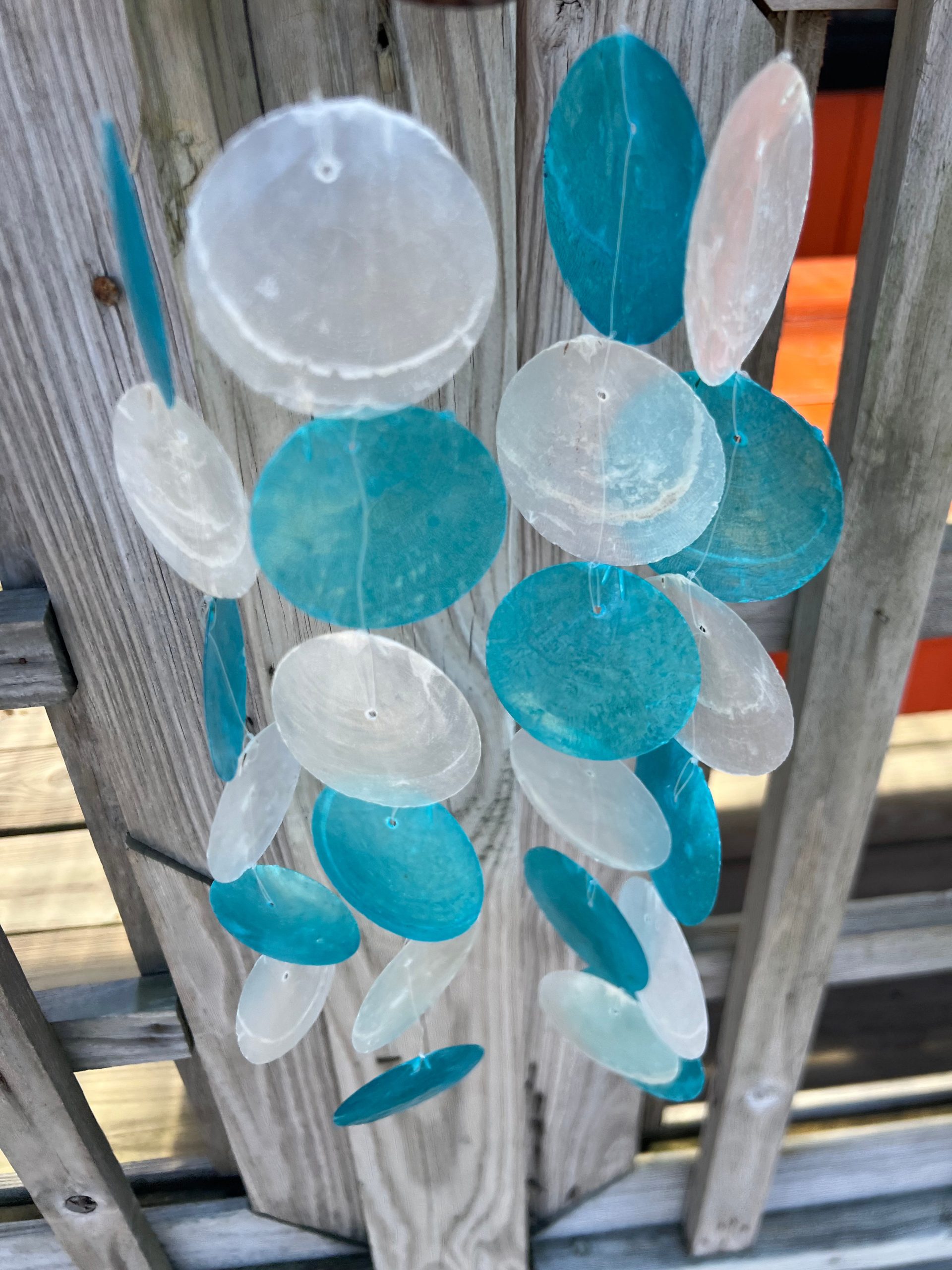
“Capiz shells are beautiful but brittle.”
To clean them, avoid harsh chemicals or abrasive cloths. A simple wipe-down with a dry or slightly damp microfiber cloth is usually enough to remove dust. For a deeper clean, use a mild soap and water solution, but be sure to dry the shells immediately to prevent water spots. Over time, the thin strings can become brittle from sun exposure. Plan to inspect them annually and restring every 3-5 years, especially if the chime is in a location with significant sun and wind.
4. Dark Metal Tube Chime on a Shaded Porch
This style of large, tubular chime works best in a space with some architectural heft and a ceiling height of at least 9 feet. The deep tones these chimes produce need room to resonate without being overwhelming. This look is perfect for a covered porch, a large veranda, or suspended from a mature tree branch well away from the house. In a smaller space, like a compact balcony, the sound could be too loud for you and your neighbors. For smaller spaces, consider the more delicate glass or shell chimes like in Idea #2.
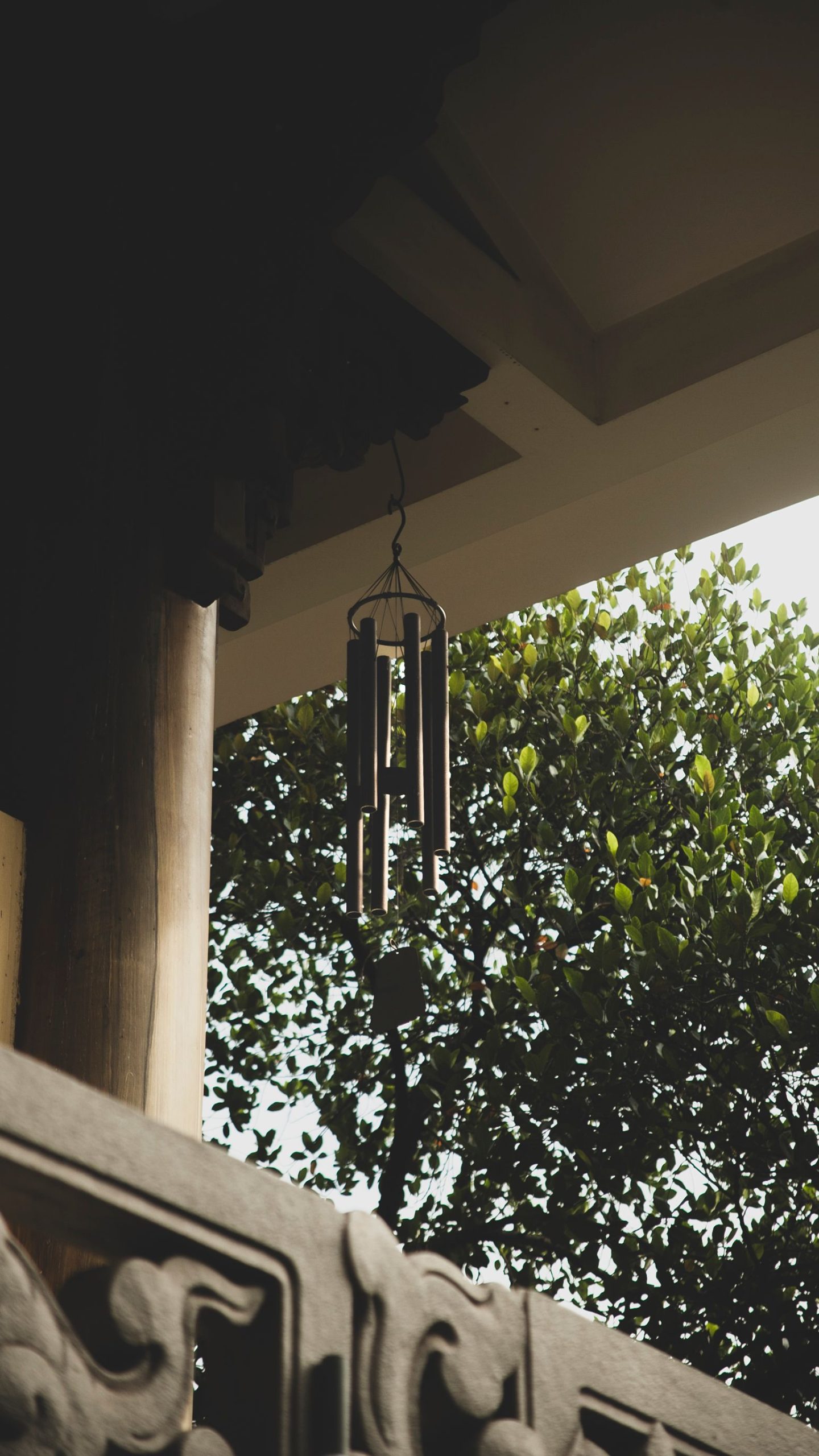
“The success of this scene lies in its masterful use of contrast.”
The dark, almost black, metal of the wind chime and the ornate balustrade creates a strong silhouette against the brightly lit, lush green foliage in the background. This play of light and shadow, with the chime positioned right on the edge of the shade line, draws the eye and creates a sense of peaceful enclosure. The simple, off-white porch ceiling acts as a neutral canvas, allowing the dark elements and vibrant greenery to stand out.
5. Rustic Wood and Metal Bell Chime on a Rough-Hewn Beam
You don’t need a custom-forged piece to get this rustic, found-object vibe. Start with a trip to a thrift store or browse Facebook Marketplace for old metal bells and interesting wood scraps. A set of bamboo cooking utensils can be deconstructed for the wooden tubes. The key is to look for varied textures. You can assemble your own version for under $30 using some sturdy twine, a drill, and your collection of found treasures. The slightly imperfect, handmade quality is what gives it charm, so don’t worry about everything being perfectly uniform.
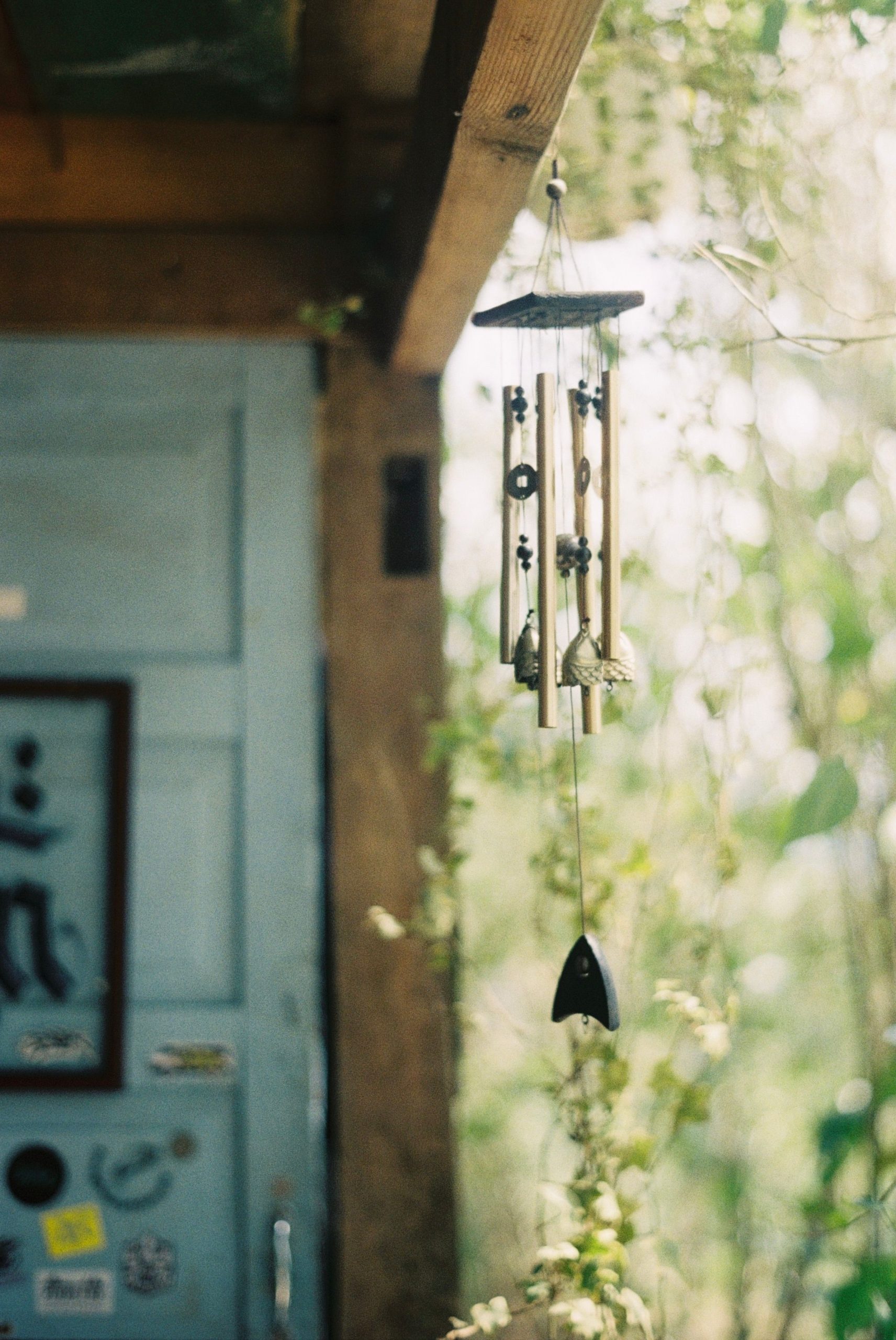
“This look is a perfect example of the ‘Cottagecore’ and ‘Modern Rustic’ trends merging.”
There’s a growing desire for home elements that feel handcrafted, personal, and connected to nature. The combination of weathered wood and aged metal speaks to a rejection of mass-produced perfection. It tells a story of time and use, which resonates with people looking to create homes that feel authentic and lived-in. This trend has staying power because it’s rooted in texture and natural materials, which are timeless design principles.
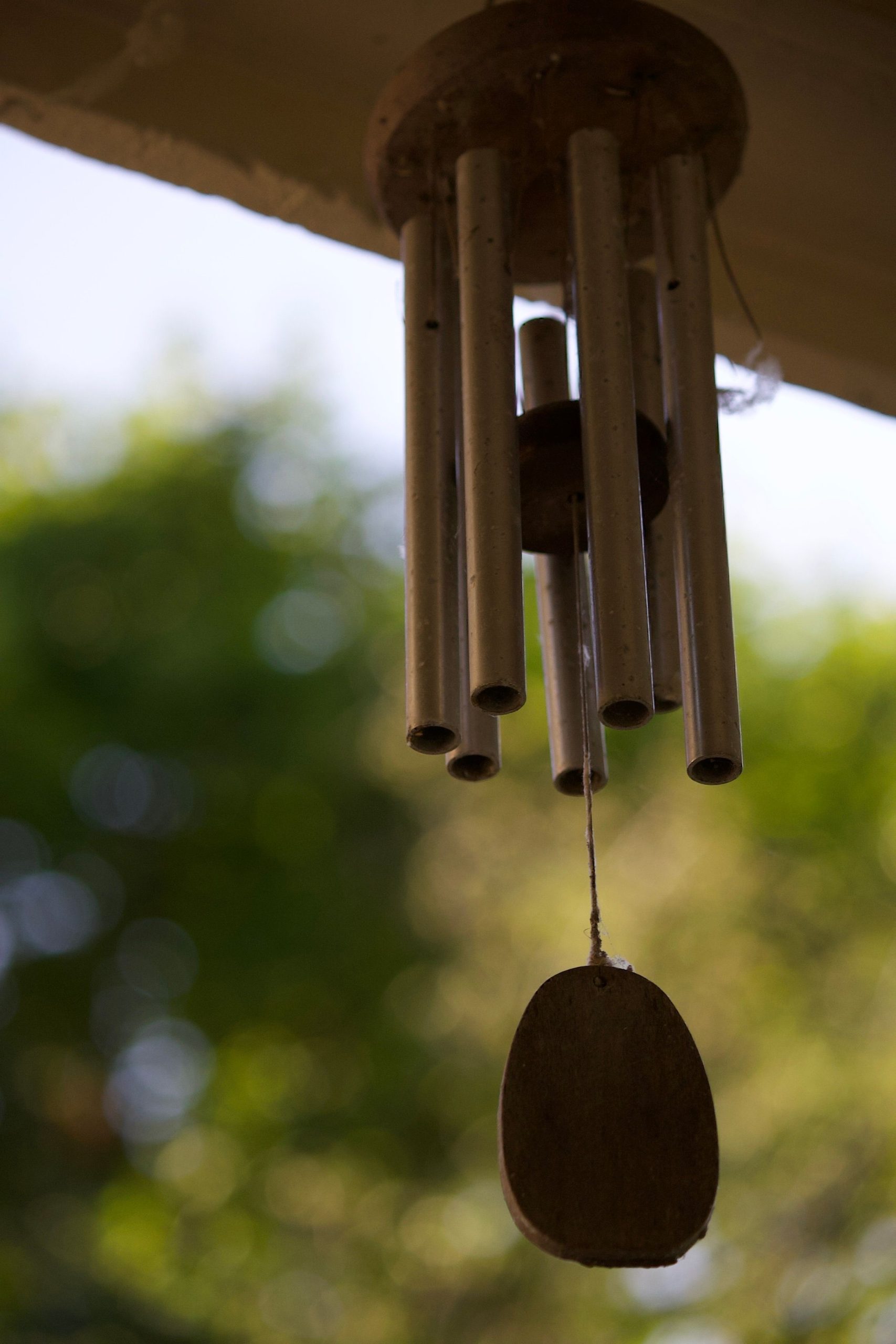
6. Weathered Cylindrical Metal Chime with Wooden Clapper
Want to get that perfectly weathered look on new metal tubes? You can speed up the aging process for a rustic finish. This DIY method works best on unfinished aluminum or steel. Total Time: 24-48 hours. Material Cost: Approx $15.
“Lightly sand the metal tubes with fine-grit sandpaper to rough up the surface.In a spray bottle, mix a solution of 1 part white vinegar to 3 parts water, and add a generous tablespoon of salt.”
Shake until dissolved.Spray the tubes thoroughly with the solution, ensuring they are completely coated.Let them sit in a well-ventilated outdoor area. The magic happens as they air dry.Re-spray every few hours for a more dramatic, uneven patina.Once you’re happy with the look, rinse them with clean water and let them dry completely before assembling your chime.
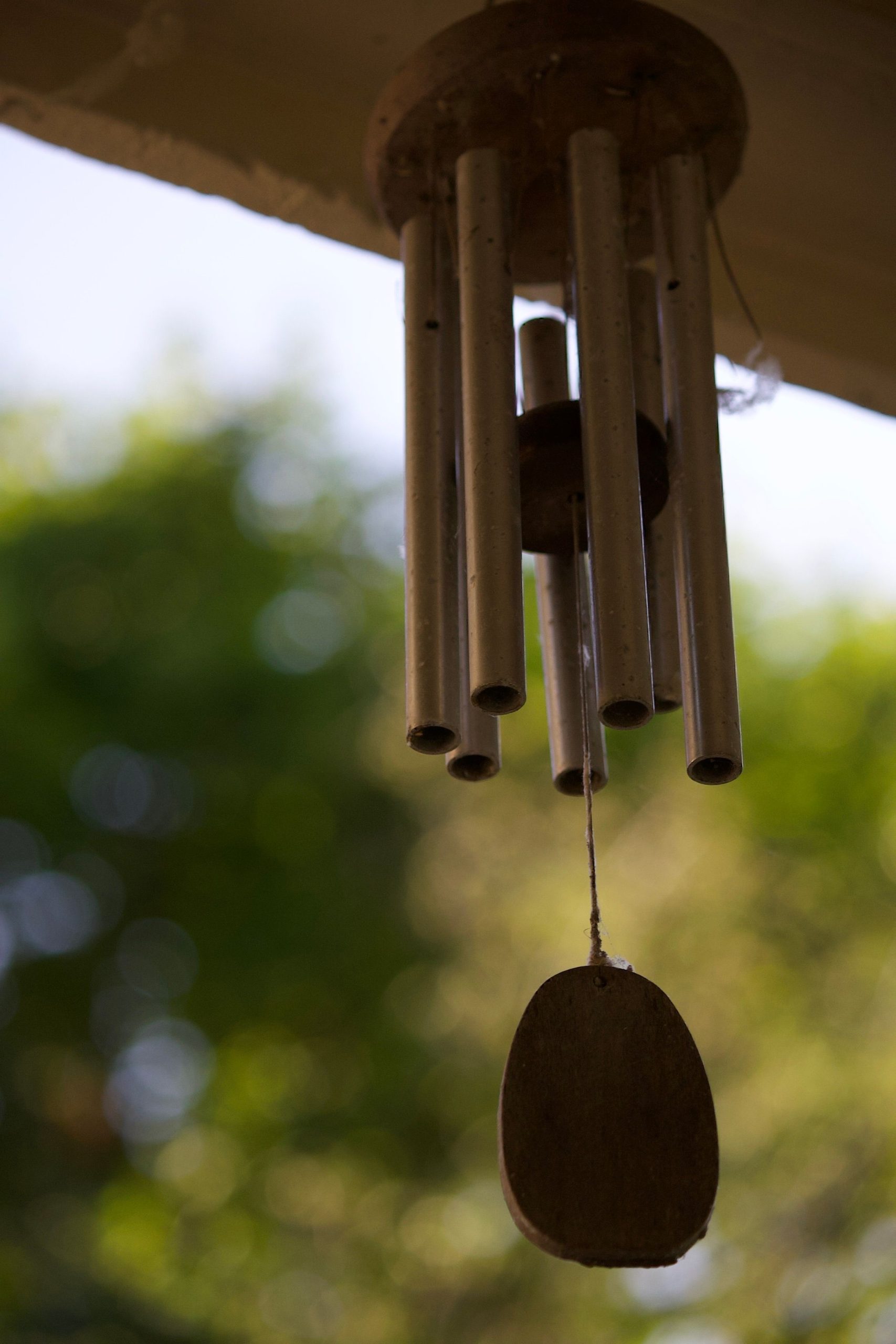
When choosing a wind chime, pay as much attention to the ‘sail’ or ‘clapper’ as you do to the chimes themselves. The size and weight of the clapper directly impact how often the chime will sound. A large, heavy clapper like the oval wooden one here will catch more wind and produce sound in a lighter breeze. A smaller, lighter clapper will require a stronger gust of wind to move the striker. For a perpetually breezy spot, choose a smaller clapper to avoid constant noise. For a sheltered area, a larger clapper will help you enjoy the sound more often.
7. Natural Seashell Cascade Hanging in a Sunlit Tree
that elevates this from a simple craft project to a piece of natural art is the sheer volume and variety of the shells. A single strand of uniform shells can look a bit predictable, but this design succeeds because it layers dozens of different shapes, sizes, and colors. The mix of smooth, spiraled, and ridged shells creates a rich tapestry of texture. It’s this commitment to abundance and diversity that gives the chime its lush, organic, and effortlessly beautiful appearance.
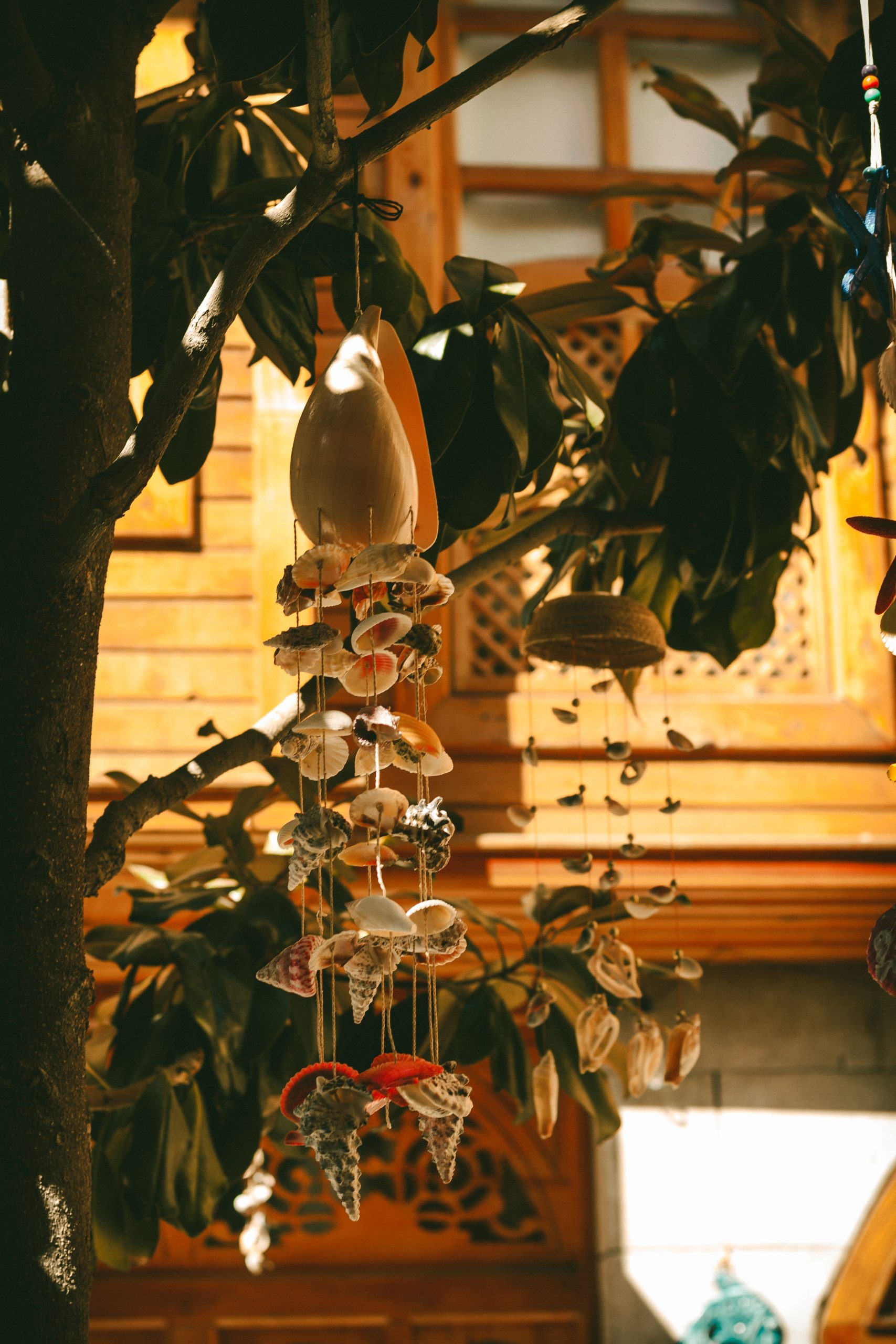
“Before you commit to creating or buying a large seashell chime, run through this”
Before you commit to creating or buying a large seashell chime, run through this quick checklist:
- Sound Check: Do you genuinely like the light, clattering sound of shells? It’s very different from the resonant tone of metal. Listen to a few online videos to be sure.
- Location Assessment: Is your chosen spot protected from hurricane-force winds? A large shell chime can become a tangled, broken mess in extreme weather. A sheltered porch or a sturdy tree limb is best.
- Critter Consideration: Tiny spiders and other insects love to make homes in the crevices of seashells. Are you prepared for the occasional guest and regular de-webbing?
- Weight Support: A large chime like this can be surprisingly heavy. Ensure the branch, hook, or beam you plan to hang it from can support at least 20-30 pounds.
8. Stacked Ceramic Bell and Paddle Wind Chimes
The visual formula here is all about verticality and subtle color shifts. Think of it as 70% stacked form + 30% graduated color. The repetition of the bell shape, stacked one on top of the other, creates a strong vertical line that draws the eye downward. The magic is in the glazing; the colors aren’t random but flow through earthy tones of teal, olive, and ochre. This careful color transition makes the piece feel like a cohesive, artistic statement rather than a jumble of ceramic parts.
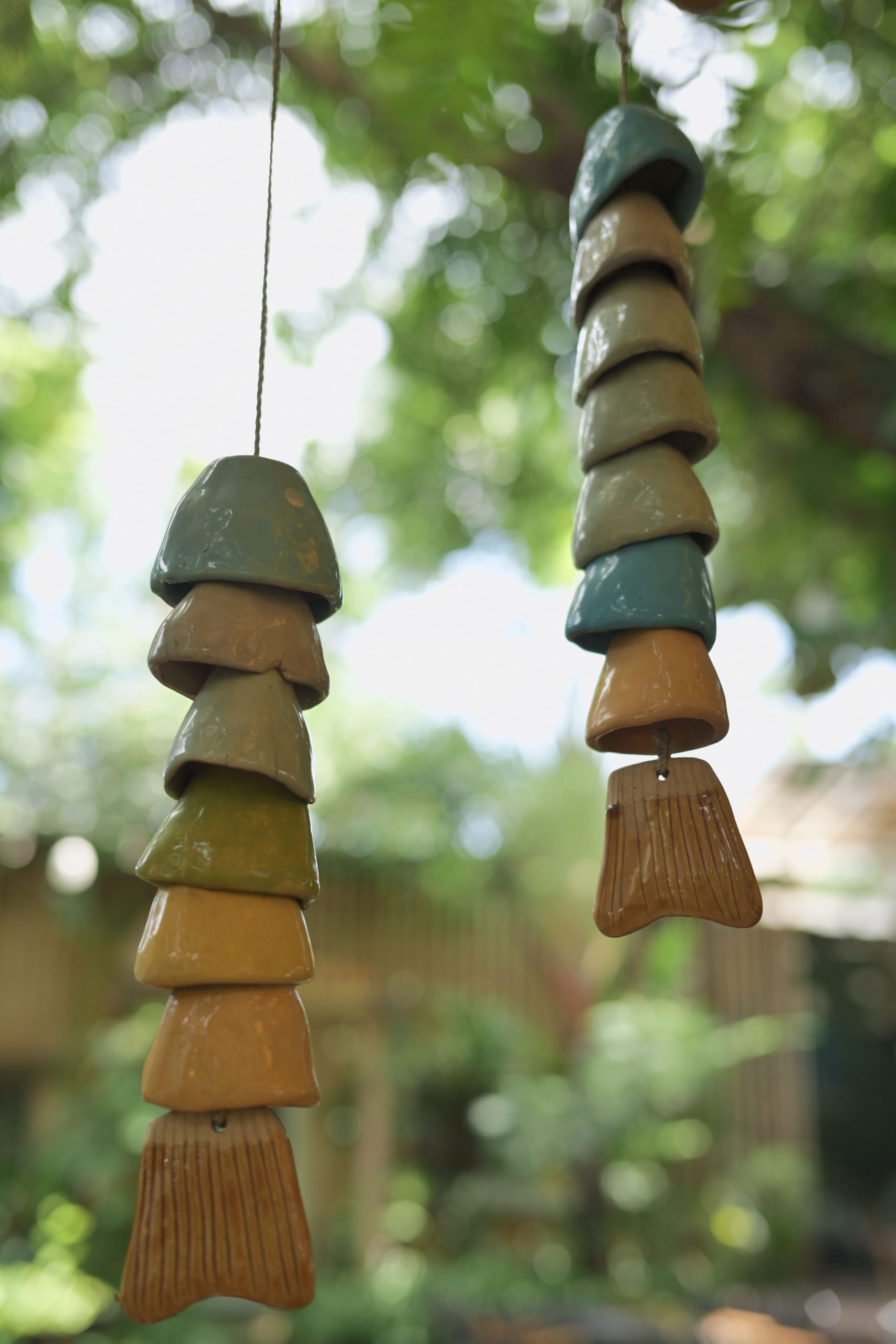
“While stunning, ceramic chimes are the divas of the wind chime world.”
They are heavy and extremely fragile. A strong gust of wind that sends them knocking against a wall, post, or even each other can result in chipping or complete shattering. These are not ‘set it and forget it’ pieces. They are best suited for very sheltered locations, like under a deep eave or in a protected corner of a patio where they can’t swing wildly. If you live in a high-wind area, you might want to consider a more durable material like wood or aluminum.
9. Earthy Terracotta Bells with Carved Wooden Beads
Recreating this earthy, handcrafted look is more about time than money, especially if you source materials thoughtfully. You can find terracotta and wooden beads at most craft stores or online.

“Mini Terracotta Bells (20-30): $25 – $40Assorted Wooden Beads (carved, round): $”
- Mini Terracotta Bells (20-30): $25 – $40
- Assorted Wooden Beads (carved, round): $15 – $25
- Durable Cording (waxed linen or hemp): $5 – $10
- Top Hanging Piece (wood slice or branch): $5 – $15
- TOTAL: $50 – $90
Budget alternative: Use air-dry clay to make your own bells and beads for under $20. The final look will be more rustic, but the process is half the fun!
This design feels so cohesive because it sticks to a strictly warm, earthy palette. The terracotta orange, reddish-brown cords, and tan beads all belong to the same color family, creating a harmonious and unified look. The visual interest comes not from color contrast, but from the variety of shapes and textures—the smooth bells, round beads, cylindrical beads, and intricately carved leaf elements. This ‘tone-on-tone with texture’ approach is a sophisticated way to create a design that is both complex and calming.
10. Sculpted Dark Ceramic Creature with Wood Clapper
When hanging a visually unique, sculptural piece like this, treat it like a piece of art. Don’t just stick it anywhere. Use the ‘Rule of Thirds’ from photography. Instead of centering it in the middle of a space, hang it off-center, perhaps framing a view or complementing a nearby architectural feature. In this photo, it’s not dead center on the branch; it’s placed to the side, allowing the surrounding foliage to create a natural frame. This creates a more dynamic and interesting composition.
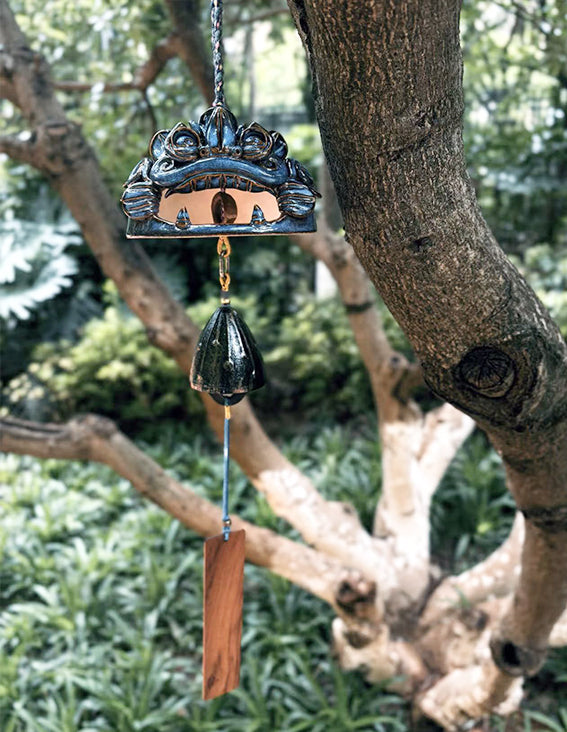
“A sculptural, character-filled chime like this is a focal point, not background noise.”
It’s meant to be seen and appreciated up close. This piece is perfect for a small, intimate space where it can be a delightful surprise. Think about hanging it near a reading nook, beside a garden bench, or just outside a kitchen window. It would be lost in a large, open yard. The ideal spot allows for viewing from 3-10 feet away, so the whimsical details of the creature’s face and the texture of the wood can be fully appreciated.
11. Bamboo Chime with Straw-Thatched Top
This setup works so well because it’s a masterclass in layering textures while maintaining a calm, cohesive color palette. You have the smooth bamboo tubes, the rough straw thatch, the painted wall, the warm wood tones, and the green foliage. It’s a lot of different materials, but because they all exist within a natural, muted color scheme of greens and browns, it feels rich and layered, not chaotic. The mint green stripe is the perfect, unexpected touch of coolness that keeps the whole look fresh and modern.
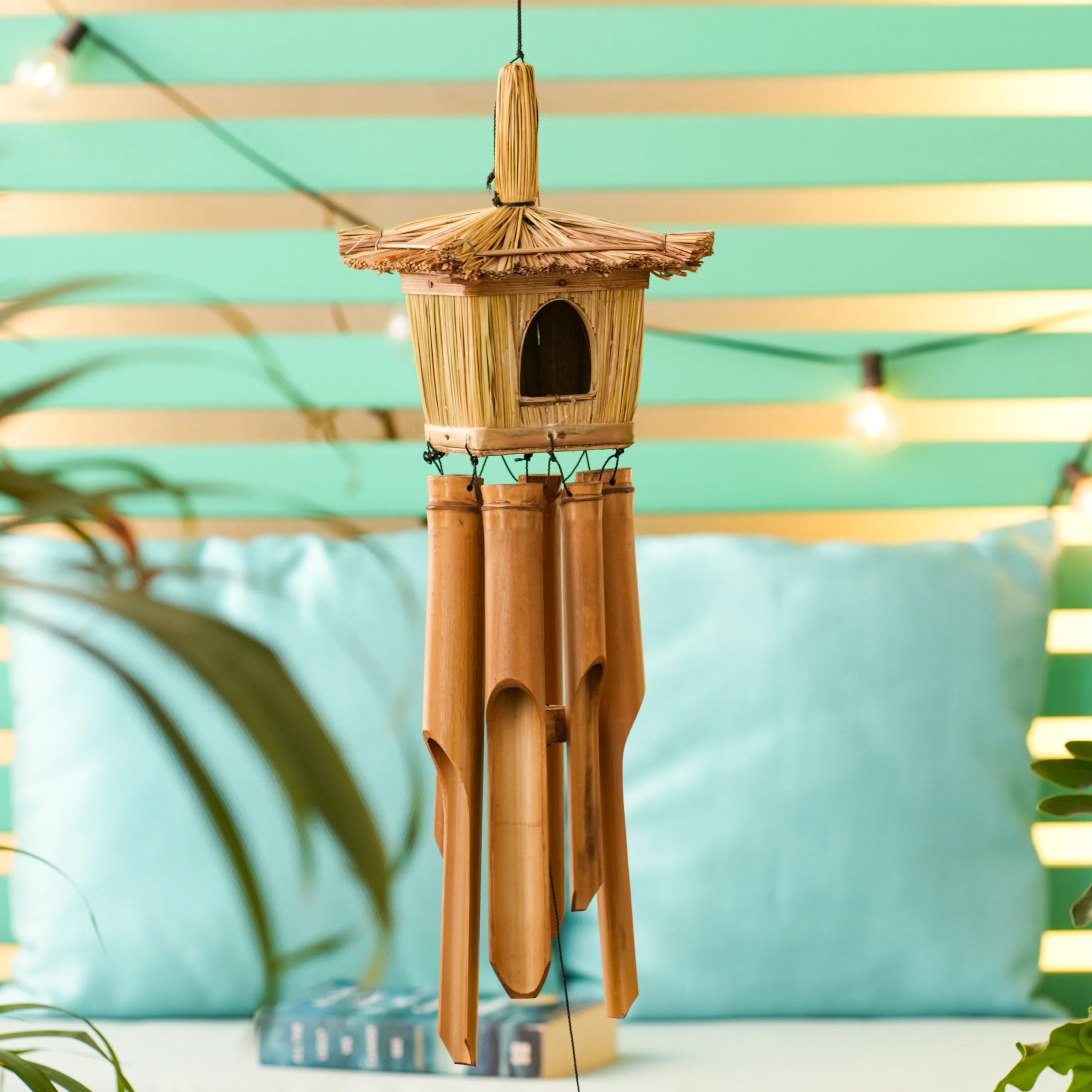
“That adorable straw-thatched roof is the star of the show, but it’s also the element most vulnerable to the weather.”
Natural straw will degrade over time, especially in a damp or very sunny climate. It can become a tempting home for insects or even mold if it stays wet. This type of chime is best for a covered porch or a very sheltered spot. To prolong its life, you may need to bring it indoors during the wettest or harshest seasons. Think of it as a ‘fair weather’ friend.
12. Tiered Brass Chime with Multiple Bells and Colorful Beads
The single element that defines this piece is its intricate, tiered structure. It’s not just a collection of chimes; it’s a small piece of architecture. The four stacked brass rings create a vertical journey for the eye, and the repetition of the bell-in-a-circle motif on each level gives it a sense of rhythm and order. If you were to hang these bells individually, you’d lose the grand, chandelier-like presence that makes this chime so special. It’s a statement piece posing as a wind chime.
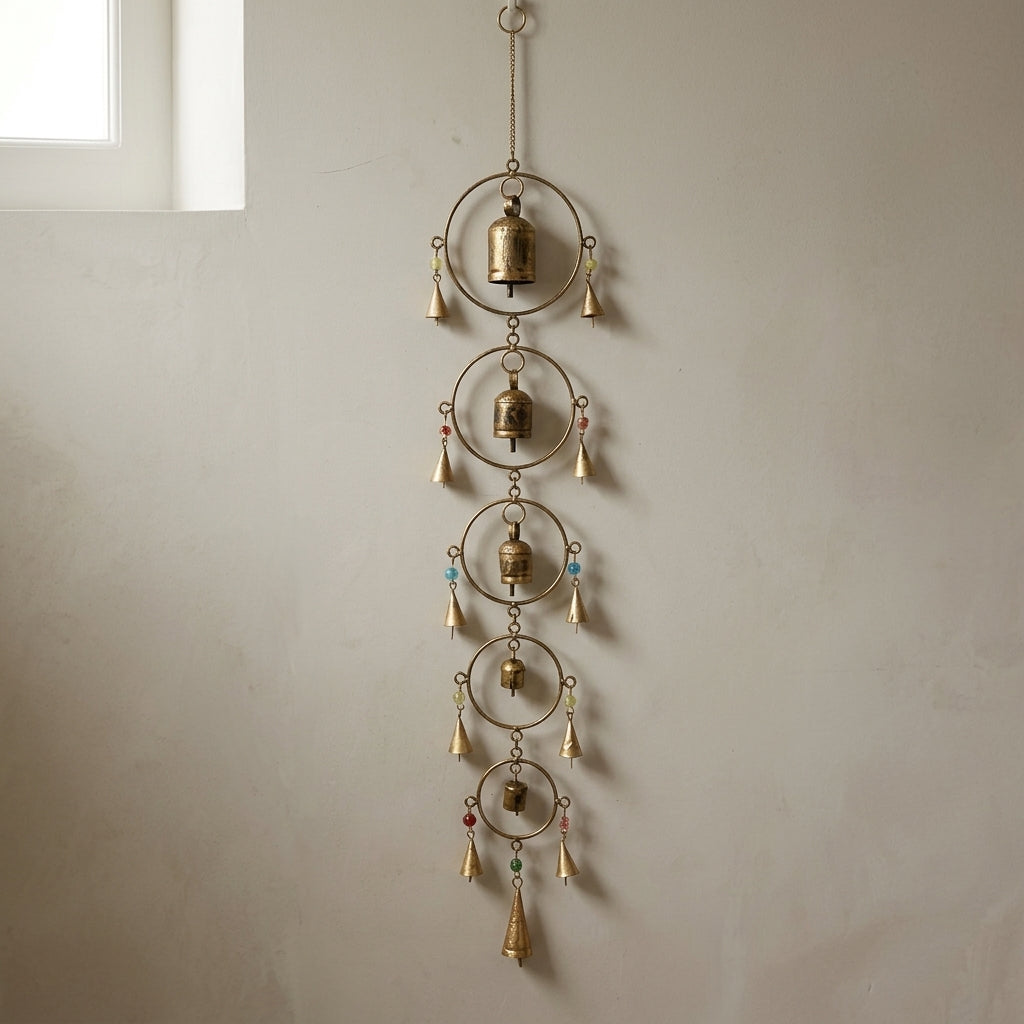
“Aged brass has a beautiful, warm patina, but it can turn green (verdigris) or dull over time, especially in humid or salty air.”
To maintain the warm, rustic glow, you’ll want to polish it once or twice a year. Use a cleaner specifically formulated for brass. Be gentle around the small colorful beads, as harsh chemicals could damage them. The biggest maintenance challenge will be dust. The intricate design creates many small surfaces for dust to settle on. A can of compressed air is your best friend for cleaning this piece.
13. Delicate Japanese Glass Chimes with Patterned Streamers
The magic here is the contrast between delicate, transparent materials and the rustic, solid structure they hang from. The almost invisible glass globes and wispy paper streamers seem to float in the air, creating an ethereal, dreamlike quality. Suspending them from a heavy, dark, rough-hewn wooden beam provides a necessary grounding element. This juxtaposition—light vs. heavy, fragile vs. strong, smooth vs. textured—is a classic design principle that creates immediate visual interest and sophistication.
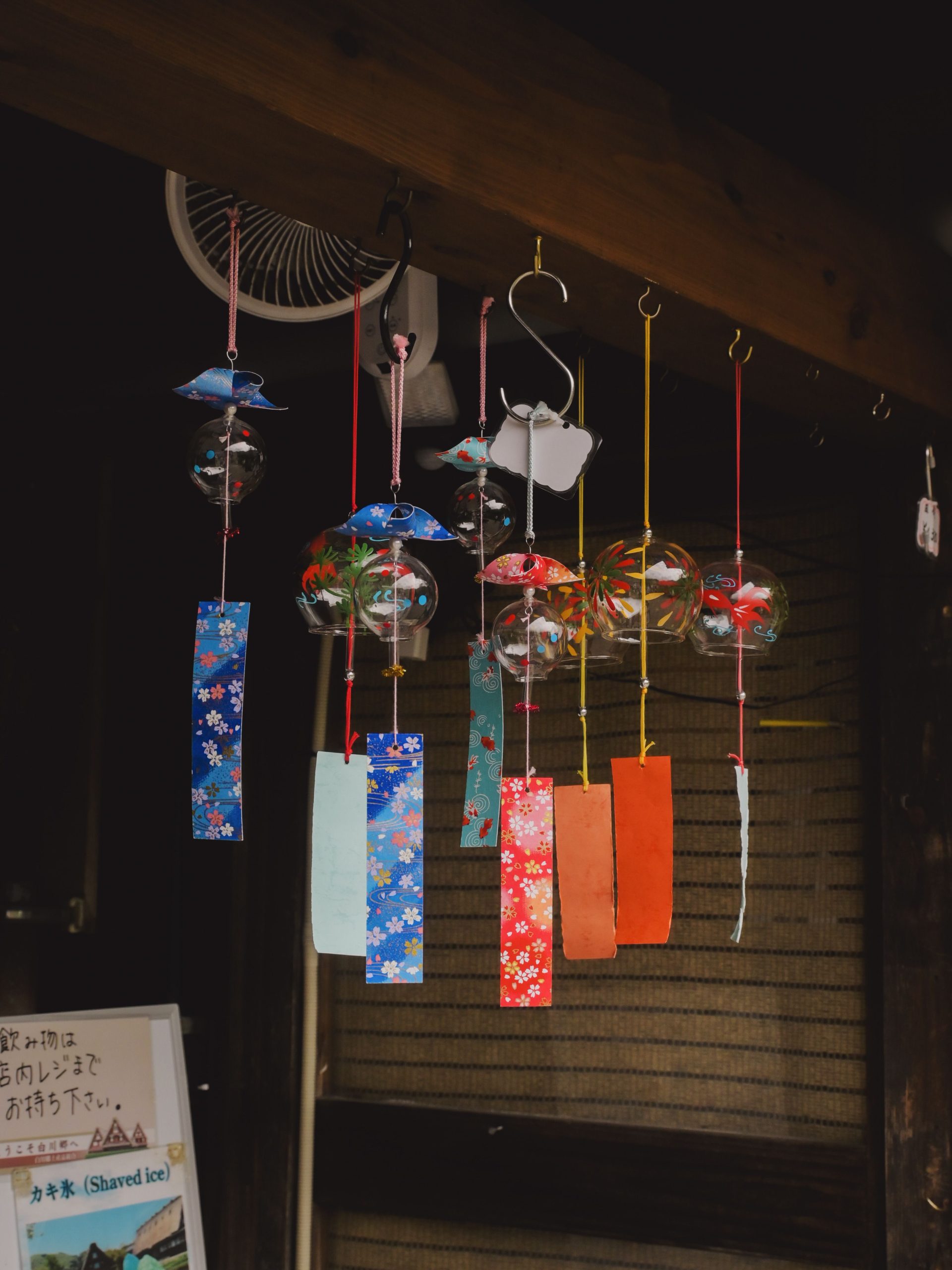
“For these traditional Japanese ‘Furin’ wind chimes, the paper streamer (or ‘tanzaku’) is not just decorative; it’s a functional part of the design.”
The paper acts as the sail, catching the wind to move the clapper (‘zetsu’) inside the bell. To get the most beautiful, subtle sound, make sure the paper is a lightweight but sturdy stock, like washi paper. If it’s too heavy, it won’t catch the breeze. If it’s too flimsy, it will tear easily. You can easily replace the paper to change the look for different seasons.
14. Ornate Cast Metal Chimes with Calligraphy Tags
These intricate, cast metal chimes are tapping into the larger ‘Japandi’ design trend, which blends Scandinavian function with Japanese rustic minimalism. People are increasingly seeking objects for their homes that have a sense of history, artistry, and cultural significance. These aren’t just noisemakers; they are sculptural objects that celebrate traditional craftsmanship. The pagoda shapes, embossed patterns, and calligraphy tags offer a layer of storytelling that a simple tube chime lacks. This desire for meaningful decor is why these artisanal styles are gaining popularity.

“These are definitely an investment, and with that comes a certain level of care.”
Cast iron chimes, in particular, can be prone to rust if not properly maintained, especially in wet climates. Some are coated to prevent this, but cheaper versions may not be. Also, they are heavy. Ensure you are hanging them from a very secure hook or bracket that is properly anchored into a solid beam or stud. Don’t just hang this on a flimsy plant hook screwed into drywall.
15. Translucent Green Glass Bell with Inscribed Wood Paddle
This design is a study in elegant simplicity. The formula is approximately 40% ethereal glass + 40% natural wood + 20% negative space. The key is that the two main elements—the greenish-blue glass bell and the light wood paddle—are given equal visual weight. They balance each other perfectly. The ‘negative space’ is the air around the chime, and the design’s success depends on it not being cluttered. It’s a minimalist poem: one part glass, one part wood, suspended in air. The dark inscriptions on the wood add a final, crucial detail without adding clutter.
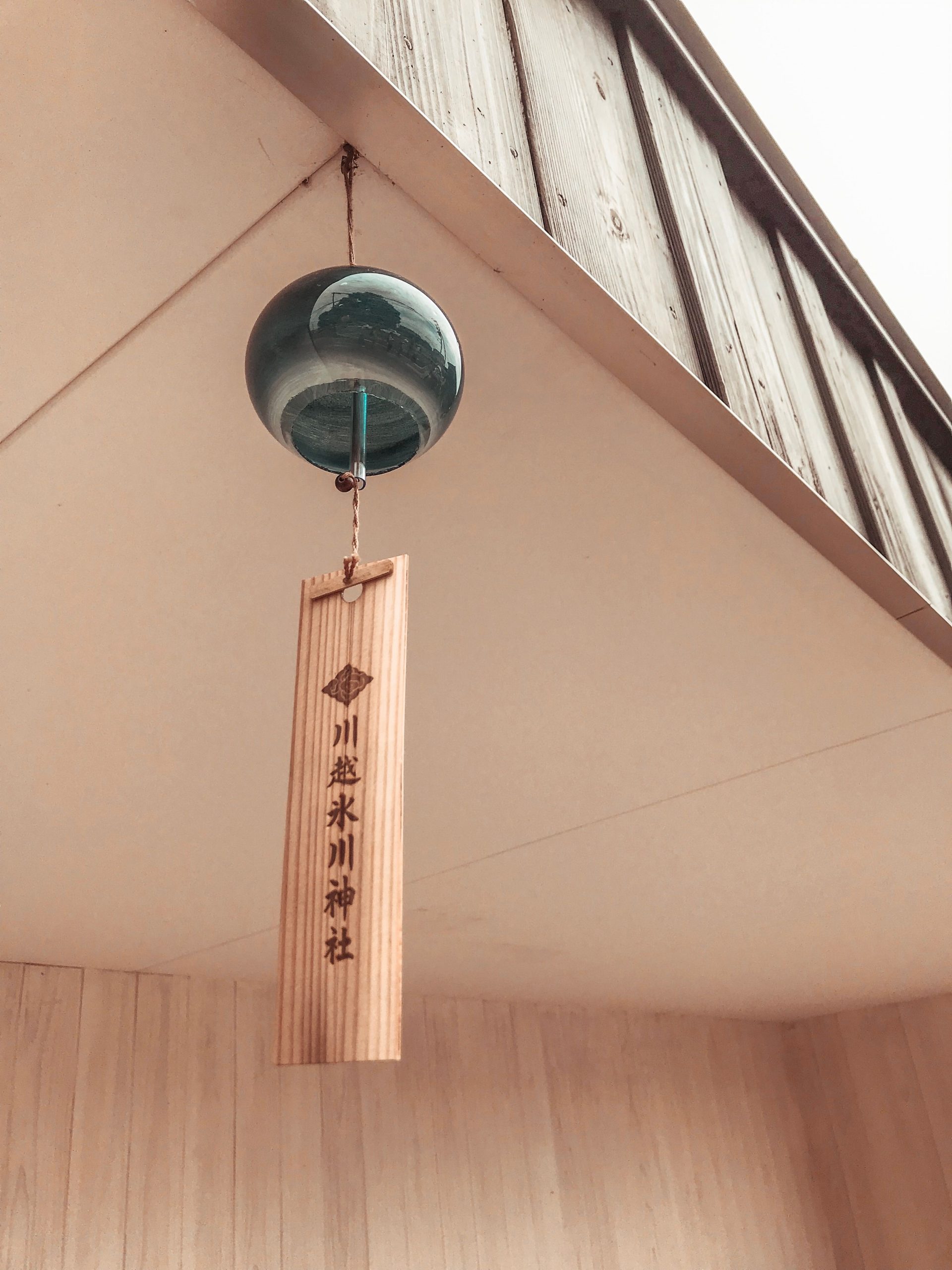
“This is a wind chime for intimate spaces.”
Its delicate nature and subtle sound would be lost in a large, open area. This is the perfect piece to hang in a quiet corner of a covered patio, just outside a bedroom window, or in the entryway of a sunroom. It’s designed to be appreciated at a close distance, where you can see the light filter through the glass and read the inscription on the wood. Ideal ceiling height is 8-9 feet, allowing it to hang at or just above eye level.
16. Glass Chimes with Maple Leaf Cutouts on an Orange Beam
The vibrant orange wooden beam is the hero of this scene. It’s an unexpected and bold choice that pays off beautifully. The orange provides a warm, energetic backdrop that makes the clear glass and light wood of the chimes pop. It also creates a stunning complementary color scheme with the green foliage in the background (orange and green are on opposite sides of the color wheel). This is a great example of how a single, daring color choice in an architectural element can elevate the entire space.
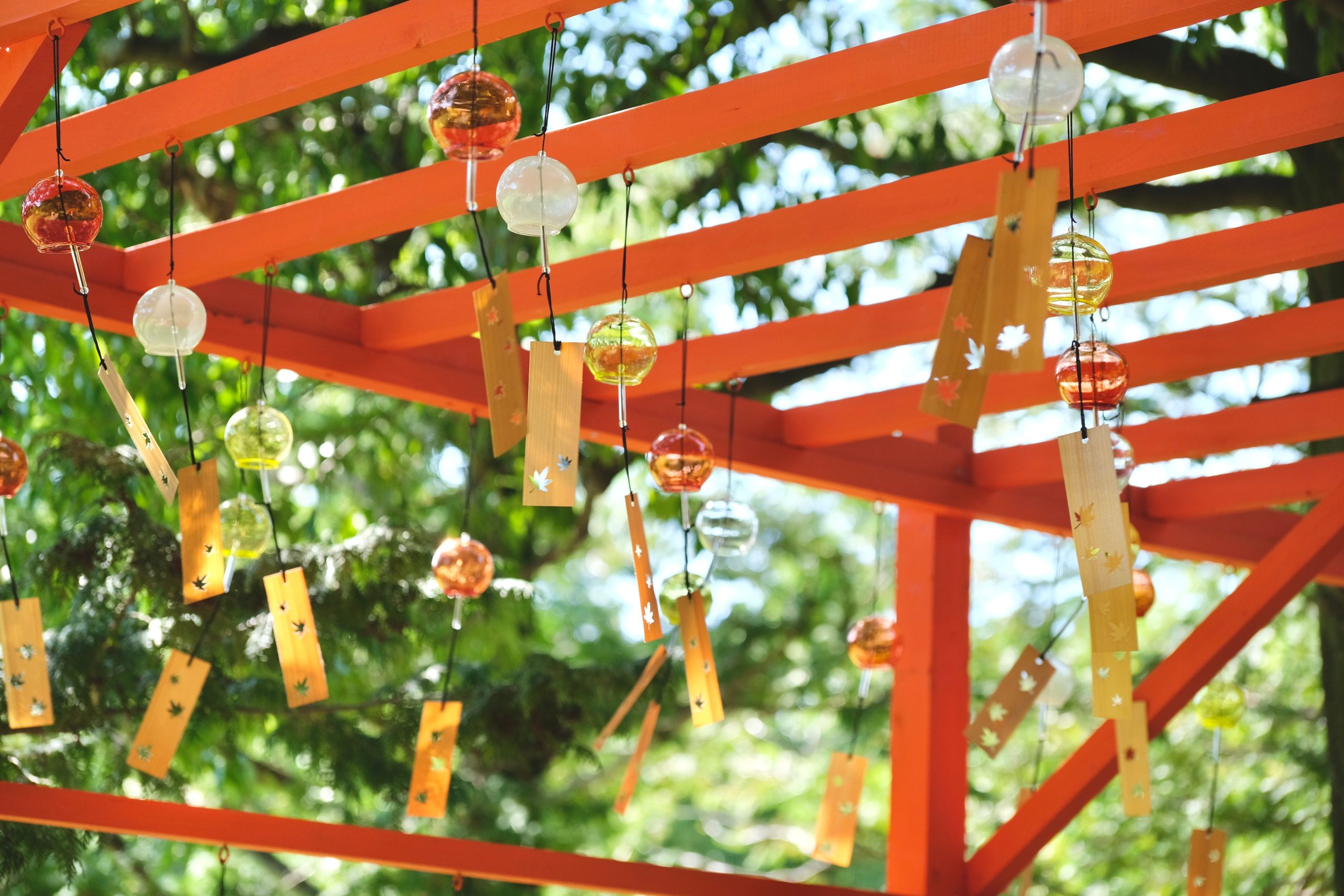
“Love the look but don’t have a bright orange pergola?”
You can get a similar effect on a smaller scale. Find a collection of simple glass bell chimes (or even repurpose small glass jars). Use a craft knife to cut leaf shapes from thin balsa wood (available at craft stores). Paint the wooden hanging element—a simple dowel or branch—a bold, surprising color like this orange, a cobalt blue, or a sunny yellow. The key is the contrast between the simple chimes and the brightly colored support. A project like this could cost under $40.
17. Tiered Natural Seashell Wind Chimes
You can make a tiered shell chime with finds from your last beach trip. It’s a great way to display your collection. Time: 2-3 hours. Cost: under $20 (if you have the shells).
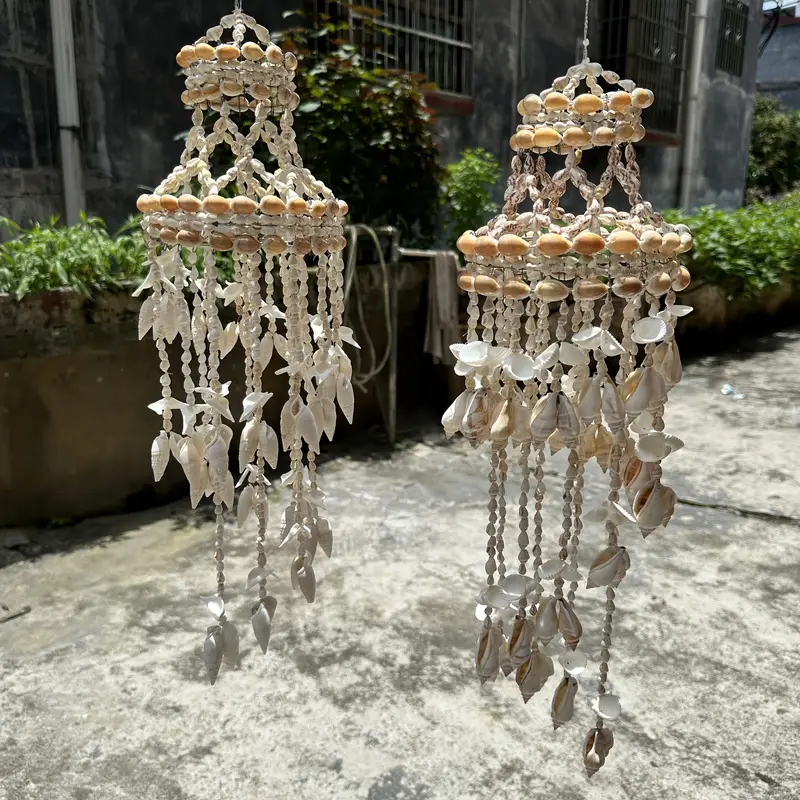
“Select your base.”
Woven rattan rings, embroidery hoops, or even a sturdy, flat piece of driftwood work well for the top tier.Drill tiny holes in your larger shells using a Dremel tool with a small bit. Go slowly and apply gentle pressure. For smaller shells, you can often use a strong craft glue like E6000 to attach them to the string.Cut multiple lengths of clear fishing line or durable nylon thread.Start stringing! Mix large shells, small shells, and beads to create textural variety on each strand.Tie the strands securely to your base hoop or driftwood, spacing them evenly. For a tiered look, attach a smaller hoop below the first with 3-4 strands of equal length, then hang your shell strands from the lower hoop.
When working with natural elements like seashells, the secret to a high-end look is ‘editing’. Don’t just use every shell you find. Group your shells by color and size first. Create a cohesive palette, like all whites and creams, or a mix of browns and pinks. By being selective with your color story, your final piece will look like a curated, artisanal object rather than a random collection of beach debris. This thoughtful curation is what separates a craft project from a design element. You can see a similar principle in Idea #29 with its curated pink and white shells.
18. Classic Metal Tube Chime with Oval Clapper
The single most important element of a classic metal tube chime is the tuning. It’s not just a random collection of pipes; in a high-quality chime, each tube is cut to a precise length to produce a specific note in a musical scale. This is why some chimes sound like a beautiful, harmonious chord, while cheaper ones just make a discordant clanging noise. The pleasant, resonant sound that seems to hang in the air is a direct result of this intentional tuning. It’s what you’re paying for, and it’s what makes it a musical instrument, not just a noisemaker.
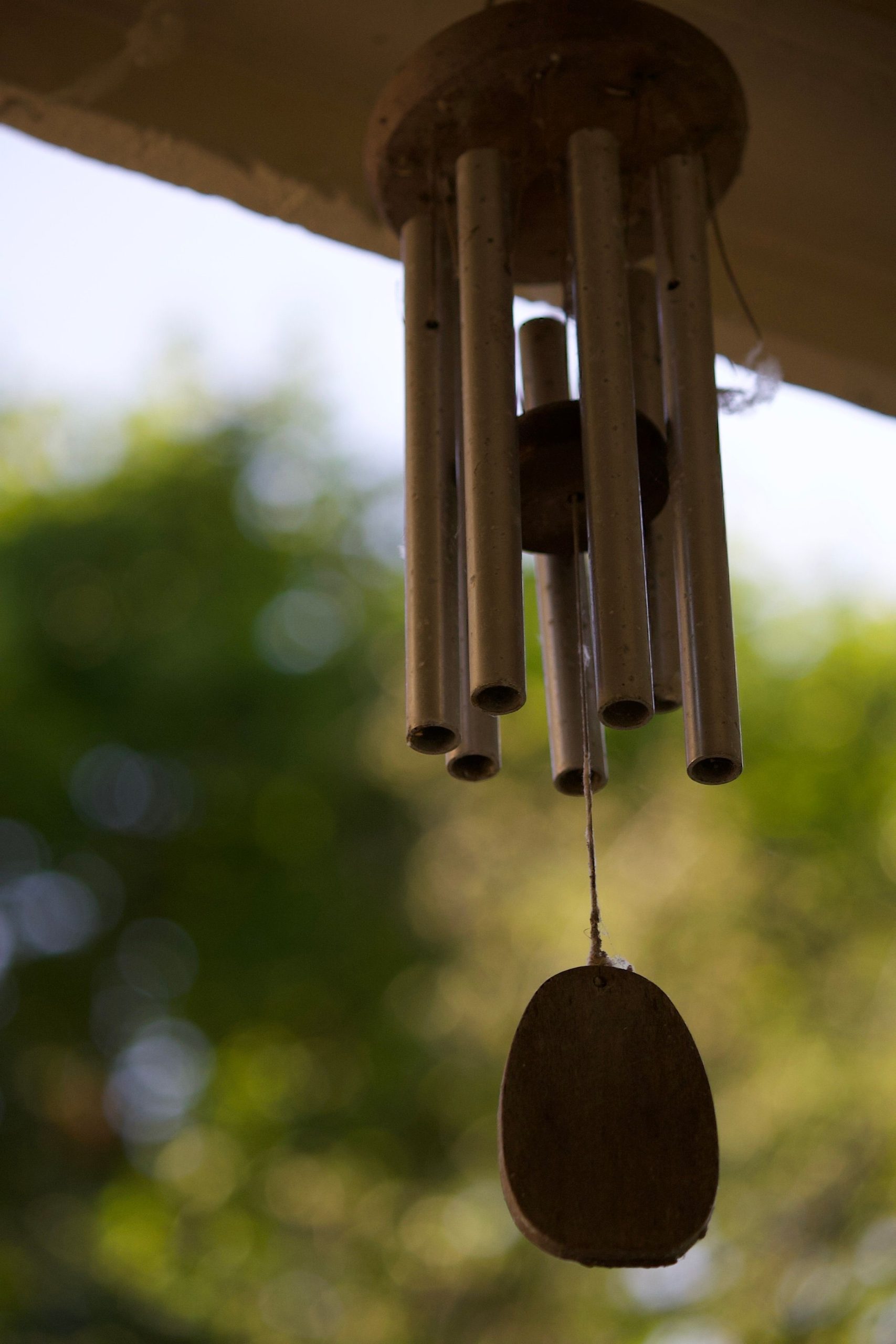
“Be a good neighbor.”
The deep, resonant tones of a large metal chime can travel surprisingly far. Before you hang a big one, consider your proximity to your neighbors’ windows, patios, or bedrooms. What sounds like a gentle, meditative hum to you might be an irritating, repetitive noise to them. If you live in close quarters, consider a smaller chime with a softer tone, or one made from wood or bamboo, which produces a much quieter, clacking sound. Or, bring it inside during the evening and overnight hours.
19. Seashell Chime with Thatched Top on String Lights
This look is a fun mix of vacation aesthetics. Let’s call the formula: 50% Tropical Vibe + 30% Coastal Element + 20% Camper-Chic. The thatched dome top and brown tones are pure tiki bar. The white and orange striped seashells bring in that classic coastal, beachcomber feel. And the fact that it’s all hanging from a string of LED lights in front of an RV adds a layer of modern, bohemian, on-the-road style. It’s an unexpected combination that screams ‘relaxed and on vacation’.
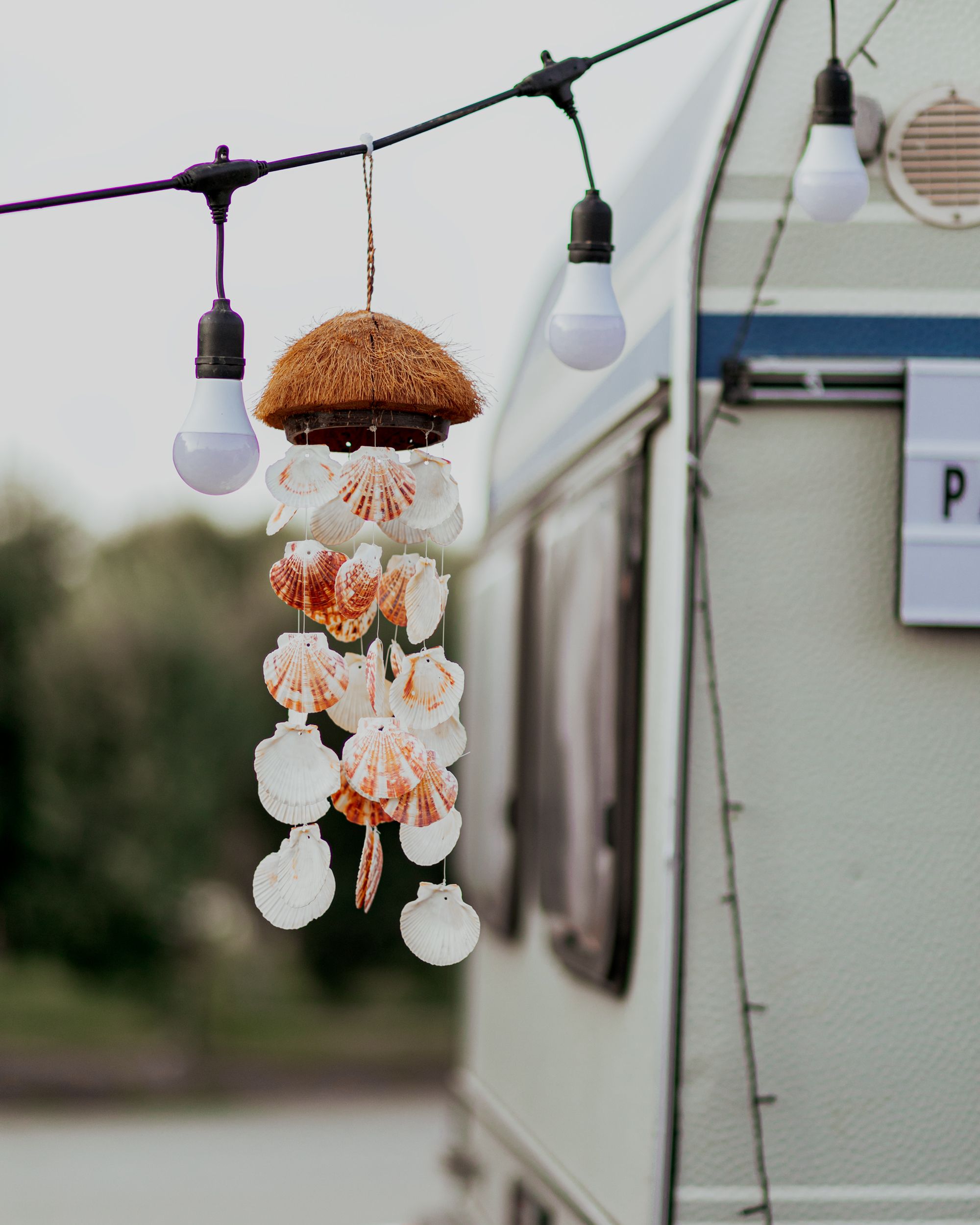
“This composition works because it skillfully balances different textures and plays with focus.”
In the foreground, you have the rough texture of the thatch and the smooth shells. This textural contrast is suspended from the modern, clean line of the black string lights. But the secret ingredient is the blurred background. The out-of-focus RV with its blue stripe adds a layer of color and context without being distracting. It creates depth and tells a story of a specific lifestyle, making the image much more compelling than if it were shot against a plain wall.
20. Multicolor Glass Spheres and Wooden Tags Display
To recreate a large-scale, vibrant installation like this, the costs can add up. This is a breakdown for a substantial display covering a 5×5 foot area.

“Glass Spheres (Assorted colors, 50-75 count): $150 – $300Wooden Tags with custom”
- Glass Spheres (Assorted colors, 50-75 count): $150 – $300
- Wooden Tags with custom script (50-75 count): $100 – $200
- Overhead Structure (Wood slats, hardware): $75 – $150
- Hanging Supplies (Durable cord, hooks): $20 – $40
- TOTAL: $345 – $690
Budget alternative: Create a smaller version for a window or corner using 10-15 chimes. Source glass ornaments after Christmas for a steep discount. You can see a more minimal version of this style in Idea #2.
When hanging multiple chimes together in an installation, the key to a professional look is the hardware. Don’t just tie them on with mismatched knots. Use consistent, high-quality hardware. In this example, each string appears to be meticulously attached to the overhead slats. Use small, identical eyelet hooks screwed into the wood at precise, measured intervals. This creates a clean, intentional grid and ensures each chime hangs straight and at the correct height. The effort is in the setup, but the result is a flawless, high-end look.
21. Black Floral Bucket Chime with Beaded Silverware Strands
The absolute star of this show is the unabashed use of silverware. It’s completely unexpected and utterly charming. Removing the forks and spoons would leave you with a fairly standard beaded chime, but adding them introduces a layer of whimsical, upcycled humor. It transforms the piece from merely decorative to a conversation starter. It’s a bold, confident choice that signals a playful personality and a creative eye for repurposing everyday objects into art. This is what makes it memorable.
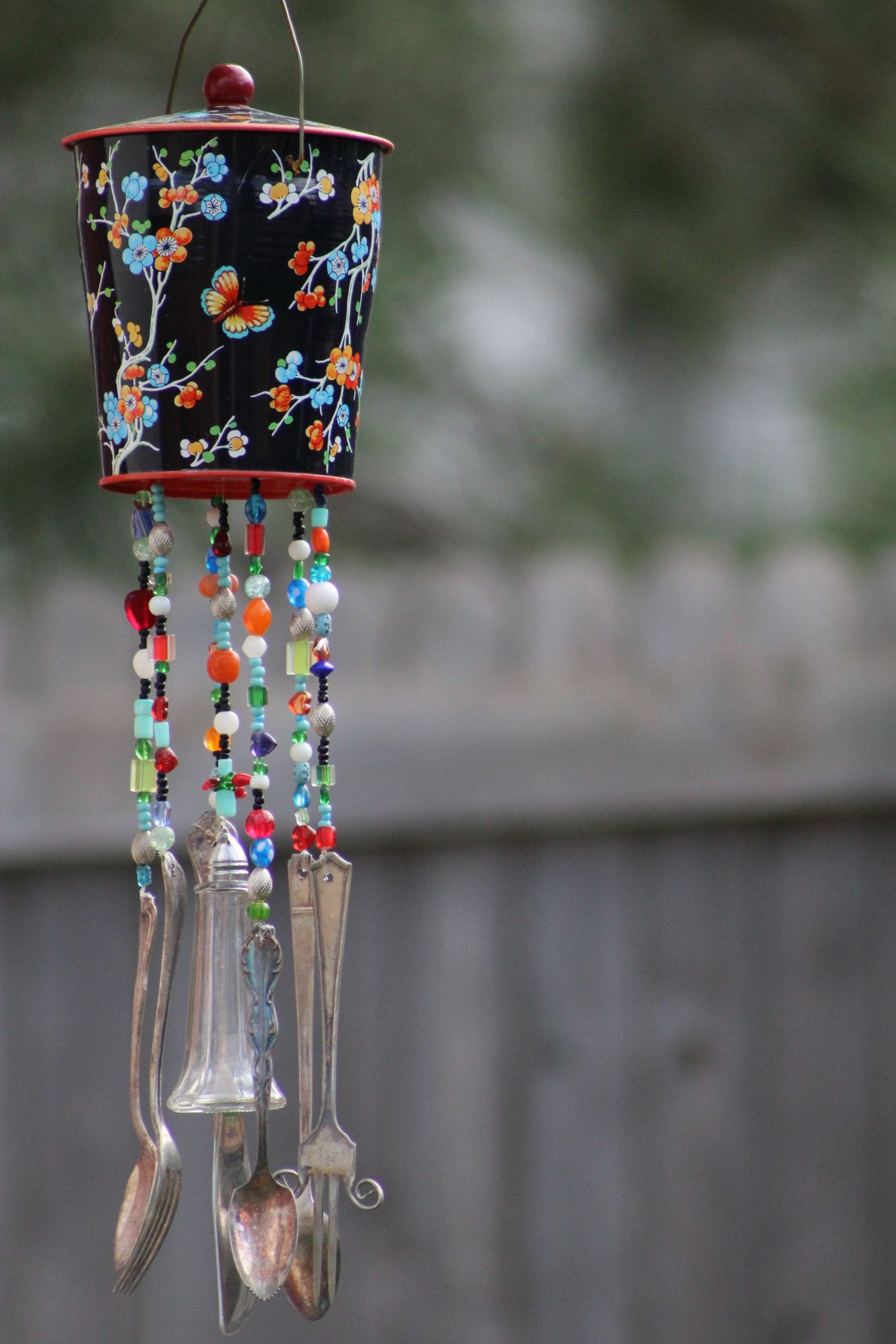
“This piece is a perfect embodiment of the ‘Dopamine Decor’ trend.”
It’s all about filling your home with things that bring you pure, unadulterated joy. This trend rejects sterile minimalism in favor of color, personality, and quirky, fun objects. The combination of the vibrant floral bucket, the rainbow of beads, and the silly-yet-chic silverware is designed to do one thing: make you smile. It’s a celebration of personal expression over following strict design rules, and that’s a movement we can get behind.
22. Distressed ‘Love’ Wood and Silver Tube Chime
This design’s charm comes from the successful marriage of rustic and refined elements. The dark, distressed wooden top with its hand-painted feel is deeply rustic and heartfelt. In contrast, the clean, silver-colored metal tubes are more modern and polished. The rusty beam above pushes the rustic narrative, while the clean lines of the corrugated roof below feel more industrial. It’s this mix of materials and finishes—old, new, rough, smooth—that creates a visually rich and emotionally resonant piece.
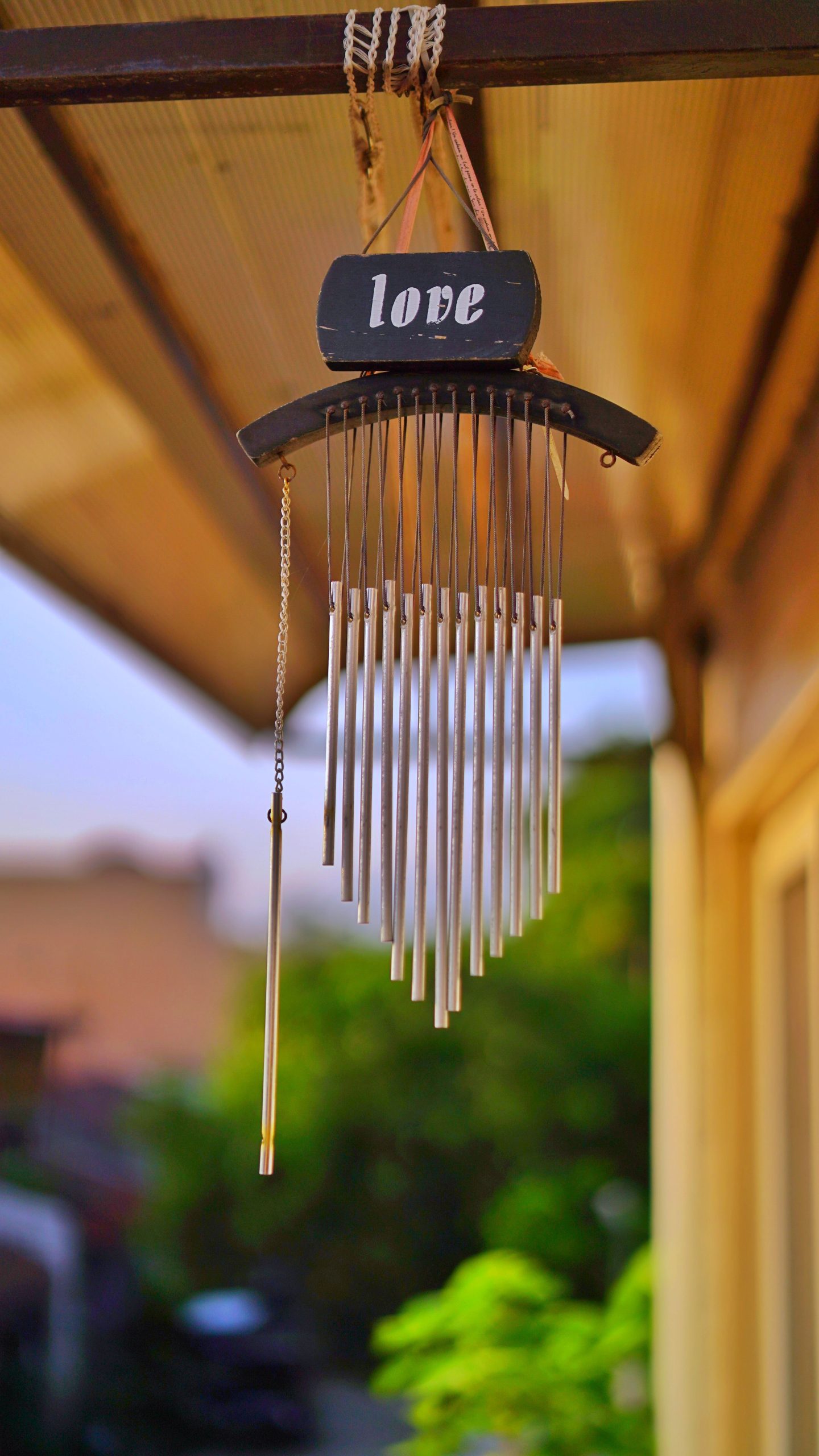
“Achieving this look for less is all about the distressing.”
Find a basic, inexpensive wooden-topped chime—they’re common at garden centers for $20-$30. Sand the wooden part lightly, then give it a coat of dark brown or black chalk paint. Once dry, use a stencil or freehand the word ‘love’ (or any word you like!) in white acrylic paint. After the white paint dries, gently sand the edges and parts of the letters to give it that worn, weathered look. You’ve just elevated a generic chime into a personalized, rustic statement piece. Compare this to the more polished wood in Idea #5.
23. Vibrant Glass and Ceramic Wind Chimes Display
The formula for this cheerful explosion of color is 60% translucent material + 40% opaque material, all in a high-saturation palette. The spherical glass chimes, with their delicate painted designs, allow light to pass through, creating a jewel-like effect. This is balanced by the solid, opaque ceramic chimes, which provide bold blocks of color (like the vibrant red ones). The long, rectangular streamers in yellow, green, and blue add a third texture and shape, creating layers of movement. It’s the mix of light-passing and light-blocking elements that makes the display so visually dynamic.

“Planning a dense display like this?”
Here’s your pre-purchase checklist:
- Measure Your Space: How much area do you want to cover? Calculate the square footage to determine how many chimes you’ll realistically need. A dense display requires at least 3-5 chimes per square foot.
- Check Your Support: Are you hanging from a solid wooden beam, a metal pipe, or a simple wire? Add up the estimated weight of all the chimes to ensure your support structure can handle the load.
- Consider the Sound: Imagine the sound of ALL these chimes going at once in a strong breeze. Is that a sound you want? This type of display is often more visual than auditory and works best in a location with only gentle air movement.
24. Translucent Blue and White Capiz Shell Chime on Wood
that truly makes this design sing is the specific color combination: the vibrant, almost electric teal/turquoise against the clean, milky white. While the capiz material is lovely (as seen in Idea #3), it’s this particular color pairing that feels so fresh and modern. It evokes the feeling of tropical water and white sand beaches. If the shells were all one color, or a more muted combination, it would be pretty, but it wouldn’t have this same energetic, joyful punch. The color is the star.
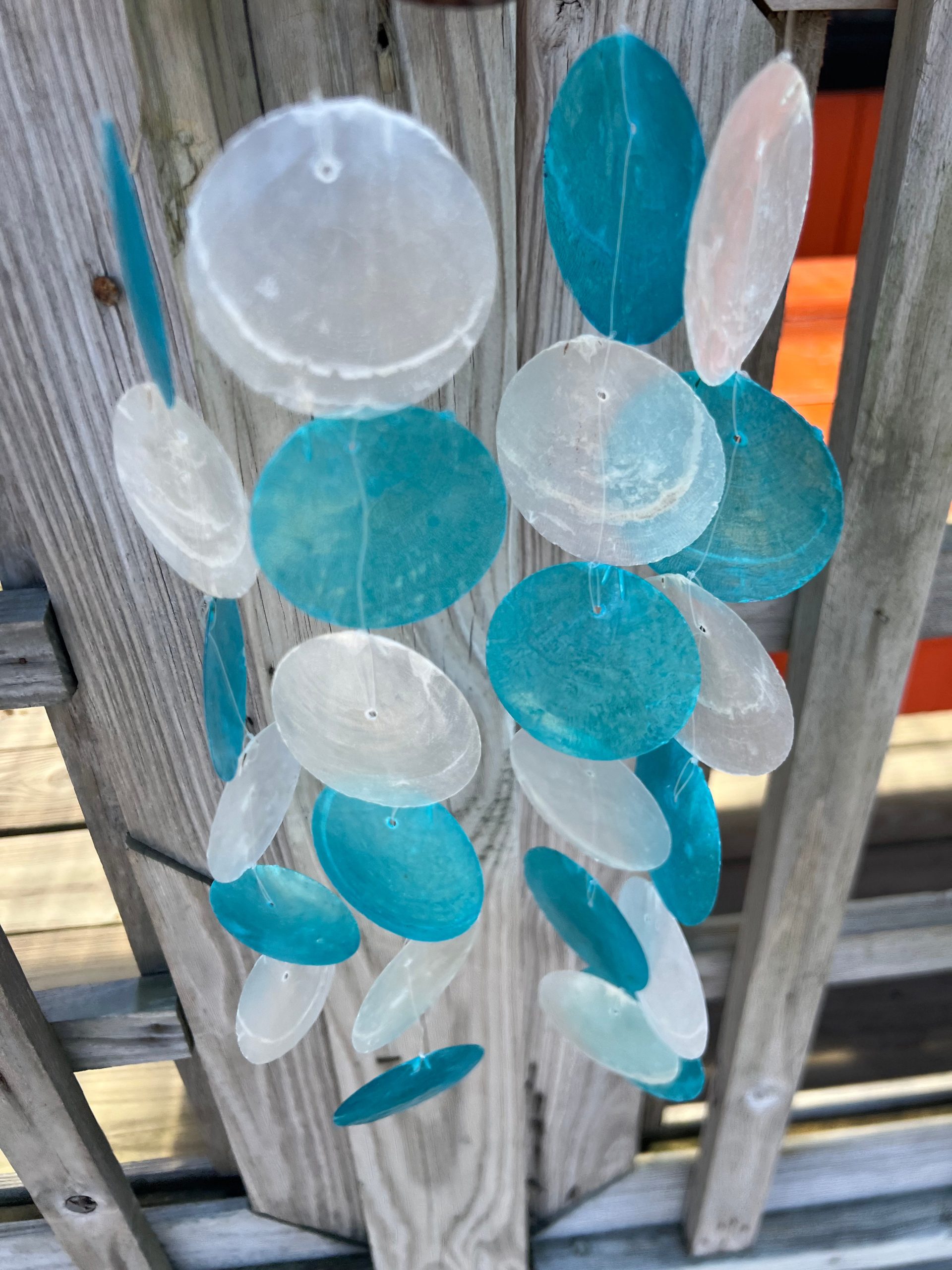
“This composition is a brilliant lesson in framing and color theory.”
The weathered, light gray wood acts as a perfect neutral frame for the chime. But the secret weapon is the sliver of blurred orange visible in the background. Orange and blue/teal are complementary colors, meaning they sit opposite each other on the color wheel. Placing them near each other makes both colors appear more vibrant. The eye is naturally drawn to this point of high contrast, making the entire image more engaging and dynamic.
25. Bamboo and Coconut Chime Under a Wooden Pergola
For a natural, tropical look, material consistency is key. Notice how the wind chime is made of bamboo and coconut, and it’s hanging from a dark wooden pergola next to wooden garden screens. Everything is in the ‘natural materials’ family. To get this look, resist the urge to add a plastic pot or a metal hanging chain. Stick to wood, bamboo, coconut, jute, and natural fibers. This disciplined approach to materials is what makes the space feel like a cohesive, tranquil retreat rather than a jumble of garden decorations.
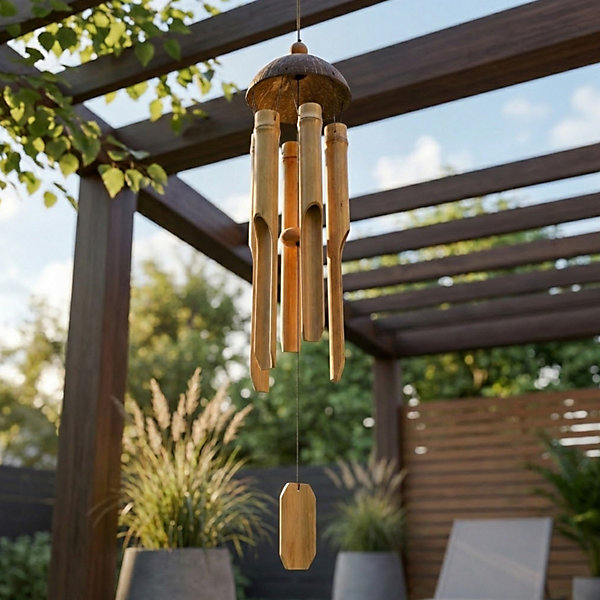
“A medium-sized bamboo chime like this is incredibly versatile.”
It’s large enough to have a presence but not so large that it overwhelms a space. This is ideal for standard-sized patios, decks, and pergolas with 8-10 foot ceilings. It fits perfectly in the transition zone between the house and the garden, visually and sonically bridging the gap between architecture and nature. It would be too large for a small apartment balcony but might feel a bit lost in a vast, open yard unless grouped with other elements.
26. Boat-Themed Wooden Chime with White Lanterns
This scene works because it creates a magical, layered ambiance through the use of multiple light sources and related shapes. You have the natural, dappled light filtering through the tree leaves. Then you have the two ornate white lanterns, which suggest a soft, warm glow. Finally, the blurred, out-of-focus lights in the background (bokeh) add a dreamlike quality. The cylindrical chimes echo the cylindrical shape of the lanterns, creating a subtle visual repetition that ties the whole vignette together beautifully.
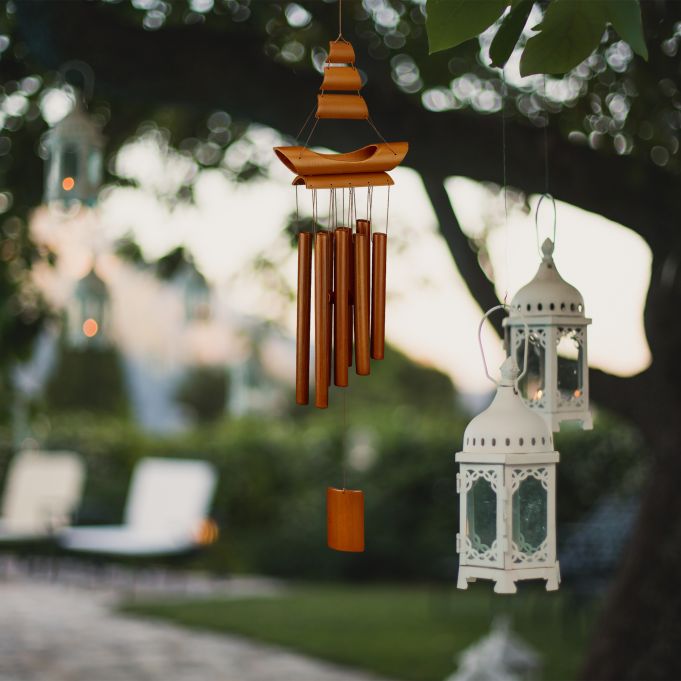
“A themed chime like this—with its little boat and sailboat—can be incredibly charming, but it’s a fine line between ‘cute’ and ‘kitschy’.”
The key to keeping it on the stylish side is the context. Here, it’s paired with elegant white lanterns and placed in a natural, leafy setting. This elevates the theme. If you were to place this same chime next to a plastic flamingo and a ‘Life’s a Beach’ sign, it would tip over into cliché. When using themed decor, let it be the one whimsical element and surround it with more classic pieces.
27. Natural Bamboo Chime Under a Scalloped Wooden Roof
The single element that gives this wind chime its authentic, traditional character is the decorative top piece. Instead of a simple disc, it features a more complex construction of layered bamboo with a circular cutout and flat extensions. This, combined with the bold red suspension string, signals a specific cultural aesthetic (likely East Asian). It’s this attention to the ‘hanger’ as a design element in itself that elevates the piece from a simple set of bamboo tubes to a more significant, artisanal object.
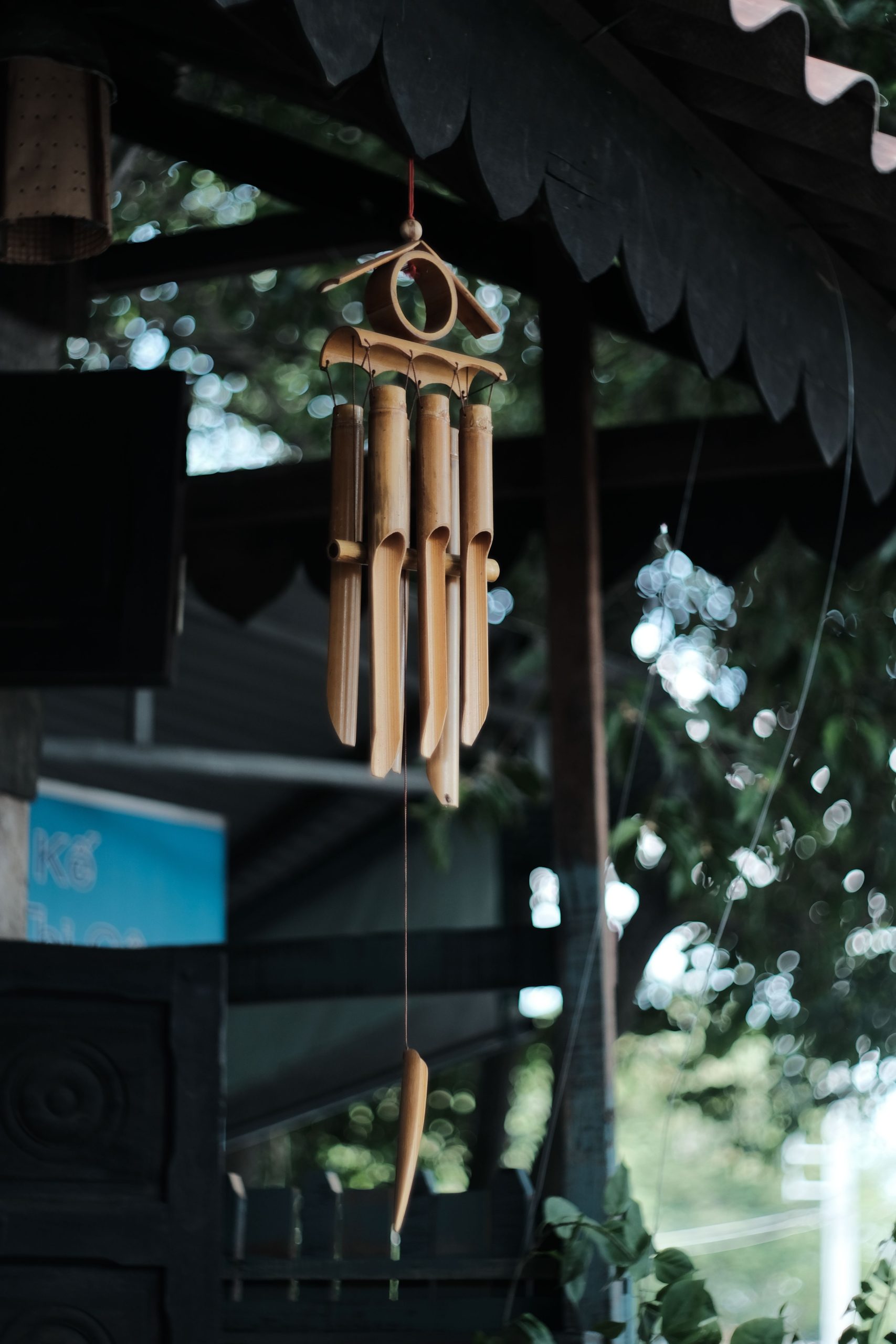
“Untreated bamboo is a natural material that will change with exposure to the elements.”
Sun will bleach it to a silvery-gray, and moisture can cause dark spots or mold. To preserve the warm, tan color, you’ll need to treat it with a UV-protectant sealer or tung oil annually. The red string is also likely to fade in direct sunlight and may need to be replaced every few years to maintain its vibrant color. This isn’t a flaw; it’s just the reality of using natural materials outdoors. Embrace the weathering for a rustic look, or commit to the annual upkeep to keep it pristine.
28. Colorful Painted Bamboo Tube Wind Chime
The formula for this lively chime is simple but effective: 70% natural texture + 30% bold graphic color. The underlying bamboo material, with its natural lines and nodes, provides the base texture. The magic comes from the painted sections. By painting only parts of the tubes in bold, primary-adjacent colors (red, yellow, green), the chime feels playful and modern without completely obscuring the natural material. The round wooden disc at the top continues the natural theme, tying it all together. It’s a perfect balance of earthy and energetic.
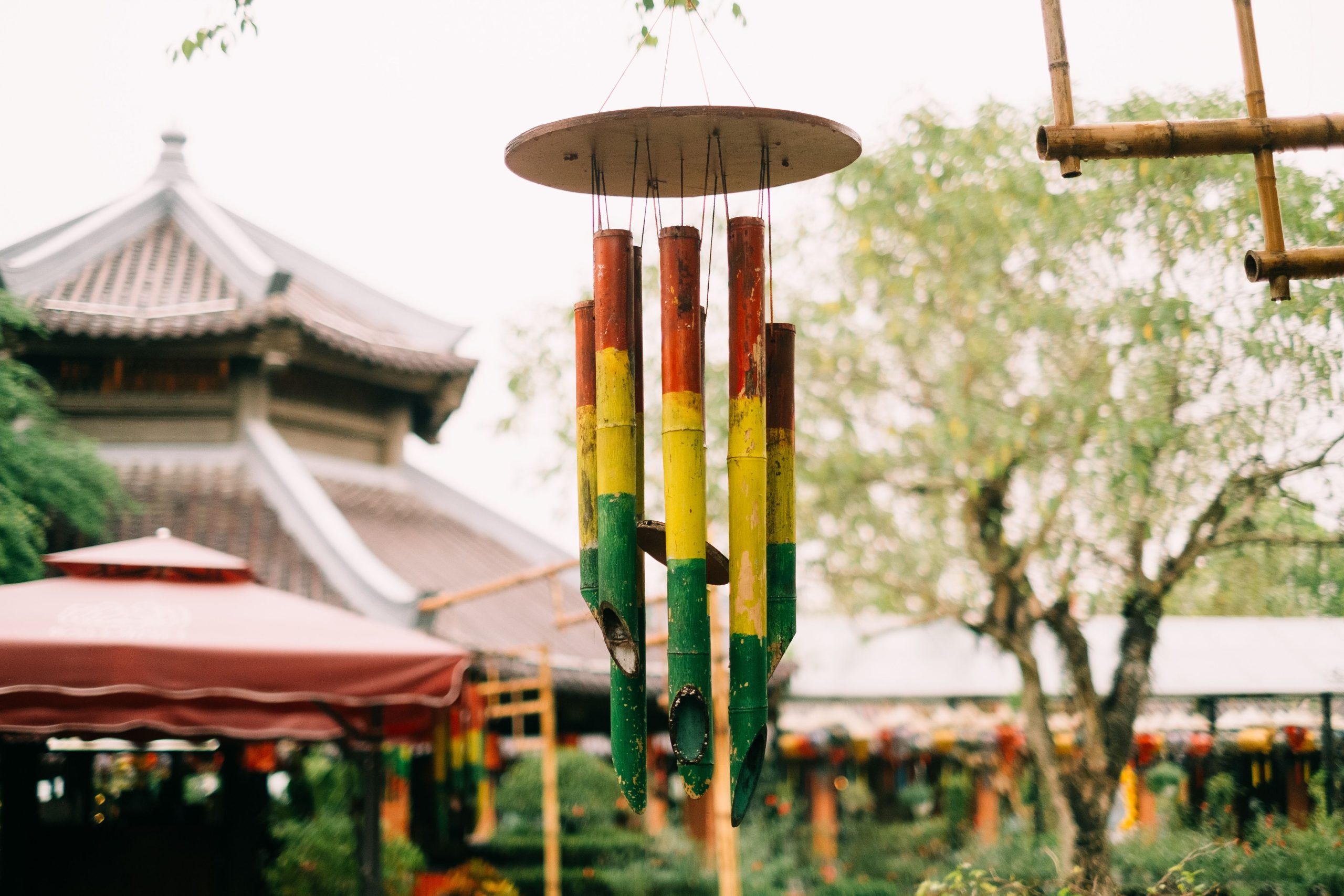
“You can easily create this look with a plain bamboo chime.”
Time: 1-2 hours + drying time. Cost: Approx $15.
- Start with a plain, inexpensive bamboo wind chime.
- Use painter’s tape to mask off sections of the bamboo tubes, creating crisp lines for your color blocks. Get creative with the spacing!
- Choose 2-3 colors of acrylic craft paint. For outdoor use, select paints labeled ‘multi-surface’ or ‘outdoor’.
- Apply two thin coats of paint to your masked-off sections, allowing the paint to dry between coats.
- Once the second coat is fully dry, carefully remove the painter’s tape.
- Optional: Apply a thin coat of clear, waterproof sealer over the entire chime to protect the paint and bamboo from the elements.
29. Coastal Seashell Chime with House-Shaped Wood Frame
This chime is charming because it expertly combines a whimsical concept with a sophisticated, curated execution. The house-shaped wooden frame is playful and sweet, but the choice of shells keeps it from feeling childish. The artist didn’t just use any shells; they curated a specific palette of pale pink fan shells and delicate white spiral and disc shells. This tight color story, set against the blurred blue water, creates a serene, almost painterly effect. It’s the discipline in the shell selection that elevates the entire piece.
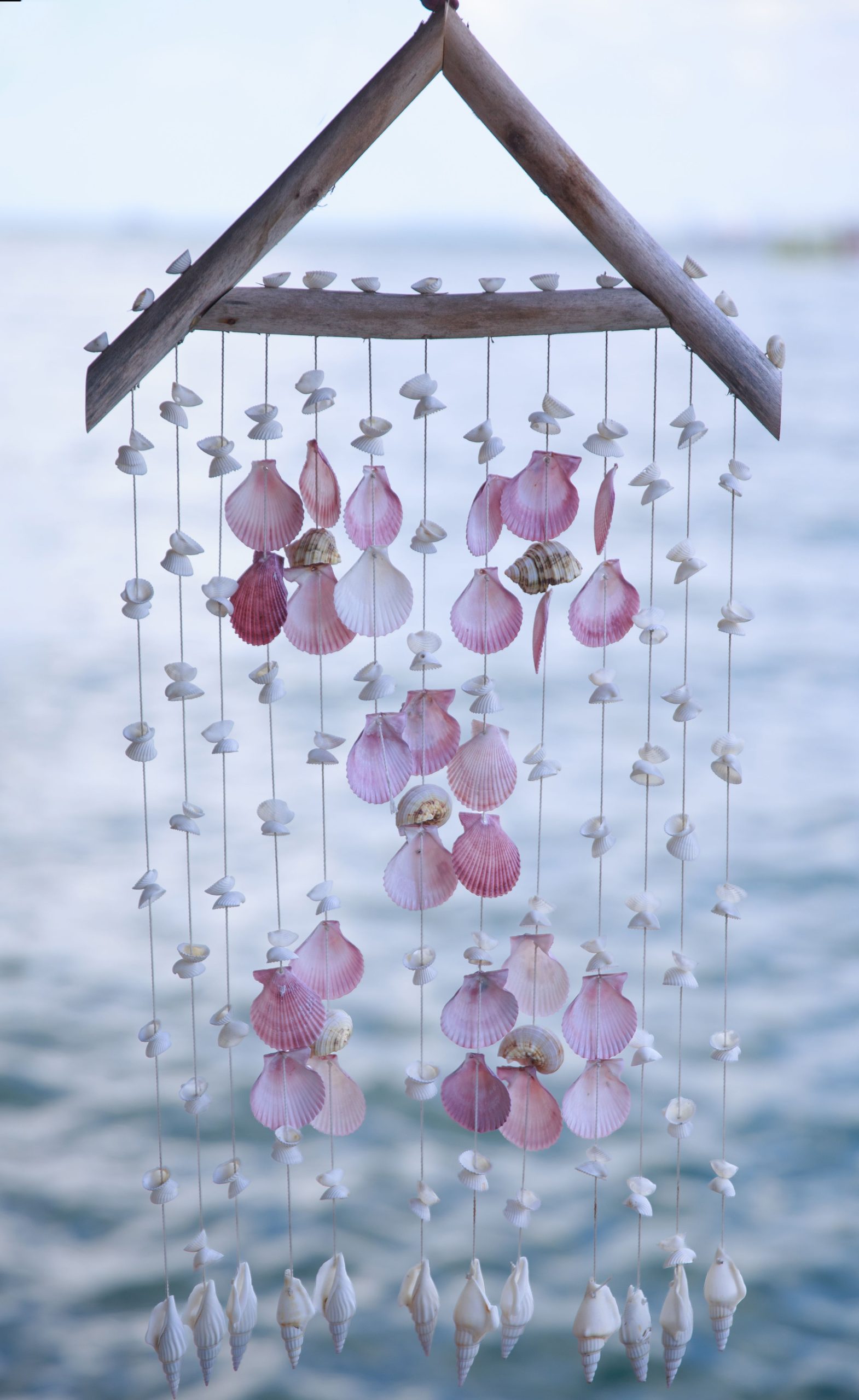
“This is a fantastic DIY project.”
Here’s a cost estimate for making your own version of this charming piece.
- Wooden Frame (craft store dollhouse front or custom cut): $10 – $20
- Curated Seashells (pink and white, purchased by type): $15 – $30
- Drill bit for shells/wood: $5 – $10
- Monofilament line (fishing line): $5 – $8
- TOTAL: $35 – $68
Budget alternative: Use a sturdy piece of driftwood found on a beach as your top frame and collect your own shells. This brings the cost down to just the price of the fishing line and your time!
30. Dark Metallic Chime on Porch with Greenery
This is the quintessential wind chime for a classic American porch. It’s scaled perfectly for a space with 9-10 foot ceilings and substantial architectural elements like the round column and carved railing. A chime this large and sonorous needs a setting that can match its presence. It would completely overpower a small balcony or a low-ceilinged patio. The dark color helps it blend with the other dark accents (like the railing), making it feel like an integrated part of the architecture. For an identical scene with slightly different framing, check out Idea #4.
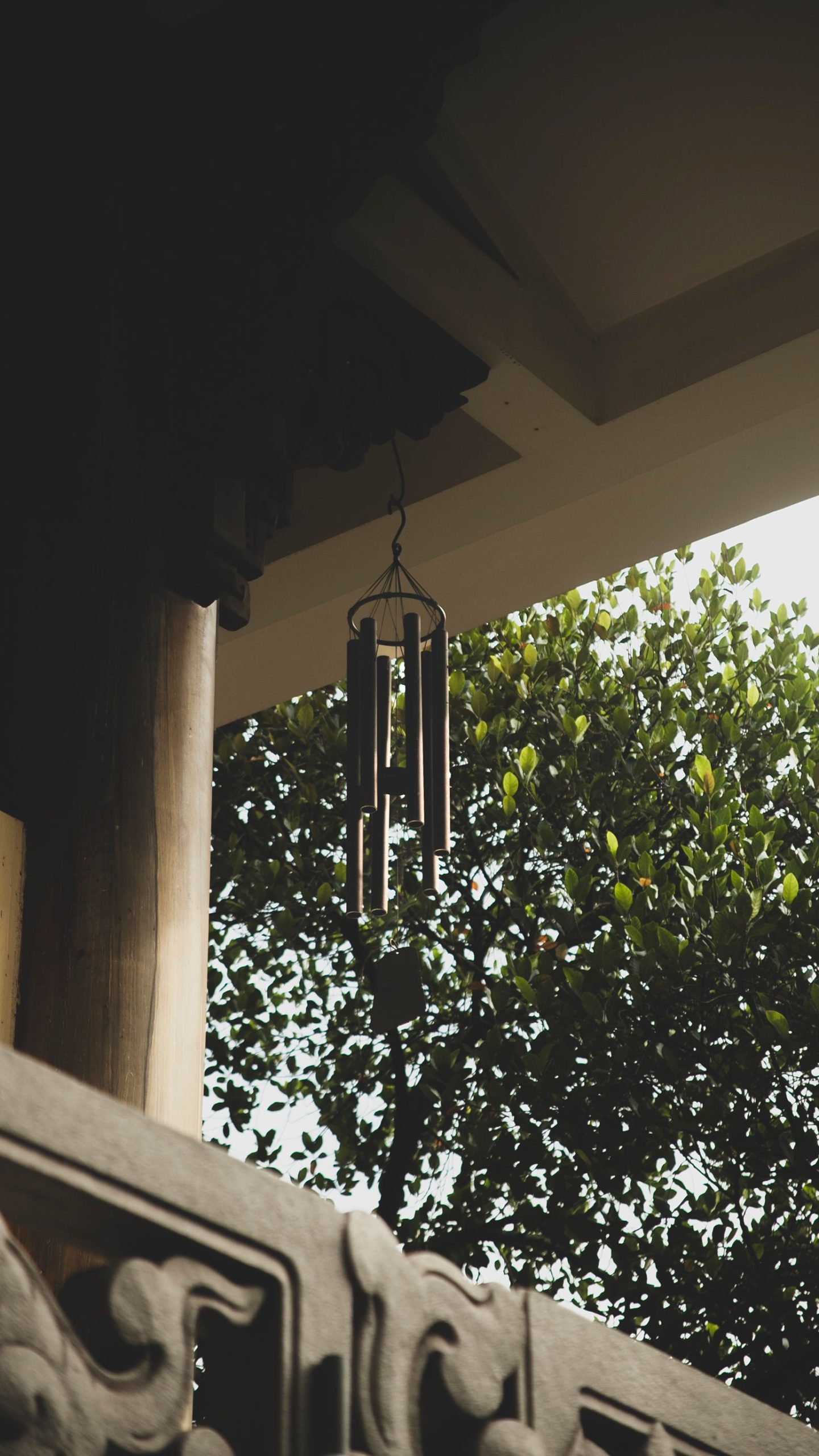
“that makes this scene feel so tranquil is the dramatic contrast between light and shadow.”
The porch is deeply shaded, creating a cool, protected viewing point. This makes the bright, sun-drenched greenery in the background appear even more lush and vibrant. The wind chime is perfectly placed right at the edge of this shadow line, catching just enough light to highlight its metallic form. This ‘cave effect’—viewing a bright scene from a dark space—is inherently calming and peaceful.
31. Mount Fuji Ceramic Wind Chimes with Calligraphy Tags
This design is a masterclass in symbolic storytelling. It’s not just a wind chime; it’s a miniature, idealized landscape. The bell shape perfectly evokes the iconic silhouette of Mount Fuji, complete with a ‘snow cap’ of white glaze. The paper tags, or ‘tanzaku’, are adorned with calligraphy and florals, acting like little poems or paintings hanging in the landscape. The use of bold, primary colors—a vibrant red and a royal blue—gives them a festive, celebratory feel. It works because every element is infused with cultural meaning and artistic intent.

“When hanging a pair or group of chimes, create a more dynamic composition by hanging them at slightly different heights.”
Notice how the red chime is positioned slightly higher than the blue one. This simple trick creates a subtle sense of movement and depth, even when they’re still. It encourages the eye to move between the two objects. A 2-3 inch difference in height is usually perfect for a pair of chimes this size. This small detail makes the arrangement feel more considered and artful.
Let Your Home Find Its Voice
From the deep resonance of metal tubes to the delicate clink of capiz shells, the right wind chime does more than just make noise—it adds a layer of personality and sensory experience to your space. We hope these 31 ideas have inspired you to find the perfect sound for your home. Now go ahead and make some beautiful noise. Don’t forget to save your favorite ideas to your Pinterest boards to come back to later!