You know that feeling when you scroll through Pinterest and finally find the *exact* spilled flower pot idea that looks perfect for your yard? That’s what this guide is for. Forget generic suggestions; we’ve gone deep to find real-world inspiration that works. After filtering through hundreds of options from local garden centers, big-box stores, and even specialty online shops, we narrowed it down to the best of the best.
Inside this guide, you’ll find 31 distinct and achievable ideas, from rustic terracotta spills overflowing with succulents to elegant urns cascading with vibrant blooms. These whimsical, naturalistic designs are trending hard right now as we collectively move away from overly manicured gardens and embrace more personal, story-driven outdoor spaces. And stay until the end — we break down the most common mistakes that can ruin these looks. 📌 Pin this guide for later — your future self will thank you when it’s time to actually get planting.
1. A Cheerful Cascade from a Striped Red and White Pot
What makes this work so well is the powerful use of contrast. The bold, graphic red and white stripes of the pot create an unexpected and playful focal point against the completely organic and soft textures of the flowers. It’s a classic design rule: pair a strong pattern with a natural form. The choice to spill white flowers directly from the pot creates a sense of continuity, as if the pot’s own color is flowing out and transforming into blossoms, while the surrounding pinks and purples act as a beautiful, harmonious frame.
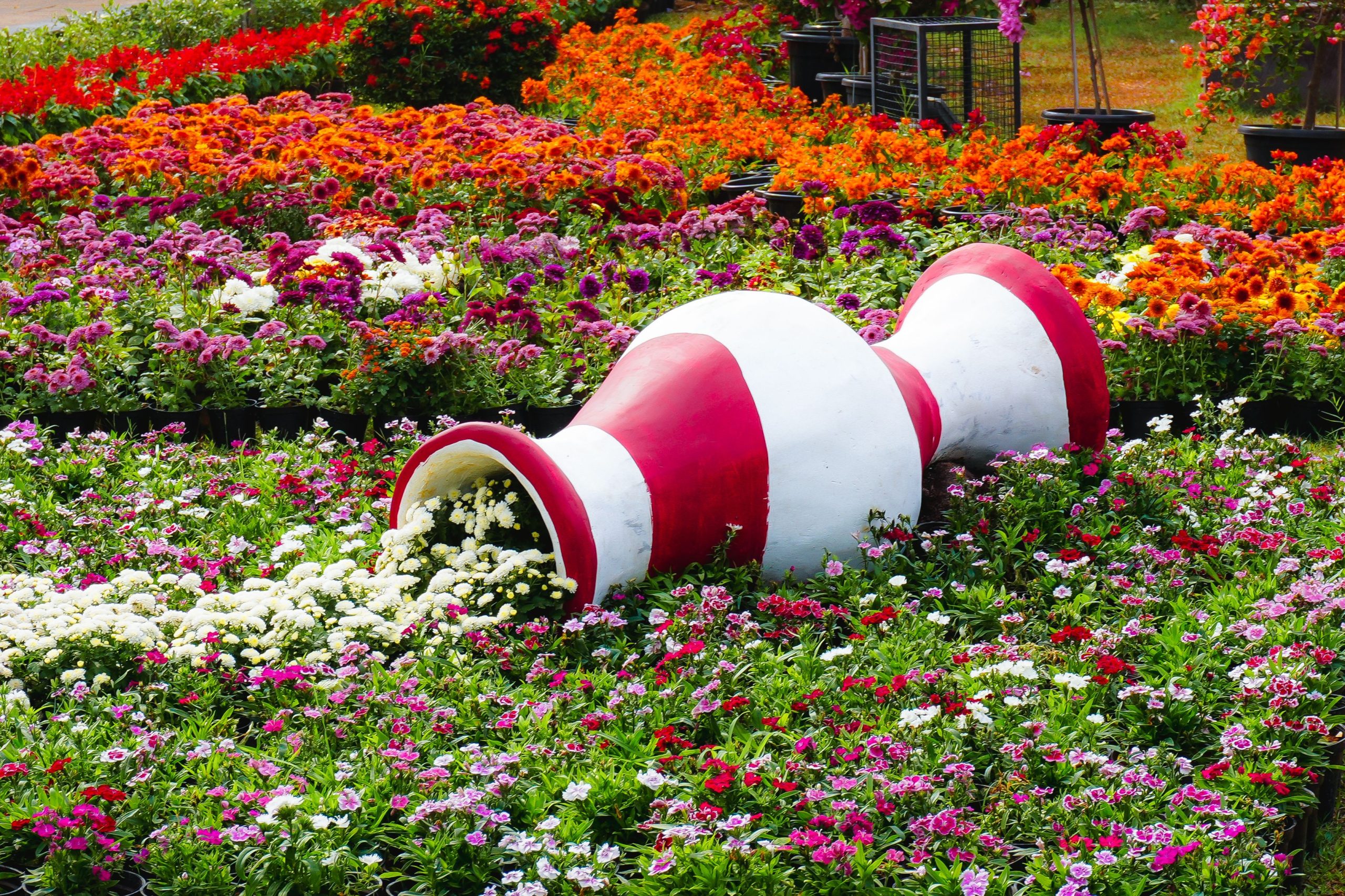
“When planning your spill, think about the ratio of your pot to your flowerbed.”
A great rule of thumb is the 1:3 ratio. The length of your flower ‘spill’ should be roughly three times the diameter of the pot’s opening. This ensures the effect looks generous and intentional, not like a small, accidental tumble. For a large pot like this one, that means planning for a significant area of dense planting to really sell the illusion of a massive, abundant overflow. It’s all about committing to the scale.
2. Weathered Terracotta Urn Spilling a Riot of Spring Blooms
This look follows a beautiful formula for a classic, romantic garden scene. Think of it as: 50% aged texture + 40% multi-color floral mix + 10% dappled light. The hero is the weathered terracotta urn; its texture and history-rich appearance ground the entire vignette. The mix of hyacinths, daffodils, and forget-me-nots provides a riot of color that feels like it sprung up naturally. You could swap the urn for an old metal bucket or a mossy stone trough and exchange the flowers for pansies and tulips to get a similar, yet distinct, result.
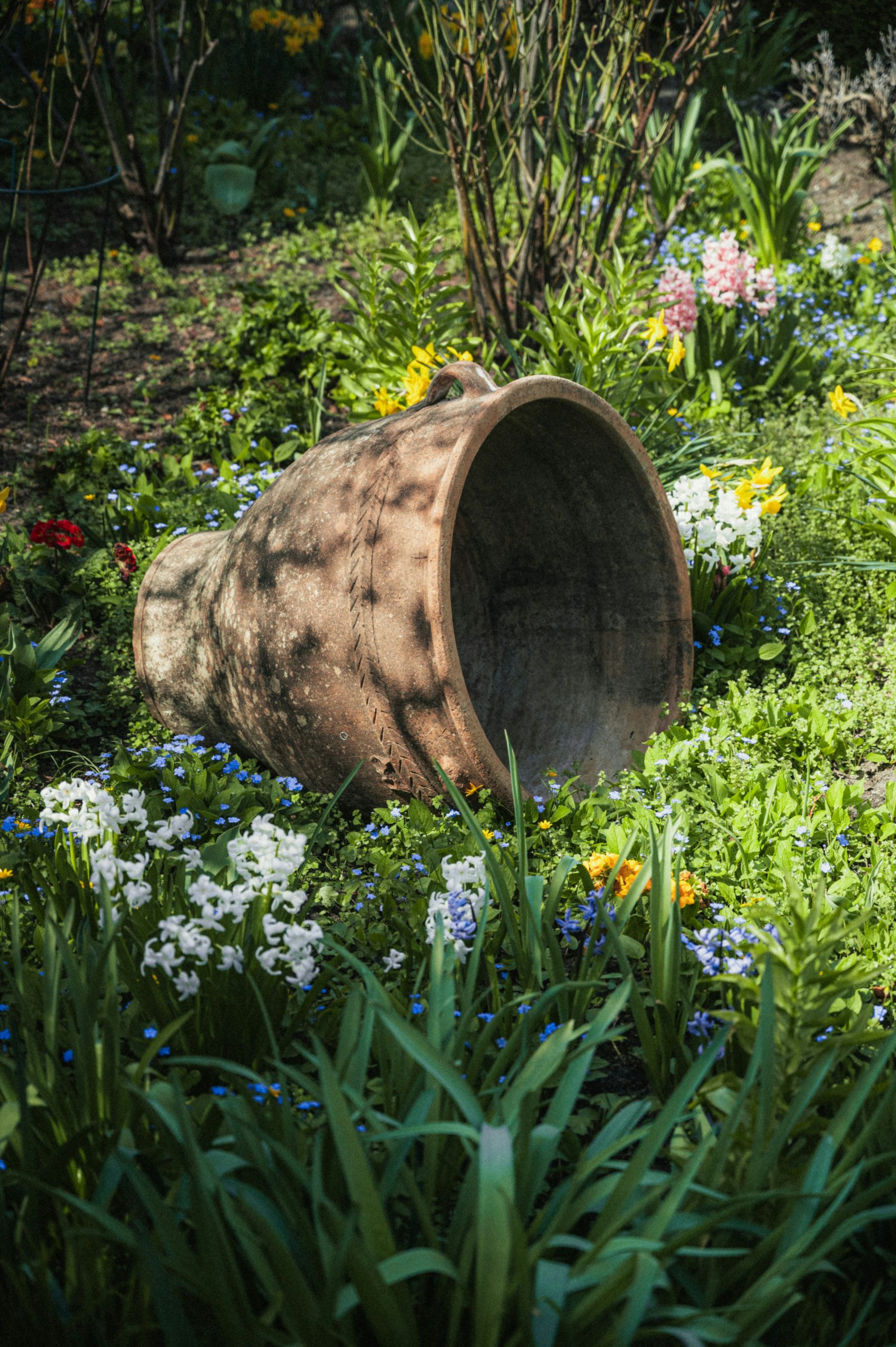
“Let’s be honest: achieving this specific look is a masterclass in timing.”
This stunning combination of spring bulbs—daffodils, hyacinths, and forget-me-nots—has a relatively short, coordinated bloom window. It will look absolutely spectacular for a few weeks, but it won’t hold this perfect state all summer. You’ll need to plan for what comes next, either by inter-planting with summer-blooming annuals or accepting that this is a glorious, temporary display. It’s high-impact, but also high-maintenance in terms of seasonal planning.
3. Classic Terracotta Spill with Pink and White Petunias
that makes this design so successful is its simplicity. There are no competing elements, no overly complex color palettes. It’s just one terracotta pot and a focused effusion of pink and white petunias. By sticking to one type of flower, the ‘spill’ effect becomes much more believable and visually cohesive. If you removed the focused color scheme and used a random mix of ten different plants, you’d lose the punch. The magic here is in the confident restraint and the sheer volume of a single flower type.
“You don’t need a massive budget to create this charming effect.”
A standard 12-inch terracotta pot from a store like Home Depot or Lowe’s will run you about $15-$20. Instead of buying dozens of mature petunia plants, grab a few multi-packs of seedlings for around $5 each. With some good potting soil ($10) and a sunny spot, you can recreate this entire look for under $50. The key is patience; give your seedlings a few weeks to grow and cascade, and you’ll have an abundant spill without the high cost of mature plants.
4. Terracotta Jug Spilling Vibrant Pansies into a Garden Bed
This vignette is a lesson in creating a scene that feels both curated and completely natural. It works because of repetition and integration. The pansies aren’t just in the ‘spill’; they are also planted all around the upright jar, making the spilled jug feel like part of a larger, cohesive flower bed. Furthermore, the use of two terracotta pieces—one upright, one spilled—creates a small narrative. It’s not just a pot on its side; it’s a collection of objects that belong together in this little garden corner.
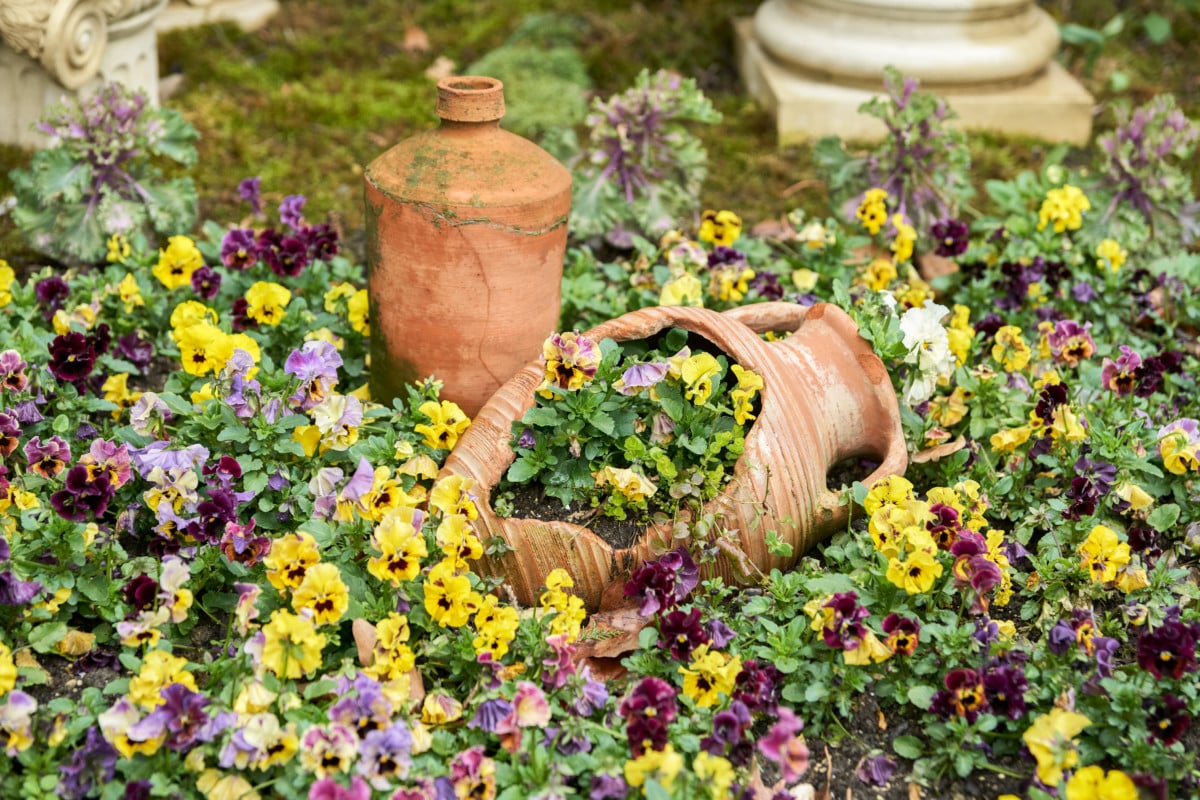
“We’re seeing a huge shift toward ‘cottagecore’ and ‘grandma’s garden’ aesthetics on Pinterest, and this look is the perfect example of why.”
It’s not about perfect, straight lines or minimalist planters. It’s about warmth, nostalgia, and a touch of wildness. Using classic materials like terracotta and familiar flowers like pansies creates an instant sense of comfort and timelessness. This trend has staying power because it feels authentic and achievable, celebrating the beauty of a garden that is well-loved and lived in.
5. Terracotta Shards Creating a Sprouting Plant Display
The single most important element here isn’t a plant or a pot—it’s the sense of emergence. This design is all about the promise of new growth. By using broken pot fragments and arranging them so the small green plants look like they are just sprouting and pushing their way through the soil and mulch, you create a dynamic scene. It tells a story of renewal and resilience. Without this feeling of ‘just beginning,’ it would just be a pile of broken pottery. The tiny, bright green sprouts are everything.
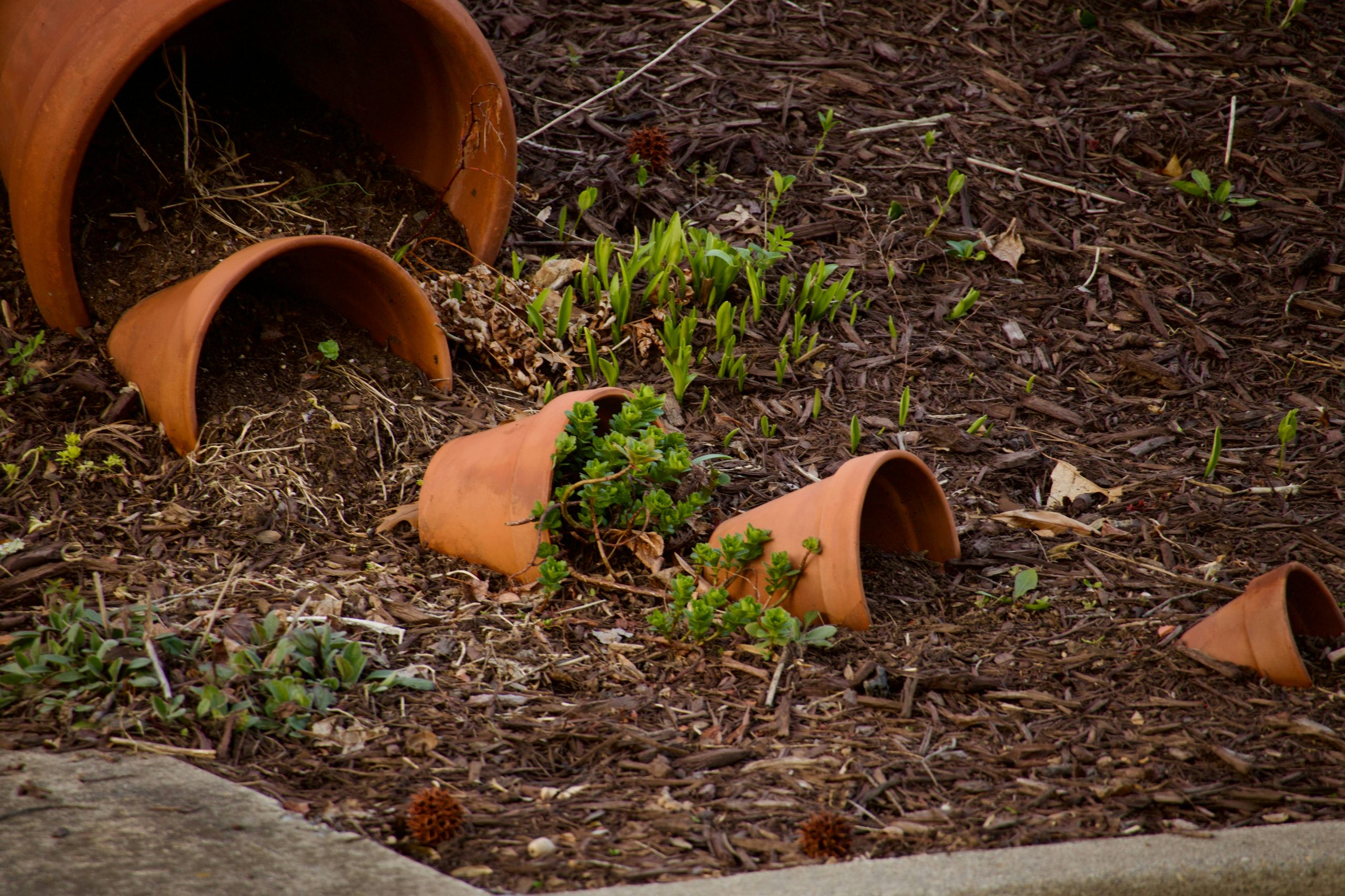
“While this is a fantastic way to recycle broken pots, be practical about your plant choice.”
The small, isolated pockets of soil in and around the terracotta shards will dry out much faster than a normal garden bed or a full-sized pot. You’ll need to choose plants that are either very drought-tolerant (like certain sedums) or be prepared to water these small sections far more frequently, especially during hot, dry weather. This is a look that requires a bit more attention to moisture levels than a standard planter.
6. Large Terracotta Pot with a Spill of White and Lavender Daisies
Here’s the visual recipe for this cheerful explosion of flowers: 60% high-contrast flowers + 30% rustic texture + 10% earthy ground. The power comes from the sea of white daisies with their dark purple centers; it’s a bold choice that grabs your attention immediately. The weathered terracotta pot provides a warm, rustic counterbalance to the cool-toned flowers. You could swap the daisies for white petunias or zinnias and still achieve the same effect, as long as you maintain that high-contrast punch against the earthy pot.
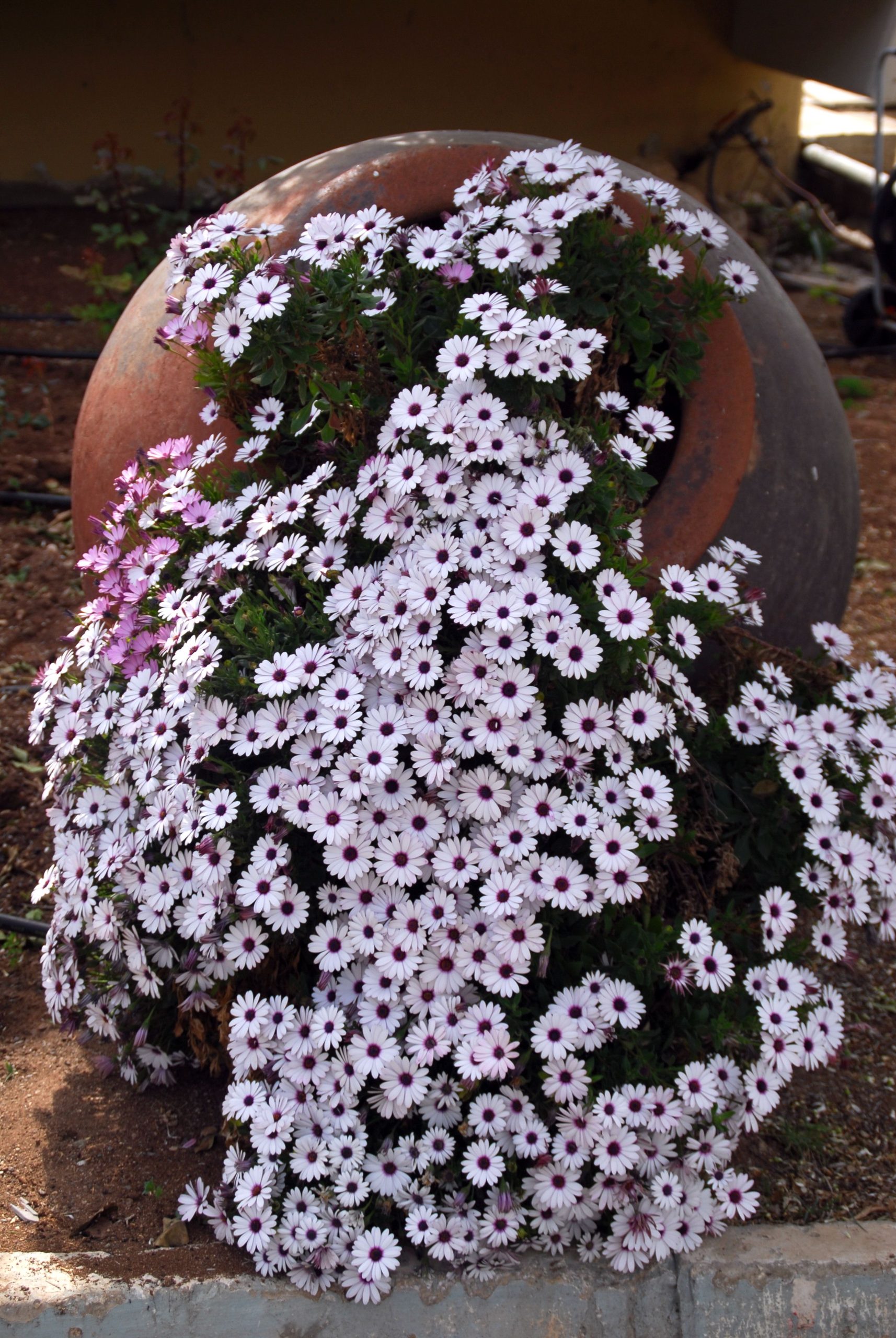
“To get that incredibly dense, carpet-like effect for your flower spill, the secret is planting much closer together than the plant tags recommend.”
For annuals like these, you can often plant them twice as close as suggested. This encourages the plants to grow up and into each other, eliminating gaps and creating a solid mat of color. You’ll need more plants to start, but the result is a professional-looking, abundant cascade rather than a few sparse-looking stems. This is a much denser and more impactful look than the airy spring flowers in Idea #1.
7. Rustic Autumnal Pot Spilling Pink Carnations and Moss
This arrangement succeeds by masterfully blending textures. You have the smooth, ruffled petals of the pink carnations, the fuzzy, almost alien-like texture of the green spherical flowers, the soft, clumpy moss, and the brittle, dry autumn leaves. It’s a tactile feast. The light brown terracotta pot, with its subtle netting, acts as a rustic container that feels perfectly at home in this naturalistic jumble. The color palette is also unexpected—pairing springtime pink with autumnal browns works because the vibrant green acts as a bridge between them.
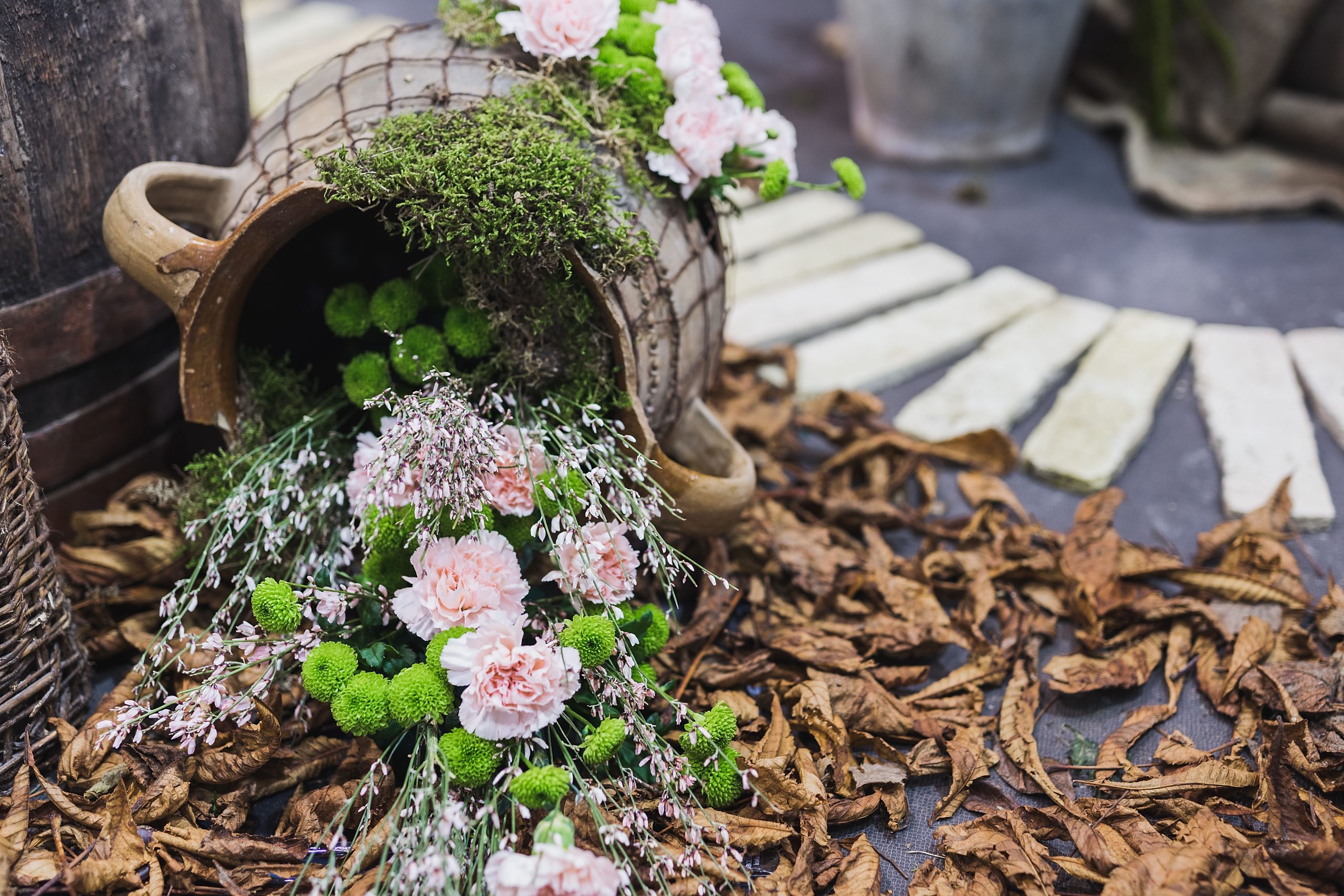
“A display that incorporates moss and is set on a bed of dry leaves requires some specific care to keep it looking fresh.”
The moss will need to be misted regularly to maintain its vibrant green color, especially if it’s in a spot with any direct sun. The leaves, while beautiful, can become a damp bed for pests or fungus if they aren’t occasionally fluffed or replaced. Think of this as a beautiful, but temporary, art installation that will need refreshing every few weeks to stay at its peak, unlike a simple succulent spill like in Idea #11.
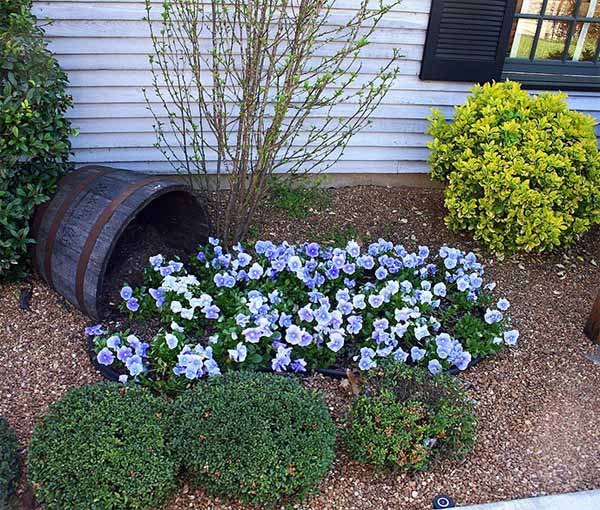
8. Dark Wooden Barrel Spilling Blue and White Pansies
The wooden barrel is the undeniable star of this show. If you swapped it for a standard terracotta pot, the entire mood would change from rustic and charming to something much more common. The dark wood and metal bands provide a weight and a sense of history that elevates the simple pansies. It creates a beautiful contrast with the light blue house siding and feels perfectly integrated with the informal, cottage-style garden bed. The barrel is what gives this entire corner its character and personality.
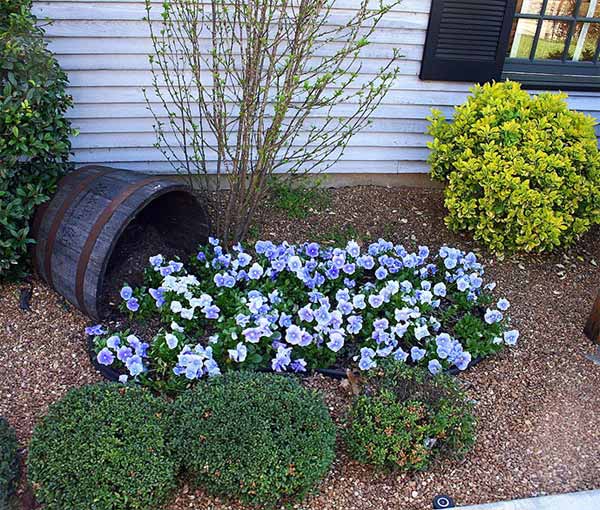
“This is an idea that works beautifully for medium-sized spaces, particularly front yard garden beds or corner nooks.”
You need enough ground space for the barrel (typically 24-30 inches in diameter) plus at least 3-4 feet for the ‘spill’ to feel substantial. It’s perfect for a space of at least 15-20 square feet. This concept provides more vertical interest than a simple ground-level pot, making it a great choice for adding dimension to a flat area without blocking windows or pathways. It offers more height than Idea #3, but is less formal than an urn.
9. Aged Ceramic Pot with a Cascade of White and Purple Daisies
The key to this serene look is the layering of greens. Notice how there are multiple shades and textures—the fine leaves of the daisy foliage, the broader leaves of surrounding plants, and the dense, uniform green of the hedge in the background. This deep, multi-tonal green backdrop makes the white and purple flowers pop dramatically. The aged, ochre-colored pot acts as a warm, earthy anchor in the middle of all that cool green and purple, creating a perfectly balanced composition.
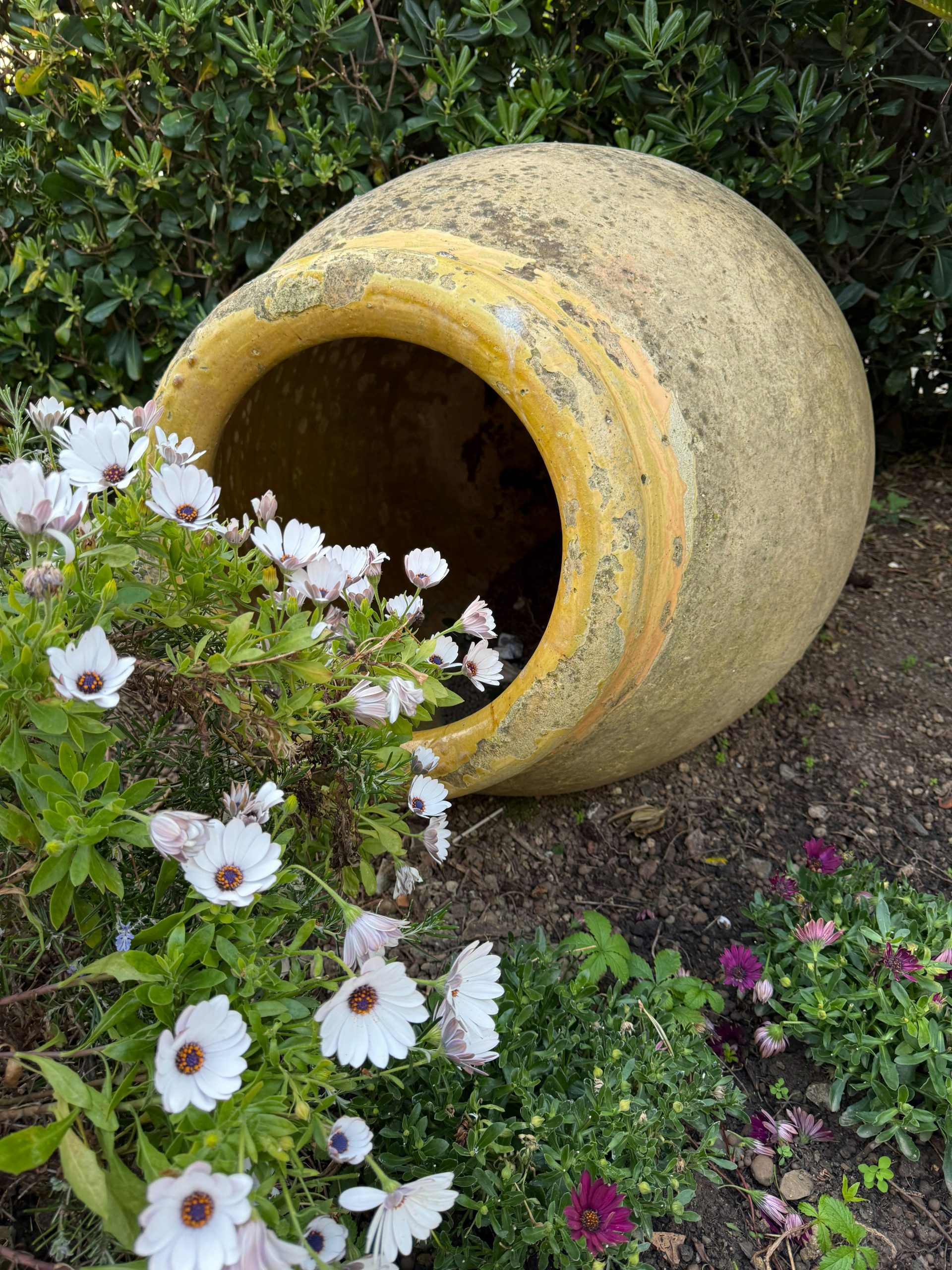
“That gorgeous, aged ceramic pot likely comes with a hefty price tag.”
To get a similar vibe for less, head to a home improvement store and buy a basic, inexpensive concrete or resin pot. You can easily age it yourself! Mix a cup of plain yogurt or buttermilk with a handful of moss and paint it onto the pot. Leave it in a shady, damp spot for a few weeks, and natural moss and patina will start to develop, giving you that ancient-looking finish for a fraction of the cost.
10. Whimsical Fairy Garden Built Within a Broken Pot
Creating a magical fairy garden from a broken pot is easier than it looks and makes for a fantastic weekend project. This is a great use for a pot that might have cracked during a winter freeze. Estimated time: 2 hours. Material cost: $30-$60.
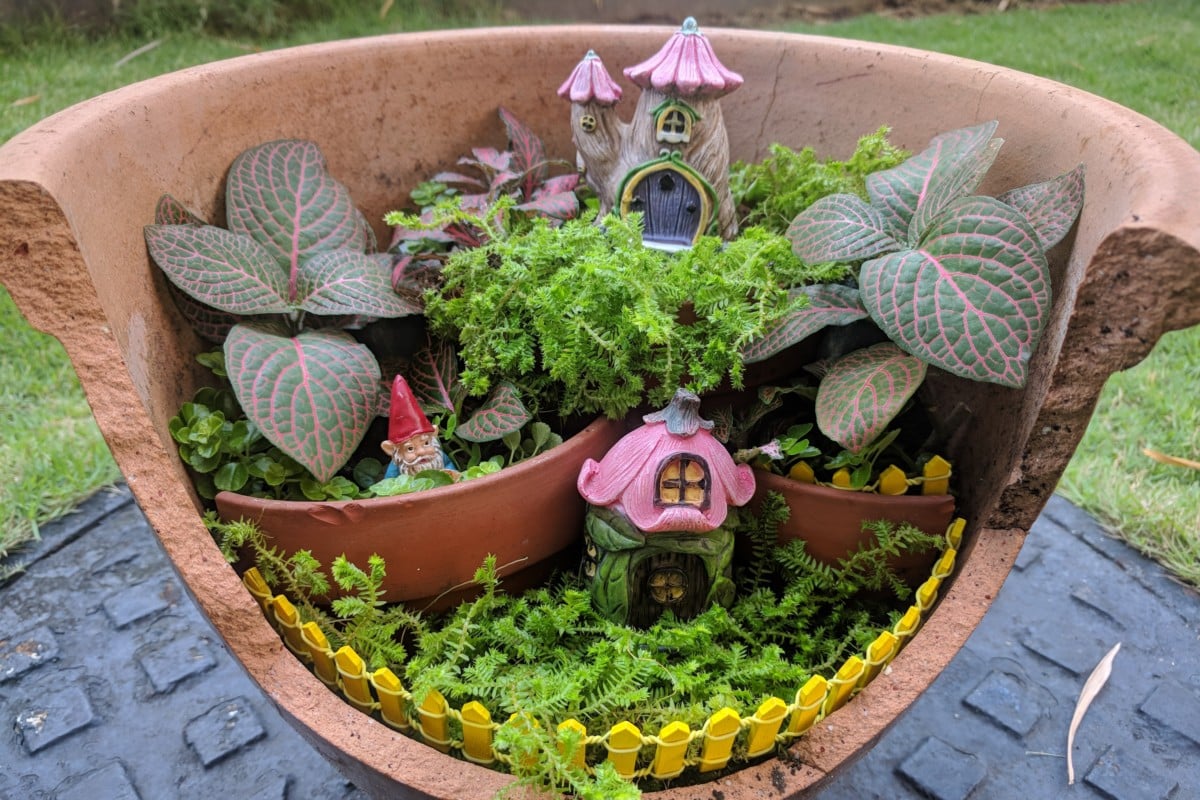
“First, safely break the pot further if needed to create distinct tiers.”
Use a hammer gently (with safety glasses on!).Position the largest piece as your base and fill it with potting soil.Use the broken shards to create ‘steps’ or terraces, backfilling with soil as you go.Arrange your miniature houses and accessories, pressing them firmly into the soil.Plant your small-scale plants, like tiny succulents or mosses, around the houses and along the steps.Finish with a sprinkle of fine gravel for paths and your miniature fence.
The secret to a convincing miniature garden is plant selection. Always choose plants with naturally small leaves and a slow growth habit. Look for dwarf varieties of ferns, miniature ivies, small sedums, or even simple moss. If your plants have leaves that are too large, the scale of your tiny houses and accessories will be thrown off, and the charming miniature effect will be lost. Stick to plants where a single leaf is no larger than your thumbnail for the best results.
11. Broken Terracotta Pot Repurposed for a Succulent Spill
Succulents are famously low-maintenance, but a ‘spilled’ arrangement like this has its own set of rules. The plants spilling onto the gravel are no longer in the pot, meaning their roots are in the ground. You need to ensure the soil *under* the gravel has excellent drainage. If that area collects water, the succulents will rot from the bottom up. Also, light-colored gravel can get surprisingly dirty with soil, leaves, and outdoor grime. Plan on gently rinsing or replacing the top layer of gravel once a season to keep it looking crisp.
“Before you commit to this charming succulent spill, run through this quick check”
Before you commit to this charming succulent spill, run through this quick checklist to ensure it will thrive:
- Sun Exposure: Do you have a spot that gets at least 6 hours of direct sunlight? Most succulents need this to prevent stretching and stay vibrant.
- Soil Check: Is the ground soil well-draining? If you have heavy clay, you’ll need to amend it with sand or perlite before placing your gravel and plants.
- Critter Patrol: Are squirrels or chipmunks a problem in your yard? They are notorious for digging up succulents and scattering gravel.
- Water Source: Is it easy to water this spot? While they don’t need much water, you don’t want it to be a huge chore to get to them.
12. Spilled White Yarrow Flowers from a Vase in a Sink
The single element that elevates this from a simple picture of flowers to something artistic is the running water. Without the clear stream flowing from the faucet, it’s just a spilled vase. The water adds life, movement, and a story to the scene. It implies an action just took place, making the image dynamic rather than static. It also interacts with the light, creating reflections and a sense of freshness that makes the entire composition feel clean and immediate. It’s a brilliant, simple touch.
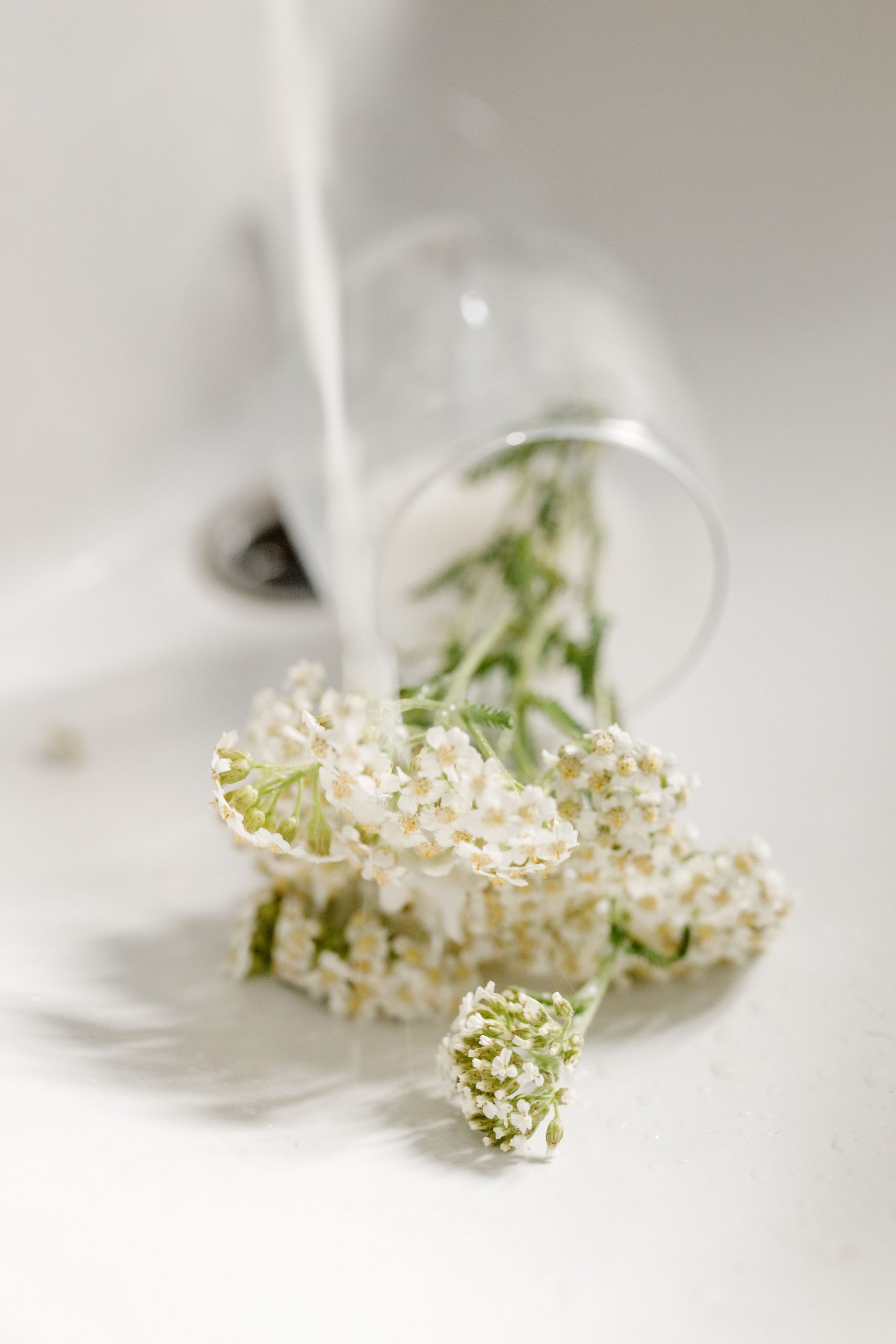
“This is a stunning image for inspiration, but let’s be real: this is a temporary art installation, not a long-term decor choice.”
Having flowers constantly sitting in your sink basin is impractical for any functioning kitchen or bathroom. It’s a beautiful idea for a party—perhaps set up in a powder room sink for guests to discover—or for a photoshoot. But on a daily basis, you’d quickly get tired of having to move your floral arrangement every time you need to wash your hands or a dish.
13. Charming White Clog Planters with Yellow Flowers on a Dark Wall
This is all about the power of unexpected pairings. First, the shape: using clogs as planters is instantly whimsical and memorable. Second, the color contrast is dramatic and effective. The creamy white of the clogs pops intensely against the dark, weathered wood wall. Finally, the choice of bright yellow flowers adds a third layer of cheerful, vibrant color that brings the whole scene to life. It’s a trio of smart choices—shape, contrast, and accent color—that creates a look with immense personality.
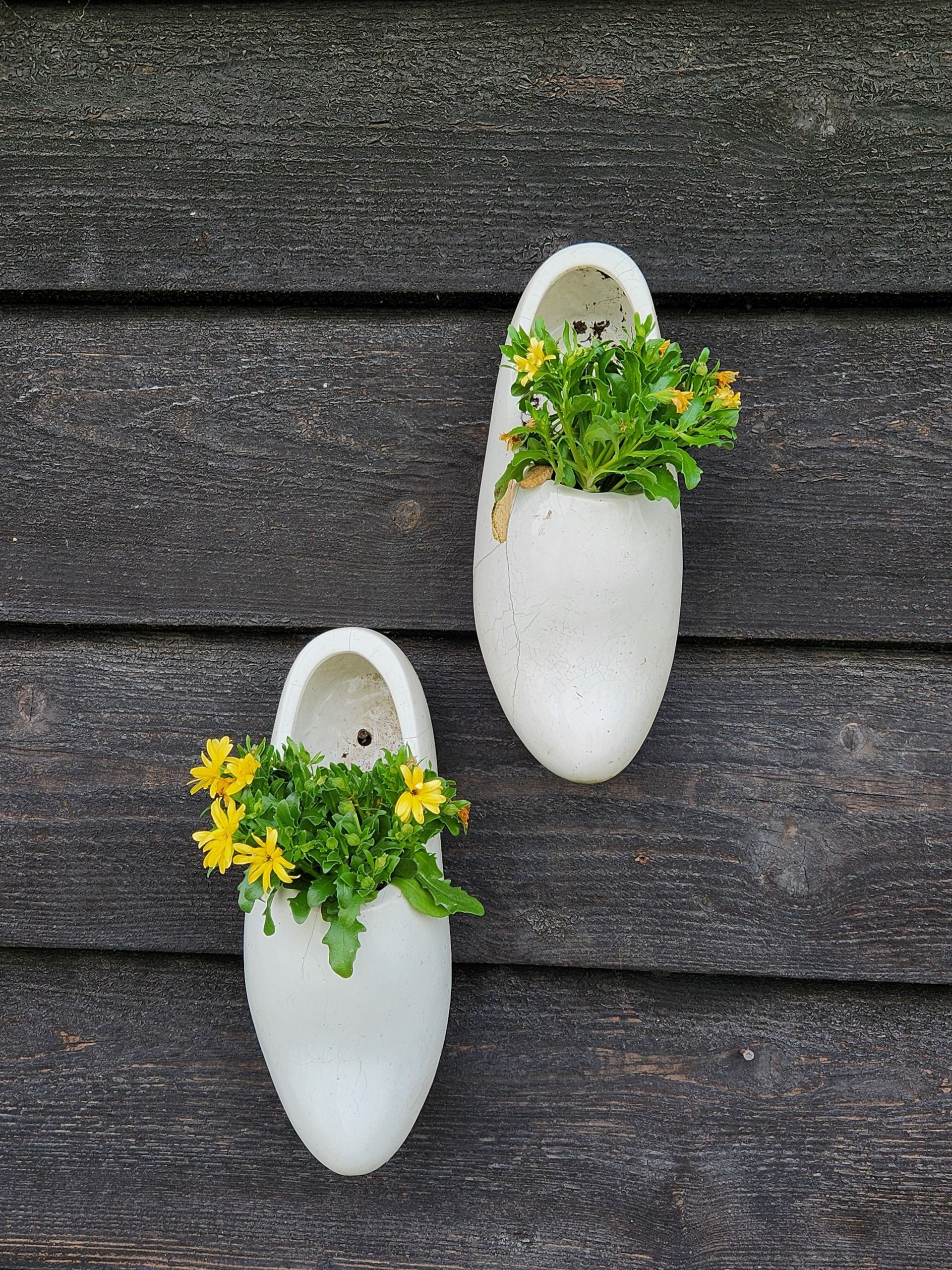
“When mounting planters on a vertical surface, especially a wooden one, proper drainage is non-negotiable.”
Make sure you drill several drainage holes in the bottom of each clog *before* planting. Also, consider mounting the planters on small, hidden spacers (even a few stacked washers will do) to create a half-inch gap between the back of the planter and the wood wall. This allows for air circulation, which helps the wood dry out after watering and prevents rot over the long term.
14. Dramatic Succulent Spill with Red-Tipped Varieties
The formula for this striking display is simple but effective: 70% dense green texture + 20% contrasting color + 10% rustic container. The bulk of the visual impact comes from the sheer volume of succulents packed together. The magic, however, is in the reddish-brown tips which provide a shock of warm color against the cool green. The broken terracotta pot serves as the perfect earthy frame. This is a much more dramatic and colorful take on a succulent spill than the one seen in Idea #10, proving how color choice can change the mood.
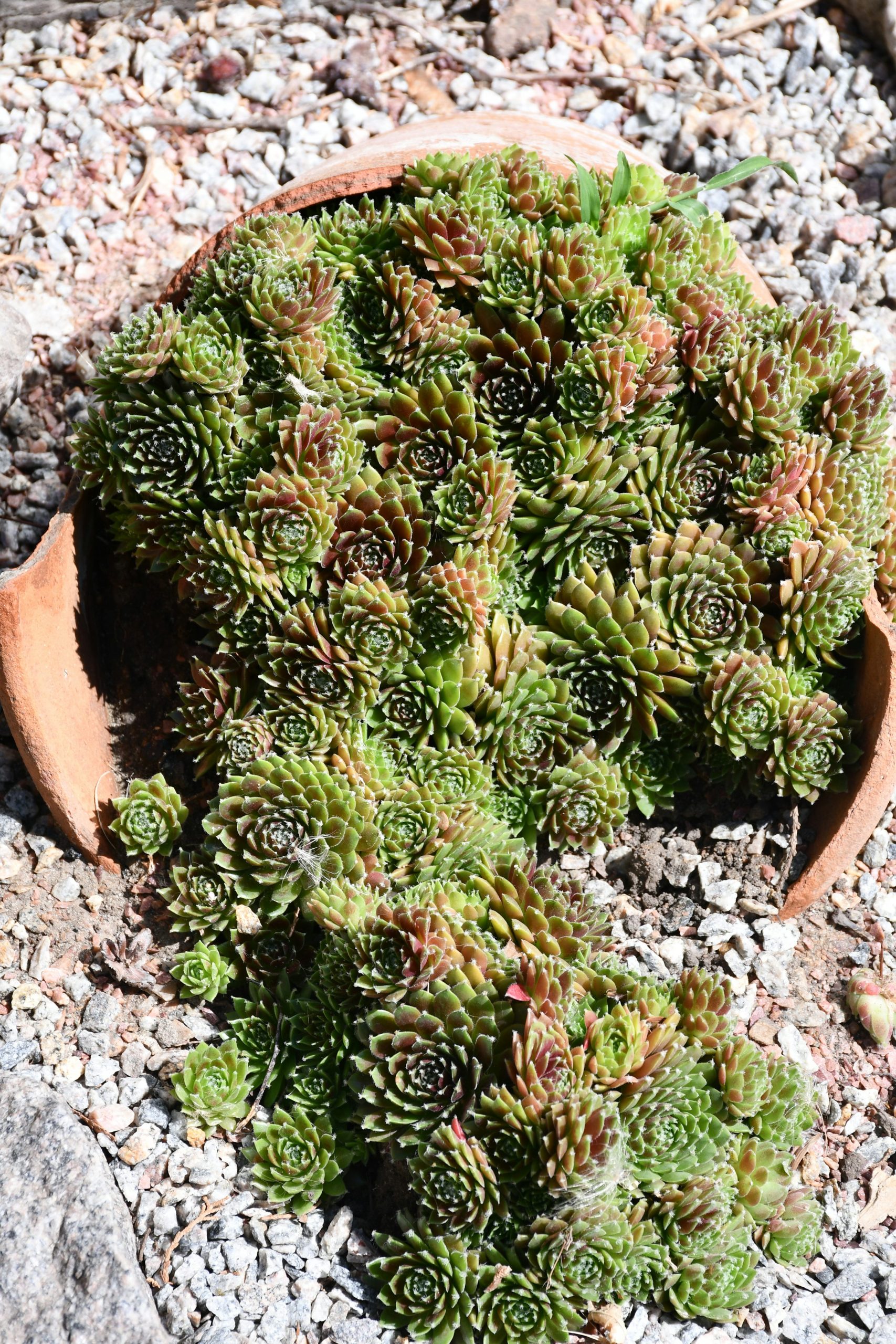
“This idea is perfect for small-scale applications where you want a big impact.”
It’s ideal for a space as small as 2×2 feet. Think about that awkward corner of a patio, a spot on a balcony, or nestled into a rock garden. Because all the action is low to the ground and contained, it doesn’t require a large garden bed. It’s a fantastic solution for renters or anyone with limited outdoor space who wants to create a focal point that feels lush and established without a major landscaping project.
15. Elegant Weathered Stone Urn Spilling Over with Succulents
The defining element here is the planter itself. That classical-style stone urn, with its weathered texture and sculpted details, brings a sense of timeless elegance and gravitas. If these same succulents were spilling from a simple plastic pot, the effect would be far less impressive. The urn elevates the entire arrangement from a simple planting to a sophisticated garden feature. It’s the perfect marriage of a formal, traditional vessel with the informal, organic tumble of modern succulents.
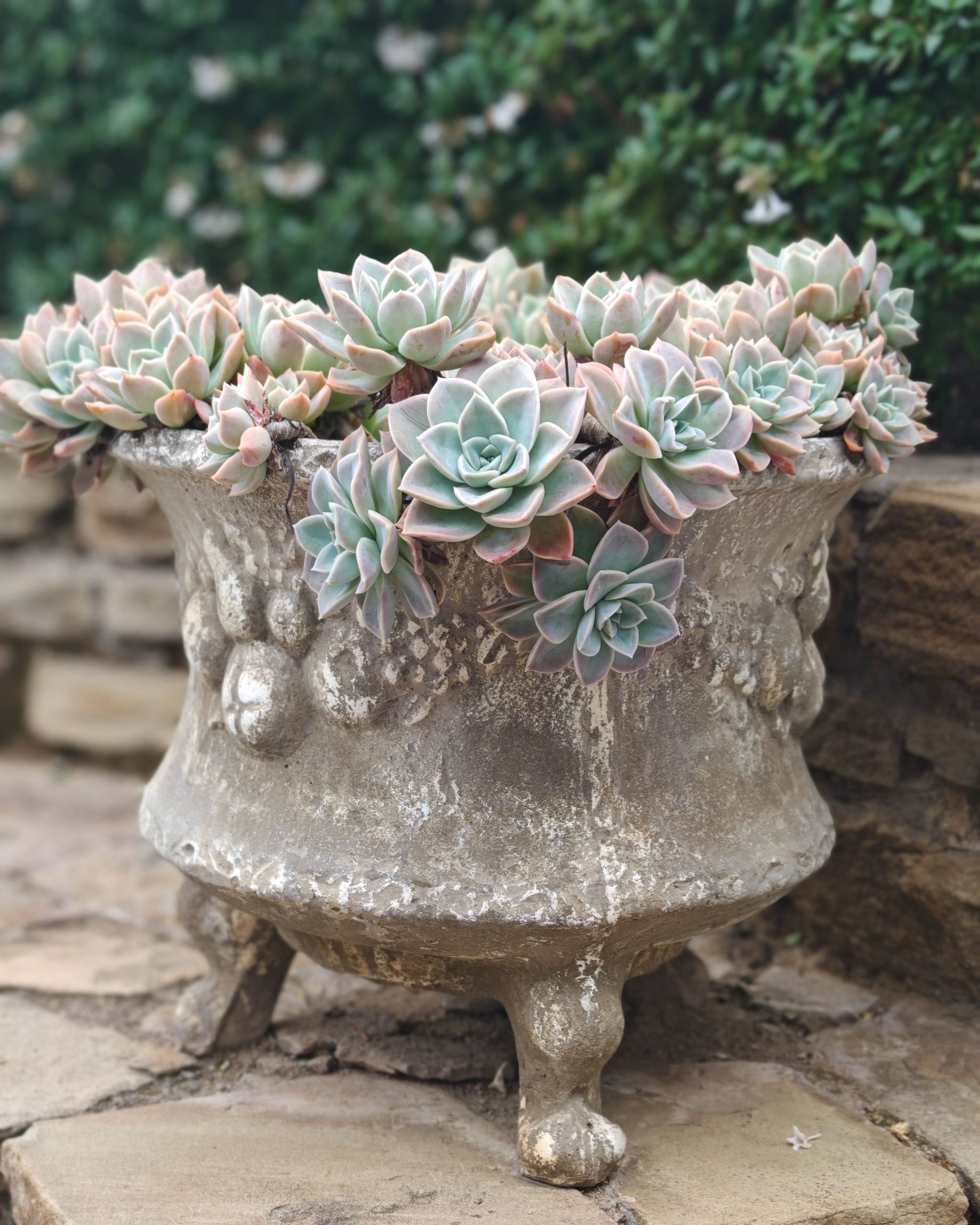
“While succulents are drought-tolerant, an arrangement like this, spilling over the sides of a stone urn, has specific watering needs.”
The plants in the center of the pot have more soil and will retain moisture longer. However, the succulents trailing over the hot stone edge will dry out very quickly. To keep the whole arrangement looking lush, you’ll need to do ‘spot watering’—giving the trailing plants an extra drink more often than the ones in the middle. Otherwise, you’ll end up with a beautiful center and crispy, sad-looking edges.
16. Concrete Planter with Mixed Plants Cascading Over Rocks
This composition works beautifully because it blends so seamlessly with its surroundings. The rough texture of the concrete bowl planter echoes the texture of the large grey rocks it’s nestled among. The plant selection is also key: there’s a mix of vertical elements (the tall, variegated leaves) and horizontal elements (the cascading vine). This variety of form creates a dynamic, naturalistic look, as if the plants simply grew there on their own. The silvery-grey trailing plant is a genius touch, as it ties the green of the foliage to the grey of the stone and concrete.
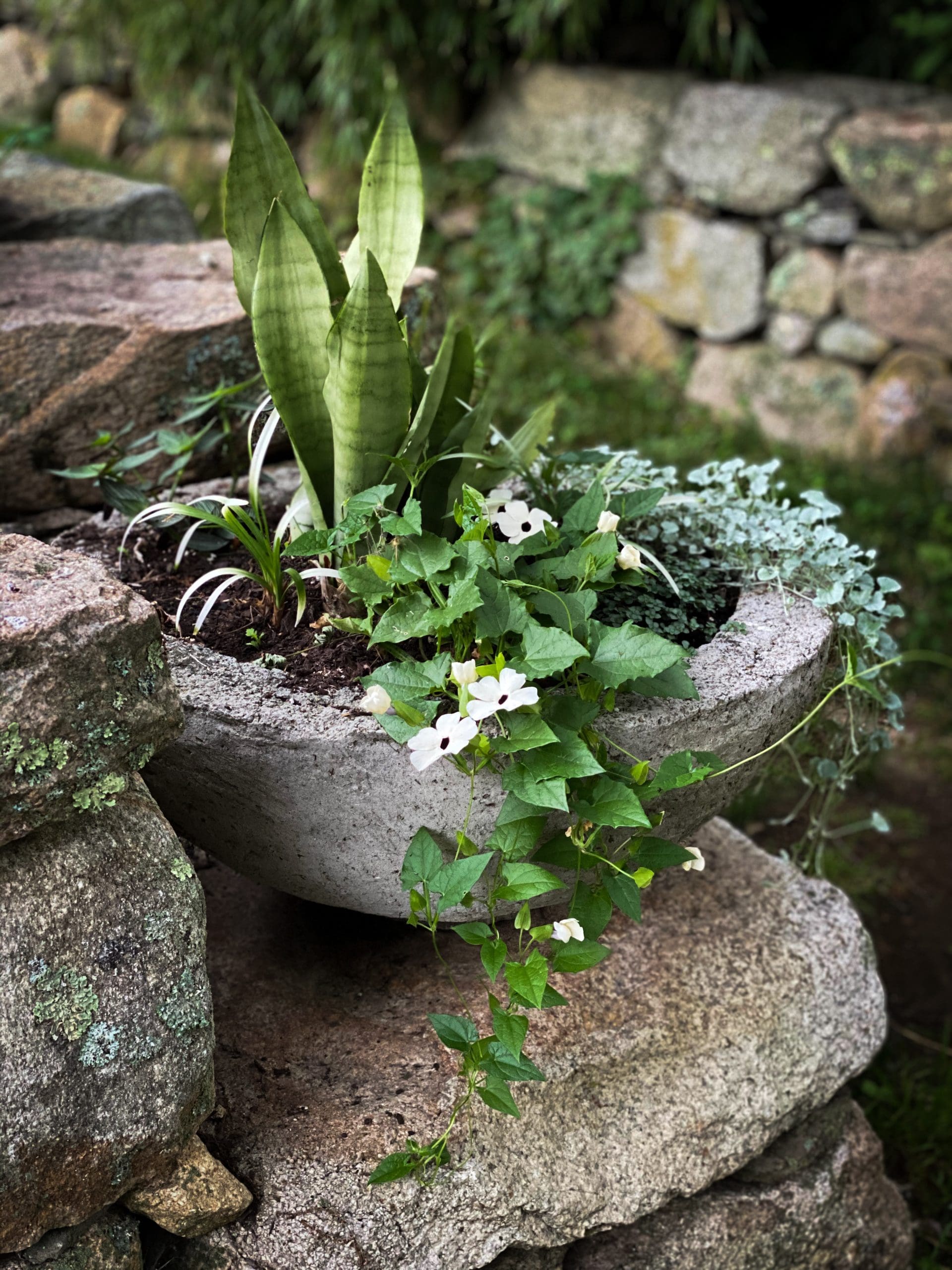
“For a truly natural-looking cascade, don’t just let your trailing plants hang limply over the side.”
Gently guide and tuck the vines into the crevices between the rocks. You can use small ‘U’ shaped pins made from floral wire to discreetly secure the stems in place. This encourages the plant to root into the soil between the rocks, creating a much more integrated and permanent-looking installation. It’s a small trick that makes a huge difference in achieving that ‘it’s always been here’ vibe.
17. Playful Terracotta Pot Spilling Red Geraniums on White Pebbles
The single element that makes this idea so delightful is the use of white pebbles to represent the ‘spill.’ Instead of just having the flowers emerge onto soil, the bright white stones create a clean, graphic, and highly intentional look. It’s a clear signal that this is a playful piece of garden art, not an accident. The contrast between the vibrant red geraniums and the stark white pebbles is what gives this design its visual punch and charming, almost cartoon-like quality. Without the pebbles, the magic is lost.
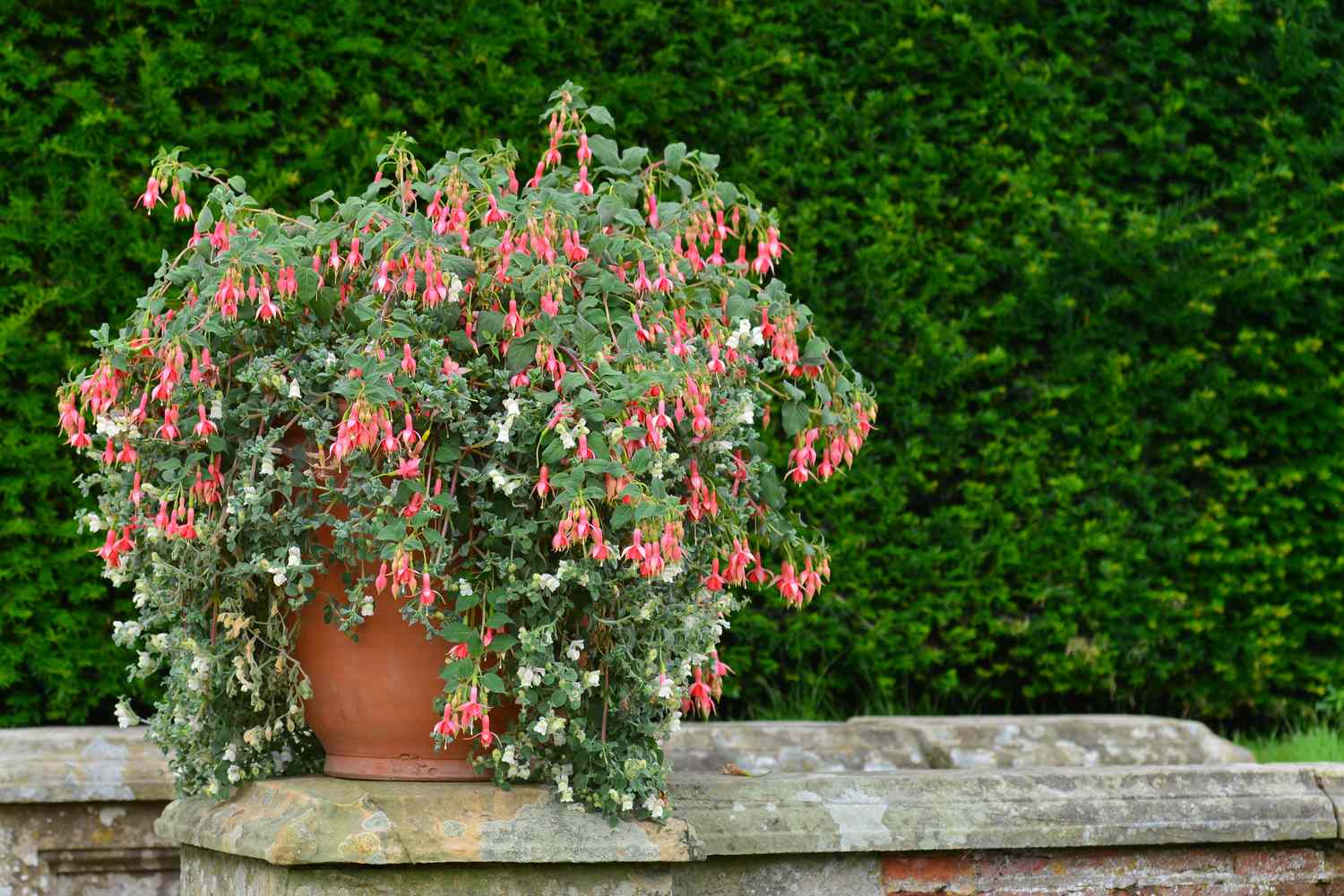
“White decorative pebbles look incredible when you first lay them down, but they can be a real pain to keep clean in an outdoor setting.”
They will inevitably get covered with dirt splatter from rain, fallen leaves, and bits of mulch. To keep this looking sharp, you’ll need to commit to regular maintenance. This means periodically scooping up the pebbles, rinsing them in a bucket, and putting them back. Or, you can use a leaf blower on a low setting to clear debris, but be prepared to lose a few pebbles each time.
18. Lush Rectangular Planters with a Vibrant Mix of Flowers and Foliage
This overflowing look is all about a balanced recipe: 40% spillers, 40% fillers, and 20% thrillers. The ‘spillers’ are the magenta petunias and other cascading plants that soften the edges of the dark brown planters. The ‘fillers’ are the large burgundy and green foliage that create a lush, full base. The ‘thrillers’ are the tall, bright yellow sunflowers that provide height and a dramatic focal point. This classic container design formula ensures your planters look full, balanced, and interesting from every angle.
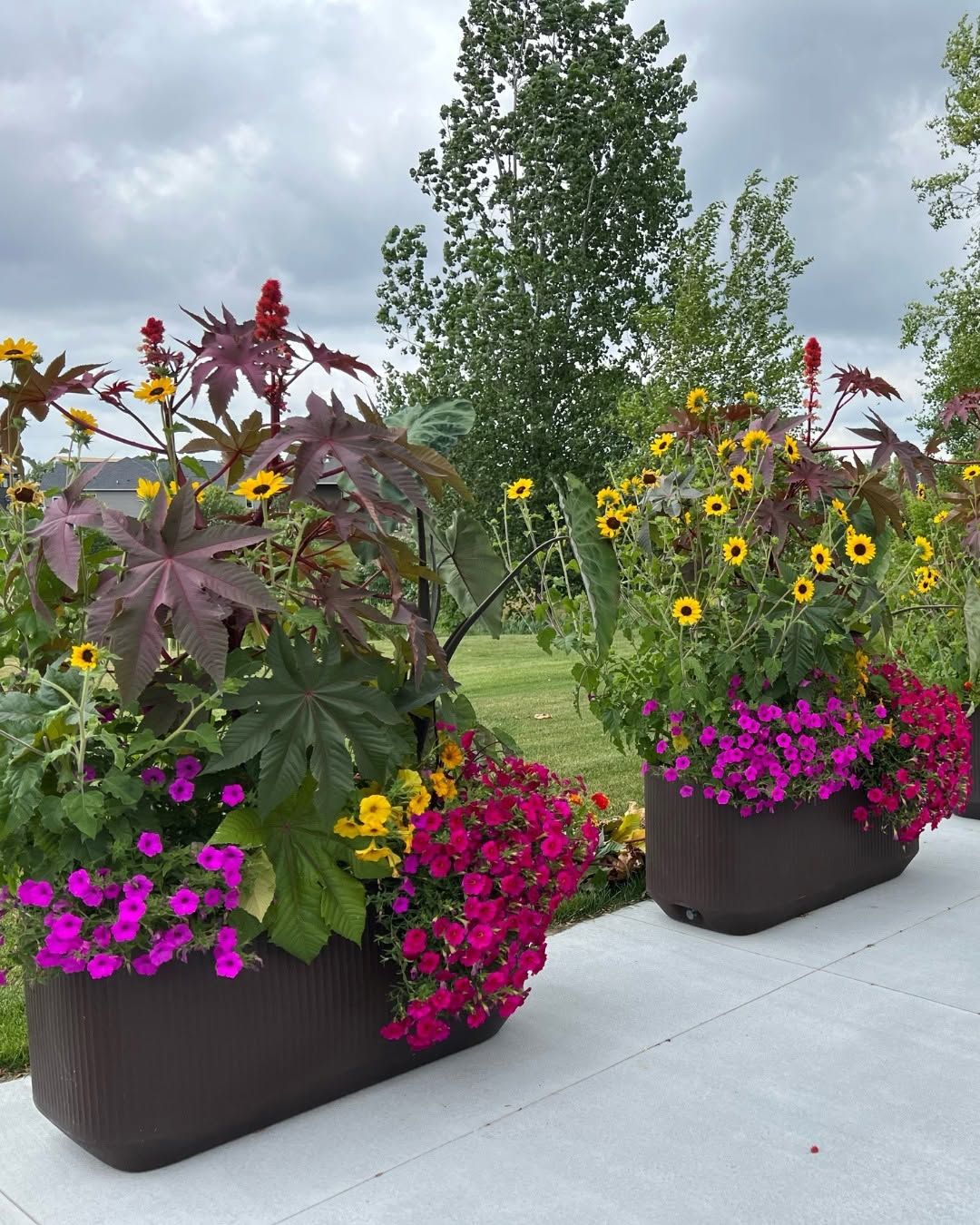
“To get this incredibly lush, overflowing look, don’t be afraid to crowd your planters.”
The standard spacing advice on plant tags is for garden beds, not containers. For a container, you can and should plant much more densely. A good rule of thumb for a large rectangular planter like this is to place a new plant every 6-8 inches. This density forces the plants to compete, with some growing up and others spilling over the sides, creating that gorgeous, abundant look right from the start.
19. Aged Terracotta Pot Spilling Pink and White Petunias onto a Gravel Path
This scene is so charming because of the texture and color harmony. The warm, weathered terracotta pot, the cool light gray of the gravel path, and the deep green of the hedge create a perfect neutral backdrop. This allows the soft pink and white of the petunias to be the absolute star. The spill is also well-proportioned, spreading out naturally without looking too messy or too sparse. It feels like a happy accident, which is the whole point. This is a softer, more romantic version of the petunia spill in Idea #2.
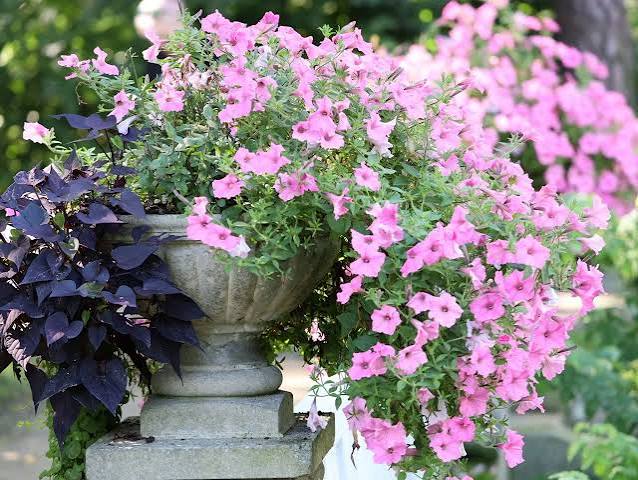
“You can achieve this high-end garden look on a shoestring budget.”
Instead of buying expensive, pre-aged terracotta, buy a cheap pot and create a patina yourself. Mix one part garden lime with one part water to make a thin paste, and brush it unevenly over the pot. As it dries, it will create a chalky, aged look. For the flowers, grow petunias from seed for a few dollars instead of buying dozens of mature plants. The gravel can be purchased by the bag affordably at any home improvement store.
20. Vibrant Garden Beds with Red and White Flowers Flanking a Green Lawn
The single element that makes this garden so impactful is the disciplined color palette. By sticking to a strict scheme of red, white, and green, the design achieves a level of sophistication and visual power that a random mix of colors never could. The vibrant red provides energy and a clear focal point, the white offers a bright, clean contrast, and the lush green lawn and background trees act as the perfect calming frame. It’s a classic combination that works every time because it’s bold, clean, and easy on the eyes.
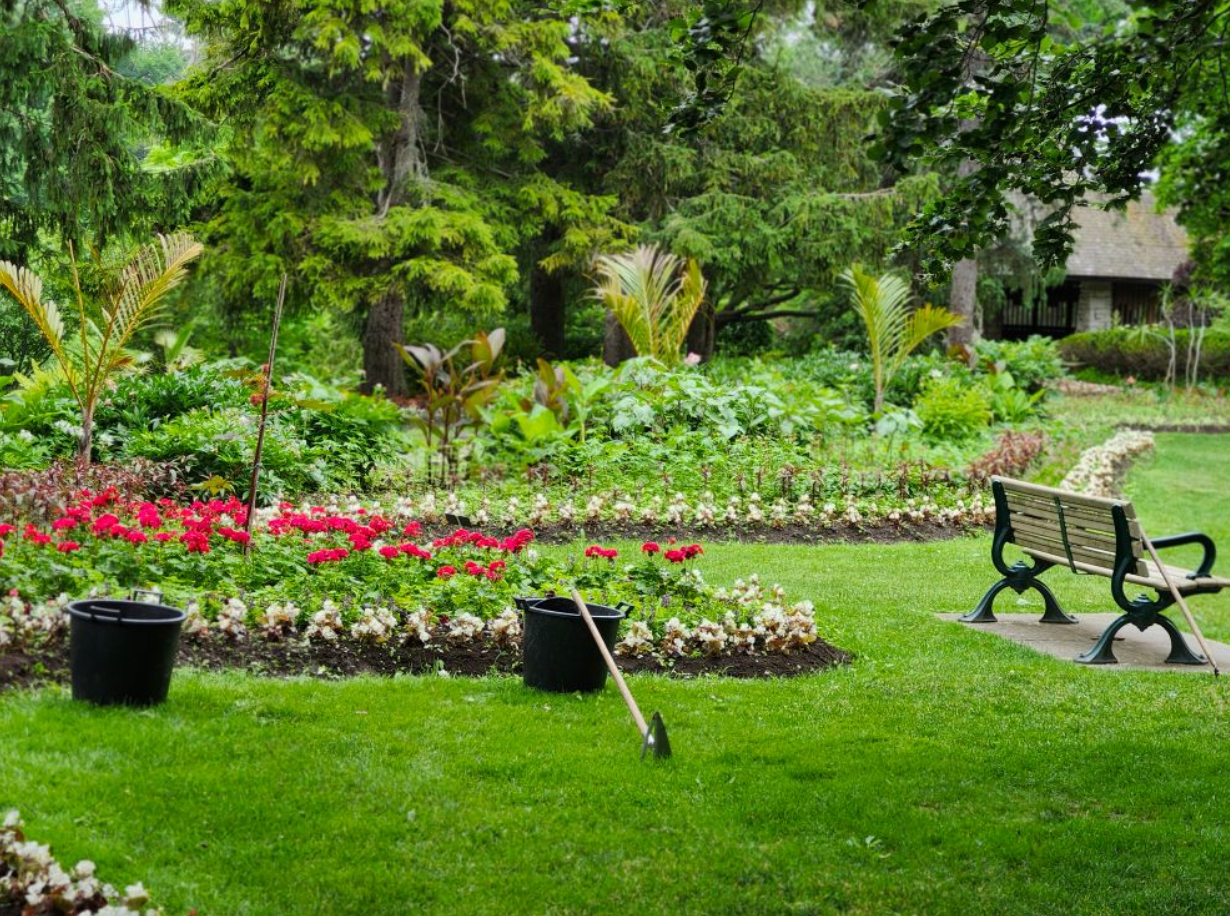
“Achieving and maintaining those perfectly manicured, curved bed edges is a significant commitment.”
It’s not a one-and-done task. You’ll need to re-edge the beds at least a few times during the growing season to keep the grass from creeping in and blurring those crisp lines. While the visual payoff is huge, be prepared for the ongoing work with an edger or spade. The black buckets and hoe in the scene are a subtle clue: a garden that looks this good requires constant, hands-on attention.
21. Textured Stone Planter with an Abstract Face and Spring Flowers
This is a masterclass in combining art and nature. The planter itself, with its textured stone finish and abstract face relief, is a piece of sculpture. It provides an artistic, modern counterpoint to the wild, natural beauty of the spring flowers. The choice of flowers is also brilliant. The tall, architectural purple hyacinths mirror the verticality of the planter, while the cheerful yellow daffodils add a splash of contrasting color and form. It’s the tension between the static, sculpted face and the living, vibrant flowers that makes this so compelling.
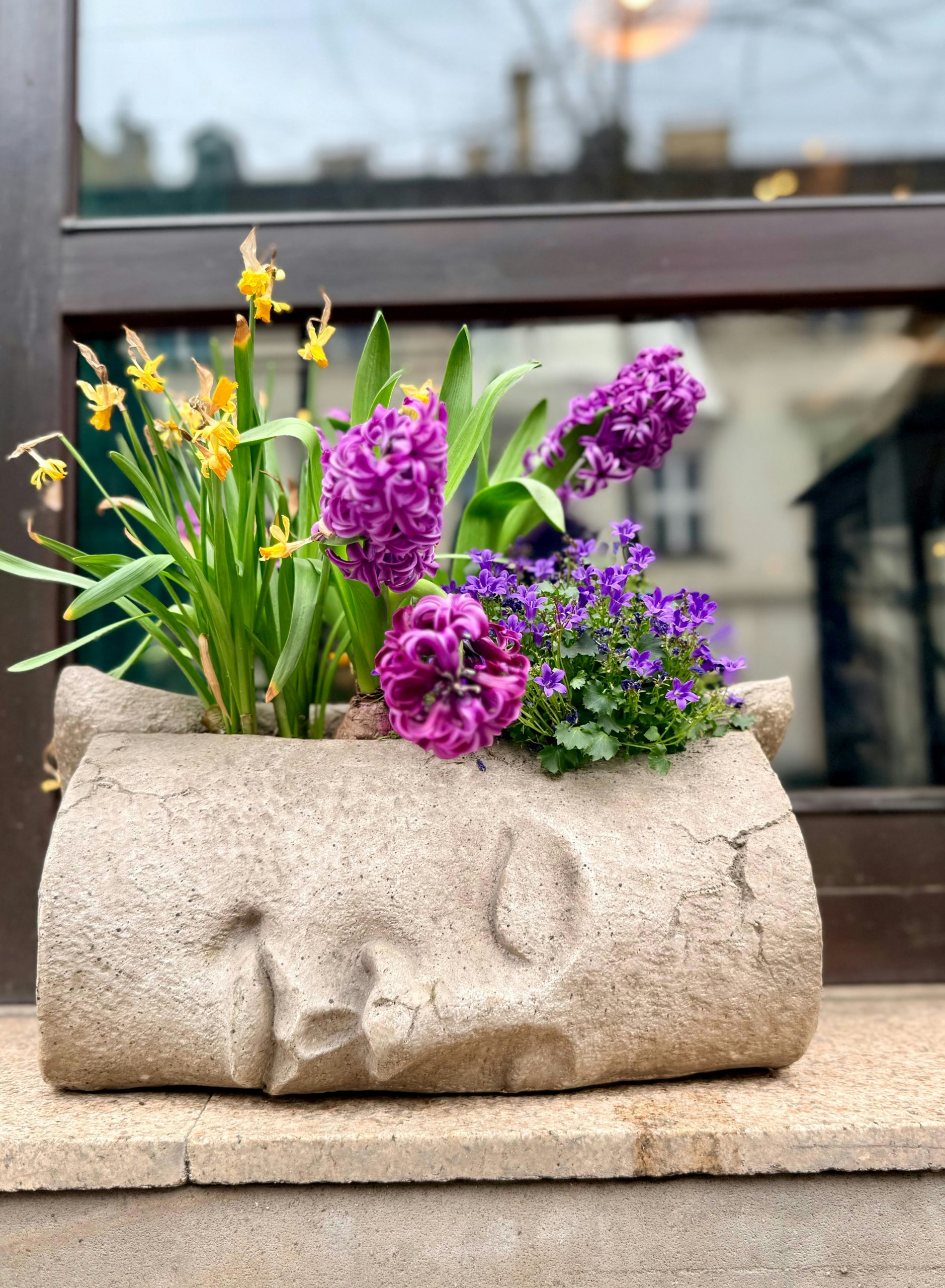
“Planters with personality—especially faces and abstract forms—are having a huge moment.”
After years of minimalist, neutral planters, people are looking for ways to inject more character and whimsy into their homes and gardens. These ‘face pots’ are all over social media because they allow for creative ‘hairstyles’ using different plants. This trend reflects a broader cultural shift towards decor that is more expressive, individual, and fun. It’s about finding joy and personality in everyday objects.
22. Ornate Terracotta Jar Resting on its Side in the Grass
that makes this more than just a pot in the grass is its decorative detail. The etched spiral patterns and prominent handles tell you this isn’t just any functional vessel; it’s an object of beauty in its own right. It’s placed with the care of a piece of sculpture. By choosing a pot with inherent artistic value and simply laying it in the landscape, it becomes a focal point without needing any flowers at all. The beauty is in the form of the pot itself, highlighted by its simple placement.
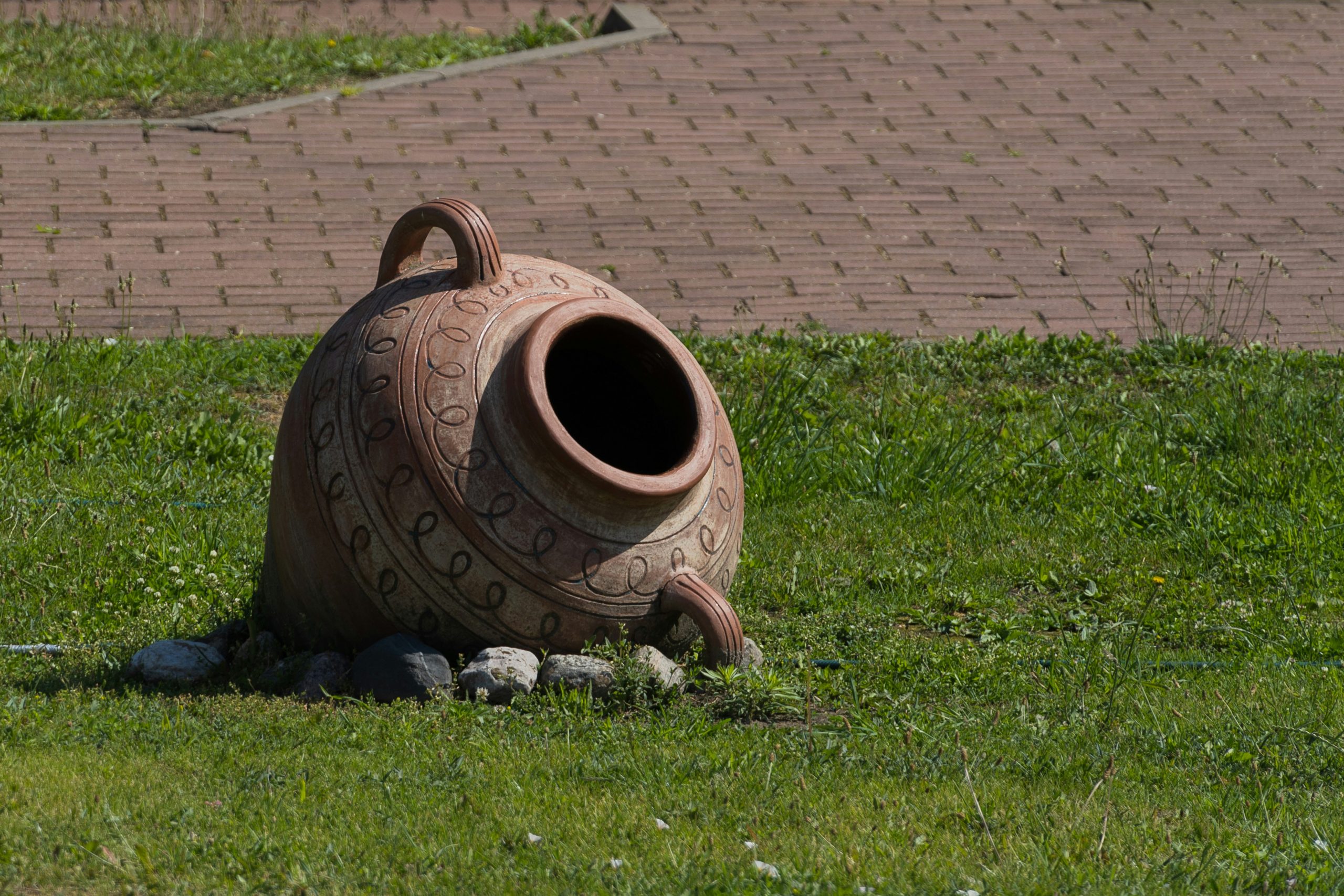
“While a large, empty pot can be a beautiful sculptural element, it can also become an unintentional shelter for pests.”
Spiders, slugs, snails, and even small rodents might find the dark, protected interior to be an ideal home. Before placing an empty pot, especially one with a large opening, consider loosely stuffing the opening with wire mesh or screen to prevent critters from moving in. You also need to ensure it’s placed securely on rocks as shown, so it doesn’t roll or trap moisture underneath, which can kill the grass.
23. Weathered Pot Spilling Dark Red Succulents onto Mulch
The color story here is absolutely stunning. The deep, moody reds of the succulents are a perfect complement to the warm, earthy orange of the weathered terracotta pot. The vibrant pink and light green foliage nearby adds a surprising and beautiful pop of contrast, preventing the scene from becoming too dark. Finally, the dark brown wood chip mulch provides a rich, textured base that ties all the warm tones together. It’s a sophisticated and unusual palette that feels both natural and highly curated. This is a much moodier take than the brighter succulent spill in Idea #13.
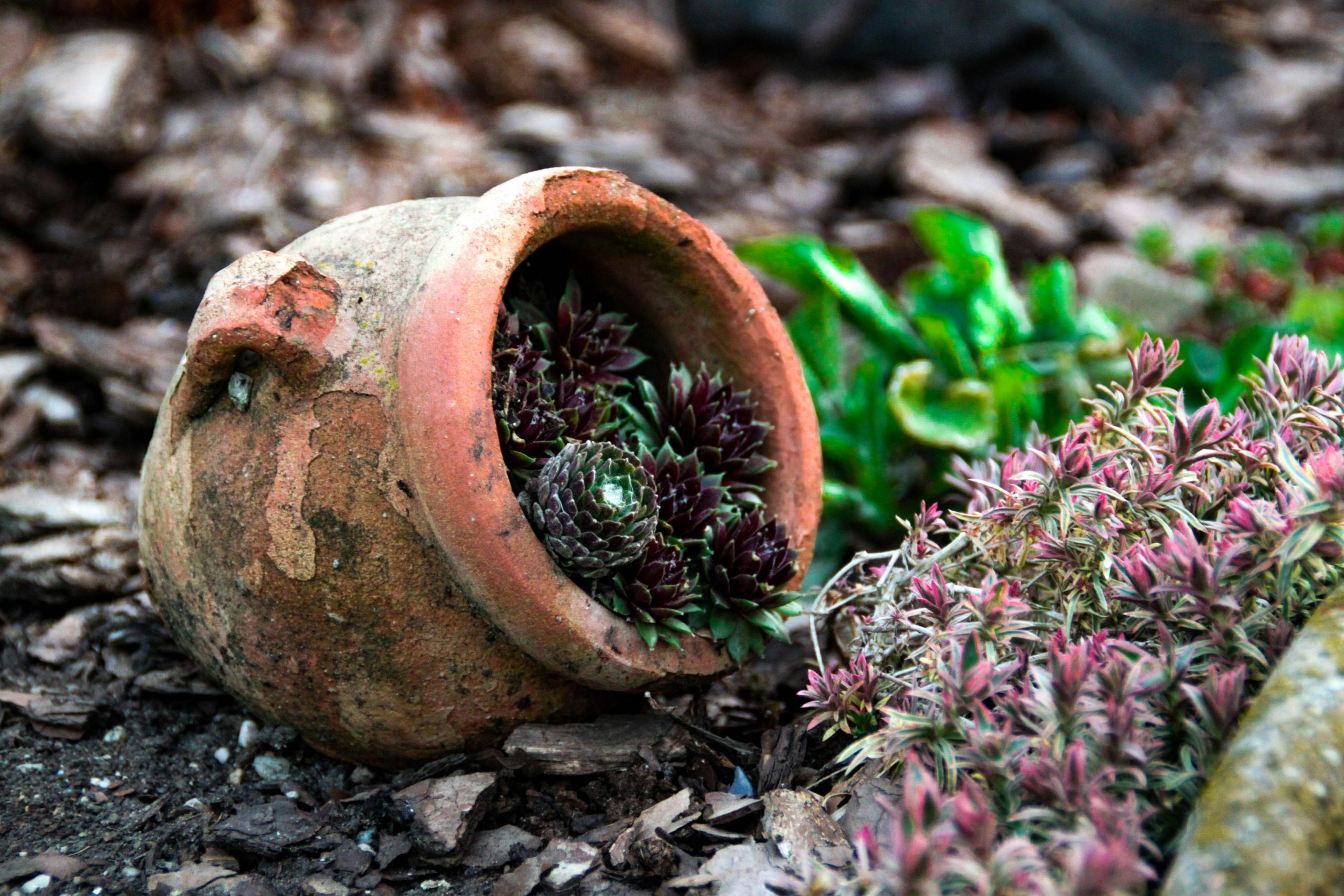
“Wood chip mulch is fantastic for suppressing weeds and retaining moisture, but it does require some upkeep, especially in a display like this.”
The fine texture of the mulch can get easily mixed in with the succulent spill, making it look messy. You’ll need to be precise when watering to avoid displacing the mulch. Also, wood mulch breaks down over time and will need to be topped up every year or two to keep it looking fresh and maintain its depth. The dark color can also fade in the sun, requiring a periodic ‘refresh’ layer.
24. Rustic Terracotta Pots Nestled in Lush Garden Greenery
This perfectly overgrown look follows a simple formula: 70% lush, multi-textured greenery + 20% rustic terracotta + 10% natural accents. The key is to let the foliage be the star. The pots are secondary players, peeking out from a sea of green. The weathered tree stump and river stones add another layer of natural texture that makes the scene feel like it’s been there for decades. The small purple flowers are like a final, delicate sprinkle of color that adds a touch of magic without overwhelming the serene, green mood.
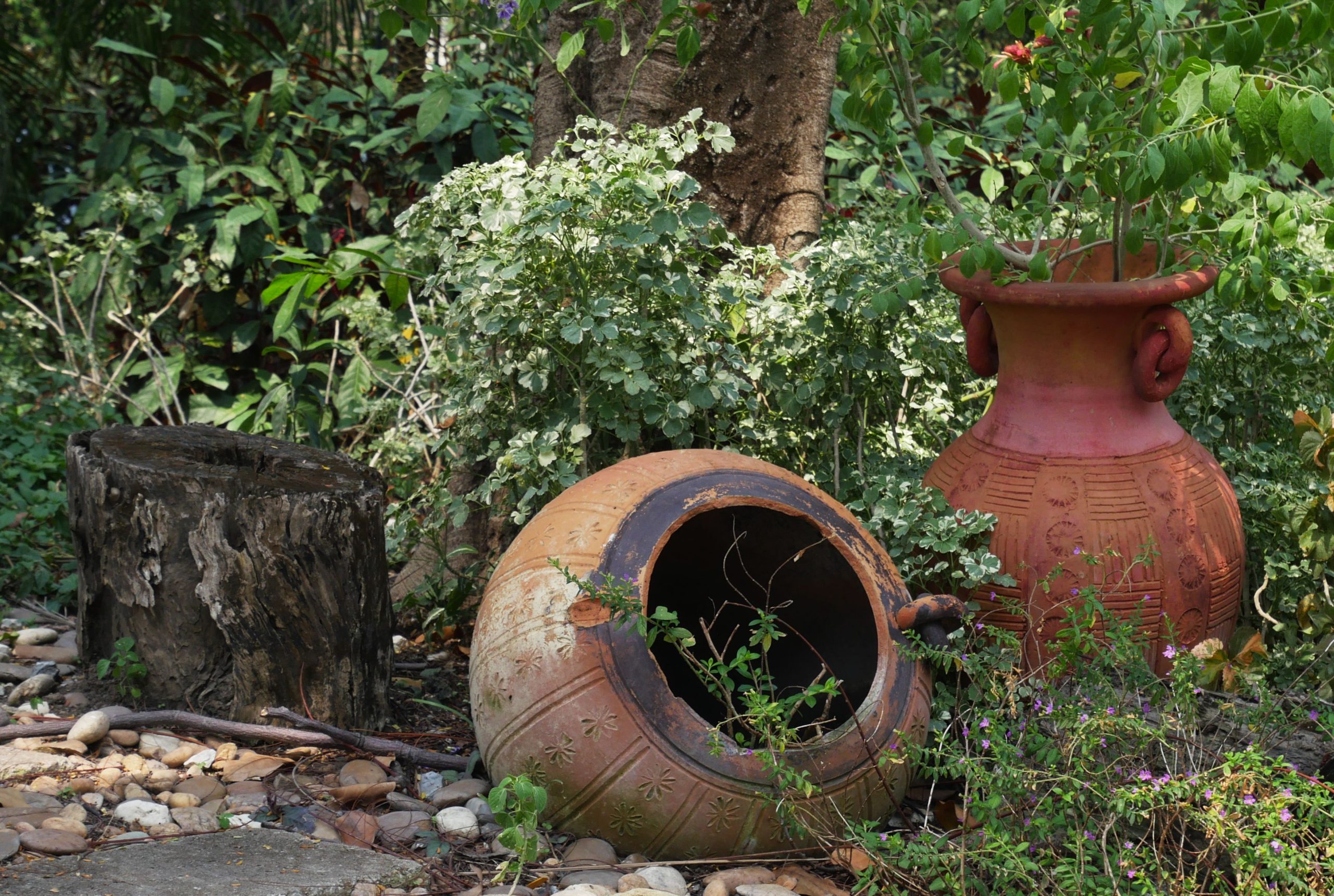
“This idea is ideal for creating a point of interest in a larger, established garden bed.”
It requires a decent amount of space, at least 4×4 feet, to achieve that ‘nestled in’ feeling. The composition relies on having enough surrounding foliage to partially obscure the pots. It’s a great technique for transitioning between different ‘rooms’ in a garden or for adding character to a shady corner under a large tree. It would feel cramped on a small patio but is perfect for a space where nature has a bit of room to breathe.
25. Terracotta Pot Cascading with Pink and Purple Flowers on a Deck
Recreating this stunning display on a deck or patio is surprisingly affordable. The key is buying flowers in multi-packs and giving them time to grow and fill in. Here’s a rough estimate:
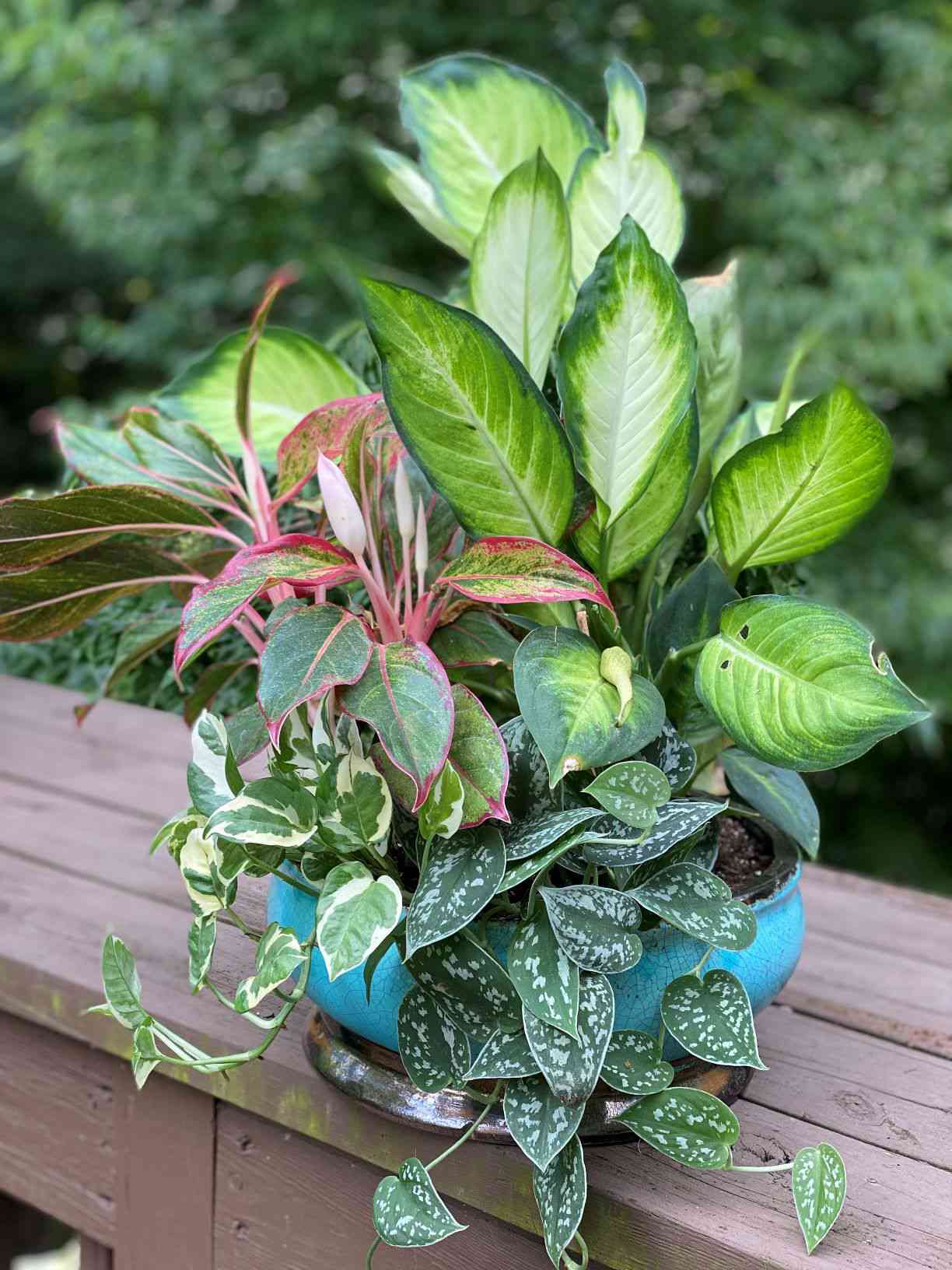
“Main Furniture (Large Terracotta Pot): $40 – $100Lighting: N/ATextiles (Flowers)”
- Main Furniture (Large Terracotta Pot): $40 – $100
- Lighting: N/A
- Textiles (Flowers): $30 – $60 for petunia flats
- Decor/Accessories (Good quality potting soil): $15 – $25
- Paint/Wall Treatment: N/A
- TOTAL: $85 – $185
Budget alternative: Find a similar pot on Facebook Marketplace for $20, grow flowers from seed for $5, and use existing soil. Total cost: around $25.
To make a spilled pot on a flat surface like a deck look intentional, you need to slightly prop up the back of the pot. Tuck a small, unseen rock or a piece of scrap wood under the bottom edge of the pot (the part opposite the opening). This tilts the mouth of the pot down towards the deck, making the ‘spill’ look more natural and deliberate. Without this subtle tilt, the pot can look like it simply fell over by accident. It’s a tiny adjustment that makes a huge difference to the final composition.
26. Elegant Urn Overflowing with White and Pink Blooms
The single most important element making this arrangement feel so luxurious is the trailing greenery. Without the ivy cascading dramatically over the sides, you would have a pretty, but standard, floral arrangement. The trailing element is what gives the composition movement, grace, and a sense of lavish abundance. It softens the hard lines of the urn and the stone step, connecting the planter to its surroundings and creating that coveted ‘overflowing’ look. It’s the key ingredient for turning a nice planter into a showstopper.
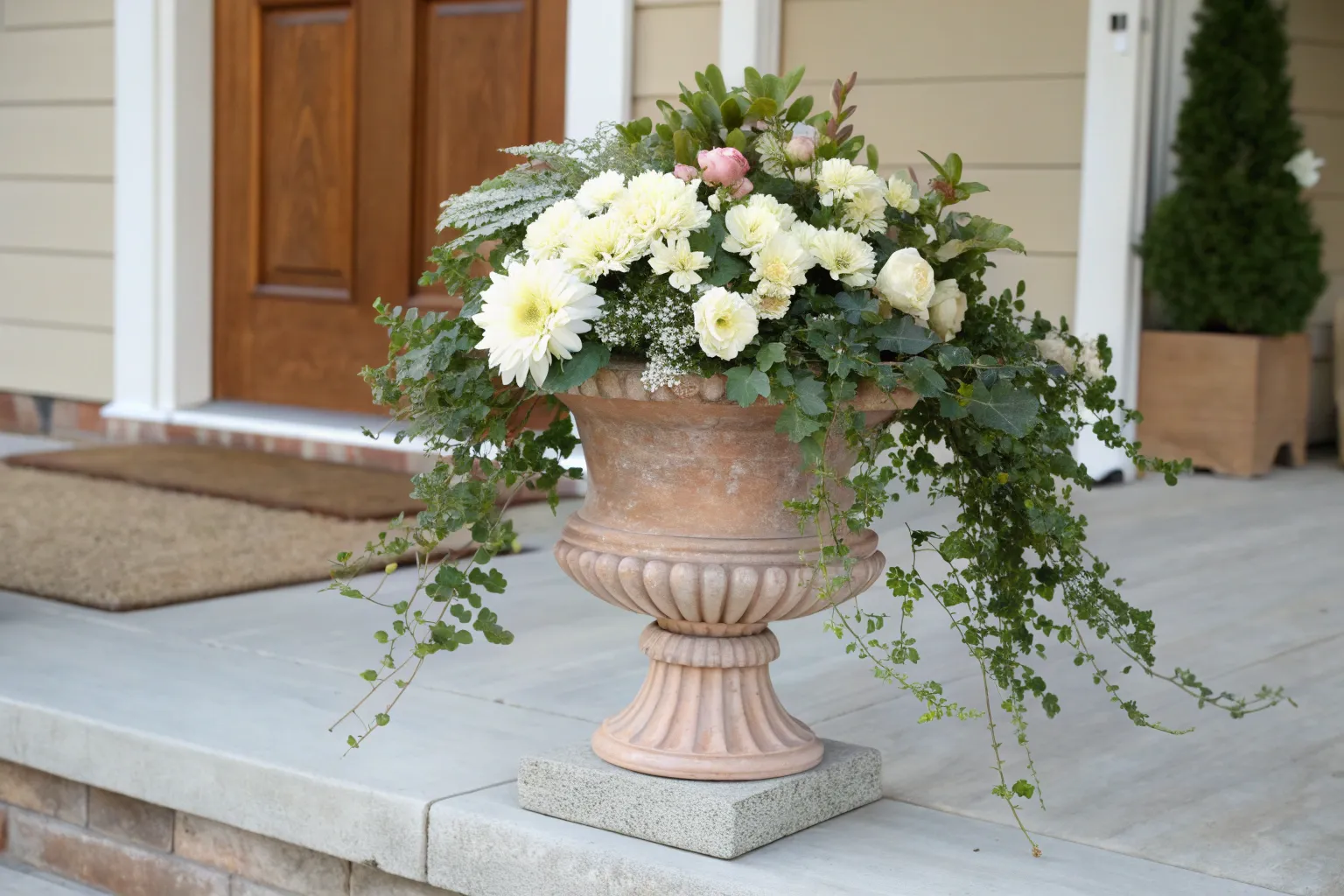
“This arrangement is a masterclass in texture and form.”
You have the large, complex petals of the white dahlias, the softer, swirling form of the pink roses, and the small, delicate leaves of the trailing ivy. This variety keeps the eye moving and adds depth to the arrangement. The color palette is also perfectly controlled. By sticking to a simple scheme of white, pale pink, and green, the arrangement feels sophisticated and elegant, perfectly complementing the classic terracotta urn and the inviting wooden door.
27. Modern Dark Planter with Cascading Silver Foliage
The formula for this contemporary look is all about texture and contrast: 50% cascading silver foliage + 30% upright architectural plants + 20% dark, modern planter. The magic is in the silver-leafed plant (likely Dichondra ‘Silver Falls’), which creates a stunning waterfall effect against the dark gray container. The spiky, upright plants in the center provide a strong vertical contrast to the soft, flowing cascade. This isn’t about flowers; it’s a sophisticated study in form and foliage that feels very current.
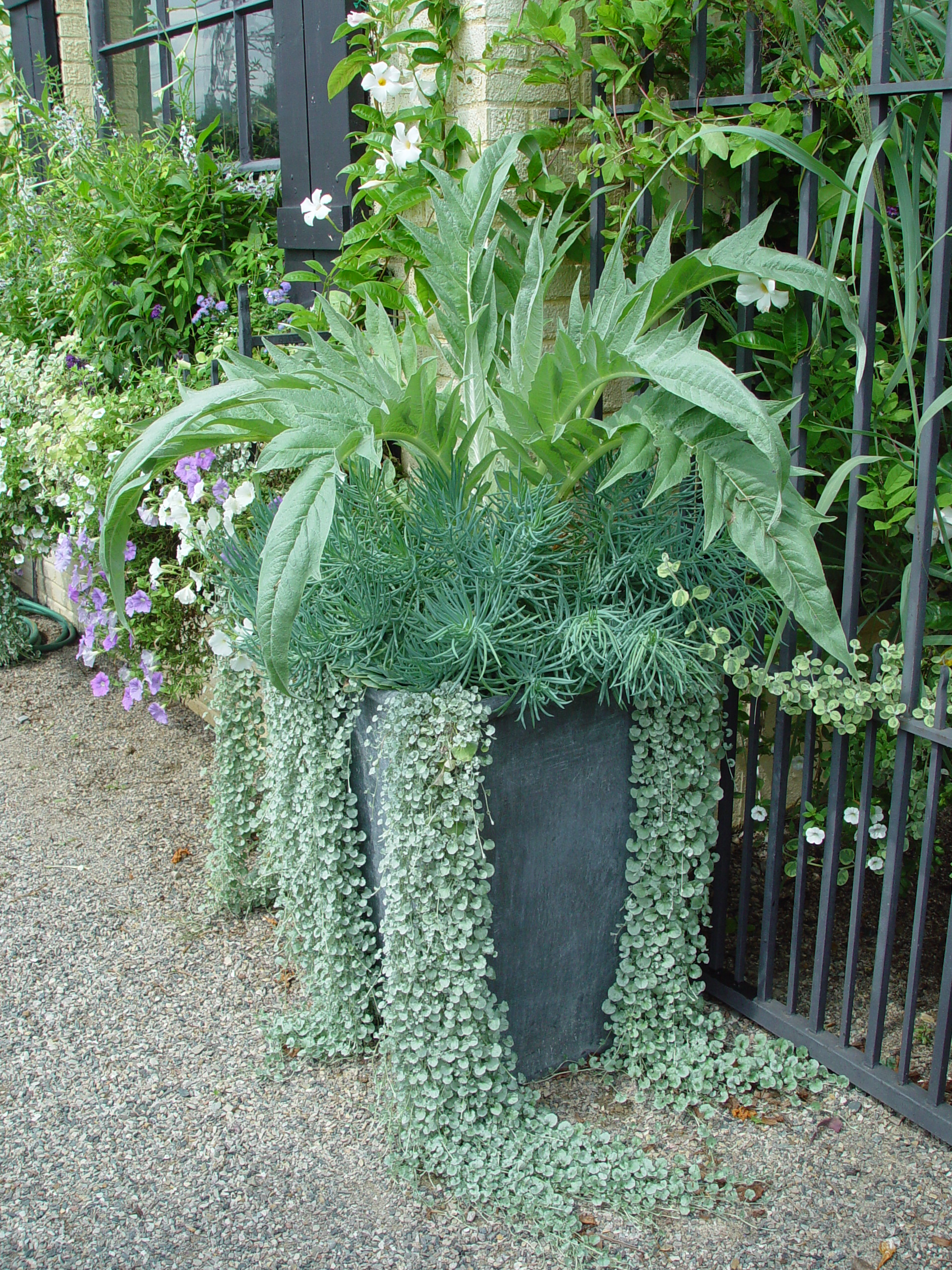
“That beautiful cascading silver foliage is a fast grower, which is great for getting an established look quickly.”
However, it can also be a bit of a garden bully. It will aggressively trail across the gravel, and if it’s near a lawn or other garden bed, it will try to root and spread wherever it touches soil. To keep this looking neat and contained, you’ll need to trim the trailing stems back every few weeks during the growing season. It’s a small price to pay for such a dramatic effect, but it’s not a ‘plant it and forget it’ situation.
28. White Planter Box with Variegated Ivy and Geraniums
This planter box is so effective because it uses variegation to its full advantage. The trailing ivy isn’t just plain green; its leaves have creamy white edges. This detail is crucial because it ties the green foliage directly to the white planter box, creating a cohesive and harmonious look. The eye reads the white in the leaves and the white of the box as part of the same story. The pops of white from the geranium flowers further reinforce this connection, making the whole composition feel polished and intentionally designed.
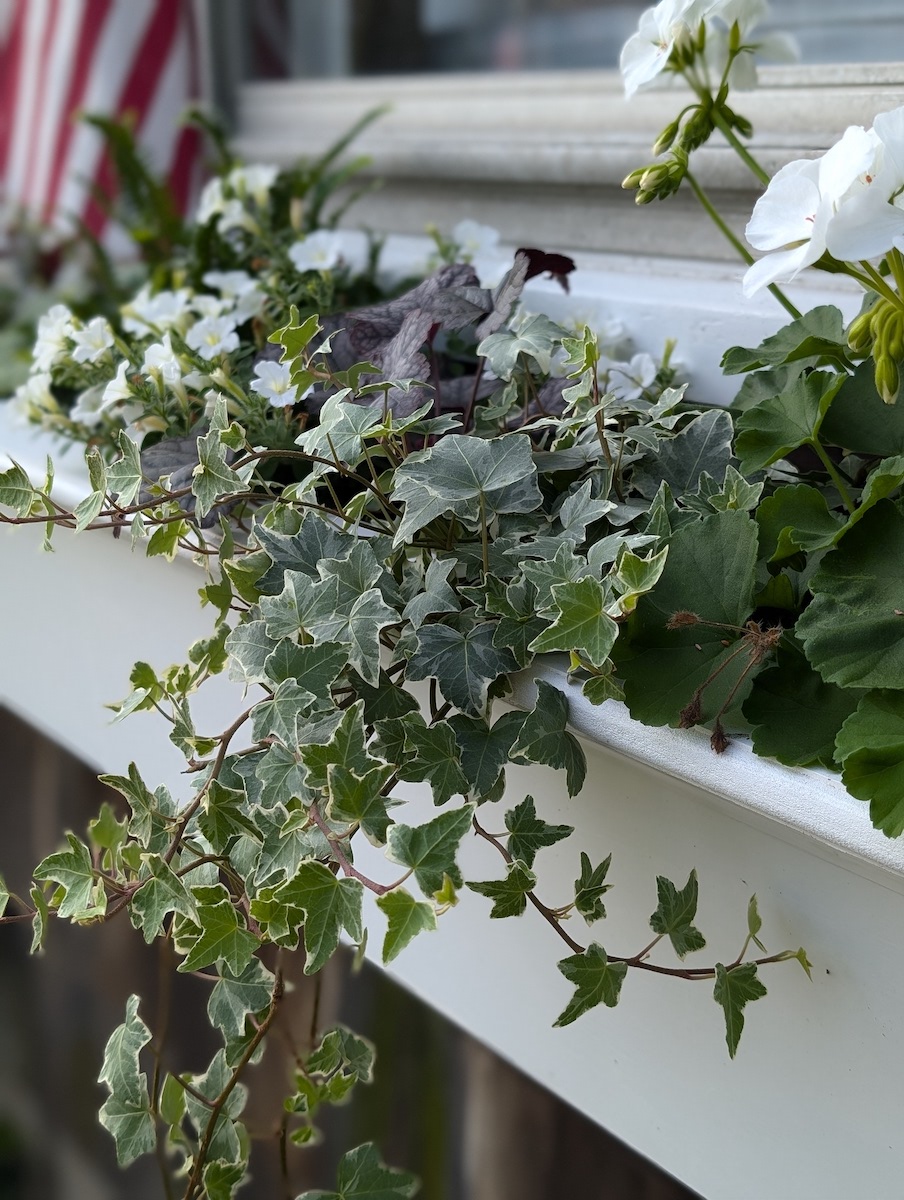
“When creating a mixed planter, always place your trailing plants right at the front edge.”
Don’t plant them in the middle or back and hope they find their way forward. By positioning plants like this variegated ivy at the very front, you give them a head start on spilling over the side. This also ensures they don’t get shaded out or smothered by the more upright plants in the center, like the geraniums. It’s a simple planting strategy that guarantees you’ll get that beautiful cascading effect you’re looking for.
29. Classical Black Urn with High-Contrast Foliage
The entire success of this arrangement hinges on one thing: the chartreuse green trailing foliage. Its electrifying, acidic color creates an absolutely stunning contrast against the formal, matte black of the classical urn. If this were a simple green ivy, the look would be nice, but nowhere near as dramatic. That specific shade of chartreuse is what makes the arrangement feel modern, bold, and utterly memorable. It’s a color choice that takes the entire composition from traditional to transformational. A similar effect can be seen with the silver foliage in Idea #26.
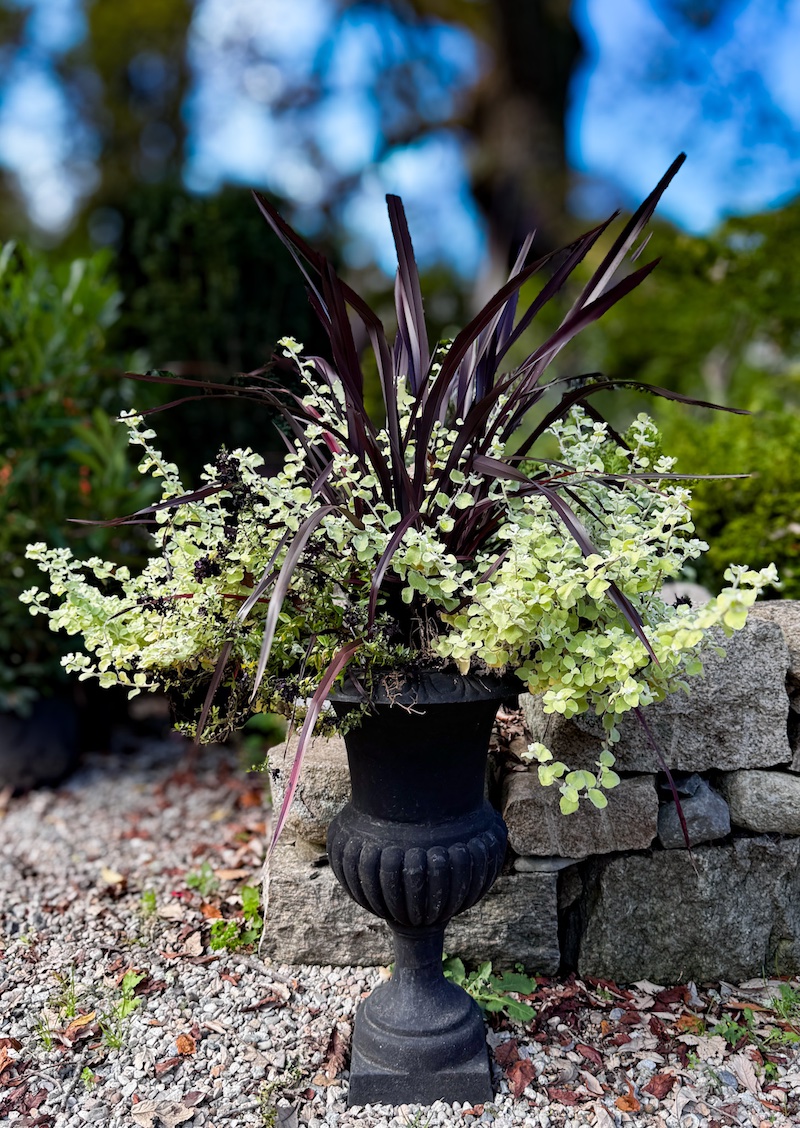
“This look is a beautiful equation of opposites.”
It’s 50% traditional form + 50% modern color. The shape of the urn is timeless and classical, rooting the design in history. The color palette, however, is pure contemporary drama. You have the deep, moody purplish-red of the spiky center plant, the stark black of the vessel, and the shockingly bright chartreuse of the spill. This tension between the old-world shape and the new-world color is what gives the arrangement its sophisticated, designer edge.
30. White and Purple Flowers Cascading Down a Stone Wall
This breathtaking display works because it fully embraces the principle of ‘mass planting.’ This isn’t just one or two plants; it’s a dense, continuous cascade that completely transforms the stone wall. The sheer volume of white and purple blooms creates an overwhelming sense of abundance and lushness. The way the plants follow the contours of the wall, spilling down towards the stairs, makes it feel as though the garden is alive and flowing. It turns a hard architectural feature into a soft, living waterfall of color.
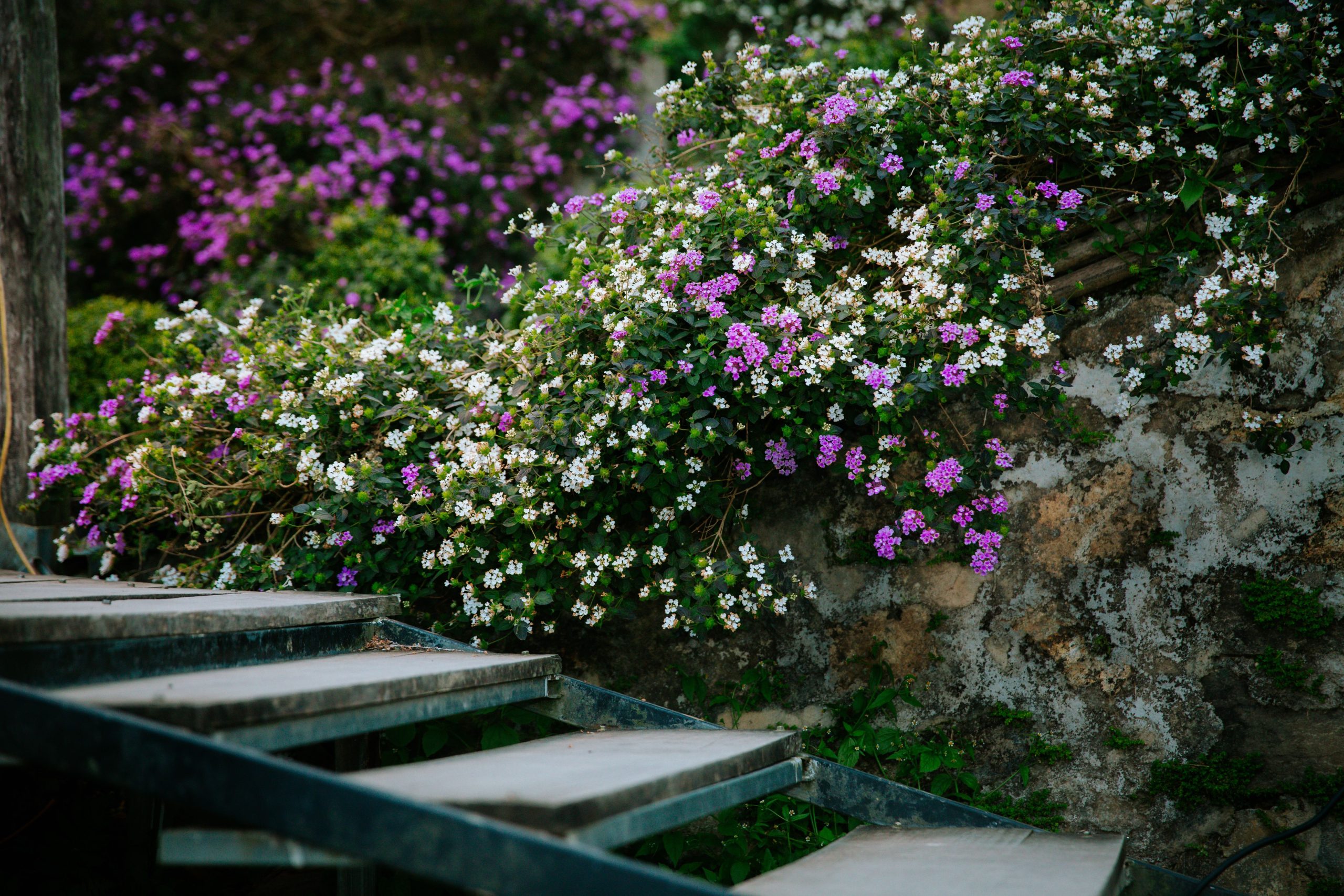
“Achieving a cascade this lush on a stone wall is a long-term project, not a quick weekend installation.”
This isn’t a simple ‘spilled pot’ illusion. This requires planting aggressive, self-clinging, or cascading perennial plants (like certain types of campanula or climbing hydrangea) at the top of the wall and giving them several years to grow and establish. It’s a significant commitment in terms of time and patience, but as you can see, the eventual payoff is absolutely spectacular. This isn’t a look for the impatient gardener.
31. Broken Terracotta Pot Spilling Purple Petunias on the Lawn
The single most important choice here is the color of the flowers. The vibrant, saturated purple of the petunias creates an electric contrast against the bright green grass. If the flowers were yellow or orange, they would blend in more with the warm tones of the terracotta pot. If they were white, they might get lost in the bright sunlight. But this specific, bold purple stands on its own, creating a powerful visual pop that makes the entire scene feel joyful and full of energy. Compare it with the softer pinks in Idea #18 to see the difference color makes.
“This ‘spill’ on the lawn is a fun illusion that’s easy to set up and take down, perfect for a party or temporary garden feature.”
Time: 30 minutes. Cost: $20-$40.
- First, choose a spot on your lawn. Place your broken terracotta pot on its side.
- Scoop out a shallow area of soil from inside the pot’s mouth, extending onto the grass where you want the spill to be.
- Take your petunias (or other annuals) out of their nursery packs. Gently loosen the root balls.
- Arrange the plants, starting inside the pot’s mouth and clustering them densely on the prepared patch of lawn.
- Backfill with a little potting soil around the root balls to hide them.
- Water well, and you’re done! When you’re finished with the look, the plants can be easily moved to a permanent bed.
Your Garden’s Next Chapter: A Beautiful Spill
With 31 ideas in your toolkit, you’re ready to move beyond the standard planter and create a garden feature that tells a story. Whether you go for a dramatic succulent cascade or a classic petunia spill, the key is to have fun and let your creativity flow. Pick a favorite, get your hands dirty, and watch the magic happen. Don’t forget to save your top ideas to your Pinterest boards for when you’re ready to start digging!