You know that feeling when you finally find the home decor style for 2026 that looks exactly right for your space, but turning that saved pin into reality feels impossible? We’ve been there. After filtering through hundreds of options across Crate & Barrel, IKEA, and Target, we narrowed it down to the looks that actually deliver. Inside, you’ll find 31 curated ideas that nail the best styles of the year, from serene Modern Minimalism to vibrant Eclectic Maximalism and warm, Natural Rustic vibes. For 2026, it’s all about moving beyond one-note aesthetics and blending styles—like modern lines with rustic textures—to create spaces that feel truly personal. And stay until the end — we break down the most common mistakes that can ruin these looks. Pin this guide for later — your future self will thank you when it’s time to actually do this.
1. Modern Living Room with a Stacked Stone Fireplace and Garden Views
This room nails the balance between cozy and modern by pairing a robust, textural element—the stacked stone fireplace—with clean, expansive lines. The floor-to-ceiling windows act as a living artwork, bringing the lush green outdoors into the neutral palette. It’s a classic case of contrast done right: the rough, organic stone feels grounded and warm next to the smooth, cool glass and crisp white walls. The warm wood of the shelving and floorboards ties it all together, preventing the grey and white from feeling too sterile.
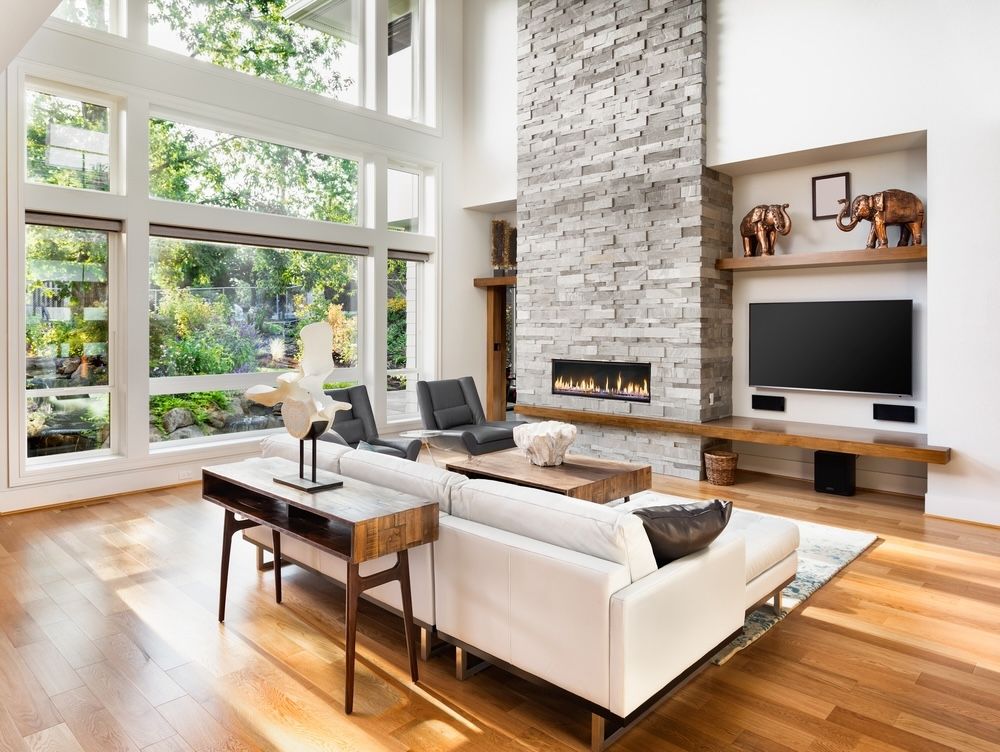
“A look this grand needs room to breathe.”
This design works best in a space with a minimum ceiling height of 10 feet, allowing the stone fireplace to stretch vertically and become a true focal point without overwhelming the room. The ideal room size would be at least 250 square feet to accommodate a large sectional and maintain clear pathways. For smaller spaces, consider the scaled-down version of this concept in Idea #25, which uses a similar palette but with less architectural dominance.
2. Serene Bathroom Featuring a Fluted Wall and Light Wood Vanity
To get this high-end look, don’t just stick fluted panels to the wall and call it a day, especially in a bathroom. Use PVC or moisture-resistant MDF panels specifically rated for wet areas. Before installation, apply two coats of a quality waterproof membrane like RedGard to the wall behind where the tub and panels will sit. This creates an impermeable barrier that protects your drywall from the inevitable splashes and steam, preventing mold and water damage down the line. It’s a non-negotiable step for longevity.
“Let’s be honest: matte black fixtures look stunning, but they are magnets for water spots and fingerprints, especially in a high-traffic bathroom.”
To keep them looking sharp, you’ll need to wipe them down with a soft microfiber cloth daily. Avoid abrasive cleaners, which can scratch the finish. Similarly, the seamless look of an integrated sink is gorgeous, but be prepared for diligent cleaning around the drain area to prevent buildup. This is a look that requires consistent, gentle upkeep to maintain its minimalist perfection.
3. Bohemian Porch Oasis with Rattan Swings and Woven Pendants
The single element that transforms this from a simple porch into a dreamy escape is the pair of swinging rattan daybeds. They are the undeniable heart of the design. Without them, you’d have a pleasant, well-decorated porch. With them, you have a destination. They signal pure relaxation and a resort-like state of mind, inviting you to lounge, read, or nap. The movement they provide adds a dynamic, soothing quality that static furniture simply can’t replicate. Everything else—the pillows, the lights, the rug—is just supporting the main act.
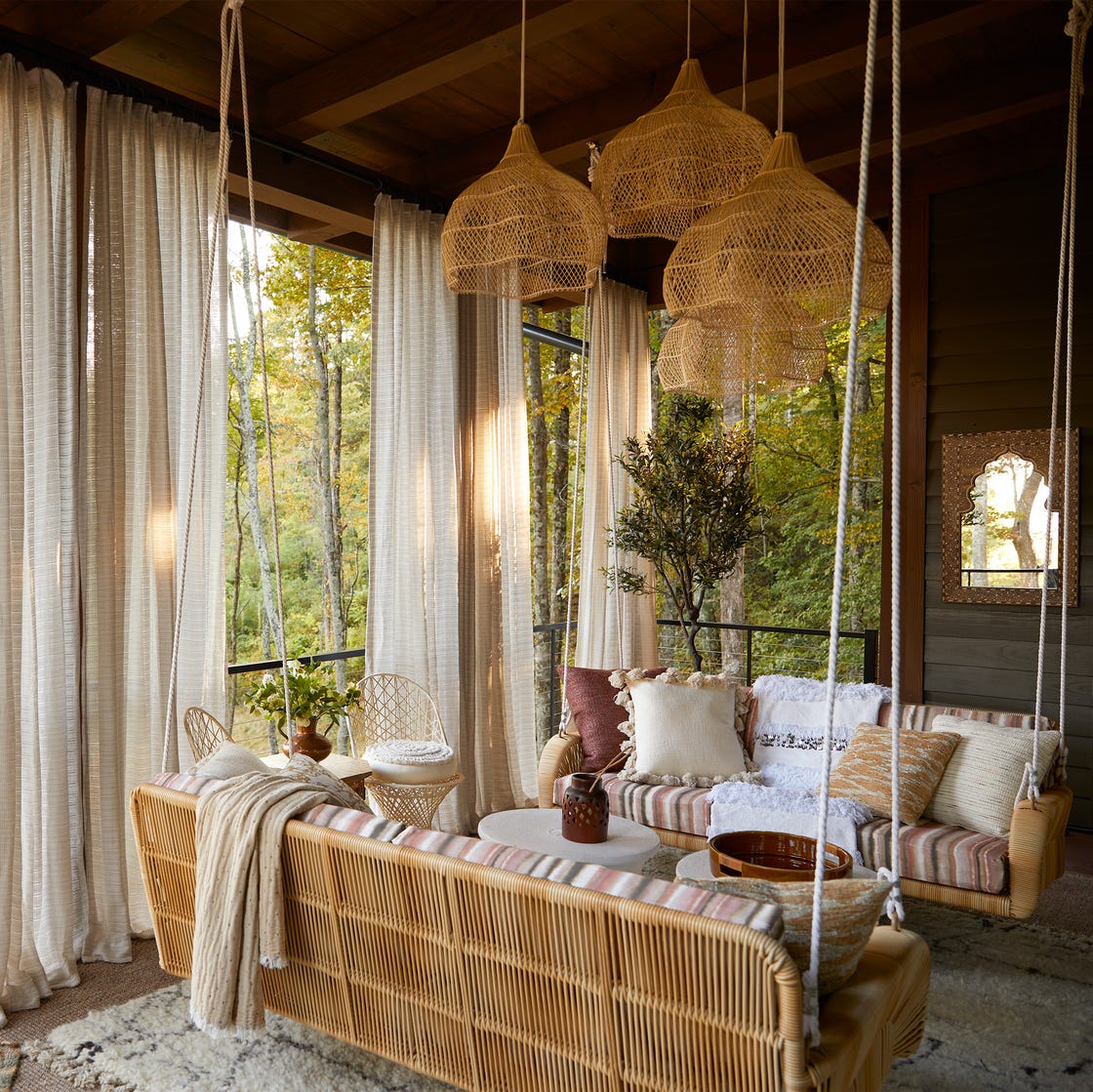
“You don’t need a custom budget to get this breezy, bohemian vibe.”
Find similar (though maybe not as massive) rattan hanging chairs on Wayfair or at World Market for around $300-$500 each. For the lighting, skip the high-end designer pendants and head to IKEA for their SINNERLIG or TORARED woven bamboo lampshades, which often sell for under $70. A simple jute rug from Target ($150) and a mix of affordable pillow covers from H&M Home will complete the look for a fraction of the cost.
4. A Sun-Drenched Living Room Wrapped in Warm Yellow
This room’s inviting energy comes from a confident color formula: 50% bold, warm yellow on the walls and sofa; 40% calming neutrals in cream and beige (rug, armchair); and 10% grounding accents in natural wood and grey. The key is that the dominant color is warm and enveloping, while the large neutral elements provide visual relief so the yellow doesn’t become overwhelming. You could easily swap the yellow for a deep terracotta or a sage green and achieve the same balanced, cozy effect by keeping the percentages consistent.
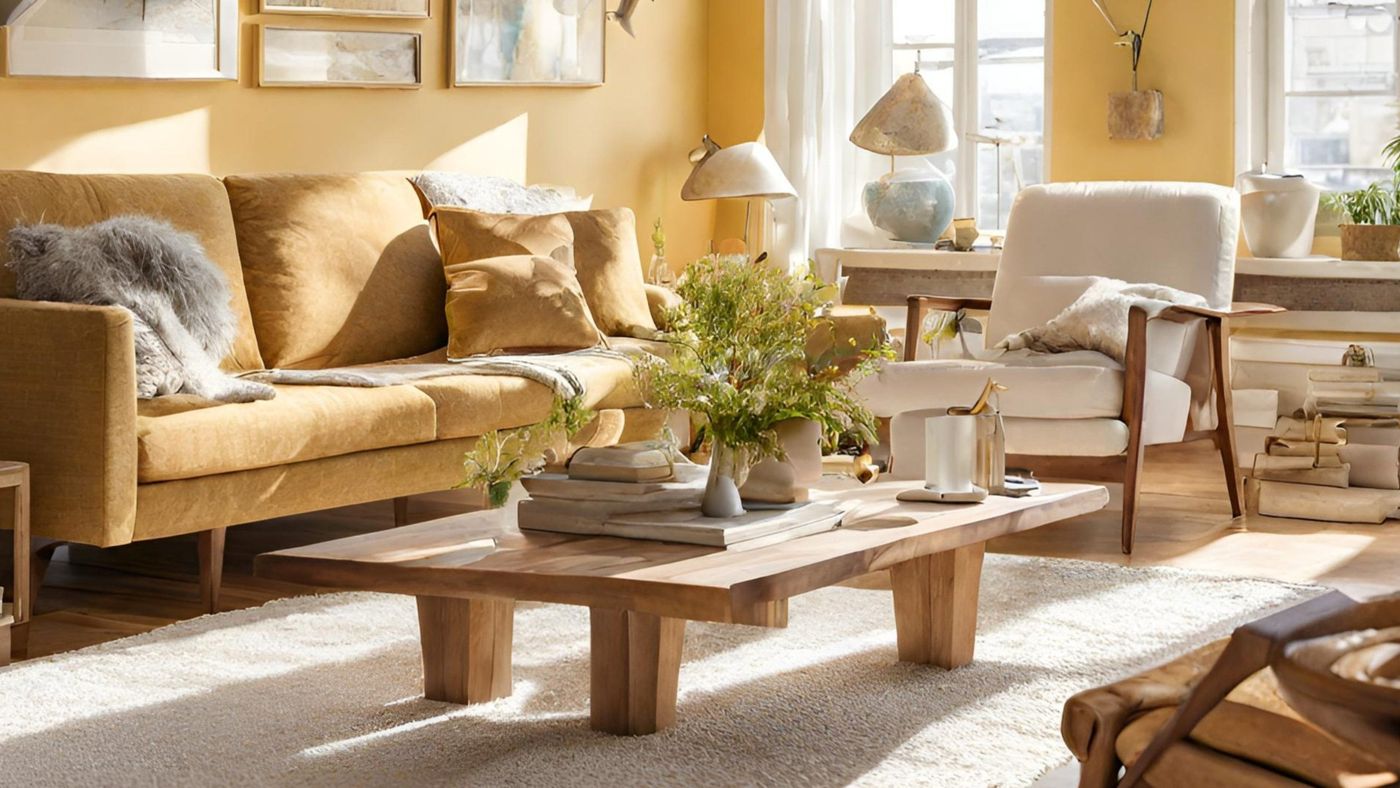
“Choosing the right yellow paint is notoriously tricky.”
What looks like a soft, buttery hue on a tiny paint chip can quickly turn into a shockingly bright, almost highlighter-yellow on four walls. Always buy a sample pot and paint a large swatch on your wall. Observe it throughout the day as the natural light changes. A south-facing room will intensify the yellow, while a north-facing room can bring out cooler, sometimes greenish, undertones you didn’t expect. Test, test, and test again before you commit to a full gallon.
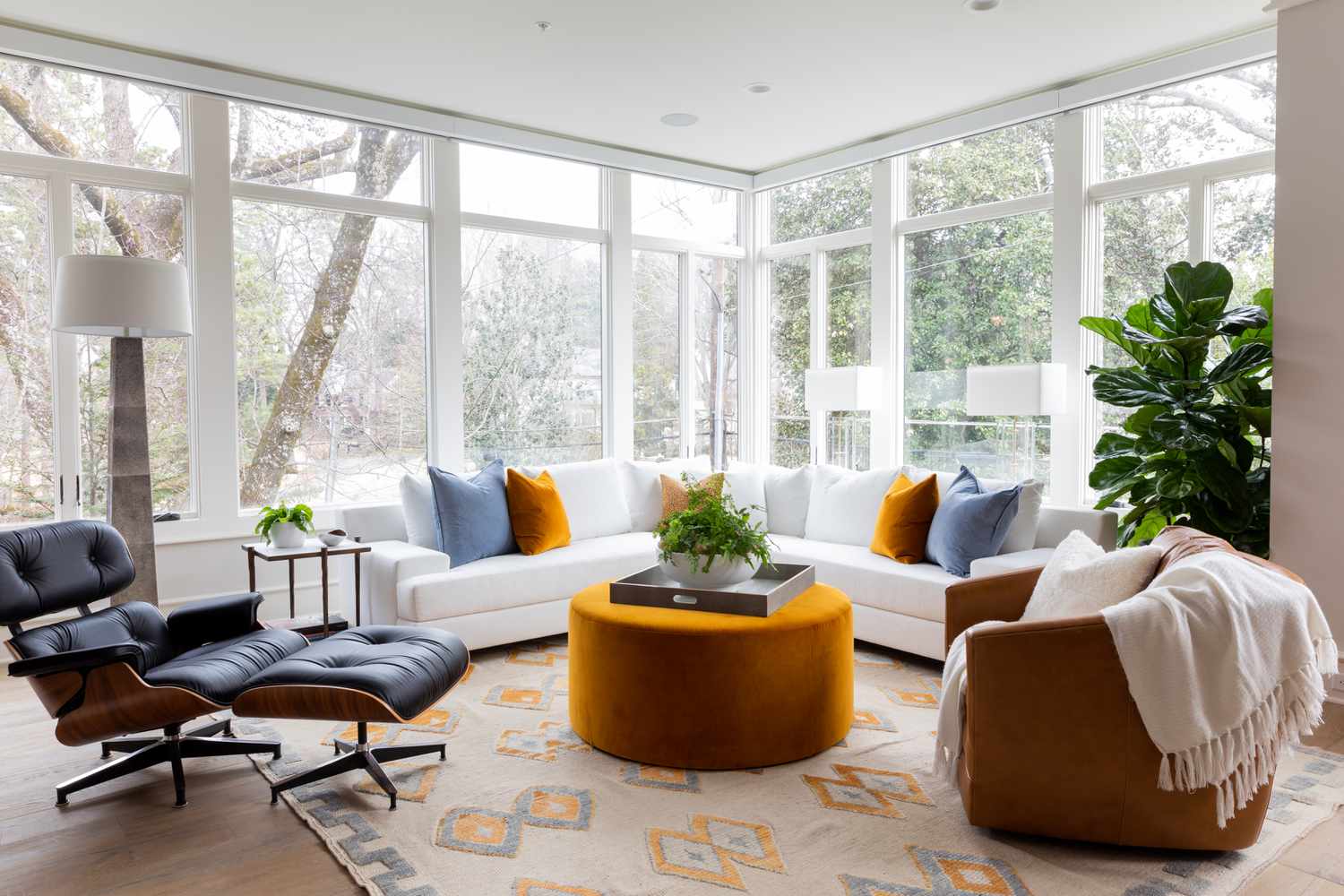
5. Global Glamour with a Purple Velvet Sofa and Eclectic Art
Getting this curated, luxurious look involves investing in a few key statement pieces. The rest can be filled in with more affordable finds. Here’s a realistic estimate:
- Main Furniture (velvet sofa, armchair, marble table): $7,000 – $15,000
- Lighting (statement pendant): $1,500 – $4,000
- Textiles (large area rug, dining chair upholstery): $2,000 – $5,000
- Decor/Accessories (gallery wall art, masks): $1,000 – $6,000+
- TOTAL: $11,500 – $30,000+
- Budget alternative: A similar vibe can be achieved for around $5,000-$9,000 by using a less expensive velvet sofa (Article, Joybird), sourcing art from Etsy and local artists, and finding a marble-look dining table from a mid-range retailer.
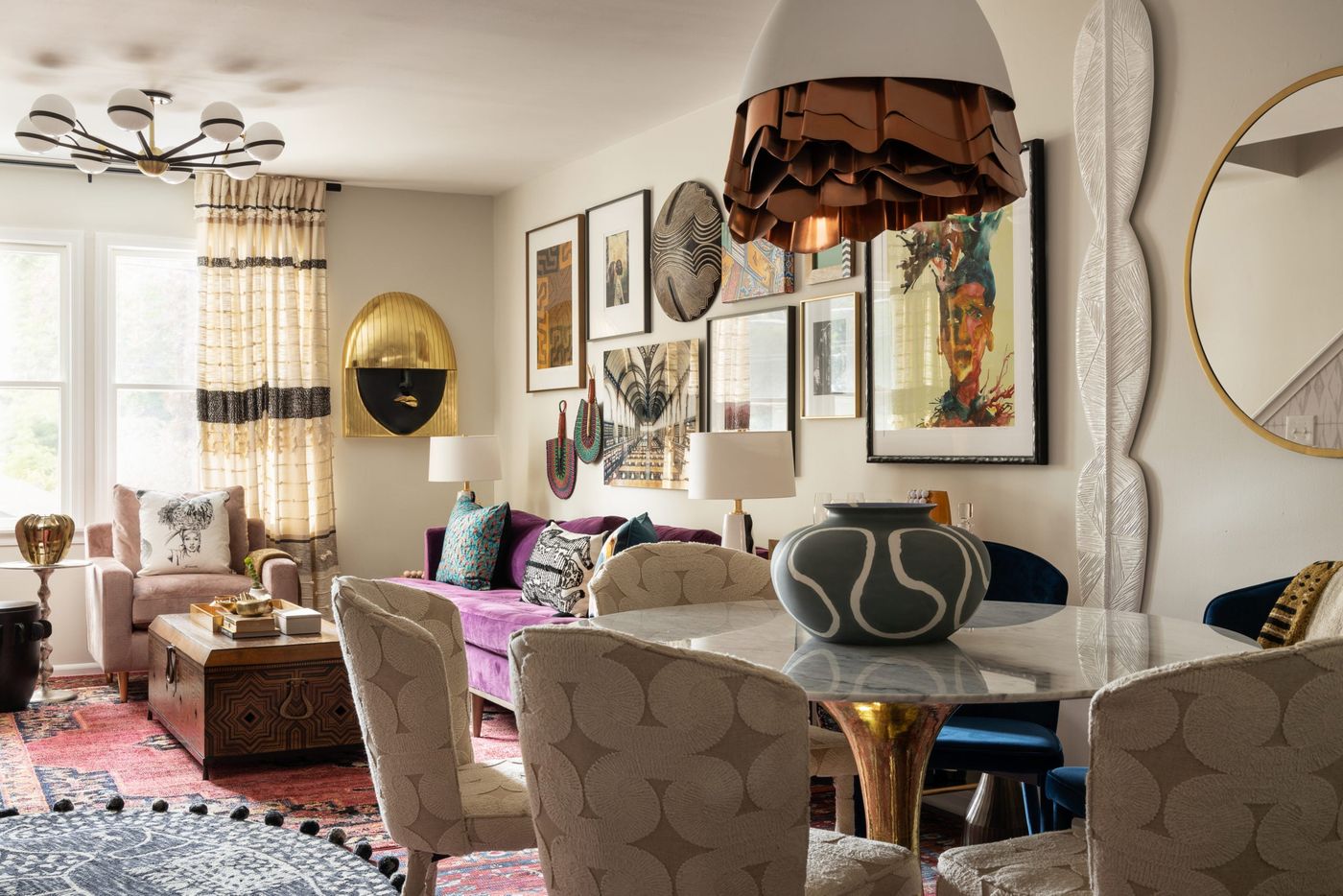
“Why is this ‘more is more’ style so popular right now?”
It’s a direct reaction against years of minimalist, neutral-toned dominance. People are craving personality, and this expressive, ‘global glamour’ look is all about storytelling. Each piece—the tribal masks, the varied artwork, the rich textiles—feels collected over time from different places and experiences (even if you just collected them online!). It’s a way to showcase individuality and create a space that is unapologetically *you*, full of color, texture, and personal history.
6. A Modern Kitchen Mixing Light Wood, Marble, and Brass
This kitchen feels so harmonious because it perfectly balances color temperatures and textures. The light wood veneer cabinetry and cane-backed chairs bring in natural warmth. The white marble backsplash and white lower cabinets provide a cool, crisp contrast. Finally, the brass accent panel and gold handles inject a layer of metallic glow that acts as ‘jewelry’ for the room, elevating the entire palette. The repetition of circular shapes—the round table and the spherical pendant—softens the hard lines of the cabinetry.
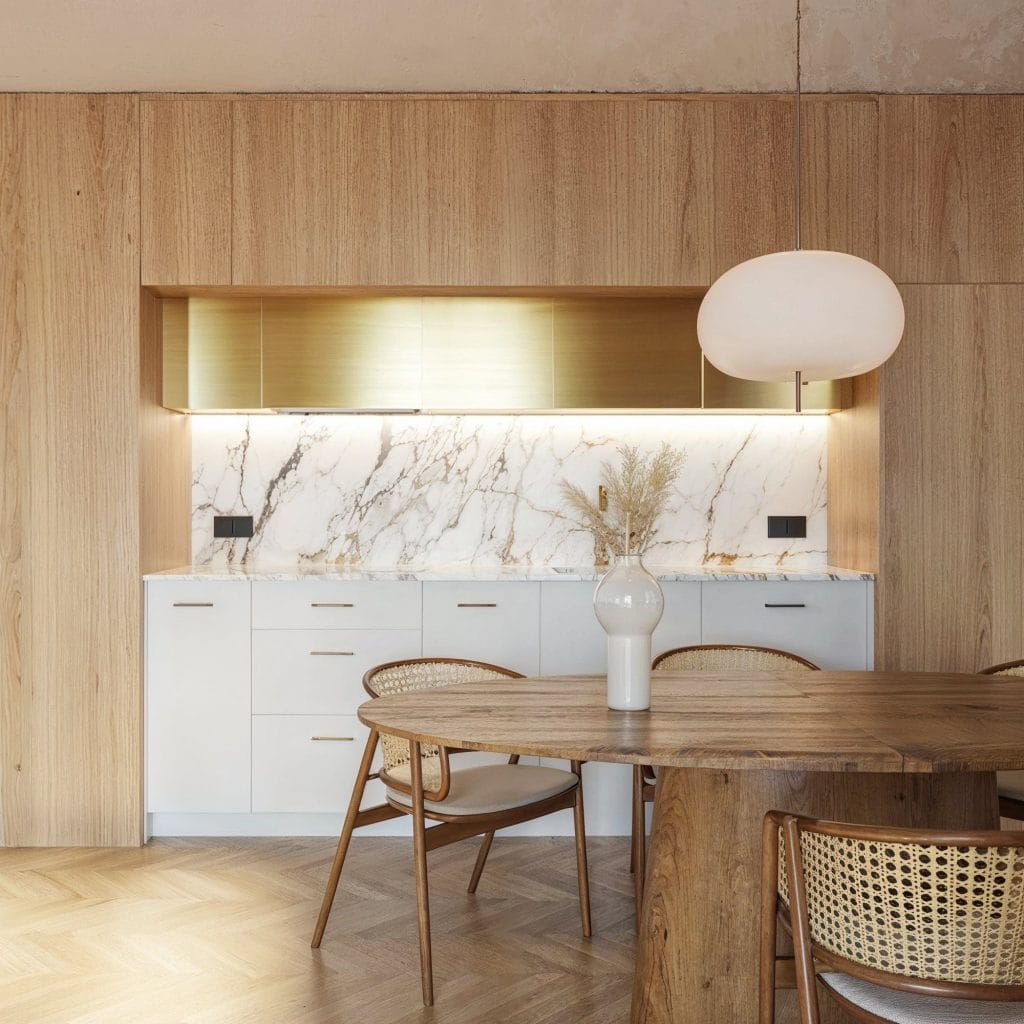
“When mixing metals, the key is intention.”
Don’t just throw gold, silver, and black together randomly. Follow the ‘Rule of Two-plus-One.’ Pick two dominant metals and use a third as a smaller accent. Here, brass/gold is the primary metal (handles, accent panel), and the darker metal of the chair legs or other unseen elements could be the secondary. A tiny hint of a third metal, like chrome in a faucet, can work, but making two clearly dominant creates a polished, deliberate look rather than a chaotic one.
7. Luxe Living with an Emerald Velvet Sofa and Industrial Concrete
The emerald green velvet sectional is, without a doubt, the hero of this space. It’s the element that injects opulence and audacious color into what could otherwise be a standard industrial-eclectic room. Remove it, and you’re left with a nice collection of items. But the sofa provides a luxurious, tactile anchor that the entire design orbits around. Its rich color contrasts beautifully with the raw concrete and warm gold tones, proving that you can have both glamour and grit in the same room. It’s a bold choice that pays off in spades. For another take on a colorful velvet sofa, see Idea #5.
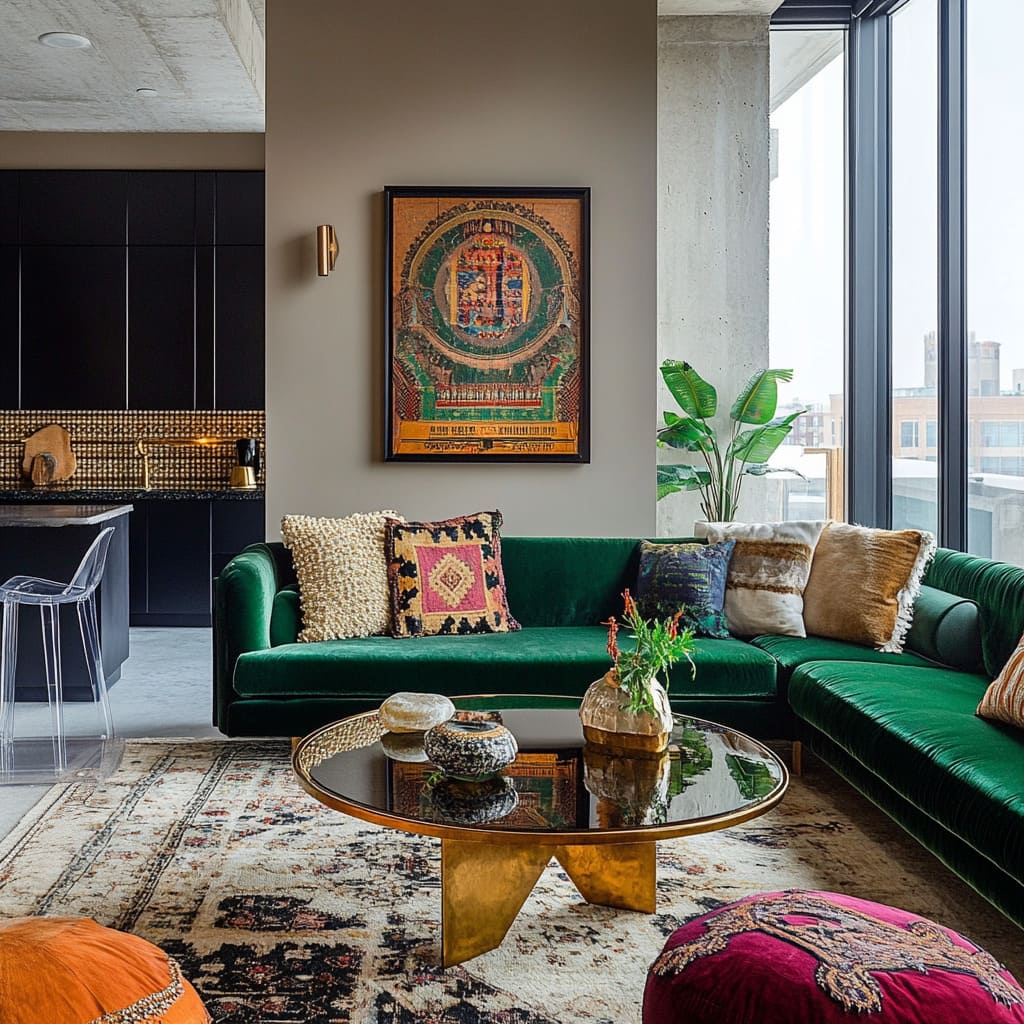
“That gorgeous green velvet is a dream, but it’s not invincible.”
Velvet, especially natural velvet, can be prone to crushing and requires regular fluffing or gentle brushing to maintain its nap. It’s also not the most forgiving fabric for households with pets that shed or have sharp claws. The open-plan nature of this space also means cooking smells from the kitchen can easily permeate the fabric. Consider a performance velvet if you love the look but need more durability and stain resistance for real-world living.
8. Minimalist Light Wood Kitchen with a Sleek White Island
A large kitchen island like this is a functional dream, but it demands significant space. To comfortably fit an island of this size with seating, you need a kitchen width of at least 13-14 feet. This allows for the standard 42-48 inches of clearance on the working side (between the island and main counters) and a minimum of 44 inches on the seating side to allow people to walk behind seated guests. The island itself should have at least a 15-inch countertop overhang to provide adequate knee space for those sitting on the bar stools.
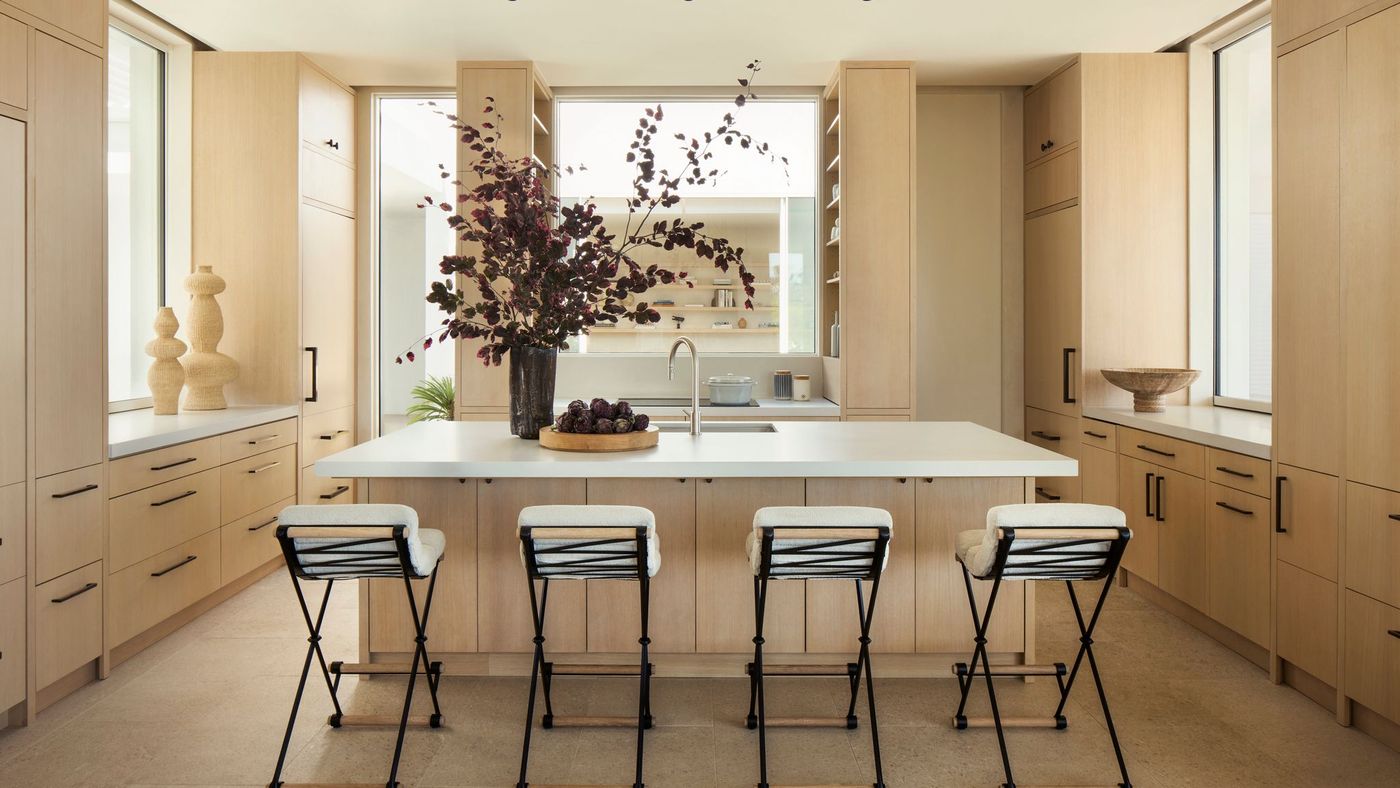
“While beautiful, a kitchen dominated by light wood and white stone requires mindful upkeep.”
Light-toned, flat-panel wood cabinetry is less forgiving with smudges and drips than textured or darker wood. Any splatters will be immediately visible. Similarly, that pristine white stone countertop, likely quartz or a similar engineered stone, is stain-resistant but not stain-proof. Red wine, coffee, or turmeric spills must be wiped up immediately to prevent permanent discoloration. Regular sealing is a must if it’s a natural stone like marble.
9. Rustic Mediterranean Nook with Natural Stone and Striped Chairs
Want that exposed stone wall look without a full remodel? You can create a convincing faux stone effect with German schmear over a brick or stone veneer. Here’s a quick guide:
- Install thin brick or stone veneer panels on your chosen wall per manufacturer instructions. (Time: 1 day, Cost: $8-$20/sq ft)
- Mix a slurry of white mortar and water until it’s the consistency of thick pancake batter.
- Using a grout bag or trowel, apply the mortar unevenly over the veneer.
- Let it sit for 20-60 minutes, then use a wet sponge or wire brush to remove some of the mortar, exposing parts of the brick/stone underneath.
- The goal isn’t perfection; it’s a rustic, aged look. Step back frequently to assess your work.
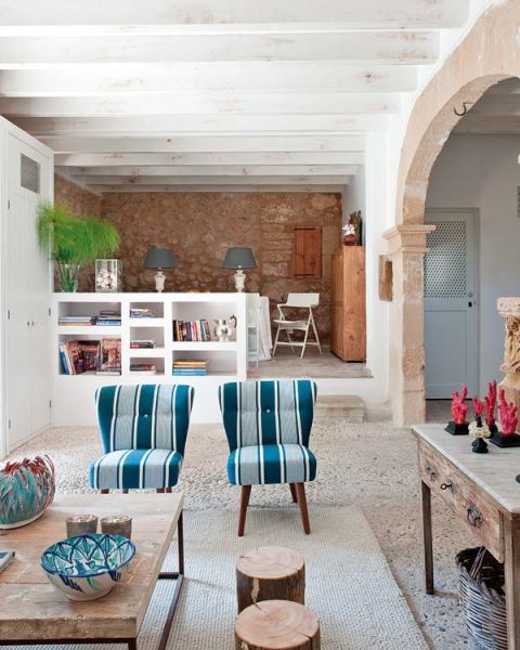
“This space feels like a breezy Mediterranean holiday thanks to a simple but effective design recipe: 60% rustic texture + 30% crisp white + 10% vibrant color.”
The exposed stone, whitewashed beams, and pebble floor provide the earthy, rustic base. The white walls and built-ins act as a clean canvas, bouncing light around and keeping the heavy textures from feeling dark. Finally, the injection of bright teal stripes on the armchairs adds life and a coastal energy, preventing the room from feeling too monotonous. This is a much cozier take on rustic than the grander space in Idea #15.
10. A Calm Living Room with a Cream Sectional and Large Abstract Art
When hanging art above a sofa, the biggest mistake people make is hanging it too high. The center of the artwork should be at eye level, which is typically 57-60 inches from the floor. More importantly, the bottom of the frame should be just 6-8 inches above the back of the sofa. This creates a cohesive visual unit where the art and sofa feel connected, not like two separate, floating elements. For a large piece like this one, aim for it to be about two-thirds the width of the sofa to achieve a pleasing sense of scale.
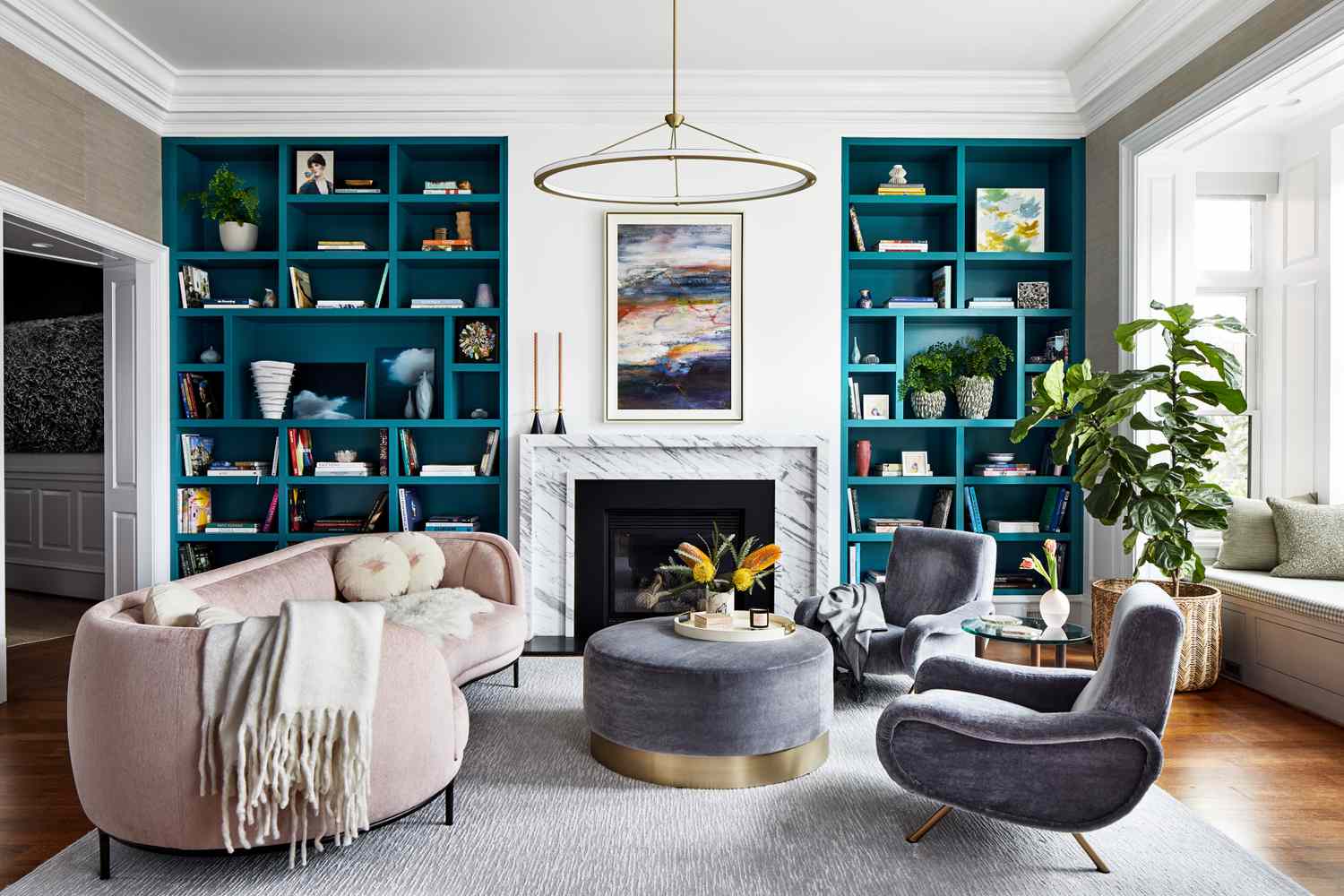
“You can get this serene, modern look without a designer price tag.”
The IKEA SÖDERHAMN sectional in ‘Viarp beige’ gives you a very similar low-profile, modular look for around $1,500. Pair it with a simple black round coffee table from Target or Wayfair ($150-$250). For the large abstract art, skip the gallery and browse sites like Society6 or Artfully Walls, where you can get oversized prints for a few hundred dollars. A light wood-look LVP flooring from a big box store will give you the same airy feel as hardwood for a fraction of the cost.
11. Maximalist Nook Featuring a Navy Sofa and Eclectic Gallery Wall
Before you hammer a single nail for a gallery wall, run through this checklist to save yourself a lot of headaches:
- Do you have all your art? Collect all the pieces you want to hang first. It’s much harder to add to a gallery wall later than to plan it all at once.
- Have you planned your layout? Trace each frame onto kraft paper, cut them out, and tape them to the wall with painter’s tape. This lets you experiment with arrangements without making a million holes.
- Did you consider color flow? Try to sprinkle your accent colors (like the pink and gold here) throughout the arrangement so the eye is drawn across the entire wall.
- Is your anchor piece centered? Decide if you want to center the whole collection over the sofa or if you’re building out from one key piece.
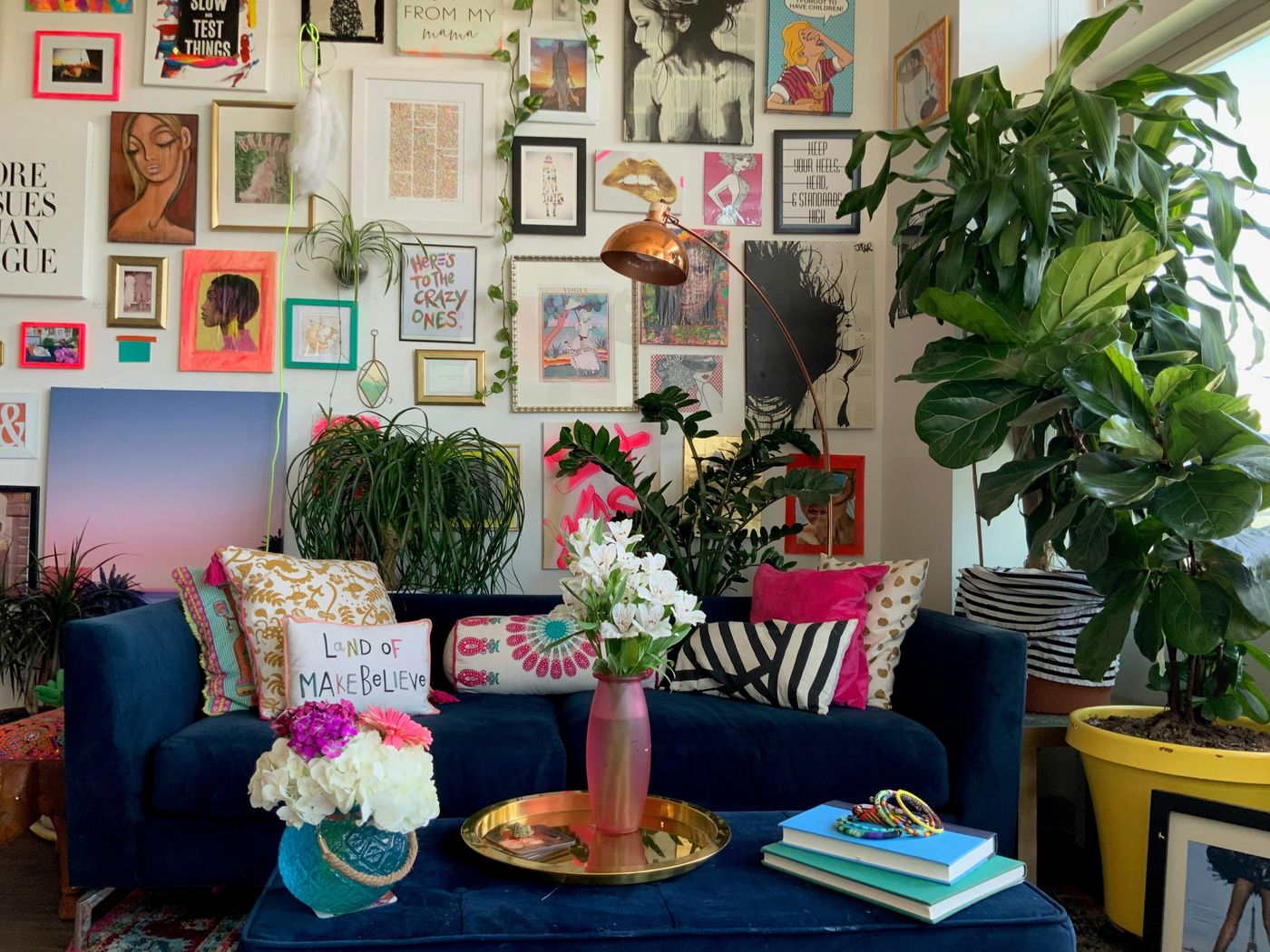
“This vibrant explosion of art works because it follows a few subtle rules amidst the chaos.”
The crisp white wall acts as a clean, quiet canvas that allows the colors of the art and the navy sofa to pop without competing. The consistent use of thin black and gold frames provides a subtle unifying thread. Most importantly, the density of the arrangement—it goes almost from floor to ceiling—makes it feel intentional and immersive, rather than like a random collection of pictures. Compare this dense approach to the more spread out gallery wall in Idea #12.
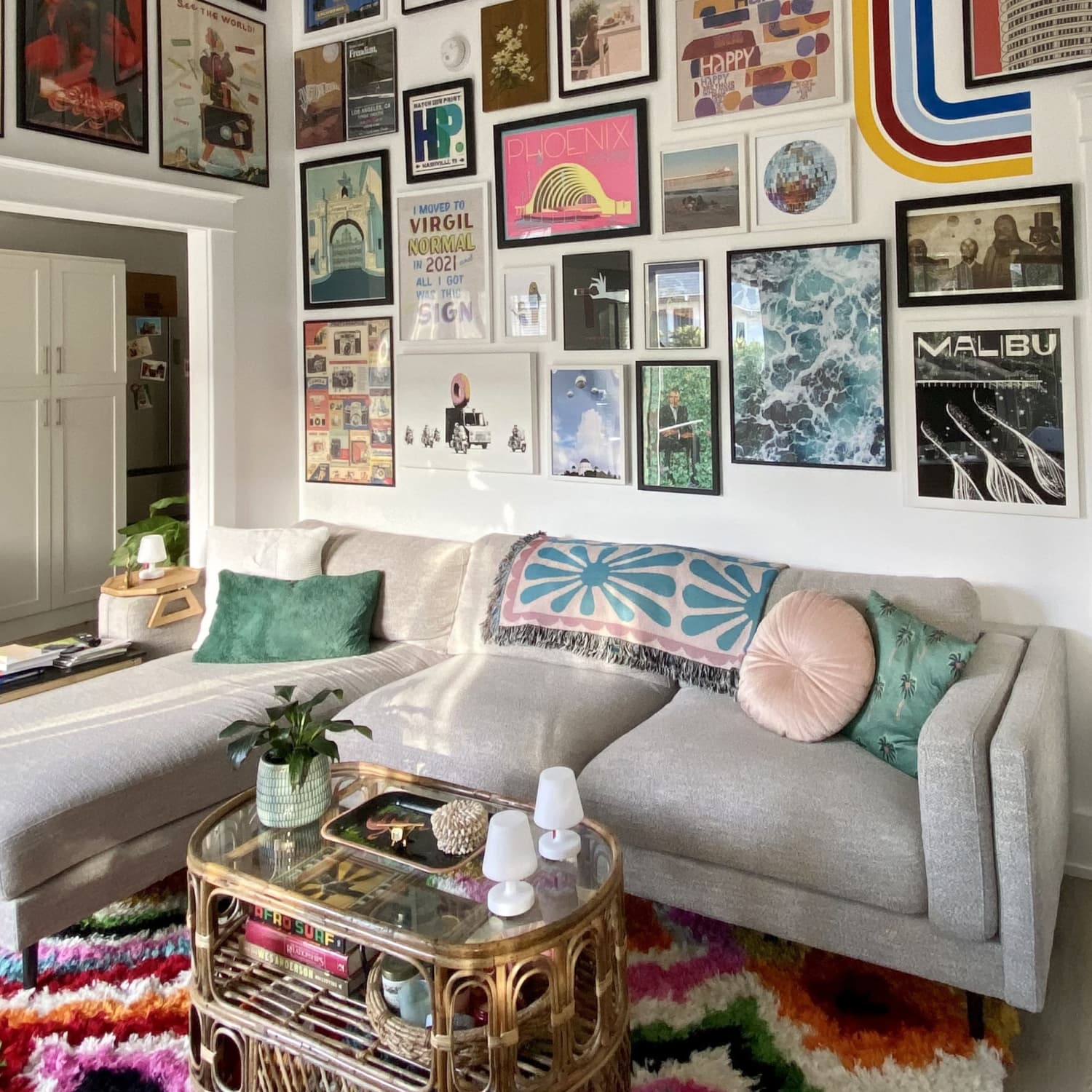
12. Eclectic Living Room with a Sprawling Gallery Wall and Rattan Table
Gallery walls are evolving. For a while, they were all about matching frames and symmetrical layouts. Now, the trend is shifting towards a much more personal, eclectic, and almost ‘undone’ look like this one. It’s a style born from Pinterest and Instagram, where people share their real, lived-in homes. This approach is less about formal decoration and more about creating a visual diary on your wall. It mixes fine art prints with posters, personal photos, and quirky objects, telling a story that is unique to the homeowner. It feels authentic and deeply personal.
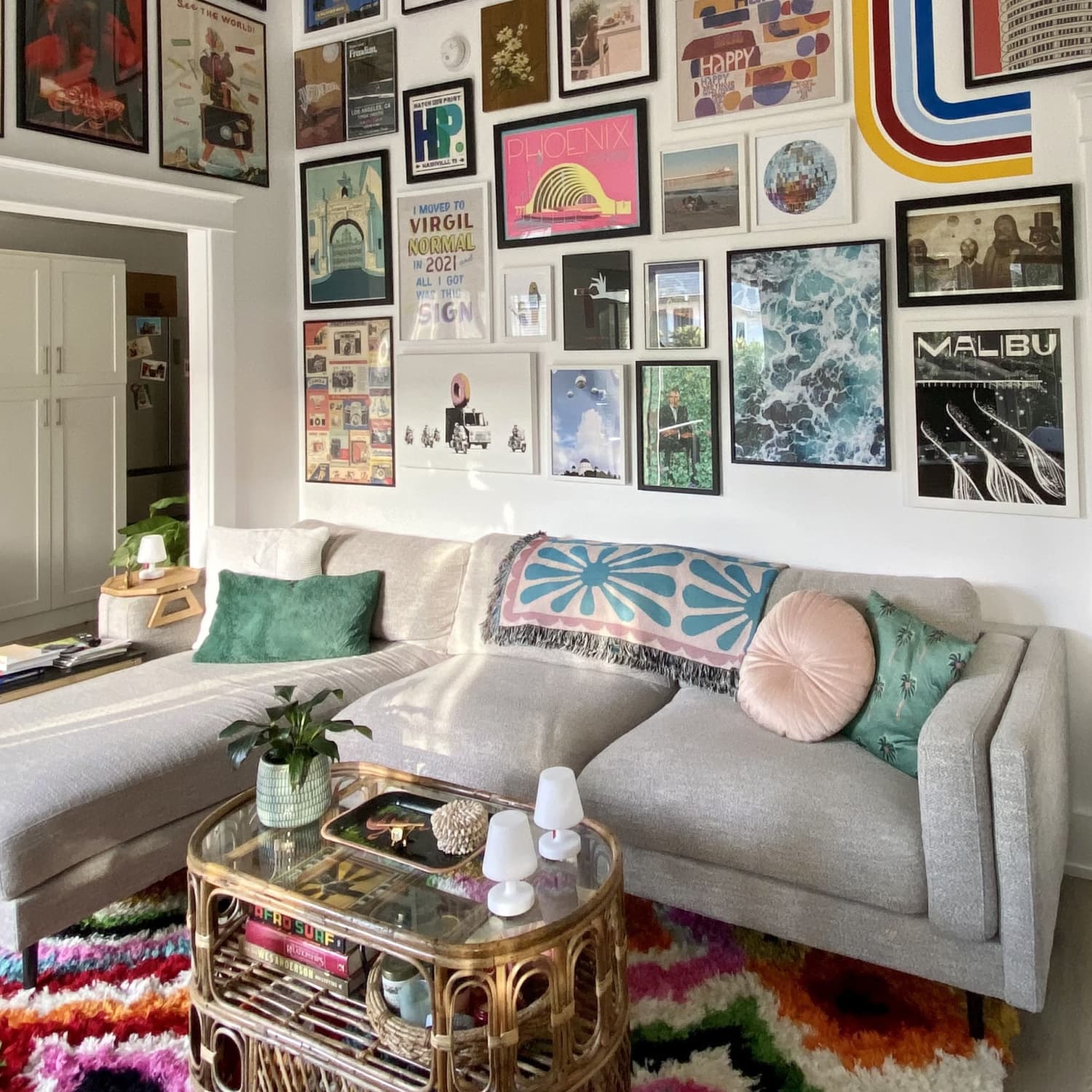
“Creating a massive gallery wall doesn’t have to drain your bank account.”
The secret is to mix, not match. Start by collecting affordable frames from IKEA (like the FISKBO or RIBBA series) and thrift stores. Print your own digital art finds from Etsy (many artists sell files for just a few dollars). Intersperse art with personal photos, postcards, and even interesting pages torn from magazines or books. The rattan coffee table look can be found at places like Target’s Opalhouse line or on Facebook Marketplace for under $100, bringing in that natural texture without the high cost.
13. A Bright Indoor Jungle with a Fiddle-Leaf Fig and Vining Plants
Let’s have a moment of honesty about that beautiful Fiddle-Leaf Fig. They are notoriously fussy. They demand bright, indirect light (but not direct sun, which scorches their leaves), consistent watering (but hate wet feet, so drainage is key), and they absolutely despise being moved. Dropping leaves is their primary form of protest against any change in their environment. While stunning, be prepared for a potentially high-maintenance relationship. If you’re a beginner, a Snake Plant or ZZ Plant will give you green impact with a lot less drama.
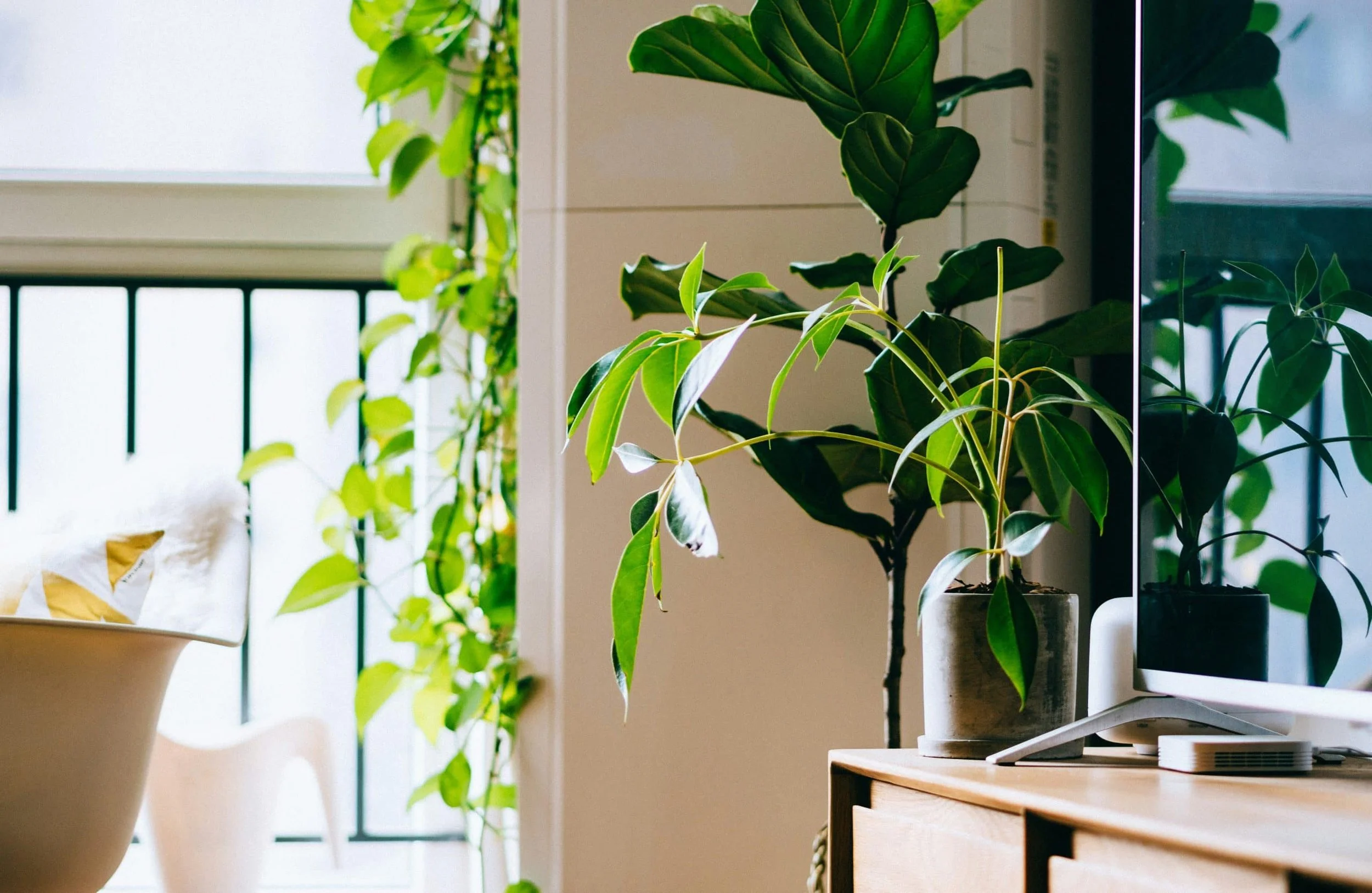
“The single element that breathes life into this otherwise simple, neutral corner is the abundance of lush, green plants.”
Specifically, the tall Fiddle-Leaf Fig provides architectural height, while the vining plant draped by the window adds a soft, romantic quality. Without the greenery, this would be a perfectly fine but forgettable beige corner with a computer. The plants transform it into a vibrant, healthy, and calming space to work or relax, connecting the indoor environment to the natural world. They are not just decor; they are living sculpture.
14. Serene Living Space with a Textured Art Wall and Mint Green Walls
This room’s calming atmosphere is a masterclass in subtle color and texture layering. The formula is approximately: 60% soft neutrals (the light beige sofa, cream rug), 30% a whisper of color (the pale mint green walls), and 10% natural texture (the wood coffee table, cane chair, woven art). This high ratio of neutrals keeps the space feeling airy and relaxed, while the single soft color adds personality without being overwhelming. The textural elements provide the crucial ingredient of warmth and organic interest, making the room feel touchable and real.
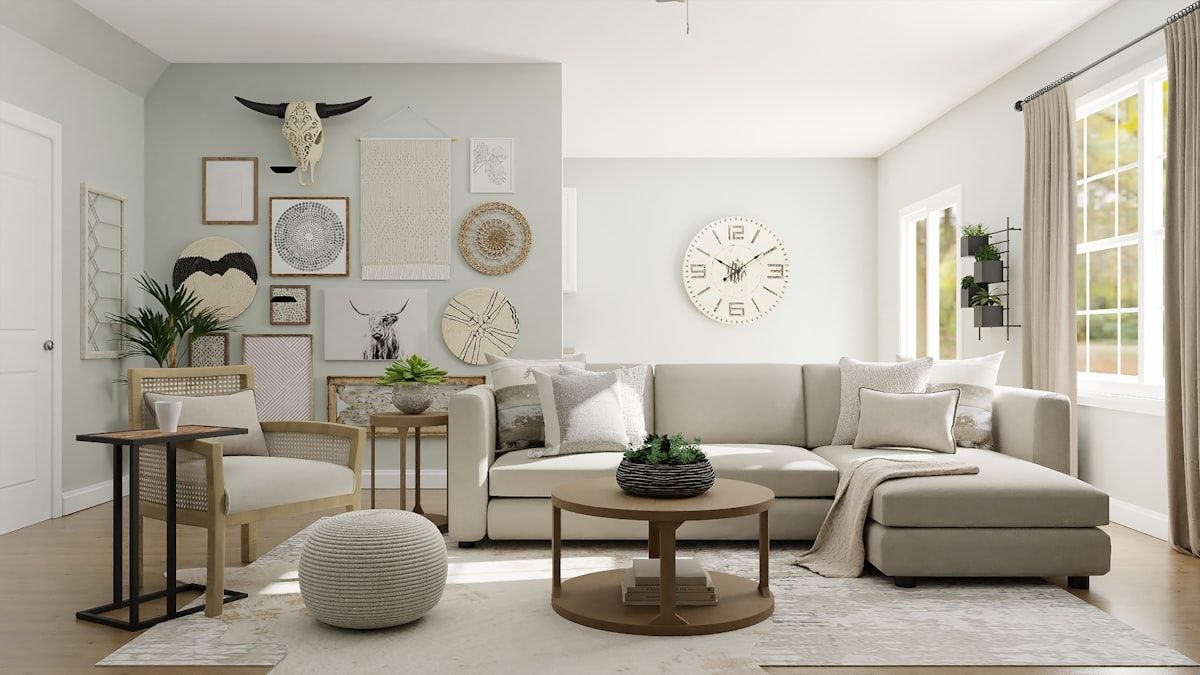
“This design feels so cohesive because of the clever use of repetition in both texture and shape.”
The roundness of the coffee table is echoed in the large wall clock and even the shape of some of the framed art, creating a gentle visual rhythm. Similarly, the natural, woven texture of the cane chair is picked up again in the woven wall hangings on the gallery wall. These subtle connections are what make a space feel thoughtfully designed rather than just a collection of nice things. The pale green is a great alternative to the bold yellow in Idea #4 for a colorful wall.
15. Rustic Chic Living Room with Dark Wood Beams and Natural Fibers
Achieving this authentic rustic chic aesthetic involves a mix of structural elements and curated furnishings. Here’s a potential cost breakdown:
- Structural/Finishes (Exposed beams, wood floors, brick hearth): $8,000 – $25,000+ (if adding them)
- Main Furniture (Slipcovered sofa, 2 cane chairs, coffee table): $4,000 – $9,000
- Key Accents (Wood stove, lighting): $2,000 – $6,000
- Textiles (Rug, pillows, sheepskin throws): $800 – $2,500
- TOTAL: $14,800 – $42,500+
- Budget alternative: Get the look for less with faux wood beams (around $200-$500 per beam), an IKEA EKTORP sofa ($600), and by thrifting the rustic coffee table and cane chairs.
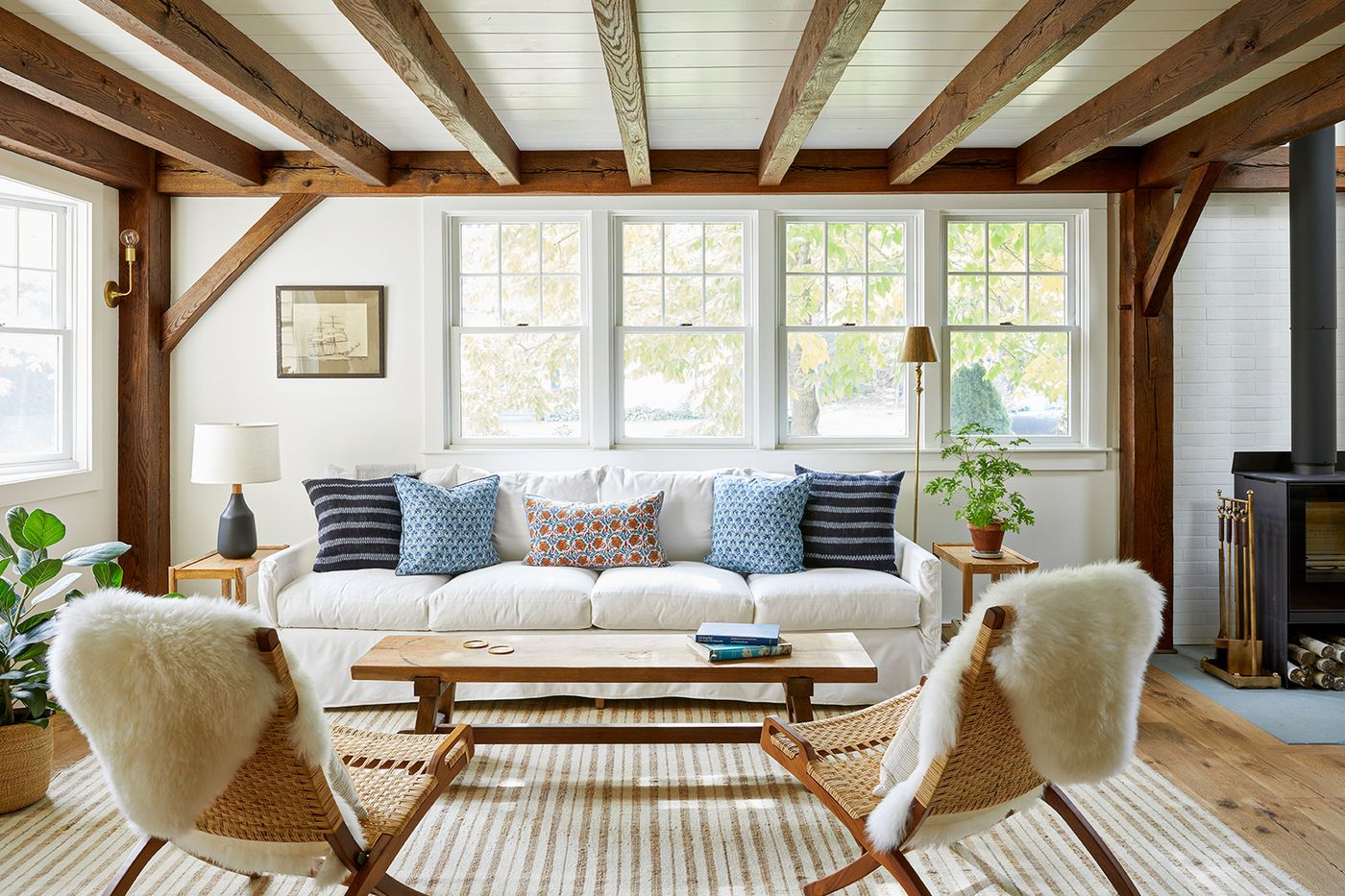
“To keep a room with heavy wood beams from feeling dark and cavernous, you need to maximize light, both natural and artificial.”
The key here is the sea of white: white plank ceilings, white walls, and a white slipcovered sofa. These surfaces act like giant reflectors, bouncing light from the large windows all around the room. The light-colored natural fiber rug also helps, preventing the dark wood floors from absorbing all the light. When you have strong, dark architectural features, go bright and light with your biggest surfaces.
16. Sculptural Neutral Living Room with a Fluted Wood Panel Wall
The fluted wood paneling is the undeniable star of this minimalist show. It does all the heavy lifting. It adds warmth, texture, and a sense of rhythm to what could have been a plain, flat wall. The vertical lines draw the eye upward, creating an illusion of height, while the texture provides a subtle, sophisticated pattern that eliminates the need for wallpaper or a busy gallery wall. It’s a single design move that provides architectural interest and a warm, organic backdrop for the sculptural furniture. The look feels incomplete without it.
“Wood paneling, especially light-colored wood, is not as carefree as a painted wall.”
The grooves of the fluting can be a dust trap, requiring regular vacuuming with a brush attachment or dusting with a microfiber wand to keep it looking clean. Be mindful of placing drinks or leaning things against it, as light, natural wood can be susceptible to stains and scratches. While it doesn’t require constant attention, it’s a surface that benefits from a ‘preventative maintenance’ mindset to keep it looking pristine. Compare this with the fluted wall in the bathroom in Idea #2.
17. Opulent Traditional Room with Gilded Moldings and Velvet Drapes
This level of ornate, traditional design is a serious commitment and is not easily undone. It can be magnificent, but it’s also a very specific taste that might not appeal to a broad range of homebuyers if you plan to sell in the near future. Also, the upkeep is significant. Dusting intricate gilded moldings is a meticulous task, and heavy velvet curtains require professional cleaning. This isn’t a low-maintenance, kick-your-feet-up kind of room; it’s a formal space that demands care and a certain lifestyle to match its grandeur.
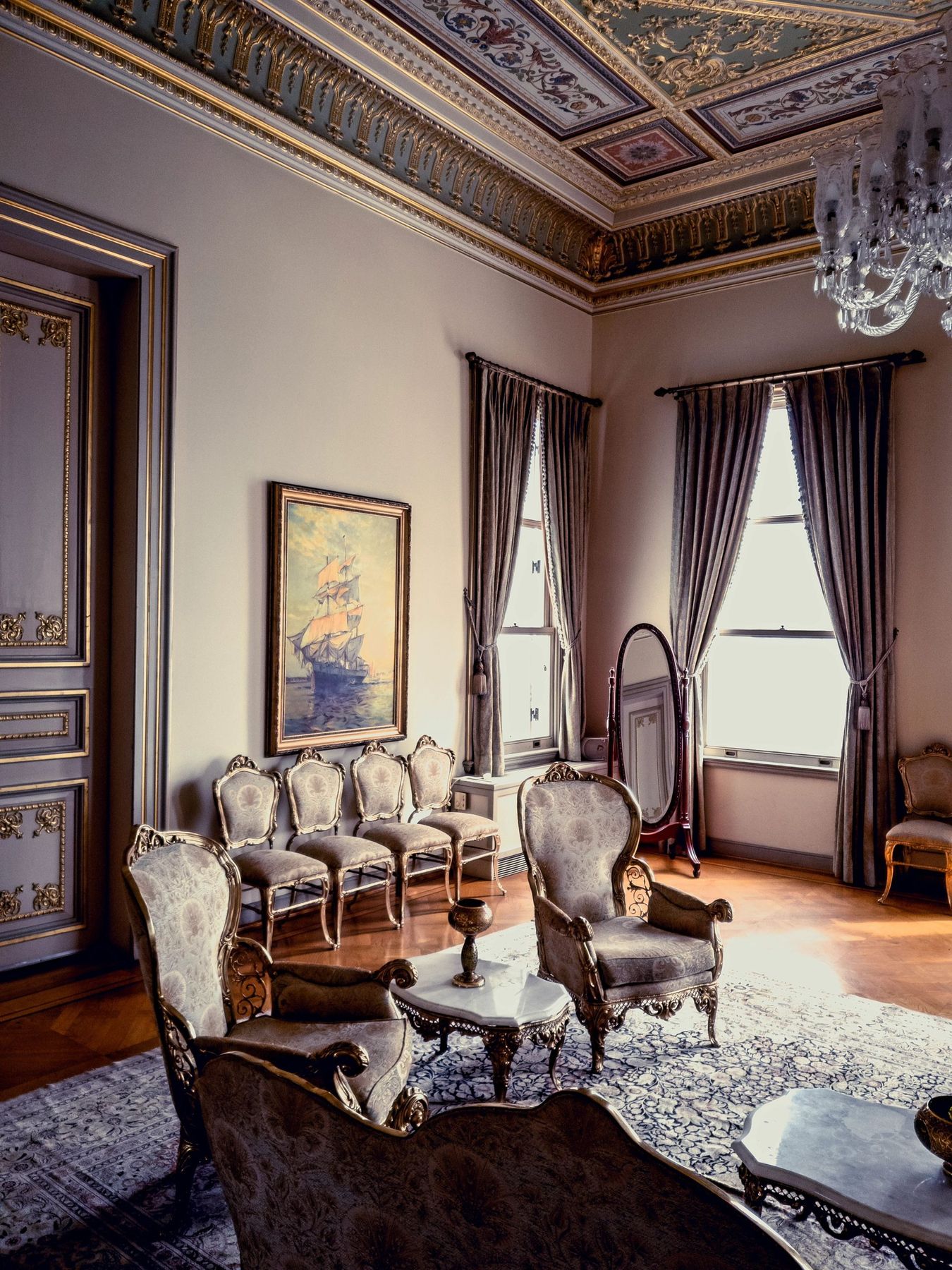
“This opulent, classical style simply does not work in a standard 8-foot ceiling room.”
It requires verticality to carry the visual weight of the heavy moldings, grand chandelier, and tall drapes. A minimum ceiling height of 12 feet is almost essential, with 14+ feet being ideal. The room itself needs to be large, at least 300-400 square feet, to prevent the ornate furniture from feeling cramped and cluttered. Trying to replicate this in a smaller, modern home will likely look theatrical and out of place rather than grand and authentic.
18. Coastal Shingle-Style Home with an Expansive Deck
This is a view of an entire luxury property, so recreating the *whole* thing is a multi-million dollar affair. Let’s just focus on furnishing the outdoor living spaces shown.
- Upper Deck Furnishings: N/A (not shown)
- Lower Patio Dining (Table + 6 chairs): $3,000 – $8,000
- Lounge Area (2 daybeds + umbrella): $4,000 – $10,000
- Landscaping (mature hedges, installation): $5,000 – $15,000+
- TOTAL (for furnishing & landscaping): $12,000 – $33,000+
- Budget alternative: Get a similar vibe with a dining set from Target or Wayfair ($800-$1,500) and lounge chairs from IKEA ($400-$700), and plant smaller, less mature hedges that will grow over time.
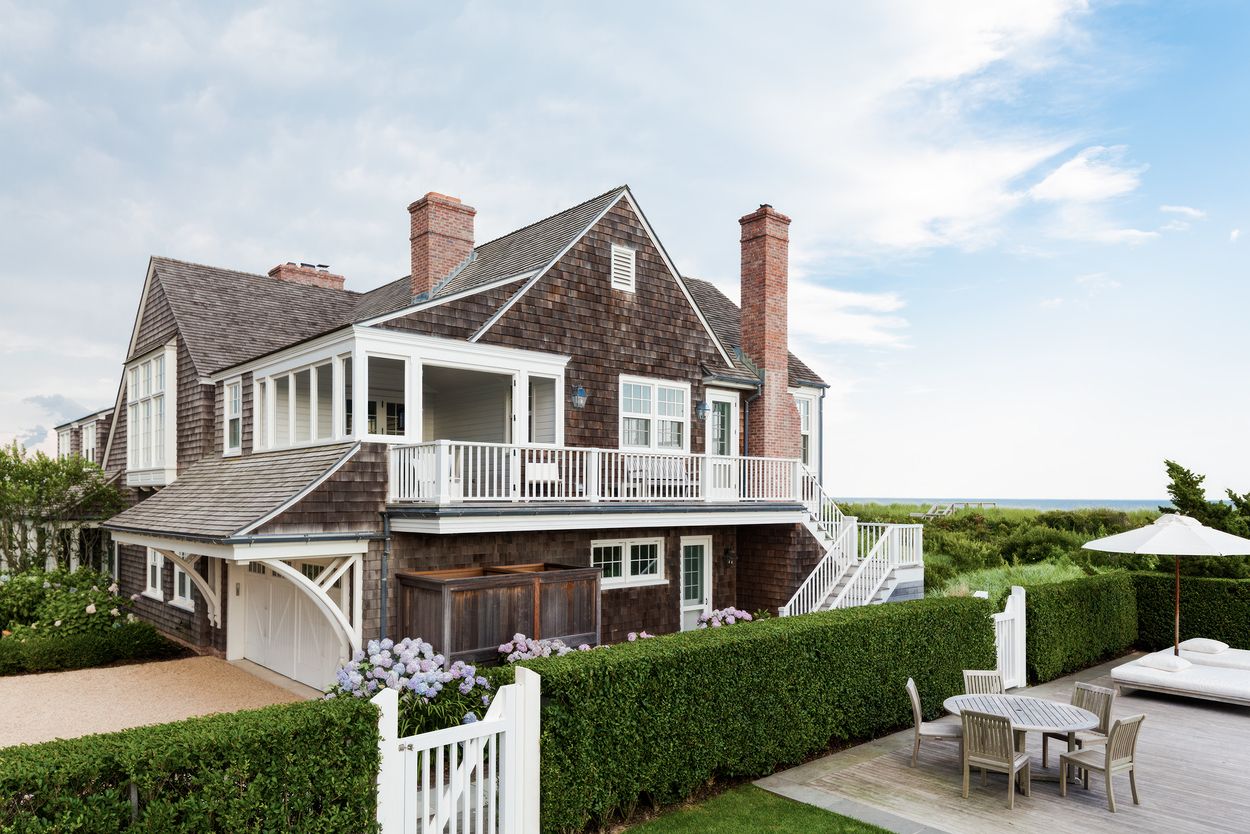
“Owning a home with this much wood siding and decking, especially in a coastal environment, means embracing a regular maintenance schedule.”
The dark brown shingle siding will need to be inspected annually for rot or damage and likely needs to be re-stained or sealed every 3-5 years to protect it from sun and moisture. The wooden patio deck will require annual cleaning and sealing to prevent splintering and fading. The pristine white railings and trim are a magnet for dirt and mildew and will need to be pressure washed and potentially repainted every few years.
19. Bright Living Room with an Organic Wood Root Coffee Table
The magic here is the masterful blend of sleek modernism with raw, natural beauty. The white upholstered seating and clean lines of the floor-to-ceiling windows create a minimalist, gallery-like canvas. Into this serene setting, the design introduces powerfully organic elements: the twisting wood root coffee table and the vibrant, untamed greenery outside. This juxtaposition is what creates the visual excitement. The tan leather and black metal of the accent chair act as a perfect bridge between the soft white and the rustic wood.
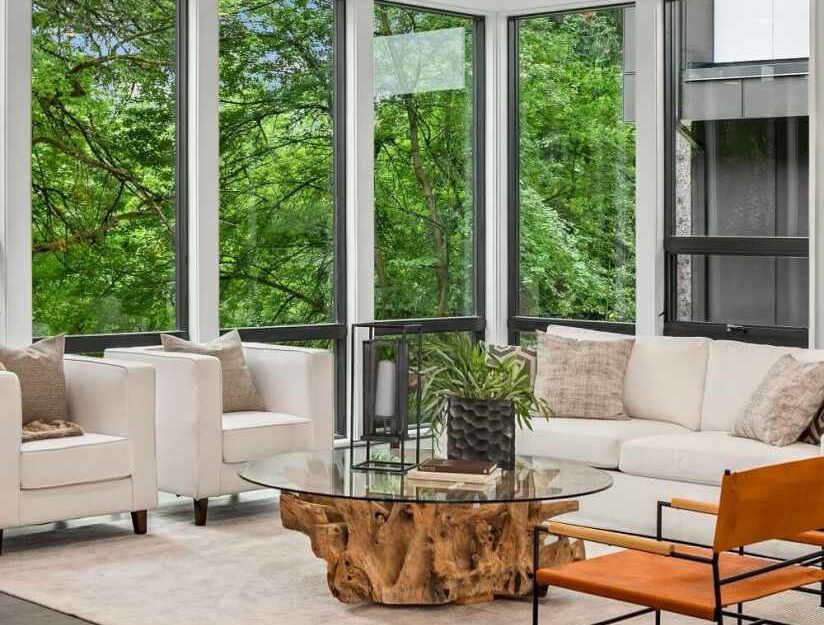
“If you remove the organic wood root coffee table, the soul of the room vanishes.”
It’s the single piece that introduces history, texture, and a touch of the wild. While a standard coffee table would be functional, this sculptural, one-of-a-kind piece acts as the room’s artistic centerpiece. It grounds the airy space, provides a talking point, and reinforces the connection to the natural world just beyond the glass. It proves that sometimes, the most ‘imperfect’ and organic piece is what makes a room feel perfectly complete.
20. Sunlit Eclectic Corner with an Ornate Secretary Desk
This cozy corner achieves its lived-in charm with a formula that leans heavily on texture and layering: 40% antique character (the ornate desk), 30% soft textiles (pillows, macrame, blanket), 20% natural light and materials (wooden blinds, chair frames), and 10% quirky accents (gooseneck lamp, patterned pillows). The key is the layering over the window—the hard lines of the blinds softened by the knotted texture of the macrame—which adds depth and a handcrafted feel. It’s a masterful mix that feels collected over time.
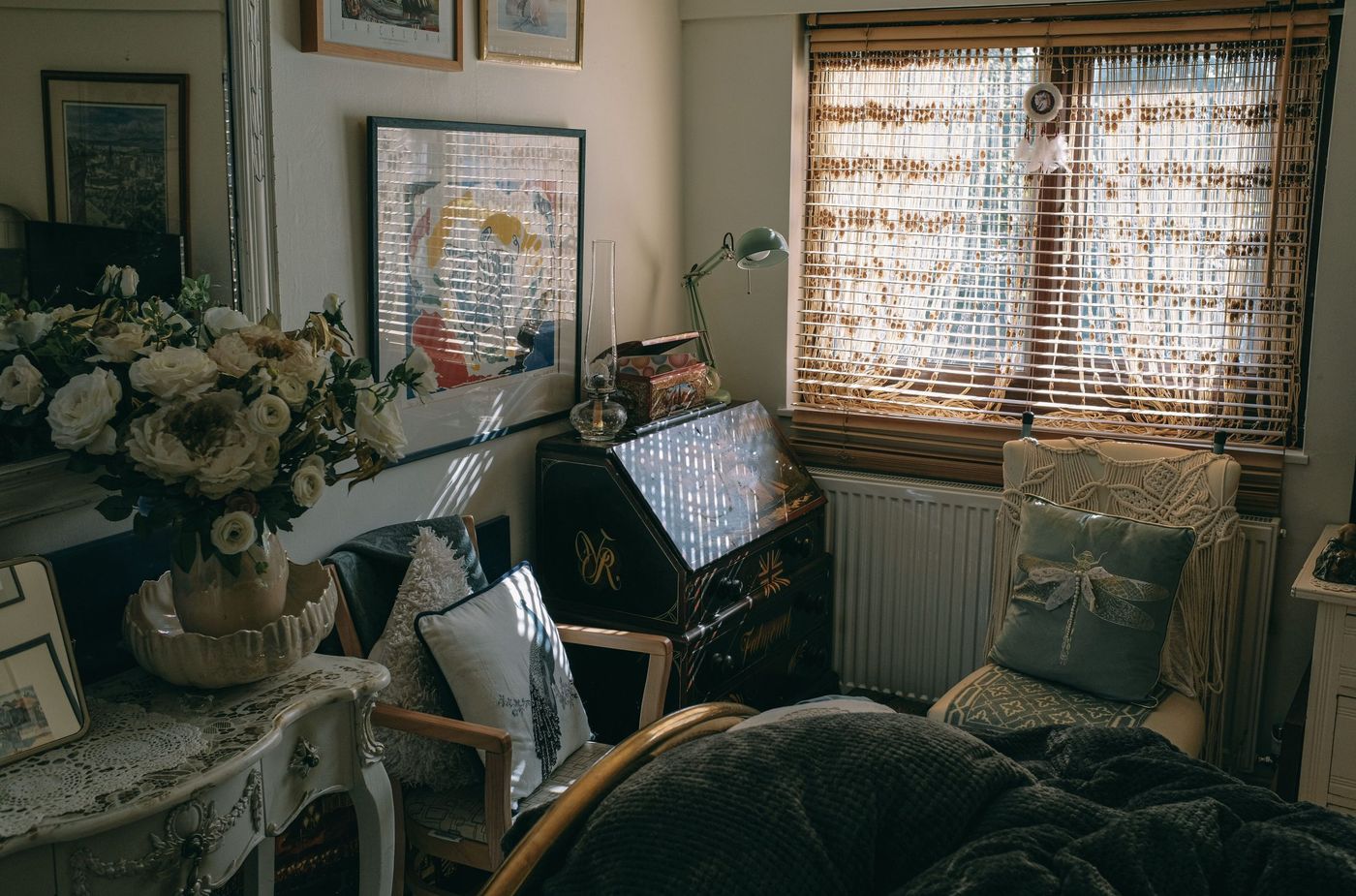
“This look is part of the ‘Grandmillennial’ or ‘Modern Traditional’ trend, where younger generations are embracing the quality and character of antique or traditional furniture.”
After years of fast-furniture and minimalism, there’s a growing appreciation for pieces with history and detail, like this ornate secretary desk. It’s about mixing these ‘granny-chic’ elements with modern touches (like the macrame and eclectic pillows) to create a space that feels nostalgic and comforting, but also fresh and personal. It’s a sustainable choice, too, giving old furniture a new life.
21. Minimalist Dining Scene with Black Wishbone Chairs and a Large Plant
When creating a minimalist space with a high-contrast palette like this, lighting is everything. The starkness of black and white can feel harsh if not softened. The key is to use large, unadorned windows to flood the room with natural light, which makes the space feel airy and open rather than empty. For evenings, rely on layered, indirect lighting. Instead of one bright overhead light, use recessed ceiling lights on a dimmer, a stylish floor lamp in a corner, and perhaps some candles on the table to create a warm, inviting glow.
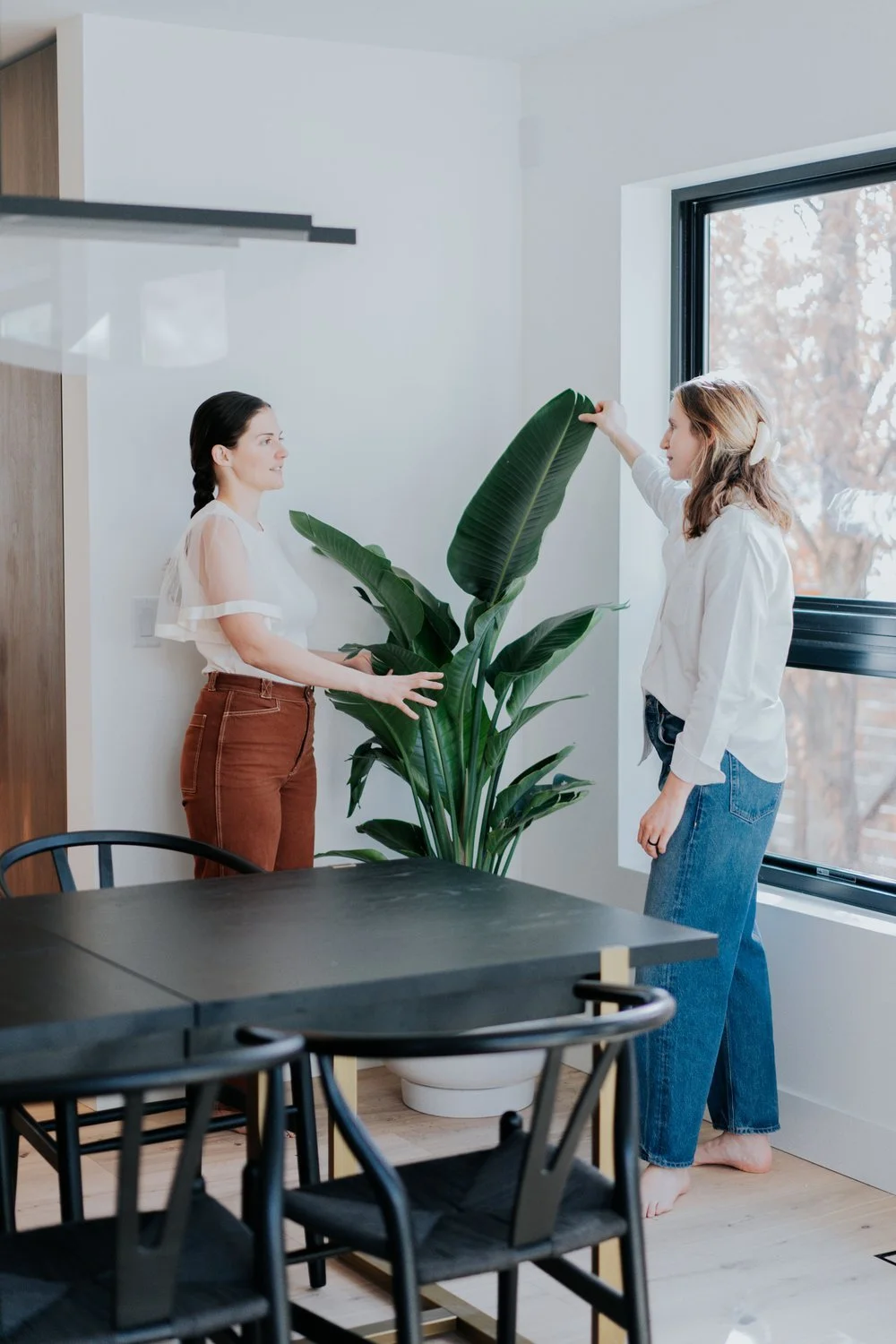
“This room feels so calm and composed due to the principle of negative space.”
The designer hasn’t tried to fill every corner. The white walls are left intentionally bare, which allows the key elements—the sculptural black chairs, the vibrant green plant, and the sleek dining table—to stand out as focal points. The simplicity of the composition is its strength. The limited color palette (white, black, green, wood) creates a serene and unified look, proving that you don’t need a lot of ‘stuff’ to make a powerful design statement.
22. A Sunlit Corner Vignette with Dried Botanicals and a Leaning Mirror
Creating a beautiful, long-lasting dried botanical arrangement like this one is simpler than you think. Here’s how to do it in about 30 minutes for under $40:
- Gather your materials: a mix of dried grasses, wheat stalks, and maybe some preserved eucalyptus or bunny tails. You can find these at craft stores or online.
- Choose your vessel: a woven basket or a simple ceramic vase both work well. If your basket is deep, add some floral foam or crumpled paper to the bottom to give your stems height.
- Start with your tallest, most structural stems (like the wheat) to create the basic shape and height.
- Fill in the arrangement with your softer, more feathery grasses, turning the basket as you go to ensure it looks good from all angles.
- Don’t overstuff it! The beauty is in the delicate, airy shapes. A light mist of unscented hairspray can help reduce shedding.
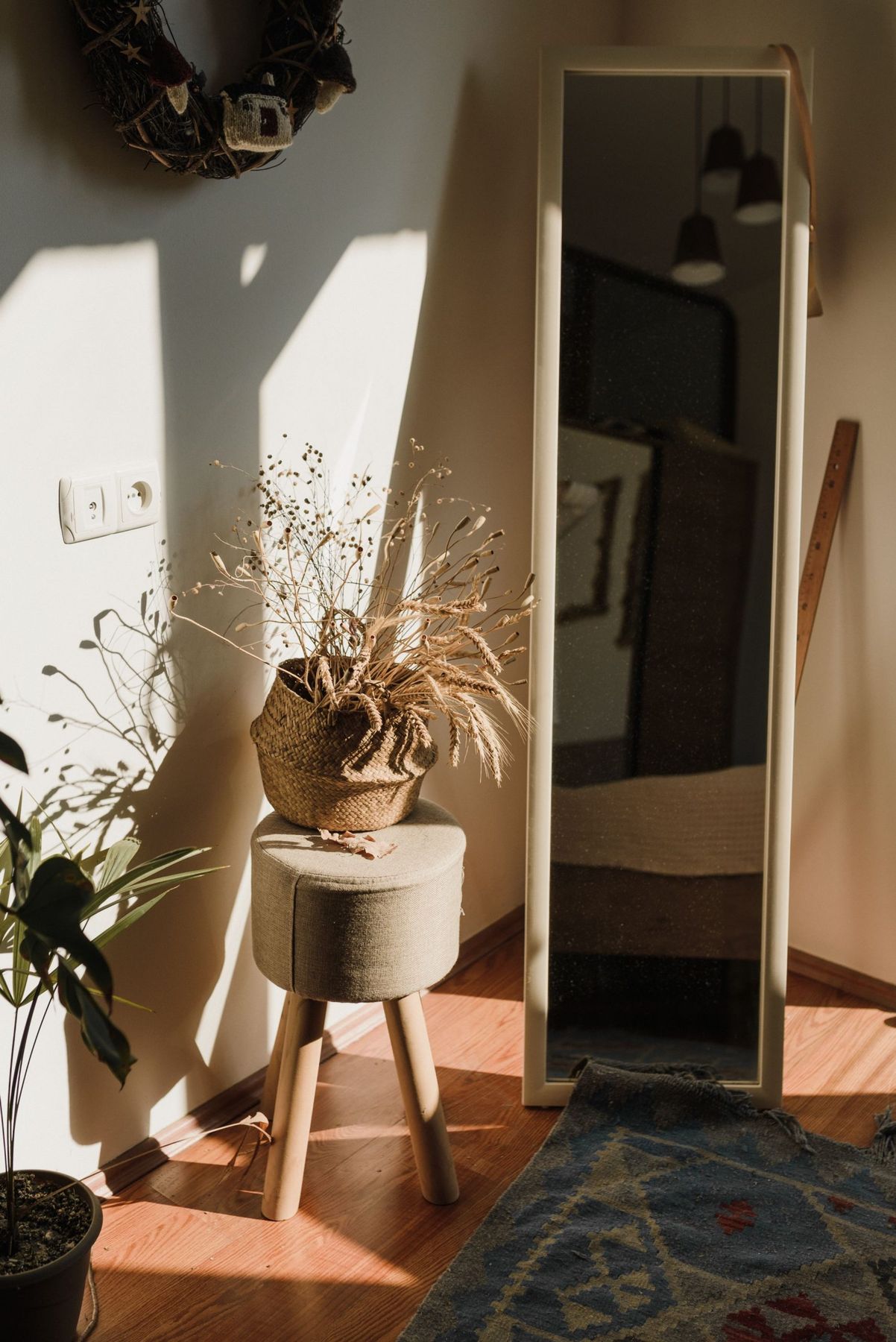
“that makes this corner feel so warm and inviting is the use of dried botanicals.”
Fresh flowers are lovely, but they’re temporary. The dried grasses and wheat stalks introduce a lasting natural texture and a soft, golden hue that perfectly complements the warm wood floors. They bring a touch of the outdoors inside with a gentle, rustic, and slightly nostalgic feel. It’s a quiet, subtle element that adds a layer of organic soulfulness to the space, making it feel more like a home and less like a showroom.
23. Vibrant Maximalist Living Room with a Circular Patterned Ottoman
Maximalism looks effortless, but it requires a plan. Before you dive in, consider these points:
- Establish a core color palette. Yes, even in maximalism! This room leans on teal, red, yellow, and gold as recurring threads that tie everything together. Without this, it’s just chaos.
- Vary your scale. Notice the mix of large-scale items (sofa, rug) with medium (lamps, tables) and small (gallery wall art, pillows). This creates visual hierarchy.
- Do you have a ‘moment of quiet’? The white sofa and wall sections provide a place for the eye to rest, making the colorful moments even more impactful. Without some negative space, it’s just visual noise.
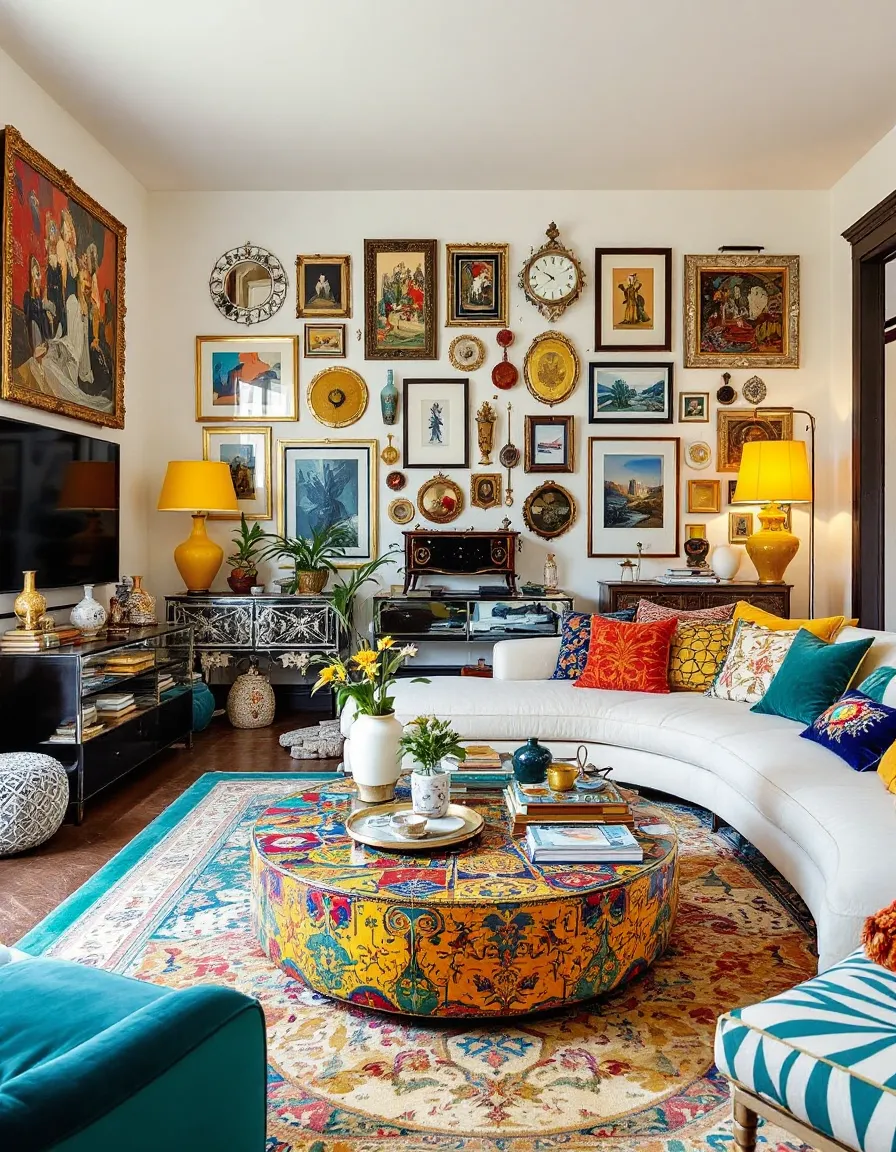
“This look is absolutely fabulous, but it is not for the faint of heart or the easily overwhelmed.”
Living in a maximalist space can be visually stimulating, which is great for some, but can feel cluttered or stressful for others. It also requires a confident curatorial eye to keep it from looking like a jumble sale. Dusting a floor-to-ceiling gallery wall and numerous decorative objects is a significant time commitment. Be honest with yourself about whether you crave this level of visual energy on a daily basis.
24. Indoor-Outdoor Living with Bouclé Chairs and a View of the Bay
This seamless indoor-outdoor flow is achieved through a formula of textural continuity: 50% plush, soft textures inside (the bouclé chairs, the rug) + 40% natural, woven textures outside (the wicker and wood furniture) + 10% hardscape and natural greens (the stone patio, lawn, and palm trees). The key is the consistent color palette of cream, beige, and natural wood tones that carries from the interior to the exterior, blurring the line between them. The blue of the pool and bay acts as the main ‘color’ accent for the entire scheme.
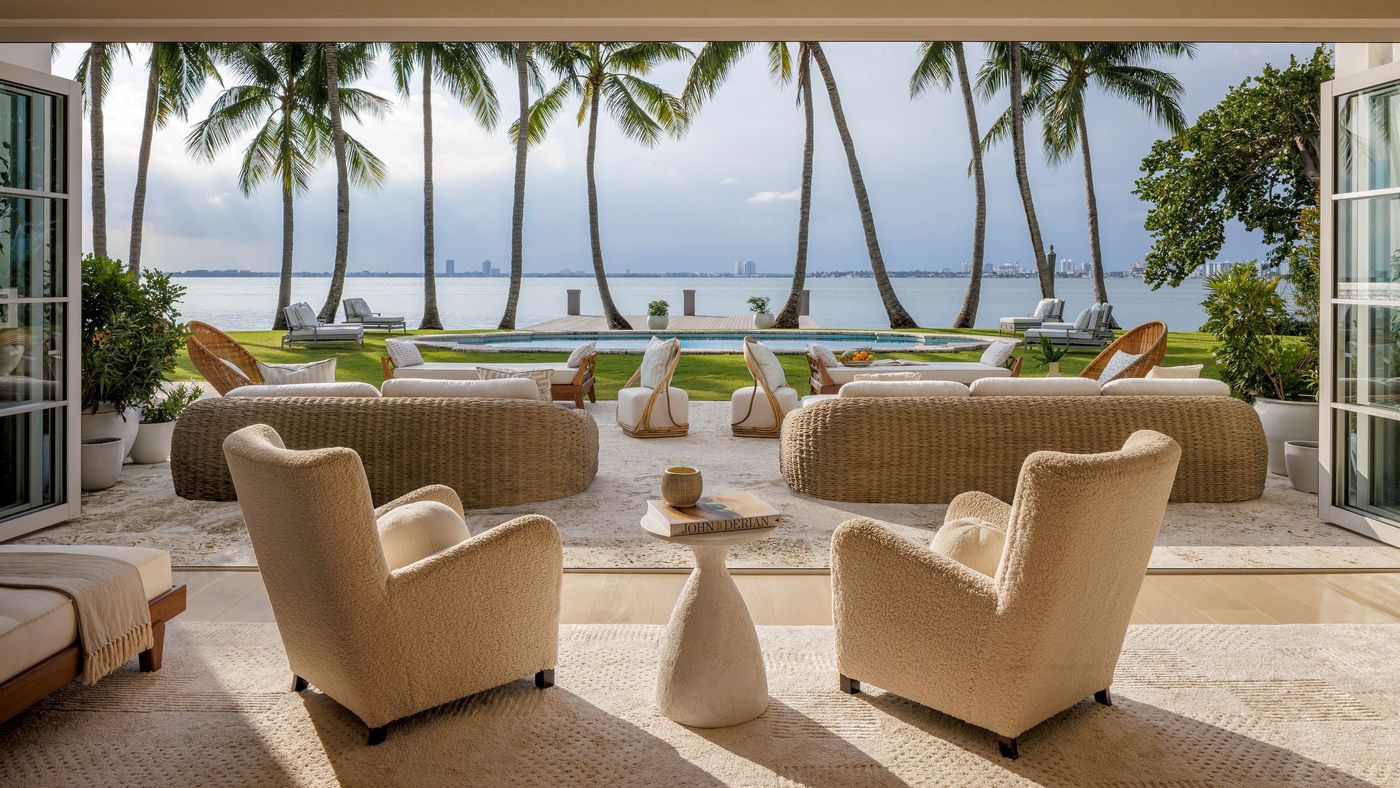
“You can capture this luxurious, breezy feel without a waterfront property.”
Focus on creating a cohesive flow from your living room to your patio or balcony. Use a similar color palette for both your indoor and outdoor furniture (think cream, beige, and wood). Find affordable bouclé-style armchairs from places like Target or HomeGoods ($300-$500). For the outdoors, IKEA’s outdoor furniture lines (like NÄMMARÖ or SEGERÖN) offer stylish and durable wicker-look and wood options for under $1,000 for a small set. It’s about creating that visual connection.
25. Modern Living Room with a White Fireplace and Mixed Seating
To make a seating arrangement with different types of chairs feel cohesive, use color and texture as your linking elements. Here, the designer placed a deep blue pillow on the light gray sofa, which directly speaks to the blue in the striped accent chair. The roundness of the patterned chair is echoed in the curves of the Sputnik chandelier and the circular marble coffee table. These subtle repetitions create a visual dialogue between the pieces, making the mix feel intentional and curated, rather than random and disjointed.
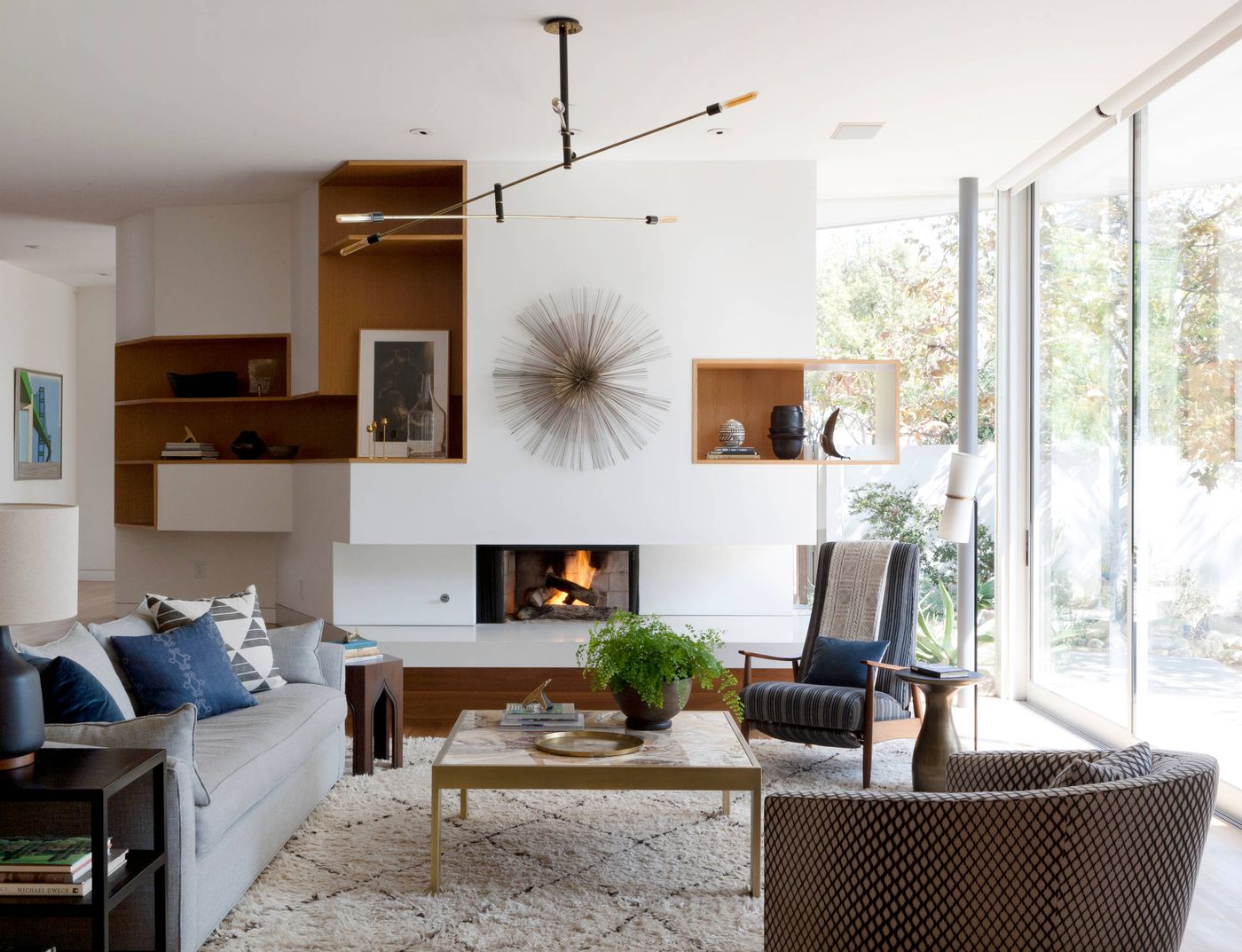
“This room feels balanced and inviting because of the smart distribution of visual weight.”
The heavy, solid form of the white fireplace wall on the left is balanced by the large, light-filled glass sliding doors on the right. In the center, the furniture arrangement is deliberately mixed: the solid, grounded sofa is offset by the lighter, more open forms of the accent chairs and the leggy coffee table. This prevents the room from feeling too heavy on one side and creates a dynamic, yet harmonious, composition.
26. Playful Eclectic Living Room with a Red Leather Sofa
The singular element that gives this room its audacious, playful personality is the yellow scalloped ceiling light. The room is already bold with its red sofa and colorful art, but the light fixture is the whimsical cherry on top. It’s unexpected, sculptural, and injects a dose of retro fun that keeps the design from taking itself too seriously. It’s a confident, quirky choice that elevates the entire space from simply ‘eclectic’ to ‘joyfully designed’. Without it, the room would lose its most charming and memorable feature.
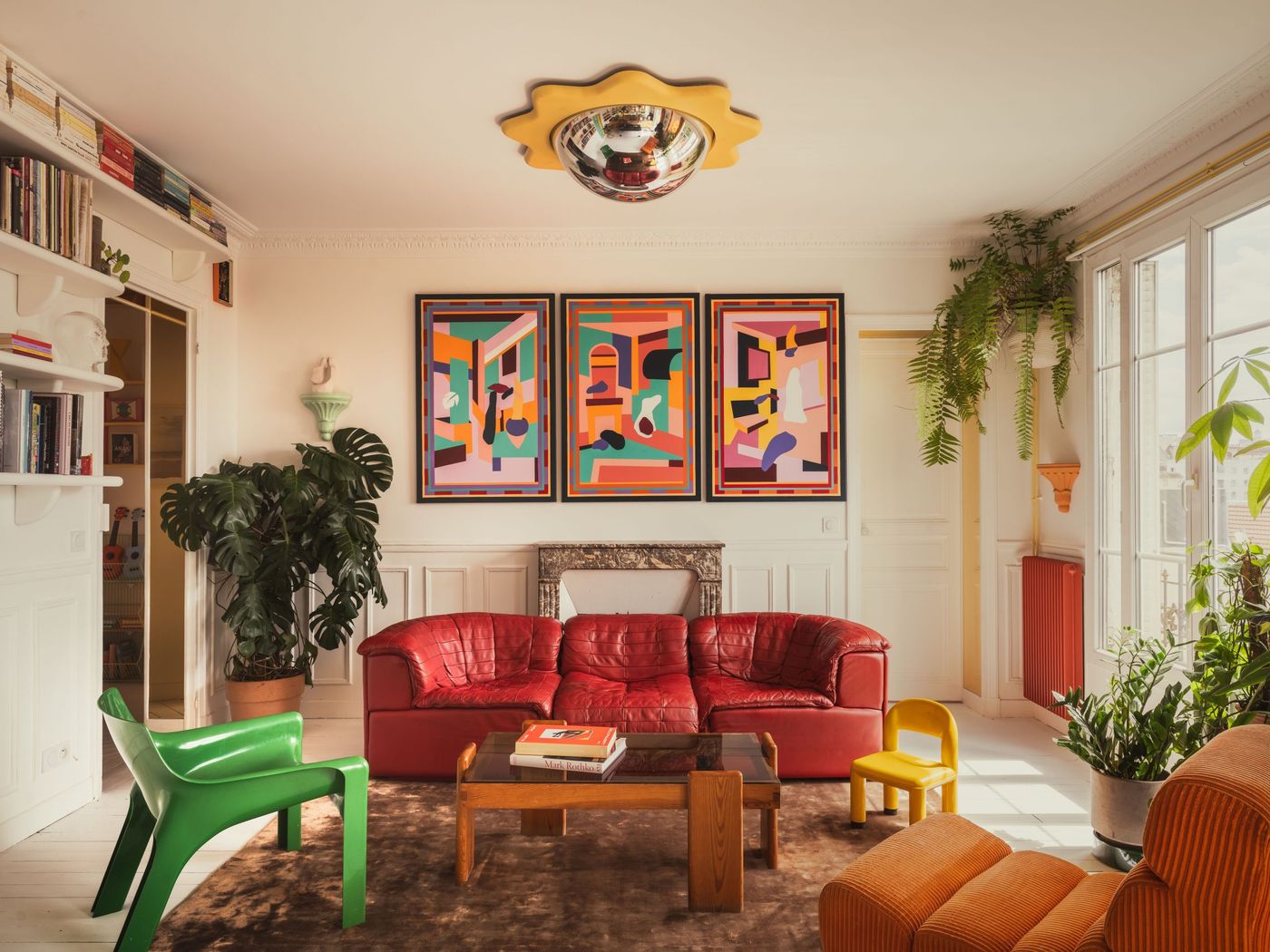
“This look is tapping into the ‘Dopamine Decor’ trend, which is all about using color, pattern, and playful shapes to create spaces that genuinely make you happy.”
It’s a move away from safe, marketable neutrals towards bold self-expression. By mixing vintage-inspired shapes (the scalloped light, the corduroy chair) with modern art and classic architecture, this style celebrates personality over perfection. After a few years of global stress, people are craving interiors that are energetic, optimistic, and a little bit weird in the best way possible.
27. Minimalist Scandinavian Interior with a Beige Sofa and Woven Pendant
This serene, minimalist aesthetic thrives on a sense of airiness, which means it’s best suited for rooms with good bones. It works beautifully in spaces with at least 9-foot ceilings, which allow the oversized woven pendant to hang without feeling cramped. The ideal room would have large windows to maximize natural light, which is crucial for the light and airy vibe. While you can adapt this style to a smaller space (around 150 sq ft), you’d need to scale down the furniture and opt for a smaller pendant light to maintain the feeling of openness.
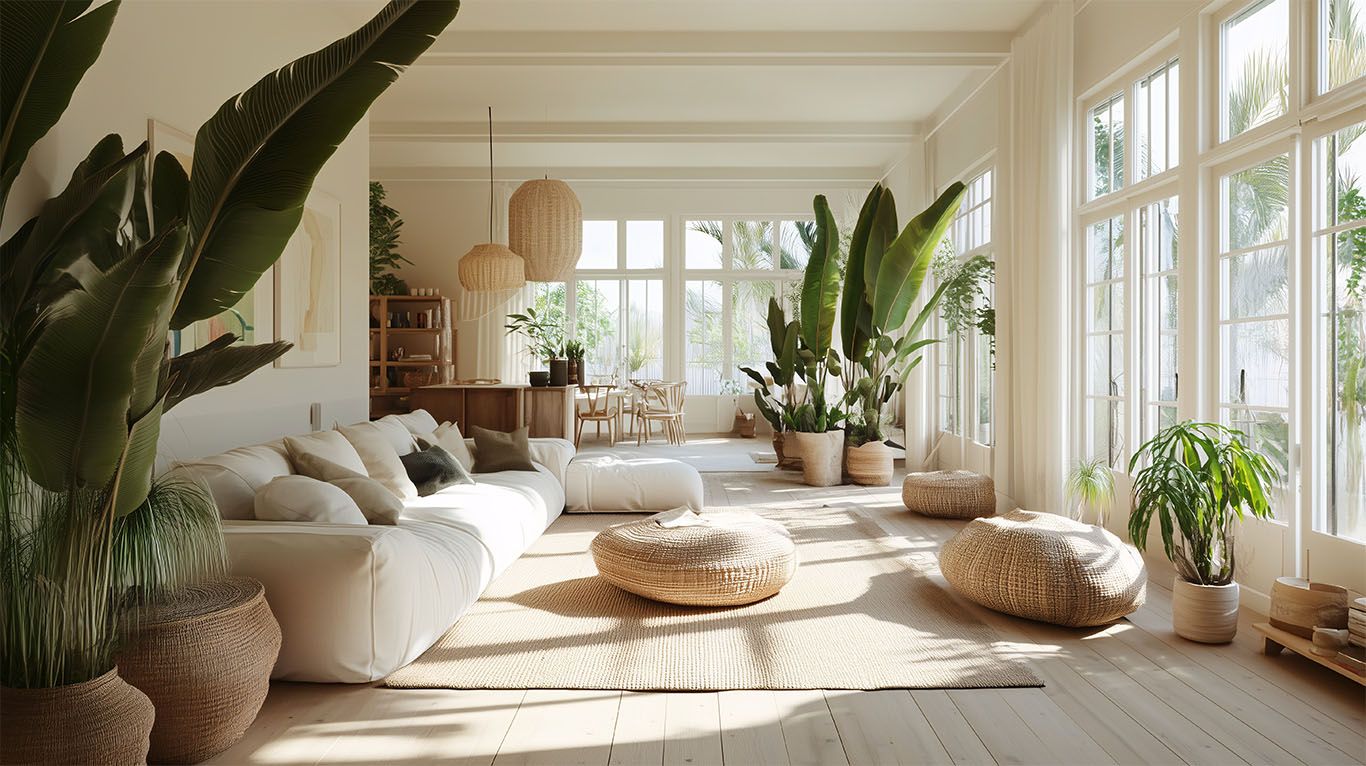
“You can absolutely get this calm, Scandinavian-inspired look on a budget.”
Start with the modular SÖDERHAMN or JÄTTEBO sofa from IKEA in a beige or light grey fabric. The light oak coffee table look can be found at Target (look for the Studio McGee line) or on Wayfair for under $200. The key piece, the oversized woven pendant, can be replicated with IKEA’s SINNERLIG lamp or similar finds from World Market for around $70-$100. Finish with simple white curtains like the RITVA from IKEA. The entire core look can be had for under $2,000.
28. Cozy Dining Nook with a Coral Banquette and Recessed Mural
This nook feels so special because it masterfully layers different forms of art. The mural itself is the obvious artistic statement, but the design doesn’t stop there. The coral banquette is a piece of sculptural, functional art. The wavy striped rug is like a painting for the floor. Even the chairs, with their woven backs, add a layer of handcrafted artistry. By treating every surface and object as an opportunity for artistic expression, the space becomes immersive and deeply personal. The recessed lighting on the mural is key, highlighting it like a gallery piece.
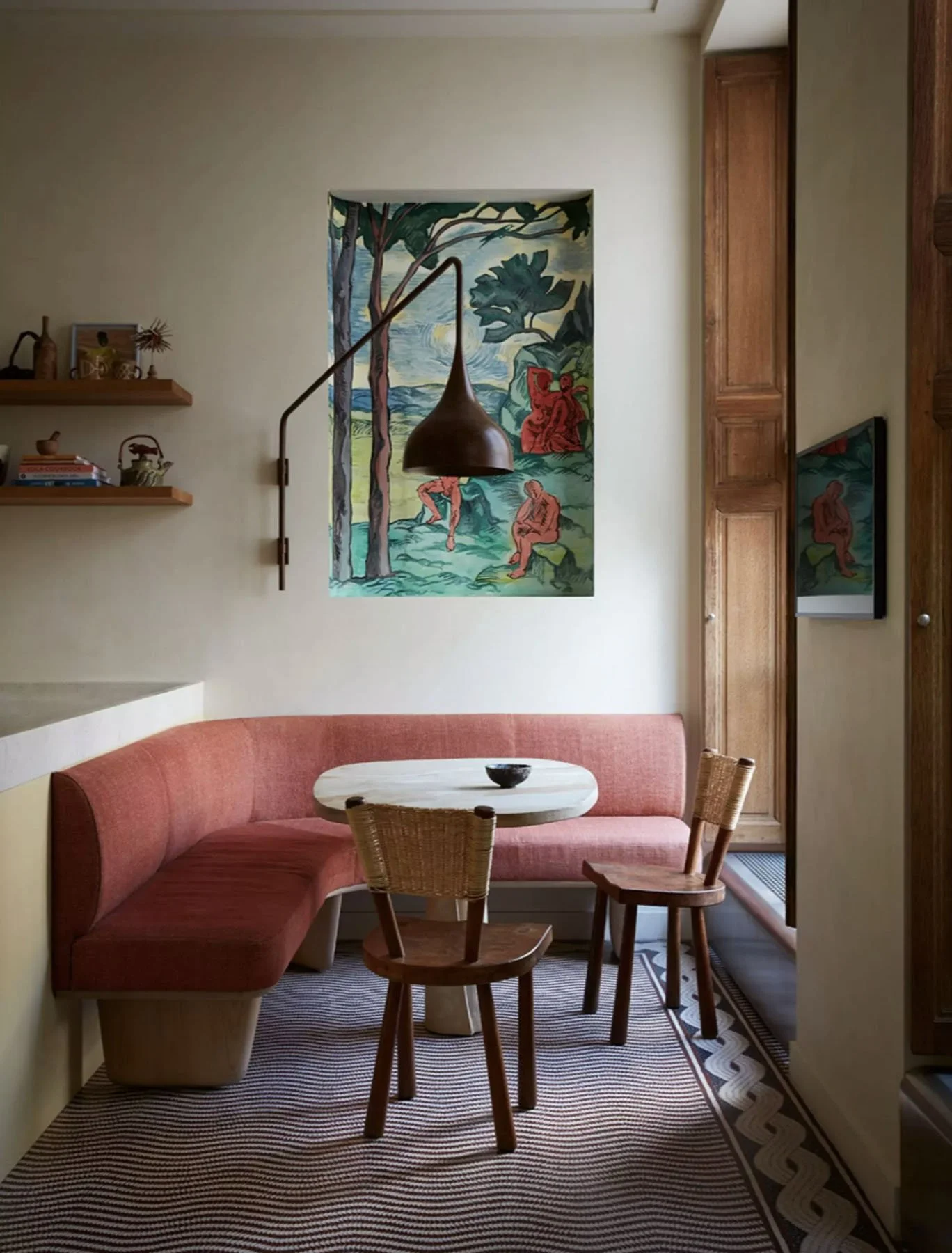
“When designing a built-in banquette, comfort is paramount.”
Don’t skimp on the seat depth. Aim for a minimum depth of 22-24 inches for the base, which allows for a thick, comfortable back cushion while still leaving at least 18 inches of seating space. For the foam, choose a high-density foam with a medium firmness (a 2.5-3.0 ILD rating is good) and wrap it in Dacron batting. This gives the cushion a plush, rounded look and prevents the fabric from sagging over time. It’s the difference between a spot you can lounge in for hours and one that feels stiff after 20 minutes.
29. Light and Airy Open Plan Living with Herringbone Floors
This open-plan space feels cohesive yet clearly defined thanks to a smart formula: 70% light and neutral base (white walls, beige sofa and curtains, light wood floors) + 20% grounding black accents (chairs, fireplace, coffee table frame) + 10% warm textures (woven pendants, cane chairs, brass). The neutral base creates a continuous flow, while the black accents act as punctuation, defining the dining and living zones without walls. The warm textures are the final layer, adding coziness and preventing the black-and-white scheme from feeling too stark.
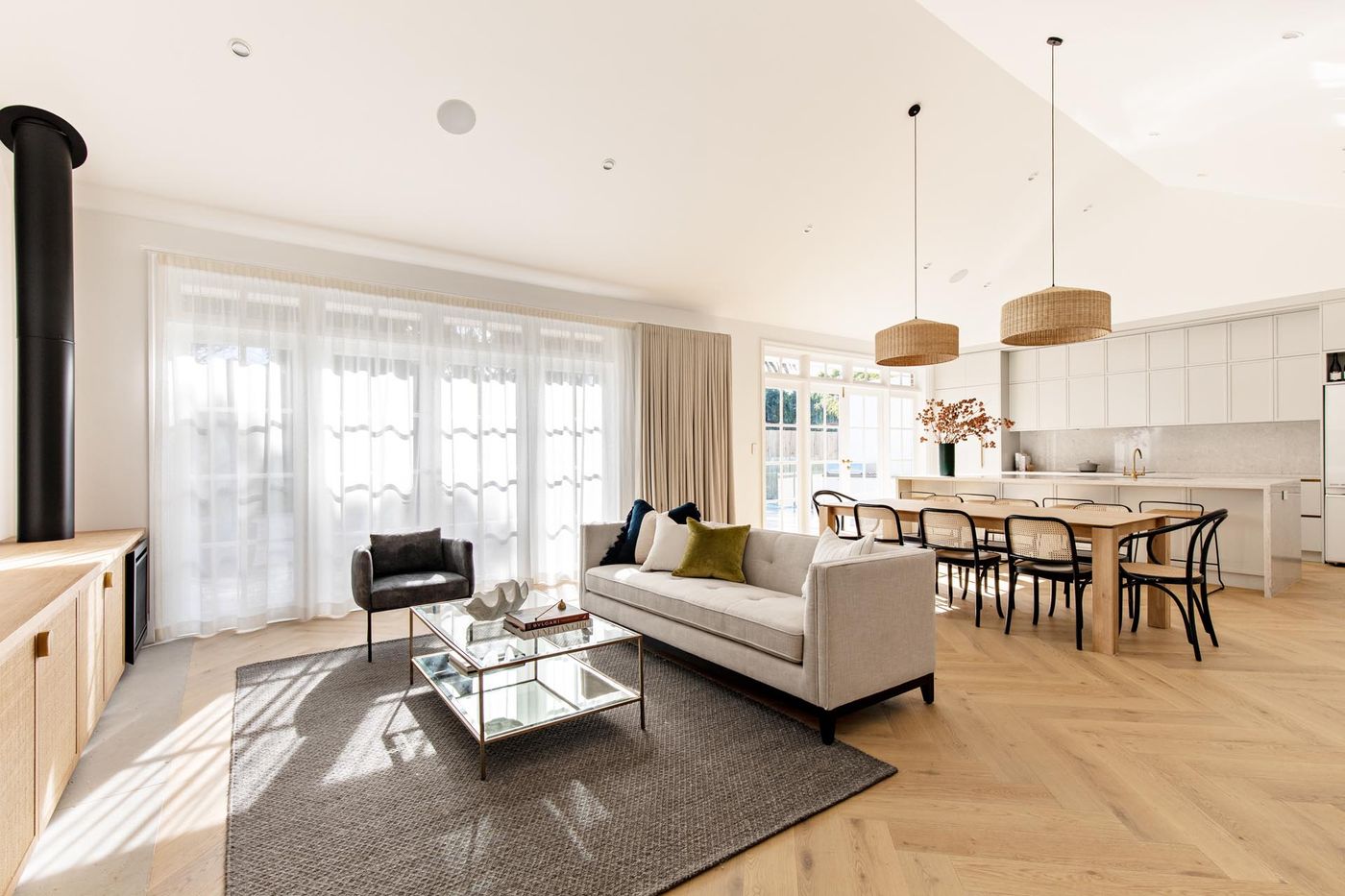
“An open-plan layout like this is beautiful, but it requires discipline to keep it from looking cluttered.”
There’s nowhere to hide your mess. Sound also travels easily, so a TV in the living area can be disruptive to someone in the kitchen. To make it work, you need excellent storage solutions (like a good media console and kitchen cabinets) to keep surfaces clear. Area rugs are also non-negotiable; they help define zones, absorb sound, and make the space feel cozier. Without them, an open plan can feel like a cold, echoey hall.
30. Minimalist Interior with Bright Wood Wall Panels and White Floors
This space achieves its serene, almost zen-like quality through extreme simplicity and a limited material palette. The design relies on the beauty of two primary materials: light wood and glossy white. By repeating the wood on the walls and furniture, and the white on the floors and ceiling, the room feels incredibly unified and calm. The focus shifts to the subtle variations in wood grain and the way light interacts with the surfaces. The low-profile furniture keeps sightlines open, enhancing the sense of spaciousness and tranquility.
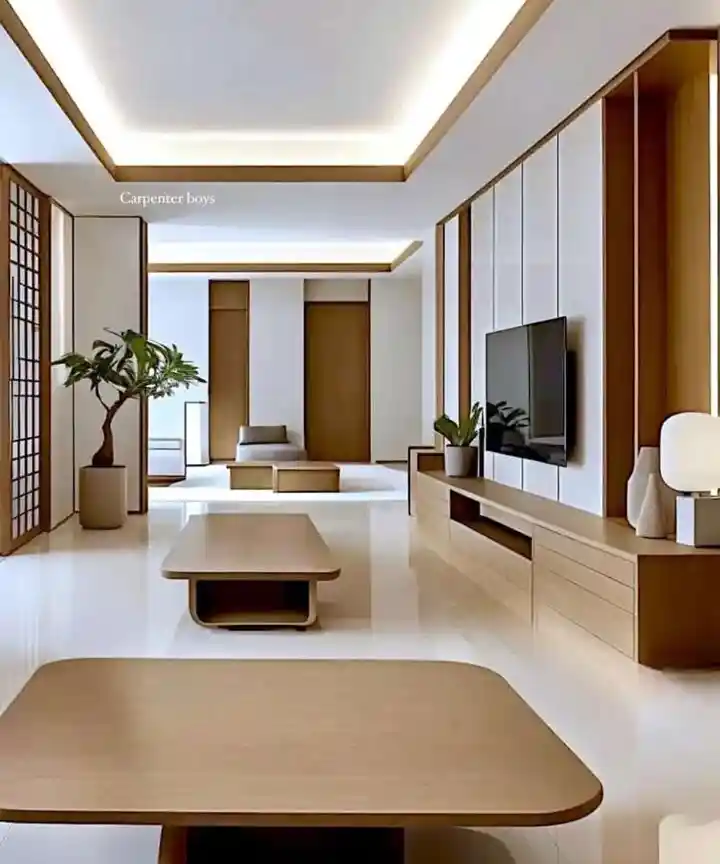
“Let’s talk about those glossy white floors.”
They look incredible and do a phenomenal job of reflecting light, but they are the definition of high maintenance. Every speck of dust, every stray hair, every footprint will be visible. You’ll want to invest in a good robotic vacuum to run daily and be prepared for frequent mopping to keep them looking pristine. They are also prone to showing scratches, so felt pads on all furniture are an absolute must. This is a look for the exceptionally tidy or those who have cleaning support.
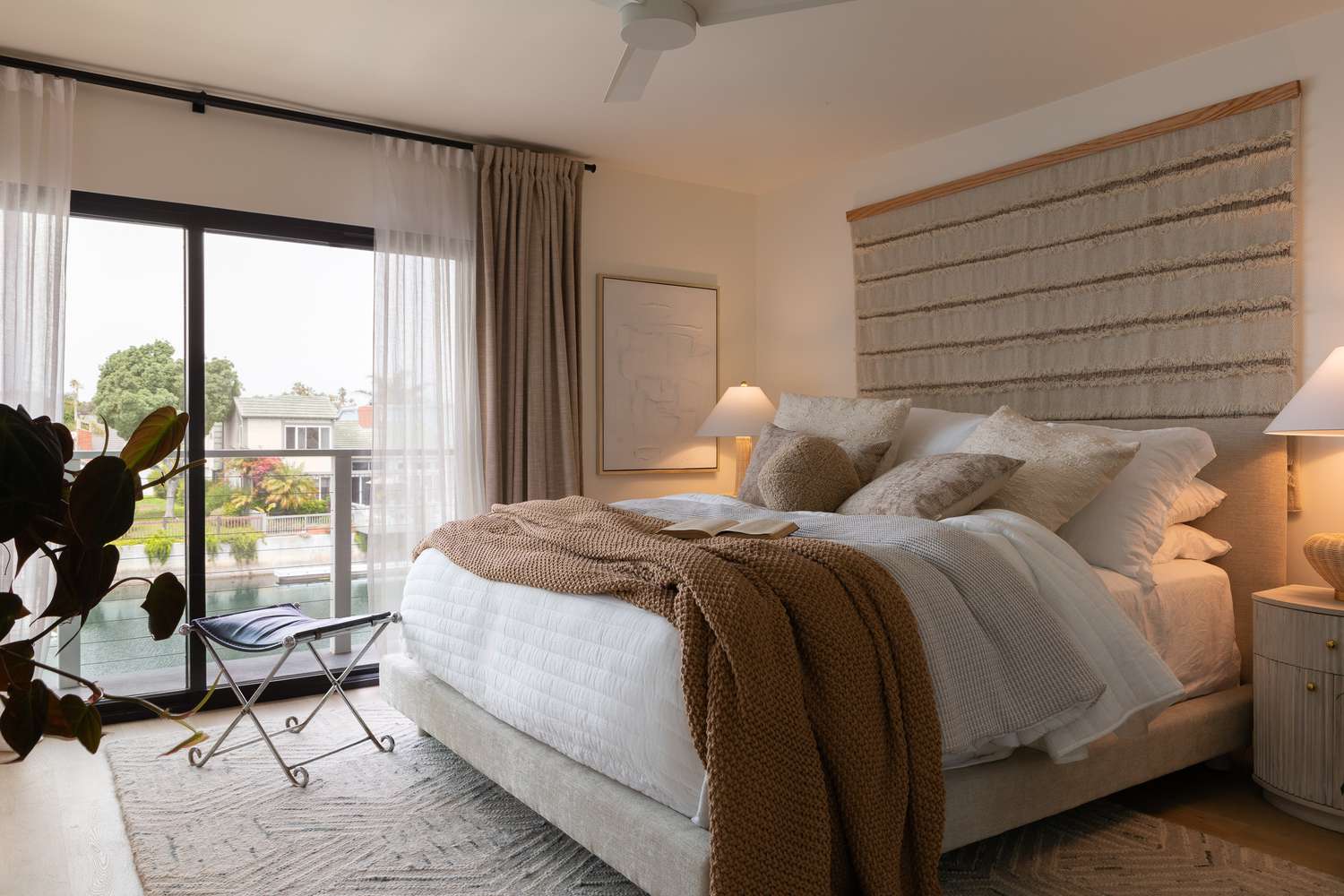
31. Serene Minimalist Bedroom with a Fluted Accent Wall
The single most impactful element in this bedroom is the integrated indirect lighting within the fluted accent wall. The fluting itself is beautiful, adding texture and depth. But the soft, ambient glow from the hidden light source is what elevates the design from simply ‘modern’ to ‘luxurious.’ It creates a halo effect around the bed, turning the wall into a functional light fixture that eliminates the need for harsh overhead lighting. It’s this thoughtful integration of light and architecture that gives the room its serene, hotel-like atmosphere.
“You can create a similar indirect lighting effect yourself.”
Here’s a quick guide for adding a backlight to a headboard or panel wall: Purchase a reel of dimmable LED strip lighting online or from a hardware store. Opt for a ‘warm white’ color temperature (2700K-3000K) for a cozy glow. (Cost: $30-$80)Mount a 1×2 wood board or a metal channel 2-3 inches in from the edge on the back of your headboard or wall panel. This creates a recess for the light.Apply the self-adhesive LED strip onto the board, facing outwards or upwards depending on the desired glow.Connect the strip to its power supply and dimmer switch. You may need an electrician to hardwire it for a seamless look, or you can use a plug-in version.This simple addition creates a high-end, diffused light that makes any bedroom feel more serene.
Your Home’s Next Chapter Starts Now
Feeling inspired? The best part about all these ideas is that they’re not rigid rules. Think of them as starting points for your own design story. Mix the minimalism of one look with the color of another. The goal for 2026 is to create a space that feels uniquely yours. Now go ahead and start that Pinterest board — you’ve got this.