A well-lit garden doesn’t just help you find the path to the door. It turns your outdoor space into something more usable after sunset, adding safety and a bit of atmosphere without a full renovation. These 25 landscape lighting ideas focus on the fixtures themselves, showing how different types of lights shape a garden after dark.
From pathway markers to string lights and uplighting, each photo puts the light source front and center, keeping the rest of the scene simple. You will see practical ways to layer illumination for entryways, patios, decks, and garden beds, all while keeping the lighting the clear hero of the space.
Modern Pathway Lights Define a Welcoming Entrance
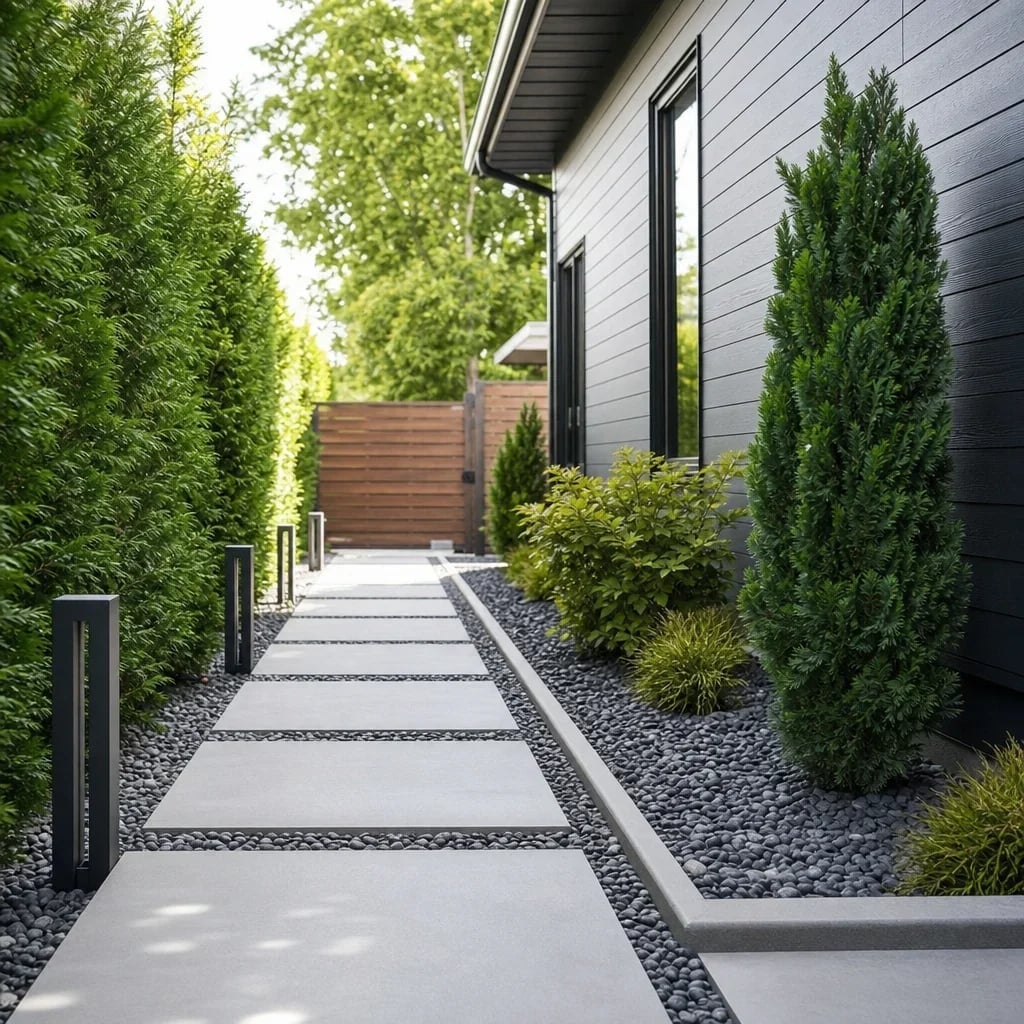
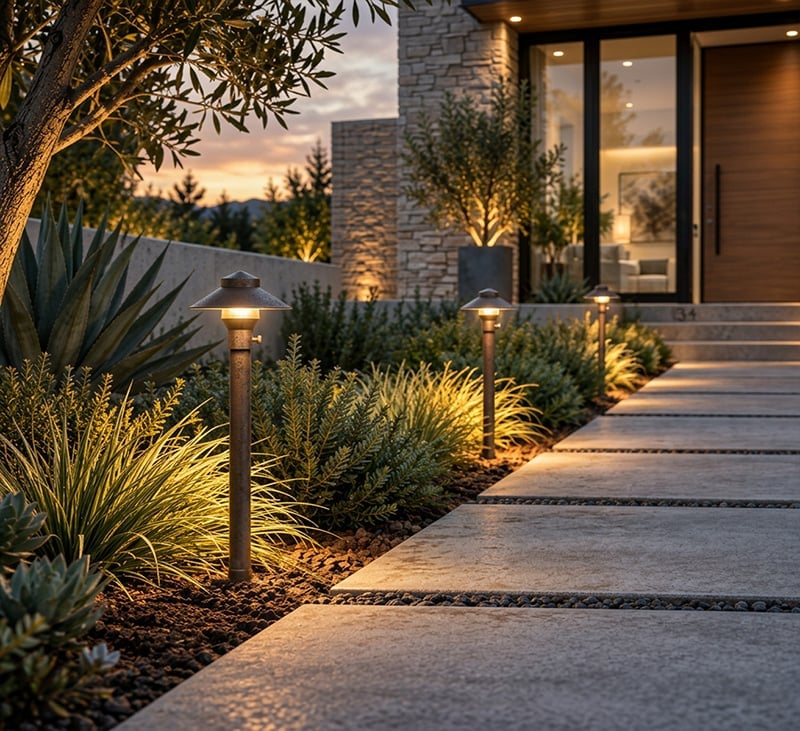
A wide front pathway lined with low, modern lights creates a clear, inviting route to the door. The warm glow from each fixture softens the stone and gravel underfoot, while architectural plants add structure without clutter. Keeping the palette to warm white, stone gray, and green lets the lighting lead the eye straight to the entrance.
Rock-Shaped Lights Add Whimsy to Garden Paths
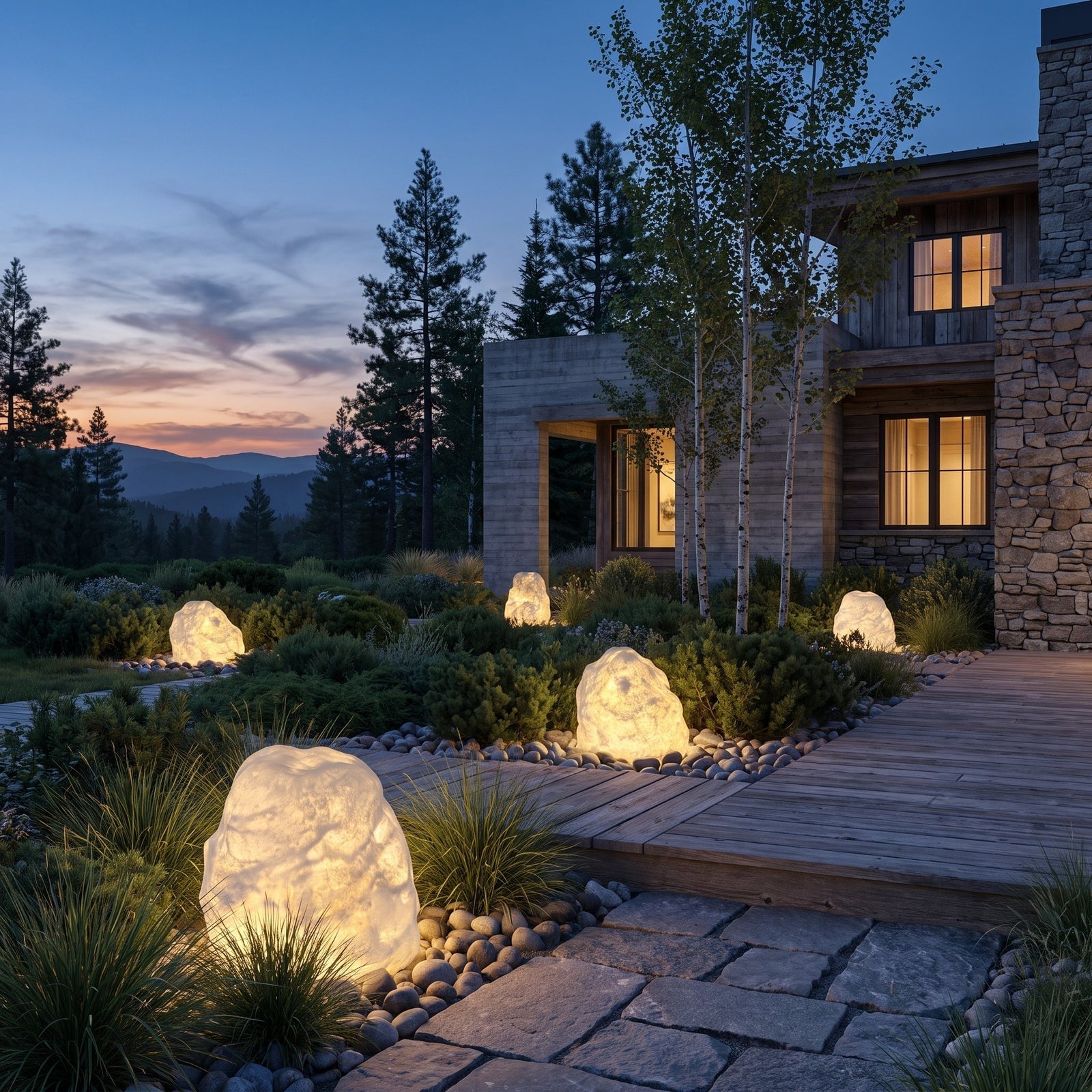
These illuminated rock shapes blend into the garden by day and glow at night. Placed among pathway stones and low greenery, they add surprise without disrupting the natural look. The warm white light from the ground-level fixtures plays off the gray stone and wood edges, creating a soft, inviting path. The trick is to space them irregularly, so they read as part of the landscape rather than a strict row. That casual arrangement keeps the garden feeling organic, even after dark.
String Lights and Uplighting Create Multi-Level Ambiance
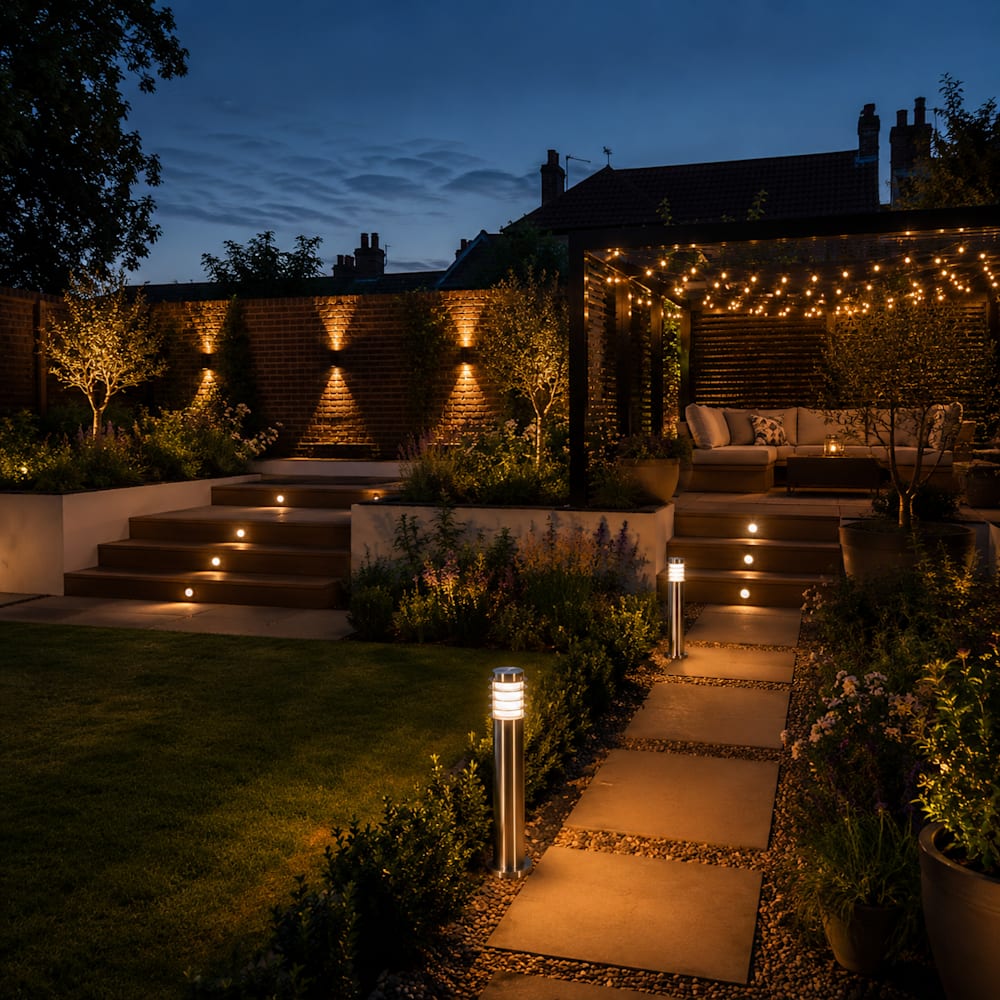
How do you make a backyard feel expansive after sunset? Layer your light sources at different heights. Overhead string lights cast a warm glow across the patio and seating, while uplights aimed at nearby trees draw the eye upward and outward. Step lights along the changes in level keep the path safe without flooding the whole space. Together, the warm white strands, the soft tree highlights, and the low step lights define distinct zones for dining, lounging, and walking. The result is a backyard that feels larger and more inviting, with no single light overpowering the others.
Integrated Pergola Lighting Enhances Outdoor Dining
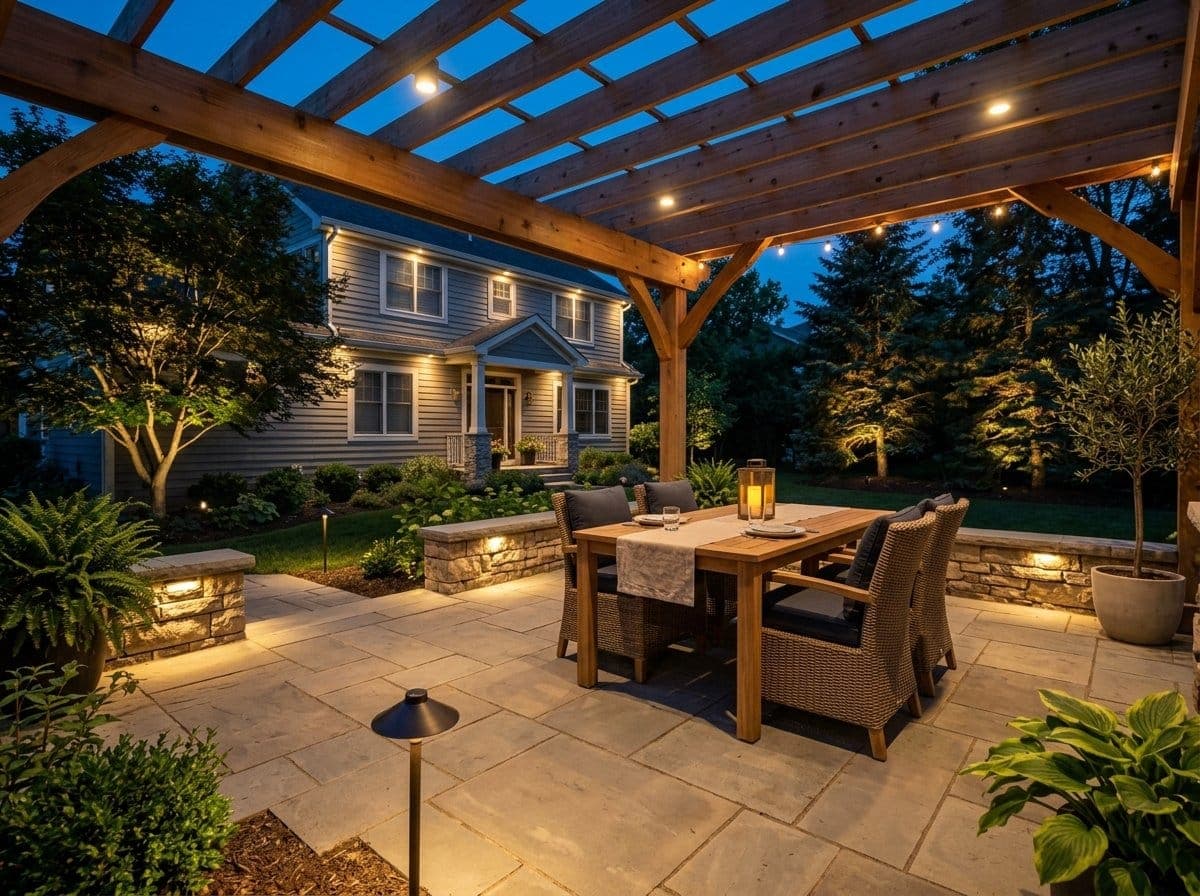
A dining set under a pergola becomes the natural focal point when the overhead structure is lit from within. Uplights at the base of nearby stone walls and low pathway lights guide guests to the table. The combination of warm light above and soft accent lights around the perimeter keeps the dining area intimate while the garden stays visible.
Sleek Pathway Lights Define Modern Garden Seating
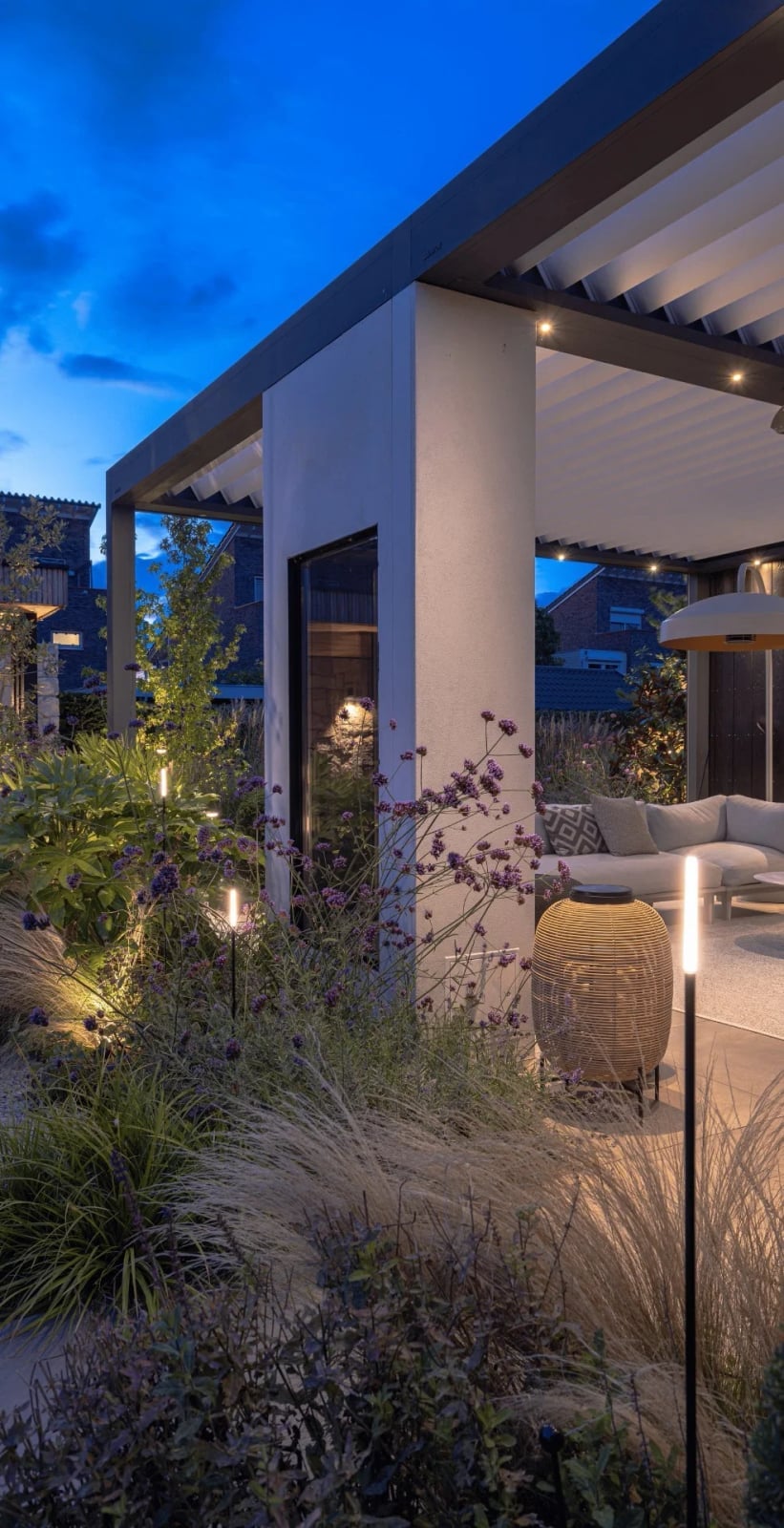
Let the path lead somewhere worth seeing. In this garden, sleek integrated pathway lights line the gravel walk toward a seating area with a modern sofa and a woven lantern. Accent lights among the layered planting in greens, purples, and neutrals add depth without distracting from the route. The pathway fixtures are low and unobtrusive, so they guide movement alongside the taller floor lamps by the seats.
Magical Pathway Lighting for a Boho Garden Retreat
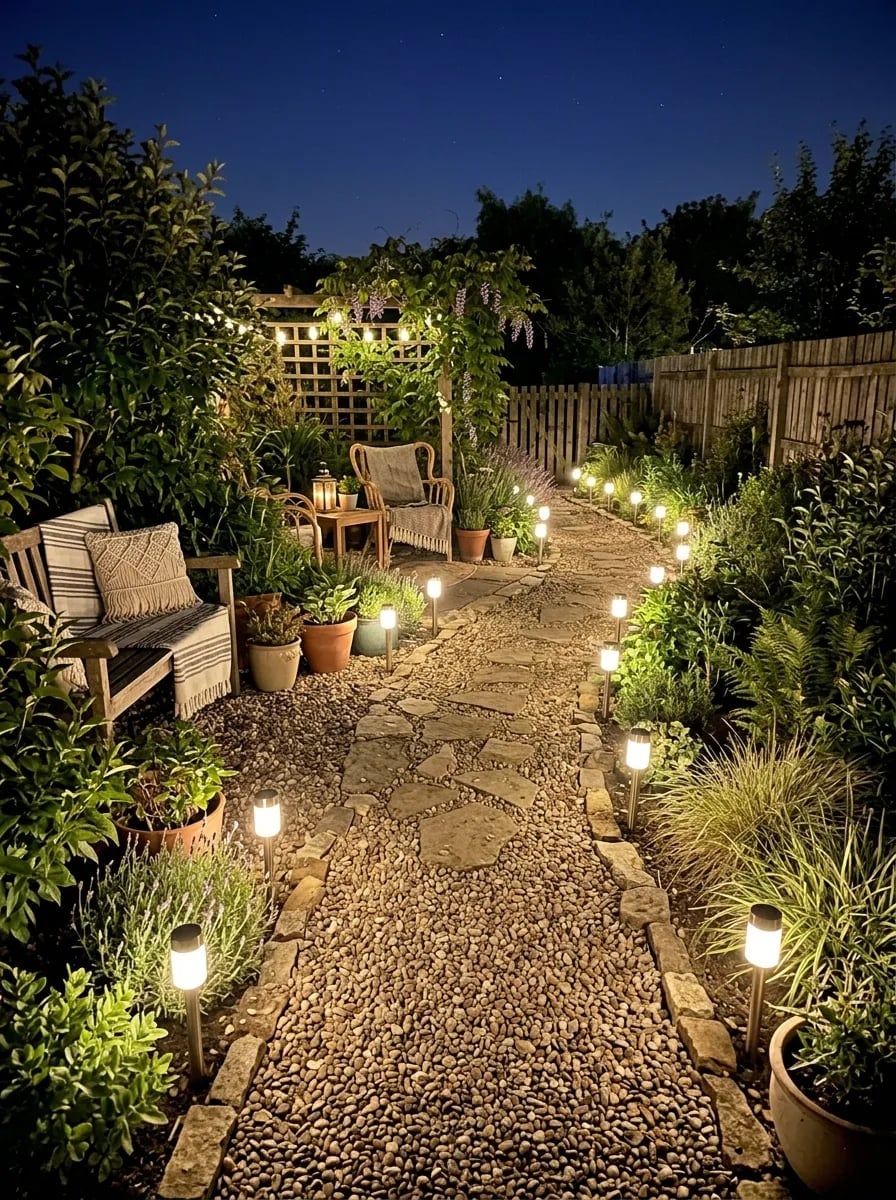
While a sleek modern path looks polished, a boho garden leans into layered texture and soft glow instead. A winding stone path leads to a seating area with a bench, chair, and table, all surrounded by plants and a trellis. Warm pathway lights and string lights weave through the space, making the garden feel like a hidden retreat. The rattan and wood pieces add natural warmth. For a renter-safe version, use plug-in string lights and solar path lights that sit on the ground, so you avoid digging or wiring. The lighting stays low and warm, so it blends with the gravel and stone instead of overpowering them.
Solar Pathway Lights Create Starburst Patterns
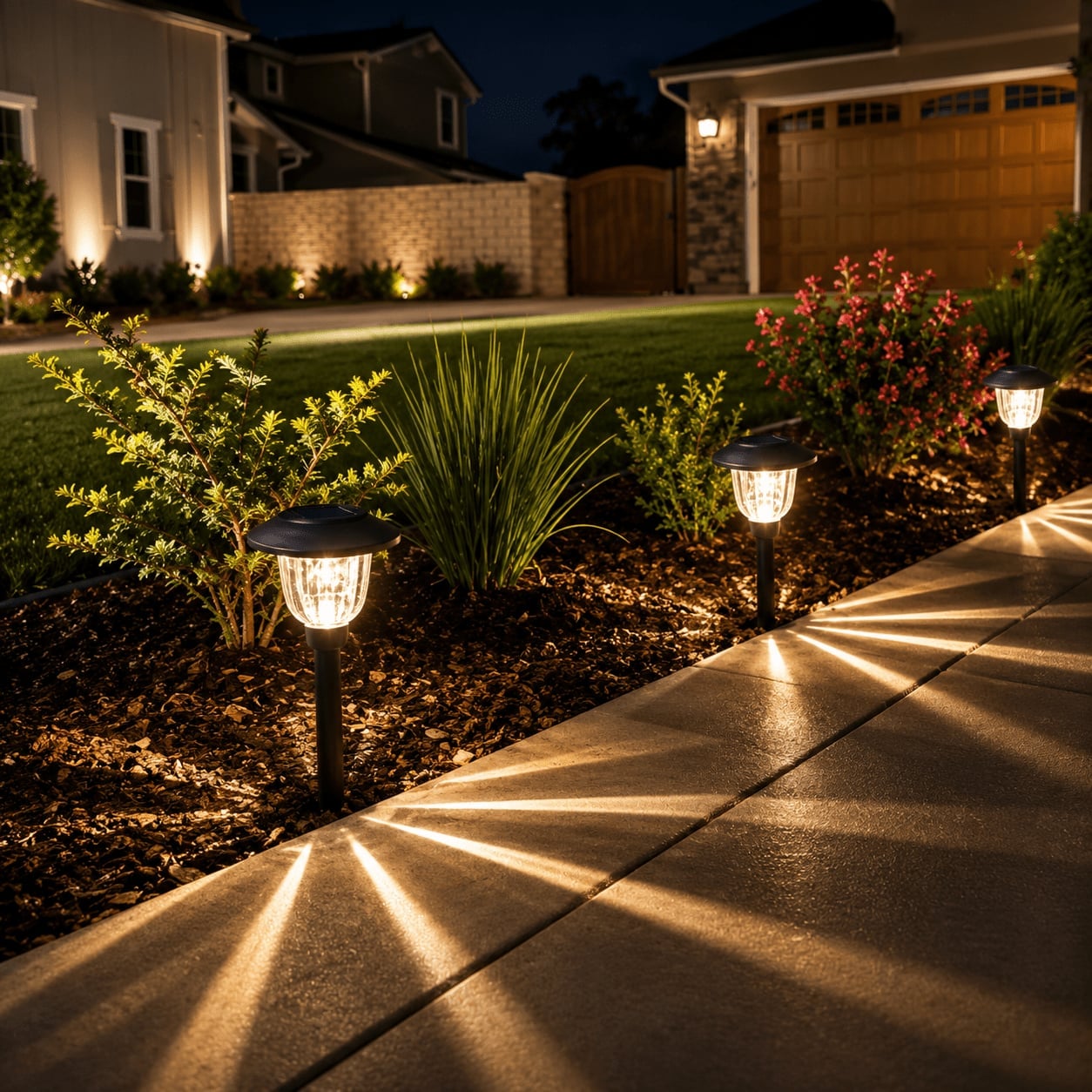
A row of warm white solar pathway lights sits along the edge of a concrete driveway, where a manicured garden bed meets the hardscape. The light spills onto the concrete in small starburst patterns, adding a soft glow to the compact space. The plastic fixtures blend into the mulch, so the focus stays on the light itself rather than the hardware. This setup works well for renters because solar lights need no wiring and can be moved if you change the layout.
Dramatic Uplighting on Trees for Garden Ambiance
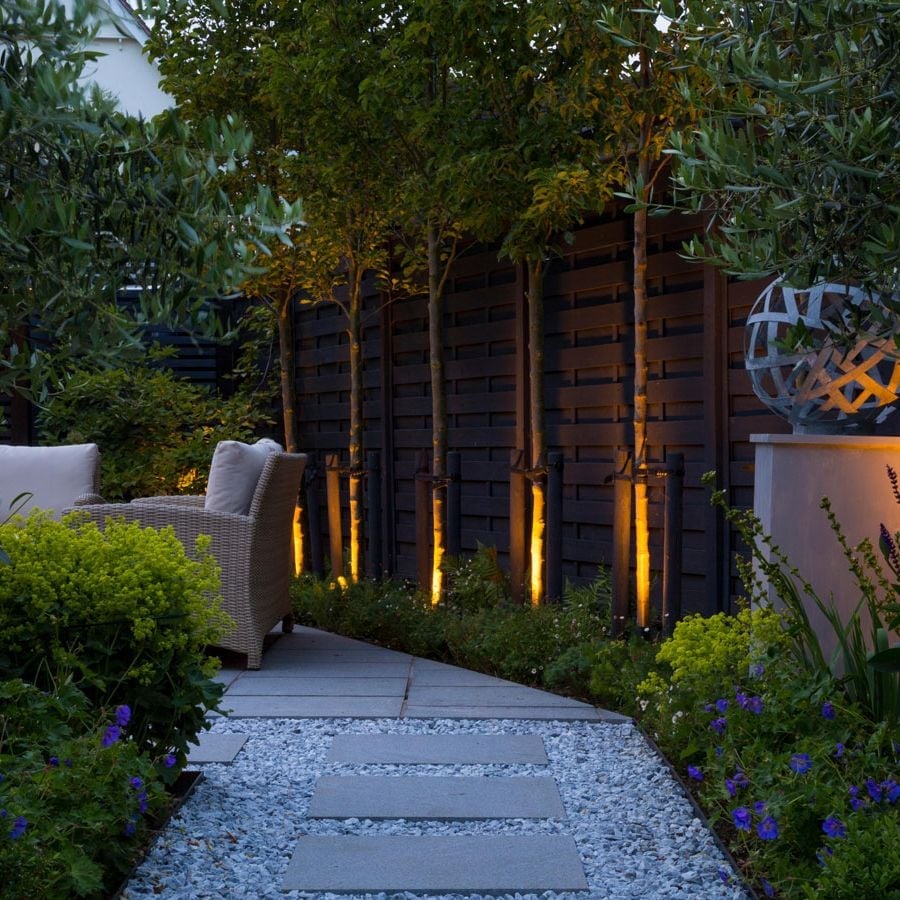
Warm uplighting on tree trunks creates a dramatic backdrop for a roomy backyard garden. The light catches the bark texture and casts soft shadows across the dark wood, stone, and plants below. An outdoor seating area sits nearby, making the garden feel like an extension of the living space after sunset. The key is placing the lights at the base of the trees and angling them upward, so the beam spreads naturally without blinding anyone sitting nearby. This approach works best when the trees have some height and a bit of space around them, so the light has room to travel.
Traditional Entrance Lighting with Pathway and Uplights
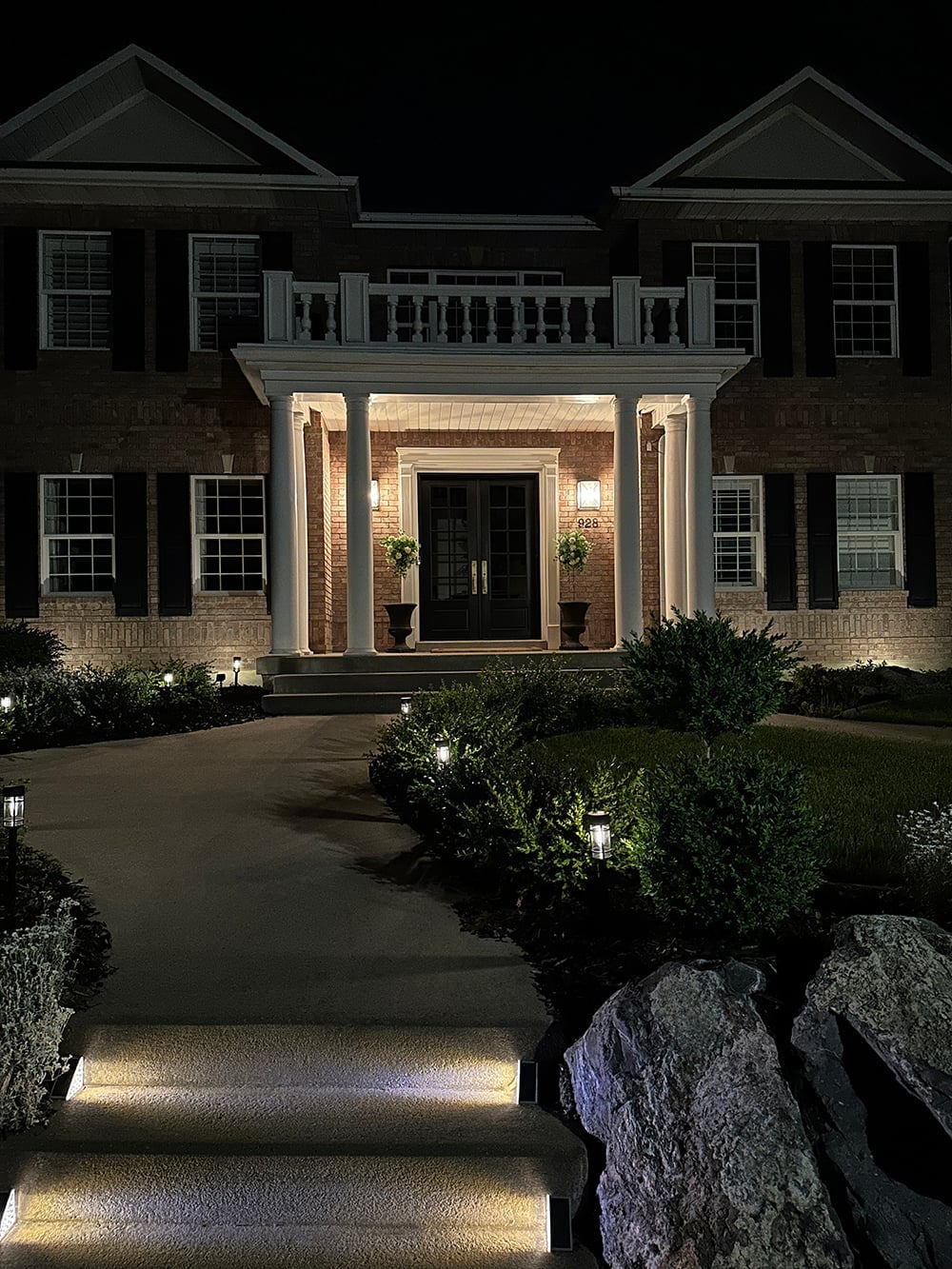
How do you make a traditional front entrance feel grand without overdoing it? A wide brick pathway lined with low pathway lights leads to the house, while uplighting on the brick columns and bushes adds height and depth. The warm glow balances the brick red, white, and green palette, making the entrance look inviting rather than harsh. The pathway lights are spaced evenly along the walk, so the light guides you without creating a runway effect. For a traditional look, stick with fixtures in black or bronze finishes that match the brick and stone.
Cozy Deck Lighting with String and Step Lights
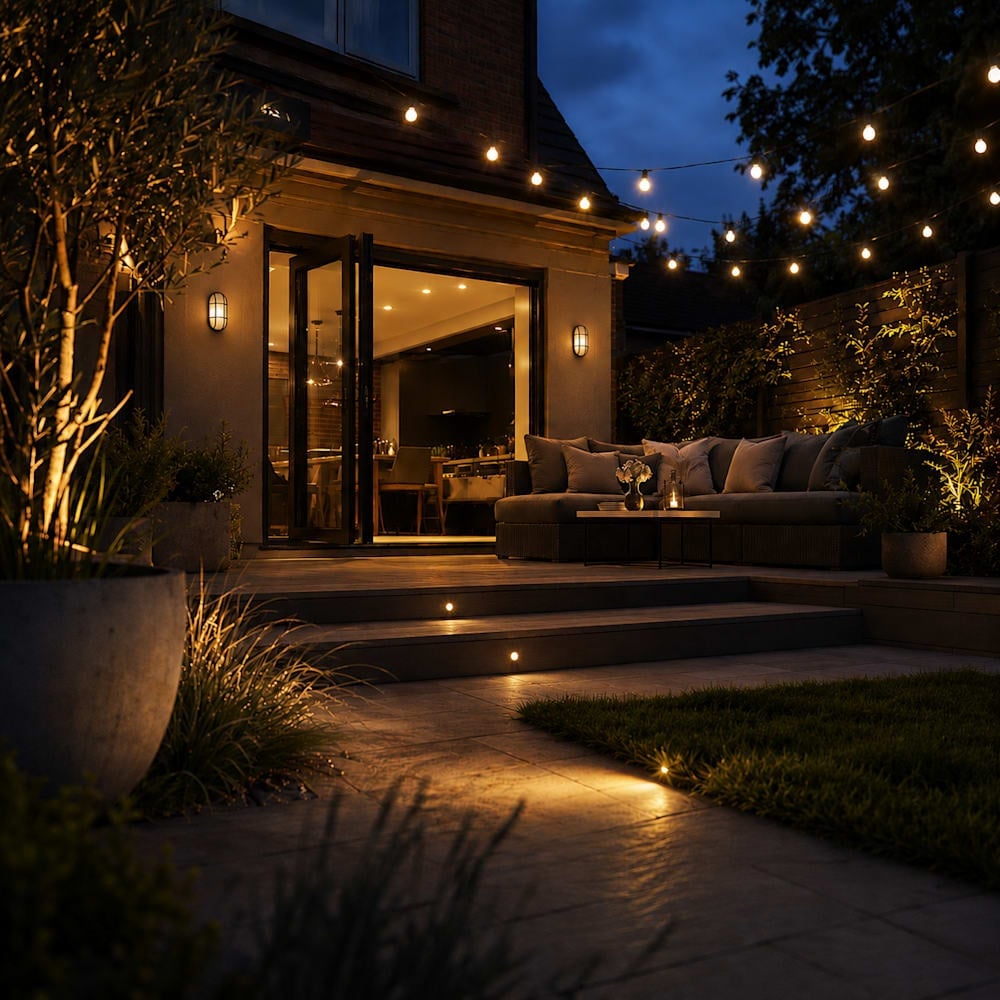
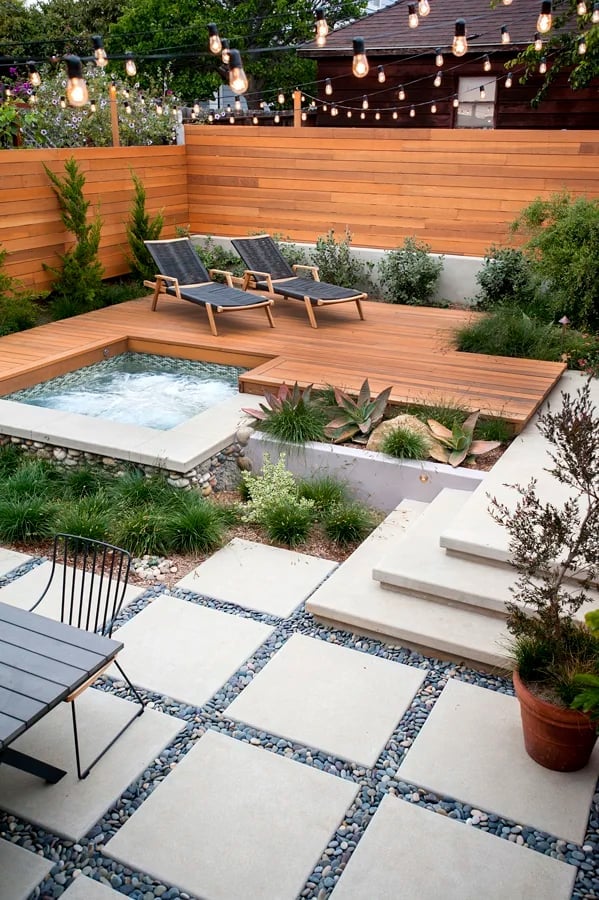
A multi-level deck and patio uses warm string lights overhead and subtle step lights along the stairs to create a cozy, layered glow. The string lights hang above an outdoor sofa, while the step lights keep the path visible without washing out the space. The mix of wood, stone, and concrete stays grounded, so the light feels festive. Hang string lights in a zigzag pattern above the seating area and add low-voltage step lights to the risers for safety and ambiance.
Modern Black Solar Pathway Lights in a Garden Bed
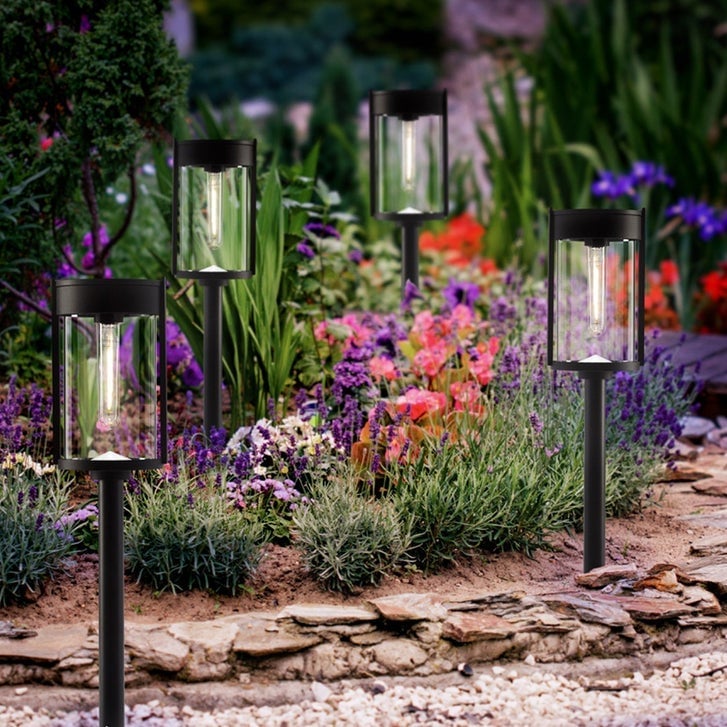
To place solar lights in a garden bed, keep the spacing consistent so the glow looks planned. Four black solar pathway lights with clear glass tops sit among green plants and pink and purple flowers, their metal housings matching the dark stone mulch. The compact layout lets each light mark a small section of the bed without overwhelming the plants. Glass and metal hold up better outdoors than plastic alone, especially in beds that get watered regularly. For renters, solar stakes need no wiring, so you can pull them out and move them to a new spot without patching holes.
Soft Ground Uplighting Around Garden Trees
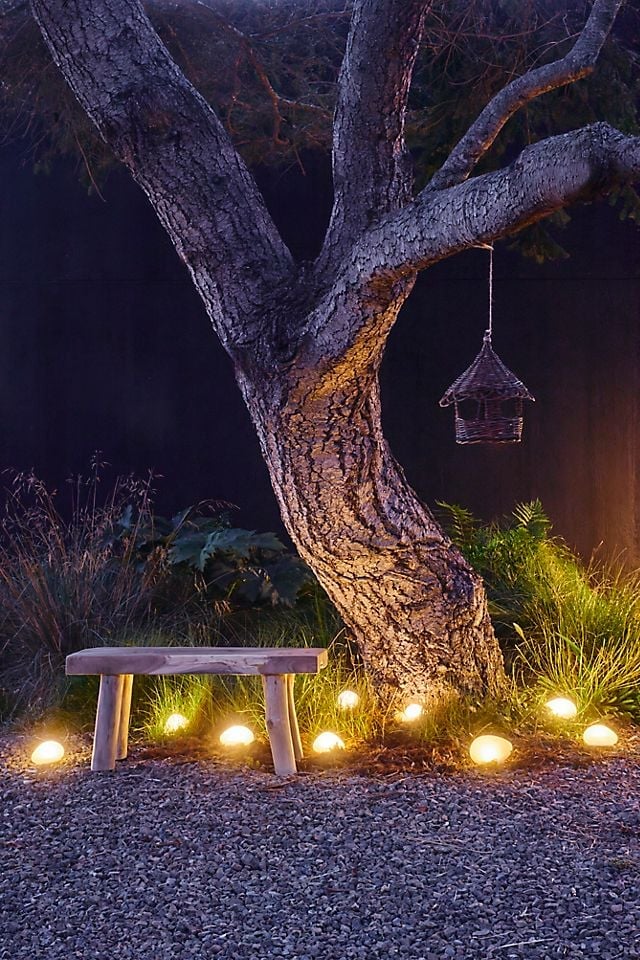
Uplighting a tree base creates a different feel than a spotlight aimed at the trunk. Soft ground uplighting sends a warm white glow outward from the base, catching the lower branches and the gravel path without harsh shadows. A wooden bench nearby picks up some of that light, making the seating area feel connected to the tree rather than separate. The natural palette of green and brown stays intact because the glass housings are low and mostly hidden by the gravel. For a compact garden, clustering lights around one tree gives enough drama without flooding the whole yard. The soft glow also works well for evening gatherings where you want to see faces, not just leaves.
Classic Pendant Lantern for a Welcoming Porch
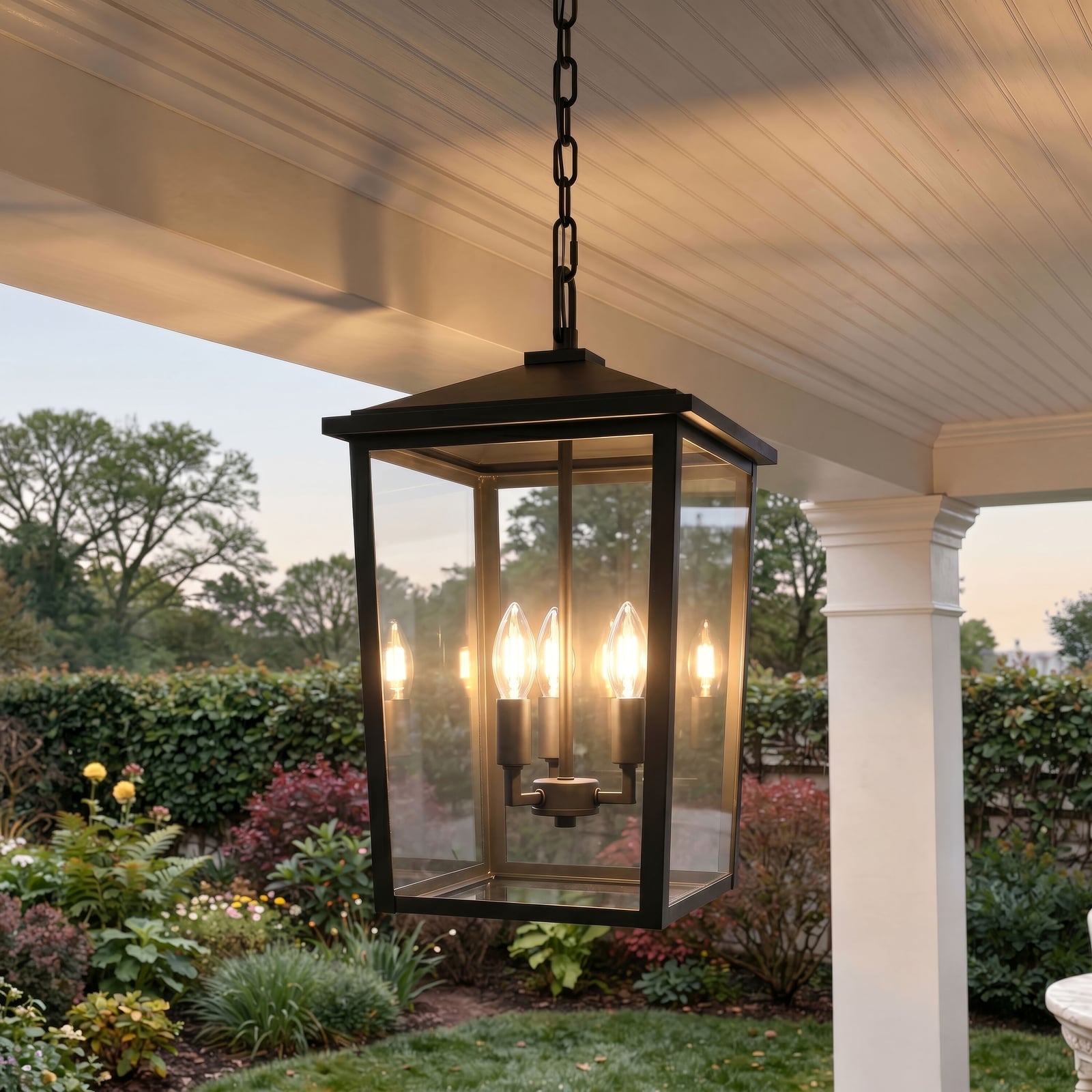
A black metal pendant lantern with clear glass panels hangs centered over the porch, its warm light spilling onto the wood floor and reaching the white columns on either side. The traditional shape works because the glass is simple, no extra scrollwork or tinted panels. Metal and glass are easy to wipe down with a damp cloth, and the open design lets you replace the bulb without removing the whole fixture. Porch columns and potted plants frame the lantern naturally, so the light feels like part of the entry, not an add-on.
Low-Level Bollard Lights Illuminate Wooden Decks
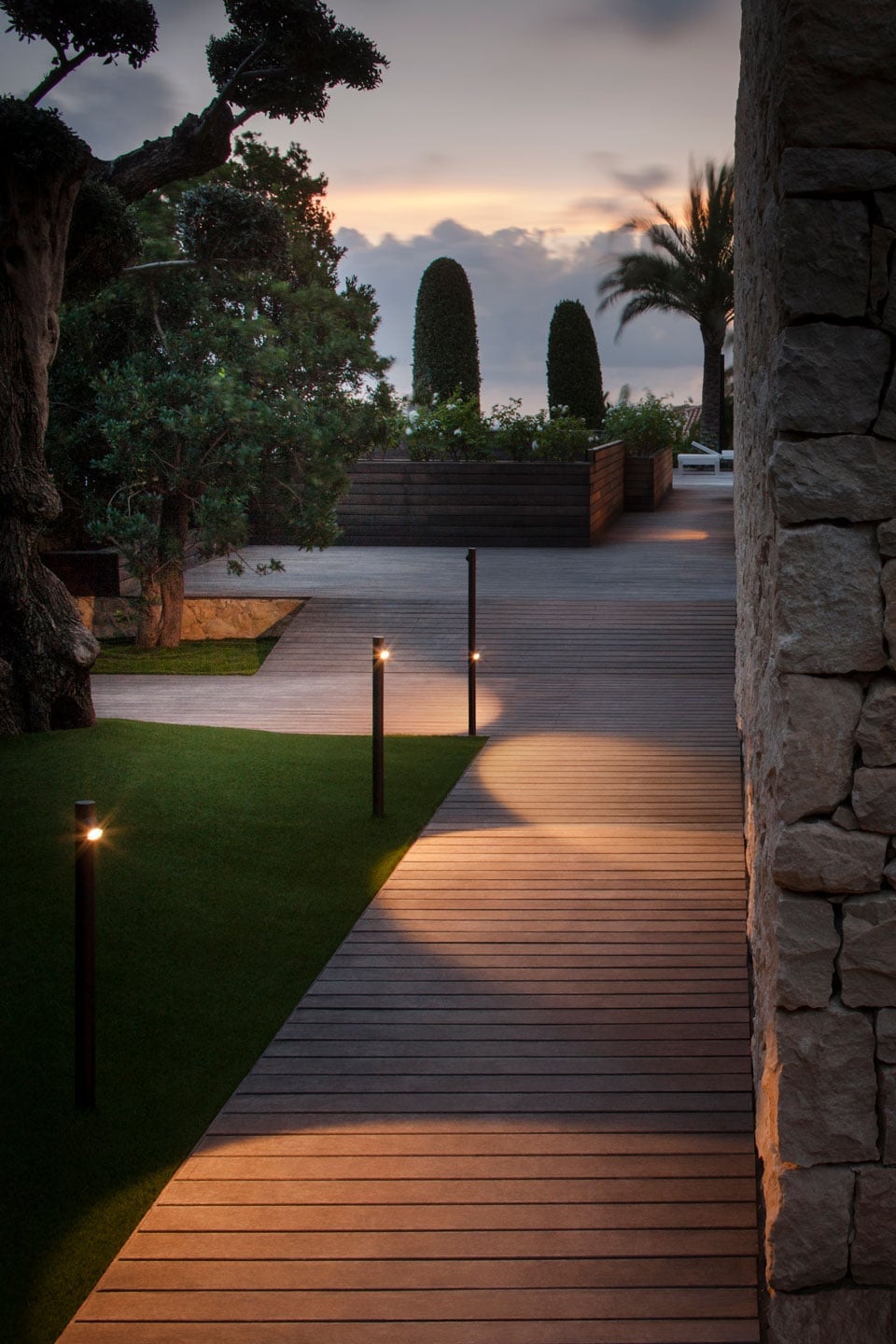
Low-level bollard lights are a straightforward way to add light along a wooden deck and stone path without making the fixtures the main event. The warm light from the metal housings spreads across the wood planks and onto the grass and stone wall nearby, so you can see where each step lands. Spacing the lights every few feet along the deck edge keeps the glow even and avoids dark spots. The modern style of the bollards means they blend into the landscape during the day. For a roomy deck, this layout helps define the path from the seating area to the garden without needing overhead fixtures.
Strategic Uplights Accentuate Garden Textures
A practical rule for uplighting a garden bed is to aim the light upward at an angle that catches the surface of rocks and the undersides of leaves. Here, warm uplights placed among the mulch hit the rough texture of stone and the varied greens of the plants, creating a layered look that changes as you walk past. The close-up framing shows how the light wraps around each rock and highlights the edges of broad leaves. For a traditional garden, this technique adds depth without needing many fixtures. The lights themselves stay low among the mulch, so they disappear during the day and only appear at dusk.
Tall Column Lights Define Modern Outdoor Spaces
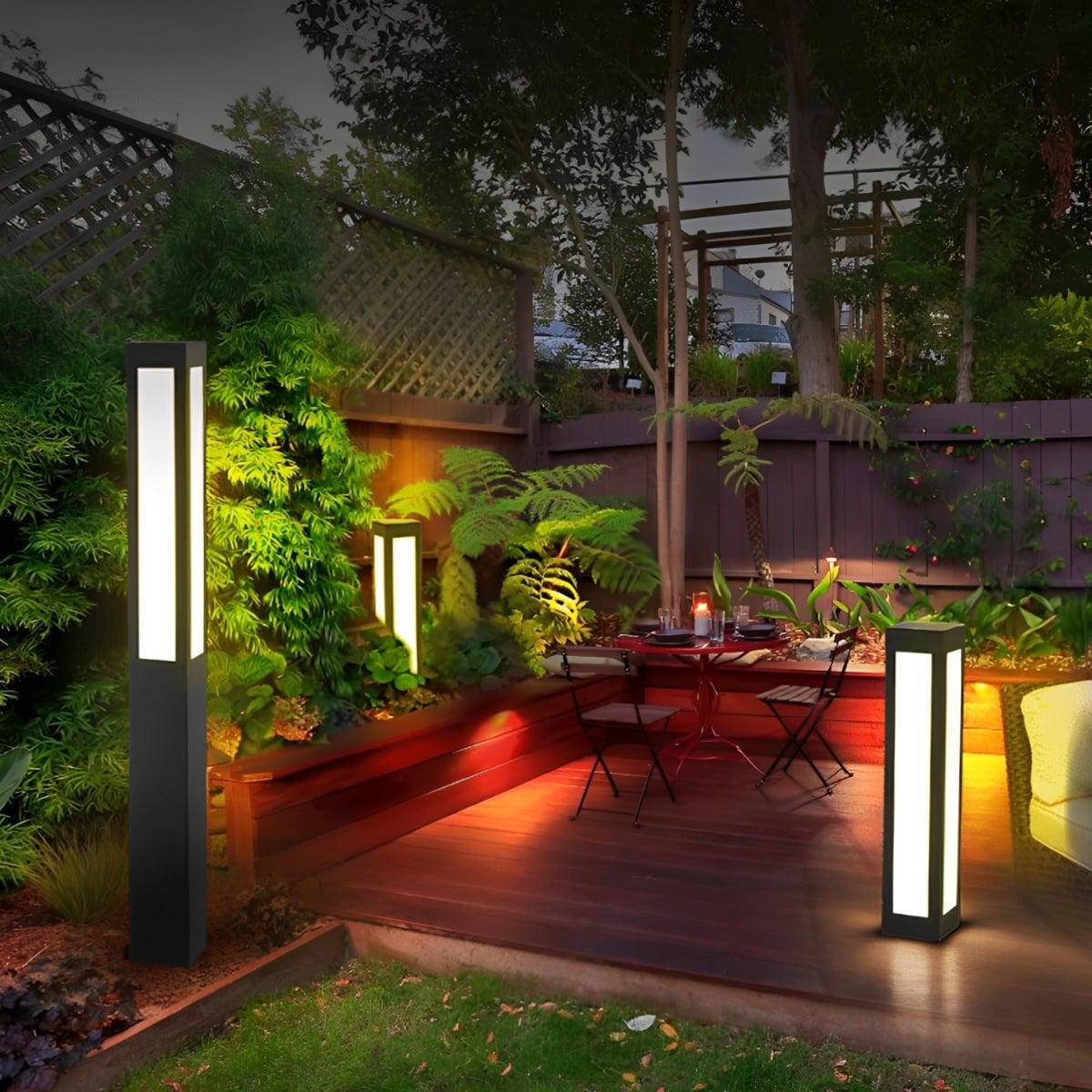
A row of tall, glowing column lights does two jobs at once: it marks the edge of the deck and the start of the garden without a single fence post. The warm light from the fixtures lands on the dark wood deck planks and the green foliage beyond, creating a soft boundary that feels deliberate. In a roomy outdoor space, these vertical lights keep the eye moving along the perimeter rather than stopping at one spot. The modern metal housings disappear against the night sky, so you notice the glow, not the fixture.
Overhead String Lights for Patio Dining Ambiance
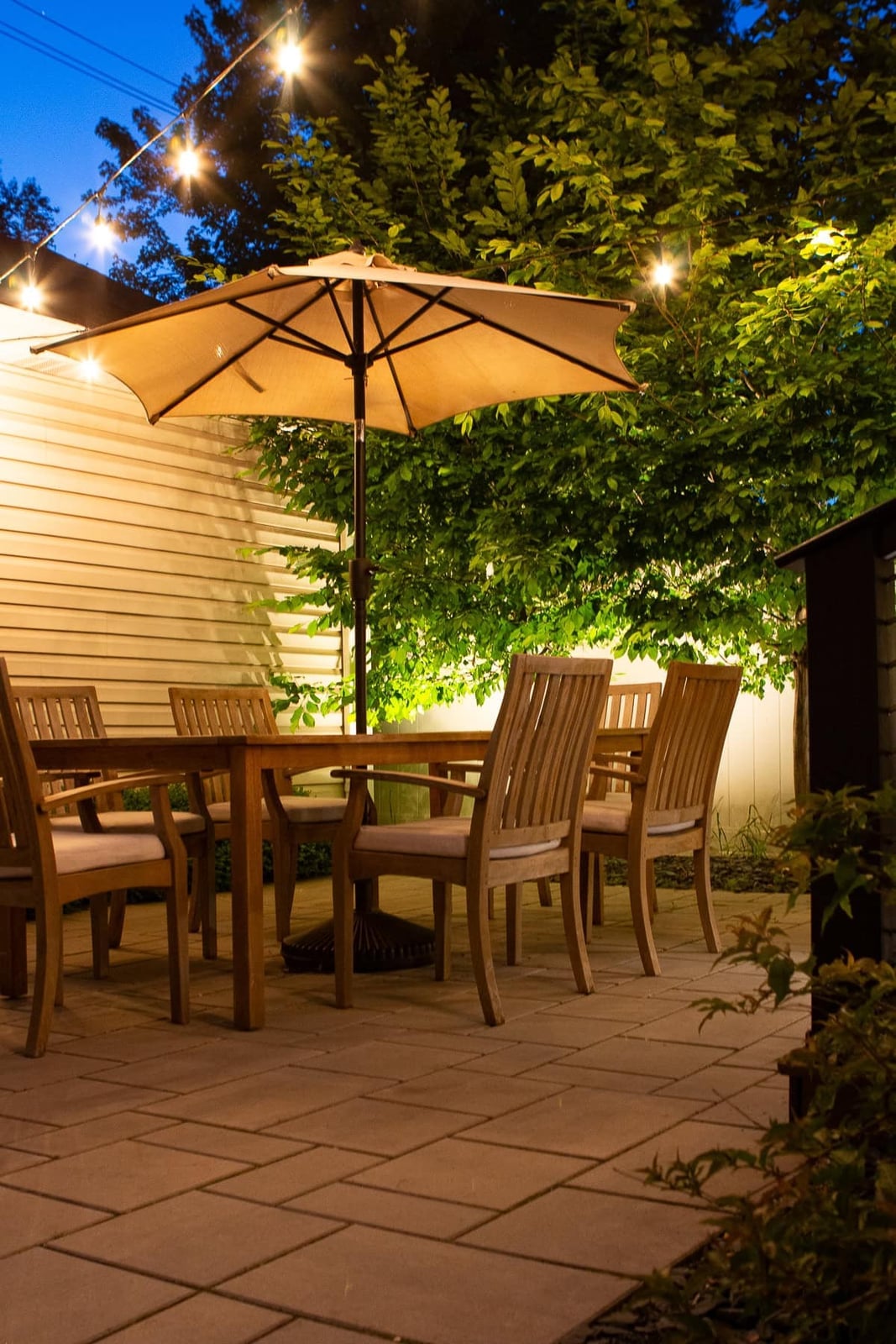
String lights work best when hung low enough to feel intimate but high enough that nobody ducks. Over a patio dining set with a wood table, beige chairs, and a fabric umbrella, the overhead bulbs cast a warm wash that softens every edge. Uplighting on nearby trees adds a second layer of light at eye level, so the patio feels wrapped rather than flat. For renters, this setup checks all the boxes. String lights hang from hooks or existing beams with no wiring required, and the tree uplights sit on the ground, ready to move when you do. The transitional mix of wood, stone, and fabric keeps the look settled, not temporary.
Focused Spotlight on a Small Garden Tree
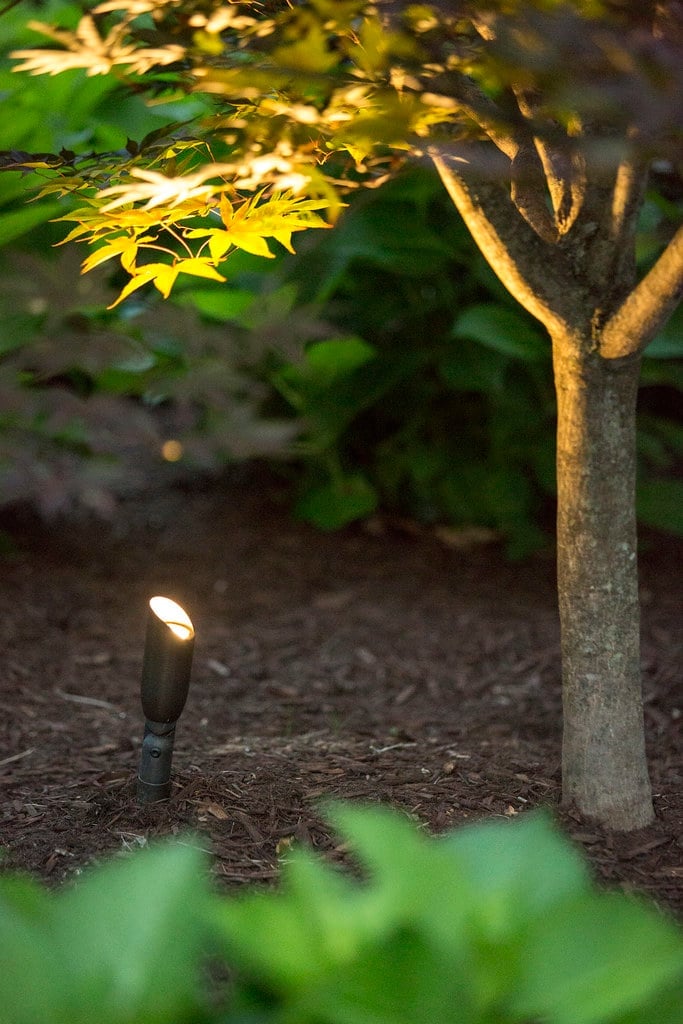
A wide wash of light across a garden flattens everything. A focused spotlight on one small tree does the opposite. The narrow beam hits the leaves from below, turning a modest plant into a sculptural shape against the dark. The warm yellow light picks out the texture of each leaf and the bark of the trunk, while the garden stays in shadow.
Detail lighting works best when you resist adding more. One metal spotlight aimed at the base of a small tree creates a vignette that reads as planned. The compact scale means you can shift the beam to follow the tree as it grows or swap the target to a new plant next season. No trenching, no permanent mounts, just a single fixture doing one job well.
Uplighting Enhances Textured Garden Walls
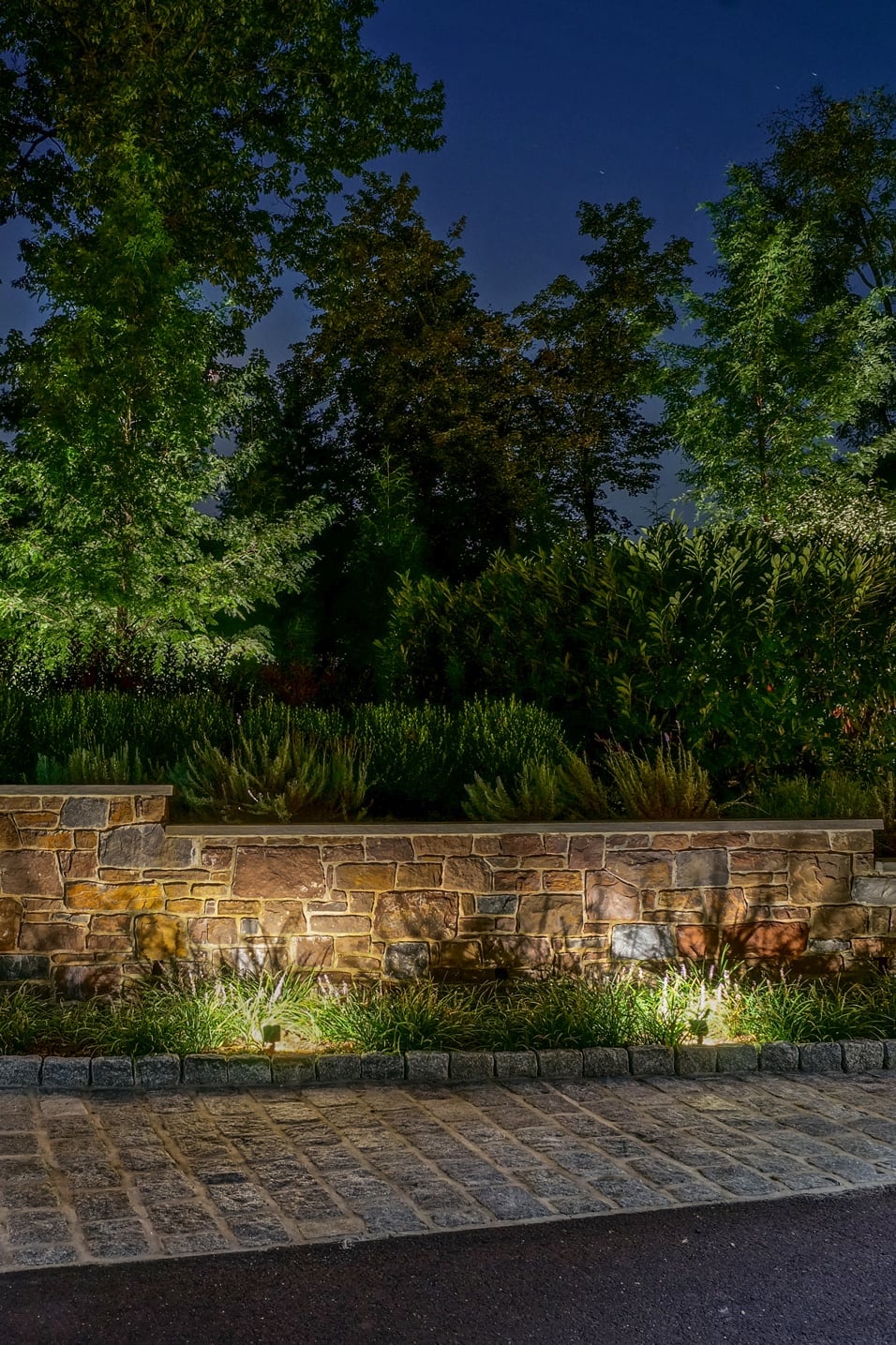
A stone retaining wall has texture that reads one way in daylight and another way after dark. Uplights placed at the base of the wall send light straight up the face, catching every uneven edge and shadow line in the stone. The garden bed in front of the wall picks up the spill, so the plants become silhouettes against the warm gray stone. In a medium-sized yard, this single row of lights does the work of a whole landscape plan. The cobble path and grass stay dark, letting the wall hold the attention. No need to light everything when one textured surface can anchor the whole scene.
Layered Lighting for Expansive Garden Pathways
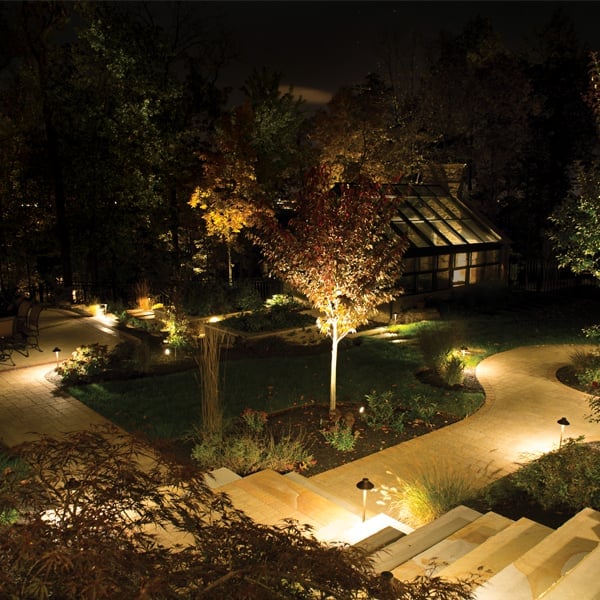
An expansive garden path needs more than one type of light to feel connected. This setup uses three layers: low pathway lights along the stone steps and brick walkways, uplighting on the trees, and accent lights that pick out the greenhouse and larger foliage. The warm white glow moves the eye from the ground to the mid-height canopy, then to the structure beyond. The garden becomes a whole room, not a trail of separate stops. The stone, brick, and wood materials stay visible without being washed out, because no single light source has to cover everything. Spreading the light across layers keeps the path inviting and the edges clear.
Uplighting Highlights Stone Cottage Facade
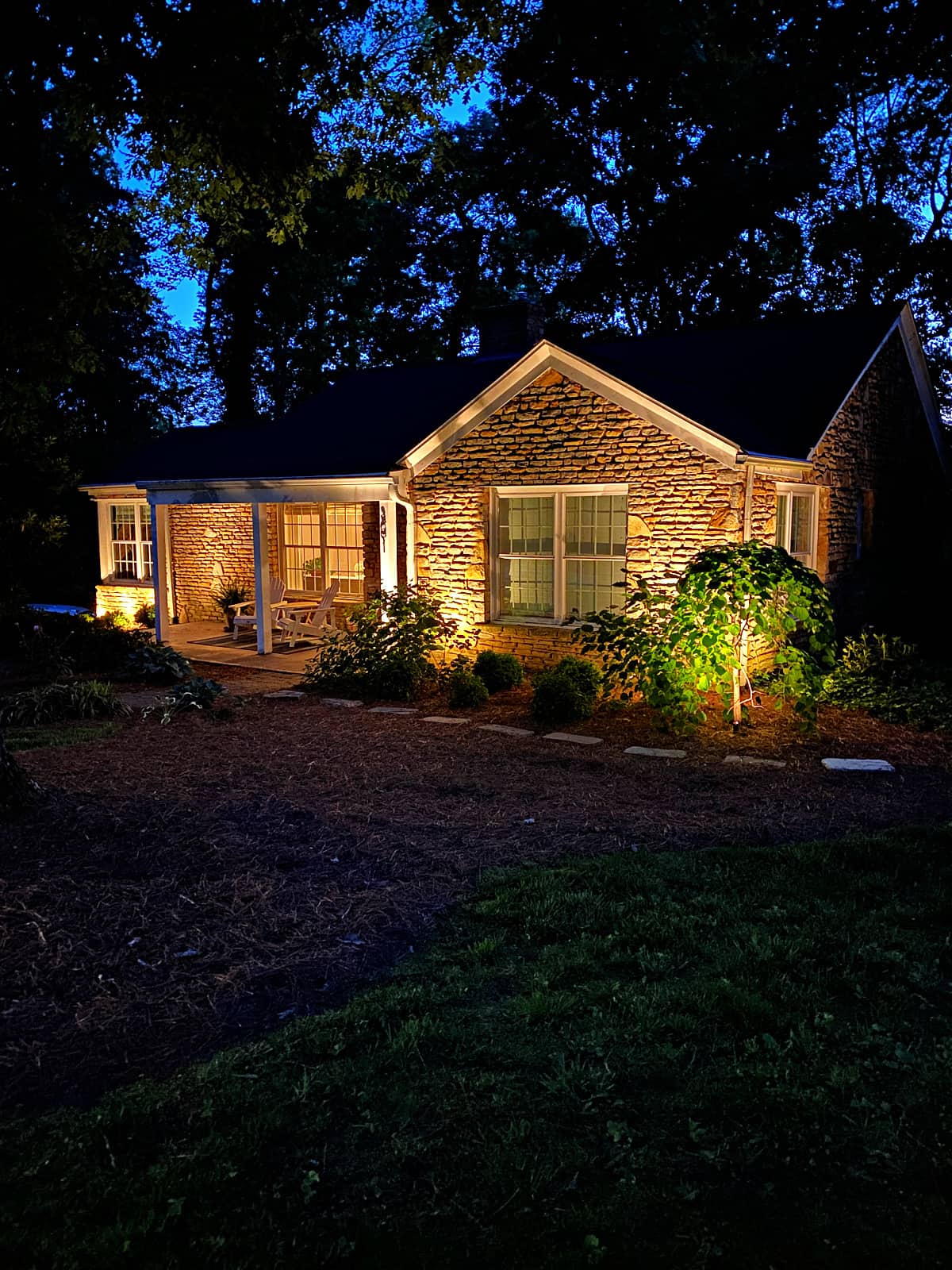
Uplighting works best when it follows the surfaces it touches. On a stone cottage facade, that means letting each rock face catch its own sliver of light. The dark blue sky above serves as a natural backdrop, making the warm glow on the walls and nearby trees feel deliberate. A stone surface has dips and edges that a flat wall does not, so the light spreads unevenly in a way that adds depth. The wooden trim and glass windows sit in shadow between the lit sections, which keeps the facade from looking flat. To recreate it, look for fixtures that aim upward from ground level and space them to hit the high and low points of the stone. This lighting makes the house look lived in even when the porch light is off.
Integrated Pool and Deck Lighting for Luxury
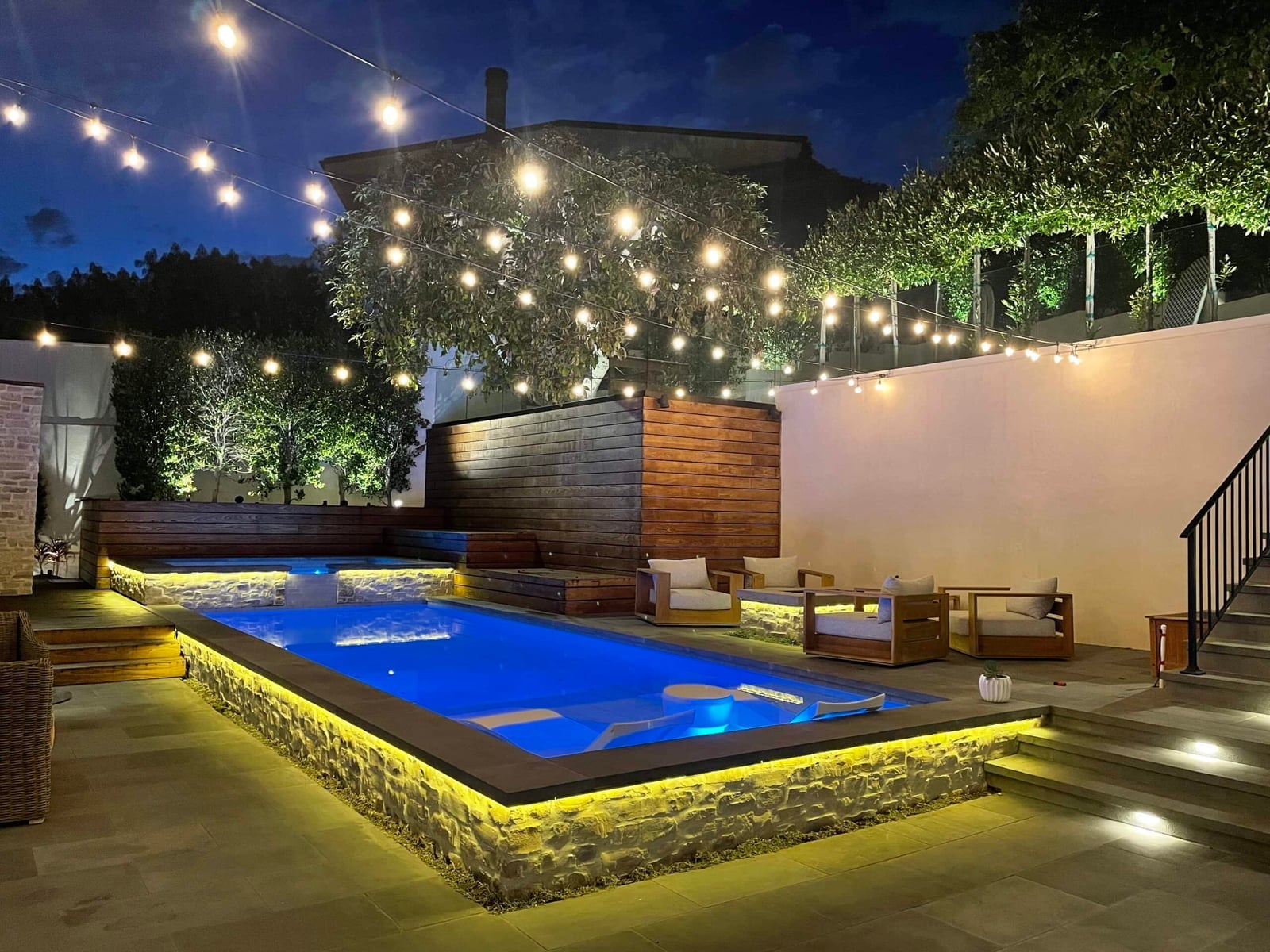
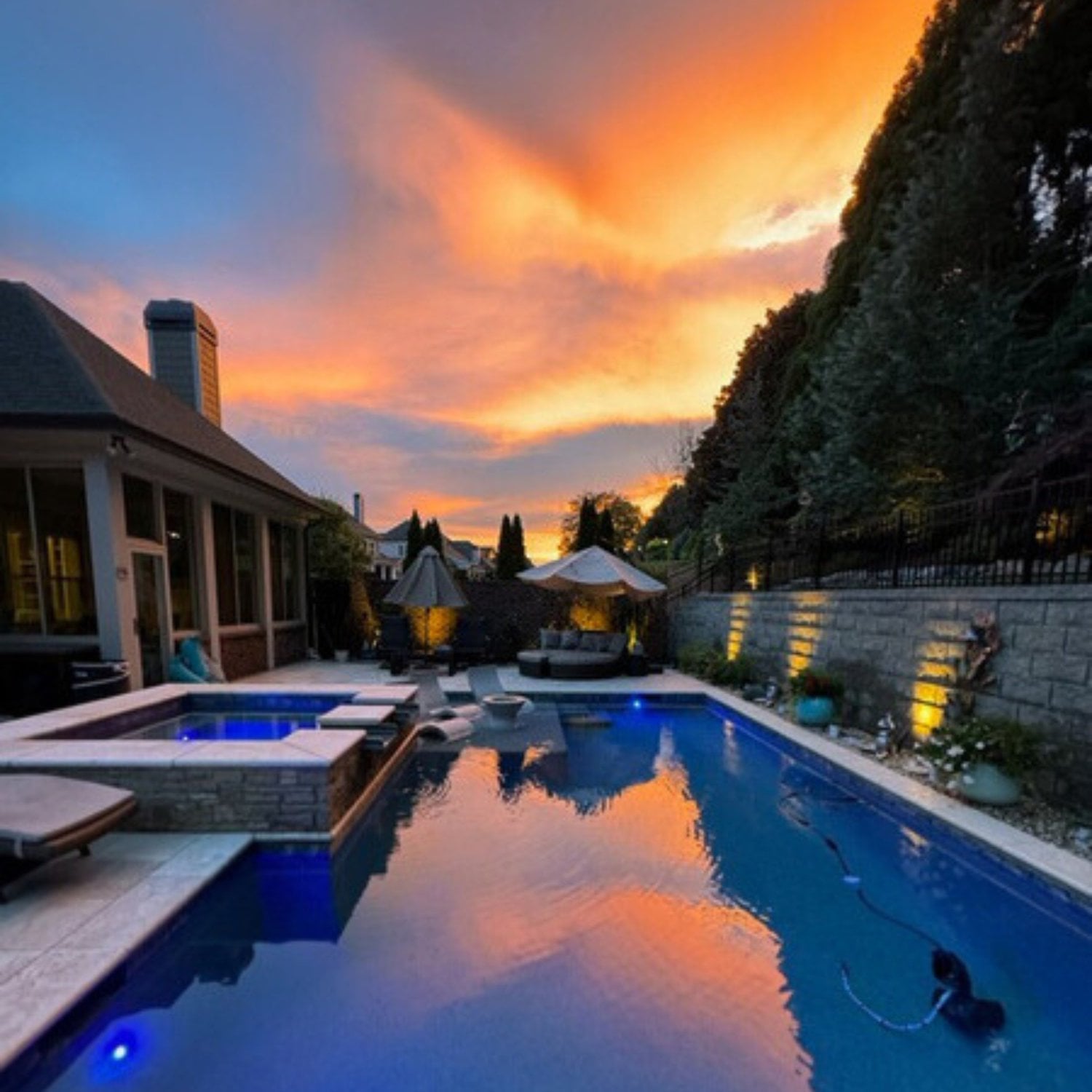
The palette here runs on three tones: blue pool water, warm white lights, and the natural brown of the wood deck. Underwater pool lights cast a glow that turns the water surface into a mirror for the string lights above, while deck edge lights mark the boundary between stone and wood. The metal fixtures on the deck stay in the same warm white range, so no single light source pulls attention away from the rest. This creates a backyard where the lighting feels built in, with each layer supporting the next.
Ornamental Tree Wrapped in String Lights
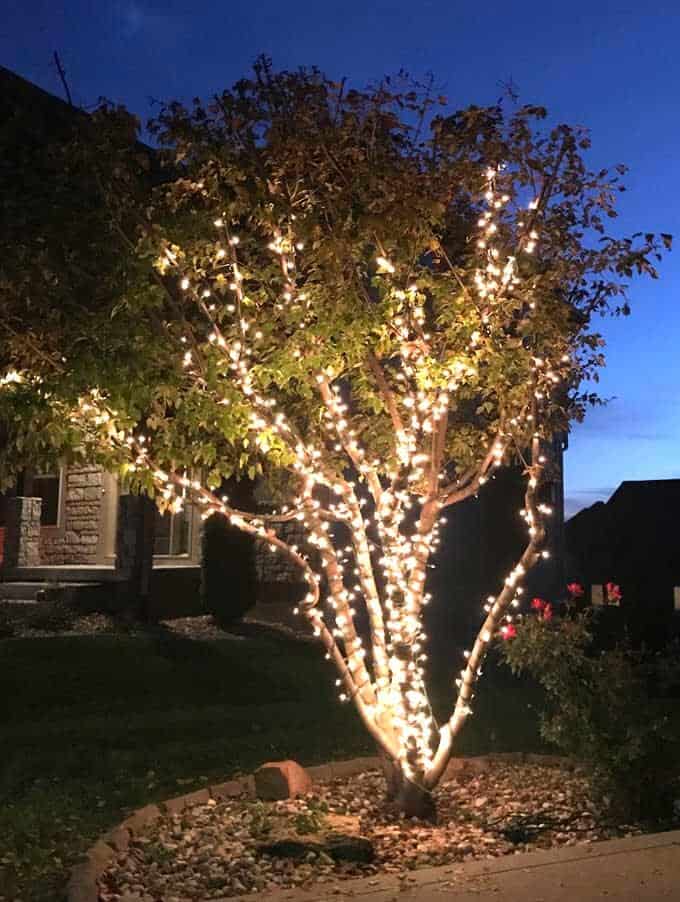
A practical rule for wrapping string lights around a tree: start at the base and work upward, keeping the wire close to the bark. The warm white lights here follow the natural shape of the branches, so the tree keeps its silhouette while glowing from within. The green leaves and brown bark stay visible between the wraps, which stops the tree from looking like a single bright blob. For a front yard tree, this method works with any deciduous variety that has visible branching. The wire should be outdoor-rated and UV-resistant to handle the weather. Wrap loosely enough that the branches can move in the wind without pulling the wire tight.
Minimalist Pathway Lights for Garden Beds
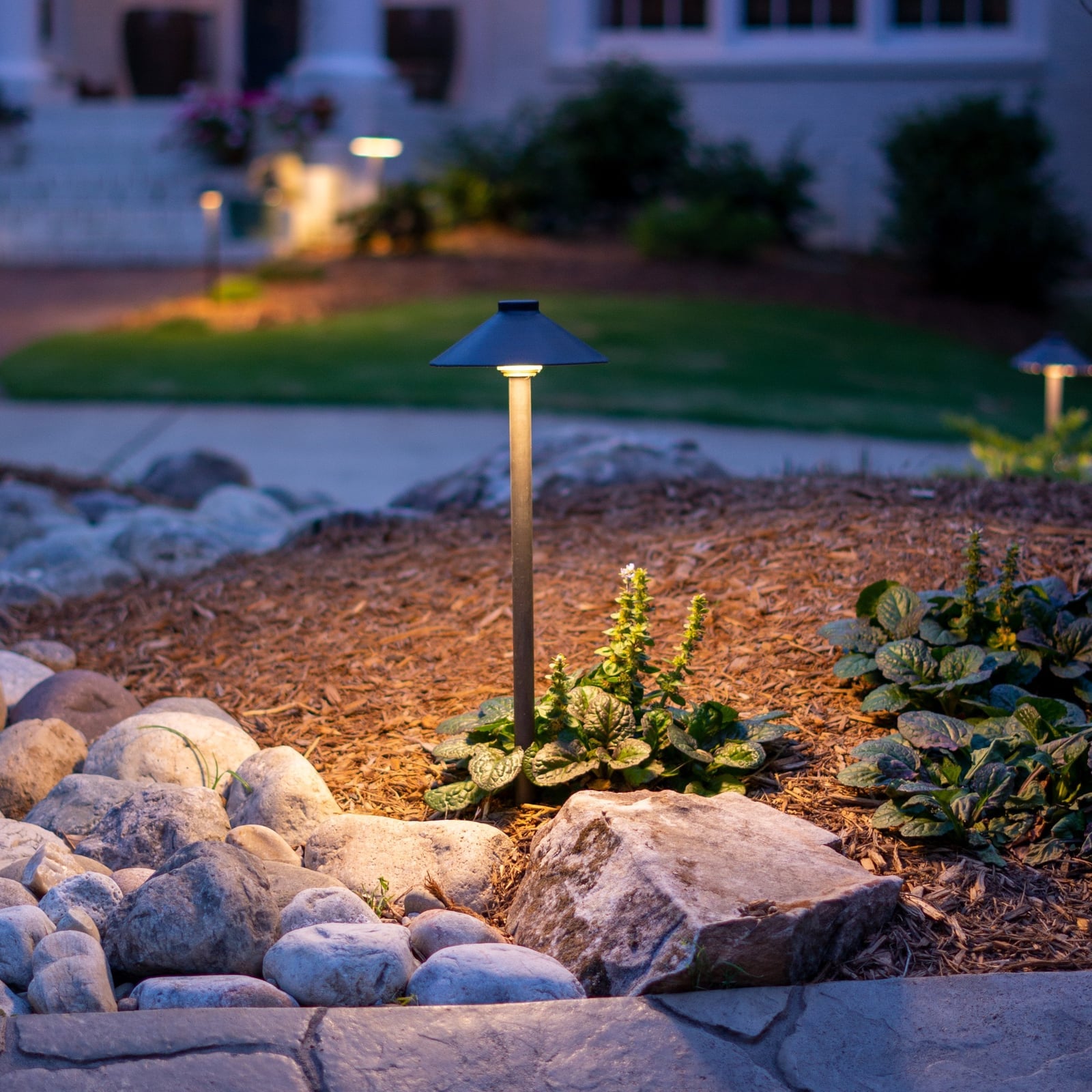
Many pathway lights announce themselves with tall stems and bright globes. These do the opposite. The low-level fixtures sit close to the mulch, with the metal housing barely visible above the stone and plants. The warm light spreads across the path and into the garden bed, so the eye follows the glow instead of the fixture. The large rocks nearby catch some of that light on their edges, which adds texture without needing extra spots. For a modern garden, this approach keeps the plants and stones as the main focus. The lights should be spaced evenly along the path, but the exact distance depends on the beam spread of the fixture. A closer spacing gives a continuous wash of light, while wider gaps create pools of brightness with darker stretches in between.
Extensive Christmas Lights for Festive Exteriors
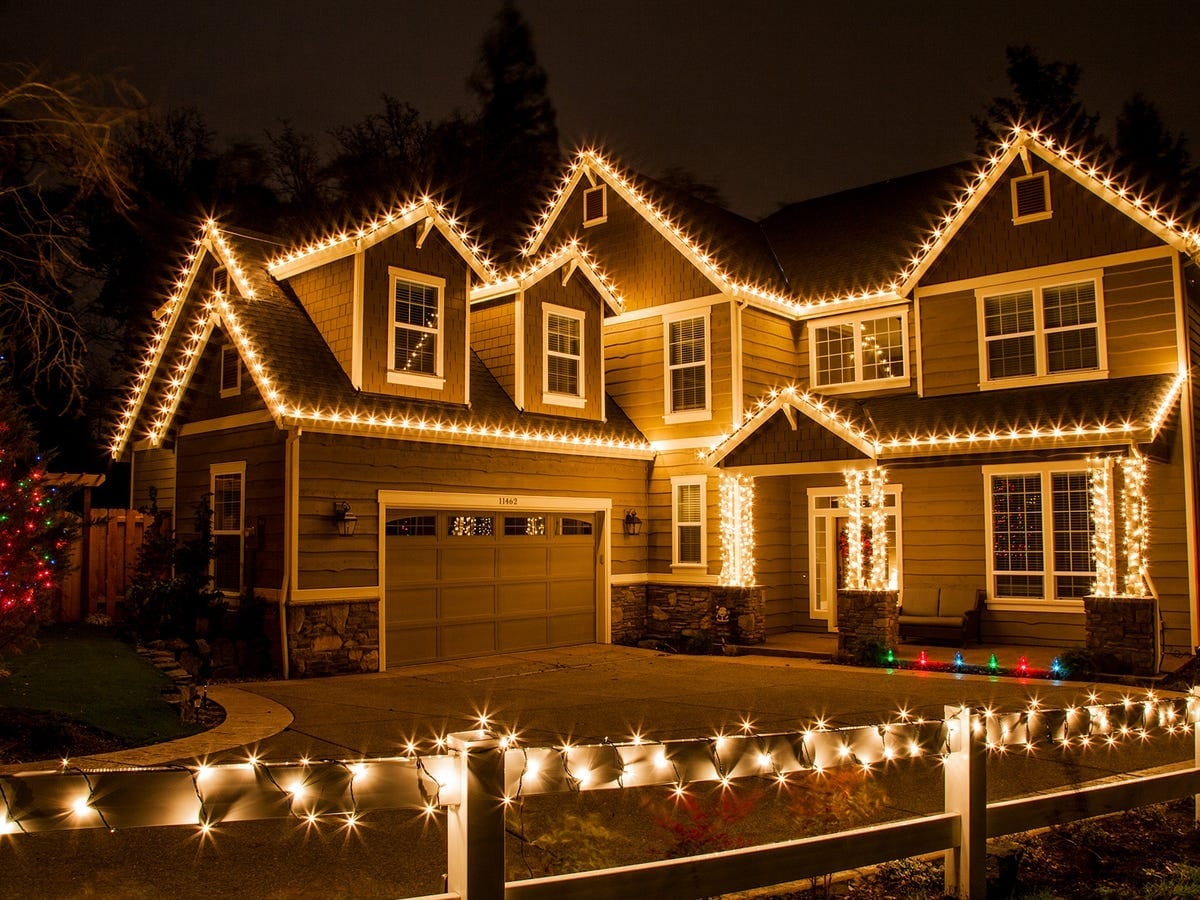
This house uses outline lights to trace the roof line, garage edge, and fence, with a separate tree wrapped in lights near the driveway. The warm white and multi-color strands stay on separate surfaces, so the palette looks planned. The vinyl siding and wood trim provide a neutral base that lets the lights stand out. For storage between seasons, wrap each strand around a spool or a piece of cardboard to prevent tangles. Label the spools by location, roof, fence, tree, so setup next year takes minutes instead of an afternoon.
Final Thoughts
Landscape lighting works best when you let the light lead. Start with one path or one tree, see how it changes the space, and build from there. Mixing a few types, pathway, uplight, string, gives you layers without clutter. Check your climate and USDA zone before planting anything near fixtures, and use timers or solar panels to keep maintenance low. The goal is a garden that feels just as good at midnight as it does at noon, with nothing stealing the show from the glow itself.