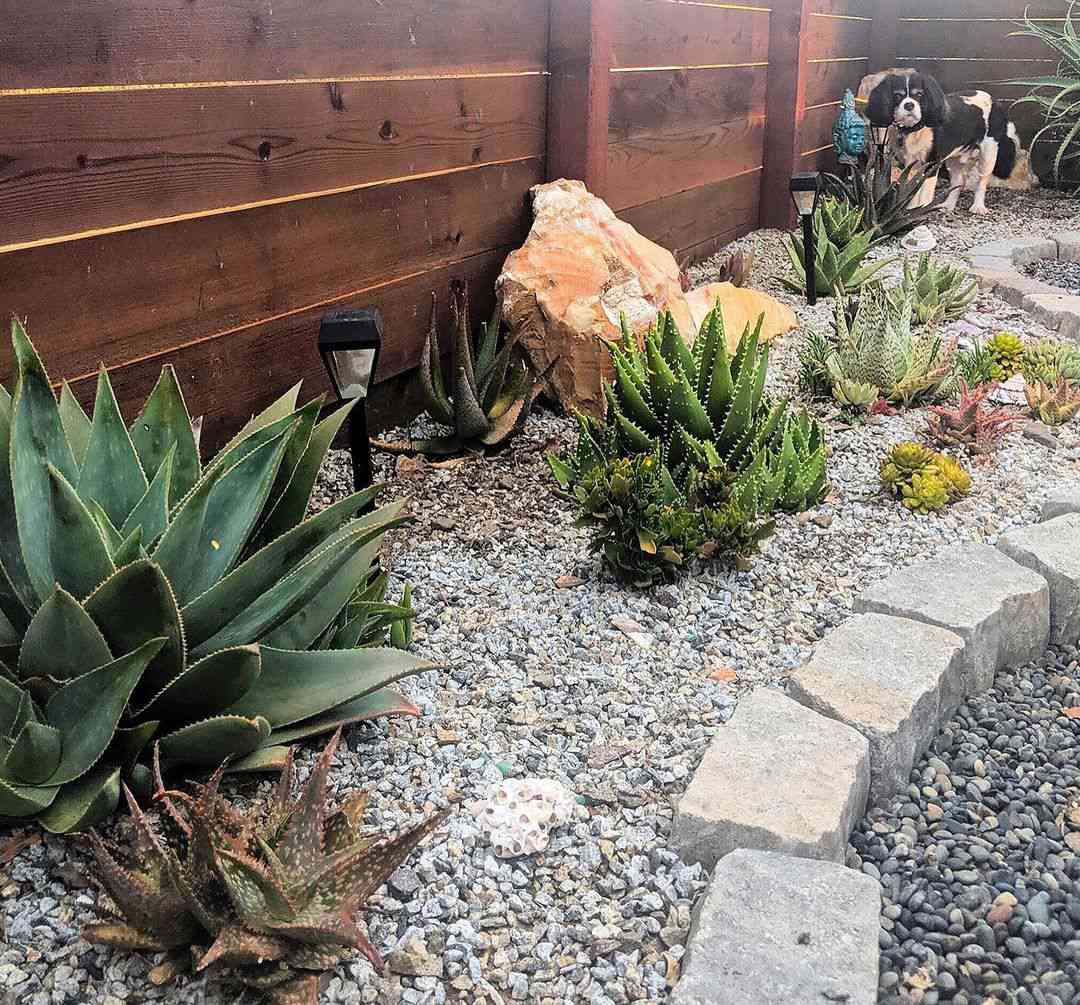
Still scrolling through Boulder Landscaping Ideas photos without knowing exactly how to adapt them to your own yard? After filtering through hundreds of raw materials and completed projects across SiteOne Landscape Supply, Home Depot, and regional stone yards, we narrowed it down to 29 ideas that actually deliver on both looks and longevity. From basic border accents costing around $150 to full-scale cascading stone waterfalls reaching $15,000, we pulled the best outdoor concepts across every price point. Inside this guide, you will find 29 curated layouts covering arid desert aesthetics, lush woodland borders, and structured modern pathways, complete with budget and luxury alternatives compared side by side with direct product insights. This highly textured, drought-tolerant approach is seeing a massive surge in 2026 as homeowners move aggressively away from thirsty lawns toward structural materials that demand far less weekend upkeep. Pin this guide for later — your future self will thank you when it’s time to actually break ground.
1. Dry River Bed Paired with Reddish-Brown Wood Mulch
The dynamic tension between the varied river stones and the vibrant reddish-brown wood mulch completely anchors this layout. Without that stark color contrast, the grey stones would easily get lost in the surrounding greenery. The low stacked natural stone wall adds a necessary vertical boundary that prevents the mulch from washing into the dry bed during heavy rainstorms, keeping the rustic aesthetic fully intact.
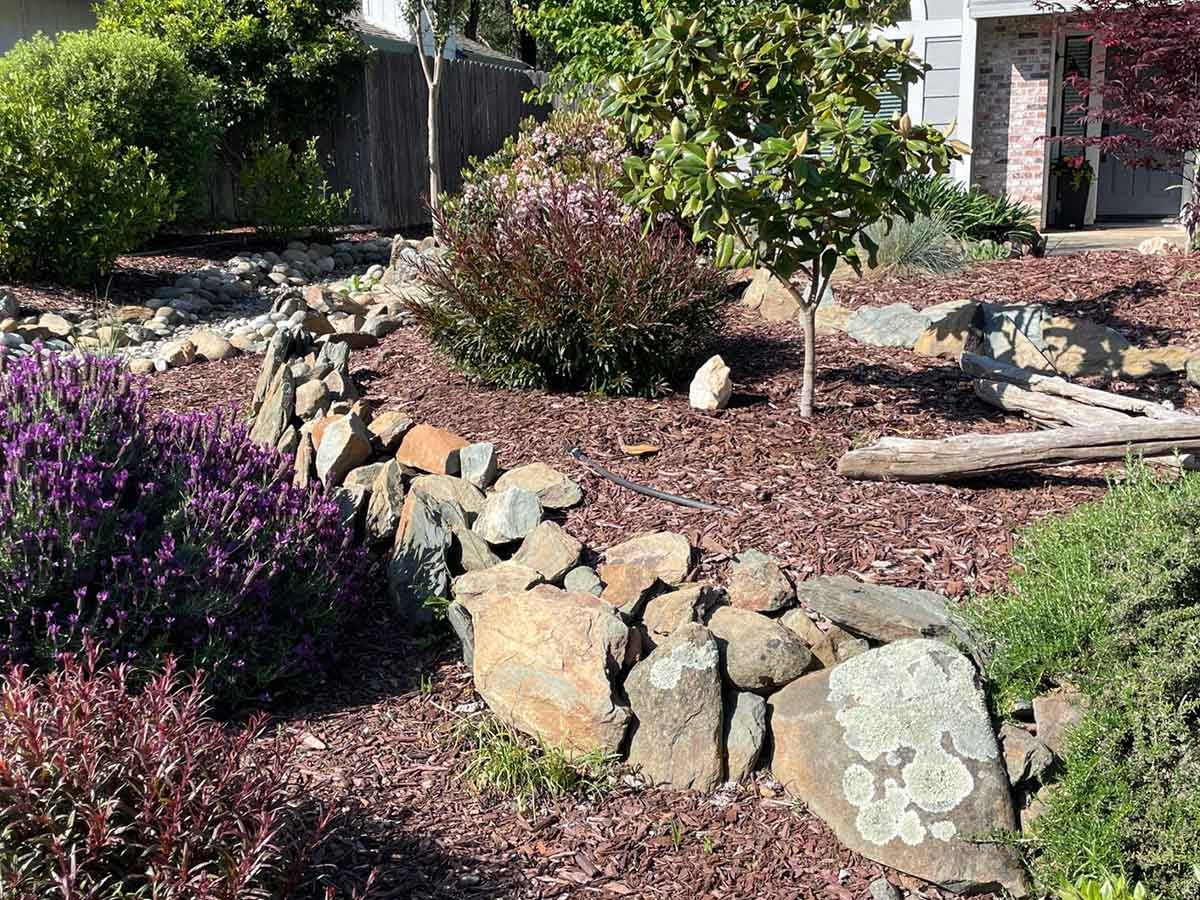
“When mixing stone and wood ground covers, always install a commercial-grade landscape fabric beneath the river rock, but skip it beneath the mulch where the purple flowering plants live.”
Scale is the most common place people stumble with rock placements. Ensure your dry river bed uses at least three distinct sizes of stone—ranging from pea gravel up to basketball-sized anchors—to mimic how water actually deposits sediment in nature.
2. Winding Tan Gravel Path Bordered by Rustic Boulders
This organic pathway succeeds by utilizing a reliable texture ratio: 60% smooth tan gravel for the walking surface, 30% rough earthy reddish-brown boulders for structural edging, and 10% soft blue-green succulents spilling over the hardscape. You can easily adapt this formula to different climates by swapping the succulents for creeping thyme or hostas, provided you maintain that essential balance of hard, crushed, and soft materials.
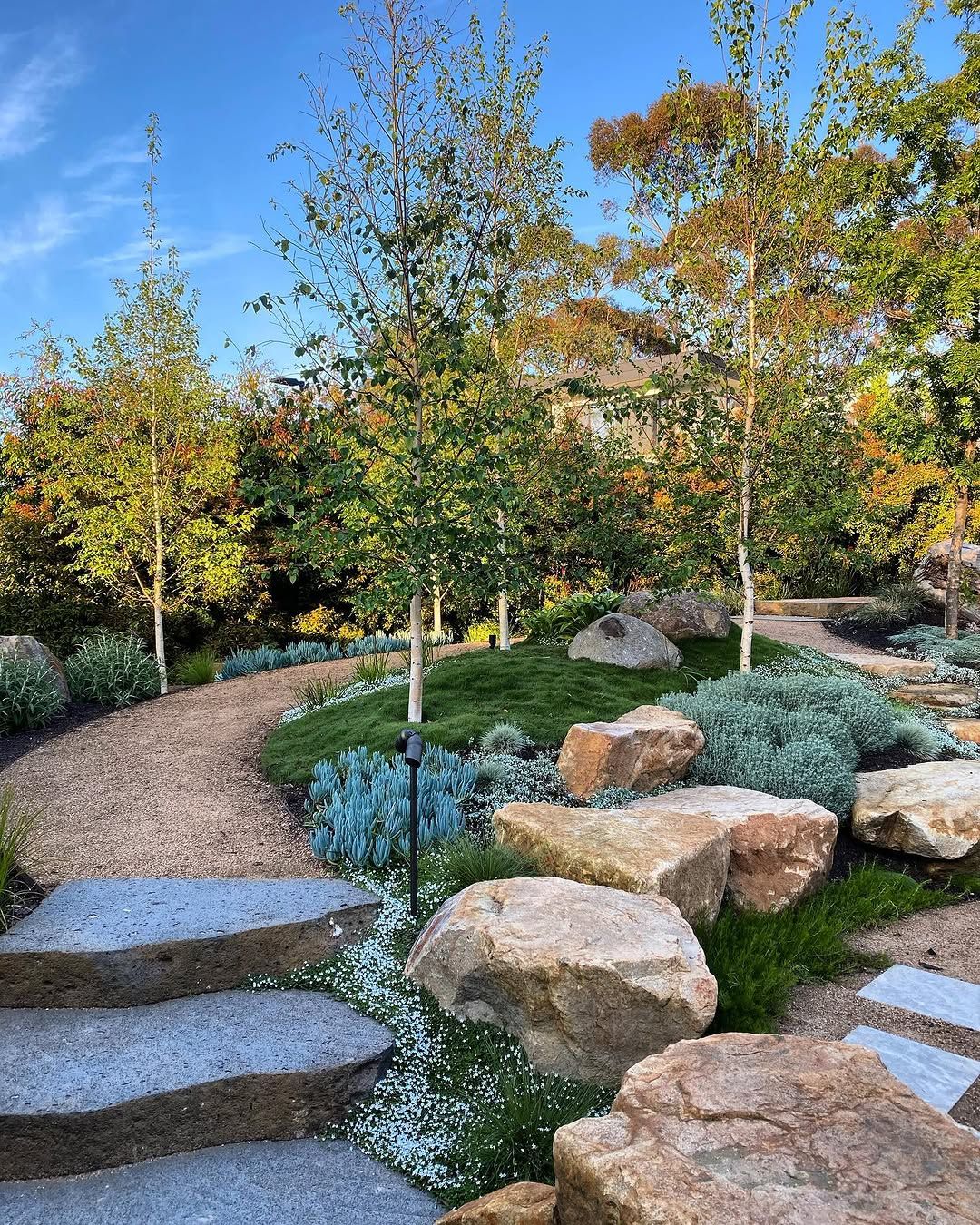
“The winding nature of the path intentionally slows down the walking pace, forcing visitors to take in the slender young trees and small white groundcover flowers.”
The rough-hewn grey stone steps act as natural pause points, breaking up the continuous tan gravel while preventing the loose material from migrating downhill. It feels incredibly lush and inviting precisely because the edges are allowed to blur.
3. Multi-Level Gray Boulder Retaining Walls and Rock Waterfall
- Primary gray boulders (delivery & placement): $3,500 – $6,000
- Pump, plumbing & liner for waterfall: $1,200 – $2,500
- Light beige paver pathway materials: $800 – $1,500
- Mature tree & flowering shrub plantings: $1,000 – $2,200
- Budget alternative: Skip the active water feature and create a dry cascading rock fall instead, saving you about $2,000 in plumbing and electrical work.
- TOTAL ESTIMATE: $6,500 – $12,200
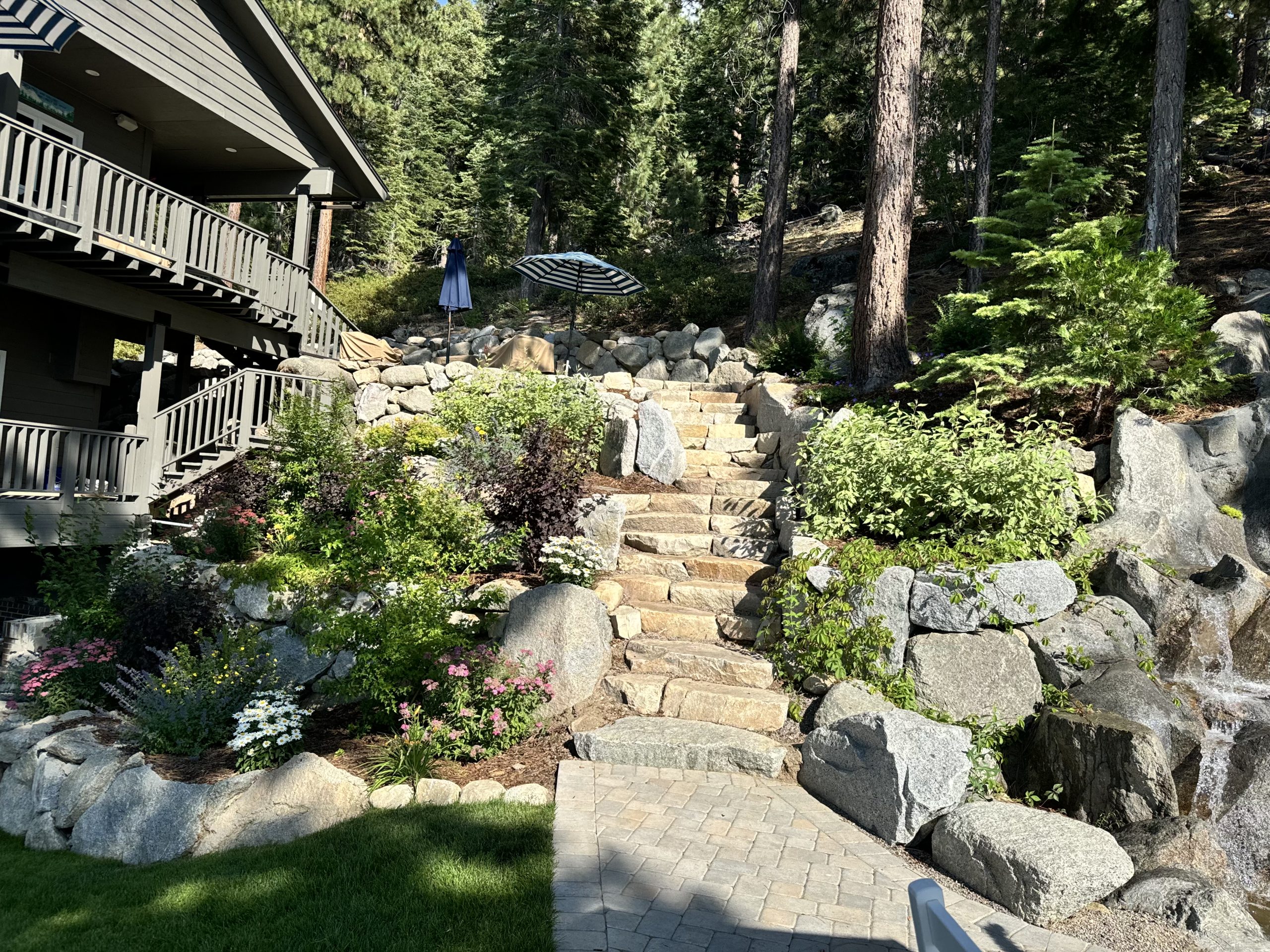
“Integrating a live waterfall directly into retaining walls looks stunning against dark green house siding, but it requires significant technical planning.”
Water always finds the path of least resistance, meaning improper liner installation behind those rough-hewn stone steps will eventually compromise the soil stability holding up your sloped yard. You absolutely must consult a drainage specialist before combining heavy boulders with flowing water on an incline.
4. Curved Light Paver Path Anchoring a Gray Rock Garden
To pull off dual rock gardens bisected by a hardscape path, you need a front yard that is at least 30 feet wide. The large gray boulders require adequate breathing room to look intentional rather than cluttered, and the light-colored paver pathway needs a minimum width of 48 inches to properly curve around the dense evergreen shrub. If your yard is shallower than 15 feet from sidewalk to brick exterior, consider scaling down to the narrower border style discussed in Idea #21.
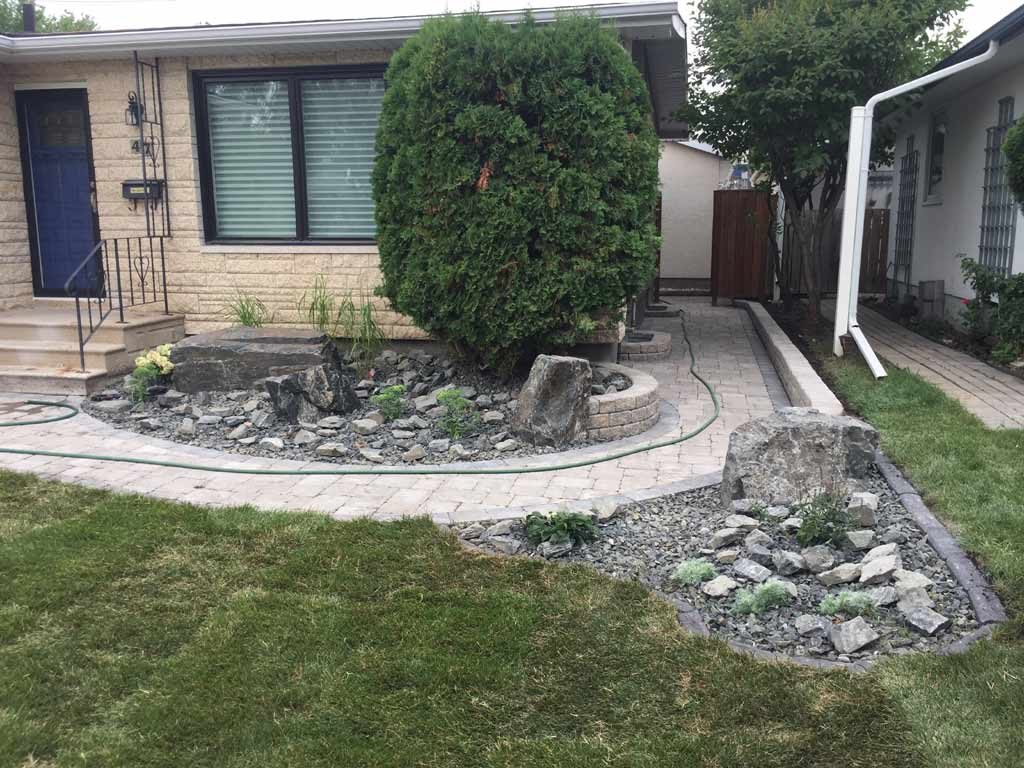
“Highly structured, low-maintenance front yards like this are taking over suburban neighborhoods right now.”
As water restrictions tighten globally, homeowners are replacing expansive, thirsty green lawns with deliberate combinations of smaller decorative stones and prominent boulder anchors. The neat circular stone wall and dark blue front door trim keep the xeriscaped aesthetic feeling traditional rather than overly stark.
5. Meandering Gravel Path with Autumnal Toned Shrubs
The dark wood mulch is the unsung hero of this front entrance design. It provides a deeply saturated, high-contrast background that makes the light tan gravel path pop and allows the autumnal yellow and red foliage to visually jump out. Without that dark, grounding layer, the large natural grey boulders would blend too seamlessly into the grey house siding, losing all their sculptural impact.
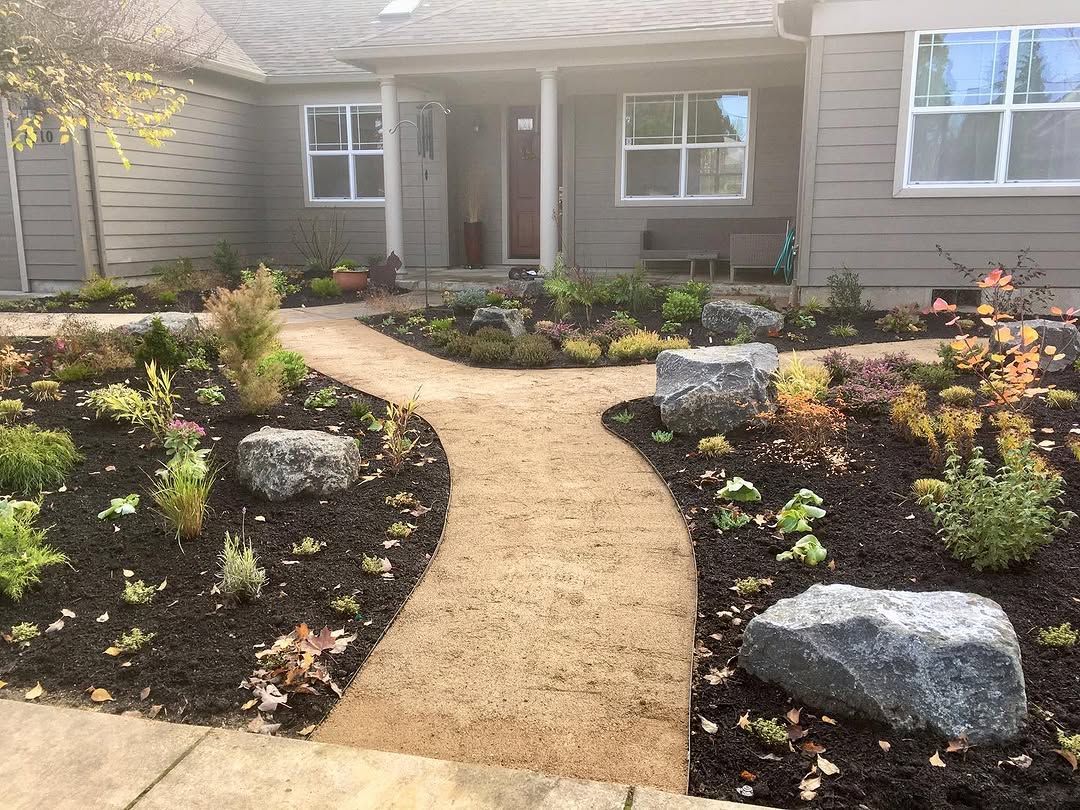
“While this layered approach looks incredibly serene, maintaining that crisp line between the meandering gravel and the dark mulched beds requires weekly attention.”
Leaves from the diverse small shrubs will inevitably drop onto the light tan gravel, requiring careful leaf-blowing on a low setting to remove the debris without sending your expensive gravel flying into the beds. Expect to top-dress the dark mulch every spring to keep the color rich.
6. Tiered Light Pink Boulders with Curved Concrete Edging
The success of this sloping landscape lies in its strict geometric contrasts. The sharp, irregular angles of the stacked light gray-pink boulders are deliberately softened by the gracefully curved concrete border that separates the rock garden from the bright green manicured lawn. By planting silvery-green and reddish-brown foliage in the dark brown bark mulch, the design creates a robust, layered transition from the hard stone to the soft grass.
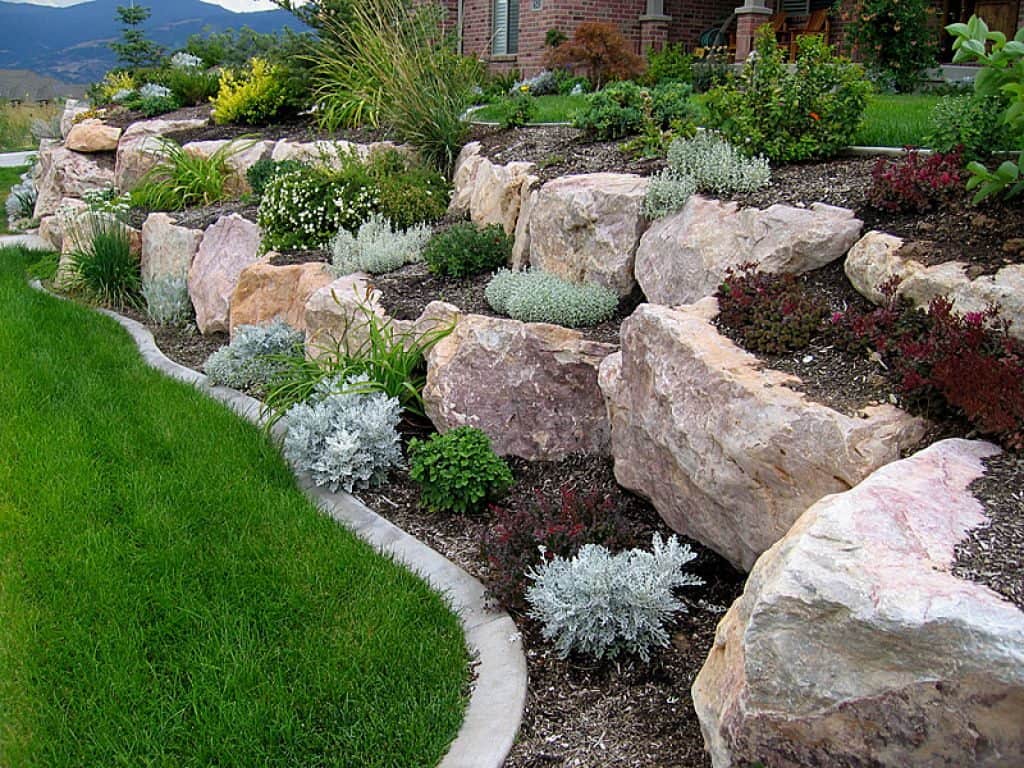
“If custom-poured curved concrete edging blows your exterior budget, you can achieve a nearly identical sweeping division using heavy-duty flexible steel or commercial-grade bender board.”
At roughly $3 per linear foot compared to concrete’s $15-$25, a steel edge will still neatly contain the dark brown mulch and keep the bright lawn from creeping into your silvery-green plants, saving you hundreds on the installation.
7. Mossy Light Brown Boulder with Purple Ornamental Grasses
When selecting a singular, massive focal boulder for a garden bed, aim for one that already possesses character, like deep fissures or existing moss growth. To keep it looking natural rather than dropped from space, bury the bottom quarter of the stone into the dark wood mulch and soil. Flank it immediately with soft, sweeping plants—like these ornamental grasses with purple blooms—to soften the heavy transition between the rock and the small light-colored gravel nearby.
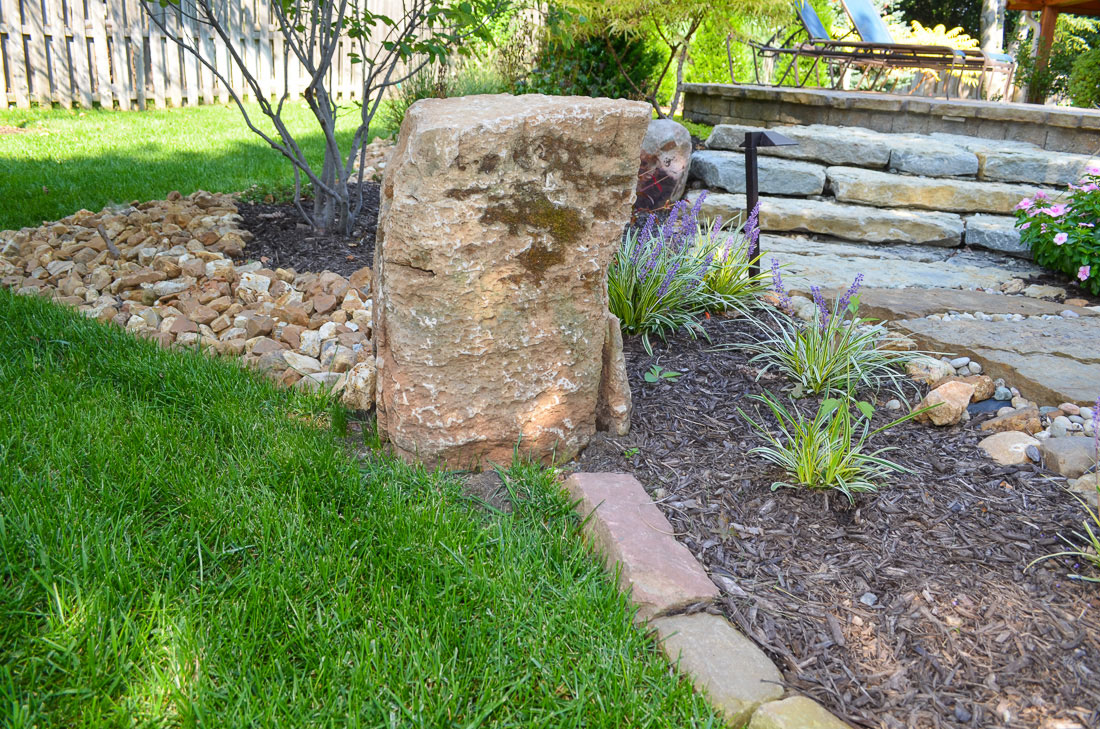
“This particular aesthetic relies on a 70/20/10 visual split: 70% earthy neutrals provided by the light brown boulder, dark mulch, and layered grey retaining wall; 20% vibrant green from the lawn and stems; and exactly 10% soft accent color delivered by the subtle purple blooms.”
You can replicate this serene vibe by keeping the hardscape warm and earthy, while limiting your flower choices to a single, delicate accent hue.
8. Winding Concrete Pathway Framed by Vibrant Flower Beds
- Outline your winding path using marking paint, ensuring the curves are wide and gentle.
- Excavate the pathway area to a depth of 4 inches and compact the bare soil thoroughly.
- Set the stone paver stepping path into a layer of leveling sand, leaving 2-inch gaps between stones.
- Pour concrete or pack decomposed granite around the stepping stones to lock them in place.
- Install the grey birdbath as a focal point at the deepest curve of the path.
- Plant dense, colorful pink, purple, and sky blue flowers right up to the pathway edge to blur the hard lines.
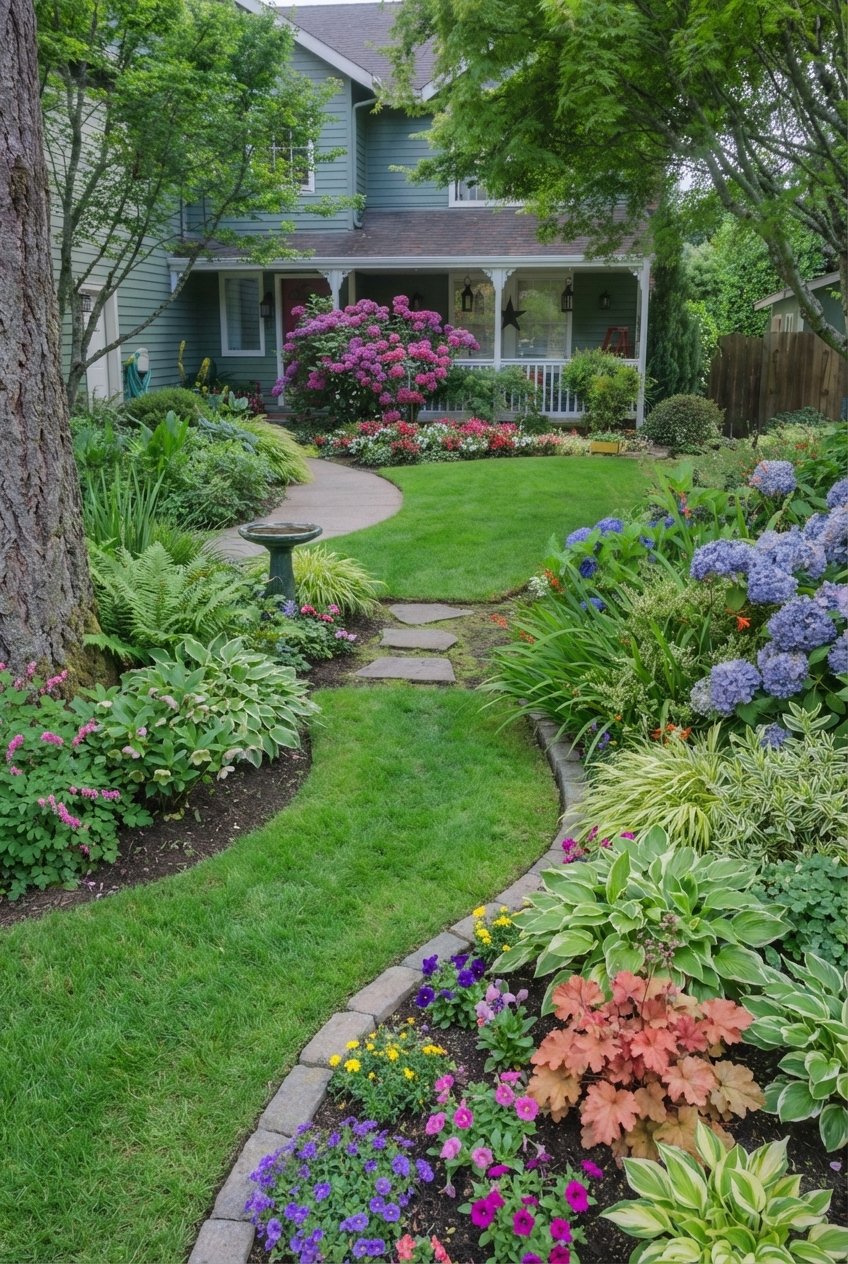
“Lush, vibrant flower beds packed tightly together look incredible leading up to a covered white-railed porch, but they require serious air circulation to stay healthy.”
Planting this densely increases the risk of powdery mildew on humid summer days. You will need to aggressively deadhead the blooms and thin out the foliage near the ground to keep the air moving, especially around lower-sitting features like the grey birdbath.
9. Dark Grey Concrete Block Steps and Modern Pillar Lighting
Industrial-leaning hardscaping is having a major moment as a counter-trend to overly rustic cottage gardens. The use of rugged, dark grey concrete block steps alongside matching retaining walls brings a highly structured, architectural feel to the outdoors. When paired with modern, rectangular black metal lighting, it creates a tailored, brutalist-inspired landscape that appeals to homeowners wanting clean lines without sacrificing natural greenery.
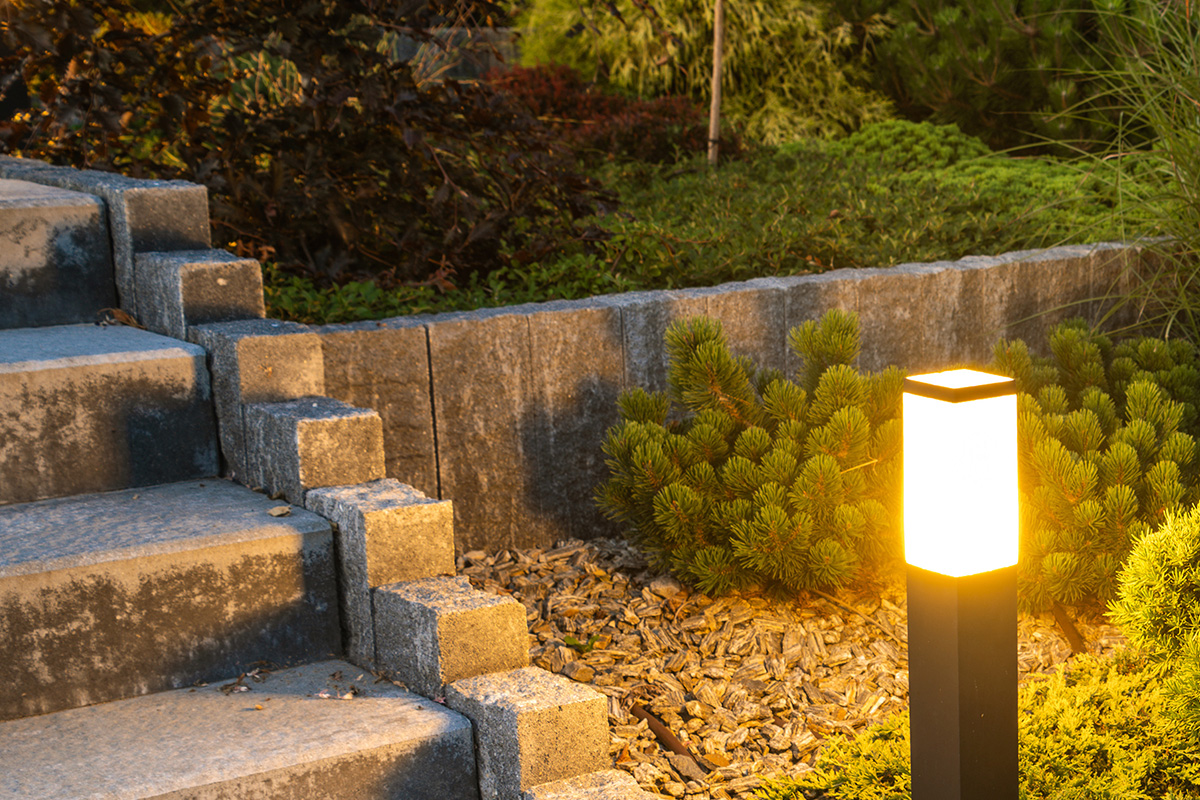
“The warm yellow glow from the modern pillar light is the defining feature of this dusk scene.”
Without that specific color temperature (ideally around 2700K), the dark grey concrete blocks and black metal fixtures would feel cold and imposing. That warm illumination highlights the bright green coniferous shrubs and light brown wood chip mulch, totally changing the mood from stark to inviting once the sun goes down.
10. Rustic Wooden Staircase Descending a Sloped Boulder Garden
This layout is engineered specifically for deep, significantly sloped properties. You need a minimum grade change of 4 to 6 feet to justify the winding flagstone pathway and the rustic wooden staircase with railings. If your yard has a gentler slope, these large natural boulders might overwhelm the space, and you’d be better off looking at the subtle terracing shown in Idea #18 to manage the incline without swallowing the yard.
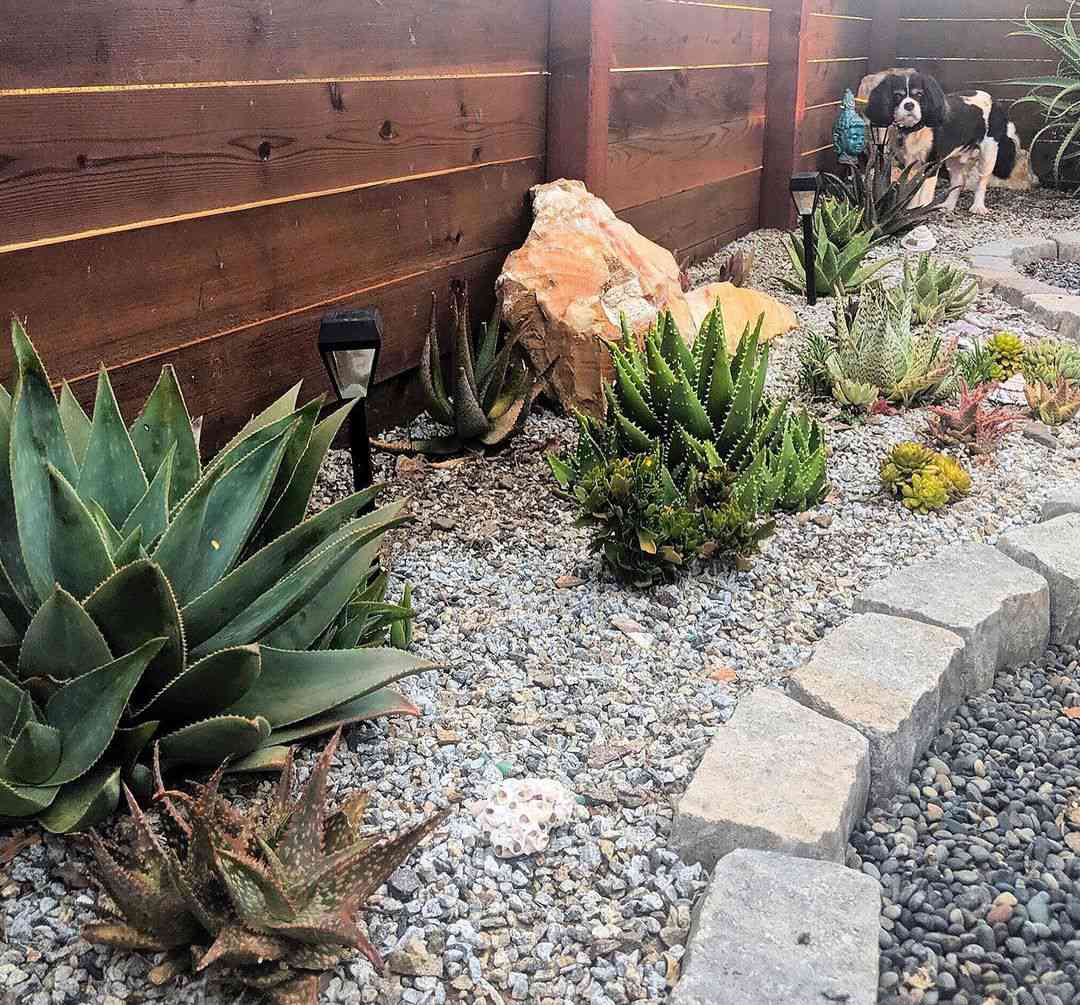
“The design works brilliantly because it mixes textures while maintaining a unified earthy palette.”
The rigid, linear lines of the brown wooden stairs provide a necessary structural counterpoint to the organically placed, rounded gray boulders. Surrounding the heavy flagstone and wood with delicate ornamental grasses and mixed green shrubs creates a balanced tension between rugged permanence and soft, seasonal growth.
11. Dense Green Ground Cover Framing a Light Gravel Path
- Verify your soil’s drainage capacity; dense ground cover will rot if water pools around the boulders.
- Measure the pathway width to ensure it remains at least 36 inches wide even after plants spill over the flat stone edges.
- Calculate the total tonnage of dark grey natural stone needed before ordering, as delivery fees for small batches are notoriously high.
- Check local ordinances regarding pathway materials if this connects directly to a public sidewalk.
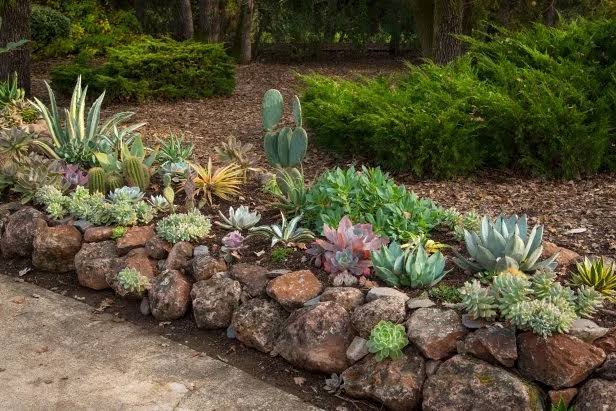
“To achieve this serene, established look, space your large, irregularly shaped natural boulders before planting anything.”
Dig them down so their widest point is flush with the soil line, making them look like bedrock rather than dropped stones. Then, plant your vibrant green foliage tightly against the rock bases so it mounds upward, creating a natural, weathered appearance that seamlessly borders the light tan gravel.
12. Arid Desert Plantings Set in Off-White Crushed Rock
An arid setup utilizing off-white crushed rock and sparse spiky desert plants is incredibly low-maintenance regarding water, but it has one major weakness: weed control. Wind-blown seeds will inevitably land in the gravel and take root in the brownish earth below. You will need to apply a pre-emergent herbicide twice a year or commit to weekly hand-pulling, as decaying organic matter will quickly ruin the clean, light-colored aesthetic.
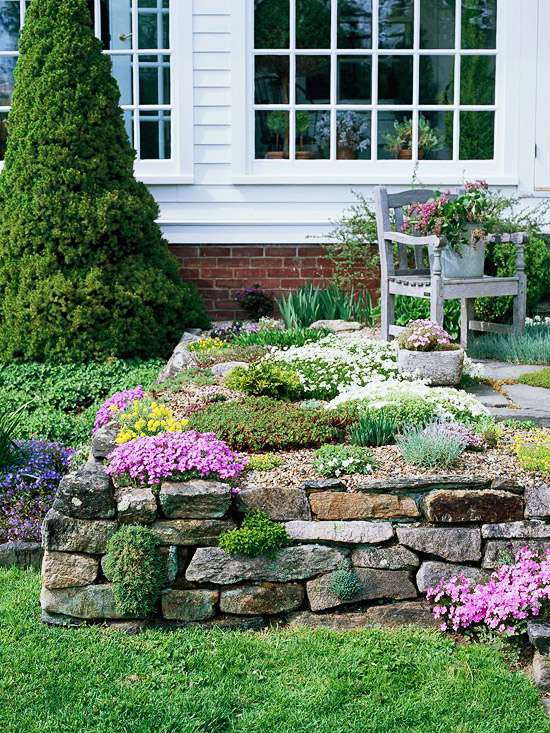
“The visual formula here is built on negative space: 80% off-white crushed rock ground cover, 15% light grey boulder anchors, and just 5% vibrant green from the sparse desert plants.”
This layout embraces emptiness to make every single element feel deeply intentional. If you try to pack more plants or smaller decorative rocks into this ratio, you will immediately lose the stark, rustic serenity that makes the design successful.
13. Illuminated Concrete Steps Traversing Dark Grey Gravel
- Pre-cast concrete stepping stones: $400 – $900
- Large light-colored boulders: $1,200 – $2,800
- Dark grey gravel (bulk delivery): $300 – $650
- Low-voltage warm landscape lighting system: $600 – $1,400
- Budget alternative: Use square flagstone pavers instead of custom concrete steps and opt for solar-powered accent lights to shave $1,000 off the total.
- TOTAL ESTIMATE: $2,500 – $5,750
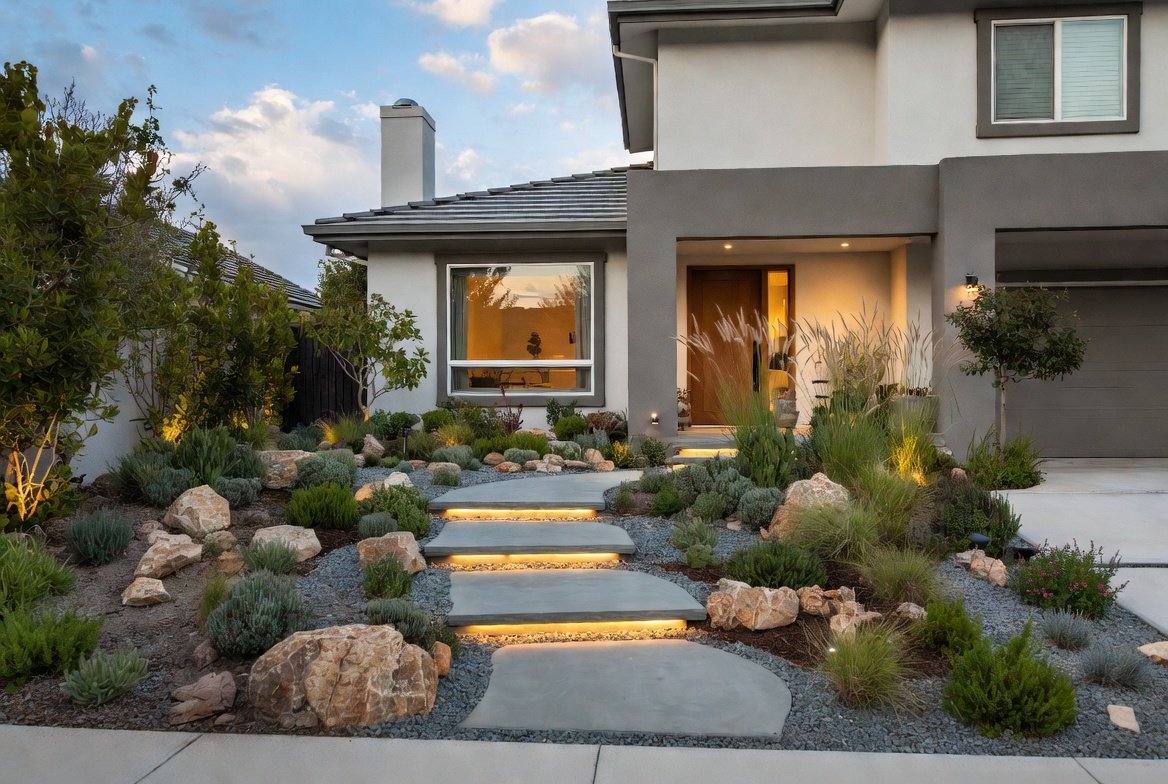
“The under-lighting on the concrete stepping stones is the absolute showstopper of this modern facade.”
By hiding the warm accent lighting beneath the lip of the concrete, the layout avoids the cluttered look of traditional post lights sticking up out of the dark grey gravel. It allows the light-colored boulders and silvery-green plantings to float visually in the space, creating a serene, highly contemporary nightscape.
14. Meandering Clear Stream with Light Green Mounding Groundcover
Creating an active, meandering clear stream lined with dense green groundcover looks idyllic, but it comes with intense evaporation and filtration realities. Small river stones in the streambed collect algae rapidly if the water isn’t heavily oxygenated and filtered. The undulating planted banks must be constructed with proper pond liner hidden beneath the earthy brown soil, or the water will simply drain into your yard, drowning those soft, rolling mounds of greenery.
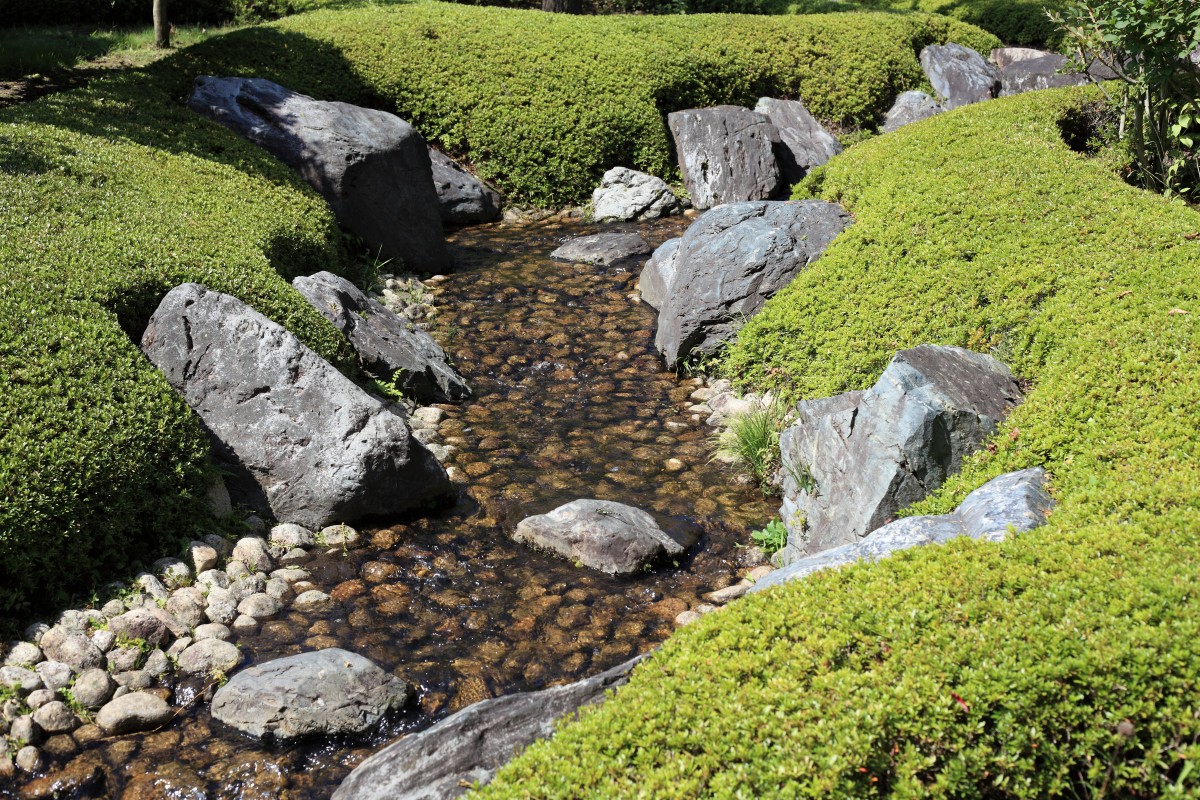
“If excavating a full plumbing system is out of reach, this is the perfect scenario to pivot back to the dry river bed approach outlined in Idea #1.”
By utilizing deep gray boulders along the banks and filling the winding trench with smooth blue-grey river pebbles instead of water, you can achieve that same calm, organic flow for a fraction of the cost, eliminating pumps, liners, and daily maintenance entirely.
15. Irregular Flat Stepping Stones Embedded in Light Grey Gravel
When laying an irregular flat stone pathway through light grey gravel, ensure the top of your stepping stones sits exactly a quarter-inch above the gravel line. If they are perfectly flush, the gravel will constantly kick up onto the walking surface; if they are too high, they become a tripping hazard. Gravel relies entirely on solid edging to stay functional over time. Always tamp the base layer beneath the stones heavily to prevent shifting.
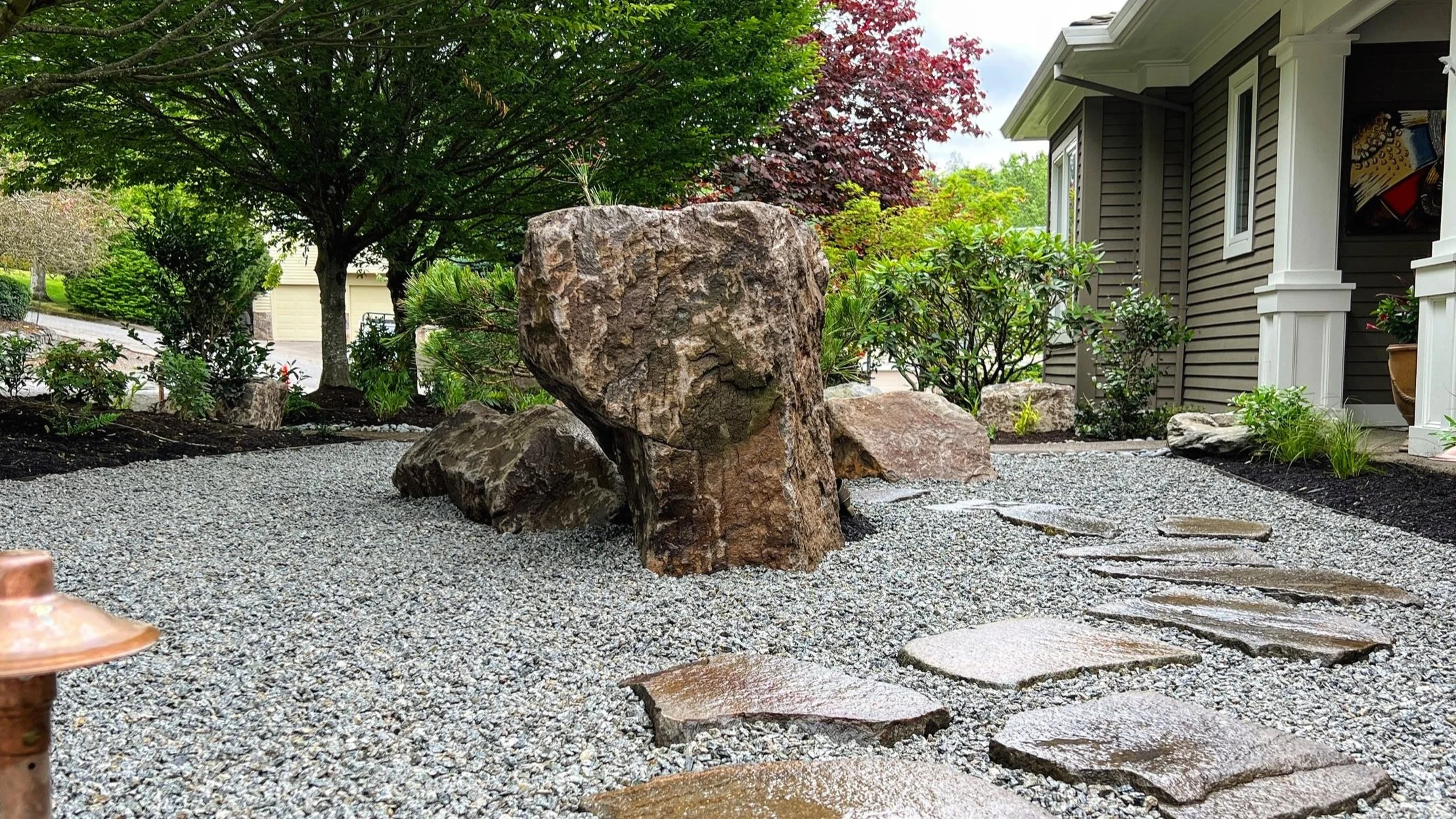
“This central boulder focal point works best in contained, mid-sized garden beds ranging from 100 to 250 square feet.”
Because the dark mulch planting beds frame the rough-hewn boulder closely, attempting this layout in a massive, sweeping front yard will make the central rock look small and disconnected. The assorted green and red foliage needs to feel intimately wrapped around the stone to succeed.
16. Rustic Stacked Stone Archway Framing a Manicured Lawn
This design utilizes framing to manipulate perspective brilliantly. The rustic stacked stone archway acts as a literal picture frame, directing the eye through the opening, down the flagstone pathway, and out toward the expansive manicured lawn. By piling the vibrant red and purple perennial flowers heavily in the foreground, the design creates a deep sense of foreground-to-background contrast that makes the entire property feel larger and more mysterious.
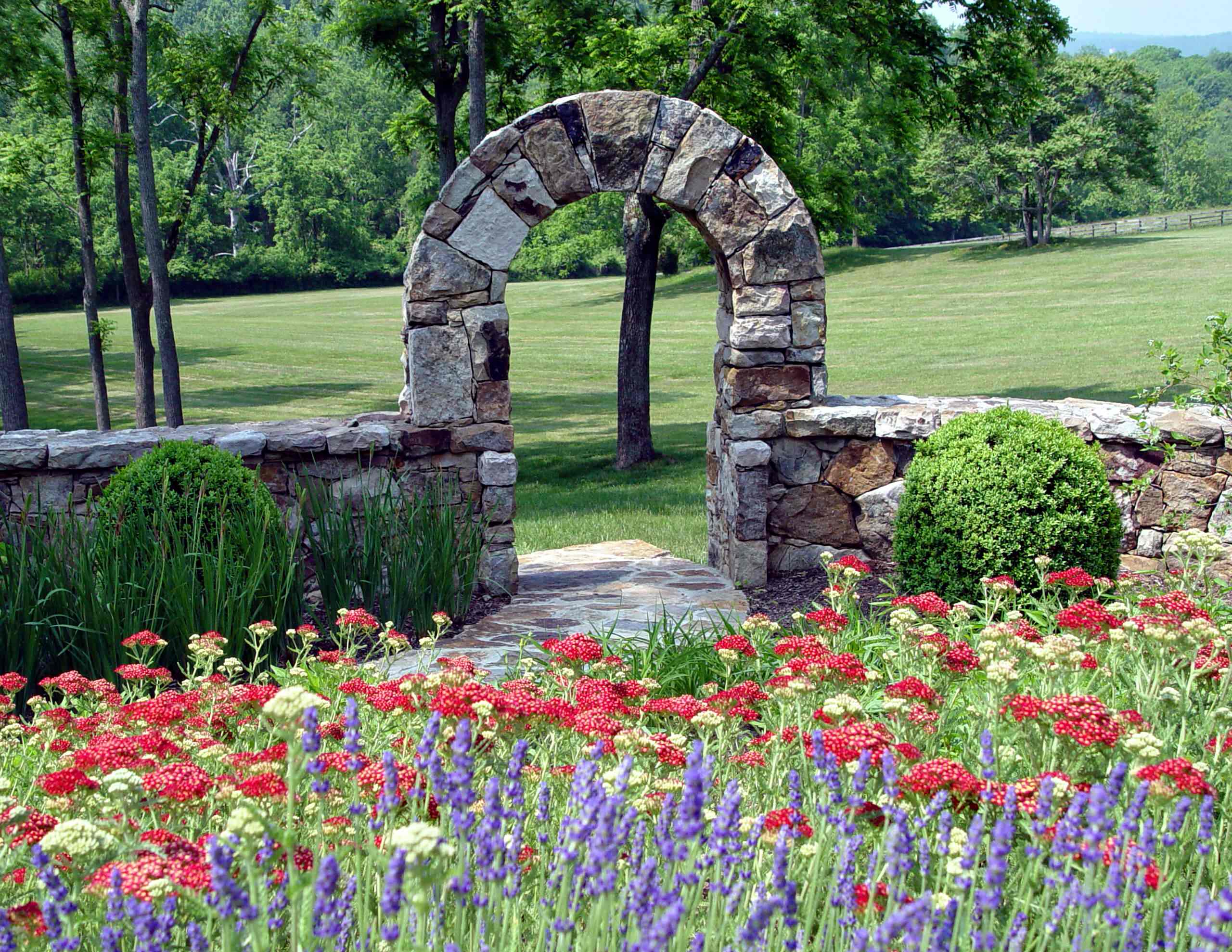
“Romantic, secret-garden-style architecture is rebounding heavily as people crave more distinct, separated outdoor rooms rather than one giant open patio.”
Adding structural elements like stone garden walls and archways provides a sense of history and permanence to newer builds. The creamy white accents and lush green shrubs lean into that classic, timeless aesthetic that consistently dominates exterior inspiration boards.
17. Bright Pink Flowering Shrubs Softening Textured Grey Boulders
This sloped woodland transition uses a 50/30/20 color volume approach. About 50% of the visual space is dominated by vibrant green low-lying shrubs and the wooded backdrop; 30% goes to the heavy, textured grey boulders holding the slope; and 20% is punched up by those abundant, bright pink flowering azaleas. That highly saturated pink requires the massive grey stones to keep the arrangement feeling grounded rather than overly sweet.
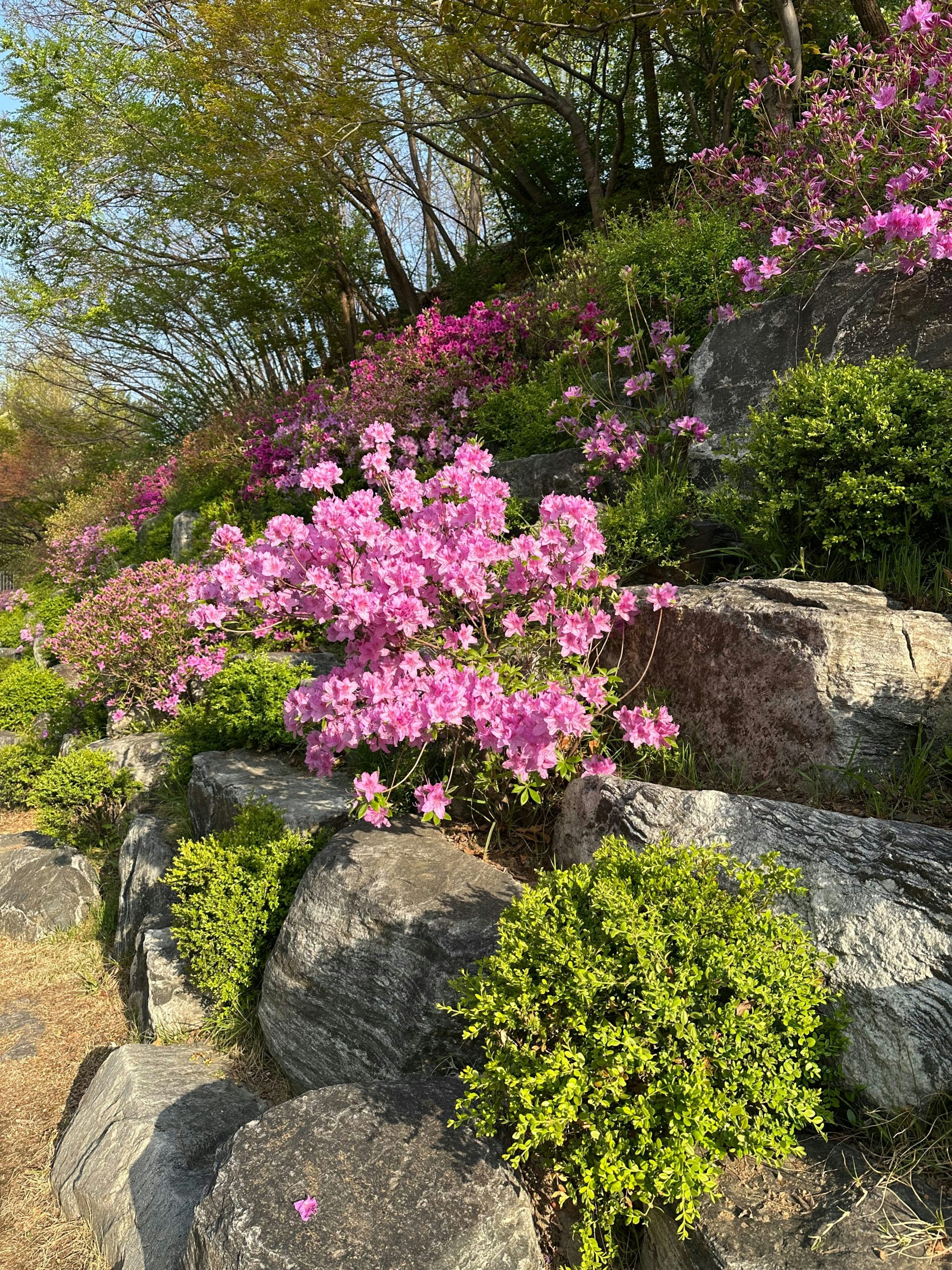
“The integration of the large grey boulders directly into the sloped terrain is what prevents this from looking like a basic suburban flowerbed.”
By partially embedding those heavy stones into the hill before planting the lush green shrubs around them, the boulders appear to be natural outcroppings holding back the soil. Remove the boulders, and the bright pink plants simply slide visually—and perhaps literally—down the hill.
18. Tiered Light Grey and Tan Boulders Along a Wooden Fence
- Excavate the bottom tier trench, ensuring the base is level and compacted.
- Set your largest light grey and tan boulders first, burying them one-third deep into the soil.
- Backfill soil behind the first row and compact it heavily to create the first terrace.
- Place the second tier of slightly smaller boulders, staggering the joints from the row below.
- Plant deep green foliage and creeping ground cover into the pockets between the rocks.
- Finish by laying the light beige pathway at the base of the retaining wall.
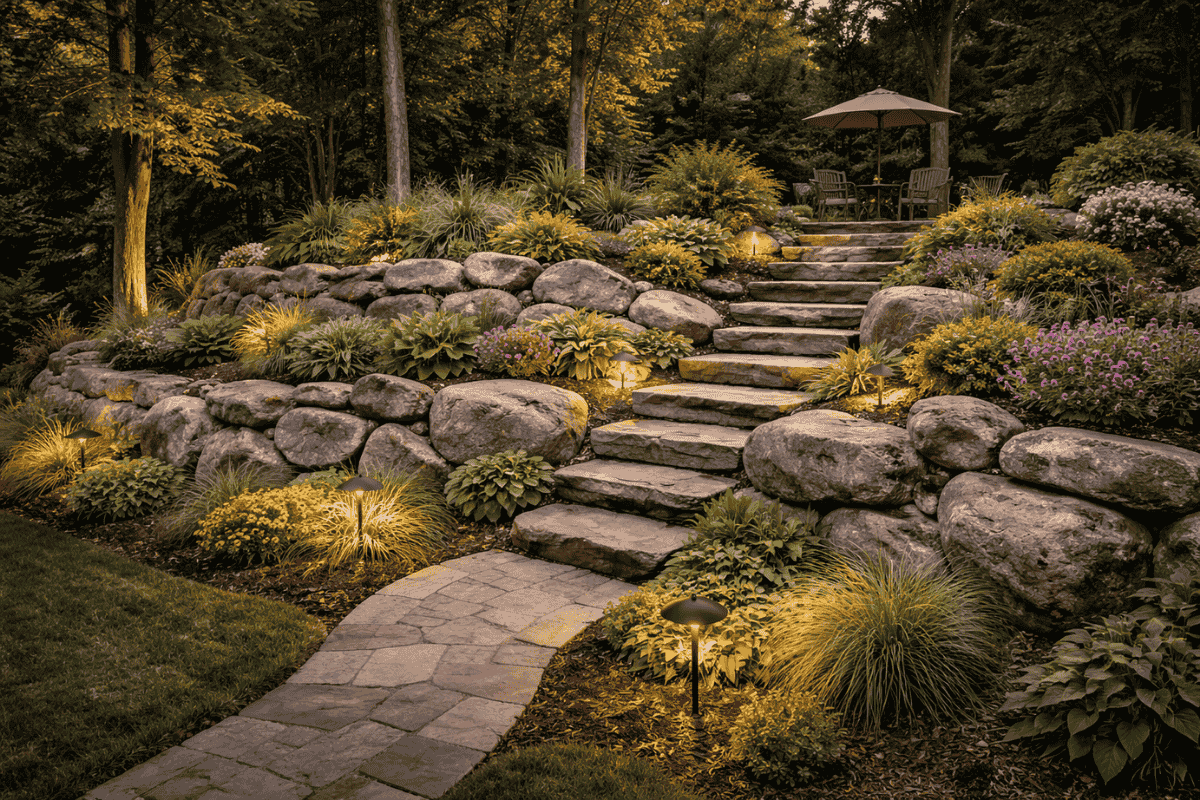
“While natural, tiered rock arrangements look incredibly rustic and organic against a brown wooden fence, keeping the green ground cover from completely swallowing the rocks takes effort.”
Weeds love to establish themselves in the tiny dirt crevices between stacked boulders where pulling them out by the root is nearly impossible. Be prepared to carefully spot-treat those gaps regularly to maintain the definition of the light grey stones.
19. Dry-Stacked Stone Retaining Wall Sprouting Bright Pink Blooms
To encourage that beautiful, aged look where natural moss and small plants grow directly out of stone crevices, mix a handful of soil with buttermilk and moss spores, then paint it directly into the shaded gaps of your dry-stacked wall. Choose plants with cascading habits—like creeping phlox for those bright pink blooms—and plant them at the very top edge so gravity naturally pulls the forest green foliage down over the stark grey stone faces.
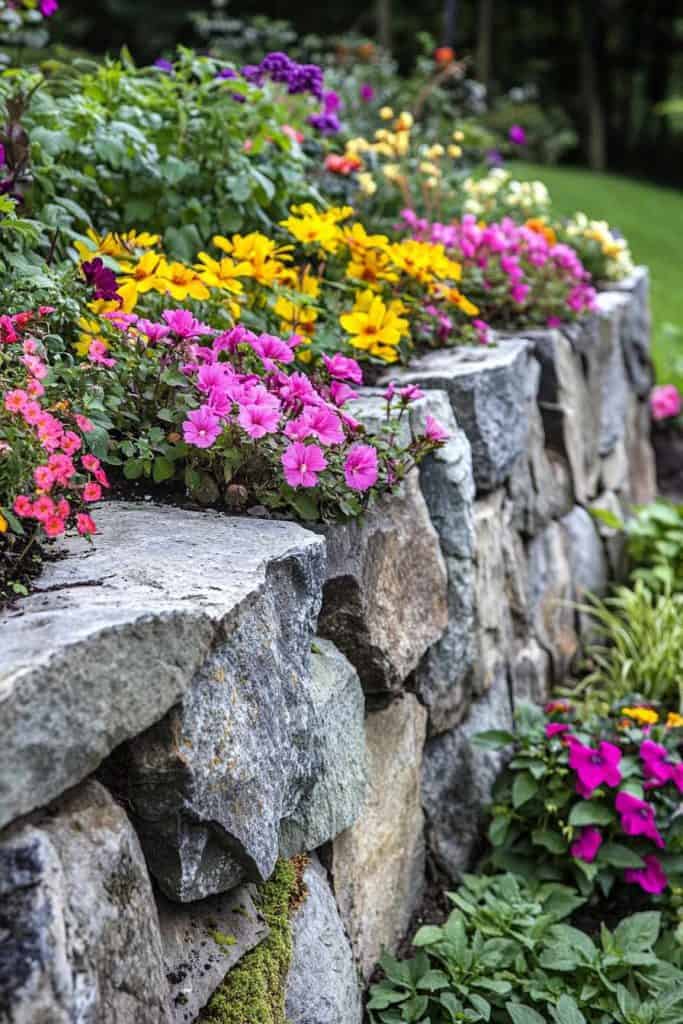
“Dry-stacked walls are exceptionally beautiful and drain incredibly well, but they have height limitations.”
Unlike the heavy boulder solutions seen in Idea #17, this specific style of stacked grey flat stone relies entirely on friction and gravity. If you try to build this retaining wall higher than three feet without proper mortar, tie-backs, or professional engineering, the pressure of the wet soil behind it will cause a total blowout.
20. Curved Flagstone Path Intersecting White Decorative Gravel Beds
White decorative gravel is a high-impact material that works best in tightly defined, structured zones rather than massive sprawling estates. This layout thrives in modern front yards under a quarter acre. The curved flagstone path needs a span of about 6 to 8 feet of white gravel on either side to properly showcase the large agave-like succulents without making the light grey and beige pathway feel pinched or crowded.
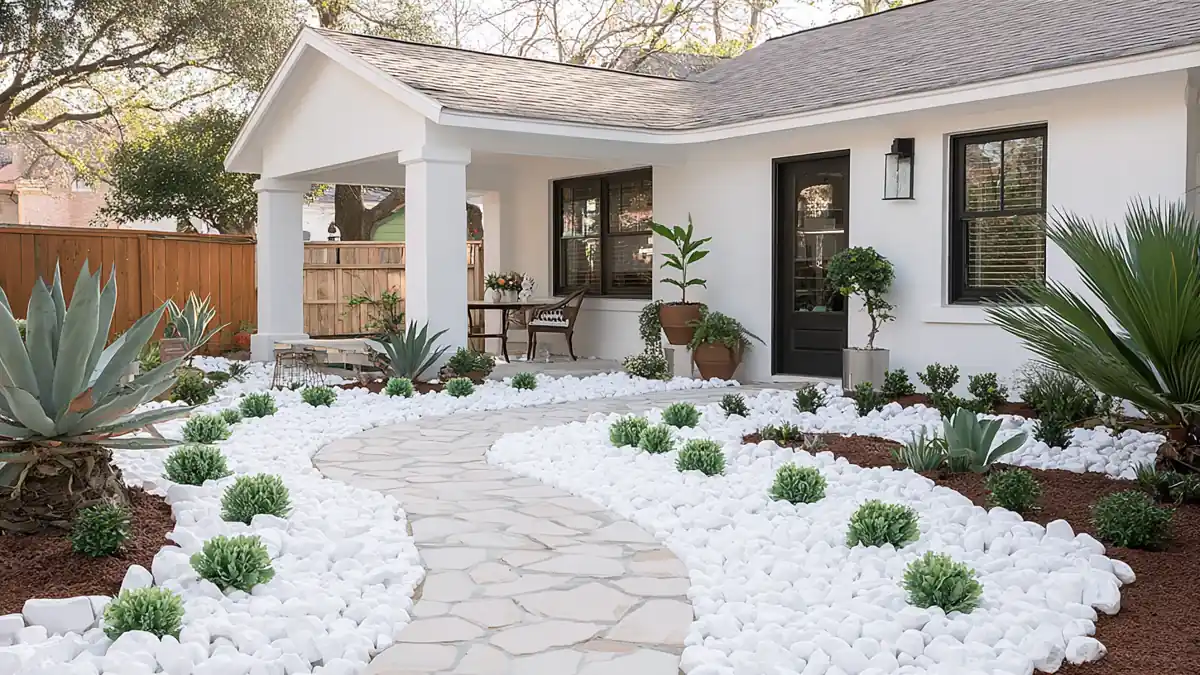
“This landscape operates on sharp, high-contrast modernism.”
The bright white gravel visually links to the clean white house exterior, while the dark brown mulch areas and black-framed windows create striking, moody recesses. By keeping the plant palette restricted to mostly architectural green forms (like agave and small rounded shrubs), the yard feels intentionally designed, clean, and highly structured, rather than wild and overgrown.
21. Rough-Hewn Grey Boulder Border with Bronze Path Lighting
The bronze-finished path lights elevate this narrow landscape strip from a basic walkway to a premium exterior hallway. While the rough-hewn grey boulders and tall green grasses provide excellent daytime texture, the targeted lighting casts sharp shadows through the thin grass blades at night, illuminating the small brown and grey gravel. Without those fixtures, this structured side-yard transition would feel dark and forgotten.
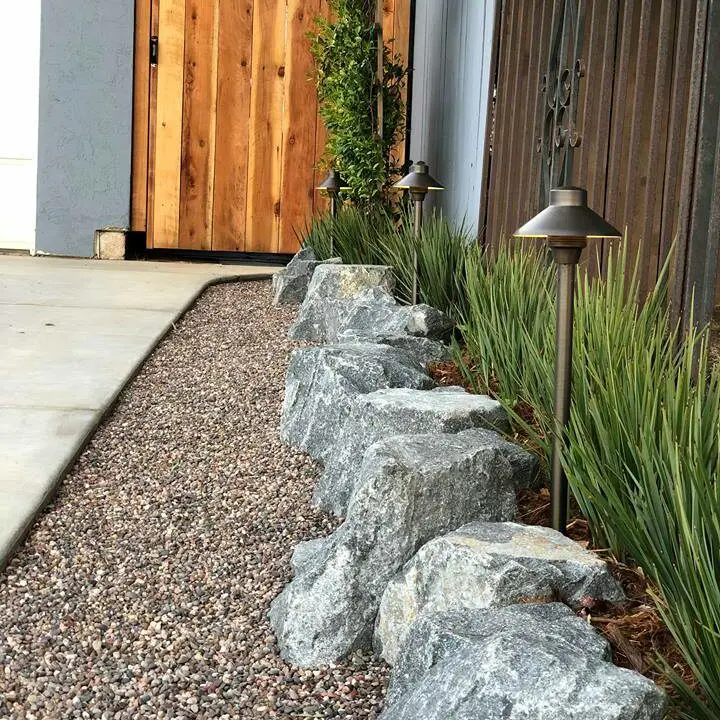
“Maximizing side yards and narrow transit spaces is a huge priority in modern landscaping.”
Instead of just pouring concrete fence-to-fence, designers are creating ordered, textured borders using large natural stones and ornamental grasses. This specific look—pairing smooth light grey concrete with rugged grey boulders and a warm natural wood gate—strikes the perfect balance between highly controlled modernism and natural warmth.
22. Golden Barrel Cactus Contrasting Deep Purple Ground Cover
This vibrant vignette thrives on a specialized color triad: 60% sandy brown and light pink/beige from the large boulders and stone retaining wall, 30% intense deep purple from the dense ground cover, and a 10% punch of striking yellow-green from the golden barrel cactus. The textured stone acts as a warm, neutral canvas that allows those highly saturated, complementary jewel tones to sing without overwhelming the eye.
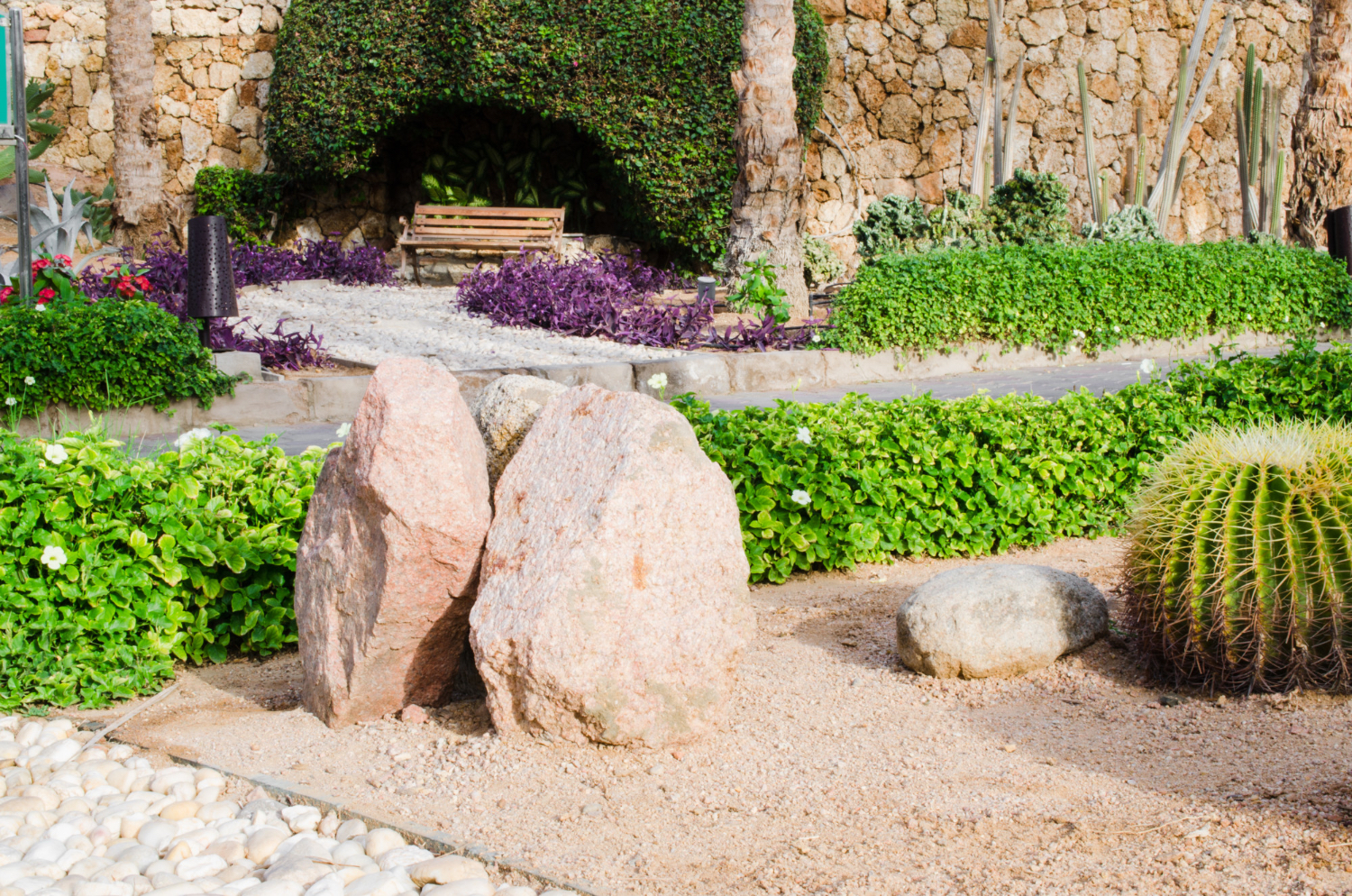
“If sourcing massive, specialized light pink boulders breaks the budget, you can emulate this rich palette using standard limestone blocks, which cost significantly less.”
Pair those cheaper, sandy-toned stones with the same deep purple ground covers (like purple heart or creeping thyme) and small barrel cacti, similar to the arid approach in Idea #12. You keep the high-contrast aesthetic while cutting your hardscaping materials bill in half.
23. Curvilinear Retaining Wall Defining a Dark Mulch Bed
When constructing a curvilinear retaining wall out of varying sized boulders, pay close attention to the visual rhythm. Alternate your dark gray, light gray, and tan boulders so you don’t end up with accidental color blocking. Ensure the top line of the boulders undulates naturally along the curve, which provides a much more organic transition into the dark brown shredded mulch than a rigidly straight top edge.
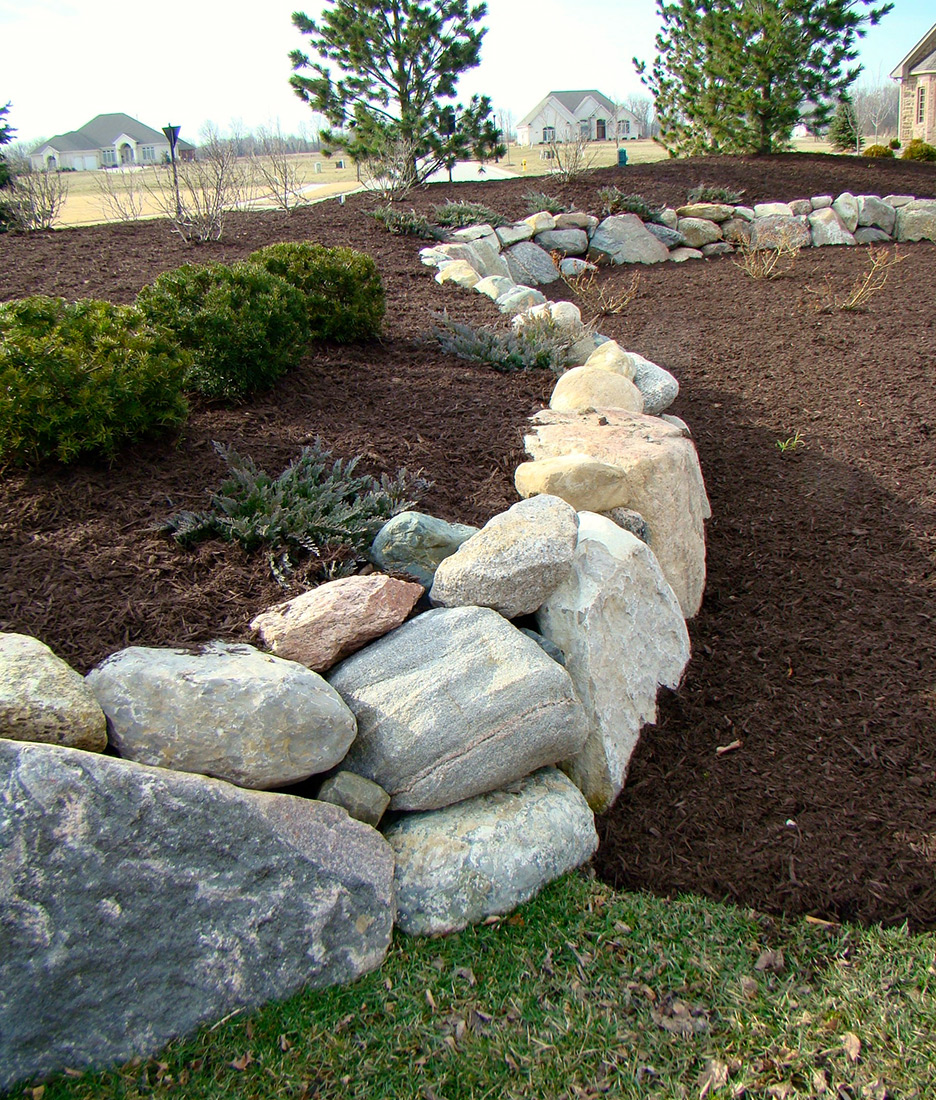
“Keeping a manicured green lawn flush against a heavy rock wall requires dedicated edge maintenance.”
Grass will relentlessly attempt to grow into the small gaps at the base of the boulders. To keep this neat, earthy look intact, you’ll need to run a string trimmer vertically along the stone base weekly, and periodically recut the soil edge to prevent the turf from creeping up into the dark green evergreen shrubs.
24. Terraced Stone-Edged Garden Beds with Metal Trellises
- Map out the terraced layout, leaving at least 3 feet between beds for the light grey gravel pathways.
- Build the retaining borders using natural-toned stones, stacking them securely to hold back the dark soil.
- Fill the raised beds with a high-quality mix of topsoil and compost for optimal plant health.
- Install the metal garden trellises near the back of the beds before planting to avoid damaging roots later.
- Plant climbing vines on the supports and assorted green garden vegetables or flowers in the foreground.
- Spread a heavy weed barrier before pouring the light grey gravel along the winding pathways.
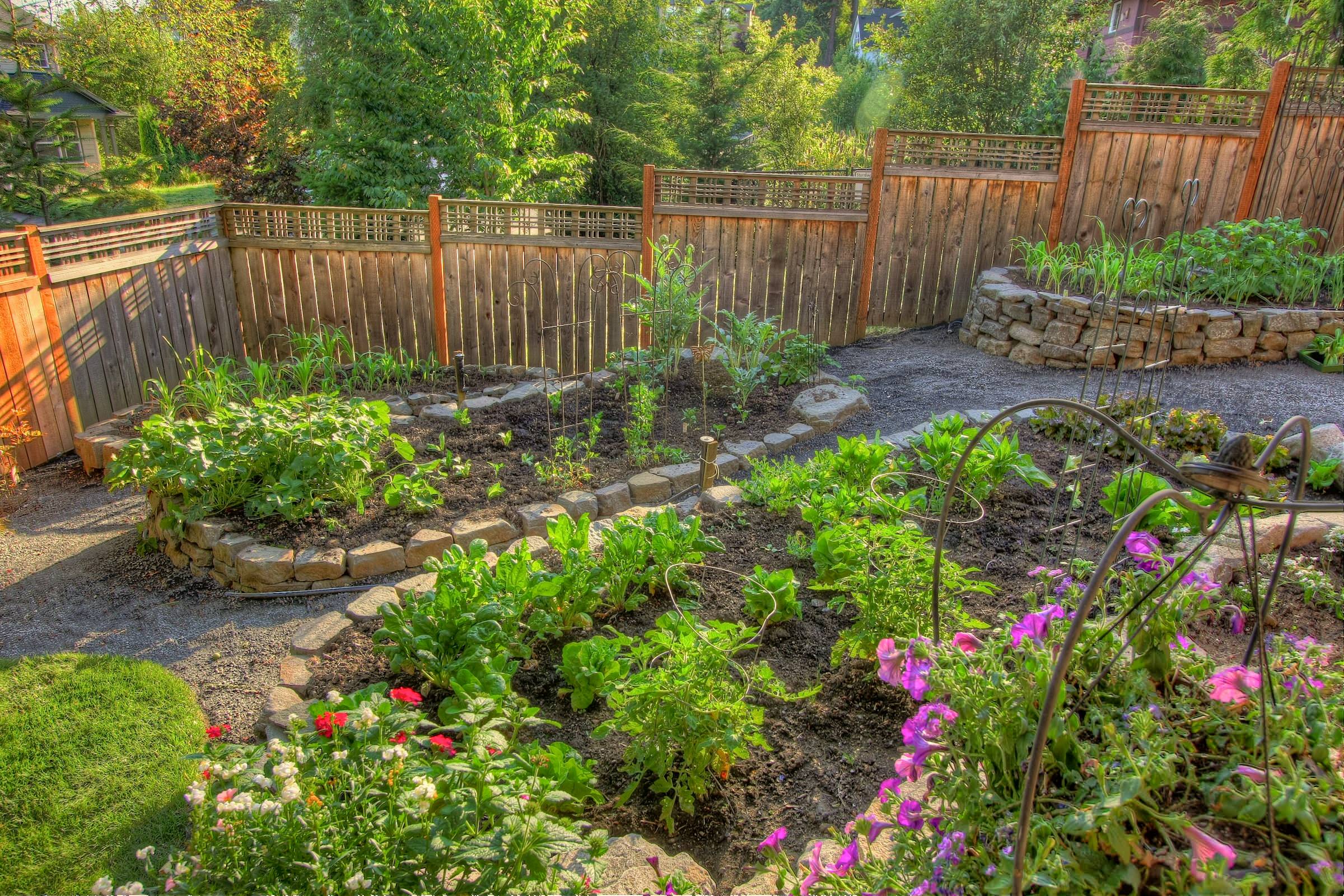
“This productive backyard succeeds because it applies formal garden structure to a working vegetable plot.”
The natural-toned stones elevate the dark soil visually, protecting the crops while keeping the light grey gravel paths impeccably clean. The warm wooden fence with its decorative lattice top provides a beautiful, unified backdrop that makes the metal trellises and wild, diverse green plants feel intentionally contained rather than messy.
25. Irregular Grey Boulders Embedded in Earthy Soil Beds
This rugged, drought-tolerant approach requires significant square footage to look authentic. Grouping massive, irregular grey boulders requires beds that are at least 15 to 20 feet deep. If you try to compress this naturalistic feature into a narrow foundational bed against a house, the sparse spiky plants and light brown gravel will look unfinished, and the boulders will appear uncomfortably crowded against the siding.
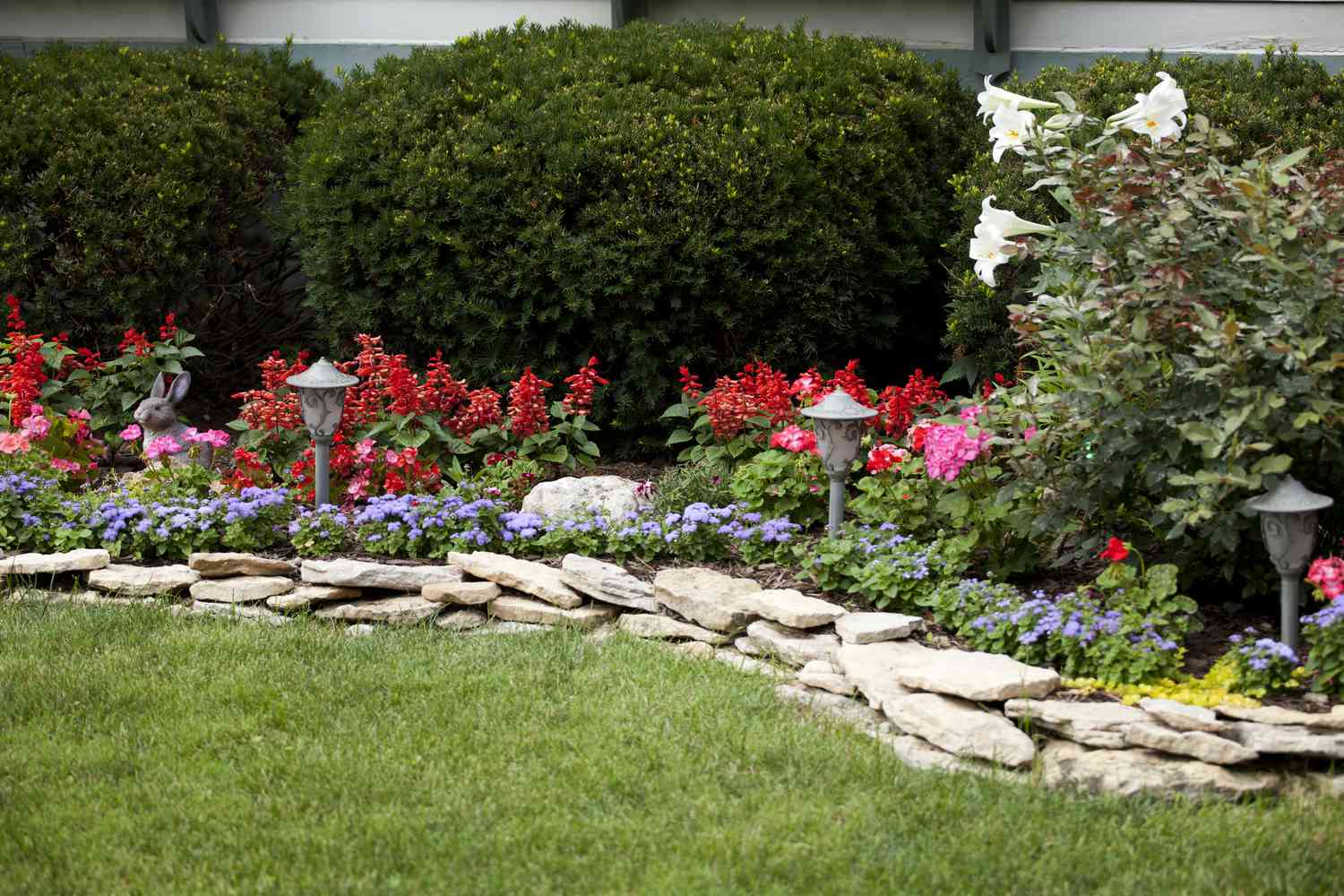
“Embracing exposed earthy soil and sparse green ground cover means embracing a hyper-natural aesthetic that isn’t for everyone.”
Without thick layers of dark mulch to unify the bed, the varied shades of grey stone and deep green foliage must do all the heavy lifting. Be aware that heavy rains can easily wash exposed, sandy soil onto your adjacent patios or walkways if the boulders aren’t perfectly positioned to act as natural dams.
26. Cascading Water Feature Surrounded by Black Shredded Mulch
The black shredded mulch is the transformative element in this multi-level design. Unlike traditional brown mulch, the stark black provides an incredibly dramatic backdrop that makes the bright green foliage, the grey-brown boulders, and the white rushing water of the cascading feature leap forward visually. It immediately modernizes what could otherwise be a very traditional, wooded landscape.
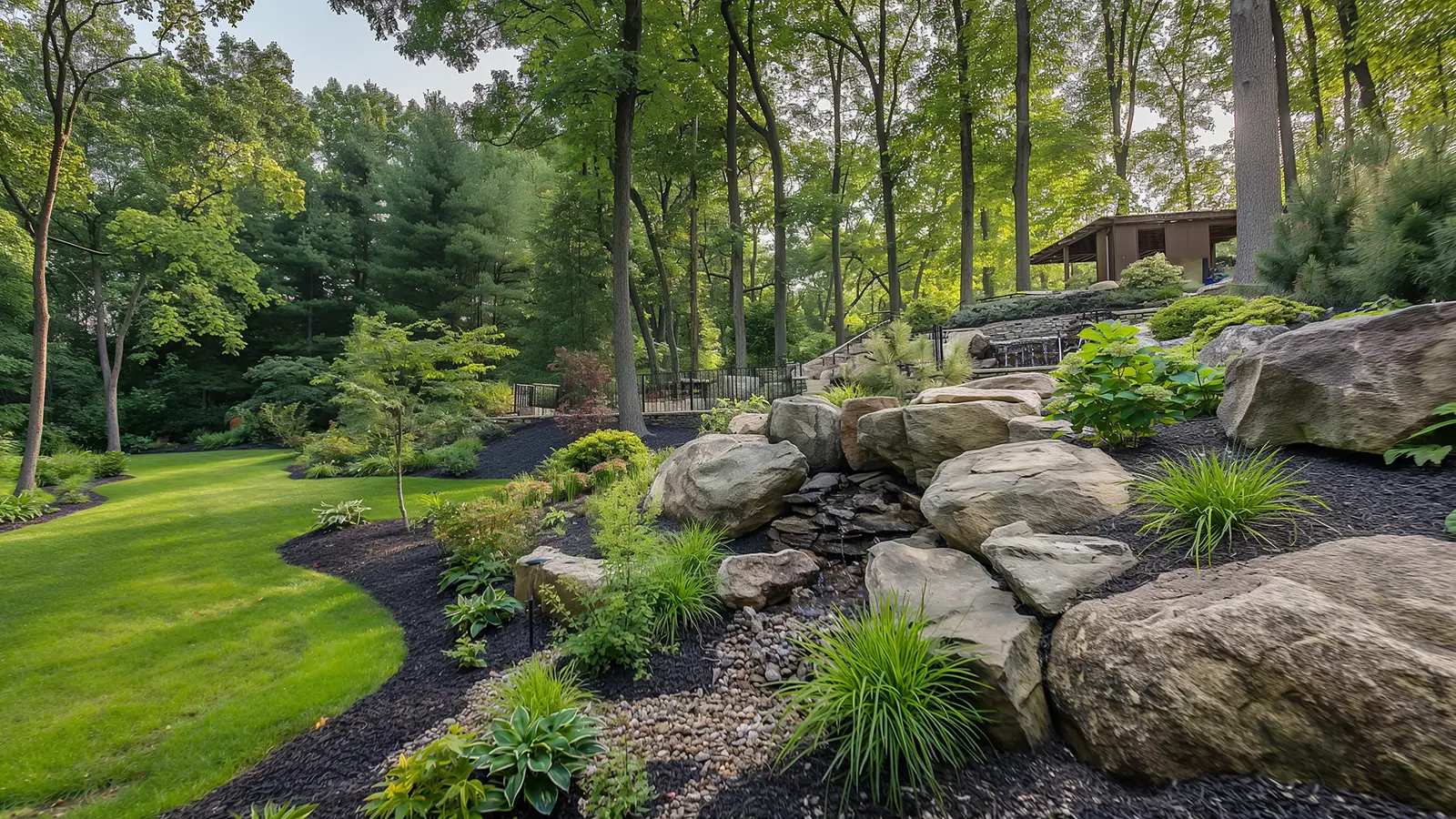
“Achieving this expansive, tiered waterfall look on a strict budget requires a shift in materials.”
Instead of sourcing massive natural boulders which require heavy machinery to place, consider using hollow, high-quality cast faux rocks, or follow the much smaller, scaled-down water feature layout detailed in Idea #3. You keep the ambient sound of the water and the lush greenery, but eliminate thousands in freight and crane rental fees.
27. Multi-Tiered Boulder Waterfall Cascading into a Pool
Resort-style backyard oases are shifting heavily toward naturalistic integration rather than stark, geometric infinity edges. Homeowners want their irregular shaped pools to feel like hidden grottos discovered in the wild. The use of large natural boulders forming a multi-tiered waterfall, seamlessly blending with light travertine-look paving and a stone pillar cabana, creates a luxurious, immersive environment that feels a million miles away from a standard suburb.
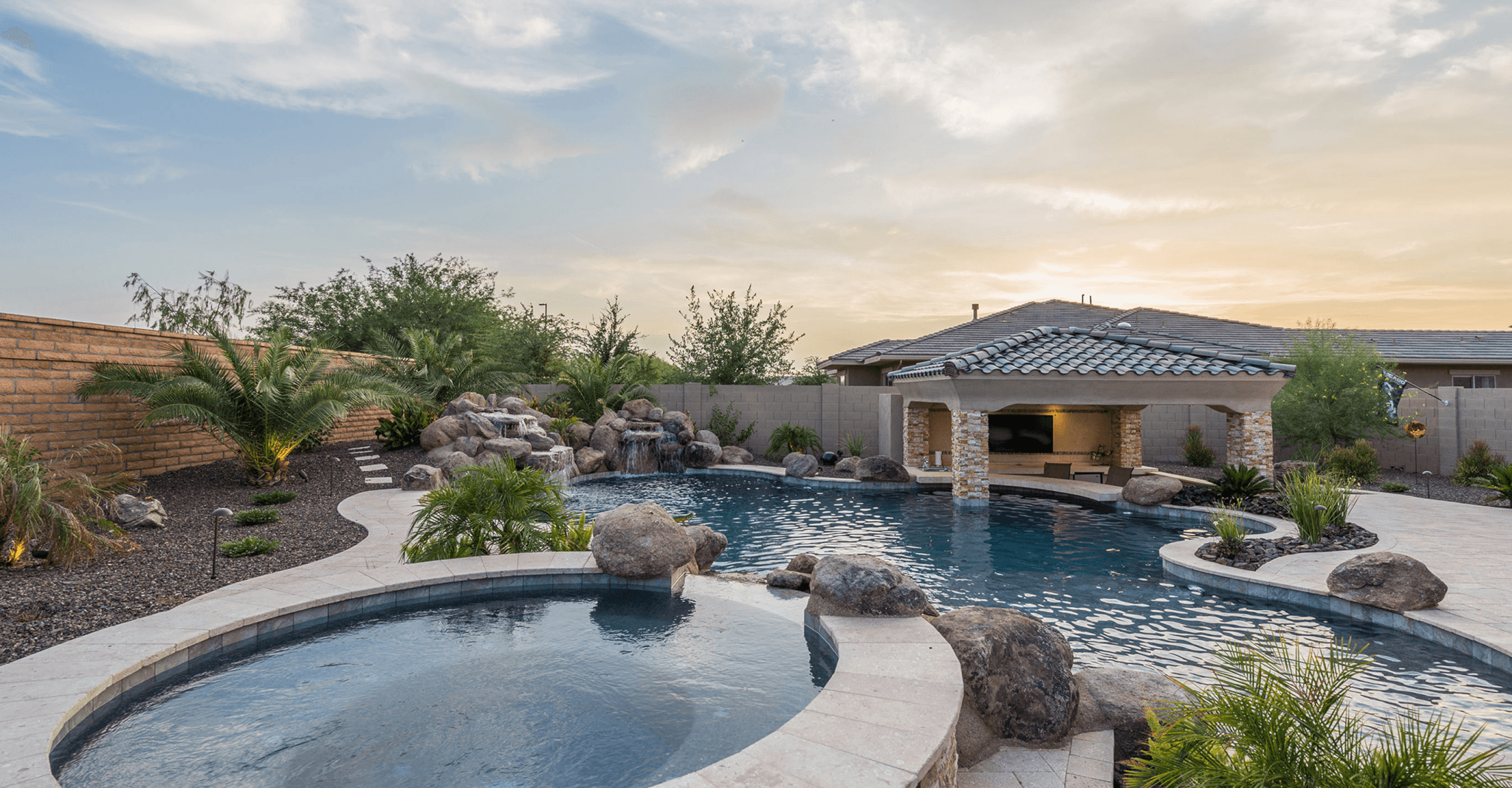
“This luxurious resort aesthetic relies on balancing cool and warm elements: 40% warm tan/light beige from the pavers and block walls, 30% deep cool tones from the dark blue pool water and dark brown/grey boulders, and 30% organic green from the desert-style palms and shrubs.”
The key to making the stone cabana and massive waterfall cohesive is ensuring they pull from the exact same warm tan stone palette.
28. Natural Stone Waterfall Flowing into a Lily Pad Pond
When constructing a natural pond meant to house dark green lily pads, you must design still-water zones away from the multi-tiered stone waterfall. Lilies detest having their leaves constantly splashed or submerged by rushing water. Position your light brown/tan stones to direct the primary current toward the center of the dark pond, leaving the shallow, quiet edges perfectly placid for the aquatic foliage to thrive.
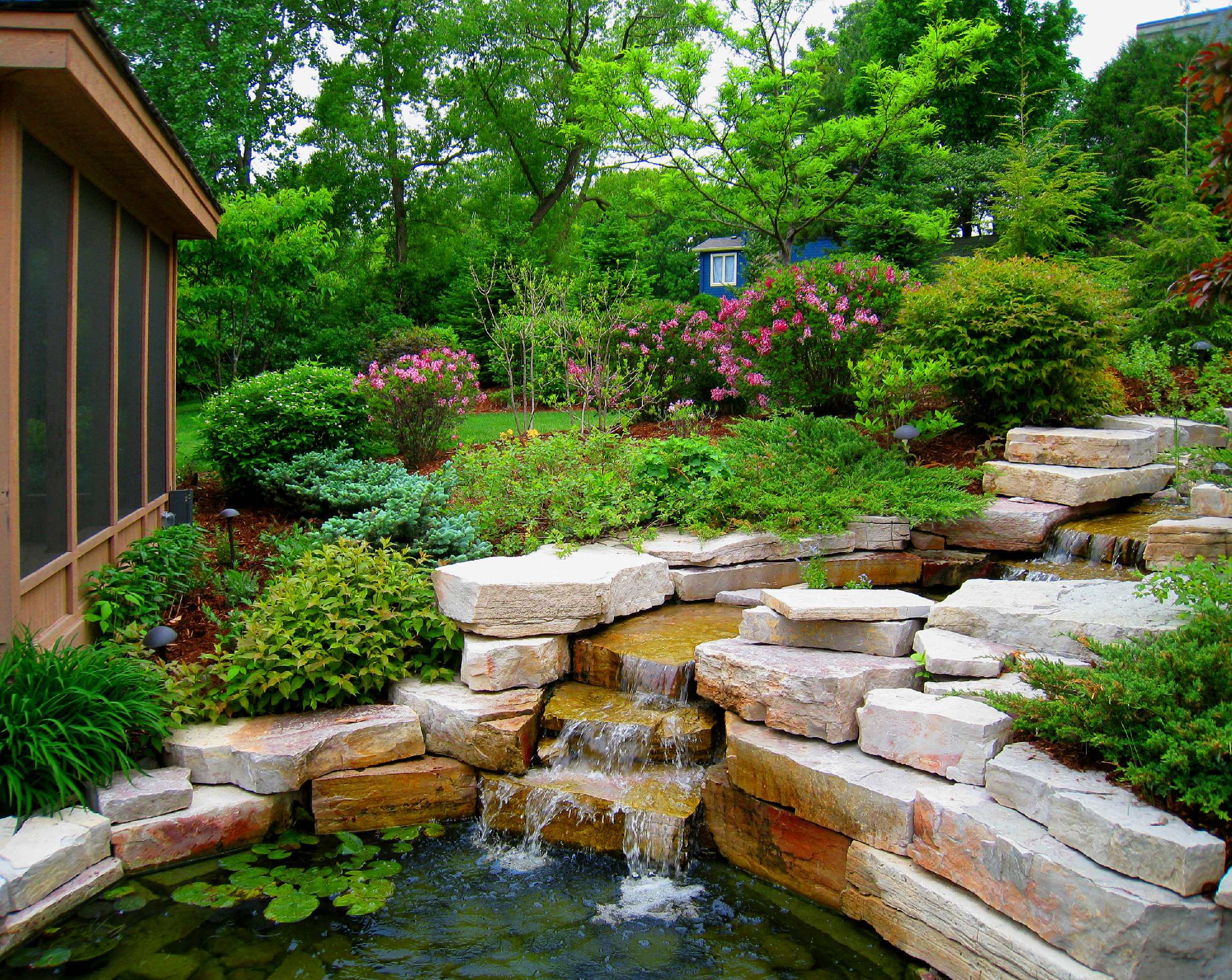
“A lush, tranquil pond heavily surrounded by dense green shrubs and large deciduous trees requires intense autumn maintenance.”
When those leaves drop, they will blanket the dark green water. If left to rot, they produce ammonia which will kill your aquatic plants and turn the water foul. You must install aggressive skimmers and commit to daily netting during the fall to keep this serene, natural setup from turning into a swamp.
29. Terraced Grey Boulders Interspersed with Reddish-Purple Accents
This multi-level landscape succeeds by mixing highly structural terracing with wild, spilling plant life. The irregular grey boulders form strong horizontal retaining walls, but the dense cultivation of varied green foliage and reddish-purple accent plants softens those hard lines completely. By incorporating black metal post lanterns into the organic mix, the design grounds the natural chaos with deliberate, architectural touchpoints.
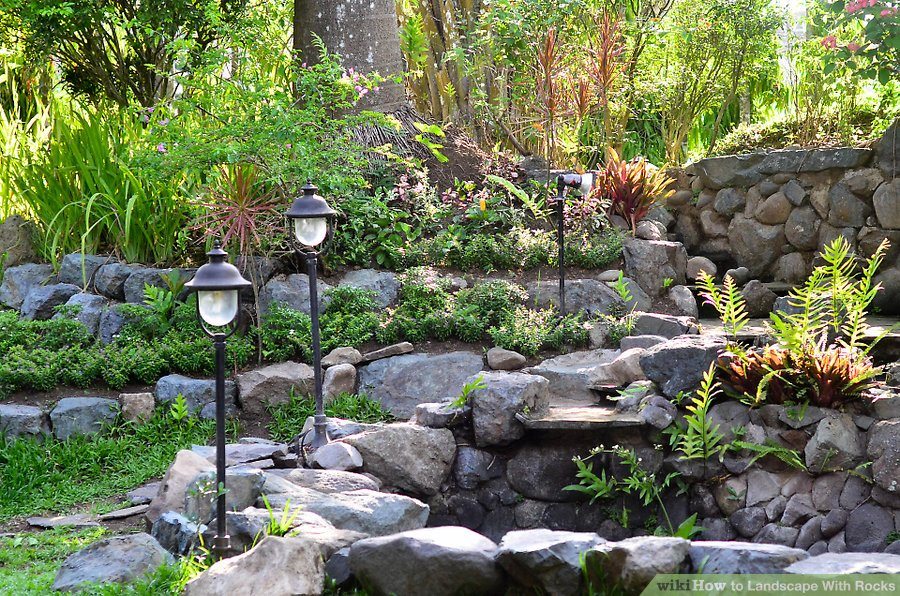
“The reddish-purple foliage is the essential color bridge in this verdant layout.”
Because the grey stone and dark brown earth lean so heavily into cool and neutral tones, the space needs warmth. The vibrant purple plants, acting much like the contrasting ground covers in Idea #26, interrupt the sea of green shrubs and force the eye to move upward through the terraced beds toward the small rock waterfall.
Ground Your Home’s Exterior Story Here
Shifting some dirt and placing the right stone can completely redefine how your property interacts with the natural world around it. Whether you’re cutting in a simple winding path or stacking a massive terraced wall, these natural anchors will outlast passing trends. Make sure to pin your favorite layouts to Pinterest so you have them ready when the delivery truck arrives.