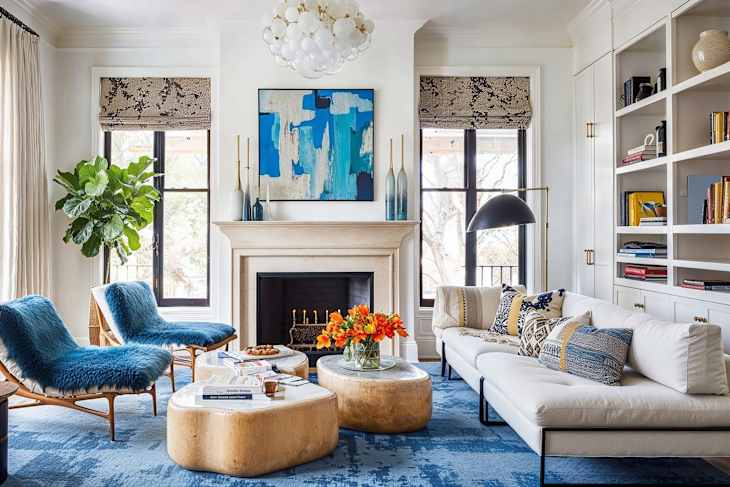
You know that feeling when you finally find the interior style that looks exactly right for your space, but you have no idea how to pull it off? It feels like you need an architecture degree just to get started. After filtering through hundreds of options across direct-from-designer brands and favorites like Article and IKEA, we narrowed it down to 30 ideas that actually deliver. We’re bringing you 30 curated looks that blend architectural principles with real-life design, covering everything from Modern and Scandinavian to bold Eclectic styles. For 2026, it’s all about moving beyond generic trends and embracing thoughtful, intentional design that feels like *you*. 📌 Save this to Pinterest for later — you’ll want to revisit these ideas.
And stay until the end — we break down the most common mistakes that can ruin these looks.
1. Modern Scandinavian Living Area with Wood Accents and Natural Light
This room is a masterclass in balancing warmth and minimalism. The success of this Scandinavian-inspired space hinges on three key elements. First, the limited color palette of white, beige, and light gray creates a serene, uncluttered canvas. Second, the consistent use of light oak—from the armchair frames to the coffee table and window trim—brings in natural texture and warmth, preventing the room from feeling sterile. Finally, the strategic use of soft textiles, like the shaggy rug and sofa throw pillows, adds a layer of cozy, touchable comfort that invites you to relax.
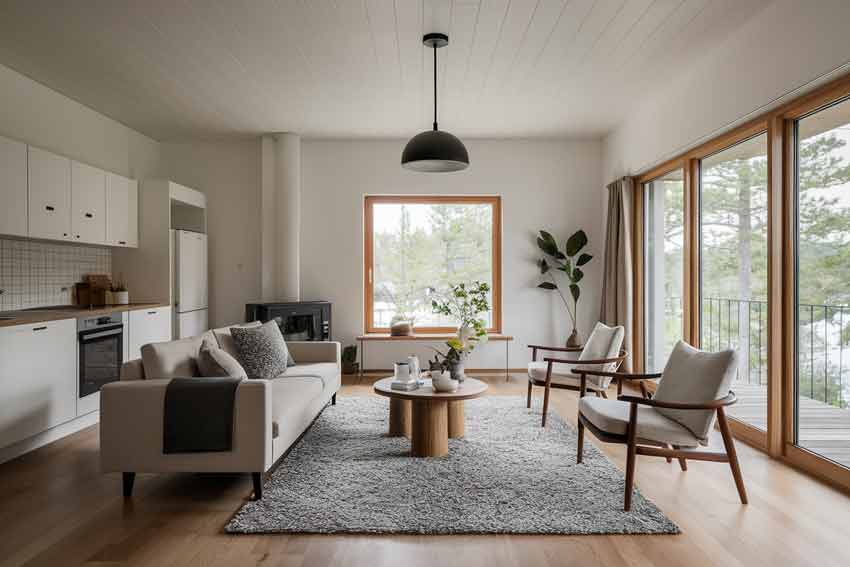
“An open-concept design like this works best in a space that is at least 15 feet by 20 feet, which allows for distinct zones (living, dining, kitchen) without feeling cramped.”
The key ingredient is abundant natural light, so it’s ideal for a room with large windows or sliding doors, preferably south or west-facing. A standard 8- or 9-foot ceiling is fine, but the sense of airiness is amplified with ceilings 10 feet or higher. If your space is smaller, you can get a similar feel by using a smaller sofa and see-through furniture, like an acrylic coffee table, to create an illusion of openness.
2. Modern Minimalist Living Room with Large Glass Sliding Doors
The single most impactful element in this room is the wall of black-framed glass sliding doors. They do more than just let in light; they act as a living piece of art, framing the outdoor view and creating a seamless indoor-outdoor connection. If you took them away, the room would lose its primary architectural feature and its sense of expansive, airy sophistication. The dark frames provide a bold graphic contrast to the light walls and white sectional, anchoring the entire design and proving that minimalism can still have a strong, dramatic focal point. Everything else in the room is chosen to support this feature, not compete with it.
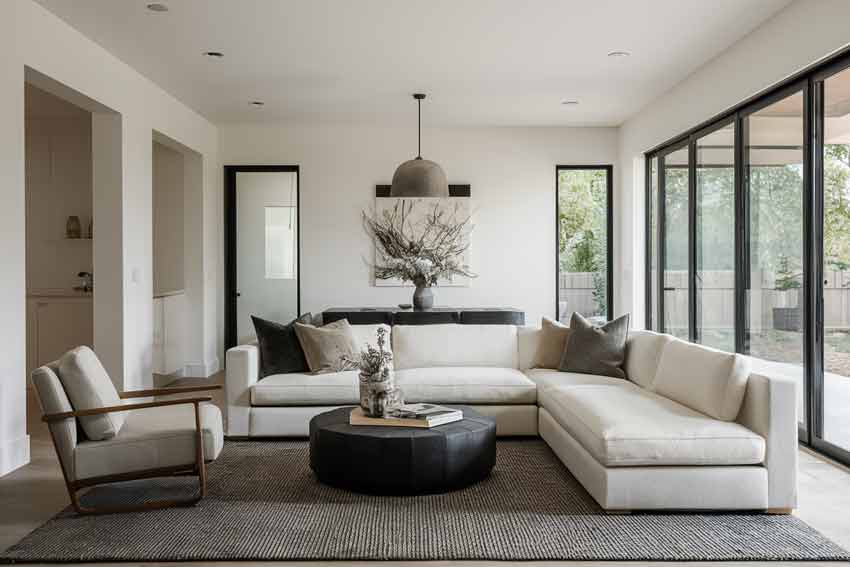
“When working with a neutral, minimalist palette, texture becomes your best friend.”
To avoid a flat, boring look, ensure you have at least five different textures in the room. In this space, you can see the smooth leather of the sofa, the weave of the striped rug, the grain of the wood console, the matte finish on the coffee table, and the subtle texture of the throw pillows. This layering of textures adds visual weight and interest without adding clutter or color, making the space feel rich and thoughtfully curated.
3. Bright Living Room with an Abstract Blue Rug
This room’s vibrant energy comes from a simple but effective formula: 60% neutral foundation + 30% bold color + 10% organic texture. The neutral base is the white walls, white sectional, and built-in shelving, which create a bright and airy backdrop. The bold color comes from the abstract blue rug and the matching faux fur chairs, providing a powerful and cohesive visual punch. Finally, the organic texture is introduced through the wooden coffee tables and decorative elements, grounding the space and adding a touch of natural warmth. You could easily swap the blue for emerald green or a deep magenta and still achieve the same balanced, artistic effect.
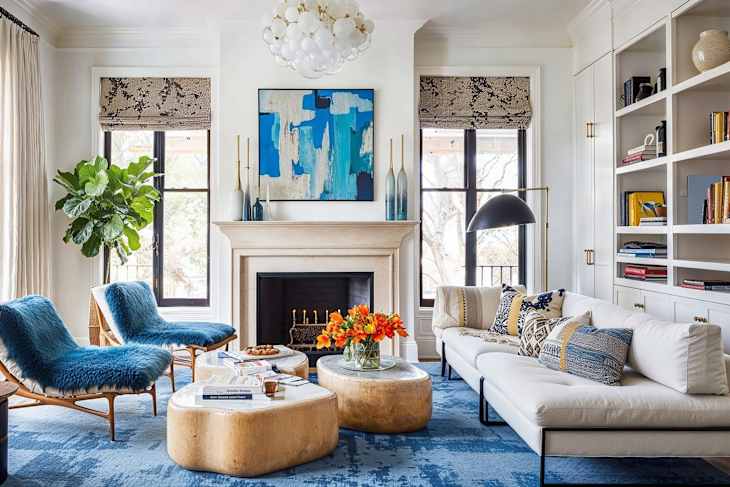
“A white sofa is a beautiful, versatile choice, but let’s be honest: it’s not for everyone.”
If you have kids, pets, or enjoy red wine on the couch, a pure white fabric can be a source of constant anxiety. Performance fabrics can help, but they aren’t invincible. The bold blue chairs are fantastic, but faux fur, especially in a vibrant color, can be prone to matting and may require regular fluffing and specific cleaning methods. Before committing to this light and bright look, consider your lifestyle and how much maintenance you’re willing to undertake.
4. Bold Black and White Formal Living Room with Gold Accents
Creating this level of drama requires a commitment to high-contrast elements and luxe finishes. Here’s a potential cost breakdown for recreating this look with quality pieces.
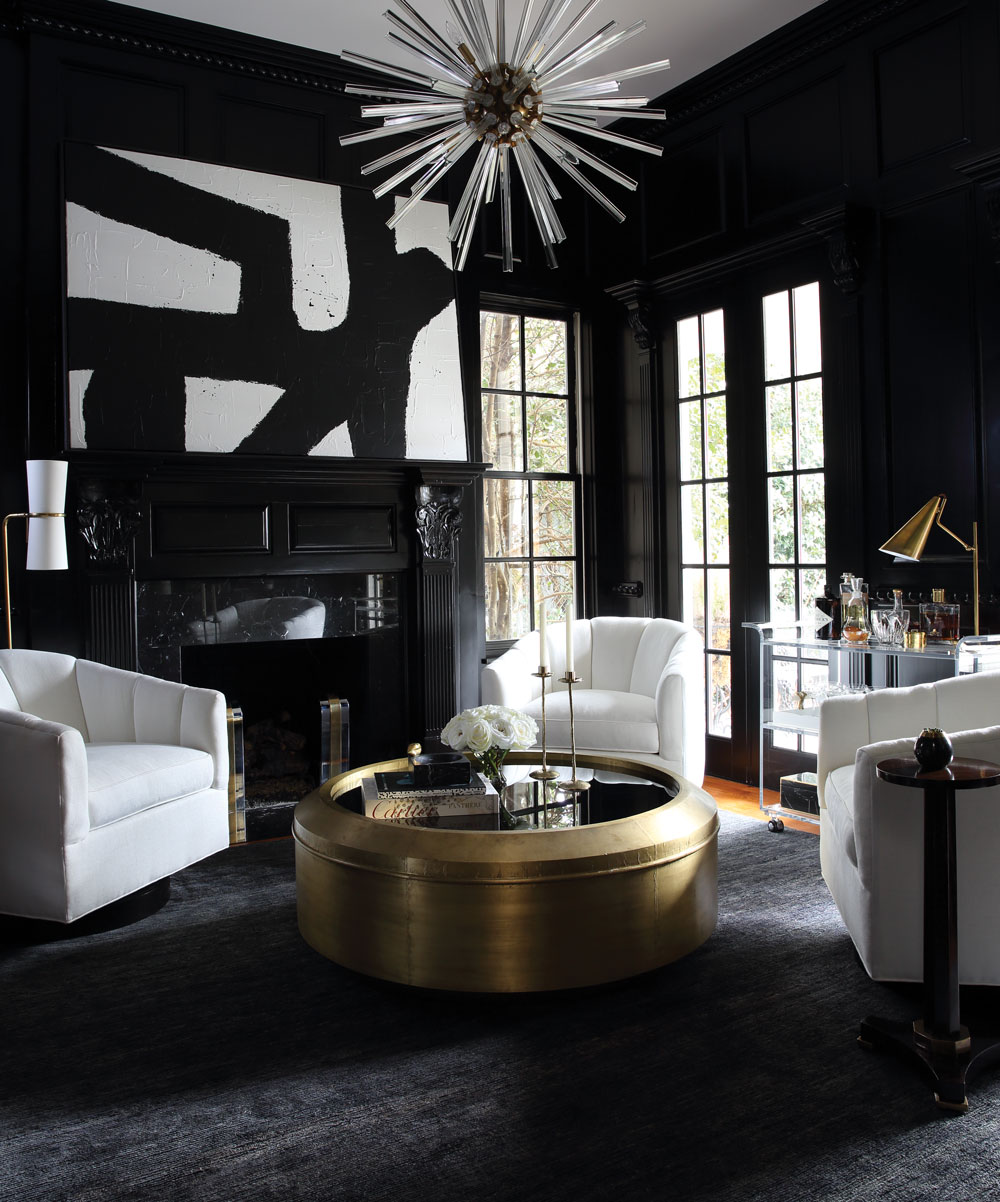
“Wall Treatment: Black paneling and paint: $1,500 – $4,000
Lighting: Crystal ”
- Wall Treatment: Black paneling and paint: $1,500 – $4,000
- Lighting: Crystal sputnik chandelier: $800 – $2,500
- Furniture: Two white swivel armchairs & gold coffee table: $2,500 – $6,000
- Artwork & Decor: Large abstract painting and accessories: $700 – $3,000
- Textiles: Dark patterned rug: $500 – $1,500
- TOTAL: $6,000 – $17,000
Budget alternative: Achieve a similar vibe for around $3,000 by painting a feature wall black, finding a bold chandelier from a big-box store, and sourcing armchairs and tables from Wayfair or Article.
This room works because it masters the art of contrast and scale. The black paneled walls create a moody, enveloping feeling, which is then brilliantly pierced by the bright white upholstery of the chairs and the sharp lines of the abstract art. This isn’t just black and white; it’s a dynamic visual tension. The scale of the sputnik chandelier and the large artwork is crucial; smaller pieces would be lost against the powerful backdrop. The gold and crystal accents then inject a necessary layer of warmth and reflective light, keeping the space from feeling like a two-dimensional photograph.
5. Modern Living Room with an Emerald Green Sofa
You don’t need a massive budget to get this lively, modern look. The key is to anchor the room with a statement sofa and a graphic rug, and you can find great options at lower price points. Look for a green velvet or fabric sofa from places like Wayfair or Article for under $1,500. A similar black and white geometric rug can be found at IKEA, Rugs USA, or even Target for $200-$400. The long media console can be hacked using IKEA’s BESTÅ system for a custom look under $500. Fill the shelves with personal items, thrifted decor, and affordable prints from Etsy to complete the vibe for well under $3,000 total. The bold green sofa in this room makes a statement, but for a different feel using the same principles, check out the vibrant blue in Idea #3.
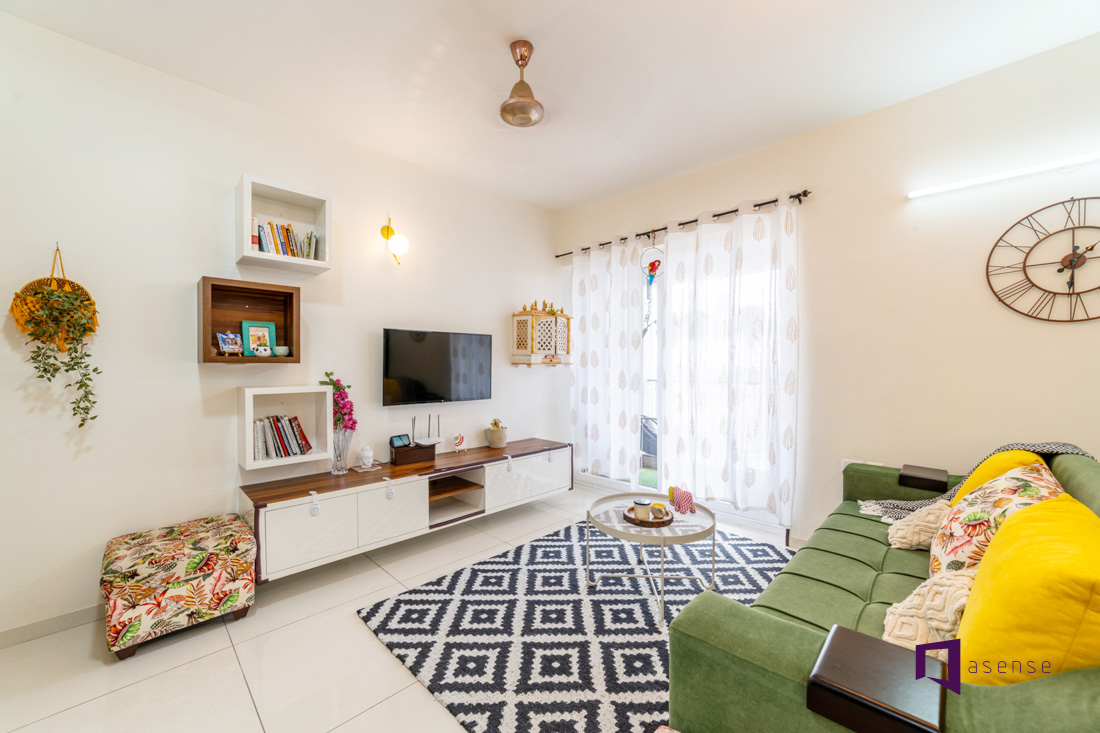
“When using open shelving, the secret to a curated look is the ‘two-thirds rule.’ Only fill about two-thirds of the available shelf space.”
This negative space is just as important as the objects themselves, as it allows each item to breathe and prevents the wall from looking cluttered. Also, vary the height and shape of your objects. Mix vertical items (like books and tall vases) with horizontal items (like stacked books or trays) and sculptural objects to create a dynamic, visually interesting display. It’s not about having more stuff; it’s about arranging it with intention.
6. Airy Living Room with a Glass-Paneled Staircase
A staircase with a clear glass railing is a stunning feature that promotes an open, airy feel, but it comes with a significant maintenance commitment. Glass shows every single fingerprint, smudge, and dust particle. If you have children or pets, you’ll be cleaning it constantly. A weekly wipe-down with a quality glass cleaner and a microfiber cloth is the bare minimum. You also have to be mindful of scratches, which can be difficult or impossible to buff out. Sheer white curtains are beautiful but act as magnets for dust and pet hair, requiring regular laundering to stay bright and fresh—something to consider if you have allergies.
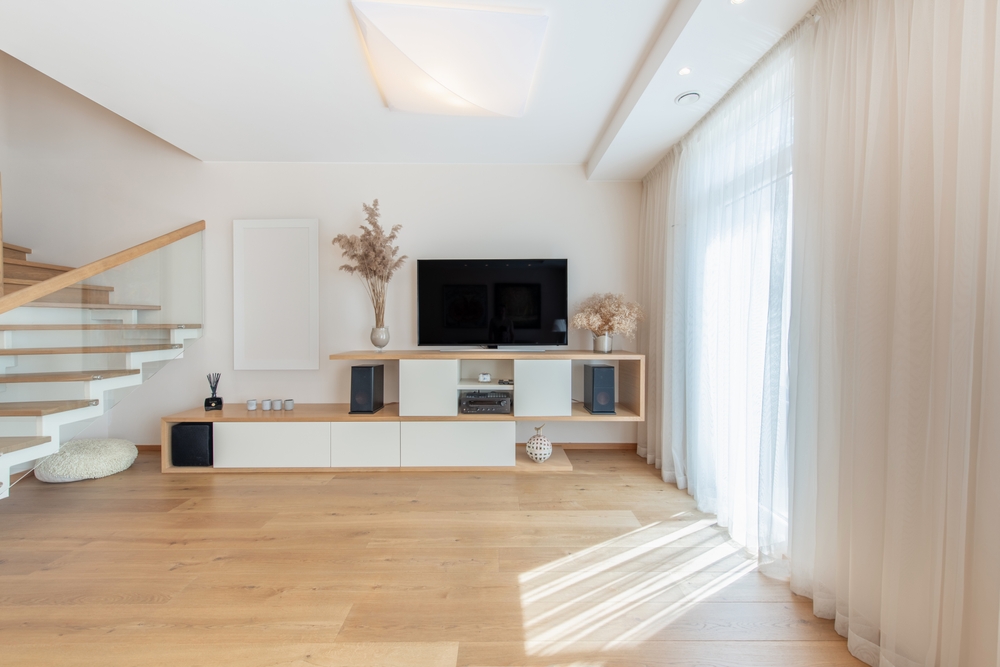
“The clear glass railing on the staircase is the undeniable star of this space.”
It’s a brilliant architectural choice that solves a common problem: how to have a staircase in an open-plan room without it feeling heavy or obstructive. By using glass, the design maintains a completely uninterrupted sightline from the living area to the wall of sheer curtains, maximizing the sense of space and light. Swapping it for a traditional wood or metal railing would have immediately made the room feel smaller and more divided. It’s a high-impact, minimalist feature that elevates the entire aesthetic.
7. Open-Plan Bedroom and Living Area with Ocean View
This space feels so serene and luxurious because of its masterful use of tone-on-tone color and unobstructed sightlines. By sticking to a tight palette of white, cream, and pale beige, the design avoids any visual jarring, directing your attention outward to the panoramic ocean view. The low-profile partition wall is a genius move; it defines the bedroom and living zones without breaking the open feeling. It cleverly houses the fireplace and TV while keeping them below eye level, ensuring the view remains the undisputed focal point of the room. This commitment to a low, horizontal visual plane is key to its success.
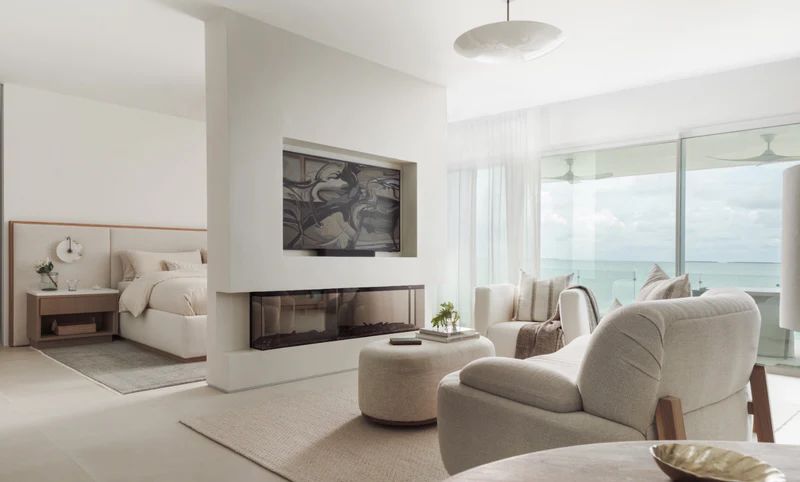
“While a horizontal, glass-fronted fireplace looks incredibly sleek, its heat output and functionality can be different from a traditional fireplace.”
Many of these linear models are designed more for ambiance than for powerful heating, so don’t count on it as your primary heat source in a cold climate. Additionally, integrating a television directly above a fireplace—even a low-heat one—requires careful planning and professional installation to manage heat exposure, which can damage the electronics over time. It’s a high-style feature that comes with high-stakes installation requirements.
8. Modern Minimalist Living Room with an Open-Tread Staircase
This kind of open, multi-level design thrives in a space with high ceilings, ideally 10 feet or more, to accommodate the open-tread staircase and prevent the upper level from feeling cramped. The main living area should have a footprint of at least 150-200 square feet to comfortably fit a large sofa, coffee table, and console without impeding the flow around the staircase. The success of the look, similar to Idea #6, depends heavily on the feeling of spaciousness created by the glass railings and open risers, which is diminished in smaller or more enclosed rooms.
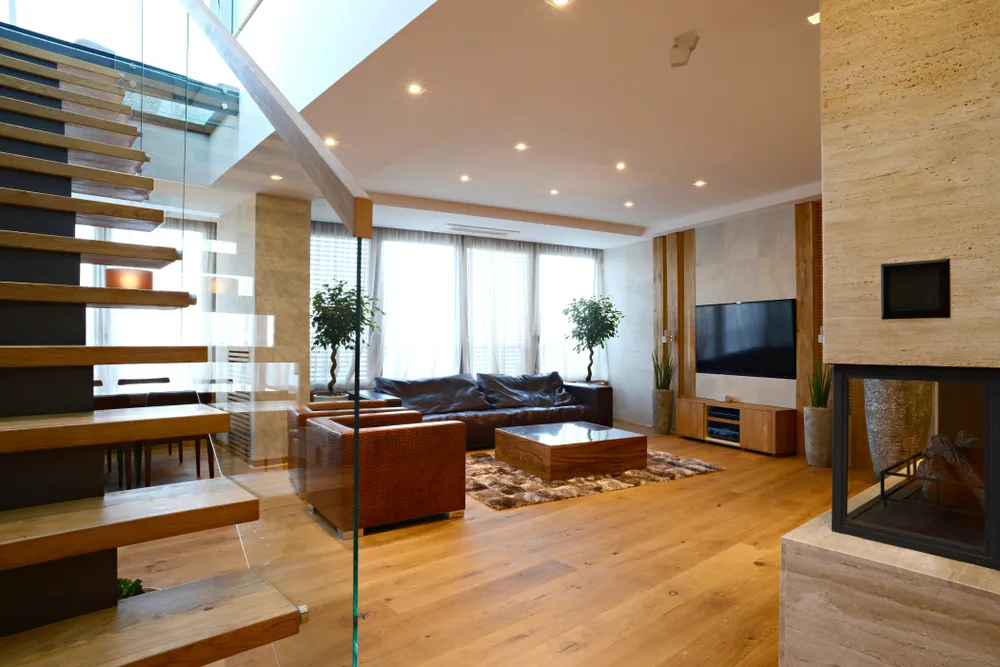
“Love this look but not the custom price tag?”
You can capture the essence for less. Start with light wood laminate flooring from a big-box store like Lowe’s or Home Depot—it’s durable and affordable. Find a dark leather or faux-leather sofa on Facebook Marketplace; they are incredibly common and often available for just a few hundred dollars. Instead of a custom stone fireplace, look into realistic-looking stone veneer panels, which can be a DIY project and cost a fraction of the price of full masonry work. This allows you to get that textural, high-end feel without the architectural commitment.
9. Open-Concept Living Room with a Concrete Ceiling
The slightly raw, unfinished look of elements like a concrete ceiling is part of a larger trend called “Industrial Chic” that has been popular for a while but is now evolving. For 2026, it’s less about a cold, factory-like aesthetic and more about blending those raw materials with soft, inviting textures. The concrete ceiling and dark wood floors provide the industrial edge, but the plush white sofa, soft rug, and abundant green plants make the space feel human and livable. It’s a response to overly polished, cookie-cutter designs, celebrating a home’s structural bones while ensuring it’s still a comfortable refuge.
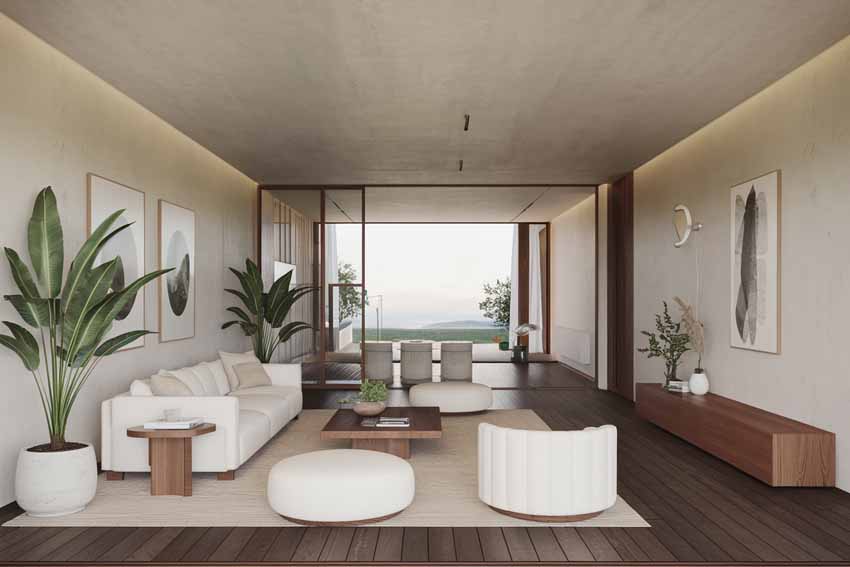
“When you have a dominant architectural feature like a concrete ceiling or dark wood floors, lighting is everything.”
Integrated LED strip lighting along the ceiling edge, as seen here, is a fantastic way to wash the walls with light and prevent the ceiling from feeling heavy or oppressive. It provides a soft, ambient glow that you can’t get from standard overhead fixtures. When planning your lighting, think in layers: ambient (like the strips), task (a reading lamp by the sofa), and accent (a spotlight on a piece of art). This layered approach is what gives a room depth and mood.
10. Symmetrical Living Room with a Dark Floor-to-Ceiling Fireplace
Before you commit to this beautifully balanced design, run through this quick checklist to make sure it’s the right fit for your space and lifestyle.
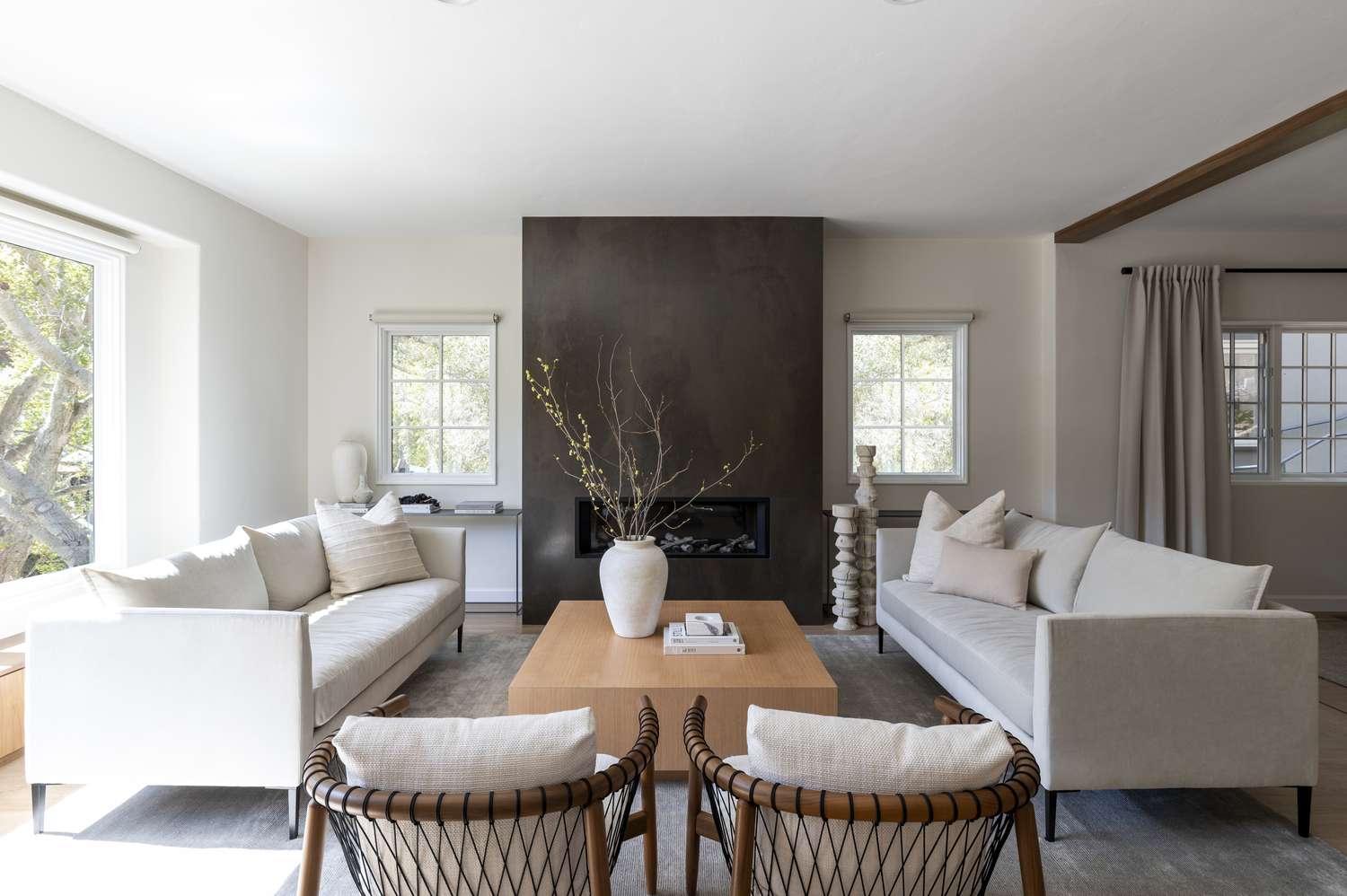
“Symmetry Check: Does your room have a central focal point, like a fireplace or a large window, that you can build a symmetrical layout around?”
This look struggles in awkward or off-center rooms.
Traffic Flow: Will placing two sofas opposite each other create a bottleneck? Ensure you have at least 3-4 feet of clear walking space around the conversation area.
Light-Colored Upholstery: Are you prepared for the upkeep of off-white sofas? Consider performance fabrics if you have pets, children, or a no-shoes-off policy.
The calming effect of this room is achieved through classic design principles, primarily symmetry and balance. Placing two identical sofas directly facing each other creates a formal, mirrored layout that is inherently pleasing to the eye. The dark, monolithic fireplace acts as a powerful central anchor, grounding the entire arrangement. The design then introduces gentle contrast through texture and tone: the soft, light upholstery against the hard, dark fireplace, and the natural grain of the light wood coffee table and wicker chairs. It’s a structured yet inviting space.
11. Modern Formal Living Room with Marble and Slatted Wood Walls
This is a high-luxury look with high-maintenance materials. The black and gold veined marble is stunning, but it’s a natural stone that can be porous. Any spills, especially acidic ones like wine or citrus, must be wiped up immediately to prevent etching and staining. It requires periodic sealing (likely annually) to protect its surface. Gold metal accents are gorgeous but can show fingerprints and may require a special cleaner to avoid stripping the finish. The vertical slatted wall panels can be a dust trap; you’ll need to regularly vacuum them with a brush attachment or wipe them down panel by panel.
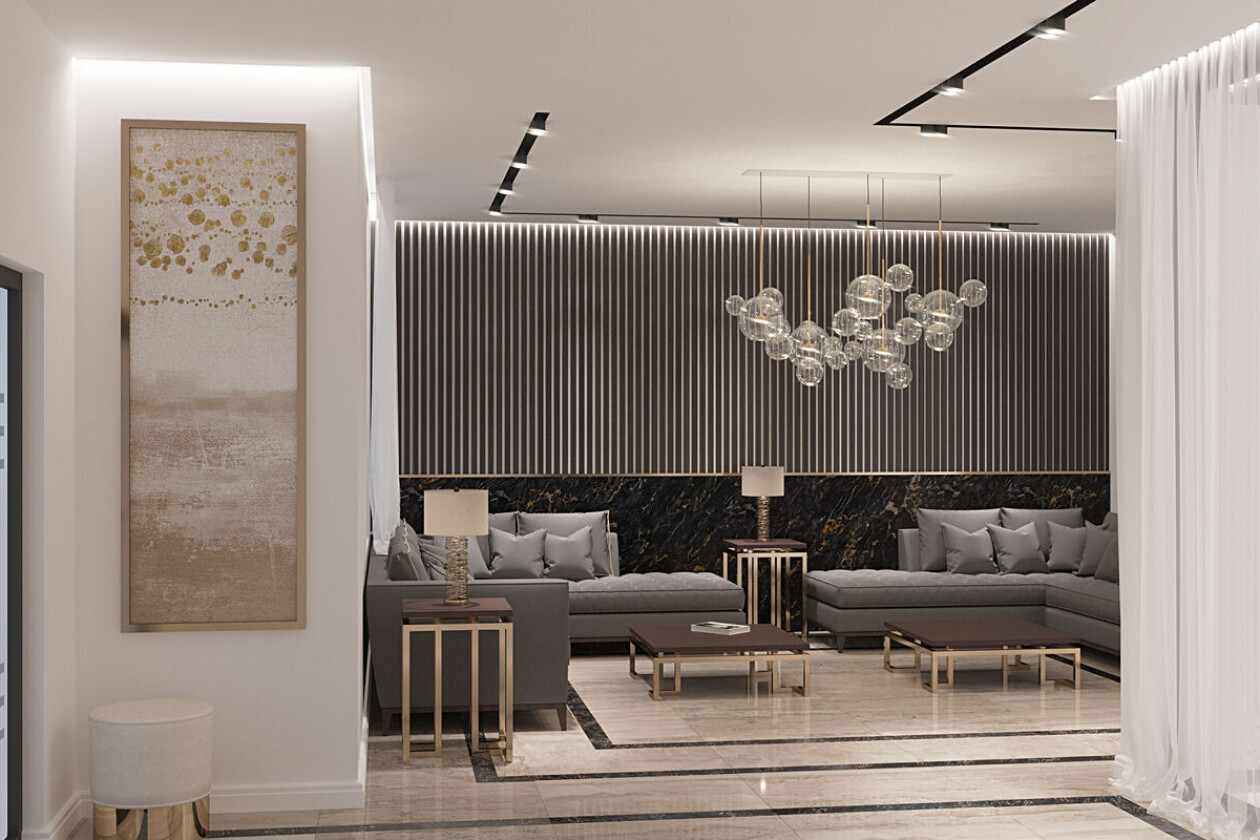
“The formula for this room’s sophisticated vibe is 50% plush texture + 30% dramatic pattern + 20% sleek surface.”
The plush texture comes from the large grey sectional and ottoman, which provide a soft, comfortable foundation. The dramatic pattern is delivered by the gold-veined marble wall, which serves as the room’s main focal point and art piece. The sleek surfaces—the slatted walls, gold trim, and spherical glass chandelier—add a layer of modern, reflective polish. This balance ensures the room feels luxurious without being cold, and modern without being sterile.
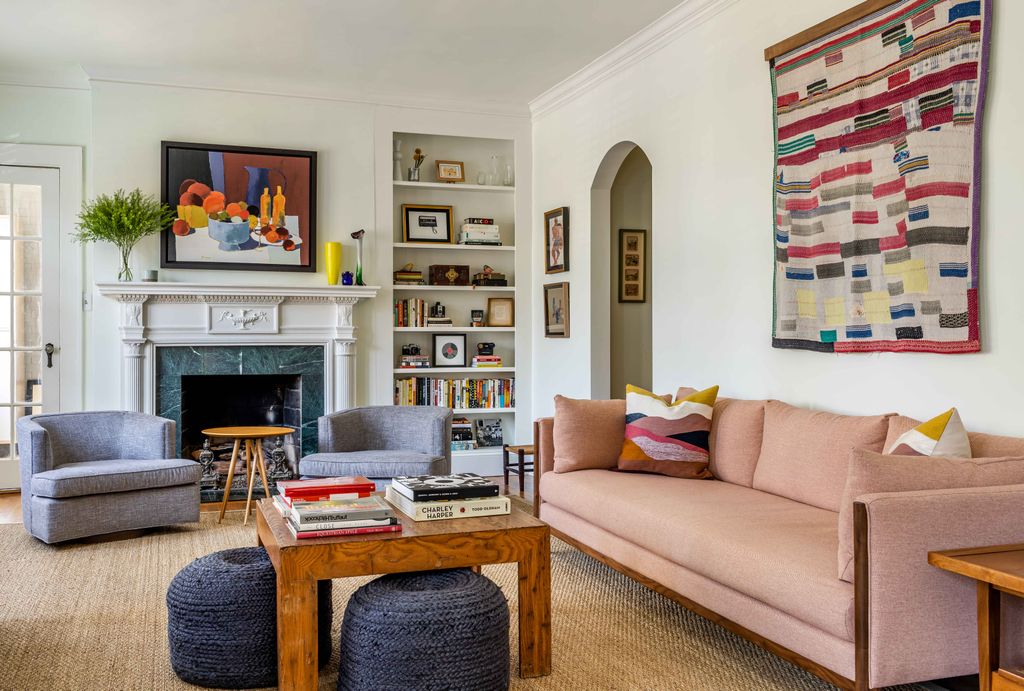
12. Eclectic Living Room with a Pink Sofa and Arched Doorway
The single element holding this wonderfully eclectic room together is the large, patterned textile wall hanging. In a space with so many competing colors, textures, and styles—the ornate fireplace, the modern pink sofa, the rustic coffee table, the traditional armchairs—that single piece of art is the key. Its abstract pattern and multi-colored palette give every other element in the room permission to exist together. It sets the artistic,
13. Cozy Modern Living Room with an Ochre-Painted Ceiling
Painting a ceiling a bold color, often called a “fifth wall,” is a high-impact move. Here’s a quick guide to getting it right.
- Prep is everything. Move everything out of the room or cover it meticulously with plastic sheeting. Use high-quality painter’s tape to create a crisp line where the ceiling meets the walls. (Time: 2 hours)
- Prime first. Especially when going from white to a deep, saturated color like ochre, a tinted primer is essential for even coverage and true color. (Time: 2-3 hours, including dry time)
- Cut in carefully. Use a 2.5-inch angled brush to paint a 3-inch band around the perimeter of the ceiling. This gives you a clean edge to roll up to. (Time: 1 hour)
- Roll in sections. Using a roller with an extension pole, work in 3×3 foot sections, keeping a wet edge to avoid lap marks. Apply two coats for a rich, consistent finish. (Material Cost: $75-$150 for paint, primer, and supplies)
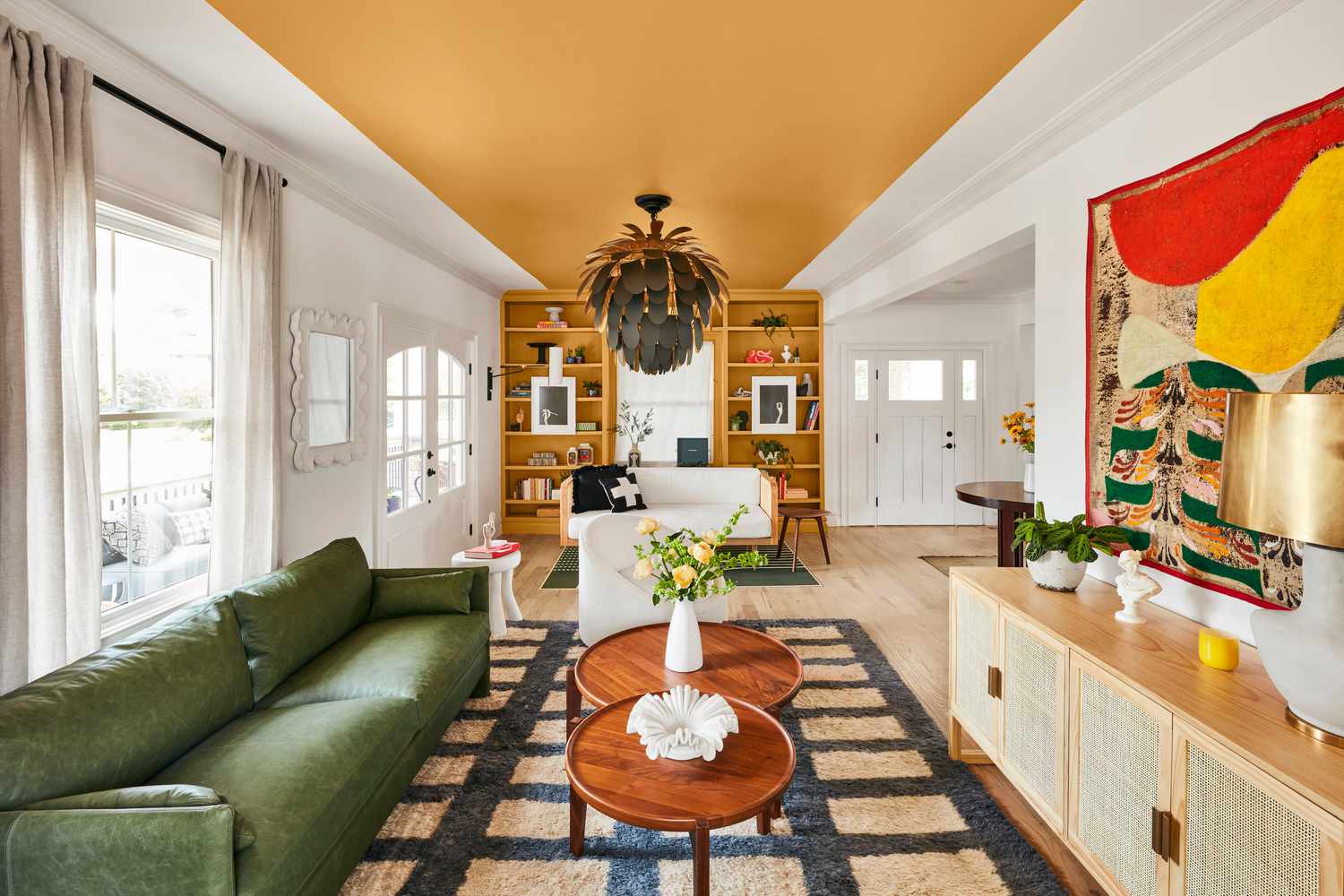
“This room feels so unique because it breaks a major design “rule” by painting the ceiling a dark, warm color.”
This choice instantly makes the room feel cozier and more intimate, drawing the eye upward to the sculptural chandelier. The ochre color is then smartly repeated in the built-in shelving, creating a cohesive thread that ties the room together. This repetition, combined with the contrasting coolness of the green sofa, creates a dynamic color story that is both daring and perfectly balanced. This isn’t a chaotic room; it’s a carefully orchestrated collection of bold choices.
14. Minimalist Japanese-Inspired Room with Shoji Screens
The serene feeling of this space comes from a strict visual recipe: 80% natural materials + 15% neutral color + 5% curated objects. The vast majority of the room is composed of light wood (floors, shelves, screens) and rice paper, creating an organic, warm envelope. The neutral color comes from the white ceramic bowls and off-white walls, providing a clean, quiet backdrop. Finally, the small percentage of curated objects—the black kettle, the green stone—are given immense visual power because they are so few. This formula is all about restraint and an appreciation for the inherent beauty of the materials.
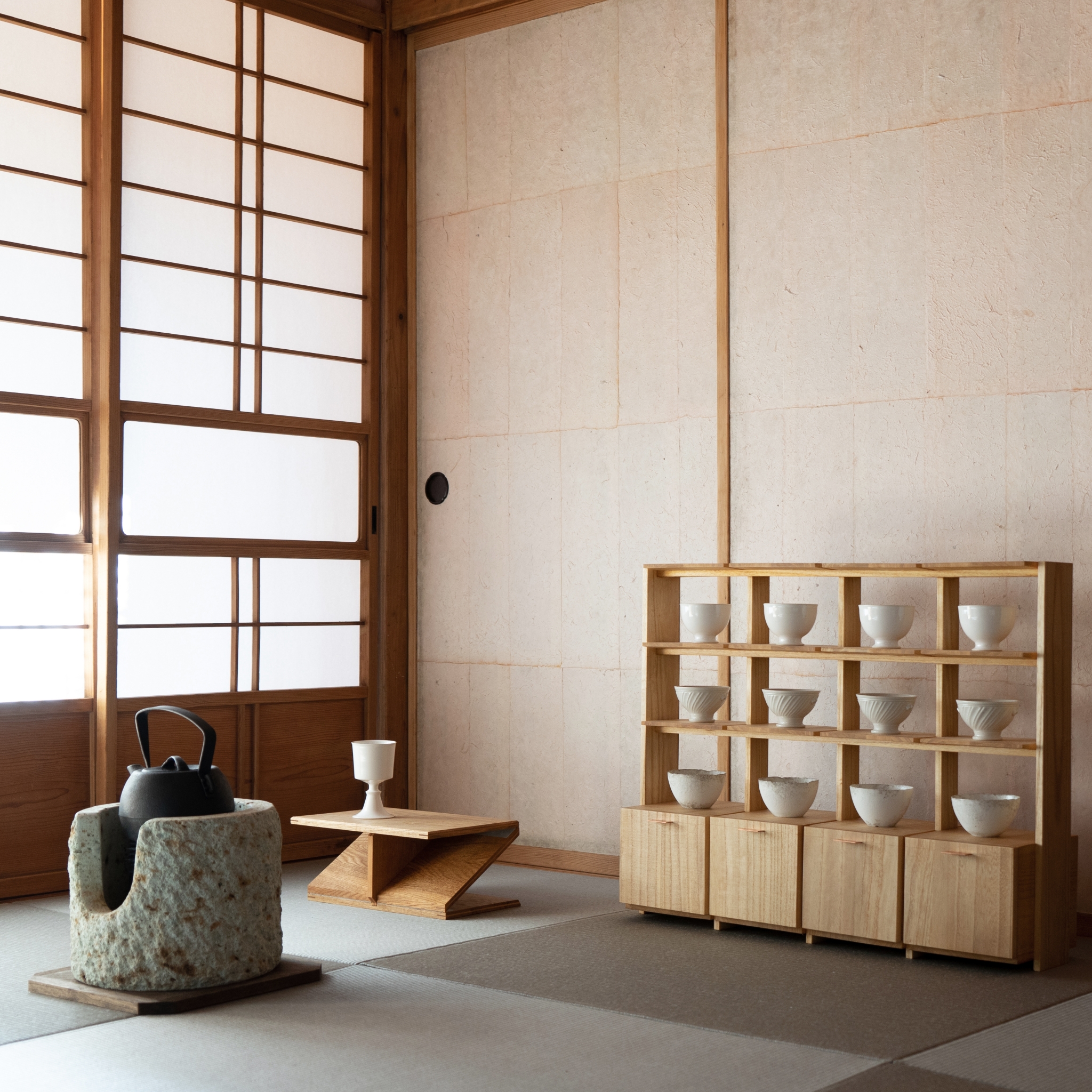
“This look is beautiful, but it demands a certain lifestyle.”
Traditional shoji screens made with rice paper are delicate. They can be punctured or torn easily and can stain from moisture, so they are not ideal for homes with active children or pets. Tatami mat flooring is softer than wood but requires specific care; it should be vacuumed gently in the direction of the weave and never cleaned with harsh chemicals. The minimalist aesthetic also means there’s nowhere to hide clutter. To maintain the calm, you must be committed to keeping surfaces clear and possessions stored away.
15. Cozy Bohemian Airstream Interior with Abundant Plants
You don’t need to own an Airstream to get this cozy, bohemian vibe. This look is perfect for any small space, like a guest nook, a den, or even a studio apartment. The key is leaning into the coziness instead of fighting it. Find a compact sofa or loveseat in a rich color like teal or rust on Facebook Marketplace. Load it up with patterned pillows from Target or HomeGoods. Build simple, shallow bookshelves using affordable pine boards from a hardware store. Finally, become a plant parent! Visit your local nursery or even the grocery store for a variety of easy-care plants like pothos and snake plants to bring life and color into the space for just a few dollars each.
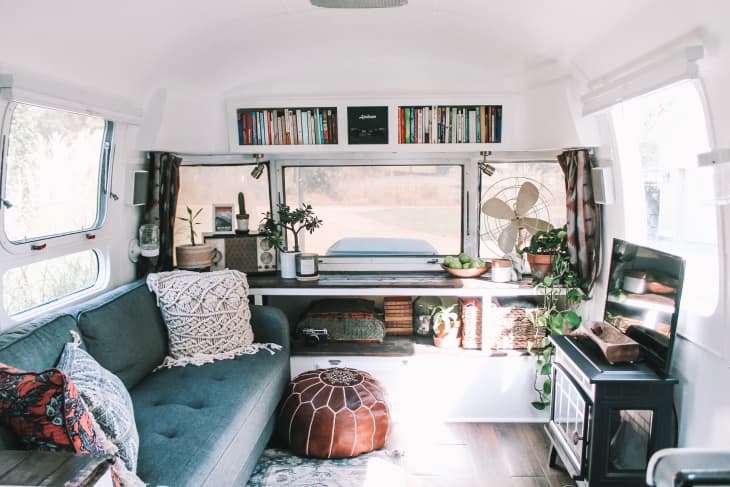
“that makes this space feel truly special and alive is the abundance of plants.”
Take away the greenery, and you’d have a cute, but fairly standard, small living area. The plants transform it. They blur the lines between inside and out, add vibrant color and organic texture against the white and metallic shell of the Airstream, and contribute to the overall feeling of a personal, thriving sanctuary. It proves that sometimes the most impactful design element isn’t a piece of furniture or a paint color, but something living and growing.
16. Modern Loft Living with Integrated Wood Shelving and a Mezzanine
A mezzanine design is only feasible in a space with significant vertical height. You need a minimum ceiling height of 14-15 feet to make this work comfortably, allowing for at least 6.5-7 feet of clearance on both the lower level and the mezzanine itself. Anything less, and both levels will feel cramped and claustrophobic. The footprint of the main area should be generous enough to not feel overshadowed by the structure above, typically at least 300 square feet. This design is perfect for studio lofts or new builds where you can plan the vertical space from the outset.
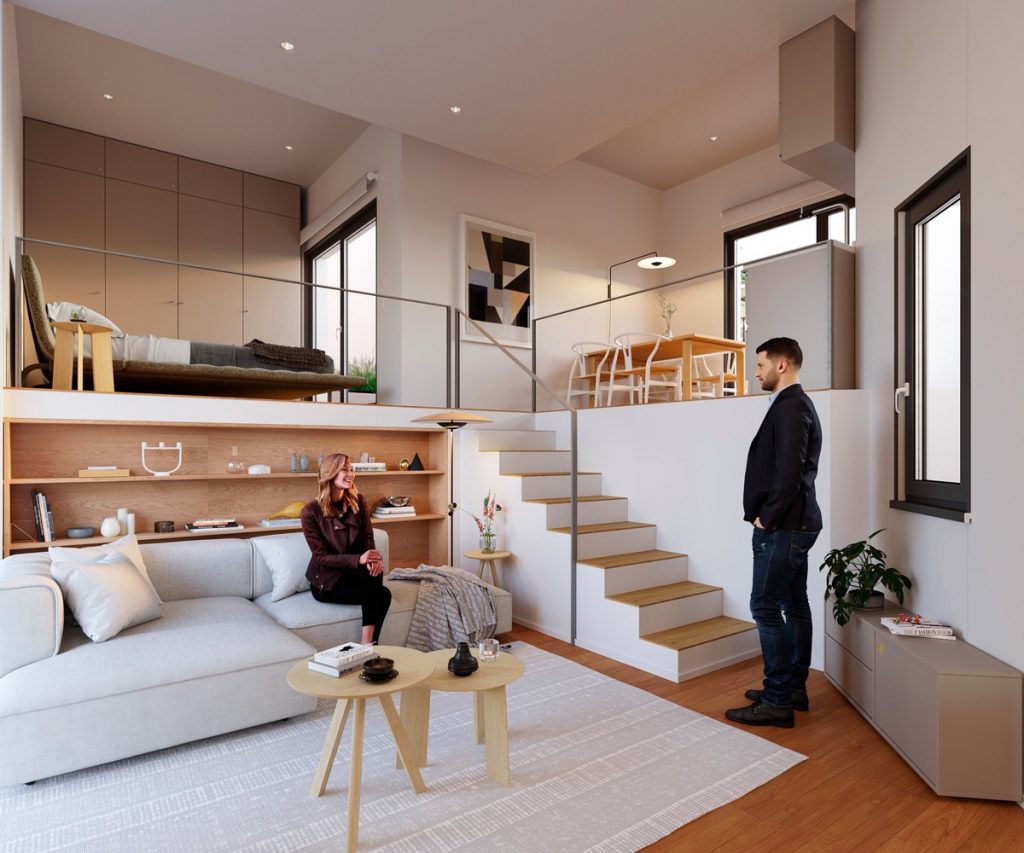
“When you have a large, dominant feature like the integrated wooden shelving unit, don’t feel like you need to fill every single cubby.”
The empty spaces are crucial for creating a balanced look. Think of it as composing a piece of art. Group objects in odd numbers (threes or fives are best) and vary the scale. Place a large vase in one cubby and a small stack of books in another. The goal is to create visual rhythm, not just to store things. This approach ensures the shelving unit remains an architectural feature rather than just a cluttered storage wall.
17. Sunlit Velvet Channeled Sofa in a Moody Luxury Living Room
This room’s success lies in its sophisticated play on contrasts. It’s a masterful blend of light and dark, soft and hard. The plush, inviting texture of the light beige channel-tufted sofa is dramatically juxtaposed with the dark green floor and the sharp vertical lines of the fluted screen. The warm glow from the golden pendants and the soft light filtering through the sheer curtains create a sense of intimacy and warmth, preventing the dark, moody elements from feeling cold or somber. It’s a dynamic balance that feels both cozy and incredibly glamorous at the same time.
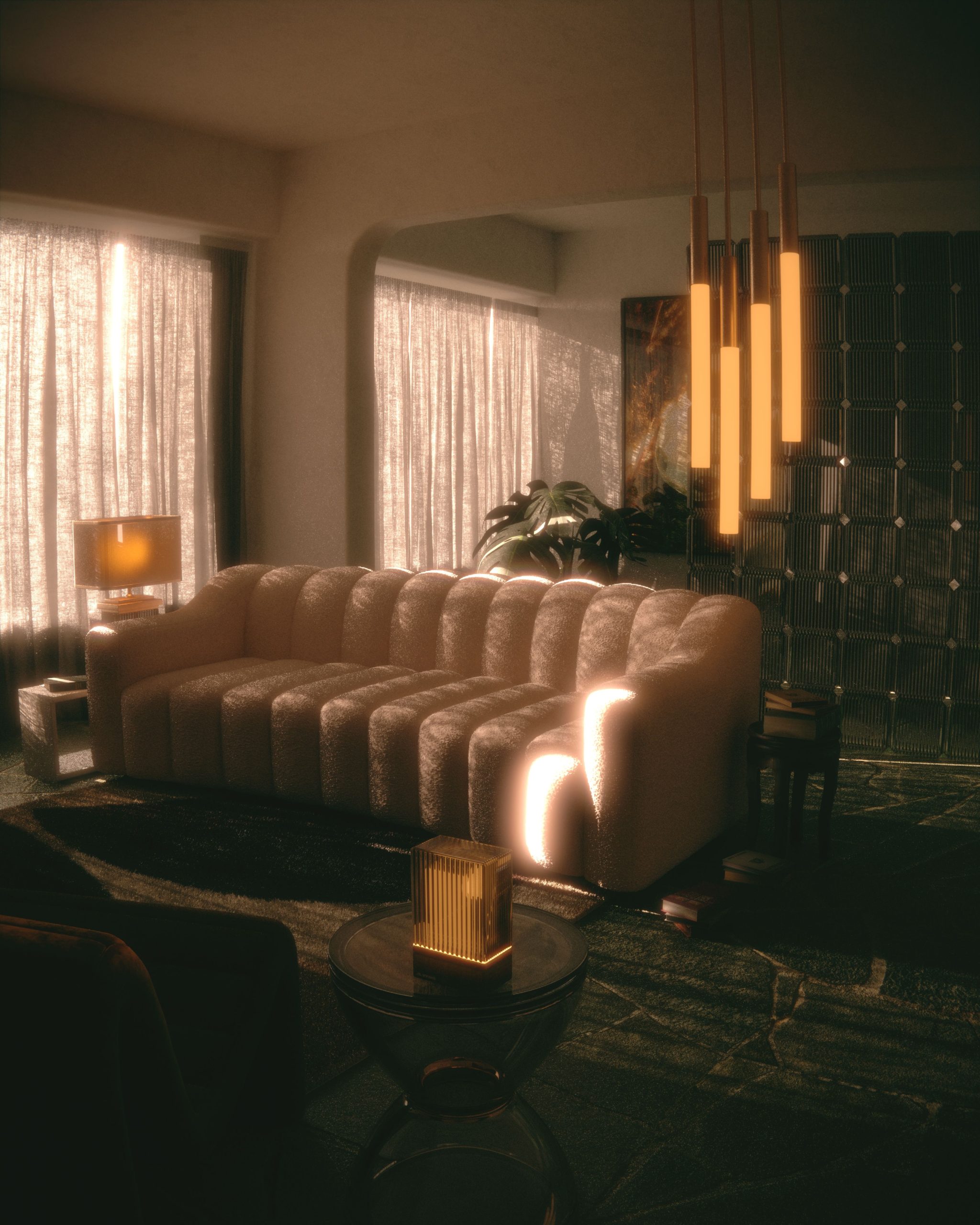
“A channel-tufted sofa is a stunning statement piece, but the deep channels that give it its signature look can be difficult to clean.”
Dust, crumbs, and pet hair love to settle in those grooves. You’ll need a vacuum with a good upholstery and crevice tool, and you’ll have to use it regularly. The velvet fabric, while luxurious, can also be prone to bruising or marking, and requires specific care. It’s a high-fashion choice that, like a silk blouse, requires a bit more mindfulness and maintenance than a simple cotton t-shirt.
18. Cozy Kitchen with Floral Ceiling and Wooden Cabinets
The floral wallpaper on the ceiling is without a doubt the single element that defines this kitchen’s personality. Without it, you’d have a nice, classic kitchen with warm wood cabinets. With it, you have a joyful, eclectic, and utterly memorable space. It’s a bold and unexpected choice that shows a willingness to break from convention and infuse the room with personal style. It draws the eye upward, making the room feel special, and provides the colorful palette that the rest of the accents—the pink knobs, blue table, and vibrant dishes—can play off of. It’s the move that turns the room from standard to showstopper.
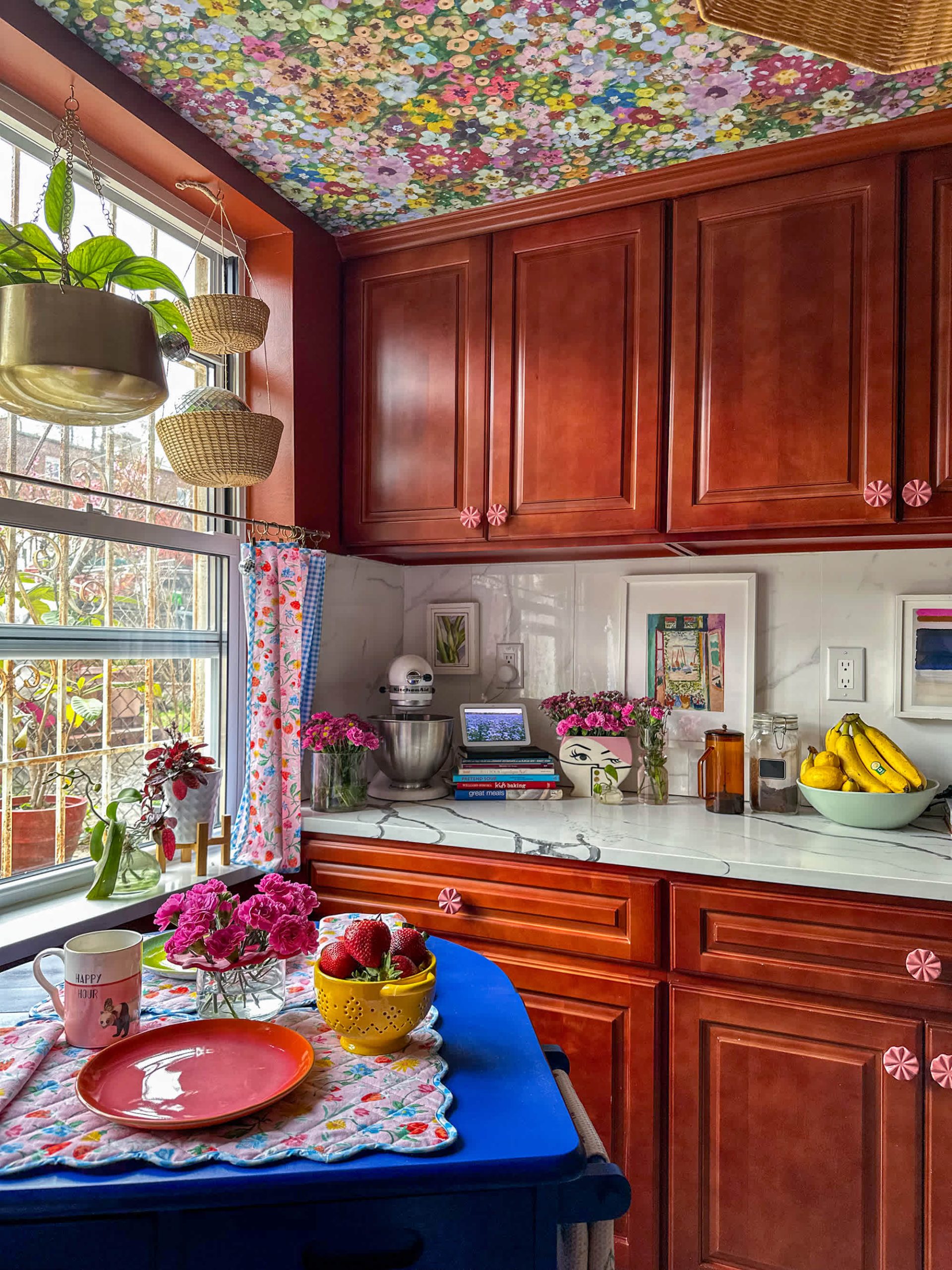
“Swapping out boring cabinet hardware is one of the easiest and most impactful DIY updates you can make in a kitchen.”
Here’s how to do it in an afternoon.
Choose Your Hardware: Find knobs or pulls that match the existing hole spacing, or be prepared to drill new holes and fill the old ones. (Cost: $3-$15 per knob)
Unscrew the Old: Using a screwdriver, simply unscrew the existing knobs or pulls from the inside of the cabinet door or drawer.
Clean the Surface: With the old hardware gone, it’s a great opportunity to give the cabinet face a good cleaning.
Install the New: Screw in your new hardware. For pulls with two screws, use a level to make sure they’re straight before tightening completely. (Time: 1-2 hours for a whole kitchen)
19. Spotlit Plant Arrangement on a Dark Wood & Glass Console
Creating a beautiful vignette like this is an art of intentional layering. The key is to think in terms of foreground, middle ground, and background. The textural wall is your background. The console table is your middle ground, providing the main surface. The vase and objects are your foreground. To get this look, use a spotlight (or a directional track light) to illuminate the arrangement. The focused light creates dramatic shadows and highlights the textures, turning a simple collection of objects into a purposeful, museum-quality display. Without the specific lighting, it would just be a table against a wall.
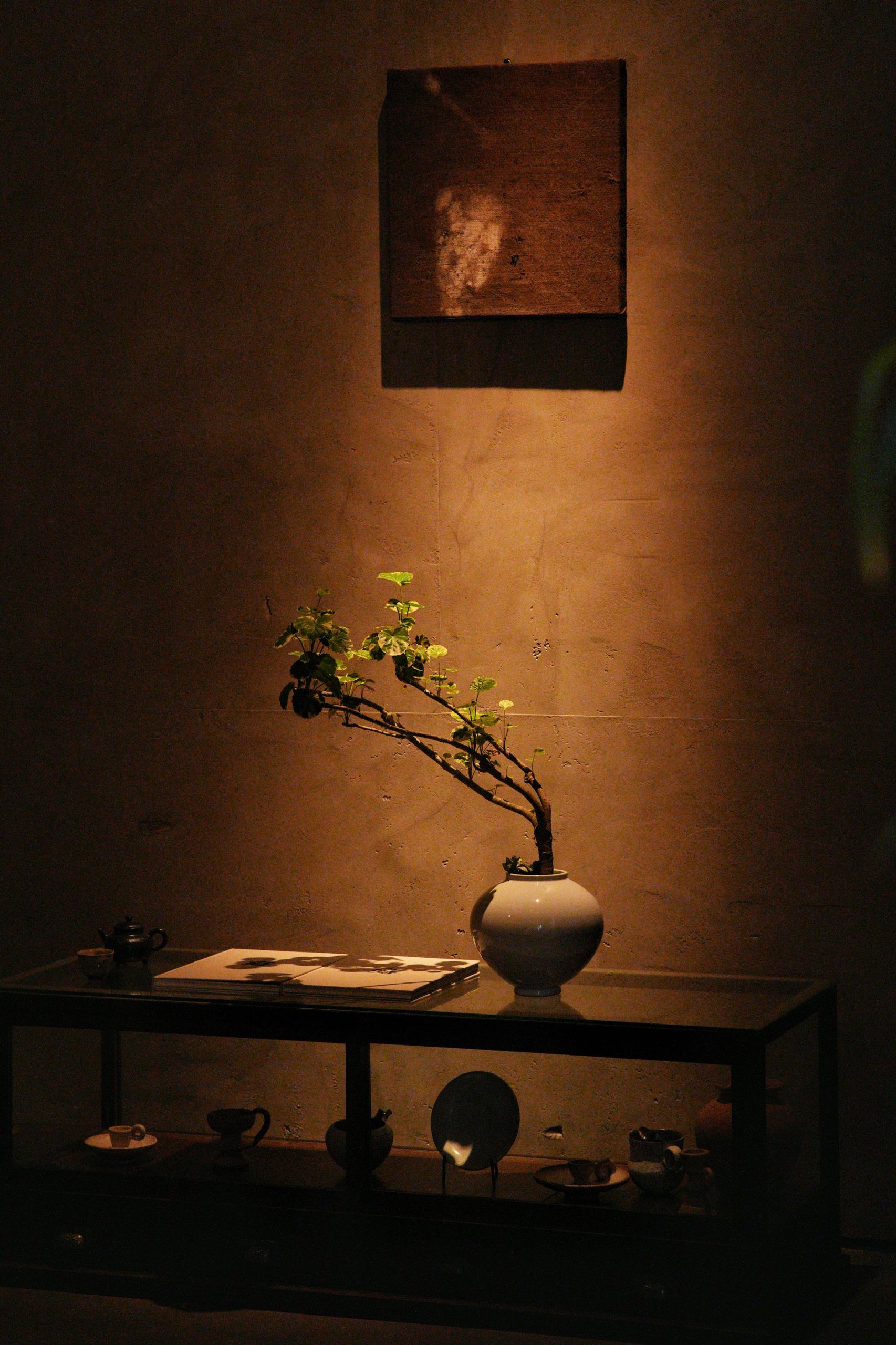
“The formula here is about quiet drama: 50% dominant texture + 40% minimalist structure + 10% organic element.”
The warm, textural wall covering makes up the majority of the visual field, creating an immersive, moody backdrop. The sleek, dark wood and glass console provides a strong, minimalist structure that contrasts with the softness of the wall. Finally, the single green leafy branch in the white spherical vase introduces just enough life and organic shape to keep the scene from feeling too rigid or sterile. The simplicity is what makes it so powerful.
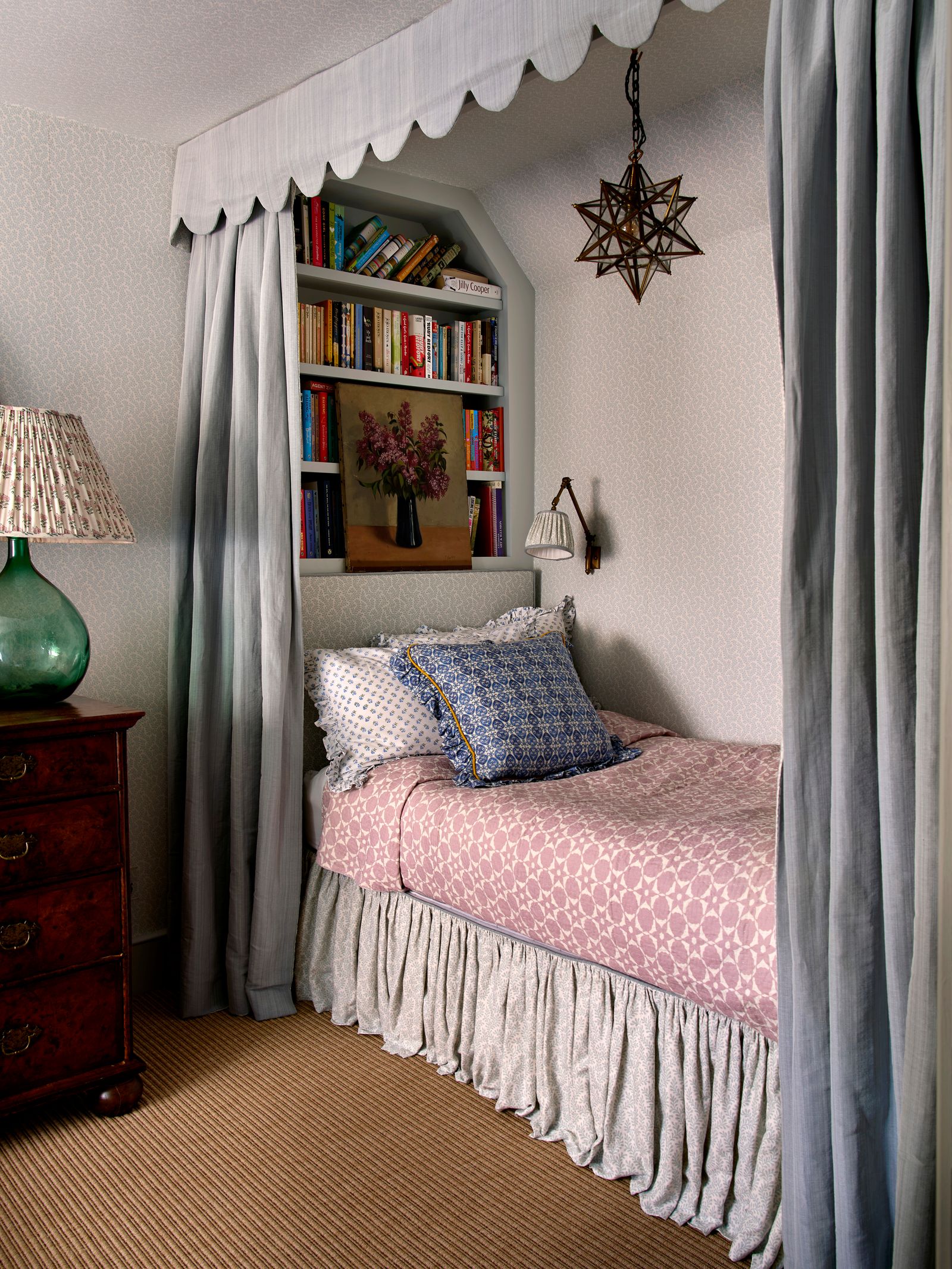
20. Cozy Bedroom Nook with a Scalloped Canopy
This charming, layered look is perfect for creating a cozy escape, but it’s not for every room. Ask yourself these questions before you begin hanging drapes and building shelves.
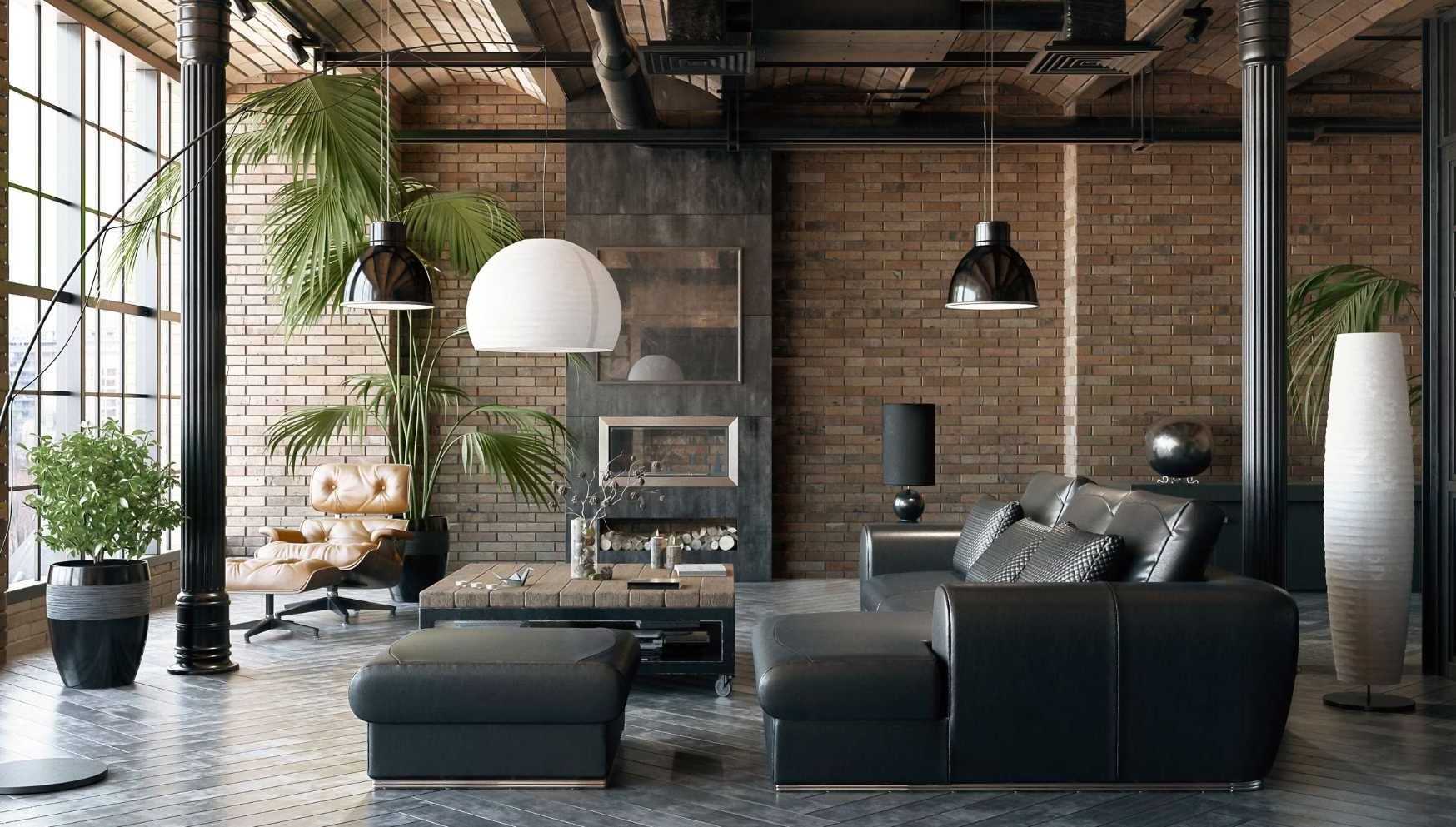
21. Industrial Loft Living Room with Exposed Brick Walls
Achieving an authentic industrial loft feel involves highlighting raw materials and investing in large-scale pieces. Here’s a rough estimate of the costs.
“Furniture: Large dark leather sectional and accent chair: $4,000 – $10,000+
”
- Furniture: Large dark leather sectional and accent chair: $4,000 – $10,000+
- Lighting: Mix of industrial pendant and track lighting: $1,000 – $3,500
- Fireplace: Integrated fireplace with custom surround: $3,000 – $8,000
- Decor: Large potted plants, rugs, and accessories: $800 – $2,000
- TOTAL: $8,800 – $23,500 (Assuming brick walls are existing)
Budget alternative: Get this look for around $5,000 with a faux-leather sofa, using faux brick paneling on a feature wall, and sourcing industrial-style lighting from big-box stores.
Exposed brick is beautiful, but it’s not a maintenance-free surface. It can be dusty and prone to crumbling if not properly sealed. Sealing the brick is a must to prevent dust and make it easier to clean, but this can alter its natural finish, so test in an inconspicuous spot first. Also, hanging art or shelves on a brick wall is a major commitment; it requires a hammer drill and masonry anchors. It’s not as simple as tapping in a nail. The dark leather sofa is durable, but can feel cold in the winter and sticky in the summer, and requires occasional conditioning to prevent cracking.
22. Rustic Living Room with a Floor-to-Ceiling Stone Fireplace
The absolute centerpiece of this room is the floor-to-ceiling stone fireplace. It’s more than just a heating element; it’s a massive, textural sculpture that anchors the entire space. Its variegated colors and rough-hewn shapes provide a powerful connection to nature and a sense of rustic permanence that no other feature could replicate. If you were to replace it with a simple, modern fireplace, the room would lose its grand, cozy, lodge-like character entirely. All other design choices—the wood furniture, the neutral sofa, the metal railings—are made to complement its overwhelming presence.
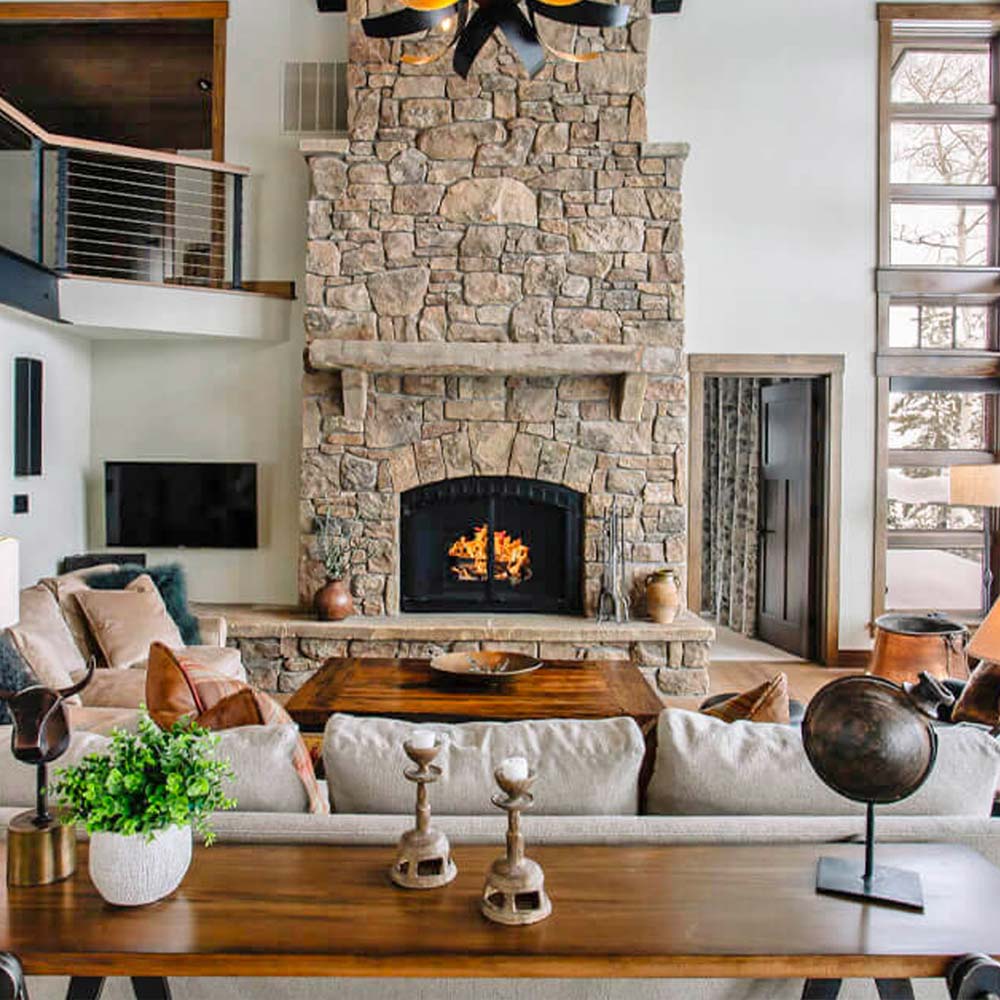
“A feature as grand as a full-height stone fireplace needs a room with the scale to support it.”
This idea is best suited for a living room with vaulted or high ceilings (12 feet or more) and a generous footprint of at least 20 by 25 feet. In a smaller room or one with standard 8-foot ceilings, a fireplace of this magnitude would feel oppressive and overbearing, dominating the space in a negative way. The large vertical windows also play a key role, balancing the weight of the stone with light and exterior views. For a more compact space, consider the fireplace in Idea #10 as a more manageable alternative.
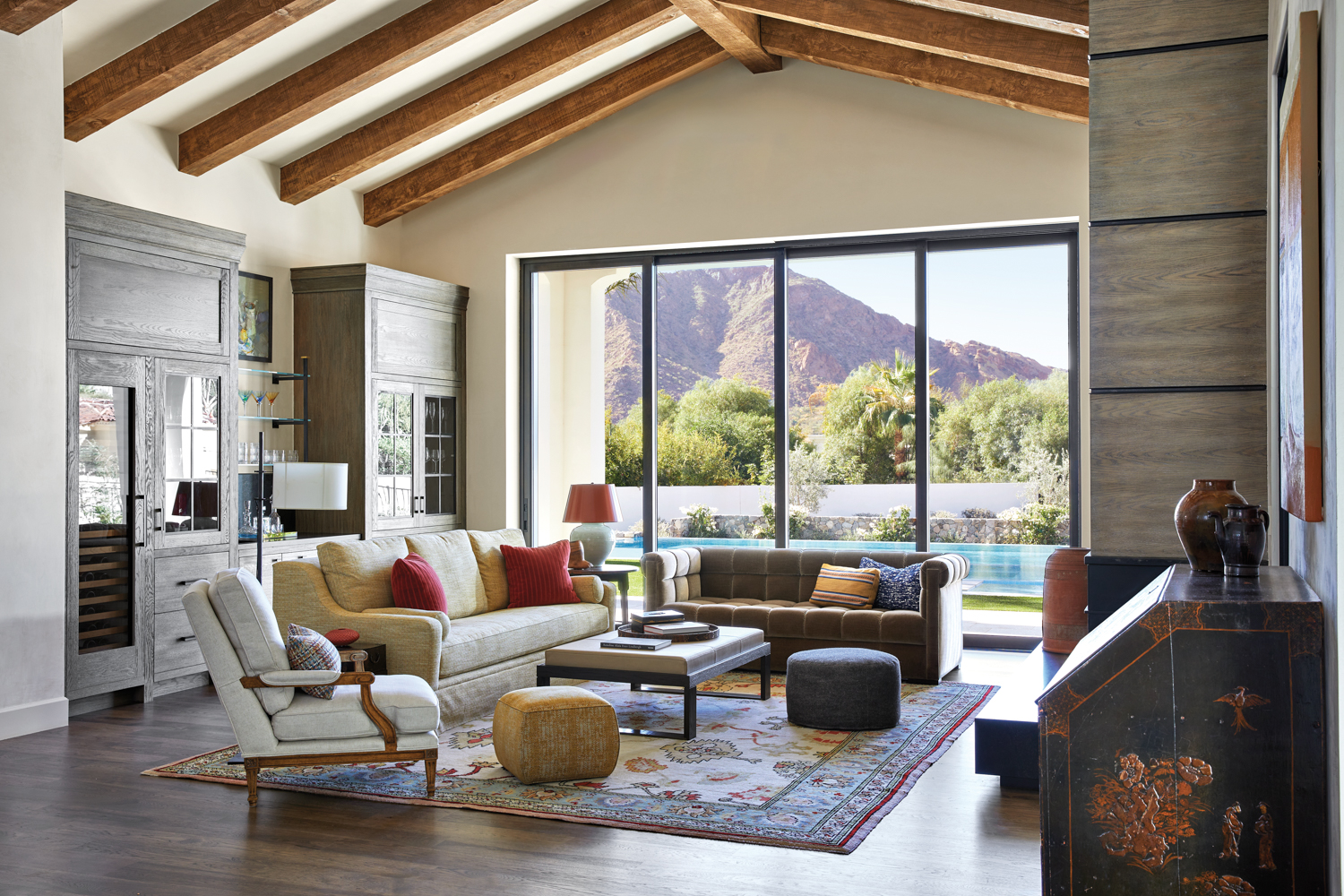
23. Vaulted Living Room with Mountain View and Exposed Beams
This room feels both expansive and cozy at the same time, which is a difficult balance to strike. It works because of the interplay between the architecture and the furnishings. The vaulted ceiling with exposed wooden beams draws the eye upward, creating a sense of grandeur and space that mirrors the mountain view outside. However, the furniture is arranged in a tight, conversational grouping on a large area rug, creating an intimate
24. Modern Japanese-Inspired Interior with Light Wood Platforms
This space follows a clear architectural formula: 70% unifying material + 20% open space + 10% soft contrast. The unifying material is the light-toned wood, used consistently across the floors, walls, and ceiling beams to create a cohesive, serene shell. The open space is just as important; the design intentionally leaves areas clear to create pathways and maintain an airy, uncluttered feeling. Finally, the soft contrast comes from the white fabric sofa and the subtle green of the tatami mat edging, which provide just enough visual relief from the wood without disrupting the minimalist calm. For a different take on Japanese-inspired minimalism, compare with the more traditional Idea #14.
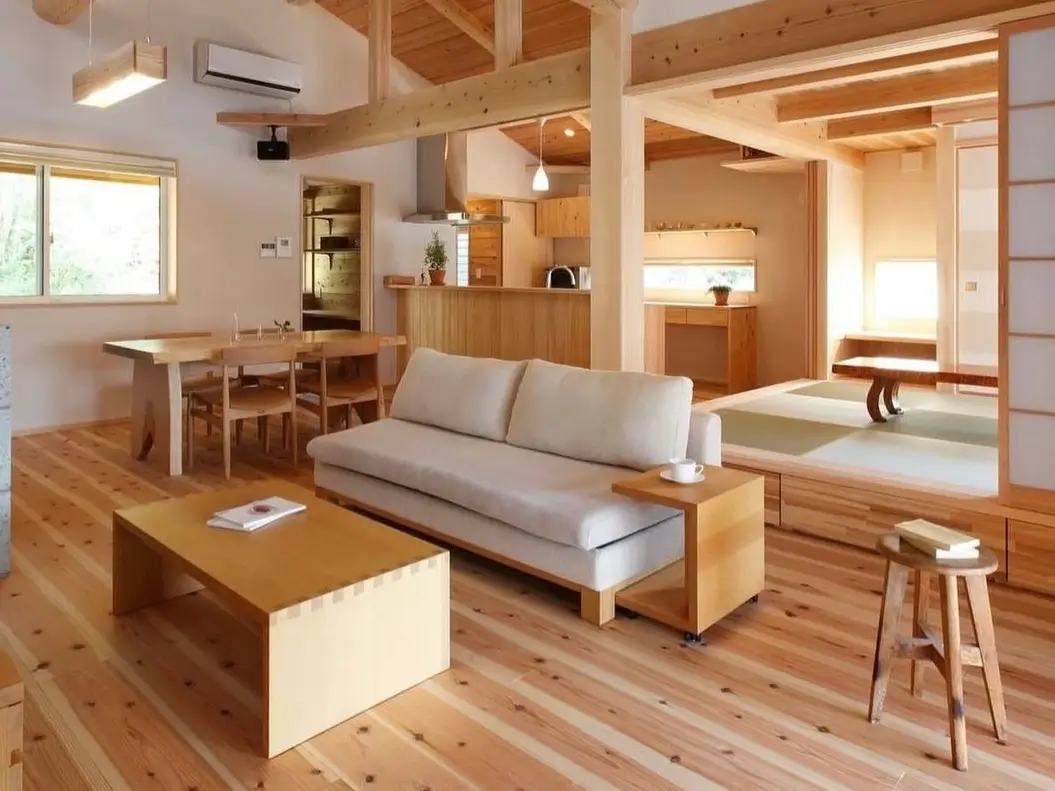
“While aesthetically stunning, a home with multiple platforms and level changes can present practical challenges.”
It can be a trip hazard for guests who aren’t used to the layout, and it may not be suitable for young children or individuals with mobility issues. The minimalist design, with its light colors and clean surfaces, also requires a commitment to tidiness. There are few places to hide everyday clutter, so to maintain the intended serene atmosphere, you have to be diligent about putting things away. It’s a design that very much dictates a certain way of living.
25. Modern Living Space with a Linear Fireplace and Wood Accent Wall
This look is at the forefront of the “quiet luxury” and “Japandi” trends for 2026. It’s about investing in high-quality, natural materials and clean, architectural lines rather than flashy decor. The focus on integrated elements—the fireplace built into the gray structure, the lighting recessed into the wood wall—is a move away from standalone objects and toward a more holistic, built-in aesthetic. This creates a calm, uncluttered environment that feels both sophisticated and deeply relaxing. It’s a response to years of visual noise, prioritizing craftsmanship and serene, thoughtful design.
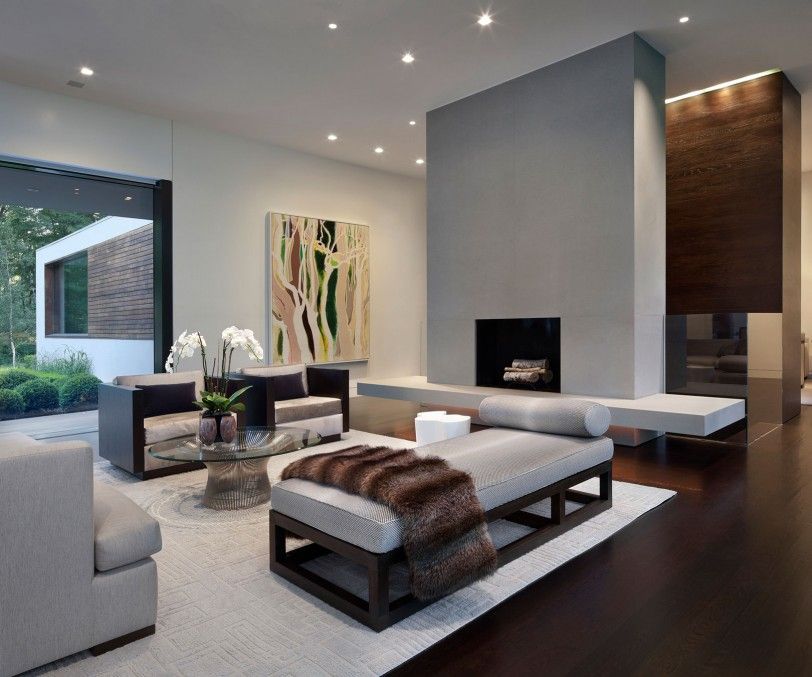
“The key to this room’s success is the visual dialogue between the gray fireplace structure and the dark wood accent wall.”
They are positioned as two distinct, powerful masses that face each other, creating a palpable tension and balance in the room. The fireplace is cool, matte, and solid; the wood wall is warm, textured, and illuminated. This interplay is the core concept of the design. Removing either one would destroy the entire composition, leaving the other to feel isolated and purposeless. The furniture is purposely low-profile to avoid interrupting this architectural conversation.
26. Modern Kitchen-Dining Area with an Integrated Sofa
Creating an integrated seating area is a custom job that requires careful planning. Here’s a simplified overview of the process.
- Design and Measure: Work with a designer or cabinet maker to plan the exact dimensions. The countertop height must transition seamlessly to the sofa back, and the dining table height needs to be correct for the seating. (Time: 1-2 weeks of planning)
- Build the Base Structure: A carpenter will build the foundational structure that will support the countertop, sofa, and table. This needs to be incredibly sturdy. (Time: 3-5 days)
- Install Countertops and Cladding: The light wood countertop and any wall cladding (like the stone here) are installed. This requires specialty contractors. (Time: 2-4 days)
- Upholstery: A custom upholstered cushion and backrest are created to fit the sofa structure perfectly. You’ll choose the fabric (like this black leather) and foam density. (Cost: This is a high-end custom feature, likely costing $15,000-$30,000+ depending on materials and labor.)
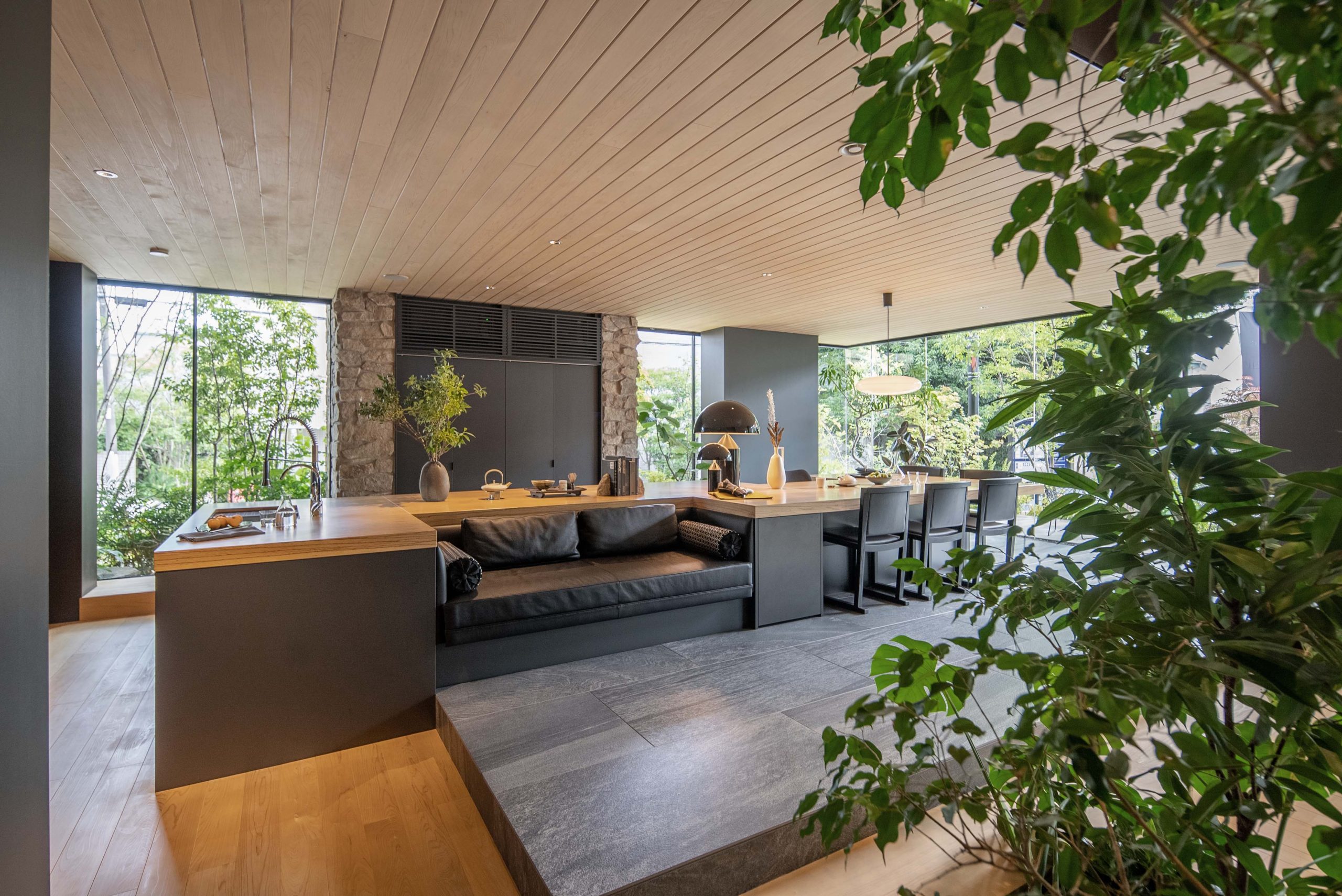
“When you have a large expanse of a single material, like the light wood plank ceiling here, it’s crucial to create visual relief.”
The dark gray wall accents and the black leather sofa do exactly that. They break up the monotony of the wood and create points of interest. If the entire room were clad in the same light wood, it would feel overwhelming and one-dimensional. Don’t be afraid to use dark, contrasting colors in small, strategic doses to add depth and sophistication to a neutral space.
27. Cozy Tiny Home Interior with a Loft and Blue Seating
This design is specifically tailored for a tiny home or a very small, compact space, likely under 200 square feet. The success of the L-shaped seating nook is contingent on it being built-in to custom-fit the corner, maximizing every inch. The ladder to the loft requires a ceiling height of at least 10-12 feet to allow for usable headroom in the loft area. The key principle here is verticality: using the height of the space with a loft and hanging shelves to make up for the lack of horizontal floor space. Applying this to a larger room would feel out of scale; it’s a solution born from necessity.
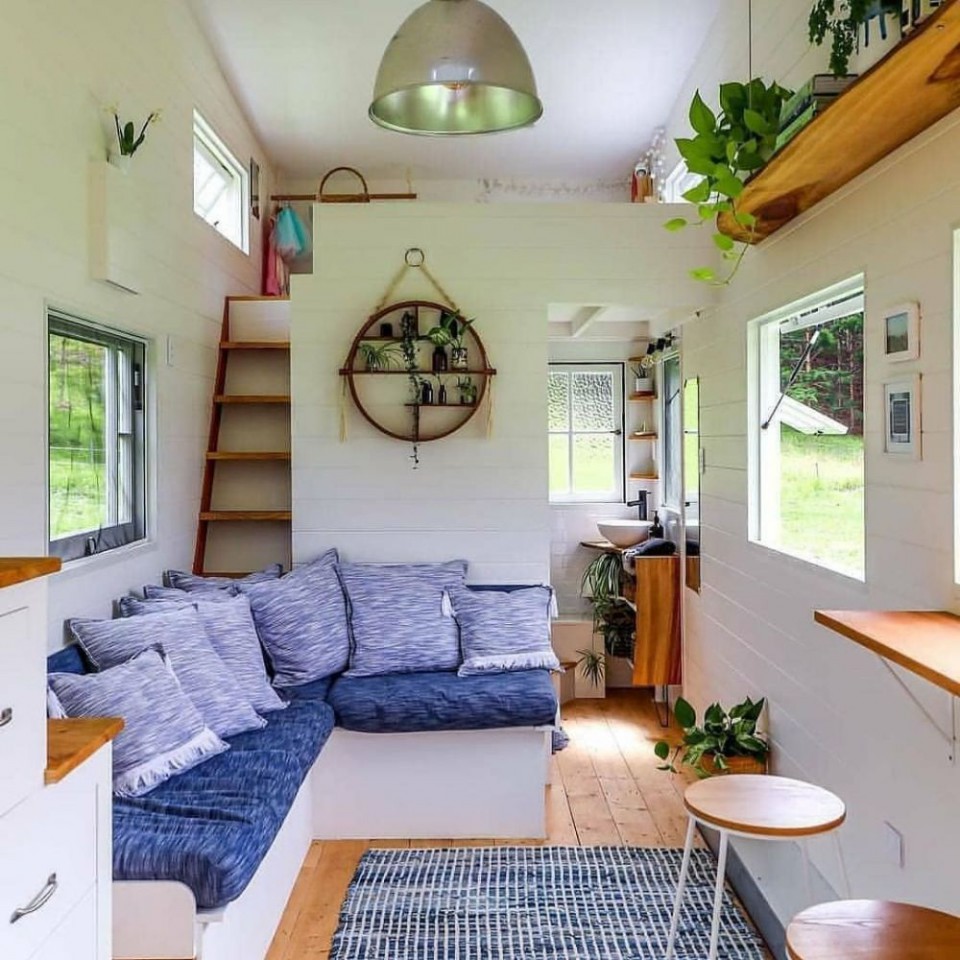
“You can create a similarly cozy and functional nook in a small apartment corner for a fraction of the cost of a custom tiny home.”
Build a simple L-shaped bench using plywood and 2x4s from a hardware store. Get foam cushions cut to size at a fabric or craft store and sew simple covers for them using an affordable but durable navy blue canvas fabric. Add a collection of blue and white patterned pillows from IKEA or Target. Instead of a custom ladder, use a simple wooden one as a decorative blanket holder. The entire project could be done for under $400 and provide a charming, functional seating area.
28. Modern Living Room with a Curved Sofa and Sculptural Lighting
This room feels elegantly dynamic because it’s built on a foundation of contrasting shapes. The dominant feature is the soft, sinuous curve of the large blue sectional sofa. This organic shape is then balanced and contained by the strong, rigid geometry of the rectangular green rug, the panel wainscoting on the walls, and the tall, dark-framed windows. The linear bronze chandelier adds another layer of sharp, angular contrast. This tension between curved and straight lines is what makes the design feel sophisticated, modern, and visually compelling.
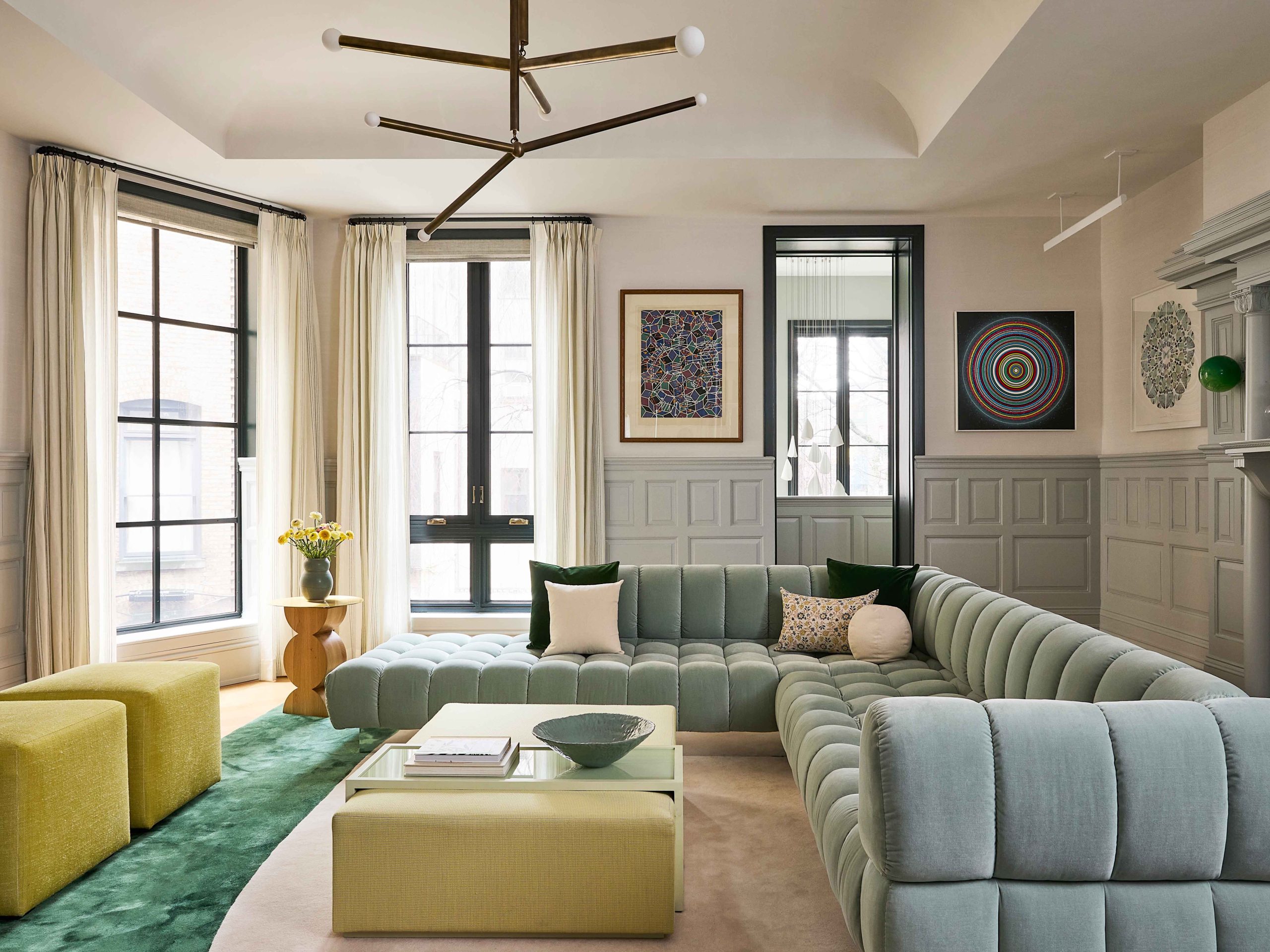
“A curved sofa is a gorgeous statement piece, but it presents some layout challenges.”
Unlike a traditional straight sofa, it doesn’t sit neatly against a wall. It’s designed to float in a room, which means it requires a larger footprint than you might think. Be sure to measure carefully and even map it out with painter’s tape on the floor to ensure you have adequate traffic flow around it. Layering rugs, as seen here, is a chic look, but it can also be a trip hazard if the edges aren’t secured properly with rug tape.
29. Modern Living Room with Blue Seating and Fluted Gold Panels
This room blends several trendy but potentially high-maintenance finishes. The gold-toned fluted panels are a beautiful accent, but like all metallic surfaces, they can be magnets for fingerprints and dust. The flutes will require a crevice tool on a vacuum or careful wiping to keep clean. The marble-effect TV panel, if it’s a porcelain slab, is quite durable, but if it’s a laminate or other composite, it can be prone to chipping. The glass top on the coffee table will need constant wiping to look its best, especially in a high-traffic living room. It’s a polished look that requires polish.
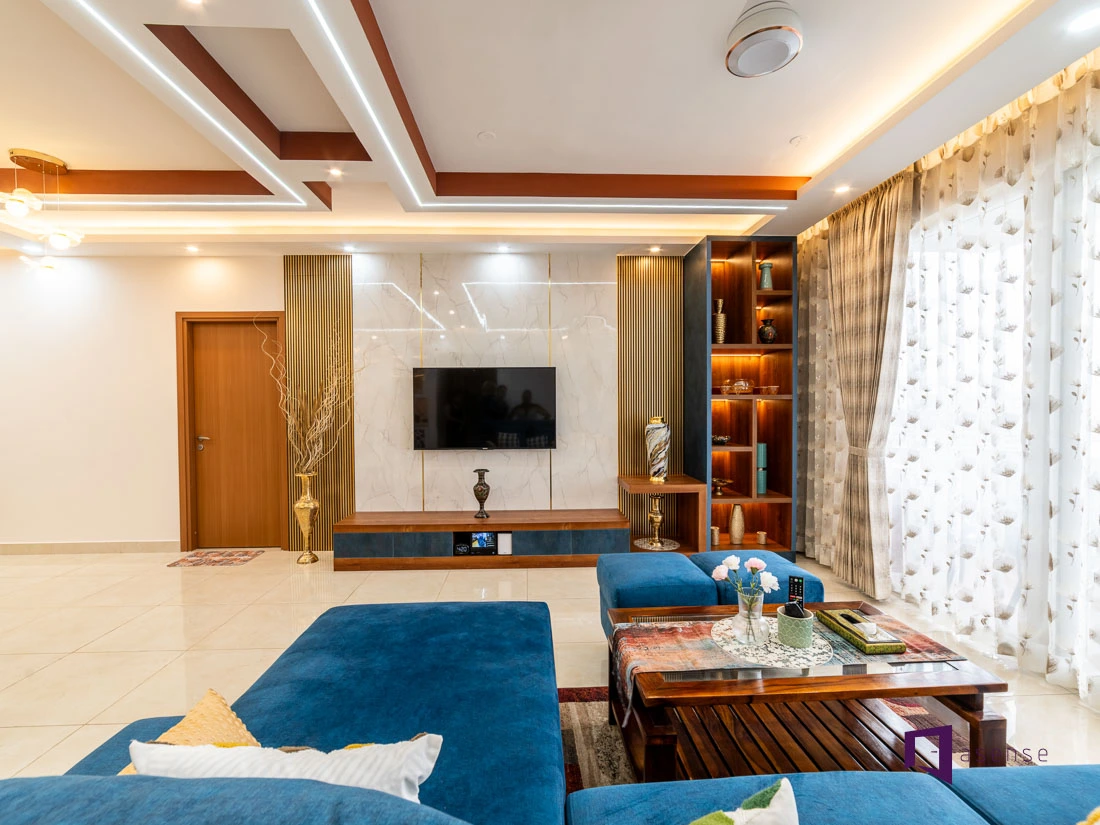
“Want this chic, modern look without the high-end price tag?”
Focus on the color palette and textures. Find a comfortable blue sectional from a store like Article or Wayfair. Instead of a marble slab, use a marble-effect peel-and-stick wallpaper for the TV accent wall—it’s a low-cost, high-impact DIY. For the fluted panels, you can buy decorative MDF or pole wrap online, paint it gold, and install it yourself. A simple wooden coffee table from Facebook Marketplace can be updated with a custom-cut piece of glass for the top. With some savvy shopping and DIY spirit, you could achieve this vibe for under $4,500. Compare this to the luxe version in Idea #11.
30. Dramatic Interior Inspired by a Baroque Architectural Rendering
After years of stark minimalism, we’re seeing a powerful swing toward maximalism and historical references in 2026, and this look is a perfect example. Dubbed “Neo-Baroque” or “Dark Academia,” this trend embraces drama, opulence, and intricate detail. People are craving spaces with personality and a sense of history, even if it’s theatrical. This style, inspired by the likes of Austin’s ‘Skittles House’ by Page Paul Architecture, is all about layering rich colors, complex patterns, and ornate forms. It’s a reaction against blandness, celebrating fearless, self-expressive design.
“To successfully pull off a dramatic, multi-colored Baroque-inspired look without it descending into chaos, you need a unifying element.”
Choose one dominant color from your palette and use it in at least three different places in the room, at varying heights. For example, if you have a deep emerald green on a sofa, echo that color in a piece of art on the wall and again in a set of decorative objects on a shelf. This repetition creates a visual thread that ties the entire complex scheme together, making it feel intentional and cohesive rather than random and cluttered.
Your Home’s Blueprint Starts Here
Think of these ideas not as strict rules, but as architectural starting points for a space that feels uniquely you. The best rooms are the ones that tell a story, and now you have thirty new chapters to pull from. Ready to start sketching out your own vision? Go ahead and save your favorites to your Pinterest board—your next project is waiting.