That feeling when you’ve pinned hundreds of “dream house” photos but your own space still feels miles away from any of them? We’ve all been there. It’s easy to get lost in a sea of inspiration without a clear path forward. That’s why we did the heavy lifting, filtering through countless designs to find the looks that are actually shaping how we live in 2026.
For this guide, we curated 30 distinct ideas that truly work, from cozy nooks to grand, open-plan spaces. You’ll see inspiration from modern farmhouse kitchens, colorful eclectic living rooms, and serene minimalist bedrooms. These aren’t just pretty pictures; they are real, achievable concepts. And stay until the end—we break down the most common mistakes that can ruin these looks. 📌 Save this to Pinterest for later—you’ll want to revisit these ideas.
1. The Modern Great Room: Open, Airy, and Ready for Anything
This kind of expansive, open-concept great room is a showstopper, but it comes with specific spatial requirements. To avoid feeling cavernous or poorly zoned, a room like this works best with a minimum of 400-500 square feet for the primary living area alone. Ceiling height is also crucial; aim for at least 10 feet, though 12-15 feet is ideal to maintain a sense of balance and allow for statement lighting. Anything less can make the large footprint feel squat and overwhelming.
“A successful great room is all about smart planning before you even think about furniture.”
Here are a few things to lock down first:
- Traffic Flow: Map out the primary pathways from one area to another (e.g., kitchen to seating area). Keep these paths at least 36 inches wide and clear of furniture.
- Lighting Plan: One central fixture won’t cut it. You need a layered lighting plan with ambient (recessed lights), task (pendants over an island), and accent (lamps, sconces) lighting.
- Zone Definition: How will you separate the living, dining, and kitchen functions? Use large area rugs, furniture groupings, or architectural elements like a dropped ceiling to create distinct “rooms” without walls.
2. A Fresh Take on Farmhouse: White Shaker Cabinets Meet Gray-Green Tile
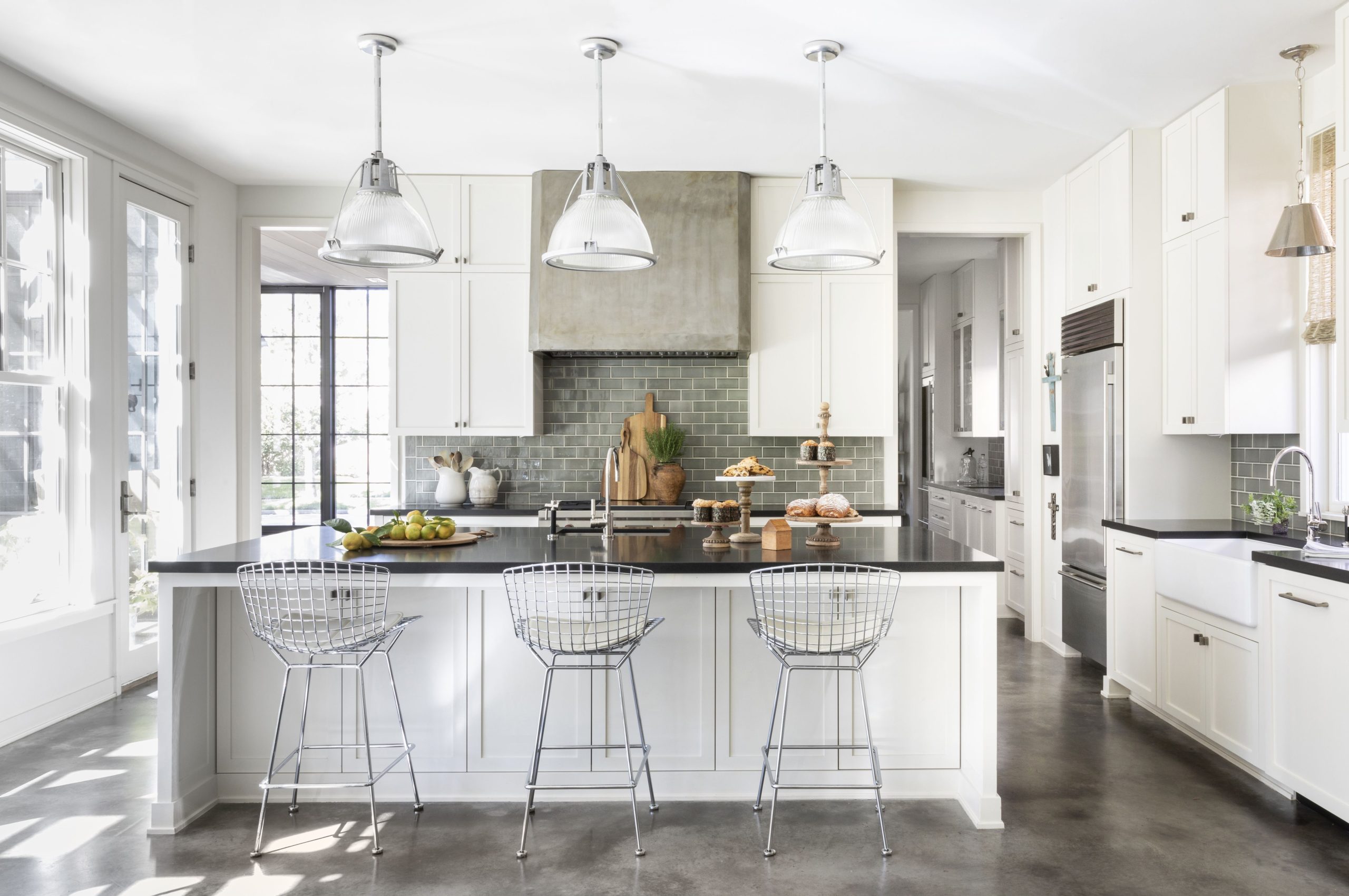
What makes this kitchen feel so balanced and fresh? It’s a masterclass in texture and contrast. The clean, classic lines of the white shaker cabinets provide a familiar, grounding base. But the magic happens where the smooth, dark stone countertops create a sharp, graphic contrast. Then, the gray-green subway tiles introduce a subtle, earthy color and a different texture, breaking up the larger blocks of white and black. The polished concrete floor adds a final, unexpected industrial touch that keeps the look from feeling too traditionally farmhouse.
“While this kitchen is a stunner, let’s be real about upkeep.”
Polished concrete floors are durable but require resealing every 2-3 years to prevent stains, a job that can cost a few hundred dollars. The grout on that beautiful tile backsplash can be a magnet for cooking splatters; sealing it annually is a non-negotiable to keep it from discoloring. And while shaker-style cabinets are timeless, those little recessed panels are dust-catchers. A weekly wipe-down of the cabinet faces, especially the lowers, will be on your to-do list.
3. How to Pair Mustard Yellow Chairs with a Classic Grey Sectional
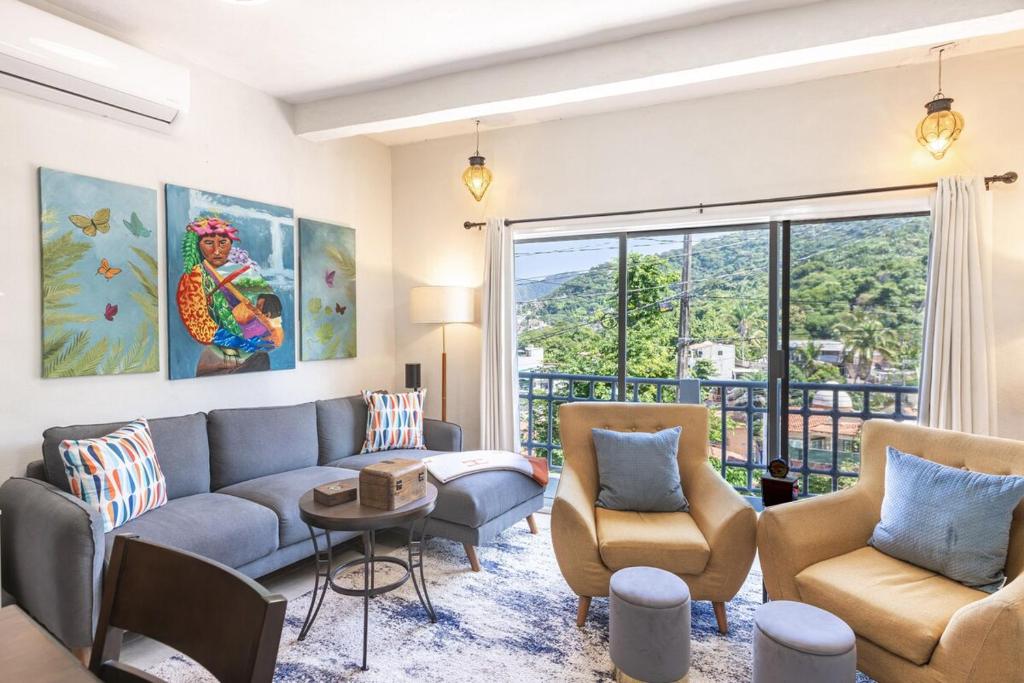
This room’s vibrant energy comes from a confident, balanced formula. Think of it as 60% Neutral + 30% Bold Color + 10% Pattern. The light beige walls and large grey sectional make up the neutral foundation, creating a calm backdrop. The two mustard yellow armchairs are the unapologetic bold color, injecting personality and warmth. The final 10% comes from varied patterns in the abstract rug, the throw pillows, and the colorful artwork. You could easily swap the mustard for a deep teal or rust orange and the abstract rug for a geometric one to get a different vibe with the same successful recipe.
“When you’re working with bold accent chairs, the temptation is to let them stand alone.”
Instead, integrate them by pulling their color into the rest of the room in small doses. Notice the hints of yellow and gold in the abstract paintings and the subtle pattern on a throw pillow. Your goal is to create a visual conversation between the elements. A good rule of thumb is to have your main accent color appear in at least three different places in the room, with varying scale and texture.
4. Open-Concept Living with a Cool Light Blue and Gray Palette
The single element holding this entire open-concept space together is the disciplined use of color. Specifically, it’s the light blue of the sectional sofa. Without it, you’d have a perfectly nice but generic grey-and-white space. That specific shade of blue—not quite pastel, not quite navy—is the personality. It sets a serene yet modern tone and gives the eye a place to rest. It’s the confident choice that makes the room feel designed and intentional, rather than assembled by default from neutral basics.
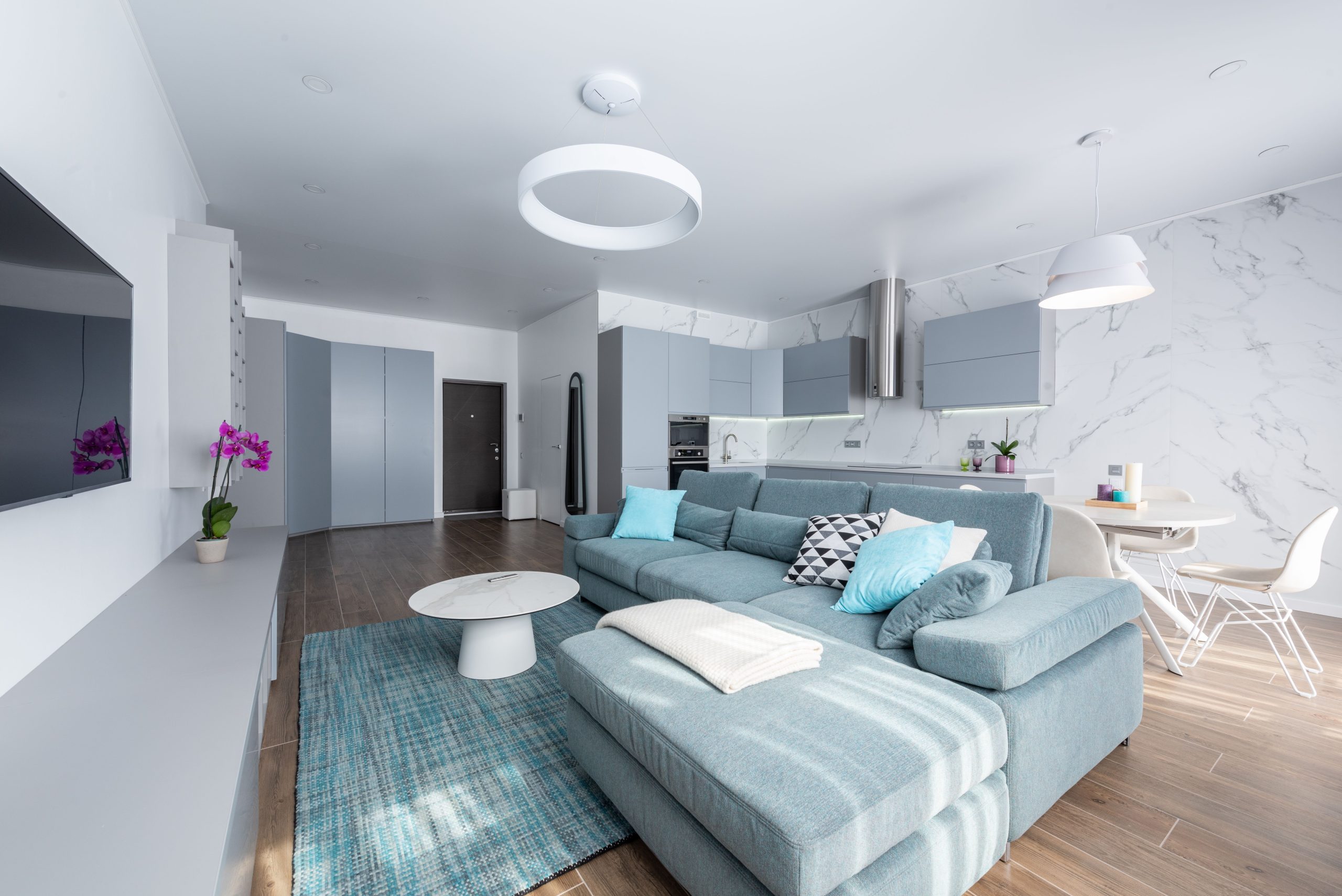
“A light-colored sofa, especially in a high-traffic open-concept area, is a brave choice.”
If you have kids, pets, or enjoy red wine on the couch, you need a plan. Opt for performance fabrics (like Crypton or Sunbrella) that are engineered to repel stains. Alternatively, a slipcovered sofa in a similar color offers a washable solution. Without one of these practical considerations, your beautiful light blue centerpiece could become a source of stress with the first spill.
5. Smart Living Room Design for Modern Homes
The ‘smart home’ is no longer about clunky gadgets and visible wires. The 2026 approach, as seen on design-forward platforms like HGTV, focuses on seamless integration. This look is popular because it prioritizes aesthetics first. Smart lighting, automated blinds, and hidden speakers are controlled from a single interface, removing the visual clutter of switches, remotes, and cords. It’s a ‘quiet tech’ trend, where the home’s intelligence is felt, not seen, aligning perfectly with the minimalist and clean-line aesthetics that dominate Pinterest boards.
“Before you commit to a fully integrated smart home system, consider the potential for technology to become dated.”
Unlike a classic sofa, which can last for decades, smart home tech evolves rapidly. What’s cutting-edge today could be obsolete in five years. Opt for systems from established brands with a good track record of software support, and whenever possible, choose systems that can be updated or replaced without a major renovation. The sleek, buttonless wall might look cool, but a manual override is always a good idea.
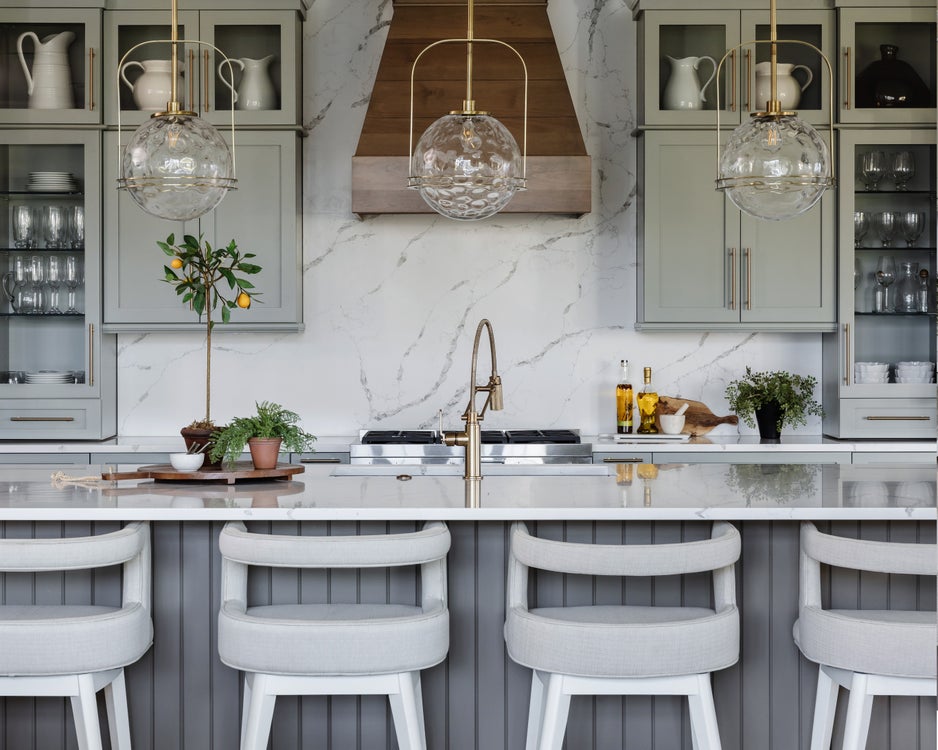
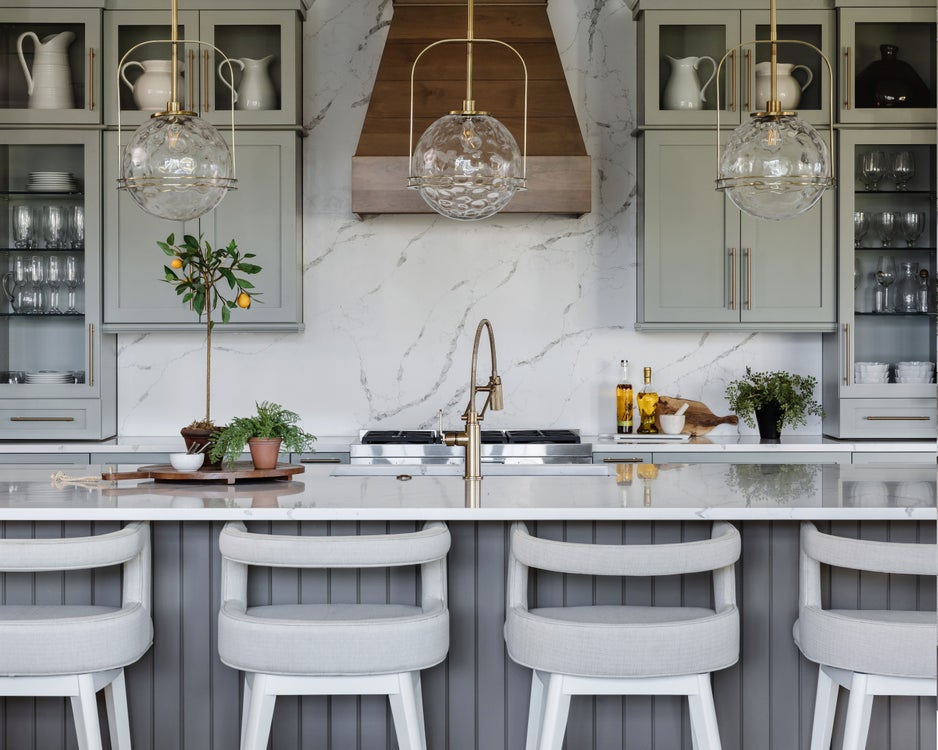
6. Elegant Kitchen with Light Gray Cabinets and Gold Details
Recreating this elegant and airy kitchen look requires a mix of high-end finishes and classic cabinetry. The cost can vary widely based on materials and brands, but here’s a realistic estimate for a medium-sized kitchen:
“Cabinetry: Light gray shaker-style cabinets (semi-custom): $8,000 – $15,000
”
- Cabinetry: Light gray shaker-style cabinets (semi-custom): $8,000 – $15,000
- Countertops & Backsplash: White marble slabs: $7,000 – $12,000
- Lighting: Globe pendant lights with gold hardware (set of two): $500 – $1,500
- Appliances & Fixtures: Mid-to-high-end package including a wood range hood and gold faucet: $6,000 – $10,000
- Seating: Upholstered bar stools (set of three): $600 – $1,200
- TOTAL: $22,100 – $39,700
- Budget alternative: Use marble-look quartz for countertops, porcelain tile for the backsplash, and find similar lighting on Wayfair or Overstock to achieve this look for around $12,000 – $18,000.
The single element that elevates this kitchen from simply nice to truly memorable is the hardware. It’s the jewelry of the room. The warm, glowing gold of the pendant lights, faucet, and cabinet pulls against the cool backdrop of gray and white is what creates that feeling of quiet luxury. If you replaced all the hardware with standard brushed nickel or chrome, the entire space would feel flatter and far less special. It’s the finishing touch that makes all the other choices sing.
7. Classic White Shiplap Kitchen with Woven-Seat Stools
This kitchen’s charm lies in its brilliant use of layering white-on-white textures. Instead of feeling stark, the space feels rich and inviting. The horizontal lines of the shiplap walls create subtle shadow and depth, which contrasts with the smooth, clean finish of the shaker cabinetry. Even the open shelving adds another layer, displaying smooth white dishware. This textural play allows the room to feel bright and spacious while still being visually interesting. The dark countertops and wood tones act as grounding accents in this sea of white. It’s a much more sophisticated approach than just painting everything one shade.
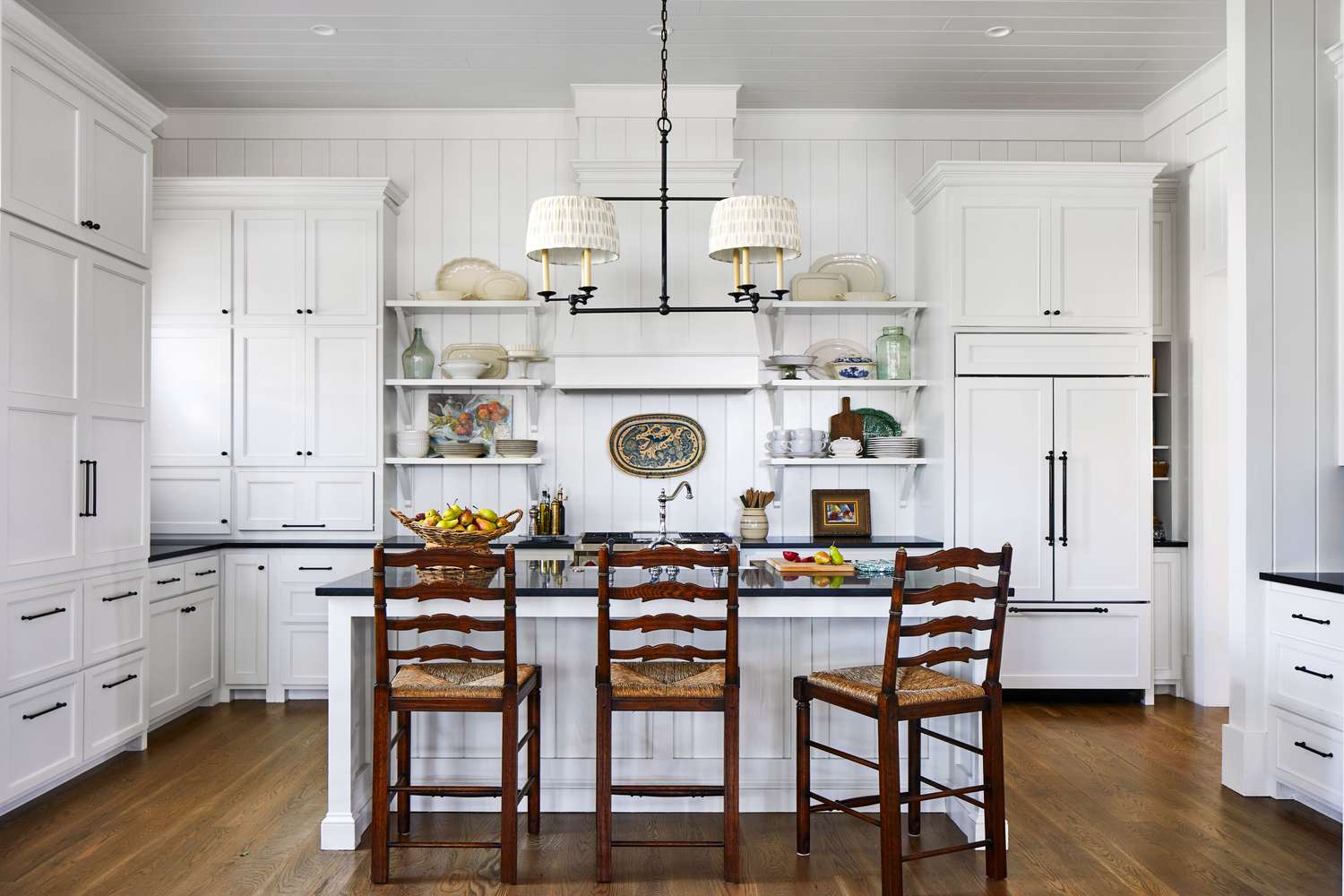
“You can capture this clean, traditional vibe without a gut renovation budget.”
Look for similar wooden bar stools with woven seats on Facebook Marketplace or at thrift stores; they often go for $30-$50 each and can be easily refinished. For the shiplap effect, you don’t need real planks; several companies like a href=”https://www.homedepot.com/b/Lumber-Composites-Boards-Planks-Panels-Appearance-Boards-Shiplap/N-5yc1vZc71k”>The Home Depot sell lightweight MDF shiplap panels that are much easier and cheaper to install. And for countertops, a high-quality laminate like Formica’s “Basalt Slate” can give you a similar dark, matte look for a fraction of the cost of stone.
8. Creating a Chef’s Dream Kitchen with Elegant White Finishes
When designing a large, elegant kitchen, lighting is your most powerful tool. To make a big island feel both functional and intimate, use multiple pendants instead of one large fixture. The rule of thumb is to hang pendants 30-36 inches apart (center to center) and 30-36 inches above the countertop. For a truly high-end look, install a dimmer switch for every light source. This allows you to switch from bright, functional task lighting for cooking to a soft, ambient glow for entertaining.
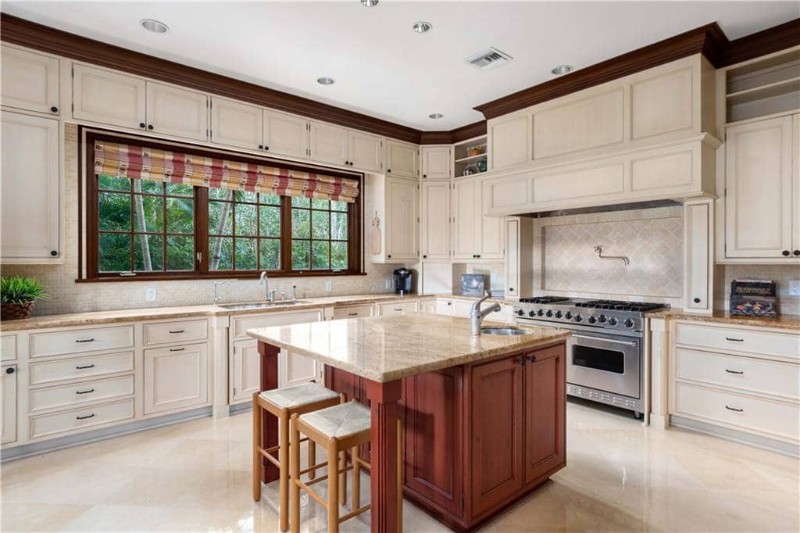
“A true “chef’s kitchen” implies a certain scale and functionality.”
This design works best in a space that’s at least 150-200 square feet. You need to accommodate wide walkways—ideally 42-48 inches between the island and the main counter—to allow multiple people to work without bumping into each other. A grand design like this in a smaller footprint would feel cramped and lose its luxurious, open feel. For smaller kitchens, consider the more streamlined look in Idea #22.
9. Sophisticated Dual-Toned Kitchen with a Spacious Island
The visual harmony here comes from a clever ‘Top, Middle, Bottom’ color strategy. The top layer (upper cabinets, backsplash) is light and airy. The middle layer (countertops) is a clean, bright white that acts as a visual break. The bottom layer (lower cabinets, island base) is dark and grounding. This formula—Light + Bright + Dark—creates a look that feels substantial and custom-designed. The brass hardware and dark wood-look floor tile then add warmth, preventing the gray tones from feeling too cold.
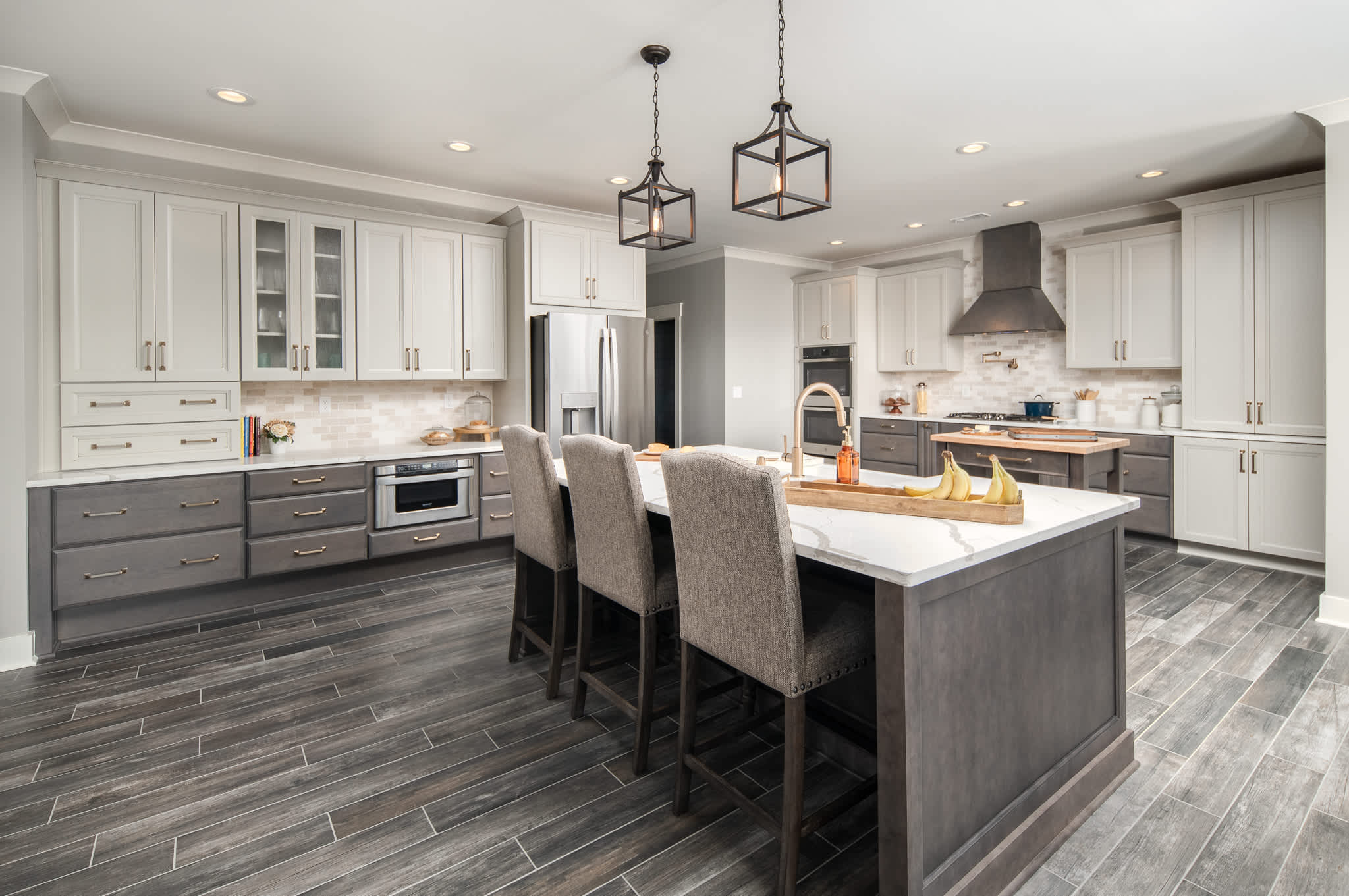
“The single element that pulls this whole look together is the continuity of the countertop material.”
By using the same white marble-look quartz on both the perimeter counters and the large central island, the design achieves a seamless, high-end feel. If the island had a different countertop—say, a butcher block or a darker stone—it would break up the space and feel less cohesive. This unified surface is the unifying thread that makes the dual-toned cabinetry look intentional and chic.
10. Modern Kitchen with a Bold Matte Black Range Hood
This kitchen design is all about the power of a focal point. The matte black range hood and matching black-framed display cabinets create a dramatic centerpiece that draws the eye immediately. This strong vertical element breaks the horizontal expanse of white cabinets and subway tile, adding architectural interest. The success of this design lies in its restraint; the black is used sparingly and intentionally, making it feel powerful rather than overwhelming. The warmth is then subtly reintroduced through the light wood floor, ceiling, and gold hardware.
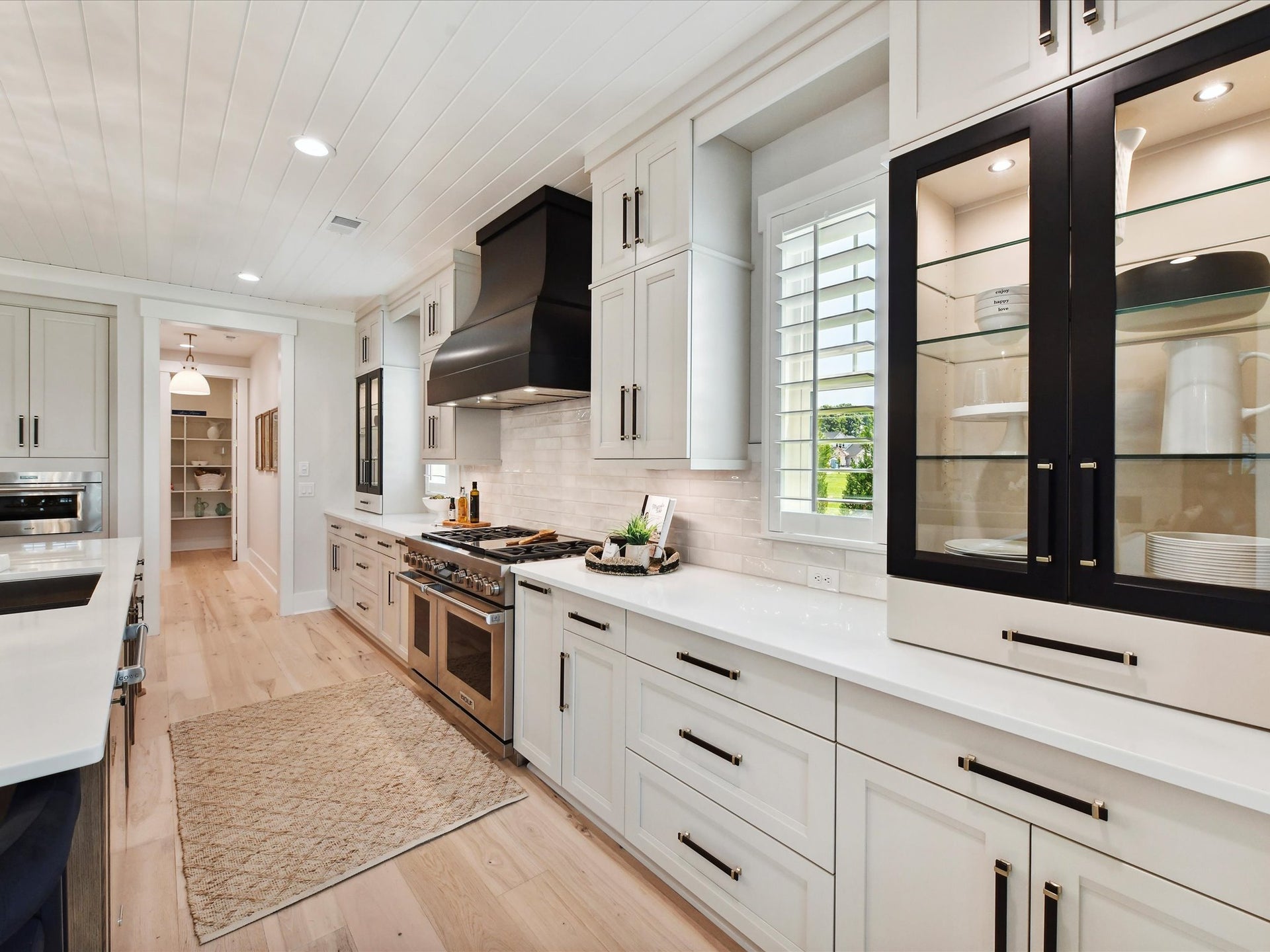
“That beautiful matte black range hood?”
It’s a magnet for fingerprints and cooking grease. Unlike stainless steel, which can be wiped with a generic cleaner, matte finishes require more care. Use a soft microfiber cloth with warm water and a drop of gentle dish soap. Avoid abrasive sponges or harsh chemicals, which can cause scratches or leave shiny spots, ruining the matte effect permanently. You’ll be wiping it down frequently to keep it looking pristine, especially in a busy kitchen.
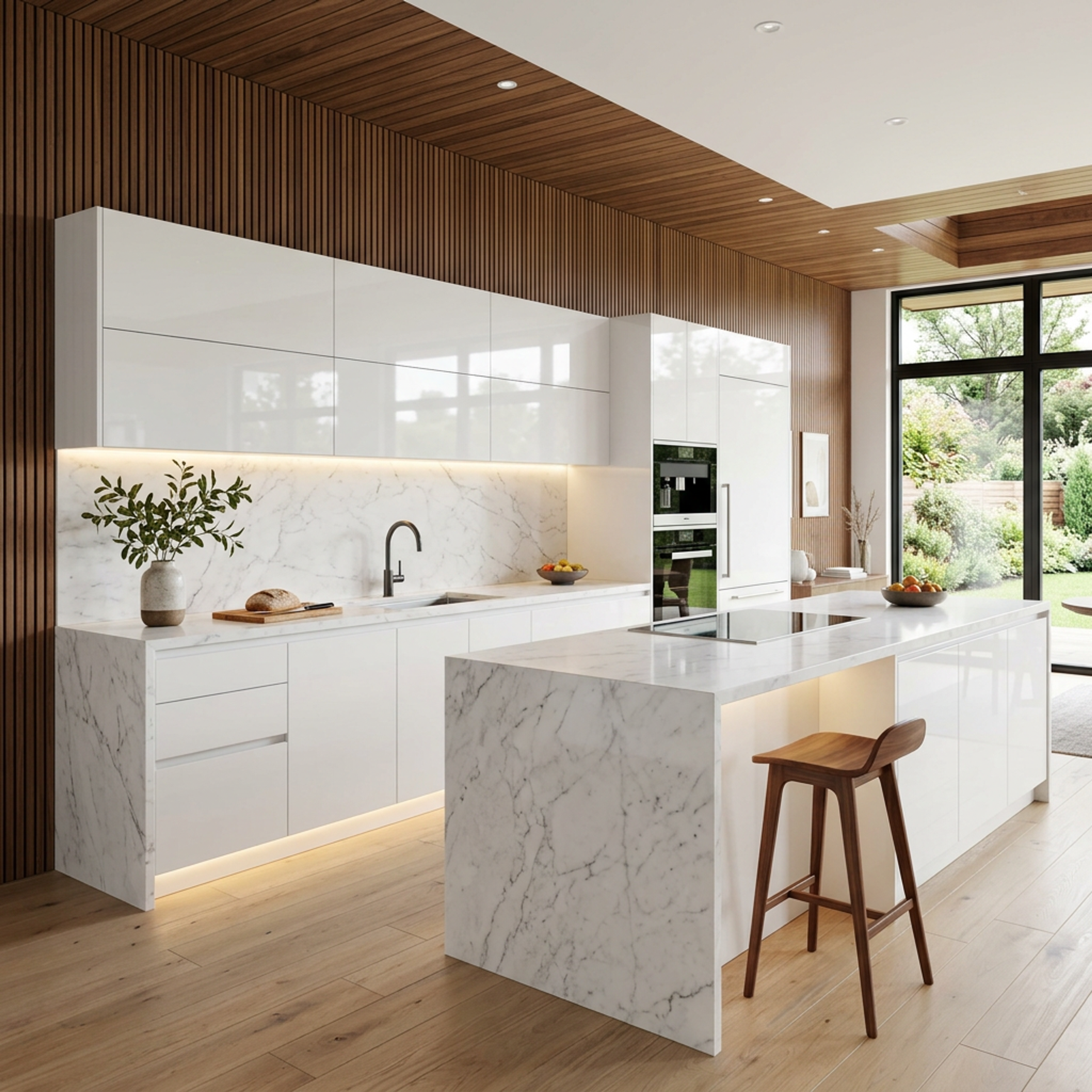
11. Serene Kitchen with a White Marble Waterfall Island
This serene, modern look is heavily dependent on the quality of its star material: marble. Crafting a large waterfall island is a significant investment. Here’s a general cost overview for a high-end execution:
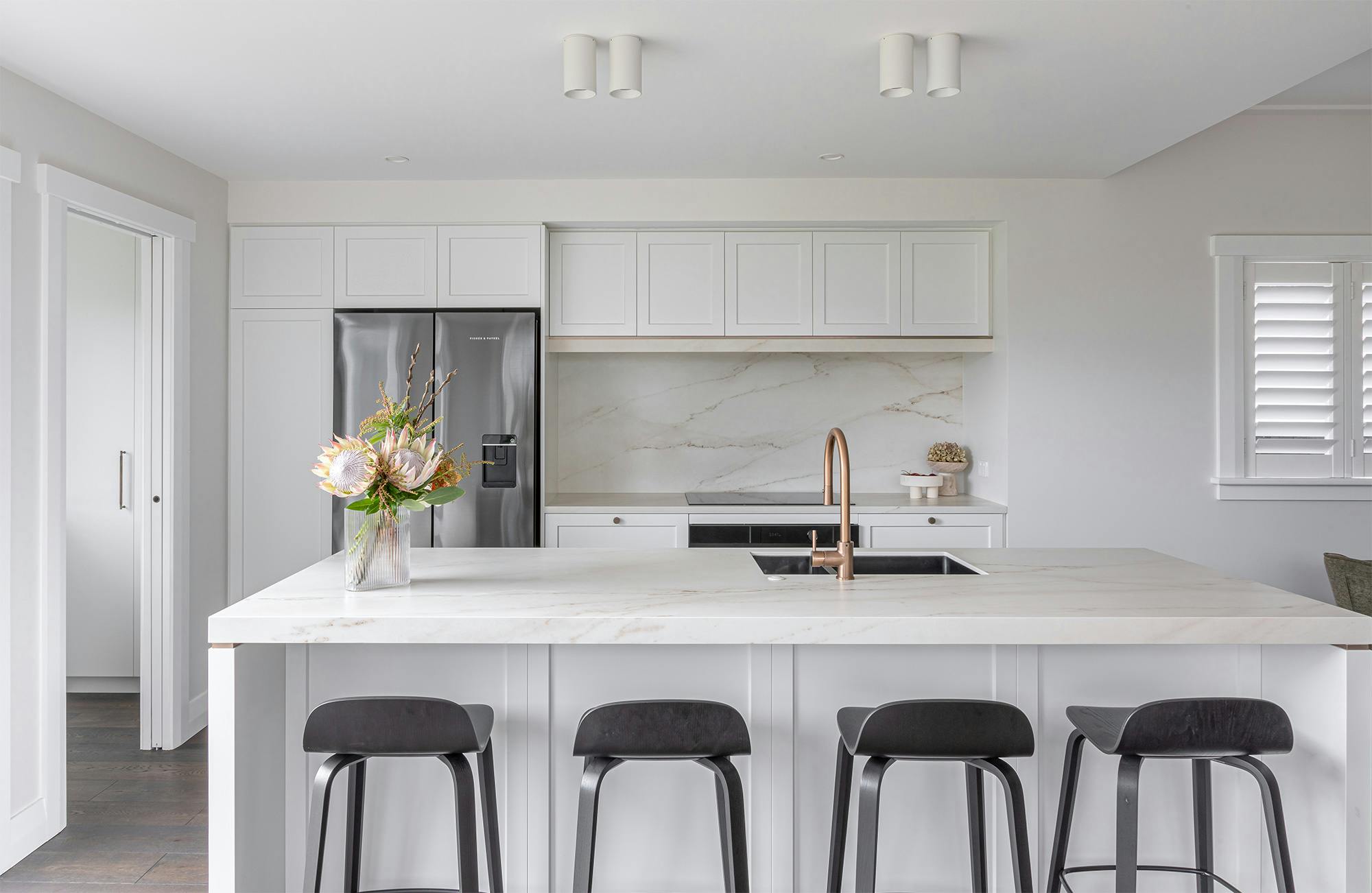
“Waterfall Island: Fabricating and installing a Calacatta or similar white marble”
- Waterfall Island: Fabricating and installing a Calacatta or similar white marble waterfall island: $8,000 – $20,000+ (highly dependent on the specific slab)
- Cabinetry & Backsplash: Custom white shaker cabinets and matching marble slab backsplash: $15,000 – $25,000
- Fixtures: High-end brass-toned faucet and sink: $1,000 – $2,500
- Seating: Solid dark wood bar stools (set of 3-4): $800 – $1,600
- TOTAL: $24,800 – $49,100+
- Budget alternative: Use a porcelain slab with a marble look (like those from Neolith or Dekton) for the island, stock white cabinets from IKEA, and find similar stools from Article or West Elm to get the vibe for $13,000 – $20,000.
Let’s talk about that stunning marble. It’s a natural stone, which means it’s porous and relatively soft. Tomato sauce, red wine, coffee, and even lemon juice can etch or stain the surface if not wiped up immediately. While sealants help, they don’t make it bulletproof. If you’re a meticulous cook who cleans as you go, you’ll be fine. If you tend to leave messes until the morning, you might find yourself with a permanent ‘memory’ of last night’s dinner on your very expensive island.
12. Sophisticated Bedroom with Fluted Nightstands and Swing-Arm Sconces
The element that truly defines this bedroom’s sophisticated character is the texture of the dark, fluted nightstands. In a room dominated by soft surfaces—the upholstered bed, the plush rug, the flowing curtains—the rigid, rhythmic lines of the fluting provide a crucial point of contrast. This textural detail adds a layer of architectural interest and a modern, almost sculptural quality. Without them, the room would still be pleasant, but it would lack that specific, high-design edge that makes it feel special.
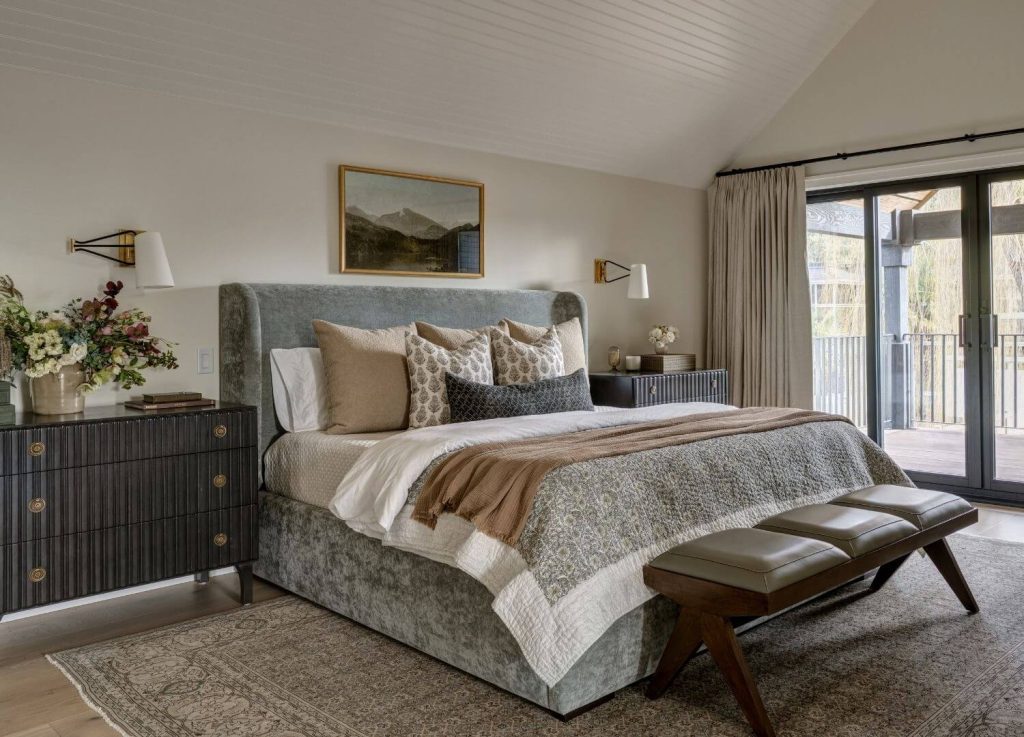
“Swing-arm wall sconces are a fantastic choice for bedrooms because they free up space on your nightstand.”
For perfect placement, mount them so the bottom of the shade is about 20-24 inches above the mattress top. This puts the light at a comfortable height for reading in bed. In terms of horizontal placement, aim for the center of the sconce to be 6-12 inches out from the edge of your headboard. This positioning ensures the light pool is over your shoulder, not behind your head or glaring in your eyes.
13. Curate ‘Bookshelf Wealth’ with Dark Wood and Collected Treasures
Styling a bookshelf to look this effortlessly cool is an art. Don’t just jam books in; curate it. Here’s a quick guide to getting that ‘lived-in library’ look. (Estimated time: 2 hours, Cost: priceless, using what you own)
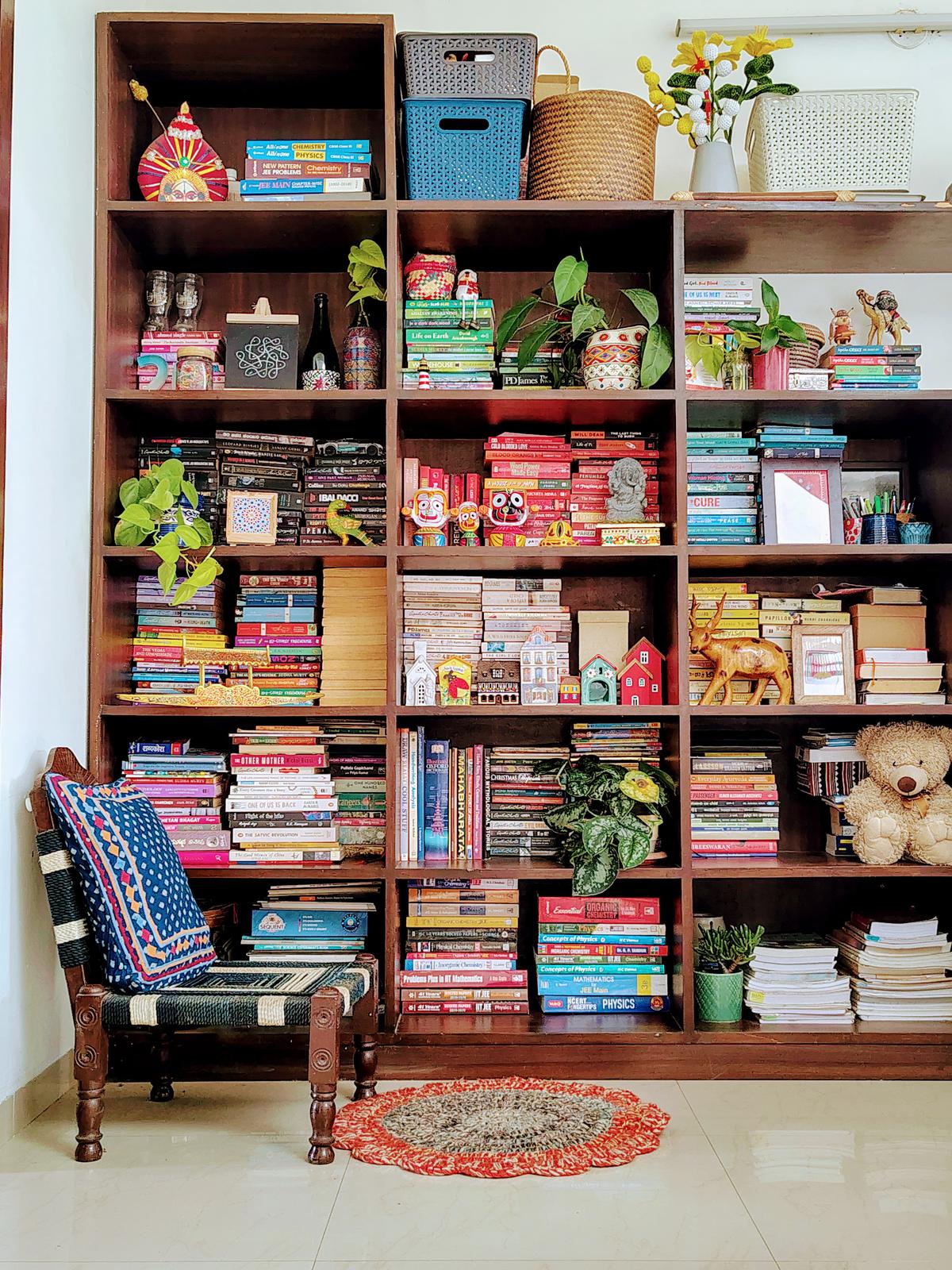
“The Foundation (Books): Start by placing your largest books, varying their orientation.”
Stack some horizontally and stand others vertically. This creates visual rhythm. Distribute colors to avoid large, distracting blocks.
Add Structural Objects: Next, place medium-to-large decorative objects like woven baskets, vases, or storage boxes. These will anchor your display and break up the lines of books.
Bring in Life: Weave in small potted plants like pothos or succulents. Their organic shapes soften the hard lines of the shelves and books.
The Personal Layer: Now add the small, personal items: framed photos, small figurines, travel mementos. Group them in threes or fives for better visual impact.
Step Back & Edit: Take a step back. Does it look too crowded? Too sparse? Don’t be afraid to move things around, take items away, or leave some breathing room.
This look, often called ‘bookshelf wealth,’ is trending because it’s the antithesis of sterile, impersonal minimalism. It celebrates personality, history, and intellectual curiosity. In a world of fast furniture and fleeting digital content, a well-stocked, thoughtfully arranged bookshelf signifies a connection to tangible stories and personal passions. It tells guests who you are without you having to say a word. This isn’t about showing off; it’s about creating a home that reflects a life well-lived and well-read.
14. Design a Luxurious Spa-Like Main Bathroom Suite
A truly luxurious, spa-like bathroom suite with features like a freestanding tub, a separate large shower, and a double vanity requires a generous footprint. You’ll need a minimum of 120 square feet to comfortably fit these elements without it feeling cramped. For a more spacious layout, with ample room around each fixture, 150-200 square feet is ideal. This allows for features like a makeup vanity, a toilet in a separate water closet, and even a small armchair, truly replicating that hotel-spa experience. Compare this to the more compact, but still modern, layout in Idea #29.
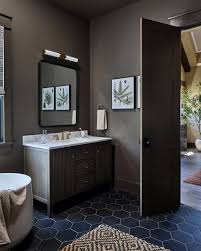
“fantasizing about soaking in that freestanding tub, run through this practical c”
fantasizing about soaking in that freestanding tub, run through this practical checklist:
- Plumbing Check: Are your water supply and drain lines located where you need them? Moving plumbing for a freestanding tub or reconfiguring a vanity can be one of the biggest hidden costs in a bathroom remodel.
- Ventilation Assessment: A luxury shower and tub produce a lot of steam. Is your current exhaust fan rated for the square footage of your new design? An undersized fan leads to moisture problems and mildew.
- Material Reality Check: Are you prepared for the upkeep of materials like natural stone or frameless glass shower doors? Be honest about how much time you’re willing to spend cleaning.
15. Modern Bathroom with a Marble Double Vanity and Gold Faucets
Let’s have a moment of honesty about wall-mounted faucets. They look incredibly sleek and free up counter space, but they have a downside. If a faucet leaks or needs to be replaced, the plumbing is entirely behind the finished wall. Accessing it often means cutting into your drywall and tile, which can turn a simple repair into a mini-renovation project. Make sure you invest in a very high-quality faucet from a reputable brand to minimize this risk, and hire an excellent plumber for the installation.
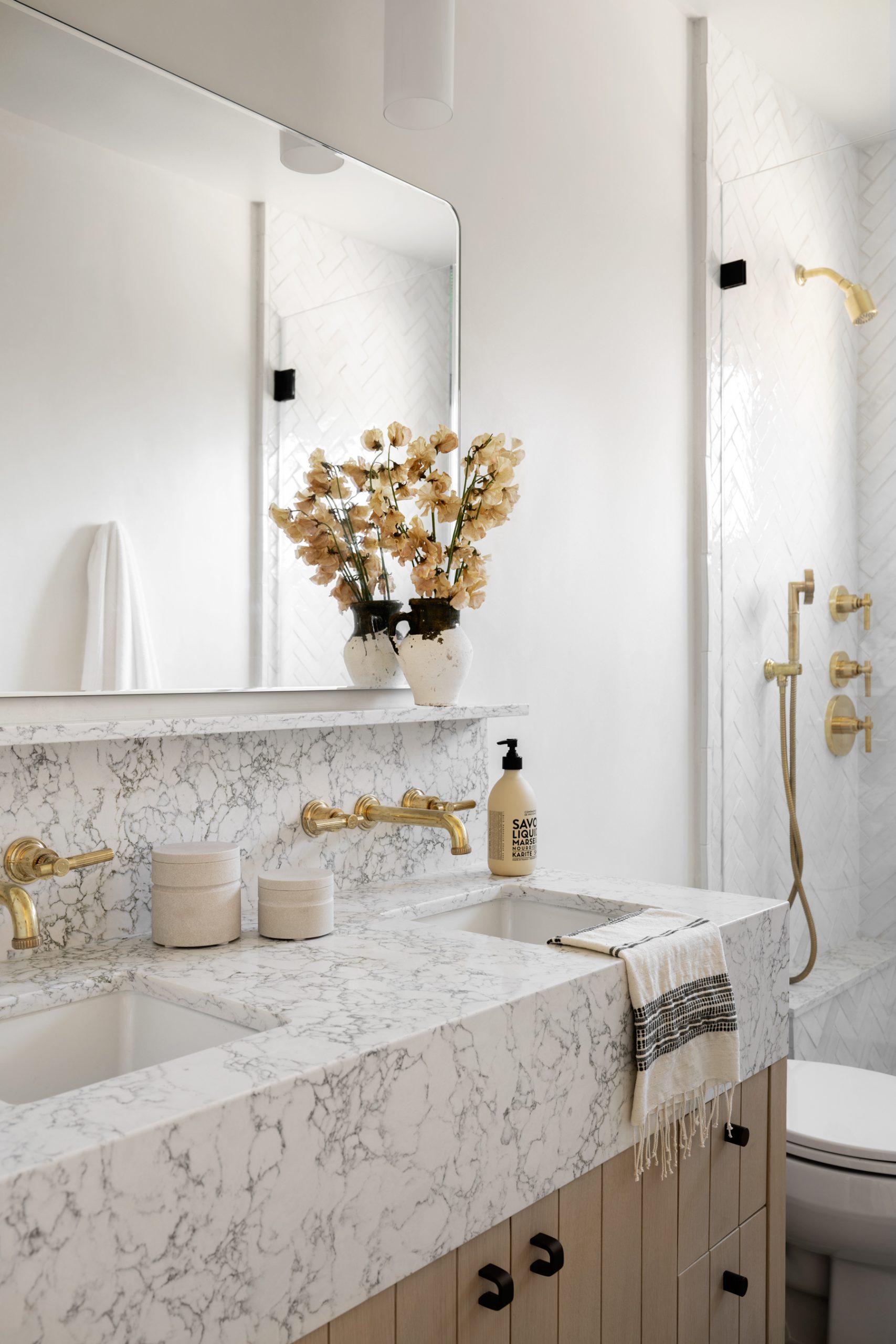
“This bathroom design feels so cohesive because of the principle of repetition.”
The warm gold of the faucets is repeated in the shower fixtures. The clean white of the vanity is repeated in the herringbone wall tiles and the paint. The rectangular shape of the vanity is mirrored by the long, frameless mirror. This repetition of color, finish, and shape creates a sense of rhythm and intention, making the space feel calm, complete, and thoughtfully designed rather than a collection of random parts.
16. A Minimalist White Bedroom with Natural Branch Decor
In a room this minimalist, every single object carries immense weight. The one thing that elevates this space from a simple white room to a serene, nature-inspired retreat is the tall, dark wooden branch in the corner. It’s a sculptural, organic element that provides a stark and beautiful contrast to the clean, straight lines of the bed frame, window, and walls. It adds a touch of the wild and untamed, preventing the all-white palette from feeling sterile. Remove it, and the room loses its soul.
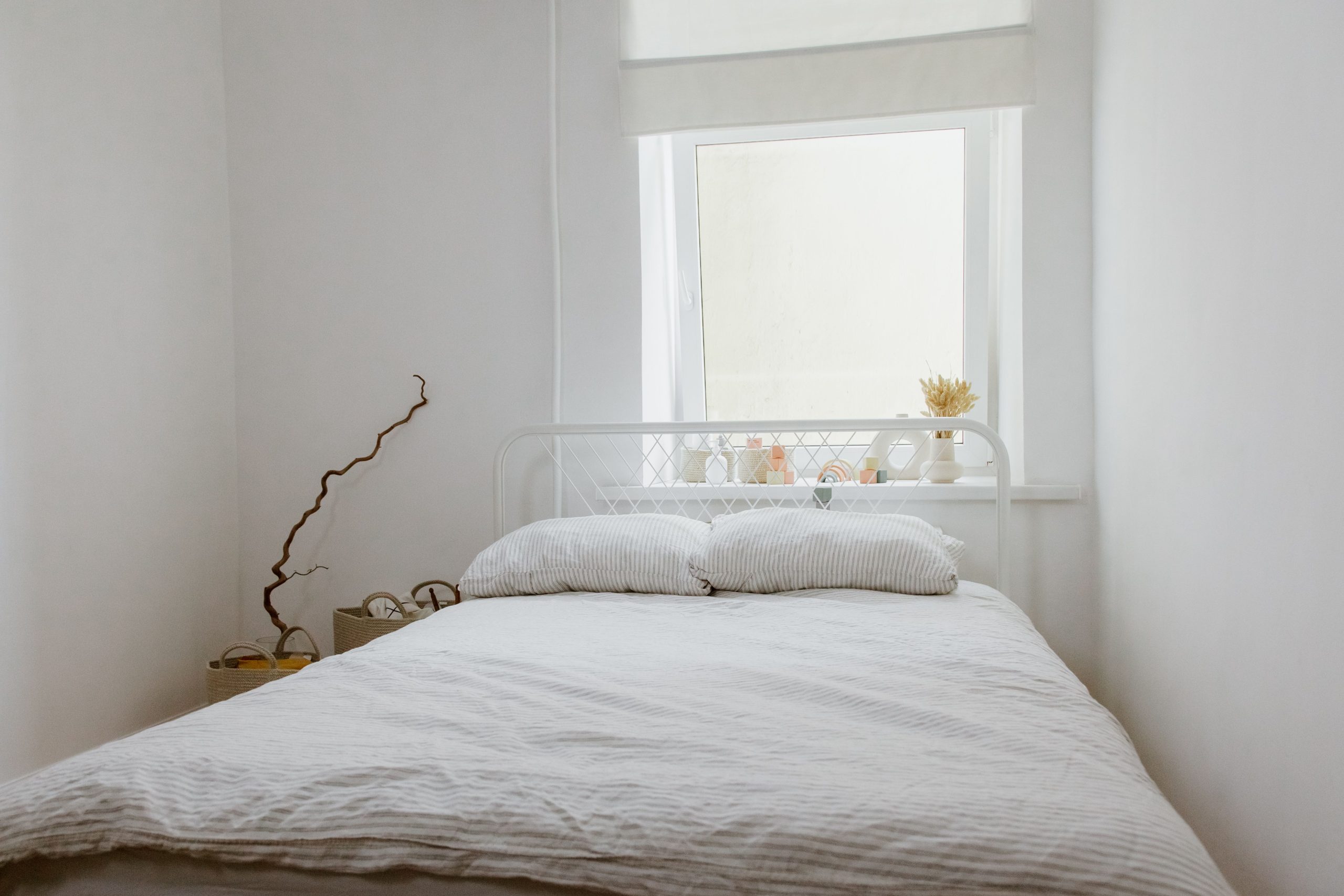
“Achieving this calm, minimalist aesthetic is incredibly budget-friendly.”
The key is to edit, not to spend. You can find a simple white metal headboard from IKEA or Walmart for under $100. The branch decor is literally free—find an interesting fallen branch on a walk (just be sure to clean it well before bringing it inside). Woven baskets for storage are available at Target or thrift stores for $15-$30. The focus is on a monochrome palette and a few carefully chosen, high-impact textural pieces, not expensive furniture.
17. Cozy Bedroom Retreat with Macrame and Natural Textures
This bedroom feels like a warm hug, and it’s all thanks to a masterful layering of textures. The design thoughtfully combines multiple natural materials to create a rich sensory experience. You have the soft smoothness of the cream bedding, the chunky knots of the macrame wall hanging, the high-pile fluff of the caramel pillow, and the coarse weave of the jute rug. This textural variety, all within a tight, warm neutral color palette, is what makes the room feel so cozy, complex, and inviting without feeling cluttered.
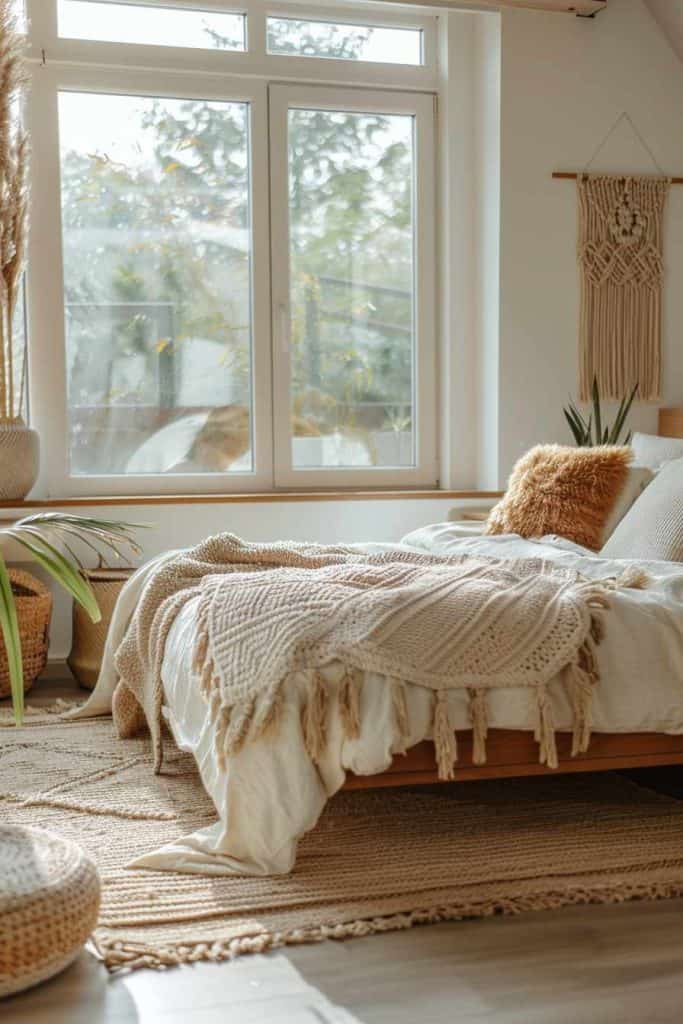
“To recreate this look, focus on the wall hanging.”
A common mistake is hanging a macrame piece that is too small for the bed. As a rule of thumb, your wall art above the bed should be at least two-thirds the width of the headboard. In this case, the large macrame hanging properly anchors the bed and makes the whole arrangement feel generous and intentional. A smaller piece would look lost and diminish the cozy, enveloping effect. This is similar to the scale principle we see in the minimalist Idea #16, but with a maximalist texture.
18. Bohemian Dreamscape with Layered Rugs and Macrame
The formula for this perfect bohemian vibe is all about texture and earth tones. Think 50% Soft Textiles + 30% Natural Materials + 20% Living Greenery. The textiles are the star—layered rugs, patterned pillows, macrame art, and soft throws. The natural materials provide the foundation: the wooden bed frame, the woven pendant light, and rattan planters. Finally, the greenery breathes life into the space. The key is that every element feels handmade, organic, and personal, creating a relaxed and curated look.
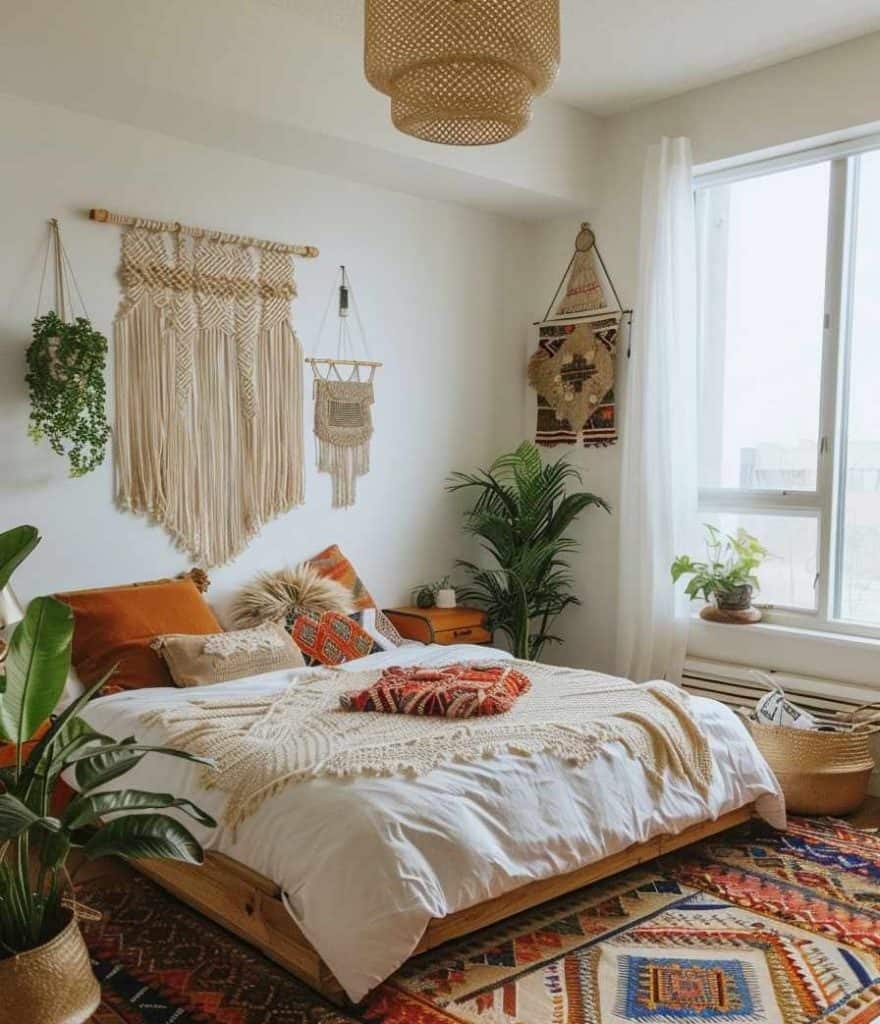
“A room with this many plants and textiles requires commitment.”
All those beautiful green leaves need regular watering, specific light conditions, and occasional dusting. The layered rugs can be tricky to vacuum, and the various throws and pillows will need frequent fluffing and laundering to look their best. It’s a high-touch, high-care environment. If you’re a ‘set it and forget it’ type of person, you might find the upkeep on this particular style of cozy to be more work than you bargained for.
19. Modern Monochrome Bedroom with a Black Accent Wall
The anchor of this entire room is, without a doubt, the dark charcoal or black accent wall. It’s a bold, dramatic choice that accomplishes several things at once. It creates incredible depth, making the room feel more expansive. It provides a high-contrast backdrop that makes the white bedding and abstract patterns pop. And it establishes a sophisticated, moody atmosphere that a plain white room could never achieve. Everything else in the room—the bedding, the rug, the nightstands—is chosen to support this one powerful design decision.
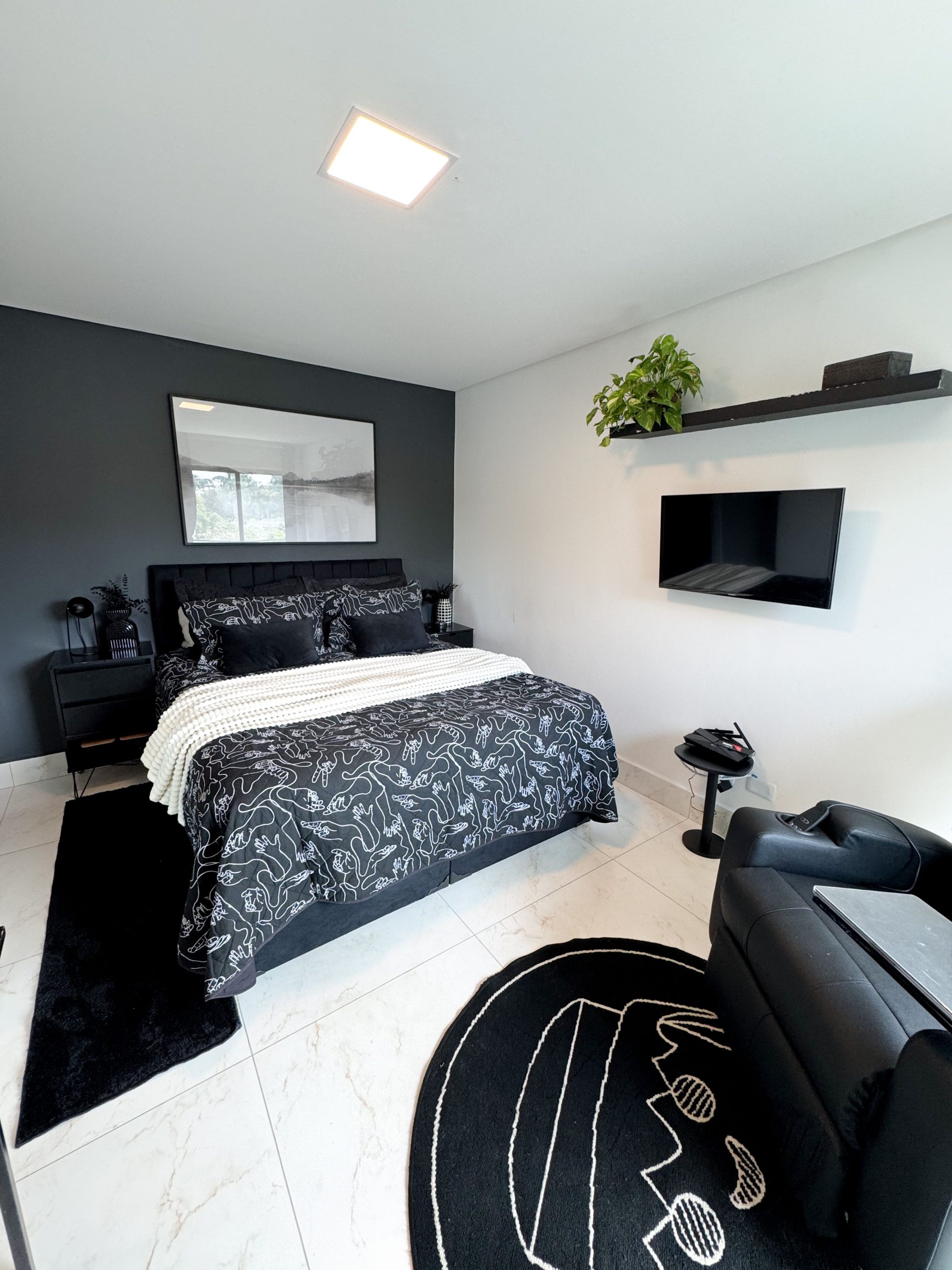
“Creating a sharp, clean accent wall is easier than you think.”
Here’s how to get a professional result in an afternoon. (Estimated time: 3-4 hours, Cost: $50-$80 for paint and supplies)
- Prep the Surface: Wipe down the wall with a damp cloth to remove any dust. Fill any holes with spackle and sand smooth.
- Tape a Perfect Edge: Use high-quality painter’s tape (like FrogTape) for the corners and along the ceiling and baseboards. Press down firmly to seal the edge.
- Cut In: Use a 2-inch angled brush to paint a 2-3 inch border along the tape lines and around any outlets.
- Roll the Field: Use a roller to paint the main part of the wall, working in a ‘W’ pattern to ensure even coverage. Apply a second coat after the first is dry to the touch (usually 1-2 hours).
- The Big Reveal: Remove the painter’s tape while the second coat is still slightly wet, pulling it away at a 45-degree angle for the sharpest line.
20. Designing the Ultimate White Island Kitchen
When centering your kitchen around a large island, proportions are everything. To ensure it doesn’t look like a giant block in the middle of your room, follow the ‘Rule of Three.’ Use three pendant lights to evenly illuminate the length of the island, and choose three (or another odd number of) bar stools. Odd numbers are more visually appealing and dynamic than even numbers. Also, ensure the color of the island base contrasts slightly with the floor to give it definition, even if it’s a subtle white-on-light-wood difference.
“A massive kitchen island can be the most expensive part of a remodel.”
To get this look for less, consider an open-base island from IKEA’s VADHOLMA series. It provides the scale and a butcher-block top for a fraction of the cost of custom cabinetry and stone countertops. You can paint the base to match your cabinets and pair it with affordable but stylish bar stools from a retailer like Target or Wayfair. This gives you the grand island feel and functionality for a total cost of around $1,000-$1,500, versus $10,000+ for a custom solution.
21. Bright Traditional Kitchen with Dark Hardwood Floors
This kitchen perfectly balances light and dark elements to create a space that feels both airy and grounded. The white cabinetry, light countertops, and white shutters bounce light around the room, making it feel bright and spacious. However, the dark hardwood floors provide a crucial visual anchor, preventing the sea of white from feeling like it’s floating away. This high contrast between the floor and the cabinets is a classic design choice that adds depth, drama, and a timeless sense of elegance.
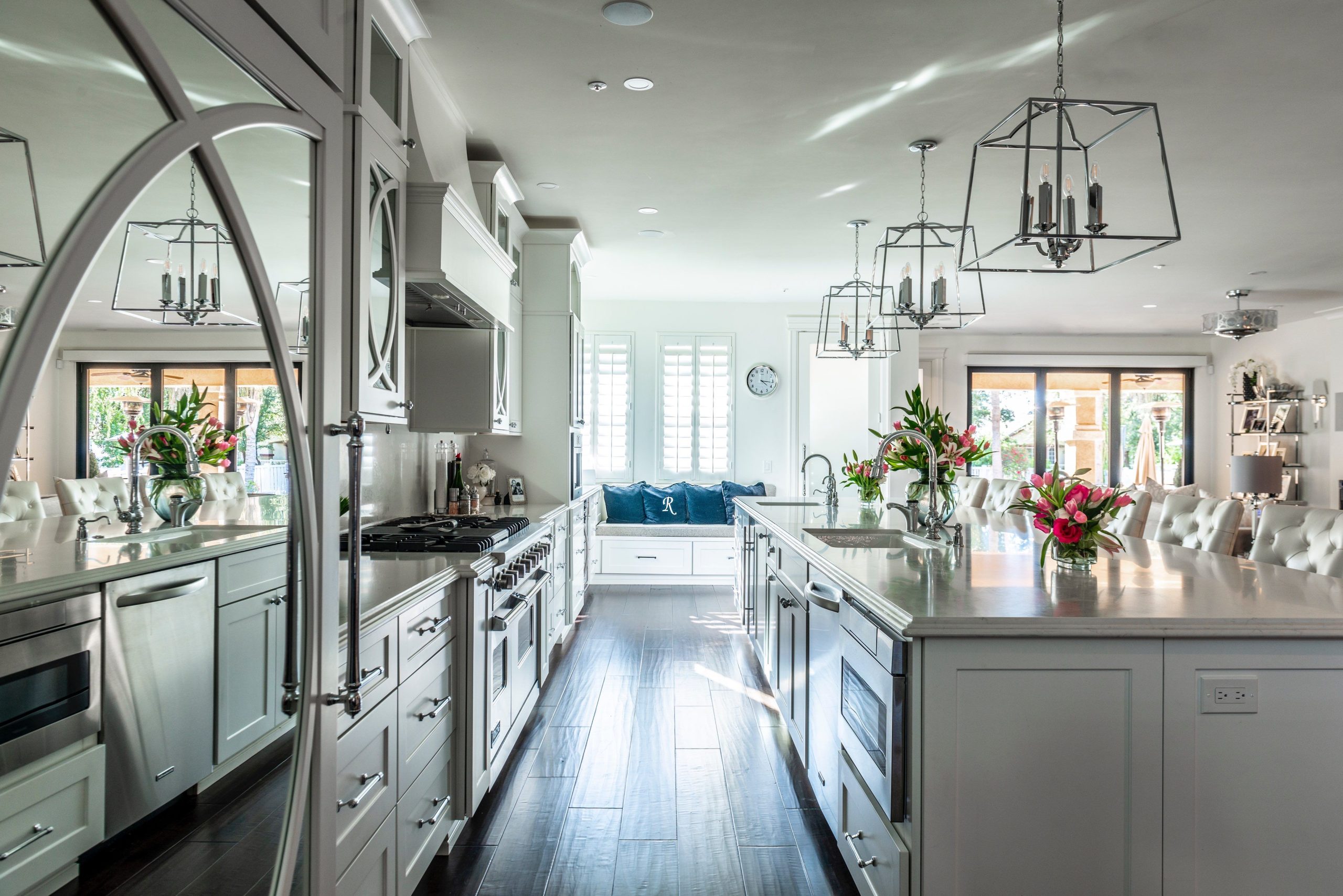
“This long, galley-style layout with a substantial island works best in a rectangular room with a generous width.”
You need at least 13-14 feet of total width to pull this off. This allows for standard 25-inch deep perimeter cabinets, a 3-foot wide island, and two comfortable 42-inch walkways on either side. In a narrower room, a layout like this would feel like a bowling alley, and you’d be better served by a peninsula or the more compact L-shaped design seen in Idea #22.
22. Elegant L-Shaped Kitchen with Marble and Dark Wood
The hero of this classic kitchen design is the white ceramic apron-front sink. It serves as the undeniable focal point, breaking up the rich, dark wood of the cabinetry and tying in with the white marble backsplash. Its traditional form injects a dose of farmhouse charm into the otherwise sleek and elegant space, adding character and preventing the design from feeling too formal. The placement under a large window only enhances its appeal, making the functional act of washing dishes a more pleasant experience.
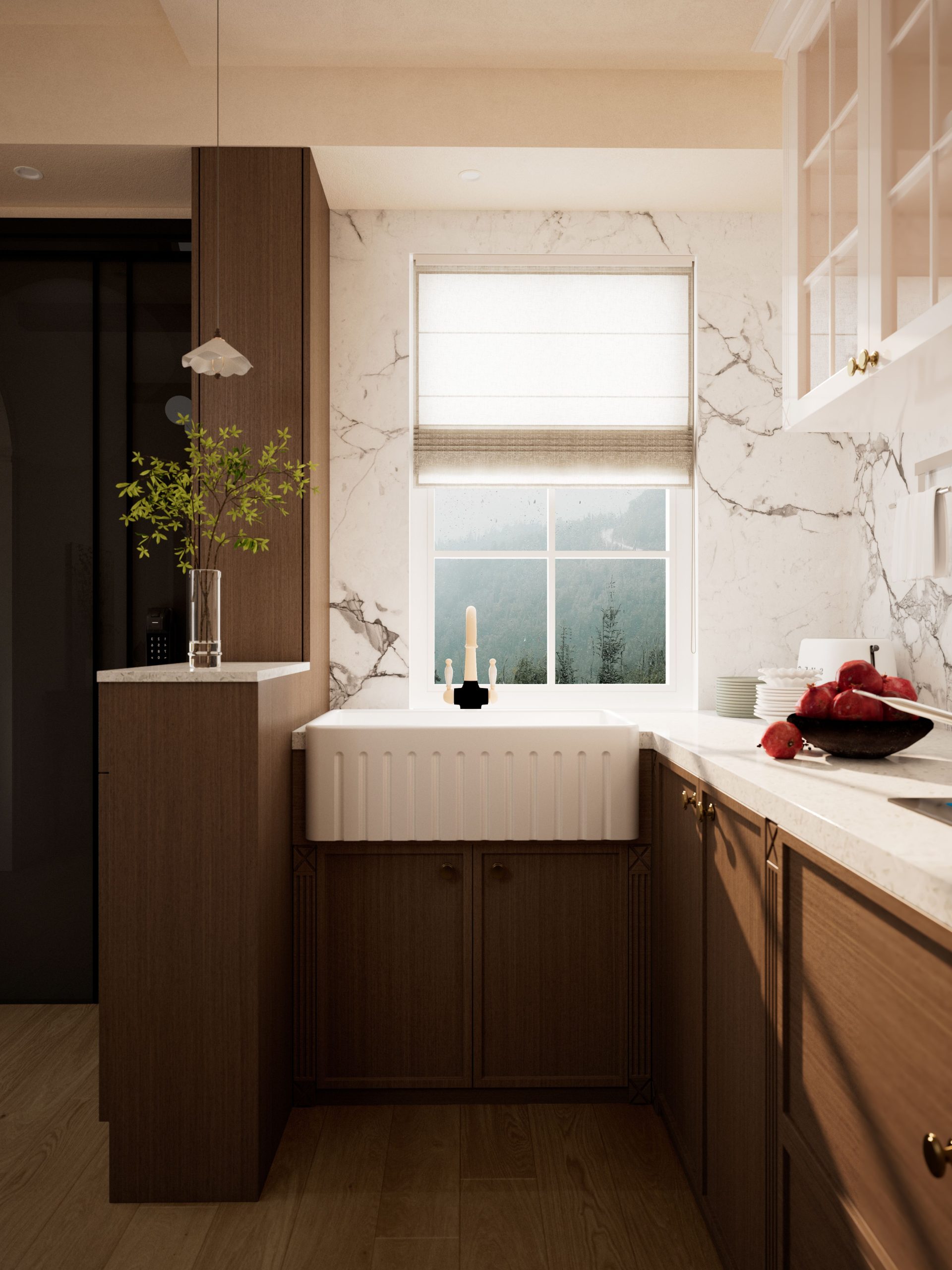
“An L-shaped kitchen is efficient, but requires careful planning to maximize its potential.”
Before you commit, check these points:
- The ‘Corner’ Problem: How will you handle the corner cabinet? A lazy Susan, a blind corner pull-out shelf, or even just sealing it off are all options, but you need to decide this early on as it affects the entire cabinet layout.
- Work Triangle: Map out the path between your sink, refrigerator, and cooktop. In an L-shape, you want to ensure this triangle isn’t too spread out. Keep the total distance between the three points under 26 feet for optimal efficiency.
- Appliance Placement: Where will your dishwasher go? For ergonomic sense, it should be right next to the sink. Make sure its door won’t block a major walkway when open.
23. Luxe Marble Bathroom with Gold Accents and Hexagon Tile
This luxurious, high-contrast look is all about bold material choices. The investment is primarily in the tile and fixtures, creating a space that feels like a boutique hotel. Here’s a breakdown of the potential costs:
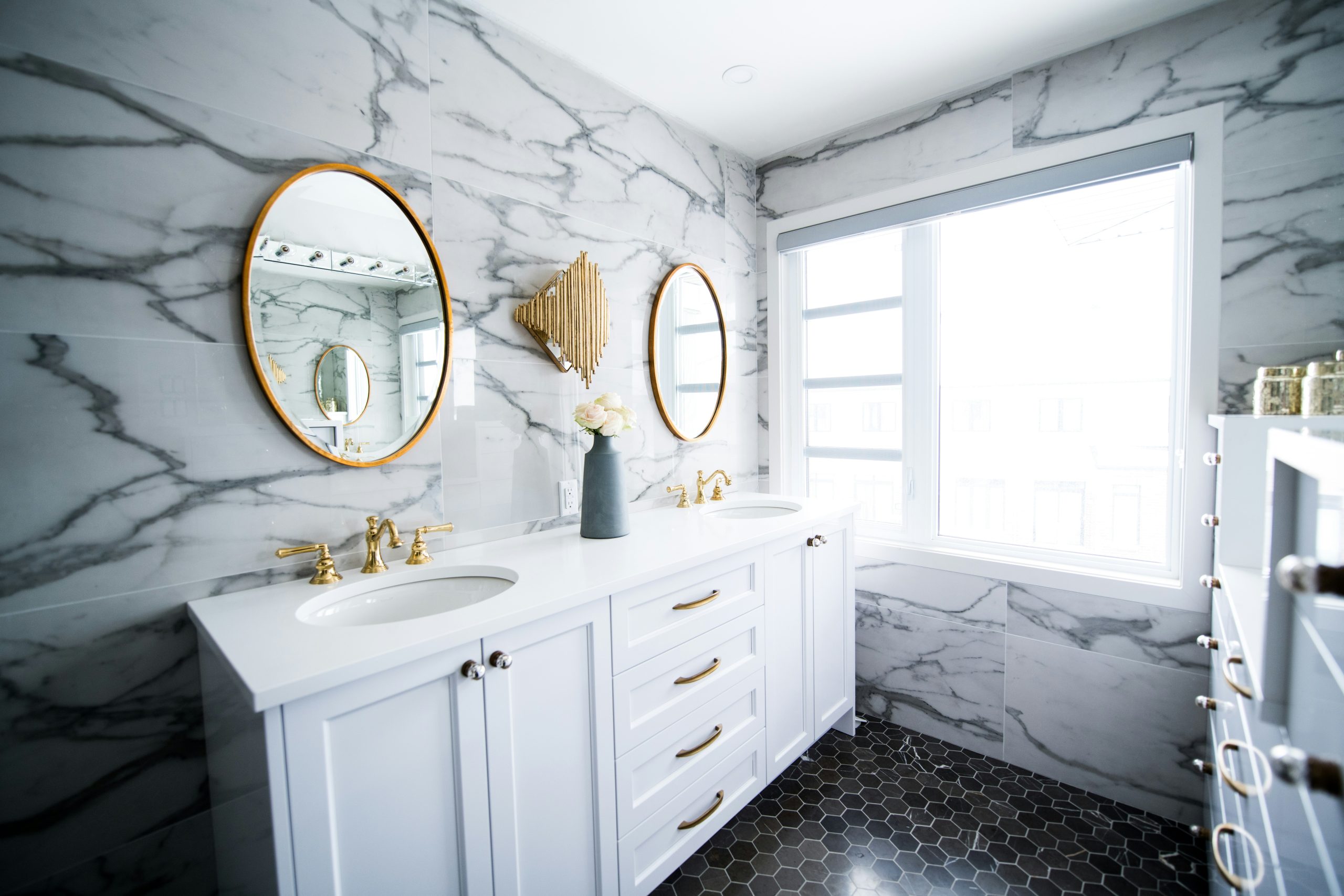
“Wall & Floor Tile: Large-format marble wall tiles and dark gray hexagon floor ti”
- Wall & Floor Tile: Large-format marble wall tiles and dark gray hexagon floor tiles, including installation: $4,000 – $9,000
- Vanity & Mirrors: White double vanity with integrated sinks and two round gold-framed mirrors: $2,000 – $4,500
- Fixtures: Two gold faucets and matching cabinet hardware: $800 – $2,000
- Decor: Gold geometric wall decor and accessories: $200 – $500
- TOTAL: $7,000 – $16,000
- Budget alternative: Use marble-look porcelain tile (more durable and less expensive), find a similar vanity on Wayfair, and source gold fixtures from Amazon or Overstock to get this look for $4,000 – $7,000.
The two star players here—marble and dark hexagon tiles—require specific care. The grout on those dark gray floor tiles will show any light-colored dust or debris, so frequent sweeping or vacuuming is a must. The large marble tiles on the wall, especially in a shower area, must be sealed every 6-12 months to prevent water staining and soap scum buildup. Also, be mindful of cleaning products; acidic cleaners can etch the marble, so always use a pH-neutral stone cleaner.
24. Sleek Contemporary Bathroom with Gray Tile and Black Fixtures
This bathroom’s sleek, modern feel comes from a strict and simple formula: 70% Monochromatic Tile + 20% White Fixtures + 10% Black Accents. The large gray tiles on the floor and walls create a seamless, monolithic envelope for the space. The crisp white double vanity provides a clean, functional block of brightness. The final 10% is all about the sharp, graphic punch of the matte black faucets, hardware, and shower trim. This disciplined approach is what gives the room its cohesive and architectural quality.
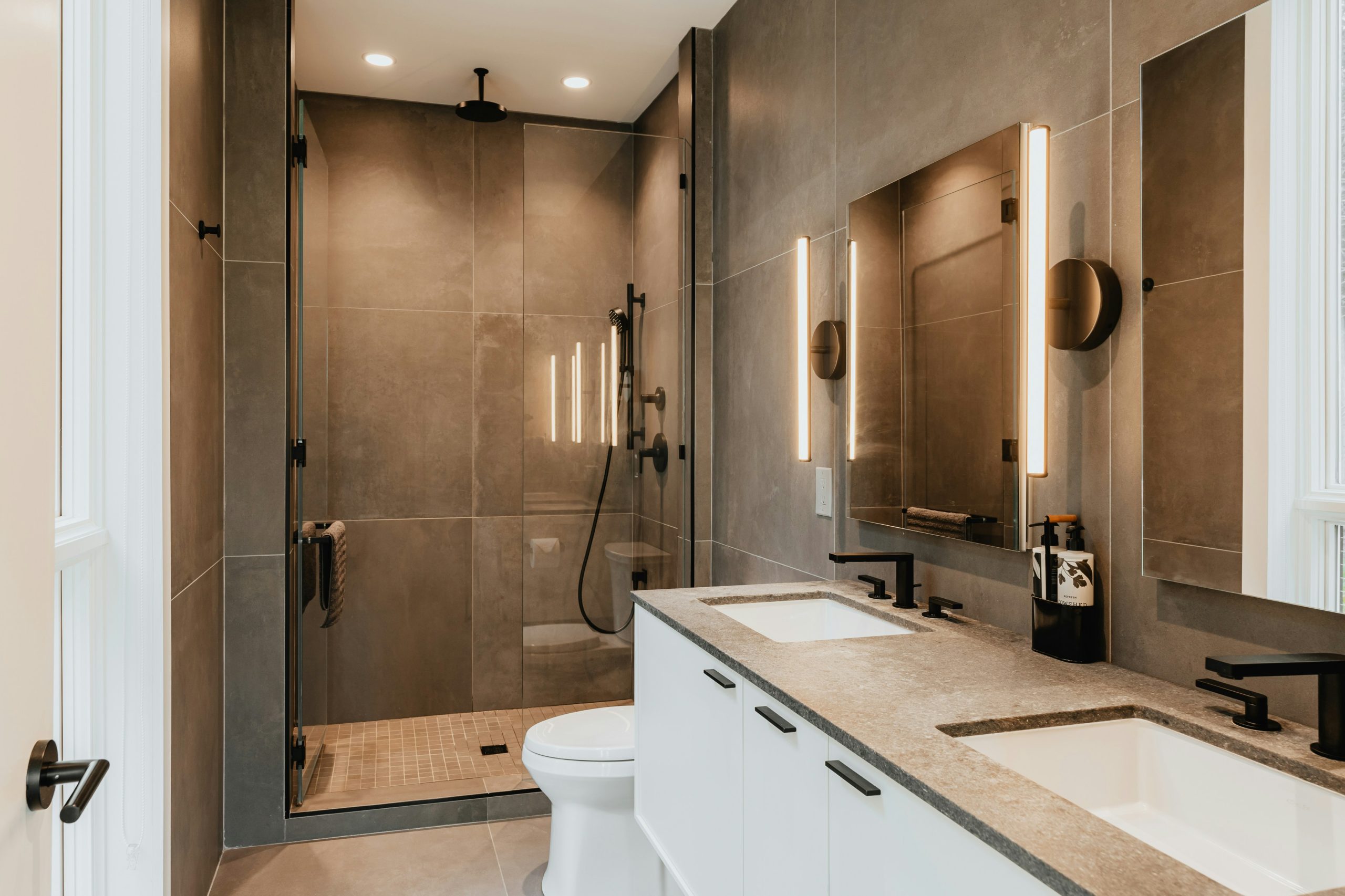
“Those cool, vertical light bar sconces look amazing, but they produce a very specific kind of light.”
They provide excellent, even, shadow-free illumination for tasks like applying makeup or shaving. However, they can also feel quite bright and clinical, especially if you get a high-lumen, cool-temperature bulb. Always install them on a dimmer switch. This allows you to have bright, functional light when you need it, but also to dim them down for a softer, more relaxing glow when you’re just winding down for the night.
25. Airy Open-Concept Living Room in Light Neutral Tones
This space feels so expansive and sophisticated due to a clever trick with visual lines. The dark frames of the large windows create strong vertical and horizontal lines, which are then softened and elongated by the floor-to-ceiling drapes. Hanging the curtain rod high and wide—almost to the ceiling and well past the window frame—makes the windows appear much larger than they are and draws the eye upward, enhancing the room’s height. This, combined with the low profile of the sectional sofa, creates a feeling of openness and grandeur.
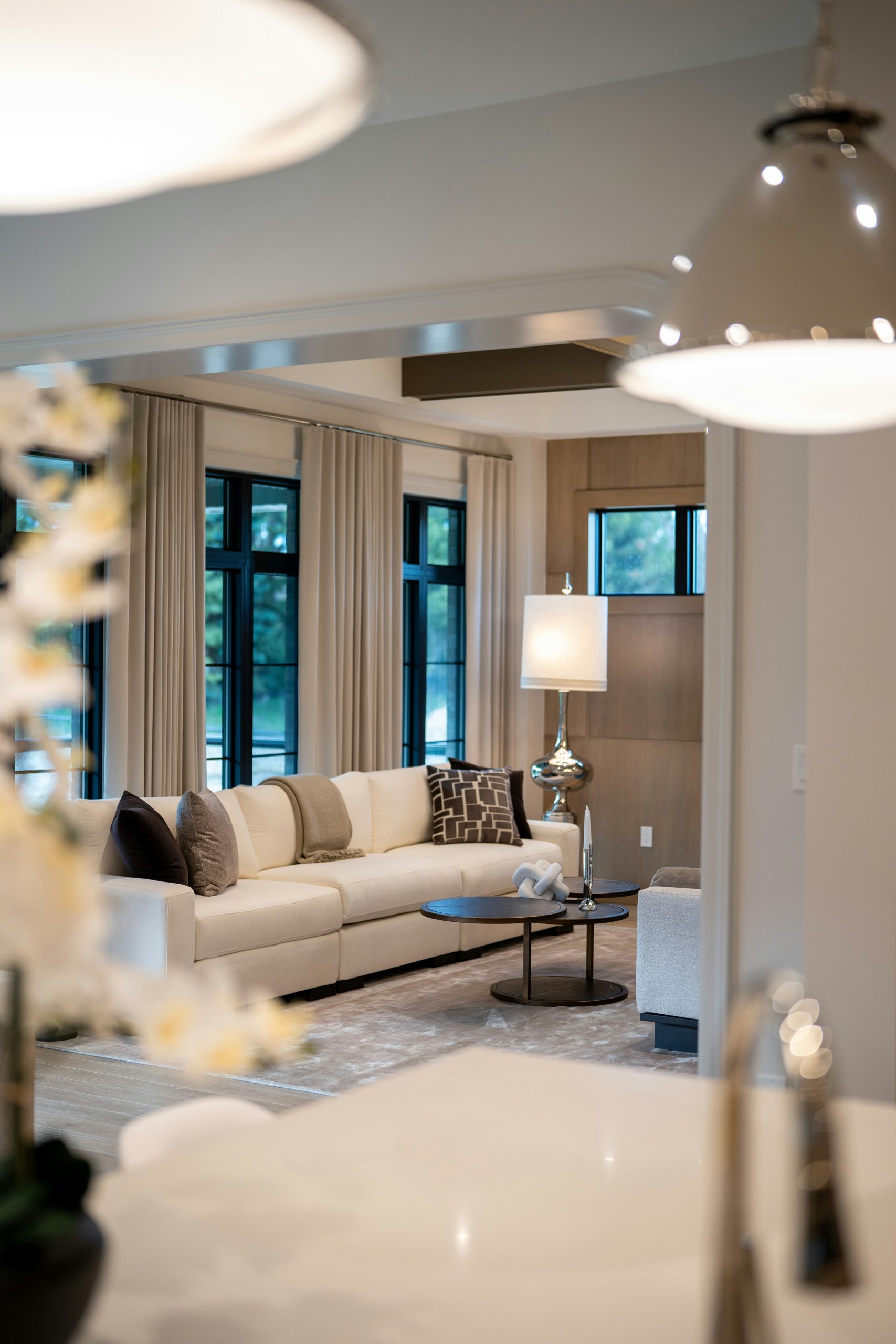
“When working with a large, light-colored sectional, the key to keeping it from looking like a giant white blob is pillows.”
But don’t just throw them on. Create a curated collection. Use a mix of sizes—a larger 22-inch square, a standard 20-inch, and a smaller lumbar pillow. Vary the textures (a velvet, a linen, a chunky knit) and the patterns (a solid, a subtle geometric, a small-scale print), but keep them all within a tight color palette, like the grays and beiges seen here. This adds depth and personality.
26. Modern Living Area with a Black Leather Sofa and Patterned Armchair
The single element that gives this room its unique personality is the abstract painting. The black sofa, white walls, and even the patterned chair are all chic but relatively common design choices. It is the artwork, with its bold swaths of orange and yellow, that injects warmth, energy, and a focal point into the space. It’s the conversation starter. Without it, the room would be stylishly monochromatic; with it, the room has a story and a vibrant, artistic soul. It proves that sometimes, one great piece of art is all you need.
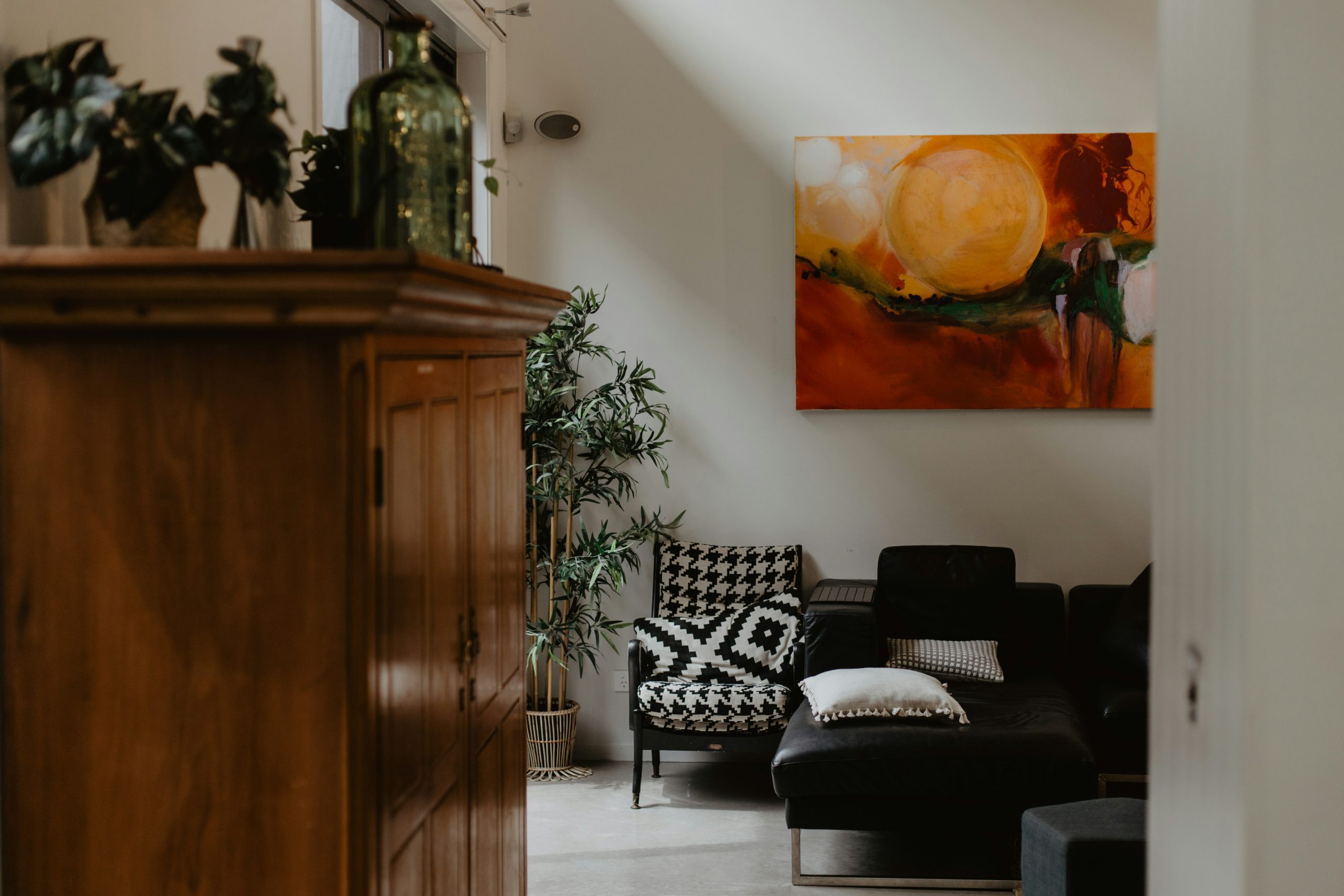
“This look is a great example of the ‘Warm Modernism’ trend we’re seeing everywhere in 2026.”
After years of cooler, gray-toned minimalism, people are craving personality and warmth in their modern spaces. This style blends clean lines and neutral staples (like the black sofa) with bold art, natural materials (the wood cabinet), and organic shapes (the plant). It feels curated and sophisticated, but also personal and inviting—a direct reaction against the one-note minimalist homes of the past decade. Compare this warmer take with the cooler monochrome style of Idea #19.
27. Grand Entryway with Twin Curved Staircases
A dramatic dual staircase entryway is the definition of a luxury statement, and it demands significant volume. This isn’t a feature for just any home; it requires a two-story foyer with a ceiling height of at least 18-20 feet. The footprint needed to accommodate the sweeping curves of both staircases and a generous landing area is substantial, typically requiring a dedicated space of 200-300 square feet. Anything less, and the grandeur is lost, a href=”#idea-28″>Idea #28, which has a much more space-efficient staircase.
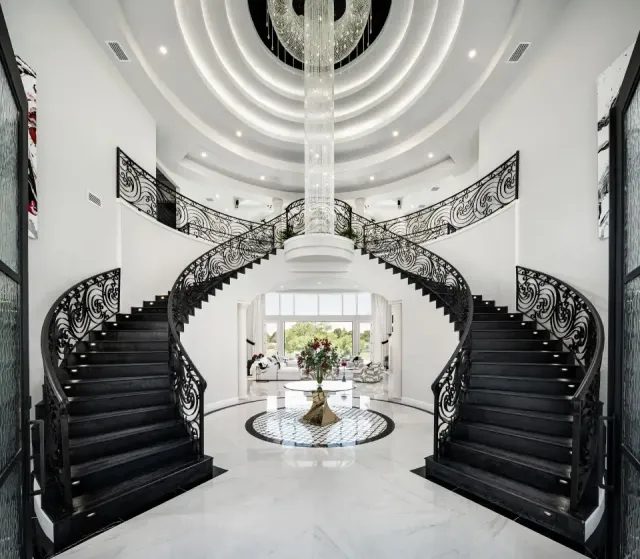
“While breathtaking, a grand foyer like this presents some practical challenges.”
The sheer volume of the space can be very expensive to heat and cool. That magnificent cascading chandelier? Changing a single lightbulb might require a specialized 20-foot ladder or even professional scaffolding. And the gleaming marble floors, while stunning, can be quite slippery when wet and will echo sound throughout the house, so rugs and other soft surfaces in adjacent rooms are a must to manage acoustics.
28. Cozy A-Frame Cabin with Natural Wood Walls
This space nails the ‘cozy cabin’ vibe by fully committing to its primary material: wood. The walls, ceiling, and even the staircase are all clad in natural wood paneling. This creates a warm, enveloping cocoon that feels instantly comforting. The design succeeds because it doesn’t shy away from this repetition. It’s balanced by the neutral gray sofa and the textural variety of the woven chairs and animal hide rug, but the wood is the undisputed star, creating a unified and immersive rustic atmosphere.
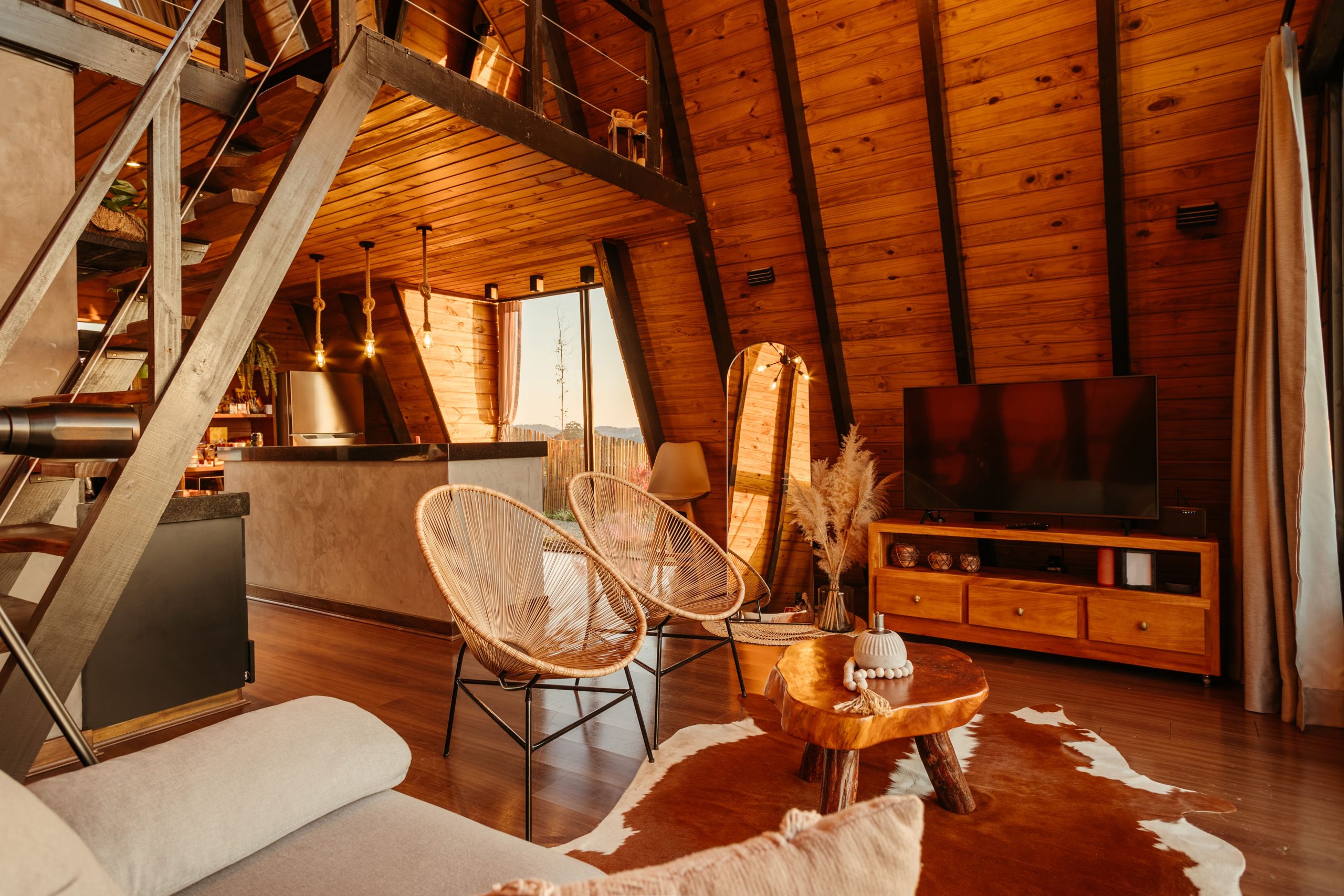
“that makes this A-frame feel truly authentic and rustic is the slab wood coffee table.”
With its raw edge and branch-like legs, it looks like it was pulled directly from the forest outside. In a room so defined by clean, milled wood paneling, this piece of untamed nature adds a crucial, organic counterpoint. It’s a reminder of the wood’s origin, and its unique, sculptural form prevents the rest of the decor from feeling too predictable. It’s the rustic heart of the room.
29. Modern Bathroom with a Floating Vanity and Pebble Shower Floor
A floating vanity is a fantastic way to make a bathroom feel larger and more open, as it allows the flooring to extend all the way to the wall. However, it requires proper support. The vanity must be anchored to the wall studs. For a heavy vanity with a stone countertop and sinks, your contractor will need to add extra blocking between the studs before the drywall goes up. This is not a feature you can easily add later without opening up the wall, so it’s crucial to plan for it from the beginning.
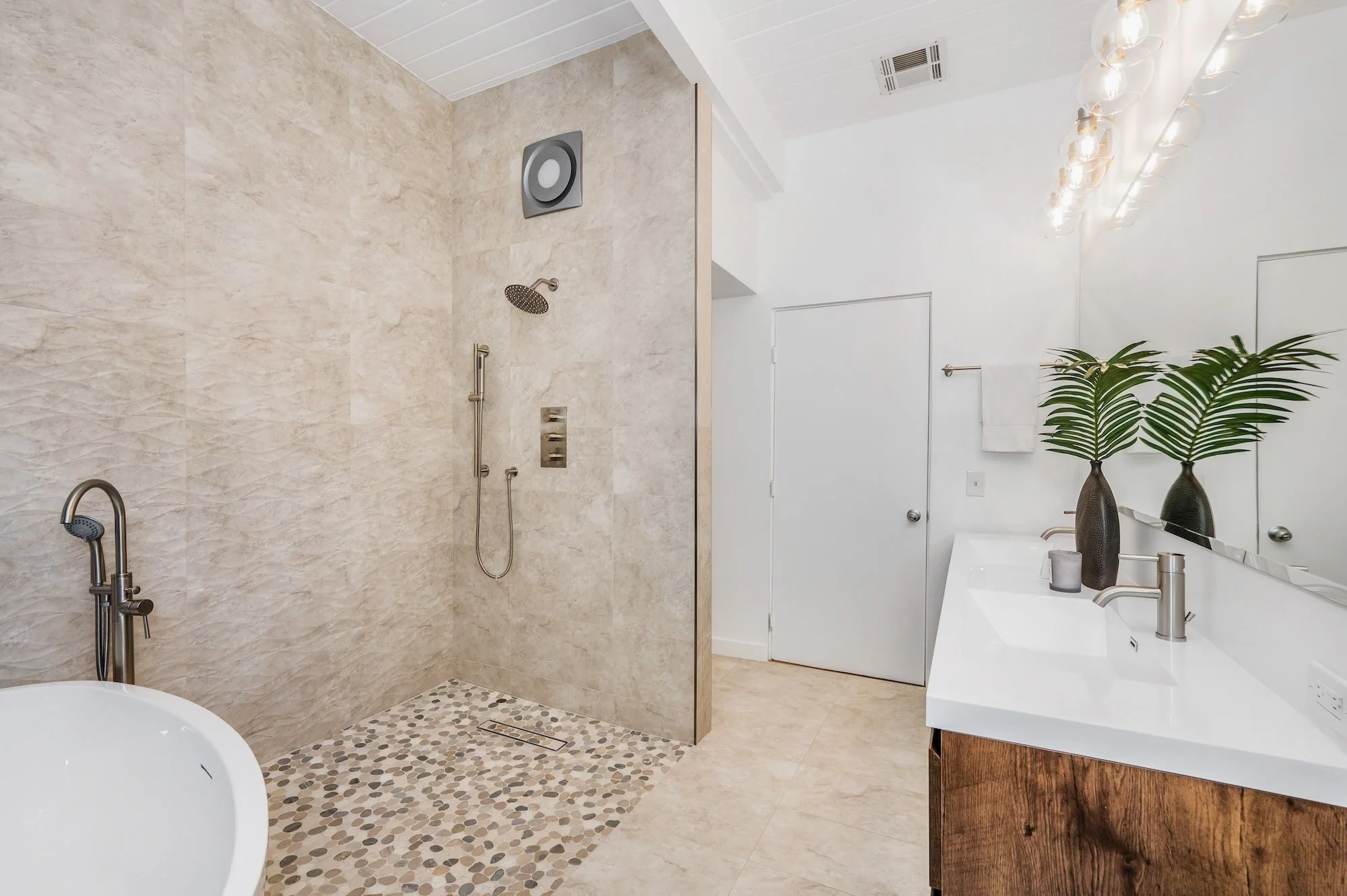
“That beautiful pebble-stone shower floor feels amazing underfoot, like a mini foot massage every morning.”
The downside? All those tiny spaces between the pebbles mean a lot of grout. And grout is porous and can trap soap scum and mildew. To keep it looking fresh, you’ll need to scrub it regularly with a grout brush and cleaner, and it’s essential to have it professionally sealed once a year. It’s a higher-maintenance choice than a standard large-format tile floor.
30. Contemporary Bathroom with a Wood Slat Feature Wall
A wood slat wall adds incredible warmth and texture to a bathroom. Using teak, ipe, or another water-resistant wood is key for durability. Here’s a simplified process for creating one in a shower. (Estimated time: 1 weekend, Cost: $300-$800 for materials)
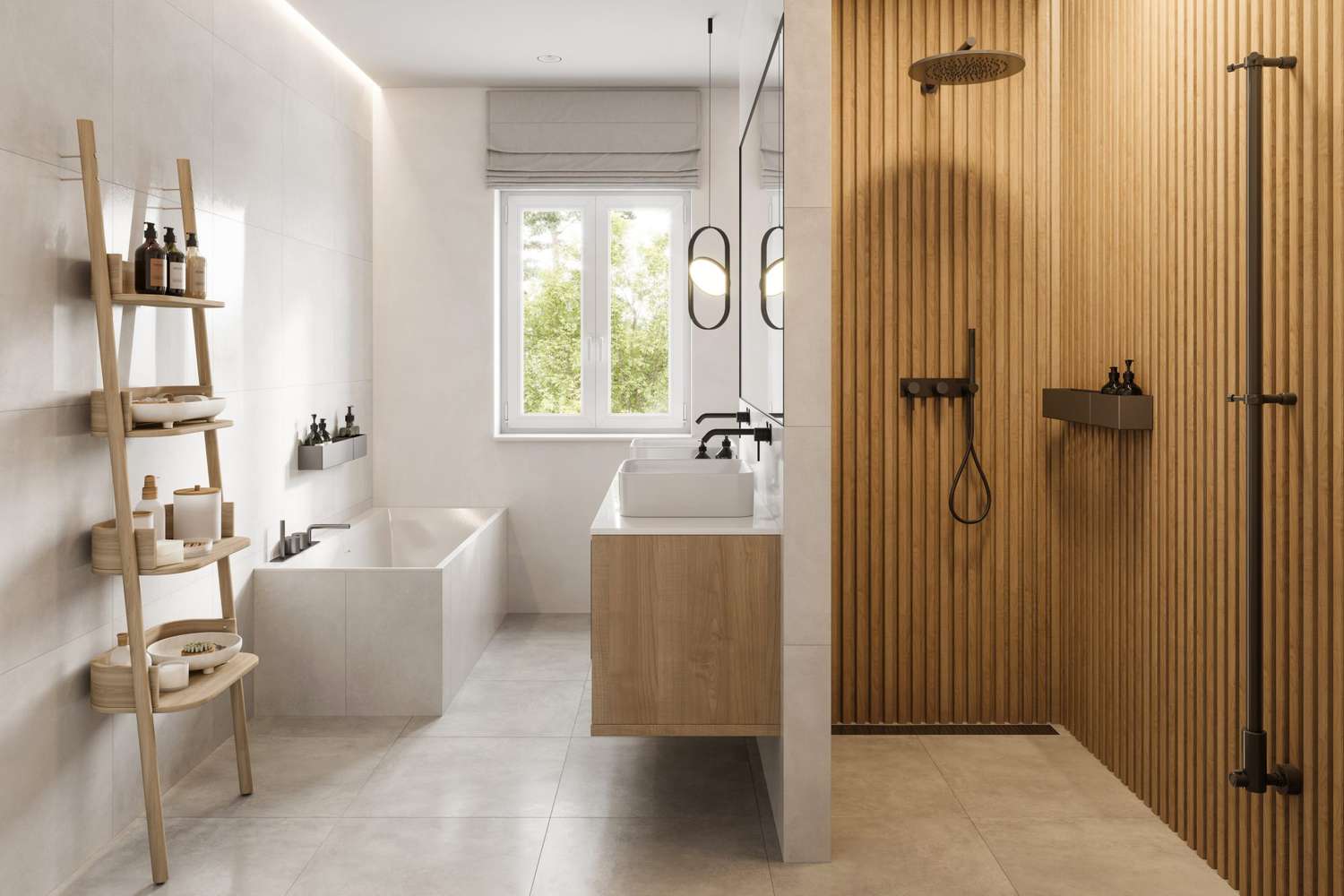
“Waterproof First: The wall behind the slats must be fully waterproofed, just like any other shower.”
Use a membrane system like Schluter-Kerdi over cement board. This is the most critical step.
Create Furring Strips: Attach vertical strips of a waterproof composite material to the wall, screwed into the studs. This creates an air gap for drainage and drying.
Prepare the Slats: Cut your water-resistant wood slats (e.g., 1×2 teak boards) to the desired length. Seal all sides of each slat with a marine-grade varnish or teak oil.
Attach the Slats: Using stainless steel screws, attach the wood slats horizontally to the furring strips, using a spacer (like a small wood block) to ensure even gaps of about 1/4 to 1/2 inch.
Wood and water are always a tricky combination, even with water-resistant species like teak. The space behind the slat wall needs to be able to dry out completely between uses to prevent mold and mildew growth. This means excellent bathroom ventilation is non-negotiable. An oversized, high-CFM exhaust fan is a must. If your bathroom tends to stay damp, this might not be the best feature for you, as hidden moisture problems can be a serious issue down the road. This look is stunning, but it requires the right conditions.
Your Dream Home is Closer Than You Think
See? Your dream home isn’t some far-off fantasy. It’s a series of smart, intentional choices about color, texture, and scale. It’s about finding the ideas that resonate with you and bravely making them your own. Hopefully, this curated list has sparked some real possibilities for your space.
Now take that inspiration and start planning! Pin your favorite looks, measure your rooms, and begin the exciting process of turning these dreams into your reality. Happy decorating!