You know that feeling when you find the perfect outdoor hanging planter idea that looks *exactly* right for your space? That Pinterest-worthy vision is closer than you think. We filtered through hundreds of options to bring you only what’s worth your attention in 2026. In this guide, we’ve curated 30 distinct looks, covering everything from rustic coir baskets and modern vertical gardens to whimsical DIY projects. For 2026, it’s all about hyper-personalization and texture—moving beyond generic plastic pots to create moments of beauty that reflect your home’s unique style. And stay until the end — we break down the most common mistakes that can ruin these looks. 📌 Save this to Pinterest for later — you’ll want to revisit these ideas.
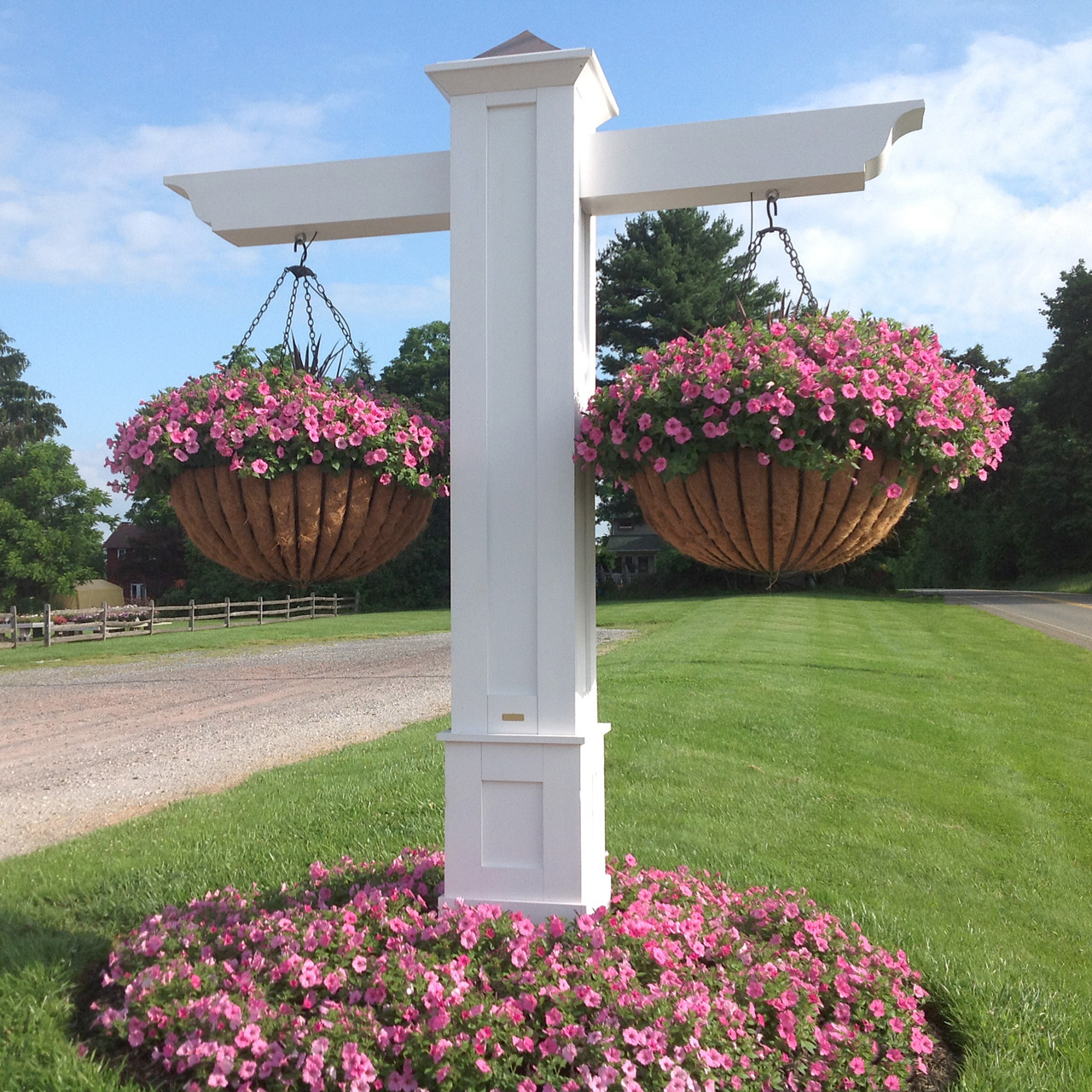
1. Frame Your Entry with Dual Cascading Pink Baskets
What makes this entrance so welcoming and polished? It comes down to two classic design principles: symmetry and repetition. Placing two identical, overflowing baskets on either side of an entry point creates an immediate sense of balance and order, which is naturally pleasing to the eye. This isn’t just one planter; it’s a statement duo. The design is powerful because it then repeats the vibrant pink of the hanging flowers in the flower bed below, tying the entire vignette together and creating a lush, intentional, and fully realized look.
“To recreate this look, you’ll need to account for the structure and the abundant plantings.”
Here’s a possible breakdown for this high-impact design:
White Pergola-Style Post: $150 – $400
Large Hanging Baskets (x2): $50 – $120
Coir Liners & Soil: $30 – $60
Pink Petunia Plants (for baskets and bed): $80 – $200
TOTAL: $310 – $780
Budget Alternative: For about 40% less, use a single, extra-large basket on a standard shepherd’s hook and focus on creating one incredibly full arrangement.
2. A Greenhouse Rainbow of Hanging Petunias
that makes this setup so breathtaking is the sheer, unapologetic volume. This isn’t about finding one perfect planter or a single flawless bloom. The magic is in the collective impact of dozens of planters, each overflowing with a riot of color. Removing any single basket wouldn’t diminish the look, but removing half of them would. It’s a powerful reminder that sometimes, more really is more. It creates an immersive experience of color and life, turning a simple greenhouse into a vibrant canopy of flowers.
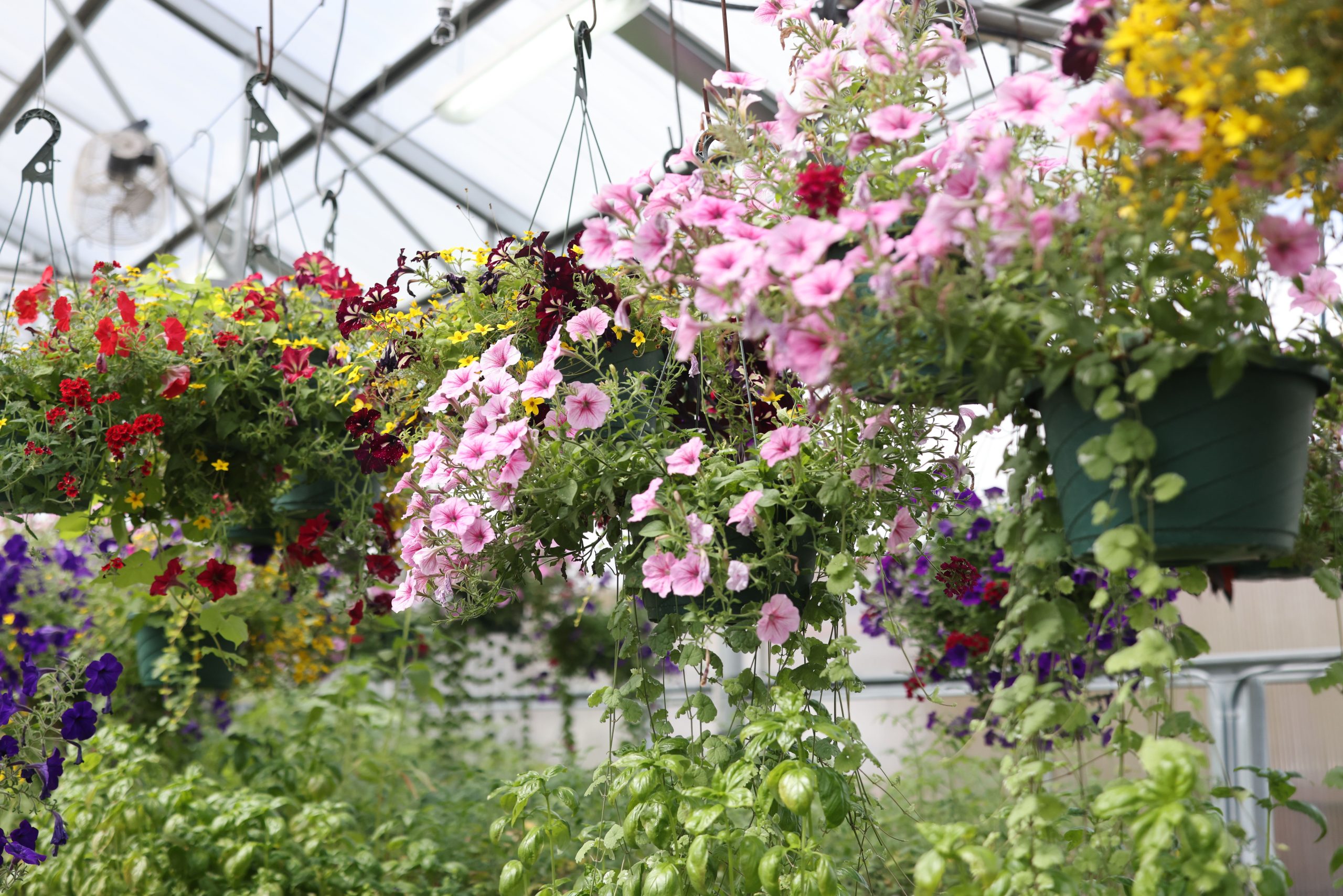
“To create your own lush, multi-plant baskets like these, use the professional ‘Thriller, Filler, Spiller’ method.”
For each basket, choose one upright, eye-catching plant (the ‘thriller’), several mounding plants to make the basket full (the ‘filler,’ like these petunias), and a few trailing plants to cascade over the sides (the ‘spiller,’ like the green foliage seen here). This simple formula ensures your baskets look full, balanced, and dynamic from every angle. Don’t be afraid to pack the plants in for an instantly abundant look.
3. Abundant Greenhouse Layers with Flowers and Ferns
An immersive, layered look like this thrives in a dedicated space with vertical height. It’s ideal for a greenhouse, a large covered veranda, or a patio with a pergola. You’ll want a minimum footprint of around 10×12 feet and a ceiling height of at least 9 feet to allow for the hanging baskets to have clearance above the floor-level plants without feeling cramped. This sense of scale is crucial for creating that ‘jungle’ canopy effect. For a beautiful idea that works in a much smaller space, check out the vertical composition in Idea #8.
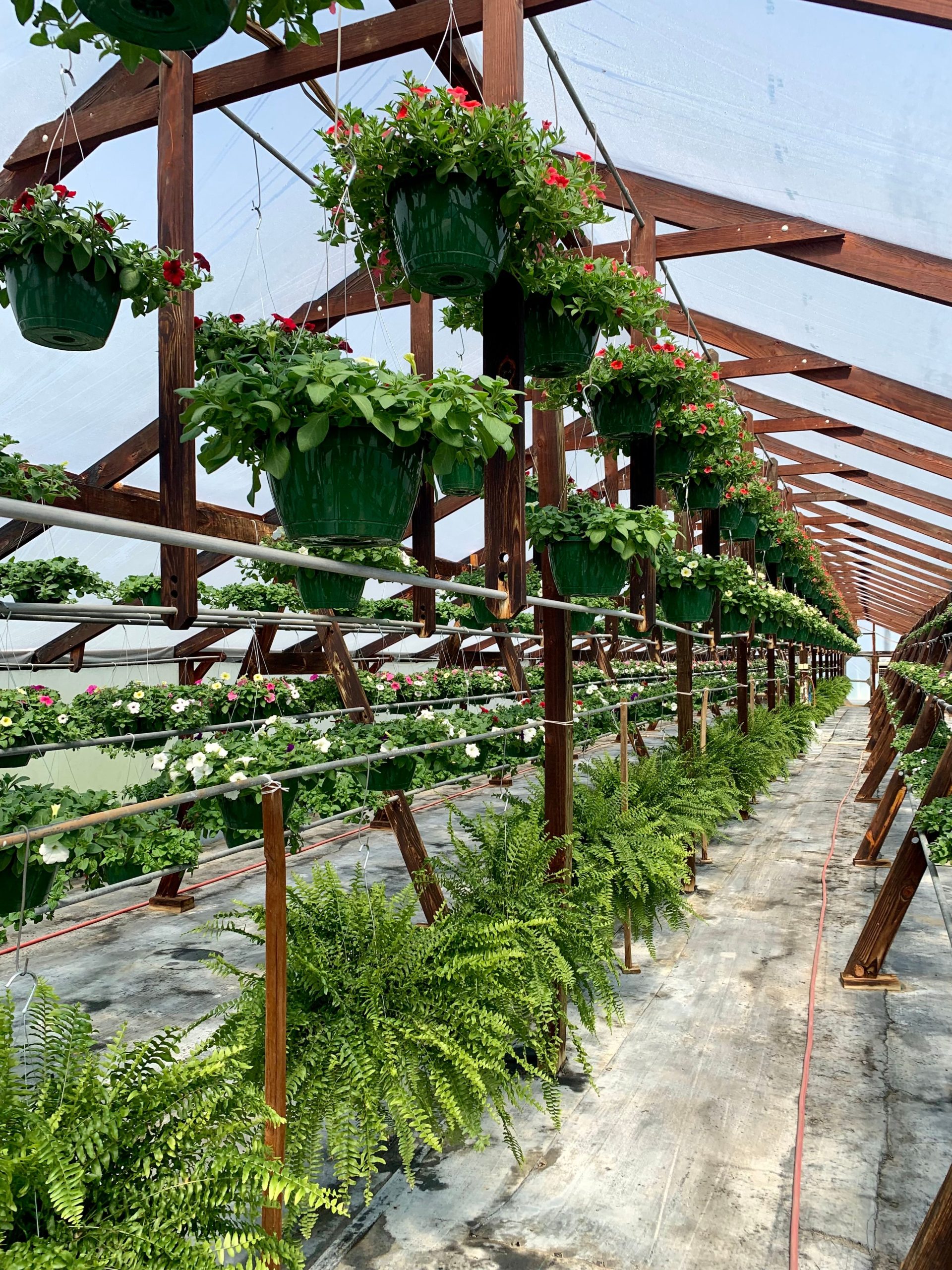
“Let’s be honest: a setup this lush is a serious commitment.”
The watering alone can be a major chore. Without a drip irrigation system, you should expect to spend 30-45 minutes every day watering during the warmer months, especially for porous greenhouse structures. You’ll also need to be vigilant about pest control. When plants are this dense, issues like spider mites or aphids can spread quickly from one basket to another. It’s a labor of love, but one that requires actual labor.
4. Mix Ferns, Ivy, and Pink Blooms in a Decorative Metal Hanger
The visual secret to this lush, natural-feeling basket is a well-balanced formula. Think of it as 50% mixed green foliage (like the ferns and trailing ivy), 30% a primary flowering plant (the pink blooms), and 20% accent foliage (the surprising dark red leaves). This ratio ensures the arrangement feels full and textured, with the flowers acting as a beautiful highlight rather than the sole focus. You can swap the elements—try coleus for the red leaves or fuchsia for the pink blooms—but keeping the proportions similar will give you this effortlessly curated result.
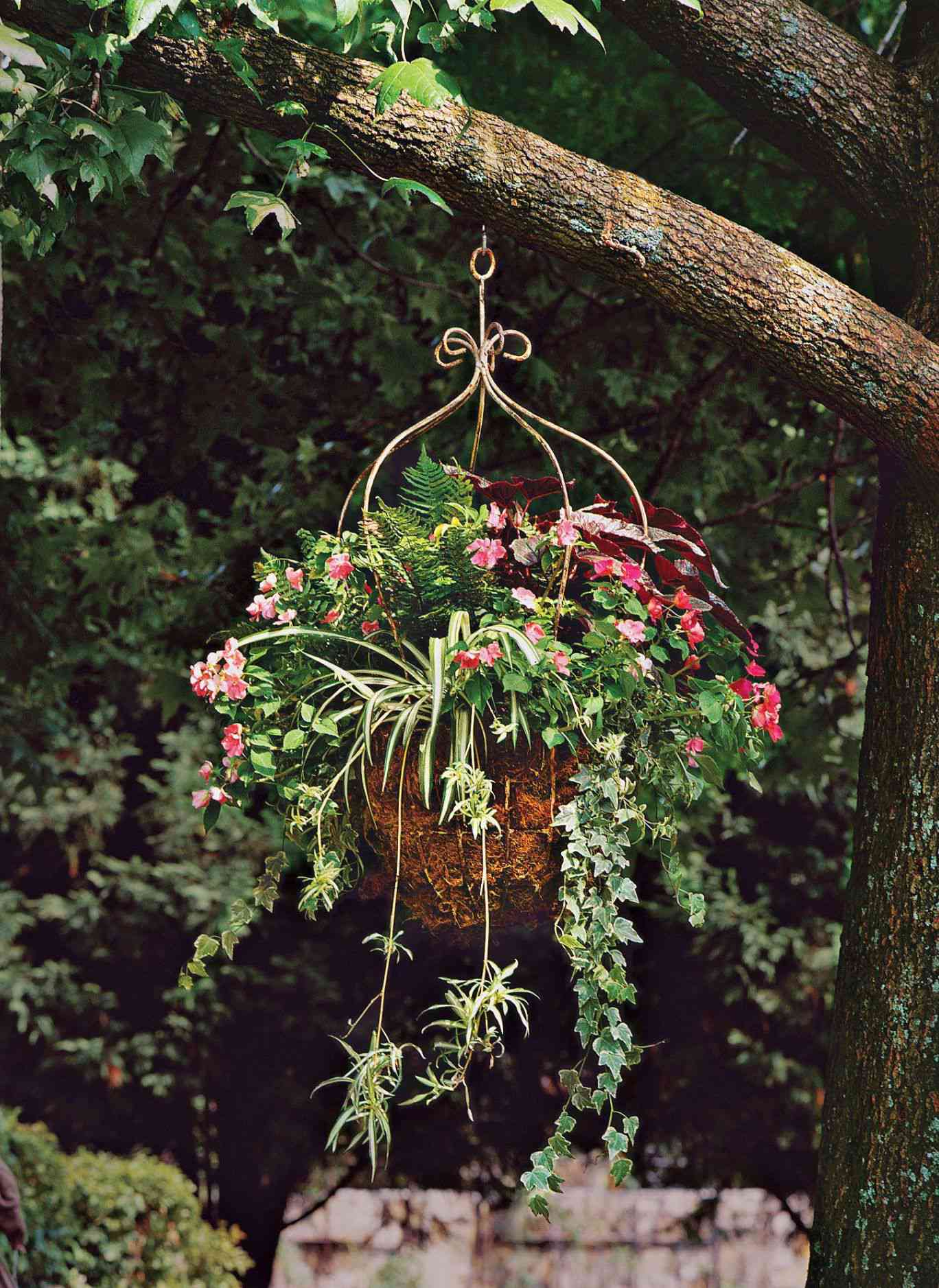
“A basket this full of ferns and ivy needs consistent moisture, and both plants can be susceptible to spider mites, especially in dry or windy conditions.”
You’ll need to check the soil by hand daily. If the top inch is dry, it’s time to water. Plan on misting the leaves with water once or twice a week to boost humidity and discourage pests. Also, be aware that the natural fiber basket itself is part of the ecosystem; it will typically decompose over one to two seasons and will need to be replaced.
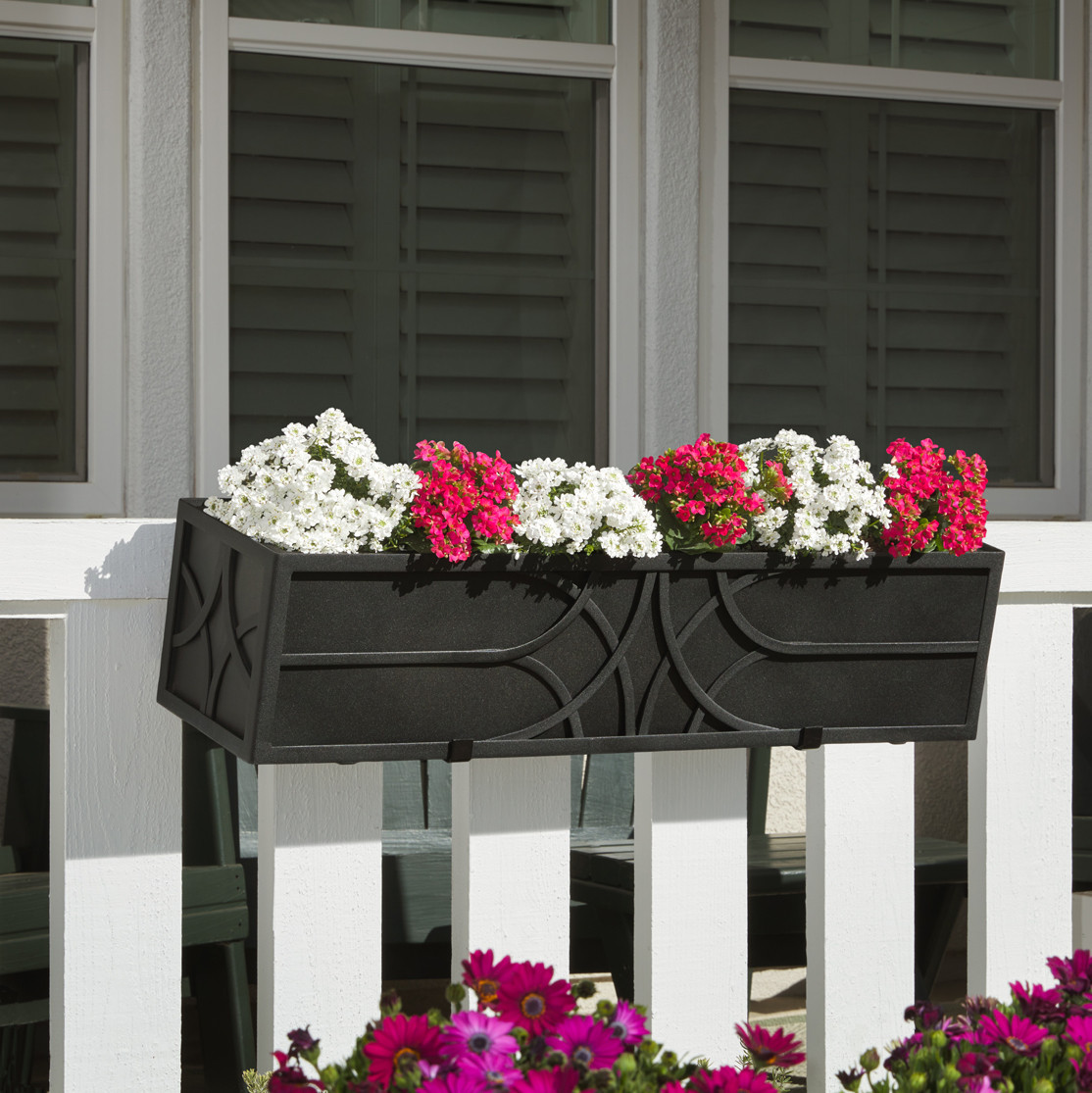
5. Classic Balcony Charm with a Black Scrollwork Planter Box
This is a masterclass in using contrast to create a crisp, polished look. The deep black of the planter box against the clean white railing provides a sharp, graphic anchor that immediately draws the eye. It feels intentional and sophisticated. The delicate scrollwork on the planter adds a layer of classic, almost Parisian elegance that elevates it far beyond a simple box of flowers. The fuchsia and white blooms provide a soft, fresh counterpoint to the strong architectural lines, making the whole composition feel balanced and inviting.
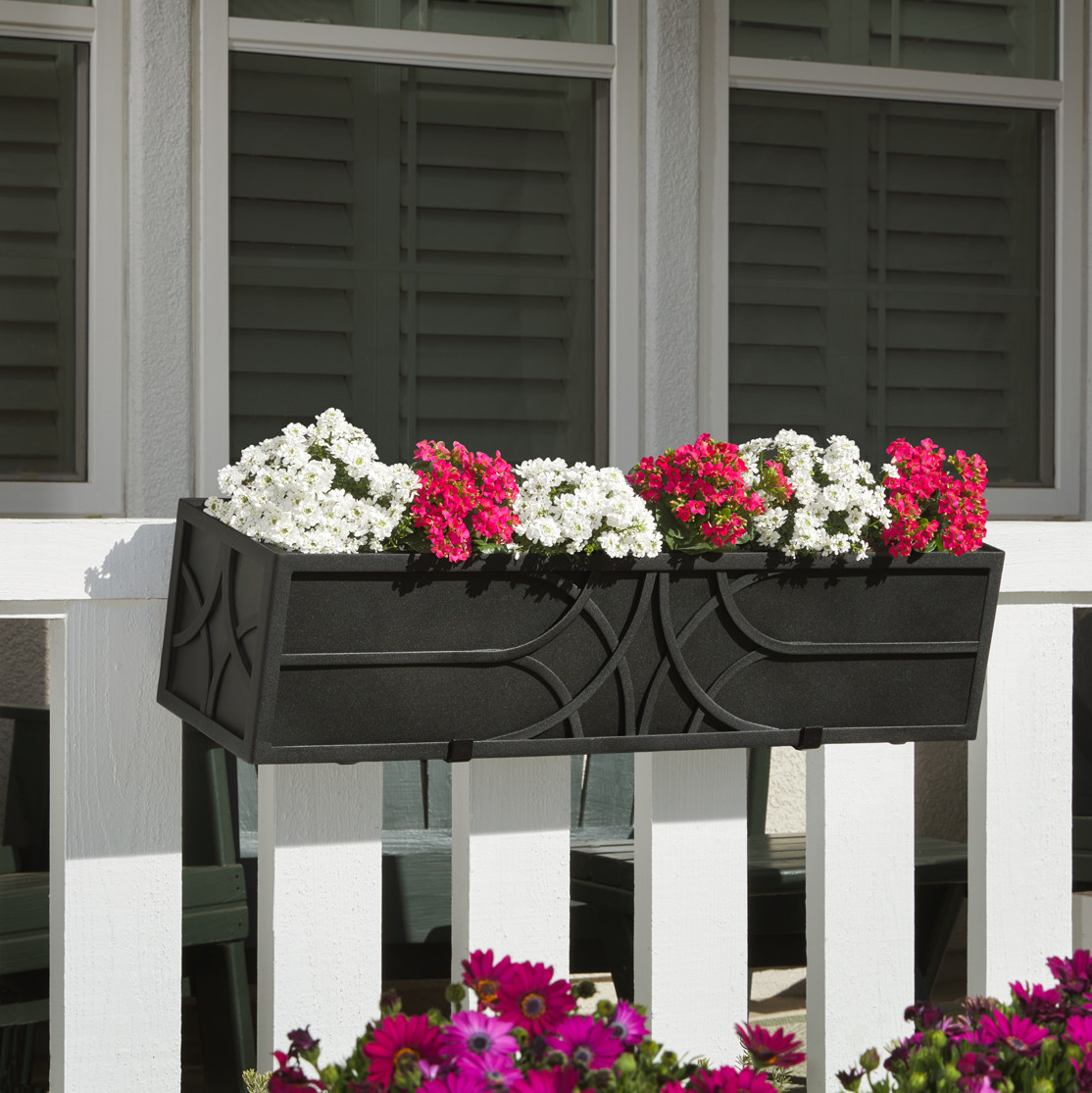
“You absolutely do not need to spend a fortune on a custom wrought-iron box to capture this vibe.”
Check out Target, Amazon, or Walmart for simple plastic railing planters, which often cost between $20 and $30. Buy two or three and place them side-by-side to get the elongated look. A can of matte black spray paint can make even the most basic plastic look more expensive. Focus your budget on buying full, healthy flower starters to get that immediate overflowing effect.
6. A Trio of Natural Fiber Baskets with Red and White Flowers
The single element that elevates this simple display is the use of varied but coordinated textures in the planters themselves. Instead of using three identical baskets, there’s a mix of a lighter-toned wicker-style weave and a darker, rougher coir fiber. This subtle variation adds depth and a collected, rustic charm. It feels less like a matched set from a big-box store and more like a thoughtfully curated grouping. The consistent red and white flower palette is what ties them all together, preventing the mix-and-match baskets from looking chaotic.
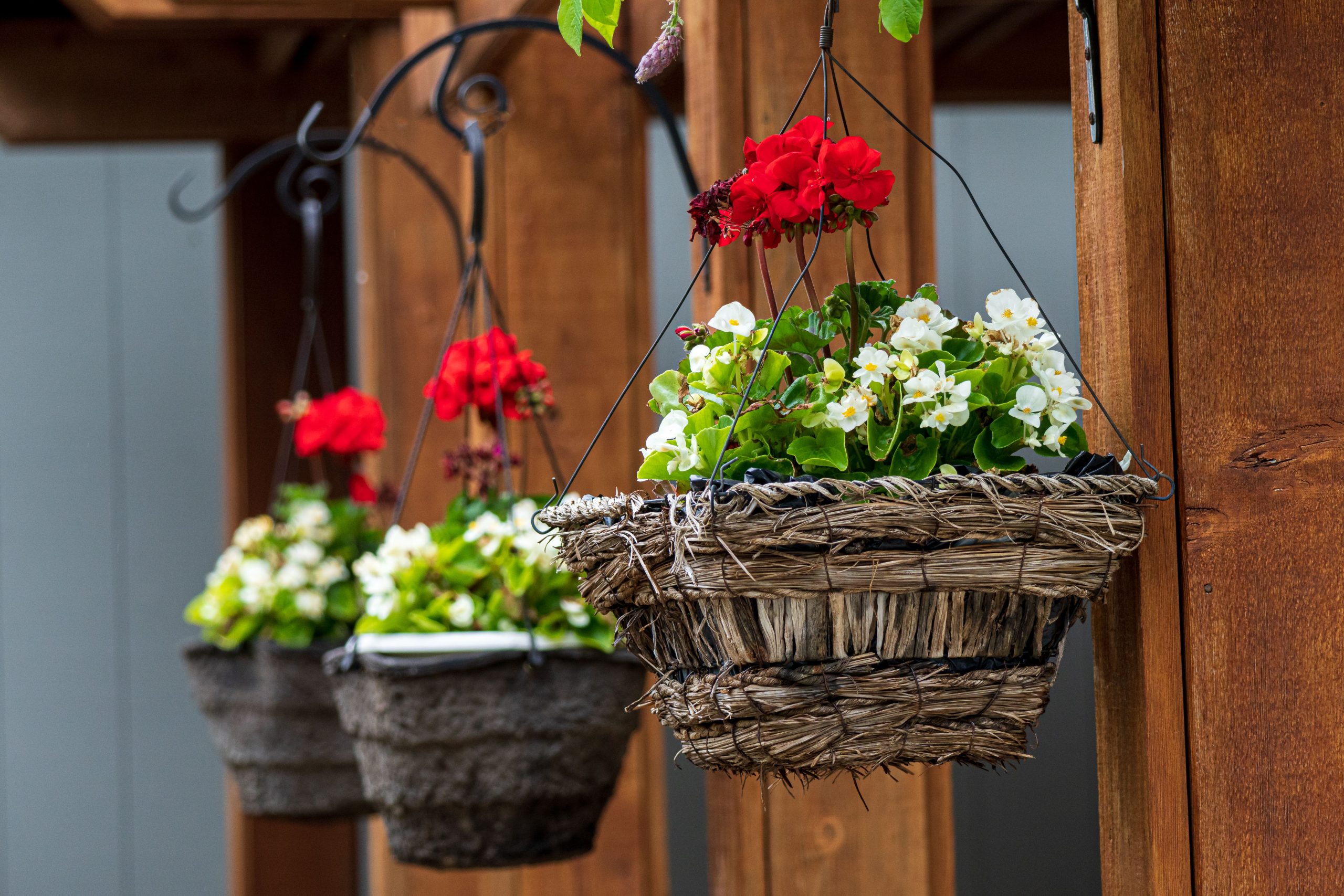
“When hanging planters in a group, think like a designer and use the ‘rule of odds.’ Groupings of three or five almost always look more natural and appealing than even numbers like two or four.”
For a dynamic arrangement, hang them at slightly different heights. A good rule of thumb is to create a 4-6 inch difference in height between the lowest and highest basket in a trio. This encourages the eye to move around the composition and creates a more organic, less rigid feel.
7. Vibrant Pansies in Coco Fiber Baskets on an Ornate Railing
This composition works so well because of the expert play on textures. You have the rough, natural brown of the coco fiber baskets, the intricate, smooth curves of the black metal scrollwork, and the soft, velvety petals of the pansies, all set against a subtly textured beige wall. This layering of different surfaces creates visual interest and a sense of richness. The simple, earthy baskets prevent the ornate railing from feeling too fussy, while the railing adds a touch of classic elegance to the humble planters.
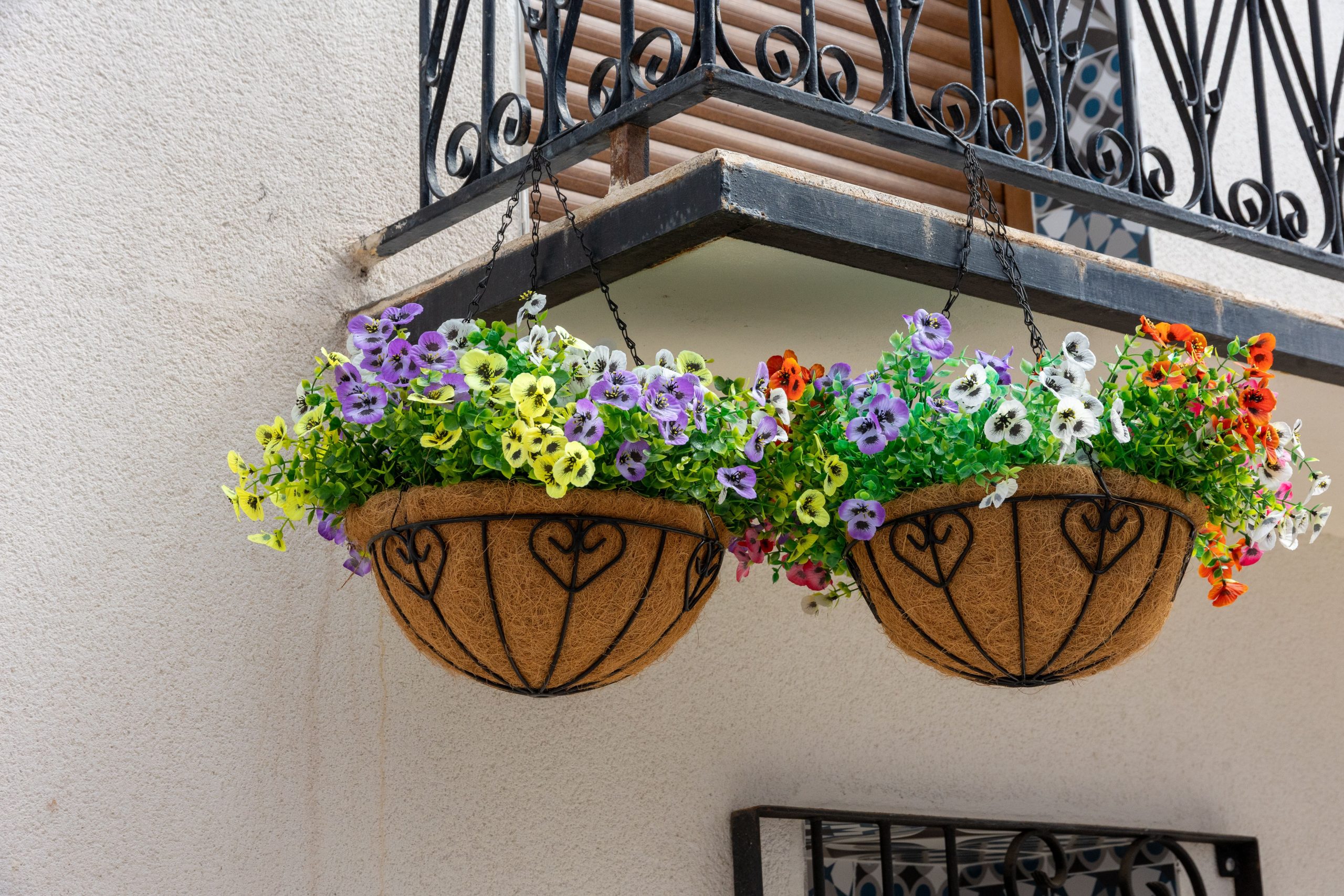
“There’s a growing movement toward ‘hyper-real’ artificial plants, and this is a perfect example of why it’s trending in 2026.”
Homeowners want the color and cheer of beautiful planters without the high maintenance, especially for balconies or second homes. These modern, high-quality artificials offer vibrant, fade-resistant color all season long with zero watering or deadheading required. They provide the ‘look’ of a lush garden with the ‘reality’ of a busy lifestyle, which is a combination people are increasingly seeking out.
8. A Whimsical Trellis with Mini Hanging Planters
that gives this setup its unique charm is the playful use of empty space. Instead of filling every available hook, the small pastel planters are scattered amongst the lush greenery, almost like little decorations. This restraint is what makes it feel whimsical and artistic, rather than just a dense wall of plants. The empty planters serve as color and texture accents, their jute ropes and ceramic forms just as important to the overall composition as the leaves and flowers are. It’s a lesson in confident, creative placement.
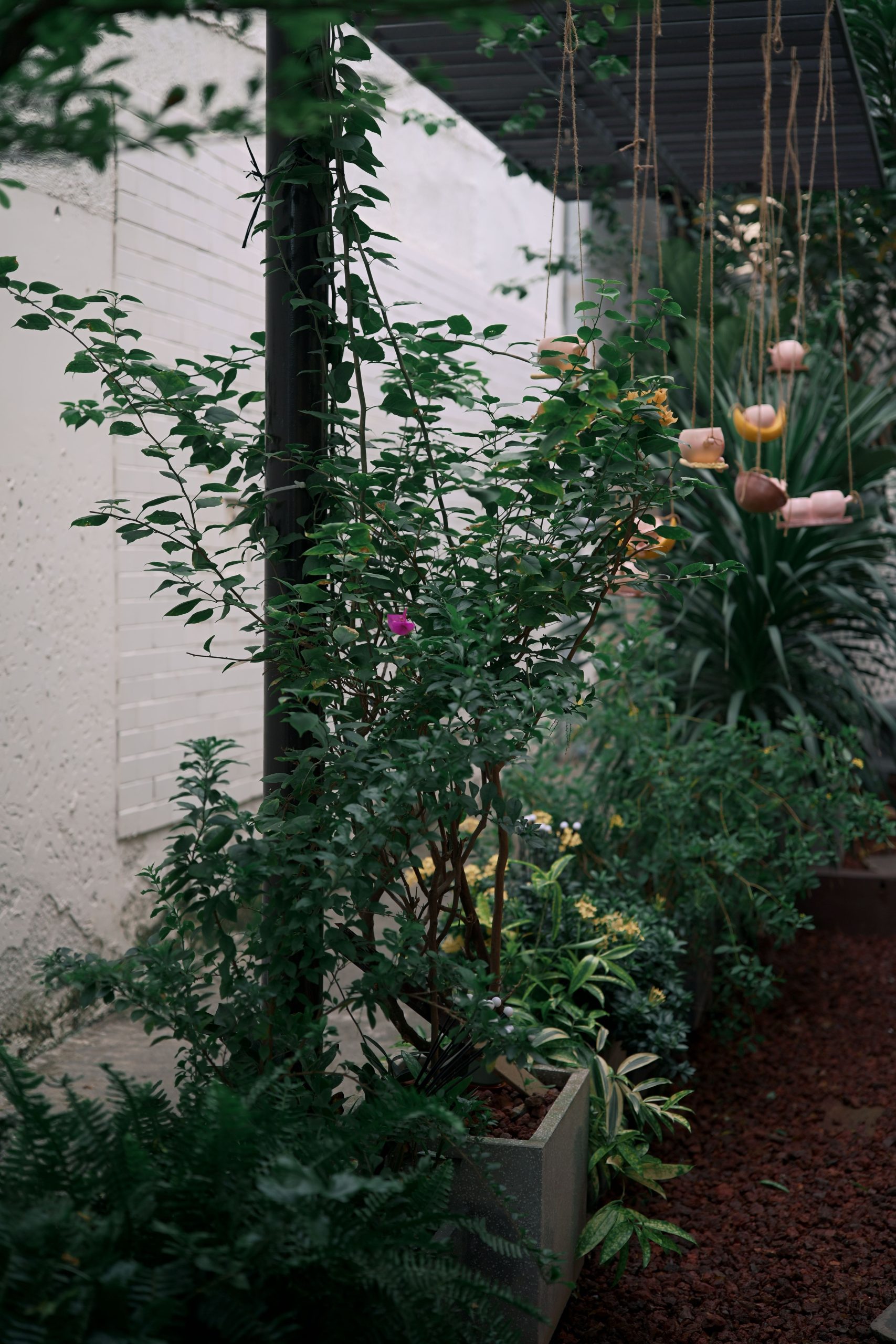
“While this look is undeniably charming, be aware of the practicalities.”
Those tiny ceramic planters will dry out incredibly fast, likely needing water once or even twice a day in direct sun. Because of their size, they can only support very small plants, like individual succulents or air plants. This is more of a decorative, high-maintenance accent than a functional gardening setup. Think of it as living wall art that requires daily attention to keep it looking its best. Don’t expect to grow a prize-winning petunia in one.
9. Vertical Slatted Wood Planters with Purple and White Flowers
This is a fantastic solution for adding greenery to a blank wall, but a little prep goes a long way. Before you even think about buying the planters, tick off this list:
- Measure your wall space: Ensure you have not only the width for the planters but also the vertical clearance. Account for the full-grown height of the plants.
- Check your mounting surface: A textured stucco or brick wall will require different anchors and tools than smooth siding. Make sure you can safely secure the weight of the planters, soil, and water.
- Assess the light: Does this spot get harsh afternoon sun or gentle morning light? Choose your plants accordingly *before* you plant.
- Plan for drainage: Water will drip from the top planter to the bottom and then onto whatever is below. Make sure it’s a surface that can handle moisture, like a patio or gravel bed, not a wooden deck that could rot.
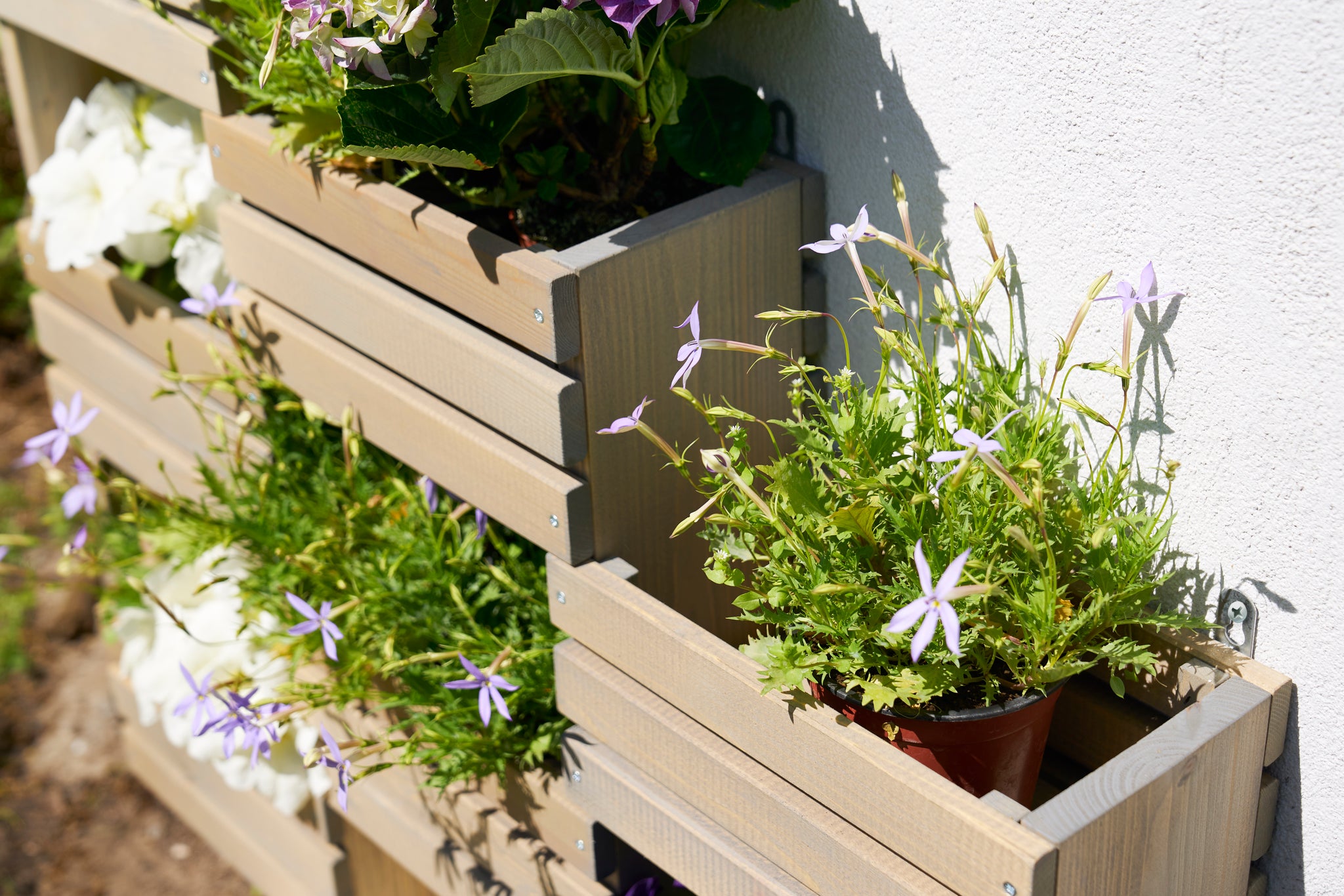
“The success of this design lies in its smart use of layering and repetition against a neutral backdrop.”
The warm, light-brown tone and horizontal lines of the wooden slats provide a natural, organic texture that softens the plain white wall. By using the same purple and white flowers in both the top and bottom planters, the design feels cohesive and intentional. It’s a simple, elegant way to turn a flat, boring surface into a living feature with color, texture, and dimension.
10. A Perfect Globe of Yellow and Red Petunias
What makes this hanging basket a showstopper is its flawless, spherical shape. It’s not just a planter with some flowers; it’s a perfectly formed globe of color. This is achieved through masterful planting and consistent care, ensuring the petunias grow evenly on all sides, completely hiding the white plastic basket. The result is a solid mass of vibrant yellow and red blooms that looks incredibly lush and intentional. The shape itself becomes the main attraction, turning simple flowers into a piece of living sculpture. Compare the impact to the slightly more rustic basket in Idea #11.
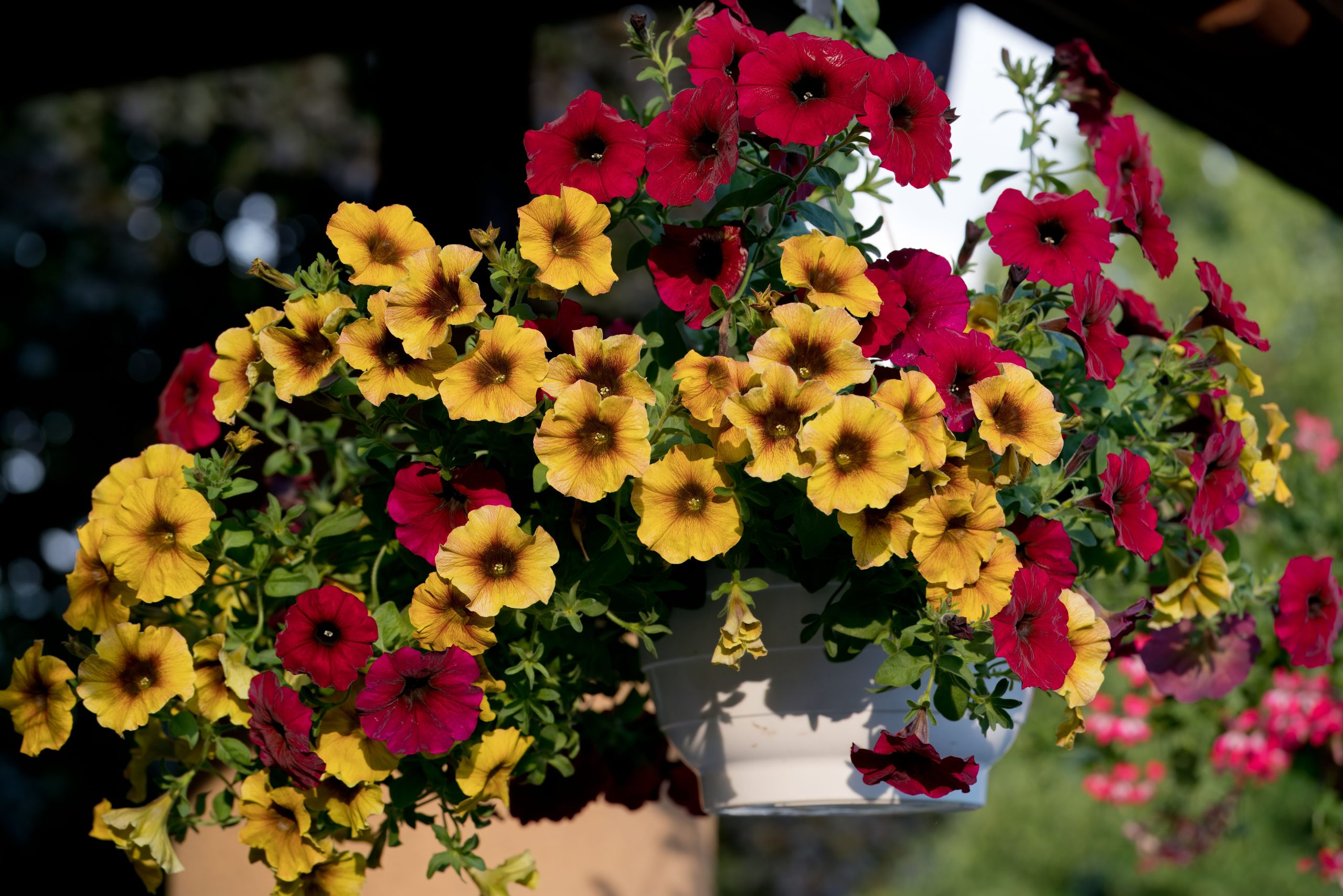
“To get this super-full, rounded shape, you need to plant the sides of the basket, not just the top.”
Purchase a coir or fiber liner and use a knife to cut several ‘X’ shaped slits around the sides. Then, gently push young petunia plants through the slits from the outside in. As they grow, they will fill in the sides and create that coveted ball-of-color look. Also, rotate your basket a quarter turn every few days to ensure all sides get equal sunlight for even growth.
11. Coir-Lined Basket with Red and Yellow Striped Petunias
This arrangement feels so warm and rustic because it fully embraces natural and robust materials. The earthy brown of the coir basket liner, the dark, heavy-duty metal of the chains and bracket, and the rough-hewn wood of the ceiling all work together to create a cozy, grounded feeling. The red and yellow striped petunias, with their vibrant, almost festive coloration, pop beautifully against this dark, textured backdrop. It’s a great example of how the container and its surroundings are just as important as the flowers themselves.
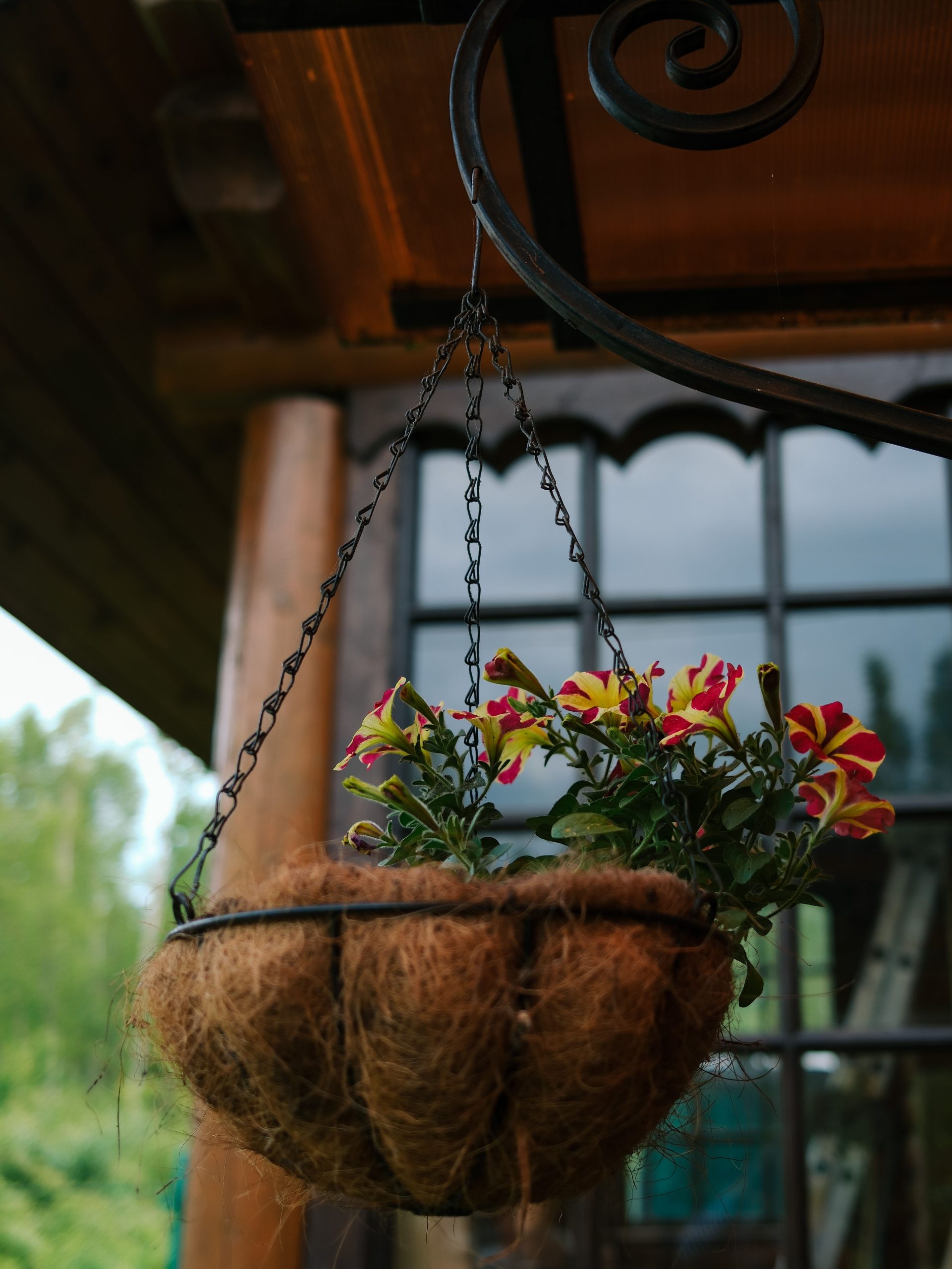
“A ‘Super-tunia’ or other hybrid petunia with this kind of vibrant, striped petal is a hungry, thirsty plant.”
To keep it looking this lush all summer, you’ll need to commit to a strict feeding schedule. Plan on using a water-soluble fertilizer at least once a week. If you don’t, the plants will quickly exhaust the nutrients in the basket’s soil and produce fewer and fewer flowers. Also, deadheading (pinching off spent blooms) is non-negotiable for encouraging a continuous flush of new flowers.
12. Vibrant Pink Petunias in a Simple Gray Planter
The formula here is beautifully simple and incredibly effective: 80% explosive, monochromatic color + 20% neutral container. By filling the gray spherical planter almost exclusively with vibrant pink petunias, the flowers become the undeniable star of the show. The simple, modern gray pot recedes into the background, providing a quiet, contemporary anchor that prevents the bright pink from feeling overwhelming. It’s a high-impact strategy that relies on color saturation rather than complex plant combinations. You could easily swap the pink for a fiery red or deep purple for a different mood with the same impact.
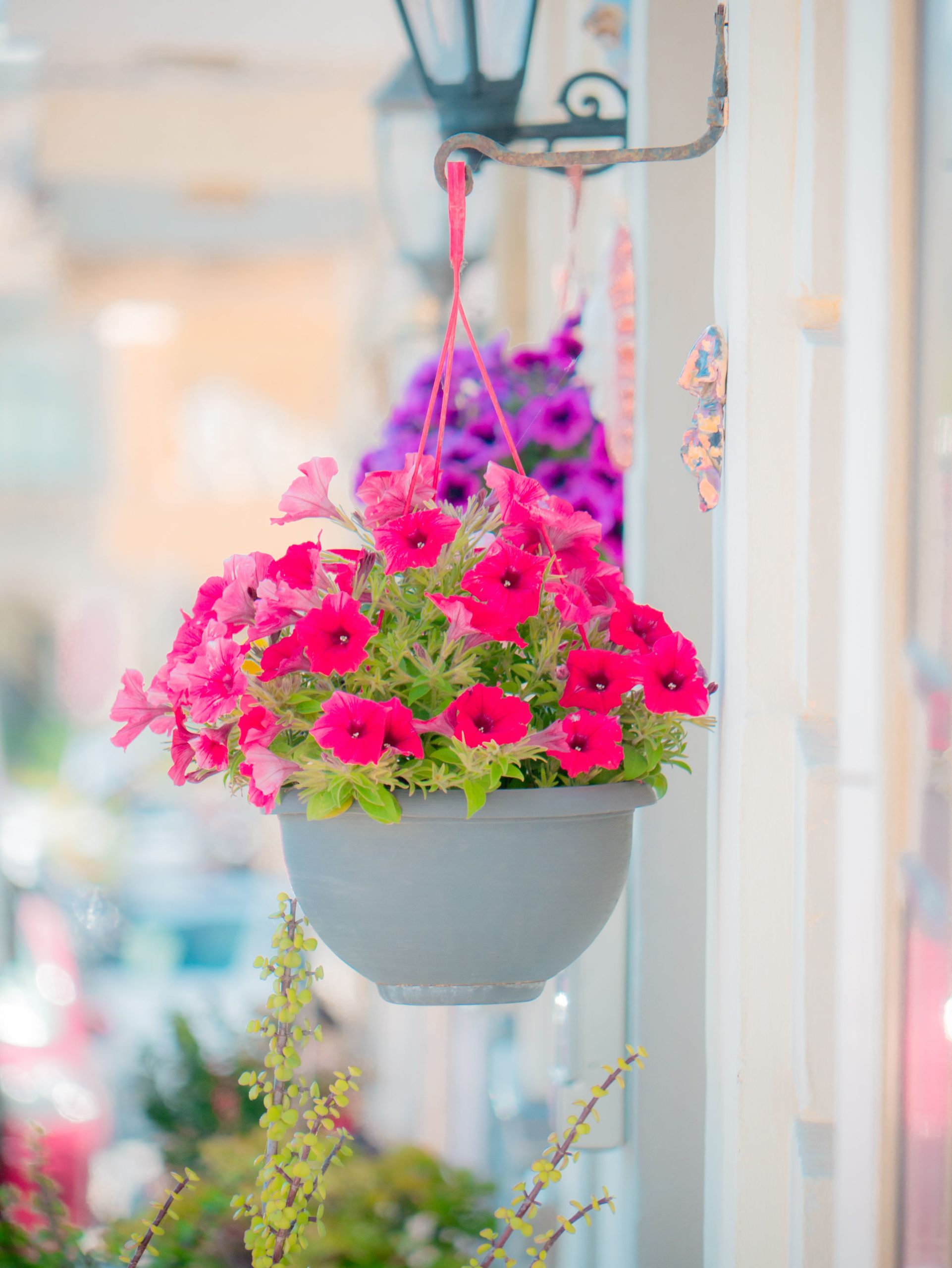
“This is a look you can achieve on a very friendly budget.”
The key is the simple plastic or resin hanging sphere, which you can find at home improvement stores, often for under $25. Instead of buying expensive, pre-made arrangements, buy a tray of small petunia ‘plugs’ or ‘starters’ in a single, vibrant color. Pack them tightly into the planter with good quality potting mix. Within a few weeks of regular watering and sun, they will fill out to create that stunning, seamless ball of color for a fraction of the price of a professionally arranged basket.
13. A Cascade of Fuchsia Petunias Against a Corrugated Wall
The power of this image lies in its incredible color saturation. The fuchsia of the petunias is so intense and vibrant that it completely electrifies the space. This isn’t a shy pink; it’s a bold, confident, look-at-me hue. When set against the cool, industrial texture of the light grey corrugated metal wall, the color feels even more electric. It’s a perfect demonstration of how a single, well-chosen color can create an entire mood and turn a simple hanging basket into a major design moment.
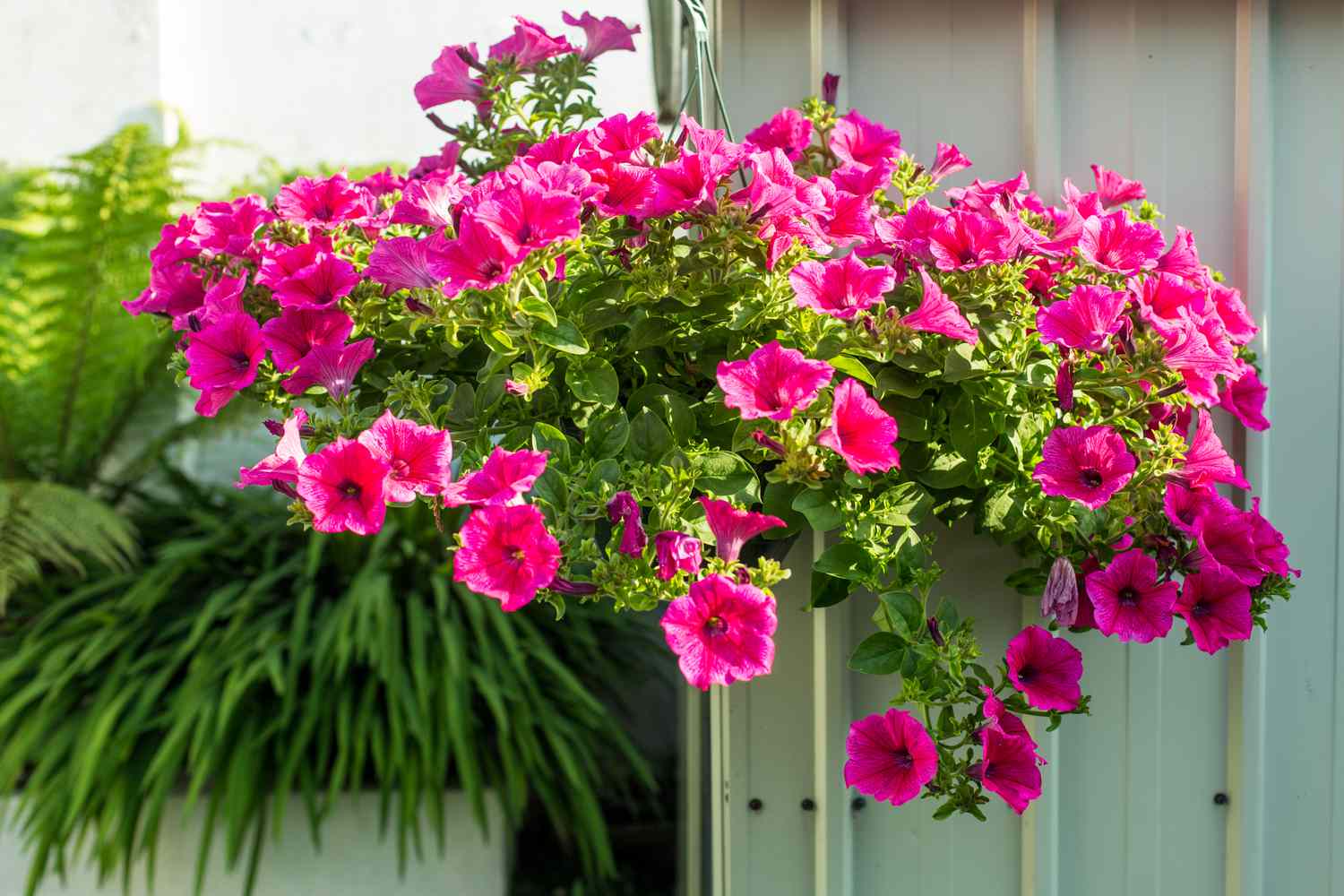
“We’re seeing a huge trend towards using industrial or utilitarian materials as backdrops for lush, organic elements in garden design.”
This is a move away from traditional brick or wood and towards corrugated metal, concrete, and Corten steel. This contrast—the soft, living plants against a hard, modern surface—creates a dynamic tension that feels very current and is all over design blogs and Pinterest right now. It’s a sophisticated look that feels both edgy and beautiful, and it has real staying power.
14. A Simple Spider Plant in a Woven Basket Against a Blue Sky
This look is pure, simple joy, and it works because of its elemental color palette. The composition is stripped down to the basics: the fresh, lively green and yellow-green of the spider plant, the clear, deep blue of the summer sky, and the rustic aqua of the distressed beam. There are no distracting flowers or complex arrangements. It’s a celebration of core colors and textures—plant, sky, and weathered wood. The dark woven basket acts as a neutral anchor, grounding the vibrant colors. This is a perfect example of how minimalism can be incredibly impactful in a garden setting.
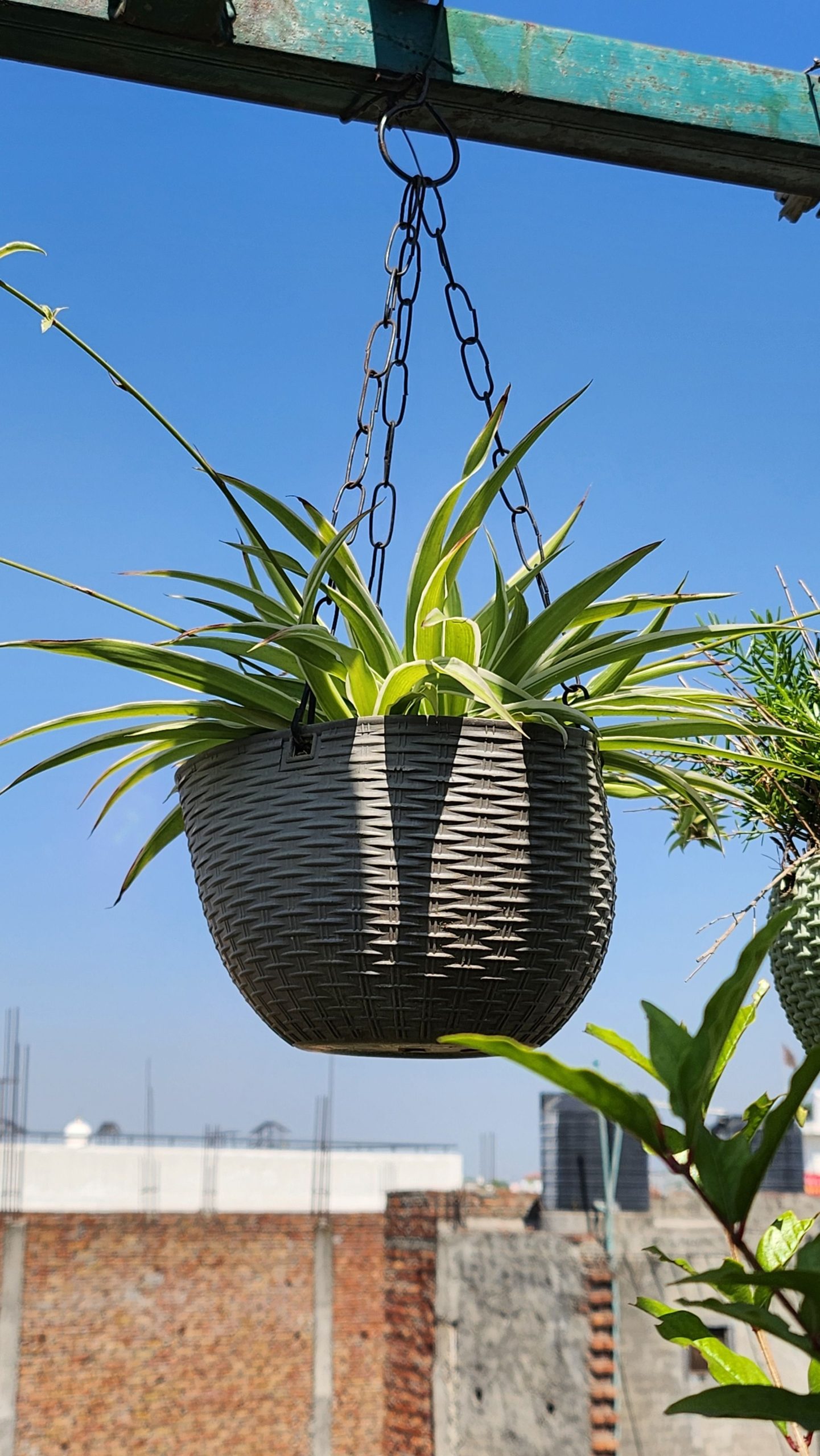
“This idea is perfect for adding a touch of life to a balcony, a small porch, or any area with vertical space but limited floor space.”
A single hanging basket like this works wonderfully on its own. It doesn’t need to be part of a large grouping. It’s best suited for a structure like a pergola, an eave, or a sturdy balcony railing that is at least 7 feet high, allowing the plant to hang freely without being in the way of foot traffic. Its simplicity makes it versatile for almost any size of outdoor space.
15. A Tiered Vertical Garden with Greenery and Red Blooms
You can create a similar tiered vertical garden using a pre-made system or by building your own. Here’s a quick guide to planting a pre-made tiered wall planter:
- Time: 1-2 hours | Cost: $50-$150 (planter + plants)
- Step 1: Choose your location first, based on the sun requirements of your chosen plants. Assemble the planter frame if necessary.
- Step 2: Fill each planter trough with a lightweight potting mix designed for containers.
- Step 3: Starting from the top, arrange your plants. Place ‘spiller’ or trailing plants at the front edge and more upright ‘filler’ plants towards the back.
- Step 4: Gently firm the soil around the plants and water each tier thoroughly until water runs from the drainage holes.
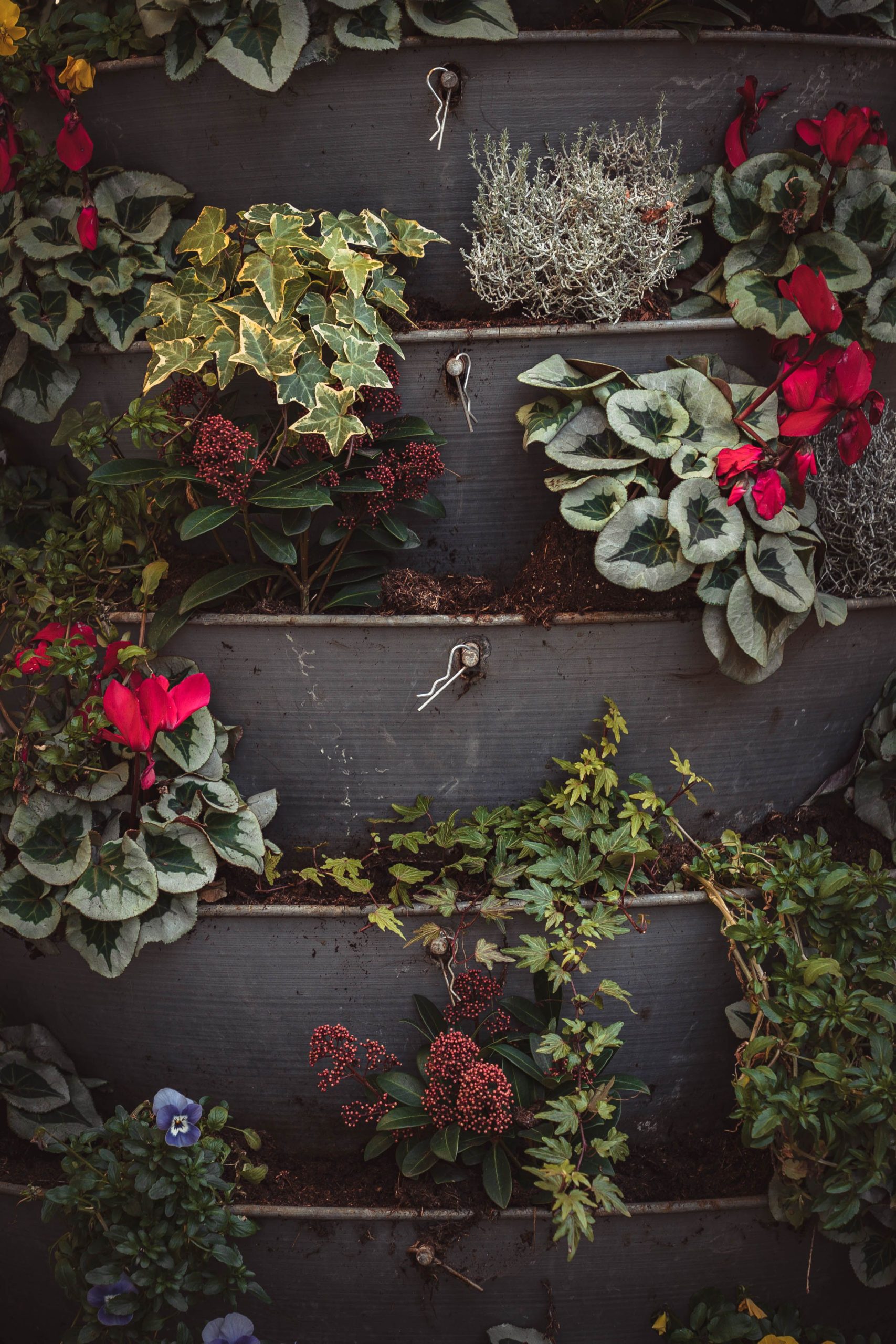
“A dense vertical garden like this is stunning, but it’s a magnet for pests and can be tricky to water evenly.”
The plants at the top tend to dry out much faster than the ones at the bottom, which receive runoff from above. You’ll need to check the top tier for water daily. A drip irrigation system with an emitter for each trough is the best way to ensure consistent watering. Also, the dense foliage creates a humid microclimate where fungus and pests can thrive. Good air circulation is key, so don’t place it in a tight, stagnant corner.
16. Symmetrical Coir Baskets on a Pale Stone Wall
The tranquil, orderly beauty of this scene comes from its commitment to symmetry. By placing two identical coir hanging baskets at the same height on either side of the central wall light, the design achieves a sense of formal balance and classical elegance. This mirrored effect is calming and satisfying to the human eye. The choice of materials—dark, rustic metal brackets and natural coir against the pale, textured stone—creates a look that feels both timeless and deeply connected to its natural elements. It’s a quiet, confident statement.
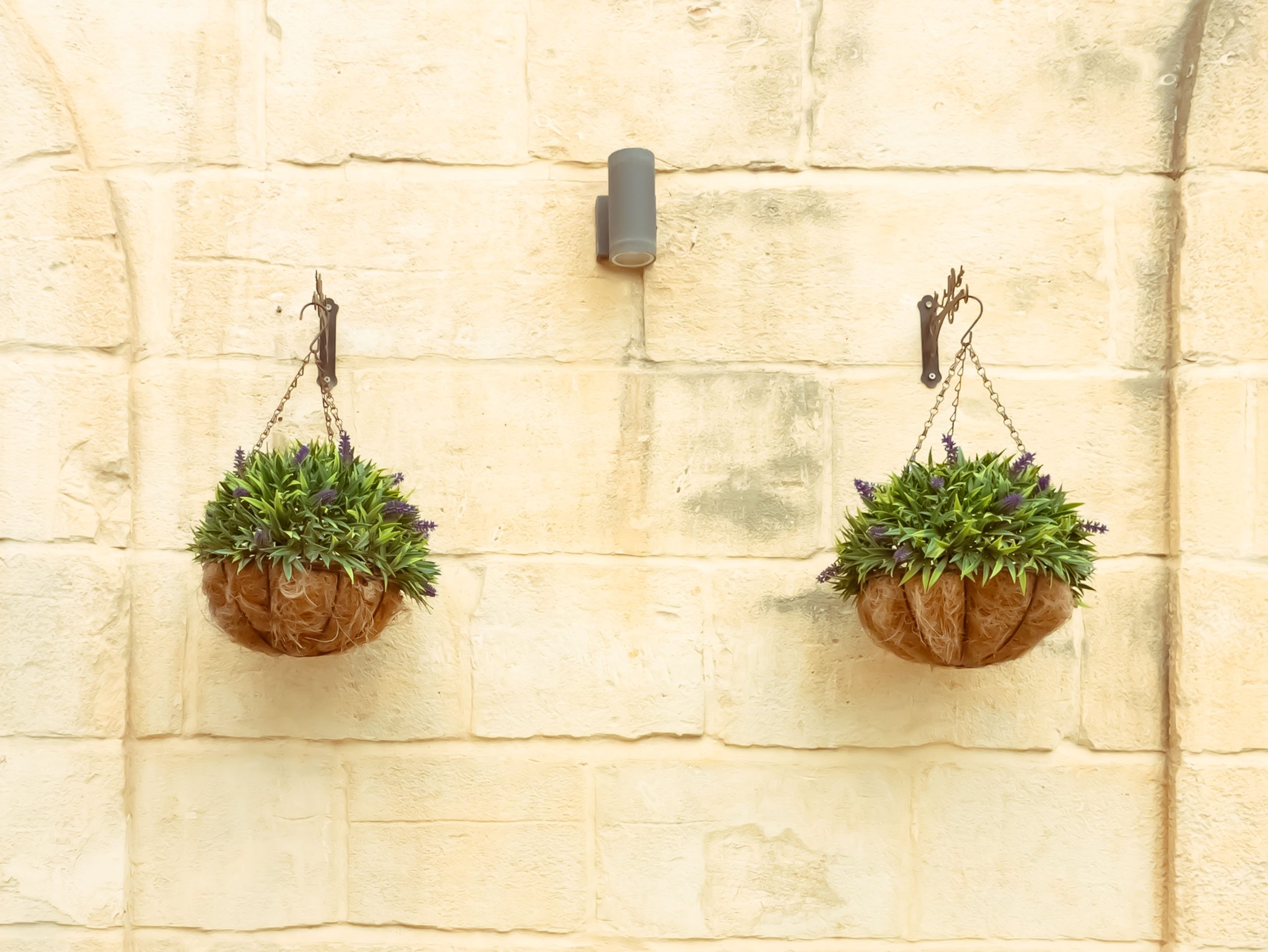
“Creating a symmetrical look like this requires precision.”
Before you drill any holes, get out your measuring tape, level, and a pencil.
First, establish the centerline of your composition (in this case, the wall light).
Next, decide on the ideal height for your baskets. The center of the baskets should be roughly at eye level, around 60-65 inches from the ground.
Measure an equal distance out from your centerline on both sides. For example, 24 inches to the left and 24 inches to the right. Mark your spots.
Use a level to ensure your two marks are perfectly horizontal before installing the brackets. Double-check all measurements before you drill.
17. A Classic Black Metal Window Box Filled with Ferns
The single most important element here is the choice to go all-green. By filling the window box exclusively with vibrant green ferns, the focus shifts from flowers to foliage, texture, and form. This creates a look that feels lush, serene, and sophisticated. It has a timeless, classic quality that won’t clash with seasonal decor and looks just as good in the spring as it does in the fall. It’s a confident choice that turns a simple window box into a statement of pure, verdant texture. It feels more elevated and architectural than a mix of colorful flowers would. Compare this to the flowering railing planter in Idea #5.
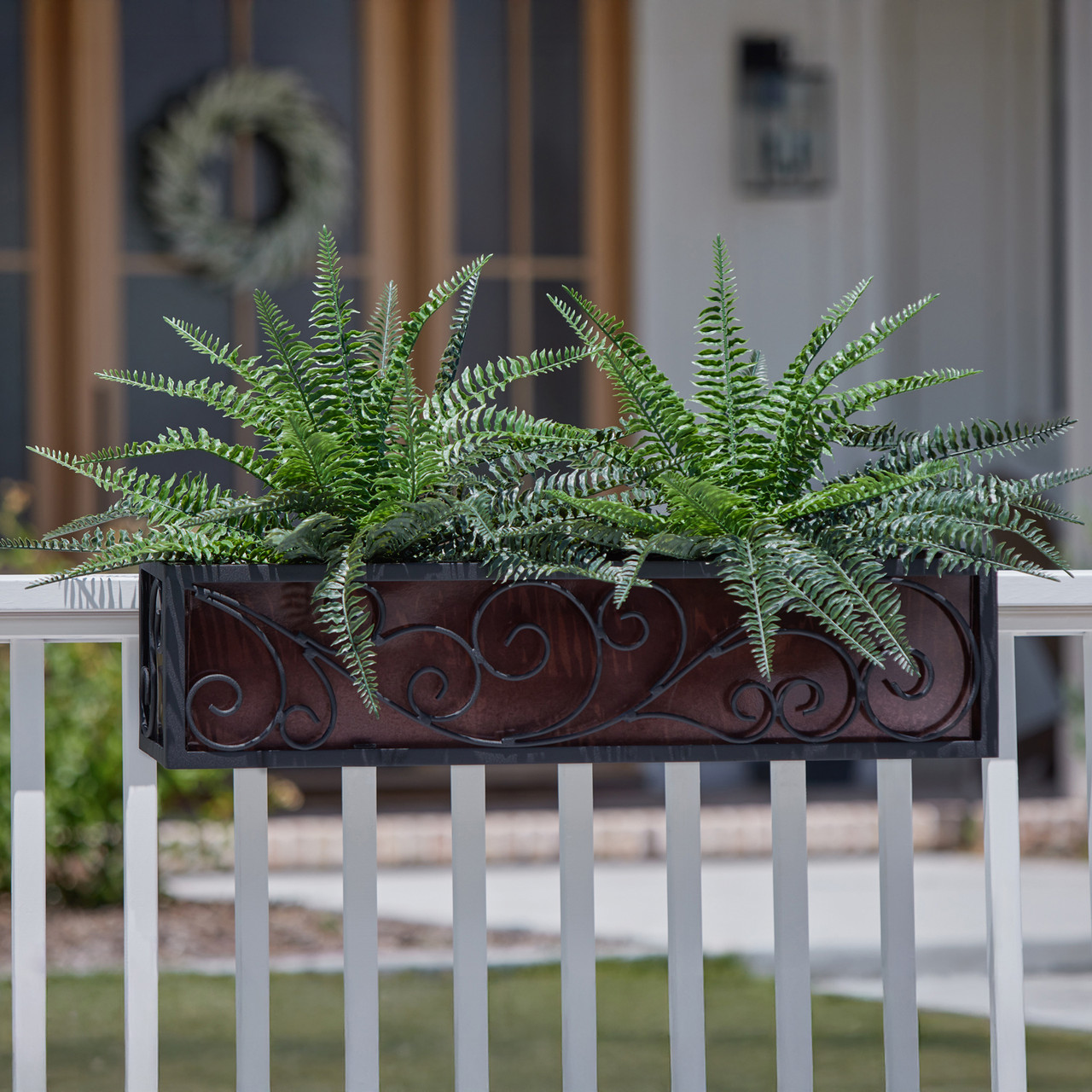
“You can get this upscale, foliage-focused look for less.”
The key is the classic black planter and the mass of green texture. Look for basic, inexpensive plastic or metal window boxes at stores like Home Depot or Lowe’s. A can of matte black spray paint with rust protection will unify them and give them a more classic wrought-iron feel. Instead of buying large, expensive ferns, buy trays of smaller fern starters and plant them densely. They will fill in quickly to create that full, lush look for a fraction of the cost.
18. Abundant Fuchsia Blooms in a Simple Beige Planter
This is a perfect illustration of the power of a neutral container. The simple, unassuming beige color of the hanging planter is the secret hero of this look. It does its job quietly, providing a warm, earthy base without competing for attention. This allows the explosive color and intricate shapes of the pink and purple fuchsia flowers to be the absolute star. If the planter were a bright, competing color, the overall effect would be chaotic. The quiet beige pot creates a calm foundation, making the vibrant blooms feel even more special and jewel-like.
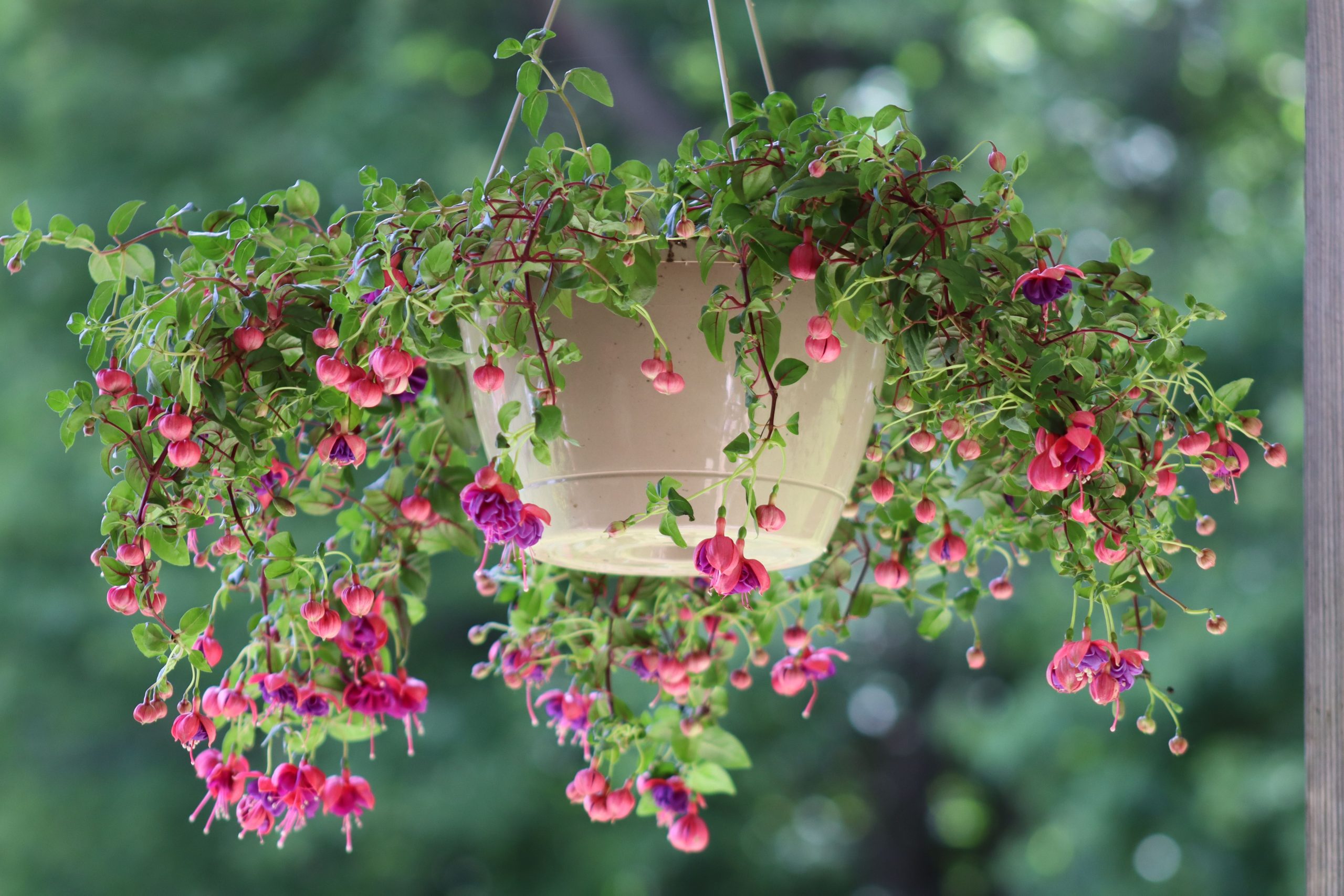
“To get a hanging basket that looks this full and lush, the secret is to ‘pinch back’ your fuchsia plants when they are young.”
When a stem has developed two or three pairs of leaves, use your thumb and forefinger to pinch off the growing tip. This might feel wrong, but it forces the plant to send out two new side shoots from that point, doubling the number of branches. More branches mean a fuller, bushier plant and, ultimately, a massive increase in the number of blooms your basket will produce.
19. A Striking Red Periwinkle Basket on White Siding
The single element that makes this image so effective is the powerful color contrast. The intense, vibrant red of the periwinkle flowers against the clean, neutral backdrop of the white siding is a classic combination that never fails. Our eyes are immediately drawn to the point of highest contrast, making the red blooms pop with incredible force. The simple black planter and dark green foliage provide supporting depth without distracting from the main event. It’s a lesson in using a single, bold color to make a strong statement.
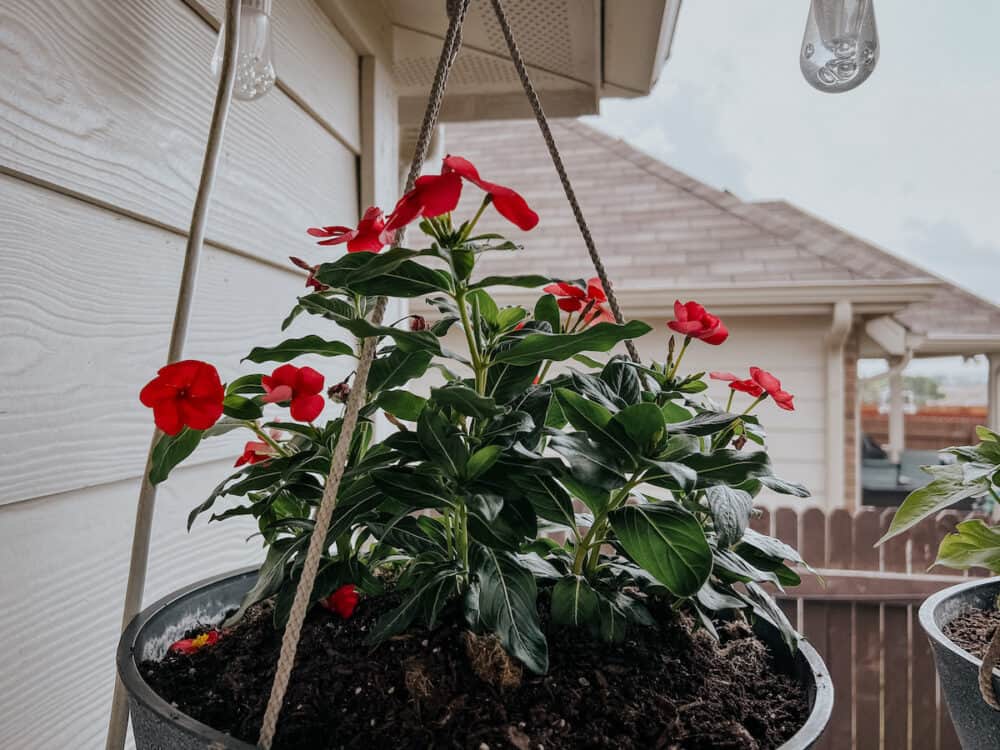
“Periwinkles (Vinca) are wonderfully heat-tolerant and low-maintenance, but they have one major weakness: root rot.”
They absolutely hate ‘wet feet’ and are very susceptible to fungal diseases if their soil is consistently soggy. The black plastic pot shown here can get very hot in direct sun, and if it doesn’t have excellent drainage, it can become a swamp for the plant’s roots. Ensure your pot has multiple drainage holes, and let the top inch of soil dry out completely between waterings to keep the plant healthy and blooming.
20. A Creative Face Planter with Cascading Artificial Flowers
This planter immediately makes you smile because it’s a delightful surprise. In a world of standard pots and baskets, this face-shaped planter introduces personality and whimsy. The cascading red flowers act like hair, bringing the static object to life. It’s a piece of art as much as it is a planter. The added details—the pearl-like beads and silver motifs—signal that this is a cherished, decorated object, not just a functional container. This playful approach turns a corner of a garden into a conversation starter.
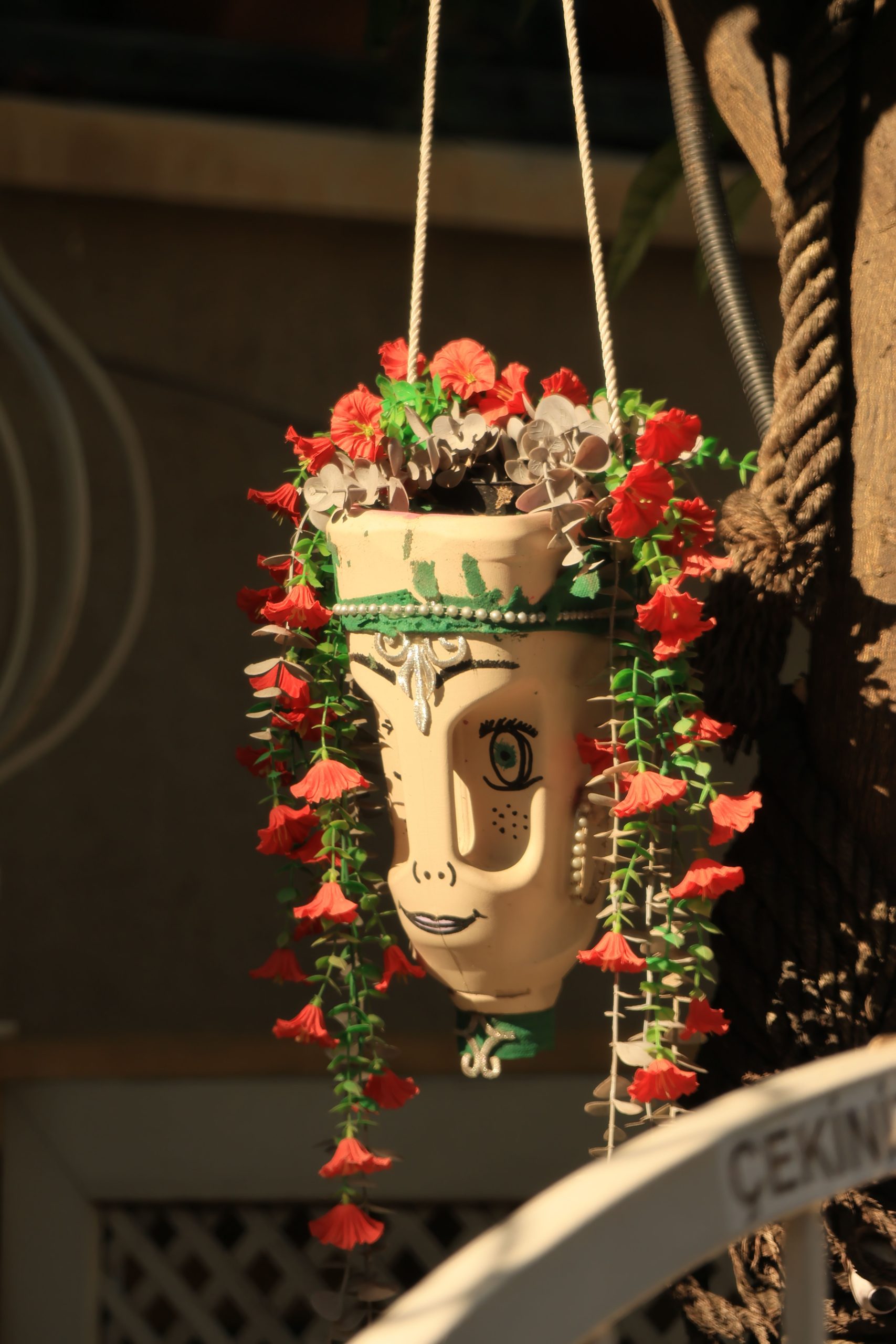
“Want to add some personality to your patio without splurging on an artisan planter?”
This is a fantastic DIY project. Find a basic, inexpensive head-shaped planter online or at a craft store (often under $20). Use outdoor acrylic craft paints to add your own features—eyes, lips, decorative swirls. You can glue on embellishments like plastic beads, sea glass, or small tiles with a strong, waterproof adhesive like E6000. Finish with a coat of clear, waterproof sealant to protect your design from the elements. It’s a fun way to get a custom look for less.
21. A Rich Cascade of Purple Pansies and Lobelia
The key to this basket’s rich, jewel-toned look is a smart mix of scales within a single color family. The formula is approximately 60% large-faced flowers (the vibrant purple pansies) and 40% small, delicate cascading flowers (the violet lobelia). This combination creates layers of texture and interest, making the arrangement feel more complex and luxurious. The big pansies provide the color punch, while the tiny lobelia flowers create a soft, frothy edge that spills beautifully over the sides of the coir basket.
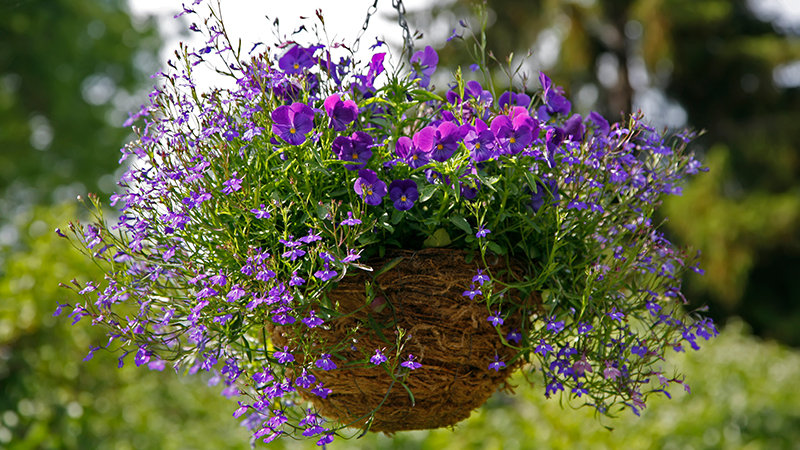
“Pansies and lobelia are both cool-weather lovers.”
This is the perfect combination for a stunning spring or fall hanging basket. However, both will start to fade and stop blooming once daytime temperatures consistently get above 80°F (27°C). To get the most out of this combination, plant them in early spring as soon as the danger of hard frost has passed. Enjoy their vibrant show, and then plan to swap them out for heat-loving plants like petunias or vinca for the hot summer months.
22. A Wicker Cone Basket with Mixed Succulents
This cone-shaped basket is so successful because it layers multiple textures to create a rich, tactile experience. You have the rough, natural weave of the light brown wicker, the smooth, sculptural forms of the green succulent rosettes, the sharp blades of the grass-like plant, and the delicate, beaded shape of the trailing plant. This variety is all held together by the simple, strong lines of the black metal chains and the rustic backdrop of the cream-colored wall. It’s a composition that is just as interesting to touch as it is to look at. For a different take on a uniquely shaped planter, see the orchid planters in Idea #26.
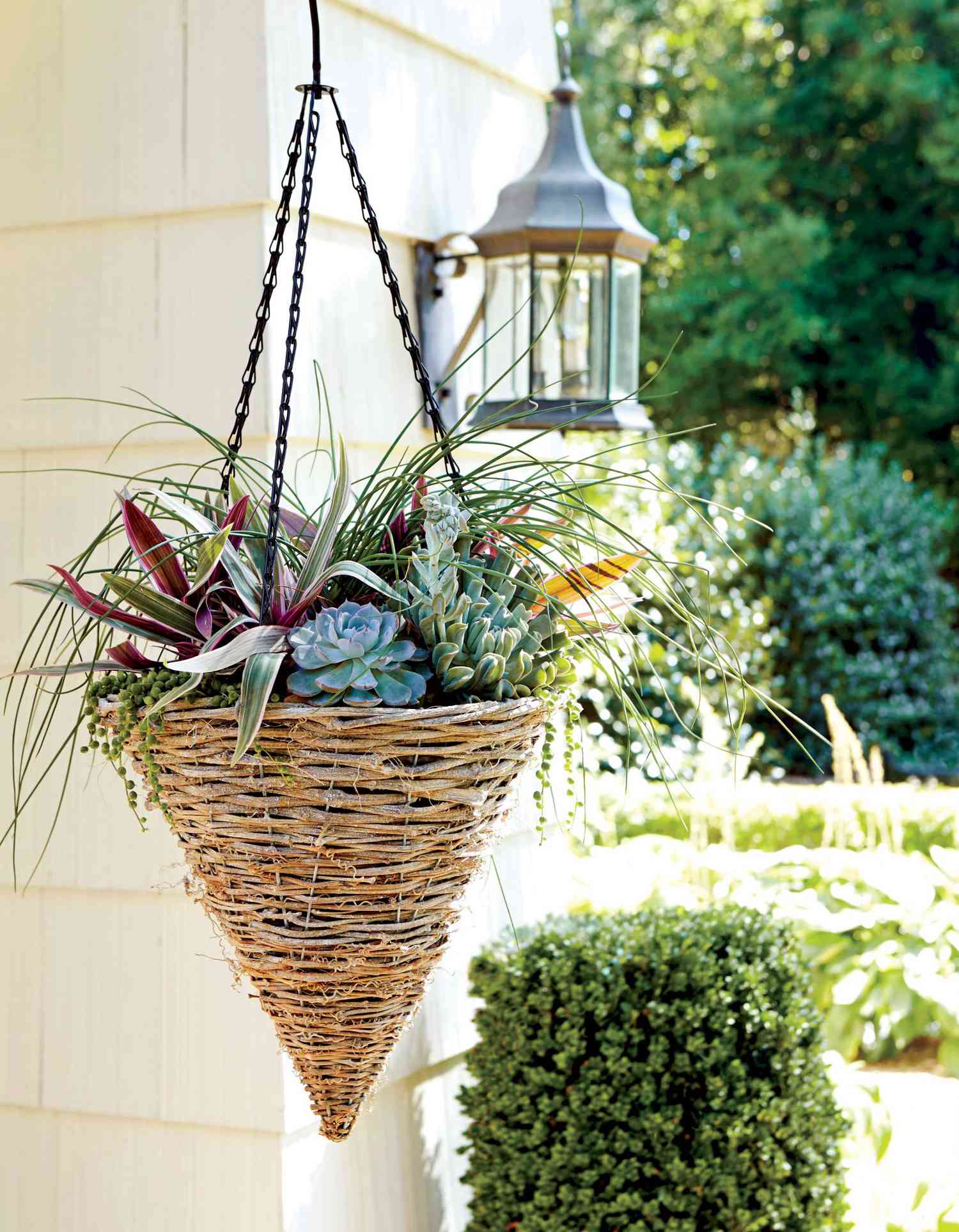
“Succulents are famously low-maintenance, but in a hanging basket, their needs change slightly.”
A woven wicker basket like this one offers excellent drainage and air circulation, which succulents love. However, it will also dry out very quickly in sun or wind. While you still want to avoid overwatering, you’ll likely need to water this basket more frequently than succulents planted in a ceramic pot—perhaps once a week in summer instead of every few weeks. Check for bone-dry soil, and then water thoroughly.
23. Pansy-Filled Ribbed Planter Against a Brick Wall
The element that truly makes this scene pop is the bold color choice of the pansies. The combination of saturated, sunny yellow and deep, velvety purple/burgundy is a masterclass in using complementary colors. The yellow and purple are opposites on the color wheel, which means they create the highest possible contrast and make each other appear more vibrant. Set against the neutral, earthy tones of the red brick and gray wood, these flowers don’t just add color—they practically vibrate with energy.
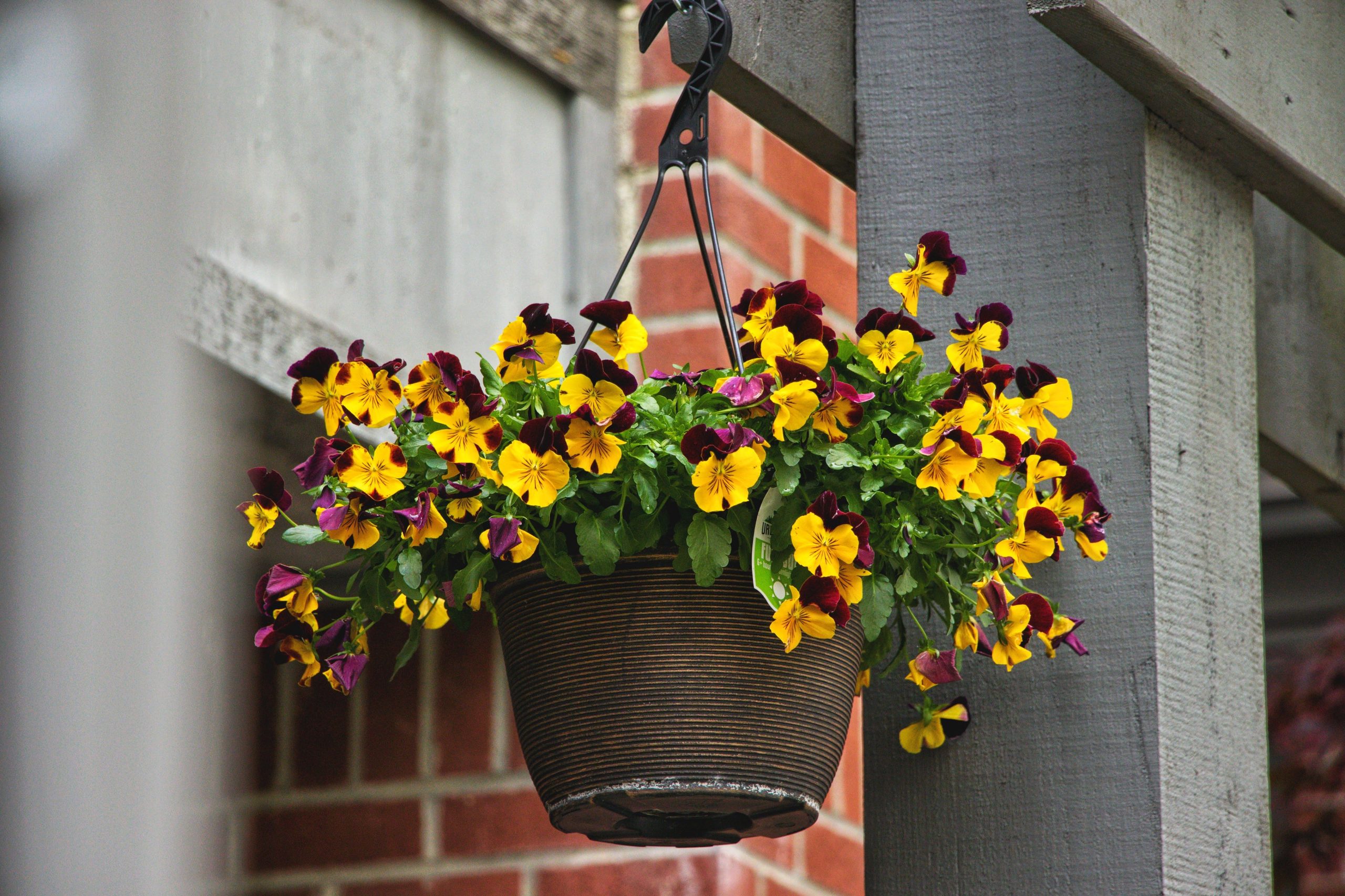
“Don’t underestimate the power of a good backdrop.”
Before you even hang your planter, take a moment to consider the wall behind it. The rough textures of the red brick and the weathered gray wood here are not just background noise; they are essential parts of the composition. They provide a rustic, tactile canvas that makes the smooth petals and simple ribbed planter stand out. If you have a plain or uninteresting wall, consider adding a small section of reclaimed wood or a decorative trellis behind your planter to add this crucial layer of texture.
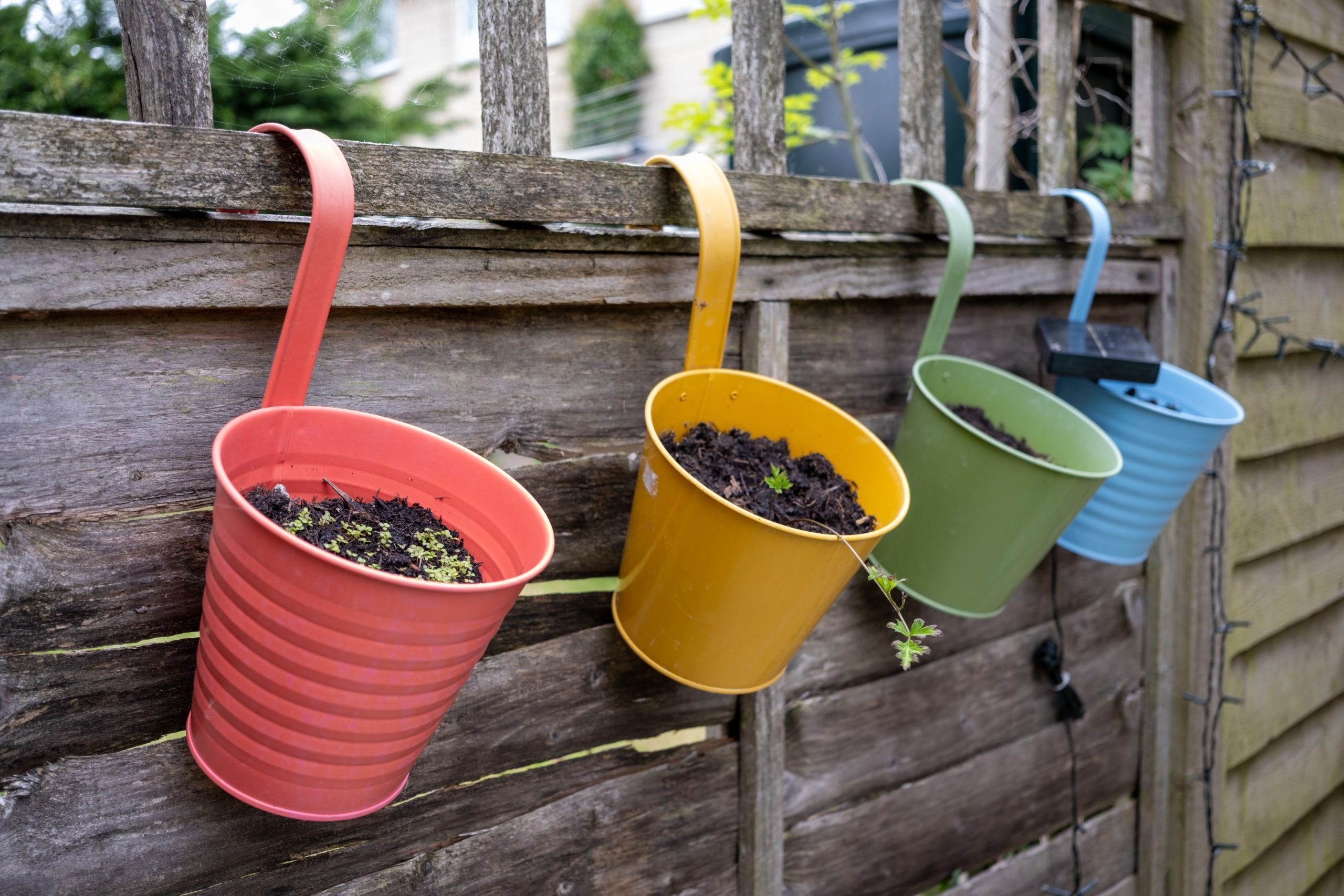
24. Colorful Metal Planters Hooked on a Wooden Fence
This idea is pure, simple fun. Its charm lies in its playful and impermanent nature. The bright, candy-colored metal planters feel cheerful and unserious, especially against the rustic, weathered wooden fence. The integrated hooks mean they can be moved and rearranged on a whim, creating a flexible, ever-changing display. This isn’t a formal garden; it’s a
25. Woven Basket on a Rustic Wrought Iron Wall Bracket
The single thing that defines this look is the decorative wrought iron bracket. It’s not just a functional hook; it’s a piece of sculpture in its own right. The ornate scrollwork and rustic, weathered finish give it a sense of history and permanence, as if it has been part of the stone wall for decades. The simple woven basket and faux greenery are secondary; the bracket is the true star, providing an elegant, architectural anchor for the entire display. For another take on an ornate bracket, see Idea #29.
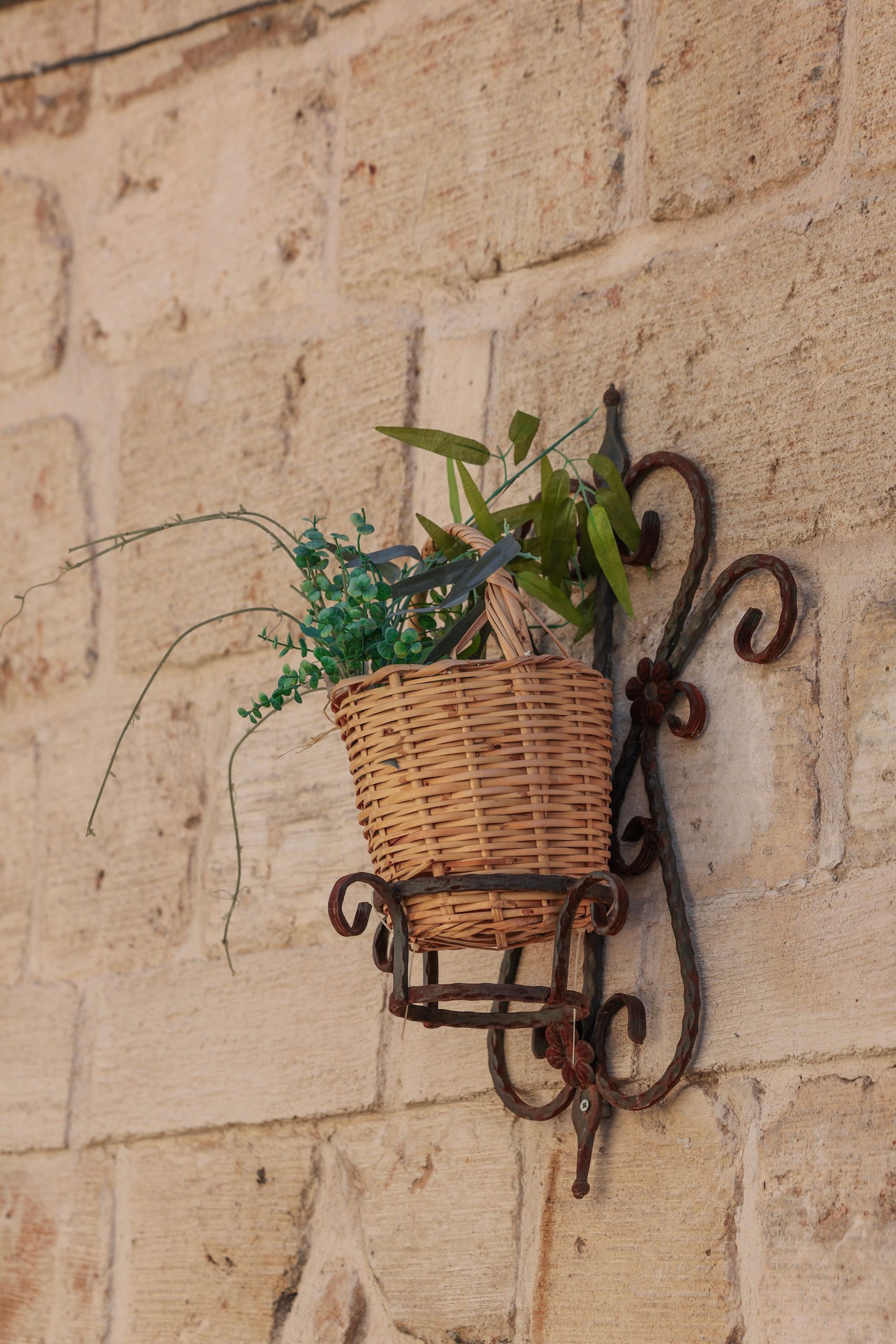
“This composition is a beautiful study in contrasting textures.”
You have the rough, irregular surface of the hewn stone wall, the smooth, aged patina of the wrought iron, the natural, fibrous weave of the wicker basket, and the soft, varied shapes of the green foliage. This rich layering of materials is what gives the display its depth and visual interest. It feels authentic and assembled over time, rather than purchased as a single kit. Each element contributes its own unique character to the whole.
26. Slatted Wood Orchid Planters in a Lush Garden Setting
This is a perfect example of form following function beautifully. Orchids are epiphytes, meaning in nature they grow on trees, not in soil. Their roots need exceptional air circulation to stay healthy. These slatted wooden baskets, known as Vanda baskets, are specifically designed for that purpose. The open structure mimics their natural habitat, ensuring the roots don’t rot. The result is a container that is not only ideal for the plant’s health but also possesses a natural, organic aesthetic that fits perfectly in a lush garden setting.
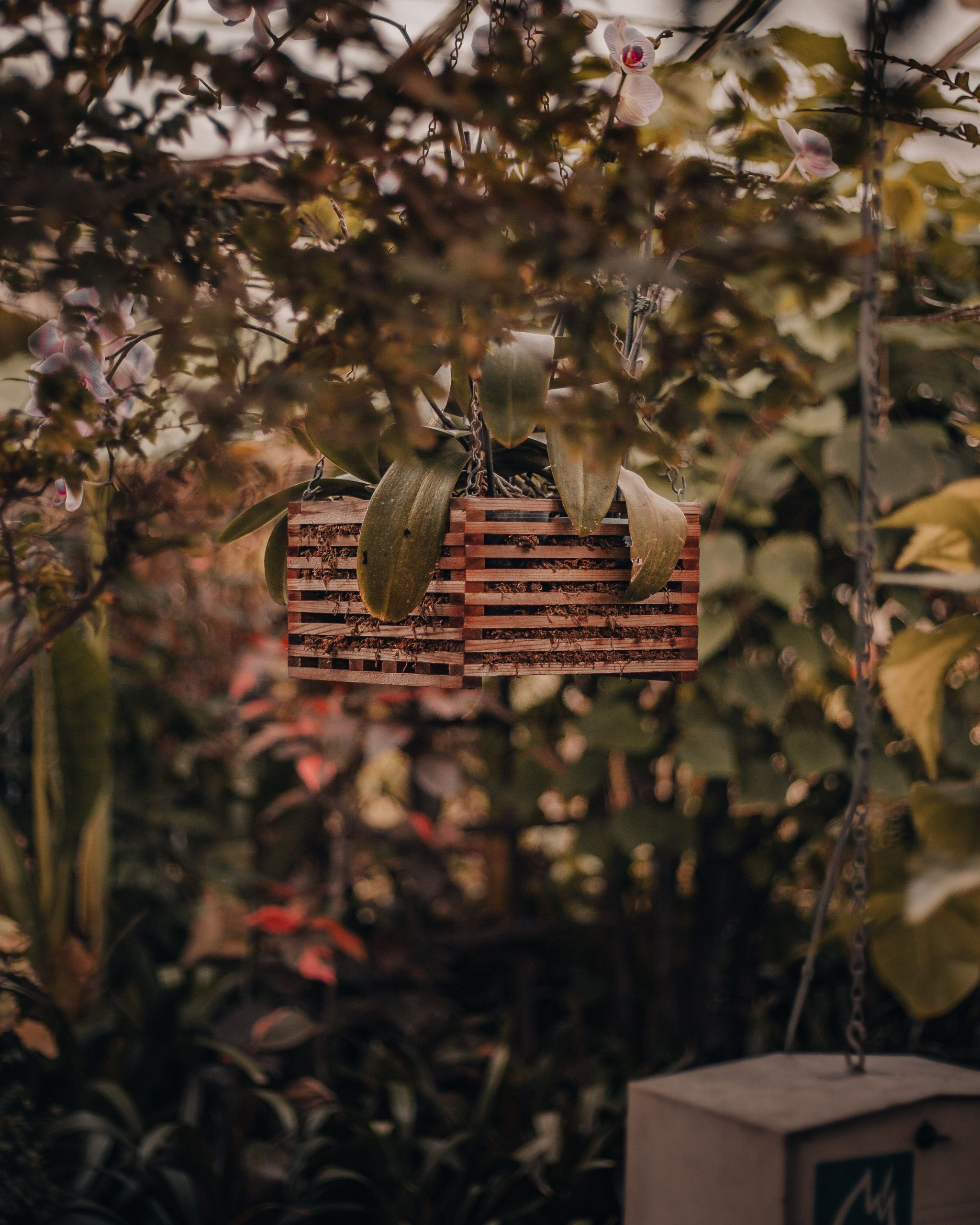
“While beautiful, orchids are not your average potted plant.”
They require a very specific care regimen. Don’t even think about planting them in regular potting soil; it will kill them instantly. They need a special, chunky orchid mix made of bark, charcoal, and other airy materials. They are also sensitive to water quality and temperature. This is not a ‘plant-it-and-forget-it’ option. It’s a true hobbyist’s plant that rewards specific knowledge and consistent attention with spectacular, long-lasting blooms.
27. Ornate Stone Planter with Vibrant Red Flowers
The undeniable focal point here is the planter itself. This isn’t just a container; it’s a substantial piece of garden sculpture. The weathered stone material and the intricate, raised geometric patterns give it a sense of history and grandeur. It feels ancient and permanent. The lush planting of red impatiens is beautiful, but it’s the planter’s ornate character and weighty presence that truly anchors the scene and elevates it from a simple flower pot to a significant garden feature. The plantings could change year after year, but the planter remains the star.
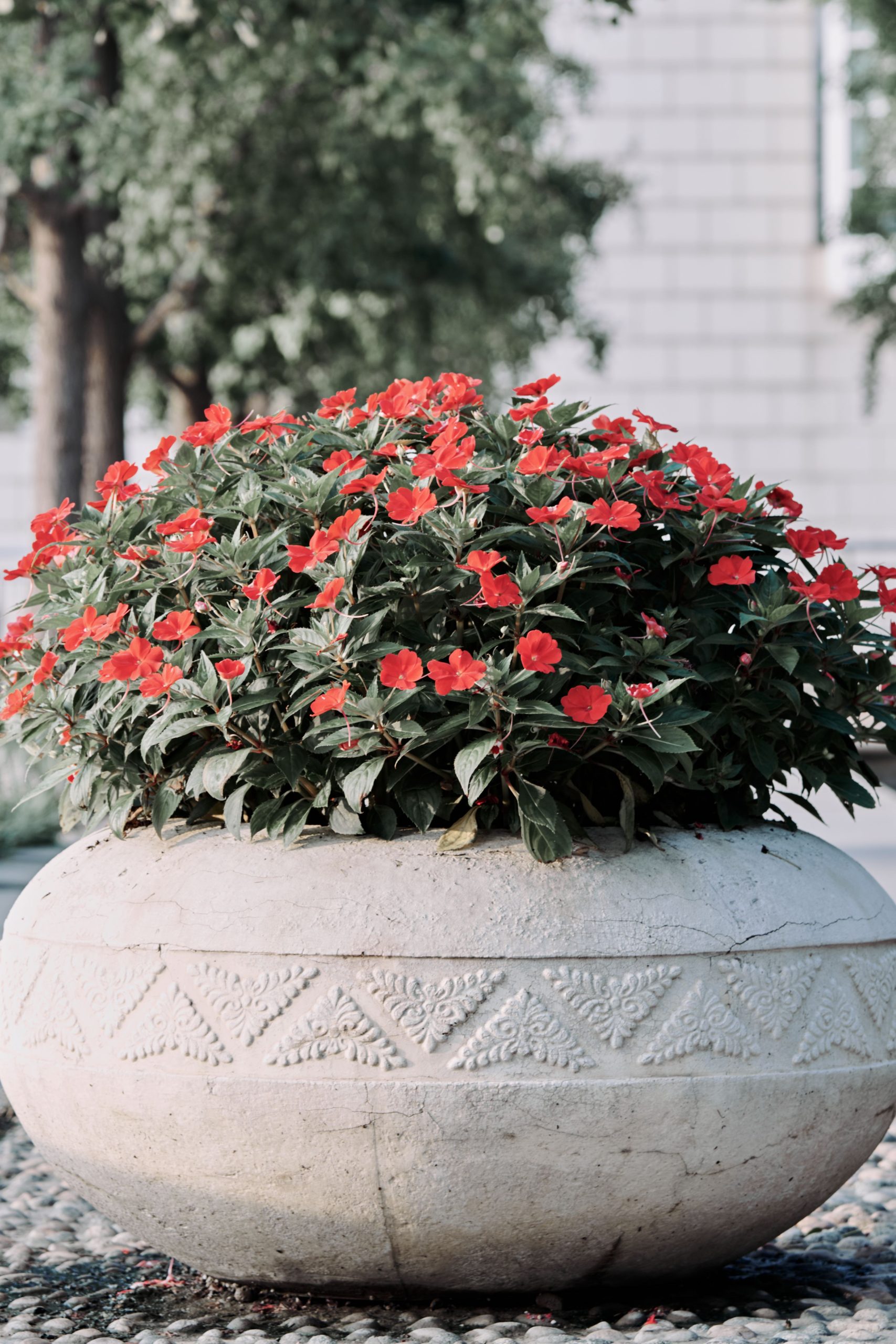
“A large, porous stone or concrete planter like this is fantastic for plant health because it breathes, but it’s also incredibly heavy and acts like a sponge.”
Once you fill it with soil and water, it can weigh several hundred pounds, so be absolutely certain of its placement before you plant. It will also absorb moisture from the soil, meaning plants in it will dry out faster than in a plastic or glazed pot. In the heat of summer, a full sun placement like this will require a deep, thorough watering every single day to keep the impatiens lush and happy.
28. A Perfect Sphere of Blue Lobelia
This hanging basket is so effective because it commits completely to a single, powerful idea: a perfect, dense sphere of vibrant blue. By using only one type of plant—lobelia—and allowing it to grow into an almost flawless ball, the arrangement becomes a statement of pure color and form. The simplicity is its strength. There are no other colors or textures competing for attention. The human eye is drawn to this kind of simple geometric form and saturated color, making it an instant focal point in any garden setting.
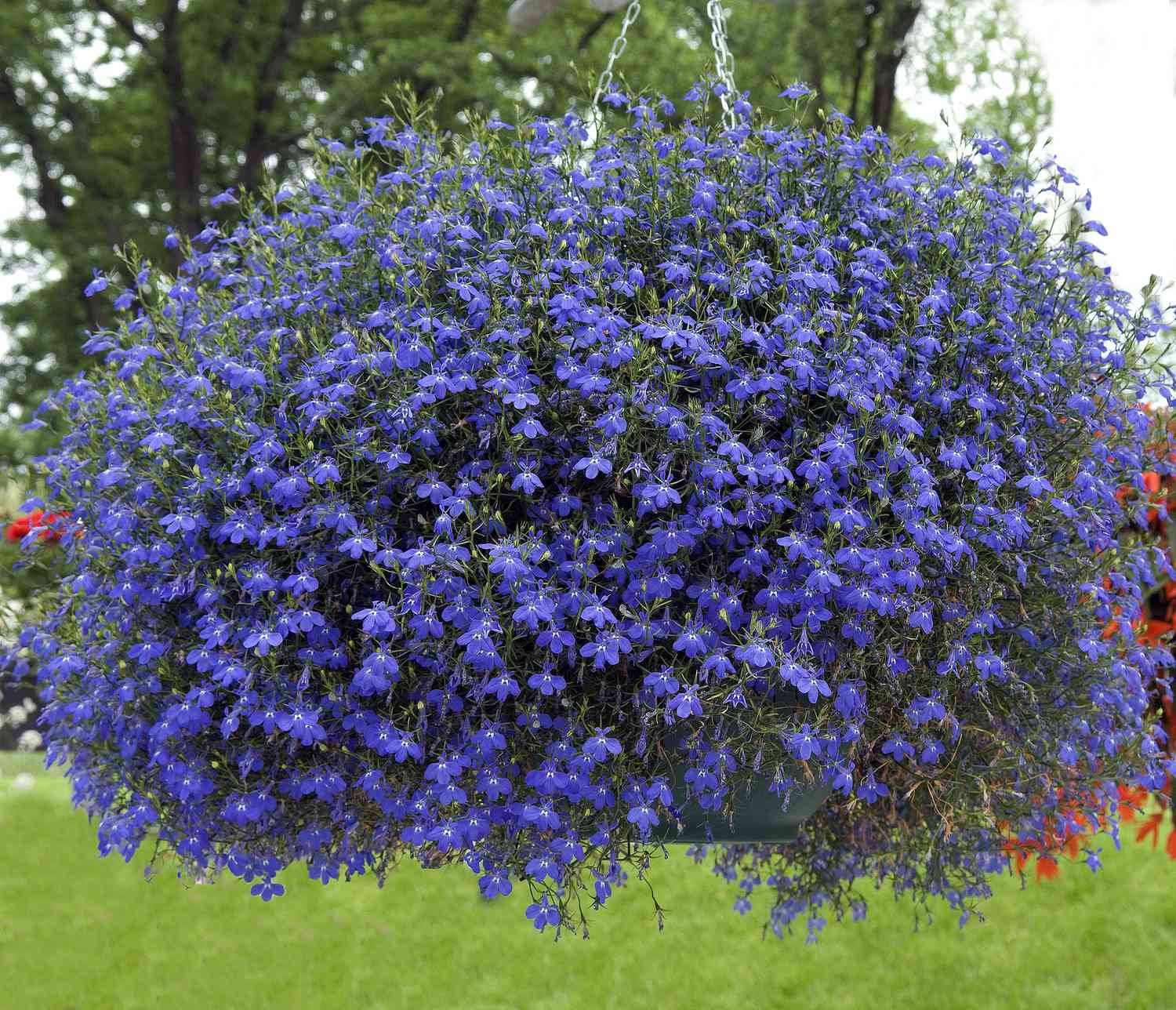
“Lobelia is a fantastic choice for creating these globes of color, but it can sometimes get ‘leggy’ and sparse in the middle of summer.”
To keep it compact and full of blooms, don’t be afraid to give it a ‘haircut.’ Around mid-summer, if the plant is looking tired, take a pair of scissors and shear off the top one-third of the plant. It will look bare for a week or two, but this trimming will encourage a fresh, dense flush of new growth and a second wave of spectacular blooms that will last well into the fall.
29. A Decorative Wall Bracket with Dragonfly and Lily Accents
The standout element here isn’t the plant; it’s the highly decorative, nature-inspired bracket. The cast metal dragonfly and lily motifs, highlighted in a gold finish, turn a simple planter holder into a piece of vertical art. It’s a celebration of detail and craftsmanship that adds a layer of personality and charm to the wall. This is a perfect example of choosing a functional object that also serves a purely decorative purpose, enhancing the garden’s aesthetic even before a single plant is added.
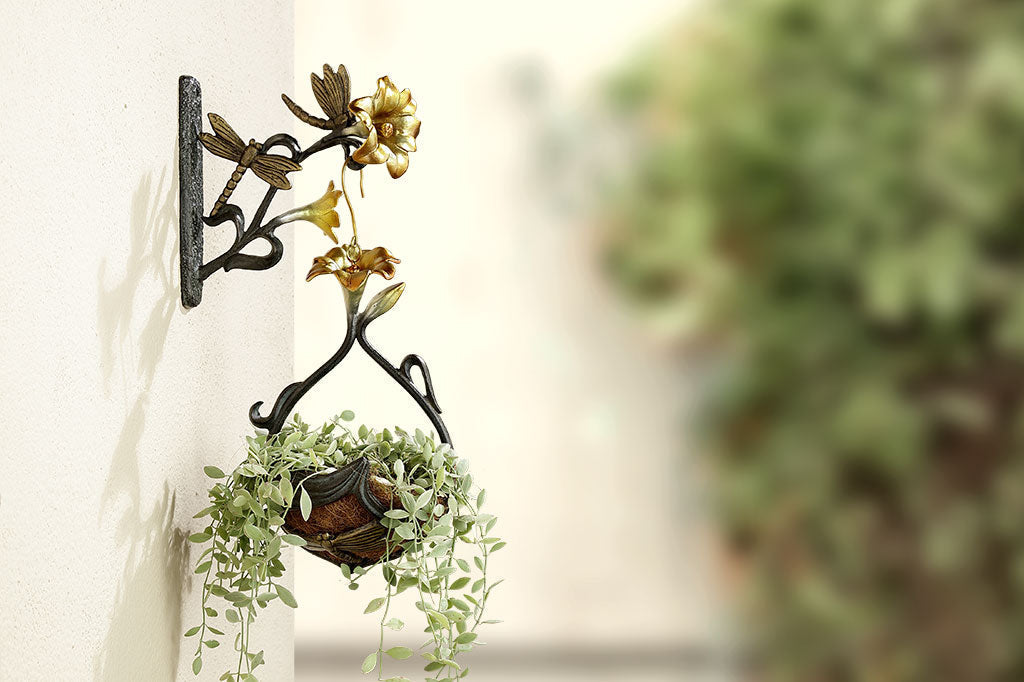
“This look follows a simple formula: 70% ornate, decorative structure + 30% simple, understated planting.”
The bracket is doing all the heavy lifting in terms of design. Therefore, the plant choice is smart: a simple, trailing green foliage plant. A big, bushy, multi-colored flower arrangement would compete with the detailed metalwork and create a chaotic, busy look. By keeping the plant simple, the eye is allowed to appreciate the artistry of the bracket itself. When your holder is this decorative, let your plant be the quiet supporting actor.
30. An Eclectic Mix of Colorful Planters on a Balcony Railing
The charm of this setup lies in its casual, unpretentious, ‘real-life’ feel. It’s not a perfectly matched, professionally styled arrangement. It’s an eclectic mix of simple plastic planters in different colors (white, red, yellow) and styles. This relaxed, mix-and-match approach feels accessible and personal, like a collection that has grown over time. The unifying element is the consistent use of simple green foliage plants, which ties the disparate pots together and creates a lush, jungle-like effect on an ordinary balcony railing.
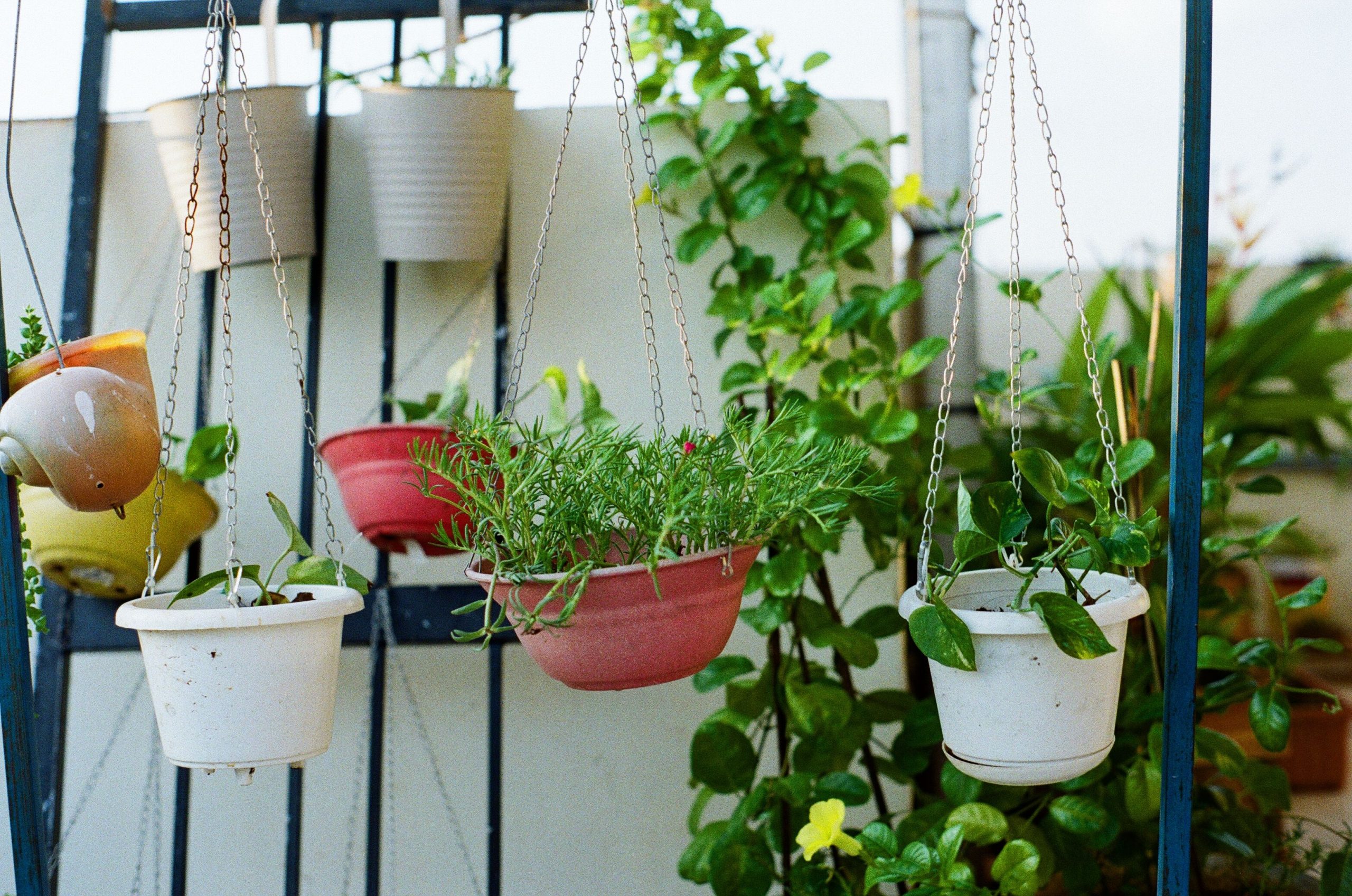
“This is the ultimate budget-friendly and beginner-friendly idea.”
You can start this look for under $50. Inexpensive plastic hanging planters are available everywhere, from the dollar store to big-box retailers. Don’t worry about them matching! The beauty is in the mix. To get started, focus on hardy, easy-to-grow green plants like pothos, spider plants, or philodendrons. You can often get small starter versions for just a few dollars each, or even better, get free cuttings from friends to root in water before planting.
Your Outdoor Story Starts Here
Now that you’re armed with tons of inspiration, the fun part begins. Start small, pick one spot that you see every day, and make a plan to bring it to life. Whether it’s a single, perfect basket or a whole wall of greenery, adding living color to your outdoor space is one of the most rewarding projects you can tackle. We can’t wait to see what you create!