Still scrolling through floating staircase photos on Pinterest without knowing where to start? It’s a huge commitment, and the options can feel overwhelming. We’ve sifted through the noise to bring you 32 distinct floating staircase designs that are genuinely inspiring. From minimalist wood and glass combos to dramatic, dark-tread statements, this is a visual guide to finding the perfect ascent for your home. And stay until the end — we break down the most common mistakes that can ruin these architecturally stunning looks. 📌 Save this to Pinterest for later — you’ll want to revisit these ideas.
1. Cantilevered Wood Steps with a Sleek Glass and Steel Railing
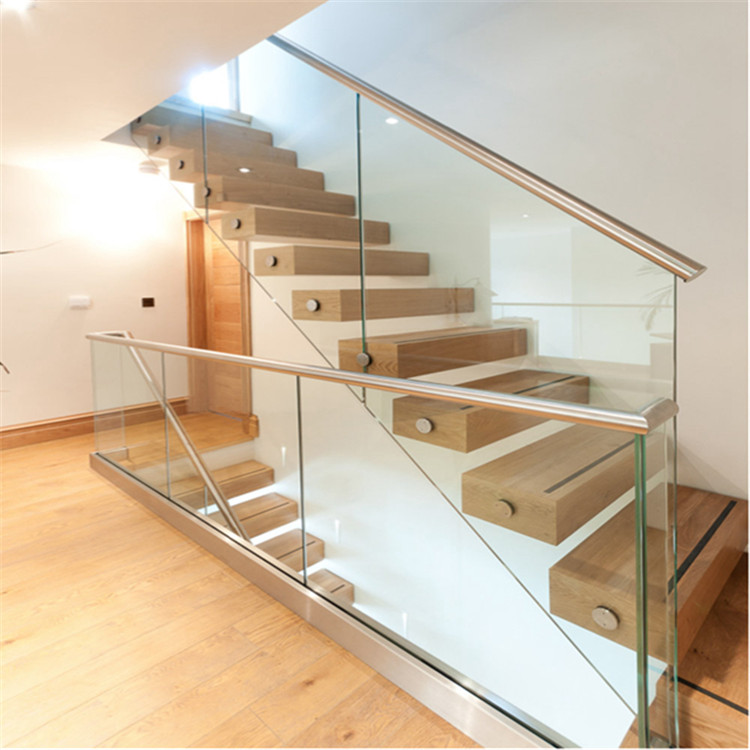
What makes this design so successful is the masterful blend of material temperatures. The light-toned wooden steps bring warmth and an organic touch, making the staircase feel approachable and connected to the home. This is beautifully contrasted by the cool, crisp lines of the clear glass balustrade and the brushed stainless steel handrail. The transparency of the glass is key—it maintains an open, airy feeling, preventing the staircase from visually dividing the space. It’s a lesson in balance.
“For under-tread lighting that looks high-end, the devil is in the details.”
Use a diffused LED strip with a color temperature between 2700K and 3000K to match the warmth of the wood. The crucial part is placement: recess the strip channel at least 1.5 inches from the front edge of the tread. This ensures you see a soft, elegant glow on the riser below, not a harsh, dotted line of visible diodes. It’s the difference between a custom look and a DIY afterthought.
2. Light Wood Treads with a Frameless Glass Railing
This look achieves its light, modern feel through a simple formula: 60% natural materials + 30% transparency + 10% dark structure. The light wood treads and matching handrail form the welcoming, organic majority. The clear glass panels provide the essential “floating” feel, ensuring sightlines remain open. Finally, the dark supporting structure under the treads adds a graphic, grounding element that keeps it from feeling washed out. You could swap the light wood for a darker walnut, but you’d need to keep the wall color light to maintain the balance.
“A glass railing looks incredible, but be honest with yourself about your tolerance for cleaning.”
Fingerprints, smudges, and dust are much more visible on glass than on traditional balusters. If you have kids or pets, you’ll be wiping these panels down constantly to keep them looking pristine. Using a microfiber cloth with a dedicated glass cleaner is a non-negotiable weekly (or daily!) chore. It’s not a dealbreaker, but it’s a lifestyle adjustment you need to be ready for.
3. Illuminated Oak Treads with a Minimalist Glass Balustrade
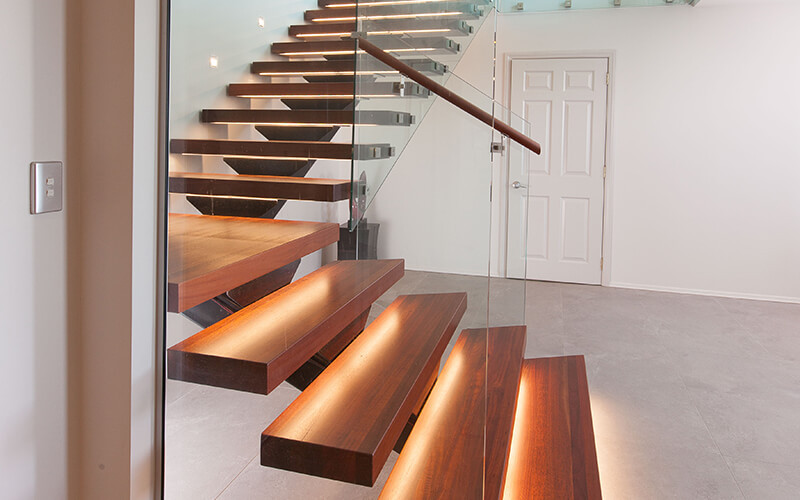
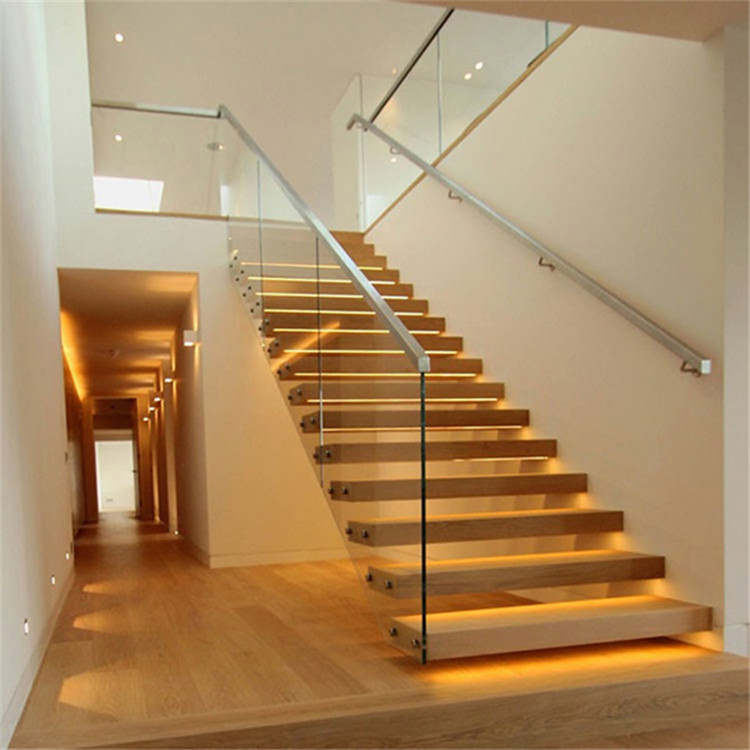
The single element that elevates this design from simply modern to truly magical is the under-tread lighting. Without it, you would have a beautiful, clean-lined staircase. With it, each step becomes a distinct, glowing plane, transforming the entire structure into a sculptural light fixture at night. It adds drama, warmth, and an undeniable sense of luxury. The lighting also serves a practical purpose, enhancing safety by clearly defining each step in low-light conditions. It’s what makes the staircase an experience, not just a utility.
“Main Furniture (Treads & Structure): $9,000 – $15,000Lighting (Integrated LEDs &”
- Main Furniture (Treads & Structure): $9,000 – $15,000
- Lighting (Integrated LEDs & Wiring): $2,500 – $4,000
- Textiles (Railing/Glass): $6,000 – $10,000
- Decor/Accessories: N/A
- Paint/Wall Treatment: $500 – $1,200
- TOTAL: $18,000 – $30,200
- Budget alternative: $7,000 – $12,000 (using stock treads, a cable rail system, and DIY-installed LED tape lighting).
4. Thick White Floating Treads with Integrated Wall Spotlights
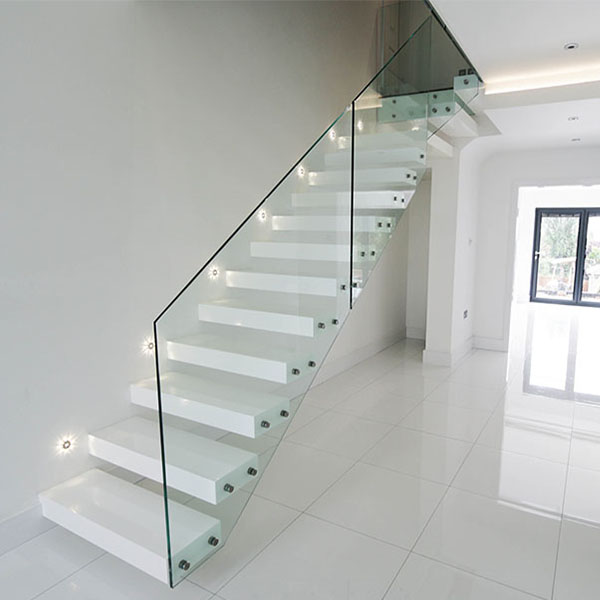
This bold, minimalist look works best in a home with generous proportions. The thickness of the white treads demands a ceiling height of at least 9 feet to avoid feeling compressed. For the full effect—where the stairs feel like a powerful architectural feature—the hallway or room should be at least 6 feet wide. This provides enough negative space around the staircase to let it breathe. In a smaller space, these thick treads could feel overwhelming, more like a ladder than a luxury feature. Compare this with the lighter profile in Idea #5, which is better suited for narrower spaces.
“An all-white staircase is a commitment to cleanliness.”
Scuffs, dirt from shoes, and splashes will be immediately obvious on those brilliant white treads. Plan on a weekly wipe-down with a magic eraser or gentle cleanser for scuff marks. The biggest challenge is the top surface. Use a high-quality, durable paint finish (like a porch and floor paint) to resist chipping and wear. Over time, expect to budget for a professional repaint every 5-7 years to keep them looking crisp and new. This isn’t a set-it-and-forget-it feature.
5. Minimalist Wood Treads Against a Soft Gray Wall
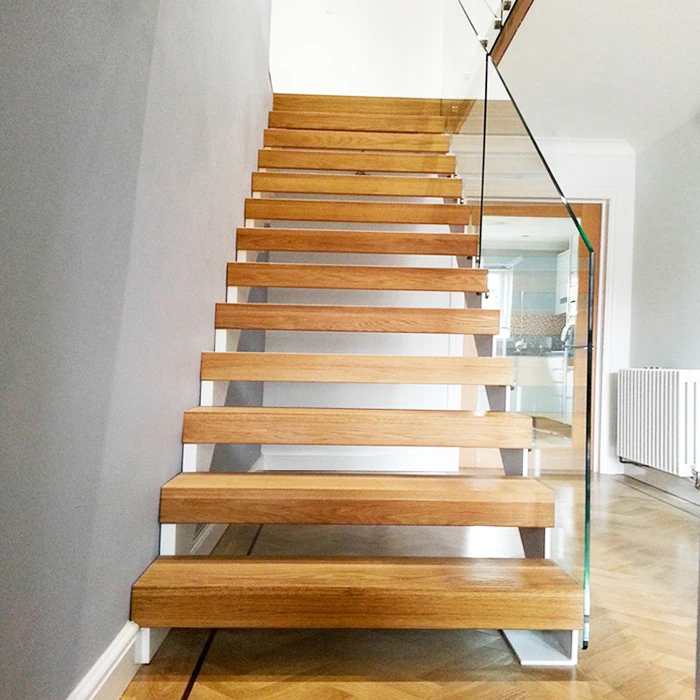
You don’t need a custom fabrication budget to get this airy, minimalist vibe. Start with pre-finished butcher block slabs from a home improvement store like Lowe’s or Home Depot—you can often find oak or acacia for under $300 per slab, which you can cut into treads. For the railing, look for modular glass panel systems online, which can be thousands less than a fully custom glass install. The key is mounting the treads to a reinforced wall. It’s a project, but you can achieve a similar aesthetic for around $4,000-$6,000 in materials if you’re handy.
“This design works because of its simplicity and restraint.”
By keeping the material palette limited to light wood, clear glass, and neutral gray, the focus remains on the form of the staircase itself. The floating effect is amplified by the pale wall color, which recedes and allows the warmer wood tones to pop. The frameless glass acts as an ‘invisible’ barrier, prioritizing safety without sacrificing the feeling of openness. It’s a confident design that understands that sometimes, less is more.
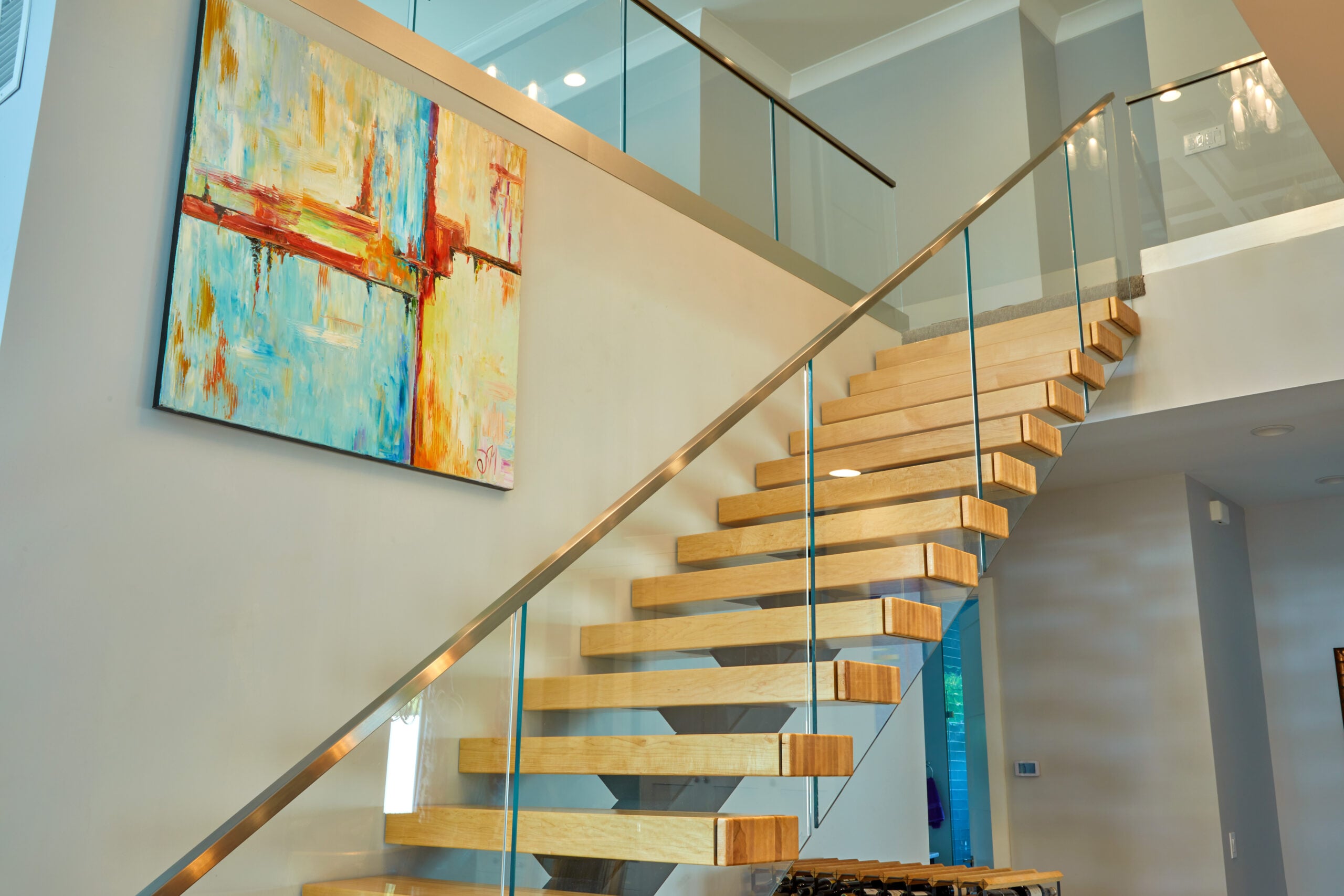
6. Floating Wood Steps Accompanied by Bold Abstract Wall Art
When placing art next to a staircase, scale is everything. A common mistake is to hang a piece that is too small, which gets lost against the grand scale of the stairs. As a rule of thumb, the artwork should occupy at least two-thirds of the visible wall height at the staircase’s midpoint. For a long wall like this, choose a single, large-scale piece or a tightly grouped gallery wall that reads as one visual unit. It should feel intentional and bold, not like a timid afterthought. It’s a perfect way to inject personality, just as this vibrant painting does.
“A floating staircase is a stunning architectural element, but it’s not the most practical choice for households with very young children or individuals with mobility challenges.”
The open risers can be a safety concern for toddlers, even if they meet building codes. Furthermore, the lack of a traditional, solid stringer can make some people feel uneasy or less secure as they ascend. It’s a design that prioritizes aesthetics and-openness, which is a valid choice, but it’s essential to consider the everyday comfort and safety of everyone living in the home.
7. Rich Brown Wood Treads with a Minimal Metal Handrail
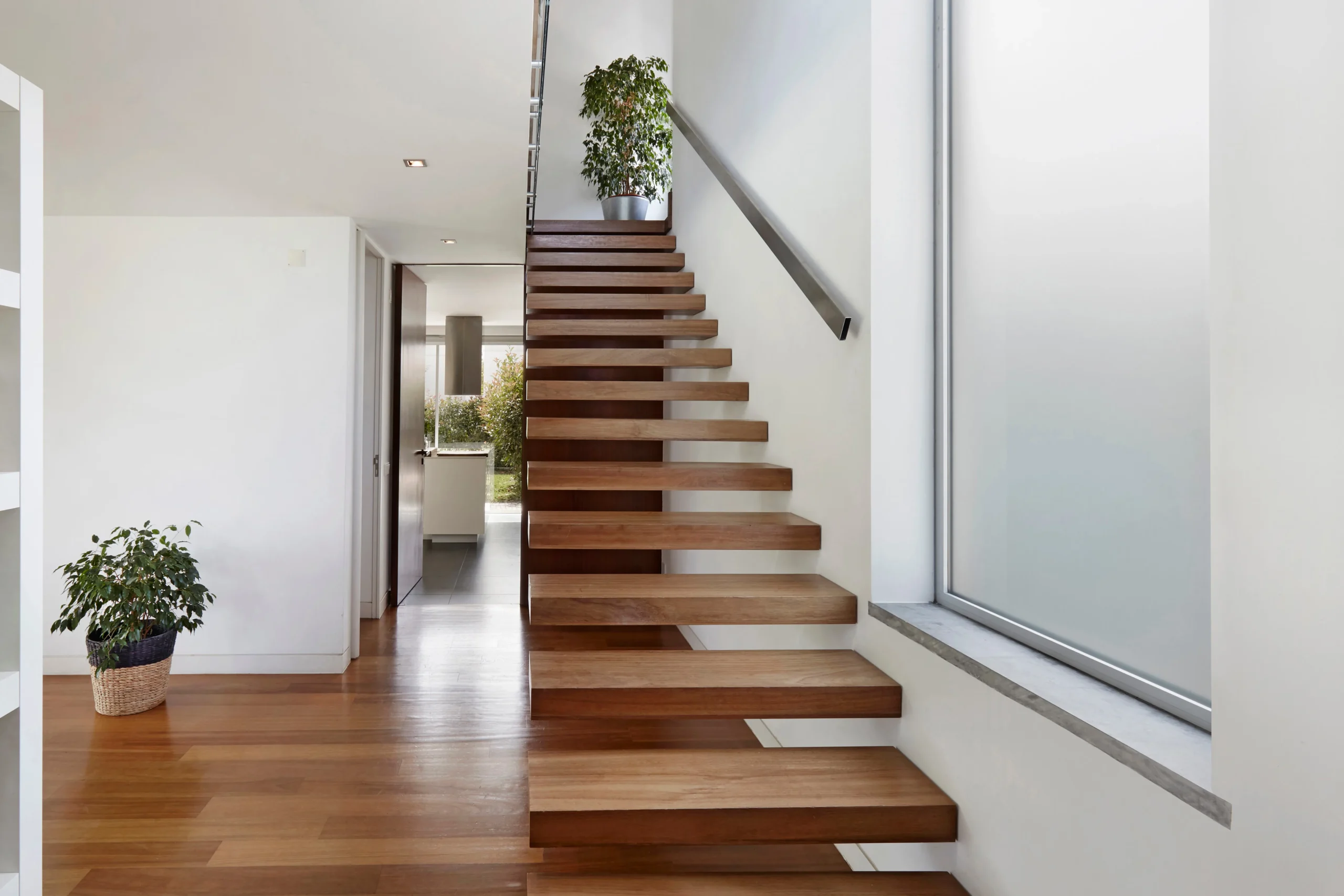
The most critical element here is the contrast created by the dark back panel. While the wooden treads are beautiful, it’s the dark, shadowy backdrop that creates the illusion that they are truly floating in space. If this were against a white wall, the effect would be less dramatic. The panel visually separates the staircase from the rest of the room, turning it into a distinct, graphic feature. It grounds the design and provides a sophisticated canvas for the warm wood and sleek metal handrail, pulling the entire composition together.
“Confirm structural support: Is the wall where the treads will be mounted reinforced to handle the cantilevered load?”
This usually requires adding blocking between studs and is not a simple drywall project.Check local building codes: What are the requirements for riser height, tread depth, and railing specifications in your area? Floating stairs have specific rules.Lighting plan: How will you ensure the stairs are safely lit? Note the large frosted window here. If you don’t have natural light, you’ll need to plan for integrated or wall-mounted lighting.
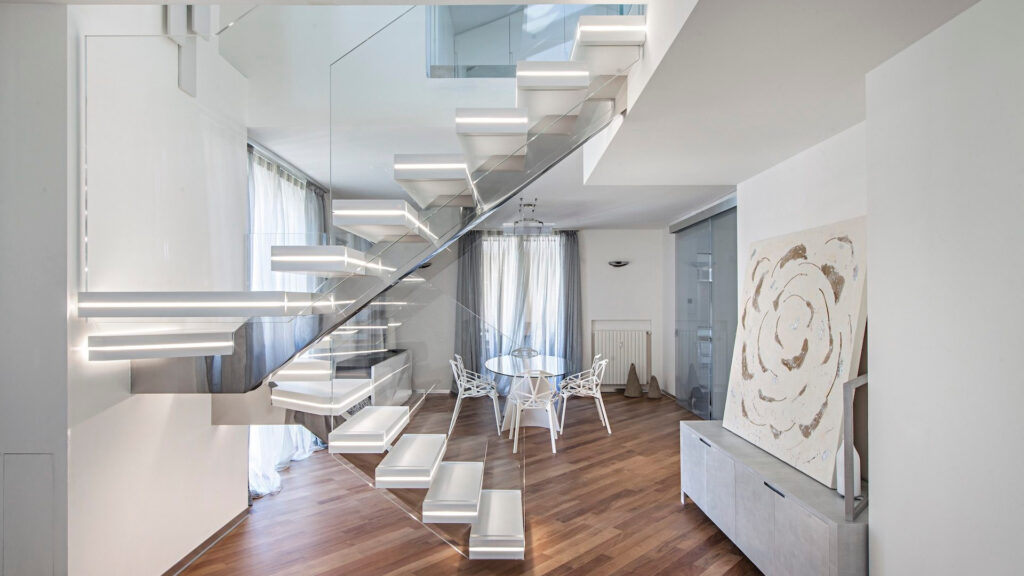
8. White-on-White Floating Stairs with Integrated LED Lighting
This ultra-modern look is an exercise in monochrome and light. The formula is roughly: 80% pure white + 15% warm wood + 5% transparent glass. The dominant white of the treads, walls, and chairs creates a seamless, gallery-like space. The chevron-patterned wood floor provides a crucial injection of warmth and texture, preventing the room from feeling sterile. The glass balustrade and dining table are the quiet 5%, ensuring the space feels open and uncluttered. It’s a bold, high-contrast equation that feels incredibly clean and intentional.
“This design is a direct reflection of the “quiet luxury” trend that has been dominating interior design.”
It’s not about loud colors or patterns, but about perfect execution, high-quality materials, and integrated technology. The seamless look, the glow of the hidden LEDs, the crispness of the lines—it all speaks to a focus on refined, architectural details over ornamentation. This isn’t a fleeting fad; it’s a move toward treating the bones of a house as the main decorative feature, and it has serious staying power.
9. Dark Wood Treads Against a Textured Gray and White Wall
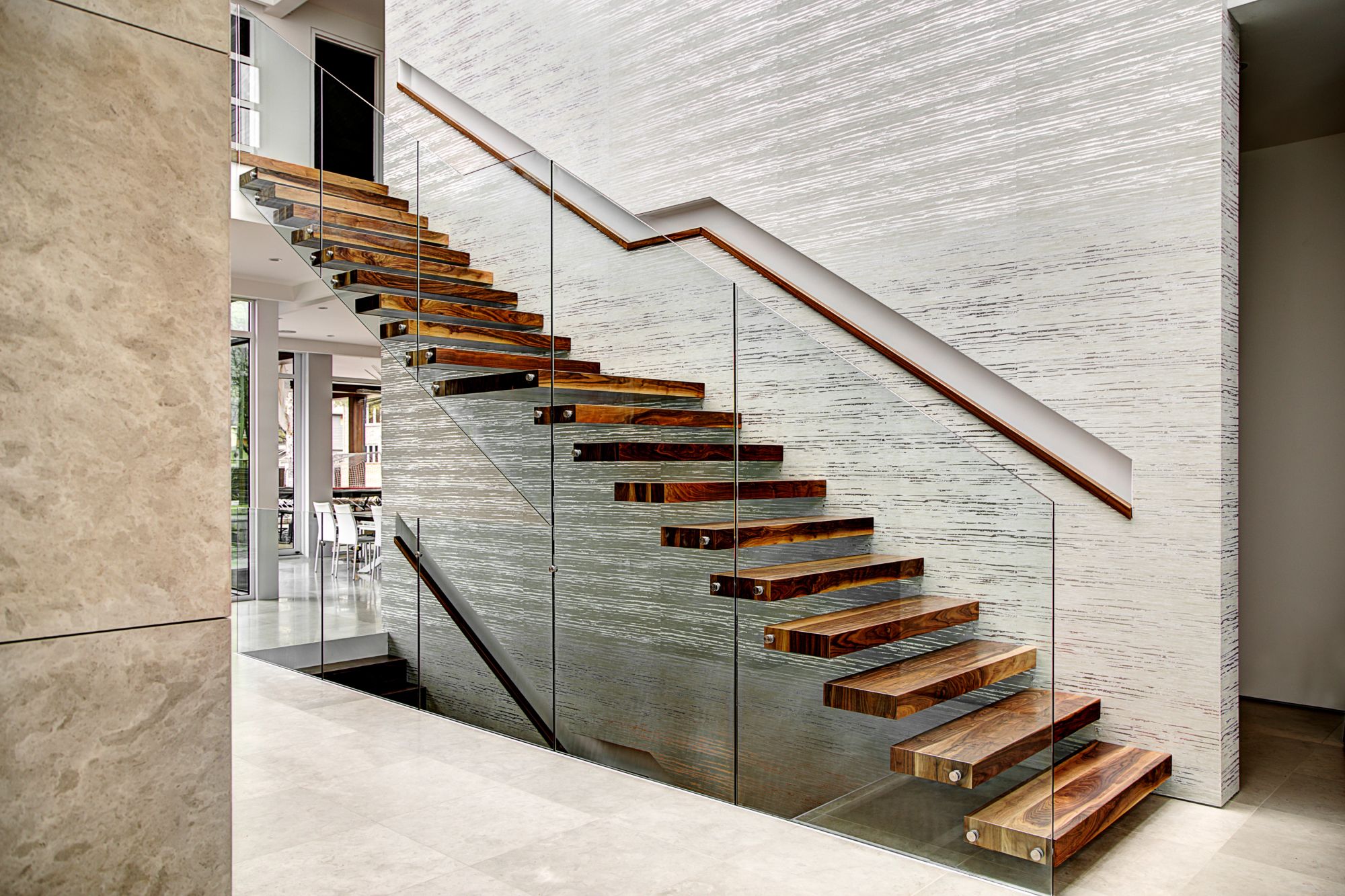
The success of this design lies in its rich textural interplay. The smooth, dark wood treads offer a sleek, polished surface, which is juxtaposed against the rough, tactile quality of the textured gray and white wall. This contrast is what gives the space depth and character. The clear glass railing acts as a neutral observer, allowing the textures of the wood and wall to be the main story. It’s a sophisticated approach that feels layered and expensive, proving that texture can be just as impactful as color. The look is a bold counterpoint to the all-white aesthetic of Idea #7.
“Want to recreate that textured wall finish?”
A Roman clay or limewash application can achieve this look. Time: 2 days. Cost: $200-500. Prep the wall: Clean the surface and apply a specialized primer. Let it dry completely.Apply the first coat: Use a flexible putty knife or trowel to apply a thin, tight coat of the material, varying your application direction.Skim the surface: Once the first coat is almost dry (about 20-30 minutes), lightly skim the surface with your clean trowel to knock down high spots.Apply the second coat: Apply a second, very thin coat using sweeping, curved motions to create soft, cloud-like textures.Burnish (optional): For a smoother, more marble-like finish, gently burnish the dry wall with the edge of your clean trowel.
10. Wood Treads on a Dark Metal Stringer with Spherical Pendants
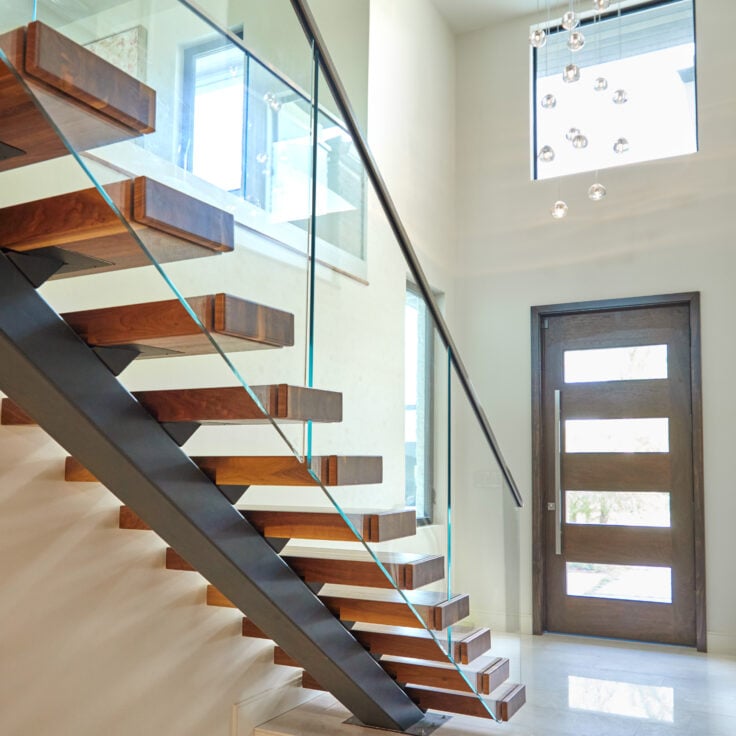
When you have a staircase in an entryway, lighting is your opportunity to make a first impression. The cluster of spherical pendant lights here is a perfect choice. For a double-height entryway, hang your lowest pendant so its bottom is between 7 and 8 feet off the main floor. The key is to create a dynamic cluster: vary the cord lengths so the fixtures cascade and create a sculptural feel. Don’t hang them all at the same height. This draws the eye upward and celebrates the room’s volume, as opposed to just lighting the floor.
“A single-stringer design like this is an excellent choice for spaces that need an open feel but lack a structurally reinforced wall for a true cantilever.”
This style works well in standard 8-9 foot ceiling heights, as the stringer itself has a relatively slim profile. The minimum width for the stair run should be around 42 inches to maintain a comfortable sense of openness. It feels less ‘chunky’ than designs with thick, wall-mounted treads, like in Idea #4, making it a more versatile option for average-sized homes.
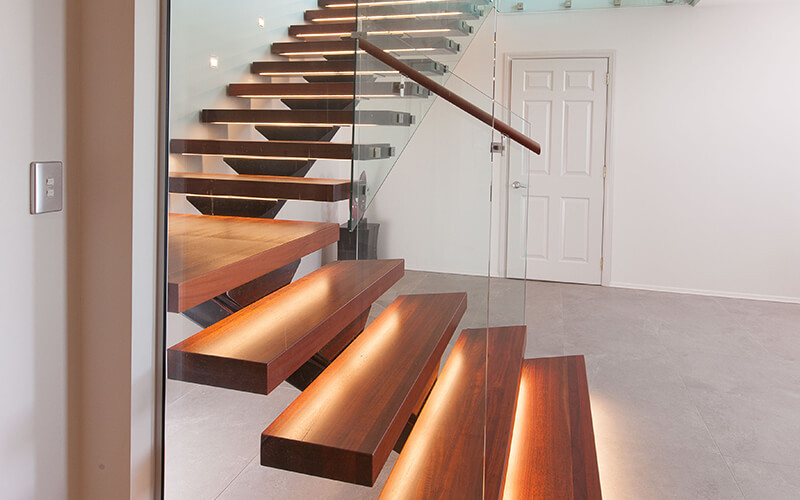
11. Thick Hardwood Treads with Warm Under-Tread Glow
This design is a masterclass in creating a warm and inviting modern space. It works by committing to a warm-toned palette. The rich, polished hardwood of the treads, the slim matching handrail, and the glowing under-tread lighting all share a similar golden-brown hue. This warmth is balanced by the cool neutrality of the light gray floor tiles and white walls. The glass railing is essential, as it allows the lit steps to be the undisputed focal point from every angle, creating a luminous pathway that draws you upstairs.
“Polished hardwood treads are gorgeous, but they can be susceptible to scratching, especially in a high-traffic zone like a main staircase.”
Use felt pads on the bottom of any furniture you move, and consider a “no shoes” rule for the stairs if you want to keep them pristine. The finish is key: a high-quality, commercial-grade polyurethane will offer the best protection. For cleaning, avoid wet mops. A simple dust mop or a vacuum with a soft brush attachment followed by a light spritz with a hardwood-specific cleaner is all you need.
12. Light Wood Treads on a Black Stringer with Integrated Lighting
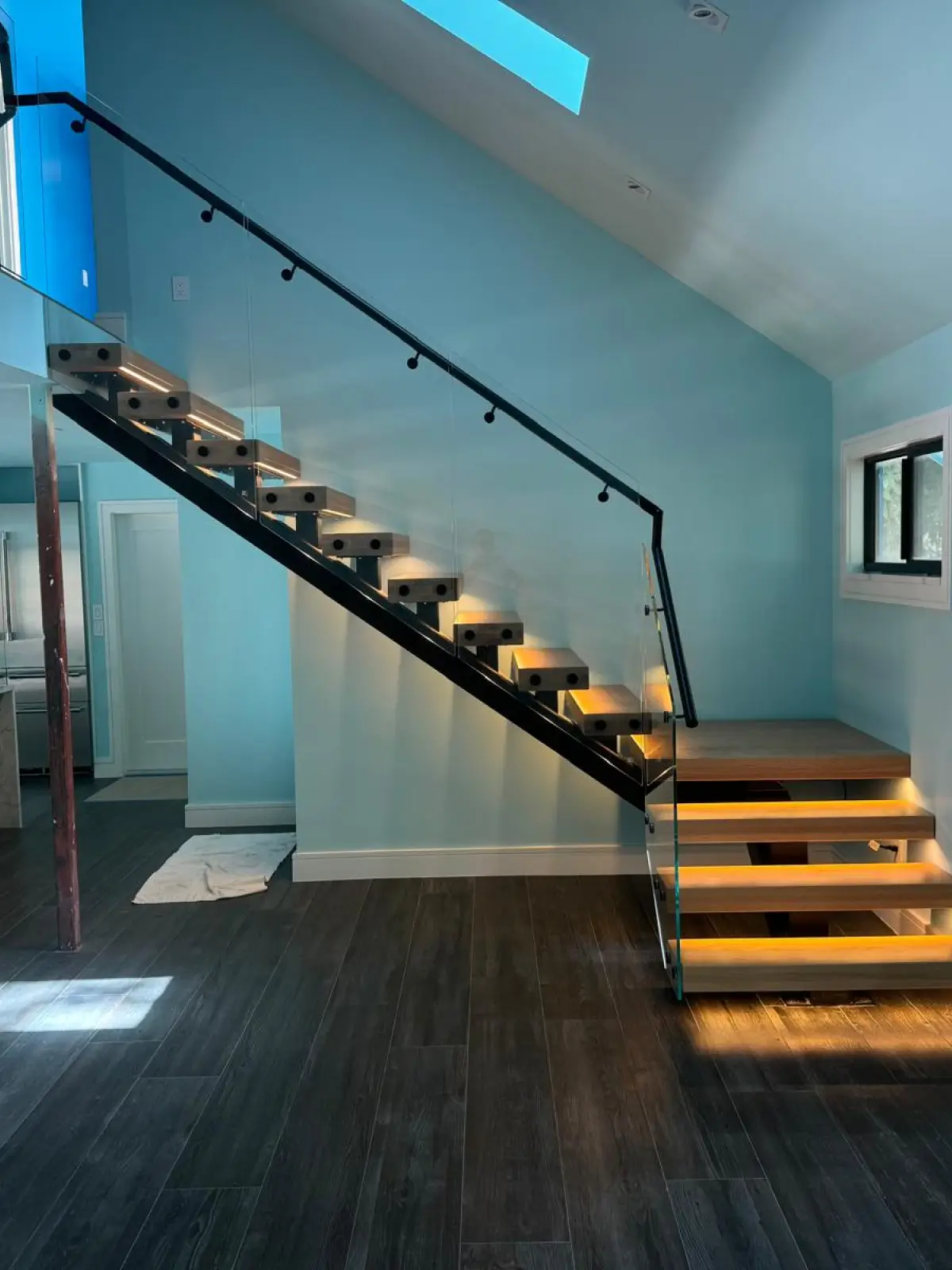
This staircase nails the modern-industrial look with a clean, graphic formula: 50% light natural wood + 40% matte black metal + 10% clear glass. The wood treads bring a touch of Scandinavian softness, while the black metal stringer and handrail provide a bold, structural outline that feels very contemporary. The glass panels are purely functional, there to provide safety without interrupting the crisp lines. The surprise element? The light blue wall, which adds a pop of soft color that keeps the black and wood combo from feeling too predictable.
“While integrated LED lighting looks incredibly sleek, be sure to ask about the longevity and replaceability of the system.”
Unlike a simple light bulb, replacing a failed LED strip that’s been routed into a metal stringer or wooden tread is not a simple DIY task. Inquire about the rated lifespan of the LEDs (look for 50,000 hours or more) and understand the process for replacement. Does the tread need to be removed? Is it a job for a specialist? A high-quality system will last for years, but planning for the eventual “what if” is just smart homeowner sense.
13. Light Wood Floating Treads with a Minimal Black Metal Handrail
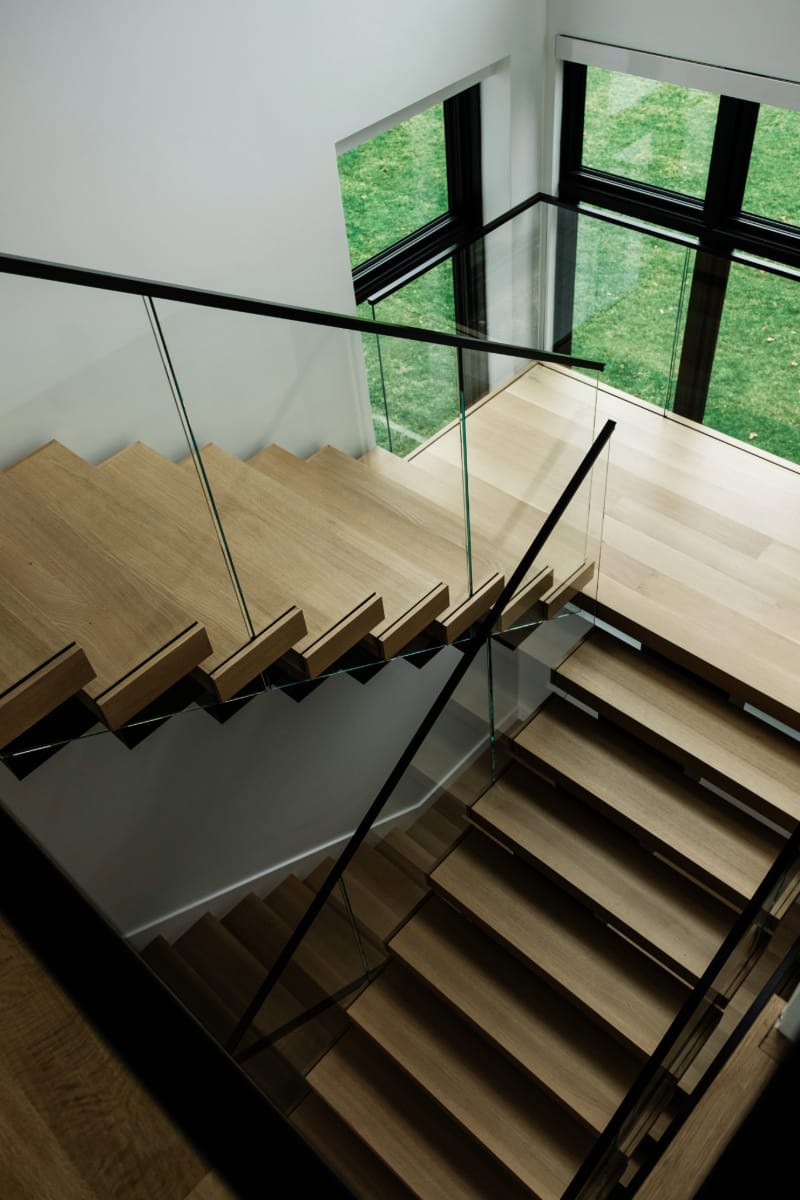
The standout feature in this bright, airy space is the ultra-thin profile of the black metal handrails. In a design dominated by the natural warmth of the wood and the expansive glass of the windows, these handrails act like a sharp, graphic line drawn in space. They provide the necessary safety and a place to touch, but their slimness ensures they don’t obstruct the view or add any visual weight. They are the minimalist’s choice, proving that a railing can be both strong and incredibly delicate in appearance.
“For a more accessible version of this look, IKEA offers some surprisingly chic options.”
Their VEBON handrail in black offers a similar thin, minimalist profile for a fraction of the custom metalwork cost. You can pair this with stock oak stair treads from a local lumber yard. For the glass, instead of a fully custom balustrade which is pricey, consider using pre-fabricated tempered glass panels from a supplier and mounting them with off-the-shelf black hardware. This approach gives you that high-end, Scandinavian aesthetic for a much more palatable price point.
14. Dark Wood Angled Staircase with Horizontal Cable Railing
This staircase makes a powerful statement through dramatic contrast. The thick, dark wood treads have a visual weight and richness that feels substantial and luxurious. This is set against stark white floor tiles and light grey walls, making the staircase the undeniable focal point. The industrial-chic cable railing adds another layer of contrast—the thin, metallic lines of the cables against the thick, solid wood of the treads. It’s a composition of opposing forces: dark vs. light, thick vs. thin, solid vs. linear. It’s this tension that makes it so visually interesting.
“Cable railings look sleek, but they require proper tensioning to be safe and code-compliant.”
The cables should be taut enough that a 4-inch sphere cannot pass through them. Over time, especially in the first year after installation, the cables can stretch and sag. Plan to check and re-tighten them annually using a tension gauge and the appropriate wrench for your system’s hardware. This is a critical maintenance step that ensures the railing remains as safe as it is stylish. This is a great alternative to the glass seen in Idea #16.
15. Gracefully Curved Floating Wooden Staircase
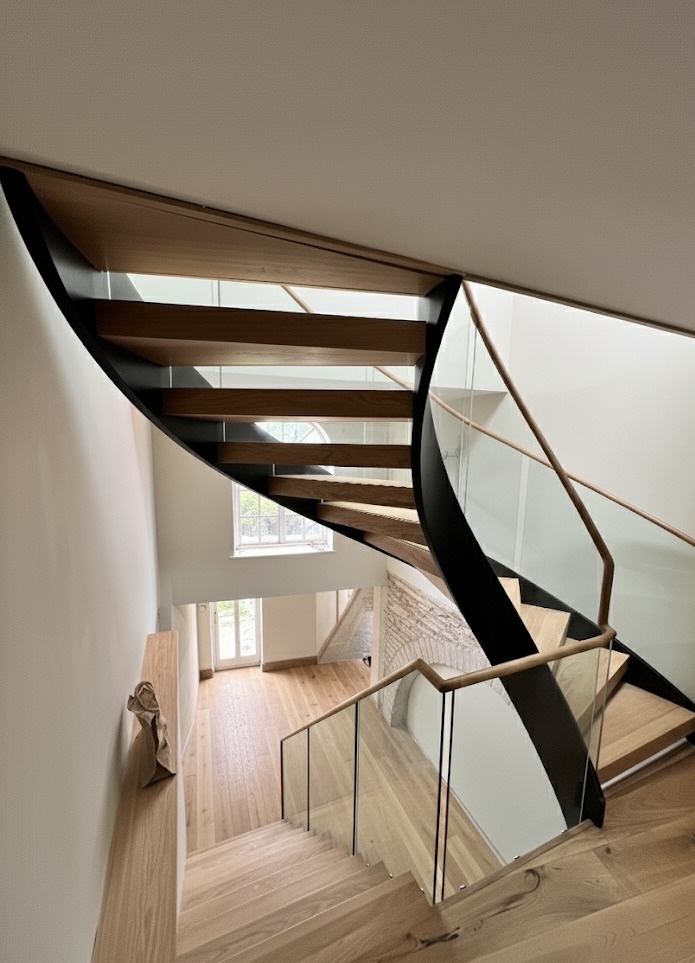
The singular element that defines this staircase is its gentle, sculptural curve. While a straight floating staircase is a statement, a curved one transforms the ascent into an art form. It softens the hard lines of a modern interior and introduces a sense of organic movement, proving that function can be poetic. This element alone elevates the design from a simple utility to the undisputed centerpiece of the home, commanding attention and admiration. Without the curve, it would just be a way to get upstairs; with it, it’s architecture as sculpture.
“Let’s be honest: a curved floating staircase is a significant engineering and financial commitment.”
Unlike straight designs, every tread and the supporting structure must be custom-fabricated. The engineering required to make it structurally sound without visible supports is complex and expensive, often doubling or tripling the cost of a comparable straight staircase. You are paying for the artistry and the highly specialized labor required to defy gravity so gracefully. It is the pinnacle of staircase design, but it comes with a pinnacle price tag.
16. Dark Wood Treads Supported by Exposed Black Metal Beams
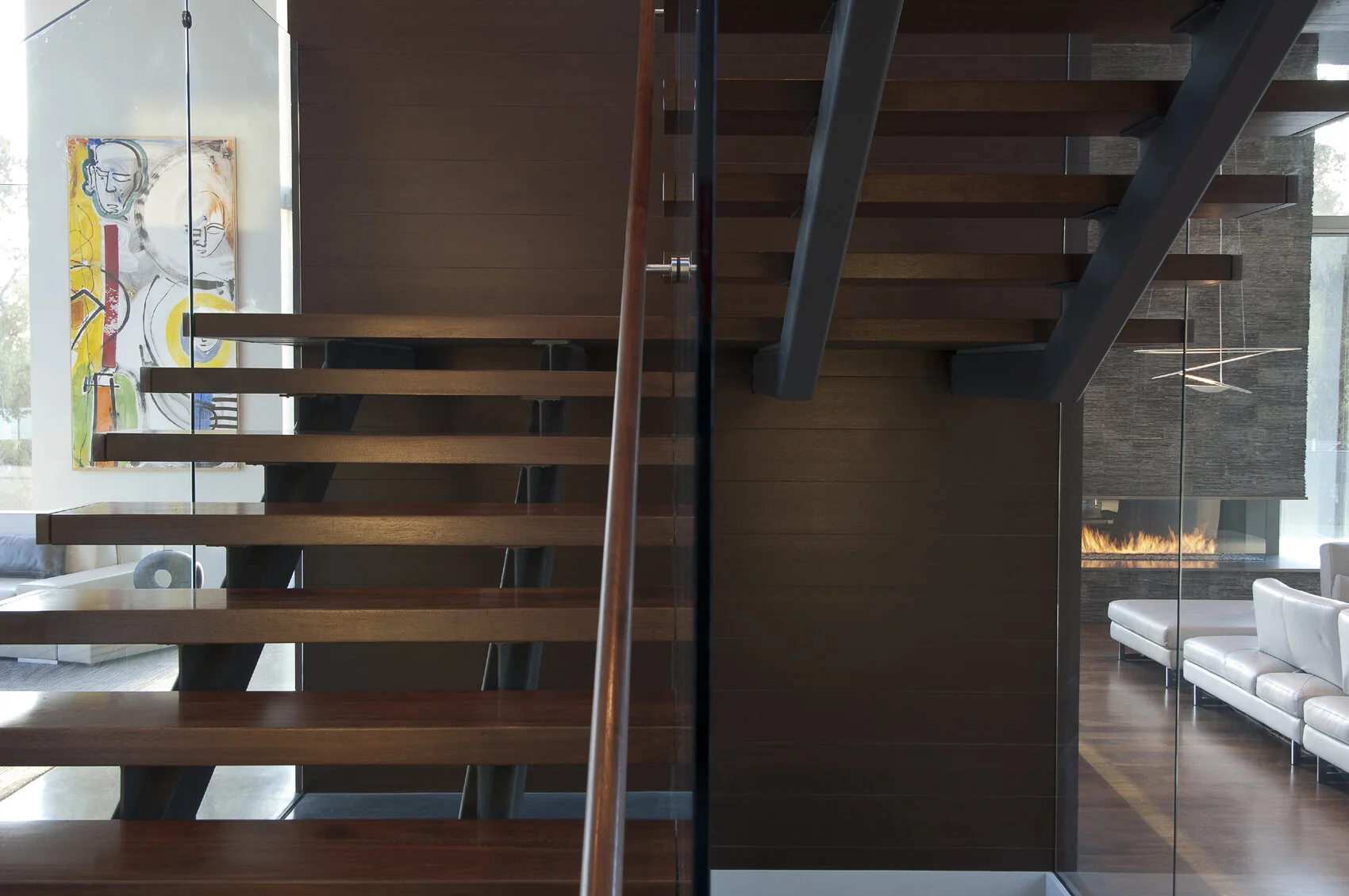
This look is a beautiful balance of raw structure and refined finish. Think of it as: 50% finished material + 50% exposed structure. The dark, polished wood treads and matching handrail provide the sleek, finished surface that feels high-end. But the exposed black metal support beams and visible hardware reveal the “bones” of the staircase, giving it an honest, industrial edge. The glass railing serves as a quiet intermediary, allowing both star elements—the wood and the steel—to shine. This is a great way to get a floating look when a true cantilever isn’t possible.
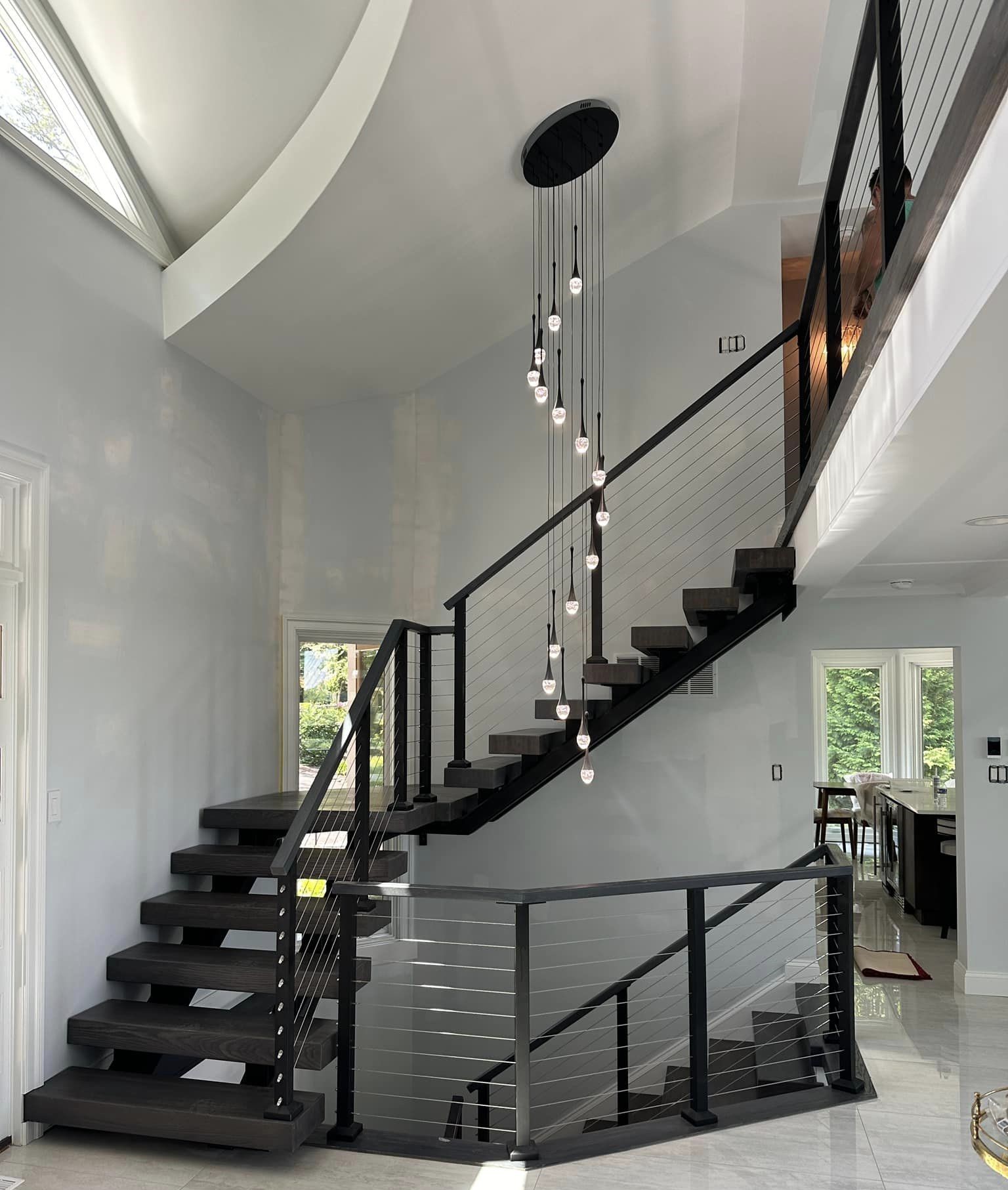
“Check your structural plan: Unlike a standard staircase, the support system for this design—the black metal beams—is a major aesthetic element.”
Ensure the engineering drawings specify a finish and profile you like.Consider the wall finish: The wall behind the stairs is a huge part of the look. Here, the horizontal wood paneling complements the treads. Make sure your chosen wall treatment (paint, paneling, etc.) works with the industrial vibe.Verify glass specifications: Ensure the tempered glass panels are at least 3/8-inch thick for this type of installation and that the hardware is rated for the load.
17. Mixed-Material Staircase with Brass Hardware Accents
This staircase design works because it confidently mixes three distinct materials: dark wood, dark metal, and warm brass. The key is that each material is given a clear role. The dark gray metal stringer provides the strong, central spine. The dark wood treads offer a warm, inviting surface for your feet. And the brass mounting hardware acts like jewelry, providing small, deliberate pops of metallic warmth that catch the eye and elevate the entire assembly. This small touch of brass keeps the dark wood and metal from feeling too severe, adding a layer of thought and luxury.
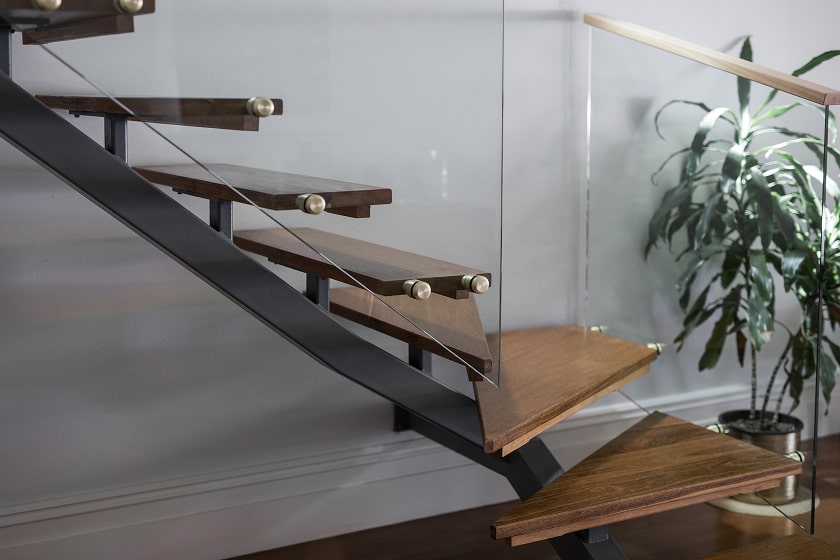
“Want that touch of brass without the custom price tag?”
The hardware is where you can make a big impact for less. Instead of custom-machined brass fittings, look for off-the-shelf glass panel clamps or standoff hardware in a brushed brass or gold finish from online hardware suppliers. You can achieve 90% of the look of those high-end brass accents for a fraction of the cost. Pair them with a standard dark metal stringer and dark-stained oak treads to get this sophisticated, mixed-material palette on a real-world budget.
18. Luminous Floating Wood Treads with a Wall-Mounted Handrail
When pairing a glass balustrade with a separate, wall-mounted handrail, the height and spacing are critical for both comfort and aesthetics. Mount the handrail so its top surface is between 34 and 38 inches above the nose of the stair treads. The key to a clean look is the handrail brackets. Choose slim, modern brackets in a finish that matches your other metallic accents (like the glass fasteners here) and space them no more than 48 inches apart for a sturdy, secure feel. This two-part railing system feels intentional and layered.
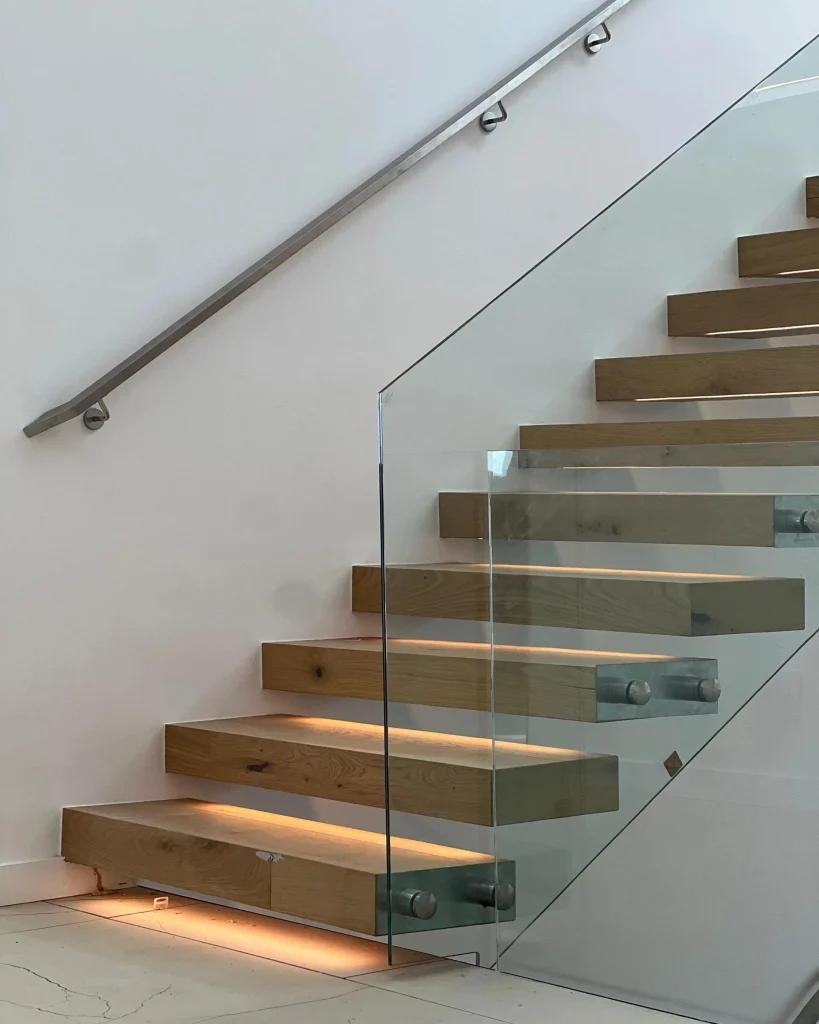
“You can install a sleek, modern wall-mounted handrail like this one in an afternoon.”
Time: 2 hours. Cost: $150-400. Locate the studs: Use a stud finder to mark the location of every wall stud along the path of the staircase. This is non-negotiable for safety.Determine the angle: Hold the handrail against the wall, aligning it with the angle of your stairs. Use a level to ensure it’s parallel to the stair nosing.Mark bracket height: Following the 34-38 inch height guideline, mark the screw holes for your brackets, ensuring they align with the studs you located.Install brackets: Pre-drill pilot holes into the studs. Securely attach the brackets to the wall using the long screws provided with your hardware.Attach the handrail: Place the handrail onto the brackets and secure it from below with the smaller screws.
19. Floating Staircase with a Vertical Wood Slat Screen Railing
The defining feature here is unquestionably the vertical slatted wood screen. It serves as both a safety railing and a powerful architectural element that defines the space. It creates a sense of partial enclosure, filtering light and views while still maintaining a feeling of openness. This screen transforms the staircase from a simple object into an integrated part of the room’s architecture, tying the lower and upper levels together with a continuous, textural element. It feels more substantial and custom than a standard glass or metal railing.
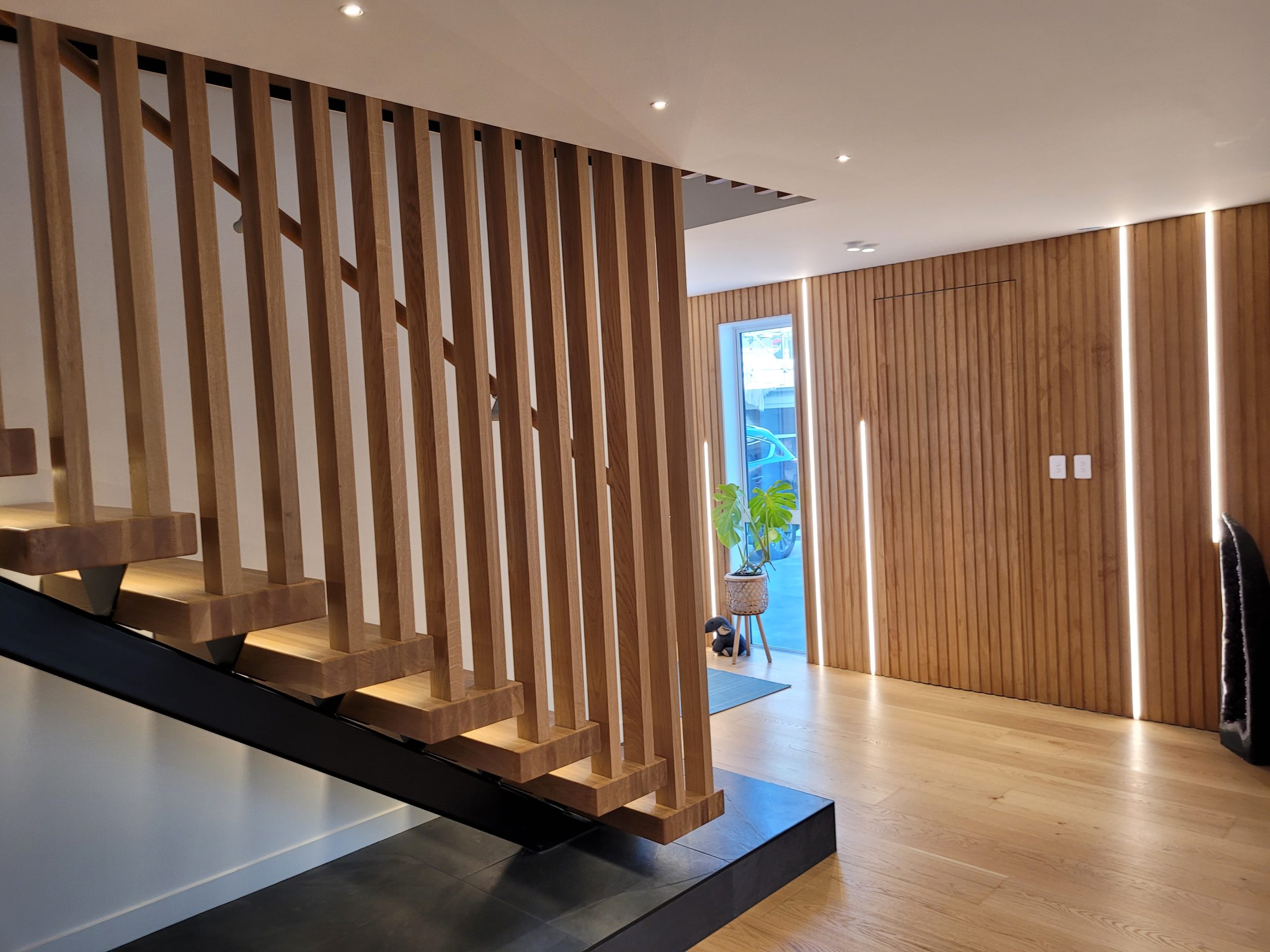
“A full-height screen like this is a fantastic way to handle a staircase in an open-concept living area.”
It works particularly well with ceiling heights from 9 to 12 feet. In a standard 8-foot room, the vertical lines can still add a sense of height, but the effect is most dramatic with more volume. The staircase itself, supported by a central beam, is great for medium-width spaces (around 12-15 feet wide), as it doesn’t require a massive structural wall for cantilevering, making it more adaptable than true cantilevered designs like Idea #1.
20. Curved Open-Riser Staircase with a Traditional Feel
This look is a beautiful nod to the “Modern European Farmhouse” or “New Traditional” style that is gaining so much traction. It takes the classic form of a curved wooden staircase but strips it back by using open risers. This small change instantly updates the look, making it feel lighter and less formal than a fully enclosed traditional stair. It bridges the gap between classic craftsmanship and modern sensibilities, which is why it feels so fresh and appealing right now. It’s for people who love timeless design but want an airy, contemporary home.
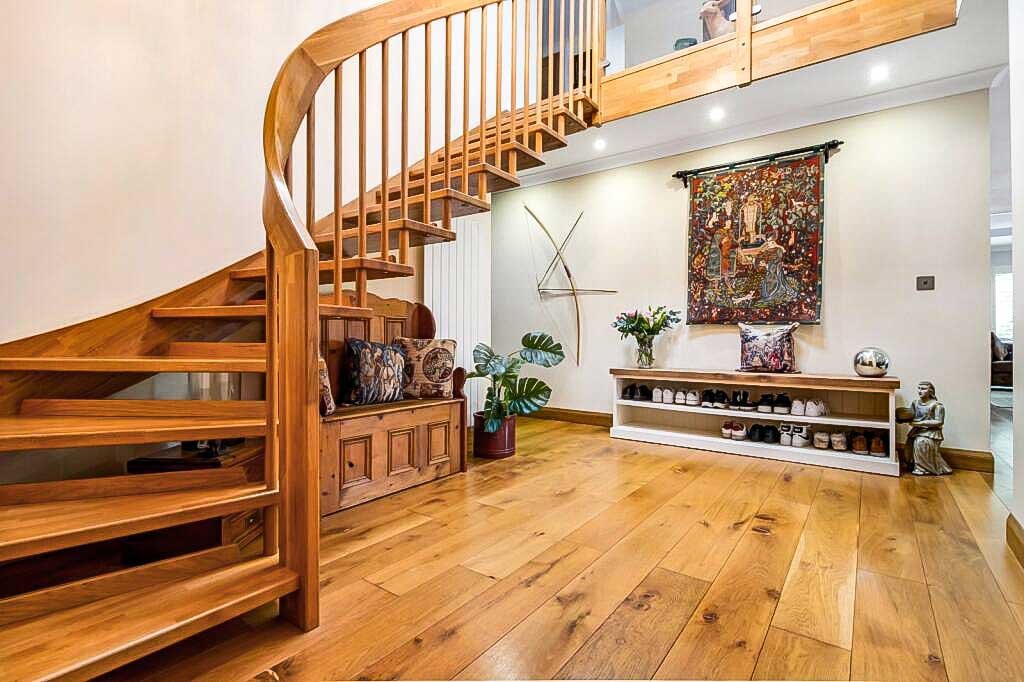
“The rustic charm here works because of a commitment to warm, natural textures.”
The light wood of the staircase, the rustic bench, the woven patterns on the cushions, and the nubby texture of the wall tapestry all work in harmony. The design isn’t relying on bold colors but on a rich layering of materials. The open risers keep the wooden structure from feeling too heavy, and the simple, clean lines of the vertical balusters provide structure without being overly ornate. It feels collected and personal, not decorated.
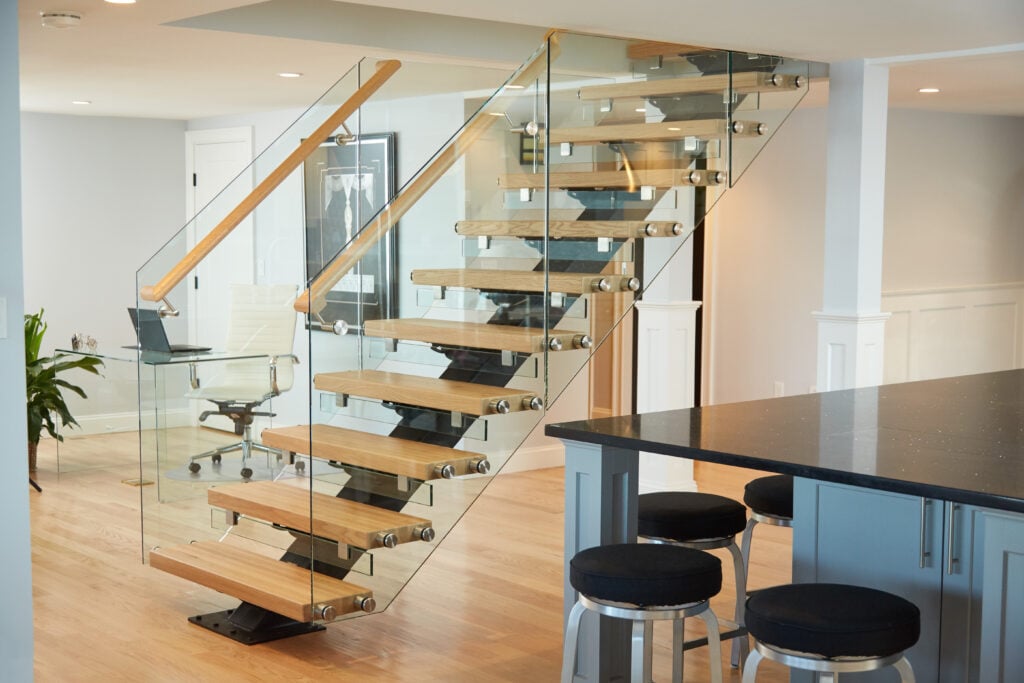
21. Light Wood Treads on a Black Stringer in an Open-Plan Space
Here’s a smart trick for integrating a staircase into an open-plan kitchen or living area: use a consistent metal finish to tie the elements together. Notice how the black metal of the stair stringer and handrail is echoed in the dark base of the kitchen island stools and possibly the window frames or other small fixtures. This repetition of black creates a subtle but powerful visual thread that makes the entire space feel cohesive and thoughtfully designed. It prevents the staircase from feeling like a separate, disconnected feature.
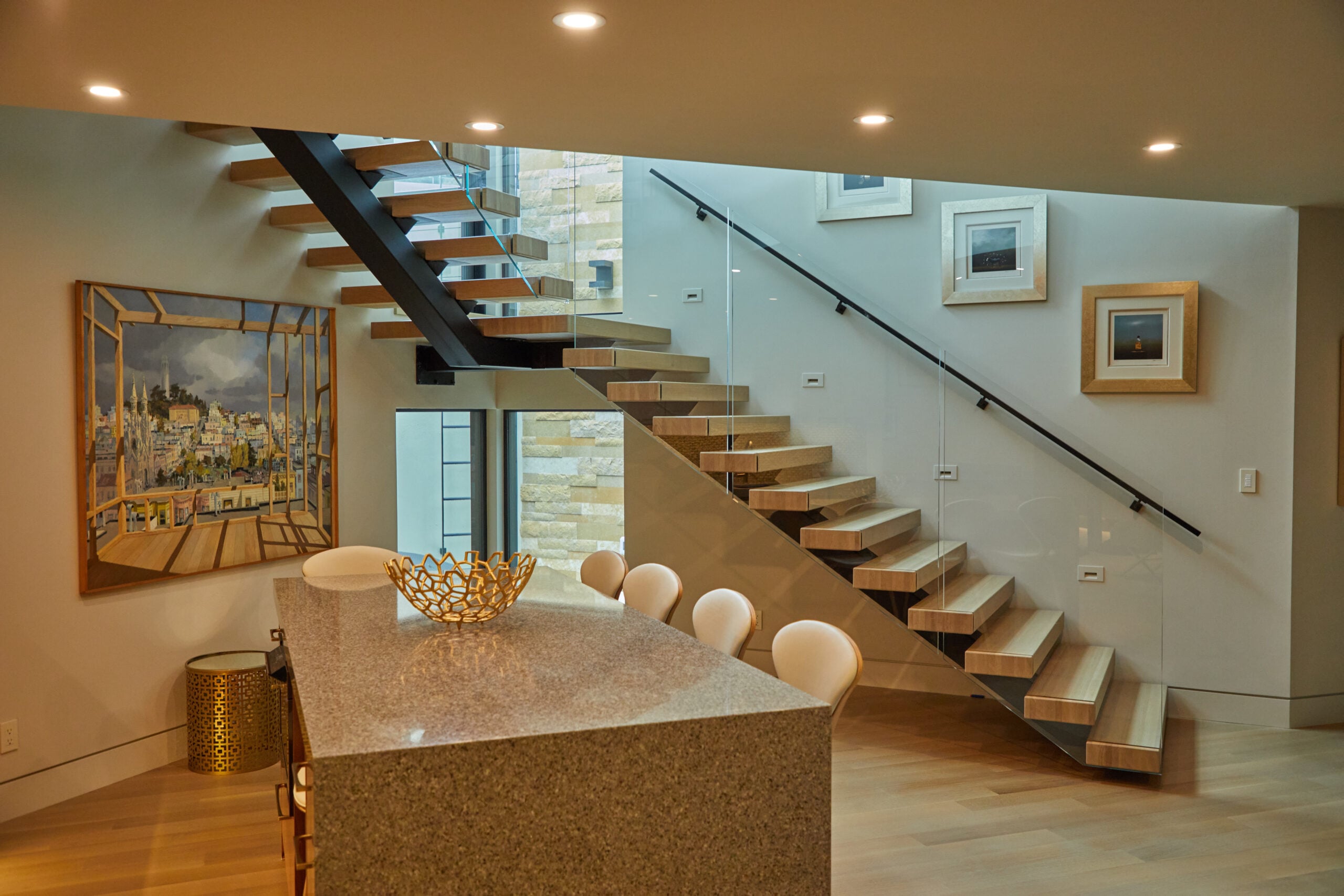
“Main Furniture (Treads & Stringer): $7,000 – $12,000Railing (Glass & Handrail): ”
- Main Furniture (Treads & Stringer): $7,000 – $12,000
- Railing (Glass & Handrail): $5,000 – $8,000
- Decor/Accessories (Artwork): $500 – $2,000+
- Adjacent Elements (Island, Stools): $4,000 – $9,000
- TOTAL (for the staircase & immediate area): $16,500 – $31,000
- Budget alternative: $6,000 – $11,000 (Use a pre-fabricated stair kit, stock pine treads stained to look like oak, and framed art prints instead of originals).
22. Floating Wood Steps with a Polished Chrome Handrail
The single element that gives this staircase its particularly sleek, high-tech polish is the chrome handrail. While the floating wood treads and glass are classic modern choices, the highly reflective, mirror-like finish of the chrome adds a touch of glamour and sharpness. Unlike brushed steel or matte black, polished chrome is unapologetically shiny. It catches the light and reflects the room, adding a dynamic, jewel-like quality to the top edge of the railing. It’s a small choice that has a huge impact on the final feeling of the design.
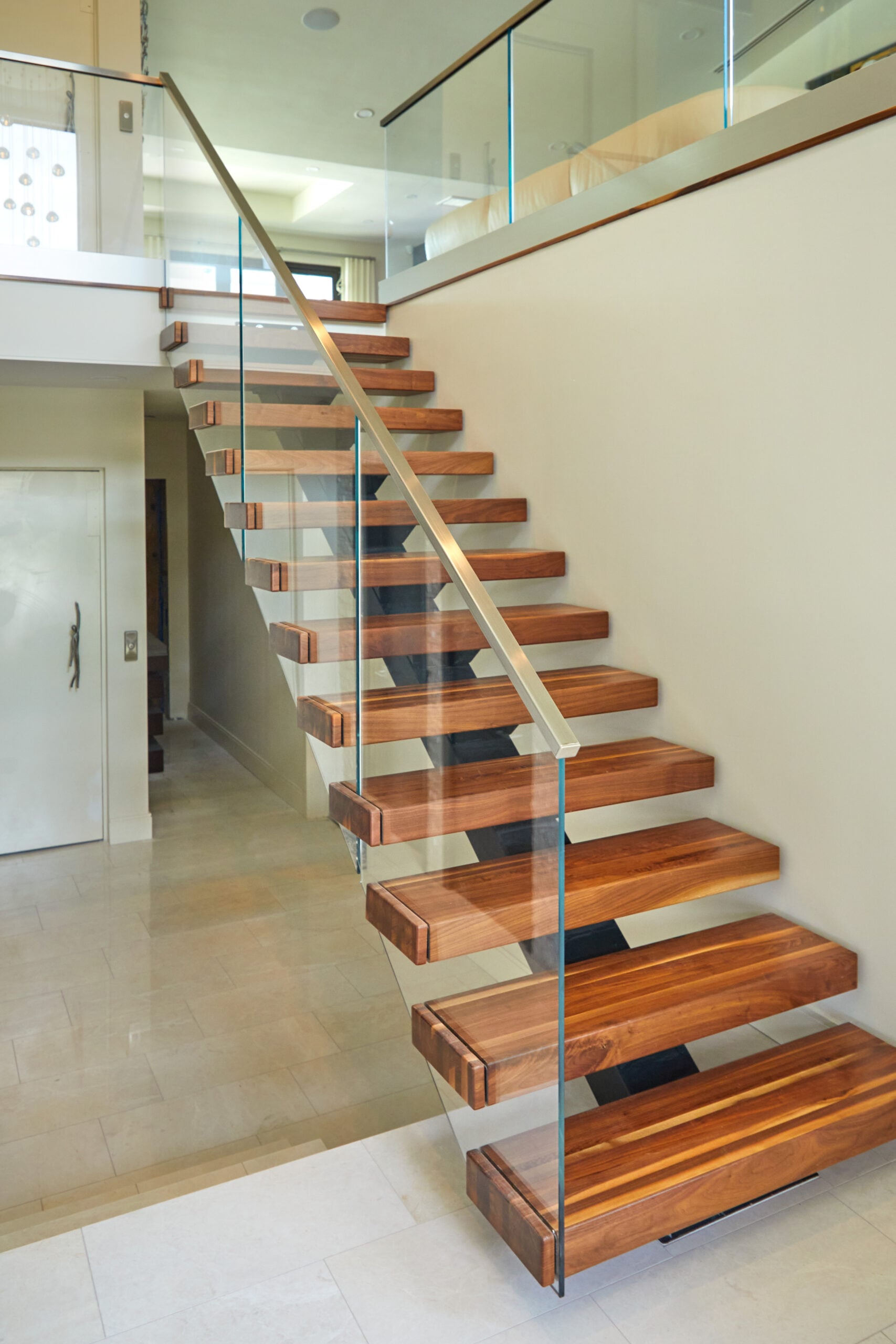
“A polished chrome handrail looks incredible when it’s clean, but much like a chrome faucet in a bathroom, it’s a magnet for fingerprints and water spots.”
To keep it looking its best, it will need to be wiped down frequently with a soft, dry microfiber cloth. Avoid abrasive cleaners or cloths, as they can create tiny scratches in the finish over time, dulling its mirror-like shine. It’s a higher-maintenance finish than brushed nickel or matte black, so be prepared for the upkeep if you love the high-shine look.
23. Rustic Wood Treads with a Black Metal and Cable Railing
This design beautifully marries rustic and industrial styles. The magic is in the texture of the thick, distressed wooden treads. They have a history and character that feels warm and grounded. This rustic quality is then paired with the clean, sharp lines of the black metal and stainless steel cable railing system. The railing provides a modern, almost nautical framework for the organic wood. It works because the two styles aren’t fighting; they’re complementing each other. It’s like putting a modern frame on a timeless painting. Compare the feel of this railing to the glass in Idea #24.
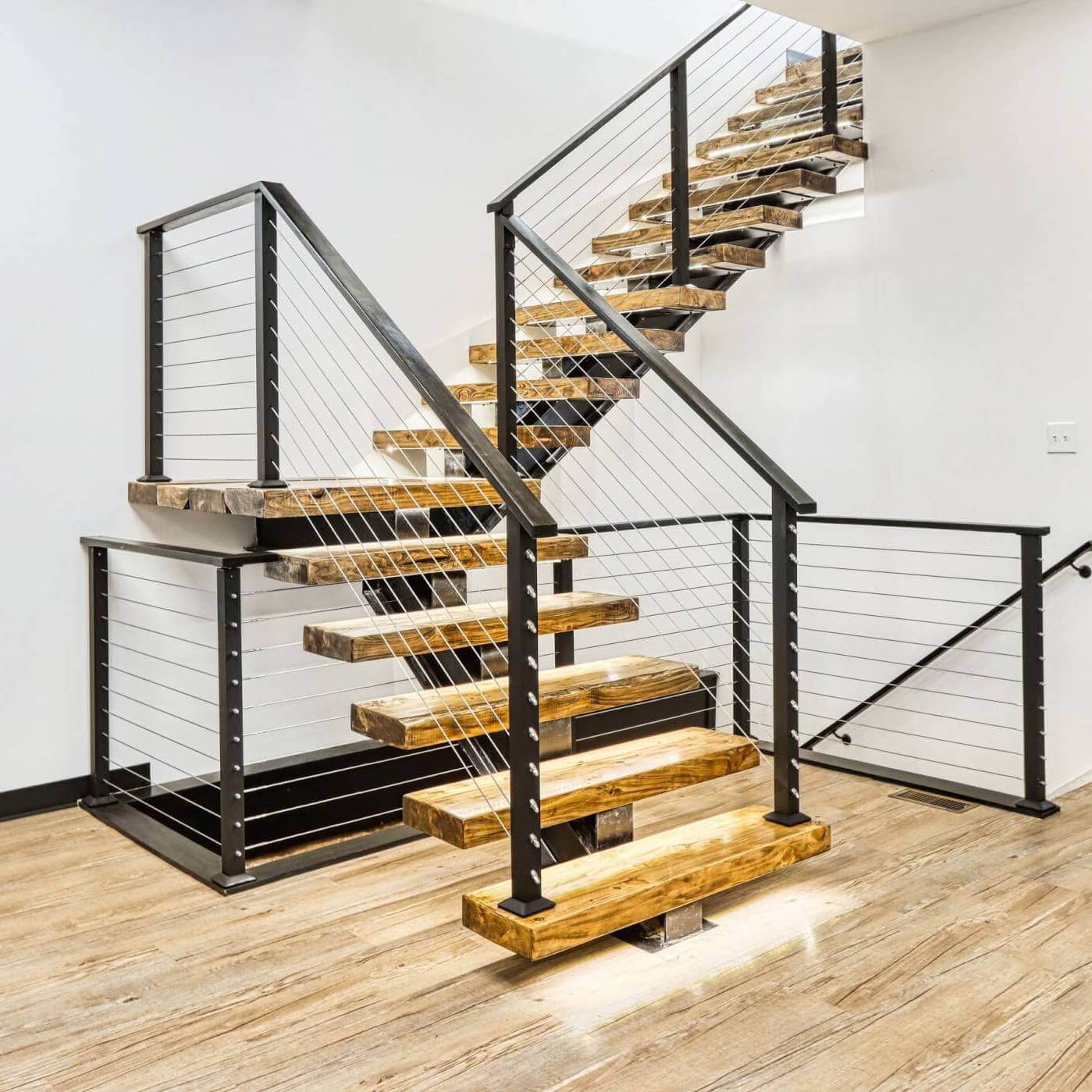
“Achieving this rustic-industrial look can be surprisingly affordable.”
The star of the show is the treads, which you can create yourself from reclaimed lumber or by distressing new, inexpensive pine or fir beams from a lumberyard with chains, hammers, and dark wax. For the railing, cable rail kits are widely available online and at big-box stores. By using pre-made posts and hardware and supplying your own wooden top rail, you can get this entire look for a fraction of the cost of a custom fabrication job—think $3,000-$5,000.
24. Light Wood Treads on a Slanted Black Metal Beam
The formula for this clean, airy aesthetic is all about graphic simplicity: 60% light, natural elements + 40% bold, dark lines. The light wood treads, white wall, and light gray floor create a bright and neutral canvas. The drama comes from the strong diagonal line of the dark metal structural beam and the smaller black circles of the glass standoff fasteners. This creates a powerful graphic contrast that is modern and eye-catching. The glass railing is nearly invisible, ensuring nothing distracts from this simple but effective equation.
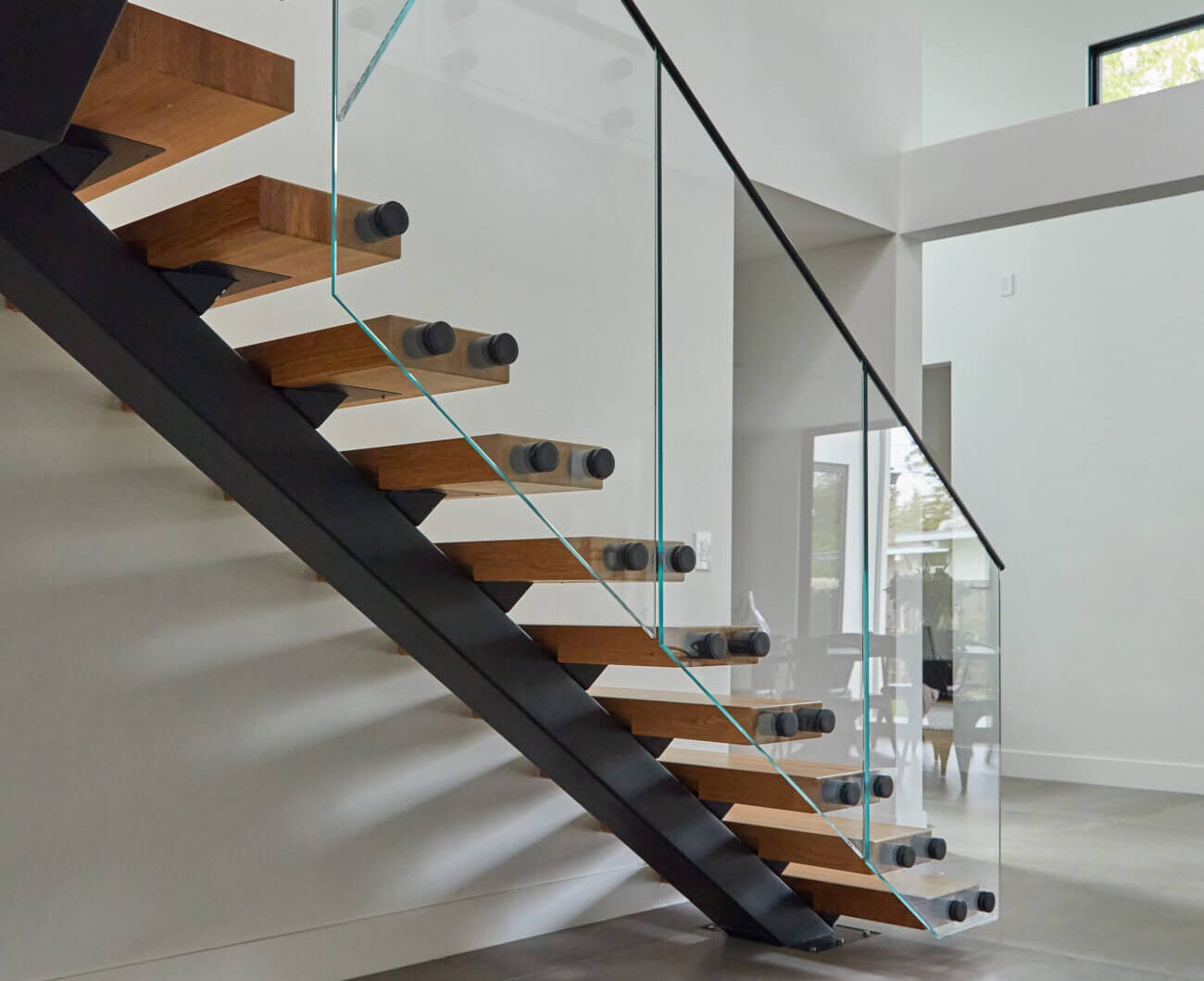
“While this single-stringer style is very open and easy to clean around, pay attention to the connection points between the metal and the wood.”
The visible hardware, especially in a matte black finish, can collect dust. A quick wipe with a microfiber duster is usually sufficient. The most important maintenance point is to periodically check that the bolts connecting the treads to the stringer are tight. With the natural expansion and contraction of wood, these could loosen slightly over time. A quick check once a year is a smart bit of preventative care.
25. Minimalist Dark Staircase with an Arched Feature Window
The arched window is, without a doubt, the hero of this space. In an interior dominated by strong, straight lines—the vertical balusters, the horizontal treads, the dark wood floor—the window introduces a graceful, opposing curve. It softens the entire composition and prevents the minimalist, dark palette from feeling too harsh or severe. It becomes a source of both natural light and architectural beauty, acting as a piece of art that the staircase frames. Without that arch, the mood would be far more industrial and less elegant.
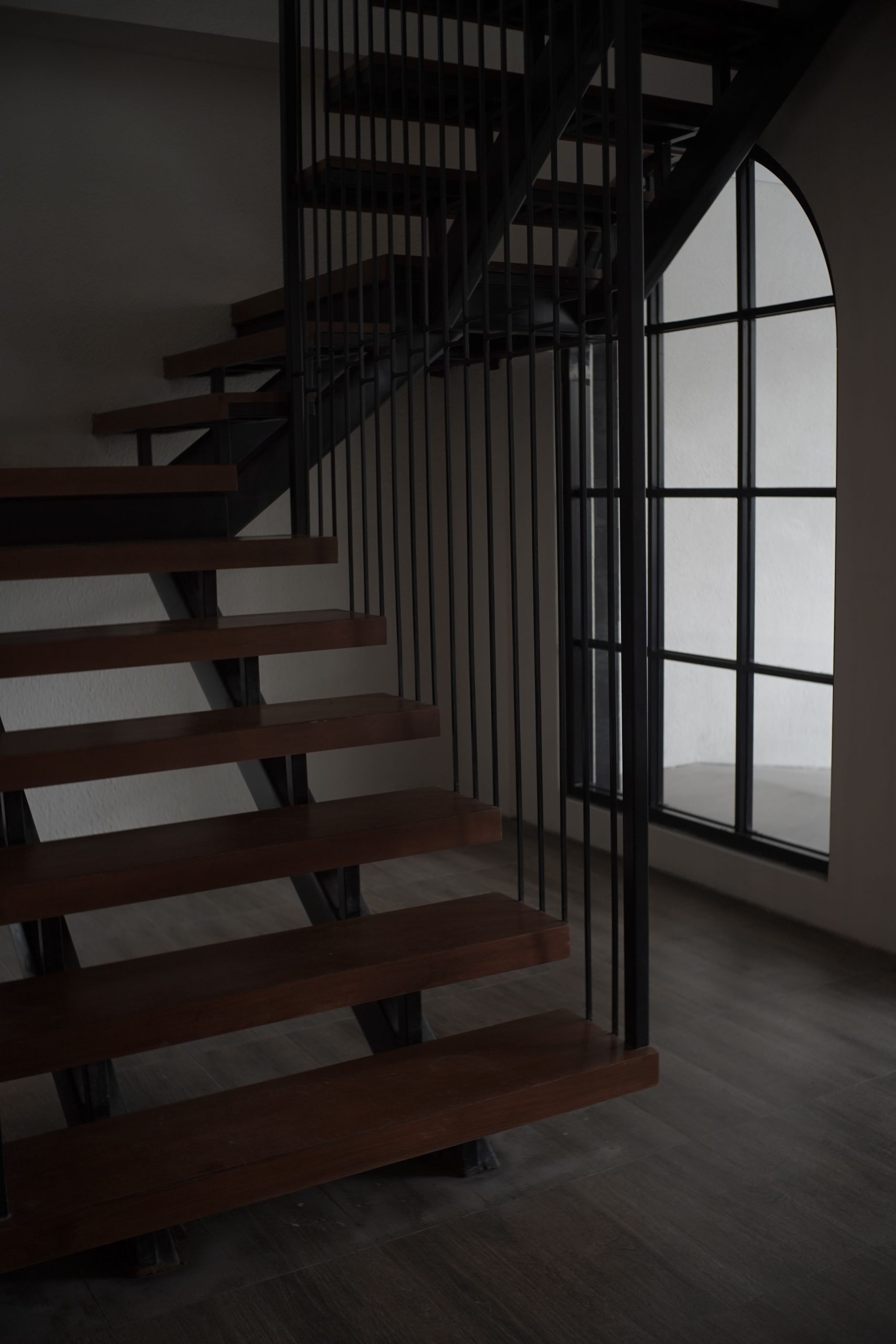
“This design is a stunning example of the power of repetition and rhythm.”
The thin, vertical black metal balusters create a strong visual cadence, like notes on a musical staff. This rhythm is echoed in the straight lines of the dark wood treads. This creates a sense of order and structure. The design then breaks this rhythm with the singular, powerful curve of the arched window. This “pattern break” is what makes the design feel so dynamic and sophisticated. It establishes a rule, and then artfully breaks it.
26. Dark Wood Floating Treads with a Full-Height Glass Railing
This dramatic, gallery-like aesthetic works best in a space with ample width and height. To truly appreciate the floating effect of the dark treads against the white wall, the hallway should be at least 5 feet wide. The glass railing, with its subtle green tint at the base, and matching dark wood handrail, demand clean, uninterrupted lines. This isn’t a style that works well in a cluttered or narrow passageway. It needs negative space to feel like a grand architectural statement rather than a cramped installation. Consider the less imposing profile in Idea #28 for a tighter space.
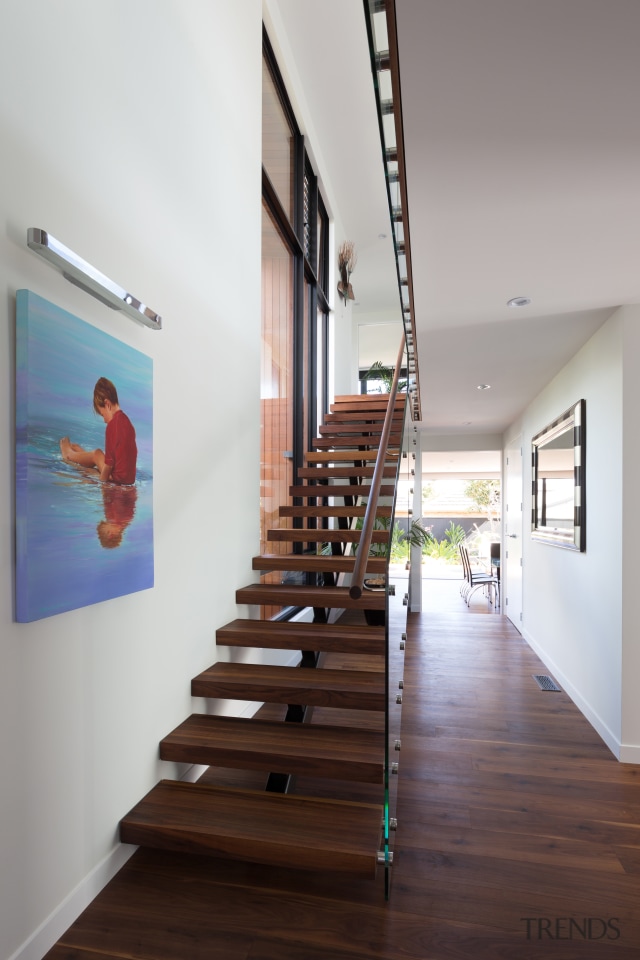
“There’s something to be said about dark wood floors and stairs – they look incredibly chic and sophisticated.”
However, they are relentless in showing every speck of dust, pet hair, and light-colored debris. If you’re a neat freak, they might be perfect for you. If you’re not, you may find yourself constantly reaching for the vacuum or dust mop. The trade-off for that deep, rich color is a more demanding cleaning schedule. A matte or satin finish will be slightly more forgiving than a high-gloss one in hiding minor imperfections.
27. Close-Up of Wood Treads on a Heavy Metal Beam
This design’s power comes from its honest, robust construction. It doesn’t hide its engineering; it celebrates it. The thick wooden treads and the heavy, dark metal beam feel substantial and strong. The visible hardware connecting the two isn’t just functional, it’s a key part of the aesthetic, adding to the industrial, well-built character. The clear glass panel is a perfect choice because it steps back and allows the beautiful, muscular interaction between wood and steel to be the star of the show. It’s a confident look that finds beauty in structure.
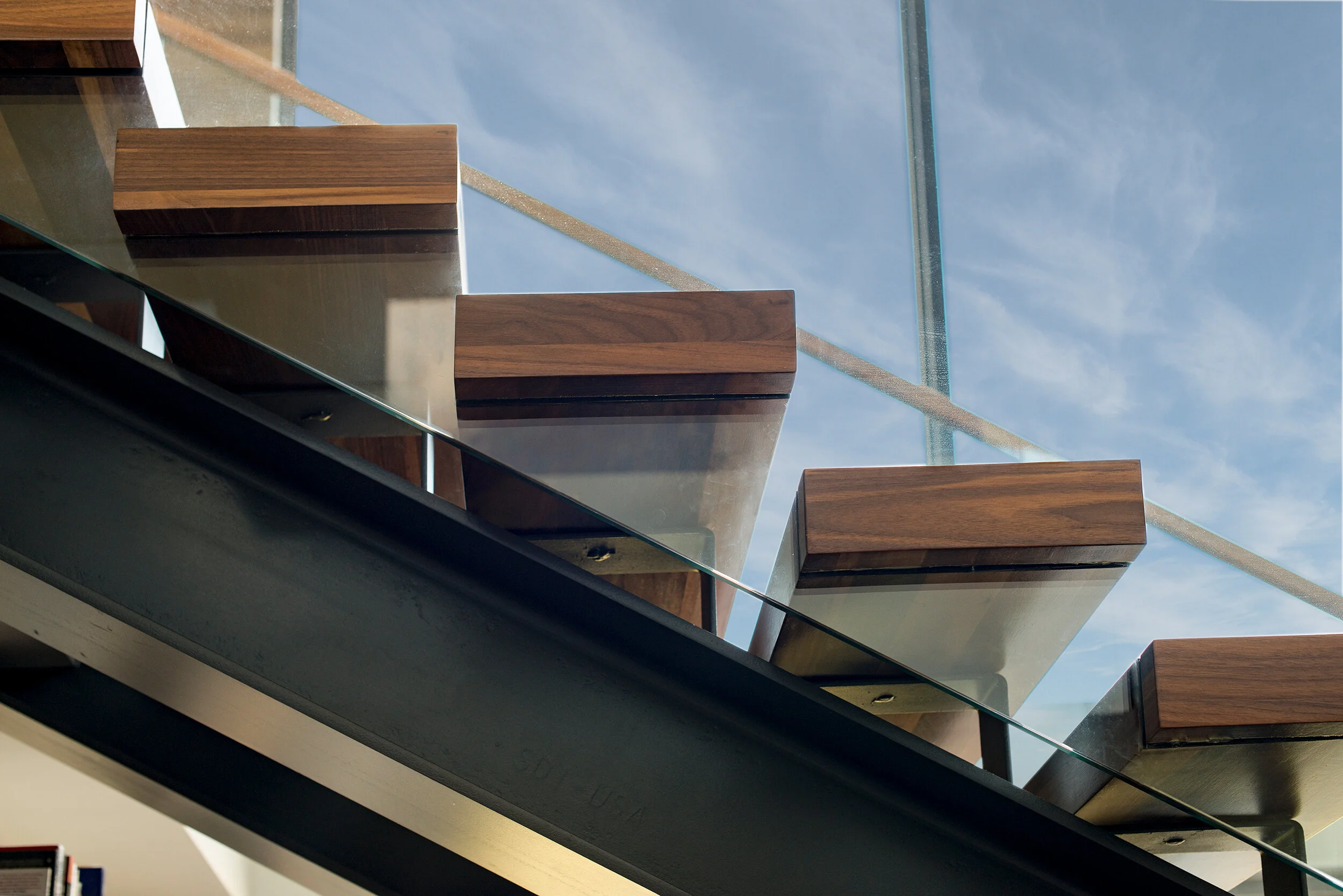
“When choosing treads for a floating staircase, thickness is a critical aesthetic choice.”
For a substantial, industrial look like this, you want a tread that is at least 3 to 4 inches thick. A thinner tread, say 1.5 to 2 inches, would feel visually flimsy and out of proportion with the massive metal beam. This generous thickness gives the wood a sense of permanence and weight, ensuring it can stand up to the powerful scale of its metal support structure. Don’t skimp on the thickness; it’s what makes the design feel authentic.
28. Dark Wood Treads Anchored to a Textured Gray Wall
The single most impactful choice here is the floor-to-ceiling glass panel. While the floating treads are lovely, it’s the seamless sheet of glass that elevates the design. By extending from the floor all the way to the ceiling, it becomes less of a railing and more of an architectural feature, like a transparent wall. This creates a completely unobstructed view, enhances the sense of openness, and gives the entire installation a high-end, gallery-like quality. A shorter panel with a handrail would have been functional, but this is a statement.
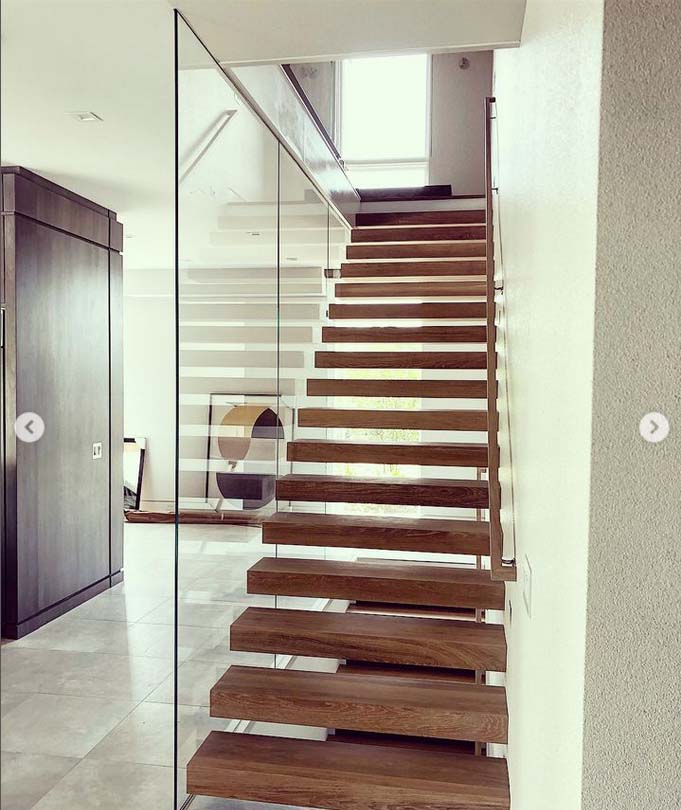
“Main Furniture (Treads & Wall Anchors): $8,000 – $14,000Railing (Floor-to-ceilin”
- Main Furniture (Treads & Wall Anchors): $8,000 – $14,000
- Railing (Floor-to-ceiling tempered glass): $9,000 – $16,000
- Wall Treatment (Textured paint/plaster): $1,000 – $2,500
- Lighting (Recessed ceiling lights): $800 – $1,500
- TOTAL: $18,800 – $34,000
- Budget alternative: $6,500 – $11,000 (Use thick butcher block for treads, a standard glass panel railing from a kit, and create a textured wall finish with drywall compound).
29. Light Wood Stairs with Blue Art and a Spherical Pendant Light
This space feels so elegant because it expertly balances large, simple forms with delicate details. The staircase itself, with its light wood treads and glass panels, is a minimalist structure. This provides a quiet, neutral backdrop for the three main features: the large, dramatic blue abstract artwork, the cascading spherical pendant light, and the subtly textured stone-like accent wall. The design allows these three “hero” elements to shine without competing with each other. It’s a lesson in creating focus and allowing statement pieces to have their moment.
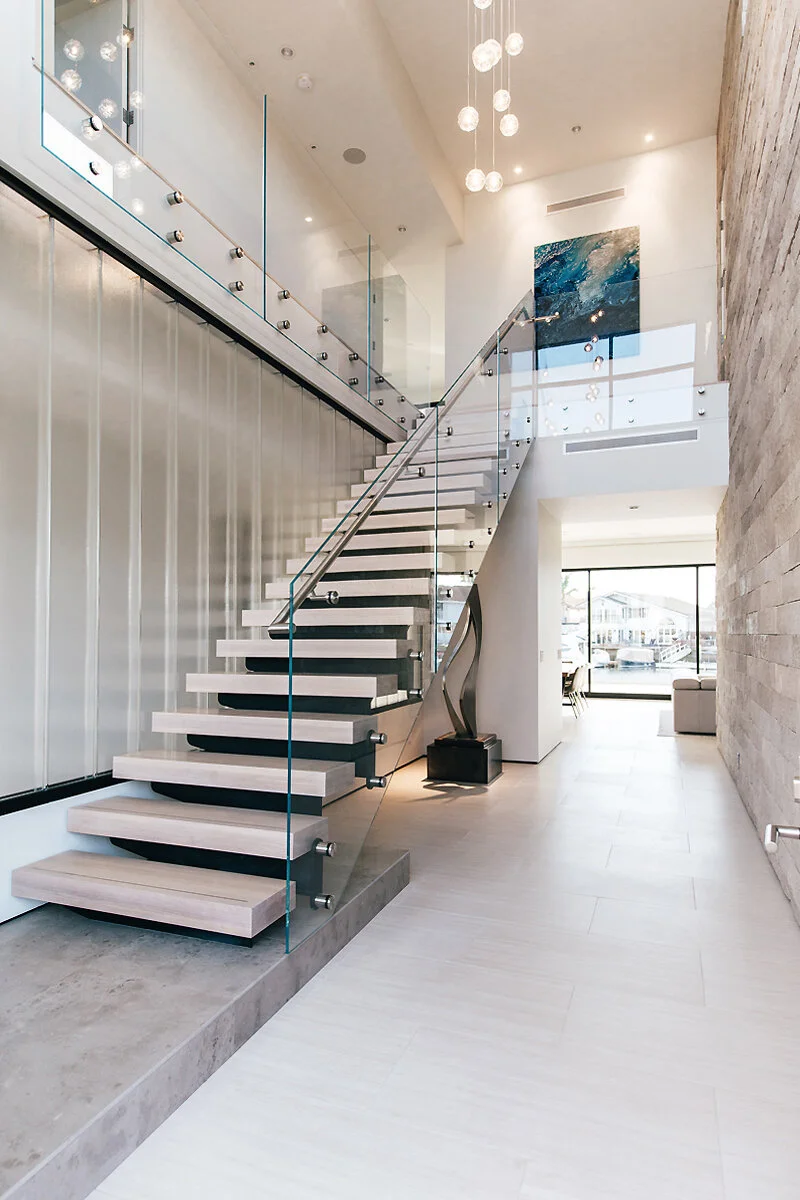
“Creating a gallery-worthy art moment like this is easier than it looks.”
Time: 1 hour. Cost: $300 – $3,000+. Choose your location: A staircase landing or a large wall along the ascent is a perfect spot for a focal point.Find your art: You don’t need an original masterpiece. Look for oversized abstract prints on sites like Artfully Walls or Society6. A 40″ x 55″ canvas can make a huge impact.Measure for placement: The center of the artwork should be at eye level from the most common viewing point (e.g., the landing). A good rule is to center it around 60 inches from the floor.Hang securely: For a large, heavy piece, always use two hooks or a French cleat system secured into studs for stability.
30. Minimalist Wood and Glass Staircase with Under-Step Lighting
Here’s a subtle but high-impact lighting trick: illuminating only the first step. By placing a warm LED strip under the bottom tread, the staircase appears to have a gentle, welcoming glow that invites you to ascend. It’s more understated and mysterious than lighting every single tread, as seen in Idea #11. This technique provides enough light for safety at the base of the stairs while creating a sophisticated ambient effect. It’s a perfect example of how targeted, minimal lighting can have a major design impact. It feels custom and considered.
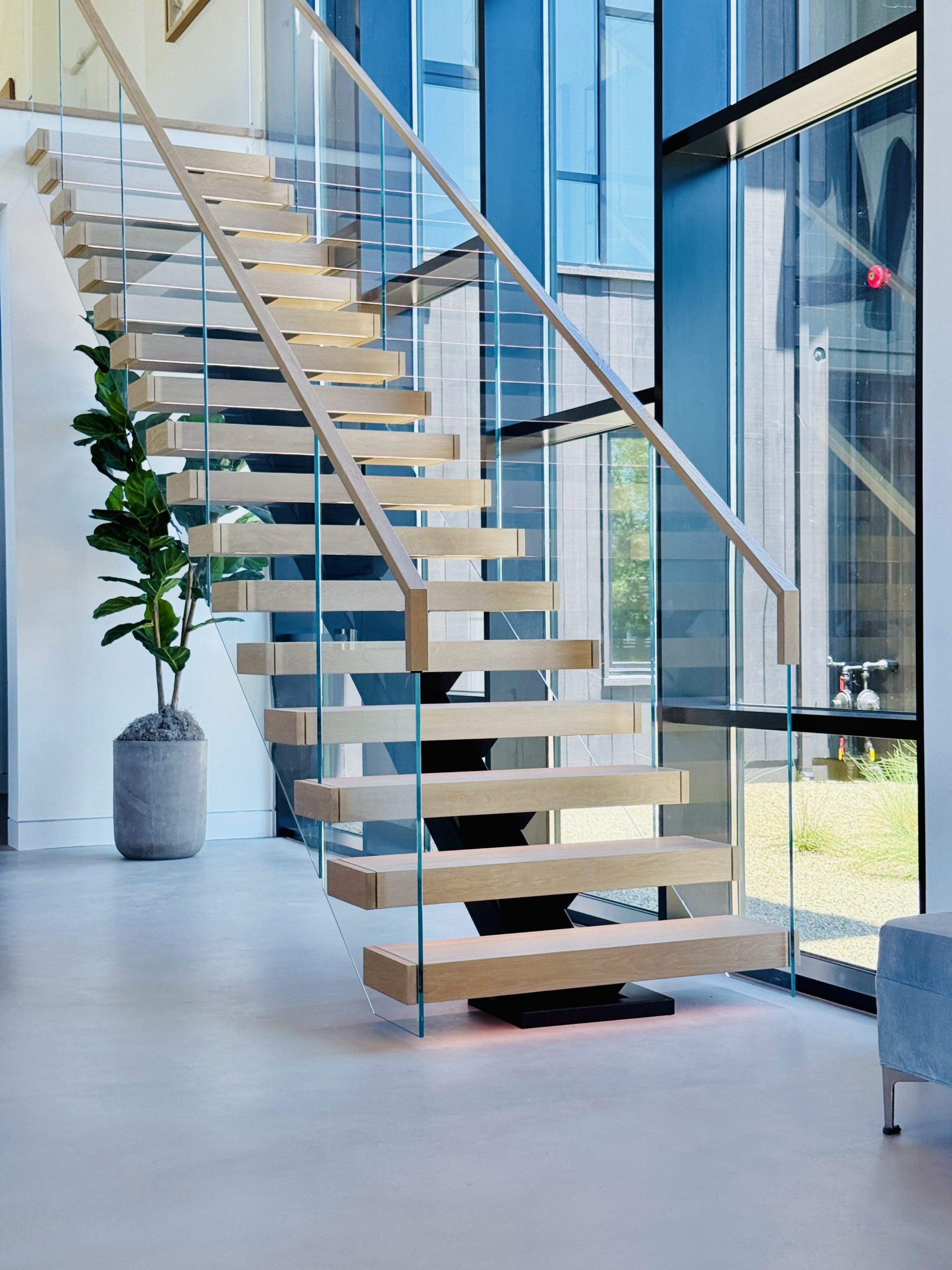
“Assess your view: This design is all about clean lines and openness.”
Does the staircase overlook a large window or an open-plan area you want to keep visible? If so, the clear glass is perfect.Check your flooring transitions: How will the staircase material meet the floor? Note how the black base of the stair structure here creates a clean break from the soft gray floor. Plan this detail carefully.Confirm handrail code: The slim wood handrail on top of the glass is elegant, but check your local building codes. Some areas have specific requirements for the handrail’s profile and grip-ability that you need to adhere to.
31. Light Oak Treads with a Vertical Metal Rod Railing
The vertical metal rods are the absolute star of this design. By running from floor to ceiling, they create a strong, graphic rhythm that is both a safety barrier and a sculptural screen. Unlike a glass panel, this rod screen offers a sense of partial transparency that changes as you move around it—sometimes appearing solid, sometimes open. This dynamic quality adds a layer of architectural interest that is modern and highly sophisticated. The rods feel more integrated into the structure of the house than a simple railing attached to the side.
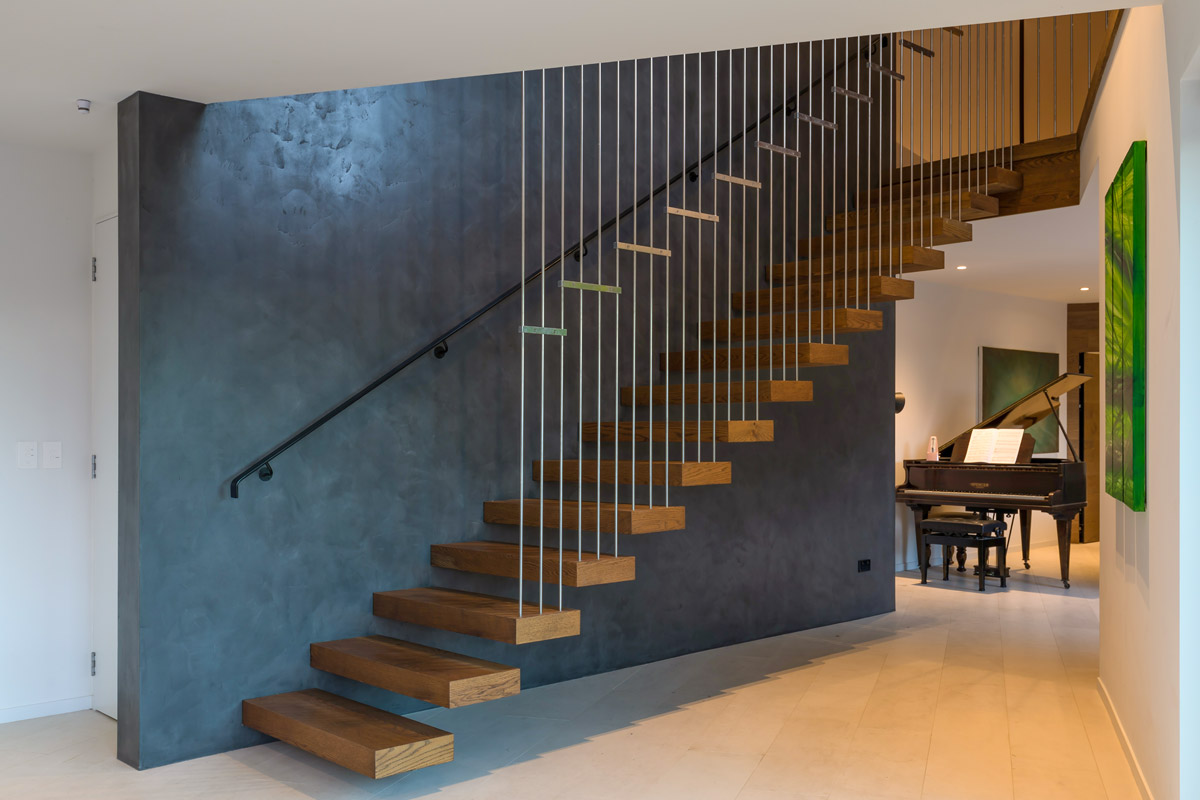
“The success of this staircase comes down to a play on direction and texture.”
The cantilevered wooden treads create strong, horizontal lines. These are directly contrasted by the thin, vertical lines of the metal rod railing. This grid-like opposition is visually stimulating. Then, you have the textural contrast: the smooth, warm oak of the treads against the cool, dark grey texture of the feature wall and the sleek metal of the rods. This combination of opposing lines and varied materials is what gives the design its depth and character.
32. Black Floating Treads Against a Rustic Stone Wall
This bold look is a study in textural fusion. The formula is roughly: 50% rustic stone + 30% sleek black + 20% transparent glass. The light-colored rustic stone wall provides a heavy, textural, and historically-rooted anchor for the entire space. This is dramatically contrasted by the sharp, modern, and completely smooth black floating treads. The clear glass railings act as a mediator, allowing both the stone and the black treads to be seen without interruption. The exposed wooden beam adds another layer of rustic warmth, tying it all together.
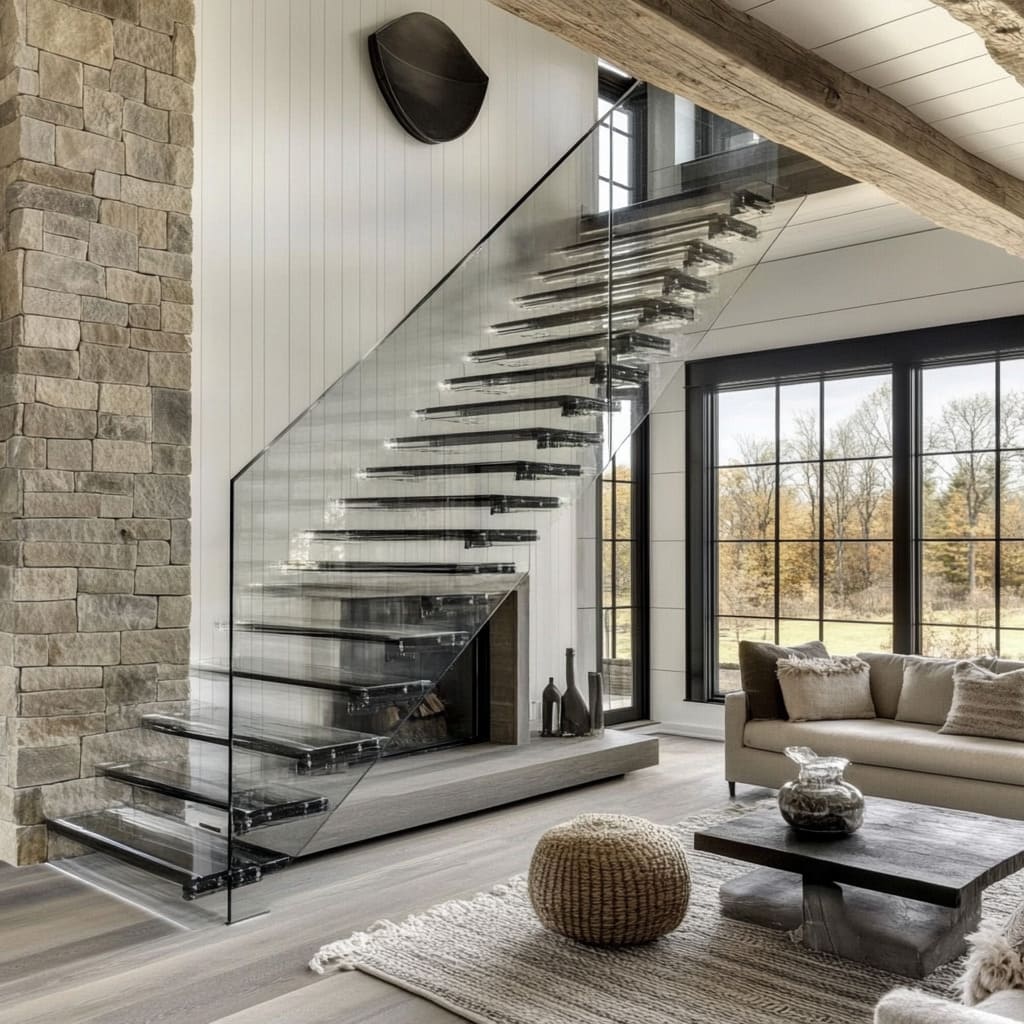
“This design perfectly captures the 2026 trend of “Modern Lodge” or “Refined Rustic.” Homeowners are moving away from the all-white farmhouse look and embracing moodier palettes and richer textures.”
This style combines the cozy, natural elements of a rustic cabin—like the stone wall and exposed beam—with the clean lines and slick finishes of modern architecture. It feels both grounded and sophisticated, creating a space that is dramatic, comfortable, and deeply connected to natural materials.
Ready to Take the Next Step?
A floating staircase is more than just a way to get from one floor to another; it’s a powerful architectural statement that can define your home. Whether you’re drawn to the warmth of rustic wood or the sleekness of modern steel, we hope these 32 ideas have inspired you to think about your own home’s potential. Now you’re ready to start planning your own dramatic ascent. Don’t forget to save your favorites to Pinterest!