Spanish style homes have a way of feeling both timeless and lived-in, with their textured plaster, warm terracotta, and soft arches. Whether you are drawn to rustic exposed beams or a more modern take with curved sofas, this look is about embracing natural materials and a relaxed, sun-baked palette.
In this roundup, you will find 27 distinct spaces that show the range of Spanish-inspired design, from grand entryways with carved wooden doors to cozy living rooms with plaster fireplaces. Each photo illustrates a different way to bring that signature Mediterranean warmth into your own home.
Rustic Spanish Living Rooms with Exposed Wood Beams and Plaster Walls
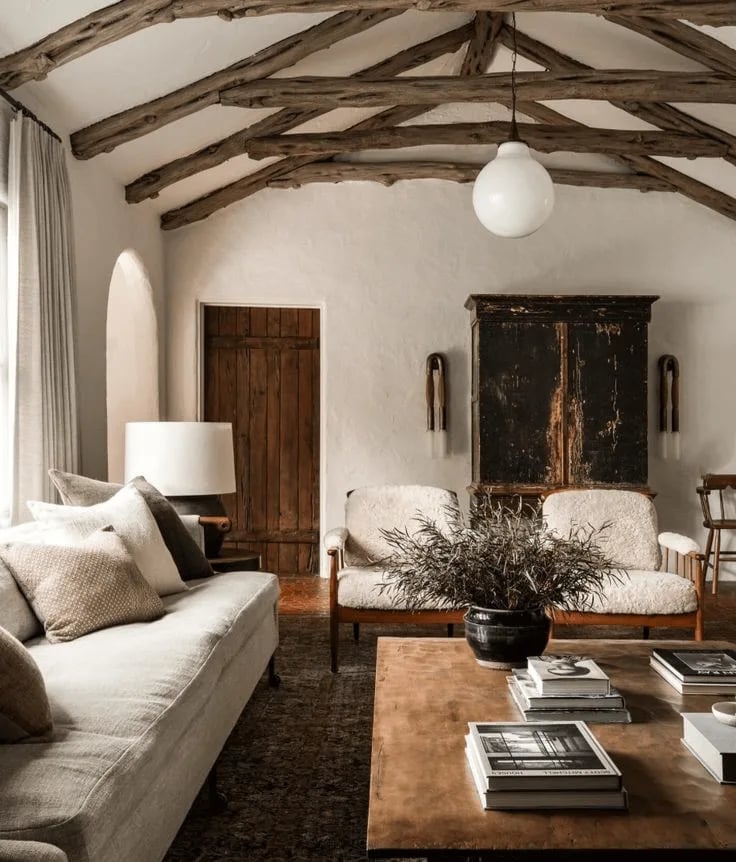
The ceiling does the work here. Rough wood beams span the room, their warm tones standing out against neutral plaster walls. A seating area gathers around the fireplace, with a sofa and armchairs in linen that keep the look soft rather than heavy. A rustic cabinet and a wooden door reinforce the Spanish feel without trying to be anything else. The beams give the room its character, and the space stays out of their way.
Modern Mediterranean Living Rooms with Curved Sofas and Arched Windows
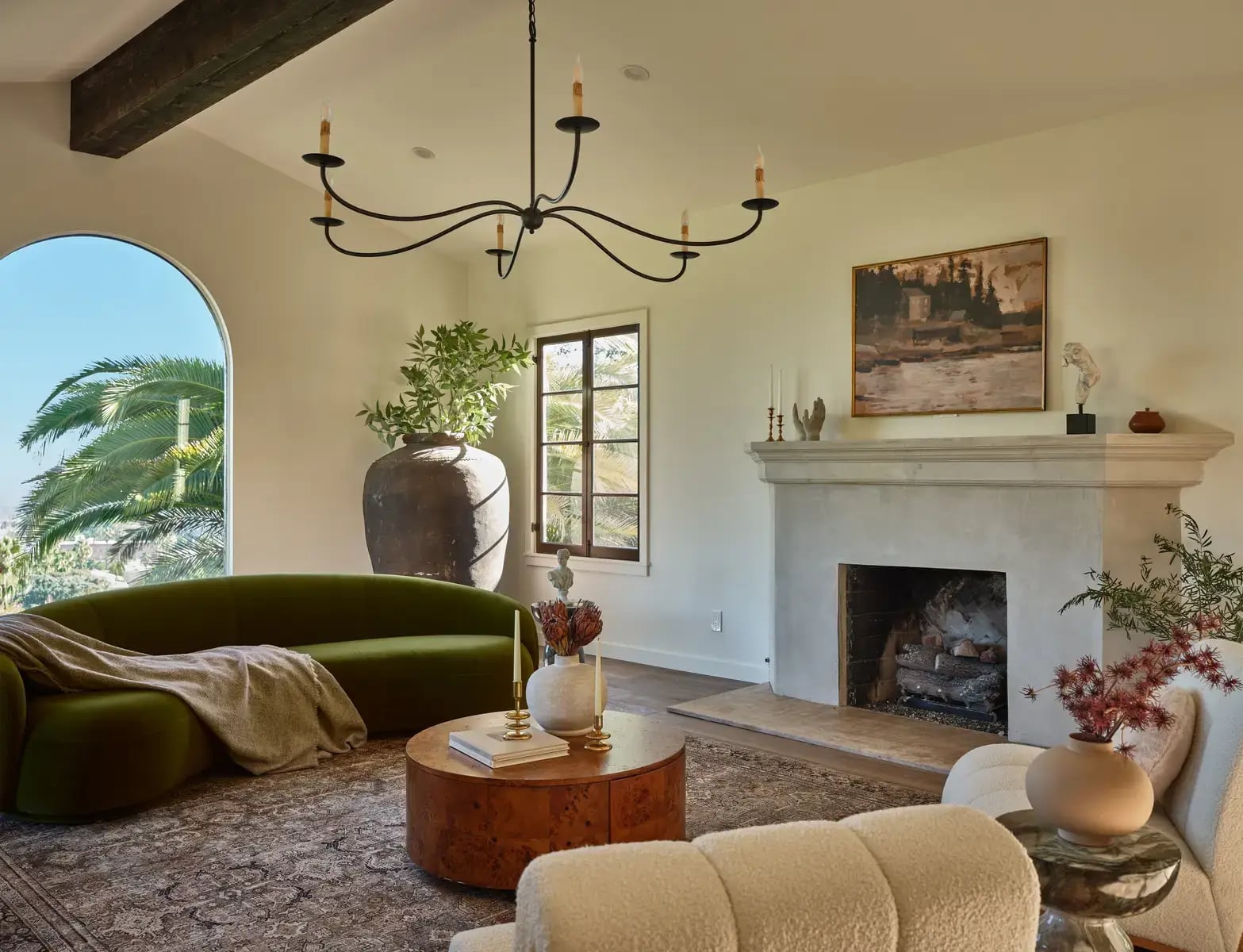
This is a living room that knows its focal point is a curved green sofa. The shape softens the lines of the open plan, while earthy tones in cream and brown keep the palette grounded. A stone fireplace and a round coffee table anchor the conversation area. Arched windows let in natural daylight, and ambient lighting takes over as the day fades. What defines this modern Mediterranean look is the balance between the bold sofa and everything else that stays simple. The ratio is one statement piece to a room of calm textures.
Grand Spanish Mediterranean Entryways with Stucco Walls and Black
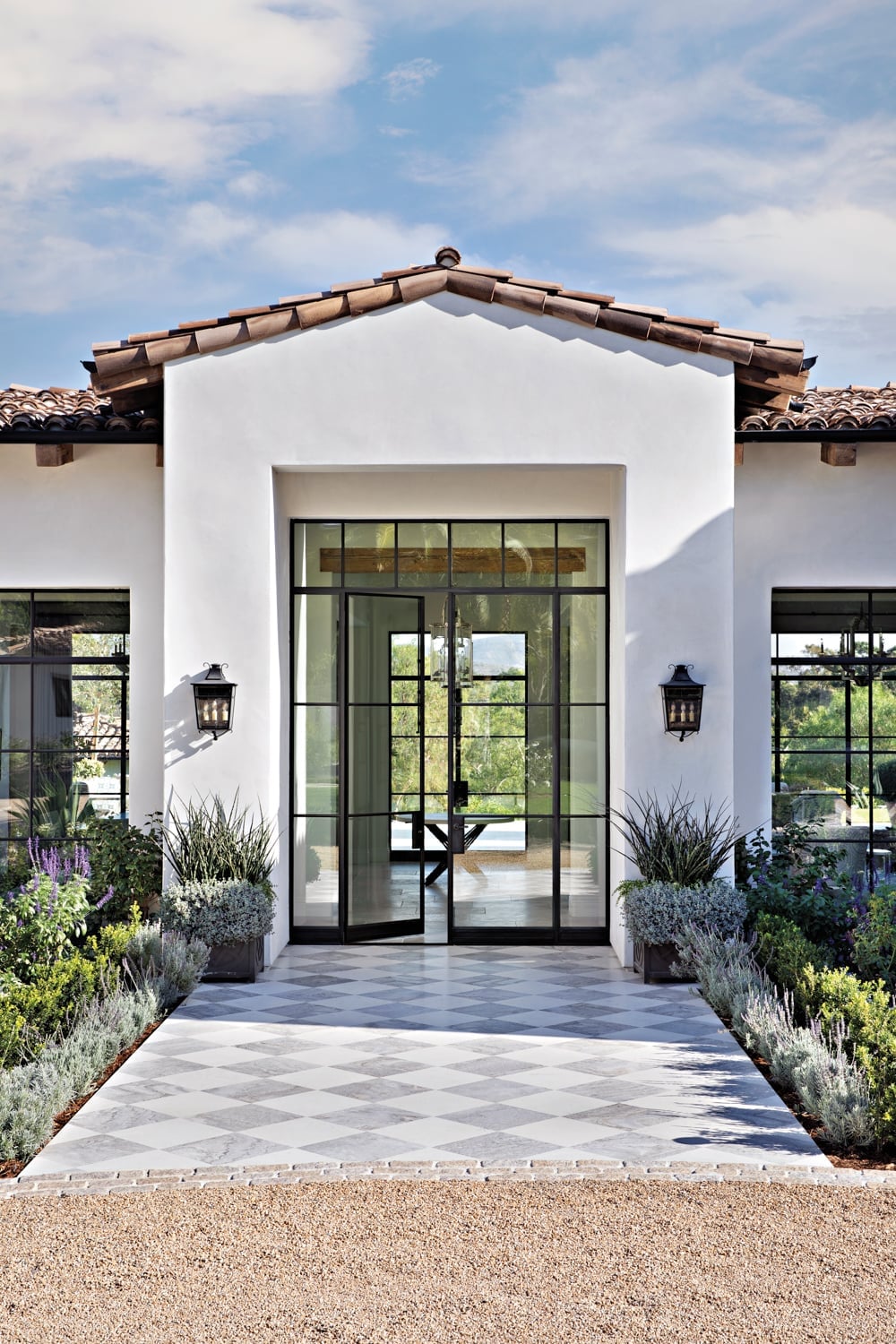
A grand entryway feels open rather than imposing when materials guide the eye. White stucco walls and a gray stone pathway lead toward large glass double doors. Black lanterns on either side add contrast. The palette stays tight: white, black, green from the planters, and gray from the stone. A tiled pathway breaks up the ground plane and adds pattern. The glass doors let you see through the space, keeping the entryway from feeling closed off. The stucco provides texture, the black provides edge, and the stone provides the path.
Ornate Spanish Mediterranean Entryways with Carved Wooden Doors
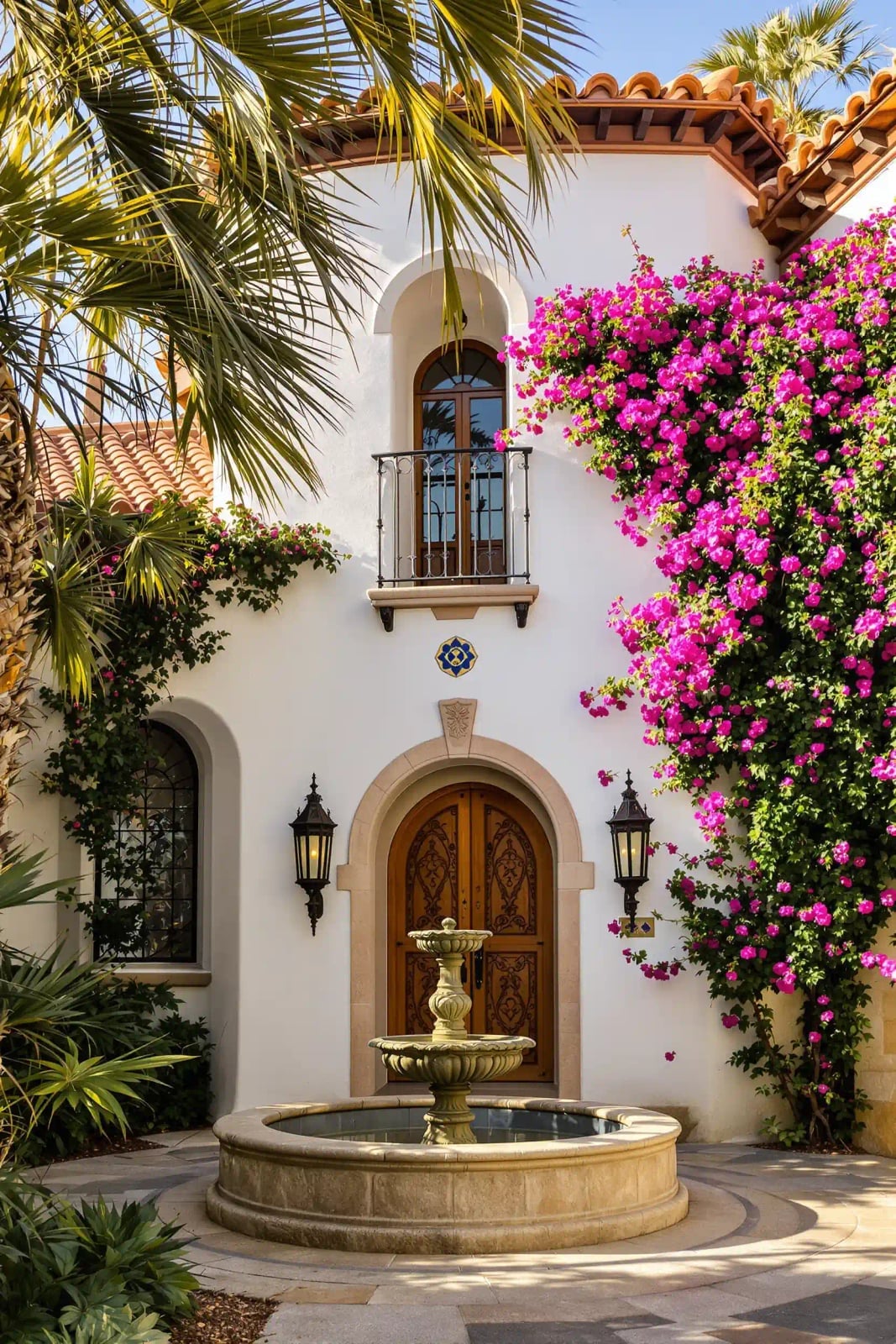
A carved wooden door this detailed needs space to be seen. A central fountain sits in front of it, with a wrought iron balcony above and decorative lanterns on either side. The white stucco walls and pink accents keep the facade from reading as heavy. The wood is the hero element here, and the layout puts it front and center. A fountain in the foreground adds the sound of water, which is a practical way to make an entryway feel cooler in warm months.
Spanish Style Living Rooms Featuring Textured Plaster Fireplaces
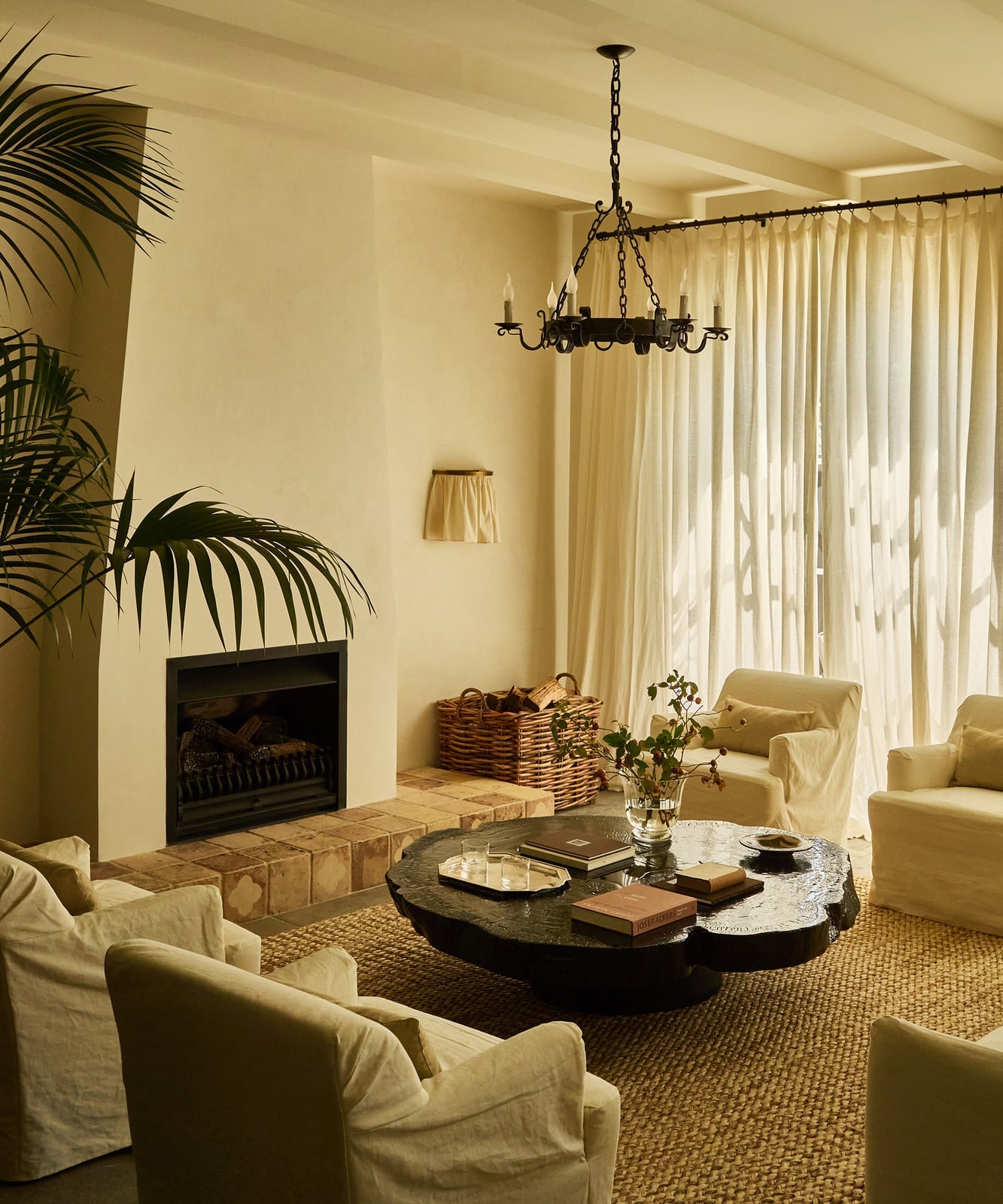
A textured plaster fireplace gives a room a focal point without needing anything flashy around it. Cream armchairs and a large coffee table create a seating area that faces the fireplace directly. Natural light comes through sheer curtains, and a chandelier adds ambient light for evenings. The palette stays in the beige and brown range, with green from a plant to keep it alive. The plaster texture breaks up what could be a flat wall, and the jute rug underfoot adds another layer of natural material. The fireplace anchors the room, and the seating follows its lead.
Spanish Revival Dining Rooms with Terracotta Tile Floors and Wood
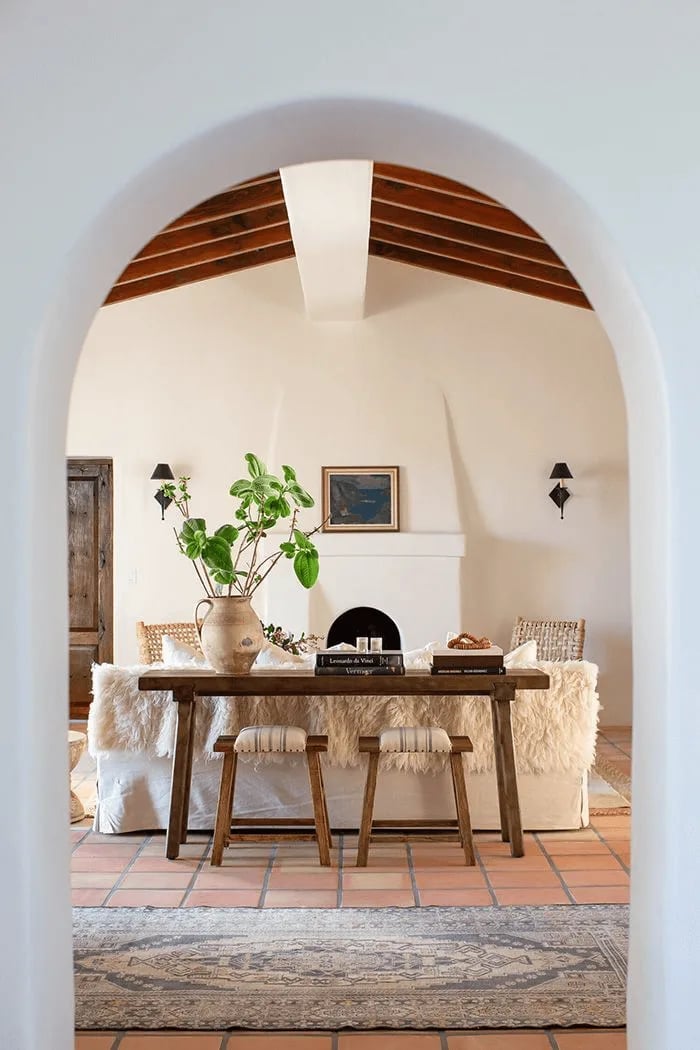
Where a farmhouse table might feel too casual and a formal mahogany set too stiff, a Spanish revival dining room splits the difference with texture. The terracotta tile floor sets a warm base, and the wood ceiling beams draw the eye up without making the room feel heavy. White stucco walls keep the palette clean, while black wrought iron sconces and a chandelier add a bit of contrast. Slipcovered chairs around a centered wooden table keep the look inviting rather than precious. The style works because the ratio of rough to smooth is balanced. The plaster is smooth, the tile is matte, the iron is dark and thin. What breaks it is adding too many patterns or a glossy surface that competes with the natural materials.
Mediterranean Kitchens with Vaulted Brick Ceilings and Large Islands
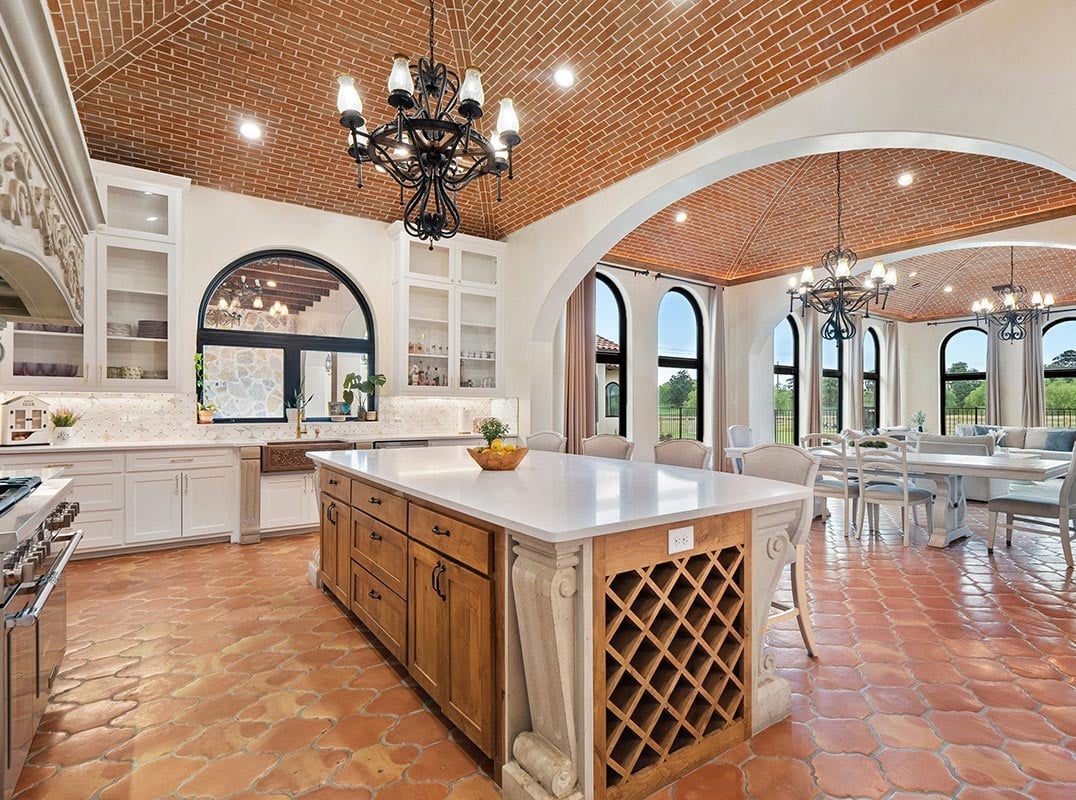
The vaulted brick ceiling is the kind of feature that usually stays in a living room, but here it extends right into the kitchen. A large island with a wine rack anchors the space, and white cabinetry keeps the look from feeling too heavy. Marble counters and a range cooker sit under chandeliers and recessed lights, with natural light from windows filling the room. For a renter, the move is to echo the brick tones with a terracotta runner or ceramic canisters on the island. You get the warmth without the structural change.
Spanish Revival Exteriors with White Stucco and Terracotta Roof Tiles
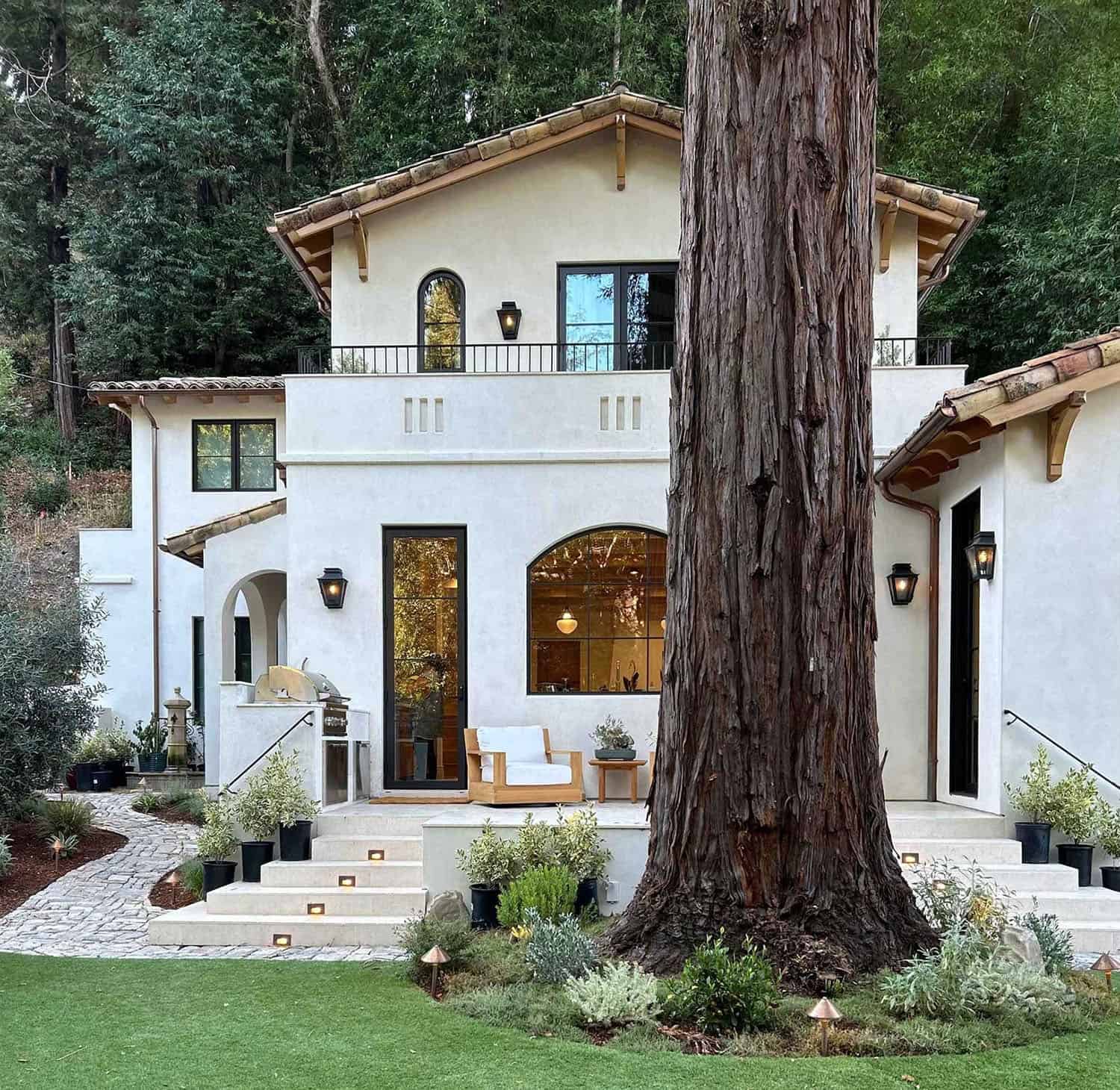
The white stucco and terracotta roof tiles are the expected markers of a Spanish revival exterior, but what makes this one work is the scale of the old tree in front of it. The dark trim around the arched windows adds definition without fighting the facade, and the multi-level house has enough mass to hold its own against the tree’s spread. The palette stays clean, white, black, terracotta, green, so the eye moves easily from the tile roof down to the stone details. A smaller house with the same finishes would feel top-heavy; here the proportions are generous enough that every element has room to breathe.
Spanish Colonial Homes with Towers and Arched Windows
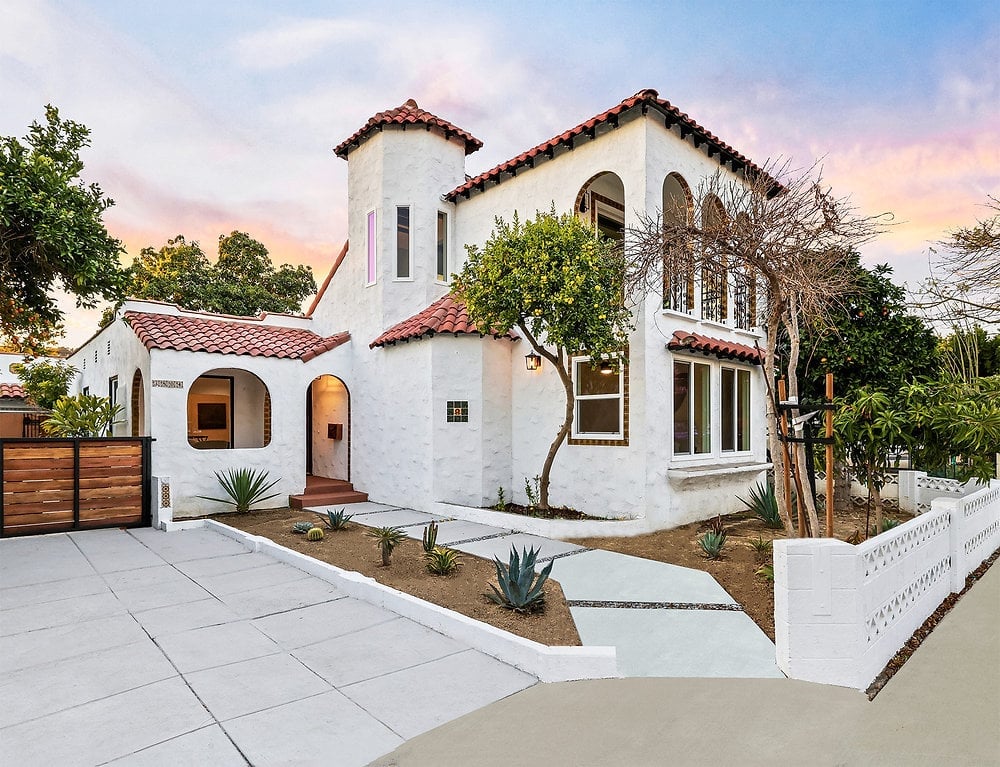
Can a house with a tower still feel grounded rather than grandiose? In this Spanish colonial exterior, the answer is yes. The tower and arched windows break up the mass of the white stucco facade, and the tiled roof keeps the silhouette low and wide. A driveway and walkway lead through garden beds, so the house sits in the landscape rather than on top of it. The sunset sky warms the earth tones of the tile and wood, making the whole composition feel settled. The tower works because it is not the only vertical element. The arched windows echo the shape and keep the design from reading as top-heavy.
Spanish Modern Living Rooms with Bouclé Armchairs and Plaster
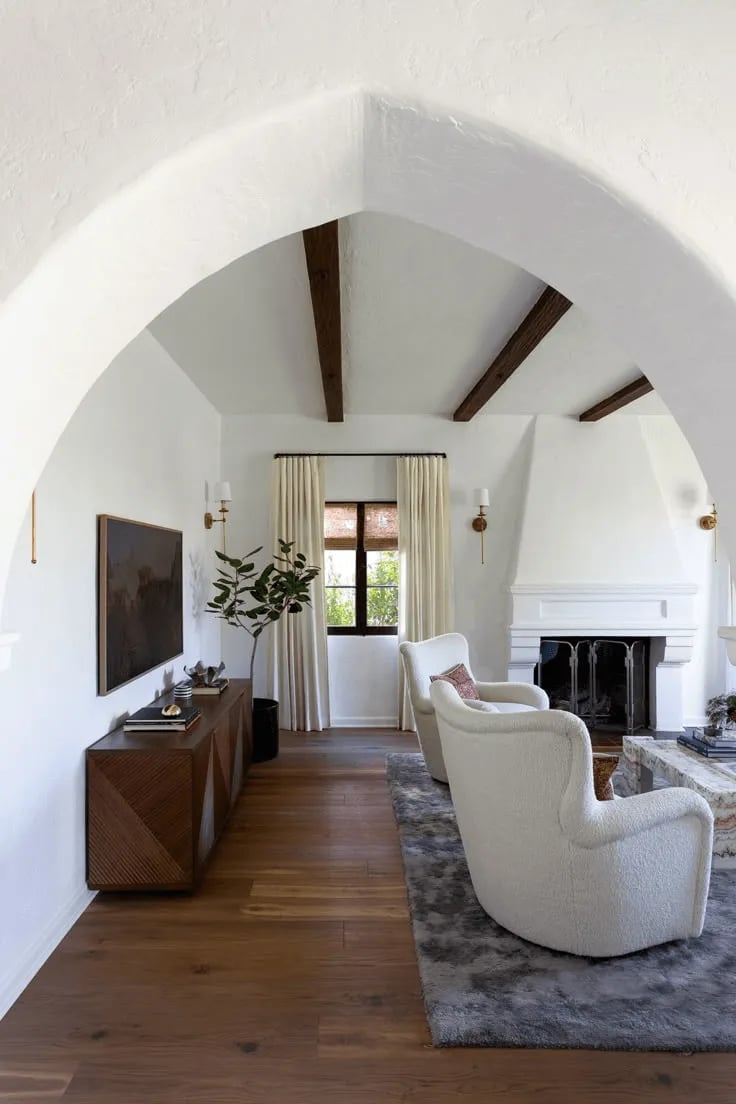
A marble fireplace is the usual anchor in a Spanish modern living room, but here the bouclé armchairs are the surprise. The textured fabric softens the plaster walls and the marble surround, and the wooden console adds a warm note without competing. Wall sconces provide a focused light that suits the seating area, and natural light from the windows keeps the white and cream palette from feeling flat. The bouclé works because it is the only heavily textured textile in the room, if every surface were nubby, the contrast would disappear.
Vibrant Pink Spanish Style Houses in Terraced Gardens
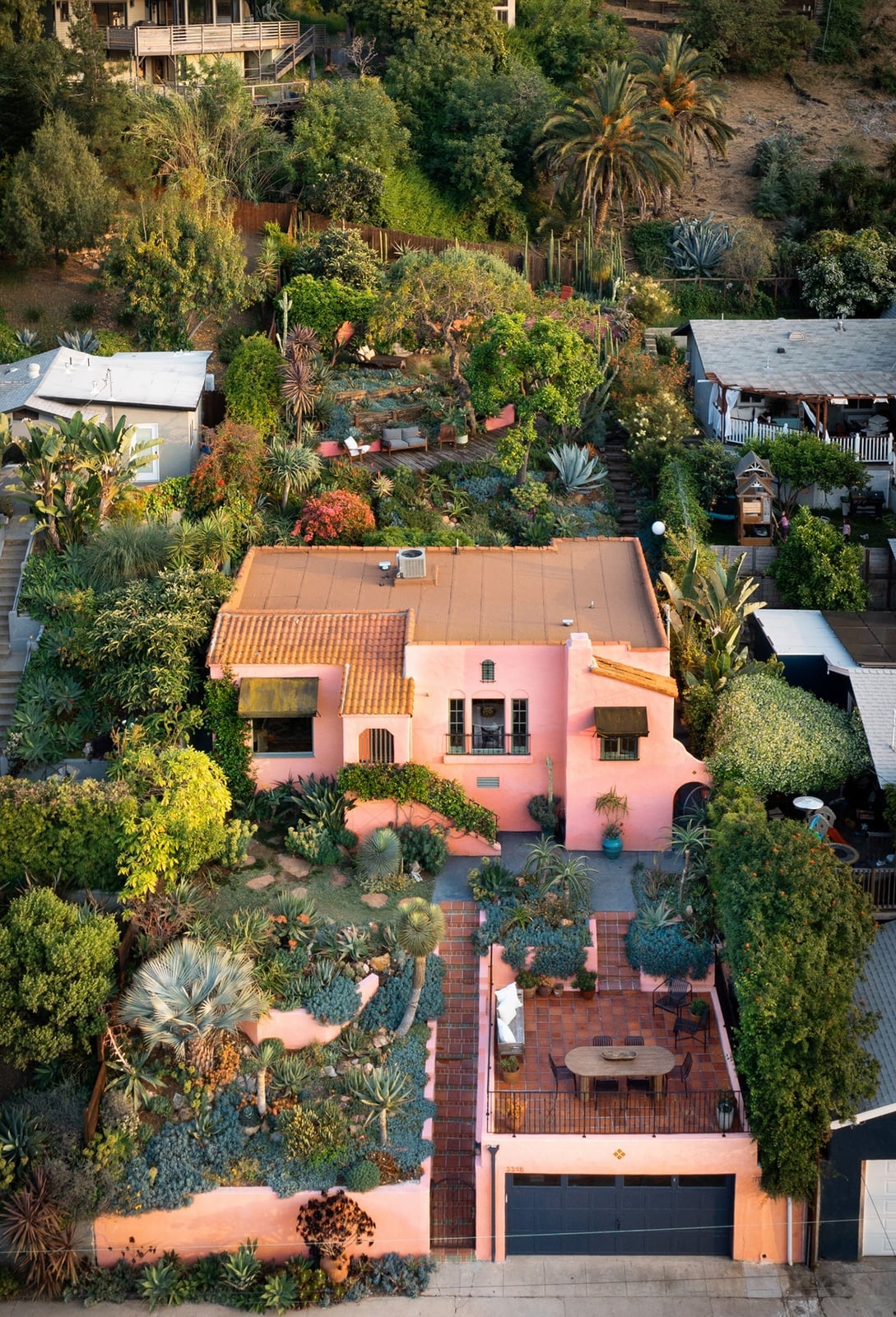
A pink facade needs the landscape to balance it. This hillside house, painted a warm pink, sits tucked into a lush garden with terracotta roof tiles and a stone patio in golden hour light. Soft stucco contrasts with deep green foliage, and the terracotta and wood tones anchor the pink. The look depends on the ratio of color to neutral: the pink dominates the facade while the garden and hardscape take up more visual area, so the house never feels like a single note. The break comes if the planting gets too sparse or the pink shifts too cool, losing that sunbaked warmth.
Spanish Colonial Hallways with Exposed Beams and Terracotta Floors
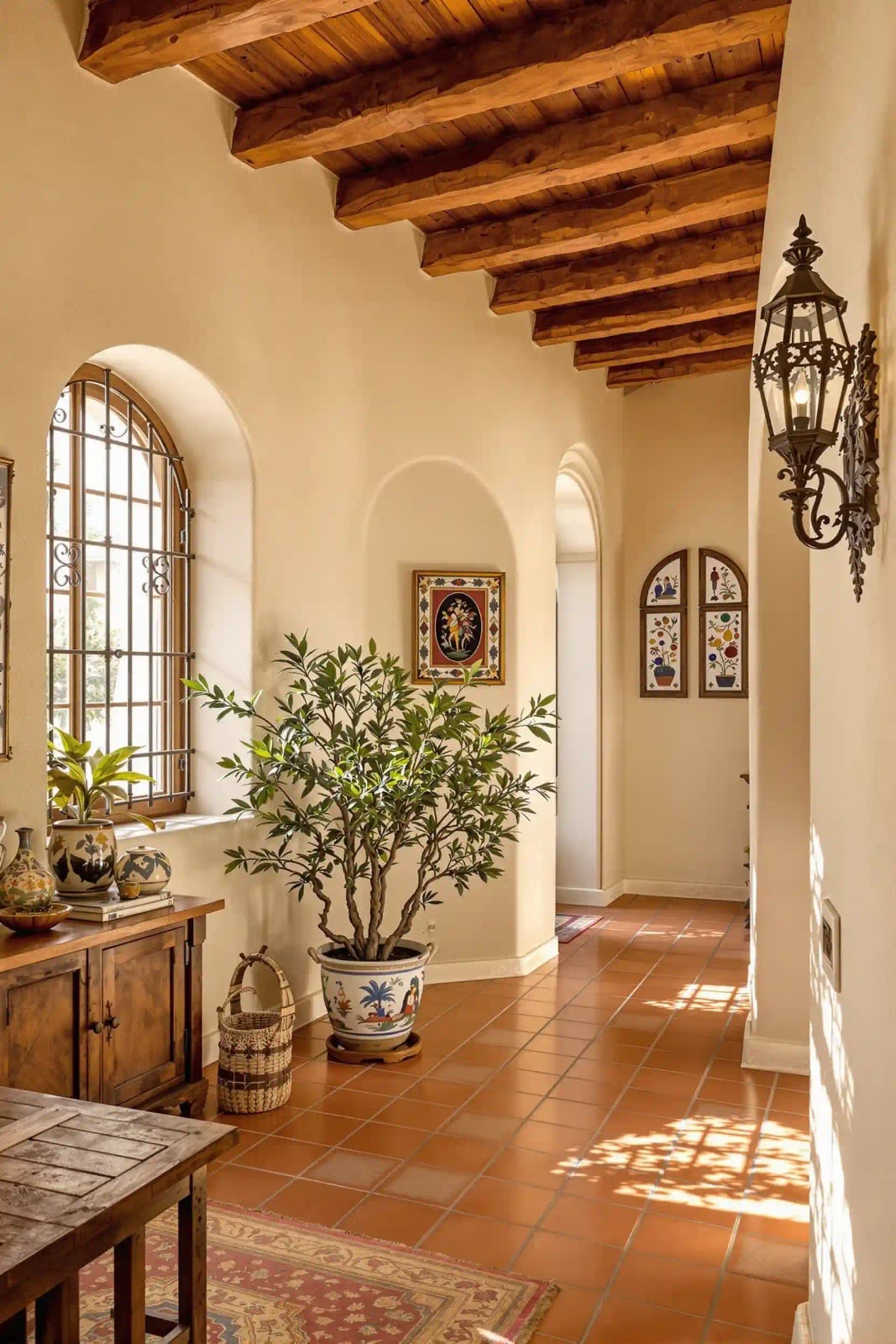
A white plaster hallway with a terracotta floor reads warmer than one with stone tile, and that difference sets the whole mood. This long corridor uses exposed wooden ceiling beams and arched doorways to pull the eye forward, with wrought iron sconces adding light. The materials do the work: the rough stucco walls keep the space from feeling cold against the smooth clay floor, while the wood beams bring in a third texture that ties the ceiling to the ground. Wall sconces placed between the arches keep the hallway evenly lit, which matters more here than a single fixture because the length of the room would leave shadows otherwise. A runner could soften the footfall, but the bare terracotta already gives the space its rhythm.
Spanish Style Entryways Featuring Teal Doors and Terracotta Paths
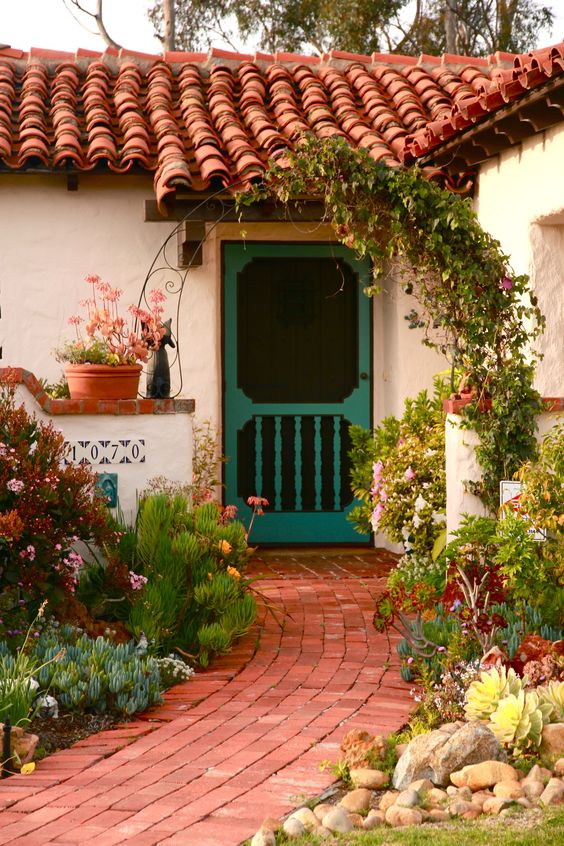
The teal door here sits against white stucco and a terracotta path, and that combination works because the blue reads as a cool pause against all the warm earth tones. Potted plants on either side soften the transition from path to entry, and the screen door keeps the teal visible even when closed. The palette defines the style: one saturated accent, a neutral backdrop, and the natural clay underfoot.
Spanish Mediterranean Villas at Dusk with Arched Windows and Gardens
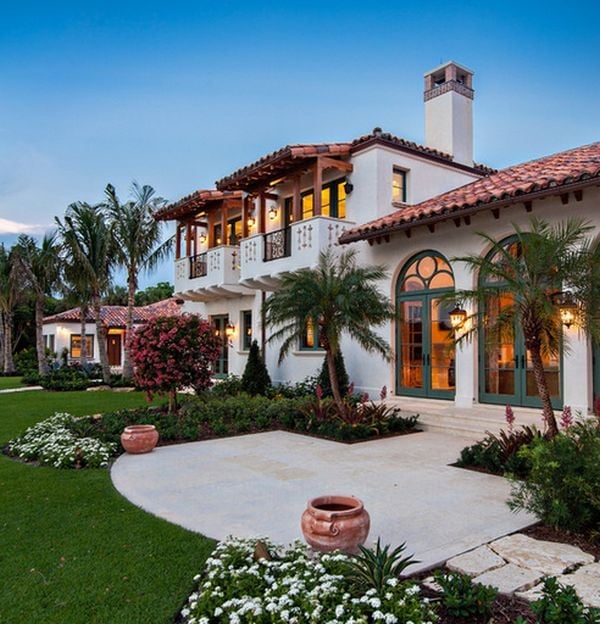
Dusk is the moment this architecture earns its keep. The white stucco facade and terracotta roof tiles pick up the last warm light while the arched windows, lit from inside, turn the villa into a lantern. The patio and garden extend the living space outward, so the house never feels like a closed box. Exterior lights placed near the arches and along the path keep the transition from indoor to outdoor usable after dark. The key is to light the architecture, not just the door: uplighting the stucco or placing sconces near the arches gives the facade depth without flooding the garden. A dimmer on the interior lights lets you adjust how much glow spills out.
Spanish Colonial Revival Entryways with Arched Wooden Doors
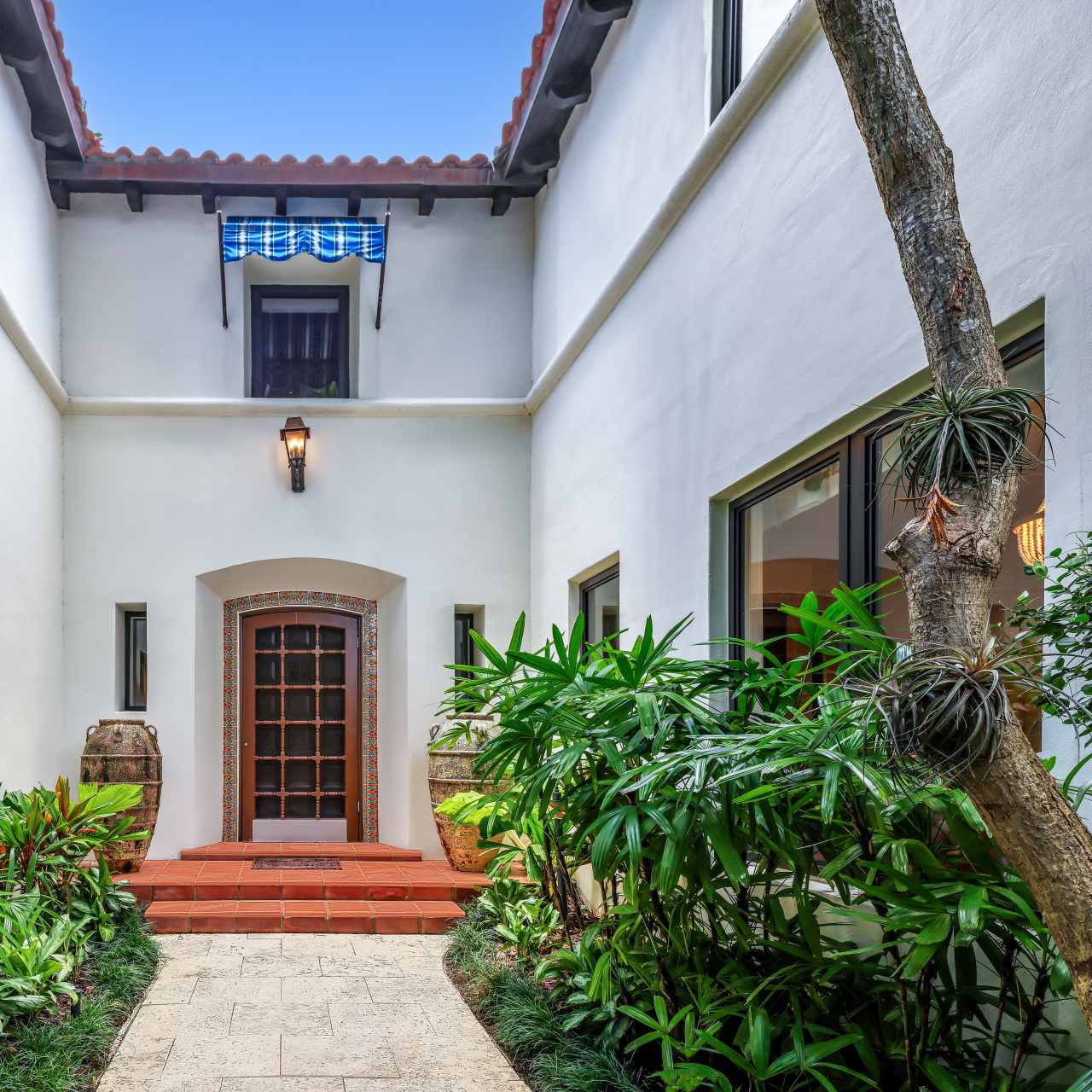
An arched wooden door needs enough visual weight to hold the entry, and this one has it. The dark wood and blue accents stand out against the white stucco and terracotta roof tiles, while the path leading up gives the eye a moment to register the scale. Potted plants on either side frame the door without crowding it, and the outdoor sconce provides light that reads as warm against the cool dusk. What keeps the entry from feeling like a stage set is the balance between the door’s ornament and the simplicity around it. The arch itself is the strongest line, so the facade stays plain. A bench or a small table could live here, but the path and planting already do the job of guiding visitors. Keep the walkway clear and the door visible, and the entry works on its own.
Charming Spanish Style Houses with Wooden Shutters and Stone Pathways
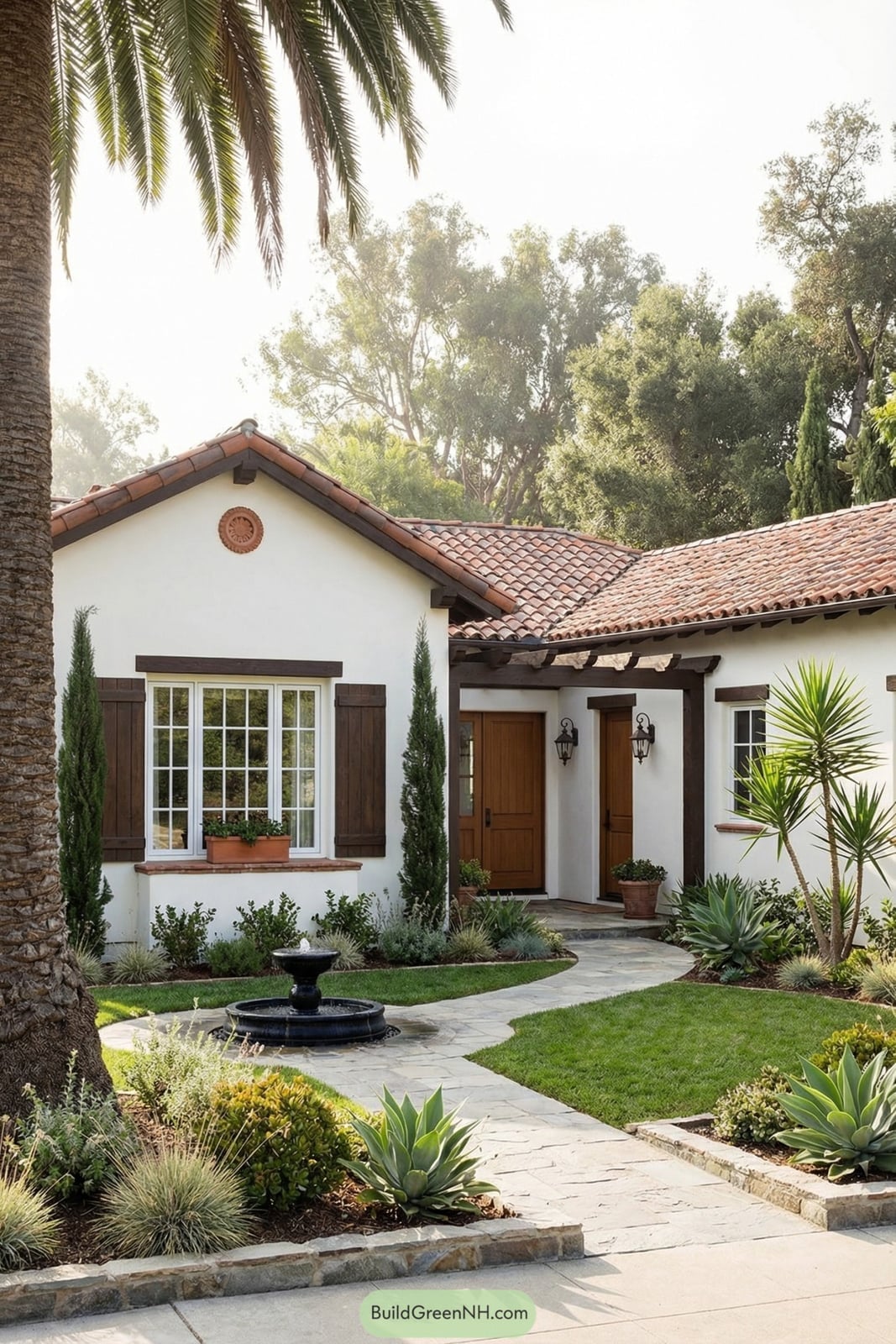
A white stucco facade with a tile roof and traditional wooden shutters sets the tone for a compact Spanish style house. The palette stays restrained with white walls, brown wood, and terracotta roof tiles, letting the green of surrounding plants add contrast. A stone pathway leads to the entrance, grounding the house in its site. The style relies on the ratio of materials: more stucco and tile than wood, with shutters as the defining detail. Vinyl siding or a modern front door would pull the facade out of its Mediterranean roots.
Spanish Eclectic Living Rooms with Large Indoor Trees and Open Layouts
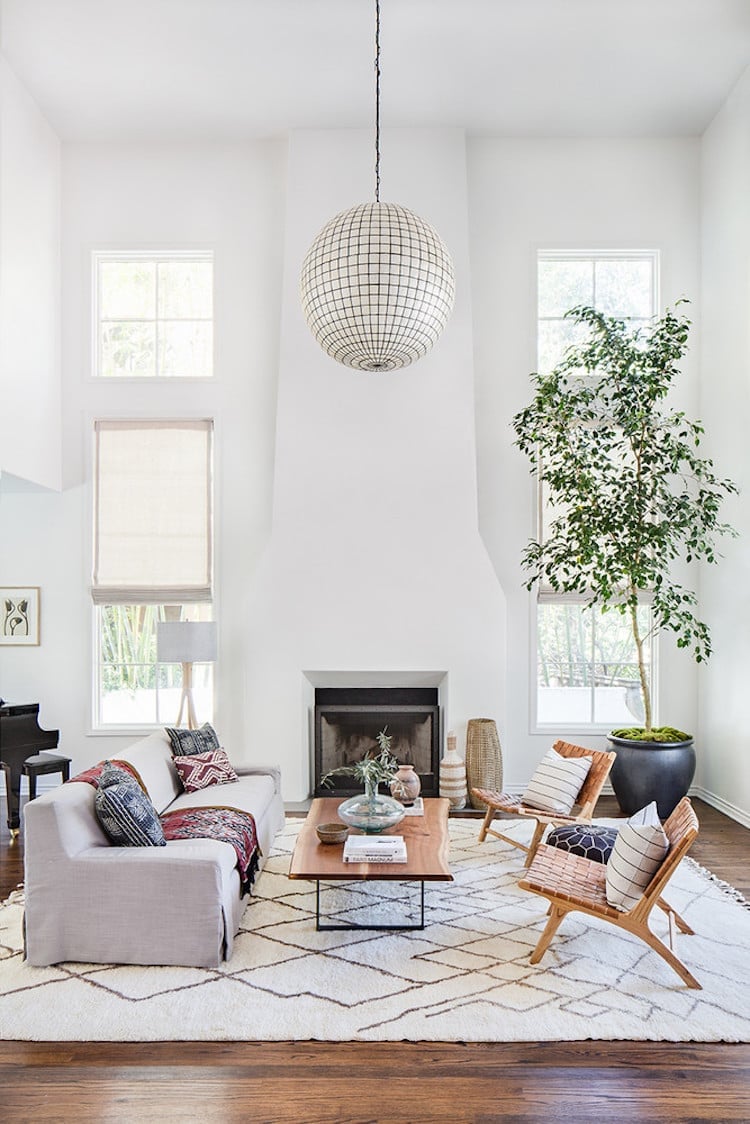
A renter-friendly way to add Spanish eclectic character is to let one large indoor tree anchor an open plan room. The living space here pairs a neutral palette of white plaster walls and natural wood with earthy ceramic accents, while the tree rises near a fireplace between a sofa and wooden chairs. Natural daylight from large windows keeps the airy feel intact. The tree becomes the hero element, so keep the room simple: avoid competing patterns or bulky furniture near it. The look is defined by that contrast between organic height and clean lines, and it breaks if you crowd the base with too many small objects.
Spanish Mediterranean Living Rooms with Built-in Shelving and Arched
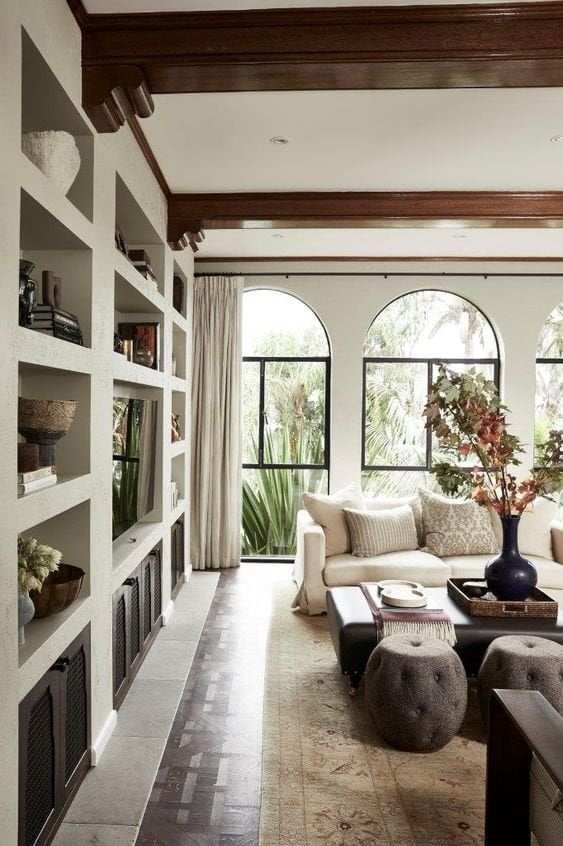
A living room with arched windows and extensive built-in shelving feels more like a library than a standard Spanish Mediterranean space. The shelving unit runs along one wall in warm wood tones against white plaster, holding books and objects that add earth tones and green accents. The palette stays neutral with white, wood, and stone, letting the shelves provide storage without clutter.
The layout keeps the room open, with a sofa and ottomans facing the fireplace rather than the shelving. This setup works because the built-ins are the storage backbone, not the focal point during conversation. The style breaks if the shelves get packed with mismatched items, which would pull attention from the arched windows and the room’s natural light.
Spanish Villa Exteriors with Swimming Pools and Balconies
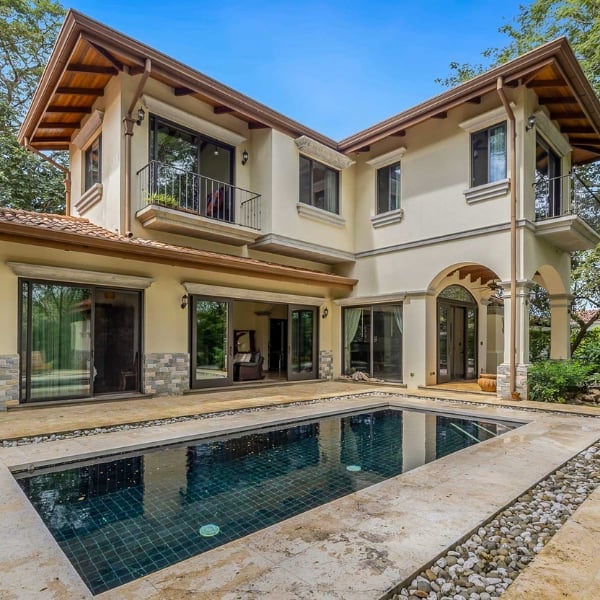
A large swimming pool sits in the foreground of a cream stucco villa with balconies and an arched entryway, creating a layout where the pool defines the patio. The palette of cream, brown, green, and blue ties the house to its landscape. The balconies above the arched entry add vertical interest, breaking up the wide facade. The style relies on that balance: a spacious pool area with the villa as backdrop, not competition. A fence that blocks the view from the house to the water undermines the visual connection between interior and outdoor living.
Courtyards with Dark Tiled Pools and Ornate Wooden Balconies
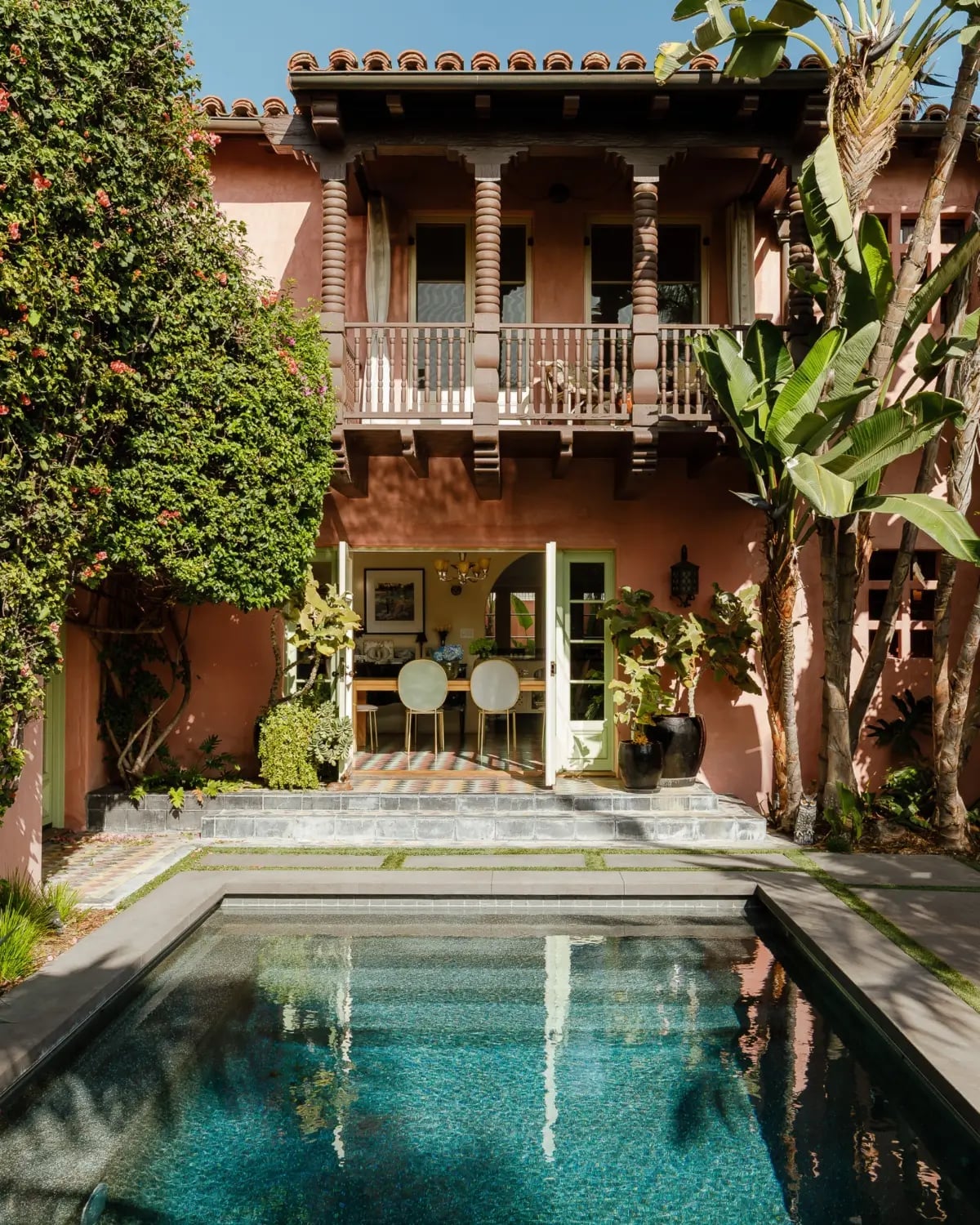
This courtyard centers on a dark tiled pool, with a pink stucco facade and an ornate wooden balcony overhead. The palette stays warm with pink, wood tones, and green from surrounding plants, while the dark tile anchors the pool visually. The layout places the pool in the foreground and the house behind, with outdoor dining nearby. The scale works because the balcony’s ornate wood detail balances the pool’s simple rectangular shape. The style breaks if the balcony gets replaced with a plain railing, which would lose the handcrafted feel that defines a Spanish courtyard.
Classic Spanish Colonial Houses with Red Tile Roofs and Arched
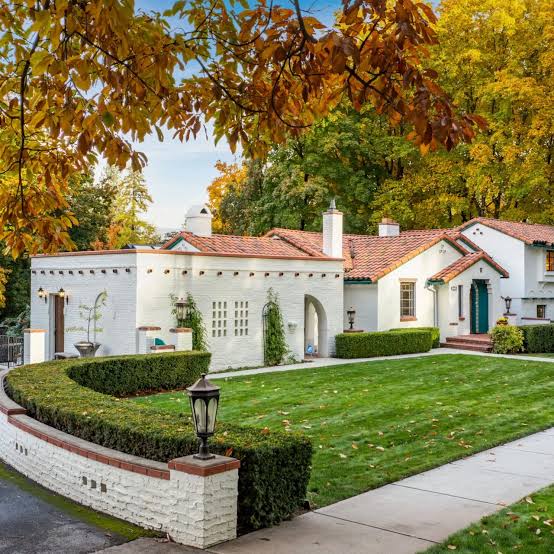
A house set back from the street feels more private, and a curved driveway reinforces that separation. Here, white stucco walls and a red tile roof sit behind a manicured lawn and clipped hedges, with an arched entryway as the focal point. The symmetry of the facade keeps the eye moving from the roofline down to the landscaping, so the house feels grounded on the lot. The palette stays tight: white, terracotta, green, and brown, with no competing accent colors. That restraint is what makes the Spanish colonial style classic. If the driveway were straight, the approach would feel shorter and less ceremonial. The curve buys a sense of arrival.
Spanish Colonial Exteriors with Arched Windows and Terracotta Roofs
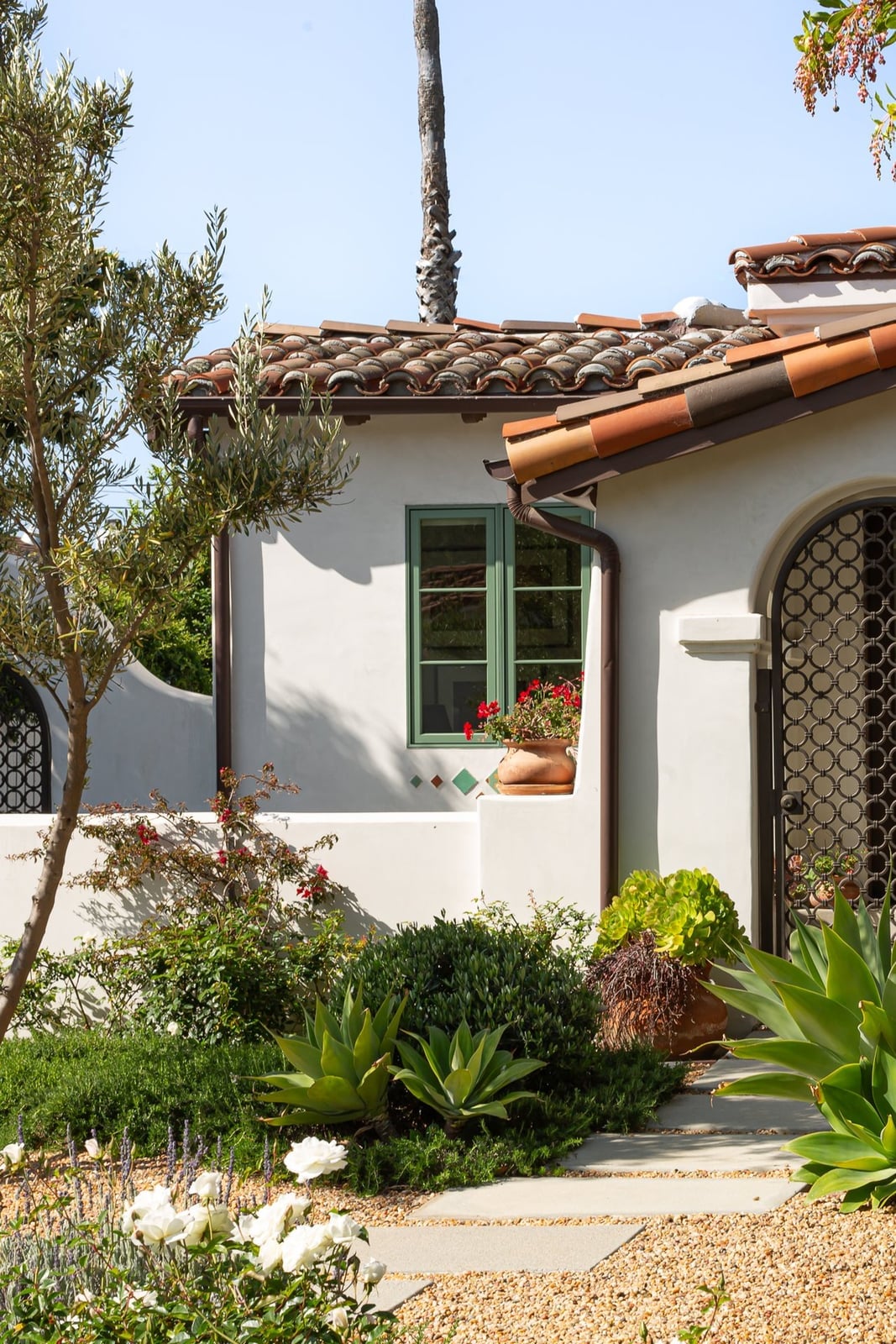
An arched window set into white stucco and topped with a terracotta roof tile is the defining move of Spanish colonial exterior design. The materials do the work here: smooth stucco against the rough texture of clay tiles, with an ornate iron gate adding a dark line at the entry. Bright daylight hits the facade evenly, so the arch reads clearly and the gate casts a sharp shadow. The combination of wood, iron, tile, and stucco gives the house depth without needing any paint beyond the white base. The arch is the anchor, and everything else supports it.
Mediterranean Living Rooms with Decorative Staircases and Gallery
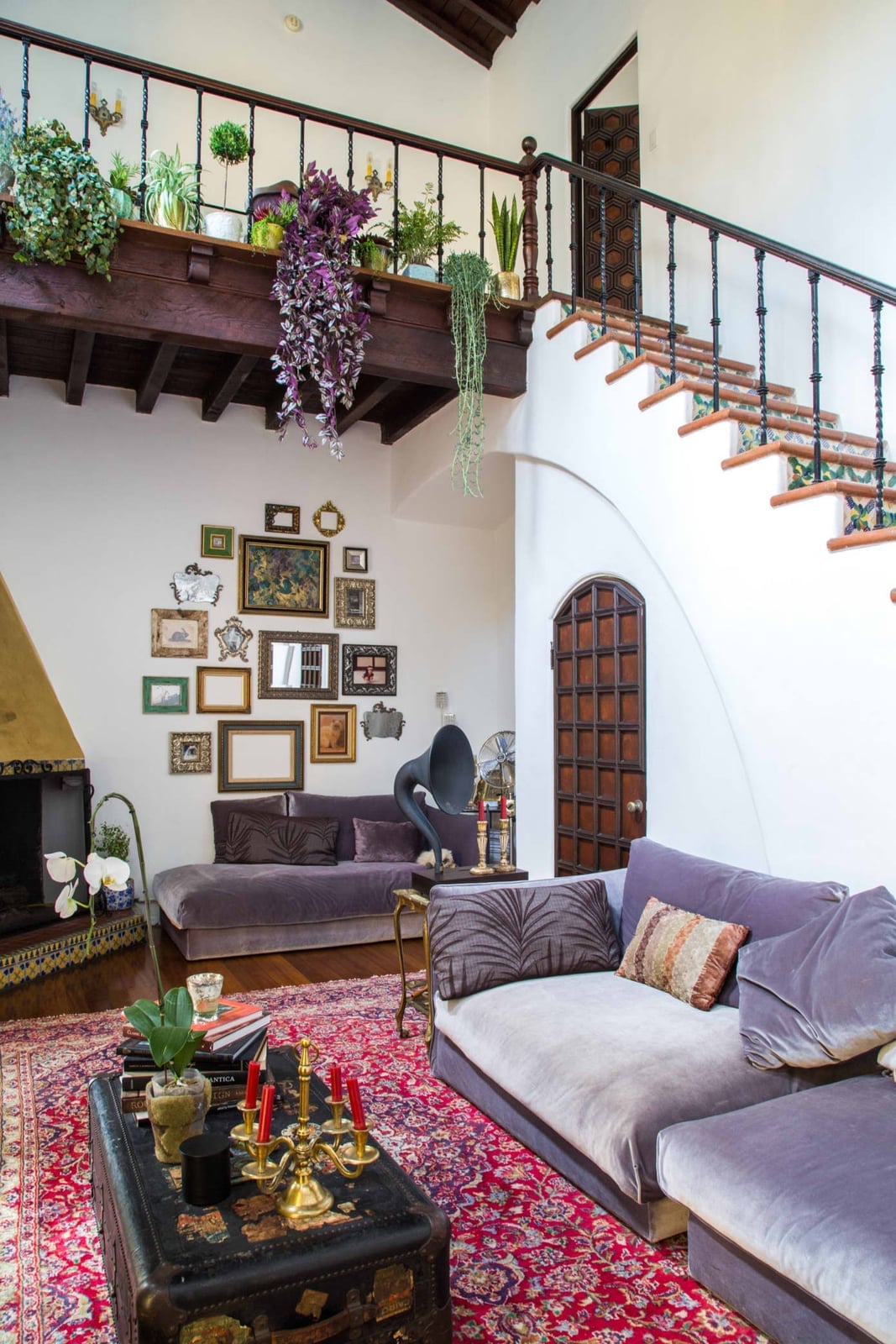
When a staircase is as ornate as the gallery wall beside it, the room needs a clear center to keep from feeling like two separate spaces. Here, sofas face a fireplace, and the staircase rises behind them, its railing a decorative piece in its own right. The gallery wall above the sofas pulls the eye across the room and away from the stairs, so the vertical element supports the layout without dominating it. The palette of white, purple, red, and wood tones ties the plaster walls to the velvet upholstery and the tile floor. Sunlight hits the staircase railing and the gallery frames equally, which keeps the whole room reading as one composition.
Courtyards with Peach Stucco Facades and Swimming Pools
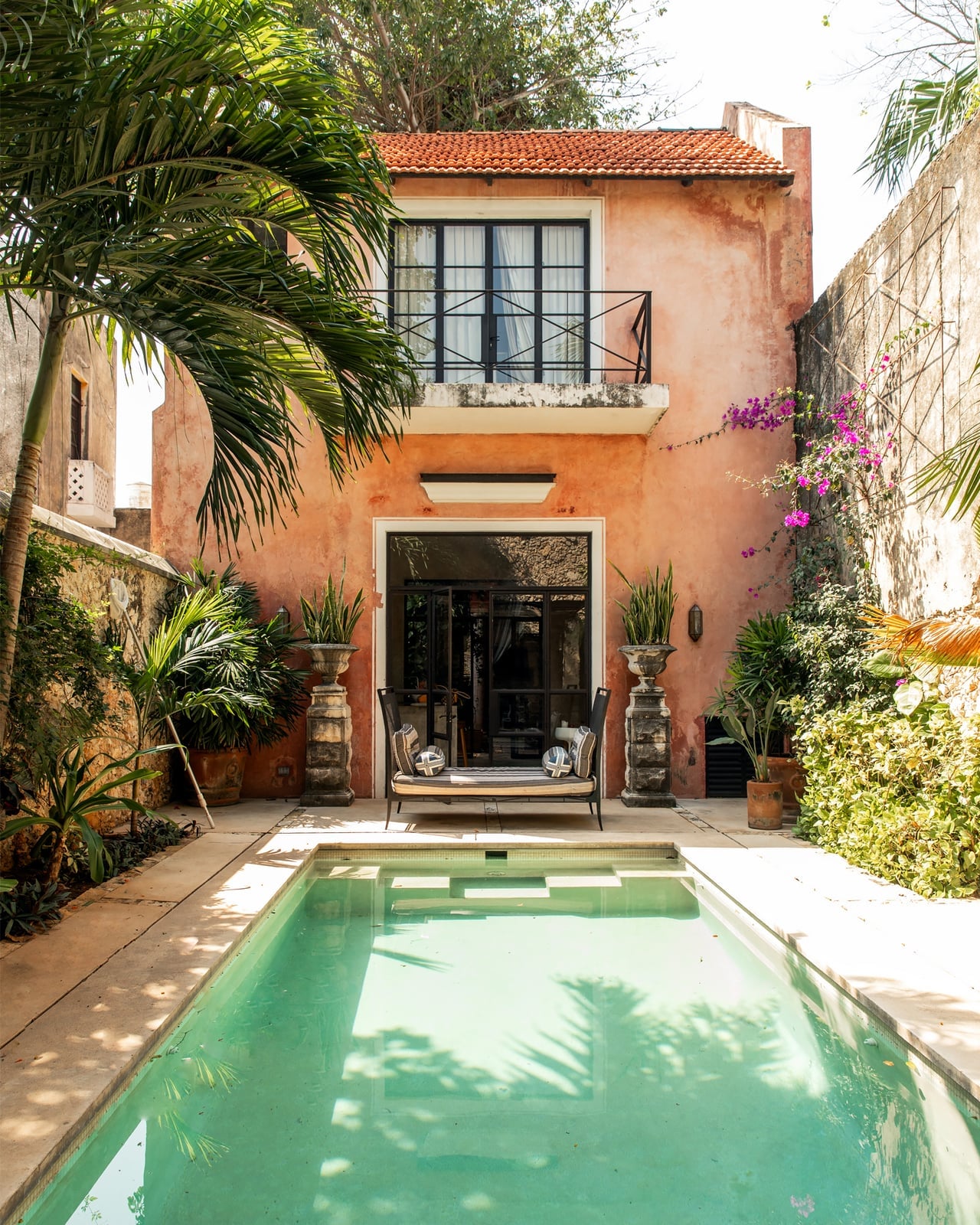
A peach stucco facade looks different in a courtyard than on a street-facing house. Out front, the color might feel bold. Here, with a swimming pool in the foreground and potted plants on a balcony above, it softens into something warm and private. The peach is balanced by green foliage and terracotta tiles, so the palette stays within the Mediterranean family even though the hue is unusual. A bench along the pool edge gives the space a place to pause, and the balcony above adds a second layer of living area without taking up ground space. Daylight hits the stucco directly, so the peach looks sunny and not dusty. If the same facade were in shadow, the color would flatten. The light is what makes it work.
Spanish Revival Homes with Red Tile Roofs and Pergolas
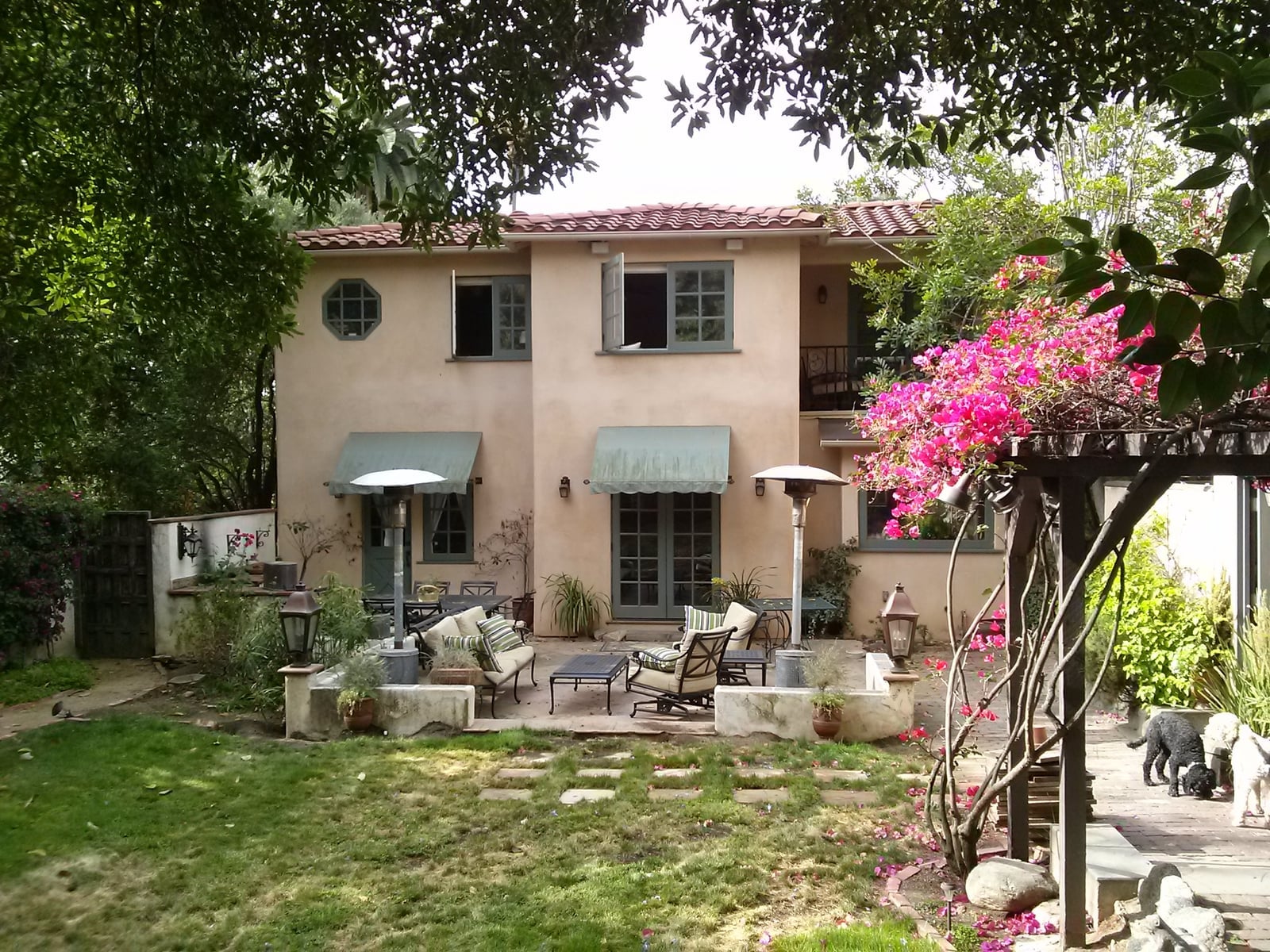
A red tile roof and a pergola share the same job: they define the top edge of a space. On this Spanish revival house, the red tiles cap the stucco walls, while the pergola extends the roofline over a patio area with wrought iron furniture. The palette of beige, green, pink, and terracotta keeps the exterior from feeling heavy. Arched windows break up the flat stucco, and lanterns on the patio add a warm light at dusk. The pergola is not structural in the way the roof is, but it creates the same sense of enclosure for the outdoor room.
Spanish Revival Living Rooms with Arched Doorways and Wrought Iron
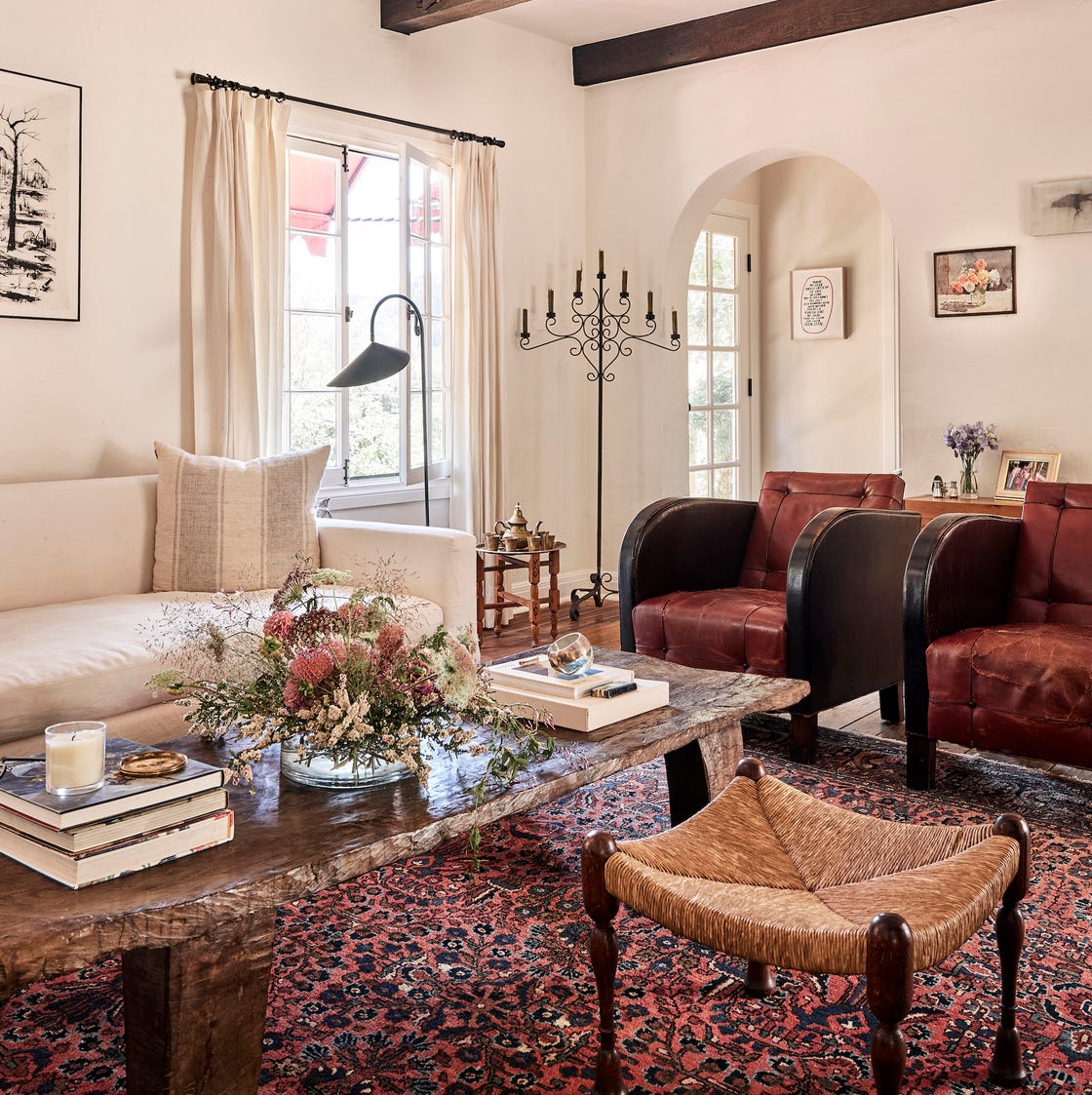
This Spanish revival living room makes its case with a fireplace that anchors the whole space, set between a pair of arched doorways that frame the room without closing it in. The palette sticks to white stucco walls, exposed wood beams, and a terracotta tile floor that warms the footprint. A wrought iron chandelier hangs overhead, its black lines breaking up all that soft plaster. The style relies on a clear ratio: roughly two parts light wall to one part dark wood and metal, so the room feels grounded without being heavy. Rustic wood furniture keeps the look from tilting toward formal, and the arched openings repeat the shape of the fireplace, which is the only decorative trick you need here.
Unique Spanish Style Casitas with Curved Stucco Walls
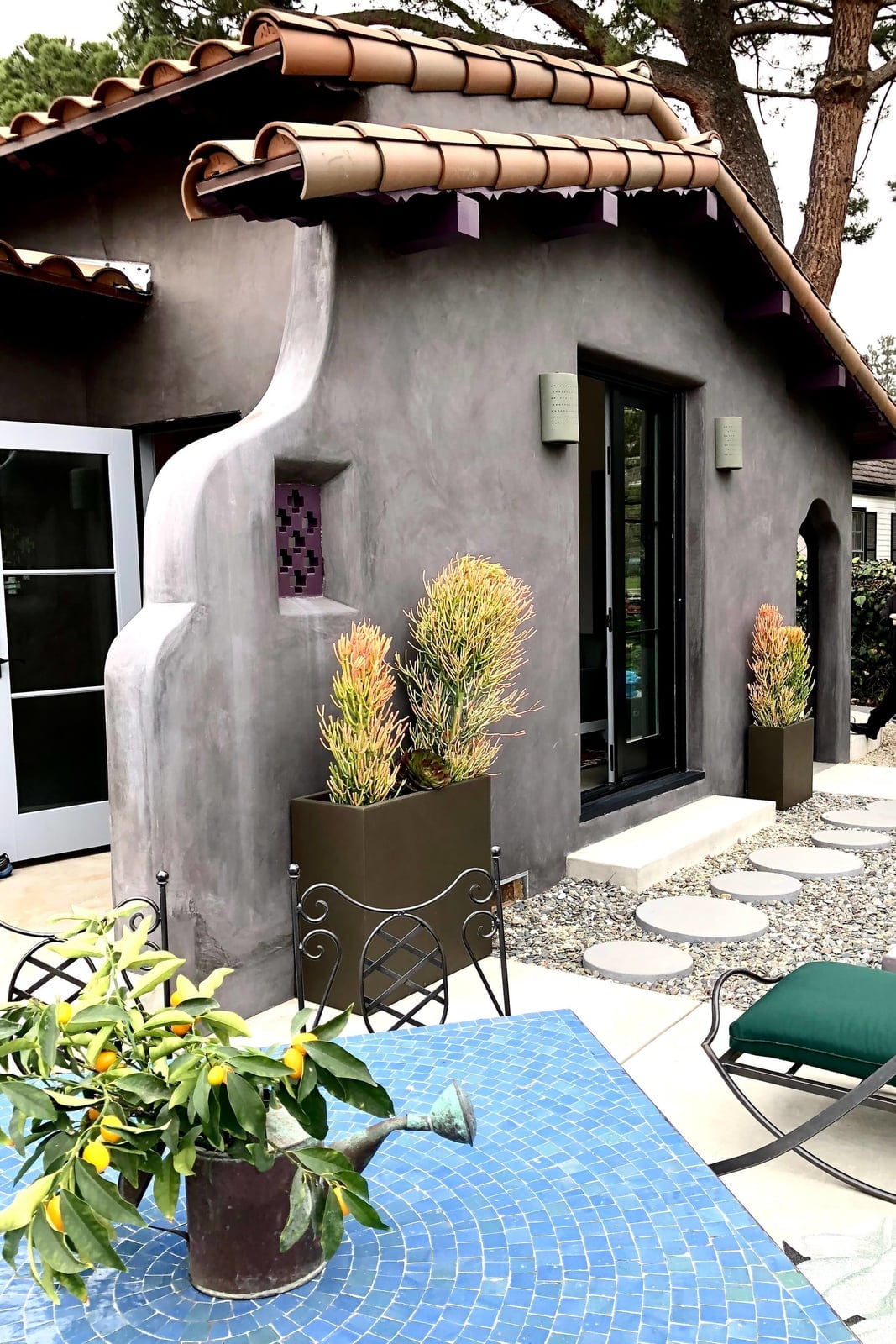
A small casita might sound like a one-note novelty, but this one earns its place with a curved stucco wall that turns a plain outdoor structure into something sculptural. The exterior reads in gray and white stucco, with orange and green accents from potted plants and metal chairs that soften the hard lines. Overcast daylight flattens the glare, so the shape of the wall stands out rather than the finish. The style here is about the ratio of curve to straight edge: the sweeping stucco line is the hero, and everything else stays compact and subordinate. If you rent, you cannot curve a wall, but you can echo the idea by placing a rounded outdoor bench or a large arched mirror against a straight facade. The effect is the same: one soft gesture breaks the grid.
Final Thoughts
Spanish style homes are about texture and light. The key is to let the materials speak: plaster, wood, tile. Keep the palette warm and the layout open. A few wrought iron details or an arched doorway can set the tone. What matters most is that the space feels grounded and lived-in. That’s the real takeaway from these 27 looks.