Is your Pinterest board overflowing with chair planter ideas, yet you’re still not sure where to begin? It’s a common feeling—seeing all the gorgeous inspiration but feeling stuck on how to make it happen for your own space. Forget the generic advice. We’ve dug through hundreds of real-world examples to find what truly works and what doesn’t.
After filtering through countless DIY projects and designer setups, we’ve curated this list of 29 standout chair planters that you can actually create. We’re covering a wide range of styles, from rustic and whimsical to modern and vintage, ensuring there’s something that speaks to you. We’ll show you how to bring these looks to life, whether you’re working with a thrift store find or a brand-new piece.
The trend of upcycling and giving old furniture a new, green life is bigger than ever in 2026, as we all look for ways to add more personality and nature to our homes and gardens. And stay until the end—we break down the most common mistakes that can ruin these looks. 📌 Save this to Pinterest for later—you’ll want to revisit these ideas.
1. A Patriotic Welcome with a Red, White, and Blue Chair Planter
This little chair is bubbling with personality, and it all comes down to a clear, confident theme. The classic red, white, and blue color story is instantly recognizable and creates a feeling of cheerful nostalgia. What makes it work so well is the balance of textures. The glossy paint is perfectly offset by the rustic, natural feel of the coconut fiber liner and the soft petals of the geraniums. It’s a masterclass in combining bold color with organic elements without either one overpowering the other.
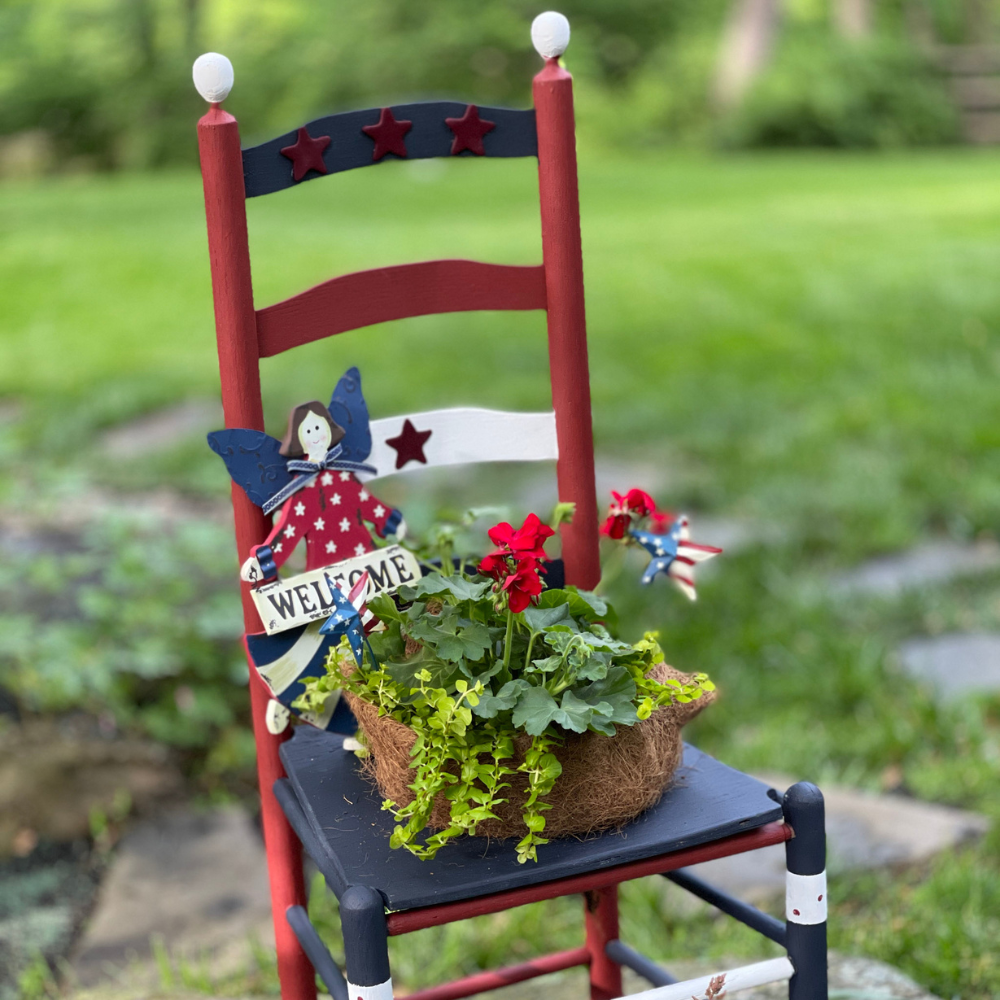
“If you plan to keep your painted chair planter outside, preparation is everything.”
Don’t just slap a coat of paint on bare wood. For maximum durability, start by lightly sanding the entire chair. Then, apply two coats of an exterior-grade oil-based primer. Once dry, follow up with your color, using paint rated for outdoor use. Finish with at least two coats of a clear, UV-resistant polyurethane sealant. This process will protect the wood from moisture and prevent the vibrant colors from fading in the sun.
2. Add Artistic Flair with a Decorative Tile Inlay Chair Planter
The single decorative tile set into the backrest is what elevates this from a simple DIY project to a piece of garden art. Without it, you’d have a perfectly nice wooden chair holding some plants. With it, you have a story. The tile acts as a focal point, drawing the eye and adding a touch of unexpected craftsmanship. It suggests a more thoughtful, curated approach and transforms the entire piece into a unique garden feature that feels personal and intentional. It’s the detail that makes you look twice.
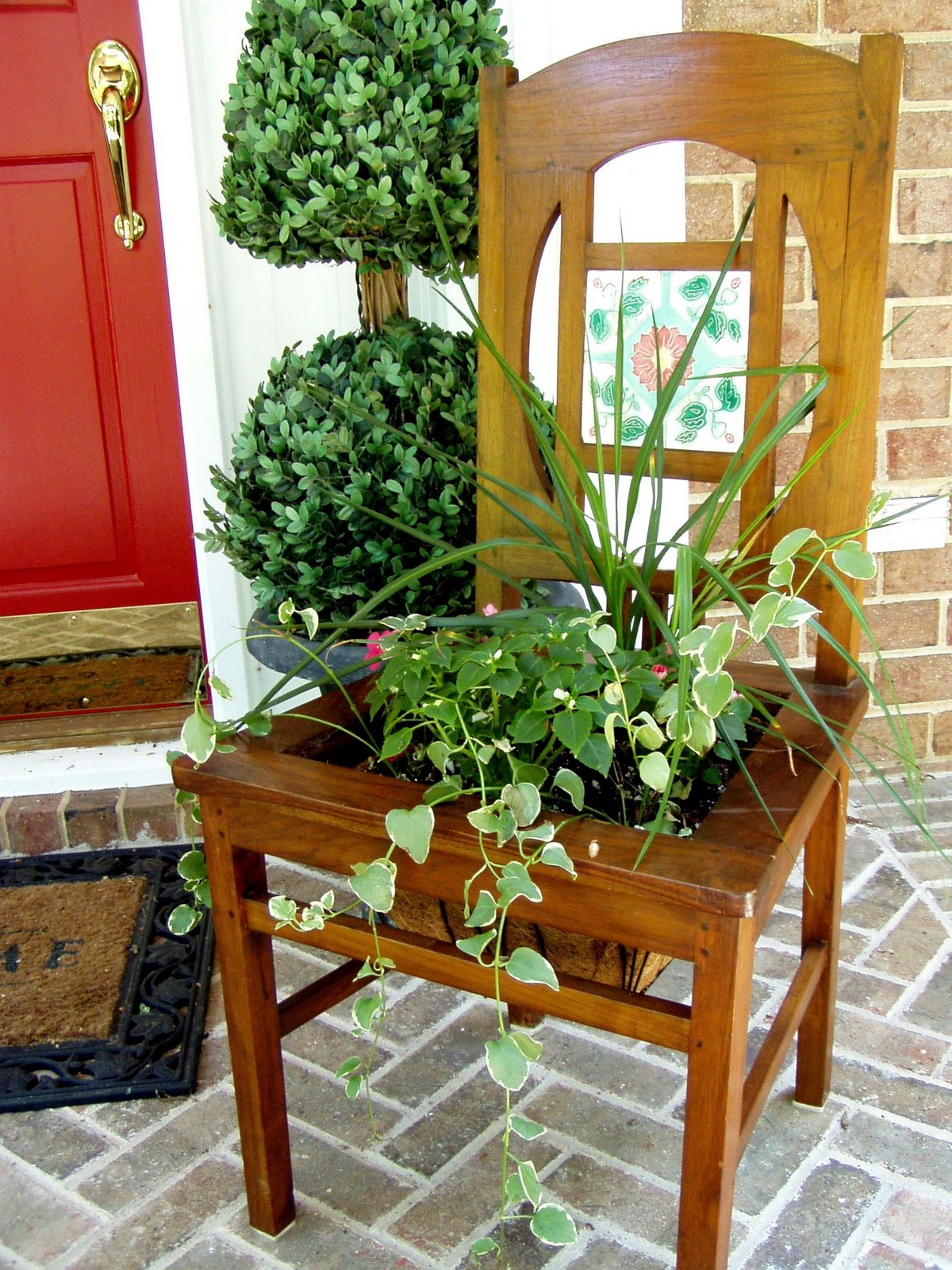
“Want to add a tile to your own chair?”
It’s easier than it looks. Here’s a quick guide:
Choose your tile and trace its outline on the chair’s backrest.
Using a jigsaw with a fine-toothed blade, carefully cut out the traced shape, staying just inside the lines. Sand the edges smooth.
Apply a generous bead of waterproof construction adhesive (like Liquid Nails) to the back of the tile.
Press the tile firmly into the opening, ensuring it’s flush with the wood surface.
Wipe away any excess adhesive immediately. Let it cure for at least 24 hours before moving the chair.
This project should take about 1-2 hours, plus drying time, with minimal material cost.
3. Lush Garden Style with a Weathered Green Metal Chair
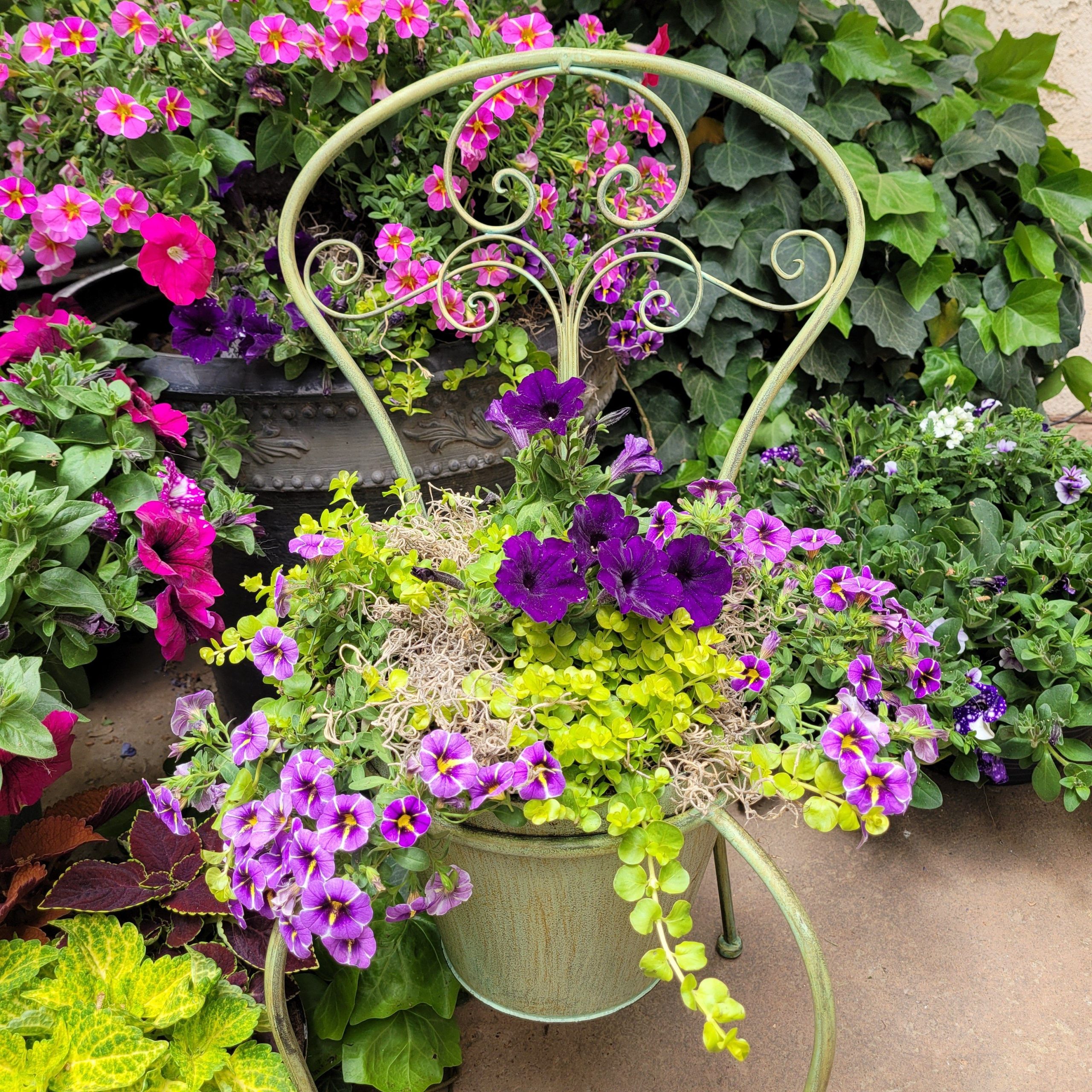
The beautiful balance here is all about proportion. Think of it as a design recipe: 60% lush, vibrant florals + 30% weathered, structural metal + 10% dark, grounding elements. The overflowing petunias provide the soft, organic majority. The green metal chair gives the arrangement its shape and a touch of vintage character. The dark pots and deep green ivy act as the grounding force, adding depth and preventing the scene from becoming too chaotic. You could easily swap the petunias for geraniums or the green chair for a rusty one, and the formula would still hold perfectly.
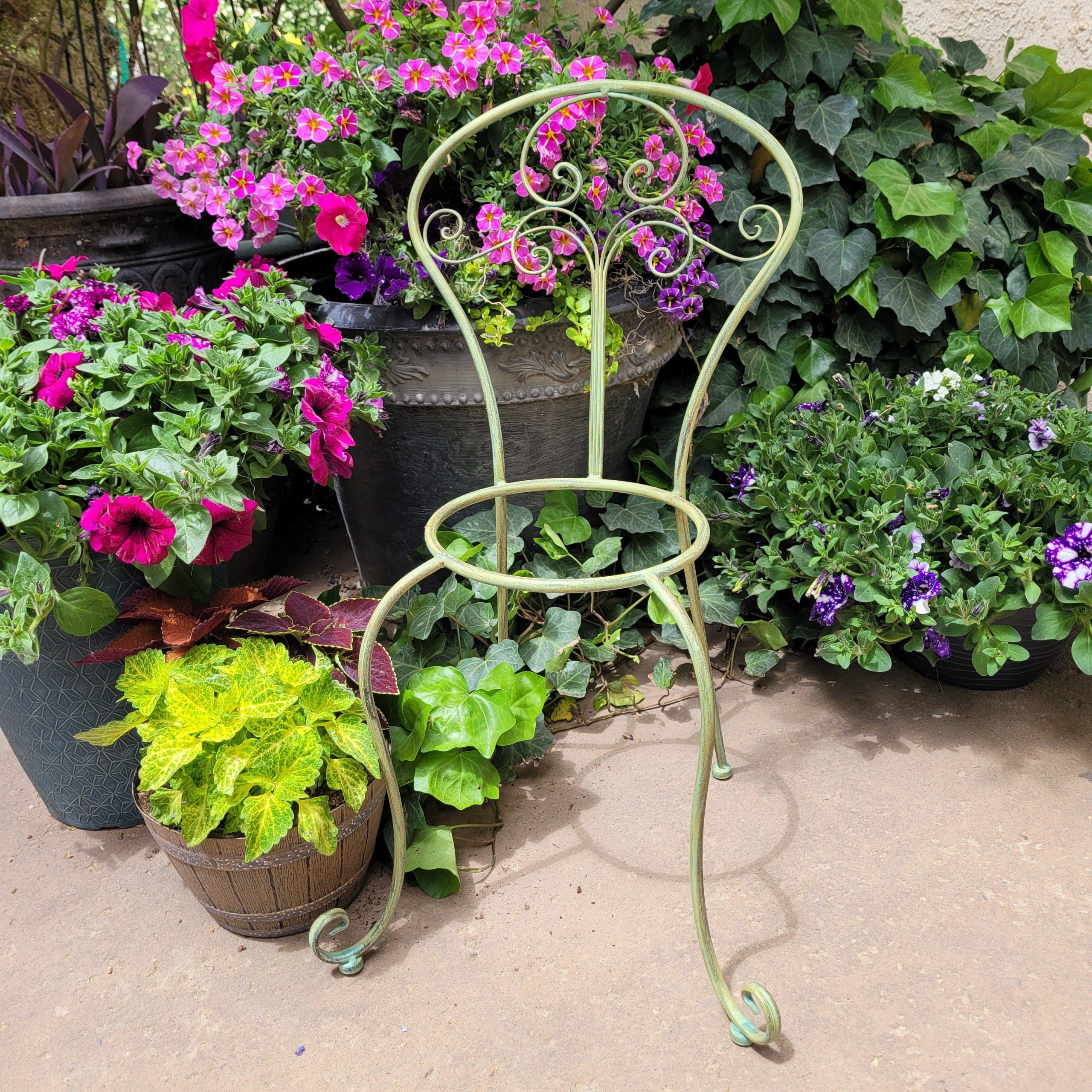
“Here’s a dose of honesty: a dark metal chair sitting in direct, all-day sun can get incredibly hot—hot enough to cook the roots of your plants, especially if they are in a metal planter.”
The ornate, open scrollwork on this chair helps with air circulation, which is a plus, but you should still be cautious. If your intended spot is a sun-trap, consider using this idea for heat-loving plants like succulents or portulaca, or place it where it will get some afternoon shade. Another option seen in Idea #10 is a chair with more of the seat removed to hold a separate, insulated pot.
4. A Whimsical Pop of Color with a Painted Chair Planter
This project is a perfect example of how color blocking can turn a forgotten object into a statement piece. The use of bold, primary-adjacent colors—yellow, red, and blue—creates a playful, high-energy vibe. The magic is in the deliberate placement; each structural part of the chair gets its own color, emphasizing its form. The chicken wire seat is a brilliant, low-cost solution that is both functional for holding soil and visually light, keeping the focus on the colorful frame and the delicate plants within.
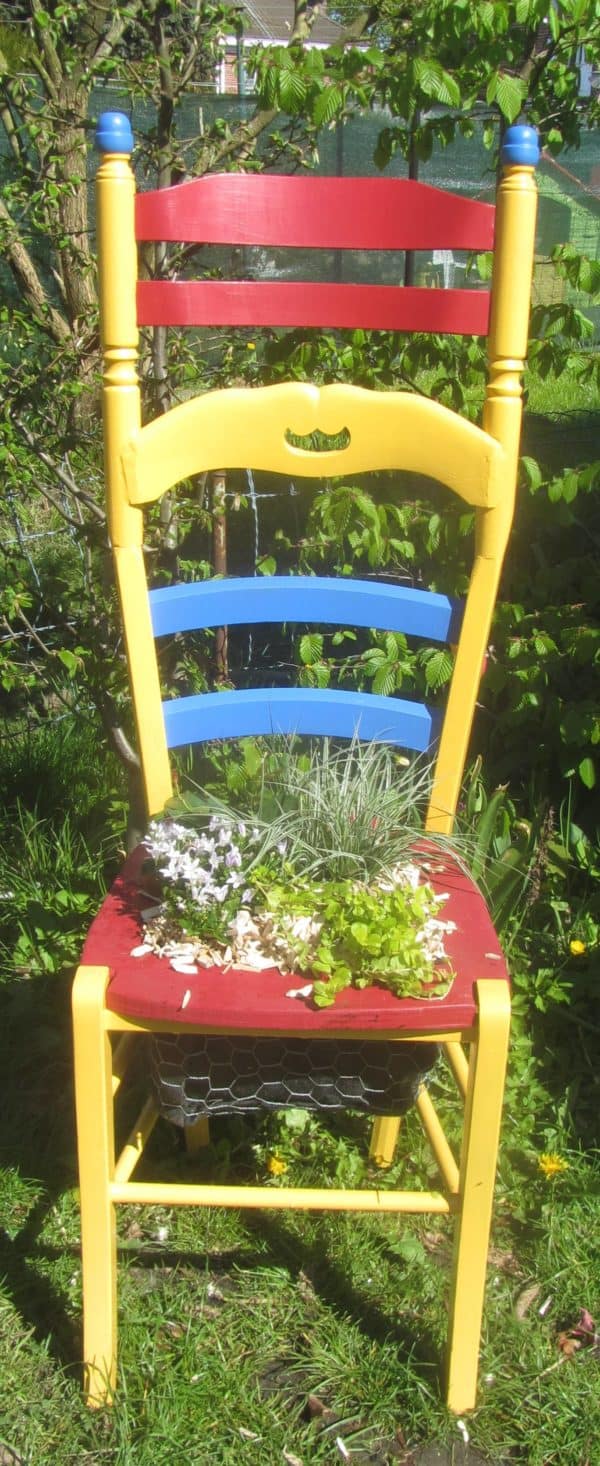
“You don’t need a fancy chair to achieve this look; in fact, the simpler, the better.”
Scour Facebook Marketplace or your local thrift store for a basic wooden dining chair—you can often find them for $5-$15. A roll of chicken wire is less than $10 at any home improvement store. The real fun is with the paint. Instead of buying full quarts, head to the hardware store and pick up three or four sample-sized pots of exterior paint for about $5 each. You’ll have more than enough to create this vibrant look for a total project cost of under $40.
5. Charming Adirondack Chair Planter for a Garden Bed
This idea works beautifully because it understands scale within a larger garden context. The Adirondack chair, even in this planter form, has a substantial presence. It’s best suited for a corner of a garden bed or against a fence where it has room to breathe, acting as a medium-sized anchor point. It wouldn’t work as well on a tiny balcony, where it would feel overwhelming. The key is placing it where it becomes a focal point within a scene, not the entire scene itself. A minimum space of about 4×4 feet would be ideal to replicate this layered look with surrounding plants.
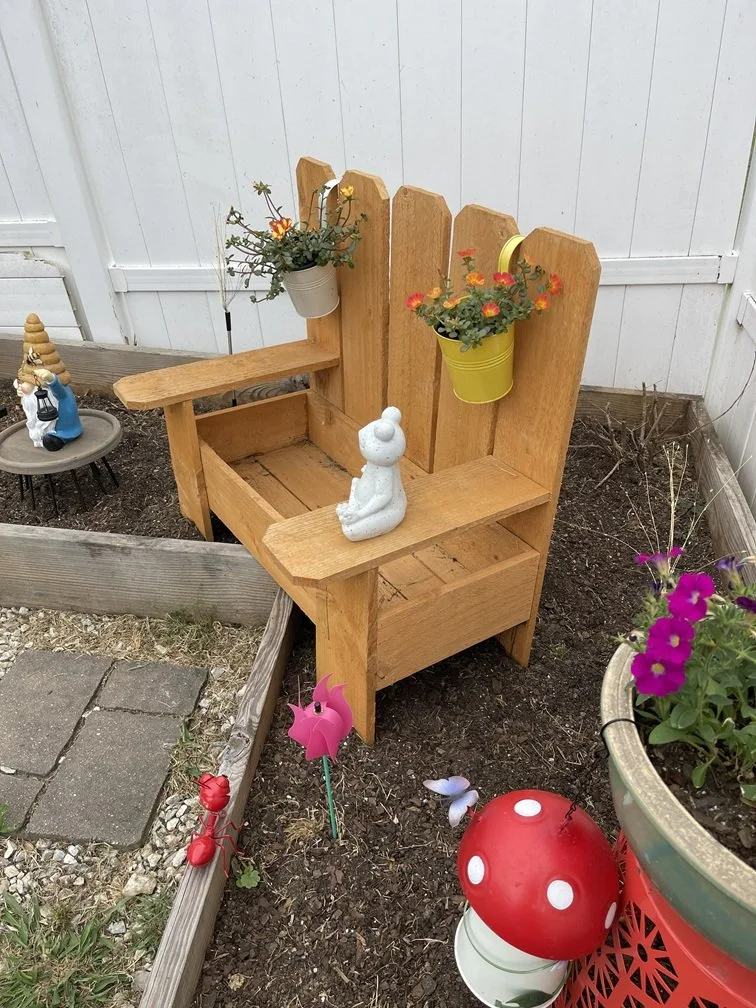
“Why is this look so popular on Pinterest right now?”
It taps directly into the ‘Cottagecore’ and ‘Grandmillennial’ trends that celebrate whimsical, nostalgic garden decor. An Adirondack chair is a symbol of leisure and rustic comfort, and turning it into a planter adds a layer of playful creativity. People are craving spaces that feel personal and collected, not sterile and designed. This chair planter, with its little hanging buckets and figurine, feels like a story you stumbled upon, which is exactly the kind of charm that resonates today.
6. Vibrant Purple and Pink Flowers in a Distressed Green Chair
The single most important element here is the chartreuse trailing plant (likely a sweet potato vine or creeping Jenny). While the purple petunias are gorgeous, it’s the pop of electric yellow-green that brings the whole arrangement to life. It creates a stunning color contrast against the deep purples and the muted light green of the chair itself. If you were to remove that one plant, the composition would feel flatter and far less dynamic. It’s the perfect ‘spiller’ plant that adds energy and a professional touch.
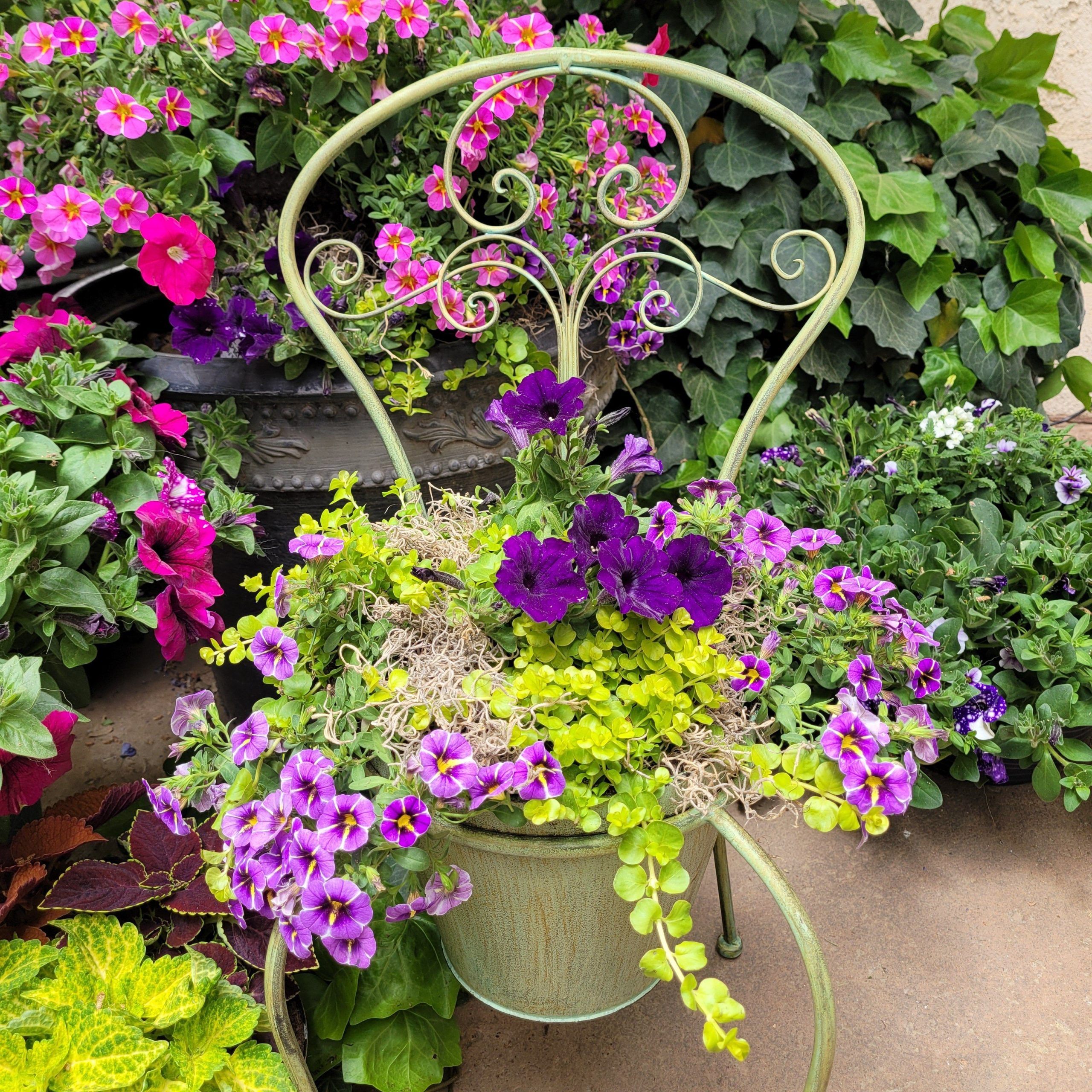
“When creating a ‘thriller, filler, spiller’ arrangement in a planter, always plant your ‘spiller’ (the trailing plant) closest to the edge and tilted slightly outward.”
Don’t plant it straight down. Gently angle the root ball so the plant is already encouraged to grow down and over the side of the planter. This gives you a head start on that beautiful cascading effect and ensures the trailing stems don’t get tangled with the upright ‘thriller’ and mounding ‘filler’ plants in the center.
7. A Whimsical Succulent Garden on a Weathered White Chair
This design is pure joy, and it works because it fully commits to its whimsical theme. It’s not just a chair with plants; it’s a tiny, magical world. The success lies in the layering of details: the variety of succulent shapes and colors, the lush green moss, the quirky ‘Bee Happy’ sign, and the tiny rabbit figurine. Each element adds to the narrative. The distressed white finish of the chair provides a perfect neutral, shabby-chic canvas that allows the colors of the plants and decor to pop. It feels curated and personal, not just assembled.
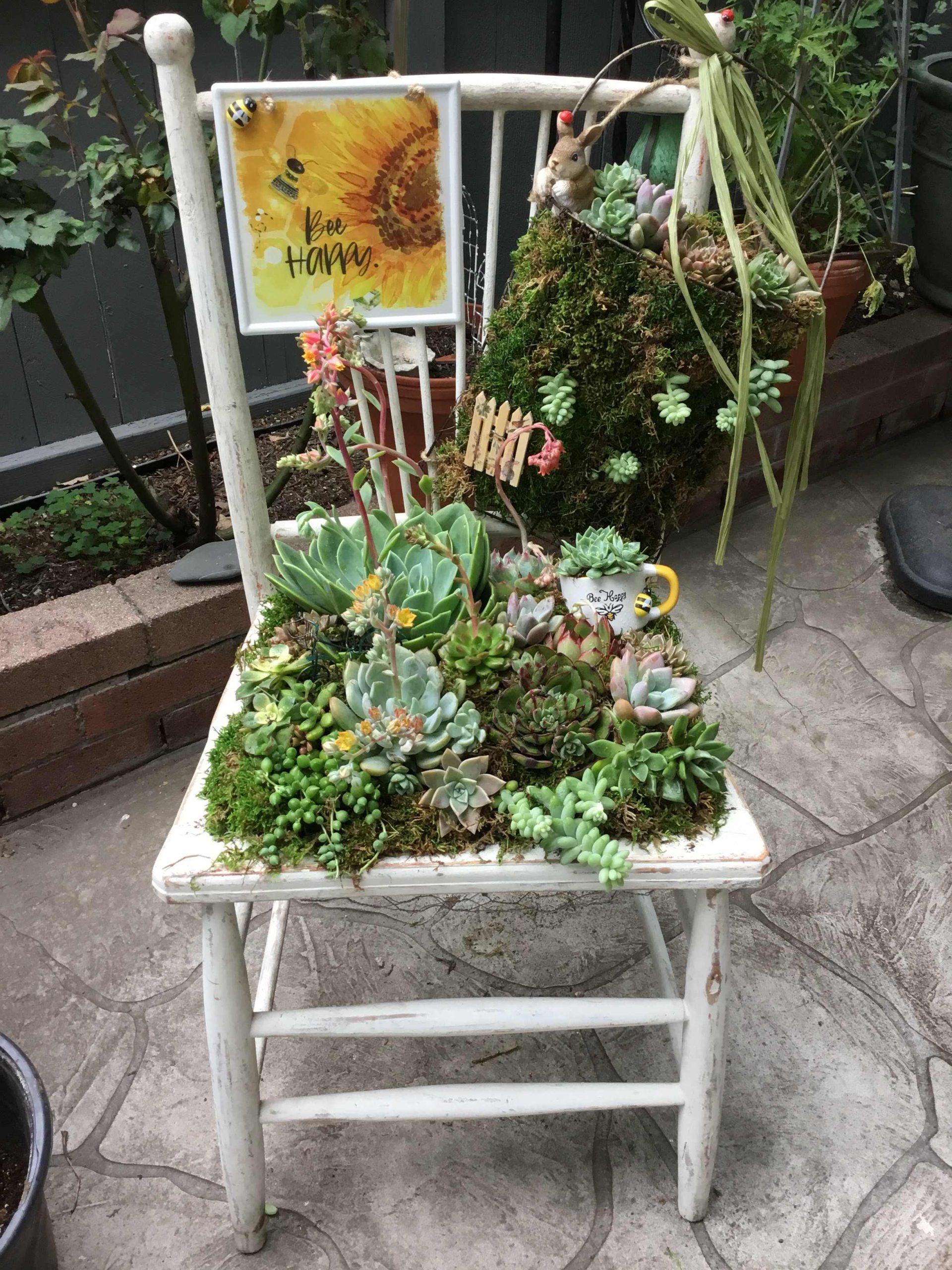
“A chair overflowing with moss and succulents looks incredible, but it requires some specific care.”
This is not a setup for a deep-shade, damp corner of your yard. Succulents demand excellent drainage and plenty of sunlight to thrive and maintain their vibrant colors. The moss will need frequent misting to stay green, while the succulents prefer their soil to dry out between waterings—a tricky balance. Also, be aware that this is a very tempting playground for squirrels and birds, who love to pull out moss for their nests.
8. Festive Americana Chair with a Basket of Blooms
This look is a simple patriotic formula: 50% themed object (the painted chair) + 40% classic florals (the red and white flowers) + 10% folk art accents (the angel and stars). The chair does the heavy lifting, immediately establishing the red, white, and blue motif. The coco-lined basket with simple flowers provides a soft, traditional counterpoint. Finally, the small, handmade-style decorations add a layer of personal charm that keeps it from feeling like a mass-produced holiday item. This same formula works for any holiday: swap the chair colors and accents for a Halloween or Christmas version!
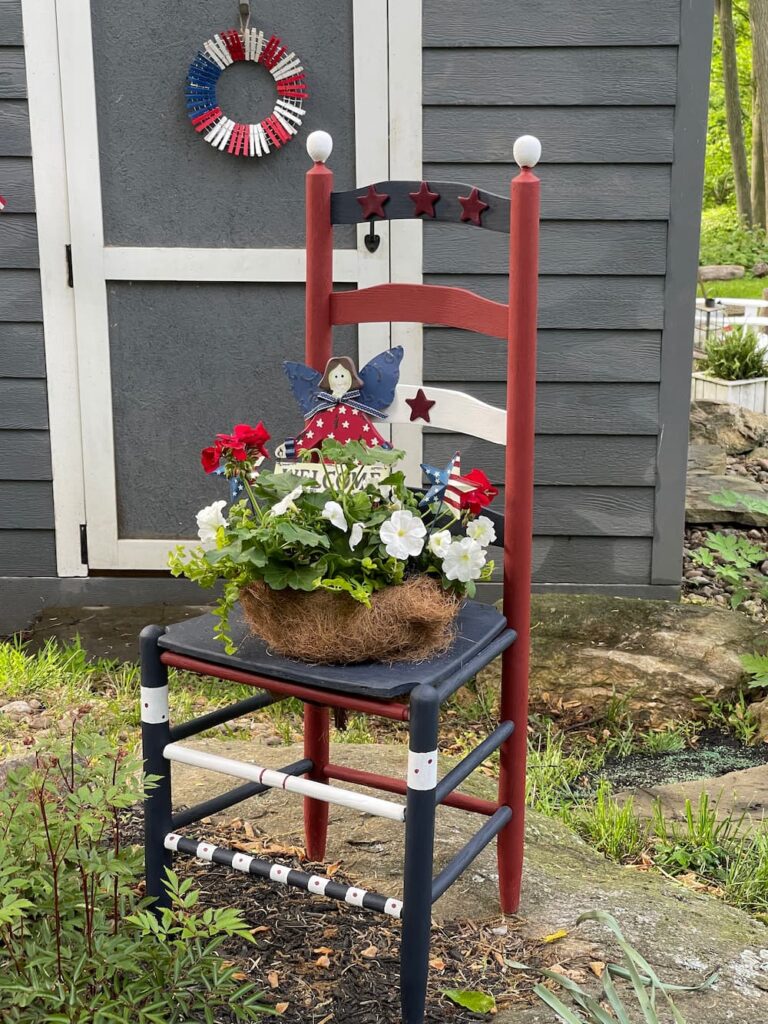
“You don’t need to buy a pre-made decorative chair.”
This is one of the easiest and most affordable DIYs on the list. Find a small, simple wooden chair at a yard sale for under $10. Three sample pots of exterior paint in red, white, and blue will cost around $15 total. A coco-lined basket planter is another $10-$15 from any garden center. You can find folksy wooden stars and other accents at a craft store for just a few dollars. All in, you can create this entire festive look for under $50. Compare this to the similar, but more subdued Idea #1.
9. Bright Teal Chair Holding Overflowing Red Geraniums
The success of this vignette is rooted in color theory. Teal and red are complementary colors (or close to it), meaning they sit opposite each other on the color wheel. This opposition creates the highest possible contrast, making both colors appear more vibrant and intense. The bright sunlight and the neutral gravel ground allow these two powerhouse colors to take center stage without any competition. The result is a high-energy, joyful display that catches the eye from a distance.
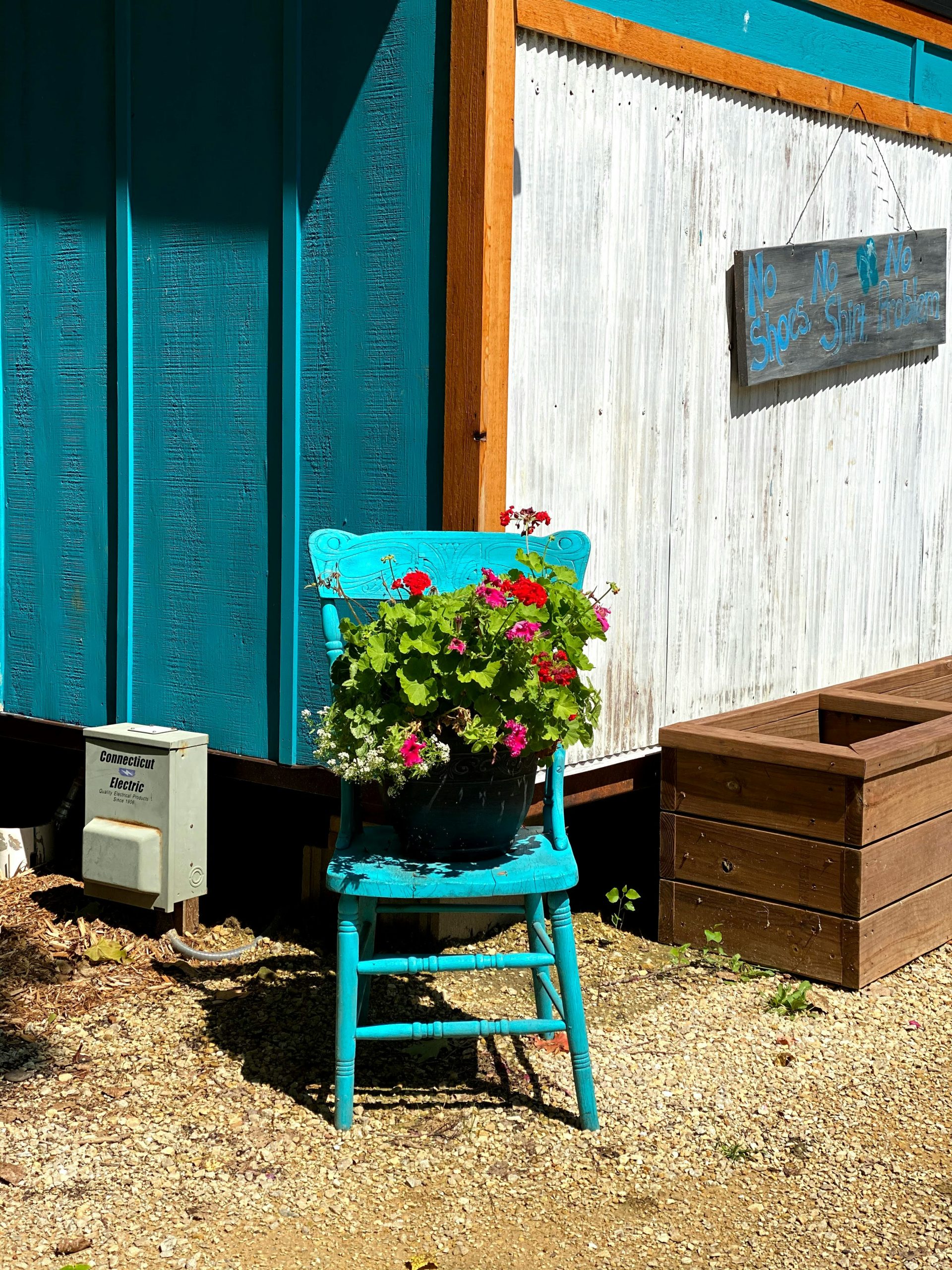
“When using a simple drop-in pot like this, you might find it sits too low in the chair’s seat frame.”
Don’t just let it hang. To get that perfect, overflowing look, place bricks, stones, or even an overturned empty plastic pot in the bottom of the chair’s opening first. This will boost your planter up to the desired height, creating a much more lush and full appearance. It also improves air circulation around the pot, which is healthier for the plant’s roots.
10. Rustic Metal Chair Overflowing with Purple and White Petunias
It’s the rust. The faded green paint is lovely, and the purple petunias are lush, but the patches of rust are the secret ingredient that makes this chair planter so charming. Rust tells a story of time, weather, and endurance. It adds a layer of texture and a warm, earthy orange-brown color that beautifully complements both the green of the chair and the cool purple of the flowers. Without the rust, it would be a pretty planter. With the rust, it’s a piece of rustic art with history and soul.
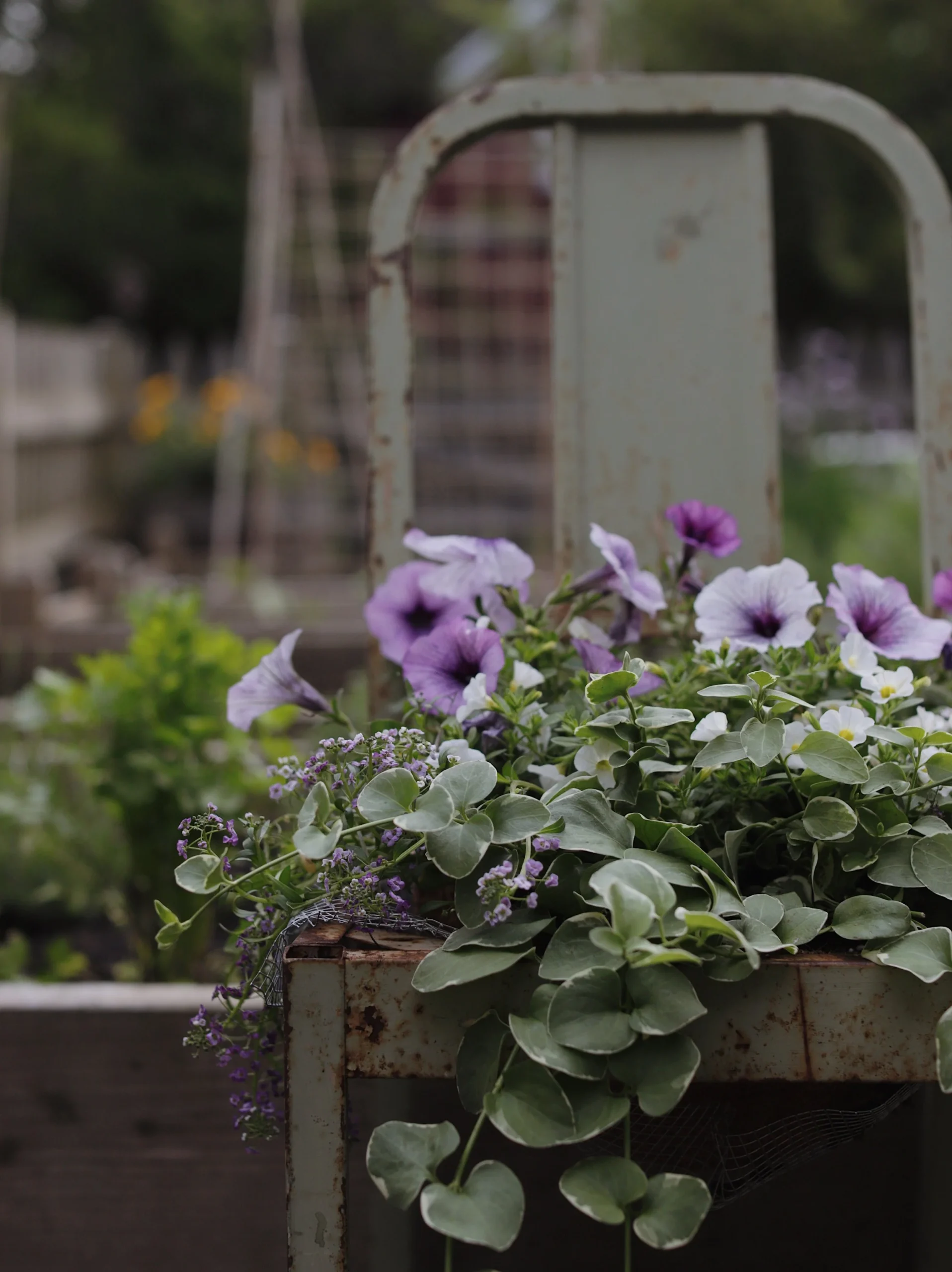
“While a rusty chair has undeniable charm, that rust can stain your patio, porch, or deck, especially after it rains.”
If you’re placing a metal chair like this on a surface you want to protect (like light-colored concrete or wood), consider sealing it. You can use a clear matte spray sealant designed for metal. This will lock in the rusty patina and prevent it from bleeding onto your surfaces. Reapply every year or two, as the sealant will break down over time with sun and weather exposure.
11. Weathered Metal Chair with Petunias in a Gravel Yard
This composition works because it nails the ‘found object’ aesthetic. The combination of the distressed metal chair, the classic galvanized watering can, and the woven basket feels effortlessly curated, as if each piece was collected over time. The textures play a key role: the smooth, peeling paint of the chair contrasts with the rough weave of the basket and the sleek metal of the can. The dark gravel ground cover is a smart choice, acting as a neutral, textured backdrop that makes the pale green chair and vibrant purple flowers pop. This is a quieter, more serene version of the metal chair seen in Idea #3.
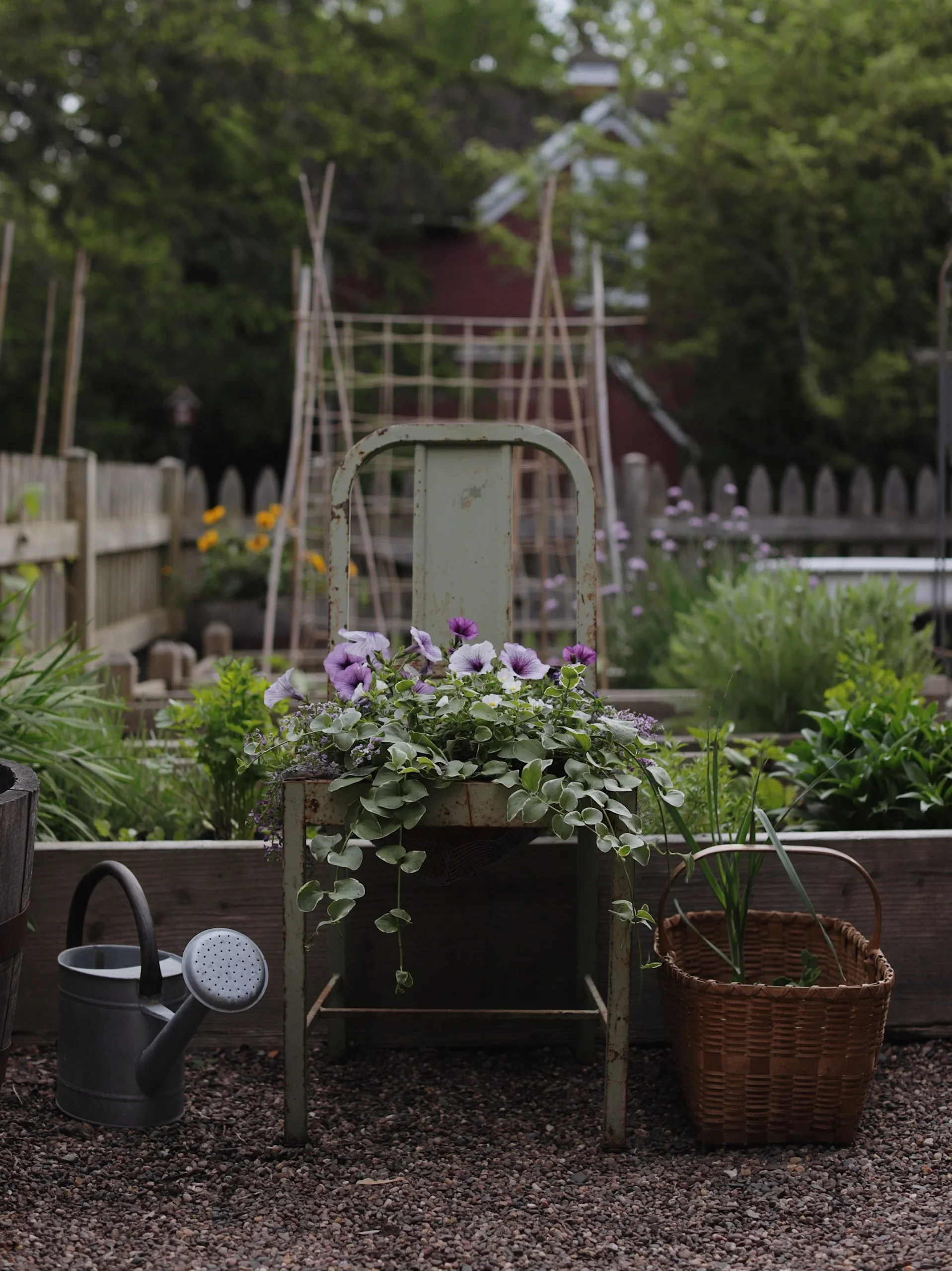
“Achieving this rustic look is all about embracing imperfection, making it incredibly budget-friendly.”
Hunt for a metal chair at flea markets or even on the curb on trash day—the more weathered, the better, and often free or under $20. A brand new galvanized watering can is inexpensive, but an older, slightly dented one from a garage sale has more character. The basket can be a thrift store find. The biggest expense might be the bag of gravel, but this whole vignette can easily be assembled for less than $50 if you’re a savvy shopper.
12. Distressed Green Chair with a Box of Primroses
The most charming element in this scene? The tiny price tag. It transforms the setup from just a pretty planter into a glimpse of a quaint flower shop or a local market. It tells a story of commerce, community, and the simple joy of selling something you’ve grown or created. This small, almost unnoticeable detail grounds the entire vignette in a relatable, real-world context, making it feel more authentic and approachable than a perfectly styled, magazine-ready shot. It adds a touch of narrative that is instantly endearing.
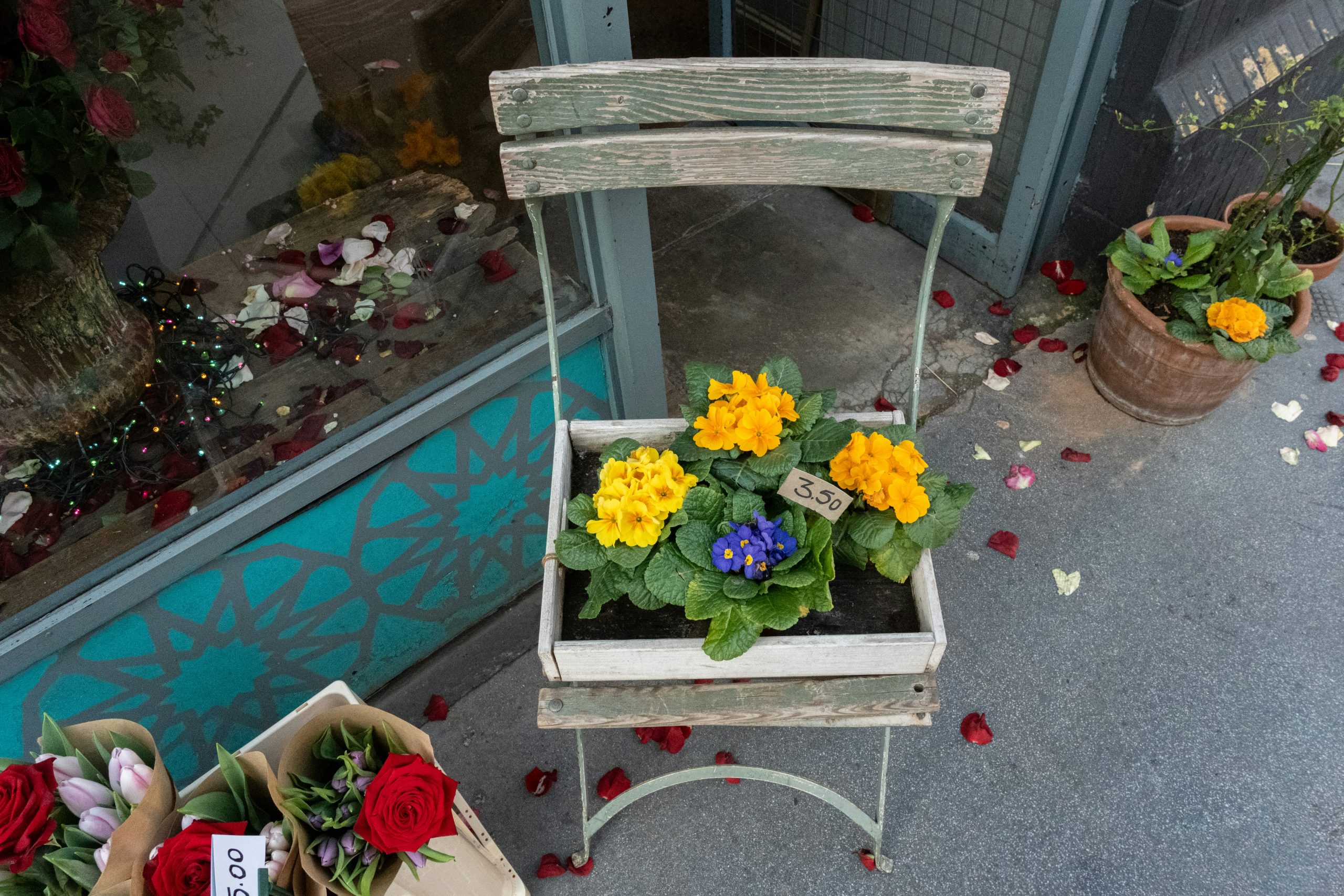
“This is a perfect idea for a small space.”
Because the planter box sits neatly on top of the chair seat, the entire footprint is contained to the dimensions of the chair itself—typically around 18×18 inches. This makes it ideal for a small front porch by the door, a tiny balcony, or tucked into a tight corner of a patio. It provides vertical interest and a pop of color without demanding a lot of horizontal space, unlike the sprawling arrangement in Idea #3.
13. Personalized Miniature Chair Holding a Planter Pot
The power of this little planter stand is its personalization. The engraved ‘Mum’s Garden’ and butterfly motifs immediately elevate it from a generic object to a cherished gift. This emotional connection is what makes certain decorative items truly special. The design works because it’s simple and direct, letting the heartfelt message be the hero. The plain green pot is the right choice, as a more decorative pot would compete with the engraving on the chair back. It’s a sweet, thoughtful piece that’s more about sentiment than horticulture.
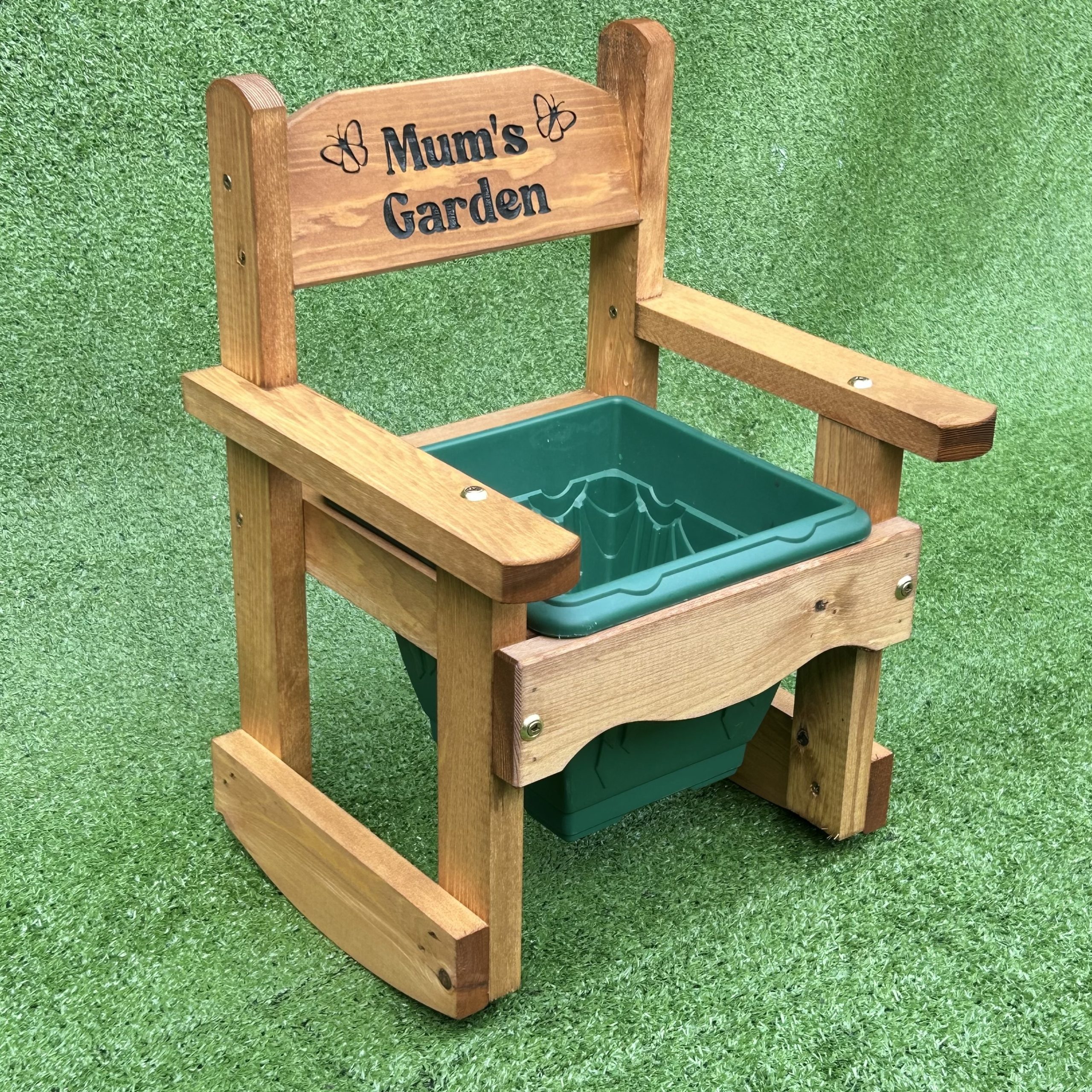
“While utterly charming, it’s important to be realistic about the material.”
This miniature chair appears to be made from unfinished, light-duty wood, likely intended for indoor or very sheltered outdoor use. If you place this directly in the garden where it’s exposed to rain and soil, it will likely warp, split, and rot within a season or two. To make it last, it would need several coats of a quality outdoor sealant. Alternatively, enjoy it as it’s meant to be: a protected and sentimental piece on a covered porch, patio table, or even a sunny windowsill.
14. Mint Green Wicker Chair with an Autumnal Coleus Plant
This autumnal scene is a beautiful exercise in complementary colors. The formula is simple: 50% cool pastels + 50% warm earth tones. The mint green wicker chair and cream cushion provide a calm, cool base. The vibrant coleus plant, with its fiery orange and deep red leaves, offers a powerful, warm contrast. The ‘Fall Sweet Fall’ pillow acts as a bridge, tying the two together. This high-contrast pairing creates a visually exciting look where both the chair and the plant are highlighted and appear more vibrant.
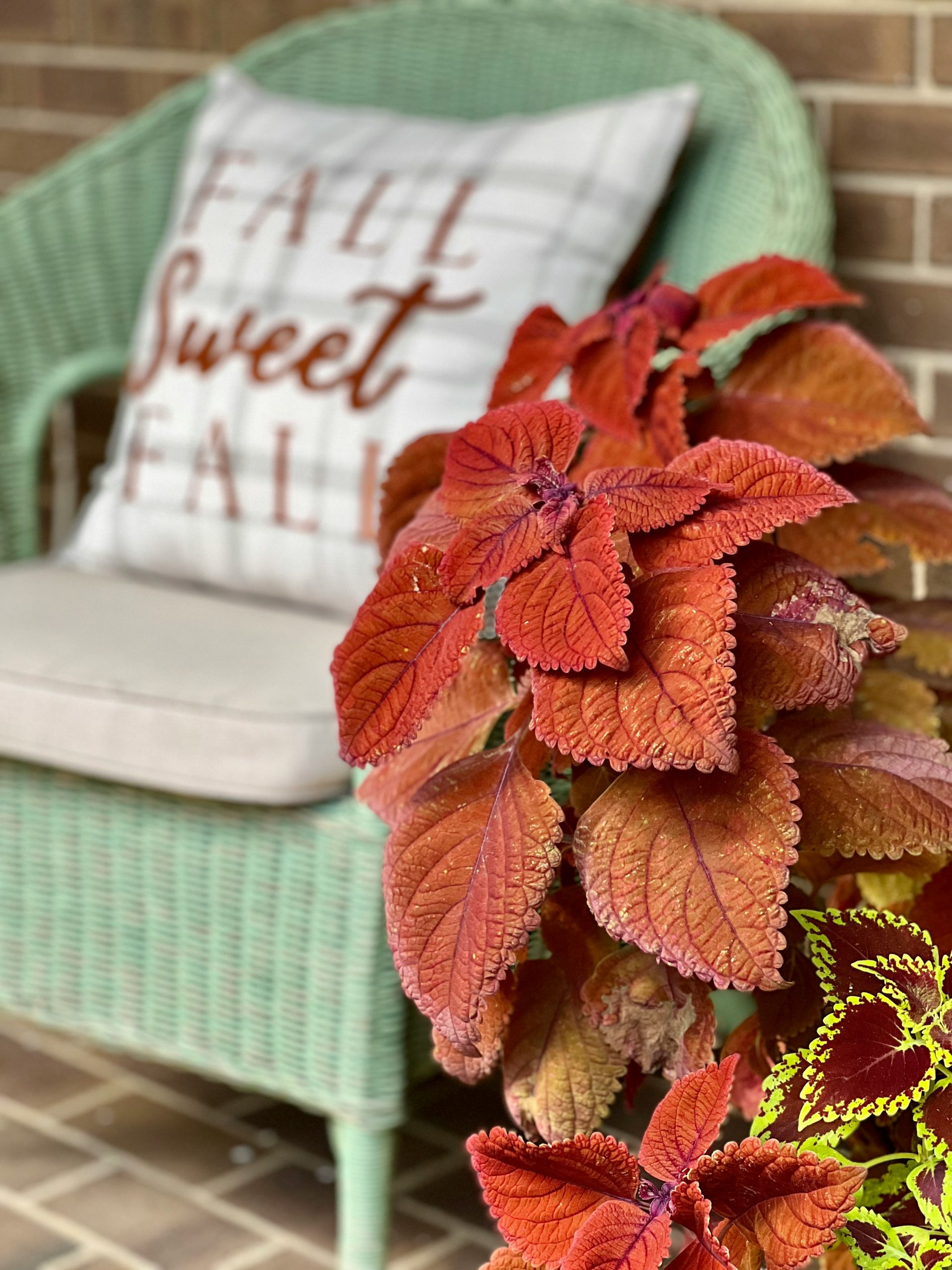
“Pairing vintage-style furniture like this wicker chair with bold, dramatic houseplants is a huge trend.”
People are moving away from minimalist, all-white interiors and embracing what’s being called ‘Dopamine Decor’—using color, pattern, and plants to create joyful, mood-boosting spaces. Coleus, with its incredible variety of colors and patterns, is having a major resurgence as people look for high-impact, low-maintenance plants. This photo perfectly captures that shift toward more expressive and colorful home decor.
15. Frame Your Patio Seating with Grand Urn Planters
Getting this plush, coordinated look requires investment in a few key areas. The large urns and substantial wicker furniture are the biggest costs, but they are what give the space its gravitas.
- Main Furniture (Sofa & Armchair): $1,500 – $3,500
- Large Urn Planters (Set of 2): $400 – $1,000
- Textiles (Cushions & Pillows): $300 – $600
- Plants & Soil: $150 – $400
- TOTAL: $2,350 – $5,500
Budget alternative: Look for resin or plastic urns instead of stone or concrete, and hunt for second-hand wicker furniture on Facebook Marketplace to save 50-70%.
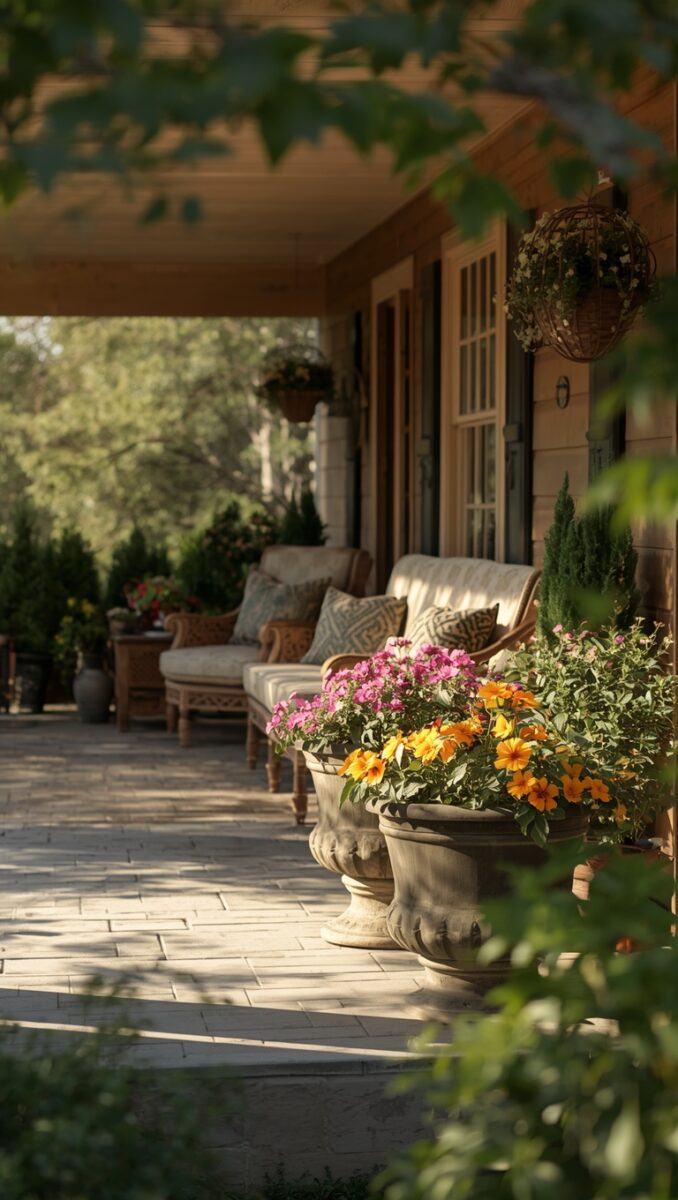
“This setup masterfully uses the principle of symmetry to create a sense of calm and order.”
The two identical urn planters act like sentinels, perfectly flanking the seating area and defining it as a distinct ‘room’ on the porch. This framing effect makes the space feel more intentional and luxurious. The repetition of color—pinks and oranges in the flowers echoed subtly in the pillows—ties the whole vignette together, creating a cohesive and professionally designed look. This is less a ‘chair planter’ and more a ‘planters with chairs’ concept, demonstrating how to create a conversation area.
16. A Playful Face Planter Rocking Among the Succulents
The single best thing about this setup is the sense of playful narrative. It’s not just a planter in a chair; it’s a character. The egg-shaped planter with its sweet smiling face, holding a tiny cup, seated in its own little rocking chair—it’s a miniature story. This anthropomorphism is what makes it so delightful and memorable. It transforms a simple potted plant into a whimsical companion, adding a touch of humor and personality that a standard pot could never achieve. It’s a mood-lifter in ceramic form.
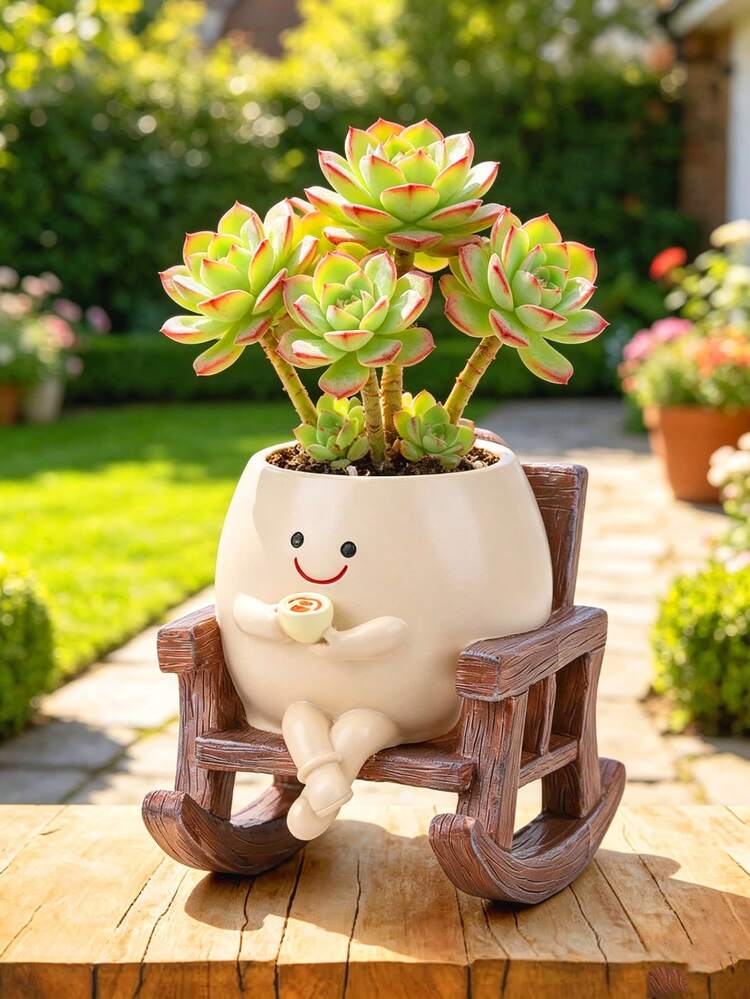
“Be aware that these novelty character planters, while adorable, are often quite small.”
This limits the type and size of plant you can use, and it means the soil will dry out very quickly, especially on a sunny day. Succulents are a good choice because they are drought-tolerant, but you will still need to monitor the moisture level carefully. Also, ensure the planter has a drainage hole. If it doesn’t, you risk root rot, which will quickly turn your happy little planter character into a sad, wilted one.
17. Whimsical Character Planter in a Miniature Rocking Chair
The charm here comes from the delightful subversion of expectation. You expect a plant to be in a pot, but you don’t expect the pot to be a character sitting in its own chair. This playful absurdity is what captures the imagination. The success of the design lies in the textural contrast: the smooth, creamy ceramic of the planter, the natural wood grain of the tiny rocking chair, the fleshy leaves of the succulents, and the ribbed, translucent glass surface it all sits on. It’s a rich sensory combination that makes the small scene feel surprisingly complex and interesting.
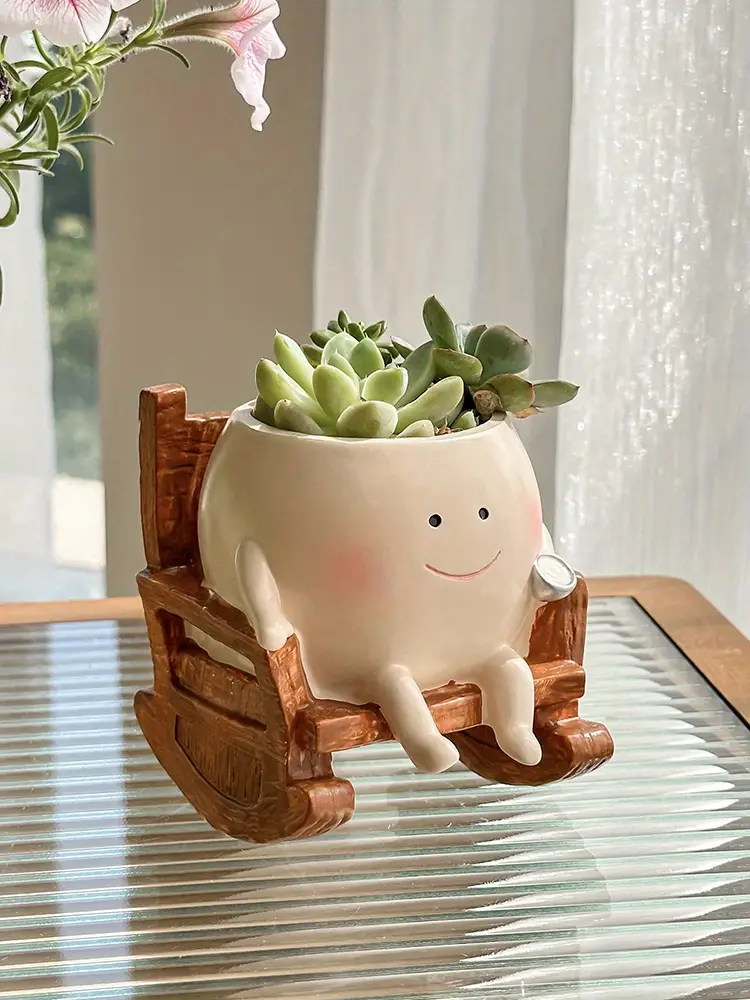
“This is the ultimate small-space solution.”
The entire vignette—chair and all—likely takes up no more than 6×6 inches of surface area. It’s perfectly proportioned for a desk, a bookshelf, a nightstand, or a kitchen windowsill. It’s a way to add a dose of greenery and personality without requiring any floor space. For those in apartments or with limited room, a collection of these miniature scenes, like this one and its cousins in Idea #18 and Idea #19, can create a wonderful indoor garden on a very small scale.
18. A Pair of Whimsical Character Planters with Succulents
When creating a decorative group like this, always work in odd numbers if possible—one, three, or five. However, if you have a pair, the key to making it look curated is to introduce variation. Notice how one character is reading a book while the other holds a cup, and the succulent arrangements are different in each. This prevents the display from looking too static or boring. If you have two identical items, create interest by placing them at slightly different angles or elevating one slightly higher than the other.
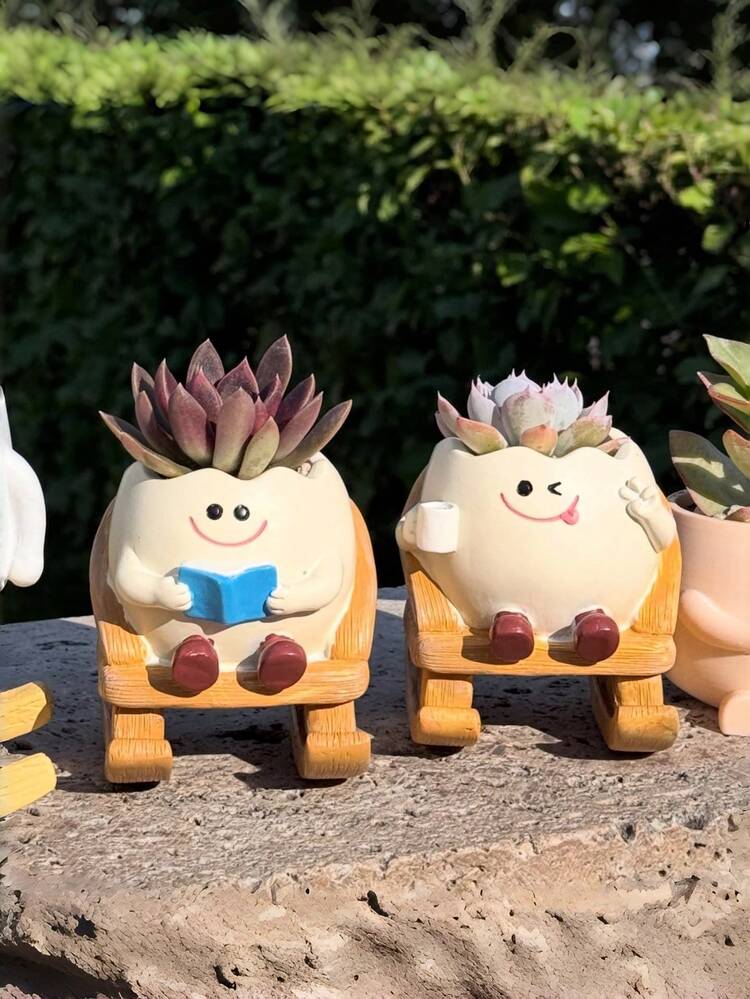
“It’s the storytelling that makes these planters so captivating.”
By giving the characters actions—one reading, one relaxing with a drink—they are imbued with personality. We immediately start to build a little narrative around them. Are they friends? What are they thinking? This imaginative spark is what separates mere decoration from something that brings a smile to your face. The chairs are essential props in this story, providing the setting for these little succulent-headed characters to live out their quiet lives.
19. Charming ‘Face’ Planters in Miniature Rocking Chairs
This vignette is successful because it uses the power of repetition with variation. We have two similar characters in two similar rocking chairs, which creates a pleasing sense of rhythm. But the variation is crucial: one plant is upright, and the other is a trailing vine that cascades dramatically. This contrast in form adds dynamism and interest, preventing the symmetry from feeling static. The long, trailing plant breaks the horizontal plane of the dark cabinet, drawing the eye downward and making the entire composition more engaging.
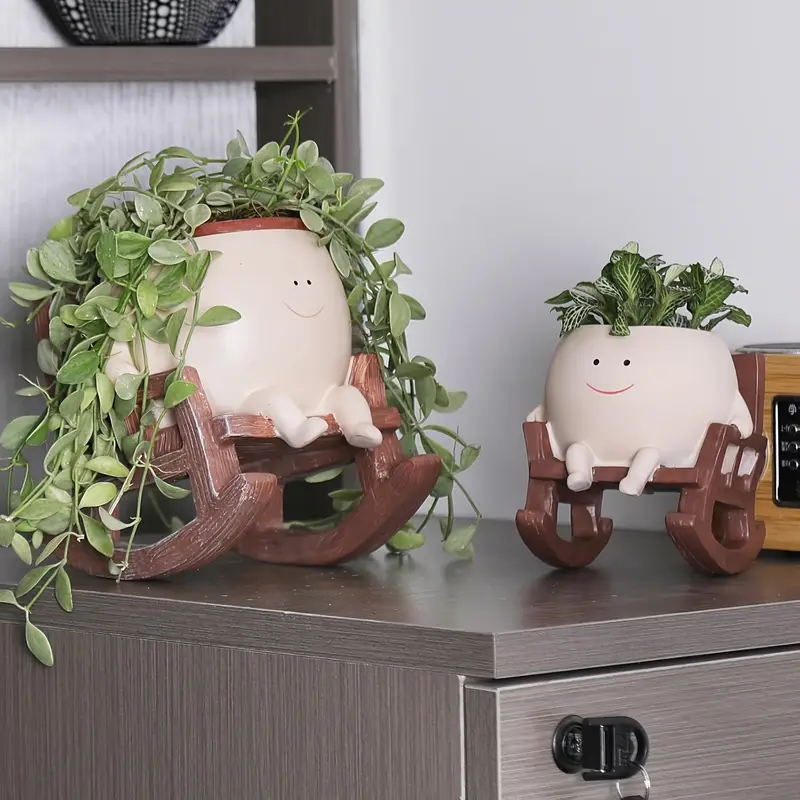
“A trailing plant this long and lush looks fantastic, but it requires a bit more care.”
The pot for this plant is quite small, yet it’s supporting a lot of foliage. This means it will likely need more frequent watering than its upright companion. Also, be mindful of where the trailing vines fall. If this cabinet were in a high-traffic area, the delicate vines could easily get snagged, broken, or brushed against constantly, which could damage the plant over time. This kind of display is best for a slightly out-of-the-way corner where it can cascade undisturbed.
20. Lush Greenery Overgrowing a Dark Wooden Chair
The single most captivating element in this photo is the water droplets. They transform a pretty scene into something magical and alive. The glistening drops on the leaves, flowers, and dark wood suggest a recent rain shower or a morning mist, evoking a sense of freshness and vitality. It makes the entire vignette feel more immersive and sensory, as if you can almost smell the damp earth and foliage. Without the water, it’s a static image; with it, it’s a moment in time in a thriving, dewy garden.
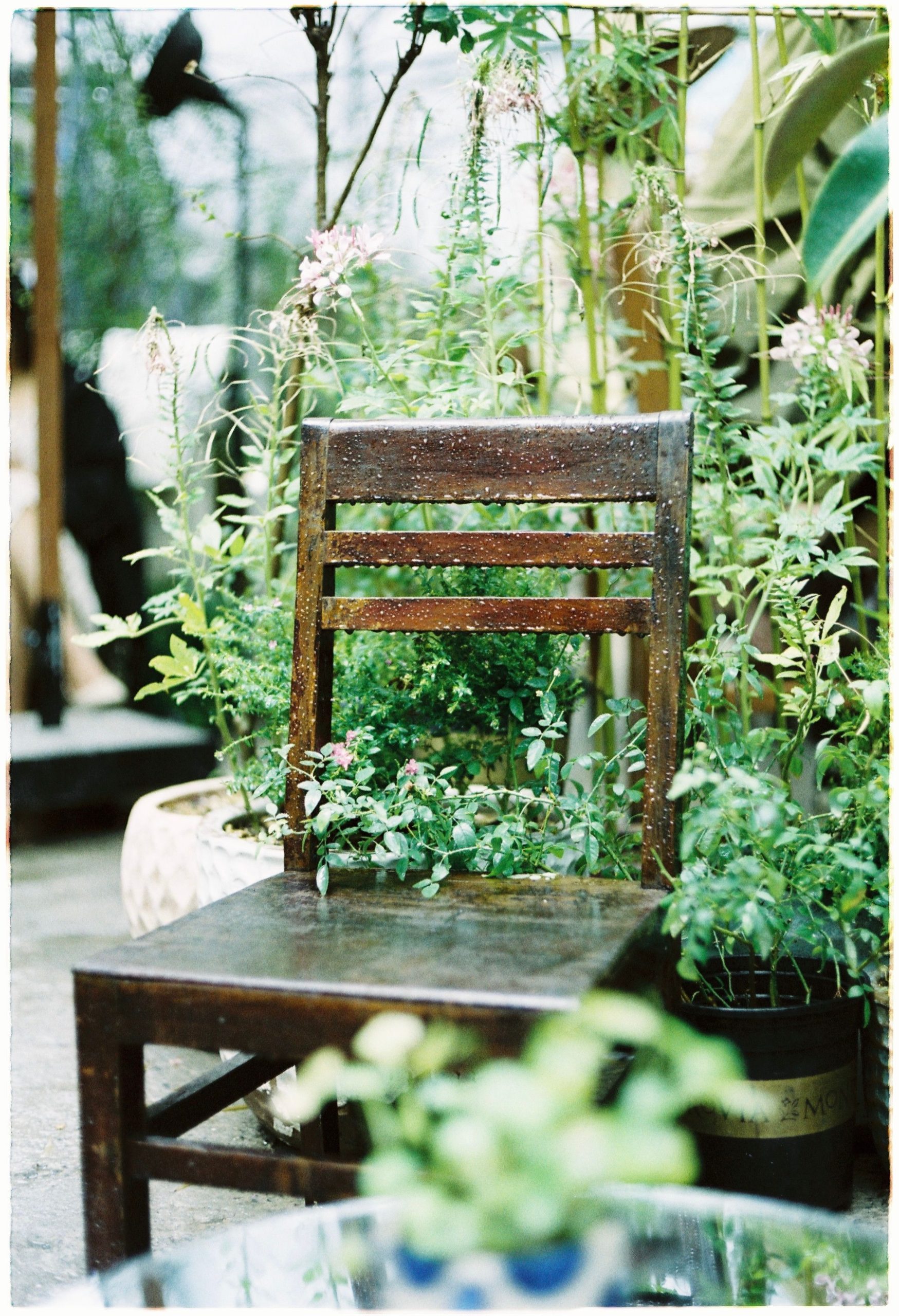
“While this overgrown, ‘lost in the garden’ look is incredibly romantic, it comes with a significant maintenance warning.”
Allowing plants to grow directly on and through a wooden chair like this will dramatically accelerate its decay. The constant moisture held against the wood by the leaves and soil is a perfect recipe for rot, mold, and insect infestation. If you love this look, either commit to it knowing the chair is a sacrificial piece that may only last a few years, or create the illusion by carefully arranging potted plants around a chair you wish to preserve.
21. Coastal-Inspired Succulent Garden in a Blue Chair
Before you commit to creating a living sculpture like this, run through this quick checklist to ensure success and longevity:
- Has the chair been sealed? If not, the wood will rot quickly. Use a marine-grade varnish for best results in a planter project.
- Do you have a spot that gets at least 6 hours of bright, direct sunlight? Succulents need this to keep their compact shape and vibrant colors.
- Is there adequate drainage? The chair seat needs plenty of holes drilled through it so water can escape freely.
- Have you secured the soil? You may need to line the seat with mesh or landscape fabric before adding soil to keep it from falling through.
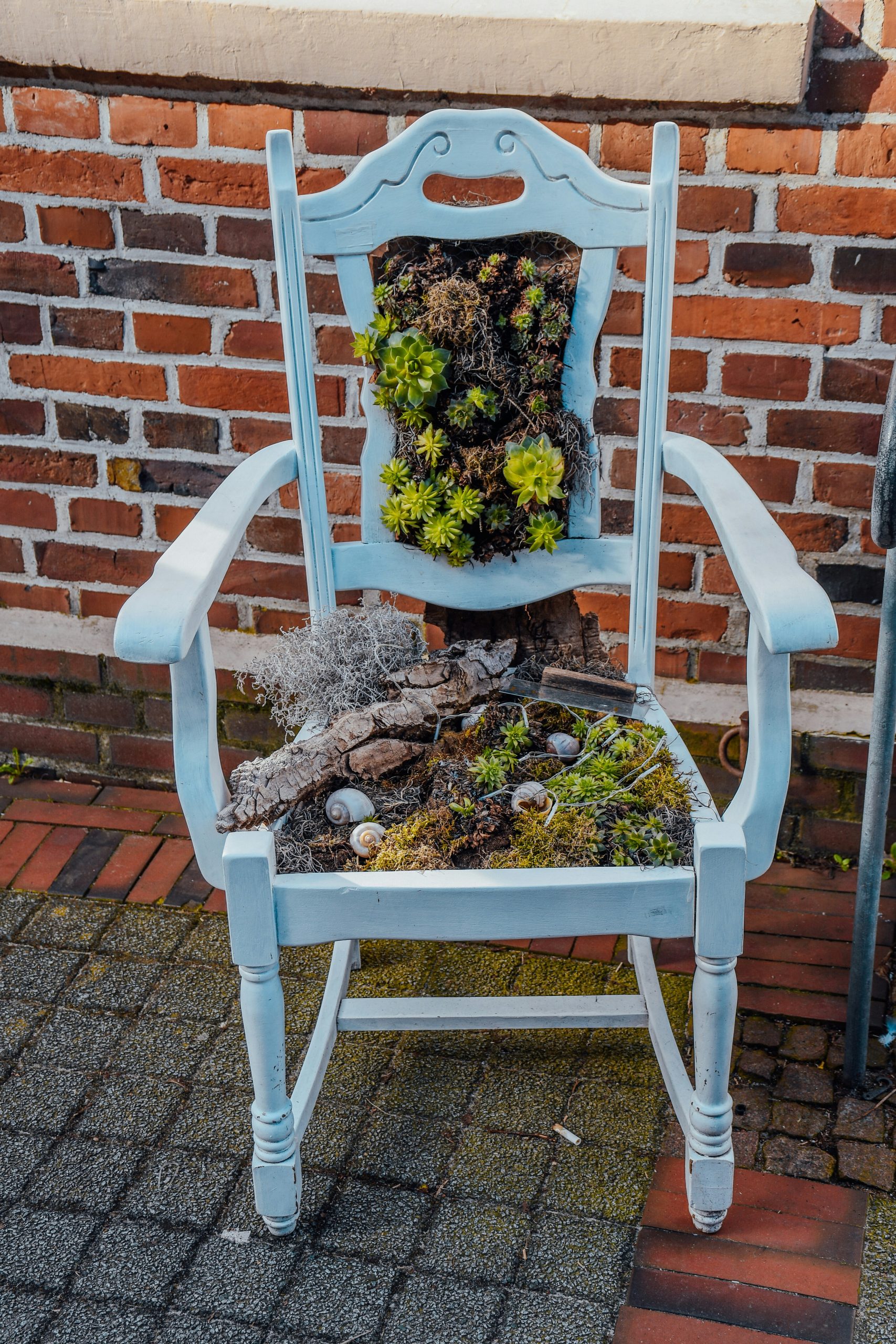
“This enchanting look is a perfect blend of woodland and seaside aesthetics.”
The formula is roughly 40% succulent greenery + 30% rustic wood + 20% natural textures + 10% coastal accents. The succulents and moss provide the lush, living element. The weathered blue chair is the structural and color foundation. Twigs and bark add a rustic, forest-floor feel. Finally, the scattered white seashells are the key ingredient that introduces a surprising coastal touch, making the whole piece feel more unique and imaginative.
22. Miniature Wicker Peacock Chair with a Variegated Pothos
The miniature peacock chair is a perfect storm of several current decor trends. First, there’s the ‘plant parent’ movement, which has made houseplants a staple of interior design. Second, the enduring popularity of Boho and 70s-inspired decor means that rattan and wicker are materials everyone is looking for. Finally, there’s a love for novelty and whimsy. This miniature version combines all three, making it an irresistible, Instagram-worthy accessory. It’s a playful nod to a major trend, scaled down to a decorative object.
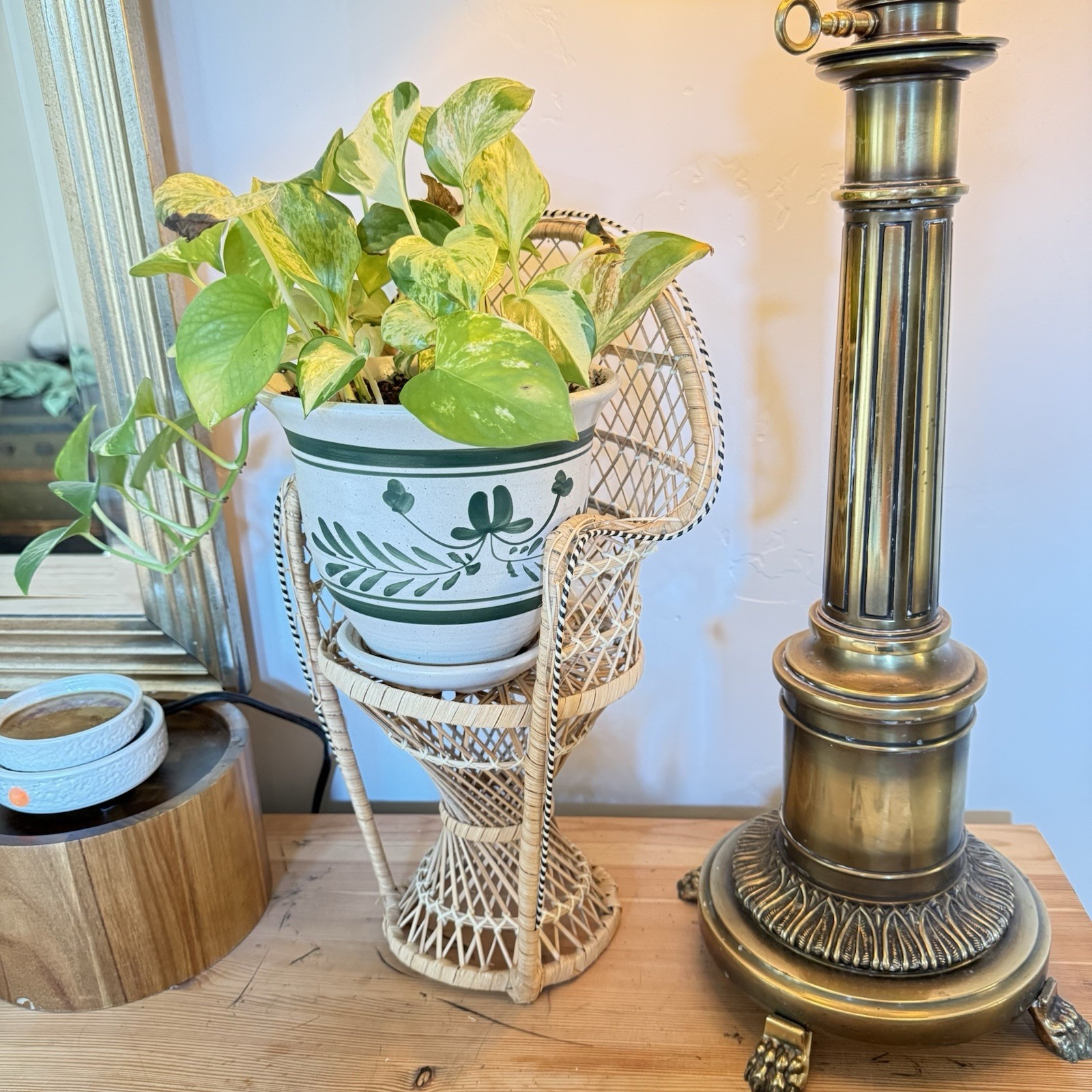
“The beauty of this idea is its versatility in terms of placement.”
Because it’s miniature, it can live almost anywhere. It’s an ideal accessory for a floating shelf, a tiered bar cart, a bathroom countertop, or styled on a stack of coffee table books. Its small footprint—likely no more than 8 inches wide and 12-15 inches tall—means it brings a big dose of style to even the most cramped of spaces. It adds verticality and texture to any little corner that needs a lift.
23. Bohemian Reading Nook with Rattan, Plants, and Salt Lamps
This corner is a masterclass in creating a cozy, bohemian vibe through layering and texture. It’s not just one thing, but the combination of many. The natural, woven texture of the rattan chair and plant stands provides the earthy base. The variety of plants at different heights creates a lush, jungle-like feeling. The masterstroke is the inclusion of the glowing Himalayan salt lamps. Their warm, pinkish-orange light adds an almost magical ambiance, creating a space that feels incredibly warm, inviting, and peaceful. The bee pillow adds a final touch of personal, graphic detail.
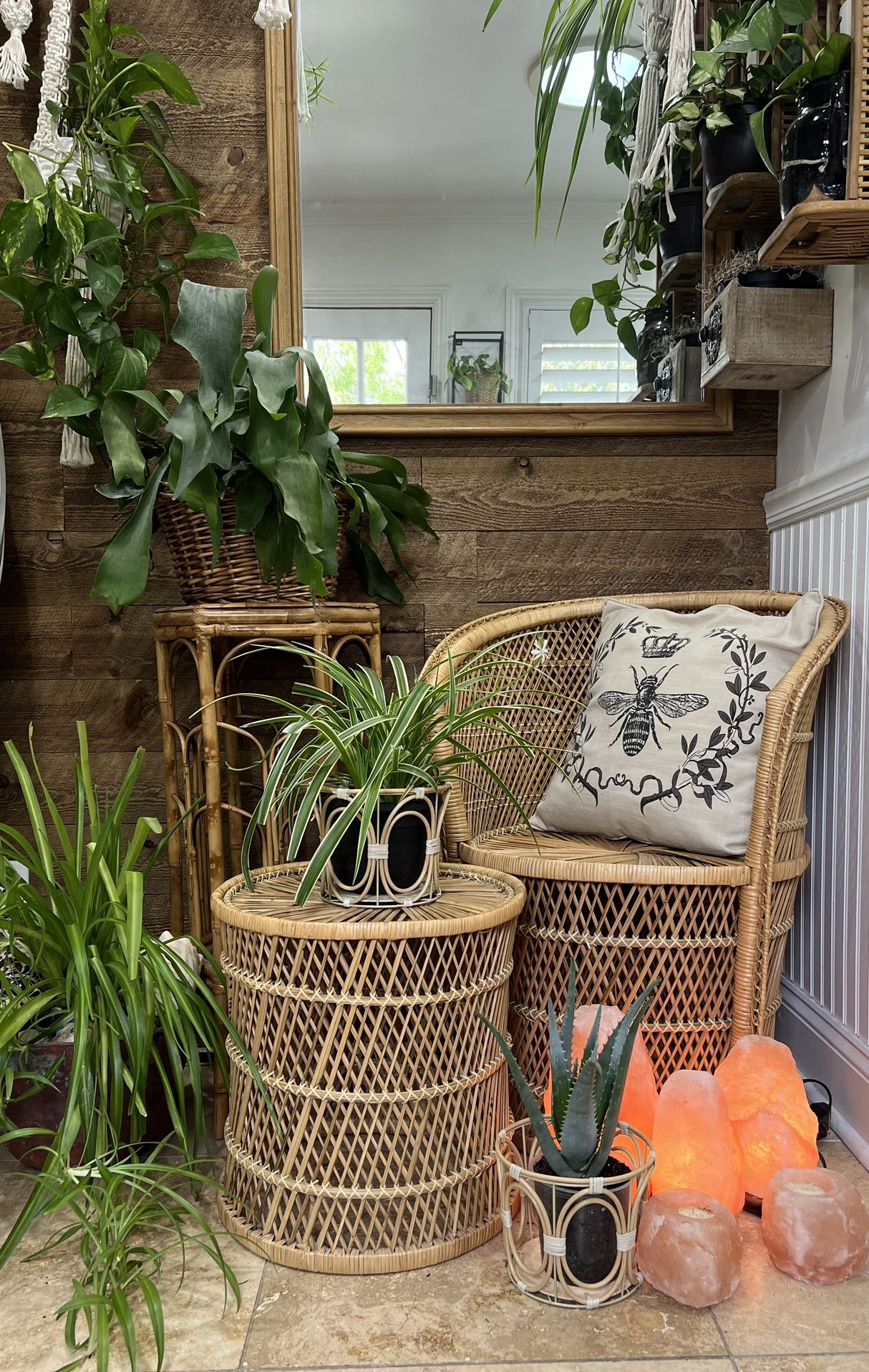
“Recreating this specific cozy corner involves layering several trendy, earth-inspired pieces.”
Here’s a potential cost breakdown:
Rattan Armchair: $250 – $700
Assorted Houseplants: $100 – $300
Rattan Plant Stands/Tables: $75 – $200
Himalayan Salt Lamps (Set of 2-3): $50 – $150
Decorative Pillow: $30 – $60
TOTAL: $505 – $1,410
Budget alternative: Thrift the rattan chair and plant stands, and propagate your own plants from cuttings to get this look for under $200.
24. Quirky Yellow Character Planter in a Rocking Chair
Personality is the one thing this planter has in spades. It’s the sheer audacity of the character design—the bright yellow color, the dark sunglasses, the grumpy red frown, the ‘cigar’—that makes it so memorable. In a world of minimalist and neutral decor, this is a loud, confident, and humorous statement. It refuses to be ignored. It’s a perfect example of how choosing decor that reflects a sense of humor can instantly inject fun and energy into a space, both indoors and out. Compare its bold attitude to the sweet faces of the planters in Idea #16.

“A word of caution about novelty planters like this one: they are often made from ceramic or resin materials that can be sensitive to extreme weather.”
If you live in a climate with freezing winters, you absolutely must bring this planter indoors. If left outside, any water absorbed into the material can freeze, expand, and cause the planter to crack and break. Think of it as a seasonal outdoor guest that needs to winter in the comfort of your home.
25. Vibrant Orange Decorative Chair with a Hot Pink Planter
This idea works because it fearlessly embraces a bold, analogous color scheme. Orange and pink sit next to each other on the color wheel, and pairing them together creates a vibrant, high-energy look that feels cohesive yet exciting. The key is that both colors are used in their most saturated form. A pale pink pot with a burnt orange chair wouldn’t have the same impact. The lush green of the plant and the surrounding garden acts as the perfect complementary color, making the hot combo of orange and pink pop even more.
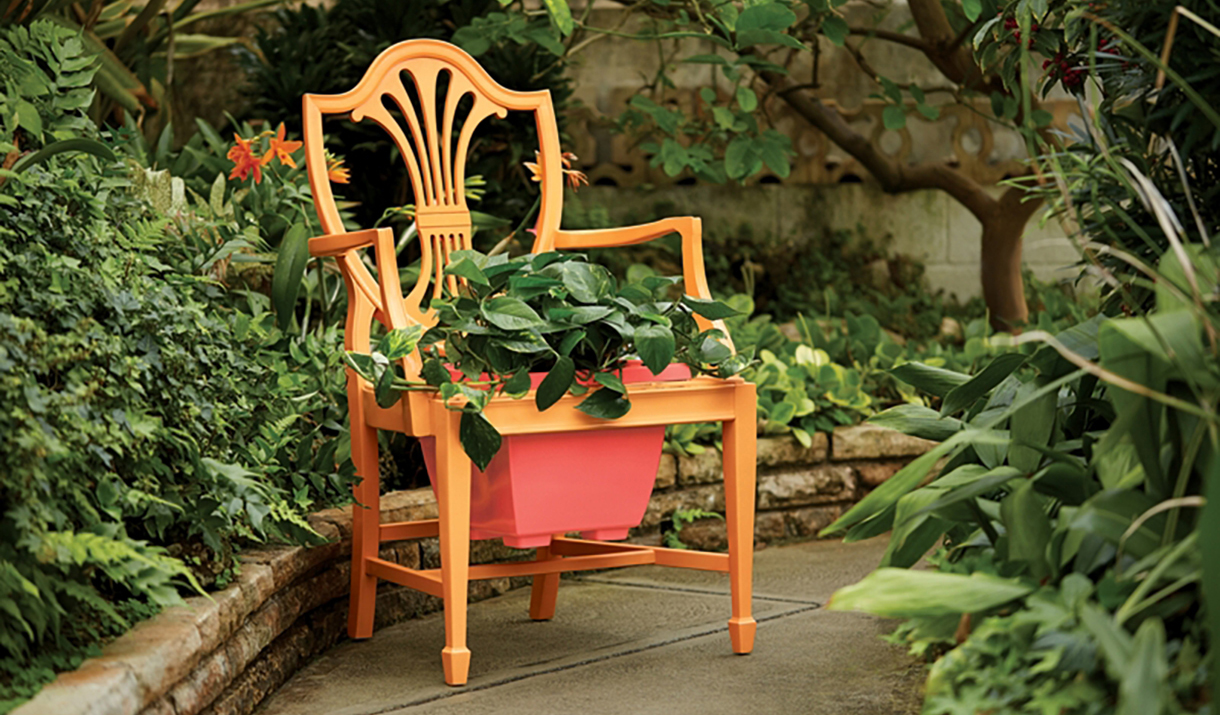
“When you’re using such a bold color combination, let it be the star of the show.”
Notice how the plant itself is simple, consisting of only green foliage. If the pot contained a mix of, say, purple and yellow flowers, the entire vignette would become visually chaotic. A simple green plant provides a calming counterpoint to the high-energy frame and pot, allowing the colors to shine without competition. If your planter is the statement, keep the plant simple.
26. Weathered Grey Garden Chair Amidst Pink Rhododendrons
This tranquil scene follows a formula of texture and subtle color: 70% natural elements + 20% rustic object + 10% accent color. The lush green foliage and dark wood chip ground cover create the dominant, natural base. The weathered grey wooden chair provides the rustic, structural element that grounds the scene. Finally, the bright pink rhododendron blossoms offer that perfect 10% pop of vibrant color, drawing the eye and adding life. The scattered petals on the ground are a bonus that enhances the romantic, ‘moment in time’ feeling.
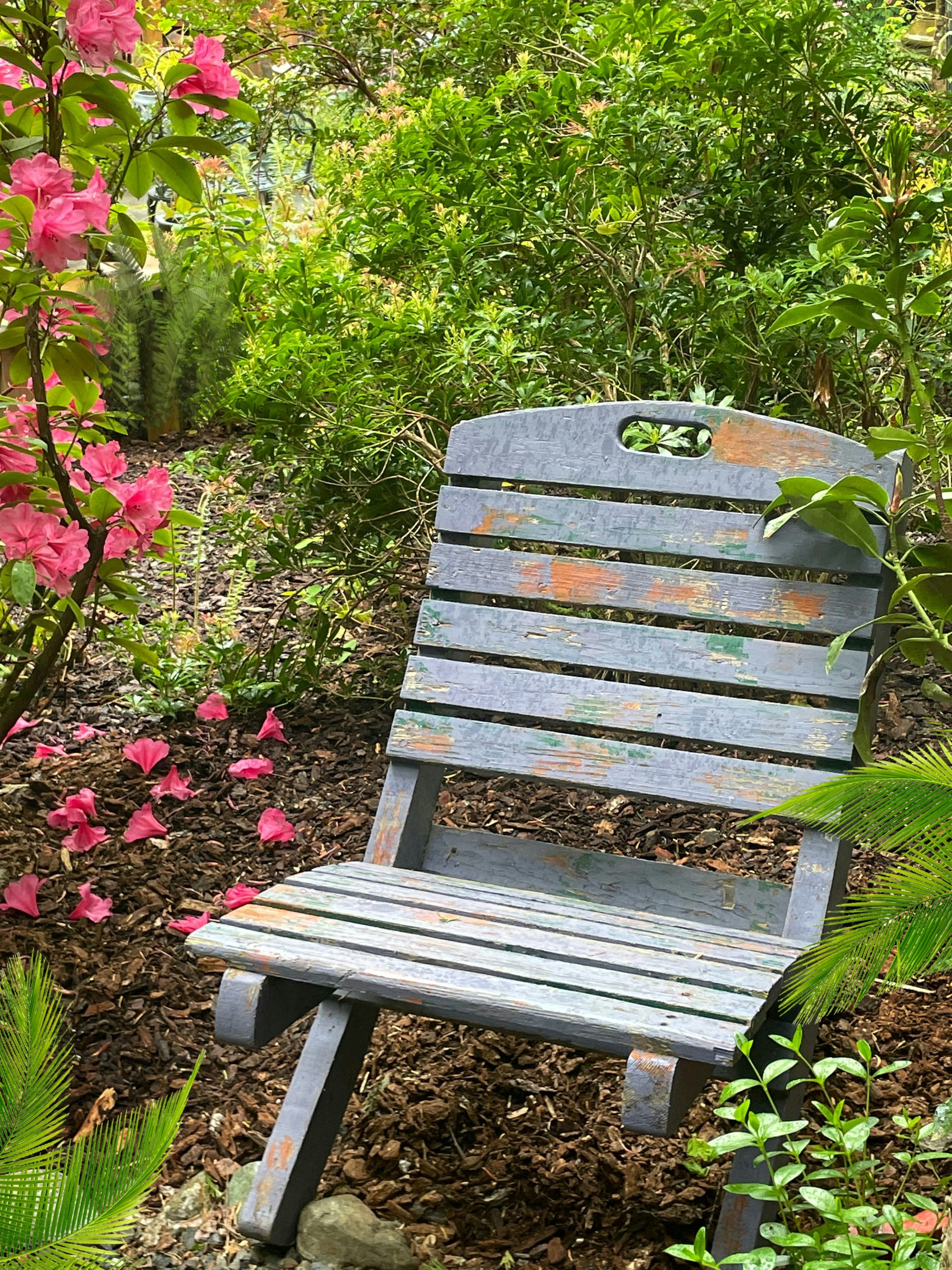
“This is the epitome of a low-maintenance ‘planter’ idea because the chair isn’t a planter at all—it’s art.”
By placing a weathered chair *among* the plants instead of filling it *with* plants, you get all the aesthetic charm without any of the work. There’s no need to worry about drainage, soil, or plant roots rotting the wood. The chair can simply sit and continue to weather naturally over the years, becoming more integrated into the garden. The only ‘maintenance’ is resisting the urge to sit on it, as a piece this weathered may not be structurally sound.
27. A Pair of Upcycled Chairs with Succulents and Soil
The single best thing about this idea is its clever use of contrast in style. You have two chairs, but they are complete opposites: one is a rigid, geometric wooden chair painted a bold lavender, while the other is a soft, curvy wicker armchair in a muted off-white. One is filled with a dense arrangement of succulents and rocks, the other holds only dark, promising soil. This juxtaposition makes the display far more interesting than if it used two matching chairs. It’s a story of different personalities coexisting in the same garden.
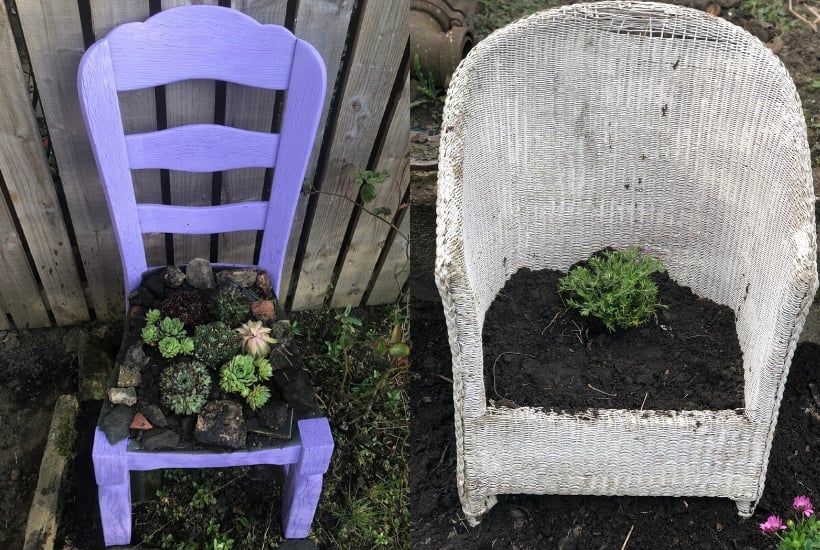
“Ready to turn a wicker armchair into a planter?”
It’s a fantastic weekend project. Here’s how:
First, line the entire seat area of the wicker chair with a double layer of landscape fabric. This will hold the soil in while allowing water to drain out.
Use a staple gun to securely fasten the fabric to the inside frame of the chair seat. Use plenty of staples!
Fill the fabric-lined basin with a quality potting mix suitable for the plants you’ve chosen.
Now you’re ready to plant! Add your chosen flowers or greenery directly into the soil.
Water thoroughly and place it in a suitable spot in your garden.
This project should take less than an hour, and the main cost is just the chair and the soil.
28. Modern Woven Chairs in a Lush, Illuminated Planter Bed
This scene is a stunning example of how to create atmosphere with lighting. The chairs and plants are beautiful on their own, but the addition of uplighting in the planter bed transforms the entire space. The light filters through the large tropical leaves, creating dramatic shadows and highlighting the rich green colors. It turns the planter bed from a simple garden element into a major design feature, providing depth, drama, and a warm, inviting glow. It shows how thoughtfully placed lighting can be just as important as the furniture and plants themselves.
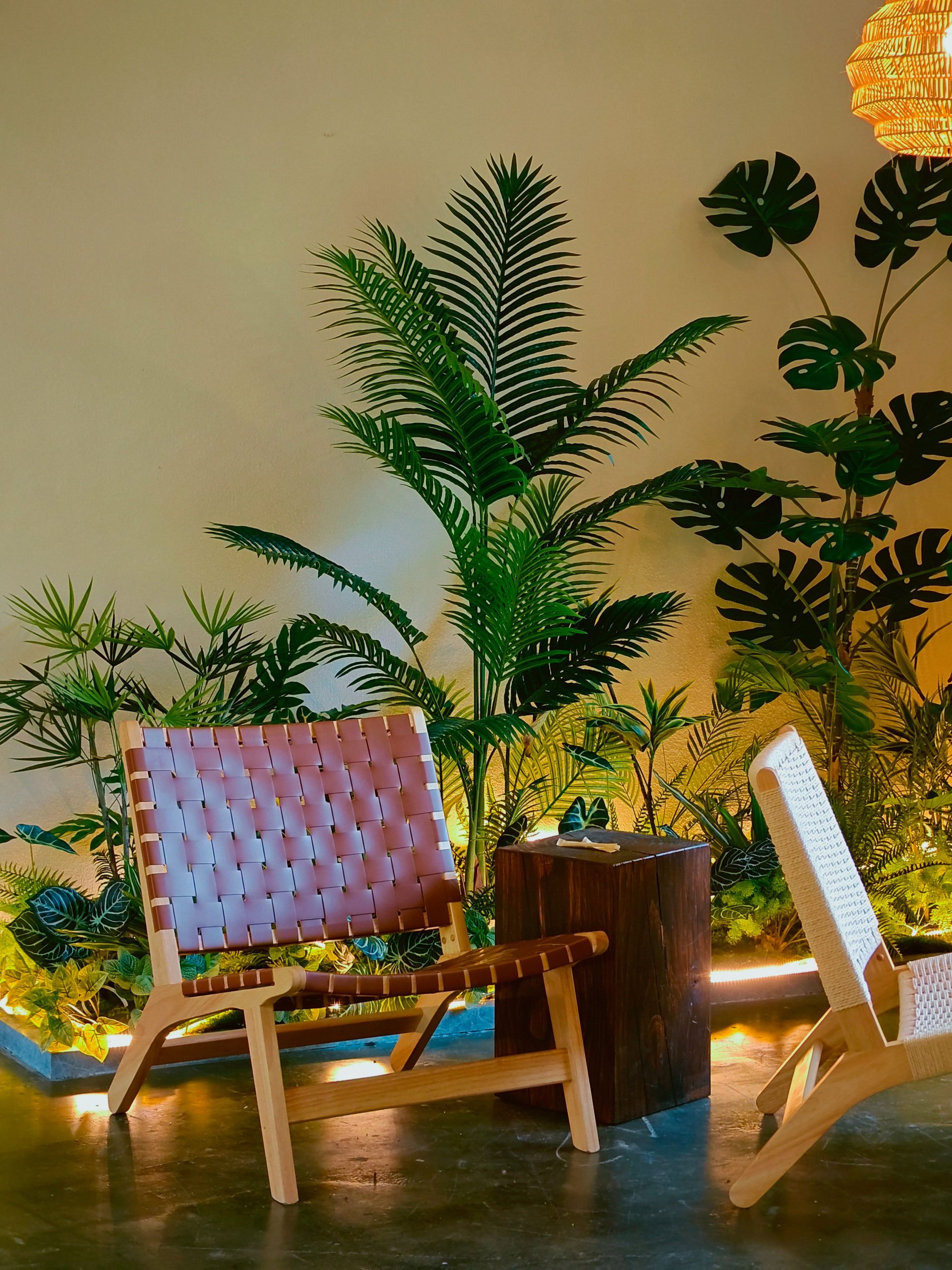
“To get this dramatic, resort-like lighting effect, use low-voltage LED landscape spotlights.”
Position them on the ground within the planter bed, aiming them upwards through the foliage. Place one light approximately every 3-4 feet. The key is to angle them so they highlight the interesting shapes of the leaves, creating silhouettes and casting dynamic shadows on the wall behind. Don’t point them directly at the wall, but rather *through* the plants to achieve this layered, professional look. Using warm white bulbs will create the inviting, cozy glow seen here.
29. Miniature Rattan Bench with a Speckled Ceramic Planter
This is purpose-built for small, decorative moments. The mini bench itself probably measures no more than 12-15 inches wide, making it a perfect accent for a narrow entryway table, a bathroom vanity, or styled on a kitchen counter. The beauty of this idea is its asymmetry; by placing the single plant pot to one side, you create a more dynamic and visually interesting composition than if it were centered. The empty space on the bench is just as important, as it gives the piece room to breathe and feels more casual.
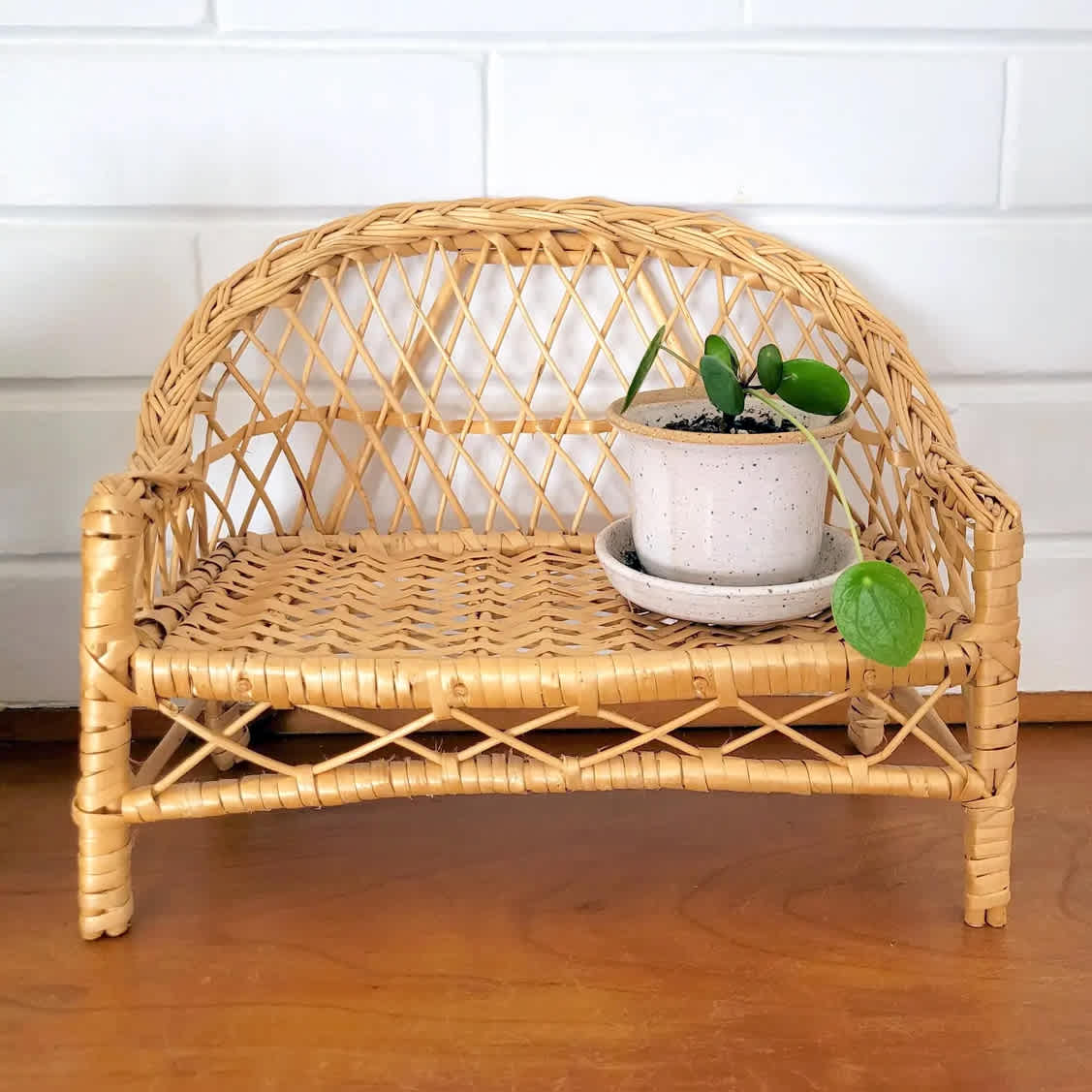
“You don’t need to find this exact miniature bench to get the same vibe.”
Look for small wooden stools, children’s chairs, or even decorative crates at thrift stores or on clearance at craft stores like Michael’s or Hobby Lobby. A simple wooden stool, which you can find for $10-$20, can serve the same purpose of elevating a special plant. Pair it with an interesting ceramic pot from a store like Target or HomeGoods for another $15, and you have a stylish, elevated plant display for under $35.
Your Garden’s New Favorite Seat Awaits
Now that you’re filled with inspiration, the fun part begins: hunting for that perfect chair to transform. Whether you start with a family heirloom or a flea market find, you’re on your way to adding a touch of personality and life to your space. Don’t forget to save your favorites to your Pinterest board to keep the ideas handy!