You know that feeling when you finally find the DIY water feature that looks exactly right for your garden? You save it, you stare at it, but figuring out how to actually make it happen feels like a whole other project. That’s where this guide comes in. We filtered through hundreds of options across sites like Wayfair, The Home Depot, and even custom landscape suppliers to bring you only what’s worth your time and energy. From a simple pot fountain you can make for under $150 to a full backyard pond that might run up to $5,000, we’ve got you covered.
Inside, you’ll find 29 curated ideas covering everything from naturalistic ponds and rustic stone waterfalls to modern tiered fountains. We break down what makes each one work, what it costs, and how to get the look. These designs are trending on Pinterest right now because homeowners are craving a personal, serene escape right in their own backyards—a little piece of tranquility away from the noise. 📌 Pin this guide for later — your future self will thank you when it’s time to get started.
1. Create a Serene Escape with a Multi-Level Koi Pond
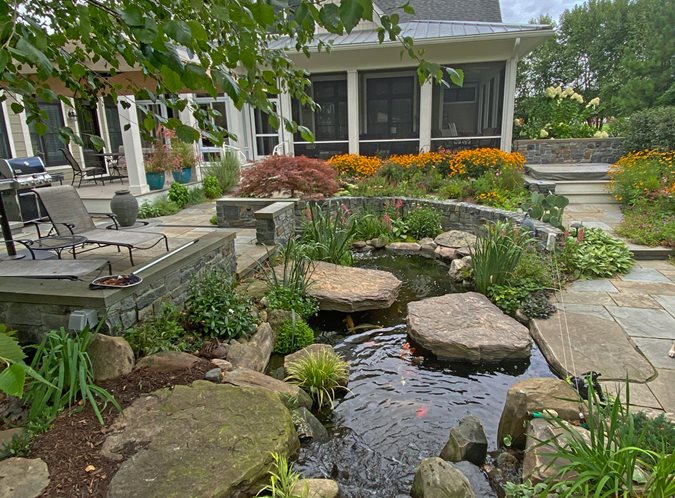
This design feels so lush and established because it brilliantly uses multiple levels. The upper patio serves as a viewing deck, while the lower level brings you right to the water’s edge. This separation creates distinct ‘rooms’ in the landscape, making the whole area feel larger and more dynamic. The integration of the stone retaining wall with the pond’s rock border makes the water feature feel like a natural, inevitable part of the terrain rather than a modern addition.
“Recreating a koi pond of this scale is a significant but rewarding investment.”
The cost varies widely based on size, depth, and whether you do the excavation yourself. Using authentic, large mossy rocks will be a primary material cost. Pond Liner & Pump System: $500 – $1,500Stone & Boulders: $1,000 – $3,000+Koi Fish & Aquatic Plants: $300 – $800Patio Pavers & Base Material: $800 – $2,500TOTAL: $2,600 – $7,800+Budget alternative: Start with a smaller pre-formed pond shell ($200-$500) and build a simple rockery around it, expanding later.
2. Build a Natural Boulder Cascade in Your Garden
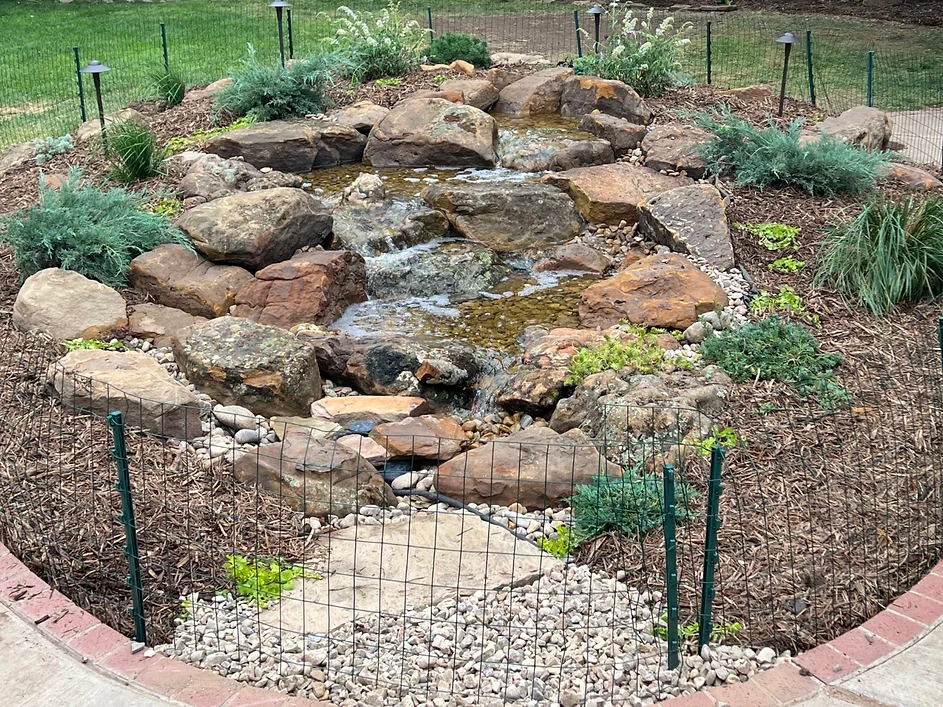
When creating a waterfall with natural boulders, the secret to a professional sound and look is varying the rock placement. Don’t just stack them. Place a few larger, flat ‘spillway’ stones at different heights where you want the water to visibly sheet and fall. Then, fill in around them with smaller rocks to direct the flow. For a 3-foot-tall cascade like this, you’ll want a pump with a flow rate of at least 300-400 gallons per hour (GPH) to get a satisfying, babbling sound instead of a weak trickle.
“A feature like this that is nestled into a mulched garden bed requires regular upkeep to stay looking sharp.”
Decaying leaves and mulch will inevitably get into the water system, potentially clogging your pump’s intake filter. Plan on spending 20-30 minutes every other week during the fall skimming debris. Algae can also be an issue on sun-drenched rocks; a once-a-month scrub with a stiff brush or an eco-friendly algaecide treatment will keep the stone looking clean and natural.
3. Add Whimsy with a Stone Bridge Over a Koi Pond
The single element that elevates this pond from pretty to magical is the stone bridge. It does more than just span the water; it creates a story. It invites you to pause and look down at the fish, introduces a sense of journey and discovery, and makes the small waterfall feel like a more significant, natural tributary. Without the bridge, it would just be a pond with a rock pile. With it, the space has a narrative and a focal point that draws the eye immediately.
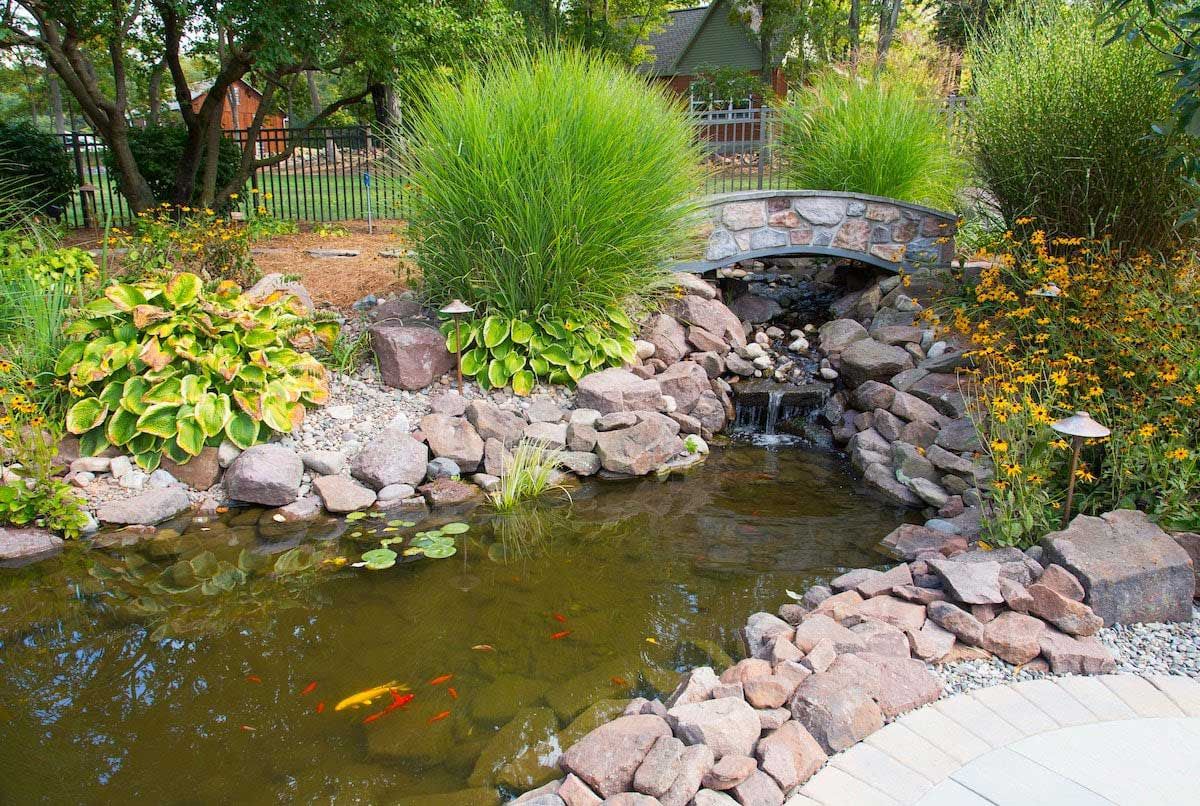
“An idea involving a bridge, even a small one, needs a bit of room to feel right.”
For this concept to work without feeling cramped, you’ll want a pond surface area of at least 100 square feet (e.g., 10×10 ft). The bridge itself needs to be proportional, so the waterfall and stream it crosses should be at least 3-4 feet wide. This is a great mid-to-large size yard feature. For a more compact approach without a bridge, look at the boulder cascade in Idea #2.
4. Go Rustic with a Galvanized Stock Tank Water Garden
Here is your ultimate budget-friendly garden pond. A galvanized stock tank gives you an instant, durable, and surprisingly chic container for a fraction of the cost of an excavated pond. A large 8-foot-diameter tank can be found at farm supply stores for $400-$600, a massive saving compared to the thousands you might spend on a custom installation. The rustic metal finish contrasts beautifully with soft green foliage and the warm tones of the surrounding brick patio, proving you don’t need a huge budget for a high-impact feature.
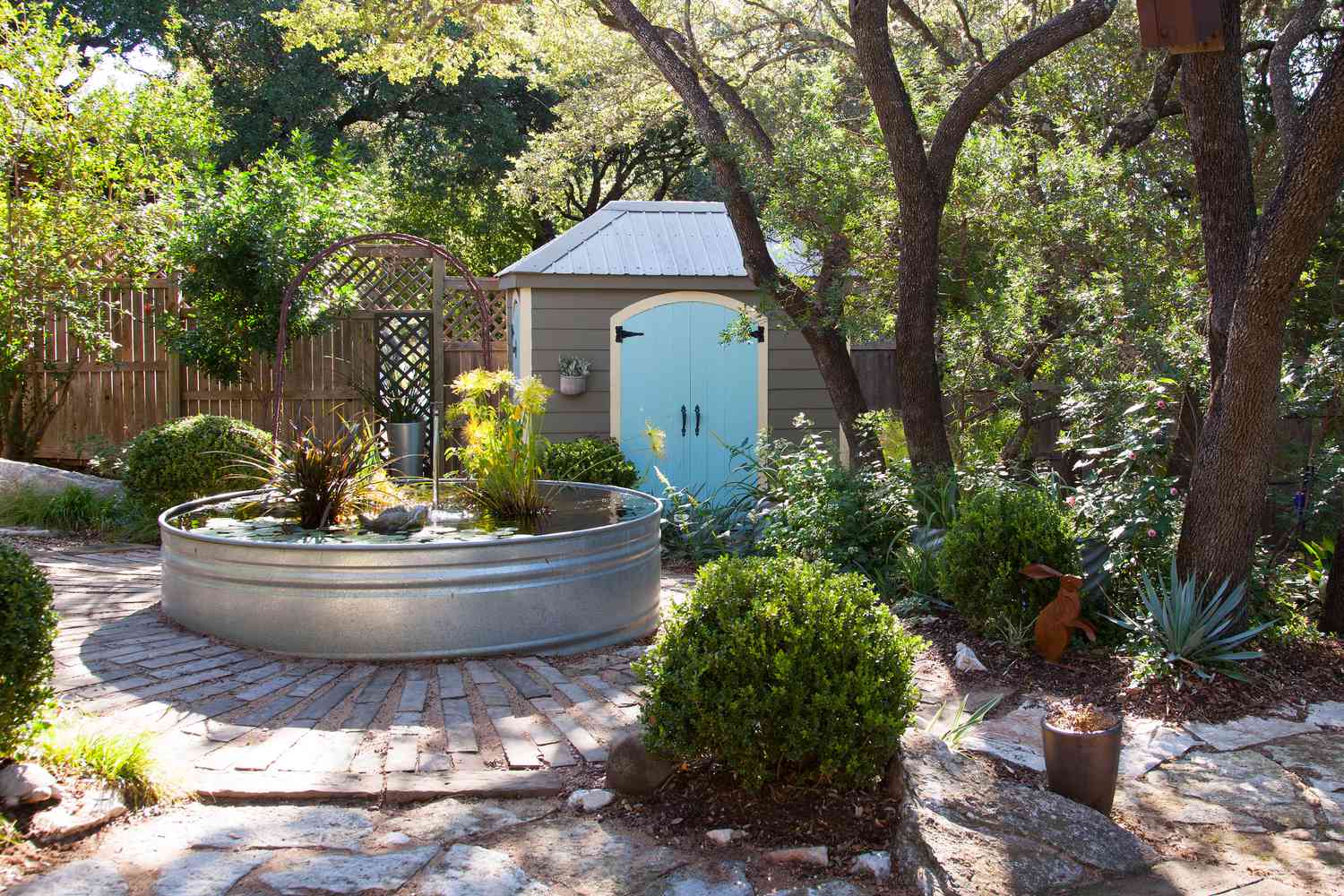
“Setting up your own stock tank pond is a perfect weekend project.”
Time: 2-3 hours. Cost: $50-$150 (plus the tank itself). Choose and level your spot perfectly. A full tank is incredibly heavy, so get this right!Install a small pond pump or even a simple solar-powered bubbler to keep the water moving and prevent mosquitos.Add a layer of pea gravel or river stones to the bottom to help anchor plant pots.Place your aquatic plants, like water lilies and hyacinths, on submerged cinder blocks or milk crates to get them to the right height.Fill with water and enjoy!
5. Classic Backyard Stone Fountain Design
While the idea of a classic stone fountain is timeless, the reality involves some heavy lifting—literally. Cast stone and concrete fountains can weigh hundreds of pounds. This isn’t a one-person job. You’ll need to prepare a perfectly level, stable base of compacted gravel or concrete to prevent it from tilting over time. Also, consider your power source before you fall in love; you’ll need to run a GFCI-protected electrical line to power the pump, which may require a licensed electrician.
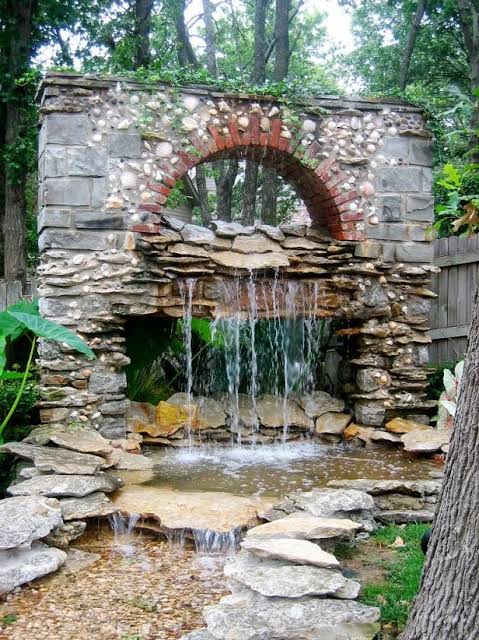
“The enduring appeal of this look comes down to a simple formula that feels both elegant and natural.”
It’s about 60% classic stonework (the fountain itself), 30% lush, unstructured greenery ( surrounding shrubs and lawn), and 10% hardscape context (a simple stone path or patio). You could swap the materials while keeping the ratio: imagine a sleek, dark metal fountain (60%), surrounded by ornamental grasses (30%), set in a bed of black river rock (10%) for a more modern take on the same principle.
6. Install a Stately Three-Tier Fountain as a Focal Point
A formal fountain makes a statement, but it requires some planning. Don’t even think about ordering one until you’ve checked these boxes.
- Can you create a perfectly level pad? A 4-inch thick concrete or compacted paver base is essential.
- Where is your power? The pump will need a weatherproof outdoor GFCI outlet. Is there one nearby, or will you need to hire an electrician?
- What is the ‘splash zone’? A fountain this size will create overspray on a windy day. Ensure it’s not right next to a wooden fence or structure that could suffer from constant moisture.
- Do you have a water source nearby for easy refilling during hot, dry spells?
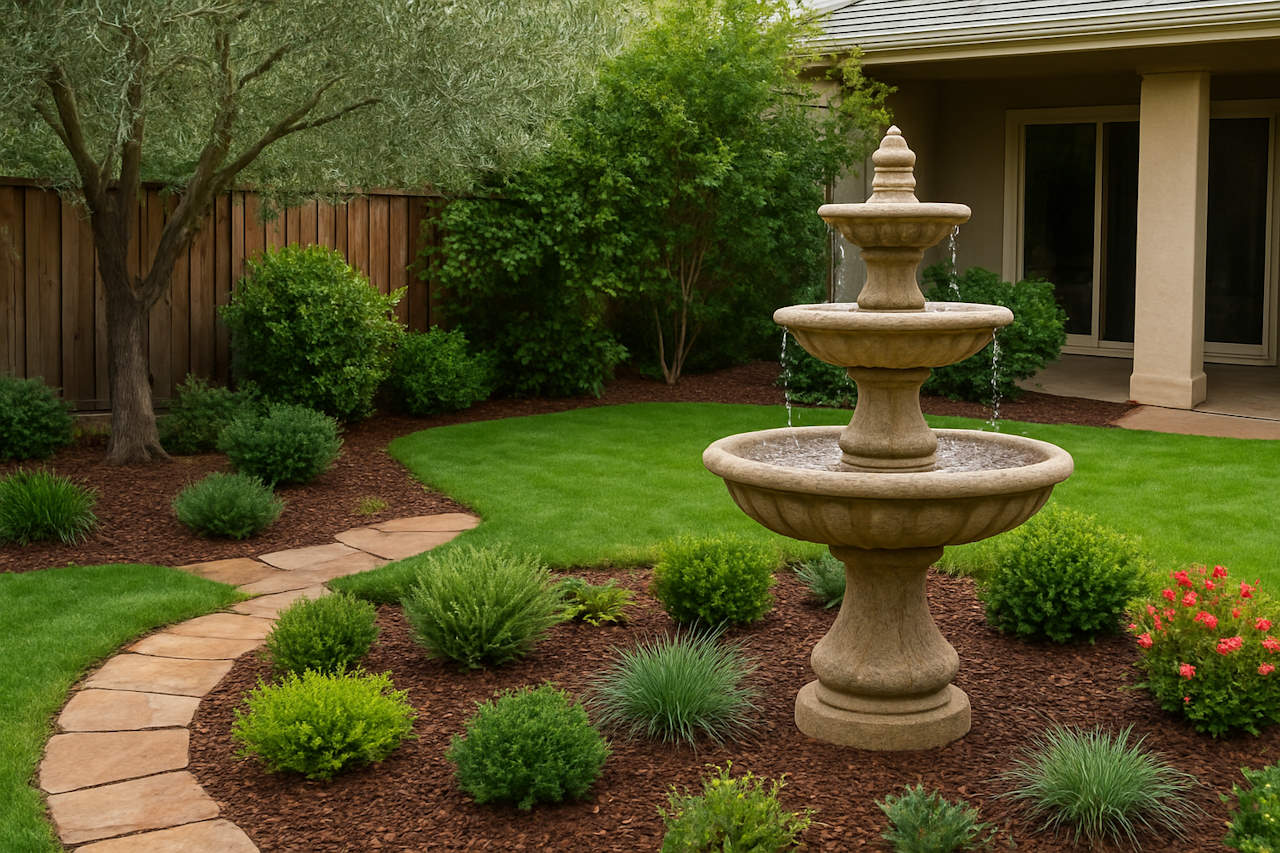
“There’s a reason grand, traditional fountains are cycling back into style.”
In a world of fleeting trends, people are craving a sense of permanence and classic beauty in their gardens. This style feels established and timeless, connecting the landscape to historical European gardens. It’s a reaction against the overly rustic, sometimes messy look of recent years, offering a return to structure, symmetry, and a clear, elegant focal point that anchors the entire backyard design.
7. Create a Formal Patio with a Tiered Black Fountain
This design absolutely nails the concept of a garden ‘room’. The dark green fence acts as the walls, the light pavers are the floor, and the two benches provide the seating. The black fountain is the undeniable focal point, like a dramatic chandelier. The strong color contrast between the black fountain, green fence, and light pavers is what creates such a crisp, high-impact look. The repetition of spheres in the shrubs and the curves in the fountain’s tiers adds a soft, satisfying geometry.
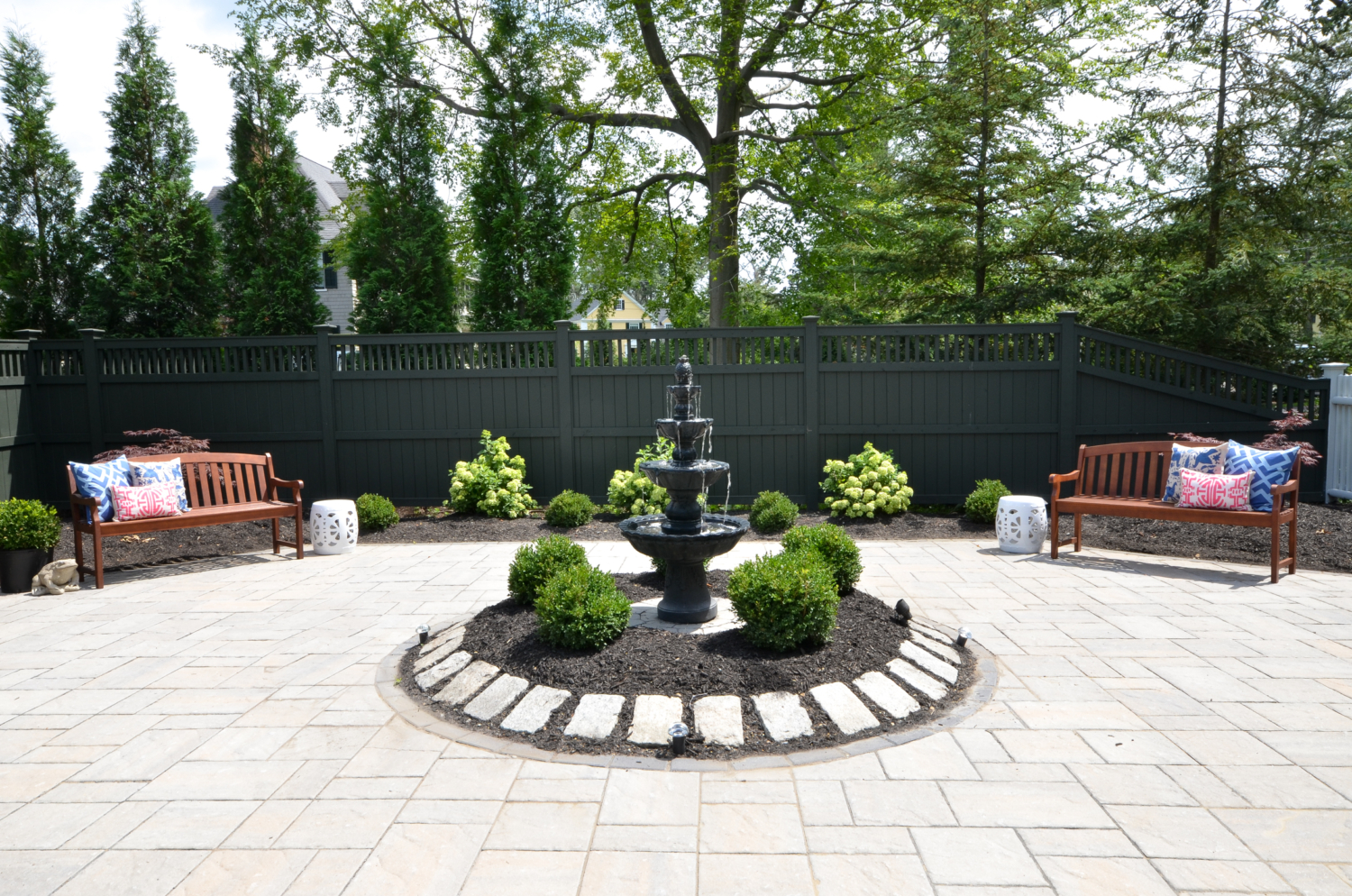
“To recreate this look, pay close attention to the ground plane.”
The light-colored pavers are key to making the black fountain pop. A dark mulch or dark stone would absorb all that beautiful contrast. When choosing pavers, opt for a larger format (e.g., 12″x24″) and a simple running bond pattern. This creates a calmer, more modern foundation than busy, smaller pavers would. While the three-tiered form is similar to Idea #6, notice how the black finish and surrounding pavers create a more formal, contemporary mood.
8. Embrace Rustic Charm with a Cascading Bowl Fountain
The single element that gives this fountain its charm is the texture. The bowls aren’t smooth concrete; they have a rough, sandy, almost hand-thrown appearance. This texture connects the piece to the natural materials around it—the river rocks at its base and the slightly weathered pavers. The copper-toned spouts add another layer of rustic, aged material. If this fountain were made of smooth, polished stone, it would feel far too formal for this relaxed garden setting.
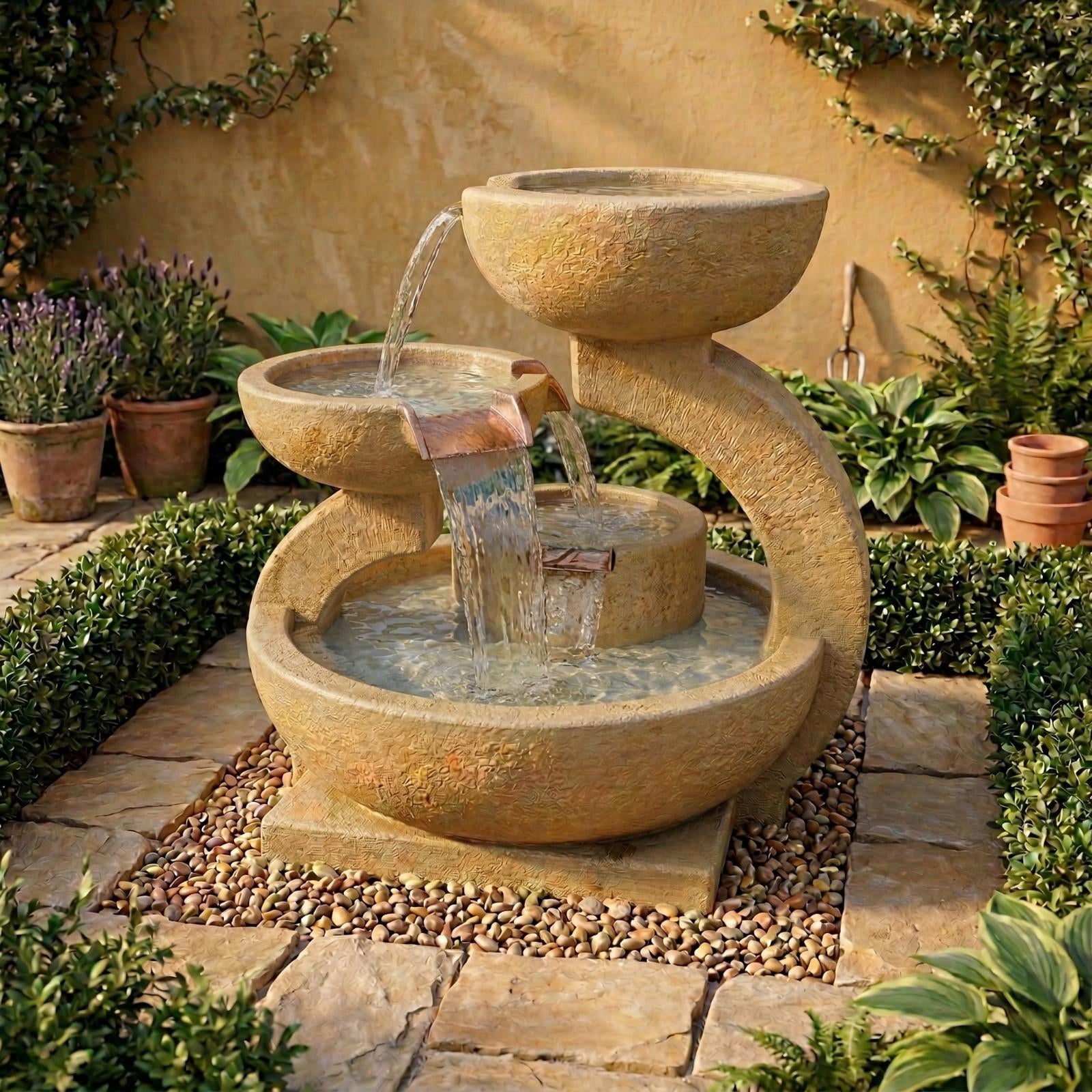
“A fountain with a river rock base looks great, but it’s a magnet for leaves, twigs, and dirt.”
To keep it looking fresh, you’ll need to do a ‘deep clean’ at least twice a year. This involves turning off the fountain, scooping out all the river rocks, and rinsing them in a bucket or wheelbarrow to remove accumulated grime and algae. It’s also a good time to fully drain and clean the fountain’s basin and pump before replacing the clean rocks. It’s a bit of work, but essential for its long-term beauty.
9. Design a Naturalistic Pond with a Wooden Bridge
The formula for this gorgeous rustic scene is all about balancing natural textures. Think of it as: 50% rugged stone (the pond border and fountain column), 30% lush greenery (the hostas and surrounding plants), 15% moving water (the pond and cascade), and 5% warm wood (the bridge). That little splash of wood is crucial; it adds a touch of human-made warmth and structure to an otherwise wild-feeling composition, inviting you to interact with the scene.
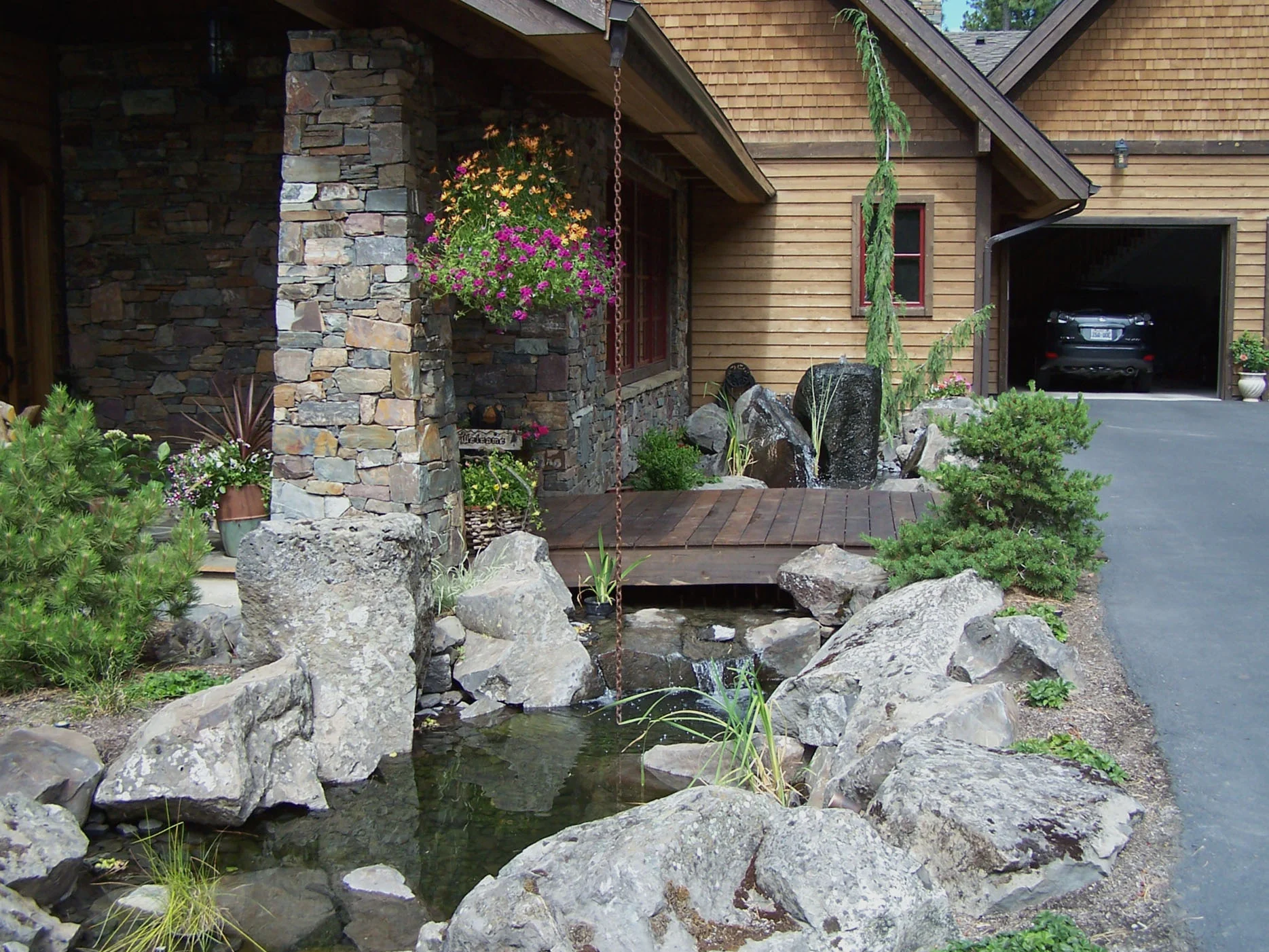
“Let’s be honest about an open pond like this: it requires a commitment to maintenance.”
You’re essentially managing a small ecosystem. Skimming leaves, managing string algae, ensuring your pump and filter are working correctly, and checking water parameters are all part of the deal. It’s also a potential safety hazard for very young children or pets. While stunning, this is not a ‘set it and forget it’ feature. It’s for the homeowner who truly enjoys the process of gardening and tending to the landscape.
10. Build an Autumnal Water Feature with Mossy Rocks
This feature works because it fully embraces its environment and the season. The designer didn’t try to fight nature; they leaned into it. The dark, wet stone perfectly complements the rich tones of the fallen autumn leaves, turning them into a design element rather than just debris. The growth of moss is encouraged, adding a layer of authenticity and age. The water’s path seems random and natural, as if it carved its way through the rocks over centuries, which is the ultimate goal of a naturalistic design.
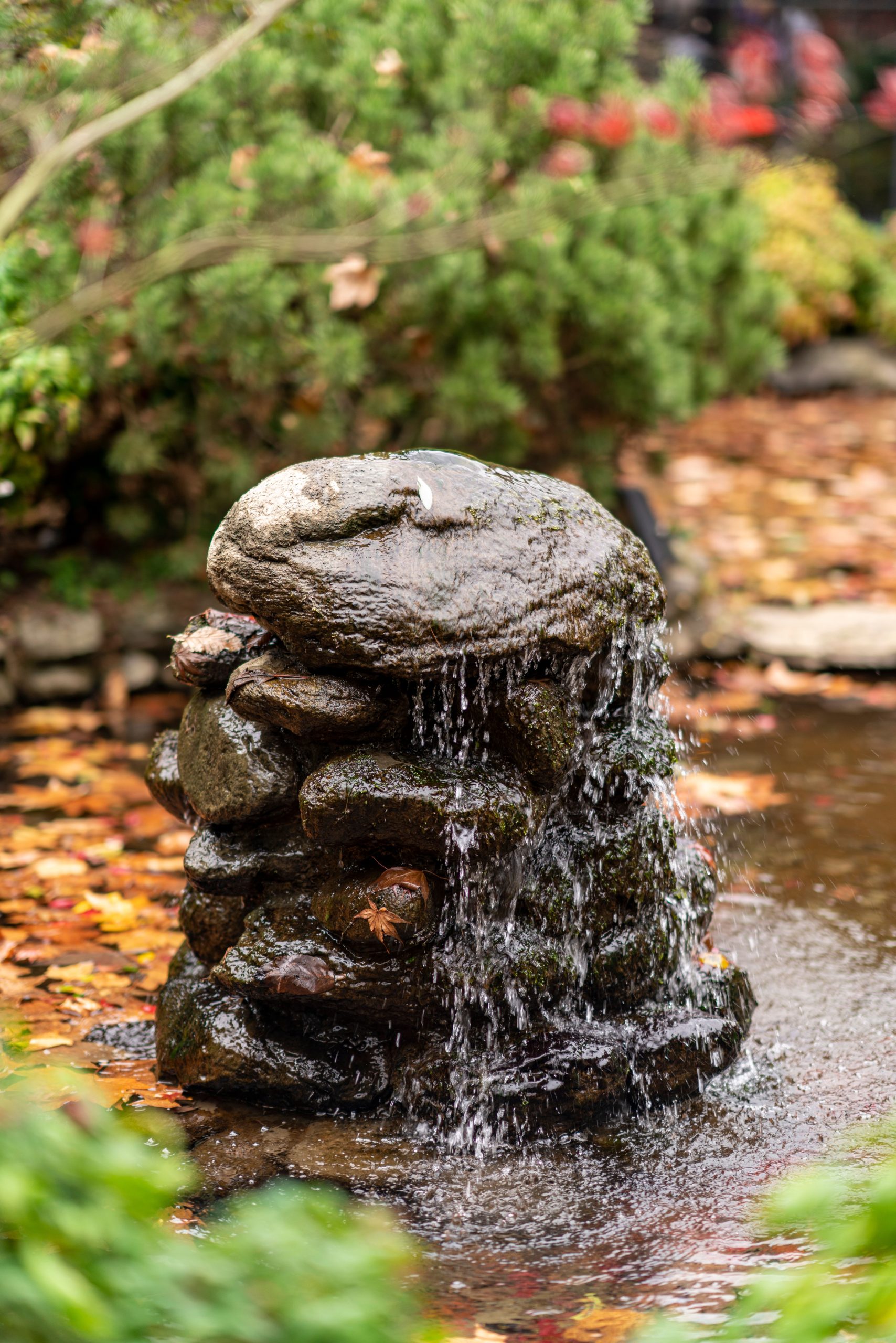
“You don’t need a massive, multi-ton rock installation to get this vibe.”
You can create a micro-version on a patio or in a small garden bed using a large, low waterproof basin (around $100-$200). Artfully arrange a collection of smaller-scale mossy rocks (foraged, if you have access, or purchased from a landscape supplier) within the basin, hide a small pond pump ($30-$50) amongst them, and let the water bubble up and trickle down. Add a few handfuls of fallen leaves to complete the autumnal scene for under $300.
11. Install a Modern Waterfall Against a Stacked Stone Wall
For a sheer waterfall effect like this, the magic is in the waterfall weir or ‘spillway’ that’s hidden within the wall structure. It’s a long, narrow box that fills with water from the pump and allows it to flow over in a clean, even sheet. For a 24-inch wide waterfall, you need a pump that can provide at least 2400 GPH (gallons per hour). The rule of thumb is 100 GPH for every inch of spillway width. Don’t skimp on the pump, or you’ll get a disappointing dribble instead of a smooth curtain of water.
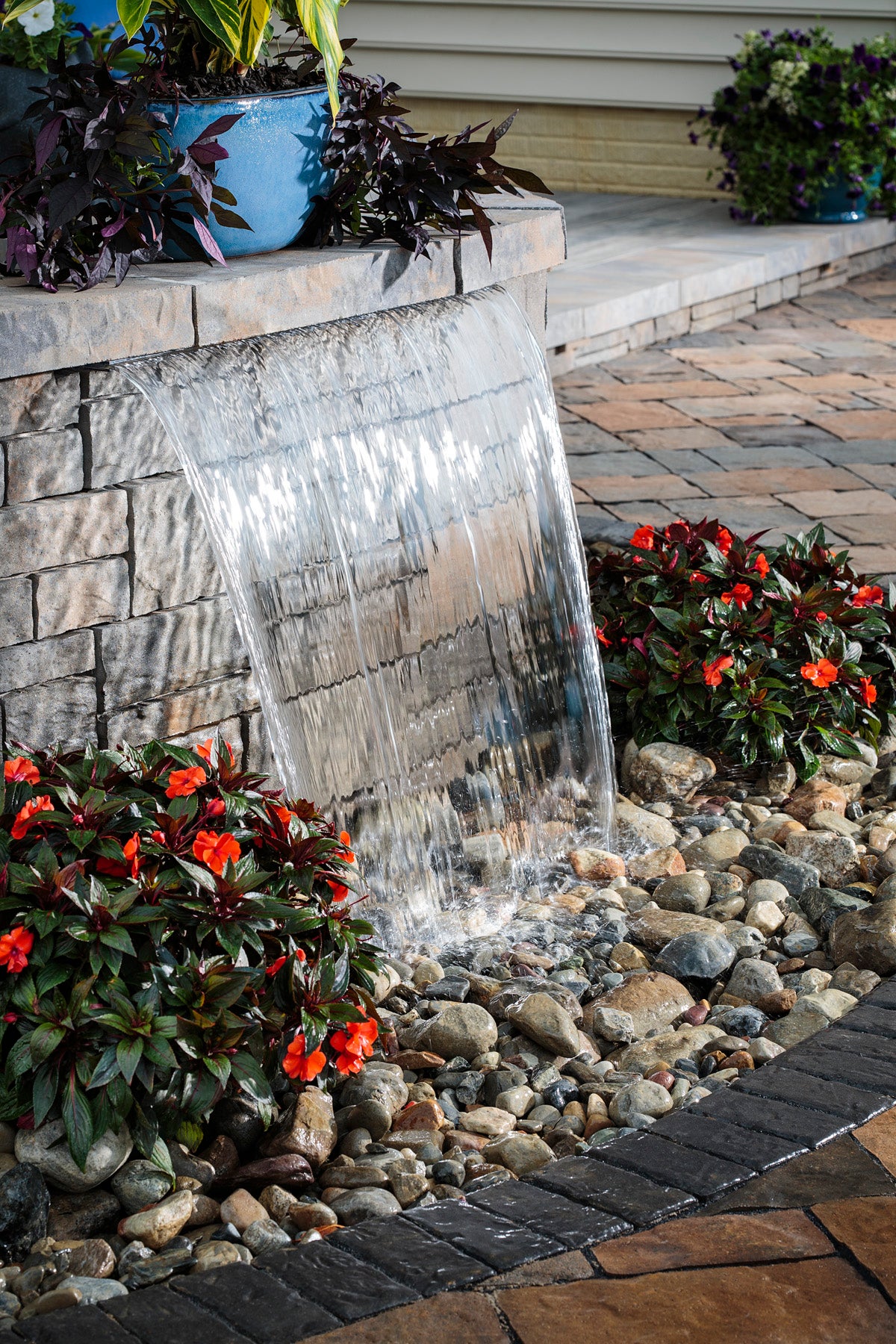
“This type of wall-mounted feature is incredibly versatile and works well in spaces where an in-ground pond wouldn’t fit.”
You can scale it to almost any size. For a small courtyard or patio, a wall just 4 feet wide and 3 feet tall can be a perfect fit. For a larger backyard, it can become a major architectural element, stretching 10-15 feet wide. The key is the basin: ensure it’s at least 1.5 to 2 times as wide as the waterfall itself to catch all the splash and prevent water loss.
12. Combine Stacked Stone and Tile for a Rustic Pond
The detail that really makes this design sing is the unexpected band of diagonal square tiles. Without it, you’d have a fairly standard combination of stacked stone and concrete. That small strip of textured, yellowish-brown tile adds a custom, slightly arts-and-crafts feel. It breaks up the visual weight of the stone and provides a beautiful, warm-toned accent that ties into the colors of the rustic wooden fence in the background. It’s a small choice that has a huge impact on the final look.
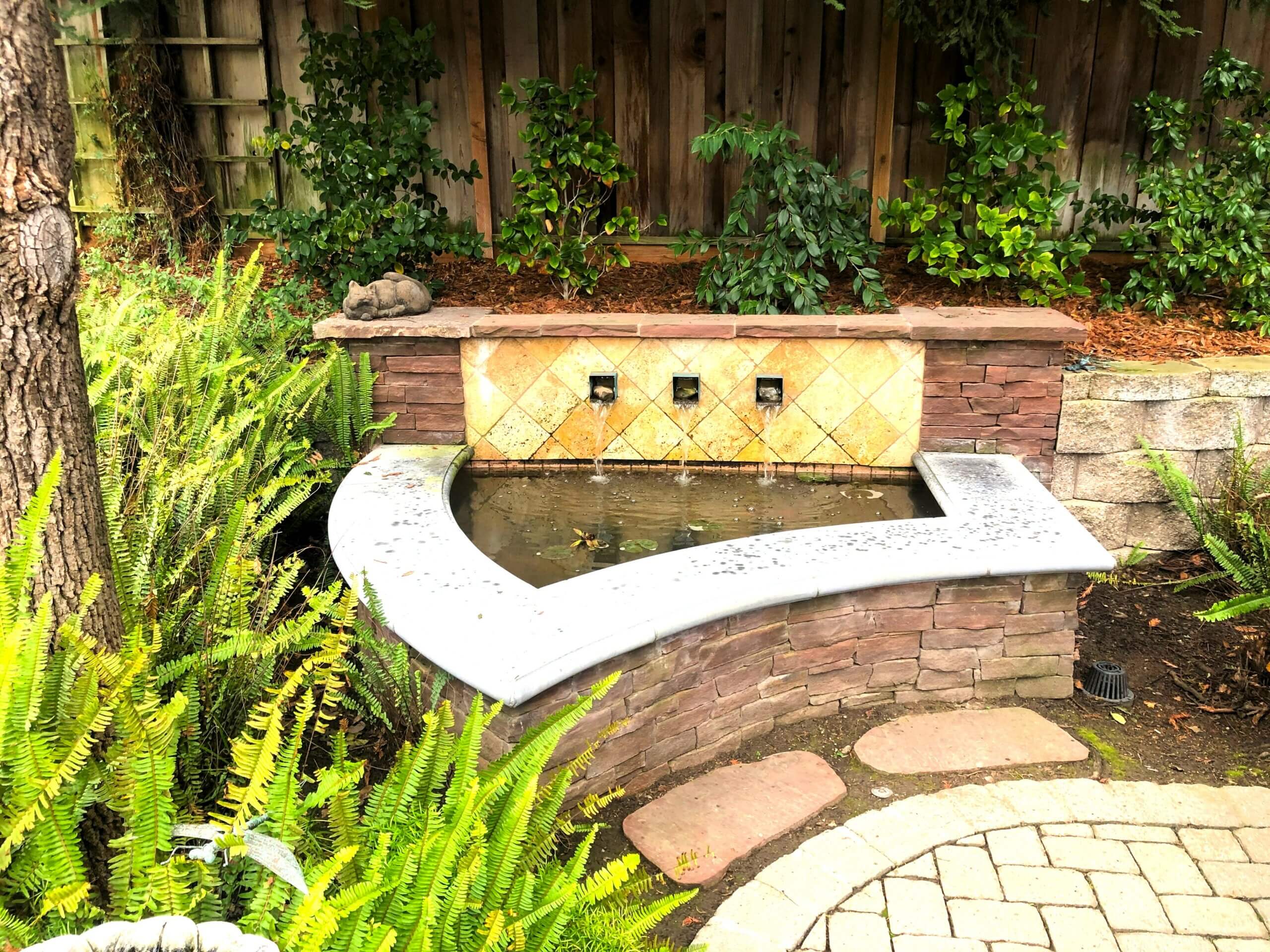
“This design is a masterclass in texture mixing.”
You have the rough, irregular texture of the reddish-brown stacked stone, the smooth, cool curve of the light gray concrete pond rim, the grid-like pattern of the diagonal tiles, and the soft, feathery texture of the green ferns. This rich combination of different surfaces is what makes the feature so visually interesting and satisfying. It feels complex and layered, inviting you to look closer at how all the different materials play together.
13. A Modern Water Bowl Feature with an Integrated Fire Pit
The ‘fire and water’ combination is a major trend in high-end landscape design, and this is a brilliant, self-contained example. It speaks to our desire for multi-sensory experiences in our outdoor spaces. You don’t just see it; you hear the water, and you feel the warmth of the fire. The use of vibrant blue fire glass is a modern touch that adds a jewel-like pop of color, turning the feature into a piece of living sculpture that’s just as captivating when it’s off as when it’s on.
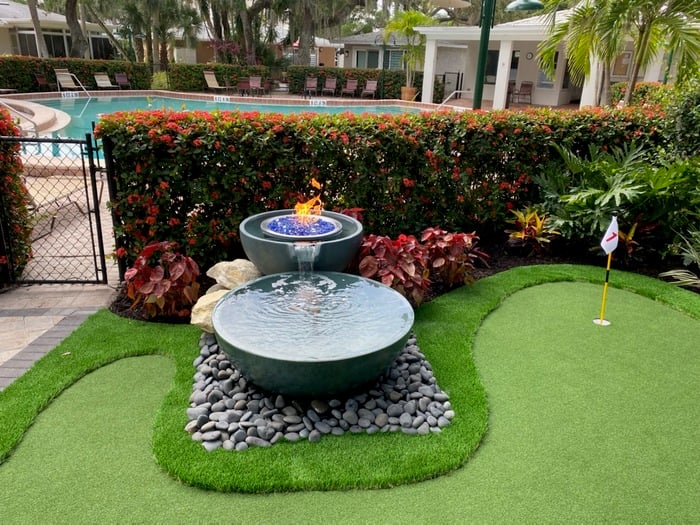
“An integrated fire and water feature is a showstopper, but it requires professional installation.”
You are dealing with both a water pump and a gas line (either natural gas or a hidden propane tank). This is not a DIY project for a beginner. Ensure you work with a licensed contractor who has experience with these specific types of units to ensure everything is installed safely and to code. Also, be aware that the heat from the fire can increase water evaporation, so you’ll need to top off the water level more frequently than with a standard fountain.
14. A Classic Concrete Garden Fountain with a Pineapple Finial
Let’s talk about that murky water. Concrete fountains are porous, and over time, algae, pollen, and dust will accumulate, turning the water a less-than-appealing shade of green or brown. To keep it clear, you’ll need to add a fountain-specific algaecide every week or two. For a full reset, plan on draining, scrubbing, and refilling the fountain at least 2-3 times per season. The pineapple finial, a classic symbol of hospitality, is a charming touch, but it won’t look very welcoming if it’s sitting in a swampy basin.
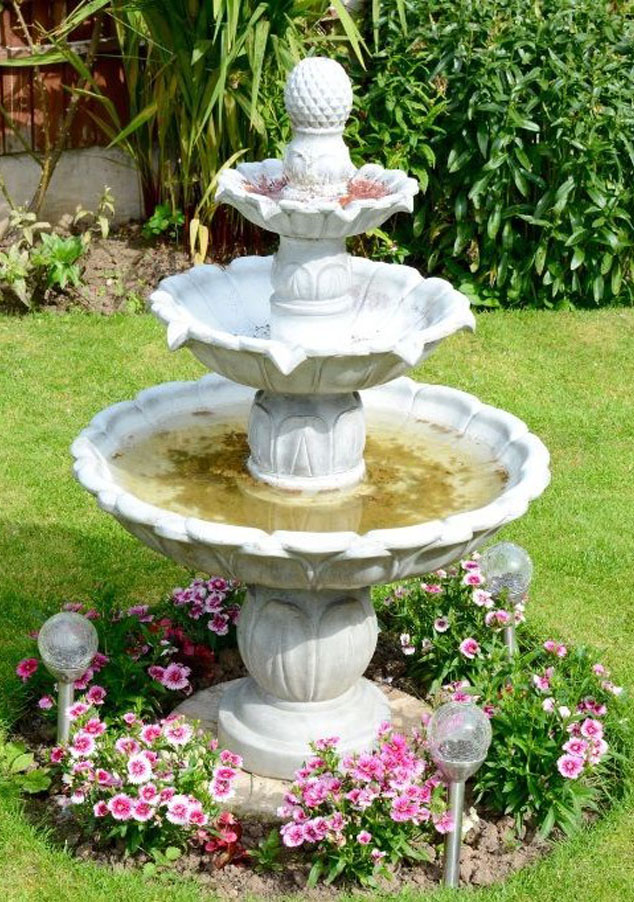
“A large, multi-tiered concrete fountain can cost anywhere from $500 to $2,000+.”
To get a similar classic vibe on a shoestring budget, look for lightweight resin or fiberglass alternatives from stores like Wayfair or Overstock. They can look remarkably similar from a distance, cost as little as $200-$400, and are far easier to move and install yourself. You can even use specialty spray paints to give a cheap plastic fountain a more convincing faux-concrete or stone finish.
15. Add a Classical Touch with a Weathered Statue Fountain
The power of this little scene lies in the contrast between the pristine and the weathered. The statue itself is a classical, elegant form, but its weathered, time-worn surface tells a story of age and permanence. This is set against a backdrop of vibrant, intensely alive green foliage. The dark, textured pedestal grounds the feature, preventing the white statue from feeling like it’s floating aimlessly. It’s a composition that feels both romantic and deeply rooted in its natural setting.
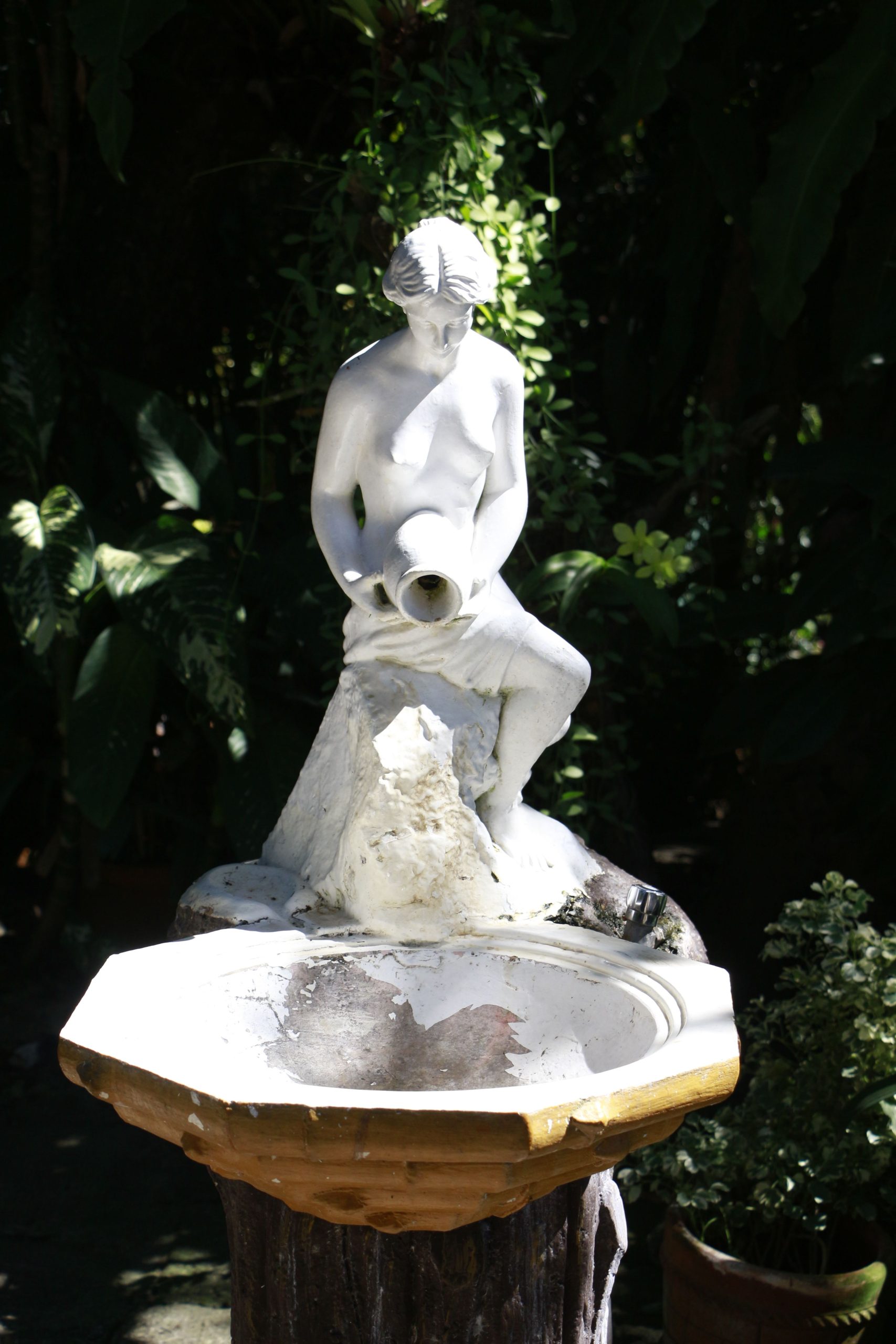
“You can break down this look into a simple formula: 40% classical form (the statue), 40% lush, dark greenery (the background), and 20% aged texture (the weathered finish on the statue and the rough pedestal).”
To change the mood, you could alter one ingredient. Swap the classical statue for a sleek, abstract geometric sculpture, and the vibe instantly becomes modern and artistic while still retaining the power of the simple composition against a green backdrop.
16. A Tabletop Cascade of Rustic Bronze Bowls
The most important element here is its self-contained nature. This isn’t a major landscape project; it’s an accessory. It can be placed on a deck, a patio table, or a balcony, bringing the soothing sound of moving water to spaces where a larger fountain would be impossible. The light orb accent, while small, adds a touch of modern magic, making it an engaging feature even after dark. Its portability and small footprint are its greatest strengths, making it accessible for almost any home.
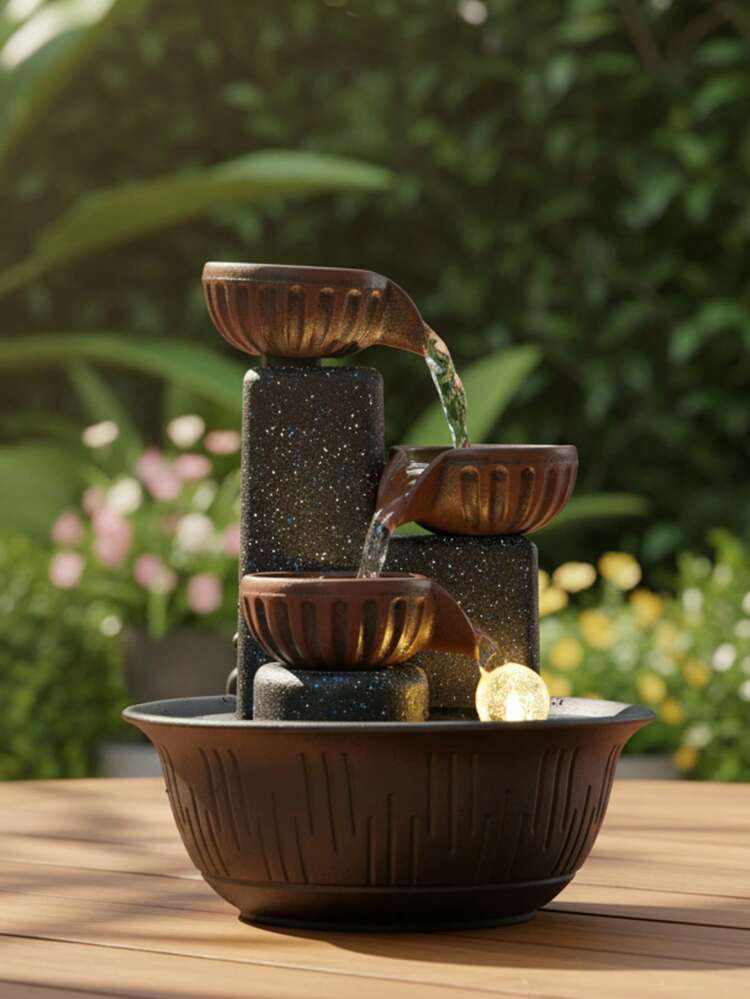
“This is the perfect water feature for small-space living.”
An ideal spot would be on an apartment balcony, a small townhouse patio, or even indoors in a sunroom. Because it’s a closed system, you don’t need a water line, just a nearby electrical outlet to power the small internal pump. Its footprint is likely no more than 18×18 inches. Compare this to the grand, space-hungry design of the multi-level pond in Idea #1 to see how a water feature can be adapted to any scale.
17. A Minimalist Fountain of Rough-Hewn Stone
This design’s success comes from its extreme simplicity. By using only three materials—dark rough stone, white pebbles, and water—it creates a powerful, almost meditative effect. The contrast between the dark, solid stone and the small, light pebbles is visually striking. The focus is entirely on the natural texture of the rock and the movement of the water cascading from one level to the next. There are no distracting plants or colors, resulting in a look that feels both elemental and incredibly serene.
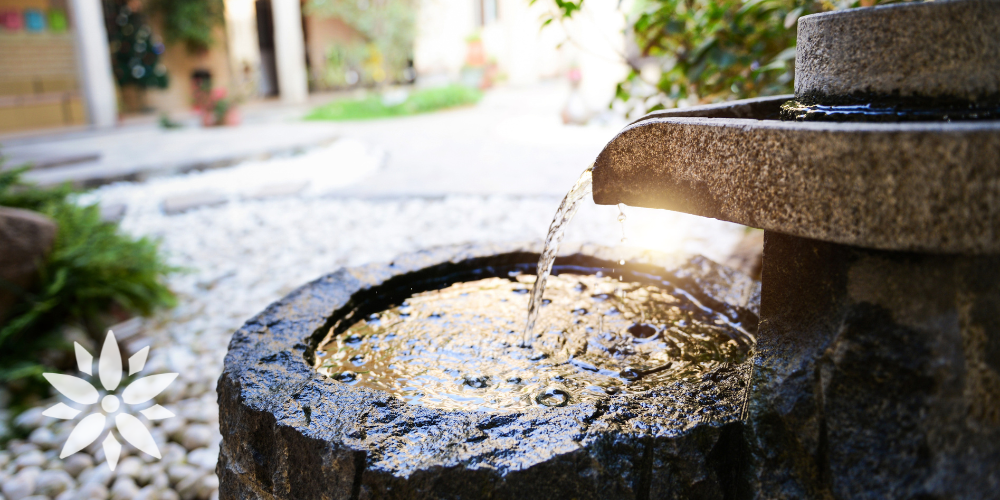
“While a pebble ground cover looks fantastic when it’s first installed, it can be a real pain to keep clean.”
Leaves, dirt, and pet hair get trapped between the stones and are difficult to remove with a rake or blower. To keep it looking pristine white, you’ll either have to periodically remove, wash, and replace the pebbles, or learn to embrace a more natural, less-than-perfect look. For high-traffic areas or under messy trees, you might want to reconsider this ground cover choice.
18. Modern Waterfalls from Stacked Stone Pillars
When designing with strong vertical elements like these pillars, spacing is everything. A common mistake is to place them too close together, creating a visual wall. The designer here got it right by separating them with enough space to allow for views through to the building beyond. As a rule of thumb, the space between pillars should be at least 1.5 times the width of a single pillar. This creates a pleasing rhythm and ensures the features feel like distinct sculptures rather than a heavy, solid fence.
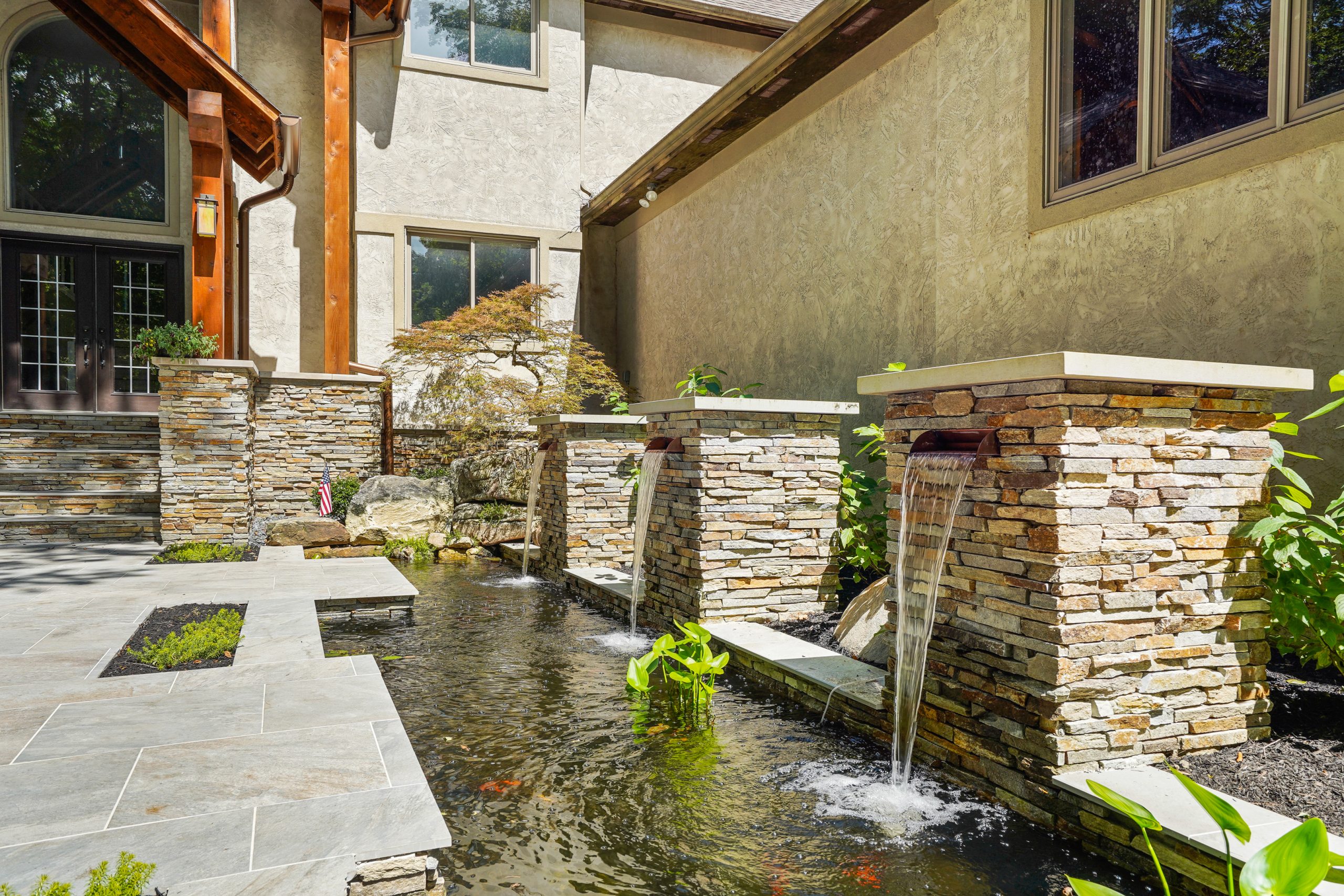
“The most brilliant part of this design is the use of large, irregular stepping stones with square cutouts for plants.”
This detail transforms a simple path into an integrated, living part of the landscape. It blurs the line between hardscape and softscape, adding an element of surprise and thoughtful detail. It prevents the large stone slabs from feeling too heavy or monolithic and reinforces the structured, geometric theme established by the pillars and the architecture of the house.
19. Build a Natural Rock Waterfall with Layered Greenery
This lush, organic look is achieved with a careful balance of materials and colors. It’s approximately 70% foliage, 20% rugged stone, and 10% visible water. Within the foliage, the key is variety: a mix of deep greens, vibrant yellow-greens, and a few pops of red-purple creates depth and interest. The dark gray and black rocks act as a neutral, grounding backdrop that makes the plant colors appear even more vibrant. The slivers of cascading water provide the final touch of life and movement.
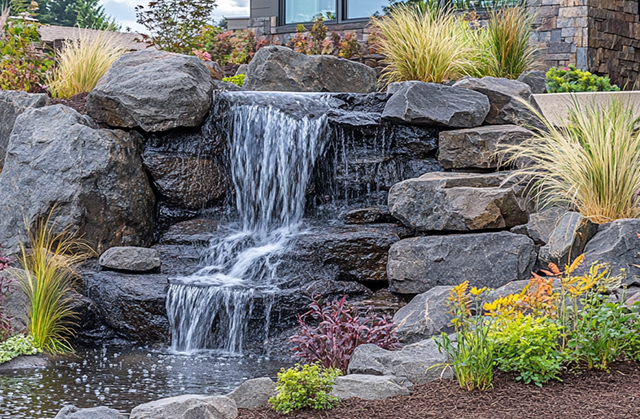
“Creating a stable rock waterfall like this is like solving a 3D puzzle.”
Time: 4-6 hours (for a small one). Cost: $200-$600 for rocks & pump. Lay your pond liner in the dug-out basin and up the slope where the waterfall will be.Place your largest, flattest rock at the bottom, angled slightly back, as your foundation.Build up, setting a flat ‘spill’ stone for your main cascade. Use smaller rocks to lock it in place.Continue stacking, ensuring at least three points of contact for each rock to prevent wobbling.Use expanding pond foam (black, not yellow) in the gaps behind the rocks to direct all water over the front.Position your pump’s hose at the top and test the flow, adjusting rocks as needed.
20. A Sleek Rectangular Pond with a Modern V-Shaped Spout
This feature is a fantastic example of using clean lines and simple geometry to create a tranquil, contemporary feel. The sharp, dark rectangle of the pond contrasts beautifully with the soft, organic shapes of the surrounding plants. The V-shaped spout is a sculptural element in its own right, turning a simple water return into a focal point. Using gravel as a groundcover adds texture and a soft crunch underfoot, further enhancing the sensory experience. This offers a sleek, modern alternative to the more organic shape of the pond in Idea #21.
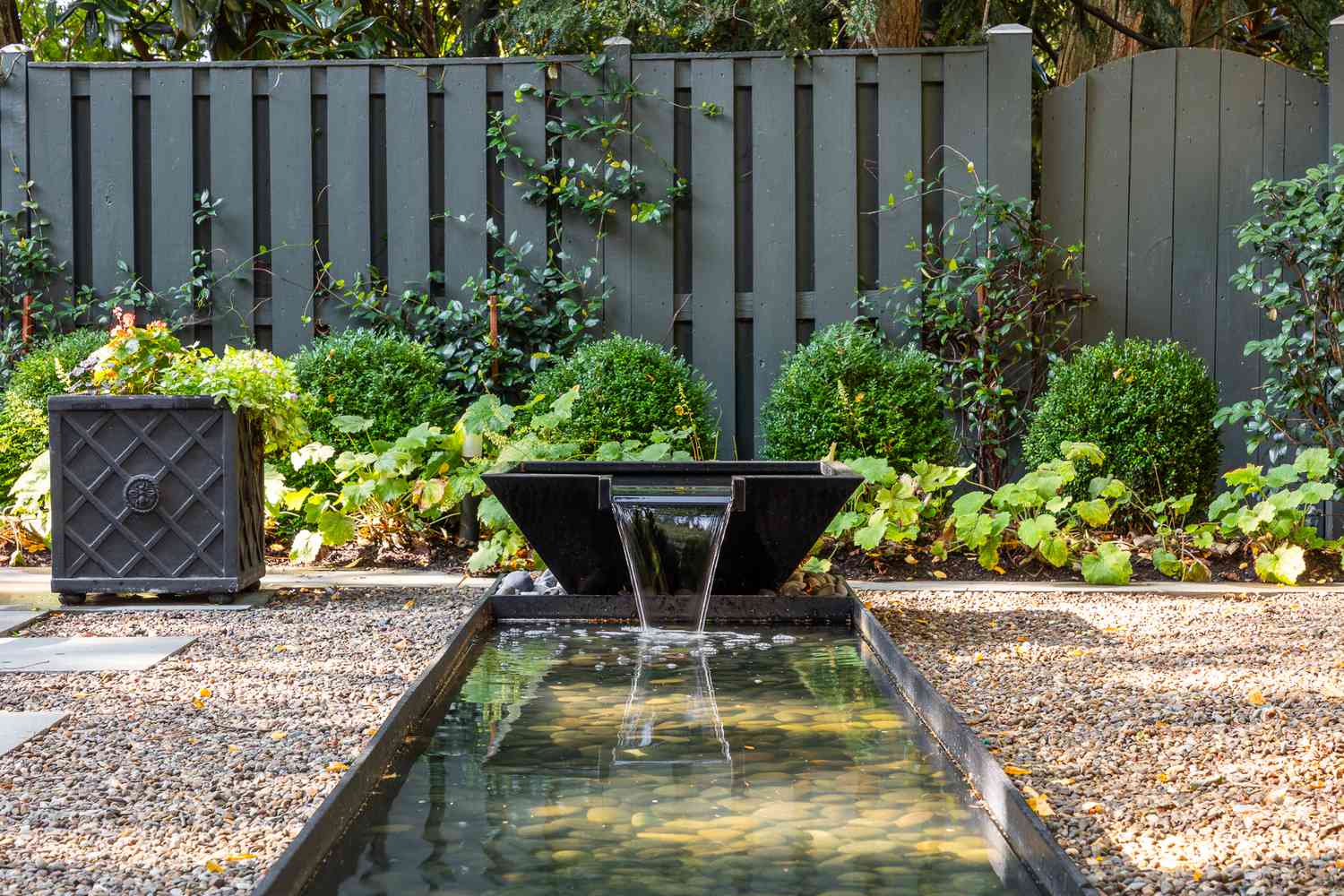
“While a custom-built metal pond can be pricey, you can achieve a very similar look on a budget.”
Build a simple rectangular frame out of pressure-treated 2×10 lumber. Line it with a durable EPDM pond liner, stapling it securely around the top edge. Then, clad the exterior of the wooden frame with inexpensive composite deck boards or even corrugated metal roofing for an industrial-chic look. A simple stainless steel spillway can be purchased online for under $100 to complete the modern effect.
21. Design a Naturalistic Stream Bed with a Rock Waterfall
The single most important element making this feel authentic is the winding stream bed. A straight channel from the waterfall to the basin would look artificial and boring. By gently curving the stream, the designer mimics how water naturally finds its path, creating pockets for plants and rocks along the way. This meandering line is what transforms it from a simple ‘water feature’ into a ‘landscape,’ drawing the eye through the scene and making the garden feel larger and more mysterious.
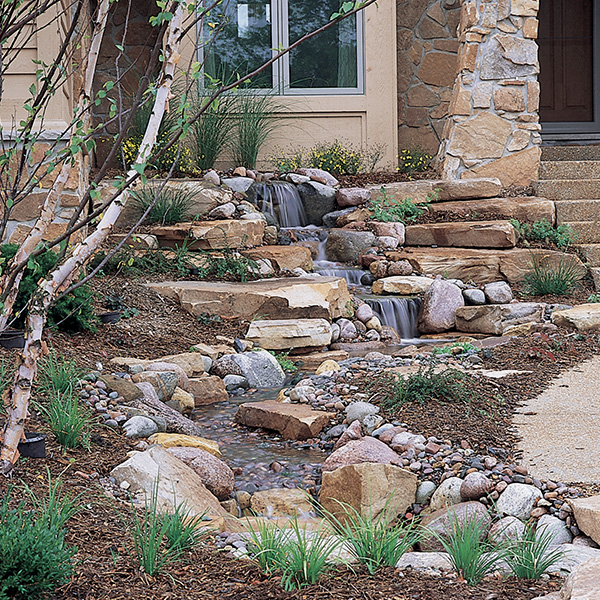
“When building a stream bed, layering your rocks is key to a natural look.”
Start with a flexible pond liner, then cover it with a mix of materials. Use a base of larger river stones (3-6 inches) to form the main structure. Then, come back and fill in the gaps with smaller pea gravel and a few handfuls of wood chip mulch along the edges. This variation in size and texture is exactly what you see in a real creek and makes the entire feature look much more convincing.
22. Landscaped Rock Water Feature
Thinking about a rock water feature? The biggest thing to plan for is the weight and the work. Sourcing, transporting, and placing large boulders is a serious undertaking that often requires machinery or a team of strong helpers. Before you start, have a clear plan for how you’ll get the rocks into your backyard. A beautiful design on paper means nothing if you can’t physically get the materials into place without destroying the rest of your lawn and garden.
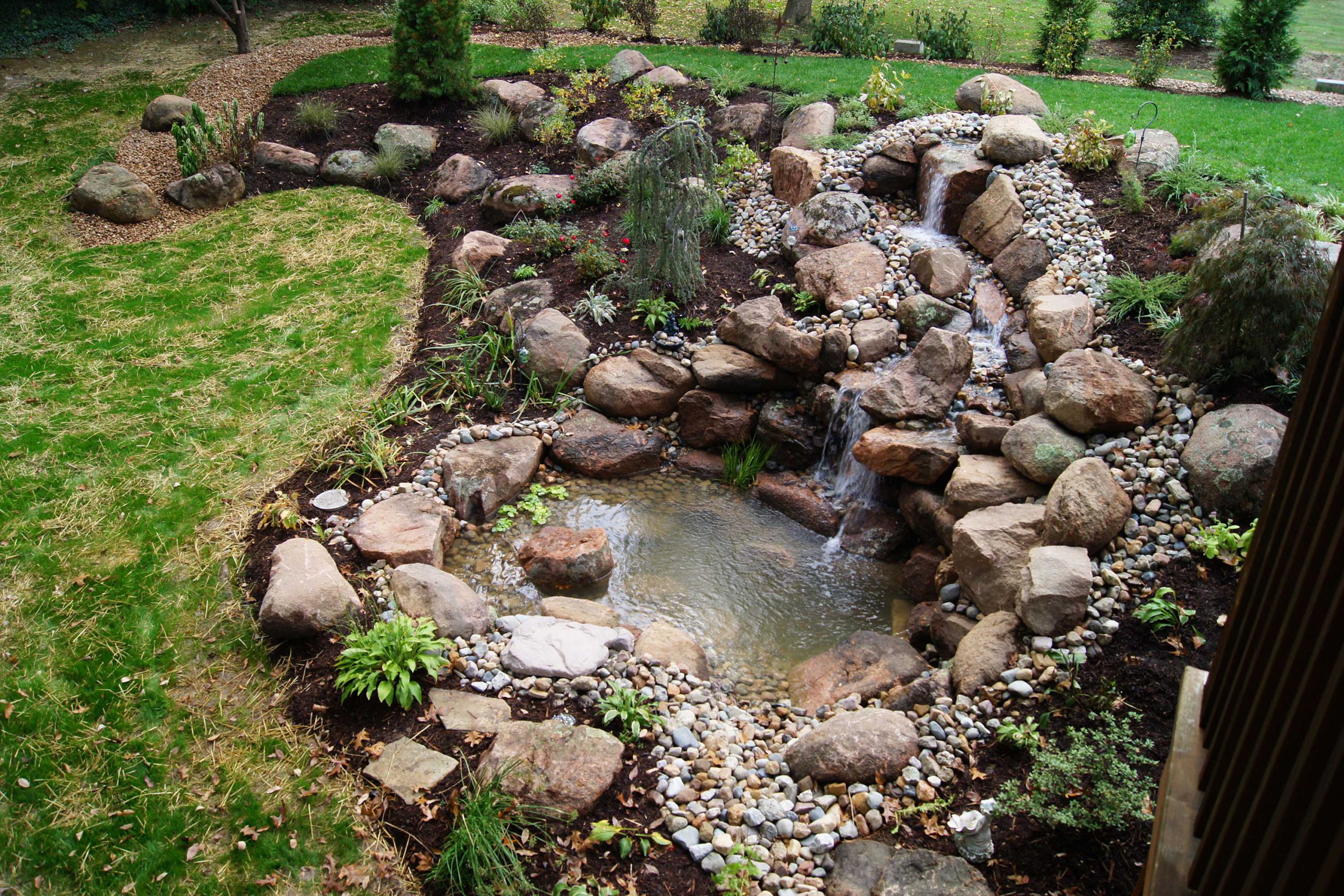
“Rock features are incredibly scalable.”
You can create a tiny ‘bubbler’ with just a few small boulders in a 3×3 foot corner. Or, you can go all out with a massive, multi-ton installation that dominates a half-acre hillside. The key is to match the scale of the rocks to the scale of your space. Using huge boulders in a tiny yard will feel overwhelming, while using tiny rocks in a huge space will look insignificant. Take cues from the size of your house and surrounding trees to find a scale that feels balanced.
23. Create a Lush Pond with a Multi-Tiered Rock Waterfall
The success of this vibrant garden scene lies in its controlled chaos. The waterfall itself uses natural gray rocks, providing a neutral stage. This allows the surrounding foliage to be the star. The designer packed the area with plants of varying heights, textures, and colors—from the flat lily pads on the dark water to the spiky red and purple flowers and the tall green leaves. The small white statue, placed higher up, creates a point of interest and a sense of depth, making the slope feel more intentional.
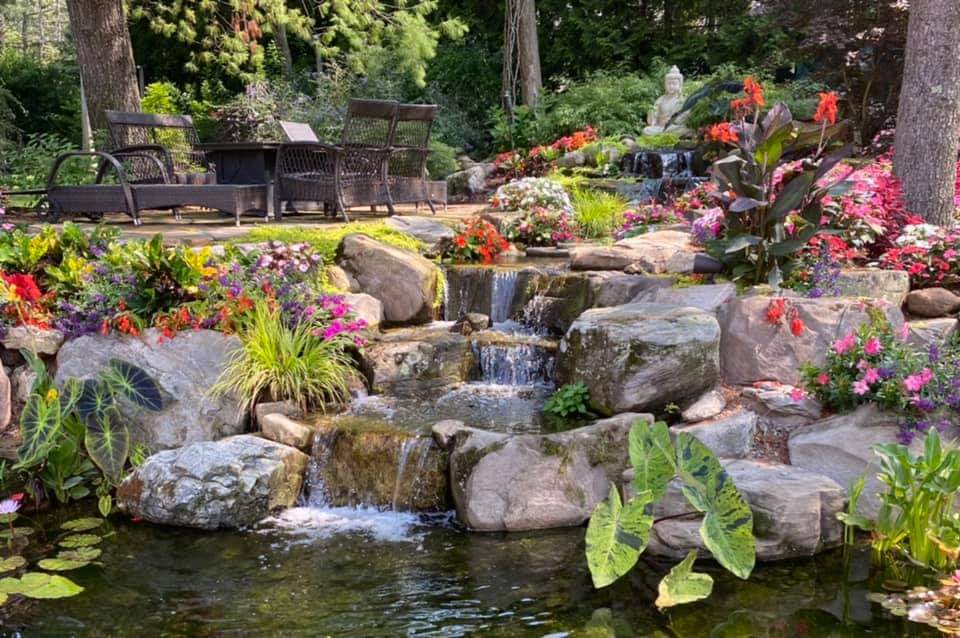
“A pond this lush with aquatic and terrestrial plants requires a diligent gardener.”
Lily pads and other floating plants can quickly multiply and cover the entire surface of the water, which you’ll need to thin out periodically. The surrounding flowering plants will need deadheading to encourage continuous blooms. And with this many plants dropping leaves and petals, you’ll need to be vigilant about keeping the pond skimmer and pump filter clean to prevent clogs, especially in late summer and fall.
24. Modern Patio Fountain with a Crescent Wall and Copper Spouts
The crescent-shaped concrete wall is the undeniable hero of this design. A simple, straight wall would have been functional, but this gentle curve adds a layer of architectural grace and softness. It transforms the feature from a mere water source into a piece of sculpture. The curve subtly embraces the pool of water, creating a sense of containment and tranquility. It’s an elegant, unexpected choice that elevates the entire patio space from standard to sophisticated.
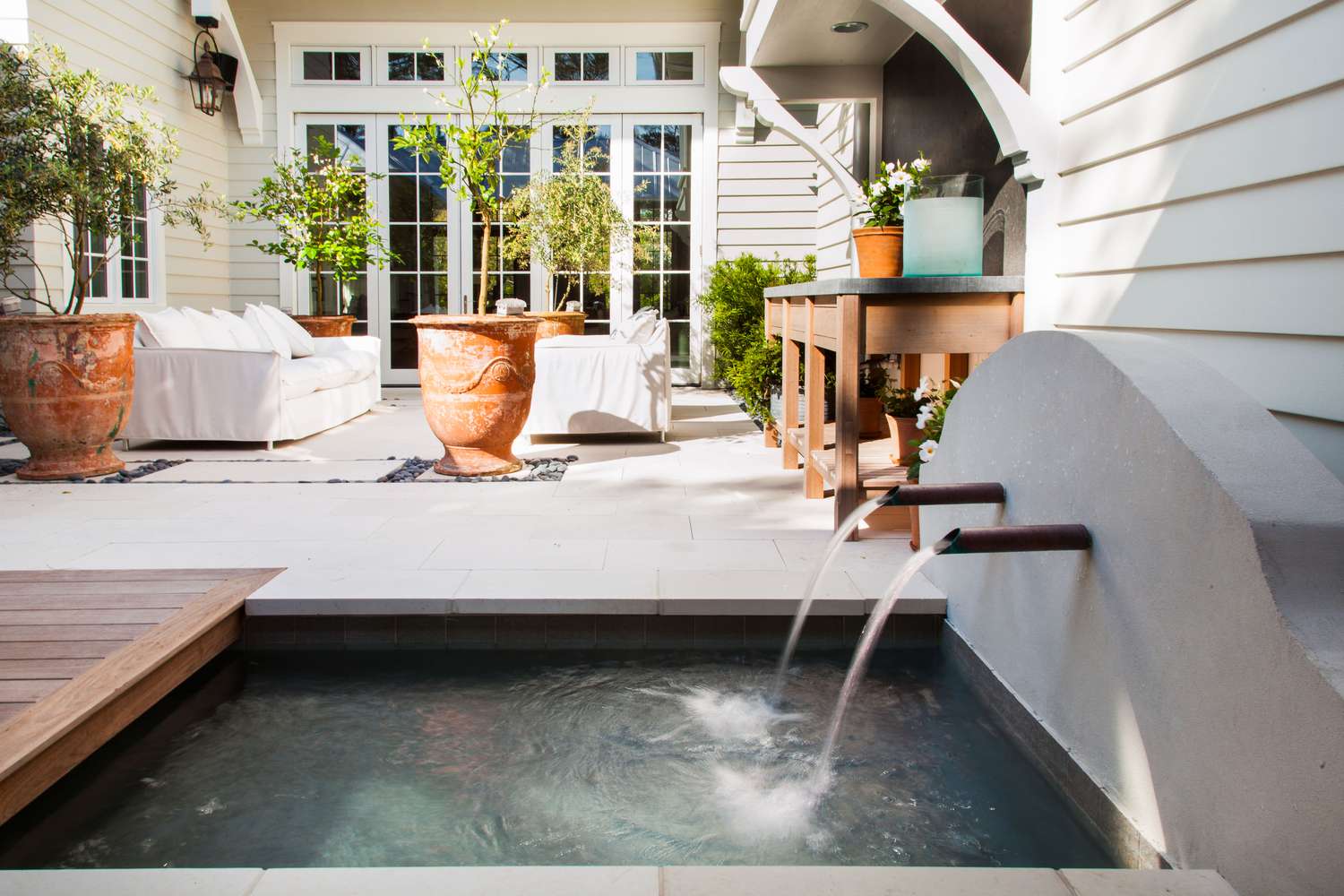
“This look is a beautiful equation of contrasting materials and forms.”
Let’s call it 50% raw modernism (the smooth, gray concrete wall), 30% organic warmth (the large terra cotta planters and flowing water), and 20% metallic gleam (the polished copper spouts). The success lies in the tension between the cool concrete and the warm copper and terra cotta. You could swap the copper for matte black spouts and the terra cotta for charcoal gray planters to create a much more moody, monochromatic version of the same design.
25. A Rustic Pond with a Natural Rock Waterfall and Garden Accents
This design feels so established and personal because it incorporates decorative objects that tell a story. The antique-style water pump and the Celtic cross sculpture add a layer of history and personality that a simple rock-and-water feature would lack. These elements suggest a connection to the past and a sense of place. Placing them amongst the natural rocks and lush greenery makes them feel like treasures you might discover on a walk in the countryside, adding to the feature’s rustic charm.
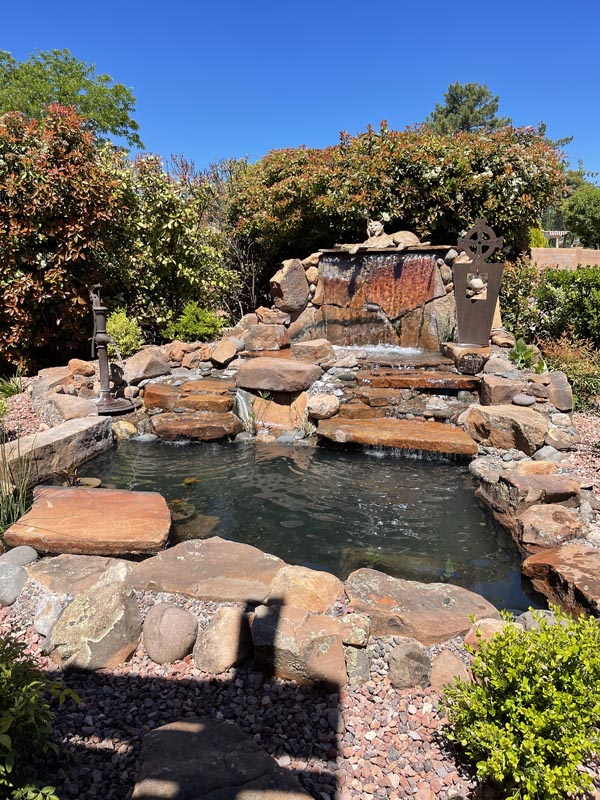
“A word of caution on decorative metal objects in a water feature: rust.”
While a bit of rusty patina on the antique pump adds to its charm, excessive rust can stain surrounding rocks and pathways. More importantly, rust flakes can be harmful to fish if you have them in your pond. If you’re using metal decor, either choose rust-proof materials like aluminum or bronze, or apply a clear, waterproof sealant to any steel or iron pieces to protect them and your pond’s ecosystem.
26. A Classic Black Fountain in a Circular Garden Bed
The key to making a central feature like this work is to give it breathing room. The designer wisely created a wide circular bed around the fountain, separating it from the pathway. As a rule, the diameter of the circular bed should be at least twice the diameter of the fountain’s largest basin. This prevents the fountain from feeling crammed and allows the surrounding shrubs to fill in without overwhelming it. The light gray pathway further defines the space and makes the dark fountain and mulch pop. Compare with a similar fountain in Idea #7 to see a different placement strategy.
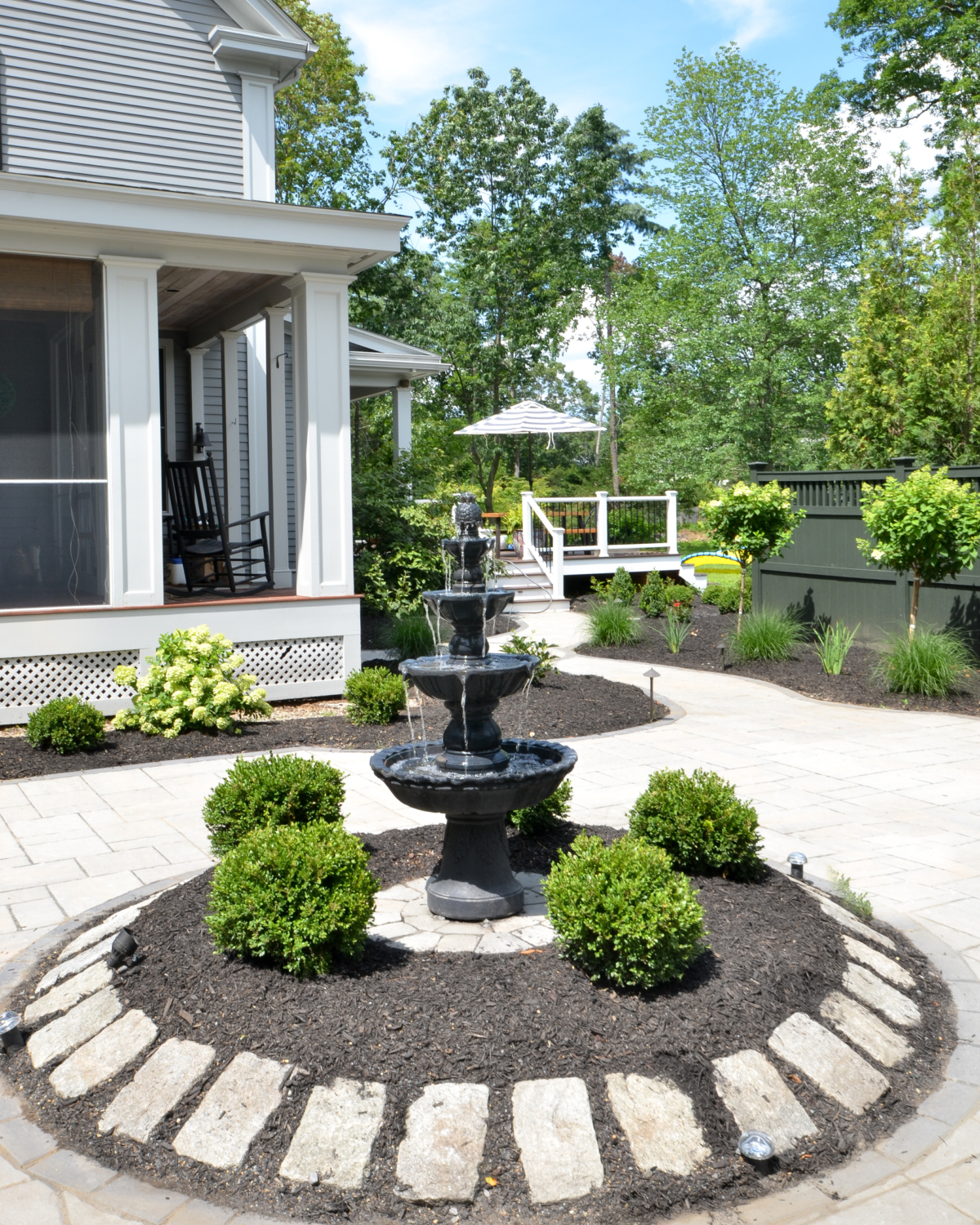
“This design is perfect for anchoring a transition point in a yard—for example, at the intersection of two paths, or as a centerpiece in a lawn visible from a porch or deck.”
For this specific scale to feel balanced, you’d want a surrounding lawn or patio area of at least 20×20 feet. The fountain itself is probably about 4-5 feet tall, making it a substantial but not overwhelming focal point for a typical suburban backyard. It commands attention without dominating the entire landscape.
27. An Earthy Terracotta Fountain Atop a Stacked Stone Wall
This composition is all about celebrating warm, earthy tones. The rich terracotta of the fountain is a perfect partner for the varied browns and grays of the rustic stone wall it sits upon. This warmth is then echoed in the red canna lilies, while the purple lavender provides a beautiful cool-toned contrast. The entire feature feels like it grew out of the earth, perfectly at home in its lush, green surroundings. The choice of a terracotta-colored fountain instead of a standard gray concrete one is what makes the scene feel so special and inviting.
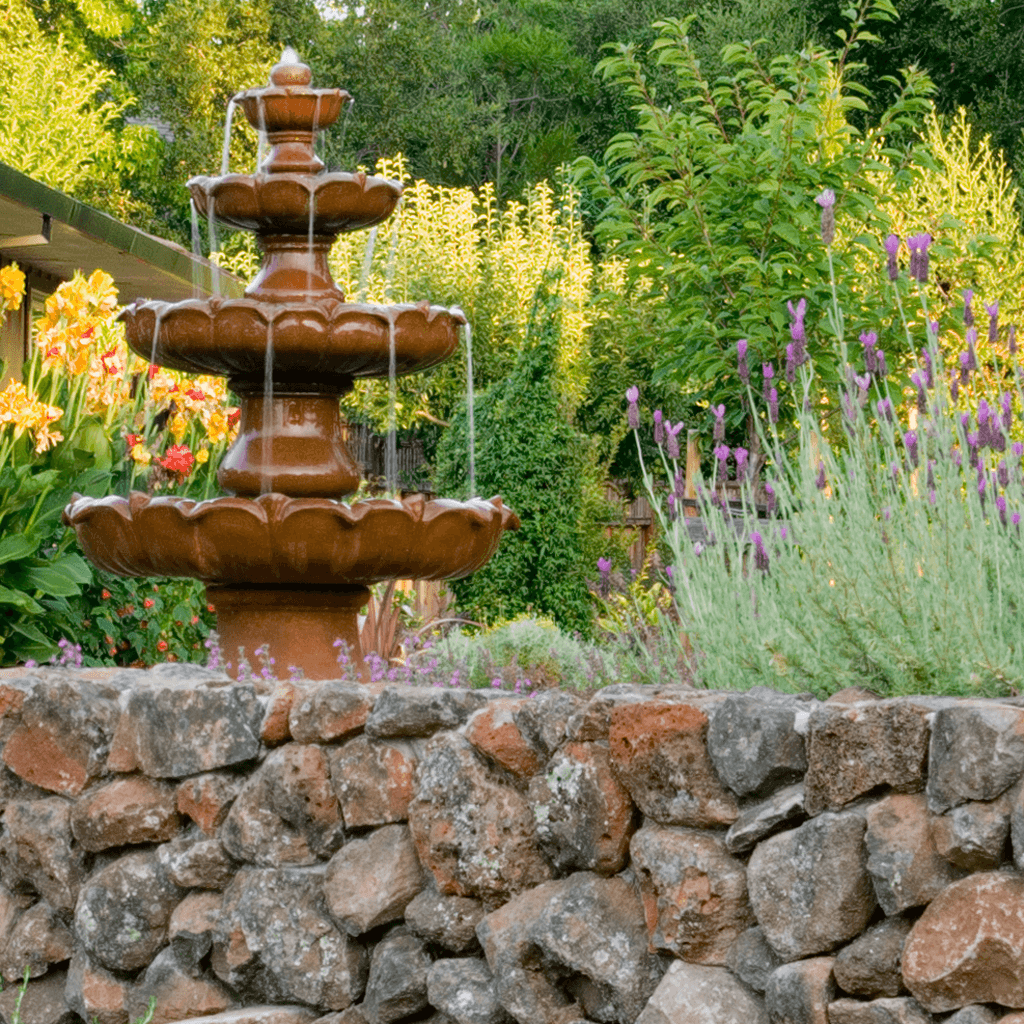
“The stacked stone wall is the element that provides structure and importance to this scene.”
By elevating the fountain, even by just a couple of feet, the wall transforms it from a simple garden ornament into a significant focal point. It defines the edge of the garden bed and creates a beautiful, rustic backdrop. Without the wall, the fountain would feel a bit lost in the sea of foliage. The wall gives it a stage to sit on, anchoring it firmly in the landscape. This is a much more organic approach than the clean pavers seen in Idea #7.
28. Rugged Multi-Tiered Waterfall on a Brick Patio
The visual recipe for this ruggedly handsome feature is a study in contrasts. It is about 60% rough, natural texture (the stacked gray boulders) and 40% clean, man-made pattern (the brick patio). This juxtaposition is what creates the visual tension and interest. The wild, untamed feel of the waterfall is grounded and framed by the orderly grid of the bricks. It’s a perfect pairing for someone who wants the sound and look of nature without letting the entire yard feel overgrown.
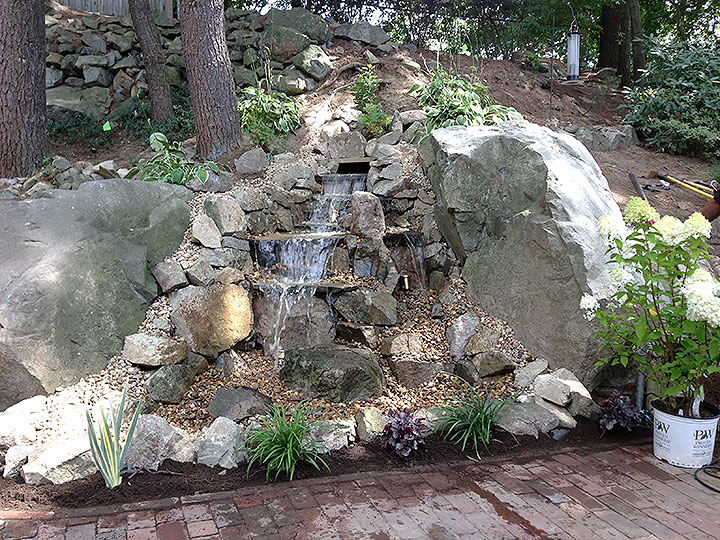
“Be honest with yourself about splash.”
A multi-tiered waterfall like this, especially one that sits right on the edge of a patio, is going to create a ‘splash zone’. The surrounding brick will likely be perpetually damp, which can encourage moss or algae growth (which may be a look you like!) and can make the area slippery. Keep furniture or cushions a few feet away to avoid them getting constantly misted. Also check your home’s foundation and ensure water is always draining away from it, not towards it.
29. A Tiered Fountain of Textured Dark Stone Bowls
This fountain works so well because of the satisfying repetition of form and texture. The three bowls share the same rough, organic stone texture and simple, open shape, but they decrease in size as they go up, creating a pleasing visual rhythm. The overflow style, where water sheets over the entire rim of each bowl, is a much softer and more natural effect than fountains that use spouts or jets. It highlights the shape of the bowls and creates a gentle, continuous sound.
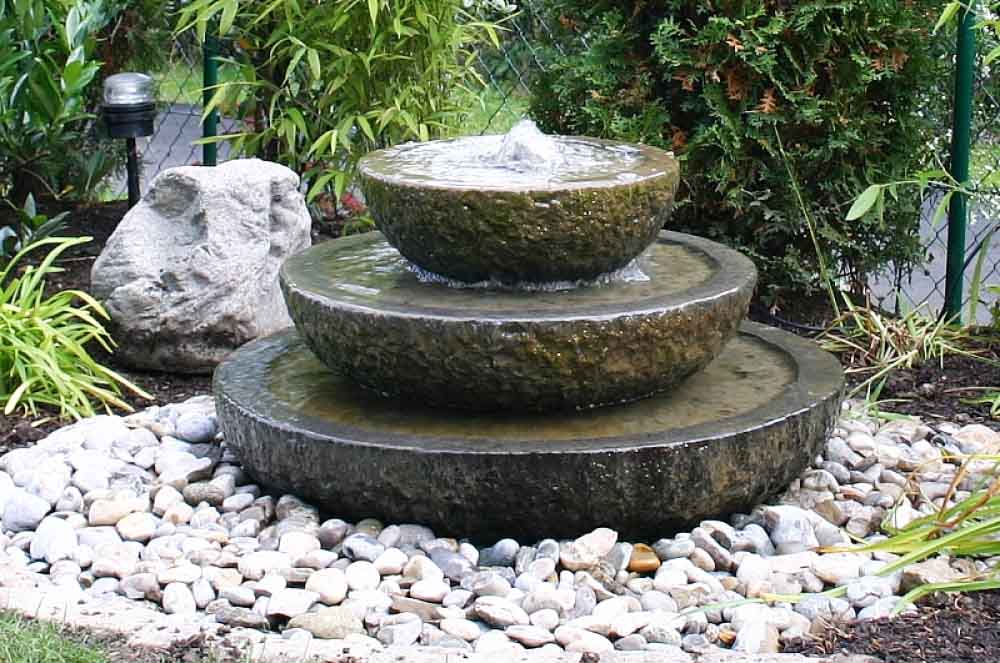
“A solid stone fountain like this can be quite expensive.”
To get a very similar look for less, search for ‘GFRC’ (Glass Fiber Reinforced Concrete) bowl fountains. GFRC is much lighter than solid stone or concrete, but it can be molded and textured to look almost identical. You can find a three-bowl GFRC fountain kit online or at a large garden center for $400-$800, likely less than half the price of a carved stone equivalent. It’s an excellent way to get this high-end, organic look on a more manageable budget.
Let Your Garden’s Soundscape Begin
That backyard water feature you’ve been dreaming of is more achievable than you think. Whether you start small with a simple stock tank or plan for a stunning natural waterfall, the key is to choose an idea that fits your space, budget, and style. The sound of moving water can completely change the way you feel in your own yard, turning it into the peaceful retreat you deserve.
Feeling inspired? Save your favorite ideas to your Pinterest board and start planning. Your serene garden escape is just a weekend project away.