You know that feeling when you finally find the sloped backyard idea that looks exactly right for your space, only to realize it would cost a fortune? We’ve all been there, endlessly scrolling Pinterest for budget-friendly solutions to that tricky incline. After filtering through hundreds of options, we narrowed it down to 29 incredible, achievable ideas that actually deliver on style without draining your bank account. This guide is packed with inspiration, from lush, natural escapes to modern, structured retreats. In 2026, the focus is all about creating multi-functional outdoor “rooms,” and a slope is the perfect canvas for it. Go ahead and save this — you’re going to want to reference it.
📌 Save this to Pinterest for later — you’ll want to revisit these ideas.
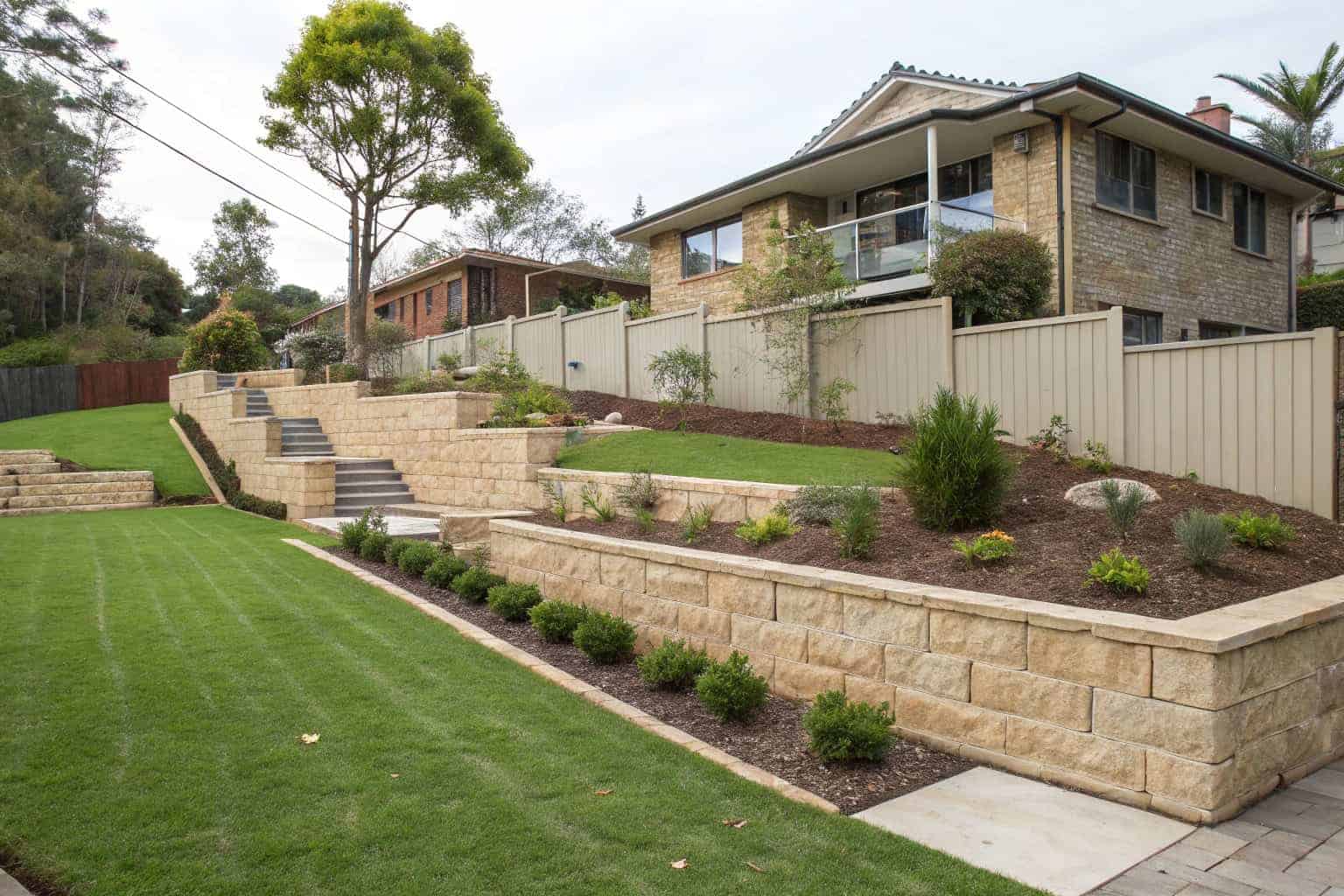
1. Layered Garden with Light Stone Retaining Walls and Steps
This look is a classic for a reason. Creating these multiple tiers with stone walls is the ultimate way to tame a slope and create usable garden space. The key here is the contrast between the light-colored stone of the retaining walls and the darker gray of the steps. This choice subtly guides the eye upward and makes the ascent feel intentional and secure. It’s a foundational strategy that turns a challenging hill into a deliberate, beautiful feature of your home.
“so well is the principle of repetition with variation.”
The horizontal lines of the retaining walls are repeated up the slope, creating a sense of rhythm and order. However, the organic, varied shapes of the plantings within each tier break up the monotony. The uniform color of the stone provides a neutral, earthy canvas, allowing the vibrant greens of the lawn and shrubs to really stand out. This balance between structured hardscaping and soft, natural plantings is the secret to its success.
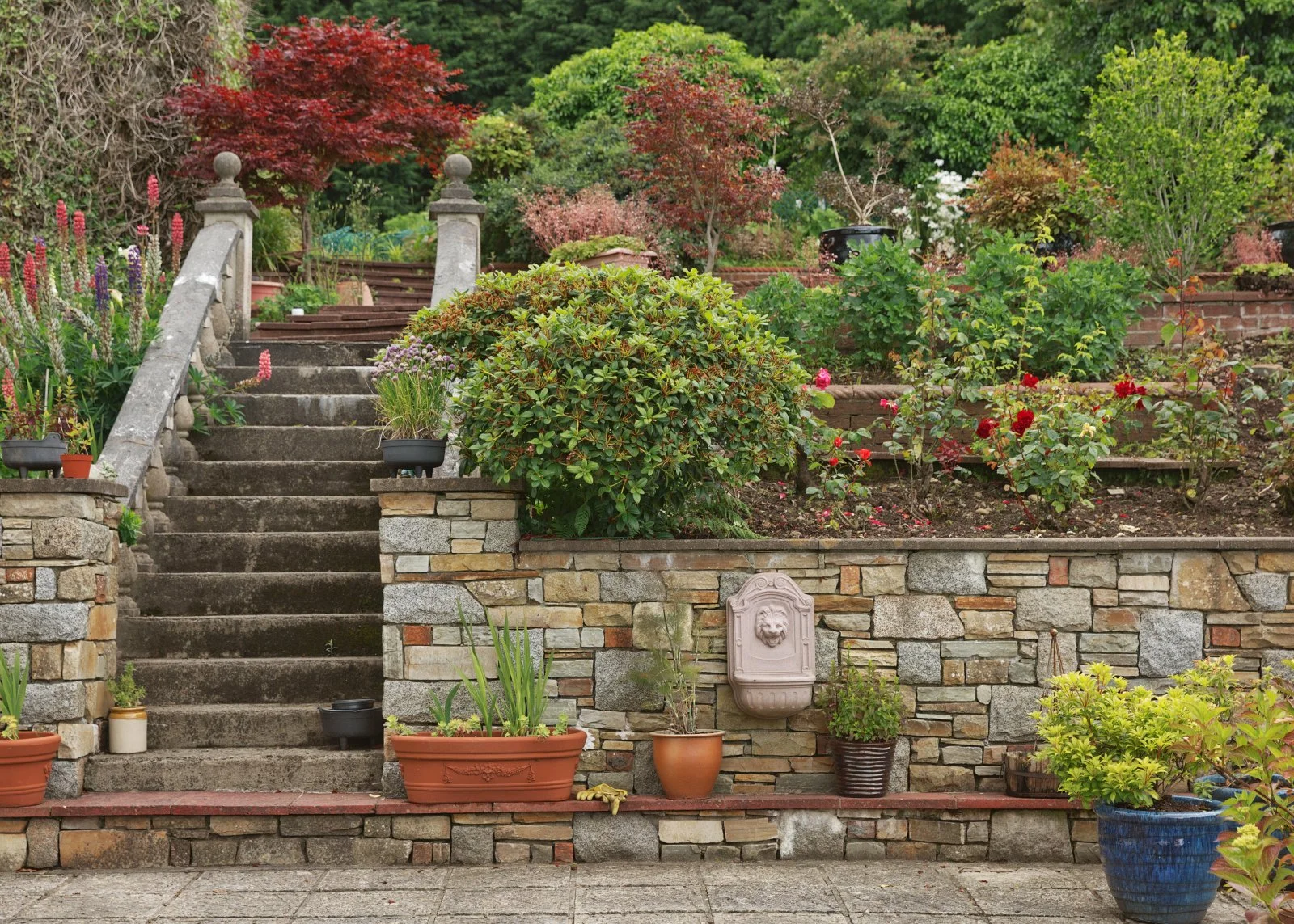
2. Lush Terraced Garden with Concrete and Stone Balustrades
The single element that defines this space is the abundance of potted plants. While the retaining walls and stairs provide the structure, the sheer volume and variety of terracotta, ceramic, and plastic pots make this garden feel incredibly lush, personal, and established. Removing them would leave a very static and impersonal hardscape. The pots allow for flexibility, pops of color, and the ability to showcase specific plants that might otherwise get lost in a larger garden bed. They are the lifeblood of this design.
“Here’s a pro tip for a lush, layered look like this: mix your planter materials, but unite them with a color family.”
Notice the blend of terracotta, glazed blue ceramic, and simple brown plastic. It works because they all share an earthy, natural quality. To take it a step further, vary the scale. Place a few oversized pots as focal points (at the top or bottom of the stairs) and fill in the gaps with smaller and medium-sized pots. This creates visual hierarchy and makes the arrangement feel more dynamic and less like a store display.
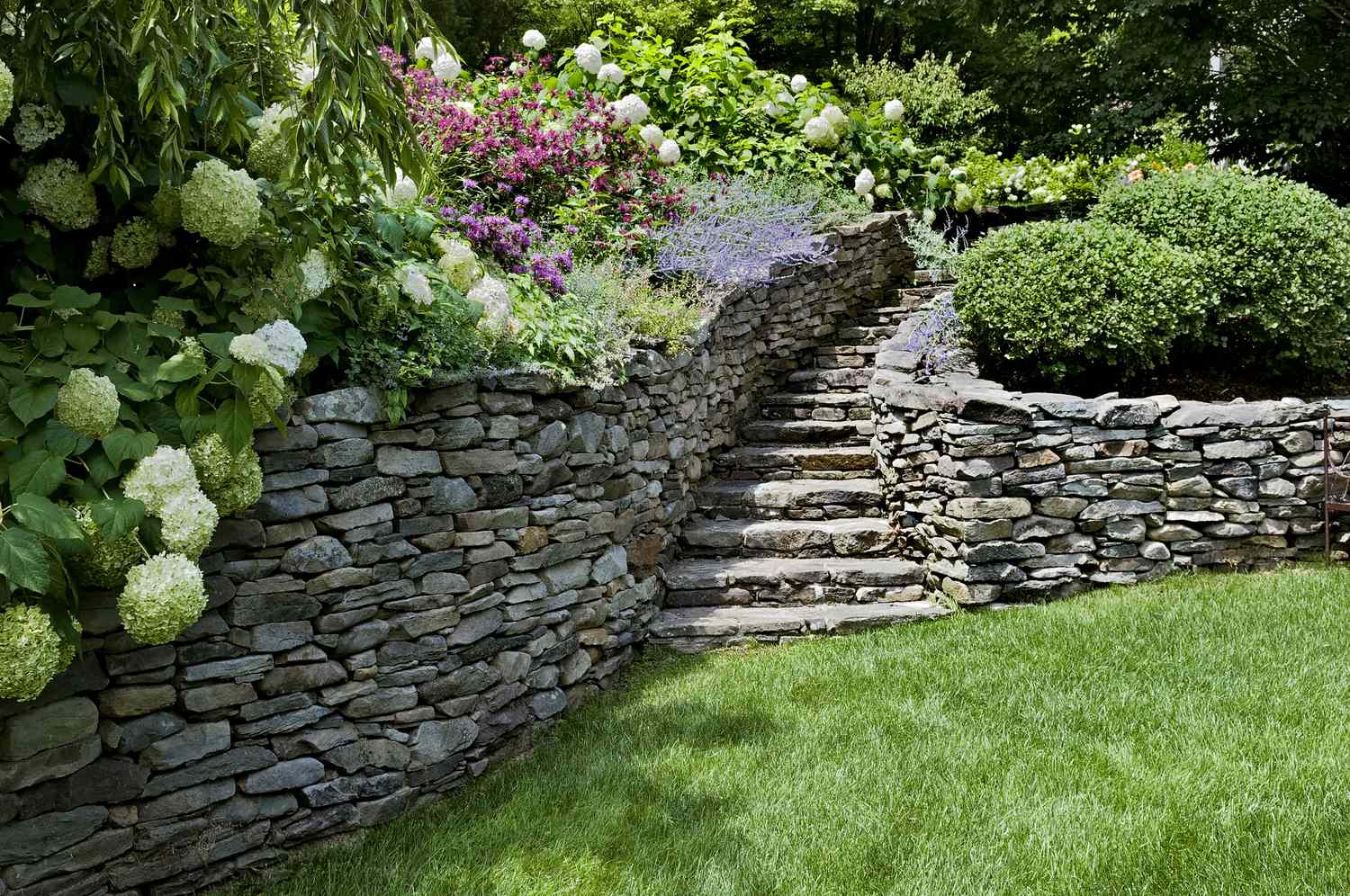
3. Curved Stone Staircase Through Lush White Hydrangeas
The visual formula here is simple but incredibly effective: 60% lush green foliage + 25% rustic gray stone + 15% cloud-like white flowers. This high-contrast palette is what creates that serene, almost magical feeling. The gray stone of the walls and staircase provides a cool-toned, solid base, allowing the vibrant greens and pure whites to pop. You could swap the white hydrangeas for another voluminous white flower, like peonies or iceberg roses, and still maintain that same dreamy, romantic atmosphere. The key is the simplicity of the color scheme.
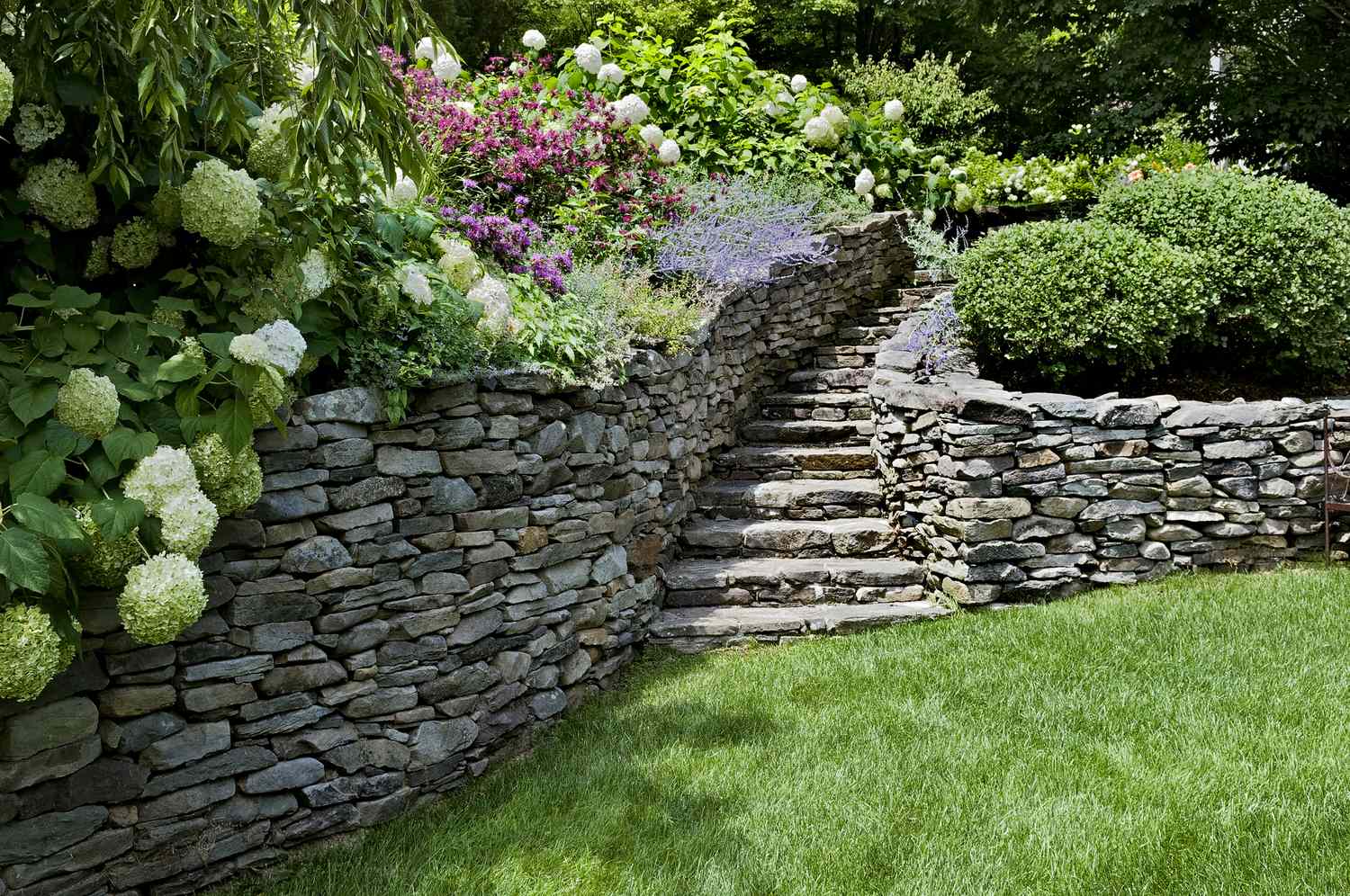
“A gentle reality check: achieving this level of lushness with hydrangeas requires specific conditions.”
These plants need consistent moisture and prefer morning sun with afternoon shade, especially in warmer climates. A south-facing, sun-blasted slope would scorch them. Before committing to this look, track the sun in your yard for a few days. If you have full, direct sun all day, you might need to opt for more drought-tolerant plants or it will be a constant, expensive battle to keep these beauties happy and blooming.
4. Stone Steps Accented with Tulip-Filled Urn Planters
that elevates this design from simple stone steps to a grand entrance is the pair of dark, sculptural urn planters. Perched on their own dedicated stone pedestals, they act like sentinels, adding a touch of formality and drama. Their dark color provides a welcome contrast to the lighter gray and beige stone, and their classic shape adds a timeless, traditional feel. Without these urns, the stairs would be perfectly functional, but they would lose all of their unique character and sense of occasion.
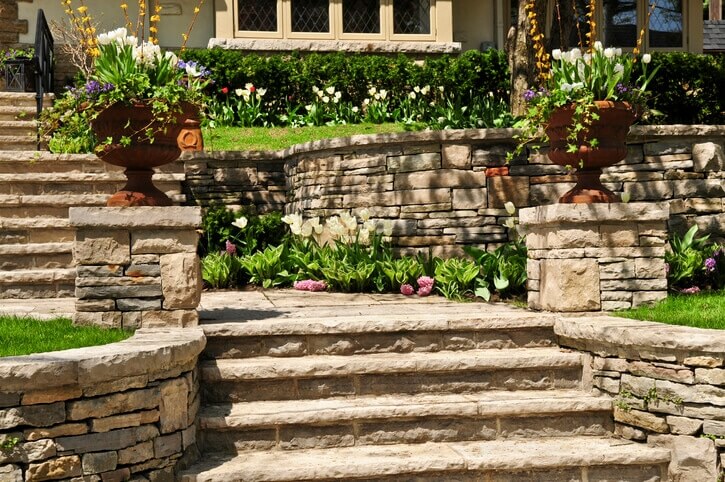
“You don’t need to spend a fortune on custom stone pedestals and heavy urns to get this vibe.”
Create a similar look for much less by using lightweight fiberglass or resin planters from Target or Walmart, which can look surprisingly high-end. A pair of 24-inch urns might cost around $100-$150. For the pedestals, you can find simple concrete or composite column stands online for under $80 each. Fill them with seasonal flowers like these tulips, and you’ve captured the essence of this elegant look for a fraction of the price.
5. Tiered Garden Beds with Pale Stone and Contrasting Mulch
This design is a masterclass in using color and texture to create visual interest. The pale yellow stone of the retaining walls is warm and bright, but it’s the contrast with the dark brown mulch that really makes the plantings pop. The deep color of the mulch makes the greens look greener and the reddish-purple foliage appear richer. This is a much more dynamic approach than simply having grass meet the wall. Notice how the darker mulch here contrasts with the green lawns in Idea #1, giving it a more modern and manicured feel.
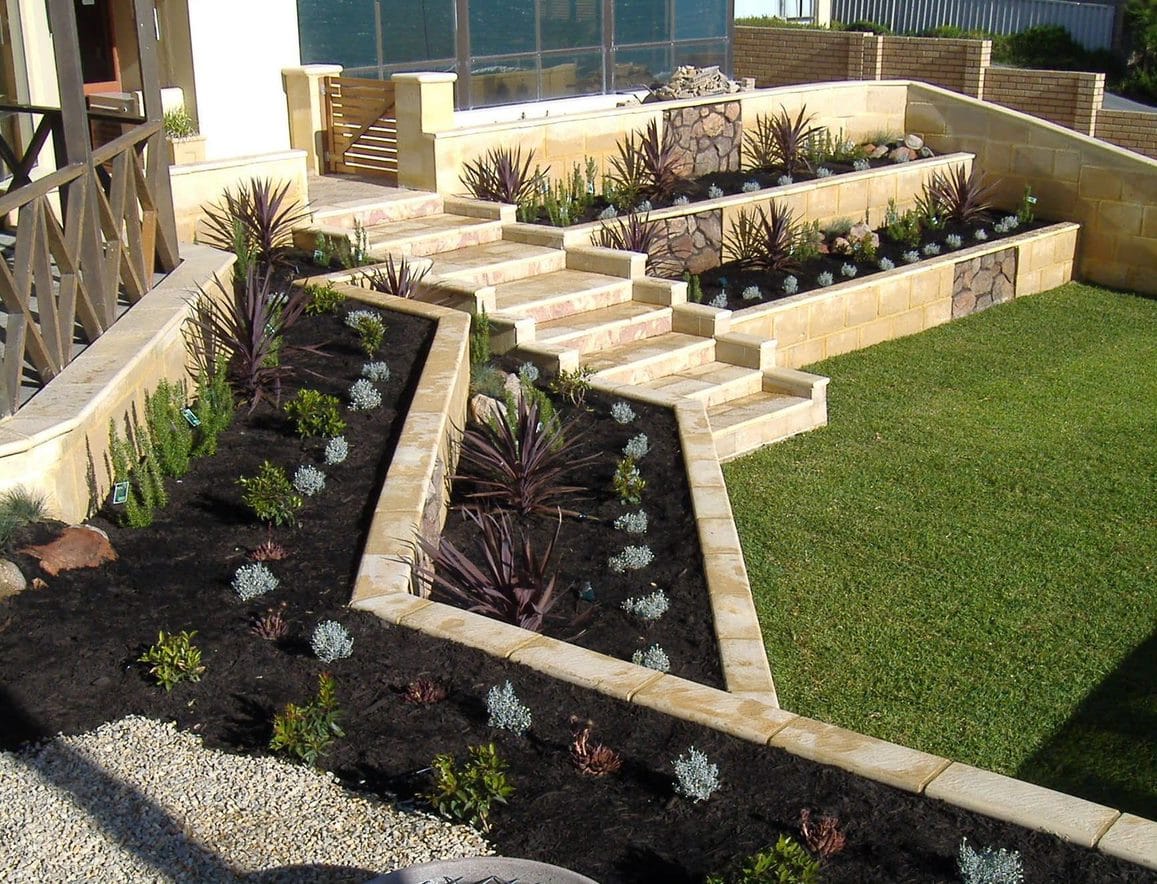
“An idea like this is incredibly versatile, but it’s best suited for a small-to-medium-sized slope, roughly 30-50 feet wide with a rise of 8-15 feet.”
The retaining walls are substantial enough to feel structural but not so massive that they’d overwhelm a smaller yard. A ceiling height isn’t applicable, but the overall vertical rise is key. If your slope is much larger, you might consider wider terraces or incorporating taller shrubs and trees to maintain a sense of scale, similar to the multi-level design in Idea #6.
6. Multi-Level Patio with a Fire Pit and Separate Dining Zone
When dealing with a significant slope, don’t just think about retaining it; think about creating distinct outdoor ‘rooms’. This design brilliantly carves out two functional zones: a cozy lower patio for conversation around a fire pit and an upper patio for dining. To define these spaces without building actual walls, use large outdoor area rugs. A 9×12 rug under the dining set and an 8-foot round rug for the fire pit area would immediately anchor each zone and make them feel like intentional, separate destinations.
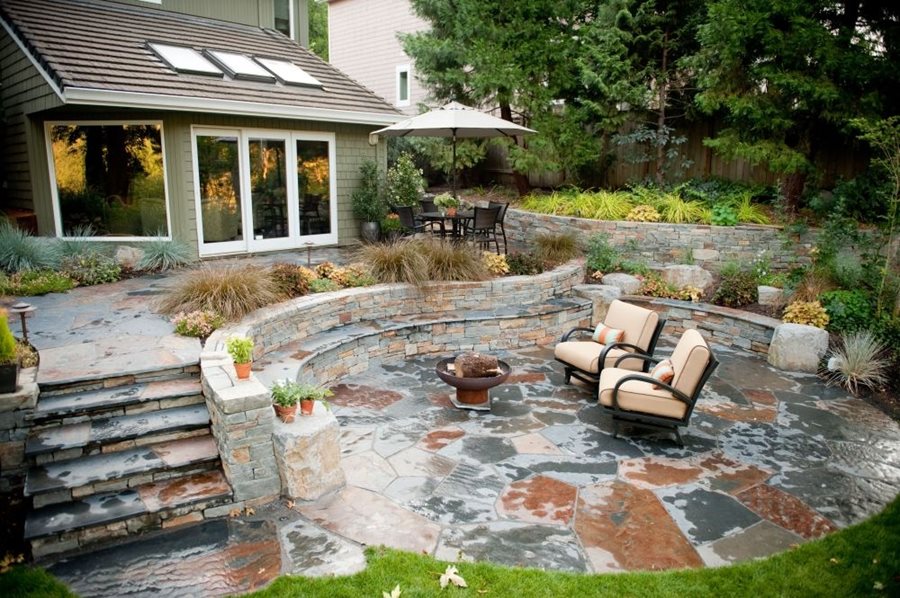
“This concept of ‘zoning’ your backyard has been a huge trend for the past few years, and it’s holding strong.”
People want their outdoor spaces to be as functional and comfortable as their indoor ones. A sloped yard is actually an advantage here, as the natural change in elevation provides a perfect opportunity to create separation between activities. This design responds directly to the desire for a multi-purpose backyard that can host a quiet morning coffee and a lively dinner party, all in one cohesive space.
7. Lush, Overflowing Retaining Wall with Purple Agapanthus
The single most impactful element here is the sheer volume of plants. The concrete block retaining walls are purely functional—in fact, they are almost completely hidden. It’s the explosive, almost wild planting that gives this slope its character. The tall, vibrant purple agapanthus act as the stars of the show, but it’s the dense underplanting of various green, red-brown, and yellow-green foliage that makes the whole scene feel so rich and established. Take away half the plants, and the magic is gone.
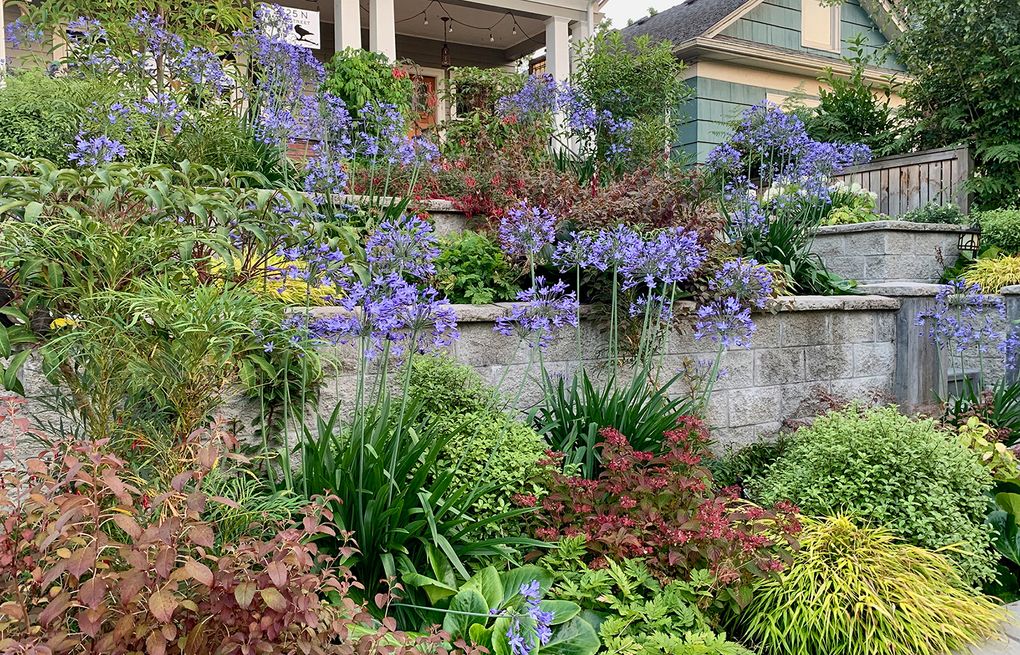
“While this looks like a ‘wild’, low-effort garden, maintaining this level of lushness requires dedicated care.”
Agapanthus needs dividing every 4-5 years to stay vigorous, a task that involves digging up heavy clumps. The dense planting means you’ll need to be vigilant about spotting and removing weeds before they take over. Expect to spend 1-2 hours per week during the growing season on deadheading flowers, trimming back overgrowth, and ensuring everything gets enough water, especially on a slope where water runs off quickly.
8. Modern Multi-Material Yard with Benches, Turf, and Stone
This design succeeds by confidently mixing materials. The warmth of the wooden bench seating plays perfectly against the cool tones of the stacked stone planter and dark gray pavers. Then, the bright, uniform green of the artificial turf provides a welcome, almost graphic pop of color. This is a sophisticated balancing act: the natural, earthy texture of the stone is balanced by the smooth, clean lines of the wood and pavers. No single material dominates; they all work together to create a cohesive, modern look.
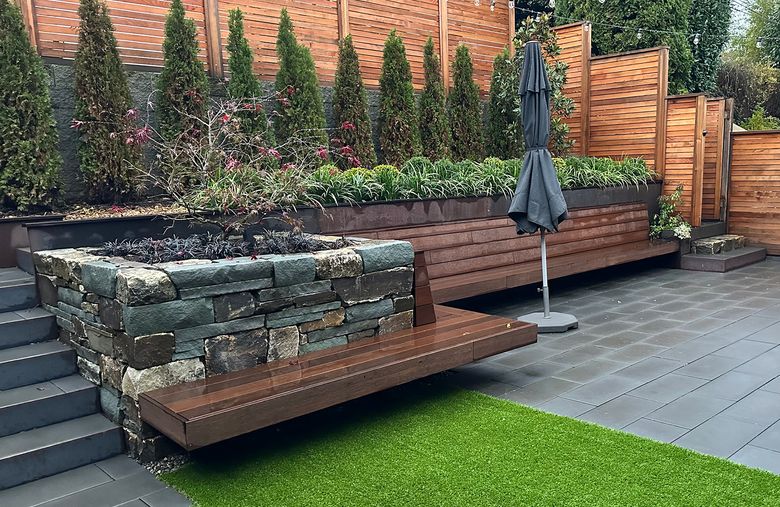
“Let’s have some real talk about artificial turf.”
While it looks perfectly green and requires no mowing, it can get incredibly hot in direct sun—much hotter than real grass. This might be a concern if you have kids or pets who will be playing on it during summer afternoons. Also, while it’s low-maintenance, it’s not *no*-maintenance. It needs to be rinsed regularly to clear dust and debris, and occasionally brushed to keep the blades standing upright, especially in high-traffic areas.
9. Vibrant Flowering Bed Anchored by Large Boulders
If you have a sloped garden bed, adding one or two large boulders is the fastest way to create a natural-looking anchor and prevent everything from feeling like it’s sliding downhill. For placement, don’t just set them on top of the soil. Dig down so that at least one-third of the boulder is buried. This makes it look like it has been there forever, emerging naturally from the earth. Cluster plantings around the base of the rocks to soften the edges and integrate them fully into the garden bed.
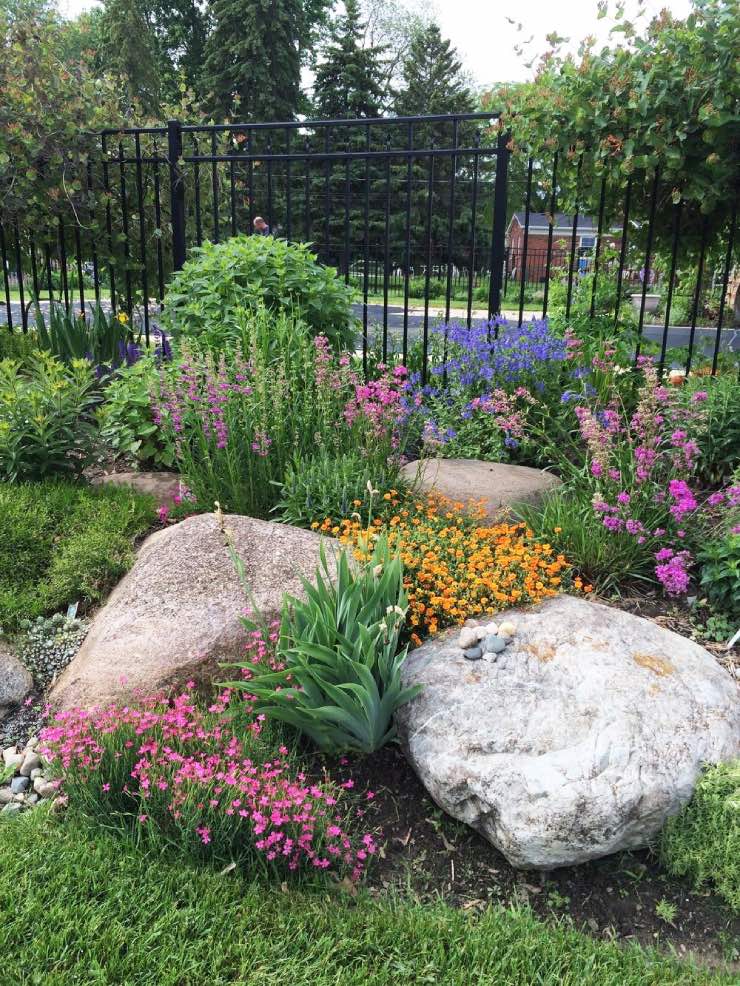
“A landscape supply yard might charge several hundred dollars for large boulders, plus delivery fees.”
For a budget-friendly alternative, check Facebook Marketplace or Craigslist under ‘Free’. People often give away large rocks they’ve excavated during a construction project, as long as you can haul them away. You might not get the perfect specimen, but you can often find fantastic, character-rich stones for free, saving you a significant chunk of your budget.
10. Terraced Wooden Planter Boxes with a Stone Paver Path
This look is all about creating clean, geometric lines that contrast with the organic shapes of the plants. The terraced wooden boxes provide a strong, repeating horizontal element, while the square stone pavers create a crisp, diagonal path up the slope. The combination of warm wood and cool stone is a timeless pairing that adds texture and interest. This design works because it brings a sense of human-made order to a natural, sloped setting, making it feel both intentional and inviting.
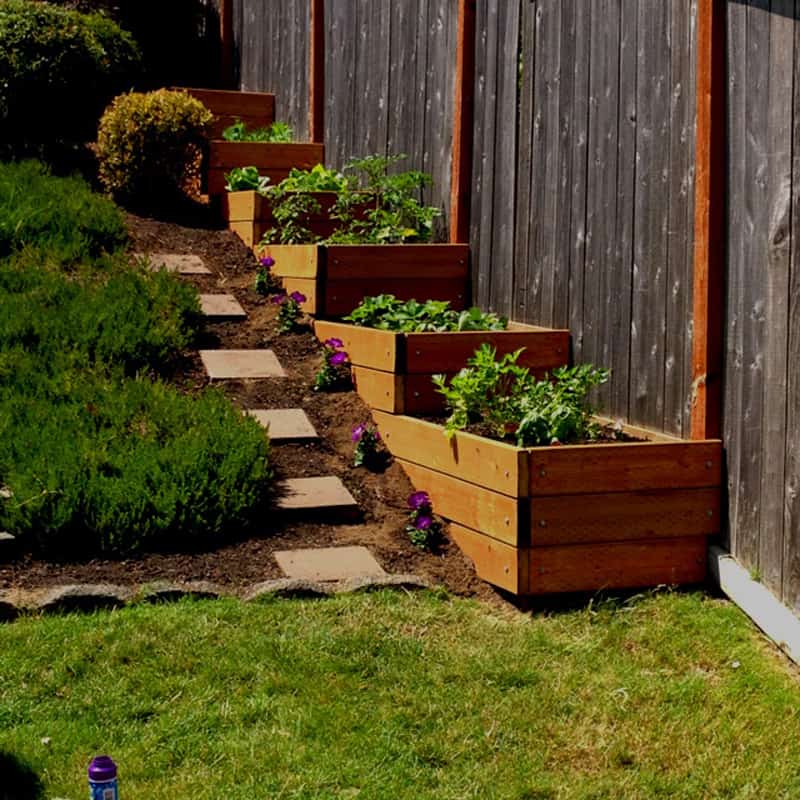
“You can build one of these 4×8-foot planter boxes in an afternoon.”
Here’s a quick guide:
Time Estimate: 2-3 hours per box. Material Cost: ~$60-90 for untreated cedar or redwood planks.
Measure and mark the placement on your slope. Dig a small trench to level the position for the base planks.
Cut your lumber to size. You’ll need boards for the four walls. Use 2×6 or 2×8 planks for a sturdy structure.
Assemble the box frame using exterior-grade screws, starting with the base layer.
Stack and attach the second layer of planks to the first, overlapping the corners for strength.
Line the inside with landscape fabric, fill with soil, and you’re ready to plant!
11. Productive Terraced Vegetable Garden in Wooden Raised Beds
The defining element of this backyard is its productivity. This isn’t just a decorative landscape; it’s a working vegetable garden. The terraced wooden beds are brimming with tomato plants, marigolds, and other edibles, transforming a simple slope into a source of food. The concrete stairs and trellises are purely in service of this goal, making it easier to access, tend, and harvest the crops. This focus on function and sustenance is what gives the space its honest, earthy charm. It feels useful and alive in a way that purely ornamental gardens sometimes don’t.
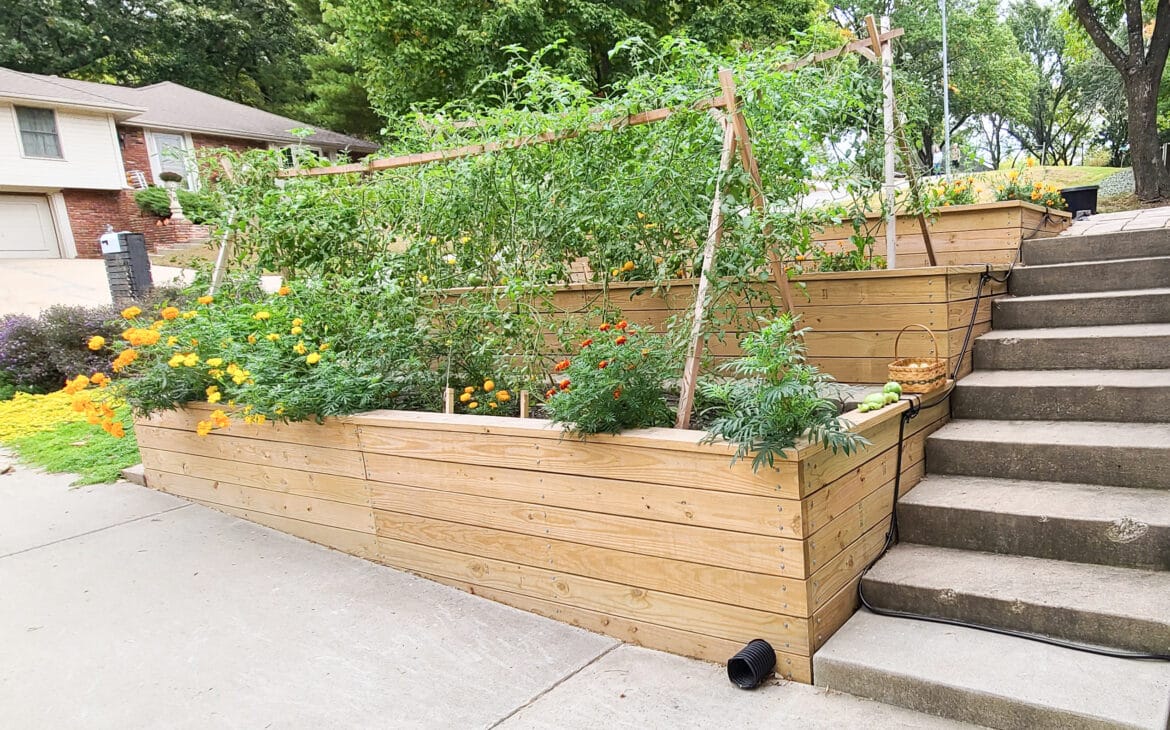
“This type of terraced vegetable garden is perfect for a sunny, south-facing slope with a moderate incline.”
You’ll need a space at least 15 feet wide and 10-20 feet deep to accommodate a few productive beds like these. The key is sun exposure; most vegetables need at least 6-8 hours of direct sun per day. If your slope is heavily shaded, you’d be better off with a design focused on shade-loving foliage, like the one shown in Idea #14.
12. Tropical Backyard Nook with Bamboo Wall and Hanging Chairs
The style math for this tropical escape is: 50% natural texture (bamboo, woven chairs, rocks) + 30% lush, oversized foliage (palms, large-leaf plants) + 20% ambient elements (water feature, warm lighting). The key is the layering of these textures. The fine, vertical lines of the bamboo wall contrast with the broad, green leaves and the smooth, rounded shapes of the rocks. The warm tones of the bamboo and chair cushions are balanced by the deep greens and cool grays of the stone and pavers, creating a space that feels both exciting and serene.
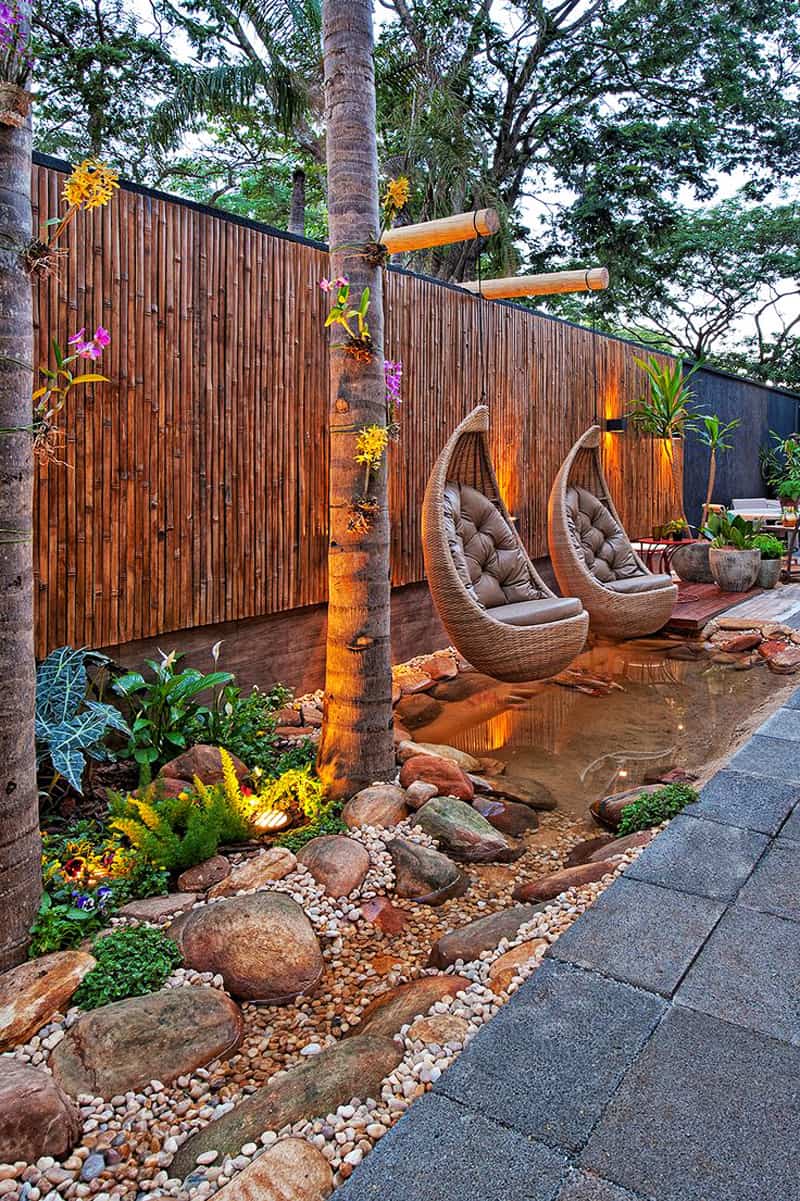
“A word of warning about bamboo: it can be a high-maintenance choice in certain climates.”
Natural bamboo fencing, like what’s shown here, can fade, gray, and even split over time when exposed to sun and rain. It may need to be cleaned and sealed every 1-2 years to maintain its warm color and integrity. Also, be mindful of the water feature. While beautiful, a small, narrow channel like this can be a magnet for leaves and debris, and it will require regular cleaning to keep the pump from clogging.
13. Stepped Gravel Path Through Lush Tropical Landscaping
This pathway design works because of its brilliant use of humble materials. The combination of dark gray gravel and simple wood planks is cost-effective, but the execution is what makes it look so high-end. The wood planks define the steps and prevent the gravel from washing away, while the gravel itself provides a satisfying crunch underfoot and allows for excellent drainage. The deep, moody color of the gravel recedes into the background, making the vibrant greens of the tropical foliage the undisputed star of the show. The warm ground lighting adds a final touch of drama and luxury.
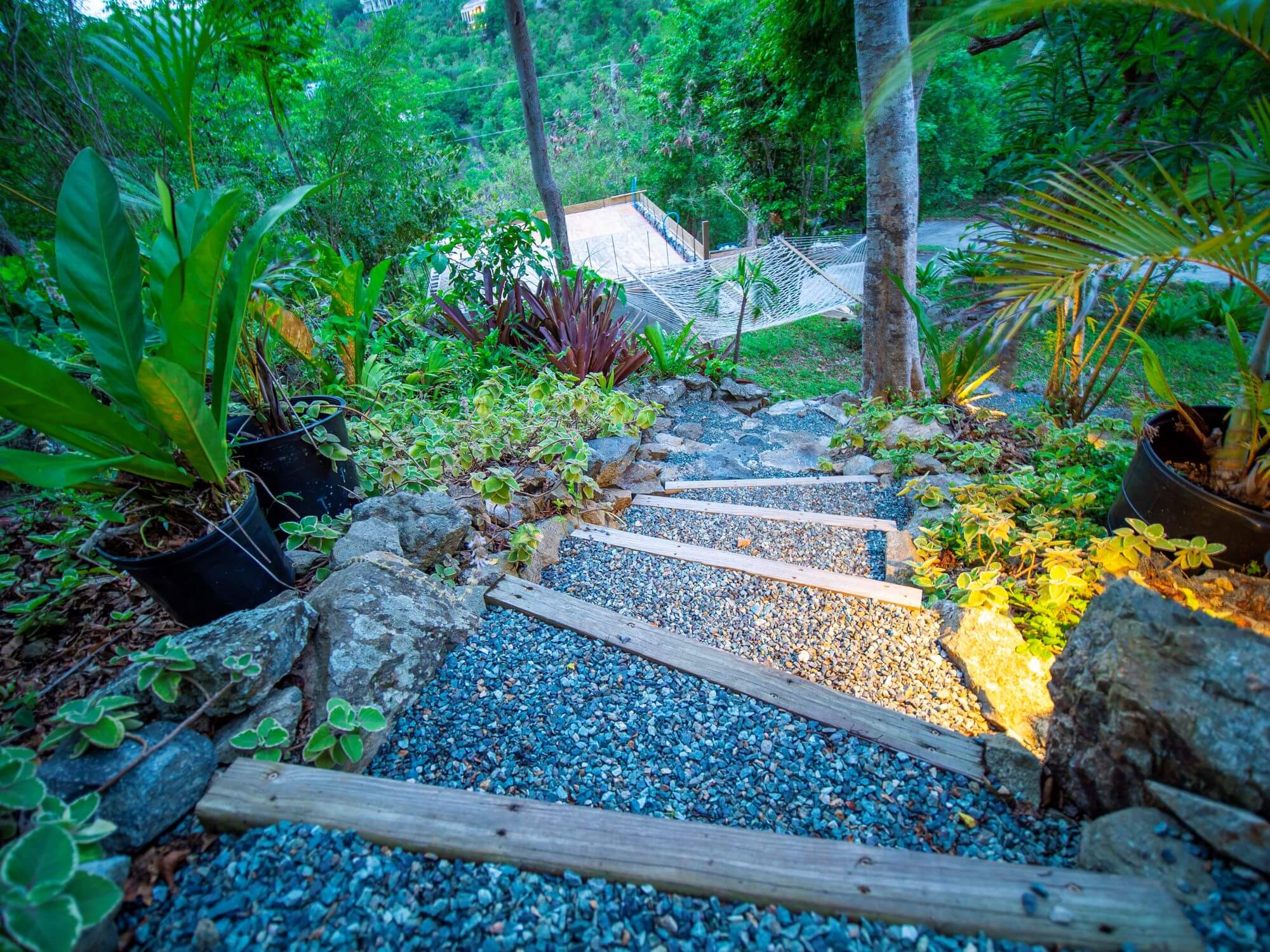
“You can get this look for less by swapping out the tropical plants for more budget-friendly, hardy perennials that have a similar lush feel.”
Instead of expensive, water-hungry tropicals, consider using large varieties of Hosta, ferns (like Ostrich or Lady Fern), and ornamental grasses. These will give you that dense, leafy texture and can be purchased as smaller, cheaper plants that will fill in over a season or two. This is a much smarter investment than the budget version of another similar style you can see in Idea #27.
14. Natural Stone Steps Amongst Overgrown Greenery
that gives this scene its powerful, romantic atmosphere is the moss. The patches of green growing on and between the irregular stone steps make the staircase feel ancient and completely integrated into the landscape. It suggests that nature is slowly reclaiming the space, blurring the lines between the man-made path and the wild hillside. Without the moss and the slightly overgrown foliage encroaching on the edges, these would just be rustic steps. With it, they become a pathway in a secret garden.
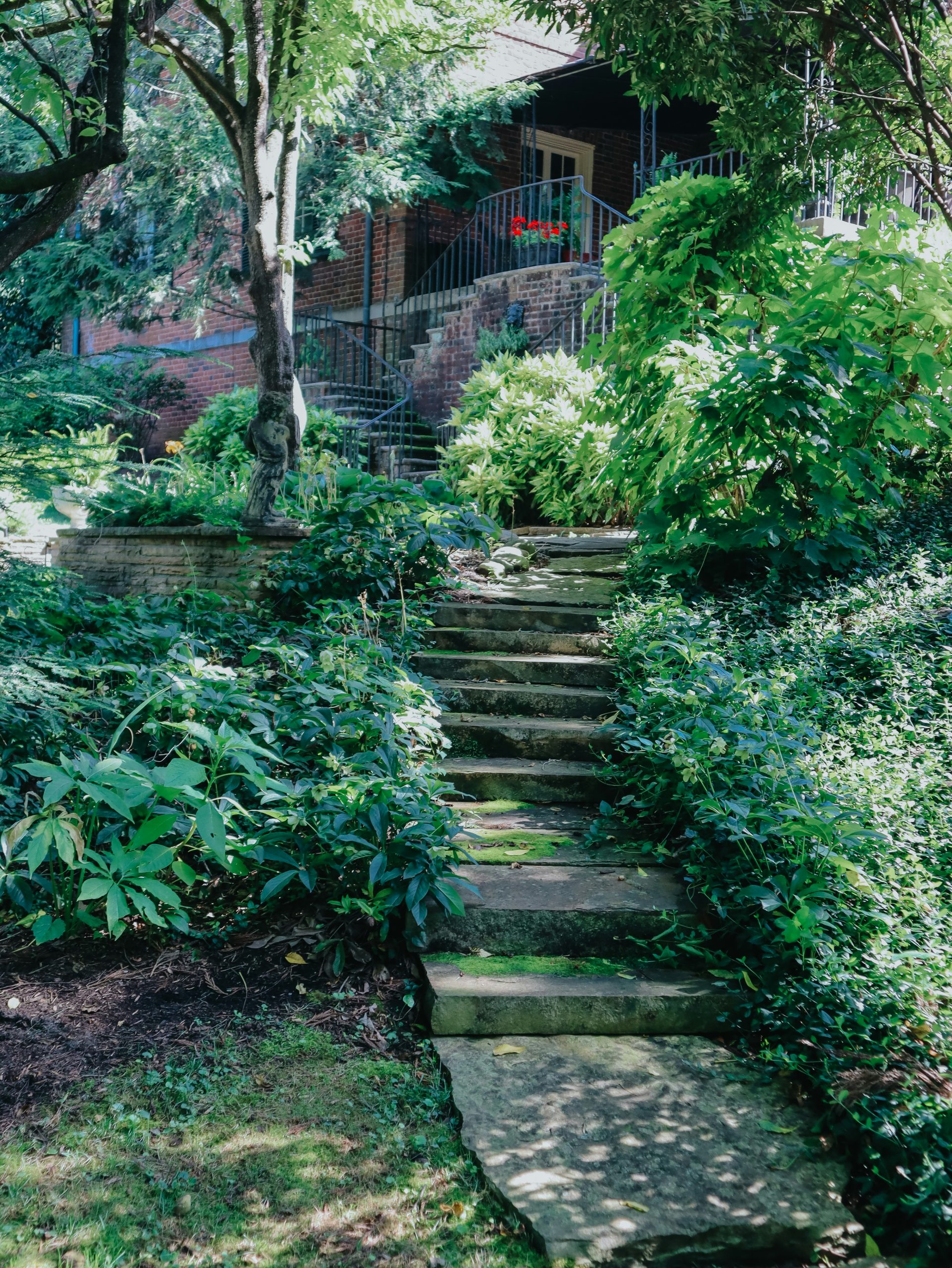
“This beautifully overgrown and ‘natural’ look comes with its own set of maintenance challenges.”
Moss on walking surfaces can become extremely slippery when wet, creating a potential safety hazard. You’ll need to scrub the main tread of the steps periodically with a stiff brush to keep them safe. The dense foliage will also require regular trimming to ensure the path remains passable. It’s a delicate balance between maintaining a wild look and ensuring the space is still functional and safe to use.
15. Mixed-Media Stairway with Concrete, Wood, and Gravel
This design is so successful because it masterfully combines industrial and natural elements. The sharp, clean lines of the board-formed concrete wall and steps provide a modern, structural backbone. This then transitions seamlessly into the rustic, weathered railroad tie steps and soft, permeable gravel. The contrast is fantastic. It demonstrates how you can use different materials to solve different problems on a slope—concrete for retaining, wood and gravel for a softer, more cost-effective pathway—and make it look like a cohesive, intentional design choice.
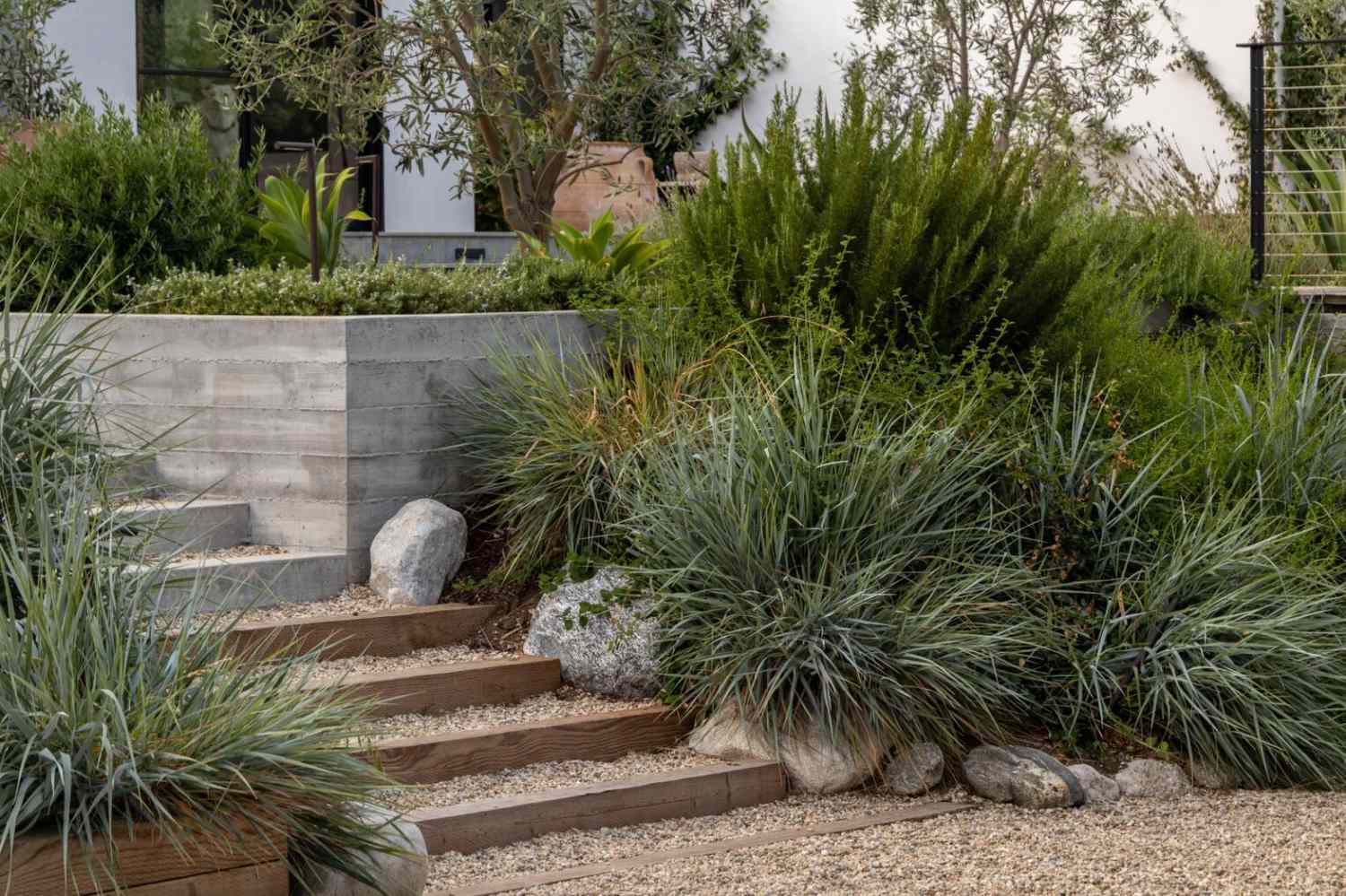
“Before you commit to a mixed-media landscape like this, run through this quick c”
Before you commit to a mixed-media landscape like this, run through this quick checklist:
- Check your local codes: Are there restrictions on the height of retaining walls or specific requirements for handrails on steps? A quick call to your city’s planning department can save you a major headache.
- Soil Test: Is your soil stable enough for a heavy concrete wall, or will you need deeper footings? Don’t skip this, especially on a slope.
- Material Sourcing: Can you easily get all the materials delivered? Sourcing gravel, railroad ties, and ready-mix concrete from different suppliers can be a logistical puzzle.
16. Natural Stone Steps Winding Through a Verdant Hillside
When laying natural stone steps on a slope, the key to a ‘found-in-nature’ look is to vary the size, shape, and spacing of the stones. Avoid creating a perfectly uniform staircase. Instead, create a gentle S-curve in the path as it ascends the hill. Use larger, flatter stones for the main treads and smaller, irregular stones to fill the gaps and create short landings. Allow moss and small, tough groundcover plants like creeping thyme to grow in the crevices. This intentional imperfection is what makes a path feel truly rustic and integrated.
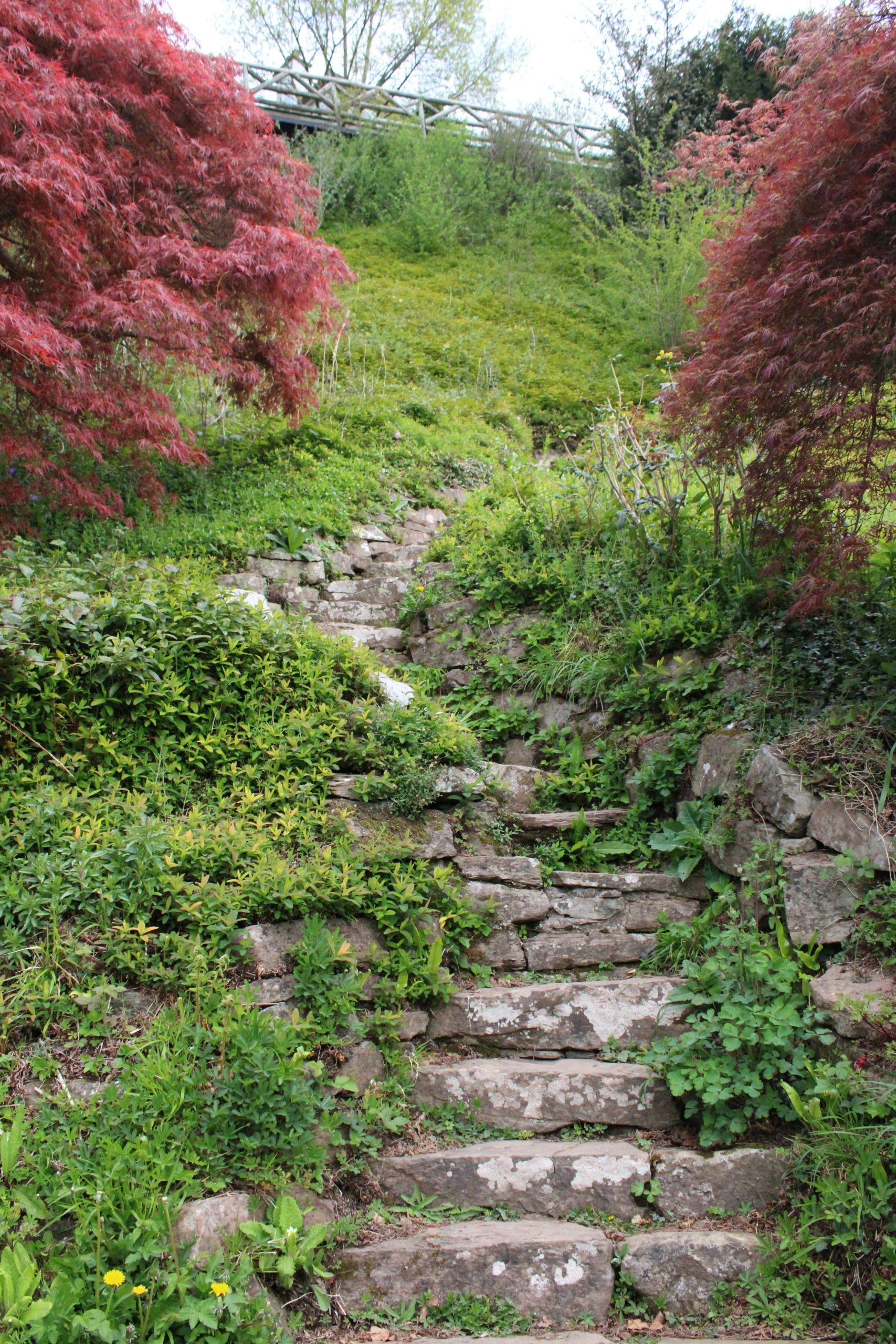
“There’s a story in these steps.”
You can imagine them being laid by hand, one stone at a time, creating a connection to a time when paths followed the natural contour of the land rather than cutting straight through it. The deep red of the Japanese maple leaves tells you it’s autumn, a time of beautiful decay. This isn’t a high-traffic highway through a garden; it’s a path for meandering, for noticing the small details. It’s a perfect example of how a simple path can set the entire mood for a landscape, which is quite different from the approach in Idea #18.
17. Modern Home with Terraced Rock Gardens and Mulch
Here’s the formula for this clean, modern look: 40% dark, chunky rock + 30% dark wood chip mulch + 30% low-maintenance, sculptural plants. The heavy, dark rocks act as the ‘bones’ of the design, providing structure and retaining the slope. The mulch fills the space with a uniform, dark texture that suppresses weeds and helps retain moisture. Finally, the carefully selected plants (grasses, small trees) add pops of green and architectural shapes against the dark backdrop. It’s a very controlled and intentional palette.
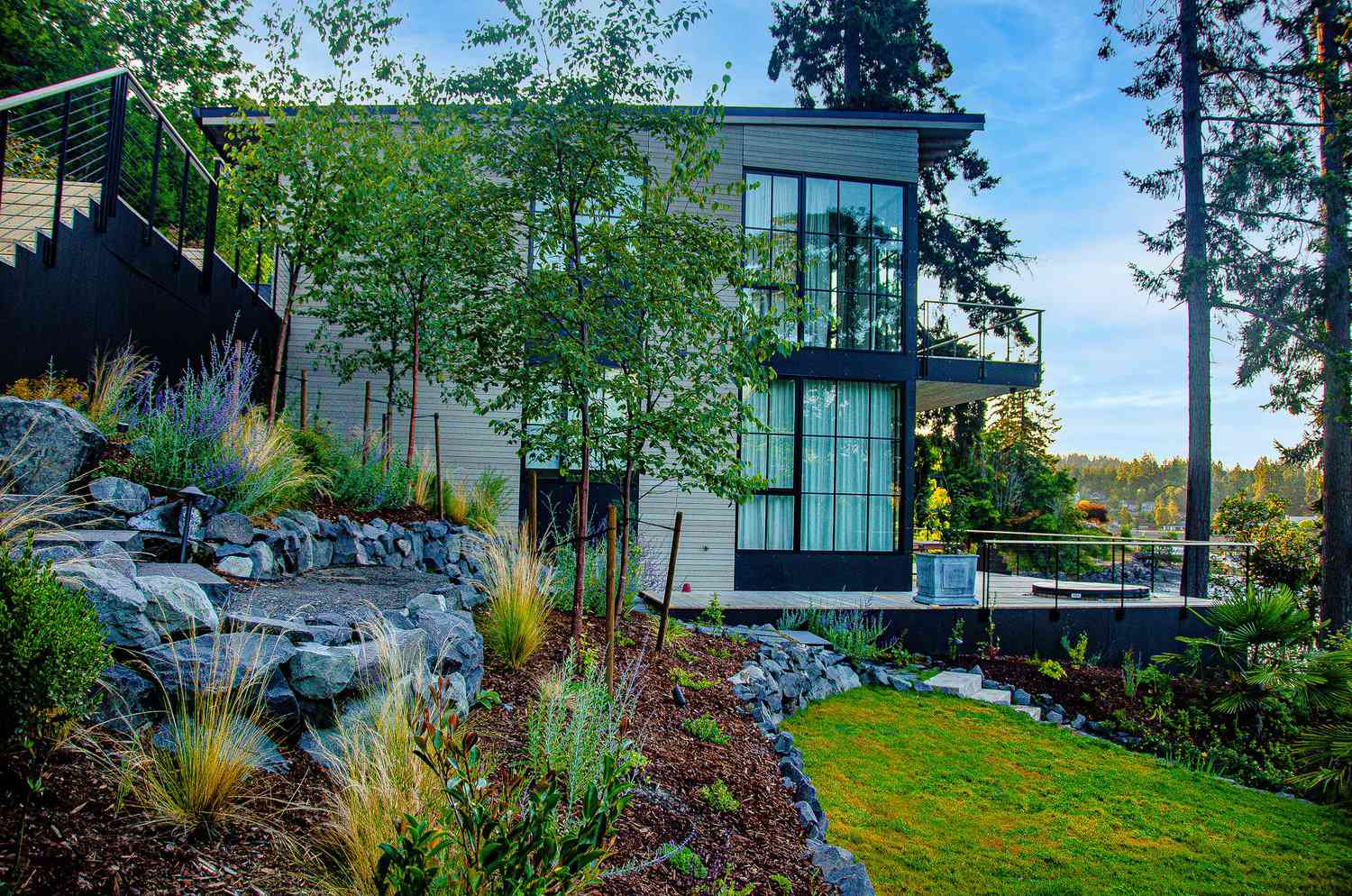
“This type of landscape is often called ‘low-maintenance’, but that doesn’t mean ‘no-maintenance’.”
The wood chip mulch will decompose over time and will need to be topped up every 2-3 years to maintain its depth and color. The plants, while drought-tolerant, will still need regular watering for their first year or two to get established. And while the mulch helps, some weeds will inevitably pop through, so you’ll still need to do some hand-weeding, especially after a rain.
18. Contemporary Multi-Level Retreat with a Gravel Garden
The genius of this design lies in its use of gravel as a unifying groundcover. Instead of trying to maintain a lawn on a tricky slope, the entire area is covered in a clean, light gray gravel. This immediately gives the space a modern, almost zen-like feel. It also serves as a high-contrast backdrop that makes the green and blue-green plants, large rocks, and wooden steps stand out as sculptural elements. It’s a bold choice that solves the slope problem while creating a strong, cohesive aesthetic.
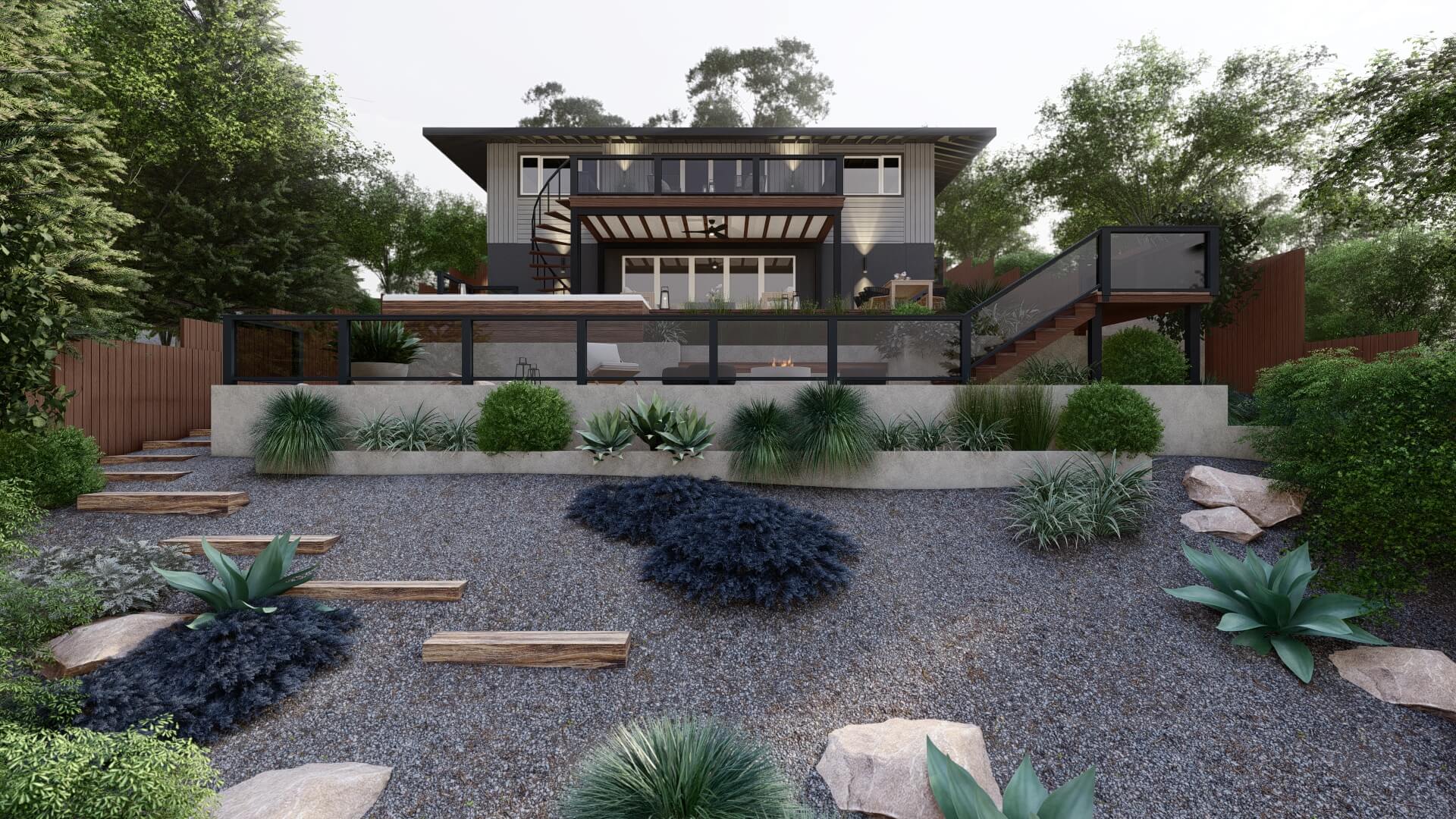
“Let’s be honest about gravel landscapes: they are not fun to walk on in bare feet.”
The stones can also find their way into your house on the bottom of shoes. If you have kids who love to run around the yard, a large expanse of gravel might not be the most practical choice. It’s also critical to install a high-quality landscape fabric underneath the gravel to prevent weeds from taking over. Skipping this step will turn your serene zen garden into a maintenance nightmare within a single season. If you are loooking for a more ‘natural’ feel, take a look at Idea #16.
19. Woodsy Sloped Backyard with a Natural Pine Needle Floor
that defines this space is that it embraces its natural, woodsy character. Instead of fighting the slope and the tree cover, the design leans into it. The ground isn’t a manicured lawn; it’s a soft, rustic carpet of pine needles. The fire pit is made of simple, natural stone that looks like it could have been gathered from the property. This isn’t about imposing a new design on the landscape; it’s about making a minimal, respectful intervention that allows the beauty of the existing woods to shine. It feels authentic and deeply relaxing.
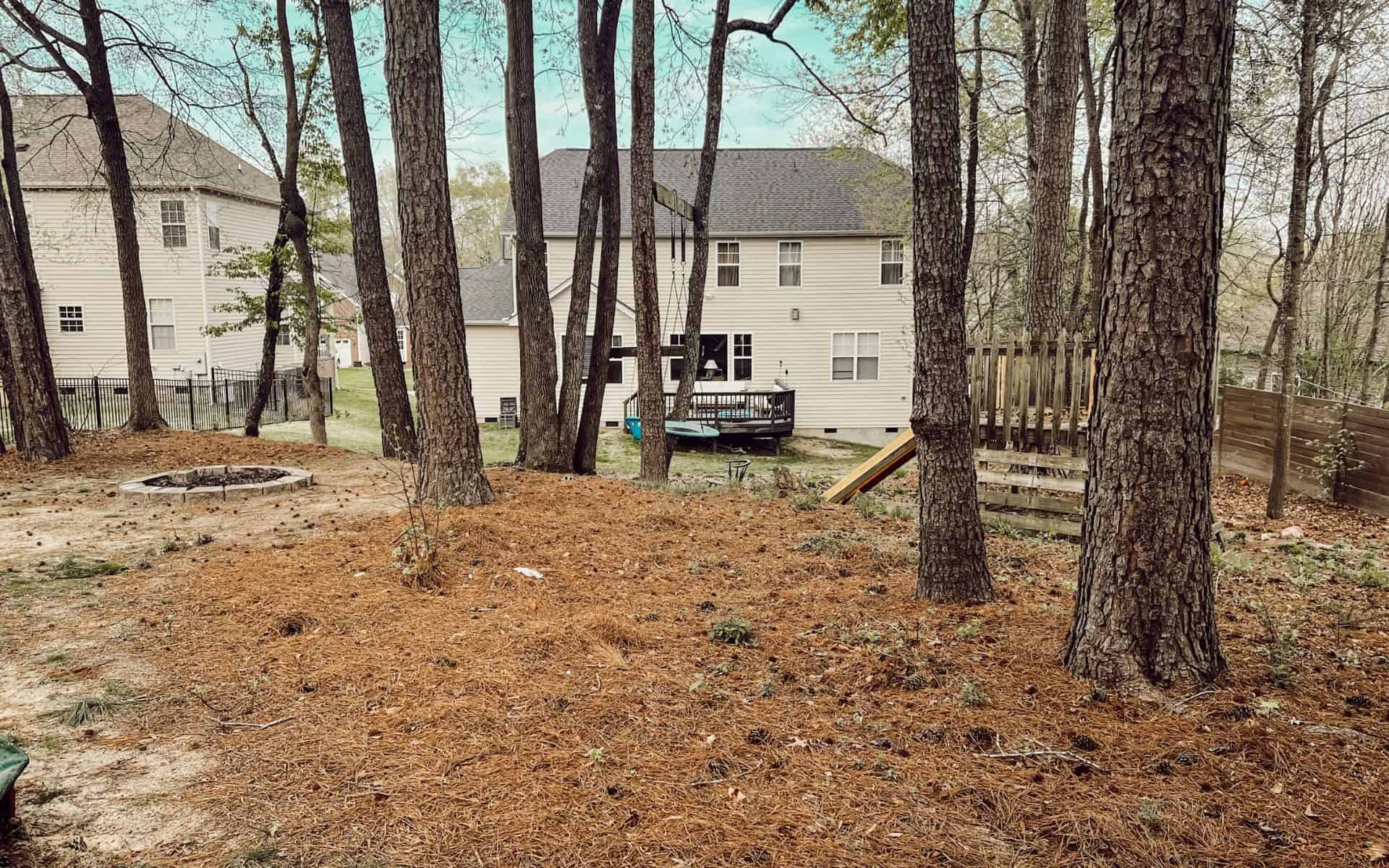
“This is the ultimate budget ‘idea’ because it involves doing less, not more.”
If you have a sloped, wooded area, the cheapest and most eco-friendly option is to simply let the fallen pine needles or leaves become the groundcover. Rake them to create soft paths and define a seating area around a simple fire pit. You can source stone for the fire pit for free from Craigslist or by asking local farmers. The entire ‘project’ could cost less than $50 for a fire pit ring insert, embracing the existing state as a finished design.
20. Patio Fire Pit with Orange Chairs Overlooking a Slope
When you have a patio overlooking a view (even if it’s just your own sloped yard), use low-profile furniture. Notice how the backs of these chairs are low enough that they don’t obstruct the sightline to the trees and sky beyond. A high-backed sofa or tall planters would have chopped up the view and made the patio feel more disconnected from the landscape. By keeping the furniture below the railing height, the entire space feels more open and expansive.
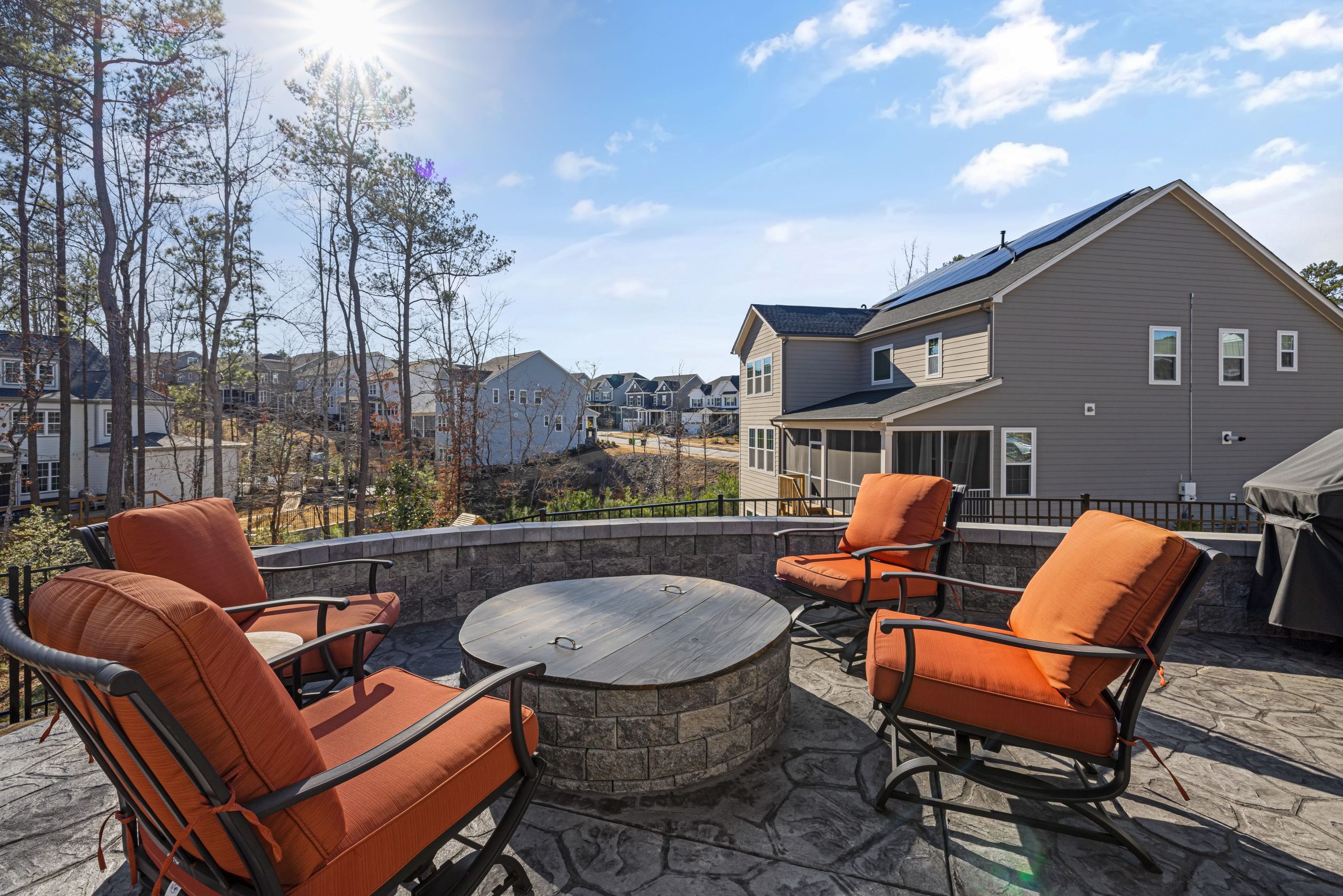
“This seating area works so well because of its smart use of complementary colors.”
The bright, fiery orange of the chair cushions is directly opposite the blue of the sky on the color wheel. This high-contrast pairing creates a powerful visual pop that feels energetic and inviting. The neutral gray tones of the stone fire pit, stamped concrete floor, and metal railings provide a calm, solid base that allows the orange and blue to take center stage. This deliberate use of color is what makes the space feel designed, not just decorated.
21. Modern Covered Patio with Distinct Seating and Dining Areas
To accommodate two distinct zones like this—a full lounge area and a dining space for 6-8 people—you need a generous footprint. A covered patio of this scale would require a minimum space of about 15 feet deep by 30 feet wide. This allows enough room for the furniture itself, plus adequate clearance for walkways and for pulling out chairs. The sloped roof is also key; a ceiling height that starts around 8 feet near the house and rises to 10-12 feet at the outer edge makes the space feel airy and expansive, not cramped.
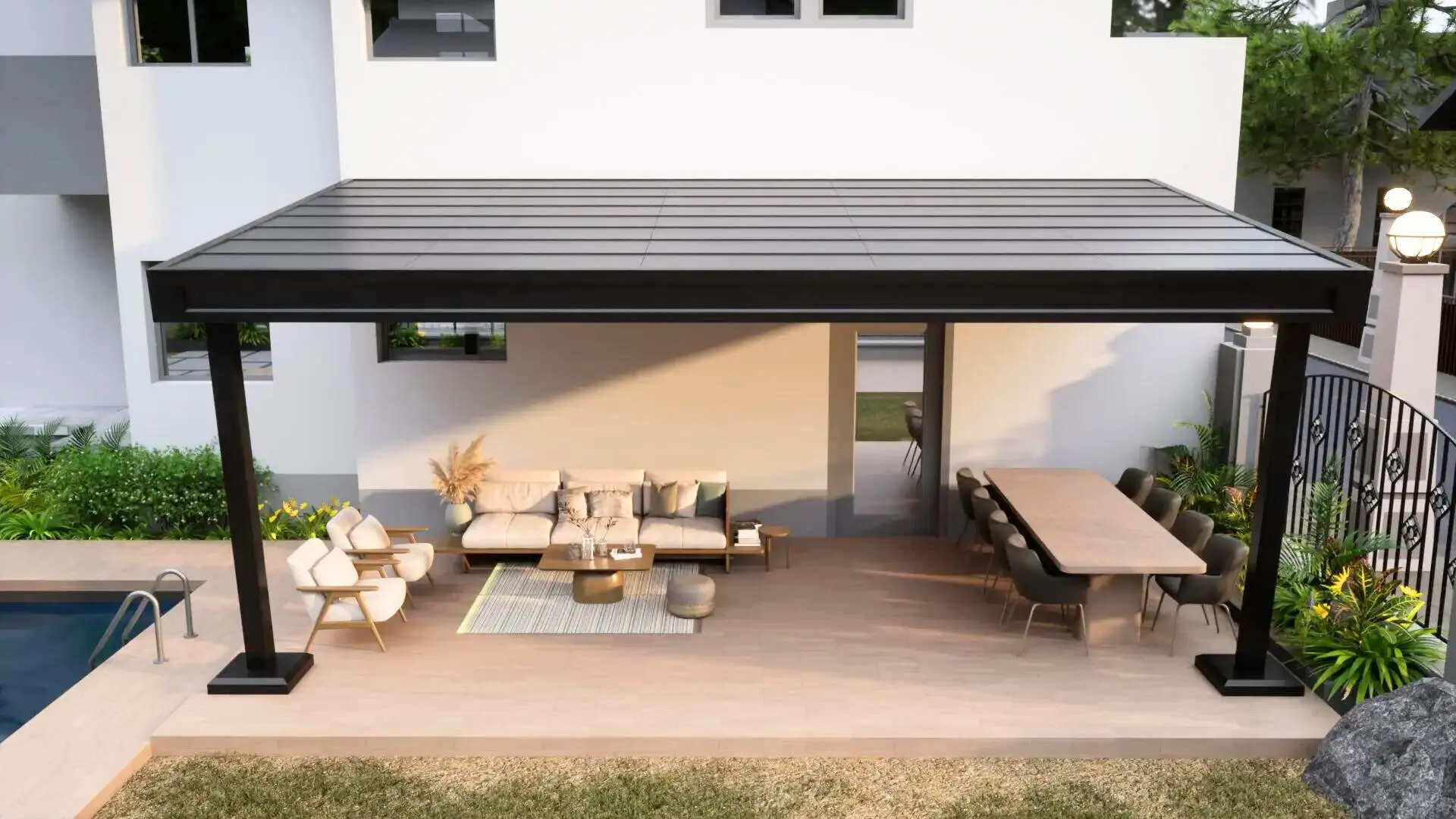
“The covered outdoor living room is no longer just a trend; it’s a permanent fixture in modern home design.”
As our lives become more digitally connected, there’s a growing desire for dedicated spaces that encourage us to unplug and connect with nature and each other. This kind of seamless indoor-outdoor living, with comfortable, weather-protected areas for lounging and dining, is a direct response to that cultural shift. It extends the home’s usable square footage and enhances daily quality of life.
22. Irregular Stone Retaining Walls with Integrated Steps
Let’s be real: building a retaining wall with irregular, natural stone like this is a serious craft. This is not a beginner-level DIY project. Unlike uniform concrete blocks, fitting these stones together requires a good eye, a lot of patience, and some serious muscle. Each stone has to be chosen and placed to fit snugly against its neighbors. If it’s not done correctly, the wall can be unstable and unsafe. For a project of this scale, it’s almost always worth hiring an experienced professional mason.
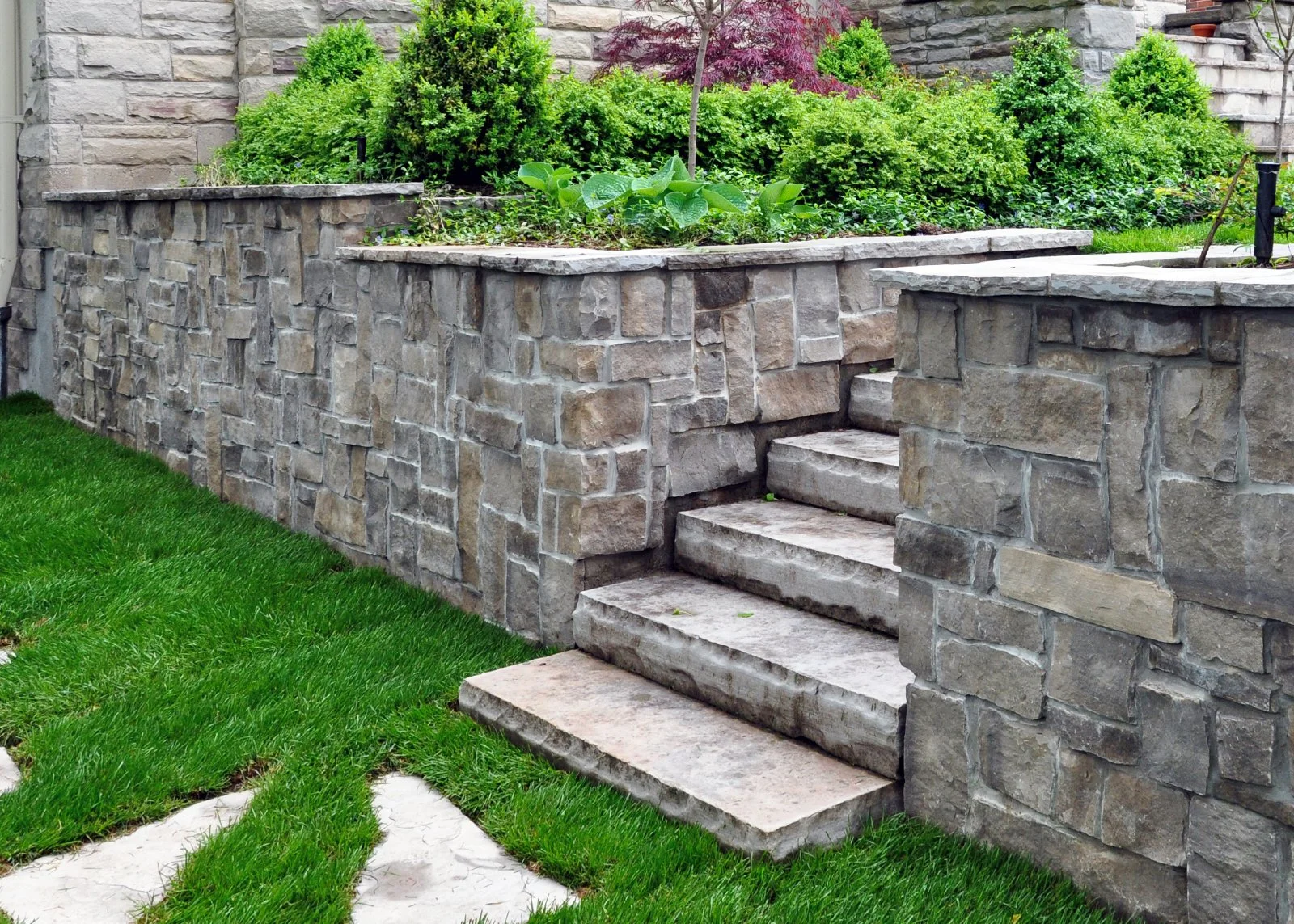
“The visual recipe for this rustic, substantial look is: 70% chunky, irregular stone + 25% vibrant, mixed foliage + 5% manicured lawn.”
The overwhelming majority of the visual weight comes from the stone itself. Its texture, earthy gray-and-tan color palette, and sheer mass are the dominant features. The plants serve to soften the edges of the hardscaping, while the small patch of lawn provides a spot of calm, uniform green that keeps the scene from feeling too chaotic. The balance is heavily skewed towards the powerful presence of the stone.
23. Grand Brick Staircase Flanked by Slender Trees
The success of this design lies in its use of strong vertical and diagonal lines. The grand, diagonal sweep of the brick staircase immediately draws the eye upward. This upward movement is reinforced by the tall, slender trees that flank the stairs, acting like exclamation points. In the garden beds, the groupings of plants and the lines of the mulch also follow this diagonal trajectory up the slope. The entire composition is designed to lead you on a journey from the bottom to the top, creating a sense of formality and grandeur.
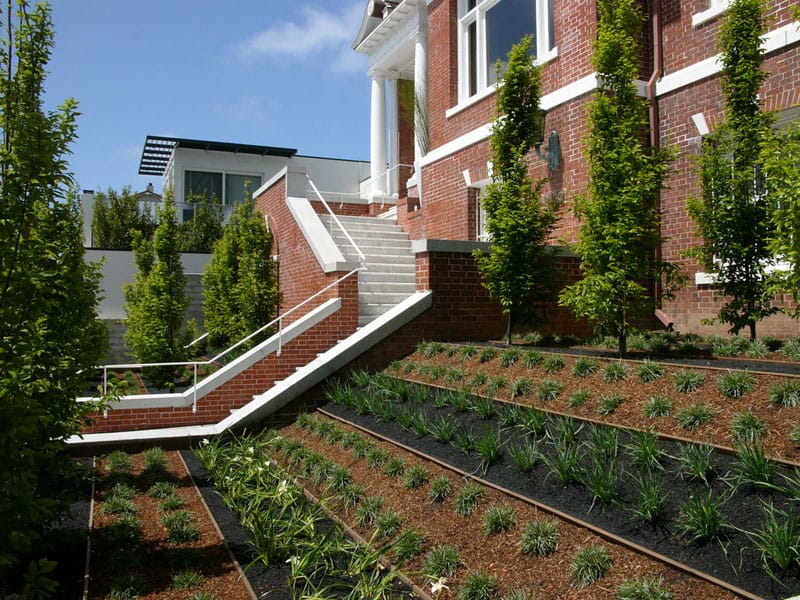
“that truly makes this landscape sing is the stark contrast between the classical and the modern.”
The traditional red brick building and grand staircase feel timeless and established. And then, you see the modern white building with its dark-slatted roof in the background. This unexpected juxtaposition is what adds a layer of architectural intrigue. It tells a story of an older property being updated, and the landscape is the beautiful bridge that connects the two different eras and styles. Without that modern element, it would be a lovely but much more conventional scene.
24. Multi-Level Patio with Dark Walls and Colorful Accents
When working with dark retaining walls, like the deep brown concrete block used here, it’s crucial to add a lighter-colored capstone. The light beige stones that top these walls do two important things. First, they provide a clean, finished edge that makes the inexpensive block look much more custom and high-end. Second, they create a visual ‘lift’ that prevents the dark walls from feeling too heavy and oppressive. This simple two-tone strategy adds a professional touch that costs very little extra but makes a huge difference.
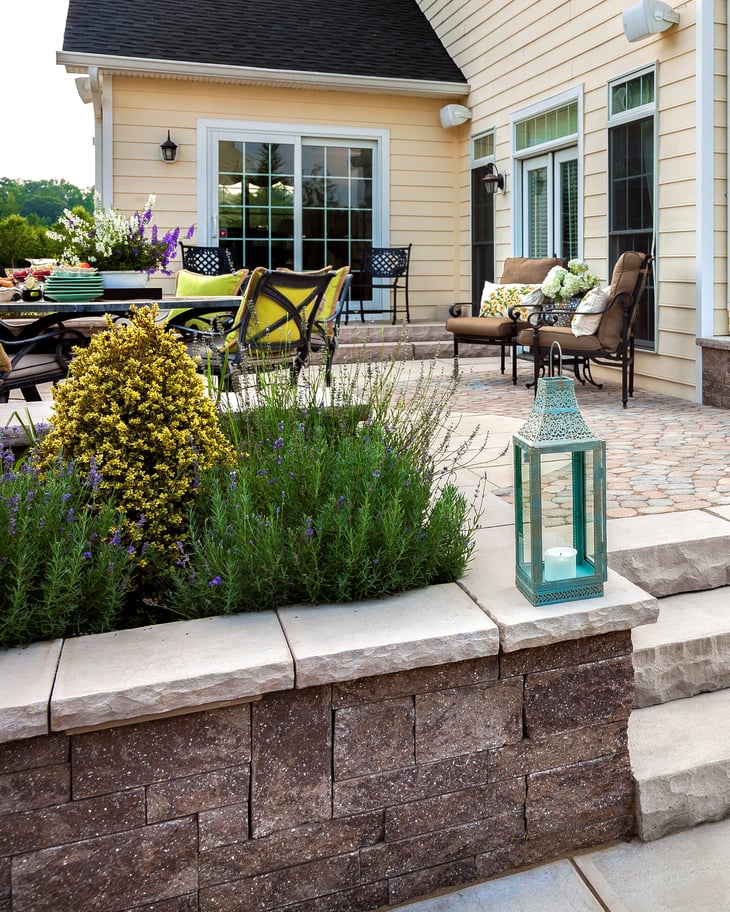
“Those conical yellow shrubs (likely ‘Golden Globe’ arborvitae) can be pricey at a nursery.”
To get a similar pop of vibrant color and vertical interest for less, look for ‘Golden Sword’ yucca plants. They provide a similar bright yellow and green variegation and an architectural, spiky shape. They are also extremely drought-tolerant and low-maintenance. A small yucca might cost $15-20, whereas a similarly sized arborvitae could be $50-70. Group three of them together for a dramatic, budget-friendly statement.
25. Terraced Garden Oasis with Stone Paths and a Pergola
This garden feels like a personal paradise discovered, not just built. The winding stone paths invite you to explore, and the overflowing terracotta pots and classical columns suggest a space that has been lovingly curated over many years. It’s a collector’s garden, filled with different textures and colors at every turn. It tells the story of a passionate gardener who values lushness and a touch of romance over minimalist perfection. You can almost feel the sun warming the stone and smell the flowers in the air.
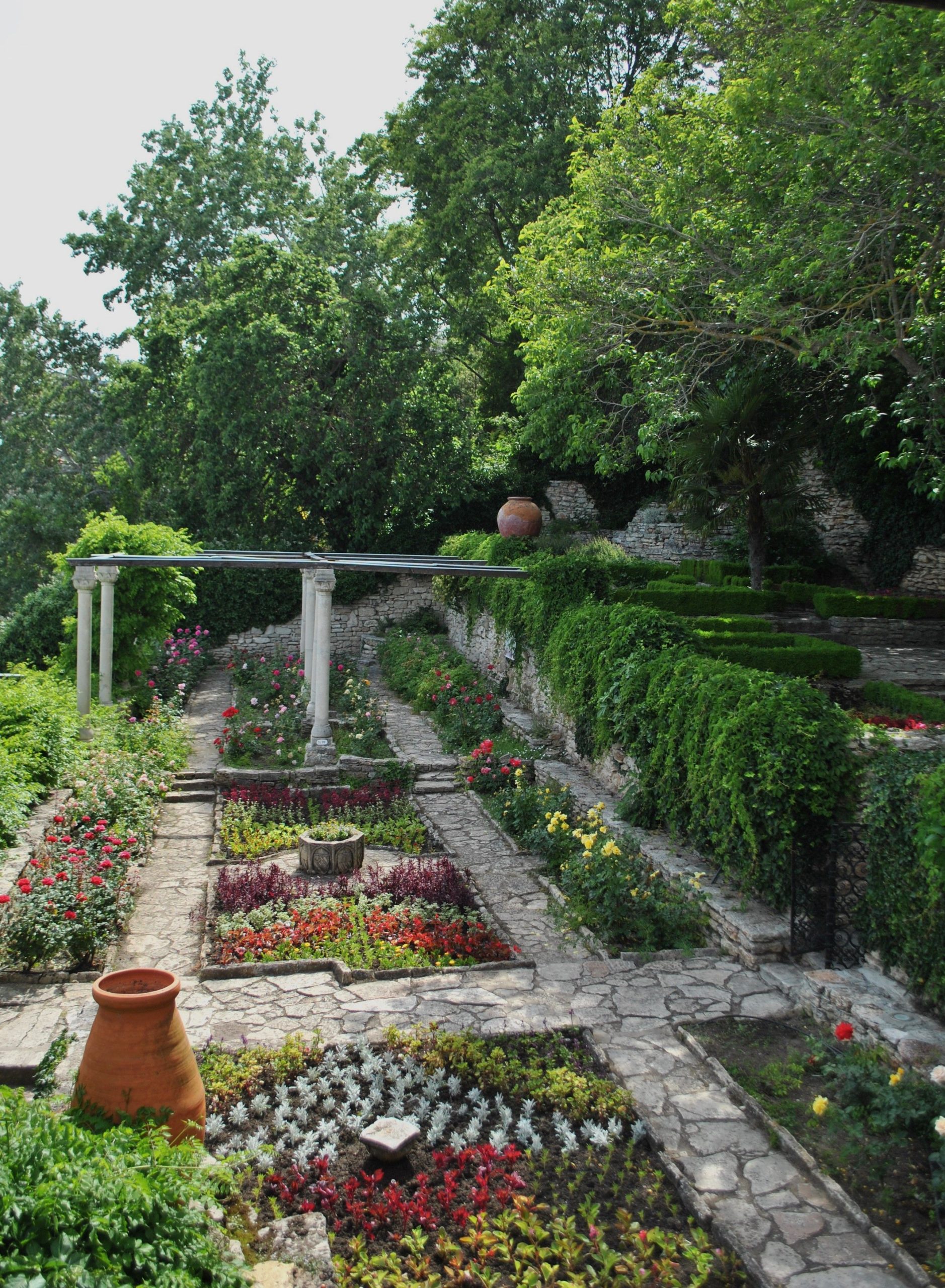
“There is a growing movement in garden design, sometimes called the ‘New Perennial’ or ‘Naturalistic’ movement, that champions this style of planting.”
It’s a reaction against stiff, formal gardens and favors a more immersive, meadow-like feel. This garden, with its dense layers, mixed plantings, and focus on texture and form, is a perfect example of that trend. It’s popular because it feels more authentic, more friendly to pollinators, and offers visual interest throughout the seasons, not just for a few weeks of peak bloom.
26. Basic Sloped Backyard with Deck and Privacy Fence
this backyard has going for it is potential. This is the ‘before’ picture for many of the other ideas in this article. It has a functional deck, a solid privacy fence, and a sloped lawn. This is the blank canvas. Its greatest asset is that it’s an open space, unburdened by old, failing hardscaping or overgrown shrubs that need to be removed. It represents a pure opportunity to implement a design that truly fits the homeowners’ needs and style, whether it’s the terraced planters of Idea #10 or the simple fire pit area from Idea #19.
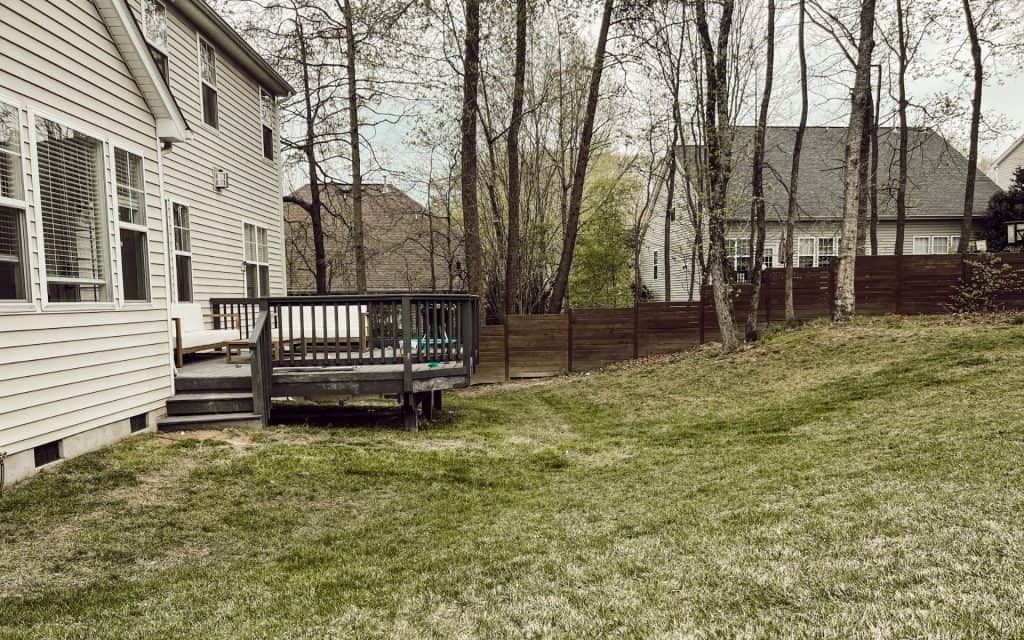
“Before you do anything with a space like this, stop and assess.”
Don’t just start digging. Here’s your checklist:
Observe the Sun: Where does the sun hit and when? A sun map will determine what you can plant and where you’ll want to create shade.
Watch the Water: After a heavy rain, where does the water flow and where does it pool? This will dictate your drainage needs.
Define Your Needs: How do you *really* want to use this space? A play area for kids? A quiet reading nook? A place to entertain? Be honest about your lifestyle.
Set a Realistic Budget: Know your numbers before you fall in love with an idea you can’t afford.
27. Layered Garden Border with Curved Edging and Mulch
Creating professional-looking curved garden beds is easier than you think, and it’s a fantastic way to add curb appeal on a budget.
- Time: 2-4 hours. Cost: $50-100 for edging and mulch.
- Lay out your desired curve with a garden hose. It’s flexible and allows you to easily adjust the shape.
- Once you’re happy with the curve, use a flat-edged spade to cut a clean line into the grass along the hose.
- Install your edging. For curves, flexible plastic or metal edging is easiest. Hammer it into place along your cut line.
- Lay down cardboard or newspaper inside the bed to smother the grass, then cover with 3-4 inches of mulch.
- Cut holes through the cardboard to add your plants.
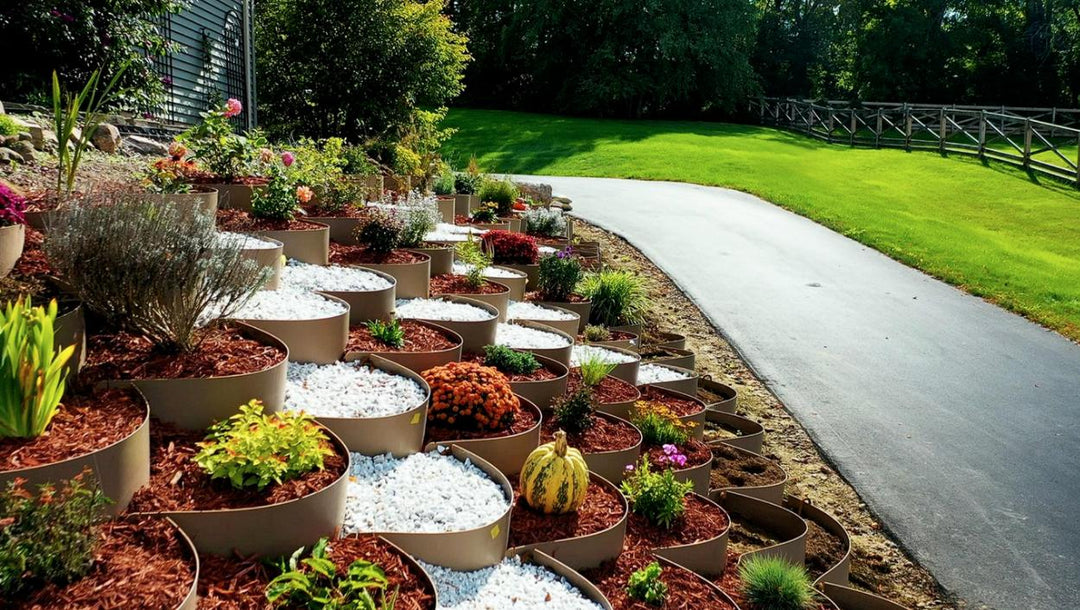
“This entire look is a budget alternative to more extensive landscaping.”
Instead of a costly stone or concrete retaining wall, it uses simple, flexible plastic edging to create tidy, curved tiers. Rather than excavating the slope, it builds up planting beds on top of it. Using a mix of inexpensive red wood chip mulch and decorative white gravel adds color and texture without the expense of filling the entire area with pricier stone. This is a perfect weekend project that delivers a huge visual impact for a minimal investment, proving you don’t need a huge budget for a beautiful yard. Just compare it with Idea #4.
28. Interlocking Block Retaining Wall with Young Trees
A retaining wall built from interlocking concrete blocks is a durable, low-maintenance choice. Here’s what you can expect:
- Weeding: The raised bed will still get airborne weed seeds. Expect to spend 15-20 minutes a month pulling young weeds to keep it clean.
- Wall Cleaning: The blocks may develop some light discoloration or moss over time, especially on the north side. A quick scrub with a brush and soapy water once a year will keep it looking fresh.
- Plant Care: The most significant maintenance will be caring for the plants. The young trees will need regular water for the first few years and pruning every 1-2 years to maintain their shape.
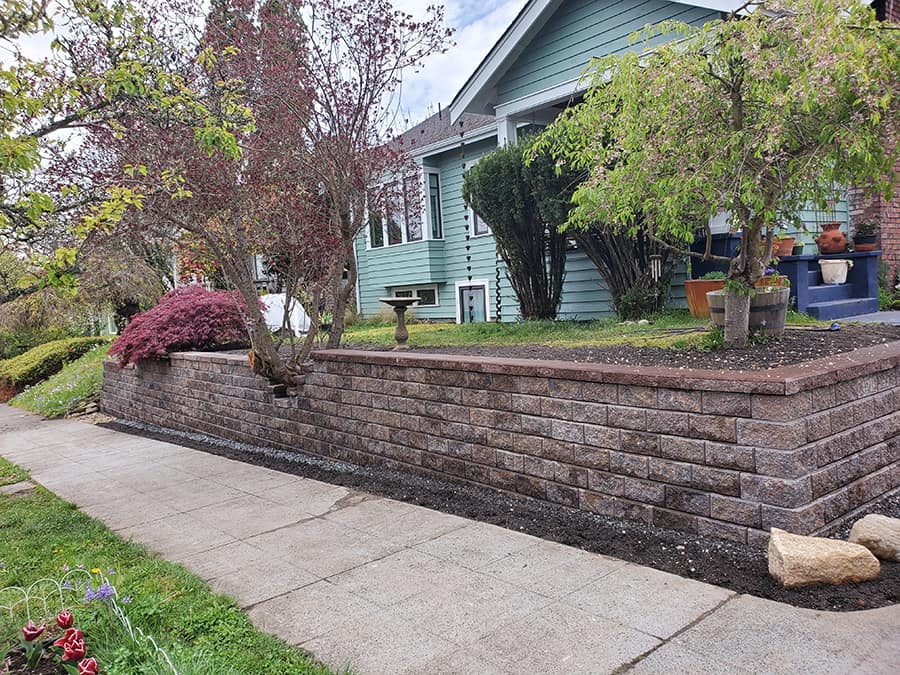
“When selecting plants for a raised bed next to a house foundation, always consider their mature size.”
The small trees and burgundy shrub here are planted with enough space between them and away from the house siding. A common mistake is to plant small shrubs too close to the wall; in five years, they’re overgrown, blocking light and rubbing against the house. Always check the plant tag for its mature spread and plant it so that its future edge will be at least 18-24 inches away from any structure.
29. Winding Flagstone Path Through an Overflowing Flower Garden
This garden path is successful because it feels like a journey of discovery. The flagstone path doesn’t take the most direct route; it meanders and winds its way through the plantings, forcing you to slow down. The steps are integrated organically, appearing where the slope becomes a little steeper. The plants are allowed to spill over the edges of the path, softening the hard lines of the stone and blurring the boundary between the path and the garden. This creates an immersive, romantic experience that a straight concrete path could never achieve.
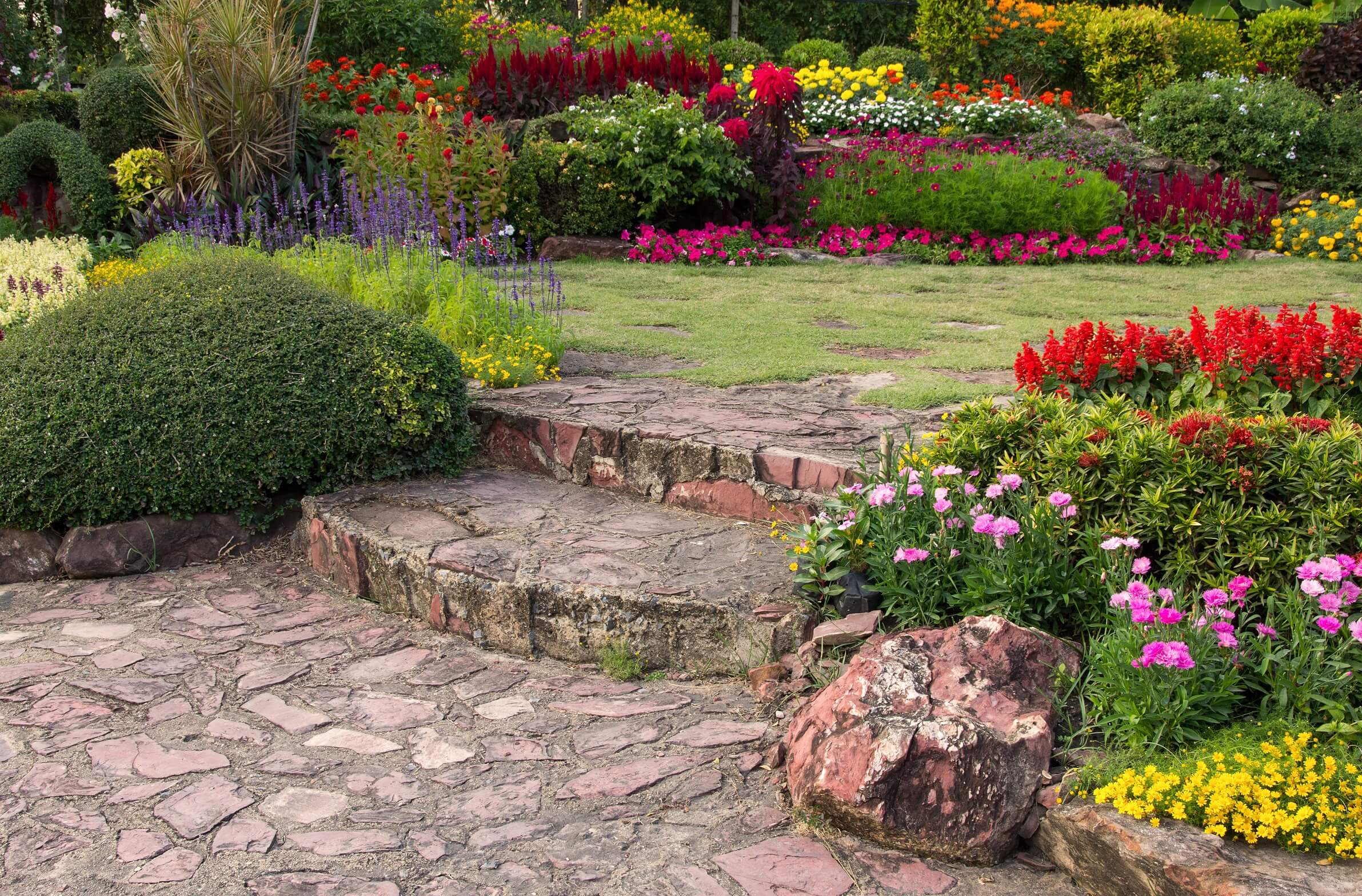
“This is a garden that’s meant to be lived in, not just looked at.”
You can imagine someone stepping out in the morning, coffee in hand, to see what new blooms have opened overnight. The sheer abundance of flowers—pinks, reds, purples, yellows—speaks to a love of color and life. It’s not a minimalist, controlled space; it’s a joyful, slightly chaotic, and beautiful expression of a gardener’s passion. It feels personal, vibrant, and full of energy.
Time to Tackle That Slope
That tricky slope in your backyard isn’t a problem; it’s an opportunity waiting to happen. With the right plan, you can turn an awkward incline into the most dynamic and beautiful feature of your property. We hope these ideas have sparked your imagination and given you the confidence to get started. Now go create that outdoor oasis you’ve been dreaming of! Don’t forget to save your favorites to your Pinterest board to keep the inspiration flowing.