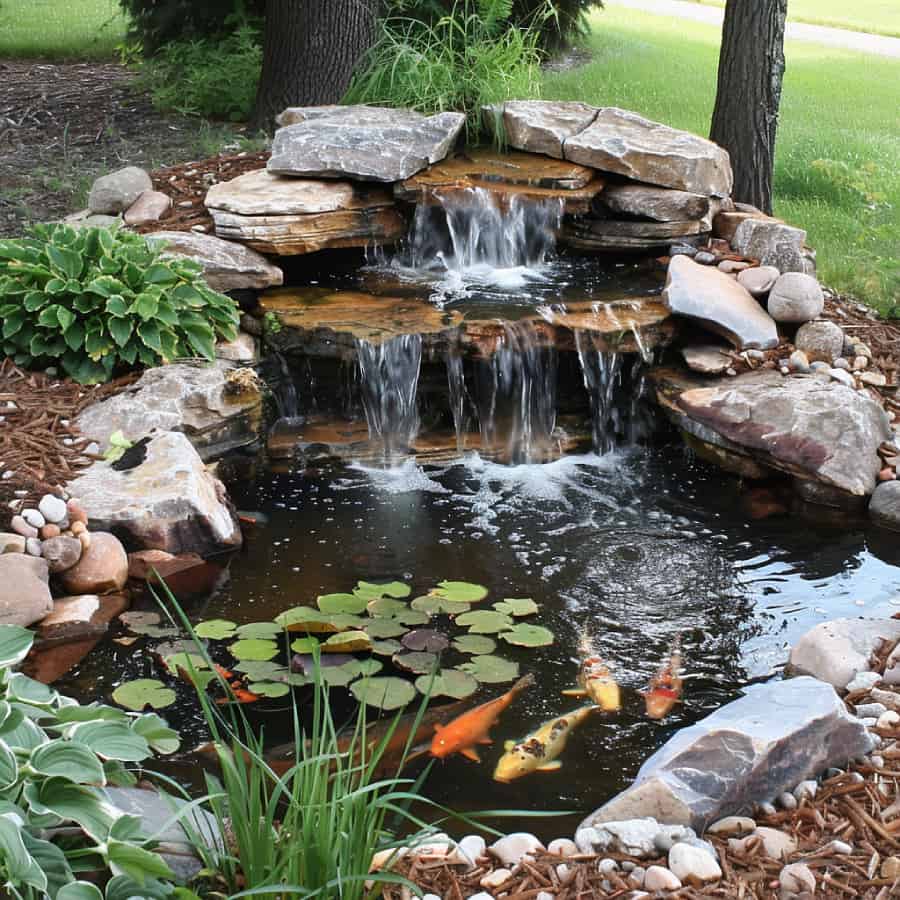
You know that feeling when you find the *exact* right vibe for your garden on Pinterest, but turning that picture into your actual backyard feels impossible? Most guides show you the “what” but not the “how.” We’re here to fix that. After filtering through hundreds of DIY and craft ideas, we narrowed it down to 29 that actually deliver on charm and color. We’re covering everything from rustic repurposed planters to modern vertical gardens, with options for every budget.
This isn’t just another gallery of pretty pictures. For 2026, it’s all about creating outdoor spaces that feel deeply personal and joyful—a trend driven by our collective desire to make our homes a true sanctuary. These ideas focus on clever crafting and unique palettes to bring that vision to life. And stay until the end — we break down the most common mistakes that can ruin these looks. 📌 Save this to Pinterest for later — you’ll want to revisit these ideas.
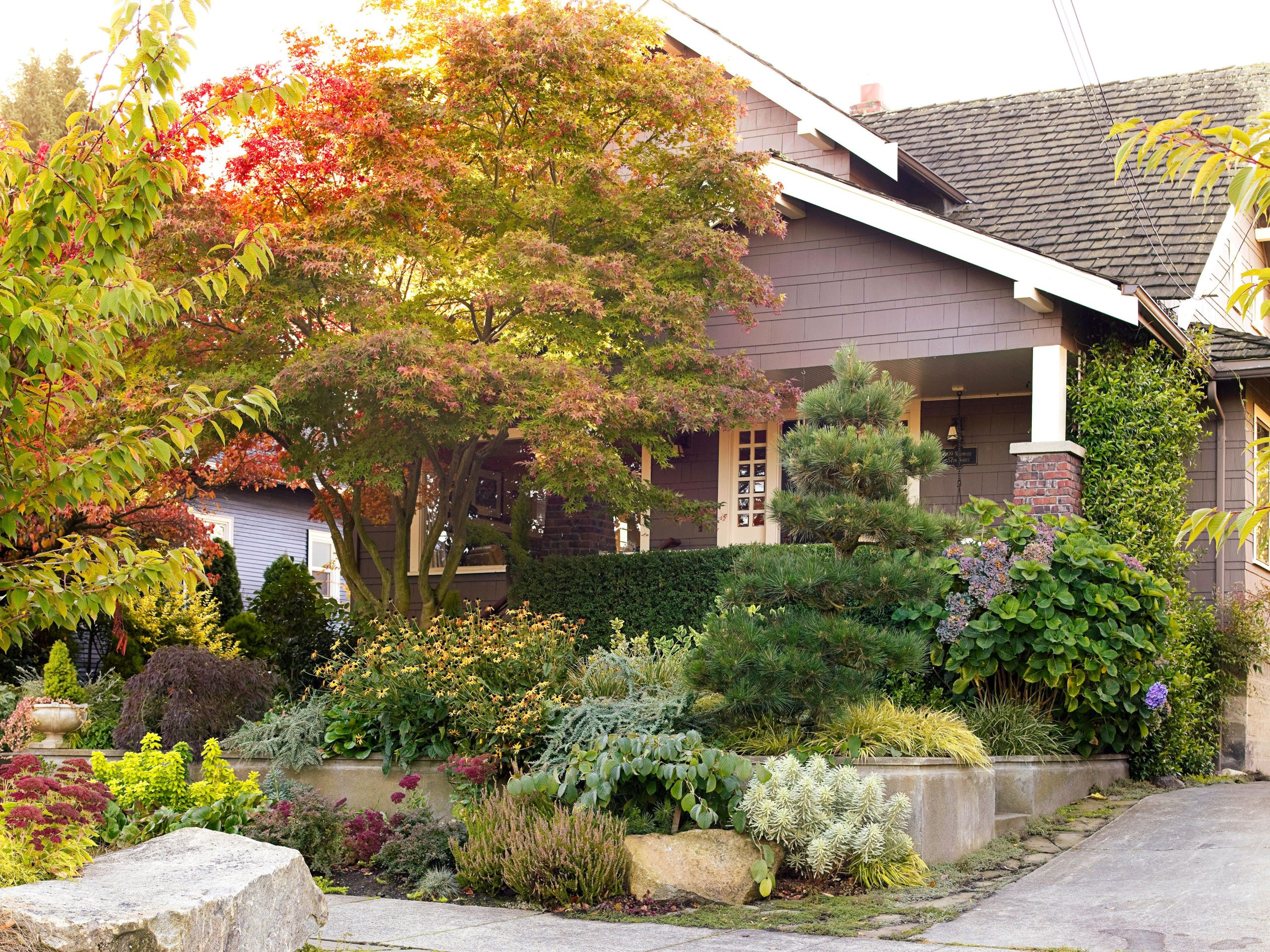
1. Frame Your Entry with a Rich, Tiered Autumn Garden
What makes this entry so inviting is the brilliant use of layering and contrast. The fiery orange-red of the Japanese maple is the star, and its warmth pops beautifully against the cool, deep gray of the house siding. The design creates depth by stacking elements: shorter flowering plants sit in front of medium-sized evergreen shrubs, which are then backed by the taller tree. This tiered approach makes the garden feel full and lush, not flat, drawing your eye from the path right to the front door.
“That stunning Japanese maple is the definition of high-impact, but it comes with a price: leaves.”
Expect a significant leaf drop in late fall that will require regular raking to keep the path and lawn clear. The dense evergreen shrubs will need an annual pruning in late winter to maintain their shape and prevent them from overcrowding the walkway. Keep an eye on the concrete retaining walls; a yearly pressure wash will keep them from getting dingy or developing mildew, preserving the clean lines of the design.
2. Curate a Welcoming Front Porch with a Floral Palette
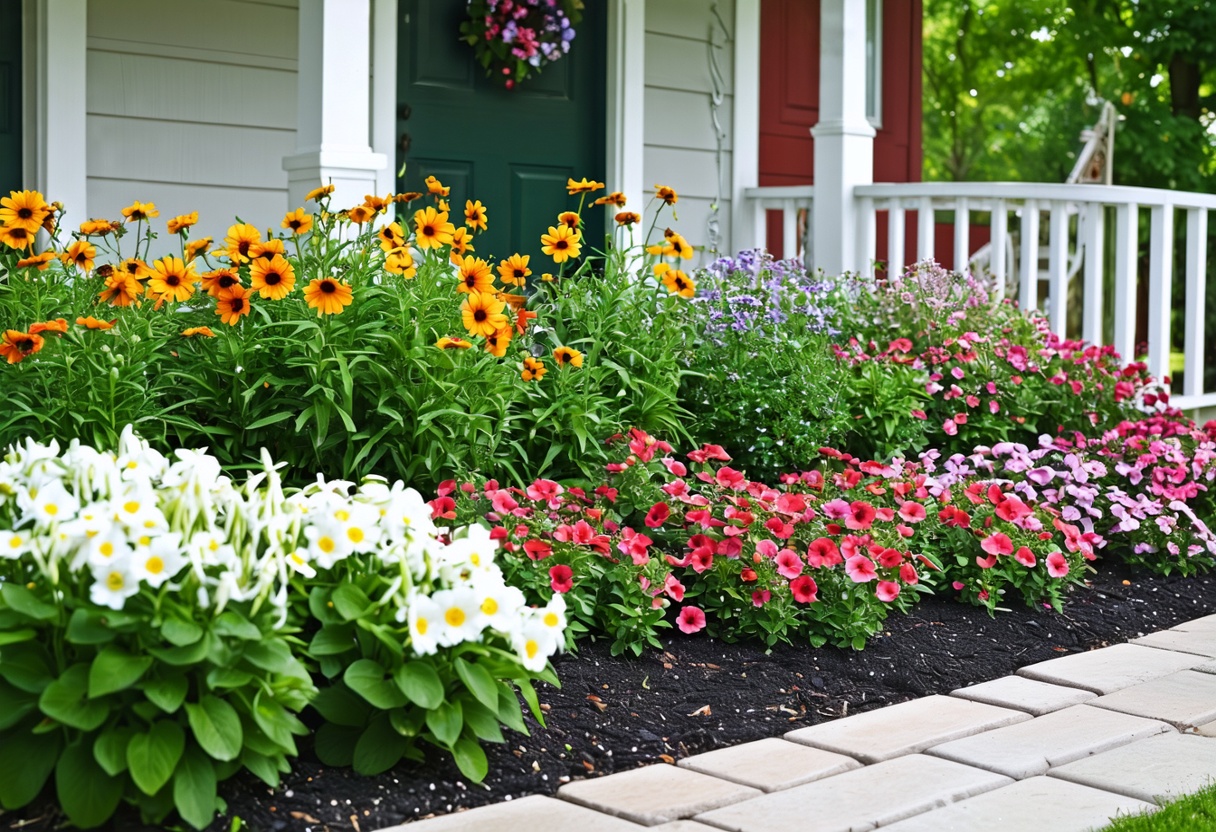
When designing a flower bed for curb appeal, use the 60-30-10 rule for your color palette. Pick one dominant color (60%) to be your main theme—this could be a warm pink or a cool purple. Then, choose a secondary color (30%) that complements it. Finally, add a pop of an accent color (10%) to create visual interest. For a front porch, using your home’s trim or door color as the accent can beautifully tie the whole look together. This prevents the arrangement from looking chaotic.
“Before you even buy a single plant, map out your available space and conditions.”
Here’s what to check first:
Sunlight Tracking: How many hours of direct sun does the spot get? Is it harsh afternoon sun or gentle morning light? Choose plants that match the conditions.
Soil Check: Is your soil sandy, clay-based, or loamy? You may need to amend it with compost to help your flowers thrive.
Water Access: How will you water the plants? Make sure a hose can reach or be prepared to use a watering can daily in hot weather.
Measure Your Space: Know the exact dimensions of your flower bed so you don’t over- or under-buy plants.
3. Create a Whimsical Garden Scene with a Repurposed Red Wagon
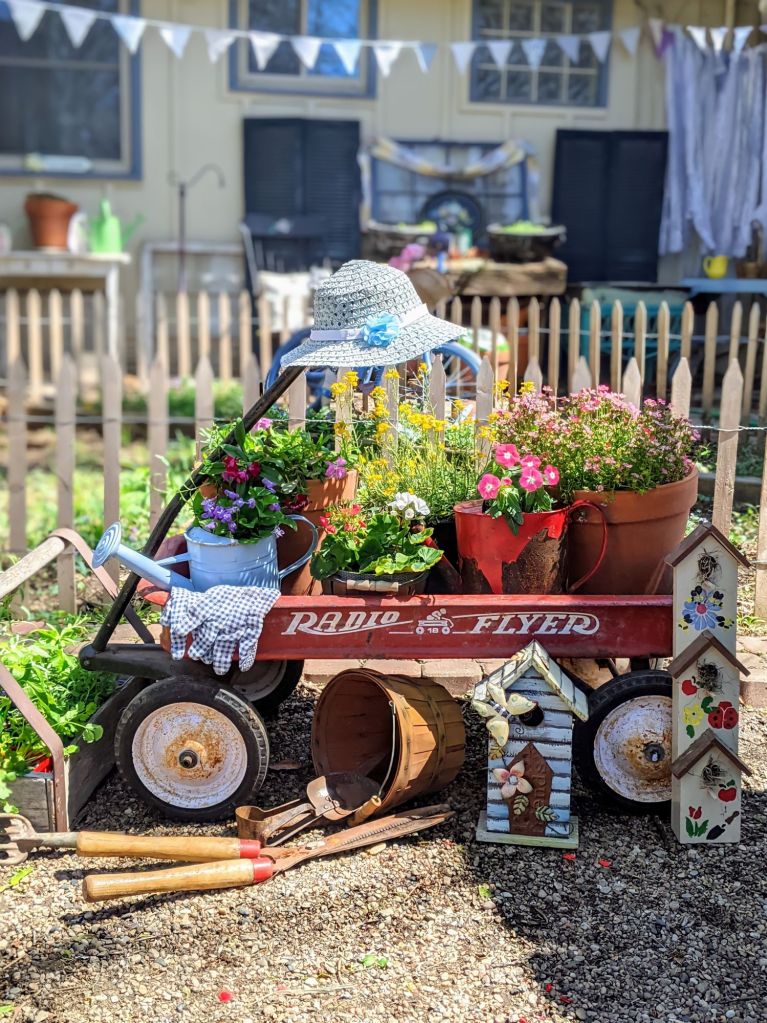
The single most important element here is the Radio Flyer wagon. Without it, this is just a pleasant collection of potted plants on some gravel. With it, it’s a story. The wagon injects a dose of nostalgia, playfulness, and rustic charm that can’t be replicated with standard planters. Its bright red color serves as a powerful focal point, anchoring the entire vignette and making the varied colors of the flowers feel cohesive rather than chaotic. It transforms simple gardening into decorative storytelling.
“You don’t need to spend a fortune to capture this playful spirit.”
Look for old wagons at thrift stores or on Facebook Marketplace—a little rust just adds to the charm! Instead of buying a dozen different expensive annuals, pick up a few multipacks of hardy, colorful petunias or marigolds from a big-box store for under $20. You can even paint a few rocks to look like ladybugs or find a small, inexpensive birdhouse at a craft store to complete the scene for a fraction of the cost.
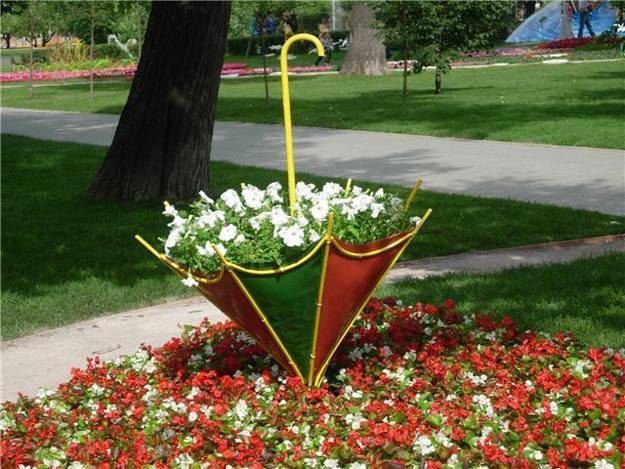
4. Fashion an Umbrella into a Quirky, Colorful Flower Planter
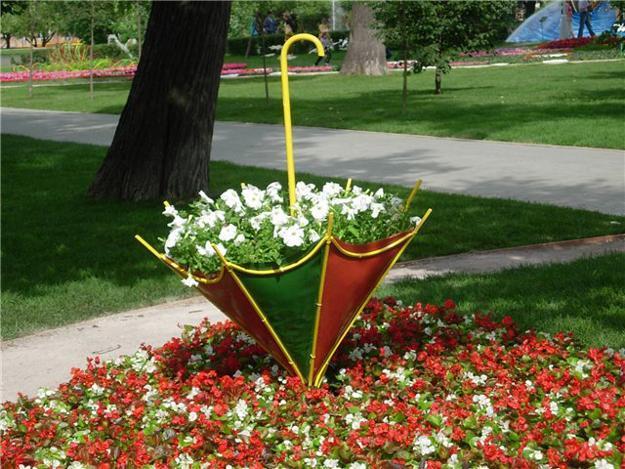
This project is easier than it looks and makes for a fantastic conversation starter. You can get it done in an afternoon.
- Time: 1-2 hours
- Cost: $20-40 (if you have an old umbrella)
- Step 1: Find a sturdy, large umbrella you don’t mind sacrificing. Open it and place it upside down in its final location.
- Step 2: Secure the umbrella. Drive a stake or rebar into the ground and wire the umbrella’s handle to it to prevent it from tipping over in the wind.
- Step 3: Add drainage. Poke several small holes in the umbrella fabric near the center to allow excess water to escape.
- Step 4: Fill with a lightweight potting mix and plant your flowers. trailing plants like petunias work wonderfully.
“While this is an incredibly fun and creative idea, there are a few practical things to consider.”
Drainage is your number one challenge; if you don’t poke enough holes, you’ll drown your plants after the first heavy rain. The fabric will also degrade over time with sun and water exposure, so don’t expect this to be a permanent installation—it’s more of a one- or two-season delight. Finally, it can be top-heavy, so securing it properly to a stake is not optional, especially if you live in a windy area.
5. Maximize Greenhouse Space with Hanging and Ground-Level Flowers
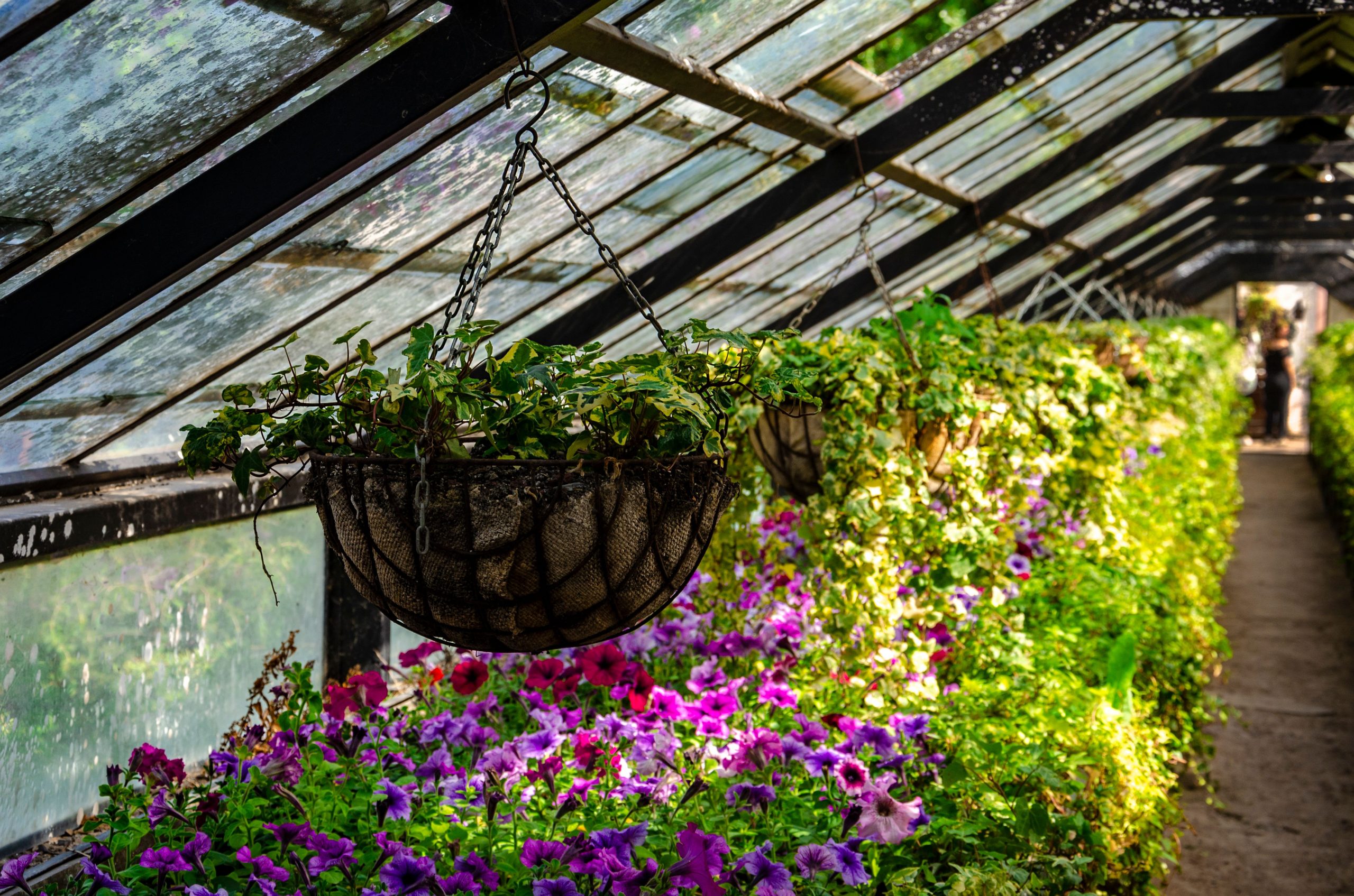
This lush look is perfect for a greenhouse or a covered patio with good vertical space. To truly get this layered effect, you need a ceiling height of at least 8 feet. This allows enough clearance for the hanging baskets to sit above the ground-level plants without feeling cramped. The greenhouse itself can be small, even a 6×8 foot lean-to model, as long as it has the height and structural support for hanging chains. This idea shows how you can double your planting space without increasing the footprint.
“To stop a greenhouse from feeling like a random collection of pots, you have to actively direct the viewer’s gaze.”
The key is to create a visual triangle. Start with low, colorful flowers on the ground level as your base. Then, add taller foliage or secondary flowers on a bench or shelf. Finally, use hanging baskets as the highest point. This strategy carries the eye from low to high, making the entire space feel taller, more intentional, and completely immersive, just as we see here.
6. Design a Playful Garden Path with Gnomes and Mushroom Statues
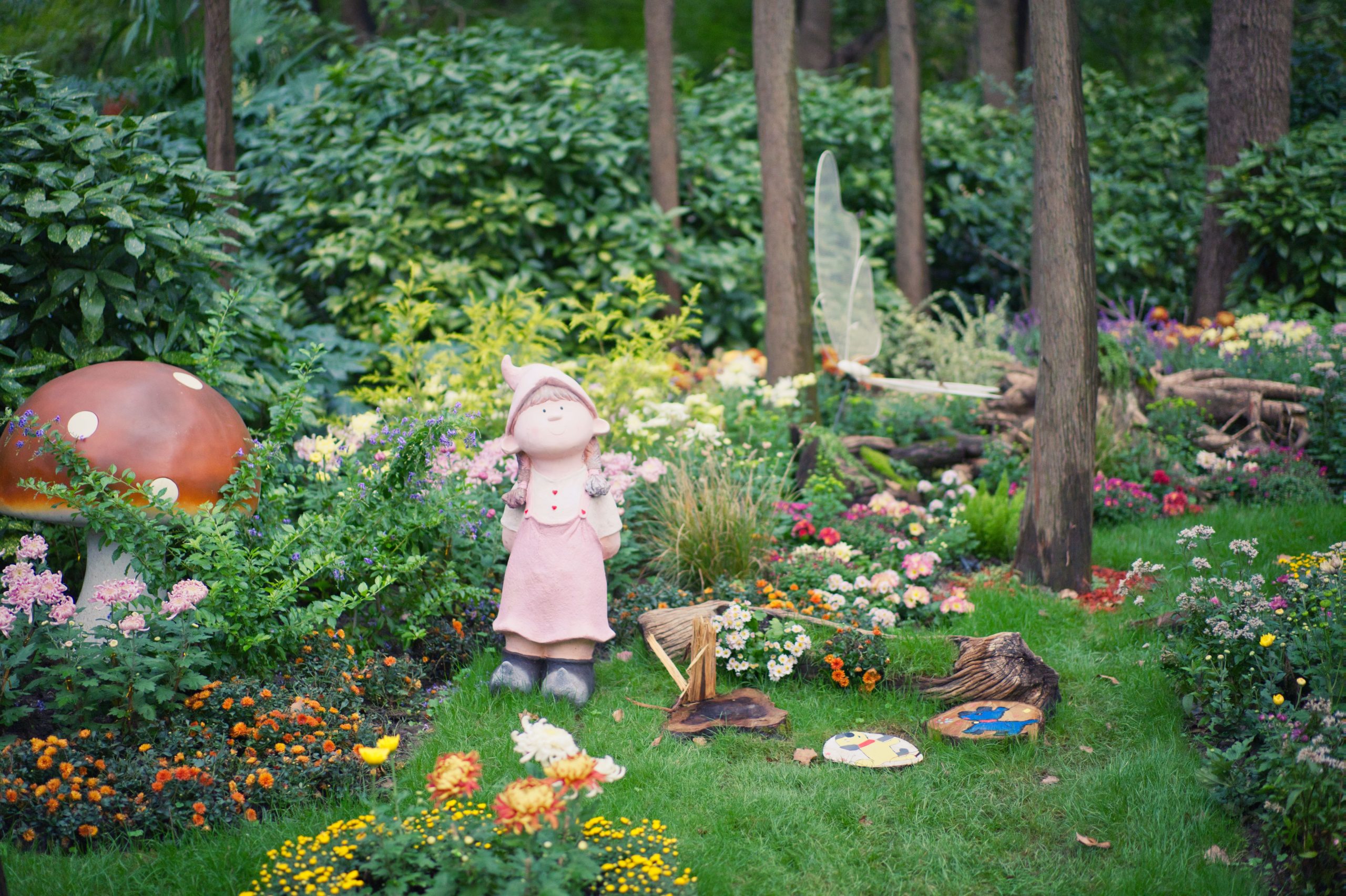
This garden corner feels so magical because it commits to a theme without taking itself too seriously. The success lies in the deliberate placement of whimsical elements—the gnome and the mushroom—as surprises among the natural textures of the flowers and trees. They aren’t just plopped down; they are nestled in, as if they were discovered there. This integration of fantasy and reality is what sparks a sense of wonder and makes the garden feel like a little world of its own, inviting you to look closer.
“The visual formula here is a simple recipe for charm.”
Think of it as 70% natural textures + 30% whimsical decor. The 70% is your base: a rich mix of green grass, tree bark, and varied foliage from plants like hostas and ferns. The remaining 30% is where the personality comes in. This is your pop of color and fun—a pink gnome, a red-spotted mushroom, painted stones. You could swap the gnome for a fairy house or the mushroom for a quirky animal statue, and the delightful balance would still hold.
7. Create a Rustic Birdhouse Gallery on a Weathered Blue Structure
The single element holding this entire wonderful scene together is the distressed blue paint. Take that away, and you just have a pile of wood and some birdhouses. The specific shade of weathered blue provides a cool, calming backdrop that makes the warmer colors—the reds, yellows, and terra cotta—pop. It also gives the structure a sense of history and charm, transforming it from a simple plant stand into a piece of folk art. It’s the unifying thread that connects every other piece.
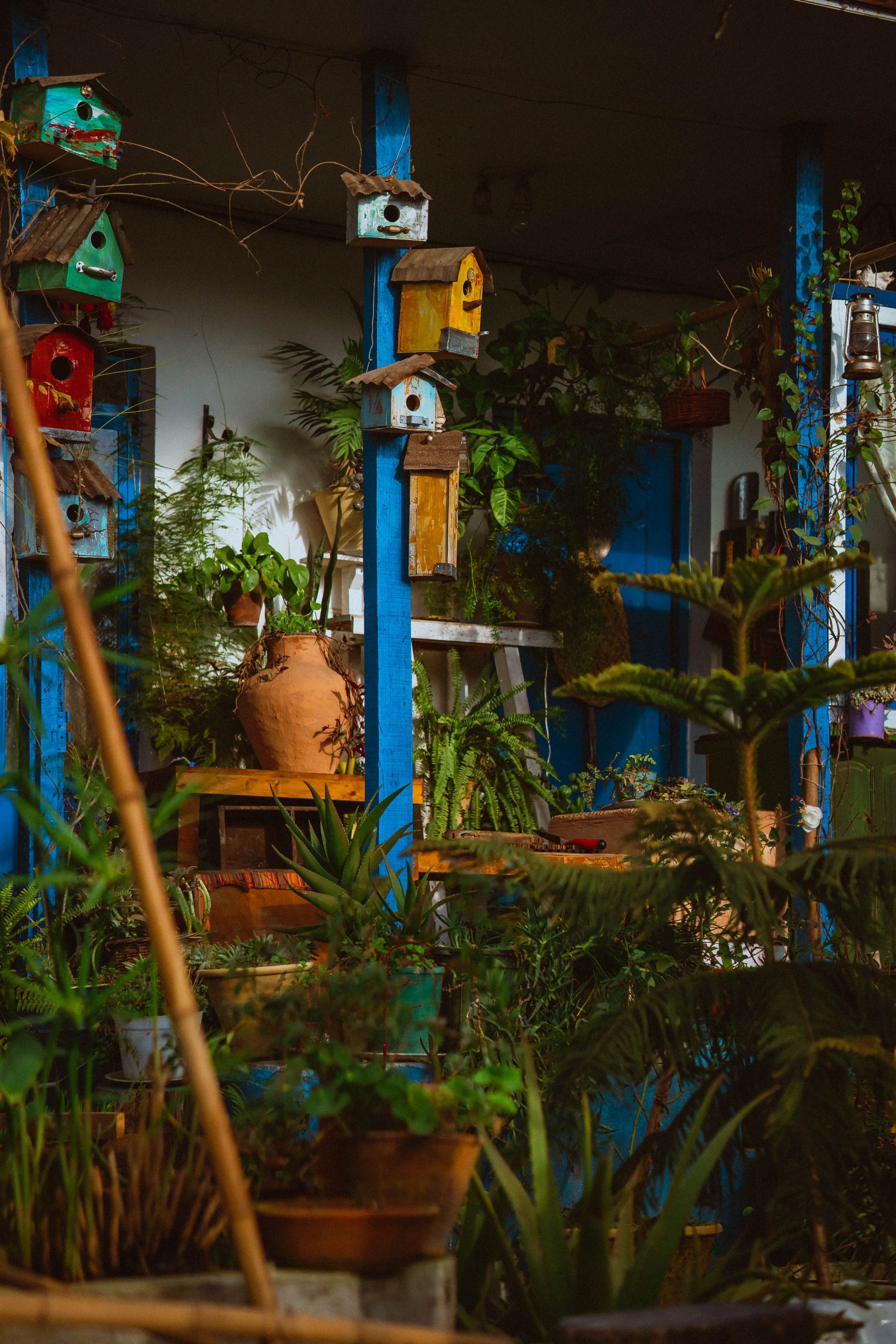
“There’s a growing movement towards “found object” and homemade garden art, and this is a perfect example.”
As people look for more sustainable and personal ways to decorate, using salvaged wood and handmade items is becoming increasingly popular on Pinterest and in design magazines. This style, often called “cottagecore” or “rustic chic,” celebrates imperfection and tells a story. It’s a direct response to years of mass-produced, generic decor and is a trend with real staying power because it’s so adaptable and personal.
8. Combine Colorful Flowers and Green Herbs in a Single Planter
When creating a mixed planter, always follow the “Thriller, Filler, Spiller” method. Your “thriller” is a tall, eye-catching plant in the center—here, it’s the plant with the jagged green leaves. Your “fillers” are mounding plants that surround the thriller and fill the space—like the orange-yellow and red-orange flowers. Your “spillers” are plants that trail over the edge of the pot, which isn’t prominent here but could be a vine. This simple recipe ensures your planter looks full, balanced, and professionally designed every single time.
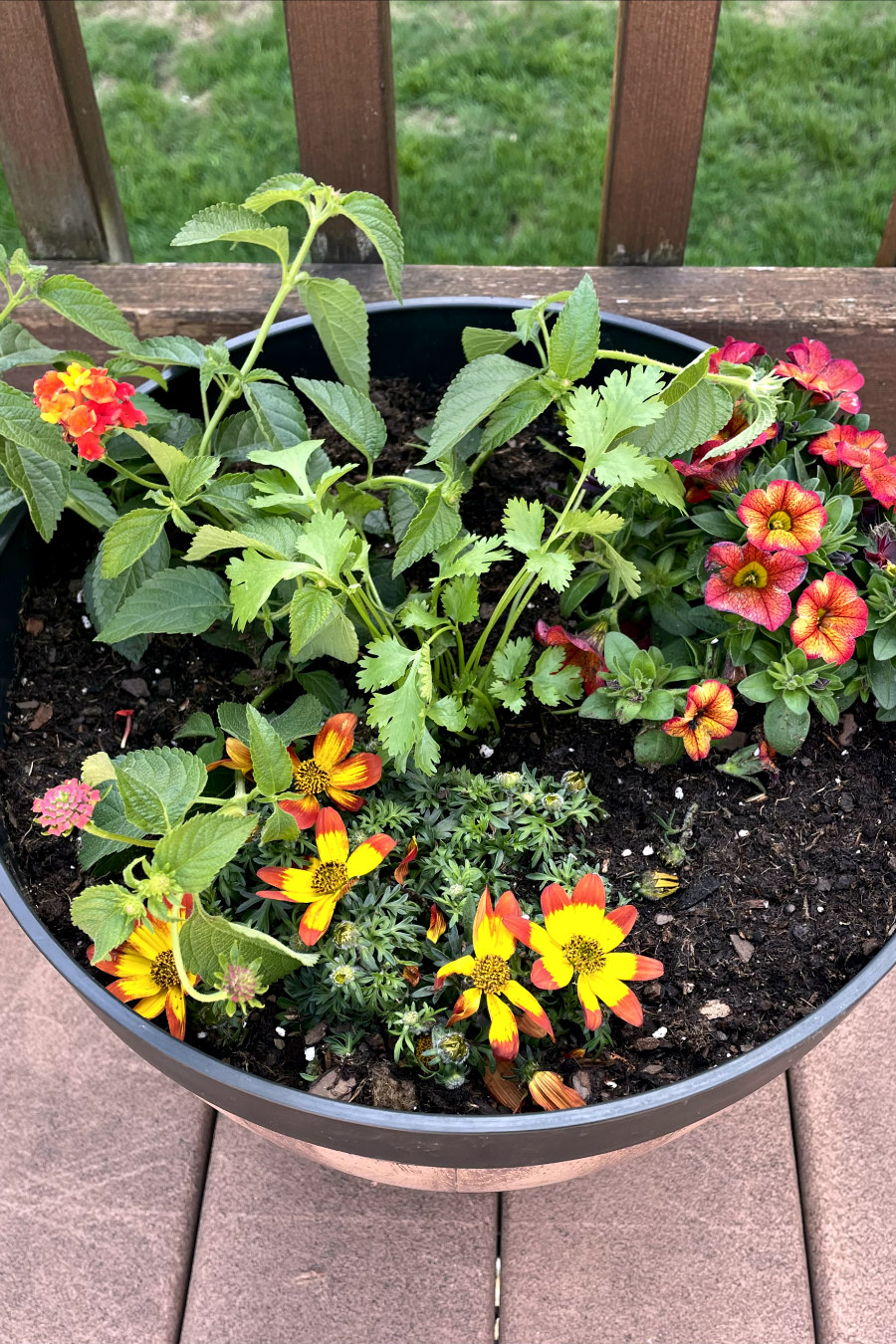
“This planter is successful because it combines a variety of textures and forms in a small space.”
You have the ruffled edges of the petunia-like flowers, the sharp, jagged leaves of the herb or foliage plant, and the delicate clusters of the smaller blossoms. This textural contrast keeps the eye engaged. Furthermore, the color palette is a classic warm combination of red, orange, and yellow, which are analogous on the color wheel, creating a harmonious yet vibrant effect. Compare this to the cooler tones in Idea #28.
9. Plant a Dense Aster Bush for a Multi-Colored Floral Display
Asters are gorgeous and provide incredible fall color, but they are notoriously prone to powdery mildew, a white dusty fungus that can cover the leaves and stems. To minimize this risk, you need to ensure good air circulation. Don’t plant them too densely, and avoid watering the leaves from overhead. Water at the base of the plant in the morning so the foliage doesn’t stay damp overnight. While beautiful, they aren’t a “plant it and forget it” flower if you want them to look their best.
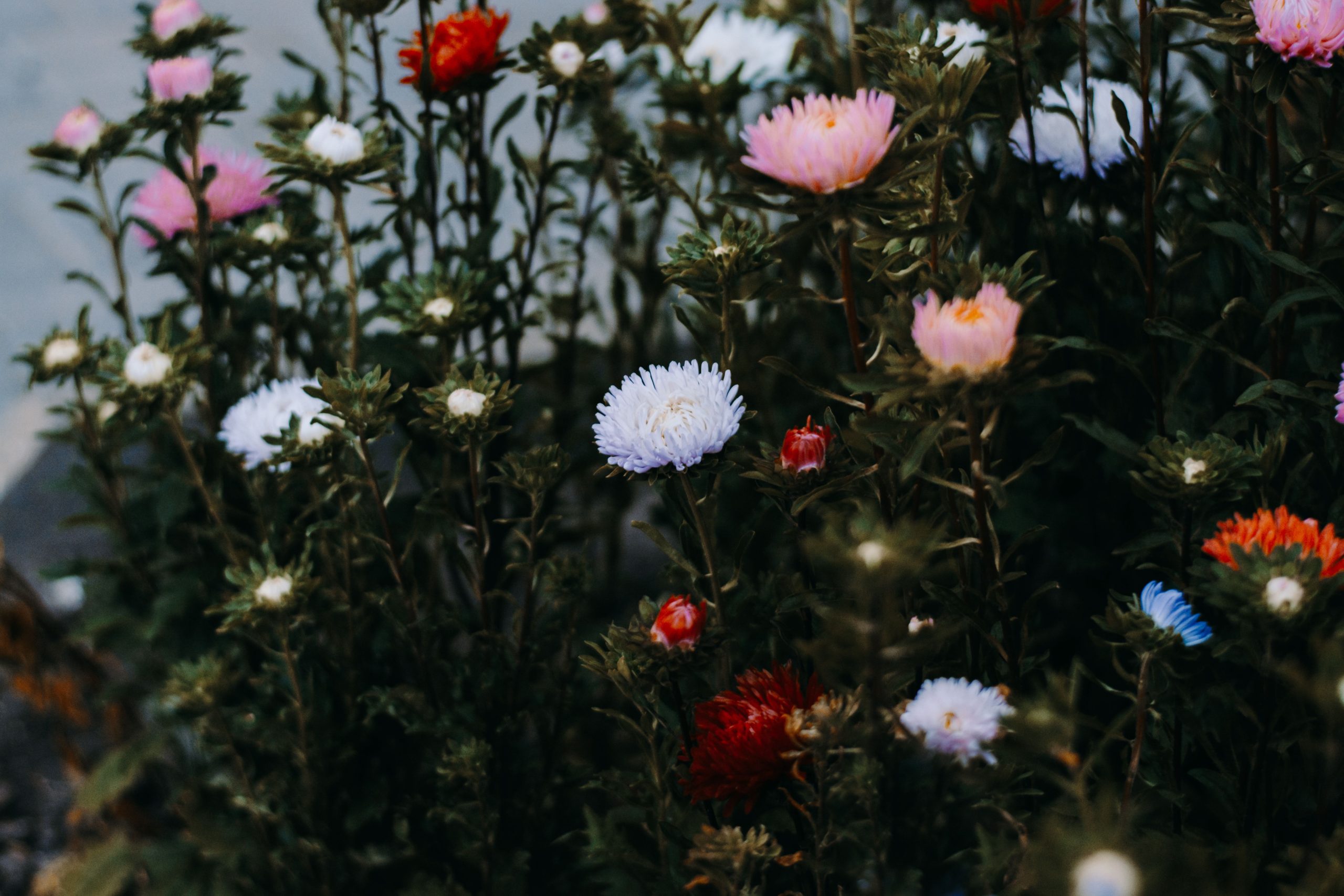
“For a bush this full and vibrant, a little annual care goes a long way.”
In the spring, you can pinch back the stems by about a third when they are 12-18 inches tall. This encourages the plant to become bushier and produce more flowers, preventing it from getting leggy and flopping over. After the first hard frost kills the blooms, you can cut the entire plant back to the ground. This tidies up the garden for winter and helps prevent disease from overwintering on the old foliage.
10. Group Terra Cotta Pots for a Natural, Sunlit Plant Corner
This look is all about a simple, earthy formula: 80% natural materials + 20% vibrant life. The dominant materials are the warm, orange-toned terra cotta and the dark, rich wood flooring. This creates a grounded, organic base. The 20% is the explosion of vibrant green from the ferns and other plants. The sunlight acts as a catalyst, highlighting the textures and casting beautiful shadows. You could swap the wood floor for a slate tile and the ferns for snake plants, and as long as you keep that 80/20 balance, the calm, natural vibe remains.
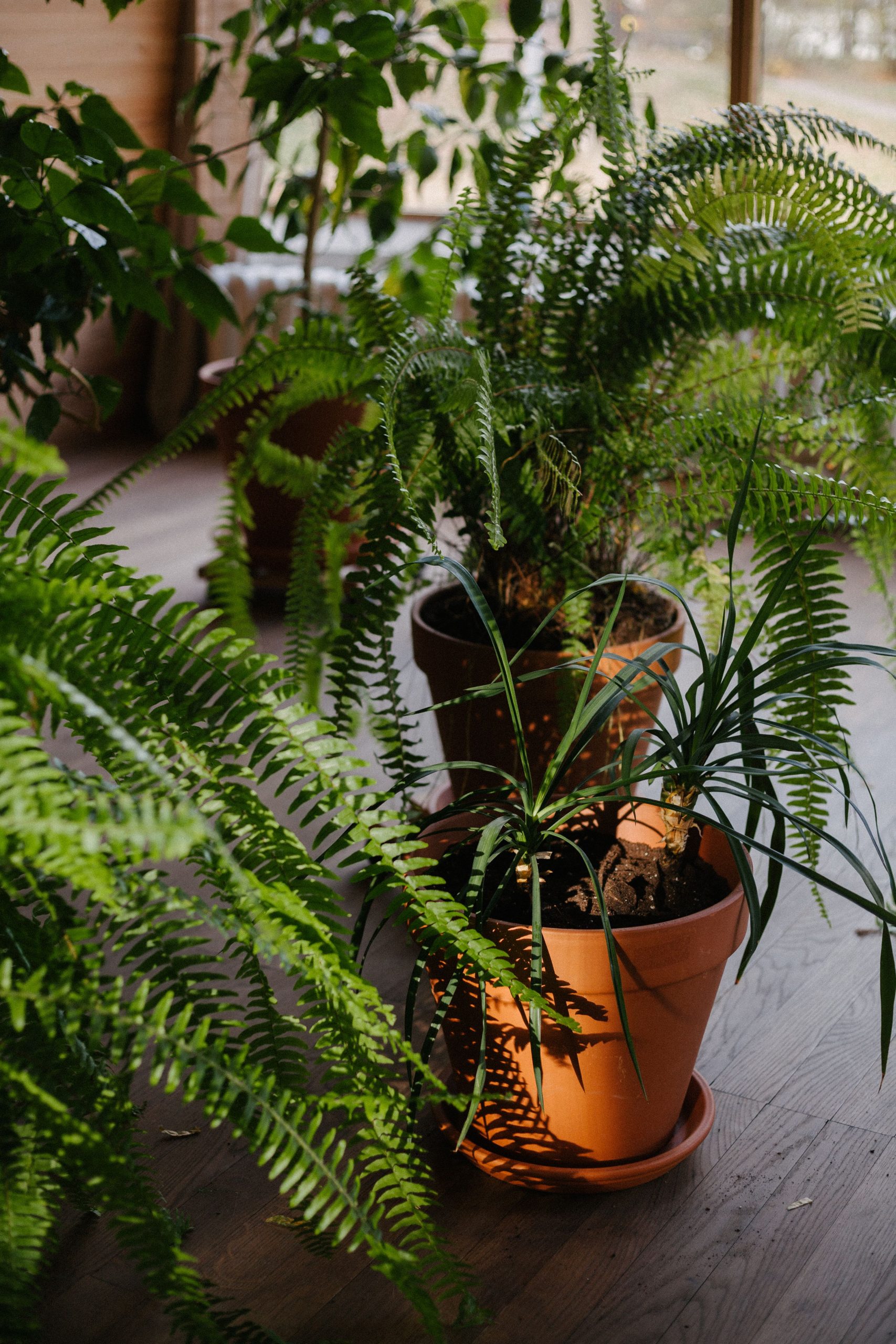
“You don’t need rare or expensive plants to achieve this serene corner.”
Classic terra cotta pots are incredibly affordable, often just a few dollars each at any garden center or home improvement store. Simple, hardy houseplants like Boston ferns or spider plants provide that lush look without a high price tag. Check stores like IKEA or even your local grocery store for budget-friendly plant options. The key is grouping several inexpensive plants together to create a high-impact look for less.
11. Create an Urban Mini-Garden with Potted Plants and Industrial Elements
This concept is perfect for small, unconventional urban spaces like a narrow side yard, a small concrete patio, or even a balcony. You don’t need a lawn; an area as small as 4×6 feet can work. The key is using a collection of pots to define the “garden” space. The tall, slender plant and the large white industrial element work together to add verticality, making the small footprint feel more substantial. This is a great solution for renters or anyone without access to in-ground planting.
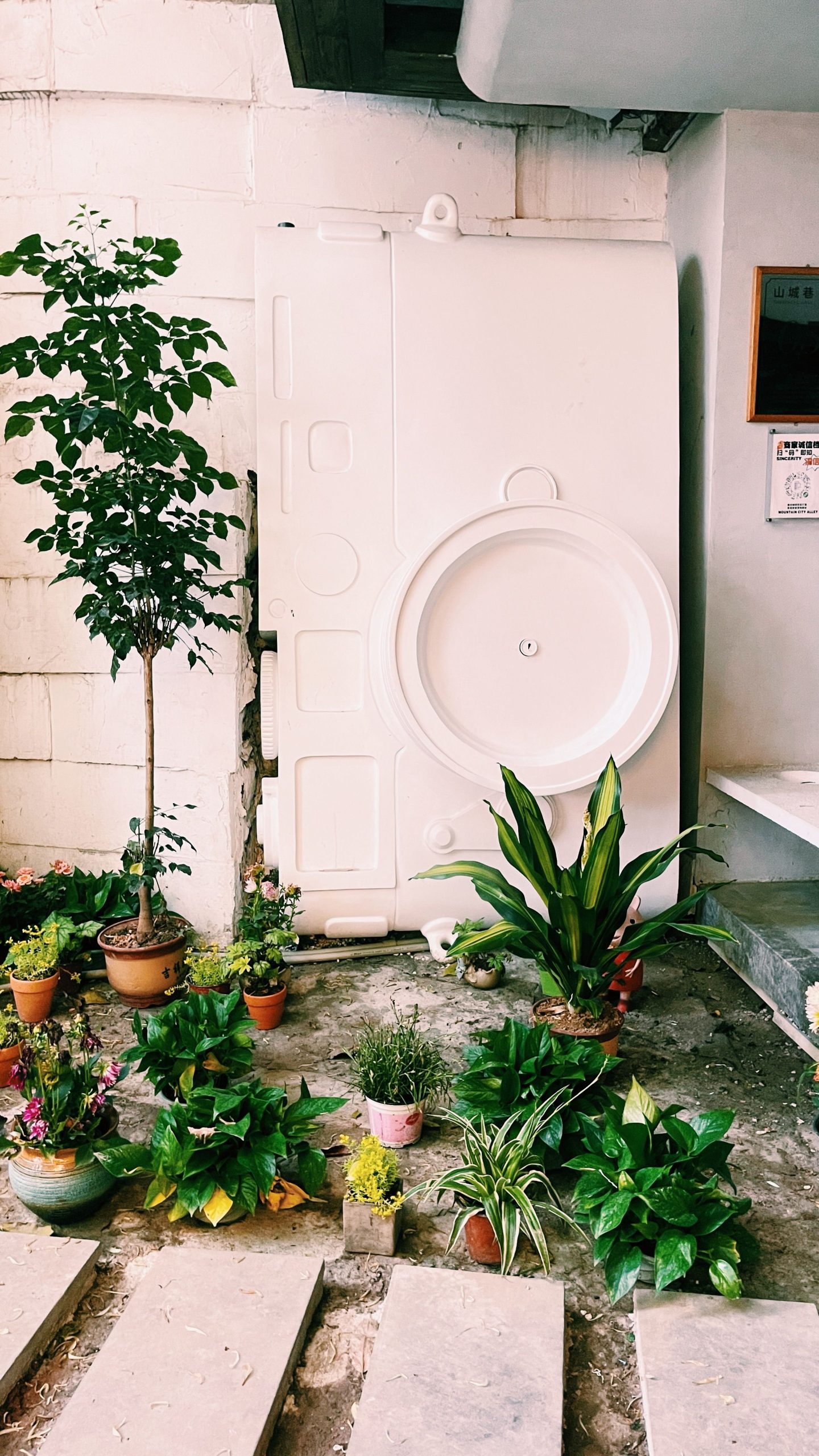
“What makes this arrangement work is the tension between the organic and the industrial.”
The soft, chaotic shapes of the assorted green plants are a direct contrast to the hard, geometric lines of the white structure and concrete stepping stones. This juxtaposition is visually interesting and creates a distinctly urban, modern feel. It’s a reminder that a “garden” doesn’t have to be all soil and grass; it can be an artful collection of elements that thrive in a built environment.
12. Layer Concrete Planters Against a White Wall for a Serene Entry
Before committing to this clean, structured look, run through this quick checklist to make sure it will work in your space:
- Check Your Foundation: Are you placing these heavy concrete planters on solid ground, a patio, or a deck? Ensure the surface can handle the combined weight of the concrete, soil, and water.
- Evaluate Your Backdrop: This look relies on the clean contrast with the white brick wall. Will your backdrop (a fence, a different colored wall) provide the same effect?
- Plan for Drainage: Water will run out of the bottom of these planters. The pine needle mulch here is a great choice as it absorbs runoff. A concrete patio might stain over time without proper saucers.
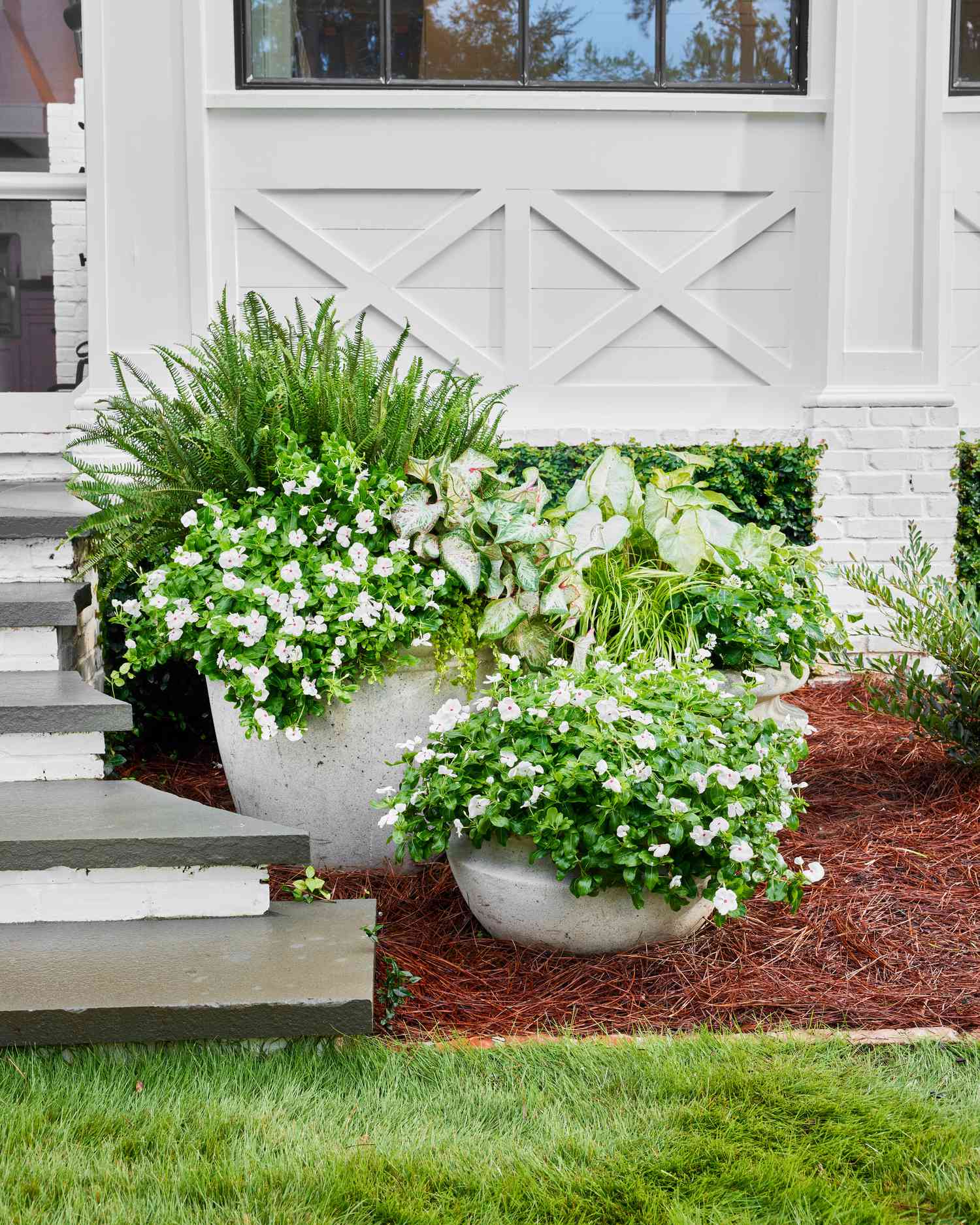
“To keep a monochromatic scheme like this from feeling boring, the secret is to focus on texture.”
Notice the variety here: the rough texture of the concrete planters, the smooth painted brick, the rough-hewn surface of the dark gray stone steps, and the fine texture of the pine needle mulch. Then you have the diverse foliage of the plants themselves. By layering multiple textures within the same green-and-gray color story, you create a look that feels sophisticated, rich, and deeply satisfying to the eye.
13. Craft a Miniature World in a Fairy Garden Pot
Creating a tiny world is a perfect weekend project. Here’s a quick guide to assembling your own fairy garden.
- Time: 1.5 hours
- Cost: $30-60
- Step 1: Choose a wide, shallow pot (like a terracotta bowl) and fill it with cactus/succulent potting mix.
- Step 2: Place your main feature, the miniature cottage, first. Settle it firmly into the soil, slightly off-center.
- Step 3: Arrange your succulent plants around the house, thinking about scale. Use smaller ones closer to the house.
- Step 4: Add the details! Create a path with white pebbles, tuck in the tiny mushrooms, and add your miniature picket fence to complete the scene.
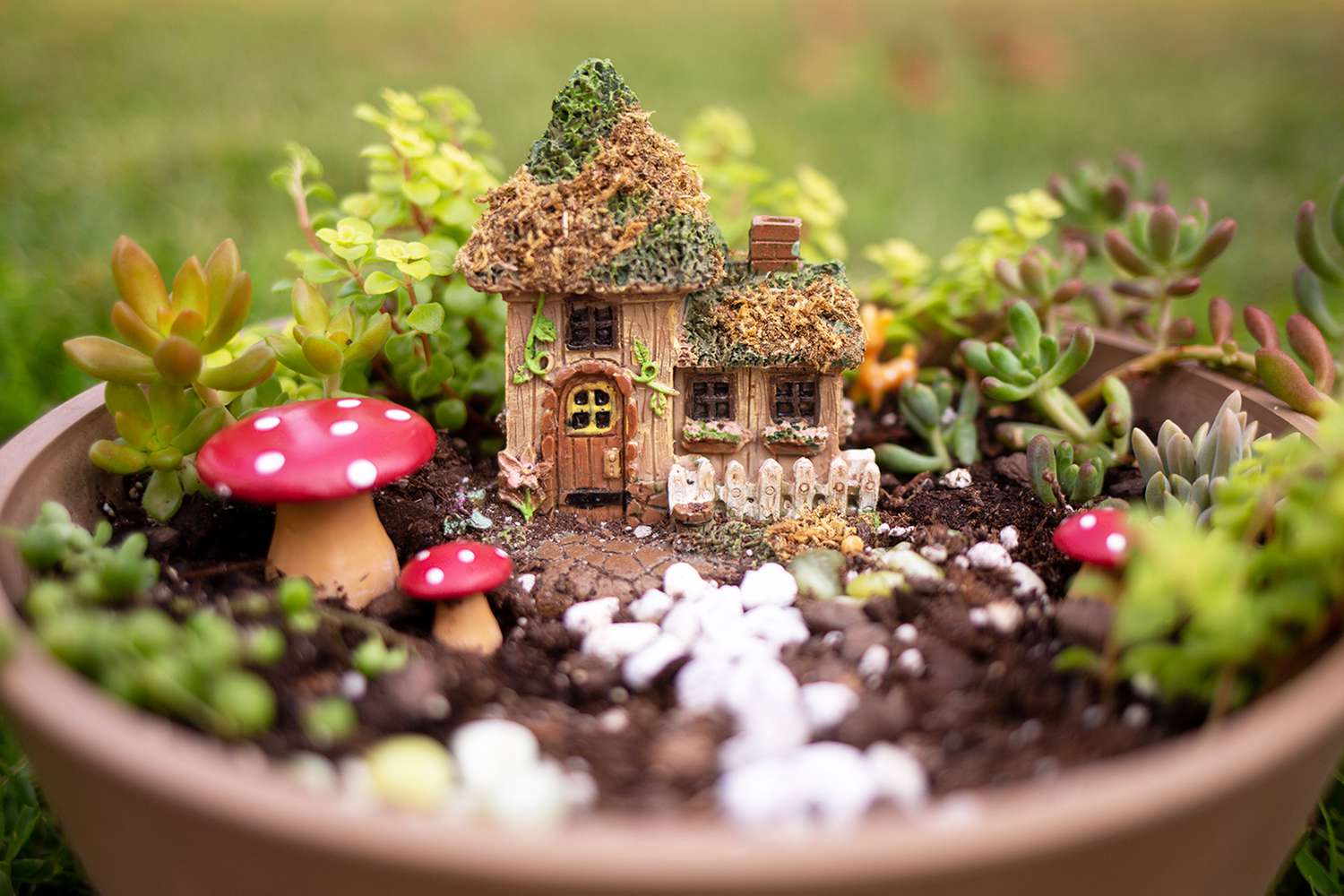
“The magic of this entire project hinges on one thing: scale.”
The careful selection of tiny succulents that look like miniature shrubs and trees, the small pebbles that read as a garden path, and the perfectly sized cottage are what sell the illusion. If you were to use a large, overgrown succulent, the entire fantasy would collapse. It’s the commitment to the miniature scale across every single element that transforms a simple planter into an enchanting, tiny world you can get lost in. It’s a masterclass in details.
14. Add a Pop of Whimsy with a Colorful Metal Garden Owl
This piece of garden art is effective because of its bold, simplified form and vibrant color contrast. The designer used primary and secondary colors (yellow, red, blue, green) that pop against the soft, out-of-focus green background. The oversized, graphic eyes give the owl a friendly, cartoonish personality, while the cut-out patterns on the body add a layer of texture and detail that catches the light. It’s a simple object, but the thoughtful use of color and shape makes it a joyful addition to any garden space.
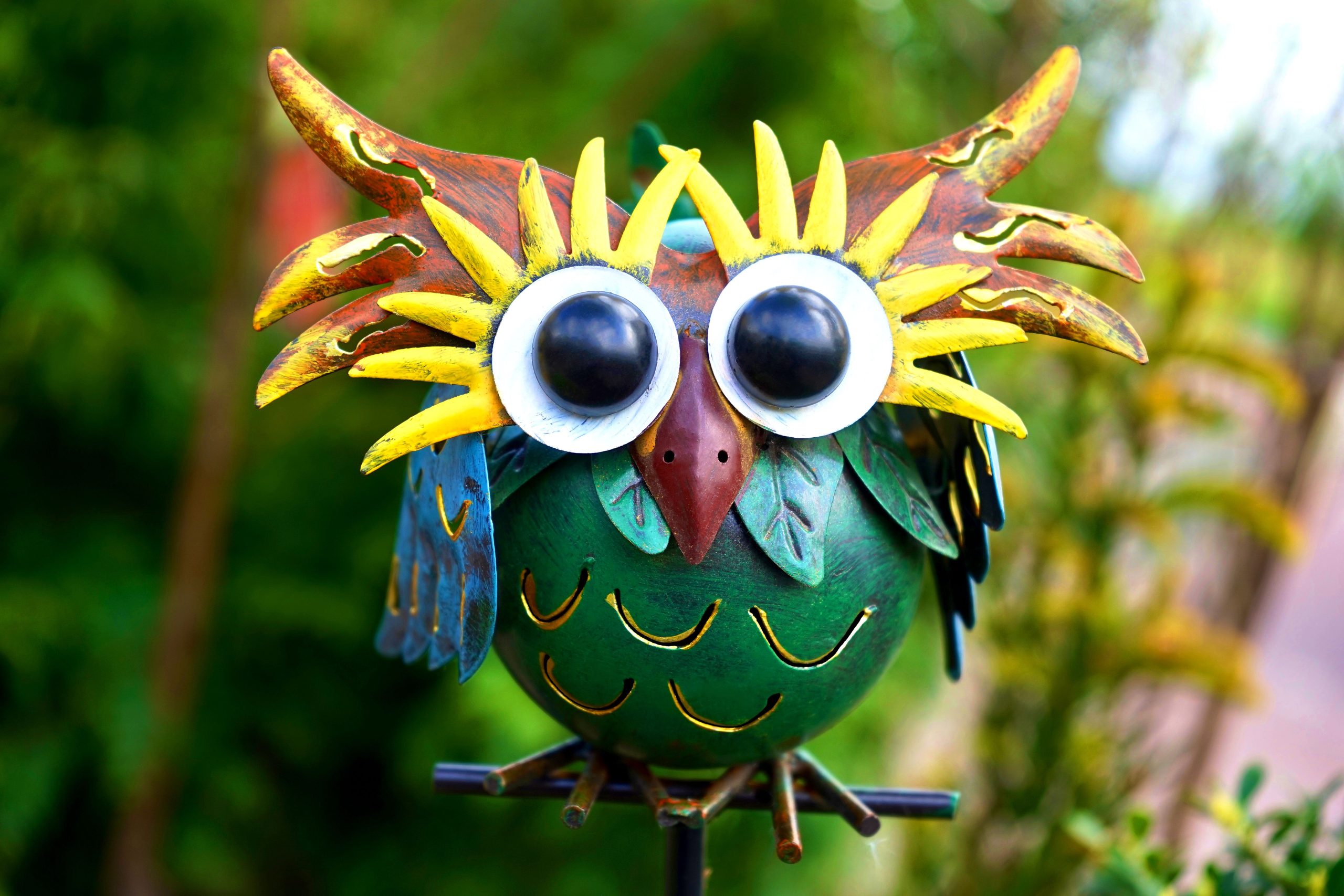
“You can get this playful, rustic look for much less.”
Check out the garden sections at stores like Target, Walmart, or Christmas Tree Shops, especially in the spring and summer. They often have colorful metal animal stakes for $10-$20. For an even more budget-friendly option, look for secondhand metal art at thrift stores or flea markets. A can of brightly colored spray paint can transform a faded, rusty piece into a vibrant garden sculpture that looks just as cheerful as this one.
15. Display Glazed Ceramic Birds on a Mosaic Pot
When grouping a collection of similar small items, like these ceramic birds, the key is to elevate them. Placing them directly on the ground would make them disappear. Here, they are presented on a dedicated mosaic surface atop a large pot, turning them into an intentional exhibit. This trick works for any small collectible. Whether it’s shells, interesting rocks, or small figurines, giving them their own “stage” signals that they are special and meant to be viewed as a curated collection.
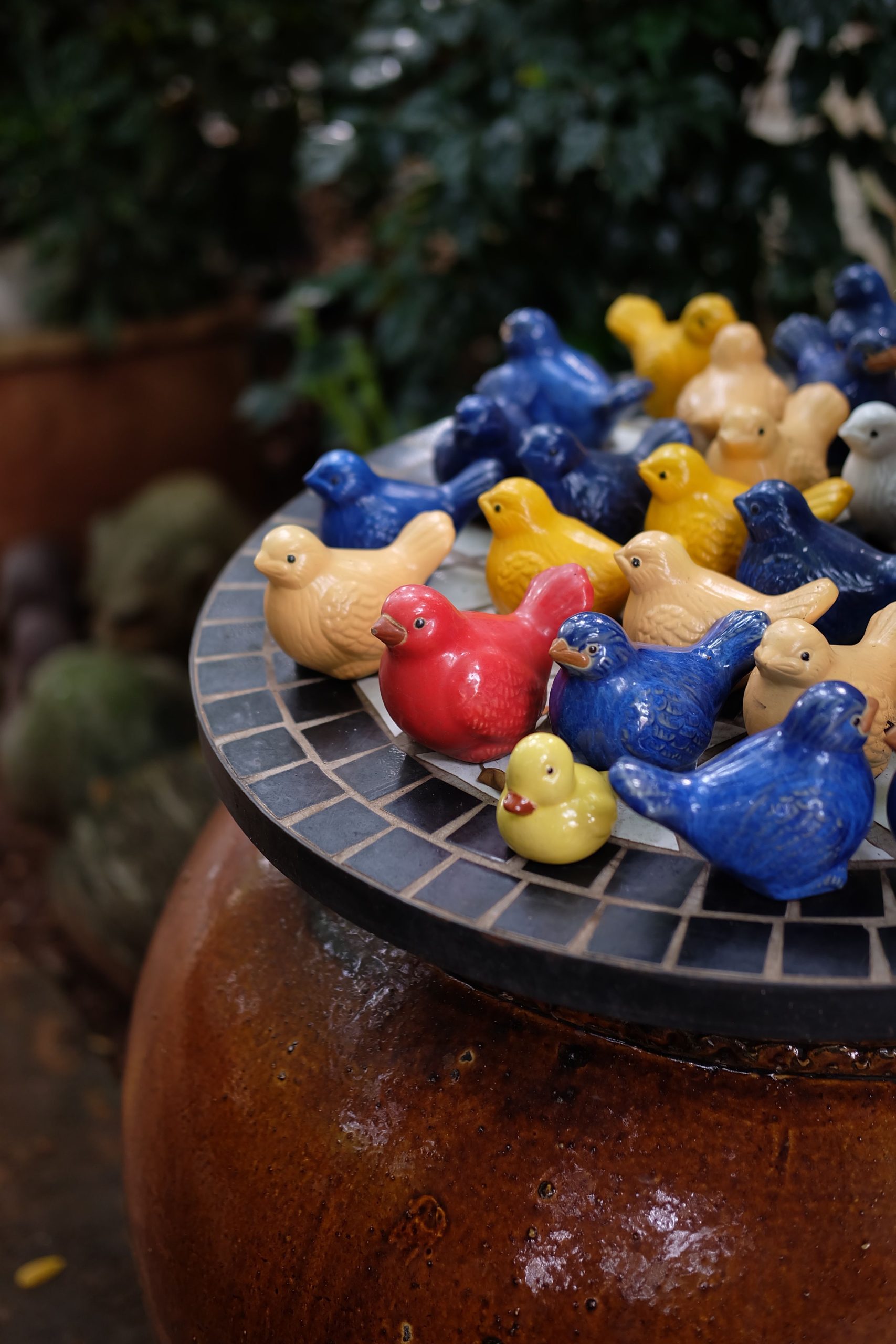
“This decorative topiary follows a clear visual recipe: 50% rustic texture + 30% refined detail + 20% playful color.”
The large, rough brown ceramic pot provides the substantial, earthy base (50%). The dark, patterned mosaic tiles add a layer of sophisticated, refined detail (30%). Finally, the small, brightly-glazed ceramic birds deliver that essential pop of playful color and personality (20%). This balance of rustic, refined, and playful elements is what makes the piece feel so balanced and unique.
16. Create a Rustic, Neutral-Toned Mushroom Display
This arrangement feels so calming and sophisticated because of its strict commitment to a monochromatic, textural palette. By removing color and focusing on the shapes of the mushrooms and the textures of the beige planters, distressed wood, and evergreen needles, the composition becomes an elegant study in form. The varying sizes of the mushroom sculptures create a sense of rhythm and an organic, clustered feeling, as if they grew there naturally. It feels earthy and curated at the same time.
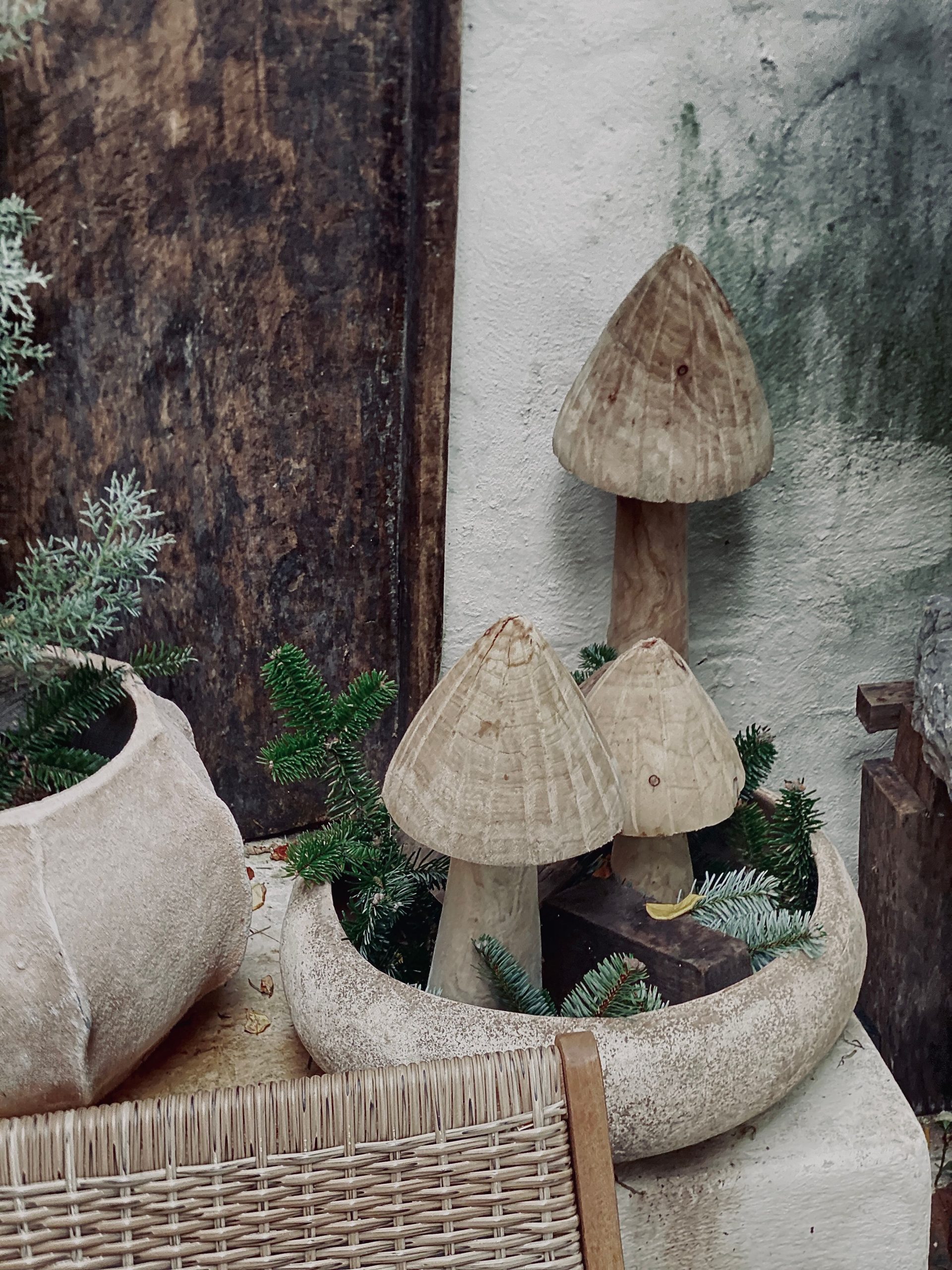
“A look this curated and neutral requires careful maintenance to keep it looking sharp.”
The light beige color of the sculptures and planters is prone to showing dirt, pollen, and water stains. They will likely need to be gently wiped down a few times a season. The evergreen needles, while beautiful, will eventually brown and need to be refreshed. This isn’t a setup you can ignore for a year; it demands a bit of tending to maintain its serene, photogenic quality. Be prepared for the upkeep that a light-colored outdoor palette requires.
17. Build a Quirky Wooden Robot Planter for a Touch of Fun
The undeniable charm of this piece comes from its personality. It isn’t just a planter; it’s a character. The use of rough, chunky wood to form a robot shape is an act of creative genius. It takes the simple function of holding a plant and infuses it with humor and whimsy. By giving the planter arms, legs, and a head, the designer turned it into something you can connect with on an emotional level. Removing the robot form would leave you with just another wooden box, completely losing the joy that makes it special.
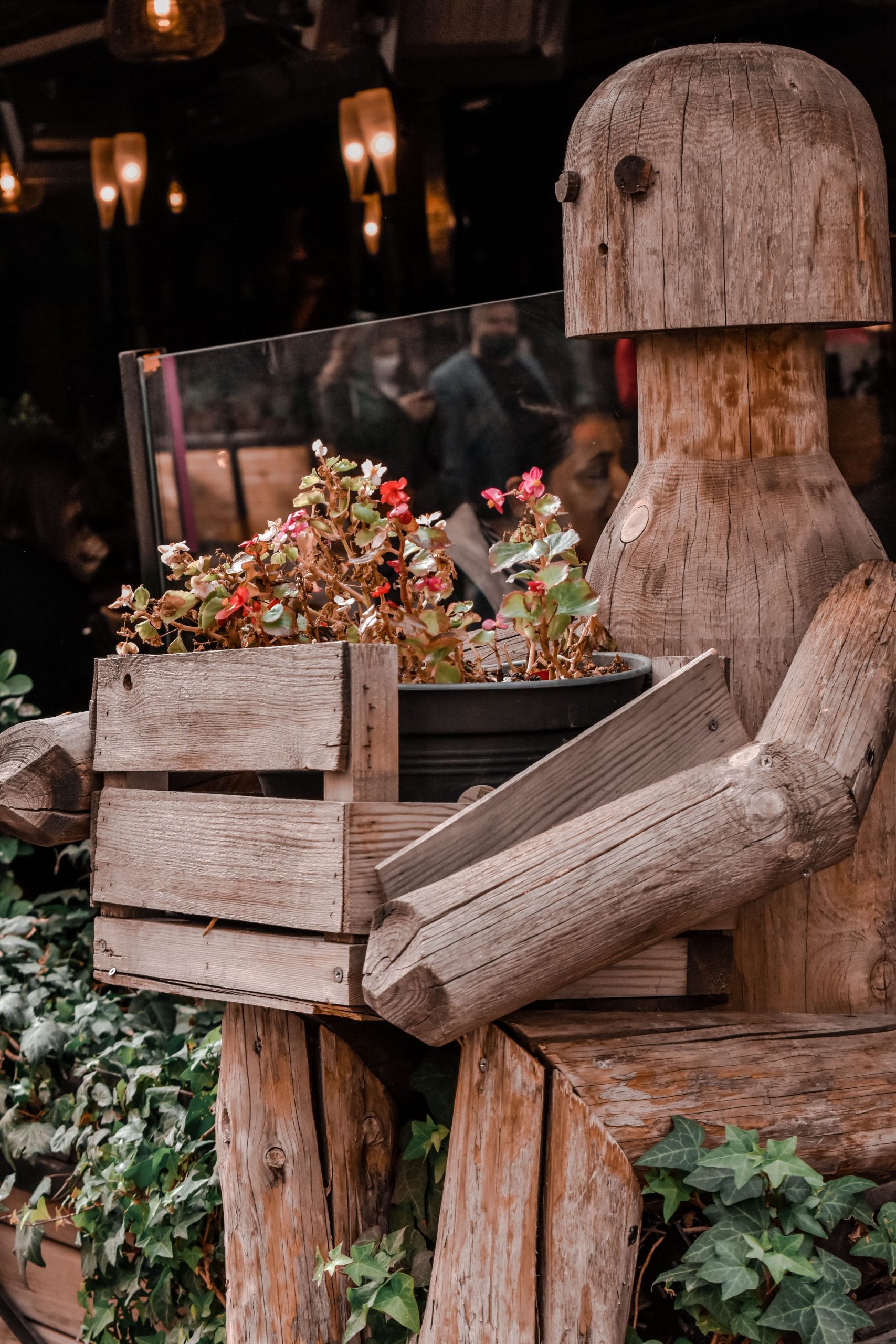
“You can make your own version of this charming robot with some basic woodworking skills.”
Time: 3-4 hours
Cost: $25-50 (for wood and screws)
Step 1: Gather scrap wood pieces of various sizes and shapes (4x4s for legs, 2x6s for the body, etc.).
Step 2: Cut your pieces for the body, leaving a hollow space to hold a standard plastic pot. Assemble the body box with wood glue and screws.
Step 3: Attach legs, arms, and a head block using long screws. Get creative with the angles to give your robot some personality.
Step 4: Leave the wood raw for a rustic look or apply an outdoor sealant to protect it from the elements. Drop in your favorite potted plant!
18. Craft a Rainbow Button Heart Artwork inside a Wood Frame
When working with a multitude of small, colorful items like buttons, creating a strong silhouette is essential. The heart shape provides a clear, recognizable boundary that contains the “chaos” of the hundreds of different buttons. The rainbow gradient within the heart adds another layer of organization, leading the eye smoothly across the artwork. On the right, the simple flower shapes do the same thing. This combination of a clear shape and organized color is what makes the piece feel joyful and artistic, not just messy.
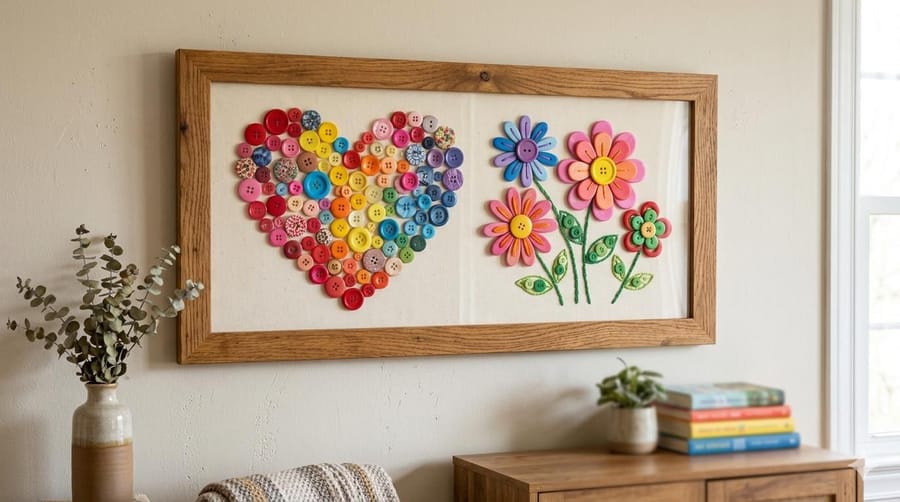
“This is a wonderfully budget-friendly DIY project.”
You don’t need to buy expensive new buttons. Start collecting old buttons from worn-out clothes, or buy a large mixed bag from a thrift store or a craft store like Jo-Ann Fabrics for a few dollars. The frame can be a cheap find from a garage sale or a store like IKEA; the natural wood is perfect. The background fabric can be a scrap of linen, canvas, or even an old neutral-colored curtain. It’s a high-impact piece made from low-cost materials.
19. Bring the Garden Indoors with an Abundant Floral Centerpiece
This arrangement makes such a statement because of its sheer volume and relaxed, organic shape. It’s not a tight, formal bouquet; it’s purposefully overflowing, with stems cascading in multiple directions. The limited color palette—primarily white, pale yellow, and various shades of green—keeps the large arrangement from feeling overwhelming. It reads as a single, cohesive statement: a lush, untamed piece of the garden brought indoors. The scale is what gives it that feeling of effortless luxury.
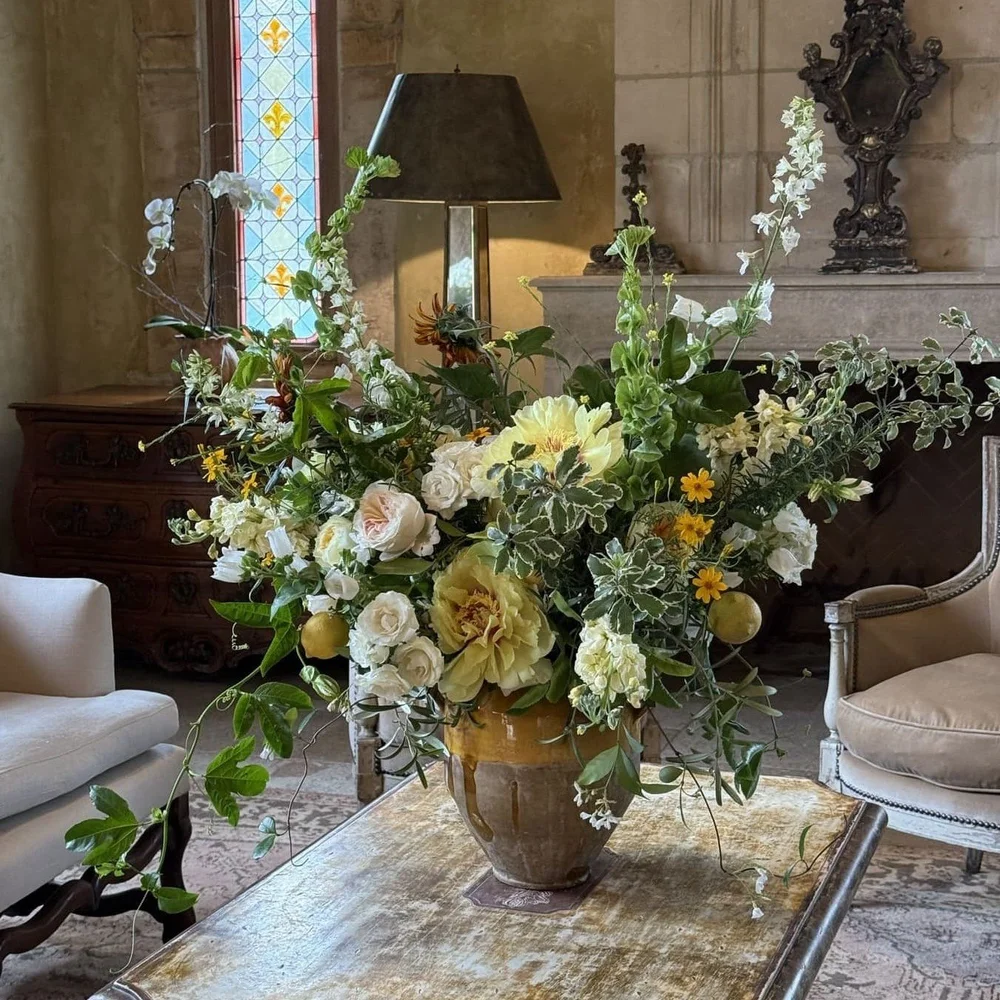
“A floral arrangement of this size and impact needs the right setting.”
It works best on a large, sturdy surface like the wooden coffee table shown, or on a dining table or kitchen island. A minimum surface area of about 3×3 feet is ideal to prevent it from looking cramped. This is a look for a room with at least 8-foot ceilings; in a low-ceilinged room, its height could feel oppressive. It’s an idea that demands space to be fully appreciated, unlike the more contained Fairy Garden Pot.
20. Design a Stylish Outdoor Living Space
The concept of the “outdoor living room” has exploded in popularity in the past few years, and it’s a trend that’s here to stay. People are increasingly viewing their patios and backyards as true extensions of their interior spaces. This means moving beyond a simple table and chairs and incorporating comfortable seating, area rugs, lighting, and decorative accessories—just as you would indoors. This shift reflects a desire for more functional, beautiful, and livable outdoor areas for relaxing and entertaining.
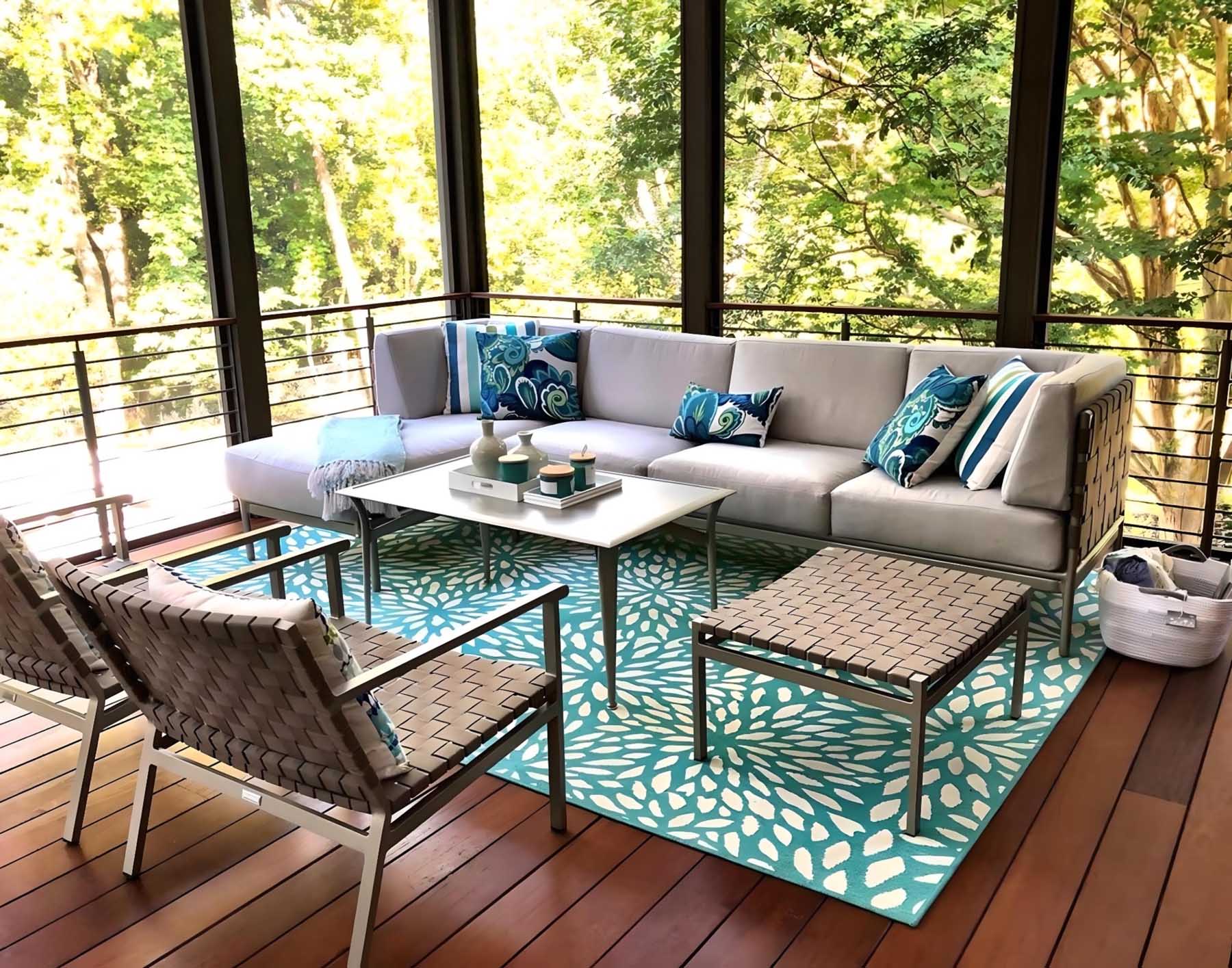
“buying outdoor furniture, it’s crucial to plan your space like you would any other room.”
Ask yourself these key questions:
What is the primary function? Will this be for dining, lounging, or both? This will determine the type of furniture you need.
How will the space flow? Consider pathways and how people will move through the area. Leave at least 3 feet for main walkways.
What is your weather exposure? Do you need a large umbrella for sun, or is the area covered? Will furniture need to be waterproof or just water-resistant?
21. Create a Riot of Color with Tiered Petunia Planters
This display is visually powerful for two simple reasons: repetition and color blocking. Using identical tiered planters creates a strong, rhythmic pattern that is incredibly satisfying to the eye. Instead of a jumble of different flowers, the designer committed to solid blocks of color—red on top, purple in the middle, and pink on the bottom. This disciplined approach turns simple sidewalk planters into a bold, graphic statement. It’s a perfect example of how order and repetition can create massive impact.
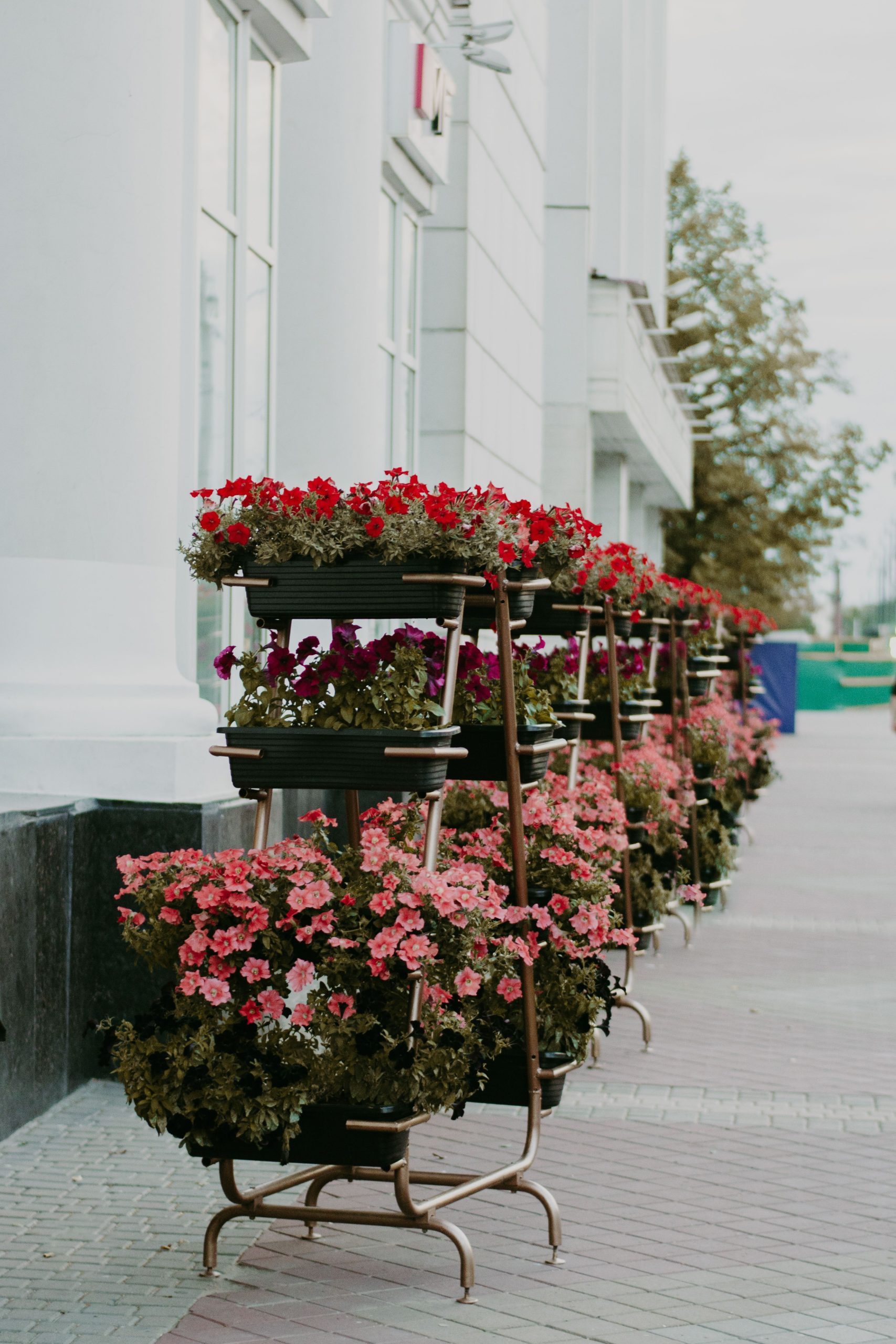
“A display this lush with petunias requires consistent upkeep.”
Petunias are heavy feeders, so you’ll need to fertilize them every 1-2 weeks throughout the growing season to keep them blooming profusely. They also need regular “deadheading”—pinching off the spent, wilted flowers. This encourages the plant to produce new blooms instead of putting energy into making seeds. While it’s not difficult, this weekly task is essential to prevent the planters from looking straggly by mid-summer.
22. Install a Modern Grey Vertical Garden on a Wooden Wall
The success of this modern vertical garden lies in its balance of textures. The formula is roughly 50% sleek modern lines + 30% warm natural wood + 20% lush organic foliage. The grey, geometric planters provide the cool, contemporary structure. The horizontally-paneled wooden wall behind it adds essential warmth and natural grain. Finally, the assorted green and reddish-purple plants spill out, softening the hard lines and bringing the installation to life. This mix is what makes it feel both chic and inviting.
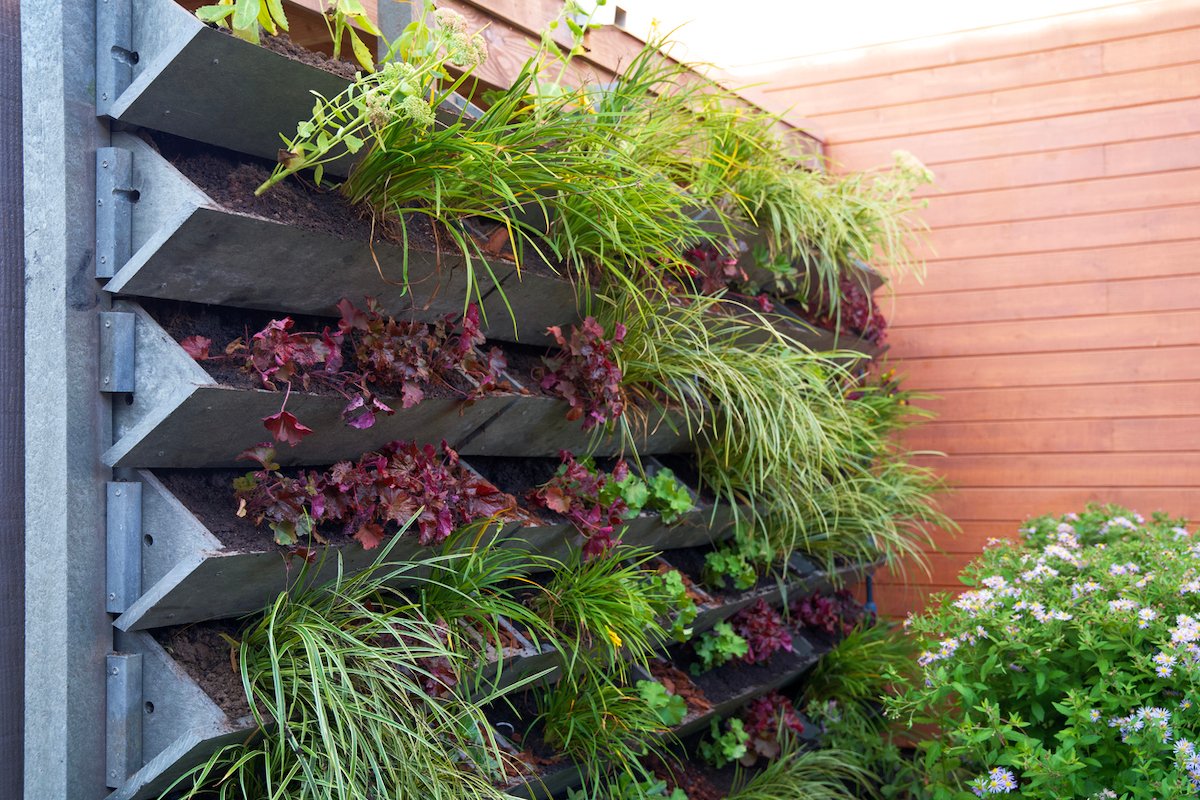
“Vertical gardens, especially compact ones like this, can dry out very quickly.”
The small volume of soil in each pocket means they hold less moisture than a traditional pot and are more exposed to sun and wind. In warm weather, you may need to water this daily. Before installing, consider your commitment to a frequent watering schedule. Some higher-end vertical systems have built-in irrigation, which is a fantastic but more expensive solution to this common challenge.
23. Fill a Tiered Stand with Cascading White Petunias
that makes this display so breathtaking is its fierce commitment to a single color: white. By using only white petunias, the arrangement gains an incredible amount of power and elegance. The sheer volume and repetition of one color create a cloud-like effect that is both dramatic and serene. If there were multiple colors, it would feel more like a standard planter stand. The monochromatic choice elevates it to a true design statement, proving that sometimes, more color isn’t the answer.
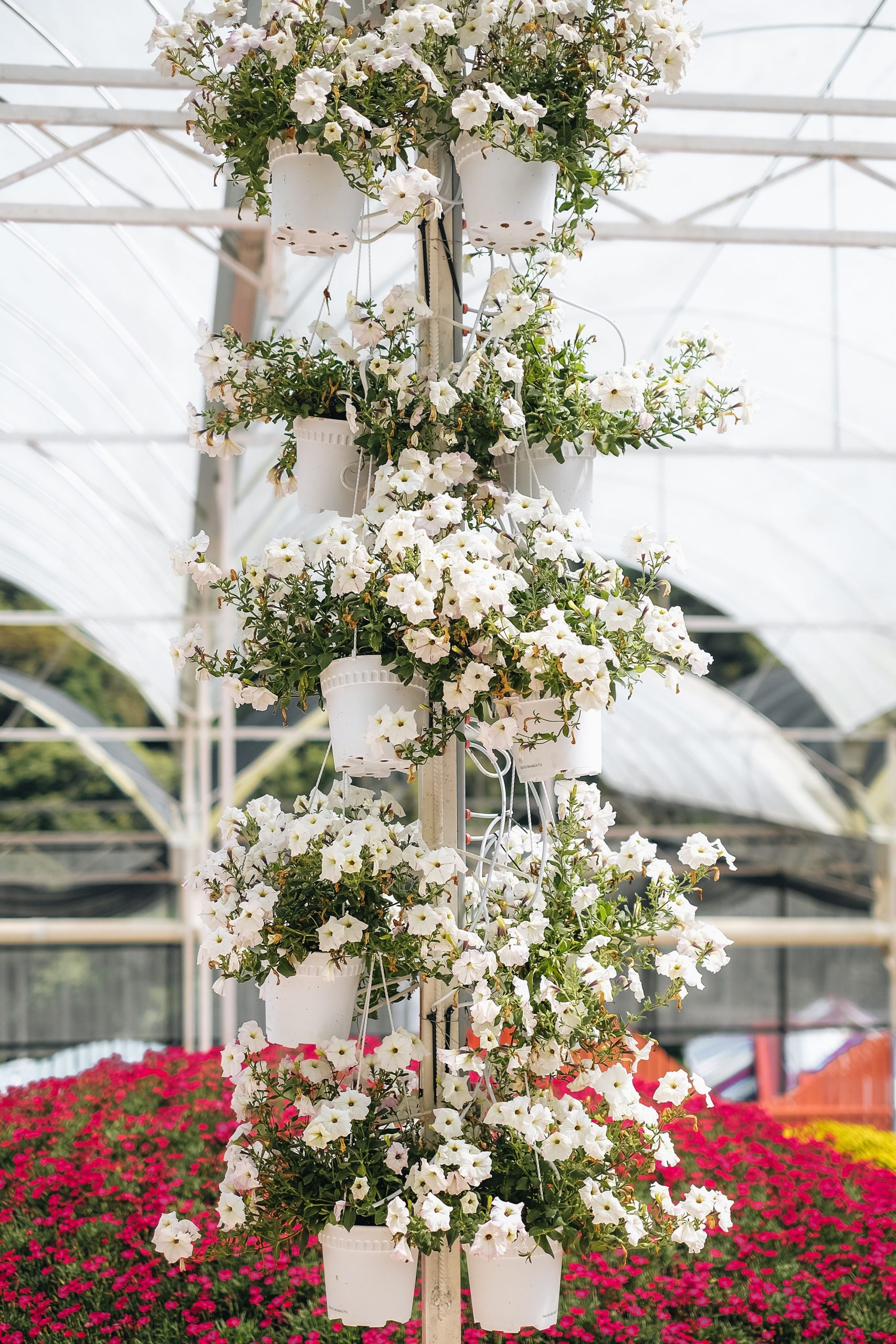
“When creating a monochromatic flower display, especially with white, texture and form become your most important tools.”
To prevent the look from falling flat, choose plants with slightly different habits. Here, the overflowing, cascading nature of the petunias creates a soft, mounding texture. You could enhance this further by mixing in another white flower with a different shape, like spiky snapdragons or delicate bacopa, to add another layer of visual interest without breaking the color scheme.
24. Add Charm with a Decorative Wrought Iron Bicycle Planter
This piece succeeds by blending decorative form with a practical function. The nostalgic, slightly whimsical shape of the bicycle provides a strong sculptural element on its own. Integrating planters into its design turns it from a simple statue into a living part of the garden. The contrast between the dark, rigid wrought iron and the soft, vibrant green foliage is key. It’s a perfect illustration of how “garden art” can be more than just ornamental. For a similar vibe, check out the red wagon planter.
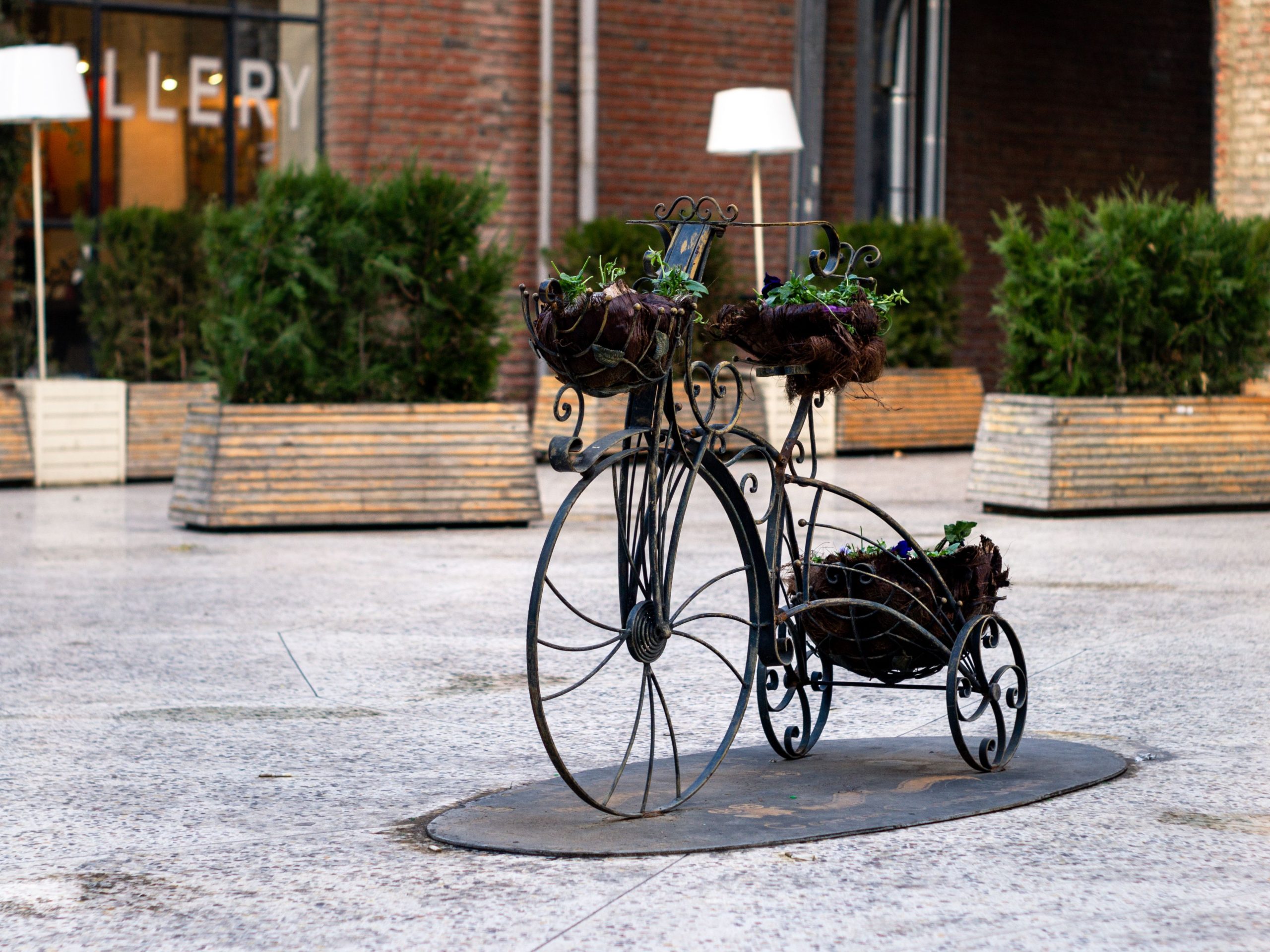
“While specialty garden decor shops sell these for a premium, you can find more affordable versions.”
Check stores like Big Lots, TJ Maxx, or HomeGoods in their seasonal sections, as they often carry similar metal planters. If you have an old, real children’s bicycle, you could get a similar effect by spray-painting it a single color (like black) and attaching baskets to the front and back to hold your plants. This DIY approach gives you the same charming look for a fraction of the cost.
25. Create a Lush Display with a Mixed Arrangement in a Blue Pot
This stunning container garden follows a vibrant recipe: 40% colorful foliage + 30% cascading vines + 20% bright flowers + 10% a bold container. The heavy lifting is done by the variegated croton leaves and other colorful foliage. The sweet potato vine adds the essential “spiller” element, softening the pot’s edge. The fuchsia and orange flowers provide pops of intense color, while the glossy blue pot acts as the perfect cool-toned anchor for all the warm colors. This formula guarantees a full, professional-looking arrangement.
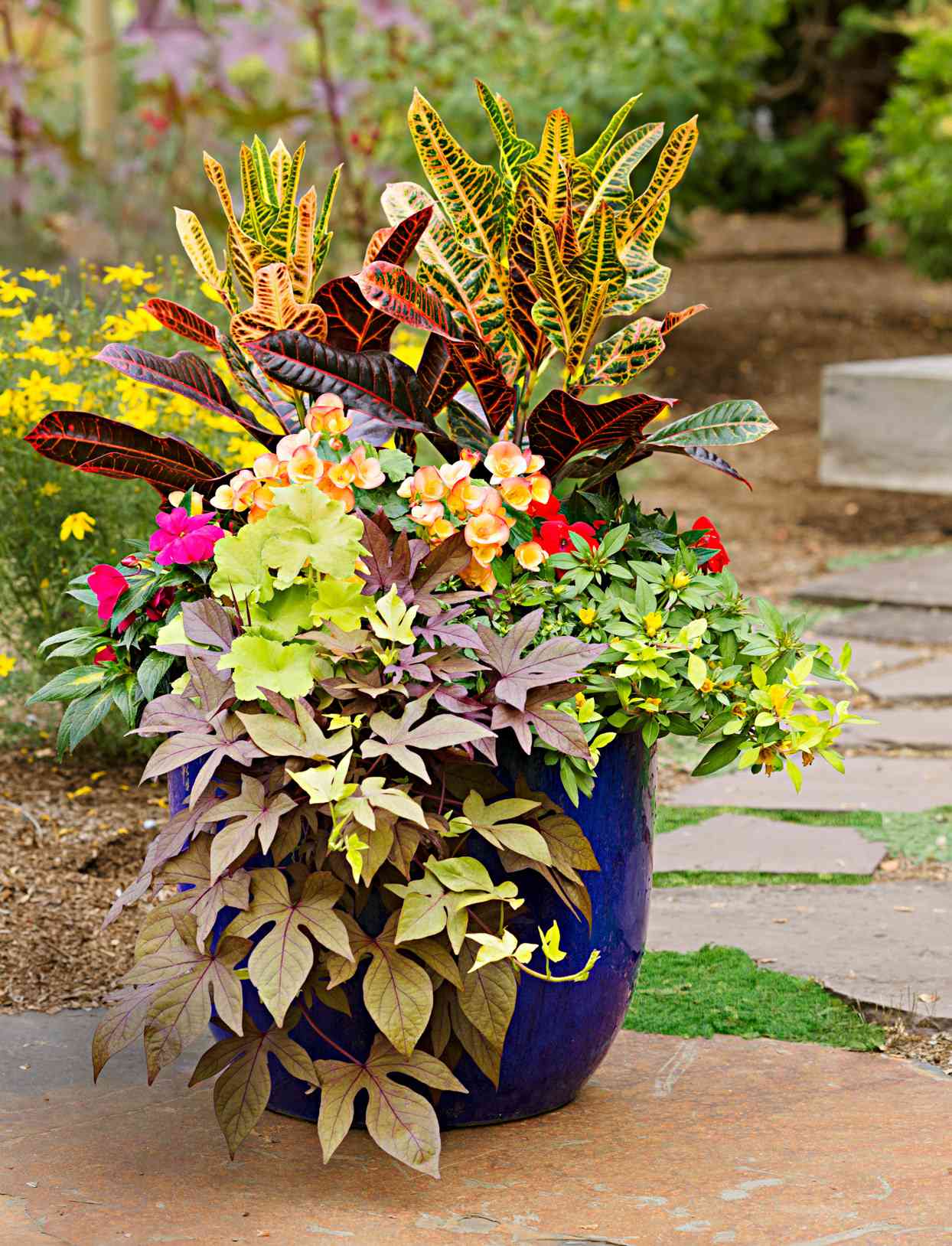
“A planter this packed with vigorous plants is a hungry, thirsty beast.”
The sheer density of roots means the soil will dry out very quickly, likely requiring daily watering in summer. To keep all these different plants happy and blooming, you’ll need to use a balanced liquid fertilizer every 7-10 days. Plants like crotons and sweet potato vines are fast growers and may need to be trimmed back mid-season to prevent them from completely overwhelming their neighbors. It’s a high-impact look that requires high-level care.
26. Go Maximalist with a Dark Botanical Mural and Indoor Plants
The absolute hero of this room is the dark botanical wallpaper. It’s a bold, dramatic choice that sets the entire maximalist tone. Without it, the mustard sofa, blue chair, and numerous plants could feel disconnected. The mural acts as the unifying backdrop, creating an immersive, jungle-like atmosphere that makes sense of all the other strong elements. It gives the room a deep, moody, and incredibly lush personality that would be impossible to achieve with paint alone. It is a fantastic way to bring the garden inside, as seen in Idea #18 as well.
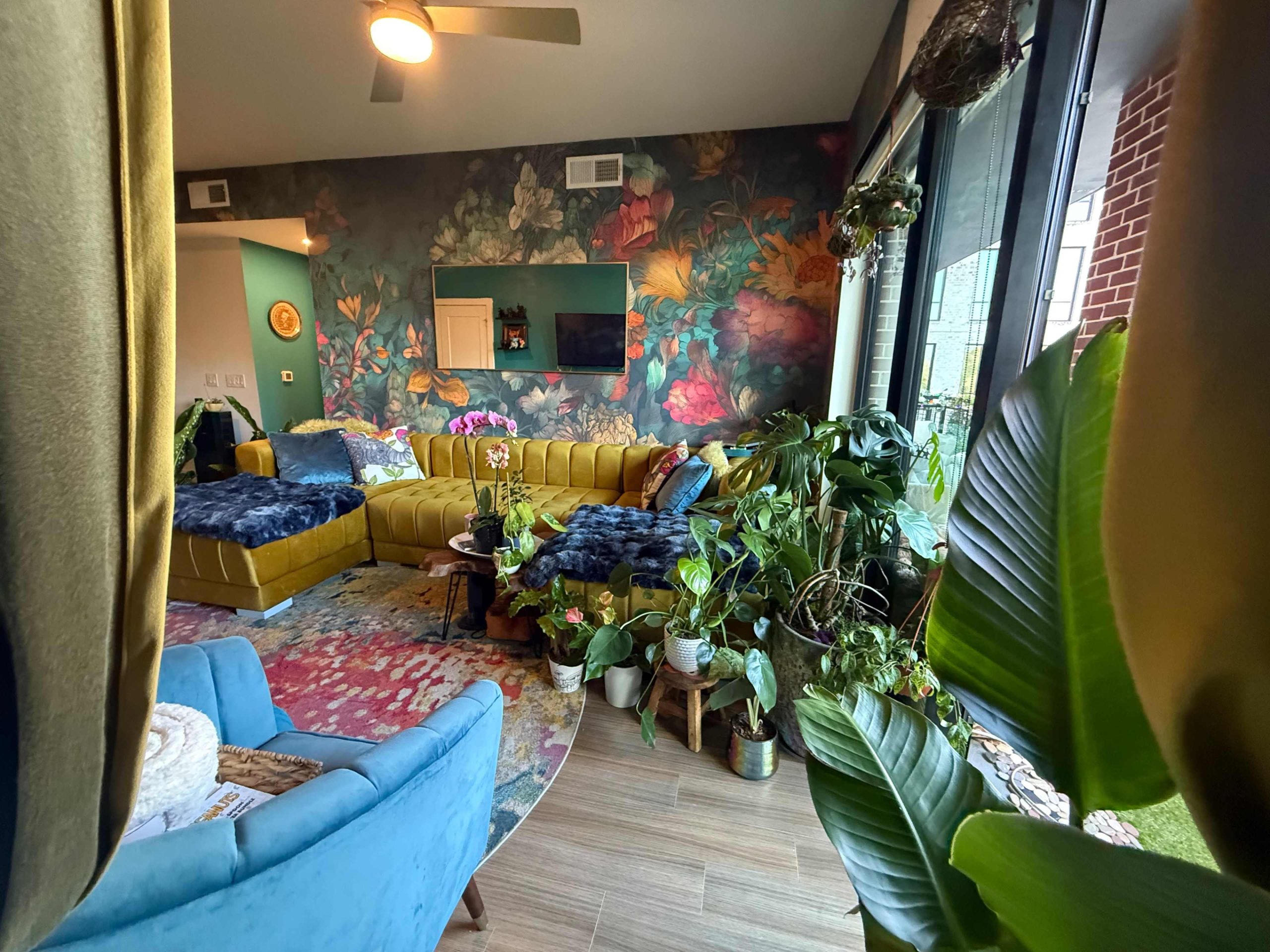
“”Biophilic design”—the concept of connecting people with nature inside their homes—is more than just a passing fad.”
It’s a movement driven by a real need to create calming, life-filled spaces. This room is a perfect example of biophilic design in action. The mural, combined with the dozens of real plants, taps into our innate desire to be close to nature. This trend has serious staying power as we continue to seek out ways to make our homes feel like restorative retreats from the outside world.
27. Display a Colorful Cactus Collection on Simple White Shelves
This idea works so well because of the high contrast. The clean, simple white shelves and wall create a quiet, neutral canvas. This makes the vibrant, almost neon colors of the plastic pots pop dramatically. It’s a lesson in opposites: simple background, colorful objects. The random, asymmetrical arrangement of the shelves adds a layer of playful energy, preventing the display from feeling too rigid or sterile. The organic texture of the vines on the right adds another layer of contrast against the smooth, modern pots.
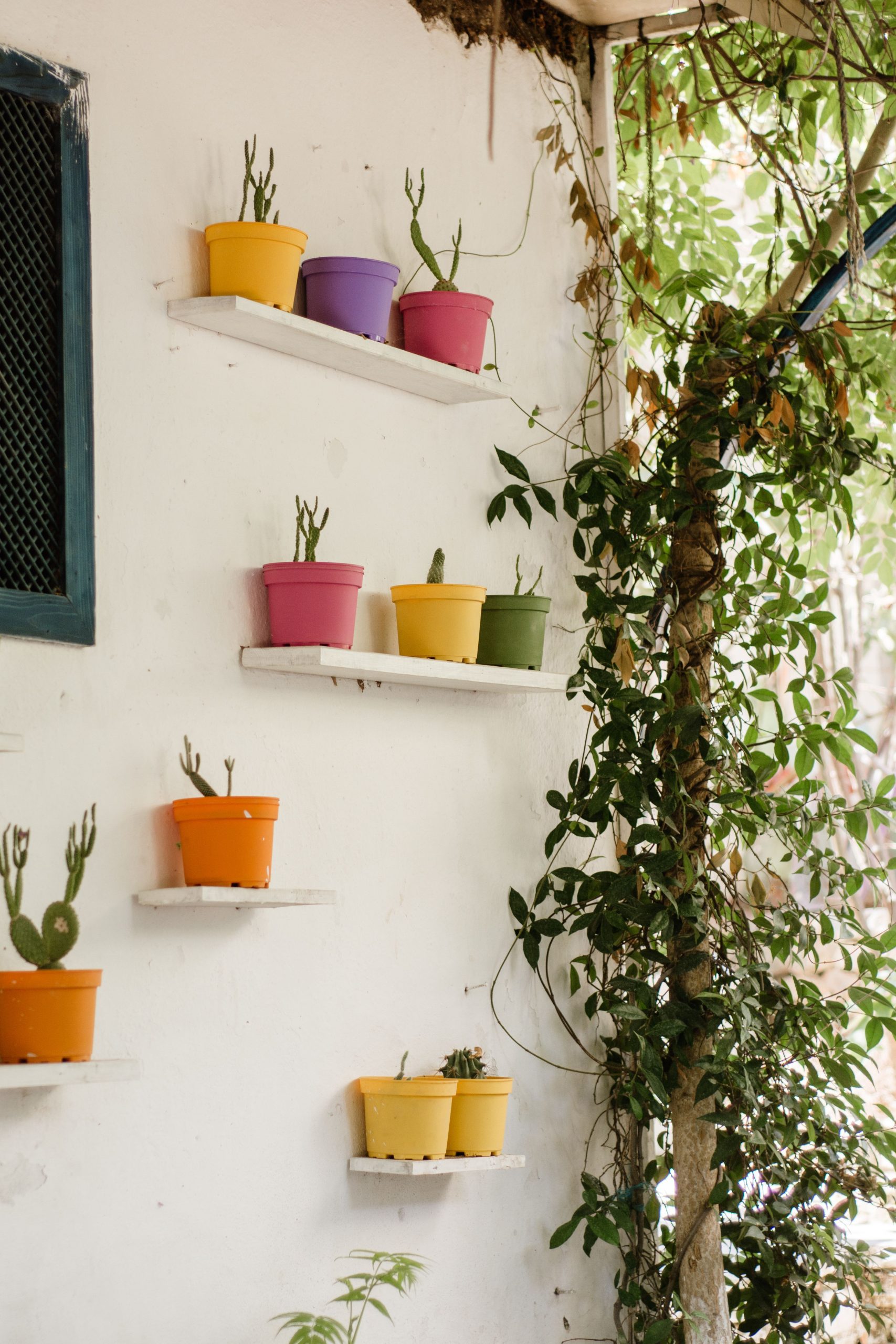
“This is an incredibly cheerful and low-cost DIY project.”
You can find simple white floating shelves at stores like IKEA or Target for a few dollars each. The colorful plastic pots are also very inexpensive at craft stores or dollar stores. Small cacti and succulents are some of the most affordable plants you can buy. The whole display can be put together for under $50, making it a perfect weekend project for adding a huge splash of color to a boring wall without breaking the bank.
28. Brighten a Dining Area with Large-Scale Floral Art
A large piece of art like this one works best in a space where it can breathe. It needs a solid wall without windows or doors breaking it up. This dining area is perfect because the wall is large enough to handle the scale of the painting without it feeling overwhelming. For an artwork this size (likely 4-5 feet wide), you need a room with at least 9-foot ceilings and a wall width of at least 8 feet. The round table provides a soft counterpoint to the rectangular art, a relationship to consider. For a smaller space, a vertical triptych could create a similar effect.
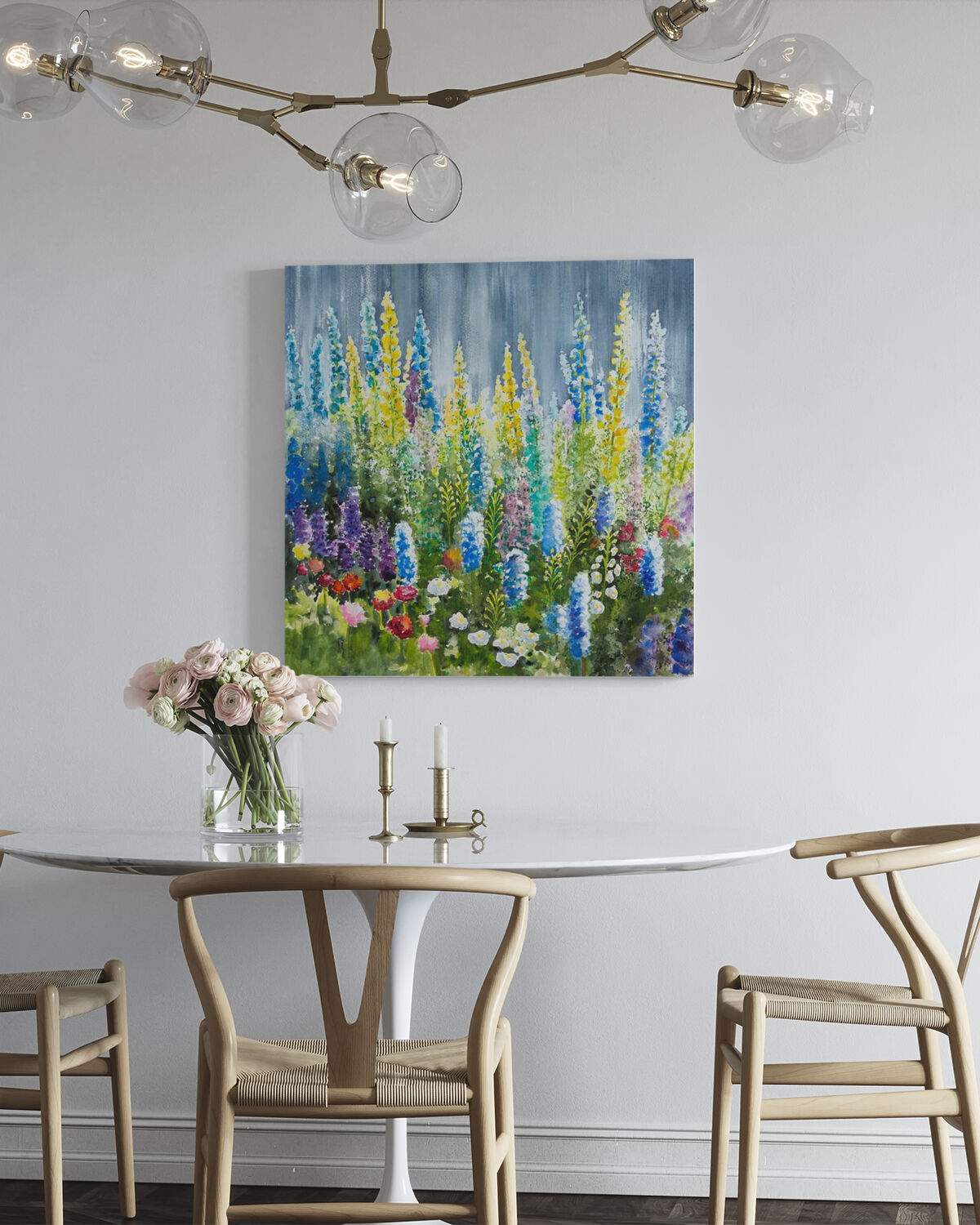
“When you have one dominant piece of art, let it be the star.”
Notice how every other element in the room supports the painting without competing with it. The wall is a quiet cream, the table is a simple white, and the chairs are natural wood. The small vase of pink flowers and the gold chandelier are accents that pick up on colors and materials within the artwork itself. The key is to build the room’s color palette directly from the painting. Pull 2-3 colors from the art for your accents to create a cohesive, designer-curated look.
29. Create a Dramatic Border with Vibrant Purple Allium Flowers
The magic of alliums lies in their unique form and scale. The large, perfectly spherical purple flower heads look like something from a Dr. Seuss book. They provide a strong, repeating globe shape that contrasts beautifully with the soft, fine texture of the green grass and the rigid lines of the distant garden arch and fence. Their tall, leafless stems allow them to float above lower-growing plants, creating an amazing layered effect. It’s their sculptural quality that makes them such a showstopper in any garden border.
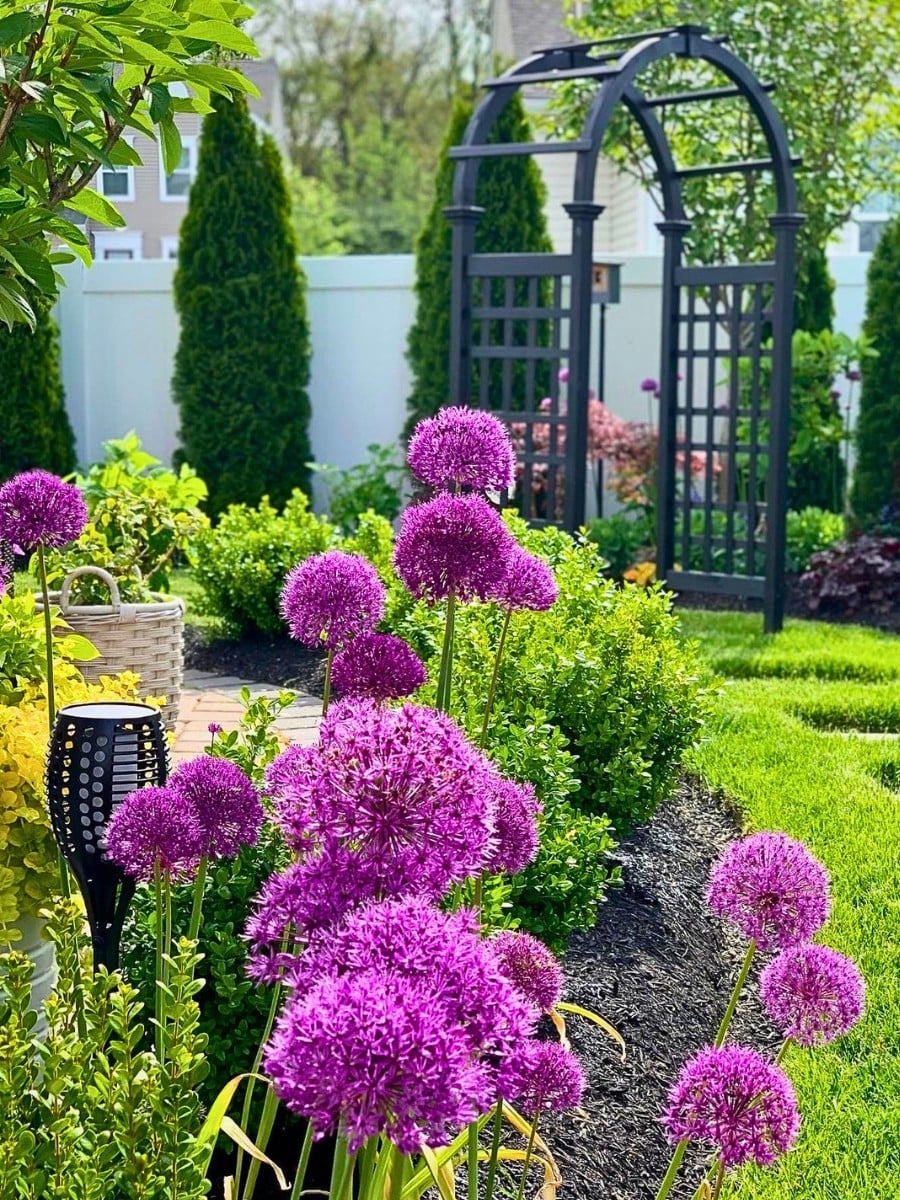
“Alliums are a fantastic, low-maintenance addition to the garden, but there are a few things to know.”
They are bulbs, planted in the fall for a spring/early summer bloom. The most important thing to remember is that their foliage starts to yellow and die back *before* the flowers even bloom. You must resist the urge to cut the ugly leaves off. The leaves are sending energy to the bulb for next year’s flower. The best strategy is to plant them behind other perennials whose new growth will hide the fading allium foliage.
Ready to Make Your Garden Your Own?
Creating a garden you love is less about following strict rules and more about finding what brings you joy. Whether it’s a quirky robot planter or an elegant floral border, the best gardens are the ones that tell your story. So grab an idea that sparked something, head to your Pinterest board, and start planning. Your perfect outdoor space is waiting for you to bring it to life.