30 Jaw-Dropping Plastic Bottle Vertical Garden Ideas for 2026 That Will Transform Your Outdoor Space

You know that feeling when you scroll past a photo and *have* to save it? That’s what this guide is all about. Forget generic advice; we’re diving deep into 30 real, unique, and totally doable plastic bottle vertical gardens you can actually create. We’ve filtered through hundreds of concepts to find the ones that blend creativity with practicality, perfect for any balcony, patio, or kitchen wall. And stay until the end — we break down the most common mistakes that can ruin these looks. 📌 Save this to Pinterest for later — you’ll want to revisit these ideas.
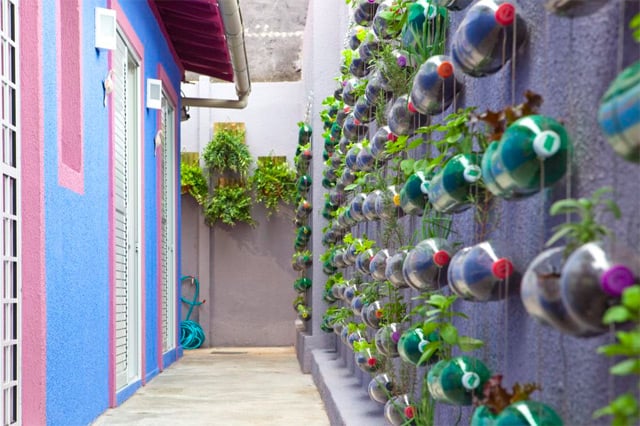
1. Vibrant Alleyway Garden with Repurposed Bottles
This design’s magic comes from an unexpected collision of gritty and gorgeous. The rough, dark grey concrete walls create the perfect moody backdrop, making the vibrant green foliage pop with incredible intensity. It’s the contrast that catches your eye. Furthermore, the choice to use simple, uniform plastic bottles as planters adds a layer of rhythmic repetition, transforming everyday trash into a structured, artistic installation that feels both intentional and wonderfully spontaneous.
“Think of this look as a creative recipe.”
It’s roughly 50% industrial grit (the dark grey walls and concrete), 40% vibrant life (the lush green plants), and 10% pure artistic whimsy (the shocking pink and blue stripes on the adjacent wall). You could swap the accent colors for a sunny yellow or a bold orange and still get the same energetic effect. The key is to keep the base neutral and let the plants and a single, powerful splash of color do all the talking. It proves you don’t need a pristine space to create something beautiful.
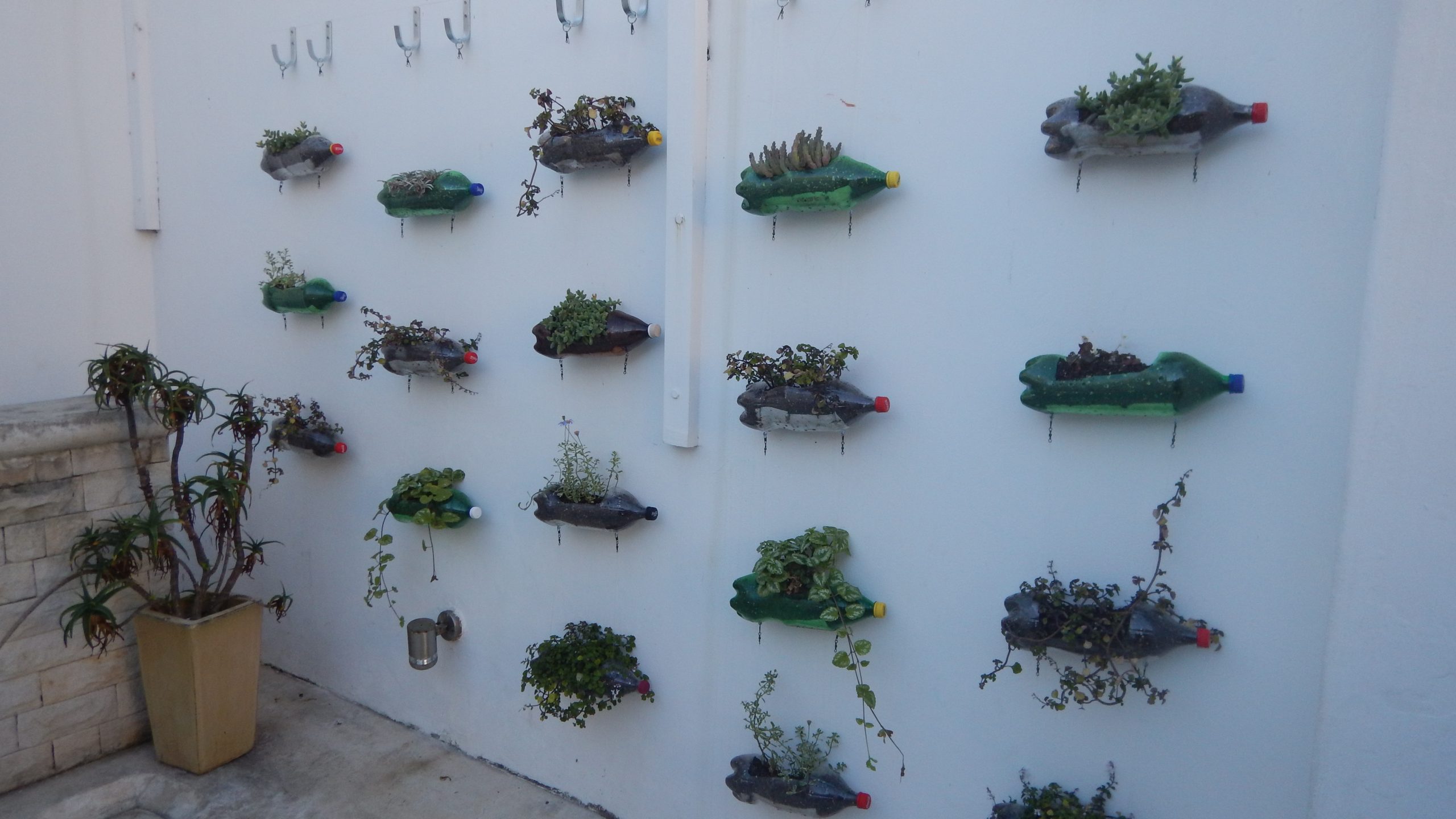
2. Minimalist Wall-Mounted Garden with Clear Bottles
When mounting bottle planters on a flat wall, spacing is everything. To prevent a cluttered look and give each plant room to breathe, aim for a minimum of 12-15 inches of horizontal space and 10-12 inches of vertical space between each bottle. This negative space is just as important as the planters themselves. It allows sunlight to reach every plant and turns the simple arrangement into a graphic, intentional piece of living wall art. Use a level and a measuring tape to get your grid just right before drilling any holes.
“The single element that makes this idea work so well is its simplicity.”
By using clear or translucent bottles against a stark white wall, the focus remains entirely on the green plants and their delicate forms. There are no distracting colors or complicated structures. It’s a quiet, confident design that champions the beauty of the plants themselves. Removing this restraint by adding colorful bottles or a busy background would completely undermine its serene, gallery-like feel.
3. Tiered Bottle Planters on Vertical Bamboo Poles
This bamboo pole concept is a fantastic solution for spaces that are narrow but have vertical height. It works best in a space at least 3 feet wide to allow the bottles to hang freely without bumping a wall, and with a ceiling or overhead support at least 6-8 feet high. Because the footprint is so small—just the base of the poles—it’s ideal for tight balcony corners or lining a slender walkway where a wider pallet garden wouldn’t fit. The verticality draws the eye upward, making a small area feel more expansive.
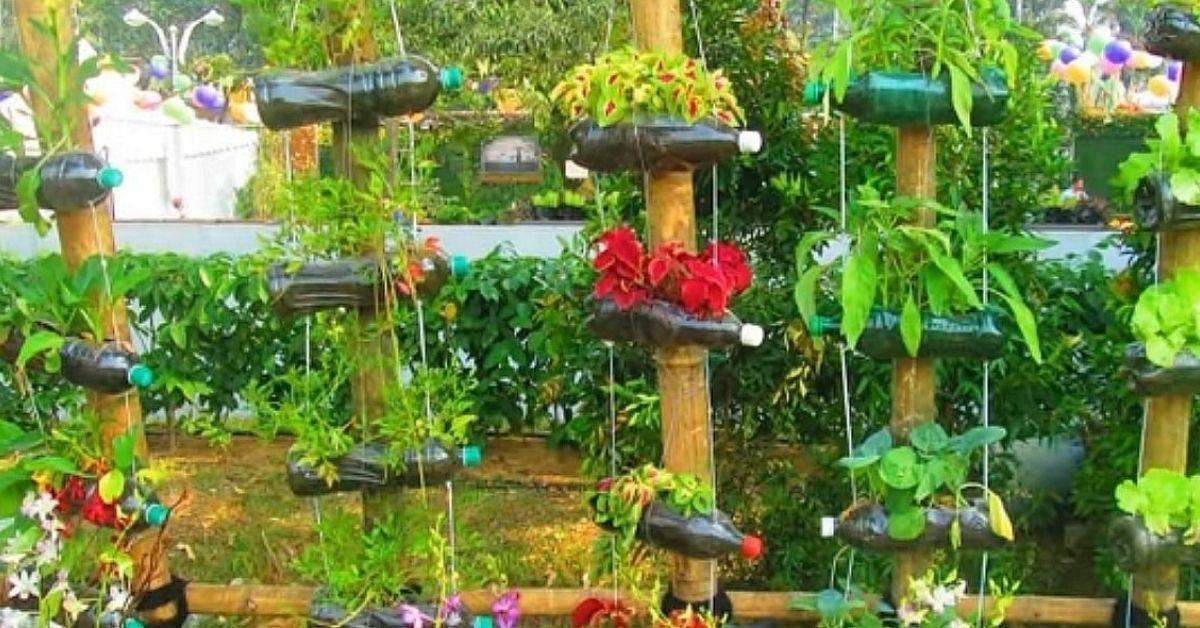
“Let’s be honest: while this looks incredible, it requires a bit of upkeep.”
The soil volume in these dark bottles is small, so they will dry out very quickly on hot, sunny days. You’ll likely need to water them daily, or even twice daily in a heatwave. Also, securing the bamboo poles is critical. They need to be firmly anchored at the base and ideally secured at the top to prevent them from toppling over in strong winds, especially once they are heavy with wet soil and mature plants.
4. Hanging Tomato Garden in Painted DIY Bottles
You can make these inverted tomato planters in an afternoon! It’s a fun, quick project that puts you on the fast track to homegrown cherry tomatoes, even in a tiny space.
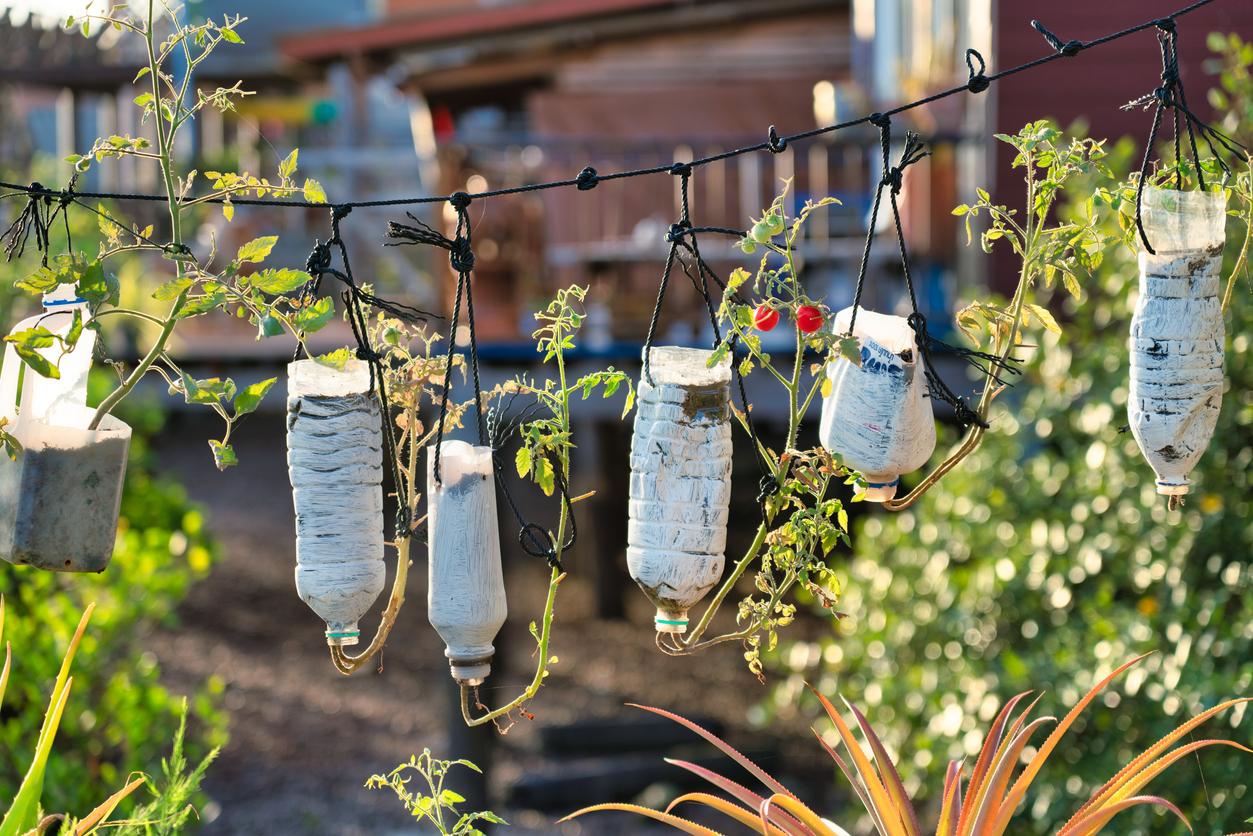
“Time: 1 hour | Cost: Under $10
Clean your plastic bottles and remove the labels.”
- Time: 1 hour | Cost: Under $10
- Clean your plastic bottles and remove the labels. A 2-liter bottle works best.
- Carefully cut off the bottom of the bottle, which will now be the top opening for watering.
- Unscrew the cap, and gently guide a small tomato seedling through the opening, so the leaves are on the outside. You may need to wrap the root ball carefully to get it through.
- Pack the bottle with potting mix around the roots.
- Use a hole punch to create two holes near the cut edge and thread a sturdy rope or wire through for hanging.
- Hang in a sunny spot and water from the top!
There is no ‘cheaper’ version of this—it’s already the ultimate budget garden! You can literally make this for free if you have a bottle, a tomato seedling from a friend, and some string lying around. Instead of buying special “patio” variety tomatoes, check Facebook Marketplace or local gardening groups in the spring. People often have extra seedlings they are willing to give away for a dollar or two, or even trade for a few of your own extra seeds.
5. Lush Greenery on a Black Grid with Soda Bottle Planters
This dense, thriving wall is gorgeous, but it’s not a set-it-and-forget-it project. The dark green soda bottles will absorb a lot of heat, meaning the soil will dry out fast. Plan on daily watering, especially for the plants on the top rows. Because the plants are packed so tightly, you’ll also need to be vigilant about pruning. Trim back any yellowing leaves or overly enthusiastic growers to ensure good air circulation and prevent pests or fungal issues from taking hold in the humid foliage.
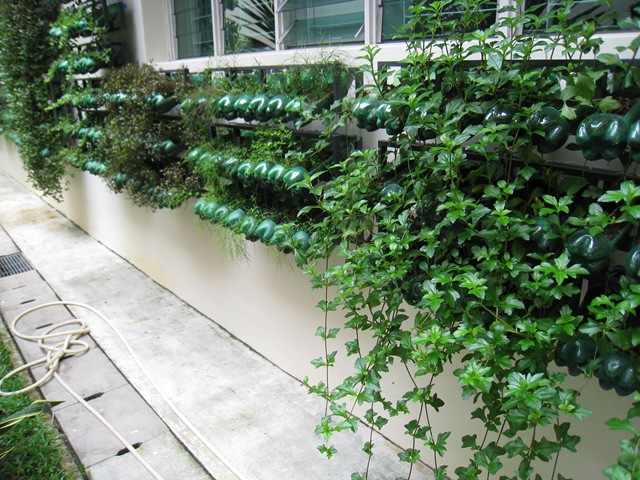
“The success here is a lesson in rhythm and repetition.”
Using the same type of dark green bottle throughout creates a uniform, cohesive look that recedes into the background, allowing the varied textures of the leafy plants to become the star. The black grid provides a strong geometric foundation, turning the wall into a living tapestry. This structure prevents the design from looking like a chaotic jumble of bottles and instead makes it feel like a deliberate, well-executed piece of green architecture. It’s organized, it’s lush, and it’s incredibly effective.
6. Staggered Rows of Lettuce in Cut Plastic Bottle Planters
Before you commit to this beautifully simple lettuce wall, run through this quick checklist to ensure success:
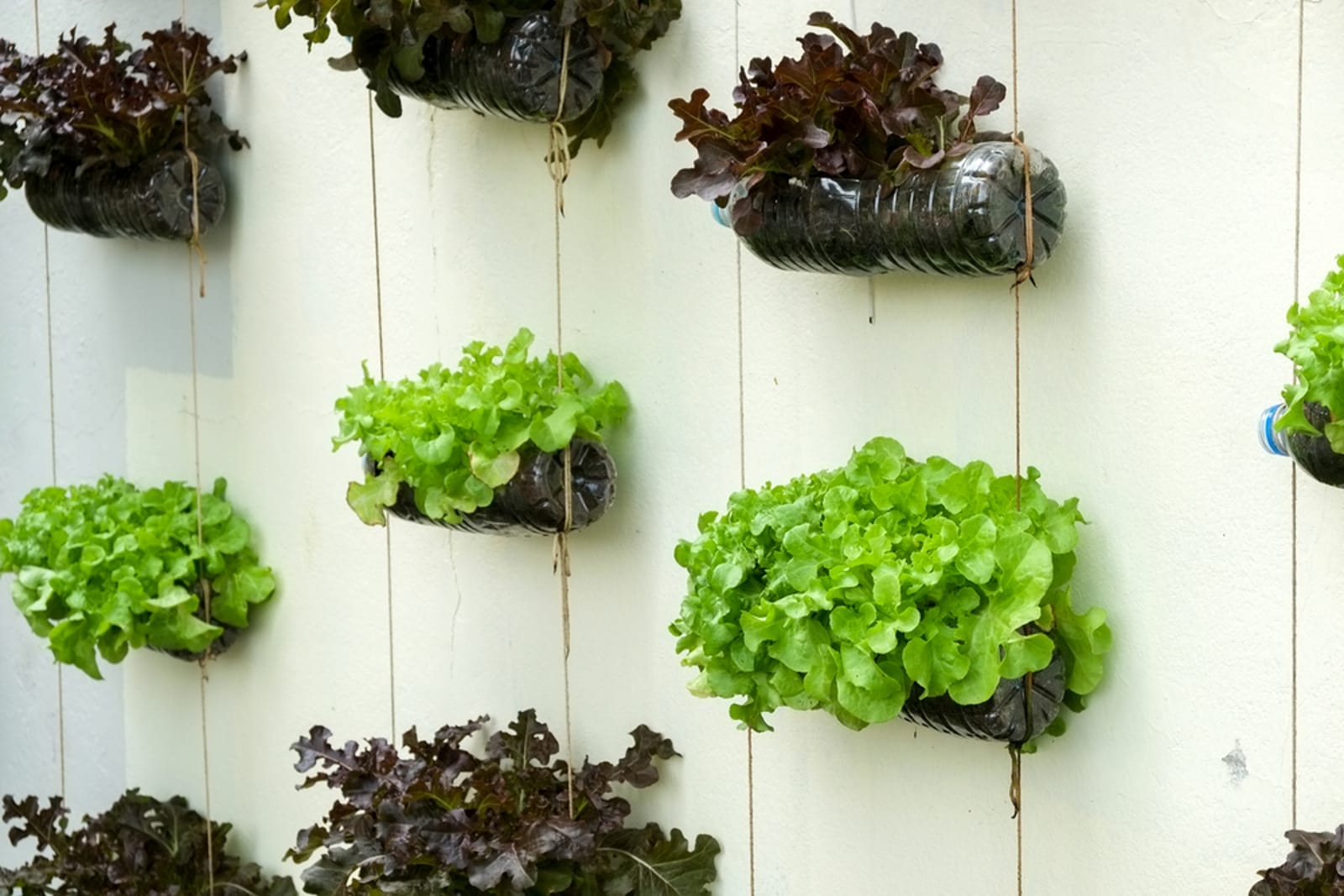
“Sunlight Check: Lettuces need at least 6 hours of sun.”
Does your chosen wall get enough light, or is it in deep shade most of the day?
Water Access: Is a hose or watering can easily accessible? A wall like this needs consistent moisture, so convenience is key.
Wall Material: The light-colored wall is perfect for reflecting light back onto the plants, but make sure it’s a surface you don’t mind getting a little damp or splashed with soil.
Secure Anchors: You’ll need to install hooks or nails that can support the weight of soil, plants, and water. Make sure they are drilled securely into studs or masonry.
To create a truly stunning visual effect with mixed lettuces, think like a painter. Don’t just plant them randomly. Create deliberate patterns. Try alternating rows: one row of light green curly lettuce, followed by a row of deep red leaf lettuce. Or, create diagonal stripes of color across the wall. This simple act of color-blocking turns your functional vegetable garden into a graphic art piece. The contrast between the lime green and the deep purple-red is what gives this setup its professional, curated feel.
7. Simple Tabletop Planter From a Single Clear Bottle
The most important detail here is the horizontal placement. By laying the bottle on its side, you maximize the surface area for planting and create a stable base. This is a much better approach for a tabletop or shelf than a tippy, vertical bottle. It turns a piece of trash into a miniature garden bed, perfect for starting a few herb seeds or growing a small succulent. It’s the simple reorientation from vertical to horizontal that makes this idea so practical and clever for small, flat surfaces.
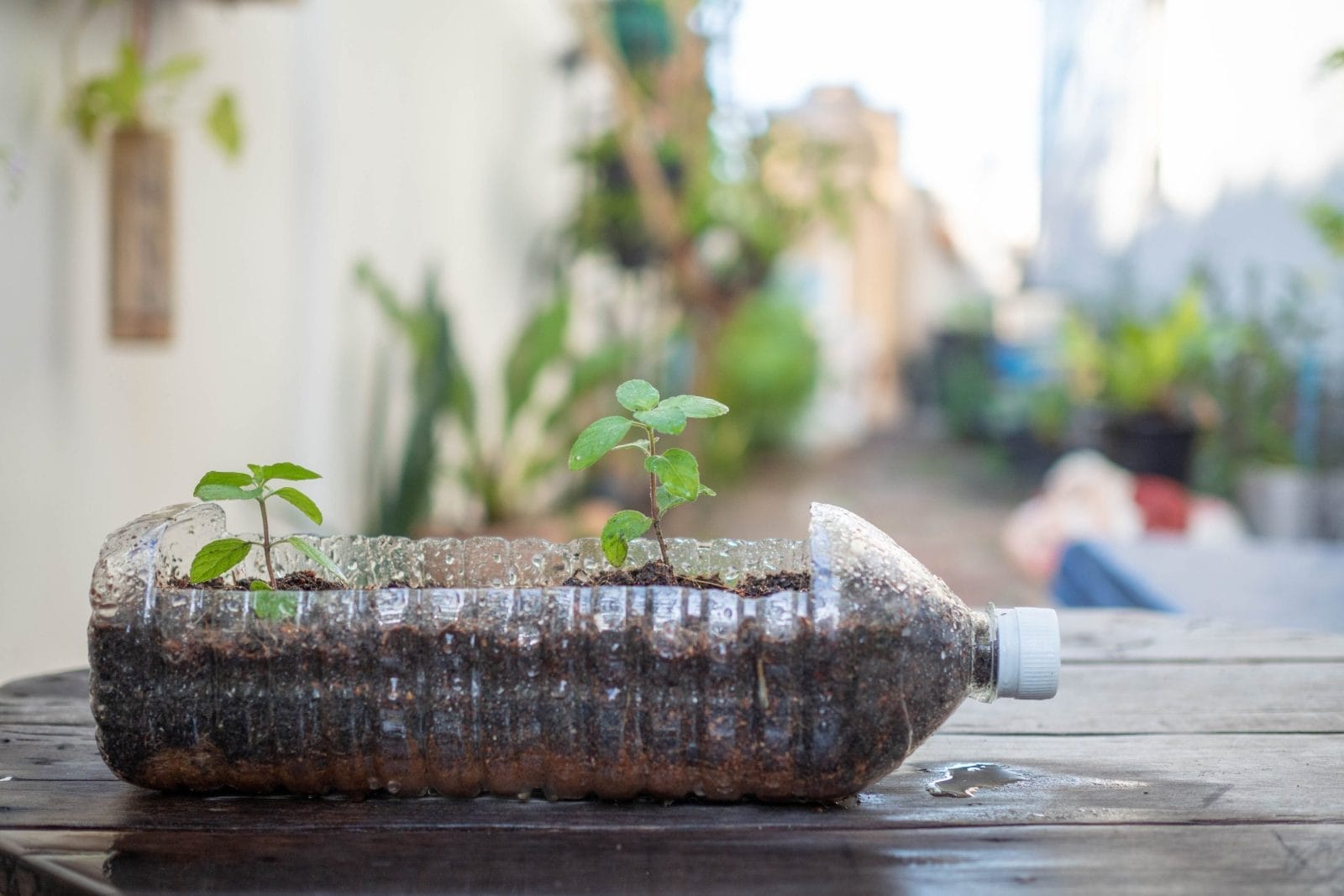
“This idea is micro-gardening at its best.”
It’s meant for a space no larger than a small side table, a kitchen windowsill, or a single shelf. Its footprint is tiny, roughly 10 inches long by 4 inches wide. This is not a solution for large-scale vegetable production; it’s for adding a tiny touch of green to a specific spot. It’s perfect for the urban apartment dweller who wants to grow a garnish or two, or for a child’s first gardening project. Compare this to the ambitious wall in Idea #5 to see the incredible range of scales possible with bottles.
8. Hands-On Look at a Vertical Herb Garden on Wire Mesh
What makes this system so successful is the combination of a rigid structure with flexible placement. The wire mesh acts as a sturdy, reliable backbone for the entire garden, capable of holding significant weight. However, the bottles themselves can be hooked on and moved around easily. This allows for adjustments as plants grow or as you decide to swap in new herbs. It’s a perfect marriage of strength and adaptability, which is essential for a living, evolving garden wall. The use of varied bottle types, as seen in Idea #2, adds to the resourceful charm.
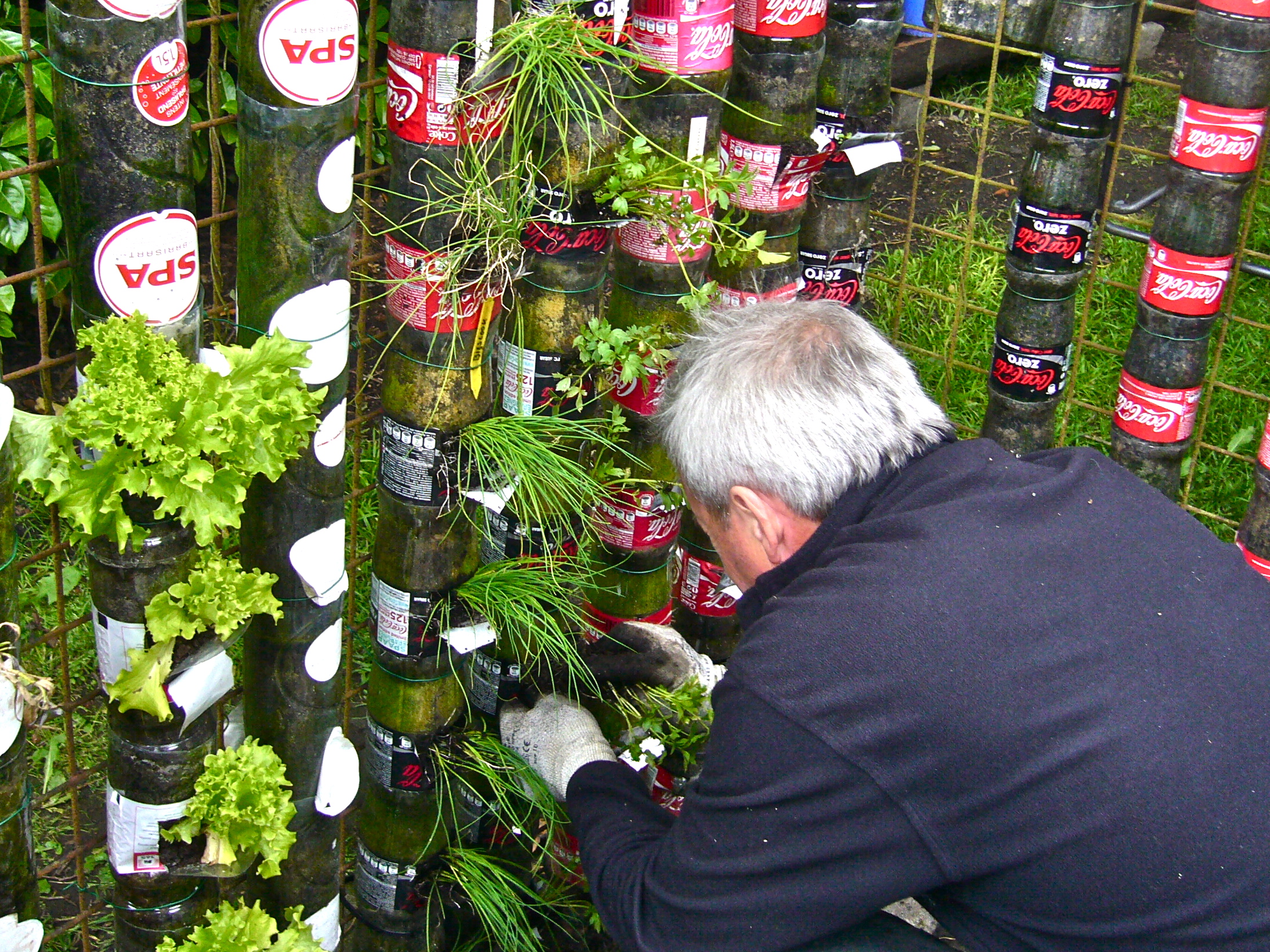
“This kind of hands-on, hyper-functional garden is gaining huge traction because it directly addresses the modern desire for connection to our food sources.”
In an age of grocery delivery and pre-packaged everything, there’s a growing movement towards understanding where our food comes from. A garden like this, full of chives and leafy greens right outside the door, isn’t just decor. It’s a small but powerful way to reclaim a piece of the food chain, reduce waste, and add the freshest possible flavors to your meals.
9. Sunny Herb Garden on a Rough Textured Wall
When you have a highly textured, rough wall surface like this one, don’t fight it—lean into it. The imperfections and ruggedness of the wall add character. To enhance this, use clear or lightly colored bottles that don’t compete with the background. The texture of the wall will be visible through the bottles, creating a beautiful, layered effect. Also, the rough surface will diffuse the sunlight, creating a softer, more flattering light for your plants than a smooth, glossy wall would.
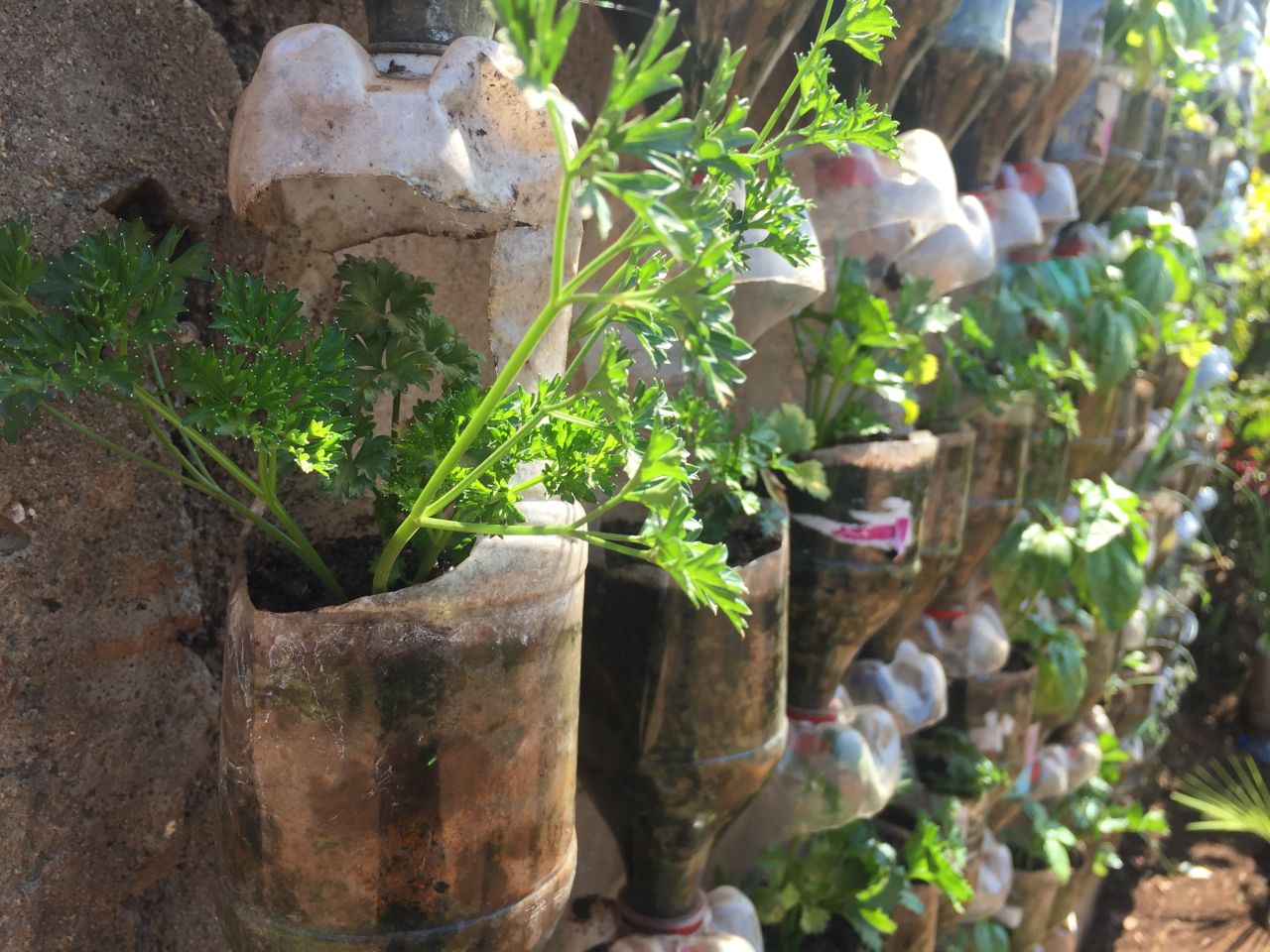
“A setup with this much direct sun is a double-edged sword.”
Your herbs will love the light and grow vigorously, but the clear plastic bottles will create a greenhouse effect, heating the soil and roots very quickly. This can stress the plants and requires diligent watering, likely every single day in the summer. Also, be aware that UV exposure will make the plastic brittle over time. You should plan to replace the bottles every 2-3 years as they become yellowed and fragile.
10. DIY Strawberry Planters on a Wooden Trellis
A simple wooden trellis provides the perfect frame for a bottle garden. Here’s a quick guide to mounting one.
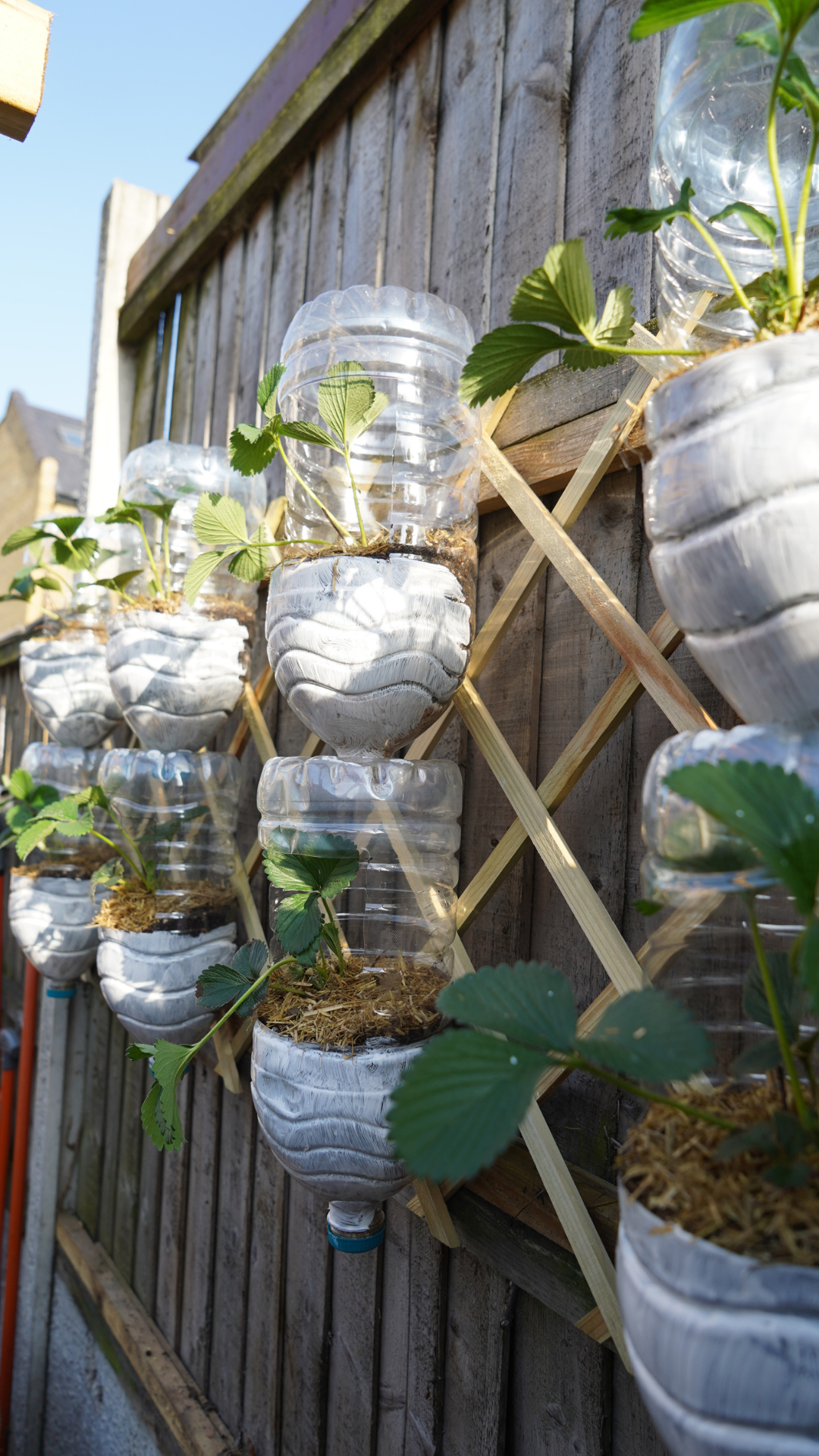
“Time: 2 hours | Cost: $30-$60
Purchase a pre-made wood lattice panel from a home”
- Time: 2 hours | Cost: $30-$60
- Purchase a pre-made wood lattice panel from a home improvement store. A 2’x8’ panel is a great starting size.
- Mount the lattice to your fence or wall. Use 1-2 inch wood blocks as spacers between the lattice and the wall. This crucial step allows you to wrap ties or wires around the lattice slats.
- Prepare your inverted bottle planters by cutting off the bottoms.
- Punch two holes on opposite sides of each bottle, about an inch from the cut edge.
- Use zip ties, twine, or wire to securely fasten each bottle to the lattice slats. Arrange them in staggered rows to maximize sun exposure.
Recreating this rustic look is wonderfully affordable. You’re leveraging recycled materials for the most important part—the planters.
11. Utilitarian Seedling Nursery on Metal Scaffolding
The single most brilliant element here is the industrial metal scaffolding. This isn’t trying to be subtle or decorative; it’s a pure workhorse. The scaffolding provides an incredibly strong, modular, and deep framework that can support dozens of bottles filled with heavy, wet soil. It moves the garden away from the wall, creating a freestanding structure with 360-degree access and excellent air circulation. It’s a solution born from pure function, and that’s what makes it so impressive.
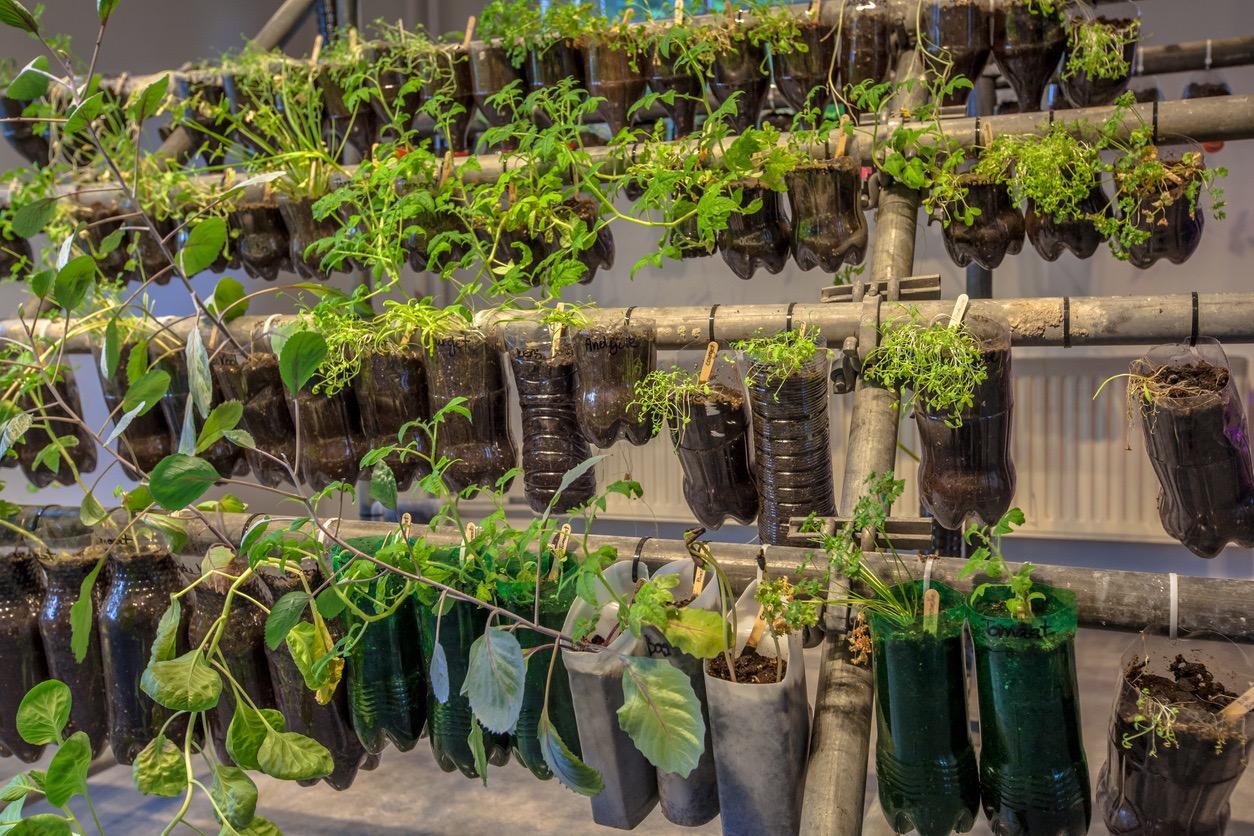
“This is a large-scale system designed for serious propagation.”
You’ll need a significant amount of space, at least 6-8 feet in length and 3-4 feet in depth to accommodate the scaffolding and allow for a walkway. It’s best suited for a backyard, a dedicated greenhouse space, or a very large rooftop terrace. This is not a balcony solution. Its utilitarian nature makes it a perfect fit for a working vegetable patch where function trumps form. It’s built for someone starting hundreds of seedlings for a large garden plot.
12. Dense Wall of Green Bottle Planters on a Brown Grid
This is a masterclass in using repetition to create a powerful visual statement. By sticking to one type of planter—the iconic green soda bottle—the designer creates a unified, textured green wall. The brown grid provides a subtle, earthy structure that complements the bottles without competing for attention. The result is a dense, lush tapestry of foliage where individual bottles disappear, and the overall effect of a living wall takes over. It feels much more high-end than a random assortment of containers would, similar to the strategy in Idea #5.
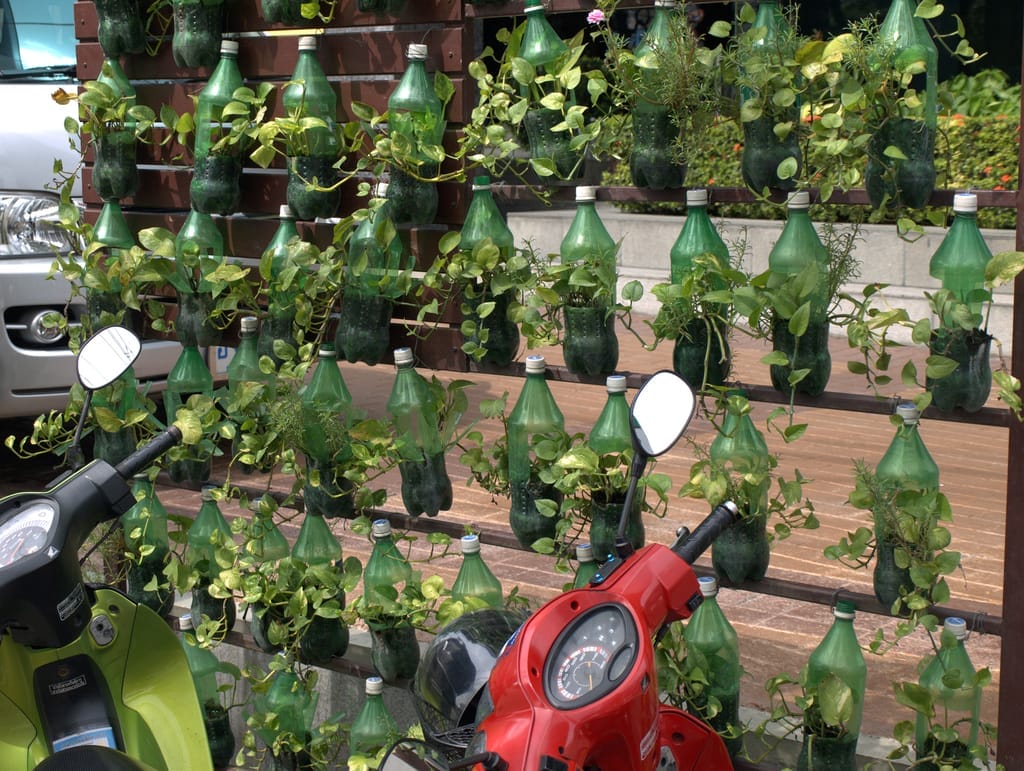
“While this looks like a solid wall of green, it’s not a great choice for growing edibles.”
The density of the foliage and the overlapping bottles mean that air circulation will be very poor. This creates a humid microclimate that can be a breeding ground for pests like aphids and fungal diseases like powdery mildew. This setup is best for hardy, decorative foliage plants and vines that are less susceptible to such issues. If you want to grow herbs or veggies, opt for a more open design with better spacing.
13. A Simple Recycled Bottle Hanging Garden Concept
With the rise of the ‘cottagecore’ and ‘thrif-core’ aesthetics on Pinterest and TikTok, ideas like this are more relevant than ever. This isn’t about a slick, manufactured product; it’s about the beauty of resourcefulness. It celebrates the story behind the object—the bottle saved, the plant propagated, the garden built with your own hands. This trend has real staying power because it’s not tied to a specific product, but to a sustainable, creative, and deeply personal ethos that people are craving in 2026.
“The core of this idea is accessibility.”
What makes this concept so powerful and enduring is that virtually anyone can do it. It requires no special skills, no expensive materials, and no large amount of space. It democratizes gardening, taking it from something that requires a yard and a budget to something that only requires a bottle, a seed, and a little bit of sunlight. It’s the ultimate embodiment of the phrase ‘start where you are, use what you have’. This spirit of inclusiveness is its defining feature.
14. Planting Seedlings in a DIY Bottle Planter
When you’re starting seedlings in a temporary planter like this, don’t skimp on the soil quality. It’s tempting to use dirt from the backyard, but that soil is often heavy, full of clay, and can contain weed seeds or pests. For about $10, you can buy a bag of high-quality seed starting mix. This sterile, lightweight medium is designed to hold the perfect amount of moisture and allow delicate new roots to grow without a struggle. It’s a small investment that pays huge dividends in stronger, healthier plants.
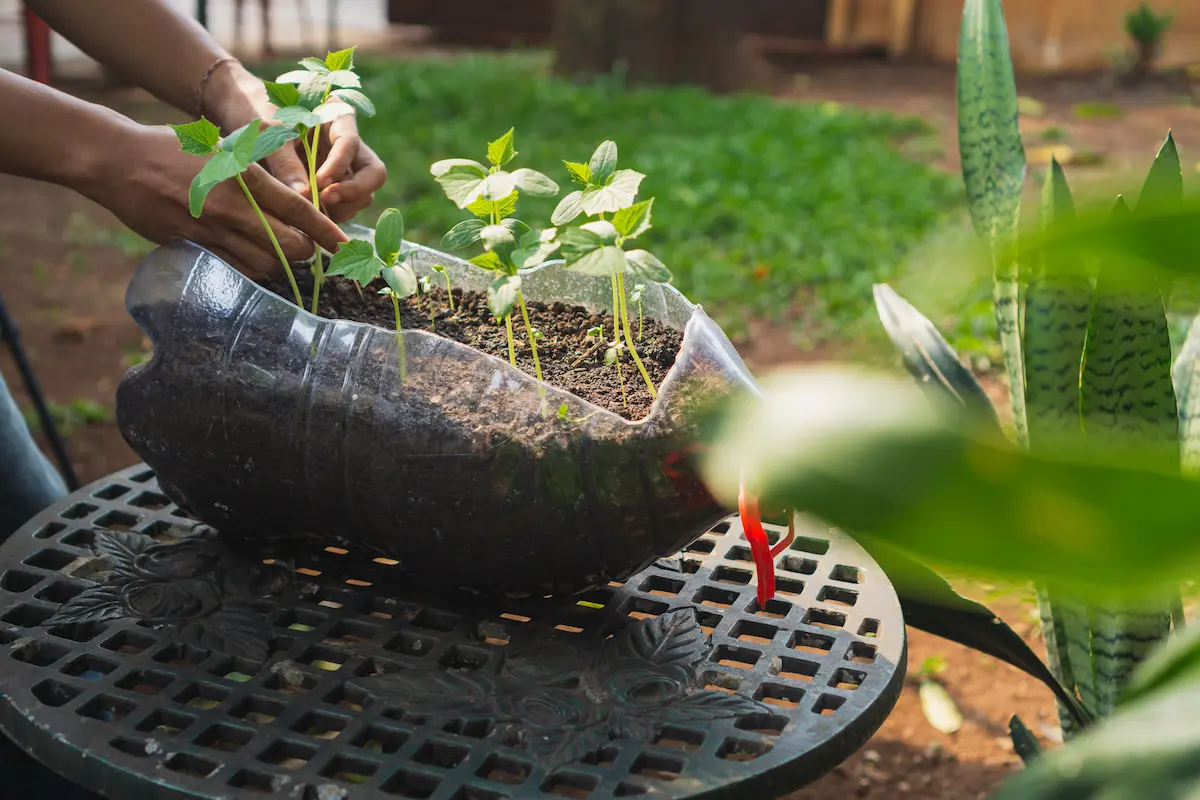
“The visual harmony of this little moment is a simple formula: 70% natural elements + 30% man-made structure.”
The lush green foliage and rich, dark soil provide a soft, organic base. The clear, rigid lines of the recycled plastic bottle and the ornate metal of the table add a contrasting structure and hint of human ingenuity. This balance is what makes it feel both grounded in nature and thoughtfully composed as a garden scene. You could swap the ornate table for a simple wooden one and maintain the same effective balance.
15. Assembling Twin Vertical Gardens on Reclaimed Pallets
Building a pallet garden is a classic DIY, but adding the plastic bottle drainage system is a clever upgrade. Here’s a streamlined approach:
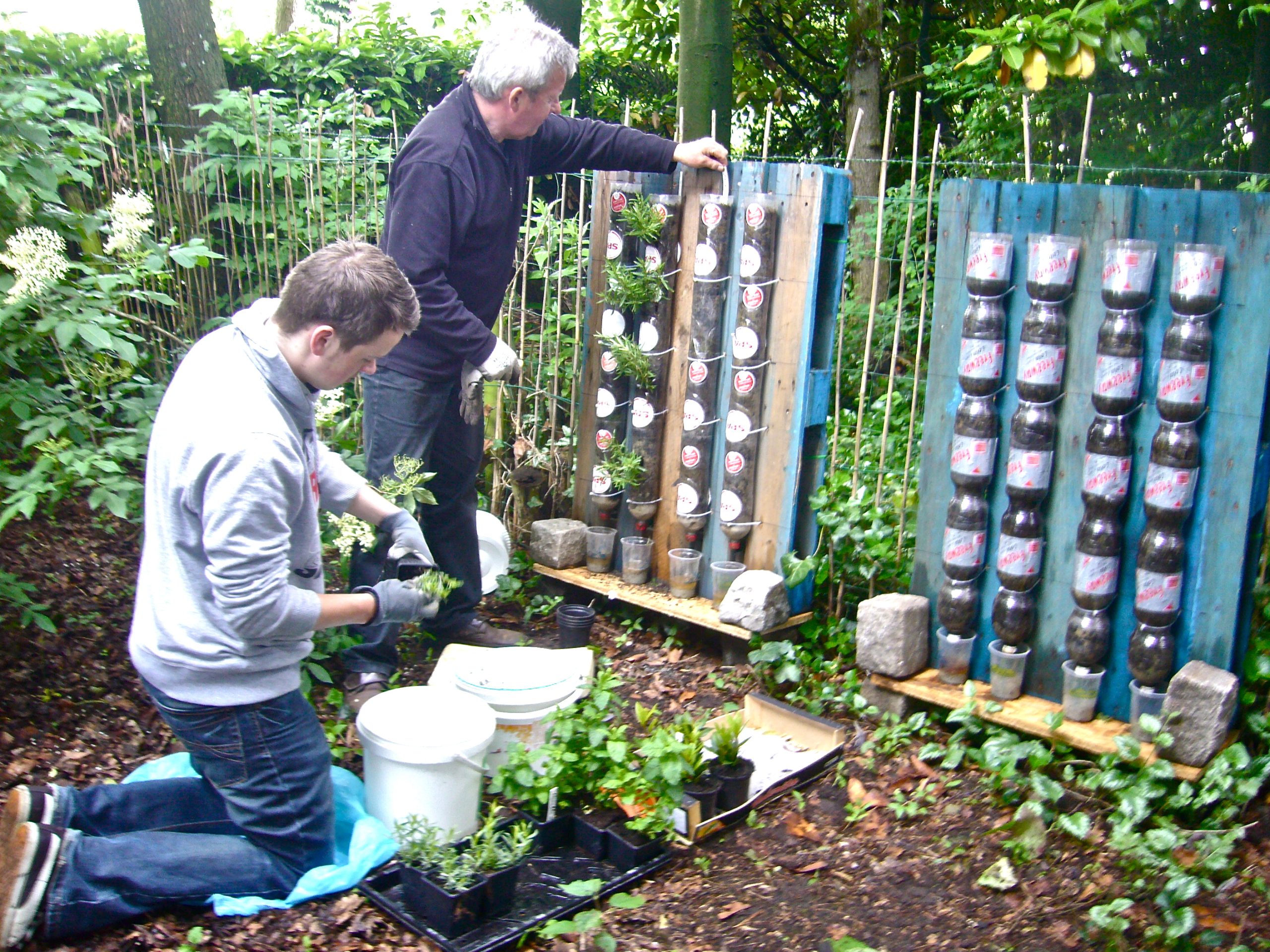
“Time: 3-4 hours | Cost: $20-$50
Source a pallet. Look for one stamped with ‘HT’ ”
- Time: 3-4 hours | Cost: $20-$50
- Source a pallet. Look for one stamped with ‘HT’ (heat-treated), not ‘MB’ (methyl bromide). Sand down any rough spots.
- Decide on your paint or finish. As seen here, you can leave it natural or go for a pop of color like the bright blue. If painting, do it now and let it dry completely.
- Cut your plastic bottles. For planters, cut a larger opening on the side. For drainage catchers, cut the bottle in half.
- Attach the bottle planters to the front of the pallet slats using screws or sturdy staples.
- Attach the drainage-catching cups directly below each planter to capture excess water. This is a game-changer!
hauling pallets home, make sure this project is right for you. Pallets are heavier than they look!
- Safety First: Can you confirm your pallet is heat-treated (HT) and not chemically treated (MB), especially if you plan to grow edibles?
- Space & Weight: A fully planted and watered pallet is extremely heavy. Do you have a solid, level spot against a strong wall or fence that can support it?
- Tool Check: Do you have access to a drill, screws, a saw for cutting bottles, and sandpaper?
- Sunlight: Have you monitored the proposed spot to ensure it gets at least 6-8 hours of direct sunlight for herbs and vegetables?
16. Herb Garden in Milk Jugs on a Balcony Railing
This is a brilliant example of using existing infrastructure. By hooking the planters directly onto the balcony railing, the design makes use of a strong, pre-existing structure without drilling a single hole. The choice of translucent milk jugs is also smart; they allow some light to reach the soil and roots without creating the intense greenhouse effect of clear bottles. The blue caps left on the bottom add a small, consistent pop of color that makes the arrangement feel cheerful and intentional.
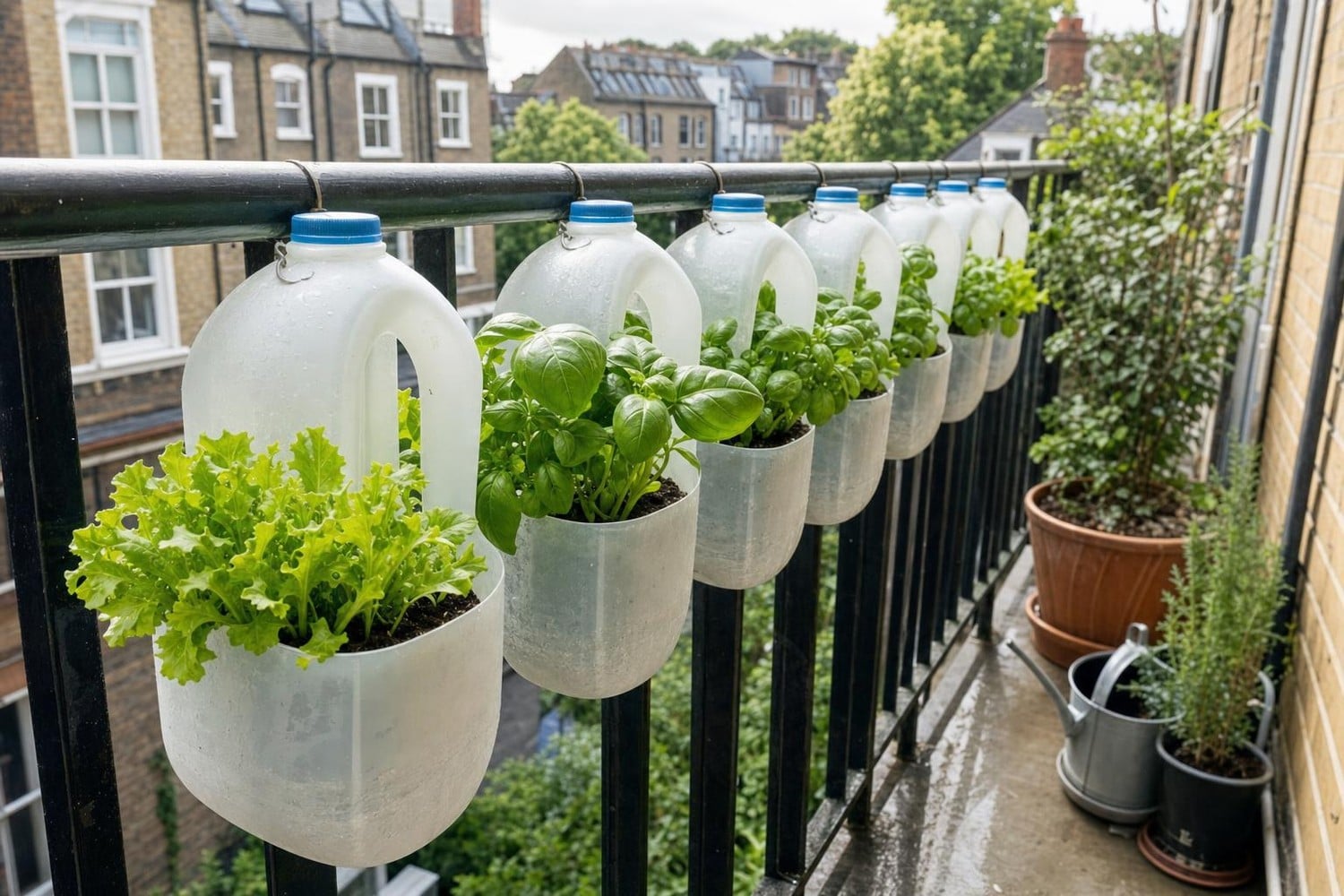
“You can create this look for next to nothing.”
Save your own milk jugs for a few weeks—that’s your planters sorted. For hooks, you don’t need anything fancy. A simple S-hook from the hardware store costs less than a dollar, or you can even unbend a wire coat hanger to create your own. For plants, a packet of lettuce or basil seeds is only a few dollars and will give you far more plants than you need. The most expensive part will be a small bag of potting soil, which you can find at Target or Walmart for about $5-8.
17. Playful Cartoon Face Planters on a Brick Wall
The absolute heart of this idea is the personality. The hand-painted cartoon faces transform simple plastic bottles from trash into treasure. It’s the whimsical, joyful expressions that make you smile. Without the faces, this is just a vertical garden. With them, it’s a piece of art full of character and playfulness. The way the trailing plants spill out like ‘hair’ completes the illusion perfectly. It’s a reminder that DIY projects should be fun and reflect your unique style.
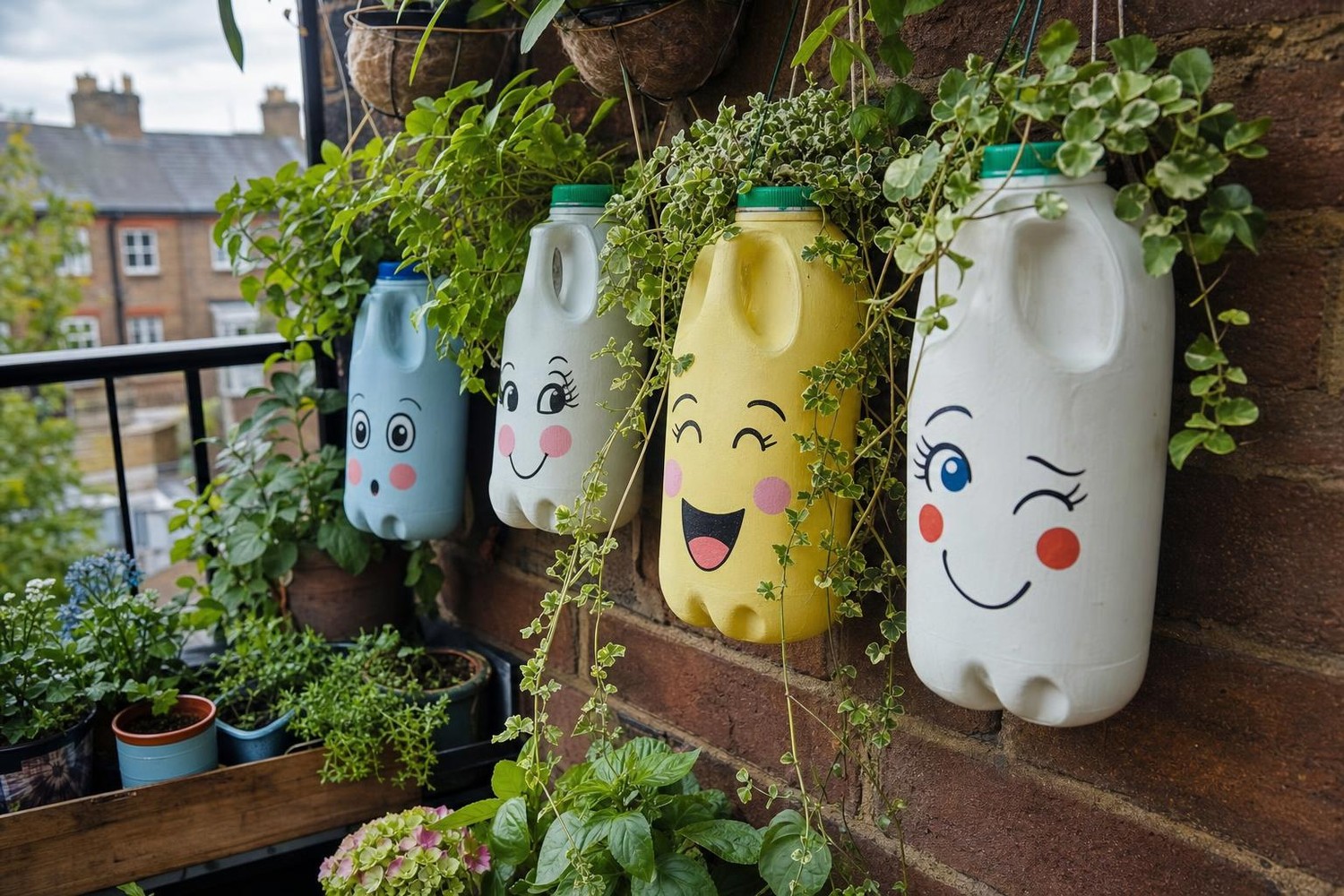
“This is an adorable idea, but be prepared for a bit of artistic maintenance.”
The paint on the plastic bottles, especially if it’s standard craft acrylic, will likely start to chip and fade after a season or two in the sun and rain. To make it last longer, lightly sand the bottles before painting to give the paint something to grip, and use a clear, UV-resistant outdoor sealant over your finished artwork. Even with that, you might need to touch up the faces every couple of years to keep them looking fresh.
18. Eggplant Seedlings Growing in Bottles on a Windowsill
This is the epitome of indoor, small-space gardening. It’s designed for a single, sunny windowsill. The dimensions are dictated by the size of your window, but it requires almost no floor space. This is a perfect solution for an apartment kitchen or a sunny bedroom where you want to start seeds indoors before moving them outside. It’s not a permanent home for a large plant like an eggplant, but it’s an excellent, space-saving nursery for the first 6-8 weeks of a plant’s life.
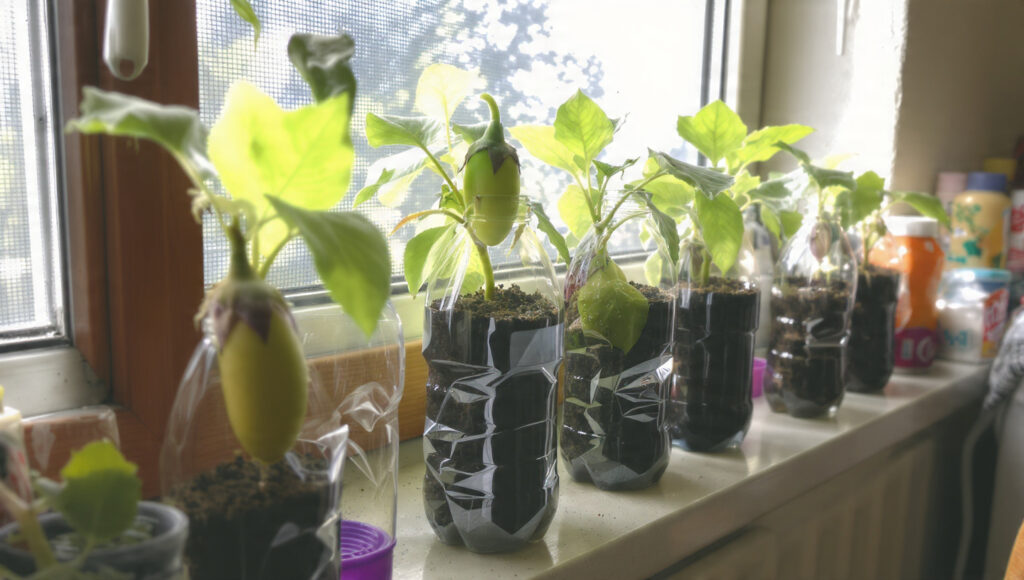
“Starting seedlings in clear bottles on a sunny sill is effective, but it has one major challenge: algae.”
The combination of sunlight, water, and nutrients in the soil creates the perfect environment for green algae to grow on the inside of the clear plastic. While a little bit won’t harm your plants, a lot of it can compete for nutrients. To minimize this, try wrapping the outside of the bottles in paper or dark tape once the seeds have sprouted, blocking the light from reaching the soil.
19. Self-Watering Basil Planter from a Single Bottle
The key to making a self-watering system like this truly effective is the wick. Don’t just rely on the soil touching the water. Before you add the soil, run a piece of cotton string or a strip of fabric (about 4-6 inches long) through the bottle’s mouth, leaving half in the water reservoir below and half in the soil section above. This wick will continuously draw water up into the soil as it dries out, providing much more consistent moisture than passive contact alone. This is particularly crucial for thirsty plants like basil. This setup is a more advanced version of the one seen in Idea #26.
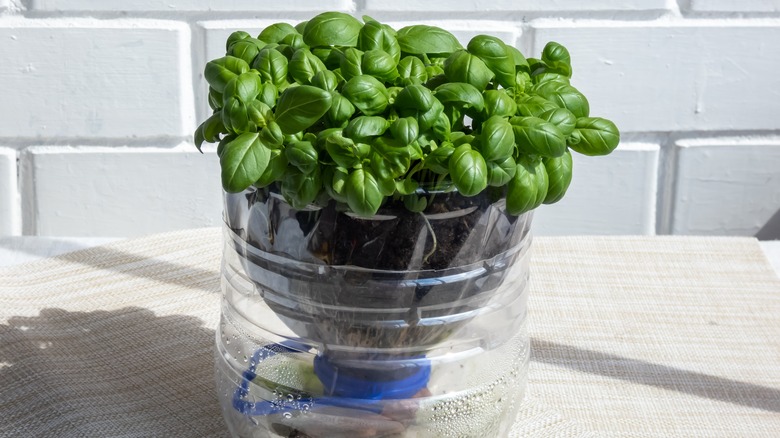
“This design is genius because it solves the single biggest problem with small-container gardening: inconsistent watering.”
Herbs like basil are dramatic—they wilt the second they get too dry and hate having ‘wet feet’ from sitting in soggy soil. This self-watering system creates a perfect equilibrium. The water reservoir provides a steady supply of moisture via the wick, and the separation of soil and water prevents the roots from becoming waterlogged. It’s a simple, elegant piece of engineering that meets the plant’s needs perfectly.
20. Colorful Flower Garden on a Dark Brown Wall
The formula for this vibrant display is all about balance. It’s roughly 60% dark, neutral background (the brown wall and dark bottles) + 30% lush greenery + 10% high-impact color. The dark base makes the greens look even richer and provides the perfect canvas for the bright yellow and red flowers to absolutely sing. You could change the flower colors to pinks and purples, or even all white, and the formula would still hold. The key is the high-contrast relationship between the background and the colorful blooms.
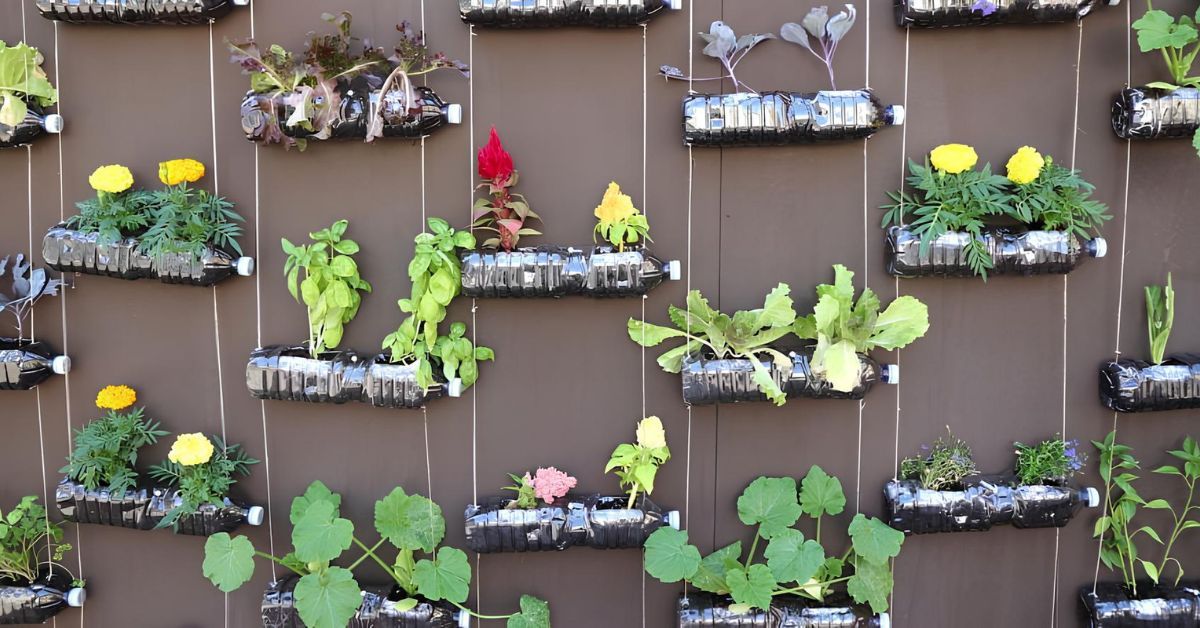
“The single element that elevates this from a simple recycling project to a piece of garden design is the unapologetic use of color.”
While many bottle gardens focus solely on leafy greens, the deliberate inclusion of bright yellow and red flowers adds a layer of joy and intention. It shows that a DIY garden doesn’t have to be purely utilitarian. It can be a source of beauty and a true decorative feature. The flowers are the ‘why’ behind this design.
21. Vibrant Natural Screen of Vertically Strung Bottles
This is a brilliant solution for creating a privacy screen or a living curtain. It works best when you have a structure to hang it from, like a pergola, the edge of a balcony roof, or a sturdy horizontal beam. You’ll need a vertical drop of at least 5-7 feet to get a good cascading effect. The width is easily scalable; you can hang just a few strands to frame a view or dozens of them to create a full wall of green. It’s a perfect space-divider for an outdoor patio or deck area.
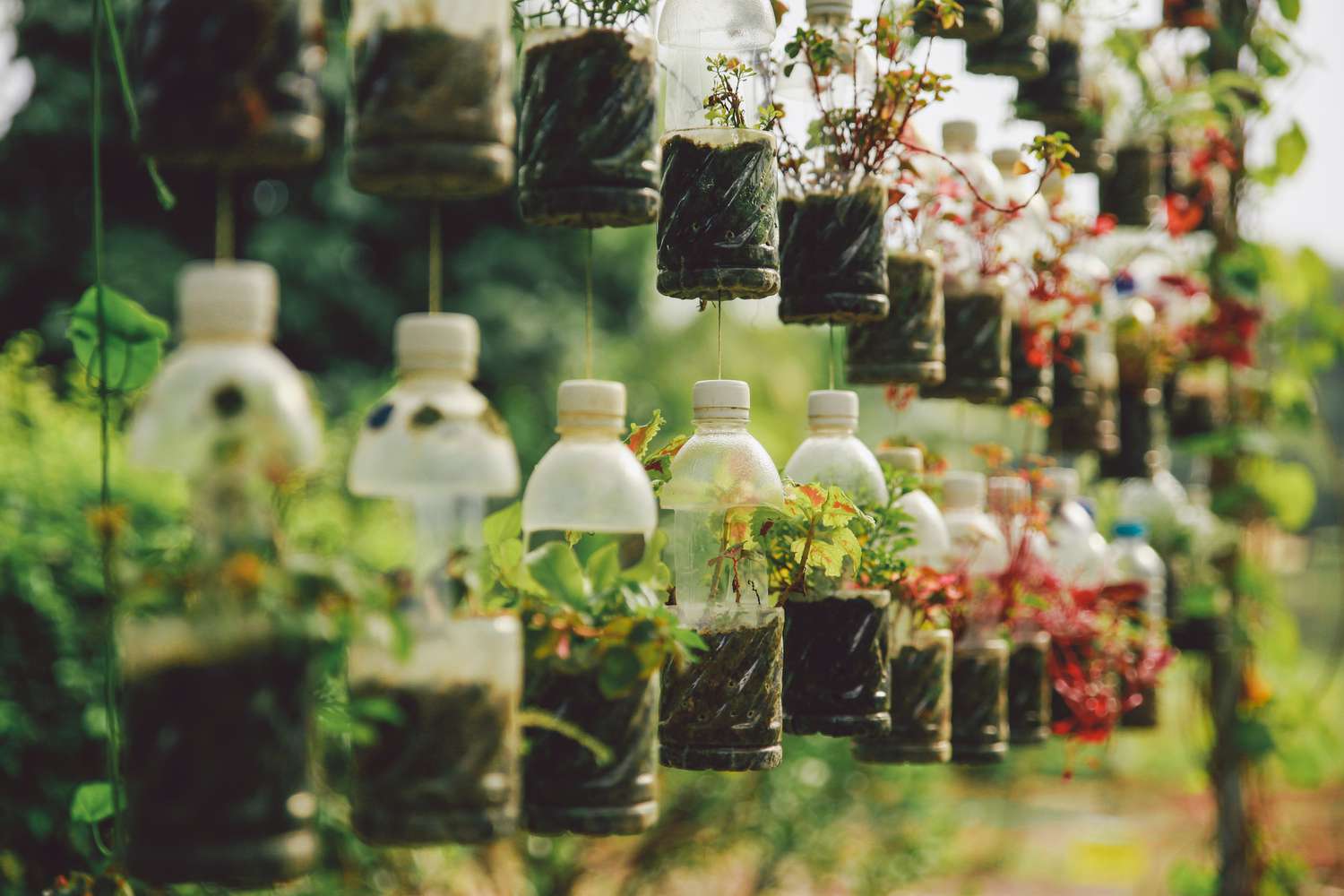
“This looks stunning, but remember that you’re creating a solid ‘wall’ of plants.”
The bottles on the interior of the arrangement and those at the bottom will receive significantly less sunlight and air circulation than the ones on the edges. This can lead to uneven growth and potential pest problems. You’ll need to choose your plants carefully—select low-light tolerant species for the more shaded parts of the screen. Also, a wall this dense will be quite heavy, so ensure your overhead support is extremely secure.
22. Painted Bottle Planters Hanging from a Tree Branch
This idea works because it embraces its natural setting. By hanging the planters directly from a real tree branch, the design feels integrated and organic, rather than imposed upon the space. The contrast between the man-made, painted plastic bottles and the rough, natural texture of the bark creates a charming visual tension. The choice of whimsical colors—light blue and black—and colorful flowers further enhances the playful, creative vibe, as if a little bit of indoor decor has happily escaped into the wild.
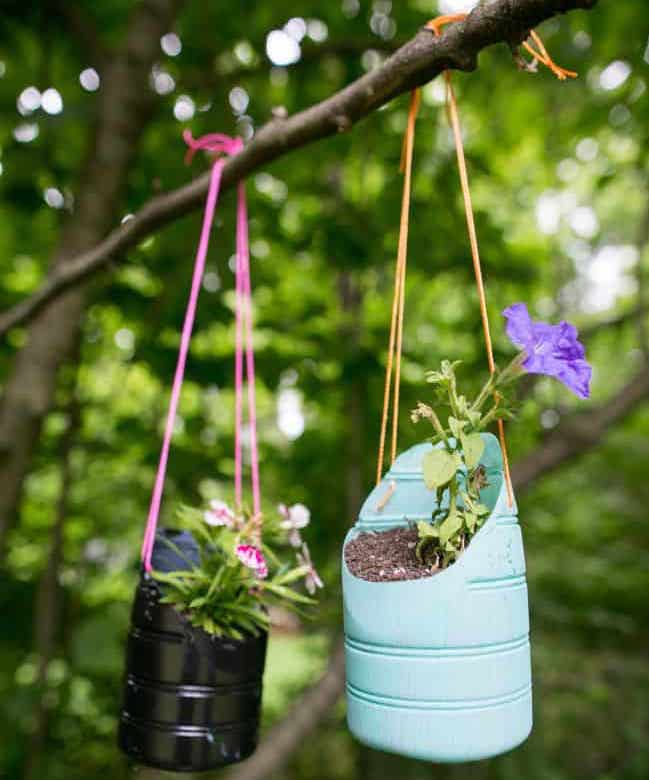
“Don’t hang planters from a tree branch using thin string or wire by itself.”
Over time, as the branch grows and moves in the wind, the thin cord can cut into the bark, damaging the tree (a process called girdling). To hang these responsibly, use a wider strap of fabric or a tree-safe hanging strap (you can find these for porch swings). Wrap the wide strap around the branch first, and then attach your planter’s string to the strap. This distributes the pressure and protects the living tree.
23. Simple Lettuce Garden on a Light-Colored Wall
The genius of this setup is its strategic use of color contrast. It’s not just a random assortment of plants; it’s a deliberate pairing of light green and dark red lettuce varieties. This simple choice elevates the garden from purely functional to visually striking. Our eyes are naturally drawn to this contrast, making the whole arrangement look more dynamic and thoughtfully designed. It’s a fantastic lesson in how plant selection itself can be a primary design tool, much like the lettuces in Idea #6.
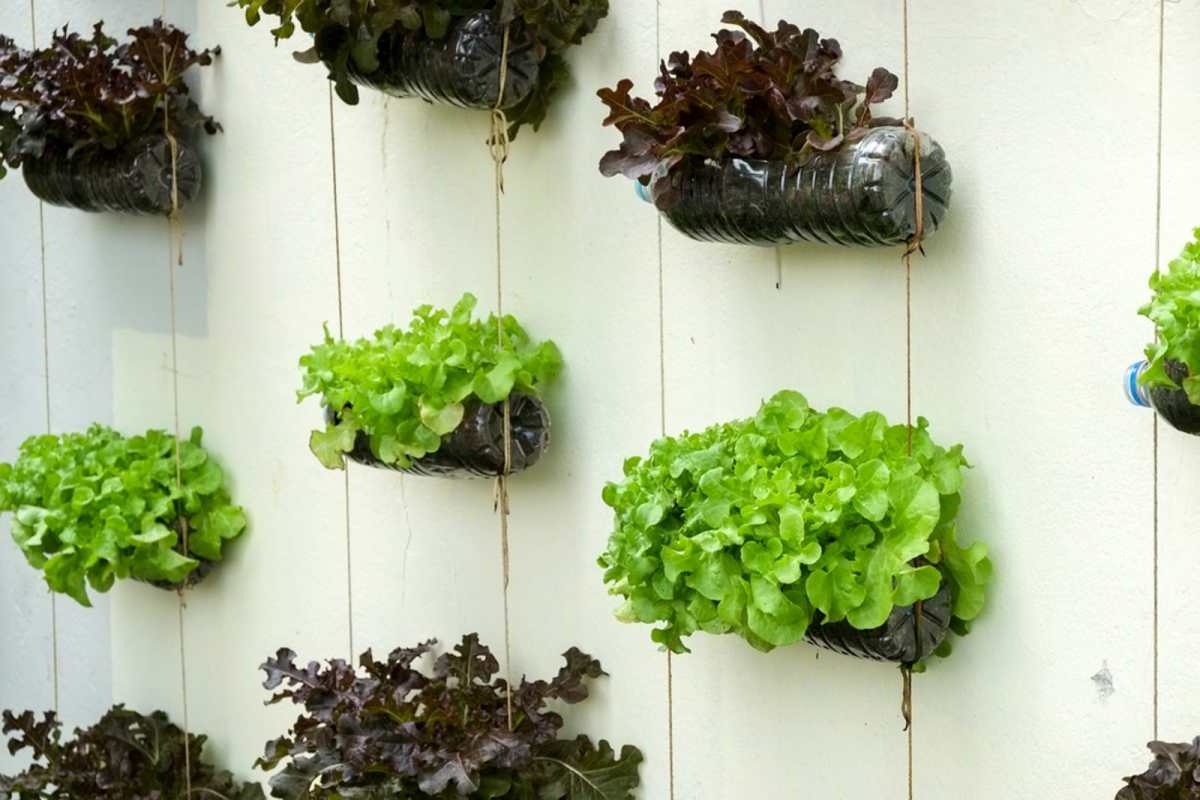
“This is already an incredibly low-cost project, but you can bring the budget down to virtually zero.”
Forgo buying lettuce starts from a nursery. A packet of mixed lettuce seeds costs only a few dollars and will provide you with enough seeds for several seasons. Start the seeds in a tray, and once they have a few true leaves, transplant them into your bottle planters. You can also harvest ‘cut-and-come-again’ style, just snipping the outer leaves you need for a salad, and the plant will continue to produce for weeks.
24. Cascading Yellow Bottle Planters in a Window
This cheerful setup has a simple but effective visual recipe: 50% structural element (the wooden window frame), 30% vibrant color (the sunny yellow paint), and 20% natural greenery. The window frame provides a strong geometric grid that contains the composition. The yellow paint injects a dose of pure, happy energy, while the green plants offer a soft, organic texture. The key is that the color is bold enough to stand up to the strong lines of the window, creating a balanced and eye-catching feature.
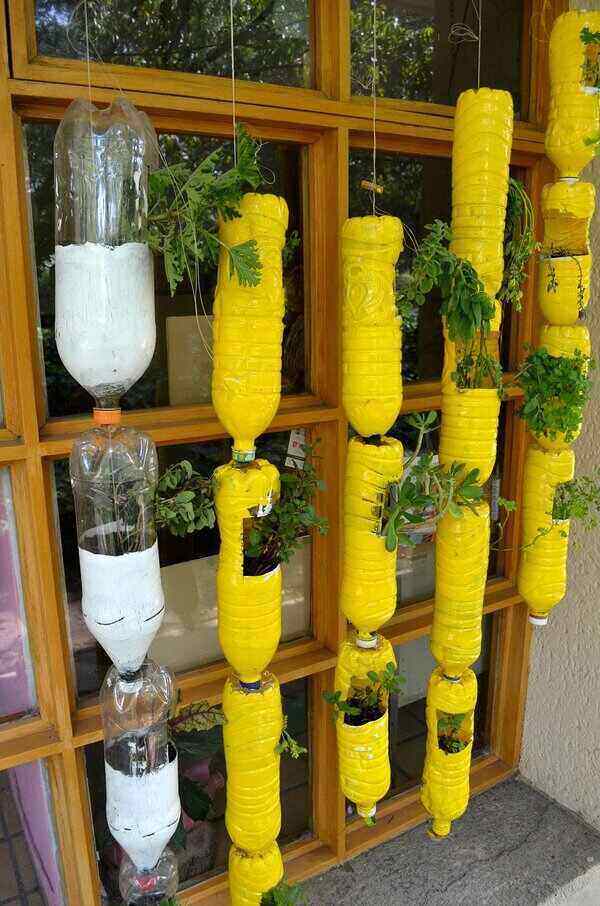
“A garden in a window is beautiful, but it can be a bit messy.”
Every time you water, there’s a risk of drips and splashes on your windowsill and floor. Since these bottles are hanging, placing a tray underneath isn’t really an option. The best solution is to be meticulous with your watering. Use a watering can with a long, narrow spout to pour water directly onto the soil, and do it slowly to allow the soil to absorb it without runoff. An occasional wipe-down of the window and sill will also be necessary.
25. Assembling a Bottle Garden on a Green Metal Grid
The key to this design’s success is the modular grid system. The green metal grid provides a perfect, ready-made structure that is both strong and visually unobtrusive. It comes with built-in spacing, taking the guesswork out of arranging the bottles. It also allows for incredible flexibility—you can add or remove bottles, or rearrange them at any time. The process-oriented photo, showing some bottles planted and others waiting, highlights this ‘plug-and-play’ nature, which is incredibly appealing for a DIY project.
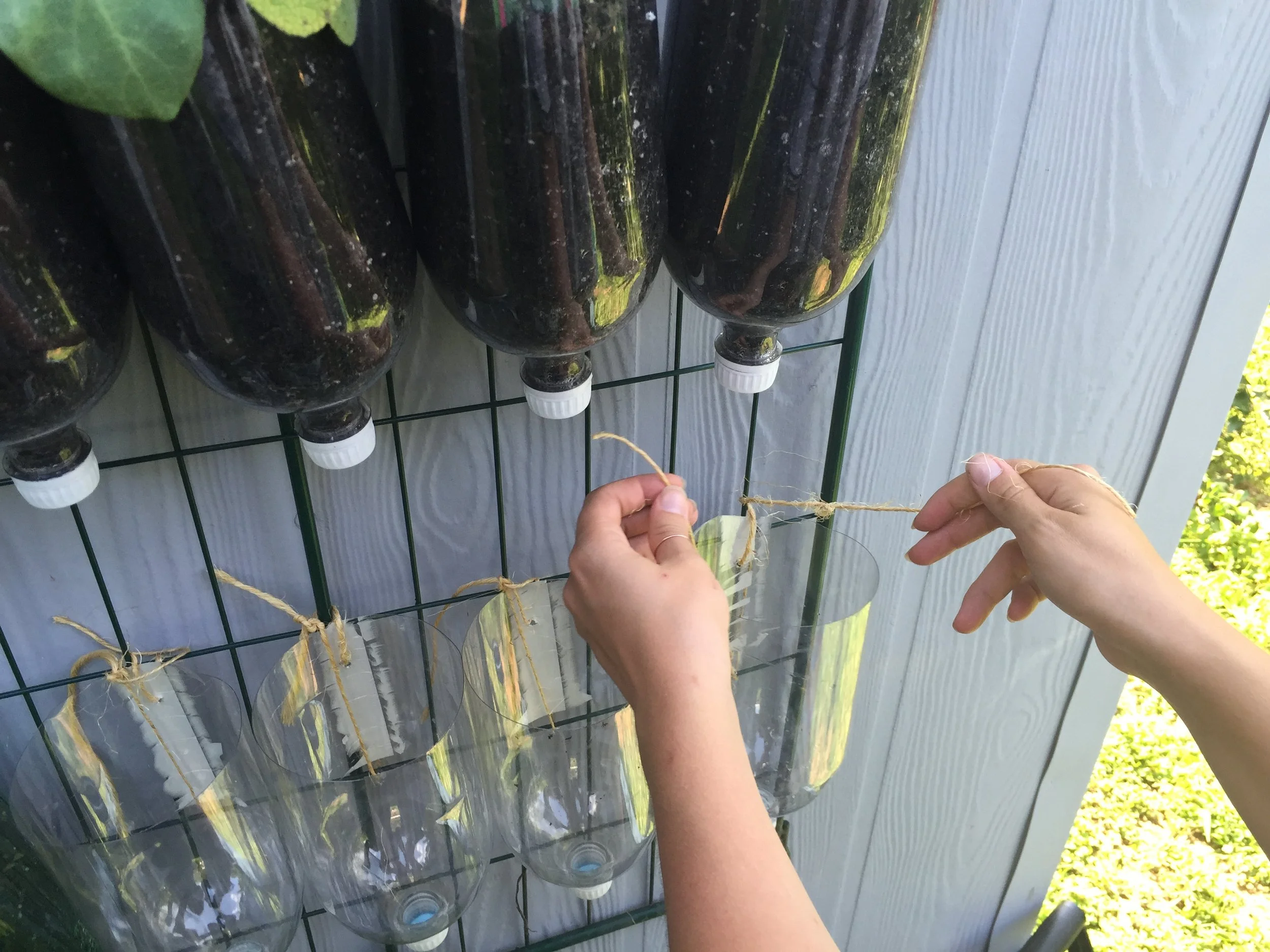
“This type of grid system is fantastic, but you need to check a few things before”
This type of grid system is fantastic, but you need to check a few things before you begin installation to ensure a smooth process.
- Wall Strength: A fully loaded grid is heavy. Are you mounting it to brick, concrete, or wood studs? Drywall alone will not be strong enough.
- Grid Material: Ensure the metal grid is powder-coated or galvanized for outdoor use. A plain steel grid will rust quickly and stain your wall.
- Bottle Size: Are your chosen bottles a consistent size? The grid looks best with uniform planters, so collect enough of the same type before you start.
- Fasteners: Do you have the right fasteners? Zip ties are quick, but UV-resistant ones will last much longer outdoors. Twine is biodegradable but may need replacing each season.
26. Functional Self-Watering System with a Wooden Frame
The most important—and cleverest—part of this design is the wicking system. Those thin ropes visibly connecting the bottles are not just for show; they are the heart of a self-watering network. By running a wick from a water-filled bottle at the top or from one planter to the next, the system automates hydration, delivering a slow, steady supply of moisture right to the roots. This thoughtful addition elevates the project from simple planters to a truly functional, low-maintenance growing system, a more basic version of the technique in Idea #19.
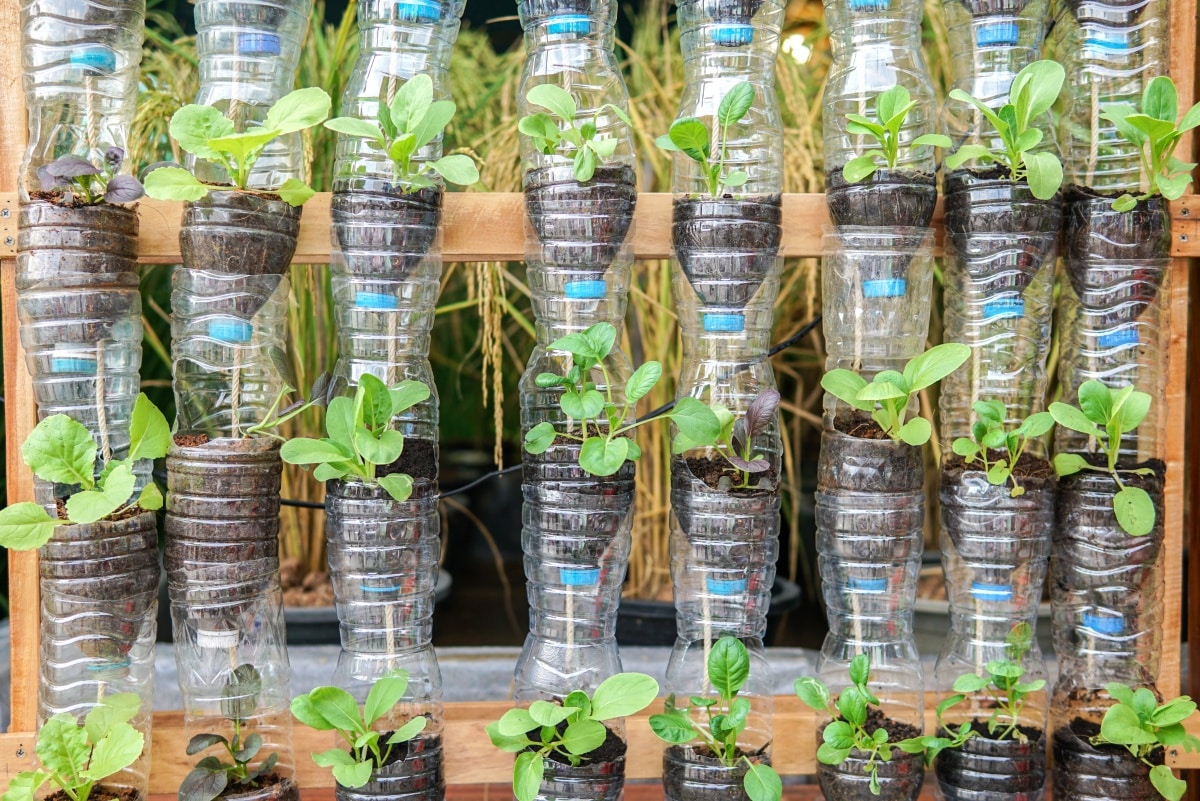
“Setting up a basic gravity-fed wicking system is easier than it looks and will s”
Setting up a basic gravity-fed wicking system is easier than it looks and will save you tons of watering time.
- Time: 1.5 hours extra | Cost: Under $10
- You’ll need synthetic rope (cotton will rot). Nylon or polyester works well. Cut pieces long enough to run from the bottom of one bottle to the soil of the one below it.
- Drill a small hole in the bottom or cap of each bottle planter, just large enough to thread the rope through.
- Before adding soil, thread the rope through the hole, leaving a few inches inside the planter. Unravel this end so it makes more contact with the soil you’ll add.
- The ‘tail’ of the rope should be fed into the bottle below it. Fill a ‘feeder’ bottle at the top with only water, and its wick will start the chain reaction.
27. Vertical Garden in Black Felt Pockets on a Fence
When working with fabric pocket planters, soil choice is paramount. Don’t use heavy garden soil or compost, which will hold too much water and make the planter incredibly heavy. Instead, use a lightweight potting mix, and consider amending it with perlite or vermiculite at a ratio of 3 parts mix to 1 part perlite. This improves drainage and aeration while keeping the overall weight down, which is critical when you’re hanging the planter on a fence or wall.
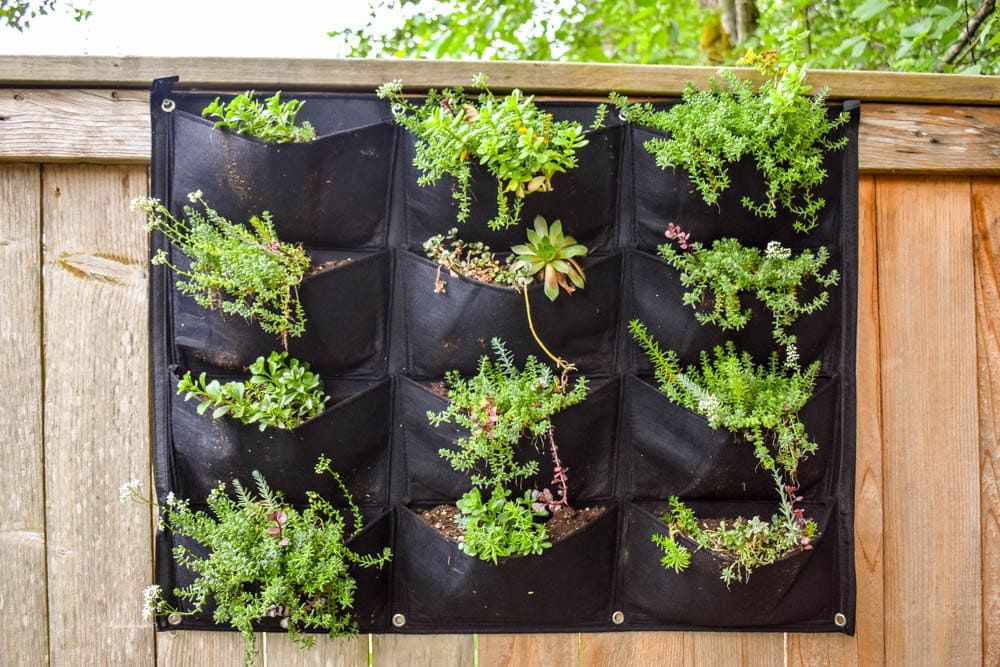
“Felt pocket planters are fantastic for breathability—the roots get plenty of oxygen.”
However, that same breathability means they dry out extremely fast, even faster than plastic bottles. On a hot, windy day, the fabric can wick moisture away from the soil, and you may need to water it once or even twice a day. The black color also absorbs heat, adding to the evaporation. This is a high-performance system, but it is not a low-maintenance one. Consider installing a drip irrigation system for the most consistent results.
28. Multi-Colored Tiered Garden on Dark Vertical Poles
The success of this design lies in its joyful embrace of color. The riot of red, yellow, orange, and blue painted bottles creates a festive, energetic mood. The key is that the structure itself—the dark vertical poles—is simple and neutral. This allows the colorful planters to be the undisputed stars of the show. The small green plants with their occasional pink flowers are the ‘supporting cast,’ adding life and texture without competing with the vibrant bottles. It’s a garden that feels like a celebration.
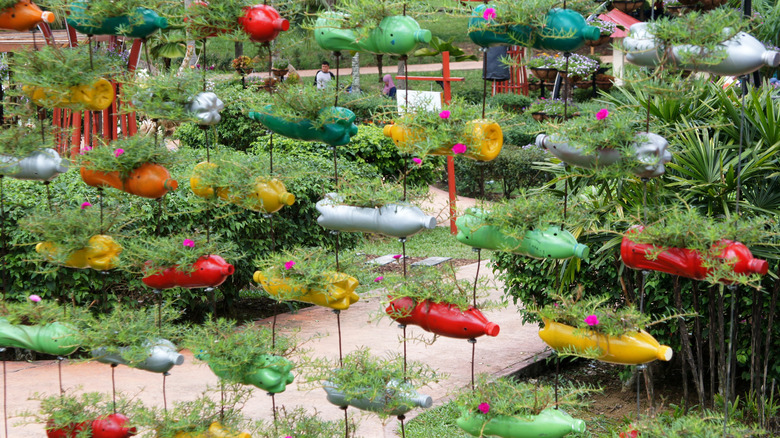
“This tiered pole system is remarkably space-efficient.”
The footprint is very small, defined only by the base of the poles, making it suitable for compact patios, balconies, or flanking a doorway. It’s ideal for a space around 4-6 feet wide to give it presence without feeling cramped. You’ll need a vertical height of at least 5-6 feet to achieve the multi-layered effect. It’s a great way to add a high volume of plants and color to a small area by building up instead of out.
29. Rustic Bottle Garden on a Weathered Wooden Pallet
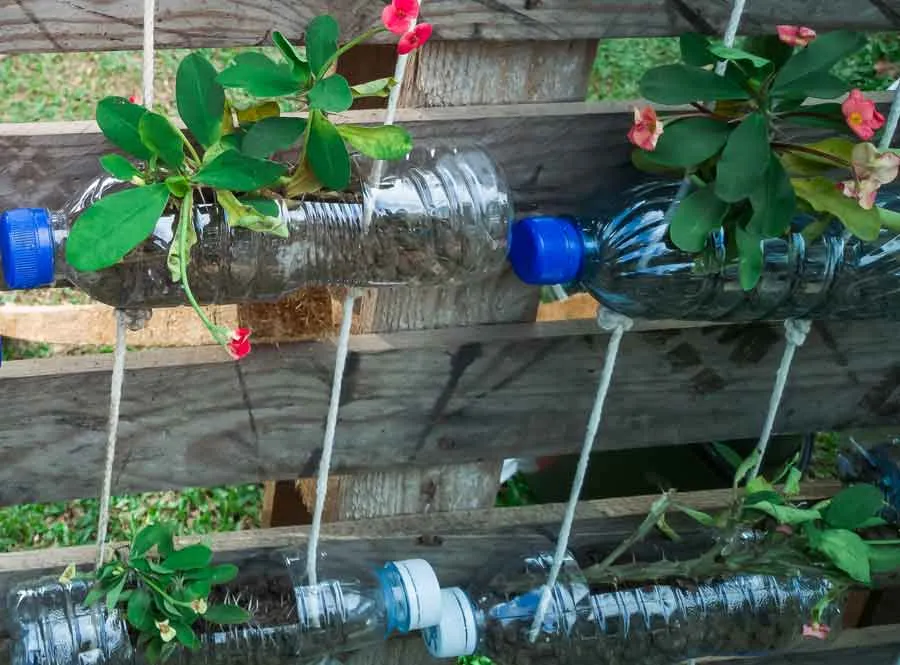
This look is a beautiful equation of textures: 60% rustic wood + 30% clear, modern plastic + 10% soft foliage and color. The weathered, grey-brown pallet provides a strong, textured backdrop that feels earthy and historic. The clean, smooth lines of the clear plastic bottles offer a surprising and effective contrast, feeling light and contemporary. The green plants and pops of red flowers are the finishing touch that bridges the two worlds. The white rope reinforces the rustic, slightly nautical feel. It’s a style that’s both rugged and refined. Compare with the trellis version in Idea #10.
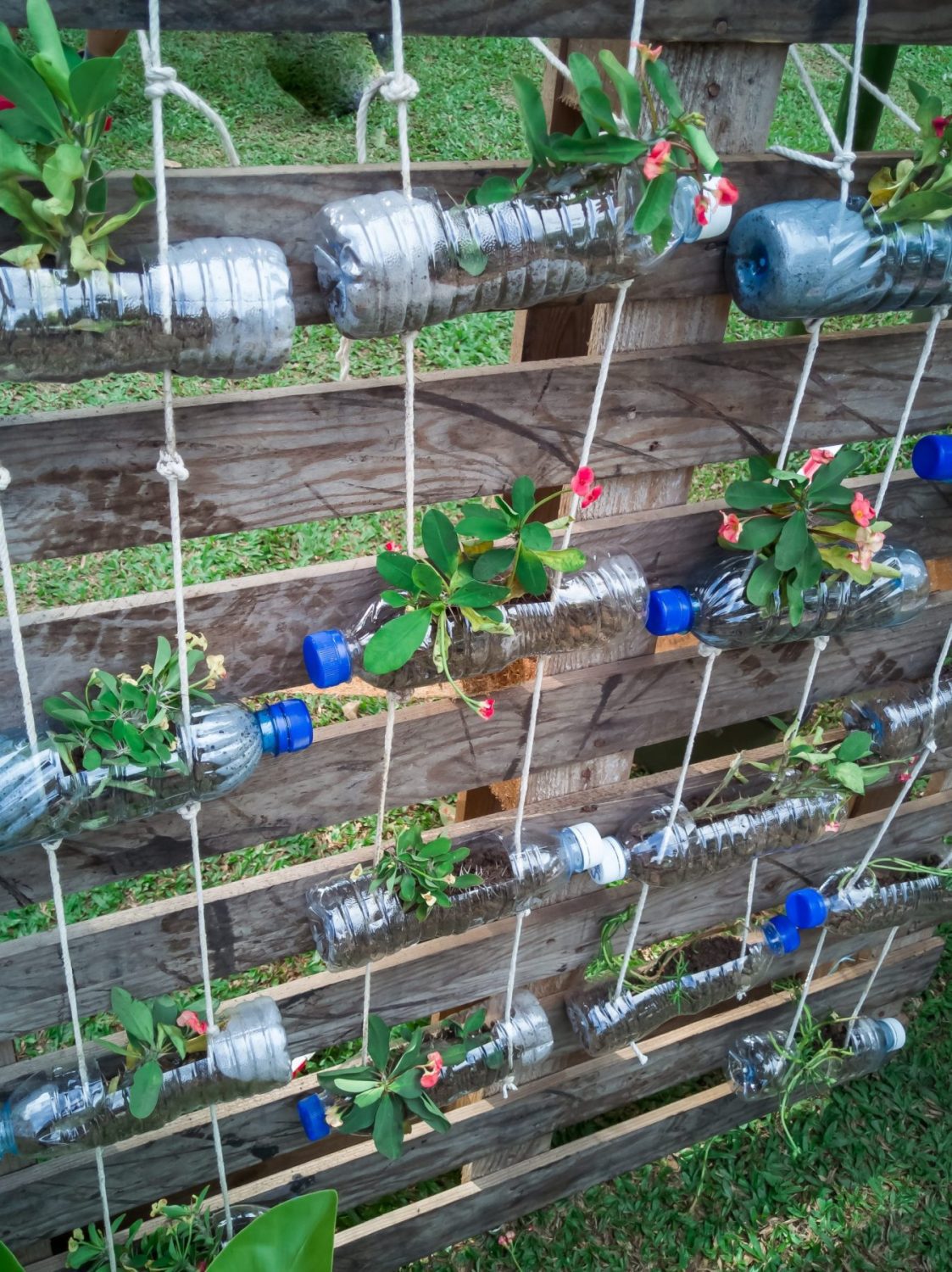
“This entire look can be assembled for almost no money if you’re resourceful.”
Look for discarded pallets behind local businesses (always ask for permission before taking one!). Collect 2-liter soda bottles from friends and family. A ball of cotton twine or rope from a dollar store can be had for just a couple of dollars. The only real cost would be a bag of potting soil and a packet of seeds. Check community gardens or online groups for free plant starts or seed swaps to bring the cost down even further.
30. Horizontal Bottle Planter with Yellow and Purple Flowers
When planting a mixed container this small, think in layers, just like a professional floral arranger. Don’t just stick plants in randomly. Start with your ‘thriller’—the most eye-catching plant, like the dark purple-black blossoms here. Then add your ‘fillers’—the general green foliage that adds mass and texture. Finally, add your ‘spillers’—plants that will trail over the edge, although they aren’t present here. This ‘Thriller, Filler, Spiller’ method creates a balanced and professional-looking composition, even in a recycled soda bottle.
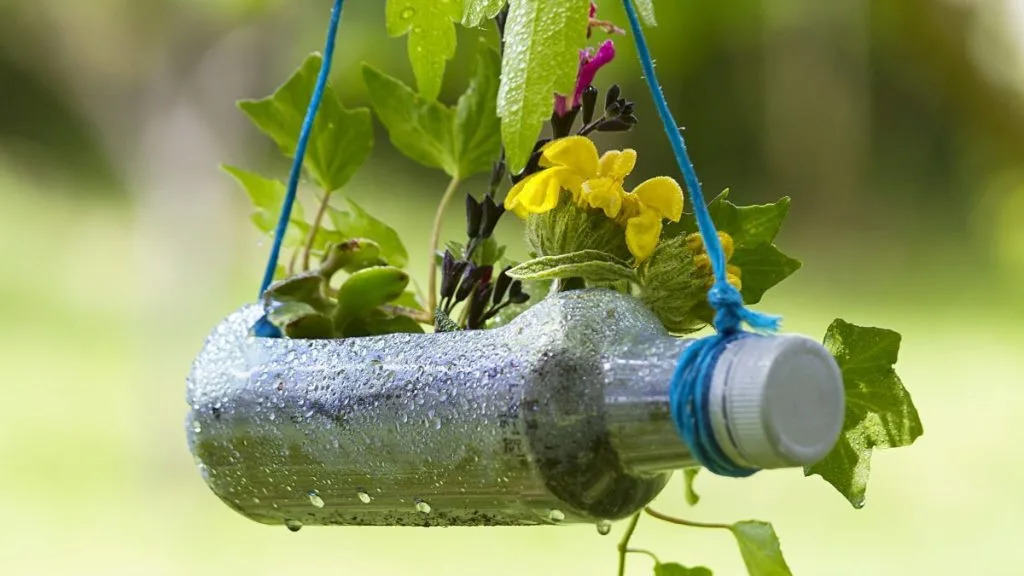
“The single element that breathes life into this simple planter is the water droplets.”
They cover the clear plastic bottle, catching the light and adding a layer of fresh, dewy texture. The droplets magnify the colors inside, making the greens look greener and the yellows more vibrant. They transform a static object into something that feels alive and dynamic, suggesting it was just watered or has been kissed by morning dew. It’s a small, fleeting detail that adds immense photographic and sensory appeal.
Your Green Wall Awaits
Don’t just pin these ideas—pick one and start! Turning a few simple plastic bottles into a living, breathing garden is easier than you think and incredibly rewarding. We can’t wait to see what you grow. Go grab your bottles, some soil, and get planting—and don’t forget to share your creations on Pinterest!