You know that feeling when you finally find the DIY backyard pond idea that looks exactly right for your space? That little ‘click’ when a pin stops you mid-scroll. We get it. To cut through the noise, we spent hours digging through options from home improvement stores and countless specialty garden suppliers. What we came back with are these 29 curated pond designs, from natural rock-lined pools to serene water lily features. In 2026, creating a personal outdoor sanctuary is less of a trend and more of a necessity, and a water feature is the fastest way to add that sense of calm. And stay until the end — we break down the most common mistakes that can ruin these looks. 📌 Save this to Pinterest for later — you’ll want to revisit these ideas.
1. Natural Rock-Lined Pond with a Tiered Waterfall and Statues
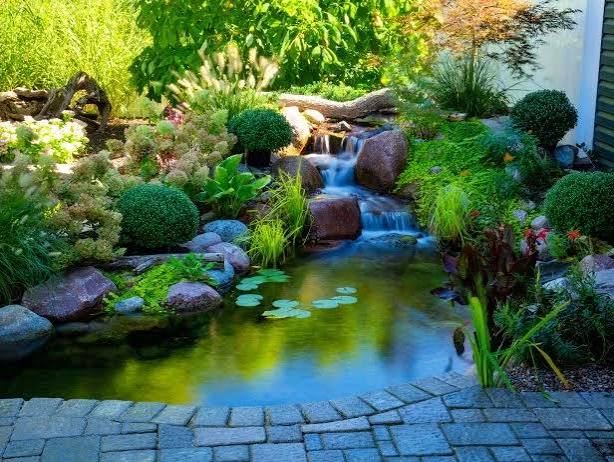
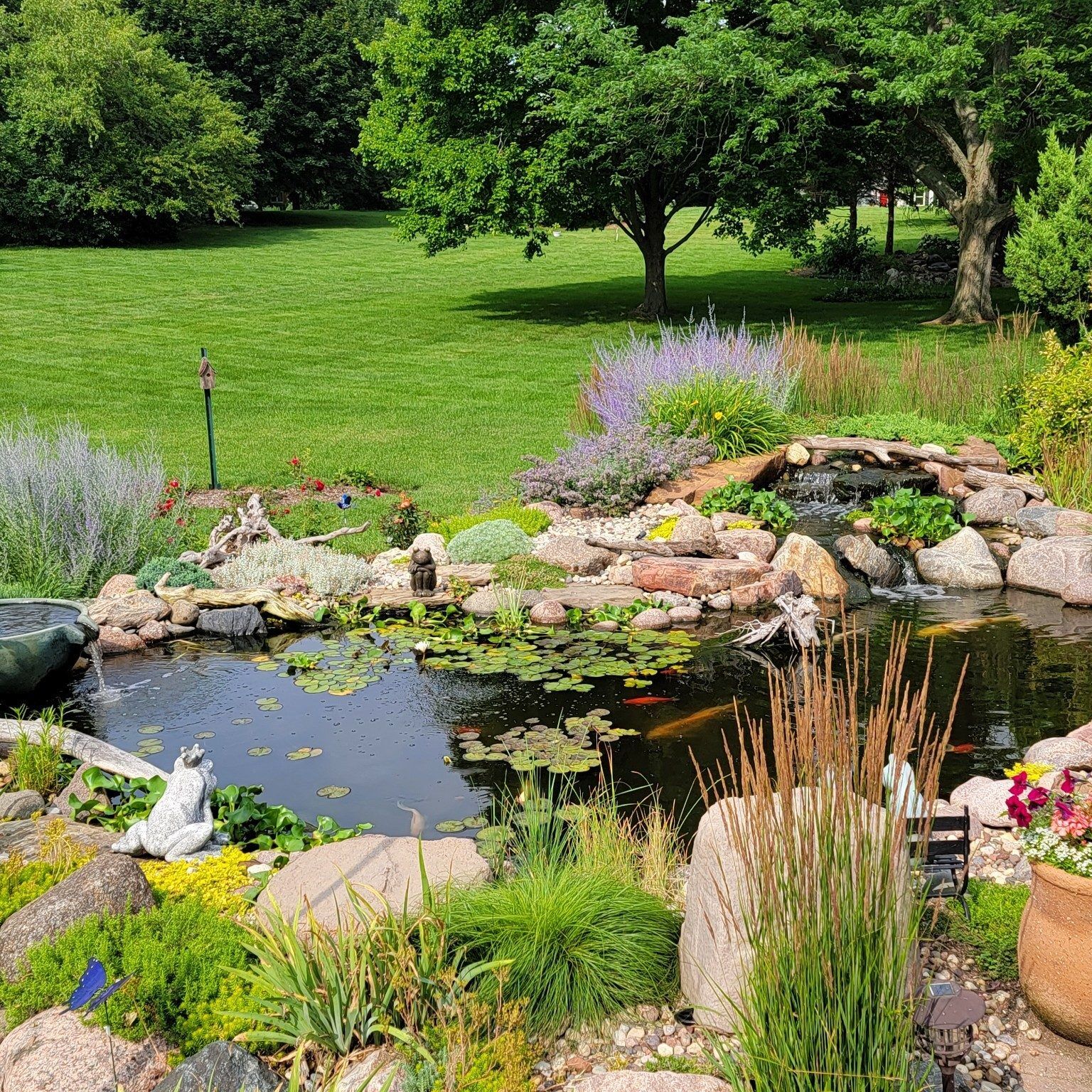
This pond design feels so full and alive because it masters the art of layering. It’s not just one feature; it’s a collection of complementary elements. The mix of grey and reddish-brown rocks creates natural color variation, preventing a monolithic look. The addition of a bubbling green bowl introduces a second, softer water sound that enriches the sensory experience, distinct from the main waterfall. Finally, the strategic placement of purple and yellow flowers among the green foliage is a classic color theory trick—complementary colors making each other pop. It’s a full ecosystem in a small space.
“When building a rock-lined pond, always follow a ‘three-size rule’ for your stones to achieve a professional look.”
Start with large boulders (18 inches or more) to anchor key points like the base of a waterfall or the main curves of the pond. Next, use medium-sized stones (8-12 inches) to build up the sides and create structure. Finally, fill in the gaps and soften the transition to the surrounding garden with small river rocks or pebbles (1-3 inches). This layering technique is what separates a convincing natural pond from a pile of rocks.
2. Winding Stream and Pond Bordered by a Grey Paver Patio
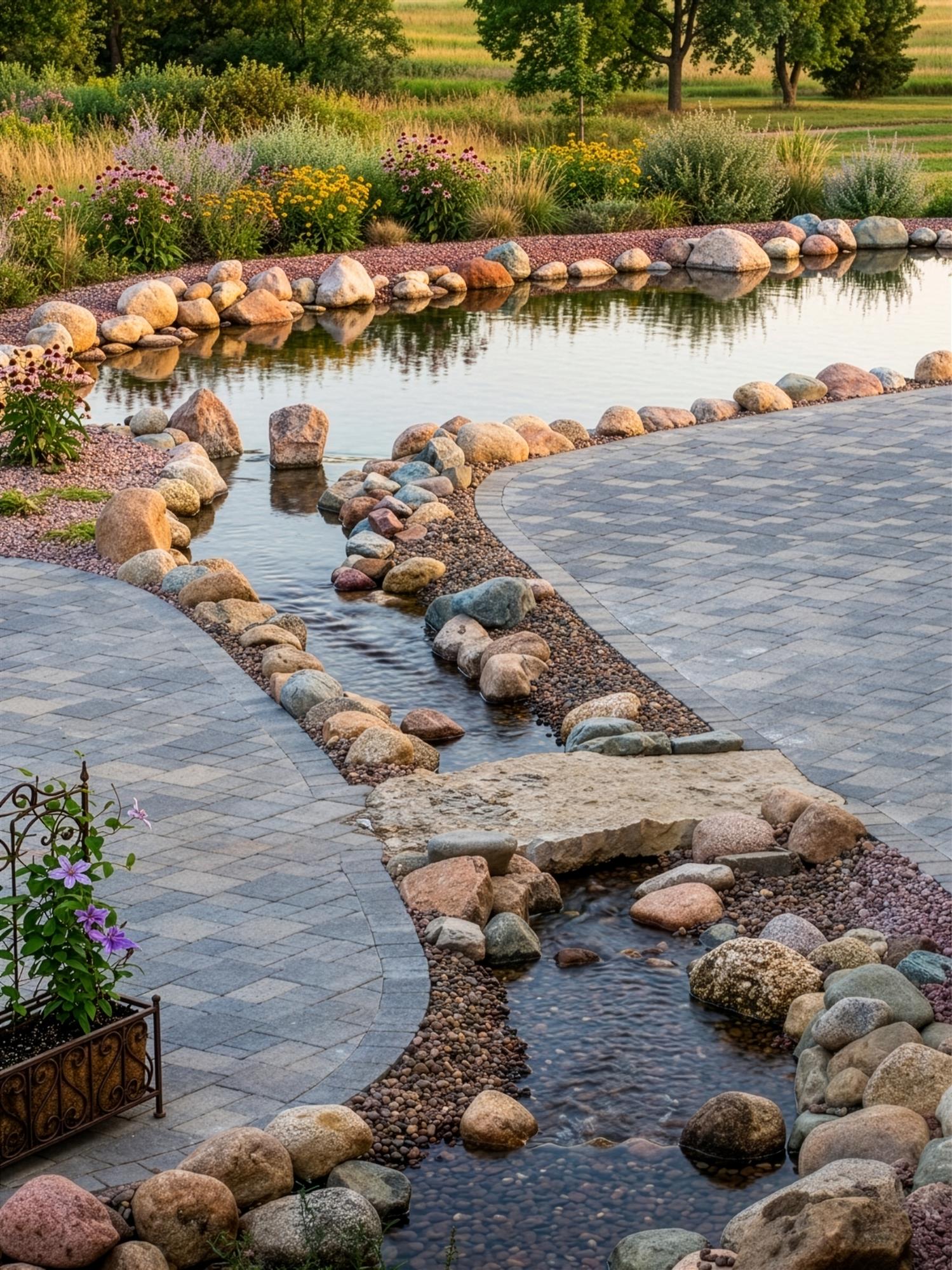
The beautiful balance here can be broken down into a simple formula: 50% structured hardscape (the grey paver patio) + 40% natural water feature (the pond and winding stream) + 10% softscape (the vibrant garden beds). The clean lines of the patio provide function and a modern edge, while the meandering stream brings organic movement and sound. The plantings act as the final decorative layer, softening the stone and adding color. You could swap the grey pavers for warm terracotta tiles or the reddish gravel for dark mulch, and the essential balance would remain.
“A winding stream feature is stunning, but it definitely adds to your weekend to-do list.”
You’ll need a more powerful pump to circulate water effectively through the entire length, and the narrow channel is a magnet for leaves and debris, requiring more frequent skimming than a simple open pond. Also, that gorgeous paver patio can become quite slippery when wet from splashes or rain. When choosing materials, seriously consider a textured, non-slip paver finish for safety, especially if you have kids or pets running around.
3. Arched Wooden Bridge Over a Natural Water Lily Pond
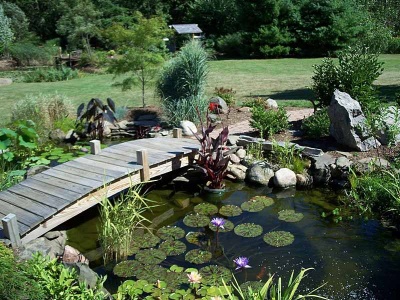
The single element that makes this design truly special is the arched wooden bridge. Without it, you have a lovely, but fairly standard, lily pond. The bridge completely transforms the experience. It introduces a sense of journey and narrative to the garden, turning a simple water feature into a destination. It adds a touch of romance and fairytale charm, inviting you to physically interact with the space by crossing over and seeing the pond from a new perspective. It’s the piece that elevates the entire design from passive to interactive.
“An arched bridge needs enough space to look intentional, not just plopped down.”
This idea works best for ponds that are at least 8-10 feet across at their narrowest point, which allows the bridge to have a graceful, convincing curve. For the surrounding landscape, plan for a minimum of 150-200 square feet of garden area to accommodate the lush, layered plantings without making the scene feel cramped. Compare this to the more compact, self-contained design of Idea #11, which works in a much smaller footprint.
4. Modern Elevated Pond Made from Cinder Blocks and Stone Caps
You can build your own elevated block pond in a single weekend. Time: 6-8 hours. Material Cost: $150-$300.
- First, meticulously level the ground where your pond will sit. A perfectly flat base is non-negotiable for a stable structure.
- Lay your first course of cinder blocks in your desired rectangular shape, checking for level on every single block.
- Stack the next courses, staggering the joints like you see in a brick wall for maximum strength. Use a strong construction adhesive between each layer.
- Once at your desired height, drape a flexible pond liner inside, folding it neatly at the corners and leaving a 6-inch overhang all around.
- Place your cap stones over the top edge of the blocks, securing the liner underneath with more construction adhesive.
- Fill with water, add your aquatic plants, and you’re done!
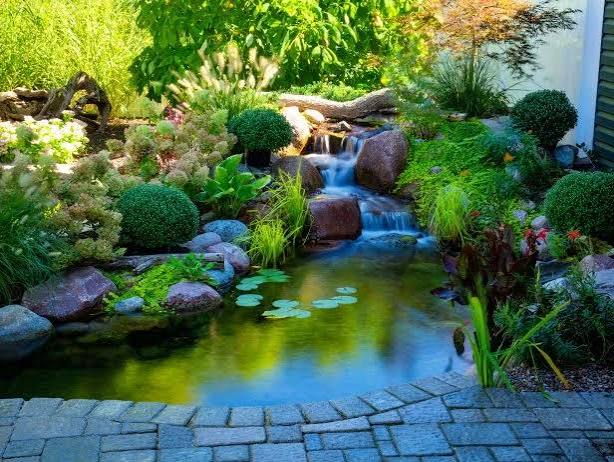
“This is already a very budget-friendly approach to a water feature, but you can definitely trim the costs even more.”
Instead of buying new cinder blocks from a big-box store (around $2-$3 each), keep an eye on Facebook Marketplace or Craigslist for leftovers from construction projects—they’re often free for anyone willing to haul them away. For the cap stones, which can be pricey, ask a local stone yard about their remnant pile or consider using reclaimed wood planks that have been thoroughly sealed for outdoor use. Your total cost could easily drop well below $100.
5. Serene Backyard Pond Featuring a Bamboo Water Spout
The ‘Japandi’ aesthetic isn’t just for interiors anymore. We’re seeing it move outdoors in a big way, and this pond is a perfect example of why. It masterfully blends the rustic simplicity of Scandinavian design with the serene, nature-focused principles of traditional Japanese gardens. The clean, organic line of the bamboo spout, the imperfect beauty of the moss-covered stones, and the overall focus on texture and form over bright color are hallmarks of this trend. It’s so popular right now because it creates a mindful, meditative space—a personal retreat from a busy world.
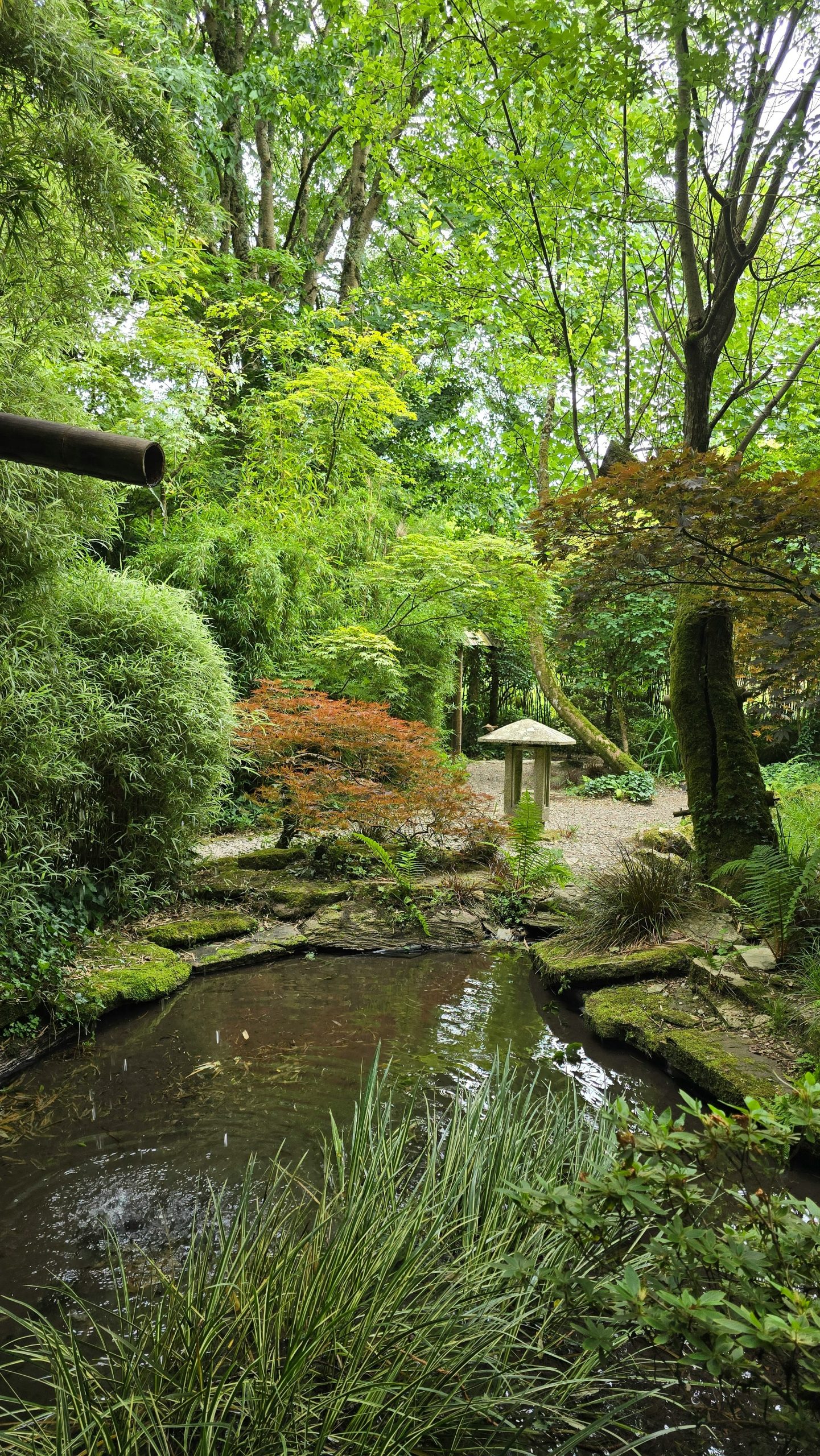
“That beautiful bamboo spout, known as a ‘shishi-odoshi’, is a fantastic sensory addition, but it’s not a set-it-and-forget-it element.”
Real bamboo is susceptible to the elements and will likely crack, fade, or develop mildew over time, especially in climates with harsh winters or intense summer sun. Plan on replacing a natural bamboo spout every 2-4 years. For a lower-maintenance option, you can find high-quality poly-resin versions that mimic the look without the degradation.Annual Upkeep Checklist:Inspect bamboo for cracks or splitting quarterly.Clean the internal tubing to prevent clogs from algae twice a year.Apply a UV-protectant sealant to natural bamboo annually to prolong its life.Estimated replacement cost for a natural bamboo spout: $50-$120.
6. Backyard Pond with Cascading Waterfall and Metal Heron Sculpture
When placing decorative elements like that metal heron sculpture, use the ‘rule of thirds’ just like you would in photography. Instead of placing it dead center, position it roughly one-third of the way into the frame of your pond scene. This creates a more dynamic and natural-looking composition. Here, the heron isn’t in the middle of the pond or the waterfall; it’s off to the side, drawing the eye through the scene from the red maple, past the waterfall, to the sculpture. This subtle placement makes the whole arrangement feel more artful and less staged.
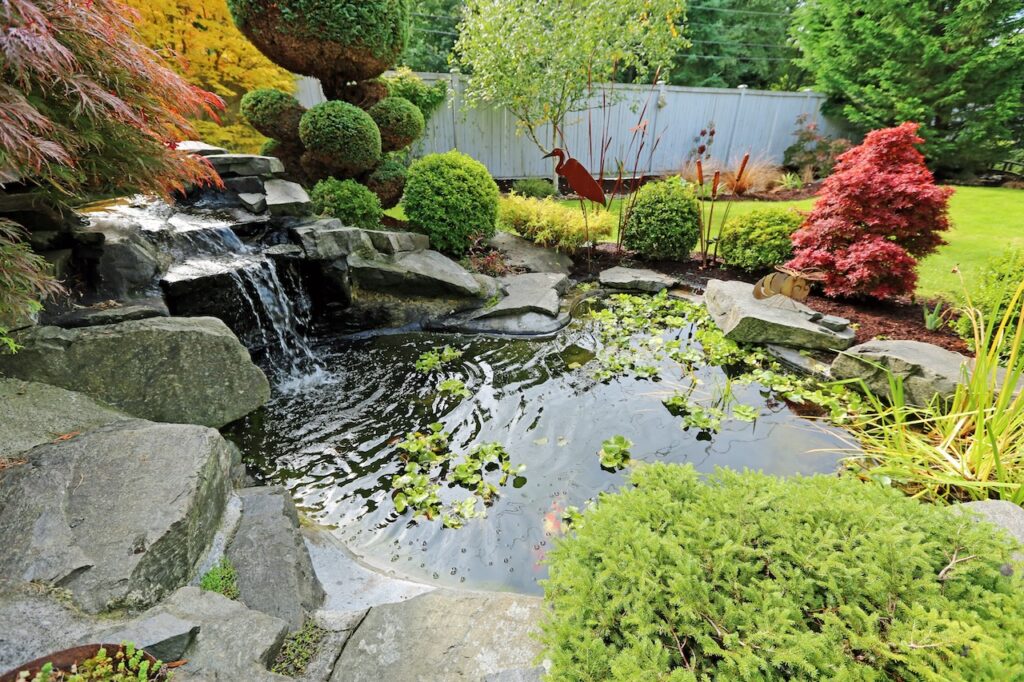
“This design works so well because of its masterful use of contrast.”
You have the hard, cool gray of the large rocks playing against the soft, lush texture of the green shrubs. There’s a color contrast between the deep greens and the vibrant red of the Japanese maple tree, which makes both colors appear more intense. Finally, there’s a textural contrast between the smooth surface of the dark pond water and the frothy, dynamic movement of the cascading waterfall. These opposing forces create visual energy and interest.
7. Tranquil Pond with Still Water Reflecting Pruned Greenery
The most important element here is the still, dark water. It’s the entire point of this design. The water acts as a perfect, dark mirror—a ‘black mirror’ in garden design terms—reflecting the meticulously pruned shrubs, the twisted tree trunks, and the sky above. This reflection doubles the visual impact of the surrounding greenery and creates an incredible sense of depth and tranquility. If you were to add a fountain or waterfall, you would lose this core feature entirely. The stillness is everything.
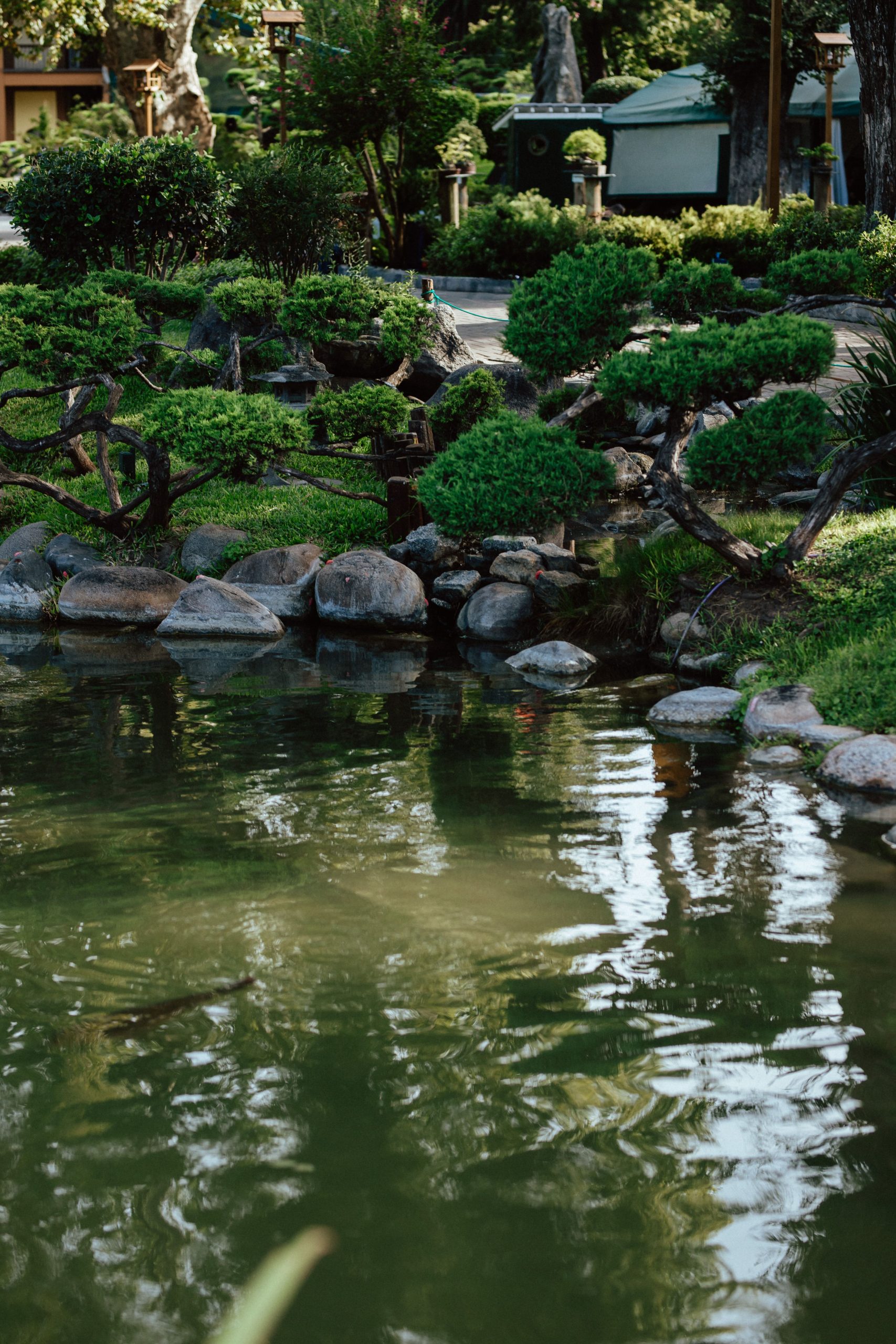
“Achieving this level of zen-like tranquility requires discipline.”
A pond designed for reflection needs to be sited away from trees that drop a lot of leaves, blossoms, or needles, as any debris on the surface will spoil the mirror effect. You’ll be skimming this pond daily to keep it pristine. Furthermore, the dark water is usually achieved with a black liner and/or a special, non-toxic pond dye. Maintaining that dark, clear quality means having an excellent filtration system hidden away to prevent algae growth, which would turn your mirror murky green.
8. Tiered Flagstone Waterfall Surrounded by Tall Grasses
This vibrant look follows a clear recipe: 60% Vertical Elements + 40% Horizontal Elements. The tall, cascading waterfall made of dark gray flagstones and the upright ornamental grasses provide the strong vertical lines that give the feature height and presence. The flat surface of the pond and the low-lying river rock border create the horizontal plane that grounds the design. This interplay between vertical and horizontal is what makes the composition feel balanced and complete. You could achieve a similar feel with a bamboo screen instead of grasses.
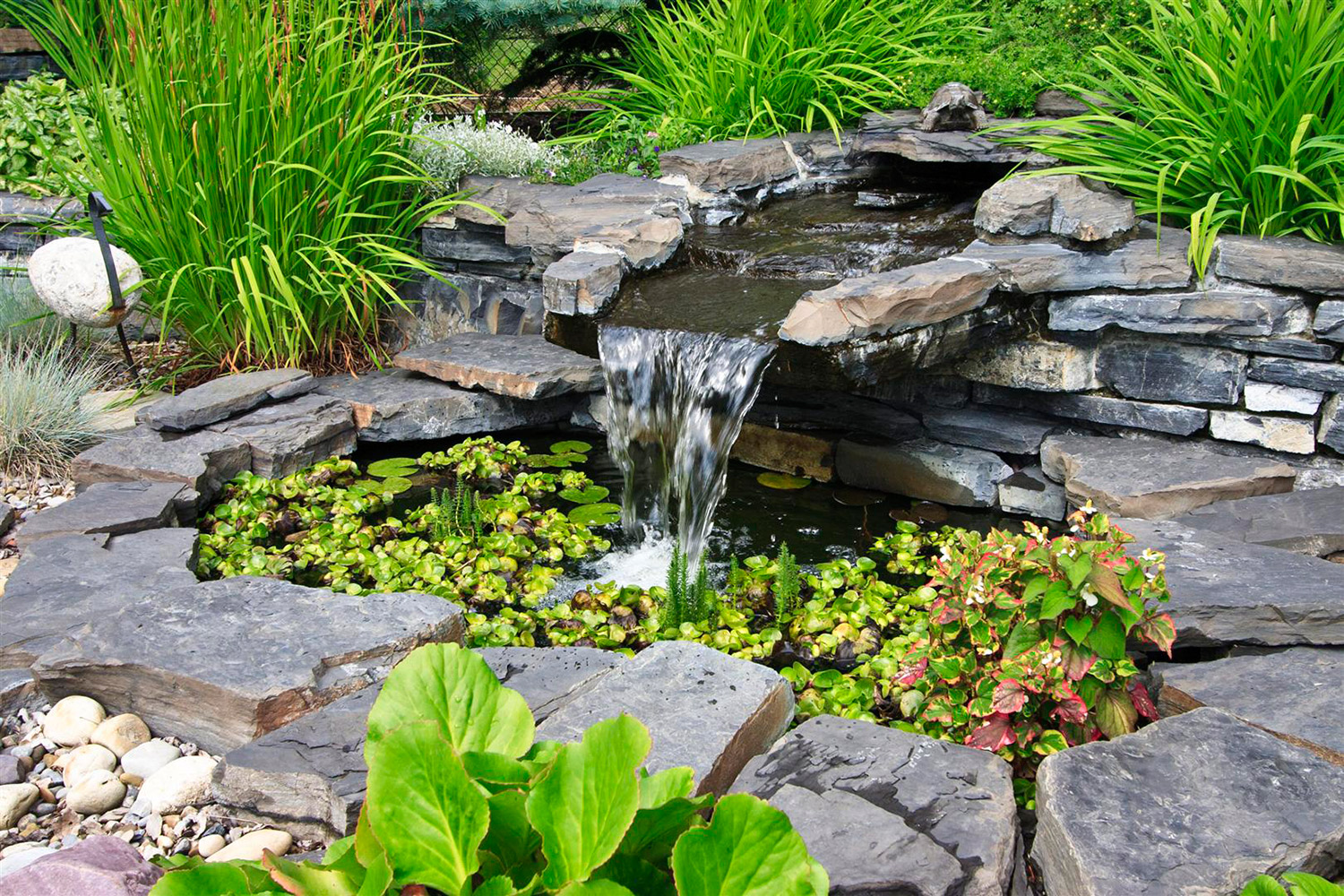
“You don’t need to buy expensive flagstone from a landscape supplier to get this tiered waterfall effect.”
Look for ‘urbanite’—broken-up pieces of old concrete sidewalks or patios. You can often get it for free if you’re willing to haul it. The flat, irregular pieces stack beautifully to create a waterfall that looks remarkably similar to natural flagstone, especially once moss and moisture give it a bit of a patina. For the plants, buy smaller, younger ornamental grasses and be patient; they will fill in within a season or two for a fraction of the cost of mature specimens.
9. Natural Pond with Layered Stone Edging and Water Lilies
The success of this pond lies in its repetition of form. The flat, layered stones used for the edging have a horizontal, irregular shape. This shape is then echoed and softened by the flat, floating lily pads on the water’s surface. This subtle repetition creates a visual rhythm that is calming and cohesive. The design also expertly plays with light and shadow; the dark water and dense foliage create a secluded, shady feel, which makes the brightly lit grasses in the background appear even more vibrant by contrast, adding a sense of depth.
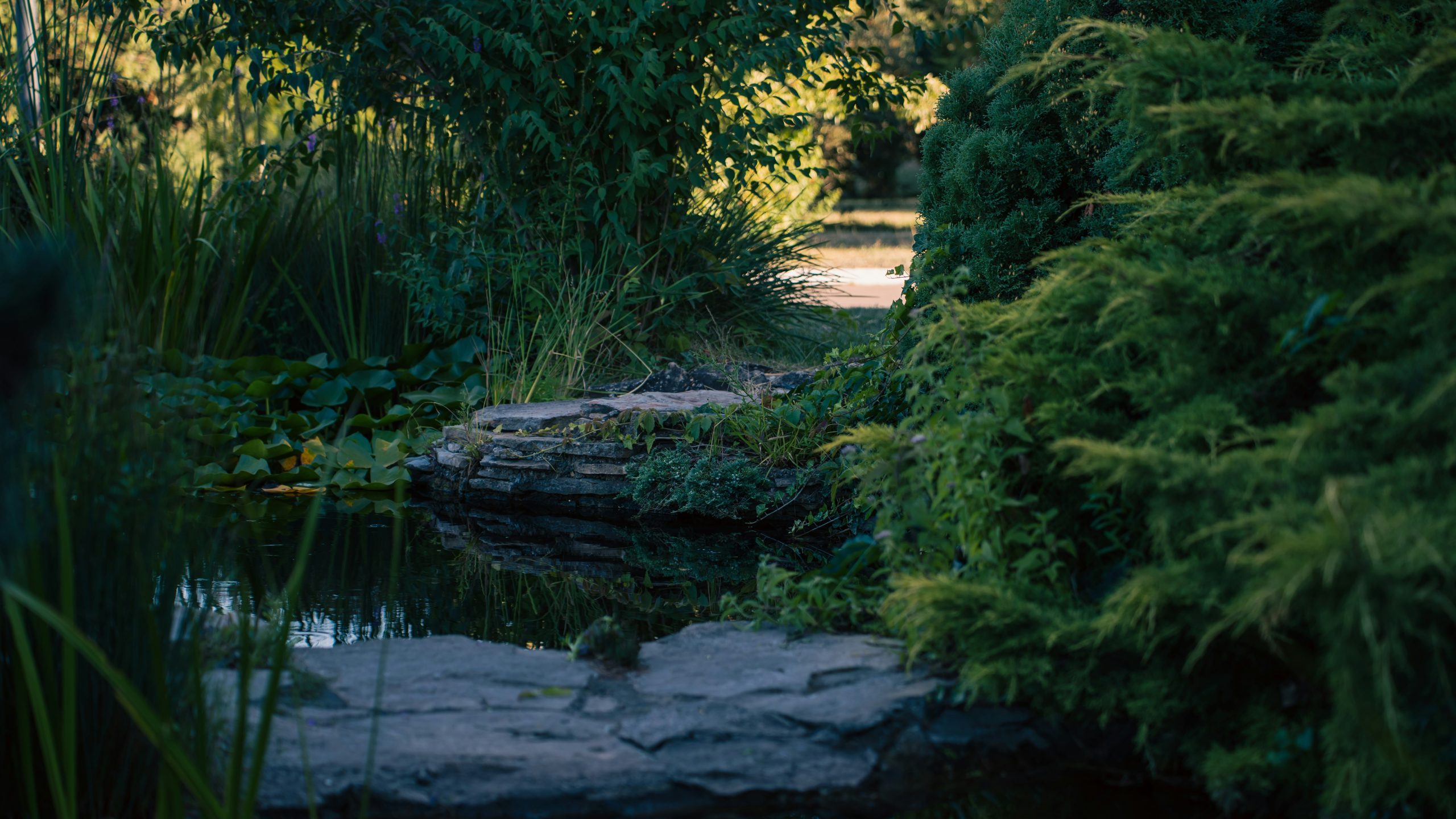
“When stacking flat stones for your pond edge, think like a stonemason, even if you’re a beginner.”
Always follow the ‘one-over-two’ rule: each stone you place should sit on top of at least two stones below it, bridging the gap between them. This simple technique distributes the weight and creates a much more stable and durable edge that won’t shift or collapse over time. Avoid stacking stones directly on top of each other in columns, as this is inherently unstable.
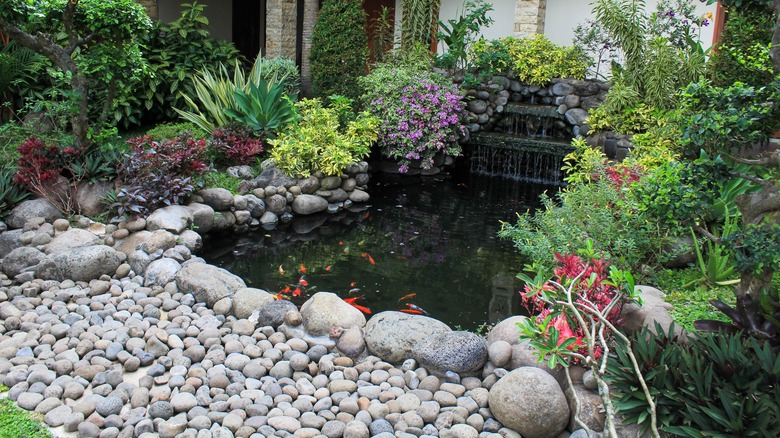
10. Lush Garden Pond with Rock Waterfall and Visible Orange Fish
To recreate this lush, vibrant pond, here’s a potential cost breakdown. The biggest variables will be the size of the pond and the maturity of the plants you purchase.
“Main Components (Liner, Pump, Filter): $400 – $900Stonework (Waterfall rocks, ri”
- Main Components (Liner, Pump, Filter): $400 – $900
- Stonework (Waterfall rocks, river stone edging): $300 – $700
- Plants (Aquatic, marginal, and surrounding foliage): $250 – $600
- Fish (Initial stock of goldfish or small koi): $50 – $150
- TOTAL: $1,000 – $2,350
Budget alternative: Source rocks for free from Craigslist or local construction sites (with permission!). Start with smaller, less expensive plants and let them mature. Use a pre-formed pond liner instead of a custom one. This could bring your total cost down to the $500 – $900 range.
Introducing fish, like the orange ones seen here, changes your pond from a water feature into a living ecosystem—and that comes with responsibilities. Fish produce waste, which means you absolutely need a biological filtration system, not just a pump, to keep the water healthy and clear. You’ll also need to protect them from predators like raccoons or herons, which might mean adding netting or creating deeper sections (at least 24 inches) in the pond where they can hide. It’s a commitment beyond just adding water.
11. Simple, Small Pond with Visible Dark Liner and Rock Edging
The key to this pond’s success is its honesty. Unlike many DIY ponds that try to completely hide their construction, this one embraces the visible dark liner. Instead of being a flaw, the black liner becomes a design element, creating a crisp, dark void that makes the water seem deeper and more mysterious. It provides a sharp, clean edge that contrasts beautifully with the organic shapes of the surrounding rocks and plants. By not trying to be something it isn’t, the pond achieves a simple, modern, and very effective aesthetic.
“You can create a natural-looking rock edge like this in an afternoon.”
Time: 2-3 hours. Material Cost: $50-$150 (for bagged rocks if you can’t find them for free).After laying your pond liner, create a small shelf or trench around the perimeter, about 4-6 inches deep.Backfill the trench with soil or sand to hold the liner in place.Begin by placing your largest, flattest stones directly on the liner at the water’s edge, letting them overhang slightly to hide the top of the liner.Use medium-sized rocks to build up behind the first layer, creating a stable border.Fill all the gaps between the larger stones with smaller pebbles and gravel.Tuck aquatic plants into the pebble areas to soften the edges and complete the natural look.
12. Cozy Backyard Nook with a Small Rock-Edged Pond
This charming, small-scale pond is the definition of an attainable weekend project. You can achieve this entire look for under $200. The key is using a small, pre-formed pond shell (around $70-$100 at stores like Lowe’s or Home Depot) instead of a flexible liner. Surround it with one or two bags of decorative river rock ($20). The plants will be your next biggest expense; look for small ferns and hostas at your local nursery. The little pink duck figurine? That’s a classic thrift store find for a dollar or two, adding a touch of personal whimsy for pennies.
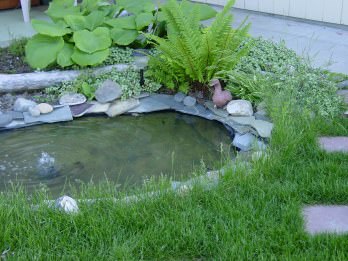
“This type of mini-pond is perfect for small yards, patios, or even a neglected corner of a larger garden.”
It proves you don’t need a huge space to enjoy a water feature. This design works beautifully in an area as small as 25 square feet (a 5×5 foot patch). The key is to keep the scale of the surrounding plants in check. Use dwarf varieties of ferns and other low-growing foliage to avoid overwhelming the small pond. This is a much more contained approach than the expansive design seen in Idea #2.
13. Kidney-Shaped Pond Filled with Blooming Water Lilies
This pond’s visual appeal comes from its simplicity and focus. The design is stripped down to three essential elements: water, stone, and lilies. The kidney shape is a classic, organic form that feels natural in a garden setting. The dark water provides a high-contrast background that makes the vibrant green of the lily pads and the delicate white and pink of the blooms stand out dramatically. The simple stone border contains the scene without competing for attention. It’s a lesson in doing one thing really, really well.
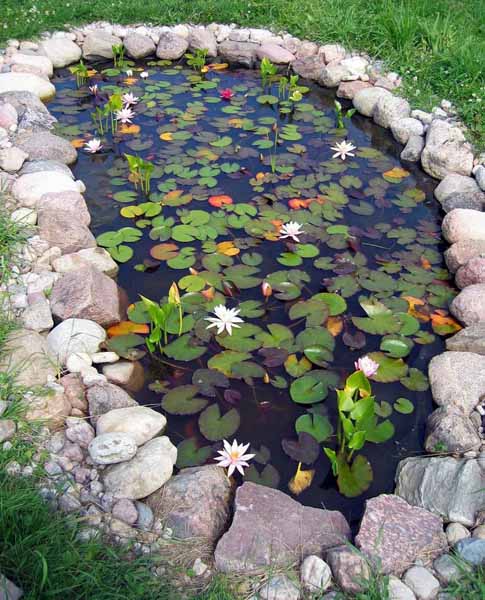
“Water lilies are gorgeous, but they are vigorous growers.”
To keep them from completely taking over a small pond like this one, you need to plant them in submerged containers rather than directly into soil at the bottom. Every 1-2 years, in the spring, you’ll need to pull those containers out, divide the tubers (and give the extras to friends!), and repot them with fresh aquatic soil and fertilizer tabs. This regular maintenance is crucial to keeping the plant healthy and ensuring you have open water surface, which is vital for the pond’s overall health and aesthetic.
14. Small Garden Pond with a Light Pebble Border
The thin metallic lawn edging separating the pebbles from the grass is a small detail that makes a huge difference. This is a pro-landscaper trick. Without it, the grass would constantly be creeping into the pebbles, and the pebbles would get kicked into the lawn during mowing, creating a messy, undefined edge. The metal strip creates a crisp, clean line that permanently holds the boundary, drastically reducing maintenance and keeping the whole design looking sharp and intentional. It’s an inexpensive addition (about $2-3 per foot) that pays for itself in saved time.
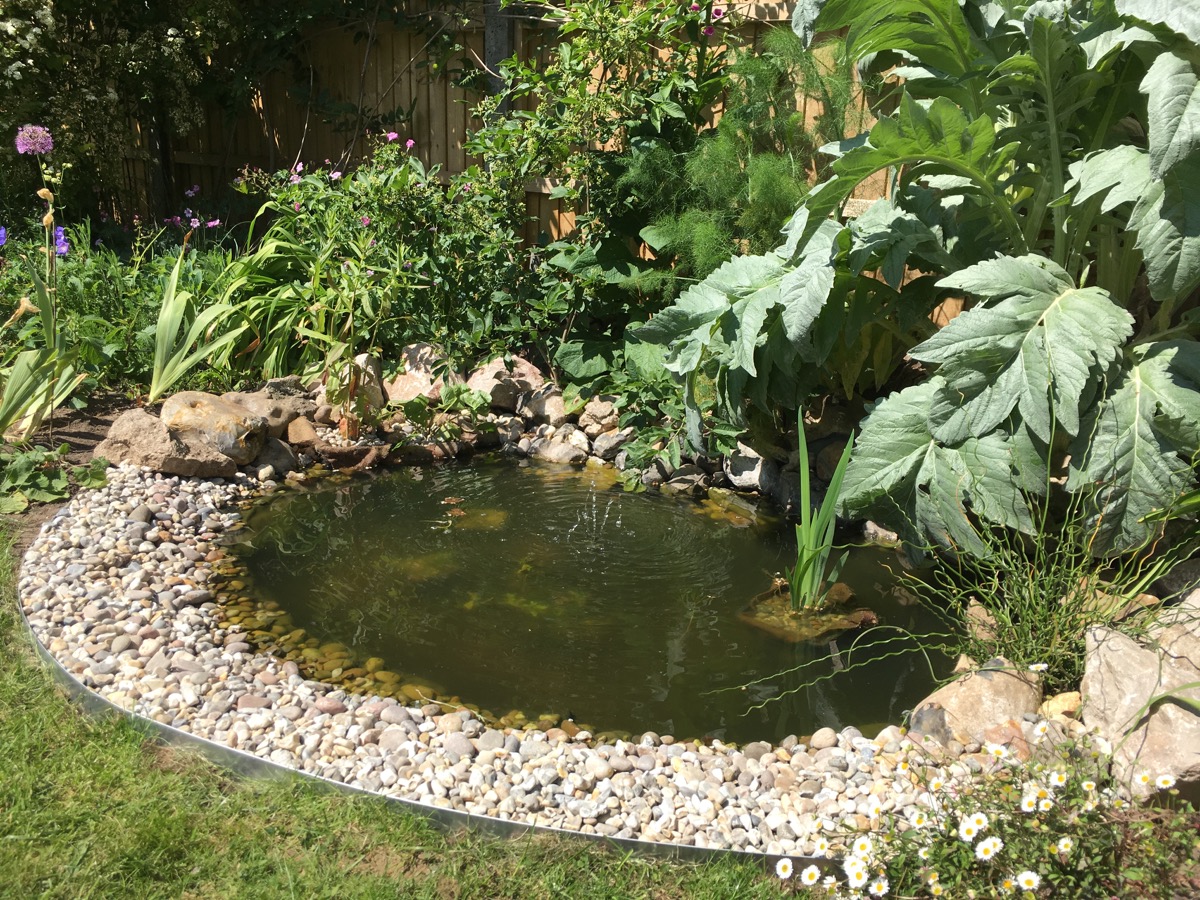
“A light-colored pebble border looks fantastic when it’s first installed, but it can be a magnet for dirt, algae, and stray leaves, which are much more visible than on dark mulch or larger rocks.”
To keep it looking fresh, you may need to rinse or rake the pebbles a few times a season. Also, be mindful that small pebbles can be a choking hazard for very young children, and some dogs love to chew on or move them around. If you have toddlers or a particularly mischievous pup, a border of larger, immovable flagstones might be a safer choice.
15. Natural Stone Pond and Waterfall next to a Herringbone Paver Patio
This design is a masterclass in texture mixing. Let’s call the formula: 40% Smooth Man-Made Texture (the herringbone pavers) + 40% Rough Natural Texture (the waterfall stones) + 20% Fine Texture (the dark brown gravel). The sleek, geometric pattern of the patio provides a modern, orderly feel, which is then beautifully contrasted by the wild, organic jumble of the rocks and waterfall. The fine gravel acts as a neutral transition between these two dominant textures, bridging the gap. This textural variety is what makes the space feel so rich and custom.
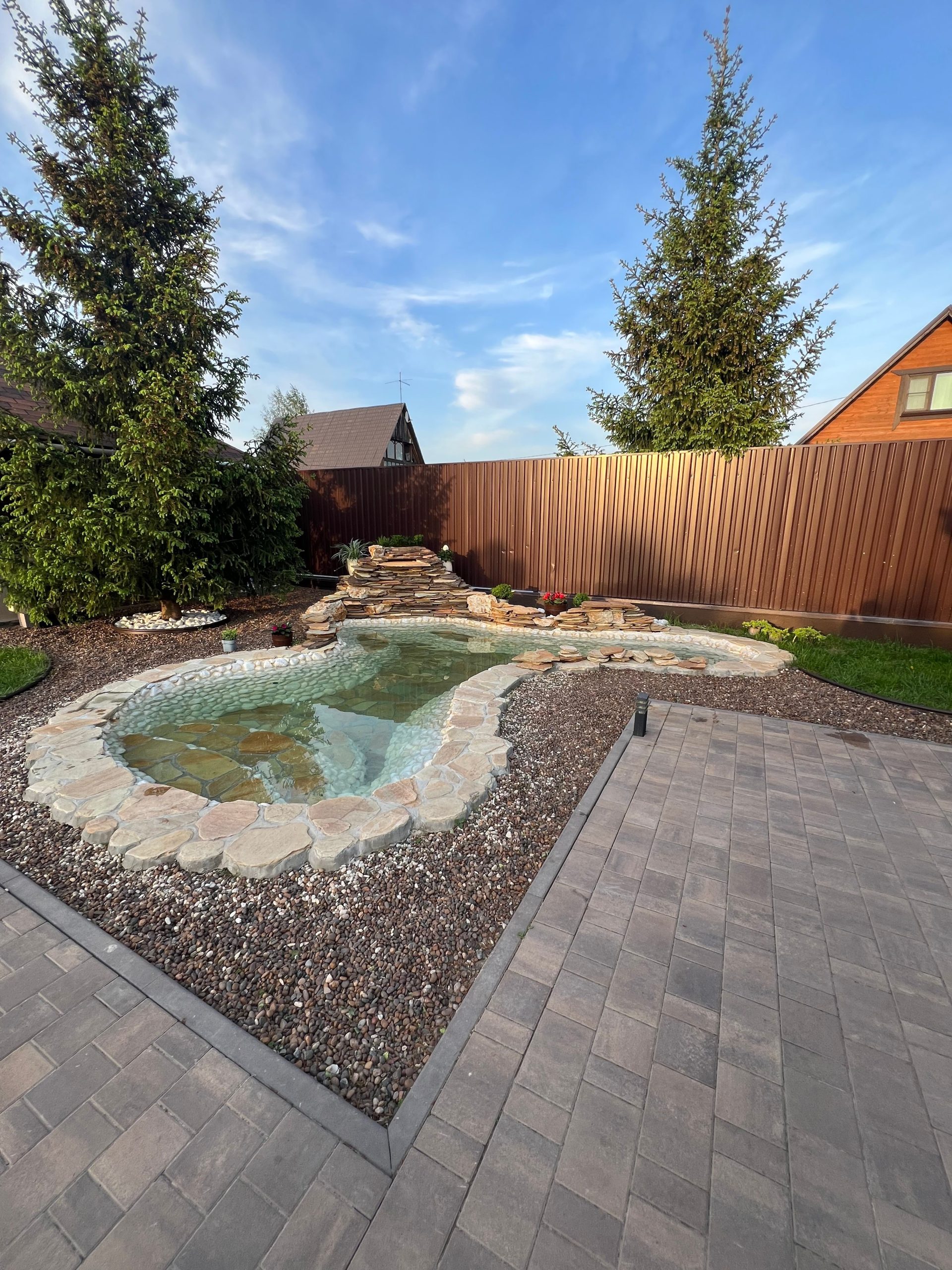
“The entire composition is successful because it links two distinct zones—the functional patio and the decorative pond—into one cohesive space.”
The key is the shared color palette and the deliberate overlap of materials. The gray tones in the pavers are picked up in the waterfall rocks, and the dark brown gravel is used both as a planting medium and as a border for the patio. This repetition of color and material makes the transition from the structured patio to the natural pond feel seamless and intentional, rather than like two separate ideas placed next to each other. It’s a great example of integration, unlike the isolated pond we warn about in our common mistakes section.
16. Tiered Rock Waterfall Pond with Vibrant Pink Water Lilies
It’s the pop of vibrant pink from the water lilies. The rest of the scene is a beautiful but fairly monochromatic palette of gray stone and various shades of green foliage. It’s serene and natural. But the introduction of that single, bold accent color completely changes the energy. The bright pink flowers are an unexpected, joyful moment that draws your eye directly to the water’s surface. Remove them, and the pond is still lovely. But with them, it has personality and a focal point that makes the entire composition sing.
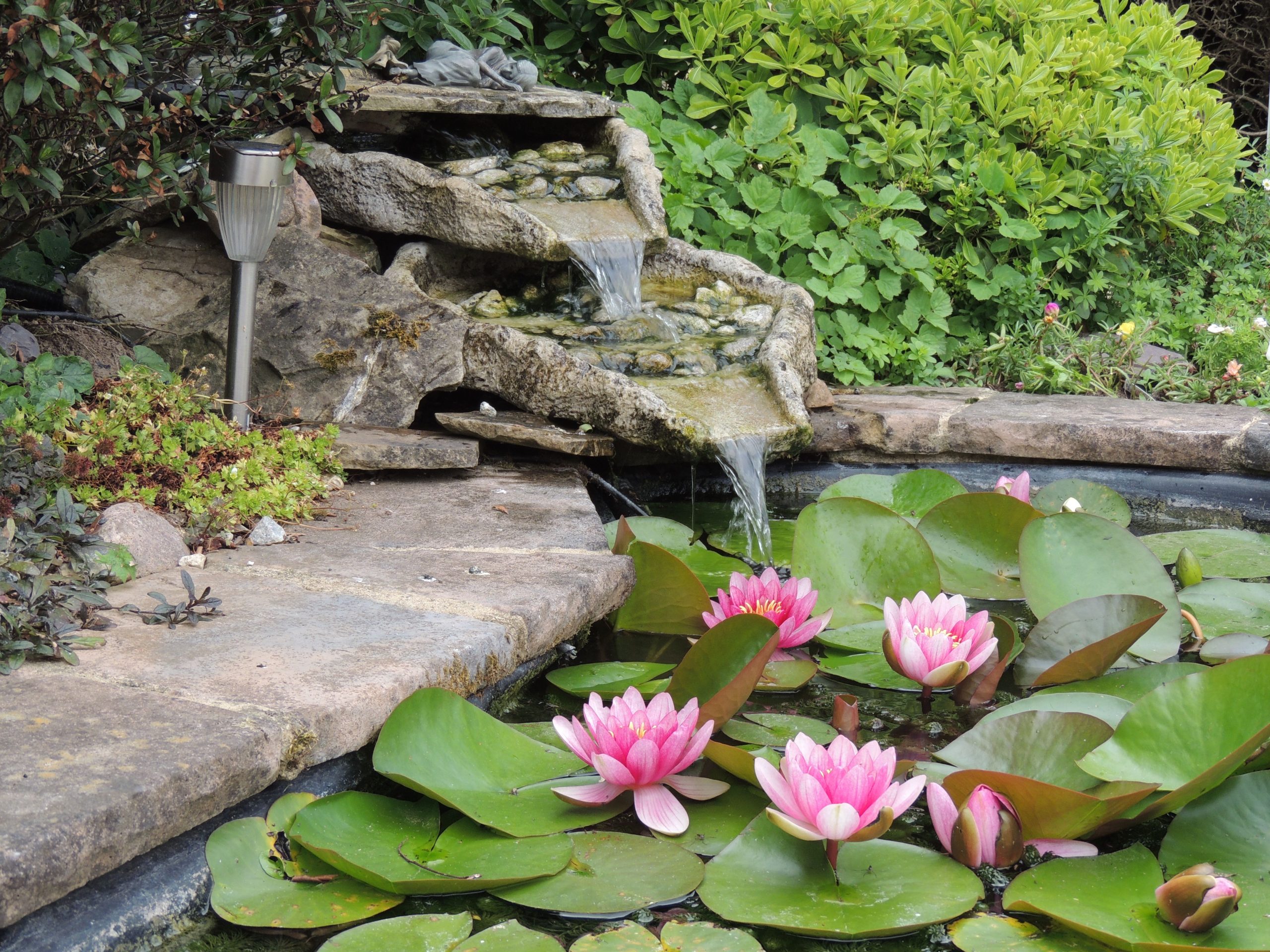
“Creating a small, feature-rich pond like this is an achievable project with a clear budget.”
Here is a sample breakdown for a pond approximately 4×6 feet:
- Small Pond Kit (Liner, 250-400 GPH Pump): $150 – $250
- Stonework (Waterfall stones, border rocks): $100 – $300 (or free if you can source them)
- Plants (2-3 water lilies, assorted marginals): $75 – $150
- Accessories (Solar light, initial water treatments): $30 – $60
- TOTAL: $355 – $760
Budget alternative: A smaller pre-formed liner, finding free rocks, and starting with just one water lily can bring the cost down to under $200. This is a great alternative to the larger-scale project in Idea #9.
17. Waterfall from a Stone Bowl into a Rock-Edged Pond
Creating a simple bowl waterfall is easier than it looks. Time: 1-2 hours (if pond is existing). Material Cost: $80-$200.
- Select a large, sturdy stone or concrete bowl. It must be thick enough to drill without cracking.
- Using a masonry drill bit, carefully drill a hole in the bottom of the bowl just large enough to fit your pump’s tubing.
- Place your submersible pump in the deepest part of the pond.
- Run the tubing from the pump up and through the hole in the bowl. Secure it with silicone sealant.
- Position the bowl on a stable stack of flat rocks at the pond’s edge, ensuring it is level.
- Fill the pond, plug in the pump, and adjust the bowl’s position until you get a pleasing cascade of water.
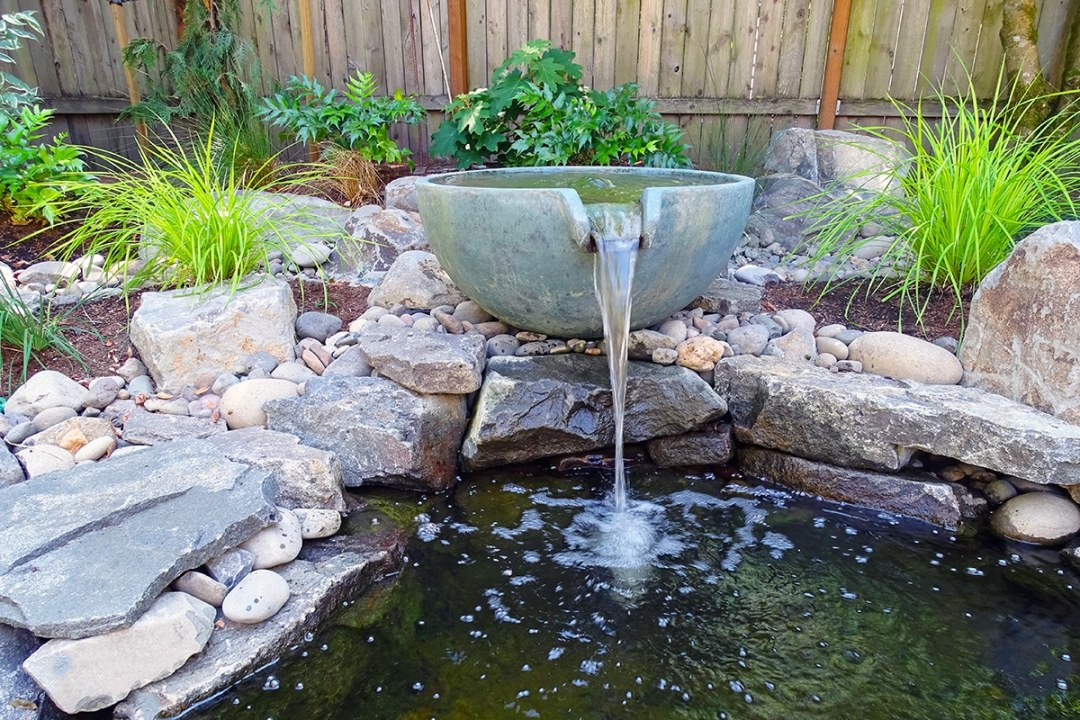
“To get that gentle, bubbling cascade from the bowl, don’t just let the water pour out.”
Place a small, flat stone directly under the outflow inside the bowl. This will force the water to spread out and spill over the entire rim in a wider, softer sheet rather than gushing out from one point. For an even gentler effect, fill the bowl with small, smooth river pebbles. The water will have to percolate up through them before spilling over, creating a subtle, mesmerizing bubbling sound that is incredibly soothing.
18. Natural Koi Pond Surrounded by Vibrant Purple Flowers
This pond scene is so dynamic because of the brilliant use of complementary colors. The bright orange and red of the koi fish are directly opposite the deep greens of the foliage on the color wheel. This natural opposition makes both colors appear more vibrant and intense. Then, the cascading purple ground cover adds another layer of sophisticated color theory; as a neighbor to blue and red, it harmonizes with both the cool tones of the water and the warm tones of the fish. The result is a color palette that feels both exciting and balanced.
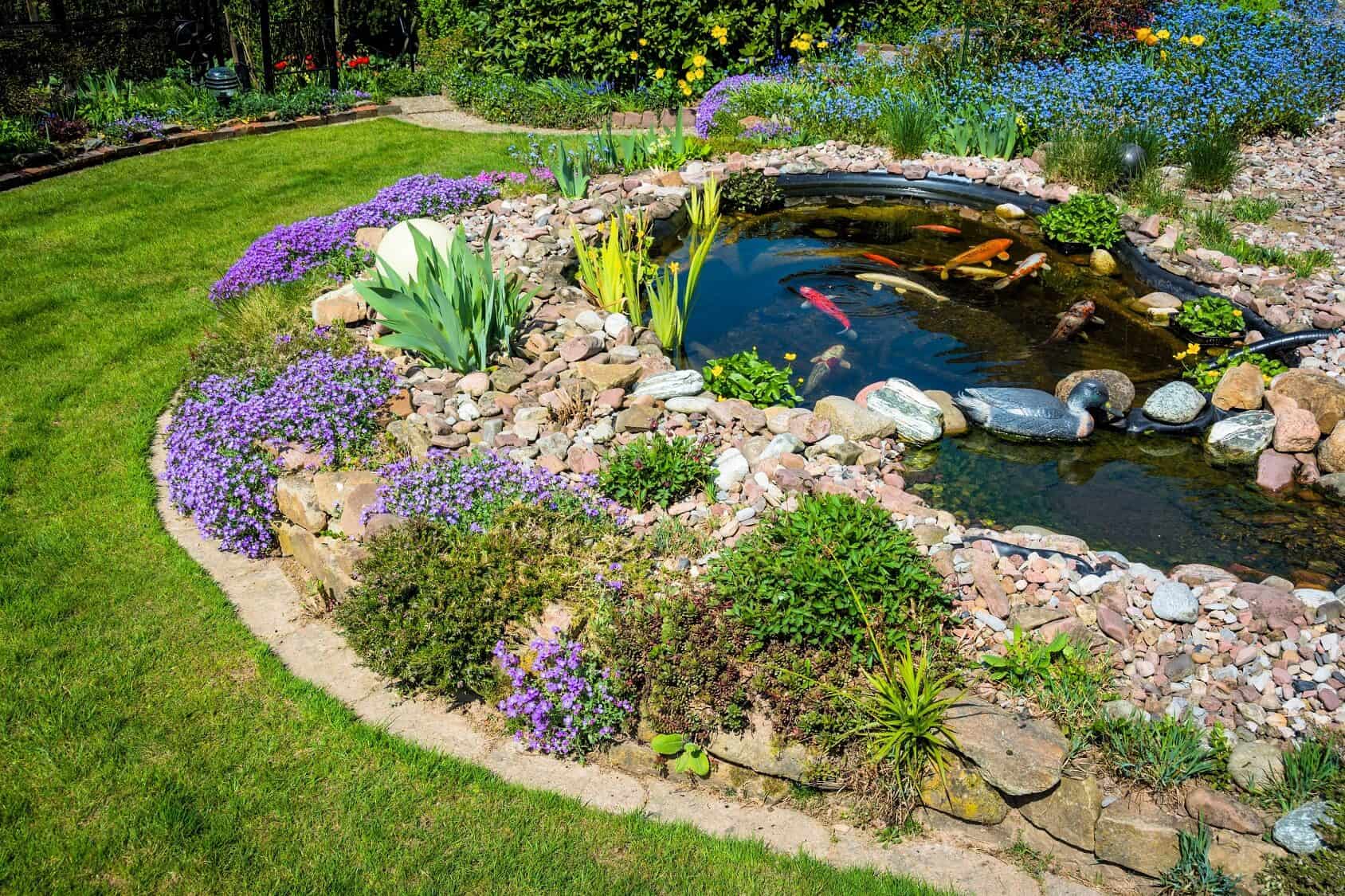
“A pond teeming with beautiful koi is a dream for many, but it’s a significant step up in commitment from a simple water garden.”
Koi can grow very large, up to 3 feet long, and they require a large volume of water to thrive—we’re talking a minimum of 1,000 gallons, and ideally 250 gallons per mature fish. This means a deeper, larger, and more expensive pond. They also require high-performance biological filters and regular water quality testing. This isn’t a casual weekend project; it’s a serious hobby for dedicated enthusiasts.
19. Multi-Level Heart-Shaped Koi Pond with Small Waterfalls
A multi-level pond with active waterfalls is not suited for a tiny space. The sound of cascading water, while pleasant, can be overwhelming if the feature is right next to a seating area or window. This design works best in a medium to large backyard, occupying a footprint of at least 150-250 square feet. The different levels require changes in elevation, so it’s ideal for a yard that already has a gentle slope. A pond of this complexity needs to be a focal point, not crammed into a corner. Compare its scale to the much larger, more expansive feel of Idea #22.
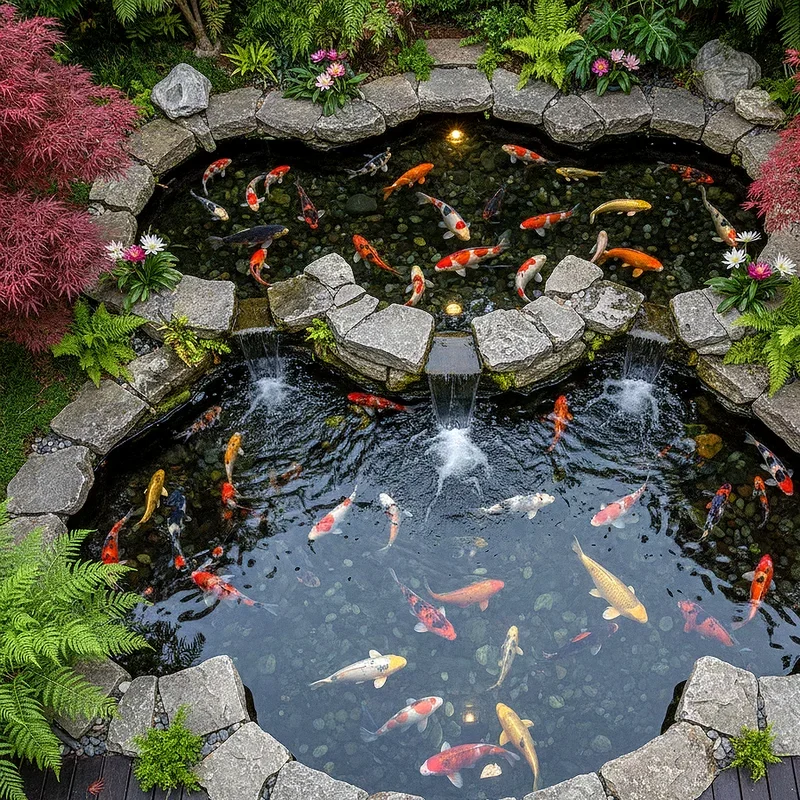
“A complex, multi-level koi pond like this is a significant investment.”
The cost comes from the extensive excavation, larger liner, powerful pump needed for the waterfalls, and high-capacity filtration system required for koi.
- Excavation & Liner (for a large, multi-level setup): $1,500 – $3,000
- Pump & High-Capacity Filtration System: $800 – $2,000
- Stonework (Border rocks, waterfall boulders): $1,000 – $2,500
- Fish & Plants: $300 – $800+
- Submerged Lighting & Electrical: $400 – $900
- TOTAL: $4,000 – $9,200+
Budget alternative: You can create a ‘multi-level look’ for less by using a single pond liner and building up the waterfall and upper pool *inside* the main basin with rocks and mortar, reducing excavation complexity.
20. Small Backyard Pond with a Simple Fountain and Rock Edging
This is one of the most accessible and affordable ways to get a water feature in your yard. You can buy an all-in-one pond kit at Target or Walmart for around $100-$150 that includes a small pre-formed shell, a pump, and a fountain head. The rocks for the edging can often be found for free on Facebook Marketplace or gathered from your own property. Add a couple of inexpensive aquatic plants like water hyacinth or lettuce, and you’ve created a beautiful, serene feature for the price of a nice dinner out. This is the entry-level version of the larger pond in Idea #17.
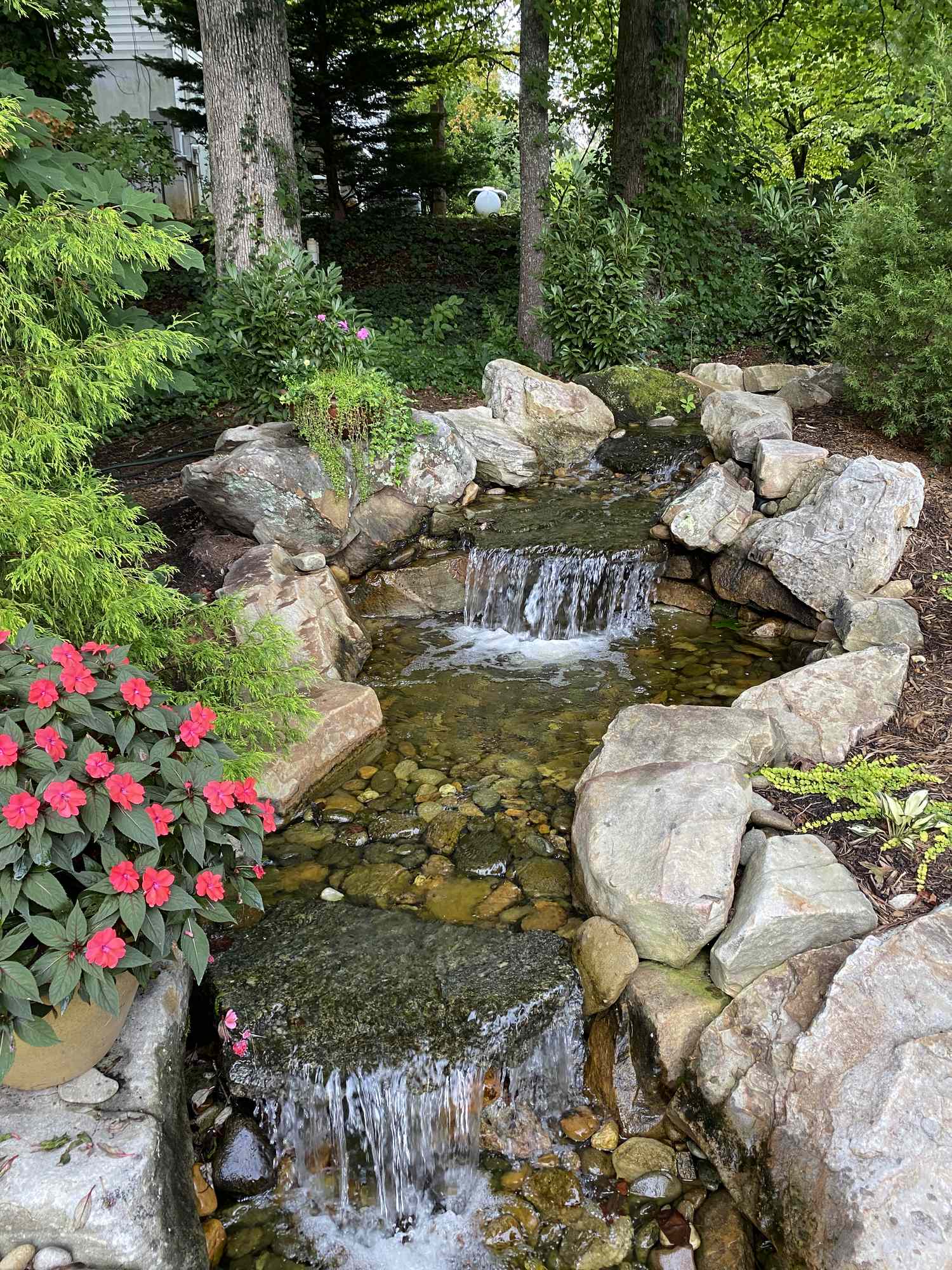
“A small fountain nozzle, while lovely, is prone to clogging, especially in a pond with plants.”
Algae, stray leaves, or other small bits of debris can easily block the small openings, reducing your fountain from a pleasant spray to a sad gurgle. To keep it running smoothly, you’ll need to lift the nozzle out and clean it every couple of weeks, using a small brush or a paperclip to clear the holes. It’s a quick, two-minute job, but it’s a necessary part of this pond’s routine upkeep.
21. Large Rock Waterfall Koi Pond Integrated with a Wooden Deck
This design is so successful because it seamlessly merges multiple outdoor living zones. It’s not just a pond; it’s a complete environment. The wooden deck provides a comfortable, human-scaled space for lounging, the paver patio offers a durable, high-traffic surface, and the pond brings in the natural, untamed element. The key is the flow between them. The pavers lead you to the pond edge, and the deck offers a view from above. The consistent use of lush green foliage throughout ties all three zones together into a single, cohesive backyard experience.
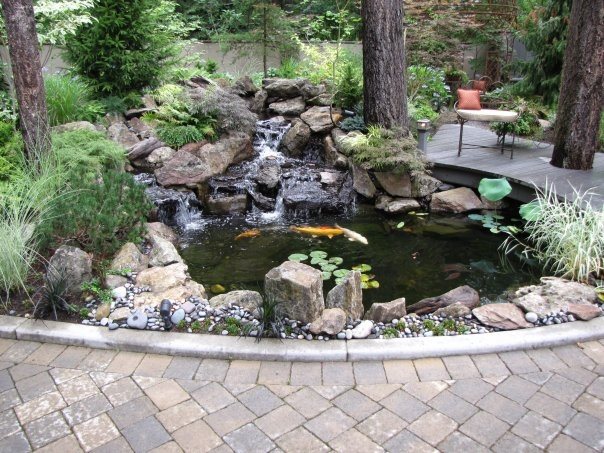
“Integrating a pond directly with a wooden deck requires careful planning.”
You need to ensure there is a foolproof barrier and proper grading to prevent any pond overflow from seeping under your deck footings, which could cause rot and structural instability over time. Also, the constant proximity to moisture means you should absolutely use pressure-treated lumber or a composite decking material for the structure. Finally, a deck overlooking a koi pond is a prime perch for predators like raccoons, so consider how you will protect your fish.
22. Lush Multi-Level Pond with Waterfalls and a Stone Bench Island
The single most captivating feature in this elaborate setup is the stone bench on its own little island. It’s an act of pure romance and imagination. A pond is something to be viewed, but this feature creates a destination *within* the pond itself. It invites you to cross the stone bridge and sit in the very middle of the water feature, surrounded by the sound of waterfalls and the sight of swimming fish. It transforms the pond from a landscape element into an immersive, occupiable space. It’s a bold and brilliant move that makes the entire garden unforgettable.
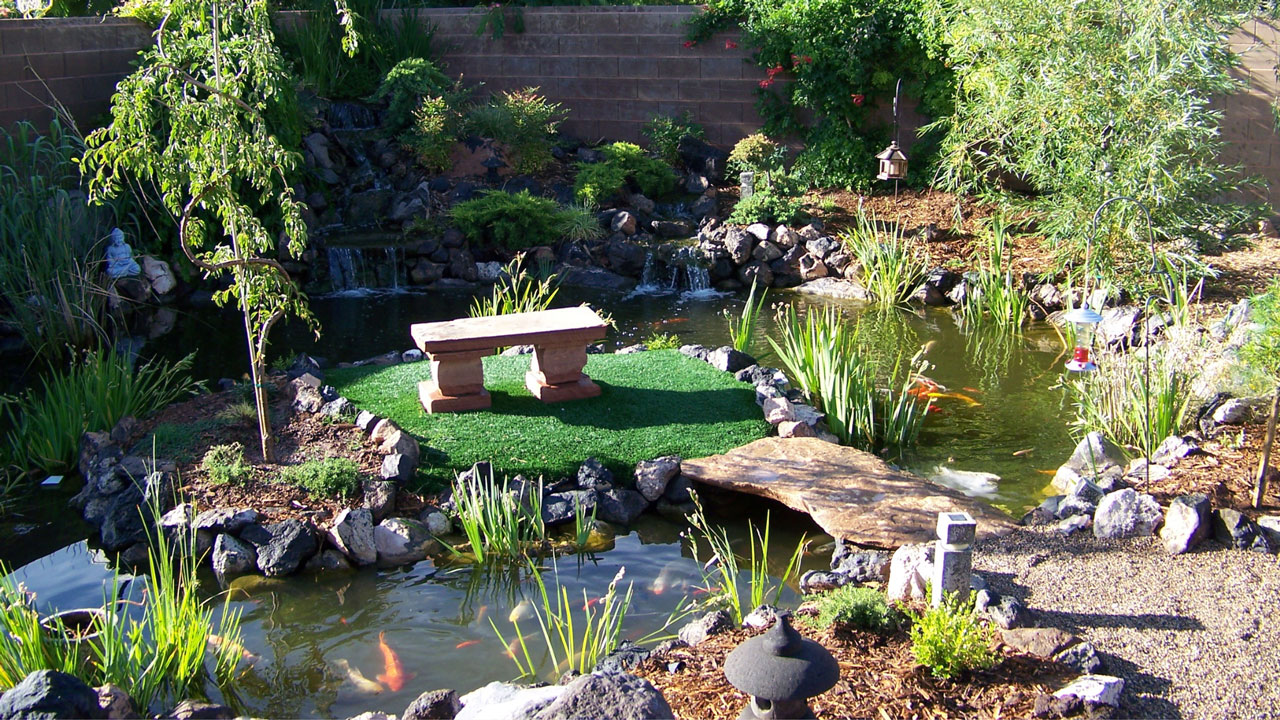
“A project of this scale requires serious forethought.”
Before you even think about digging, run through this checklist:
- Check Local Ordinances: Does your municipality have depth or fencing requirements for ponds over a certain size? Call your planning department first.
- Map Underground Utilities: Before any excavation, call 811 to have all gas, water, and electrical lines marked. It’s free and it’s the law.
- Plan Your Power Source: Where will the pump and any lighting plug in? You will likely need to run a dedicated, GFCI-protected outdoor electrical line.
- Confirm Your Budget: A large, multi-level pond is a major investment. Get quotes for rock, liner, and equipment. A setup like this can easily exceed $10,000.
23. Large Curved Pond with an Overlooking Deck and Lounge Chairs
The visual harmony of this scene comes from a balance of precision and wildness. Let’s call the recipe: 50% Manicured Lines + 50% Natural Forms. The sharp, perfect curve of the lawn edge and the clean, straight lines of the wooden deck represent the ‘manicured’ half. The irregular shape of the pond itself, the free-form growth of the tall reeds, and the organic shapes of the surrounding foliage represent the ‘natural’ half. This push-and-pull between controlled and untamed is what gives the landscape its sophisticated, high-end feel.
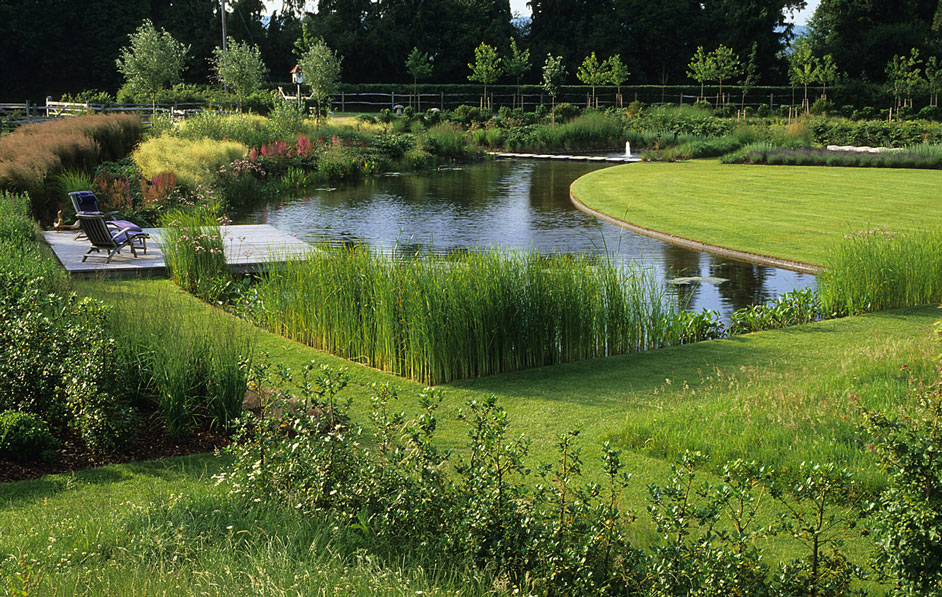
“When designing the edge where your lawn meets the pond, create a ‘mowing strip’.”
This is a 6- to 8-inch wide border made of flat, flush-set pavers or bricks between the turf and the pond’s edge. This allows you to run one wheel of your lawnmower right on the strip, giving you a perfect, clean cut every time without any risk of the mower falling into the pond or needing to come back later with a string trimmer. It is a one-time installation that saves you hassle every week for years. You can see a similar but more rustic edging idea in Idea #13.
24. Tiered Stone Wall Waterfall with Lush Aquatic Plants
This pond design feels so lush and established due to its verticality. The stacked grey stone wall and the multi-tiered retaining wall behind it create multiple levels of planting, which allows for a greater density and variety of foliage in a small footprint. Your eye is drawn upward from the dark water, past the waterfall, to the aquatic plants, and finally to the shrubs on the top tier. This vertical layering makes the garden feel much larger and more immersive than if all the plants were on a single, flat plane. It’s a smart use of space that adds instant drama.
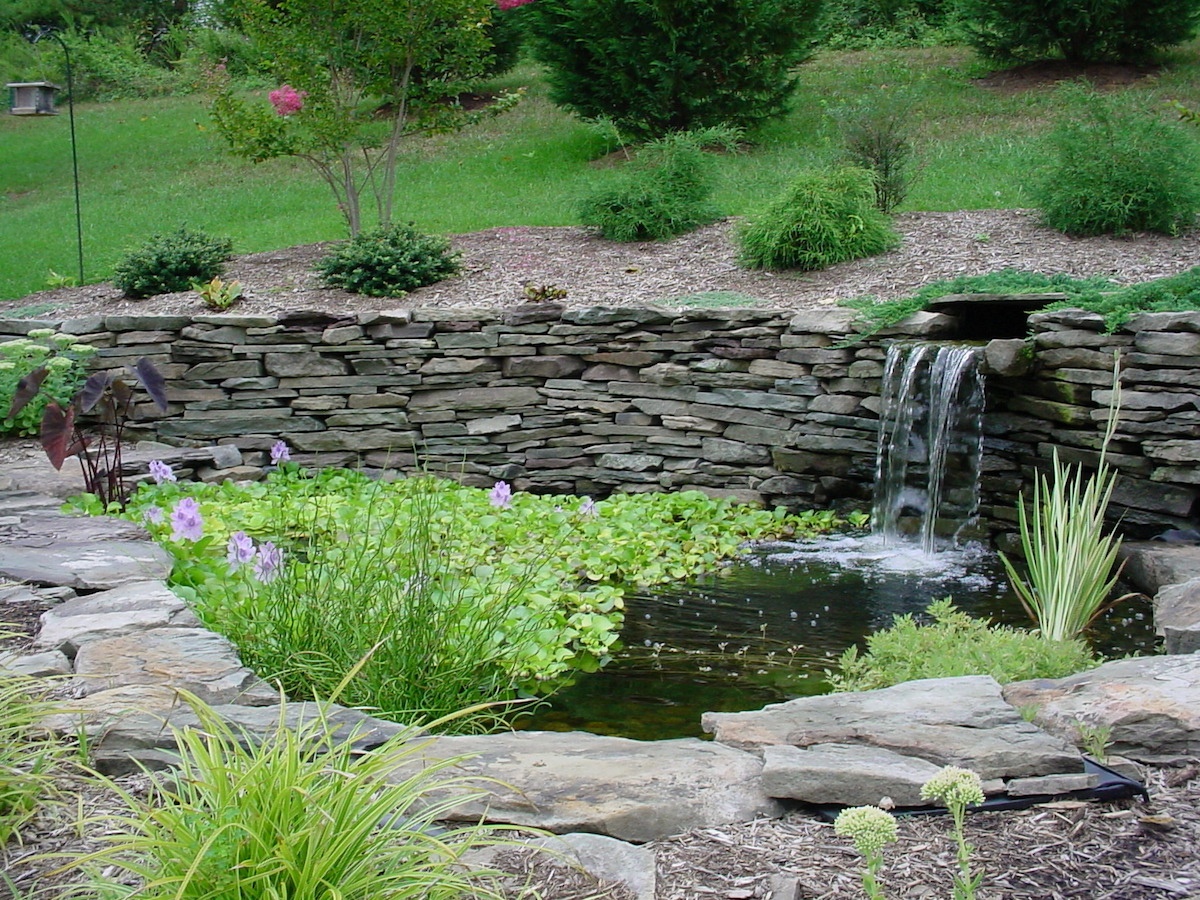
“A pond this densely packed with aquatic plants will require regular thinning.”
Plants like the ones seen here can double in size over a single growing season. To maintain the health of the pond and the visibility of the water, you’ll need to remove about one-third of the plant mass in both the late spring and late summer. This prevents them from choking each other out, consuming all the nutrients, and blocking sunlight from reaching the lower depths of the pond. It’s a sign of a healthy pond, but it is an ongoing chore.
25. Irregular Pond with Flagstone Edging and Reddish-Purple Shrubs
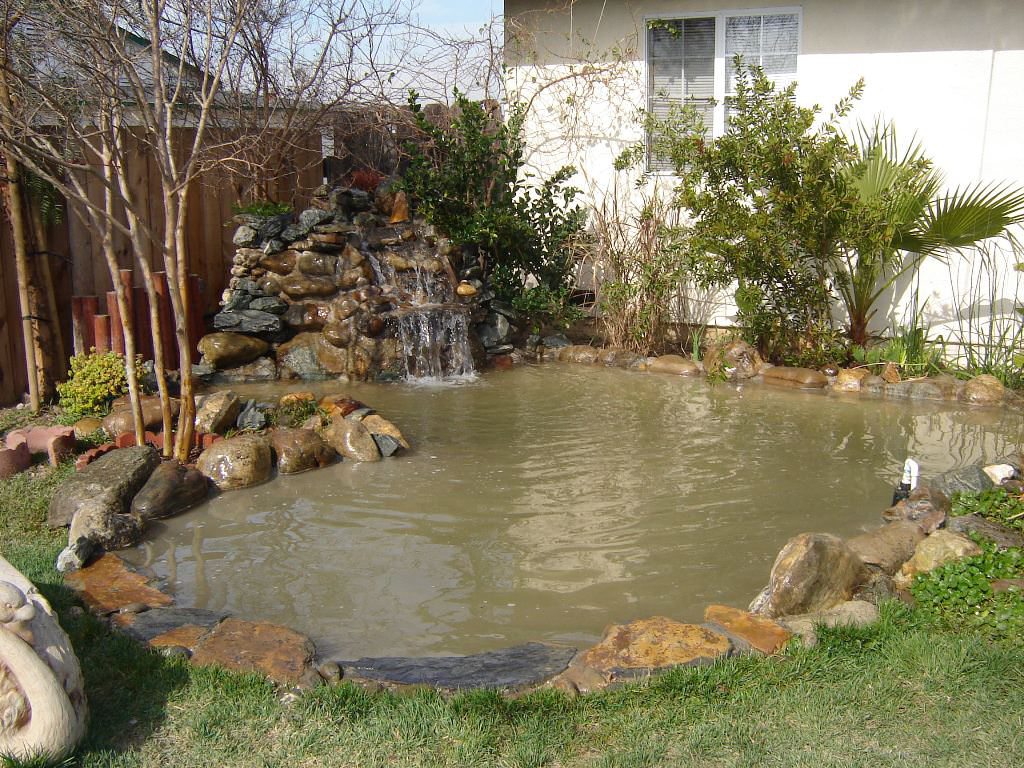
Let’s have an honest moment about the ‘murky water’ look. While a perfectly clear pond is often the goal, a little bit of natural sediment and algae can lend an authentic, rustic charm, as seen here. However, there’s a fine line between ‘charming and rustic’ and ‘neglected and swampy’. The floating debris and cloudy water suggest this pond might have insufficient filtration or circulation. If you love the aged look of the mossy flagstones, just be sure to pair it with a robust pump and filter system to keep the water healthy, even if it isn’t gin-clear.
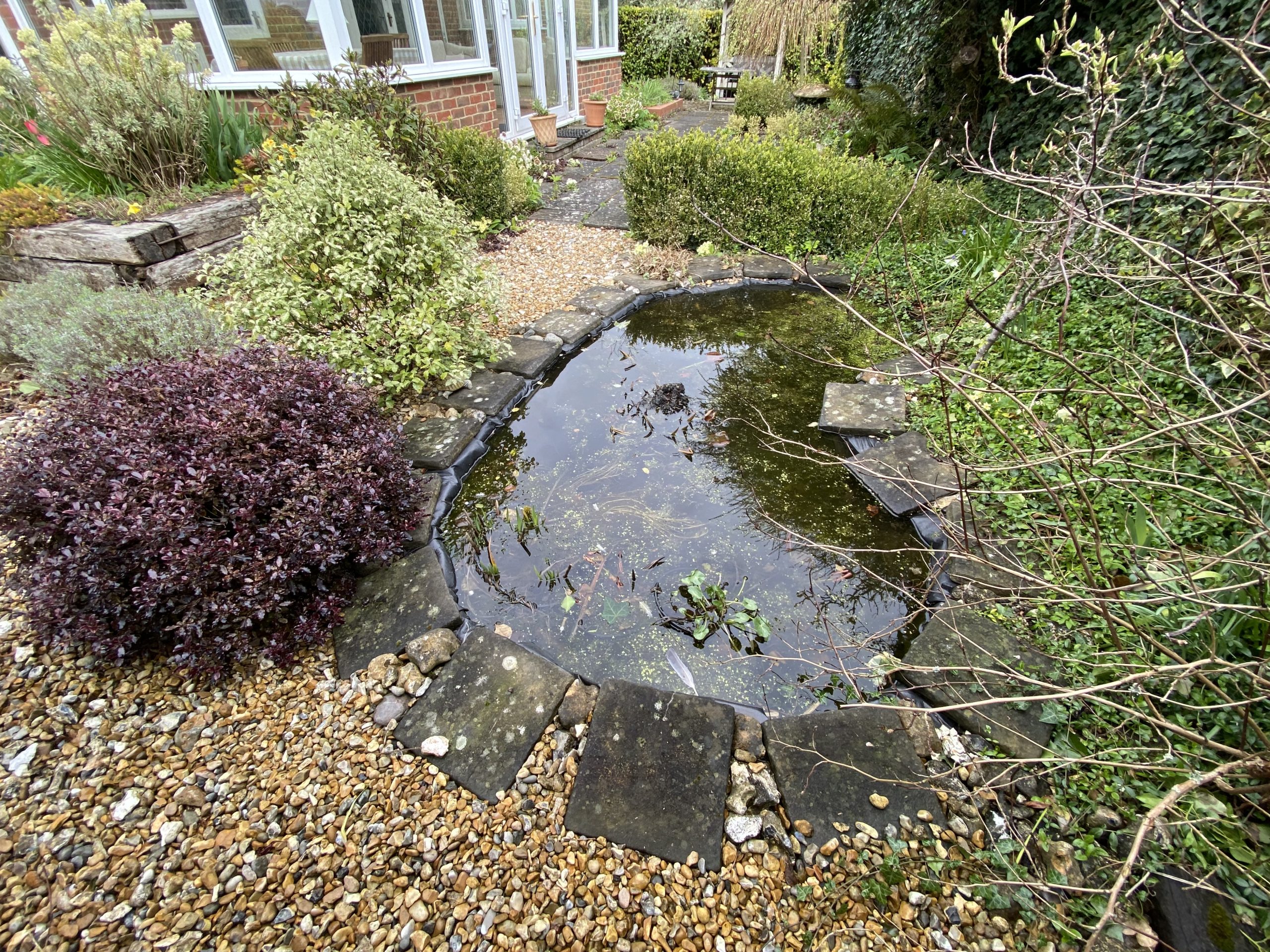
“This pond perfectly captures the ‘English cottage garden’ style that is having a huge resurgence on Pinterest.”
It’s all about embracing a slightly overgrown, informal, and romantic aesthetic. The jumble of different shrubs, the moss on the old stones, the gravel paths, and the integration with a classic brick house all contribute to this feeling. People are moving away from overly manicured, sterile landscapes and toward gardens that feel lived-in, personal, and a little bit wild. This pond isn’t trying to be perfect, and that’s precisely its charm.
26. Natural Rock-Edged Pond with Lush Variegated Hostas
The secret to making a plant-heavy pond look professionally designed is to limit your plant palette and repeat it. Notice how this design heavily relies on just a few types of plants, especially hostas with their broad, variegated leaves. These are repeated in large drifts around the pond. Instead of buying one of everything at the nursery, choose 3-5 complementary plants and buy multiples of each. This repetition creates a sense of rhythm and cohesion, making the overall design feel intentional and unified, rather than chaotic and cluttered.
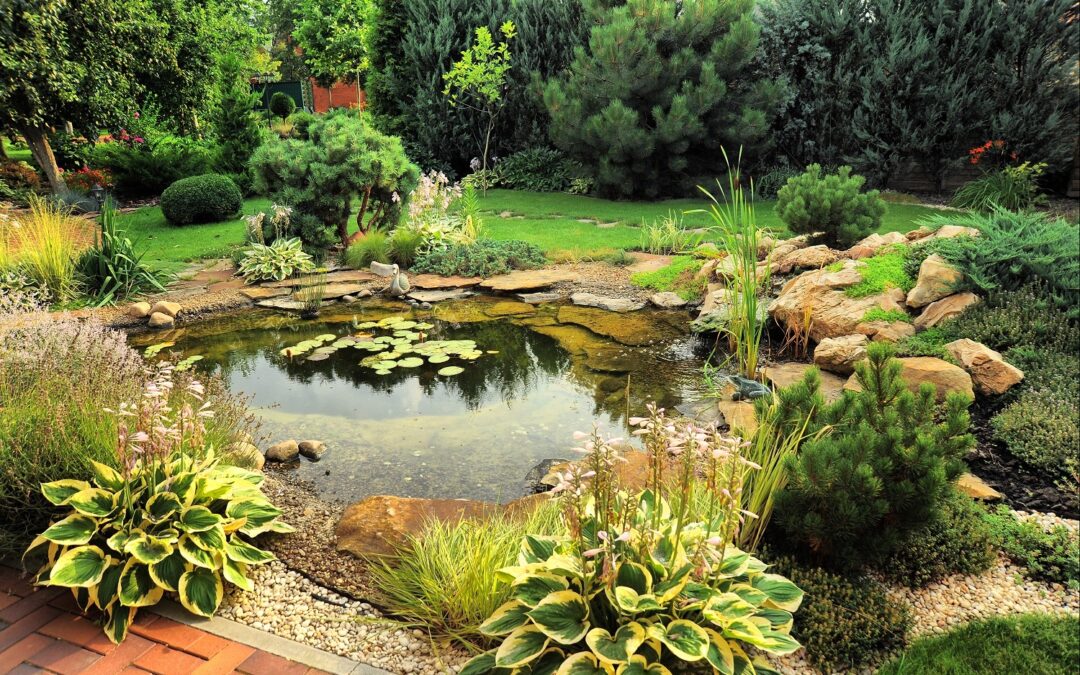
“This design works because it’s a masterclass in foliage texture.”
You have the bold, broad leaves of the hostas, the fine, feathery texture of the conifers, the upright blades of the grasses, and the smooth, round shapes of the lily pads. There are almost no flowers visible, yet the scene is incredibly rich and interesting to look at. By focusing on the size, shape, and color of the leaves themselves, the designer has created a garden that has strong visual appeal all season long, not just when flowers are in bloom.
27. Small Informal Pond with Natural Stone Edging and Buddha Statue
You can create this zen-like corner on a very tight budget. The most expensive part, a flexible pond liner for a small pond this size, is about $50-$70. The rocks can be sourced for free from your own yard, a neighbor’s landscaping project, or Craigslist. The Buddha statue doesn’t have to be hand-carved stone; you can find beautiful and surprisingly lightweight cast-resin versions at stores like HomeGoods or on Amazon for $30-$50. Add a few affordable water plants, and you have a meditative retreat for under $150. It’s a much more spiritual take than the whimsical style of Idea #12.
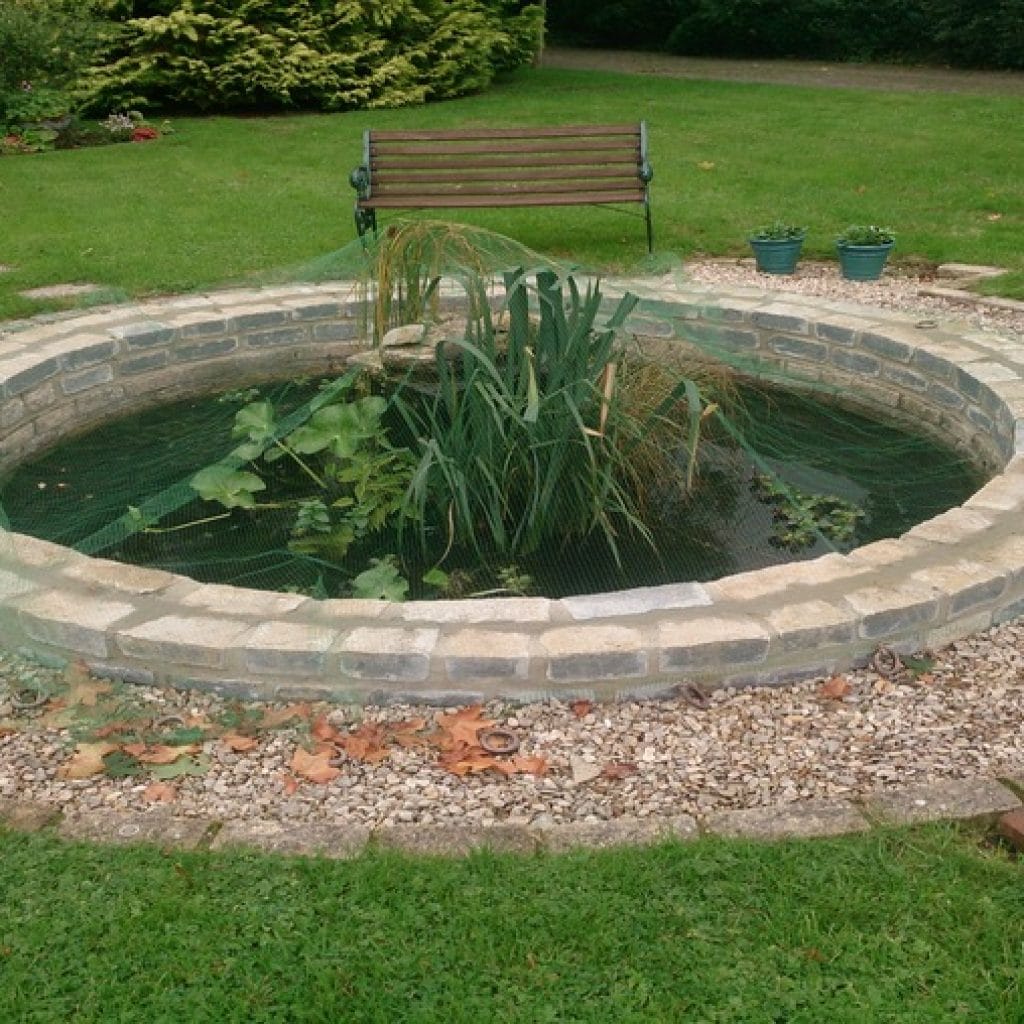
“While the pond itself is lovely, the single element that sets the entire mood is the Buddha statue.”
Its presence instantly signals that this is a space for calm, quiet, and contemplation. It transforms the small water feature from a simple garden element into a personal sanctuary. Without the statue, it’s just a nice little pond. With the statue, it has a purpose and a distinct spiritual energy. It’s a powerful example of how a single, well-chosen piece of decor can define the entire feeling of a space.
28. Multi-Tiered Stone Fountain in a Formal Square Pond
This formal, classical look is achieved with a formula of contrasts: 70% Structured Geometry + 30% Wild Greenery. The rigid, symmetrical lines of the square pond and the ornate, multi-tiered fountain provide a strong sense of order and human design. This structure is then intentionally softened and partially obscured by the lush, untamed growth of the surrounding grasses and flowering bushes. This tension between the formal stonework and the informal plantings is what creates that timeless, romantic, ‘secret garden’ feeling.
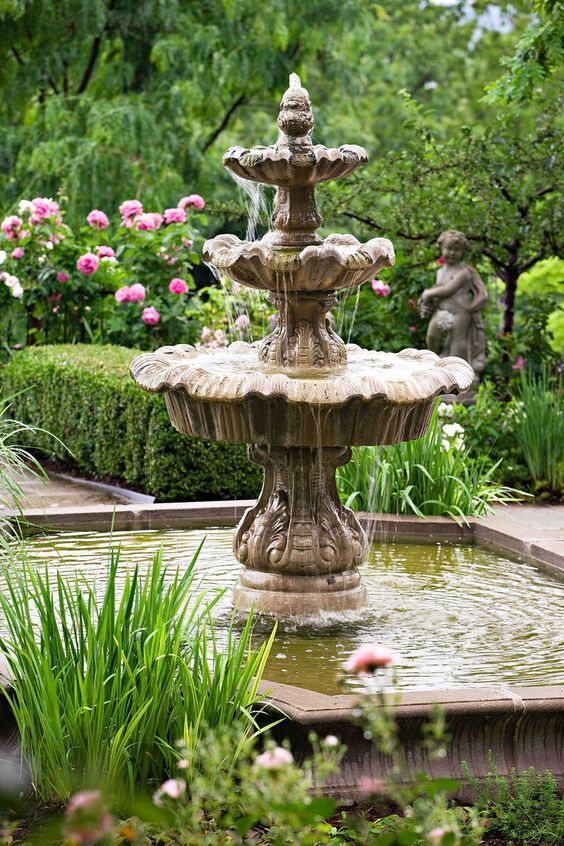
“A large, central fountain like this needs significant space to feel grand rather than cramped.”
This is a design for a large, formal garden, not a small suburban backyard. The pond itself should be at least 12×12 feet to balance the vertical scale of the fountain. You’ll also want at least 10-15 feet of surrounding garden space on all sides to accommodate the dense hedges and foliage needed to create the enclosed, lush atmosphere. For smaller spaces, a wall-mounted fountain or a much smaller, single-tier feature would be more appropriate.
29. Essential First Steps: Planning Your Pond Placement
Before a single shovelful of dirt is moved, a successful pond project starts with careful planning. Rushing the placement is the biggest mistake you can make. Walk through this quick checklist to ensure you’re choosing the perfect spot for your future water feature.
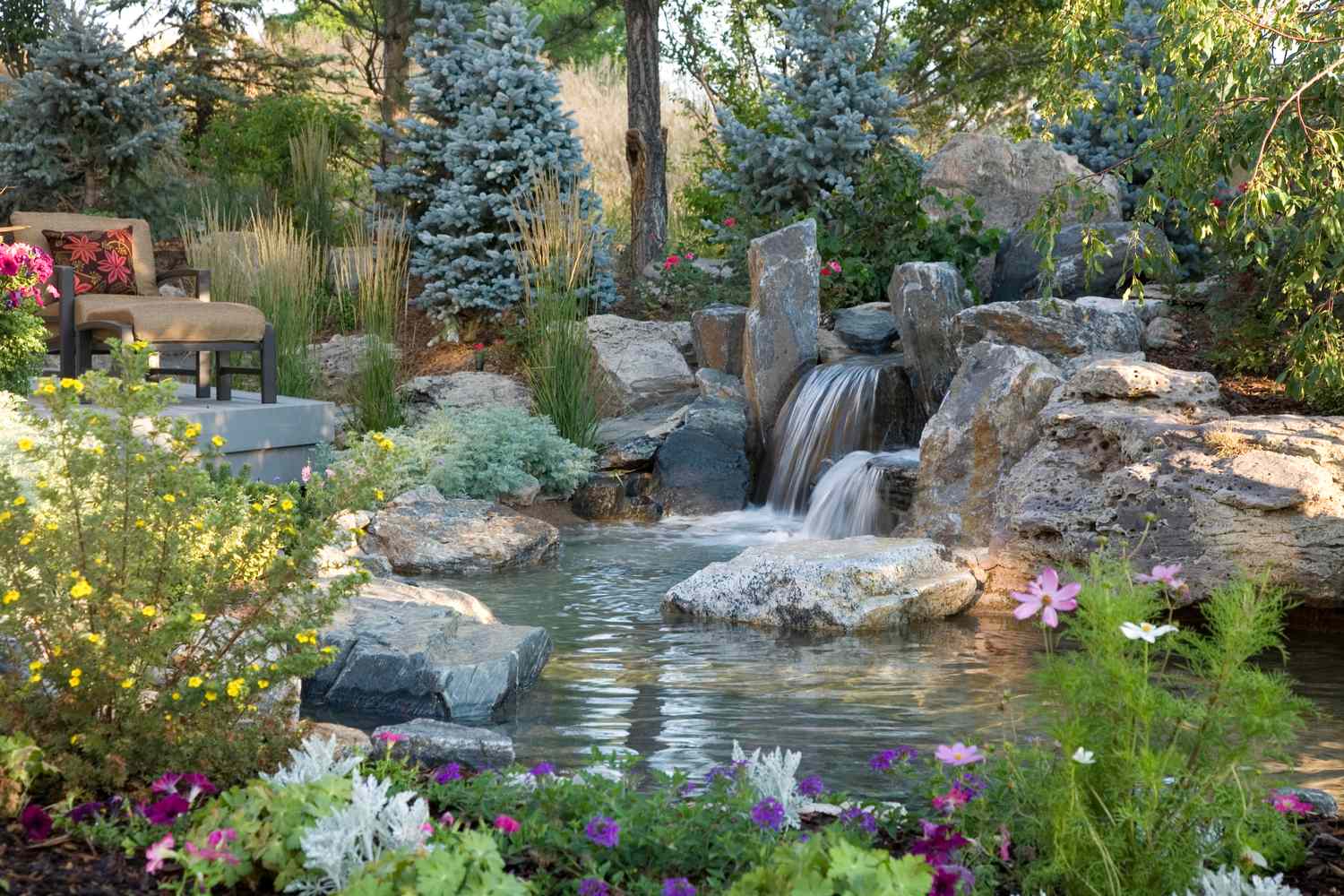
“Sunlight Exposure: Track the sun for a full day.”
Most water lilies need at least 6 hours of direct sun to bloom, but full, harsh sun all day can encourage algae. A spot with morning sun and afternoon shade is often ideal.Proximity to Trees: Avoid placing your pond directly under large trees. It may seem romantic, but you’ll be constantly fishing out leaves, seeds, and twigs, which will clog pumps and decompose into sludge.View from the House: Where will you enjoy the pond from most often? Consider the view from your kitchen window, your patio, or your deck. Place it where you can see and hear it.Access to Power: Your pump will need electricity. Is there a GFCI-protected outdoor outlet nearby? If not, factor in the cost of hiring an electrician.
Here’s a pro tip for visualizing the final size and shape of your pond before you dig. Use a long garden hose or a can of spray paint to outline the proposed shape on the grass. Live with that outline for a few days. Walk around it, view it from different angles, and see how it feels in your space. It’s much easier to adjust the position of a hose than it is to fill in a giant hole you dug in the wrong spot. This simple step can save you hours of regret and back-breaking labor.
Your Backyard Oasis Awaits
You’ve seen the inspiration, from cascading waterfalls to tranquil lily ponds. The next step is choosing the one that speaks to you and making it your own. Don’t be afraid to start small—even a simple water feature can completely change the feel of your outdoor space. Pin your favorites and let the planning begin!