You know that feeling when you finally find the hot tub deck idea that looks *exactly* right for your space? It feels like destiny. But scrolling through endless photos without a plan is a recipe for overwhelm. We spent serious time browsing Wayfair, Home Depot, and Target to bring you only what’s worth your attention this year. In this guide, we’ve curated 30 distinct ideas, from rustic wood-fired setups to sleek, modern swim spas, with options from a thrifty $2,000 to a luxurious $25,000. The focus on creating true backyard escapes is bigger than ever in 2026, as we continue to invest in homes that feel like a personal resort. And stay until the end — we break down the most common mistakes that can ruin these looks.
📌 Save this to Pinterest for later — you’ll want to revisit these ideas.
1. Multi-level Wooden Deck with Sunken Hot Tub and Integrated Seating
This design is a masterclass in creating “zones” within a single structure. The sunken hot tub is clearly the main event, but the separate levels for seating and dining make the entire deck feel more expansive and purposeful. By integrating the L-shaped bench directly into the deck, the design saves space and provides a ton of seating without the clutter of extra furniture. The use of multi-tone wood planks adds visual interest and a sense of natural variation, preventing the large surface from feeling monotonous.
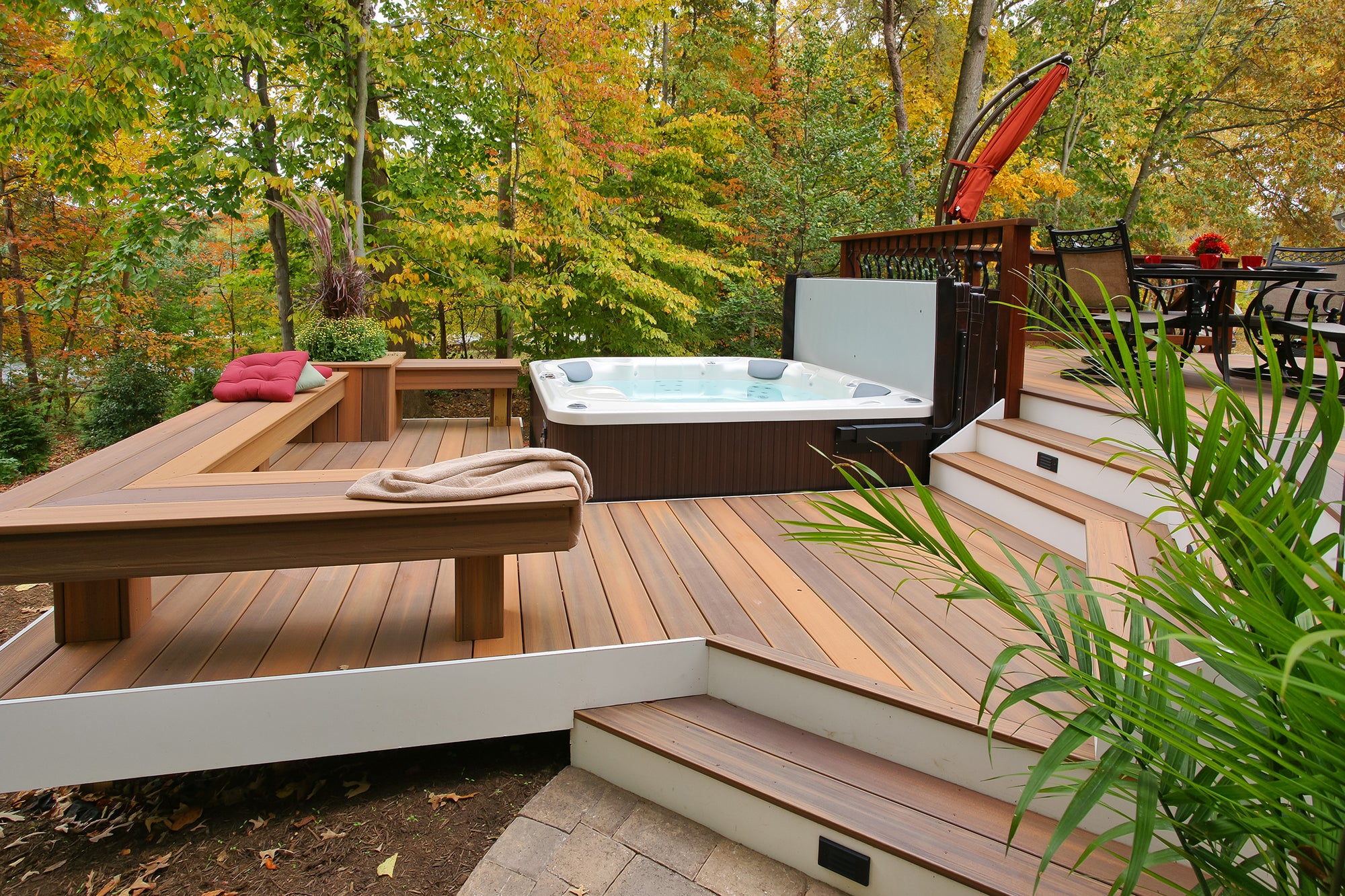
“To recreate this integrated multi-level look, you’ll need to account for significant custom carpentry.”
Here’s a rough estimate:
- Hot Tub: $6,000 – $12,000
- Lumber & Decking Materials: $8,000 – $15,000
- Labor for Custom Build: $10,000 – $20,000
- Lighting & Electrical: $1,500 – $3,000
- Furniture (Umbrella, Dining Set): $1,000 – $2,500
- TOTAL: $26,500 – $52,500
Budget alternative: A similar feel could be achieved for around $12,000 using a pre-fabricated deck kit and a quality above-ground hot tub with a DIY surround.
2. Octagonal Wooden Deck with Integrated Hot Tub and Seating
When integrating a non-square hot tub, echo its geometry in the deck design. Here, the octagonal shape of the tub is mirrored in the deck itself, creating a harmonious and intentional look. For the built-in seating, aim for a depth of at least 18 inches to allow for comfortable lounging, and use a 5-degree slope away from the tub for drainage. Double-check the load-bearing capacity of your planned deck structure with an engineer; a filled octagonal tub can weigh over 10,000 pounds.
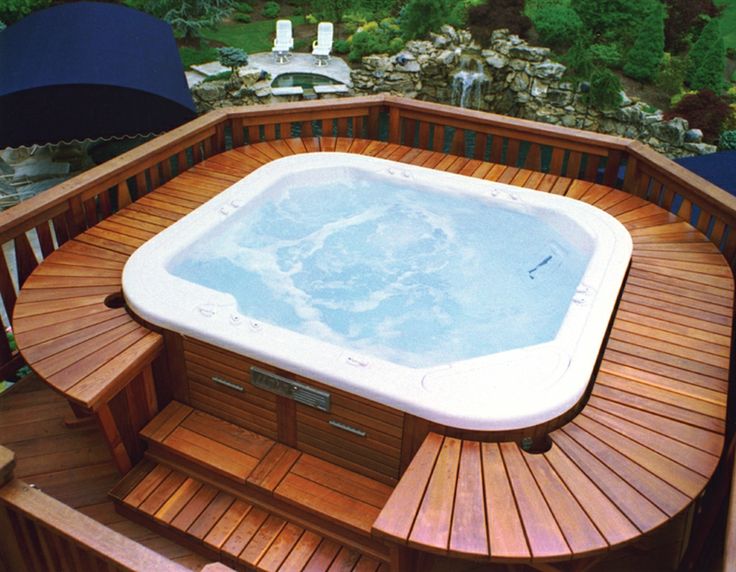
“An octagonal or curved deck design works best when it has room to be a true centerpiece.”
Plan for a minimum footprint of 16×16 feet for the main deck area to accommodate the tub, integrated seating, and comfortable clearance. The multi-tiered steps add functionality but also require space. This idea is ideal for a medium to large backyard where the deck can transition smoothly into surrounding landscaping, as seen with the rock waterfall here. Smaller yards might feel overwhelmed by the angles; a simpler square or rectangular design, like in Idea #21, might be more suitable.
3. Stone Patio with Adjacent Hot Tub and Outdoor Fireplace
The stacked stone fireplace is the undeniable hero of this space. Without it, you’d have a perfectly pleasant patio with a hot tub. With it, you have a magnetic gathering spot that anchors the entire backyard and extends its use well into the cooler nights. The bold black star accent adds a touch of personality and prevents the large stone facade from feeling too heavy or uniform. It’s what transforms the area from a simple utility space into a true outdoor living room.
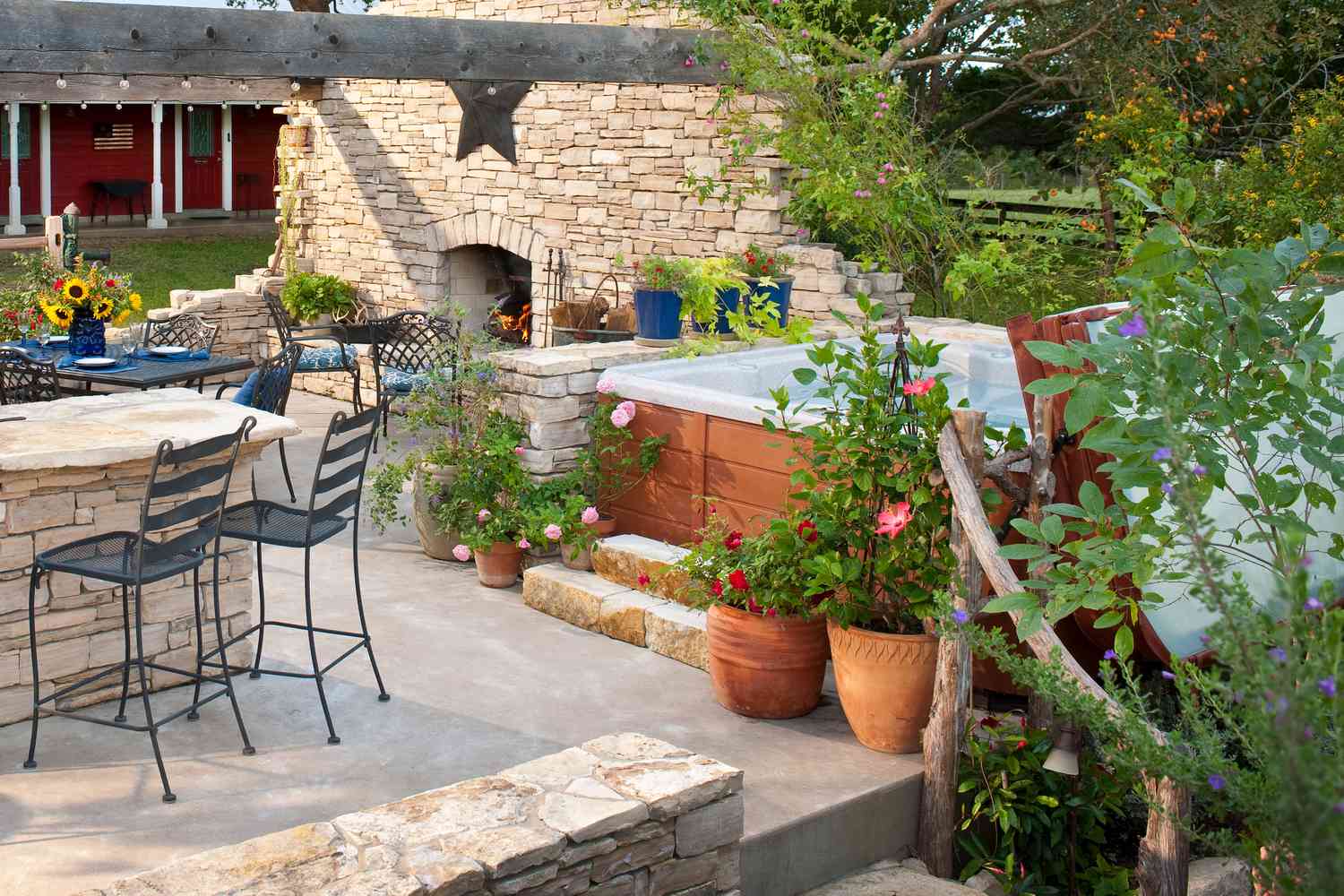
“This rustic-meets-refined look follows a clear formula: 50% warm, natural stone + 30% rich brown wood + 20% dark metal accents.”
The stone on the fireplace and bar provides the textured, earthy base. The wood on the hot tub enclosure warms it up and connects to the natural surroundings. Finally, the black metal in the furniture and fireplace star adds a crisp, modern edge that keeps the rustic elements feeling current. You could swap the stone for brick or the wood for a dark composite and still get a similar, balanced effect.
4. Modern Hot Tub Deck with Natural Wood and a Vibrant Rug
You can achieve this inviting, modern vibe without a custom-built deck. Start with a quality above-ground hot tub with a light wood surround ($3,000 – $6,000). Instead of building a whole deck, consider a simple ground-level platform using pressure-treated lumber from a hardware store for about $500. The key is the styling. Find a bold, colorful outdoor rug from Target or Wayfair for under $150. Look for used wicker or rattan chairs on Facebook Marketplace—you can often score a pair for under $200. This setup gives you 80% of the look for less than 25% of the cost of a fully integrated deck.
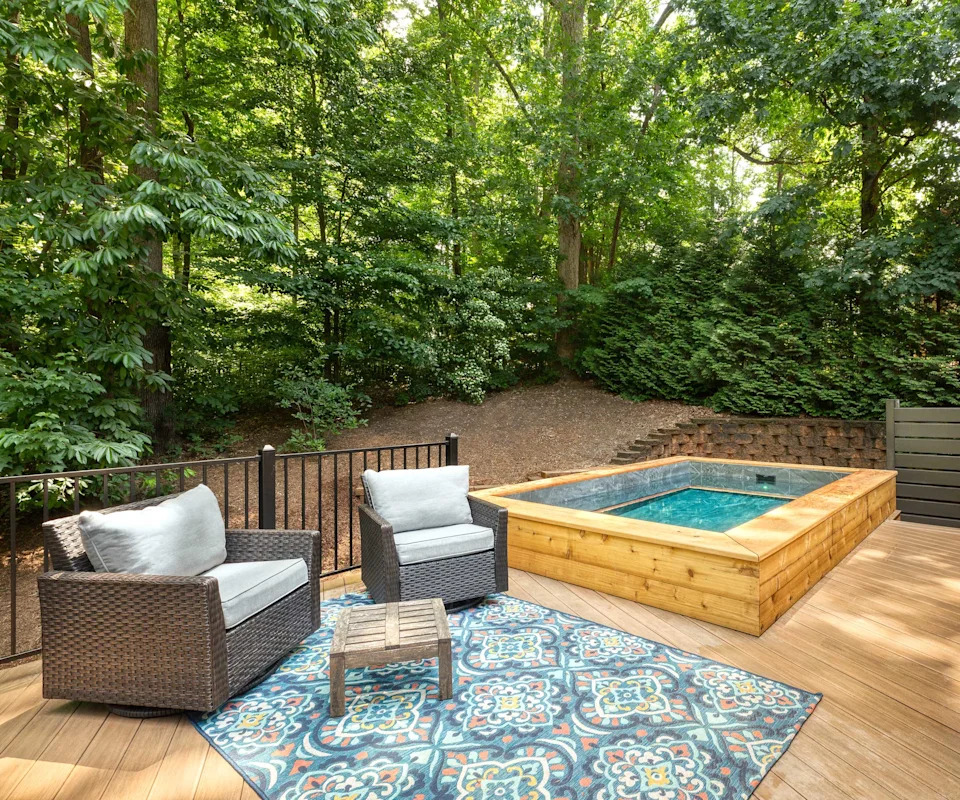
“An outdoor rug looks fantastic, but it comes with strings attached.”
Placed on a wood deck, it can trap moisture, potentially leading to mildew or even rot if not managed. You must be diligent about letting the deck dry completely after heavy rain. This means lifting the rug and allowing both it and the wood surface underneath to air out. If you live in a particularly damp climate, consider a rug made from polypropylene that dries quickly, or skip the rug altogether in favor of painted stencils for a similar pop of pattern without the maintenance headache.
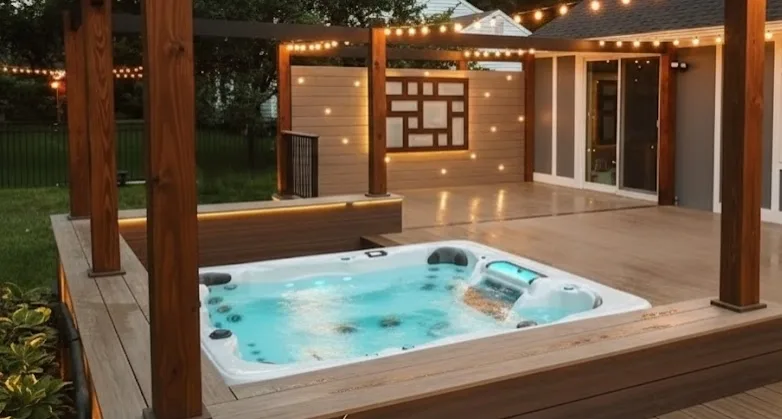
5. Modern Hot Tub Deck with Pergola and String Lights
Adding string lights to a pergola instantly creates ambiance. Here’s a quick guide to get it right. (Estimated time: 2 hours, Cost: $50-$200)
“Choose outdoor-rated, shatterproof LED string lights.”
Measure the perimeter or interior beams of your pergola to ensure you buy enough length.
Install galvanized or stainless steel cup hooks every 18-24 inches along the beams where you plan to hang the lights. Pre-drill pilot holes to prevent wood from splitting.
Start at the corner closest to your power source. Begin hanging the lights, using zip ties to secure the cord to the hooks for a cleaner look.
Create a gentle scallop or a taut, linear pattern depending on your preference. Don’t pull the cord too tight; allow a little slack for expansion and contraction with temperature changes.
Use an outdoor-rated extension cord and plug it into a GFCI outlet. For a professional touch, have an electrician wire a dedicated, switched outlet to the pergola.
A mix of materials like this—dark stained wood, lighter composite decking, and a white hot tub—creates a great look, but requires a multi-faceted maintenance plan. The dark-stained pergola will likely need to be re-sealed every 2-3 years to protect it from sun fading and water damage. Composite decking is low-maintenance, but it can be susceptible to mildew in shady, damp areas and may require annual pressure washing. The white acrylic of the hot tub shell will show dirt and pollen more readily than a darker color, so plan on wiping it down weekly to keep it looking fresh.
6. Cozy Wood-Fired Hot Tub Nook with Natural Elements
There’s a growing desire for experiences that feel more elemental and less automated, which explains the surge in popularity for wood-fired hot tubs. In a world of smart homes and one-touch controls, the ritual of building a fire, waiting for the water to heat, and smelling the woodsmoke offers a grounding, analog escape. This isn’t about instant gratification; it’s about the process. It taps into the ‘cottagecore’ and rustic luxury trends, providing a screen-free way to connect with the outdoors, making it a feature on many aspirational Pinterest boards right now.
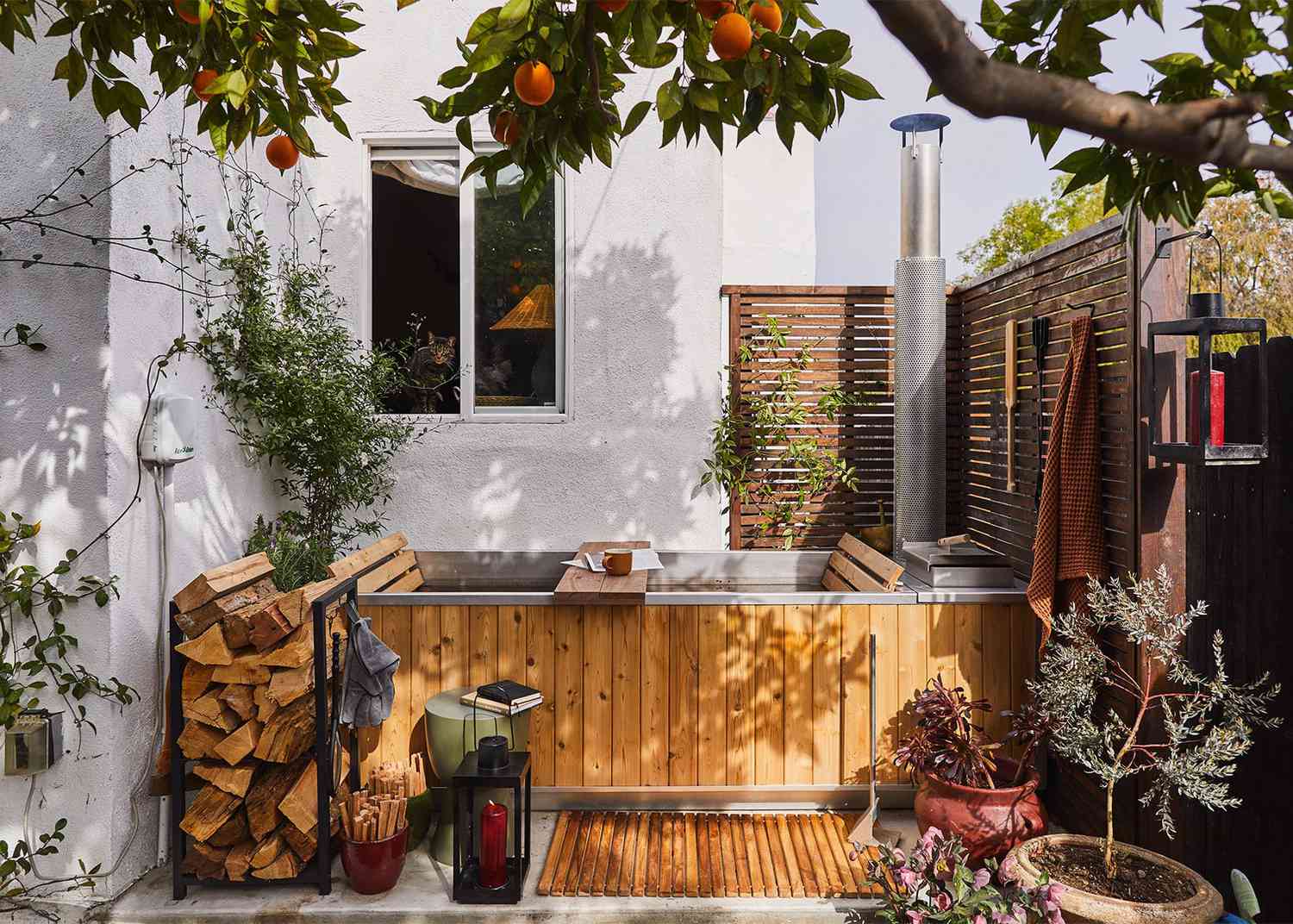
“When creating a cozy nook like this, the height and placement of your privacy screen are critical.”
For true privacy, the screen should be at least 6 feet tall. Notice how the slatted wood here is oriented horizontally; this trick makes a small space feel wider. When positioning the tub, ensure you leave a minimum of 3 feet of clearance on the side with the wood-fired heater. This is not just for safety and heat dissipation, but also for the practicalities of loading wood and cleaning out ash. Compare this intimate setup with the more open design in Idea #7.
7. Round Wooden Hot Tub on a Serene Water-View Deck
This design succeeds because of its beautiful simplicity and deference to the view. The clean lines of the natural wood deck and the classic form of the round tub don’t try to compete with the stunning backdrop of the water and trees. The choice of a partially recessed tub is key; it feels integrated with the deck but still stands out as a feature. The minimal styling—just a couple of terracotta pots with flowers—is all that’s needed to add a touch of color without creating clutter or distracting from the main event: the view.
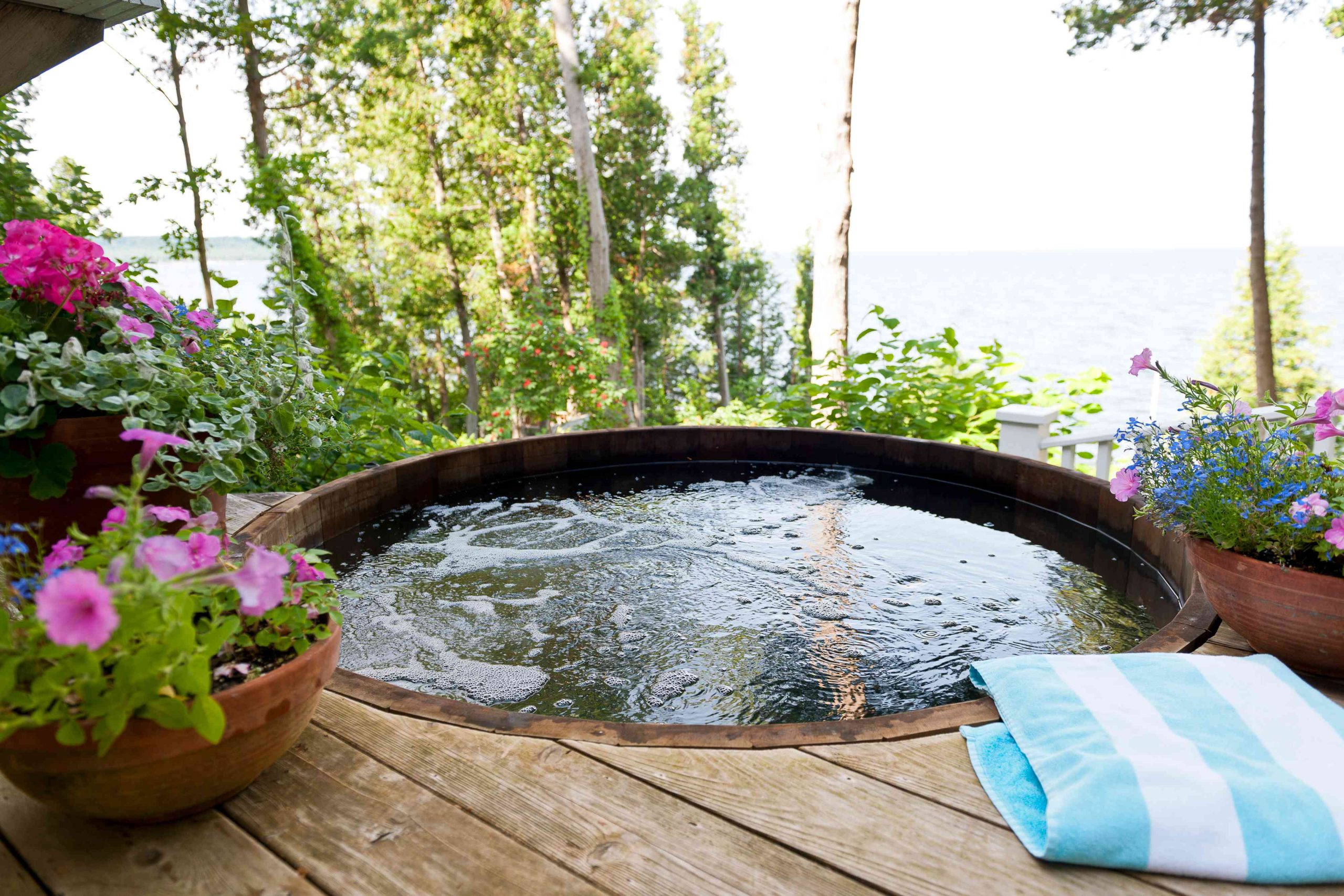
“Take away the water view, and this is still a nice deck.”
But that serene expanse of water and the distant treeline are what elevate this from a simple backyard feature to a truly breathtaking escape. The view provides a sense of endless space and tranquility that no amount of clever design can replicate. It’s the ultimate borrowed landscape, making the deck feel like a private pier into nature itself. Every element of the design is correctly oriented to maximize the enjoyment of this single, priceless feature.
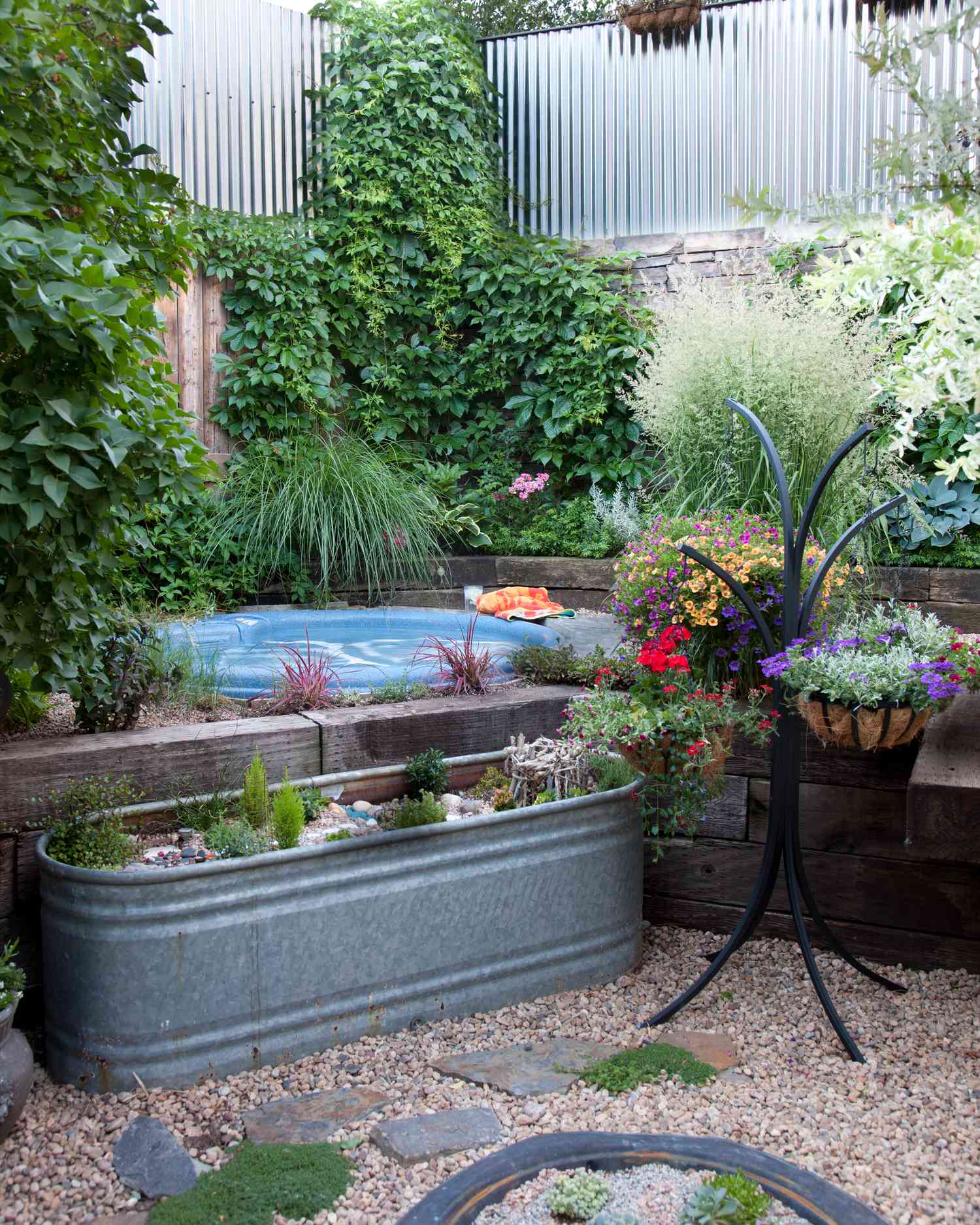
8. Urban Backyard Hot Tub with Lush Plantings and Metal Accents
This look is a beautiful exercise in controlled chaos, perfect for an urban garden. The formula is roughly 60% lush, varied foliage + 25% rustic materials + 15% industrial metal. The greenery is the star, creating a private, jungle-like feel. The rustic elements, like the wood timber retaining walls and gravel floor, provide an earthy, textured base. Finally, the corrugated and galvanized metal pieces add a surprising and modern edge, keeping the design from feeling like a simple cottage garden. It’s a fantastic blend of organic and man-made.
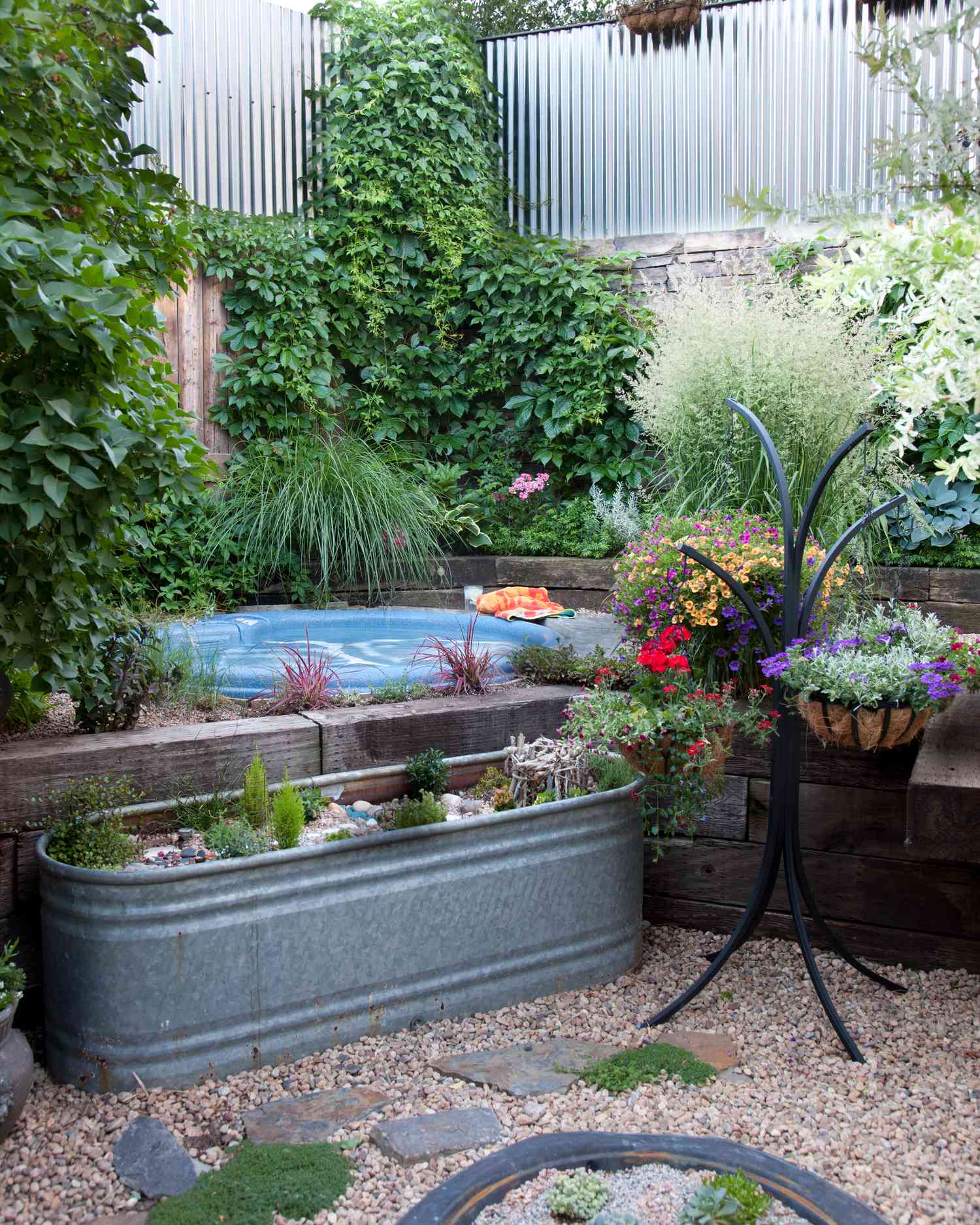
“A multi-level garden with a hot tub requires serious thought about drainage.”
When the tub is drained for cleaning, where will several hundred gallons of water go? You need a plan that doesn’t involve flooding your lower patio or damaging plant roots. A proper setup involves dedicated drainage routed away from the foundation and planting beds. Also, a gravel patio looks great and offers excellent drainage, but it can be a pain to keep clean of leaves and dirt, and it’s not the most comfortable surface for bare feet hopping out of the tub.
9. Designing the Perfect Drop-In Hot Tub Deck
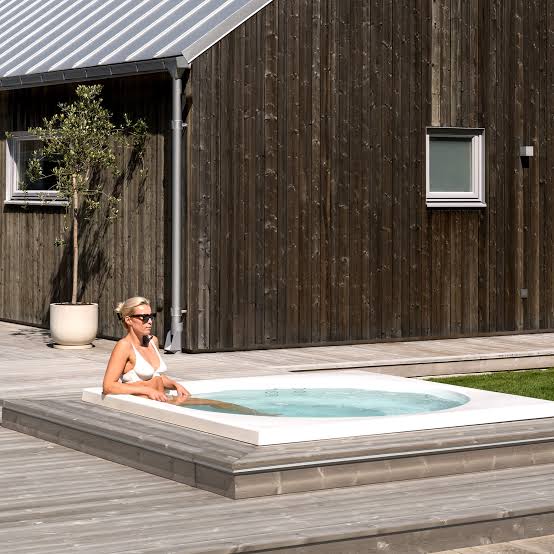
A drop-in or sunken hot tub offers a sleek, custom look, but it requires careful planning before you even think about framing. Make sure you cover these bases:
“Confirm Service Access: Verify the location of the tub’s service panel.”
You MUST build a removable hatch or section of decking that allows a technician full access for future repairs. Don’t skip this.
Plan Your Foundation: A hot tub is incredibly heavy. You can’t just place it on a standard deck. It needs its own concrete pad or a deck frame specifically engineered to support 100-150 lbs per square foot.
Measure for Ventilation: The tub’s motors and pump generate heat and need to breathe. Check the manufacturer’s specifications for minimum ventilation clearances and ensure your deck design incorporates hidden vents.
The beauty of a drop-in design is how seamlessly it integrates into the deck, making it feel less like an appliance and more like a feature. This approach is best for medium to large decks where you can afford to dedicate a significant footprint to the tub and its immediate surround. A minimum deck size of 12×20 feet is recommended to avoid the tub overwhelming the space. This allows for at least 3 feet of clear walking space on all sides and room for stairs, seating, or planters, creating a complete and functional environment rather than just a tub on a platform.
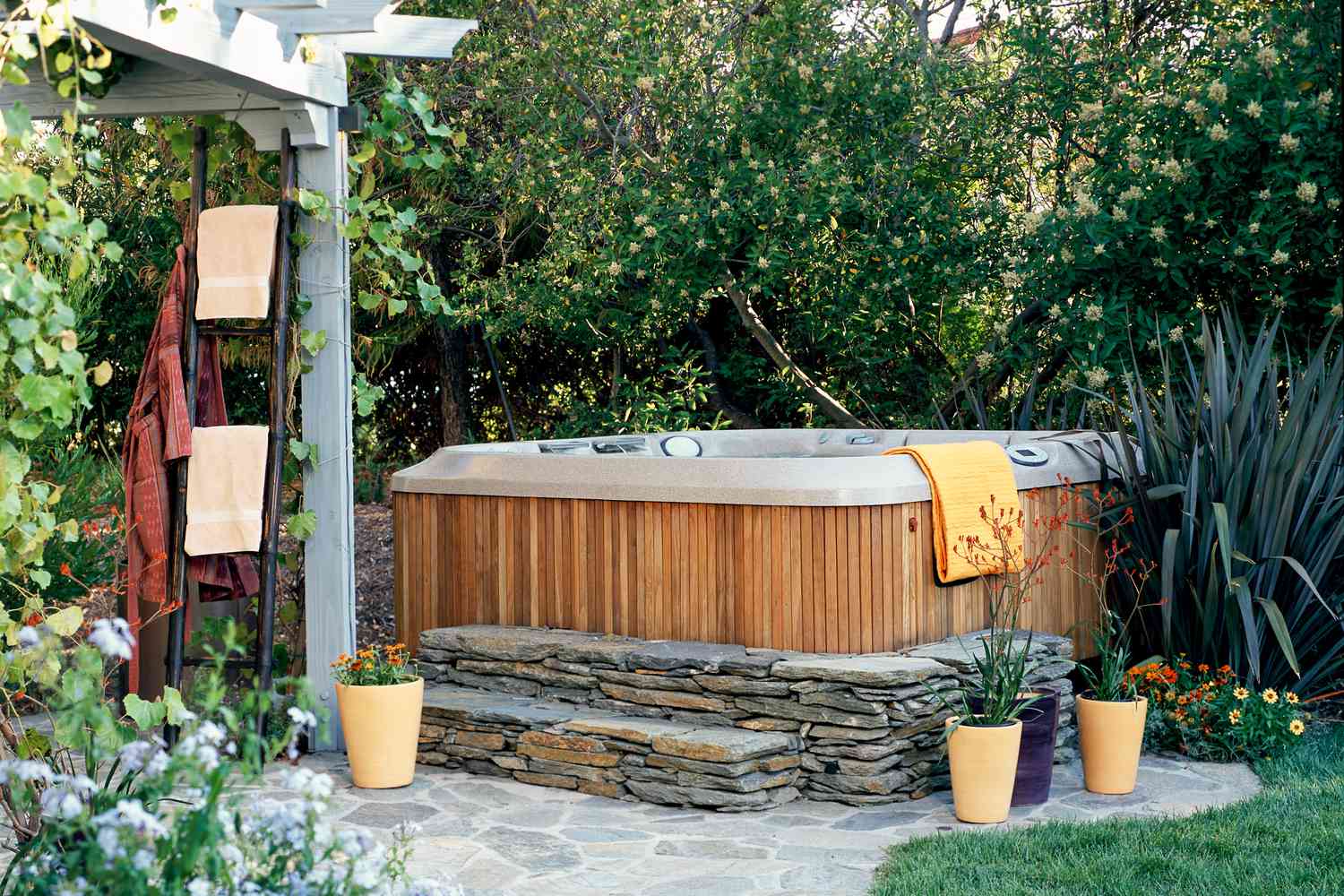
10. Hot Tub with Wood Skirt and Flagstone Surround in a Natural Garden
Love this lush, integrated look but not the price of a custom build? You can get very close with some savvy choices. Start with a standard above-ground hot tub that has a simple wood-look skirt. Instead of a full flagstone patio, create a
11. A Social Hot Tub Enclosed by a Wrap-Around Stone Bar
The wrap-around bar is what makes this design genius. It completely redefines the hot tub from a solitary soak spot into the hub of the party. People who don’t want to get in the water can still be right in the middle of the conversation, with a place to set their drink and pull up a stool. It’s an incredibly inclusive and clever way to integrate the tub into a larger social setting. Removing the bar would leave you with a nice, but ordinary, hot tub on a patio; the bar makes it an event.
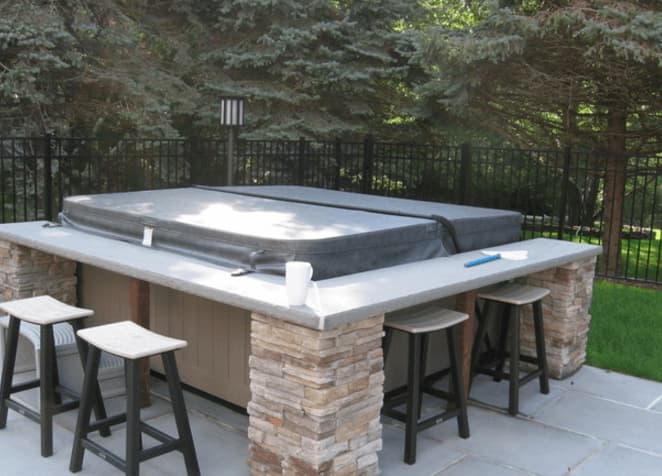
“Building a permanent, all-weather bar like this is a significant project.”
The cost is driven by the stonework and durable countertop material.
- Hot Tub: $7,000 – $15,000
- Bar Structure (CMU blocks, framing): $1,500 – $3,000
- Stone Veneer & Installation: $4,000 – $8,000
- Outdoor-Rated Countertop (Granite, Concrete): $3,000 – $6,000
- Bar Stools: $800 – $2,000
- TOTAL: $16,300 – $34,000
Budget alternative: Get a similar vibe for around $8,000 by using a high-quality above-ground hot tub and building a surrounding bar from weather-treated lumber instead of stone.
12. Modern Hot Tub Deck With An Integrated Slat Privacy Screen
This design’s success comes from its cohesive use of materials. The dark stained wood of the deck, hot tub surround, and privacy screen are all perfectly matched. This creates a unified, intentional, and high-end custom look. It makes the hot tub feel like a part of the architecture, not just an object placed on the deck. The contrast between the warm, dark wood and the cool blue of the house siding and water adds a sophisticated color dynamic. The way the tree is integrated into the deck is another brilliant touch, blending the built environment with nature.
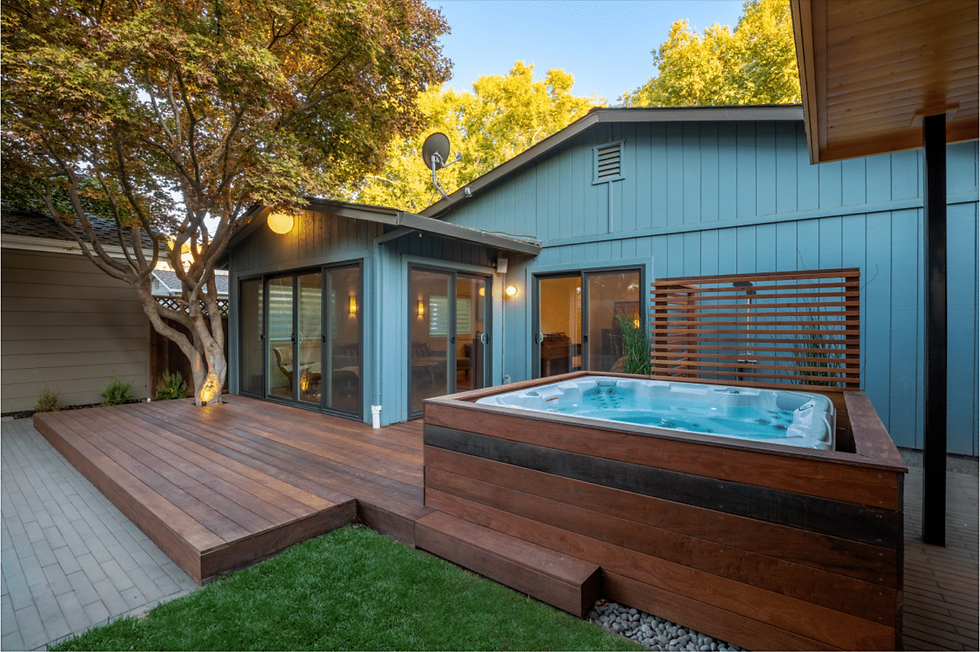
“A horizontal slat screen is a stylish way to add privacy.”
Here’s how to build a simple section. (Estimated time: 4-6 hours, Cost: $150-$300 for a 6’x6′ panel)
- Set two 4×4 pressure-treated posts 6 feet apart and secure them in concrete. Ensure they are plumb and level.
- Start at the bottom. Attach your first 1×6 horizontal slat, making sure it’s perfectly level. Use weather-resistant screws.
- Use a spacer block to ensure consistent gaps. A piece of 1/2″ or 3/4″ plywood works well. Place it on the first slat, rest the next slat on top, and screw it in place.
- Repeat this process all the way to the top of the posts.
- Finish the wood by applying a quality outdoor stain or sealer that matches your deck, like the one used here.
13. Crisp White Hot Tub on a Grey Composite Deck
A white hot tub shell is undeniably chic, but it’s the definition of high-maintenance in an outdoor setting. It will visibly show every speck of dust, pollen, leaf litter, and dirt. To keep it looking pristine, you’ll need to wipe down the exposed acrylic surfaces above the waterline almost daily, especially during spring and fall. The good news is that composite decking, like the grey material here, is the opposite. It requires just a seasonal scrub with soap and water or a light pressure wash to look its best, and it won’t splinter or rot like wood.
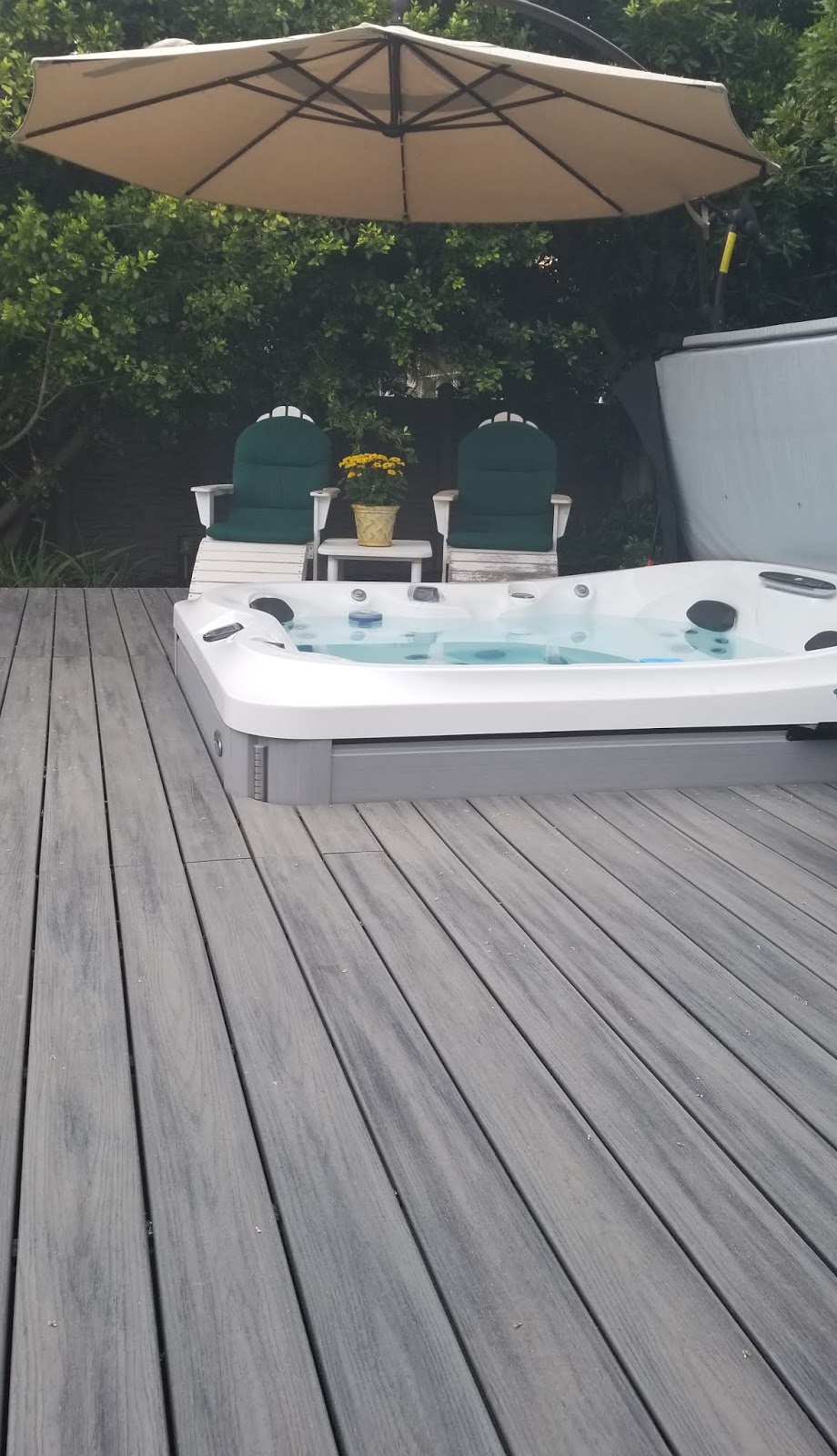
“When pairing furniture with a sleek, modern deck, less is more.”
The choice of classic white Adirondack chairs is perfect—they are timeless and their color echoes the hot tub shell, creating a cohesive look. The key is the cushion choice. The dark green cushions provide a necessary pop of color, connecting the deck to the surrounding greenery. Without the cushions, the scene would be a sterile sea of white and grey. Always add a textile element to soften a modern outdoor space; a cushion, a throw, or an outdoor rug can make all the difference.
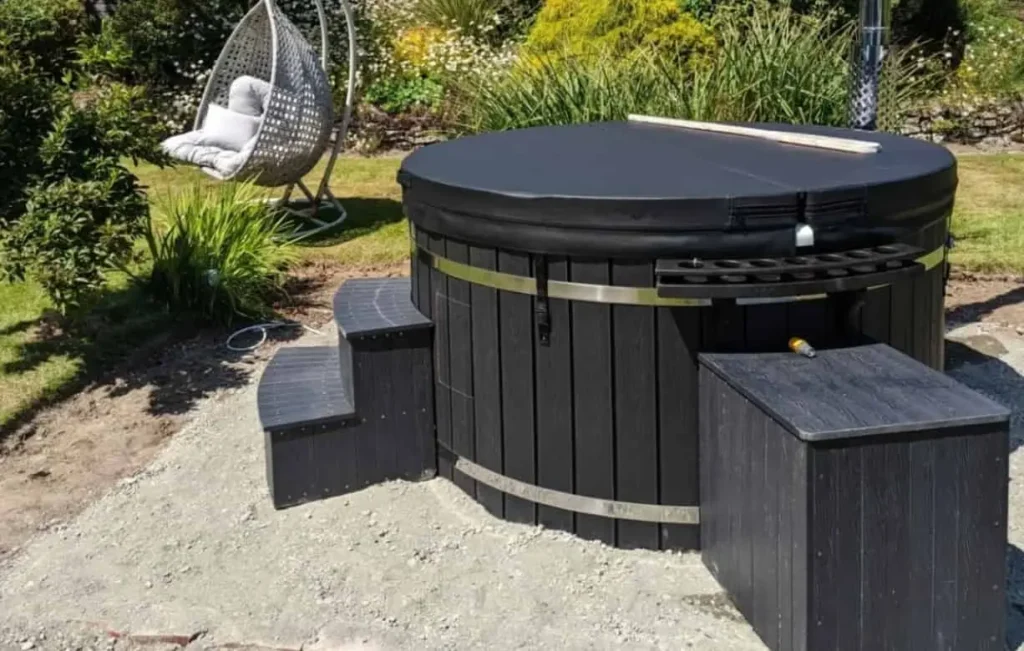
14. Dark Wood-Look Hot Tub with Matching Storage and Steps
That beautiful, dark wood-look siding is stunning on day one, but be prepared for a reality check. Dark colors absorb more sunlight, which means they are more prone to fading from UV exposure over time, especially if the tub is in direct sun for most of the day. Materials advertised as
15. Round Wooden Hot Tub with an External Stove on a Stone Patio
The external stovepipe is the element that defines this entire scene. It’s a clear visual statement that this is a wood-fired tub, instantly evoking a feeling of rustic, off-grid charm. The perforated pattern on the silver metal is a thoughtful detail, adding a touch of craft and visual interest that elevates it beyond a simple piece of heating equipment. It’s what signals that the experience here is hands-on, authentic, and connected to the natural elements. This is a far cry from a standard push-button spa and much closer to the wood-fired tubs seen in Idea #6 or Idea #19.
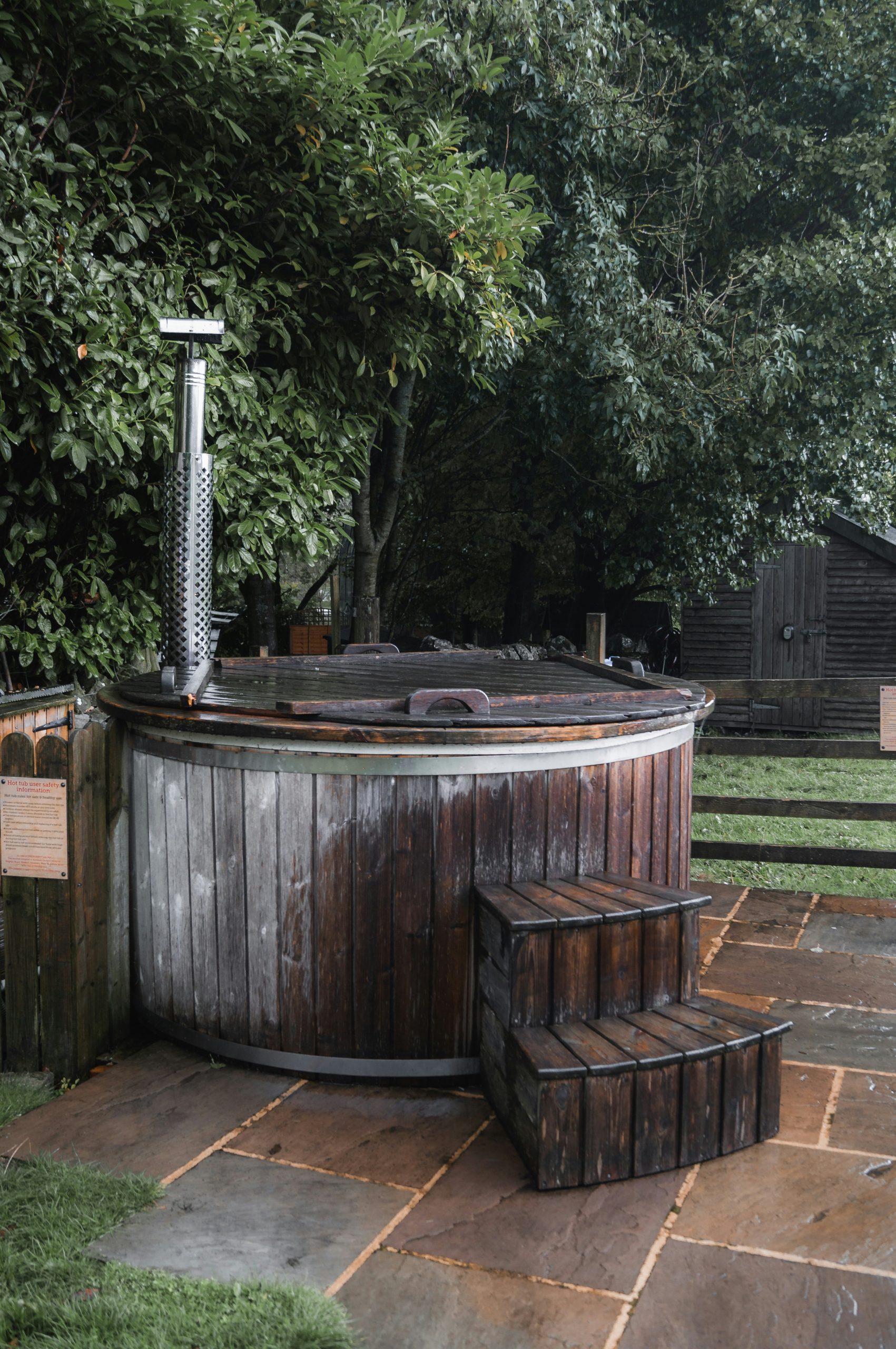
“This inviting look is a study in texture and natural tones.”
The formula is simple: 40% warm, dark wood + 40% multi-toned stone + 20% lush greenery and metallic accents. The round wooden tub provides the dominant organic shape and color. The varied sizes and colors of the stone patio create a textured, durable ground plane that feels completely natural. The final 20% is the pop of the silver stovepipe and the deep greens of the surrounding foliage, which contain the space and add life. Keeping the man-made elements (wood, stone, metal) within a natural color family is key to its success.
16. Wood-Fired Hot Tub in a Glistening Snowy Landscape
The idea of ‘cold-weather wellness’ is a huge trend, driven by social media images just like this. People are actively seeking out invigorating, elemental experiences, and the contrast of soaking in hot water while surrounded by snow and crisp winter air is the ultimate example. It’s a sensory-rich activity that feels both luxurious and rugged. This isn’t just about getting warm; it’s about embracing the season and creating a memorable, almost magical, moment that looks incredible online and feels even better in person. Expect to see more ‘snow-tubs’ on your feed.
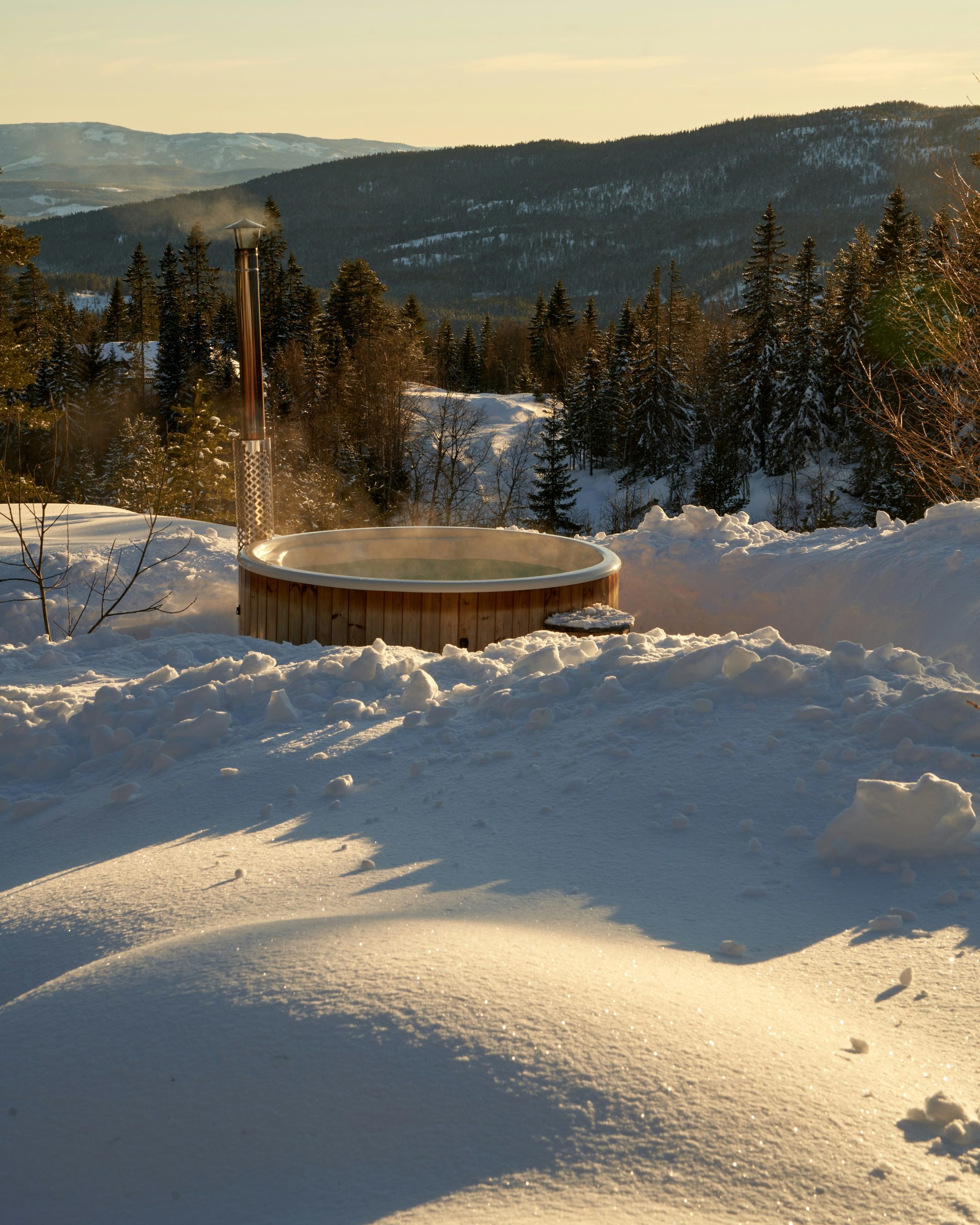
“As idyllic as this looks, using a hot tub in freezing temperatures requires diligence.”
The biggest risk is a power outage or if the fire goes out, which can lead to pipes and equipment freezing and cracking, causing thousands of dollars in damage. Ensure your hot tub has a ‘no-freeze’ or ‘winter’ mode that circulates water to prevent this. For a wood-fired tub, you must maintain the fire or have a secondary electric heater as a backup. Also, that metal chimney gets extremely hot—be mindful of its placement and keep flammable materials and curious kids or pets away.
17. Rustic Wood-Fired Cedar Hot Tub Experience
The defining feature here is the undeniable authenticity. This isn’t a plastic shell made to look like wood; it *is* wood. The traditional cedar construction, complete with metal bands, speaks to a heritage of craftsmanship. The experience is driven by the wood fire, an elemental process that requires patience and participation. This isn’t about pushing a button for jets; it’s about the scent of cedar and woodsmoke, the quiet crackle of the fire, and the simple pleasure of soaking in naturally heated water. It’s an escape from the modern world, not just an addition to the backyard.
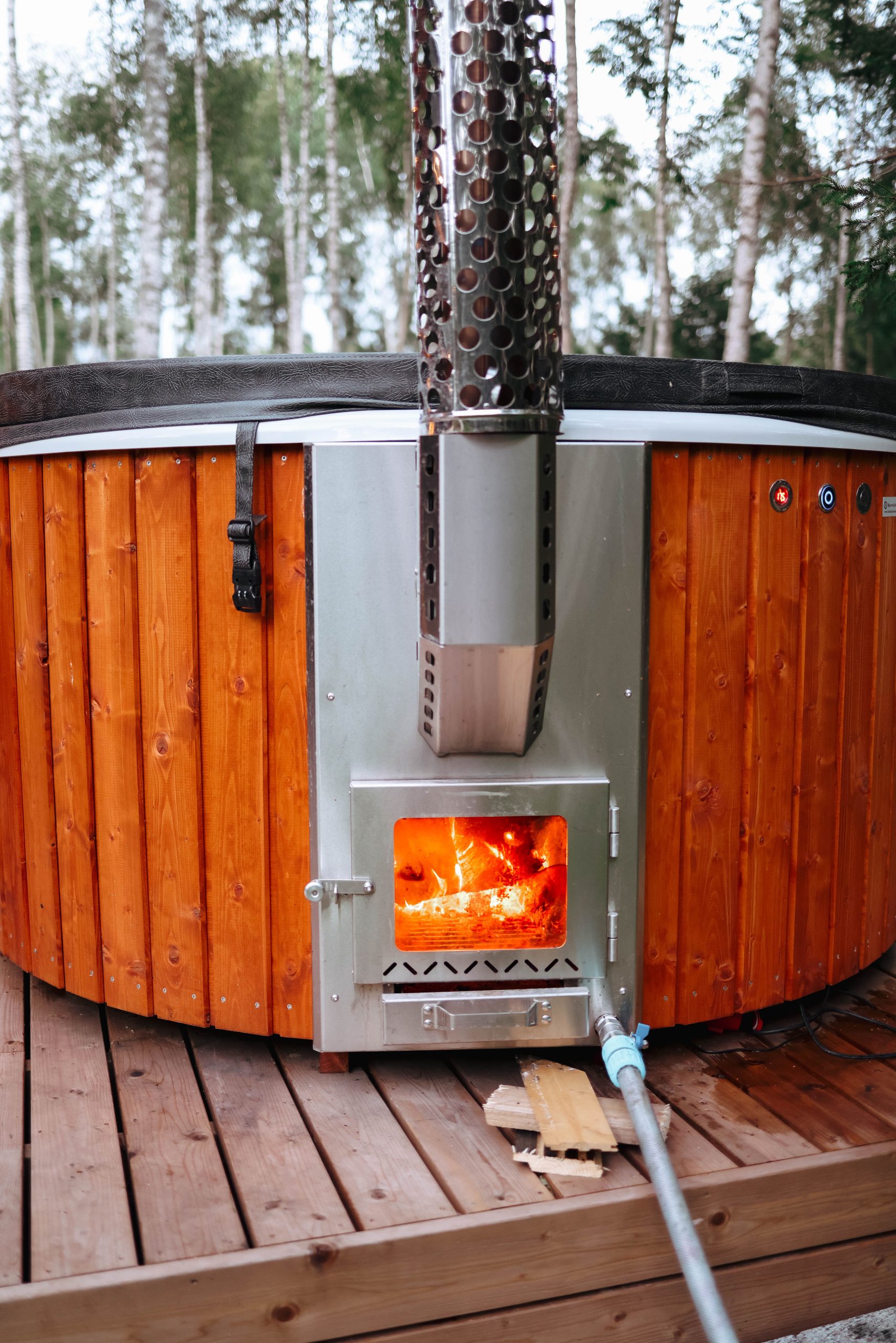
“A traditional wooden hot tub is a beautiful, natural choice, but it’s a commitment.”
Unlike an acrylic spa, a wood tub needs to be kept full of water. If you drain it and let the wood dry out completely, the staves can shrink, causing leaks when you refill it. The wood is also susceptible to algae and requires regular but gentle cleaning with specific, non-abrasive products to avoid damaging the cedar. The exterior will need to be treated with a protective oil annually to maintain its rich color and protect it from weathering, much like a natural wood deck.
18. Circular Wooden Hot Tub Integrated into a Curved Deck
When building a deck around a circular object like this hot tub, a common mistake is to build a square deck right up to it, creating awkward corners. The technique used here is far superior. By building curved deck boards that echo the shape of the tub, the integration feels seamless and custom. To achieve this, deck boards are soaked in water to become pliable, then bent around a form and secured. It’s a high-skill job, but the resulting flow is worth the effort for a high-end finish.
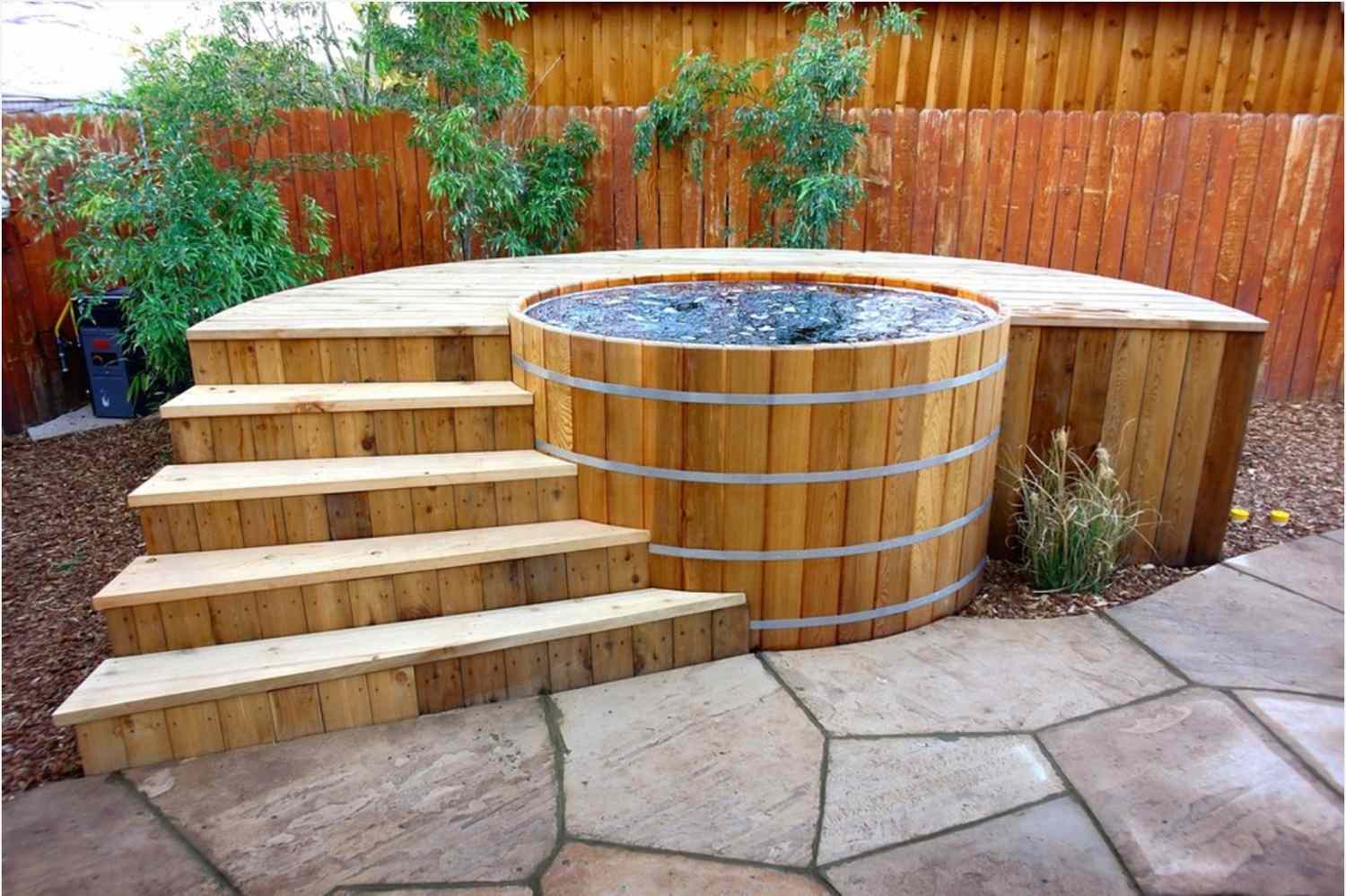
“The success of this design lies in its repetition of shapes and materials.”
The circular form of the hot tub is repeated in the elegant curve of the deck and steps. The vertical lines of the wooden tub staves are echoed in the vertical slats of the privacy fence behind it. This repetition creates a visual rhythm that is calm and pleasing to the eye. Limiting the material palette primarily to wood (in two slightly different tones) and natural flagstone ensures the entire composition feels harmonious and grounded.
19. Forest Hot Tub Perched Beside a Babbling Stream
It’s the stream. The single element that makes this entire setup feel like a fantasy is the proximity to the gently flowing water. The sound, the movement, and the lush, vibrant green life it supports create a sensory experience that’s impossible to manufacture. The hot tub is merely a vehicle for enjoying this stunning natural feature. Placing it right at the edge of the forest, overlooking the water, blurs the line between the built structure and the wild landscape, making it feel like you are truly soaking in the middle of nature.
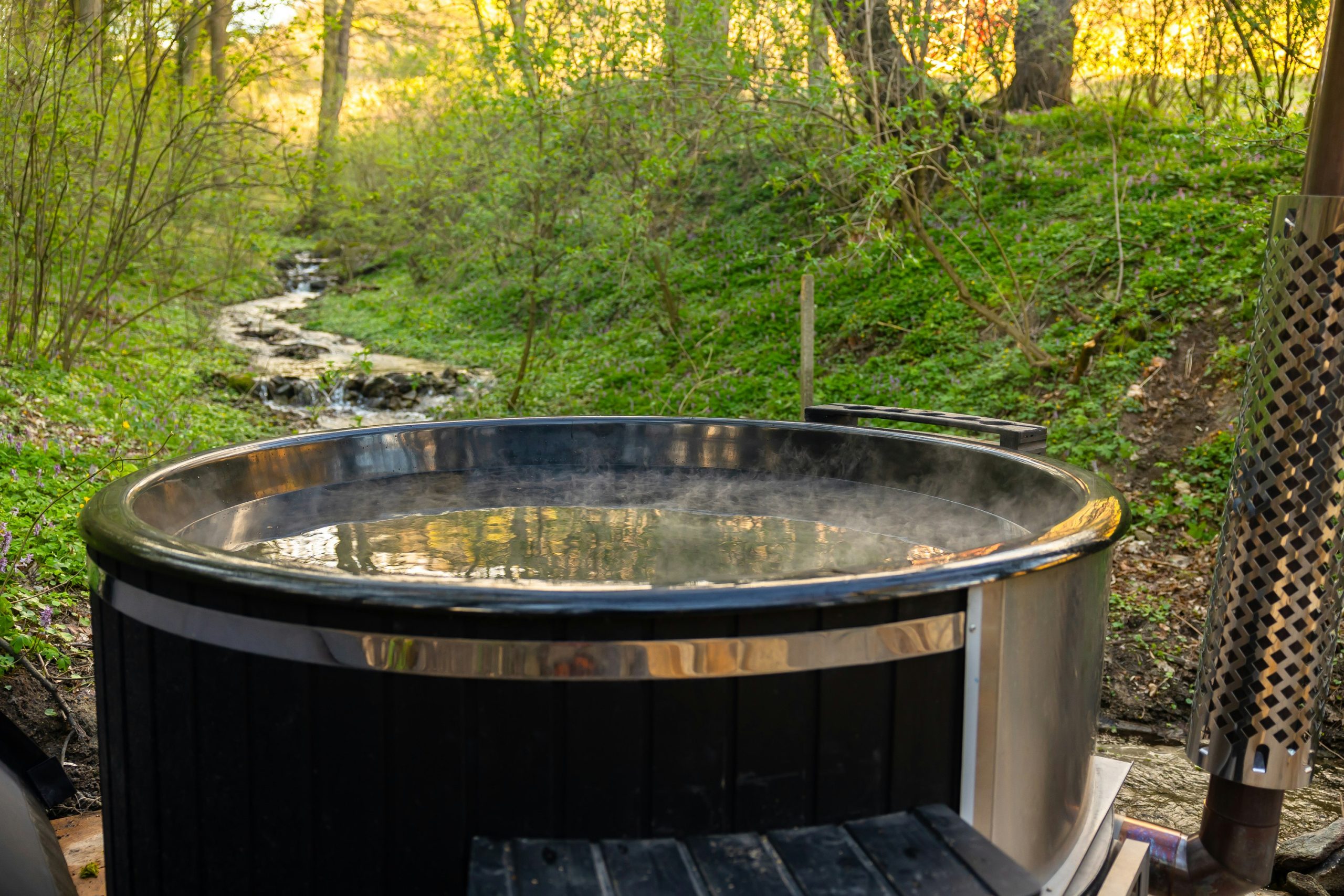
“A storybook setting like this comes with some practical challenges.”
Being this close to a stream and dense woods means you’ll be sharing your soak with nature’s residents: insects. Citronella candles or a well-placed bug zapper might be necessary for evening enjoyment. Furthermore, accessibility can be an issue. Hauling firewood to the heater and performing maintenance might involve navigating uneven, potentially slippery terrain. You must also check local regulations about proximity to waterways; there are often setback rules to protect the natural habitat.
20. Wood-Paneled Hot Tub with External Heater Amidst Natural Greenery
This design works because it feels completely at home in its natural surroundings. The choice of materials is key: the dark wood paneling of the tub, the weathered wooden fence, and the silver of the metal heater all feel like they belong in a rustic, outdoor setting. There are no jarringly modern or artificial elements. The tub isn’t sitting on a pristine patio but on a bed of pebbles, surrounded by tall, untamed grass. This intentional lack of formal landscaping makes it feel like an authentic, found object in a wild garden.
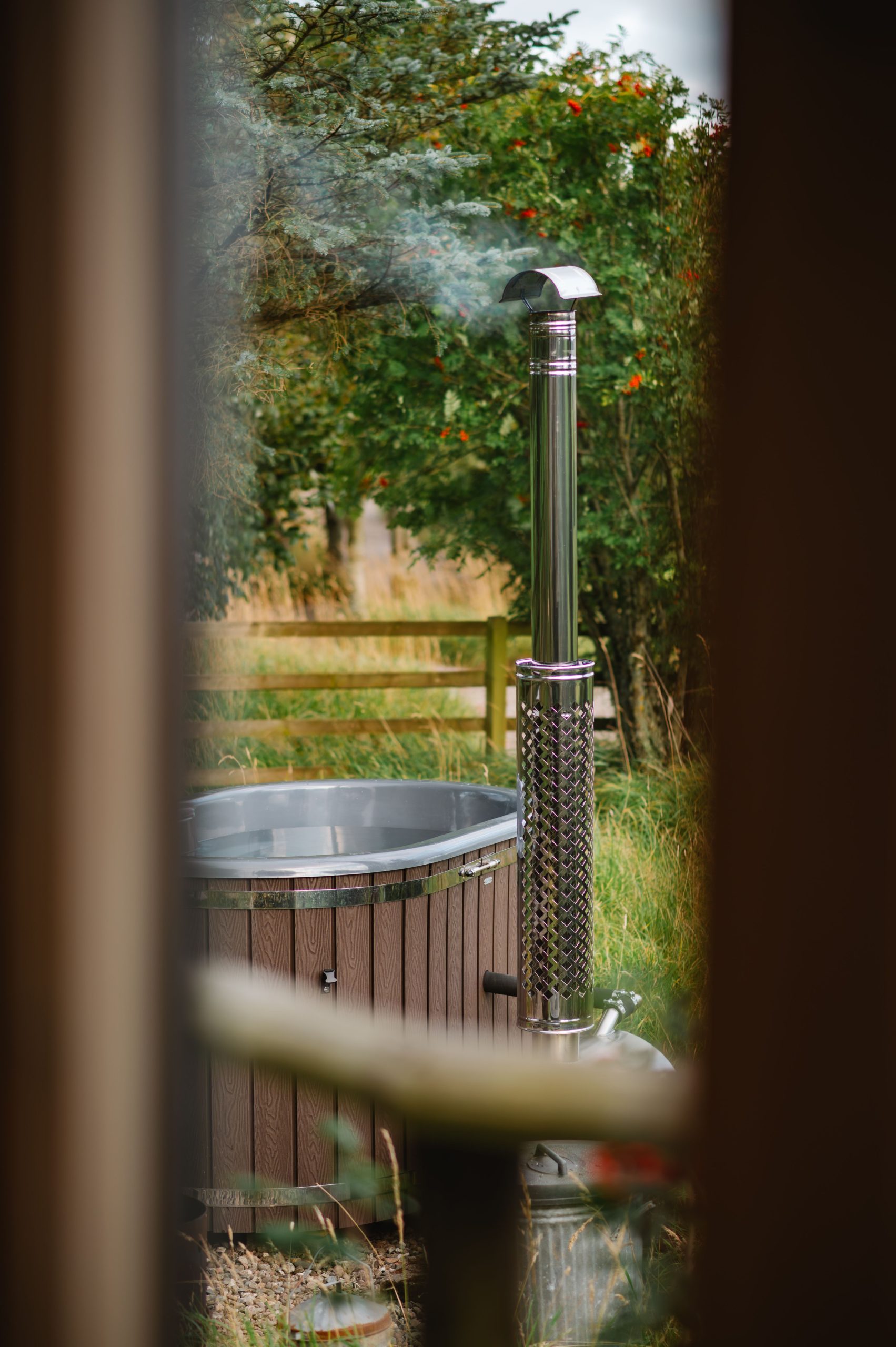
“Wood-fired hot tubs require more hands-on maintenance than their electric counterparts.”
The firebox and chimney on the external heater need to be cleaned of ash and creosote buildup regularly to ensure safety and efficient operation—think of it like a small wood-burning stove. The pebble ground cover, while looking natural, can be a magnet for leaves and debris, requiring periodic raking or the use of a leaf blower to keep it looking tidy. Finally, the wood paneling itself will need to be cleaned and treated with a protective oil every year or two to prevent it from weathering to a dull gray.
21. Modern Swim Spa Deck with Horizontal Cable Railing
A swim spa is a significant investment in both cost and space, and this design is best suited for a large backyard. The spa itself is often 12 to 19 feet long, so the deck needs to be substantial to not feel dwarfed by it. A minimum deck size of 20×30 feet is recommended. This provides ample room for the spa itself, at least 4 feet of clearance on the service side, and dedicated zones for seating and access, as shown with the Adirondack chairs here. The goal is to make it feel like a cohesive outdoor living area, not just a workout pool dropped onto a platform.
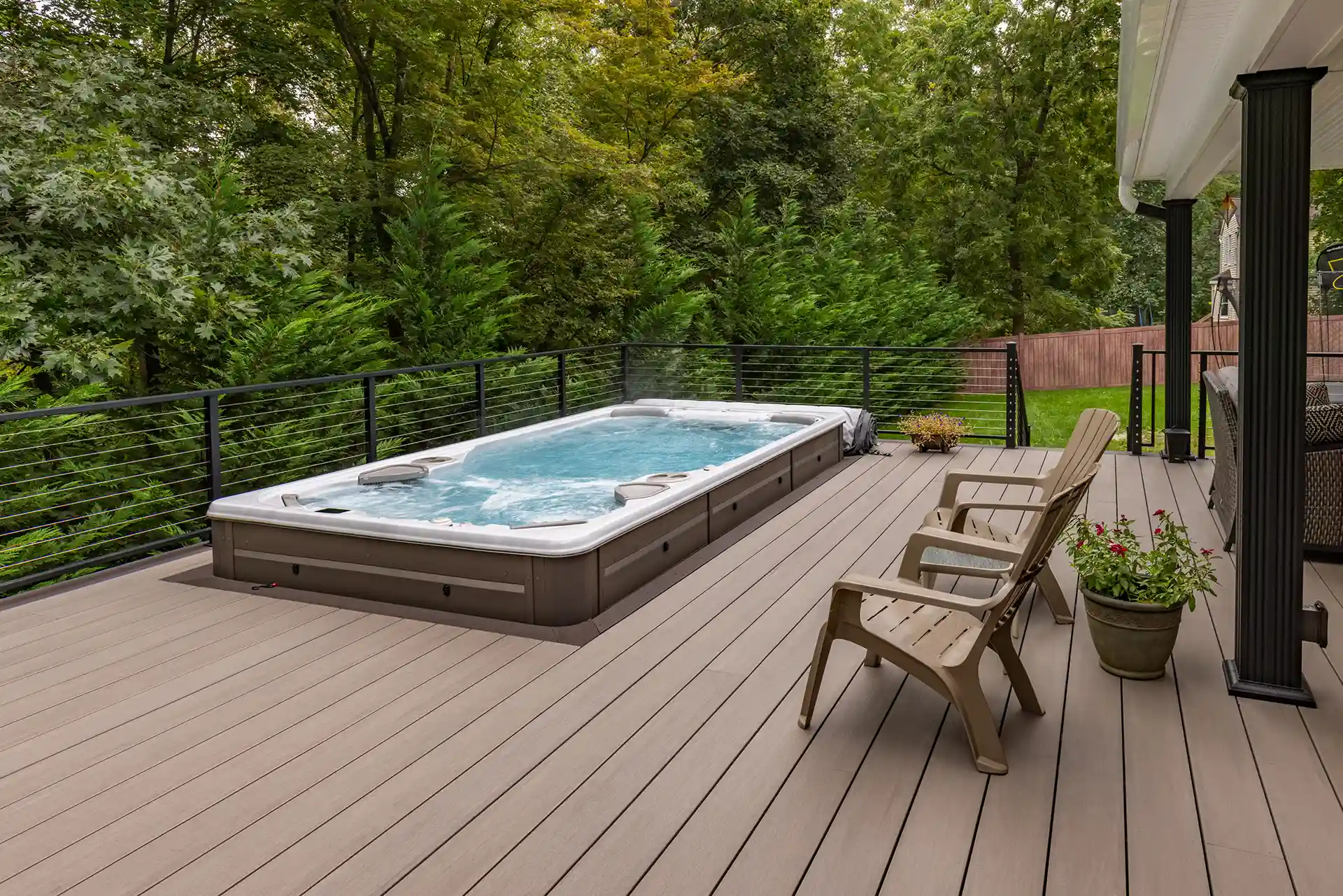
“When you have a beautiful, natural view like this dense foliage, the last thing you want to do is block it with chunky deck railings.”
Horizontal cable railing is the perfect solution. It provides essential safety without sacrificing the view. For maximum transparency, specify 1/8-inch diameter stainless steel cable and keep the vertical posts spaced as far apart as your local building code allows (typically 4-6 feet). The black metal frame used here is a smart choice, as dark colors tend to recede visually, further enhancing the see-through effect.
22. Modern Grey Hot Tub on a Chevron-Patterned Cedar Deck
The magic here is the subtle but impactful chevron pattern of the cedar deck. On a large, flat surface, laying the boards in a non-standard pattern adds a layer of custom detail and visual movement. It elevates the entire project from a standard deck to a thoughtful design feature. The contrast between the warm, light natural wood and the cool, dark grey of the hot tub creates a contemporary and sophisticated color palette. The clean white railings provide a crisp frame, completing this polished and modern look.
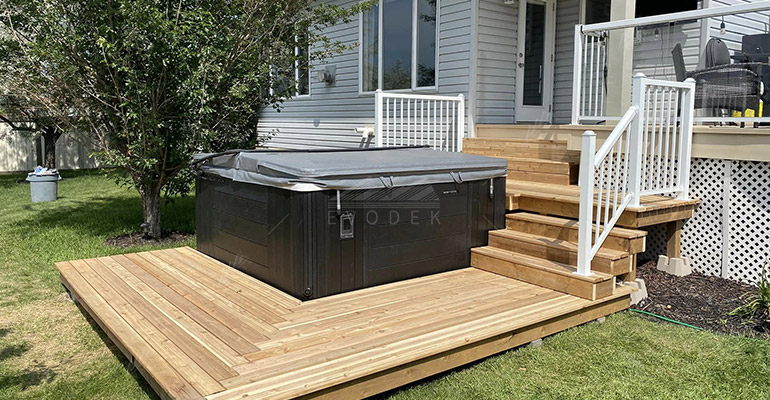
“Laying a chevron deck pattern is a high-skill project that requires precision.”
Here’s the basic concept for a small platform. (Estimated time: 8-10 hours, Cost: 20-30% more in materials due to angle cuts)
- Find the exact center line of your deck frame and mark it.
- Cut the ends of your first two boards at opposing 45-degree angles.
- Join them together to form a perfect 90-degree point, placing this point on your center line. Screw them into the joists.
- Continue laying boards, cutting each end at a 45-degree angle where it meets the next board in the pattern.
- Use a track saw or chalk line to cleanly cut the overhanging edges of the deck boards once all are installed.
- This pattern requires more cuts and results in more waste, so plan your material order accordingly.
23. Dark Brown Hot Tub on a Matching Multi-Tiered Deck
A dark, monochromatic deck and hot tub scheme like this can be incredibly chic, but it comes with a major drawback: heat. Dark-colored surfaces absorb and retain significantly more solar energy than light-colored ones. On a hot, sunny day, this dark brown deck could become uncomfortably hot for bare feet. If your yard gets intense, direct sun, you might want to consider a lighter wood or composite color, or ensure you have a large umbrella or pergola to provide shade. Compare this to the lighter grey deck in Idea #24 which would be cooler underfoot.
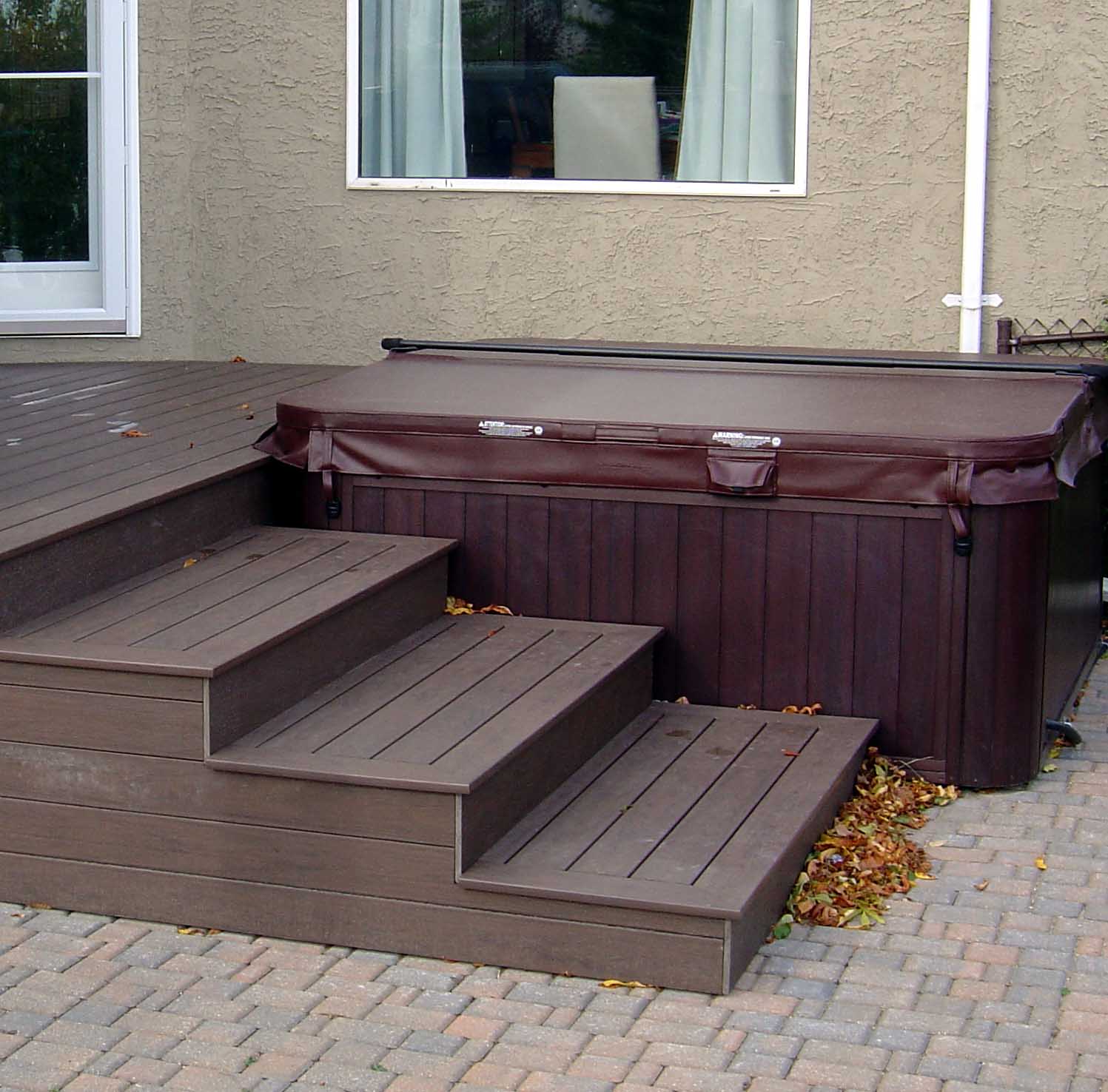
“This design achieves its grounded, earthy feel through a tightly controlled palette.”
The formula is approximately: 70% deep, uniform brown + 20% warm, textured beige + 10% crisp white. The dominant dark brown on the deck and tub creates a strong, unified base. The light brown stucco wall provides a warm, soft backdrop that prevents the dark wood from feeling overwhelming. Finally, the crisp white of the window frames acts as a small but crucial accent, adding a touch of brightness and definition to the entire composition.
24. Grey Composite Decking with Tiered Planters and Paving
This design excels at breaking up a potentially monotonous space by using multiple materials and levels. Instead of one large, flat deck, the combination of grey composite decking, light-colored pavers, and natural wood planters creates distinct zones and visual interest. The tiered design, with steps leading down from the hot tub, adds dimension and improves traffic flow. The variety of textures—smooth tiles, grooved decking, warm wood, and soft foliage—makes the entire area feel richer and more thoughtfully composed.
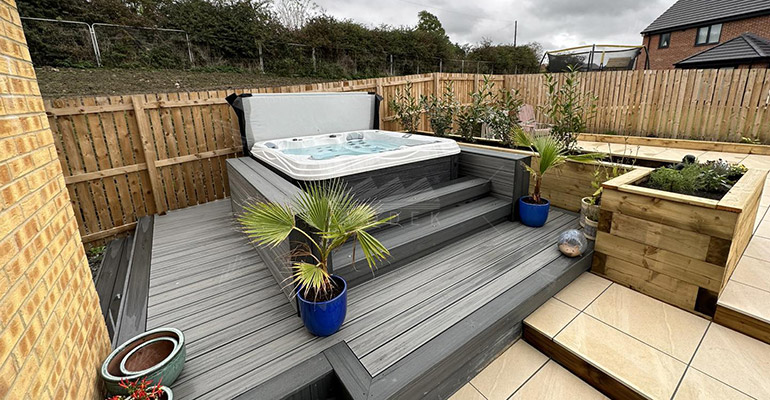
“A multi-material deck requires careful planning.”
Before you buy anything, create a cohesive plan:
- Create a Material Mood Board: Get samples of your chosen decking, pavers, and wood stains. Ensure their colors and textures work together in natural daylight. The cool grey deck and warm wood planters here are a perfect example.
- Check Your Transitions: How will the decking meet the tile? The top surfaces must be perfectly flush to avoid a trip hazard. This often requires adjusting the height of the underlying support structures (joists for the deck, gravel base for the pavers).
- Consider Drainage: Ensure a slight slope away from the house on all surfaces, and plan where water will run off, especially between the different material sections.
25. Breathtaking Mountainside Hot Tub with a Sweeping Valley View
The view. It is, without a doubt, the single most important element of this entire design. The hot tub, the deck, the drinks tray—they are all just accessories for the main event, which is the staggering panorama of the valley and mountains. The design wisely embraces a minimalist approach. A simple, dark-colored deck and a classic wooden tub do not compete for attention. The entire purpose of this installation is to provide a comfortable, warm vantage point from which to soak in the immense natural beauty. Every decision was made in service to that magnificent view.
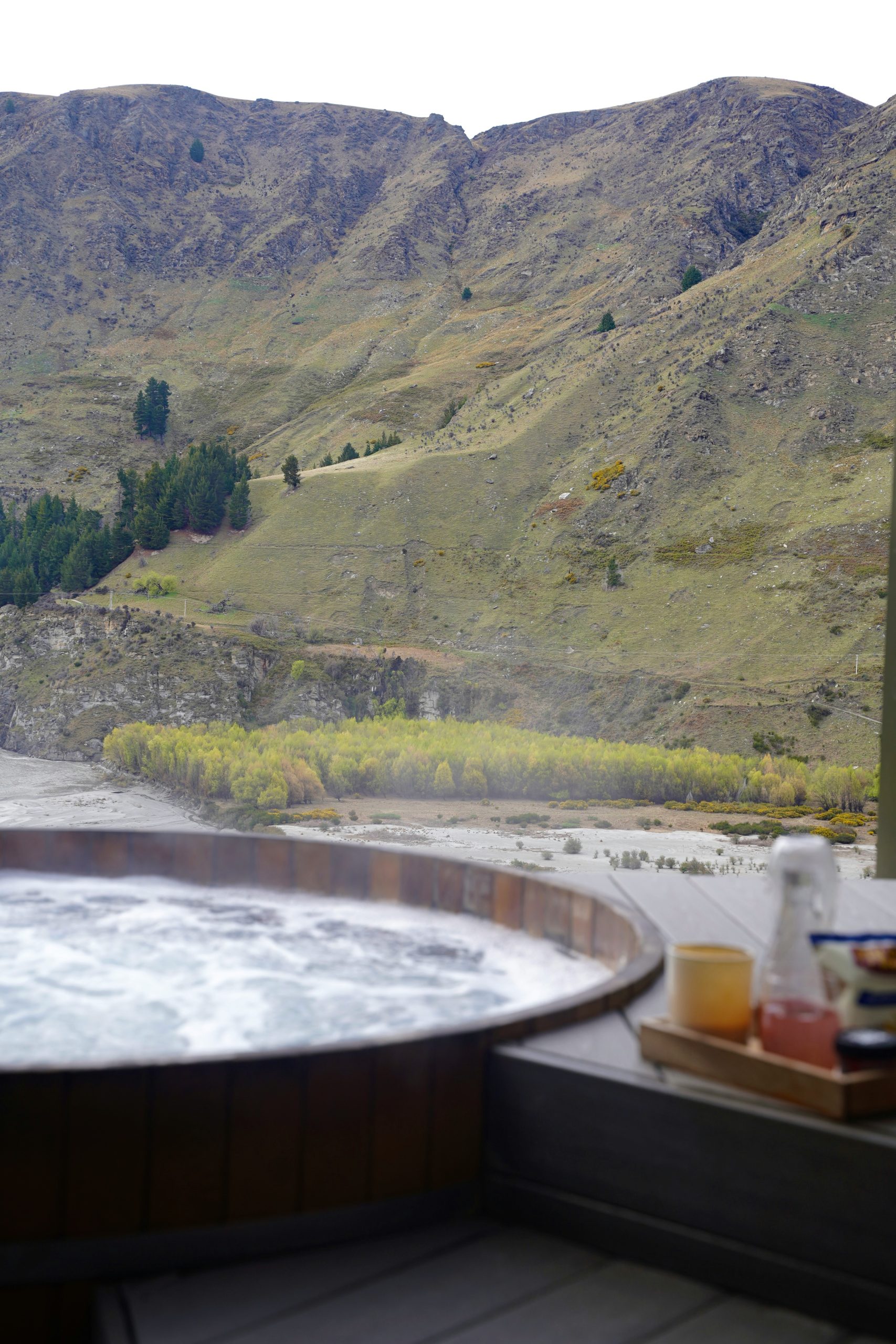
“When you have a world-class view, your primary design job is to get out of its way.”
Notice the deck material is a dark gray slatted wood. This is a deliberate choice. A lighter color would create glare in bright sun, while this dark, matte finish absorbs light and doesn’t visually compete with the landscape beyond. It becomes a neutral, recessive platform. For railings, opt for glass panels or thin cable rail (similar to Idea #21) to keep the view as unobstructed as possible. Your goal is to frame the masterpiece, not become part of it.
26. Modern Square Hot Tub on a Natural Wood Deck
The success of this design lies in its clean lines and simple, effective material contrast. The square shape of the hot tub is echoed in the geometry of the deck, creating a sense of order and modernity. The contrast between the dark brown siding of the tub and the lighter, natural wood tone of the deck planks creates a subtle but pleasing visual pop. Finally, the sleek black metal railing provides a crisp, graphic outline that defines the space without feeling heavy, allowing the lush green yard to remain the focus.
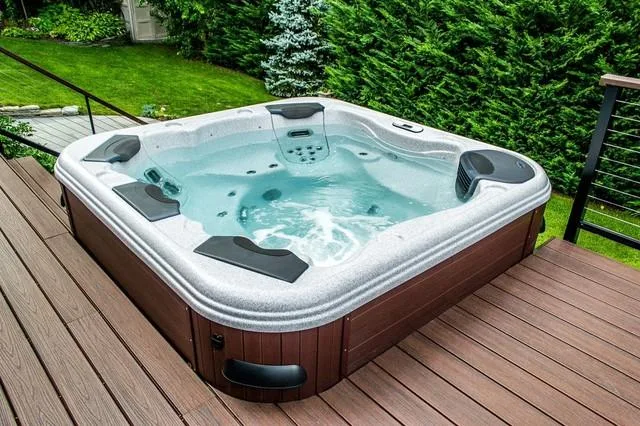
“This clean, modern look is one of the easiest to achieve on a budget.”
The key is an above-ground, square hot tub with simple, dark siding (often available for $3,000-$5,000). You can build a simple, low-profile platform deck around it using pressure-treated pine for under $1,000 in materials. For the railing, simple black metal balusters and a wood top rail from a home improvement store are affordable and easy to install. Keep the styling minimal to let the clean shapes do the talking. You get a contemporary look without the cost of a recessed tub or expensive composite decking.
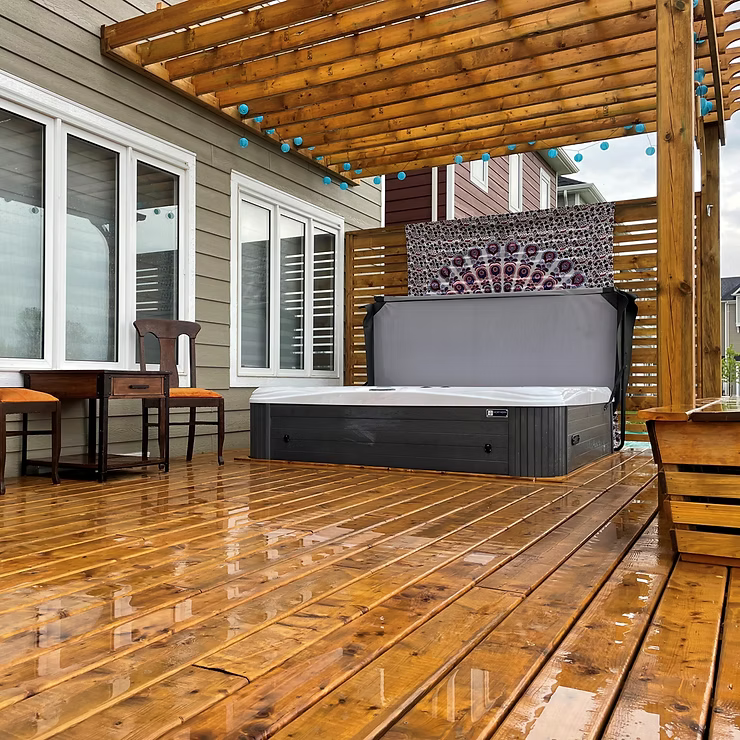
27. Cozy Hot Tub Deck with Wooden Pergola and Privacy Screen
When combining a pergola and a privacy screen, use the same material and stain for both, as shown here. This creates a cohesive
28. Classic Wood-Fired Hot Tub in a Rustic Forest Setting
This setup feels so right because it embraces its rustic environment instead of fighting it. The light wood of the tub and steps looks like it could have been sourced from the surrounding forest. The technology, a simple wood-fired stovepipe, is appropriate for the setting. Placing it directly on the forest floor, among the leaves, instead of on a pristine deck, reinforces the connection to nature. Even the accessories—a simple pallet for firewood and basic solar lights—are unpretentious and functional. It feels less like a ‘design’ and more like an authentic woodland camp.
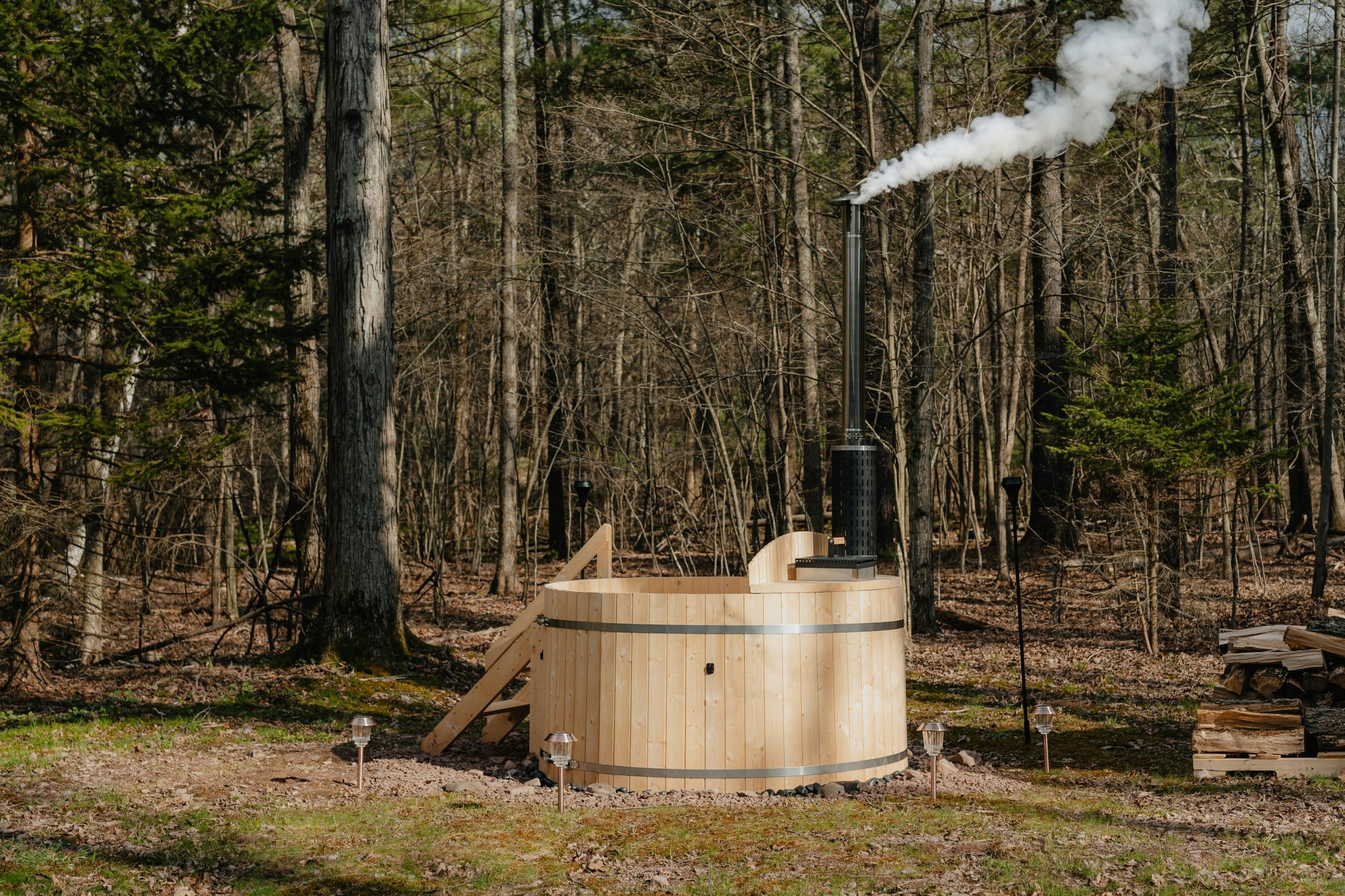
“Stacking firewood properly ensures it stays dry and ready to use.”
Using a pallet is a great start. Here’s a quick guide to building a stable woodpile. (Estimated time: 30 minutes, Cost: Free if you have a pallet)
- Place a wooden pallet on level ground. This keeps the bottom layer of wood off the wet soil.
- Build two ‘towers’ at each end of the pallet by stacking logs in alternating directions, like building with Lincoln Logs. These act as bookends.
- Begin filling the space between the towers. Place the logs parallel to each other, ensuring there are small gaps for air to circulate.
- Try to have all logs in a layer facing the same direction. On the next layer, you can alternate if you wish.
- As you stack higher, slightly angle the logs so water will run off. You can also cover the top of the pile with a tarp.
29. Split-Level Cedar Deck with Built-in Hot Tub and Adirondack Chairs
A split-level design is a fantastic solution for a sloped yard or for creating distinct functional zones on a flat one. This idea is ideal for a medium-sized backyard, requiring a footprint of at least 15×25 feet to feel comfortable. The lower level, housing the hot tub, should have at least 3 feet of clearance around it. The upper level needs to be at least 10×12 feet to comfortably accommodate seating like these Adirondack chairs and allow for easy movement. The change in elevation adds significant visual interest but also requires careful planning of step placement and railing heights.
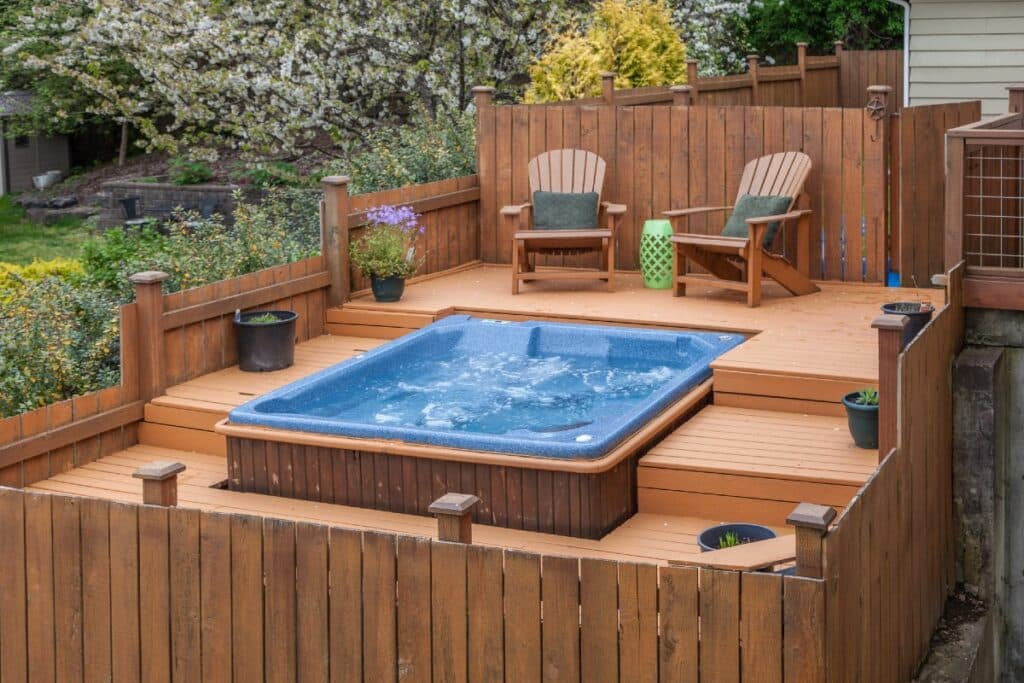
“This classic deck follows a balanced and timeless style formula: 60% warm cedar wood + 30% cool blue accents + 10% lush green details.”
The cedar deck, steps, and privacy fence create a warm, inviting envelope. The cool blue of the hot tub interior is the main focal point, providing a refreshing splash of color. The final touch comes from the dark green cushions and the various potted plants, which breathe life into the scene and connect the deck to the garden. It’s a formula that is natural, relaxing, and always in style.
30. Modern Wooden Deck with Hot Tub and an Outdoor Shower Wall
The stacked stone wall with the integrated shower is the single element that elevates this deck from great to exceptional. It introduces a powerful, rustic texture that contrasts beautifully with the clean lines of the grey wooden deck and the smooth exterior of the hot tub. It’s both a functional feature—perfect for a pre- or post-soak rinse—and a stunning architectural statement. It acts as a backdrop, adds privacy, and brings a spa-like quality to the entire space. Without it, the deck would feel much more ordinary.
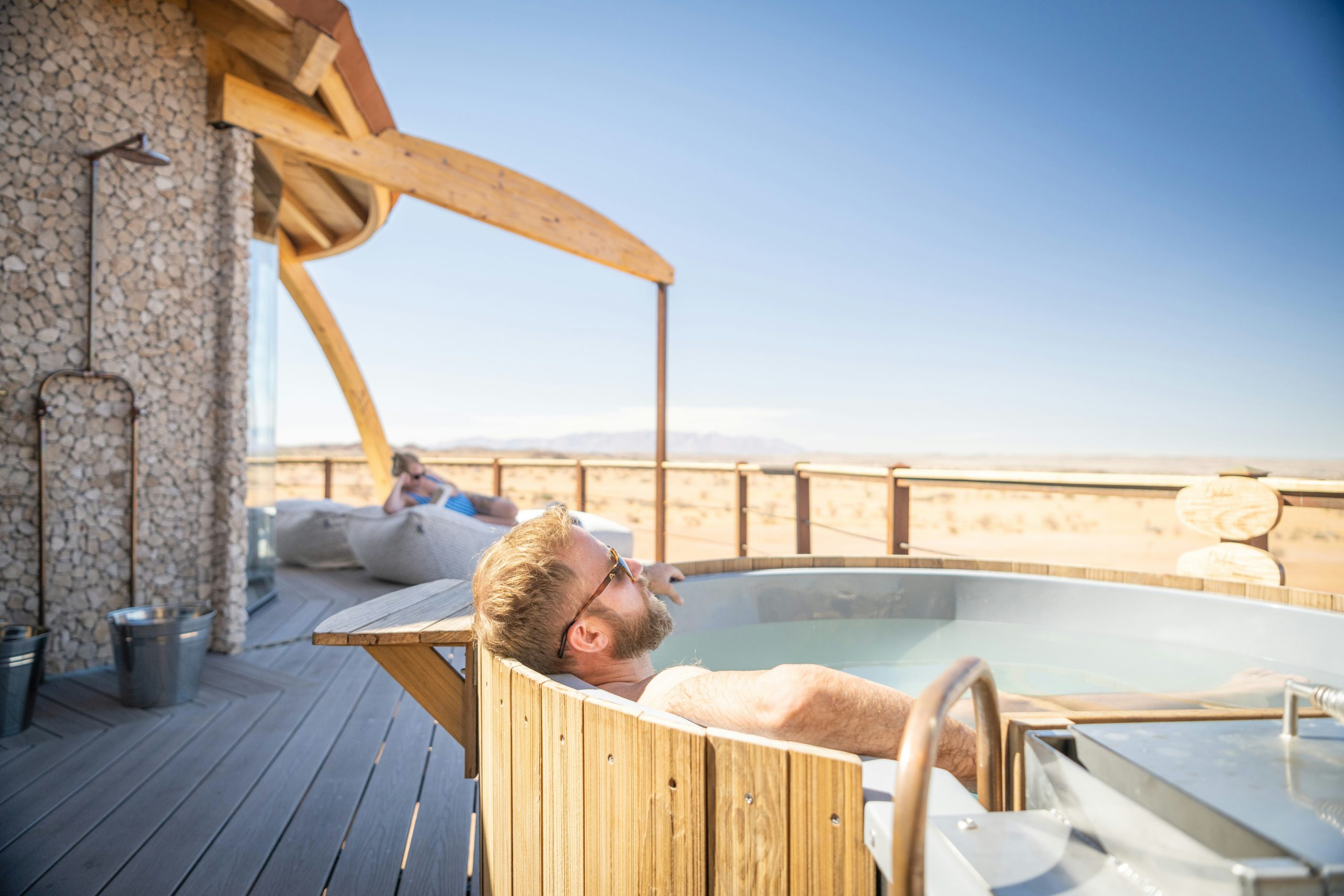
“An outdoor shower is a fantastic luxury, but it requires proper planning to prevent a maintenance nightmare.”
The most critical element is drainage. You must ensure water from the shower is channeled away from the deck’s wooden substructure and your home’s foundation to prevent rot and water damage. The stacked stone itself will require periodic cleaning to remove soap scum or mildew, especially in a shady or damp climate. In colder zones, you must be able to completely drain the water from the pipes before the first freeze to prevent them from bursting.
Your Backyard Oasis Awaits
With so many incredible designs, the hardest part is choosing just one. Whether you’re drawn to a rustic wood-fired setup or a sleek, modern design, the right plan can transform your backyard into the personal escape you’ve been dreaming of. Now, go open up that Pinterest board and start planning your perfect soak.