31 Jaw-Dropping Horizontal Fence Design Ideas for 2026 That Will Elevate Your Outdoor Privacy

That feeling when you find *the* horizontal fence idea that looks like it was designed just for your yard? It’s a good one. That’s what this guide is all about. We’ve all spent hours scrolling Pinterest, saving pins that don’t quite work together. So, we did the hard work for you.
After filtering through hundreds of options from local lumber yards to big box stores, we narrowed it down to these 31 incredible horizontal fence designs that deliver on style and privacy. We’re covering everything from sleek modern metal to warm, rustic wood.
And stay until the end—we break down the most common mistakes that can ruin these looks. 📌 Save this to Pinterest for later—you’ll want to revisit these ideas.
1. Crisp Horizontal Wood Slats for a Modern Boundary
What makes this work is the sheer simplicity and repetition. The clean, unbroken lines of the light brown wood slats draw the eye horizontally, making the space feel wider and more expansive than a traditional vertical fence might. The choice to use wood with a subtle, natural grain adds warmth and texture, preventing the modern design from feeling cold or sterile. It’s a perfect backdrop, allowing the vibrant green of the lawn and trees to really pop without competing for attention.
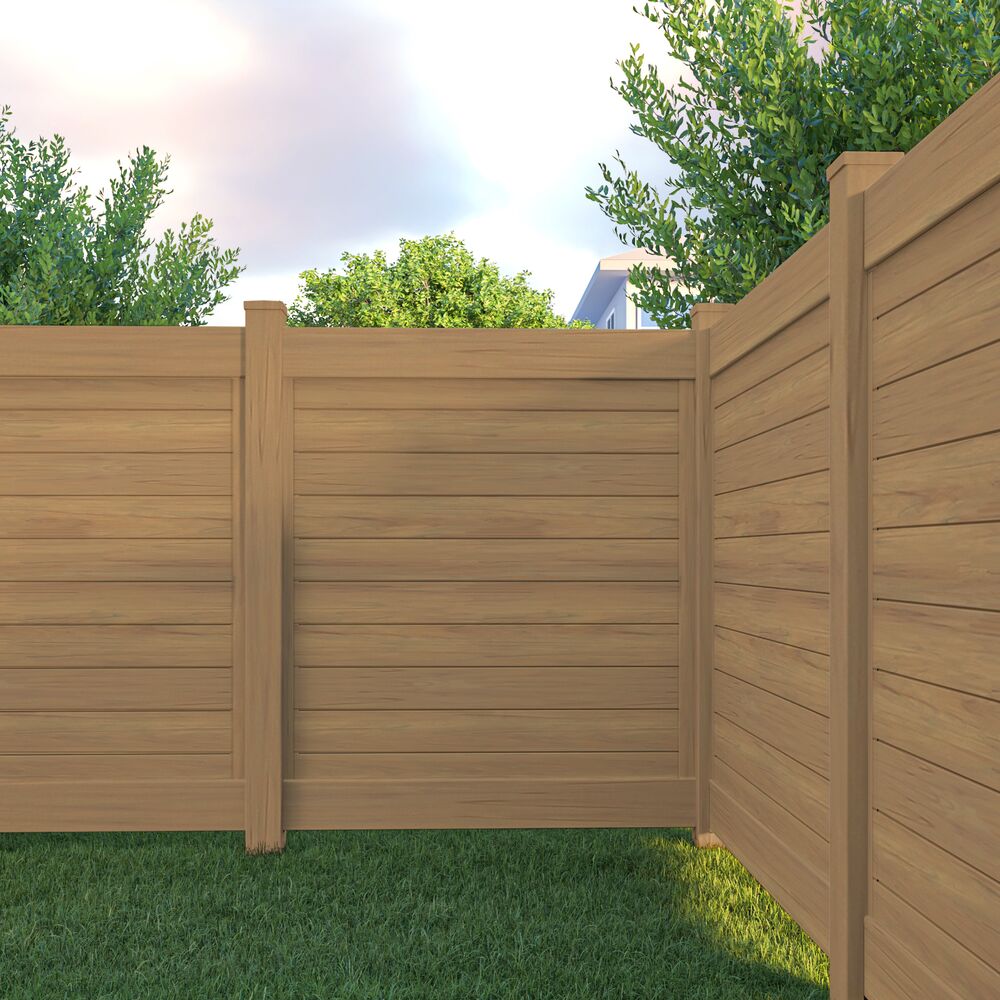
“For a truly high-end finish, consider the “shadow line” effect.”
Instead of leaving a simple gap, you can install a smaller, black-painted board behind the main slats. This makes the gaps appear deeper and more defined, creating a crisp, architectural look. When installing your horizontal slats, use a consistent spacer (a scrap piece of 1/2″ plywood is perfect) between each board to ensure your gaps are perfectly uniform from top to bottom. It’s a small detail that makes a huge difference in the final product.
2. Light Wood Slats with Dramatic Dark Gaps
that elevates this fence design is the intentional, pronounced gap between the slats. It’s not just a space; it’s a design element. The darkness in the gaps creates a strong rhythmic pattern of light and shadow, turning a simple boundary fence into a piece of graphic art. This contrast highlights the clean lines of each individual plank and gives the entire structure a modern, airy feel. Without those dark, defined voids, this would just be a standard wood fence. With them, it’s a statement.
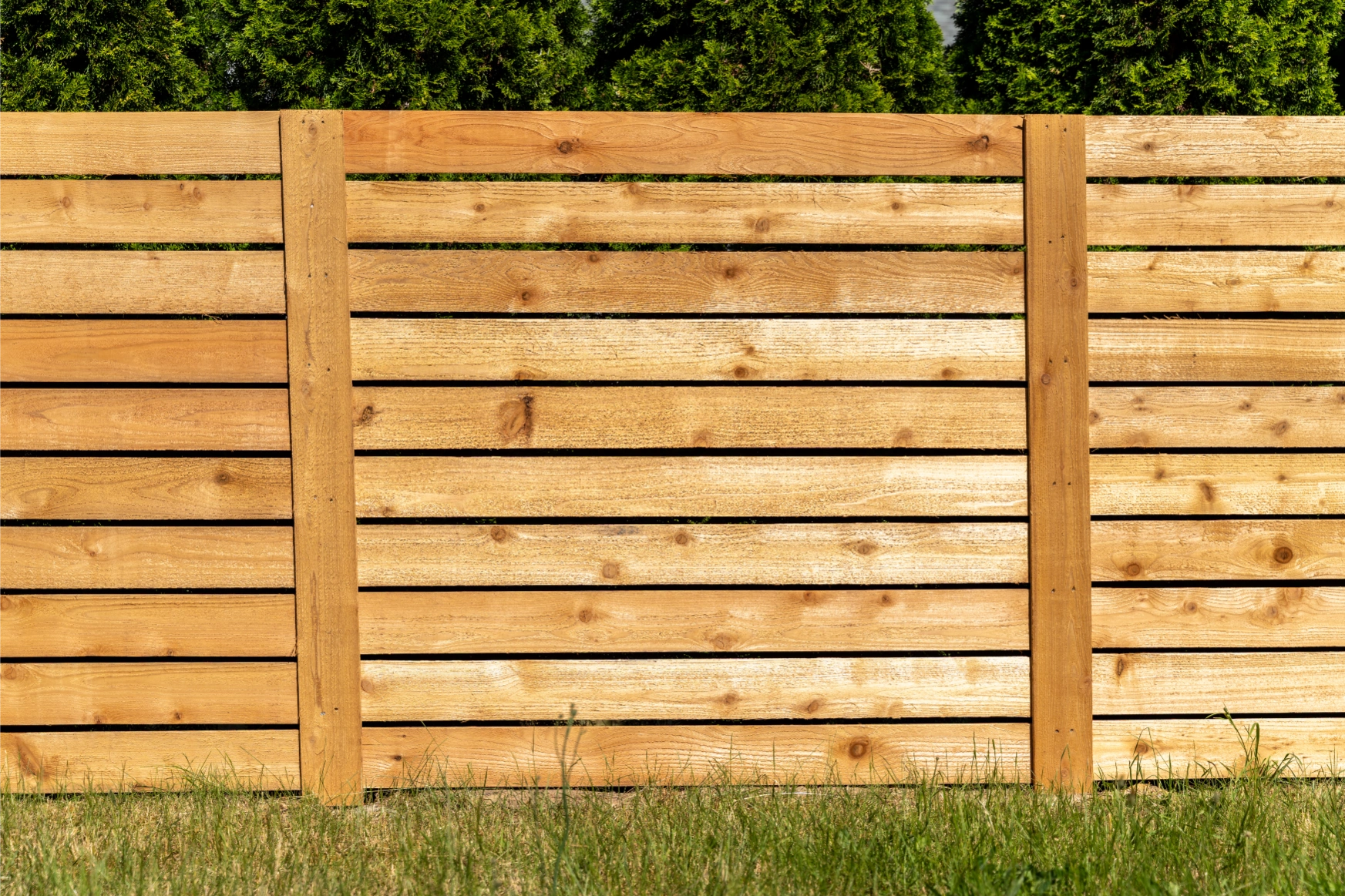
“Light-toned wood looks incredible, but it’s also more susceptible to showing dirt, mildew, and water stains, especially near the ground or under dense foliage.”
To keep this fence looking fresh, plan on a yearly cleaning with a wood-safe cleaner and a soft-bristle brush. You’ll also need to re-apply a UV-protectant sealant every 2-3 years, depending on your climate, to prevent the wood from graying out or yellowing. The effort is worth it for this clean look, but don’t mistake “natural” for “no maintenance.”
3. A Black Horizontal Fence with a Granite Base
Here’s a look at what it takes to bring this high-contrast design to life. The custom stone and metalwork are the biggest investment here.
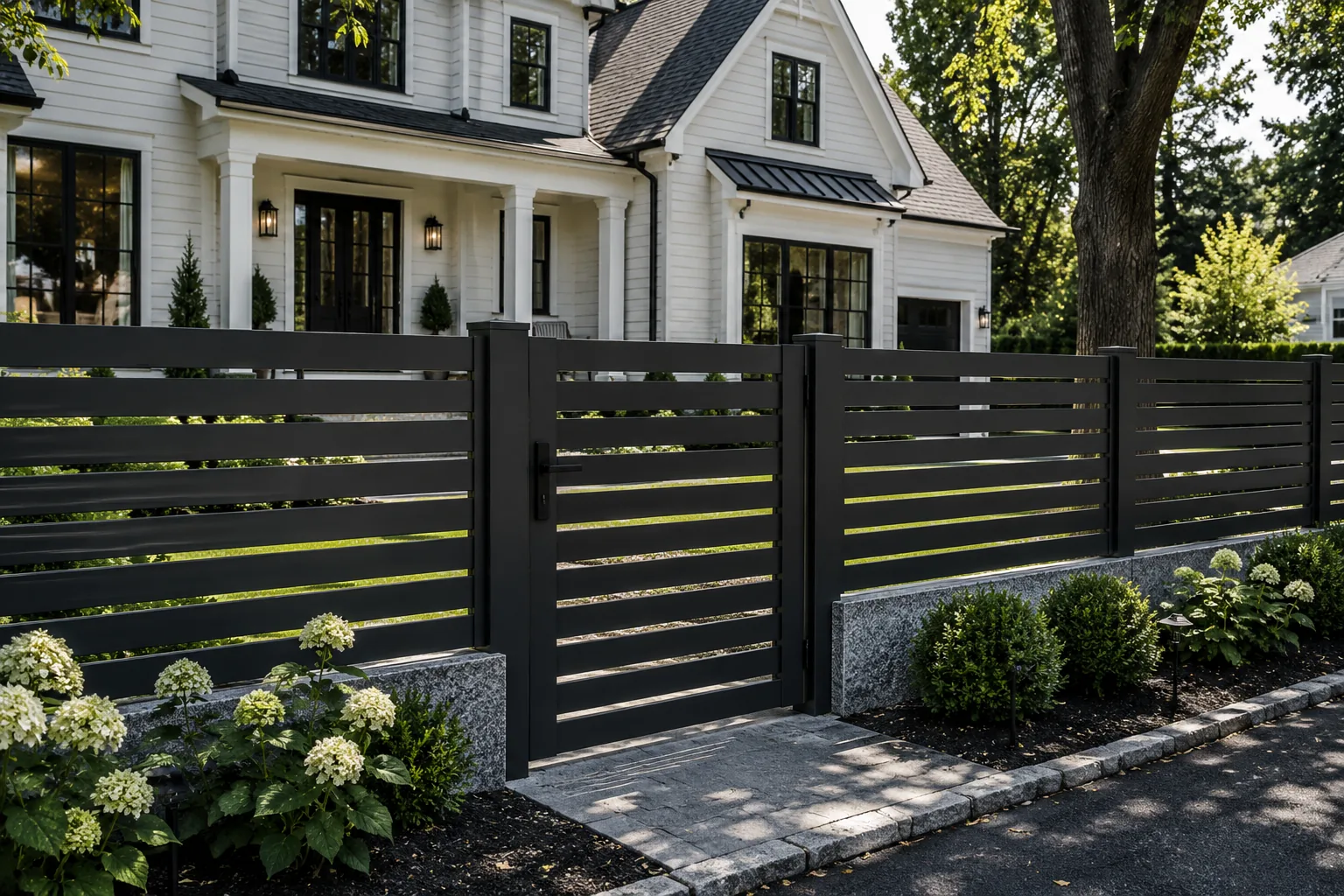
“Fence Panels & Gate: Powder-coated aluminum or steel panels can range from $2,000 – $4,500 depending on length and height.”
Granite Wall Base: The custom masonry is a significant cost. Expect to pay $3,000 – $6,000 for materials and skilled labor.
Installation & Labor: $1,500 – $3,000.
Landscaping: Plants and professional planting can add $500 – $1,500.
TOTAL: $7,000 – $15,000+
Budget Alternative: Get a similar vibe for about 40% less by using pre-fabricated concrete landscape blocks instead of custom granite and opting for black-stained wood slats instead of metal.
The visual formula here is all about balancing texture and color. Think of it as 60% sleek modern + 40% natural texture. The dark, smooth horizontal slats provide the clean, contemporary structure, while the rugged, multi-toned granite base grounds the entire design in a natural, earthy feel. You could swap the materials while keeping the ratio. For example, try a smooth, poured concrete base (modern) with a warm, knotty cedar fence (natural texture) to achieve a similar, but distinct, balance.
4. A Wood Slat Fence with an Integrated Concrete Planter
This design works because it seamlessly merges three key functions: privacy, seating, and gardening. The horizontal fence provides a warm, private backdrop, but the masterstroke is integrating the concrete planter and bench directly into the structure. This creates a cohesive, built-in look that feels intentional and custom. The linear nature of the fence, planter, and even the paving stones with grass inserts all work in harmony, creating a serene and highly geometric outdoor room. It’s a masterclass in multi-functional design.
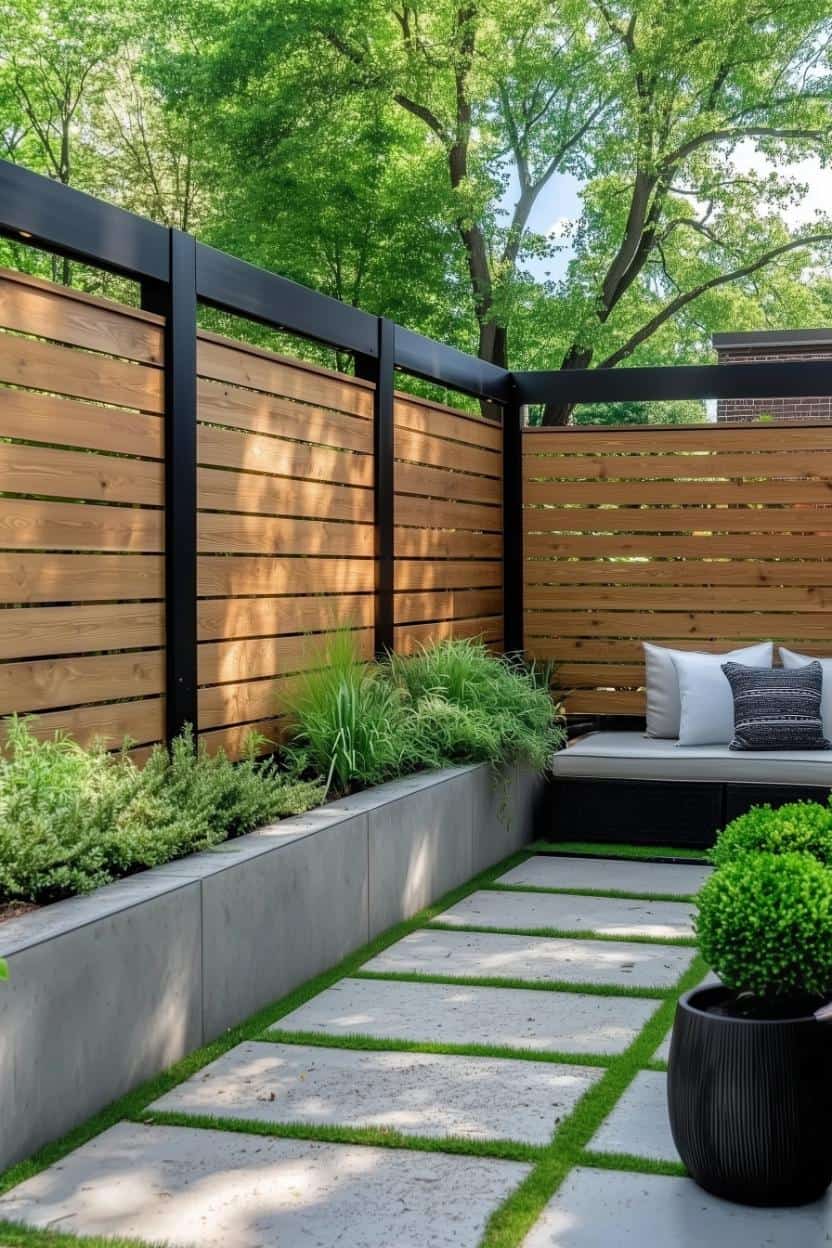
“This integrated concept is best suited for small to medium-sized patios or backyards where space is at a premium, typically from 150 to 500 square feet.”
The built-in elements maximize the usable area by eliminating the need for bulky standalone planters or furniture. For this to work effectively, you need a relatively level area. A significant slope would make the installation of the concrete planter and bench complex and costly. Compare this to the sprawling feel of Idea #12, which is better suited for larger, more open properties.
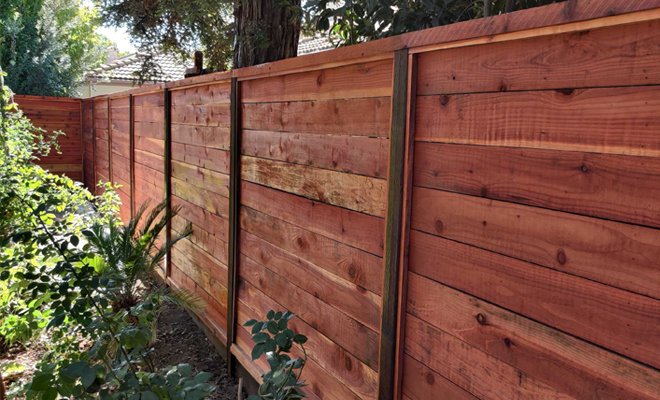
5. Reddish-Brown Wood Planks with Contrasting Dark Posts
A fence with this much rich, reddish color is stunning on day one, but be prepared for the realities of sun exposure. Red-toned woods and stains are particularly prone to fading from UV rays. Without proper upkeep, that vibrant cedar or redwood color can dull to a brownish-gray within a few years. It’s not necessarily a bad look, just different. If you are committed to the red, you must commit to cleaning and re-staining with a UV-blocking, pigmented sealer every 18-24 months.
![20 Stunning Horizontal Fence Ideas [with photos]](https://quotableideas.com/wp-content/uploads/2026/07/20-stunning-horizontal-fence-ideas-with-1.jpg)
“You don’t need to splurge on premium redwood to get this warm, modern look.”
A more budget-friendly approach is to use standard pressure-treated pine boards and a high-quality, reddish-toned stain. Find pre-made steel post brackets at stores like Home Depot or Lowe’s for around $20-$30 each. All in, you could replicate the core look of this fence (materials only) for around $25-$40 per linear foot, a significant savings compared to the $70+ per foot that hardwood might cost.
6. Light Wood Fence Framed by Lush Greenery
When pairing a fence with dense foliage, always leave a “breathing room” of at least 12-18 inches between the plants and the wood. This air gap is crucial for two reasons. First, it allows sunlight and air to circulate, which helps prevent moisture from getting trapped against the wooden slats, reducing the risk of mold, mildew, and rot. Second, it makes fence maintenance—like cleaning and re-staining—vastly easier since you won’t have to fight with overgrown branches to access the wood.
![20 Stunning Horizontal Fence Ideas [with photos]](https://quotableideas.com/wp-content/uploads/2026/07/20-stunning-horizontal-fence-ideas-with-2.jpg)
“The single element that makes this scene so successful is the sheer abundance and variety of the green foliage.”
The fence itself is simple and clean, acting as a perfect neutral canvas. It’s the explosion of textures—from the spiky ground plants to the dense, leafy shrubs spilling over the top—that brings the entire corner to life. The greenery transforms the fence from a simple barrier into an integrated part of a lush, living garden wall. Without the plants, the design would be pleasant; with them, it’s captivating.
7. A Tall, Dark Fence with Textured Slats
The fine white lines on these dark gray slats add a subtle texture that catches the light. You can achieve this look on composite or wood fencing with a simple painting technique. It’s a great way to add custom detail to an off-the-shelf product.
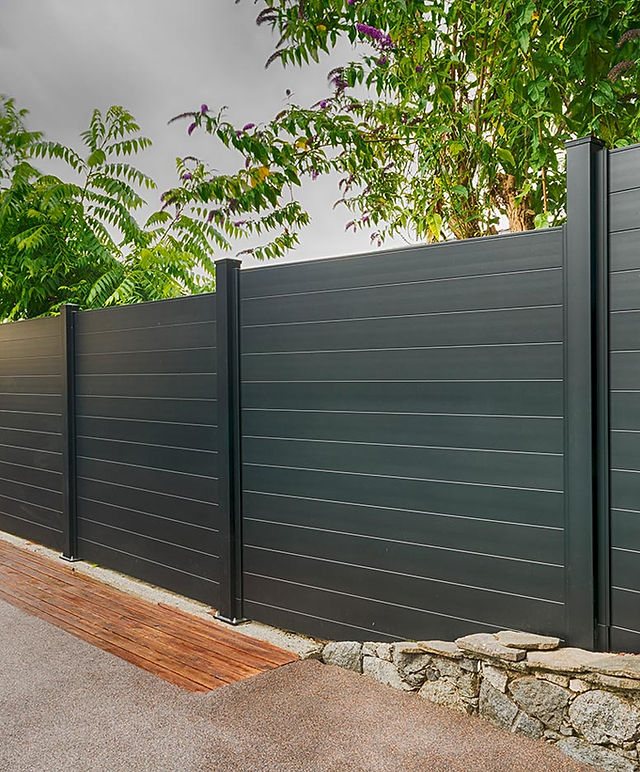
“Prep the Surface: Ensure your fence slats are clean and dry.”
If painting wood, make sure it’s properly primed.
Tape the Lines: Use high-quality 1/4″ automotive pinstripe tape to mask off your straight lines. Press the edges down firmly.
Choose Your Paint: Select a high-quality exterior paint in a contrasting color (like a slightly off-white on a dark gray).
Dry Brush Application: Dip just the tip of a stiff paintbrush into the paint, then wipe most of it off on a paper towel. Lightly drag the brush over the untaped sections. The goal is a broken, textured line, not solid coverage.
Remove Tape: Carefully peel off the pinstripe tape while the paint is still slightly tacky.
A dark-colored fence, especially one in a gray or black, is fantastic for making surrounding greenery pop, but it shows dust and pollen more than lighter colors. In areas with high pollen counts or dusty conditions, expect to hose it down every few weeks during peak season to keep it from looking hazy. Another reality is heat absorption. A dark fence will get significantly hotter in direct sun than a light-colored one, which can be a consideration if you have delicate plants right up against it or if children might be touching it.
8. A Long Horizontal Fence Flanking a Driveway
Before you commit to a long fence run like this one, take a moment to double-check a few key details. A little planning now can save major headaches later.
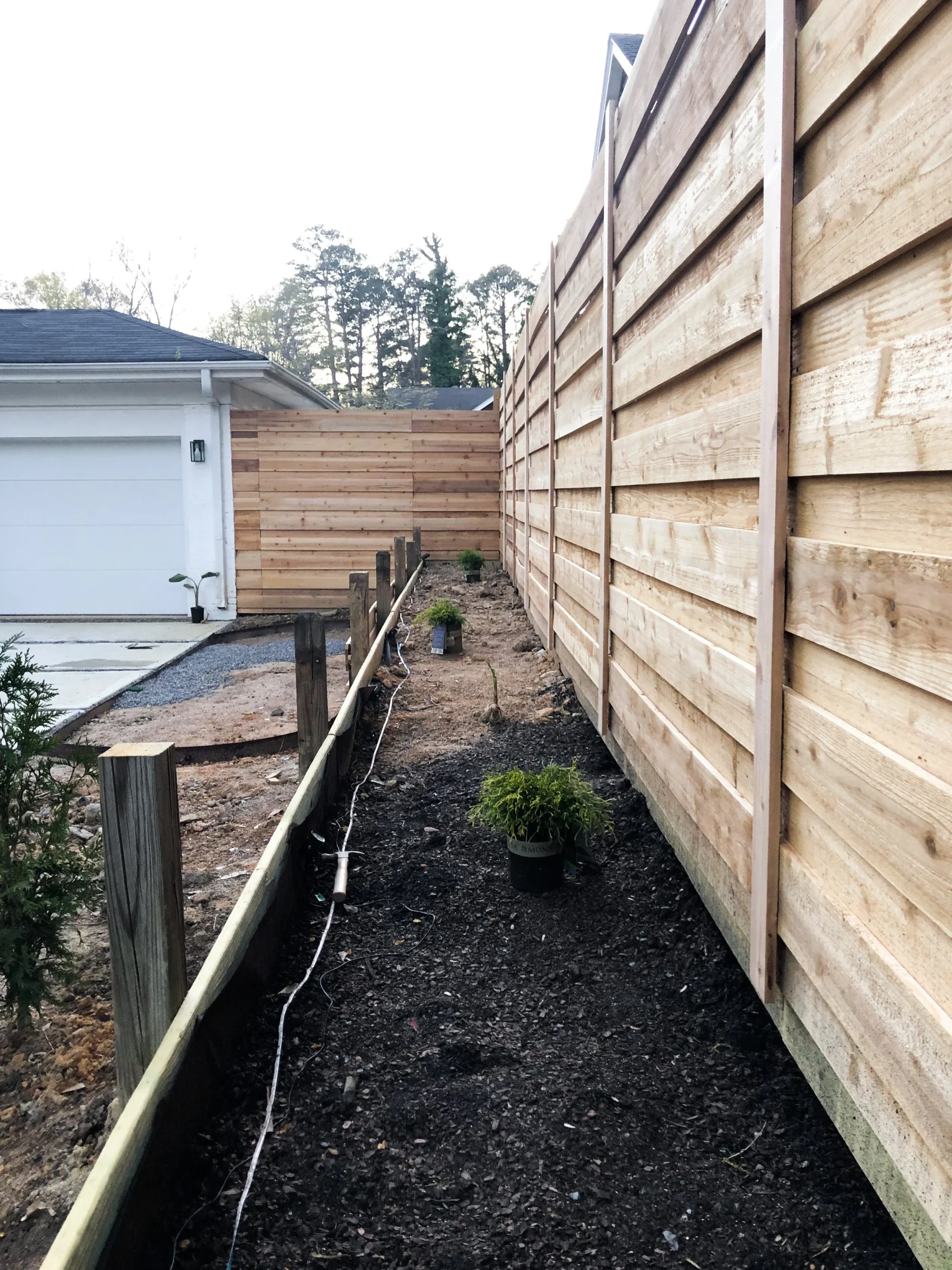
“Property Lines: Get a survey.”
Seriously. Installing a fence even six inches onto your neighbor’s property can lead to costly disputes and having to move the entire structure.
Underground Utilities: Call 811 before you dig. It’s a free service that marks the location of buried utility lines, preventing a dangerous and expensive accident.
Local Zoning Codes: Check your city or HOA for rules on fence height, material, and setback from the street. Many areas have a lower height limit for front yards versus backyards.
This clean, linear style is gaining popularity as part of the “Structured Naturalism” trend. As homeowners an our-door spaces that feel both orderly and organic, this type of fencing fits perfectly. It provides the clean lines and geometric feel of modern architecture while using the warm, natural material of wood. It neatly defines the space—separating the driveway from the garden bed—without creating a harsh, imposing barrier. It’s a reflection of our desire for home environments that are both beautiful and highly functional.
9. A Mixed-Material Fence with Wood Slats and Metal Posts
The formula for this striking look is about a 70/30 split. It’s 70% warm, organic material (the horizontal wood slats) and 30% cool, industrial material (the black metal posts). This ratio ensures the fence feels natural and inviting, while the metal posts add a sharp, modern edge and a sense of durability. You could flip the materials—imagine black metal slats with natural wood posts—but the feeling would shift to be much more industrial. The key is the intentional contrast.
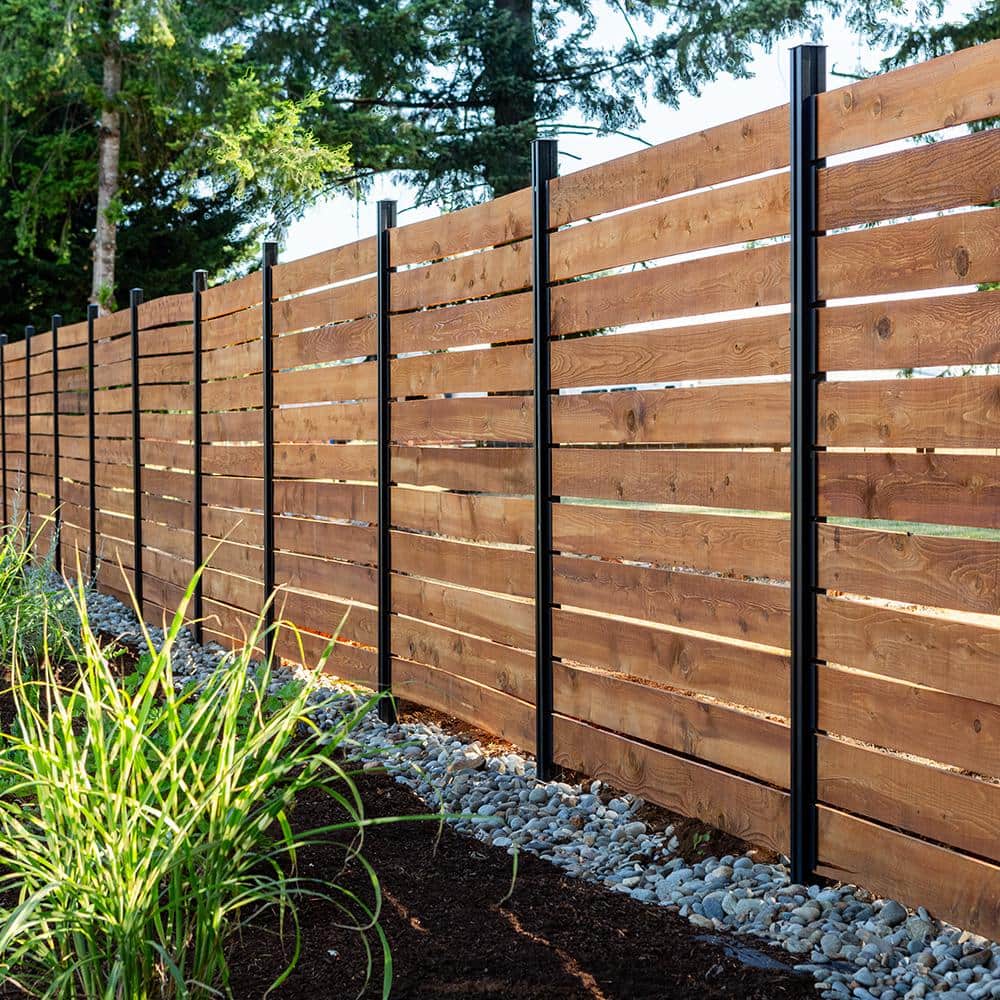
“This design is so effective because of the principle of contrast.”
The warm, rich brown of the wood planks is set against the cool, matte black of the metal posts. This color contrast makes both materials stand out more than they would on their own. There’s also a textural contrast at play: the natural, grained surface of the wood versus the smooth, uniform finish of the metal. This pairing creates a dynamic visual tension that is very pleasing to the eye and feels distinctly modern.
10. A Wood Slat Fence Under a Natural Tree Canopy
Having a beautiful tree overhang your fence is a picturesque scene, but it comes with a maintenance warning. The leaves, needles, and sap that fall from the tree will accumulate on and around the fence. This debris can trap moisture against the wood, accelerating rot and mildew growth. It also means more frequent cleaning to keep the fence looking its best. Before installing a fence directly under a large tree, have an arborist check the health of the branches hanging over your property line.
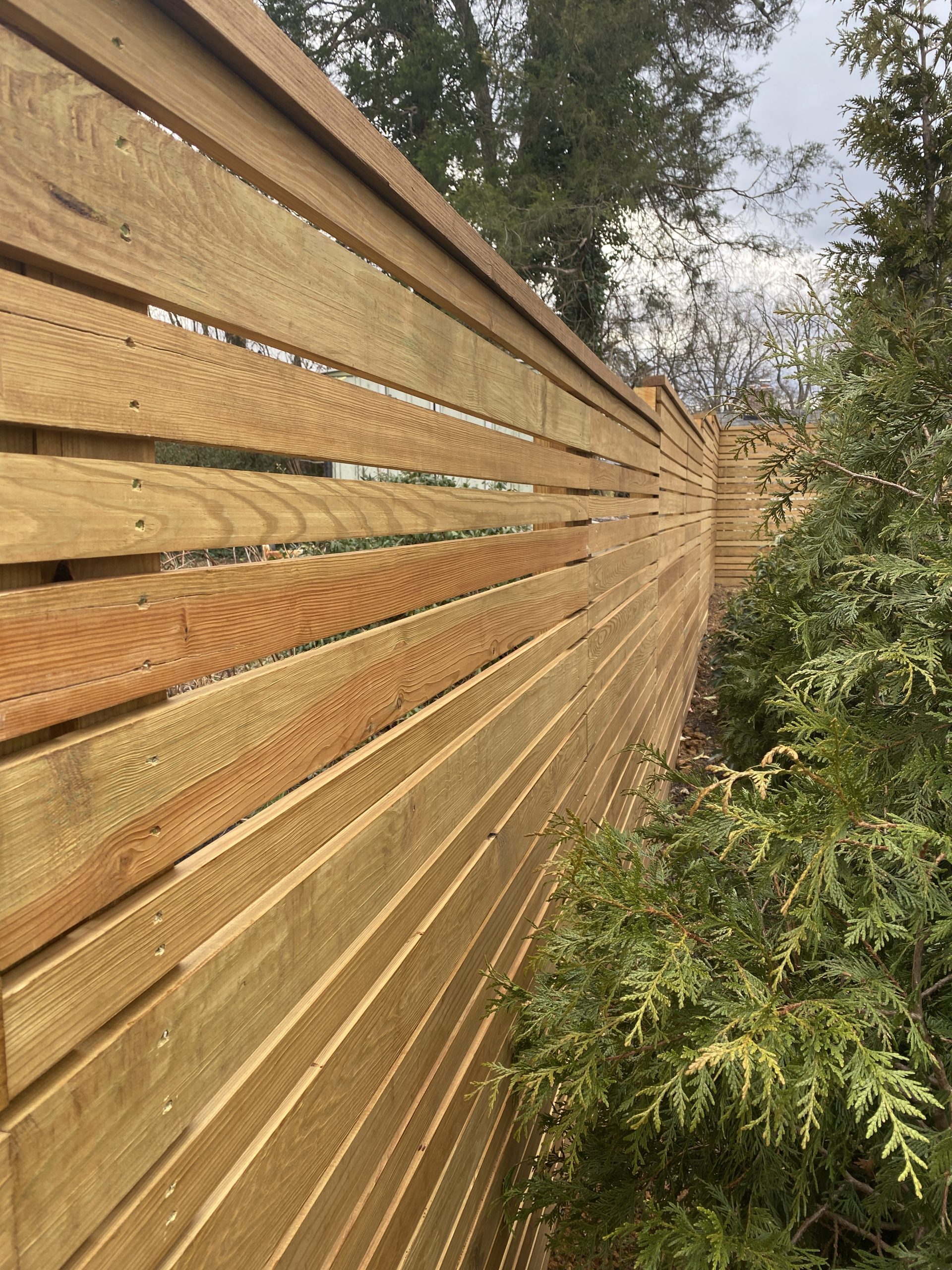
“that makes this image feel so authentic and natural is the imperfect, slightly rustic quality of the wood.”
The visible screws and the natural variations in the wood grain give it a humble, honest character. It doesn’t feel like a factory-produced panel; it feels like something that was thoughtfully constructed on-site. This subtle touch of rusticity is what allows the fence to blend so seamlessly with the overhanging evergreen branches, creating a harmonious and unpretentious backyard scene. This same design would feel much different than the sleek look in Idea #11.
11. Modern Black Slats on a Concrete Retaining Wall
This type of two-part construction—a sturdy base wall with lighter fencing on top—is ideal for properties with a slope. If your yard isn’t perfectly flat, a retaining wall at the base is the perfect solution for creating a level line for the fence to follow. This design can handle a grade change of anywhere from one to four feet beautifully. For steeper slopes, a series of stepped retaining walls might be a better (and safer) option. The key is that the concrete wall does the heavy lifting, allowing the fence on top to be purely for privacy and style.
![20 Stunning Horizontal Fence Ideas [with photos]](https://quotableideas.com/wp-content/uploads/2026/07/20-stunning-horizontal-fence-ideas-with-3.jpg)
“When mounting a fence on top of a concrete wall, don’t anchor the posts directly into the top of the concrete blocks.”
This can compromise the structural integrity of the wall. The correct method is to use specialized post brackets that are bolted into the front or back face of the wall. This transfers the lateral load from the wind against the fence to the strongest part of the wall, ensuring a secure and long-lasting installation. Always use concrete-specific anchors for the job.
12. Expansive Wood Fence with Square Metal Posts
The success of this fence lies in its perfect sense of scale and rhythm. On a large property with mature trees, a small, delicate fence would feel lost. This design uses substantial wooden planks and thick metal posts to match the scale of the surroundings. The regular, repeating pattern of the posts breaks up the long expanse of the fence, creating a pleasing rhythm that guides the eye across the landscape. It feels robust and confident, perfectly suited to defining a large, open space.
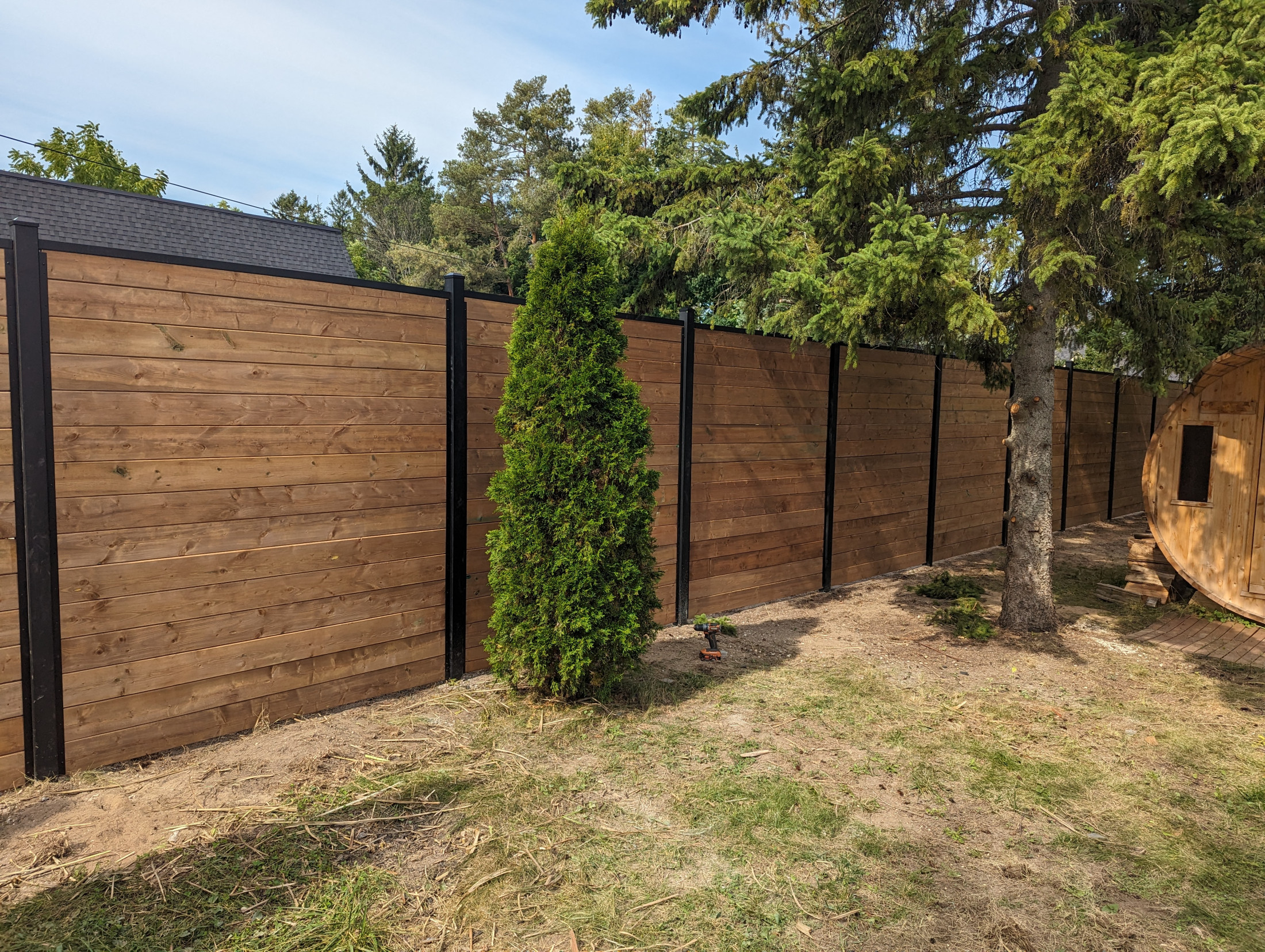
“While custom metal posts can be pricey, you can get this same look for less.”
Many home improvement stores sell pre-made black powder-coated steel or aluminum fence posts that are designed to be used with wood panels. A 4×4 cedar post, painted or stained black, can also create a very similar visual effect for a fraction of the cost of steel. For the infill, using pressure-treated pine and a warm “cedar” colored stain is far more economical than actual cedar planks.
13. Dark Horizontal Slats Beside a Textured Stucco Wall
This combination is a hallmark of the “Modern Mediterranean” style that’s been trending on Pinterest and in architectural magazines. This style blends the clean lines and dark colors of modern design with the warm, earthy textures of Mediterranean homes. The smooth, dark fence provides the contemporary edge, while the rough, light-colored stucco wall brings in that classic, sun-baked texture. It’s a look that feels both timeless and completely current, which is why it has such broad appeal right now.
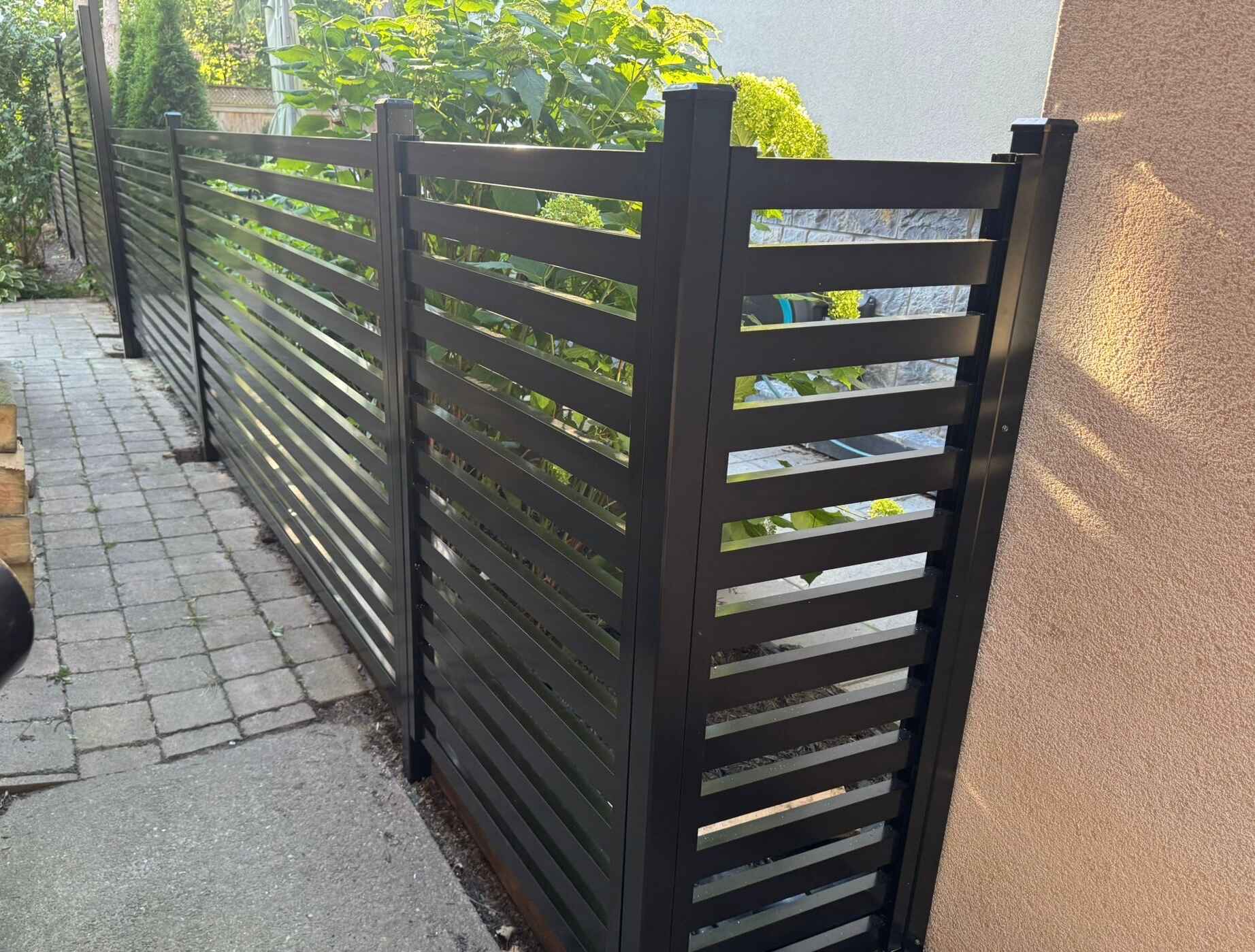
“The defining element here is the contrast in texture.”
It’s all about the interplay between the sleek, uniform lines of the dark horizontal slats and the rough, organic surface of the light stucco wall. If both surfaces were smooth, the look would be flat and uninspired. If both were textured, it might feel too busy. It’s this specific pairing of smooth and rough that creates a sophisticated, multi-layered look that feels both professionally designed and effortlessly chic.
14. A Dark Gray Fence Against a Backdrop of Autumn Leaves
This scene is a perfect lesson in color theory. The dark, cool gray of the fence is a complementary color to the warm yellows and oranges of the autumn leaves. This complementary pairing makes both colors appear more vibrant and saturated. The fence acts as a sophisticated, neutral canvas that makes the fall foliage the star of the show. During the summer, this same gray fence would make the green leaves look richer and deeper. It’s a color choice that works beautifully in every season.
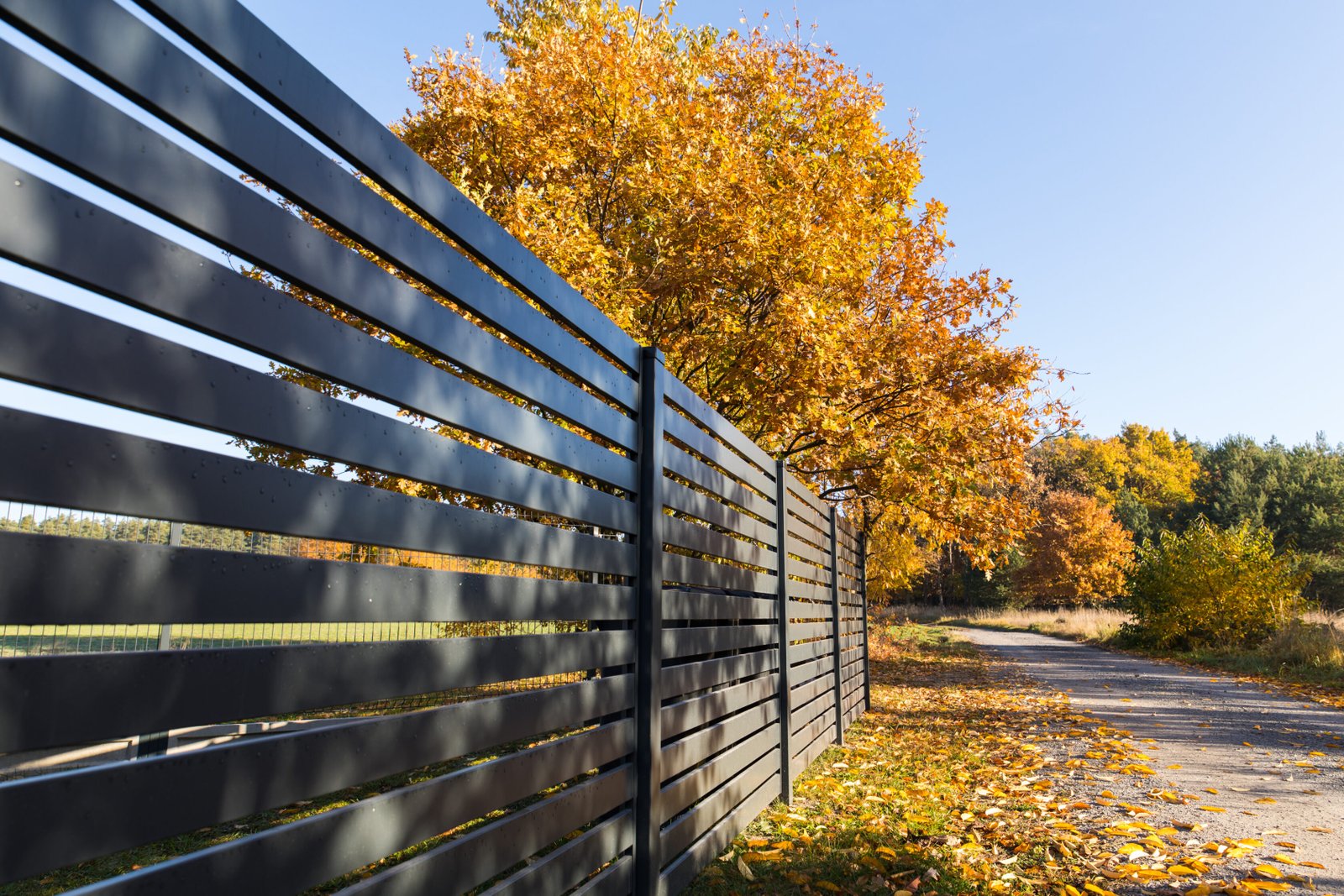
“While a dark fence is great for hiding dirt, it has one particular seasonal challenge: fallen leaves.”
Wet leaves, especially from oak trees, contain tannins that can leach onto the fence surface and leave dark stains, particularly on wood or lighter-colored composite. During the fall, make it a habit to use a leaf blower or a soft brush to clear away any leaves that are piling up at the base or stuck to the face of the fence after a rain. This preventative step can save you from a much bigger cleaning job in the spring.
15. Modern Wood Fence with Nearly-Invisible Gaps
For this “almost-no-gap” look, the choice of wood is critical. You must use a very stable wood species that has been properly kiln-dried, such as clear cedar, redwood, or a tropical hardwood like ipe. These woods are less prone to expanding, contracting, and warping with changes in humidity. Using a less stable wood like pine for this design, with such tight tolerances, is asking for trouble. The boards will inevitably swell and buckle against each other, ruining the clean, seamless effect.
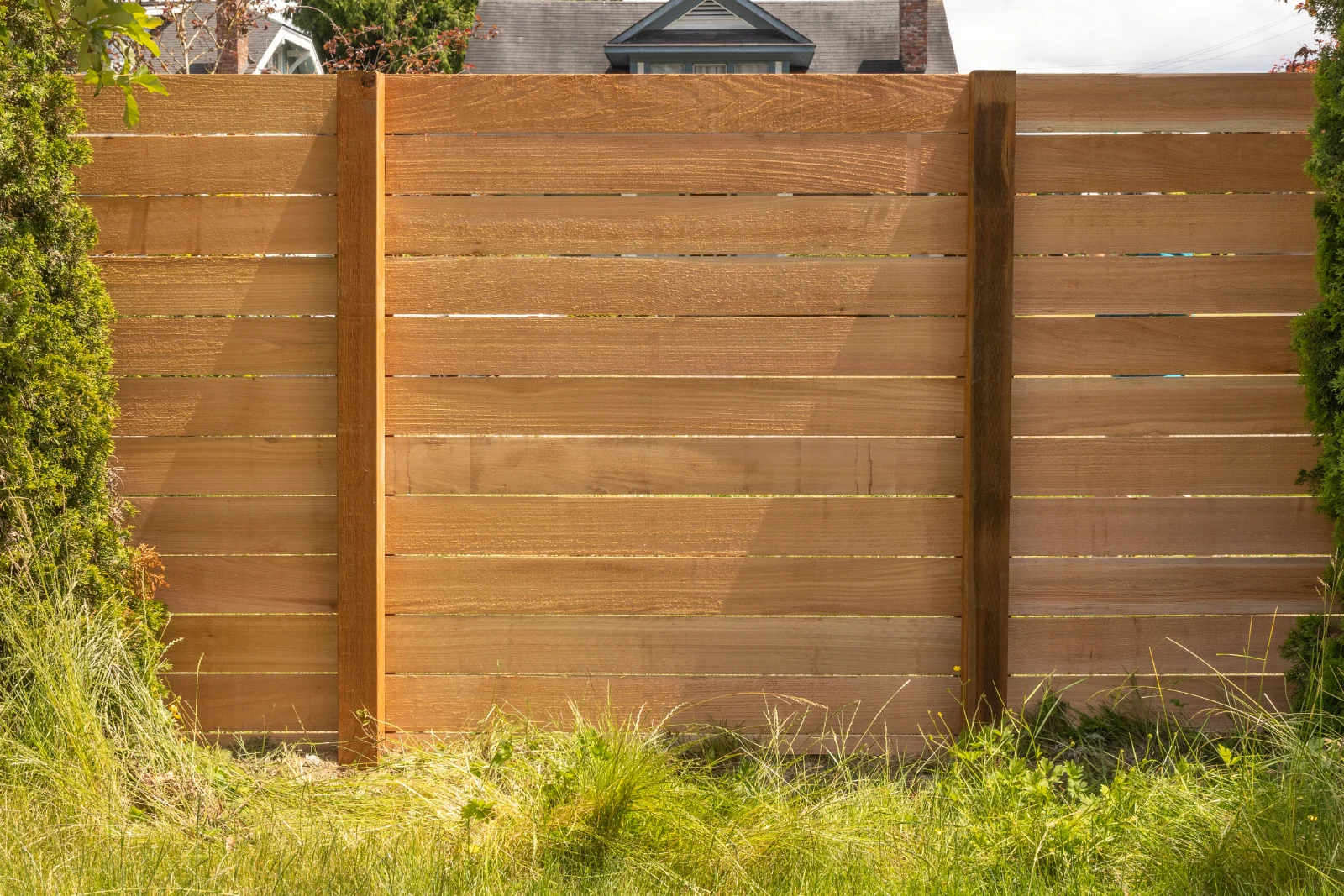
“A fence with very narrow gaps offers maximum privacy, but it can create an issue with wind load.”
A solid or near-solid fence acts like a sail in a heavy storm. To prevent your fence from leaning or failing, you must use thicker, stronger posts and set them deeper into the ground with more concrete than you would for a fence with wider gaps. For a 6-foot-tall privacy fence like this, the posts should be at least 4x4s (or equivalent steel), spaced no more than 6-8 feet apart, and sunk at least 2-3 feet into the ground.
16. Sleek Redwood Fence with a Gravel and Paver Pathway
The single element that defines this space is the pathway. The fence provides a beautiful, warm backdrop, but it’s the graphic combination of the large, light-colored pavers and the dark, contrasting gravel that creates a sense of journey and destination. It guides you through the space and establishes a clean, geometric order. This strong ground-plane design is what elevates the area from a simple backyard to a sophisticated outdoor room. A plain concrete path or simple grass would not have the same transformative effect.
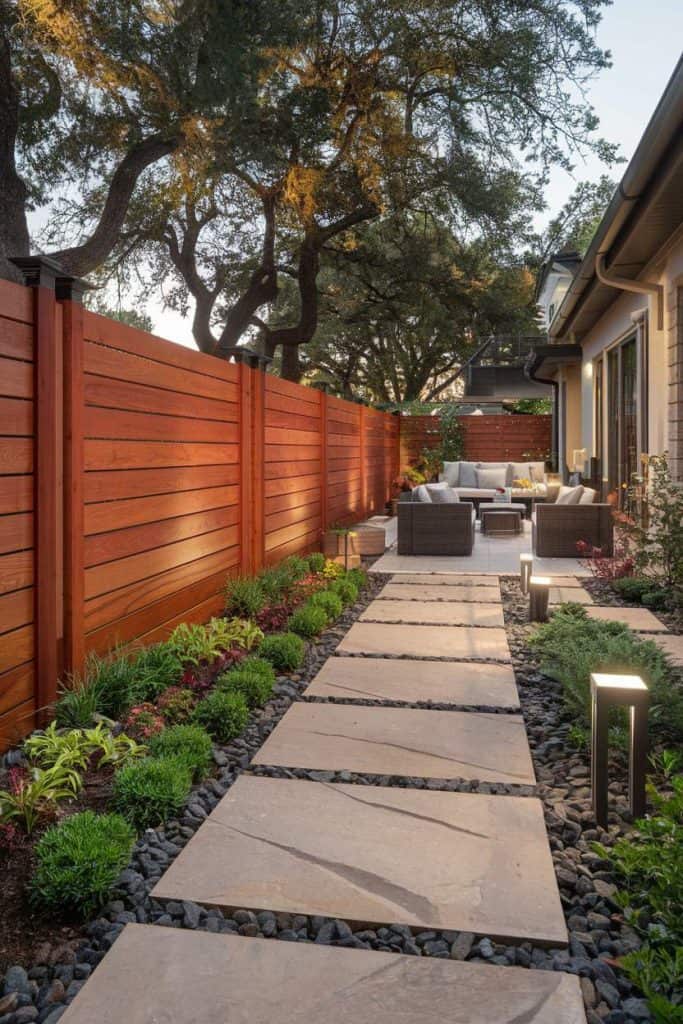
“Creating this “floating paver” path is a very achievable DIY project that delivers a high-end look.”
It’s all about building a stable base. Time: 1 weekend. Cost: $8-$15 per square foot.
- Excavate: Dig out the path area to a depth of about 6 inches.
- Compact the Base: Add a 4-inch layer of paver base (crushed rock) and compact it thoroughly with a hand tamper.
- Add a Sand Layer: Spread a 1-inch layer of leveling sand and screed it perfectly flat with a long, straight board.
- Place Pavers: Carefully set your pavers in place, leaving your desired gap for the gravel (3-4 inches is common). Use a rubber mallet to gently tap them into the sand.
- Fill Gaps: Pour your decorative gravel or river rock into the gaps, filling them up to the level of the pavers.
17. A Wood and Stone Pillar Fence with Ornamental Grasses
The visual recipe here is a perfect blend of hard and soft textures. It’s about 50% hardscape (the solid stone pillars and the structured wood-and-metal fence panels) and 50% softscape (the fluffy, flowing ornamental grasses). This balance is key. The solid, permanent feel of the fence is softened and made more dynamic by the movement and fine texture of the grasses in front of it. This creates a look that is both strong and graceful, structured and wild.
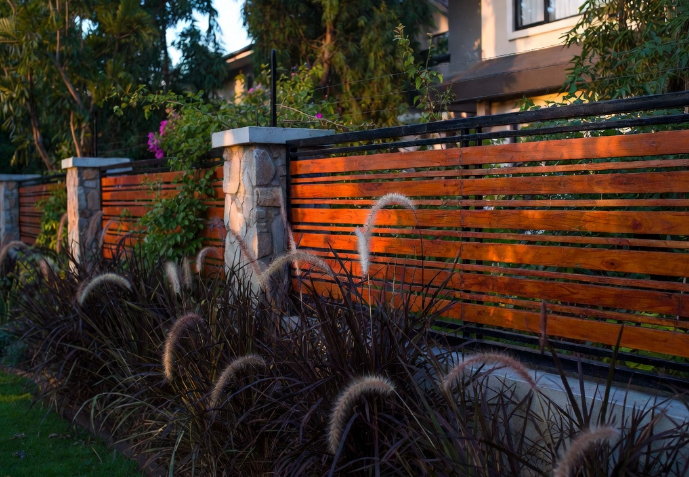
“This design is so successful because it masterfully layers materials.”
The rearmost layer is the simple wood infill. In front of that is the black metal frame, followed by the chunky, textured stone pillars. The final, foremost layer is the fine-textured, colorful ornamental grass. This layering creates an incredible sense of depth and complexity. Each material has its own texture and color, and their careful arrangement turns a simple property line into a rich, multi-dimensional feature.
18. Dark Wood Fence as a Backdrop for a Patio Seating Area
When using a dark fence as the backdrop for an outdoor living area, lighting is your secret weapon. By placing a few uplights at the base of the fence, aimed to graze the surface of the wood, you can create a dramatic, resort-like feel in the evening. This technique, called “wall grazing,” highlights the texture of the wood slats and provides soft, indirect ambient light for your seating area, making the space feel more intimate and luxurious. Use warm-toned, low-voltage LED fixtures for the best effect.
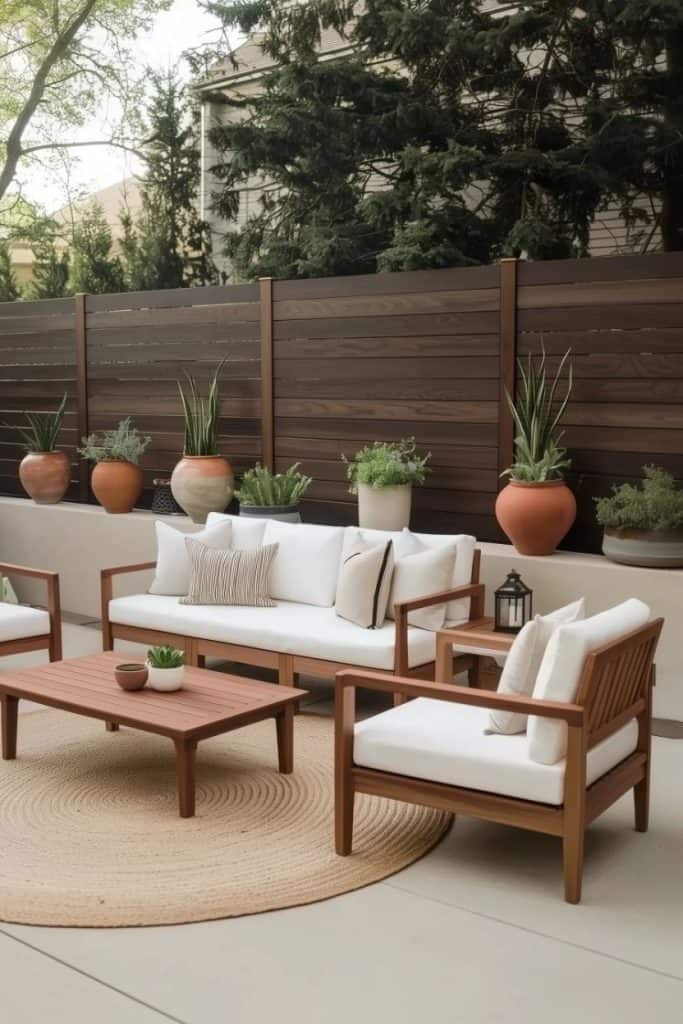
“You don’t need a high-end furniture budget to create this inviting patio scene.”
The key is the color palette—dark fence, light furniture. You can find acacia wood outdoor sets at Target or Walmart that have this same light, natural tone. A woven outdoor rug from IKEA can define the space beautifully. The final touch is the potted plants; look for affordable terracotta and ceramic planters at a local garden center or even thrift stores to complete the look for under $800, a massive savings from the thousands designer furniture can cost.
19. A Dark Green Fence Flanked by Lighted Stone Pillars
that truly makes this design special is the warm glow of the lanterns atop the stone pillars. During the day, it’s a handsome, sturdy fence. But at dusk, those lights transform the entire entrance into something magical and inviting. The light draws your eye, provides a sense of welcome and security, and highlights the texture of the stone. It’s a small detail that elevates the design from purely functional to deeply atmospheric. Compare this to the unlit stone pillars in Idea #17 to see the difference lighting makes.
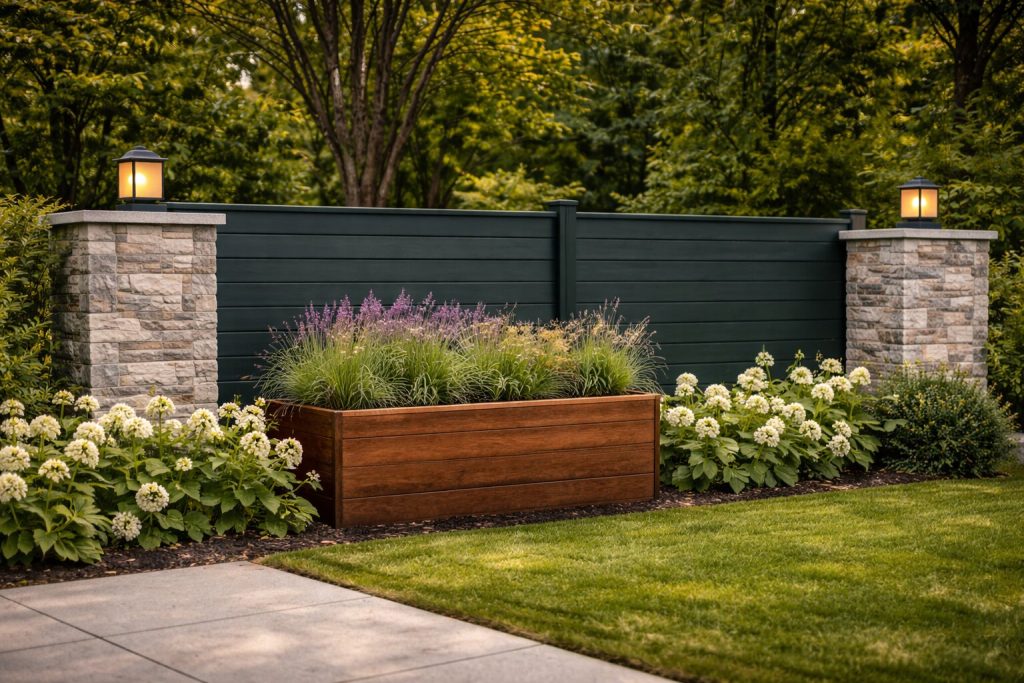
“An elegant design like this requires a commitment to upkeep.”
The stone pillars, while durable, can be a magnet for moss or algae in shady, damp climates, requiring occasional cleaning. The biggest reality check is the lighting itself. You’ll need to run low-voltage wiring, which may require a professional electrician. Bulbs will eventually need replacing, and the glass on the lanterns will need to be cleaned of dust and bugs to keep them shining bright. It’s a bit more work than a simple fence, but the payoff is huge.
20. A Weathered Wood Fence with Interlocking Joints
The beauty of this fence lies in its honesty and craftsmanship. The design highlights the way it was built, with the thick horizontal rails clearly slotting into the robust vertical posts. This interlocking joinery gives the fence a feeling of immense strength and permanence. The weathered, graying wood adds to this story, showing its history and resilience to the elements. It’s a design that celebrates its own construction, and that authenticity is incredibly appealing and feels more like classic carpentry than simple fence building.
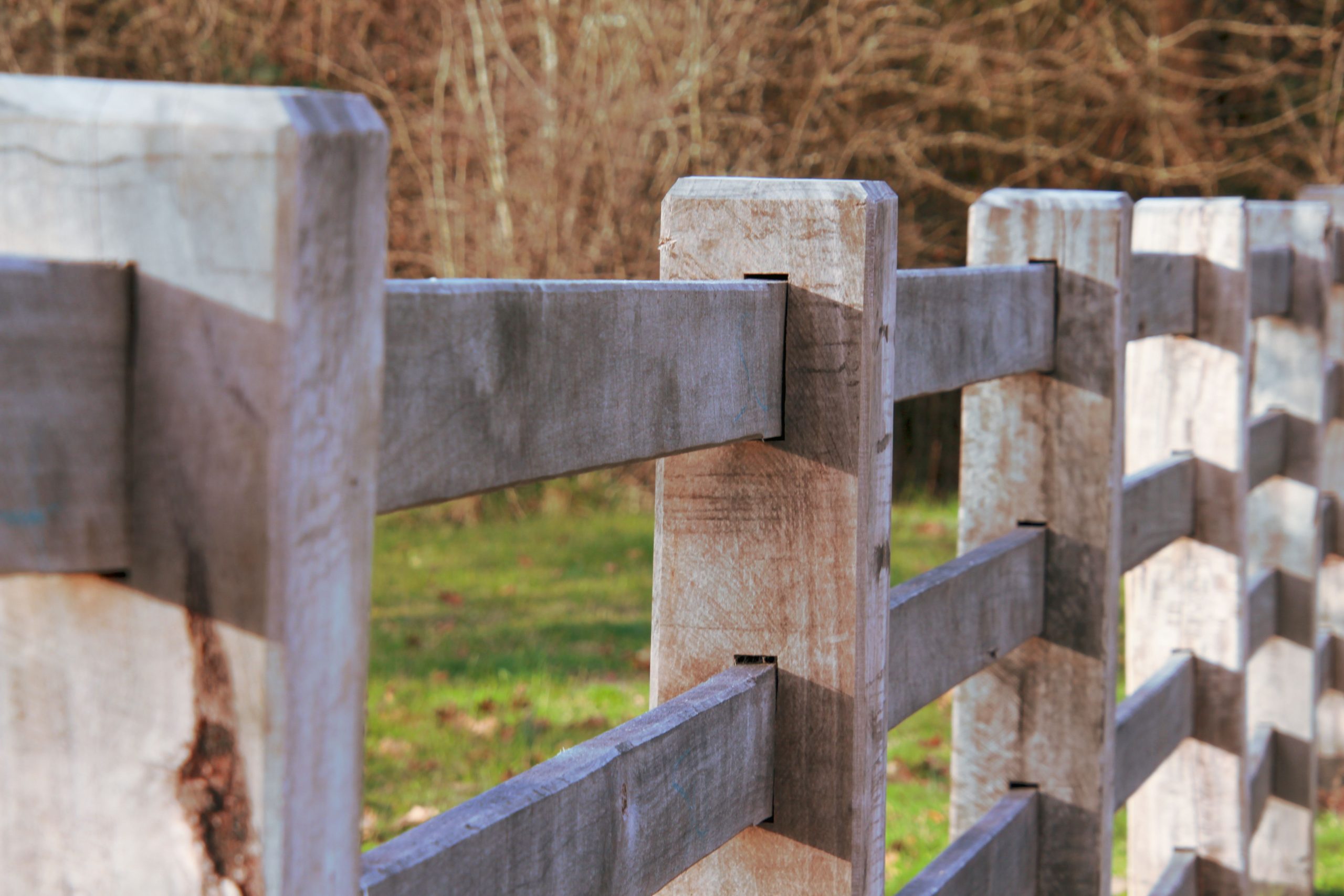
“As homeowners increasingly seek out “buy it for life” quality and move away from flimsy, disposable products, designs that emphasize durability and traditional craftsmanship are making a huge comeback.”
This fence speaks to that desire. It looks like it has stood for years and will stand for many more. This “new rustic” or “modern heritage” trend is all about investing in authentic materials and timeless construction techniques that feel both substantial and sustainable. It’s the visual opposite of a cheap, pre-made panel from a big box store.
21. Understated Black Horizontal Fence Panels
A black horizontal fence is the ultimate chameleon. Its power lies in its ability to recede into the background, making it the perfect choice when you want the focus to be on your landscaping, not the fence itself. The dark color and clean lines create a crisp boundary without visually cluttering the space. Green foliage appears more vibrant, flowers seem brighter, and the entire yard feels more orderly and defined. It’s the strong, silent type of fence design—it does its job perfectly without demanding all the attention.
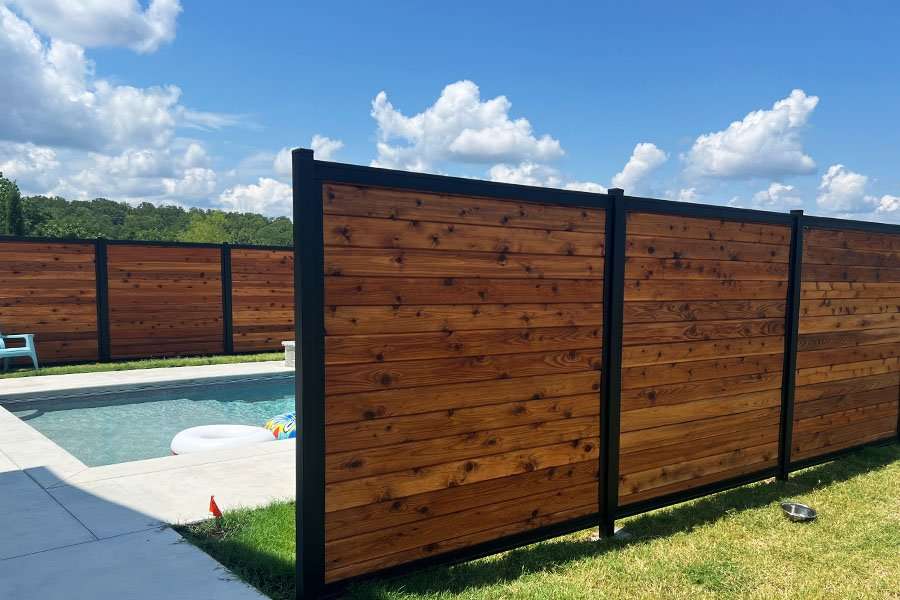
“Be aware that black fences, especially metal or composite ones, can get extremely hot to the touch in direct summer sun.”
This can be a safety concern if you have young children who might grab onto it. It can also create a “hot zone” for any delicate plants or vines planted directly against it, potentially scorching their leaves. If your fence line is in full, blazing sun all day, a lighter color might be a more practical choice. If you love the black look, consider planting hardy, heat-tolerant species nearby.
22. A Bright White Fence with Graphic Black Gaps
This clean, high-contrast look follows a simple formula: 80% bright white + 20% graphic black. The white slats provide a sense of brightness, openness, and cleanliness, making the space feel bigger. The thin, dark lines of the gaps create a strong visual rhythm and a touch of modern sophistication. You could invert this—black slats with white gaps—for a much moodier and more dramatic effect, as seen in a similar style in Idea #3. The power is in the stark, simple contrast.
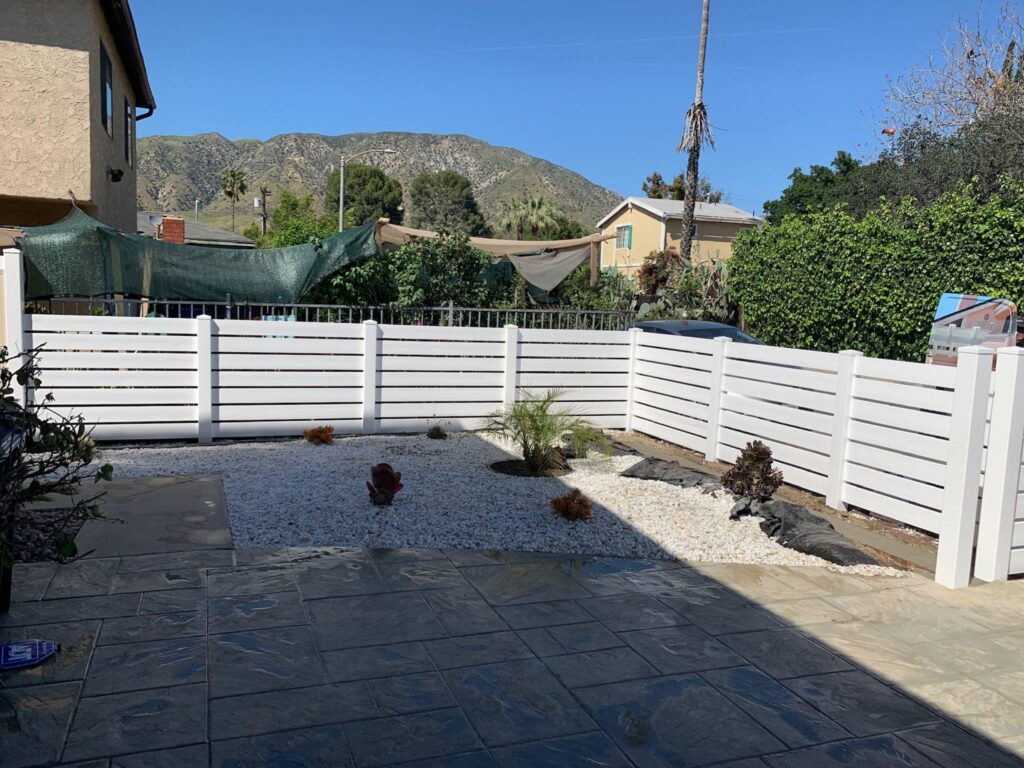
“This contemporary look can be achieved with a few different materials, each with its own price point.”
Let’s break down a 50-foot section:
- Vinyl/PVC: This is often the most budget-friendly for a white finish. Material Cost: $1,500 – $2,500. It requires minimal maintenance.
- Painted Wood: Using pine or cedar and painting it. Material Cost: $1,200 – $2,200, but requires significant labor and future repainting.
- Composite: High-end composites offer a durable, pre-finished solution. Material Cost: $3,000 – $5,000.
- Installation Labor: Expect to add $1,000 – $2,500 for a professional job.
- TOTAL (Installed): $2,500 – $7,500
23. A Natural Wood Fence with a Classic X-Brace Gate
The single element that gives this entire fence its character is the gate’s X-brace design. The main fence panels are simple and modern, but the addition of the classic “X” on the gate adds a touch of traditional, almost farmhouse-like charm. This small detail prevents the long stretch of fencing from feeling monotonous and provides a clear, welcoming focal point. It’s a perfect example of how mixing a traditional element into a modern design can create a look that feels both fresh and timeless.
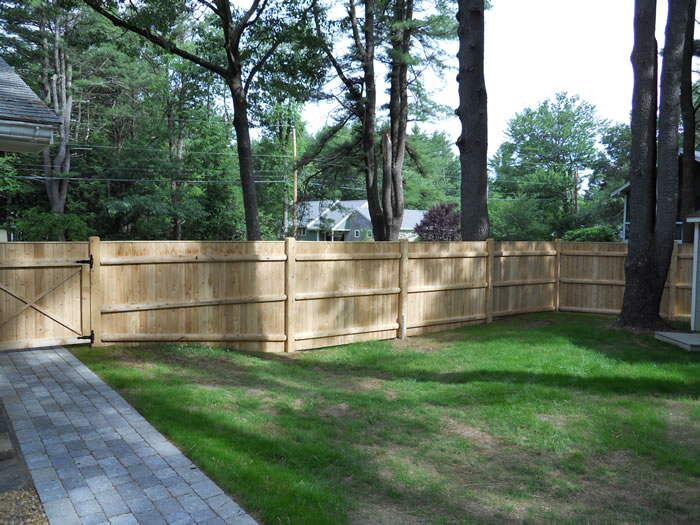
“When building a wooden gate, the X-brace isn’t just for looks; it’s structural.”
To prevent the gate from sagging over time, the diagonal braces must be installed correctly. The bottom of the “X” should meet at the lower hinge-side corner, and the top of the “X” should extend up towards the top latch-side corner. This configuration transfers the weight of the gate down to the sturdy, hinge-bearing post, keeping it square and swinging freely for years. Installing it backwards will do almost nothing to prevent sag.
24. A Crisp White Slat Fence with Decorative Post Caps
The success of this design lies in its meticulous, clean details. It’s not just a white fence; it’s the sum of its polished parts. The horizontal slats provide a modern base, but the decorative caps on the posts add a touch of classic, finished elegance. The concealed gate latch maintains the seamless look, and the close proximity to the neatly manicured green shrubbery creates a beautiful color and texture contrast. It feels less like a simple barrier and more like a piece of architectural detailing.
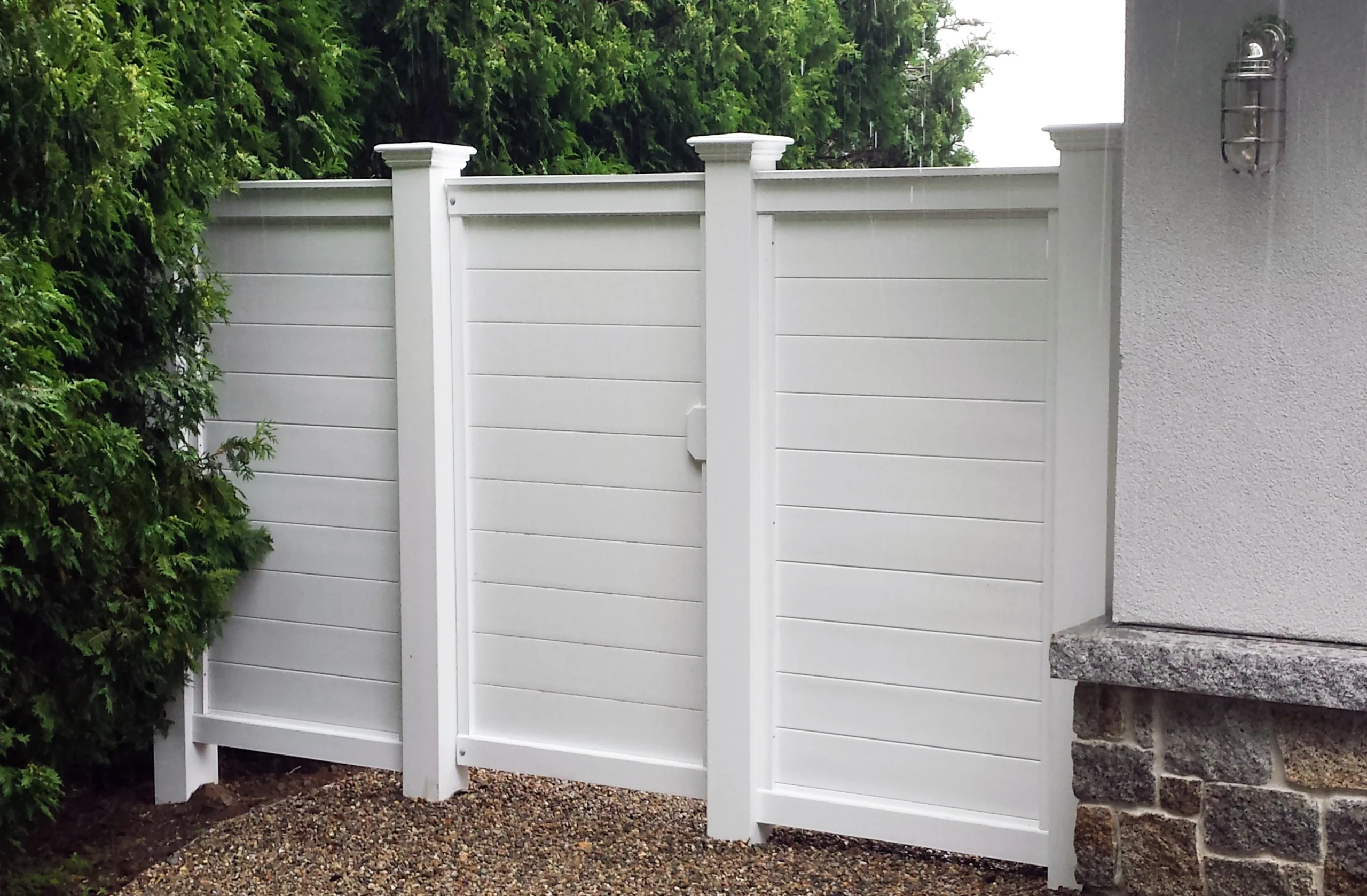
“A short-to-mid-height fence like this, typically 3 to 4 feet tall, is perfectly scaled for defining front yards, garden beds, or pathways without creating an imposing wall of privacy.”
It’s more about creating a visual boundary and adding curb appeal. This style works wonderfully for smaller urban or suburban lots where you want to feel enclosed but not boxed in. For true backyard privacy, you would want to scale this design up to 6 feet, like the fence in Idea #27.
25. A Dark Fence Contrasting with Light House Siding
that makes this composition so visually powerful is the bold contrast. The deep, dark gray of the horizontal fence creates a striking juxtaposition against the light, off-white siding of the house. This play of light and dark turns a narrow, functional passageway into a deliberate design moment. It creates a graphic, almost architectural quality, drawing the eye down the path. If the fence and siding were similar colors, this space would feel flat and forgettable.
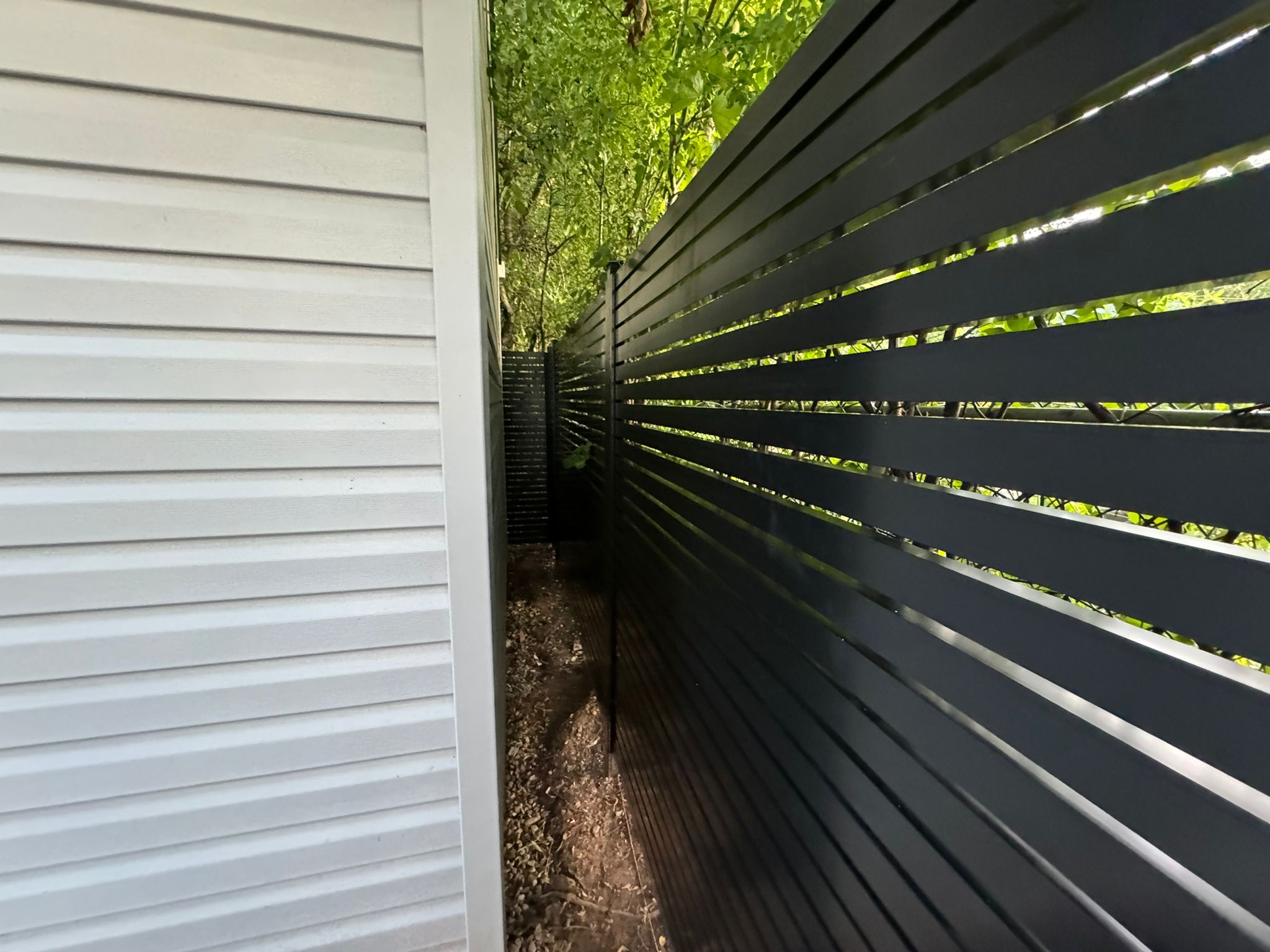
“In a narrow side yard or passage like this, a dark fence can make the space feel even more enclosed or cave-like, especially if it doesn’t get a lot of direct sunlight.”
While the look is undeniably chic, consider how much natural light the area receives. If it’s already shady, you might be better off with a lighter fence color to keep the space from feeling too gloomy. Also, ensure there is enough space (at least 3 feet) to comfortably walk and for air to circulate to prevent mildew on both the fence and the siding.
26. A Light Wood Fence with an Accent Flowering Bush
This landscape composition works because it follows the “thriller, filler, spiller” concept, but with a fence. The long horizontal fence and the green lawn act as the “filler”—the consistent, beautiful base. The line of low green bushes provides a second layer. But the bright pink flowering bush is the “thriller”—the one dramatic focal point that grabs your attention and provides a pop of color and excitement. The large gray boulder acts as a grounding element, adding weight and a different natural texture. It’s a well-balanced scene.
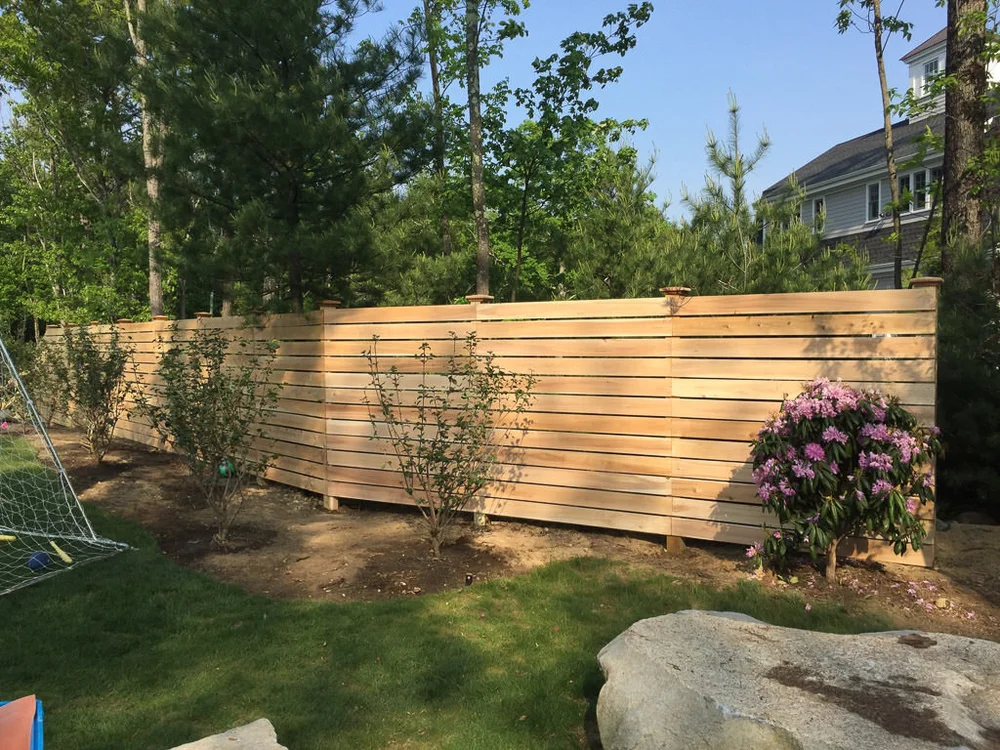
“You don’t need expensive Ipe or Teak to get this light, natural look.”
A fence built from standard pressure-treated pine and left to weather naturally will turn a soft silvery-gray over time. Alternatively, you can use a semi-transparent stain in a light “natural cedar” or “honey” tone to get this warm color on a budget. For the landscaping, search Facebook Marketplace or Craigslist in the spring for people splitting perennial plants like hydrangeas or hostas for a fraction of the nursery cost.
27. A Horizontal Privacy Fence in Light Brown Stain
A classic 6-foot tall horizontal privacy fence is one of the most versatile designs for typical suburban backyards. This height is the standard for creating a genuine sense of privacy, blocking views from neighboring houses and passersby. It works well for properties ranging from small 1/8-acre lots up to a full acre. Any larger, and the cost can become prohibitive. Any shorter than 6 feet, and you lose the privacy benefit, making it more of a decorative boundary like Idea #24.
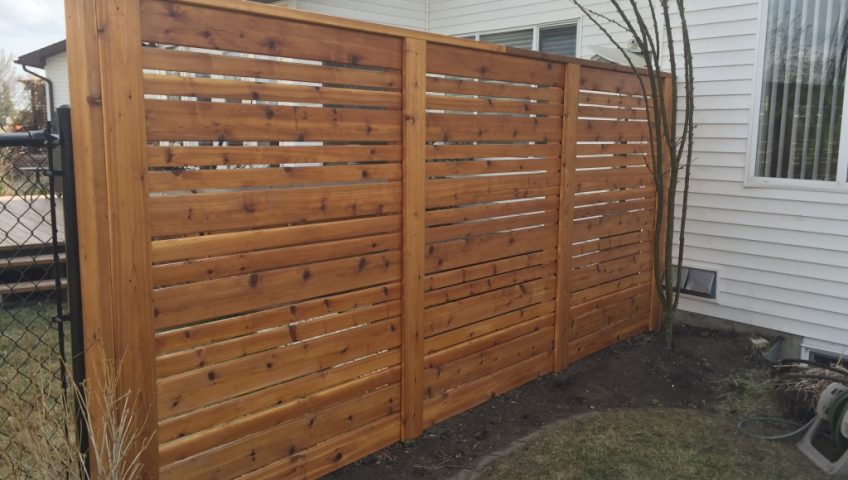
“Before you build any fence that borders a neighbor’s property, it’s not just a g”
Before you build any fence that borders a neighbor’s property, it’s not just a good idea—it’s a crucial step—to have a conversation.
- Confirm Property Lines: Even if you think you know where the line is, it’s best to agree on it or consult a survey to avoid future disputes.
- Discuss Style & Cost: Your neighbor might hate the look of the fence you love. They might also be willing to split the cost if it benefits their property too, but you’ll never know if you don’t ask.
- Check the “Good Side”: Some areas have rules about which homeowner gets the “finished” side of the fence facing their yard. Discussing this beforehand prevents bad feelings.
28. A Newly Installed, Natural Plank Wood Fence
This fence is a blank canvas, and what you do next determines its entire future. If you do nothing, the light-colored wood will weather to a silvery gray over the course of 1-2 years. To maintain the warm, natural color, you must apply a sealant. Use a clear, UV-blocking waterproofer for a matte, natural look. For more color and protection, use a semi-transparent stain within 3-6 months of installation. No matter what, untreated wood will eventually weather and age, so a “do nothing” approach is a choice for a specific aesthetic, not a maintenance-free one.
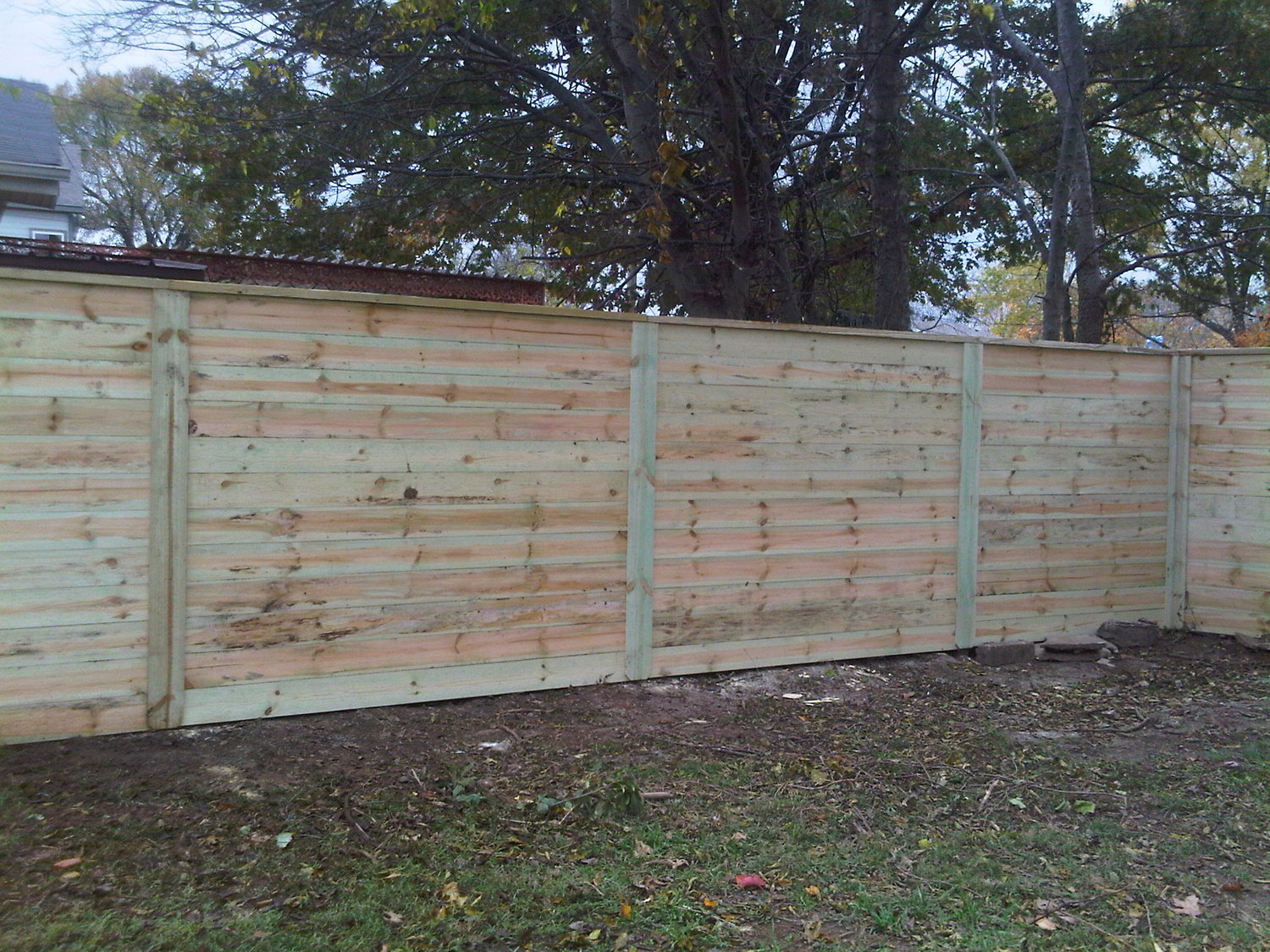
“A word of warning about those greenish-tinted vertical posts: that color indicates they are made of pressure-treated lumber, which is great for ground contact and resisting rot.”
However, that green tint will fade unevenly and can be difficult to stain over consistently for the first 6-12 months as the chemicals dry out. If you want a perfectly uniform stained finish from day one, you should use cedar or redwood posts instead, though they come at a higher cost. If using pressure-treated, patience is key.
29. A Tall Privacy Fence with Knotty, Multi-Toned Wood
The single element that gives this fence its rich, rustic character is the visible knotting in the wood. In many modern designs, clear, knot-free wood is prized for its uniformity. Here, the knots are celebrated. They create dark, swirling patterns that add depth and a sense of history to the surface. Paired with the variation in color from light tan to deep reddish-brown, the knots ensure that no two sections of the fence are exactly alike, giving the entire structure an organic, one-of-a-kind feel.
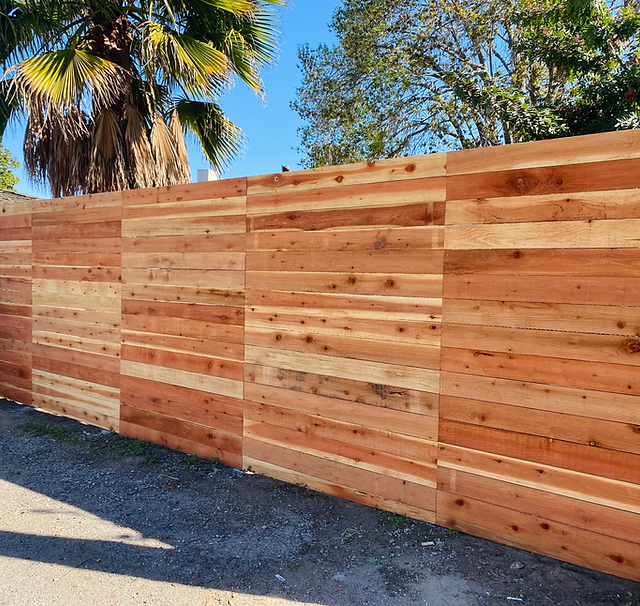
“This design is a masterclass in the principle of “variation within a theme.” The theme is simple: horizontal wooden planks.”
But the execution is all about variation. The tones of the boards vary, the grain patterns vary, and the knots create random points of interest. This controlled randomness is what makes the fence so visually engaging. It’s not chaotic, but it’s not sterile or repetitive either. It strikes a perfect balance that feels both natural and thoughtfully designed.
30. A Traditionally Stained Fence with a Capped Top Rail
That top capping piece isn’t just for looks; it’s one of the most important parts of a long-lasting wood fence. Called a “cap board,” it serves as a little roof, protecting the exposed end-grain of the vertical fence boards below from rain and sun. The end-grain of wood absorbs water like a straw, making it the most vulnerable point for rot and decay. By adding a cap board (and decorative post caps), you are significantly extending the life of your fence. Always install it with a slight slope to encourage water to run off.
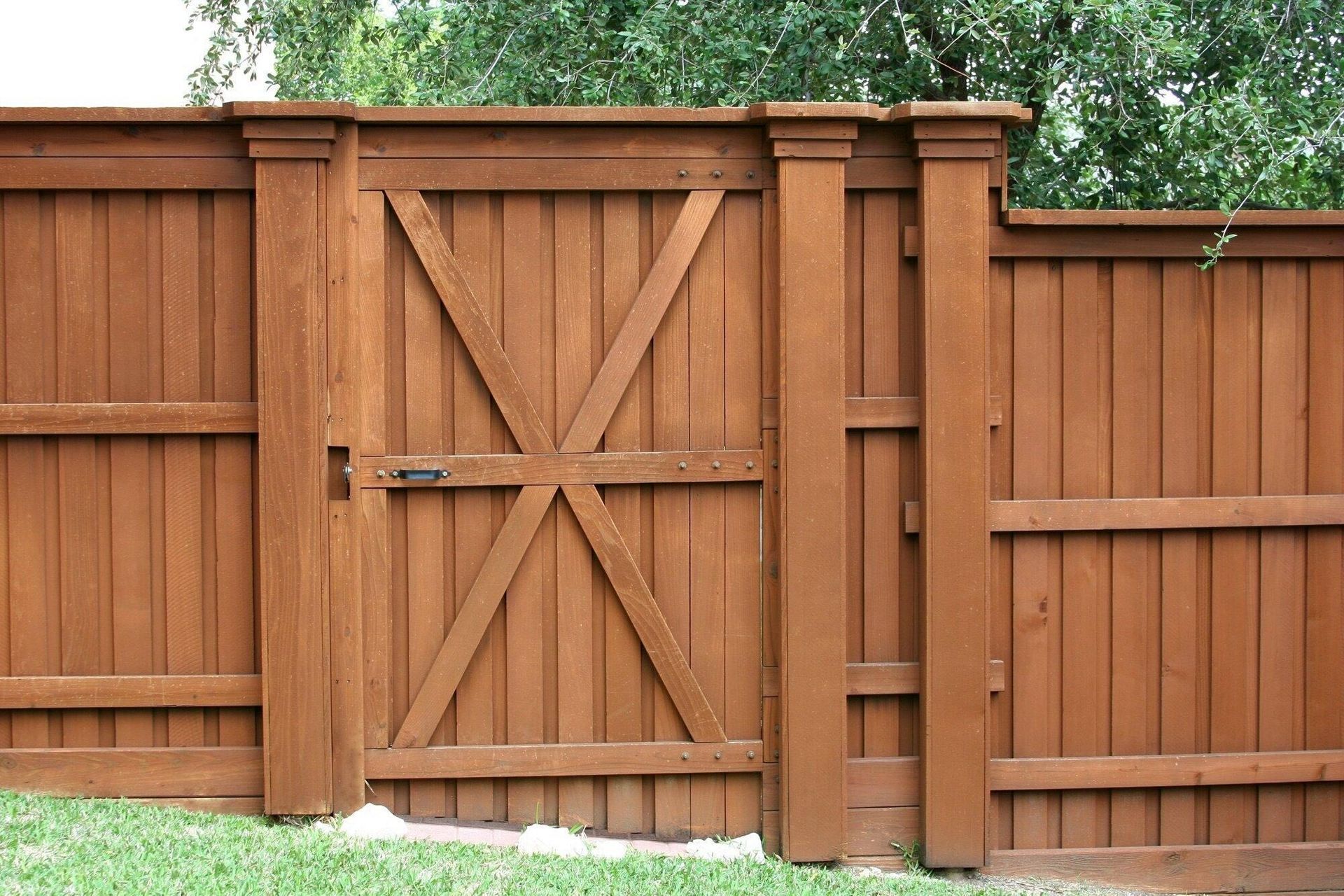
“This fence appears to be built with vertical boards, not horizontal ones.”
While a beautiful and classic look, it’s a different style. However, if you love this rich, stained finish for a horizontal fence, be aware that touch-ups can be tricky. Scratches or patches of fading can be hard to blend in seamlessly on a flat-stained surface. When you re-stain, you typically have to do the entire panel from seam to seam to avoid lap marks and ensure a consistent finish. It’s slightly less forgiving than a natural, weathered look.
31. A Wood Fence with a Decorative Trellis Top
This fence design follows a balanced “two-thirds, one-third” formula. The bottom two-thirds of the fence is made of solid horizontal planks, providing a strong sense of privacy and security. The top one-third is an open, airy lattice or trellis. This ratio is key because it gives you privacy where you need it most (at eye level) while still allowing light and air to pass through the top. This prevents the fence from feeling like a solid, oppressive wall and gives it a friendlier, more decorative feel.
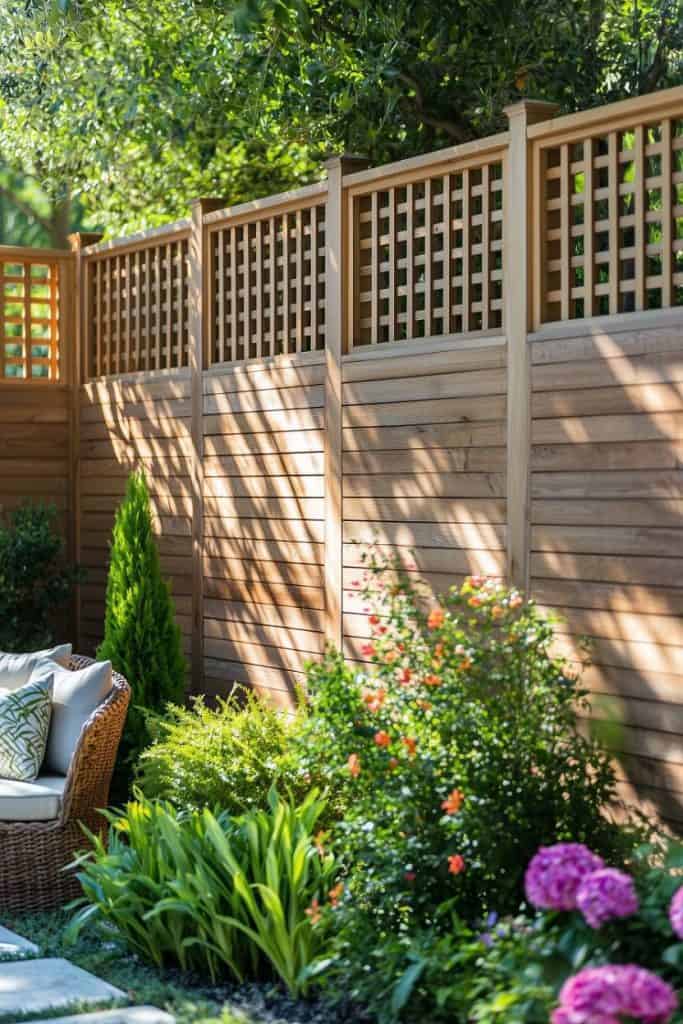
“This design works so well because it thoughtfully balances privacy and openness.”
A full 6-foot privacy fence can sometimes make a smaller yard feel boxed in and dark. By incorporating the trellis panel at the top, the design provides a sense of enclosure without total separation. It allows glimpses of the sky and trees beyond, and lets dappled sunlight filter through, creating beautiful shadow patterns. It’s the perfect compromise when you want privacy without sacrificing a sense of light and space.
Drawing the Line, Beautifully
Your property line doesn’t have to be an afterthought. As these ideas show, a fence can be a foundational piece of your home’s entire outdoor story. Whether you’re drawn to warm wood, sleek metal, or a combination of textures, the perfect horizontal fence is out there.
Now that you’re armed with all this inspiration, head over to your Pinterest boards and start creating a vision for your own space. Happy planning!